ResidentialBusiness
Administrators
-
Joined
-
Last visited
Everything posted by ResidentialBusiness
-
 More and more people are starting to see Google Ads within the Google AI Mode results. Google told us these ads were being tested on desktop AI Mode results back in May and over the past several weeks, more and more are starting to see them in the wild.View the full article
 -
Before Wicked opened on Broadway in October 2003, the musical’s production team took the show to the Curran Theatre in San Francisco for what’s called an “out of town tryout.” The five-week run allowed the producers, writers, and director to work out the kinks ahead of the show’s Broadway debut. During the San Francisco run, University of Southern California film student Jon M. Chu happened to be home for the weekend visiting his parents, who owned a Chinese restaurant called Chef Chu’s in Los Altos, California, just outside Silicon Valley. Chu was the youngest of five children growing up in a family that spent their free time playing instruments or going to the ballet, the opera, musicals, and the movies. “It was the time of Michael Jordan on TV, and Steven Spielberg movies,” Chu recalls. “Michael Jackson videos were like mini musicals.” Chu was raised on what he calls “this beautiful idea of story,” and went to film school with an inner theater geek driving his desire to learn the craft. So it wasn’t a surprise when his mom, Ruth, suggested they catch the show at the Curran. Also at the show was Marc Platt, Wicked’s producer, who spent those five weeks in San Francisco putting the finishing touches on what would eventually become one of Broadway’s biggest hits. Little did either of these men know that nearly 20 years later they’d pair up to bring Wicked to the big screen. “I waited 20 some years to make the movie after I produced the stage show,” Platt says. “There were many reasons I waited; destiny was calling me to wait until Jon was available.” Jon M. ChuWicked: For GoodAriana Grande Their partnership is now one of Hollywood’s great success stories. Together, Chu and Platt delivered a giant blockbuster that grossed $114 million in box-office sales on its opening weekend in November 2024 (it went on to gross nearly $750 million). Now they’re poised to do it again with the release of part two, Wicked: For Good. The Wicked films represent a big gamble for Universal Pictures—two lavish movie musicals released back-to-back with an estimated combined budget of roughly $300 million. All this in an era when studios are cutting costs and audiences are distracted by content that requires them to do nothing more than scroll their phones or stream TV from the living room couch. Still, Chu says he’s more optimistic about filmmaking than ever. Now is the moment, he says, to fight for big stories that can break through in a business that’s increasingly driven by algorithms and a focus on the bottom line. “I think if you want to fight that fight, you’ve got to play by the rules of this game,” he says. “You have to entertain the hell out of people.” Jeff GoldblumCynthia ErivoWicked: For Good The Silicon Valley Showman meets the Hollywood Machine Chu grew up inside two great American experiments—the immigrant dream and Silicon Valley innovation. His parents have run Chef Chu’s for decades. In fact, that’s where he was gifted his first camera and editing software from some thoughtful customers who worked in the movie industry. In high school Chu convinced his teachers to allow him to turn in short edited videos rather than written papers, which provided him the opportunity to develop a fluency with the software he’d inherited at the restaurant. He also landed gigs shooting weddings and bar mitzvahs in his hometown. He was an early adopter from adolescence, learning how to master After Effects and Pro Tools. In 2002, while at USC, Chu gained some notoriety for a short film called When the Kids Are Away, which he made with a grant from the Princess Grace Foundation. It was a full-blown movie musical with singing and dancing, all about how stay-at-home-mothers spend their time when children are in school and spouses are at work. To work on it with him, he pulled in film school classmate and budding cinematographer Alice Brooks. They would later reunite on the Wicked films. Chu had an early run of films that cemented his approach to musical storytelling. In his first studio film, 2008’s Step Up 2 the Streets, Chu learned how to turn ideas into an actual production by marrying choreography and character. Then, as director of Justin Bieber: Never Say Never, Chu gained an understanding of how powerful internet culture can be as a storytelling mechanism. It wasn’t until he directed Crazy Rich Asians, though, that Chu truly turned a corner in his career. The film allowed him to blend cultural nuance, authentic storytelling, and mass appeal. All of this leveled up into Wicked, which is Chu’s most ambitious film by far. The movie required him to stretch beyond his creative instincts. Donna Langley, chairperson of Universal Pictures, says Chu is as much a whip-smart executive as he is a creative: “He thrives at the intersection of commerce and art. He is deeply empathetic, pragmatic, and innovative. He sees challenges as opportunities, is extremely methodical in his planning, and yet remains flexible in his execution.” Storytelling as empathy Chu sees storytelling as a kind of transcendent currency in the current age of filmmaking. “It is one of the most powerful empathy engines we have other than travel,” he says. It helps, of course, that with Wicked Chu happens to be telling a uniquely magical story, in a land that feels so fantastical and vibrant you cannot help but be transported. But Chu’s singular power in bringing Wicked to life is his ability to think like a storyteller and work like an engineer. Chu’s creative system is deliberate and disciplined. He recalls how in his early years of editing, he devised a system for nonlinear storytelling logic that helped him organize his ideas. He would assemble thousands of screenshots, textures, and notes and organize them into folders. These folders became a “creative pantry” of sorts that he began drawing from when developing a new film. When Chu and cinematographer Brooks were classmates at USC they bonded over their love of musicals. “I think both of us are really emotional storytellers,” says Brooks, who worked with Chu on both In the Heights and Wicked (among others). “It’s about breaking a story from the inside out.” She describes Chu’s process as incredibly intentional. She and Chu move at their own pace during the early stages of production and planning, trusting one another’s instincts as they go. “When we first get a script, we break down each scene with one word, emotional intention, and every single camera choice and lighting choice comes from those intentions,” Brooks says. “It’s a long marinating process of letting ideas grow first, and then the technical ideas come very much as a secondary.” On the set of Wicked: For Good, Chu implemented a process that required the actors to speak their lines while rolling before official filming began. While rehearsing the song “For Good,” actors Ariana Grande and Cynthia Erivo began to ad lib, singing to one another through a closet door. It was totally unplanned, but also part of Chu’s usual process ahead of a scene, so he let it go and the captured moment ended up one of the most memorable in the film. “Process is how genius happens,” he says. During the development of a movie, Chu doesn’t think about box-office sales. Instead, he’s locked in on making sure the film is as entertaining as possible. He views movies as a portal into another world, where the audience can experience things from someone else’s perspective. “To me, that is what we need to protect most in our culture,” Chu says. “I feel great responsibility that I have a microphone to be in that space.” Chu began shooting both Wicked films in 2022 before AI really became a thing. He and the movie’s team of more than 700 visual effects experts were deeply focused on building a tactile but imperfect world. He wanted tables that wobbled and doors with cracks in them. For Wicked to work, nothing could feel overly manufactured or make believe. “He insisted the world be touchable, that we could feel the scratches and dirt,” says Platt. That quality is what allows the audience to feel the high stakes in Glinda and Elphaba’s relationship, Chu says, noting that everything on set within 40 feet was physically built. The imperfections enabled a kind of intimacy with the audience that AI could never replicate. “This couldn’t feel like a dream, because we were talking about real things and we’re digging at real truth,” he says. Platt says this unwavering commitment to emotional resonance is what makes Chu unique at this moment in time. “Even when it was challenging to make changes, or we had disagreements with the writers, there was always joy in the process,” Platt says. “When your director feels that way, it permeates all those working on a production. But also it made me confident in our collaboration, and in the outcome.” In many ways, Chu represents a blueprint for what the movie business will need as technology continues to infuse cinema. Chu believes that as AI becomes a bigger part of how creatives make their work, it will only put more value on human curiosity. “In the end,” he says, “it’s about building something people can feel—even in a world made of pixels.” View the full article

-
Brands often invest in influencer and affiliate promotions but stop short of giving the content additional reach, assuming the creator’s audience is enough. Using paid marketing, adding it to your site, and sharing it across your channels isn’t doing their job for them. It’s a way to grow your company by using their brand recognition and strengthening the relationship. Yes, you pay an influencer an upfront fee, a commission, or send them a product in exchange for a promotion, but that doesn’t mean the relationship stops there. And that’s where amplification becomes a real advantage. It unlocks more value from the creator relationships you already have. Why amplifying creator content pays off Before getting into the tactics, here are the reasons amplifying creator content pays off. Trusted validation When a trusted third party verifies that your product, store, or company is legitimate, you gain credibility with anyone who recognizes or relates to them. This is especially important in competitive industries where trust is uncertain and consumers have many options, such as jewelry or insurance. A clear example is choosing a hotel at Disney or on a Caribbean island. With so many choices and mixed pros and cons, something needs to break the tie. If a trusted individual chooses your brand, that alone can influence the decision. You can use this content in ads to reach a new audience, and you can test it with people on your newsletter or SMS lists who haven’t converted yet. The same applies to remarketing. If someone visited a page or category on your site but didn’t convert from your usual remarketing, show them a video that reviews the same product or offers a fair comparison between options. You can say how great you are all day, but a third party validating that message may help convert that traffic. Lower media costs Some influencers are out of budget, but guaranteeing that their ads will reach a new, like-minded audience may help bring their price down. You can also allow them to use their affiliate links in the amplified content so they can earn commissions. The commissions put risk on both sides – they lower their fees, and you spend money instead of relying on commission only. It’s a fairer approach, especially when their fees are higher than usual. As the influencer starts making money, they may waive their fees if their commissions exceed them and choose to become an affiliate instead. This frees up your media budget to test new partners. You can also opt for a hybrid deal, where you pay part of their media fee and they earn commissions to cover the rest, which opens up more budget for testing new partners and outlets. Dig deeper: The best affiliate networks by need and use case Get the newsletter search marketers rely on. See terms. More discoverable content When there’s a natural reason for people to share the content – like food that can go viral or something funny – consumers may start taking the amplified content from the ad or your website and sharing it to their personal accounts or groups. If their accounts are set to public view, search engines and LLMs like ChatGPT can find these links. This creates more paths back to your site and gives them more content to discover, reference, and send traffic to. Affiliate recruitment When the big or known accounts start promoting a vendor, it means there is money to be made. By amplifying the content to an audience that likely knows them, other creators, traditional affiliates, and marketers will notice the affiliate links if you allow the creator to use affiliate links for the network. Some will reach out asking for a “collab,” which means money up front, and others will apply to become an affiliate. Having the big names builds trust for new partners. It means they are risking their personal brands on your company, products, and services, and that goes far with other partners. This exposure may help the new partners feel confident that your program is legit. This is one of the things we encourage with our clients who are dedicated to the affiliate marketing channel. It helps everyone win, as affiliate recruitment and affiliate activation are the two most challenging parts of the channel. When ambassadors and influencers approach the client and ask for money up front, we start them as an affiliate first to keep things fair for all creators, and if it makes sense, we move them to hybrid models. It’s less risky for you as a brand and gives the creator a foot in the door. Not all of our clients are open to this, but those who are do see the benefits. It’s easier to build a network of partners, and both parties are taking risks instead of it always being one-sided. Dig deeper: Affiliate managers: It’s time to shift your focus beyond media Putting creator amplification into practice Here are the approaches we use most often to extend the reach and impact of creator content. PPC ads that drive to a landing page featuring the content. Running the content in advertisements as an ad for our brand on social media and YouTube. Embedding the content into product pages, long-form pages, and collection or category pages. Sending email blasts that either link to it, feature their name, face, and sales pitch, or land on pages that include it. There’s no shortage of options. It all depends on where the audience that resonates with them is, and whether your customers are also there. Amplifying influencer and ambassador content isn’t doing their job for them. It’s smart business. You gain the trust they bring, you can reach their audience, and you can utilize the content to help convert undecided customers. Dig deeper: Why creator-led content marketing is the new standard in search View the full article
-
Google has 44 data centers in operation or in development around the world, but as demand for AI and the need for compute capacity grows, the company is getting started on three more. This latest batch is destined for Texas, where Google already has a pair of data centers in operation just south of Dallas. One of the new centers will be located outside of Amarillo in Armstrong County, with the other two headed to Haskell County, about three and a half hours west of Dallas. The $40 billion investment in the Lone Star State will help the company build additional infrastructure for its cloud and AI units. The company expects the centers to be operational by the end of 2027. This will be Google’s largest single investment in any individual state, according to Texas Governor Greg Abbott. It follows data center announcements in Texas by Anthropic and Microsoft earlier this month. “This is a Texas-sized investment in the future of our great state,” Abbott said in a statement. Despite Abbott’s claim about AI development, Texas isn’t quite the epicenter of data centers. With these three new ones, however, the state solidifies its bragging rights as having the second most in the country with approximately 415. Texas is still far behind Virginia, however, which has more than 660, mostly in a concentrated area in the Northern part of the state known as “Data Center Alley.” Data centers are essential to the AI efforts of Google and other leaders in that field, but environmentalists have sounded a warning bell about the climate ramifications of the facilities. The power requirements of data centers in North America increased from 2,688 megawatts at the end of 2022 to 5,341 megawatts at the end of 2023, according to the Massachusetts Institute of Technology. And demand is only growing. (In February, Energy Secretary Chris Wright called for more nuclear power plants to meet the growing demands of AI companies.) “The pace at which companies are building new data centers means the bulk of the electricity to power them must come from fossil-fuel-based power plants,” said Noman Bashir, a computing and climate impact fellow at MIT’s Climate and Sustainability Consortium. Cornell forecasts that by 2030 the public health burden of AI data centers will be double that of the U.S. steelmaking industry. And it could be on par with all the cars, buses, and trucks in California. Google says its new data centers in Texas will be built responsibly, bringing new energy resources onto the grid and supporting community energy-efficiency initiatives. That will include a $30 million Energy Impact Fund to scale and accelerate energy initiatives. One of the Haskell County data centers, the company says, will be built alongside a new solar and battery storage plant. Beyond the short-term job bump that comes with the creation of these centers, Texas will also see a rise in the number of electrical workers. Google says it will train existing electrical workers and more than 1,700 apprentices in Texas by 2030, which will double the pipeline of new electricians in the state—that, in turn, could encourage other companies to build there. “They say that everything is bigger in Texas—and that certainly applies to the golden opportunity with AI,” Alphabet CEO Sundar Pichai said. View the full article

-
AI has made us faster and more productive at work. It drafts our emails, summarizes our meetings, and even reminds us to take breaks. But here’s the problem: in our rush to embrace AI, it’s quietly eroding our relationships and how we build human connections at work and in our everyday lives. People are increasingly using tools like ChatGPT to help them write, coach, and communicate. And many are also turning to it for therapy and relationship advice. The problem is, AI doesn’t truly understand people as unique individuals. It can mimic empathy, but it can’t understand it. It can predict tone, but it can’t sense intent. The way we communicate with one person shouldn’t be the same as the way we communicate with the next, yet that’s exactly what happens when we hand over the nuances of being human to a machine. And it’s showing up at work: 82% of employees now report burnout, and 85% have experienced conflict at work. The majority trace it back to miscommunication, misunderstandings, or feeling unseen. AI is teaching us to write better, but not necessarily to understand better. Written communication has never been more polished. Yet the more we optimize our words, the more disconnected we seem to feel from one another. The importance of respecting human nuance AI can help us communicate, but it shouldn’t act as a crutch. The real opportunity lies in using it as a mirror, which helps us better understand ourselves and the people we work with. Rather than replacing emotional intelligence (EQ), many teams are turning to personality science, such as the Five-Factor Model, to help leaders recognize how different teammates prefer feedback, how they handle stress, or why two colleagues interpret the same message in completely different ways. For teams, and for counselors and coaches, the goal is similar: not to have AI communicate for us, but to help us communicate better with each individual that we engage with. Because no two people hear, feel, communicate, or respond to information in the same way. And while the best communicators already know this instinctively, in today’s era of chatbots and synthetic personas, we often abandon that awareness. We need to go back to giving each message, each meeting, and each moment the same level of consideration. Who’s on the other side? What do they value? How do they process information or emotion? Leaders who take the time to personalize their communication build trust faster and resolve conflict sooner. When we adapt our style to meet people where they are, we only get better outcomes and make sure that people feel seen. Why we need to leverage EQ to optimize communications and outcomes Emotional intelligence isn’t disappearing because people lack empathy. It’s slipping because we’re letting machines do more of the communicating unilaterally. A new study by the Wharton School and GBK Collective found that 43% of leaders warn of “skill atrophy” as automation takes over routine work. This includes how we communicate. Leadership happens in the spaces algorithms cannot see: a pause in a meeting, the tension after a missed deadline, or the silence that signals someone doesn’t feel safe speaking up. When we lose sensitivity to those cues, collaboration breaks down. Teams still communicate, but they stop connecting, and that’s when misunderstandings quietly multiply into conflict and burnout. Here’s how to keep the balance of efficiency and connection at work: Pause before you send. Before you hit “approve” on an AI-generated message, ask yourself: Does this sound like me? Does this reflect what the other person needs to hear? Sometimes, a call or short message will land better than a polished paragraph. Use AI for preparation, not delivery. Let technology help you structure the “what,” but you bring in the “who” with the person’s history, style, and emotional context in mind. Listen and follow up. After sending feedback or direction, prioritize follow-up and check-ins to make sure you keep building the relationship, while listening and applying feedback. Prioritize taking a relationship-first approach. Remember that every person interprets messages differently. Landing the right tone and approach, depending on the relationship, shows respect and builds your connection. The leaders who thrive won’t be those who use AI to talk more. They’ll be the ones who use it to listen more intentionally, understand people, and communicate with individuals uniquely. Because in the end, our progress, happiness, and success depend on the quality of relationships that we have with one another. View the full article

-
While some international purchasers are reluctant to buy in the U.S. right now, interest in investment properties still abounds, the CEO of Waltz said. View the full article
-
The modern workplace runs on a dangerous myth: that constant motion equals maximum productivity. We’ve built entire corporate cultures around this fallacy, glorifying the “always on” mentality while our teams quietly unravel. The result? A burnout crisis that’s costing companies billions in turnover, absenteeism, and lost innovation. But here’s what the data—and our own exhausted bodies—are trying to tell us: emotional recovery isn’t a luxury. It’s the most strategic investment a leader can make. The Real Cost of Running on Empty Burnout isn’t just about feeling tired. It’s a systematic depletion that manifests as cynicism, detachment, and plummeting professional efficacy. When leaders and teams operate without adequate recovery, they’re not just less productive—they’re fundamentally less capable of the creative thinking and empathetic connection that drives innovation. The science is clear: failing to detach from work triggers rumination, which prevents the replenishment of our cognitive and emotional resources. It’s like trying to run a marathon on an empty tank—eventually, the system fails. And when it does, the costs are staggering: disengaged teams, toxic cultures, and the loss of top talent who refuse to sacrifice their well-being for outdated notions of “commitment.” Enter Move. Think. Rest: Your Operating System for Human Sustainability The move, think, rest, or MTR framework I developed—pronounced “motor”—offers a refreshingly simple yet scientifically grounded approach to emotional recovery. The MTR framework recognizes that our bodies and minds operate as an integrated system, where physical movement, cognitive engagement, and intentional rest work together to create resilience. Here’s how each element powers recovery: Movement recalibrates your system. Physical activity doesn’t just burn off stress—it fundamentally changes your biochemistry. Exercise reduces cortisol while flooding your system with mood-enhancing endorphins. But this isn’t about mandatory gym memberships or corporate fitness challenges. It’s about recognizing that even simple movement—a walk around the block, stretching between meetings, taking the stairs instead of the elevator—helps reset our nervous system and prepares us for deeper rest. Thought creates internal space. Reflection and mindfulness aren’t just wellness buzzwords—they’re tools for strengthening attention and emotional regulation. When we create space for intentional thinking, we develop the self-awareness needed to recognize depletion before it becomes a crisis. This cognitive recovery is where insights emerge and where we reconnect with the purpose that initially drew us to our work. Rest is where integration happens. Here’s the counterintuitive truth: some of our most productive work happens when we’re doing nothing. Rest provides the liminal space where our minds process, integrate, and make connections that conscious effort can’t force. It’s not laziness—it’s essential maintenance. Sometimes doing less really is doing better. From Surviving to Flourishing The goal of MTR isn’t just to prevent burnout—it’s to enable flourishing. This is the state where productivity becomes a natural byproduct of being fully engaged and authentically yourself. It’s where innovation thrives, where teams genuinely collaborate, and where the “unlimited potential of the Imagination Era” actually becomes accessible. This shift from survival to flourishing isn’t just good for employees, it’s also a competitive advantage. In an AI-driven economy where routine tasks are increasingly automated, the uniquely human capacities for creativity, empathy, and strategic thinking become paramount. But these capacities only emerge when people have the emotional bandwidth to access them. Making Recovery Real: Your Action Plan If you are ready to transform your organization’s approach to emotional recovery, here’s where to start. Keep in mind that it’s not a linear process—it is situational and integrated throughout the work day, week, and year.: 1. Institute Strategic Microbreaks Build recovery into the rhythm of the workday, not just the weekend. Implement 15-minute “reset breaks” between back-to-back meetings. Create “No Meeting Thursday Mornings” to give teams uninterrupted time for deep work—and genuine rest. Research shows these small reprieves sustain performance far better than pushing through exhaustion. 2. Lead with Visible Vulnerability Recovery will only become culturally acceptable when leaders model it. Take your vacation days—all of them! Talk openly about your own emotional recovery practices in team meetings. Share when you’re taking a walk to clear your head or blocking time for reflection. When senior leaders demonstrate that recovery is valued, not penalized, it gives everyone permission to prioritize their well-being. 3. Measure What Matters Beyond Output Expand your performance metrics to include recovery indicators. Track when teams are taking breaks, using PTO, and maintaining sustainable work rhythms. Celebrate leaders who help their teams achieve results while maintaining healthy boundaries. What gets measured gets managed—so start measuring recovery as rigorously as you measure revenue. The Bottom Line The organizations that will thrive in the coming decades won’t be those that extract the most from their people—they’ll be those that invest most wisely in their people’s capacity to think, create, and connect. MTR isn’t just a framework for emotional recovery; it’s a blueprint for building companies where human potential can actually flourish. The hustle culture isn’t just outdated, it’s actively undermining your most valuable asset: the full humanity of your workforce. It’s time to build a new model, one that recognizes that our best work emerges not from relentless grinding, but from the dynamic interplay of movement, thought, and rest. The recovery revolution starts now. Are you ready to power down so you can truly power up? View the full article

-
Google has 44 data centers in operation or in development around the world, but as demand for AI and the need for compute capacity grows, the company is already getting started on three more. This latest batch is destined for Texas, where Google already has a pair of data centers in operation just south of Dallas. One of the new centers will be located outside of Amarillo in Armstrong County, with the other two headed to Haskell County, about three and a half hours west of Dallas. The $40 billion investment in the Lone Star State will help the company build additional infrastructure for its cloud and AI units. The company expects the centers to be operational by the end of 2027. This will be Google’s largest single investment in any individual state, according to Texas Governor Greg Abbott. It follows data center announcements in Texas by Anthropic and Microsoft last week. “This is a Texas-sized investment in the future of our great state,” he said in a statement. “Google’s $40-billion investment makes Texas Google’s largest investment in any state in the country and supports energy efficiency and workforce development in our state.” Despite Abbott’s claim about AI development, Texas isn’t quite the epicenter of data centers. With these three new ones, however, the state solidifies its bragging rights as having the second most in the country with approximately 415. Texas is still far behind Virginia, however, which has more than 660, mostly in a concentrated area in the Northern part of the state known as “Data Center Alley”. Data centers are essential to the AI efforts of Google and other leaders in that field, but environmentalists have sounded a warning bell about the climate ramifications of the facilities. The power requirements of data centers in North America increased from 2,688 megawatts at the end of 2022 to 5,341 megawatts at the end of 2023, according to MIT. And demand is only growing. (Energy Secretary Chris Wright, in February, called for more nuclear power plants to meet the growing demands of AI companies.) “The demand for new data centers cannot be met in a sustainable way,” said Noman Bashir, a Computing and Climate Impact Fellow at MIT’s Climate and Sustainability Consortium. “The pace at which companies are building new data centers means the bulk of the electricity to power them must come from fossil fuel-based power plants.” By 2030, Cornell forecasts, the public health burden of AI data centers will be double that of the U.S. steelmaking industry. And it could be on par with all the cars, buses, and trucks in California. Google says its new data centers in Texas will be built responsibly, bringing new energy resources onto the grid and supporting community energy efficiency initiatives. That will include a $30 million Energy Impact Fund to scale and accelerate energy initiatives. One of the Haskell County data centers, the company says, will be built alongside a new solar and battery storage plant. Beyond the short-term job bump that comes with the creation of these centers, Texas will also see a rise in the number of electrical workers. Google says it will train existing electrical workers and more than 1,700 apprentices in Texas by 2030, which will double the pipeline of new electricians in the state, which could encourage other companies to build there. “They say that everything is bigger in Texas – and that certainly applies to the golden opportunity with AI,” said Alphabet CEO Sundar Pichai. View the full article
-
With little more than a coat of paint, buildings could soon make the air around them cooler and harvest gallons of water directly from the atmosphere. Researchers at the University of Sydney in Australia have created a nanoengineered polymer coating that passively cools building surfaces while enabling them to collect water like dew-coated leaves. It’s a material solution that could help combat rising heat and water insecurity in places all over the world. The white coating, a porous paint-like material, reflects up to 97% of sunlight and radiates heat, making surfaces up to 10 degrees cooler than the surrounding air, even under direct sun. This cooler condition allows water vapor in the air to condense like dew on the smooth coating surface, where it can be collected. In a recent test, a roughly 10-square-foot area treated with the coating was able to harvest 1.6 cups of water over the course of single day. Prof. Chiara NetoDr. Ming Chiu This research was led by Chiara Neto, a professor at the University of Sydney’s Nano Institute and School of Chemistry. Neto is also cofounder of a startup that’s commercializing this coating, called Dewpoint Innovations. “Our main goal in designing this new material is to address water scarcity, providing a sustainable and delocalized source of water that is entirely passive,” she says. Reflective paint 2.0 Solar-reflective paint is hardly new to the world of sustainability, and it’s been used widely to reduce heat gain on everything from buildings to UPS trucks to playgrounds. This new coating builds on those applications by taking more advantage of the cooler air produced by bouncing heat off a building, creating a surface onto which water vapor can condense in the cooler ambient temperatures. The coating’s porous nature makes it more durable than typical reflective paints, which enables it to better collect dew than other surface coverings that quickly degrade. The cooling and water harvesting potential of the coating could be substantial, according to a study recently published in the journal Advanced Functional Materials. The researchers measured the coating’s performance in six months of outdoor tests on the roof of a building on the campus of the University of Sydney. Specially designed surfaces and measurement tools tracked surface temperature and dew water collected on a minute-by-minute basis alongside weather and climate data to better understand when the coating would perform best. A theoretical model extended that data to create a water capture prediction for the rest of Australia, suggesting the highest water capture rates in the tropical northeast of the country. Neto says this model could be used by extension in the rest of the world, and has identified places where the coating could be especially useful. “The areas most suited to the passive cooling effect are areas in which the sky is often clear of clouds, and the amount of water in the air is not too high and not too low (ideally around 80% relative humidity), to obtain the highest cooling of the surface and the highest water condensation,” Neto explains. She notes that the coatings need to be clearly exposed to the sky to be most effective. “If used on the walls of buildings, they would still bring some cooling, but not as much as on the roof,” she adds. The ideal configuration is at a small tilt, a roof angled at about 30 degrees, to enable the roll-off of water droplets. But even in places where the humidity is too low to harvest much dew, the reflectivity of the coating will still provide the benefit of lower ambient temperatures and reduced energy requirements for buildings. The coating is not designed to be used as a ground cover, but Neto says it could be used in tilted and flat areas around sport courts, fields, on tents, on animals sheds, and other spaces. If it were to be implemented widely, the coating could provide a steady source of water, albeit a small one. The study found that a one-square-meter section of roof treated with the coating could harvest up to 390 milliliters of water per day, a little more than a cup and a half of water from about 10 square feet of surface. Scaling up to the size of a building, that could add up to several gallons worth of water a day. That may not seem like a lot when the average person in the U.S. uses more than 150 gallons per day, but the volume could easily add up as more buildings are retrofitted, or even designed specifically, to use this coating. This passive approach to water collection “opens the door to sustainable, low-cost, and decentralized sources of fresh water—a critical need in the face of climate change and growing water scarcity,” Neto says. View the full article

-
There are certain things that make it obvious that you are a working parent. And I am not talking about the bags under your eyes or the six cups of coffee needed to get through the day. It usually happens at 4:59 p.m. when they start to pack up so they can make it to daycare or a school recital or any number of obligations parents have. As they slip out of the open-plan cubicle maze, a child-free colleague glances over and thinks (or sometimes says out loud), “Must be nice.” Welcome to the us versus them of modern work life: parents versus nonparents, aka committed versus distracted or the all-in versus the always juggling. In my book How to Have a Kid and a Life, I wrote about the motherhood penalty, the well-documented hit mothers take in pay, promotions, and perceived competence. Decades of research show that when you add kids to a woman’s résumé, hiring managers see her as less committed and less competent than an identical candidate without children. The same studies show fathers are often perceived as more committed. Before hybrid work was an option, mothers had a clear disadvantage. The question now is: Does flexible work close that empathy gap or widen it? Many workplaces still worship the “ideal worker.” You know the type—always available and never needs to slip out for a child with a fever. In interviews for my book, women described how the bias shows up in little moments: The big project that always gets handed to the single guy and then becomes his fast track to promotion. The manager who says, “I just didn’t want to burden you,” a move that quietly sidelines a new mom. The performance review that praises a mother’s flexibility but questions her availability. Parenthood isn’t seen as a strength or a crash course in time management and crises response. It’s treated as a potential liability the company is doing us a favor by accommodating. Is hybrid work the cure parents need? On paper, hybrid work should be the great equalizer. Parents gain flexibility, lose the soul-sucking commute, and can occasionally make it to the school play and not worry about annoyed glances from colleagues. Studies show that hybrid arrangements can reduce stress and improve well-being, particularly for caregivers. But the reality is more complicated. Post-pandemic research on working parents finds that while many value flexibility, they worry it could hurt their careers. In one national survey, parents reported feeling pressure to hide caregiving responsibilities again. Sociologists call this “flexibility stigma,” which is the perception that people who work remotely or adjust their hours for family reasons are less committed and less deserving of moving up. Not surprisingly, this stigma hits mothers the hardest. So hybrid schedules can actually create a new divide: The nonparent who’s in the office four days a week is seen as visible and all-in. The parent who’s remote two days a week is seen as harder to reach. Never mind that they are online and answering emails at 9:30 p.m. Same output, totally different story. The backup system Here’s where the us versus them really kicks in. Nonparents sometimes feel like they are the default backup system. They are the ones who stay late, travel on short notice, or cover the late-night launch because “you don’t have kids.” Meanwhile, parents scramble to log back on after bedtime. In How to Have a Kid and a Life, I talk about this: parents trying to prove they’re as committed as ever while also trying not to miss their entire family life. Many moms told me they felt they had to be better than before and better than everyone else just to be seen as equally talented at work. The result is a workplace full of exhausted parents and quietly resentful nonparents; each convinced the other group has it easier. So, is hybrid helping? The honest answer is it depends on how we use it. Hybrid work can bridge the empathy gap when: Leaders model flexibility for everyone, not just parents. Promotion and star status are tied to measurable results, not just hours behind the desk. Parents don’t feel the need to make their personal lives invisible by muting their kids and hiding school pickups. It widens the gap when: Flexibility is unofficial and negotiated in whispers. Remote days become “mommy track” days. Teams quietly equate butt-in-seat time with loyalty and ambition. The real opportunity isn’t to build a special system for parents. It’s to stop treating “not having a busy personal life” as a qualification. Everyone benefits from a workplace where: People can have caregiving responsibilities or a passion or a life outside Slack and still be seen as serious about their careers. Nonparents can say, “I can’t stay tonight” without needing a daycare story to justify it. Parents don’t have to apologize for being parents or prove their worth with late-night emails. If there’s one thing my reporting, my book, and, frankly, my own life have taught me it’s this: A workforce full of burned-out, overcompensating people is bad for business and terrible for human beings. Hybrid work gives us new tools. Whether it becomes a bridge or a black hole depends on how honest we’re willing to be about the biases we still carry and whether we’re finally ready to dump the myth of the ideal worker and replace it with something real: the ideal human. View the full article

-
Discover the 7 best link building tools for 2026 that help you optimize your workflows and gain more backlinks. View the full article
-
If your team can’t function without you in the room, you don’t have a team, you have a dependency. Too many business owners confuse supporting their team with carrying them. Instead of learning how to coach team members, they do the work for them. They jump into every problem, solve every issue, and answer every question themselves. It feels like good leadership, but it’s actually just bottlenecking in disguise. The goal of leadership isn’t to be the smartest person in the room. Instead, it’s to build a room full of people who can think, solve, and act without you. That shift, from problem-solver to coach, is one of the most important moves a business owner can make. It’s also the only way to scale without burning out. Here’s how to make it. 1. Stop answering every question When a team member asks you, “What should I do about X?” don’t give them the answer right away. Instead, ask: What options have you considered? What would you do if I weren’t here? What’s the next step you could take? This isn’t about being evasive. It’s about developing their decision-making muscles. Every time you solve it for them, you train them to keep coming back. When you coach them through it, you grow their confidence and capability. 2. Trade firefighting for frameworks Good managers put out fires. Great leaders build fire prevention systems. Start capturing how you think through challenges: What is your decision-making process? What questions do you ask before committing to a course of action? What patterns do you see in recurring issues? Turn those into frameworks your team can use. That could be a decision tree, a checklist, or a step-by-step doc. If it’s in your head, it’s a habit. If it’s on paper, it’s a tool. 3. Coach on outcomes, not style Many owners get stuck correcting how something is done instead of focusing on the result. If a team member gets to 90% of the desired outcome in their own way, then celebrate that. Tweak where needed but resist the urge to micromanage their method. Too much intervening or micromanaging can stifle creativity and growth. Your goal isn’t to build clones. It’s to build capability. Let people solve problems in their own voice as long as the standards are met. 4. Create a feedback loop. Then, step back Coaching doesn’t mean disappearing. It means setting up support and structure: Weekly check-ins focused on progress, not perfection. Clear KPIs tied to outcomes, not hours. Open channels for questions but with the expectation that they will bring solutions too. When you step back with structure, your team steps up with ownership. 5. Let go of the hero identity It feels good to be the fixer, the rescuer, or the one who always has the answers. However, if your business depends on you always being the hero, you’ll never escape the hamster wheel. And your team will never reach their full potential. Great coaches don’t chase trophies. They build champions. Be the multiplier, not the machine Your job isn’t to do more. It’s to make everyone around you better. Coaching is the leverage point where leadership stops being reactive and starts becoming exponential. It’s the difference between growth that drains you and growth that sustains you. So the next time you feel the urge to fix something for your team, pause and ask: “Is this a task to complete—or a chance to coach?” One builds a to-do list. The other builds a business. —David Finkel This article originally appeared on Fast Company’s sister publication, Inc. Inc. is the voice of the American entrepreneur. We inspire, inform, and document the most fascinating people in business: the risk-takers, the innovators, and the ultra-driven go-getters that represent the most dynamic force in the American economy. View the full article

-
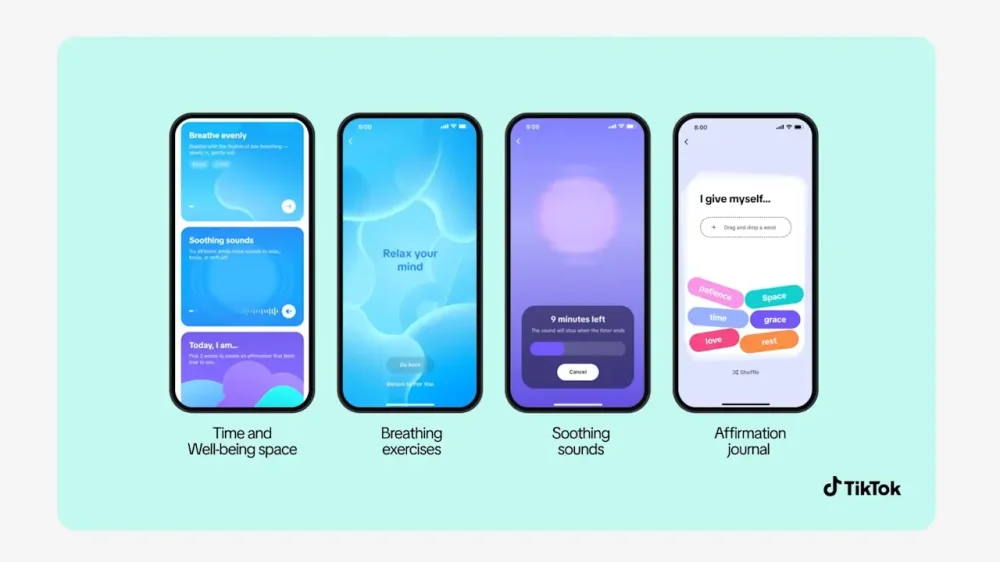
Instead of teens simply putting down their phones to take a break, TikTok wants them to use the app’s new breathing exercises and affirmation journal to improve their well-being. Over the past couple of years, a growing number of legislators have been proposing or enacting laws to restrict or limit minors’ access to social media apps in order to protect children’s and teens’ mental health. TikTok has other ideas on how to boost well-being—without ever leaving the app. This week, it launched a Time and Well-Being space within users’ account settings, replacing the existing screen-time management page. New features in the space include an affirmation journal with more than 120 positive prompts that let users set an intention for the day ahead. (Naturally, they are shareable on social media.) There’s also a sound generator that can play calming sounds like rain or ocean waves. TikTok cites survey data that those who use the platform are 14% more likely than nonusers to listen to music to help them sleep or relax. The page will also feature a breathing exercise module and content from creators who discuss topics including limiting screen time, utilizing parental tools, and customizing feeds. The company said that during its early testing, more people visited the new well-being screen versus the previous version of the screen-time menu. The affirmation journal has reportedly been the most popular tool. To incentivize users to prioritize their well-being while using the app, badges will be given to those who complete “well-being missions,” which include meditating on the app and sticking to a self-imposed screen-time limit. In a blog post, TikTok said that tens of millions of people have meditated using the tool after it was made available earlier this year. The company also said that it will prompt people to visit the Time and Well-Being section of the app settings if they use the app during designated “sleep hours.” Considering how much time teens spend on TikTok, prioritizing their well-being while on the app is paramount. According to the Pew Research Center, 6 in 10 U.S. teens visit TikTok daily, and 16% say they use it almost constantly. However, these latest features may simply be a case of rearranging deck chairs on the Titanic. Last year, more than a dozen states sued TikTok for its allegedly addictive algorithm, claiming it was deliberately designed to keep young people hooked on the app. These tools are meant to improve safety and well-being on the platform, particularly for teenagers. Yet, if you have to turn to deep breathing or be incentivized to stay off an app, it just might be the app that is the problem. View the full article
-
Proposal offering major concessions to Moscow blindsided European diplomatsView the full article
-
ECB chief accuses policymakers of six years of inaction as export-dependent model becomes defunctView the full article
-
As startups race to keep up with advances in artificial intelligence, some of them seem to be borrowing from China’s exacting work culture—which normalized a 72-hour workweek, or a “996” schedule of working six days a week from 9 a.m. to 9 p.m. While the 996 parlance and laser focus on AI may be new, hustle culture has always been embedded in Silicon Valley to some degree. Some business leaders, perhaps most famously Elon Musk, have long demanded those hours from their employees: “There are way easier places to work, but nobody ever changed the world on 40 hours a week,” he once said of the “hardcore” work ethic promoted at his companies. Now that culture seems to be seeping into more and more workplaces, as young founders and tech workers try to capitalize on the rise of AI. The CEO of the $10 billion AI startup Cognition has talked openly about the intense work ethic expected at his company. “Cognition has an extreme performance culture, and we’re upfront about this in hiring so there are no surprises later,” he shared on X earlier this year. “We routinely are at the office through the weekend and do some of our best work late into the night. Many of us literally live where we work.” In this environment, Karri Saarinen—an early employee at Coinbase and the former principal designer at Airbnb—has sought to do things differently. Saarinen founded Linear, an AI-powered enterprise software company, in 2019. It was well before the pandemic, but Saarinen felt it was important to lean into remote work—not just because Linear was creating tools for companies to use remotely for project management and product development, but also because the founders did not want to get stuck in Silicon Valley for the foreseeable future. “We honestly asked ourselves: Do we want to do a company here for the next 10 or 20 years? And we decided no,” Saarinen says. Linear has raised $82 million this year—spiking its valuation to over a billion dollars. It boasts high-profile clients like OpenAI and Perplexity. And it’s done so without blindly embracing the hustle culture spouted by people like Musk. Avoiding unsustainable pace In spite of this success, Saarinen says he has tried to be deliberate in his approach to building Linear, rather than cave to the pressure so many companies seem to feel amid the rapid clip of AI innovation. (It likely also helps that Linear has been profitable for four years, per Saarinen.) The tone of corporate messaging on AI, both from tech giants and smaller startups, has been that the technology is moving fast—and their employees need to step up to meet the moment. In a memo earlier this year, Amazon CEO Andy Jassy noted that the company was already using generative AI in nearly every part of the business, but that Amazon was “still at the relative beginning” and should move faster. “We’re going to keep pushing to operate like the world’s largest startup—customer-obsessed, inventive, fast-moving, lean, scrappy, and full of missionaries trying to build something better for customers and a business that outlasts us all,” he wrote. (Jassy also explicitly said AI adoption would necessitate job cuts, though he has denied the recent layoffs at Amazon were due to AI.) Other big tech companies have also tied AI strategy to breakneck speed and a potentially draining work culture. At Meta, senior leaders have called for employees to “go 5x faster” by using AI. “Our goal is simple yet audacious: Make Al a habit, not a novelty,” Metaverse VP Vishal Shah wrote in an internal message, per a 404 Media report. “This means prioritizing training and adoption for everyone, so that using Al becomes second nature—just like any other tool we rely on.” Shah added that “we expect 80% of Metaverse employees to have integrated AI into their daily work routines by the end of this year.” Meta has also invested billions of dollars in hiring—and poaching—top AI talent. Saarinen understands why companies feel like they need to move fast, but he argues the pace is likely not sustainable. “[This AI race] is not going to end after this year,” Saarinen says. “It will probably go for the next decade. So are you going to race that whole next decade?” As a founder, Saarinen says there can be an impulse to emulate other successful companies or keep up with your peers, regardless of what might be best for your own company. “I think a lot of this pressure is somewhat self-created,” he says. “I don’t know if it’s even real. Companies are so focused on what all the other companies are doing, so they’re trying to build the same things or catch up to everyone.” Taking time for test runs Linear has intentionally taken a slower approach to growing its ranks, in stark contrast to the companies offering huge sums of money to out-hire their competitors. The company has more or less doubled its headcount each year and now employs about 80 people. “At Coinbase, I was [maybe] the 12th person there,” Saarinen says. “And then in a year, there were like 60 people. Now most of the people around you are new and have been there a very short time. I think it can be useful, and it’s exciting [when] a company is growing fast. But there are a lot of situations where it gets quite chaotic, and the culture kind of suffers.” A core part of its hiring process is what the company calls a work trial. Once a candidate gets to the final stage of the interview process at Linear, they are invited to participate in a paid trial period—typically two to five days—where they are tasked with working on a real project alongside employees at the company. It’s a feature that adds friction to the hiring process, but helps the company understand whether someone will be a good fit. Sometimes it’s a differentiator that pushes a candidate to accept a job at Linear over other offers; in other instances, it has weeded out people who did not want to commit to a work trial. “The aim is trying to simulate the real working relationship as much as possible,” he says. “We can obviously see how the person gets things done, but also: What is their thinking style? What’s their communication style? For the candidate, I think it’s also a good way to know if they want to work in this company.” It can also help determine, for example, whether engineers are looking for a job where they are told what to do, or if they are interested in taking more ownership of their work, as is the norm at Linear. “People should have some life outside of work” The work trial and other atypical elements of Linear’s culture have helped attract people who are not interested in the endless grind of working at some of the hottest AI companies. Linear has had very little attrition, according to Saarinen, and the company usually tries to promote from within. Saarinen also firmly believes that the quality of work is compromised when you work people to the bone. “That quality piece that we value the most—we think that doesn’t happen if you just keep pushing people harder and harder,” he says. “People should have some life outside of work. They should get inspired by their life, and then hopefully that will kind of bleed into the work as well. If you just feel better, then I think the work you do is a little better.” He hopes that Linear might offer a counterexample to tech workers who are building companies in the AI space at this particular juncture. “I want to show other founders that you can also do things differently,” he says. “You don’t always have to do what everyone else is doing. I think that’s kind of what is happening in the market, that everyone is hearing this story: ‘Those guys work really hard, so I must do it as well.’” “And maybe it makes sense for you—or maybe it doesn’t.” View the full article

-
Earlier this week, communities around the world observed World Day of Remembrance for Road Traffic Victims. It’s a day to honor those we’ve lost and recommit ourselves to preventing future tragedies. As someone who’s worked in the transportation industry for more than 25 years, I come at this topic as an insider. You may have heard the term “Vision Zero” in local political campaigns or public safety PSAs. Vision Zero is a strategy to eliminate all severe crashes. It’s not just a marketing campaign, it’s an approach to road safety that begins with this basic understanding: Severe crashes are preventable. The status quo believes the fantasy that traffic violence is inevitable. That there’s nothing we can do. The truth is, we can prevent severe crashes. Every day, another 100 families are grieving the loss of a loved one. Every day, thousands of families are dealing with medical bills, physical therapy, loss of work, loss of mobility. Vision Zero is the strategy to end this pain and suffering. It’s a wildly different approach from the status quo in two major ways: First, people make mistakes. A transportation system needs to be designed so that when people do make mistakes, it doesn’t result in a death or serious injury. Second, safety is multidisciplinary. People are influenced by more than just street design. In Richmond, 1 in 12 residents is dealing with a combination of substance abuse and mental health disorders. And then they get behind the wheel of a car. In other words, Vision Zero is a practical strategy to save lives that’s based on understanding human nature. So if we know how to fix this crisis, why isn’t culture changing? It’s because the average person needs to hear the personal stories about the victims of traffic violence. The power of emotion Any historian or psychologist will tell you that facts alone don’t move humans to action. Emotion moves us. It’s hard to admit, because on some level we all want to think of ourselves as rational and logical creatures. But it’s when we get emotionally attached to something that we take action. That might sound overwhelming, but let me give you an example of how culture changed just in my lifetime, and not at all based on logic. In a 10-year period, about 13 Americans died from peanut allergies. Each one of those cases was tragic. But in that same 10-year period, over 400,000 Americans were killed in traffic crashes. And that’s not even counting the millions injured. 13 deaths from a chemical reaction in the body versus 400,000 deaths from preventable crashes. An entire generation of kids was led to believe that peanuts might send one of their classmates to the hospital. The peanut became a boogeyman in neighborhoods across the country. Now you can’t get a bag of peanuts near a school, or a soccer game, or a birthday party, or even on some airplanes. In a very short period of time, America mobilized for a Peanut Vision Zero. Change is possible I’m telling you this not to mock people who have to be careful around nuts, but to tell you our culture is capable of radical change in a short period of time. So when it comes to road safety: We have the data explaining what’s causing tragedies. We have the engineering and enforcement solutions to prevent tragedies. We can change culture. We can stop the tragedies. Whatever your background, your economic status, your education level, your job status—you’re a human being who interacts with other human beings. Get people emotionally connected to the impacts of traffic violence. There are many ways you might choose to do that. Maybe it’s playing a short video at a PTA meeting of a heartbroken parent talking about their child who was lost in a preventable crash. Maybe it’s inviting a survivor who’s dealing with life-altering injuries to speak at a local forum. No severe crash is acceptable. If you truly believe that, you’ll drive carefully and you’ll be the person in your friend group who’s always pressing on others to drive carefully. We’ve seen culture change in small and large ways. We can do this together. We can reduce life-altering crashes down to zero. View the full article

-
Ofgem nudges up price cap after Labour election pledge to bring down household billsView the full article
-
Nasdaq and S&P 500 sink as fears reignite over AI valuationsView the full article
-
António Guterres notes talks could fail as a result of negotiating tacticsView the full article
-
“Your new boss didn’t even offer you a glass of water?” my mother had questioned me in disbelief. “After how many interviews? You should not take that job. I am telling you not to take that job.” I had received a call from a recruiter to interview with one of the biggest beauty brands in the world. This was my chance to catapult my career into a company that didn’t often have job openings at my level, but didn’t have the best Glassdoor reviews. And I didn’t have time to ask too many questions. The recruiter had given me 48 hours notice to come in and do interviews. I had shared with my mother I did close to a dozen in person interviews, 30 minutes each, back to back. During those interviews, no one ever offered me a glass of water. Not the recruiter who greeted me. Not the other individuals who interviewed me. And no, not my future boss. I remember that at some point I had to use the bathroom. My future boss seemed annoyed that I asked where the ladies’ room was. I scurried into the bathroom quickly, not wanting to be late for the next interview. This was one of the handful of times in my career I didn’t listen to my mother. The recruiter made me an offer the next day, and I accepted on the spot. I was desperate to work at this big beauty brand with a fancy title that I know so many other candidates were vying for. And my future boss indeed did go on to display many characteristics of a bad boss. Other than the “water test,” as I coined thanks to my mom, I have missed a number of other red flags during interview processes. Now, as I coach individuals who are looking for their next opportunity, here are three signs to watch out for that may indicate you are about to work for a bad boss: Doesn’t seem interested in interviewing you In that specific interview at a beauty company, I remember my future boss walking in late, with no apology, sitting down abruptly and firing off the first question. He was scrolling on this phone as I tried hard to be energetic to get his attention. After I was done with that answer, there was a long awkward pause, and then he stumbled, asked another question, and was staring out the window. For most of the interview, he was slouched away from me, fidgeting with a pen, and barely made eye contact. If your future boss is distracted or disengaged, without any explanation, this could be a telltale sign of what it’s like to work for them. But also could signal bigger issues brewing at the company. They may be overwhelmed by work and not capable of staying present in the conversation. They may be forced into hiring someone for their team. They may be disgruntled or disinterested in their work. Study their body language, and non verbal cues, as well as what they don’t say and what they do say. If they are unhappy, chances are this will impact how they manage you. Makes sarcastic comments about your resume or the company “Is Been-gali really a language? Or did you just make that up to sound impressive?” joked a potential future boss. This was in an interview I had a few years after I had worked at that big beauty brand. “Why don’t you say something? Like ‘Hi . . . my name is . . .’” In my additional information section on my resume, I listed I was fluent in Bengali. After what I thought was a pretty good interview, this potential future boss doubted if Bengali was even a language. He did it right at the end of the interview as I was about to walk out. I spotted this red flag, so when the recruiter called, I declined to go any further in the interview process. During the interview, watch for comments like these from a potential future boss, either about your resume or the company you are interviewing for: Making fun of activities in your additional information section: You volunteer at a non-profit? So are you one of those do-gooders? You have a black belt in karate? Can you show me some of those Mr. Miyagi moves? Dropping sarcastic comments about former companies on your resume I can’t believe you worked at that competitor. Their products suck. How did you get a job at that place? Aren’t they bankrupt? Sharing disparaging comments about the current company I hope they warned you that this place is a real mess. Well, we are hiring for a number of roles right now, tough times here. Watch for even an innocent joke, an offhanded comment or sarcastic remark. It may be a window into their leadership style or dysfunction occurring at the company. Takes Up Most of the Air Time Finally, I once was interviewing at a software company where the future potential boss would ask a question and go on to answer it himself. “Let’s talk about a time when you failed to lead a project. I remember once when I was…” After he talked and talked, I was able to squeeze in a quick response until he interrupted me again. He asked another question, and then another, and pretty much took up all the air time in the interview. I barely had time to share about my experiences. If you witness a future potential boss talking incessantly, answering their own questions, or interrupting you in an interview, this could be a sign they have some bad behaviors. If you do end up working for them, be prepared that they might talk more than they listen. They may ignore or dismiss your ideas. They may lecture you instead of coaching and collaborating. They may also be the type of boss who believes it’s my way or the high way, and makes decisions on their own without the team’s input. If you don’t see any of the red flags in an interview process, and end up working for a bad boss, don’t beat yourself up. Most future bosses should be on their best behavior, trying to court candidates during interviews. Finally, if you are actively looking for a new job, you may see some of these red flags and still choose to accept the job. For many of us, the reality of having bills to pay can outweigh any potential bad boss behavior. Spotting these red flags can help prepare you for what it might be like to work for this future boss, and at this future employer. View the full article

-
Retail sales down for the month in indication of fragile state of the economyView the full article
-
The reputation of one of America’s leading economists is in tatters since the emergence of emails to Jeffrey EpsteinView the full article
-
Plus, the (late) jobs reportView the full article
-
It’s five answers to five questions. Here we go… 1. I’m being asked to lead DEI training with no expertise in it I’m very happy to work for a company that remains committed to DEI, even in this strange time. The direction coming down from many levels above me is that the company will be implementing DEI training for all employees. And because my colleague and I have experience conducting training, the powers-that-be have decided that we will present the DEI training, even though we have no expertise in DEI. We’ve had a chance to preview the course they want to use, and it is A LOT. Maybe this is a model DEI course? I wouldn’t know, since this is not my field! On top of some pretty hard-hitting, in-your-face material, participants are asked to share personal experiences, which feels like a weird ask at work. Adding another layer of discomfort, during the course preview, people were drawing parallels between past practices referenced in the course and current events. The company has a staff of around 1,500 employees; surely it’s reasonable to expect that they vote all across the political spectrum. My colleague and I agree we that we do NOT have the skills and experience to present the material and facilitate the discussion this course is asking for, even if participants avoid politics. Our supervisor agrees with us that this training should be conducted by a DEI expert, and he has recommended to his leadership that the company should hire a consultant. The decision makers are not listening to him and are doubling down on “anyone with training experience can lead this course.” My colleague and I are preparing to push back as a team. We agree that DEI is an important topic, especially now, and therefore it’s worth doing well. Even if the course material was less dramatic, I still believe we are unqualified to present it. I can’t tell if somebody up in the C-suite just wants to check off that DEI training is being done, or do they truly not understand that assigning this to amateurs does not bode well for a good outcome. Regardless, are we overreacting? Are there other factors we should be taking into consideration? You are not overreacting; this is a looming disaster. These trainings are sensitive and challenging under the best of circumstances; having trainers without expertise risks it being a catastrophe. Is flatly refusing an option? For what it’s worth: I’m not sure how committed to DEI your company really is, if they’re not willing to take the training seriously enough to hire trainers with actual expertise in the material. This reads like box-checking from people who aren’t convinced it’s really important. 2. My coworkers keep taking calls on speakerphone Since returning to the office after the pandemic, I’ve noticed some people using speakerphone for calls in our open office plan. It’s bad enough that you have to hear one side of everyone’s meetings now, but hearing both sides is unbearable! We have phone rooms available that they could be using if they don’t want to use headphones. Is there a polite and effective way to ask someone to use headphones? For context, my floor is full of “miscellaneous” employees who are all part of different teams and do not work directly together. I have no way of knowing who the person is or what team or manager they report to without asking. There is not a floor manager or other authority who is physically in the space. One person is particularly egregious about this and I have sat on the other side of the floor from her, but others will do it from time to time as well. Ugh. If it’s pretty widespread, ideally your office would issue some guidance on it as a whole; any chance you could suggest it to someone with some authority to address that? They don’t need to be physically in the space to issue guidelines if you tell them there’s a problem. But otherwise, it’s reasonable to say to any individual offender, “I’m sorry to ask, but I’m having trouble focusing when your calls are on speakerphone. Would you mind using headphones or just not using the speaker?” 3. What happened with this meeting invitation? Part of my job is speaking to clients about how they want us to custom-design their products, whether it’s getting preliminary information or gathering actionable feedback to refine the product before shipment. I’ve got a good handle on how these conversations usually go, and it’s a point of pride that I’ve never once missed a meeting (thank you to two planners, several phone alarms and bundles of anxiety!). After I recently provided a client with my availability to discuss their specs, we settled on a time that worked for all parties. I had about a 20-minute window between their call and a previously scheduled one, which is plenty of time even for my anxiety-fueled soul. The first call did run a little long, but I still had a solid buffer of time to prepare for the next meeting. So imagine my horror when I got an email from that second client suggesting I no-showed, and that they cancelled our meeting 15 minutes before our mutually confirmed time! Sure enough, the meeting invite they sent was half an hour earlier than the time we agreed on: I had accepted it without even thinking to visually confirm the meeting time, and I’ll take the lumps for my failure to fact-check an invite’s details. But I’ve also never had a client change meeting times on me without confirming it was okay first. After I apologized and provided a new window of availability, I tore through the digital paper trail between this client and me. They had said nothing about scheduling our conversation for a different time than the one we agreed upon. Was it an error? Was it a bait and switch? Did I unknowingly agree to an end time for the conversation and not an actual call time? I don’t know, because they didn’t acknowledge their part in creating this confusion when we rescheduled the meeting, which I will admit that I’m kind of salty about. Is this wholly my error since I should have been more diligent instead of blindly accepting their invite? Am I being unreasonable by expecting someone to signal a change in previously confirmed plans? Are there chaos gremlins out there who hear “Let’s schedule a call at 3:30” and interpret that as when the meeting should be ending? You’re reading too much into it! This is probably just a mistake on their end. You agreed on 3:30 and somehow they wrote down 3:00. It happens. It’s not a bait and switch, and it’s not an indication that people have started using ending times as start times. It’s just a mistake. Should you need to double-check that the time on invitations matches the time you agreed to earlier? You shouldn’t need to, but it’s a good idea to do it, especially when you’re dealing with clients. Is it a disaster that you didn’t? No. But it’s a good thing to check for in the future (especially when you’re dealing with this client, since now you know it’s a risk with them.) 4. Can my performance evaluation mention my maternity leave? My work will be doing annual performance evaluation shortly. My supervisor and I have already had conversation about it, and there aren’t any surprises ahead. They have asked me to draft some bullet points for their supervisor narrative and I was wondering if it’s appropriate to mention my maternity leave from the past year to provide context within the narrative. Simply, I accomplished a lot for a normal year, much less one where I was gone four months. For example, if my 150-person department normally makes 200 self-sealing stem bolts individually and collaboratively in a year, this year I made five all by myself. I ask because I would normally consider it not something that goes in that narrative and introduces possibility for bias, but on the other hand, it shows how well I manage my time! Yes, you can absolutely mention that to put your accomplishments in better context. Your evaluation shouldn’t mention your maternity leave as something that gets held against you (like “Jane missed a crucial busy season”) but it can mention it to point out strengths (“despite working a compressed year because of medical leave, Jane was still able to have a record year”). 5. What is the purpose of this workplace stress check? Every year, I get an email from the company that provides my employer’s EAP asking me to take the annual stress check-up. It’s an online test and, according to the email, it’s “a tool for measuring your stress levels.” I’ve worked at this employer for years and never taken it — I’ve never prioritized it before the deadline, those online tests kind of stress me out, and I wasn’t sure of the purpose. But am I missing out on a workplace benefit? What kind of information can a stress check give you? Also, is my employer getting aggregate data they can use to improve working conditions, or does nothing go to the employer at all? The email says, “You may rest assured that your check results will never be disclosed to your company without your consent,” but I’m not sure if that includes anonymized data as well. Most likely it’s used to provide you with personalized info on managing stress, as part of the EAP’s offerings. “Personalized” could mean anything from automated results assessing your stress level and recommendations for improving them to marketing emails throughout the year targeted to areas you identified as stressors. It’s unlikely to be more involved than that, although if you’re lucky I suppose it could be one step above the “meditate and have good sleep hygiene” pablum that a lot of workplace wellness programs provide. It’s possible that your employer also receives aggregated data, but I wouldn’t assume they do — and if they do, it’s unlikely that it gets used in any real way to improve working conditions, although there may be rare exceptions to that. If you want to know more about how your workplace’s program works specifically, you could also ask HR or whoever administers your EAP. But it’s almost certainly less involved than you’re envisioning. The post I’m being asked to lead a training with no expertise, coworkers keep taking calls on speakerphone, and more appeared first on Ask a Manager. View the full article