ResidentialBusiness
Administrators
-
Joined
-
Last visited
Everything posted by ResidentialBusiness
-
 Organisers of the tennis tournament warned that a price cap would damage its funding modelView the full article
 -
The most difficult problems can nurture the most talented researchersView the full article
-
It falls to Nvidia to make or break the market mood for the rest of the year View the full article
-
Long neglected in Washington, the region is key to some of the president’s priorities, including halting illegal migration and limiting Chinese influenceView the full article
-
Low allocation comes as the government and FCA encourage fund managers to put more money in domestic marketView the full article
-
Test your knowledge of the set-piece political event with our questions on the financial statements of yesteryearView the full article
-
US claims meeting is part of an effort by Tehran to acquire sensitive military technologies from MoscowView the full article
-
Inspired by the ongoing auction of Bob Ross paintings to raise money for public television, Last Week Tonight With John Oliver is putting some of its own TV artifacts up for auction for a good cause. Host John Oliver dedicated the close of Sunday’s season finale to local public television, which is facing an unprecedented crisis. Federal budget cuts could by next year close as many as 115 public television and radio stations in the U.S. serving 43 million Americans, according to the Public Media Bridge Fund, a philanthropic initiative. “These stations can fill a vital community role,” Oliver said during Sunday’s show. johnoliversjunk.com Bob Ross Inc. said in October that it was putting 30 paintings by the late artist up for auction to pay for public station licensing fees. The first three paintings sold last week in Los Angeles for more than $600,000 total. Oliver said Last Week Tonight originally tried bidding on one of the recently auctioned Ross paintings in hopes of flipping it to raise even more money for public television. “Sadly, those prices were outside of our budget,” Oliver said. So instead, the show is tapping its own archives with the auction site johnoliversjunk.com. johnoliversjunk.com Items like the giant Reese’s mug that made its first appearance during a 2017 episode about net neutrality are now up for auction alongside Oliver’s “on-screen wife,” Mrs. Cabbage, and a quintet of bad wax replicas of presidents originally purchased by the show from the now-closed Hall of Presidents and First Ladies in Gettysburg, Pennsylvania. All the proceeds from the auctions will go to the Public Media Bridge Fund. johnoliversjunk.com Though Last Week Tonight didn’t have the budget to drop six figures on an original Bob Ross painting at last week’s auction, Bob Ross Inc. did donate one to Oliver’s auction. “Cabin at Sunset” was created during an 1987 episode of Ross’s PBS show The Joy of Painting, and it’s presently the first item shown on Oliver’s auction site. The painting currently has a bid of more than a million dollars. The top bid for a sculpture titled “LBJ’s Balls” is over $25,000, and the top bid for a trip to New York City to meet Oliver is higher than $50,000 at the time of this writing. So far, the leading bid to appear in a photo over Oliver’s shoulder during a future episode has just passed $100,000 after 45 bids. johnoliversjunk.com The show found some lower-priced ways to raise money, too, like signed merchandise from the Moon Mammoths, the minor league baseball team Last Week Tonight temporarily rebranded in July, and a Mr. Bean DVD signed by Joel McHale. The auction closes on November 24. Oliver also promoted Adopt A Station, a nonprofit for people who want to help out and donate to public media stations but aren’t able to participate in his auction. The President administration budget cuts meant an end to the Corporation for Public Broadcasting (CPB), which said in August that it is winding down operations. The Public Media Bridge Fund says the end of CPB funding will destabilize the public media system. It’s seeking to raise $100 million over two years to help the most at-risk communities. View the full article

-
The influence of the AI industry is becoming a major topic in New York’s 12th congressional district, where a crowded Democratic primary packed with millennial and Gen Z candidates is heating up. The seat represents one of the wealthiest communities in the country — and is a liberal stronghold — so whoever wins could eventually become a major player in the fight to limit the most noxious impacts of large language model (LLM) technology. On Tuesday, Cameron Kasky, a political activist and Parkland shooting survivor who lives in the district (which includes the Upper West Side and Upper East Side) announced he was running. His campaign is making fighting the “AI oligarchs” a pivotal focus, adapting the rally cry used by progressive Democrats like Bernie Sanders and Alexandria Ocasio-Cortez, for the ChatGPT age. “Generative AI is undoubtedly one of the most societally damaging innovations that humanity has ever created, and people do not understand the toll it will be taking on us,” says Kasky’s new campaign site. “This damage includes the fresh water supplies it is depleting, a media literacy crisis that has already gotten out of control in this country over recent years, and the degree to which children are leaning on AI for therapy, companionship, and more — at the cost of their critical thinking skills and cognitive development.” Kasky says his legislative priorities will include holding AI companies accountable for their environmental impact, preventing mass layoffs, and better regulating the influence of tech companies on child safety. “I have no sympathy for AI, and no tolerance for what it has done to our population. It will only get worse if we do not get in the way as aggressively as possible,” he says. He’s not the only person planning to take on AI in the primary. Alex Bores, a Palantir alum who has proposed state legislation – the RAISE Act – that would rein in the industry, has also made clear that one of his focuses would be regulating artificial intelligence. Earlier this week, he was targeted by ads funded by Leading the Future, a pro-AI super PAC funded by OpenAI executive Greg Brockman and Andreessen Horowitz that’s intent on blunting the influence of tech critics in the upcoming congressional primaries. The group has called Bores’ legislation a “clear example of the patchwork, uninformed, and bureaucratic state laws that would slow American progress and open the door for China to win the global race for AI leadership.” Bores, in turn, has started fundraising off the ads. “This AI super PAC’s first target? Me,” said Bores in a tweet. “Why? They’re scared of leaders who understand their business regulating their business. They want unchecked power at your expense—and I’m the guy standing in their way. It is a crowded race, with about ten people running for the Democratic nomination in total. Most of the other candidates, who include Nadler favorite Micah Lasher, community organizer Liam Elkind, and attorney Jami Floyd, have yet to issue strong positions on artificial intelligence – but that could change. Meanwhile, Kennedy family heir and social media provocateur Jack Schlossberg, who also announced his campaign this month, has at least some thoughts on the tech. Last year, he tweeted his reflections: “Question about AI — Is it sexual ? We’re are ALL sexual beings, that’s just a fact. If AI is non-sexual, does that limit its potential ? or make it unstoppable ?” View the full article
-
Billionaire’s appearance at black-tie event for Mohammed bin Salman signals improving relations with Donald The PresidentView the full article
-
US president touts $1tn investment from Mohammed bin Salman during gilded Oval Office welcome for strongmanView the full article
-
Competition and Markets Authority set to probe dentistry sector after sharp increase in pricesView the full article
-
Every few years, SEO gets a shiny new acronym. Voice search. AMP. E-A-T. Each promised to rewrite the rules, and each eventually found its way into the same corporate graveyard of experiments and half-baked roadmaps. I know, because I bought in. For a year and a half, I buried myself in schema markup—building page-level knowledge graphs, connecting entities, mapping relationships until entire sites resembled semantic webs. It was meticulous, elegant, even beautiful in its own way. And it delivered nothing. Not because technical work doesn’t matter—SEO is inherently technical. The issue in enterprise is that Google is a black box. You can pour months into structured data and still have no proof of impact. And when technical effort doesn’t ladder up to outcomes the business can recognize, leadership moves on without us. That’s the gap: SEO leaders must prioritize and align on strategic goals, not just technical execution. GEO exposes the limits of SEO Now the industry is circling around Generative Engine Optimization (GEO) with the same energy. Use the right schema. Reformat content into chunks. Optimize for citations in AI Overviews. Some even suggest publishing “LLM-friendly FAQs” or rewriting content to mimic generative outputs. It’s the same playbook that surfaced during featured snippets, voice search, and AMP: act fast, package advice, sell the illusion of control. But here’s the reality: These tactics don’t scale in an enterprise. They don’t hold up across hundreds of markets, thousands of pages, or the messy sprawl of global product content. And they don’t convince executives. No CMO cares that you’ve been cited in an AI Overview when brand demand is softening. And no CEO is going to see value in SEO because you reformatted content into semantic chunks. What they care about is whether marketing is building pipeline maturity and coverage—and whether your function is visibly contributing to it. Generative engines don’t just reduce clicks—they compress what used to be multi-touch discovery across dozens of websites into a single answer. That’s bad news for enterprises: It strips away the context you control, gives you fewer chances to influence perception, and leaves your brand fighting for representation in an answer you don’t own. The funnel is a myth For years, B2B marketers have comforted themselves with neat stages like TOFU, MOFU, BOFU, as if buyers marched predictably from awareness to consideration to decision. It gave teams something to measure, something to label content with, something to report up. But it was always fiction—a convenient story to feel in control. In reality, humans don’t buy in stages. They buy when they’re ready, from whichever piece of content makes them feel understood. Sometimes that’s a thought leadership post. Sometimes a case study. Sometimes a stray LinkedIn comment. Most of your audience is out of the market 95% of the time, and when they enter the 5% that’s ready, they won’t politely walk through your funnel. They’ll look for whoever already owns mindshare around the problem they need solved. Discovery now starts with LLMs This is why GEO matters. Generative engines are becoming the first touch in discovery, shaping how problems and solutions are framed long before a buyer ever hits your website. In-market buyers still rely on Google when they’re validating vendors or comparing specifics, but by then the shortlist has often been made. If your brand isn’t represented consistently in LLMs early, you may never make it to that last touch at all. That’s not a measurement problem. That’s a brand problem. The GEO strategy you need So what should enterprise SEO leaders actually do? You can take control by prioritizing three things in your GEO strategy: Get governance right First, audit governance, not rankings: Where are product names inconsistent across regions? Where are entities unlinked, or worse, competing with each other? Where is the brand failing to articulate its core problem clearly enough that an LLM could stitch it into a coherent answer? If you don’t have those answers, you don’t have a GEO strategy. Focus on metrics that matter Second, change what you measure: Stop reporting on clicks and impressions. Start reporting on demand signals, coverage of in-market accounts, and share of mind against the core problems your company solves. Frame GEO in the language of pipeline maturity and brand strength, not SERP visibility. Some leaders think the solution is to double down on content—to publish more, hire editors, and chase authority signals in the eyes of Google and LLMs. That instinct isn’t wrong, but it’s incomplete. Content alone won’t save you if your enterprise knowledge is fragmented, inconsistent, or invisible to generative systems. Recognition doesn’t come from publishing volume. It comes from whether your organization’s knowledge is structured well enough that an LLM can retrieve and reuse it with confidence. That’s not an editorial challenge. That’s a governance challenge. Become a knowledge architect Third, step into the role of knowledge architect. This is uncomfortable for many SEO leaders who’ve built careers on keywords, rankings, and content production—treating SEO as a publishing engine measured in pageviews. Schema markup already taught us the limits of that approach: Page-level knowledge graphs were never enough. Being a knowledge architect isn’t about injecting JSON-LD into templates. It’s about driving your enterprise toward a shared ontology—a system of entities, relationships, and standards that makes your company’s knowledge consistent, connected, and retrievable. You may not own that ontology outright, but you’re often the only leader who understands how the web works, how LLMs need context, and how messy data sabotages visibility. Your role is to push the enterprise toward order, not because it earns citations, but because it makes the company’s knowledge tangible enough for generative systems to trust and reuse. If you don’t step into that role, someone else will. And when they do, it won’t be called SEO anymore. Bring your entire team along for the ride Finally, educate up and down: Your team needs to understand that “chunking” content or chasing citations is busywork, not strategy. Your executives need to understand that GEO isn’t a fad but a structural shift in how demand is captured and pipeline is built. Connect those dots, and you keep SEO relevant at the highest level. Fail, and you risk being reduced to an executional function leadership barely acknowledges. GEO is a stress test GEO isn’t a silver bullet, and it isn’t the future of SEO. It’s a stress test—one that reveals whether leaders are ready to evolve beyond keywords and content factories into something bigger. GEO is also an opportunity. Keep treating SEO as a traffic shop, and your influence will shrink with every generative query. Step into the role of architect for how your company’s knowledge is structured, connected, and made visible in the systems executives themselves now rely on, and your relevance only grows. The uncomfortable truth is this: SEO won’t die because of Google or because of LLMs. But SEO leadership will become irrelevant if its leaders can’t evolve. And when that happens, SEO won’t be rebranded. It will simply be replaced. Meet our AI Visibility Toolkit Discover how you appear across LLMs like ChatGPT, Perplexity, and Google AI, and get AI-powered strategy recommendations. Explore the toolkit Get started with View the full article
-
Across the country, data center demand and construction have been skyrocketing throughout 2025. And so has local opposition to those projects. From Indiana (where a developer withdrew its application to build a data center on more than 700 acres of farmland after local opposition) to Georgia (where now at least eight municipalities have passed moratoriums on data center development), residents and politicians are pushing back against the water- and energy-hungry sites. Between late March through June of this year alone, 20 data center projects, representing about $98 billion in investments, were blocked or delayed in the United States, according to a new report from Data Center Watch, a project from the AI security and intelligence firm 10a Labs. That number is higher than all of the data center disruptions the research group had tracked in the two years prior to its most recent report. A turning point against data centers Data Center Watch began keeping tabs on this trend in 2023, and released its first report earlier this year, covering 2023 through the first quarter of 2025. In that time frame, 16 projects, worth $64 billion, were blocked or delayed. Though a project may be cancelled for myriad reasons, these were cases where local opposition was reported to have played some role in the decision, says Miquel Vila, an analyst at the Data Center Watch project. In the second quarter of 2025, that opposition surged 125%. “We were expecting a few more cases,” Vila says of Q2, “but not 20.” One important caveat, Vila notes, is that the data center industry is booming; it makes sense that opposition would, too. But even accounting for record high construction spend, he sees these recent numbers as a “turning point” in the trend. What’s wrong with data centers? Tech giants are building out data centers at a rapid pace to meet the enormous power needs of artificial intelligence (AI). But data centers have faced local criticism because of the resources they consume, like water (which is especially a concern in scarce regions like Arizona) and energy (which has been linked to rising electricity prices across the country.) Along with water use and utility prices, communities have also taken issue with noise, landmark preservation, and transparency, Vila adds—like if it isn’t clear who the end user of a data center will be. Data Center Watch has found 188 community groups that have formed to fight data center projects. Between March and June alone, 53 active groups across 17 states were targeting 30 data center projects. Amid that pushback, lawmakers have also been reconsidering their regions’ tax subsidies to data centers, as well as regulations around zoning, and the projects’ environmental impacts. That community opposition is even causing some lawmakers to change their regulations or hold off on building data centers in the future. “Local opposition is having an impact in the regulatory landscape of data centers,” Vila says. Dan Diorio, vice president of state policy for the industry group Data Center Coalition, said in a statement that it continues to see “significant interest” across the country for “responsible data center projects,” and said such projects create jobs, economic investment, and local tax revenue. He added that the coalition’s members are committed to community engagement, stakeholder education, and to working with policymakers and regulatory bodies. “Data centers are also committed to being responsible and responsive neighbors in the communities where they operate,” Diorio said. Data centers and politics Data center opposition has become a talking point in recent political races. In Virginia—the biggest data center market in the world—Governor-elect Abigail Spanberger campaigned in part on making sure data centers pay “their fair share,” and on addressing rising electricity prices. In Georgia, Peter Hubbard—who was elected to the state’s Public Service Commission, which regulates its utilities—has specifically highlighted how data centers can drive up people’s energy bills. Georgia is increasingly becoming a data center hotbed, and is in fact the second-largest such market in the world. But while both those politicians are Democrats, data center opposition is a bipartisan issue, Data Center Watch found. Both blue and red states are rethinking incentives to developers or tightening their rules around such projects. That tracks with other research about data center support: a recent Heatmap poll found that only 44% of Americans would welcome a data center near them. Looking ahead Data Center Watch plans to keep an eye on project delays and cancellations going forward. Already, it seems the trend is continuing into Q3: In one prominent example, Amazon’s proposed Project Blue data center, was rejected by Tucson, Arizona’s town council in August. (In Data Center Watch’s latest report, two of the 20 affected projects were from Amazon: one in Becker, Minnesota, which was suspended as lawmakers reconsidered tax incentives, and one in King George, Virginia, which was delayed because of legal issues and resident pushback.) Vila expects data center opposition to keep growing—and to increasingly become a part of project calculations. “Before, local opposition was more of an anecdotal possibility,” he says. “Now, it’s becoming a core feature of development . . . in the same way issues like land, energy, and water are taken into account.” View the full article

-
Pigs famously have thick skin and Donald The President does not. It’s just one of myriad distinctions between the cloven-hoofed barnyard animal and America’s 47th president. There’s a good reason, however, why many social media users are currently addressing The President as “Piggy,” and sharing crude, AI-assisted images of him in porcine form. Rest assured, he paved his own pathway to hog heaven. On Monday, a clip of The President addressing reporters aboard Air Force One went viral. It begins with reporter Jennifer Jacobs pressing The President about the eternally unfurling Epstein scandal. The president seems as though he’d rather not answer the question—at least, that’s how it comes across when he admonishes Jacobs: “Quiet, Piggy.” While leaders in most professions might be disciplined or even fired for such a transgression, The President has proven uniquely immune to formal consequences for violating norms. But he is in no way immune to informal consequences, which is why the internet has already repurposed ‘Quiet, Piggy’ into a memetic insult against The President. Bluesky users have started quote-tweeting The President’s latest TruthSocial dispatches with the new catchphrase, and they’re doing the same for media appearances from The Presidentian underlings like House Speaker Mike Johnson and U.S. Representative Nancy Mace. Quiet, Piggy. — Kevin M. Kruse (@kevinmkruse.bsky.social) 2025-11-18T13:30:52.321Z “Quiet Piggy.” 🙄 — Amanda Weaver (@amandaweavernovels.com) 2025-11-18T16:50:48.163Z Over on X, Governor Gavin Newsom is among the many users adding a body-shaming component to the catchphrase, tweeting unflattering photos of the president along with it. Quiet, piggy. pic.twitter.com/RIKsI4iDjV — Gavin Newsom (@GavinNewsom) November 18, 2025 “Quiet, piggy.” pic.twitter.com/3uOoRnjGpX — Rick Wilson (@TheRickWilson) November 18, 2025 Quiet, piggy pic.twitter.com/CKORVzGGpG — Republicans against The President (@RpsAgainstThe President) November 18, 2025 Meanwhile, some TikTok users are also posting unflattering images of the president to accompany the insult, and others are posting AI-generated images of the president, alternately as Miss Piggy or as himself yelling at Miss Piggy. If social media users seem especially eager to weaponize “Quiet, Piggy” by reflecting it back at the president, it’s likely because of how well this outburst fits in with The President’s previous behavior. The President has a documented history of calling women like Rosie O’Donnell and former Miss Universe Alicia Machado “pigs”—along with “dogs,” “slobs” and “disgusting animals”. He also has a more recent and pointed history of insulting and berating journalists. Just after the 2016 election, 60 Minutes journalist Lesley Stahl reportedly said that The President told her the reason he regularly bashes reporters is to “demean” and “discredit” them so that the public will not believe “negative stories” about him. And The President continued to insult journalists in his tone-setting first post-election press conference, refusing to take a question from CNN reporter Jim Acosta and telling him: “You are fake news.” Over the course of his initial term, The President would escalate attacks on press that seemed to be insufficiently friendly, deeming them the “enemy of the people.” He seemed to harbor a special animosity, though, toward journalists who happened to be women. In one typically fiery exchange with CNN’s Abby Phillip in 2018, for instance, The President responded to Phillip’s question about then-Special Prosecutor Robert Mueller by saying: “What a stupid question that is. What a stupid question. But I watch you a lot, you ask a lot of stupid questions.” In his second term, The President appears even more committed to attacking reporters for asking questions he’d prefer not receive. He regularly refuses to answer questions, tells reporters “You’re not supposed to be asking that,” or calls them “obnoxious” and “very evil” for asking anyway. Indeed, the whole “TACO The President” attack over the summer, which accused the president of Always Chickening Out on tariffs, would likely not have blown up to the level it did had The President not told a reporter who asked him about it: “Don’t ever say what you said.” Still, despite The President having been extra combative with reporters all year, he has lately seemed even more prickly with an uptick in questions about his connection to Jeffrey Epstein. The President on Epstein Files: I don’t want to talk about it because fake news like you—you’re a terrible reporter—fake news like you just keeps bringing up to deflect from the tremendous success of The The President Admin pic.twitter.com/rZjobTujCN — Acyn (@Acyn) November 16, 2025 The President: Will you let me finish? You are the worst. You’re with Bloomberg right? You are the worst. I don’t know why they even have you. pic.twitter.com/mTmZ77KTYv — Acyn (@Acyn) November 17, 2025 When an ABC reporter asked The President about the Epstein files on Tuesday, during the course of this writing, The President responded by saying, “I think the license should be taken away from ABC,” and urging FCC chairman Brendan Carr to “look at that.” As heated as The President can get when asked about this issue, though, “Quiet, Piggy” stands out as an exceedingly juvenile and degrading insult. Many social media users have been speculating about why the schoolyard name-calling went unchallenged in the moment; why Jacobs’s fellow reporters didn’t make sure her question got answered or demand an apology on her behalf. Perhaps it’s the absence of any heroes aboard Air Force One, though, that has inspired social media users to push back on The President’s hogwash themselves. View the full article
-
A "spike in unusual traffic" caused service degradation for the infrastructure giant, disrupting digital banking for customers. View the full article
-
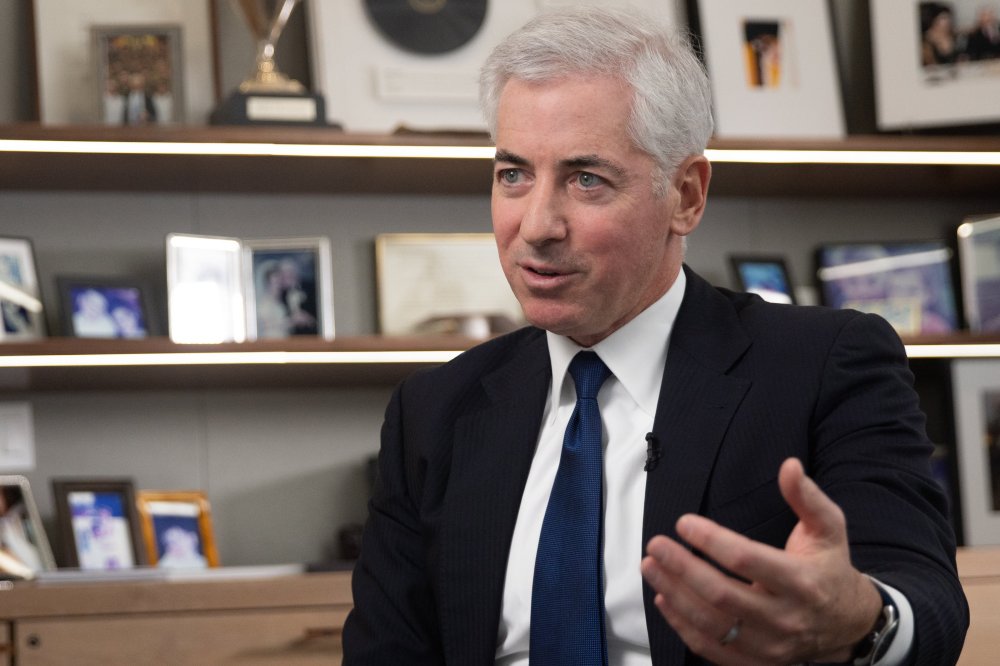
The billionaire and legacy government-sponsored enterprise investor says there is a quick interim fix and they should eventually leave conservatorship. View the full article
-
This post is part of Find Your Fit Tech, Lifehacker's fitness wearables buying guide. I'm asking the tough questions about whether wearables can really improve your health, how to find the right one for you, and how to make the most of the data wearables can offer. When I test smartwatches and fitness trackers, I always pay attention to accuracy. Is my running pace correct? Does the device capture the ups and downs of my heart rate? I even got a VO2max lab test to check a bunch of watches' fitness scores. But you'll notice that one thing I don't test for accuracy is calorie burn. None of my devices come close to agreeing on the number of calories they think I'm burning, and I don't expect them to. Even scientists who study the accuracy of wearables can't answer the question in a way that's useful when you're shopping for this year's devices—but we'll get into why that is below. There was a time, before Fitbits, when nobody knew quite how many calories they were burning on a daily basis. Sure, you could calculate a rough estimate based on your body size, sex, and age. You could choose whether or not to believe the calorie readout on the cardio machines at the gym. (Spoiler: don't.) But the idea that a gadget on your wrist could tell you how many calories you personally burned during one particular day was revolutionary. It was also wrong. How fitness trackers calculate calorie burnBefore I discuss how accurate fitness trackers are, let’s look at where they get their numbers. For calorie calculations, the main sources are motion and heart rate data. For motion, trackers use accelerometers to figure out when your body is moving, and by how much. If you have a watch on your wrist, and the watch swings back and forth rhythmically while sort of bouncing up and down, your gadget guesses that you must be walking. If there is quicker bouncing and your wrist makes a smaller movement, you’re probably running. This is the basic idea behind how trackers detect how many steps you’re taking. If you’ve paid attention to your step count, you already know some of the ways this can be inaccurate. If you’re shopping, for example, keeping your hand on the shopping cart handle may result in you not getting credit for the steps you’re taking. That depends on the device, though. (For a perfect illustration of this issue, see these tests I did comparing a Garmin to an Apple Watch on a treadmill. When I rested my hands on the treadmill handle, the Apple Watch recorded 318 steps while the Garmin recorded none.) Then there’s the heart rate sensor: Since your hands don’t always move predictably during exercise, it can be easier to just tell your watch that you’ll be cycling or doing yoga or whatever. The gadget then uses your heart rate to make an educated guess about how much work your body is doing. Whatever the source of the data—heart rate, movements, or a combination—the gadget processes it through a formula to calculate how many calories it thinks you’re burning. Your age, weight, and sex may figure into this equation. Generally, though, the fitness tracker doesn’t actually know how many calories you’re burning; instead, it’s calculating a probable number based on incomplete information. Why there's no simple test for accuracyIf humans were robots, all built the same, all moving in predictable patterns, this formulaic approach might work. But humans are complicated, and technology often gets confused. For example, you may get different step counts if you put a device on your right versus left wrist. And the optical heart rate sensors that a lot of trackers use may be less accurate on dark skin compared to lighter skin. These problems relate to the data that the trackers gather, but calorie burn isn't a direct measurement. It's a calculation, and different algorithms can come up with different calorie burn numbers depending on how the algorithm is designed. The companies that make fitness trackers aren’t required to publish their algorithms or verify that their calorie counts are accurate. They can just put a device on the market, and there you are, comparing wearables on shopping sites without any information about how accurate they are, outside of the companies’ claims. Researchers are interested in fitness trackers’ accuracy, which would seem like a good thing. They want to be able to use wearables in research or recommend them for individuals and healthcare providers, and so they'll run studies comparing consumer devices to lab equipment. This sounds like a great way to answer our questions! But there’s a huge delay in actually getting that information, and it’s often published too late to be useful. By the time a researcher buys a batch of the latest model, runs a study, writes it up, submits it to a journal, and finally gets it published, several years may have gone by, and the company has moved on to the next model. That delay is why I (usually) can't use scientific studies to weigh in on the devices I write about. Here's a great example of how frustrating it can be: this review was published in 2025, and found the Series 1 was the Apple Watch that turned up the most often in the studies the authors were able to gather. The Series 9 and 10 watches were completely missing from the available data, and as a reminder, we're now up to a Series 11. With that caveat about delays, I still think it’s useful to look at the research on fitness trackers to see what themes emerge. Are any of them good at estimating your calorie burn? What studies say about fitness trackers’ accuracyTime for the bad news. A study from 2020 that looked at a variety of gadgets from Apple, Garmin, Polar, and Fitbit found that all the devices are inaccurate more often than they are accurate. The authors considered a device to be accurate if its reading was plus or minus 3% when compared to a more reliable measure of energy expenditure (that is, calorie burn) in a lab setting. Here’s how some of the top brands fared: Garmins underestimated calorie burn 69% of the time. Apple watches overestimated calorie burn 58% of the time. Polar devices overestimated calorie burn 69% of the time. Fitbits underestimated calorie burn 48% of the time and overestimated 39% of the time. The fact that Fitbits were roughly correct on average doesn’t mean they were useful. If sometimes your device overestimates and sometimes it underestimates, it’s not very helpful unless you know which is which. A 2018 review specifically of Fitbits found that accuracy varied greatly depending on factors like where they were worn (torso was more accurate than wrist), whether you were walking uphill, and whether you walked at a constant speed or stopped and started. The accuracy also varied by device, with the Fitbit Classic underestimating calorie burn and the Fitbit Charge usually overestimating. The devices just aren’t accurate enough to know how many calories you’re really burning A 2022 study compared the Apple Watch 6, the Fitbit Sense, and the Polar Vantage V. The researchers had volunteers wear all three gadgets while sitting quietly, walking, running, cycling, and strength training. Every gadget, for every activity, was awarded a judgment of “poor accuracy,” with coefficients of variation ranging from 15% to 30%. And this 2025 review of Apple Watch studies—the same one I mentioned above—found that calorie burn was, on average, off by about 18%. The authors mention a proposed standard from the International Electrotechnical Commission that recommends fitness trackers not be off by more than 10%. That's clearly not being met, although the researchers noted that newer models may be more accurate than earlier ones. To get a sense of these percentages, let's say your true calorie burn is 2,000 calories per day. A device that's off by 15% might report that you burned 1,700 calories, or that you burned 2,300. If you're using your device to figure out how much to eat, you could be way off in meeting your calorie goals. If these devices are all inaccurate, how can you know how many calories you're burning?It’s probably most useful if you think of your calorie burn as a number you cannot measure directly. Treat it as a black box: I burn some unknowable number of calories, now what? The only common reason you would need an accurate estimate of calorie burn is if you are trying to figure out how much food you need to eat. If you want to lose weight, you want to eat less than you burn; if you want to gain weight, you want the reverse; and if you’re trying to maintain your weight, you want to eat roughly the same as what you burn. But think about it this way: you don't actually need to know your calorie burn if you have the other two terms in the equation—your calorie intake, and your weight. It's considered more accurate to adjust how much to eat based directly on your weight, rather than using calorie burn estimates as a middleman. Let’s say you’re training for a marathon and you want to make sure you fuel yourself appropriately. Well, if you’re under-eating, you’ll start to lose weight. When you start to see the scale trending downward, that’s your signal to add a few hundred calories to your diet. If, after that adjustment, your weight stays steady, then you know you’re eating the right amount. As you increase your training (or if you take time off to rest a sprained ankle), you can make more adjustments as you go. I have a post here detailing how to make these adjustments with the help of either a paid app, a group of free apps, or a DIY spreadsheet. If you’ve been using a fitness tracker instead, and it’s working for you, feel free to keep using it. But if the tracker ever stops giving you the results you want, you can safely leave it out of the equation. View the full article
-
The multi-year, $100 million agreement will allow users to take financial actions without leaving the ChatGPT app. View the full article

-
The following checklist is straight straightforward list of “to do” items for your upcoming move. It is a good idea to review every item to ensure that the transition to your new life is as easy as possible. Aim to address each item well before departure. For items that may not apply, confirm they are ... Read moreView the full article
-
The average loss from the two categories is almost seven times higher than the mean amount for all other types, according to research from ALTA and Milliman. View the full article
-
We may earn a commission from links on this page. Deal pricing and availability subject to change after time of publication. It can be tricky to find reliable Bluetooth earbuds that hit the right balance of affordability and quality (especially ones with ANC), but the JBL Tune Buds deliver. They’re currently the lowest price they’ve ever been, according to price-trackers, at $39.95 (originally $99.95), bringing the original price down 60%. JBL Tune Buds $39.95 at Amazon $99.95 Save $60.00 Get Deal Get Deal $39.95 at Amazon $99.95 Save $60.00 They’ve earned an “Excellent” rating from PCMag, which commends their decent noise cancellation, customizable EQ, and built-in Alexa, which are all the more impressive at a sub-$50 price point. The earbuds feature JBL’s classic bass-heavy sound, and with the customizable EQ in the companion app, you can further tweak the audio to your liking. The three pairs of silicone eartips the buds ship with also allow users to adjust fit and comfort. While they can’t compare to top-tier noise cancellation from brands like Bose and Beats, they block outside noise fairly well and last up to 10 hours per charge (12 hours with ANC off). This gets boosted to up to 36 hours with the charging case, which makes up for its somewhat bulky silhouette. They support Bluetooth 5.3 and have 10mm dynamic drivers that deliver a powerful sound with plenty of bass. They’re slightly more durable than similar noise-cancelling buds thanks to an IP54 rating, which can withstand light rain and sweat. If you’re looking for a pair of earbuds with modest noise cancellation, customizable and punchy sound, and long-lasting battery life for the price, the JBL Tune Buds are solid everyday earbuds that perform well and won’t break the bank—especially at the current 60% discount. Our Best Editor-Vetted Tech Deals Right Now Apple AirPods 4 Wireless Earbuds — $117.00 (List Price $129.00) Apple iPad 11" 128GB A16 WiFi Tablet (Blue, 2025) — $299.00 (List Price $349.00) Shark AV2501AE AI XL Hepa- Safe Self-Emptying Base Robot Vacuum — $294.99 (List Price $649.99) Amazon Fire HD 10 (2023) — $69.99 (List Price $139.99) Sony WH-1000XM5 — $248.00 (List Price $399.99) Blink Outdoor 4 1080p Wireless Security Camera (5-Pack) — $159.99 (List Price $399.99) Ring Floodlight Cam Wired Plus 1080p Security Camera (White) — $99.99 (List Price $179.99) Amazon Fire TV Stick 4K Plus — $24.99 (List Price $49.99) NEW Bose Quiet Comfort Ultra Wireless Noise Cancelling Headphones — $298.00 (List Price $429.00) Deals are selected by our commerce team View the full article
-
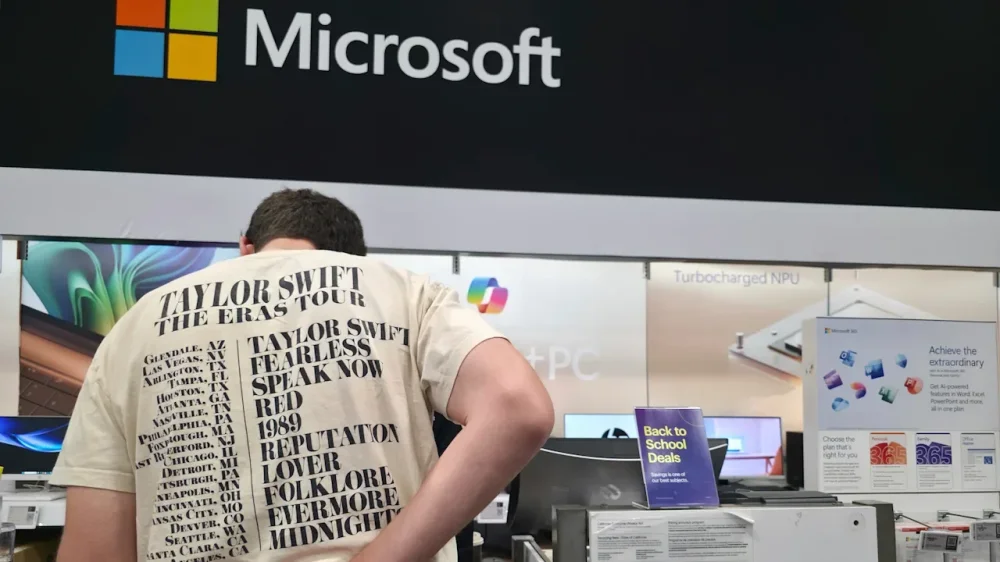
Microsoft said Tuesday it is partnering with artificial intelligence company Anthropic and chipmaker Nvidia as part of a cloud infrastructure deal that moves the software giant further away from its longtime alliance with OpenAI. Anthropic, maker of the chatbot Claude that competes with OpenAI’s ChatGPT, said it is committed to buying $30 billion in computing capacity from Microsoft’s Azure cloud computing platform. As part of the partnership, Nvidia will also invest up to $10 billion in Anthropic, and Microsoft will invest up to $5 billion in the San Francisco-based startup. The joint announcements by CEOs Dario Amodei of Anthropic, Satya Nadella of Microsoft, and Jensen Huang of Nvidia came just ahead of the opening of Microsoft’s annual Ignite developer conference. “This is all about deepening our commitment to bringing the best infrastructure, model choice and applications to our customers,” Nadella said on a video call with the other two executives, adding that it builds on the “critical” partnership Microsoft still has with OpenAI. Microsoft was, until earlier this year, the exclusive cloud provider for OpenAI and made the technology behind ChatGPT the foundation for its own AI assistant, Copilot. But the two companies moved farther apart and their business agreements were amended as OpenAI increasingly sought to secure its own cloud capacity through big deals with Oracle, SoftBank, and other data center developers and chipmakers. Asked in September if OpenAI could do more with those new computing partnerships than it could with Microsoft, OpenAI CEO Sam Altman told The Associated Press his company was “severely limited for the value we can offer to people.” At the same time, Microsoft holds a roughly 27% stake in the new for-profit corporation that OpenAI, founded as a nonprofit, is forming to advance its commercial ambitions as the world’s most valuable startup. Anthropic, founded by ex-OpenAI leaders in 2021, said Claude will now be the “only frontier model” available to customers of the three biggest cloud computing providers: Amazon, which remains Anthropic’s primary cloud provider, and Google and Microsoft. AI products like Claude and ChatGPT take huge amounts of energy and computing power to build and operate, and neither OpenAI nor Anthropic is yet turning a profit. As part of the deal, Nvidia said Anthropic will have access to up to a gigawatt of capacity from its specialized AI chips. Huang said he’s “admired the work of Anthropic and Dario for a long time, and this is the first time we are going to deeply partner with Anthropic to accelerate Claude.” —Matt O’Brien, AP technology writer View the full article
-
Independent mortgage bankers were in the black for each loan originated during the third quarter, as low rates brought an application surge in September. View the full article
-
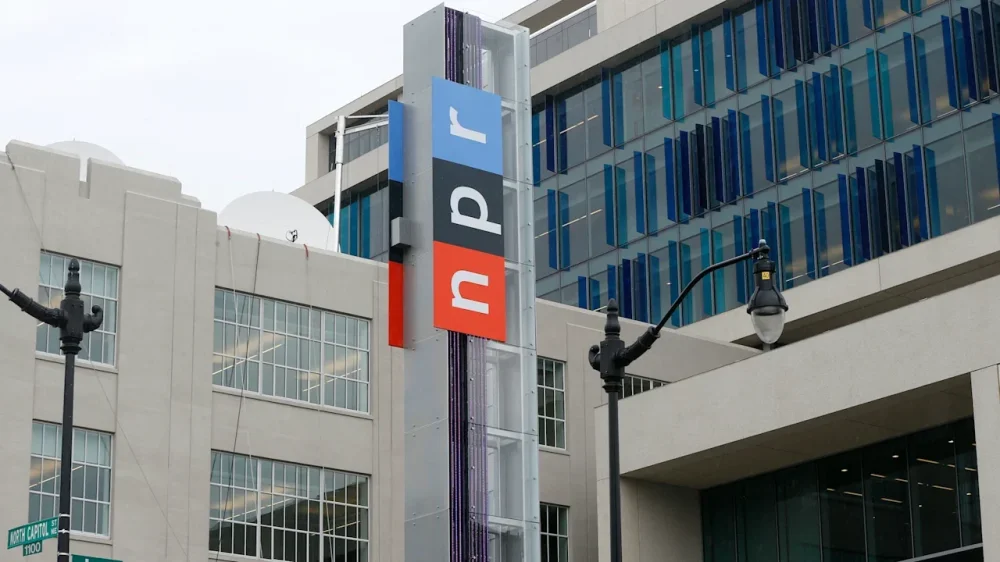
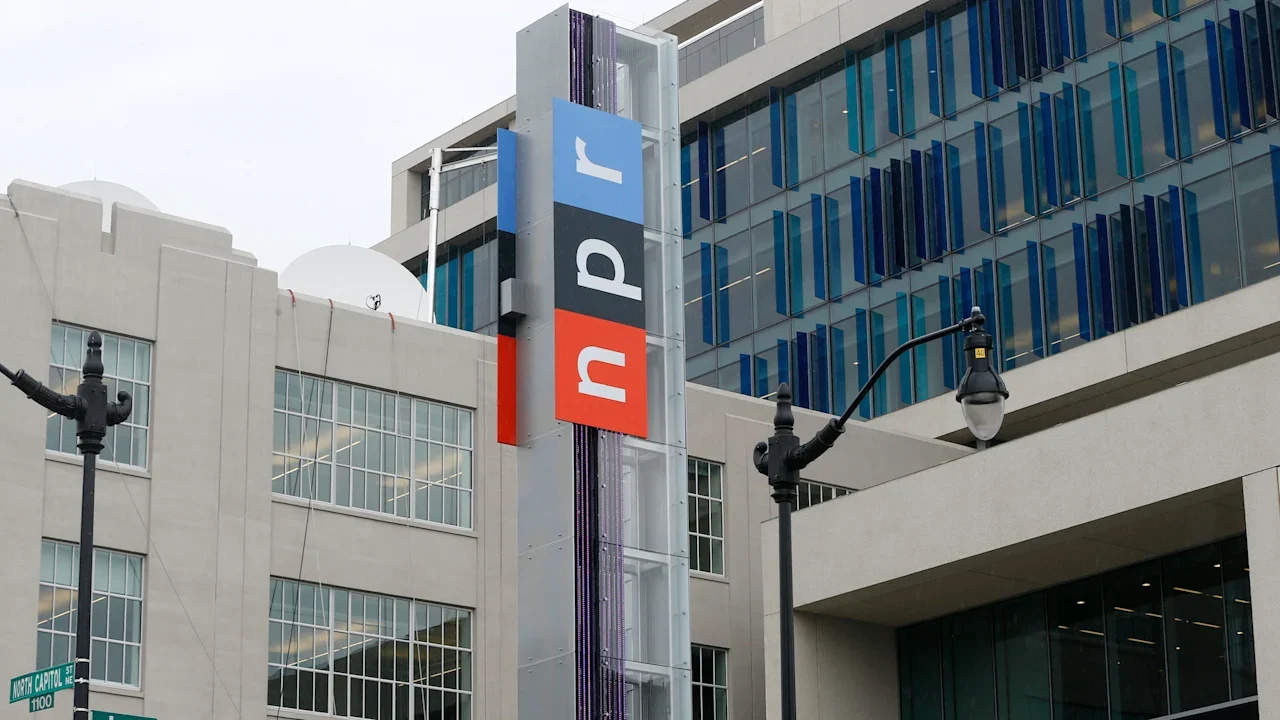
National Public Radio will receive approximately $36 million in grant money to operate the nation’s public radio interconnection system under the terms of a court settlement with the federal government’s steward of funding for public broadcasting stations. The settlement, announced late Monday, partially resolves a legal dispute in which NPR accused the Corporation for Public Broadcasting of bowing to pressure from President Donald The President to cut off its funding. On March 25, The President said at a news conference that he would “love to” defund NPR and PBS because he believes they are biased in favor of Democrats. NPR accused the CPB of violating its First Amendment free speech rights when it moved to cut off its access to grant money appropriated by Congress. NPR also claims The President, a Republican, wants to punish it for the content of its journalism. On April 2, the CPB’s board initially approved a three-year, roughly $36 million extension of a grant for NPR to operate the “interconnection” satellite system for public radio. NPR has been operating and managing the Public Radio Satellite System since 1985. But the CPB reversed course under mounting pressure from the The President administration, according to NPR. The agency redirected federal interconnection funds away from NPR to an entity that didn’t exist and wasn’t statutorily authorized to receive it, NPR says. CPB attorneys denied that the agency retaliated against NPR to appease The President. They had argued that NPR’s claims are factually and legally meritless. On May 1, The President issued an executive order that called for federal agencies to stop funding for NPR and PBS. The settlement doesn’t end a lawsuit in which NPR seeks to block any implementation or enforcement of The President’s executive order. U.S. District Judge Randolph Moss is scheduled to preside over another hearing for the case on Dec. 4. The settlement says NPR and CPB agree that the executive order is unconstitutional and that CPB won’t enforce it unless a court orders it to do so. Katherine Maher, NPR’s president and CEO, said the settlement is “a victory for editorial independence and a step toward upholding the First Amendment rights of NPR and the public media system.” Patricia Harrison, the corporation’s CEO, said in a statement that the settlement marks “an important moment for public media.” —Michael Kunzelman, Associated Press View the full article