ResidentialBusiness
Administrators
-
Joined
-
Last visited
Everything posted by ResidentialBusiness
-
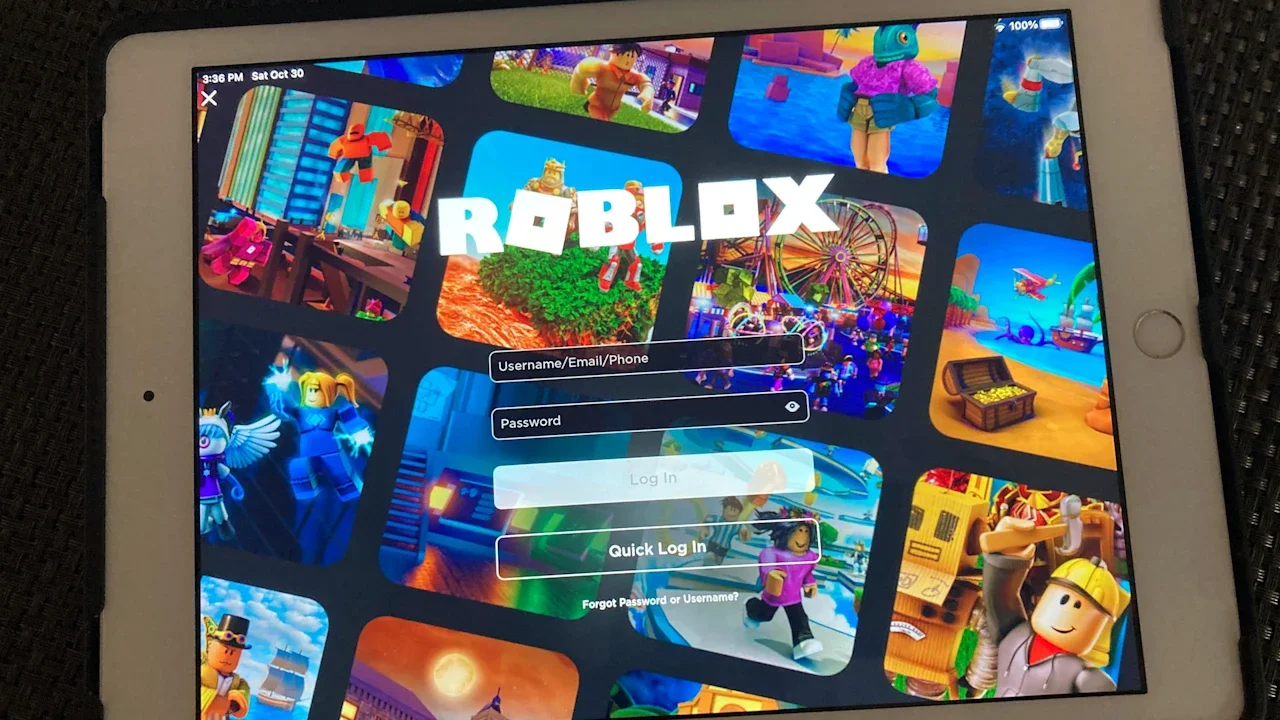
 Roblox is stepping up its age verification system for users who want to privately message other players and implementing age-based chats so kids, teens, and adults will only be able to message people around their own age. The moves come as the popular gaming platform continues to face criticism and lawsuits over child safety and a growing number of states and countries are implementing age verification laws. The company had previously announced the age estimation tool, which is provided by a company called Persona, in July. It requires players to take a video selfie that will be used to estimate their age. Roblox says the videos are deleted after the age check is processed. Users are not required to submit a face scan to use the platform, only if they want to chat with other users. Roblox doesn’t allow kids under 13 to chat with other users outside of games unless they have explicit parental permission—and unlike different platforms, it does not encrypt private chat conversations, so it can monitor and moderate them. While some experts have expressed caution about the reliability of facial age estimation tools, Matt Kaufman, chief safety officer at Roblox, said that between the ages of about five to 25, the system can accurately estimate a person’s age within one or two years. “But of course, there’s always people who may be well outside of a traditional bell curve. And in those cases, if you disagree with the estimate that comes back, then you can provide an ID or use parental consent in order to correct that,” he said. After users go through the age checks, they will be assigned to age groups ranging from under nine, nine to 12, 13 to 15, 16 to 17, 18 to 20 and over 21. Users will then be able to chat with their age group or similar age groups, depending on their age and the type of chat. Roblox said it will start enforcing age checks in Australia, New Zealand, and the Netherlands in the first week of December and the rest of the world in early January. A growing number of tech companies are implementing verification systems to comply with regulations or ward off criticism that they are not protecting children. This includes Google, which recently started testing a new age-verification system for YouTube that relies on AI to differentiate between adults and minors based on their watch histories. Instagram is testing an AI system to determine if kids are lying about their ages. —Barbara Ortutay, AP technology writer View the full article
-
Nasdaq sinks as heavyweights including Nvidia and Microsoft sustain steep fallsView the full article
-
Zoom, a leader in video communications, has announced its acquisition of BrightHire, a powerful interview intelligence platform designed to revolutionize the hiring process. This strategic move underscores Zoom’s commitment to enhancing user experience and making hiring decisions more effective for small business owners. As Zoom consolidates BrightHire’s capabilities, small businesses stand to gain from improved interview techniques and refined decision-making, areas critical to sustaining competitive advantage. The acquisition is timely; each year, countless hiring conversations occur on Zoom, making it a hub for recruiting. BrightHire’s technology complements this by providing a suite of tools designed specifically for interviews. These tools, which include AI-powered job descriptions, interview planning, and automatic note-taking, aim to enhance the experience for both interviewers and candidates. As one Zoom spokesperson noted, “BrightHire empowers leading talent teams to leverage the intelligence embedded in every interview, driving measurable improvements in both quality of hire and process efficiency.” Small businesses can expect a more streamlined hiring process thanks to the integration of BrightHire’s features with Zoom’s existing services. These tools can transform how companies approach recruitment, enabling better planning, conducting, and analysis of interviews. For instance, the platform allows for automated interview notes and summaries, which helps to minimize administrative burdens and allows hiring teams to focus on evaluating candidates. This could lead to faster hire decisions, a critical factor when competing for top talent in a fast-paced environment. Automated feedback workflows also aid in making collaborative hiring choices, ensuring that team input is integrated and valued. Additionally, the technology’s ability to provide insights and coaching tips is significant for small business owners who may not have the extensive resources that larger firms utilize in their hiring process. Feedback loops facilitate continuous improvements by allowing organizations to assess hiring effectiveness over time. However, there are challenges small businesses might need to consider before fully embracing these tools. The shift toward AI-driven solutions necessitates a cultural change in how interviews are approached. While these technologies are designed to augment human decision-making rather than replace it, there can be a learning curve associated with implementation. Small business owners may find it essential to invest time and resources in training their teams to adapt to these changes. Moreover, ensuring that the AI systems are used ethically is another significant consideration. BrightHire emphasizes a candidate-first approach, which aligns with trends of responsible AI use in hiring. However, businesses must remain vigilant to address potential biases introduced through automated systems. Engaging human insight alongside AI output will be vital to maintain fairness in the hiring process. With the acquisition of BrightHire, Zoom is not just expanding its portfolio but solidifying its role as a comprehensive tool for businesses focused on growth and efficiency. Both new and existing Zoom customers will be able to explore the benefits of using BrightHire’s expertise, making informed hiring decisions that directly influence their team’s composition and performance. As the landscape of hiring continues to evolve, the integration of BrightHire with Zoom presents an opportunity for smaller firms to enhance their recruitment processes, streamline their workflows, and ultimately improve their hiring quality. These changes come at a time when businesses need to be agile in finding talent, making the combination of Zoom’s platform and BrightHire’s technology a promising development. For more details, read the original announcement on Zoom’s blog at Zoom Blog. Image via Google Gemini This article, "Zoom Enhances Hiring Conversations with BrightHire Integration" was first published on Small Business Trends View the full article
-
Zoom, a leader in video communications, has announced its acquisition of BrightHire, a powerful interview intelligence platform designed to revolutionize the hiring process. This strategic move underscores Zoom’s commitment to enhancing user experience and making hiring decisions more effective for small business owners. As Zoom consolidates BrightHire’s capabilities, small businesses stand to gain from improved interview techniques and refined decision-making, areas critical to sustaining competitive advantage. The acquisition is timely; each year, countless hiring conversations occur on Zoom, making it a hub for recruiting. BrightHire’s technology complements this by providing a suite of tools designed specifically for interviews. These tools, which include AI-powered job descriptions, interview planning, and automatic note-taking, aim to enhance the experience for both interviewers and candidates. As one Zoom spokesperson noted, “BrightHire empowers leading talent teams to leverage the intelligence embedded in every interview, driving measurable improvements in both quality of hire and process efficiency.” Small businesses can expect a more streamlined hiring process thanks to the integration of BrightHire’s features with Zoom’s existing services. These tools can transform how companies approach recruitment, enabling better planning, conducting, and analysis of interviews. For instance, the platform allows for automated interview notes and summaries, which helps to minimize administrative burdens and allows hiring teams to focus on evaluating candidates. This could lead to faster hire decisions, a critical factor when competing for top talent in a fast-paced environment. Automated feedback workflows also aid in making collaborative hiring choices, ensuring that team input is integrated and valued. Additionally, the technology’s ability to provide insights and coaching tips is significant for small business owners who may not have the extensive resources that larger firms utilize in their hiring process. Feedback loops facilitate continuous improvements by allowing organizations to assess hiring effectiveness over time. However, there are challenges small businesses might need to consider before fully embracing these tools. The shift toward AI-driven solutions necessitates a cultural change in how interviews are approached. While these technologies are designed to augment human decision-making rather than replace it, there can be a learning curve associated with implementation. Small business owners may find it essential to invest time and resources in training their teams to adapt to these changes. Moreover, ensuring that the AI systems are used ethically is another significant consideration. BrightHire emphasizes a candidate-first approach, which aligns with trends of responsible AI use in hiring. However, businesses must remain vigilant to address potential biases introduced through automated systems. Engaging human insight alongside AI output will be vital to maintain fairness in the hiring process. With the acquisition of BrightHire, Zoom is not just expanding its portfolio but solidifying its role as a comprehensive tool for businesses focused on growth and efficiency. Both new and existing Zoom customers will be able to explore the benefits of using BrightHire’s expertise, making informed hiring decisions that directly influence their team’s composition and performance. As the landscape of hiring continues to evolve, the integration of BrightHire with Zoom presents an opportunity for smaller firms to enhance their recruitment processes, streamline their workflows, and ultimately improve their hiring quality. These changes come at a time when businesses need to be agile in finding talent, making the combination of Zoom’s platform and BrightHire’s technology a promising development. For more details, read the original announcement on Zoom’s blog at Zoom Blog. Image via Google Gemini This article, "Zoom Enhances Hiring Conversations with BrightHire Integration" was first published on Small Business Trends View the full article
-
UK tech retail group launched partnership with US grocer in 2018 to develop a number of customer fulfilment centresView the full article
-
Fieldguide’s AI rewrites the rules that have held audit back for decades. The Disruptors With Liz Farr Go PRO for members-only access to more Liz Farr. View the full article
-
Fieldguide’s AI rewrites the rules that have held audit back for decades. The Disruptors With Liz Farr Go PRO for members-only access to more Liz Farr. View the full article
-
There are plenty of distractions to deal with in our modern digital age—see if you can manage to get all the way through this article without turning your attention elsewhere at least once, for example. All that surrounding noise can make it difficult to stick to the task at hand, and actually get some solid work done. I enjoy browsing social media and exploring the web as much as the next person, but I've also got plenty of writing to get through every day, and distractions can seriously slow me down. Studies have shown that we do much better when we focus on one task at a time, which for me is writing guides and articles. While distraction-free devices such as the Freewrite Smart Typewriter have always appealed, I wanted to be more focused while using my MacBook Air. To that end, I've come up with a strategy for minimizing distractions as much as possible, and it's something you might find helpful for your own work. These steps apply specifically to macOS and Google Docs, which is what I use for most of my writing, but you can adapt them for Windows and other word processors too. Turn off notifications Focus modes are an easy way to manage notifications. Credit: Lifehacker Notifications is a good place to start—if your laptop is continually pinging and alerting you to other things, it's hard to get anything done. On macOS, notification settings can be handled by clicking the Apple icon (top left), then System Settings > Notifications. Here you can set alerts on an app-by-app basis. For me, the Focus entry in System Settings is even more useful. Here I've set up a dedicated Work focus mode that blocks all notifications from all apps, and leaves me in peace. To create your own mode, click Add Focus on the main list—you can either set them to run on a schedule, or enable them manually via Focus in the Control Center (click the toggle switches on the menu bar, top right, to access them). For the best results, you need to silence your phone as well, which is likely to be interrupting you even more than your laptop. If you're using an iPhone, you can sync Focus modes across both macOS and iOS, by enabling the Share across devices toggle switch on the main Focus options screen. Tweak your writing software Google Docs has a few tricks for distraction-free writing. Credit: Lifehacker Even without notifications enabled, it's easy to catch sight of something else you could be doing on your laptop, rather than concentrating on a single task. Explore the various options available within your word processor of choice to make the interface as minimal as possible—which in my case involves tweaking the look of Google Docs. To get the same effect on your own Google Docs documents, first head to the View menu and make sure the ruler, equation toolbar, and spelling and grammar suggestions are all hidden (for me, they just add to the on-screen clutter). Then, open the Format menu and choose Switch to pageless format to get one long, flowing page. Next, select View and pick Full screen, and then maximize the browser window in macOS using the green button up in the top left corner. Hey presto—all you've got on screen now are your words, with nothing else to distract you. To bring back the Google Docs menus and toolbars, press Esc to exit maximized mode, move the cursor to the top of the screen and click the green button again. Turn off the internet Turn off wifi to reduce distractions further. Credit: Lifehacker For the most extreme version of a distraction-free writing device—heading back to the days of the typewriter—I block internet access on my laptop too (on macOS, you can just click the wifi symbol on the menu bar, top right, then toggle off Wi-Fi). Sure, it's not the most comprehensive way of blocking the internet, but it works for me, and makes me think twice about going online (yes, Google Docs can work offline). I find it makes me less likely to check the news, social media, or email when I should be writing. The obvious problem is that I can't look up anything online either, so it's a bit of a soft rule I have—I try to at least write certain chunks of articles while offline, then do all my online research at once, and without opening dozens of browser tabs. You can tailor this to suit yourself, but I've found switching off the internet makes me more likely to rely on my own thoughts and word choices—without recourse to a dictionary or thesaurus. Sometimes it's good to give your brain a bit of exercise, and get it to slow down and focus for a while. View the full article
-
Here is a recap of what happened in the search forums today...View the full article
-
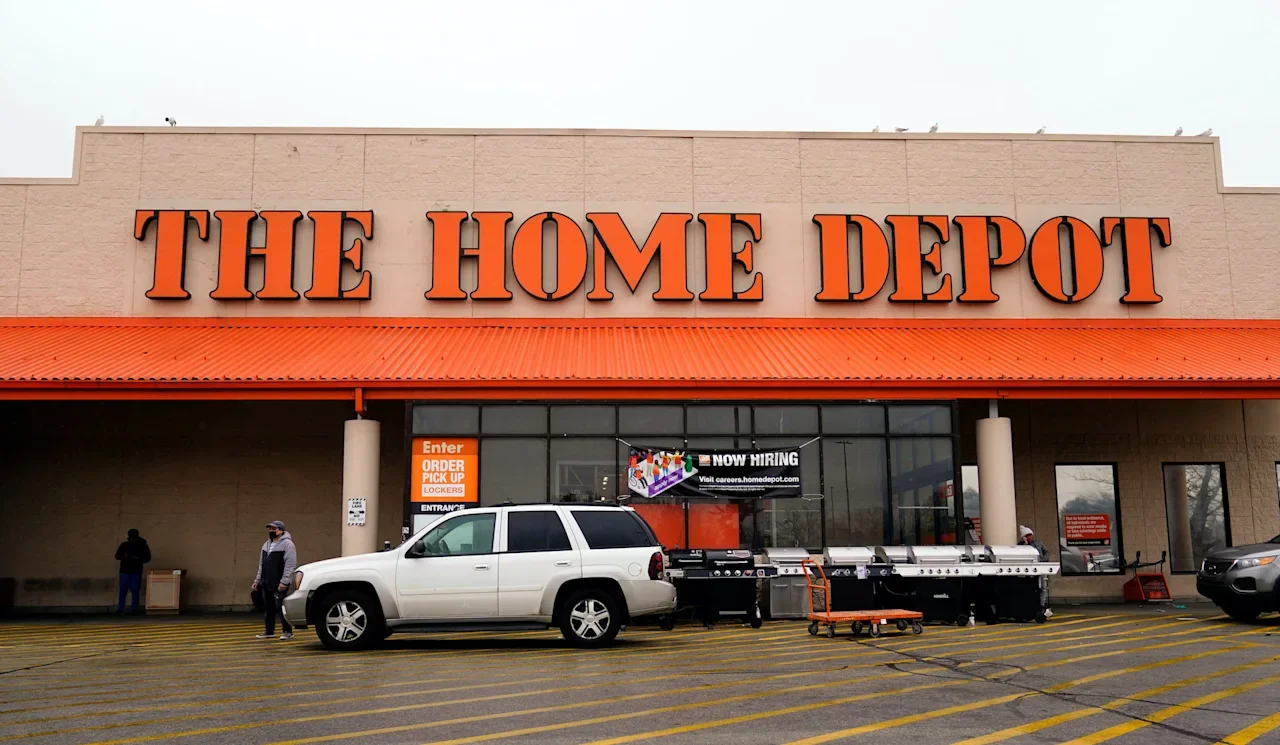
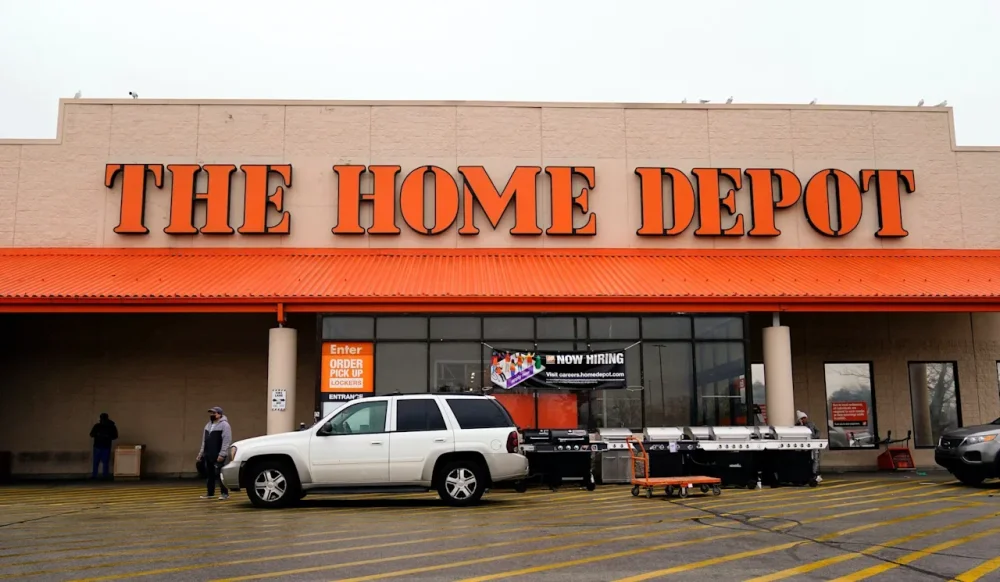
Home Depot‘s third-quarter was mixed with fewer violent storms reaching shore, more anxiety among U.S. consumers, and a housing market that is in a deep funk. The company lowered its fiscal 2025 adjusted earnings forecast but raised its expectations for sales growth. For the three months ended Nov. 2, Home Depot earned $3.6 billion, or $3.62 per share. A year earlier, it earned $3.65 billion, or $3.67 per share. Removing one-time charges and benefits, earnings were $3.74 per share, a dime short of Wall Street expectations, according to a poll by FactSet. It is the third consecutive quarter that Home Depot, an overperformer in recent years, has missed profit expectations. Home Depot’s stock declined more than 3% before the opening bell Tuesday. Shares of rival Lowe’s, which will report its quarterly results on Wednesday, fell more than 2%. “Our results missed our expectations primarily due to the lack of storms in the third quarter, which resulted in greater than expected pressure in certain categories,” CEO Ted Decker said in a statement. “Additionally, while underlying demand in the business remained relatively stable sequentially, an expected increase in demand in the third quarter did not materialize. We believe that consumer uncertainty and continued pressure in housing are disproportionately impacting home improvement demand.” Revenue for the Atlanta company rose to $41.35 billion from $40.22 billion, topping Wall Street projections of $41.15 billion. Sales at stores open at least a year, a key gauge of a retailer’s health, increased 0.2%. In the U.S., comparable store sales edged up 0.1%. Customer transactions fell 1.4% in the quarter. The amount shoppers spent rose to $90.39 per average receipt from $88.65 in the year-ago period. Neil Saunders, managing director of GlobalData, said that Home Depot’s quarter was negatively impacted by external factors, not missteps made by the company. Americans who have grown more anxious over the economy were were definitely a contributor, he said. “The summer months were particularly challenging in this regard as consumers were actively making choices over how to spend their money, and home improvement took something of a back seat to experiences, travel, and personal indulgences,” he said. Home Depot now anticipates fiscal 2025 adjusted earnings will decline approximately 5% from fiscal 2024’s $15.24 per share. It previously expected adjusted earnings would fall about 2% from its results in the prior fiscal year. The chain now foresees fiscal 2025 sales growth of about 3%. Its prior forecast was for sales growth of approximately 2.8%. The company predicts comparable sales growth will be slightly positive. Previously, it predicted comparable sales growth of about 1%. In August, Home Depot said that shoppers should expect modest price increases in some categories as a result of rising tariff costs, though they wouldn’t be broad-based. Company executives told analysts during its earnings call then that more than 50% of its products are sourced domestically and wouldn’t be subject to any tariffs. Home Depot’s results come as the U.S. housing slump drags on, with the country’s home turnover rate at the lowest level in decades. About 28 out of every 1,000 homes changed hands between January and September, the lowest U.S. home turnover rate going back to at least the 1990s, according to an analysis by Redfin. The home turnover rate represents the number of homes sold, divided by the total number of existing sellable properties. While sales data show whether more or fewer homes are selling in a given period, the home turnover rate helps illustrate how homeowners are staying put longer. The U.S. housing market has been in a slump dating back to 2022, the year mortgage rates began climbing from historic lows that fueled a homebuying frenzy at the start of this decade. —Michelle Chapman, AP business writer View the full article
-
Two heavyweights in the US residential real estate market, Compass Inc. and Zillow Inc., will face off in a New York courtroom this week in a legal battle that could reshape the future of how homes are marketed and sold in the country. View the full article

-
Ask the same question in 11 AI search engines, and you’ll get 11 different answers. Sometimes wildly different. Some engines focus on visuals and shoppable results. Others go deep into research. A few just try to get you an answer, fast. Each platform prioritizes and presents it differently. And those differences matter. Not just for users, but for brands trying to get discovered in AI search. So, I tested popular and lesser-known AI engines on accuracy, depth, user experience, and other factors. Only four made the cut. In this guide, you’ll learn which AI search engines came out on top, including pros, cons, and pricing. I’ll also share which engines didn’t make my list, and why. Along the way, you’ll get a few tips on using these insights to improve your AI visibility. Start with a quick overview of my findings below. Or jump straight to the #1 AI search engine on my list: ChatGPT. What Are the Best AI Search Engines? Tool Best for Pros Cons Price ChatGPT Comprehensive research and shoppable product comparisons Visual layout with tables and images; remembers context across follow-ups; direct purchase links Overwhelming results for broad queries; accuracy issues; overly agreeable Free or $20+/month Google AI Mode Quick product searches with real buyer reviews Fast product results with pricing and reviews; integrates Google ecosystem Vague on informational queries; no comparison tables; unavailable in some regions Free Sigma Chat (Formerly Bagoodex) Research deep dives that build on previous questions Strong conversational memory; suggests follow-up questions; content creation prompts Weak product presentation; no pricing or buy links; poor visuals Free or $10+/month Microsoft Copilot Fast answers in clean, skimmable formats Clean categorization; fast responses; easy to skim Surface-level depth; no product links; weak for shopping Free How I Tested 11 AI Search Engines To keep things consistent, I ran the same set of prompts across 11 AI search tools. Note: For this article, I defined “AI search engine” as any generative AI platform that can understand queries, pull information from sources, and deliver answers in natural language. This included big names like ChatGPT, AI Mode, and Perplexity. And newer players like Arc, Andi, and Sigma Chat. I focused on one topic (running shoes) and tested a range of prompts across different search intents. This showed how well each engine handled the full customer journey, from research to shopping. This included: “Best running shoes”: Assesses top-level recommendations and how each engine handles broad prompts “Best running shoes for beginner marathon training”: Evaluates personalization and context handling as the prompt narrows “How long do running shoes last?”: Gauges accuracy on general product knowledge and durability expectations “Of the trainers you’ve recommended, which ones will last the longest?”: Tests the accuracy of product details and the engine’s ability to remember details from previous prompts “Can I wear any of these running shoes recommended for hiking?”: Assesses how each AI handles reasoning, real-world nuance, and potential safety considerations I evaluated each tool on five factors: Accuracy: Did it understand the intent and get the facts right? Depth: Did it add helpful context or just summarize existing content? Transparency: Did it credit or link to its sources? User experience: Was the output fast, skimmable, and well-organized? Adaptability: Could it handle follow-up questions naturally or refine vague prompts? After testing all 11 AI search engines, these four stood out as the best for different reasons. 1. ChatGPT Best for comprehensive research and shoppable product comparisons ChatGPT came out on top overall. It delivered the best balance of accuracy, organization, and depth. Plus, it showed an “understanding” of search intent and included helpful visuals. What ChatGPT Does Well ChatGPT provides detailed, well-formatted answers. This is true whether you’re comparing products, researching topics, or looking for a step-by-step tutorial. It also remembers context across follow-up questions. I started with a broad prompt and added specifics as the conversation progressed. ChatGPT remembered key details without making me repeat myself. For shopping queries, the visual presentation stood out. When I searched for running shoes, for example, ChatGPT returned products with images, prices, reviews, and short descriptions. It also included links to retailers and external articles. This made verifying product details and purchasing easy. The summary tables were particularly useful. After inquiring about shoe lifespan, ChatGPT delivered a clean comparison table with products and their expected mileage. For brands: ChatGPT’s visual layout isn’t just useful for shoppers. If you’re trying to get your brand referenced by AI search engines, it also reveals what these models prioritize. Use tables, clear specs, and organized categories on your product pages to help both shoppers and AI find your information faster. ChatGPT is also evolving quickly. Features like Instant Checkout (currently limited to select Etsy sellers in the United States) let users complete purchases directly inside the chat. Great for shoppers — and even greater for the brands featured in ChatGPT’s recommendations. Where ChatGPT Falls Short When I tested ChatGPT, I got what most people want from AI search: answers that feel confident and complete. But not every response was perfect. Broad prompts, such as “Best running shoes,” resulted in lengthy lists of brands, product categories, and features. The information took real effort to digest. Specific prompts worked much better. I also noticed minor inaccuracies in some instances, like when I asked about shoe lifespan. After fact-checking the replies, some details didn’t match the manufacturer’s specifications. For example, ChatGPT said the Brooks Ghost running shoe has a lifespan of 450 to 500 miles. But the actual range is 300 to 500 miles. This also highlights a larger problem. ChatGPT pulls information from multiple sources, such as blog posts and brand sites. But it also relies on forums like Quora and Reddit, where users share personal experiences. It then aggregates the information into its responses. This can lead to inaccurate and misleading information. For brands: Provide clear answers to common user questions on your site. Otherwise, AI search engines may turn to other, potentially inaccurate sources for this information. Add tables with specifications, be explicit about ranges and measurements, and use structured data so AI can extract and cite your product information correctly. ChatGPT also tends to be overly agreeable. Whatever you prompt, ChatGPT will lean toward flattery and agreement — even when it involves safety. For example, when I asked, “Can I wear any of these running shoes recommended for hiking?” ChatGPT’s response was: “Good question 👍 — you can hike in road running shoes, but whether it’s a good idea depends on the terrain and how far you’re going.” Not the worst. But not as good as other AI search engines in this aspect, like AI Mode, which was more cautious. AI Mode said: “It is not recommended to use the road running shoes previously mentioned for hiking…they lack the key features that provide the necessary grip, protection, and stability for off-road trails. Using them for hiking could lead to injury.” Overall, ChatGPT is fast, detailed, and helpful. But it can be too generous with information — and too polite to push back. Pricing ChatGPT offers three plans based on your needs. Free: Limited access to some features Plus: $20/month Pro: $200/month for extended features Further reading: Google Gemini vs. ChatGPT: Which AI Chatbot Is Better? 2. Google AI Mode Best for quick product searches with real buyer reviews Google’s AI Mode is built for speed. It pulls product listings, prices, and reviews directly into the search interface. This makes it ideal for shoppers who want to quickly compare products before purchasing. What AI Mode Does Well AI Mode shines when you have clear buying intent. It instantly surfaces product options with images, prices, star ratings, and quick links to retailers. And it’s all in a clean, scrollable layout. When I searched “best running shoes,” it showed a curated carousel of options with price comparisons across multiple sites. I especially liked how it paired Google Reviews with its recommendations — a small detail that makes decision-making faster and builds trust. For me, that worked perfectly. Getting straight to the products moved me faster toward a decision. But some users may prefer more background or context for researching and weighing options. ChatGPT’s research-style answers still win in this regard. For brands: AI Mode pulls heavily from Google Reviews and structured product data. Focus on getting detailed, positive reviews and keeping your product schema markup up to date. These signals can influence whether your products appear in AI-generated results. Where AI Mode Falls Short AI Mode is not yet available in all countries, although it’s rolling out quickly. And unlike ChatGPT, it didn’t provide any comparison tables for any of my prompts. Just products and bullet points. This meant more scrolling and clicking to find and digest the information. This was evident when I asked which of the recommended shoes would last the longest. AI Mode’s response was vague and unhelpful. It said the Brooks Ghost shoe was “exceptionally long-lasting.” It didn’t provide any of the specifics that would make me want to purchase this shoe. Like mileage range and how it differed between the options. If you’re early in the evaluation phase, AI Mode can feel limiting. But it delivers when you want a shortlist of top contenders. Pricing AI Mode is available for free within Google Search, depending on your region. Further reading: LLM Seeding: A Strategy to Get Mentioned and Cited by LLMs 3. Sigma Chat (Formerly Bagoodex) Best for research deep dives that build on previous questions Sigma Chat’s iterative search and in-depth replies are excellent if you love to research. Ask a question, get an answer, then drill deeper into related topics — and it remembers the full thread. Note: Bagoodex launched in 2024 and has since rebranded as Sigma Chat. For this review, I tested it against the standard modes of other tools. ChatGPT’s Thinking mode and Perplexity’s Research mode are designed for deep research and may perform differently. What Sigma Chat Does Well Sigma Chat stood out for its ability to build on previous context. When I asked follow-up questions, it remembered what I’d already searched and adjusted its answers accordingly. No need to repeat myself or reframe the entire query. For example, after I asked which of the recommended shoes would last the longest, it specifically referenced “marathons.” (Even though I hadn’t mentioned this criterion again after the initial prompt.) Sigma Chat’s follow-up suggestions also stood out for their potential to aid deep research. Instead of ending with one answer, it nudged me toward related questions I hadn’t considered: Beginner running shoes fitting Marathon training schedule Foot pronation assessment Sigma Chat anticipates knowledge gaps and identifies adjacent topics worth exploring. This makes it particularly helpful for any kind of research, whether you’re comparing products, building content outlines, or researching niches. For brands: Sigma Chat rewards depth and topic clustering. To increase visibility in AI tools like this, build content hubs around your main topics — link related pages together and cover every sub-question your audience might ask. The more complete your coverage, the easier it is for AI to surface your site in deep research queries. Another interesting feature of this AI search engine? It suggests prompts tailored to content creation. This is especially helpful if you’re using it for marketing purposes. After providing search results for the best running shoes for a marathon, it offered unexpected options like: “Write a blog post about this topic” “Create an image on this topic” I tested the blog prompt, and it generated a quick draft titled “Marathon Training on a Budget: Choosing Durable Running Shoes.” It wasn’t something you’d publish as-is, but it was a decent starting point. If you’re prone to writer’s block or need to quickly draft comparison content around competitor products, it’s a particularly helpful feature. From there, it suggested additional prompts like “Add a call to action” and “Shorten for social media.” This makes it easy for marketers to generate content for multiple platforms at once. Further reading: How to Use AI for Writing Exceptional Content Where Sigma Chat Falls Short Sigma Chat’s presentation still needs work. When I searched “best running shoes,” it opened with generic photos pulled from listicles. This is a wasted use of prime real estate — they could’ve shown real products or reviews to provide more value. There are also no pricing details, reviews, or direct purchasing links. But Sigma Chat does cite its sources. In fact, it cited the same comparison article multiple times. (Helpful for that site’s traffic, not so helpful for someone ready to purchase.) Unless Sigma Chat improves its commercial functionality, it’s unlikely shoppers will use it. Instead, it might carve out a niche for itself as a deep research tool. Pricing Sigma Chat offers a few plans with varying access and features: Free: Basic search and chat capabilities SigmaChat Plus: $10/month for increased access SigmaChat Pro: $75/month for unlimited access Further reading: 6 Awesome AI SEO Tools We Love Using 4. Microsoft Copilot Best for fast answers in clean, skimmable formats Microsoft Copilot has the cleanest layout of any AI search engine I tested. It’s fast, structured, and organized. Perfect for people who want distraction-free takeaways. What Microsoft Copilot Does Well When you ask Copilot a question, it responds instantly with skimmable categories, bullet points, and emojis. For example, when I searched “best running shoes,” it broke recommendations into helpful categories: “Best overall” “Best stability shoe” “Best daily trainer” When I narrowed the query to “best running shoes for beginner marathon training,” Copilot further refined the results. It added details about who each shoe was best for, making the advice more actionable — a nice touch for a tool focused on clarity. Even for informational queries like “can I wear these for hiking,” Copilot delivered a simple breakdown. And added specific scenarios where running shoes would and wouldn’t be ideal for hiking. When you want fast, direct answers without having to sift through a bunch of content, Copilot is a great option. For brands: Pay close attention to how Copilot structures its answers — categories, comparisons, “best for” labels. Use similar formatting on your own pages to help AI tools extract and present your content more effectively. Where Microsoft Copilot Falls Short Copilot’s polished format comes at a cost: depth and shoppability. Its responses are tidy but often too surface-level — especially for commercial searches like “best running shoes.” When I tested this prompt, it didn’t link directly to any product pages or show pricing. So, I couldn’t easily comparison shop, verify information, or choose a merchant and purchase immediately. Instead, it summarized content from other “best” listicles and linked those sources. Like Sigma Chat, unless Microsoft improves its shoppability, it’s unlikely consumers will use it for this purpose. Instead, Copilot works better as a light research tool — especially when you want fast information with minimal reading. Pricing Microsoft Copilot is free to use. Further reading: 5 LLM Visibility Tools to Track Your Brand in Search AI Search Engines That Didn’t Make the Cut (and Why) All of these AI search engines had their pros and cons. But overall, they fell short for different reasons. Claude I really liked Claude, but the output was very similar to ChatGPT. This isn’t a problem, but I didn’t want to list tools that were similar in functionality. I wanted to provide only the best. Compared to ChatGPT, Claude lacked product links and visuals: The wall of text made the information challenging to process. I did like the categorization, but ChatGPT does this too — with tables that are easier to skim. Perplexity Like Claude, Perplexity came somewhat close to ChatGPT in overall performance. When asked a prompt with buying intent, it provided a short summary along with product images, pricing, and star ratings. No tables to help me quickly compare features and options, though. The summary was also fairly generic. And didn’t feel all that tailored to my prompt, even when I used the more specific “marathon” wording. Brave Brave, a privacy-focused AI search engine, felt too much like traditional search. It features long lists of articles without any clear hierarchy or comparison features. While this might be helpful for browsing links, it doesn’t summarize much or help you make quick decisions. Andi Andi, a minimal AI search tool, offered few results, sometimes just one (e.g., a single Reddit thread). It’s a bit like the “I’m Feeling Lucky” button on Google. Simple to use but extremely limiting for in-depth research or shopping. Arc Arc, a mobile- and browser-based AI search engine, requires a download to use. This is inconvenient compared to browser-based AI search. When so many other options exist, it’s hard to justify using this AI engine for this reason alone. You You is a solid AI search engine that has been around for multiple years. But it was slow to respond and didn’t link to products in commercial searches. Ultimately, I found it less useful than the other AI tools overall. What This Means for Your AI Search Visibility After testing 11 AI search engines, one thing became clear. No matter how their formatting or preferences differ, the goal remains the same: to serve clear, credible, and well-structured content. If your pages do that — with comprehensive coverage, positive reviews, and clean markup — you’ll be positioned to perform well across all AI search engines and LLMs. Want to make that happen? Our generative engine optimization (GEO) guide shows how to structure your site, earn more citations, and track your AI visibility. The post I Tested 11 AI Search Engines: Only These 4 Made the Cut appeared first on Backlinko. View the full article
-
On Tuesday morning, much of the internet was inaccessible. If you tried to follow your feeds on X, or engage with ChatGPT, you were only met with error messages. Compare those error messages to one another, however, and you'd likely notice a similar name affixed to them all: Cloudflare. Cloudflare's massive Tuesday morning outage had sweeping implications for much of the web. While it's not clear what caused the outage at this time, we do know whether the outage was responsible for a website's downtime. (When an error page says "Cloudflare: Error," it's not difficult to track down the source of the problem.) As Cloudflare offers web infrastructure services to a huge number of sites, the true list of affected sites is likely massive. As an example, I wanted to convert the timezone Cloudflare uses in its status reports, UTC, to ET, and the first website I clicked on in my Google search returned an error. While there's no central repository listing each and every affected website, we can look at the sites with the largest number of user reports indicating issues this morning through Downdetector. (Disclosure: Downdetector is owned by Ziff Davis, the same parent company as Lifehacker.) Ironically, Downdetector itself was down this morning—it too uses Cloudflare. Downdetector is not a service that investigates and reports websites that are down. Instead, users can self-report issues with sites on Downdetector. As such, it can be illuminating to see which sites visitors were having issues with during the period of time Cloudflare was down. At this time, that includes the following: X Cloudflare OpenAI ChatGPT Grindr Archive of Our Own AWS Spotify League of Legends eClinicalWorks Quizlet Uber Character.ai Canva Claude Varo Indeed Procore Truth Social FanFiction Arlo DoorDash Valorant Runescape Dayforce NJTransit Sniffies Square Google Zoom Rover CollegeBoard Letterboxd Bet365 MoneyLion DayZ BetMGM YouTube Microsoft IKEA Suno Microsoft 365 Canvas by Instructure Microsoft Teams Amazon Grok Instagram Gemini Again, this list is not definitive, nor is it official. However, users had trouble accessing them at the same time Cloudflare was down. View the full article
-
Former U.S. Treasury Secretary Larry Summers said on Monday he will step back from all public commitments, days after President Donald The President ordered the Justice Department to investigate his and other prominent Democrats’ ties to convicted sex offender Jeffrey Epstein. Summers, a former president of Harvard University, where he is a professor, told the university’s student newspaper that the move was to allow him “to rebuild trust and repair relationships with the people closest to me.” The announcement came after the House Oversight Committee released thousands of files related to Epstein last week, including documents that showed personal correspondence between Summers and Epstein. “I am deeply ashamed of my actions and recognize the pain they have caused. I take full responsibility for my misguided decision to continue communicating with Mr. Epstein,” Summers told The Crimson. “While continuing to fulfill my teaching obligations, I will be stepping back from public commitments as one part of my broader effort,” Summers added. Summers, a Democrat, served as former President Bill Clinton‘s Treasury Secretary and former President Barack Obama’s National Economic Council director. He currently serves on the board of OpenAI and as a director of the Harvard Kennedy School’s Mossavar-Rahmani Center for Business and Government. OpenAI and Harvard did not immediately respond to requests for comments. Summers also did not immediately respond. The Epstein scandal has been a political thorn in The President’s side for months, partly because he amplified conspiracy theories about Epstein to his own supporters. Many The President voters believe Bondi and other The President officials have covered up Epstein’s ties to powerful figures and obscured details surrounding his death by suicide in a Manhattan jail in 2019. The U.S. House of Representatives will vote on Tuesday on forcing the release of investigative Epstein files after The President, who had initially opposed the vote, called on fellow Republicans to support it. —Jasper Ward, Reuters View the full article

-
Home Depot's bleak forecast provides another warning about the strength of US consumers in the absence of official economic data during the US government shutdown. View the full article

-
In today’s competitive market, effective sales coaching programs are crucial for enhancing team performance. These programs equip your sales representatives with the skills, strategies, and knowledge needed to succeed. By employing innovative methods, such as AI-driven tools and hybrid learning formats, you can guarantee your team stays prepared and responsive to evolving customer needs. Comprehending the top sales coaching programs for 2025 can help you make informed decisions that drive results. Let’s explore the options available to boost your sales team. Key Takeaways Mindtickle offers inside sales training focused on continuous readiness, enhancing skills through engaging role-playing and real-time feedback. Highspot leverages data-driven insights to coach sales leaders, improving decision-making and overall team effectiveness. SalesHood provides a blended learning approach, combining virtual and in-person sessions to cater to diverse learning preferences. Brainshark utilizes AI-driven tools for personalized coaching, delivering real-time feedback to boost individual performance and engagement. Challenger Sales Training emphasizes negotiation and relationship-building skills, resulting in shorter sales cycles and improved team performance. What Is a Sales Coaching Program? A sales coaching program is a systematic strategy designed to evaluate and boost the skills of sales representatives through focused training and constructive feedback. These programs often include sales coaching training that incorporates role-playing scenarios and performance metrics to improve specific competencies. Professional sales coaching emphasizes continuous learning, making trained reps 57% more effective compared to those who receive little or no coaching. Furthermore, sales coaching services typically integrate modern methodologies, industry insights, and technology tools for a thorough learning experience. For organizations seeking to improve their teams, coaching management sales becomes crucial. Many choose to pursue sales coaching certification to guarantee that their coaching practices align with industry standards and best practices, eventually leading to improved sales performance. Benefits of Sales Coaching Programs Sales coaching programs offer numerous advantages that can greatly improve the performance of sales teams. By implementing effective sales training techniques, you can expect a 19% increase in overall sales performance, enabling your team to tackle market challenges more effectively. Trained sales representatives become 57% more effective, boosting both individual and team productivity. Continuous sales team training encourages a culture of learning, reducing employee turnover and enhancing job satisfaction. Moreover, executive sales coaching can improve negotiation and relationship-building skills, resulting in shorter sales cycles and higher win rates. Many organizations report impressive returns on investment, with some seeing as much as a 353% ROI from their initiatives. Engaging a certified sales coach can further maximize these benefits. How to Choose the Best Sales Coaching Program Choosing the best sales coaching program can greatly influence your team’s success and productivity. Start by identifying specific skills your team needs, like negotiation or relationship building, to guarantee the program aligns with your objectives. Evaluate the format options—whether in-person, virtual, or blended—to maximize engagement. Consider the program’s length and flexibility, as you want to promote participation without disrupting daily operations. Look for programs that offer certifications, enhancing team credentials and supporting career growth. Finally, assess the potential ROI by comparing pricing with expected performance improvements; effective sales training programs yield an average ROI of 353%. Research the best Sales Training companies and types of sales training programs to find options that fit your needs. Top Sales Coaching Programs for 2025 As the scenery of sales coaching evolves, programs in 2025 are set to leverage advanced technology and innovative formats to improve training effectiveness. Sales training agencies will increasingly adopt AI-driven tools, providing personalized coaching and real-time feedback to address skill gaps. Inside sales training programs, like Mindtickle, will emphasize continuous readiness with AI role plays, whereas Highspot will lead with data-driven insights for coaching sales leaders. These programs will utilize hybrid training formats, blending in-person and online learning to suit varied schedules. In addition, a focus on just-in-time learning in software sales training will allow reps to access crucial content when needed, enhancing knowledge retention and real-world application within their sales training plans. Achieve Success With Effective Sales Coaching Achieving success in sales requires more than just hiring talented individuals; it hinges on effective sales coaching that equips representatives with the skills they need to excel. Companies with the best sales training programs understand that good sales training leads to a 19% improvement in overall performance. By investing in executive sales training, you can train sales reps to be 57% more effective, shortening sales cycles and boosting revenue. Incorporating real-time feedback during interactions nurtures a culture of continuous learning, keeping your team adaptable in a changing market. A sales coach online can facilitate personalized coaching, reducing employee turnover and enhancing job satisfaction. Embrace effective sales coaching to develop a high-performing and committed sales team. Frequently Asked Questions How to Effectively Coach a Sales Team? To effectively coach a sales team, start by evaluating individual strengths and weaknesses through performance data. Provide personalized feedback during practice sessions, using real-time scenarios for context. Incorporate technology, like AI tools, to improve learning experiences and facilitate skill application. Reinforce concepts with bite-sized knowledge checks to enhance retention. Regularly track progress and schedule feedback sessions, ensuring continuous development in both soft and technical skills, which are essential for maneuvering complex sales situations. How to Upskill a Sales Team? To upskill your sales team, implement continuous training that includes role-playing scenarios and technology tools. You’ll improve their practical experience, helping them navigate complex sales cycles effectively. Encourage ongoing coaching and offer personalized feedback using integrated coaching software. This approach guarantees targeted skill development and keeps your team engaged. Investing in their growth not just enhances performance but likewise reduces turnover, as employees feel valued and supported in their professional path. What Kind of Training Is Suitable for a Sales Team? For a sales team, suitable training focuses on specific skills like negotiation, relationship building, and product knowledge. Incorporating role-playing and real-world scenarios boosts confidence and practical skills. Continuous training that adapts to industry trends guarantees your team stays competitive. Providing certification opportunities can improve credibility and motivation. Evaluating team needs through performance metrics helps align training with business objectives, maximizing your return on investment and overall effectiveness in the market. What Is Dale Carnegie Sales Training? Dale Carnegie Sales Training focuses on building strong relationships and effective communication skills in sales. You’ll learn practical techniques based on principles from “How to Win Friends and Influence People.” The program improves your confidence and equips you to handle complex sales situations and objections through role-playing and real-world applications. Conclusion In summary, selecting the right sales coaching program can greatly improve your team’s performance. By leveraging innovative methods, advanced technology, and customized insights, you can guarantee that your sales representatives receive the support they need to excel. Consider factors such as program format and personalization when making your choice. With the right coaching in place, your team can develop essential skills, boost productivity, and eventually drive impressive sales results. Invest in effective coaching to achieve lasting success. Image via Google Gemini This article, "5 Top Sales Coaching Programs to Boost Team Performance" was first published on Small Business Trends View the full article
-
In today’s competitive market, effective sales coaching programs are crucial for enhancing team performance. These programs equip your sales representatives with the skills, strategies, and knowledge needed to succeed. By employing innovative methods, such as AI-driven tools and hybrid learning formats, you can guarantee your team stays prepared and responsive to evolving customer needs. Comprehending the top sales coaching programs for 2025 can help you make informed decisions that drive results. Let’s explore the options available to boost your sales team. Key Takeaways Mindtickle offers inside sales training focused on continuous readiness, enhancing skills through engaging role-playing and real-time feedback. Highspot leverages data-driven insights to coach sales leaders, improving decision-making and overall team effectiveness. SalesHood provides a blended learning approach, combining virtual and in-person sessions to cater to diverse learning preferences. Brainshark utilizes AI-driven tools for personalized coaching, delivering real-time feedback to boost individual performance and engagement. Challenger Sales Training emphasizes negotiation and relationship-building skills, resulting in shorter sales cycles and improved team performance. What Is a Sales Coaching Program? A sales coaching program is a systematic strategy designed to evaluate and boost the skills of sales representatives through focused training and constructive feedback. These programs often include sales coaching training that incorporates role-playing scenarios and performance metrics to improve specific competencies. Professional sales coaching emphasizes continuous learning, making trained reps 57% more effective compared to those who receive little or no coaching. Furthermore, sales coaching services typically integrate modern methodologies, industry insights, and technology tools for a thorough learning experience. For organizations seeking to improve their teams, coaching management sales becomes crucial. Many choose to pursue sales coaching certification to guarantee that their coaching practices align with industry standards and best practices, eventually leading to improved sales performance. Benefits of Sales Coaching Programs Sales coaching programs offer numerous advantages that can greatly improve the performance of sales teams. By implementing effective sales training techniques, you can expect a 19% increase in overall sales performance, enabling your team to tackle market challenges more effectively. Trained sales representatives become 57% more effective, boosting both individual and team productivity. Continuous sales team training encourages a culture of learning, reducing employee turnover and enhancing job satisfaction. Moreover, executive sales coaching can improve negotiation and relationship-building skills, resulting in shorter sales cycles and higher win rates. Many organizations report impressive returns on investment, with some seeing as much as a 353% ROI from their initiatives. Engaging a certified sales coach can further maximize these benefits. How to Choose the Best Sales Coaching Program Choosing the best sales coaching program can greatly influence your team’s success and productivity. Start by identifying specific skills your team needs, like negotiation or relationship building, to guarantee the program aligns with your objectives. Evaluate the format options—whether in-person, virtual, or blended—to maximize engagement. Consider the program’s length and flexibility, as you want to promote participation without disrupting daily operations. Look for programs that offer certifications, enhancing team credentials and supporting career growth. Finally, assess the potential ROI by comparing pricing with expected performance improvements; effective sales training programs yield an average ROI of 353%. Research the best Sales Training companies and types of sales training programs to find options that fit your needs. Top Sales Coaching Programs for 2025 As the scenery of sales coaching evolves, programs in 2025 are set to leverage advanced technology and innovative formats to improve training effectiveness. Sales training agencies will increasingly adopt AI-driven tools, providing personalized coaching and real-time feedback to address skill gaps. Inside sales training programs, like Mindtickle, will emphasize continuous readiness with AI role plays, whereas Highspot will lead with data-driven insights for coaching sales leaders. These programs will utilize hybrid training formats, blending in-person and online learning to suit varied schedules. In addition, a focus on just-in-time learning in software sales training will allow reps to access crucial content when needed, enhancing knowledge retention and real-world application within their sales training plans. Achieve Success With Effective Sales Coaching Achieving success in sales requires more than just hiring talented individuals; it hinges on effective sales coaching that equips representatives with the skills they need to excel. Companies with the best sales training programs understand that good sales training leads to a 19% improvement in overall performance. By investing in executive sales training, you can train sales reps to be 57% more effective, shortening sales cycles and boosting revenue. Incorporating real-time feedback during interactions nurtures a culture of continuous learning, keeping your team adaptable in a changing market. A sales coach online can facilitate personalized coaching, reducing employee turnover and enhancing job satisfaction. Embrace effective sales coaching to develop a high-performing and committed sales team. Frequently Asked Questions How to Effectively Coach a Sales Team? To effectively coach a sales team, start by evaluating individual strengths and weaknesses through performance data. Provide personalized feedback during practice sessions, using real-time scenarios for context. Incorporate technology, like AI tools, to improve learning experiences and facilitate skill application. Reinforce concepts with bite-sized knowledge checks to enhance retention. Regularly track progress and schedule feedback sessions, ensuring continuous development in both soft and technical skills, which are essential for maneuvering complex sales situations. How to Upskill a Sales Team? To upskill your sales team, implement continuous training that includes role-playing scenarios and technology tools. You’ll improve their practical experience, helping them navigate complex sales cycles effectively. Encourage ongoing coaching and offer personalized feedback using integrated coaching software. This approach guarantees targeted skill development and keeps your team engaged. Investing in their growth not just enhances performance but likewise reduces turnover, as employees feel valued and supported in their professional path. What Kind of Training Is Suitable for a Sales Team? For a sales team, suitable training focuses on specific skills like negotiation, relationship building, and product knowledge. Incorporating role-playing and real-world scenarios boosts confidence and practical skills. Continuous training that adapts to industry trends guarantees your team stays competitive. Providing certification opportunities can improve credibility and motivation. Evaluating team needs through performance metrics helps align training with business objectives, maximizing your return on investment and overall effectiveness in the market. What Is Dale Carnegie Sales Training? Dale Carnegie Sales Training focuses on building strong relationships and effective communication skills in sales. You’ll learn practical techniques based on principles from “How to Win Friends and Influence People.” The program improves your confidence and equips you to handle complex sales situations and objections through role-playing and real-world applications. Conclusion In summary, selecting the right sales coaching program can greatly improve your team’s performance. By leveraging innovative methods, advanced technology, and customized insights, you can guarantee that your sales representatives receive the support they need to excel. Consider factors such as program format and personalization when making your choice. With the right coaching in place, your team can develop essential skills, boost productivity, and eventually drive impressive sales results. Invest in effective coaching to achieve lasting success. Image via Google Gemini This article, "5 Top Sales Coaching Programs to Boost Team Performance" was first published on Small Business Trends View the full article
-
AI search buy-in comes when it’s framed as a cost-effective way to prevent losing ground in the next discovery shift. The post Selling AI Search Strategies To Leadership Is About Risk appeared first on Search Engine Journal. View the full article
-
Application error findings rose over 15%, the second quarter in a row they have moved higher, the post-closing file review from Aces Quality Management found. View the full article
-
A Cloudflare outage is causing 5xx errors for many sites. Here’s how Google handles short server spikes and what to watch in SEO reports. The post Cloudflare Outage Triggers 5xx Spikes: What It Means For SEO appeared first on Search Engine Journal. View the full article
-
The AI resume has become a C-suite-level asset that reflects your entire digital strategy. To use it effectively, we first need to understand where AI is deploying it across the user journey. How AI has rewritten the user journey For years, our strategies were shaped by the inbound methodology. We built content around a user-driven path through awareness, consideration, and decision, with traditional SEO acting as the engine behind those moments. That journey has now been fundamentally reshaped. AI assistive engines – conversational systems like Gemini, ChatGPT, and Perplexity – are collapsing the funnel. They move users from discovery to decision within walled-garden environments. It’s what I call the BigTech walled garden AI conversational acquisition funnel. For marketers, that shift can feel like a loss of control. We no longer own the click, the landing page, or the carefully engineered funnel. But from the consumer perspective, the change is positive. People want one thing: a direct, trusted answer. This isn’t a contradiction. It’s the new reality. Our job is to align with this best-service model by proving to the AI that our brand is the most credible answer. That requires updating the ultimate goal. For commercial queries, the win is no longer visibility. It’s earning the perfect click – the moment when an AI system acts as a trusted advisor and chooses your brand as the best solution. To get there, we have to broaden our focus from explicit branded searches to the three modes of research AI uses today: Explicit. Implicit. Ambient. Together, they define the new strategic landscape and lead to one truth. In an AI-driven ecosystem, brand is what matters most. 3 types of research redefining what search is These three behaviors reveal how users now discover, assess, and choose brands through AI. Explicit research (brand): The final perfect click Explicit research is any query that includes your brand name, such as: Searches for your name. “Brand name reviews.” “Brand vs. competitor.” They represent deliberate, high-stakes moments when a potential client, partner, or investor is actively researching your brand. It’s the decision stage of the funnel, where they look for specific information about you or your services, or conduct a final AI-driven due diligence check before committing. What they see here is your digital business card. A strong AI assistive engine optimization (AIEO) strategy secures these bottom-of-funnel moments first. You must engineer an AI resume – the AI equivalent of a brand SERP – that is positive, accurate, and convincing so the prospect who is actively looking for you converts. Branded terms are the lowest-hanging fruit, the most critical conversion point in the new conversational funnel, and the foundation of AIEO. Implicit research (industry/topic/comparison): Being top of algorithmic mind Implicit research includes any topical query that does not contain a brand name. These are the “best of” comparisons and problem-focused questions that happen at the top and middle of the funnel. To win this part of the journey, your brand must be top of algorithmic mind, the state where an AI instinctively selects you as the most credible, relevant, and authoritative answer to a user’s query. Consideration: When a user asks, “Who are the best personal injury law firms in Los Angeles?”, the AI builds a shortlist, and you cannot afford to be missing. Awareness: When a user asks, “Give me advice about personal injury legal options after a car accident,” your chance to be included depends on whether the AI already understands and trusts your brand. Implicit research is not about keywords. It is about being understood by the algorithms, demonstrating credibility, and building topical authority. Here’s how it works: The algorithms understand who you are. They can effectively apply credibility signals. (An expanded version of Google’s E-E-A-T framework, N-E-E-A-T-T, incorporates notability and transparency.) You have provided the content that demonstrates topical authority. If you meet these three prerequisites, you can become top of algorithmic mind for user-AI interactions at the top and middle of the funnel, where implicit research happens. Get the newsletter search marketers rely on. See terms. Ambient research (push by software): Where the algorithms advocate for you Ambient research is the ultimate form of push discovery, where an AI proactively suggests your brand to a user who isn’t even in research mode. It represents the most profound shift yet. Ambient research sits beyond the funnel – it is pre-awareness. Simple examples include: Gemini suggesting your name in Google Sheets while a prospect models ROI. Your profile surfacing as a suggested consultant in Gmail or Outlook. A meeting summary in Google Meet or Teams recommending your brand as the expert who can solve a key challenge. In these day-to-day situations, the user is no longer pulling information. The AI is pushing a solution it trusts so completely that the engine becomes your advocate. This is the ultimate goal, signaling that a brand has reached true dominant status as top of algorithmic mind within a niche. This level of trust comes from building a deep and consistent digital presence that teaches the AI your brand is a helpful default in a given context. It’s the same dynamic Seth Godin describes as “permission marketing,” except here the permission is granted by the algorithms. It may feel like an edge case in 2025, but ambient research will become a major opportunity for those who prepare now. The walls are rising in the AI walled garden 2.0 – the new, more restrictive AI ecosystems. The next evolution will be AI assistive agents. These agents will not just recommend a solution. They will execute it. When an agent books a flight, orders a product, or hires a consultant on a user’s behalf, there is no second place. This creates a true zero-sum moment in AI. If you are not the trusted default choice, you are not an option at all. Rethink your funnel: Brand is the unifying strategy The awareness, consideration, and decision funnel still exists, but the journey has been hijacked by AI. A strategy focused only on explicit research is a losing game. It secures the bottom of the funnel but leaves the entire middle and top wide open for competitors to be discovered and recommended. Expanding into implicit research is better, yet it remains a reactive posture. You are waiting to be chosen from a list. That approach will fail as ambient research grows, because ambient moments are where the AI makes the first introduction. This landscape demands a brand-first strategy. Brand is the one constant across all three research modes. AI: Recommends you in explicit research because it understands your brand’s facts. Recommends you in implicit research because it trusts your credibility on a topic. Advocates for you in ambient research because it has learned your brand is the most helpful default solution. By building understandability, credibility, and deliverability, you are not optimizing for one type of search. You are systematically teaching the AI to trust your brand at every possible interaction. The brands that become the best teachers will be the ones an AI recommends across all three research modes. It’s time to update your strategy or risk being left out of the conversation entirely. Your final step: The strategic roadmap You now understand the what – the AI resume – and the where – the three research modes. Finally, we’ll cover the how: the complete strategic roadmap for mastering the algorithmic trinity with a multi-speed approach that systematically builds your brand’s authority. View the full article
-
We may earn a commission from links on this page. Deal pricing and availability subject to change after time of publication. AirPods can fall short if you swap between different devices or want more than a single color option. That is where the currently discounted Bose QuietComfort Earbuds start to feel like a practical alternative. They’re sitting at $129 right now, which price trackers confirm as their lowest price so far and a noticeable drop from their usual $179. You also get more color options than normal, with black and white sitting alongside two limited shades, petal pink and twilight blue. And while Bose sells a higher-end QuietComfort Ultra model for $229 (down from $299), the standard QuietComfort buds don’t feel like a downgrade. PCMag’s 4/5 review backs that up, praising their sound, everyday ANC, and easy two-device pairing. Bose QuietComfort Earbuds (2024) $129.00 at Amazon $179.00 Save $50.00 Get Deal Get Deal $129.00 at Amazon $179.00 Save $50.00 In everyday use, the sound has a warm depth that works well for long playlists and podcasts without fatigue. If you want to fine-tune it, the companion app offers an adjustable EQ that actually changes how your music sounds, rather than making tiny, barely noticeable tweaks. The noise cancellation isn’t as strong as what you get on the Ultra buds, but it does reduce enough steady background noise to make commutes and office work less distracting. As for connectivity, Bluetooth 5.3 keeps the connection steady, but codec support is limited to AAC and SBC, so Android users who want high-resolution codecs may notice the gap. Battery life feels practical, too. Bose claims 8.5 hours on the buds and 31.5 more hours in the case, which outlasts many earbuds in this price range and even outlasts Bose’s own higher-end Ultras. The one drawback is the size. The QuietComfort earbuds are bulkier than AirPods, and some reviewers noted that they can shift during workouts, even with the included wings and multiple ear tip options. Everything else about using them stays simple. These earbuds will not be the best choice for someone who wants the strongest possible Bose noise cancellation or a slim, stem-style design. But at $129, they fall into a comfortable middle zone with fuller sound than standard AirPods, more control over your audio, strong battery life, and a price that makes them easy to consider. Our Best Editor-Vetted Tech Deals Right Now Apple AirPods 4 Wireless Earbuds — $117.00 (List Price $129.00) Apple iPad 11" 128GB A16 WiFi Tablet (Blue, 2025) — $299.99 (List Price $349.00) Shark AV2501AE AI XL Hepa- Safe Self-Emptying Base Robot Vacuum — $294.99 (List Price $649.99) Amazon Fire HD 10 (2023) — $69.99 (List Price $139.99) Sony WH-1000XM5 — $248.00 (List Price $399.99) Blink Outdoor 4 1080p Wireless Security Camera (5-Pack) — $159.99 (List Price $399.99) Ring Floodlight Cam Wired Plus 1080p Security Camera (White) — $99.99 (List Price $179.99) Amazon Fire TV Stick 4K Plus — $24.99 (List Price $49.99) NEW Bose Quiet Comfort Ultra Wireless Noise Cancelling Headphones — $298.00 (List Price $429.00) Deals are selected by our commerce team View the full article
-
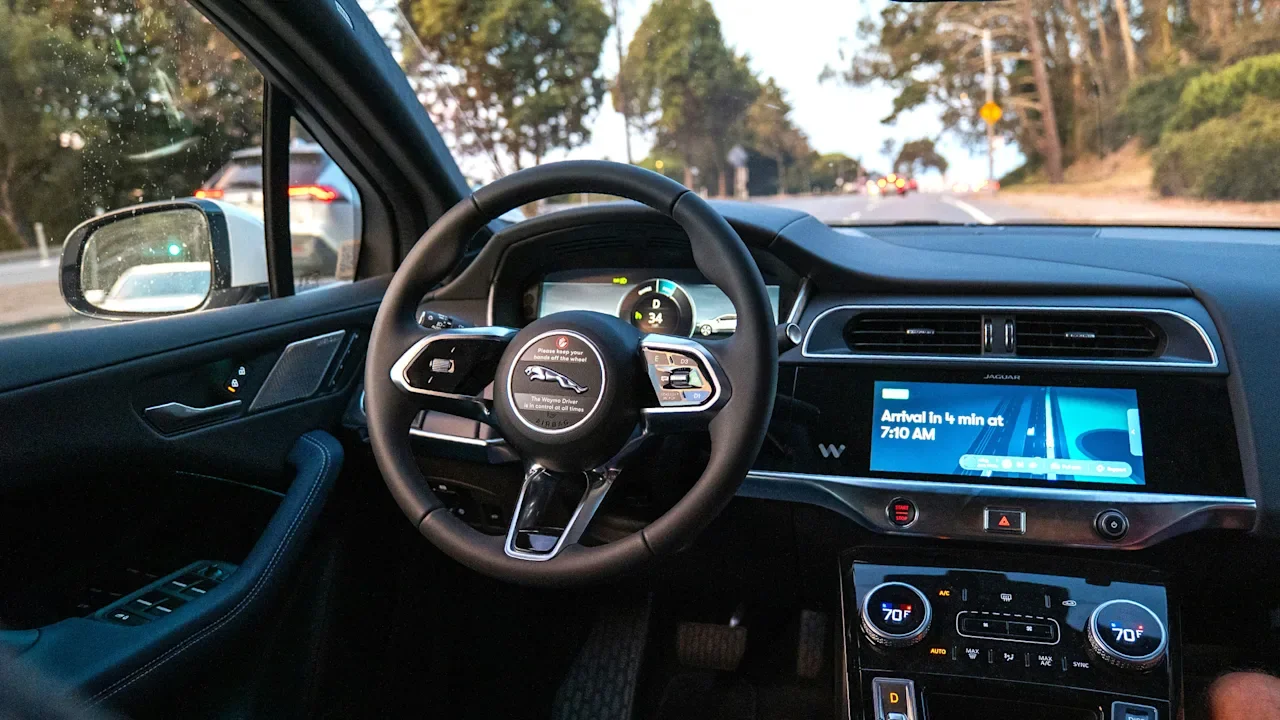
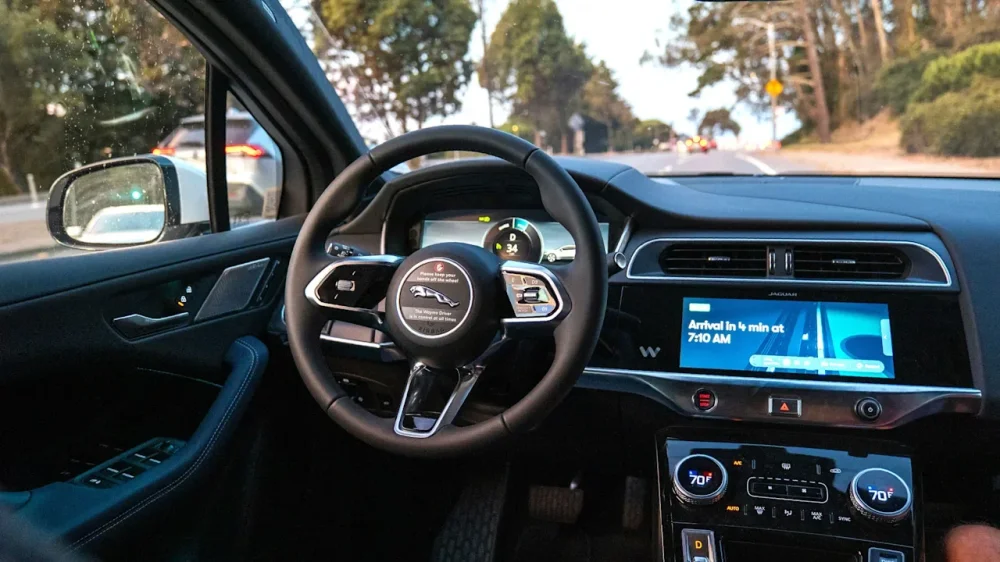
Before Waymo was Waymo, it was Google’s self-driving car project. Starting in 2009, the effort spent many years in test mode—with humans in the driver’s seats ready to take over, just in case—that its vision of vehicular autonomy often felt far from practical reality. Since last year, however, Alphabet’s robotaxi service has begun to scale up quickly. It’s now fully open to the public in Atlanta, Austin, Los Angeles, Phoenix, and the San Francisco Bay Area. And today the company is announcing that it’s testing fully autonomous trips, sans human driver, in Miami, and plans to do so in Orlando, Florida; Dallas; Houston; and San Antonio in the coming weeks. For now, the only passengers will be Waymo employees. But the news is one of the final big milestones before the company offers rides to the public in those five cities, which it says it expects to do next year once all the necessary logistics are in place. In most of the cities, Waymo began driving with an in-car supervisor late last May. (Remote human monitoring and control remain part of the system in all service areas.) By autonomy standards, taking the human out of the driver’s seat in five cities over such a short period is a one-fell-swoop sort of move. According to Waymo Chief Product Officer Saswat Panigrahi, the 10 million driverless rides the company has already completed helped it reach this point. “Having dealt with high-speed roads in Phoenix and very narrow corridors in San Francisco, L.A. was faster,” he told me. “Austin was faster than that. Atlanta was faster than that. So this is just the next step.” The five cities that are part of today’s announcement represent only a portion of those where Waymo has announced its intention to add service. Seven more—Denver, Detroit, Las Vegas, London, Nashville, San Diego, and Washington, D.C.—are “coming soon” but not yet ready to do without a human driver aboard. Yet another seven—Boston, Buffalo, New Orleans, New York, Philadelphia, Seattle, and Tokyo—are in an earlier stage, where the company is driving and collecting data. That’s a lot of places that are at least partway down the road to being Waymo cities. Each is different when it comes to their roads and the challenges they present. As Panigrahi notes, even specific intersections can present idiosyncrasies that the company’s Waymo Driver platform must map out individually. But he says that localities that might at first blush seem quite different can boil down to similar problems for the Waymo Driver to solve. “You can imagine how when we’re serving the civic center in San Francisco, [after] a Warriors game,” he says. “It’s not that dissimilar to a whole host of pedestrians coming from the beach and crossing over in Miami Beach.” Panigrahi adds that Waymo highway driving—which came to Los Angeles, Phoenix, and the San Francisco Bay Area last week, after years of anticipation—should also scale up to new markets more quickly. “Highway is a super hard technical problem, and that’s why we took our time to build it and validate it over multiple years,” he says. “But once you do get that, then the highways do look much more similar across states. There are more nuances in surface streets.” Waymo’s time as the only company offering a fully commercialized robotaxi service in the U.S. may be winding down. When I tried Tesla’s robotaxi service last month in San Francisco, a human attendant was in the driver’s seat, greatly reducing the amazingness of the experience. But Tesla plans to offer truly autonomous rides to the public by the end of this year, at least in Austin. Earlier this month, the company said that it also plans to deploy robotaxis in Dallas, Houston, Las Vegas, Miami, and Phoenix, portending eventual head-to-head competition with Waymo in all those areas. Tesla also says it intends to begin mass production of its two-seater Cybercab in April and is rethinking its original plan to remove the driver’s seat and steering wheel altogether. Meanwhile, Amazon-owned Zoox just announced that it’s begun Zoox Explorers robotaxi service in San Francisco. That means it’s allowing waitlisted members of the public into its app and giving them free rides in return for feedback. Zoox is already in Explorers mode in Las Vegas. Should a critical mass of American cities grow thick with driverless Waymo, Zoox, and Tesla robotaxis, it might turn autonomy from a futuristic novelty into mundane workaday transportation. That exposure could boost the technology’s reputation, which still isn’t great among people who haven’t been for a ride. For example, a February AAA study reported that only 13% of respondents said they trusted self-driving vehicles. In Waymo’s home turf of San Francisco, its cars are omnipresent and public attitude toward self-driving vehicles has been on the rise. Yet the recent death of a bodega cat who was struck by one of its vehicles sparked more of an uproar than the hundreds of animals who are killed by human drivers in the city each year. Waymo’s own data, based on 96 million passenger-only miles its cars have driven, shows its record is dramatically safer than that of humans. For instance, cars have been in 92% fewer crashes that caused pedestrian injuries. Panigrahi argues that merely seeing Waymos driving carefully reassures pedestrians and cyclists. After they’ve taken a trip in one, it’s a lot harder to hate them. (In August, The Information wrote that 99% of the 69% of its subscribers who’d been in a self-driving car were satisfied with the experience.) “Pedestrians notice that we stop to give them that confidence that they can cross and not play a game of chicken,” he says. “Even skeptical or on-the-fence folks, once they take their first ride, that magical experience changes their heart.” View the full article
-
Over the last decade, dozens of cities have reshaped streets around cycling and slower, safer, healthier travel. Take Paris: at rush hour, boulevards that were once packed with cars are now filled with thousands of people on bikes, newly planted trees, and cleaner air. In a detailed new analysis, the urban design consultancy Copenhagenize ranked 100 global cities on how far they’ve come to make it easier to bike—examining everything from changes in bike infrastructure to whether cities are promoting cargo bikes for delivery and teaching kids to bike in school. Nearly all top-ranked cities are in Europe, where strong pro-bike policies have lowered speed limits, added separated bike lanes, and created new bicycle streets where bikes take priority over cars. But the benchmarking report, the most comprehensive of its kind, also looks at progress in cities worldwide, from Nairobi, Kenya—where “bike trains” of hundreds of riders make commuting by bike safer—to Minneapolis, where some car lanes have been converted to two-way bike paths. If any politicians have doubts about adding new bike infrastructure, “they can look at this report and see that everywhere in the world, other cities are investing in cycling, and they are getting back all the benefits from active mobility,” says Clotilde Imbert, director of Copenhagenize. Cities like Paris show that massive changes can happen fast. “If you want to transform your city quickly, you can,” says Imbert. For the full breakdown, see the report—but here’s a snapshot of the top 30 cities for cyclists. 1. Utrecht, Netherlands In the index’s top-ranked city, nearly a third of all trips happen by bike. The Dutch city continues to shrink space for cars, taking away some parking spots and car lanes to make room for more bike lanes and trees. A new car-free neighborhood designed for 12,000 residents is now under construction. The city also includes amenities like the world’s largest bike parking garage, part of more than 100,000 bike parking spots throughout the city. Low-income residents can buy refurbished bikes for €30 ($34) through a program that also includes a year of free repairs. 2. Copenhagen Protected bike lanes cover more than half of the streets in the Danish capital, and other roads have been converted to “bicycle streets” that prioritize bikes over cars. The city is continuously improving its bike infrastructure; 29% of all trips happen by bike and nearly half of all commutes to work or school are on bikes. On a typical weekday, Copenhageners collectively ride 2.75 million kilometers (1.7 million miles). 3. Ghent, Belgium Over the last few decades, Ghent has redesigned streets to prioritize biking, walking, and public transportation. With more than 300 kilometers (186 miles) of protected bike lanes—along with low speed limits for cars and two dozen bicycle streets, the number of car trips keeps dropping. More than a third of trips now happen by bikes, up from 22% a decade ago. 4. Amsterdam One of the world’s most famous cycling cities keeps improving. Amsterdam now has around 560 kilometers (350 miles) of protected bike lanes and 11,000 bike parking spaces, including the world’s first underground bike garage. Most city streets now have a 30-kilometers-per-hour (18-miles-per-hour) speed limit. A school street program blocks off traffic in front of schools when kids are arriving and leaving, making it safer for kids to walk or bike to school. Thirty-seven percent of all trips happen on bikes. 5. Paris Over the past decade, Paris has transformed. Some major streets are now car free, and on others, parking spaces and car lanes have been removed to put in bike lanes. A 30-kilometers-per-hour (19-miles-per-hour) speed limit is the norm. There are more than 122,000 public bike parking places. Local businesses have used city subsidies to buy 1,500 cargo bikes. The bikeshare system had 56 million trips in 2024. In the last five years, bike trips jumped from 5% of all trips taken to 11%. 6. Helsinki To help make it easier to bike in Finland’s frigid winters, the city clears snow from 150 kilometers (93 miles) of bike lanes. The city now has an extensive network of separated lanes, along with traffic calming, redesigned intersections, and awareness campaigns focused on safety. It also continues to add bike parking, including a new parking garage at the central train station. 7. Münster, Germany In Münster, a compact university town, 40% of city streets have protected bike lanes. The city also has a network of bicycle streets, coated in red to remind drivers that bikes have priority, and a new scenic bike route along a canal. Nearly half of all trips take place on bikes. To nudge people to bike even more, the city uses public billboards to display stats from bike counters that show how many people are riding. 8. Antwerp, Belgium Antwerp has nearly 600 kilometers (372 miles) of protected bike lanes and continues to expand them through its “100 Missing Links” program, which includes underpasses and bridges for direct, continuous routes. About 70% of streets are limited to 30 kilometers per hour (19 miles per hour). To help add more bike parking in dense neighborhoods with little extra space, the city has been converting some unused buildings into secure subscription-based bike parking. They now have more than 60 neighborhood sites with 1,600 spaces. Cycling in the city is inclusive, with children and seniors on the road, and women make over half of daily commuting bike trips. Unsplash 9. Bordeaux, France Nearly 90% of Bordeaux’s streets have speed limits of 30 kilometers per hour (19 miles per hour) or less, and the city has been closing major gaps in its bike network, including new two-way cycle tracks along both riverbanks. Former car lanes on streets like the Quai des Queyries have been converted into continuous, green-framed bikeways. “Bicycletteries” in the historic center offer video-protected, resident-only parking. The city also uses cargo bikes for waste pickup and deliveries. 10. Nantes, France Nantes’s Grandes Voies Vélo network provides high-quality, well-marked bike routes across the city. Almost 90% of streets have low speed limits, complemented by car-free areas, shared streets, and low-traffic neighborhoods. The main train station offers 1,200 secure parking spaces, with more on-street racks throughout the city. Awareness campaigns support a steadily growing bike culture. 11. Bonn, Germany Bonn is shifting from painted lanes to a growing protected network; about 20% of streets now have protected bike lanes, and over half the city has 30-kilometer-per-hour (18-mile-per-hour) speed limits. The city remains relatively car-dependent, but bike counters show rising use, and cycling mode share has increased from 15% in 2017 to 21% in 2024. 12. The Hague, Netherlands The Hague has an expanding network of protected bike routes, with 60% of streets at or below a 30-kilometers-per-hour (18-miles-per-hour) speed limit and major investments since 2020. The central station holds 8,500 bikes, with 47,000 more spaces on streets. The city continues linking suburban routes and opened the 335-meter (1,099-foot) Jan Linzel bike bridge over the A4. Its “Den Haag Fiets!” program includes kids’ bike lessons from age 2, free or low-cost bikes for families, and subsidies for shared and cargo bikes. Unsplash 13. Strasbourg, France Strasbourg’s Velostras network links the entire metro area, giving the city one of the most recognizable and complete bike systems in Europe. It still needs slower speed limits and redesigned streets, but cycling culture is strong—its annual Bike to Work challenge brings new riders, and the city offers over 400 bike parking spaces per 1,000 residents, among the world’s highest. Cargo bikes are widely used for deliveries. Unsplash 14. Lyon, France Nearly three-quarters of Lyon’s streets have 30-kilometers-per-hour (18-miles-per-hour) speed limits or below, and the branded Voies Lyonnaises network makes navigation easy. The city is redesigning major corridors with protected routes, tunnels, and new riverside bikeways, and opened France’s largest secure bike parking hub at its main station in 2025. Its long-running bikeshare now includes low-cost plans for broad access. 15. Montreal The highest-ranked non-European city on the list, Montreal has rapidly expanded its protected network with clear, cohesive design and safer intersections. The Saint-Denis corridor hit 1.3 million trips in the first nine months of 2025, helping revive local businesses. Bixi, the city’s bikesharing program, set a record 13 million rides in 2024 and now operates year-round with bike trailers. Montreal pioneered North America’s first bicycle streets and continues to grow ridership. Unsplash 16. Malmö, Sweden Malmö’s bike mode share reached 27% in 2024, supported by a dense network with 49 kilometers (30 miles) of protected lanes per 100 kilometers of road. A new regional bike highway is adding underpasses and bridges to close gaps. The city provides extensive parking—including 5,000 spaces at train stations—plus air pumps, footrests, and school streets. Cargo bikes are common, and developers are encouraged to include bike pools in new housing. Unsplash 17. Munich Munich is replacing painted lanes with wide, tree-buffered protected tracks and building a bike highway network. A third of streets now have protected lanes, most have 30-kilometers-per-hour (18-miles-per-hour) speed limits, and major intersections include dedicated bike signals. Cycling rose from 18% to 21% between 2019 and 2023, though the city discontinued its bikeshare in 2024. Green-asphalt paths and redesigned corridors are reshaping the streetscape. 18. Oslo Oslo’s Vision Zero policies are driving major safety upgrades, with two-thirds of streets having a 30-kilometers-per-hour (18-miles-per-hour) speed limit and plans to make that universal. The bike network remains fragmented and ridership is relatively low at 7%, but the city is improving crossings and building secure parking in new developments. In the winter, the city clears snow on bike lanes along with car lanes. To help riders in the coldest months, the city also offers subsidies for studded winter tires. 19. Vienna Vienna has added or upgraded 44 kilometers (27 miles) of bike routes in five years, including its first Dutch-style bicycle street on Argentinierstrasse. Wider, greener paths and redesigned streets are improving safety. The city offers cargo-bike subsidies, free loaner programs, school training, and annual festivals, and even includes a family biking guide in new-parent kits. Bike parks and school streets continue to expand. 20. Bern, Switzerland Bern’s bike mode share sits at 19%, with a mix of painted lanes, bicycle streets, and about 18 kilometers (11 miles) of protected paths. Some major boulevards have high-quality separated tracks, although the network still needs expansion. The city provides around 2,600 station parking spaces, extensive on-street racks, and easy bike rental access through the SwissPass system. Cargo bikes are common and supported by local rentals. 21. Graz, Austria Two-thirds of Graz’s streets now have a 30-kilometers-per-hour (18-miles-per-hour) speed limit, supported by 130 kilometers (81 miles) of cycle paths and 26,000 bike parking spaces. A major pedestrian-bike bridge is planned to link two neighborhoods and create a more direct bike commute. Balance bike training in kindergartens, bicycle playgrounds, student bike grants, and senior cycling classes help riders of all ages gain confidence. Monthly summer group rides helped normalize everyday biking. The city sits at a 19% bike mode share today and aims for 30% within five years. 22. Zurich Zurich transformed a former car tunnel under the main station into a bike-only corridor with bike stations at each end, part of a broader push that includes more bike parking across the city. Color-coded pavement helps riders instantly understand the type of route they’re on. A dedicated team tests new ideas to improve bike infrastructure. All public school students take a cycling exam. Bike mode share has risen from 8% in 2019 to 11% today. 23. Rotterdam, Netherlands Rotterdam redesigned a central boulevard, Coolsingel, from car-centric to people-first, adding a two-way cycle track, a 30-kilometers-per-hour (18-miles-per-hour) speed limit, and a new streetcar line. Car traffic dropped by roughly 10,000 vehicles after completion. The city has a wide network of separated bike paths and is rolling out low speed limits as the norm, now on 115 streets. At Central Station, 5,000 underground bike parking spaces connect directly to train, metro, and streetcar lines. 24. Ljubljana, Slovenia A 20-hectare car-free center anchors Ljubljana’s bike- and pedestrian-focused approach. New cycling corridors and contraflow lanes on low-speed streets make the network more direct. The city now has about 22 kilometers (13 miles) of separated bike paths per 100 kilometers of roadway and a 14% bike mode share that’s still rising, with women making up the majority of riders. Schools run bike-safety programs, and plentiful on-street bike racks make parking easy. 25. Bologna, Italy More than half the city is now covered by low-speed zones, and Bologna’s branded “Bicipolitana” network has grown to over 100 kilometers (62 miles), with 26 kilometers (16 miles) added since 2022. A 2019 cycling strategy and an inclusive decision-making structure—bringing nonprofits and other stakeholders into the process—have helped ridership grow. Streets are designed for comfort and inclusion, and women now make 52% of trips. The city continually monitors progress, and new buildings must include secure bike parking. Unsplash 26. Stockholm Stockholm is rolling out a new network of separated bike paths reaching well beyond the city center into outer districts. A new bike and pedestrian bridge will soon create a faster shortcut to the central station and downtown. Bike parking still lags behind need, but investment is accelerating. 27. Vitoria-Gasteiz, Spain About 8% of trips in this Spanish city are made by bike—a high rate for the region—supported by a 120-kilometer (75-mile) network of protected lanes linking neighborhoods, jobs, and parks. The city recently launched a new bikeshare system. Subsidies for electric cargo bikes are pushing growth, alongside micro-distribution hubs that have made cargo bike deliveries common. 28. Wroclaw, Poland Wroclaw uses Dutch-inspired design standards and has built 428 kilometers (266 miles) of bike routes connecting jobs, universities, and parks. (Some are just painted lanes, but the quality continues to improve.) Bike mode share is 5%. A new cargo bike logistics hub opened this year in a converted car garage, and the city bans motorized deliveries after 10 a.m. A slow zone in the city center began during the pandemic. Schoolchildren learn biking skills, and the recently relaunched bikeshare system—now with kids’ bikes, cargo bikes, tandems, and e-bikes—logged 1 million rides in its first six months. 29. Quebec City, Canada Quebec launched plans in 2023 for a 150-kilometer (93-mile) bike network. On the main corridor, new bike and pedestrian infrastructure has boosted biking 6.9% and walking by 94%. Its fully electric bikeshare system, introduced in 2021 for the city’s hilly terrain, grew from 100 bikes to 1,300 bikes and 1.3 million trips in 2024; 50 more stations and 500 more bikes were added this year. Over half of city roads now have speed limits of 30 kilometers per hour (18 miles per hour). 30. Vancouver Although Vancouver’s progress slowed during the pandemic, the city already has 109 kilometers (67 miles) of protected or off-street bike routes. A major recent project, the Granville Connection, converted two car lanes on a key bridge into wide separated bike and pedestrian paths. Downtown corridors continue to gain new bidirectional protected lanes. Residential streets in 25 neighborhoods now have 30-kilometers-per-hour (18-miles-per-hour) speed limits. View the full article

-
House of Commons Speaker tells lawmakers Beijing is using ‘recruitment agents and consultants’ View the full article