ResidentialBusiness
Administrators
-
Joined
-
Last visited
Everything posted by ResidentialBusiness
-
 And suddenly, there may be a reverse Midas at the centre of AI’s circular economyView the full article
 -
Unlock the power of local search to attract more customers. Elevate your marketing strategy with effective local search techniques. The post From Listings to Loyalty: The New Role of Local Search in Customer Experience appeared first on Search Engine Journal. View the full article
-
It should be shocking to nobody that we’re dealing with an absolute surplus of AI consumables. Breakthroughs. Policy changes. New tools that promise to “10x your productivity.” Most of it is either too technical, too abstract, or just plain filler. You don’t need another wall of text, you need the signal. Luckily, there are a handful of AI newsletters that consistently deliver real value without taking up half your morning. (My editor wanted to make sure you knew about Fast Company’s own such newsletter, by senior reporter Mark Sullivan: AI Decoded. You can sign up for it here.) The Rundown AI: The Daily Scan If you have exactly five minutes between pouring your coffee and jumping on your first call, The Rundown AI is for you. All business, no fluff, it gives you the full, daily landscape in a highly digestible format. If something major drops from OpenAI, Google, or Meta, you’ll know about it. This is best for the busy professional or anyone who just wants the highlights without having to chase links all day. Superhuman AI: The Productivity Power-Up The Superhuman AI newsletter runs the gamut from grand philosophical debates of AI to the tools that make your job easier. At its best, it’s practical, actionable, and focused on handing you the tools, tips, and tutorials to integrate AI into your daily tasks. Think prompt engineering tips and how to use the latest AI to automate something you hate doing. This one is ideal for individuals looking to boost their personal productivity and executives focused on operational efficiency. The Neuron: Connecting the Dots If The Rundown is the summary, The Neuron is the analysis—the one that tells you what the news means. Expect a thoughtful analysis with a touch of dry humor. The Neuron is excellent at connecting the technical developments to the real-world impact. This is excellent for strategy leaders and those who need to understand the implications of AI for their industry. Ben’s Bites: For the Builders Ben’s Bites is less about the press releases and more about what the AI community is actually building right now. Curated by Ben Tossell, it’s a daily digest packed with new tools, product launches, and startup funding news. If you’re a founder, developer, or just love being the first to try a new app, this is your resource. The Batch: The Educational Authority When you need to go beyond the chatter and understand the foundational elements of AI, The Batch is authoritative, educational, and reliable. This weekly digest strikes a nice balance, covering the major research breakthroughs alongside the applied use cases. It keeps you current without oversimplifying the complex subject matter. This is best for anyone transitioning into a technical AI role or the leader who needs to speak confidently about AI. View the full article

-
It’s five answers to five questions. Here we go… 1. My coworker accidentally linked her nudes to our team Photoshop account My coworker was using our team’s Photoshop account for a personal project (which our manager is aware of and okay with) and somehow she accidentally linked her phone camera roll to the account so all of her personal photos were visible on the team account. This might have been a nonissue, but my coworker has numerous sexually explicit photos on her phone that were then linked to Photoshop without her knowledge. The way she found out about this was our manager calling her after hours and letting her know she needed to unlink her phone photos immediately. Manager did not mention anything about the content of the photos. Clearly, my coworker is now embarrassed and freaking out about what this means for her job. Could she be fired over this? It’s possible, but it’s far more likely that her manager will just have a serious conversation with her about being more careful in the future — or might assume the embarrassment has already handled teaching her the lesson (which it probably has). Your coworker could help things along by thanking for the manager for calling her right away and saying that she’s mortified and it will never happen again. 2. Not telling an intern the real reason she was fired I am in middle management at a company that takes on a fair number of interns every year. At a recent meeting (just middle managers and our boss), my coworker mentioned some very inappropriate behavior from an intern. Apparently, Coworker and Intern were working with a client and Intern started talking about marijuana use at length — how it’s so helpful for her, how much fun it is, but sometimes the way she acts while high is scary to her — while Client laughed along and encouraged the conversation. We all agreed that the internship needed to be ended early, both because of this and because Intern is late more often than not. Coworker asked us not to tell Intern that we knew about the inappropriate conversation. Boss said that was fine, and that he’d tell Intern she was being fired for arriving late too many times. I suggested it might be a good idea for Intern to know that what she said in front of the client was not okay, for her professional growth if nothing else. Coworker never discussed it with her, so she wouldn’t know. Nevertheless, she was fired for “tardiness.” Do you think this was the right way to handle it? I understand Boss wanting to respect Coworker’s request not to tell Intern that he knew what Intern said, but at the same time, I feel like Intern deserves to know. What do you think? I’m with you. Part of the point of an internship is to learn about how work works, and it’s a disservice to the intern not to tell her that that conversation was firing-level inappropriate. It’s far better for her to learn that lesson as an intern than at a regular job where the stakes will be higher. In asking your boss not to share the info, the coworker was prioritizing her own (extremely mild) issues of comfort over what’s actually best for the intern, and it’s too bad that your boss agreed to handle it that way. 3. How do we ask for extra pay for overnight events when we’re working for a friend? I work part-time as an assistant event planner. The company is owned by one main planner, Jane, who does this full-time and brings in three assistants to help on the day of events. The three of us all have separate full-time 9–5 jobs during the week, so this is side work for us. Event days are long, physical, and often outside in hot weather, but we all genuinely enjoy working together and have become good friends. As the business has grown, Jane has started taking on more events that are farther away, which often means overnight travel. We’re paid hourly for the event work itself and reimbursed for expenses while on the road, but the travel adds a lot of extra logistical work for us — arranging time off or remote days from less-than-ideal locations for our regular jobs, managing childcare and pet care, packing for several days, etc. It’s starting to feel like we should be getting some additional compensation for that extra burden, maybe a flat bonus for overnight events or something similar. The tricky part is: I don’t think Jane realizes how much of an extra ask these overnights are. She’s a workhorse who will happily go from 5 a.m. to midnight, and when she’s in the zone she can get tunnel vision about what the event needs, without realizing that not everyone can or wants to operate that way or that we have other responsibilities outside her business. Jane genuinely enjoys these trips and I think sees them as friend time as much as work time. To be fair, we do too! We don’t want to damage the good vibe we have, but we also want to feel fairly compensated for the extra effort that goes into supporting her growing business. How can we raise this without hurting the relationship? Be straightforward and explain that the overnight trips require more from you than the local ones do, and ask to revisit the payment rate in light of that. For example: “Can we revisit the payment rate for overnight trips? Our current payment rate was arranged when all the events were local, but overnight events require a lot more, like time off from our regular jobs or arranging remote work and managing child care and pet care. Could we figure out a different rate for overnight trips that takes those factors into account?” If she resists that, it’s completely fair and reasonable to say that you can only do local events. And since there’s a friendship element here that you’re worried about too, you can acknowledge that by saying something like, “I do have a great time on the trips and like doing them, but realistically it’s not something I can make work with my regular job at the current rate. So I will sit those out, but if you ever change the way they pay, I’d be interested in doing them again.” 4. Who should really be in the “to” field vs. the “cc” field? The VP at my work requests that we copy his assistant when emailing him to make sure he responds. Often, if I am scheduling a meeting with him, his assistant will be the right person to respond. I feel weird CC’ing her and addressing the email to VP when the assistant is going to respond. I have been addressing the emails to both of them and talking about the VP in third person when scheduling meetings. The VP needs information on the topic of the meeting, and the assistant is the one that works out the scheduling. I feel like I should actually be emailing the assistant and CC’ing the VP, but that may not be appropriate given his position either. What are your thoughts? Either one is fine, and different offices do it differently — and in most cases, no one is really analyzing the to/cc fields that closely (there are some exceptions to that, but they’re rare) and you’re probably putting too much worry into it. In this case, since the VP has specifically asked that you copy his assistant, you should do it that way. And it’s very, very normal to do it that way! The idea is that you’re emailing the VP about the need, but his assistant is copied in so she can handle the set-up. But most likely, they don’t really care which way you do it as long as you’re sending the info to both of them. 5. I’m on leave and just saw my company advertising my job I work in middle management at a mid-sized office. There have been a lot of money troubles and management drama here in the past year, and I recently went on FMLA to address health issues I’ve been ignoring. The stress of the job was definitely a contributing factor to my declining health. I will return to work this winter and have communicated my expected return-to-work date to HR, but I was scrolling a job board and noticed that my employer posted an opening for my job. It has a different title than mine but is exactly what I do in my day-to-day. I’m trying to not freak out and tell myself that maybe management has realized how overworked I was previously, so they’re hiring help for me. But I can’t help but think that they are trying to blatantly replace me. Management is known to hold grudges toward people who go on leave. I know that technically my employer can move me to the “same or equivalent position” when I return from FMLA, but I also know there is quite literally no money or space to hire a Second Me for the office. Is there any way to interpret this non-maliciously? My current thought is to continue with my current return-to-work plan and see what happens, but the uncertainty is killing me. It’s possible that they can’t leave the work undone and so they’re hiring for it now, with the plan of moving you to an equivalent role when you return or of having there be two people doing the work or at least of having overlap. Or it’s possible that they’re planning to flagrantly violate federal law and push you out for taking FMLA. One option, if you want to, is to email your manager and say you saw the job posting and ask if they’re adding a second role or envisioning you returning to a different one. But it also wouldn’t be a bad idea to make sure you have a lawyer to contact if they do indeed try to push you out. The post coworker accidentally linked her nudes to our team account, asking for extra pay for overnight events, and more appeared first on Ask a Manager. View the full article
-
Bitcoin drops 28% in six weeks as worries over AI stocks spill into digital assets and high-octane bets backfireView the full article
-
Huge improvements in the decades since are a reminder that even really knotty problems can get betterView the full article
-
Politics today is about ‘open vs closed’, but the UK government’s approach risks appeasing no oneView the full article
-
Europe wrestles with crumbling bridges, narrow tunnels and red tape as it plans how to move an army eastward View the full article
-
The President-supporting billionaire narrows EIT’s ambitions by cutting initiatives and tightening controlView the full article
-
The property in One Hyde Park had been held via a trust of which Natalia Rozhkova is listed as the beneficiaryView the full article
-
Picture a young American man from California. At 35 years old, he knew himself well. He knew his love for wine and thick steak. He knew that time in the outdoors, whether walking between tall pines on hiking trails, or between centuries old architecture, recharged him. He dreamed of a corner apartment overlooking cobblestone streets ... Read moreView the full article
-
Bank’s leadership differs on who has necessary finance experience and Asia knowledgeView the full article
-
Resolution is first step in complex, multiphase plan for the enclaveView the full article
-
Google Search Console now lets you add custom annotations to performance charts, making it easier to track when changes or external events occurred. The post Google Search Console Adds Custom Annotations To Reports appeared first on Search Engine Journal. View the full article
-
Populist party claims chancellor Rachel Reeves can avoid tax rises at the Budget View the full article
-
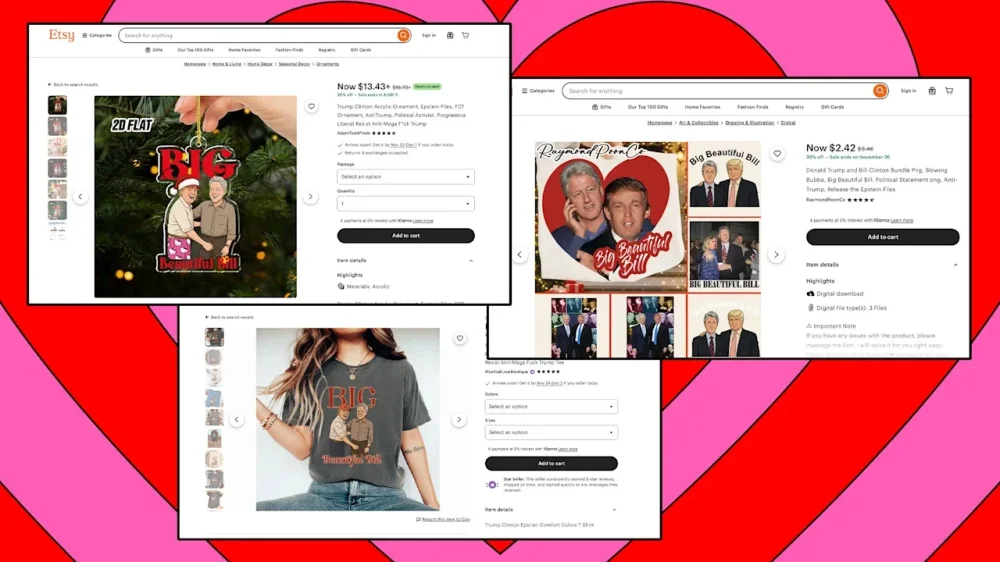
Last week, Congress released more than 23,000 pages of documents from the late convicted sex offender Jeffrey Epstein’s estate to the public. Since then, the bombshell release has garnered commentary from the The President administration, thousands of internet users, Saturday Night Live and, now, merch sellers on Etsy. In recent years, a certain contingent of ultra-niche online merch sellers (and, most likely, drop shippers) have decided that any notable event is fodder for potential T-shirts, mugs, and bumper stickers. In recent months alone, sellers have profited from merchandise designed to covertly signal anti-The President messaging; merch promoting “Alligator Alcatraz,” the The President administration’s migrant detention facility in the Florida Everglades; and merch based on a series of New Jersey drone sightings that spawned conspiracy theories across the internet. Just days after the new Epstein documents were released, merch sellers on sites including Etsy and Amazon have already turned the disclosures into NSFW statements. Etsy and Amazon flooded with merch inspired by the Epstein emails Of all the information included in the documents revealed by Congress (including one message in which Epstein claimed that The President “knew about the girls”), most merch sellers are focusing on a specific email exchange in March 2018 that’s become a major subject of internet scrutiny. In the exchange, Epstein’s brother, Mark Epstein, asks Epstein how he’s doing. When Epstein responds that he’s with Steve Bannon—The President’s former White House chief of staff—Mark Epstein follows up with: “Ask him if Putin has the photos of The President blowing Bubba?” Given that “Bubba” is a well-known nickname for former President Bill Clinton, netizens have begun speculating that the comment might refer to a sex act between The President and Clinton. The comment even got some national airtime on Saturday as part of SNL’s cold open on November 15. (Both The President and Clinton have denied any knowledge of Epstein’s abuse or sex-trafficking operations, and neither appears to have been explicitly implicated in wrongdoing in the emails.) Mark Epstein has since gone on record to multiple publications claiming that he was just joking—but that’s not stopping merch sellers from capitalizing on the theory. A look into the NSFW merch designs Out of the dozens of new Etsy and Amazon listings that have popped up since the files were released, one of the most common themes is a riff on the phrase “big, beautiful bill,” which The President used to describe a major tax and spending law that he signed in July. In these merch items, however, the “bill” in question is Clinton. The items, many of which are not safe for work and potentially offensive, feature President The President and former President Clinton along with a variety of suggestive phrases. (See here, here, here, and here for examples, but click at your own risk.) While most of the merch is fairly predictable, a few sellers have opted for more creative designs—including one image of The President and Clinton inspired by the iconic film Brokeback Mountain. Etsy and Amazon did not immediately respond to Fast Company’s request for comment on whether it’s aware of an uptick in merch in this vein, and whether the merch fits within their terms for seller designs. View the full article
-
Federal Reserve Gov. Christopher Waller said in a speech Monday that private and public-sector data suggests that the labor market is continuing to weaken, making a 25 basis point rate cut in December a prudent choice. View the full article

-
We may earn a commission from links on this page. I fell in love with cold weather running while I was training for a spring marathon. It wasn’t a choice at first: Some weeks, the weather was bad for days on end, and if I stayed home I would fall behind in my training. Everybody else in my training group was braving the elements, so I did too—with no regrets. I got to run on quiet mornings while snow was softly falling. I signed up for a winter race that herded finishers into a heated barn for hot chocolate and soup. I set a personal record at a spring race, during which I pushed myself hard without breaking a sweat. I now find it sad when somebody tells me they’re afraid of running in the cold, or that they would run in the winter but don’t know what to wear. No, cold weather doesn’t have to stop you from running, but getting dressed can be a puzzle: How do you keep from freezing your butt off at first and avoid overheating once you start to sweat? Fortunately, it isn’t as tough as it looks. With the right gear, your fingers and ears can stay toasty while you jog through a winter wonderland. Below, I’ll give you a temperature-by-temperature running cheat sheet, and then dive into the specifics on how to buy the best socks, shirts, and more. Use the"feels like" temperature and the 20 degree rule When I get dressed to run in winter, I take a look at the “feels like” temperature, not the actual high or low. I also make sure to check the weather for the time I’ll go running, not for the whole day. It doesn’t matter how warm it will be at 2 p.m. if my run will be happening at 6 a.m., before the sun is up. The simplest way to figure out what to wear is with the 20 degree rule. Imagine that the temperature is 20 degrees (Fahrenheit) warmer than it really is. What would you wear then? Well, if it’s 50 degrees out, you’d dress as if it were 70: in a T-shirt and shorts, most likely. If it’s 30 degrees, you’d dress as if it were 50: long pants and maybe a light jacket. Get the idea? Everybody has their own preferences. Some people dress in shorts even when it’s snowing, while others will pop a beanie on as soon as there’s a detectable chill in the air. I’m a pretty middle-of-the-road runner when it comes to keeping warm, so here’s what I wear at each “feels like” temperature, starting with warmer weather and working our way colder. I'll give a guide to each type of garment or accessory at the end. What to wear if it's 50 degrees or warmerAt 50+ degrees Fahrenheit, I’m wearing basically the same things I would for a summer run. Bottoms: shorts or light leggings. Top: A tank top or T-shirt. Head and hands: Nothing special. No gloves and no hat, unless it’s a baseball cap to shade my eyes from the sun. What to wear if it's in the 40sWe’re starting to feel the first bit of a chill. This is where I may start bringing gloves, although they’ll probably get stuffed into a pocket by the end of the run. Remember, with the 20 degree rule, it will feel like 60 degrees by the time you're warmed up. Bottoms: Leggings, lightweight long pants, or shorts. Top: Something with long sleeves, but ideally made of thin material (think long-sleeved T-shirt, not a full on sweatshirt or jacket). If you wore a sun shirt in the summer, that's a good layering option for these cool temps. I like my REI Sahara Shade hoodie here, but any long sleeve will do. If you run fall and winter races, you'll probably be handed a free long-sleever at some point. Hands: I usually just pull my shirt's sleeves over my hands, but you could wear knit gloves if you want. Consider something like Flipmits for an intermediate option (they can be folded down into a wrist cuff when your hands warm up). Head: A headband if you need protection for your ears. adidas Alphaskin Headband – Performance Workout Ear & Sweat Band $15.99 at Amazon $22.00 Save $6.01 Get Deal Get Deal $15.99 at Amazon $22.00 Save $6.01 What to wear if it's in the 30sYou may see a few snowflakes drifting down, but don’t bundle up in a snowsuit. Once you’re warmed up, it will only feel like 50 degrees—so go for something in “light jacket” territory. Bottoms: Leggings or running tights. The fleece-lined kind can be nice. (I have these.) Top: You’ll want some kind of jacket or sweatshirt. A lightweight, reflective rain jacket is great here, or just throw on a regular hoodie over your T-shirt. (I go with cotton sweats in dry weather or light snow, but I'd go for synthetics or wool if there's rain or sleet.) Hands: Definitely wear gloves. The cheap knit ones are usually good enough, but consider treating yourself to a nice pair of running gloves. Head: Your choice of hat or headband; I’d stick with the headband. Feet: This is around the temperature you may start to want warmer socks. That goes double if snow is in play: snow that falls onto your shoes will work its way through the mesh, melt, and make your feet wet. Wool is a good material here, so consider something like these from Smartwool. baleaf Women's Fleece Lined Leggings Thermal Warm Winter Tights High Waisted Thick Yoga Pants Cold Weather with Pockets Black L $36.99 at Amazon Get Deal Get Deal $36.99 at Amazon What to wear if it's in the 20sThis is where I’ll officially say it’s “cold.” Whatever warm-weather gear you were getting away with at warmer temps, you’ll probably have to swap it out now. Shorts people will break out their long pants. Headband people will wear a real hat. Bottoms: Leggings and shorts. I don’t care if you think it looks goofy to wear both, this is an A+ hack. Men, if you weren’t already wearing pants with a windproof panel in front, you might want to look into those now. Top: It’s definitely jacket weather. Rather than getting a warmer jacket, I like to wear the same light jacket as I did at 30 degrees, but this time with a long-sleeved, fleece or wool base layer underneath. Hands: Real gloves, please. You can keep wearing your little knit gloves if you’re able to tuck your hands inside your jacket sleeves, or if you have a pair of mittens to wear over top; otherwise, get windproof gloves. Head: A hat, and maybe also a buff for your nose and mouth. (If you have any cloth masks still hanging around from the COVID days, they’re perfect for cold weather runs.) Feet: Warm socks for sure. If you’ll be doing a lot of running in these temperatures, you may want shoes that are specialized for the elements. Look for ones with Gore-Tex uppers, like the Brooks Ghost GTX. What to wear in the teens and colderThis is where I tap out. If a run is just barely in the teens, I’ll make do with the 20-degree items I mentioned above (maybe wearing an extra layer if needed). You certainly can run in this weather if you are determined. You’ll want windproof everything, some kind of face covering, and you may need eye protection such as goggles. Whenever the weather gets to your own personal “too cold” temperature, remember that you still have options. The early afternoon is often the warmest part of the day, so a run may be tolerable then. There’s also no shame in using a treadmill (even if you have to join a cheap gym for this reason alone). Everybody has different preferences, and with practice you’ll figure out if you’re the kind of person who wears three shirts before it hits freezing or the type to run through the snow in shorts. But this should give you a starting point when you head out for your first (or next) cold weather run. How to buy the best cold-weather running gear (without breaking the bank)As you continue on your cold weather running journey, you may need to buy some new gear or repurpose things from elsewhere in your closet. And yes, the first few minutes of your run will feel chilly. But if you’re wearing the right shoes and clothes (and planning routes with a few extra factors in mind, which I’ll discuss below) winter running is not just feasible, it’s actually fun. So here are the items you may want to consider SocksYour feet need to be warm and, if possible, dry. Warm socks go without saying, but there are some extra considerations when you’re picking socks to run in. Wool socks are ideal because they keep your feet warm even when they get wet. You may not think of winter as a wet time, but any snow that meets up with your body heat will turn into water. If you don’t have wool socks, synthetic wicking fabrics are a good second choice. Cotton is a no-no First, the socks have to be able to fit into your shoes. If you’ve been running in super thin cotton or synthetic socks all summer, thick socks may not fit. Smartwool run socks are available in a thin version that can fit no problem—but in colder weather you’ll want some thickness for extra warmth. That thickness, in turn, may mean that your winter running shoes need to be roomier than the shoes you wear in summer. If you’re buying a new pair, make sure to try them on with the type of socks you intend to run in. ShoesIf your warm socks fit, you can make do with the same shoes you wore in the summer. Your feet will stay dry if the weather is dry and you stay out of puddles. If you encounter snow and slush, though, your feet will have to endure warm-but-wet conditions for the rest of your run. That can be okay for short runs, but for serious winter running, consider upgrading your shoes. Some running shoes are available with water-resistant uppers. This level of water resistance will keep stray snowflakes out of your socks, but it isn’t reliable if you’ll be stepping in slush puddles. In that case, you’ll want something more waterproof, like Gore-Tex shoes, many of which are made for running trails. Brooks Women’s Ghost 17 GTX Waterproof Supportive Running & Walking Shoe - Coconut/Oyster/Blue - 5 Medium $169.95 at Amazon Shop Now Shop Now $169.95 at Amazon If you expect to run on a lot of ice or packed snow, especially on trails, spikes can give you a little extra grip. Yaktrax makes a rubber harness that stretches to fit your shoe, with steel coils and small spikes, for about $35. Microspikes are a notch up from there, costing around $75 for what look like a miniature version of the chains you’d put on car tires. And if you’re really dedicated—and are seeking a purpose-built pair of snow shoes—you can attach individual spikes: either these traction spikes from IceSpike, or via a DIY approach using sheet metal screws. (There’s a tutorial here.) The versions that include rubber, like Yaktrax, can wear out quickly on pavement, so it’s best to save these for runs on trails or on unplowed paths. You’ll also want to be careful about the fit. I tried a pair that were similar to Yaktrax, but they were a tad too big. Shortly into my run, I found that the rubber stretched enough to pull the front set of spikes up over the top of my shoe. I've since gotten better-fitting ones, and they work great. Spikes and specialized shoes help you go more places, in worse weather—but remember that they’re not required to just head out on a chilly day. Regular shoes are fine if the weather is cold but dry, or if you’re willing to put up with a little moisture. Shirts and jacketsOn a chilly day—say, in the 50s—a long sleeved T-shirt is probably all you need. Wear it over your regular tee or tank, and you can take it off and tie it around your waist once you warm up. For colder weather, you’ll want to break out a light jacket or sweatshirt. This is when you experience one of the hidden perks of winter running: extra pockets! By the time temps dip into the 20s or below, you’ll be doing some serious layering: for example, an undershirt, a long-sleeved warm layer, and a jacket. A great option for that warm layer is a wool base layer like this one. (Don’t worry, it’s not itchy). If you can’t wear wool, there are synthetic ones as well. Before you run out to buy all new clothes, experiment with what’s in your closet. Try fleece or a repurposed thin sweater, for example. Some people would never wear cotton for running (it can be cold when wet), but I wear it as my undershirt layer and have lived to tell the tale. The jacket is the most important layer. You can grab a sweatshirt in a pinch, but to be really well-equipped for nasty weather, you’ll want a jacket that is windproof and water-resistant. Jackets made for running are lightweight, for layering. Consider ones that are visible at night, with bright colors and reflective areas, and that come with zippered pockets. BALEAF Mens Cycling Rain Jacket Windbreaker Waterproof Running Gear Golf Mountain Biking Hood Lightweight Reflective Yellow XL $55.99 at Amazon $59.99 Save $4.00 Shop Now Shop Now $55.99 at Amazon $59.99 Save $4.00 Leggings, tights, and pantsOnce it’s too cold for shorts, you’ll want to start layering your bottoms, too. Women are at an advantage here, since most of us already have leggings in our closet. (It’s fine to wear cotton if it’s dry out, but go for synthetics if it’s snowing.) Pants that aren’t form-fitting tend to let cold air in. That’s why leggings or “running tights” like these are standard winter wear for both men and women. Running tights come in different thicknesses; go for something fleece-lined for cold weather, or layer two pairs. And if your butt gets cold—or if you just want to be modest—feel free to wear a pair of shorts on top. And if you want more protection, consider underwear with a windproof panel on the front. One Amazon reviewer quips: “If you have ever run, even for a little, with your hand down the front of your pants for fear of frostbite, you need these.” AccessoriesYou need to keep your ears warm, but don’t reach for a winter hat right away: an earwarmer or headband can cover your ears while still letting heat escape from the top of your head. And if anything is falling from the sky (say, snow), a baseball cap will keep it out of your eyes. ZYXBBD Ear Warmers for Women and Men-Fleece Winter Ear Warmer Headband Ear Muffs for Jogging Running Hiking Cycling Skiing (Black+Red) $9.97 at Amazon Shop Now Shop Now $9.97 at Amazon Fleece or knit hats are great for cold enough days, of course. The dividing line between earwarmer weather and hat weather is a personal one, and depends on whether you’re overheating. If you’re wearing a hat but sweating into your base layers, the hat is probably overkill. Gloves, however, are essential. I keep a pair of cheap knit gloves in my jacket pockets, but windy or very cold days call for something stronger. You can layer gloves; I find gloves under mittens work well. You can also get windproof insulated gloves, which are warmer than any number of layers of hole-y knit gloves. Your face will freeze on windy or very cold days, so this is where your stash of pandemic face masks really shines. Any mask will help to protect your face, even if you’re on your own outdoors and don’t need it for infection control. In that case, go for comfort: consider a balaclava or even a fleece-lined bandana. A neck gaiter stays on better than a scarf, if your neck is cold. At this point, every inch of you is covered but your eyes. Sunglasses can take care of that. How to stay safe in the dark and the coldThe winter world can be dark, slippery, and (surprise!) cold. Here are some tips for dealing with some of the likely hazards. It gets dark earlier in the winter, so you’ll need to make adjustments to your evening or early-morning runs. Either switch to midday runs, or prepare to spend a lot of time running in the dark. That will require, at minimum, wearing reflective clothing and carrying a flashlight. (Better to wear a headlamp.) Plan routes where you feel safe even in the dark. In the winter I spend less time on trails and more time on the local school’s well-lit running track. We have tips to find a track near you. PETZL TIKKINA Headlamp - Compact, Easy-to-Use 300 Lumen Headlamp, Designed for Hiking, Climbing, Running, and Camping - Grey $39.33 at Amazon Shop Now Shop Now $39.33 at Amazon Slipping on ice sucks. Some ice you can see at a distance, but some you can’t. And remember that you won’t have your ice spikes if you’re running on paved, plowed surfaces. So keep a close eye out, and don’t be afraid to slow down to a penguin walk on areas you’re unsure about. Running a short loop multiple times lets you watch for ice on the first lap and put your mind at ease a little bit the next few times. The track probably won’t be plowed. If you depend on a track for speedwork, and it’s unavailable or impassible, you’ll have to make other arrangements. The easiest adjustment is to convert your usual intervals into time: If you normally run your 400-meter laps in two minutes, do intervals of two minutes at a time while running on a road or on the treadmill. (Then again, if you showed up to the track with a shovel, probably nobody would stop you, and it would be a great workout.) Busy roads may become unrunnable. If you normally run on the shoulder, be aware that snowplows will deposit piles of snow, which then solidify into little ice mountains, right in your running zone. If that leaves nowhere to run except in traffic, you’ll have to change your route. Water fountains may be turned off. This one is a warning for those of us that run in parks: If you depend on outdoor water fountains, they may not be available, so pack your own water bottle or detour to another source of water. Bathrooms, or seasonal businesses whose bathrooms you’ve used, may also be closed. Porta-potties may disappear for the season. You may not be able to drive. If you usually drive to the start of your running route or the place you meet up with a running group, some days may be too snowy to get there safely—even if you’re well equipped for the run itself. Make a backup plan by scouting out some routes in walking distance of your home. Know when to take it insideWhile you can mitigate winter running’s hazards, you can’t make them go away: even the most intrepid runners have to take a treadmill day every now and then. A little flexibility in your training plan can help you stay safe without feeling guilty about skipped workouts. Being in the cold and wet for too long can lead to hypothermia or frostbite, so pay attention to the conditions you’re heading out in. That includes checking the weather forecast and having a backup plan in case the weather gets too dangerous. For example, running a series of loops instead of one longer route lets you easily cut a run short. Or, you could plan long runs in areas that have plenty of buildings you could duck into to wait for a bus or an Uber car. On days you just can’t run outside, go to an indoor track if there’s one in your area. Sometimes gyms or YMCAs will have a tiny track that’s better than nothing—the one near me has 13 laps to a mile. Then there’s always the trusty treadmill. Intervals keep things interesting, or you can try these tips to survive a long treadmill run. And finally, staying safe is more important than any one workout—so be smart and stay home if the weather is too bad to run and too bad to drive to the gym. But on those beautiful winter days, when perhaps the snow is falling but the wind is gentle, layer up and enjoy. View the full article
-
Google is preparing a new Search bidding model called Journey Aware Bidding, designed to factor in the entire customer journey — not just the final biddable conversion — to improve prediction accuracy and campaign performance. How it works: Journey Aware Bidding learns from your primary conversion goal plus additional, non-biddable journey stages. Advertisers who fully track and properly categorize each step of their purchase funnel stand to benefit the most. Google recommends mapping the entire journey — from lead submission to final purchase — and labeling all touchpoints as conversions within standard goals. Why we care. Performance advertisers have long struggled with fragmented signals across the funnel. Journey Aware Bidding brings more of their conversion funnel into Google’s prediction models, potentially improving efficiency for long, multi-step journeys like lead gen. Instead of optimizing on a single end-stage signal, Google can learn from every meaningful touchpoint, leading to smarter bids and better alignment with real business outcomes. This update rewards advertisers with strong tracking and could deliver a meaningful performance lift once fully launched. What advertisers need to do: Choose a single KPI-aligned stage (e.g., purchase, qualified lead) as the optimization target. Mark other journey stages as primary conversions, but exclude them from campaign-level or account-default bidding optimization. Ensure clean tracking and clear categorization of every step. Pilot status. A closed pilot is due to launch this year for a small group of advertisers, with broader availability expected afterward as Google refines the model. The bottom line. Journey Aware Bidding could represent a major shift in Search optimization: Google wants its bidding systems to understand not just what converts — but how users get there. First seen. The details of this new bidding model was shared by Senior Consultant Georgi Zayakov on LinkedIn, amongst other products that were featured at Think Week 2025. View the full article
-
Tories seek to draw up battle lines over the Budget as Reeves prepares to lift the two child benefit capView the full article
-
It’s not just executives or knowledge workers in offices who are using artificial intelligence. It’s being adopted in fields like healthcare, retail, hospitality, and food services, too. But frontline workers often aren’t prepared for AI adoption. In fact, many are completely unaware that it’s being implemented in their workplaces at all. Workplace management platform Deputy surveyed 1,500 frontline workers across the U.S., U.K., and Australia for its “2025 Better Together Survey: How AI and Human Connection Will Transform Frontline Work.” The survey found that nearly half of workplaces (48%) use AI. However, only 1 in 4 workers say they regularly interact with it. But, surprisingly, 10% don’t know if their workplace is even using the technology to begin with. That could be due to the fact that employers aren’t being totally transparent about whether their companies have adopted AI. Just 17% of shift workers say their employer was open about the company’s AI use. Likewise, only 15% say they were consulted about new AI tools in the workplace—even though they want to be—with 63% of frontline workers saying that communication about AI is essential. “Employees are sending a clear message: They want to be part of the conversation about how AI is used and introduced in their organizations,” Dan Schawbel, managing partner at research and advisory firm Workplace Intelligence, said in a press release. “When workers feel informed and included, trust grows—and that’s what unlocks the full potential of AI. Empathy, transparency, and inclusion aren’t just soft skills; they’re the foundation of successful AI adoption.” While AI’s role in the workplace isn’t always clear, what is clear is that the workers using it are having positive experiences with the technology. In fact, 96% of shift workers say they are happy with the technology’s role, which shows up in tasks like scheduling, in AI-powered kiosks for ordering, as well as streamlining administrative tasks, and more, in their workplace. Likewise, 94% say it makes their job easier. That’s likely why nearly one in four employees who were surveyed said they’d rather have more AI support than an extra week of PTO (23%) or even a promotion (24%). And that’s likely why workers want to be in-the-know when it comes to how their organization is using the technology. 27% say they desire more transparency and communication about the technology and how it’s being used. “New tech arrives. We’re supposed to just figure it out,” one food worker who took part in the survey said. In retail, the statistic is even higher, with 31% saying more communication is needed, likely because the technology is so visible to customers. “They put in self-checkout without even telling us why,” one retail worker explained. “Customers ask us questions we can’t answer.” Interestingly, while workers report positive experiences with AI, only 37% feel optimistic about the technology’s future at their workplace, which could point to how the technology is implemented — often with little communication. As another worker put it, employees can’t integrate AI properly if it’s never been introduced to them, which leaves employees feeling the need to push back, rather than use the tools to their advantage. “If you explain it, we’ll accept it,” they said. “If you don’t, we’ll resist.” View the full article

-
We may earn a commission from links on this page. The holidays are the perfect time to settle into your couch and check out a classic Christmas movie or 12. Streaming services have made just about any of them available at will, from traditional classics like Miracle on 34th Street, to potential future classics like Hot Frosty. That said, choosing what to watch (and finding where it's available) can be a chore, so I've compiled the best 50 Christmas movies and specials in an alphabetical list. Revisit an old favorite, or check out a classic you've never seen before (preferably with a nice cup of cocoa at hand). Bad Santa (2003) Cut through the treacle of the season with this classic Christmas-themed black comedy starring Billy Bob Thornton as a very bad Santa. This could have been a purposefully "offensive" comedy, but the holiday-centric redemption arc raises it above the muck. Where to stream: HBO Max The Best Man Holiday (2013) When a movie gets a Christmas-themed sequel, it's usually a bad sign, but Best Man Holiday is better than the original. This ensemble comedy's charismatic cast and relaxed vibe turn Christmas cliches into something that feels fresh. Where to stream: Hulu, Peacock Carol (2015) This soft, beautiful, layered film proves that the holiday movies don't have to be lightheaded fluff. Based on Patricia Highsmith's seminal lesbian novel The Price of Salt, Carol tells a story of love and loneliness perfect for thoughtful holiday viewing. Where to stream: HBO Max A Charlie Brown Christmas (1965) A Charlie Brown Christmas is an enduring classic because it doesn't shy away from real pathos. It doesn't try to protect its child audience from the sadder, bleaker side of life, so the holiday redemption ending is actually earned. Where to stream: Apple TV+ A Christmas Carol (many) There are too many "traditional" re-tellings of Charles Dickens' A Christmas Carol to list individually, and everyone has their personal favorite, but I've watched every single one, and ranked them. Where to stream: Various Christmas Evil (1980) Christmas Evil is the weird, sleazy story of an unbalanced man's murderous obsession with Christmas. It's better than it has any right to be and features the best twist ending in cinema history. Plus, it's one of John Waters' favorite holiday movies, and that's good enough for me. Where to stream: Prime, Tubi Christmas in Connecticut (1945) 1940s Hollywood's vision of Christmas reaches its reassuring zenith with Christmas in Connecticut, a romantic comedy starring Barbara Stanwyck that can be watched over and over again and never stop being delightful. Where to stream: Digital rental A Christmas Story (1983) Packed with quotable lines and unforgettable moments, A Christmas Story is battling It's a Wonderful Life for the title of most iconic American Christmas movie ever. I'm sure you've seen it before, and I'm also sure you watch the whole thing whenever it happens to be on. Where to stream: HBO Max, Hulu Christmas With the Kranks (2004) In Christmas With the Kranks, a family throws together a last-minute Christmas for their grown-up child. It's very dumb, and critics hated it, but it seems to get better and better every year. Where to stream: Netflix, Philo The Christmas Setup (2020) Lifetime's first LGBTQ+ Christmas movie has an 85% audience score on Rotten Tomatoes and it stars Fran Drescher—both positive markers—so if you're looking for a lightweight movie to put on when you're wrapping gifts, give this one a shot. Where to stream: Philo National Lampoon’s Christmas Vacation (1989) It's not deep. It's not important. But Christmas Vacation is funny enough to watch and light enough to ignore when you're wrapping presents. It's like a comfortable old slipper of a movie, perfect for the slowed down time of the holidays. Where to stream: HBO Max Die Hard (1988) Die Hard is a Christmas movie, no question. It's also the most action-packed film in the entire genre. Bruce Willis is amazing, and the "average Joe who gets into a huge situation" plot goes down smooth. Where to stream: Hulu, Disney+, Prime Eight Crazy Nights (2002) There aren't many movies about Hanukkah, so this animated Adam Sandler vehicle is a bit of a classic by default. But it's a fun little movie anyway. Where to Stream: Hulu, Disney+ Elf (2003) Appropriate for kids and hilarious for adults, you just can't beat Elf when you're looking for a holiday comedy. Will Ferrell is amazing as Buddy, the fish-out-of-water elf at the center of this story, whose wide-eyed optimism and unwavering belief will melt even the coldest heart. Where to stream: HBO Max Emmet Otter’s Jug Band Christmas (1977) The fact that the Riverbottom Nightmare Band was robbed at the battle of the bands isn't enough to ruin this puppet-based Christmas awwww-fest. Where to stream: Xumo, Tubi, Prime Video Ernest Saves Christmas (1988) Time has been strangely kind to Ernest movies (turns out slapstick ages better than any other form of comedy). If you haven't seen this one, check it out. It's delightfully stupid Christmas fun. Where to stream: Disney+ Friday After Next (2002) Friday After Next isn't usually thought of as a Christmas movie, but the holiday is integral to the plot: The third flick in Ice Cube's Friday series begins with Craig and Day-Day's apartment being robbed by a guy in a Santa suit, setting in motion a slew of Friday style antics centered on Christmas. Where to stream: Tubi Frosty the Snowman (1969) Frosty came out in a time when there were only three channels, so kids liked things on TV because they were the only things that were on the TV. But it rises far over this low bar through the naturalistic performances of its child actors—a rarity at the time. Where to stream: Hulu, Peacock, Disney+ Gremlins (1984) Joe Dante's horror-comedy isn't afraid to satirize Christmas movies and Christmas itself, and sometimes you need that during the holiday season. Where to stream: HBO Max Happiest Season (2020) Happiest Season breathes new life into the stilted holiday romantic comedy genre by removing the heterosexuality but keeping the Christmas magic intact. It's my pick for a future classic. Where to stream: Hulu, Disney+ The Holiday (2006) Like the best Christmas movies, this frothy, appreciate-what-you-got romantic comedy will charm you, even if you're desperately trying to prevent yourself from being charmed. Where to stream: Digital rental Holiday Affair (1949) Robert Mitchum plays against type by not being creepy in this lighthearted romantic comedy from the golden age of Hollywood. Where to stream: Digital rental Home Alone (1990) The story of eight-year-old Kevin McCallister being abandoned by his parents and stalked by hardened criminals could easily have been a horror movie, but instead, it's a Christmas classic. Movies are wild like that. Where to stream: Disney+ Hot Frosty (2024) This Netflix original holiday rom-com asks the question: "What if Frosty the Snowman was a hot dude?" I was expecting so-bad-it's-good, but it's actually good-good. Lacey Chabert is great as a widow in need of some Christmas magic, and the jokes are actually funny. Where to stream: Netflix How the Grinch Stole Christmas (1966) I love any Christmas movie that acknowledges the misanthropes out there, and the Grinch is so hateful, his name has become synonymous with disdain for the holidays. It's a shame he has to be redeemed in the end—but hey, it's Christmas. Where to stream: Peacock It’s a Wonderful Life (1946) There's nothing that hasn't already been said about It's a Wonderful Life, the ultimate Christmas movie. You know you're going to watch it, so just give in. Where to stream: Prime Jack Frost (1998) Holiday classics get that way either because they're great movies, or you happened to see them at the right time in your life. Jack Frost seems more like the latter to me, but it's a lot of people's go-to sentimental Christmas flick, so who am I to argue? Where to stream: Digital rental Jingle All the Way (1996) Arnold Schwarzenegger drops the action-hero act in this fast-paced, slapstick comedy about consumerism and the holidays. It's not going to change anyone's life, but it's a perfectly paced and seamlessly constructed artifact from big 1990s Hollywood. Where to stream: Tubi, Disney+ Klaus (2019) Christmas stories about "How Christmas came to be the way it is" seem very 1960s, but this beautifully animated Netflix feature brings the genre back in a big way by telling the story of Santa's team-up with an unlikely ally. Where to stream: Netflix Last Holiday (2006) Driven by the star power of Queen Latifah, LL Cool J, and Timothy Hutton this Christmas movie extols the virtues of living for the moment. Queen Latifah's performance as a woman who reacts to a terminal diagnosis by saying, "I guess I'll have fun until I die" is amazing. Where to stream: Hulu, Paramount+ Let It Snow (2019) This movie breaks the mold by mashing up the teen-romance genre with the snow and tinsel tropes of the holiday movie genre. It works surprisingly well, largely due to its talented young cast. Where to stream: Netflix Love Actually (2003) Despite appearances, good holiday movies and romantic comedies have to be subtle, otherwise they descend into cheap sentiment. Love Actually manages to navigate the tightrope between mawkishness and real emotions as well as any movie ever made. Where to stream: Hulu, Peacock, Meet Me in St. Louis (1944) Before she descended into an alcoholic abyss, Judy Garland was as big a star as you could be, and this is Garland at the height of her power. Meet Me in St. Louis is a singing, dancing holiday delight. Where to stream: Tubi A Miracle on 34th Street (1947) A Miracle on 34th Street's tale of Santa Claus's reality being put on trial is sentimental, cloying hogwash, but so is Christmas, so just sit back and take it. (But don't watch the version from the 1990s. There's a limit.) Where to stream: Disney+, Prime Video The Muppet Christmas Carol (1992) Like Bill Murray's Scrooged, The Muppet Christmas Carol is different enough from other film adaptations of Dickens' tale to not be lumped in with the others, mainly because most of the cast is made of felt. Other than that, the movie plays it pretty straight, but if you have kids, they'll like this better than some dusty old black-and-white Dickens adaptation. Where to stream: Disney+ The Night Before Christmas in Wonderland (2024) This mash-up of Santa lore with Alice in Wonderland features charming animation and a soulful, gentle style. It holds its own with Christmas classics like Rudolf and How the Grinch Stole Christmas. Where to stream: Prime Night of the Hunter (1955) The genre of "classic Christmas movie" is broad enough to include both Jingle all the Way and Night of the Hunter, an unsettling tale of a murderous preacher with "love" tattooed on one hand and "hate" on the other. Hunter's portrayal of Christmas as a brief moment of joy and imagination in the lives of joyless children makes it one of the most honest holiday films ever made. Where to stream: Tubi, Prime The Nightmare Before Christmas (1993) You get two holidays for the price of one in this stop-motion animation classic where Jack Skellington, the King of Halloween Town tries to take over Christmas to bring some much-needed spookiness to the holiday. (Too bad he didn't succeed.) Where to stream: Disney+ The Polar Express (2004) The Polar Express adds a new wrinkle to the hoary legend of Santa Claus by imagining a ghost train that takes children on an express trip to the North Pole to meet the man himself. The dead-eyed animation and too-much-ness of the movie creates a sense of mystery and otherworldliness that's a little unsettling, but so is Santa Claus. Where to stream: HBO Max Prancer (1989) Prancer, a movie about a little girl who saves Christmas by nursing an injured reindeer back to health, could easily be a forgotten piece of kiddie trash, but it's better than it has any right to be. It stays realistic and reveals a deeper story about the nature of faith instead of falling into sentimentality. Where to stream: Tubi, MGM+ The Preacher's Wife (1996) Pitch-perfect performances from Denzel Washington and Whitney Houston take The Preacher's Wife from a by-the-numbers holiday rom-com into a watch-every-year comfort movie of the highest order. Where to stream: Sling Rare Exports: A Christmas Tale (2010) Maybe Rare Exports is only a perennial holiday classic at my house, but this horror take on the nature of Santa is pure cinematic inventiveness and a delightful skewering of Christmas mythology—but don't watch it with your children. Where to stream: Xumo, Tubi, Plex Rudolph, The Red-Nosed Reindeer (1964) Rudolph will never be beaten when it comes to perfect Christmas entertainment. The animation is amazing, the songs are unforgettable, and the story has the kind of power usually reserved for myths—it's like Christmas itself condensed into 55 minutes. Where to stream: Digital purchase Santa Claus Conquers the Martians (1964) Christmas is for everyone, even weird freaks who enjoy gutter cinema the rest of the world ignores. For them (us, really) an annual viewing of Santa Claus Conquers the Martians is as much of a holiday tradition as It's a Wonderful Life is for normal people. Where to stream: Tubi, Prime The Santa Clause (1994) Tim Allen stars in this tale of a curmudgeonly guy who kills Santa and must take over the office himself. He learns something about himself, strengthens his bond with his family, and gives in to holiday magic—you know the drill. Where to stream: Disney+, Scrooged (1988) Bill Murray really sells this reworking of Dickens' A Christmas Carol with his perfect portrayal of a 1980s-cynical TV executive's capitulation to Christmasness. It's not better than Dickens, but it's close. Where to stream: PlutoTV, Paramount+, Prime The Shop Around the Corner (1940) There's something about Jimmy Stewart and movies about Christmas. Like It's a Wonderful Life, The Shop Around the Corner isn't strictly a Christmas movie, but the climactic events take place during the holidays, so it's close enough. Where to stream: Digital rental A Very Harold & Kumar Christmas (2011) Some Christmas movies take themselves very seriously. This is not one of those movies. It's dumb fun from start to finish, and Neil Patrick Harris is a national treasure. Stoners need Christmas movies too, right? Where to stream: Digital rental Violent Night (2022) In this not-for-kids Christmas flick, a team of mercenaries takes a family hostage on Christmas Eve, and Santa arrives to save the day. Made by the producers of John Wick and Nobody, Violent Night promises "season's beatings" and delivers. Where to stream: Peacock White Christmas (1954) Closing out the list is White Christmas, a perennial Christmas classic featuring Bing Crosby and Rosemary Clooney crooning their way through a breezy musical that's perfect holiday escapism. Where to stream: Hoopla, Fawesome View the full article
-
When you open Microsoft Excel to review quarterly results or check Waze to optimize your route to the office, you’re tapping into technologies born not in corporate boardrooms, but in university labs. Thinking of innovation, our minds often jump to the titans of tech: Jobs, Musk, Altman, Gates, Bezos. But behind everyday tech innovations and healthcare breakthroughs are academic researchers whose work catalyzed billion-dollar industries. The unsung heroes of the lab and lecture hall have laid the groundwork for some of the most transformative technologies of our time. A few make celebrity status as Nobel prize winners, but the glory of most academics is poorly understood for its formative early impact on products now essential to our lives—civic, commercial, and medical. As we gather for the World Changing Ideas Summit on November 19 in Washington, DC, cohosted by Fast Company and Johns Hopkins University, we shine a spotlight on those whose curiosity-driven research has sparked breakthroughs that quietly shaped the world around us. ACADEMICS AND THE INNOVATION ECONOMY Here are four ways academic researchers have quietly shaped America’s innovation economy and impacted daily life. 1. GPS: The backbone of modern logistics You have probably tried to optimize your driving time and cherished every minute saved from your commute. Google Maps has over 2.2 billion monthly active users, and 71% of U.S. smartphone users rely on it weekly. At the root of this technology is the global positioning system (GPS), whose origins trace back to 1957. When Sputnik launched, two young physicists at the Johns Hopkins Applied Physics Laboratory (APL)—William Guier and George Weiffenbach—driven by the national urgency of the Cold War and scientific curiosity, used the Doppler shift of Sputnik’s radio signals to determine its orbit. They and others at APL soon realized the inverse was also true. Their breakthrough inspired the world’s first global satellite navigation system, sponsored by DARPA and the U.S. Navy. This innovation, aimed at solving national security challenges for the U.S. government, became the foundation for modern GPS, revolutionizing navigation and telecommunications for military, government, and civilian applications—from global defense operations to everyday delivery routes. 2. Spreadsheets: A new language for business According to a survey, 84% of office workers use Microsoft Excel daily. Thank you, Bill Gates, right? Not so fast. The spreadsheet was not actually born in the Seattle tech scene; that credit goes to Dan Bricklin and Bob Frankston, students at Harvard and MIT. VisiCalc, the first spreadsheet software, was thought of as a “magic blackboard,” revolutionizing business modeling. The two weren’t aiming for market disruption, but simply trying to make homework easier. Bricklin was frustrated by tediously recalculating financial models by hand; Frankston, an experienced coder, helped bring it to life. VisiCalc launched in 1979 from a shared belief that computers should empower people. Their work was nurtured in university settings, supported by federal research grants and computing infrastructure. What began as an academic collaboration became the backbone of how we financially model today—from managing family budgets to forecasting industry trends. One could argue that this technology catalyzed our data-driven economy. 3. Self-driving cars: Autonomy realized Science fiction has arrived! That’s what I was thinking as I stepped into my first self-driven Jaguar in San Francisco, courtesy of Waymo. Waymo alone operates over 1,500 robotaxis across major U.S. cities, with plans to expand to 3,500 vehicles by 2026. The roots of this revolution trace back to Sebastian Thrun, a German-born scientist, whose childhood love of robotics and desire to reduce traffic fatalities led him to Stanford. There, he directed the Artificial Intelligence Lab and spearheaded a team that won the DARPA Grand Challenge, a competition funded by the U.S. Department of Defense. That success caught Google’s attention and ultimately led to the creation of Waymo and a multi-billion-dollar industry. 4. Cancer detection: Learning what to look for Cologuard has been used over 16 million times. detecting more than 623,000 cancers and precancers, with 80% caught in the early stages. This technology started with the journey of Bert Vogelstein, a Johns Hopkins oncology researcher fixated on a simple scientific question: Why do some cells become cancerous? At Johns Hopkins, supported by sustained federal funding from agencies like the National Institutes of Health, Vogelstein, Ken Kinzler, and colleagues spent decades unraveling the genetic mutations behind tumor development. Their work led to the discovery of p53, a key tumor suppressor gene, and laid the foundation for our modern understanding of cancer as a genetic disease. Researchers’ insights into cancer cell origins enabled industry to develop methods for detecting disease. Today, we rely on genetic tests for early cancer detection, prenatal screenings, and personalized medicine. IT TAKES THREE PARTS So how do ideas from a university lab end up in your pocket or your car? It’s a well-tested recipe. American innovation thrives on a three-part formula: federal investment, university research capabilities, and private sector development. Federal funding fuels foundational science, long before there’s a market. Universities cultivate talent and ideas, allowing researchers to follow where the science leads rather than what a corporate budget dictates. Once science shows promise, the private sector tailors the science toward specific applications and scales those ideas into products and companies. Since 1980, federally funded academic research has resulted in over 17,000 startups and $1.9 trillion in economic output. But as global competition intensifies, the U.S. must double down on its research ecosystem. This tripartite innovation ecosystem is not just a source of economic strength. It’s a reflection of our American values: open inquiry, public good, and the belief that big ideas can come from anywhere. This three-pronged approach unleashed a century of American technological leadership. At a time when federal research funding is being severely cut, we are wise to remember its central role in our economy—and its promise for American leadership throughout this century. Christy Wyskiel is senior advisor to the president for innovation and entrepreneurship, and executive director of Johns Hopkins Technology Ventures. View the full article

-
Hi everyone, Modern work keeps stretching in two directions at once: toward more productivity and toward more humanity. From Japan’s four-day workweek experiment to the shifts remote work has brought to big cities, the conversation is moving from how much we work to how well we work. Because maybe the future of work isn’t about doing more: it’s about doing it better, and living better while we do. -Maja Our Favorite Articles 💯Jeremy Lapak/UnsplashFinding Joy in the Busy (HBR)HBR explores how those who seem busiest stay grounded by protecting meaning, not just minutes. 👉 Find out more. Japan’s Four-Day Workweek (Fortune)Tokyo is testing shorter workweeks to encourage families to have more children, an urgent move to counter the country’s sharply declining birth rate. 👉 Read on. Rise of the Rural Regions? (City Journal)As remote work reshapes where Americans live, smaller cities and rural areas are thriving, challenging decades of urban dominance. 👉 Keep reading. Remote Roles Built to Last (Forbes)Forbes highlights seven remote-friendly jobs that are likely to survive future tech disruptions, and even grow because of them. 👉 Learn more. This Week's Sponsor 🙌Too many emails? Declutter your inbox with Meco, your home for reading newsletters. Try it for free Remotive Jobs 💼Let's get you hired! These teams are hiring now: 💻 Engineering 👉 Senior Data Engineer (Azure) at Proxify (CET +/- 3 hours) 👉 iOS Developer at nooro (USA Only) 👉 Senior Independent Software Developer at A.Team (Americas, Europe, Israel) 👉 Senior Independent AI Engineer / Architect at A.Team (Americas, Europe, Israel) 👉 Technical Architect at Tether (UK) 🧚 Customer Service 👉 Client Support Specialist at Clipboard Health (Europe, Canada, South Africa, Philippines, Jamaica) 🤝 Sales/Business 👉 Sales Representative at Skrapp.io (Worldwide) Free Guides & ToolsPublic Job BoardWe curate 2,000 remote jobs so you don't have to! Find your remote job → Exclusive Webinar3 Mistakes to Avoid When Looking For A Remote Startup Job (And What To Do Instead) Register for free → Job Search TipsLooking for a remote job? Here are our tips to help you work remotely Check it out → Join the Remotive newsletter Subscribe to get our latest content by email. Success! Now check your email to confirm your subscription. There was an error submitting your subscription. Please try again. Email address Subscribe Powered by ConvertKit View the full article
-
Former US Treasury secretary sought paedophile’s advice over relationship he was pursuing View the full article