ResidentialBusiness
Administrators
-
Joined
-
Last visited
Everything posted by ResidentialBusiness
-
 Local SEO is the process of improving search visibility, traffic, and brand awareness for local businesses. View the full article
 -
Party will find it easier to push for leadership challenge now it is in power compared with oppositionView the full article
-
A practical way to get back in control of your inbox Email was designed to help us communicate. For many people managers and people professionals, it now creates more pressure than clarity. Messages arrive faster than they can be processed, and inboxes become crowded with tasks, questions, updates and CCs. The result is a workday shaped around reacting, rather than making progress. To help teams reset their habits, Productivity Ninja Lee and Head of Learning Success Deane ran a live Ninja Skills Booster on how to bring your inbox back under control in a simple, sustainable way. You can now watch the recording on demand here. Why email becomes overwhelming Most inboxes grow because people are trying to keep up, not because they’re disorganised. Throughout the day, we scan, reopen, save for later and carry half-finished thoughts in our heads. As this builds, the inbox becomes a mix of tasks, reminders and unresolved decisions. The impact is familiar: • difficulty spotting what matters • pressure to be constantly available • hesitation about deleting anything • a sense of being behind, even when you’re working hard This isn’t a personal failing. It’s a workload and habit problem, and it can be fixed. One change to try today When a new message arrives, ask: Does this need my action, someone else’s action, or no action at all? This one question reduces re-reading, frees up mental space and stops the inbox from becoming a running to-do list. If your team needs practical support to reduce email overload and work with more clarity, our Getting Your Inbox to Zero workshop gives them the habits, structure and confidence to stay on top of email long term. The post Why email still gets in the way of good work appeared first on Think Productive UK. View the full article
-
Discovering that a colleague with the same job title is earning more than you is never fun, though it is quite common. According to a global survey of 1,850 workers by résumé building platform Kickresume, 56% have discovered that someone with the same job at their company is earning more than them, and another 24% have their suspicions. “People are much less willing to discuss their salaries than we thought they would be—there’s still quite a stigma around it,” says Kickresume’s head of content Martin Poduska, who helped conduct the study. “The weirdest thing is that we didn’t identify a good reason for it.” Poduska explains that compensation is far from a precise science, and that keeping the topic taboo only works to the benefit of the employer. “The secrecy that surrounds it prevents organizations from coming up with more effective or more transparent ways of rewarding people,” he says. In recent years, there have been efforts to mandate wage transparency in certain cities and states. For example, California, Washington, New York, Maryland, Colorado, and Rhode Island have had pay transparency laws on the books for years, and a handful more—including Illinois, Massachusetts, Minnesota, New Jersey, and Vermont—added them this year. Calls for more robust pay transparency have even gone viral on TikTok, and the Kickresume survey suggests Gen Zers and millennials are much more willing to talk about their compensation than Gen Xers and boomers. With more people sharing salary information, the research suggests many won’t be happy with what they learn. Here’s what to do when you discover a colleague is making more for the same job. Don’t assume the worst Not everyone who found out that a colleague with the same job title was outearning them took issue with it. In the Kickresume survey, about 40% didn’t really care what others were making, though the rest did. That includes 45% of women compared to just 33% of men, which may not be surprising given the gender wage gap. But that could be because there are a lot of reasons why two people with the same title may get paid differently—and that any pay discrepancies could be unintended, or simply reflect nuances in talent and market trends. These reasons could range from résumé points, like education and experience, to differences in their responsibilities, even if they share a job title. Plus, those who are hired in a more competitive talent market also typically have more bargaining power than those who are hired in slower economic periods. “I think that people assume that companies have it all figured out in terms of jobs and titles and career paths, but it’s really not that neat and clean,” says career coach Caroline Ceniza-Levine. “Even if a company doesn’t do it deliberately, there’s so many opportunities for inequities to develop in compensation, and no one’s going to advocate for your salary more than you will. So you might as well pay attention.” Take a breath, and do your homework Discovering that someone with the same job title is earning more can provoke a lot of emotions, but a heated confrontation is unlikely to resolve the issue. “You don’t want to react the moment you find out,” says Andres Lares, managing partner at Shapiro Negotiations Institute, which offers negotiation consulting and training services. “You want to take some time to digest it, and that also gives you time to find some objective information.” Lares explains that those emotions are best channeled into research about market rates for your role. “That prepares you to have these conversations from a place of knowledge,” he says. “The more you do that, the less reactionary and emotional you are, and the more objective you are when you approach [your manager].” Approach with caution While there are wrong moments to confront your manager—like immediately after finding out someone is earning more—there may never be a right time. “It can be very easy to stall forever waiting for the right time, and the right time will really never happen,” says Lares. “There’s always going to be excuses not to do it.” If you want to talk to your boss about your compensation as it compares to your colleagues, Lares suggests scheduling an in-person appointment or bringing it up during a regularly scheduled one-on-one. Ask questions Rather than opening the conversation with accusations and demands, Lares recommends starting with questions. “Sit down with your boss and ask about pay structures. ‘How does it work?’ ‘How do you come up with the pay structures for each person on your team?’ ‘How do I compare in my compensation with others in the role?’ ‘Where does my performance land compared to my colleagues?’ ‘What would set me up best to increase my compensation?” he says. “Not only are you getting valuable information and seeing a more complete picture, but they can see that you’re approaching this with empathy.” Test the market, carefully The most direct way to understand what you’re worth is to test the market yourself. Even if you’re not ready to jump ship, Vivian Garcia-Tunon, founder of executive coaching, leadership development, talent strategy, and advisory services provider VGT People Advisory, says sending out a few applications may be useful, as long as your negotiation doesn’t become an ultimatum. “Probably eight out of 10 people will go test the market and see if they can get a job offer and then have the conversation with their manager,” she says. “It’s a strategy that brings the individual more confidence. But there’s a risk associated with it, which is that if you use it as a negotiation strategy, you have to be willing to walk.” That other offer, in other words, may be a card you want in your back pocket heading into the negotiations, but not necessarily one you want to play. “If you’re seriously considering leaving, you can put that offer on the table,” Garcia-Tunon says. “If you’re trying to use it to get an increase, you can position it in the conversation as another piece of information.” Be patient Just because you’re walking into your boss’s office to talk about a raise doesn’t mean you’re going to walk out with a higher salary. Those decisions rarely happen on the spot, and may require conversations with other stakeholders, like human resources, accounting, and leadership teams. “Sometimes your manager agrees with you, but they then have to go higher up,” says Ceniza-Levine. “One thing that I’ve actually seen with a lot of people is that they have this initial conversation with their manager, the manager promises them something, and then nothing happens.” Ceniza-Levine explains that your salary will never be as pressing to anyone else, and whether intentionally or not, it can take a long time for managers to follow up. “Be prepared to have multiple conversations, check in on what is happening, and leave a paper trail,” she says. “Send an email saying, ‘thank you so much for meeting with me, as discussed you’re going to talk to senior leader X about a merit raise for me, and then we can schedule another meeting.’” View the full article

-
OpenAI watchers have spotted something curious over the last week. References to GPT-5.1 keep showing up in OpenAI’s codebase, and a “cloaked” model codenamed Polaris Alpha and widely believed to have come from OpenAI randomly appeared in OpenRouter, a platform that AI nerds use to test new systems. Nothing is official yet. But all of this suggests that OpenAI is quietly preparing to release a new version of their GPT-5 model. Industry sources point to a potential release date as early as November 24. If GPT-5.1 is for real, what new capabilities will the model have? As a former OpenAI Beta tester—and someone who burns through millions of GPT-5 tokens every month—here’s what I’m expecting. A larger context window (but still not large enough) An AI model’s context window is the amount of data (measured in tokens, which are basically bits of words) that it can process at one time. As the name implies, a larger context window means that a model can consider more context and external information when processing a given request. This usually results in better output. I recently spoke to an artist, for example, who hands Google’s Gemini a 300-page document every time he chats with it. The document includes excerpts from his personal journal, full copies of screenplays he’s written, and much else. This insanely large amount of context lets the model provide him much better, more tailored responses than it would if he simply interacted with it like the average user. This works largely because Gemini has a 1 million token context window. GPT-5’s, in comparison, is relatively puny at just 196,000 tokens in ChatGPT (expanded to 400,000 tokens when used by developers through the company’s API). That smaller context window puts GPT-5 and ChatGPT at a major disadvantage. If you want to use the model to edit a book or improve a large codebase, for example, you’ll quickly run out of tokens. When OpenAI releases GPT-5.1, sources indicate that it will come with a 256,000 token context window when used via the ChatGPT interface, and perhaps double that in the API. That’s better than today’s GPT-5, to be sure. But it still falls far short of Gemini—especially as Google prepares to make its own upgrades. OpenAI could make a surprise last-minute upgrade to 1 million tokens. But if it keeps the 256,000 token context window, expect plenty of grumbling from the developer community about why the window still isn’t big enough. Even fewer hallucinations OpenAI’s GPT-5 model falls short in many ways. But one thing it’s very good at is providing accurate, largely hallucination-free responses. I often use OpenAI’s models to perform research. With earlier models like GPT-4o, I found that I had to carefully fact-check everything the model produced to ensure it wasn’t imagining some new software tool that doesn’t actually exist, or lying to me about myriad other small, crucial things. With GPT-5, I find I have to do that far less. The model isn’t perfect. But OpenAI has largely solved the problem of wild hallucinations. According to the company’s own data, GPT-5 hallucinates only 26% of the time when solving a complex benchmark problem, versus 75% of the time with older models. In normal usage, that translates to a far lower hallucination rate on simpler, everyday queries that aren’t designed to trip the model up. With GPT-5.1, expect OpenAI to double down on its new, hallucination-free direction. The updated model is likely to do an even better job at avoiding errors. There’s a cost, though. Models that hallucinate less tend to take fewer risks, and can thus seem less creative than unconstrained, hallucination-laden ones. OpenAI will likely try to carefully walk the link between accuracy and creativity with GPT-5.1. But there’s no guarantee they’ll succeed. Better, more creative writing In a similar vein, when OpenAI released their GPT-5 model, users quickly noticed that it produced boring, lifeless prose. At the time, I predicted that OpenAI had essentially given the model an “emotional lobotomy,” killing its emotional intelligence in order to curb a worrying trend of the model sending users down psychotic spirals. Turns out, I was right. In a post on X last month, Sam Altman admitted that “We made ChatGPT pretty restrictive to make sure we were being careful with mental health issues.” But Altman also said in the post “now that we have been able to mitigate the serious mental health issues and have new tools, we are going to be able to safely relax the restrictions in most cases.” That process began with the rollout of new, more emotionally intelligent personalities in the existing GPT-5 model. But it’s likely to continue and intensify with GPT-5.1. I expect the new model to have the overall intelligence and accuracy of GPT-5, but with a personality to match the emotionally deep GPT-4o. This will likely be paired with much more robust safeguards to ensure that 5.1 avoids conversations that might hurt someone who is having a mental health crisis. Hopefully, with GPT-5.1 the company can protect those vulnerable users without bricking the bot’s brain for everyone else. Naughty bits If you’re squeamish about NSFW stuff, maybe cover your ears for this part. In the same X post, Altman subtly dropped a sentence that sent the Internet into a tizzy: “As we roll out age-gating more fully and as part of our ‘treat adult users like adults’ principle, we will allow even more, like erotica for verified adults.” The idea of America’s leading AI company churning out reams of computer-generated erotica has already sparked feverish commentary from such varied sources as politicians, Christian leaders, tech reporters, and (judging from the number of Upvotes), much of Reddit. For their part, though, OpenAI seems quite committed to moving ahead with this promise. In a calculus that surely makes sense in the strange techno-Libertarian circles of the AI world, the issue is intimately tied to personal freedom and autonomy. In a recent article about the future of artificial intelligence, OpenAI again reiterated that “We believe that adults should be able to use AI on their own terms, within broad bounds defined by society,” placing full access to AI “on par with electricity, clean water, or food.” All that’s to say that with the release of GPT-5.1 (or perhaps slightly after the release, so the inevitable media frenzy doesn’t overshadow the new model’s less interesting aspects), the guardrails around ChatGPT’s naughty bits are almost certainly coming off. Deeper thought In addition to killing GPT-5’s emotional intelligence, OpenAI made another misstep when releasing GPT-5. The company tried to unify all queries within a single model, letting ChatGPT itself choose whether to use a simpler, lower-effort version of GPT-5, or a slower, more thoughtful one. The idea was noble—there’s little reason to use an incredibly powerful, slow, resource-intensive LLM to answer a query like, “Is tahini still good after one month in the fridge?” But in practice, the feature was a failure. ChatGPT was no good at determining how much effort was needed to field a given query, which meant that people asking complex questions were often routed to a cheap, crappy model that gave awful results. OpenAI fixed the issue in ChatGPT with a user interface kludge. But with GPT-5.1, early indications point to OpenAI once again bifurcating their model into Instant and Thinking versions. The former will likely respond to simple queries far faster than GPT-5, while the latter will take longer, chew through more tokens, and yield better results on complex tasks. Crucially, it seems like the user will once again be able to explicitly choose between the two models. That should yield faster results when a query is genuinely simple, and a better ability to solve complicated problems. OpenAI has hinted that its future models will be “capable of making very small discoveries” in fields like science and medicine next year, with “systems that can make more significant discoveries” coming as soon as 2028. GPT-5.1 will likely be a first step down that path. An attempt to course correct Until OpenAI formally releases GPT-5.1 in one of its signature, wonky livestreams, all of this remains speculative. But given my history with OpenAI—going back to the halcyon days of GPT-3—these are some changes I’m expecting when the 5.1 model does go live. Overall, GPT-5.1 seems like an attempt to correct many of the glaring problems with GPT-5, while also doubling down on OpenAI’s more freedom-oriented, accuracy-focused approach. The new model will likely be able to think, (ahem) “flirt,” write, and communicate better than its predecessors. Whether it will do those things better than a growing stable of competing models from Google, Anthropic, and myriad Chinese AI labs, though, is anyone’s guess. View the full article
-
All last week, OpenAI watchers reported seeing strange things. References to GPT-5.1 kept showing up in OpenAI’s codebase, and a “cloaked” model codenamed Polaris Alpha and widely believed to have come from OpenAI randomly appeared in OpenRouter, a platform that AI nerds use to test new systems. Today, we learned what was going on. OpenAI announced the release of its brand new 5.1 model, an updated and revamped version of the GPT-5 model the company debuted in August. As a former OpenAI Beta tester–and someone who burns through millions of GPT-5 tokens every month–here’s what you need to know about GPT-5.1. A smarter, friendlier robot In their release notes for the new model, OpenAI emphasizes that GPT-5.1 is “smarter” and “more conversational” than previous versions. The company says that GPT-5.1 is “warmer by default” and “often surprises people with its playfulness while remaining clear and useful.” While some people like talking with a chatbot as if it’s their long-time friend, others find that cringey. OpenAI acknowledges this, saying that “Preferences on chat style vary—from person to person and even from conversation to conversation.” For that reason, OpenAI says users can customize the new model’s tone, choosing between pre-set options like “Professional,” “Candid” and “Quirky.” There’s also a “Nerdy” option, which in my testing seems to make the model more pedantic and cause it to overuse terms like “level up.” At their core, the new changes feel like a pivot towards the consumer side of OpenAI’s customer base. Enterprise users probably don’t want a model that occasionally drops Dungeons and Dragons references. As the uproar over OpenAI’s initially voiceless GPT-5 model shows, though, everyday users do. Even fewer hallucinations OpenAI’s GPT-5 model fell short in many ways, but it was very good at providing accurate, largely hallucination-free responses. I often use OpenAI’s models to perform research. With earlier models like GPT-4o, I found that I had to carefully fact check everything the model produced to ensure it wasn’t imagining some new software tool that doesn’t actually exist, or lying to me about myriad other small, crucial things. With GPT-5, I had to do that far less. The model wasn’t perfect. But OpenAI had largely solved the problem of wild hallucinations. According to the company’s own data, GPT-5 hallucinates only 26% of the time when solving a complex benchmark problem, versus 75% of the time with older models. In normal usage, that translates to a far lower hallucination rate on simpler, everyday queries that aren’t designed to trip the model up. From my early testing, GPT-5.1 seems even less prone to hallucinate. I asked it to make a list of the best restaurants in my hometown, and to include addresses, website links and open hours for each one. When I asked GPT-4 to complete a similar task years ago, it made up plausible-sounding restaurants that don’t exist. GPT-5 does better on such things, but still often misses details, like the fact that one popular restaurant recently moved down the street. GPT-5.1’s list, though, is spot-on. Its choices are solid, they’re all real places, and the hours and locations are correct across all ten selections. There’s a cost, though. Models that hallucinate less tend to take fewer risks, and can thus seem less creative than unconstrained, hallucination-laden ones. To that point, the restaurants in GPT-5.1’s list aren’t wrong, but they’re mostly safe choices—the kinds of places that have been in town forever, and that every local would have visited a million times. A real human reviewer (or a bolder model) might have highlighted a promising newcomer, just to keep things fresh and interesting. GPT-5.1 stuck with decade-old, proven classics. OpenAI will likely try to carefully walk the link between accuracy and creativity with GPT-5.1 as the rollout continues. The model clearly gets things right more often, but it’s not yet clear if that will impact GPT-5.1’s ability to come up with things that are truly creative and new. Better, more creative writing In a similar vein, when OpenAI released their GPT-5 model, users quickly noticed that it produced boring, lifeless written prose. At the time, I predicted that OpenAI had essentially given the model an “emotional lobotomy,” killing its emotional intelligence in order to curb a worrying trend of the model sending users down psychotic spirals. Turns out, I was right. In a post on X last month, Sam Altman admitted that “We made ChatGPT pretty restrictive to make sure we were being careful with mental health issues.” But Altman also said in the post “now that we have been able to mitigate the serious mental health issues and have new tools, we are going to be able to safely relax the restrictions in most cases.” That process began with the rollout of new, more emotionally intelligent personalities in the existing GPT-5 model. But it’s continuing and intensifying with GPT-5.1. Again, the model is already voicer than its predecessor. But as the system card for the new model shows, GPT-5.1’s Instant model (the default in the popular free version of the ChatGPT app) is also markedly better at detecting harmful conversations and protecting vulnerable users. Naughty bits If you’re squeamish about NSFW stuff, maybe cover your ears for this part. In the same X post, Altman subtly dropped a sentence that sent the Internet into a tizzy: “As we roll out age-gating more fully and as part of our “treat adult users like adults” principle, we will allow even more, like erotica for verified adults.” The idea of America’s leading AI company churning out reams of computer-generated erotica has already sparked feverish commentary from such varied sources as politicians, Christian leaders, tech reporters, and (judging from the number of Upvotes), most of Reddit. For their part, though, OpenAI seems quite committed to moving ahead with this promise. In a calculus that surely makes sense in the strange techno-Libertarian circles of the AI world, the issue is intimately tied to personal freedom and autonomy. In a recent article about the future of artificial intelligence, OpenAI again reiterated that “We believe that adults should be able to use AI on their own terms, within broad bounds defined by society,” placing full access to AI “on par with electricity, clean water, or food.” All that’s to say that soon, the guardrails around ChatGPT’s naughty bits are almost certainly coming off. That hasn’t yet happened at launch—the model still coyly demures when asked about explicit things. But along with GPT-5.1’s bolder personalities, it’s almost certainly on the way. Deeper thought In addition to killing GPT-5’s emotional intelligence, OpenAI made another misstep when releasing GPT-5. The company tried to unify all queries within a single model, letting ChatGPT itself choose whether to use a simpler, lower-effort version of GPT-5, or a slower, more thoughtful one. The idea was noble–there’s little reason to use an incredibly powerful, slow, resource-intensive LLM to answer a query like “Is tahini still good after 1 month in the fridge” (Answer: no) But in practice, the feature was a failure. ChatGPT was no good at determining how much effort was needed to field a given query, which meant that people asking complex questions were often routed to a cheap, crappy model that gave awful results. OpenAI fixed the issue in ChatGPT with a user interface kludge. But with GPT-5.1, OpenAI is once again bifurcating their model into an Instant and Thinking version. The former responds to simple queries far faster than GPT-5, while the latter takes longer, chews through more tokens, and yields better results on complex tasks. OpenAI says that there’s more fine grained nuance within GPT-5.1’s Thinking model, too. Unlike with GPT-5, the new model can dial up and down its level of thought to accurately answer tough questions without taking forever to return a response–a common gripe with the previous version. OpenAI has also hinted that its future models will be “capable of making very small discoveries” in fields like science and medicine next year, with “systems that can make more significant discoveries” coming as soon as 2028. GPT-5.1’s increased smarts and dialed-up thinking ability are a first step down that path. An attempt to course correct Overall, GPT-5.1 seems like an attempt to correct many of the glaring problems with GPT-5, while also doubling down on OpenAI’s more freedom-oriented, accuracy-focused, voicy approach to conversational AI. The new model can think, write, and communicate better than its predecessors—and will soon likely be able to (ahem) “flirt” better too. Whether it will do those things better than a growing stable of competing models from Google, Anthropic, and myriad Chinese AI labs, though, is anyone’s guess. This story has been updated. View the full article
-
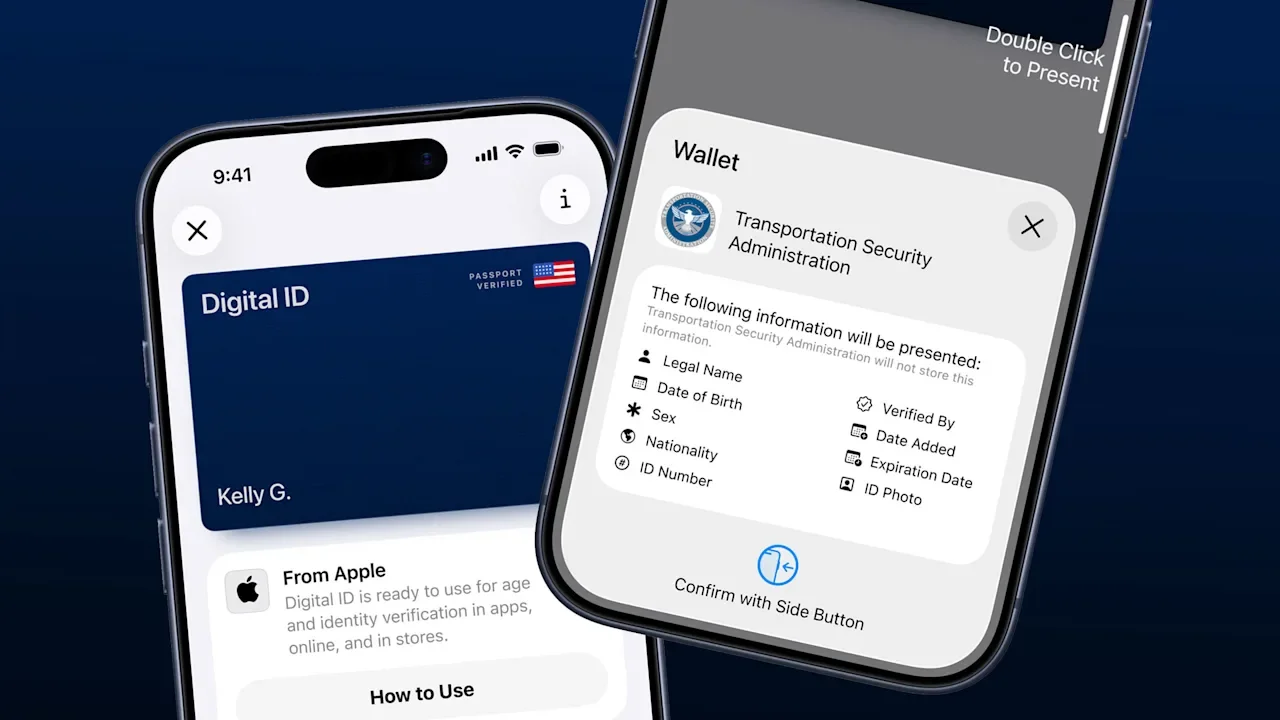
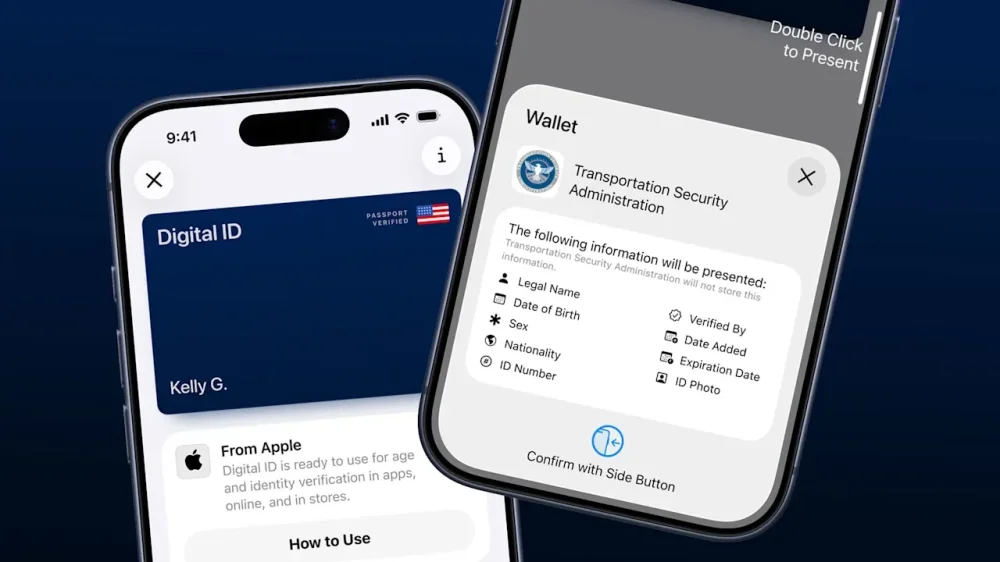
Just in time for the busy holiday travel season, Apple has rolled out a new iOS 26 feature that lets users store their U.S. passport on their iPhone. The digitization of the passport is something tech-savvy travelers have longed for, especially as other once physical-only items that have crowded our pockets, like credit cards, driver’s licenses, and even car keys, have made their way onto the iPhone. But so far there are limitations to what you can do with your digitized passport, which Apple dubs your “Digital ID.” Here’s what you need to know about uploading your passport to your iPhone and what you can—and can’t—use it for once it’s there. How to add your passport to your iPhone Adding your U.S. passport to your iPhone is relatively straightforward—provided your iPhone and your passport meet some requirements. As far as your iPhone goes, it must be an iPhone 11 or later; it must be running iOS 26.1 or later; and its region must be set to the United States. You’ll also need Face ID or Touch ID turned on, as well as Bluetooth. Finally, your Apple Account must have two-factor authentication enabled. As far as your passport is concerned, it must be a United States passport, and it must not be expired. If your iPhone and passport meet these requirements, you can add your passport to your iPhone. Here’s how: Open the Wallet app. Tap the + button. Tap Driver’s License and ID Cards. Tap Digital ID. Tap “Add to iPhone and Apple Watch” or “Add to iPhone Only.” Scan the photo page of your U.S. passport when prompted. Use your iPhone to scan the chip on the inside back cover of your passport when prompted. Take a live photo of your face when prompted and follow the facial movement instructions that appear on the screen. Once you’ve gone through the steps above, Apple will verify the details from your scanned passport and your facial movements, and your iPhone will then send you a notification when your passport information, contained in what Apple calls your “Digital ID,” is available in the Wallet app. Verification is usually done within a few minutes. What information does your Digital ID hold? The new Digital ID on your iPhone contains much of the information in your passport. This includes your: Legal name Date of birth Age Sex Passport number Passport issue date Passport expiration date If you open the Wallet app, tap your Digital ID, then tap the “i” button, you’ll even be able to see your passport photo on the “Physical Passport Information” screen. You can’t use your digital passport everywhere The first thing many people are likely to think when they hear they can now add their U.S. passport to their iPhone is, Great! I don’t need to carry my physical passport with me anymore. Unfortunately, this isn’t true. Your passport’s information, stored in your new Digital ID card in iOS 26’s Wallet app, can be used as an identity document to get through some airport checkpoints—but the keyword is some. Apple says its new Digital ID is currently “in beta,” and during that beta stage it can be used at Transportation Security Administration checkpoints in “more than 250 airports in the U.S. for in-person identity verification during domestic travel.” But while your new Digital ID will get you past TSA security checkpoints at these 250-plus locations, it cannot be used for international travel or at border crossings. “Digital ID gives more people a way to create and present an ID in Apple wallet even if they do not have a REAL ID-compliant driver’s license or state ID,” Apple says. “Digital ID is not a replacement for a physical passport, and cannot be used for international travel and border crossing in lieu of a U.S. passport.” Can I rely on my digitized passport for domestic travel? Even if you’re flying domestically, it’s still wise to carry alternate acceptable forms of ID that will get you through a TSA checkpoint. This includes your REAL ID-compliant driver’s license or your actual physical U.S. passport, which is also REAL ID-compliant. Apple says you can use your newly digitized passport on your iPhone “at TSA checkpoints at more than 250 airports in the U.S.,” but the company was unable to provide me with a list of these airports. An Apple spokesperson told me that most major U.S. airports, including John F. Kennedy International (JFK) and San Francisco International (SFO), accept Digital ID. However, since the TSA is the authority regarding where Digital ID is accepted, Apple directed me to the government agency for a list of airports that recognize the new ID. (As of this writing, the TSA has not yet responded to my inquiry.) You can store your U.S. passport on your iPhone. But should you? One concern individuals may have is whether putting their passport on their iPhone is a wise move from a privacy and security standpoint. Apple says the Digital ID on your iPhone is encrypted, and since your passport’s information is locked behind Face ID or Touch ID, even if someone had access to your phone, they couldn’t access your passport information. Those who worry that using a Digital ID will mean they’ll need to hand their iPhone over to TSA staff at the airport can rest easy, too. If you want to use your Digital ID at a TSA checkpoint, you won’t have to unlock your iPhone or hand the device over to TSA staff. Instead, you’ll present your Digital ID much like you do a credit card you use with Apple Pay: You’ll place your phone near a TSA reader, and your iPhone will alert you to the passport information it will share. Further, it will share this information only with your authorization, which you give by double-clicking the iPhone’s side button and scanning your biometrics using the iPhone’s Face or Touch ID. By allowing users to add their passport information to their iPhone, Apple has made the upcoming holiday travel season a little more convenient for many with domestic flights to catch. Too bad that’s likely to be the only convenient thing about U.S. air travel in the weeks ahead. View the full article
-
Energy secretary rules himself out as potential successor to prime ministerView the full article
-
If you’re in the business of publishing content on the internet, it’s been difficult to know how to deal with AI. Obviously, you can’t ignore it; large language models (LLMs) and AI search engines are here, and they ingest your content and summarize it for their users, killing valuable traffic to your site. Plenty of data supports this. Creating a content strategy that accounts for this changing reality is complex to begin with. You need to decide what content to expose to AI systems, what to block from them, and how both of those activities can serve your business. That would be hard even if there were clear rules that everyone’s operating under. But that is far from a given in the AI world. A topic I’ve revisited more than once is how tech and media view some aspects of the ecosystem differently (most notably, user agents), leading to new industry alliances, myriad lawsuits, and several angry blog posts. But even accounting for that, a pair of recent reports suggest the two sides are even further apart than you might think. Common Crawl and the copyright clash Common Crawl is a vast trove of internet data that many AI systems use for training. It was a fundamental part of GPT-3.5, the model that powered ChatGPT when it was released to the world back in 2022, and many other LLMs are also based on it. Over the past three years, however, the issue of copyright and training data has become a major source of controversy, and several publishers have requested that Common Crawl delete their content from its archive to prevent AI models from training on it. A report from The Atlantic suggests that Common Crawl hasn’t complied, keeping the content in the archive while making it invisible to its online search tool—meaning any spot checks would come up empty. Common Crawl’s executive director, Rich Skrenta, told the publication that it complies with removal requests, but he also clearly supports the point of view that anything online should be fair game for training LLMs, saying, “You shouldn’t have put your content on the internet if you didn’t want it to be on the internet.” Separately, Columbia Journalism Review (CJR) looked at how the new AI-powered browsers, Perplexity Comet and ChatGPT Atlas, handle requests to access paywalled content. The report notes that, when asked to retrieve a subscriber-only article from MIT Technology Review, both browsers complied even though the web-based chatbots from those companies would refuse to get the article on account of it being paywalled. The details of both cases are important, but both underscore just how far apart the perspectives of the media and the tech industry are. The tech side will always tilt toward more access—if information is digital and findable on the internet, AI systems will always default to obtaining it by any means necessary. And publishers assert that their content still belongs to them regardless of where and how it’s published, and they should retain control of who can access it and what they can do with it. The mental divide between AI and media There’s more happening here than just two debaters arguing past each other, though. The case of Common Crawl exposes a contradiction in a key talking point on the tech side of things—that any particular piece of content or source in an LLM’s training data isn’t that relevant, and they could easily do without it. But it’s hard to reconcile that with Common Crawl’s apparent actions, risking costly lawsuits by not deleting data from publications who request them to, which includes The New York Times, Reuters, and The Washington Post. When it comes to training data, some sources are clearly more valuable than others. The browsers that circumvent paywalls reveal another incorrect assumption from the AI side: that because certain behaviors are allowed on an individual basis, they should be allowed at scale. The most common argument that relies on this logic is when people say that when AI “learns” from all the information it ingests, it’s just doing what humans do. But a change in scale can also create a category shift. Think about how paywalls typically work: Many are deliberately porous, allowing a limited number of free articles per day, week, or month. Once those are exhausted, there’s the old trick of the incognito window. Also, some paywalls, as noted in the CJR article, work by loading all the text on the page, then pulling down a curtain so the reader can’t see it. Sometimes, if you click the “Stop loading” button fast enough, you can expose the text before that curtain comes down. One level up from there is to use your browser’s simple developer tools to disable and delete the paywall elements on an article page. Savvy internet users have known about all of these for years, but it’s a small percentage of all users—I’d wager less than 5%. But guess who knows about all these tricks, and probably many more on top of them? AI. Browser agents like those in Comet and Atlas are effectively the most savvy internet users possible, and they grant these powers to anyone simply requesting information. Now, what was once a niche activity is applied at scale, and paywalls become invisible to anyone using an AI browser. One defense here might be server-side paywalls, which grant access to the text only after the reader logs in. Regardless, what the browser does with the data after the AI ingests it is yet another access question. OpenAI says it won’t train on any pages that Atlas’s agent may access, and indeed this is how user agents are supposed to work, though the company does say it will retain the pages for the individual user’s memory. That sounds benign enough, but considering how Common Crawl has behaved, should we be taking any AI company at their word? Turning conflict into strategy So what’s the takeaway for the media—besides investing in server-side paywalls? The good news is your content is more valuable than you’ve been told. If it wasn’t, there wouldn’t be so much effort to find it, ingest it, and claim it to be “free.” But the bad news is that maintaining control over that content is going to be much harder than you probably thought. Understanding and managing how AI uses your content for training, summaries, or agents is a complicated business, requiring more than just techniques and code. You need to take into account the mindset of those on the other side. Turning all this into real strategy means deciding when to fight access, when to allow it, and when to demand compensation. Considering what a moving target AI is, that will never be easy, but if the AI companies’ aggressive, constant, and comprehensive push for more access has shown anything, it’s that they deeply value the media industry’s content. It’s nice to be needed, but success will depend on turning that need into leverage. View the full article

-
As I write this my 6-and-a-half-month-old daughter is sitting on my lap in my home office, where she spends an hour or two each day. Despite all the toys I’ve laid out for her, the thing she typically reaches for is my keyboard, occasionally leading to the odd typo. I’ve been a freelance journalist for about 12 years, but never has this work-from-home, choose-your-own schedule arrangement been so valuable. Last year I was able to be with my wife at almost every doctor’s appointment, ultrasound, and blood test before we became parents in April. Since our daughter was born, I have enjoyed the flexibility not only to make it to every pediatrician appointment and give my wife a helping hand during the day but also to be a part of important milestone moments. I couldn’t imagine having to walk out the front door each morning, only to return a couple of hours before bedtime in the evening, but of course that is the reality for most working parents. That is perhaps why solopreneurship is so popular among those with kids, especially women, and particularly those stepping away from extremely demanding careers to start or grow their families. Studies in Australia and Canada have found that many workers make the transition into parenthood and self-employment at the same time, and research even suggests that self-employed mothers outperform those without children. Being more present at home and work When her first child was born, Fernanda Chouza went in the opposite direction, taking on a more challenging role at a fast-growing AI startup in San Francisco. Over time Chouza says she earned the respect and leeway to take time off to care for her kids, but then she got laid off in 2022, when her kids were 2 and 4 years old. “As I looked at hyper-growth companies, I realized I would need to put in, like, two years of elbow grease to get to the point where I can take a week off for my kids,” she says. “The idea of starting from scratch was too hard.” Instead, Chouza started a one-women marketing agency called the Launch Shop, offering fractional product marketing expertise to software companies launching new products. Previously, Chouza says she spent many hours at work feeling guilty for not being home with her kids, and many hours at home worrying about whether she was dropping the ball at work. “Now I have full flexibility. I don’t have to be constantly apologizing for stuff, and I only show up when I’m at the top of my game,” she says. “When I’m off, I’m fully off; I don’t have anxiety on the weekends, I don’t have anxiety at night, and I can be a lot more mentally present with my kids.” Though she doesn’t enjoy the same kind of equity-payout potential, Chouza says her salary is about 50% higher than her previous earnings, while providing significantly more time off. Previously, she said she could take two or three weeks off a year but was expected to be responsive on email and Slack during that time. Thus far this year, Chouza has taken a week or more off from work on eight separate occasions for reasons ranging from her kid’s eye infection to a two-week trip to visit their grandparents abroad. “In corporate, I would have had to grovel and apologize for any time off,” she says. “It felt like I was being penalized for being a mom and they think of me as a liability, like ‘We’re always making so many accommodations for Fern.’” A “side door” to new career opportunities Perhaps one of the most unexpected benefits are the kinds of clients Chouza has worked with as a solopreneur. She says most companies are hesitant to hire executives in the current market but still need short-term support, making a contractor with corporate experience a viable option. “By being fractional I’m actually punching so far above my weight,” she says. “I would have never had this exposure if I was just trying to go through the front door, but I’m coming in through this side door and getting these amazing logos on my résumé and this amazing experience.” That is perhaps one of the most surprising benefits for those who step away from the workforce to start an independent venture while raising a family. Though many choose solopreneurship for the flexibility, they often discover that it can also offer a bridge—or even a ladder—back into the traditional workforce. “You can think of it as not necessarily ‘I’m going to build a startup that’s going to pay me a lot of money,’ but ‘I’m going to write a story for myself that professionally fills those years,’” explains Kyle Jensen, the director of entrepreneurship programs, and associate dean and professor in the practice of entrepreneurship at the Yale School of Management. “I created something new, I operated it, I ran it, and through all of this I developed all sorts of executive acumen and business sense, and maybe some software skills.” Professional benefits aside, Jensen also says part of what makes solopreneurship so appealing to parents is the ability to trade some of the financial rewards for time. “With this manner of entrepreneurship, you can treat your human capital as a luxury good, and you can choose different distributions of time that allows you to enjoy things that are important but not necessarily prioritized in our society—like parenting,” he says, adding, “The only person who’s going to remember that you worked extra hours are your children.” View the full article

-
It’s a random Tuesday in October, and your kids are home again. A national holiday? Nope. A snow day. Not even a speck of frost on the ground. It’s Professional Development Day or Parent-Teacher Conference Half Day or one of the 15 other noninstructional days that appear in the school calendar like little landmines for anyone with a full-time job. At this point, I’ve stopped trying to keep track. Every month seems to come with a “surprise, they’re home” moment. And as a working parent, there are few phrases that strike fear into my heart quite like: “No School Today!” I love my kids, but that doesn’t mean I can drop everything every time the school district decides teachers need a day to recalibrate. I want their educators to have the time they need, I truly do. It’s a job I don’t have the patience or superpowers to handle. But the system is still built around a 1950s fantasy where one parent is home and is available for midday pick-ups, early dismissals, and weeklong winter breaks. Most families don’t live that reality anymore. The hidden toll of random days off This juggling act is brutal. Every day off becomes an exercise in logistics, guilt, and creative problem-solving. Who’s taking off work this time? Can I trade shifts? Do we have any vacation days left? Should I call in sick—AGAIN? For parents who can’t afford nannies or backup care, there aren’t many options. A babysitter can cost more than what a parent makes in a day. Drop-off programs seem to fill up within minutes and you have a better chance of winning the lottery than getting off the waitlist. And working remote with kids running around, making noise, and needing food hardly makes for a productive day. Of course, the burden doesn’t hit parents equally in cisgender households. Research shows that working mothers are far more likely to take time off or rearrange their schedules to cover the gaps in childcare. A 2023 study found that unexpected school closures forced mothers to cut six hours per week on average. Over a three-month period, that adds up to 72 hours. So, it’s not just inconvenient, it can have economic consequences. Most families cannot afford to bring home less money, and for single parents, this could cause a crisis. Surviving this requires even more emotional labor: coordinating carpools, texting neighbors to ask a favor, setting up playdates with a child that has a SAHM. This is about childcare and the mental strain of dealing with an unpredictable and unsupportive system. There has to be a better way So, what’s the solution? It’s not as simple as hiring more babysitters. We need modern policies that reflect how families live and work today. Here are a few ideas worth exploring: Community care partnerships. Check out your local YMCAs, libraries, and afterschool programs. Some receive state or district funding to offer affordable coverage on non-school days. Some cities, like Seattle, already do this. Rethink remote flexibility. If companies can pivot to global time zones and hybrid schedules, they can also accommodate parents during the school-year craziness. Family Flex Days could allow workers to shift hours without penalty. Policy shifts. Paid family leave can’t just be about new babies. It should also recognize the everyday realities of caregiving. That includes the random Tuesday your second grader’s school closes at noon. Until the workplace and the school system sync up, parents will keep paying the price in time, money, and peace of mind. The bottom line is, we don’t need parents to be more flexible. We need the system to be. View the full article

-
Seeing peers lose their jobs has a way of making people weird. It’s not much different from grief. When someone loses a loved one, you can almost feel the tension: people fumbling for the right words, hoping not to say something insensitive, then saying something insensitive anyway. “Everything happens for a reason.” “They’re in a better place.” That is, assuming any condolences are shared at all. Many of us have been there. You don’t want to overstep. Don’t want to make the person feel worse. I get it: Showing sympathy can feel like a minefield. The same thing happens when companies downsize their staff, only the loss isn’t life. It’s employment. When someone gets laid off, it’s a kind of corporate death. One day, you’re working alongside someone, swapping memes on Slack, surviving the same back-to-back meetings. The next day, their desk is vacant, their Slack photo appears black and white, and their email account forwards incoming messages to whoever has inherited their responsibilities. I’ve been on both sides of this situation, a casualty and a survivor. I’ve seen folks who are lucky enough to evade the chopping block minimize, deflect, or disappear. It’s not that people are cruel. They’re uncomfortable. Layoffs remind us how little control we have over our own jobs. And in that discomfort, we forget the person in front of us is going through some real s**t. I remember working at a startup in a contractor role that was cut abruptly after nearly a year. One acquaintance, a guy named Tyler, stopped by my desk to check in before my last day. He somehow made my departure about him: “We’re already such a small team, I don’t know how they expect us to get all of this work done.” I rolled my eyes. Another well-meaning coworker at least showed concern. But after offering some empty platitudes (“When one door closes, another opens”), she asked an unanswerable question: “What are you gonna do?” I wanted to say, “I don’t know, Janice, probably stress-eat a pack of Oreos, go on a weekend bender, and then obsessively scroll LinkedIn for my next job,” but I just kept it to the first four words. What stung the most was the colleagues who suddenly acted like I was contagious. You’d think I was on Power the way these people suddenly went ghost. You can feel that void, that interrupted rhythm of virtual or real-life interaction. I assume they probably don’t know what to say, so they say nothing. It’s still wack. Here’s the thing: It’s not all that difficult to show up for someone who is suddenly out of work. You don’t have to fix their situation; you just have to let them know you see them. Ask how they’re doing. Validate their feelings. Tell them something you’ll miss about them. You don’t need a motivational speech. A simple, “That’s awful, I’m really sorry you’re dealing with that,” can mean a lot. Instead of clichés like, “You’ve got this!” offer your presence. “If you want to talk, I’m here” works just fine. Get specific about how you’d like to be supportive. “Let me know if you need anything” rarely goes beyond lip service. Instead, offer to share job postings you come across or connect your newly unemployed colleague with contacts at companies that may be hiring. If appropriate, you can even offer to serve as a reference. Those suggestions are baseline, but my former boss at the aforementioned job did something small that went a long way. In my final leadership meeting, she carved out time so other managers could express kind words and farewells. One by one, they spoke about my poise under pressure, my witty emails, that one project that I managed to perfection. I felt appreciated. It reminded me of the impact I made over a short period of time. It reminded me that I would be an asset in my next gig. When I’ve seen layoffs up close, I’ve noticed something: The people who show up make all the difference. It’s not about having the perfect words. It’s about presence. Jobs come and go. Titles change. But the way we treat each other when things fall apart? That’s what people remember the most. The Only Black Guy in the Office is copublished with Levelman.com. View the full article

-
One X user named Julia recently shared screenshots of an email exchange with her boyfriend in which she was, in her own words, “colleague-zoned.” In the now-viral post, which has over 15.4 million views at the time of writing, Julia penned in the caption: “Sent a document to my boyfriend’s work email so he could print it for me and got colleague-zoned.” Julia had emailed her boyfriend a document to print, ending her note with, “I love you! Please print this for me! Thanks,” and a red heart emoji. To which he formally responded: “Julia, thanks for reaching out. I have received your document and printed it on 8″ x 11″ paper. Will deliver to you later this evening to be signed. Thank you.” Of course, Julia responded as any girlfriend would. “Are you breaking up with me?” she emailed back. To which he wrote: “Keeping things professional. Just wanted to confirm that I have followed up on your request. Best regards.” Some speculated that his emails are likely monitored, hence the professionalism. “That is a man who is locked tf in at work,” one wrote. Others recognized the screenshots for what they are: a funny bit. And it turns out, many people apparently do this. “My favorite time of year is when I email our HOA bill to my husband and he does this,” one wrote. “It’s like professional flirting.” Another added: “Something about office speak with loved ones is so funny.” Julia is not the only one who has found herself colleague-zoned. Another TikTok creator recently shared a screenshot of her text exchanges with her “finance bro” husband. “Just got 2026 HC enrollment presentation. Let’s get lunch/coffee again this weekend and discuss next year,” he texted. “Just sent to our Gmail’s so you can review ahead of time.” As professional boundaries blur and work continues to bleed into our personal lives, it can be easy to accidentally slip into office speak when replying to a personal email or syncing calendars with your partner. You might circle back to Thanksgiving plans or touch base on what day the trash needs taking out. Some take things a step further and purposefully conduct monthly performance reviews of their romantic relationships, or discuss KPIs and OKRs with their significant others to align on future goals. It works for some. For others, perhaps it’s a sackable offense. As for Julia, to assuage concerns over her relationship, she later shared screenshots of a follow-up text exchange. “I’m crying. I just looked at my phone for the first time in like two hours. lmao. Are your emails actually monitored?? Or were you just being silly?” she asked. Her boyfriend admitted, “No, they’re not monitored at all. I was just being funny.” Now entering: the colleague zone. View the full article

-
Figure lays bare fragile state of growth ahead of harsh BudgetView the full article
-
If talent is the oxygen of a company, succession planning is the life-support system. Yet too many organizations treat it like an org chart exercise, waiting until someone resigns or retires before scrambling to find a replacement. When a leader walks out, the ripple effects are immediate: strategy stalls, teams lose momentum, and culture wobbles overnight. The bigger problem? Most companies aren’t ready when it happens. According to DDI’s 2025 HR Insights Report, only 20% of CHROs say they have leaders prepared to step into critical roles, and just 49% of those roles could be filled internally today. That means most organizations are closer to a leadership crisis than they realize. This isn’t just an HR issue; it’s a business continuity risk. The Spreadsheet Trap Too often, succession planning lives in a spreadsheet. Once a year, leaders review “ready now” candidates, check the box, and move on. But when someone exits suddenly, those names on paper don’t always translate into reality. I’ve seen it firsthand. At one company where I worked, the president resigned unexpectedly. On paper, there were successors. In practice, none were ready. The company scrambled to find an external hire, losing momentum and market confidence. Contrast that with PMI Worldwide (the owner of the Stanley brand), where culture and succession planning went hand in hand. The CEO and leadership team lived the values, held open forums, and celebrated wins. They didn’t just plan for future leaders; they developed them into leaders. When growth accelerated, the bench was ready. One company had a spreadsheet. The other had a system. The difference was everything. The Succession Reality Turnover remains high. The Work Institute projects that 35–40 million employees will voluntarily quit in 2025, even as overall quit rates soften. That includes top performers you can’t afford to lose. Employee tenure is shrinking, too. For those under 35, the median is just 2.7 years, according to the U.S. Bureau of Labor Statistics. Replacing leaders can cost up to 200% of their annual salary, per Gallup and the Society for Human Resource Management (SHRM), and it takes more than a year for new hires to become fully productive. To make matters worse, 38% of new hires leave within their first year, often before being considered for promotions. Meanwhile, DDI reports only 20% of HR leaders believe their workforce is future-ready. Without a deliberate pipeline, companies expose themselves to leadership gaps, stalled strategies, and avoidable financial hits. From Planning to Culture Succession planning isn’t a list of names; it’s a culture of growth. That means development is ongoing, not episodic. Leaders are accountable for building their bench. Talent sharing crosses functions and geographies. Data guides investment in development. A proactive succession process signals to employees that advancement is real, not theoretical. It drives engagement, strengthens retention, and ensures seamless transitions when leadership inevitably changes. Most importantly, it tells your people: your future has a place here. Treat Succession Like a KPI The companies that succeed don’t treat succession as a side project. They operationalize it. That means: Measuring it like a KPI. Leadership bench strength should be reviewed with the same rigor as financial results. At Amazon, where I led succession processes, leadership readiness was tracked as closely as customer metrics through indicators like internal promotion velocity, bench strength ratios, time-to-fill critical roles, and successor readiness scores. These metrics weren’t HR dashboards—they were business metrics. Stress-testing before a crisis. Ask: If this leader left tomorrow, what’s our real plan? If the answer is silence, you’re not ready. Embedding it into daily development. Succession isn’t built once a year in a talent review. It’s built through mentoring, stretch projects, and intentional growth opportunities. What Great Succession Planning Looks Like Succession planning isn’t about “who’s next in line.” It’s about creating a continuous flow of leaders when the business needs it most. Done right, it: Identifies high-potential employees early, using performance + potential, not tenure. Differentiates between “ready now” and “ready in 1–2 years” and develops both. Prepares for both planned exits (retirements) and unplanned ones (attrition, poaching). Aligns talent strategy directly to growth priorities. Assesses the impact of loss. If a leader leaves, what projects stall? What revenue streams are at risk? Balances internal with selective external hires. Leaders should review succession with the same urgency they give to financials. Ask yourself: Do our successors have the skills to succeed today? Are leadership capabilities aligned with future growth? Where are we most vulnerable to leadership gaps? Are we over-reliant on external hires at the expense of internal talent? If the answers are unclear, the plan isn’t strong enough. The ROI of Getting It Right Effective succession planning delivers measurable returns. It helps retain top performers, enables smoother transitions, and strengthens culture. When employees see investment in their development, they’re more likely to stay and more likely to be ready. The numbers back it up. DDI’s research shows companies with strong leadership pipelines are 2.4 times more likely to financially outperform their peers. Succession isn’t a cost center; it’s a competitive advantage. View the full article

-
Carmaker gives no details on pledge, which is in addition to Tokyo’s $550bn commitment in return for lower tariffsView the full article
-
It’s five answers to five questions. Here we go… 1. Fire one employee, both employees, or no one? I am an assistant manager at a chain restaurant. There are two employees who should be fired due to violating our call-out policy, which is two NCNS (no call, no show) in a row is automatic termination and if you can’t make your shift you need to call the store with at least three hours notice. Both employees have violated this in different ways. Adam gives three hours notice sometimes but calls out at least once a week, and dictates his schedule to us instead of us scheduling him as we need him. He refuses to call and opts to text out, but is never a NCNS. He is generally well liked by staff, but acts like he didn’t need the job. Ben doesn’t usually call (or communicate) at all, has missed about six shifts in the last month, but not in a row. He wants to work and is desperate to pick up hours, but is disliked by most of the staff (to the point a couple people refuse to be scheduled with him). He has also shown a tendency for violence/aggression. I’m feeling at a loss what to do. My higher-ups want Adam gone and I like him, minus how flaky he is. I want Ben gone, but my immediate manager wants to keep him. I personally feel that if I fire one, I have to fire both. I also feel that I should respect chain of command, but I really want to talk to my district manager for input and go over my general manager’s head. I would like your advice on if I should let it go, fire one or both, or escalate it please. Totally aside from the attendance issues, you should fire Ben. Multiple people are refusing to work with him and he’s shown a tendency for violence/aggression. I don’t know the specifics of that last part, but if it’s anything like what it sounds like, he should be gone today. That should be an easy case to make to your higher-ups. People need to be safe at work. With Adam, it comes down to the impact of his scheduling issues on the actual work. Is it causing coverage problems? Do you have to scramble at the last minute to fill his shift? Are coworkers frustrated by having to cover for him last-minute? Disregard the thing about it feeling like he doesn’t need the job; that doesn’t matter. What matters is the work impact of his actions. If his actions are disruptive, talk to him and tell him what needs to change for him to keep the job, and then stick to that. It sounds like there are political concerns with all of this with your general manager, but this is how I’d look at each. 2. My coworker is being really weird about our breaks I split front desk duties with a coworker, Mary. We each spend half a day at the front desk and the other half doing other office support work. Everyone in the office gets a 15-minute morning and afternoon break and an hour lunch. Part of splitting the front desk means that Mary and I cover each other’s breaks. The other things we do around the office cannot be done at the front desk (for confidentiality/logistics reasons). So, when it is time for me to cover her lunch, it puts a firm end time on what I’m doing. For a couple of weeks, Mary has been combining both her breaks in the morning. Since I do office support work in the mornings, this means that sometimes I’m leaving my task for almost an hour, but at least 45 minutes to cover her breaks (it would push an hour if there was something weird we had to switch off on). She did this a couple of months ago when I was learning a new task, and when I explained that 15 minutes was precious to me while I was learning she stopped. Yesterday I pointed out that the longer morning breaks were back and she looked taken aback but said that she would go back to 15-minute breaks since she understands that she was taking away time from me to work. Later in the afternoon, she came to me and said that she has decided to stop taking breaks completely because she couldn’t trust herself and was getting confused. I told her very clearly that I do not want her to stop taking breaks. She also asked if I wanted her to come in half an hour earlier in the mornings, and I said of course not. Today she is noticeably chillier with me, and I’m at a loss. It seems so ridiculous to make a big deal out of a short break, but I brought it up because I think it is part of a larger problem of her being dismissive of me; this is just the most obvious thing she does. I don’t want to escalate this, but I also do not want it to fester. You could go back to her and say this: “I want to make sure I correctly conveyed what I was trying to say, since I think we miscommunicated. I would never ask you not to take your breaks. My request is only that you not combine two breaks into one, since that makes them a lot longer and makes it harder for me to get my work done. If you stick with a morning break and an afternoon break, not combined, that solves the problem.” If she still chooses to be chilly with you after that … well, that would be a weird reaction, but I would also assume she will get over it in time as long as you continue being pleasant and warm with her. 3. No one is doing anything about an employee in crisis A strange thing happened the other day, and I was so taken aback and sure that it was a one-off bad day that I did … nothing, in the moment. I took a junior with me to a company meeting and her behavior was startlingly off. Our work rarely intersects so I don’t usually work with her one-on-one, and never on a regular basis, but I’ve known her in the past to be gentle, steady, considered, and well prepared. Her behavior during this trip was, quite frankly, terrifying and out of character. She was by turns aggressive, scattered, paranoid, and then mumbling into her hair and twice started randomly screaming at motorists. We work with people who have experienced family violence, and so we have some knowledge regarding identifying and managing people who are experiencing extreme trauma responses, which can sometimes look like (and be mistaken for) drug use (meth, etc.) and psychosis. I later reported what happened up the line as I’m confident that for either of the three causes, our organization’s response would be compassionate and considered. It’s now a week later and, after observing other instances of bizarre behavior and people’s reaction to it, I’ve realized that people across various levels of our org were aware of an extreme personality shift months ago and seem to have done nothing at all, but are actively avoiding her. There have been some disruptions to our HR and reporting processes, but I guess I’m stuck being really frustrated at my colleagues and organization for not appropriately addressing what is quite obviously a person in distress who we have previously known to be absolutely not like this. Shouldn’t people in our industry, with our knowledge, understand that an extreme sudden change in personality needs to be flagged as an urgent issue? Yes. Can you push the issue further / escalate it higher / be more emphatic that a more formal intervention is needed? Not only is that in the employee’s interests, but it sounds like the behavior is disrupting your workplace as well and making people avoid her — this is long past the point of someone needing to step in. 4. Are “employee of the month” awards useful? This is something I wondered about for years: are those “employee of the month/quarter/year” awards really worth anything for the employees? Like can they use it as a résumé booster or are they more likely to be chosen for an internal promotion? I’m not from the U.S. and I never seen or heard from those awards being used by companies here, only on TV shows, but there those awards are used for jokes. They’re not generally worth anything in the sense you mean (as resume fodder or qualification for promotion), but when they’re done in reasonably functional companies, they can make people feel appreciated and reinforce internal messages about what good performance looks like. But they’re no substitute for raises, good management, skills development, paths to promotion, and ongoing positive feedback — and so when you have them without those things in place, they tend to ring hollow and breed cynicism. 5. Why isn’t this hiring manager getting back to me? I’ve been experiencing a dilemma with an employer I’ve been in contact with since the summer. I’ve been considered for a great opportunity with a well-known company. I first messaged the hiring manager on LinkedIn when I saw the job posting, and she replied back instructing me to send my resume to her work email. This cold messaging led to a call with her company’s internal recruiter, who wanted me to have an interview with said hiring manager. The recruiter and I had agreed to let the hiring manager contact me directly for the next steps. It’s been three weeks since that call, and I have not heard from her. I have followed up with the recruiter three times, and he said that he has reminded her. He has also told me that she has a busy schedule right now due to business-related events. Should I reach out to the hiring manager directly myself since I have her contact info? Or should I ask the recruiter to organize the interview? I don’t want to seem pushy by following up every so often, but my patience is wearing thin. I’m also starting to become less interested in the opportunity. You should leave it alone; the ball is in their court. If she wants to get in touch with you, she will. The best thing you can do is to assume that it’s not happening right now for whatever reason (stronger candidates, more pressing priorities, whatever it might be) and put it out of your mind. At the absolute most, you could make a note on your calendar to check in with the recruiter one final time in a month, but other than that you should figure it’s in their court. The post coworker is being really weird about our breaks, are “employee of the month” awards useful, and more appeared first on Ask a Manager. View the full article
-
Total foreclosures rose 3% from September and 19% from the same time a year ago in October, marking the eighth straight month of increases. View the full article
-
Buenos Aires’s reserves rose by the same margin as Washington seeks to bolster Javier Milei’s governmentView the full article
-
Hundreds of millions of pounds in value wiped off market value of the paper in the past weekView the full article
-
It appeals more to a way of thinking than to a set of ideas — but is it just wrong? View the full article
-
Bookings from younger passengers have allowed operators to defy the gloom in the rest of the travel sectorView the full article
-
We’re in an age where AI-fueled rapid prototyping and sleek direct-to-consumer startups seem to capture all the attention. But some of the most profound design disruptions didn’t start in a founder’s garage or in the algorithms of artificial intelligence; they were born in the aisles of mainstream consumer stores like Target. In the late 1990s, my company, Michael Graves Design changed the conversation around design with a teakettle that was joyful, affordable, and elegant. It didn’t just sit on a stove, it stood for a new idea: Good design was not a luxury, but a right. Target’s Design for All programs went on to define America’s expectation that great design should be available to everyone. Design evolved from a styling afterthought into a corporate strategy, and the democratization of design was born. Today, democratic design ethos feels more urgent than ever. As consumers increasingly expect thoughtfulness, beauty, and accessibility from the products they buy, heritage brands have a chance to reclaim center stage. To do that, they need to go beyond nostalgia, and beyond quips like “design thinking.” They need to lean into design as disruption, using proven frameworks like participatory design, value-sensitive development, and service ecosystems to create meaningful, mass-market innovation. Let’s break that down. THE NEW COMPETITIVE ADVANTAGE: LET THE CONSUMER LEAD The notion of democratic product design is simple: Give consumers a genuine voice in the design process. Many brands have shown that when you allow customers to vote on product features, brands send the powerful signal, “we’re building this with you,” which can shift loyalty to your brand and deter competitors from catching up. But the magic only works when the vote is real, shaping what comes next. For legacy brands, this is a powerful opportunity. You don’t need to “reinvent” yourself to resonate; you need to open the design conversation. To us, this means engaging our community to test prototypes to evaluate proposed functional enhancements, to choose colors and finishes, and to ask customers for product categories to explore. DESIGN WITH, NOT FOR: COCREATION AS BRAND STRATEGY The next layer is cocreation, a participatory design methodology drawing from users lived experiences to inform what gets designed and manufactured. Consumers are hyper-attuned to authenticity. Cocreation does more than generate goodwill. It transfers creative ownership, builds emotional stakes, and cultivates a tribe, not just a customer base. Recently, our community helped choose between different finish options for a new teakettle design. Their choice, brushed brass, wasn’t what we expected. That insight is shaping our launch and will deepen customer buy-in. When evaluating your own product development process, think of it in four pillars: Dialogue: Do we invite open, two-way feedback? Access: Are we sharing tools and context with users? Transparency: Do users know how their input affects outcomes? Shared risk/reward: Are they more than just participants? By deploying this framework, our community shares product ideas and their own life hacks for existing items, and this helps shape mass produced designs. THE CASE FOR VALUE-SENSITIVE DESIGN Design isn’t neutral. It carries implicit signals about who it’s for, what it enables, and what it assumes. That’s where value sensitive design (VSD) comes in: an ethical design approach adapted from technology design, embedding values like accessibility at every phase of development. VSD begins with a set of human values. From there, you iterate: Conceptual investigation: What values are at play? Empirical research: What do users want or need? Technical exploration: How can we embed these values in the final design? We used VSD to create a line of bathroom safety products for Pottery Barn. These product types, including grab bars, are often stigmatized and overlooked. No one necessarily wants a grab bar. VSD helped us turn these functional aids into affirming, well-crafted objects with functional enhancements, like combining them with a toilet paper or towel holder. The designs reflect other consumer fixtures, with materials, proportions, and lines reflecting style, cache, and aspiration. Customers shared that these aids don’t scream “medical.” They look like they belong in a thoughtfully designed home, not a hospital. People can finally choose to equally value safety and style. That’s VSD in action—designing dignity into daily life. THINK ECOSYSTEM, NOT ENDCAP Brands must recognize that products are no longer isolated SKUs, they’re part of a broader service ecosystem. A teakettle isn’t just a tool. It starts your morning ritual, fills your kitchen with sound and steam, and maybe even appears in your next Instagram story. Understanding that web, and intentionally designing within it, multiplies product resonance. A product lives in routines, rituals, and spaces. When we honor that, we make more than goods. We make meaning. Legacy brands can lead hereby connecting thee dots into a more cohesive user experience. THE PLAYBOOK: FROM LEGACY TO LOYALTY Democratizing design isn’t a campaign, it’s a commitment. Here’s how legacy brands can turn that into a strategy: Step 1: Run consumer-driven design sprints, votes, submissions, and A/B tests early in the product development cycle. Step 2: Activate cocreation programs with transparency and shared creative ownership. Step 3: Integrate values mapping and empathy interviews into the design brief generation stage. Step 4: Position each product within a lifestyle ecosystem: rituals, routines, and cultural meaning. Step 5: Measure not just sales, but sentiment, engagement, loyalty, and brand pride. HERITAGE ISN’T A HURDLE, IT’S A LAUNCHPAD The best design doesn’t demand attention, it earns it over time through usefulness, delight, and emotional clarity. Legacy brands are uniquely poised to champion that mission by doubling down on the radical idea that good design belongs to everyone. Design isn’t the garnish, it’s the strategy. And legacy brands that democratize that strategy by inviting their customers in won’t just stay relevant, they’ll take advantage of their inherent scale to lead again. Ben Wintner is CEO of Michael Graves Design. View the full article

-
Newly published messages from late sex offender become latest flashpoint in intraparty riftView the full article
-
Culture does not scale linearly with revenue or headcount —it requires intentionality the faster you grow. When I joined DPR Construction in the early 1990s, we were a small startup with a shared vision. Today, we have over 13,000 employees worldwide. Along the way, we’ve learned that sustaining culture through growth isn’t automatic—it takes clarity, intention, and continual reinforcement. With growth, we faced a familiar challenge many companies do: How could we preserve the cultural core we started with as a smaller company as we grew to an organization of thousands of people spread across the globe? Company culture is often described as intangible; however, like it or not, the actions we take every day, how we collaborate, and show up to work shape our culture. Here’s what we’ve learned. START WITH STRATEGY When you start with a common, agreed-upon purpose and strategies, and work toward an aligned vision, culture can thrive as the company scales. We saw this as we moved through the 2000s, implementing strategies to drive focus and create more predictability rather than simply growing for growth’s sake. We sought alignment on clients in specific core markets to strengthen resiliency amid market flux. We found that concentrating on our markets allowed us to stay true to our culture by working with clients who value what we bring. We also continued to build a deeper understanding of our customers’ business and highly technical projects. This focus on customer relationships, markets, and complex projects, not growth is what continues to fuel us. It’s important to lean into your strengths and protect the spirit of innovation that shaped you from the start. LISTEN WHILE YOU LEAD To scale culture is to remember that it isn’t a top-down directive. It takes real dialogue because culture is embedded in the conversations employees have and how those conversations inform decisions. In 2022, after years of strategic focus, we realized there was a deep need to reconnect our culture with how we led. It was a year of change: a collective moment of reckoning. Our leadership team planned something simple, but transformative. We packed our bags, rolled up our sleeves, and took a road trip for what we call Culture Con—not to deliver a message, but to listen and receive feedback. Senior leaders met face-to-face with all teams across all offices, including the craft workforce in the field. We didn’t come with all the answers. We came with open ears. What unfolded was a uniquely human journey. We met with thousands of employees. We laughed, cried, and got asked hard questions, but most of all we listened. Culture Con gave us a clear lens into what our employees needed and what our company stands for. We hired simultaneous translators so employees could participate in real time. We created open, unscripted events for employees to converse directly with us, and with each other. REINFORCE THROUGH ACTION As companies scale, culture risks becoming only words on a wall. Growth adds complexity, and with it, the distance between leadership and teams closer to the work expands. To maintain culture, leaders must show it through actions, not just words. This means leading and reacting in ways people can see and feel. Through Culture Con conversations, five distinct themes emerged: A need for a deeper understanding of our vision, purpose, and values. Clearer paths for career growth. Stronger strategic alignment for all roles. The importance of leading compensation and benefits. A call to prioritize a culture of building teams by fostering more inclusive and integrated environments. We got to work and now have in place a new benefits package for our skilled craftspeople, tailored to meet their needs. We also introduced internal development programs to support career growth and help individuals see a long-term future with the company. To strengthen strategic alignment, we rolled out new communication tools that link everyday work to company-wide objectives. And to deepen the connection to our values, we expanded efforts to share stories and celebrate work that reflects our purpose in action. Each of these steps helps keep culture focused and makes it real for people across every role and region. We lead by example and reinforce our culture with the changes we make and the actions we take. It’s not about having all the answers right away; it’s about listening and bringing employees along on the journey. WHY COMPANY CULTURE MATTERS MORE THAN EVER Culture requires active commitment every day. It is not static—to stay relevant it must evolve and grow through listening, responding, and building anew without losing what grounds you. Culture demands more of us as leaders: more empathy, agility, and aligned action. The commitment is worth it: Companies grounded in strong cultures and values attract top talent and fuel resilience in the face of change and adversity. When your culture becomes your competitive edge, you build a company that can thrive through anything. George Pfeffer is the CEO of DPR Construction. View the full article