ResidentialBusiness
Administrators
-
Joined
-
Last visited
Everything posted by ResidentialBusiness
-
 It is not the story that the chancellor would like to tell youView the full article
 -
Microsoft is testing placing site favicons at the top of the Bing search results page that when clicked on, anchor you down to the specific search result on the page. This is a test, it does not always show up, but I was able to replicate this in one of my browsers.View the full article
-
When it comes to agentic artificial intelligence, the fear of missing out factor is clear. Organizations are plopping down agents, in part, because that’s what everyone else seems to be doing. But FOMO is not a business strategy. To make agentic AI work, business leaders need to ignore the hype and concentrate on establishing exactly what agents can do for them, how, and at what cost. Our own work has proved that AI agents, which independently plan and execute complex multistep tasks, can deliver substantial value by accelerating timelines and reducing costs. And that is just the start. The ever-improving ability of AI agents to work with people to plan, communicate, and learn, could evolve into a genuine paradigm shift in how business is done. Unclear business value But enthusiasm does not always translate into impact, something that many businesses are beginning to recognize. According to one study, 40% of agentic AI projects could be canceled by the end of 2027 due to unclear business value and escalating costs. In recent research, McKinsey studied dozens of agentic AI initiatives, including 50 in which we were directly involved. With the wisdom of hindsight, we’ve identified three critical factors in agentic AI success. 1. Start with workflows, not agents Agentic transformations are more likely to succeed when they focus on integrating agents into reimagined workflows, rather than tacking agents onto processes designed for another technological era. And the corollary is also true: even the most powerful AI agent will underperform if it is tethered to faulty and inefficient workflows. Already, agents are being successfully deployed in multi-step, dynamic workflows like IT help desks, software development, and customer service. The boldest leaders are also successfully deploying agents to frontier use cases. For example, an alternative legal services provider found substantial efficiency gains when it carefully modernized its contract review process. Every time a lawyer made a change in the document editor, it was logged, categorized, and fed back into the agent’s logic and knowledge base. In designing the agentic workflow, the team identified where, when, and how to integrate human input. Agents highlighted edge cases and anomalies for people to review. Over time, the agents were able to codify new expertise and provide more sophisticated legal reasoning, but it was up to the lawyers to sign off on critical decisions. 2. Stop the slop Many enthusiastic early adopters built agents whose outputs have become known as “slop”—that is, work that may be done quickly but then requires considerable effort to correct. This is annoying. Worse, it breeds distrust in the agents and in the idea of transformation more generally. To do better, companies should invest in agents just as systematically as they do in people, with managers, job descriptions, training, monitoring, and continuous development goals. 3. To support AI agents, engage the workforce It should be humans who onboard, train, and evaluate agents on an ongoing basis: “launch and leave” is not good enough. As agents begin to accomplish more, roles will shift. Leaders will need to train employees in a new human-agent hybrid operating model, including skills such as building and deploying agents effectively, training them, setting tasks for them, tracking and correcting their work, and stringing them together to perform more complex tasks. The essential principle is that agentic AI needs to work with, not against, time-honored business priorities like productivity and teamwork. The question, then, is not whether to deploy agents, as with any other technology, it is when can they help to solve real-world problems and create value? And the answer is: not always. For tasks related to parsing lengthy documents, generative AI applications such as chatbots are probably the better option. For highly structured or automated tasks like data entry, rules-based approaches—if x, then y—can be more efficient. And high-stakes decisions with little room for error are the domain of leaders and managers. Yes, agentic AI could be a once-in-a-generation opportunity—thus the FOMO effect. Success will come not from enthusiasm, however, but from a hard-headed analysis of how this tool can be used wisely—for the right task, at the right time. View the full article

-
Understand which ad creatives move metrics in Meta, and how to keep engagement high across campaigns. The post How To Evaluate Creative Performance in Meta Ads (and What To Test) appeared first on Search Engine Journal. View the full article
-
The early darkness in most of the U.S. means that fall has set in. That also means it’s officially holiday shopping season. With the economic impact of President The President’s ever-fluctuating tariffs an open question, there’s an opportunity for shoppers to make their spending meaningful, which opens up a lane for companies that are offering something other than the e-commerce onslaught of nearly identical products that populate sites like Amazon and Walmart. What the Amazons and even Etsys of the world are currently missing is the sense of curation that defines Uncommon Goods, an online shop stocked with exclusive, offbeat items sourced from independent artisans. It’s a cheat code for gift givers—mostly signals, very little noise. Each click is a potential epiphany, connecting me to, say, smartphone-controlled paper airplanes for my nephew, or wooden wall art shaped like a soundwave from my wife’s favorite song. In the age of the Everything Store, it’s a Just the Right Thing Store. The remarkability of Uncommon Goods’s inventory has helped grow the shop’s revenue at an average annual rate of 25% from 2000 to 2020; it has received more than a million orders per year for the past five years. That je ne sais quoi has often caught the attention of Wirecutter, the New York Times’s product recommendation vertical, which has highlighted many of its wares. “As gift experts, we spend most of our time scouring the internet, visiting brick-and-mortar shops, and attending trade shows in search of gifts that sit right at the edge of practical and whimsical, with standout quality and value,” says Hannah Morrill, Wirecutter’s gifts editor. “We’ve noticed that Uncommon Goods tends to prioritize unique products from small makers that we haven’t seen before—that’s pretty rare from a large-scale online retailer.” Of course, as relatively effortless as Uncommon Goods might make holiday shopping, its leadership says that the site’s ever-changing, reliably surprising inventory is the culmination of a tremendous amount of work. An Uncommon Origin With shopping, a little lore can go a long way—making some goods seem even better. When an Uncommon Goods artisan has an interesting backstory, those details often make their way into the site’s marketing copy. Shoppers are less likely to encounter the site’s own origin story. Dave Bolotsky Founder and CEO Dave Bolotsky started his career in the mid-’80s as an analyst at investment bank First Boston. By 1999, he’d become a managing director at Goldman Sachs, where he was due to receive $10 million in stock when the bank went public. Instead, he walked away from the job, leaving that entire imminent windfall on the table. It was just what he felt he had to do. “I was not bored once in my 14 years on Wall Street, but it felt soulless,” Bolotsky tells Fast Company. “I felt like I was helping the wheels of capitalism spin faster, but not necessarily in a better direction.” Bolotsky says he got the idea for Uncommon Goods after visiting a Smithsonian Institution craft show. Walking along rows of vendors hawking handcrafted items, he observed how shoppers responded to the personal artisan touch. It raised their eyebrows and spirits as much as it did their inclination to spend money. The only problem was the rarity of such opportunities. Back then, makers had to act as traveling salespeople, schlepping from one regional show to another. It was all too easy to miss them. The insight Bolotsky had was that if he could take a craft show product, put it online, and sell it 24/7, it might be a huge evolutionary leap forward for retailing, and for artisans in particular. The challenge? Online shoppers proved stubbornly hesitant. It was the internet’s Wild West era, and trusting one’s credit card details to an online retailer was still considered fraught. When Bolotsky and his team would scout makers at trade shows, it took a lot just to persuade them that the internet was not inherently evil. He refused to buckle, though, and kept the ship afloat through several rocky, profit-free years. The outlook brightened only after Amazon terraformed the space, Bolotsky admits grudgingly. “As much as I don’t like them as a competitor, I do admire what they’ve done,” he says. “Amazon Prime was huge in driving online shopping. And to an extent, we ride their coattails.” One glaring difference between the two, though, is that Amazon has an estimated 300 million to 600 million items for sale at any given moment, while Uncommon Goods hovers around 5,000. What uncommon goodness actually looks like The Uncommon Goods site procures roughly 80% of its products through its buying team, while an in-house product development team fills in the remaining 20%, largely through partnerships with a roster of product makers it has worked with before. Although Uncommon Goods doesn’t chase trends, it often plays in the same sandbox as whatever is popping off in pop culture. When BookTok first exploded, for instance, the product development team rolled out a piece of functional nightstand decor dubbed the Book Nook reading valet, while the buying team sought repurposed book tulips—paper flowers in a paper vase, both created with upcycled books. John Berweiler, head of the site’s buying team, says there are a few criteria for what makes a product ready for the site. True to form, it has to be uncommon (ideally something that can join the 40% of the site’s exclusive inventory) and it has to be useful, beautiful, or handmade, but preferably all three. As for the other variables, well, as a SCOTUS justice once famously said of pornography: You know it when you see it. “Our customers want to win the gift competition,” Berweiler says. “For them, it’s the ‘why’ behind the product. Does it make them smile? Does it make them reminisce about a moment or spark a feeling? That wow factor sets us apart from a frame they might buy at Pottery Barn.” From idea to hit product Whenever a member of the buying team comes across a promising item they request a sample. Every Tuesday afternoon, the team gathers for a sample meeting that serves as an America’s Got Talent-like revue, in which each item competes for potential inclusion in the shop. If there’s a winner, or multiple winners, a gauntlet of other considerations follows, spanning from price to exclusivity, and whether the maker has a backstory worth featuring on the site. Some products developed in-house come out of brainstorming sessions. Bolotsky himself is responsible for more than a few, including a line of interactive mugs with QR codes on them. Other Uncommon Goods items are collaborations between the buyers, product development, and various makers. Last year, for instance, the buying team was looking for new ideas for dining and drinking items, right as limoncello surged back into fashion, and landed on making dedicated limoncello glasses. The team reached out to potter Maggy Ames, who ended up producing an adorable set of ceramic tumblers with grippy thumb divots and elegant hand-painted lemons. Though the artist was initially skeptical, the limoncello cups blew up. They sold so well that she couldn’t keep up with demand. That’s when the product development team stepped in to scale production on the cups, working closely with the original maker to ensure she was comfortable with how the new product turned out. Through a manufacturer in Thailand, the cups are now made on a larger scale, but can still be hand-painted—keeping their artisan aura alive. It’s a microcosm of how the company expanded from Bolotsky’s apartment to an operation with 144 year-round employees, all while elevating makers and maintaining the core promise. Gift-giving in the time of tariffs Although the buying team is already strategizing for Christmas 2026, first the company will have to get through this year’s holidays, which promise to be more challenging than usual. The president’s chaotic and aggressive approach to tariffs throughout 2025 has kept American retailers who work in the global marketplace in a bind. Bolotsky isn’t especially worried, though. About half of the products Uncommon Goods sells are made domestically, he says, and the rest are spread throughout 10 countries, keeping the company less dependent on Chinese-made products than many of its competitors. For the imported products, Uncommon Goods has been negotiating with vendors to meet at least halfway on the pricing or margin hit the company is poised to take. In some cases, Uncommon Goods ended up sourcing products elsewhere; in others, it has taken selected price hikes. “My biggest concern is actually that, because we sell discretionary products, and because there will likely be greater inflation across the board this holiday season, people may have less discretionary money to spend on gifts that we sell,” Bolotsky says. If people do end up having less money to spend on gifts this year, they may indeed have to be more discerning about what they buy. Perhaps enough of them will gravitate toward a shop that’s more discerning about what it sells. View the full article

-
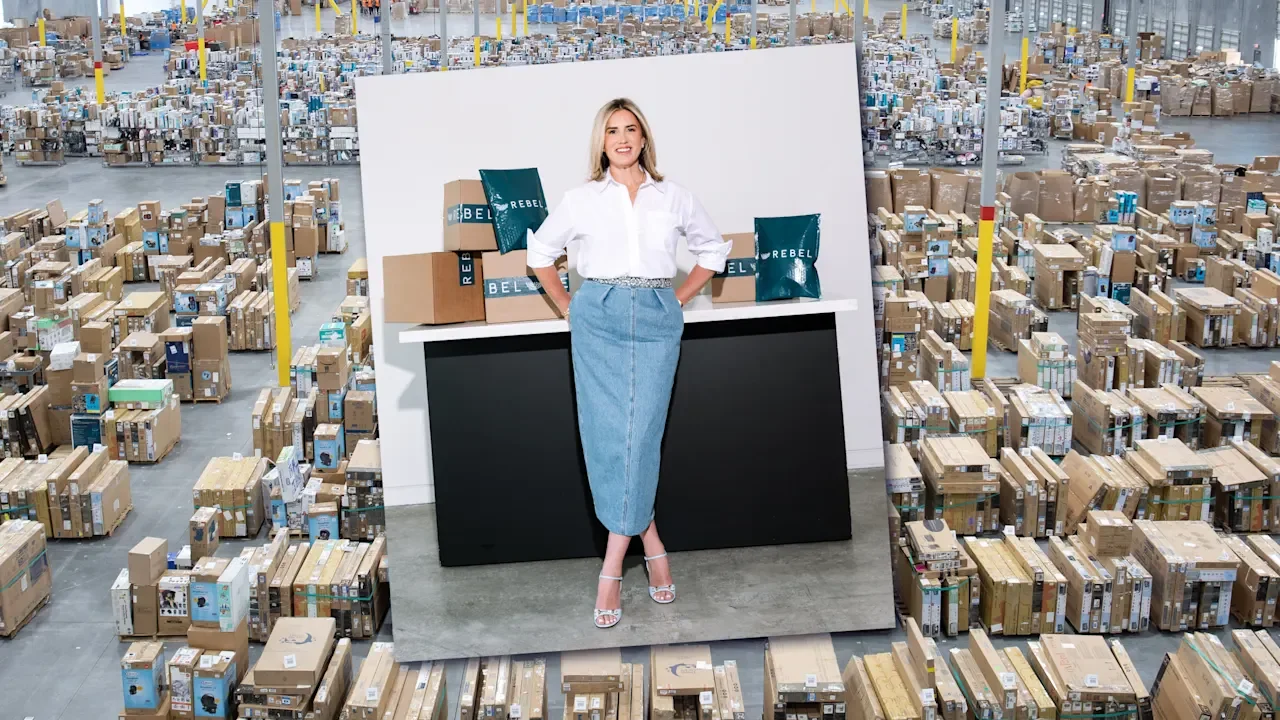
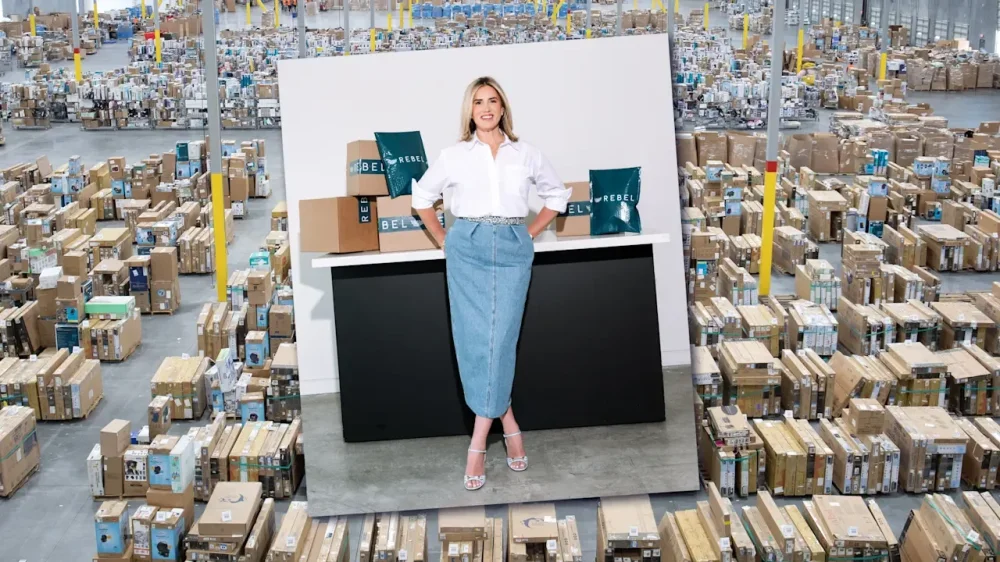
America is in an overstock and returns crisis. Every year 8.4 billion pounds of products are returned to online sellers, according to the National Retail Federation. The typical solution from retailers is to send the roughly 17% of their inventory made up of returns to a landfill, regardless of the condition of the products. It’s a problem that sellers have little incentive to solve. Since dumping product can be written off as the cost of doing business in profit and loss statements, companies don’t invest in a complex reverse supply chain or inspect items for potential resale value. But recommerce site Rebel just raised a $25 million series B round to fuel its work building a resale network for retailers—and the software to power it. The funding round was led by Jay-Z’s MarcyPen Capital Partners, which, alongside Serena Williams’s Serena Ventures was part of Rebel’s $18 million Series A raise in 2024. Discount-retail veteran Emily Hosie—whose résumé includes time at Saks Off Fifth and TJ Maxx—says she launched the Toronto- and New York-based company to solve two problems while selling written-off products at a 40% to 70% discount. “The majority of returns are ending up in landfills and no retailers or brands want to talk about it because it’s not something to be proud about,” she says. How does Rebel work? At Rebel’s 300,000-square-foot warehouse in Kannapolis, North Carolina, the company processes more than 70,000 unique products a week—enough inventory that its website adds new deals every 15 minutes. To process that volume of returns, Hosie built a new technology and logistics stack. Using AI, Rebel can detect, log, and tag the condition of each return, and determine the most efficient way to receive it from retailers and ship it to consumers. “Every return is a snowflake,” Hosie says, noting that all products require inspection to determine their condition. “[An e-commerce company] processing a return versus processing inventory in general is asking a heart surgeon to do brain surgery. It’s a totally different infrastructure needed, and for a lot of companies that’s just mission drift.” Rebel, which is B Corp certified, aims to expand its physical presence on the West Coast in 2026. The company developed an AI-powered smart-pricing algorithm that auto-adjusts item prices based on demand, condition, and inventory more than 10 times a day. On top of that, Rebel’s consumer-facing tool lets buyers check the real-time resale value of an item when they’re deciding whether to purchase it. Rebel’s business, which started processing items in the baby category with Newell Brands, Evenflo, Dorel, and others, has grown 2,640% in just three years. The site now also sells travel products and home goods (including mattresses), and is expanding to outdoor/sporting gear and eventually consumer electronics. Getting retail’s attention As complex as Rebel’s logistics are, for Hosie the biggest obstacle was getting retailers to buy into the product—in part because in meetings with retail leaders, they balked at the premise of Rebel’s service. “We would get meetings with the most senior people on leadership teams at global iconic brands and mass retailers,” Hosie says. “They would look at us and say, ‘Congratulations on what you built, but we don’t have a returns problem.’” The company had a breakthrough early on when a large mass retailer going bankrupt decided to use Rebel to sell off its inventory. “That gave us the business case to go back to other retailers,” Hosie says. Unlike other retailers struggling with their supply chain as tariffs take hold, Rebel is immune because the products it deals with are already sold in the States. Rebel is also appealing to price-sensitive shoppers ahead of the holidays, at a time of layoffs and economic uncertainty. “We’re the only company with the tech to be able to process these returns at scale,” Hosie says. “Why not be that one-stop destination for those who love deal hunting and buying open-box, never-used returns?” View the full article
-
We pulled the most recent, B2B-specific stats and organized them around the most important things in B2B SEO. Below are the stats worth citing in 2025. Organic search is still a top B2B discovery and pipeline driver. AI may have…Read more ›View the full article
-
OpenAI's CEO Sam Altman said the potential security risks of personalized AI have been on his mind lately. The post OpenAI’s Sam Altman Says Personalized AI Raises Privacy Concerns appeared first on Search Engine Journal. View the full article
-
Believing that digital transformation is about changing technology is like thinking firefighting is about riding in a fire truck. Firefighting is about putting out fires to save lives and property. Digital transformation is about changing how your organization functions and creates value using data, systems, skills, and processes. That might mean building dashboards that give executives real-time visibility across thousands of staff, training hundreds in new ways of working like Agile or DevOps, or automating back-office processes to free up time for higher-value work. The common thread is that technology becomes a catalyst for organisational change in strategy, people, and operations—not just new software bolted onto old habits. If you’re replacing systems without changing how people work or what value you create, you’re running an IT project, not a transformation. That’s not bad, but the distinction matters because it determines whether change is sustainable. With failure rates between 26% and 88%, the odds are that your digital transformation is already failing. You might not know it yet, but the warning signs are there. Based on my work with dozens of organizations and research into what drives success, six reasons appear most often. 1. Your Digital Vision Could Mean Anything Visions for digital transformations are overrated. You need a clear vision for digital change, but for teams doing the work, that isn’t enough. A specific definition of done bridges the gap between the vision you want and the actions they need to take. As a consultant, I saw many digital visions that boiled down to “cloud-first,” “mobile-first,” “data-driven,” and now, “AI-first.” But what does AI-first actually mean? It could mean building internal AI tools before anything else, buying platforms that use AI, or designing customer journeys where an AI bot is the first point of contact. The definition of done comes from software development, where developers ask how someone will know when a feature is complete. If you think of baking a cake, the vision tells you what you want the cake to look like; the definition of done tells you that when it’s golden brown and a toothpick comes out clean, it’s ready. 2. Your Documented Process Isn’t the Real One Most transformation plans are based on documented processes, even though those processes rarely match reality. Real work involves quick calls, side emails, copy-pasting, and workarounds, usually born from underinvestment in systems or skills. Over time, these informal processes become essential, creating manual rework that keeps the organisation running. People cling to them because they work and fear that transformation will only add more bureaucracy. Even when you know the real process, transformation itself never runs sequentially. It’s two steps forward, one to the side, two backward. Yet transformation programmes are still sold as linear, with milestones and timelines that look neat on PowerPoint. Those promises set unrealistic expectations and make failure more likely. 3. You’re Confusing Involvement with Engagement McKinsey research shows that 68% of successful transformations actively involve employees, yet only 35% seek feedback or new ideas. The difference lies in confusing participation with engagement, and compliance with commitment. Many transformation leaders prioritise participation because it’s easier to measure. You can track town hall attendance, survey completion, or training numbers. But engagement, real ownership and belief, is harder to quantify. Theatrics like “bringing people on the journey” are common, but what you actually need are employees with high buy-in who can advocate for change. They’re the ones who make transformation stick. 4. Your Leaders Think Cascading Messages Work Employees want to hear about major changes from two people: their direct manager and a senior leader. Unless managers can personally justify and role-model change, employees will stick with the status quo. Leaders often believe they can scale these conversations by having comms teams and line managers “cascade” messages through the organisation. But that assumes group dynamics stay the same as conversations scale. They don’t. You can have a genuine dialogue with five people, not 5,000. At scale, communication becomes about power and influence, not connection or understanding. 5. You’re Running Out of Political Capital The world’s largest leadership survey from DDI found we’re in a global leadership credibility crisis. Trust in immediate managers dropped from 46% to 29% in two years. For transformation leaders, that’s devastating. Our job is to create conditions for people to test and learn quickly, but that requires trust. In environments with competing priorities and scarce resources, politics fills the vacuum. Projects get defunded when sponsors lose confidence. Sponsors get replaced when they burn through credibility. Teams miss targets when they stop listening to leaders. Without credibility, there’s no trust. Without trust, there’s no confidence or political capital. And without political capital, you lose influence. You can’t change behavior if you don’t have the authority to persuade. 6. You Might Be Cost Cutting Your Way to Bankruptcy Most digital transformations include some cost cutting or downsizing, but the evidence on how that plays out is bleak. A study of 4,710 U.S. firms found that those that downsized were twice as likely to declare bankruptcy within five years as those that didn’t. I’ve seen it firsthand. Companies slash headcounts for quick savings, often starting with support teams labelled as “cost centres.” IT teams are replaced by smaller “agile squads” where titles change but workloads don’t. Nine to eighteen months later, they’re rehiring to fill the capability gaps they created. The most responsible companies cut differently. They remove toxic leadership, outdated systems, and redundant processes while protecting institutional memory. Transformations that build on existing strengths, rather than strip them away, are far more resilient than those driven by short-term savings. ‘Best practice’ transformation often becomes a one-size-fits-all comfort blanket. In reality, meaningful change requires leaders to be awkward, unpopular, and willing to call out uncomfortable truths. The six warning signs above are easy to spot but hard to confront. Doing so early and often may make you unpopular, but it also keeps your organisation out of the 70% of transformations that fail. View the full article

-
As small business owners, we often wear more hats than we can count — designer, marketer, accountant, customer service rep, and everything in between. Balancing creativity with the demands of running a business can feel like walking a tightrope without a net. I know that feeling firsthand, and it’s one reason I was drawn to my recent conversation with Amanda Stewart, the founder of Mochi Kids. Amanda has built her brand from a handful of handmade T-shirts into a beloved children’s clothing company known for its minimalist design and inclusive themes — all while managing operations, production, and marketing largely on her own. During our discussion at Adobe MAX 2025, Amanda opened up about how she evolved from selling on Etsy to running a brick-and-mortar store and how tools like Adobe Acrobat and AI-powered assistants are helping her manage the less glamorous side of entrepreneurship — contracts, timelines, and content calendars — with the same creativity she brings to her designs. What stood out to me most was how she’s using technology not just to streamline her work, but to expand her capacity to create. For any small business owner trying to balance artistic vision with operational reality, Amanda’s story is both inspiring and instructive. Below is our full conversation, where she shares how creativity and productivity intersect in her business — and how technology is quietly helping her do it all. Leland McFarland: Amanda, for those who may not be familiar, can you start by telling a little about, uh, Mochi Kids and what inspired you to stay, start the brand? Amanda Stewart: So Mochi Kids is, it started as a children’s clothing brand almost 10 years ago. And we’ve evolved to include a brick-and-mortar store. I started my business super organically. I needed um, an a creative outlet and I wanted to create some tees for my son that matched his interests. He’s always been interested in things like science and space, but I couldn’t find though t-shirts with those designs at an aesthetic that I also liked, and so I used my design skills and started creating my own t-shirts. Um, and I sold them to friends and family, eventually strangers on Instagram started asking for them, and I opened an Etsy shop, and then a regular website, and then, um, a brick-and-mortar store. So. Leland McFarland: Great. Um, how has design and creativity shaped the way that Mochi Kids connects with customers and builds its community? Amanda Stewart: I would say design is like central to what I do. We have a very distinct aesthetic and, uh, a lot of people are are attracted to like our minimalist, um, cute designs. And our community is, um, very inclusive and we try to reflect that in our designs that we do. So we will, um, design based on themes that, um, make people feel included and represented. We have a lot of Asian-American themed designs and then designs that are a little more like on the nose promoting diversity and, um, things like that. Leland McFarland: That’s great. So you’re here at Adobe MAX. Uh, what does this event mean to you as a creative entrepreneur? Amanda Stewart: Yeah, this is my very first year at MAX and I’ve already… today’s the first day, right? We’re like halfway through the day and I’m already just kind of blown away by all the things that I’ve learned here. Um, I came to this conference with one goal in mind, which was how I can learn more about the AI tools that there are to increase the productivity in my business because I’m, you know, as a small business owner, I’m sure you are aware, we’re just often like one-woman shows and we don’t have full teams of, um, copywriters and marketing professionals and, um, production managers. It’s all kind of me. I’m wearing all the hats and so. Um, I’ve been learning a lot more about Adobe Acrobat this year and I knew that coming here I’d be able to find more tools to use to increase my productivity. So that… I like to just have one goal when I come in somewhere, something that feels attainable. And that was it for me is trying to figure out how to increase my productivity as like a one-woman show. Leland McFarland: So how do you use, uh, Adobe Acrobat in, you know, your day-to-day? Amanda Stewart: I use it a few different ways, uh, and I’m sure there are other ways to use it too. That’s one cool thing about coming here is I get to see other people speak about how they’re implementing it into their workflows. But for me, I love to use it as a place to keep all of my contracts. So our brand, um, we not only sell our own products, but we often will license our artworks to other, um, companies who want to use our designs. And that involves like a contract and deliverables and timelines and all of that is a lot to keep track of for one person when that’s just one of the many responsibilities that I have. So, um, I love Adobe Acrobat, um, PDF spaces, which is the new feature that they have, because I can upload all of my contracts there. I can also upload my email transcripts there and just any correspondence or anything I have regarding to the project. And then I can ask the AI assistant there like, “Please create a timeline of deliverables for this project,” and it will give that to me. So that’s one, one way I use it is like as a place to keep all of my contracts and to be able to communicate with those and get quick answers for what I’m looking for, as opposed to having to go back and scroll through my emails and be like, “I know they said something about this here sometime.” Um, and then kind of like the next step that I use it for is like, let’s say I want, I now have a timeline of my deliverables. I can ask it to create like a content calendar around it. And because it’s like an, uh, chat-based like AI assistant, I can really ask it whatever I want. Um, it will even give you like content ideas. So sometimes it’ll come up with like, okay, here’s a content calendar and then I’ll say, “Can you write me like a script for the first one?” and I’ll go in like greater detail to get exactly what I want from it. So, um, using it for content planning is great. And then another thing that I use it for is my production management. So I can go and say, like, you know, my spring launch, I know it’s going to be a certain day. And then I know how long the turnarounds are for each thing. Sorry, this is like so specific. Leland McFarland: Go for it. Go for it. Amanda Stewart: And I can just write exactly what I want, like, you know, “Please make a, um, production calendar for our spring launch.” Like, I, I know like production is two weeks, um, I have to order my materials like three weeks before that and just map out the whole year of like deadlines. Okay, I need to order my fabric for spring this day. I need to have items in hand by this day for my photo shoot this day. And, um, you know, throughout the year. So it’s a lot to manage as one person. Like how do you, how would I be on top of that? And before what I did is I had a paper calendar on my wall and then I would, once a year, fill out the whole calendar. And then I get behind, then my whole paper calendar system is messed up. Right? But this, I can very easily be like, “Okay, we got to move everything by two weeks. Move all the spring launch dates, everything.” So. Leland McFarland: So it’s kind of become sort of a secretary, you know, like assistant, uh, overall. Amanda Stewart: That’s like what the AI assistant is, I think is like, you can ask it to do things like that, like administrative, like planning kind of things and it does it for you. So. And I’m still, you know, learning how to implement all of this into my workflow, but it already it’s been changing my productivity and helping me to feel like more efficient and more organized. Leland McFarland: Were there any kind of growing pains when it came to implementing this and and learning how to use it or was it fairly smooth? Amanda Stewart: So, I would say, I think Adobe puts a lot of time into like the user experience and trying to make these intuitive. So I feel like on that front, it was really good. For me, personally, I’m not like a tech-savvy person, right off the bat, but um, I, I don’t think it was, like it was much easier than I was expecting it to be. Leland McFarland: That’s good to hear. Yeah, it is not. Leland McFarland: How does Adobe, uh, fit into the broader, um, creative toolkit, uh, alongside or Acrobat. How does Acrobat fit into the broader, uh, creative toolkits along with other Adobe apps like Illustrator or Photoshop? Do you use those as well? Amanda Stewart: Yeah, so I use Illustrator and Photoshop all the time, like on a daily basis. And when they asked me to be an Acrobat ambassador, I was like, “Oh, I guess I use Acrobat too,” but I I wasn’t as familiar with the software and all of the capabilities. So, but I was a little surprised. I was like, “Oh, wouldn’t like Illustrator be a better fit for me?” But, um, yeah, I use Adobe Illustrator, um, Adobe Express, Photoshop, and, um, now Adobe Acrobat all the time. I would say like as a creative person, I, I had this reaction that I told you about that I was like, “Oh, you want me to be an Acrobat ambassador? Okay.” But as a small business owner, it makes so much sense. I wasn’t seeing it from like a productivity and like workflow standpoint. I just kind of seeing it as like a design creative standpoint, but every like creative person that I know struggles with the keeping deadlines, planning, managing contracts, managing files. So they really do go hand in hand, like as far as creatives also need this tool to administratively be able to keep on top of things. Leland McFarland: I see. Good answer on that. Leland McFarland: Do you use, uh, the, uh, features in Acrobat such as e-signatures, commenting, um, reviewing PDFs together with, uh, teams or customers or anything like that? Amanda Stewart: I definitely use e-signature all the time. Um, before I started using that, I would like paint my signature on using Photoshop. But now it’s like much more legit and I can send it securely and I can ask for someone’s signature in a way more like official manner than just like, “Okay, here’s the JPEG, like sign it and send me a photo back.” But this way, you know, it has an electronic signature and they can’t the document can’t be altered after it’s been signed. So yeah, I’ve been loving that tool. Um, I don’t use as much like team collaboration because like I mentioned, it’s mostly me doing all of the work, but, um, hopefully someday I will get to that point. Leland McFarland: I’ve ran into that too. Uh, I used to have a salesperson who would send an Excel file, not a PDF or anything like that, an a raw Excel file, and one time it came back differently. So, I, yeah, and someone had modified the contract in their favor and… Amanda Stewart: Ooh. Leland McFarland: Yeah, so I I get it. You know, I I love the age of these digital signatures and you know, glad that Adobe has that as well. Amanda Stewart: And one nice thing about PDF spaces is you could upload both of those contracts and you could say, “Please find me any differences between these contracts” in case someone does, like through their revision process, sneak a change in. Leland McFarland: Yes, that that would be nice. Leland McFarland: Um, many, uh, creative entrepreneurs struggle to balance, uh, artistry and uh, business paperwork. Um, how has Acrobat helped you bridge that gap? Amanda Stewart: For sure, that is definitely a struggle. Um, I love like the PDF spaces like I mentioned to keep all my contracts organized. And I also think the Creative Cloud is a great tool. Um, so I can access, you know, designs that I’ve been working on on my desktop on my phone if I need to. And, um, yeah, I I’m almost prefer that to my Google Drive, which is what I I’ve been using before because it’s like, um, it’s just easier to find things, I feel like. Like the searchability is better and I can see like the image preview of whatever I’m working on, because sometimes in Google Drive, it’s just like, you know, a file looks like a file folder and like, sometimes it’ll show the image preview, but not all the time. So then I just have to like click on the photo image till I get to the one that I’m looking for. So. Leland McFarland: Um, do you find, do you find that, Acrobat makes administrative tasks like invoicing, legal forms, or proposals, uh, feel a bit more manageable, uh, even creative? Amanda Stewart: Yes. Um, so I do have Acrobat on my phone and I love that I can edit PDFs from my phone. I didn’t know I could do that until this year. So what I was doing before is like, sometimes I’d even like take a JPEG and then I would like Photoshop like a box over it to clear out whatever was there and then a new text box, which was like such a, it’s such a clunky way to do it. But yeah, I do love like on my phone, I’ll edit PDFs and send invoices that way, or I I have to send purchase orders as well, like when I buy um fabric or whatever we’re making. And I love doing that on my phone. A lot of old school people will like require you to have a purchase order from your brand with your header, with the all of your company info before they’ll sell you something. So. Leland McFarland: Yeah. Well, it helps, make those of, those official orders a little bit easier, right? Amanda Stewart: Yeah. Mhm. I can just, I just have the it in my creative cloud and I can just edit it real quick to what I want on it to say. Leland McFarland: Nice. Leland McFarland: Um, what advice would you give other small business owners about, uh, bringing the same creativity they put into design into their business documents? Amanda Stewart: Okay, let me ask you that again. Leland McFarland: Okay. Please. Sorry. What advice would you give other small business owners about bringing the same creativity they put into their designs into their business documents? Amanda Stewart: I feel like a lot of, um, creative small business owners that I know, we have, like I said, the similar struggle of like staying organized and being on top of the administrative things. And a lot of the times these things are like, for me, it’s like a weight on my shoulders a little bit and it’s like a thing on the back of my mind that is like a nagging that I need to like do or fix. And I feel like just starting a new system of like keeping things organized and, um, it’s like really freeing and can help you in your creative practice to feel like you have more like mental space for that and you’re not as like concerned as much. Yeah, I would say that’s definitely been true in my life. Like the tasks that I don’t like to do as a creative are now feel like a little more attainable. Leland McFarland: It’s easier to be creative when you’ve cleaned your room first, right? Amanda Stewart: Yeah. Yeah. Leland McFarland: A little more order, organized. You don’t have that hanging in the back of your head going, “Oh my gosh, that sock over there. It’s bugging me.” Amanda Stewart: Yeah, I am someone who has to clean like my entire house before I can get any work done. So, I can relate. Leland McFarland: I’m I’m the exact opposite. I’m more of the I’ll do the administrative, I’ll do the paperwork. Creativity is not necessarily my forte, so. Amanda Stewart: Oh, yeah. Leland McFarland: So, I I can make processes, I can do paperwork. My wife though, she’ll she’ll handle the creative part. Amanda Stewart: It’s funny, everyone has like their strengths and struggles and yeah. Leland McFarland: All right. What are some of your takeaways from what you’ve seen so far from Adobe MAX, uh, this year? Um, have have you gotten into like the Adobe MAX or uh, the Acrobat uh, demonstration? Have you, is there anything there that you’ve uh, seen that has piqued your interest? Amanda Stewart: Um, I will say I did not know anything about Firefly until today. And, um, as someone who has a clothing brand, I think it’ll be super helpful for me to like mock up my designs, um, with Firefly, because I, I use Photoshop, you know, to often like move my design from Illustrator onto like a piece of clothing. And I’ll do it manually, Photoshopping it over, and with Firefly, I can just like “eye drop that, eye drop that” and then it puts it together for me. So it’s going to be way easier to make mockups and do any kind of Photoshopping. So, that was a big takeaway for me. Um, yeah, I think I’m going to save a lot of time Photoshopping things. And then, I, I, I used Premiere like maybe a couple times, but I’m not like super versed in it. And, um, the Premiere app looks like it’s going to be awesome, too. Did you go to the keynote this morning? Leland McFarland: I did. Amanda Stewart: Yeah. So that… there’s just so many things. I’m like… Leland McFarland: I was impressed. Is that how it is every year? There’s just like, oh man. Brian Domingo: So, yeah, peek behind the curtain. Uh, you know, being PR, we work on these announcements, you know, obviously collaboration with our product teams and engineers for months. So like, just kind of the keynote is a, it’s very celebratory for us PR people because it’s like, we brought it to life with with the product engineers and with the product marketers, and we put their innovations to words and announced it to the world. So, yeah, it’s it’s like that every year. We have like a lot of announcements and it’s just so the labor of love over the course of a lot of time. Leland McFarland: Is it Is it hard to sit on these awesome new features? Brian Domingo: Not for me because I get to play with it internally before you guys. But, um, you know, like, I have friends who are also entrepreneurs and small business owners and creatives and they tell me about the stuff they’re working on. I’m like, “Wow, I wish I could tell you about this, or wish I could get you on the limited beta for this,” but, you know, that’s that’s kind of the fun part of it, too. Leland McFarland: All right. How do you see tools like Acrobat evolving to support creative small businesses in the next few years? I mean, what would you like to see? Amanda Stewart: I feel like Adobe Acrobat is on the right track as far as, um, like I mentioned, making it easier for us creative people to stay organized and the AI assistant. Um, I’ve been telling so many of my friends about the PDF spaces. Um, yeah, I have a friend who runs a nonprofit in Uganda and she has like a case file on every child in her, um, school that she runs over there. And it’s like a paper, it’s a paper case file. And so I’m like, “You got to get, you know, on this so that when you are emailed stuff about this kid, you can just file it in there.” So I would say just more tools for like productivity behind the scenes, kind of contracts. I think that’s what Acrobat is kind of known for is, um, doing like a paper trail, but electronically. So all that kind of like file management. I mean, if I knew the answer to this, I could probably be rich because I would come up with an incredible software. But yeah, I would love to see just more tools to help with that. Leland McFarland: All right, final question. What’s next for Mochi Kids and how does technology, especially tools like Acrobat, play in your future plans? Amanda Stewart: Hm, that’s a good question because I always said that opening a store is like my old lady job. So when I get like burnt out of doing my clothing brand, I can be like a shopkeeper and work in my store. And that still sounds very appealing, um, to kind of, you know, retire but like still own a business and work. Um, but I think I want to get back into doing more apparel. Um, it’s been, like we’ve been kind of going up and down with creating our own custom styles versus buying like blank sweatshirts and t-shirts that are already made. And, uh, yeah, we we are developing some new clothing styles right now. We just developed a new t-shirt pattern that’s really cute. And we have sweatshirts that are being made right now in LA. And then we have pajamas on order. And then we have like a cute woven like unisex kid pant that hopefully next year will come out. So, just getting more into doing more clothing styles. I think, um, a lot of my competitors have gone out of business, which is very sad, in the last few years or stopped making clothing because it’s a challenge. And a lot of the manufacturing in the US in apparel has gone overseas. And, um, and now overseas manufacturers, like with the tariffs, it’s so much more money to create things. So I’ve seen a lot of my fellow clothing brand people close, other fellow clothing brands. So I I do see like a gap in the market for, um, made in the US clothing for children. Leland McFarland: Well, here’s here’s hoping, you know, you can get into that market and continue to grow. Amanda Stewart: Thank you. Leland McFarland: Well, that’s all the questions I had for you. Amanda Stewart: Awesome. Thank… Listening to Amanda Stewart talk about her journey with Mochi Kids reminded me how much small business success depends on both passion and adaptability. It’s one thing to have a great idea; it’s another to sustain it over a decade while evolving with technology, market shifts, and creative demands. Amanda’s ability to keep her brand fresh — from developing new apparel lines to integrating digital tools like Adobe Acrobat and Firefly — is a testament to her resilience and willingness to learn. What resonated most was her practical perspective on using AI and Acrobat as part of her creative workflow. She isn’t replacing her artistry with automation — she’s augmenting it. For small business owners, that’s the real takeaway. Tools that once seemed designed for big enterprises are now becoming indispensable companions for one-person operations. They can help us reclaim time, reduce mental clutter, and refocus on what we love most — whether that’s design, storytelling, or building community. Amanda’s insight that organization fuels creativity struck a chord: when your digital workspace is clear, your mind is free to explore new ideas. It’s a principle many entrepreneurs overlook until they experience the difference. For me, this conversation underscored something simple but powerful — technology isn’t just changing how small businesses run; it’s changing how we think, create, and thrive. And as Amanda’s journey shows, the best creativity often grows from a foundation of order and innovation. This article, "Interview with Amanda Stewart – Founder of Mochi Kids" was first published on Small Business Trends View the full article
-
As small business owners, we often wear more hats than we can count — designer, marketer, accountant, customer service rep, and everything in between. Balancing creativity with the demands of running a business can feel like walking a tightrope without a net. I know that feeling firsthand, and it’s one reason I was drawn to my recent conversation with Amanda Stewart, the founder of Mochi Kids. Amanda has built her brand from a handful of handmade T-shirts into a beloved children’s clothing company known for its minimalist design and inclusive themes — all while managing operations, production, and marketing largely on her own. During our discussion at Adobe MAX 2025, Amanda opened up about how she evolved from selling on Etsy to running a brick-and-mortar store and how tools like Adobe Acrobat and AI-powered assistants are helping her manage the less glamorous side of entrepreneurship — contracts, timelines, and content calendars — with the same creativity she brings to her designs. What stood out to me most was how she’s using technology not just to streamline her work, but to expand her capacity to create. For any small business owner trying to balance artistic vision with operational reality, Amanda’s story is both inspiring and instructive. Below is our full conversation, where she shares how creativity and productivity intersect in her business — and how technology is quietly helping her do it all. Leland McFarland: Amanda, for those who may not be familiar, can you start by telling a little about, uh, Mochi Kids and what inspired you to stay, start the brand? Amanda Stewart: So Mochi Kids is, it started as a children’s clothing brand almost 10 years ago. And we’ve evolved to include a brick-and-mortar store. I started my business super organically. I needed um, an a creative outlet and I wanted to create some tees for my son that matched his interests. He’s always been interested in things like science and space, but I couldn’t find though t-shirts with those designs at an aesthetic that I also liked, and so I used my design skills and started creating my own t-shirts. Um, and I sold them to friends and family, eventually strangers on Instagram started asking for them, and I opened an Etsy shop, and then a regular website, and then, um, a brick-and-mortar store. So. Leland McFarland: Great. Um, how has design and creativity shaped the way that Mochi Kids connects with customers and builds its community? Amanda Stewart: I would say design is like central to what I do. We have a very distinct aesthetic and, uh, a lot of people are are attracted to like our minimalist, um, cute designs. And our community is, um, very inclusive and we try to reflect that in our designs that we do. So we will, um, design based on themes that, um, make people feel included and represented. We have a lot of Asian-American themed designs and then designs that are a little more like on the nose promoting diversity and, um, things like that. Leland McFarland: That’s great. So you’re here at Adobe MAX. Uh, what does this event mean to you as a creative entrepreneur? Amanda Stewart: Yeah, this is my very first year at MAX and I’ve already… today’s the first day, right? We’re like halfway through the day and I’m already just kind of blown away by all the things that I’ve learned here. Um, I came to this conference with one goal in mind, which was how I can learn more about the AI tools that there are to increase the productivity in my business because I’m, you know, as a small business owner, I’m sure you are aware, we’re just often like one-woman shows and we don’t have full teams of, um, copywriters and marketing professionals and, um, production managers. It’s all kind of me. I’m wearing all the hats and so. Um, I’ve been learning a lot more about Adobe Acrobat this year and I knew that coming here I’d be able to find more tools to use to increase my productivity. So that… I like to just have one goal when I come in somewhere, something that feels attainable. And that was it for me is trying to figure out how to increase my productivity as like a one-woman show. Leland McFarland: So how do you use, uh, Adobe Acrobat in, you know, your day-to-day? Amanda Stewart: I use it a few different ways, uh, and I’m sure there are other ways to use it too. That’s one cool thing about coming here is I get to see other people speak about how they’re implementing it into their workflows. But for me, I love to use it as a place to keep all of my contracts. So our brand, um, we not only sell our own products, but we often will license our artworks to other, um, companies who want to use our designs. And that involves like a contract and deliverables and timelines and all of that is a lot to keep track of for one person when that’s just one of the many responsibilities that I have. So, um, I love Adobe Acrobat, um, PDF spaces, which is the new feature that they have, because I can upload all of my contracts there. I can also upload my email transcripts there and just any correspondence or anything I have regarding to the project. And then I can ask the AI assistant there like, “Please create a timeline of deliverables for this project,” and it will give that to me. So that’s one, one way I use it is like as a place to keep all of my contracts and to be able to communicate with those and get quick answers for what I’m looking for, as opposed to having to go back and scroll through my emails and be like, “I know they said something about this here sometime.” Um, and then kind of like the next step that I use it for is like, let’s say I want, I now have a timeline of my deliverables. I can ask it to create like a content calendar around it. And because it’s like an, uh, chat-based like AI assistant, I can really ask it whatever I want. Um, it will even give you like content ideas. So sometimes it’ll come up with like, okay, here’s a content calendar and then I’ll say, “Can you write me like a script for the first one?” and I’ll go in like greater detail to get exactly what I want from it. So, um, using it for content planning is great. And then another thing that I use it for is my production management. So I can go and say, like, you know, my spring launch, I know it’s going to be a certain day. And then I know how long the turnarounds are for each thing. Sorry, this is like so specific. Leland McFarland: Go for it. Go for it. Amanda Stewart: And I can just write exactly what I want, like, you know, “Please make a, um, production calendar for our spring launch.” Like, I, I know like production is two weeks, um, I have to order my materials like three weeks before that and just map out the whole year of like deadlines. Okay, I need to order my fabric for spring this day. I need to have items in hand by this day for my photo shoot this day. And, um, you know, throughout the year. So it’s a lot to manage as one person. Like how do you, how would I be on top of that? And before what I did is I had a paper calendar on my wall and then I would, once a year, fill out the whole calendar. And then I get behind, then my whole paper calendar system is messed up. Right? But this, I can very easily be like, “Okay, we got to move everything by two weeks. Move all the spring launch dates, everything.” So. Leland McFarland: So it’s kind of become sort of a secretary, you know, like assistant, uh, overall. Amanda Stewart: That’s like what the AI assistant is, I think is like, you can ask it to do things like that, like administrative, like planning kind of things and it does it for you. So. And I’m still, you know, learning how to implement all of this into my workflow, but it already it’s been changing my productivity and helping me to feel like more efficient and more organized. Leland McFarland: Were there any kind of growing pains when it came to implementing this and and learning how to use it or was it fairly smooth? Amanda Stewart: So, I would say, I think Adobe puts a lot of time into like the user experience and trying to make these intuitive. So I feel like on that front, it was really good. For me, personally, I’m not like a tech-savvy person, right off the bat, but um, I, I don’t think it was, like it was much easier than I was expecting it to be. Leland McFarland: That’s good to hear. Yeah, it is not. Leland McFarland: How does Adobe, uh, fit into the broader, um, creative toolkit, uh, alongside or Acrobat. How does Acrobat fit into the broader, uh, creative toolkits along with other Adobe apps like Illustrator or Photoshop? Do you use those as well? Amanda Stewart: Yeah, so I use Illustrator and Photoshop all the time, like on a daily basis. And when they asked me to be an Acrobat ambassador, I was like, “Oh, I guess I use Acrobat too,” but I I wasn’t as familiar with the software and all of the capabilities. So, but I was a little surprised. I was like, “Oh, wouldn’t like Illustrator be a better fit for me?” But, um, yeah, I use Adobe Illustrator, um, Adobe Express, Photoshop, and, um, now Adobe Acrobat all the time. I would say like as a creative person, I, I had this reaction that I told you about that I was like, “Oh, you want me to be an Acrobat ambassador? Okay.” But as a small business owner, it makes so much sense. I wasn’t seeing it from like a productivity and like workflow standpoint. I just kind of seeing it as like a design creative standpoint, but every like creative person that I know struggles with the keeping deadlines, planning, managing contracts, managing files. So they really do go hand in hand, like as far as creatives also need this tool to administratively be able to keep on top of things. Leland McFarland: I see. Good answer on that. Leland McFarland: Do you use, uh, the, uh, features in Acrobat such as e-signatures, commenting, um, reviewing PDFs together with, uh, teams or customers or anything like that? Amanda Stewart: I definitely use e-signature all the time. Um, before I started using that, I would like paint my signature on using Photoshop. But now it’s like much more legit and I can send it securely and I can ask for someone’s signature in a way more like official manner than just like, “Okay, here’s the JPEG, like sign it and send me a photo back.” But this way, you know, it has an electronic signature and they can’t the document can’t be altered after it’s been signed. So yeah, I’ve been loving that tool. Um, I don’t use as much like team collaboration because like I mentioned, it’s mostly me doing all of the work, but, um, hopefully someday I will get to that point. Leland McFarland: I’ve ran into that too. Uh, I used to have a salesperson who would send an Excel file, not a PDF or anything like that, an a raw Excel file, and one time it came back differently. So, I, yeah, and someone had modified the contract in their favor and… Amanda Stewart: Ooh. Leland McFarland: Yeah, so I I get it. You know, I I love the age of these digital signatures and you know, glad that Adobe has that as well. Amanda Stewart: And one nice thing about PDF spaces is you could upload both of those contracts and you could say, “Please find me any differences between these contracts” in case someone does, like through their revision process, sneak a change in. Leland McFarland: Yes, that that would be nice. Leland McFarland: Um, many, uh, creative entrepreneurs struggle to balance, uh, artistry and uh, business paperwork. Um, how has Acrobat helped you bridge that gap? Amanda Stewart: For sure, that is definitely a struggle. Um, I love like the PDF spaces like I mentioned to keep all my contracts organized. And I also think the Creative Cloud is a great tool. Um, so I can access, you know, designs that I’ve been working on on my desktop on my phone if I need to. And, um, yeah, I I’m almost prefer that to my Google Drive, which is what I I’ve been using before because it’s like, um, it’s just easier to find things, I feel like. Like the searchability is better and I can see like the image preview of whatever I’m working on, because sometimes in Google Drive, it’s just like, you know, a file looks like a file folder and like, sometimes it’ll show the image preview, but not all the time. So then I just have to like click on the photo image till I get to the one that I’m looking for. So. Leland McFarland: Um, do you find, do you find that, Acrobat makes administrative tasks like invoicing, legal forms, or proposals, uh, feel a bit more manageable, uh, even creative? Amanda Stewart: Yes. Um, so I do have Acrobat on my phone and I love that I can edit PDFs from my phone. I didn’t know I could do that until this year. So what I was doing before is like, sometimes I’d even like take a JPEG and then I would like Photoshop like a box over it to clear out whatever was there and then a new text box, which was like such a, it’s such a clunky way to do it. But yeah, I do love like on my phone, I’ll edit PDFs and send invoices that way, or I I have to send purchase orders as well, like when I buy um fabric or whatever we’re making. And I love doing that on my phone. A lot of old school people will like require you to have a purchase order from your brand with your header, with the all of your company info before they’ll sell you something. So. Leland McFarland: Yeah. Well, it helps, make those of, those official orders a little bit easier, right? Amanda Stewart: Yeah. Mhm. I can just, I just have the it in my creative cloud and I can just edit it real quick to what I want on it to say. Leland McFarland: Nice. Leland McFarland: Um, what advice would you give other small business owners about, uh, bringing the same creativity they put into design into their business documents? Amanda Stewart: Okay, let me ask you that again. Leland McFarland: Okay. Please. Sorry. What advice would you give other small business owners about bringing the same creativity they put into their designs into their business documents? Amanda Stewart: I feel like a lot of, um, creative small business owners that I know, we have, like I said, the similar struggle of like staying organized and being on top of the administrative things. And a lot of the times these things are like, for me, it’s like a weight on my shoulders a little bit and it’s like a thing on the back of my mind that is like a nagging that I need to like do or fix. And I feel like just starting a new system of like keeping things organized and, um, it’s like really freeing and can help you in your creative practice to feel like you have more like mental space for that and you’re not as like concerned as much. Yeah, I would say that’s definitely been true in my life. Like the tasks that I don’t like to do as a creative are now feel like a little more attainable. Leland McFarland: It’s easier to be creative when you’ve cleaned your room first, right? Amanda Stewart: Yeah. Yeah. Leland McFarland: A little more order, organized. You don’t have that hanging in the back of your head going, “Oh my gosh, that sock over there. It’s bugging me.” Amanda Stewart: Yeah, I am someone who has to clean like my entire house before I can get any work done. So, I can relate. Leland McFarland: I’m I’m the exact opposite. I’m more of the I’ll do the administrative, I’ll do the paperwork. Creativity is not necessarily my forte, so. Amanda Stewart: Oh, yeah. Leland McFarland: So, I I can make processes, I can do paperwork. My wife though, she’ll she’ll handle the creative part. Amanda Stewart: It’s funny, everyone has like their strengths and struggles and yeah. Leland McFarland: All right. What are some of your takeaways from what you’ve seen so far from Adobe MAX, uh, this year? Um, have have you gotten into like the Adobe MAX or uh, the Acrobat uh, demonstration? Have you, is there anything there that you’ve uh, seen that has piqued your interest? Amanda Stewart: Um, I will say I did not know anything about Firefly until today. And, um, as someone who has a clothing brand, I think it’ll be super helpful for me to like mock up my designs, um, with Firefly, because I, I use Photoshop, you know, to often like move my design from Illustrator onto like a piece of clothing. And I’ll do it manually, Photoshopping it over, and with Firefly, I can just like “eye drop that, eye drop that” and then it puts it together for me. So it’s going to be way easier to make mockups and do any kind of Photoshopping. So, that was a big takeaway for me. Um, yeah, I think I’m going to save a lot of time Photoshopping things. And then, I, I, I used Premiere like maybe a couple times, but I’m not like super versed in it. And, um, the Premiere app looks like it’s going to be awesome, too. Did you go to the keynote this morning? Leland McFarland: I did. Amanda Stewart: Yeah. So that… there’s just so many things. I’m like… Leland McFarland: I was impressed. Is that how it is every year? There’s just like, oh man. Brian Domingo: So, yeah, peek behind the curtain. Uh, you know, being PR, we work on these announcements, you know, obviously collaboration with our product teams and engineers for months. So like, just kind of the keynote is a, it’s very celebratory for us PR people because it’s like, we brought it to life with with the product engineers and with the product marketers, and we put their innovations to words and announced it to the world. So, yeah, it’s it’s like that every year. We have like a lot of announcements and it’s just so the labor of love over the course of a lot of time. Leland McFarland: Is it Is it hard to sit on these awesome new features? Brian Domingo: Not for me because I get to play with it internally before you guys. But, um, you know, like, I have friends who are also entrepreneurs and small business owners and creatives and they tell me about the stuff they’re working on. I’m like, “Wow, I wish I could tell you about this, or wish I could get you on the limited beta for this,” but, you know, that’s that’s kind of the fun part of it, too. Leland McFarland: All right. How do you see tools like Acrobat evolving to support creative small businesses in the next few years? I mean, what would you like to see? Amanda Stewart: I feel like Adobe Acrobat is on the right track as far as, um, like I mentioned, making it easier for us creative people to stay organized and the AI assistant. Um, I’ve been telling so many of my friends about the PDF spaces. Um, yeah, I have a friend who runs a nonprofit in Uganda and she has like a case file on every child in her, um, school that she runs over there. And it’s like a paper, it’s a paper case file. And so I’m like, “You got to get, you know, on this so that when you are emailed stuff about this kid, you can just file it in there.” So I would say just more tools for like productivity behind the scenes, kind of contracts. I think that’s what Acrobat is kind of known for is, um, doing like a paper trail, but electronically. So all that kind of like file management. I mean, if I knew the answer to this, I could probably be rich because I would come up with an incredible software. But yeah, I would love to see just more tools to help with that. Leland McFarland: All right, final question. What’s next for Mochi Kids and how does technology, especially tools like Acrobat, play in your future plans? Amanda Stewart: Hm, that’s a good question because I always said that opening a store is like my old lady job. So when I get like burnt out of doing my clothing brand, I can be like a shopkeeper and work in my store. And that still sounds very appealing, um, to kind of, you know, retire but like still own a business and work. Um, but I think I want to get back into doing more apparel. Um, it’s been, like we’ve been kind of going up and down with creating our own custom styles versus buying like blank sweatshirts and t-shirts that are already made. And, uh, yeah, we we are developing some new clothing styles right now. We just developed a new t-shirt pattern that’s really cute. And we have sweatshirts that are being made right now in LA. And then we have pajamas on order. And then we have like a cute woven like unisex kid pant that hopefully next year will come out. So, just getting more into doing more clothing styles. I think, um, a lot of my competitors have gone out of business, which is very sad, in the last few years or stopped making clothing because it’s a challenge. And a lot of the manufacturing in the US in apparel has gone overseas. And, um, and now overseas manufacturers, like with the tariffs, it’s so much more money to create things. So I’ve seen a lot of my fellow clothing brand people close, other fellow clothing brands. So I I do see like a gap in the market for, um, made in the US clothing for children. Leland McFarland: Well, here’s here’s hoping, you know, you can get into that market and continue to grow. Amanda Stewart: Thank you. Leland McFarland: Well, that’s all the questions I had for you. Amanda Stewart: Awesome. Thank… Listening to Amanda Stewart talk about her journey with Mochi Kids reminded me how much small business success depends on both passion and adaptability. It’s one thing to have a great idea; it’s another to sustain it over a decade while evolving with technology, market shifts, and creative demands. Amanda’s ability to keep her brand fresh — from developing new apparel lines to integrating digital tools like Adobe Acrobat and Firefly — is a testament to her resilience and willingness to learn. What resonated most was her practical perspective on using AI and Acrobat as part of her creative workflow. She isn’t replacing her artistry with automation — she’s augmenting it. For small business owners, that’s the real takeaway. Tools that once seemed designed for big enterprises are now becoming indispensable companions for one-person operations. They can help us reclaim time, reduce mental clutter, and refocus on what we love most — whether that’s design, storytelling, or building community. Amanda’s insight that organization fuels creativity struck a chord: when your digital workspace is clear, your mind is free to explore new ideas. It’s a principle many entrepreneurs overlook until they experience the difference. For me, this conversation underscored something simple but powerful — technology isn’t just changing how small businesses run; it’s changing how we think, create, and thrive. And as Amanda’s journey shows, the best creativity often grows from a foundation of order and innovation. This article, "Interview with Amanda Stewart – Founder of Mochi Kids" was first published on Small Business Trends View the full article
-
This article is republished with permission from Wonder Tools, a newsletter that helps you discover the most useful sites and apps. Subscribe here. AI assistants are now more than simple answer machines. ChatGPT’s new Study Mode, Claude’s Learning Mode, and Gemini’s Guided Learning represent a significant shift. Instead of just providing answers, these free tools act as adaptive, 24/7 personal tutors. Guidde | Create how-to guides with AI Tired of explaining the same thing over and over again to your colleagues? Guidde is an AI-powered tool that helps you explain the most complex tasks in seconds with AI-generated documentation. Turn boring documentation into stunning visual guides Save valuable time by creating video documentation 11x faster Share or embed your guide anywhere Just click capture on the browser extension. The app will automatically generate step-by-step video guides complete with visuals, voiceover and call to action. The best part? The extension is 100% free. Try it Free New Tools for Studying and Learning ChatGPT Study Mode Get Started: Select Study Mode from the plus menu when starting a new chat. [Screenshot]. Start with context. Tell ChatGPT what you want to learn, why, and what you already know. The model excels at adapting to your level and guiding you step by step. My take: I’ve been experimenting with AI learning modes to understand the intricacies of venture capital investing. ChatGPT initially overwhelmed me with info [screenshot], then seemed to notice I was drowning and adjusted its pace. It must have seen my confused frown. Note: You can use “Study and learn” mode on mobile and with ChatGPT in a browser, but you can’t yet access it in the desktop app or within a ChatGPT Project. Below is a quick example of a dialogue in Study Mode Gemini Guided Learning Get Started: Visit g.co/gemini/guidedlearning My take: Gemini has been an excellent tutor. It replies concisely to my questions about venture capital. For example, so far it has: Quizzed me (try a basic example) Created a helpful infographic Generated an audio overview, in the style of NotebookLM Made me a custom Web page Shared simple digital flashcards The tangible artifacts help me visualize concepts and test my own understanding. The model takes a minute or so to produce infographics and a little longer to create audio overviews. I’m repeatedly returning to these materials to review what still feels fuzzy — arcane details of valuation, cap tables, dilution, and convertible notes. Below is an example of a scientific infographic: Other Google Learning Tools Illuminate turns academic papers and research into audio summaries Learn About responds thoroughly and helpfully to any inquiry Learning Coach Gem is an assistant you can chat with. Little Language Lessons offers quick takeaways. LearnLM is Google’s family of language models for learning, grounded in educational research. Claude Learning Mode Get Started: Select “Learning” from the style menu. This step initially confused me because the other options in that menu are writing styles. My take: Claude’s scenario-based questions —like these— push me to think through real-world situations to practice applying what I’m learning. Tips: As you learn, ask Claude to create artifacts—little interactive apps— that help you practice what you’re learning. Also request occasional challenges, case studies, or quizzes. Advantage: Unlike ChatGPT, you can use Learning Mode within Claude Projects. That allows you to benefit from personalized learning alongside your uploaded documents and context. So you can upload a slew of files, reports, and research resources and let Claude tutor you on those materials. Learn Mode vs. Answer Mode Turn on the learning features for any of these AI assistants and you’ll quickly notice the difference. Learning modes use Socratic questioning — asking rather than telling. They adapt to your level of understanding. They nudge you to make your own observations. They help you test your understanding with informal quizzes. They guide you step-by-step through complex topics rather than rushing to throw answers at you. In learning mode, these assistants feel like tutors; in standard mode they’re more like interactive encyclopedias. The difference is significant. On previous occasions when I wanted to analyze data, I’d ask for quick insights. In study mode I’ve learned, among other things, how to use pivot tables more effectively so I can analyze data more thoroughly myself. Rather than getting fish handed to me, I’m learning to fish. Topics to try in learn mode “How do tariffs impact supply chains?” or “How does cryptocurrency work?” “Guide me through the basics of [science/math concept]” “In what ways might Shakespeare have influenced Montaigne’s essays?” “How do private equity firms operate? Help me understand the nuances.” 4 Ways to Learn with AI 1. Understand a complex concept or skill What it’s for: Work or school topics you need to grasp thoroughly, or just topics you’re curious about My experience: I’m using AI study modes to review probabilities for dice, tile and card picking for tabletop games like Qwixx, Splendor, Azul, Point Salad, and backgammon. The AI helps me move forward step-by-step, checking my progress and slowing down when I get confused. I like being able to ask dumb questions without embarrassment. 2. Indulge your intellectual curiosity What it’s for: Topics you find fascinating. Learning for its own sake. My experience: After reading Hernán Díaz’s Trust recently, I went down a rabbit hole learning about metafiction (stories within stories) and polyphony (stories from multiple vantage points) and discovering new connections between various authors. This pure intellectual exploration feels different from work-focused learning. It’s driven by curiosity rather than necessity. I like that I can leap from tangent to tangent whenever I feel like it. I can also stop suddenly and return to a thread days later. The assistant loses no momentum and continues as if we never paused. 3. Deepen your expertise What it’s for: Expand your understanding of something you’ve already studied. My experience: I’m using AI learning modes to explore connections between classical composers whose music I’ve spent my life listening to and playing. I’m also sharpening the way I use spreadsheets for data analysis. The AI builds on what I already know, rather than starting from scratch. 4. Learn how to learn What it’s for: Discover how you learn best. Learn about learning and how to sharpen your brain. My experience: I’m experimenting with AI learning approaches to see what works best for me, and getting to know more about learning science. Most valuable so far: Gemini’s quizzes and infographics, Claude’s short answer questions, and practicing summarizing and expanding on ChatGPT’s explanations. The most useful learning mode features Short quizzes with instant feedback that force me to apply what I’m learning Scenarios I have to analyze that force me to make nuanced distinctions Realistic case studies that require me to summarize new concepts Asking as many dumb questions as I wantRequesting tangible learning artifacts, like infographics, audio overviews, flashcards, and tables In my own teaching (at CUNY’s Newmark Graduate School of Journalism) I’m planning to incorporate more formative micro-assessments — brief in-class ungraded quizzes using tools like Slido and Socrative to help me check what students understand and to give them more tiny opportunities to practice what we’re learning. This article is republished with permission from Wonder Tools, a newsletter that helps you discover the most useful sites and apps. Subscribe here. View the full article

-
There’s a commercial break on the TV — why not scroll through a few TikToks to pass the time. Ten minutes early for an appointment? Catch up on Instagram Stories. Train delays? A quick doomscroll of the news while you wait. It’s a common reflex: Americans check their phones 144 times a day, on average, according to a survey from Reviews.org. It’s also a habit many are trying to break. “My biggest fear is that I’ll lie on my deathbed and regret how much time I spent on my phone,” TikTok creator Sierra Campbell said in a video posted in May. Her answer? An analog bag. Campbell carries with her a bag of analog activities at all times, including crossword puzzles, watercolor paints, knitting needles, anything that can be reached for in those in-between moments to keep from scrolling. Inspired by Campbell, the analog bag trend has, somewhat ironically, caught on online. The hashtag #AnalogLife is up 330% this year, according to TikTok data shared with Axios. The idea isn’t “less technology,” explained Campbell. “It’s more analog fun.” Other screen-free alternatives include coloring books, journals, embroidery or word searches. By keeping a bag of activities in arm’s reach, it’s easy to resist the urge to mindlessly reach for our phones for a quick distraction or dopamine hit. This trend fits into a broader revival of analog hobbies — also known as “grandma hobbies” — to help us slow down and tackle digital fatigue. In a survey of 2,000 U.S. adults, 71% had participated in a craft project in 2024, said research firm Mintel. “Analog wellness” was named a top trend for 2025 by the Global Wellness Summit. The benefits of analog bags are backed by research. A study published in 2023 by Nature Medicine suggests that having a hobby is good for your health, mood, and more, while digital detoxes can improve focus, mood, and sleep quality. That doesn’t mean you need to give up your phone entirely and wholeheartedly embrace an analog life. But armed with a crossword or some knitting needles, each of us could all work towards being more mindful in those in-between moments during the day. In a world full of brain rot, be an analog bag. View the full article

-
It looks more like a racing yacht than a cargo ship. But this new 100% wind-powered vessel will soon begin bringing goods from Europe to the U.S.—and could make deliveries faster than conventional cargo ships. Vela, a French startup, pulled technology from the racing world to make the vessel run as fast as possible. It’s a trimaran, meaning it has three hulls, which helps it cut through water efficiently. The wide, stable shape allows it to carry large sails. As in racing yachts, the mast is made from carbon fiber, and the sails are made of high-performance fabric designed for strength. The ship also uses navigation tech developed for racing to help route toward ideal wind conditions as it crosses the Atlantic. “We’re using the exact same tools to navigate our vessel,” says Vela cofounder Michael Fernandez-Ferri. All of this “isn’t just a fancy gimmick,” he says. “It’s really about bringing speed in operations, because speed is of the utmost importance.” Vela is one of a small but growing number of startups working to make wind-powered cargo ships feasible. A wind-powered cargo ship from French company TOWT (TransOceanic Wind Transport) made its first cross-Atlantic delivery last fall, and a hybrid wind-diesel ship just made its first crossing in October. A workaround for bottlenecks at port Vela designed the ship to tackle one part of the global supply chain: companies making high-end goods, such as luxury cosmetics or pharmaceuticals, that are trying to find a way to decarbonize transportation. For these companies, air freight can be one of the largest parts of their carbon footprint. Shifting to sea transportation—even a regular, diesel-powered cargo ship—would help, but that hasn’t been an option because most cargo ships are unreliable. Typical cargo ships have long delays at ports. “Traditional container shipping has been evolving for bigger and bigger ships, to the extent that these ships are so big that they can only go to a few main harbors,” Fernandez-Ferri says. “This is the bottleneck now of the shipping industry.” The new sailing cargo vessel is much smaller than a container ship—around 220 feet long, versus as much as 1,300 feet for an ultra-large container ship. It carries only 600 European pallets, compared to hundreds of thousands on a large ship. But the small size means it can access less-crowded terminals at ports, avoiding long lines. It’s also much faster to load and unload than a container ship, which can take as long as a week to unload, depending on its size. The racing-inspired design helps Vela’s vessel cross the ocean at speeds similar to a standard ship. (Depending on the time of year, crossing from Europe to the U.S. could take 10 to 13 days, according to modeling based on wind patterns from the past decade; a regular cargo ship might take 9 or 10 days.) Because it saves time at ports and the total delivery time is shorter, it’s more reliable for customers. For freight—which can run as much as $1 million in commercial value for a single pallet—it’s also safer, since cargo stays inside the ship until it’s transferred to secure storage. Deliveries from the U.S. back to France will also be possible on the ship. Right now, large container ships have to travel in a large loop through the Northern Atlantic, taking as long as two months to reach France—too long to be viable for many customers. Vela can make it to France in 12 days. The cost is less than air freight, and similar in cost to “less than container load” shipments by sea, or cargo that shares space in a shipping container rather than filling the whole box. A system to cut emissions by 99% On board, the ship is plastered in more than 2,500 square feet of solar panels that feed a battery. Two hydro generators also create electricity as the ship moves through the water. This helps power refrigeration for cargo like pharmaceuticals, along with other electricity used on the ship. The ship’s propulsion runs almost entirely on wind, except for navigation inside ports. The system cuts emissions by 99% compared to air freight and 90% compared to container ships. It’s also better for marine life because it doesn’t create noise as it sails. (The noise from cargo ships makes it hard for whales and other animals to communicate, and can even cause permanent hearing damage.) It doesn’t pollute water with ballast water or fuel, either. The body of the ship is made from aluminum—lighter than a typical steel cargo ship, and easier to recycle at the end of a ship’s life. The company’s first ship is currently under construction in the Philippines, at a shipyard that specializes in three-hulled aluminum vessels. Next spring, it will begin the trip to France. A year from now, if all goes as planned, it will begin making its first deliveries for companies like Takeda Pharmaceuticals, medical device provider Echosens, and cosmetics company Greentech, among others. Vela raised 40 million euros (roughly $43 million) in a Series A round of funding in 2024, and after the first commercial journey, plans to raise more money to build another four vessels. With a fleet of five ships, it can make departures roughly once a week, enough to meet the needs of its customers. Later, it plans to license the tech to partners to build more routes in other parts of the world. Fernandez-Ferri says, “We see a future with a network of local players leveraging our technology to bring sailing transportation to its full potential.” View the full article

-
Let’s be honest: we’ve all got that one celebrity, influencer, or podcast host who lives rent-free in our heads. You know their dog’s name, their morning routine, their trauma story, and their oat milk brand of choice. You might even find yourself defending them in comment sections like they’re your actual friend. Congratulations, you’ve formed a parasocial relationship. For those who aren’t as active on social media, that’s a one-sided bond we form with people we don’t actually know. And while these connections can sometimes sound a little delusional, here’s the twist: they’re not all bad. In fact, parasocial relationships can meet some very real psychological needs. Where it gets dangerous is when you start to forget where the screen ends and real life begins. What’s a parasocial relationship anyway? Sociologists Donald Horton and Richard Wohl coined the term in the 1950s. Parasocial relationships describe the illusion of intimacy audiences feel toward media personalities. Back then, it was people writing fan letters to their favorite TV hosts. Now, it’s me crying in sync with a YouTuber’s breakup vlog or feeling like I know my favorite podcaster personally. On a neurological level, this makes sense. After all, our brains don’t perfectly distinguish between real and mediated (through a screen) interaction. When someone looks into the camera and speaks directly to you, your mirror neurons light up just as if you’re talking to them face-to-face. This is why parasocial relationships can feel genuinely comforting. They activate the same circuits of familiarity and trust as real friendships. And in an increasingly disconnected world, that comfort definitely counts for something. The surprising benefits of one-sided bonds 1. They can buffer loneliness During lockdowns, many of us maintained a sense of social connection through our favorite online creators. Studies show parasocial relationships can actually reduce feelings of isolation and even improve mood regulation, especially when people lack strong offline networks. 2. They model vulnerability and emotional expression Watching creators openly discuss anxiety, grief, or trauma can normalize emotional honesty and destigmatize speaking about challenges like mental health. This helps us feel seen in our own mess. We can tell ourselves, “Okay, I’m not the only one falling apart on a Wednesday.” 3. They inspire growth A parasocial connection can serve as a mirror. It can show you the kind of energy, confidence, or values you want to embody. This is why certain influencers become aspirational figures. As long as you keep awareness intact, these relationships can spark genuine motivation. When parasocial relationships turn dangerous It is worth noting, however, that there is a very thin line between “inspired” and “attached” is thin. And unfortunately, powerful algorithms are built to blur it. These algorithms reward creators for being relatable, which means sharing enough personal details to make you feel like you’re in their inner circle. That emotional intimacy creates loyalty, engagement, and ultimately, a chance for monetization. This isn’t inherently evil, but it can distort our sense of reciprocity. You might start to feel like this person owes you honesty, consistency, or moral perfection. And when they slip up (as humans inevitably do), the disappointment can feel personal—like a friend’s betrayal. These one-way relationships can also subtly erode our capacity for deeper real-world intimacy. When we satisfy our social cravings with curated, low-risk digital connections, we stop practicing the messy vulnerability of actual human contact, the kind that requires our patience, discomfort, and presence. The psychology behind the pull Parasocial attachment is driven by the same neural systems that govern all bonding. Dopamine fuels the anticipation of new posts or updates. Oxytocin, the “bonding hormone,” spikes when we watch someone share emotionally or make eye contact with the camera. But here’s the kicker: unlike reciprocal relationships, parasocial ones never demand anything of you. No commitment. No conflict. No compromise. No vulnerability. It’s a connection on your terms: all of the closeness, none of the interpersonal risk. It’s no wonder our brains love it. Especially in a culture where real connection often feels draining, these one-sided bonds offer safe (and lazy) intimacy; it’s like a form of social snacking. The problem is that snacks, while comforting, don’t nourish us long-term. So where do we draw the line? Here’s the thing: you don’t need to quit parasocial connections. You just need to bring consciousness to them. Try this quick self-check by asking yourself a series of questions. Are you replacing or complementing real-world connections? If your closest relationship is with someone who doesn’t know you exist, it’s time to recalibrate. Do you feel possessive or reactive when your favorite creator posts (or doesn’t)? That’s a sign of emotional overinvestment and might be a sign to step back and reanchor. Lastly, figure out if their content is influencing your self-worth. If their wins make you feel inadequate, mute or unfollow for a while. Inspiration should energize you, not erode you. How to keep a healthy parasocial relationship Take the following steps to prevent a parasocial relationship from becoming unhealthy: 1. Diversify your social diet Online creators can be a supplement, but real relationships are the main meal. Reach out to friends, join local groups, or talk to someone face-to-face. 2. Practice digital discernment Notice the kind of creators you gravitate toward. Do they invite reflection and growth or feed comparison and self-doubt? 3. Set parasocial boundaries No DMs. No stalking their partner’s feed. And definitely not forming an identity around being in a relationship with them of any kind. 4. Do regular connection audits Once a month, ask: Who are the five people I feel most connected to right now? If you find that most of them are social media figures, it might be time to rebalance. Parasocial relationships aren’t a glitch in modern life; they’re normal. And they act as a mirror, showing us what we crave—intimacy, belonging, inspiration. When you hold them consciously, they can even bridge moments of loneliness or offer glimpses of our better selves. But the minute we start mistaking someone else’s content for actual closeness, we drift into illusion. That’s when we can confuse visibility for intimacy. So by all means, keep cheering for your favorite podcaster and cry with your comfort YouTuber. Just make sure you’re also tending to the relationships that see all of you—not just your username–because they’re the ones who will keep you grounded in what’s real. View the full article

-
People often take walking for granted. We just move, one step after another, without ever thinking about what it takes to make that happen. Yet every single step is an extraordinary act of coordination, driven by precise timing between spinal cord, brain, nerves, muscles, and joints. Historically, people have used stopwatches, cameras, or trained eyes to assess walking and its deficits. However, recent technological advances such as motion capture, wearable sensors, and data science methods can record and quantify characteristics of step-by-step movement. We are researchers who study biomechanics and human performance. We and other researchers are increasingly applying this data to improve human movement. These insights not only help athletes of all stripes push their performance boundaries, but they also support movement recovery for patients through personalized feedback. Ultimately, motion could become another vital sign. From motion data to performance insights Researchers around the world combine physiology, biomechanics, and data science to decode human movement. This interdisciplinary approach sets the stage for a new era where machine learning algorithms find patterns in human movement data collected by continuous monitoring, yielding insights that improve health. It’s the same technology that powers your fitness tracker. For example, the inertial measurement unit in the Apple Watch records motion and derives metrics such as step count, stride length, and cadence. Wearable sensors, such as inertial measurement units, record thousands of data points every second. The raw data reveals very little about a person’s movement. In fact, the data is so noisy and unstructured that it’s impossible to extract any meaningful insight. That is where signal processing comes into play. A signal is simply a sequence of measurements tracked over time. Imagine putting an inertial measurement unit on your ankle. The device constantly tracks the ankle’s movement by measuring signals such as acceleration and rotation. These signals provide an overview of the motion and indicate how the body behaves. However, they often contain unwanted background noise that can blur the real picture. With mathematical tools, researchers can filter out the noise and isolate the information that truly reflects how the body is performing. It’s like taking a blurry photo and using editing tools to make the picture clear. The process of cleaning and manipulating the signals is known as signal processing. After processing the signals, researchers use machine learning techniques to transform them into interpretable metrics. Machine learning is a subfield of artificial intelligence that works by finding patterns and relationships in data. In the context of human movement, these tools can identify features of motion that correspond to key performance and health metrics. For example, our team at the Human Performance and Nutrition Research Institute at Oklahoma State University estimated fitness capacity without requiring exhaustive physical tests or special equipment. Fitness capacity is how efficiently the body can perform physical activity. By combining biomechanics, signal processing, and machine learning, we were able to estimate fitness capacity using data from just a few steps of our subjects’ walking. Beyond fitness, walking data offers even deeper insights. Walking speed is a powerful indicator of longevity, and by tracking it, we could learn about people’s long-term health and life expectancy. From performance to medicine The impact of these algorithms extends far beyond tracking performance, such as steps and miles walked. They can be applied to support rehabilitation and prevent injuries. Our team is developing a machine learning algorithm to detect when an athlete is at an elevated risk of injury just by analyzing their body movement and detecting subtle changes. Other scientists have used similar approaches to monitor motor control impairments following a stroke by continuously assessing how a patient’s walking patterns evolve, determining whether motor control is improving, or if the patient is compensating in any way that could lead to future injury. Similar tools can also be used to inform treatment plans based on each patient’s specific needs, moving us closer to true personalized medicine. In Parkinson’s disease, these methods have been used to diagnose the condition, monitor its severity, and detect episodes of walking difficulties to prompt cues to the patients to resume walking. Others have used these techniques to design and control wearable assistive devices such as exoskeletons that improve mobility for people with physical disabilities by generating power at precisely timed intervals. In addition, researchers have evaluated movement strategies in military service members and found that those with poor biomechanics had a higher risk of injury. Others have used wrist-worn wearables to detect overuse injuries in service members. At their core, these innovations all have one goal: to restore and improve human movement. Motion as a vital sign We believe that the future of personalized medicine lies in dynamic monitoring. Every step, jump, or squat carries information about how the body functions, performs, and recovers. With advances in wearable technology, AI, and cloud computing, real-time movement monitoring and biofeedback are likely to become a routine part of everyday life. Imagine an athlete’s shoe that warns them before an injury occurs, clothing for the elderly that detects and prevents a fall before it occurs, or a smartwatch that detects early signs of stroke based on walking patterns. Combining biomechanics, signal processing, and data science turns motion into a vital sign, a real-time reflection of your health and well-being. Azarang Asadi is a data scientist at Oklahoma State University. Collin D. Bowersock is a principal scientist at the Human Performance and Neuromechanics Research Institute at Oklahoma State University. Matthew Bird is a performance science coordinator at the Human Performance and Nutrition Research Institute at Oklahoma State University. This article is republished from The Conversation under a Creative Commons license. Read the original article. View the full article

-
Phones have always been fashion statements. What started as simple cases to protect your phone has evolved into decking out the devices with every accessory imaginable: dangling charms and key chains, PopSockets, phone wallets, straps, and now . . . pockets? Apple just launched a new product called the iPhone Pocket, and it’s effectively a knitted bag for your iPhone. Apple designed the pouch in collaboration with high-end Japanese fashion brand Issey Miyake, whose relationship with Apple stretches back to the Steve Jobs era. (Jobs’s signature turtlenecks were designed by Miyake, who retired the iconic shirts following Jobs’s death in 2011.) The tech giant says the 3D-knitted design is meant to serve as an additional pocket for an iPhone and small essentials like AirPods or lip balm. The ribbed pleats—a nod to Miyake’s signature style—are designed to hold any iPhone, stretching just enough to offer a peek at the screen. Given the stretchy fabric, it can be carried by hand, attached to a bag, or worn across the body. The shorter version—available in bright shades like orange, pink, yellow, and turquoise—costs $149.95 and can be worn on the wrist or attached to a bag as a charm. The cross-body version comes in blue, brown, or black. That extra fabric will cost you, with a price of $229.95. The iPhone, accessorized Unsurprisingly, the internet is balking at the price. Marques Brownlee, an influencer with more than 20 million subscribers, reacted on X: “TWO hundred and thirty dollars. This feels like a litmus test for people who will buy/defend anything Apple releases.” A wave of responses quickly followed. “Can’t wait for the $8 Amazon knockoffs,” wrote one user. Another added: “What are they gonna do? Stop making pockets on our pants so we have to start wearing our phones like a purse? C’mon man, Apple will do anything BUT innovate on a new phone.” Many have noted that the pouch takes inspiration from Jobs’s 2004 iPod Sock, which he jokingly described at the time as “a revolutionary new product.” The Miyake collab lacks the same sense of humor, but it at least signals a hint of playfulness coming out of Cupertino. Apple has historically taken a minimalist approach to accessories, with iPhone cases designed to be a simple second skin to the devices. For the most part, the company has left any sort of self-expression to third-party accessory brands, which can have a heckuva lot more fun with their design. This year, though, Apple seems to have taken notice that people want to accessorize their phones—you know, the object that humans carry with them for hours a day and coddle like a baby. The company dipped its toes into wearable iPhone fashion with a $59 cross-body strap released alongside its September iPhone lineup. Now, the iPhone Pocket marks Apple’s second venture into phone-as-accessory territory. The Pocket is getting roasted, and perhaps fairly so. But the product very clearly has its audience in mind: the small Venn diagram of people who care enough about technology and fashion to wear it on their bodies—and have enough money to pay for the pleasure of doing so. View the full article

-
Ahrefs podcast explores how efforts to get ahead in AI SEO may come at the expense of higher-value opportunities elsewhere. The post Is AI Search SEO Leaving Bigger Opportunities Behind? appeared first on Search Engine Journal. View the full article
-
ONS wants to free staff to work on improving quality of critical statistics and surveysView the full article
-
In 2010, Phil Gilbert was a longtime startup entrepreneur when IBM acquired the software company he ran. The “slower, process-oriented culture” was a struggle for someone who was used to the faster pace of startup life, he writes in his new book, Irrestible Change: A Blueprint for Earning Buy-In and Breakout Success. When IBM tapped him to lead a transformation of the company, it was a daunting task. Over the next few years, Gilbert guided IBM’s shift toward design-thinking and re-trained thousands of employees to work differently, all without mandating a thing. Today, he sees corporate mandates as pointless: They don’t work, he says. And yet, they’re ubiquitous—take the RTO mandates that companies are enforcing, often to the frustration of their employees. At Paramount, about 600 workers took a voluntary buyout rather than accept the company’s 5-day RTO mandate. But change is inevitable, whether it’s about remote work or AI integration. So how do companies get employees on board? Gilbert, now a leading culture change expert, spoke with Fast Company about the lessons he learned from his undertaking at IBM and what company leaders should know about getting employee buy-in for their own change initiatives. We’re in a time when companies are undergoing and implementing lots of changes, from RTO to AI to DEI—all the acronyms. In your book, you talk about the importance of treating change like a product. What do you mean by that? My predisposition, based on years of experience, is that mandating changes in the workplace is hugely inefficient and hugely ineffective. Cultures drive outcomes. Mandating culture changes to achieve different outcomes doesn’t work. [At IBM], I had to start thinking, “Okay, if those two things are true, how do I change a culture without mandating it?” And it hit me that this is very much the same problem that any startup faces: bringing a new product to market. You have a new solution to a problem, and nobody knows who you are. It struck me that what I was really doing was constructing a new product for the marketplace that was IBM. I had to make this product so desirable that the teams would choose to adopt it. And in doing so, they would work better together and deliver better outcomes. That was an aha moment of, “Oh, I’ve done this before. I know how to build products, I know how to deliver products.” If you’re thinking about introducing this [change] as a product, you have to understand that a product is bigger than a technology. A product is much more holistic than just a single tool. We have to name it. We have to put the brand values into it. You have to prove value. RTO is something so many companies are struggling with. You talk about making change desirable, but what advice do you have for leaders when the change they want to implement is getting pushback? I’m telling leaders today, “If you are getting pushback from people returning to the office, don’t think it’s on them—it’s on you.” If you introduce something that people reject after giving it a try, there’s one of two reasons: The first one is that it’s not actually a good idea. The second one, which is more common, is that it’s not a bad idea, but you have not executed it very well. I’m a big believer in people being at the office, but not for the reason most leaders are saying today. I’ve come across company after company where the CEO will say, “Get back to the office because collaboration is better.” And then when you get to the office, you find out that three-quarters of your team is not even in that location. Collaboration is actually happening very well over Zoom and Teams and Webex. It’s all the other stuff that makes up a person’s career and a person’s wisdom, the collaborations that are not happening via Zoom, [that we’re missing]. Those are the experiences we should be majoring on in our physical spaces, and they should be apparently valuable. That’s what irresistible change is all about. It’s about reversing the ownership of noncompliance. In the old model, noncompliance was a failure of the employee: “They don’t get it. I’m going to start looking at the badge readers every day and find out who badged in and who badged out and when they did it.” That’s the old model, and it engenders resentment from day one. The irresistible change model says, “If folks aren’t coming back to the office and staying willingly, why is that? And what can I do to make that environment so valuable to them that they want to be there?” What surprised you most during the transformation at IBM? I believed in this thing called the “frozen middle.” I thought middle management was resistant to change—that had been my experience. So when I designed the program, [I thought], I’ve got to keep the very top engaged—that meant our CEO, her directs, and their directs. And I have to keep the workers at the edge very engaged. They’re the canaries in the coal mine. My assumption was that we would get to the middle over time. A couple years into the program, [our] research showed that middle managers did not resist change. In fact, they were almost as rabid about change as the people at the edge, the earlier-career people. But middle managers do the hardest job in the business. They’re the translators. They’ve got to translate the high-level strategy and communications to the very senior people. And they’ve got to rationalize the chaos of what’s going on on the ground. This role of translation is very hard, and we had just made it exponentially harder because we introduced new teams under their purview that were operating in radically different ways from their old teams. We hadn’t given them the tools to manage teams that were using these new practices. Once we acknowledged that and gave them the tools, their ability to manage these teams was greatly expanded. That was a huge accelerant. Had we had that at the beginning, we would have shaved at least a year, if not two, off the program. If people could take one lesson from your book, what would you want that to be? The first question I ask every CEO when I’m approached—unfortunately, I’m not approached as often as I’d like to be before the transformation starts; I’m typically approached after it’s failed—is, “Tell me about the teams you’ve put through the program.” And almost always, I hear something like this: “Oh, our best people. We pulled them off their projects. A tiger team.” Getting those first teams correct is a huge part of winning or losing. These are not cherry-picked employees. These are teams that are funded to do what they’re going to do, whether you transform them or not. These are not innovation teams in some cool office in San Francisco with bricks and exposed ductwork and VW buses sticking out of the wall. These are teams in your mainstream business—whoever is on them. Virtually everybody gets that wrong. View the full article
-
You might not have noticed if you’re the type to upgrade your smartphone frequently, but the main cameras that they use have been getting wider and wider in their field of view throughout the years. While phones are now indisputably the most popular cameras in the world, most manufacturers have settled on a type of lens that used to be considered quite exotic and challenging to use in the camera space. The main camera on the iPhone 17 Pro, for example, has the same field of view as a 24mm lens on a full-frame camera, which is the general photographic standard for measuring focal lengths. This is a perspective that few companies would have considered using on a point-and-shoot camera in the past—it’s compositionally awkward for a non-zooming lens. Nonetheless, it is clearly now a new standard of its own. Another way But what if there’s another way? Recently, I’ve been using the Z80 Ultra from Nubia, a relatively niche consumer brand owned by the Chinese telecoms giant ZTE. Nubia’s core philosophy around smartphone cameras is that we’ve gone way too far out with 24mm lenses—instead, there’s a lot to be gained by bringing things back to 35mm. For much of photographic history, the 24mm-ish lenses we’re all so used to now were considered pretty wide. Fabled German camera maker Leica, for example, didn’t start designing 24mm lenses until the ‘90s; its classic focal lengths throughout much of the 20th century were 50mm, 35mm, 28mm, and 21mm. Anything wider than 24mm was typically referred to as ultrawide, while 35mm was at the longest end of the “wide-angle” spectrum. And 35mm lenses on smartphones aren’t new—in fact, most devices in the early days used that kind of lens. This held for every iPhone all the way through to the iPhone 5S in 2013, which came in slightly longer than 28mm-equivalent. By the time of the iPhone XS in 2018, the field of view had widened to around 26mm, and 2022’s iPhone 14 Pro went wider still, to about 28mm. More stuff in view Why the shift? One obvious advantage to a wider lens is that you can simply fit more stuff in the shot. The 28mm focal length is easier to use than 35mm for shooting groups of people, for example. The field of view also tends to be easier to design physically shorter lenses for, which was critical as phones started to get thinner. And if you want a 35mm-equivalent field of view, you can always crop in from the wider focal length; Apple has been actively promoting this as a built-in feature in recent years with 1.2x (28mm) and 1.5x (35mm) options in the iPhone camera app. But you do lose the qualities of a native 35mm-equivalent lens when you do this. Cropping your image will always compromise on quality to some extent, and you don’t get the same compressed perspective that comes from a longer focal length. 35mm is a natural perspective that offers more subject isolation with blurrier backgrounds than if you were using a 28mm-equivalent lens on the same sensor. There’s a reason Fujifilm opted for 35mm on its ultra-popular X100 line of enthusiast compact cameras. A worthy option While I wouldn’t say the Nubia Z80 Ultra has the world’s greatest camera system—its image processing leaves a lot to be desired when compared to the likes of Oppo and Xiaomi—the shooting experience is good enough to convince me that 35mm is a worthy route to pursue. Coupled with a genuinely useful two-stage shutter button, the 35mm lens on the Z80 Ultra just feels more like a real camera than most other phones. Of course, sometimes you will want a wider perspective. Nubia’s answer to that is simply to provide an 18mm-equivalent ultrawide camera that’s capable enough for you to crop into 24mm and get passable results. Even the highest-end phones have been compromising on ultrawide camera hardware in recent years, but the Z80 Ultra’s ultrawide has a relatively huge 1/1.56” inch sensor—that’s as big as the main camera on many upper midrange phones. The 24mm results aren’t going to blow you away, but they’re more than serviceable. Refreshing choices Camera design is always about trade-offs, so it’s refreshing to see a phone that makes different choices; the 35mm main lens on the Z80 Ultra is just one of them. Nubia also opted for an almost-invisible under-display selfie camera, for example, which gives you a genuinely full-screen image when watching video—at the expense of, well, selfie quality. While the execution isn’t fully there just yet, I really think Nubia is onto something with this 35mm design. Coupled with a strong 18mm ultrawide, a solid 70mm telephoto, and a real shutter button, the Z80 Ultra presents a photographer-forward system that feels meaningfully different to other phone cameras. When it comes to photography, what’s not in the frame is just as important as what is. Smartphone cameras have come to dominate the world, so it’s worth considering the trade-offs when it comes to their wider perspective. View the full article

-
Senior figures appear to gear up for a post-Starmer future; others see briefings as cock-up rather than conspiracy View the full article
-
When most people think about immigration enforcement, they picture border crossings and airport checkpoints. But the new front line may be your social media feed. U.S. Immigration and Customs Enforcement has published a request for information for private-sector contractors to launch a round-the-clock social media monitoring program. The request states that private contractors will be paid to comb through “Facebook, Google+, LinkedIn, Pinterest, Tumblr, Instagram, VK, Flickr, Myspace, X (formerly Twitter), TikTok, Reddit, WhatsApp, YouTube, etc.,” turning public posts into enforcement leads that feed directly into ICE’s databases. The request for information reads like something out of a cyber thriller: dozens of analysts working in shifts, strict deadlines measured in minutes, a tiered system of prioritizing high-risk individuals, and the latest software keeping constant watch. I am a researcher who studies the intersection of data governance, digital technologies, and the U.S. federal government. I believe that the ICE request for information also signals a concerning, if logical, next step in a longer trend, one that moves the U.S. border from the physical world into the digital. A new structure of surveillance ICE already searches social media using a service called SocialNet that monitors most major online platforms. The agency has also contracted with Zignal Labs for its AI-powered social media monitoring system. The Customs and Border Protection agency also searches social media posts on the devices of some travelers at ports of entry, and the U.S. State Department reviews social media posts when foreigners seek visas to enter the United States. ICE and other federal law enforcement agencies already search social media. What would change isn’t only the scale of monitoring but its structure. Instead of government agents gathering evidence case by case, ICE is building a public-private surveillance loop that transforms everyday online activity into potential evidence. Private contractors would be tasked with scraping publicly available data to collecting messages, including posts and other media and data. The contractors would be able to correlate those findings with data in commercial datasets from brokers such as LexisNexis Accurint and Thomson Reuters CLEAR along with government-owned databases. Analysts would be required to produce dossiers for ICE field offices within tight deadlines—sometimes just 30 minutes for a high-priority case. Those files don’t exist in isolation. They feed directly into Palantir Technologies’s Investigative Case Management system, the digital backbone of modern immigration enforcement. There, this social media data would join a growing web of license plate scans, utility records, property data, and biometrics, creating what is effectively a searchable portrait of a person’s life. Who gets caught in the net? Officially, ICE says its data collection would focus on people who are already linked to ongoing cases or potential threats. In practice, the net is far wider. The danger here is that when one person is flagged, their friends, relatives, fellow organizers, or any of their acquaintances can also become subjects of scrutiny. Previous contracts for facial recognition tools and location tracking have shown how easily these systems expand beyond their original scope. What starts as enforcement can turn into surveillance of entire communities. What ICE says and what history shows ICE frames the project as modernization: a way to identify a target’s location by identifying aliases and detecting patterns that traditional methods might miss. Planning documents say contractors cannot create fake profiles and must store all analysis on ICE servers. But history suggests these kinds of guardrails often fail. Investigations have revealed how informal data-sharing between local police and federal agents allowed ICE to access systems it wasn’t authorized to use. The agency has repeatedly purchased massive datasets from brokers to sidestep warrant requirements. And despite a White House freeze on spyware procurement, ICE quietly revived a contract with Paragon’s Graphite tool, software reportedly capable of infiltrating encrypted apps such as WhatsApp and Signal. Meanwhile, ICE’s vendor ecosystem keeps expanding: Clearview AI for face matching, ShadowDragon’s SocialNet for mapping networks, Babel Street’s location history service Locate X, and LexisNexis for looking up people. ICE is also purchasing tools from surveillance firm PenLink that combine location data with social media data. Together, these platforms make continuous, automated monitoring not only possible but routine. ICE is purchasing an AI tool that correlates people’s locations with their social media posts. Lessons from abroad The U.S. isn’t alone in government monitoring of social media. In the U.K., a new police unit tasked with scanning online discussions about immigration and civil unrest has drawn criticism for blurring the line between public safety and political policing. Across the globe, spyware scandals have shown how lawful access tools that were initially justified for counterterrorism were later used against journalists and activists. Once these systems exist, mission creep, also known as function creep, becomes the rule rather than the exception. The social cost of being watched Around-the-clock surveillance doesn’t just gather information—it also changes behavior. Research found that visits to Wikipedia articles on terrorism dropped sharply immediately after revelations about the National Security Agency’s global surveillance in June 2013. For immigrants and activists, the stakes are higher. A post about a protest or a joke can be reinterpreted as “intelligence.” Knowing that federal contractors may be watching in real time encourages self-censorship and discourages civic participation. In this environment, the digital self—an identity composed of biometric markers, algorithmic classifications, risk scores, and digital traces—becomes a risk that follows you across platforms and databases. What’s new and why it matters now What is genuinely new is the privatization of interpretation. ICE isn’t just collecting more data, it is outsourcing judgment to private contractors. Private analysts, aided by artificial intelligence, are likely to decide what online behavior signals danger and what doesn’t. That decision-making happens rapidly and across large numbers of people, for the most part beyond public oversight. At the same time, the consolidation of data means social media content can now sit beside location and biometric information inside Palantir’s hub. Enforcement increasingly happens through data correlations, raising questions about due process. ICE’s request for information is likely to evolve into a full procurement contract within months, and recent litigation from the League of Women Voters and the Electronic Privacy Information Center against the Department of Homeland Security suggests that the oversight is likely to lag far behind the technology. ICE’s plan to maintain permanent watch floors—open indoor spaces equipped with video and computer monitors, that are staffed 24 hours a day, 365 days a year—signals that this likely isn’t a temporary experiment and instead is a new operational norm. What accountability looks like Transparency starts with public disclosure of the algorithms and scoring systems ICE uses. Advocacy groups such as the American Civil Liberties Union argue that law enforcement agencies should meet the same warrant standards online that they do in physical spaces. The Brennan Center for Justice and the ACLU argue that there should be independent oversight of surveillance systems for accuracy and bias. And several U.S. senators have introduced legislation to limit bulk purchases from data brokers. Without checks like these, I believe that the boundary between border control and everyday life is likely to keep dissolving. As the digital border expands, it risks ensnaring anyone whose online presence becomes legible to the system. Nicole M. Bennett is a PhD candidate in geography and the assistant director at the Center for Refugee Studies at Indiana University. This article is republished from The Conversation under a Creative Commons license. Read the original article. View the full article

-
US president says he intends to pursue legal action because UK broadcaster ‘defrauded the public’View the full article
-
Below, co-authors Suzy Burke, Rhett Power, and Ryan Berman share five key insights from their new book, Headamentals: How Leaders Can Crack Negative Self-Talk. Suzy, president and co-founder of the leadership consultancy Accountability Inc., is an organizational psychologist and seasoned executive with an exceptional track record in a diverse array of businesses, from a Fortune 20 technology company to a highly successful beverage start-up. She is also a National Institute of Mental Health scholar and member of the Marshall Goldsmith 100 Coaches Agency. Rhett is the CEO and co-founder of Accountability Inc. and was named the #1 Thought Leader on Entrepreneurship by Thinkers360. He is also a Marshall Goldsmith 100 Coach. His expertise has been featured in Forbes, Inc., Fast Company, Wall Street Journal, and on CNBC. Ryan is the founder of Courageous and host of the Courageous Podcast. For over 25 years, Ryan has helped corporations who are stuck, scared, or stale to choose courage. He has counseled many companies, including Google, Procter & Gamble, Kellogg’s, Kraft Heinz, LA Galaxy, and Snapchat, to name a few. What’s the big idea? Leaders aren’t failing because they don’t have a strategy or skill. They are stuck because of their internal battles—their self-talk—not because of the challenges happening with customers or in the market. Headamentals is about directing that inner voice so that it becomes a competitive advantage and helps you build great teams. Once you fix that conversation in your head, you fix how you lead, connect, and perform. Leading others starts with self-leadership. Listen to the audio version of this Book Bite—read by Suzy, Rhett, and Ryan—below, or in the Next Big Idea App. 1. Self-talk is the hidden saboteur of leadership We’ve always had societal-scale worry wars, but we like to refer to the pandemic as Worry War I. Now we are in Worry War II, which confronts the rising cost of food, the emergence of AI, the erosion of empathy at work, and political division. If Worry War I was the pandemic, fueled by isolation and fears of illness, then Worry War II is pandemonium. It is all these forces—pushing us, nudging us, spiraling us out—and each of us is dealing with it in our own way. Layer on top of that the things we told ourselves as kids, what our parents might’ve said, which have stuck in our minds. You start to see why we’re spiraling and where our self-talk comes from. Think of that voice inside your head: Where does yours come from? That voice triggers how you show up in different situations. Sometimes a self-talk spiral is triggered by what’s happening in the world right now, like when you try to watch the news. Or other times, even as an older adult, your self-talk can spiral when something reminds you of a challenging experience or feeling from your childhood. Self-talk, unbeknownst to those around you, can spiral out of control and become a hidden force holding back yourself and your teams. 2. Every leader has a monster The hardest part of being a leader isn’t the market pressure. It’s not the late nights, the impossible deadlines, or even your fiercest competitor. The hardest part is the voice in your head that makes you rewrite an email at midnight because of how it might land, pause before you speak (even when you’re the expert in the room), and turns every compliment into a question mark. This voice is the one that whispers, or sometimes roars, that you don’t belong. That voice doesn’t just shape your day, it shapes everything. It determines whether you share your thoughts in that high-stakes meeting or let the moment pass; whether you inspire confidence or let doubt leak into the room; whether your team feels a calm, steady presence or the weight of uncertainty. It shapes the culture your team breathes every single day. What gets celebrated, what gets overlooked, and what never gets said out loud. “Your self-talk becomes team talk.” If you want a team that’s bold, resilient, and innovative, it doesn’t start with your strategy. It doesn’t start with your offsite. It starts with a conversation happening in your head—that’s your monster. And almost every leader has one. What matters is whether this voice is left in charge, because when your monster speaks, your team listens. Your self-talk becomes team talk. According to the National Science Foundation, we have up to 60,000 thoughts a day: 80 percent of them are negative, and 95 percent are repetitive. That’s 48,000 mental reruns of doubt every single day. Given that reality, it is no surprise that most of us wrestle with imposter syndrome: 62 percent worldwide, 71 percent in the U.S. If you’re a high achiever, that percentage is even greater. Albert Einstein, one of the greatest scientific minds in history, once confessed that he felt like an involuntary swindler. The man who reshaped our understanding of the universe worried that he was faking it. Sonia Sotomayor, the first Hispanic Supreme Court Justice, has also admitted to feeling like a fraud. She once said in a speech, “I’m always looking over my shoulder, wondering if I measure up.” And Howard Schultz, former CEO of Starbucks, admits that very few people get into the CEO seat and truly believe they belong. If Einstein can doubt his brain, Sotomayor can doubt her success, and Schultz can doubt his right to the corner office, then self-doubt isn’t a glitch. It’s the default. Your monster doesn’t care about your resume, titles, or trophies. 3. Your mindset isn’t fixed Your mindset is programmable, and you are the programmer. To program it, it’s important to understand why we’re plagued by our monsters in the first place. The answer is evolution. Our brains are wired for survival, not growth. Our brain’s default mode fixates on past threats to help us avoid future danger. If you were laughed at for speaking up in class, your brain filed that away so that now, when you’re thinking about speaking up in a meeting, that same voice might whisper don’t. If your first boss pounced on every small slip, your inner critic learned that imperfection equals incompetence. Years later, it still sounds the alarm. “Don’t try to ignore your monster.” Conventional wisdom says to cast your inner critic as a bully and either ignore, suppress, or conquer it. But our monsters are trying to protect us, not destroy us. The moment you step outside of what’s familiar—giving tough feedback, launching a bold idea, taking on a new role—you invite risk and vulnerability. That’s when your monster pipes up, saying, What if you fail? But staying safe trades impact for comfort and progress for predictability. The irony is that true psychological safety doesn’t come from avoiding risks, but rather from knowing that you can take them and still be okay. Don’t try to ignore your monster. Get curious about it. The 3-C Maverick Method as a tool for reframing negative self-talk in real time: Catch, Confront, Change. When you think about something, it shapes how you feel about it, which in turn shapes how you act. When you recreate the story you tell yourself, you change the outcome. If you see setbacks as invitations to grow, then feedback stops feeling like criticism and begins building confidence. That’s the power of changing the conversation in your head. You often can’t control what happens to you, but you can control how you think about it and respond. This is the essence of cognitive reframing and our antidote to negative self-talk, and the cornerstone of our three-step method: Catch yourself when your mind is saying you’re not smart or tough enough to succeed. Your emotions are an alarm system. Anxiety is often the first indicator that the monster is moving in. Tune in, identify the counterproductive thought. Confront that thought. Challenge your monster with facts that prove it wrong. Change the narrative by reframing the story your monster is telling you. 4. There is more than one type of monster Sports coaches say you practice 95 percent of the time for the 5 percent of the time that you actually play. In business, it is almost entirely the opposite. Think about how long the orientation phase is as a company: you’re given an hour of orientation to find out where you’re supposed to go, and then practice is over. But we need more practice, specifically for retraining the brain to have stronger tools for dealing with self-talk. There are five monster archetypes holding us back that we need to practice dealing with. We call these cognitive distortions CAMOS, because they camouflage or conceal your truth: Catastrophizer – assumes the worst will happen, even if it probably won’t. Always Righter – needs to be right, no matter what. Mind Reader – tries to tell you what you’re thinking, before you even know what that is. Over-generalizer – takes one bad thing and paints everything with it. Should-er – lives by unrealistic “should” and “musts,” creating unnecessary pressure. 5. Self-talk can be your leadership plutonium All leaders eventually discover that self-talk is their most powerful, volatile energy source. It can fuel extraordinary growth or cause quiet, invisible damage. Every day, there’s a voice running in your head—evaluating, judging, predicting, doubting, encouraging—and it never stops. As a leader or founder, that voice becomes the unseen soundtrack for your company. We tend to think of our thoughts as private, but they’re not. They leak out in our body language, decisions, energy, and how we communicate. When a founder walks into a room and he’s full of stress, teams don’t just hear it; they feel it. If your self-talk is full of fear, your team starts to operate out of fear. If your self-talk is reactive, your team becomes reactive. But if your self-talk is grounded in belief and clarity, then your team learns to respond the same way. You can’t create a calm, confident, accountable team if you’re running around with a chaotic inner dialogue. Culture starts with what you say to yourself in those private moments before the big decision, before the investor pitch, or before the tough conversation. Leaders who have built billion-dollar companies share the quality of disciplined thinking. They don’t let the wrong stories take root. They challenge their own narratives and are intentional about what they say to themselves because they know it shapes how they show up for everyone else. Plutonium, like the power of self-talk, can power cities or destroy them. The teams that are winning are not just on the same page strategically, but are also on the same page emotionally and mentally. They’ve built shared language and a rhythm of confidence and clarity that amplifies everyone’s performance. That alignment is leadership plutonium. When your self-talk and your team’s talk are synced, you’ve created an unstoppable force. Enjoy our full library of Book Bites—read by the authors!—in the Next Big Idea App. This article originally appeared in Next Big Idea Club magazine and is reprinted with permission. View the full article