ResidentialBusiness
Administrators
-
Joined
-
Last visited
Everything posted by ResidentialBusiness
-
 Below, co-authors Suzy Burke, Rhett Power, and Ryan Berman share five key insights from their new book, Headamentals: How Leaders Can Crack Negative Self-Talk. Suzy, president and co-founder of the leadership consultancy Accountability Inc., is an organizational psychologist and seasoned executive with an exceptional track record in a diverse array of businesses, from a Fortune 20 technology company to a highly successful beverage start-up. She is also a National Institute of Mental Health scholar and member of the Marshall Goldsmith 100 Coaches Agency. Rhett is the CEO and co-founder of Accountability Inc. and was named the #1 Thought Leader on Entrepreneurship by Thinkers360. He is also a Marshall Goldsmith 100 Coach. His expertise has been featured in Forbes, Inc., Fast Company, Wall Street Journal, and on CNBC. Ryan is the founder of Courageous and host of the Courageous Podcast. For over 25 years, Ryan has helped corporations who are stuck, scared, or stale to choose courage. He has counseled many companies, including Google, Procter & Gamble, Kellogg’s, Kraft Heinz, LA Galaxy, and Snapchat, to name a few. What’s the big idea? Leaders aren’t failing because they don’t have a strategy or skill. They are stuck because of their internal battles—their self-talk—not because of the challenges happening with customers or in the market. Headamentals is about directing that inner voice so that it becomes a competitive advantage and helps you build great teams. Once you fix that conversation in your head, you fix how you lead, connect, and perform. Leading others starts with self-leadership. Listen to the audio version of this Book Bite—read by Suzy, Rhett, and Ryan—below, or in the Next Big Idea App. 1. Self-talk is the hidden saboteur of leadership We’ve always had societal-scale worry wars, but we like to refer to the pandemic as Worry War I. Now we are in Worry War II, which confronts the rising cost of food, the emergence of AI, the erosion of empathy at work, and political division. If Worry War I was the pandemic, fueled by isolation and fears of illness, then Worry War II is pandemonium. It is all these forces—pushing us, nudging us, spiraling us out—and each of us is dealing with it in our own way. Layer on top of that the things we told ourselves as kids, what our parents might’ve said, which have stuck in our minds. You start to see why we’re spiraling and where our self-talk comes from. Think of that voice inside your head: Where does yours come from? That voice triggers how you show up in different situations. Sometimes a self-talk spiral is triggered by what’s happening in the world right now, like when you try to watch the news. Or other times, even as an older adult, your self-talk can spiral when something reminds you of a challenging experience or feeling from your childhood. Self-talk, unbeknownst to those around you, can spiral out of control and become a hidden force holding back yourself and your teams. 2. Every leader has a monster The hardest part of being a leader isn’t the market pressure. It’s not the late nights, the impossible deadlines, or even your fiercest competitor. The hardest part is the voice in your head that makes you rewrite an email at midnight because of how it might land, pause before you speak (even when you’re the expert in the room), and turns every compliment into a question mark. This voice is the one that whispers, or sometimes roars, that you don’t belong. That voice doesn’t just shape your day, it shapes everything. It determines whether you share your thoughts in that high-stakes meeting or let the moment pass; whether you inspire confidence or let doubt leak into the room; whether your team feels a calm, steady presence or the weight of uncertainty. It shapes the culture your team breathes every single day. What gets celebrated, what gets overlooked, and what never gets said out loud. “Your self-talk becomes team talk.” If you want a team that’s bold, resilient, and innovative, it doesn’t start with your strategy. It doesn’t start with your offsite. It starts with a conversation happening in your head—that’s your monster. And almost every leader has one. What matters is whether this voice is left in charge, because when your monster speaks, your team listens. Your self-talk becomes team talk. According to the National Science Foundation, we have up to 60,000 thoughts a day: 80 percent of them are negative, and 95 percent are repetitive. That’s 48,000 mental reruns of doubt every single day. Given that reality, it is no surprise that most of us wrestle with imposter syndrome: 62 percent worldwide, 71 percent in the U.S. If you’re a high achiever, that percentage is even greater. Albert Einstein, one of the greatest scientific minds in history, once confessed that he felt like an involuntary swindler. The man who reshaped our understanding of the universe worried that he was faking it. Sonia Sotomayor, the first Hispanic Supreme Court Justice, has also admitted to feeling like a fraud. She once said in a speech, “I’m always looking over my shoulder, wondering if I measure up.” And Howard Schultz, former CEO of Starbucks, admits that very few people get into the CEO seat and truly believe they belong. If Einstein can doubt his brain, Sotomayor can doubt her success, and Schultz can doubt his right to the corner office, then self-doubt isn’t a glitch. It’s the default. Your monster doesn’t care about your resume, titles, or trophies. 3. Your mindset isn’t fixed Your mindset is programmable, and you are the programmer. To program it, it’s important to understand why we’re plagued by our monsters in the first place. The answer is evolution. Our brains are wired for survival, not growth. Our brain’s default mode fixates on past threats to help us avoid future danger. If you were laughed at for speaking up in class, your brain filed that away so that now, when you’re thinking about speaking up in a meeting, that same voice might whisper don’t. If your first boss pounced on every small slip, your inner critic learned that imperfection equals incompetence. Years later, it still sounds the alarm. “Don’t try to ignore your monster.” Conventional wisdom says to cast your inner critic as a bully and either ignore, suppress, or conquer it. But our monsters are trying to protect us, not destroy us. The moment you step outside of what’s familiar—giving tough feedback, launching a bold idea, taking on a new role—you invite risk and vulnerability. That’s when your monster pipes up, saying, What if you fail? But staying safe trades impact for comfort and progress for predictability. The irony is that true psychological safety doesn’t come from avoiding risks, but rather from knowing that you can take them and still be okay. Don’t try to ignore your monster. Get curious about it. The 3-C Maverick Method as a tool for reframing negative self-talk in real time: Catch, Confront, Change. When you think about something, it shapes how you feel about it, which in turn shapes how you act. When you recreate the story you tell yourself, you change the outcome. If you see setbacks as invitations to grow, then feedback stops feeling like criticism and begins building confidence. That’s the power of changing the conversation in your head. You often can’t control what happens to you, but you can control how you think about it and respond. This is the essence of cognitive reframing and our antidote to negative self-talk, and the cornerstone of our three-step method: Catch yourself when your mind is saying you’re not smart or tough enough to succeed. Your emotions are an alarm system. Anxiety is often the first indicator that the monster is moving in. Tune in, identify the counterproductive thought. Confront that thought. Challenge your monster with facts that prove it wrong. Change the narrative by reframing the story your monster is telling you. 4. There is more than one type of monster Sports coaches say you practice 95 percent of the time for the 5 percent of the time that you actually play. In business, it is almost entirely the opposite. Think about how long the orientation phase is as a company: you’re given an hour of orientation to find out where you’re supposed to go, and then practice is over. But we need more practice, specifically for retraining the brain to have stronger tools for dealing with self-talk. There are five monster archetypes holding us back that we need to practice dealing with. We call these cognitive distortions CAMOS, because they camouflage or conceal your truth: Catastrophizer – assumes the worst will happen, even if it probably won’t. Always Righter – needs to be right, no matter what. Mind Reader – tries to tell you what you’re thinking, before you even know what that is. Over-generalizer – takes one bad thing and paints everything with it. Should-er – lives by unrealistic “should” and “musts,” creating unnecessary pressure. 5. Self-talk can be your leadership plutonium All leaders eventually discover that self-talk is their most powerful, volatile energy source. It can fuel extraordinary growth or cause quiet, invisible damage. Every day, there’s a voice running in your head—evaluating, judging, predicting, doubting, encouraging—and it never stops. As a leader or founder, that voice becomes the unseen soundtrack for your company. We tend to think of our thoughts as private, but they’re not. They leak out in our body language, decisions, energy, and how we communicate. When a founder walks into a room and he’s full of stress, teams don’t just hear it; they feel it. If your self-talk is full of fear, your team starts to operate out of fear. If your self-talk is reactive, your team becomes reactive. But if your self-talk is grounded in belief and clarity, then your team learns to respond the same way. You can’t create a calm, confident, accountable team if you’re running around with a chaotic inner dialogue. Culture starts with what you say to yourself in those private moments before the big decision, before the investor pitch, or before the tough conversation. Leaders who have built billion-dollar companies share the quality of disciplined thinking. They don’t let the wrong stories take root. They challenge their own narratives and are intentional about what they say to themselves because they know it shapes how they show up for everyone else. Plutonium, like the power of self-talk, can power cities or destroy them. The teams that are winning are not just on the same page strategically, but are also on the same page emotionally and mentally. They’ve built shared language and a rhythm of confidence and clarity that amplifies everyone’s performance. That alignment is leadership plutonium. When your self-talk and your team’s talk are synced, you’ve created an unstoppable force. Enjoy our full library of Book Bites—read by the authors!—in the Next Big Idea App. This article originally appeared in Next Big Idea Club magazine and is reprinted with permission. View the full article
-
Recriminations fly in Downing Street after prime minister highlights weakness of his own position View the full article
-
Sir Keir Starmer’s allies say prime minister is prepared to fight any attempt to topple himView the full article
-
Self-growth requires two things parents often lack: time and energy. Between cleaning messes, cooking meals, and managing extracurriculars, the average parent gets just two hours a week to focus on personal development. Growth doesn’t stop when you become a parent. Raising children offers lifelong learning. Yet, for parents used to measuring their success in qualifications and promotions, it often doesn’t feel like growth—especially when you’re sleep-deprived and energy-drained. To them, professional development and personal development are one and the same. It’s no wonder 50% are left feeling as if parenthood has hijacked or delayed their growth. As Headway’s productivity coach, I’ve seen this situation play out all too many times. Working parents worry they’re falling behind, so they spend every spare second they have trying to catch up, often sacrificing their sleep, social life, and self-care. It’s mentally taxing and typically leads to self-doubt, burnout, and parents putting their career growth on pause rather than any meaningful progress. Ambition on hold: Self-improvement is designed for the childless Growing by almost 5% annually, the global personal development market is on track to reach $69 billion by 2032. With a constant flow of new material from leading experts, it’s never been easier to improve yourself. Unless, of course, you’re a parent. When the best self-help books span hundreds of pages, for those lucky to find two hours a week for themselves, it’s a nonstarter. Parents aren’t excluded from growth by ability or desire, but by design. The booming self-improvement industry simply wasn’t built for those without free evenings and quiet weekends. Parents might not be reading a book a week or asking for career development funding, but they still want to learn. They do, and they try, sneaking in learning while the children are napping, during their commute, or over the weekend instead of resting. But it rarely sticks. And when it doesn’t, it can feel like failure. That sense of falling behind fosters frustration, discouragement, and hopelessness. While the most laborious moments of parenthood are temporary, 41% admit that having children has sapped their ambition, and 18% say it has “destroyed” their career prospects. But it doesn’t have to be that way. With the right tools and approach, parents can keep learning and growing without burning out or putting their children second. Burp, feed, learn, repeat: Making self-growth possible for parents Traditional approaches to self-growth—long courses, bulky books, and complicated apps—aren’t compatible with the realities of raising children. What parents need is short and flexible content and tools that enable micro-learning, enabling them to make progress in small pockets of time without making learning draining or burdensome. Studies show it’s no less effective. In fact, micro-learning can boost knowledge retention by as much as 20%. Even small amounts of consistent learning add up, making progress possible for parents without feeling like they’re sacrificing in other areas of life or constantly falling behind. How to maintain your self-growth during parenthood (without losing sleep) If it feels like you have to choose between parenting and personal development, here’s how you can banish the self-doubt and get your self-growth back on track: Set realistic goals: Hustle culture insists we should sleep less and do more, but it doesn’t work. Burnout isn’t effective for learning. You’ll just spend your free time worrying about your job performance, stressing over your home life, and questioning whether you should give up. Speak to your employer: Your productivity may slump, but your employer already knows you’re capable. Have the conversation and ask how they can support you. They might offer a few hours out of the workday each week for personal development or cover the cost of a micro-learning subscription. Show yourself compassion: Parenthood is never easy, despite what some claim. You will face interruptions, skip days, and completely forget things you learned five minutes ago. That’s normal, so show yourself some compassion. Learning to be kinder to yourself is still a form of growth, even if it doesn’t come with a certificate or qualification. Remember, this isn’t forever: “My career is over,” “The person I was is gone,” “I’ll never achieve my goals.” It’s easy to fall into a mindset of doom and gloom, but that’s the sleep deprivation talking. Kids grow up, demand less time, and normalcy resumes. View the full article

-
It’s five answers to five questions. Here we go… 1. My husband says it’s inappropriate to dine or carpool with my boss I have a great relationship with my boss. He is incredibly supportive of my professional growth and is a good mentor. We work well together on projects and complement each other’s skills. We’ve built a great team and are very intentional about culture. Relationships are incredibly important in our field. Some context: He is a man, I am a woman, and he’s about 10 years older than me. My husband hates my boss, and he’s not shy about it. He says my boss doesn’t look him in the eye or shake his hand when they run into each other at work functions. He always has something nasty to say about him. I don’t get it. From time to time, my boss invites me to grab dinner after work events or carpool to things together. This sends my husband through the roof. He says it’s great that we work well together but there is no need to socialize outside of work. He’s convinced my boss is being inappropriate. I enjoy carpooling or grabbing dinner with my boss from time to time! It’s fun to unwind and socialize. We talk about work and non-work topics. I NEVER feel like my boss is being inappropriate or flirtatious. The relationship genuinely feels friendly. His wife is awesome, I like socializing with her too from time to time at work functions! I know you’re going to ask how my marriage is. It’s okay. We’ve been married a while now, there have been bumps that we’ve tried to move past. I genuinely think he’s projecting his issues onto this situation. But my question is about work. Is it inappropriate to get dinner with your boss and socialize? We’re not in an industry like sales where dinners or social outings are the norm. Our jobs are stressful and it’s just fun to unwind together. It is absolutely not inappropriate. It’s a normal thing to do when you work with someone. You have a good rapport and good will toward each other, and you have a shared frame of reference (you know the same people, projects, industry, obstacles, etc.). When you’re leaving a work event together, it makes perfect sense that you might decide to grab a meal or a drink before heading home. Your husband doesn’t even want you carpooling with your boss? I could almost excuse him feeling weird about the after-work socializing (although that would still be way too controlling of him), but objecting to driving together to work events takes this into a different territory of problematic. Something is going on with your husband / your marriage. It’s not about your job. 2. Should I bow out of our holiday cooking competition? For about a year, I have worked at an office job where I very consistently bring in baked goods or shareable food items. But I am not pressured to or criticized when I don’t. My question is related to an upcoming holiday potluck where there is also a cooking contest. I won last year and got a gift card, which was great, but I’m debating if I should even enter this year. Mostly, I’m not sure that’s fair, because I have to imagine consistently bringing in items biased the judges in my favor. (It was anonymous, but I am of a cultural identity that is unique amongst my coworkers, so the flavor profile probably gave me away. Also, small office.) And there are other excellent bakers and home cooks as well, irrespective of whether I’ve brought more items in total and engendered good will that way. But I don’t even know if I’d win again, so maybe it’s arrogant to assume I need to bow out? As you can tell, I’m overthinking this. But people are asking if I know what I’ll be making, and I’d like to have either an answer or a good excuse soon enough. You don’t need to bow out! I don’t think you have an unfair advantage just because you bring in food more than your coworkers do; the judges presumably aren’t judging based on the entirety of your contributions over the whole year, but rather on the specific dish you enter into the contest. Moreover, if you do bow out because you feel it’s unfair to participate, there’s a risk of coming off as patronizing to your coworkers — as if you assume they couldn’t compete with you. I do think that if you start winning the contest every year, it would be gracious to occasionally bow out and cite holiday baking fatigue or similar. But no need so far. 3. Employee says they think the feedback is unfounded … but then makes changes anyway I have an employee who has been struggling with soft skills in their role — managing relationships with partners, navigating differences of opinion, openness to changing approaches, etc. These are non-negotiable skills for the role given our business model. They’ve been coached on this repeatedly, and we’ve seen some up and down improvement in the past year but it hasn’t been sustained. In their latest performance review, they were told they were not meeting expectations and a plan for correction has been introduced. In conversations since then, their response has been to dispute the feedback, including things like saying the skills named aren’t requirements for the role (they are), hinting that this is just a matter of opinion and trying to ascertain whether “others” feel this way, and making comments that suggest the feedback isn’t “fair.” When I’ve said that this response is making me concerned about whether they’re taking this seriously — after all, how can you internalize and act on feedback you don’t think is valid? — they’ve said they can find the lesson in anything and they’re committed to working on it. They do seem to have taken the feedback seriously and made changes, but historically that has then been followed by regressions. Given that they’re disputing the feedback but at the same time acting on it, what do you recommend I do? They can think the feedback is unfair, but if they’re making the changes you want, that’s ultimately the most important thing. Care more about what they do and less about what they think (unless/until what they think starts coming out in disruptive ways). It’s not that the fact that they disagree doesn’t matter — it does, partly because it suggests lack of alignment between the two of you about the fundamentals of the job, and that’s likely to play out in other ways too — but ultimately what matters is what they do. If they regress again like they have historically, you’d address that at that point (and really at that point should probably conclude that they’re not well matched with the job). Ideally the formal performance plan would have been explicit that the changes need to be sustained over the long term and you won’t start the process again from scratch if they backslide. If it didn’t, then at whatever point the plan is completed, you can remind the employee of that (while also recognizing that they’ve done a good job in building the skills you asked for, assuming that’s the case). 4. I feel guilty about getting my coworker’s job after they were let go I was offered my coworker’s job the day after they were let go, and I don’t know how to feel about it. I feel guilty but I also really wanted this promotion. I don’t know how I feel about my boss firing him and hiring me in the span of about 12 hours. Do you have any advice? It can be weird to feel like you’re benefiting by someone else’s misfortune, but that’s not the right way to look at it! Your coworker presumably was going to be let go regardless and there are all kinds of things that could have been happening behind the scenes, including your coworker simply not being suited for the work after having been given opportunities to improve. You’re not required to turn down a promotion on principle or out of solidarity with someone else. Realistically, you might not be able to logic your way out of feeling weird about it for a while because that’s how minds work, but if it helps, you’re not wrong to accept the promotion, regardless of the reasons it was available. (I would have a different answer if you, like, set them up unfairly in some way, but I’m assuming that didn’t happen.) 5. We can’t request accommodations until after planned surgeries are over A few years ago, I had orthopedic surgery. It was scheduled a few weeks in advance and I knew after the surgery I’d be in a brace for a period of weeks, with requirements to ice frequently and physical therapy exercises multiple times per day. I was given restrictions on how far I could walk and what I could lift. I stayed with my parents during this time because I needed a lot of help as I rebuilt the muscle. In advance of the surgery, I requested a temporary accommodation under the ADA to work remotely the entire time I was in the brace. I received a letter from HR saying my request did not fall under the ADA as it was temporary, but nevertheless they supported allowing me to work from home, and my request was granted for the specified date range. My letter was very specific that if anything changed, I had to submit new paperwork and go through a new approval process. A work friend of mine is now having a similar procedure and asked me how to submit the paperwork to work remotely as she recovers; she said she already talked to her boss, who was fully supportive and just asked her to make the accommodation official. Turns out, our HR department has now changed the policy so that an accommodation can’t even be requested until after surgery because “how can your doctor know what you will need?” and “you won’t need the accommodation until after the surgery.” Both of our procedures were relatively predictable (e.g. you’ll be in a brace for 4-6 weeks and physical therapy will likely last X months) and my friend isn’t requesting the accommodation start until the day of her surgery. HR has also told her they need to decide if her post-surgical medications preclude her working. Again, the post-surgical protocol across these procedures are pretty standard and no one is on very heavy painkillers and certainly not more than a week or so. Our work involves typical office computer work, and public-facing work is pretty minimal and scheduled in advance. My guess is this new policy falls into the category of “crappy but legal” to make someone worry about submitting paperwork for an accommodation as they try to recover from surgery. But I’m very curious to get your reaction to this. This is ridiculous, and it’s probably legal. Ideally she can get all the paperwork together and ready to go before her surgery and have her boss file it for her the day of, but there’s no reason it should need to be done that way, and they’re just creating more headaches and stress for employees at the exact moment they’re least equipped to deal with it. Any chance your managers want to band together and push back? The post husband says it’s inappropriate to dine or carpool with my boss, bowing out of a cooking competition, and more appeared first on Ask a Manager. View the full article
-
International energy watchdog sets out new pessimistic scenario to reflect fading commitment to climate changeView the full article
-
Performance has lagged at Paul Singer’s hedge fund amid concerns that large size is barrier to strong returnsView the full article
-
Europe’s manufacturing champion is in free fall. Economists are suggesting radical steps to save what is leftView the full article
-
Dismembering salary sacrifice is a short-sighted tax grab that will accelerate the UK’s retirement savings crisisView the full article
-
The issue is The President’s Achilles heel — and the US president knows itView the full article
-
Arjun Sethi says users are hindered by dire warnings and hurdles that slow down transactions View the full article
-
One-off phone call between national security adviser and Russia’s foreign policy aide said to have ‘not gone well’View the full article
-
Second-lien mortgages make up the collateral pool. Those assets normally have a high expected loss severity, but the borrowers appear to be of prime credit quality. View the full article

-
Third-quarter mortgage earnings revealed swings in profitability, but the real story, according to the Chairman of Whalen Global Advisors, is that hedging MSRs is unnecessary for well-managed lenders. View the full article
-
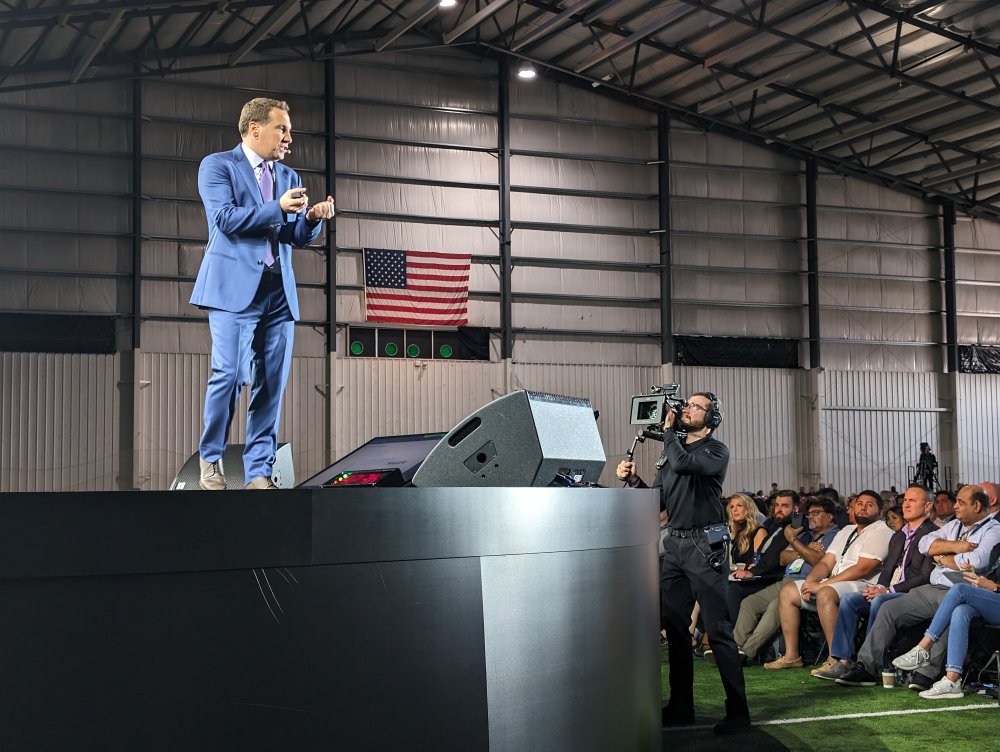
On Tuesday, SoftBank, the Japanese financial giant, announced plans to dump all 32 million of its shares in Nvidia, the AI chip maker. The news won’t be the needle that pops the AI bubble, but it did cause enough of a stir to make Nvidia’s shares drop 2% Tuesday morning. The bad vibes were muted somewhat by news of what SoftBank says it will do with the proceeds of the sell off, along with those from the sale of some of its $9.17 billion T-Mobile stake: The firm will double down on another big bet in the AI space–OpenAI. SoftBank expects to directly invest $30 billion in OpenAI this year, according to its second-quarter financial statement in September. And it had already committed $19 billion to the $500 billion Project Stargate infrastructure initiative (with OpenAI and Oracle). To bankroll these commitments, Masayoshi Son, SoftBank’s CEO, likely needed to free up funds. Hence the Nvidia sell-off. For years, Son has talked about SoftBank’s strategy to invest in the “computing platforms of the future,” including AI. His firm amassed a reported $4 billion stake in Nvidia back in 2017, only to dump the shares in 2019. At the time Son had called Nvidia the “the core company of the AI revolution.” He now believes that OpenAI will be that core company. During SoftBank’s annual general meeting in June, Son declared he is “all in” on OpenAI. He’d always wanted to be an early major investor in the AI super-startup, he said, but Microsoft beat him to the punch. OpenAI, he predicted, will one day go public and eventually “become the most valuable company in the world,” he said. Nvidia reported $46.7 billion in revenues during its July-ending quarter (and crossed $4 trillion in market cap), while OpenAI doesn’t expect to turn a profit until 2029. But by divesting of Nvidia and doubling down on OpenAI, Son can play a more active role in the platform’s expansion via initiatives like the Stargate Project, which will finance a major buildout of AI infrastructure. SoftBank is still indirectly entwined in Nvidia’s fortunes, which also rest on the broad expansion of AI. The entire stock market is being propped up by confidence in big tech companies that are investing huge amounts in AI. Investors are placing a lot of faith in the idea that generative AI, a mostly unproven technology, will create valuable new efficiencies for businesses in the coming years. Compounding the concern is the fact that a relatively small group of wealthy companies–SoftBank, Nvidia, and OpenAI–are investing in each other, which has fed fears that they’re involved in a sort of self-inflating bubble. It’s unclear if or when that bubble will popThat bubble may well pop at some point. For nowUntil then, Son has made his preference clear: software over hardware, a bet that feels like a big vote of confidence for AI. View the full article

-
Availability of electricity to keep models running is becoming the critical factor in technology’s developmentView the full article
-
Party’s MPs grow frustrated with prime minister’s leadership as crucial Budget nearsView the full article
-
We may earn a commission from links on this page. Deal pricing and availability subject to change after time of publication. The 2021 Lenovo IdeaPad 5 Touch isn’t new, but it still has a few good years of life in it, especially if you need a solid secondary laptop for home, travel, or light work—and it's on sale for $599.99 on StackSocial right now. It’s powered by an 11th Gen Intel Core i7 chip that can reach up to 4.7GHz, paired with 12GB of RAM and a 512GB SSD. That combination is fast enough for multitasking, web browsing, and even moderate creative work. The touchscreen is a bonus, making it easy to scroll, tap, and zoom without relying on a trackpad. This model also runs Windows 11 Home, so despite being from 2021, it feels current in terms of interface and usability. It’s a brand-new unit, although it doesn’t come with a manufacturer's warranty. However, third-party coverage is optional for $59.99. Design-wise, the soft-touch finish of this device feels premium and resists fingerprints better than glossy surfaces. The 15.6-inch full HD display offers good brightness and color clarity for streaming, editing, or everyday tasks, while the slim bezels make the screen feel larger than it is. It weighs just under four pounds, which is manageable for commuting or moving between rooms. Lenovo also added a fingerprint reader built into the power button for quick sign-ins, as well as a physical webcam shutter for privacy, a feature not often seen in older laptops at this price point. The Dolby Audio-tuned speakers aren’t groundbreaking but do a decent job for music and calls. The IdeaPad 5 isn’t a powerhouse by today’s standards, but it holds its own as a practical all-rounder. If you’re editing videos or gaming, newer models will make more sense. But if you're looking for something fast, comfortable, and modern enough for writing, streaming, or working from a café, this still fits the bill. The battery lasts up to 11 hours, and the USB-C port supports fast charging and external displays, keeping it versatile even a few years later. Our Best Editor-Vetted Tech Deals Right Now Apple AirPods Pro 2 Noise Cancelling Wireless Earbuds — $169.99 (List Price $249.00) Apple iPad 11" 128GB A16 WiFi Tablet (Blue, 2025) — $324.99 (List Price $349.00) Shark AV2501AE AI XL Hepa- Safe Self-Emptying Base Robot Vacuum — $297.99 (List Price $649.99) Amazon Fire TV Stick 4K Plus — $24.99 (List Price $49.99) Amazon Fire HD 10 (2023) — $69.99 (List Price $139.99) Sony WH-1000XM5 — $328.00 (List Price $399.99) Fitbit Versa 4 Fitness Smartwatch (Black) — $160.99 (List Price $199.95) Blink Outdoor 4 1080p Wireless Security Camera (5-Pack) — $159.99 (List Price $399.99) Google Pixel 9 128GB Unlocked 6.9" OLED Smartphone (Obsidian) — $544.98 (List Price $799.00) Ring Floodlight Cam Wired Plus 1080p Security Camera (White) — $99.99 (List Price $179.99) Deals are selected by our commerce team View the full article
-
Lillian Pierson is in charge of project delivery at her company, Data-Mania, where she helps tech startup founders engineer scalable growth. She's also an AI educator with deep technical knowledge. The post Project Delivery Requires AI Orchestration Systems, Not Mere Tools—Founder in Charge of Project Delivery Discusses How AI Is Creating New Bottlenecks appeared first on The Digital Project Manager. View the full article
-
Traditional project decision methods are outdated. AI offers speed, accuracy, and a competitive edge. Get insights and playbooks to stay ahead. The post AI in Project Decision Making: Practical Applications, Tools & Real-World Implementation Tips appeared first on The Digital Project Manager. View the full article
-
Microsoft is tightening its advertising standards. The company announced that all third-party publishers must now implement Microsoft Clarity — its free behavioral analytics tool — to remain eligible for paid impressions and clicks in Microsoft Advertising. The details: What’s required: Publishers must install Microsoft Clarity and enable Consent Mode to track and analyze user interactions while complying with privacy standards. What it does: Clarity helps publishers and advertisers visualize user behavior — including clicks, scrolls, and engagement patterns — to make data-driven CRO (conversion rate optimization) decisions. What changes: Only ad traffic from Clarity-enabled pages will count toward billing, ensuring every paid impression meets Microsoft’s editorial and safety standards. Why we care. This move is aimed at improving transparency, user experience, and brand safety across the Microsoft Ads network. Any ad clicks or impressions from pages that don’t use Clarity will now be filtered out and marked as nonbillable, effectively cutting off monetization for noncompliant publishers. Between the lines. By tying Clarity to monetization, Microsoft is effectively using its ad network scale to enforce higher quality and transparency standards. It’s a move that could raise the bar for accountability in the ad ecosystem — and give advertisers more confidence that their placements appear on trusted, well-monitored inventory. This update was announced by Microsoft Product Liaison Navah Hopkins on LinkedIn. The bottom line. For publishers, implementing Clarity is no longer optional. For advertisers, it means greater brand safety and visibility into where their budgets go — a win for ad transparency in Microsoft’s growing network. View the full article
-
In a culture overwhelmed with ridiculous beliefs, an unlikely hero of rationality has emerged: reality star Kim Kardashian. Kim raised a healthy amount of skepticism of psychics in a recent TikTok video: In case you don’t follow the ins-and-outs of reality stars, Kim K.'s recent life cycle/plot development sees her trying to become a lawyer. She’s been taking an apprenticeship in the industry and presumably studying hard. She also consulted psychics, who read tea leaves or whatever and concluded that she would pass the California bar exam. Except, sadly, she did not. “Psychics are full pathological liars” —Kim Kardashian“All of the fucking psychics that we have met with, and that we’re obsessed with, are all fucking full of shit,” Kardashian said to her 10 million TikTok followers. “They all collectively, maybe four of them, told me I’m going to pass the bar. So they’re all full pathological liars. Don’t believe anything they say.” According to a 2024 survey, about 20% of Americans love The Kardashians, and about 26% of Americans believe in clairvoyance. I have nothing but vibes to back this up, but I bet the circles for “Kardashian fan” and “believer in psychics” in the American Venn diagram have a lot of overlap. Kardashian isn’t preaching to the skeptics; she’s talking to the true believers, as she once was. Kardashian has personal credibility here, given her long history of talking to mediums and psychics, and there’s something extra convincing about someone with skin in the game. This wasn’t some meaningless test for Kim Kardashian; she was asking about something that was important to her, and she wasn’t doing it from a skeptical point of view. Where Kim Kardashian’s psychics went wrongA savvy psychic tries to avoid making predictions that can be proven true or false. A medium might say, “Your Dad is up in heaven, and he’s super proud of you,” but if they want to stay in business, they won’t say, “Your Dad says the stock certificates are in the attic in the green trunk,” because when you check the trunk—if there even is a trunk or an attic—the jig is up. Without knowing it, Kardashian put her psychics in a bind. By asking point blank whether she was going to pass the bar or not, Kardashian forced a binary decision. It’s understandable they unanimously landed on “you’ll pass,” because that’s what she wanted hear. "The fates are unclear at this time!” is too wishy-washy, and "You're going to fail, girl," would likely get you disinvited to the mansion. But I am surprised no one went with, “I can’t tell the time frame, specifically, but you will become a lawyer in the future.” That’s what I would have said. (I’m available for psychic readings.) Now if you'll excuse me, I'm going back to being unaware of anything Kim Kardashian does. View the full article
-
Traditional project forecasting methods are outdated. AI offers precision and speed, giving you a competitive edge. This guide provides strategic insights and actionable playbooks to enhance your forecasting accuracy and efficiency. The post AI in Project Forecasting: Trends, Transformations & the Road Ahead appeared first on The Digital Project Manager. View the full article
-
When Amazon proposed building its Project Blue data center in Tucson, Arizona, the company faced intense pushback. Residents raised concerns about the enormous amounts of water and electricity that the data center would need, two major ways such projects impact the environment, especially in a desert city. Ultimately, Tucson’s town council rejected the proposal (though its developer hasn’t given up). But the story highlights both the growing environmental impacts of data centers, and how location matters to that impact. A study published this week in the journal Nature Sustainability makes that connection even clearer. Led by researchers at Cornell University, the study analyzed the environmental impact that data centers could have in the U.S. as their growth continues, and created a state-by-state look at where those data centers should go to avoid the worst effects. The growing impact of AI Data centers demand a lot of electricity, so much so that they are straining our energy grid. In order to quickly meet that growing energy demand, developers are building more fossil fuel infrastructure, like natural gas power plants. The data center surge has also delayed the planned retirements of coal plants. The current rate of AI growth in the U.S. would put 24 to 44 million metric tons of carbon dioxide into the atmosphere by 2030, the study authors found. That’s equivalent to adding 5 to 10 million cars to the country’s roads. That growth would also drain 731 to 1,125 million cubic meters of water every year—as much as 6 to 10 million Americans’ annual average household water usage. All together, that means the AI industry “is unlikely to meet its net-zero aspirations by 2030,” the study reads, without massively relying on carbon offsets—which the researchers call “highly uncertain”—or water restoration efforts. Still, researchers didn’t only want to see the environmental trajectory that this AI boom would take. They also wanted to figure out what choices could “steer it toward sustainability,” Fengqi You, a Cornell engineering professor who led the study, said in a statement. How location matters The location of data centers matters to those impacts, and developers could cut data centers’ environmental footprints by building them in different places, the researchers found. Some data centers are being planned in regions that are already water scarce, like Arizona or Nevada, even though data centers require a lot of water themselves. Instead, locating projects in regions with lower water-stress and improving cooling efficiency could cut water demands by 52%, per the study. In other places, the massive surge of data centers can strain the grid or water resources; Virginia, for example, is the biggest data center market in the world, with more than 600 facilities clustered around Washington, D.C., and Richmond. Data center companies have wanted to be close to workers in D.C., but continuing to build data centers there just adds to that strain. What powers the grid that supports a data center matters too. Some states like New York may have energy grids powered by more renewables or may be investing in more clean energy, which means fewer carbon emissions. But just focusing on reducing a project’s carbon footprint could actually increase its water footprint, the researchers found. Conversely, putting data centers in the best locations for water use reduced their overall carbon footprint, too. Researchers used a combined carbon- and water-focused strategy to find the best places to build data centers to minimize their environmental impact. And those states are clustered in the midwest, specifically Texas, Montana, Nebraska, and South Dakota. The researchers acknowledge that certain technologies, like better liquid cooling and improved server utilization, could bring down data centers’ environmental impact too—potentially removing 7% of carbon dioxide and lowering water use by 29%. Those are just more decisions, like location, that companies could consider when building more data centers. “This is the build-out moment,” You said. “The AI infrastructure choices we make this decade will decide whether AI accelerates climate progress or becomes a new environmental burden.” View the full article

-
Google Ads Editor just got a major upgrade. The 2025 release of version 2.11 introduces smarter automation, better visibility, and tighter controls for advertisers managing large-scale accounts. The update focuses on control and transparency — giving advertisers more say in how Performance Max, Search, and account-wide settings behave. Campaign-level negative keywords for Performance Max. Advertisers can now add negative keyword lists directly to Performance Max campaigns, giving finer control over where ads appear. It’s a long-awaited feature that prevents wasted spend on irrelevant searches — a crucial step toward performance parity with Search and Shopping campaigns. Search term reporting for Performance Max. A new search term report shows which queries trigger PMax ads, giving advertisers transparency into performance drivers and irrelevant queries. Scheduled link checks. Automated link scanning will now flag broken URLs on a set schedule, saving manual work and protecting conversion flows. Account-level placement and IP exclusions. Advertisers can now apply exclusions globally across an account instead of manually updating each campaign, ensuring faster setup and consistent brand safety. Smart Bidding Exploration (Search). A new opt-in tool lets Google’s AI test high-performing queries using flexible ROAS targets, driving incremental conversions from new search categories without manual adjustments. Editable lead forms. Users can now edit existing lead form assets directly instead of rebuilding them from scratch, reducing setup friction. Video generation from assets. Google can now automatically generate on-brand video creatives using your existing assets and brand styles. This feature, enabled by default, lowers the barrier to YouTube advertising. Streamlined Search campaign creation. A new guided “construction flow” brings AI-assisted campaign setup to Search, helping advertisers build optimized campaigns through a step-by-step process. More granular tracking control. Asset groups now support their own tracking URL templates, suffixes, and custom parameters for improved measurement precision. CSV and download enhancements. The improved interface allows selective campaign syncing and more efficient management of large accounts. Other notables. Additional updates include expanded ad preview support for Demand Gen and responsive video ads, new Agency/Provider user lists for third-party audience targeting, high LTV targeting expansion for Search campaigns, updated “TrueView” metric names, and nudges to link Merchant Center feeds for Demand Gen setup. Why we care. This update gives advertisers more control over where their ads appear, greater transparency into Performance Max performance, and new automation tools that save time and improve campaign efficiency—all leading to smarter spending and stronger ROI. What’s gone. On the deprecation side, legacy App install and certain Display ad types are being phased out, though existing ads remain editable for status and labels. Manual CPV bidding is also retired in favor of Video View Campaigns with Target CPV, supported by a built-in upgrade tool. The bottom line: Google Ads Editor 2.11 strengthens advertisers’ control and efficiency with new automation, transparency, and management tools—particularly the long-requested ability to add campaign-level negative keywords in Performance Max campaigns. View the full article