ResidentialBusiness
Administrators
-
Joined
-
Last visited
Everything posted by ResidentialBusiness
-
 The wholesale giant hasn't endured setbacks in litigation against five brokerages it's accused of selling loans to rivals Rocket Cos. and Fairway Independent Mortgage. View the full article
-
More profitable companies are weighing deals because they're bullish on their leverage or are simply eying today's big price tags, the expert said. View the full article
-
Bill passed by 39 votes to 16 but must clear two more parliamentary votes to become lawView the full article
-
When it comes to inquiring about—ahem—certain products, shoppers prefer the inhuman touch. That is what we found in a study of consumer habits when it comes to products that traditionally have come with a degree of embarrassment—think acne cream, diarrhea medication, adult sex toys, or personal lubricant. While brands may assume consumers hate chatbots, our series of studies involving more than 6,000 participants found a clear pattern: When it comes to purchases that make people feel embarrassed, consumers prefer chatbots over human service reps. In one experiment, we asked participants to imagine shopping for medications for diarrhea and hay fever. They were offered two online pharmacies, one with a human pharmacist and the other with a chatbot pharmacist. The medications were packaged identically, with the only difference being their labels for “diarrhea” or “hay fever.” More than 80% of consumers looking for diarrhea treatment preferred a store with a clearly nonhuman chatbot. In comparison, just 9% of those shopping for hay fever medication preferred nonhuman chatbots. This is because, participants told us, they did not think chatbots have “minds”—that is, the ability to judge or feel. In fact, when it comes to selling embarrassing products, making chatbots look or sound human can actually backfire. In another study, we asked 1,500 people to imagine buying diarrhea pills online. Participants were randomly assigned to one of three conditions: an online drugstore with a human service rep, the same store with a humanlike chatbot with a profile photo and name, or the same store with a chatbot that was clearly botlike in both its name and icon. We then asked participants how likely they would be to seek help from the service agent. The results were clear: Willingness to interact dropped as the agent seemed more human. Interest peaked with the clearly machine-like chatbot and hit its lowest point with the human service rep. Why it matters As a scholar of marketing and consumer behavior, I know chatbots play an increasingly large part in e-retail. In fact, one report found 80% of retail and e-commerce business use AI chatbots or plan to use them in the near future. Companies need to answer two questions: When should they deploy chatbots? And how should the chatbots be designed? Many companies may assume the best strategy is to make bots look and sound more human, intuiting that consumers don’t want to talk to machines. But our findings show the opposite can be true. In moments when embarrassment looms large, humanlike chatbots can backfire. The practical takeaway is that brands should not default to humanizing their chatbots. Sometimes the most effective bot is the one that looks and sounds like a machine. What still isn’t known So far, we’ve looked at everyday purchases where embarrassment is easy to imagine, such as hemorrhoid cream, anti-wrinkle cream, personal lubricant, and adult toys. However, we believe the insights extend more broadly. For example, women getting a quote for car repair may be more self-conscious, as this is a purchase context where women have been traditionally more stigmatized. Similarly, men shopping for cosmetic products may feel judged in a category that has traditionally been marketed to women. In contexts like these, companies could deploy chatbots—especially ones that clearly sound machine-like—to reduce discomfort and provide a better service. But more work is needed to test that hypothesis. The Research Brief is a short take on interesting academic work. Jianna Jin is an assistant professor of marketing at the University of Notre Dame’s Mendoza College of Business. This article is republished from The Conversation under a Creative Commons license. Read the original article. View the full article

-
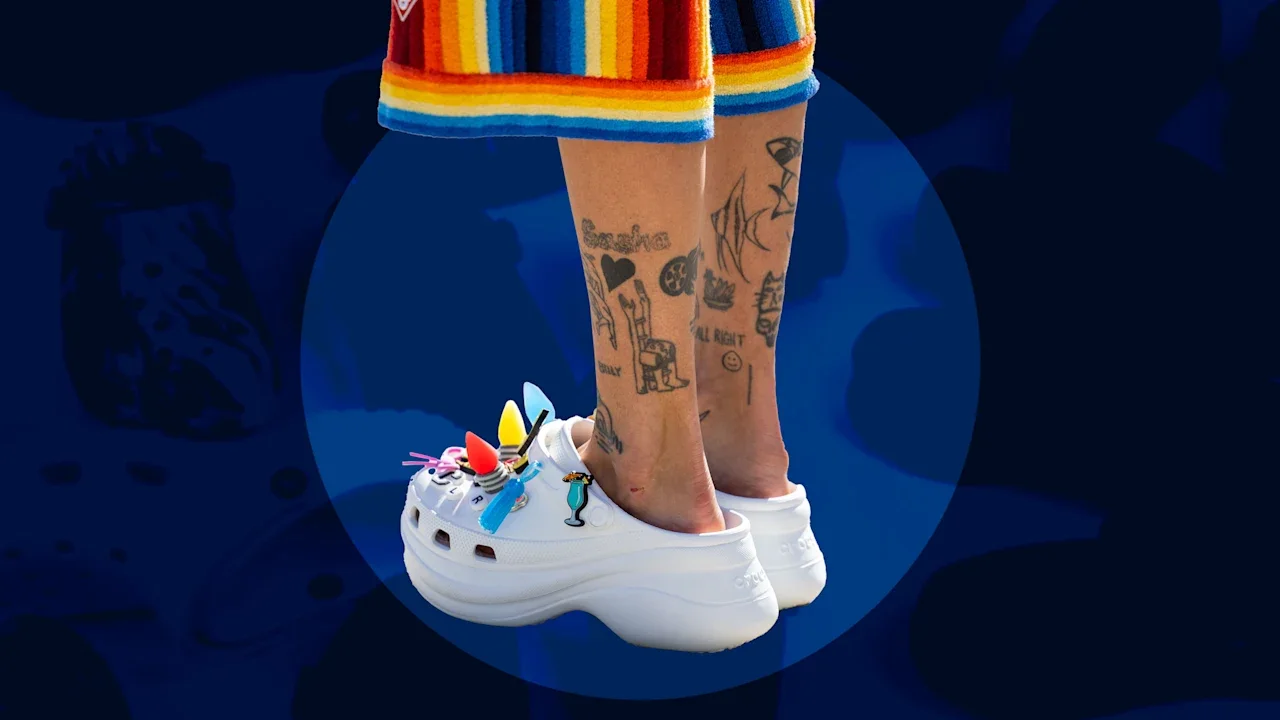
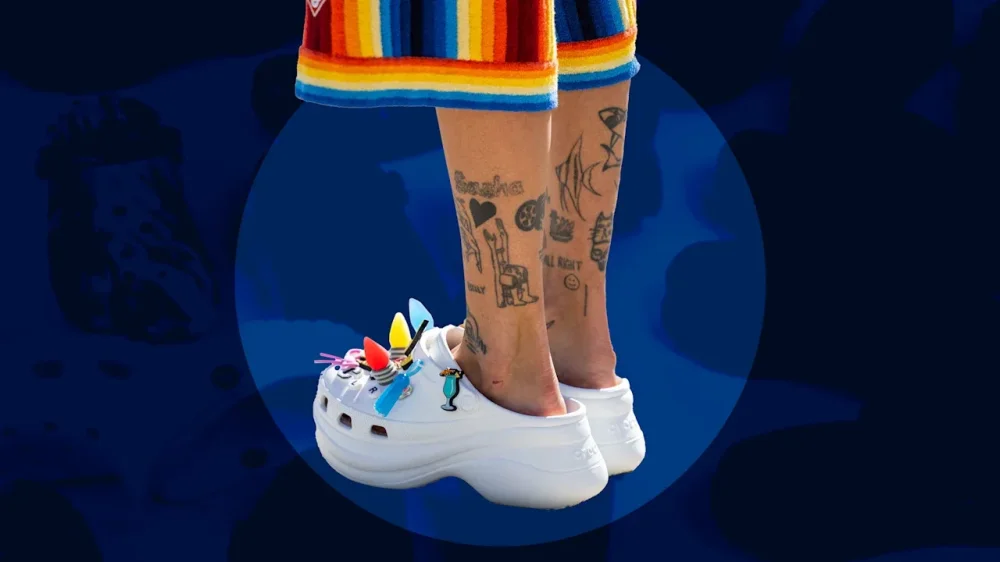
There are a lot of words marketers can’t seem to quit. “Unique.” “Authentic.” “Real.” But these are threadbare clichés, which have all but become nullified due to the erosion of their meaning, a dilution fueled by the desire for brands to be generally, yet specifically, for everyone. But “everyone” is not a target audience. It’s a comfortable void. What brands really need right now isn’t another lap around the buzzword block. It’s courage. Courage to lean into the one trait that could cut through in a world of algorithms, sameness, and mediocrity. Marketers need to be weirder. If you want a sociological anecdote of how weird wins, look no further than online dating. Dating apps have shown us that people don’t actually want the most “normal” partner. They want quirks that stand out. Hinge data shows that profiles mentioning a niche interest—like a specific video game or obscure hobby—are more likely to get matches than generic “I like to travel” statements. Marketing works the same way. Generic “quality service” or “trusted partner” claims are the equivalent of “I love long walks on the beach.” Tepid is a turnoff. While being good-looking can get you plenty far, to really connect, you need quirks. Mass marketing, like mass dating, creates fatigue. Precision, passion, and personalization—the pillars of weird—create chemistry. When a brand flies its freak flag high, it shows the right customers: “Yes, we’re your people.” The Crocs case Take Crocs. Once the fashion world’s punchline, they leaned into their weirdness with bold collabs—from KFC bucket Crocs to Balenciaga platform Crocs. Instead of pretending to be a lifestyle brand, they became a cameo brand: something you add to your life in a flash of bold comfort. Their revenue hit $3.96 billion in 2023, up nearly 12% from the year before. That’s what I call laughing all the way to the bank. Weird is always the evolutionary advantage, the bright feather on a dull bird. Yes, it may feel like a risk to shake off the camouflage, but if your biggest problem becomes being too visible, wouldn’t that be a happy day. We’ve all heard the phrase “unprecedented times” so much it’s basically become elevator music, but unprecedented times are exactly when evolution has the most fun. Charles Darwin called it adaptive radiation—species diversifying into weird little niches that thrive when old systems collapse. Marketing is in its own adaptive radiation moment. Large language models (LLMs) and Generative AI are both collapsing the funnel and flooding the market with mediocrity and brand doppelgängers. Now more than ever, the average of averages is going to fail to thrive. Grow a horn So, what’s a brand to do in this mush of mid? Grow a horn. Sprout a freaky little tail. If everyone else is cranking out the same optimized “content marketing thought leadership,” weird is the mutation that keeps you from extinction. Just ask Duolingo. Their TikTok presence—anchored by a giant green owl who is somehow equal parts threatening and adorable—has over 10 million followers. It’s unhinged, it’s absurd, and it’s working. Weird didn’t just help them survive. It helped them dominate the landscape and now anyone who tries to emulate that success is just doing a bad Duolingo impression. Now, absurdism isn’t new—it’s just having another renaissance. Whenever people face the unknown or the unbearable, weirdness bubbles up as both coping mechanism and cultural shorthand. Marketers should look to what is breaking though the anxieties of the moment and connecting and why. A giant owl twerking on TikTok, a water brand calling itself Liquid Death, a fast-food chain tweeting in all caps about sauce shortages. These are signals that brands are fluent in the absurdist yet timely language their audiences are already speaking. In an era where sameness is free, weird is priceless. Weird is precision. Weird is passion. Weird is personal. Some call it cringe. I call it survival. And if you want your brand to not just survive but thrive in 2025 and beyond, it’s time to get a little freaky. View the full article
-
A Google blog post triggered a misunderstanding that structured data use will be diminished in 2026. The post Google Is Not Diminishing The Use Of Structured Data In 2026 appeared first on Search Engine Journal. View the full article
-
This shift happened fast. In 2024, AI Overviews rolled out to millions of searches, ChatGPT climbed into the top ranks of global websites, and the once-reliable #1 Google spot began losing a third of its clicks. Suddenly, SEO wasn’t just…Read more ›View the full article
-
In September, my mom died after a short battle with colon cancer. She was 83 and lived a full life in which she had a fulfilling career in education, traveled the world visiting 100-plus countries, and was married to my father for more than 60 years. It’s hard to lose a parent, and my workplace (like many) allowed me time off to be with family for the days before and after the funeral. But no matter how generous the policy at your workplace is, you’re going to have to come back to work before you’re done grieving. Grief happens following any significant event that creates a tear in the fabric of your life story. The death of a loved one is an obvious source of grief, but many kinds of events can trigger the grief process, including a fire at your home, or the loss of a job. Indeed, you may have heard of the “five stages of grief.” Those were originally described by Elisabeth Kübler-Ross, who studied patients who had received a terminal diagnosis. The problem with Kubler-Ross’s “stages” of grief (denial, bargaining, anger, depression, and acceptance) is that they’re purely descriptive. You need not go through these stages when grieving. They also don’t form a linear path. You may bounce around among these emotions or actions—or experience only a few of them. You may be fine for long periods of time and then find yourself sobbing uncontrollably at a comment someone makes or a scene in a movie. It’s a messy process that’s different for every person (and different within a person for each thing you grieve). So, how do you deal with that messiness at work? Cut yourself some slack First things first, don’t try to be a superhero. You don’t have to have it all together immediately upon returning to work. If you’re still feeling fuzzy and foggy a month or two after a significant loss, don’t beat yourself up. Don’t assume you should be over it already. By allowing yourself to feel what you’re feeling, you can avoid the common trap of amplifying the difficulties of grief by feeling guilt over your grieving process. Instead, accept the process. You may not yet be at the point where you can accept your loss, but you can accept that grief itself is complex. In addition, you need to recognize that for some period after a loss, your work products may not be as sharp as they were before. That doesn’t mean you’ll never recover. It just means that it takes time. Grieving can be a lot of mental work, and you need to let the process unfold. Let others know When you experience a loss, your work colleagues may or may not be aware. Even when you have a death in the family, there are likely to be some people around you who have not heard. It’s okay to let your colleagues, clients, and other people in your work community know what’s going on. There are several ways that letting other people know can benefit you. For one thing, people are often willing to give you some grace when you make mistakes when they know you’re going through a difficult time. In addition, people may be willing to take on a little extra work on your behalf as you recover from a loss. It is not a sign of weakness to rely on others during a difficult period. Measure twice, cut once No matter how careful you are when you’re working at your peak, you need to be extra careful in the stressful times that accompany grief. Slow down a lot of your work to minimize the number of mistakes you make. Reread emails and reports before sending them off. Take extra time when making important decisions to ensure that you haven’t missed anything important. Ask other people to look over key documents before sending them off. In addition, there are many decisions you make at work that have an emotional component. You may use the way you feel about an option to elect to go forward with it. The more anxiety you’re experiencing, the harder it can be to separate that from the way you feel about a particular option. As a result, you may feel paralyzed when trying to make a difficult work decision. At times like that, bring in a decision partner to help you. That will help you to avoid significant delays in key projects. Don’t go it alone Even people who have been psychologically healthy for most of their lives may struggle when grieving a significant loss. If you have never engaged with a mental health professional before, you may feel that there’s a stigma associated with needing therapy. There’s no reason to avoid working with someone if you find the emotions and thoughts you’re having in grief to be overwhelming. You would not stay away from a doctor if your foot was hurting significantly enough that you couldn’t walk. Don’t use fear of engaging with a therapist as an excuse to suffer without help. Instead, reach out to your community to get recommendations for a therapist who has experience working with grief. The resilience skills you learn are likely to benefit you beyond the situation you’re dealing with now. In addition, there are many great resources out there that can give you suggestions for how to move forward. I was fortunate enough to interview Lisa Keefauver recently, and her book on grieving (while irreverent) is an excellent guide to dealing with loss. In addition, there are many great blogs that people have written with helpful tips that may get you through your worst days. Remember that when you walk down the street and see people walking with friends laughing and talking, that many of those people have suffered significant losses in their lives and have eventually emerged from grief. It may take time, but you’ll learn to integrate significant losses into your life. View the full article

-
Twenty years ago, getting promoted to manager was a major milestone. Today it’s a punishment. That’s according to recent research from LinkedIn. In a survey of more than 10,000 LinkedIn users, nearly 7 in 10 said they would leave their job if they had a bad manager. But only 30% said they want to become a people manager within the next few years. So, why the change? Why doesn’t anyone want to be the boss anymore? We could sum up the answer in seven words: Nobody showed them how to lead effectively. The data backs this up. Global consulting firm West Monroe surveyed 500 managers and found that 66% of those received eight hours or less of manager training. Of those who had been managers for less than a year, a stunning 43% had received no training at all. Why is this lack of training so problematic? And, more importantly, how can you inspire and prepare the next generation of leaders at your organization? Sign up here for my free email course on emotionally intelligent leadership. The leadership training gap The problem is the skills that get people promoted aren’t the ones that help them excel at the next level. Management experts Ram Charan, Stephen Drotter, and James Noel explore this concept in their book The Leadership Pipeline. They describe five different leadership roles: Leading self Leading others Leading leaders Functional leaders Business leaders The passage from one role to another requires new learning and new behavior, assert the authors. What’s more, they say, the leader who transitions from one role to the next has to acquire a new way of leading and leave the old ways behind. This calls for a fundamental adjustment in skills and in the way you use your time. The challenge here is that many of the things leaders need to stop doing are things they enjoy doing and which have brought them success. For example, a sales manager may be great at closing deals. But once he or she is promoted, closing deals on their own should no longer be the most important thing. Rather, they should be concerned with helping their reports to excel—for example, clarifying target setting, giving emotionally intelligent feedback, and coaching and development. This change in perspective will affect everything from what they believe is important to how they define success and how they allocate their time. It will also impact the effect they have on their people and the organization as a whole. The change in perspective should continue as a leader continues to transition across roles. A leader of leaders must recruit the right leaders and hold them accountable for their role in developing their people. A functional leader has to not only lead but also build competitive advantages and agendas that enable the company to do things better than competitors. A business leader’s focus is long term, but he or she must also stay in touch with the short-term picture. Business leaders must develop strategy and build teams down the chain that assist in executing that strategy. One thing that all of these roles hold in common? They each demand emotional intelligence, skills and abilities like listening, empathy, effective processing, and delivering of feedback. How to fix your leadership problem How do you make sure your organization is preparing your leaders and managers for success? Here are some tips. Map leadership passages: Define the transitions in your organization (individual contributor, manager one, manager two, etc.). Specify what emotional skills are needed at each stage. Develop training: Whether designed in-house, with help from a leadership consultancy, or both, tailor management and leadership training to your organization. Schedule time: Each time a person is promoted, schedule the training and make sure you provide the time and resources they need to complete it. Provide a mentor: A mentor can guide the person’s development, answer questions, and support them emotionally. Where possible, allow the person to choose their own mentor. Support mentors, too: Outline guidelines for how mentors can help, and a program for them to meet regularly (in addition to impromptu meetings when needed). Measure outcomes: Track metrics and results, but also look beneath the surface. Pay special attention to retention/turnover, team engagement, conflict rates. Remember, metrics are important but interviews with direct reports and team members can reveal much. Lead by example: Senior leaders must practice developing their emotional intelligence, share their mistakes and learnings, and ask for help. In doing so, they set the foundation for the culture. Don’t just dump a person into a new role and expect them to figure it out. Some will. Many won’t. In contrast, if you prioritize leadership development, you’ll strengthen your teams and the organization as a whole—not just today but into the future. —By Justin Bariso This article originally appeared in Fast Company’s sister publication, Inc. Inc. is the voice of the American entrepreneur. We inspire, inform, and document the most fascinating people in business: the risk-takers, the innovators, and the ultra-driven go-getters that represent the most dynamic force in the American economy. View the full article

-
To find the answers, our data scientist, Xibeijia Guan, analyzed over 43,000 keywords—each with at least 16 recorded AI Overviews—over the course of a month. She extracted this data from Brand Radar, our new AI visibility tool that tracks hundreds…Read more ›View the full article
-
My wife and I visited Singapore last week for the first time in a couple of years, and I was reminded how impressed I am with the country. It illustrates a great strategy point, the subject of this Playing to Win/Practitioner Insights (PTW/PI) piece, which borrows from Billy Preston, whose Billboard No. 1 hit song in October 1974, Nothing From Nothing, contained the immortal line: “Nothing from nothing leaves nothing.” This piece is a play on the line entitled Something From Nothing Leaves Something: How Strategy Choice Can Make Something out of Very Little. And as always, you can find all the previous PTW/PI here. Impressive Singapore The minute you land at Changi—one of the world’s truly great airports—everything about the country works. Singapore is efficient, clean, and safe. It is always ranked at or near the top of the ratings for low crime rate. It has truly awesome food and great architecture. And it is incredibly prosperous. The International Monetary Fund ranks it as the country with the second-highest gross domestic product per capita in the world. I rank it first because the only one ahead of it, Liechtenstein, is a medium-size town of 40,000, not a real country (similarly for sub-1-million population jurisdictions like Luxembourg, Macao, or Brunei). Singapore may be small (population 6.1 million), but it is bigger than Ireland or Norway, other famously high-GDP countries. Its 2025 GDP per capita is estimated at $157,000, which is 74% higher than the U.S.’s. (Though the U.S. shouldn’t feel too bad. It is clearly harder to have a very high GDP per capita if you are a large country with more than 25 million people. The U.S. GDP per capita is 22% higher than the next biggest consequential country, Germany.) Some may argue that you shouldn’t compare a city-state like Singapore to entire countries because there are lots of very rich cities. But even by that standard, Singapore is impressive. The highest GDP per capita of any other large city is San Francisco, at $145,000—8% lower than Singapore—and after San Francisco, there is a steep drop-off. The only sizable place richer is Silicon Valley, with a GDP per capita of $210,000, which is super impressive but not entirely comparable. It is a region anchored by one small city, San Jose. The truly impressive thing about Singapore is not its current prosperity, but where it came from. Singapore truly created something from nothing—or at least from precious little. Singapore became an independent country in 1965 after a fractious two years as a state of the newly formed Malaysia. Its GDP per capita at the time was estimated to be US$516, or just under $4,000 in 2025 dollars, which is around the same as the current levels of Uganda, Sierra Leone, and Papua New Guinea. So, it was a very poor country. It had close to nothing with which to start. Its population was mainly ethnic Chinese, and there was no love lost between the Malays who surrounded it and the Singaporean Chinese. Singapore had zero natural resources. And in the 1960s global economy, it was in the middle of nowhere geographically—not known for a single thing other than the Singapore Sling cocktail. But it then proceeded to increase its GDP per capita at a compound annual growth rate (CAGR) of 6.3% for 60 years—unprecedented in the modern global economy. No jurisdiction has kept up that rate of growth for that long. Something from Something Strategy If you have a rich endowment of valuable resources—whether you are a country or a company—the strategy imperative is to exploit those resources to overwhelm any competitor (i.e., to play chicken). For example, if you are the U.S., you start with the richest endowment of natural resources in the world, the largest endowment of arable land, a favorable geography (mainly protected by oceans), and a large flow of motivated immigrants, and you invest heavily to exploit the natural resources. Then you use the wealth generated to invest more than any other country in becoming the world’s manufacturing superpower, including building a vast and efficient rail system—and later an interstate highway system—to move goods. Then you use that wealth to invest more in education and scientific research than any other country to become the world’s technology superpower. During your ascendancy, you simply out-invest every other jurisdiction in extremely expensive sources of advantage—and there is nothing they can do to stop you. The same dynamic applies to companies. If you are relatively better endowed, your imperative is to invest in expensive advantages that your competitors can’t match. For example, when upstart Reebok challenged Nike in athletic shoe sales, Nike invented a new scale-sensitive cost category—athlete endorsement (e.g., Air Jordan, Dream Team, etc.)—and cranked up the investments in this category to heights never even contemplated before until Reebok said “no mas.” The rest is history: Reebok flatlined and Nike solidified its dominance. The general rule, then, is that when you have a resource advantage over competition, look to invest in the most expensive sources of competitive advantage. Something from Nothing But if you are at a major resource disadvantage, like Singapore was in 1965, the imperative is to seek sources of advantage that are cheap and doable for you, but tricky for the competition to follow—not an easy strategy choice task. That was the brilliance of Lee Kuan Yew, Singapore’s prime minister from before its independence through 1990. His fundamental strategy choice was to make Singapore the most efficient and secure place to do business in South Asia. He would ensure that it would be easy to do business in Singapore for foreign companies, and they could be confident that they could transact business without fear of the corruption endemic to that part of the world. Strategically, I love this because it didn’t require a huge expenditure of capital (which they didn’t have). It required clever choices—for example, to have the best-paid bureaucrats in the world, so that they don’t feel compelled to make extra money on the side. Is that free? No, but the cost pales in comparison to, say, a single giant infrastructure project. And it required building and nurturing a judicial system that was willing to fight corruption—and punish it severely. Again, this is not an expensive investment. Rather, it requires extreme commitment and careful ongoing attention. The other strategy tool that Singapore deployed was flexibility. The island nation famously transitioned through multiple economic phases—from labor-intensive to skill-intensive to capital-intensive to tech-intensive to innovation-intensive—across its relatively short history, pivoting more quickly and proactively than competitive jurisdictions. These are the kind of things that many well-endowed competitors are just not willing to do—i.e., they pass the “won’t” part of the “can’t/won’t test.” They would rather spend big on something easier for them to carry out. Prime Minister Lee was absolutely resolute in ensuring adherence to his key strategy choices for the many decades during which he was in charge. Of course, as Singapore became rich, it was able to spend heavily on more expensive things like its massive investment in education and logistics infrastructures, like the aforementioned Changi airport in the late 1970s—and then the airport’s recent enhancement, the award-winning $1 billion Jewel shopping mall featuring the world’s tallest indoor waterfall. Personal Cases of Something from Nothing The something-from-nothing strategy approach is near and dear to my heart because I have needed to employ it in multiple personal leadership roles—for example, with the Rotman School at the University of Toronto and with Tennis Canada. Rotman School When I became dean of the Rotman School in 1998, we had very little going for us. We were poor, with a budget one-quarter the size of our leading competitor, and we were running a deficit on that tiny budget. The business school was hemorrhaging professors to U.S. universities because the Canadian dollar had plummeted from 87¢ to 67¢ over the previous several years, leaving Rotman salaries uncompetitive relative to U.S. professorial salaries. The school’s alumni were disengaged, and we weren’t connected at all to the Toronto business community. Overall momentum was significantly negative. We had to figure out how to build advantages cheaply—and I mean really cheaply. One way was to take our very expensive academic research—that only other academics normally read—and make it readable and interesting for a broader business audience, which we did inexpensively through Rotman Magazine, transforming it from a mediocre alumni magazine to an internationally valued source of business thinking. It helped put the school on the map for its business ideas at a tiny cost. Other schools didn’t follow because they were run by academics who placed a low value on engaging businesspeople with their research findings. We developed a narrative that Rotman stood for fundamentally transforming business education—A New Way to Think. Our boldness earned us a massive amount of earned media—more than all the other Canadian business schools combined—at a time when we had zero resources to invest in paid media. I learned that I had a cheap but valuable currency when it came to motivating professors—my love and affection. The ones that taught well and contributed to translating research into actionable business ideas received disproportionate public accolades from me, and that moved the needle on their efforts more dramatically than I might have imagined. They would bring back stories from colleagues at other competing schools who wished their deans cared as much as I did for the work of my professors. Those cheap but effective strategy choices enabled us to build resources to subsequently invest in expensive things—like professors, student services, and a new building. Tennis Canada When I joined the board of Tennis Canada in 2005, we were deeply in debt from having built a new tennis stadium in Toronto, we had little history of success internationally—and the modest successes were in the relatively distant past—and, as a cold country that had never prioritized tennis, we had very few year-round tennis courts. (They had to be indoor courts or outdoor courts that were bubbled during the winter months.) We were an also-ran competing against established tennis nations that had historical advantages and orders of magnitude more resources. Nonetheless, we sought to become counted among the leading tennis nations—like the U.S., Spain, France, Germany, Australia, and Russia. A key potential resource that wasn’t being exploited was Tennis Canada’s ownership of both a men’s (ATP) and women’s (WTA) top level (1000 series) tournament (of which there are only nine and 10, respectively), the biggest and most important annual tournaments after the four Grand Slams (U.S. Open, Australian Open, Wimbledon, and Roland Garros). We ran it as a competitive sports event, not a valuable economic property. We hired an experienced sports entertainment executive, Michael Downey, as our new CEO, and he turned them into the second-highest revenue pair of 1000-series tournaments, trailing only Indian Wells, the plaything of Larry Ellison, the centibillionaire with unlimited investment resources. We were able to invest the massively increased cash flow provided by the tournaments in an innovative approach to player development. The resulting success of our Canadian tennis stars generated plenty of earned media and sponsorship dollars. We leveraged Canada into a leading tennis nation by inexpensively transforming a wasted asset into a powerful strategic tool. Practitioner Insights If you lag your competitors dramatically in resources, don’t cry yourself to sleep at night and give up. You have a tough and tricky strategy task—but not an impossible one. Your central task is to think through how you can gain an advantage on the cheap. Start by refusing to focus on and obsess about how and on what your competitors are spending their massive resources. Instead ask, despite all that spending, what are customers missing? By the way, that means customers of all sorts because many modern markets are two-sided (including Rotman’s and Tennis Canada’s). Then spend all your strategic thinking energy on finding inexpensive ways to achieve uniqueness in meeting those unmet customer needs. Search along two vectors. The first is to recognize the assets right under your nose that you aren’t utilizing for strategy purposes—like the two 1000-level tournaments, academic research that had zero impact on businesspeople, and the dean’s love and affection. The second is to identify cheap but valuable assets that you can create—like a low-corruption environment, or a more exciting and appealing approach to business education. As Lee Kuan Yew amply demonstrated: Where there is a will, there is a way to create something from nothing. View the full article

-
Below, co-authors Ruth DeFoster and Natashia Swalve share five key insights from their new book, The Fear Knot: How Science, History, and Culture Shape Our Fears – and How to Get Unstuck. Ruth is a journalism professor and media scholar who teaches at the University of Minnesota, where she is also the Director of the Undergraduate Studies for the Hubbard School of Journalism and Mass Communication. Natashia is a neuroscience professor at Grand Valley State University in Michigan, where she teaches psychology and psychopharmacology. What’s the big idea? The Fear Knot explores our misguided human fears, from premature burials to GMOs, while explaining the real dangers out there—and why you’re less likely to be afraid of them. With the right tools, we can all be better equipped to untie the fear knots misleading our behavior. Listen to the audio version of this Book Bite—read by Ruth and Natashia—below, or in the Next Big Idea App. 1. Fears are at least partially hardwired Not all fears stem from trauma, but most of them are built upon our most primal anxieties. Our bodies are naturally geared to experience fear, and rightfully so. The famous neuroscience patient, known by her initials, S.M., has a biological glitch that makes her unable to feel fear. While this may sound enjoyable, it’s incredibly dangerous. S.M. constantly finds herself in risky situations, like the time she was held up at knifepoint and responded by laughing at the criminal. S.M. shows us that sometimes fear is a necessary evil. It helps us avoid deadly scenarios and keeps us alive in a constantly evolving world. But our fears also make us jump to worst-case scenarios, setting us up to believe in conspiracy theories and fall prey to misinformation. Parents worry about their children, so they chide them about playing in the dirt, likely increasing their chances of developing an allergy by avoiding dust and dander. We fear sickness and work hard to treat our ailments. But by doing so, we spark the spread of antibiotic resistance, many times more deadly than the original diseases. We fear the fate of our world, and so we build backyard honeybee hives, creating an army of new competitors for the creatures that are actually vulnerable: wild bumblebees. Frauds and hucksters thrive on our instinctual fears, selling so-called “cures” like bleach as a treatment for everything from autism to HIV. But recognizing where those fears originate from can help. It can cause you to pull back from buying the untested treatment or trying out that new parenting technique that, while your neighbor vouches for it, is not backed by any science. While it may feel like your fears are driving your decision, you ultimately have the final say. 2. Fears are cyclical In much the same way that diseases spread, so do cycles of overblown fears, which sociologist Stanley Cohen referred to as “moral panics.” Throughout history, moral panics have cycled with surprising regularity, often tied to concerns about children’s safety. The Salem Witch Trials of the late 17th century alleged that witches were tormenting and even possessing local children, while the Satanic Panic of the 1980s picked up on similar themes—promoting the myth that a cabal of Satan-worshipping pedophiles was operating out of American daycare centers. Even today, the QAnon conspiracy preys on the same fears of innocence lost and threats to American children. “Throughout history, moral panics have cycled with surprising regularity, often tied to concerns about children’s safety.” But whether these moral panics are associated with witchcraft or terrorism, one thing remains the same: we continue to repeat the same mistaken fears. The targets differ by year, but while the villains change with the decade, the tactics used to maneuver us toward those fears remain similar. Thankfully, ways to counter misinformation can be recycled as well. 3. We need shades of gray in a black-and-white world If you’ve heard of the drug kratom, you’ve likely heard one of two tales: It’s either a life-saving miracle plant, or it’s the lethal new opioid killing teenagers. As a drug researcher, I must mentally prepare myself if someone brings this drug up in conversation because I will likely be fighting misinformation from both sides. Drugs are an easy target for rampant misinformation. The social program called D.A.R.E. (Drug Abuse Resistance Education) has maligned drugs across multiple generations of children, warning us that all drugs are bad. But on TikTok, we hear that the terpenes in cannabis can cure cancer, and melatonin will help put a stop to all your sleep problems. The problem with this type of thinking is that the answer is somewhere in between. Kratom can help people quit using other, more dangerous opioids. But kratom also has addictive qualities and, because it’s unregulated, almost anything can be packaged into the product. Kratom samples frequently test positive for heavy metals and even Salmonella. Humans tend to use an “all or nothing” mindset. Your nemesis is pure evil, and your best friend deserves the world. When we fear something, this distortion becomes even more extreme. “Humans tend to use an ‘all or nothing’ mindset.” As a result, our fears prompt us to swing wildly in the opposite direction of flawed trends. The laissez-faire parenting of the past is seen in the present as neglectful—and so, parents swing toward what is called “helicopter parenting,” hovering over our children’s every move. But the best parenting is more likely somewhere in between, promoting independence but ending the custom of literally throwing your children into the deep end of the pool. It’s easy to picture a political opponent as trying to destroy the country you love and your choice for the role as a savior. But most of life exists within those more ambiguous shades of gray. The more we paint things solely in black or white, the more we lose the nuance of the everyday. 4. The biggest problems are complex, but crucial Every summer over the past decade or so, we have continued to see new heat records set. We watch floods ravage cities and hurricanes inundate areas previously considered safe. We avert our eyes, not because we don’t fear what our future is going to look like but because we feel helpless in the face of it. The things we really should fear the most are often the hardest to wrap one’s head around—problems like climate change, systemic racial and gender inequality, childhood poverty, and domestic terrorism, to name a few. As individuals, it’s easy to ignore these problems because—in the first place—we don’t think that we can contribute productively to the eventual solution. And it’s often painful to confront the behaviors of our own that contribute to these nightmarish scenarios, from the seemingly humdrum algorithmic echo chambers in which far too many of us now exist to the emotionally and economically expensive decisions we will likely have to make to try to fix them. But these big, systemic problems, many of which have continued to plague society for centuries, are what we now should focus on the most. 5. We believe what we see Across the world, rates of reliable types of birth control have plummeted, while more unreliable methods have begun to skyrocket. The horrors of hormonal birth control are shared between inboxes with no fact-checking in sight. Daysy, a fertility tracker app, became a leading example of the new face of contraception, supposedly protecting women from the evils of hormonal birth control while preventing pregnancy. But behind the curtain, the popular app that influencers promoted relentlessly turned out not to be as effective as originally touted, with the science backing it having been retracted from the original journal. “Our fears don’t merely guide our daily actions; they also sharply define some of the biggest questions we face across society.” Many social media stories turn out to be misleading or dangerous. Scientists talk about Andrew Wakefield’s study falsely linking vaccines to autism as a warning because this original source of misinformation has snowballed out of control. But every day, even more falsehoods flood social media, sometimes benign but other times deadly. Doctors plead for people not to rely on the new trend of “cough CPR” as a method to treat a heart attack—and yet, videos make the rounds, shared by millions without thinking of its risk. Social media algorithms are designed to feed you what you want to see, and we want to see things with which each of us agrees. Over time in an algorithmic silo, our views become more extreme, and we become more at risk of sticking to our siloed positions. All the while, misinformation slides from one person to another, across countries and friend groups, exposing us to more of our own particular views. Recognizing that our algorithms drive these anxieties—shaping who and what we’re afraid of—is the first step toward taking a hard look at your own consumption and counteracting its persuasion. Our fears don’t merely guide our daily actions; they also sharply define some of the biggest questions we face across society. It’s getting harder to know what we should be afraid of, particularly when our news and social media feeds are increasingly full of deep fakes and lurid sensationalism. Our biggest problems can seem all but impossible to solve, especially when we’re struggling with daily concerns like what type of food to buy or whether our space heater is dangerous. Even though our fears might be based on something primal, always remember that you are still in complete control of your behavior. Being informed, counteracting your own biases, and thinking critically about the world are crucial. Enjoy our full library of Book Bites—read by the authors!—in the Next Big Idea App. This article originally appeared in Next Big Idea Club magazine and is reprinted with permission. View the full article
-
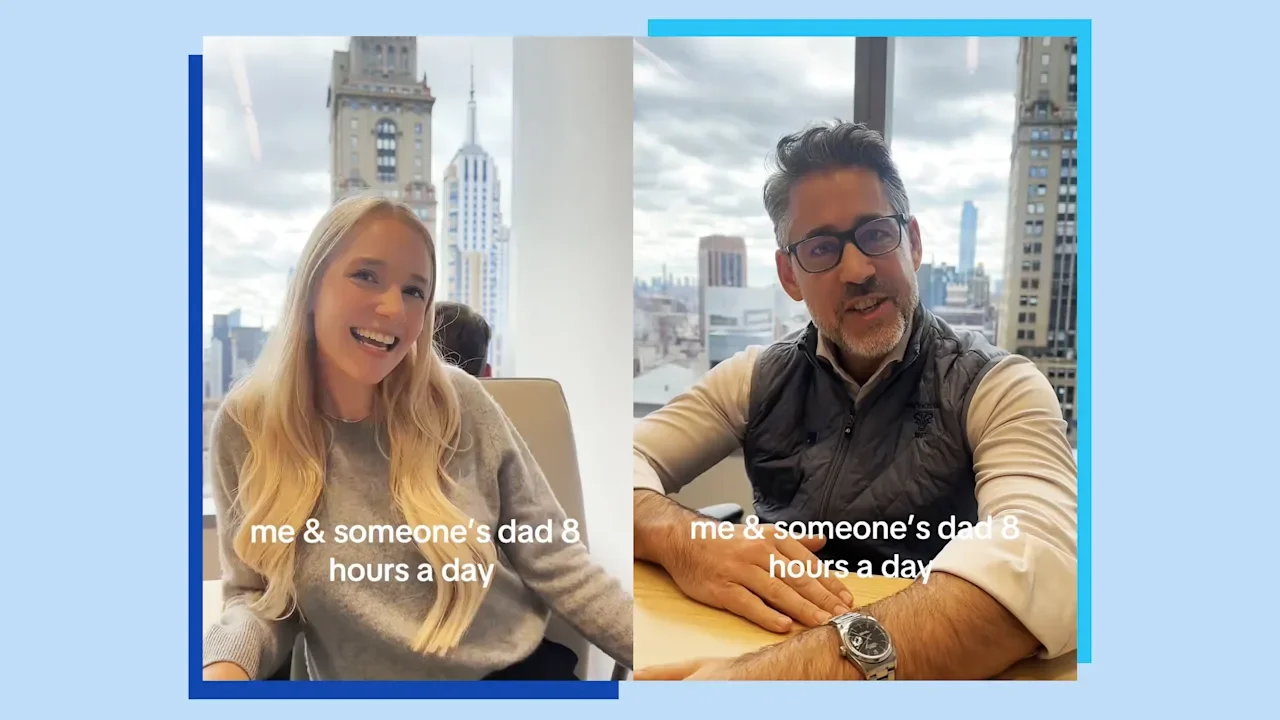
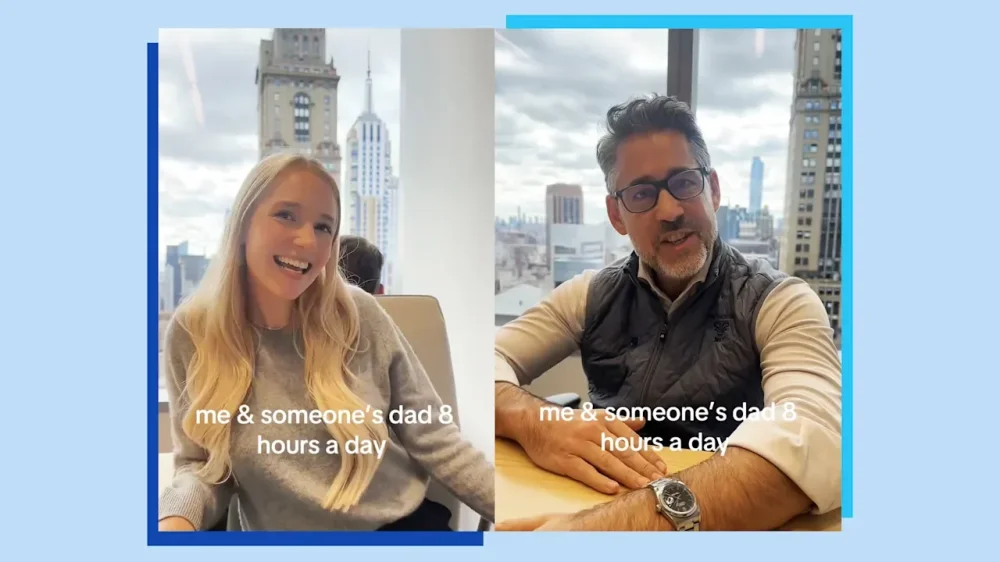
For the first time in history, five generations are sharing the workplace. But grouping different generations under one roof doesn’t have to cause friction. Sometimes it means unlikely friendships blossom. “Me & someone’s dad 8 hours a day,” TikTok creator @witchofwallstreet posted last week. In the video, the young financial planner and her older colleague are lip-synching to a remix of Nicki Minaj’s “Beez in the Trap” (featuring 2 Chainz) and 4 Non Blondes’ 1993 hit “What’s Up?” The video currently has over 13 million views. This lip-synch trend featuring these songs has been circulating online in recent weeks, but has now been taken up by coworkers to showcase their age-gap workplace friendships. “Me and someone’s mom at our 9 to 5,” another TikTok user posted, lip-synching to the same remix. “Age gap friendships are my forte,” she added in the caption. The comments are filled with others sharing fond memories of their unlikely workplace besties. “At my first big girl job, I was 21 and my work bestie was 75,” one wrote. “Mary was the freaking best.” Some videos overlay the text “workplaces are experiencing major age gaps,” followed by something like “me and someone’s dad 8 hours a day.” These “major age gaps” are primarily due to older workers remaining in the workforce longer than ever, either out of choice or economic necessity. A phenomenon called “age similarity preference” means that we often gravitate toward people of a similar age, including among our coworkers. However, an AARP survey found that nearly 4 in 10 adults have a friend who’s 15 years older or younger, most often meeting through work. Having friends is important, no matter their age. About half of adults in the U.S. report feeling lonely, and 45% of workers reported feelings of loneliness at work, according to a new study from the accounting and advisory firm KPMG. Workplace friendships have tons of benefits—both for the employee and the organization as a whole. Research has found that positive workplace relationships are not only beneficial for teamwork, career development, and building a sense of community, but they also help employees find more meaning in their work. Age-gap friendships have their own unique benefits, with fewer feelings of competition and pressure. Many have already named “girl dads” as the best bosses. Naturally, there are many things that boomers, millennials, and Gen Zers don’t always see eye to eye on—from how often to come into the office to the necessity of small talk. Yet, having much older or much younger friends at work can help break down negative stereotypes about different generations by revealing common interests. Even if that is filming TikToks on your lunch break. View the full article
-
Net profit doubles to $16bn on gains from OpenAI and PayPay holdingsView the full article
-
Figures also show wage growth slowedView the full article
-
Every encounter with another person is an opportunity to shape that relationship. The first words out of your mouth are key in establishing the goodwill we all crave. Unfortunately, too often our opening lines damage that rapport. I once had a client who was at a conference and saw a board member she wanted to get to know. She walked up to him and blurted out, “You look tired, have you been traveling?” He replied, “Why yes, I’ve just flown in from China.” She could see he was miffed by her negative comment. She admitted “I don’t know why I said that.” It was a poor start to a relationship she hoped to develop. Below is a list of openers to avoid and suggestions for better choices. GREETINGS TO AVOID To begin with, steer clear of bland, clichéd questions that ask both too much and too little of the person you’re speaking with. “How are you?” This frequent greeting may be appropriate if you’re sitting down for a long conversation with a good friend. There can be times when it’s a sign of empathy for a friend you know is going through some difficult times. But for pretty much anyone else, for casual acquaintances, or for colleagues in your office, avoid this greeting. People today are facing a host of difficulties. According to a recent report, 66% of people in today’s workplace are grappling with some kind of job burnout. Meanwhile, 81% are afraid of losing their jobs. Others face issues at home. Would a colleague want to unpack their life in what is a casual or passing encounter? Not likely. So, the response is usually a nod or a cliché like, “Not bad,” or “Okay.” The person answering won’t feel good about that cop out. “What’s up?” or “SUP” These greetings are common. They have the same overtones as, “How are you?” Only they’re slightly more flippant. Saying to someone “What’s up?” puts them in a position of either responding with a meaningless cliché (“Not bad”) or unpacking their life in what is typically a passing encounter. Few people want to do that. “Hey!” or “Hay” This is a poor choice because it is overly casual and offers nothing to the recipient. This greeting can feel offensive when directed to a friend, an acquaintance, or anyone who would expect you to offer some feeling of recognition or rapport. Saying “Hey” or “Hay” in fact borders on rudeness. My mother used to say “Hay is for horses [not for humans].” Indeed this greeting creates no human connection. Also avoid greetings that carry negative baggage, and put the recipient on the defensive. Here are examples: “You look tired,” “You don’t look yourself today,” or “Having a rough day?” These openings unintentionally insult the listener. It puts them on the defensive. If they are tired or down, you are asking them to confirm this negative assessment. If they feel better than you imply, you are demanding they defend themselves. You may think you’re showing empathy, but really you’re challenging the person you’re speaking with. GREETINGS TO USE For a group, a friendly greeting is always appropriate. “Hi [name]. It’s nice to see you.” When meeting someone, warm words, showing your appreciation of that person, provide an excellent start to a conversation. Using their name is another nice touch. Everyone wants to feel that someone enjoys being with them. “Hi [name], that’s a great tie.” Everyone wants to feel that they look good! So, if someone does look good, greet them by commenting favorably on some aspect of their appearance, such as their tie. Or do a variation of it: “I love your dress” or “that color really suits you!” You can even say “I like your style.” But beware that you don’t comment on how attractive someone is, or that could be viewed as sexist. “Congratulations on your new job.” This is an excellent way to begin . . . as are work compliments of any kind. These would include “happy to hear about your promotion . . . you deserve it” or “nice presentation at last week’s meeting.” “I loved reading your book.” Everyone loves compliments—another great way to go is compliment a recent accomplishment that’s outside of work. Suppose you’re meeting with someone who gave you a copy of their book. They’ll love hearing that you enjoyed the book. In the same way, say “I loved seeing your latest article in Fast Company.” “Thank you for sending me those beautiful flowers. Showing gratitude for someone’s act of kindness is always a good idea and it provides an excellent opening to any conversation. Other such openings include (to a boss) “thank you for joining our team at our recent retreat” and (to a colleague) “I appreciate the support you’ve given me in my new role.” This list of greetings should alert you to the need for sensitivity in even the most casual comments. Think ahead and be kind. Everyone will cherish your sensitivity. View the full article

-
With a new season of mass layoffs upon us, it seems corporate America has found a new scapegoat. When Amazon recently disclosed that upcoming layoffs would impact 14,000 corporate jobs, the tech giant said the cuts would help make Amazon leaner. “This generation of AI is the most transformative technology we’ve seen since the internet, and it’s enabling companies to innovate much faster than ever before,” HR leader Beth Galetti said in a memo. (Amazon CEO Andy Jassy has since clarified that the layoffs are driven by culture, not AI or the bottom line.) Other tech companies like Microsoft have trimmed headcount this year to the tune of over 15,000 layoffs, all the while sinking billions of dollars into AI investments. “To deliver on our mission, we need to stay focused on our three business priorities: security, quality, and AI transformation,” Microsoft CEO Satya Nadella told employees after a significant round of layoffs in July. “We are doubling down on the fundamentals while continuing to define new frontiers in AI.” Corporate behemoths like Target and UPS have made significant cuts to their workforce in recent months while framing AI as a key component of efforts to turn around their business. The layoffs at Target are the first major cuts to its workforce in a decade, eliminating 1,800 corporate roles; UPS, on the other hand, has slashed 48,000 jobs over the course of the year, most of which have targeted drivers and warehouse workers. Incoming Target CEO Michael Fiddelke has shared that one of his key priorities is to “more fully use technology to improve our speed, guest experience and efficiency throughout the business.” During an earnings call last month, CEO Carol Tomé noted that UPS would make fewer seasonal hires and cut back on vehicle leases, and that “much of this efficiency is powered by automation.” The past month has seen an uptick in layoffs across the business world: Over 150,000 jobs were cut in October alone, according to a tally by the outplacement firm Challenger, Gray & Christmas—the most in October since 2003. Artificial intelligence was one of the most common explanations for layoffs, a close second to the usual excuse of reducing costs. All this has fueled concerns that AI is, in fact, coming for your job—perhaps sooner than you anticipated. But experts say there is little data to support this narrative, despite what the recent job cuts might suggest. In this Premium story, readers will learn: – Why so many companies are blaming AI for their layoffs – What’s really going on with the labor market—and whether your job is at stake – How AI may actually impact the way you work The AI ‘meltdown’ “Statements from CEOs are about the worst way to evaluate the impact of AI on the labor market,” says Martha Gimbel, executive director of the Budget Lab at Yale University. Gimbel coauthored a recent analysis with the Brookings Institution and the Budget Lab, which found that the rise of generative AI has had little effect on the labor market so far: In the three years since ChatGPT launched to the public, the share of workers in jobs that are most vulnerable to disruption has remained more or less unchanged. Unemployment figures also support these findings, with little indication that AI is displacing workers—at least not yet. In fact, the analysis shows that adoption of AI has been fairly comparable to how previous new technologies, like computers and the internet, permeated the workplace. “I think that’s surprising to the public, and it’s surprising given the tenor of the conversation,” says Brookings senior fellow Molly Kinder, who also worked on the report. “But it’s really not surprising when you think of how hard it is to implement this in the workplace. There’s a really big gap between how fast the technology itself is going and the messy, slower pace of workplaces figuring out how to use it beyond a pilot.” There are, of course, legitimate fears about how AI can (and will) upend the way we work. Public opinion polling indicates that few Americans—just around 15%—believe the technology will have a positive impact in the coming years, while 64% of the general public expects to see job losses due to AI. But Gimbel posits those concerns may be overshadowing the real dynamics of the labor market and perpetuating a misleading narrative. “I think everyone is so freaked out about AI—and they are so itchy that if there is the phrase ‘layoffs’ and the phrase ‘AI’ within two miles of each other, everyone has a meltdown,” she says. “I get why this is so stressful to people. But the cart is not just before the horse. The haystack is eight miles in front of the horse.” The (more complex, more boring) truth So what should we make of claims that AI is catalyzing a seismic shift across the workforce? For starters, Big Tech is no stranger to mass layoffs. Even when the tech industry does make major cuts, however, they account for just a fraction of layoffs across the labor market, according to experts. Gimbel points out that the U.S. has about 1.7 million layoffs and discharges each month, per data from the Bureau of Labor Statistics. “There is a lot of attention that goes to layoffs in Silicon Valley for a range of reasons,” she says, “but we should not kid ourselves about how big these layoffs are in the context of the broader U.S. economy.” Tech companies are also prone to overhiring and then culling the ranks when the economy takes a turn, as has been the case across the industry since the pandemic. For some of those companies—including Microsoft and Amazon—layoffs are also the result of a desire to eliminate middle managers, who certainly can’t be supplanted with AI at the moment, Kinder says. “There’s no question in my mind that Amazon will look for labor-saving possibilities,” she explains, “but it’s not obvious to me that AI right now is good enough to replace middle management.” (Amazon told Fast Company the layoffs were a continuation of the company’s efforts to reduce bureaucracy and that the vast majority of cuts were not connected to AI.) In fact, Kinder believes companies and business leaders are doing themselves a disservice by suggesting AI is driving layoffs or that employees’ jobs might be at risk if they don’t get up to speed on the technology. “There’s a very strong business case for why you shouldn’t just scare the pants off of your employees,” she says. “The way that companies are choosing to lead on this is really anti-worker, in my view.” Given the hype around generative AI, Kinder argues that many employers are scrambling to keep up and want to look like they’re innovating. “It makes companies look good to their shareholders, to suggest ‘we are deploying AI so well [that] we are now cutting our labor costs,’” she says. “CEOs are looking over their shoulder saying, ‘Oh, my gosh. How is it that my competitors have figured out how to cut a bunch of their staff? I haven’t figured out those efficiency gains yet.’” Meanwhile, leading tech companies are personally invested in widespread AI adoption. “These are companies who are in the business of selling these services,” Kinder adds. “It’s entirely possible that AI really is part of the story, but I think we need to have a dose of skepticism about some of the motivations they have for being so loud and proud.” Real disruption That’s not to say AI has had no impact, or that it is not already reshaping certain jobs. Klarna was among the first companies to openly talk about how embracing AI had enabled hundreds of job cuts; in May, CEO Sebastian Siemiatkowski disclosed that Klarna had reduced its headcount by 40%, in part due to AI. (It’s worth noting that Klarna had slowed hiring overall and was gearing up for an IPO—and in the months since, Siemiatkowski admitted that “in a world of AI, nothing will be as valuable as humans” and reportedly reshuffled employees to fill customer service roles.) Salesforce CEO Mark Benioff claimed the company was able to cut 4,000 customer service roles because of its AI-powered chatbots, and that Salesforce relies on AI for up to 50% of its work. Tripadvisor is laying off 20% of its staff as part of a restructuring that will lean more heavily on AI. And just last month, YouTube started offering voluntary buyouts amid a restructuring that will enable the company to devote more resources to AI innovation. There are also signs that entry-level jobs may be under siege amid rapid advances in AI, particularly in industries like tech and finance where there is a high rate of adoption. A recent paper from Stanford University’s Institute for Human-Centered Artificial Intelligence found that early-career workers in jobs that are most vulnerable to AI disruption—software engineering and customer service, for example—have seen a 13% decline in employment since late 2022. (Employment rates for other entry level jobs, however, remain unchanged or continue to grow.) It’s also difficult to quantify how AI is changing the nature of jobs, Gimbel says, even if those jobs are not being eliminated outright. AI could replace or heavily augment HR roles and other back office functions, and it’s already clear that the technology is transforming fields like software engineering. But many economists and other experts believe it’s unlikely that AI is the driving force behind the mass layoffs that are currently underway, particularly at big tech companies—something that Jassy himself acknowledged this week. The real explanation is, perhaps, less interesting. “A real rush to ascribe everything to AI” Target, for example, has faced consumer boycotts and backlash this year over its retreat from DEI. But its financial woes predate those issues. Many companies, including UPS, have been hit hard by tariffs. (Target and UPS did not respond to requests for comment.) Under the The President administration, the business world has to contend with larger macroeconomic forces, between the tariffs and policy uncertainty. “There’s a real rush to ascribe everything to AI,” Gimbel says. “If you asked me what was the biggest headwind facing the labor market right now, I would not list AI. My number-one issue for the labor market would be immigration.” In the current climate, it may not be politically expedient for CEOs to call attention to the real challenges that are driving layoffs and turmoil across their workforce. AI might be a more convenient excuse for layoffs, and one that may bear out as companies figure out what to do with it. But there is not yet enough clarity on how AI can be most effectively harnessed by businesses, despite what leaders—particularly those in Silicon Valley—might say about the technology’s potential to revolutionize work. “I want to be clear: It is not the case that there are no uses for the technology,” Gimbel says. “It is not the case that there are no companies who have figured out how to monetize it. It is not the case that no worker has lost their job to generative AI in the U.S.” “I’m saying when you look at the current macro economy, there is not a sign that it’s really having any kind of major impact right now. That is partly because people are just not thinking about what it takes for companies to incorporate new technology: It takes time.” View the full article

-
It’s not the coolest phrase in the world to utter, but here goes: I love Windows. Maybe you do too. Maybe you don’t, but you’re forced to use it for work. Whatever the case, for all its positives, Microsoft Windows also bundles in a handful of tools that are either bafflingly archaic or simply underpowered for the demands of the modern user. The good news? The best things in life are often free, and it’s never been easier to swap out some of Windows’ default bloat for great free replacements. Here are five that are worth the download. Trade File Explorer for Files The native File Explorer has received a facelift and tabs, sure, but it still feels sluggish and lacks modern organizational features, and navigating between multiple locations is still clunky. It’s a glorified folder viewer. Say hello to Files. This is the file manager Windows should have right now. It’s gorgeous, embracing the sleek Fluent Design of Windows 11 and, more importantly, it features a dual-pane view for dragging files between locations like a pro. It also supports file tagging, so you can stop relying on rigid folder hierarchies and start organizing your documents with custom, color-coded tags. And the chef’s kiss: integration with popular cloud drive services. Trade Windows Search for Everything You hit the search bar, type in the name of a file you know is there, and then watch the little dots dance. Windows Search indexing is notoriously slow and resource-heavy. Instead, try Everything by Voidtools. Instead of indexing file contents, this utility indexes only the file and folder names on your drives. The result is pure speed. You start typing, and the results appear instantly. If you know the name of the file you want, Everything will find it before you’ve finished the first syllable. Trade the Snipping Tool for ShareX The built-in Snipping Tool gets the job done if the job is “take a picture and save it.” But what if you need to capture a scrolling window, annotate with arrows, and instantly upload the image to a shareable link? That’s where ShareX shines. This open-source utility turns a simple screenshot into a complete workflow. After you capture your region (with advanced options like scrolling capture), ShareX can automatically upload it to dozens of online services, shorten the link, and copy that link to your clipboard. It eliminates the manual steps of saving, opening the browser, and uploading. It’s a massive productivity multiplier. Trade Notepad for Notepad++ Notepad is a fossil: a blank canvas that knows how to hold text and nothing else. It’s great for pure simplicity, but utterly useless for anything that requires even a basic level of efficiency, like viewing source code or editing config files. Notepad++ isn’t just a better text editor; it’s a standard utility for developers and power users. It offers tabbed document viewing, syntax highlighting for dozens of languages, and incredibly powerful search-and-replace functionality. It manages large files beautifully and supports the kinds of macros and plug-ins that make working with text-based data infinitely smoother. Trade Sound Recorder for Audacity Windows’ current Sound Recorder is strictly for capturing audio: a basic, single-track utility with zero editing capability. If you want to trim the beginning, remove background noise, or layer tracks, you’re out of luck. The godfather of free, open-source audio editing, Audacity is a full-fledged, multitrack digital audio workstation (DAW) that costs zero dollars. You can record, edit, mix, and convert audio with a vast library of free effects and tools. Whether you’re cutting an interview clip, cleaning up a podcast recording, or digitizing an old cassette, Audacity offers pro-level features that blow the built-in Windows recorder out of the water. View the full article
-
I’m off today. Here are some past letters that I’m making new again, rather than leaving them to wilt in the archives. 1. Should you hire employees to babysit? I help supervise a group of about 20 student workers at a college. Most of them know I have a one-year-old and some of them really love babies (I sometimes bring him by during my non-work hours briefly to make their day). I’ve had at least two workers tell me they’d love to babysit. They’re good responsible workers, but I’ve been uncertain as to the advisability of that and haven’t followed up on their offers. This is likely to come up again as new students come in and learn I have a child. My gut says that babysitting (while paid) is more personal than a typical employment relationship and could blur professional boundaries or lead to an appearance of favoritism, so I should just kindly thank them for the offer and say we’re all set in that department. Is that the right call or am I overthinking this? People sometimes do this and it’s fine, but if it goes wrong, it can be disastrous. For example, if you hire one of them and there are problems with their care of your child (say you find out they’ve been negligent or cruel), would you be able to keep that from affecting things at work? What if you have a dispute over pay? Are you comfortable leaving them unattended in your home? And you’ve also got to consider the power dynamics; even though they’re volunteering, there’s a risk they’d still feel obligated to say yes when you ask (or that they’ll be happy to do it once or twice but feel pressured after that). It can also make other workers wonder if you favor or give special access to the people who sit for you. Some people do this and make it work, but if you want to play it safe, it’s wiser not to cross the streams. – 2020 2. Locker room etiquette when your gym is full of coworkers My office recently added some cool new perks on top of our employee benefits. My favorite? They’re now offering anyone who wants it a free membership to the gym right across the street from our office. It’s been hard for me to work out previously because of my commute, so I’ve been taking full advantage of this perk since it took effect a couple months ago. Lots of my other coworkers have jumped on this perk as well, and I’ll run into them at the gym frequently. Overall, it’s been positive, but there’s one thing I don’t know how to handle — the locker rooms. I’m pretty comfortable in my body, and I’m not that awkward about changing in your standard locker room full of strangers. But the prospect of a coworker — or worse, my boss — walking in on me changing has me feeling incredibly awkward. So far, I haven’t been seen by my coworkers while changing and haven’t walked in on anyone else from my office, but I know it’s only a matter of time. This is a situation I’ve never encountered before — I didn’t know anyone who worked out at my previous gyms. What should I do if I run into a coworker in the locker room while one or both of us are in various states of undress? Should I just change in the toilet stalls to avoid anyone seeing me? I might be making a bigger deal of this in my head than it actually is, but it has me feeling really uncomfortable. It’s pretty much the same locker room code as always: There’s a collective agreement to ignore everyone else’s nudity. The last time this came up, a commenter offered this, which I really liked: “I think there’s a big difference between functional nudity and casual nudity at the gym. Functional = in order to change, I have to take off my clothes. I am no longer 12 and trying to hide my body at all costs, so if someone glances over at me while I am changing, they will see me naked. Casual nudity = I am wandering around naked, blow drying my hair naked, etc. This is fine generally in a locker room, but is best to avoid at a work gym. Though I would totally blow dry my hair wearing a bra and not a shirt to avoid getting hot/sweaty.” In other words, make any nudity fairly quick. Don’t linger. But it’s also completely fine to decide you’re just not comfortable with locker room nudity around coworkers at all and change in a stall. There’s no shame in that; you’re not being weirdly prudish if you got that route. – 2019 3. Is it unprofessional to brush my hair in common areas of my workplace? I am an assistant manager, and today something weird happened. I did not get to finish my normal routine this morning as I had to go to the UPS store (for work) so I showed up to work with my hairbrush. I work at a preschool and typically, by the time I arrive to work, there are no parents here as they have all dropped off their kids and left. I walked around to say good morning to the teachers and collect breakfast dishes as normal, but I brought my hair brush along and brushed my hair as I was walking between the classrooms. The manager above me made a point to rush up to me and tell me I need to do my beauty stuff in the bathroom. I was confused by this as I thought she meant the makeup in my purse but no, she explained that me brushing my hair was unprofessional. I am young, so maybe this is just a rule on professionalism I have never heard before. I am just confused. This was pretty much a one-time thing, and not a habit I have. Is it really all that unprofessional in this otherwise rather relaxed atmosphere for a work setting? Yeah, there’s an etiquette rule about not doing personal grooming in public. Some workplaces might not have thought it was a big deal, and it’s not the biggest deal in the world, but it’s also not outlandish for your manager to ask you not to do it. (It’s also the kind of thing that can be frowned upon without anyone telling you, so it’s good that she did. She might have done that because you’re young and she figured that you’re still learning professional norms.) – 2019 4. I accidentally sent a highly personal medical email to someone who reports to me I am currently on maternity leave and will return to work in a couple of months. While I’ve been out, I’ve emailed my team at work a few times with baby updates and replied to anyone personally saying hello, all from my personal email as I no longer have access to my work email. Yesterday, I sent an unrelated and angry email about a very personal medical matter to a person on my team by accident. This person reports to me. The first three letters of her name in her email are the same three letters of the person I was trying to email instead, so you can see how I sent this by accident and this worker’s email was saved because of the above previous correspondence while I’ve been off. It was only caught because the worker emailed me back acknowledging this wasn’t meant for her. I’m mortified. How can I save face? All I’ve done so far is email her back thanking her, apologizing, and stating that I trust her to keep this between us because of the personal nature. Is this all I can do and never speak of it again? Yes! You handled it well. If she’s at all a decent person, she’ll understand that this kind of mistake happens and will keep it to herself. We’ve all been there with a misdirected email at some point or another, and most people are sympathetic when it happens. You don’t need to take any further action; anything more would be belaboring the point and focusing her on it more. Assume you’ll both wipe it from your minds and never speak of it again. – 2019 5. How to bring up experience at an interview that I forgot to mention on my resume I’m returning to work after doing a postgraduate degree. I’ve got an interview coming up, and in the course of prepping for it I realized that one of the projects from the job I had before going back to study is in a really closely related area to the role I’m interviewing for. The problem is that I hadn’t mentioned that project in either my cover letter or my CV when applying. Obviously I want to bring up this relevant experience in the interview, but what’s the best way to frame it in a way that is more “this candidate has useful experience” and less “this candidate didn’t fully think through their application”? Just be matter-of-fact about it! “I realized one of the projects I did at Job X might be relevant here. It’s not on my resume, but (details about the project).” No reasonable interviewer is going to think not including it originally means you’re flighty or thoughtless. Interviewers know lots of people use the same basic resume for all the jobs they apply for, and they also know humans will not always instantly realize precisely how relevant something might be to a job they’re not terribly familiar with yet. I’ve interviewed many candidates where I thought, “Oh! That’s really relevant — I’m glad you mentioned it.” Sometimes I’ve even thought, “Oooh, you should include that on your resume! It’ll help you!” But I’ve never thought, “What kind of doofus didn’t write this down originally?” – 2020 The post should you hire employees to babysit, locker room etiquette when your gym is full of coworkers, and more appeared first on Ask a Manager. View the full article
-
Debt issued by groups building data centres has been hit in recent weeksView the full article
-
Body to collate material from national agencies and improve its operational useView the full article
-
Reassessing taxes and spending every six months introduces excessive policy uncertaintyView the full article
-
Nordic country’s tax authority largely on the hook for as much as £400mn View the full article
-
Lavish mansion acquired by Cathy Ying Zhang adds to overseas property portfolio of the Alibaba billionaire’s familyView the full article
-
Priority Pass wants to reduce overcrowding and give millions of flyers a calmer experienceView the full article