ResidentialBusiness
Administrators
-
Joined
-
Last visited
Everything posted by ResidentialBusiness
-
 If you glanced at the headlines this week, you might think everything is fine. Markets are not in full panic mode, unemployment is not spiking, and earnings season is still producing plenty of upbeat charts for investor decks. Underneath that, though, there is a very different story taking shape about what it takes to keep growth going when people are tired of paying more for less. Across the economy, companies are being forced to get creative. Some are reworking how they price core products, others are quietly shrinking their physical footprint, and a few are openly trying to trade short term stock market love for longer term loyalty. Even the hottest corners of tech are starting to see what happens when the narrative shifts from limitless upside to awkward questions like “how much is too much.” At the same time, politics and policy are bleeding into everyday life, showing up in places like flight schedules and housing costs. Put it all together and you get a picture of an economy that is not crashing, but is being quietly renegotiated in real time. Here is a look at the stories that captured that tension this week. Housing affordability is so tight that builders are buying down mortgage rates D.R. Horton is leaning hard on mortgage rate buydowns to keep homes moving in a market where affordability is stretched past its limits. In its latest quarter, nearly three quarters of buyers took a discounted mortgage rate, often starting around 3.99 percent, in order to make monthly payments work. That generosity is not free. Incentives helped push the company’s gross margin on home sales down to 20 percent, well below its 2021 peaks, even as net new orders rose 5 percent year over year. The builder is also slowing new starts and managing inventory more tightly, especially in softer markets like parts of Florida and California. TD Bank trims branches as customers shift to their phones TD Bank is closing 51 branches and one drive through location across 13 states and Washington, D.C., as it redraws its physical footprint for a more digital world. The cuts are part of a plan to reduce or relocate about 10 percent of its stores while pouring more money into tech forward, advice based services. Executives say they still plan to open new locations in some affected communities, but with a sharper focus on where customers actually show up in person. For now, TD is relying on more than 1,000 remaining U.S. branches plus its apps and online tools to handle the shift. Outback Steakhouse quietly closes doors in eight states It is not your imagination if the nearest Bloomin’ Onion suddenly disappeared. Outback Steakhouse’s parent company, Bloomin’ Brands, has closed 10 U.S. locations across eight states as part of a broader turnaround plan. The casual dining chain is facing higher costs and more cautious diners at the same time its stock has dropped more than 40 percent this year. The company says it chose which restaurants to shutter based on sales, traffic, and investment needs, and is trying to move affected workers to nearby locations. It is another sign that full service chains are feeling the squeeze as consumers trade down or stay home. The Big Short investor is betting against the AI darlings Some of the shine came off the AI trade this week after Nvidia and Palantir shares fell on news that Michael Burry is shorting both names. The investor, who became famous for calling the housing crash ahead of 2008, disclosed that his fund bought put options on the two high profile AI plays. His move hit a nerve in a market already debating whether AI stocks are in bubble territory, even as surveys show many investors think they are. Still, the pullback comes after a monster run. Nvidia is up more than 50 percent this year and Palantir has gained well over 100 percent over the same period. McDonald’s is losing its lowest income customers McDonald’s latest earnings call confirmed what a lot of families already feel. Fast food is not cheap enough to be a default option anymore for the lowest income diners. The company said quick service traffic from lower income customers fell by nearly double digits in the third quarter, a trend that has dragged on for almost two years, while higher income traffic keeps rising. Same store sales were up modestly in the U.S. and globally, but still missed some Wall Street expectations. In response, McDonald’s is leaning back into value with limited time deals like a 5 dollar breakfast combo and 8 dollar nugget meal, plus digital promotions tied to its Monopoly game. YouTube TV hides a 60 dollar credit where only power users will find it After YouTube TV dropped more than 20 Disney owned channels when carriage talks broke down, subscribers expected a meaningful bill break. What many are discovering instead is a somewhat buried offer of 10 dollars off per month for six months, for those who can find and redeem it in their account settings. The credit is not automatic and appears to be available only to some users, which has frustrated customers who already feel shortchanged by the loss of ESPN, ABC, and other major networks. The move follows an earlier suggestion from YouTube that a larger 20 dollar monthly credit might be on the table if the blackout dragged on. Electric aircraft maker Beta Technologies takes off on the NYSE Beta Technologies, a Vermont based electric aviation startup, made its public market debut under the ticker BETA. The company priced its IPO at 34 dollars a share, above the marketed range, raising just over 1 billion dollars and implying a valuation around 7.4 billion dollars. Beta builds electric aircraft and charging systems, including a conventional takeoff plane and a vertical takeoff and landing model called Alia, which it has already flown tens of thousands of nautical miles. With contracts that include the U.S. Department of Defense, Beta joins a growing club of electric aviation companies betting that cleaner, quieter aircraft can carve out a real slice of future air travel. Duolingo’s earnings are strong, but its stock still fell off a cliff On paper, Duolingo’s third quarter looked great. Daily active users jumped 36 percent, revenue climbed 41 percent, and paid subscribers rose by more than a third. Yet the stock dropped around 25 percent after the company told investors to expect much slower growth in total bookings next quarter, a key metric that bakes in future subscription and test revenue. CEO Luis von Ahn said Duolingo is deliberately prioritizing product quality and user growth over near term monetization, particularly as it leans into AI powered teaching tools. The market’s reaction shows how little patience some investors have for long term thinking in a choppy tech tape. Airlines offer rare refunds as the shutdown snarls air travel United, American, and Delta all said they will offer refunds during the government shutdown to customers who decide not to fly, even if their flights are not technically canceled. The move comes after the FAA ordered a 10 percent cut in flights at 40 major airports because thousands of unpaid air traffic controllers are unavailable. Long haul international routes are expected to mostly hold, but domestic schedules will be trimmed, affecting as many as 4,000 flights a day. The big three are framing the refunds as a customer friendly gesture in a tough situation, while also urging Washington to move quickly to end the shutdown that is disrupting the system they rely on. View the full article
-
Over the past 50 years in the shoe trade, I have had my fair share of failure. The biggest lesson I learned, at the start of my career, is not to devote time and energy to a business or project that has little chance of success. This might sound obvious, however sometimes you are so involved in the detail of the day to day running of the business that you don’t stand back and question the future viability of what you are doing. I was a women’s shoe manufacturer in London in the 1980s. If I had looked at the big picture I would have seen that the future of manufacturing in the U.K. for low technology, high labor content businesses like footwear manufacturing, was unsustainable. Most of the production was moving to Asia where costs were much lower and the quality was excellent. It took a visit to Taiwan to see the same shoes being made at half the price that it was costing us in our London factory to persuade me to leave manufacturing and become an importer. My lesson is to respond quickly and try and anticipate change. Pressure on middlemen Another example is from the 2000s. I was a successful importer from Asia, a business I set up in 1986 called Browning Enterprises. It had a turnover of £60m. As communications improved and markets opened, more Chinese manufacturers and trading companies came directly to the major U.K. retailers, putting pressure on the margins of the middlemen, like me. Our costs were too high. We couldn’t compete. The import company struggled on till 2009. It was the decline in the importing business and the desire to start my own brand that led to me to launch Dune in 1992. Temper your optimism Another failure was opening unprofitable stores. This is an expensive mistake as the £400k investment is written off when the store is closed. The failure is usually due to overestimating the level of sales. The costs of a new store are easily calculated. The big variable, that is largely a matter of judgement, is the sales number. Of course you do your due diligence by looking at footfall figures, studying demographics, and talking to adjacent stores to try and judge their performance. Finally, you come to a sales number. The lesson is to be cautious about the level of sales. Look carefully at the possible downsides. As an entrepreneur your natural tendency is to be optimistic. You must temper this optimism. Resist the temptation to open the shop because you want to grow. It has got to make commercial sense. As an entrepreneur it is easy to get distracted and sidetracked into ventures that are not related to your area of expertise. This loss of focus can be damaging, as not only is there a high probability that the new venture is unprofitable and you will lose money, but it also takes your attention away from your main activity. Not special My career has been in fashion footwear. That’s what I know. However, during the pandemic, I launched a sustainable trainer brand. I felt that was where the growth was in footwear, so that’s where I needed to be. It was a failure. Why? Two reasons. Firstly, it wasn’t special enough. It was a good, well-made sustainable product but in a crowded market it didn’t have an important point of difference that would make it stand out. Secondly, we didn’t go out and aggressively sell the product. I thought I would generate the online sales through the website. This was a mistake. We needed to sell wholesale as well, not only to generate sales but to get the brand out there in the market. There are two important lessons for entrepreneurs here. One: Don’t underestimate the marketing cost of selling a new brand online. Two: You may have a great product, but it is essential that you get out there and sell. It is no coincidence that over the years the sales team has been the highest earners in the business. Avoid distraction We launched a range of children’s shoes. This was related to our main activity, but as we found to our cost, the market is very different from adult’s shoes. As we didn’t have the space in our stores to offer the range we focussed on online and wholesale. Selling a new brand of children’s shoes online was more difficult than we anticipated. Mothers like to buy their kids’ shoes in a physical store. In addition, the market was polarized between the established heritage brands, Clarks and Startrite, and the large stores like Next, Marks & Spencer, and Zara, who were offering similar shoes at lower prices. The lesson is clear. Resist the temptation to get distracted unless you are very confident that the new venture is financially compelling. The right team Finally, having the right team in place is essential. As an entrepreneur there is a danger that you are reluctant to give up control. It is essential to recognize the limitations of your abilities and hire a team that can do things better than you. The importance of building the right team came into sharp focus in 2009 when we acquired a company called Shoe Studio and trebled our size. A year after the acquisition we started to struggle. Our profits fell. We didn’t have the management expertise to run a larger business. My skills and time were being stretched to the limit. We employed a first-class FD and a team of senior experienced retailers which transformed the business. It is a well-known expression that you learn more from your failures than your successes. That is certainly my experience. And if the project is failing, then fail fast. View the full article

-
When OpenAI launched its text-to-video app Sora in September, there was immediate blowback. To absolutely no one’s surprise, users on the platform had a field day using popular characters in their AI-generated videos, in all sorts of—admittedly creative!—situations. (See OpenAI founder Sam Altman grilling Nintendo’s Pikachu.) Brands condemned the use of their intellectual property without permission. The Motion Picture Academy called out OpenAI for its blatant copyright violations. Soon after launch, Altman wrote a blog post addressing the issue, stating that Sora would give rightsholders “more granular control” of their IP on the app, adding that in the near future he expected that plenty of brands and content makers would actually welcome the chance to have their characters on the app. He called it a new form of “interactive fan fiction.” Well, that day is here. According to a recent report in The Wall Street Journal, OpenAI has opened the floodgates and is now in talks with brands about how they can bring their mascots and characters into the app for users to feature in videos. It’s obvious why OpenAI wants brands to free their mascots. People would love to play in that sandbox with well-known characters. Hell, they’re already doing it. But, um, what’s in it for the brands? Most brands are still trying to figure out what their mascot stance on Sora will be. I reached out to McDonald’s, Geico, KFC, and General Mills but none were ready to comment about it on the record. This is a newer, more urgent version of a conversation brands have been having for the past 15 years. In the age of social media, how much creative control should a brand cede to its audience? Now the stakes are even higher, given the pace of technological advancement, the public’s appetite to get AI sloppy, and our inability to distinguish between what’s real and what isn’t. “Sharing the pen” For what seems like centuries, the conversation between brands and everyone else was a one-way street. Advertising flashed in our eyes and blasted in our ears, and that was that. With social media, a two-way conversation began. The mantra among marketers circa 2008 was to get involved in the social conversation because people are talking about your brand whether you’re there or not. In the past few years, that has evolved even further to brands actually collaborating with fans and creators. Morgan Flatley, McDonald’s global chief marketing officer, calls this “sharing the pen.” Historically, most brands are nervous or overprotective when they aren’t in full control of the creative. McDonald’s was prime among them, vigilantly protecting its IP. In 2013, it won a federal case on trademark infringement in Canada against a dim sum restaurant called MacDimsum. In 2019, it sent a cease-and-desist order to a small Edmonton restaurant serving an “Effing Filet O’ Fish.” But the success of Famous Orders, a campaign launched in 2020 where it began regularly partnering with artists to customize meals and create merch, changed things. Allowing artists like Travis Scott, BTS, and Cactus Plant Flea Market to play with its brand logos and characters, and the passionate response from fans—along with the sold-out merch and boosted sales—gave Flatley and the brand more confidence to loosen the reins. The win for McDonald’s was in reflecting its role in culture (the artists are genuine fans) while creating something new. “I’ve become a big believer that if we lean into the right kind of creators in the right cultural phenomenon, and loosen some of our control on the brand, magic will happen,” Flatley told me back in 2023 when we talked about the brand’s partnership with Marvel. “A few years ago, I don’t know that we would have felt as comfortable handing over key aspects of our brand to be part of a storyline like this, but today we’re really aware of the authenticity of our brand and the role that it can play.” Alyson Griffin, State Farm’s head of marketing, told me recently that the key to a successful partnership with creators is to be prepared to give up some control. Brand leaders must do their due diligence and vet any potential partner, but then they must let them cook. “If you know you have the right person, because you vetted them to your brand needs, let them be them,” Griffin said. “Let them create, because then it looks and is authentic.” According to marketing intelligence firm Sensor Tower, Sora was downloaded 3.8 million times in the U.S. in its first month, despite only being available on iOS with an invite code. It was the No. 4 app in the U.S. over that same time. In a world where brands and marketers are looking for any and every opportunity to gain our attention, the temptation here is clear. Handing over your brand IP to the Sora 2 slop factory, however, is a recipe for disaster. Character chaos Brand mascots have been a staple of advertising for more than 100 years. They’re used to hawk everything from kids’ cereal to batteries, cigarettes to insurance, and they continue to be a valuable way for brands to forge an emotional connection with people. Take the insurance industry, which has a huge roster of mascots that aim to make their brands more relatable: Jake from State Farm, the Geico gecko, Flo from Progressive, Mayhem for Allstate, Liberty Mutual’s LiMu Emu (and Doug), and the Aflac Duck. A 2021 study reported that a long-term campaign featuring a recurring character will, on average, increase market share gain by 41%. The Grimace Shake helped McDonald’s boost U.S. sales by 10.3% in 2023. When I was in journalism school 20 years ago, we got an assignment to practice what’s called a survey article. Basically, you pick a topic and go ask a bunch of people the same question, then see what story angle emerges from their answer. I chose to visit as many tattoo artists as I could in an afternoon and ask them all “What’s the craziest tattoo you’ve ever done?” I’ll never forget the clear winner. When I asked the question, this artist’s eyes lit up, and he rushed to find a specific binder on his shelf. He frantically flipped through the photos and flash designs until he found it. “There!” He pointed to a photo of a man’s meaty calf featuring a very detailed and anatomically correct depiction of all the characters from Winnie-the-Pooh on a picnic blanket—having an orgy. That story taught me that some people will do anything for attention (and that I would never sing the Tigger song ever, ever again). Now that’s playing out in real time on Sora, with the app granting anyone’s weirdest visual wish. Remember the public discourse when M&M’s talked about making the green M&M “less sexy”? If Mars put its beloved characters on Sora 2, the brand is one quick prompt away from someone making Behind the Green (M&M) Door. You think that Duolingo owl is weird now? Just wait. Kevin Mulroy, founding partner and ECD at award-winning ad agency Mischief, says the upside for brands to surrender rights to their IP on Sora is still unclear. “Without much narrative control, and no clear link back to a strategy, it’s highly unlikely everyday people are going to use these mascots in the way these brands intend,” he says. Strategy vs. Slop The risk here is not just about brand mascots appearing in questionable content. It’s also the trade-off between the idea of facilitating people’s creativity versus brands being complicit in the sloppification of culture by allowing their mascots to be used on Sora. Prediction market Kalshi made a viral splash during last spring’s NBA playoffs with an absolutely hilarious and unhinged AI-generated spot (see above) that cost just $2,000 to make. Then in September, Jake Paul tricked folks with AI videos of himself in strange situations, later revealing that it was all a marketing stunt for Sora 2 (the spot attracted about 1 billion views in six days). Whenever new tech hits the market, the initial stunts get a ton of attention as these illustrate. But then what? “No doubt whichever brands are first to experiment will benefit from a bump in cultural awareness, as we’ve seen with Jake Paul’s likeness,” Mulroy admits. “But at what cost? In a world where it has never been easier for a brand to say something, the true value is in figuring out what it is the brand should say. The latter won’t come from rogue AI content.” Eventually every marketer will have to decide the value exchange in joining the Sora party. As Mulroy says, the key is making sure there’s an actual strategy behind it. If not, all that mascot’s brand value could end up getting f***ked on a picnic blanket. View the full article

-
I love FM radio. It’s okay: You can call me a Luddite. My alarm clock is the local public radio station. I love toggling between a few music stations while driving, or even while reading at home. And during a road trip, there’s nothing quite like discovering a community station with random locals curating their own playlists—it gives you a sense of where you are that no Spotify playlist can match. The problem: It’s hard to know what stations exist locally, even in your own town but particularly while on a road trip. You can explore the dial, which has a certain serendipity, but what if you just want to . . . know? And be able to tune in with or without an actual traditional radio in front of you? This tip originally appeared in the free Cool Tools newsletter from The Intelligence. Get the next issue in your inbox and get ready to discover all sorts of awesome tech treasures! Old-school listening with a modern twist This exact problem is why I like Radio Locator. It’s a free website that lets you enter any city or zip code and find all the terrestrial stations that are available for that area. ➜ It’ll show you a list of every FM and AM station in any U.S. city or zip code. You can also browse international radio stations by country. ⌚ And it all takes just a few seconds to do. This is a rare service that isn’t cluttered with ads or upselling. Just open the site, type a place, and you’ll see a list. Stations are sorted by frequency, but you’ll also see the call sign, the distance to the tower, and what format of radio station is offered. (I’m personally always looking for public radio or alternative stations, but you can figure out what you want for yourself.) 📲 Of course, all of this only applies if you’ve got an actual-factual FM radio on your hands. What if you’re more of a computer-and-phone kind of person? Easy: Just click through on any of the stations on Radio Locator, and they’ll generally take you to a website where you can stream the station. 💡 Or, if you prefer a dedicated tool for the job, there’s Streema. It’s a free site that makes it easy to search for and stream just about any radio station imaginable, anywhere in the world. A few stations redirect to websites—best I can tell for legal reasons—but the overwhelming majority of the time, you can just search for a website and start listening. Either way, you can find and listen to old-fashioned radio stations anytime. Again: I recommend finding public and community stations, as those tend not to have ads, but take the time to explore. It’s nice to get away from the algorithm sometimes. You can open Radio Locator and Streema directly in your web browser on any device. Streema also offers an app called Simple Radio for both Android and iOS, if you’d rather go that route. Radio Locator and Streema are both free in the browser. Simple Radio is free with on-screen ads or you can get an ad-free version for $6 a month. Neither site requires a login or any real personal data, but you can opt to share your location—if you want. Treat yourself to all sorts of brain-boosting goodies like this with the free Cool Tools newsletter—starting with an instant introduction to an incredible audio app that’ll tune up your days in truly delightful ways. View the full article

-
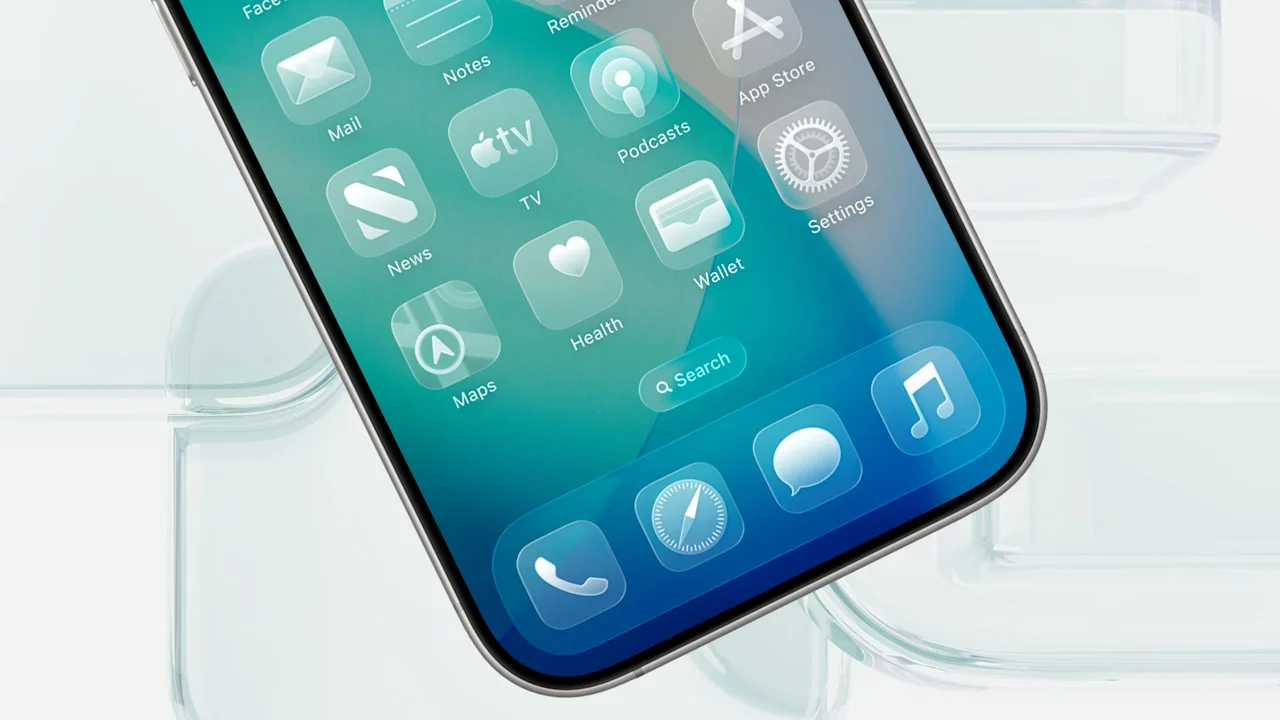
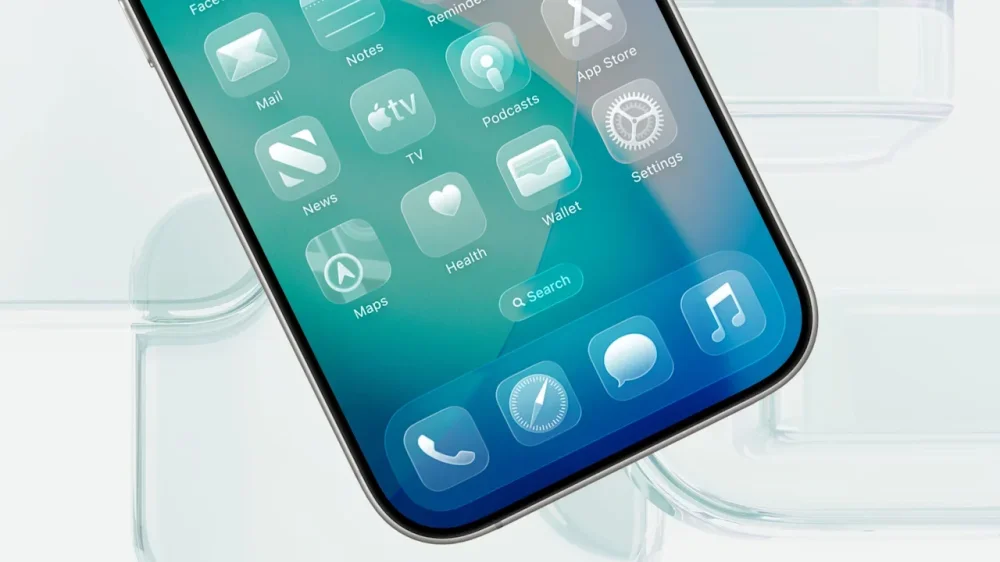
Two months ago, Apple released iOS 26 for the iPhone. The new operating system includes several productivity and other enhancements, but the main feature is a new design language called Liquid Glass. The flat, minimalist look of iOS that lasted for more than a decade is gone, replaced by a transparent interface of toolbars and buttons that mimic how light bends and warps as it passes through glass. Those who appreciate the new look of iOS often praise Liquid Glass as refreshing and unique, saying it gives the iPhone’s software a sense of fluidity that other touch interfaces lack. Others argue that Liquid Glass’s transparent elements make the device harder to use, as the content behind iOS 26’s buttons and toolbars often obscures the symbols or text that label the interface elements. If you fall into the latter group, there’s some good news. Apple is increasingly providing options to tone down the most controversial aspects of the Liquid Glass design. Here they are: Option #1: Turn on the tint This week, Apple released its first major update to iOS 26: iOS 26.1. This update fixed numerous bugs while also adding new features; it expanded Apple Intelligence and AirPods Live Translation features to new countries, added new swipe controls to the Music app, and overhauled the alarm clock interface so you don’t accidentally tap “snooze” and miss your meeting. But as Fast Company previously reported, iOS 26.1’s best new feature is a toggle that lets users tone down Liquid Glass’s design. It does this by allowing users to choose between two different Liquid Glass interfaces. The “Clear” interface is the default Liquid Glass, with interface element transparency at a maximum. The “Tinted” interface option reduces this default transparency to give Liquid Glass elements a more frosted look. This can greatly improve the readability of button and toolbar labels by increasing their contrast. Turning on the Liquid Glass tint is easy, as long as you have iOS 26.1 installed on your iPhone: Open the Settings app. Tap Display and Brightness. Tap Liquid Glass. Tap the “Tinted” option. As you can see from the screenshots above, the “tinted” Liquid Glass option brings a frosted look (right) to the default transparency (left). Option #2: Increase the contrast If you’re still on iOS 26.0 or just want to eliminate the default look of Liquid Glass even more on your iPhone that’s running iOS 26.1, you can tone down Liquid Glass in three other ways. . The first is by enabling the “Increase Contrast” Accessibility option on your iPhone. This feature is designed for users with sight issues, but anyone can enable it, and many have found that doing so makes Liquid Glass more palatable. As Apple notes, enabling this setting helps “Increase color contrast between app foreground and background colors.” Here’s how you turn it on: Open the Settings app. Tap Accessibility. Tap Display & Text Size. Toggle the “Increase Contrast” switch to ON (green). As you can see in the screenshots above, enabling the “Increase Contrast” option (right) adds a slight outline around interface borders and adds a grey smokiness to transparent elements, which makes text and buttons easier to see than they are in the default Liquid Glass design (left). Option #3: Reduce the transparency A third way to tone down Liquid Glass is to enable another Accessibility option on your iPhone called “Reduce Transparency.” This option tones Liquid Glass down even further than the “Increase Contrast” option, greatly reducing its transparency. As Apple notes, this option helps “Improve contrast by reducing transparency and blurs on some backgrounds to increase legibility.” To enable the setting: Open the Settings app. Tap Accessibility. Tap Display & Text Size. Toggle the “Reduce Transparency” switch to ON (green). As you can see in the screenshot above, enabling the “Reduce Transparency” option (right) virtually blocks any background content from bleeding through buttons and toolbar elements. Option #4: Outline buttons for easier visibility A final way to tone down Liquid Glass is to force iOS 26.1 to show borders around buttons and other UI elements. This is done via the “Show Borders” Accessibility option. This option forces outlines to appear around “prominent UI,” according to Apple’s iOS 26.1 notes. To enable the setting: Open the Settings app. Tap Accessibility. Tap Display & Text Size. Toggle the “Show Borders” switch to ON (green). As you can see in the screenshot above, enabling this option displays a thin outline around buttons and other UI elements, helping them stand out more on your screen. Liquid Glass isn’t going away The new look of iOS 26 isn’t temporary—nor should it be. While there have been some vocal detractors to the new design, a large majority of iPhone users seem to love the refreshed look. After Apple spent years developing that new design, there’s no way they would go back to the old one. But Apple’s addition of a new “tint” option for Liquid Glass via a dedicated control in the iOS 26.1 Settings app shows that the company is listening to feedback from all its users and is not averse to giving individuals more control over how Liquid Glass looks to them. So, while you may not be able to turn off Liquid Glass, you now at least have three ways to tone it down. View the full article
-
“You really have to stand up for yourself.” That’s the message Shark Tank star Barbara Corcoran sent loud and clear in a recent interview she gave LinkedIn CEO Ryan Roslansky. The interview is full of powerful lessons from Corcoran’s life, but one story stood head and shoulders above the rest: The time Shark Tank fired her, before she taped a single episode. Corcoran said she received a call from a woman asking her to be on a new show called Shark Tank. Ecstatic, Corcoran agreed. She immediately went on a shopping spree, buying new outfits and autograph-signing materials. “I’m going to Hollywood!” she excitedly told her friends. Then, Corcoran got a dreadful phone call telling her “they changed their mind” and had decided to give her seat to another woman. “I just couldn’t believe it,” said Corcoran. “It was the equivalent of [my ex-boyfriend] telling me he was marrying my secretary.” After hanging up the phone, Corcoran says she was “crestfallen.” But after taking a minute to feel sorry for herself, she took matters into her own hands. Corcoran wrote an email directly to Shark Tank creator, Mark Burnett. “Dear Mark, I consider your rejection a lucky charm,” Corcoran says. “Everything good happens to me after I get rejected.” Corcoran then detailed multiple stories as evidence, including the time Donald The President told her she’d never collect a penny of her $4 million commission, after which Corcoran says she sued The President and got every penny. Corcoran says she ended the email like this: “I expect to be on that plane on Tuesday. And I hope you let me compete for the seat.” Shortly thereafter, Burnett’s secretary wrote Corcoran telling her she would have the chance to compete for the seat. The rest is history. Corcoran’s actions teach a powerful lesson in emotional intelligence, the ability to understand and manage emotions effectively. Let’s break down three valuable takeaways from Corcoran’s story and see how you can apply them to your own business. (If you find value in this lesson, you might be interested in my free emotional intelligence course, which provides a new tip for building emotional intelligence every day for a week.) Don’t dwell on negative emotions Corcoran credits her employees for teaching her a lesson that helped her at this crucial moment. “I learned from my salespeople over the years that the greatest salespeople [spend] less time feeling sorry for themselves,” Corcoran said. “They take the hits like everybody else but they don’t give themselves much time.” “I mimic them in my own personality. And I really credit their example [for] what I did to Mark Burnett.” It’s not just effective salespeople. Everyone experiences failure. Everyone has bad moments. But instead of dwelling on negative emotions, emotionally intelligent people have the ability to process them and move on. As it’s been said: You may not be able to stop a bird from landing on your head, but you can keep it from building a nest. Use negative experiences as motivation Instead of throwing herself a pity party, Corcoran used Burnett’s rejection as motivation. She then channeled those feelings and emotions into her email. It worked. Not only did Corcoran motivate herself, her quick action, confidence, and masterful storytelling convinced Burnett to change course and give her a shot. Corcoran says she learned that lesson when her ex-husband told her he was leaving her for her secretary. Consequently, Corcoran split the business she ran with her ex in half, and he told her she’d never succeed without him. “When he gave me that curse leaving, I’ll tell you, I knew I was going to be successful,” Cocoran said. “Just to prove him wrong.” Negative emotions can be useful if you learn how to harness them. But to do that, you have to consciously decide what you’re going to do with them. Be like Corcoran and use negative emotions as a catalyst for positive action. Focus on what you can control Corcoran realized she couldn’t force Burnett to change his mind. But she could stand up for herself, which would prove beneficial for her mental state. And by getting on that plane and showing up, Corcoran gave herself every opportunity to get on Shark Tank. This teaches a final powerful lesson: You can’t waste time on things you can’t control. But you can focus on what you can control and take action accordingly. Dealing with a customer who refused to pay an invoice? Offer them a compelling reason to pay. Got an employee who’s lost their drive? Give them a listening ear and think of how you can support them. The key is to ask yourself: What can I do to make this situation better? So, the next time you’re frustrated by someone else’s actions, take a page out of Barbara Corcoran’s playbook and: Don’t dwell on negative emotions. Use the experience as motivation. Focus on what you can control. In doing so, you’ll turn a negative into a positive, make emotions work for you, and experience positive results in the process. —Justin Bariso This article originally appeared on Fast Company’s sister publication, Inc. Inc. is the voice of the American entrepreneur. We inspire, inform, and document the most fascinating people in business: the risk-takers, the innovators, and the ultra-driven go-getters that represent the most dynamic force in the American economy. View the full article

-
Fiscal drag accounts for two-thirds of those paying the additional rate of income tax View the full article
-
Wealth managers issue warning as worries grow among people in their 20s over the economy and job prospectsView the full article
-
Revolut chair calls for curbs to cash Isa tax-free allowance View the full article
-
A lack of intrepid amateurs might explain stagnant societiesView the full article
-
The next bailout is likely to involve inflationary financing of fiscal deficits by central banksView the full article
-
Regional leaders fear proposal to rebuild half of enclave under Israeli control will lead to long-term partitionView the full article
-
Both sides must abandon false moral certainties and oversimplified historical narratives if the cycle of violence is to be brokenView the full article
-
Biotech says it opted for revised offer from US pharma company after rival Novo bid raised antitrust concernsView the full article
-
AI is reshaping project management by automating admin work, improving reporting, forecasting resources, and streamlining workflows—helping teams move faster and deliver better results. The post AI Use Cases in Project Management: The Most Popular in 2025 appeared first on The Digital Project Manager. View the full article
-
Asset manager’s move to close Impact Opportunities strategy comes amid broader pullback from ESGView the full article
-
US president grants relief to fellow rightwing populist after moving to punish Russia over lack of peace deal with UkraineView the full article
-
We may earn a commission from links on this page. Deal pricing and availability subject to change after time of publication. The Microsoft Surface Book 3 isn't the newest model on the market, but it's one of the few laptops that can serve as both a tablet and a creative workstation, which helps explain why it initially launched at nearly $1,700. Currently, StackSocial is offering the 15-inch 2020 Surface Book 3 on sale for $929.99, equipped with 32GB of RAM and 512GB of SSD storage, or on sale for $999.99 for the 1TB version. The smaller 13.5-inch models are also available, priced between $699.99 and $799.99. Each one is refurbished to Grade A condition, meaning it looks nearly new, has undergone thorough testing, and comes with a one-year warranty. Even today, the Surface Book 3 remains a standout in real-world use. The combination of a 10th Gen Intel Core i7 processor and NVIDIA GeForce GTX 1650 graphics still handles most creative workloads—such as photo editing, video projects, or even casual gaming—with minimal slowdown. The 15-inch PixelSense touchscreen is crisp and color-rich, supporting both touch and stylus input, making it ideal for sketching or taking handwritten notes. The screen detaches completely, transforming it into a tablet or studio-style canvas when needed. That flexibility is where the Surface Book line really shines, especially for individuals who frequently switch between productivity, design, and entertainment. The 32GB of RAM and 512GB or 1TB SSD options make it easy to run multiple apps or store large projects, and the battery life still impressively stretches close to 15 hours under normal use. Of course, this is still a 2020 model, so there are trade-offs: The design isn’t as slim as newer Surface devices, and the webcam is limited to 720p. Also, it ships with Windows 10, but is fully upgradeable to Windows 11. For anyone who values flexibility in their setup (something that works as a full laptop one minute and a sketching tablet the next), the Surface Book 3 offers plenty of value at its refurbished price. Microsoft Surface Book 3 (2020) 15" 512GB ($929) Microsoft Surface Book 3 (2020) 15" 1TB ($999) Microsoft Surface Book 3 (2020) 13.5" 512 GB ($699) Microsoft Surface Book 3 (2020) 13.5" 1TB ($799) Our Best Editor-Vetted Tech Deals Right Now Apple AirPods 4 Wireless Earbuds — $119.00 (List Price $129.00) Apple iPad 11" 128GB A16 WiFi Tablet (Blue, 2025) — $299.00 (List Price $349.00) Shark AI Ultra Matrix Clean Mapping Voice Control Robot Vacuum with XL Self-Empty Base — $299.99 (List Price $599.00) Amazon Fire TV Stick 4K Plus — $24.99 (List Price $49.99) Google Pixel 10 Pro 128GB Unlocked Phone (Obsidian) — $749.00 (List Price $999.00) Amazon Fire HD 10 (2023) — $69.99 (List Price $139.99) Google Nest Cam Indoor (Wired, 3rd Gen) - Security Camera with 2K Video and Gemini, Night Vision, 2-Way Audio, Works with Google Home - 2025 Model - Snow — $74.99 (List Price $99.99) Sony WH-1000XM5 — $328.00 (List Price $399.99) Fitbit Versa 4 Fitness Smartwatch (Black) — $119.95 (List Price $199.95) Blink Outdoor 4 1080p Wireless Security Camera (5-Pack) — $159.99 (List Price $399.99) Deals are selected by our commerce team View the full article
-
This comment section is open for any non-work-related discussion you’d like to have with other readers, by popular demand. Here are the rules for the weekend posts. Book recommendation of the week: Nobody’s Girl, by Virginia Roberts Giuffre. It’s an account of the author’s abuse by Jeffrey Epstein and Ghislaine Maxwell (including abuse that simply took another form after she escaped them), and it’s absolutely harrowing. (Amazon, Bookshop) * I earn a commission if you use those links. The post weekend open thread – November 8-9, 2025 appeared first on Ask a Manager. View the full article
-
Traditional stakeholder management methods are becoming obsolete. AI presents a future of personalized, efficient, and competitive stakeholder interactions. This article provides strategic insights and playbooks for executives aiming to leverage AI for a distinct advantage. The post AI in Stakeholder Management: How AI Is Shaping the Future of Project Delivery appeared first on The Digital Project Manager. View the full article
-
Move would reduce tax benefits from salary sacrifice pension schemes as chancellor aims to fill fiscal hole View the full article
-
President claims groups are pushing up prices via ‘illicit collusion and price-fixing’ View the full article
-
Defence secretary announces measures to increase competition for Pentagon contractsView the full article
-
If your business depends on local traffic, this audit checklist highlights where to focus for stronger visibility in both organic and AI search. The post How To Do A Complete Local SEO Audit: 11-Point Checklist appeared first on Search Engine Journal. View the full article
-
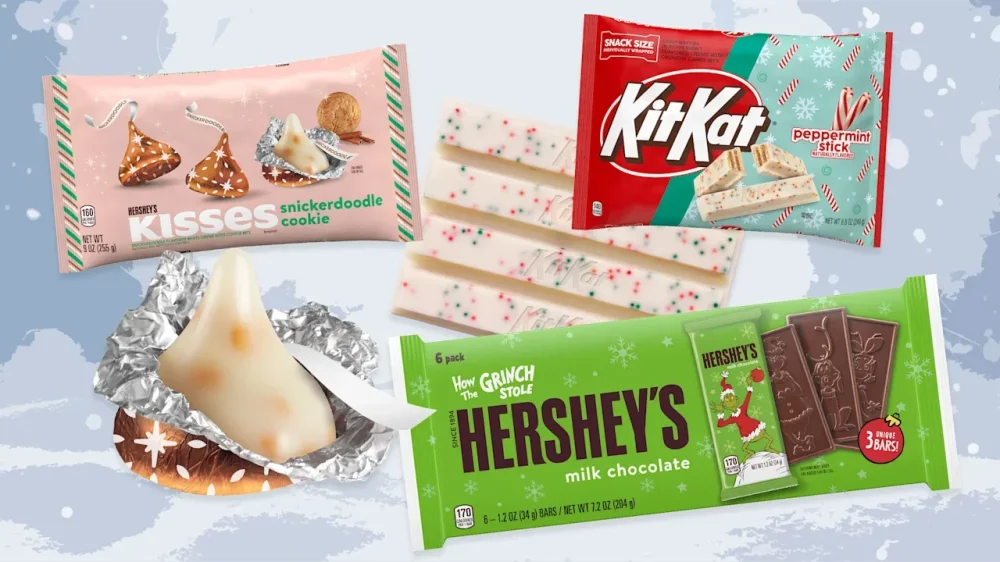
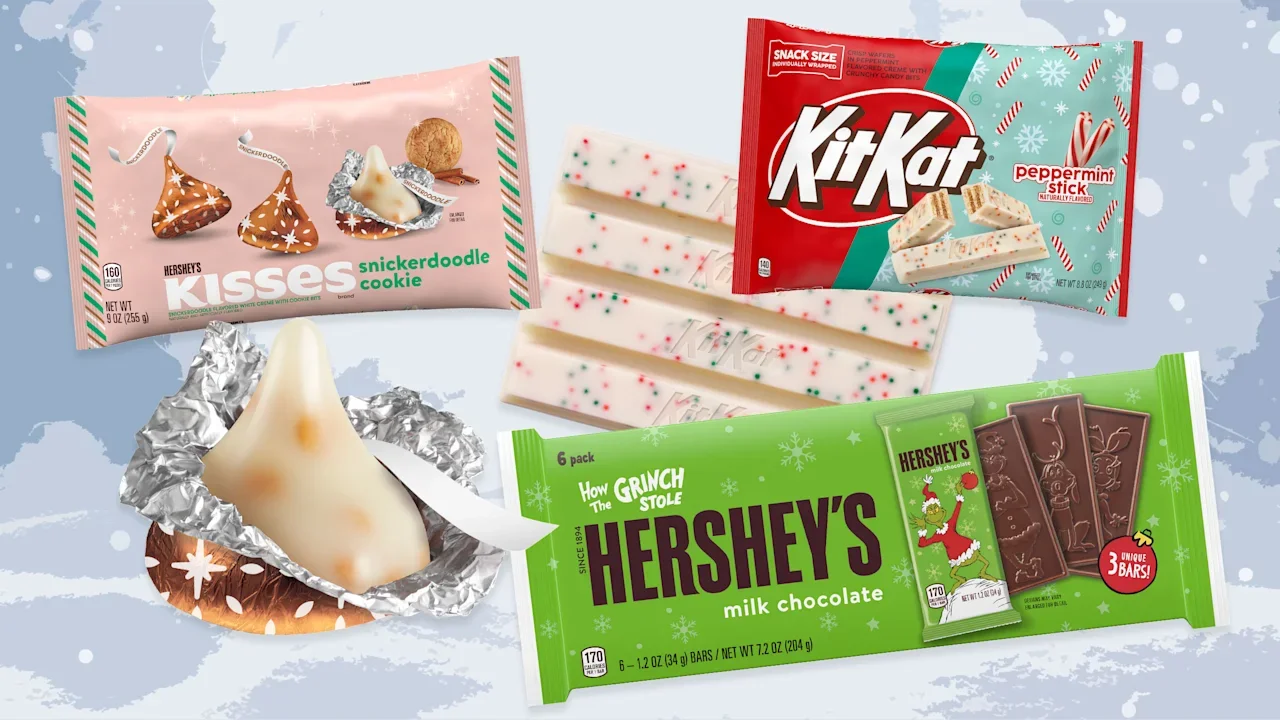
Now that Halloween has come and gone, you might have wrongly assumed that candy season is over. Not if the Hershey Company anything to say about it. In fact, the sweets are just getting started. On its first-annual holiday virtual preview this week, the confectionary company revealed four exciting new products and explained how the company is stocked and ready to make the hectic holiday season even sweeter. Here’s what to know: What new items does Hershey have up its sleeve? Hershey announced four new treats that will hit shelves this holiday season: Hershey’s Kisses Snickerdoodle Cookie Candy Kit Kat Peppermint Stick Reese’s Mini Trees Hershey’s Grinch Milk Chocolate Bar After extensive market research, Hershey discovered that a resounding 76% of people stated they would purchase a snickerdoodle-flavored option, and Hersey is obliging with new snickerdoodle Kisses. It’s the perfect topping for a cookie and there’s even a recipe right on the packaging. The gold wrapper also looks delightful in a candy dish. Research also showed that mint is a popular flavor during the winter months. To capitalize on that trend, Kit Kat bars now have a peppermint version. These come in snack size, normal size, and king size to appease all hunger magnitudes. Meanwhile, the classic Hershey’s Milk Chocolate Bars are continuing their partnership with the Grinch, Dr. Seuss’s iconic Christmas hater. Popular characters such as Cindy Lou Who, Max, and the big-hearted green guy himself are molding into the chocolate making it extra festive. Cheerful shapes are also here to stay. Reese’s Peanut Butter Trees, now available in a mini version, are a perfect tree trimming snack. How Hershey became a confectionary powerhouse These days, the name Hershey is almost synonymous with chocolate bars but the company actually started with caramel. In 1886, Milton S. Hershey founded the Lancaster Caramel Company in Lancaster, Pennsylvania. After attending the World’s Columbian Exposition of 1893, Hershey fell in love with chocolate and created the Hershey Chocolate Company as a subsidiary of his original company. In 1900, he would sell the Lancaster Caramel Company but retain the chocolate side of the business. That same year, the first Hershey’s Milk Chocolate bars were sold in an effort to make the confection affordable to the average person. Hershey’s Chocolate Kisses would make their debut seven years later. In 1925, the Goodbar was introduced, and in 1963 Hershey acquired H.B. Reese Candy Company. The Hershey Company today is the parent company for over 100 brands, including Jolly Rancher, Rolos, and SkinnyPop. With a market cap of roughly $34 billion, the company reported net sales of $11.2 billion last year. And it’s not just about sweet treats. Hershey’s salty snacks unit in North America grew 10% in the third quarter of this year, generating $321 million. It’s never too early Hershey’s is ready for the big holiday shopping rush. In the preview event, the company explained that customers shop early because they are planning ahead, want a little treat for themselves, and don’t want to miss out on limited-edition items. So if you were worried about missing the Halloween season, consider holiday sweets as just as satisfying. And as an added bonus, you get to create traditions around the confections that don’t require anything scary. Savor the sweetness of the season with Hershey’s many merry offerings. View the full article