ResidentialBusiness
Administrators
-
Joined
-
Last visited
Everything posted by ResidentialBusiness
-
 Grappling with innovation and changing consumer attitudes is second nature to marketers, who have already lived through many technological shifts over the past two decades. But forecasting where things are going is especially hard when it comes to modern AI, which has such unusual, non-deterministic properties. You can’t just extrapolate from the state of AI today to understand where AI is going to be in five years (or one…); during this sort of a platform shift, you need to take a deeper first-principles look. Some things won’t change. Consumers will always want products, services and experiences that resonate and meet their needs. Marketers will always want easier, faster and more effective ways to connect with consumers. But the technologies that mediate that relationship are primed to shift in the coming years in major, unprecedented ways — impacting how marketers do their work, and the customer experiences they’re able to deliver. How the marketer experience will evolve: Less rote work, more creativity The history of marketing is built around constant evolution. But the scale and complexity of the change triggered by the rise of modern AI may test even seasoned customer engagement teams. To thrive, marketers need to open themselves up to new skills, perspectives and capabilities that will allow them to do more with less. This change is already underway. As marketers take advantage of AI, they’re spending less time on rote tasks (like manual message creation) and more on strategy and creative work — from brainstorming innovative campaigns to deepening their testing and optimization strategy. These efficiency gains will grow as AI becomes a more prominent part of the customer engagement process, allowing brands to set goals and guardrails, then empowering their AI solutions to independently consume context, make decisions, and act on marketers’ behalf. Today, that might look like training basic agents on your brand’s voice to ensure that message content is consistently on brand. But as we gain trust in AI’s ability to operate unsupervised over longer time horizons and to handle complex projects, more marketers will be able to shift their focus to strategy and effective management of the AI resources at their disposal to enable AI decisioning and other essential optimizations. How team experiences will evolve: Humans and AI agents working side by side Marketing is a collaborative art, where building a successful customer engagement program often depends as much or more on marketers’ ability to work together effectively as it does on their individual skills. But while AI may help marketers to work with internal stakeholders more effectively, its biggest unlock is the ability to be a direct “teammate” to marketers themselves. And by leveraging AI’s ability to create countless agents that can support customer engagement, even entry-level marketers will likely find themselves essentially operating as a “manager” of a team of autonomous subordinates. Imagine creating a whole team of agents, with one tasked with personalizing product recommendations, one that QAs messages to ensure they’re formatted and built correctly, one that handles translations and another that reports back at the first sign of campaign underperformance. By supplementing your existing capabilities with agents, you aren’t just reducing the burden on yourself and your human colleagues; you’re also building a digital institutional memory, training these “teammates” with context and goals and reward functions to be able to keep supporting your efforts and driving value even as human coworkers come and go and your team’s goals shift and evolve with time. AI and customer engagement: How brands can win the future For years, marketers have sought the ability to truly personalize communication on a 1:1 basis across an audience of millions, and to do it swiftly, efficiently and at scale. This was the Holy Grail of marketing, but due to the limitations of technology it simply wasn’t achievable for even the most advanced teams. That’s all being made possible by AI decisioning, a powerful new type of functionality that can force multiply brands’ marketing performance and creative impact while delivering what their customers want and need. Previously, a brand trying to win back lapsing customers had a long journey ahead of it. It might start by leveraging a churn propensity model to identify which customers are most likely to churn, then use a product prediction model to figure out what products to highlight in order to tempt them to return. From there, they’d need to run a series of A/B tests in order to figure out which offers and channels will work best. But while taking that approach is a traditional best practice, it only got brands so far — they could target micro-segments on the right channel with the right offer, but truly 1:1 engagement was still out of reach. AI decisioning represents a new way forward when it comes to personalization. This approach leverages reinforcement learning, where AI agents learn from consumer behavior and learn over time how to maximize rewards (such as conversions or purchases) in order to optimize the KPIs that have the biggest impact through ongoing, autonomous experimentation. That means AI decisioning can seamlessly determine not only the next best product offer for those lapsing users, but also the best channel, the optimal time of day or day of week, the frequency that makes the most sense, the message most likely to drive ideal outcomes, and any other dimension that could impact whether a recipient takes a given action. Even better, because AI agents are constantly experimenting in the background, the model can continuously adapt to shifting consumer preferences and behavior. And because these models use first-party data about every available customer characteristic, AI decisioning makes it possible to engage with individuals in a true 1:1 way, rather than relying on segments. The result is exceptional relevance and responsive experiences for individual consumers, something that’s only possible because of AI. Final thoughts With any major technology shift, it isn’t enough to just plan for the obvious outcomes — you must ensure you can react effectively to the changes that no one knows are coming. To succeed, brands need to pay careful attention to the arc of this new technology. Responding to a platform shift can’t be a one-and-done thing, and brands that create a five-year plan without building in regular pulse points and adjustments are going to quickly find themselves falling behind their more agile, flexible peers. To see the full benefit of AI in their customer engagement efforts, brands also need to look beyond AI. After all, AI isn’t a shortcut, it’s an amplifier — and the AI you use for customer engagement is only ever going to be as good as the infrastructure supporting it. An exceptional AI feature isn’t going to feel exceptional to consumers if it’s built on architecture that can’t take action in real time or can only deliver experiences in a single, prescribed way. Make sure your AI tools are built on a strong foundation and have the infrastructure they need to shine; otherwise, you may never fully achieve what’s possible. Curious to learn more about how Braze is thinking about AI and customer engagement? Check out our BrazeAIᵀᴹ page. View the full article
 -
It’s clear to me that the current “LLM situation” is untenable. These platforms are offering a very expensive set of products with relatively unlimited access. At the same time, you have content creators and publishers in a state of panic as decreased traffic has become the norm. Add to this that platforms ranging from Google’s AI Mode to ChatGPT lack clarity on how to monetize their products, and it becomes clear we’re kicking a can down the line, and sooner or later, all bills come due. The LLMs providing such broad access at no cost are unsustainable long-term. Content publishers offering their content to LLMs for free without traffic or other compensation in return is also unsustainable. It almost feels like a damned if you do, damned if you don’t moment. Those sorts of realities, while painful, encourage (if not demand) movement towards resolution. So, how does this all play out? Market changes are coming, and, in my honest opinion, your marketing and SEO strategies are going to depend on it. But before we get to where we are now and how the LLM scenario will inevitably change, we first have to understand how we got here: Stock valuation (sounds boring, but I promise it’s not). How we got here (Why an LLM marketing correction is inevitable) The biggest “LLM event” with the greatest amount of impact for marketers wasn’t the launch of ChatGPT or Google Gemini. It was the announcement of Bing’s AI chat experience and its integration into Bing Search. Sounds peculiar. However, without this event, the AI wars between Microsoft, Google, and others would not have played out the way they did. How did things play out? We’re at the point where Google created two all but identical products that must cost a fortune to run. Without Bing’s big announcement, I’m not sure we’d ever have gotten to this level of dysfunction and demand for a market correction. Could you imagine telling your boss (or conversely, your employees) you want to build two parallel products that basically do the same thing and cost a ton of money to operate, yet you don’t want to charge for it, nor do you have a plan to monetize it? Well, that’s exactly what happened because of Bing beating Google to the punch. Bing’s February 2023 release of what would eventually be called “Copilot” beat Google to the “LLM in search” punch. While Google had announced “Bard” a day before Bing’s conference, Bing was the first to place the AI chat element into their SERP. (Albeit it only worked in Edge, so who was really using it?) From that day on (literally), it was a modern-day space race. Not wanting to be overshadowed, Google scrambled and announced “Live at Paris” for February 8, 2023. This, Google felt, would be the moment they reclaimed the narrative from an “unworthy” Microsoft. Sidebar: Talk about not being able to handle your competition’s success. Bing was king of the hill for an entire day before Google scrambled to get Live from Paris on the books. As Frankie Goes to Hollywood said, “relax.” Sidebar to the sidebar: The inability of these companies to “relax” and act strategically has been their undoing to no small extent . The feedback on Google’s Paris event was scathing. Mashable asked, “Hey, Google, are you OK?” VentureBeat described Google’s response to Bing as “muted,” with TechRadar stating, “Clearly, Microsoft has pushed Google into making Bard public a little earlier than it’s comfortable with.” TechRadar was spot on, and none of us could have predicted the absolute product development and marketing madness that was to ensue. The consequence of Bing’s win and Google’s snafu is that everything from that point onward was about public opinion (which means everything became about immediate reaction without genuinely considering the long-term consequences). Each of the LLM players had to start thinking about how they were perceived lest they feel the wrath of the investors. That’s a very important point to understand. What happened after February 2023 has had, in this author’s opinion, very little to do with developing innovative technologies to improve the web and a lot to do with developing innovative technologies to improve stock prices. The problem is that this kind of thinking inevitably leads to market dysfunction (as we are experiencing now), followed by market correction (which we have yet to address). Before I address how I think the correction will play itself out, let’s first explore the great AI stock wars in a bit more detail. Understanding how and why things have played themselves out as they have is equally as important as understanding where things are currently. Also, without full context, we can’t really determine the inevitable consequences and corrections that are yet to come. So Google is focused on stock growth, first and foremost. Why is that so bad? After all, they are a publicly traded company. There are a million ways to understand this question, but I want to focus on what it means for the wider digital marketing community. Google has been sending mixed messages and is seemingly operating in a confused state. Yet, we’re left trying to act. Do we act now based on how Google has constructed the AI ecosystem, or do we wait to see how things settle in the end? How can we even predict how they will settle in the end? Let’s start breaking this down so you have greater clarity. Find Your Site’s SEO Issues in 30 Seconds Find technical issues blocking search visibility. Get prioritized, actionable fixes in seconds. Check My Site Powered by data from Google’s march to LLM madness Google’s Paris 2023 event was really the first time we ever saw Google’s vulnerability as a brand. It was the first time I can recall people legitimately wondering if Google was a brand on the decline and if it would fail to live up to the moment. For a company, that’s a nightmare scenario. After the PR nightmare that was the Paris event, Google had one last shot to restore user confidence and industry supremacy: Google I/O 2023—which was set long in advance for May. Google’s annual conference for developers and software engineers is an important event where major products are announced. The outcome of this event can have a huge impact on how Google is perceived by the overall market and investors. In May 2023, weeks after its February snafu, Google tried to regain lost ground when it announced its “search generative experience” (SGE) would be available in “Google Search Labs” to US users. In simple terms, Google announced its version of what Microsoft previously announced in February. As with Bing, Google would limit who could access it (mainly because the product wasn’t ready and was only announced to keep up with Bing). Only the US and those who voluntarily signed up to experiment with the SGE product via Search Labs would have access. Why? Because the product was not ready for release. Looking back now, it was a crude version of AI Overviews (AIO), which is a crude version of AI Mode. This was the first instance of a pattern of behavior that saw Google developing and releasing products in order to maintain its place in the market. Think of what happened in terms of stock valuation. What did Google need to do if it wanted to maintain its stock valuation after Microsoft beat it to the punch, and after Google’s own initial response was perceived as weak? It would have to offer an actual product people could use, as Bing had done. It would have to announce that its version of AI in search was rolling out—whether it was ready or not. (Hint: It was not.) Which is exactly what they did. They offered an extremely limited number of users access to a product that not only wasn’t ready, but didn’t even have a final name yet. (Search Generative Experience…now that’s a name I haven’t heard in a long time.) Google didn’t make SGE accessible in labs because it wanted to. It had to in order to be seen as keeping pace. For Google, it was the smart move. For users and digital marketers, it was kind of a mess. It brought up a lot of questions about the long-term sustainability of a web driven by LLMs and what it meant for everything from traffic to conversions to whatever performance metric you prefer. Prior to I/O 2023, Google’s stock value was hovering around $105-$108 per share. After I/O 2023? A new price trend between $115-$125 per share emerged. Success. It’s hard to have any sort of market clarity when the main player is developing and releasing a product that’s more about optics and stock valuation than about moving user needs forward. That leaves digital marketers in a very awkward spot. Fast forward to Google I/O 2024. The AI hype had only grown over the course of the year, and Google had learned its lesson. It was not going to fall behind; it would keep announcing the next evolution of AI in search. Whether its product was ready or worthy wasn’t the question. Perception was everything. In order to keep stock valuation in line with the power of AI hype, Google would have to regularly announce something significant about AI in search or risk stagnation (if not worse). Google would not let February 2023 repeat itself. (Think of that month as a period of trauma that irrationally drove Google’s actions. Of course, that’s my opinion.) Thus, it was announced at Google I/O 2024 that AI Overviews (formerly SGE) would be open to all US users, as well as other countries as time went on. (Over the course of 2023 and 2024, Google had evolved its SGE experience and renamed it “AI Overviews.”) LLMs on the Google SERP were here, and within a month, the stock price jumped from $168 per share to $177 per share, eventually hitting $186 before falling back down. Let’s recap: We have Google first trying to keep pace with Bing by announcing a limited integration of LLMs into search (2023). Google then expands on this limited integration, and brings LLMs to the SERP in a real way (2024). In two years’ time, Google showed the market that it hadn’t lost its touch and was a real player in the LLM space. Enter 2025. And if you’re not convinced that any of Google’s major LLM announcements for the SERP have little to do with us as marketers or people as users, then check out what happened next: Google announces AI Mode is live for all US users. Google (as I briefly mentioned earlier) had been building a second LLM called AI Mode. Initially, it was, like AIOs, limited to US users who signed up for it in Search Labs. However, at I/O 2025, Google announced AI Mode was open to all US users at I/O 2025. In other words, as of the writing of this article, Google is running two incredibly similar products (AIOs and AI Mode) that are very costly and has no real plan to monetize them. In fact, it’s pretty clear that AI Mode is the superior choice between the two. AIOs literally serve as a gateway to AI Mode. Moreover, AI Mode is more of a one-to-one competitor to ChatGPT. It’s also a better product with fewer of the gaffes AIOs have become infamous for. It’s not a secret that AI Mode is going to replace AIOs at some point. Google’s Head of Search, Liz Reid, was quoted as saying, “This is the future of Google search, a search that goes beyond information to intelligence.” How did we get here? We got here because of what we already discussed above: Google needed to maintain a certain level of perception in the race to LLMs on the SERP, and it developed a product that wasn’t really capable of doing that in order to drive stock valuation instead of user satisfaction. Concurrent to spending time and resources on AIOs, Google was also developing a more substantial and viable product (AI Mode). The latter still isn’t ready for integration into the main search results (we’ll touch on why later). Now we’re dealing with a situation where we, as marketers, are trying to find some sort of construct to work from, but that construct is incredibly volatile and unpredictable. To put it bluntly: Who builds two of the same tools for the same audience with the same intent behind them, and how predictable is anyone who does? To make matters worse, Google’s latest positioning for the market only adds more confusion to the equation. Remember, Google has to address the market’s next logical question about Google’s “AI in search viability” (in the form of product announcements). The next question the market needs an answer to regards long-term viability (i.e., monetization). Are these LLM products actually a sustainable driver of revenue growth? Thus, at I/O 2025, Google CEO Sundar Pichai talked about how they are lowering the costs of AI outputs. He wasn’t talking to us, however. He wasn’t even talking to environmentalists. He was talking to investors who want to know how all of this shakes out long term. With the launch and popularity of LLMs across the board, the question becomes about profitability. Part of the uncertainty is the cost to run these LLMs. Which is why Sundar was talking about bringing down the costs, as Google must start addressing cash flow and profitability. How do I know that? Simple. They talked a ton about adding ads to both AIOs and AI Mode at the same event. However, none of the announcements about ad placements in Google’s LLM properties had much, if any, substance. For starters, advertisers don’t even know if the click they receive came from an AI property or from within the traditional results. (Yes, as of the time of this writing, people paying Google to run ads do not know if the clicks that cost them money are from AI Mode or AIOs or just from traditional placement within the search results.) That’s a telltale sign that the clicks are not coming from AI Mode or AIOs (because if they were, Google would be shouting it from the rooftops and showing off data to back it up). Moreover, Google made all sorts of confusing announcements about ads appearing above, below, and within AIOs. In other words, it appeared as though Google was trying to purposefully muddy the ad click waters by saying it would place ads above, below, and within the AIOs. And again, there is no data advertisers have access to that would indicate where the clicks came from. Google’s AI properties not being a potent source of PPC clicks aligns with what has become known as the “Great Decoupling” of clicks and impressions on the organic side. (We don’t have direct data on this because Google refused to segment AIOs in Search Console—another tell-tale sign.) My thinking is, if people are not clicking on the organic citations in Google’s AI properties, they are certainly not clicking on the ads (which have a significantly lower CTR than organic results historically). Google’s announcement of ad placement within AIOs and AI Mode at I/O 2025 was a red herring. Essentially, we have Google announcing ads that it knows no one will click on and that are not a sustainable form of advertising, and therefore revenue. But reality doesn’t matter here—perception does. Google isn’t talking about ads in AI Mode and AIOs because it has a plan to monetize them in this way. It’s talking about monetization because it has to in order to keep up with the answers investors want. Thus, Google announced monetization to keep the stock hype real, when in reality, the program they announced would be completely ineffective at driving revenue. Even if Google had a genuine ad revenue plan for AI Mode and AIOs, they can’t implement it right now. If they do, folks will likely flock to ChatGPT instead. AI Mode has to both establish itself more and be substantially better than ChatGPT before Google can implement any monetization plan. Google is stuck between trying to monetize to keep the stock valuation up, but also not monetizing to keep the stock valuation up. It’s certainly a weird place to be. And so, how are we supposed to create a strategy to approach LLMs if Google itself is behaving irrationally? (Rationally, from our point of view, from their immediate goals, it all makes sense.) My answer is to look at the inevitable market corrections that are yet to come. Now that we better understand Google’s behavior…now that we can separate what’s real from optics…now that we can distinguish between what might be a legitimate AI product within the Google ecosystem and what’s there for stock valuation…now we can start to understand the consequences of it all—and that’s a place we can act from. The market corrections coming to LLMs As I said at the outset, the whole situation regarding LLMs in search isn’t sustainable in its current form. I think now that we have more context, it’s easier to see why that is. I’m a big believer that if something feels like it will inevitably hit the fan, it will. It’s a matter of when, not if. Here’s how I see it playing out, and, consequently, what I think it means for developing a strategy to approach LLMs in search. Let’s start with the first AI market correction: AI hype will gradually decrease: Everything I’ve said here is predicated on the AI hype cycle. If people of all sorts were not hyped about AI, none of this would be an issue. Google can’t drive up its stock valuation if people in general aren’t very excited about AI technology. The increase in stock valuation is only possible as investors see how hungry humanity seems to be for AI technology. This dynamic can’t—and won’t—last forever. The truth is, we’ve already started to move past it (which is exactly why Google is starting to talk about cost reduction and monetization—more on that soon). It’s possible that generative AI is slowly becoming second-fiddle in the hype machine to agentic AI. But none of these hype cycles will last forever (and my digital marketing veterans know this all too well). The reason why the hype machine won’t last is that generative AI and LLMs are not always great. Sometimes they can be fantastic, other times less so. They can save time on certain tasks, but not others. Put simply, AI isn’t a panacea. It’s a fabulous technology, but not a cure-all. Meaning the hype and the reality don’t align. I think it’s been one of the best-kept secrets in all of marketing, but large enterprise-level teams have had huge amounts of skepticism about generative AI from the get-go. They just don’t talk about it a lot because these brands don’t want to be seen as going against the grain. (They also aren’t about to tell you their strategies.) But these teams have not adopted the technology in the same way “the rest of us” have. The skepticism seen at the enterprise level is rooted in reality. These enterprise teams aren’t naysayers; they just don’t think using generative AI to the extent we do would allow them to create a consistently quality product, which would hurt their bottom line. That right there is the unsaid truth. AI is amazing, but it’s not always great for our bottom line. It can do some incredible things, but a lot of what generative AI and LLMs output is inaccurate, low-quality, and a shell of what an actual “quality output” would be. Generative AI providers are not unaware of this. I had a client in the space, and the entire reason they hired me was to help pivot their brand positioning because they realized a lot of what is being offered and said to users is overpromising. To think that people won’t catch on and adjust is fantastical. It’s already happening. I would love for it to happen because people realized the big tech companies are manipulating perception for the sake of stock valuations, but that’s being too idealistic. Instead, people are just now starting to catch on and admit that generative AI has serious flaws. Workplaces are providing training about the limitations of AI and what to watch for in the output. All of that chatter and conversation is compounding at the moment. As I’ve said elsewhere, my wife is a great example of this. She’s a nurse manager, and she was required to take a course about “AI.” She came home shocked at the level of inaccuracies and what people are using AI for. (You can likely imagine why a healthcare professional would be required to take such a course.) As more of the population becomes increasingly skeptical about LLM output and generative AI as a whole, the power of big tech to leverage its AI development for stock valuation diminishes. The first—and the more powerful market correction—is that people will no longer feel as hyped about AI, nor be as easily manipulated by AI hype. This leads us directly to the second AI market correction that is going to happen: AI hype will no longer drive increased stock valuation: Once the hype around AI finally starts to decrease, the ability of Google to drive stock valuations with announcements like, “AI Mode is Search Labs for the US, and only the US,” won’t be possible anymore (or will at least be significantly less impactful). The incredible impact AI tech development has on stock valuation directly depends on the hype. If the hype wanes, investor outlook on the tech will also wane. When that happens, Google will have to focus on more of a cashflow-first profitability model. If the stock valuation can’t cover the extreme cost of business (which for Google is double since it’s running a duplicate product), then it becomes necessary to move to a profitability model. That’s when we’ll finally see Google figure out how to monetize its LLM in search. Personally, I expect it will work like a YouTube ad. You’ll get 10 free prompts per day, and before you get five more free prompts, you’ll have to sit through some sort of interstitial ad. The only reason we currently have so much free access to such a costly product is that Google and ChatGPT are fighting for dominance. I suspect this is going to be harder for ChatGPT to win, as it has griped about how much users saying “please” and “thank you” in their prompts costs. Google’s got better product integration and a pretty big pocketbook by comparison. However the corporate chess ends up playing out, the reality is still the reality: As the hype wanes, the LLMs are going to have to shift financial gears. (Which you can tell that Google already realizes from all their talk about ads in AI Mode and AIOs.) Now we come to the final market correction, the content correction: The content in LLMs will start encouraging exploration: As dumping out more and more responses becomes unsustainably expensive, the content within LLMs will change as well. Google is already onto this. (They’re very good at seeing what’s coming.) As dissonant as their product development strategy has been, Google has always shown itself to be very adept at understanding what people want. Once you’re operating within a profitability system, your entire way of thinking changes. You go from spending like a teenager at the mall to being middle-aged and with a mortgage faster than you can say “home equity loan.” At the moment, LLMs are built within the context of free money. The mindset is to spit out as much free access as is necessary to acquire users, round up investment, or increase the stock valuation. But as with every bubble, this too will burst. When it does, these platforms will suddenly start considering what people really want from an LLM in totality. (I think they currently look at one slice of user demands at a time, but lack total unification.) On a dime, Google will stop talking about how everyone loves AIOs and shift to “people want to explore more.” Which is exactly what Google has been saying. Google has been talking more about people exploring the web and how that’s a human need. For example, in an interview with The Verge, Google CEO Sundar Pichai said, “I think part of why people come to Google is to experience that breadth of the web and go in the direction they want to…” I think Google is talking about things in this way because they legitimately know that’s how people operate and behave online. And also, it’s going to be way cheaper. If Google’s AI Mode were part prompt and part portal instead of being 100% prompt-focused, it would solve so many issues for Google. If I ask AI Mode to tell me about the history of the New York Yankees, I get this typically long, undynamic summary: Imagine if I got a shorter summary accented by all sorts of entry points to see videos about the history of the Yankees, images of the team throughout history, a list of some podcasts on the topic, and more. Wouldn’t that be way more dynamic? It would also be cheaper. How? Because then I would engage with the full output and follow-up prompts—and not by default, but by desire. I might read the summary, see a video card, and watch a YouTube video, then come back to AI Mode with more questions about the team. My follow-up prompt would then be more purposeful and not just a knee-jerk reaction. Which would make sense if I knew I had to view an interstitial ad before asking the next prompt. After all, I’m not going to sit through some ad just to ask a brainless follow-up prompt. If, however, the follow-up is purposeful, then sure, show me an ad. Deepening the knowledge scheme of the user results in more purposeful prompts, which cuts down on costs and makes the follow-up prompt more intentional. That’s better for both the users who have to sit through the ads and the advertisers who want you to click on their ads. That scenario isn’t crazy. It’s a form of what Google already showed us when they first demoed Gemini. Here’s a screenshot from that demo: What you’re looking at is basically a knowledge portal. It’s a custom multi-modal response whose format aligns with the query/prompt and that allows for follow up. It’s similar to what I described earlier, with AI Mode being part prompt-based and part content portal. This is where the content starts to balance out. If what I am saying occurs, and AI Mode morphs from linear LLM into a content portal that encourages exploration (which is very much part of how we learn and function), then web-generated content has more room to thrive. We’re seeing the web push back on LLMs with things like Cloudflare’s CEO looking to coerce Google (and beyond) by blocking AI crawlers (by default) and moving to a pay-per-crawl model. (The practicality of this is debatable, as doing so would block your entire site from all of Google currently.) Compared to what Cloudflare (and others) have in mind, the market correction I’m talking about here will help bring that balance back a bit more organically (no pun intended). In an exploratory model, there is room for AI output and there is room for exploration entry points. This gives more opportunity to web content. Does it return it to what it once was? No. Thank God. (More on that below.) To summarize, the market correction that sees less hype around AI leads to a more profit-focused strategy for platforms like Google, which leads to a more balanced content experience across the platforms by encouraging more exploration. Now what? What do you do with all of this? How does this help your actual strategy? How to develop your visibility and marketing strategy for LLMs You need space. You need space so that you can move, pivot, and adjust as everything around you changes. Everyone is trying to make sense of everything. However, without understanding the full context, it’s hard to know what you’re looking at. The problem with investing in a strategy for dealing with and thriving with LLMs without the context we explored here is that it can pigeonhole your activities. In other words, my biggest piece of advice for you is to leave yourself the space needed to allow everything to play out. If you hedge your bets, you’ll be in a better position once the inevitable market corrections occur. Imagine a team that sees the LLM ecosystem as it is now and determines that this iteration of LLMs and search is here to stay now and forever. Everything from their strategy to their allocation of resources would become completely stuck as LLMs and the ecosystem around them evolved. Accounting for the upcoming adjustments and doing your best to directionally understand where things are headed is invaluable. No one has a crystal ball and can tell you exactly how everything will play out. I think certain inevitabilities and corrections must happen, but I can’t say when and how they’ll happen. Without accounting for inevitable shifting, you’ll just end up feeling stuck and endlessly trying to adjust to change in the ecosystem. However, if you can account for the fact that there will be adjustments, you can construct your strategy and team in a way that isn’t over-invested in the here and now and can move with the inevitable changes coming down the line. Strategic tips: Think about your content production more conceptually. If you’re just trying to drive traffic by getting listed in citations (if that even works), then what happens when there’s a shift that upends how citations are placed and even accessed? Do more than one thing. If the reason why you want to engage in any given activity is simply to drive traffic, I don’t recommend doing it (as a rule, and there are a lot of exceptions to the rule). What drives traffic today may not even exist tomorrow. In an ecosystem that will inevitably change, dedicating too many resources to an activity that is simply a distraction, is risky. If, however, that activity has the potential to not only drive traffic but also do other things for you, such as build authority, generate resonance among an audience, build up your web presence, position your brand in a certain way, and so on, then go for it. Now, if the traffic potential changes, you’re not stuck in an activity that has no value for you. You may still want to pivot and adjust, but you won’t be wasting your time and money in the interim. Be balanced. You have folks on the one side screaming that SEO isn’t dead. Then you have folks screaming, “do brand—performance marketing is dead.” The truth is somewhere in the middle. Find a strategy that allows you to develop an extremely strong web presence (a lot of which is based on strong brand marketing tactics that develop connection and audience resonance). At the same time, hunt for and take advantage of performance opportunities. Your strategy should be like a homepage. Do you want your homepage to have no ability to emotively connect with your audience? No. Do you want your homepage to not explicitly discuss what you offer and appropriately encourage conversion? Also, no. Your approach to SEO and LLM visibility should be the same. The web has changed, and a wider, more substantial approach to brand for increased web presence is a must (which has been difficult for a lot of performance marketers to really appreciate). At the same time, there are opportunities to perform better (and even more immediately), and you should capitalize on them. The brand work you do should set you up to perform better and without as many costs or resources. The more you can integrate the two sides of marketing, the better you’ll align with where I think things are headed, and without locking yourself in as things change. Don’t expect a return to peak search traffic I want to end with one point. While I don’t think the traffic construct LLMs currently create is healthy, and while I do think there will be a correction, I do not think we’re ever going back to the “good old days.” And that’s a good thing, because, to quote Billy Joel, “the good ole days weren’t always as good as they seemed.” There’s already been a market correction to content. If you’re still of the opinion that this correction (which has resulted in less traffic to many sites) is the fallout of AI tech acting improperly, I have news for you: It’s also the result of performance-focused content not addressing real user needs and the internet user pushing back on the expectations of what web content should be. I don’t believe it would be good for the internet as a whole to end up back where we were with 100 pieces of content on the same topic, each not offering any real differentiation or value from the next. Yes, I do think more exposure for web content is inevitable. Mainly because it’s human nature to explore and build knowledge schemes. I do not, however, think it will be as it was before. The web is narrower than it was, and it is not going to exponentially widen, in my opinion. The opportunities will be more selective, even as LLMs evolve. Value-based content with actual substance and genuine differentiation will find space. The web is heading towards being a more “specific” place, and not only can nothing stop that (since it aligns with what people want and how they consume content now), but nothing should stop it because it’s a healthy evolution, albeit painful at times. View the full article
-
Property and other assets are being used as collateral in fast private loans for those who have little cash on handView the full article
-
Technology stocks fell on Friday, amid fears of an AI bubble, a further drawn out federal government shutdown, and economic data that suggests consumer sentiment has fallen toward record-low levels. That’s in addition to economic data that showed last month’s layoffs hit their highest level for October—in 20 years. That report, from global outplacement firm Challenger, Gray & Christmas, also also said hiring slowed to lowest point in 14 years. Despite strong third-quarter earnings reports, the tech-heavy Nasdaq Composite Index (^IXIC) was down once again, for the second consecutive day, about 1% in afternoon trading on Friday, as big Tech Stocks tumbled, closing out the week as the Index heads toward what could be its worst week since April, when the The President Administration introduced its “Liberation Day” tariffs. Chip stock Arm Holdings plc (ARM) was down 4%, while Advanced Micro Devices, Inc. (AMD) fell 3%, and Al chip designer Nvidia (NVDA) was down 1%, at the time of this writing in afternoon trading, as investors worry about high valuations, and mass layoffs in the name of artificial intelligence (AI). Tesla (TSLA) was also down some 3%. Among those sounding alarm bells is hedge fund investor Michael Burry, who runs Scion Asset Management, and is betting against both betting against both Nvidia and Palantir. According to his Securities and Exchange Commission filings, Scion bought an estimated $187.6 million in puts on Nvidia, and another $912 million on Palantir, as CNN reported. Burry has warned both companies are overvalued. (Burry famously predicted the 2008 housing market collapse, and was made famous by the 2015 film The Big Short.) Last week Burry posted on X, “Sometimes, we see bubbles. Sometimes, there is something to do about it. Sometimes, the only winning move is not to play,” in what some think is his way of saying there is an AI bubble. View the full article

-
The FHFA director hinted at a partnership in the works and doubled down on criticism of homebuilders and the Fed chair in a housing conference interview. View the full article

-
Two years ago, Peloton recalled seat posts on its classic Bike models. Now, the brand is doing the same for seats on its older Bike+ models (but not the new Cross Training Bike+ that came out a few weeks ago). If you have the old model of Bike+, you'll need to reach out to Peloton to arrange a replacement. Which Peloton models are affected by the recall?Per Peloton, this is a voluntary recall of seat posts for Bike+ models made between December 2019 and July 2022 and sold in the U.S. and Canada. If your Bike+ has a PL02 model number on the label inside or behind the front fork or behind the flywheel, it is impacted by the recall. If you've checked and you're still not sure, head to this link for more information. Why the recall is happeningLike the previous recall of classic Bike seats, this issue centers around the Bike+'s seat post, which, "can break during use, posing a potential fall and injury risk to consumers," according to Peloton. The situation seems less serious than that previous recall, when at least 11 people were injured due to the faulty posts. Peloton says it has received three reports of seats breaking across about 833,000 units in the U.S., but no reports of broken seats among the almost-45,000 units in Canada. How to get a replacement Bike+ seatThe replacements are free, so if you qualify, get one right away. To get yours, visit this link or call Peloton's customer service at (833) 821-0099. View the full article
-
With Black Friday just about three weeks away, retailers and shoppers have one thing on their mind—Christmas, the busiest and most profitable time of the year. And now, with Halloween behind us, Spirit Halloween has pivoted to holiday-themed Spirit Christmas, featuring festive decor, gifts, holiday apparel, and interactive displays—including nutcrackers, inflatable lawn Santas, and ugly Christmas sweaters. The retail chain, owned by Spencer Gifts, launched nearly a dozen Spirit Christmas stores throughout the Northeast in 2024. This year, Spirit Christmas is opening 30 store locations in 12 states in the Northeast and Great Lakes area, including its flagship store in Mays Landing, New Jersey. Those stores are in: Connecticut, Delaware, Illinois, Indiana, Kentucky, Maryland, Massachusetts, Michigan, New Jersey, New York, Ohio, and Pennsylvania (see below for a full list of locations). As for the Spirit Halloween locations, some are making the transition to Christmas themes, while others are closing down till next year. Here are all 30 Spirit Christmas locations, according the store locator: CONNECTICUT Manchester, CT Milford, CT DELAWARE Christiana, DE ILLINOIS Bloomingdale, IL Joliet, IL Naperville, IL INDIANA Fort Wayne, IN Merrillville, IN KENTUCKY Lexington, KY MARYLAND Waldorf, MD MASSACHUSETTS North Attleborough, MA Dartmouth, MA MICHIGAN Grand Rapids, MI Novi, MI NEW HAMPSHIRE Salem, NH NEW JERSEY Cherry Hill, NJ Lawrenceville, NJ Mays Landing, NJ Paramus, NJ Rockaway, NJ Toms River, NJ NEW YORK Amherst, NY Bohemia, NY Poughkeepsie, NY OHIO Mentor, OH North Canton, OH PENNSYLVANIA Bethel Park, PA Erie, PA Pittsburgh, PA Whitehall, PA View the full article

-
iPadOS 26 is a huge deal for anyone who wishes Apple would just make a touchscreen MacBook already. The update rolls out a major multitasking redesign that introduces macOS-like windows, a macOS-like menu bar, and a macOS-like file management. The iPad even has the Preview app, for crying out loud—though, to be fair, so does the iPhone. Apple has toed the line with its tablets over the years, introducing features and functions that make the experience more like using a computer, while never really committing to the bit entirely. To that point, iPadOS 26 probably won't replace your MacBook, but it comes pretty close. If your major concerns have to do with things like window and file management, this update is likely up your alley. But even as this new iPad era seems all about a more traditional computing affair, Apple is going backwards a bit, but in a very good way: The latest iPadOS update brings back a fan-favorite multitasking feature: Slide Over. Slide Over makes window management easierPrior to iPadOS 26, Slide Over had been a cornerstone of multitasking on Apple's tablets for years. While you could have multiple apps open at once in varying window sizes, Slide Over let you designate an app window that kept more of an iOS shape—specifically something long and vertical. As the name implies, this window could slide over from the ride side of the display whenever it was needed, and could easily slide back when it wasn't. It was perfect for keeping a social media feed or a messaging app at hand while working on something else: Imagine having two windows open on your iPhone, one for Safari and one for Google Docs, but whenever you needed to send a text, you could pull a Messages window out from the right side of the screen, and swipe it away when it was time to get back to work. The Mac has no equivalent to this, of course, as it relies on standard window management. Perhaps Apple thought that if iPadOS 26 also had more of a standard window management, it no longer needed Slide Over. As such, the company removed the feature as part of its big iPad update this fall. It's not clear whether Apple received negative feedback about this omission, or whether the company decided it missed the feature as well, but regardless of the reasoning, Slide Over is back as of iPadOS 26.1. Slide Over is a little different with iPadOS 26.1 Credit: Lifehacker That said, t feature doesn't work exactly the same as it used to. In order to use it, you need to be using your iPad in Stage Manager or windowed mode, which you can choose from Control Center, or from Settings > Multitasking & Gestures. From here, open an app for which you want to use Slide Over. Long press on the window controls in the top-left corner of the app window, then choose "Enter Slide Over." The app will squish into an iOS-like window on the right side of the display, and you can dismiss it by swiping it away. You can also resize the window into whatever shape or size you want, while still retaining that Slide Over ability. In the image above, you'll see that I shrunk my Apple Music window into more of a square, but you can make it as big as you want—though that might defeat the purpose of setting it as a Slide Over window. How to update to iPadOS 26.1 (and beyond)If you haven't yet done so, you can install the 26.1 update right now from Settings > General > Software Update. In addition to Slide Over, you'll find some other neat features and changes, like the ability to control how Liquid Glass looks on your iPad. If you're a beta tester, you'll skip right over iPadOS 26.1, as Apple is currently testing iPadOS 26.2. The public beta is currently available, and lets you add alarms to reminders for the first time. View the full article
-
Partners called vote to oust chief after controversial incidents rocked Silicon Valley venture capital firmView the full article
-
On November 6, Sweetgreen announced that it was selling Spyce, its division that developed and made its Infinite Kitchen technology to automate the assembly of its bowls and salads. The acquirer is Wonder, the “restaurant and mealtime superapp,” as Fast Company dubbed it earlier this year. With that, it’s time to eulogize Sweetgreen’s star-crossed life as a tech company. No more dreams of AI, blockchain, or robots. Sweetgreen receives $100 million in cash and $86.4 million in Wonder stock, a positive return given that it acquired Spyce in 2021 for a total cost of $70 million. Wonder, which is privately held, was valued north of $7 billion in May after it raised another $600 million. Sweetgreen, which went public four years ago, has a market cap under $750 million. After Sweetgreen’s disastrous Q2 2025 earnings report, I wrote that Infinite Kitchen represented “the first effort by the company to use technology to solve its biggest problem—operations—rather than mere magic dust sprinkles to make the company look like something it’s not.” Now the company’s latest earnings are worse, and it doesn’t own what had felt like a competitive advantage. “A lot of other companies are trying to figure out how to add automation to their experience and are not willing to start over,” Sweetgreen CEO Jonathan Neman told the Wall Street Journal in 2023 while showing off his first restaurant equipped with an Infinite Kitchen. “I’m willing to blow the whole thing up.” The question, though, is when did Neman light the fuse that’s blown up Sweetgreen? Was it two years ago? Was it just November 6? Or was the bomb planted in the company’s earliest days and it finally detonated? Sweetgreen’s stock is down another 12.5% as of Friday afternoon. (In response to queries, Sweetgreen directed me to Neman’s public statements.) In this piece, we’ll explore: What we still don’t know about the sale of Infinite Kitchen Whether Neman could have taken a page from Pixar or Tesla to alter Sweetgreen’s course Why Neman has even harder decisions ahead to make Sweetgreen profitable How Sweetgreen’s positioning as a tech company ultimately failed it Infinite Kitchen has been working Sweetgreen remains committed to deploying Infinite Kitchen; it opened eight restaurants in Q3 and six included the tech. More are planned for 2026. Rather than be responsible for developing and making the systems, Sweetgreen will buy them from Wonder at cost plus 5%, which Neman said was about $25,000, putting the Infinite Kitchen’s cost at $500,000. In turn, Sweetgreen promised investors that the sale will shave $8 million annually from its general and administrative expenses. Those G&A costs are high. As the veteran restaurant operator and consultant Rick Vanzura noted on LinkedIn, Sweetgreen’s overhead was 17.9% of sales compared with Cava’s 10.8%. But $8 million is just over 1% of expected 2025 revenues, meager savings for proprietary technology that Neman lauded again this week as having: “consistently proven its ability to deliver faster throughput, improved accuracy and consistency, and elevated food quality.” In Q3, restaurants with an Infinite Kitchen “continue to realize approximately 700 basis points of labor savings and nearly 100 basis points of [cost of goods sold] improvement compared to restaurants of similar age and volume.” Why give up control of the tech driving 7% labor savings per quarter and 1% in food costs, while it’s improving the product itself? Why Sweetgreen sold its big tech bet The Occam’s Razor explanation appears to be that Sweetgreen really needed the money. Look at its cash on hand: Q3 2025: $130M Q2 2025: $168M Q4 2021: $472M In August, I anticipated that Sweetgreen would soon require fresh capital. I wondered whether the parties providing it would demand company control from Neman and his two co-founders in exchange. This move cleverly sidestepped that possibility (for now) by selling the most valuable thing Sweetgreen owned that it could part with to a private company, buying Neman and company time to turn things around. Neman still likely needs to do a more wrenching corporate restructuring that vastly reduces its overhead (read: major layoffs). The company’s new CFO reported that she’s launched a full review of the company’s restaurant expenses as well as its G&A. We’ll see if Neman can make some hard decisions to reinvent Sweetgreen. The logic underpinning the Spyce sale may be irrefutable, but there’s still a lot we don’t know. To wit: Whether Wonder can also license the Infinite Kitchen tech How long Sweetgreen’s cost-plus deal lasts Whether those terms also apply to future Spyce innovations I don’t expect we’ll get direct answers but this is what investors in particular should be thinking about and monitoring. Sweetgreen’s Sliding Doors moment No. 1: The Pixar path In 1989, Pixar, six years before the debut of Toy Story, decided to sell its RenderMan technology to other companies. Pixar needed cash, especially if it was going to fulfill its vision of making feature-length computer-generated animated movies. The gambit worked. Pixar retained control of the tech, has enhanced it repeatedly over the years, and major motion pictures from other studios still rely on RenderMan. Could Sweetgreen have decided to license the Infinite Kitchen tech to competitors rather than selling it to one and being the licensee? Doing so could have helped bring down the costs of Infinite Kitchen and spurred further innovation, as Wonder now hopes to do. Given how hot the private markets are for robotics tech, could Sweetgreen have engineered some complex financial deal to get funding for Spyce to scale it without having to sell it? I don’t think that’s too outlandish an idea. Alas, public market investors haven’t been patient with Neman (the stock is down almost 90% since it went public). This would have been bold and visionary in 2021 after Sweetgreen acquired Spyce, or in 2023 when Neman talked of his willingness to “blow the whole thing up” and energized investors with the Infinite Kitchen’s potential. Making that call in late 2025 when consumers appear to be cooling to bowl-based meals (the “slopcession,” or “slopapocalypse,” as it were) would have been risky. But the siren call of those labor and cost savings could have won it some customers and allowed it to control its destiny. Sweetgreen’s Sliding Doors moment No. 2: The Tesla way In 2014, Elon Musk open sourced Tesla’s electric vehicle patents. This, too, was a bold move for a still shaky, unprofitable company. Musk did it to accelerate the auto industry’s adoption of EVs, which it did. At the time, Tesla’s market cap was approximately $28 billion. Today it’s $1.4 trillion. What if Sweetgreen had open sourced Spyce’s patents? Would it have sparked a wave of innovation in automated restaurant tech? This is less likely than if it merely licensed systems to rivals, as the restaurant industry is far more atomized than the car business. But the move would have been a bravura stroke that at the least would have bolstered Neman’s narrative that Sweetgreen is a different kind of company. Live by the tech narrative, die by the tech narrative Not long after Sweetgreen went public in November 2021, Kristen Hawley, a Fast Company contributor, wrote in her food and tech newsletter, Expedite, the uncomfortable truth that “salad doesn’t scale like software.” Now we can confirm that restaurant automation hardware to make salads and bowls doesn’t scale like software either. Companies need a story, a vision to sell investors, media, and customers. It’s why Tesla backers voted to give Elon Musk his potential $1 trillion pay package this past week. For Sweetgreen, its story has long been that this was a tech company—no, a platform—that sold healthy salads and bowls rather than a restaurant company that used tech like, um, every other restaurant chain. I wanted to find the first instance of Sweetgreen publicly presenting itself as a tech company, and I believe it initially did so on the occasion of its 2011 Sweetlife festival thanks to a planned integration with a then buzzy social app: “We look at ourselves less as a restaurant group than a think tank,” co-founder Nathaniel Ru told Mashable. “We’re more of tech startup than a restaurant business.” Fourteen years later, Sweetgreen is a restaurant business. Its future success will be determined by continuing to improve its operations, developing new menu items, and marketing itself as a “lifestyle brand,” as Neman told investors, “focused on creating culture through distinct brand moments.” Again, like every other restaurant chain. As I understand it, the company still has a tech team, but so does everyone else. The tech dream may die hard at Sweetgreen HQ but die it should. In other words, the troubled company’s tech Cinderella story is over. Sweetgreen’s enchanted digital coach has become a garden variety analog pumpkin. View the full article

-
Google has updated its Circumventing Systems policy to include a new example explicitly warning advertisers that submitting false information during the Advertiser Verification process violates its rules and will lead to account suspension. The details: The update was added to the Circumventing Systems section of Google’s Ads policies in November 2025. It specifies that providing false or fraudulent information during verification is treated as an intentional attempt to bypass Google’s compliance systems. Violations will result in immediate account suspension. Why we care. This clarification reinforces Google’s zero-tolerance stance on misinformation within its verification programs — meaning even minor inaccuracies could lead to account suspension. As Google continues tightening identity and transparency requirements, maintaining accurate, verifiable business information is critical to avoid disruptions in ad delivery and preserve account trustworthiness.approach to misrepresentation and fraud. The bottom line. Advertisers should ensure all verification details — from business documentation to contact information — are accurate and truthful. Even small discrepancies could trigger policy enforcement under Google’s expanded verification framework. View the full article
-
Flight cancellations under the Federal Aviation Administration's (FAA) government shutdown order have begun, with hundreds of flights and thousands of travelers across 40 U.S. airports affected. This could continue for as long as the shutdown lasts (and potentially impact many more travelers as the busy holiday season approaches). While flight cancellations are never fun, the cascading effect of due to the government shutdown could make dealing with one even more frustrating. Here are four actions you should take right away if your itinerary is cut. Enable alerts from your airlineFlight cancellations often happen with little to no notice, sometimes when you're already en route to your destination, and airlines are certainly scrambling to comply with the FAA's shutdown order. As they continue to pare down their schedules, there's a chance your flight may be cut well before you head to the airport. To keep yourself in the loop, download your airline's app and turn on push notifications so you receive status updates as soon as they're available—and keep an eye on your email and text messages for additional alerts. Check your rebooking options ASAPAirlines will often automatically rebook passengers whose flights are canceled on the next available alternative—so again, make sure you have your airline's app on your phone to quickly view your options. If the airline offers this, you can accept the rebooked itinerary, choose a different one, or reject it and get a refund instead. Going through the mobile app is likely to be much faster than queuing at the customer service counter or trying to get through over the phone. (Though if you do need to talk to an actual person at your airline, we've got a guide for that.) Of course, you should check your airline's guidance specific to shutdown cancellations. Frontier, for example, is waiving change and cancellation fees and allowing passengers to request a rebooked itinerary or refund, but you may not automatically be placed on the next flight. United is offering rebooking options as well as refunds to anyone who chooses not to travel, even if their flight isn't affected. You'll find relevant advisories on your airline's website (for example, Delta, American, JetBlue, and Southwest). Know what you're entitled toIf your flight is canceled less than 14 days before departure and you choose not to travel, you are entitled to a refund—even if you booked a nonrefundable or basic economy ticket. Airlines may offer travel credits or vouchers first, but you can try to request cash if that's your preference. You can look up your airline's standard commitments in the event of "controllable" cancellations on the Department of Transportation's Airline Cancellation and Delay Dashboard, but you should also check the policies specific to the FAA flight reduction as outlined above. Consider booking a backupIf your trip is an absolute must, you may want to book a back-up option at a different time, on a different airline, or through an alternative airport. While there's no guarantee that this flight won't also be canceled, it does at least increase your odds of getting to your destination with a confirmed seat while other affected travelers are being rebooked on itineraries hours or days later. You can buy a refundable ticket—knowing you'll either get to where you need to go or get the extra money back if your original itinerary works out—or use points and miles, which are often easily deposited back into your account if you cancel your ticket. Be sure to check the terms and conditions of your rewards program. You can also look into travel insurance, which will usually fully refund your purchase, albeit for a fee View the full article
-
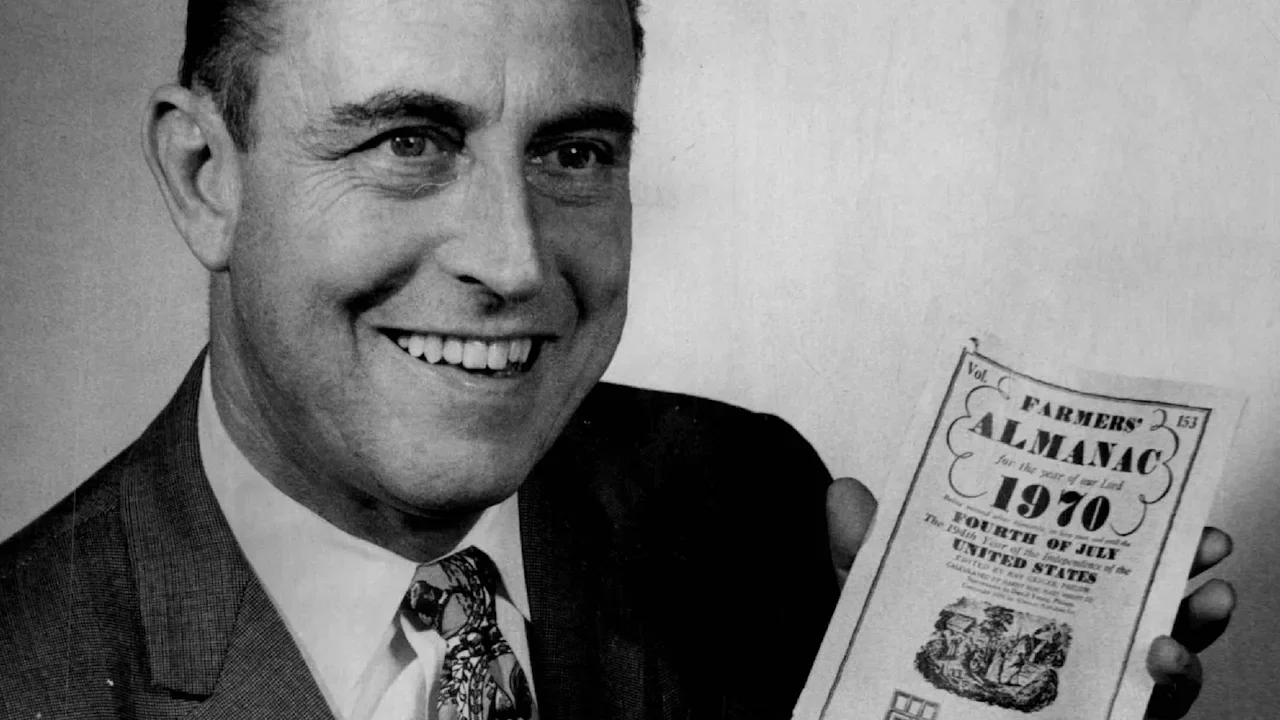
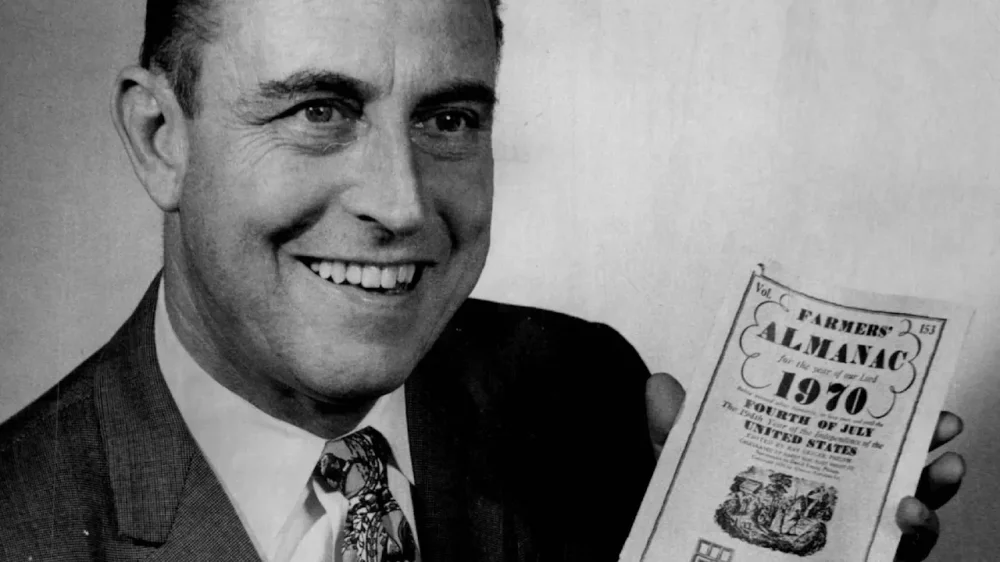
Since 1818, loyal readers of the Farmers’ Almanac have turned to the publication for weather predictions, gardening tips, astronomy calendars, and more. But, on November 6, the Farmers’ Almanac announced that the 2026 edition of the magazine will be its last. The news came through a post to the Farmers’ Almanac website by editor Sandi Duncan and editor emeritus Peter Geiger. “It is with a great appreciation and heartfelt emotions that we write to share some sad news,” the note reads. “After more than 200 years of sharing a unique blend of weather, wit and wisdom, we’ve made the very difficult decision to write the final chapter of this historical publication.” Per the post, readers will be able to access the Farmers’ Almanac website until December, and they can find the last edition of the magazine on its website, Amazon, and in certain local stores. The shuttering of this legacy publication is yet another blow to a beleaguered print media landscape. “Tell your kids how grandad always swore by the Almanac” The Farmers’ Almanac was first founded by Jacob Young, a poet, astronomer, and teacher who ran the publication for 34 years. Its long-range weather predictions, which have been trusted by some American farmers over other forecasts for decades (despite the publication being notoriously cagey about how it devises said predictions), predate the creation of the National Weather Service by more than 50 years. During its 207 year run, the Farmers’ Almanac has had just seven editors. It’s become particularly known for its “Best Days” section, which offers readers suggestions on the ideal timing to garden, go fishing, kill plant pests, or even cut hair and quit smoking. Farmers’ Almanac did not immediately respond to Fast Company‘s request for further detail on the reasoning behind its closure, but the writing has likely been on the wall for some time now. Over the past several years, print media has become a notoriously difficult business as readers turn to digital publications and social media for their news. Print publications that have either gone fully digital or shut down entirely include O: The Oprah Magazine, LIFE Magazine, Entertainment Weekly, InStyle, and, most recently, Teen Vogue. Print magazines have seen something of a revival as a luxury good among young consumers in recent months, but they’re unlikely to see a return to the heyday of publications like the Farmers’ Almanac. Already, dedicated fans are taking to the comments of the Farmers’ Almanac announcement, as well as social media, to mourn the loss of the annual publication. “Oh no, I buy this every year & my friends & family call to ask if we have any storms coming !” one commenter wrote under the publication’s post. “The almanac is so accurate I’ll be lost without it.” Another follower on Instagram wrote, “This is so sad! I just got land to start growing herbs and food and planned to get a membership just as my dad always had.” In their note to readers, Duncan and Geiger expressed their gratitude for supporters, contributors, and partners, adding that, though the Almanac will no longer be available in print or online, “it lives on within you.” “So go ahead—plant your peas when the daffodils bloom,” Duncan and Geiger wrote. “Watch for a red sky at night. Tell the kids how granddad always swore by the Almanac. That’s how our story stays alive.” View the full article
-
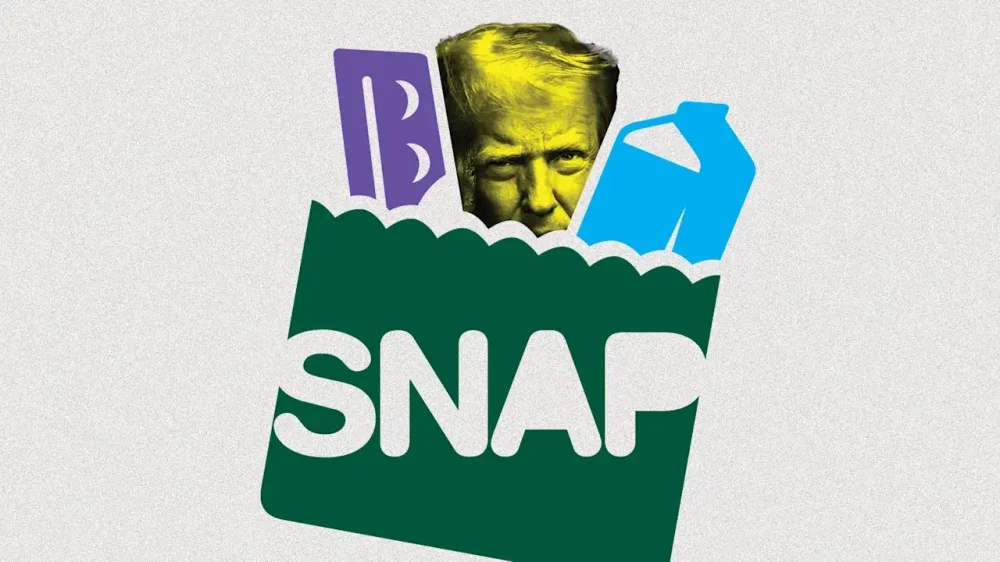
The The President administration isn’t backing down from its refusal to fully fund the SNAP program – even after being ordered to by a judge on Thursday. The federal government asked a federal appeals court on Friday to block a judge’s order directing the The President administration to fully distribute November’s SNAP benefits by the end of the day. In the U.S., 42 million people – 12% of Americans – rely on food stamps to buy groceries and afford food. Nearly 40% of SNAP recipients are children and another 20% are over the age of 60. On Thursday, a federal judge in Rhode Island ordered the government to release the full amount of federal funds for food stamps set to be distributed in November. “People have gone without for too long,” U.S. District Judge John McConnell said during the Thursday hearing. “Not making payments to them for even another day is simply unacceptable.” On November 3, the The President administration said in a court filing that it would pay out half of November’s benefits to SNAP recipients, tapping into a USDA contingency fund, after being ordered to distribute funds by two federal judges. A day later, The President declared that SNAP benefits will only be restored after the shutdown. “SNAP BENEFITS, which increased by Billions and Billions of Dollars (MANY FOLD!) during Crooked Joe Biden’s disastrous term in office… will be given only when the Radical Left Democrats open up government, which they can easily do, and not before!” The President wrote on Truth Social earlier this week. Last month, the U.S. Department of Agriculture, which administers the SNAP program on the federal level, said that it would not deploy a $6 billion contingency fund to cover the cost of food stamps, in contrast with a version of a shutdown funding plan that was later removed from its website. “SNAP contingency funds are only available to supplement regular monthly benefits when amounts have been appropriated for, but are insufficient to cover, benefits,” a USDA memo stated in late October. “The contingency fund is not available to support FY 2026 regular benefits, because the appropriation for regular benefits no longer exists.” Picking up the SNAP slack The SNAP program has found itself on the chopping block as the federal shutdown drags on, but the The President administration has found ways to keep other programs funded without court intervention. In the shutdown’s early days, The President ordered the Pentagon and the White House to use “all available funds” to pay active-duty members of the military, avoiding the fallout of service members going unpaid. In contrast to the fight over SNAP, the White House also chose to fund the Special Supplemental Nutrition Program for Women, Infants and Children, better known as WIC, using money collected from tariffs. “The The President White House will not allow impoverished mothers and their babies to go hungry because of the Democrats’ political games,” White House press secretary Karoline Leavitt told Axios. In many cities, food banks and restaurants are scrambling to pick up the slack from the lapsed food program. In Portland, one coffee shop raised over $300,000 to provide free meals to people who have seen their SNAP benefits dry up. Many other local businesses followed suit, offering free special meals for residents in need. The USDA has warned grocery stores offering special deals for SNAP recipients that they might be breaking the law. “You must offer eligible foods at the same prices and on the same terms and conditions to SNAP-EBT customers as other customers,” a USDA notice confirmed by Fast Company reads. “You cannot treat SNAP-EBT customers differently than any other customers.” View the full article
-
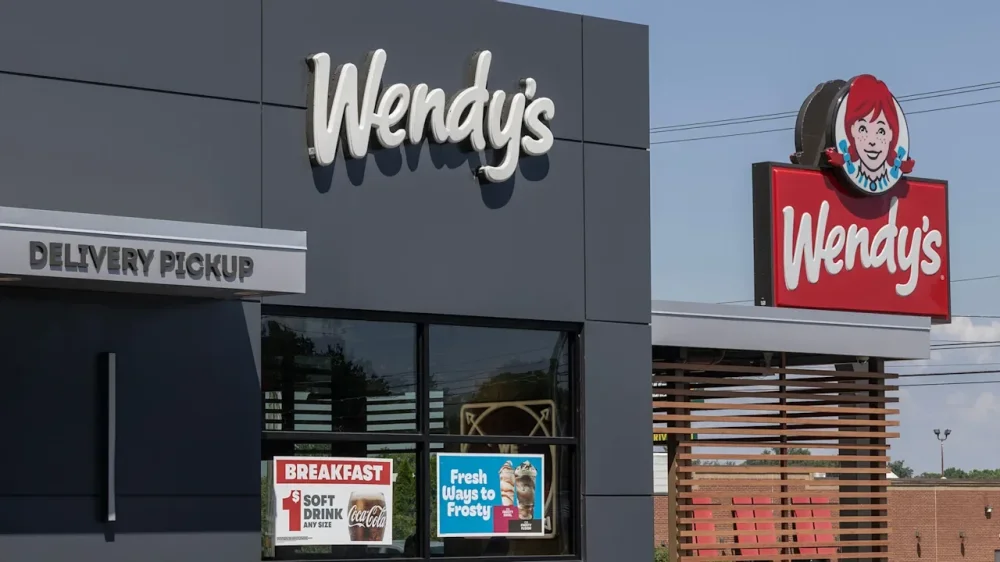
Wendy’s announced plans to close a “mid-single-digit percentage” of its underperforming U.S. store locations, during its quarterly earnings call on Friday, or 200 to 350 of some 6,000 locations, according to CNN. The news comes as the fast-food giant reports third-quarter profits of $44.3 million, with $549.5 million in revenue, beating analyst expectations by 2.71%; and adjusted earnings per share (EPS) of 24 cents, versus 20 cents. International business delivered strong system-wide sales growth, with international net unit growth expected to come in over 9% in 2025. Shares in Wendy’s Co. (NASDAQ: WEN) were up about 2% in midday trading on Friday, after Wendy’s stock surged 11.66% in pre-market trading. On the earnings call, Interim CEO Ken Cook said the shuttering will begin this year and continue through 2026, but did not give a list of specific locations. He said Wendy’s will approach the closings on a case-by-case basis. He explained some of their current restaurants “do not elevate the brand” and are “a drag from a franchisee financial performance perspective.” The goal is to address and fix those restaurants by improving operations, through additional technology, or equipment. In other cases, that means closing a restaurant “which will put money back in franchisees’ pockets and enable them to reinvest both capital and resources in their remaining restaurants.” The bottom line: “Closures of underperforming units are expected to boost sales and profitability at nearby locations,” Cook said. One year ago, in November 2024, Wendy’s also announced it was closing 140 ‘outdated’ restaurants. View the full article
-
We may earn a commission from links on this page. Thanksgiving should be one of the least stressful holidays—the sole achievement you’re trying to unlock is to eat yourself into a coma, which many of us can do any time, with zero prep. But there are some sneaky sources of stress, from the expense of pulling it all together to the travel arrangements needed to make sure everyone arrives in time for appetizers—not to mention the stress of cooking Thanksgiving dinner. The unlucky host has the responsibility of not only feeding a large group of people, but making sure everything comes out more or less on time—and then cleaning up the spectacular mess afterward. Luckily, modern science and engineering have occasionally turned their genius toward the kitchen, and the result is a list of tools and gadgets you might not immediately think of, but that can make cooking, serving, and cleaning up after Thanksgiving dinner a lot easier. Automatic pan stirrerDo you have an automatic stirrer? Probably not. Do you need one? Probably yes. One of the key stress points of Thanksgiving dinner (or any large dinner party) is the balancing act of cooking multiple dishes so they’re all ready at the right time. Plenty of dishes require constant stirring to ensure they thicken correctly, don’t lump up, and don’t burn, but it’s one of the easiest things to forget when you’re juggling a dozen other things. Having one of these on hand means you’ll never burn the gravy ever again. Electric turkey fryerIf you’re a purist, you think of a Thanksgiving turkey as something that gets pulled from the oven with much fanfare. If you’re a little adventurous, you might try to deep-fry your turkey, which results in injuries and property damage every year (because turkeys tend to explode when deep-fried), including about five deaths each year. But if you want a faster, crispier turkey than your oven can give you, invest in an electric turkey fryer. You’ll get a crispy, tender bird in much less time without the danger of your turkey transforming into a bomb. Plus, using this will leave your oven free for other things, giving you a little more capacity. Masterbuilt MB20012420 Electric Turkey Fryer $149.99 at Amazon Get Deal Get Deal $149.99 at Amazon Stuffing cageDon’t have a stuffing cage? That’s okay, no one has a stuffing cage. But you should get a stuffing cage, because it makes getting all that stuffing out of the turkey much easier. You form your stuffing into the cage and insert it into the bird, and when the cooking’s done you just pull it out and you have all your stuffing ready to go—no annoying scraping and much less mess. Fat separatorYou will be judged on many aspects of your Thanksgiving meal, but people get judgier about gravy than anything else. If you want smooth, silky, delicious gravy, you want a fat separator. Just pour your drippings in and let it filter out the solids. The fat will rise to the top, and then you can pour those delicious, filtered drippings into a bowl for gravy preparation. It’s a simple tool, but its impact on your gravy game will be striking. Electric buffetHere’s the secret: No one gets the timing right. Your sides will be ready before you’re ready. Something will delay the main course, and you’ll have bowls of mashed potatoes or stuffing sitting around. Or dinner will be generally delayed, or your guests will be delayed, and your hot appetizers will glaze over and go cold. Enter the compact buffet: Keep several dishes nice and warm for as long as you need. Whether you need to buy time with side dishes so you can finish a recalcitrant turkey or your guests are delayed by traffic jams, this is the difference between a microwaved Thanksgiving and having piping hot food ready to go. TRU Triple Buffet Server - Three 2.5 Quart Removable Crock Inserts - Slow Cooker & Food Warmer with Individual Heat Control - Includes Lid Rests & Serving Spoons $99.99 at Amazon Shop Now Shop Now $99.99 at Amazon Digital measuring spoonsMeasuring stuff can be maddening. You pour, weigh, then scoop and hope you don’t spill any. At some point every year, I just give up measuring things accurately and start winging it, eyeballing everything. By the time guests start arriving, I’m usually just tossing stuff into bowls and pots with something that could be described as “wild abandon.” A digital measuring spoon cuts out the middle step of using a scale or measuring cup. Just scoop what you need and pour off the excess until you have the right amount. Then dash it into your dish and move on to the next ingredient you need to measure. Over time, those saved seconds will add up. Mini pie-makerAre you making some pies for Thanksgiving? Does everyone on your guest list agree on the pie they want? Or will you make four full-sized pies that will be half leftover when everyone’s gone? Leftover pie isn’t exactly a crisis, but if you’re not going to dedicate your life to eating pie, it can be a huge waste. A mini pie-maker means you can a) make a variety of pies for your guests that b) won’t be left over. Plus, it can bake up pies quickly, so if you miscalculate how much pie you need you can whip up a few more at the last minute. Food-warming matsKeeping food warm is a challenge for most Thanksgiving cooks. Dishes come off the stove and then sit for a while while you figure out the rest of the meal, herd the crowd from the television into the dining room, and go through the ceremony of toasts and carving. By the time the gravy gets passed around, it’s lukewarm, the temperature of disappointment. A warming mat is the solution. While an electric buffet can keep side dishes warm, a warming mat can keep everything else ready to eat, and all you have to do is set plates and bowls on it until they’re needed. A 5-in-1 toolIf you’re me, you know that you lose significant minutes searching for tools when you’re cooking a big meal. First, you can’t find what you need. Then, you find what you need, but after you use it, it needs to be cleaned for its next use. Then it gets buried under the pot holders or kitchen towels, and you spend a frantic two minutes searching for it while trying to affect a cool, calm demeanor to your guests. Make life easier with this 5-in-1 tool or something similar. It combines a cutting tool, a spoon, a spatula, a slotted spoon, and a turner into one silicone wonder. Use, wipe clean, use again—and eliminate the need to have all those extra implements crowding your counter space. Whisk wiperIf you’re going to be using a hand mixer to make some of your Thanksgiving dishes, like mashed potatoes or desserts, the whisk wiper is a must. Instead of having to scrub your whisks and bowls in the sink to prep them for the next dish on the menu, you can wipe them clean in seconds and jump right back into the fray. Plus, it lets you scrape every last bit of your food into the serving, so you’re not dumping a big glob of it down the sink. Splatter guardIf you fry stuff, you know that a splatter guard is a necessity. But traditional screens make it tough to stir and flip food while you’re cooking, because you have to keep lifting the guard away. This splatter guard works differently, protecting your surroundings from, well, splatter while giving you full access to the cooking surface and your food so you can flip, stir, baste, or season as needed without risking a splatter disaster. This won’t necessarily speed up cooking, but it will make the eventual cleanup a lot easier and faster, since you won’t need to scrub down the walls. Turkey lifterIf you’ve cooked a turkey (or a roast), you know that there’s a “last mile” problem: Getting it from the pan to the serving dish or carving station. If you’ve done your job, your turkey will be tender and easy to pull apart, which can make transferring it a comedy of messy errors. A Turkey Lifter is the dumb solution you didn’t know you needed. Place the lifter under the turkey when you put it in the oven, and when it’s finished, you can just lift the whole thing out easily. View the full article
-
The Consumer Financial Protection Bureau ended a consent order earlier than expected against the credit bureau TransUnion, saying the company already paid a $5 million fine and $3 million to consumers. View the full article

-
The history of politicians who go back on their words has lessons for Rachel Reeves as she mulls raising taxesView the full article
-
Chancellor Rachel Reeves has warned the UK that tough decisions are needed as Budget nearsView the full article
-
Creating a winning social media strategy involves a systematic approach that can greatly improve your online presence. First, you need to define specific, measurable goals that align with your business objectives. Next, comprehending your target audience through analytics helps in crafting customized messages. Selecting the right platforms guarantees you reach the right people. Engaging content is essential, and measuring your progress will guide adjustments. Let’s explore these steps in detail to improve your strategy. Key Takeaways Define SMART goals that align with business objectives, focusing on 1-3 core goals to enhance brand awareness or engagement rates. Understand your target audience by utilizing analytics, conducting research, and creating detailed buyer personas. Choose the right social media platforms based on demographics and content type, ensuring alignment with your audience’s preferences. Create engaging content using the 80-20 rule, maintaining a balance between informative and promotional posts while experimenting with various formats. Measure performance regularly using KPIs and analytics tools, making data-driven adjustments to optimize your social media strategy. Define Your Social Media Goals When you set out to define your social media goals, it’s critical to use the SMART framework, which stands for Specific, Measurable, Attainable, Relevant, and Time-bound. This approach helps you create a clear path to success. For instance, you might aim to increase brand awareness by 20% or boost engagement rates by 30%. It’s fundamental to align these goals with broader business objectives, like driving website traffic or enhancing customer loyalty, to guarantee a cohesive marketing strategy. Focus on 1-3 core goals initially, preventing resource dilution across too many objectives. Regularly review and adjust your goals based on performance metrics and audience feedback, which is pivotal for ongoing effectiveness in how to make a social media strategy and how to create a social media strategy. Understand Your Target Audience How well do you really know your target audience? Comprehending them is essential for your social media success. Start by using analytics tools to gather demographic insights like age, gender, location, and interests. This data helps tailor your content. Conduct market research through surveys and interviews to uncover needs and motivations. Create detailed buyer personas to humanize your audience and refine your messaging. Utilize social listening tools to monitor engagement patterns and audience sentiment. Regularly update your personas based on evolving insights to keep your strategy relevant. Demographic Insights Psychographic Characteristics Age Interests Gender Values Location Lifestyle Income Level Pain Points Choose the Right Platforms Understanding your target audience sets the stage for selecting the right social media platforms to maximize your reach and engagement. Facebook, with 2.9 billion monthly active users, effectively connects you with diverse demographics. If your brand targets younger audiences, Instagram is the go-to platform, emphasizing visual content and influencer collaborations, especially in lifestyle and fashion. For B2B marketing, LinkedIn, housing over 930 million users, is crucial for sharing industry insights and generating leads. Meanwhile, TikTok, popular among Gen Z, focuses on short, engaging videos, making it a significant tool for brands wanting to connect with younger consumers. Finally, keep in mind that 90% of Pinterest users make purchase decisions influenced by the platform, underscoring its value for visual product discovery. Create Engaging Content What makes content truly engaging? To capture your audience’s attention, follow the 80-20 rule: 80% of your posts should be informative or entertaining, whereas only 20% can be promotional. This strategy helps maintain trust and interest. Use a content calendar to organize various content types, including educational, entertaining, and promotional posts, ensuring consistent engagement. Strong captions, relevant hashtags, and interactive elements like polls or questions can greatly boost audience participation. Analyze successful campaigns for creative inspiration that resonates with your target audience. Moreover, experiment with different formats like videos, infographics, and memes to keep your content fresh and appealing, catering to diverse audience preferences. This approach will improve your engagement rates effectively. Measure and Optimize Your Strategy To guarantee your social media strategy is effective, it’s crucial to measure and optimize your efforts regularly. Start by tracking key performance indicators (KPIs) like engagement rates, click-through rates, and conversion rates. This helps you assess your strategy against established SMART goals. Utilize analytics tools such as Google Analytics and platform insights to understand audience behavior and identify high-performing content. Consider implementing A/B testing to find out what content formats and posting times resonate best with your audience. Set a schedule for reviewing metrics weekly or monthly. Use UTM parameters to monitor traffic from social media posts. Make data-driven adjustments to improve engagement. This systematic approach guarantees continuous improvement in your strategy. Frequently Asked Questions What Are the 5 Steps to Creating a Social Media Strategy? To create a social media strategy, start by setting SMART goals to guarantee your objectives are clear and achievable. Next, identify your target audience through research, focusing on demographics and interests. Choose the right platforms where your audience is active. Develop a content strategy that balances educational, entertaining, and promotional posts. Finally, measure and optimize your performance using analytics tools to track engagement and conversion rates, refining your approach based on insights. What Is the 5 5 5 Rule on Social Media? The 5 5 5 Rule on social media suggests you share five pieces of content from other sources, create five original posts, and engage with your audience five times. This balanced approach helps you avoid being overly promotional during establishing your brand as a thought leader. What Are the 5 P’s of Social Media? The 5 P’s of social media are fundamental for crafting effective strategies. First, Purpose defines your goals, ensuring they align with your overall business objectives. Next, People involves comprehending your target audience’s demographics and interests. Third, Platform emphasizes choosing the right channels where your audience engages, like Instagram or LinkedIn. Process focuses on systematic content creation and posting schedules, whereas Performance measures success through key metrics, helping you optimize your strategy continuously. How Do You Create a Successful Social Media Strategy? To create a successful social media strategy, start by setting clear, SMART goals that align with your business objectives. Research your target audience to understand their preferences and behaviors. Choose the right platforms based on where your audience engages most. Develop a balanced content strategy, focusing on informative posts while keeping promotional content minimal. Finally, regularly analyze performance metrics to refine your approach and guarantee you’re meeting your goals effectively. Conclusion By following these five steps, you can create a social media strategy that effectively supports your business objectives. Start with clear, SMART goals, and gain insight into your target audience through research. Select platforms that best fit your demographic, and produce engaging content that adheres to the 80-20 rule. Finally, continuously measure and optimize your efforts based on key performance indicators. This structured approach will improve your social media presence and drive meaningful results over time. Image via Google Gemini This article, "How to Make a Winning Social Media Strategy in 5 Easy Steps" was first published on Small Business Trends View the full article
-
Creating a winning social media strategy involves a systematic approach that can greatly improve your online presence. First, you need to define specific, measurable goals that align with your business objectives. Next, comprehending your target audience through analytics helps in crafting customized messages. Selecting the right platforms guarantees you reach the right people. Engaging content is essential, and measuring your progress will guide adjustments. Let’s explore these steps in detail to improve your strategy. Key Takeaways Define SMART goals that align with business objectives, focusing on 1-3 core goals to enhance brand awareness or engagement rates. Understand your target audience by utilizing analytics, conducting research, and creating detailed buyer personas. Choose the right social media platforms based on demographics and content type, ensuring alignment with your audience’s preferences. Create engaging content using the 80-20 rule, maintaining a balance between informative and promotional posts while experimenting with various formats. Measure performance regularly using KPIs and analytics tools, making data-driven adjustments to optimize your social media strategy. Define Your Social Media Goals When you set out to define your social media goals, it’s critical to use the SMART framework, which stands for Specific, Measurable, Attainable, Relevant, and Time-bound. This approach helps you create a clear path to success. For instance, you might aim to increase brand awareness by 20% or boost engagement rates by 30%. It’s fundamental to align these goals with broader business objectives, like driving website traffic or enhancing customer loyalty, to guarantee a cohesive marketing strategy. Focus on 1-3 core goals initially, preventing resource dilution across too many objectives. Regularly review and adjust your goals based on performance metrics and audience feedback, which is pivotal for ongoing effectiveness in how to make a social media strategy and how to create a social media strategy. Understand Your Target Audience How well do you really know your target audience? Comprehending them is essential for your social media success. Start by using analytics tools to gather demographic insights like age, gender, location, and interests. This data helps tailor your content. Conduct market research through surveys and interviews to uncover needs and motivations. Create detailed buyer personas to humanize your audience and refine your messaging. Utilize social listening tools to monitor engagement patterns and audience sentiment. Regularly update your personas based on evolving insights to keep your strategy relevant. Demographic Insights Psychographic Characteristics Age Interests Gender Values Location Lifestyle Income Level Pain Points Choose the Right Platforms Understanding your target audience sets the stage for selecting the right social media platforms to maximize your reach and engagement. Facebook, with 2.9 billion monthly active users, effectively connects you with diverse demographics. If your brand targets younger audiences, Instagram is the go-to platform, emphasizing visual content and influencer collaborations, especially in lifestyle and fashion. For B2B marketing, LinkedIn, housing over 930 million users, is crucial for sharing industry insights and generating leads. Meanwhile, TikTok, popular among Gen Z, focuses on short, engaging videos, making it a significant tool for brands wanting to connect with younger consumers. Finally, keep in mind that 90% of Pinterest users make purchase decisions influenced by the platform, underscoring its value for visual product discovery. Create Engaging Content What makes content truly engaging? To capture your audience’s attention, follow the 80-20 rule: 80% of your posts should be informative or entertaining, whereas only 20% can be promotional. This strategy helps maintain trust and interest. Use a content calendar to organize various content types, including educational, entertaining, and promotional posts, ensuring consistent engagement. Strong captions, relevant hashtags, and interactive elements like polls or questions can greatly boost audience participation. Analyze successful campaigns for creative inspiration that resonates with your target audience. Moreover, experiment with different formats like videos, infographics, and memes to keep your content fresh and appealing, catering to diverse audience preferences. This approach will improve your engagement rates effectively. Measure and Optimize Your Strategy To guarantee your social media strategy is effective, it’s crucial to measure and optimize your efforts regularly. Start by tracking key performance indicators (KPIs) like engagement rates, click-through rates, and conversion rates. This helps you assess your strategy against established SMART goals. Utilize analytics tools such as Google Analytics and platform insights to understand audience behavior and identify high-performing content. Consider implementing A/B testing to find out what content formats and posting times resonate best with your audience. Set a schedule for reviewing metrics weekly or monthly. Use UTM parameters to monitor traffic from social media posts. Make data-driven adjustments to improve engagement. This systematic approach guarantees continuous improvement in your strategy. Frequently Asked Questions What Are the 5 Steps to Creating a Social Media Strategy? To create a social media strategy, start by setting SMART goals to guarantee your objectives are clear and achievable. Next, identify your target audience through research, focusing on demographics and interests. Choose the right platforms where your audience is active. Develop a content strategy that balances educational, entertaining, and promotional posts. Finally, measure and optimize your performance using analytics tools to track engagement and conversion rates, refining your approach based on insights. What Is the 5 5 5 Rule on Social Media? The 5 5 5 Rule on social media suggests you share five pieces of content from other sources, create five original posts, and engage with your audience five times. This balanced approach helps you avoid being overly promotional during establishing your brand as a thought leader. What Are the 5 P’s of Social Media? The 5 P’s of social media are fundamental for crafting effective strategies. First, Purpose defines your goals, ensuring they align with your overall business objectives. Next, People involves comprehending your target audience’s demographics and interests. Third, Platform emphasizes choosing the right channels where your audience engages, like Instagram or LinkedIn. Process focuses on systematic content creation and posting schedules, whereas Performance measures success through key metrics, helping you optimize your strategy continuously. How Do You Create a Successful Social Media Strategy? To create a successful social media strategy, start by setting clear, SMART goals that align with your business objectives. Research your target audience to understand their preferences and behaviors. Choose the right platforms based on where your audience engages most. Develop a balanced content strategy, focusing on informative posts while keeping promotional content minimal. Finally, regularly analyze performance metrics to refine your approach and guarantee you’re meeting your goals effectively. Conclusion By following these five steps, you can create a social media strategy that effectively supports your business objectives. Start with clear, SMART goals, and gain insight into your target audience through research. Select platforms that best fit your demographic, and produce engaging content that adheres to the 80-20 rule. Finally, continuously measure and optimize your efforts based on key performance indicators. This structured approach will improve your social media presence and drive meaningful results over time. Image via Google Gemini This article, "How to Make a Winning Social Media Strategy in 5 Easy Steps" was first published on Small Business Trends View the full article
-
As artificial intelligence enters its dating era, it has taken on an increasing number of roles: cupid, wingman, even romantic interest. Where once people’s biggest concern was being unfortunately catfished by old photos and flattering filters, now if a person seems too good to be true, well, they might not even be human at all. Hily’s Dating App T.R.U.T.H. report surveyed 1,559 U.S. daters and found 82% of Gen Z and 87% of Millennials are already turning to AI in their dating lives. Up to 95% also plan to use it in the future. Just as in traditional dating, there are some double standards at play. For Gen Z, 62% say they’d be turned off if they discovered their match was using AI during the talking stage, despite being happy to use it themselves. This number increased to 70% for Millennials. As one Gen Z dater on Hily said: “I’d be less attracted. It’s lazy and unnecessary. Demonstrates a lack of creativity and care.” Another added: “It feels less authentic—and also a lot less fun. Isn’t dating supposed to be fun, not an imitation of the weird arms race we see in work?” The ick is understandable. It brings up questions like, if someone needs the help of AI to carry a conversation, are they even that interested? If they aren’t willing to put in the work, why should you? And ultimately, if you hit it off, are you falling for the person or the algorithm? The most common uses of AI are to generate a dating app bio based on information provided and to offer suggestions for conversations. “If it generated their bio, that’s fine—if it’s accurate,” one Millennial dater on Hily said. “But not if it made things up or used misleading photos.” Daters are burnt out from endless swiping, ghosting and a transactional dating culture. “Chatfishing” is one way to optimize and outsource some of the emotional labor of finding love (who said romance was dead?). After all, most have enlisted the help of the group chat in crafting a risky text or handed over full control to a friend to spice up a conversation. Some chatfishers take things a step further, having ChatGPT conduct entire conversations. A 2025 study from Norton found six in 10 people who use dating apps believe they’ve encountered at least one conversation written by AI. It’s also getting harder and harder to tell if the person you’re messaging is human or bot. A 2025 preprint paper showed that human judges who spoke with both OpenAI’s model GPT-4.5 and a human simultaneously, mistook the AI for a human 73% of the time. While AI can be an effective wingman when it comes to clinching a first date, when it’s finally time to meet face-to-face, problems arise. Of the daters Hily surveyed, 53% of Gen Z and 66% of Millennials say they’d feel less confident on a real-life date after using AI to communicate with a match. “People tend to turn towards AI due to the fear that they’re not good enough and need to outsource to be better liked and well received,” Dr. Sabrina Romanoff, relationship expert at Hily Dating App and Harvard-trained clinical psychologist, told Fast Company. “This has a paradoxical effect as AI often white washes over the personality traits, uniqueness, and small touches that make them special.” And if your AI persona is smarter, wittier, and funnier than you, you are only setting yourself up for failure. View the full article

-
Overnight negotiations between holdout creditors and the car parts company yield a breakthrough over financing termsView the full article
-
OpenAI CEO Sam Altman said ChatGPT will likely try ads “at some point” but he still has “no idea” what ads will look like. Altman also doesn’t see ads as OpenAI’s “biggest revenue opportunity.” In an interview on Conversations with Tyler, Altman also took another direct shot at Google’s ad model: “Ads on a Google search are dependent on Google doing badly. If it was giving you the best answer, there’d be no reason ever to buy an ad above it. “So you’re like – that thing is not quite aligned with me. ChatGPT, maybe it gives you the best answer, maybe it doesn’t, but you’re paying it, or hopefully all are paying it, and it’s at least trying to give you the best answer.” His point. Google makes money when results fall short. ChatGPT should only make money when it earns users’ trust, according to Altman. “If ChatGPT were accepting payment to put a worse hotel above a better hotel, that’s probably catastrophic for your relationship with ChatGPT.” Why we care. If Altman’s ChatGPT ad model vision becomes reality, the path from question to recommendation to purchase could all take place in a single conversation. Brands and businesses will need to figure out how to remain visible in these new search journeys. How Altman would do ChatGPT Ads. Show the best recommendation first. Then, if a user books or buys with one click, OpenAI could take a small commission that doesn’t affect results. “If ChatGPT shows you its guess – the best hotel, whatever that is – and then if you book it with one click, takes the same cut that it would take from any other hotel, and there’s nothing that influenced it … I think that’s probably OK. “We’ll do that for travel at some point.” What he won’t do. ChatGPT won’t have pay-to-play answers. If money corrupts rankings, trust collapses, according to Altman. “There’s a kind of ad that I think would be really bad like the one we talked about. There are kinds of ads that I think would be very good – or pretty good – to do. I expect it’s something we’ll try at some point. I do not think it is our biggest revenue opportunity.” What an OpenAI ad might look like. Not even Altman knows yet. He’s not even working on it: “I’m really good about not doing the things I don’t want to do. “You know, we have the world expert thinking about our product strategy. I used to do that. I used to spend a lot of time thinking about product and now she’s much better at it than me. I have other things to think about. I’m sure she’ll figure it out. Dig deeper. Sam Altman’s ChatGPT pivot: From ‘I hate ads’ to ‘maybe they don’t suck’ The interview. Sam Altman on Trust, Persuasion, and the Future of Intelligence – Live at the Progress Conference View the full article
-
The New York Times has announced a new feature that allows you to make your own Wordle puzzle to share with friends. You need to be a Games or All-Access subscriber to create puzzles, but no subscription is needed to solve them. You aren't roped to regular Wordle's five-letter structure, either: Allowable puzzles can be anywhere from four to seven letters long. They must be on an allowable word list; as with regular Wordle, this means no proper nouns, for the most part. Profanity is not allowed, nor are gibberish entries like “ASDFGJ” (I tried). Here’s a link to a Wordle-style puzzle with four letters that I created for you—because I consider all of you my friends. (This is not the puzzle I've used to create the screenshots in this article, so no worries about spoilers.) Good luck! You're invited to play a puzzle created by Beth. The clue is: "This one has teeth!" https://www.nytimes.com/games/create/wordle/emnhCsAP5q-f2uhIJ5xJI95SwS7u2Lmf60S7H5-0wfp78bsvf9h-YhkOIryKZDrlwCPV How to create your own Wordle on the NYT Games siteHere is the link to the puzzle creator. You need to be a Games (or NYT All-Access) subscriber to use it. When creating a puzzle, you’ll enter your solution word, your name, and an optional clue. After creating the puzzle, you can share it with a message like the one above. Anybody can click the included link and play the puzzle, no subscription required. When you solve somebody’s puzzle, you can share your results in much the same way as a regular Wordle solution, but there’s also an option to include spoilers. This could be a fun way to show your guesses to the person who created the puzzle. Yes, I was mean. Credit: Beth Skwarecki Custom Wordles can be surprisingly challengingWhen playing around with this tool, I discovered that Wordle-style puzzles that aren’t five letters are harder than you’d think. I found myself struggling to think of any good seven-letter words at all. The puzzle still gives you six guesses, same as with a standard five-letter Wordle, no matter how many letters are in the solution. Good luck with the longer ones! View the full article