ResidentialBusiness
Administrators
-
Joined
-
Last visited
Everything posted by ResidentialBusiness
-
 John Branca, one of the most powerful lawyers in music history, is being tested as new allegations come to lightView the full article
 -
Agentic AI in Tax & Accounting: How CPA Firms Are Embracing a New Era By CPA Trendlines Research Cornerstone Report The accounting industry is witnessing a seismic technological shift as artificial intelligence moves from buzzword to business imperative. In the … Continued Go PRO for members-only access to more CPA Trendlines Research. View the full article
-
Agentic AI in Tax & Accounting: How CPA Firms Are Embracing a New Era By CPA Trendlines Research Cornerstone Report The accounting industry is witnessing a seismic technological shift as artificial intelligence moves from buzzword to business imperative. In the … Continued Go PRO for members-only access to more CPA Trendlines Research. View the full article
-
For women reading this article, how old were you when you received your first sexual advance from a man? For men reading, ask any woman you know. Better yet, ask several of them. I bet their answers turn your stomach. In late September, The Guardian reported that Meta used back-to-school photos of teenage girls to advertise the Threads app to fully grown men. Girls as young as 13. These photos were posted by regular moms on Facebook and Instagram, some of whom had their profiles set to private. The photos of girls in their school uniforms appeared in-feed as advertisements resembling organic “suggested” threads posts, or were outright cross-posted without consent. Their faces weren’t hidden or blurred. In fact, some ads even bore the child’s real name. According to one mother with fewer than 300 Instagram followers, the cross-posted photo of her 15-year-old daughter garnered almost 7,000 views, with 90% of them from nonfollowers. Also, 90% of the views came from men, half from men at least in their forties. TRUST AND POLICIES This reporting sent me reeling back into my memories of high school and earlier. Memories I’ve never re-examined or tried to make sense of as an adult. I talked it out with my best friend, and we were both taken aback by how common, how frequent this harassment was visited upon us and our peers. I polled another friend, who grew up in a completely separate part of the country. “Yep,” they said. “We lost at least one teacher every year to that kind of thing.” Of course, a Meta spokesperson said the images didn’t violate their policies and blah blah blah. I and others have written extensively about Meta’s history of manipulating its users. “I don’t know why they trust me, dumb fucks,” Zuckerberg wrote of the early Facebook users, while he was still at Harvard around 20 years ago. I’ll note here that before Facebook, then-college sophomore Zuckerberg created a website called Facemash, where people could vote on the attractiveness of Harvard’s female students. He got the girls’ photos by hacking into the university’s official directories. WHEN SOMEONE TELLS YOU WHO THEY ARE, BELIEVE THEM Zuckerberg, like Elon Musk, hit the millionaire mark in his twenties. Sometimes I wonder if there’s some sort of arrested development thing happening here. As Musk turns up the Nazi and porn dials on X and Zuckerberg rebrands himself as a jiu jitsu guy, it has never been clearer to me that we are all suffering a world in which morally stunted men wield immense power, often with a sneer. Dumb fucks. That’s what they think when we trust them. Even if they present themselves before Congress as mild, soft-spoken brainiacs, I don’t think they can’t be trusted to police themselves or remediate harmful aspects of their platforms. In my opinion, simple, common decency seems beyond their reach. THE NEED FOR REGULATION I desperately hope regulations take shape that curb the exploitation of our minds, bodies, and identities for the financial gain of any company. And in this specific case, it feels fairly minimal to me that it should illegal for companies like Meta to use our personal images, especially minors’, without explicit, informed consent. We need clear laws that prevent teen content from being served to adult audiences. Platforms should be required to prove how their algorithms target and amplify posts, and to give families real legal recourse when their children’s photos are repurposed as ad bait. Until we have that kind of accountability, these platforms will keep hiding behind their terms of service while building empires on our faces, our trust, and our kids. As we wait and advocate for those regulations, I have to ask: At what point do these platforms become so flagrantly harmful, manipulative, and bot-bloated that we are compelled to divest our time and attention away from them? Lindsey Witmer Collins is CEO of WLCM App Studio and CEO of Scribbly. View the full article

-
This comment section is open for any non-work-related discussion you’d like to have with other readers, by popular demand. Here are the rules for the weekend posts. Book recommendation of the week: What Is Wrong With You? by Paul Rudnick. Both funny and poignant, it follows a motley cast of characters (including a former TV action star, a fired book editor, and a dentist in mourning) as they prepare to attend the wedding of one of their exes to a famous tech billionaire. (Amazon, Bookshop) * I earn a commission if you use those links. The post weekend open thread – November 1-2, 2025 appeared first on Ask a Manager. View the full article
-
Ottawa uses national security legislation to accelerate production as G7 nations hunt for resourcesView the full article
-
In September, the U.S. Labor Department reported that weekly applications for unemployment aid jumped by 27,000 to 263,000, the highest in four years and a warning sign for the future of low-income populations. And at a time when government policy couldn’t be less interested in addressing systemic economic disparities, solving these issues will depend on the ability of business leaders to listen, learn, and come together to tackle the socioeconomic issues impacting a majority of Americans every day. I’ve seen these challenges up close for years in my New York Capital Region home—and the challenges are just as present in cities around the U.S. So on a national level, one thing is clear. If we’re going to help close the wealth gap, we need to focus on two foundational pillars: workforce development and housing affordability. A HANDS-ON APPROACH TO WORKFORCE DEVELOPMENT From our foundation’s local work, I can confidently say that revitalizing underserved communities simply isn’t possible without first developing and fostering a strong workforce, a task that will likely face a wide range of critical challenges in the coming decade. According to the Bureau of Labor Statistics, the U.S. economy is projected to create 5.2 million new jobs between now and 2034. However, the situation looks less optimistic when you consider that so many workers today remain underemployed and can’t find access to quality opportunities. The country’s already massive wealth gap only continues to grow, with nearly 70% of U.S. wealth belonging to the top 10% of earners, compared to a mere 3% owned by the bottom 50%, according to the Congressional Budget Office. This level of income inequality is not only deeply unconscionable but unsustainable, and it almost certainly won’t be fixed by simply creating more jobs. Instead, what private and public sector leaders should focus on is ensuring access to quality education and job training that aligns with local economic opportunities, equipping residents with the skills and credentials needed to obtain and thrive in roles that provide more than a barely livable wage. While this kind of work requires more of business leaders than pulling out a checkbook, the hands-on approach is also extremely effective. In just five years, the model I created through the Business for Good Foundation in supporting local organizations and business has resulted in a variety of new and expansive opportunities for the region’s underserved populations. This includes the revitalization of Albany’s Black Chamber of Commerce, a pivotal source of mentorship and networking opportunities for minority entrepreneurs. It also includes ongoing support for career training and fellowship programs in essential areas like education and healthcare, such as Teach Brother Teach and Pulse Career Solutions. GET REAL ABOUT U.S. HOUSING AFFORDABILITY At the same time, no workforce initiative will succeed if people don’t have stable housing. A good start would be simply acknowledging that we’re currently facing a full-blown housing crisis, in which supply shortages are colliding with rising home and rent prices to disastrous effect. This, of course, impacts every state and region across the U.S., but particularly communities that have already been disadvantaged by the market for decades. For example, close to 1,000 properties in Albany today are abandoned, according to the city’s vacant properties registry, most of which are in low-income neighborhoods that have historically borne the impacts of illegal and discriminatory redlining practices. In other major cities, like Atlanta, where I recently spoke at the ForbesBLK Summit, the cost of rent for a typical one-bedroom apartment is now equal to 132% of a federal minimum-wage worker’s monthly income. These are just two of many examples underscoring the clear and urgent need to both increase access to quality, affordable housing and reduce displacement among vulnerable populations in the U.S. And again, with no generalized fix at our disposal, these are issues that will require active engagement with communities and policymakers to come up with highly creative and localized solutions. In the New York Capital Region, for example, Governor Hochul recently announced the launch of MOVE-IN NY, a program aimed at improving housing affordability through accelerated construction and the use of low-cost, modular building materials. Backed by multiple state agencies and private sector developers, the initiative offers a new way to build on the critical, hands-on work already being done in parallel by our foundation, and other nonprofit entities in the area, including the Interfaith Partnership for the Homeless, as well as the Veterans & Community Housing Coalition, whose Foreverly House project provides shelter and essential support for unhoused female veterans living with children. CONNECT WITH OTHER LEADERS Of course, these efforts represent only the start of an uphill battle, and models like our pilot program will be significantly more effective with the support of other like-minded business leaders across the country. But it’s clear we need more programs like this, and in cities with strong business hubs like that of Atlanta, there’s a prime opportunity to create one. Now is the time to connect with other leaders who share a vision of closing the wealth gap by tackling systemic barriers in housing and workforce development. These issues aren’t abstract; they affect real people, real families, and the long-term health of our communities. My call to my peers is simple: Join us. Partner, collaborate, and scale what’s already working. Together, we can create a blueprint for communities across the country to thrive. Ed Mitzen is cofounder of Business for Good Foundation. View the full article

-
Some travellers prefer to borrow engines to use with their own customised jetsView the full article
-
Chancellor predicted to plump for ‘least worst option’ of creating higher council tax bands for EnglandView the full article
-
President’s surprise announcement this week has caused confusion and raised fears of a global arms raceView the full article
-
In a crowded market, building strong, lasting relationships is one of the biggest differentiators a business can create. And while product-market fit is table stakes, true customer loyalty comes from putting people at the center of the product experience. Overlooking that opportunity can leave growth on the table. The companies that stand out are the ones that design not just for functionality, but for connection, trust, and stickiness. These three overlooked pillars help transform software from a useful tool into an essential partner. 1. Engagement that drives daily value The most successful products give customers reasons to return again and again, not just when they need to solve a problem, but as part of their everyday workflow. Regular, meaningful touchpoints remind users of the value you deliver and strengthen the habit of coming back. Take Shopify. Your online store may run automatically, but Shopify keeps merchants engaged with real-time sales notifications, performance dashboards, and promotional insights. A “cha-ching” alert for a new order or a traffic spike becomes a small but powerful reason to log in. Over time, these touchpoints transform a back-office necessity into a daily habit, making Shopify central to how merchants run their businesses. When evaluating software, ask yourself: How often are customers logging in? Are they engaging deeply with features, or just skimming the surface? Are you giving them insights and reminders that matter in real time? Companies that build engagement into their product—through reports, dashboards, notifications, or personalized nudges—ensure customers not only see value but experience it consistently. Over time, those moments turn into loyalty. 2. Integration that feels effortless No matter how powerful your product is, it risks being sidelined if it doesn’t fit seamlessly into the tools and workflows customers already rely on. People want solutions that “just work,” eliminating friction rather than creating it. Consider QuickBooks. Beyond bookkeeping, it integrates seamlessly with banks, payroll systems, and payment platforms. These connections remove the manual work of reconciling accounts or entering transactions multiple times. By fitting naturally into the existing workflow, QuickBooks ensures that customers rely on it not just for accounting, but for running the financial side of their business every day. This kind of integration turns a once-in-a-while task into a central part of daily operations, boosting adoption and creating advocates inside the organization. Seamless integration ensures adoption doesn’t stall and that your champions inside the business keep their credibility. By offering native integrations, robust APIs, or automation that connects the dots, you reduce the hidden costs of manual workarounds and help your product feel like a natural part of the stack. When your software is easy to adopt, easy to use, and easy to connect, it becomes harder to replace, and more likely to spread organically across teams. 3. Embedded value that makes your product indispensable Customers stay with products that go beyond solving a single problem and become central to how they work and make decisions. The best software identifies the moments when customers would otherwise have to leave your platform—and bring those capabilities inside. Uber Eats Manager is a great example here. It’s not just an ordering platform; it provides restaurant owners with daily insights into orders, peak hours, menu performance, promotional recommendations, and even merchant financing. By surfacing actionable data directly where owners manage their business, Uber Eats gives them a reason to keep logging in every day. This embedded value reduces the need to track information elsewhere, making the platform indispensable for day-to-day operations. That doesn’t mean adding features for the sake of it. It means embedding value where it matters most. Whether it’s surfacing insights at the right time, streamlining a workflow end-to-end, or offering complementary tools like embedded finance, these touches eliminate the need for external solutions and create deeper reliance on your product. When customers see your platform as the place where multiple needs are met, it stops being optional and becomes essential. THE BOTTOM LINE Customer relationships are the real engine of software growth. Companies that invest in engagement, seamless integration, and embedded value not only reduce churn and reduce the burden of CAC, they also create advocates who expand adoption, share their success stories, and accelerate growth. By focusing on these three overlooked pillars, your software evolves from being another app in the stack to becoming a trusted partner in your customers’ success. And that’s the kind of relationship that lasts. Luke Voiles is the CEO at Pipe. View the full article

-
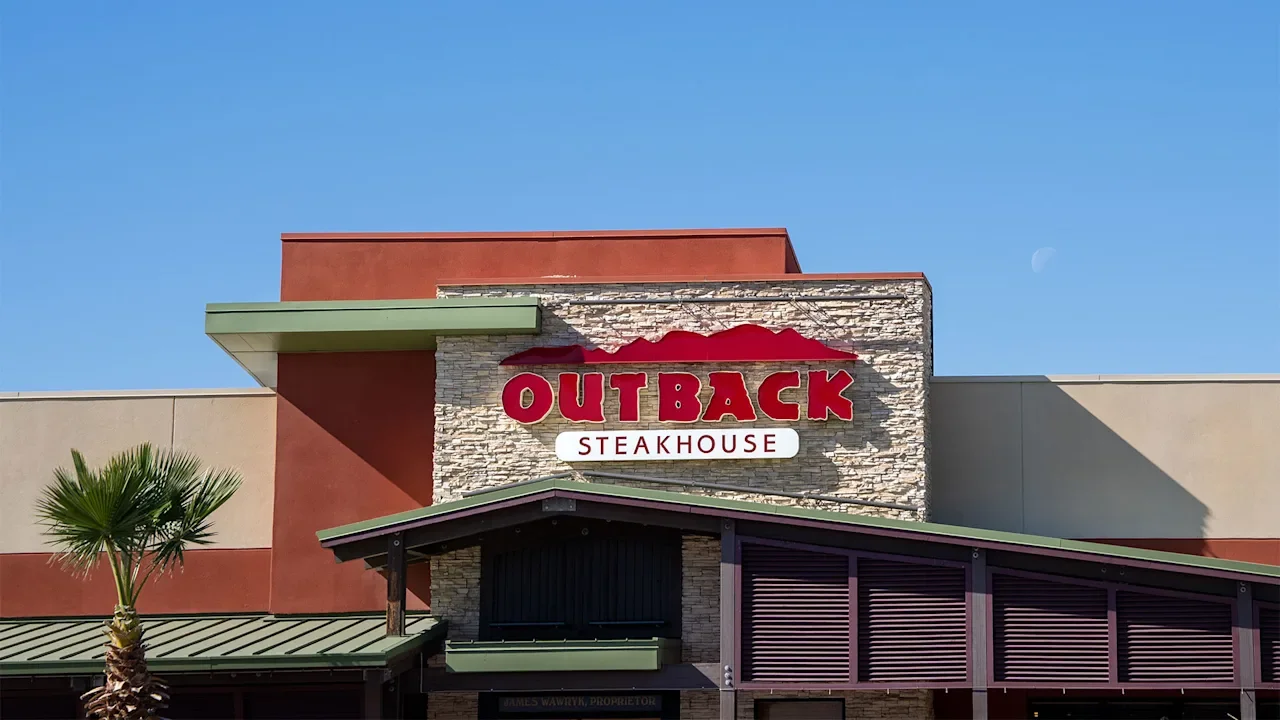
Fans of the Outback Steakhouse chain will be disappointed to learn that its parent company, Bloomin’ Brands, has recently closed a number of locations. The closures are yet another sign that major restaurant chains are facing significant headwinds as costs increase and consumers grow increasingly cautious of how they spend their discretionary dollars. Here’s what you need to know. What’s happened? Recently, Bloomin’ Brands, owner of Outback Steakhouse, closed a handful of chain’s locations. Many of these closures were first reported on social media and by local news outlets. Outback Steakhouse is an Australian-themed casual dining chain that was first founded in 1988 and is headquartered in Tampa, Florida. The casual dining steakhouse is perhaps best known for its Bloomin’ Onion menu item, a deep-fried whole onion that is served with dipping sauce. According to an August Form 10-Q filing with the U.S. Securities and Exchange Commission (SEC), as of June 2025, Bloomin’ Brands, Inc. operated 557 company-owned Outback Steakhouse locations in the United States. There were also an additional 121 franchise locations. Bloomin’ Brands is in the midst of a turnaround effort. Its stock price (Nasdaq: BLMN) has tumbled more than 42% this year and was trading at under $7 a share as of late Friday. In total, Outback Steakhouse has locations in 44 states, according to the company’s store locator tool. The state with the most Outback Steakhouses is Florida, with 96 locations. California and North Carolina offer the next-most locations with 41 and 40 Outback Steakhouses, respectively. List of Outback Steakhouse closures Bloomin’ Brands has not publicly announced a full list of recent closures, but it confirmed with Fast Company that 10 locations have recently closed. The shuttered restaurants were located in eight states. Some of these closures were reported earlier by USA Today. After a review of Outback Steakhouse’s store locator and listings on Yelp, Fast Company discovered additional closures. “After a periodic review, we decided to close some locations,” a spokesperson for Outback Steakhouse said in a statement. “These are business decisions that are part of our ongoing turnaround plan. We considered a variety of factors, including sales and traffic, trade areas, and potential investments to improve performance. We are working to relocate as many of our team members as possible to nearby restaurants.” The list of recently closed Outback Steakhouse locations is below. Bloomin’ Brands confirmed these closures with Fast Company: Alabama 20th Street North at 20 Midtown, Birmingham, Alabama Inverness location on U.S. 280, Birmingham, Alabama Arkansas 180 Pakis St, Hot Springs, Arkansas 71913 Florida 3760 South 3rd Street, Jacksonville Beach 4910 U.S. 41 North, Naples Louisiana Jones Creek Boulevard, Baton Rouge Maryland 8661 Colesville Road in Ellsworth Place Mall, Silver Spring New York 2124 Merrick Mall, Merrick Texas 1509 N Central Exwy, Plano, Texas Wisconsin 4520 E. Towne Boulevard, Madison, Wisconsin View the full article
-
Apple might be dead last in the AI race—at least when you consider competition from companies like OpenAI, Google, and Meta—but that doesn't mean the company isn't working on the tech. In fact, it seems most of the work Apple does on AI is behind the scenes: While Apple Intelligence is, well, there, the company's researchers are working on other ways to improve AI models for everyone, not just Apple users. The latest project? Improving AI image editors based on text prompts. In a paper published last week, researchers introduced Pico-Banana-400K, a dataset of 400,000 "text-guided" images selected to improve AI-based image editing. Apple believes its image dataset improves upon existing sets by including higher quality images with more diversity: The researchers found that existing datasets either use images produced by AI models, or are not varied enough, which can hinder efforts to improve the models. Funnily enough, Pico-Banana-400K is designed to work with Nano Banana, Google's image editing model. Researchers say using Nano Banana, their dataset can generate 35 different types of edits, as well as tap into Gemini-2.5-Pro to asses quality the edits, and whether those edits should remain as part of the overall dataset. As part of these 400,000 images, there are 258,000 samples of single edits (where Apple compares the original images to one with edits); 56,000 "preference pairs," which distinguishes between failed and successful edit generations; and 72,000 "multi-turn sequences," which walks through two to five edits. Researchers note that different functions had different success rates in this dataset. Global edits and stylization are "easy," achieving the highest success rates; object semantics and scene context are "moderate;" while precise geometry, layout, and typography are "hard." The highest performing function, "strong artistic style transfer," which could include changing an image's style to "Van Gogh" or anime, has a 93% success rate. The lowest performing function, "change font style or color of visible text if there is text," only succeeded 58% of the time. Other tested functions include "add new text" (67% success rate), "zoom in" (74% success rate), and "add film grain or vintage filter" (91% success rate). Unlike many of Apple's products, which are typically closed to the company's own platforms, Pico-Banana-400K is open for all researchers and AI developers to use. It's cool to see Apple researchers contributing to open research like this, especially in an area Apple is generally behind in. Will we actually get an AI-powered Siri anytime soon? Unclear. But it is clear Apple is actively working on AI, perhaps just in its own way. View the full article
-
Imagine this: You’re scrolling online late at night and with just a few clicks, you can order gummies that promise to boost your sex drive, a cream claiming to rebalance your hormones, or even prescription drugs from a telehealth site that spent millions on a Super Bowl ad without any disclaimers or mention of side effects. The solutions seem endless, and like most things that sound too good to be true, they often are. After 25 years in biotech and 10 years spent squarely at the nexus of science and women’s health, I’ve seen how hype can often race ahead of science. Evidence-based treatments for women remain chronically underfunded and underdeveloped. It’s no wonder the wellness industry has rushed to fill the void with promises that sound like medicine but don’t measure up. WHEN WELLNESS FILLS THE GAP At best, many wellness products are ineffective, with claims based on anecdotal evidence or poorly designed studies. At worst, they can be outright dangerous. A 2024 analysis found that corporations promoting healthcare interventions that are not supported by evidence, or conceal or downplay evidence, increase the risk of harm to women through inappropriate medicalization, overdiagnosis, and overtreatment. Take the multibillion-dollar supplement industry. Celebrities like Kourtney Kardashian and her Lemme line of wellness supplements are tapping into genuine unmet needs—where women want solutions to problems that the medical establishment has overlooked. But there’s a gap between marketing and accountability. The Lemme Purr web page, for instance, tells us that “clinically-studied SNZ-1969 probiotics support vaginal health and freshness.” While there is some data that the 50+ year old strain supports gut health, a literature search did not identify any strong peer-reviewed evidence that SNZ-1969 supports vaginal health. The reality is that the FDA doesn’t have a mandate to review supplements for safety or effectiveness before they hit the market. That means companies can sell products with minimal oversight, leaving consumers to trust claims that are based on marketing, not science. Now compare that to therapies developed through the FDA: Treatments designed to deliver specific outcomes, studied in rigorous clinical trials, and evaluated for safety, quality, and effectiveness. Unlike supplements or untested formulas, they must demonstrate measurable benefit before they can ever reach patients. The process could not be more different. But to the average consumer, the distinction is almost invisible. SEPARATE EVIDENCE FROM EMPTY PROMISES Women shouldn’t be left to navigate risk alone. That’s why they need tools to separate evidence from empty promises. And companies providing health products should make it easy for them to find the information. Before trying a new product, women should ask themselves three questions: Was it clinically tested or was it studied in a randomized placebo-controlled trial? “Clinically tested” could mean almost anything—maybe five people tried it and said they felt better. Maybe it was a survey given to a few loyal customers who already love the brand. But that’s hardly proof. A “randomized placebo-controlled trial” means that participants are randomly assigned to receive either the treatment or a look-alike placebo, making it the gold standard in medicine to understand if an intervention truly has an effect. Was the whole product tested—or just the ingredients? A common loophole in wellness marketing is citing evidence for individual ingredients but not testing the final product formulation. Just because an ingredient has been “clinically studied” doesn’t mean the finished product is safe or effective. Is the product FDA-approved or made in an FDA-regulated facility? Regulation matters. Without it, there’s no guarantee of safety or consistency. 503B outsourcing facilities are FDA-regulated and must follow strict manufacturing and safety standards, ensuring consistency, quality, and clinician trust. Women deserve more than quick fixes or empty promises when it comes to their health. As the lines between wellness and healthcare continue to blur, companies that commit to accountability and rigorous science stand to build lasting trust with consumers to unlock massive, underserved markets. Sabrina Martucci Johnson is founder and CEO of Daré Bioscience. View the full article

-
S&P 500 and Nasdaq post longest runs of monthly gains in yearsView the full article
-
Chief executives of the world’s big companies have decided to get back in the deal making gameView the full article
-
Two federal judges ruled nearly simultaneously on Friday that President Donald The President’s administration must continue to fund SNAP, the nation’s biggest food aid program, using contingency funds during the government shutdown. The judges in Massachusetts and Rhode Island gave the administration leeway on whether to fund the program partially or in full for November. The rulings came a day before the U.S. Department of Agriculture planned to freeze payments to the Supplemental Nutrition Assistance Program because it said it could no longer keep funding it due to the shutdown. The program serves about 1 in 8 Americans and is a major piece of the nation’s social safety net — and it costs about $8 billion per month nationally. Democratic state attorneys general or governors from 25 states, as well as the District of Columbia, challenged the plan to pause the program, contending that the administration has a legal obligation to keep it running in their jurisdictions. The administration said it wasn’t allowed to use a contingency fund with about $5 billion in it for the program, which reversed a USDA plan from before the shutdown that said money would be tapped to keep SNAP running. The Democratic officials argued that not only could that money be used, but it must be. They also said a separate fund with around $23 billion is available for the cause. In Providence, Rhode Island, U.S. District Judge John J. McConnell ruled from the bench in a case filed by cities and nonprofits that the program must be funded using at least the contingency funds, and he asked for an update on progress by Monday. Along with ordering the federal government to use emergency reserves to backfill SNAP benefits, McConnell ruled that all previous work requirement waivers must continue to be honored. The USDA during the shutdown has terminated existing waivers that exempted work requirements for older adults, veterans and others. “The court’s ruling protects millions of families, seniors, and veterans from being used as leverage in a political fight and upholds the principle that no one in America should go hungry,” Skye Perryman, president and CEO of Democracy Forward, said of the Rhode Island decision. There were similar elements in the Boston case, where U.S. District Judge Indira Talwani ruled in a written opinion that the USDA has to pay for SNAP, calling the suspension “unlawful.” She ordered the federal government to advise the court by Monday as to whether they will use the contingency funds to provide reduced SNAP benefits for November or fully fund the program “using both contingency funds and additional available funds. “Defendants’ suspension of SNAP payments was based on the erroneous conclusion that the Contingency Funds could not be used to ensure continuation of SNAP payments,” she wrote. “This court has now clarified that Defendants are required to use those Contingency Funds as necessary for the SNAP program.” It wasn’t immediately clear how quickly the debit cards that beneficiaries use to buy groceries could be reloaded after the ruling. That process often takes one to two weeks. The rulings are likely to face appeals. States, food banks and SNAP recipients have been bracing for an abrupt shift in how low-income people can get groceries. Advocates and beneficiaries say halting the food aid would force people to choose between buying groceries and paying other bills. The majority of states have announced more or expedited funding for food banks or novel ways to load at least some benefits onto the debit cards used in the program. At a Washington news conference earlier Friday, Agriculture Secretary Brooke Rollins, whose department runs SNAP, said the contingency funds in question would not cover the cost of SNAP for long. Speaking at a press conference with House Speaker Mike Johnson at the Capitol, she blamed Democrats for conducting a “disgusting dereliction of duty” by refusing to end their Senate filibuster as they hold out for an extension of health care funds. A push this week to continue SNAP funding during the shutdown failed in Congress. To qualify for SNAP in 2025, a family of four’s net income after certain expenses can’t exceed the federal poverty line, which is about $31,000 per year. Last year, SNAP provided assistance to 41 million people, nearly two-thirds of whom were families with children. —Michael Casey, Geoff Mulvihill, and Kimberlee Kruesi, Associated Press Associated Press reporter Lisa Mascaro contributed. View the full article

-
A voluntary layoff? In this economy? The mass layoff meat grinder is out in full force this week. In just the past couple of days, thousands of workers have fallen victim to job cuts at Amazon, Target, Paramount, CBS, and other large companies. YouTube has also quietly introduced voluntary exit packages for employees who are willing to be laid off with severance benefits, according to an internal memo first reported by Alex Heath’s Sources AI newsletter. Adding words like “opt in” or “voluntary” in front of separation, retirement, and severance packages is the new way to soft-launch layoffs, in the hope of making the idea of losing one’s job slightly more palatable to employees. (Also, why not just call these things what they are: buyouts?) These programs are not new, and saw a resurgence of popularity during the COVID-19 pandemic, offering a few months extra pay, healthcare coverage, and other employment services such as career counseling, to sugarcoat what is, in most cases, bad news. Not everyone is buying the idea. “Framing a layoff as a “Voluntary Career Transition” is wild,” one X user wrote in response to news of potential layoffs ahead at video game developer Massive Entertainment. As they enter a period of restructuring, the Ubisoft subsidiary is instead asking staff to volunteer for “career transition.” “Impressive word salad for a severance package,” one X user replied. “Next up: ‘Mandatory Sabbatical of Indefinite Length,’” another quipped. The voluntary nature of some buyout programs gives employees the illusion of control over their fate. “The reality of opt-in layoffs is psychological and emotional outsourcing,” Holly Howard, founder of Ask Holly How, a culture-first business consultancy, told Fast Company. “It’s a bit of a PR strategy to avoid what might be a complicated and negative narrative and instead transfer that burden onto the employees themselves.” In some cases, it works well. For those with jobs already lined up, coming up to retirement, or already halfway out the door, it can be seen as the lesser of two evils. For those who choose not to opt in, however, the writing is on the wall. They run the risk of ultimately being laid off down the line, but without any of those benefits to ease the blow. “Anytime a company offers this, I’ve learned to take it,” one Reddit user responded in the r/Layoffs subreddit to the news of YouTube’s voluntary exit packages. “One company I had did this, and I didn’t take it. Then they started doing rolling layoffs without severance, and it was incredibly toxic working there while waiting for the axe.” Another suggested: “They are great for the current employees, but these are still people without a job added to the unemployed market.” They continued: “Voluntary or involuntary, unemployment is still bad.” More than 1 in 4 workers without jobs have been unemployed for at least half a year. That number is the highest since the COVID-19 pandemic, and a level typically only seen during periods of economic turmoil, The Washington Post reported. Each day brings more layoff news. For those clinging desperately to their jobs, voluntary exit packages may be about as reassuring as rearranging the deck chairs on the Titanic. View the full article

-
It’s certainly been a spooky week for the Walt Disney Co. and Google. The two corporations are in the midst of a carriage dispute that has resulted in a blackout of Disney’s networks on Google-owned YouTube TV, leaving viewers unable to access popular channels including ESPN and ABC. Disney began notifying viewers on October 23 about the dispute and warning that its networks could be removed from the pay-TV streaming platform. All of that came to a head in the last 48 hours as the two parties failed to come to an agreement on a new deal, and YouTube TV began removing Disney’s networks about 30 minutes before the previous carriage deal expired at midnight Eastern time. One area of contention between the two seems to be around pricing, with Disney asking for rate hikes that Google isn’t agreeing to. A number of YouTube TV subscribers complained on social media about having their access cut, with some noting how the situation is reminiscent of the contract battles that have long plagued cable television. “I’ll never forget how liberating it was in 2018 to cut the cord & subscribe to YouTube TV,” John Martin, a radio host on sports station 92.9 FM ESPN, wrote on X, adding that “Nothing good ever lasts, kids.” “I wish cable just figured it out,” another wrote. “[This] should be the time they try to win others back but basically are like, hold my beer. hah,” another user wrote on X. Still another said: “I just switched and now I have to find ANOTHER streaming platform,” yet another user added. Companies play the blame game Reached for comment, Google directed Fast Company to a statement released by YouTube on Thursday. “Last week Disney used the threat of a blackout on YouTube TV as a negotiating tactic to force deal terms that would raise prices on our customers,” the post on YouTube’s blog read. “They’re now following through on that threat, suspending their content on YouTube TV. This decision directly harms our subscribers while benefiting their own live TV products, including Hulu + Live TV and Fubo.” The post continued to say that while the situation is a “frustrating and disappointing outcome” for YouTube TV subscribers, the company said it was urging Disney to work “constructively to reach a fair agreement that restores their networks to YouTube TV.” If an agreement wasn’t reached and the content remained off YouTube TV, Google said it would offer subscribers a $20 credit. Disney, meanwhile, is pointing the finger at Google, accusing the tech giant of “using its market dominance to eliminate the competition and undercut the industry-standard terms” that it says it has already negotiated with other distributors. “Unfortunately, Google’s YouTube TV has chosen to deny their subscribers the content they value most by refusing to pay fair rates for our channels, including ESPN and ABC,” a Disney spokesperson said. “Without a new agreement in place, their subscribers will not have access to our programming, which includes the best lineup in live sports – anchored by the NFL, NBA, and college football, with 13 of the top 25 college teams playing this weekend.” On Friday, a memo was shared with Disney Entertainment and ESPN employees from Disney Entertainment co-chairs Dana Walden and Alan Berg and ESPN chairman Jimmy Pitaro, regarding YouTube TV. The memo, obtained by Fast Company, reiterated a similar sentiment as the statement. The three executives wrote that Google’s actions “make clear how little regard they have for their customers and are consistent with an attitude which has been prevalent throughout our negotiations — YouTube TV and its owner, Google, are not interested in achieving a fair deal with us.” “The bottom line is that our channels are extremely valuable, and we can only continue to program them with the sports and entertainment viewers love most if we stand our ground against tactics that threaten the integrity of our business and the value of our creative work,” the note concluded. Which channels are being blacked out? The networks impacted and being removed from YouTube TV include ABC, ESPN, ESPN2, ESPNU, ESPNews, Freeform, FX, FXX, FXM, Disney Channel, Disney Junior, Disney XD, SEC Network, Nat Geo, Nat Geo Wild, ABC News Live, ACC Network, and Localish, as well as ESPN Deportes, Baby TV Español and Nat Geo Mundo for those with the Spanish plan. This isn’t the first time that corporations have butted heads over the distribution of television content, nor is it the first time that YouTube TV has gotten into disputes with other entertainment giants. Paramount Global (now Paramount Skydance), Fox Corporation, and NBCUniversal all recently battled with the streaming service, though the latter three were able to eventually reach a deal to avert a blackout. YouTube TV also previously dropped Univision and other TelevisaUnivision-owned networks in September after the two parties could not come to an agreement. Meanwhile, Disney and Charter Communications had a public dispute over a renewal in 2023 though the two parties were able to resolve the problem to avert a blackout. The impact on subscribers Experts in the industry said those who suffer most from these ongoing carriage renewal disputes are the customers. Brandon Katz, director of insights and content strategy at Greenlight Analytics, said that while carriage disputes have always been present in the linear pay-TV era, the fragmentation of current at-home entertainment makes the lapses much more noticeable, especially when dealing with sports broadcast rights that are strewn across the small-screen ecosystem. “When consumers are juggling multiple subscriptions, often directed by access to specific content such as sports channels, their removal causes added friction,” Katz told Fast Company. “That friction often leads to a temporary spike in cancellations and, in this instance, perhaps a short-term bump in ESPN Unlimited and/or Disney Bundle sign-ups. Convenience, cost and access rule consumer decision-making in the convoluted streaming era.” YouTube TV is estimated to be the fourth-largest multichannel video programming distributor (MVPD) in the United States, rivaling traditional cable providers with around 10 million subscribers. That means it wields enormous leverage, although Katz did point out that blackouts caused from disputes like this typically don’t last too long. “Even when these disputes result in a blackout, they don’t usually extend past a couple weeks,” Katz said. “I fully expect YouTube TV and Disney to reach a deal in the near future. However, the increasing frequency of these disputes and the over-extended nature of sports rights these days makes it particularly frustrating for consumers, who ultimately vote with their wallets.” View the full article

-
Some creditors want an independent trustee involved in car parts maker’s bankruptcy processView the full article
-
Ted Bundy had courtroom groupies. Jeffrey Dahmer and Richard Ramirez were sent love letters in prison. Now, in the age of social media, thousands like, share, and thirst in the comments over stylized fan edits of serial killers. There’s a term for this psychological phenomenon: hybristophilia. A new study has found a connection between young women’s engagement with this type of TikTok content and their sexual attraction to criminals. Those who liked or repeatedly watched clips glorifying notorious serial killers such as Ted Bundy and Jeffrey Dahmer or fictional villains like Joe Goldberg from Netflix’s “You,” scored higher for hybristophilia, than those who scrolled past, according to the peer-reviewed research published in the journal Deviant Behavior, the only journal that specifically and exclusively addresses social deviance. The findings also indicate that personality traits like Machiavellianism and psychopathy are strong predictors of these tendencies. Previous research on hybristophilia often focused on women already in relationships with convicted offenders. Instead, researchers at the University of Huddersfield, aimed to explore how this attraction emerges in younger generations, particularly through social media platforms like TikTok. The study analyzed 66 TikToks and 91 comments posted between 2020 and 2024, then surveyed nearly 100 female TikTok users aged 18 to 27, measuring hybristophilia levels, empathy and dark personality traits. As seen in the recent reaction to Healthcare CEO killer Luigi Mangione, who has been obsessively idolized online and sent fan mail in prison, the halo effect can play in these killers favor. Conventionally attractive offenders like Mangione often have their crimes minimized, while researchers found comments like “Daddy” or “Smash” commonly used in reference to notorious serial killers. Some users even expressed what the study called a victim fantasy, with 7.6% of participants admitting to having sexual fantasies about “conventionally attractive” offenders like Bundy. In their research, the study’s authors found violent behaviors were often romanticized, recast as crimes of loyalty or passion. Some expressed the belief that love could reform the killers, a theme the researchers called “I Can Fix Him.” In some cases, social media users conflated the serial killers with their Hollywood counterparts, a phenomenon known as actor-offender transference. Attraction to actors like Zac Efron or Evan Peters, who played Bundy and Dahmer on-screen, then spilled into attraction to the real-life killers. For those concerned that innocently scrolling social media will suddenly have them fantasizing about serial killers, don’t fear. The study found exposure to content romanticizing offenders on a social media feed did not by itself predict an attraction to criminals. Only when users engaged in the content by watching, commenting, or otherwise interacting, did a link present itself. View the full article

-
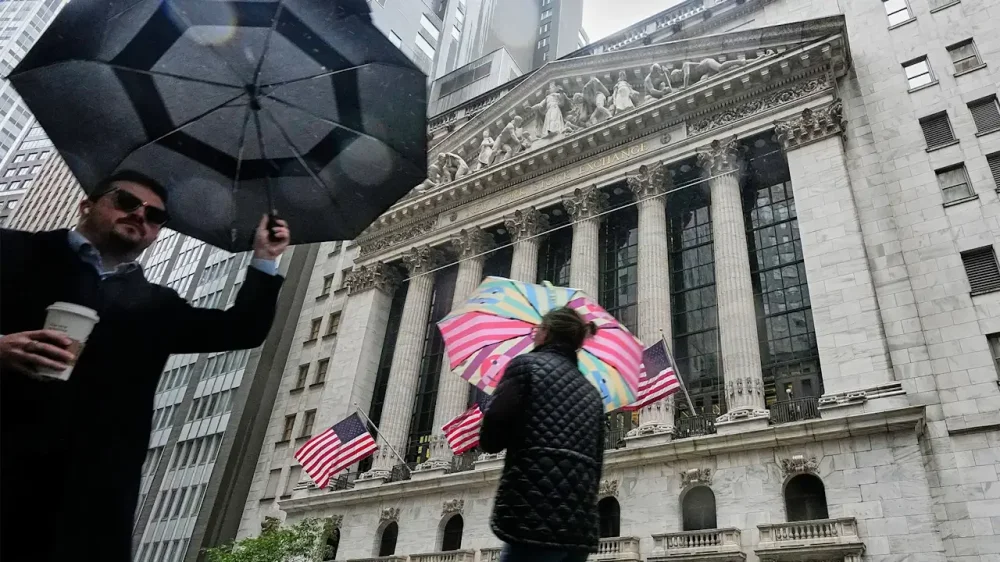
Amazon is leading the U.S. stock market on Friday to the finish of another winning week and month. The S&P 500 was virtually flat after giving up a modest gain from the morning. The index is still near its all-time high set on Tuesday, and it’s on track to close a third straight winning week and a sixth straight winning month, which would be its longest monthly winning streak since 2021. The Dow Jones Industrial Average was down 102 points, or less than 0.2%, as of 1 p.m. Eastern time, and the Nasdaq composite was 0.4% higher. Amazon led the way after jumping 10.3%. The retail giant was by far the strongest force pushing upward on the market after reporting profit for the latest quarter that blew past analysts’ expectations. CEO Andy Jassy said growth for its booming cloud-computing business has reaccelerated back to a pace it hasn’t seen since 2022. Because Amazon is so massive, worth roughly $2.4 trillion, its stock movements carry more weight on the S&P 500 than almost any other company’s. Another highly influential stock, Apple, was having less of an effect even though it’s bigger than Amazon. Apple, which is worth more than $4 trillion, was swinging between modest gains and losses and was most recently up 0.1%. It likewise delivered a better profit report than analysts expected, though by not as big a margin as Amazon did. CEO Tim Cook said it benefited from strong revenue for both its iPhone lineup and its services offerings, which include its app store. Elsewhere on Wall Street, online message board Reddit jumped 12.1% to erase losses from earlier in the week after reporting stronger profit and revenue for the latest quarter than analysts expected. Coinbase Global rose 6.8% after the crypto exchange’s profit likewise topped expectations. Outside of earnings reports, Netflix added 3.3% after the video streamer announced a move that could make its stock price more affordable but still leave all its investors holding the same amount. Netflix will undergo a 10-for-1 stock split, where it will give nine additional shares to every investor with one. They helped offset a 4.8% drop for AbbVie, even though the medicine maker reported stronger profit for the latest quarter than expected. Analysts pointed to how it’s beating forecasts by less than before, and expectations may have been high after AbbVie’s stock came into the day with a strong 28.4% gain for the year so far. The pressure is on companies to deliver strong growth in profits to justify the huge gains their stock prices have made since April. Criticism has been growing that the stock market has become too expensive. A day earlier, the S&P 500 slumped 1% as investors appeared unnerved by big increases in spending that Meta Platforms and Microsoft are planning as part of the investment spree underway in artificial-intelligence technology. Financial markets also appeared skeptical that President Donald The President’s trade truce with China would put an end to tensions between the two countries. Additional drops on Friday of 1.6% for Microsoft and 2.2% for Meta were two of the heaviest weights on the U.S. market. In stock markets abroad, indexes dipped in Europe following a mixed finish in Asia. Stocks fell 1.4% in Hong Kong and 0.8% in Shanghai after data showed factory activity in China contracted in October for a seventh straight month and at the fastest pace in six months. Japan’s Nikkei 225, meanwhile, jumped 2.1% to another record after a report showed industrial production rose more in September than expected. In the bond market, Treasury yields eased after their spurt higher in the middle of the week, when Federal Reserve Chair Jerome Powell warned that another cut to interest rates in December “is not a foregone conclusion — far from it.” The yield on the 10-year Treasury dipped to 4.09% from 4.11% late Thursday, but it’s still above the 3.99% level it was at before Powell’s warning. Other central banks have halted cuts to rates or hinted at pauses recently, and “it seems this is it for the 2025 easing season in developed economies,” economists at Bank of America wrote in a BofA Global Research report. —Stan Choe, AP business writer AP Business Writers Teresa Cerojano and Matt Ott contributed. View the full article
-
Vic Lombardo, new head of mortgage services, has identified growth ideas and new revenue streams for Motto Mortgage and Wemlo, Remax CEO Erik Carlson said. View the full article
-
YouTube TV viewers can no longer see Disney channels including ABC and ESPN after the two sides failed to agree on a new content distribution deal. Other channels that vanished from Google’s pay TV platform include the Disney Channel, FX, and Nat Geo. Google’s pay TV platform said in a blog post late Thursday that Disney had followed through on a threat to suspend its content amid the negotiations. The breakdown could impact coverage of some college football games on Saturday, as well as NBA, NFL, and NHL games. YouTube is the largest internet TV provider in the U.S. with more than 9 million subscribers. Hulu, owned by Disney, is next, with about half that many subscribers. Viewers have become aware of the dispute in recent weeks because of warnings being scrolled across their screens. YouTube said Disney used the threat of a blackout as a negotiating tactic that would have resulted in higher prices for its subscribers. Disney’s move to take down its content also benefits its own streaming products Hulu + Live TV and Fubo, YouTube said. “We know this is a frustrating and disappointing outcome for our subscribers and we continue to urge Disney to work with us constructively to reach a fair agreement that restores their networks to YouTube TV,” it said. YouTube said it would give subscribers a $20 credit if Disney content unavailable “for an extended period of time.” YouTube TV’s base subscription plan costs $82.99 per month. Disney said that YouTube TV is refusing to pay fair rates for its channels and has chosen to “deny their subscribers the content they value most,” pointing out the number of Top 25 teams playing this weekend. “With a $3 trillion market cap, Google is using its market dominance to eliminate competition and undercut the industry-standard terms we’ve successfully negotiated with every other distributor,” Disney said. The company said that it was committed to reaching a resolution as quickly as possible. View the full article

-
Check your medicine cabinet: A major pharmaceutical company has just recalled nearly 600,000 bottles of a blood pressure medication due to the potential presence of a potentially cancer-causing chemical. According to three different recall notices shared by the FDA, the New Jersey-based drugmaker Teva Pharmaceuticals USA has voluntarily recalled several lots of the blood pressure medication prazosin hydrochloride. Here’s what to know: What happened? According to the FDA’s reports, about 590,000 bottles of prazosin hydrochloride have been recalled due to “presence of N-nitroso Prazosin impurity C above the Carcinogenic Potency Categorization Approach (CPCA) acceptable intake limit.” Essentially, that means drug testing found that the affected bottles contained a concentration of nitrosamine—a potential carcinogen—that was above the acceptable levels established by the FDA. The FDA has categorized this recall as a Class II, meaning, “a situation in which use of or exposure to a violative product may cause temporary or medically reversible adverse health consequences or where the probability of serious adverse health consequences is remote.” Which blood pressure medication was recalled? The recall includes bottles of Prazosin Hydrochloride in 1 mg, 2 mg, and 5 mg concentrations. There are three different recall numbers for each of these doses, cinlduing: D-0104-2026; 181,659 bottles of a 1 mg dosage D-0105-2026; 291,512 bottles of a 2 mg dosage D-0106-2026; 107,673 of a 5 mg dosage Full lot numbers for every affected batch of the medicine can be found here. What should I do if I have recalled medication? In a statement sent to NBC Chicago, Teva said that anyone with the affected medication should contact their pharmacy to determine what to do with the remaining quantities, and noted that it has already sent letters to its customers with instructions on returning the recalled product. The company added that it has not yet received any complaints about the medication. It’s important to note that, during similar cases in the past, the FDA has advised patients to continue taking these medications until they have an alternative, because a heart attack is a more immediate risk than cancer. Teva did not immediately respond to Fast Company‘s request for comment. View the full article