ResidentialBusiness
Administrators
-
Joined
-
Last visited
Everything posted by ResidentialBusiness
-
 On my podcast this week, I took a closer look at OpenAI’s new video generation model, Sora 2, which can turn simple text descriptions into impressively realistic videos. If you type in the prompt “a man rides a horse which is on another horse,” for example, you get, well, this: AI video generation is both technically interesting and ethically worrisome in all the ways you might expect. But there’s another element of this story that’s worth highlighting: OpenAI accompanied the release of their new Sora 2 model with a new “social iOS app” called simply Sora. This app, clearly inspired by TikTok, makes it easy for users to quickly generate short videos based on text descriptions and consume others’ creations through an algorithmically curated feed. The videos flying around this new platform are as outrageously stupid or morally suspect as you might have guessed; e.g., Or, The Sora app, in other words, takes the already purified engagement that fuels TikTok and removes any last vestiges of human agency, resulting in an artificial high-octane slop. It’s unclear whether this app will last. One major issue is the back-end expense of producing these videos. For now, OpenAI requires a paid ChatGPT Plus account to generate your own content. At the $20 tier, you can pump out up to 50 low-resolution videos per month. For a whopping $200 a month, you can generate more videos at higher resolutions. None of this compares favorably to competitors like TikTok, which are exponentially cheaper to operate and can therefore not only remain truly free for all users, but actually pay their creators. Whether Sora lasts or not, however, is somewhat beside the point. What catches my attention most is that OpenAI released this app in the first place. It wasn’t that long ago that Sam Altman was still comparing the release of GPT-5 to the testing of the first atomic bomb, and many commentators took Dario Amodei at his word when he proclaimed 50% of white collar jobs might soon be automated by LLM-based tools. A company that still believes that its technology was imminently going to run large swathes of the economy, and would be so powerful as to reconfigure our experience of the world as we know it, wouldn’t be seeking to make a quick buck selling ads against deep fake videos of historical figures wrestling. They also wouldn’t be entertaining the idea, as Altman did last week, that they might soon start offering an age-gated version of ChatGPT so that adults could enjoy AI-generated “erotica.” To me, these are the acts of a company that poured tens of billions of investment dollars into creating what they hoped would be the most consequential invention in modern history, only to finally realize that what they wrought, although very cool and powerful, isn’t powerful enough on its own to deliver a new world all at once. In his famous 2021 essay, “Moore’s Law for Everything,” Altman made the following grandiose prediction: “My work at OpenAI reminds me every day about the magnitude of the socioeconomic change that is coming sooner than most people believe. Software that can think and learn will do more and more of the work that people now do. Even more power will shift from labor to capital. If public policy doesn’t adapt accordingly, most people will end up worse off than they are today.” Four years later, he’s betting his company on its ability to sell ads against AI slop and computer-generated pornography. Don’t be distracted by the hype. This shift matters. The post Is Sora the Beginning of the End for OpenAI? appeared first on Cal Newport. View the full article
 -
On my podcast this week, I took a closer look at OpenAI’s new video generation model, Sora 2, which can turn simple text descriptions into impressively realistic videos. If you type in the prompt “a man rides a horse which is on another horse,” for example, you get, well, this: AI video generation is both technically interesting and ethically worrisome in all the ways you might expect. But there’s another element of this story that’s worth highlighting: OpenAI accompanied the release of their new Sora 2 model with a new “social iOS app” called simply Sora. This app, clearly inspired by TikTok, makes it easy for users to quickly generate short videos based on text descriptions and consume others’ creations through an algorithmically curated feed. The videos flying around this new platform are as outrageously stupid or morally suspect as you might have guessed; e.g., Or, The Sora app, in other words, takes the already purified engagement that fuels TikTok and removes any last vestiges of human agency, resulting in an artificial high-octane slop. It’s unclear whether this app will last. One major issue is the back-end expense of producing these videos. For now, OpenAI requires a paid ChatGPT Plus account to generate your own content. At the $20 tier, you can pump out up to 50 low-resolution videos per month. For a whopping $200 a month, you can generate more videos at higher resolutions. None of this compares favorably to competitors like TikTok, which are exponentially cheaper to operate and can therefore not only remain truly free for all users, but actually pay their creators. Whether Sora lasts or not, however, is somewhat beside the point. What catches my attention most is that OpenAI released this app in the first place. It wasn’t that long ago that Sam Altman was still comparing the release of GPT-5 to the testing of the first atomic bomb, and many commentators took Dario Amodei at his word when he proclaimed 50% of white collar jobs might soon be automated by LLM-based tools. A company that still believes that its technology was imminently going to run large swathes of the economy, and would be so powerful as to reconfigure our experience of the world as we know it, wouldn’t be seeking to make a quick buck selling ads against deep fake videos of historical figures wrestling. They also wouldn’t be entertaining the idea, as Altman did last week, that they might soon start offering an age-gated version of ChatGPT so that adults could enjoy AI-generated “erotica.” To me, these are the acts of a company that poured tens of billions of investment dollars into creating what they hoped would be the most consequential invention in modern history, only to finally realize that what they wrought, although very cool and powerful, isn’t powerful enough on its own to deliver a new world all at once. In his famous 2021 essay, “Moore’s Law for Everything,” Altman made the following grandiose prediction: “My work at OpenAI reminds me every day about the magnitude of the socioeconomic change that is coming sooner than most people believe. Software that can think and learn will do more and more of the work that people now do. Even more power will shift from labor to capital. If public policy doesn’t adapt accordingly, most people will end up worse off than they are today.” Four years later, he’s betting his company on its ability to sell ads against AI slop and computer-generated pornography. Don’t be distracted by the hype. This shift matters. The post Is Sora the Beginning of the End for OpenAI? appeared first on Cal Newport. View the full article
-
OpenAI has announced that starting in December, ChatGPT will allow the generation of erotic content for verified adult users. At the same time, Elon Musk’s xAI has launched Grok Imagine, an image-generation system that already includes an NSFW mode for producing explicit imagery. None of this should surprise anyone. Desire, fantasy, and pornography have always been powerful engines of technological adoption. Photography, video, the internet, and even online payments all grew, in part, because of it. The interesting question is not about sex: it’s about what these decisions reveal about the kind of humanity Big Tech companies are shaping. Desire as a managed service This is not about prudishness or panic. Sexuality will, of course, find its digital expressions. What’s unsettling is not the presence of eroticism in technology, but its industrialized management. The difference between eroticism and algorithmic consumption is the same as that between experience and dopamine: one is built through relationship; the other is dosed from the outside. By integrating sexuality into large language models and visual generators, platforms are not liberating desire: they are administering it. They decide which fantasies are “acceptable,” which bodies exist and which don’t, what limits imagination deserves, and which ones are preemptively censored. The promise is freedom; the result is regulation of pleasure. From exploration to domestication When excitement, tenderness, and curiosity are mediated through an interface, our relationship with our bodies and with others changes. This isn’t moralism. It’s behavioral architecture. Algorithms learn what attracts us, replicate it, reinforce it, and turn it into dependence. Users stop exploring desire; they repeat it. And repetition, safe, comfortable, and risk-free, becomes a form of domestication. There’s no need to manipulate people with ideology when you can condition them with pleasure. Constant stimulation is a far more effective form of control than censorship ever was. A new vector of capture It’s no coincidence that this expansion arrives just as large language models mature and corporations compete to keep users inside their closed ecosystems. Sex, in this context, becomes just another vector of attention capture, a way to deepen the emotional bond between humans and machines. The goal is no longer for AI to respond, but to accompany, excite, soothe, and replace. The fantasy isn’t companionship: it’s containment. An artificial partner designed never to challenge, never to refuse, never to feel. This is not technological liberation. It’s the automation of comfort. From entertainment to managed desire As I said a couple of weeks ago, we’ve been here before. From social networks to gaming, digital entertainment has followed the same logic of permanent stimulation. What changes now is the terrain: it’s no longer about free time: it’s about desire itself, that core where emotion and biology meet. Turning desire into a managed service run by algorithms is the final step toward a docile humanity, one in which even intimacy becomes a subscription. Digital sex vs. algorithmic sex The point is not to moralize about pornography: it’s to understand what it means to hand over control of erotic imagination, one of humanity’s most powerful creative forces, to closed systems that do not explain how they learn, what they filter, or whom they serve. The problem is not digital sex. It’s algorithmic sex. Not pleasure, but control. Once these systems learn to measure, adjust, and stimulate desire, free will becomes just another optimization parameter. The new anesthesia Behind this apparent liberalization of content lies a simpler, more effective strategy: keep us busy, satisfied, and distracted. Not indoctrinated: anesthetized. A form of emotional livestock, fed by impulses engineered on distant servers. Algorithmic sheep: artificially happy, productive, and unable to tell the difference between genuine desire and manufactured stimulus. View the full article

-
A new music startup created an instrument that can turn your microwave, electric toothbrush, and baby monitor into hauntingly beautiful music. Its branding converts all of those fascinating outputs into an infinite series of Victorian-inspired patterns. Eternal Research is a brand founded by musician Alexandra Fierra, and it’s dedicated to “unlocking the existing music hidden in everyday things,” per its website. The company’s debut product is called the Demon Box. This fully analog device uses an intricate array of sensors to detect the electro-magnetic fields (EMFs) of almost any electronic device around it, and then turns those EMFs into music. The brand hit its funding goal on Kickstarter in a matter of hours, and the first Demon Boxes (which cost $999 a pop) are set to ship in November. The Demon Box blends the study of music-making with modern technology—and for its launch it needed a brand to match. The New York-based agency Cotton Design was tasked with creating a visual identity that an infinitely audio-reactive generative model that transforms sound into historically accurate Victorian patterns. Like the instrument itself, the brand eschews convention to create something unique. A music brand inspired by vampires, high fashion, and the Victorian era When Talia Cotton, founder and creative director at Cotton Design, first met with Fierra, she felt as if Fierra was “on another frequency than the rest of the world.” Fierra’s approach to music is all about craft, experimentation, and the intricacy of the sound that exists in the everyday world. Her vision for Eternal Research’s branding combined that attention to detail with a mysterious, almost vampiric visual sensibility. “She kept on sending us these examples,” Cotton says. “She sent us an empty unboxing experience for YSL, because she said there was something special about that unboxing experience. There was a box, that held an envelope, that held a scarf—all these different layers of the brand that she thought were very thoughtful. She also sent us an old collector’s edition VHS tape of [Bram Stoker’s] Dracula in a coffin-shaped box.” These small pieces of Fierra’s inner world slowly started to piece together for Cotton’s team, which included coder Noah Schwadron and project manager Sewon Bae. But there was one source of inspiration that became a kind of north star for the brand. ”[Fierra] is a collector of old books from the Victorian era,” Cotton says. “She has a very deep appreciation for the craft that is associated with that period in time, which is defined by ornamentation, and by the careful, slow process of making these outputs. Each Victorian pattern was unique.” Eventually, Cotton realized that Fierra’s fascination with Victorian design sensibilities was the perfect basis for Eternal Research’s brand—the challenge was to figure out how to pull off an identity for a modern music brand company based on inspiration from the 19th century. How Eternal Research pulled brand inspiration from A24 Cotton describes Eternal Research’s brand as geared toward two different consumer bases: one who is just discovering the brand, and another who is an avid follower prepared to pay the sizable $999 cost of the Demon Box. To appeal to both of those consumer segments, Cotton’s team needed to balance a strong element of personalization with a sense of approachability. “This was really tricky for us, because on one hand there was the ornament, the detail, the special-feeling experience, and on the other hand, [Fierra] was very gung ho about making this feel open; like anybody could understand it,” Cotton says. For consumers that are just discovering Eternal Research, Cotton’s team took inspiration from brands outside the music tech space with cult followings, like the movie studio A24—which Cotton says pulls some of its mystique from seeming almost “unbranded.” Similarly, Eternal Research’s most frequently used assets, including its logo and sans serif wordmark, are kept simple and unornamented to invite new customers to learn more. But as fans of the brand dig deeper, the branding story pulls them into a more and more expressive world. That world is anchored by a generative model, coded from the ground up by Schwadron, that turns any sound input into a Victorian-inspired ornamental design. These patterns, which can be made in an infinite array of combinations, appear everywhere from the brand’s social media content to its website, letterheads, and packaging—and the model is available online for anyone to use. A brand that turns sounds into Victorian patterns Cotton Design’s audio-reactive design relies on historical sources to create period-accurate Victorian patterns. The team sifted through hundreds of vintage book covers, illustrations, and re-creations to understand how these patterns were constructed and which motifs recurred most commonly—down to the angles of individual curves and the kind of floral patterns that were most popular. The base of the generative model can be understood as a kind of map. Each map is composed of a grid and a series of circles, which tell the model where the pattern’s lines should go. Every time the model is reloaded, it creates a random base map. From there, it takes in a sound input and interprets not only the input’s volume, but also its frequency, texture, and timbre. These sound qualities are digested by the model and correlated to more than 30 different pattern parameters, like line density, length, animation speed, the number of floral accents, and more. With all of these layers stacked on top of each other, the outcome is a model that can literally make an infinite number of sound-based Victorian illustrations. While audio-reactive designs have become more popular in recent years, this project is perhaps one of the most expressive, detailed applications of the technique to date. Paired with the music generated by the Demon Box, the brand is like an otherworldly symphony for both the ears and eyes. View the full article

-
When samurai warriors went into battle in 16th century Japan, their swords included a piece of hidden art. Within the tsuba, the hand guard at the bottom of the blade, metal smiths carefully crafted beautiful and complex designs, including flowers, animals, and landscapes. The Museum of Fine Arts in Boston has one of the largest collections of Japanese art in the United States in its permanent collection, including hundreds of tsubas. It has just collaborated with the fine jewelry designer Monica Rich Kosann to create a collection of necklaces inspired by three tsuba designs—a crane, a turtle, and a butterfly—to introduce these ancient works of art back into the modern world. Kosann’s pieces, which cost between $925 and $3,050, are made from gold and silver, and one piece is encrusted with diamonds. They will be sold at the MFA as well as Kosann’s store. Kosann carefully went through every single one of the MFA’s tsubas and settled on these three creatures. She was particularly drawn to their symbolism, which she learned about as she spoke with the museum’s curators. The crane symbolized good luck and the turtle symbolized a long life, both of which a samurai would hope for as they went into the battlefield. But warriors also realized that they might never make it home alive. “The butterfly symbolized a short life, but a full, glorious one,” says Kosann. “I find that very moving, and something that many people can relate to.” Sarah Thompson, curator of Japanese prints at the MFA, says that most of the tsubas that have survived are from the 16th century, when Japan was engaged in a lengthy civil war. Metal smiths would create these tsubas out of precious metals, often iron combined with two alloys that are unique to Japanese metalwork, shibuichi (which is copper blended with silver) and shakuto (which is copper blended with gold). Over time, these pieces became status symbols, signaling the importance of the warrior and his family. “As far as I know, the design of the tsubas were personally selected by their owners,” says Thompson. “And because they could be put together [on the sword] in different ways, you might have several that you could change.” Kosann was drawn to this project because she has built her business on creating jewelry based on storytelling and symbolism. When she launched her eponymous jewelry brand two decades ago, she focused on creating lockets inspired by those she found at vintage markets, since these were a way for a person to tell a story about their life and the loved ones who have shaped them. Today, the brand continues to be known for its lockets, but Kosann has expanded to include many other pieces of jewelry designed to tell stories about the wearer’s identity. For instance, she has a collection of pendants inspired by fables and fairy tales. There’s one that features a red apple, which appears everywhere from the biblical story of the Garden of Eden to the story of Snow White. She reimagines it as a symbol of empowerment. And there’s another one that features the tortoise and the hare, made from green tourmaline and white diamonds. “The moral and meaning in mythology never get old,” says Kosann. “So many people feel like they’re behind in the journey of life, but the tortoise and the hare reminds us that slow and steady often wins the race.” Her collection for the MFA is an extension of this work. In some ways, the project is a departure for her, because she’s inspired by a form of art that was designed for men who would then carry it into the very masculine space of the battlefield. She believes the symbolism within these tsubas are relevant to the modern woman, who might want to embody the spirit of a fearless warrior. “I think about the butterfly,” says Kosann. “It represents transformation and beauty, and how it’s not the length of your life that matters, but whether you lived it well.” View the full article

-
People are fascinated with leadership, and rightly so. After all, most of the “big things” that happen in the world (both good and bad) can be directly traced to decisions, behaviors, or choices of those who are in charge: presidents, prime ministers, CEOs, executives, and anyone tasked with turning a group of people into a high-performing unit, coordinating human activity, and shaping the impact institutions have on society, all the way down to individuals. In line, scientific research shows that up to 40% of the variability in team and organizational performance can be accounted for by the leader—in other words, who we put in charge, or who emerges as leaders, drastically influences the fate of others. This begs the obvious question of how and why some people become leaders in the first place. Furthermore, few psychological questions have intrigued the general public more than the question of whether nature or nurture is responsible for shaping and creating leaders: so, are leaders born or made? If you want the quick and short answer, it is YES. Or if you prefer, “a bit of both” (which is generally the case in psychology). Let’s start with the nurture part, which is the one more likely to resonate with popular or laypeople’s views . . . (1) Environment shapes character and competence Our early environments (especially during childhood) play a profound role in molding the attitudes, motivations, and habits that underpin leadership. Supportive parents, good schooling, early exposure to responsibility, access to a stimulating wider community, and opportunities to practice decision-making all nurture proto-leadership skills such as conscientiousness, self-control, curiosity, assertiveness, and empathy. On the flip side, adversity can also build resilience, independence, and determination. In other words, leadership potential often germinates in the soil of early experiences, but it’s impossible to accurately predict the direction of the development, which is what makes life interesting and fun. At the same time, things aren’t random, and science-based predictions will work more often than not (on average, for most people, we can improve from a 50% guesswork to around 80% hit rate). (2) Expertise legitimizes leadership No one wants to follow a leader who doesn’t know what they’re talking about. That’s why domain-specific knowledge is essential for legitimacy. You can’t lead a tech team without understanding technology, or a marketing department without grasping customers and branding. Expertise breeds credibility, and credibility breeds followership in turn. This is why great football coaches will probably fail as corporate CEOs, and why even the best military leaders may not be adequate startup founders. While charisma or confidence may get you noticed, sustained leadership requires demonstrable competence. This is learned, not inherited, because it’s about harnessing the social proof that makes you a credible expert in the eyes of others (and I mean other experts not novices!). (3) Personality evolves through life experience Traits like curiosity, openness, emotional stability, and conscientiousness (all strong predictors of leadership effectiveness) are partly malleable. They evolve in response to life experiences, feedback, and learning. The so-called “bright side” of personality (ambition, sociability, diligence) and the “dark side” (narcissism, impulsivity, arrogance) both reflect a mix of innate dispositions and environmental reinforcement. The first decade of life is particularly critical, but development continues throughout adulthood. So while personality sets the stage, experience writes the script. Now for the less popular, but equally important “nature” side of the debate. (4) Leadership is partly heritable Behavioral genetics (especially twin studies) show that leadership is not purely learned. Roughly 30 to 60% of the variance in who becomes a leader can be attributed to genetic factors. Rich Arvey and colleagues at the National University of Singapore found that identical twins, even when raised apart, are significantly more likely to occupy leadership roles than fraternal twins. This doesn’t mean leadership is predetermined, but it suggests some individuals are born with psychological and biological predispositions, like higher energy, extraversion, or risk tolerance, that increase their odds of taking charge. (5) Intelligence and personality are strongly genetic Two of the most powerful predictors of leadership (cognitive ability and personality) are themselves highly heritable. Robert Plomin’s decades of research suggest that around 50% of the variance in both IQ and personality traits can be traced to genetics. Since these traits strongly predict who emerges as a leader and how effective they are, we can reasonably infer that part of leadership is literally in our DNA. Brains, not just behavior, matter: smarter, more emotionally stable individuals tend to make better decisions, handle stress, and inspire confidence; all qualities that attract followers. (6) The unfair advantages of birth Finally, there’s the uncomfortable truth that social class, privilege, and demographic factors like gender, race, and attractiveness (each partly determined by who you are born to) also shape leadership opportunities. Tall, good-looking, well-spoken individuals from higher socioeconomic backgrounds are more likely to be perceived as leadership material, regardless of actual competence. These advantages aren’t “earned,” yet they strongly affect leadership trajectories. Nature determines the lottery ticket; society decides how valuable it is, even if this is arbitrary and unfair. To be sure, societies that dislike this fact (including most Western democracies) are seeing big decreases in upward social mobility. For instance, in the U.S., approximately 50% of a father’s income position is inherited by his son (in Norway and Canada, the figure is less than 20%). With wealth and money come advantages and access to leadership positions, so while nature isn’t destiny, it certainly inhibits or amplifies opportunities. In sum, the science of leadership suggests that it is both born and made. Genetics endows us with certain predispositions (intelligence, temperament, even physical appearance) that make leadership more or less likely. And our socioeconomic status and parental resources at birth shape the nature of what’s possible, or at least likely. But environment, learning, and experience are the catalysts that turn those predispositions into performance. Leadership, in other words, is a potential meeting opportunity. And while we can’t control our genetic hand, we can absolutely learn to play it better. View the full article

-
AWS reports ‘operational issue’ affecting the US east coast View the full article
-
In 1998, five kids met in a cafe in Belgrade. Still in their 20s, they were, to all outward appearances, nothing special. They weren’t rich, or powerful; they didn’t hold important positions or have access to significant resources. Nevertheless, that day, they conceived a plan to overthrow their country’s brutal Milošević regime. The next day, six friends joined them and they became the 11 founders of the activist group Otpor. A year later, Otpor numbered a few hundred members and it seemed that Milošević would be the dictator for life. A year after that, Otpor had grown to 70,000 and the Bulldozer Revolution brought down the once-unshakable dictator. That’s how change works: in phases. Every transformational idea starts out weak, flawed, and untested. It needs a quiet period to work out the kinks. Through trial and error, you see what works, begin to gain traction, and eventually have the opportunity to create lasting change. If you’re serious about change, you need to learn the phases of change and manage them wisely. The Emergent Phase Managers launching a new initiative often seek to start with a bang. They work to gain approval for a sizable budget as a sign of institutional commitment. They recruit high-profile executives, arrange a big “kick-off” meeting, and look to move fast, gain scale, and generate some quick wins. All of this is designed to create a sense of urgency and inevitability. Yet this approach usually backfires. Every idea starts out weak and untested. You might think that you have a sound concept. You may have even seen it work before and achieve impressive results. But until the idea has gained traction in your current context, you don’t really know anything. You’re shooting in the dark. That’s why in the emergent phase, you want to move deliberately. For example, in his efforts to reform the Pentagon, Colonel John Boyd began every initiative by briefing a group of collaborators he called the “Acolytes,” who would help hone and sharpen the ideas. Only once the ideas had been subjected to intense scrutiny would he move on to congressional staffers, elected officials, and the media. The truth is that change is never top-down or bottom-up, but always moves side-to-side. You will find the entire spectrum—from strong supporters to committed opponents—at every level. That’s why you need to go to where the energy already is, not try to create and maintain it by yourself. Find people who are as enthusiastic and committed as you are. That’s what was achieved in that cafe in Belgrade. They didn’t have a movement, resources, or anything more than the rough contours of a plan. But they had a core team that was committed to shared values and a shared purpose. That’s where every change effort needs to start. The Engagement Phase Once you have your core team in place, you’ll want to start mobilizing others who might be open to joining your effort. The tipping point for change in most contexts is only 10%–20% participation, so you don’t need to convince everyone at once. You want to attract, not try to overpower, scare, or shame people into bending to your will. The first thing you want to do is to identify a Keystone Change, which has a clear and tangible goal, involves multiple stakeholders, and paves the way for future change. When we work with organizations, we always encourage the teams we work with to “make it smaller,” until their Keystone Change is laser focused on one process, one product, one office, or one . . . something. Another key strategy is to design a Co-Optable Resource that others can use to achieve their own goals, but also further the change you’re trying to build. A good Co-Optable Resource must be both accessible—no mandates or incentives—and impactful, meaning that it needs to deliver practical value and be scalable. For example, in a cloud transformation at Experian, the CIO didn’t simply mandate the shift, which he had full authority to do, but instead started with internal APIs, which don’t carry the same risks and wouldn’t encounter much resistance. That was the Keystone Change. Then he set up an “API Center of Resistance” to help product managers who wanted to build cloud-based products. What’s key during the engagement phase is that you are working to empower rather than to persuade. By helping others to achieve things that they want to, you can build traction and set the conditions for genuine transformation. The Victory Phase Once you have shown that change can work with a successful keystone project and begun to attract a following, you will begin to gain traction. This is when you need to start planning for the victory phase, which is often the most dangerous phase, because that’s when you are most likely to encounter vicious opposition. Once the opponents of change see that genuine is actually possible, that’s when the knives come out. They will see that genuine transformation is possible and will seek to undermine it in ways that are dishonest, underhanded, and deceptive. That’s what you need to be prepared for, because it almost always happens. The good news is that these efforts are usually desperate and clumsy. They often backfire. What’s key is to not take the bait and get sucked into a conflict, although that will be tempting. When someone viciously attacks something we believe passionately in and have worked hard for, it offends our dignity and we want to lash out. What’s important to remember is that lasting change is always built on common ground. So you want to focus on shared values in how you communicate and how you design dilemmas. You will never convince everybody, nor do you need to, but you do need to create a sense of safety around change and show that you want to make it work for all who are affected by it. Protect Your Ugly Baby Pixar founder Ed Catmull once wrote that “early on, all of our movies suck.” The trick, he explained, is to go beyond the initial germ of an idea and put in the hard work it takes to get something to go “from suck to not-suck.” He called early ideas “ugly babies,” because they start out, “awkward and unformed, vulnerable and incomplete.” There’s something romantic about the early stages of an idea, but it’s important to remember that, much like Catmull’s ugly babies, your idea is never going to be as weak and vulnerable as those early days before you get a chance to work out the inevitable kinks. You need to be careful not to overexpose it or it may die an early death. You need to protect your ugly baby, not shove it out into the world and hope it can fend for itself. You need to resist the urge to jump right in with a big launch. Change follows a predictable, nonlinear pattern often described as an S curve. It starts out slowly, because it’s unproven and flawed. Few will be able to see its potential and even fewer will be willing to devote their energy and resources to it. Early on, you need to focus on a relatively small circle who can help your ugly baby grow. These should be people you know and trust, or at least have indicated some enthusiasm for the concept. If you feel the urge to persuade, you have the wrong people. As you gain traction, identify flaws, and make adjustments, your idea will grow stronger and you can accelerate. Large-scale change cannot be rushed. It is not a communication problem and wordsmithing snappier slogans won’t get you very far. It is a collective action problem. People will only adopt it when they see others around them adopt it. That’s why you need to approach it carefully. Give it the respect it deserves, and it can work wonders for you. View the full article

-
The job market is rough. So when candidates are landing interviews, they’re often cramming every skill, accomplishment, and experience they can muster into the interview process, hoping to edge out the competition. Sounds reasonable, right? Wrong. Hiring managers often tune out in such cases, causing the rapid-fire qualifications to backfire. It’s what Marc Cendella, CEO of career platform Ladders, calls “answer inflation.” Answer inflation is when experienced professionals respond to interview questions with lengthy résumé recitations and meandering stories that bury their actual value, he explains. Take the classic: “Tell me about yourself.” It’s the question that most interviews kick off with. And while it may seem straightforward enough, there’s actually an art to delivering a strong elevator pitch to hook the hiring manager’s attention from the off. “Many candidates think that the interviewer is trying to socialize or make small talk—but that’s rarely the case,” Cendella told Fast Company. “This question can actually tell an interviewer a lot. When asked an open-ended question, do you take the chance to answer thoughtfully? Can you prioritize and organize your thoughts under pressure? Or are you rambling, caught off guard?” “Tell me about yourself” is also not a chance to detail your entire life story. An answer filled with irrelevant details and outdated roles is more likely to lose the hiring manager’s attention halfway through than impress them with your decades of experience. While you may think the more information you can cram in the better, Cendella says the opposite is often true. “Hiring managers see it time and time again: experienced professionals tend to assume their longer track record requires longer explanations,” he explains. “As a result, they’ll respond to interview questions with long-winded stories that bury their actual value. Or, they merely list all of their past roles and accomplishments—like a résumé reading.” Instead, trim the fat and replace vague descriptions with quantifiable achievements. “Think about those key challenges hiring managers are facing, and how your past experience could fill in the gaps,” Cendella explains. “Every response you have should ladder up to a clear, compelling narrative about why you’re the solution to their current problem.” He recommends taking two to three concise examples that demonstrate impact and let the numbers do the talking for you. Let’s imagine you’re in the process for a project manager role. Rather than droning on about your years in project management, use this script as an example: “In my last role, I inherited a project that was three months behind schedule and turned it around within six weeks by implementing clearer communication channels and regular team check-ins,” he says. It’s clear, concise, and not bogged down by answer inflation. Remember the golden rule: Show, don’t tell. View the full article

-
I just got back from a week on the beach. The water was crystal clear, the sky blue, and my butt was in a lounge chair all day. I certainly enjoyed myself and caught up on a ton of sleep. But did I return to work today bursting with ideas and fresh energy? If I’m honest, not really. It feels more like I left my brain sunning itself on the seaside. Meanwhile, I need to dig myself out from under a mountain of work and complete my massive back-to-school to-do list. Where did I go wrong in my vacation planning? If I was looking to maximize floating time and the amount of tasty fish I ate, nowhere. But according to psychology, as much as I enjoyed my break, I also fell prey to one of the most common vacation myths. Like many people, I assumed that sloth is the most effective way to unwind and refresh. I would have been better off if I had swapped my swimsuit for a “skillcation” instead. What’s a skillcation? First, what’s a skillcation? Exactly what it sounds like—a vacation dedicated to either learning a new skill or improving an existing one. This could range from a low-key guided birdwatching getaway or a sweaty boot camp to a week of cooking classes in a bucolic setting. “Consulting agency Future Partners has found that 39% of travelers are drawn to such trips,” Thrillist reports. HuffPost claims skillcations are a trend that’s “gaining popularity.” Ben Martin, of hospitality strategy firm HKS, told HuffPost that learning-focused travel “satisfies a desire for personal growth and cultural engagement.” And indeed one way to look at the skillcation trend is as yet another way the productivity and personal growth-focused ethos of work life is seeping into our off-hours. But there’s another, more positive way to look at the rising interest in holidays that promise to teach you to learn to knit or sail or identify songbirds. Science suggests this type of travel actually satisfies a deep psychological need. This ultimately leaves us more refreshed than bobbing in the sea for a week. The psychological benefits of skillcations With the world and the economy feeling precarious these days, just about all of us are stressed. Recently, best-selling author Adam Grant had fellow psychologist Sabine Sonnentag of the University of Mannheim in Germany on his podcast Worklife to discuss the best way to reset and truly refresh our brains. When we feel like we’re low on energy and inspiration, it’s natural enough to think you need rest, Sonnentag explained. “Relaxation is what many people think when they think of recovery, unwinding, maybe doing nothing. Just relaxing. And so in terms of more physiological processes, it means a low sympathetic activation. So, lower blood pressure, lower heart rate,” she said. There is certainly nothing wrong with a little rest. Some is, of course, essential for health and happiness. “But that is not the only avenue to becoming recovered,” Sonnentag stresses. What often works better than rest to leave us feeling psychologically refreshed? Something called “mastery experiences.” These are “activities that are challenging. So for instance, learning a new language or having a hobby that really asks to step outside one’s comfort zone,” Sonnentag says. Things exactly like what you experience on a skillcation, in other words. Why mastery experiences are so refreshing Signing up for a skillcation might help you improve your pickleball game or Italian cooking skills. But it will also get you physically moving and push your boundaries. Together that is likely to promote a deeper sense of refreshment for a number of reasons that Grant and Sonnentag explore together. Getting physically tired and then sleeping soundly after is often more physically restful than fitfully snoozing between reapplications of sunscreen. It’s also likely to more thoroughly distract you from whatever is stressing you out in your life. You can’t fret about work while you’re learning to rock climb. But you can as you go through the pages of a trashy beach read. (My personal experience affirms this is true.) But perhaps more important, mastery experiences remind us just how resilient and capable we are. You take a suntan back from your average beach vacation. You return from a skillcation armed with a sense of achievement and competence. Which is more likely to give you greater energy and clarity when you get back home? Learn your way to real relaxation As time use expert and author Laura Vanderkam wrote in her book What the Most Successful People Do on the Weekend: “Other kinds of work—be it exercise, a creative hobby, hands-on parenting, or volunteering—will do more to preserve your zest for Monday’s challenges than complete vegetation.” What’s true of weekends, it’s true of vacations, too. Far be it for me to say you shouldn’t visit a tropical paradise for your next vacation if that’s what you want to do. I’ll always want some beach time in my life, personally. But if supposedly “restful” vacations somehow haven’t been leaving you feeling rested, maybe it’s time to try something different. A skillcation might be just what your brain needs to feel focused and fired up again. —Jessica Stillman This article originally appeared on Fast Company‘s sister publication, Inc. Inc. is the voice of the American entrepreneur. We inspire, inform, and document the most fascinating people in business: the risk-takers, the innovators, and the ultra-driven go-getters that represent the most dynamic force in the American economy. View the full article

-
The one practical career security no one can take from you is control. I’ve built my career on five core mindsets that helped me transition to being responsible for my own career success. It’s how I run my professional life. Careers are not just built. They’re owned. That’s how you become indispensable. Your career isn’t a ladder. It’s a business. And you are in charge. Most people treat it like a job. I treat it like an asset. Every skill, every project, every task matters. If you want leverage, freedom, and a career that works for you, these mindsets can help you take your career to another level. They can determine your choices, growth, and freedom. And change how you see your own value. 1. The ‘company of one’ mindset You are the CEO of you. A one-person corporation. Your skills are your products. Your personal brand is your marketing department. Every project you take, every email you send, and every skill you learn is either an asset or a liability for your company: you. Think of meetings as pitches, tasks as investments, and mistakes as expensive lessons. When you walk into a meeting, you’re not just a participant; you’re a service provider. That mindset is how you change from what can my company do for me to what value did I provide today? And how does it strengthen my portfolio? Every action or decision compounds; every skill stacks in your favour. You can’t outsource responsibility. You’re the company. Most people wait for promotions or recognition. Build leverage. Taking responsibility for your career success starts with becoming the boss of you. And treating it seriously, like your life depends on it. That’s how you create leverage. 2. The ‘permanent beta’ mindset The most dangerous phrase in the modern career is, “I’ve arrived.” The minute you think you’re finished, you’re obsolete. Your knowledge has a half-life. That’s why I’m always in a state of permanent beta: always testing, learning, and upgrading. You don’t have to disrupt your career to do this. Micro-learning can help you adapt a “permanent beta” mindset. Listen to a podcast on a new industry trend. Take a weekend course on a topic that will still matter a few years down the line. Read books that challenge your present career mindset. Your value is directly tied to your ability to adapt and grow. Stagnation is a choice. A bad one. 3. The ‘philosophy for career’ mindset Without basic values for life, you are just pursuing the next paycheck and burning out. What does it all mean for you? You need to answer the “why.” Why do you do what you do? What are you working towards? What unique combination of interests makes you come alive? For me, it’s curiosity. The desire to learn from great thinkers, pass on that knowledge. And making a career out of it. It guides what projects I take, what I write, and who I work with. If you don’t know your why, someone else will rent your time to serve theirs. When you have that anchor, rejection from one client or a bad day at one job doesn’t break you. You’re not defined by your title. You’re defined by your life mission. You can lose a job, but you can’t lose your purpose. Philosophy for your career decides the jobs you take, the people you work with, and the projects you walk away from. 4. The ‘investor’ mindset Your skills are assets. Treat them like a portfolio. You can’t dump all your energy into one stock and hope it pays forever. Markets change. Industries collapse. AI eats jobs. The people who survive treat learning as compounding interest. They reinvest. And put time into skills that grow their skill range. They build optionality. You don’t need 10 certificates. You just need to be the person who always has another card to play. Investors put their skills to work. Ship the side project. Take the stretch role. Risk a little. Test the market. Repeat what works. You learned faster than the guy hoarding “potential” in silence. A diversified career portfolio is built on experiments, not guarantees. 5. The ‘owner’ mindset This is the one that ties it all together. Owning means you stop hiding behind career excuses like, “My boss never gave me the chance.” It may be true, but owners play the hand they’ve got and still find a way to win a round. Owners take responsibility for both career stagnation and acceleration. Owning your career path means you stop hiding behind safety nets. Owners stop blaming. No boss, no company, no economy gets the last word on your career. Owners keep evolving even in bad economic conditions. They own their mistakes, their choices, their pivots. When you own something, you protect it, you invest in it, you defend it. You don’t just “have” a career. You run it. Big difference. If your career stalls, you find ways to adapt. No one can do that for us. Your career will always be yours, and yours alone. Own it. View the full article

-
Police are getting a boost from artificial intelligence, with algorithms now able to draft police reports in minutes. The technology promises to make police reports more accurate and comprehensive, as well as save officers time. The idea is simple: Take the audio transcript from a body camera worn by a police officer and use the predictive text capabilities of large language models to write a formal police report that could become the basis of a criminal prosecution. Mirroring other fields that have allowed ChatGPT-like systems to write on behalf of people, police can now get an AI assist to automate much dreaded paperwork. The catch is that instead of writing the first draft of your college English paper, this document can determine someone’s liberty in court. An error, omission, or hallucination can risk the integrity of a prosecution or, worse, justify a false arrest. While police officers must sign off on the final version, the bulk of the text, structure, and formatting is AI-generated. Who—or what—wrote it Up until October 2025, only Utah had required that police even admit they were using an AI assistant to draft their reports. On Oct. 10, that changed when California became the second state to require transparent notice that AI was used to draft a police report. Governor Gavin Newsom signed SB 524 into law, requiring all AI-assisted police reports to be marked as being written with the help of AI. The law also requires law enforcement agencies to maintain an audit trail that identifies the person who used AI to create a report and any video and audio footage used in creating the report. It also requires agencies to retain the first draft created with AI for as long as the official report is retained, and prohibits a draft created with AI from constituting an officer’s official statement. The law is a significant milestone in the regulation of AI in policing, but its passage also signifies that AI is going to become a major part of the criminal justice system. If you are sitting behind bars based on a police report, you might have some questions. The first question that Utah and California now answer is “Did AI write this?” Basic transparency that an algorithm helped write an arrest report might seem the minimum a state could do before locking someone up. And, even though leading police technology companies like Axon recommend such disclaimers be included in their reports, they are not required. Police departments in Lafayette, Indiana, and Fort Collins, Colorado, were intentionally turning off the transparency defaults on the AI report generators, according to an investigative news report. Similarly, police chiefs using Axon’s Draft One products did not even know which reports were drafted by AI and which were not because the officers were just cutting and pasting the AI narrative into reports they indicated they wrote themselves. The practice bypassed all AI disclaimers and audit trails. The author explains the issues around AI-written police reports in an interview on CNN’s ‘Terms of Service’ podcast. Many questions Transparency is only the first step. Understanding the risks of relying on AI for police reports is the second. Technological questions arise about how the AI models were trained and the possible biases baked into a reliance on past police reports. Transcription questions arise about errors, omissions, and mistranslations because police stops take place in chaotic, loud, and frequently emotional contexts amid a host of languages. Finally, trial questions arise about how an attorney is supposed to cross-examine an AI-generated document, or whether the audit logs need to be retained for expert analysis or turned over to the defense. Risks and consequences The significance of the California law is not simply that the public needs to be aware of AI risks, but that California is embracing AI risk in policing. I believe it’s likely that people will lose their liberty based on a document that was largely generated by AI and without the hard questions satisfactorily answered. Worse, in a criminal justice system that relies on plea bargaining for more than 95% of cases and is overwhelmingly dominated by misdemeanor offenses, there may never be a chance to check whether the AI report accurately captured the scene. In fact, in many of those lower-level cases, the police report will be the basis of charging decisions, pretrial detention, motions, plea bargains, sentencing, and even probation revocations. I believe that a criminal legal system that relies so heavily on police reports has a responsibility to ensure that police departments are embracing not just transparency but justice. At a minimum, this means more states following Utah and California to pass laws regulating the technology, and police departments following the best practices recommended by the technology companies. But even that may not be enough without critical assessments by courts, legal experts, and defense lawyers. The future of AI policing is just starting, but the risks are already here. Andrew Guthrie Ferguson is a professor of law at George Washington University. This article is republished from The Conversation under a Creative Commons license. Read the original article. View the full article

-
There’s a lot of tours in New York City (I’ve highlighted my favorites here) but I think one thing people don’t do enough of is Airbnb experience. Most of us know Airbnb through their stay features but they also have a lot of experiences where you can get a local to show you around. I actually like these experiences more than traditional tours because they have locals who share something they are passionate about, they are small groups, and they are usually a bit more off the beaten path. I don’t think people take these tours enough and they are always one of my favorite things to look for whenever I travel anywhere in the world. New York City has a ton of options you can choose from. Here are my favorites: Explore Brooklyn’s Pizza Scene Pizza and NYC go hand in hand like bread and butter and this Brooklyn pizza tour run by travel writer Dani Hienrich takes you to some of the best spots in the city while also giving you a really detailed history of pizza in the city (who knew slives weren’t a thing until the 1940s!). I’ve taken a lot of pizza tours in the city and I think dani runs the best one because she explains the history, is super fun, and it’s a more off the beaten path tour so you’re not being herded around in a large group of twenty. Book here! Sketch Masterpieces at the Met Museum In this fun experience, you visit the Metropolitan Museum of Art and meet,X, a seasoned artist who will guide you on a sketching journey. You’ll begin with a friendly introduction and sketching warm-ups, then walk through selected galleries pausing to draw iconic sculptures and artworks of your choice. Along the way, he’ll also explain the history of sculpting and painting techniques and the sotry behind some of the exhibits. It’s definitely a fun and hands on way to explore the MET. Book here! Explore African American History On this walking tour in Lower Manhattan, you’ll meet your host Larry at the National Museum of the American Indian and then walk through a tapestry of hidden Black New York: from the site of Bowling Green (where enslaved Africans helped build the city), to remnants of Fort Amsterdam, and to the location of the 17th-century enslaved houses. You’ll pass Wall Street to learn about its slave-market past, visit Federal Hall and a former free-African oyster house, walk through Foley Square (site of the original execution grounds), and conclude at the African Burial Ground National Monument. Larry is one of the best tour guides I have ever had. He’s so fun, engaging, funny, and filled with a ton of knowledge. I love this tour and learned a lot on it. It’s such a cool and unique way to see lower Manhattan. He also runs an amazing Harlem tour too! Book here! Create and Taste a New York Pizza If you want to do more than eat pizza, visit Paulie Gee’s, where your host Logan will guide you through the history of New York–style pizza before you shape your own dough, choose from a variety of sauces and toppings, fire your creation in a wood-fired oven. Afterwards, you’ll sit down to eat your creation as well as some other famous dishes from the restaurant. It’s run and interactive and Logan is a really interesting and personable host. Located in Greepoint, it’s an area most tourists skip so afterwards be sure to explore this locals only part of town. Book here! *** The next time you’re in NYC and looking to do something fun and unique be sure to look into Airbnb Experiences as they are really fun and interesting. I’ve done a dozen or so of these and these ones I think are the absolute best out of those. But if you find one you love be sure to email me about it so I can check! Get the In-Depth Budget Guide to New York City!For more in-depth tips on NYC, check out my 100+ page guidebook written for budget travelers like you! It cuts out the fluff found in other guides and gets straight to the practical information you need to travel in the city that never sleeps. You’ll find suggested itineraries, budgets, ways to save money, on- and off-the-beaten-path things to see and do, non-touristy restaurants, markets, bars, safety tips, and much more! Click here to learn more and get your copy today. Book Your Trip to New York City: Logistical Tips and Tricks Book Your Flight Use Skyscanner to find a cheap flight. They are my favorite search engine because they search websites and airlines around the globe so you always know no stone is left unturned. Start with Skyscanner first though because they have the biggest reach! Book Your Accommodation You can book your hostel with Hostelworld as they have the biggest inventory and best deals. If you want to stay somewhere other than a hostel, use Booking.com as they consistently return the cheapest rates for guesthouses and cheap hotels. If you’re looking for more budget-friendly places to stay, here is a list of my favorite hostels the city. Additionally, if you’re wondering what part of town to stay in, here’s my neighborhood guide to NYC! Don’t Forget Travel Insurance Travel insurance will protect you against illness, injury, theft, and cancellations. It’s comprehensive protection in case anything goes wrong. I never go on a trip without it as I’ve had to use it many times in the past. My favorite companies that offer the best service and value are: Safety Wing (for budget travelers) World Nomads (for mid-range travelers) Insure My Trip (for those over 70) Medjet (for additional evacuation coverage) Looking for the Best Companies to Save Money With? Check out my resource page for the best companies to use when you travel. I list all the ones I use to save money when I’m on the road. They will save you money when you travel too. Need a Guide? New York has some really interesting tours. My favorite company is Take Walks. They have expert guides and can get you behind the scenes at the city’s best attractions. They’re my go-to walking tour company! Want More Information on NYC? Be sure to visit my robust destination guide on NYC for even more planning tips. The post The Best Airbnb Experiences in New York City appeared first on Nomadic Matt's Travel Site. View the full article
-
There’s a lot of walking tour companies in Paris. I’ve taken hundreds (I’ve reviewed my favorite tour companies in this post). Besides formal tours, there’s another thing I love to do in Paris: Airbnb Experiences. Airbnb Experiences are like the holy grail of tours: they are unique, off-the-beaten path, and run by locals who just want to share something they love. They aren’t cookie cutter walking tours or activities lead by a guide holding an umbrella. I absolutely love Airbnb Experiences. They are one of my favorite things to do in any city and, frankly, I don’t think nearly enough travelers do them. Whenever I run polls about them, half usually say they have never heard of them! Now, I am telling you about them and urging you to add them into your itinerary on your next visit to Paris. Paris has a huge amount of Airbnb experiences and I’ve probably done between 20-25 of them. Here is my list of the top Airbnb Experiences in Paris: Rediscover Jacqueline Marval Jacqueline Marval was an impressionist painter who hung around Matisse, influenced Picaso, and was then largely forgotten to history. This exclusive gallery tour hosted by Paris-born curator Camille showcases her family’s 40-year effort in collecting Marval’s art and showcasing her legacy to the world. She tours you through their gallery, telling you about Marval’s life story and the history behind each piece. I didn’t know anything about Marval before this and it was really interesting to learn about her story and see her beautiful paintings. She was super talented. The experience also culminates with champagne served on a secluded terrace. All in all, this is an amazing experience to learn about a forgotten artist in the beautiful setting. Plus, Camille is well integrated into the Parisian art scene and can give you suggestions on what galleries and temporary exhibits to visit. Book here! Savor French Wine and Cheese in a Hidden Shop This was an amazing and intimate wine and cheese tasting hosted by certified expert, Erwan. In this cozy, no-classroom atmosphere, you’ll sample six unique French wines paired with six cheeses and fresh bread. Erwan shares the stories behind each bottle, making this experience both educational and delightful. I’ve taken a lot of wine and cheese classes in Paris and this was one of the best. The wines and cheeses are super unique and tasty and Erwan really gives you a detailed but easy to understand overview of wine and cheese in France. He’s super personable and funny and I think this is one of the best wine and cheese experience in Paris. Book here! A Frenchie Food & Wine Experience If you want something more high end, check out this tasting experience at Altro Frenchie by Greg Marchand. He’s a famous chef from Chef’s Table. You start at Frenchie Caviste with a sparkling aperitivo on the terrace, before a head sommelier guides you through a tasting of three distinctive wines from the cellar. Then you’ll move next door for a chef-curated tasting lunch. I think gives you a lot of value for the price. You get four glasses of wine, cheese, and a flatbread to start followed by a huge tasting menu (six courses) with even more wine. It’s really, really good value if you’re looking for a high-end food experience. Book here! Secrets of the Tower with Eiffel’s Descendant In this experience, you join Savin Yeatman-Eiffel, a filmmaker and direct descendant of Gustave Eiffel, at the base of the Eiffel Tower for a look at the building of the Eiffel tower through his family’s eyes. You’ll uncover the scandalous debates that surrounded its creation, view rarely seen family photos, sketches, and heirlooms from a private Eiffel archive. I think this a really interesting way to learn about the Effiel Tower. Not only do you get the historical information that every other tour is going to give you but you get added insider family perspective you are definitely not going to find anywhere else. (Note: You don’t go up the tower on this tour.) Book here! Black Presence in Paris: A Historical Tour This is a wonderful tour that teaches you about the contributions of Black people in France, a subject not a lot of standard history walks touch upon. Beginning at the Panthéon, the host, Binkady, shares the lives of trailblazers like Josephine Baker, Félix and Eugénie Éboué, and a formerly enslaved man who triumphed over Napoleon. Along the way, you’ll uncover the influence of Black women writers at the Sorbonne, then finish outside the Luxembourg Palace, where you’ll hear about pioneering Black leaders such as Severiano de Heredia and Gaston Monnerville. I learned a lot on this tour and X is areally engageing and interesting tour leader. He used to work for the Opera so has a lot of insight into seeing shows throughout the city. Book here! Inside Paris’s First Microbrewery I think this is an excellent Experience that ticks all the right boxes. It’s unique (first microbrewery in Paris), in an area of the city most tourists don’t visit, and led by a passionate local (the owner, Antoine). Antoine tells you about his story, the story of microbreweries in Paris, the brewing process, and what they sell and why. He was engaging, funny, and told good stories. We also got a good sampling of beer. This is a 5-star experience and the exact kind that exemplifies what makes Airbnb Experiences so special. Book here! *** While there’s tons of walking tour and experience options in Paris, I think you do yourself a disservice if you don’t take at least one Airbnb Experience while you visit. To me, these ones are the top of the top! Get Your In-Depth Budget Guide to Paris!For more in-depth information, check out my guidebook to Paris written for budget travelers like you! It cuts out the fluff found in other guides and gets straight to the practical information you need to travel around Paris. You’ll find suggested itineraries, budgets, ways to save money, on- and off-the-beaten-path things to see and do, non-touristy restaurants, markets, bars, transportation and safety tips, and much more! Click here to learn more and get your copy today! Plan your trip to Europe like a pro Get all my best Europe travel tips as well as free planning guides sent straight to you and see more of the country for less! Get your guides here! Book Your Trip to Paris: Logistical Tips and Tricks Book Your Flight Use Skyscanner. They are my favorite search engine because they search websites and airlines around the globe so you always know no stone is left unturned. Book Your Accommodation You can book your hostel with Hostelworld as they have the biggest inventory and best deals. If you want to stay somewhere other than a hostel, use Booking.com as they consistently return the cheapest rates for guesthouses and cheap hotels. For suggested hostels, here is a list of my favorite hostels in Paris. If you prefer hotels, these are my favorite hotels. And, if you’re wondering what part of town to stay in, here’s my neighborhood breakdown of Paris! Don’t Forget Travel Insurance Travel insurance will protect you against illness, injury, theft, and cancellations. It’s comprehensive protection in case anything goes wrong. I never go on a trip without it as I’ve had to use it many times in the past. My favorite companies that offer the best service and value are: Safety Wing (for budget travelers) World Nomads (for mid-range travelers) Insure My Trip (for those over 70) Medjet (for additional repatriation coverage) Looking for the Best Companies to Save Money With? Check out my resource page for the best companies to use when you travel. I list all the ones I use to save money when I’m on the road. They will save you money when you travel too. Want More Information on Paris? Be sure to visit my robust destination guide to Paris for even more blogging tips! The post The Best Airbnb Experiences in Paris appeared first on Nomadic Matt's Travel Site. View the full article
-
Shares in discount retailer tumble after failure to ‘correctly recognise’ freight costs triggers profit warningView the full article
-
The workplace AI narrative has been dominated by fears of human replacement. But forward-thinking leaders are discovering AI’s real power: helping employees become more human, not less. Shifting from workplaces of human doings to a collective of activated human beings. And while AI can absolutely help eliminate busywork, opening employees’ time for more impactful work and meaningful progress, its impact can go far beyond productivity. In fact, having studied power shifts in modern workplaces for many years, I think the companies that will thrive moving forward will focus more on using these tools to improve employee well-being. Smart leaders should approach AI implementation through what I call “human-first integration”—using technology to restore conditions where people can do their best thinking, creating, and collaborating. Here are a few use cases you might not have thought of for AI that can help your employees feel more supported in work and life. 1. Make it easier to understand benefits AI can create “invisible support systems” that proactively connect employees with resources without navigating complex HR systems or overcoming the stigma of asking for help. Most employees leave thousands of dollars in wellness stipends, EAP services, and professional development funds unused simply because they don’t understand what qualifies or how to access them. AI is great at analyzing individual situations (e.g., project stress, family circumstances mentioned in calendar entries, or expressed career goals) and suggesting relevant solutions with eligibility and application guidance. A custom GPT can be built, either in-house or via an AI consultant, by uploading a company’s benefits guides, policies, and FAQs into an organization’s private OpenAI workspace, where access can be limited to employees only. By giving the GPT simple instructions like “Answer employee questions about benefits in plain language,” the tool becomes an easy, secure way for staff to get clear and consistent answers about their benefits. 2. Create safe reporting for workplace harm Traditional HR reporting makes employees navigate complex hierarchies and risk retaliation. AI-powered anonymous reporting systems can collect detailed incident information, identify patterns across reports, and route concerns to appropriate parties while protecting reporter identity. For example, AllVoices is an AI-fueled employee relations platform that offers an employee relations copilot, a whistleblower hotline and an anonymous reporting tool to build trust and safety while also encouraging a culture of speaking up when something is wrong. The beauty is the AI is customized to the organizations systems, processes, and needs then it gathers anonymous incident information, can guide employees through the submission process and offer supportive resources, but doesn’t make decisions that stays within human control. 3. Establish low-risk feedback loops Implement micro-feedback through check-ins triggered by specific events like meetings, high-stress phases, or team restructuring. This enables real-time pattern recognition and intervention before problems escalate. In my work coaching teams, I’ve seen how powerful this intentional ongoing approach can be as it shifts behavior from dreading the heavy annual review grading system to small lift, routine experiences of being heard and valued. I gather insights from individual coaching sessions and share aggregated themes with leadership, protecting individual privacy while surfacing patterns to help address systemic challenges before they become widespread problems. While AI won’t be able to reach the same level of depth and nuance as live coaching with a human would, the ability to automate checkpoints that are incorporated in larger team strategy will build trust and reduce fear of experience sharing. Try leveraging engagement platforms like CultureAmp that use AI to facilitate a continuous feedback loop by automating the delivery of pulse surveys (short, focused check-ins that can be triggered by specific events), providing real-time sentiment and theme analysis of the results, and recommending next steps. 4. Act on early warning signs for interpersonal conflict AI can analyze communication patterns and misunderstandings before tension becomes destructive. It can suggest resolution approaches, connect people with mediation resources, and track effectiveness. Most importantly, AI’s ability to identify and interrupt microaggressions can help recipients validate perceptions and educate those causing unintentional harm. Opre is an AI-driven platform that uses meeting notes and other ongoing communications to provide professional development recommendations and recognize friction points. WorkHuman offers an Inclusive Advisor feature that identifies and mitigates unconscious bias in real-time. 5. Support self-discovery and team understanding I often guide clients through what I call “mesearch,” a process of identifying a personalized leadership profile through assessments and reflection that equips them with language to describe their authentic leadership style. Now, imagine an AI platform extending this process across an entire team, enabling people not only to articulate their strengths but also to understand and align with those of their colleagues, while intelligently matching roles in complex situations so energy and efforts are optimized to meet challenges successfully. For instance, if your team has taken assessments like the Clifton Strengths, DISC, Myers-Briggs, Predictive Index or HBDI, you can prompt your AI platform to take the assessment findings of each team member and identify where your team is likely to collectively shine. Think: Who will work best together in various scenarios, where strengths overlap and potential gaps may be, and where their diverse perspectives will benefit an initiative. This is great for staffing projects, assigning mentors, and for intentional hiring decisions to build a robust, resilient team. Machines Supporting Humans Organizations thriving in the coming decade won’t use AI most extensively, but most intentionally. This requires leaders who understand technology is only as powerful as the human systems it supports. As a mixed-race, millennial woman who has navigated predominantly white, male-dominated industries, I’ve seen how traditional power structures prioritize performance over people. AI gives us a chance to build workplaces that amplify human potential rather than exploit it. According to McKinsey & Co, over the next three years, 92% of companies plan to increase their AI investments. Gen AI is already here, it’s up to leaders to embrace this paradigm shifting opportunity effectively. The future isn’t humans versus machines—it’s humans plus machines, creating conditions where people can think, create, and connect in ways that drive both individual fulfillment and organizational success. View the full article

-
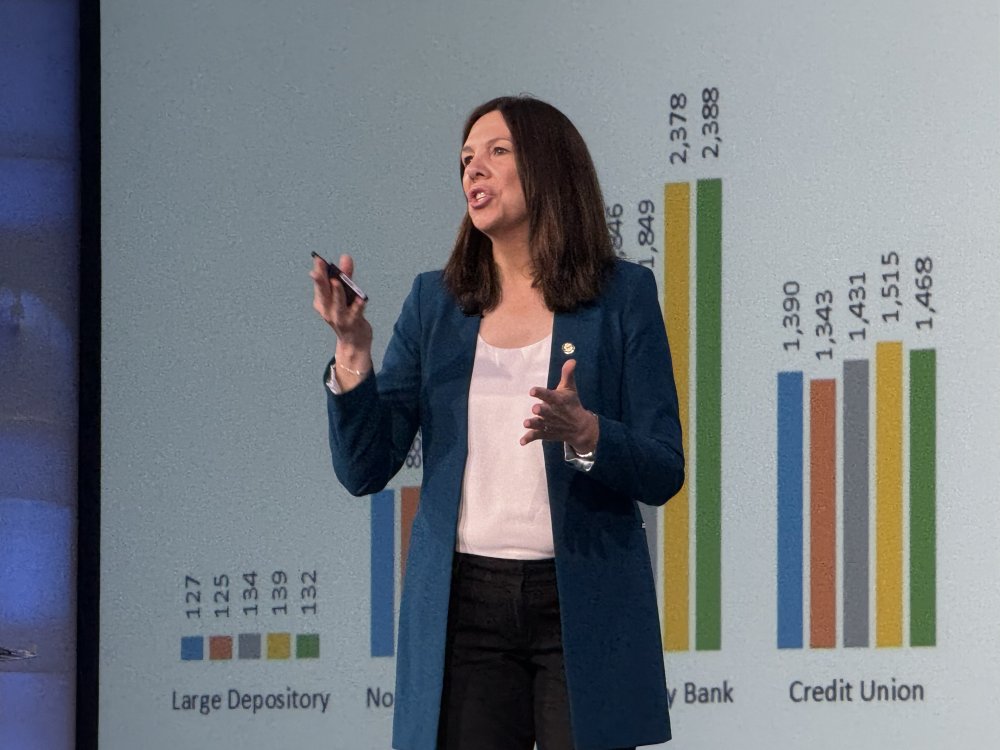
Mortgage Bankers Association economist Marina Walsh said lenders could be failing to close more loans as more consumers apply with multiple originators. View the full article
-
For decades now, Google has been the unquestioned champion of search—our digital oracle, the first and last stop for every question, from “What’s the best pizza place near me?” to “How many protons are in a carbon atom?” But here’s the key difference now: while Google has started to incorporate AI with features like AI Overviews and the new AI Mode, a traditional keyword search is great for finding facts, but not so great at understanding context. It’s like asking a librarian for a book on “dogs” and expecting them to know you really want to know how to train a puppy. You might get a whole library, but you still have to find the right book yourself. That’s where dedicated AI-powered search, whether a self-contained tool like Perplexity or Google’s own conversational AI interface, truly shines. It doesn’t just look for keywords; it understands your intent. It can be a genuine time-saver, and in some cases, it’s just plain better than scrolling through a list of blue links. Here are five times when using an AI to search will give you a better answer than Google. Answers to subjective questions A traditional search engine is fantastic for finding facts, but it falls short when you’re looking for an answer that isn’t black and white. For example, if you Google “best workout routine for a beginner,” you’ll get a list of articles, but you’ll have to read through them to find the one that fits your specific needs. It’s a lot of scrolling and sorting through different opinions. With an AI, you can ask a much more nuanced question, such as: “What’s the best workout routine for a beginner who wants to build strength but has joint pain and a limited amount of time?” The AI can then synthesize information from multiple sources and provide a tailored response that takes all your constraints into account, giving you a comprehensive plan rather than a list of articles to sift through. Explaining complex topics We’ve all been there: you need to explain a complex topic, but the standard online explanations are full of jargon you don’t understand. Or maybe you’re trying to explain a technical concept to a colleague who isn’t as familiar with the subject. Ask an AI to “explain [the concept] in plain English for someone with no background in [the field].” It can take dense, confusing information and distill it into something simple and digestible. You can even ask it to “use a relatable analogy” to make the concept stick. It’s like having a personal tutor who’s always on call. Preparing for meetings and interviews You have an important call with a potential client or a new partner, and you want to go in prepared but digging through their company’s website, recent press releases, and social media feeds for relevant background info is a serious time sink. A simple Google search will give you a bunch of links, but you’ll have to do all the reading yourself. Prompt an AI with something like: “Help me prepare for a call with [Customer Name]. Summarize the top three news stories from the past six months and highlight anything relevant to their business goals.” This gives you a quick, digestible cheat sheet so you can sound informed and confident without spending hours on a deep dive. Kick-starting creative projects Starting from scratch is one of the hardest parts of any creative endeavor. You have to write an outline for a presentation, a script for a video, or even just the agenda for a team meeting, and the blank page feels intimidating. A Google search might give you “presentation outline templates,” but you’ll still have to fill in all the details yourself. Instead, ask an AI to give you a head start. Use a prompt like: “Create a 10-slide outline for a presentation about [topic] for a [target audience], and include a proposed title for each slide.” The AI can give you a solid scaffolding structure to build on, saving you the initial struggle and giving you a foundation to refine and customize. Learning new skills quickly Let’s say you’ve got a new software tool you need to learn for a project, or you’re trying to figure out how to do something you’ve never done before, such as setting up a home server. A traditional search will give you a mix of official documentation, video tutorials, and forum posts—all of which you have to piece together yourself. An AI can act kind of like a personal coach. You can ask: “Give me a step-by-step tutorial for setting up a home server, assuming I have no prior experience with networking.” The AI can lay out the process in a clear, linear fashion, and if you get stuck, you can ask follow-up questions for clarification, like “What does ‘port forwarding’ mean in simple terms?” It’s a truly interactive and personalized learning experience. View the full article

-
It’s five answers to five questions. Here we go… 1. Employee lied and said his mother had died (she hadn’t) Recently, I had to terminate an employee for lying about their mother dying, let’s call him Jeff. The “death” occurred over a year ago, but 13 months later we came across info that showed us that had been a lie. In fact, Jeff’s sister had posted photos of her and Jeff on an international vacation during the same days as he was supposedly in the hospital preparing for their mother’s passing. We had already been drafting a performance plan for Jeff, and we ended up letting him go over this. Is there anything that could have been done to prevent lying about something like this in the first place? I don’t want to ask team members to submit an obituary or something else to prove that a family member has died to use their bereavement leave. That feels cruel when already dealing with a death in the family, but I can’t help but feel like we missed something that caused him to lie to this extent. It’s not uncommon to require some kind of proof to grant bereavement leave, like an obituary, funeral program, or statement from a funeral home. That said, there’s always a balance between guarding against abuse of benefits and not making employees feel you don’t trust them, particularly during something like a death in the family. I’m generally willing to tolerate the risk of someone occasionally abusing a perk as a trade-off for ensuring employees feel supported, but it’s not unreasonable to decide to ask for documentation. In this specific situation, though, I’d look at what else you know about Jeff. You were already preparing to put him on a performance plan so clearly there were other issues with his work. How long-running were those issues? Were there signs earlier on that there were serious problems with Jeff, or does this seem wildly out of character? I’d use this more as a flag to ask whether there other problems you should have acted on faster, since often that does turn out to be the case. Related: is my employee lying about needing bereavement leave? 2. Did I take a joke too far? I’m an engineer for an aerospace manufacturer that often works with classified information which requires security measures. One of these measures is that when you walk away from your desk, you need to lock your computer and sign in again when you come back. In my office, we have a fun tradition where if someone is caught with their computer logged in while away from their desk, someone else can change the background to something funny for that person to discover (and the person would also be responsible for buying pizza or donuts for the entire group at the end of the week). I had the chance to do this to someone else’s computer, but I think I took it too far. I found a coworker’s computer open, and I learned that he was at a meeting. Since it’s October, I thought it would be funny if I put a scary picture on his background. (For anyone curious, it’s a creepy character from a web series called the Boiled One.) I couldn’t see his reaction directly because I was in a Teams meeting when he returned to his desk, but I could hear him yelp, “JESUS CHRIST!!” I thought the others might find it funny, but I heard several versions of “What the hell?” and everyone asking each other who put it there. Nobody had asked me about it since I was busy, and since I had two other Teams meetings afterward, everyone had stopped talking about it by the time I had free time. Did I go too far? How do I know whether or not they knew it was me? Ha, well, yes, it appears that you did. I looked up the Boiled One and laughed, but I can see how it would be Quite A Shock if you weren’t expecting something disturbing. I’m guessing they didn’t know it was you since no one said anything. No need to claim it; just let it fade from memory, which it likely already has, and keep it a little tamer next time. 3. What should I say if one or two candidates ask what they should prepare for an interview? I’m increasingly noticing that for most jobs we advertise, one or two applicants will email and ask if there is anything they need to prepare for the interview. If we tell those few people what we want to see, that is unfair to other applicants who haven’t got the heads-up. And I wouldn’t want to tell all the applicants “you should come with ideas for X and Y” — it’s usually the good candidates who assume and prepare ideas for X and Y (which I would’ve thought are very obvious in my industry, but not all applicants come armed with these ideas). Currently I’ve just been saying “no, nothing in particular,” but is that also unfair, since it means they don’t prepare anything? Should I respond with “Nothing in particular, just what you would expect of a normal interview in this industry”? I agree that you shouldn’t tell some people what to prepare for and not others; otherwise you won’t be assessing them on a level playing field. You should give the same info to everyone, whatever that is. But any chance that you’d actually be better able to assess candidates if you did ask everyone to come prepared with ideas for X and Y? If it’s truly such an industry norm to expect that, then maybe it’s unnecessary … and if part of what you’re assessing is “ability to come up with ideas with zero prep time,” then it’s useful not to prepare candidates for that in advance. But is that what you should be assessing? Or would you be better able to evaluate what candidates will be like on the job if you told them all what you’d like them to come prepared to discuss? Personally, I’ve found real value in telling candidates things like “we’re hoping you’ll come prepared with some examples of X and Y” because that way they’re not scrambling to think of an answer on the spot, and we can spend more time delving into the substance of those topics. So I’d think carefully about what you’re testing by not sharing that info ahead of time, and what you’d be testing if you did. More here: should you give job candidates the questions ahead of time? 4. My boss showed everyone my resignation letter What should I do when my manager shows everyone my resignation letter? It named the person I was having issues with and the reason I’m quitting. There’s nothing you can really do at that point. It’s unprofessional of them to have shared it, but there’s not anything you can do now that it’s happened (and it’s not subject to confidentiality laws or anything like that). But in the future, your resignation letter shouldn’t include that sort of information. The norm for resignation letters is just to include that you are quitting and of as what date. You shouldn’t give a reason at all! (It’s okay to mention the reason if it’s something very bland like “my family is moving” or “I’ve accepted another position” — but even that doesn’t need to be in there. And you definitely don’t want to include it if the reason is something like “I’m frustrated with Jane” or “management has gone too far” or anything else you feel heated about.) Related: what should a resignation letter say? 5. Should you have a “go” file in case you’re laid off? I’m curious about your perspective on something I saw on LinkedIn. A “thought leader” offering career advice recommended that employees should assemble digital “go” files: basically, collecting any important documents such as performance reviews, emails from their boss or others, or examples of their work that they might want or need in the case of a sudden, unexpected layoff. For privacy and security reasons, my employer makes it just about impossible to save information from one’s work device to an external cloud. I think that if I were caught transferring files I worked on to my personal devices, I would be having a very serious conversation. (Any external cloud services are blocked, as well as webmail sites; emails with attachments to external addresses can and do trigger a security review.) It’s possible to print the materials in the office and bring them home. But I think it’s still violating the letter of the security policy which says we’re not supposed to keep company materials at home unless required for work, and shred them when we’re done. Yet, this advice seems to make sense to me — and after a small number of colleagues were let go last week, it seems very relevant. I am wondering if you have any advice on maintaining access to important workplace files (whether performance reviews or even portfolio material for job searchers). Yes, this is absolutely good advice. Of course, if your security policies truly prevent it, then you can’t — and there are some people who truly can’t share work samples outside of the company, but most people can. I’d take a close look at exactly how your policies are worded, and at a minimum consider printing copies if you don’t see an explicit prohibition on it. Also, in a number of states, you’re legally entitled to keep copies of items from your personnel file, which includes performance reviews. Related: what to do if you think you’re going to get fired The post employee lied about his mom dying, did I take a joke too far, and more appeared first on Ask a Manager. View the full article
-
Results in US study offer striking evidence of life-saving effects of medical guidelines introduced in past decadeView the full article
-
From Historian to Navigator: Building a 10X Advisory Firm A new handbook from CPA Trendlines, 10X Advisory in the AI Era, distills proven operating models and tools for firms seeking to grow advisory capacity, to price on value, and to … Continued Go PRO for members-only access to more Eric Eager. View the full article
-
From Historian to Navigator: Building a 10X Advisory Firm A new handbook from CPA Trendlines, 10X Advisory in the AI Era, distills proven operating models and tools for firms seeking to grow advisory capacity, to price on value, and to … Continued Go PRO for members-only access to more Eric Eager. View the full article
-
The President administration plans to set price floors, create strategic minerals reserve and take equity stakesView the full article
-
Group led by Elon Musk, criticised by energy secretary Ed Miliband, supplies units and trades power from themView the full article
-
The government must explain why tax reform is necessary and desirable for fiscal sustainability View the full article