ResidentialBusiness
Administrators
-
Joined
-
Last visited
Everything posted by ResidentialBusiness
-
 America’s use of import duties has been constrained by financial markets and economic realityView the full article
 -
The Interborough Express line—the long-awaited light-rail link between Brooklyn and Queens in New York City—hasn’t broken ground yet. But on my computer screen, one part of the route is already operational. A new simulation game called Subway Builder lets you design, build, and operate subway systems in 26 U.S. cities, from New York to Boston to San Francisco. The game uses real-life U.S. Census Bureau and employment data to map where residents and workers live, allowing you to simulate realistic passenger flows. Players must also contend with real-world constraints like tunnels, viaducts, existing foundations, and road layouts. The goal is to design a subway network that gets the most people to their destinations as quickly as possible. But there’s a deeper ambition: to spark more transit-minded thinking in a country that historically has underinvested in it. “I would secretly hope that maybe someone in power sees this and says ‘Maybe we can build something like this,’” says Colin Miller, a software engineer and creator of the game. Building a hyperrealistic transit game Subway Builder launched on October 9 to much fanfare in the transit community. “I’ve been playing Subway Builder for *checks notes* all night,” one user posted. “I legitimately think this game is going to start a transit revolution in America,” wrote another. Over the years, many developers have tried to gamify transit design with offerings like MetroConnect, Brand New Subway, and Mini Metro. But few have attempted to make their simulations realistic enough to replicate real transit-planning challenges at the scale of cities like New York or Seattle. To create Subway Builder, Miller drew on datasets from the U.S. Department of Education, the Federal Aviation Administration, and OpenStreetMap, among others. You can analyze demand statistics on a map of your chosen city; then, once you build a route, explore ridership station by station. One of the most satisfying features for me remains the constellation of red dots that represent riders commuting toward newly built stations and journeying across a network I just built. The cost of building public transit in the U.S. Subway Builder bills itself as hyperrealistic, but there are two key exceptions: politics and budgeting. Miller says he did not take into account the political will in any given U.S. city, nor did he calibrate the game’s budget to U.S. infrastructure costs. Instead, he used Spanish construction costs, which are among the lowest in the world. (Madrid, for example, tripled its metro network in just 12 years.) “If I had it set to realistic American construction prices, it would have made the game unplayable because you’d run out of money,” he concedes. Players can choose to play in “sandbox mode,” which comes with no budgetary constraints. It’s the game’s “normal mode” that reveals a painful fact long criticized by experts—namely that building transit in the U.S. is mind-bogglingly expensive. On average, domestic rail transit projects cost roughly twice as much per mile in the U.S. as they do in Europe or Canada, and as much as five times more in New York City. The relatively recent Second Avenue Subway expansion, for example, cost about $2.5 billion per mile. For reference, the Los Angeles Purple Line extension cost $800 million per mile, while Madrid’s extension was $320 million per mile. When I played the game, I quickly learned that even $3 billion would get me only three lines and about 20 stations in Brooklyn. I also learned that building a subway route is just the beginning of a long road plagued by never-ending signal failures, broken-down trains, and overall operational costs. And considering that every dollar collected from fares helps fund new routes and buy new trains, I gained a bit more sympathy for the MTA’s recent war on fare evasion. A tool for publication imagination Much ink has already been spilled on the state of mass transit in the United States. Transit advocates such as Yonah Freemark have frequently lamented declining ridership and funding shortfalls in American cities. Others, like Brent Toderian, have emphasized the role of transit in shaping equitable, walkable urban environments. While public transit has recently blossomed in many U.S. cities, the system remains plagued by some of the world’s highest construction costs, red tape, political fragmentation, and a misguided adulation for the freedom that cars provide for the benefit of the few at the expense of the many. Hayden Clarkin, a transport engineer and planner who recently published a “Hitchhiker’s Guide to Building a Lot of Subways,” argues the U.S. has the ability to build a world-class transit system but lacks the will. “Imagine what we could achieve if we built up our institutional capacity and if leaders spent as much political capital on transit as they do on expanding highways,” he told me via email. “The systems other G7 nations have enjoyed for decades are not beyond our reach—they are a choice we can and must make.” For Clarkin, games like Subway Builder aren’t just entertainment. He believes they could actually have real-world impact. “This is a tool for public imagination,” he says. “I’m genuinely excited for the day someone takes their in-game map to a city council meeting and says, ‘Look at what we can achieve!’” View the full article

-
The whole idea of advertising—using pictures and words to get people to buy stuff, or to do something—is old indeed, with the first known example dating back almost 5,000 years to the heady days of Ancient Egypt. The ads business changed a lot since we were writing notices on papyrus, but one thing that—until recently—remained the same was that it was a deeply intentional business. The advertiser had to think about the language they used, the imagery they employed, the types of people they sought to reach, and how they would go about doing that. Whether the advertiser was touting a weaving shop on the banks of the Nile during the days of the Pharaohs, or selling detergent or cigarettes through new mass media innovations like the television or the radio, that same thoughtfulness was a constant. Advertisers had to think—and, by virtue of the fact they were forced to make decisions, they were in control of everything. My biggest complaint with the digital ads ecosystem is it, by design, strips the ability of the advertiser to make some of those decisions—not merely placement, but targeting, and with the emergence of dynamic creative and generative AI, messaging too. In the process, we’ve turned advertising from a very deliberately engineered system—where the architect knows what each part of the process should do—into one that’s, essentially, a black box. And within this black box, there’s little room for creativity. The Process Is Creative When we think about advertising—and, in particular, good advertising—we always think about the messaging. It’s true that some of the best campaigns in history have always used clever wordplay, or coy psychological tactics, to drive a point home. The Pepsi Challenge, for example, started off as a series of in-person taste tests and culminated in a campaign that could confidently say (though some have identified flaws in the test itself) that Pepsi was America’s preferred cola. Not only did this directly undercut Pepsi’s main adversary—Coca-Cola, which easily had the most powerful brand perception—but it also allowed people to differentiate between products that people might otherwise think of as identical. Messaging is important, but it’s far from the only creative part of the marketing process. Take Subaru, for example. In the 1990s, it was a struggling car brand—eclipsed not only by its Japanese rivals like Nissan and Toyota, but also by fierce domestic competition in the U.S. market. Subaru hired a new advertising firm to turn its fortunes around, which ran a series of focus groups that asked why existing Subaru owners chose its vehicles, as opposed to those from one of its healthier rivals. That firm noticed that women dominated those focus groups, and many of those women identified as lesbian. The company then launched a campaign that targeted both women and lesbians—itself a brave choice, considering the climate of the 1990s, which saw the passage of both the Defense of Marriage Act and Don’t Ask, Don’t Tell. To help it reach lesbian audiences, it hired Mulryan/Nash to create content specifically for the gay press, and to handle ad buying. This campaign wasn’t just pioneering—it also, arguably, helped revive Subaru’s fortunes, and the brand remains vibrant and relevant, especially in the U.S., where it sold over 667,000 cars in the 2024 calendar year. The Subaru example is a potent one, not simply because it was so successful, but because it illustrates how each step of the process—from identifying the customer, to determining where to reach them, to crafting the messaging—required human thought and human creativity. If we’re looking for a more contemporary example, Spotify’s controversial “Thanks 2016, it’s been weird” springs to mind. Capitalizing on a year defined by seismic political shifts, celebrity deaths, and countless surreal moments to mention in the confines of this piece, Spotify tapped into its data, identifying equally surreal trends and turning them into highly relatable billboards positioned in prime urban locations. These billboards featured pithy one-liners (for example, “Dear person who played ‘Sorry’ 42 times on Valentine’s Day, what did you do?”), with the text localized for target markets (“Dear 3,749 people who streamed ‘It’s the end of the world as we know it’ the day of the Brexit vote, hang in there”). It served as a reminder of how music isn’t simply a form of entertainment, but a way in which we process events in our personal lives, as well as those happening within politics and culture. Again, this process required creative thinking at every level—from identifying the patterns within the data that would lead to the funniest trends, to choosing the most valuable locations to place the billboards. I write all of this not because I believe that all digital advertising—where these decisions are outsourced, particularly to third-parties—is bad, but because I believe that the most effective and memorable campaigns are thoughtful ones. The reason why I believe digital advertising is the enemy to advertising is because, by design, it strips us of the ability to use that creativity across all stages of the advertising process, from conceptualization to creating the final product. Battling the Black Boxes Last year was the 30th birthday of digital advertising. It’s interesting to see how, as the internet grew and an adtech ecosystem emerged, the very nature of how this segment actually works changed. Whereas at one point advertising deals were inked between companies, with money changing hands in exchange for prime placement for a set number of days, those manual transactions are now a thing of the past. Today’s digital advertising mechanics are based on systems which the advertiser doesn’t control or even understand—and in the case of those which heavily rely on AI, even the developers don’t have full insight into the factors behind each targeting and placement decision. This opacity also allows the adtech provider or advertising network to act in ways that are contrary to the interests of the advertiser—either by obfuscating data that could allow them to make more effective decisions, or by failing to protect said advertiser from, for example, click fraud. Although digital ads allow a company to target and market at scale—and, arguably, with the economies of scale that wouldn’t be otherwise possible—the downside is, arguably, a degradation of the online experience for end users, profound concerns about user privacy, and an absence of transparency for those actually purchasing the ads. Arguably, the biggest downside—from someone who cares profoundly about the intellectual and creative brilliance of the ads industry—is that digital ads haven’t really produced something that’s memorable, or has had any meaningful cultural impact. Coca-Cola gave us Santa Claus’s red outfit and the iconic flashing delivery trucks. Decades after they commercials first aired, we still remember the Budweiser frogs croaking “bud-wise-er”, or its later ads that turned “wazzup” into a legitimate pop culture phenomenon (albeit a really irritating one). And that’s because creativity is like a muscle, and if you don’t exercise it—or don’t have to exercise it—it’ll wither away. View the full article
-
To announce its entrance into 5G home internet service, Mint Mobile found the real-life version of a new AI-generated actress, even if only in (nick)name. Tilly Norwood is the name of a so-called AI actress launched by AI talent studio Xicoia. It also happens to be the name of a woman who stars alongside Ryan Reynolds in Mint Mobile’s new ad for its home internet service, which it’s branding “Minternet.” “It’s hard to believe that Mint is launching 5G home internet. It’s also hard to believe that a real version of an AI actress is out there,” a Maximum Effort representative tells Fast Company. “And thanks to the incredible and somewhat disturbing stalking detective abilities of our team, we found her. Just outside of Dallas, Texas, just one day before filming the commercial. Luckily she responded to our random DMs and was happy to assure the world that both she and the internet are very real.” The fake Norwood has inspired backlash and a Wikipedia page, and the labor union SAG-AFTRA refused to say in a statement that the AI character is an actual actor, instead stating it’s “a character generated by a computer program that was trained on the work of countless professional performers—without permission or compensation.” As it happens, the real Norwood—Natalie “Tilly” Norwood—is a real Mint Mobile customer. In the commercial, Reynolds, a former Mint Mobile co-owner who still makes ads for the wireless service provider through Maximum Effort, a production company he cofounded, asks if Norwood is real and “not an AI-generated combination of actors.” “I’m a combination of my parents,” the real Norwood says. Mint Mobile’s parent company was acquired by T-Mobile in 2023 in a deal worth up to $1.35 billion, and its 5G home internet service shows the brand is broadening its ambitions beyond mobile. The brand says its home internet service will use T-Mobile’s 5G network, and Mint Mobile is offering it for as low as $30 a month for customers with a Mint Mobile phone plan who prepay for three months. In an advertising landscape that could increasingly see more AI-generated ads, sticking to real people is a smart strategy. A 2024 YouGov poll of respondents from 17 markets around the world found 51% were uncomfortable with a brand creating a virtual ambassador (34% were comfortable with it; 15% didn’t know how they felt about it). In other words, using a fake Tilly Norwood in your ad could turn away half your audience. Meanwhile, the real living, breathing Tilly Norwood appears to be anything but polarizing. View the full article

-
Newly released witness statements leave Crown Prosecution Service facing questions about why it didn’t press ahead View the full article
-
Endorsement comes after Berlin signals readiness to allow more centralised markets supervision View the full article
-
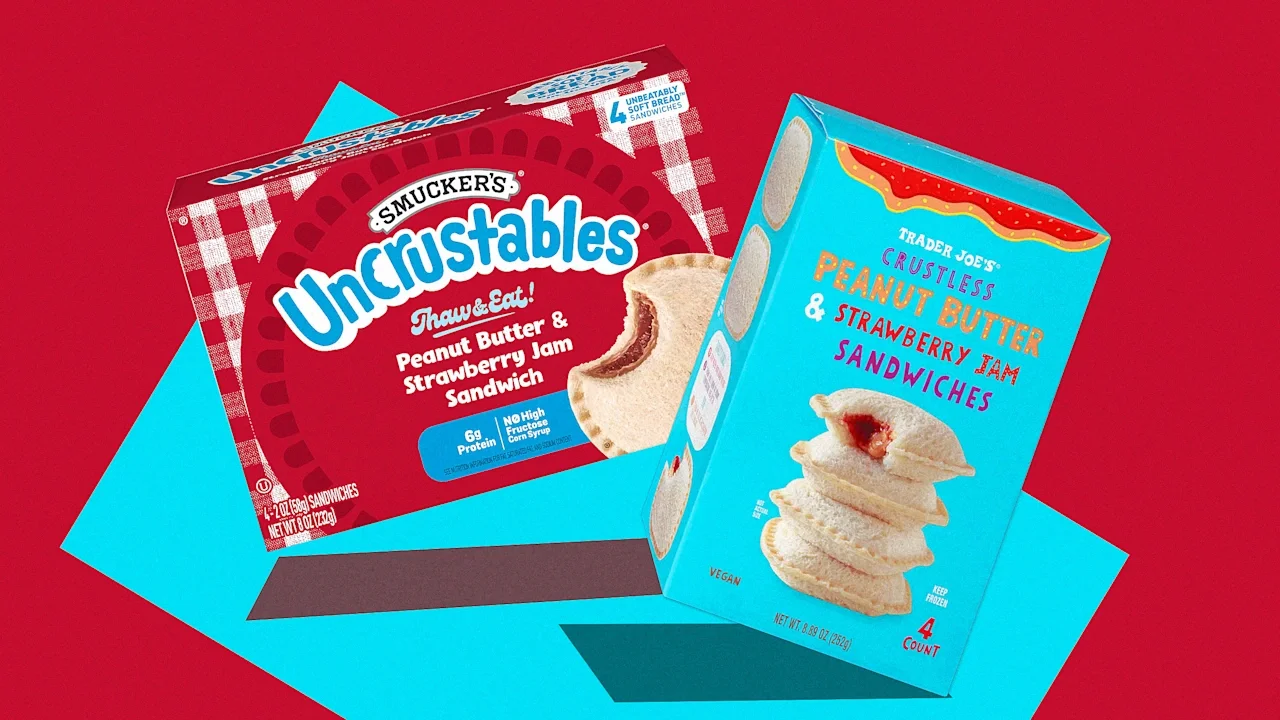
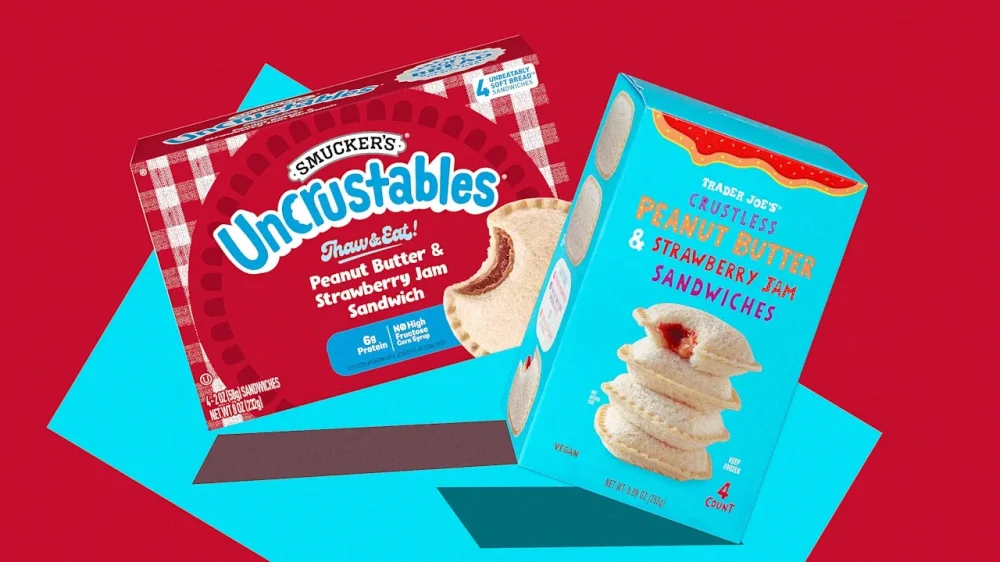
The J.M. Smucker Co. says it doesn’t have a problem with other companies selling their own prepackaged, crustless sandwiches like its own popular Smucker’s Uncrustables. They just have to get their own design. Uncrustables is on its way to becoming a $1 billion brand, so of course there will be knockoffs, but according to Smucker, a recent Trader Joe’s version of Crustless Peanut Butter & Strawberry Jam Sandwiches is a bit too blatant. The company is using the design of the Trader Joe’s product and packaging to prove its point in a new lawsuit. Smucker accused the grocery store chain of “an obvious attempt to trade off of the fame and recognition” of Uncrustable’s protected design marks in a suit filed Monday in the U.S. District Court for the Northern District of Ohio. The round shape and crimped edges of Trader Joe’s crustless sandwiches, which it released in late summer, look too similar to Uncrustables, Smucker says. “Smucker does not take issue with others in the marketplace selling prepackaged, frozen, thaw-and-eat crustless sandwiches,” attorneys for the Orrville, Ohio-based food and beverage manufacturer wrote in the suit. “But it cannot allow others to use Smucker’s valuable intellectual property to make such sales.” Smucker, which reported annual net sales of $8.7 billion in the most recent quarter, says it has invested nearly $1 billion over 20 years to grow its brand of crustless sandwiches into the No. 1 frozen handheld brand in its category. It’s paid off even as Smucker’s snack brands like Hostess Twinkies and Ding Dongs, which have recently rebranded, struggled in a shifting snack food landscape. CFO Tucker Marshall said on Smucker’s August earnings call that Uncrustables is a “growth brand” for the company, along with the pet food brands Meow Mix and Milk-Bone. Marshall said that “people who are consuming Uncrustables for the most part are athletes, families with kids,” and that the brand performs strongly at universities and convenience stores. “We really haven’t seen any impact at all from the GLP-1,” Marshall added, referring to weight-loss medications that are driving a trend toward healthier, high-protein snacks. The importance of Smucker’s Uncrustables in the company’s portfolio helps underline the urgency of the lawsuit. In the suit, Smucker argues its trademarks for images like a “pie-like shape with distinct peripheral undulated crimping” as well as “a round crustless sandwich with a bite taken out showing filling on the inside” are being duped by Trader Joe’s without authorization. The suit extends to packaging concerns, as Smucker believes even the blue used for Trader Joe’s box of crustless PB&J sandwiches is strikingly similar to the blue used in the Uncrustables logo. Smucker is seeking damages and demanding that Trader Joe’s destroy all the products, packaging, and promotional materials that use the current designs. Trader Joe’s did not respond to a request for comment. There are other crustless sandwich brands that don’t use the Uncrustables-style circular shape and crimped design, like the square-shaped Jams and Walmart’s Great Value No Crust Sandwich. Chubby Snacks originally launched with circular sandwiches before getting hit with a cease-and-desist from Smucker. It pivoted in 2021 to a cloud-shaped sandwich. Smucker’s suit follows a May lawsuit filed by Mondelez International against Aldi accusing the grocery store chain of duping the packaging of popular snack brands like Oreo and Nutter Butter. Aldi unveiled redesigned private-label packaging in September amid a wider industry trend toward upgrading generic branding that has spanned from Amazon to Walmart. As lawsuits like those from Smucker and Mondelez show, with a rise in private-label competition, the big industry players are ready to protect their own branding, and with teeth if necessary. View the full article
-
10Web Vibe enables easy WordPress development through spoken interaction The post New WordPress Vibe Coding Simplifies Building Websites appeared first on Search Engine Journal. View the full article
-
Highest-paying firms increase payouts as the sector’s fortunes reverse, Goldman Sachs report shows View the full article
-
I was interviewing for a job as a customer service agent with Anna. She had a low, pleasant voice and she’d nailed the pronunciation of my name—something few people do. I wanted to make a good impression except I had no idea what Anna was thinking because Anna couldn’t think. Anna wasn’t technically a person. She was AI. Not only is AI changing how we do our jobs, it’s also changing how we get jobs. This ranges from using AI to screen resumes, schedule interviews, even conduct them. According to a 2025 report, 20% of companies are using AI to interview candidates. Even so, nothing can replace human recruiters, the folks who’ve deployed Anna into the wild stressed to me. After I spoke with her, I quickly understood why. In this story, paid subscribers will learn: What it’s like to actually go through a job interview with an AI agent—and how to speak to them Where companies should deploy AI interviewers that would benefit them and job seekers AI Anna clocks in Even though I wasn’t really interviewing for a job—this was all an exercise for this story, of course—I was still nervous. I asked the team behind Anna to provide a job description so I could prepare, but outside of this experiment, I was sadly lacking in actual customer service experience. I also didn’t know how AI Anna was going to react to awkward silences, panicked misdirection, or if she’d be able to tell if I was lying. These worries are bad enough with a human. How would a computer program react? I got on the phone and connected with Anna. She was pleasant, and frankly, sounded way more human than I was expecting. We exchanged greetings, and before long, I was in full-on job interview mode with an AI. First up, she asked me to describe a time when I had to explain something complex over the phone clearly. I blanked. Finally, I described how journalism involves explaining complex ideas because you’re asking questions. It sounded weak even to my own ears. Sure enough, she was not impressed. “I’d like to explore a scenario that’s more specific to the role we’re discussing,” she replied firmly. Fair point. I managed to dredge something up from a high school job. Mercifully, AI Anna accepted the answer and moved on. Next, AI Anna wanted me to talk about a time when I had to problem solve for a customer. This, I could answer. I dove into my brief stint organizing a literary conference where writers paid to meet with agents. Occasionally agents went astray because they were hungover or running marathons and I’d be left to find alternatives like rescheduling— Anna cut me off. “That sounds like a high-pressure situation. . . . It’s great that you were able to come up with alternatives. Now I’d like to switch topics for a moment.” Yikes. I wasn’t ready to switch topics, but AI Anna was, and I couldn’t tell why. Was my example off topic? Was I taking too long to answer her question? Before I could ask, Anna had already swept on to background checks. I invented a criminal background and told AI Anna I had done some time in prison. She thanked me for being honest, and told me that she could not make any decisions. She said candidates with a criminal record would be considered on a case-by-case basis (something that would have to be verified by a human). Then I wanted to know if I’d be required to work overtime. She let me know I’d be required to do overtime the first six months, but only one or two times a month. Needed, accurate information that couldn’t just be googled—great. Honestly? While I found her transitions a bit jarring sometimes, she handled most questions with aplomb. How we got here AI Anna is the product of PSG Global Solutions, a staffing firm. Before deploying AI Anna in the market, the firm asked Brian Jabarian, a researcher at the University of Chicago Booth School of Business with doctorates in economics and philosophy, to study the AI Anna’s effectiveness. (Jabarian received no funding from PSG). In a study released in September, Jabarian conducted an experiment where 70,000 applicants for a customer service job were randomly assigned a human interviewer, an interview with AI Anna, or the ability to choose between the two. The results are surprising, and surprisingly promising for the candidates. AI interviews resulted in a 12% increase in job offers, and a 17% increase in 30-day retention on the job. Moreover, when offered a choice, 78% of applicants chose to be interviewed by AI. Jabarian theorized this was because the AI was easier to schedule with: job applicants who needed a job quickly could book a call immediately. Why the positive outcome data? Jabarian pointed out that, on average, an AI interviewer got through more required topics than human recruiters since they couldn’t be distracted. (I mean, Anna did move at a brisk clip.) “AI leads to a more consistent interview experience,” he said. “It lets the candidate talk more, and has a 50% chance of covering 10 of 14 required topics compared to 25% for human interviewers.” AI Anna clocks out Afterwards, I debriefed the interview with David Koch, PSG’s chief transformation and innovation officer. First, he showed me AI Anna’s backend: The platform had generated a recording of our conversation, a transcript, a summary of the call (including suggestions for next steps, like a follow up to discuss my criminal background), and an overall recommendation: AI Anna thought I was qualified (yay!) but merited human follow-up because of my criminal background. AI Anna also recommended a follow-up because she’d cut me off when I was talking about the literary conference. Koch explained my speaking cadence is a touch slower than average, and AI Anna is programmed to respond after a certain amount of time or else the flow of conversation can become jerky. Koch noted that AI interviewing was better suited for some situations and not others. He recommended AI interviewing for high-volume hiring where there’s a need to source candidates quickly for jobs that are seasonal and high turnover, like customer service agents or travel nurses. Koch also said AI interviewing is best suited for cases where there’s less complexity, in which you don’t need to sell a candidate on a role. From my standpoint as a lay person, the technology behind AI Anna struck me as marvelous. She corralled me into staying on topic, and was capable of social niceties. She provided detailed answers to all my questions. For recruiters, this could be life changing. It’s not that AI Anna might replace them, per se (there were already things from the interview that a human colleague would have to address or follow up on). But recruiters could farm out tasks like screening calls to AI while they worked on more high-level tasks. However, this made me worry. If AI Anna existed to save companies time, what happens to candidates who get flagged for follow-up, even for something as simple as speaking slowly—let alone a criminal background? If there are more than enough qualified candidates to fill roles, I imagine a harried hiring manager would make offers to people who don’t require follow-up. Exception cases that require more time, like me, might fall to the wayside. The future: cold, but competent After my conversation with AI Anna, I felt hollow. Typically, if an interview goes well, I have the high of having connected with someone who might make me feel valued, desired, and possibly in the mix for a new job. If it doesn’t go well, I spend the next couple of days wallowing in self-pity and dissecting potential red flags. AI Anna’s preprogrammed human-like intonation left me nothing to go on. Did she like me? Or was meh on me, but still think I was qualified? I couldn’t tell probably because AI Anna does not have emotions and did not care about me. But how much does this matter? A Gallup study found that 44% of respondents said their interviews drove them to accept an offer or not. Ideally, candidates would be able to interview with their direct supervisor before getting a job in order to suss out personality match—but for a screening interview, AI Anna’s value was undeniable. She raised the floor for interview quality: She’s personable and she offers a consistent experience. There’s no need to worry about the mysterious intangible of “chemistry.” Jabarian also pointed out that AI interviews reduce gender discrimination by half. Done right, AI interviewers could reduce bias and help qualified job candidates who may not perform well during interviews because they lack intangibles such as charisma. Still, I missed talking to a human. View the full article

-
Learn what online advertising is, how it works, and the main ad types. Plus, how to launch a campaign. View the full article
-
Generative AI is evolving along two distinct tracks: on one side, savvy users are building their own retrieval-augmented generation (RAG) pipelines, personal agents, or even small language models (SLMs) tailored to their contexts and data. On the other, the majority are content with “LLMs out of the box”: Open a page, type a query, copy the output, paste it elsewhere. That divide — between builders and consumers — is shaping not only how AI is used but also whether it delivers value at all. The difference is not just individual skill. It’s also organizational. Companies are discovering that there are two categories of AI use: the administrative (summarize a report, draft a memo, produce boilerplate code) and the strategic (deploy agentic systems to automate functions, replace SaaS applications, and transform workflows). The first is incremental. The second is disruptive. But right now, the second is mostly failing. Why 95% of pilots fail The Massachusetts Institute of Technology recently found that 95% of corporate GenAI pilots fail. The reason? Most organizations are avoiding “friction”: They want drop-in replacements that work seamlessly, without confronting the hard questions of data governance, integration, and control. This pattern is consistent with the Gartner Hype Cycle: an initial frenzy of expectations followed by disillusionment as the technology proves more complex, messy, and political than promised. Why are so many projects failing? Because large language models from the big platforms are black boxes. Their training data is opaque, their biases unexplained, their outputs increasingly influenced by hidden incentives. Already, there are companies advertising “SEO for GenAI algorithms” or even “Answer Engine Optimization,” or AEO: optimizing content not for truth, but to game the invisible criteria of a model’s output. The natural endpoint is hallucinations and sponsored answers disguised as objectivity. How will you know if an LLM recommends a product because it’s correct, or because someone paid for it to be recommended? For organizations, that lack of transparency is fatal. You cannot build mission-critical processes on systems whose reasoning is unknowable and whose answers may be monetized without disclosure. From “out of the box” to “personal assistant” The trajectory for savvy users is clear. They are moving from using LLMs as is toward building personal assistants: systems that know their context, remember their preferences, and integrate with their tools. That shift introduces a corporate headache known as shadow AI: employees bringing their own models and agents into the workplace, outside of IT’s control. I argued in a recent piece, “BYOAI is a serious threat to your company,” that shadow AI is the new shadow IT. What happens when a brilliant hire insists on working with her own model, fine-tuned to her workflow? Do you ban it (and risk losing talent) or do you integrate it (and lose control)? What happens when she leaves and takes her personal agent, trained on your company’s data, with her? Who owns that knowledge? Corporate governance was designed for shared software and centralized systems. It was not designed for employees walking around with semiautonomous digital companions trained on proprietary data. SaaS under siege At the same time, companies are beginning to glimpse what comes next: agents that do not just sit alongside software as a service (SaaS); they replace it. With enterprise resource planning systems, you work for the software. With agents, the software works for you. Some companies are already testing the waters. Salesforce is reinventing itself through its Einstein 1 platform, effectively repositioning customer relationship management, or CRM, around agentic workflows. Klarna has announced it will shut down many SaaS providers and replace them with AI. Their first attempt may not succeed, but the direction is unmistakable: Agents are on a collision course with the subscription SaaS model. The key question is whether companies will build these platforms on black boxes they cannot control, or on open, auditable systems. Because the more strategic the use case, the higher the cost of opacity. Open source as the real answer This is why open source matters. If your future platform is an agent that automates workflows, manages sensitive data, and substitutes for your SaaS stack, can you really afford to outsource it to a system you cannot inspect? China provides a telling example. Despite being restricted from importing the most advanced chips, Chinese AI companies, under government pressure, have moved aggressively toward open-source models. The results are striking: They are catching up faster than many expected, precisely because the ecosystem is transparent, collaborative, and auditable. Open source has become their work-around for hardware limits, and also their engine of progress. For Western companies, the lesson is clear. Open source is not just about philosophy. It’s about sovereignty, reliability, and trust. The role of hybrid clouds Of course, there is still the question of where the data lives. Are companies comfortable uploading their proprietary knowledge into someone else’s black-box cloud? For many, the answer will increasingly be no. This is where hybrid cloud architectures become essential: They allow organizations to balance scale with governance, keeping sensitive workloads in environments they control while still accessing broader compute resources when needed. Hybrid approaches are not a panacea, but they are a pragmatic middle ground. They make it possible to experiment with agents, RAGs, and SLMs without surrendering your crown jewels to a black box. The way forward Generative AI is splitting in two directions. For the unsophisticated, it will remain a copy-and-paste tool: useful, incremental, but hardly transformative. For the sophisticated, it’s becoming a personal assistant. And for organizations, potentially, a full substitute for traditional software. But if companies want to make that leap from administrative uses to strategic ones, they must abandon the fantasy that black-box LLMs will carry them there. They won’t. The future of corporate AI belongs to those who insist on transparency, auditability, and sovereignty, which means building on open-source, not proprietary, opacity. Anything else is just renting intelligence you don’t control while your competitors are busy building agents that work for them, not for someone else’s business model. View the full article
-
A majority of Gen Z workers are turning to AI chatbots during the workday for personal reasons, including mental health support, with 40% saying they talk to AI for at least an hour every day, according to a new Resume.org survey. “Many Gen Zers entered hybrid or remote jobs where casual mentorship or watercooler chats never formed, so AI fills that relational void,” said Kara Dennison, Resume.org’s head of career advising. “It listens, it responds thoughtfully, and it never criticizes.” She added: “That creates a sense of psychological safety that’s often missing in corporate hierarchies. It’s about connection, control, and immediacy. They’re using AI the way earlier generations used coffee breaks or hallway chats: to decompress, problem-solve, or feel understood.” While older generations might describe ChatGPT as a “tool,” 47% of Gen Z say it feels far more personal: 25% of Gen Z describe ChatGPT, Copilot, and other AI bots as their therapist or coach, a friend, or coworker, while 34% admit to confiding in AI chatbots about things they’ve never told another person. Some 16% say they frequently discuss personal topics such as mental health or relationships with AI, while 33% say they do so occasionally. Resume.org’s survey collected data from 1,000 full-time U.S. Gen Z workers ages 18 to 28 who used an AI chatbot such as ChatGPT or Copilot in the past week. Gen Z may be using ChatGPT for therapy, but mental health experts say it comes with risks. “Using a general-purpose chatbot as a therapist compromises the fundamental elements of safe care: clinical oversight, legal confidentiality, and a dependable route to human intervention,” Gijo Mathew, chief product officer at Spring Health, a global mental health platform for employers and health plans, told Fast Company. “This can introduce significant risks, particularly in multi-turn, emotionally charged discussions,” Mathew continued. “Most chatbots and large language models (LLMs) were not designed for mental health support and may overlook warning signs or offer articulate yet clinically unsound advice.” According to the survey, 43% of Gen Z workers spend at least 30 minutes per day using ChatGPT or a similar AI chatbot; 13% use it for one to two hours a day; 6% for two to four hours a day; and 5% for more than four hours a day. When it comes to dealing with stress and well-being on the job, 38% of Gen Z are turning to AI to take breaks, and 33% to talk through work-related stress or frustrations. That’s time that could be spent interacting with other humans. The findings also come at a time when 89% of corporate workers say they faced at least one mental health challenge in the past year. View the full article

-
Below, Scott Anthony shares five key insights from his new book, Epic Disruptions: 11 Innovations That Shaped Our Modern World. Scott is a clinical professor of strategy at the Tuck School of Business at Dartmouth College. His research and teaching focus on the adaptive challenges of disruptive change. Previously, he spent over 20 years at Innosight, a growth strategy consultancy founded by Harvard Business School professor (and father of the idea of disruptive innovation) Clayton Christensen. What’s the big idea? In 1620, Sir Francis Bacon wrote that there were three technologies for which it was possible to draw a clear line before and after: the printing press, the compass, and gunpowder. Those three technologies that changed the world stretched over 1,600 years. Today, it feels like there’s a big disruptive development every 1,600 seconds. Autonomous vehicles . . . augmented reality . . . artificial intelligence . . . additive manufacturing. And those are just the ones that begin with “A.” How do we make sense of a world where change is truly the only constant? Understanding how disruptive innovation and epic change happens allows us to see the world more clearly. 1. Disruptive innovators transform the world. Florence Nightingale was a nurse. You might have a visual of “The Lady with the Lamp,” and that’s part of Florence’s story, but there is so much more. Shocked by her experience in the Scutari hospital during the Crimean War, she developed a series of analyses, brilliantly visualized in polar area charts that showed the power of prevention and proper hygiene in hospitals. She wrote books explaining the essence of nursing that anyone could buy and read, and set up schools to train nurses. What she did was disruptive innovation. Nightingale enabled a broader population to improve health standards and living conditions, focusing on prevention rather than treatment. Many of the things that we take for granted today, such as modern sewage systems or having light and fresh air during recovery, trace back to Nightingale’s work. Disruptive innovators transform existing markets and create new ones by making the complicated simple and the expensive affordable. They open markets to broader populations that historically lacked wealth or specialized skills. They literally change the world. 2. Every story of disruptive innovation has heroes. In the year 1437, Johannes Gutenberg was working on something in Strasbourg. No, it was not the printing press…at least, not yet. He was part of a team working on a trinket: a mirror that could capture the essence of the Holy Spirit during a planned pilgrimage in 1439. Well, that pilgrimage was called off because of an outbreak of the Bubonic Plague. That was bad for many people, but good for the world, because Gutenberg and his team went in a different direction. They met someone named Conrad Saspatch, who had an innovative wooden press. In 1440, they combined that with a range of other things to create a working version of the printing press. “If you have an idea that you think could be disruptive, you need to find people who will support you.” To commercialize it, they needed customers, scale, and funding. They found a merchant named Johann Fust who gave them the capital to build their business. Fust ultimately sued them and took control of the technology, but that’s not the primary point here. The point is that every story of disruption has a protagonist, but it is always accompanied by multiple people involved. Every story has heroes, and that word is plural. So, if you have an idea that you think could be disruptive, you need to find people who will support you. If you’re in an organization that’s seeking to have more disruptions, you need to make sure the environment supports those innovators who are going to do the work. 3. Disruptive innovation is predictably unpredictable. In 1947, a trio of researchers at Bell Labs developed a breakthrough that would change the world: the transistor. Their goal was to create a technology that would replace vacuum tubes in communications networks. That happened, but the path to get there was unexpected. The transistor was an imperfect product in its early days. It had the benefits of being small, rugged, and not giving off heat, but it was also unreliable. You would have to redesign a system if you were going to use it. It wasn’t good enough to plug into communications networks. The first commercial market was in hearing aids. In 1952, the Sonotone 1010 featured a transistor. The fact that the transistor doesn’t give off heat was a huge benefit for people wearing battery packs on their waists. The fact that it’s rugged was incredibly beneficial. The limitations just didn’t matter. A couple of years later, 95 percent of hearing aids were powered by transistors, and the market had exploded. This is a very predictable pattern. You never know exactly where disruptive innovation is going to start. Generally, however, you know it will be in a place that values it despite its limitations. That place is typically on the fringe of an existing market or in a completely new setting. Around the same time that Sonotone was taking license to the transistor technology, chef Julia Child was dealing with a surprising setback. When we think of disruptive innovations, we don’t think of chefs, but Child changed the world of cooking, making it much easier for people to cook great French dishes in their own homes. “Pull back and watch the full movie to understand disruptive change.” In 1951, the French chef failed her final exam at Le Cordon Bleu. That same year, she met Simca Beck and Louisette Berthold. The two were working on a book that would bring French recipes to an American audience. They asked Julia to join the team and bring her voice to the project. She agreed. Mastering the Art of French Cooking came out 10 years later. Success was not a straight line. There were three different publishers and one near-death experience in November 1959, in which, at the very last minute, publisher number two said this book cannot be published. This is predictable. Every story of disruptive innovation has twists and turns and fumbles and false steps and things that look and feel like failures. You cannot predict the specifics. You can, however, predict they will happen. What separates success from failure is not how good the original idea was. It’s how the disruptive innovator deals with the journey. When you’re trying to understand disruption, focus on patterns like this. Recognize that a single moment can deceive you. Pull back and watch the full movie to understand disruptive change. Julia Child ultimately passed her test at Le Cordon Bleu and, in my opinion, her chocolate mousse recipe is perfection. 4. Disruption casts a shadow. Disruption is very good for some, but it can be less good for others. Particularly in the middle of a disruptive change, there can be a lot of messiness. Back in the 1920s, Henry Ford was obsessed with his vision to create a car for the great multitude. In 1908, he rolled out the Model T. It cost $890, or about $30,000 in today’s terms. By 1924, the assembly line and lower employee turnover, facilitated by better wages, allowed Ford to dramatically decrease the cost to $260, or approximately $5,000 in today’s terms. Sales of automobiles took off. This was good for some, but less good for others. Cities were designed for people, not for cars. There were no traffic signals. There were no rules and norms governing who could do what, and sadly, people were getting hit, injured, and sometimes killed. Two sides broke out. The motorists said, “The problem here are the pedestrians. We’re going to brand them as jaywalkers.” Jay being slang for a country bumpkin who wasn’t very educated. They had Boy Scouts hand out cards in cities, telling people to cross at designated areas. “This was good for some, but less good for others.” The pedestrians fought back. They sought to brand the motorists as flivverboobs. Flivver was slang at the time for cars, and boob . . . well, that’s still pretty universal. You know who won the battle. In 1924, a New York traffic warden said, “We now know about 80 percent of incidents are caused by jaywalkers.” By the late 1920s, the word ‘flivverboob’ had basically disappeared. Disruption always casts a shadow. The middle can be very messy. You have to understand it, or it will swallow you. 5. Success with disruption requires patient perseverance. People talk about the accelerating pace of change, but we forget that when we see a big breakthrough, there’s often been decades of work before it. For example, in 2022 OpenAI introduced ChatGPT. It became the fastest technology in history to get to 100 million users. But by some dimensions, that technology was 67 years old, tracing back to a 1956 conference at Dartmouth College where the term ‘AI’ was coined. Around the same time as that conference, a chemist at Corning, Don Stookey, made a surprising discovery. He accidentally set his kiln to a temperature that was way too hot. He expected a gooey mess, but instead he discovered the first synthetic glass ceramic. Corning commercialized this in a line of kitchenware and, in parallel, launched Project Muscle to make the material clear. The result was something 14 times stronger than normal glass. But Corning couldn’t make it thin. They thought a possible market could be automobile windshields, but tests with crash test dummies showed that the head would not survive a collision with the glass because it was that strong. In 1971, after $300 million investment in today’s terms, Corning put the project on ice. In 2007, Steve Jobs was getting ready to launch the iPhone. He picked up the prototype, and its plastic screen just didn’t appeal to his aesthetic sense. He wanted glass. He knew Corning had provided an innovative screen for Motorola’s RAZR phone. Even though Corning shut down the project, they continued experimenting and exploring, and ultimately made the glass thinner. They called it Gorilla Glass. Steve Jobs came to Corning’s headquarters, talked to CEO Wendell Weeks, and said, “I want this, I want it at scale, and I want it fast.” Weeks said, “Great, but we can’t do it at scale and we can’t do it fast.” Steve Jobs turned on his reality distortion field and, without blinking, said, “Yes, you can. You can do it.” And Corning did. By 2024, eight billion devices had screens with Gorilla Glass. When it comes to disruption, you must be comfortable being uncomfortable because it almost always takes a lot longer than you think. This article originally appeared in Next Big Idea Club magazine and is reprinted with permission. View the full article

-
Every office has that coworker that turns up to a meeting coughing and sniffling while proudly proclaiming they have never once taken a sick day in their career. (If there isn’t one, maybe it’s you.) But as one viral TikTok makes clear, those attitudes towards taking sick days may be changing—just as sick days themselves are changing, as some think being sick isn’t a real excuse to not work in the WFH era. The skit—which has more than 2.3 million views—sees popular TikTok creator Delaney Rowe adopting the role of that coworker, turning up to a meeting with a hospital tag still on wrist, oh-so bravely battling through the workday while simultaneously making it everyone else’s business. “Person you work with who thinks they’re a hero for ‘powering through’ while sick,” she wrote. The days of “powering through” are now gone, as nearly a third of Americans say they’d rather you didn’t show up to work if you’re feeling sick, according to a new Talker Research survey of 2,000 people in the US. Many in the TikTok post’s comments agreed. “I get so mad when people risk ME getting sick,” one wrote. “Get away from me.” Another joked: “This is me but I’m just soft-launching calling out the next few days.” Others have even offered scripts for how to successfully call in sick without guilt or fear. “Take your sick days. Those days are for you and they’re not just for when you’re sick,” one TikTok creator advised. “They’re for when you just want a day to lay down all day and watch movies and eat food. You can do that. They’re for when you’re feeling a little bit off and you just don’t want to deal with it today.” The workplace is a minefield of unwritten rules which workers have long abided by. Not taking sick days, even when allotted by an employer, is one. However, 31% of those surveyed by Talker Research say there’s no longer a badge of honor or admirable quality to employees turning up to work ill. Just a quarter of Americans strongly believe it would impress bosses or superiors. As one Reddit thread put it: “Never taking sick days is not a flex some people think it is.” One commenter went on to describe a coworker who point blank refuses to take sick days, writing: “All of this goes unnoticed by management. No one gives a damn. No one is asking him to do it, no one is patting him on the back.” They added: “Then he proceeds to get frustrated with the rest of us that we don’t do the same.” The COVID-19 pandemic permanently changed workers’ attitudes to sick leave, making clear the importance of staying home to avoid infecting coworkers. At the same time, Gen Zers entered the workforce in droves, championing mental health days, worklife balance, and the importance of boundaries at work. But some workers may still feel compelled to show up and put in face time with the boss. That translates to remote work, as well; a green “active” light on Slack or Teams communicates availability. But whether it’s in person or online, working while sick sets a bad example for the rest of the staff, chipping away at work-life boundaries that are already blurrier than ever. Working while sick can also lead to presenteeism: working while sick, but since you’re sick, you’re less productive. Presenteeism is bad for business, especially when it risks infecting an entire office with a cold or flu picked up over the weekend. And after witnessing layoff after layoff, today’s employees may be more inclined to take that R&R that’s available to them—rather than give their all to a job that deems them disposable. View the full article

-
Figure comes ahead of tough November Budget for Rachel ReevesView the full article
-
Reductions account for nearly 6% of consumer goods group’s total workforceView the full article
-
Have you ever felt like your brain was one of those viral egg experiments, cracked open and sizzling on a bare sidewalk that was truly, much too hot? You may have been experiencing signs of burnout (and dehydration). As an introverted professional, I’ve been there as well, many times in my career. Over the years, I’ve developed healthy reflective coping methods to recharge my batteries and prevent (or at least combat) that intense feeling of overwhelm. As a LinkedIn Top Voice and a very public keynote speaker who’s learned to grow in the spotlight on my own terms, I’m not the best at pretending to be an extrovert for any extended period of time—it’s too tiring! Instead, I’ve found success by setting clear boundaries both online and offline, especially with growing my personal brand. It’s how I stay true to my brand and avoid the dreaded burnout. And guess what? You can do the same. You’ve probably tried a few personal branding tips that didn’t work as well for you as an introvert, because they possibly felt too “extroverted” for your style. Here are my real-life strategies grounded in my own experience and ones that I feature in my new book “Personal Branding for Introverts.” These are the ideas that let me recharge properly while building a real, lasting brand. Overcoming Overwhelm With Boundaries As an introvert, you’re likely to think more deeply and be more overwhelmed during events, big meetings or conferences, and that takes a lot of energy. Performing personal branding steps like making content, networking, or being active online can be really tiring for you (and me). Setting boundaries is the ultimate learned superpower for an introvert to combat the drowning feeling of being overwhelmed both in your daily life and at big events like conferences. It allows you to decide when and how you interact with others, which helps keep your mental health in check and allows you to show up as the best version of yourself at work. When you allow the people and activities that give you energy into your sphere and avoid the ones that take it away, you can create a brand that is easier to maintain in the long run. Let’s go over four ways to think about boundaries as an introvert. 1. Establish Clear Boundaries Between Work and Personal Life While organizing my own work week, I think of this quote by Stephen Covey: “The key is not to prioritize what’s on your schedule, but to schedule your priorities.” Focus on what is the most important work task for your week and use an energy-first approach to encourage your own balance and focus. Consider the following strategies: Match Work Hours with Your Energy: Prioritize the times of day when your energy and focus are highest. For example, if you are wide awake and alert in the morning, try scheduling meetings between 9 a.m. and 12 p.m. rather than later in the day. These morning (or afternoon) hours are your core focus times and should be protected. Designate Time for Focused Work: Save specific blocks of time for your best uninterrupted, quiet work. Lessen the general distractions around you by limiting your email inbox and message time. Create A Habit For Your Work Day End: Start an ongoing ritual or task that marks the end of your work hours. This might include taking a comforting walk, writing in your journal or blog, or simply turning off your social or Slack notifications for a bit. These cues help reinforce the boundary between work and personal time, allowing your mind to transition and recharge. 2. Rethink your Endless Meetings Ever hear of the office saying “This could have been an email?” Not every meeting needs an in-person chat. If you’re able (and allowed to) express your thoughts in an email or message, do that. Fewer live meetings means more energy for focused work. Group similar meetings together on the same day or days if possible so there’s less distractions. That way, the rest of your schedule stays more open and quiet. Also, leave time between meetings. At least 15 minutes and a quick walk outside or inside the office will help you reset. Back-to-back calls can wear you down quickly and harm your focus. 3. Strategically Manage Your Digital Energy I’ve watched many introverted professionals experience burnout from attempting to maintain a constant presence across multiple platforms. Focusing your energy on one or two channels leads to being able to deep-dive more into those spaces, and introverts excel in being thorough thinkers. Try these energy-saving tactics: Pick One Platform: Focus your energy on one or two social media platforms where your target audience is active. This platform should also be where you feel comfortable and capable of maintaining a presence that won’t fizzle out in a month. Batch Content Creation: Create a “bank” of posts by setting aside dedicated time once a week or month to write, record, or design your content.This method lowers the pressure to be constantly working on new ideas and allows you breathing room for more thoughtful, consistent content creation. Determine Your Response Times: Find and segment out specific time blocks for responding to all of your messages or comments across social media platforms, such as 30 minutes every Tuesday at 11am. It’s helpful to do this so you’re less distracted by a ton of notifications at work. As your audience grows over time, this method will help you maintain balance and sustainability. 4. Prioritize Rest and Recharging Throughout the day, I intentionally give myself short breaks. A walk to feel the sunlight and get some vitamin D. A few deep breaths away from sitting in front of my screens. These pauses allow me to reset mentally and clear my head.. I treat alone time as part of my daily rhythm. Reading. Writing. Walking. Or just sitting quietly. These deliberate time pauses replenishes my energy while keeping me grounded. Persistent fatigue, lessened focus or the need to hide from everyone (social anxiety, anyone?) can be a clear and early indicator of burnout at work. Instead of ignoring these signals, consider them thoughtful invitations from your body to begin to slow down and rest before you fully burn out. Establishing and maintaining boundaries is crucial to growing a personal brand as an introvert and will stop overwhelm and burnout before they spiral out of control. Boundaries are wonderful tools that enable your brand to grow consistently and in a healthy way. You do not need to be everywhere online or offline or constantly available. Instead, focus your energy and attention on being present during specific blocks of time that you choose. Your audience will recognize the intentionality—and so will you. Adapted from Personal Branding for Introverts. Copyright © 2025 by Goldie Chan. Available from Basic Venture, an imprint of Hachette Book Group, Inc. View the full article

-
When Steve Jobs wanted to motivate his Mac team at Apple, he didn’t give them corporate pep talks or send them to management retreats. Instead, he told them they were “pirates” fighting against the “navy.” The message was clear: stay scrappy, stay rebellious, and don’t let the corporate machine slow you down. That pirate mentality worked. The Mac team moved fast, took risks, and delivered something revolutionary. But here’s the irony: Apple was itself the navy they were once fighting against. Today, with over 160,000 employees and a market cap exceeding $3 trillion, Apple faces the same challenge that confronts every successful company—how do you stay pirates when you’ve become the fleet? The challenge as you grow, is not just survival but scaling the pirate playbook itself. Having built products at Pixar, YouTube, and Google, I’ve learned that startup DNA is not a luxury; it is an essential mechanism to continue to thrive as you grow. I’ve identified five ways to do this, but first, you have to realize this is about more than “thinking like a startup.” The Glacier vs. Snowball Dilemma: The Stakes Have Risen The difference between a small and a large company is not just size, but physics. Small companies are snowballs—fast, gaining unstoppable momentum down the mountain. Big companies are like glaciers—massive, powerful, but moving at a glacial pace. This is the innovation paradox: the big guys have the resources, but the small guys have the speed. Today, with the rise of AI, the stakes have been dramatically raised. A single, AI-empowered nano-startup (a tiny “snowball”) can now deliver an impact that previously required hundreds of engineers. The trick is to stay as nimble as a snowball while deploying the resources of a glacier. So how do you solve this dilemma? You don’t just mimic a startup; you design an internal ecosystem for relentless piracy. Here are five learnings for moving at breakneck speed, even at scale. 1. Headline with a Deadline: The North Star That Cuts Through Noise At Pixar, when we were creating Toy Story, everyone from the animators to the accountants understood our mission. We were making the world’s first full-length computer-animated film, and we were going to prove that this technology could tell stories that would move audiences to tears and laughter. That clarity kept us focused. Trust me, there is nothing like a press release and booked theaters to keep you focussed on delivery. But mission clarity becomes harder as you scale. With thousands of employees working on hundreds of projects, it’s easy to lose sight of the bigger picture. This is where the “headline with a deadline” mentality becomes crucial. Every team, no matter how large the company, should be able to articulate their work as a newspaper headline with a specific deadline. Not “improve user engagement metrics” but “Launch AI-powered personalization that increases daily active users by 30% by Q2.” Not “enhance platform capabilities” but “Enable creators to monetize live streams within 90 days.” Google’s mission to “organize the world’s information and make it universally accessible and useful” has guided everything from search algorithms to YouTube’s creator ecosystem. When we were building Google TV, that mission clarity helped us see that television wasn’t dying—it was just another way to organize and deliver information to users. That north star kept our small team focused, even as we launched the first GoogleTV streamer during Covid! 2. Flatten the Pyramid: Management That Enables (No Dilbert Syndrome) The biggest enemy of startup speed isn’t bureaucracy—it’s the Dilbert manager. You know the type: they think their job is to manage people rather than enable great work. They attend meetings about meetings, create processes that solve yesterday’s problems, and somehow always seem to be the bottleneck in getting things done. At Google, I learned that the best managers don’t just understand what their team is building—they understand why it matters and how it connects to other teams’ work. They can see the 1+1=3 opportunities where collaboration creates exponential value rather than additive effort. They are close to the work and heck, many times roll up their sleeves and do the work themselves. The key is keeping management layers lean and purposeful. Every additional layer doesn’t just slow communication—it slows decision-making exponentially. When I worked on YouTube’s creator tools with just three people, we could make product decisions in a hallway conversation. As the team grew, we had to work deliberately to preserve those short communication paths. The solution isn’t to eliminate management, but to ensure every manager is deeply involved in the product and technology decisions. They need to be translators and connectors, not just people-processors. 3. The Reverse Hierarchy: Bottom-Up Innovation in the AI Era Plot twist: Your best AI innovations aren’t coming from the C-suite. They’re coming from individual contributors who understand their workflows intimately and can see exactly how AI can improve them. These innovations bubble up organically because the people closest to the work have the clearest vision of how to improve it. This is the bottom-up innovation that Google’s famous 20% time was designed to capture. While that specific program has evolved, the principle remains vital: the best ideas often come from unexpected places, and big companies need formal mechanisms to surface and scale them. The challenge is creating systems that can recognize these grassroots innovations and turn them into company-wide capabilities without crushing the entrepreneurial spirit that created them. 4. Permission to Fail: The Failure Budget is Your Growth Capital Startups take risks because they have to—survival depends on finding something that works. Big companies often become risk-averse because they have a fleet to protect. But without intelligent risk-taking, you lose the very innovation that made you successful. When I joined the Google TV team, television was considered antiquated technology. But we believed that TV wasn’t dying; it was transforming. We created a vision for how television could embrace the future of streaming and on-demand content. Today, Google TV is recognized as a leading streaming platform. That success required maintaining a startup-like tolerance for risk even within a company where failure could affect thousands of jobs, and we continue to take risk by bringing TVs (and the company) into the AI era. The solution is the “failure budget”—an explicit acknowledgment that a certain percentage of initiatives must fail. It’s not just acceptable; it’s a necessary investment in your next breakthrough. When your teams know they have the permission to fail intelligently, they are free to take the bold, calculated risks that lead to platform-defining success. 5. The Pirate Code: Direct Lines, Bold Moves Speed is irrelevant if you can’t integrate the results into the main fleet. This is the final paradox: How do you move fast on innovation while maintaining stability in your core products? The challenge is that a scrappy pirate crew can move fast, but if their efforts are not designed to integrate with the enterprise architecture, the snowball melts before it can cause an avalanche. Users become accustomed to process and resist change, requiring a delicate balance. The modern pirate must be an intrapreneur—someone who looks for opportunities where their disruptor mindset can expand existing structures rather than competing with them. This requires building deliberate bridges between the startup-mode teams and the enterprise operations. Maintaining startup DNA at scale requires deliberate choices about structure, culture, and leadership. Pirates need direct communication channels—at Google, we continue to maintain “TGIF”—a forum where everyone in the company is invited to hear what is on executives’ minds and to directly ask questions. Leaders need to think like founders, taking personal ownership of outcomes and making decisions quickly. And successful intrapreneurs learn to pick their fights carefully, looking for opportunities where their disruptor mindset can expand existing structures rather than competing with them. Choosing to Stay Pirates The choice to maintain Startup DNA is not about company size; it is a deliberate design choice about mindset, systems, culture, and leadership practices. The companies that will dominate the next decade won’t be the ones that perfected the corporate playbook. They’ll be the ones that figured out how to scale the pirate playbook. They will be the ones that cracked the code on how to be pirates at navy scale. In a world where change is moving at startup speed, corporate thinking gets left in the wake. Only the modern pirates will keep up. View the full article

-
Office work is officially back from the dead—if New York is any indication, that is. In Manhattan, businesses are leasing more office space than they have in close to a decade, in a sign that the return-to-office movement is likely to stick around. According to real estate investor CBRE, during the first nine months of 2025, Manhattan businesses leased 23.2 million square feet of office space, the most since 2006. Leasing has already surpassed last year’s total, with 143 leases at more than $100 per square foot. However, as the epicenter of business, New York City is an outlier: Nationally, leasing is still around 11% below the pre-COVID average. Unsurprisingly, financial firms, as well as tech, media, and advertising companies, are driving the surge with major deals. In April, Deloitte signed a lease with Hudson Yards for 800,000 square feet of a 717-foot tower still under construction. Amazon is expanding its NYC office presence, too. In 2020, the tech giant bought the historic Lord & Taylor building. This year, the company bought a building at 522 Fifth Ave. A month earlier, the company leased 330,000 square feet of office space from Israel-based Property & Building Corp. at Bryant Park. The leasing boom is so pronounced that developers have announced more than six new projects to meet the growing demand. This includes a new office building in Grand Central with Ikea as a ground-floor tenant, and JPMorgan Chase’s $3 billion tower at 270 Park Ave. With all the extra office space, New Yorkers are going to be expected to occupy it—particularly given the rise in return-to-office initiatives. Case in point: Last year, Amazon CEO Andy Jassy mandated that nearly all Amazon employees work in the office five days a week, pressing that on-site presence fuels productivity and creativity. “When we look back over the last five years, we continue to believe that the advantages of being together in the office are significant,” Jassy wrote in a memo. “It’s easier for our teammates to learn, model, practice, and strengthen our culture; collaborating, brainstorming, and inventing are simpler and more effective; teaching and learning from one another are more seamless; and, teams tend to be better connected to one another.” In July 2025, New York office visits were 1.3% higher than they were six years ago. But nationally, return-to-office policies have been trending upward, too. A recent Kastle Systems report found that in Class A+ buildings (new, high-quality buildings usually occupied by major companies), office attendance was around 76.3% in the 10 largest U.S. metro areas. The overall average for the same cities was 54.1%. View the full article

-
World’s biggest chip manufacturer has benefited as a result of soaring demand View the full article
-
It’s five answers to five questions. Here we go… 1. Two of my employees don’t get along I am a manager of a few different groups, including a group of customer service representatives. This team seems to always have tension between two people. They both feel that the other isn’t doing enough or doing things incorrectly/not up to standard. They get in passive-aggressive arguments on Teams about very minor things like who will do the mail and who highlighted something on a sheet. I had to create a mail schedule and remove their access to items. Now they are both refusing to speak with each other and continue to complain about each other. I have told them both that I can see what both parties are doing and will address high-priority items. I have asked them what they want the outcome to be when they come to complain to me about these petty minor complaints, and they don’t have an answer. I have explained that even though they don’t like each other, they still have to work together. Now the entire team’s production has gone down and this tension is taking over. Any advice on how to handle it as a manager? Neither are doing anything outright that I could escalate to HR but this underlying tension is destroying morale, including mine. You don’t need to escalate things like this to HR, even if it were worse. It’s squarely in your purview to handle as a manager, rather than being something HR should need to intervene on (although you could certainly ask HR for coaching to help you handle it yourself). But it’s definitely at the level where you need to act. Aside from the morale impact, it sounds disruptive and like a huge distraction. Meet with each of them individually and tell them that they can feel however they want about each other privately, but effective immediately they need to treat each other with respect and professionalism. A good litmus test is that no one else on the team should be able to sense negativity from one of them toward the other. They don’t have the option of not speaking to each other; it’s a requirement of remaining in their jobs that they do not freeze out colleagues and will treat everyone with kindness and respect, period. The complaints about X and Y need to stop (be specific there rather than saying complaints need to stop in general, because at some point something might happen that you need to know about, but you can give examples of the types of petty complaints you don’t want to receive anymore). And then you need to hold them to that, which means that treating this like a performance issue like any other where they’re held accountable to conduct expectations and there are consequences if they don’t meet them. More here: how to solve a conflict on your team two of my employees won’t speak to each other how do I manage petty behavior between two employees who dislike each other? two of my employees don’t get along — is it just a personality conflict? 2. Are gift cards taxable income? Your recent question about corporate gifts got me thinking … I’m a manager, and my current employer has forbidden me from giving gift cards as corporate gifts because apparently they are taxable income! I was so surprised, every other place I have worked has given out gift cards freely. Is this a new thing? Does it apply to some places and not others? Do some companies just not care about tax law? My employees are so disappointed, they love gift cards. :( It’s not a new thing! Gift cards from employers to employees are indeed taxable income. The IRS considers them cash equivalents, regardless of the amount, and employers are supposed to include them on the tax forms they issue employees. As far as I understand, this is at least partly because if it weren’t the case, employers could try to restructure how they compensate employees, with a larger piece coming through (untaxed) gift cards. It’s also because it’s your employer essentially giving you cash, gift or not. 3. People using “rape” metaphorically Twice in the last six months — and in entirely different and unrelated professional contexts — I’ve had men use “rape” metaphorically. Things like, “XYZ Company is raping me” or “This is exactly how we get raped by ABC client.” Like many women, I have been sexually assaulted. The man who raped me later spent months stalking me, vandalizing my car, and threatening to kill me. He is the reason I now live in another time zone, far from friends and family. Although it has been many years, the impact of this event is understandably lifelong and significant. I deeply resent being reminded of it in such a casual, thoughtless way, and especially while at work. Both times, unsure of what to say or how to react, I just pretended it didn’t happen. I was stunned the first time it (in person, talking with someone senior to me), and I honestly cannot believe it has now occurred twice (the second time was over Zoom with a large peer group; I’ve never met the man who said it). How should we handle this if and when it happens? It can be really hard to know how to respond to something like that on the spot — not only figuring out what to say, but also juggling all the power dynamics and politics that can be in play in a work situation. But if it happens again, it’s perfectly reasonable to say, “I don’t think that’s the right language to use” or “That’s not the right word to use” or “I’m sure you didn’t mean anything by it, but that’s not the right language to use.” 4. How do you learn to manage people? How do you learn to manage people? My boss and I recently talked about my taking on managing duties as our team expands, but he didn’t have any suggestions when I asked how best to prepare for that. It would be my first time in that role — is it a learn-by-doing kind of thing or can you actually learn in advance? (Or is my anxious perfectionist brain making it out be a bigger adjustment than it really is?) Mostly by messing it up and then learning from your mistakes. The people who go on to become good managers are the ones who know they’re going to mess up but commit to reflecting on the lessons they learn from doing that and incorporate those lessons going forward. It also helps to have a really good mentor who you can bounce things off of. You can learn the basic “what does managing look like day-to-day” and “how should I navigate situation X or situation Y” ahead of time through classes and reading, but nothing comes close to what you learn when you’re actually doing it. (A lot of books and classes on management are more theoretical, so to the extent I could, I tried to make my book for managers focused on the nitty-gritty “here’s what this conversation sounds like” as much as I could, so that could be one place to start. If you happen to be at a nonprofit, the Management Center also runs classes based on the book.) 5. Contacting references if I’m not actively job-searching I have a question about contacting references and when the appropriate time to do so is. You’ve advised that people should do it before they start a job hunt. However, do you have advice for someone who isn’t actively job hunting? Occasionally I’ll apply for a one-off job or two because it looks like something I would enjoy, but I am not regularly searching or desperate to leave my current job. In this case, is it okay to contact potential references after I’ve received a request for a first interview? Or should I do it on a regular basis (i.e., at the start of each year) just in case I end up needing a reference later? It would be weird to do it at the start of every year whether you were job hunting or not, but it’s fine to wait until you’ve been invited to interview. The vast majority of the time, employers aren’t going to be contacting references before that. The post 2 of my employees don’t get along, are gift cards taxable, and more appeared first on Ask a Manager. View the full article
-
Chancellor’s Sterling 20 initiative will try to make it more seamless for pension funds to back British infrastructure and growth projectsView the full article
-
Consternation over pledge to continue tax raid on big companies and suspend pension reforms View the full article
-
A cauldron of new ideas and technologies is more important than ‘build, build, build’View the full article