ResidentialBusiness
Administrators
-
Joined
-
Last visited
Everything posted by ResidentialBusiness
-
 If you’re still calling it Apple Search Ads, you’re already behind. Earlier this year, Apple dropped the “Search” and rebranded to simply Apple Ads – a move that signals something bigger than a name change. The platform is evolving beyond App Store search, and with that shift, the rules have changed. Tactics that once drove installs and strong ROAS can now drag down performance and waste spend. The upside: for advertisers who adapt, Apple Ads is fast becoming one of the most reliable paid growth engines on iOS. Here’s what’s driving results heading into 2026. Apple Ads’ quiet advantage in the privacy era In the post-ATT world – Apple’s App Tracking Transparency framework – Apple Ads has only grown stronger. While other platforms lost targeting precision, Apple leaned on its first-party data advantage to maintain performance. Apple reports industry-leading conversion rates of more than 60% for search result ads, a figure many marketers confirm in practice. It’s easy to see why: when someone searches in the App Store, they’re not browsing – they’re ready to download. That high intent translates into some of the most efficient paid acquisition opportunities available today. The two modes: Basic vs. Advanced (and why Basic may not cut it) Apple offers two ways to run ads: Basic and Advanced. Choosing Basic is like turning on “easy mode” in Meta’s Advantage+ or Google’s Smart campaigns – Apple handles decisions, but you give up control. Basic seems convenient since you pay per install instead of per tap, and Apple manages the matching and optimization. But the trade-offs add up quickly. You’re: Capped at $10,000 per app per month. Limited to search result placements (missing the Today Tab, Search Tab, and Product Pages). Unable to choose keywords or audiences. In short, you lose control over where your budget goes. Many marketers start with Basic, hit the budget cap, and then realize they can’t scale without switching to Advanced. That’s where the real learning begins. If you’ve managed Google or Meta campaigns, Apple Ads Advanced will feel familiar – you still set bids, audiences, and creative – but the mechanics are different. Metrics are App Store-specific, placements behave differently, and optimization levers don’t map directly to other platforms. It’s less a steep learning curve than an adjustment to Apple’s rules of the game. And it’s worth the effort. Control over keywords, bids, and placements typically delivers better efficiency. Basic campaigns often carry 15–25% higher CPIs than well-optimized Advanced campaigns, AppTweak benchmark data shows. The four placements (and when to use each) Apple Ads offers four distinct placements, each with its own strategy, trade-offs, and opportunities: Search results: These trigger when someone types a query. Because intent is clear, conversion rates here often lead the pack. A user searching “budget tracker” in the App Store has high intent and is likely to act right away. Search tab: This placement appears before a search even begins. Think of it as prime real estate for capturing interest before users know what they’re looking for. Today tab: The App Store’s homepage. These placements are large, high-impact, and ideal for visibility plays – but they come at a premium and require standout creative. Product pages: These show in the “You Might Also Like” section when users view an app. They’re great for drawing attention from competitors’ audiences, though rivals can easily return the favor with their own ads. Strategy is key here. Each placement has its own creative specs, review quirks, and performance patterns. Don’t spread budget evenly across all four – test them independently, double down on what performs, and reallocate budget accordingly. Use Apple’s evolving App Store layout to your advantage. Dig deeper: Apple revamps App Store search layout, emphasizing ads and suggestions The campaign structure that actually works After extensive testing, the setup that consistently performs on Apple Ads comes down to four intent-based campaign types. Brand campaigns: The non-negotiable foundation. Cover your app name, company name, and common misspellings. Run with exact match and bid aggressively. Too many teams overlook this and end up losing branded installs to competitors. Protect your name like it’s your storefront sign. Category campaigns: Focus on non-branded terms that describe what your app does. A meditation app, for example, might target “sleep sounds,” “anxiety relief,” or “mindfulness app.” These drive volume but attract heavy competition and rising CPCs, so monitor bids and performance closely. Competitor campaigns: Target rival brand terms. It’s aggressive but effective, especially when paired with Custom Product Pages that highlight your advantages. Expect higher CPIs, but users who convert here tend to stick – they were already comparing options. Discovery campaigns: Your testing ground. One ad group uses broad match versions of proven keywords; another runs with Search Match enabled. This setup helps you uncover new terms Apple’s algorithm finds relevant. Critical point: Always add your exact-match winners as negatives in Discovery. Otherwise, you’ll compete against yourself and drive up costs unnecessarily. Custom product pages: The creative game-changer Remember Creative Sets? Apple retired them. Custom Product Pages replaced that system and now power your ad variations in Apple Ads. You can create up to 35 product pages per app, each with its own screenshots, previews, and promotional text tailored to a specific audience or keyword theme. Analyses show consistent lifts from using CPPs. When Custom Product Pages align with user intent, conversion rates increase by about 8% for games and 6.6% for non-gaming apps, according to AppTweak’s 2025 guide. Treat those as directional benchmarks, not guarantees. Here’s why they work: if someone searches “meal planning,” you can send that tap to a page that highlights meal planning features – even if that’s just one part of a larger app. Relevance is instant, so hesitation drops. To activate CPPs, build the pages in App Store Connect, then select the right page as an ad variation inside your Apple Ads ad group. Dig deeper: App Store vs. Google Play: Tailoring your ASO strategy for maximum impact Get the newsletter search marketers rely on. See terms. Bidding strategies that won’t break the bank Apple Ads runs on a cost-per-tap model where you set maximum bids but usually pay slightly less – just one cent above the next highest bidder. The challenge is finding the balance between bidding high enough to win auctions and keeping acquisition costs sustainable. A simple framework helps: multiply your target cost per acquisition by your estimated conversion rate. If your target CPA is $5 and your install rate is 20%, your starting bid should be around $1 – a baseline for profitability. For deeper optimization, monitor Impression Share. Apple reports it as a range, giving you a sense of your visibility within the platform. If you’re only capturing a small slice of impressions, raising bids or budgets can increase volume, but always weigh that against your CPA. One common mistake: changing bids too drastically. Sharp jumps or cuts make it hard to read performance trends. Smaller, incremental adjustments produce cleaner data and give the algorithm time to stabilize. Audience targeting – and why less is more As counterintuitive as it sounds, your strongest audience move in Apple Ads is often not targeting by demographics. When you apply filters like age or gender, users who’ve disabled Personalized Ads are excluded – and 78% of App Store search volume comes from those devices. Instead, lean on keyword targeting, creative, and Custom Product Pages to attract the right audience naturally. For example, a fitness app using keywords like “home workouts” or “strength training” will reach its ideal users without shrinking the audience through demographic filters. The one audience dimension worth applying consistently is geographic. Separate the U.S. into its own campaigns – competition, costs, and conversion behavior often differ sharply by region. This gives you the flexibility to adjust budgets and bids accordingly. Common mistakes that kill campaigns Before scaling, make sure your foundation is clean. These common mistakes can distort data, drive up costs, and stall campaign learning. Keyword overlap tops the list. Having the same keywords in multiple campaigns splits your budget and makes optimization impossible. Use exact match negatives religiously. Ignoring search terms reports is another budget killer. Apple shows you exactly what searches triggered your ads. Review these weekly and add irrelevant terms as negative keywords. In one case I saw, a campaign was overspending on a similarly named app before we cleaned up negatives. Launching with cost-per-acquisition caps sounds smart but actually limits your learning. These caps dramatically reduce impressions, making it harder to gather data. Run without caps initially, then add them once you understand baseline performance. Using broad match everywhere is tempting but dangerous. Reserve broad match for Discovery campaigns only. For everything else, exact match gives you the control needed for optimization. Not creating Custom Product Pages leaves money on the table. Even basic CPPs aligned with your top keywords can boost conversion rates significantly. How to scale without destroying efficiency Scaling Apple Ads requires patience and structure. Tripling budgets overnight rarely works. Start with high-performing campaigns that are delivery-constrained, then raise daily budgets gradually and let results stabilize for a few days before the next adjustment. Use Apple’s Impression Share reports to see whether limited coverage is the bottleneck. If share is low and unit economics stay healthy, increase bids or daily budget to unlock more auctions. To grow volume without overspending, expand keywords in a structured way. Run Discovery campaigns with Search Match or broad-match versions of proven keywords. When you find new converters, move them into exact-match campaigns to control bids and add negatives. Separate campaigns by country or region when budget allows. The U.S. often behaves differently from other storefronts, and Apple’s own guidance recommends segmenting by geography. Don’t chase a “perfect” Impression Share. Treat it as directional only, and scale while ROAS or marginal returns stay positive. Attribution and measurement in 2026 Apple Ads’ attribution model is becoming more sophisticated. On April 10, 2025, Apple officially registered Apple Ads with AdAttributionKit, giving advertisers a consistent framework for comparing performance across platforms. Apple also added view-through attribution, which credits installs from ad impressions if they occur within 24 hours – surfacing conversions that previously went unseen. Because Apple’s measurement is grounded in first-party App Store data, it works even when users opt out of cross-app tracking. While other platforms lose signal under iOS privacy rules, Apple maintains visibility. That said, a mobile measurement partner (MMP) is still essential. Tools like AppsFlyer, Adjust, and Branch integrate with Apple Ads for post-install event tracking, revenue insights, and cross-channel comparisons. Don’t stop at install metrics. An install means little without engagement and value. Track what happens after: ROAS. Trial-to-paid conversions. Day-7 retention. Revenue per user. What’s coming next Apple’s move from “Apple Search Ads” to “Apple Ads” signals a bigger shift. The company is expanding into streaming ads, remarketing, and tighter platform integration – and getting proficient now means staying ahead of where this ecosystem is going. Competition and costs are rising, especially cost-per-tap in key markets, but opportunity remains. Advertisers who master Advanced mode, Custom Product Pages, and disciplined scaling still outperform those relying on basic setups. Your rollout blueprint If you’re ready to put these tactics into action, start here. This rollout sequence keeps your setup clean and your data reliable from day one. Launch in Advanced mode – skip Basic. Build the four-campaign structure: Brand, Category, Competitor, and Discovery. Start with Search Results placement before expanding. Create Custom Product Pages aligned with top keywords. Integrate an MMP for post-install and revenue tracking. Review search terms weekly and build a negative list. Scale gradually – patience sustains profitability; aggression burns it. Apple Ads isn’t the easiest platform to master, but it’s become essential for iOS growth. The apps winning in 2026 and beyond aren’t necessarily those with the biggest budgets – they’re the ones with the smartest strategies. View the full article
 -
A loneliness epidemic and Gen Z’s obsession with fitness could help western countries bolster civilian defence View the full article
-
While I was offline, it seems the chatter within the SEO industry spiked around the topic of search ranking volatility. It is harder to confirm the volatility, now with the tools recalibrating, but it does seem something started around Tuesday, October 7th, into the 8th.View the full article
-
Google announced it will replace the "Ad networks" blocking control from Brand safety within in AdSense with a new "Authorized Buyers" blocking control. This will start on November 6, 2025, the company said.View the full article
-
Small business software implementations aren’t, by default, successful. Sure, a company might tout its flashy new software package, but there are far too many stories that involve abandoning that same software when the going gets tough. Before signing a vendor agreement, it’s important for small businesses to consider what successful software implementation actually looks like. This can prove to be difficult in an industry that pushes the latest fads in technology and is prone to upsell customers on powerful software they might not even dream of using. Plus, the landscape, particularly regarding generative AI, is becoming congested and difficult to navigate. Small businesses must look beyond a software’s features to determine what makes it a success, and instead focus on the processes it enhances. This must also be done dynamically; once a company stops moving forward, it’s dead in the water, and the same can be said for its software deployment. Here are a few things to keep in mind when buying software: “What problems are we trying to solve?” Ultimately, the success of a software implementation isn’t something that can be determined right away. It requires time for users to kick the tires, so to speak, testing its limits, adaptability, and overall purpose. Even the most fully functional piece of software serves no purpose if it’s attempting to solve a problem that a company doesn’t have, or if the problems facing the company are too foundational for software to touch. Before considering software as a solution, every small business must undergo an important thought exercise that focuses on process. I covered this extensively in my last article, but in summation, small business owners should aspire to work on the business rather than in the business. Basically, this means extracting owners and managers from the day-to-day grind of running operations so they can focus on big-picture concepts like sustainable growth, CX strategies, and industry trends; it’s simply impossible to take a bird’s eye view of a business while wading through the trenches. Process-oriented thinking involves formalizing how a company does business by focusing on each step, one at a time. Small business owners can formalize the goals of each step, who owns which phase of the work, when important hand-offs occur, and which resources are required to complete the steps efficiently. From there, it will become clear what a company is doing well and where it can improve—important information to guide software-buying decisions. Key to this work is an understanding of which processes are likely to remain after business growth and which will require adaptation. This helps in targeting the right piece of software that can address current needs while offering enough flexibility to face upcoming, often unpredictable challenges—either because new information has emerged, a company has tweaked the way it operates, or, most importantly, employees have provided feedback. It’s essential that adaptable software include an analytics component to aid these efforts, affording users visibility into how things are going. Still, small businesses have to remember that even the most adaptable pieces of software shouldn’t be changed just for the sake of change. Each tweak requires resources, which are in short supply for small businesses, so wasted efforts hit at least twice as hard. With an analytics backbone supporting the software, small businesses can begin making informed decisions about refining their work, with an eye towards maximum efficiency. The above points come with a caveat: Small businesses shouldn’t feel pressure to change things that are working! The flashiest, most whiz-bang AI can’t compete with an established workflow with buy-in across an organization. Employees at small businesses are more likely to use AI-powered software if the AI technology is embedded smartly, enhancing aspects of the software that don’t require a steep learning curve. This is particularly important because often small businesses have developed an idiosyncratic way of working, or perhaps they have yet to develop a workflow at all. These companies require AI that works with them rather than creating tension, or requiring decisions a small business isn’t ready to make. “How will we get people to use it?” Before small businesses can iterate on software changes, they must achieve a critical mass of employees actually using the software itself. Otherwise, the implementation, regardless of how robust it may be, will fail outright, wasting finances and, most importantly of all, time. The process of building organizational buy-in starts with a conversation. Employees should learn the goals behind the software revamp and receive a chance to weigh in. The earlier a company involves its employees, and the more it demonstrates it’s open to hearing what they have to say, the more likely employees will give new software the benefit of the doubt—especially knowing there will be changes along the way. For best results, small businesses should begin with a small deployment. They can pick one or two pieces of software to implement and ask employees to become involved in the trial period. It should become very apparent within a short amount of time if this software is going to become an essential tool or will fall by the wayside—if it gets employees to engage, a company is on the right path. By bringing employees into the fold from the start, they will feel like they have a say in which tools they will eventually use, increasing the chances they’ll be willing to give them a shot. Adoptable small business software also allows individual users to directly customize how they work. It contains dashboards that display important information and highlight mission-critical tasks as they come up. It simplifies communications by featuring integration between apps so no message gets lost—and messages can be turned into action items effortlessly. Finally, small businesses have to consider how their employees are working these days. While some businesses are mandating a return to office five days a week, many continue to operate on a hybrid model or allow employees to work fully remote, which means successful software also needs to offer the same functionality on mobile as it does on desktop. That way, employees can connect remotely, no matter where they happen to be, and still expect to get work done just as efficiently. “How do we know the software is working?” Small business software should make everyone’s lives easier, not harder. It sounds obvious, but it’s very tempting to get into the weeds of a software implementation that promises the moon, the stars, and everything in-between, and forget that good software should deliver quick initial value, with more arriving as time goes on. Sure, it may require a little set-up at the beginning, but software chock-full of bells and whistles won’t matter if the company can’t ring the bells or blow the whistles. It’s helpful for small businesses to begin by defining the problems they hope new software will solve. What are the KPIs? Based on the problems that were identified when thinking about process, what are the specific indicators that indicate those issues have been improved or addressed? For example, how much time was someone spending on data entry before the solutions, versus now? It can be helpful to have hard data in a report to understand this, but even an anecdotal report from an employee can be useful to assess the impact of the solution. Clarity on success metrics is essential to understanding what the software is doing well, particularly if work is being done behind-the-scenes. Take AI, for example: the technology can handle rudimentary tasks and calculations that might have required a fair amount of time and focus beforehand, then can effortlessly slot the results into places where they can be most useful. When AI is enmeshed seamlessly into operations, users may not even realize AI is involved at all—but those who have defined success will be paying closer attention. Not only will AI offload time-consuming tasks from employees, but the corollary is also true: AI can enable employees to take on more important responsibilities that may have been pushed off due to the sheer volume of work they had to accomplish previously. This enables employees to upskill themselves and become more impactful contributors, all while reducing the headaches associated with the sort of rote tedium better handled by AI, anyways. Conclusion Ultimately, the success of a software implementation boils down to the success of a small business’s partnership with its technology vendor. One-size-fits-all solutions simply won’t catch on at most small businesses, which often defy categorization because they need to maintain flexibility. Strict contract terms won’t serve small business software success, either—newer companies can’t possibly predict every single use case that might crop up. And, if changes have to be made that are beyond the scope of a small business, the right vendor will listen to this feedback and offer workarounds or add these features to its roadmap. Small businesses who prioritize finding the right software partner will benefit from technology that’s better tailored towards their needs and grows alongside the business—and vice versa. Even within the digital space, success requires a human touch. Image v This article, "Successful Small Business Software Implementation Requires Forward-Thinking and Flexibility" was first published on Small Business Trends View the full article
-
Small business software implementations aren’t, by default, successful. Sure, a company might tout its flashy new software package, but there are far too many stories that involve abandoning that same software when the going gets tough. Before signing a vendor agreement, it’s important for small businesses to consider what successful software implementation actually looks like. This can prove to be difficult in an industry that pushes the latest fads in technology and is prone to upsell customers on powerful software they might not even dream of using. Plus, the landscape, particularly regarding generative AI, is becoming congested and difficult to navigate. Small businesses must look beyond a software’s features to determine what makes it a success, and instead focus on the processes it enhances. This must also be done dynamically; once a company stops moving forward, it’s dead in the water, and the same can be said for its software deployment. Here are a few things to keep in mind when buying software: “What problems are we trying to solve?” Ultimately, the success of a software implementation isn’t something that can be determined right away. It requires time for users to kick the tires, so to speak, testing its limits, adaptability, and overall purpose. Even the most fully functional piece of software serves no purpose if it’s attempting to solve a problem that a company doesn’t have, or if the problems facing the company are too foundational for software to touch. Before considering software as a solution, every small business must undergo an important thought exercise that focuses on process. I covered this extensively in my last article, but in summation, small business owners should aspire to work on the business rather than in the business. Basically, this means extracting owners and managers from the day-to-day grind of running operations so they can focus on big-picture concepts like sustainable growth, CX strategies, and industry trends; it’s simply impossible to take a bird’s eye view of a business while wading through the trenches. Process-oriented thinking involves formalizing how a company does business by focusing on each step, one at a time. Small business owners can formalize the goals of each step, who owns which phase of the work, when important hand-offs occur, and which resources are required to complete the steps efficiently. From there, it will become clear what a company is doing well and where it can improve—important information to guide software-buying decisions. Key to this work is an understanding of which processes are likely to remain after business growth and which will require adaptation. This helps in targeting the right piece of software that can address current needs while offering enough flexibility to face upcoming, often unpredictable challenges—either because new information has emerged, a company has tweaked the way it operates, or, most importantly, employees have provided feedback. It’s essential that adaptable software include an analytics component to aid these efforts, affording users visibility into how things are going. Still, small businesses have to remember that even the most adaptable pieces of software shouldn’t be changed just for the sake of change. Each tweak requires resources, which are in short supply for small businesses, so wasted efforts hit at least twice as hard. With an analytics backbone supporting the software, small businesses can begin making informed decisions about refining their work, with an eye towards maximum efficiency. The above points come with a caveat: Small businesses shouldn’t feel pressure to change things that are working! The flashiest, most whiz-bang AI can’t compete with an established workflow with buy-in across an organization. Employees at small businesses are more likely to use AI-powered software if the AI technology is embedded smartly, enhancing aspects of the software that don’t require a steep learning curve. This is particularly important because often small businesses have developed an idiosyncratic way of working, or perhaps they have yet to develop a workflow at all. These companies require AI that works with them rather than creating tension, or requiring decisions a small business isn’t ready to make. “How will we get people to use it?” Before small businesses can iterate on software changes, they must achieve a critical mass of employees actually using the software itself. Otherwise, the implementation, regardless of how robust it may be, will fail outright, wasting finances and, most importantly of all, time. The process of building organizational buy-in starts with a conversation. Employees should learn the goals behind the software revamp and receive a chance to weigh in. The earlier a company involves its employees, and the more it demonstrates it’s open to hearing what they have to say, the more likely employees will give new software the benefit of the doubt—especially knowing there will be changes along the way. For best results, small businesses should begin with a small deployment. They can pick one or two pieces of software to implement and ask employees to become involved in the trial period. It should become very apparent within a short amount of time if this software is going to become an essential tool or will fall by the wayside—if it gets employees to engage, a company is on the right path. By bringing employees into the fold from the start, they will feel like they have a say in which tools they will eventually use, increasing the chances they’ll be willing to give them a shot. Adoptable small business software also allows individual users to directly customize how they work. It contains dashboards that display important information and highlight mission-critical tasks as they come up. It simplifies communications by featuring integration between apps so no message gets lost—and messages can be turned into action items effortlessly. Finally, small businesses have to consider how their employees are working these days. While some businesses are mandating a return to office five days a week, many continue to operate on a hybrid model or allow employees to work fully remote, which means successful software also needs to offer the same functionality on mobile as it does on desktop. That way, employees can connect remotely, no matter where they happen to be, and still expect to get work done just as efficiently. “How do we know the software is working?” Small business software should make everyone’s lives easier, not harder. It sounds obvious, but it’s very tempting to get into the weeds of a software implementation that promises the moon, the stars, and everything in-between, and forget that good software should deliver quick initial value, with more arriving as time goes on. Sure, it may require a little set-up at the beginning, but software chock-full of bells and whistles won’t matter if the company can’t ring the bells or blow the whistles. It’s helpful for small businesses to begin by defining the problems they hope new software will solve. What are the KPIs? Based on the problems that were identified when thinking about process, what are the specific indicators that indicate those issues have been improved or addressed? For example, how much time was someone spending on data entry before the solutions, versus now? It can be helpful to have hard data in a report to understand this, but even an anecdotal report from an employee can be useful to assess the impact of the solution. Clarity on success metrics is essential to understanding what the software is doing well, particularly if work is being done behind-the-scenes. Take AI, for example: the technology can handle rudimentary tasks and calculations that might have required a fair amount of time and focus beforehand, then can effortlessly slot the results into places where they can be most useful. When AI is enmeshed seamlessly into operations, users may not even realize AI is involved at all—but those who have defined success will be paying closer attention. Not only will AI offload time-consuming tasks from employees, but the corollary is also true: AI can enable employees to take on more important responsibilities that may have been pushed off due to the sheer volume of work they had to accomplish previously. This enables employees to upskill themselves and become more impactful contributors, all while reducing the headaches associated with the sort of rote tedium better handled by AI, anyways. Conclusion Ultimately, the success of a software implementation boils down to the success of a small business’s partnership with its technology vendor. One-size-fits-all solutions simply won’t catch on at most small businesses, which often defy categorization because they need to maintain flexibility. Strict contract terms won’t serve small business software success, either—newer companies can’t possibly predict every single use case that might crop up. And, if changes have to be made that are beyond the scope of a small business, the right vendor will listen to this feedback and offer workarounds or add these features to its roadmap. Small businesses who prioritize finding the right software partner will benefit from technology that’s better tailored towards their needs and grows alongside the business—and vice versa. Even within the digital space, success requires a human touch. Image v This article, "Successful Small Business Software Implementation Requires Forward-Thinking and Flexibility" was first published on Small Business Trends View the full article
-
Conservatives’ biggest mistake was the adoption of the liberal agenda, the new right believesView the full article
-
Google AI Mode is now available in over 200 countries and territories. Google said they are expanding AI Mode to "more than 35 new languages and over 40 new countries and territories."View the full article
-
Google upgraded the Try On feature to now support shoes, in addition to other forms of clothing. Plus, Try on will soon also work in Australia, Canada and Japan, Google announced.View the full article
-
Google seems to be testing a new Insights feature for Google Business Profiles. The new insights section shows you profile suggestions, like tips on getting more reviews, what to update on your profile and what information to share with your visitors - amongst other suggestions and insights.View the full article
-
Google added Google NotebookLM to the list of Google crawlers, under the list of user-triggered fetchers. Google said they added this user-agent "based on feedback."View the full article
-
After almost a decade of creating and a few years of working remotely, becoming a mom in mid-2024 made consistency and work-life balance my biggest challenges. Before I knew it, I was burnt out, questioning myself, and barely staying productive. TL;DR: I found myself spiralling, and it felt like the walls were closing in on me. If you’re a creator, small business owner, or marketer juggling remote work and parenting, you know exactly what I mean. Thankfully, this season didn’t last too long. After a few messy months, I found a simple system—including some smart outsourcing—that now helps me: Post 2-5 times a week across LinkedIn, Instagram, TikTok, and YouTubeGrow my audience (from ~7k to ~10k) and boost engagement (from ~50 to ~80+ per post)Connect with prospective employersStill have time for client work, family, and restSo here’s the tea. ☕ 1. Work with a hybrid content assistantI work with a content assistant who supports ideation, shooting, design, editing, and logistics. We meet in person 2–3 times per month to batch-create, and I pay her a retainer fee. She also attends events, like parties or outings, with me to help capture moments for vlog-style content. This arrangement works because it: Lightens my mental loadKeeps me accountable (because I’m paying for it!)Allows for flexible collaboration depending on my schedule and budgetBoosts my remote work productivityTo align expectations and stay agile, we communicate via phone calls, email, and WhatsApp conversations. 💡You don’t necessarily need a full-time hire. Start small—even a few hours a month can make a difference. It was an easy hire for me because she’s my cousin, who’s also a social media manager with great content creation skills. But you can get yours through referrals or an open hiring call.Outsourcing goes beyond human capital, though. Automation is also where the magic is, which brings me to my next point. 2. Streamline key tasks with toolsCreating consistently isn’t about having the best content strategy or making out-of-budget hires. The right tools—whether free or paid—can keep your production fast, organized, and scalable, even on a tight schedule. For example, I used to send my newsletter, The Profitable Content Marketer, so haphazardly that its growth plateaued. Once I mastered ChatGPT prompts and began scheduling social media posts with Buffer, though, I spent less time writing and posting—and more time growing my Substack. Here are the exact tools my assistant and I rely on the most: Tool Purpose Hack Canva Designing quick, clean graphics Save 3–5 templates for different content types and create a brand kit for consistent + memorable visuals CapCut Editing social videos (short-form and YouTube) Use the app’s ready-to-use transitions and caption styles for easy, professional-looking videos Buffer Scheduling social content ahead of time Schedule posts as soon as they’re ready to avoid a pile-up or missed days. Be open to manual posting or in-app scheduling if necessary Google Sheets Creating a content calendar and tracking what’s been published Leave room for freestyle posting. Sometimes the best-performing posts are the spontaneous ones iOS Notes app Note-taking, drafting captions, and creating to-do lists on the go Let go of perfectionism and just braindump. You can refine later. ChatGPT Fine-tuning ideas, doing quick research, and turning rough thoughts into polished text Avoid copy-and-paste. Guide the AI with strategic prompts and watch it elevate your voice. Selar Selling digital and physical products like books and 1:1 sessions Build content and CTAs around your products to drive steady sales I don’t use every tool daily, but I combine them based on my workflow each month. I might jot down ideas in Notes while cooking, then refine them in ChatGPT before a shoot. My assistant could then design and edit all the posts in Canva and CapCut, while either of us updates the calendar. Thankfully, most of these tools are either completely free or come with robust trial versions, letting you explore them with minimal financial investment. 💡Start with free or trial versions, and only upgrade when you’ve proven your workflow or monetized. And, if you’re comfortable, give your assistant access to your tools and social accounts to keep things on track.Of course, tools only work if you can find the time to use them. Here’s how I carve that out of my very packed schedule… 3. Use late-night deep work sessionsWith a toddler and freelance work, my days pass by quickly. So sometimes, I take 2–4 focused hours after bedtime to: Generate content ideas Respond to emailsComplete client deliverablesRecord contentTrack analytics and update my content calendarThis isn’t forever — it’s just what works in my current season of life. For context, I wrote most of this article late at night while my baby slept. No jokes. 😂 Meanwhile, beyond not having time during the day, I’ve also become quite nocturnal since the pandemic lockdown period. And I know I’m not alone. 💡If you have early mornings or childcare support, adjust your “deep work” window to fit. Also, set a cut-off time (mine changes each night depending on when I start) and keep a warm drink or a light snack nearby, rather than endless caffeine. Prioritize one “must-finish” task each night for a sense of accomplishment.But here’s the thing: incessantly working at night is unsustainable. You could fall into an endless cycle of unproductive days and sleepless nights. And take it from someone who’s been there, you really don’t want that. That’s why, besides the occasional nightcrawling, I also suggest you 4. Visit co-working spaces as neededWhen I have tight deadlines or need uninterrupted daytime focus, I book a co-working space. It: Helps me get more done fasterProvides a mental shift from home life to work modePrevents me from working all night and being tired all dayCan be paid for daily, weekly, or monthly, depending on budget and specific needsMy local space costs about $3/day and a focused session easily pays for itself in client work. Exhibit A: On this day, I had multiple deadlines to meet and knew that even with a babysitter, I wouldn’t be able to finish all the assignments if I worked from home. So, I went to a nearby work hub for a few hours and finished the rest at home, mostly during my late-night deep work sessions. 💡Use co-working for “sprints”. E.g., ideate and add 2 weeks of content to your calendar, apply to your weekly dose of job opportunities, or complete pending projects that have been dragging on.Even with all these tips, you can’t truly optimize what you don’t measure. Hence, why you must always 5. Track resultsI don’t use any complicated tools for monitoring social media engagement—just the built-in analytics in each platform (e.g., LinkedIn) and Buffer’s weekly email reports. Every month, I: Review follower growth and engagement (likes, comments, shares)Identify which posts performed bestLook for patterns (format, topic, time of posting) and adjust future content ideas accordinglyOne way this has played out is that we noticed LinkedIn had a shortage of video content creators, but people actually appreciate them more than you might think. We began posting more LinkedIn videos and significantly increased engagement. Helpful list-style posts (job tips, network-building advice, practical resources) also perform really well on the app. Want more detailed insights? All paid Buffer plans include an easy-to-use report builder. This list of 11 top social analytics tools is also worth exploring. 💡Pick one key metric per platform (e.g., shares on Instagram, DMs on LinkedIn, or comments on Twitter) and track it month-to-month. This helps you make small, data-backed tweaks without getting overwhelmed.So yes… Creating consistently is hardIt’s even harder if you’re also a mom or remote worker without the right structure. Not sure where to start? Here’s my recommendation: Improve at least one part of your process and watch how it reduces posting gaps and burnout. Seriously. It could be turning your messy notes into an organized calendar, or shooting video content for the next two weeks on a Sunday to free up your weekdays. Trust me, your future self will thank us! 😎 View the full article
-
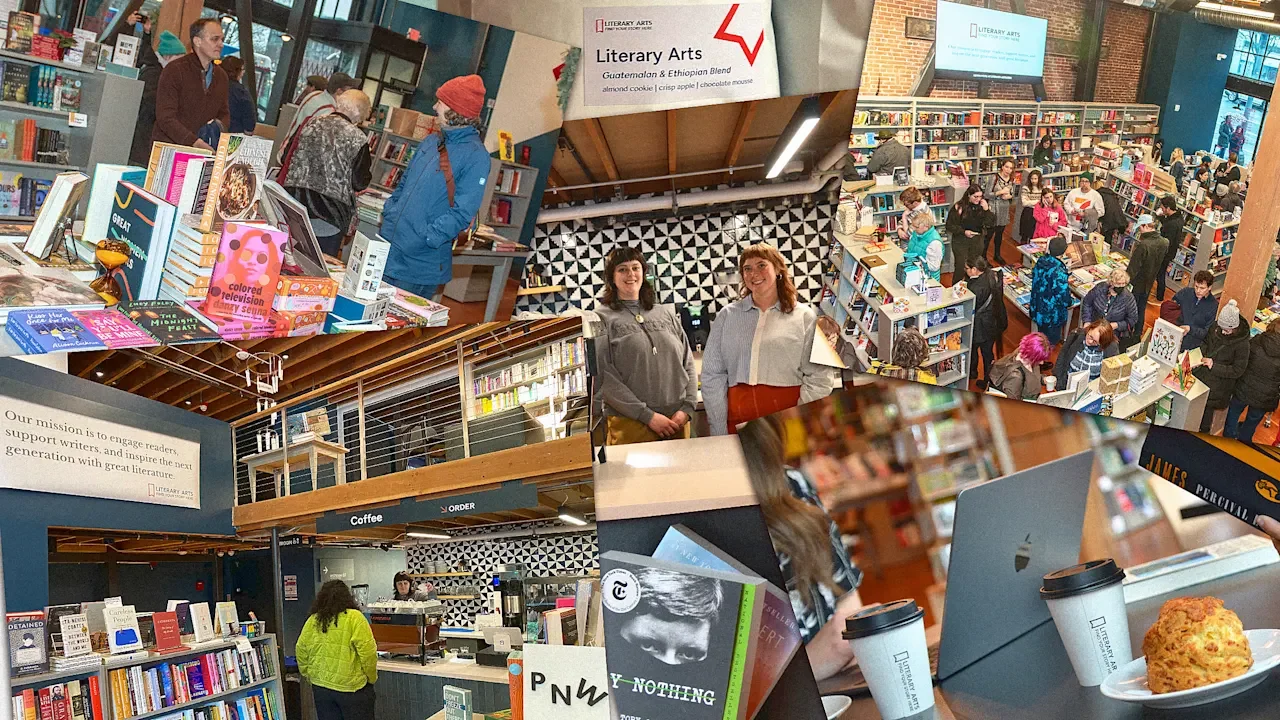
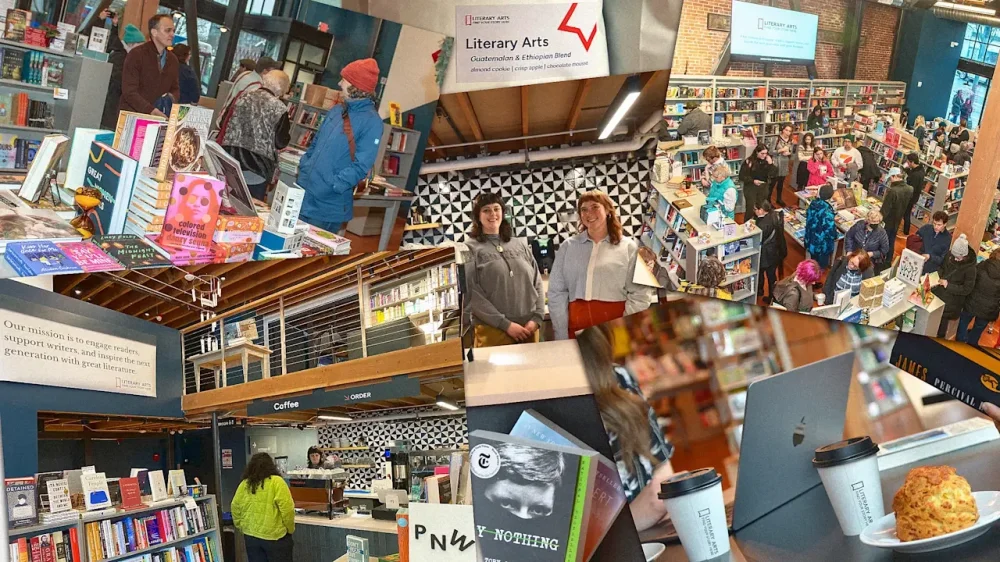
The bookstore cafe at Literary Arts’ new headquarters in Portland, Oregon was a hive of activity on a recent weekday morning. A few 20-somethings gathered for coffee in a corner, while at a nearby table, New Yorker cartoonist Tom Toro discussed his new book, And to Think we Started as a Book Club. . ., with a journalist. Meanwhile, Olivia Jones-Hall, Literary Arts’ director of youth programs, chatted with some colleagues about upcoming events. Just a few days earlier, President The President had announced on social media that he was ordering his ‘Secretary of War,’ Pete Hegseth, to send the national guard into “War ravaged Portland” to bring the city to heel—a directive aimed at the city’s largely peaceful anti-ICE protests and fueled by the president’s blatantly false assertion, which he expressed in September, that riots have engulfed Portland “every night.” (This assertion appeared to be based on a 5-year-old old clip on Fox News of the 2020 Black Lives Matter protests.) In reality, Portland is far from the “burning hell hole” of the President’s imagination. Here in the Central Eastside Industrial District, five minutes from downtown and about 15 minutes from the ICE facility, the focus is on books not troops. And the solution to shoring up the public safety and economy in some of the city’s underinvested quarters is arts-driven community-building, care of Portland’s 41-year-old nonprofit Literary Arts, which is known for organizing the annual Portland Book Festival each November. Indeed, since the organization announced, in 2022, its plan to move into a 14,000-square-foot former hardware store in the once-industrial Eastside neighborhood, the area around it has become a vibrant hub. Literary Arts’ new headquarters, which opened last December, include an independent bookstore and café, four classrooms, a podcasting studio, offices for the organization’s 32 staffers, and an event venue that can seat 75 people. The blocks around it, meanwhile, house restaurants, bars, stores, and a soon-to-open apartment building. “Arts and cultural organizations have often been at the forefront of how we rebuild public space,” says Literary Arts executive director, Andrew Proctor. “So I think that one of the paths to recovery for the city is going to be through arts and culture.” A literary giant Literary Arts has had a big year. In addition to opening its headquarters, which it was able to purchase outright with a $3 million gift, the organization announced the successful completion of a fundraising campaign that raised more than $22.5 million in support of its community hub and the future Ursula K. Le Guin Writers Residency. (Located in the writer’s former house, the residency is slated to open in fall of 2027.) It has also scored some major literary coups, securing visits from Timothy Snyder, Kamala Harris, and Stacey Abrams—all of whom will be appearing at the city’s 2,770-seat Arlene Schnitzer Concert Hall in the coming weeks. And lest you think Literary Arts attracts only serious nonfiction writers and politicians, “romantasy” author Rebecca Yarros will be speaking to a sold-out auditorium during the book festival on November 8. (And Stacey Abrams won’t be talking politics—she’ll be discussing her new thriller, Coded Justice.) “In this moment, we are stuck in a very short cycle of thinking and reading, and that cycle is being dictated to us by technology,” says Proctor. “How long can you wander the desert of the internet before you realize you’re starved and parched and not getting nourished by this stuff? Like never!” Proctor believes Literary Arts’ in-person events offer an alternative. “These books, these experiences with books, are very nourishing. And when you pair that by being out in community, it’s even more rich, because now you’re reading the same things or you’re at the festival standing in line talking to a stranger about something that you love and realizing that the world isn’t so strange and hostile.” Andrew ProctorJill ShermanAli O’Neill Literary Arts, which also runs the Oregon Book Awards, the youth poetry slam competition Verselandia!, Writers in the Schools residencies (which pairs working writers with local high schools), and Portland Arts & Lectures event series, took ownership of the Portland Book Festival in 2015. This year, tickets have been selling at 10 times the speed they did last year, says Proctor. He thinks that the need for deeper experiences—and maybe a little escapism—may be driving this engagement. The festival is an easy sell to authors and publishers, says senior artistic director Amanda Bullock, because it tends to move books. That could be because the $18 ticket fee includes a $5 coupon towards any book sold at the festival. (Kids 17 and under get in for free.) There will be more than 100 authors and interviewers at the festival this year, along with drop-in writing workshops and pop-up readings. Authors include big names like Abrams and Yarrows, but also plenty of new or up-and-coming authors. Roughly 40% of the presenters are from the Northwest. In addition to the day-long series of readings and interviews downtown, there are dozens of other events that go on for a full week as venues around the city host literary or musical events. A Tale of Two Cities The President’s disparagement of Portland comes at a moment when the city is turning a corner. During the pandemic, Portland saw crime rates rise, alongside increased homelessness and open drug use. But today, homicides are down 41% compared to this same time last year, fewer people seem to be openly using illicit drugs (a result, no doubt, of state lawmakers recriminalizing illicit drugs in 2024), and Mayor Keith Wilson has been opening homeless shelters at a fast clip. The city is also preparing to welcome the planned $25 million James Beard Public Market, Portland’s answer to Seattle’s Pike Place Market, in downtown next summer. Indeed, the President’s recent characterization of Portlanders as “living in hell” was so at odds with how locals experience their home that it promoted a rush of social media posts showing images of children running joyfully around fountains, crowded dog parks, and drool-worthy plates of food—all tagged #warravagedportland and #warravagedpdx. One Instagram threads user posted: “Danny here, reporting live from war-torn Portland. The smell of BBQ permeates. The puppies are viciously kind. People are doing yard work. This is not okay. Pray for us. #pdx.” The truth is, the anti-ICE demonstrations have continued to be largely peaceful (at least on the side of the protesters), despite The President calling up the Oregon National Guard and, after a federal judge barred him from doing so, the California and Texas National Guards. (The judge has since barred any National Guard from any state from being sent to Oregon.) Meanwhile, downtown Portland and the Central Eastside, both of which wrestled with homeless encampments and crime during the pandemic and in the years immediately after, are on the upswing. Artists and arts organizations have long played a role in reviving derelict neighborhoods, including New York’s SoHo in the 1970s and Wynwood in Miami in the early aughts. Literary Arts, likewise, has played a key role in Portland. The Portland Book Festival, which is based along the Park Blocks downtown, traditionally brings more than 6,000-plus book lovers to the city’s core. Readings, interviews, and workshops are held in the Portland Art Museum, a handful of different theaters, and at downtown churches. Literary Arts also runs Portland Arts & Lectures, one of the largest literary lecture series on the west coast. On the evenings that big name authors come to town, downtown restaurants are booked up weeks in advance. “Arts & Lectures turns one of those [week] nights into a Saturday night,” says chef Greg Higgins of Higgins, which is two blocks from the Arlene Schnitzer Concert Hall. The organization raised a few eyebrows when it selected as its new home Central Eastside, which sits along the Willamette River and was the city’s industrial and maritime hub in the late 1800s. The neighborhood, while gritty, managed to thrive even as trade dried up in the 20th century, and experienced something of a revival in the early aughts, as businesses moved into its once-industrial buildings. But it was hit particularly hard during the pandemic. But over the past year, the area—particularly the block on Grand Avenue where Literary Arts is based—has been reinvigorated by multiple businesses and nonprofits. Across the street from Literary Arts is the Architectural Heritage Center, which has been infused with new energy and exhibits thanks to a dynamic new executive director; used bookshop Mother Foucault’s, which hosts readings and events every weekend, moved into the adjacent space. Next to Literary Arts is vegan Japanese restaurant Obon Shokudo where celebrities like Anya Taylor-Joy have been spotted. On the corner is Lollipop Shoppe, a lively bar and music venue. “The building is open from 7 in the morning till 8 at night. Every day we’re serving coffee and food, and there are three events a week in the bookstore,” Proctor says. “It’d be hard to imagine us not having a pretty big impact on the neighborhood in a positive sense, just by sheer activity alone.” Journalist and urban advocate Randy Gragg, who runs civic design nonprofit City of Possibility—where he organizes talks, exhibits, and gatherings about Portland design, architecture—and civic ambition, says he’s seen Literary Arts make an impact on Portland. “They have really crystalized Portland as a literary center practically since their founding,” he says. “And [Proctor] has been a phenomenal accelerator from the day he arrived.” Gragg says Proctor’s choice of the Central Eastside for the headquarters was inspired. “I think that was a somewhat counter-intuitive place and probably scary to a lot of his funders, but it would appear he’s pulling it off.” Portland residents and readers can see the impact of Literary Arts. If only our President could, too. View the full article
-
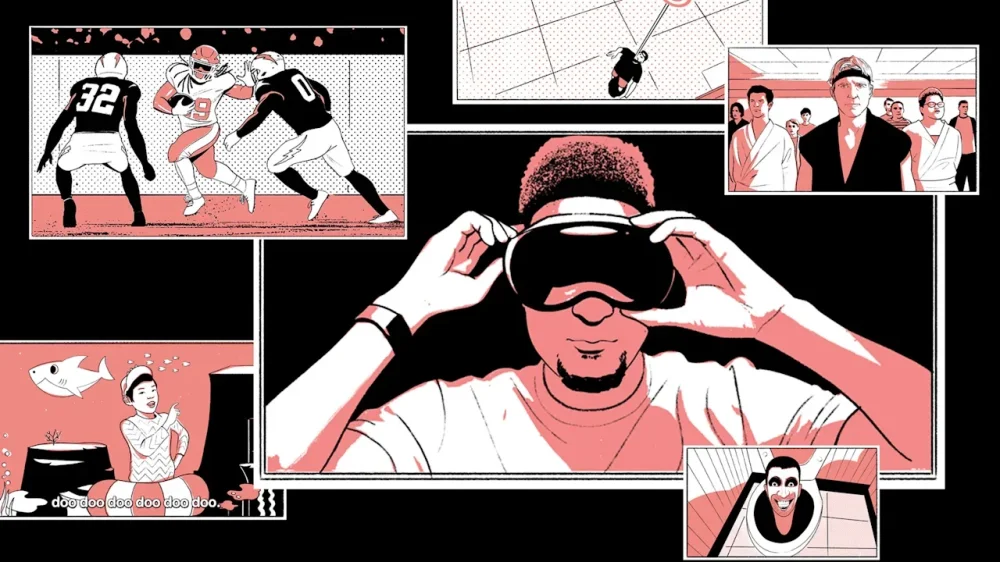
We’ve been expecting the tsunami of AI-generated videos ever since we first got a taste of AI’s image-making abilities several years ago. The results until recently were underwhelming. But now our social feeds are awash in increasingly realistic AI-created video. OpenAI, Meta, and Google have entered the game. At the end of September, Meta introduced Vibes, an AI-only video feed, in the newest version of its Meta AI app. It allows users to share videos created by the company’s generative tools in the Meta app, as well as on Facebook and Instagram. Five days later, OpenAI unveiled its Sora app, which, beyond creating videos from a prompt, is focused on allowing users to insert themselves, their friends, and even public figures who allow it into hyperrealistic scenarios. More than any other challenger—even Google’s Veo3, which the tech giant launched over the summer and quickly integrated into YouTube shorts—Sora is positioning itself as the TikTok of AI, leaning heavily into the ability for users to have a fully synthetic version of themselves to appear in their content. The app quickly shot to the top of Apple’s App Store, logging 164,000 downloads within 48 hours of launch. Sora’s playbook might be new to the tech world, but it’s familiar to Demi Guo, the 26-year-old founder of the AI video company Pika, whose vision for the trajectory of social AI video predicted the current moment. Launched in November 2023, Pika is known for its Pikaffects app, which offers users a library of viral AI video effects. They include the straightforwardly named “Squish It,” which turns the subject of a video or photo into a squishy toy manipulated by a pair of AI-generated hands, and “Cake-ify It,” which slices up a subject and gives it the innards of cake. The company is so committed to its vision of letting users insert themselves into shareable scenarios that it launched its own social video creation app, Pika: AI Video & Trend Maker, at the end of the summer. “We really believe AI will be the next way for people to express themselves and will define the next social platform,” Guo said the day after Sora launched. “That’s the reason we launched our app two months ago.” With a $470 million valuation, Pika is a smaller, but prophetic player in AI video. Guo’s next move could offer another glimpse at the future of the fast-moving industry. Matan Cohen-Grumi remembers the first time he experienced “the squish.” The founding creative director of the generative AI video platform Pika was playing around with a new suite of effects the company had just come up with. One tool took an image and made it look like two sets of fingers were literally squishing the subject—be it a cat, a cup, or a person’s head—in a delightfully (and terrifyingly) realistic way, complete with scrunching sound effects. “There was something very surprising about it,” says Cohen-Grumi, a former TV and commercial director who first discovered the magic of generative AI in 2023, when he used Midjourney to make a short film for his (now defunct) rock band. “I remember saying to everyone, ‘I’ve been playing with AI for so long. I’ve never laughed so hard. I hope this will translate.’” It did. When Pika released its Pikaffects tools in October 2024, the internet was flooded with metamorphosing bicycles, pets, and body parts. Tattoo artist Christopher Miranda’s video of what appeared to be a knife cutting into a man’s tattooed head, revealing a yellow layer cake inside, received 1.9 million views on Instagram. Even brands got in on the fun: Fashion house Balenciaga posted a video squishing one of its 6XL sneakers, racking up nearly 20,000 likes on Instagram. Pika says the virality of the new tools translated into an 800% increase in users. The success of Pikaffects was an “aha” moment for the company. Cofounded in April 2023 by Guo and Chenlin Meng, who dropped out of Stanford’s artificial intelligence PhD program to start Pika, the company was originally focused on being a tool for professional-quality video. But now it saw an opportunity to become the go-to AI platform for the TikTok crowd focused on social-media-friendly templates for easily shareable short videos. This approach allowed Pika to distinguish itself from the longer-form tools, aimed at more professional creators, from companies like Midjourney, Runway, and Luma. With its ready-made library of special effects and videos that average only about 7 seconds, Pika would go after Gen Z social media users looking to create—or at least join—the latest viral trend. Michelle Watt Pika was early to chart a path for its video-generating tools on social media. But it’s no longer alone—and its rivals are substantially better resourced. Beyond billion-dollar coffers, companies like Google also have access to their own social media platforms that they can use to mainstream their AI tools. Google did just that when it began integrating Veo 3 into YouTube Shorts in July, reaching the platform’s 2 billion monthly users. Vibes users can share across Meta apps, and while Sora videos can be downloaded to share elsewhere, OpenAI is positioning the app as a platform that can stand alone. How long Pika will be able to stand alone in an increasingly crowded corner of the AI industry is an open question. (There were rumors over the summer of a possible Facebook acquisition—which Vibes seems to have put to rest.) Pika’s nearly half-billion-dollar valuation is not on the scale of Runway, which is valued at $3 billion and is expected to generate $300 million in 2025, let alone OpenAI. With monthly subscriptions that start at $8 and go up to $76, Guo will say only that revenue is in the “eight figures.” But the company has a respectable 16.4 million registered users, and average monthly active users across the web and mobile apps totaled 1.4 million in the first half of 2025. However, the company says fewer than a quarter million of them are paying subscribers. As it looks to grow, Pika’s challenge will be continuing to spawn irresistible social-friendly effects that users can’t find elsewhere. Following the success of Pikaffects, the company has doubled down on creating templates geared to making short, meme-friendly videos that can be quickly shared on TikTok and Instagram without requiring any AI skills. Over the summer, Pika gave users a new thrill by offering the ability to Labubu-fy an image into the adorable furry-eared beast that has been all the rage with Gen Alpha. Ben Woods, a creator-economy analyst with MIDiA Research, says Pika’s approach is a smart response to the “tyranny of creative possibilities” that AI tools impose on users. Most AI video generators “give us that blank box and say ‘Create whatever you want.’ But some consumers come to that and don’t know what to create,” he says. “There’s too much possibility.” Pika’s templates help winnow those possibilities. Pika’s social-first messaging isn’t subtle. Last May it released a provocative brand film dubbed Pikapocalypse. It featured a young woman using the app to inflate her cat, turn a potted flower into a balloon, and transform a pile of clothes into butterflies—oblivious to an apocalyptic wasteland outside her window. Guo says the point of the video was to underscore how, with AI platforms, “people create their own reality.” It generated buzz in part for toying with the idea that this alternate reality can itself be a mindless, self-insulated hole. The company garnered more attention in June, when Adobe integrated Pika’s tools into its generative AI app Firefly—targeted at video professionals and social creators—along with other video models, including Veo 3, OpenAI’s Sora, and Luma. Alexandru Costin, vice president of generative AI at Adobe, sees Pika as a dynamic means of creating social content. “Pika offers a unique type of model with a unique personality,” he says. One issue that Pika will have to wrestle with is cost. The company’s free version of Pikaffects has been criticized for being laggy—and because it allows users to make only a limited number of videos, users often find themselves needing to upgrade to a paid version, which starts at $10 per month. Meanwhile, Pika’s new Sora-like social app has a standard paid tier for $95.90 per year and an “artist” tier for $389 annually. For younger kids and teens to be interested in Pika, “it would almost have to be completely free to use because you’re not going to see kids and teens paying those prices for videos,” said Kai Turner, a former Netflix and Sony executive who focuses on generative AI video. Cost is, at least for now, not a factor with Sora and Vibes. Both are currently free, though ChatGPT Pro users have access to an experimental Sora 2 Pro model that isn’t in wide release. Guo acknowledges this challenge, saying that Pika is “brainstorming different monetization models,” including offering certain premium features for a cost while greatly lowering the price for basic users. At the same time, the social video creation app shows that Guo is pushing ahead with a wider vision for Pika than just viral tools. That puts her in more direct competition with Sora and others—which might be a harder space in which to carve out a niche. MIDiA’s Woods says Pika’s strength remains its ability to cull the endless possibilities of AI video into easy-to-use, viral-ready features. “OpenAI now is positioning itself to compete with TikTok and Youtube, as opposed to being an AI creator tool app, which is still what I see Pika as,” Woods says. Guo notes that Sora’s launch brought a spike in downloads of Pika’s app, though she doesn’t specify how many. And despite her having predicted this moment for AI video, she still seems to be figuring out her next moves. (In a conversation the day after Sora’s launch, Guo noted that the company’s user base skews female—something she seems ready to lean into, though she didn’t detail how.) One thing Guo is clear about: She doesn’t want her app associated with the “AI slop” that’s invading social platforms and blurring the lines between fact and fiction. “Our app is not just about random videos, slop videos—it’s really about yourself, your identity,” she says, noting that Pika focuses on letting users center themselves in their own creations. It’s an idea that also animates the new Sora app and its cameo-based videos. “I think there’s a chance that Open AI was potentially inspired by this idea to bring a user’s identity inside their app as well,” Guo says. “It’s very validating that a big company like OpenAI also realizes that. We’re really proud to be an underdog in the space—and the first to inspire everyone.” A version of this article appears in the Fall 2025 print edition of Fast Company. View the full article

-
AI is changing the digital landscape as we know it. An industry that used to run on Google’s 10 blue links is now rapidly transitioning to digital experiences based on personalized prompts and direct answers from AI. Success is expanding beyond tracking rankings, keywords, and organic traffic. To drive future growth, brands need to prioritize visibility and authority across all search experiences and optimize to improve mentions and citations within AI responses. Which begs the question: How do brands measure and maximize their visibility in AI? Let’s dive in. What is AI visibility? AI visibility refers to how often and effectively your brand, products, or content appear in AI search and large language models (LLMs). This includes search experiences like Google AI Overviews, ChatGPT, Perplexity, and other answer engines that synthesize information and provide direct answers to a user’s question, often citing their sources. These AI models process billions of data points, drawing from brand websites, academic papers, and other online content to generate comprehensive, conversational responses tailored to a user’s specific query. When your content or brand is mentioned or cited by AI, that impacts your AI visibility. This represents a significant shift from traditional search engine results pages (SERPs), where the goal was primarily to rank high on a list of links. Now, the emphasis is on being the definitive, authoritative source that an AI retrieves and references. What makes AI visibility different from traditional search visibility? While traditional search engines focus on matching keywords to webpages and ranking them based on relevance and authority, AI models prioritize direct answers and contextual relevance. The goal of AI search is to answer a user’s question directly. With their question answered, that user is much less likely to follow a link to your website, so metrics like organic traffic don’t carry the same weight that they used to. Despite that, a strong presence in AI responses can dramatically increase brand awareness and topical authority, even in a “zero-click” search environment. Key factors that impact your AI visibility Here are some of the key factors that influence AI visibility: Content quality and authority: AI models that source from real-time search data/indexes favor high-quality, comprehensive, and factually accurate content. The better the content, the more likely it is that it will be mentioned or cited. Authorship and expertise: AI models, like search engines, look for signals of Experience, Expertise, Authoritativeness, and Trustworthiness (E-E-A-T). Brands with a strong reputation for expertise in their field are more likely to be cited by AI. User intent and content relevance: AI models are designed to understand complex queries on a topical level and provide highly relevant responses. That means your content should anticipate user questions, offer clear, concise solutions, and improve overall topical authority. An element of your site’s topical and domain authority encompasses how well your site covers a topic holistically, by understanding user needs, and providing content that answers their questions. Brand mentions and citation: Just as backlinks signal authority in traditional SEO, brand mentions and citations from other sources are critical for AI visibility. When reputable sources mention your brand or link to your content, it’s essentially a vote of confidence in your brand that AI models recognize. User experience: While not a direct factor for AI visibility, a strong user experience (UX) can indirectly impact it. Just like with SEO, a positive UX can contribute to your overall site authority, which AI models may consider when evaluating sources. Content structure: AI models can more easily parse and understand well-structured content. This includes using clear headings and subheadings, bulleted or numbered lists, tables, and definitional content. Well-structured content also provides a better UX, helping to boost your authority amongst your audience. LLM accessibility: For LLMs to use your content effectively, it must be easily accessible and understandable by machines. This means ensuring your website’s technical foundation is solid and taking steps like leveraging Schema markup. How to measure your AI visibility? AI search is making traditional SEO metrics less predictive of success. That makes it all the more important for brands to understand how they’re appearing in AI search so they can take steps to optimize their presence. Understanding and tracking your AI presence Tracking AI presence involves monitoring how your brand and content are referenced in AI-generated answers. New metrics that brands need to focus on are mentions and citations within AI responses. These metrics help you understand if AI models consider your content a primary, trusted source for specific queries, or if you have opportunities to optimize. Unlike with traditional SEO, where smaller websites or organizations could get away with manual tracking, AEO accounts for an infinite number of prompts for every possible intent scenario, combined with login states that show personalized outputs; this results in endless generated responses. Getting the full picture of your AI search visibility requires an automated and intelligent end-to-end AEO tool, like Conductor, that is capable of analyzing this data at scale. AEO and AI visibility measurement tool examples Answer engine optimization (AEO) and AI visibility tools allow you to measure and understand your presence in AI search at speed and scale, making them essential for large and small brands. The most effective AI visibility or AEO tools or platforms should have the following capabilities: Comprehensive AI engine coverage (ChatGPT, Perplexity, AI Overviews, etc.) Real-time monitoring and crawling Actionable optimization insights Integration capabilities Enterprise features Attribution modeling and traffic impact Historical trend analysis Competitor and market benchmarking Content readiness scoring Custom query and entity tracking Several tools and platforms are now available to measure and maximize AI visibility for small and enterprise-level companies. Be sure to thoroughly explore each tool’s capabilities to see which one best meets your specific needs. Useful resource: See how different AEO/AI Visibility solutions stack up when compared head-to-head in this comprehensive AEO/AI Visibility Platform Evaluation Guide. Conductor is the only end-to-end solution that supports AEO/GEO/SEO from opportunity and content generation to measurement and monitoring. Conductor is powered by a proprietary data platform, unifying intent signals from AI and traditional search engines, analytics, impressions, and technical health signals alongside API-based AI visibility technology to help users increase brand visibility, traffic, and conversions across large language models (LLMs) and other digital experiences. Conductor shows you where your brand appears in AI-generated answers on platforms like ChatGPT and Perplexity, while also giving insight into how you’re performing against competitors for AI visibility. It helps pinpoint the best opportunities to create and optimize content to maximize visibility and authority across every search surface. Then, real-time monitoring and alerting provides a 24/7 insurance policy to ensure LLMs are finding and indexing your content for peak performance. Try Conductor for free today to see these features in action and get an idea of your brand’s current AI search performance. Steps to improve your AI visibility When assessing your AI visibility, look for more than just a mention. Pay attention to whether your content is directly cited, if its core message is accurately summarized, and if the sentiment of the mention is favorable. High-quality, accurate citations indicate that AI models perceive your brand as a reliable and authoritative source. This interpretation helps optimize your content strategy. Improving your AI visibility is an ongoing process of optimizing your content and technical foundation to align with how AI models process information. Just like with SEO, this is not a process that is one and done; there will always be opportunities to further optimize your content for AI visibility. Content strategies to improve AI visibility The quality of your content has a significant impact on how users and answer engines view your site. The following content strategies are key to maximizing your AI visibility: Highlight your unique expertise in specific and authoritative content Prioritize satisfying user intent Structure your content for machine-reading Leverage a human-in-the-loop approach when creating content Expand digital PR Technical strategies to improve AI visibility If your website isn’t technically sound, answer engines are less likely to surface it. The following technical website strategies are critical to improving overall UX and AI visibility: Leverage Schema Monitor your website for technical issues Improve your site’s UX Prioritize LLM accessibility Useful resource: Download the complete AI Visibility Guide for detailed insights on how to action all of the content and technical strategies mapped out above. AI visibility in review As AI models become more integrated into daily search behaviors, proactive AEO strategies will be essential for maintaining and growing your brand’s presence. The focus is shifting from merely optimizing for traditional search engine algorithms to understanding and influencing how large language models interpret information from your site. Brands that make informed, strategic decisions now to invest in AEO will continue to drive growth and are better positioned to become AI search leaders within their industries. View the full article
-
Sending LinkedIn DMs—the digital version of cold-calling—can come across as pushy and is becoming a much-less-effective strategy for job seekers. Luckily, there is so much more that LinkedIn is capable of when it comes to facilitating job hunting. Here experts share their advice for engaging with companies, catching recruiters’ attention, and opening doors to new career opportunities, all without sending unsolicited messages. Optimize Your Profile for Recruiter Visibility We see many talented professionals who believe they need to constantly send direct messages to get noticed on LinkedIn, but we find the most effective approach is often more subtle. A fantastic strategy that yields incredible results without any direct outreach involves making your profile do the work for you. It all starts with the “Open to Work” feature. The real magic happens when you activate it and select the option to be visible only to recruiters. This acts as a discreet signal, letting our team and other recruiters know you are receptive to new opportunities without broadcasting it to your entire network or current employer. The data backs this up. According to LinkedIn research, candidates who use this hidden setting receive 40% more messages from recruiters. Hanna Koval, Global Talent Acquisition Specialist | Employment Specialist, Haldren Build Relationships Through Company Engagement One of the most effective ways to use LinkedIn without ever sending a DM? Flip the job search strategy on its head. Most people wait for a job posting to appear, then throw their hat into the ring alongside hundreds of others. The problem? Nearly 40% of the time, that job is already filled, in the process of being filled, or it was never really “open” in the first place. Instead of chasing job postings, start with a Target Company Strategy. Focus on organizations that truly align with you, their mission, vision, products, leadership, and growth potential. That’s where real opportunity lives. Here’s a proven strategy: Follow the company page and engage with their posts, articles, and videos. React, share, and, most importantly, leave thoughtful comments that add value. Connect with employees in relevant departments, follow their content, and continue to show up in the conversation. Over time, you’ll be noticed, not as “just another applicant,” but as someone already invested in the brand. This is how you tap into the hidden job market. Opportunities often arise before the job is ever posted, and this strategy puts you in the right place at the right time. Don’t just wait for jobs. Show up where the opportunities are being created. Thomas Powner, Executive Career Management Coach, Recruiter, Resume Writer, Career Keynote Speaker, Career Thinker Inc. Apply Within 24 Hours of Job Posting Here’s the uncomfortable truth about today’s job market: if you’re not applying to LinkedIn jobs within 24 hours of posting, you will often be invisible to recruiters—no matter how qualified you are. When a desirable position goes live, recruiters often receive 200+ applications within the first 24 hours. Several recruiters have confided to me that they stop reviewing applications once they have a qualified pool of applicants, and this often happens within 24 hours. Why sift through an additional 500 résumés when they already have 200 highly qualified candidates To capitalize on this reality, create hyper-specific LinkedIn job alerts (like “Marketing Manager” AND “SaaS” AND “growth stage” instead of just job titles), enable mobile push notifications, and build a rapid application tool kit with customizable résumé versions and cover letter templates. This system will empower you to submit quality applications within a two-hour window of receiving alerts. Adapting to the fundamental change in today’s hiring speed is crucial. Your experience will differentiate you in interviews, but you first need to get into that initial pool of candidates being considered. Perfect applications mean nothing if they’re never seen. Amanda Fischer, CEO & Executive Career Coach, AMF Coaching & Consulting Participate Actively in Industry Groups A simple but often overlooked way to get more out of LinkedIn is by joining a few active groups in your industry and participating in the conversations. Groups are smaller, curated communities where the right people are already gathering. They are the best places to be to get noticed and hear about opportunities, without blasting cold messages to strangers. The reason this works is because visibility builds over time. When you show up consistently, whether that’s commenting, sharing your perspective, or asking thoughtful questions, you stop being yet another job seeker. Instead of chasing or forcing connections, you become someone others recognize and want to connect with. To make it practical, choose two or three groups that are clearly active (you’ll see fresh posts and real discussions), then spend 10–15 minutes a few times a week adding value. Stick with it for a month, and you’ll likely see more profile views, new connections, and likely new job opportunities rolling in, all without direct messaging. Ana Colak-Fustin, Founder, HR Consultant and Recruiter, ByRecruiters Leverage Company Search for Strategic Applications By far, one of the strongest strategies a person can use is conducting a company search to find jobs, instead of a regular search through job filters. LinkedIn is a very robust platform that offers a great amount of information, and at times it may be difficult to know what to do with it. When you are searching for companies, first, you will get to see the businesses in your industry where you may have first-degree connections and fellow alumni. If you are applying to work at a company that has had success in the past with employees from your school, this could work in your favor. After all, “Alumni 4 Life!” Moreover, if you’re applying to work at a company where you have first-degree connections, these individuals may be able to offer you advice prior to any interview, and furthermore serve as internal advocates during your hiring process. Company searches also give job seekers insights into which job markets are very active in an industry and location. Finally, this type of search also allows the job seeker to pick the company they want to work for, instead of sorting through the usual “slot machine” of job search results, hoping that something was posted matching their qualifications. Steven Lowell, Sr. Reverse Recruiter & Career Coach, Find My Profession Create an Engaging Unemployment Diary I’ve noticed many viral posts on LinkedIn shared by people who recently lost their jobs. Such posts often collect thousands of likes, comments, and reposts. The idea is to proactively write a heartfelt post about how you lost your job, what financial responsibilities you have, describe your qualifications, and sincerely ask your network to share your post with their connections. You’d be amazed at how responsive people are. Not only do they actively engage with the post, but they also tag recruiters, HR representatives, or entire companies that might be interested in a similar role. But don’t stop there. Create an “Unemployed Diary” where you share your progress, wins, and setbacks. This way, you naturally create awareness of your situation on the most relevant platform for job seekers and build a new network of valuable connections. Alina Moskalova, Partnerships and Email Outreach, LinkedHelper Strategically Integrate Keywords Throughout Your Profile Your LinkedIn profile must be keyword-optimized if you want to be found on the platform. Imagine you were a recruiter or headhunter looking to fill an open role. What keywords would you type in the search bar to find a candidate? Now review your profile and ensure those terms are integrated throughout. This isn’t just about keyword stuffing. These words need to be strategically woven into your headline, summary, and experience section. You want prospective employers to find your profile, then be intrigued enough to contact you. Dr. Kyle Elliott, Founder & Tech Career Coach, CaffeinatedKyle.com Curate Content to Attract Decision-Makers Though this strategy may take some time, one way job seekers can use LinkedIn effectively, without direct messaging, is by appealing to the hiring decision-maker or an “influencer” of the decision-maker (not to be confused with a social media influencer) through a curated content strategy. This would begin with the job seeker posting curated content regularly that is relevant to the hiring decision-maker/influencer of their prospective role. So, what is curated content? In basic terms, curated content refers to external content, such as blogs, articles, and social media posts, that are reposted for a relevant audience. However, it’s not simply reposting this content for the sake of reposting. The job seeker has to provide a relevant perspective of their opinion or insights on the content they are posting. This strategy should begin before connecting with the decision-maker/influencer they’re targeting on LinkedIn. This would increase the level of engagement on the job seeker’s post, making it more likely to appear on the feed of the decision-maker/influencer once the LinkedIn connection is made. Now, how does the job seeker find the right decision-maker/influencer to connect with? Well, without being in the company or having direct insight into the company’s structure, it will take some guessing and trial and error. However, by performing thorough research through their prospective company’s LinkedIn page, website, and social media pages, the job seeker stands a good chance of finding who they’re looking for or the influencer who can get them to the decision-maker. From there, the job seeker should send a LinkedIn connection and monitor engagement on their curated content posts. Suppose the decision-maker/influencer engages with the job seeker’s curated content (like, comment, share, or even reaching out first). In that case, the opportunity arises to begin a casual conversation. If contact is made and the connection is properly nurtured, this could lead to a great relationship and eventually a job. Terrence Hight, Jr., CEO, Hight Health Expand Your Network with LinkedIn Open Networkers Job seekers looking to utilize LinkedIn effectively should consider updating their description to include “LION,” which stands for LinkedIn Open Networker. Then, they should search for LION and start connecting with other “LIONs.” This approach is especially beneficial for LinkedIn users who don’t have many connections because LIONs generally have established lots of connections and will help bring a lower-connected profile closer to other professionals on the overall LinkedIn network. After establishing connections with numerous LIONs, a user can then start to send connection requests to their target audience with closer connections to that audience, which will result in a higher likelihood of connections being accepted. Having an active profile is also very important, which means posting unique articles/content that is valuable within the ideal/targeted niche. After connections are accepted by a user’s ideal audience, rather than using direct messages, it can be equally effective to engage on profiles, such as endorsing, commenting, liking, and sharing other users’ posts. Adam Evans, Creative Director, Thought Media Establish Credibility Through Insightful Comments LinkedIn newsletters have great distribution and can be a low-friction way of further engaging your network. If you’re not using them to position yourself as a thought leader in your domain, that’s a missed opportunity, especially if you’re looking for work. Comment on current events, share your perspective on technologies and opportunities, and generally let your voice be heard. Jonathan Dunnett, CEO, jonathandunnett.com Engineer Your Profile for Target Roles Your LinkedIn profile is one of the most important digital assets for your professional brand. The most powerful strategy is to start actively managing it to become optimally findable. Recruiters and opportunities will find a strong personal brand. You need to engineer your brand’s narrative so that LinkedIn’s algorithm understands exactly who you are, what your skill sets are, and why you are the best option. Here’s the strategy: Define your target role and engineer your entire profile to rank for it. Your headline becomes your brand’s elevator pitch (e.g., “Senior Product Manager | Building User-Centric FinTech Solutions”). Your “About” section tells your personal brand story. And your “Experience” provides the quantifiable achievements that prove your brand’s promise. By doing this, you’ll be found by relevant people looking to hire: it’s the difference between being a candidate in a pile and being the expert solution they were searching for all along. Jason Barnard, Serial Entrepreneur, Kalicube Document and Share Your Professional Work In a world where strategic thinking is expected from everyone, personal branding and the ability to promote oneself have become more crucial than ever. Yet, most people continue to neglect these aspects. Only about 1% of LinkedIn’s 260 million monthly users post content. Being excellent at your job is no longer sufficient. People need to be seen doing great work. The proliferation of AI has made verifying the originality and ownership of work more challenging than ever. This is where social validation and networking become essential. Individuals need to document and share their work online (via LinkedIn, building portfolios, leveraging thought leadership opportunities). It’s important to treat your professional persona like a product—what’s your niche, what customers do you serve, and what impact do you make? Based on these reflections, build community and visibility around your professional work, rather than just sending résumés to HR via direct message. Those who don’t adapt risk falling behind—not because they lack talent, but because they’re not well-known. Roei Samuel, CEO and Founder, Connectd View the full article

-
Deal would be foreign-policy success but ending war will require president to keep pushing for tough negotiations between Israel and HamasView the full article
-
I’ll never forget the first time I saw the power of a group gasp. Years ago, at a Baltimore Ravens game, a film I’d helped create played across the stadium’s newly installed LED screens. In the climactic moment (a close-up shot as the kicker’s foot struck the ball) the entire crowd seemed to freeze, breath held, before erupting in a wave of energy that swept the stands. That’s because the shot was perfectly timed with the real kick-off that started the game. Picture 70,000 people rising to their feet in unison, their collective gasp creating a moment of pure electricity. That wasn’t chance. It was the result of designing an experience where story, environment, and audience collided to spark a visceral, shared response. This “group gasp”, that instant of collective, visceral awe, has become the holy grail of modern brand experience. In a fragmented world where people crave connection, brands aren’t just competing for attention. They’re competing to orchestrate shared emotional resonance. From spectacle to lasting impact The roots of immersive brand experiences run deep. In the late 1990s, with the internet booming and new competitors emerging thick and fast, we worked with IBM to use custom technology (think infrared sensor projections, interactive exhibits, and flexible architecture) to shift brand perception from staid to innovative. It wasn’t about showing off gadgets; it was about shifting from a one-way monologue to the customer to a democratic conversation with them, entirely reimagining the relationship between people and brand. Today, environments like Sphere in Las Vegas or New York’s Oculus Transit Hub blend architecture, storytelling, and cutting-edge tech to create collective awe. Outside these venues, brands are playing with physical space to show up in evermore seamless, smart, and impactful ways. HBO and Giant Spoon’s Westworld activation at SXSW set a new standard in experiential, inviting people “into the show” by recreating its Sweetwater location, deep in the Austin desert. But here’s the real shift: Experiences no longer end when the audience walks away. Social media amplifies a single moment of wonder into a global phenomenon, extending impact for weeks or months. The gasp becomes evergreen content. Designing for shared emotion Technology may set the stage, but it doesn’t guarantee resonance. The magic lies in emotional choreography; guiding audiences through intimacy, tension, and release. Like a great film score, the best experiences ebb and flow rather than hammering at peak volume. Different brands call for different emotional tones. For one, it might be joy and togetherness; for another, reverence and hope. There’s no universal formula . . . what matters is intention. The most successful moments also feel effortless. They don’t overwhelm with every technical trick, but instead use restraint so each detail serves the story. Shareability isn’t accidental, it’s designed into the experience. Yet it works best when it feels authentic, not engineered. The new marketing imperative A broader cultural shift in consumer spending, aka the Experience Economy, is nothing new. Since the 1990s, we’ve witnessed more people prioritizing experiences over material possessions. Marketing spend has taken a while to play catch up, but with a stated 74% of Fortune 1000 marketers planning to increase their spend on experiential marketing over this year, ad spend is now markedly shifting. Executives increasingly recognize that these moments forge emotional bonds that traditional campaigns can’t match. When people share a communal, in-person experience, the emotional response is amplified. The brand becomes embedded not just in an individual’s memory, but in a collective one. In an era of fleeting attention, belonging is rare, and therefore valuable. But as pop-ups and activations proliferate, not every “immersive” event cuts through. The brands that win will resist spectacle for spectacle’s sake and focus instead on stirring genuine collective emotion. Surprise: The spark behind the gasp At the heart of every group gasp lies surprise, moments that subvert expectation. Sometimes that’s high-production spectacle, but just as often it’s a small, human detail: a perfectly timed music cue, a flash of humor in a serious setting, or unexpected use of lighting. Memorable moments don’t require blockbuster budgets. They require empathy, timing, and the courage to be unpredictable. Commuters weren’t prepared to stumble into the surreal world of Severance in Grand Central Station, and adding the show’s cast to its severed floor made Apple TV’s experience even more unforgettable. The thought, “I didn’t expect that” is the beginning of brand magic, and when people feel compelled to share it, the impact multiplies. The road ahead for immersive storytelling We’re no longer just making content; we’re designing experiences. Content sits in a frame, while experiences unfold in space and time. This requires thinking like architects or choreographers, not just advertisers, designing for attention in motion across multiple tempos and entry points. Most importantly, it means anchoring every decision in emotion. AI is already transforming how brands design for emotion, from predictive analytics that anticipate audience reactions to generative tools that create hyper personalized experiences. But the real power lies in combining these tools with human empathy to craft moments that feel both innovative and deeply personal. At a time when trust is fragile, immersive experiences offer brands something rare: the chance to build emotional connections that pull people back in again and again. So, the real question for brands is simple: Are you willing to design for the gasp? In an age of distraction, the ability to elicit shared wonder may be the most valuable strategy of all. View the full article
-
The antitrust lawsuit suggests over two dozen mortgage companies shared sensitive loan origination information as the "price of cartel membership." View the full article

-
Americans have developed a near-insatiable craving for protein. That’s led large food manufacturers like PepsiCo to come up with new formulas that prominently feature the popular macronutrient. On Thursday, PepsiCo became the latest to make a more aggressive protein pitch to consumers. The soda and snacking giant unveiled a Starbucks coffee protein drink, a reformulated line of Muscle Milk protein shakes, and new Propel flavored waters that combines whey protein, fiber, and electrolytes to better align the beverage giant’s portfolio with the trend. Citing data from the food industry-funded International Food Information Council (IFIC), PepsiCo says 71% of Americans have tried to boost their protein intake in 2024. That’s an increase from 67% in 2023 and 59% in 2022. “After decades of consumers reducing fat and watching carbs, the pendulum has swung toward protein,” says Jaime Schwartz Cohen, a registered dietitian and EVP of nutrition at PR agency Ketchum. Over the past few years, food manufacturers have responded by packing aisles with more protein-enriched foods and beverages, including new protein Cheerios and Wheaties cereals from General Mills, the expansion of a protein pasta line sold by The Barilla Group, and even a protein popcorn food startup that was created by reality TV star Khloé Kardashian. “We want to redefine the protein conversation,” says Ram Krishnan, CEO of PepsiCo’s U.S. beverages business, in an interview with Fast Company. “Everybody in the country is talking about protein, but it’s actually crowded and confusing and the consumers really don’t understand all of the science behind protein.” Krishnan says protein is especially important for aging populations in the U.S. and other western markets. The body turns protein into amino acids, which goes through the human bloodstream to build and maintain muscle. Protein can also promote weight loss by increasing satiety and has a positive impact on immunity and inflammation. The recommended daily protein intake varies by age and other factors, but adults are generally advised to consume around 60 grams of protein each day. Schwartz Cohen says this is an area of confusion for consumers, as most look for around 15 to 30 grams per serving on nutritional labels, but eight in ten Americans aren’t sure what their daily protein needs are. “That’s where clear, evidence-based guidance from brands and registered dietitians is critical,” she adds. Tara Glasgow, PepsiCo’s global chief science officer, says that studies show that it’s equally important that Americans consume protein consistently throughout the day. Glasgow says scientific research has found that the consumption of 30 grams of protein for three different meals spaced out throughout the day had a 25% bigger impact on muscle building than if 90 grams were just consumed at dinner. “It shows you the lift that you get from taking that approach, whether you’re getting it from a beverage throughout the day, or you’re getting it from a snack here or there,” says Glasgow. PepsiCo, which sells Mountain Dew soda and Aquafina water, would stand to benefit from selling more protein beverages that can be consumed steadily throughout the day. The new ready-to-drink Starbucks coffee, with 22 grams of protein per bottle, took inspiration from social media influencers on TikTok and Instagram that have been adding powdered protein to their morning coffee. Propel Clear Protein, meanwhile, has 20 grams of whey protein per serving and was developed as a more refreshing beverage that could be consumed at any part of the day with flavors like watermelon mint and peach ginger. PepsiCo’s inspiration for this line came from the soaring popularity of weight-loss drugs like Ozempic and Wegovy. Riding the GLP-1 wave Glasgow says consumers that are on these GLP-1 medications need to be more conscious about adding protein to their diet, given that a rapid drop in weight results in more massive muscle loss too. One side effect of those medications are digestive issues, so fiber can also be helpful. And lastly, reducing calories can result in dehydration, given that around 20% of hydration comes from the food consumers eat. “It’s not just designed for GLP-1,” says Glasgow, regarding the development of Propel Clear Protein. “But it was those needs that we looked at that really helped us get the right combination of benefits together.” Muscle Milk, a brand that’s worth about $500 million at the retail shelf, perhaps has undergone the greatest transformation. Krishnan says there’s a group of “dissatisfied protein drinkers” in the shakes category that consume these beverages because they want the protein boost, but don’t always love the taste or ingredients. The new formulations now have ultra-filtered milk, a smoother taste profile and less powdery and medicinal in flavor than the historical version of Muscle Milk. Protein levels range from 26 grams to 42 grams per bottle. PepsiCo also removed all artificial flavors, sweeteners, and added colors from the Muscle Milk line, reflecting the broader push at the company to remove artificial dyes that Americans have said they no longer want in the food and drinks they consume. PepsiCo’s protein drinks can also help the beverage giant get more aligned with Americans who have spent decades lowering their consumption of sodas. PepsiCo has faced its own unique challenges as the classic cola brand slipped behind Dr Pepper in U.S. market share, then fell to fourth overall after Sprite usurped it as the third-largest carbonated soft drink by volume, according to data from Beverage Digest. Classic Coke has dominated the list for many, many years. Weaker carbonated soft drink volume has led to a soft performance for PepsiCo Beverages North America business for more than two years, a key part of the business that Krishnan was tapped to turnaround in early 2024. Since then, the soda giant has sought to move the portfolio toward healthier drinks. That has included the $1.65 billion acquisition of the Poppi prebiotic soda and innovations of core brands, like the debut of a prebiotic cola that was launched months after the Poppi deal. “We believe beverages are becoming more functional,” says Krishnan. “Protein is just one portion of the equation. It’s not the only thing we’re doing.” View the full article
-
A new kind of warehouse has just popped up, nestled in seven acres of forest in northern Indiana. It’s the latest delivery station for Amazon, one of hundreds of logistics centers around the world that handle the package sorting and van loading for last-mile delivery. But while this delivery center will be doing all that standard work, it’s also acting as a living laboratory to test out what the future of Amazon’s delivery stations—and maybe the future of warehouses writ large—will look like. The delivery center, known as DII5 and located in the town of Elkhart, has been designed to test and evaluate more than 40 sustainability initiatives that Amazon hopes to apply to future building projects. These efforts range from using low carbon concrete to air-source heat pumps to an underground water reclamation system. One of its most notable elements is that the delivery station has been built primarily out of mass timber. “We’re looking at this place to be somewhat of a laboratory for learning and understanding how do these different pieces work within each other?” says Daniel Mallory, Amazon’s vice president of global realty. The warehouse is part of Amazon’s Climate Pledge commitment to decarbonize its global operations by 2040, and Mallory says that lessons learned from this building will inform future building projects. The mass timber market problem This new delivery station was designed by warehouse specialist firm Atlantic AE in partnership with the architecture firm ZGF, known for mass timber projects like the soaring new terminal at Portland International Airport and Amazon’s own HQ2 in Arlington, Virginia. ZGF principal and project lead Marty Brennan says his firm helped develop the initial design concept for the project and he looked at it as a demonstration project that could push the limits of how a warehouse gets built. “We were given the opportunity to rethink every material,” he says. “In total we ended up with about 40 initiatives and half of those were really material focused.” Mass timber is the big one, with compressed laminated timber wall panels and glue-laminated timber beams making up the bulk of the building’s structure. Mallory, who was recently visiting the facility in Elkhart and spoke to Fast Company over video, says those material choices were used to guide the project’s aesthetics. “That’s our structural element there,” he says, turning his camera to a wall of wood. “There’s no steel, there’s no gypsum board, there’s nothing behind that. It’s wood to insulation and that’s it.” Even the exterior of the building is clad in wood, using locally sourced yellow poplar, the Indiana state tree. Mass timber is not exactly a new material in the architecture world, but it’s still gaining a foothold in the U.S. market, and is rarely used in a project like this. Mallory says he’s hoping this project can show manufacturers that there is utility and need for this type of mass timber product. “The inconsistency of demand within the market is one of the lagging issues that we have to get mass timber up and going,” he says. “If there’s a way we can produce scalability here, not just within Amazon, but within industry, so we could get more consistent demand and better utilization efficiency, I think we could do some things to drive cost and drive efficiency in that side of the market,” he says. As one of the biggest companies in the world, Amazon could have the power to make an impact. Mallory notes that Amazon is currently building 20 different facility types in more than 60 countries. Getting more mass timber into those projects could move the needle. “We think we can help effect some larger change, particularly in this market,” he says. A test bed for sustainability Other unique elements in Amazon’s mass timber project include its low carbon concrete floor slab, which uses a fibrous bonding element in the concrete mix, saving an estimated 40 tons worth of steel reinforcing bars. Clerestory windows built into a sawtooth roof and glazing around the edges of the building bring in natural light and reduce the need for artificial lighting. And a water reclamation system gathers rain from the roof and cycles it to an underground cistern where it’s filtered and reused for toilet flushing and irrigation. Some of the sustainability initiatives used at this new delivery station are more about proving the approach than solving a specific local problem. The water reclamation system, while important in an arid climate, has a little less of an impact in Elkhart, 50 miles from Lake Michigan. Not every effort will be rolled out in every future project, Mallory says, and the process of evaluating these sustainability initiatives may help the company learn more about what additional efforts would be most impactful. Mallory says one of the biggest impacts from this project could be how it helps spread the word—and the know-how—for integrating these approaches in building projects. “It’s a one-stop-shop to bring developers, other contractors, and designers through to say here’s the elements that we’re looking at,” Mallory says. “It really is kind of a laboratory that we’ve put here that we want to make sure we’re learning from.” He’s hoping others learn from Amazon’s mass timber building as well, even some of its business competitors who operate their own warehouses and delivery stations. “I don’t see sustainability as an area where you drive for competitive advantage,” Mallory says. “We work with large scale developers who are building boxes for a lot of our competitors. If they take one of our sustainability initiatives, we’re good with that.” View the full article

-
Lay’s sells more than 200 flavors of potato chips across the globe. Only one of them puts a potato on the package. That’s because in many ways, the largest potato chip company in the world, Lay’s, is the embodiment of a modernist brand. Hear the word Lay’s and its red and yellow logo pops into your brain, quickly followed by a hallucinated blast of salt on your tongue. The logo is an abstract hero, associated with chips only through constant consumer exposure. But in Lay’s own market testing, it discovered a cost to this approach: Only 42% of people realized that Lay’s potato chips are made from potatoes. Now—as the long, liberal war on ultra-processed food has been emboldened through a new Venn diagram with MAHA politics—Lay’s is launching a potato-forward makeover it’s calling “rooted in real.” It’s part of a larger initiative to stoke excitement around Lay’s, and salty snacking in general, as Frito-Lay attempts to counteract a 5% core profit decline in 2024. The project kicked off two years ago, as the internal design team at PepsiCo, which owns Frito-Lay, began a redesign of the brand that reached all the way from the logo to the bag. “I think what we’re trying to do is really pay homage to the 300,000 farmers [who grow] the real potatoes that are in the product . . . really bring that forward, front and center, so that it’s a feeling,” says Jonnie Cahill, CMO of PepsiCo’s international foods. The new Lay’s logo The PepsiCo team began the refresh with a deep analysis, and earnest retrospection, about what the heck the Lay’s logo even meant. Variations of the mark, with a yellow orb and red overlay, had been in use since 1995. “The story wasn’t as sharp as we wanted it to be,” says Carl Gerhards, senior director of design at Lay’s who also worked on the relaunch of the Pepsi brand in 2023. “Some people, even internally, thought it was the chip [or] it was the potato.” In reality, it was supposed to be the sun. During market testing, in which the company asked people to draw Lay’s as an idea, a sun entered the scene again and again. Even if that relationship was subconscious or just tied to picnicking. So Lay’s rolled with the sun, and wrapped it with a newly rendered red ribbon (indicating Lay’s is a “gift from our farmers”). “Lay’s rays” of sunlight now fill the orb and break out as a radiant glow across branding that almost looks like a circle of french fries. In fact, the design team members went full method actor with this image, and they actually stamped the rays with sliced potatoes dipped in ink to give the brand a deeper rooting in the root vegetable. As for the wordmark, the last iteration actually featured a drop shadow, which dated it a bit. The bigger problem, though, was that it was “part joyful, part fanciful,” says Gerhards, who notes that the looping “y” in particular confused its identity. “It didn’t feel like it had quite embraced one world or the other.” The new mark ditches the touches of script and focuses on terminals (the ends of letters) that finish with an almost organic point that falls just short of calling it a hook. Those terminals are meant to mirror the shape of the red ribbon that sits over the sun to ensure the letters are legible. In countries across the globe, of course, Lay’s isn’t always called Lay’s. In Columbia, for instance, Lay’s is called “Margarita”—and yes, that nine-letter brand has to fit in the same footprint as short-and-sweet Lay’s. The new Lay’s packaging In many modern brand campaigns, it really only matters how something appears online. But for packaged foods, physical retail still reigns, as 82% of grocery shopping is still done in person. The Lay’s team confirmed that the impression of its packaging within retail environments is still paramount to selling chips. On store shelves, the potato is king, as Lay’s now features images of potatoes on every flavor. Those potatoes look different from flavor to flavor, too, emphasizing different natural shapes, slicing, and peeling techniques behind produce. “Where most brands try to be more iconic, make one thing, and show it all the time the exact same way, food is not that way,” says Gerhards. “And so we wanted to embody that in our design.” Real, photographed potatoes and chips now appear on every bag rather than for just the classic flavor. They are accompanied by flavoring elements (like salt or barbecue sauce). The new brand hues are less “candy-like” and derived specifically from the colors of real foods, like the bright-but-earthy green of a cut pickle. All of this food lies atop a wood-block pattern, evoking a kitchen cutting board or hint of barnyard chic. Coupled with a bag that will shift from glossy to matte in many markets, Gerhards believes it all adds up to a more tactile, sensorial experience where the consumer senses texture. “I think there’s a magnetism to this skeuomorphism,” says Gerhards. “I’m not going to put my hand up and say I’m the biggest fan of it in other areas of design, but for the latest [Lay’s] brand, I think it’s really appropriate.” Then to validate these designs, the team set up retail tests (some in real stores, some in makeshift simulations) across the world, timing timed how fast people spotted the brand and their flavor. (Some testing even used eye tracking.) The company claims that in many cases, it saw an increase in hard benchmarks like “findability” and purchases, along with qualitative factors like customers believing the packs looked more flavorful and understanding that the chips are made from potatoes. Lay’s plan to get you to eat more Lay’s The Lay’s team sees a lot of value in the bag silhouette, and it’s being treated as a “portal” across in-person and online moments. That means in stores, you might see Lay’s sitting on a shelf that’s shaped like a big bag of chips. And on Instagram, you may see a Lay’s bag that appears as a cropped photo of potatoes. That portal is a subtle but key part of Lay’s marketing strategy, because while the brand actually reached 28 million new households last year, it needs to continue to increase consumption to appease Wall Street. The company reported earlier this year that one of its most significant growth challenges is that people are chasing experiences on their limited budgets. The portal is essentially a way for Lay’s to toe-dip into lifestyle brand territory, inserting itself, or transporting its audience, to new places to eat Lay’s. “I think one of the unlocks for growth is occasionality: occasion penetration and being relevant for more occasions,” says Cahill. “And I think you see that in this [larger rebrand], that you can imagine the brand and the product showing up in more occasions.” But only when the rebrand launches on shelves later this month will we know: Are people more likely to eat chips if they know they’re made out of potatoes? View the full article
-
Some lenders have a workaround for the Federal Housing Administration's suspension of reverse mortgage endorsements but fewer options exist in other instances. View the full article

-
WP Engine filed a Second Amended Complaint against Automattic and Matt Mullenweg, putting six claims against them back into play. The post WP Engine Vs Automattic & Mullenweg Is Back In Play appeared first on Search Engine Journal. View the full article
-
In this final chapter of How YouTube Ate TV, Fast Company’s oral history of YouTube, the platform migrates from computers and phones to the biggest screen in the house: the living-room TV. It also takes on TikTok with brief videos called Shorts and becomes a major destination for podcasts. And it begins to tackle one of its greatest opportunities—albeit a fraught one—by incorporating AI into the creation process. To succeed, it will have to do this without losing the human element that made YouTube a phenomenon in the first place. Comments have been edited for length and clarity. Read more ‘How YouTube Ate TV’ Part one: YouTube failed as a dating site. This one change altered its fortunes forever Part two: Pit bulls, rats, and 2 circling sharks: The inside story of Google buying YouTube Part three: How YouTube went from money pit to money printer Part four: From Khan Academy to Skibidi Toilet: The inside story of how YouTube’s creators saved the platform Neal Mohan, YouTube chief product officer (2015–2023); CEO (2023–present): When I first joined, there were lots of things that were nascent ideas that we just take for granted today. Like, “It sounds strange, but people watch us on television sets, and they jump through all these hoops to do it. Maybe that’s a thing.” Kurt Wilms, YouTube senior director of product management (2011–present): How we got started was with video game consoles. We said, “Hey, these things have great hardware. Let’s start figuring out how they can play YouTube.” John Harding, Google software engineer (2005–2007); YouTube engineering manager, director, VP (2007–present): Even in the teens, it wasn’t clear that internet streaming video and TV was going to become what it has, but we had that conviction. The investments that we made in those periods of doubt are part of what allowed us to be prepared when that adoption came and when things became successful. Christian Oestlien, YouTube VP of product management (2015–present): With the huge proliferation of connected TVs in the living room, YouTube’s been able to benefit. Wilms: It started off pretty bare bones. You could browse videos and you could play videos. One of the most iconic features of YouTube is the comments. And we didn’t have that on TV. Around 2018, our mantra became, YouTube on TV should be all of YouTube. Oestlien: A lot of work with our partners is to make sure that the YouTube experience that you get is a really high performance, broadcast-quality performance, because that’s what consumers have come to expect Wilms: The TV ecosystem is so fragmented. There’s all these different operating systems, all these different players, they all have slightly different technology they use. The thing we did is we built an open source web browser and we helped do the ports. The [TV manufacturers] could take that and quickly get it up and running on their device. Tara Walpert Levy, Google ads director (2011–2021); VP, Americas at YouTube (2021–present): A lot of our [ad] buyers and, frankly, some of our creators still view TV as the pinnacle of what one hopes to reach. And so the fact that it is our fastest growing platform and that we are so prominent in that environment has been very, very helpful for bringing in the stragglers who get excited about being seen in that environment. Wilms: A billion hours of [YouTube] video gets watched every day just on our living room app globally. In the U.S., viewing on TV has surpassed viewing on mobile. Oestlien: One of the things we’ll be introducing this year is the ability for our creators to organize their content as shows, seasons, and episodes, because we’re seeing a lot of creators start to build 30-40 minute shows. Creators like MrBeast, Michelle Khare, First We Feast—they’re all shooting longer-form content that really lends itself nicely to that kind of show-season-episode format. Michelle Khare, host, Challenge Accepted (2018-present): The majority of our audience watches Challenge Accepted in the living room. Chris Schonberger, CEO of First We Feast, which produces Hot Ones (2015–present): We’ve been making content that fits perfectly in that environment, that invites a blanket, invites a snack, invites you to sit and watch something for 20 minutes and want to watch the next episode. Casey Neistat, filmmaker, YouTuber, and co-creator, costar of the HBO show The Neistat Brothers (2010): My agent recently said that YouTube is the most important platform on television. The profundity of that statement is so overwhelming when you’re someone like me who fought and fought and fought to get a show on television and had a little bit of success, only to be shooed away after it wasn’t a smash hit. How YouTube Shaped Culture “Together at Home,” April 2020 Lady Gaga headlines a COVID-19 concert benefiting the World Health Organization, including a six-hour preshow streamed exclusively on YouTube. Along with embracing ambitious shows and big-screen viewing, YouTube has gotten back to basics with the brief, informal videos it calls Shorts. Launched in 2020, they were a response to the rise of Bytedance‘s TikTok. Matthew Darby, YouTube director of product management (2008–present): TikTok has been a big competitor for us in in the last couple of years, and that’s really focused the company around short-form video in particular. Singer: When we launched Shorts, we didn’t have monetization. We just had to get it out the door. It was obviously a very competitive space. The way that we eased into it was to launch the Shorts Fund, a $100 million fund to reward top-performing Shorts creators. Mohan: With Shorts, the YouTube main app became much more of a central place for not just consumption, but also creation of video. The plus button on the bottom of the app was born out of short-form content, because the core part of short-form content is that it’s actually shot on your phone. Singer: Once we launched the Shorts fund, it was about a year after that when any creator who was in the YouTube partner program could participate in shorts revenue. It was then we were able to go much, much deeper than what a hundred million dollar fund would allow. Johanna Voolich, YouTube VP of product management (2015–2021); chief product officer (2023–present): Our fastest growing format is Shorts, so we’re constantly innovating. We recently added three-minute videos—that was something creators asked for. Oestlien: Shorts has a higher percentage of its watch time coming from mobile devices, but when we introduced Shorts to the living room, the growth rate and the percentage of overall watch time was incredible. I was actually very surprised. Wilms: We started asking viewers, “Why are you watching Shorts on TV?” We heard it’s the best way to watch them with your friends—you all get on the couch. We built a nice interface where the vertical video is shifted to the left. At Cannes Lion last June, Mohan announced that Shorts were averaging 200 billion views a day. Mohan: I believe that YouTube Shorts is a critical component of the broader ecosystem of video on YouTube that spans everything from 15 second Shorts to 15 minute videos to traditional long-form YouTube content to 15-hour live streams. Podcasts, an audio medium over 20 years old, continue to surge—and have redounded to YouTube’s benefit as it turns out people like to watch them even if the visual component consists of talking heads. Oestlien: The podcast was so anchored in audio, and then a few creators just very intelligently said, “Well, why don’t I just shoot this in video at the same time and put it up there and see how it does?” And now that’s completely taking over that medium. T. Jay Fowler, YouTube senior director of product management (2015-present): For about the last three years, we’ve been making significant investments to bring podcast creators on board. Oestlien: All we can do is make sure that we’re building the world’s best infrastructure, that we’re surfacing that content to the right consumer at the right time, and making sure that these creators have the tooling and the monetization and everything they need to make YouTube a platform of choice for them. In February 2025, YouTube declared that it had become the U.S.’s biggest podcasting platform. Voolich: We now have a billion podcast viewers every month. Wilms: Every month, there’s 400 million hours of podcasts watched on YouTube just on TV. Oestlien: Some podcasts can be upwards of an hour or two hours. And I think the lean-back experience that we deliver in the living room has been really complimentary there. Voolich: You can listen to something on your phone when you’re out walking your dog. And then when you get in your house, you just pop it on your TV and you can see the podcaster. That ubiquity of our platform, being available on multiple devices, really lends itself well to podcasts. How YouTube Shaped Culture “Harry Potter by Balenciaga,” March 2023 A YouTube racks up more than 14 million views by cobbling together several AI tools to produce a video intermingling the boy wizard and his cohorts with a Spanish fashion brand. As a deepfake, it’s pretty rudimentary—but also a sign of AI-generated YouTube videos yet to come. YouTube has long used machine learning for features such as recommendation, and the company plans to integrate Google’s Veo 3 AI video generator into its TikTok-like Shorts feature, which gets 200 billion views a day. But AI’s long-term effect on the platform, which has always been so human, remains to be seen. Rhett McLaughlin, co-creator and cohost of Good Mythical Morning (2012–present): The bleak view would be to say that whatever impact AI is going to have on art and entertainment is going to be dwarfed by the impact that it has on our lives and the economy as a whole. Mohan: People want to see what MrBeast is doing or Taylor Swift is doing, because they’re fellow humans who have interesting stories. I don’t think that’s going to change with AI. Cleo Abram, who interviews guests such as CRISPR pioneer Jennifer Doudna on her science show Huge If True (2022–present): Different [creators] will adopt different uses of AI. Whether that’s brainstorming with an LLM or improving thumbnails. Khare: When I think about Challenge Accepted and the advent of these new technologies, including AI, it’s my job to tell the best human story possible about people experiencing real things. Ian Hecox, cocreator (with Anthony Padilla) of the comedy duo Smosh: The more that AI becomes normalized, I think, the more people are going to be craving that human connection. It could actually push people to want to find more content like Smosh. Voolich: Our philosophy has been, “How can we put AI in the hands of creators so that they can have a more powerful experience and talk to their audiences?” So we’ve done things like launch Dream Screen, where you can use AI in the background of your video, and Inspiration, where you can get ideas for new videos based on the videos that you already have. How YouTube Shaped Culture “Using Apple Vision Pro: What It’s Actually Like!,” January 2024 Marques Brownlee, YouTube’s premier gadget critic, unboxes and reviews Apple’s new “spatial computing” headset. It goes on to be his second most-watched video of all time, topped only by a tribute to Nintendo’s Game Boy. Oestlien: One of the things my team’s been working on is scaling auto-dubbing through some of the AI tooling that we have. Amjad Hanif, YouTube VP of product management, creator products (2021-present): It simulates your voice. It also has the expression and the intonation you’d expect at different points of the video. And now it has lip movement as well. Oestlien: If you’re a rising creator in Mexico, we can open up an entire market for you in Germany or France or somewhere else where you never thought you’d reach users. Jim Louderback, general manager and CEO, VidCon (2017–2022), author, Inside the Creator Economy newsletter: AI is going to allow more people to create and build audiences on YouTube. I can now create video without having a production team, because of AI editing tools like Descript, OpusClip, and others. On September 16, at its Made for YouTube event, the company announced more than 30 new features for creators, many involving AI and leveraging Google technologies such as the Veo 3 video generator. Mohan: I’ve come to the conclusion that AI, in the context of YouTube, is less about technology per se and really more about tools and capabilities that are going to get built in service of human creativity. Dina Berrada, YouTube/Google director of product management (2022-present): The thing that really gets us excited is that we talk to a lot of creators who either have a creative block or don’t have enough budget to be able to get their vision to life. This Indian band created this awesome song. They wanted to create a music video for it. They spent $1,000 there in rural Jaipur, and decided they couldn’t spend any more money and they kind of gave up on the idea until we came to them with Veo 3. They saw it as creative liberation. As AI spreads across YouTube, the platform will be confronted with questions about the distinction between real and synthetic content, the abuse of AI for misinformation and scams on its platform, and how it will protect the interests of its human creators in an era when they could wind up competing with digital simulacrums of themselves. Some of the answers could take years to play out. Kevin Allocca, YouTube culture and trends executive (2010–present): We’re already seeing a large volume of AI-generated content that is starting to get popular on the platform, but the stuff that’s actually resonant and good still has a point of view and has a perspective and things. It’ll be interesting to see where we choose collectively to draw the line between what counts as real and what doesn’t, in a future state where everybody can imagine whatever it is that they want to create. Fowler: One of the things that we feel very strongly about, in the world of working with AI is that we clearly label things as AI, that they come from our tools. And this also has an added benefit that when other people are viewing the video, it encourages them to make a remix themselves. Pei Cao, YouTube/Google software engineer (2004-present): Because of the proliferation of deepfake tools out there being used by people who are not good people, as a society we have to deal with the issue of whether we can still trust visual information. YouTube is a very active participant in trying to tackle this problem. We are part of an industry consortium called C2PA that’s trying to [define] how devices can certify that information is truly captured by a camera and is real. I feel like I’m right in the middle of this change, and I honestly don’t quite know how it’s going to play out. Hanif: We built the technology to be able to help creators identify YouTube videos that match their likeness. To be able to find them, see how many views they’ve got, and then decide if they want to request removal, keep it up, or get in touch with the creator, because it’s something that they’re actually interested in. It’ll find synthetic versions as well. And the amazing part is it’s done at this vast scale of YouTube. Mohan: Our job at YouTube is to build the world’s best stage. But the people on the stage are the creators, and they get to decide what it is that they want to convey. And they are better at that than anything that we would be able to come up with ourselves. Oestlien: The thing about YouTube is everything surprises me and nothing surprises me. Allocca: Your expectations are constantly confounded by what people choose to do with this technology, which is what makes it so interesting in the first place. Steve Chen, YouTube cofounder: I love the fact that it’s an upload button that everybody in the world has access to. And we’ve had that since day one. Additional reporting by María José Gutiérrez Chávez, Yasmin Gagne, Steven Melendez, and David Salazar View the full article