ResidentialBusiness
Administrators
-
Joined
-
Last visited
Everything posted by ResidentialBusiness
-
 A political scientist who studies what helps people connect across differences. A novelist whose books about Native American communities in Oakland, California, sparked a passionate following. A photographer whose black and white images investigate poverty in America. Hahrie Han, Tommy Orange, and Matt Black are among the 22 fellows selected this year by the John D. and Catherine T. MacArthur Foundation and announced Wednesday. It’s a recognition often called the “genius award,” which comes with an $800,000 prize, paid over five years that fellows can spend however they choose. The foundation selects fellows over the course of years, considering a vast range of recommendations, largely from their peers. “Each class doesn’t have a theme and we’re not creating a cohort around a certain idea,” said Marlies Carruth, director of the MacArthur Fellows program. “But I think this year, we see empathy and deep engagement with community figures prominently in this class.” Through different methodologies, many of the fellows “boldly and unflinchingly” reflect what they see and hear from deep engagement with their communities, she said. Because fellows don’t apply or participate in any way in their selection, the award often comes as a shock and sometimes coincides with difficult moments. Nabarun Dasgupta, an epidemiologist at the University of North Carolina, had just left a team meeting where he shared that a longtime collaborator in harm reduction work had died when he saw multiple missed calls from a Chicago number, which then called again. It was the MacArthur Foundation. They were awarding him the fellowship in recognition of his work, which includes helping to start a testing program for street drugs to identify unregulated substances and helping to overcome a shortage of naloxone, which reverses an opioid overdose. To make sense of the intense moment that mixed deep loss and recognition, Dasgupta wrote the following in a journal. “We are surrounded by death every day. Sometimes, you have to give yourself a pep talk to get out of bed. Other mornings, the universe yells in your ear and tells you to keep going because what we’re doing is working.” In an interview with The Associated Press, he added, “I feel like this couldn’t have been any clearer of a signal that the work has to go on.” Other fellows were contacted by the foundation through email, asking to speak with them about potential projects. Tonika Lewis Johnson, a Chicago-based artist, planned to take the call in the car. The foundation representatives tried to get her to pull over before breaking the news, but she declined. “They were definitely worried about my safety,” she said laughing, and she did then stop driving. Johnson’s projects are rooted in her neighborhood of Englewood, located on Chicago’s South Side. She has photographed the same addresses in north and south Chicago, beautified residents’ homes and made predatory housing practices visible. All together, her work reveals the very specific people and places impacted by racial segregation. “This award is validation and recognition that my neighborhood, this little Black neighborhood in Chicago that everyone gets told to, ‘Don’t go to because it’s dangerous,’ this award means there are geniuses here,” Johnson said. For Ángel F. Adames Corraliza, an atmospheric scientist at the University of Wisconsin–Madison, the award is also a recognition of the talent and grit coming from Puerto Rico, where he is from, despite the hardships his community has endured. His research has uncovered many new findings about what drives weather patterns in the tropics, which may eventually help improve forecasting in those regions. Adames said usually one of his classes would be ending right when the foundation would publish the new class of fellows, so he was planning to end the lecture early to come back to his office. He said he’s having trouble fathoming what it will be like. “I am low-key expecting that a few people are just going to show up in my office, like right at 11:02 a.m. or something like that,” he said. Before getting news of the award, Adames said he was anticipating having to scale down his research in the coming years as government funding for climate and weather research has been significantly cut back or changed. He said he had been questioning what was next for his career. The prize from MacArthur may allow him to pursue some new theoretical ideas that are harder to get funded, he said. “I think people do care and it does matter for the general public, regardless of what the political landscape is, which right now is fairly negative on this,” he said about climate and weather science. ___ Associated Press coverage of philanthropy and nonprofits receives support through the AP’s collaboration with The Conversation US, with funding from Lilly Endowment Inc. The AP is solely responsible for this content. For all of AP’s philanthropy coverage, visit https://apnews.com/hub/philanthropy. —Thalia Beaty, Associated Press View the full article
-
Forget magical virtual worlds. In its quest to broaden the audience for virtual reality, Meta is now embracing much more familiar surroundings: Owners of Meta’s Quest VR headsets will soon be able to create digital replicas of any room in their house, and then invite others to “visit” them in those spaces. Imagine, for instance, having a spontaneous family reunion in a metaverse version of your living room – perhaps even with an avatar that looks just like you, and not a character that has escaped from a video game. “There is something very magical about scanning a space that you know, bringing someone else who knows that space into it and feeling like you’re there together,” says Vishal Shah, the vice president of Meta’s metaverse. That magic, in turn, could help Meta turn its vision of a 3D metaverse as a social-3D realm into a reality – one that has cost the company close to $70 billion to date. When your headset is also a cameraMeta demonstrated the first version of such digital replicas with an app called Hyperscape at its Connect developer conference last year. In the most recent version of the app, people can explore high-resolution 3D captures of a handful of places, including celebrity chef Gordon Ramsay’s home kitchen and Chance the Rapper’s recording studio. The scans look so detailed and real that you can feel your mouth water when inspecting the ham on Ramsay’s kitchen counter. Meta even felt the need to add a warning about not leaning on any of the furniture in these virtual rooms. Chance The Rapper’sBut Meta’s Hyperscape ambitions don’t stop there: With an impending operating system update, Meta Quest 3 and Quest 3s owners will also gain the ability to scan their own rooms with their headset’s built-in cameras. “My first thought was that they probably took a very expensive camera rig to capture these data sets because they look really quite lifelike,” says 3D capture tech expert Michael Rubloff. “That all of the scenes were captured with just a Quest device [is] completely mind-blowing.” Capturing a room with a Quest VR headset is a relatively simple process. First, the headset overlays everything in the room with a kind of mesh of geographic shapes to record its general dimensions and the rough outlines of furniture and other objects. In a second pass, it fills in those shapes with 3D data, a process that to the naked eye looks like generating a mosaic of lots of little photos. Finally, the headset prompts people to look up and around to capture additional height information for any given room. Gordon Ramsay’s The whole process of capturing an average room takes less than 20 minutes, according to Meta employees who worked on the project. Then, the raw capture data gets uploaded to Meta’s servers, where the 3D replica of the room gets rendered over a couple of hours. Once ready, each space will be streamed directly from the cloud — no time-consuming downloads required. Meta’s digital-room replicas are powered by a novel technology known as Gaussian splatting. In a nutshell, Gaussian splatting doesn’t just capture the surfaces of objects like a regular photo camera would. Instead, it deconstructs every object into a collection of three-dimensional blobs, complete with information on how those blobs look from different angles, along with attributes like transparency. To date, most Gaussian splats have been captured with cell phones. However, turning the VR headset itself into a capture device has some distinct advantages. For one thing, Meta controls the hardware, which allows the company to optimize its code for a certain type of camera, instead of having to work with a myriad of different smart phones. Plus, people tend to wave their hands too quickly when trying to capture something. “The head movement is not as fast as the phone,” explains Meta research scientist Jan-Michael Frahm. Next step: adding avatarsAt launch, spaces replicated with Meta’s Hyperscape will be private, and only available to the person who captured them. The company is working towards letting people share their captures, and eventually turn them into locations for social get-togethers. Hyperscape captures already run on a game engine that Meta is using for its Horizon Worlds metaverse. Currently, Horizon Worlds is essentially a collection of games and spaces generated from computer graphics that people can explore together in VR. In the future, Horizon users will be able to import their own Hyperscape rooms into Horizon, and invite their friends to join them on a digital replica of their living room couch. “I think there’s a real human connection opportunity here, where the environment is just as important in some cases as the people,” Shah says. It’s also an opportunity for Meta to expand VR beyond its current audience. The company has had more success than some critics give it credit for in establishing VR as a medium for video games and adjacent experiences, including gamified workouts. Meta had sold close to 20 million headset sales in early 2023, and some developers have been able to turn games for Meta’s Quest headset into real money makers. Ten apps on Meta’s Horizon store have generated more than $50 million in revenue, while the number of apps with more than $1 million has surpassed 300, according to data shared last month by Meta executives. But recently, Quest headset sales seem to have plateaued. Some developers have also complained about declining revenue amid an influx of younger users primarily interested in free titles like the hit VR game Gorilla Tag. Meta aims to counter those trends by broadening the appeal of VR among older users who may not be as interested in gaming. This includes a greater emphasis on traditional entertainment, including a partnership with James Cameron to produce 3D content for Quest headsets. That move mirrors efforts Apple has taken to promote its Vision Pro headset, which has faced its own set of obstacles. Priced far above Meta’s hardware, the Vision Pro has seen tepid sales, despite integrating with the company’s computers for professional use cases. But that has done little to slow a broader industry interest in VR headsets and 3D technologies: Samsung and Google are expected to launch their own headset, code-named Project Moohan, later this month. Like the Vision Pro, it is geared towards immersive entertainment and work use cases. The company has also been working on more lifelike representations of users in VR through 3D-captured personas the company calls codec avatars. While still in development, Shah believes codec avatars could be the perfect complement for Hyperscape. “You’re in an environment that looks photoreal. You are with people who look photoreal,” he explains. “For some people, that’s going to be the most magical thing in a headset.” Even without those avatars, 3D capture could become an important time capsule for consumers. “The same way photography has aided us with memory preservation, 3D also fulfills that promise for general consumers,” argues Rubloff. “It gives us the ability to really step back into a moment in time. “[We’ve been able to] capture the world in 2D for the last 200 years. [Now, we’re] able to do the same in 3D.” View the full article

-
Scrapping stamp duty makes sense, but much of Badenoch’s programme does notView the full article
-
We may earn a commission from links on this page. Deal pricing and availability subject to change after time of publication. Amazon Big Deal Days end tonight, Oct. 8, and until then, Lifehacker is sharing the best sales based on product reviews, comparisons, and price-tracking tools before it's over. Follow our live blog to stay up to date on the best sales we find. Browse our editors’ picks for a curated list of our favorite sales on laptops, fitness tech, appliances, and more. Subscribe to our shopping newsletter, Add to Cart, for the best sales sent to your inbox. New to Prime Day? We have a primer on everything you need to know. Sales are accurate at the time of publication, but prices and inventory are always subject to change. When I reviewed the Suunto Run earlier this year, I really enjoyed it. It’s lightweight, with a bright display and excellent GPS and heart rate accuracy. In other words, all the things you’d expect from a mid-range fitness watch, but at a more affordable price. And today it's even more affordable, dropping to $199 in a Prime Day deal, compared to $249 normally. It offers at least a week’s battery life (I got about seven days, while the company says it’s good for "up to 12" days) and was a delightful companion on my runs. On the trails, when I was following a downloaded route, it showed the direction I needed to go more clearly than similar Garmin and Coros watches. It also has dual-band GPS where its closest Garmin competitor (the Forerunner 165) does not. So if you’ve been looking for a good running watch at a good price, this is a perfect one to pick up. That said, the Suunto Run is one of the lower end watches in Suunto’s lineup, though it definitely holds its own. If you’re looking for something a bit fancier, the Suunto Race is also on sale today: $319 down from $399. The Suunto Race has sapphire glass, a 26-day battery life, and access to the Suunto Plus store where you can download apps for the watch. Looking for something else? Retailers like Walmart and Best Buy have Prime Day competition sales that are especially useful if you don’t have Amazon Prime. Walmart’s Prime Day competition sale runs from Oct. 6 at 7 p.m. ET through Oct. 12 and includes deals up to 50% off. It’s an especially good option if you have Walmart+. Best Buy’s Prime Day competition sale runs from Sept. 27 through Oct. 12, and has some of the best tech sales online. It’s an especially good option if you’re a My Best Buy “Plus” or “Total” member. Target’s Prime Day competition sale runs from Oct. 5 through Oct. 11, and it has deals going up to 50% off. You can become a Circle member for free. Apple AirPods Pro 2 Noise Cancelling Wireless Earbuds — $169.99 (List Price $249.00) Meta Quest 3S 128GB All-In-One VR Headset — $249.00 (List Price $299.99) Apple iPad 11" 128GB A16 WiFi Tablet (Blue, 2025) — $279.00 (List Price $349.00) DJI Mini 4K 3-Axis Gimbal Camera Drone (Under 249 Grams) — $239.00 (List Price $299.00) Samsung Galaxy Tab A9+ 10.9" 64GB Wi-Fi Tablet (Graphite) — $148.94 (List Price $219.99) Blink Mini 2 1080p Indoor Security Camera (2-Pack, White) — $34.99 (List Price $69.99) Ring Battery Doorbell Plus — $79.99 (List Price $149.99) Shark AV2501S AI Ultra Robot Vacuum with HEPA Self-Empty Base — $229.99 (List Price $549.99) Amazon Fire HD 10 (2023) — $69.99 (List Price $139.99) Wyze Cam v4 2K Wired Wi-Fi Smart Security Camera (White) — $25.95 (List Price $35.98) Deals are selected by our commerce team View the full article
-
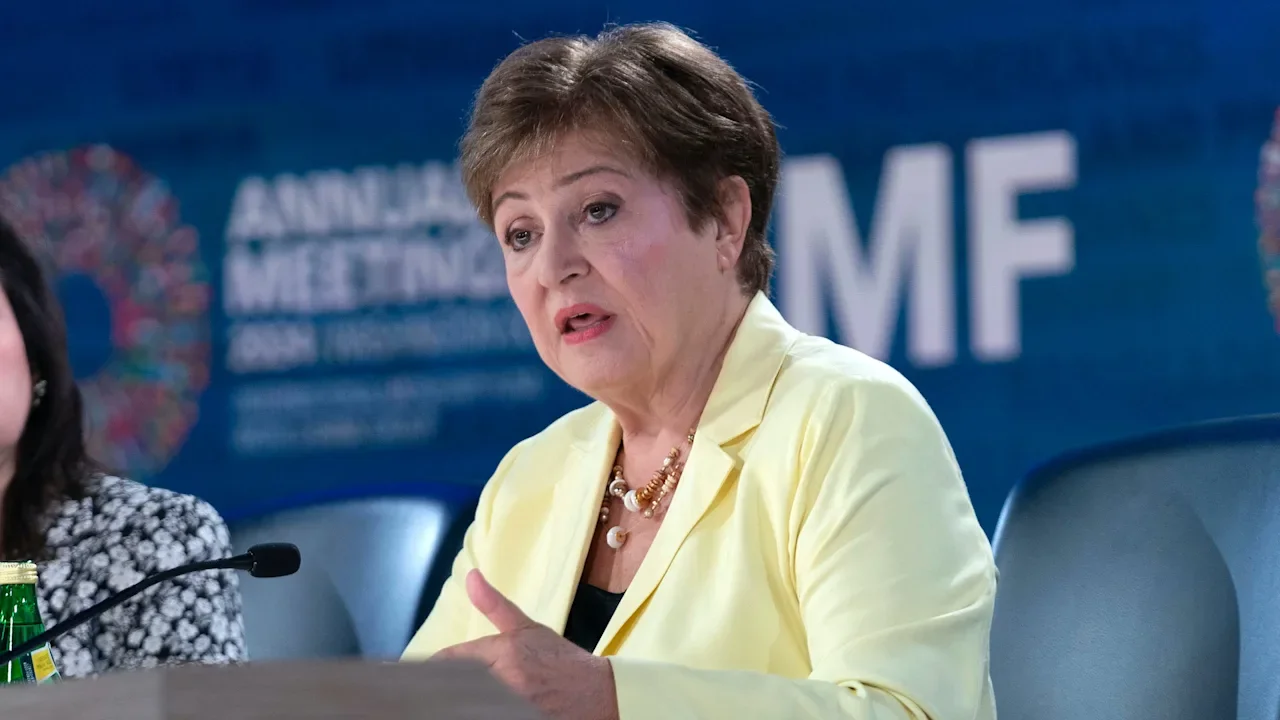
The global economy is holding up better than expected despite major shocks such as President Donald The President’s tariffs, but the head of the International Monetary Fund says that resilience may not last. “Buckle up,” Managing Director Kristalina Georgieva said in a speech at a think tank Wednesday. “Uncertainty is the new normal and it is here to stay.” Her comments at the Milken Institute come on a day when gold prices hit $4,000 an ounce for the first time as investors seek safe haven from a weaker dollar and geopolitical uncertainty and before the IMF and World Bank hold their annual meetings next week in Washington. The President’s trade penalties are expected to be in sharp focus when global finance leaders and central bankers gather. The worldwide economy is forecast to grow by 3% this year, and Georgieva is citing a number of factors for why it may not slip below that: Countries have put in place decisive economic policies, the private sector has adapted, and the tariffs have proved less severe than originally feared. “But before anyone heaves a big sigh of relief, please hear this: Global resilience has not yet been fully tested. And there are worrying signs the test may come. Just look at the surging global demand for gold,” she said. On The President’s tariffs, she says “the full effect is still to unfold. In the U.S., margin compression could give way to more price pass-through, raising inflation with implications for monetary policy and growth.” The Republican administration imposed import taxes on nearly all U.S. trading partners in April, including Canada, Mexico, Brazil, China and even the tiny African nation of Lesotho. “We’re the king of being screwed by tariffs,” The President said Tuesday in the Oval Office during a meeting with Canadian Prime Minister Mark Carney. While the U.S. has announced some trade frameworks with nations such as the United Kingdom and Vietnam, the tariffs have created uncertainty worldwide. “Elsewhere, a flood of goods previously destined for the U.S. market could trigger a second round of tariff hikes,” Georgieva said. The Supreme Court next month will hear arguments about whether The President has the authority to impose some of his tariffs under the International Emergency Economic Powers Act. In her wide-ranging remarks, Georgieva pointed to youth discontent around the world as many young people foresee a future where they earn less than their parents. “The young are taking their disappointment to the streets from Lima to Rabat, from Paris to Nairobi, from Kathmandu to Jakarta, all are demanding better opportunities,” she said. “And here in the U.S., the chances of growing up to earn more than your parents keeps falling and here too, discontent has been evident — and it has helped precipitate the policy revolution that is now unfolding, reshaping trade, immigration and many international frameworks.” She also called for greater internal trade in Asia, more business-friendly changes in Africa and more competitiveness in Europe. For the United States, Georgieva urged the government to address the federal debt and to encourage household saving. The national debt is the total amount of money that the federal government owes to its creditors. The federal debt has increased from $380 billion in 1925 to $37.64 trillion in 2025, according to Treasury Department data. The Congressional Budget Office reported in July that The President’s new tax and spending law will add $3.4 trillion to that total through 2034. The IMF is a 191-country lending organization that seeks to promote global growth and financial stability and to reduce poverty. —Fatima Hussein, Associated Press View the full article
-
Google’s AI-powered Try On feature, which lets users see how clothing items look on them, is adding shoes and expanding to Australia, Canada, and Japan. How it works. The AI uses advanced shape and depth perception to show how items – now including sneakers and heels – fit your body. Users upload a full-length photo, tap “try it on,” and see themselves in the item in seconds. Why we care. For advertisers, this opens up a new frontier in online shopping. Brands can showcase products in a way that feels personalized and interactive, increasing engagement and the likelihood of conversions. Try On data also provides insights into which styles are popular and how customers are experimenting with different looks – giving advertisers real-time feedback on trends and demand. Bottom line. Google is turning online shopping into a more interactive experience, letting users virtually try billions of products before making a purchase – now in more countries and more categories. View the full article
-
We may earn a commission from links on this page. Deal pricing and availability subject to change after time of publication. Amazon Big Deal Days end tonight, Oct. 8, and until then, Lifehacker is sharing the best sales based on product reviews, comparisons, and price-tracking tools before it's over. Follow our live blog to stay up to date on the best sales we find. Browse our editors’ picks for a curated list of our favorite sales on laptops, fitness tech, appliances, and more. Subscribe to our shopping newsletter, Add to Cart, for the best sales sent to your inbox. New to Prime Day? We have a primer on everything you need to know. Sales are accurate at the time of publication, but prices and inventory are always subject to change. You never need to pay full retail price for a TV. There are just too many sale events during any given year, and Amazon's Big Deal Days—the fall version of Prime Day—is one of the biggest. Below, I've collected the best deals on TVs from Samsung, LG, TCL, and more that you can still get before the sale ends tonight. The best Prime Day deals on high-end TVsIf you're looking to get the best picture quality for your money, this 65" LG OLED C5 model is an excellent choice, and is now down to $1,497. The OLED panel offers top-notch black levels and super sharp contrast. It also supports Dolby Vision HDR, and includes 4K upscaling to reduce some of the choppiness when playing older content. For a little bit less money, you can get a lot more TV. Samsung's 75" Neo QLED TV uses quantum dot tech and mini LEDs to get sharp contrast and bright images (though not quite as perfect black levels as OLEDs). At $1,396, it's a bit cheaper than LG's C5, but if you want a bigger TV and are willing to sacrifice a tiny bit on picture quality, this is a great pick. The best Prime Day deals on TVs under $1,000If you'd like to stay out of the four-figures range, the Sony 65" X90L Bravia TV is a great option. It uses full array LED backlighting to get better contrast and comes with Google TV software built in. It supports Dolby Vision HDR and clocks in at $898, which is a solid price for that list of capabilities. For those who would rather pay rent this month, TCL makes some of the best, budget-friendly TVs, like this TCL 55" QD-Mini LED TV for $570. It uses mini LEDs for better local dimming and has a 144Hz refresh rate—though gamers can swap to lower resolutions with higher frame rates if they want even smoother gameplay. In the under-$500 category, the Hisense 55" Cinema Series is down to $260. It uses QLED lighting for better color accuracy, and supports Dolby Vision HDR. It also comes with Amazon's Fire TV software built in, so you don't need to pick up a streaming stick (unless you want a different platform). Speaking of other platforms, Roku's own 50" 4K TV is down to just $258. The main attractions here are Roku's stellar smart TV platform, with a robust app library and well-designed voice remote; decent picture quality for the money; and, of course, the price. The best Prime Day deals on TVs for gamingWhile many of our top picks will also be solid TVs for gaming, there are a few that stand out as worth a little extra expense. Sony's Bravia XR A95L ($1,998), for example, supports 4K at up to 120fps, for extra smooth fast-paced gaming. Its QD-OLED panel gets perfect black levels as well, so your games should come out crystal clear. LG's 65" OLED G5 is one of the pricier options at $2,477, but it pulls its weight with a beautiful OLED panel, 4K/120fps, and support for both Nvidia G-Sync and AMD FreeSync for smooth, tear-free gaming. Looking for something else? Retailers like Walmart and Best Buy have Prime Day competition sales that are especially useful if you don’t have Amazon Prime. Walmart’s Prime Day competition sale runs from Oct. 6 at 7 p.m. ET through Oct. 12 and includes deals up to 50% off. It’s an especially good option if you have Walmart+. Best Buy’s Prime Day competition sale runs from Sept. 27 through Oct. 12, and has some of the best tech sales online. It’s an especially good option if you’re a My Best Buy “Plus” or “Total” member. Target’s Prime Day competition sale runs from Oct. 5 through Oct. 11, and it has deals going up to 50% off. You can become a Circle member for free. Our Best Editor-Vetted Prime Day Deals Right Now Apple AirPods Pro 2 Noise Cancelling Wireless Earbuds — $169.99 (List Price $249.00) Meta Quest 3S 128GB All-In-One VR Headset — $249.00 (List Price $299.99) Apple iPad 11" 128GB A16 WiFi Tablet (Blue, 2025) — $279.00 (List Price $349.00) DJI Mini 4K 3-Axis Gimbal Camera Drone (Under 249 Grams) — $239.00 (List Price $299.00) Samsung Galaxy Tab A9+ 10.9" 64GB Wi-Fi Tablet (Graphite) — $148.94 (List Price $219.99) Blink Mini 2 1080p Indoor Security Camera (2-Pack, White) — $34.99 (List Price $69.99) Ring Battery Doorbell Plus — $79.99 (List Price $149.99) Shark AV2501S AI Ultra Robot Vacuum with HEPA Self-Empty Base — $229.99 (List Price $549.99) Amazon Fire HD 10 (2023) — $69.99 (List Price $139.99) Wyze Cam v4 2K Wired Wi-Fi Smart Security Camera (White) — $25.95 (List Price $35.98) Deals are selected by our commerce team View the full article
-
Up until a week ago, I was really quite satisfied by my iPhone 17 Pro. Not the Liquid Glass, but its soft orange aluminum frame felt just new enough to give me a spark. Then I opened the Google Pixel 10 Pro Fold. Yes, its name is too long. Yes, it costs $700 more than my iPhone. Yes, it’s still heavier than I want it to be. And yet, I hate to admit it . . . the Fold justifies every analyst who has cried that Apple’s hesitance to adopt flexible screen technologies is starting to make it look dated. An estimated 17 million folding smartphones sold last year, representing a scant 1.5% of the smartphone market, but about every analyst expects that figure to balloon in the next few years. I believe that trajectory could prove out, but I still see the market going either way—it will come down to if the technology can keep iterating toward a sweet spot that turns the tech into delectable design. Folding phones began as a gimmick deployed by a smartphone industry that’s satisfied their customers too well. There’s simply not much reason to upgrade your phone, ever, unless you’ve broken it. But that doesn’t mean they’ll always be silly. After all, we’ve rolled up scrolls and folded maps and letters for centuries. It’s just a natural way to convert a large 2D object into a more portable one. But they’ve definitely felt a bit futile, given that their thickness and weight offset any value of space savings. (Do you really want to unfold a brick into a thinner brick?) In the meantime, here’s a no-nonsense take on what it’s really like to use the current state of the art in folding phones—with thoughts from Google’s own development team on how it’s approaching the challenge, and possibilities, ahead. The challenge of building a folding phone without making a two-phone sandwich Herein lies the challenge the industry has been learning the hard way: Screens aren’t paper. They aren’t built to fold. And it’s required incredible ingenuity to change that. I’ve been trying foldable phones since Motorola rerelased the Razr in 2019, kicking off the era of folding smartphones with a rebooted retro play. At the time, Motorola brought me into its labs to demonstrate how it had achieved the impossible. It wasn’t just another slab of electronics, but a complex mechanical device that shifted plates around to allow a ribbon of OLED screen to fold open and closed without breaking. Motorola, alongside Samsung and Google in particular, have worked hard to expand this market while shrinking their own bulk. The companies have simplified their screens from ornate mechanical contraptions to a thin sheet of flexible glass that belies the complexity beneath (impact coatings, OLED, and hinge mechanics that prevents the screen from breaking when opened and shut). They’ve all made incredible progress. The Pixel 10 Fold is 2mm thicker than an iPhone 17 Pro when folded. But actually 0.2mm thinner than an iPhone Air unfolded. What you may notice more is the weight, which is about 2 oz. heavier than a pro smartphone. You don’t really see the fold, and you don’t care when you do The Pixel 10 Pro Fold unfolds to reveal a roughly 6″x6″ screen that opens like a book. So the big question is: When you open the Fold, do you see the fold in the screen? Sometimes yes, sometimes not at all. Head on at night in a dark room, it’s completely imperceptible. Bright white webpages are surprisingly adept at burning through any glare that might reveal geometric imperfection. The seam is most prominent if you see someone else using the Fold from the side. Most of the time, it’s subtle enough to forget about. Obviously it’s a goal for Google to get rid of the screen fold. “Stuff that we don’t want the user to think about, to ever notice to—it needs to disappear,” says Claude Zellweger, senior director of design at Google who oversees phone hardware. But he also admits it is a somewhat “impossible task” for the engineering team. To get closer to the impossible, Google has rebuilt its hinge to be smaller, eliminating the micro gears to have it run on tiny sliding cams (classic mechanical device that turns rotation into straight movement—kind of like a jack in the box). It helps hide the crease, but it also improves the all around proportions of the phone. It’s all in service of Google’s somewhat ironic, ultimate goal of the product. “We want it to feel like your regular phone,” says Zellweger. The outside screen doesn’t make sense to me—but it does to Google For those moments you don’t want to unfold the Fold, there’s also a more typical touchscreen on the outside. It’s mean to feel like a “regular” touchscreen smartphone, but it still doesn’t really work that way. It’s a bit too thick, a bit too heavy. Google insists it’s needed, especially to account for more typical smartphone behavior. In its own research, Google found most people are only spending a bit of time on their phones for most interactions, meaning unfolding it every time seemed like too much effort. “A lot of interactions on your phone are short and fleeting. The text message that you’ve got to send to your partner quickly, the Spotify song that you need to change, the alarm that you need to set, [these tasks are done] within a minute or two,” says George Hwang, product manager at Google leading the Fold’s engineering. “And if you look at that data, those are probably like, frequency wise, about 60 to 70% of everything you do. So it’s really, really high.” I get his point. Yet the Fold isn’t quite normal, so using it as a typical phone isn’t quite normal. The big outer screen actually ruins the occasion of using the product. I like that unfolding the phone feels intentional. It’s a certain barrier to checking your screen and getting sucked into apps. That could be a feature not a bug! The keyboard needs to be adjustable because foldables should be ergonomic Tiny qualm, but here it is: The Pixel Fold features a split virtual keyboard for typing. It’s quite comfortable and you can type pretty darn fast on the thing. But buttons like enter are still placed way too far into the corners . . . making them a real jam of the thumb to hit. Look, Google and everyone else—my thumbs are like Jordan’s knees. They’ve played a lot of games at this point in their career. For such a large device, users should be able to tweak the ergonomics of the keyboard to their exact preference for optimum comfort, because the screen has room. Seriously, why aren’t keyboards perfectly configured to our hand sizes in an era when my face and fingerprint unlock the phone? At the very least, give me a few more options of the default. Google is getting closer to a proper fidget Since Motorola debuted the first modern folding phone, these designs have gotten thinner, lighter, and open and close without feeling like you’re gonna break ‘em any moment. But . . . it still feels strange to open a folding phone for the first time. It has a sort of even resistance curve that feels less like snapping open a flip phone or even opening a hard cover book than it does bending a thick coat hanger into a new shape. You actually have to open and close it a bit for the mechanisms to feel properly loosened. It’s weird! Of course this is a small qualm in the face of some really unbelievable engineering work, but the experience of opening and closing most folding phones just doesn’t feel good enough for these products to appear solidified. It doesn’t offer a sense of innate satisfaction or completion to the action. The hardware works, but for some reason it also feels a little dead. The Fold is getting better in this regard. It offers a light, almost “tap” sound when you open it, and a more satisfying compact-case clap when it closes. It feels good. I still want it to feel fidgety-amazing. Big apps hit different in a thin frame I didn’t unlock some amazing multitasking experience with the Pixel—though you can technically load two apps and, in some cases, drag and drop files between them. Gmail feels approachable for sure, but it falls short of its potential. It formats information into either a big email or a few thin columns . . . essentially giving you the experience of holding a few phones side-by-side. It’s a sensible solution, but one that falls short of rethinking information architecture and display entirely to celebrate the possibilities of a larger screen. But media-forward apps are a real a delight. Instagram goes from feeling like you’re perusing large postage stamps on your regular phone, to looking at CD jewel cases on a Pixel Fold. The same is true for TikToks and YouTube clips. Yes, this sort of scale can exist on a laptop, or a tablet, of course. But the thin bezel of Google’s latest phone makes it feels almost like you’re holding this media in your hands. It’s a unique sensation—Google Earth suddenly feels magical again. The act of holding the phone with two hands rather than one creates a preciousness to the experience—like reading a book, or using your full attention to accept a gift. It demands intention by default. I’m reminded how Zellweger was inspired by the sensation of a Moleskin when Google released its first Fold in 2023. When held open, the Fold really does feel like a precious, digital take on a notebook. This is so close to feeling great . . . but what else could it be? There is an ideal folding phone in all of our hearts. The Fold still isn’t quite there. It’s an engineering marvel with some very thoughtful touches of design, do not get me wrong. It’s neat as hell. It still feels a generation or two (or three?) removed from whatever sweet spot of iteration takes an idea from novel to captivating, or even essential. Even if folding phones are the next big paradigm in smartphones, I’m not sure it means that those smartphones need to be as large as the Pixel Fold…and this 6-inch-ish crossover vehicle form the industry has landed on. But technically speaking, can we make these phones that much smaller or thinner? Because looking at smartphones over the past decade, in many cases, we’ve actually seen them grow thicker. The iPhone Air, for all of its ingenuity, is still thicker than an iPhone 4. The industry seems cautious to make anyone give up any bit of the growing Swiss army knife of features in a modern phone. “There is still headroom, and we’re excited about future products and things like that. On general, we’re going [pursue thinness] aggressively, but within measure, so that we don’t compromise durability and battery life,” says Zellweger. Hwang adds that it’s easy to forget all the features we take for granted in modern smartphones, like haptics, speakers, and of course, cameras. All-in-all, these features add up to keep our phones thick. “There are subtle trade-offs when you do when you keep on pushing in [thinness] that I think most users wouldn’t know until they actually hold the device and use it side-by-side,” says Hwang, referring to these compromises as “paper cuts.” I hope to see the entire smartphone industry push the boundaries in other ways. I want small phones like the iPhone Mini back. I want small, folding phones like the Razr back (and indeed, Motorola has been snagging some market share by offering a lower cost, smaller folding smartphone). I want curvy wearables portended by the Nike+ Fuelband back. I want to see what we can do with flexible screens outside of this smartphone-to-small-tablet size everyone seems to be investing their energies in. “I agree with you,” says Zellweger when I present him with most of this rant. “Fundamentally, I think the extremes [in screen size] are interesting. And I think in a world where we are moving towards more sort of agentic based interactions, our need for for large displays may change.” “Realistically, we think it’s going to change in the next five years,” adds Hwang. “And so we’re really in an interesting time to think through this stuff and be involved in it.“ Indeed. Right now, there is a unique opportunity to not just make a bunch of mostly same phones, but to push the extremes of size, shape, and ergonomics. In a sea of the regular, it’s so easy to stand out. View the full article

-
Carbon offsets have existed for decades, and the size of the voluntary carbon market has ballooned to about $2 billion. Many countries and countless companies, including giants like Amazon and Fedex, use carbon offsets to reduce their emissions as they work toward reaching net zero. And yet, these offsets haven’t significantly curbed global greenhouse gas emissions. In fact, global emissions are still increasing. As a climate solution, carbon offsets have failed—and according to a new scientific review looking at 25 years of carbon offset research, they’ve failed because they’re riddled with intractable, deep-seated problems that incremental changes won’t be able to solve. Carbon offsets have long been criticized for their issues, including concerns over greenwashing or double-counting. Multiple studies have found that individual offset projects overestimate their climate benefits. Offsets also don’t always last; trees used as carbon offsets have burned in wildfires, releasing all the carbon they’ve long stored. Proponents of carbon offsets say such criticisms focus on “a few bad apples.” “But the problem is, it isn’t really a few bad apples. It’s pretty much all the apples,” says Joseph Romm, a senior research fellow at the Penn Center for Science, Sustainability and the Media, and the lead author on the review of offset research. 25 years of evidence—and issues Romm and his fellow researchers looked at carbon offset studies spanning more than two decades, and used more than 200 references, including documents from the Intergovernmental Panel on Climate Change. Carbon offsets are essentially a way for rich polluters—either countries or companies—to finance projects that reduce emissions somewhere else. Then, they claim that project’s emissions reduction for themselves, while continuing to pollute the atmosphere. Offsets need to be verified, and also “additional”—a term meaning that the project wouldn’t have happened anyway (it only exists, and benefits the climate, because of the offset program). But the idea of additionality is flawed, Romm says. Take renewable energy projects, which have long been the base of carbon offset projects, and are still the most common offsets today. “We pay someone to do a renewable energy project, and then we say that that has reduced emissions. [But] the thing is, renewables are now the cheapest [energy to build],” Romm says. As the cheapest option, renewable projects likely would be built anyway, so the offset project didn’t really change anything. Since the carbon market is voluntary, there’s no regulations or oversight. That creates a “race to the bottom,” Romm says, where buyers pay low prices for offset projects. “It’s left the world with the impression that there’s a vast sea of cheap offsets in poor countries,” he says. “It’s just not the reality. It’s why there’s been a reckoning in terms of companies realizing it’s going to take more effort to reduce their emissions.” Other issues include impermanence (like offset projects burning in wildfires); leakage (when the pollution or logging is simply moved elsewhere, outside of the offset’s boundary); and double counting (when more than one party claims the same carbon credit). Carbon offsets are a distraction Essentially, the voluntary carbon market is full of “junk offsets” that don’t really have a climate benefit. The appeal of offsets is obvious: Without having to change their own behavior or pay a lot of money, countries and companies can claim another entity’s emissions reductions. But the reality isn’t that easy, and offsets are a distraction from the fact that we need to stop burning so many fossil fuels in the first place. “At the end of the day, this comes down to: Everyone needs to get their own emissions as low as possible,’” Romm says. “There’s no offloading this problem on someone else.” Actual carbon capture projects, which sequester carbon from the atmosphere, could work as offsets, but those are currently expensive and operate at a small scale. It takes a lot less money and energy to not burn fossil fuels in the first place, than to burn them and then recapture the emissions. Such criticism of offsets isn’t new. Romm’s review cites 25 years worth of them. This paper also builds on Romm’s publication from 2023, titled “Carbon offsets are unscalable, unjust, and unfixable—and a threat to the Paris Agreement.” Romm hopes that by putting all this research in one place, and by having a comprehensive look back at the way carbon offsets have failed over the past two decades, it helps people understand the reality. Leaders of companies or countries always think they can be the one to solve the intractable issues within carbon offsets, Romm says. They say their technology is better, or that they really care about making it work. The review paper counters that notion. “We wanted to have somewhere someone could go and simply see the compendium of studies and see that people have been warning about this for over two decades,” he says. “Everything they warned about is true. No one’s ever solved these problems.” View the full article

-
If you’re looking to improve your business storytelling skills, consider following influential figures in the field. Each storyteller offers unique perspectives and techniques that can raise your approach. For instance, Tony Robbins and Barbara Corcoran use personal narratives to engage audiences, whereas Bryan Stevenson blends advocacy with experience. Exploring these storytellers can provide you with practical insights. Next, you’ll discover how their methods can transform your own storytelling strategies. Key Takeaways Tony Robbins captivates audiences with personal stories and transformative journeys, emphasizing success strategies through vivid anecdotes in his bestselling books and live events. Barbara Corcoran inspires entrepreneurs with her rags-to-riches story, showcasing resilience and strategic thinking in overcoming challenges in the real estate industry. Bryan Stevenson combines personal narratives with legal advocacy, addressing racial injustices and sparking national conversations about race and mercy through his impactful storytelling. Angela Ahrendts focuses on authentic storytelling to build trust and motivation within teams, illustrating company values through personal experiences. Kindra Hall offers practical storytelling strategies for businesses, teaching how to craft compelling narratives that align with business objectives for greater success. Tony Robbins Tony Robbins stands out as one of the most influential business storytellers today, thanks to his unique ability to connect personal experiences with universal themes of struggle and transformation. As one of the greatest storytellers of all time, he employs a compelling storytelling technique that captivates audiences. His narratives often highlight personal struggles and the transformative odysseys individuals can undertake, making them relatable and inspiring. Through bestselling books like “Awaken the Giant Within”, Robbins illustrates key strategies for success using vivid anecdotes. His live events, such as “Unleash the Strength Within”, emphasize storytelling to engage and motivate attendees. Barbara Corcoran Barbara Corcoran’s rags-to-riches story showcases the potential for success through hard work and determination. Her path from a waitress to a real estate mogul serves as an inspiring example for aspiring entrepreneurs. Rags-to-Riches Journey Achieving success from humble beginnings can seem intimidating, yet Barbara Corcoran‘s path illustrates that it’s possible with resilience and strategic thinking. Growing up in a working-class family as the second of ten children, she faced significant challenges that fueled her ambition. After starting as a waitress, she ventured into New York City’s real estate market, turning a $1,000 loan into a $66 million business. Shark Tank is one of the great storytellers of all time, using her compelling storytelling on “Shark Tank” to inspire budding entrepreneurs. Her expedition emphasizes that failures provide valuable lessons. Inspiring Entrepreneurial Mindset When you look at successful entrepreneurs, it’s easy to see that an inspiring mindset is often a key factor in their achievements. Barbara Corcoran, one of the best storytellers of all time, transformed a $1,000 loan into a $66 million real estate empire. Her story emphasizes the importance of resilience and embracing failure as part of the entrepreneurial path. Corcoran encourages you to take risks and find your unique voice, which helps you stand out in competitive markets. By sharing her experiences, she highlights the necessity of building strong relationships and networks. As the best storyteller of all time, Corcoran uses storytelling to inspire you, showing that belief in your potential can lead to significant success. Authentic Storytelling Techniques Authentic storytelling techniques can greatly improve your ability to connect with an audience, especially in a business context. Barbara Corcoran emphasizes the impact of sharing your personal expedition, illustrating how vulnerability nurtures a deeper connection. Incorporate relatable anecdotes in your pitches; this builds trust and makes your message memorable. Highlighting your challenges and triumphs shows resilience, a key aspect of success. Use humor and charisma to engage listeners, making complex ideas more accessible. Finally, focus on personal branding through storytelling. Leverage your unique experiences to stand out in competitive markets. Bryan Stevenson Bryan Stevenson stands out as an influential figure in the field of social justice and storytelling. As the founder of the Equal Justice Initiative, he confronts racial and economic injustices within the American criminal justice system. His TED Talk, “We Need to Talk About an Injustice,” has captivated over 2 million viewers, showcasing his ability to simplify complex social issues through impactful narratives. In his bestselling book, “Just Mercy”, Stevenson blends personal stories with legal advocacy, revealing the realities faced by marginalized communities. He stresses the importance of proximity, encouraging you to engage with those affected by systemic inequalities. By doing so, Stevenson ignites national conversations about race, justice, and mercy, positioning himself as a key voice in social reform. Amy Cuddy Amy Cuddy has emerged as a prominent figure in the field of social psychology, particularly through her impactful research on body language. She’s best known for her TED talk, which has over 20 million views, where she discusses “power posing.” This concept suggests that adopting confident body language can boost your feelings of confidence and alter others’ perceptions of you. In her bestselling book, “Presence: Bringing Your Boldest Self to Your Biggest Challenges,” Cuddy explores how being present can improve both personal and professional success. By combining data with relatable experiences, she makes complex psychological ideas accessible. Her work challenges traditional views on confidence, providing fresh perspectives that resonate, making her a vital storyteller in the business sector. Richard Branson Richard Branson stands out as a master storyteller and entrepreneur, leveraging his adventures and experiences to connect with audiences. He illustrates the risks and rewards of entrepreneurship by sharing personal anecdotes, inspiring you to embrace challenges. Branson’s narratives often focus on innovation and disruption, aligning with Virgin’s mission to challenge the status quo in industries like music, aviation, and telecommunications. His storytelling builds a strong emotional connection with customers, making Virgin a household name recognized for quality and service. Sheryl Sandberg Sheryl Sandberg exemplifies the strength of storytelling in the business world, particularly in advocating for gender equality and women’s leadership. Her influential book “Lean In” combines personal narratives with insights, creating a viral movement that empowers women in the workplace. Furthermore, her TED Talk emphasizes the significance of women’s voices in leadership, inspiring countless individuals to pursue their professional goals. As the former COO of Facebook, Sandberg used storytelling to promote transparency and engagement, linking personal experiences to corporate missions. Her approach challenges societal norms around gender roles, making her a key figure in workplace diversity discussions. Through her narratives, she underscores the importance of resilience and support systems, encouraging others to share their struggles and successes for collective change. Angela Ahrendts Angela Ahrendts highlights the strength of authentic storytelling in business, showing how it can improve employee engagement and build trust with customers. By focusing on emotional connections rather than merely transactions, she demonstrates effective strategies for creating loyalty. Her approach to storytelling not only transforms retail experiences but likewise inspires leaders to connect more meaningfully with their teams. Authentic Storytelling Impact Authentic storytelling can transform the way brands connect with their audiences, and Angela Ahrendts highlights its crucial role in building trust. By sharing genuine narratives, you can humanize your brand, making it relatable to your customers’ values and experiences. This approach nurtures deeper emotional connections, which can greatly improve customer service and satisfaction. Ahrendts encourages leaders to use storytelling as a motivational tool, demonstrating how personal and company stories can inspire collective action and commitment. When you prioritize authentic storytelling, you not only strengthen the bond with your audience but likewise cultivate a positive workplace culture. In the end, embracing this technique can lead to improved engagement and loyalty from both customers and employees. Employee Engagement Strategies In the domain of boosting employee engagement, incorporating storytelling into your strategy can make a significant difference. Angela Ahrendts emphasizes that authentic storytelling cultivates trust, leading to higher morale and productivity. By sharing personal experiences, you can motivate your team and create a sense of belonging. Here are some strategies to integrate storytelling into your workplace: Use stories to illustrate company values and mission. Encourage employees to share their own narratives during team meetings. Highlight success stories that demonstrate excellence and collaboration. Create a platform for storytelling to improve communication and connection. Kindra Hall Kindra Hall stands out as a leading authority on business storytelling, offering valuable insights that can transform how you communicate within your organization. As the author of the bestselling book “Stories That Stick”, she provides practical strategies for using storytelling to drive success and engagement. Hall’s experience as a national champion storyteller enables her to inspire audiences to leverage their own narratives as influential tools for connection and impact. She emphasizes that effective storytelling boosts leadership skills and closes sales, essential for maneuvering today’s competitive environment. Through her impactful keynote speeches, she teaches individuals and organizations how to craft compelling narratives that resonate with target audiences during alignment with business objectives, finally helping brands differentiate themselves. Jay Acunzo As far as innovative content strategies are concerned, Jay Acunzo stands out as a leader in storytelling that connects with audiences. He emphasizes engaging storytelling techniques that go beyond traditional marketing, urging brands to share authentic narratives. Innovative Content Strategies How can brands effectively capture their audience’s attention in today’s competitive market? Jay Acunzo emphasizes that storytelling is key. Instead of merely promoting products, you should focus on building meaningful connections with your audience. To implement innovative content strategies, consider these approaches: Prioritize authenticity and creativity to stand out. Use narrative techniques to simplify complex ideas, making them relatable. Experiment with different formats and platforms to see what resonates. Shift from a transactional mindset to nurturing brand loyalty and community. Engaging Storytelling Techniques Engaging storytelling techniques can greatly improve your brand’s connection with its audience, making your messages more impactful. To start, focus on the “why” behind your stories; this helps inspire and motivate your audience. Identify your brand’s core values and beliefs, weaving them into every narrative you share. Incorporate relatable characters and compelling struggles, ensuring your stories draw people in and remain memorable. Don’t shy away from experimentation; test different narratives and formats to see what resonates most with your audience. Audience Connection Insights Connection is at the heart of effective storytelling, and Jay Acunzo emphasizes this principle in his approach to marketing. He believes that to truly engage your audience, you need to tell relatable, human-centered stories that reflect their experiences. This shift from a transactional focus to one rooted in empathy nurtures loyalty and engagement. To strengthen your audience connection, consider these insights: Share stories about people, not just products. Highlight real challenges and triumphs your audience can relate to. Embrace authenticity in your narratives to build trust. Focus on how your story makes your audience feel, not just what you say. Michael Margolis Michael Margolis stands out as a leading authority on the art of storytelling in the business world. As a best-selling author and disruption expert, he teaches storytelling as an essential tool for steering change. With experience delivering two TEDx talks, Margolis has collaborated with major companies like Google and Facebook to improve their storytelling skills. He focuses on empowering professionals to use narratives effectively in hypergrowth contexts, making complex ideas relatable. Frequently Asked Questions Who Is the Most Popular Storyteller? Determining the most popular storyteller can vary based on context, but many people cite Simon Sinek as a leading figure. His TED Talk emphasizes starting with “Why,” influencing countless leaders. Oprah Winfrey likewise stands out, using her personal narratives to connect with audiences globally. Furthermore, Brené Brown’s focus on vulnerability resonates deeply with many. Each of these storytellers has made a significant impact, so consider their unique approaches when evaluating storytelling effectiveness. Who Is the World’s Greatest Storyteller? Determining the world’s greatest storyteller is subjective, as it often depends on personal preferences and cultural influences. Notable figures include J.K. Rowling, whose *Harry Potter* series captivated millions, and Steve Jobs, who effectively used storytelling during product launches to simplify complex ideas. Maya Angelou’s poetic narratives resonate deeply with social themes. In the end, you should explore various storytellers, analyze their techniques, and see which style and message resonate most with you. What Are 5 Qualities of a Good Storyteller? A good storyteller possesses five key qualities. First, they show empathy, connecting emotionally with their audience through relatable experiences. Second, they simplify complex ideas into clear, accessible messages. Third, they create compelling characters that resonate with listeners, evoking emotional connections. Fourth, authenticity is vital; honest and vulnerable storytelling improves relatability. Finally, they follow a structured narrative arc, which keeps the audience engaged and delivers a satisfying story. These qualities are fundamental for effective storytelling. What Good Storytellers Draw Us Immediately Into? Good storytellers draw you in by creating relatable characters that reflect your experiences. They establish emotional connections through vulnerability, allowing you to empathize with the narrative. Their stories often include clear missions, conflicts, and resolutions that keep you engaged. They simplify complex ideas, ensuring you grasp the core themes easily. Furthermore, they use vivid imagery and descriptive language to paint mental pictures, making the story memorable and impactful, enhancing your overall experience. Conclusion To improve your storytelling skills in business, follow these influential figures. Each offers unique insights that can help you connect with your audience and communicate your message effectively. By learning from their experiences and techniques, you can develop a compelling narrative style that resonates with others. Embrace the strength of storytelling to inspire, motivate, and engage your audience. Start integrating these practices into your communication strategy to see significant improvements in your professional interactions. Image Via Envato This article, "Best Business Storytellers You Need to Follow" was first published on Small Business Trends View the full article
-
If you’re looking to improve your business storytelling skills, consider following influential figures in the field. Each storyteller offers unique perspectives and techniques that can raise your approach. For instance, Tony Robbins and Barbara Corcoran use personal narratives to engage audiences, whereas Bryan Stevenson blends advocacy with experience. Exploring these storytellers can provide you with practical insights. Next, you’ll discover how their methods can transform your own storytelling strategies. Key Takeaways Tony Robbins captivates audiences with personal stories and transformative journeys, emphasizing success strategies through vivid anecdotes in his bestselling books and live events. Barbara Corcoran inspires entrepreneurs with her rags-to-riches story, showcasing resilience and strategic thinking in overcoming challenges in the real estate industry. Bryan Stevenson combines personal narratives with legal advocacy, addressing racial injustices and sparking national conversations about race and mercy through his impactful storytelling. Angela Ahrendts focuses on authentic storytelling to build trust and motivation within teams, illustrating company values through personal experiences. Kindra Hall offers practical storytelling strategies for businesses, teaching how to craft compelling narratives that align with business objectives for greater success. Tony Robbins Tony Robbins stands out as one of the most influential business storytellers today, thanks to his unique ability to connect personal experiences with universal themes of struggle and transformation. As one of the greatest storytellers of all time, he employs a compelling storytelling technique that captivates audiences. His narratives often highlight personal struggles and the transformative odysseys individuals can undertake, making them relatable and inspiring. Through bestselling books like “Awaken the Giant Within”, Robbins illustrates key strategies for success using vivid anecdotes. His live events, such as “Unleash the Strength Within”, emphasize storytelling to engage and motivate attendees. Barbara Corcoran Barbara Corcoran’s rags-to-riches story showcases the potential for success through hard work and determination. Her path from a waitress to a real estate mogul serves as an inspiring example for aspiring entrepreneurs. Rags-to-Riches Journey Achieving success from humble beginnings can seem intimidating, yet Barbara Corcoran‘s path illustrates that it’s possible with resilience and strategic thinking. Growing up in a working-class family as the second of ten children, she faced significant challenges that fueled her ambition. After starting as a waitress, she ventured into New York City’s real estate market, turning a $1,000 loan into a $66 million business. Shark Tank is one of the great storytellers of all time, using her compelling storytelling on “Shark Tank” to inspire budding entrepreneurs. Her expedition emphasizes that failures provide valuable lessons. Inspiring Entrepreneurial Mindset When you look at successful entrepreneurs, it’s easy to see that an inspiring mindset is often a key factor in their achievements. Barbara Corcoran, one of the best storytellers of all time, transformed a $1,000 loan into a $66 million real estate empire. Her story emphasizes the importance of resilience and embracing failure as part of the entrepreneurial path. Corcoran encourages you to take risks and find your unique voice, which helps you stand out in competitive markets. By sharing her experiences, she highlights the necessity of building strong relationships and networks. As the best storyteller of all time, Corcoran uses storytelling to inspire you, showing that belief in your potential can lead to significant success. Authentic Storytelling Techniques Authentic storytelling techniques can greatly improve your ability to connect with an audience, especially in a business context. Barbara Corcoran emphasizes the impact of sharing your personal expedition, illustrating how vulnerability nurtures a deeper connection. Incorporate relatable anecdotes in your pitches; this builds trust and makes your message memorable. Highlighting your challenges and triumphs shows resilience, a key aspect of success. Use humor and charisma to engage listeners, making complex ideas more accessible. Finally, focus on personal branding through storytelling. Leverage your unique experiences to stand out in competitive markets. Bryan Stevenson Bryan Stevenson stands out as an influential figure in the field of social justice and storytelling. As the founder of the Equal Justice Initiative, he confronts racial and economic injustices within the American criminal justice system. His TED Talk, “We Need to Talk About an Injustice,” has captivated over 2 million viewers, showcasing his ability to simplify complex social issues through impactful narratives. In his bestselling book, “Just Mercy”, Stevenson blends personal stories with legal advocacy, revealing the realities faced by marginalized communities. He stresses the importance of proximity, encouraging you to engage with those affected by systemic inequalities. By doing so, Stevenson ignites national conversations about race, justice, and mercy, positioning himself as a key voice in social reform. Amy Cuddy Amy Cuddy has emerged as a prominent figure in the field of social psychology, particularly through her impactful research on body language. She’s best known for her TED talk, which has over 20 million views, where she discusses “power posing.” This concept suggests that adopting confident body language can boost your feelings of confidence and alter others’ perceptions of you. In her bestselling book, “Presence: Bringing Your Boldest Self to Your Biggest Challenges,” Cuddy explores how being present can improve both personal and professional success. By combining data with relatable experiences, she makes complex psychological ideas accessible. Her work challenges traditional views on confidence, providing fresh perspectives that resonate, making her a vital storyteller in the business sector. Richard Branson Richard Branson stands out as a master storyteller and entrepreneur, leveraging his adventures and experiences to connect with audiences. He illustrates the risks and rewards of entrepreneurship by sharing personal anecdotes, inspiring you to embrace challenges. Branson’s narratives often focus on innovation and disruption, aligning with Virgin’s mission to challenge the status quo in industries like music, aviation, and telecommunications. His storytelling builds a strong emotional connection with customers, making Virgin a household name recognized for quality and service. Sheryl Sandberg Sheryl Sandberg exemplifies the strength of storytelling in the business world, particularly in advocating for gender equality and women’s leadership. Her influential book “Lean In” combines personal narratives with insights, creating a viral movement that empowers women in the workplace. Furthermore, her TED Talk emphasizes the significance of women’s voices in leadership, inspiring countless individuals to pursue their professional goals. As the former COO of Facebook, Sandberg used storytelling to promote transparency and engagement, linking personal experiences to corporate missions. Her approach challenges societal norms around gender roles, making her a key figure in workplace diversity discussions. Through her narratives, she underscores the importance of resilience and support systems, encouraging others to share their struggles and successes for collective change. Angela Ahrendts Angela Ahrendts highlights the strength of authentic storytelling in business, showing how it can improve employee engagement and build trust with customers. By focusing on emotional connections rather than merely transactions, she demonstrates effective strategies for creating loyalty. Her approach to storytelling not only transforms retail experiences but likewise inspires leaders to connect more meaningfully with their teams. Authentic Storytelling Impact Authentic storytelling can transform the way brands connect with their audiences, and Angela Ahrendts highlights its crucial role in building trust. By sharing genuine narratives, you can humanize your brand, making it relatable to your customers’ values and experiences. This approach nurtures deeper emotional connections, which can greatly improve customer service and satisfaction. Ahrendts encourages leaders to use storytelling as a motivational tool, demonstrating how personal and company stories can inspire collective action and commitment. When you prioritize authentic storytelling, you not only strengthen the bond with your audience but likewise cultivate a positive workplace culture. In the end, embracing this technique can lead to improved engagement and loyalty from both customers and employees. Employee Engagement Strategies In the domain of boosting employee engagement, incorporating storytelling into your strategy can make a significant difference. Angela Ahrendts emphasizes that authentic storytelling cultivates trust, leading to higher morale and productivity. By sharing personal experiences, you can motivate your team and create a sense of belonging. Here are some strategies to integrate storytelling into your workplace: Use stories to illustrate company values and mission. Encourage employees to share their own narratives during team meetings. Highlight success stories that demonstrate excellence and collaboration. Create a platform for storytelling to improve communication and connection. Kindra Hall Kindra Hall stands out as a leading authority on business storytelling, offering valuable insights that can transform how you communicate within your organization. As the author of the bestselling book “Stories That Stick”, she provides practical strategies for using storytelling to drive success and engagement. Hall’s experience as a national champion storyteller enables her to inspire audiences to leverage their own narratives as influential tools for connection and impact. She emphasizes that effective storytelling boosts leadership skills and closes sales, essential for maneuvering today’s competitive environment. Through her impactful keynote speeches, she teaches individuals and organizations how to craft compelling narratives that resonate with target audiences during alignment with business objectives, finally helping brands differentiate themselves. Jay Acunzo As far as innovative content strategies are concerned, Jay Acunzo stands out as a leader in storytelling that connects with audiences. He emphasizes engaging storytelling techniques that go beyond traditional marketing, urging brands to share authentic narratives. Innovative Content Strategies How can brands effectively capture their audience’s attention in today’s competitive market? Jay Acunzo emphasizes that storytelling is key. Instead of merely promoting products, you should focus on building meaningful connections with your audience. To implement innovative content strategies, consider these approaches: Prioritize authenticity and creativity to stand out. Use narrative techniques to simplify complex ideas, making them relatable. Experiment with different formats and platforms to see what resonates. Shift from a transactional mindset to nurturing brand loyalty and community. Engaging Storytelling Techniques Engaging storytelling techniques can greatly improve your brand’s connection with its audience, making your messages more impactful. To start, focus on the “why” behind your stories; this helps inspire and motivate your audience. Identify your brand’s core values and beliefs, weaving them into every narrative you share. Incorporate relatable characters and compelling struggles, ensuring your stories draw people in and remain memorable. Don’t shy away from experimentation; test different narratives and formats to see what resonates most with your audience. Audience Connection Insights Connection is at the heart of effective storytelling, and Jay Acunzo emphasizes this principle in his approach to marketing. He believes that to truly engage your audience, you need to tell relatable, human-centered stories that reflect their experiences. This shift from a transactional focus to one rooted in empathy nurtures loyalty and engagement. To strengthen your audience connection, consider these insights: Share stories about people, not just products. Highlight real challenges and triumphs your audience can relate to. Embrace authenticity in your narratives to build trust. Focus on how your story makes your audience feel, not just what you say. Michael Margolis Michael Margolis stands out as a leading authority on the art of storytelling in the business world. As a best-selling author and disruption expert, he teaches storytelling as an essential tool for steering change. With experience delivering two TEDx talks, Margolis has collaborated with major companies like Google and Facebook to improve their storytelling skills. He focuses on empowering professionals to use narratives effectively in hypergrowth contexts, making complex ideas relatable. Frequently Asked Questions Who Is the Most Popular Storyteller? Determining the most popular storyteller can vary based on context, but many people cite Simon Sinek as a leading figure. His TED Talk emphasizes starting with “Why,” influencing countless leaders. Oprah Winfrey likewise stands out, using her personal narratives to connect with audiences globally. Furthermore, Brené Brown’s focus on vulnerability resonates deeply with many. Each of these storytellers has made a significant impact, so consider their unique approaches when evaluating storytelling effectiveness. Who Is the World’s Greatest Storyteller? Determining the world’s greatest storyteller is subjective, as it often depends on personal preferences and cultural influences. Notable figures include J.K. Rowling, whose *Harry Potter* series captivated millions, and Steve Jobs, who effectively used storytelling during product launches to simplify complex ideas. Maya Angelou’s poetic narratives resonate deeply with social themes. In the end, you should explore various storytellers, analyze their techniques, and see which style and message resonate most with you. What Are 5 Qualities of a Good Storyteller? A good storyteller possesses five key qualities. First, they show empathy, connecting emotionally with their audience through relatable experiences. Second, they simplify complex ideas into clear, accessible messages. Third, they create compelling characters that resonate with listeners, evoking emotional connections. Fourth, authenticity is vital; honest and vulnerable storytelling improves relatability. Finally, they follow a structured narrative arc, which keeps the audience engaged and delivers a satisfying story. These qualities are fundamental for effective storytelling. What Good Storytellers Draw Us Immediately Into? Good storytellers draw you in by creating relatable characters that reflect your experiences. They establish emotional connections through vulnerability, allowing you to empathize with the narrative. Their stories often include clear missions, conflicts, and resolutions that keep you engaged. They simplify complex ideas, ensuring you grasp the core themes easily. Furthermore, they use vivid imagery and descriptive language to paint mental pictures, making the story memorable and impactful, enhancing your overall experience. Conclusion To improve your storytelling skills in business, follow these influential figures. Each offers unique insights that can help you connect with your audience and communicate your message effectively. By learning from their experiences and techniques, you can develop a compelling narrative style that resonates with others. Embrace the strength of storytelling to inspire, motivate, and engage your audience. Start integrating these practices into your communication strategy to see significant improvements in your professional interactions. Image Via Envato This article, "Best Business Storytellers You Need to Follow" was first published on Small Business Trends View the full article
-
We may earn a commission from links on this page. Deal pricing and availability subject to change after time of publication. Amazon Big Deal Days end tonight, Oct. 8, and until then, Lifehacker is sharing the best sales based on product reviews, comparisons, and price-tracking tools before it's over. Follow our live blog to stay up to date on the best sales we find. Browse our editors’ picks for a curated list of our favorite sales on laptops, fitness tech, appliances, and more. Subscribe to our shopping newsletter, Add to Cart, for the best sales sent to your inbox. New to Prime Day? We have a primer on everything you need to know. Sales are accurate at the time of publication, but prices and inventory are always subject to change. Once you start trying to handle your own home maintenance and repairs, one thing you quickly learn is that you need way more tools than you think. When you're renting, you can scrape by on a basic hammer and screwdriver, but the moment you own a home and attempt your first DIY project, it will truly dawn on you how many different kinds of tools exist, and how many of them you'll need to use. Buying tools individually is shockingly expensive and research-heavy, however, especially if you’re starting off with zero tool knowledge. That makes a tool set an ideal first purchase: you can get a relatively comprehensive set of hand tools for a reasonable amount of money. KingTool 325-Piece Home Repair Tool Kit $85.48 at Amazon $112.99 Save $27.51 Get Deal Get Deal $85.48 at Amazon $112.99 Save $27.51 If that sounds like a plan, jump on this Prime Day deal from KingTool: A 325-piece tool set that comes in its own storage case, for less than $90—a 24% discount. This kit has everything a DIYer or homeowner might need, from hex keys to a hammer, an adjustable wrench to needle nose pliers, screwdrivers, and a socket set. There's even a small hacksaw. This also makes a terrific gift if you know someone who’s just bought a house, or who has expressed interest in DIY projects but doesn’t have the necessary tools. Compared to smaller tool sets, the comprehensive nature of the KingTool set means you’ll be prepared for a wider range of projects, saving you a lot of future trips to the hardware store. Looking for something else? Retailers like Walmart and Best Buy have Prime Day competition sales that are especially useful if you don’t have Amazon Prime. Walmart’s Prime Day competition sale runs from Oct. 6 at 7 p.m. ET through Oct. 12 and includes deals up to 50% off. It’s an especially good option if you have Walmart+. Best Buy’s Prime Day competition sale runs from Sept. 27 through Oct. 12, and has some of the best tech sales online. It’s an especially good option if you’re a My Best Buy “Plus” or “Total” member. Target’s Prime Day competition sale runs from Oct. 5 through Oct. 11, and it has deals going up to 50% off. You can become a Circle member for free. Our Best Editor-Vetted Prime Day Deals Right Now Apple AirPods Pro 2 Noise Cancelling Wireless Earbuds — $169.99 (List Price $249.00) Meta Quest 3S 128GB All-In-One VR Headset — $249.00 (List Price $299.99) Apple iPad 11" 128GB A16 WiFi Tablet (Blue, 2025) — $279.00 (List Price $349.00) DJI Mini 4K 3-Axis Gimbal Camera Drone (Under 249 Grams) — $239.00 (List Price $299.00) Samsung Galaxy Tab A9+ 10.9" 64GB Wi-Fi Tablet (Graphite) — $148.94 (List Price $219.99) Blink Mini 2 1080p Indoor Security Camera (2-Pack, White) — $34.99 (List Price $69.99) Ring Battery Doorbell Plus — $79.99 (List Price $149.99) Shark AV2501S AI Ultra Robot Vacuum with HEPA Self-Empty Base — $229.99 (List Price $549.99) Amazon Fire HD 10 (2023) — $69.99 (List Price $139.99) Wyze Cam v4 2K Wired Wi-Fi Smart Security Camera (White) — $25.95 (List Price $35.98) Deals are selected by our commerce team View the full article
-
Federal Reserve Gov. Michael Barr is warning small banks about the growing threat from fraudsters' use of AI-generated deepfakes. But he also says AI may be able to help community banks fight fraud more effectively. View the full article

-
Amazon is rolling out kiosks that let patients get their prescriptions while they are still at the doctor’s office. Starting in December 2025, the tech behemoth will be stepping up its efforts to become a bigger presence in the pharmaceutical market by launching in-office pharmaceutical kiosks stocked with medicine. The kiosks will initially be launched at certain One Medical locations (which Amazon acquired in 2023 for $3.9 billion), including in Downtown Los Angeles, West Los Angeles, Beverly Hills, Long Beach, and West Hollywood. The company claims that the kiosks will help combat pharmacy deserts across the U.S., and help patients who don’t or can’t fill their prescriptions for chronic health conditions. Doubling the dose This is the latest move into pharmaceuticals by Amazon, which on top of One Medical also acquired medical startup PillPack for $750 million in 2019. Amazon does not disclose the official number of prescriptions it fills yearly, its pharmaceutical and healthcare financials, or specific revenues for Amazon Pharmacy. In an earnings call in July, CEO Andy Jassy said Amazon Pharmacy grew 50% year-over-year “on an already significant size base.” Amazon’s pharmaceutical kiosk expansion comes as other longtime pharmacies are facing their own troubles and sizing down. Walgreens Boots Alliance—owner of Walgreens Pharmacy—announced mass closures last year and was taken private in August of this year, while Rite Aid has closed all of its locations after filing for bankruptcy. Meanwhile, CVS—the sector’s leader with a 33% market share—plans on closing 270 stores in 2025. Good news for those who want to get their prescriptions via One Medical: Patients do not need to be a member or pay a fee if they are not enrolled in Amazon Prime. As for prescription choices, kiosks will be stocked with medication based on prescribing patterns of consumers living in that specific location. View the full article
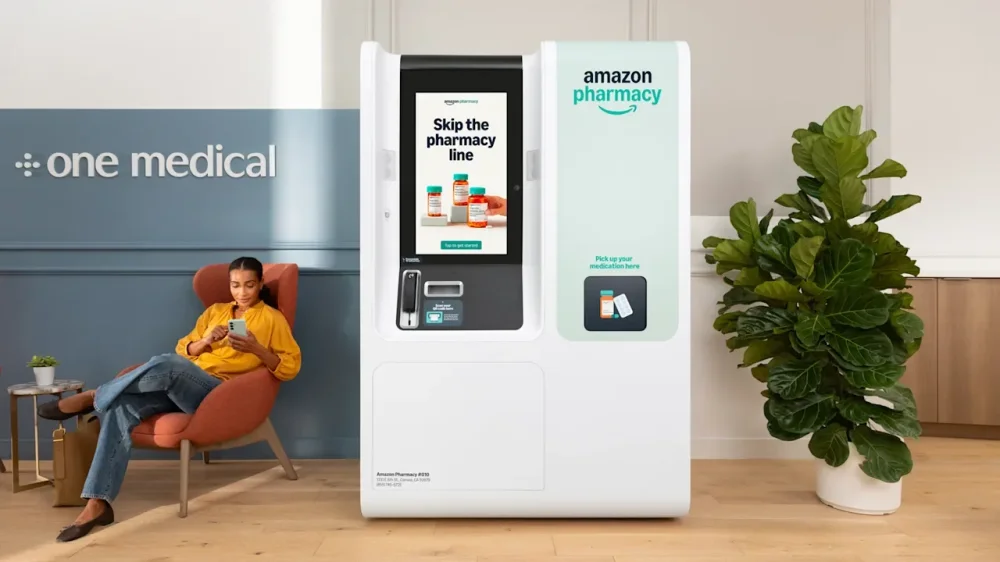
-
There’s a common story in the marketing and advertising industry, with many variations. Whenever a member of that industry is at a party or on a plane, inevitably someone will ask what they do for a living. And as soon as they say advertising, that person immediately begins to tell them how good they’d be at working in advertising, how they should make this or that ad campaign better, or why that ad they saw during an NFL game is terrible. This probably doesn’t happen to engineers and doctors. The discipline of advertising, and the process behind it has always been up for debate and question. Well, starting on September 30th, NBC’s new show On Brand with Jimmy Fallon is shining a bright, reality show light on that very process. Brands like KitchenAid, Marshalls, Pillsbury, Samsung, SONIC, Dunkin’, Southwest, Captain Morgan, and Therabody, all signed up to have their briefs or brand challenges taken on by 10 contestants, guided through the process by Fallon and and Bozoma Saint-John. Saint-John is a former chief marketing or brand officer at companies including Netflix, Uber, and Beats by Dre—who also just happens to star on The Real Housewives of Beverly Hills. For this month’s episode of the Brand New World podcast, she joined me on stage at Fast Company’s Innovation Festival, which was held in New York City in mid-September. On how she became a part of the show: Jimmy had the idea and sold it probably a year before we had a conversation. The challenge that he was facing was that, of course, he’s a genius at what he does, commenting about pop culture and making creative partnerships. But what he would say he doesn’t have is the résumé, the professional corporate chops to back it up. So he needed a partner to add legitimacy to the show. Then he saw me on The Real Housewives of Beverly Hills, and his wife said, “What about Boz?” And he was like, “I dunno if a housewife is what I’m looking for.” But of course, we got on a call together, and we talked about the idea and what it could mean, how much I love the concept . . . I told him that the concept of marrying those two things—advertising and marketing—as an entertainment platform can engage an audience. I was like, “Shoot, you better sign me up. Otherwise, I’m just coming to set anyway.” On the value for the brands: Some of the criticism that I’ve seen has been like, “Oh, it’s gonna be like one big infomercial.” And I guarantee you it’s not. I compare this to finding a new music star shows entered, whether it was American Idol or The Voice. All of us became experts. You sat on your couch, you watched somebody sing. All of a sudden you knew terms like “pitchy.” Nobody had ever said pitchy outside of the studio. This is similar, which is that the audience who’s going to watch this, and I believe are going to be as invested as the contestants. View the full article
-
We may earn a commission from links on this page. Deal pricing and availability subject to change after time of publication. Amazon Big Deal Days end tonight, Oct. 8, and until then, Lifehacker is sharing the best sales based on product reviews, comparisons, and price-tracking tools before it's over. Follow our live blog to stay up to date on the best sales we find. Browse our editors’ picks for a curated list of our favorite sales on laptops, fitness tech, appliances, and more. Subscribe to our shopping newsletter, Add to Cart, for the best sales sent to your inbox. New to Prime Day? We have a primer on everything you need to know. Sales are accurate at the time of publication, but prices and inventory are always subject to change. Despite being a fairly unorganized person, I've spent the last year testing a ton of productivity-enhancing, organization-forward notebooks and tablets, and the best of them work so well, they make me want to be the kind of person who actually organizes their notes. While I expected to slot the XP-Pen Magic Note Pad into that category—it's an LED Android tablet with three screen modes that purport to take it from full color to e-ink mode, transforming it from a notebook, to a media player, to an e-reader—it's actually most impressive as a drawing tablet. Unfortunately, I cannot draw, but this thing made me wish I could. And right now, while it's marked down 29% for Prime Day, from $400 to $285, I'd recommend it to anyone who can. XP-Pen Magic Note Pad $284.99 at Amazon $399.99 Save $115.00 Get Deal Get Deal $284.99 at Amazon $399.99 Save $115.00 Three screens in one, sort ofOstensibly, the Magic Note Pad's biggest selling point is its "X-Paper" screen (which appears to be a rebranded version of TCL's NXTPAPER display), which has 1920 x 1200 resolution, a speedy 90 Hz refresh rate, and maximum 400 nits of brightness (in comparison, the entry level iPad offers a 60 Hz refresh rate and 500 nits of brightness). It has an etched surface to reduce glare as well as three different color modes, controlled at the operating system level, that are purported to take it from full color LED tablet to a black and white e-reader. There's a dedicated button on the top of the device that allows you to choose between: Nature Color Mode, or the standard you'd expect from any LED screen Light Color Mode, which makes bright whites look creamier and mutes other colors, akin to the effect of reading on newsprint (or a color e-ink reader like the Kindle Colorsoft) Ink Paper Mode, which purports to replicate a grayscale e-ink display If you know anything about the different tech involved, you'll see that it's pretty impossible for a backlit LED screen to transform into an e-ink screen just by messing with the color settings. The device is TÜV SÜD Low Blue Light Certified, indicating it reduces blue light by 25%. It also carries a Paper Like Display Certification, which I guess means it is more paper-like than other LED screens, offering a "more comfortable and natural reading experience." The etched screen does reduce glare, and reading in Ink Paper Mode will tax your eyes a bit less if you're reading in a dim room, but take it outside, and it's unquestionably still an LED tablet—you can't magically read in direct sunlight just by switching the display mode. Artists really love itThe Magic Note Pad's real draw (no pun intended) is actually less productivity and more artistic: A ton of digital artists have reviewed it on Reddit and YouTube, and they uniformly praise it for its super-responsive stylus, which offers four times the pressure sensitivity of an Apple Pencil—16,384 pressure levels for the XP-Pen's included stylus, versus a mere 4,096 pressure levels for the Apple Pencil. More pressure levels gives you more control over what actually winds up on the screen, so you can sketch and "paint" with far more accuracy—giving you all the control you'd have in the real world in a digital environment. It's enough to make me want to sign up for a drawing class. A good value even as a media tabletAt the current 29% discount, the Magic Note Pad drops from an "artists only" $400 to a friendlier $285, which is a decent deal even if all you're looking for is an above-average, stylus supporting Android tablet to use as a digital notebook/e-reader and to stream media. It has a Mediatek MT8781 Octa-core processor, which seems to be a reliable mid-range chip, with 6GB of RAM and 128GB of storage, and an 8000mAh battery, which will last a few days between charges based on typical use. There's also a front-facing camera for video calls. In short, if you want a tablet for drawing and have been sweating over the combined cost of an iPad and an Apple Pencil, here's a great opportunity to save some money. Looking for something else? Retailers like Walmart and Best Buy have Prime Day competition sales that are especially useful if you don’t have Amazon Prime. Walmart’s Prime Day competition sale runs from Oct. 6 at 7 p.m. ET through Oct. 12 and includes deals up to 50% off. It’s an especially good option if you have Walmart+. Best Buy’s Prime Day competition sale runs from Sept. 27 through Oct. 12, and has some of the best tech sales online. It’s an especially good option if you’re a My Best Buy “Plus” or “Total” member. Target’s Prime Day competition sale runs from Oct. 5 through Oct. 11, and it has deals going up to 50% off. You can become a Circle member for free. Our Best Editor-Vetted Prime Day Deals Right Now Apple AirPods Pro 2 Noise Cancelling Wireless Earbuds — $169.99 (List Price $249.00) Meta Quest 3S 128GB All-In-One VR Headset — $249.00 (List Price $299.99) Apple iPad 11" 128GB A16 WiFi Tablet (Blue, 2025) — $279.00 (List Price $349.00) DJI Mini 4K 3-Axis Gimbal Camera Drone (Under 249 Grams) — $239.00 (List Price $299.00) Samsung Galaxy Tab A9+ 10.9" 64GB Wi-Fi Tablet (Graphite) — $148.94 (List Price $219.99) Blink Mini 2 1080p Indoor Security Camera (2-Pack, White) — $34.99 (List Price $69.99) Ring Battery Doorbell Plus — $79.99 (List Price $149.99) Shark AV2501S AI Ultra Robot Vacuum with HEPA Self-Empty Base — $229.99 (List Price $549.99) Amazon Fire HD 10 (2023) — $69.99 (List Price $139.99) Wyze Cam v4 2K Wired Wi-Fi Smart Security Camera (White) — $25.95 (List Price $35.98) Deals are selected by our commerce team View the full article
-
A reader writes: I have managed someone, let’s call her Rachel, for over a year and a half. The majority of the experience has been negative — she’s rude, feeds on drama, and produces low-quality work. I’ve had several discussions with her on improving her performance. After a lot of painful experiences, she resigned while I was on vacation. She only gave a week’s notice, and since I’m on vacation we will only have two days overlap. I know as a manager I have the responsibility to be professional and courteous, but I can’t stomach the idea that we even have to interact at all on those two final days. I have even contemplated rescheduling our team meeting to the day after she leaves because I don’t want to hear some passive-aggressive spiel from her about how she’s going to some place that appreciates her and her skill set. And I certainly don’t want to have a fake conversation where we thank each other for our time and work together, because that would be a lie. While previously I’ve tried to be encouraging in difficult conversations, now I feel like I don’t have to put on any pretenses anymore, especially since she resigned in a petty way. Is it okay if I ignore her or have very minimal interaction with her on those final two days? And what are your thoughts more broadly about minimizing interactions with toxic employees that you manage directly or are part of your division? I answer this question — and two others — over at Inc. today, where I’m revisiting letters that have been buried in the archives here from years ago (and sometimes updating/expanding my answers to them). You can read it here. Other questions I’m answering there today include: My company is skin-crawlingly positive Telling my employee about a job somewhere else without seeming like I’m pushing them out The post can I ignore a toxic employee during her last few days? appeared first on Ask a Manager. View the full article
-
Deluxe and Peoples Bank Forge Ahead in Integrated Payments Partnership Small business owners constantly seek innovative solutions to enhance their operations, improve customer service, and streamline financial transactions. Recent developments from Deluxe Corporation may offer vital insights for those navigating the complex landscape of payment solutions. Deluxe, a prominent player in the payments industry, has expanded its partnership with Peoples Bank, a financial institution based in Marietta, Ohio, with assets totaling $9.5 billion. This collaboration aims to enhance the bank’s Merchant Services, underscoring a commitment to innovation and community engagement. The alliance exemplifies the shift towards integrating transactional services into broader strategic assets. By combining forces, Deluxe and Peoples Bank aim to bolster customer loyalty, heighten operational efficiency, and generate non-interest income streams—essential components for small businesses aiming to thrive in a competitive market. Brian Mahony, President of Merchant Services at Deluxe, emphasized the importance of collaboration in this endeavor. He remarked, “Peoples Bank is a highly engaged Deluxe client, and this expanded partnership is a great example of what’s possible when we bring our teams together to solve for the full picture.” This sentiment highlights the value of teamwork in developing tailored solutions for businesses of all sizes. Rich Vaughan, EVP of Retail & Business Banking at Peoples Bank, echoed Mahony’s thoughts, affirming the significance of forward-thinking solutions in today’s fast-paced market. “Deluxe continues to be a trusted partner for Peoples Bank, and this expanded engagement reflects our shared commitment to providing business clients with forward-thinking solutions,” Vaughan noted. Such endorsements suggest that other small businesses could find valuable support through similar partnerships. The implications of this partnership could be substantial for small business owners. By leveraging integrated Merchant Services, businesses can streamline their payment processes, concentrating on growth and customer satisfaction. The combination of enhanced operational efficiency with the ability to offer diverse payment solutions may enable businesses to differentiate themselves in a crowded marketplace. Looking at practical applications, small businesses could specifically benefit from the comprehensive approach to transactional services that Deluxe and Peoples Bank are advancing. By integrating merchant services, business owners may find it easier to manage payments, reduce transaction costs, and access valuable analytics that inform customer engagement strategies. Moreover, as operational efficiencies increase, the possibility of redirecting resources towards innovation and customer experience also expands. However, small business owners should also consider potential challenges associated with adopting integrated payment solutions. Transitioning to a new system often requires time and resources, which can strain small operations already juggling numerous responsibilities. Training staff on new technologies can add to upfront costs, although many providers, including Deluxe, likely offer support during the transition. Additionally, there may be adaptability concerns. Not all businesses require the same level of integration; thus, ensuring that a solution suits a specific company’s scale and operations is vital. Some small business owners might find themselves entrusting too many critical services to a single vendor, raising issues should the partnership not meet expectations. As the landscape of payment processing evolves, the partnership between Deluxe and Peoples Bank signals a trend that small business owners must monitor. By observing how this collaboration unfolds, businesses can glean best practices and insights for their own operations. Deluxe, boasting over a century of service, continues to position itself as a key ally for small businesses looking to streamline operations and enhance customer experiences. With its commitment to supporting businesses through advanced payment solutions, it remains a crucial resource for those aiming to thrive in today’s economy. More information about these services and partnership updates can be found at Deluxe’s website. The partnership’s focus on innovation and community values pairs well with the needs of today’s entrepreneurs. As small business owners assess the potential of such integrated services, they should weigh the benefits against challenges meticulously. With thoughtful consideration, this collaboration may unlock new avenues for growth and success. For further details, the original press release is available here. Image via Envato This article, "Deluxe and Peoples Bank Expand Partnership to Enhance Merchant Services" was first published on Small Business Trends View the full article
-
Deluxe and Peoples Bank Forge Ahead in Integrated Payments Partnership Small business owners constantly seek innovative solutions to enhance their operations, improve customer service, and streamline financial transactions. Recent developments from Deluxe Corporation may offer vital insights for those navigating the complex landscape of payment solutions. Deluxe, a prominent player in the payments industry, has expanded its partnership with Peoples Bank, a financial institution based in Marietta, Ohio, with assets totaling $9.5 billion. This collaboration aims to enhance the bank’s Merchant Services, underscoring a commitment to innovation and community engagement. The alliance exemplifies the shift towards integrating transactional services into broader strategic assets. By combining forces, Deluxe and Peoples Bank aim to bolster customer loyalty, heighten operational efficiency, and generate non-interest income streams—essential components for small businesses aiming to thrive in a competitive market. Brian Mahony, President of Merchant Services at Deluxe, emphasized the importance of collaboration in this endeavor. He remarked, “Peoples Bank is a highly engaged Deluxe client, and this expanded partnership is a great example of what’s possible when we bring our teams together to solve for the full picture.” This sentiment highlights the value of teamwork in developing tailored solutions for businesses of all sizes. Rich Vaughan, EVP of Retail & Business Banking at Peoples Bank, echoed Mahony’s thoughts, affirming the significance of forward-thinking solutions in today’s fast-paced market. “Deluxe continues to be a trusted partner for Peoples Bank, and this expanded engagement reflects our shared commitment to providing business clients with forward-thinking solutions,” Vaughan noted. Such endorsements suggest that other small businesses could find valuable support through similar partnerships. The implications of this partnership could be substantial for small business owners. By leveraging integrated Merchant Services, businesses can streamline their payment processes, concentrating on growth and customer satisfaction. The combination of enhanced operational efficiency with the ability to offer diverse payment solutions may enable businesses to differentiate themselves in a crowded marketplace. Looking at practical applications, small businesses could specifically benefit from the comprehensive approach to transactional services that Deluxe and Peoples Bank are advancing. By integrating merchant services, business owners may find it easier to manage payments, reduce transaction costs, and access valuable analytics that inform customer engagement strategies. Moreover, as operational efficiencies increase, the possibility of redirecting resources towards innovation and customer experience also expands. However, small business owners should also consider potential challenges associated with adopting integrated payment solutions. Transitioning to a new system often requires time and resources, which can strain small operations already juggling numerous responsibilities. Training staff on new technologies can add to upfront costs, although many providers, including Deluxe, likely offer support during the transition. Additionally, there may be adaptability concerns. Not all businesses require the same level of integration; thus, ensuring that a solution suits a specific company’s scale and operations is vital. Some small business owners might find themselves entrusting too many critical services to a single vendor, raising issues should the partnership not meet expectations. As the landscape of payment processing evolves, the partnership between Deluxe and Peoples Bank signals a trend that small business owners must monitor. By observing how this collaboration unfolds, businesses can glean best practices and insights for their own operations. Deluxe, boasting over a century of service, continues to position itself as a key ally for small businesses looking to streamline operations and enhance customer experiences. With its commitment to supporting businesses through advanced payment solutions, it remains a crucial resource for those aiming to thrive in today’s economy. More information about these services and partnership updates can be found at Deluxe’s website. The partnership’s focus on innovation and community values pairs well with the needs of today’s entrepreneurs. As small business owners assess the potential of such integrated services, they should weigh the benefits against challenges meticulously. With thoughtful consideration, this collaboration may unlock new avenues for growth and success. For further details, the original press release is available here. Image via Envato This article, "Deluxe and Peoples Bank Expand Partnership to Enhance Merchant Services" was first published on Small Business Trends View the full article
-
Like anything else, it requires practice. By August Aquila MAX: Maximize Productivity, Profitability and Client Retention Go PRO for members-only access to more August J. Aquila. View the full article
-
Like anything else, it requires practice. By August Aquila MAX: Maximize Productivity, Profitability and Client Retention Go PRO for members-only access to more August J. Aquila. View the full article
-
Gap just released an animated ad to promote its collection with designer Sandy Liang, and we need it to become its own TV show ASAP. Created by animator Annie Choi, who has a history of illustrating campaigns for luxury fashion labels, the ad stars a young girl modeled after Liang herself. While dreaming up new clothing designs inside her childhood bedroom, the girl discovers that her closet has been imbued with magical powers—and when she opens its doors, she’s transformed, Sailor Moon–style, into a new version of herself dressed head-to-toe in Gap x Sandy Liang. The Gap x Sandy Liang ad, titled “Sandy’s Dream Closet,” is part of the roll-out for Liang’s biggest-ever collaboration with Gap, launching online and in select Gap stores October 10. The collection includes jackets emblazoned with Liang’s iconic bow symbols, structured-yet-feminine denim, and even a line of baby clothes. Everything ranges from just $15 to $268. Choi’s fantastical animation embodies the sweet, youthful spirit of the collection, which, Liang told Fast Company, was made “for your inner child.” “I love that we’re telling the story through animation,” Liang says. “I think it’s the perfect way to express the energy that I’m trying to convey with the collection.” “Creating universes that invite people to imagine more” Within Choi’s oeuvre, anything is possible. An ordinary loaf of bread can transform into a fashionable shoe; a Parisian office building can morph into a puzzle box; and the stars in the night sky are pretty enough to literally eat like candy. Over the past several years, her creative, surrealist animations have become a sought-after asset for fashion brands including Hermès, Burberry, Dior, and Loewe. “When I started collaborating with fashion brands, it felt like a natural extension of what I already loved doing: creating universes that invite people to imagine more,” Choi says. “Fashion gives me a language of texture, form, and transformation, and animation gives it motion and life. Together they create something that feels both tactile and surreal, which is exactly the space I love to work in.” Annie Choi Bringing Sandy Liang’s fashion world to life Before Liang even began designing the Gap collection, she says, she was already imagining an animation as a component of the campaign’s rollout. Her initial moodboard included inspiration from favorite anime properties like Sailor Moon and the Studio Ghibli film Ponyo. When Gap’s marketing team told her that an animated video would be possible, she says, it was like a dream come true. Choi’s penchant for imagining designer brands through a playful lens made her the perfect compliment to Liang’s perspective on fashion as a means of embracing her own girlhood. “Sandy’s Dream Closet” is inspired by Liang’s childhood in New York City. Its setting—an apartment complex in the Lower East Side above a Cantonese restaurant called “Congee Village”—is pulled directly from Liang’s own memories of her father’s restaurant of the same name. That backdrop is woven together with Liang’s experience growing up wearing vintage Gap. Annie Choi Growing up with a child’s sense of wonder “So much of Sandy’s world centers around imagination, nostalgia, and a sense of wonder,” Choi says. “I wanted the animation to carry that same feeling. I thought back to the shows I loved as a kid, especially the ones where transformation felt exciting and full of possibility, and used that energy as a guide. Since I also spent part of my early childhood in New York, the project felt personal to me, almost like layering my own memories on top of Sandy’s.” In the film, Liang’s transformation represents, on a literal level, the idea of growing up. Symbolically, it’s also meant to capture “the power fashion has to help us become who we are meant to be,” Choi says. For her, bringing Sandy’s animated vision to life was “an honor.” “It was so fun to see her reaction to the animated Sandy for the first time,” Choi says. “I think the final product truly captures her essence and the Sandy Liang world in a way that her customers, and Gap’s customers, can experience in a totally new way.” View the full article

-
We may earn a commission from links on this page. Deal pricing and availability subject to change after time of publication. Amazon Big Deal Days end tonight, Oct. 8, and until then, Lifehacker is sharing the best sales based on product reviews, comparisons, and price-tracking tools before it’s over. Browse our editors’ picks for a curated list of our favorite sales on laptops, fitness tech, and more. Follow our live blog to stay up to date on the best sales we find. Subscribe to our shopping newsletter, Add to Cart, for the best sales sent to your inbox. New to Prime Day? We have a primer on everything you need to know. Sales are accurate at the time of publication, but prices and inventory are always subject to change. You don't need to be a fitness enthusiast to appreciate everything a good Apple Watch has to offer. Right now the Apple Watch Series 10 is available for $309 for October Prime Day, a 28% discount off its list price of $429. That's for the 46mm case—if you opt for the smaller 42mm, the watch is available for as low as $279 in some colors. That's a 30% discount off a list price of $399. Apple Watch Series 10 GPS 46mm with Jet Black Aluminium Case with Black Sport Band $309.00 at Amazon $429.00 Save $120.00 Get Deal Get Deal $309.00 at Amazon $429.00 Save $120.00 The Series 10 is last year's Apple Watch, but this year's Series 11 is only a minor upgrade. As such, our editor Michelle Ehrhardt crowned the 10 best Apple Watch for most people: You’re only missing out on tougher glass, a 5G modem, and a somewhat improved battery life. Unless you really depend on those extra perks, the Series 10 is probably the choice for you. For more deals on fitness trackers and smartwatches, check out more of our top picks from Amazon's Big Deal Days here. Looking for something else? Retailers like Walmart and Best Buy have Prime Day competition sales that are especially useful if you don’t have Amazon Prime. Walmart’s Prime Day competition sale runs from Oct. 6 at 7 p.m. ET through Oct. 12 and includes deals up to 50% off. It’s an especially good option if you have Walmart+. Best Buy’s Prime Day competition sale runs from Sept. 27 through Oct. 12, and has some of the best tech sales online. It’s an especially good option if you’re a My Best Buy “Plus” or “Total” member. Target’s Prime Day competition sale runs from Oct. 5 through Oct. 11, and it has deals going up to 50% off. You can become a Circle member for free. View the full article
-
Taylor Swift sold 2.7 million copies of her new album The Life of a Showgirl on its release day Friday, and luckily for Swifties buying up multiple copies to help their idol on the chart, they didn’t have to pay any tariffs on their purchases. U.S. consumers now face a 18.6% overall average effective tariff rate, according to Yale’s Budget Lab, and one music professor estimated that if tariffs were applied to physical music, they could have hiked the price of a vinyl record to as much as $40 to $50 a pop. They’re not, though, thanks some recently relevant Reagan-era legislation. Instead, Swift fans have to cough up $35 for the Target-exclusive “Summertime Spritz Pink Shimmer Vinyl” version of the album, which is imported from Mexico, limited-edition, and comes with a poster (the standard version is $30). President Donald The President tariffs were imposed under emergency economic powers that the Brennan Center for Justice say constitute a misuse of power, and they’ve faced legal challenges. The Supreme Court is planning to take up the case, but already, media like books, movies, and physical music are except from the extra cost because of the Berman Amendment. Named for Howard Berman, a California Democrat who represented a district in the Los Angeles area in the U.S. House from 1983 to 2013, the law revised the International Emergency Economic Powers Act, the same law that The President used as justification for his tariffs. Berman’s amendment prohibits the president from directly or indirectly regulating or prohibiting the importation of an “informational materials,” including publications, films, posters, photographs, and records. The Berman Amendment protects cross-border speech from presidential overreach, and it attracted new interest when The President said in May he would impose 100% tariffs on movies and TV shows produced outside the U.S. Passed in 1988, the Berman Amendment is welcome relief for companies that sell physical media across national borders, like book and magazine publishers, as well as the music industry, which saw vinyl sales grow from 13.1 million in 2016 to 49.6 million in 2023, according to Luminate Music Consumption Data. Domestic vinyl record production in the U.S. is ramping up (in Tennessee, Nashville’s United Record Pressing, which is the nation’s oldest record maker, is busier than ever, and one local company that supplies vinyl makers announced a $10 million expansion in the state in January), but currently, supply can’t keep up with demand. For Swifties whose fandom would otherwise be caught up in The President’s trade war with the rest of the economy, the law protects their imported vinyl purchases from an extra fee courtesy the president. View the full article

-
Two ways to close the skills gap. By Rebekah Olson, CPA CEO, Maryland Association of CPAs Go PRO for members-only access to more CPA Trendlines Research. View the full article