ResidentialBusiness
Administrators
-
Joined
-
Last visited
Everything posted by ResidentialBusiness
-
 Training and development in Human Resource Management (HRM) bring numerous benefits that can greatly impact an organization’s success. By enhancing employee performance and boosting productivity, companies can see a marked increase in overall efficiency. Moreover, well-structured training programs lead to higher employee engagement and job satisfaction. These factors contribute to improved retention rates, creating a stable workforce. Comprehending how these elements align with organizational goals can further raise your business strategy. What other advantages might you discover? Key Takeaways Training enhances employee performance, leading to increased productivity and profitability within organizations. Engaged employees report higher job satisfaction and are less likely to leave, reducing turnover rates. Aligning training with organizational goals fosters a strong workplace culture and boosts overall performance. Investing in training strengthens the employer brand, attracting top talent and enhancing innovation. Continuous development opportunities encourage knowledge sharing and improve teamwork across the organization. Enhanced Employee Performance and Productivity Training and development play an important role in enhancing employee performance and productivity within organizations. When you invest in training in HRM, you guarantee that your skills remain relevant, which is significant in today’s fast-paced work environment. Organizations that focus on training and development in HRM see over twice the likelihood of meeting production goals compared to those that don’t. In addition, employees who receive training report a 90% increase in self-assurance at work, directly boosting their performance. Companies with robust learning strategies enjoy a 24% increase in productivity. Moreover, effective training not only improves job performance but also reduces turnover costs, which can average around $163 million for median-sized S&P Global 500 companies. Consequently, training is crucial for nurturing a productive workplace. Increased Employee Engagement and Job Satisfaction Employee engagement and job satisfaction are essential components of a thriving workplace, greatly influenced by the opportunities for professional development offered by organizations. When you have access to training programs, you’re likely to feel more motivated, with 84% of employees reporting increased engagement. Participating in such initiatives not only improves your skills but also considerably reduces the likelihood of leaving your job, as those engaged in training are 45% less likely to depart. Furthermore, training that aligns with your career goals can lead to higher job satisfaction, with 70% of employees willing to switch jobs for better development opportunities. In addition, 90% of learners feel more confident and engaged after training, reinforcing the crucial connection between development initiatives and overall employee satisfaction. Improved Employee Retention Rates A strong connection exists between training and development initiatives and improved employee retention rates. When organizations invest in robust training programs, they can reduce turnover rates by up to 30%. Employees often feel valued and supported, which increases their loyalty. Importantly, 63% cite a lack of advancement opportunities as a reason for leaving, making continuous learning crucial for career progression. Furthermore, effective training correlates with higher job satisfaction, with 70% of employees considering leaving for companies that prioritize it. Investing in training not only encourages commitment but additionally saves on hiring costs, with median-size S&P Global companies losing around $163 million annually as a result of inadequate training. Training Benefit Impact on Retention Employee Sentiment Reduced Turnover Up to 30% Increased Value Career Advancement 63% leave reasons Growth Opportunities Job Satisfaction 70% consider leaving Prioritization Matters Alignment With Organizational Goals When organizations align training initiatives with their mission, vision, and values, they create a stronger workplace culture and a unified direction for all employees. This alignment guarantees you understand organizational goals, boosting overall performance. Companies that connect training to strategic objectives report a 21% increase in profitability, highlighting the positive impact of such initiatives. Moreover, effective training improves employee engagement, leading to a 70% increase in performance. Reduction in Errors and Associated Costs Reducing errors and associated costs is a crucial benefit of effective training and development programs in HRM. Well-trained employees tend to make fewer mistakes, which saves organizations money on rework and corrections. Furthermore, effective training minimizes workplace accident risks, leading to lower insurance claims and legal expenses. Companies investing in thorough training report fewer operational errors, improving efficiency and productivity. Standardizing processes through training reduces variability in performance, resulting in consistent output. In addition, organizations with robust training programs experience lower turnover rates, cutting costs related to hiring and onboarding new staff. Benefit Description Fewer Mistakes Lower rework and correction costs Reduced Accident Risks Decreased insurance claims and legal expenses Improved Efficiency Increased productivity and operational accuracy Consistent Output Standardized processes lead to fewer errors Lower Turnover Rates Reduced hiring and onboarding costs Development of Future Leaders In today’s competitive environment, enhancing leadership skills is essential for developing future leaders within your organization. By implementing effective succession planning strategies, you can guarantee that your top talent is prepared to step into key roles as they become available. Furthermore, mentorship and coaching programs can greatly boost leadership capabilities, nurturing a culture of growth and adaptability that benefits the entire organization. Leadership Skill Enhancement Effective leadership skill improvement plays a fundamental role in shaping the future of any organization. By investing in leadership training programs, you empower employees with the skills and confidence necessary for managerial roles. Here are four key benefits of enhancing leadership skills: Increased Productivity: Organizations that focus on leadership development see up to a 24% rise in productivity among leaders. Improved Decision-Making: After management training, 84% of participants report feeling more confident in making business decisions. Employee Retention: 70% of workers consider leaving if their company doesn’t invest in their growth. Internal Mobility: Engaging employees in leadership training encourages a culture where talent is nurtured for future roles, reducing turnover. In essence, effective leadership development is vital for organizational success. Succession Planning Strategies Though many organizations recognize the importance of cultivating future leaders, implementing effective succession planning strategies remains a critical yet often overlooked component. Investing in training programs that develop leadership skills is crucial; 87% of employees at top companies feel supported through such opportunities. When companies prioritize internal talent development, 70% of employees express willingness to leave for employers who invest in their growth. Structured succession planning can lead to smoother changes, as 90% of organizations report improved internal mobility when they invest in training. Additionally, organizations with these plans are 2.5 times more likely to meet production goals. Personalized development paths not just prepare employees for leadership roles but likewise encourage loyalty, with 84% of trained employees gaining confidence in decision-making. Mentorship and Coaching Programs Mentorship and coaching programs play a crucial role in developing future leaders by providing structured support that improves personal and professional growth. These initiatives yield significant benefits for both individuals and organizations, including: Enhanced Growth: 70% of employees report improved personal and professional development through these programs. Talent Retention: Organizations with structured mentorship initiatives retain high-potential employees 20% more effectively. Leadership Effectiveness: Effective coaching boosts leadership effectiveness by 70%, equipping future leaders with critical decision-making skills. Increased Engagement: Companies investing in mentorship see 4-5 times higher employee engagement rates, encouraging collaboration and knowledge sharing. Ultimately, mentorship and coaching not only support individual development but likewise drive organizational performance, contributing to a 38% increase in productivity when implemented effectively. Strengthened Employer Brand and Reputation Investing in training and development not just improves employee skills but also greatly strengthens an organization’s employer brand and reputation. When companies prioritize robust training programs, they attract more job seekers; 70% of candidates view professional development as vital. Organizations recognized for their commitment to training see a 25% boost in applicant interest. This positive reputation extends beyond potential employees; 68% of consumers prefer brands that invest in employee satisfaction. Moreover, firms with strong training cultures are 2.5 times more likely to be seen as industry leaders, instilling trust among clients. Benefit Statistic Job Seekers Value Development 70% consider it critical Increased Applicant Interest 25% rise in interest Consumer Preference for Brands 68% prefer training-focused brands Fostering Innovation and Adaptability In today’s fast-paced business environment, organizations must prioritize continuous training to nurture innovation and adaptability among their employees. Here are four key ways training supports these goals: Adopting New Technologies: Continuous training empowers you to embrace new tools and methods, keeping your organization competitive. Successful Innovation: Companies with strong learning cultures are 92% more likely to innovate, highlighting the connection between development and creative solutions. Enhanced Adaptability: Training programs focused on adaptability prepare you to tackle unforeseen challenges, boosting organizational resilience. Increased Productivity: Organizations investing in training experience a 37% rise in productivity, as skilled employees contribute innovative ideas that improve efficiency. Enhanced Knowledge Sharing Among Employees Effective knowledge sharing among employees is essential for maximizing organizational performance. Training and development programs play an important role in breaking down information silos, encouraging collaboration across teams. When organizations prioritize training, they often see a 70% increase in teamwork and communication effectiveness. This consistent focus on training cultivates a culture of empathy, as employees gain a deeper appreciation of each other’s roles and challenges. Furthermore, access to training resources democratizes knowledge, making the workforce more informed and transparent in communication. Companies investing in employee training report a 50% improvement in collaboration and knowledge transfer, ultimately boosting innovation and problem-solving capabilities. As a result, enhancing knowledge sharing is key to achieving higher performance levels within your organization. Opportunities for Career Advancement Career advancement opportunities greatly impact employee satisfaction and retention. When you engage in training and development programs, you’re not merely enhancing your skills; you’re additionally increasing your chances of career growth. Here are some key benefits: Employees involved in development programs are 70% more likely to stay with their employer. Companies that prioritize employee development see a 24% rise in engagement, boosting morale and productivity. A lack of advancement opportunities drives 63% of employees to seek new jobs, underlining the value of training. Organizations with strong training programs are 50% more likely to promote from within, creating a talent pipeline. Investing in your career through training not only benefits you but likewise helps reduce turnover costs for your employer. Streamlined Onboarding Processes Streamlined onboarding processes are crucial for getting new employees up to speed quickly and efficiently. By using consistent training materials, you can considerably reduce the time it takes for them to become productive, as well as enhancing their integration into the company culture. This structured approach not just boosts productivity but additionally lays the groundwork for long-term employee retention and satisfaction. Consistent Training Materials When new hires commence on their expedition with a company, having consistent training materials can greatly improve their onboarding experience. This standardization guarantees everyone receives the same foundational knowledge, which leads to a more uniform onboarding process. Here are some key benefits of consistent training materials: Reduces variability in employee performance, helping new hires adapt faster to the company culture. Boosts employee retention by 62% during the first year, as clarity in training cultivates confidence. Improves job satisfaction scores by 70%, making employees feel more prepared and supported. Lowers turnover costs, which can reach 200% of an employee’s annual salary, thereby allowing better resource allocation. Consistent training materials are crucial for effective onboarding. Reduced Time-to-Productivity Effective onboarding processes play a crucial role in reducing the time it takes for new employees to become fully productive. Streamlined training programs can cut this shift period by up to 50%, enabling quicker contributions to the organization. Companies with structured onboarding see a 58% higher retention rate after three years, indicating the long-term advantages of efficient initial training. Furthermore, a well-designed onboarding experience boosts employee engagement by 70%, helping new hires feel connected and motivated. Organizations investing in extensive onboarding training report a 30% increase in team performance, as employees better understand their roles. In the end, 69% of employees are more likely to stay for three years if they experience a positive onboarding process, highlighting its critical importance. Enhanced Employee Integration A well-structured onboarding process is essential for enhancing employee integration within an organization. By implementing streamlined onboarding, you can greatly improve new hire productivity and satisfaction. Here are some key benefits: It can reduce the time for new employees to become productive, improving retention by 82%. Engaging onboarding leads to a 70% increase in employee satisfaction during their initial months. Structured programs boost new hire productivity by 54%, clarifying roles and responsibilities from day one. Incorporating technology like Learning Management Systems (LMS) allows personalized learning, with 85% of participants completing their training successfully. Competitive Advantage in the Market Investing in training and development isn’t just beneficial; it’s essential for gaining a competitive advantage in today’s market. Organizations that prioritize employee growth see 70% of their workforce more likely to stay, reducing turnover costs and promoting loyalty. Companies with strong training programs often emerge as industry leaders, with 68% of top performers identifying training as critical for their success. In addition, continuous learning initiatives allow firms to adapt quickly to market changes, addressing the fact that 74% of employees feel they lack development opportunities. Firms that invest in training report a 24% productivity increase, positioning them ahead of competitors. Finally, effective programs boost innovation, with 67% of employees feeling encouraged to share new ideas, further driving success. Frequently Asked Questions What Are the Benefits of Training and Development in Human Resource Management? Training and development in human resource management improve employee skills, leading to enhanced productivity and job satisfaction. When you invest in your team’s growth, you reduce turnover and increase retention, as employees feel valued and see advancement opportunities. Furthermore, continuous learning aligns individual capabilities with organizational goals, encouraging innovation. Companies with effective training programs attract top talent, strengthen their employer brand, and in the end, achieve better financial performance through engaged and capable employees. What Is the Major Purpose of Training and Development? The major purpose of training and development is to improve your skills and knowledge, enhancing your job performance and productivity. These programs address specific performance gaps, making you more competent to tackle challenges and adapt to market changes. Continuous learning opportunities not just boost your confidence but additionally increase your engagement. In the end, training aligns your growth with organizational goals, equipping you to innovate and respond strategically to evolving demands in the workplace. What Is the Main Benefit of Training? The main benefit of training is its ability to improve employee performance and productivity. When you invest in training, you’re likely to see significant improvements in how effectively your team works. Many employees report increased confidence after completing training programs, which can lead to greater job satisfaction. Furthermore, a well-structured training initiative helps retain talent, as employees are more inclined to stay with companies that prioritize their professional development and growth. How Does Training and Development Help Employees? Training and development help you by enhancing your skills and knowledge, which boosts your performance and productivity. When you participate in continuous learning, you’re more likely to feel confident in your role, leading to better decision-making. Furthermore, effective training opportunities can increase your job satisfaction, making you less likely to leave for other companies. Conclusion In summary, investing in training and development within HRM is crucial for promoting a productive and engaged workforce. By enhancing employee performance, increasing job satisfaction, and improving retention rates, organizations can align training with their goals to create a cohesive workplace culture. Additionally, effective training reduces errors and promotes knowledge sharing, ultimately leading to career advancement opportunities. By prioritizing these programs, businesses not just gain a competitive edge but also guarantee long-term success and innovation in their operations. Image Via Envato This article, "Key Benefits of Training and Development in HRM" was first published on Small Business Trends View the full article
 -
Training and development in Human Resource Management (HRM) bring numerous benefits that can greatly impact an organization’s success. By enhancing employee performance and boosting productivity, companies can see a marked increase in overall efficiency. Moreover, well-structured training programs lead to higher employee engagement and job satisfaction. These factors contribute to improved retention rates, creating a stable workforce. Comprehending how these elements align with organizational goals can further raise your business strategy. What other advantages might you discover? Key Takeaways Training enhances employee performance, leading to increased productivity and profitability within organizations. Engaged employees report higher job satisfaction and are less likely to leave, reducing turnover rates. Aligning training with organizational goals fosters a strong workplace culture and boosts overall performance. Investing in training strengthens the employer brand, attracting top talent and enhancing innovation. Continuous development opportunities encourage knowledge sharing and improve teamwork across the organization. Enhanced Employee Performance and Productivity Training and development play an important role in enhancing employee performance and productivity within organizations. When you invest in training in HRM, you guarantee that your skills remain relevant, which is significant in today’s fast-paced work environment. Organizations that focus on training and development in HRM see over twice the likelihood of meeting production goals compared to those that don’t. In addition, employees who receive training report a 90% increase in self-assurance at work, directly boosting their performance. Companies with robust learning strategies enjoy a 24% increase in productivity. Moreover, effective training not only improves job performance but also reduces turnover costs, which can average around $163 million for median-sized S&P Global 500 companies. Consequently, training is crucial for nurturing a productive workplace. Increased Employee Engagement and Job Satisfaction Employee engagement and job satisfaction are essential components of a thriving workplace, greatly influenced by the opportunities for professional development offered by organizations. When you have access to training programs, you’re likely to feel more motivated, with 84% of employees reporting increased engagement. Participating in such initiatives not only improves your skills but also considerably reduces the likelihood of leaving your job, as those engaged in training are 45% less likely to depart. Furthermore, training that aligns with your career goals can lead to higher job satisfaction, with 70% of employees willing to switch jobs for better development opportunities. In addition, 90% of learners feel more confident and engaged after training, reinforcing the crucial connection between development initiatives and overall employee satisfaction. Improved Employee Retention Rates A strong connection exists between training and development initiatives and improved employee retention rates. When organizations invest in robust training programs, they can reduce turnover rates by up to 30%. Employees often feel valued and supported, which increases their loyalty. Importantly, 63% cite a lack of advancement opportunities as a reason for leaving, making continuous learning crucial for career progression. Furthermore, effective training correlates with higher job satisfaction, with 70% of employees considering leaving for companies that prioritize it. Investing in training not only encourages commitment but additionally saves on hiring costs, with median-size S&P Global companies losing around $163 million annually as a result of inadequate training. Training Benefit Impact on Retention Employee Sentiment Reduced Turnover Up to 30% Increased Value Career Advancement 63% leave reasons Growth Opportunities Job Satisfaction 70% consider leaving Prioritization Matters Alignment With Organizational Goals When organizations align training initiatives with their mission, vision, and values, they create a stronger workplace culture and a unified direction for all employees. This alignment guarantees you understand organizational goals, boosting overall performance. Companies that connect training to strategic objectives report a 21% increase in profitability, highlighting the positive impact of such initiatives. Moreover, effective training improves employee engagement, leading to a 70% increase in performance. Reduction in Errors and Associated Costs Reducing errors and associated costs is a crucial benefit of effective training and development programs in HRM. Well-trained employees tend to make fewer mistakes, which saves organizations money on rework and corrections. Furthermore, effective training minimizes workplace accident risks, leading to lower insurance claims and legal expenses. Companies investing in thorough training report fewer operational errors, improving efficiency and productivity. Standardizing processes through training reduces variability in performance, resulting in consistent output. In addition, organizations with robust training programs experience lower turnover rates, cutting costs related to hiring and onboarding new staff. Benefit Description Fewer Mistakes Lower rework and correction costs Reduced Accident Risks Decreased insurance claims and legal expenses Improved Efficiency Increased productivity and operational accuracy Consistent Output Standardized processes lead to fewer errors Lower Turnover Rates Reduced hiring and onboarding costs Development of Future Leaders In today’s competitive environment, enhancing leadership skills is essential for developing future leaders within your organization. By implementing effective succession planning strategies, you can guarantee that your top talent is prepared to step into key roles as they become available. Furthermore, mentorship and coaching programs can greatly boost leadership capabilities, nurturing a culture of growth and adaptability that benefits the entire organization. Leadership Skill Enhancement Effective leadership skill improvement plays a fundamental role in shaping the future of any organization. By investing in leadership training programs, you empower employees with the skills and confidence necessary for managerial roles. Here are four key benefits of enhancing leadership skills: Increased Productivity: Organizations that focus on leadership development see up to a 24% rise in productivity among leaders. Improved Decision-Making: After management training, 84% of participants report feeling more confident in making business decisions. Employee Retention: 70% of workers consider leaving if their company doesn’t invest in their growth. Internal Mobility: Engaging employees in leadership training encourages a culture where talent is nurtured for future roles, reducing turnover. In essence, effective leadership development is vital for organizational success. Succession Planning Strategies Though many organizations recognize the importance of cultivating future leaders, implementing effective succession planning strategies remains a critical yet often overlooked component. Investing in training programs that develop leadership skills is crucial; 87% of employees at top companies feel supported through such opportunities. When companies prioritize internal talent development, 70% of employees express willingness to leave for employers who invest in their growth. Structured succession planning can lead to smoother changes, as 90% of organizations report improved internal mobility when they invest in training. Additionally, organizations with these plans are 2.5 times more likely to meet production goals. Personalized development paths not just prepare employees for leadership roles but likewise encourage loyalty, with 84% of trained employees gaining confidence in decision-making. Mentorship and Coaching Programs Mentorship and coaching programs play a crucial role in developing future leaders by providing structured support that improves personal and professional growth. These initiatives yield significant benefits for both individuals and organizations, including: Enhanced Growth: 70% of employees report improved personal and professional development through these programs. Talent Retention: Organizations with structured mentorship initiatives retain high-potential employees 20% more effectively. Leadership Effectiveness: Effective coaching boosts leadership effectiveness by 70%, equipping future leaders with critical decision-making skills. Increased Engagement: Companies investing in mentorship see 4-5 times higher employee engagement rates, encouraging collaboration and knowledge sharing. Ultimately, mentorship and coaching not only support individual development but likewise drive organizational performance, contributing to a 38% increase in productivity when implemented effectively. Strengthened Employer Brand and Reputation Investing in training and development not just improves employee skills but also greatly strengthens an organization’s employer brand and reputation. When companies prioritize robust training programs, they attract more job seekers; 70% of candidates view professional development as vital. Organizations recognized for their commitment to training see a 25% boost in applicant interest. This positive reputation extends beyond potential employees; 68% of consumers prefer brands that invest in employee satisfaction. Moreover, firms with strong training cultures are 2.5 times more likely to be seen as industry leaders, instilling trust among clients. Benefit Statistic Job Seekers Value Development 70% consider it critical Increased Applicant Interest 25% rise in interest Consumer Preference for Brands 68% prefer training-focused brands Fostering Innovation and Adaptability In today’s fast-paced business environment, organizations must prioritize continuous training to nurture innovation and adaptability among their employees. Here are four key ways training supports these goals: Adopting New Technologies: Continuous training empowers you to embrace new tools and methods, keeping your organization competitive. Successful Innovation: Companies with strong learning cultures are 92% more likely to innovate, highlighting the connection between development and creative solutions. Enhanced Adaptability: Training programs focused on adaptability prepare you to tackle unforeseen challenges, boosting organizational resilience. Increased Productivity: Organizations investing in training experience a 37% rise in productivity, as skilled employees contribute innovative ideas that improve efficiency. Enhanced Knowledge Sharing Among Employees Effective knowledge sharing among employees is essential for maximizing organizational performance. Training and development programs play an important role in breaking down information silos, encouraging collaboration across teams. When organizations prioritize training, they often see a 70% increase in teamwork and communication effectiveness. This consistent focus on training cultivates a culture of empathy, as employees gain a deeper appreciation of each other’s roles and challenges. Furthermore, access to training resources democratizes knowledge, making the workforce more informed and transparent in communication. Companies investing in employee training report a 50% improvement in collaboration and knowledge transfer, ultimately boosting innovation and problem-solving capabilities. As a result, enhancing knowledge sharing is key to achieving higher performance levels within your organization. Opportunities for Career Advancement Career advancement opportunities greatly impact employee satisfaction and retention. When you engage in training and development programs, you’re not merely enhancing your skills; you’re additionally increasing your chances of career growth. Here are some key benefits: Employees involved in development programs are 70% more likely to stay with their employer. Companies that prioritize employee development see a 24% rise in engagement, boosting morale and productivity. A lack of advancement opportunities drives 63% of employees to seek new jobs, underlining the value of training. Organizations with strong training programs are 50% more likely to promote from within, creating a talent pipeline. Investing in your career through training not only benefits you but likewise helps reduce turnover costs for your employer. Streamlined Onboarding Processes Streamlined onboarding processes are crucial for getting new employees up to speed quickly and efficiently. By using consistent training materials, you can considerably reduce the time it takes for them to become productive, as well as enhancing their integration into the company culture. This structured approach not just boosts productivity but additionally lays the groundwork for long-term employee retention and satisfaction. Consistent Training Materials When new hires commence on their expedition with a company, having consistent training materials can greatly improve their onboarding experience. This standardization guarantees everyone receives the same foundational knowledge, which leads to a more uniform onboarding process. Here are some key benefits of consistent training materials: Reduces variability in employee performance, helping new hires adapt faster to the company culture. Boosts employee retention by 62% during the first year, as clarity in training cultivates confidence. Improves job satisfaction scores by 70%, making employees feel more prepared and supported. Lowers turnover costs, which can reach 200% of an employee’s annual salary, thereby allowing better resource allocation. Consistent training materials are crucial for effective onboarding. Reduced Time-to-Productivity Effective onboarding processes play a crucial role in reducing the time it takes for new employees to become fully productive. Streamlined training programs can cut this shift period by up to 50%, enabling quicker contributions to the organization. Companies with structured onboarding see a 58% higher retention rate after three years, indicating the long-term advantages of efficient initial training. Furthermore, a well-designed onboarding experience boosts employee engagement by 70%, helping new hires feel connected and motivated. Organizations investing in extensive onboarding training report a 30% increase in team performance, as employees better understand their roles. In the end, 69% of employees are more likely to stay for three years if they experience a positive onboarding process, highlighting its critical importance. Enhanced Employee Integration A well-structured onboarding process is essential for enhancing employee integration within an organization. By implementing streamlined onboarding, you can greatly improve new hire productivity and satisfaction. Here are some key benefits: It can reduce the time for new employees to become productive, improving retention by 82%. Engaging onboarding leads to a 70% increase in employee satisfaction during their initial months. Structured programs boost new hire productivity by 54%, clarifying roles and responsibilities from day one. Incorporating technology like Learning Management Systems (LMS) allows personalized learning, with 85% of participants completing their training successfully. Competitive Advantage in the Market Investing in training and development isn’t just beneficial; it’s essential for gaining a competitive advantage in today’s market. Organizations that prioritize employee growth see 70% of their workforce more likely to stay, reducing turnover costs and promoting loyalty. Companies with strong training programs often emerge as industry leaders, with 68% of top performers identifying training as critical for their success. In addition, continuous learning initiatives allow firms to adapt quickly to market changes, addressing the fact that 74% of employees feel they lack development opportunities. Firms that invest in training report a 24% productivity increase, positioning them ahead of competitors. Finally, effective programs boost innovation, with 67% of employees feeling encouraged to share new ideas, further driving success. Frequently Asked Questions What Are the Benefits of Training and Development in Human Resource Management? Training and development in human resource management improve employee skills, leading to enhanced productivity and job satisfaction. When you invest in your team’s growth, you reduce turnover and increase retention, as employees feel valued and see advancement opportunities. Furthermore, continuous learning aligns individual capabilities with organizational goals, encouraging innovation. Companies with effective training programs attract top talent, strengthen their employer brand, and in the end, achieve better financial performance through engaged and capable employees. What Is the Major Purpose of Training and Development? The major purpose of training and development is to improve your skills and knowledge, enhancing your job performance and productivity. These programs address specific performance gaps, making you more competent to tackle challenges and adapt to market changes. Continuous learning opportunities not just boost your confidence but additionally increase your engagement. In the end, training aligns your growth with organizational goals, equipping you to innovate and respond strategically to evolving demands in the workplace. What Is the Main Benefit of Training? The main benefit of training is its ability to improve employee performance and productivity. When you invest in training, you’re likely to see significant improvements in how effectively your team works. Many employees report increased confidence after completing training programs, which can lead to greater job satisfaction. Furthermore, a well-structured training initiative helps retain talent, as employees are more inclined to stay with companies that prioritize their professional development and growth. How Does Training and Development Help Employees? Training and development help you by enhancing your skills and knowledge, which boosts your performance and productivity. When you participate in continuous learning, you’re more likely to feel confident in your role, leading to better decision-making. Furthermore, effective training opportunities can increase your job satisfaction, making you less likely to leave for other companies. Conclusion In summary, investing in training and development within HRM is crucial for promoting a productive and engaged workforce. By enhancing employee performance, increasing job satisfaction, and improving retention rates, organizations can align training with their goals to create a cohesive workplace culture. Additionally, effective training reduces errors and promotes knowledge sharing, ultimately leading to career advancement opportunities. By prioritizing these programs, businesses not just gain a competitive edge but also guarantee long-term success and innovation in their operations. Image Via Envato This article, "Key Benefits of Training and Development in HRM" was first published on Small Business Trends View the full article
-
In today’s unpredictable business environment, scenario planning is crucial for success. It allows organizations to prepare for various potential futures, enhancing their strategic positioning. For example, companies like Shell and healthcare insurers have effectively used scenario planning to navigate market uncertainties. Comprehending these real-world applications can provide valuable insights into how you can implement similar strategies. Let’s explore five specific examples that illustrate the strength of scenario planning in driving organizational success. Key Takeaways Shell successfully navigated energy market changes through proactive scenario planning, enabling effective responses to fluctuating economic conditions. A healthcare insurer increased investment in provider services, using scenario planning to boost market share against competitors. Real estate companies anticipated economic downturns, allowing them to make proactive decisions that protected their investments. A media company focused on high-end production strategies, leveraging scenario planning to enhance profitability amid industry shifts. Organizations implementing workforce planning scenarios have effectively managed costs while maintaining operational efficiency during economic challenges. Workforce Planning Scenarios for Cost Management When organizations face economic challenges, they often look to workforce planning scenarios as a strategic tool for cost management. A scenario analysis example, like evaluating a 10% headcount reduction in Sales, helps you assess total compensation costs, including severance, whereas visualizing variances through comparison waterfalls. By classifying functions within your Sales teams and tallying headcount, you can effectively evaluate the implications of workforce adjustments on operational efficiency and budget management. On the other hand, implementing a hiring freeze scenario allows you to explore cost-saving measures without sacrificing critical sales functions. These workforce planning scenarios enable you to forecast future compensation costs based on different headcount adjustments, ensuring data-driven decision-making during budgetary constraints and aligning human resources with organizational goals. Long-Term Sales Capacity Planning to Meet Market Demands Long-term sales capacity planning is essential for organizations aiming to align their resources with market demands and growth expectations. By forecasting sales capacity and quotas based on representative roles, you can better prepare for future needs. Analyzing key performance indicators like Customer Acquisition Cost (CAC) and Lifetime Value (LTV) allows you to understand how headcount changes impact sales effectiveness. Integrating assumptions about ramp time and hiring freezes into your planning helps simulate various workforce strategies. Evaluating what-if scenarios enables you to pinpoint the ideal sales capacity required to meet targets under different conditions. Regularly updating forecasts with real-time data and market intelligence improves your adaptability, ensuring you’re prepared for shifts in customer needs and competitive dynamics. Strategic Operations: Analyzing the Rule of 40 Evaluating the financial health of SaaS companies often hinges on the Rule of 40, which combines revenue growth and EBITDA margin percentages. Fundamentally, the sum of these metrics should equal or exceed 40%. For instance, if your company achieves a 30% revenue growth rate, you’ll need an EBITDA margin of at least 10% to meet this benchmark. Analyzing the Rule of 40 allows you to set realistic profit and loss targets during effectively forecasting operating expenses. This framework likewise aids in making strategic decisions about balancing investments in growth versus profitability. Regularly evaluating these components can provide insights into necessary operational adjustments, ultimately enhancing your financial outcomes in varying market conditions. Risk Assessment and Response Strategies in Uncertain Times In today’s volatile business environment, organizations must proactively assess risks and devise effective response strategies to navigate uncertainty. Scenario planning helps you identify key drivers of change, such as economic fluctuations and technological advancements, that could impact your operations. By developing multiple scenarios, you can create customized response strategies for specific risks, allowing your business to pivot quickly during unforeseen events like the COVID-19 pandemic. Implementing scenario planning not only improves risk mitigation efforts but also enables you to develop contingency plans that minimize negative outcomes. Companies that leverage scenario planning align their resources with potential challenges, boosting stakeholder confidence and promoting a proactive risk management culture. Real-world examples, like Shell’s navigation of energy market changes, illustrate its effectiveness in preparing for uncertainty. Leveraging Scenario Planning for Agile Decision-Making During the process of traversing a swiftly evolving business environment, utilizing scenario planning can greatly improve your organization’s capacity to make agile, informed decisions. This strategic approach allows you to envision multiple future scenarios, enabling quick adaptations to changing market conditions. For example, a healthcare insurer increased investment in provider services, boosting market share in spite of fierce competition. Similarly, Zillow used scenario planning to anticipate economic downturns, allowing proactive decision-making. A media company focused on high-end production strategies, resulting in improved profitability amid industry shifts. Frequently Asked Questions What Is a Real Life Example of Scenario Planning? A real-life example of scenario planning is when Shell Oil Company navigated the oil crisis in the 1970s. They developed multiple future scenarios regarding oil supply and demand, which enabled them to adapt their business strategies effectively. This proactive approach allowed Shell to invest in alternative energy sources, positioning themselves advantageously in the market. What Is a Real World Example of Strategic Planning? A real-world example of strategic planning is when a company conducts a SWOT analysis to identify its strengths, weaknesses, opportunities, and threats. By analyzing these factors, you can develop actionable strategies that align with your goals. For instance, if a tech firm recognizes a growing market for artificial intelligence, it might allocate resources to research and development, ensuring it remains competitive. This proactive approach allows you to adapt and thrive in an evolving market environment. What Is an Example of Planning in Real Life? An example of planning in real life is when you set a budget for your monthly expenses. You assess your income, prioritize necessary expenses like rent and groceries, and allocate funds for savings and discretionary spending. https://www.youtube.com/watch?v=oBs4GoubFcY By regularly reviewing and adjusting your budget, you adapt to changes in your financial situation. This proactive approach helps you avoid overspending, achieve your financial goals, and maintain stability in your personal finances. Planning guarantees informed decision-making. Does Apple Use Scenario Planning? Yes, Apple uses scenario planning to navigate market uncertainties and consumer trends effectively. By analyzing potential competitive threats and macroeconomic factors, you’ll see how Apple adjusts its product offerings. They conduct predictive modeling to evaluate various future scenarios, allowing the company to identify both opportunities and risks associated with emerging technologies. This strategic approach guarantees Apple remains responsive to changing industry dynamics, particularly during product launches and when entering new markets. Conclusion In summary, scenario planning is an essential tool for organizations steering through uncertainty. By evaluating various potential futures, businesses can develop strategies that improve resilience and adaptability. Whether managing costs, planning for sales capacity, or analyzing risks, scenario planning nurtures informed decision-making. It allows companies to respond proactively to market changes, ensuring they remain competitive. As demonstrated through real-world examples, effective scenario planning not just drives success but furthermore equips organizations to thrive in dynamic environments. Image Via Envato This article, "5 Real-World Scenario Planning Examples That Drive Success" was first published on Small Business Trends View the full article
-
In today’s unpredictable business environment, scenario planning is crucial for success. It allows organizations to prepare for various potential futures, enhancing their strategic positioning. For example, companies like Shell and healthcare insurers have effectively used scenario planning to navigate market uncertainties. Comprehending these real-world applications can provide valuable insights into how you can implement similar strategies. Let’s explore five specific examples that illustrate the strength of scenario planning in driving organizational success. Key Takeaways Shell successfully navigated energy market changes through proactive scenario planning, enabling effective responses to fluctuating economic conditions. A healthcare insurer increased investment in provider services, using scenario planning to boost market share against competitors. Real estate companies anticipated economic downturns, allowing them to make proactive decisions that protected their investments. A media company focused on high-end production strategies, leveraging scenario planning to enhance profitability amid industry shifts. Organizations implementing workforce planning scenarios have effectively managed costs while maintaining operational efficiency during economic challenges. Workforce Planning Scenarios for Cost Management When organizations face economic challenges, they often look to workforce planning scenarios as a strategic tool for cost management. A scenario analysis example, like evaluating a 10% headcount reduction in Sales, helps you assess total compensation costs, including severance, whereas visualizing variances through comparison waterfalls. By classifying functions within your Sales teams and tallying headcount, you can effectively evaluate the implications of workforce adjustments on operational efficiency and budget management. On the other hand, implementing a hiring freeze scenario allows you to explore cost-saving measures without sacrificing critical sales functions. These workforce planning scenarios enable you to forecast future compensation costs based on different headcount adjustments, ensuring data-driven decision-making during budgetary constraints and aligning human resources with organizational goals. Long-Term Sales Capacity Planning to Meet Market Demands Long-term sales capacity planning is essential for organizations aiming to align their resources with market demands and growth expectations. By forecasting sales capacity and quotas based on representative roles, you can better prepare for future needs. Analyzing key performance indicators like Customer Acquisition Cost (CAC) and Lifetime Value (LTV) allows you to understand how headcount changes impact sales effectiveness. Integrating assumptions about ramp time and hiring freezes into your planning helps simulate various workforce strategies. Evaluating what-if scenarios enables you to pinpoint the ideal sales capacity required to meet targets under different conditions. Regularly updating forecasts with real-time data and market intelligence improves your adaptability, ensuring you’re prepared for shifts in customer needs and competitive dynamics. Strategic Operations: Analyzing the Rule of 40 Evaluating the financial health of SaaS companies often hinges on the Rule of 40, which combines revenue growth and EBITDA margin percentages. Fundamentally, the sum of these metrics should equal or exceed 40%. For instance, if your company achieves a 30% revenue growth rate, you’ll need an EBITDA margin of at least 10% to meet this benchmark. Analyzing the Rule of 40 allows you to set realistic profit and loss targets during effectively forecasting operating expenses. This framework likewise aids in making strategic decisions about balancing investments in growth versus profitability. Regularly evaluating these components can provide insights into necessary operational adjustments, ultimately enhancing your financial outcomes in varying market conditions. Risk Assessment and Response Strategies in Uncertain Times In today’s volatile business environment, organizations must proactively assess risks and devise effective response strategies to navigate uncertainty. Scenario planning helps you identify key drivers of change, such as economic fluctuations and technological advancements, that could impact your operations. By developing multiple scenarios, you can create customized response strategies for specific risks, allowing your business to pivot quickly during unforeseen events like the COVID-19 pandemic. Implementing scenario planning not only improves risk mitigation efforts but also enables you to develop contingency plans that minimize negative outcomes. Companies that leverage scenario planning align their resources with potential challenges, boosting stakeholder confidence and promoting a proactive risk management culture. Real-world examples, like Shell’s navigation of energy market changes, illustrate its effectiveness in preparing for uncertainty. Leveraging Scenario Planning for Agile Decision-Making During the process of traversing a swiftly evolving business environment, utilizing scenario planning can greatly improve your organization’s capacity to make agile, informed decisions. This strategic approach allows you to envision multiple future scenarios, enabling quick adaptations to changing market conditions. For example, a healthcare insurer increased investment in provider services, boosting market share in spite of fierce competition. Similarly, Zillow used scenario planning to anticipate economic downturns, allowing proactive decision-making. A media company focused on high-end production strategies, resulting in improved profitability amid industry shifts. Frequently Asked Questions What Is a Real Life Example of Scenario Planning? A real-life example of scenario planning is when Shell Oil Company navigated the oil crisis in the 1970s. They developed multiple future scenarios regarding oil supply and demand, which enabled them to adapt their business strategies effectively. This proactive approach allowed Shell to invest in alternative energy sources, positioning themselves advantageously in the market. What Is a Real World Example of Strategic Planning? A real-world example of strategic planning is when a company conducts a SWOT analysis to identify its strengths, weaknesses, opportunities, and threats. By analyzing these factors, you can develop actionable strategies that align with your goals. For instance, if a tech firm recognizes a growing market for artificial intelligence, it might allocate resources to research and development, ensuring it remains competitive. This proactive approach allows you to adapt and thrive in an evolving market environment. What Is an Example of Planning in Real Life? An example of planning in real life is when you set a budget for your monthly expenses. You assess your income, prioritize necessary expenses like rent and groceries, and allocate funds for savings and discretionary spending. https://www.youtube.com/watch?v=oBs4GoubFcY By regularly reviewing and adjusting your budget, you adapt to changes in your financial situation. This proactive approach helps you avoid overspending, achieve your financial goals, and maintain stability in your personal finances. Planning guarantees informed decision-making. Does Apple Use Scenario Planning? Yes, Apple uses scenario planning to navigate market uncertainties and consumer trends effectively. By analyzing potential competitive threats and macroeconomic factors, you’ll see how Apple adjusts its product offerings. They conduct predictive modeling to evaluate various future scenarios, allowing the company to identify both opportunities and risks associated with emerging technologies. This strategic approach guarantees Apple remains responsive to changing industry dynamics, particularly during product launches and when entering new markets. Conclusion In summary, scenario planning is an essential tool for organizations steering through uncertainty. By evaluating various potential futures, businesses can develop strategies that improve resilience and adaptability. Whether managing costs, planning for sales capacity, or analyzing risks, scenario planning nurtures informed decision-making. It allows companies to respond proactively to market changes, ensuring they remain competitive. As demonstrated through real-world examples, effective scenario planning not just drives success but furthermore equips organizations to thrive in dynamic environments. Image Via Envato This article, "5 Real-World Scenario Planning Examples That Drive Success" was first published on Small Business Trends View the full article
-
Case comes after president urged Department of Justice to take legal action against top prosecutorView the full article
-
Before I was ever involved in the flower business, I jumped from job to job, trying to figure out where I belonged. I grew up in South Queens, New York, where the role models on my block were police officers and firemen who showed up when others needed them most. Naturally, I thought I’d follow that path and become a cop. That dream shifted into social work, a field that fed my heart but not my wallet. To make ends meet, I took on whatever work I could, flipping houses, tending bar, you name it. Through it all, I never forgot what my dad, a painting contractor, used to tell me: “If you’re old enough to walk, you’re old enough to work.” On paper, none of this looked like the résumé of someone who would build a company still thriving 50 years later. But every odd job and hard-earned lesson taught me the secret to longevity: the relationships you build along the way. Plant the seed in a flower shop In 1976, I bought my first flower shop on Manhattan’s Upper East Side and poured all I had into the little business. It soon became clear to me that we were not just selling bouquets but also becoming part of people’s lives. While customers came in to buy flowers, they also sought restaurant advice and shared stories of love and loss, among many other things. Before long, the shop had become a neighborhood hub. As I opened more locations—first one, then another, until there were about 40—the lesson became even clearer: Success didn’t come from the number of shops, it came from the trust and connection inside them. But physical store growth could only take us so far. That’s when opportunity knocked in the form of a failing company that owned the 800 number that spelled the word “FLOWERS.” Everyone told me I was crazy to buy it. After all, they said, who would order flowers over the phone? Turns out, a lot of people do! Before long, thousands were calling every day, sending flowers across town or across the country, and discovering a new way to stay connected with the people they loved no matter the distance. Stay the course in a changing world A few years later, my younger brother Chris convinced me the internet was going to change everything. He was right. We became one of the first e-commerce retailers, making it even more convenient for people to show up for each other. Of course, none of this was a straight line. We tried dozens of technologies and abandoned most of them. But failure never discouraged us; it reminded us that learning and evolving were part of our DNA. Sometimes, luck and relationships create a breakthrough. In 1988, for instance, I met Ted Turner, who gave me a shot to run ads on CNN. When the Gulf War broke out a couple of years later and advertisers pulled their spots, Ted asked me to leave ours on. Suddenly, 1-800-Flowers was everywhere. “The war, brought to you by 1-800-Flowers,” people joked. Such exposure transformed our brand overnight. But it never would have happened if Ted hadn’t taken an interest, if I hadn’t been willing to take a risk, or if we hadn’t forged a relationship. Over the ensuing years, we embraced social media, mobile shopping, and conversational commerce. We were one of the first retailers on Facebook. When COVID hit, we paused traditional marketing and started writing directly to our community. That Sunday newsletter, Celebrations Pulse, has grown to more than 14 million subscribers. It isn’t about selling flowers but rather speaks about resilience, rituals, and the relationships that matter most. Enter the latest wave Today, AI is the latest wave. I know it sparks both excitement and concern, but to me it’s simply the next tool to help us serve people better. Imagine sitting down to write a note to your mom on Mother’s Day and not knowing how to put your feelings into words. Our AI tools, properly positioned, can help you express yourself in a way that feels authentic. Or think about a campaign designed around your needs, not ours. It’s technology that serves humanity, not the other way around. If there’s one lesson from five decades of building 1-800-Flowers, it’s this: Longevity comes from evolving with every new wave while staying rooted in your values. You have to listen, learn, adapt, and keep experimenting. But at the heart of it all, you have to remember why: More meaningful relationships are not only good for business, they also make life better for everyone. Jim McCann is founder of 1-800-Flowers.com. View the full article

-
It's getting near Halloween, the perfect time to stream some horror movies. I dug up 15 of the scariest, weirdest, freakiest, and funniest flicks from horror-only streaming service Shudder. I'm leaving off the obvious choices like Psycho and Halloween—if you subscribe to Shudder, you've probably seen all the "classics" at least twice—to focus on movies guaranteed to make you hide your eyes, laugh out loud, or say "what even is this?" A Dark Song (2016) If you like intelligent, slow-burn horror, check out A Dark Song. Like its characters, the debut feature from director Liam Gavin goes places few films dare to tread. Sophia is a grieving mother whose longing for her murdered child compels her to hire Joseph, a self-proclaimed occultist, to try and bring him back through an arcane ritual. Locked in a house together for months, the pair enact a series of grueling rites that grows increasingly dreadful. Mads (2024) Mads feels dangerous. This frantic nightmare of a movie follows a group of fast-living French teenagers who snort a drug that turns them into bloodthirsty killers. Or maybe they've been infected with a contagion, and the armed troops hunting them are trying to stop a world-ending event. Or maybe the mayhem is all a product of their drug-addled imaginations. Whatever the case, the story unfolds in a single frenzied take that grows more and more unhinged as the world slides off its moorings. The Crazy Family (1985) If you want to watch something obscure but unforgettable, check out The Crazy Family. Until recently, this Japanese horror/comedy was all but unknown in the United States: after a limited theatrical run in the mid 1980s, the violent, pitch-dark family comedy was never released on any format here. But it's a great film. The social commentary in this tale of a family becoming unglued just as they achieve material success probably landed harder in 1980s Japan, but it's still a hilarious and unnerving family portrait unlike anything else ever made. Oddity (2024) Unlike some movies on this list, Oddity doesn't try to reinvent the horror wheel. It's a good, old-fashioned gothic ghost story about a blind psychic searching for the man who murdered her sister. Oddity is filled with creepy characters, unexpected plot twists, and a palpable sense of rising dread that's almost suffocating until it's released in the finale. It may not be the most novel movie, but Oddity's intelligent writing, confident performances, and taut direction add up to a wonderfully creepy little scare flick. Late Night With the Devil (2023) This is one of the best horror films I've seen in the last decade. Late Night With the Devil purports to be the final broadcast of 1970s late night talk show Night Owls With Jack Delroy. To win his perpetual ratings war with Johnny Carson, Delroy invites a possessed girl to his Halloween broadcast. She proves to be a terrible guest. Late Night With the Devil's innovative found footage concept, slavish attention to period detail, and top-rate performances (particularly David Dastmalchian's starring turn) add up to a must-see horror movie. Irréversible (2003) Cinematic provocateur Gaspar Noé's harrowing masterpiece Irréversible is the scariest movie on this list, and maybe the scariest movie ever made. It's not scary in a fun way—there's nothing fun about Irreversible—it's scary because its violence feels real. We've all seen countless brutal crimes in movies and on TV, but the atrocities in Irréversible make the viewer feel the queasy, empty, insanity that you should feel if you see someone truly harmed. Don't put it on for a Halloween party, but if you want to go to a very dark place, Irréversible will take you there and make you sorry you asked to go. Grabbers (2013) Grabbers is the opposite of Irréversible. Delightful from frame one to frame last, Grabbers is a hilarious and scary tribute to monster movies, the soul of Ireland, and the power of positive drinking. When gooey, murderous tentacle monsters invade an isolated Irish village, the townspeople learn that the only way to keep from being grabbed and eaten is to poison their blood with alcohol, so everyone locks themselves into the local to get proper fluthered, meanwhile, the grabbers are gathering outside. Good horror-comedies are an almost impossible tonal tightrope walk, but Grabbers makes balancing between scary and funny look effortless. The House of the Devil (2009) The House of the Devil is set around 1983, and if you didn't know better, you'd think it was shot in the early '80s too. Tai West's first feature has a classic setup: College student Samantha takes a babysitting job at a remote country house, and the weird creeps who hire her reveal that they don't actually have a baby, but Mother is sleeping upstairs, and she should not be disturbed. From there, the slow-burn tension and dread builds. It's a master class in horror movie pacing and mood that you shouldn't miss. Slaxx (2021) Given the number of horror movies like Death Bed: The Bed that Eats, it's not hard to believe that someone shot a horror movie about a possessed pair of jeans, but that Slaxx is actually good is a huge surprise. A horror-comedy that satirizes the fashion industry, modern employment, and horror movies themselves, Slaxx's rises above the "Attack of the Killer Whatever" genre by managing to actually be both clever and scary. Woodlands Dark and Days Bewitched: A History of Folk Horror (2021) If you're the type who takes horror seriously, you'll love Woodlands Dark & Days Bewitched: A History of Folk Horror. This exhaustively researched, three-and-a-half-hour-long documentary takes a deep dive into horror heavy on rural settings, paganism, and the clash between ancient and modern belief. It's the kind of movie that will make horror nerds pull out a notebook: if you're a fan of Midsommar, The Wicker Man (original only), and/or The Witch, Woodlands Dark will introduce you to the dozens of movies that inspired them. Frankie Freako (2024) Self-aware, campy parody movies are difficult to pull off, but Frankie Freako sticks the landing perfectly. An homage to rubber-puppet movies of the 1980s like Gremlins, Ghoulies, and Critters, Frankie Freako tells the story of a nerdy square who invites a gang of "freakos" into his life, with disastrous results. Filled with inventively cheesy practical effects and propelled by a funny script and great performances, this nostalgia trip is definitely worth a watch. In a Violent Nature (2024) If you've even heard of slasher movies, you know the plot of In a Violent Nature already: a masked lunatic in the woods murders a group of teenagers in gruesomely inventive ways. But In a Violent Nature turns the genre upside-down by telling that tale exclusively from the point-of-view of the killer. It's not exactly a scary movie—slasher movies aren't suspenseful to the slasher; what's he got to be scared of?—but it is a fascinating and hypnotic film that wins bonus points for one of the most gruesomely original kills ever filmed. (If you've seen it, you know the one I'm talking about.) Dog Soldiers (2002) If The Howling and The Evil Dead had a baby, it would be Dog Soldiers. When a squad of hapless British soldiers on a training exercise in the Scottish Highlands find themselves trapped in a remote cabin by a pack of murderous werewolves, things go off-the-chain crazy. Dog Soldiers blends claustrophobic survival horror, dry British humor, and just enough story so you care about who is getting eaten, and the result is an all-time favorite for fans of action-horror. V/H/S: Halloween (2025) The eighth(!) movie in the V/H/S franchise may be the best. A collection of six found footage shorts loosely themed around Halloween, V/H/S Halloween comes off like a group of talented filmmakers were given total freedom to shoot their most twisted visions. The tone veers wildly with each short, from the horror-comedy in Casper Kelly's "Fun Size" to Alex Ross Perry's grueling and bleak "KidPrint," but the quality is consistently high, putting V/H/S Halloween a cut above most anthology movies. Rare Exports (2010) It's not going to be October forever, so consider Rare Exports a bridge between Halloween and Christmas. In it, a mining company digs an ancient frozen corpse from beneath the ice in Northern Finland, but when they melt him, they learn he's not dead, and he's not a man. He's an elf and he's bringing death instead of toys, especially when he learns the mining company is also defrosting his terrifying boss: Santa. View the full article
-
La Niña, a climate pattern that can affect weather worldwide, has officially arrived. La Niña is fueled by colder-than-normal Pacific ocean temperatures, which then affect the pattern of the Pacific jet steam. It’s the cooler counter to El Niño, which involves warmer-than-normal ocean waters. Both are part of a weather system called the El Niño-Southern Oscillation (ENSO). La Niña conditions emerged in September, the National Weather Service’s Climate Prediction Center said on Thursday. They’re expected to continue through the end of the year, and potentially until February 2026. This La Niña is expected to remain weak, weather experts said, but it could still affect the winter, and even the hurricane season. What does La Niña mean for winter weather? During La Niña, cold waters push the Pacific jet stream northward, which creates a “ripple effect” on the atmosphere. That jet stream then dips back down, dividing the U.S. That then brings dry, warmer-than-usual conditions to southern states. Northern states see colder-than-normal temperatures and wetter conditions, particularly in the Pacific Northwest. La Niña winters tend to bring a lot of snow to the Pacific Northwest, and even across the Great Lakes and into New England. Southern states, by contrast, tend to see below-average snowfalls. La Niña can also mean a more severe Atlantic hurricane season. So far this year, five tropical storms and four hurricanes have formed over the Atlantic, a bit below expectations. (On average, a hurricane season sees 18 topical storms.) But La Niña could bring more. “La Niña conditions are associated with more activity (double the amount) in November when compared to ENSO Neutral and especially when compared to Novembers with El Niño conditions,” Matthew Rosencrans, lead hurricane seasonal forecaster with the National Oceanic and Atmospheric Administration (NOAA), told USA Today. La Niña events can last one to three years, and a La Niña did span 2020 to 2023. The 2020 hurricane season saw the most tropical storms in the Atlantic ocean in any year on record, with 30 total. A weak La Niña, and what’s next This La Niña is expected to be weak, experts say, but it could still alter our weather. A weak La Niña can also make it more difficult to predict that weather. “A weak La Niña would be less likely to result in conventional winter impacts, though predictable signals could still influence the forecast guidance,” per the Climate Prediction Center. 2024 saw a weak La Niña winter, but it still gave us “typical” La Niña impacts. “Most of the southern U.S. and northern Mexico were predicted to be and turned out to be drier than average, with record-dry conditions in southern Arizona and parts of New Mexico, NOAA meteorologist Nat Johnson wrote last spring. “Wetter conditions were forecasted and did prevail over the northern part of the continent, particularly in Alaska and parts of the Pacific Northwest.” In some instances, though, the reality differed from forecasts, like when a “ribbon of wetter-than-expected” weather hit Texas, Arkansas, Kentucky, and western Virginia. “Despite these regional differences from expectations,” Johnson wrote, “the big picture was pretty La Niña-ish overall.” La Niña and El Niño aren’t always active. These events typically happen every two to seven years, on average. The ENSO cycle is a break in normal wind and water patterns, and weather experts say we’ll likely see a transition to “ENSO-neutral” conditions this spring. View the full article

-
Did you know you can customize Google to filter out garbage? Take these steps for better search results, including adding my work at Lifehacker as a preferred source. It's scary how realistic AI-generated videos are getting. What's even scarier, however, is how accessible the tools to create these videos are. Using something like OpenAI's Sora app, people can create hyper-realistic short-form videos of just about anything they want—including real people, like celebrities, friends, or even themselves. OpenAI knows the risks involved with an app that makes generating realistic videos this easy. As such, the company places a watermark on any Sora generation you create via the app. That way, when you're scrolling throughout your social media feeds, if you see a little Sora logo with a cute cloud with eyes bouncing around, you know it's AI-generated. You can't trust a Sora watermarkMy immediate worry when OpenAI announced this app was that people would find a way to remove the watermark, sowing confusion across the internet. I wasn't wrong: There are already plenty of options out there for interested parties who want to make their AI slop even more realistic. But what I didn't expect was the opposite: people who want to add the Sora watermark to real videos, to make them look as if they were created with AI. I was recently scrolling—or, perhaps, doomscrolling—on X when I started seeing some of these videos, like this one featuring Apple executive Craig Federighi: The post says "sora is getting so good," and includes the Sora watermark, so I assumed someone made a cameo of Federighi in the app and posted it on X. To my surprise, however, the video is simply pulled from one of Apple's pre-recorded WWDC events—one where Federighi parkours around Apple HQ. Later, I saw this clip, which also uses a Sora watermark. At first glance, you might be fooled into thinking it's an OpenAI product. But look closer, and you can tell the clip uses real people: The shots are too perfect, without the fuzziness or glitching that you tend to see from AI video generation. This clip is simply spoofing the way Sora tends to generate multi-shot clips of people talking. (Astute viewers may also notice the watermark is a little larger and more static than the real Sora watermark.) This Tweet is currently unavailable. It might be loading or has been removed. As it turns out, the account that posted that second clip also made a tool for adding a Sora watermark to any video. They don't explain the thinking or purpose behind the tool, but it's definitely real. And even if this tool didn't exist, I'm sure it wouldn't be too hard to edit a Sora watermark into a video, especially if you weren't concerned about replicating the movement of Sora's official watermark. To be clear, people were already posting like this before adding the watermark tool. The joke is to say you made something with Sora, but post a popular or infamous clip instead—say, Drake's Sprite ad from 15 years ago, Taylor Swift dancing at The Eras Tour, or an entire Sonic the Hedgehog movie. It's a funny meme, especially when it's obvious that the video wasn't made by Sora. This Tweet is currently unavailable. It might be loading or has been removed. Real or not real?But this is an important reminder to be constantly vigilant when scrolling through videos on your feeds. You have to be on the lookout for both clips that aren't real, as well as clips that are actually real, but are being advertised as AI-generated. There are a lot of implications here. Sure, it's funny to slap a Sora watermark on a viral video, but what happens when someone adds the watermark to a real video of illegal activity? "Oh, that video isn't real. Any videos you see of it without the watermark were tampered with." At the moment, it doesn't seem like anyone has figured out how to perfectly replicate the Sora watermark, so there will be signs if someone actually tries to pass a real video off as AI. But this is still all a bit concerning, and I don't know what the solution could be. Maybe we're heading towards a future in which internet videos are simply treated as untrustworthy across the board. If you can't determine what's real or fake, why bother trying? View the full article
-
A small business financial advisor is crucial for your company’s financial health and growth. They help you with budgeting, cash flow management, and tax planning, all customized to your specific needs. By analyzing your financial data, they identify investment opportunities and manage risks effectively. Their expertise extends to succession planning and coordinating personal and business finances. Comprehending their role can greatly impact your business’s future; let’s explore how they can support your objectives. Key Takeaways A small business financial advisor provides budgeting, cash flow management, and tax planning strategies to ensure financial health and compliance. They assist in investment management, developing tailored strategies for asset growth and risk mitigation based on individual business needs. Advisors help distinguish between personal and business finances to prevent legal complications and promote overall financial stability. They offer guidance on succession planning, ensuring smooth ownership transitions and maximizing business value for future generations. Financial advisors conduct regular reviews of financial performance, identifying cost-saving opportunities and recommending adjustments for sustained growth. The Role of Financial Advisors in Small Business Success When you’re steering through the intricacies of running a small business, having a financial advisor can be a vital advantage. A small business financial advisor is instrumental in helping small businesses manage their financial health. They provide fundamental services like budgeting, cash flow management, and tax planning strategies to optimize returns whilst minimizing liabilities. By distinguishing between personal and business finances, they help set up separate credit lines and bank accounts, avoiding legal complications. Furthermore, advisors assist with risk management, evaluating potential risks and implementing strategies to mitigate them. Their customized insights address unique challenges, enabling you to make informed decisions that promote sustainable growth and guarantee your business thrives in a competitive environment. Comprehensive Financial Planning Services Thorough financial planning services are crucial for your small business’s success. By focusing on budgeting, cash flow management, and tax planning strategies, you can improve your financial health and minimize liabilities. In addition, effective investment management guarantees that your resources are allocated wisely for sustainable growth and stability. Budgeting and Cash Flow Effective budgeting and cash flow management are essential for the success of any small business, as they provide the framework for financial stability and growth. A financial advisor helps you create detailed budgets that accurately track your income and expenses, ensuring financial goals are met. They likewise offer cash flow management strategies, typically recommending reserves of three to six months’ worth of operating expenses. Tax Planning Strategies Managing your business’s financial health goes beyond budgeting and cash flow; tax planning strategies play a pivotal role in ensuring you keep more of your earnings during compliance with tax regulations. A small business financial advisor tailors tax strategies to minimize liabilities and maximize deductions, helping you retain more profits. They evaluate the tax implications of key decisions, like ownership shifts and asset sales, to help reduce capital gains taxes. Staying informed about changes in tax laws, advisors guide you through compliance, avoiding legal issues and penalties. By collaborating with CPAs and tax attorneys, they create detailed plans that align with your business goals, improve cash flow, and identify opportunities for tax credits and deferrals, ensuring long-term financial health. Investment Management Focus In relation to investment management, small business owners need to guarantee their capital is working effectively to achieve both growth and stability. Financial advisors assist you in managing investments by focusing on the growth and stability of your business assets. They ensure your capital is allocated effectively to maximize returns. Extensive financial planning services include investment portfolio analysis, helping you assess risk exposure and optimize asset allocation for long-term success. Advisors track your business performance and recommend improvements, utilizing strategies that align with your financial goals and market conditions. They create customized plans considering your individual business needs, cash flow requirements, and anticipated economic changes. By leveraging their expertise, advisors improve your overall financial health and sustainability. Budgeting and Cash Flow Management Budgeting and cash flow management are essential components for the success of any small business. As a small business owner, you benefit from a financial advisor who creates detailed budgets aligning with your financial goals. They make certain all expenses are accounted for and managed effectively. Moreover, cash flow management helps you analyze cash inflows and outflows, preventing shortages and maintaining operational stability. Advisors recommend keeping cash reserves of three to six months of operating expenses. They likewise employ cash flow forecasting to predict future income and expenses. Regular reviews of budget performance and cash flow statements allow for identifying areas for improvement. Budgeting Cash Flow Management Aligns with financial goals Analyzes inflows and outflows Accounts for all expenses Prevents cash shortages Regular performance reviews Forecasts future cash flow Recommends cash reserves Guarantees operational stability Tax Planning Strategies for Small Businesses In terms of managing your small business, tax planning strategies can play an essential role in minimizing tax liabilities. By identifying potential deductions and credits, you can maximize your savings and guarantee that you’re not leaving money on the table. Implementing strategic techniques, such as timing income and expenses, will help you optimize your tax obligations during compliance with current regulations. Minimizing Tax Liabilities Minimizing tax liabilities is a crucial aspect of financial management for small businesses, as it directly impacts profitability and cash flow. A financial advisor can help you implement effective tax planning strategies that capitalize on available deductions, reducing your taxable income. By identifying applicable tax credits, like those for research and development or employee benefits, you can achieve significant savings. Advisors furthermore assist in structuring operations to minimize capital gains taxes during ownership changes or sales, preserving value for you. Regular tax strategy reviews guarantee compliance with regulations as you optimize your financial position. In addition, establishing retirement plans, such as a 401(k), not only offers tax advantages but also improves employee compensation, further reducing tax burdens. Maximizing Deductions Opportunities Maximizing deductions is a crucial strategy for small businesses aiming to improve their financial health and reduce taxable income. A financial advisor can help you identify eligible tax deductions, ensuring you fully leverage expenses like operating costs, employee benefits, and asset depreciation. They likewise provide insights on tax credits, including the Work Opportunity Tax Credit and research and development credits, which can enhance your tax position. By developing personalized tax planning strategies, your advisor can help you defer income and accelerate deductions. Regular reviews keep you compliant with tax laws as well as identifying new savings opportunities. Deduction Type Examples Operating Expenses Rent, utilities, supplies Employee Benefits Health insurance, retirement funds Depreciation of Assets Equipment, vehicles Strategic Tax Planning Techniques Strategic tax planning techniques play a vital role in helping small businesses navigate their financial terrain effectively. By identifying and utilizing deductions, credits, and incentives, you can minimize taxable income and maximize cash flow, leading to significant tax savings. Timing income and expenses is critical; consider deferring income or accelerating deductible expenses for ideal tax liabilities. Utilizing retirement plans like a 401(k) or SEP IRA allows you to contribute pre-tax dollars, further reducing taxable income as you prepare for the future. Furthermore, tax loss harvesting enables you to offset capital gains by selling underperforming investments, reducing overall tax liabilities. Collaborating with a financial advisor guarantees compliance with complex tax laws as you maximize available strategies for your business. Investment Management and Asset Growth In relation to growing your small business’s financial assets, effective investment management is crucial. A financial advisor helps you develop strategies that focus on both growth and stability, guaranteeing a balanced portfolio that aligns with your business goals. They perform thorough analyses of your current investments and market conditions, offering recommendations for reallocating assets to optimize returns. By establishing clear investment objectives—whether for short-term liquidity needs or long-term capital appreciation—they tailor strategies to fit your specific risk tolerance. Utilizing advanced financial tools and insights, advisors aim to improve asset growth as they manage risks from market volatility. Regular performance reviews and strategy adjustments confirm your financial assets remain aligned with evolving objectives and market conditions, promoting sustained growth. Risk Management and Insurance Guidance Comprehending the intricacies of risk management and insurance is essential for safeguarding your small business. A financial advisor evaluates your specific risks and recommends suitable types of insurance, such as liability, property, and workers’ compensation. They help you navigate complex insurance options, guaranteeing you have adequate coverage customized to your unique needs. By conducting thorough risk management analyses, advisors identify vulnerabilities in your operations and suggest effective strategies to mitigate these risks. Furthermore, they facilitate the establishment of separate credit lines and bank accounts, limiting personal liability and protecting your assets. Ongoing reviews of your insurance policies and risk management strategies verify compliance with regulations and protection against emerging risks, keeping your business secure. Succession Planning for Business Owners As far as succession planning is concerned, you need to think about how you’ll shift ownership during the preservation of your business’s legacy. Establishing structured timelines and identifying potential successors are vital steps that guarantee a smooth handover. With the right strategies in place, you can align your exit plan with your financial goals and secure your business’s future. Ownership Transition Strategies Successful ownership changes require careful planning and clear timelines to guarantee that business operations continue smoothly during the preservation of the legacy you’ve built. Succession planning is vital, as it helps you develop a strategy for transferring ownership effectively. Financial advisors play a significant role by evaluating your business’s value, which maximizes returns and minimizes capital gains taxes during the shift. Forming an advisory board with specialists, such as CPAs and tax attorneys, can further improve your planning process. Advisors help you outline exit strategies, whether selling your business or transferring it to family or employees, ensuring all legal and financial aspects are addressed. After the shift, they likewise assist in managing your new financial situation, including investments and retirement planning. Business Legacy Preservation In the domain of business ownership, preserving your legacy is a significant concern that requires thoughtful planning and strategy. Effective succession planning is crucial for a smooth changeover and maintaining your business’s integrity. Here are key aspects to reflect on: Develop clear timelines for ownership transitions. Conduct a thorough business valuation to determine worth. Identify potential successors within the company or prepare for external buyers. Create extensive exit strategies, including selling, family transfers, or employee stock ownership plans (ESOPs). Address tax planning strategies to minimize liabilities during the changeover. Employee Benefits and Retirement Planning Designing a competitive employee benefits package is crucial for small business owners seeking to attract and retain top talent. A financial advisor can help you view these benefits as competitive advantages rather than just costs. They’ll assist you in establishing retirement plans for both yourself and your employees, ensuring compliance with regulations as well as maximizing potential tax benefits. Advisors provide customized guidance on various retirement options, like 401(k) plans and profit-sharing arrangements, which improve employee satisfaction and loyalty. Regular assessments of your existing benefits will keep them competitive and aligned with industry standards. Furthermore, financial advisors educate you on the long-term financial implications of your employee benefits, helping you balance costs with effective employee retention strategies. Business Valuation and Exit Strategies When you’re considering the future of your business, comprehending its value is essential for effective exit strategies. A financial advisor can help you navigate this complex process, ensuring you maximize your business’s worth. Here are key areas they focus on: Conducting accurate business valuations to determine worth. Assisting in developing exit strategies, like selling or transferring ownership. Recognizing tax implications to minimize capital gains during sales. Recommending the formation of an advisory board comprised of CPAs, tax attorneys, and investment bankers. Helping assess your financial situation post-exit and creating customized retirement income plans. Coordination of Personal and Business Finances Balancing personal and business finances is crucial for small business owners seeking long-term success. A small business financial advisor guarantees your personal and business finances align, helping you manage cash flow and investment strategies effectively. They act as a liaison between your accountants, attorneys, and other professionals, streamlining communication to coordinate all financial aspects. This approach prevents neglecting your personal finances as you focus on business operations, promoting a holistic view of financial planning. Building a Strong Advisory Team Building a strong advisory team is vital for steering through the intricacies of small business operations. Your team should include specialized professionals to cover all aspects of your business effectively. Consider these key roles: Financial Planner: Acts as the “quarterback,” coordinating communication among specialists. Accountant: Manages financial records and guarantees compliance with regulations. Tax Advisor: Provides insights on tax strategies to optimize savings. Legal Advisor: Offers guidance on contracts and regulatory issues. Investment Specialist: Helps in making informed investment decisions. Collaboration among these advisors improves your overall business strategy, assuring that each expert contributes to a cohesive financial plan customized to your unique needs. Regular meetings are significant for reviewing progress and adapting to any changes in your business environment. The Importance of Regular Financial Reviews Regular financial reviews are essential for small business owners who want to maintain control over their financial health and guarantee long-term success. These reviews help you assess cash flow, ensuring you have enough reserves—ideally three to six months’ worth of expenses—for stability during unexpected events. By identifying trends in profitability and spending, you can make informed budgeting decisions that fuel future growth. Regular evaluations also track the effectiveness of your tax planning, helping maximize deductions and minimize liabilities. In addition, financial reviews highlight areas for improvement, such as cost-saving opportunities or necessary pricing adjustments. They provide a platform for setting both short-term and long-term goals, aligning your financial strategies with your business vision for sustainable success. Frequently Asked Questions How Much Does a Financial Advisor Cost for a Small Business? The cost of hiring a financial advisor for your small business varies considerably, typically ranging from $150 to $400 per hour, depending on their experience and the complexity of your needs. Some advisors charge flat fees for specific services, which can range from $1,000 to $10,000. Furthermore, many use a percentage-based fee model, usually between 0.5% to 1.5% of assets under management, making it vital to understand these structures before committing. What Is the Difference Between a Financial Advisor and a Business Advisor? A financial advisor focuses on managing your financial assets, including investments and tax planning, whereas a business advisor emphasizes enhancing your overall business performance. Financial advisors help with personal and business finance alignment, whereas business advisors concentrate on strategy and market positioning. Although both roles are essential, financial advisors build long-term wealth, and business advisors tackle immediate challenges, ensuring your business navigates competition and regulatory changes effectively for sustained growth. What Are the Main Duties of a Financial Advisor? As a financial advisor, your main duties include evaluating clients’ financial situations and developing personalized plans. You analyze budgets and cash flow to identify areas for improvement, ensuring financial stability. You likewise guide clients in tax planning, helping them minimize liabilities and maximize deductions. Furthermore, you assist in succession planning, developing timelines for ownership shifts, and ensuring proper business valuations. Establishing clear boundaries between personal and business finances is another crucial aspect of your role. Should I Get a Financial Advisor for My Business? If you’re considering whether to hire a financial advisor for your business, think about the intricacies of managing finances. A financial advisor can provide customized strategies for cash flow management, budgeting, and tax planning. They’ll help you separate personal and business finances, reducing potential legal issues. With their expertise, you can develop a thorough financial plan that aligns with your goals, finally enhancing your profitability and growth prospects in the competitive marketplace. Conclusion In summary, a small business financial advisor is crucial for maneuvering the intricacies of financial management. They provide customized advice on budgeting, tax strategies, and investment opportunities, ensuring your business is positioned for growth and stability. By regularly reviewing your financial health and coordinating personal and business finances, these professionals help mitigate risks and prepare for future shifts. Engaging with a financial advisor can greatly improve your business’s success and longevity in a competitive market. Image Via Envato This article, "What Does a Small Business Financial Advisor Do?" was first published on Small Business Trends View the full article
-
A small business financial advisor is crucial for your company’s financial health and growth. They help you with budgeting, cash flow management, and tax planning, all customized to your specific needs. By analyzing your financial data, they identify investment opportunities and manage risks effectively. Their expertise extends to succession planning and coordinating personal and business finances. Comprehending their role can greatly impact your business’s future; let’s explore how they can support your objectives. Key Takeaways A small business financial advisor provides budgeting, cash flow management, and tax planning strategies to ensure financial health and compliance. They assist in investment management, developing tailored strategies for asset growth and risk mitigation based on individual business needs. Advisors help distinguish between personal and business finances to prevent legal complications and promote overall financial stability. They offer guidance on succession planning, ensuring smooth ownership transitions and maximizing business value for future generations. Financial advisors conduct regular reviews of financial performance, identifying cost-saving opportunities and recommending adjustments for sustained growth. The Role of Financial Advisors in Small Business Success When you’re steering through the intricacies of running a small business, having a financial advisor can be a vital advantage. A small business financial advisor is instrumental in helping small businesses manage their financial health. They provide fundamental services like budgeting, cash flow management, and tax planning strategies to optimize returns whilst minimizing liabilities. By distinguishing between personal and business finances, they help set up separate credit lines and bank accounts, avoiding legal complications. Furthermore, advisors assist with risk management, evaluating potential risks and implementing strategies to mitigate them. Their customized insights address unique challenges, enabling you to make informed decisions that promote sustainable growth and guarantee your business thrives in a competitive environment. Comprehensive Financial Planning Services Thorough financial planning services are crucial for your small business’s success. By focusing on budgeting, cash flow management, and tax planning strategies, you can improve your financial health and minimize liabilities. In addition, effective investment management guarantees that your resources are allocated wisely for sustainable growth and stability. Budgeting and Cash Flow Effective budgeting and cash flow management are essential for the success of any small business, as they provide the framework for financial stability and growth. A financial advisor helps you create detailed budgets that accurately track your income and expenses, ensuring financial goals are met. They likewise offer cash flow management strategies, typically recommending reserves of three to six months’ worth of operating expenses. Tax Planning Strategies Managing your business’s financial health goes beyond budgeting and cash flow; tax planning strategies play a pivotal role in ensuring you keep more of your earnings during compliance with tax regulations. A small business financial advisor tailors tax strategies to minimize liabilities and maximize deductions, helping you retain more profits. They evaluate the tax implications of key decisions, like ownership shifts and asset sales, to help reduce capital gains taxes. Staying informed about changes in tax laws, advisors guide you through compliance, avoiding legal issues and penalties. By collaborating with CPAs and tax attorneys, they create detailed plans that align with your business goals, improve cash flow, and identify opportunities for tax credits and deferrals, ensuring long-term financial health. Investment Management Focus In relation to investment management, small business owners need to guarantee their capital is working effectively to achieve both growth and stability. Financial advisors assist you in managing investments by focusing on the growth and stability of your business assets. They ensure your capital is allocated effectively to maximize returns. Extensive financial planning services include investment portfolio analysis, helping you assess risk exposure and optimize asset allocation for long-term success. Advisors track your business performance and recommend improvements, utilizing strategies that align with your financial goals and market conditions. They create customized plans considering your individual business needs, cash flow requirements, and anticipated economic changes. By leveraging their expertise, advisors improve your overall financial health and sustainability. Budgeting and Cash Flow Management Budgeting and cash flow management are essential components for the success of any small business. As a small business owner, you benefit from a financial advisor who creates detailed budgets aligning with your financial goals. They make certain all expenses are accounted for and managed effectively. Moreover, cash flow management helps you analyze cash inflows and outflows, preventing shortages and maintaining operational stability. Advisors recommend keeping cash reserves of three to six months of operating expenses. They likewise employ cash flow forecasting to predict future income and expenses. Regular reviews of budget performance and cash flow statements allow for identifying areas for improvement. Budgeting Cash Flow Management Aligns with financial goals Analyzes inflows and outflows Accounts for all expenses Prevents cash shortages Regular performance reviews Forecasts future cash flow Recommends cash reserves Guarantees operational stability Tax Planning Strategies for Small Businesses In terms of managing your small business, tax planning strategies can play an essential role in minimizing tax liabilities. By identifying potential deductions and credits, you can maximize your savings and guarantee that you’re not leaving money on the table. Implementing strategic techniques, such as timing income and expenses, will help you optimize your tax obligations during compliance with current regulations. Minimizing Tax Liabilities Minimizing tax liabilities is a crucial aspect of financial management for small businesses, as it directly impacts profitability and cash flow. A financial advisor can help you implement effective tax planning strategies that capitalize on available deductions, reducing your taxable income. By identifying applicable tax credits, like those for research and development or employee benefits, you can achieve significant savings. Advisors furthermore assist in structuring operations to minimize capital gains taxes during ownership changes or sales, preserving value for you. Regular tax strategy reviews guarantee compliance with regulations as you optimize your financial position. In addition, establishing retirement plans, such as a 401(k), not only offers tax advantages but also improves employee compensation, further reducing tax burdens. Maximizing Deductions Opportunities Maximizing deductions is a crucial strategy for small businesses aiming to improve their financial health and reduce taxable income. A financial advisor can help you identify eligible tax deductions, ensuring you fully leverage expenses like operating costs, employee benefits, and asset depreciation. They likewise provide insights on tax credits, including the Work Opportunity Tax Credit and research and development credits, which can enhance your tax position. By developing personalized tax planning strategies, your advisor can help you defer income and accelerate deductions. Regular reviews keep you compliant with tax laws as well as identifying new savings opportunities. Deduction Type Examples Operating Expenses Rent, utilities, supplies Employee Benefits Health insurance, retirement funds Depreciation of Assets Equipment, vehicles Strategic Tax Planning Techniques Strategic tax planning techniques play a vital role in helping small businesses navigate their financial terrain effectively. By identifying and utilizing deductions, credits, and incentives, you can minimize taxable income and maximize cash flow, leading to significant tax savings. Timing income and expenses is critical; consider deferring income or accelerating deductible expenses for ideal tax liabilities. Utilizing retirement plans like a 401(k) or SEP IRA allows you to contribute pre-tax dollars, further reducing taxable income as you prepare for the future. Furthermore, tax loss harvesting enables you to offset capital gains by selling underperforming investments, reducing overall tax liabilities. Collaborating with a financial advisor guarantees compliance with complex tax laws as you maximize available strategies for your business. Investment Management and Asset Growth In relation to growing your small business’s financial assets, effective investment management is crucial. A financial advisor helps you develop strategies that focus on both growth and stability, guaranteeing a balanced portfolio that aligns with your business goals. They perform thorough analyses of your current investments and market conditions, offering recommendations for reallocating assets to optimize returns. By establishing clear investment objectives—whether for short-term liquidity needs or long-term capital appreciation—they tailor strategies to fit your specific risk tolerance. Utilizing advanced financial tools and insights, advisors aim to improve asset growth as they manage risks from market volatility. Regular performance reviews and strategy adjustments confirm your financial assets remain aligned with evolving objectives and market conditions, promoting sustained growth. Risk Management and Insurance Guidance Comprehending the intricacies of risk management and insurance is essential for safeguarding your small business. A financial advisor evaluates your specific risks and recommends suitable types of insurance, such as liability, property, and workers’ compensation. They help you navigate complex insurance options, guaranteeing you have adequate coverage customized to your unique needs. By conducting thorough risk management analyses, advisors identify vulnerabilities in your operations and suggest effective strategies to mitigate these risks. Furthermore, they facilitate the establishment of separate credit lines and bank accounts, limiting personal liability and protecting your assets. Ongoing reviews of your insurance policies and risk management strategies verify compliance with regulations and protection against emerging risks, keeping your business secure. Succession Planning for Business Owners As far as succession planning is concerned, you need to think about how you’ll shift ownership during the preservation of your business’s legacy. Establishing structured timelines and identifying potential successors are vital steps that guarantee a smooth handover. With the right strategies in place, you can align your exit plan with your financial goals and secure your business’s future. Ownership Transition Strategies Successful ownership changes require careful planning and clear timelines to guarantee that business operations continue smoothly during the preservation of the legacy you’ve built. Succession planning is vital, as it helps you develop a strategy for transferring ownership effectively. Financial advisors play a significant role by evaluating your business’s value, which maximizes returns and minimizes capital gains taxes during the shift. Forming an advisory board with specialists, such as CPAs and tax attorneys, can further improve your planning process. Advisors help you outline exit strategies, whether selling your business or transferring it to family or employees, ensuring all legal and financial aspects are addressed. After the shift, they likewise assist in managing your new financial situation, including investments and retirement planning. Business Legacy Preservation In the domain of business ownership, preserving your legacy is a significant concern that requires thoughtful planning and strategy. Effective succession planning is crucial for a smooth changeover and maintaining your business’s integrity. Here are key aspects to reflect on: Develop clear timelines for ownership transitions. Conduct a thorough business valuation to determine worth. Identify potential successors within the company or prepare for external buyers. Create extensive exit strategies, including selling, family transfers, or employee stock ownership plans (ESOPs). Address tax planning strategies to minimize liabilities during the changeover. Employee Benefits and Retirement Planning Designing a competitive employee benefits package is crucial for small business owners seeking to attract and retain top talent. A financial advisor can help you view these benefits as competitive advantages rather than just costs. They’ll assist you in establishing retirement plans for both yourself and your employees, ensuring compliance with regulations as well as maximizing potential tax benefits. Advisors provide customized guidance on various retirement options, like 401(k) plans and profit-sharing arrangements, which improve employee satisfaction and loyalty. Regular assessments of your existing benefits will keep them competitive and aligned with industry standards. Furthermore, financial advisors educate you on the long-term financial implications of your employee benefits, helping you balance costs with effective employee retention strategies. Business Valuation and Exit Strategies When you’re considering the future of your business, comprehending its value is essential for effective exit strategies. A financial advisor can help you navigate this complex process, ensuring you maximize your business’s worth. Here are key areas they focus on: Conducting accurate business valuations to determine worth. Assisting in developing exit strategies, like selling or transferring ownership. Recognizing tax implications to minimize capital gains during sales. Recommending the formation of an advisory board comprised of CPAs, tax attorneys, and investment bankers. Helping assess your financial situation post-exit and creating customized retirement income plans. Coordination of Personal and Business Finances Balancing personal and business finances is crucial for small business owners seeking long-term success. A small business financial advisor guarantees your personal and business finances align, helping you manage cash flow and investment strategies effectively. They act as a liaison between your accountants, attorneys, and other professionals, streamlining communication to coordinate all financial aspects. This approach prevents neglecting your personal finances as you focus on business operations, promoting a holistic view of financial planning. Building a Strong Advisory Team Building a strong advisory team is vital for steering through the intricacies of small business operations. Your team should include specialized professionals to cover all aspects of your business effectively. Consider these key roles: Financial Planner: Acts as the “quarterback,” coordinating communication among specialists. Accountant: Manages financial records and guarantees compliance with regulations. Tax Advisor: Provides insights on tax strategies to optimize savings. Legal Advisor: Offers guidance on contracts and regulatory issues. Investment Specialist: Helps in making informed investment decisions. Collaboration among these advisors improves your overall business strategy, assuring that each expert contributes to a cohesive financial plan customized to your unique needs. Regular meetings are significant for reviewing progress and adapting to any changes in your business environment. The Importance of Regular Financial Reviews Regular financial reviews are essential for small business owners who want to maintain control over their financial health and guarantee long-term success. These reviews help you assess cash flow, ensuring you have enough reserves—ideally three to six months’ worth of expenses—for stability during unexpected events. By identifying trends in profitability and spending, you can make informed budgeting decisions that fuel future growth. Regular evaluations also track the effectiveness of your tax planning, helping maximize deductions and minimize liabilities. In addition, financial reviews highlight areas for improvement, such as cost-saving opportunities or necessary pricing adjustments. They provide a platform for setting both short-term and long-term goals, aligning your financial strategies with your business vision for sustainable success. Frequently Asked Questions How Much Does a Financial Advisor Cost for a Small Business? The cost of hiring a financial advisor for your small business varies considerably, typically ranging from $150 to $400 per hour, depending on their experience and the complexity of your needs. Some advisors charge flat fees for specific services, which can range from $1,000 to $10,000. Furthermore, many use a percentage-based fee model, usually between 0.5% to 1.5% of assets under management, making it vital to understand these structures before committing. What Is the Difference Between a Financial Advisor and a Business Advisor? A financial advisor focuses on managing your financial assets, including investments and tax planning, whereas a business advisor emphasizes enhancing your overall business performance. Financial advisors help with personal and business finance alignment, whereas business advisors concentrate on strategy and market positioning. Although both roles are essential, financial advisors build long-term wealth, and business advisors tackle immediate challenges, ensuring your business navigates competition and regulatory changes effectively for sustained growth. What Are the Main Duties of a Financial Advisor? As a financial advisor, your main duties include evaluating clients’ financial situations and developing personalized plans. You analyze budgets and cash flow to identify areas for improvement, ensuring financial stability. You likewise guide clients in tax planning, helping them minimize liabilities and maximize deductions. Furthermore, you assist in succession planning, developing timelines for ownership shifts, and ensuring proper business valuations. Establishing clear boundaries between personal and business finances is another crucial aspect of your role. Should I Get a Financial Advisor for My Business? If you’re considering whether to hire a financial advisor for your business, think about the intricacies of managing finances. A financial advisor can provide customized strategies for cash flow management, budgeting, and tax planning. They’ll help you separate personal and business finances, reducing potential legal issues. With their expertise, you can develop a thorough financial plan that aligns with your goals, finally enhancing your profitability and growth prospects in the competitive marketplace. Conclusion In summary, a small business financial advisor is crucial for maneuvering the intricacies of financial management. They provide customized advice on budgeting, tax strategies, and investment opportunities, ensuring your business is positioned for growth and stability. By regularly reviewing your financial health and coordinating personal and business finances, these professionals help mitigate risks and prepare for future shifts. Engaging with a financial advisor can greatly improve your business’s success and longevity in a competitive market. Image Via Envato This article, "What Does a Small Business Financial Advisor Do?" was first published on Small Business Trends View the full article
-
For many high-impact runners, it fels like Mom and Dad are fighting. Strava, the popular fitness-tracking app, is suing the fitness wearable giant Garmin over alleged patent infringement and breach of conduct. The lawsuit, filed Sept. 30 in a Colorado district court, alleges that Garmin is infringing on two patents — segments and heatmaps — and also broke a written agreement between the two companies, as first reported by DC Rainmaker. For many athletes, Strava and Garmin go together like Oakley sunglasses and On Running shoes. A trend report published last year by Strava showed that Garmin’s Forerunner was among the most popular smartwatches for its users. If you didn’t track your run on Garmin and upload it to Strava, did it even happen? Now with a number of big races coming up, including the Chicago and New York City marathons, athletes are not taking the recent news well. “When Garmin is going to stop uploading data to Strava on November 1st and that’s literally the date of your marathon you’ve been training for a big PR for,” one running influencer posted on TikTok. “Have you see the news that Mom and Dad are fighting?” ultra-runner Andy Glaze said in another video. “I’m sitting here with my thousand-dollar watch and my $80 app and thinking, can we just get a family meeting and start getting along again?” Already, some are taking sides and pledging their loyalties to one or the other, or joking about giving up on running altogether now that they may not be able to easily track their runs and post for their followings to see. On Thursday, Matt Salazar, Strava’s chief product officer, took to Reddit to defend the company’s lawsuit. “Setting the record straight” he shared that Garmin was requiring their logo be displayed alongside all activity posts or they will cut off access permitting Garmin activities to be uploaded to Strava. “We consider this blatant advertising. These new guidelines actively degrade your user experience on Strava,” Salazar wrote. The post, however, was met with widespread criticism, with the most upvoted replies calling Strava’s stance hypocritical at best. “So how do I get rid of the Strava logo when I want to share my data on social media?” one Reddit user asked. “As a premium (paid) Strava member I want to be clear that Strava’s only of use to me if works with Garmin,” another wrote. “The moment Strava no longer syncs with Garmin connect is the last time I open Strava.” Fast Company has reached out to Garmin and Strava for comment. So what happens now? Likely nothing. It’s in neither company’s interest to stop the steady flow of data from Garmin to Strava, as the online backlash to the news of the lawsuit has shown. For those planning to simply switch to another smartwatch, like Suunto, in case the integration between the two companies does end, bad news: The Finnish brand has launched its own lawsuit against Garmin for patent infringement. Maybe it’s a sign to go back to when every 5K didn’t need to be posted on social media. View the full article

-
Scott Bessent announces $20bn ‘currency swap framework’ with the South American country’s central bankView the full article
-
Skyscanner, a leading global travel booking site, released its 2026 Travel Trends report on Thursday. And the forecast for the year ahead includes trips down the supermarket aisle, literary-inspired itineraries, in-flight beauty routines, and some surprising trending destinations (looking at you, New Haven). If travel in 2025 was about collective experiences, the new travel mindset for 2026 is clear—it’s no longer solely about community connections, it’s about prioritizing travelers’ individual interests and passions. The report also looked at the role AI is likely to play in travel search and planning in 2026: 54% of travelers said they felt confident using AI to plan their trips in 2025’s survey, up from 47% in 2024. Skyscanner, a search engine for flights, car rentals, and hotels, based its global survey on data from 22,000 travelers. Below are 7 travel trends to look out for in 2026, according to the report. Vending machines over fancy restaurants For one, travelers are redefining food tourism beyond hard-to-get restaurant reservations. Instead, they’re visiting local supermarkets and convenience stores, trying Tokyo’s vending machines and 7-Eleven Slurpees, and picking up loaves of Iceland’s geothermal baked bread. 55% of U.S. travelers say they often, or always, visit local supermarkets when abroad. “Glowmads” In 2026, beauty travel will shape where people go and how they explore a destination—in the form of in-flight skincare routines, shopping for local beauty products at global destinations, and visiting retail shops from cult-favorites. 32% of travelers said they do beauty-related activities while traveling because they want to experience local beauty culture. In 2026, 32% of Gen Z plan to seek out beauty treatments and skincare stores while traveling–compared to just 8% of baby boomers. A room with a mountain view Travelers are heading up into the mountains year-round, not just for the ski season, in destinations such as the Dolomites, Nepal, and the Canadian Rockies. Some 80% of travelers polled said they are considering or planning a mountain escape for summer or fall next year. On Skyscanner’s platform, searches for “room with a mountain view” are up 103% year-over-year globally. Finding friends overseas People are longing for real-time connection with friends and in dating. 53% of travelers have gone, or considered going, overseas specifically to meet new people. Meanwhile, 42% said they are more open to meeting others when they’re traveling, and 29% said it’s because they feel freer to be themselves. And those travelers are looking to connect on a deep level: 28% said they want to meet people from different cultures/backgrounds, 18% want to make meaningful friendships, and 14% want to explore new destinations with a local. Literary travels People are traveling for destination reading retreats, to destination bookshops and libraries, and to travel the route of a beloved literary character. 55% of travelers said they have booked, or would consider, a trip inspired by literature. Multigenerational trips With more 20-somethings living at home, Gen Z and millennials are embracing multigenerational travel. In the past two years, 52% of Gen Z adults have traveled with their parents, while 25% of millennials have traveled with their children and parents. Hotel retreats More travelers are choosing where to go based on hotels, making the destination about where they stay: 56% of travelers picked a destination based purely on accommodation, including 65% of Gen Z, 70% of millennials, and 38% of baby boomers. Hottest destinations for 2026 Skyscanner also included a list of top 10 trending destinations for 2026, based on year-over-year increases in search: Limon, Costa Rica: +289% Jaipur, India: +107% Bodrum, Turkey: +85% Madeira, Portugal: +78% Vail, Colorado: +78% Zadar, Croatia: +72% Olbia, Italy: +64% New Haven, Connecticut: +39% Bilbao, Spain: +37% Mykonos, Greece: +32% “Lesser-known leisure destinations are capturing the attention of U.S. travelers in 2026,” said Lourdes Losada, Skyscanner’s director of Americas. “Vacationers turn their attention to seaside escapes and gateways to natural landscapes. Many of the trending destinations reflect a desire for unique scenery and memorable, luxurious experiences, from the Caribbean coast of Costa Rica to the mountain vistas of Colorado and beach clubs of Mykonos.” View the full article

-
Did you know you can customize Google to filter out garbage? Take these steps for better search results, including adding Lifehacker as a preferred source for tech news. Last week, Peloton unveiled a fleet of new equipment and major software updates to go along with it. The updates immediately reflected on the Peloton app and the interfaces of the company's existing at-home workout equipment, so even if you don't upgrade to a new Bike or Tread, you'll still benefit. One of the biggest updates is the new "personalized plan," which uses information based on your preferred workout types, goals, and available times to create a weekly workout schedule for you. I tested it for a week and found it a lot easier to use than I was expecting. What the Peloton personalized plan doesWith the new update, you can log into the Peloton app on your mobile device and you'll see the personalized plan option right at the top. Tapping it brings you to a series of questions about your goals (like gaining strength or supporting weight loss or maintenance), what types of exercises you prefer (like cycling or walking), how experienced you are at working out, and how many days per week you can devote to exercise. There's even a question about what you'd like to do on rest and recovery days, like stretching, meditating, or yoga. You can change your answers at any time. Once you fill it all out, the app generates your personal plan, which updates every Monday and includes something to do each day, even if it's a rest day. My original plan included cardio on Monday, upper body and core work on Tuesday, recovery on Wednesday, intervals on Thursday, lower body and core on Friday, a full-body day on Saturday, and a rest day on Sunday. Credit: Peloton After the plan is generated based on your inputs, you'll always find it at the top of the screen when you open the app. Your suggested classes for the day will appear there, but you can tap See your weekly plan to pull up the full schedule. You can tap the classes recommended for the day to start working out or work ahead or backward. It's not super rigid; it's more of a broad overview of all the things your week should include to align with your goals, scheduled in a way that makes the most sense. But you can override whatever you want. Credit: Peloton For instance, you don't have to take a certain class if you don't want to. It recommends particular cycling classes to me frequently, but I've found that any cycling class I take "counts" toward completing a personalized plan class. The other day, I took a yoga class in a studio and used my Peloton app to track a non-Peloton strength workout. To my surprise, it counted that as one of my "plan" classes for the day, since I was supposed to do strength that day. I didn't do the exact class it recommended, but that didn't matter. Why I like this more than I thought I wouldI am a big fan of my app streaks, as gamifying the tasks I need to do every day motivates me a lot. (I have a 206-day streak on Peloton right now, for the record.) I was initially worried the personalized plan would be too structured and throw me off. Would I be penalized for not doing cardio on a day it told me to? Would this somehow affect my streak? The answers are no. There is no penalty for not following the plan. In fact, it's quite flexible. Like I said, any workout you do can count toward the plan, not just the workouts it suggests. Moreover, it doesn't matter if you take a class or track a workout that doesn't count toward it. You're still in charge of what you use the app for and how you work out. This is just meant to help you schedule a little better. View the full article
-
The regulator recently nixed Obama and Biden-era guidance for the Office of Fair Housing and Equal Opportunity and apparently reduced staff. View the full article

-
Total mortgage origination volume is forecasted to barely eclipse $2 trillion by the end of the year for the first time since 2022, iEmergent said. View the full article

-
Growth in multifamily and investment property mortgage originations, the highest risk segments, drove the 6% rise in the National Fraud Index, Cotality said. View the full article

-
Ask the most bullish representatives of big AI companies, and they’ll tell you that robotic colleagues and house staff are just around the corner. A massive market for robotic aids, powered by AI “brains,” could contribute huge sums to the bottom line of tech firms. Elon Musk predicted earlier this year that they could produce $30 trillion in revenue for his companies alone. Picture what those robots are, and your mind’s eye likely conjures an image of a humanoid robot: Two arms, two legs, a head, all in human-like proportions. That’s what the biggest players in the sector like Tesla, Figure and Unitree see, too: Distinctly human-shaped cutting-edge hardware. Yet the fixation on making robots look human could, perhaps, lead the tech sector into trouble, reckons Jonathan Aitken, a robotics researcher at the University of Sheffield. “This makes them harder to design and build well, especially with the kind of robustness and efficiency required to perform tasks in the environment,” he says. Aitken points out that the human hand has some 27 degrees of freedom, making it “a significantly complex system, which is both lightweight, yet powerful and with significant redundancy in movement.” Tesla’s Optimus robot doesn’t include all those degrees, paring it down instead to 22 different degrees of freedom. But it still relies onon a huge number of parts, working in tandem. Tendons are tricky It’s little surprise, then, that The Information reports Tesla, which aimed to produce “thousands” of the robots by this summer, quietly scrapped that goal when they realized that making hands that can grip, move, and manipulate objects at the level of dexterity required, was too tricky. The hand-based holdup is just the start of Tesla’s travails with its Optimus robots, as Fast Company has previously reported. But it’s not unique to Musk’s company. Smaller connections like human-sized digits on humanoid robots that come into frequent use can also wear and tear more easily than larger joints, powered by actuators, the robotic equivalent of muscle: pumps that turn power into movement, and connected by planetary roller screws, which have been described as the expensive secret behind humanoid robots. Tendons are tricky, says Scott Walter, one of the world’s leading experts on robot design and the chief technical advisor for Visual Components, a manufacturing production design company. “They are likely having creep — elongation over time — and abrasion issues that hinder long term reliability,” he says. It’s not just the weaker elements of the robotic joints, like tendons, that would face abrasion issues, he says. The regular rubbing can damage contact surfaces, made from aluminum. But even the actuators at a humanoid hand-sized scale can be tiny and finicky in terms of maintenance. Only a handful of manufacturers, many of them based in China, can produce actuators at the scale and standard needed for such frequent use. Better than human It all begs the question of why tech firms are building robots that look like humans—hands and all—in the first place. Aitken says there’s no good reason why a robot needs to resemble a human, adding that the better question is what a robot would look like if designed specifically for the tasks it was expected to carry out. However, one way that humanoid robots may be an impovement on their more mundane-looking alternatives is in how they interact with the environment we’ve built up over centuries. “The easiest robot to adapt into the world are humanoid robots because we built the world for us,” Nvidia CEO Jensen Huang said last year. It’s not just in terms of what happens when robots get let loose in the world. It’s also how they are trained to interact with that environment. “We also have the most amount of data to train these robots than other types of robots because we have the same physique,” said Huang, whose company is developing the GR00T operating system for robots. “The humanoid form is ideal for general purpose robotics, especially as a drop-in replacement for human tasks,” Walter says. “But for special or narrow applications, different form factors make sense.” Others agree that humanoids aren’t always up to the job. “The humanoid form factor is somewhat of a red herring,” says Aaron Dollar, professor of mechanical engineering and computer science at Yale University. “Yes, it makes for a more complex system that introduces a lot of additional challenges over simpler form-factors. But we haven’t figured out how to reliably do practical dexterous manipulation in simpler systems, either.” It’s unsurprising, then, that Tesla is struggling with Optimus. Optics versus utility Aitken suggests that the reason Musk has chosen a humanoid design has more to do with optics than utility. “Undoubtedly Optimus is driven by the sci-fi view of what a humanoid robot is, given the sleek lines and frame. But there’s no need for it to look in this way as it’s just an aesthetic—arguably though, people may find it more acceptable in this form as it fits the public perception of a ‘robot’.” However, humanity has been more welcoming of change than we perhaps would think in the last century or more: We’ve hopped into planes and cars that would have looked out of place or unusual and gotten used to it, just as we have to mobile checkouts and other odd-looking tech that’s come our way. Non-humanoid robots could be just another example where we adapt. It’s for that reason—the belief that humanoid robots will soon be encroaching into our lives, and interacting with people, and need to seem non-threatening. Aitken points out that from an object manipulation, payload carrying capacity, and stability perspective a quadruped robot with an arm attached to the top of it may well be a better option than a humanoid. “The question is whether this would seem more threatening,” he says. “I do think that people may well find the look of it a little more challenging.” View the full article

-
Business storytelling is a strategic approach that helps you communicate your brand’s mission and values through compelling narratives. It matters as it creates emotional connections and nurtures customer loyalty. By transforming complex information into relatable stories, you can improve brand recall and trust. Comprehending how to effectively use storytelling can set your brand apart. So, what are the key benefits and strategies that can raise your storytelling efforts? Key Takeaways Business storytelling conveys a brand’s mission, values, and purpose, fostering deeper connections with consumers. It boosts customer loyalty, leading to increased income and memorable brand recall. Engaging narratives simplify complex information, making messages relatable and actionable. Storytelling humanizes brands, sharing relatable experiences that build trust and encourage purchases. Effective storytelling differentiates brands in competitive markets, highlighting their unique qualities and strengths. The Essence of Business Storytelling Though many businesses focus solely on their products or services, grasping the essence of business storytelling can greatly improve your brand’s impact. The importance of storytelling lies in its ability to convey your mission, values, and purpose, creating genuine connections with consumers. You’ll find that effective storytelling boosts customer loyalty, as empathetic organizations can generate 50% more income. Furthermore, research shows that stories are 22 times more memorable than facts, enhancing brand recall. By simplifying complex information, business storytelling makes your message relatable and actionable, essential in a competitive market. Engaging narratives activate multiple brain areas, leading to stronger emotional connections, which in the end influences purchasing decisions. This is why storytelling is important for your brand’s success. The Importance of Storytelling in Business Clarity is vital in business storytelling, as it helps convey your brand’s message effectively and resonates with your audience. By sharing your brand’s purpose and mission, you can cultivate genuine connections with consumers, setting yourself apart in a competitive market. Engaging narratives make your brand more memorable, as stories are proven to be 22 times more memorable than mere facts. When you share relatable stories about your struggles and successes, you humanize your brand, leading to deeper emotional connections. Companies that embrace storytelling often experience faster growth and increased income. Key Benefits of Storytelling Storytelling offers numerous key benefits for businesses aiming to connect with their audience. It builds trust and rapport, making customers more likely to engage and purchase from brands they feel connected to. Effective storytelling differentiates your brand in competitive markets, showcasing what makes you unique. Benefit Description Memorable Content Stories are easier to remember than facts, enhancing brand recall. Emotional Engagement Emotional narratives influence decision-making, driving sales. Increased Loyalty Engaging stories cultivate deeper connections, boosting retention. Building Trust and Rapport With Your Audience Trust is an essential element in any successful business relationship, and building it with your audience requires genuine engagement. Storytelling helps humanize your brand, making it easier for consumers to connect with relatable narratives that reflect shared values. When customers trust you, they’re 50% more likely to make a purchase. Engaging stories evoke emotional responses, resulting in a considerably higher retention rate of your brand’s message. By sharing authentic narratives about your origins and mission, you create a bond with your audience, encouraging them to invest in your brand’s expedition. Furthermore, companies that prioritize storytelling often report higher employee engagement, leading to improved customer interactions and satisfaction. Focus on crafting authentic stories to cultivate trust and rapport effectively. Differentiating Your Brand Through Storytelling To differentiate your brand, focus on crafting a unique brand story that highlights what sets you apart from competitors. By creating an emotional connection with your audience through storytelling, you make your brand more memorable and relatable. This approach not just nurtures loyalty but additionally enhances your brand’s perceived value in the marketplace. Unique Brand Identity Though many brands struggle to stand out in a saturated market, crafting a unique brand identity through storytelling can be an effective solution. Effective storytelling emphasizes your brand’s unique selling propositions, setting it apart from competitors. Sharing compelling narratives about your origins or values improves brand recall, making your products 22 times more memorable than mere facts. This storytelling approach not only humanizes your business but likewise cultivates trust, vital for building a loyal customer base. Emotional Connection Creation Creating an emotional connection with your audience can greatly differentiate your brand in a competitive market. To achieve this, focus on the following strategies: Share authentic stories that highlight your brand’s unique struggles and successes, resonating with consumers beyond product features. Utilize empathy in your narratives, as empathetic organizations generate considerably more income and nurture deeper connections. Engage multiple senses through storytelling, as this activates different parts of the brain, enhancing message memorability. Emphasize your mission and values in your stories, nurturing trust and establishing a strong emotional bond with your audience. Enhancing Engagement and Loyalty Engaging your audience and building loyalty are crucial elements in successful business storytelling. When you craft a compelling narrative, you evoke emotional responses that deepen connections with your audience. This leads to increased loyalty, as consumers feel more aligned with your brand’s values. Research shows that stories can make your brand 22 times more memorable than mere facts. Emotional Impact Engagement Boost Loyalty Growth Deepens connections Motivates action Encourages repeat business Visualizes benefits Overcomes objections Cultivates brand advocacy Humanizes the brand Improves recall Strengthens relationships Strategies for Effective Business Storytelling Effective business storytelling relies on several key strategies that can greatly improve your brand’s narrative. To connect effectively with your audience, consider these approaches: Define Your Mission: Clearly convey your brand’s purpose and struggles, creating a relatable narrative. Ensure Consistency: Maintain uniform messaging across all channels to avoid confusion and strengthen trust. Build Emotional Connections: Share personal anecdotes and relatable experiences to humanize your brand, nurturing loyalty. Adapt Your Story: Keep your narrative relevant by evolving it in response to changes in the market and consumer perspectives. Frequently Asked Questions Why Is Storytelling so Important in Business? Storytelling’s important in business since it builds trust and nurtures connections with consumers. When you share relatable experiences, you’re more likely to engage your audience, leading to increased brand loyalty. Stories are likewise more memorable than facts, enhancing recall and improving customer engagement. By differentiating your brand in a crowded market, storytelling can effectively convey your unique value. In the end, purpose-driven narratives can motivate your audience to take action, boosting your overall success. What Is Business Storytelling? Business storytelling is the practice of creating narratives that communicate your brand’s mission, values, and unique offerings. It helps you connect with your audience on an emotional level, making your message memorable. By simplifying complex ideas into relatable stories, you can address consumer pain points effectively. This technique nurtures trust, encourages customer loyalty, and differentiates you from competitors, finally enhancing your marketing strategies and driving engagement across various stakeholders. What Are the 5 C’s of Storytelling? The 5 C’s of storytelling are crucial for crafting compelling narratives. First, you have Character—the relatable protagonist that draws in your audience. Next is Conflict, the challenge that creates tension. Then, consider Context, which sets the scene and provides background. The Climax is the turning point that leads to resolution, and finally, the Conclusion wraps up your story and delivers the key message. Incorporating these elements improves engagement and memorability in your storytelling. What Is Story Telling and Why Is It Important? Storytelling is the art of crafting narratives that engage an audience. It’s important since it helps convey messages more effectively than facts alone. When you tell a story, you create emotional connections that make your message memorable. This nurtures trust and encourages customer loyalty. Conclusion In summary, business storytelling is an influential tool that can markedly impact your brand’s success. By connecting with your audience through engaging narratives, you build trust and differentiate your brand in a crowded marketplace. Implementing effective storytelling strategies improves customer loyalty and boosts engagement. As you craft your brand’s story, focus on clarity and relatability, ensuring your message resonates with your target audience. Embrace storytelling as a vital component of your business strategy for lasting growth and connection. Image Via Envato This article, "What Is Business Storytelling and Why Does It Matter?" was first published on Small Business Trends View the full article
-
Business storytelling is a strategic approach that helps you communicate your brand’s mission and values through compelling narratives. It matters as it creates emotional connections and nurtures customer loyalty. By transforming complex information into relatable stories, you can improve brand recall and trust. Comprehending how to effectively use storytelling can set your brand apart. So, what are the key benefits and strategies that can raise your storytelling efforts? Key Takeaways Business storytelling conveys a brand’s mission, values, and purpose, fostering deeper connections with consumers. It boosts customer loyalty, leading to increased income and memorable brand recall. Engaging narratives simplify complex information, making messages relatable and actionable. Storytelling humanizes brands, sharing relatable experiences that build trust and encourage purchases. Effective storytelling differentiates brands in competitive markets, highlighting their unique qualities and strengths. The Essence of Business Storytelling Though many businesses focus solely on their products or services, grasping the essence of business storytelling can greatly improve your brand’s impact. The importance of storytelling lies in its ability to convey your mission, values, and purpose, creating genuine connections with consumers. You’ll find that effective storytelling boosts customer loyalty, as empathetic organizations can generate 50% more income. Furthermore, research shows that stories are 22 times more memorable than facts, enhancing brand recall. By simplifying complex information, business storytelling makes your message relatable and actionable, essential in a competitive market. Engaging narratives activate multiple brain areas, leading to stronger emotional connections, which in the end influences purchasing decisions. This is why storytelling is important for your brand’s success. The Importance of Storytelling in Business Clarity is vital in business storytelling, as it helps convey your brand’s message effectively and resonates with your audience. By sharing your brand’s purpose and mission, you can cultivate genuine connections with consumers, setting yourself apart in a competitive market. Engaging narratives make your brand more memorable, as stories are proven to be 22 times more memorable than mere facts. When you share relatable stories about your struggles and successes, you humanize your brand, leading to deeper emotional connections. Companies that embrace storytelling often experience faster growth and increased income. Key Benefits of Storytelling Storytelling offers numerous key benefits for businesses aiming to connect with their audience. It builds trust and rapport, making customers more likely to engage and purchase from brands they feel connected to. Effective storytelling differentiates your brand in competitive markets, showcasing what makes you unique. Benefit Description Memorable Content Stories are easier to remember than facts, enhancing brand recall. Emotional Engagement Emotional narratives influence decision-making, driving sales. Increased Loyalty Engaging stories cultivate deeper connections, boosting retention. Building Trust and Rapport With Your Audience Trust is an essential element in any successful business relationship, and building it with your audience requires genuine engagement. Storytelling helps humanize your brand, making it easier for consumers to connect with relatable narratives that reflect shared values. When customers trust you, they’re 50% more likely to make a purchase. Engaging stories evoke emotional responses, resulting in a considerably higher retention rate of your brand’s message. By sharing authentic narratives about your origins and mission, you create a bond with your audience, encouraging them to invest in your brand’s expedition. Furthermore, companies that prioritize storytelling often report higher employee engagement, leading to improved customer interactions and satisfaction. Focus on crafting authentic stories to cultivate trust and rapport effectively. Differentiating Your Brand Through Storytelling To differentiate your brand, focus on crafting a unique brand story that highlights what sets you apart from competitors. By creating an emotional connection with your audience through storytelling, you make your brand more memorable and relatable. This approach not just nurtures loyalty but additionally enhances your brand’s perceived value in the marketplace. Unique Brand Identity Though many brands struggle to stand out in a saturated market, crafting a unique brand identity through storytelling can be an effective solution. Effective storytelling emphasizes your brand’s unique selling propositions, setting it apart from competitors. Sharing compelling narratives about your origins or values improves brand recall, making your products 22 times more memorable than mere facts. This storytelling approach not only humanizes your business but likewise cultivates trust, vital for building a loyal customer base. Emotional Connection Creation Creating an emotional connection with your audience can greatly differentiate your brand in a competitive market. To achieve this, focus on the following strategies: Share authentic stories that highlight your brand’s unique struggles and successes, resonating with consumers beyond product features. Utilize empathy in your narratives, as empathetic organizations generate considerably more income and nurture deeper connections. Engage multiple senses through storytelling, as this activates different parts of the brain, enhancing message memorability. Emphasize your mission and values in your stories, nurturing trust and establishing a strong emotional bond with your audience. Enhancing Engagement and Loyalty Engaging your audience and building loyalty are crucial elements in successful business storytelling. When you craft a compelling narrative, you evoke emotional responses that deepen connections with your audience. This leads to increased loyalty, as consumers feel more aligned with your brand’s values. Research shows that stories can make your brand 22 times more memorable than mere facts. Emotional Impact Engagement Boost Loyalty Growth Deepens connections Motivates action Encourages repeat business Visualizes benefits Overcomes objections Cultivates brand advocacy Humanizes the brand Improves recall Strengthens relationships Strategies for Effective Business Storytelling Effective business storytelling relies on several key strategies that can greatly improve your brand’s narrative. To connect effectively with your audience, consider these approaches: Define Your Mission: Clearly convey your brand’s purpose and struggles, creating a relatable narrative. Ensure Consistency: Maintain uniform messaging across all channels to avoid confusion and strengthen trust. Build Emotional Connections: Share personal anecdotes and relatable experiences to humanize your brand, nurturing loyalty. Adapt Your Story: Keep your narrative relevant by evolving it in response to changes in the market and consumer perspectives. Frequently Asked Questions Why Is Storytelling so Important in Business? Storytelling’s important in business since it builds trust and nurtures connections with consumers. When you share relatable experiences, you’re more likely to engage your audience, leading to increased brand loyalty. Stories are likewise more memorable than facts, enhancing recall and improving customer engagement. By differentiating your brand in a crowded market, storytelling can effectively convey your unique value. In the end, purpose-driven narratives can motivate your audience to take action, boosting your overall success. What Is Business Storytelling? Business storytelling is the practice of creating narratives that communicate your brand’s mission, values, and unique offerings. It helps you connect with your audience on an emotional level, making your message memorable. By simplifying complex ideas into relatable stories, you can address consumer pain points effectively. This technique nurtures trust, encourages customer loyalty, and differentiates you from competitors, finally enhancing your marketing strategies and driving engagement across various stakeholders. What Are the 5 C’s of Storytelling? The 5 C’s of storytelling are crucial for crafting compelling narratives. First, you have Character—the relatable protagonist that draws in your audience. Next is Conflict, the challenge that creates tension. Then, consider Context, which sets the scene and provides background. The Climax is the turning point that leads to resolution, and finally, the Conclusion wraps up your story and delivers the key message. Incorporating these elements improves engagement and memorability in your storytelling. What Is Story Telling and Why Is It Important? Storytelling is the art of crafting narratives that engage an audience. It’s important since it helps convey messages more effectively than facts alone. When you tell a story, you create emotional connections that make your message memorable. This nurtures trust and encourages customer loyalty. Conclusion In summary, business storytelling is an influential tool that can markedly impact your brand’s success. By connecting with your audience through engaging narratives, you build trust and differentiate your brand in a crowded marketplace. Implementing effective storytelling strategies improves customer loyalty and boosts engagement. As you craft your brand’s story, focus on clarity and relatability, ensuring your message resonates with your target audience. Embrace storytelling as a vital component of your business strategy for lasting growth and connection. Image Via Envato This article, "What Is Business Storytelling and Why Does It Matter?" was first published on Small Business Trends View the full article
-
YouTube today introduced a new Brand Pulse report that gives advertisers a real-time snapshot of their brand’s total presence across YouTube — from paid ads, to creator collaborations, to user-generated videos. A holistic view of brand presence. The new report taps multimodal AI to spot every brand mention on YouTube – from logos and product shots to shoutouts in audio or titles. Even a quick name-drop by a creator gets tracked to show your brand’s real reach. Metrics that connect paid and organic performance. Advertisers can now see how they stack up with metrics like Total Unique Viewers and Share of Watch Time — plus how paid ads boost organic buzz when viewers see both. Creator influence and authentic engagement. Brand Pulse spotlights how creators and everyday users drive trust and reach – revealing who your real brand advocates are and how their content amplifies your paid efforts. From insight to action. You can use the insights to boost top-performing organic videos with ads, sync creative across paid and organic, and fine-tune campaigns for better ROI. Why we care. Measuring the total influence of brand activity on YouTube has long been fragmented – with organic engagement and paid ads often analyzed separately. The report helps advertisers see how creator content and brand ads work together – quantifying the influence of creators and community engagement on campaign ROI. What’s next. The Brand Pulse Report is available to select advertisers now, with broader access expected in the coming months. YouTube’s announcement. YouTube’s new report helps brands understand the full value of paid and organic video View the full article
-
A lapse in the National Flood Insurance Program because of the US government shutdown threatens to snarl home sales in the nation's riskiest floodplains and leave some homeowners without coverage in the middle of hurricane season.

-
In the midst of the current government shutdown, thousands of flights across the U.S. have been delayed or cancelled. With no clear end to the shutdown in sight, it’s time to revive a tried-and-true tool that’s dependably delivered soul-crushing news to fliers for more than a decade: the Misery Map. The Misery Map is a live tool that tracks weather across the U.S., tallies the number of delays and cancellations at every major airport in the country across 17 city hubs, and graphs popular flight destinations with the chances that upcoming flights will actually make it on time. Operated by the flight tracking website Flight Aware, the map has been delivering a no-nonsense picture of how bad your day at the airport will be since 2013—and if the last few days are anything to go by, you should probably just bookmark it now. Why is air travel so bad right now? During a government shutdown, air travel is one of the services to feel an immediate impact. That’s because, during a shutdown, air traffic controllers are considered essential workers, but not quite essential enough to receive a paycheck—meaning they have to keep showing up to work with only the promise of future retroactive pay. Back in 2019 during a partial government shutdown, rampant air traffic control and TSA agent absences were one key factor that pressured the government to reopen. And now, just nine days into the current shutdown, those absences are already putting a strain on air travel infrastructure. Over the last several days, the Federal Aviation Administration (FAA) has ordered a reduction in the number of flights in and out of Orlando International Airport in Florida and Newark Liberty International Airport due to low staffing. On the afternoon of October 6, Hollywood Burbank Airport’s control tower shut down entirely due to a lack of air controllers, forcing pilots to follow procedures typically used at small airports with no control tower. According to data from Flight Aware, total daily flight delays and cancellations averaged around 5,000 between October 6 and October 8. The FAA told NBC News on October 8 that delays have been reported at airports in Boston; Burbank, California; Chicago; Denver; Houston; Las Vegas; Nashville, Tennessee; Philadelphia; and Phoenix. As long as the government shutdown continues, delays are expected to become more common. How to use the Misery Map For anyone with an upcoming flight, the current uncertain state of air travel means that an already stressful travel day might get exponentially worse. That’s where Misery Map comes in. The beauty of the Misery Map is in its simplicity. According to this tool, a flight can only have two states of being: “on time” or “misery.” Flights in the “on time” category are noted in green, whereas “miserable” flights are recorded in red. Each of the map’s 17 hubs includes a circular graph that’s divided into red and green chunks based on how many of its flights have proceeded according to plan for that day. At a quick glance, the map dilutes the complicated flight landscape to help travelers understand their odds of a pain-free travel experience at any given time. For those looking for more details, the Misery Map includes several other helpful features. By hovering over any given city, fliers can see how other flights have fared on popular routes that day. Routes indicated in green have seen a majority of on-time flights, while those in red have already seen delays. A play button in the lower left side of the screen even lets users watch a mutli-day timelapse of the tracker to understand how flight conditions have evolved based on the day, time, and weather conditions. Travelers can also search for a specific departing flight for more details on its flight path and average delay times. We can all agree that flight delays are miserable—but at least there’s a way to see that you’re not the only one dealing with travel woes. After all, misery loves company. FlightAware View the full article
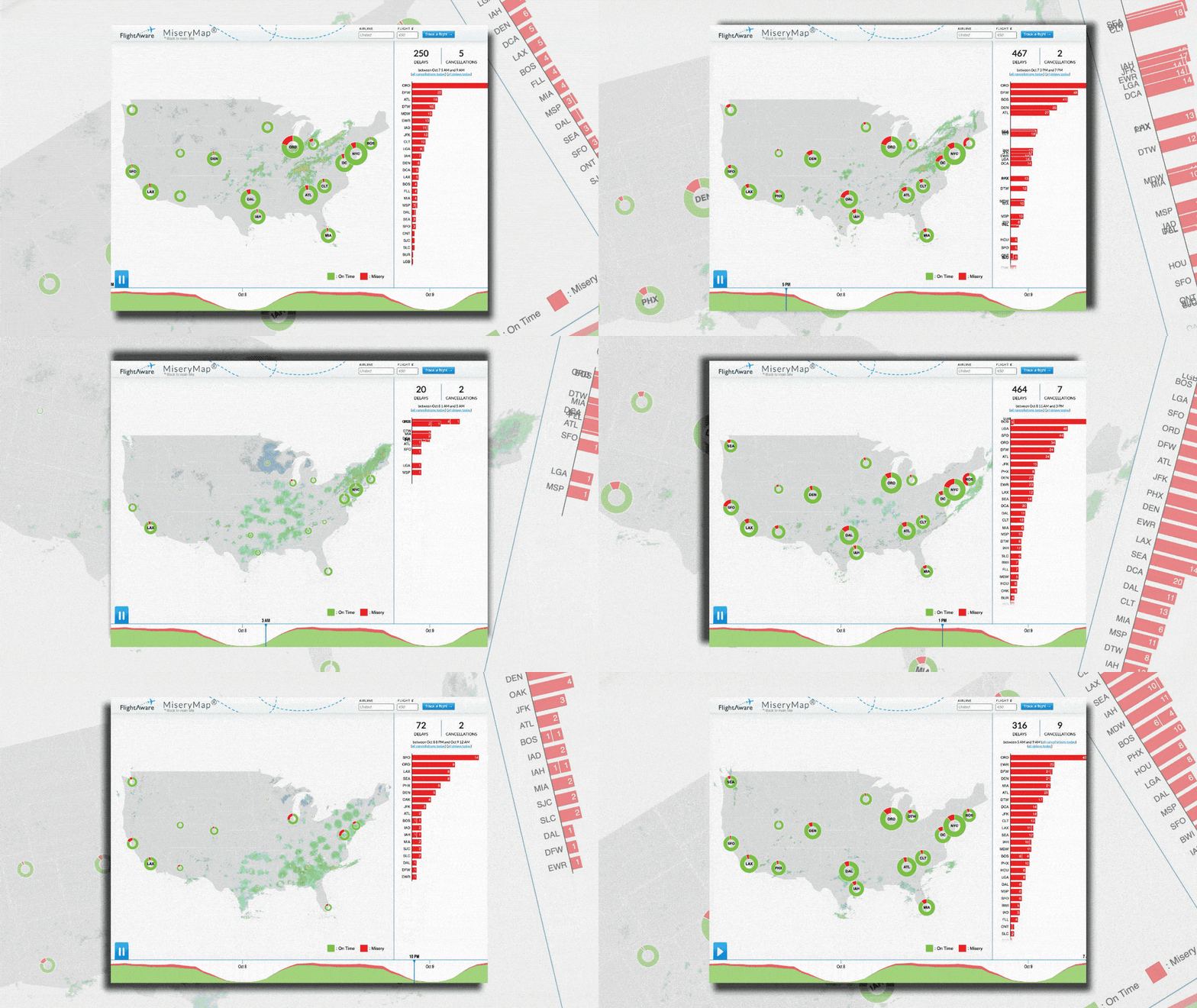
-
Federal Reserve Gov. Michael Barr said in a speech Thursday that he fears the gradual pace of price increases from tariffs being passed on to consumers may prolong the one-time inflationary effect of the tariffs to the point where it affects consumers' inflation expectations. View the full article