ResidentialBusiness
Administrators
-
Joined
-
Last visited
Everything posted by ResidentialBusiness
-
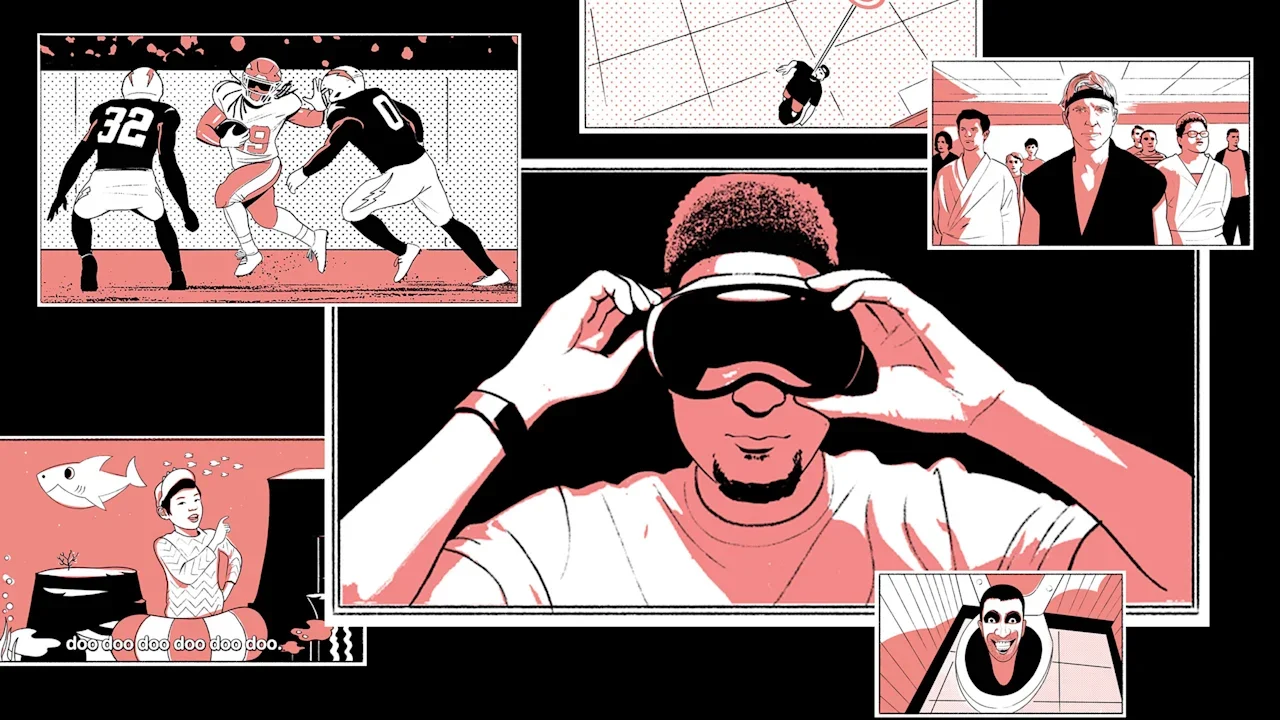
 In this final chapter of How YouTube Ate TV, Fast Company’s oral history of YouTube, the platform migrates from computers and phones to the biggest screen in the house: the living-room TV. It also takes on TikTok with brief videos called Shorts and becomes a major destination for podcasts. And it begins to tackle one of its greatest opportunities—albeit a fraught one—by incorporating AI into the creation process. To succeed, it will have to do this without losing the human element that made YouTube a phenomenon in the first place. Comments have been edited for length and clarity. Read more ‘How YouTube Ate TV’ Part one: YouTube failed as a dating site. This one change altered its fortunes forever Part two: Pit bulls, rats, and 2 circling sharks: The inside story of Google buying YouTube Part three: How YouTube went from money pit to money printer Part four: From Khan Academy to Skibidi Toilet: The inside story of how YouTube’s creators saved the platform Neal Mohan, YouTube chief product officer (2015–2023); CEO (2023–present): When I first joined, there were lots of things that were nascent ideas that we just take for granted today. Like, “It sounds strange, but people watch us on television sets, and they jump through all these hoops to do it. Maybe that’s a thing.” Kurt Wilms, YouTube senior director of product management (2011–present): How we got started was with video game consoles. We said, “Hey, these things have great hardware. Let’s start figuring out how they can play YouTube.” John Harding, Google software engineer (2005–2007); YouTube engineering manager, director, VP (2007–present): Even in the teens, it wasn’t clear that internet streaming video and TV was going to become what it has, but we had that conviction. The investments that we made in those periods of doubt are part of what allowed us to be prepared when that adoption came and when things became successful. Christian Oestlien, YouTube VP of product management (2015–present): With the huge proliferation of connected TVs in the living room, YouTube’s been able to benefit. Wilms: It started off pretty bare bones. You could browse videos and you could play videos. One of the most iconic features of YouTube is the comments. And we didn’t have that on TV. Around 2018, our mantra became, YouTube on TV should be all of YouTube. Oestlien: A lot of work with our partners is to make sure that the YouTube experience that you get is a really high performance, broadcast-quality performance, because that’s what consumers have come to expect Wilms: The TV ecosystem is so fragmented. There’s all these different operating systems, all these different players, they all have slightly different technology they use. The thing we did is we built an open source web browser and we helped do the ports. The [TV manufacturers] could take that and quickly get it up and running on their device. Tara Walpert Levy, Google ads director (2011–2021); VP, Americas at YouTube (2021–present): A lot of our [ad] buyers and, frankly, some of our creators still view TV as the pinnacle of what one hopes to reach. And so the fact that it is our fastest growing platform and that we are so prominent in that environment has been very, very helpful for bringing in the stragglers who get excited about being seen in that environment. Wilms: A billion hours of [YouTube] video gets watched every day just on our living room app globally. In the U.S., viewing on TV has surpassed viewing on mobile. Oestlien: One of the things we’ll be introducing this year is the ability for our creators to organize their content as shows, seasons, and episodes, because we’re seeing a lot of creators start to build 30-40 minute shows. Creators like MrBeast, Michelle Khare, First We Feast—they’re all shooting longer-form content that really lends itself nicely to that kind of show-season-episode format. Michelle Khare, host, Challenge Accepted (2018-present): The majority of our audience watches Challenge Accepted in the living room. Chris Schonberger, CEO of First We Feast, which produces Hot Ones (2015–present): We’ve been making content that fits perfectly in that environment, that invites a blanket, invites a snack, invites you to sit and watch something for 20 minutes and want to watch the next episode. Casey Neistat, filmmaker, YouTuber, and co-creator, costar of the HBO show The Neistat Brothers (2010): My agent recently said that YouTube is the most important platform on television. The profundity of that statement is so overwhelming when you’re someone like me who fought and fought and fought to get a show on television and had a little bit of success, only to be shooed away after it wasn’t a smash hit. How YouTube Shaped Culture “Together at Home,” April 2020 Lady Gaga headlines a COVID-19 concert benefiting the World Health Organization, including a six-hour preshow streamed exclusively on YouTube. Along with embracing ambitious shows and big-screen viewing, YouTube has gotten back to basics with the brief, informal videos it calls Shorts. Launched in 2020, they were a response to the rise of Bytedance‘s TikTok. Matthew Darby, YouTube director of product management (2008–present): TikTok has been a big competitor for us in in the last couple of years, and that’s really focused the company around short-form video in particular. Singer: When we launched Shorts, we didn’t have monetization. We just had to get it out the door. It was obviously a very competitive space. The way that we eased into it was to launch the Shorts Fund, a $100 million fund to reward top-performing Shorts creators. Mohan: With Shorts, the YouTube main app became much more of a central place for not just consumption, but also creation of video. The plus button on the bottom of the app was born out of short-form content, because the core part of short-form content is that it’s actually shot on your phone. Singer: Once we launched the Shorts fund, it was about a year after that when any creator who was in the YouTube partner program could participate in shorts revenue. It was then we were able to go much, much deeper than what a hundred million dollar fund would allow. Johanna Voolich, YouTube VP of product management (2015–2021); chief product officer (2023–present): Our fastest growing format is Shorts, so we’re constantly innovating. We recently added three-minute videos—that was something creators asked for. Oestlien: Shorts has a higher percentage of its watch time coming from mobile devices, but when we introduced Shorts to the living room, the growth rate and the percentage of overall watch time was incredible. I was actually very surprised. Wilms: We started asking viewers, “Why are you watching Shorts on TV?” We heard it’s the best way to watch them with your friends—you all get on the couch. We built a nice interface where the vertical video is shifted to the left. At Cannes Lion last June, Mohan announced that Shorts were averaging 200 billion views a day. Mohan: I believe that YouTube Shorts is a critical component of the broader ecosystem of video on YouTube that spans everything from 15 second Shorts to 15 minute videos to traditional long-form YouTube content to 15-hour live streams. Podcasts, an audio medium over 20 years old, continue to surge—and have redounded to YouTube’s benefit as it turns out people like to watch them even if the visual component consists of talking heads. Oestlien: The podcast was so anchored in audio, and then a few creators just very intelligently said, “Well, why don’t I just shoot this in video at the same time and put it up there and see how it does?” And now that’s completely taking over that medium. T. Jay Fowler, YouTube senior director of product management (2015-present): For about the last three years, we’ve been making significant investments to bring podcast creators on board. Oestlien: All we can do is make sure that we’re building the world’s best infrastructure, that we’re surfacing that content to the right consumer at the right time, and making sure that these creators have the tooling and the monetization and everything they need to make YouTube a platform of choice for them. In February 2025, YouTube declared that it had become the U.S.’s biggest podcasting platform. Voolich: We now have a billion podcast viewers every month. Wilms: Every month, there’s 400 million hours of podcasts watched on YouTube just on TV. Oestlien: Some podcasts can be upwards of an hour or two hours. And I think the lean-back experience that we deliver in the living room has been really complimentary there. Voolich: You can listen to something on your phone when you’re out walking your dog. And then when you get in your house, you just pop it on your TV and you can see the podcaster. That ubiquity of our platform, being available on multiple devices, really lends itself well to podcasts. How YouTube Shaped Culture “Harry Potter by Balenciaga,” March 2023 A YouTube racks up more than 14 million views by cobbling together several AI tools to produce a video intermingling the boy wizard and his cohorts with a Spanish fashion brand. As a deepfake, it’s pretty rudimentary—but also a sign of AI-generated YouTube videos yet to come. YouTube has long used machine learning for features such as recommendation, and the company plans to integrate Google’s Veo 3 AI video generator into its TikTok-like Shorts feature, which gets 200 billion views a day. But AI’s long-term effect on the platform, which has always been so human, remains to be seen. Rhett McLaughlin, co-creator and cohost of Good Mythical Morning (2012–present): The bleak view would be to say that whatever impact AI is going to have on art and entertainment is going to be dwarfed by the impact that it has on our lives and the economy as a whole. Mohan: People want to see what MrBeast is doing or Taylor Swift is doing, because they’re fellow humans who have interesting stories. I don’t think that’s going to change with AI. Cleo Abram, who interviews guests such as CRISPR pioneer Jennifer Doudna on her science show Huge If True (2022–present): Different [creators] will adopt different uses of AI. Whether that’s brainstorming with an LLM or improving thumbnails. Khare: When I think about Challenge Accepted and the advent of these new technologies, including AI, it’s my job to tell the best human story possible about people experiencing real things. Ian Hecox, cocreator (with Anthony Padilla) of the comedy duo Smosh: The more that AI becomes normalized, I think, the more people are going to be craving that human connection. It could actually push people to want to find more content like Smosh. Voolich: Our philosophy has been, “How can we put AI in the hands of creators so that they can have a more powerful experience and talk to their audiences?” So we’ve done things like launch Dream Screen, where you can use AI in the background of your video, and Inspiration, where you can get ideas for new videos based on the videos that you already have. How YouTube Shaped Culture “Using Apple Vision Pro: What It’s Actually Like!,” January 2024 Marques Brownlee, YouTube’s premier gadget critic, unboxes and reviews Apple’s new “spatial computing” headset. It goes on to be his second most-watched video of all time, topped only by a tribute to Nintendo’s Game Boy. Oestlien: One of the things my team’s been working on is scaling auto-dubbing through some of the AI tooling that we have. Amjad Hanif, YouTube VP of product management, creator products (2021-present): It simulates your voice. It also has the expression and the intonation you’d expect at different points of the video. And now it has lip movement as well. Oestlien: If you’re a rising creator in Mexico, we can open up an entire market for you in Germany or France or somewhere else where you never thought you’d reach users. Jim Louderback, general manager and CEO, VidCon (2017–2022), author, Inside the Creator Economy newsletter: AI is going to allow more people to create and build audiences on YouTube. I can now create video without having a production team, because of AI editing tools like Descript, OpusClip, and others. On September 16, at its Made for YouTube event, the company announced more than 30 new features for creators, many involving AI and leveraging Google technologies such as the Veo 3 video generator. Mohan: I’ve come to the conclusion that AI, in the context of YouTube, is less about technology per se and really more about tools and capabilities that are going to get built in service of human creativity. Dina Berrada, YouTube/Google director of product management (2022-present): The thing that really gets us excited is that we talk to a lot of creators who either have a creative block or don’t have enough budget to be able to get their vision to life. This Indian band created this awesome song. They wanted to create a music video for it. They spent $1,000 there in rural Jaipur, and decided they couldn’t spend any more money and they kind of gave up on the idea until we came to them with Veo 3. They saw it as creative liberation. As AI spreads across YouTube, the platform will be confronted with questions about the distinction between real and synthetic content, the abuse of AI for misinformation and scams on its platform, and how it will protect the interests of its human creators in an era when they could wind up competing with digital simulacrums of themselves. Some of the answers could take years to play out. Kevin Allocca, YouTube culture and trends executive (2010–present): We’re already seeing a large volume of AI-generated content that is starting to get popular on the platform, but the stuff that’s actually resonant and good still has a point of view and has a perspective and things. It’ll be interesting to see where we choose collectively to draw the line between what counts as real and what doesn’t, in a future state where everybody can imagine whatever it is that they want to create. Fowler: One of the things that we feel very strongly about, in the world of working with AI is that we clearly label things as AI, that they come from our tools. And this also has an added benefit that when other people are viewing the video, it encourages them to make a remix themselves. Pei Cao, YouTube/Google software engineer (2004-present): Because of the proliferation of deepfake tools out there being used by people who are not good people, as a society we have to deal with the issue of whether we can still trust visual information. YouTube is a very active participant in trying to tackle this problem. We are part of an industry consortium called C2PA that’s trying to [define] how devices can certify that information is truly captured by a camera and is real. I feel like I’m right in the middle of this change, and I honestly don’t quite know how it’s going to play out. Hanif: We built the technology to be able to help creators identify YouTube videos that match their likeness. To be able to find them, see how many views they’ve got, and then decide if they want to request removal, keep it up, or get in touch with the creator, because it’s something that they’re actually interested in. It’ll find synthetic versions as well. And the amazing part is it’s done at this vast scale of YouTube. Mohan: Our job at YouTube is to build the world’s best stage. But the people on the stage are the creators, and they get to decide what it is that they want to convey. And they are better at that than anything that we would be able to come up with ourselves. Oestlien: The thing about YouTube is everything surprises me and nothing surprises me. Allocca: Your expectations are constantly confounded by what people choose to do with this technology, which is what makes it so interesting in the first place. Steve Chen, YouTube cofounder: I love the fact that it’s an upload button that everybody in the world has access to. And we’ve had that since day one. Additional reporting by María José Gutiérrez Chávez, Yasmin Gagne, Steven Melendez, and David Salazar View the full article
-
Italian luxury carmaker says petrol engines will help it steer through ‘uncertain times’View the full article
-
Sometimes the smallest shifts in how we plan, think, and work can spark the biggest changes. This list of fresh nonfiction picks will reset your daily habits in ways that reimagine productivity, enhance confidence, and charge motivation. Consider it your tool kit for a full-on routine reboot. Move. Think. Rest.: Redefining Productivity & Our Relationship with Time By Natalie Nixon What if our most productive selves aren’t when we’re on Zoom calls or churning through emails, but when we give ourselves the space and the time to move, think, and rest? Move. Think. Rest. outlines a compelling new framework for work in the 21st century—one that replaces slowly dying of burnout at your desk with a productivity routine that makes downtime a must-have. Listen to our Book Bite summary, read by author Natalie Nixon, in the Next Big Idea app or view on Amazon. The Flipside: How to Invert Your Perspective and Turn Fear into Your Superpower By Michelle “MACE” Curran Mace spent years operating in high-pressure environments, from combat situations to performing high-speed maneuvers in front of millions of people. But what also came with that career were the moments behind the scenes of self-doubt, the struggle to find her identity, the near misses, and the mental battles that came with the job. Much of what she learned to persevere and triumph as a fighter pilot applies to winning at life. Listen to our Book Bite summary, read by author Michelle “MACE” Curran, in the Next Big Idea app or view on Amazon. Mission Driven: The Path to a Life of Purpose By Mike Hayes A life of purpose won’t fall into your lap. People who spend their time reacting to events and sudden opportunities are at risk of feeling empty and starved of fulfillment. To find meaningful achievement, you must put in the work of identifying your mission and then go after it. Listen to our Book Bite summary, read by author Mike Hayes, in the Next Big Idea app or view on Amazon. This Isn’t Working: How Working Women Can Overcome Stress, Guilt, and Overload to Find True Success By Meghan French Dunbar Stress, overwhelm, and exhaustion have long been normalized qualities of working life, but they are not necessary—nor are they acceptable. People are increasingly refusing to sacrifice their well-being for the sake of their job, and workplaces are realizing that happy, healthy employees are better for business. Optimal performance and sustainable success (as an individual or company) are a result of prioritizing well-being. Listen to our Book Bite summary, read by author Meghan French Dunbar, in the Next Big Idea app or view on Amazon. You Already Know: The Science of Mastering Your Intuition By Laura Huang Each of us has a voice inside of us—one that is calm, clear, and quiet. That gut feeling that tugs you toward what you already know has always been there, ready to be heard by those who learn to listen to it. You Already Know is a guide to understanding intuition, strengthening it, and trusting it when it matters most. Listen to our Book Bite summary, read by author Laura Huang, in the Next Big Idea app or view on Amazon. This article originally appeared in Next Big Idea Club magazine and is reprinted with permission. View the full article

-
The President-backed agreement marks milestone in efforts to bring two-year conflict to an endView the full article
-
If you’re familiar with Gallup data about employee engagement, they have been playing one of their Top 40 hits for decades now. It’s a classic we’ve all heard. The tune? “People don’t quit companies; they quit managers.” We’ve known this for years, but here we are, still stuck in the same leadership crisis. Too many managers don’t understand the difference between managing work and leading people. Here’s the plain truth: You manage the work; you lead humans. And when leaders miss that, the culture and performance pay the price. The brutal truths So, if you’re willing to take a hard look in the mirror, here are seven brutal truths about leadership every leader needs to face. 1. Good leaders remove the fear from the atmosphere Traditional command-and-control bosses still use fear and pressure to push people forward. It may work in the short term, but it kills creativity, collaboration, and psychological safety. Modern leaders—servant leaders—flip the script. They create safety first, freeing their people to share ideas, take risks, and innovate without fear of punishment. When fear leaves the room, growth walks in. 2. Trust is non-negotiable for high performance Here’s the leadership gut check: “Does my behavior increase trust?” Trust isn’t just a nice-to-have—it’s the foundation of high-performing teams. Leaders who build trust practice transparency, keep commitments, talk straight, and hold themselves accountable. If your people don’t trust you, nothing else will stick. 3. Accepting feedback fuels good leadership Too many leaders avoid hearing feedback because it threatens their ego. That’s a surefire way to lead in an echo chamber. The best leaders invite feedback, listen with curiosity, and ask questions until they truly understand. They don’t dwell on past mistakes—they use feedback as fuel to grow and to better serve their teams. 4. Good leaders stay positive under pressure Challenges, setbacks, and even failures are inevitable in this day and age. The difference is how leaders show up in the storm. Emotionally intelligent leaders don’t sugarcoat reality, but they keep their perspective grounded in growth. They frame problems as opportunities to regroup and reset. That positivity doesn’t just reduce their own stress—it keeps the whole team grounded. 5. Procrastination kills leadership Effective leaders are action-takers. They don’t put off tough conversations or delay decisions until a crisis forces their hand. They anticipate issues and address them head-on before they spiral. Procrastination breeds chaos. Proactive action builds stability. 6. Boundaries are a leader’s best friend Warren Buffett said it best: “The difference between successful people and really successful people is that really successful people say no to almost everything.” I regularly coach executive teams to protect their time, energy, and focus—to say no to distractions, negativity, and overcommitment. The flip side? Saying yes to what aligns with their values and fuels their mission. 7. In the end, leadership is really about love Yes, love. And not the soft, sentimental, squishy kind. I’m talking about love as practical, results-driven action, day in and day out. The rugged Green Bay Packers head coach Vince Lombardi nailed it when he said, “I don’t necessarily have to like my players and associates, but as their leader, I must love them. Love is loyalty, love is teamwork, love respects the dignity of the individual. This is the strength of any organization.” In practice, leadership love looks like clearing roadblocks for your team, investing in their growth, advocating for their success, and treating them with dignity. Love is leadership’s ultimate competitive advantage. The bottom line: The old Gallup song may be around for another decade, but leaders willing to face these truths—and live them out—will finally help their teams and organizations play a new song. —Marcel Schwantes View the full article

-
There is a new calculator that shows how President Donald The President’s “big, beautiful” law will affect your 2026 tax bill, and how much additional take-home pay you’ll be getting. The calculator, from the Tax Foundation—an independent, tax policy research organization—looks at the new exemptions and tax write-offs in the massive 940-page One Big Beautiful Bill Act (OBBBA), which was signed into law in July. The savings are the result of the OBBBA extending the 2017 Tax Cuts and Jobs Act, making many of the changes permanent, while adding some new short- and long-term tax rules, including the “No Tax on Tips” provision (which allows eligible tipped workers to deduct a portion of their income from tips on their federal income taxes), a car loan deduction, a deduction for charitable donations, and a child credit. The new interactive tax calculator tool allows users to compare their tax liability for the 2026 tax year—before and after OBBBA’s tax provisions. Tax Foundation The nonprofit Tax Foundation found that taxpayers will see an increase in after-tax incomes of about 5.4%, on average, with the bottom 20% of earners saving 2.6% in after-tax income, and those at the top 60th to 80th percentiles saving 6.3% in after-tax income. How the new 2026 tax law affects take-home pay, by income bracket Here is the breakdown on how much American taxpayers are expected to save based on earnings brackets, according to the Tax Foundation and CNBC: 0%-20%, up to $17,735 in annual income: 2.6% increase in take-home pay 20%-40%, $17,736–$38,572 in annual income: 5.2% increase in take-home pay 40%-60%, $38,573–$73,905 in annual income: 5.7% increase in take-home pay 60%-80%, $73,906–$130,661 in annual income: 6.3% increase in take-home pay 80%-100%, above $130,661 in annual income: 5% increase in take-home pay Meanwhile, the nonpartisan think tank Tax Policy Center (TPC) estimates the law will, on average, reduce taxes for Americans by about $2,900 in 2026, with some 85% of households receiving a tax cut in 2026. The calculations come as Americans face skyrocketing living costs, inflation, tariffs, and a tight job market, all of which are making it much harder for the average person in the U.S. to stay economically afloat. View the full article

-
Every working parent has that one thing keeping them from completely losing it. Some have the Mary Poppins-like nanny who knows exactly when to show up with wet wipes and organic muffins. Others swear by meal kits, color-coded Google calendars, or chore charts their family actually follows (unicorn families, basically). For me? It’s a group text. Not glamorous, not particularly organized, but it’s my lifeline. This is where playdates get arranged, last-minute pickup emergencies get solved, and critical intel on the latest stomach bug gets dropped. It’s also where I can admit, “I fed my kids popcorn and blueberries for dinner,” and instead of side-eye, I get heart emojis and another parent confessing, “Mine ate Oreos in the car.” This is my working parent wolf pack. And trust me, you need one too. Because let’s be honest: Working and parenting at the same time is basically like walking a tightrope in a thunderstorm while your boss Slacks you and your kid’s soccer coach emails the snack schedule. A wolf pack is the net below, ready to catch you with help, empathy, or at least a well-timed meme. Here’s where mine shows up most: Carpools. Knowing that Saturday’s trip to the trampoline park is someone else’s problem. Bliss. Emergency coverage. The meeting runs late, your kid spikes a 103 fever, or your train gets stuck underground. This is when your wolf pack jumps in. Mental health. Sometimes you just text, “If my child sings the Bluey theme song one more time, I’m moving out.” They don’t call CPS. They send solidarity GIFs. Camaraderie. Nothing heals like someone typing “Same.” Start small So how do you build one? Start with one or two parents you trust and add as you go. Look for people who are reliable, unpretentious, and living at the same chaos level as you (no judgment, but the mom with an in-house chef and a driver may not be your best emergency contact). You don’t need soulmates, but you need people who won’t flinch when you ask for help, and who understand that reciprocity isn’t tit for tat. You’ll return the favor, maybe not tomorrow, but eventually. The unspoken agreement is simple: we’re all drowning, so sometimes we pass the life vest. At the end of the day, my wolf pack isn’t just about logistics. It’s about laughing together at 11 p.m. while rage-scrolling the 19-page school newsletter. It’s about knowing I’m not the only one who missed the “bring a pilgrim costume” email. It’s about being seen through the exhaustion, the chaos, and the love that keeps us showing up. Think of it less as a group text and more as a lifeboat, a comedy club, and a survival kit rolled into one. Every working parent deserves that kind of pack. View the full article

-
“How did you get to where you are in your career?” My interest in this question dates back 45 years to when I was an MBA student at Northwestern University’s Kellogg School of Management. Whenever corporate executives were guest speakers at our classes, I would listen intently as they described what contributed to their career advancement. In the same vein, as I speak with leaders today, I always make a point of asking them what they consider to be the main drivers of their success. Over more than four decades, the two most common responses are: (1) “I worked hard” and (2) “I have several unique skill sets.” As I look back on my corporate career, including as chair and CEO of Baxter International, a $12 billion health care company, I agree with the importance of working hard and having unique skills. However, having engaged in the practice of self-reflection as the foundation of my values-based leadership, I know that far more than my own efforts and talents contributed to my success. Five factors—luck, timing, team, mentors and sponsors, and faith/spirituality or mindfulness—account for much of what I have achieved. As executives and those who aspire to leadership reflect on their own careers, they will no doubt see the influence of these factors. The result is a shift in perspective that encourages gratitude, attracts support, and leads to more opportunities. 1. Luck Without question, luck plays a part in every career, such as being in the right place and connecting with the right people who open doors. Over the years, I’ve heard executives attribute their early success to a “lucky break,” including insightful advice from a teacher, a first boss, or a mentor. The same happened for me when I was an undergraduate student at Lawrence University. When I told one of my professors that I was considering a PhD in mathematics, he quickly offered a different opinion. “Harry, if you get a doctorate in mathematics, your work will be of most interest to a small group of colleagues. You’re so outgoing, why don’t you think about economics and pursuing a career in business? You’ll be able to influence so many more people.” If it hadn’t been for that advice, I am not sure what my career path would have looked like. 2. Timing If luck is about being in the right place, then it only makes sense that it also has to be at the right time. One episode of fortunate timing occurred when I was an undergrad looking for a summer internship. I applied in-person at the First Bank of Minneapolis, where my application was put into a stack with about 150 others. In a stroke of fortunate timing, a vice president at the bank walked by the reception desk. I introduced myself, explained that I was looking for an internship, and politely asked for five minutes to tell him more about myself. Twenty minutes later, I landed the internship. Timing also played a part later in my career, especially when I was first promoted. There were times when I replaced someone who had accomplished very little in the position. Therefore, only a small effort on my part made a huge difference in what I accomplished compared to my predecessor. The more I recognize the role luck and timing played in my career, the more it reinforces a sense of genuine humility, another of my principles of values-based leadership. It’s a reminder that success is not a reflection of being the smartest or the most gifted person in the room. 3. Team I am very well aware of the fact that I have been blessed with great teams at every stage of my career. If I had not worked with these talented colleagues—people who knew what I didn’t know—there was no way I would have reached senior leadership positions, including chief financial officer (CFO) and then CEO and chair at Baxter. In fact, my team’s success directly contributed to my advancement. For example, when I was one of eight VPs of finance at Baxter, there was an opening to become the next CFO. The other seven VPs had far more experience than I had. To my surprise, I was promoted. The reason? “Everybody wants to work for you, and so many people who are promoted throughout the company were trained by you,” I was told. When I share this story with my students at Kellogg today, I do so as a reminder of the importance of creating an environment in which others want to work for you. It’s the best possible showcase of leadership. 4. Mentors and sponsors The influence and encouragement of so many have made a huge difference in my life. As I look back, I remember the late Donald Jacobs, Dean of Kellogg, who encouraged me to think about the kind of impact I would like to make as a leader: “Do you want to be a very good finance person? Or do you want to be one of the people who helps run a company who happens to know a lot about finance?” I chose the latter, and it made all the difference in my career. Another important mentor was William Graham, the long-time CEO of Baxter, who used to say, “Aren’t we blessed to do well by doing good?” He lived that philosophy and impressed upon me the importance of addressing the needs of all stakeholders, including customers, suppliers, shareholders, and even society. 5. Faith, spirituality, or mindfulness This last factor is really number one for me, but I want to be sensitive to the thinking of others (especially when teaching in a secular university). For me, though, my faith reminds me that any talents or skills that I have are God-given gifts; therefore, I am responsible for using these gifts to the best of my ability. In other words, it’s not about me. Spirituality, mindfulness, or the practice of faith can help others see that, as they pursue success, it really is about making a difference for others. These five secrets to success apply to everyone at every level. Their importance becomes clearer with self-reflection, reminding us that our career advancement is not just about us. Rather, the success we achieve broadens our ability to influence and help others as they benefit from luck, timing, teams, mentors, and a spiritual/mindful perspective. View the full article

-
Fast Company is delighted to make this article available to any student for free. Please request a copy by email. I was sitting on the steps of Duke Chapel at 2 a.m. in December 2023, the Gothic towers looming above me, a 210-foot reminder of everything I was about to walk away from. My phone was exploding with notifications: Y Combinator had just accepted us. ChatGPT had hit 100 million users in two months—faster than TikTok, faster than Instagram, faster than anything in human history. And I was about to break my single mother’s heart. The chapel bells rang twice, echoing across the empty quad. In six hours, I’d be dropping out of one of America’s best universities. The same university my mother had sacrificed everything to get me into. The same university whose acceptance letter made her cry tears of joy in our cramped apartment kitchen in Dhaka, Bangladesh, a place most Duke students couldn’t find on a map, where American university acceptance letters arrive like answered prayers, meant to lift entire families. The only thing harder than getting into Duke from there was explaining why I was leaving. Now I’d make her cry again. I threw up twice before leaving Duke that morning, once in the dorm bathroom, once behind the student center. Not from the previous night’s parties; I’d stopped going to those months earlier while my hallmates were doing keg stands. I was too busy watching the world change at warp speed. While my classmates wrote papers about AI’s potential, we were teaching it to think in practice. While they debugged thesis statements, we debugged systems that would touch millions. They worried about grades. We worried about scale. The decision wasn’t romantic. It was terrifying. But sitting on those chapel steps, watching my classmates live their normal college lives while history was being written in real time 3,000 miles away, I knew. My cofounder, Md Abdul Halim Rafi, and I were accepted into Y Combinator’s W24 batch with Octolane AI to build the next AI Salesforce. We were one of 260 companies selected from more than 27,000 applications, less than 1% acceptance rate. Duke’s is 8%. Harvard’s is 5%. I’m not great at math, but even I could figure out which achievement was statistically more improbable. Some trains only come once. And this one was leaving the station with or without me. Why This Moment Is Different History rarely offers moments when the ground shifts beneath our feet. I’ve studied them obsessively: The internet in the ’90s, when two Stanford PhD dropouts named Larry Page and Sergey Brin saw search differently. Social media in the 2000s, when a college dropout named Mark Zuckerberg connected the world from his dorm room. Today, it’s AI, and it’s moving faster than any wave before. Consider this: ChatGPT hit 100 million users in two months. TikTok took nine months. Instagram took 2.5 years. The telephone took 75 years. We’re watching revolution at warp speed. The AI market is projected to reach $1.81 trillion by 2030, growing at 35.9% annually, faster than the cloud computing boom, faster than mobile, faster than the internet itself. Here’s what kept me up at Duke: By 2028, AI will autonomously make 15% of all work decisions. Not assist—decide. We’re not talking about a tool anymore. The question for me was: “Do I want to build the next GPT or learn about it in a textbook?” Actually, scratch that. When BackRub started as a Stanford research project in 1996, Page and Brin had years to develop it before formally launching Google in 1998—and even then, it took until their 2004 IPO (six years post-launch) before the world fully understood just how profitable and dominant they’d become. Zuckerberg had seven years after Facebook’s 2004 launch before Google even tried to compete with Google+ in 2011. AI founders? Look at what happened to Character AI: They built something revolutionary, then Google just hired the team. Look at Inflection, which got $1.5 billion in funding, then Microsoft basically bought them for parts. We don’t have years. We have months. Maybe 24 if we’re lucky. Every week I stayed in that Duke classroom, another AI startup was getting a $100 million Series B. Every test I took, OpenAI was releasing another model that made last month’s breakthrough obsolete. Every night I spent in the library, someone my age in San Francisco was defining how humanity would interact with AI forever. The companies that win the AI race in 2026 and 2027 will dominate for decades. The rest will be Wikipedia entries nobody reads. The Framework That Made Me Jump Dropping out sounds romantic. In reality, it’s a calculated risk that requires brutal honesty. Here’s the framework that helped me decide: 1. Conviction: Were we solving a problem that mattered? Sales teams waste 30% to 40% of their time manually updating CRMs. The question was simple: Could we eliminate a trillion-dollar inefficiency? 2. Timing: Was this the right moment? AI adoption was exploding, but it was still early enough for startups to move faster than incumbents stuck in quarterly earnings calls. 3. Traction: Did we have proof? Early customers kept asking the same question: “How fast can you onboard us?” One customer pulled out credit cards mid-demo. 4. Partnership: When you’re about to jump off a cliff, you better trust who’s jumping with you. Building a startup isn’t a solo sport. When you hit the inevitable walls (and you will), you need someone who believes in the vision as deeply as you do. Someone who can carry the weight when you can’t. Someone whose skills complement yours, who challenges your assumptions, and who won’t let you quit when things get dark. My cofounder, Rafi, my best friend since high school, left his comfortable job, said goodbye to his family, and boarded a plane to San Francisco with his wife after one phone call. He did this based on nothing but my conviction and our shared dream. Some nights we’d code in complete silence for hours, the only sound being keyboard clicks, because we knew we didn’t have the luxury of giving up. When someone trusts you with every fiber of their being, failure stops being an option. 5. Runway: Could we survive? YC and early investors gave us just enough capital to go full time. Not comfortable, but enough. But when you’re building with your best friend who crossed oceans for this dream, you make it work on breadcrumbs. Without all five elements of this framework, I would have stayed in school. That’s why most people shouldn’t drop out, because unless those factors align perfectly, you’re not making a calculated leap. You’re gambling with your future. Why Most People Shouldn’t Do This Let me be brutally honest: Dropping out isn’t a badge of honor. It’s a tactical decision that’s wrong for 99% of people. Stay in school if: You’re running from something (hard classes, social pressure, your roommate’s terrible music taste) rather than toward something specific You don’t have a problem that keeps you up at night and wakes you up excited (insomnia doesn’t count unless it’s productive insomnia) You think being a “dropout founder” sounds cool on X/LinkedIn You don’t have at least 12 months of runway secured (No, your parents’ basement doesn’t count as runway.) You’re alone without a cofounder or strong support system (Chatting with Cursor AI or GitHub copilot is not a cofounder.) You haven’t talked to at least 50 potential customers The opportunity will still be there in two years (Spoiler: If it will, it’s not urgent enough.) The world needs doctors who finish medical school and engineers who master their craft. We can’t all be dropout founders, and thank God for that. Someone needs to actually know what they’re doing! What I’d Tell My Past Self If I could go back to that terrified kid holding his Duke ID at 2:12 a.m., here’s what I’d say (yes, I remember the exact time; anxiety has a way of burning timestamps into your brain): The fear never goes away. You just get better at moving forward despite it. Every founder you admire—Zuckerberg, Gates, Jobs—was once exactly where you are: terrified, uncertain, but unable to ignore the pull of what could be. Your parents will understand. Maybe not today, maybe not this year, but when they see you building something that matters, they’ll understand that you honored their sacrifices in a different way. Failure isn’t falling, it’s not trying. You can always go back to school. You can always get a job. You can always become a consultant and use phrases like “leverage synergies” for the rest of your life. But you can’t always catch a wave that’s already crashed. Find your tribe. The loneliest part isn’t leaving school; it’s the months when you’re building in obscurity while your friends are at parties you’re no longer invited to. Find other builders. Share your struggles. The founders who seem to have it all together are often one bad day away from quitting too. A Final Thought Last week I got coffee with a Duke student who’s considering dropping out. He reminded me of myself: brilliant, ambitious, and absolutely terrified. I told him what I’m telling you: Don’t drop out to follow my path. Drop out only if staying would be a betrayal of the fire inside you. Drop out only if the problem you’re solving matters more than your comfort. Drop out only if you have something to build that the world desperately needs. And drop out only if you have someone like Rafi, someone who’d cross oceans for your shared dream. But if you have that fire, that problem, that desperate need to build, then maybe, just maybe, the biggest risk isn’t leaving. It’s staying. View the full article

-
The yellow metal says one thing; Treasuries and the dollar another View the full article
-
Bao Loc is a city in Lam Dong Province in the Central Highlands region of Vietnam. Bao Loc is the closest highland city to Ho Chi Minh City, and the construction of a new expressway has made it more accessible. I was reading about some recent tourism developments in Bao Loc, which are being built to cash in on weekenders from Ho Chi Minh City. There are frequent local buses from the popular tourist city of Da Lat, so I got the bus to Bao Loc to see what is happening. [Local bus from Da Lat to Bao Loc.] I thought it would be a short ride as Bao Loc is in the same province as Da Lat. It ended up taking 3 hours, not including the time it took driving around Da Lat to pick up more passengers. I should have looked at the time and distance on the map. From a tourism perspective, there is not a lot going on in Bao Loc. It is pleasant yet unremarkable town. It doesn’t have the old French villas like Da Lat, and the mountains are not as dramatic as in Da Lat. Like Da Lat, Bao Loc has an artificial lake in the city centre, though the lake was being dredged when I visited. There are nice tree-lined streets, and you can walk around without worrying about getting mown down when trying to cross the road. If you are stuck for things to see, look on the map for a pagoda. [Phuoc Hue Pagoda.] Phuoc Hue Pagoda is not far from the main lake. Whenever I am in a small city or town in Vietnam, I look for cafes hang out at. There are plenty of cafes in town to chill out in. In addition to the lake being restored, the 28/3 Park was was also closed for renovation. I had been travelling around the South Central Coast and Highlands in March of 2025, and every city had 30/4 posters to commemorate the upcoming liberation day anniversary. Each southern city has their own liberation day, and I was in Bao Loc leading up to the 50th anniversary of the liberation of Bao Loc (28 March). If you are in a southern city and see a park with a date in March or April, then you can guess that this is a liberation park. Bao Loc in 1975 was known as B’Lao Town, and it was the capital of Lam Dong from 1958 to 1975. The provinces and capitals were reorganised after reunification, and Da Lat became the capital of Lam Dong. It’s hard to imagine now that Bao Loc could have been the capital, but there was a time when Da Lat was not the tourism juggernaut that it is today. I walked around the peaceful streets of Bao Loc and wondered if this is what Da Lat felt like 30+ years ago. Bao Loc is starting to get more local media attention, with such headlines as, Is Bao Loc the new Da Lat? It’s also being called a hidden gem, which is probably a sign that it’s no longer a hidden gem. Most of the tourism activity is outside the city, so the city doesn’t feel like it is becoming the next Da Lat. I didn’t see any westerners when I was there (not even a stray English teacher), and there are no signs in Korean or Chinese. There are holiday home developments in the surrounding hills with names like Sky Hills and Sakura Gardens, aimed for the short-break market from HCMC. I keep a list of developments in Da Lat and Lam Dong if you want to see more. [Sky Hills Bao Loc.] In my previous research about Lam Dong province, I found some plans for various railways in the Central Highlands. One railway was planned to connect a mining project in the highlands to a port, via Bao Loc. I made a map of all of the proposed Central Highlands railways, and this is what Bao Loc would look like if it was connected to a passenger railway system. [Bao Loc in a futuristic Central Highlands railway network.] This map has now changed because in July 2025, Binh Thuan province was merged into Lam Dong province. This means that Lam Dong is now a coastal and highland province. There was also a plan to build a commercial airport on the site of the old Loc Phat airfield. The railway and airport plans are extremely unlikely to happen, so for now, Bao Loc will retain its sleepy small city charm. I stayed at the Camellia Hotel, which is located in the city centre near the lake (hopefully filled with water again if you plan to visit). View the full article
-
It’s five answers to five questions. Here we go… 1. When your coworker is your Uber driver This happened to a coworker, not me, but now I’m paranoid it will. She told me that over the weekend she and her roommate got in an Uber to get to a bar, and the driver was our other coworker. I have nothing against side hustles/second jobs (I work one myself, as a bartender at a theater), but of all the people we work with (we’re standard office workers at a large employer in our city) I would not have expected this specific person to take up Uber driving for extra cash. So, WWYD? My coworker said she was pretty silent the entire time but did acknowledge/greet our coworker/driver. I wouldn’t know how to act, especially if I was coming home after a night out and not sober, or with a date, or just having a bad day. This doesn’t need to be a big deal! You’d treat the coworker like you would if the driver were anyone else you knew — meaning, greet them warmly, ask how they’re doing, and, if you’re up to it, make pleasant conversation during the drive. It’s no different than your own second job, or than if you ran into them on, say, a subway. I know the power dynamics might feel a little weird — you are now paying them to provide you with a service — but treat it like you would any other unexpected public encounter with someone you know from work, and it doesn’t need to be awkward at all. If you weren’t in a frame of mind where you could easily carry on a warm conversation (whether from a bad day or whatever else), you could say, “I hope you don’t mind, I’m exhausted and was planning to just rest my eyes during the drive.” That’s probably a good strategy if you aren’t sober as well, to avoid lowered inhibitions leading you to say anything you normally wouldn’t. 2. My colleague has hives because of the stress of our jobs I work in an industry that doesn’t seem stressful from the outside (arts and heritage) but, due to under-staffing, lack of clear exhibition schedules/timelines, and poorly defined job scopes, is really stressful. I have considered leaving multiple times, but the industry is small and it would be hard to get a similar job elsewhere. Recently I found out that one of my colleagues has had full body hives for over a year. She told me and another colleague over lunch when we were talking about stress at work, and she said that her doctor has advised her to take a sabbatical. In the meantime she is taking antihistamines daily. However, she does not feel like she can take a sabbatical because we have ongoing projects that will only be completed in another year. I was shocked to hear that and urged her to take a sabbatical. I lead one of the teams she is on and know that we could distribute her work while she is recovering. However, she said she doesn’t feel like she could. A couple of days after that, I discovered that an ex-colleague also had full body hives from the stress of working our job. She has since left and the hives have gone. I feel very concerned for the colleague who is currently experiencing hives. Is this something I should report to our manager? Or would that be a betrayal of her confidence? Nope, don’t share it with your manager; this is your colleague’s private medical information and how she manages it is up to her. You can certainly raise concerns about stress and unsustainable workloads, and you can encourage your coworker to take time off/brainstorm with her about how to make that happen, but your coworker’s hives (two coworker’s hives, in fact — !!) are not yours to share. 3. Changing clothes in a non-locking office I recently got my very own office — yay! It has no windows and is completely private, though it doesn’t lock. Is it unprofessional to change clothes in the office, rather than in the bathroom or a downstairs locker room? The office doesn’t have a culture of barging in without knocking, and people mostly leave each other alone unless the door is open. I wouldn’t change clothes in a non-locking office unless you put a sign on the door saying “please knock.” Even if the culture of your office is not to enter without knocking, it’s still possible that someone might one day — they shouldn’t! but they could — and it’s just far better for everyone (you and them) not to have to deal with stages of undress at work. 4. Will my random email address hurt me in my job search? I am new to searching for professional jobs. I have a random email address that I used for applying to colleges and scholarships, like 753rlaf61@gmail.com. Also, the name associated with it (my name, but not including my last name) shows up in an inbox as all lowercase. Will this random email be a mark against me as I apply for professional jobs? My name is too common for me to get myname@gmail.com, but I could get an email like myname[random numbers]@gmail.com. Would this make any difference at all when I am applying for jobs? If it would make a difference, is there a format or a few formats for the email address that you would recommend? It won’t make any difference. If you wanted to look absolutely as polished as possible, you’d get an address more like name[random numbers]@ and also capitalize your name in the “from” field correctly, but no one is going to reject you for not having that, or even think much about it (if at all). 5. Should I mention performance ratings in my resume? I work at a FAANG company known for being pretty tough/competitive in its performance ratings. Would getting the maximum rating multiple times be something worth mentioning in either a resume, a cover letter, or an interview? When I interview people, I often have to probe pretty hard to get to what constitutes exceeding expectations at their company versus just doing one’s job, or whether someone was actually driving innovation versus riding along with their team, or whether their cool project actually met a business need. A high performance rating seems like convenient shorthand for “I accomplished things and my employers considered them valuable and my role in them important,” but I can’t recall anyone I’ve interviewed bringing up high performance ratings (as opposed to, say, actual awards), and I’m coming up on having interviewed 100 candidates at this company, so I’m wondering if it’s gauche. It’s not gauche. Resumes can include things like, “Achieved highest company rating on annual performance evaluation all six years.” If you can quantify that, even better: “Achieved highest company rating on annual performance evaluation — awarded only to top 5% of employees — in all six years.” Even if you can’t quantify it like that, though, it’s still worth including; your interviewer can probe about how rigorously the company operated if they want to. You just have to make sure to word it in a way that doesn’t inadvertently signal the opposite of what you intend to accomplish. Like if you were there six years, you wouldn’t want to say, “Achieved highest company rating on annual performance evaluation in 2022.” You want it to sound really superlative. The post my coworker was my Uber driver, changing clothes in a non-locking office, and more appeared first on Ask a Manager. View the full article
-
Roughly 100,000 properties in the United States had a foreclosure filed in the third quarter this year, an increase on a quarterly and yearly basis, ATTOM said.

-
Investment platform warns customers bitcoin ‘has no intrinsic value’ and ‘is not an asset class’View the full article
-
Materials needed for enamelling of hot water tanks is excluded from bloc’s list of authorised substancesView the full article
-
Defence alliance mulls easing restrictions on pilots to open fire on Russian aircraftView the full article
-
The US wants to make the immigration of skilled workers more expensive; the UK cheaper. Who’s wrong?View the full article
-
We now know that the inflation that often follows can be persistent rather than transitoryView the full article
-
Living wage increases, new regulations and backed-up planning system driving price rises, say producersView the full article
-
Australian investment group considers Canary Wharf and City locations for its 2,000-plus London staffView the full article
-
FT analysis highlights arbitrary nature of system, allowing readers to discover how their bill compares in their areaView the full article
-
An ageing workforce is affecting all sorts of professionsView the full article
-
We may earn a commission from links on this page. Deal pricing and availability subject to change after time of publication. Amazon Big Deal Days end tonight, Oct. 8, and until then, Lifehacker is sharing the best sales based on product reviews, comparisons, and price-tracking tools before it’s over. Follow our live blog to stay up to date on the best sales we find. Browse our editors’ picks for a curated list of our favorite sales on laptops, fitness tech, appliances, and more. Subscribe to our shopping newsletter, Add to Cart, for the best sales sent to your inbox. New to Prime Day? We have a primer on everything you need to know. Sales are accurate at the time of publication, but prices and inventory are always subject to change. If you're in the market for an iPad, you have no shortage of options to choose from. Apple now sells some powerful iPads, with the same components you'd find in a Mac. But while all of Apple's iPads are excellent in their own right, when it comes down to it, most of us don't need the extra power, hardware, or features that come with these more expensive tablets. In fact, most of us would probably be perfectly suited to Apple's entry iPad—appropriate called, iPad. If that's true for you, you're in luck. For just a few more hours, you're able to save 20% off Apple's most recent iPad. Apple sells this tablet for $349, but during the final hours of October Prime Day, you can pick one up for $279. iPad A16 (128GB) $279.00 at Amazon $349.00 Save $70.00 Get Deal Get Deal $279.00 at Amazon $349.00 Save $70.00 Apple's entry-level iPad doesn't feel entry-level. The tablet comes with an 11-inch display with minimal edges. It fits right in alongside Apple's other, more premium iPads, without the added price. You get a single 12MP camera on the back of the tablet, and a 12MP selfie camera on the front. In fact, the camera is placed on the landscape side of the iPad, rather than the portrait side as you might be used to. This makes it easier to frame yourself during video calls when the iPad is held in the same position you'd keep a laptop display. Powering this iPad is the A16 chip, which is why some call this the iPad A16. That's the same chip powering the iPhone 14 Pro and iPhone 15, and while it isn't the most powerful hardware Apple includes in its iPads, it's perfectly capable of running the apps you likely use on your tablet. Unless you're looking to do some graphically-intensive work, or play some extremely demanding games, the A16 chip should handle iPadOS without issue. While this iPad works great as-is, you can also add on some additional accessories. An Apple Pencil is a must for anyone who wants to use their iPad for art or for taking hand-written notes, while the Apple Magic Keyboard Folio turns the iPad into more of a laptop. Really the only hitch I see with this iPad for most people is the storage size. This tablet only comes with 128GB of internal storage, which might fill up fast if you store a lot of photos, videos, and files on your device. If you need more storage, you can bump up to the 256GB, which is currently 16% off for Prime Day. ($379, down from $449.) If you know most of your data is in the cloud or accessible via streaming, you can probably get away with 128GB. But $379 isn't a bad price to future-proof your iPad. Looking for something else? Retailers like Walmart and Best Buy have Prime Day competition sales that are especially useful if you don’t have Amazon Prime. Walmart’s Prime Day competition sale runs from Oct. 6 at 7 p.m. ET through Oct. 12 and includes deals up to 50% off. It’s an especially good option if you have Walmart+. Best Buy’s Prime Day competition sale runs from Sept. 27 through Oct. 12, and has some of the best tech sales online. It’s an especially good option if you’re a My Best Buy “Plus” or “Total” member. Target’s Prime Day competition sale runs from Oct. 5 through Oct. 11, and it has deals going up to 50% off. You can become a Circle member for free. Our Best Editor-Vetted Prime Day Deals Right Now Apple AirPods Pro 2 Noise Cancelling Wireless Earbuds — $169.99 (List Price $249.00) Meta Quest 3S 128GB All-In-One VR Headset — $249.00 (List Price $299.99) Apple iPad 11" 128GB A16 WiFi Tablet (Blue, 2025) — $279.00 (List Price $349.00) DJI Mini 4K 3-Axis Gimbal Camera Drone (Under 249 Grams) — $239.00 (List Price $299.00) Samsung Galaxy Tab A9+ 10.9" 64GB Wi-Fi Tablet (Graphite) — $148.94 (List Price $219.99) Blink Mini 2 1080p Indoor Security Camera (2-Pack, White) — $34.99 (List Price $69.99) Ring Battery Doorbell Plus — $79.99 (List Price $149.99) Shark AV2501S AI Ultra Robot Vacuum with HEPA Self-Empty Base — $229.99 (List Price $549.99) Amazon Fire HD 10 (2023) — $69.99 (List Price $139.99) Wyze Cam v4 2K Wired Wi-Fi Smart Security Camera (White) — $25.95 (List Price $35.98) Deals are selected by our commerce team View the full article
-
We may earn a commission from links on this page. Deal pricing and availability subject to change after time of publication. Amazon Big Deal Days end tonight, Oct. 8, and until then, Lifehacker is sharing the best sales based on product reviews, comparisons, and price-tracking tools before it’s over. Follow our live blog to stay up to date on the best sales we find. Browse our editors’ picks for a curated list of our favorite sales on laptops, fitness tech, appliances, and more. Subscribe to our shopping newsletter, Add to Cart, for the best sales sent to your inbox. New to Prime Day? We have a primer on everything you need to know. Sales are accurate at the time of publication, but prices and inventory are always subject to change. The October Prime Day sale clock is running out, but you can still nab a good deal on a Bluetooth speaker. Most versatile Bluetooth speakerBose SoundLink Flex This outdoor/indoor speaker is going for $99 (originally $149). It's been a top-performing portable option since its release in 2024. Best mid-priced Bluetooth speakerUltimate Ears Wonderboom: If you prefer more modern features for a bit less money, UW's Wonderboom is just $66.49 (originally $99.99). You won't get the same sound quality as the SoundLink Flex, but it'll be close. Best Bluetooth speaker if you need it extra loudSoundboks Go: This speaker boasts a volume of 121 decibels in a small 20-pound speaker. It is splash and dust-proof, too, with an IP65 rating. It's on sale for $599 (original price $799). Best budget Bluetooth speakerAnker Soundcore 2 Portable Bluetooth Speaker: Anker has been killing it in the budget speaker and headphone department for some time, and the Soundcore 2 is a great example. It's currently $27.99 (originally $44.99). Best for Amazon's infrastructureAmazon Echo Dot: You can't take this speaker outdoors, but you can command it to turn devices on and off, ask it questions, or play music in multiple rooms if you own multiple Echo speakers. You can get this newest model for $34.99 (originally $49.99). Looking for something else? Retailers like Walmart and Best Buy have Prime Day competition sales that are especially useful if you don’t have Amazon Prime. Walmart’s Prime Day competition sale runs from Oct. 6 at 7 p.m. ET through Oct. 12 and includes deals up to 50% off. It’s an especially good option if you have Walmart+. Best Buy’s Prime Day competition sale runs from Sept. 27 through Oct. 12, and has some of the best tech sales online. It’s an especially good option if you’re a My Best Buy “Plus” or “Total” member. Target’s Prime Day competition sale runs from Oct. 5 through Oct. 11, and it has deals going up to 50% off. You can become a Circle member for free. Our Best Editor-Vetted Prime Day Deals Right Now Apple AirPods Pro 2 Noise Cancelling Wireless Earbuds — $169.99 (List Price $249.00) Meta Quest 3S 128GB All-In-One VR Headset — $249.00 (List Price $299.99) Apple iPad 11" 128GB A16 WiFi Tablet (Blue, 2025) — $279.00 (List Price $349.00) DJI Mini 4K 3-Axis Gimbal Camera Drone (Under 249 Grams) — $239.00 (List Price $299.00) Samsung Galaxy Tab A9+ 10.9" 64GB Wi-Fi Tablet (Graphite) — $148.94 (List Price $219.99) Blink Mini 2 1080p Indoor Security Camera (2-Pack, White) — $34.99 (List Price $69.99) Ring Battery Doorbell Plus — $79.99 (List Price $149.99) Shark AV2501S AI Ultra Robot Vacuum with HEPA Self-Empty Base — $229.99 (List Price $549.99) Amazon Fire HD 10 (2023) — $69.99 (List Price $139.99) Wyze Cam v4 2K Wired Wi-Fi Smart Security Camera (White) — $25.95 (List Price $35.98) Deals are selected by our commerce team View the full article
-
Compliance training programs are structured initiatives that help employees understand regulations and legal requirements relevant to their roles. These programs are essential for mitigating risks and promoting a culture of safety and ethics within an organization. By engaging in effective compliance training, you not just protect your organization from potential penalties but likewise empower yourself to recognize and address compliance issues. So, what exactly should these training programs cover, and how can they be implemented effectively? Key Takeaways Compliance training programs educate employees on regulations and policies to ensure adherence and avoid legal penalties. They are crucial for safeguarding organizations against legal liabilities, potentially saving millions in fines. Customized training enhances relevance, improving employee engagement and knowledge retention. Essential topics include ethics, workplace safety, diversity, and data protection to foster a positive workplace culture. Regular assessments and monitoring help measure effectiveness and identify areas for improvement in compliance training. Defining Compliance Training Compliance training is a fundamental component of workplace education, designed to guarantee that employees grasp and adhere to various regulations and policies. This training encompasses education on health and safety regulations, legal requirements, and workplace policies, ensuring you know your roles and responsibilities. In sectors like healthcare and finance, regulatory compliance training is particularly important, as non-compliance can lead to significant financial penalties. Compliance courses are often customized to specific job functions, making them relevant and necessary for your daily tasks. Furthermore, compliance certification courses provide formal recognition of your comprehension. Regular updates and refresher courses are imperative to keep you informed about evolving laws and regulations, helping minimize risks associated with non-compliance and ensuring operational integrity. Importance of Compliance Training Organizations need to prioritize compliance training, as it plays a critical role in safeguarding them against legal liabilities. The average annual cost of non-compliance issues is a staggering $14.82 million, making compliance training programs a cost-effective investment. By enhancing employee awareness of laws and regulations, the importance of compliance training becomes clear; it encourages a safer, more ethical workplace culture. Furthermore, well-implemented training reduces workplace injuries and absenteeism by educating staff on safety procedures. Regular regulatory compliance training online helps maintain a company’s positive reputation, reflecting its commitment to ethical behavior. In addition, obtaining a compliance training certification guarantees that employees have the necessary skills, ultimately boosting organizational efficiency and productivity. Key Elements of Effective Compliance Training Effective compliance training relies on several key elements that improve its impact and guarantee that employees comprehend their responsibilities. First, compliance training courses must be customized to specific roles, ensuring relevance to job functions. Next, utilizing microlearning techniques helps in breaking down complex information into manageable lessons, enhancing engagement and retention. Incorporating interactive elements like quizzes and simulations also boosts participation, reinforcing awareness of policies and regulations. Additionally, regular assessments are vital for identifying knowledge gaps and ensuring that employees retain necessary compliance information. Finally, establishing a culture of accountability through proper documentation and tracking of training completion cultivates a sense of responsibility. Benefits of Compliance Training for Organizations When you invest in compliance training, you’re not merely fulfilling a regulatory requirement; you’re furthermore reaping significant benefits that extend throughout your organization. Here are a few key advantages of compliance training programs: Mitigated Legal Risks: By keeping employees informed of compliance training requirements, you can reduce the costly impact of non-compliance issues. Enhanced Reputation: Prioritizing compliance officer training cultivates a culture of integrity, which stakeholders appreciate. Safer Workplace: Online compliance training increases awareness of health and safety standards, leading to fewer injuries and absenteeism. Ultimately, well-implemented compliance training not only helps meet mandatory standards but likewise boosts employee morale and productivity by creating a more knowledgeable and valued workforce. Compliance Training Topics Compliance training covers a variety of fundamental topics that are critical for maintaining a lawful and ethical workplace. Key compliance training topics include an ethics training program, which emphasizes integrity and adherence to legal standards. Workplace safety training is imperative for grasping safety protocols, reducing accidents, and guaranteeing employee health. Furthermore, diversity training nurtures an inclusive environment, leveraging unique perspectives to improve team performance. Anti-harassment and anti-bribery training likewise play significant roles, promoting transparency and preventing misconduct. You shouldn’t overlook data protection and privacy training, as it equips you with important skills to recognize threats like phishing attempts. Grasping these topics guarantees you’re prepared to navigate the intricacies of today’s work environments while maintaining compliance and ethical standards. Compliance Training Formats Organizations implement various formats for compliance training to meet the diverse needs of their employees and improve learning outcomes. Here are some popular compliance training formats: Online courses offer flexibility for employees to learn at their own pace. In-person workshops encourage interaction and real-time feedback. Blended learning combines both online and face-to-face elements, catering to different learning styles. Many organizations utilize compliance training software, such as Blackboard Learning Management Systems (LMS), to streamline the delivery of these compliance training solutions. These systems automate certification processes and track employee progress efficiently. Furthermore, mobile-friendly content and on-demand resources guarantee that employees can access online compliance training anytime, enhancing engagement and increasing completion rates. This flexibility is key to successful compliance training programs. Legal Obligations and Compliance Training In many industries, comprehension of legal obligations is essential for compliance training. You’ll learn about regulatory requirements that govern your workplace, which can protect both you and your organization from potential legal issues. Regulatory Requirements Overview Comprehending regulatory requirements is crucial for maintaining compliance within any organization. Compliance training programs help you understand your legal obligations and the consequences of non-compliance. Here are key reasons why you need to focus on these trainings: Avoid hefty fines: Non-compliance can lead to significant legal penalties, including expensive fines and lawsuits. Stay updated: Regular refresher courses in regulatory compliance courses guarantee you’re informed about changing laws affecting your role. Enhance reputation: Completing legal compliance training and obtaining compliance certification online can bolster your organization’s reputation. Investing in compliance training programs is critical for effective risk management and safeguarding your organization against potential legal issues. Don’t overlook the importance of ongoing education in this area. Employee Liability Awareness Comprehending employee liability awareness is essential for anyone maneuvering through the intricacies of regulatory compliance. When you engage in compliance training solutions, you learn about your legal responsibilities, which greatly reduces your risk of malpractice and non-compliance. This training equips you to meet ethical and legal standards, eventually protecting both yourself and your organization. Compliance training vendors often provide resources for ethics and compliance training, reinforcing the importance of adhering to regulations. By participating, you acknowledge your obligations and the consequences of non-compliance, nurturing a culture of accountability. Organizations with effective training programs can lower average annual costs of non-compliance issues, which are approximately $14.82 million, enhancing overall workplace safety and compliance. Role of Managers in Compliance Training Managers are key to implementing effective compliance training strategies, as they set clear expectations and provide necessary resources for their teams. By monitoring compliance progress, you can identify knowledge gaps and guarantee that everyone is prepared to meet job-specific requirements. Furthermore, your involvement in promoting a compliance culture reinforces its importance, which finally leads to better adherence to safety protocols and ethical standards. Training Implementation Strategies During nurturing a culture of accountability is vital for an effective compliance training program, it’s the role of team leaders to spearhead this initiative. You should focus on identifying your team’s specific training needs and making certain they understand their compliance responsibilities. Here are some strategies to improve your approach: Utilize compliance training tools and platforms to deliver relevant content. Track participation through compliance manager training to guarantee all employees complete their courses. Provide ongoing support by facilitating discussions around compliance topics. Monitoring Compliance Progress To guarantee compliance training programs are effective, it’s essential to have a robust system for monitoring progress. Managers play an important role in this process by regularly reviewing training records through compliance training LMS. This guarantees all employees complete mandatory compliance training sessions and helps mitigate legal risks associated with non-compliance. By identifying knowledge gaps, managers can implement targeted compliance education initiatives, enhancing the overall effectiveness of compliance training solutions. Promoting accountability encourages employees to engage actively in compliance officer courses, promoting adherence to legal and ethical standards. Through regular assessments and feedback, managers reinforce the importance of compliance training, supporting a culture of continuous improvement within the organization, ultimately leading to better compliance outcomes. Promoting a Compliance Culture A strong compliance culture is nurtured when leaders actively engage in compliance training and demonstrate its importance through their actions. As a manager, you can greatly influence your team’s adherence to compliance by: Actively participating in compliance courses online to show commitment. Communicating the importance of legal and ethical standards in daily operations. Providing ongoing support, resources, and feedback through business compliance training. Measuring the Effectiveness of Compliance Training How can organizations effectively measure the success of their compliance training programs? Start by evaluating knowledge retention through tests that guarantee employees understand key concepts and regulations relevant to their roles. Tracking completion rates of compliance training, including compliance online training and compliance courses online free, is vital, as higher rates often lead to better awareness and adherence to standards. Utilize feedback surveys post-training to gather employee perceptions and identify areas needing improvement. Performance metrics, such as a reduction in compliance-related incidents or violations, serve as tangible indicators of success. Regular audits of compliance training records help maintain accountability and reveal knowledge gaps that need addressing, finally enhancing the organization’s compliance culture and supporting compliance certification efforts. Challenges in Implementing Compliance Training While organizations recognize the significance of compliance training, implementing effective programs can present several challenges. You might encounter the following issues: Varying regulatory requirements across industries necessitate constant updates to your training programs. Employee engagement is often low, with only about 30% actively participating in compliance training initiatives. Resource constraints can limit your ability to develop and maintain thorough corporate compliance training programs. Additionally, keeping training materials current with legal changes is vital, as outdated content can lead to non-compliance. Measuring effectiveness and retention poses difficulties too, often relying on basic assessments that may not accurately reflect comprehension. Consequently, organizations need to address these challenges to guarantee their online compliance training for employees and compliance analyst training are efficient and effective. Future Trends in Compliance Training As organizations look to the future, compliance training is evolving to meet the demands of a swiftly changing regulatory environment and workforce. Personalized learning experiences will become standard, using AI and machine learning to tailor compliance e-learning to individual needs. You’ll likely see increased use of VR and AR technologies, making training more immersive and engaging. Compliance training will additionally rely more on data analytics, allowing real-time assessments of training effectiveness and compliance adherence. With remote work on the rise, digital security and remote work best practices will be emphasized. Furthermore, continuous learning models will promote ongoing education, making free compliance training and online compliance certification programs crucial for keeping employees updated on evolving laws and regulations. Frequently Asked Questions Why Is Compliance Training so Important? Compliance training’s essential as it helps you understand laws and regulations that affect your workplace. By participating in these programs, you reduce the risk of legal issues, which can cost your organization millions. It additionally nurtures a culture of accountability, ensuring everyone adheres to ethical standards. Moreover, effective training can minimize workplace injuries and absenteeism, contributing to a safer environment, enhancing the company’s reputation, and in the end benefiting the bottom line. What Is a Compliance Program and Why Is It Important? A compliance program is a structured approach organizations use to guarantee they follow legal regulations and internal policies. It’s important since it helps minimize risks associated with non-compliance, which can lead to significant financial penalties. By implementing these programs, you cultivate a culture of accountability and ethical behavior among employees. Furthermore, a strong compliance framework improves your organization’s reputation, builds stakeholder trust, and promotes workplace safety, protecting both employees and the company’s interests. What Is Meant by Compliance Training? Compliance training means educating you and your coworkers about laws, regulations, and workplace policies that affect your job. It guarantees you understand your responsibilities and helps maintain a safe and ethical work environment. Topics often include health and safety, data protection, and industry standards. Regular updates to the training keep you informed about changes in legislation and organizational policies, reducing legal risks and promoting a culture of accountability within your workplace. What Is Compliance and Why Is It Important? Compliance is adhering to laws, regulations, and company policies governing workplace conduct. It’s important as it minimizes risks associated with non-compliance, which can result in significant financial penalties. By cultivating a culture of integrity, compliance improves employee morale and productivity. Additionally, when employees understand their legal responsibilities, it decreases the likelihood of incidents and legal issues, creating a safer work environment. In the end, compliance boosts an organization’s reputation, leading to increased trust and customer loyalty. Conclusion In summary, compliance training programs are crucial for organizations to guarantee adherence to regulations and cultivate a culture of ethical behavior. By equipping employees with fundamental knowledge and skills, these programs help mitigate legal risks and improve workplace productivity. Effective training involves key components such as relevant topics and managerial support, as well as requiring ongoing assessment to measure impact. As compliance environments evolve, staying updated and responsive to new trends will further strengthen organizational integrity and accountability. Image Via Envato This article, "What Are Compliance Training Programs and Why Are They Essential?" was first published on Small Business Trends View the full article