ResidentialBusiness
Administrators
-
Joined
-
Last visited
Everything posted by ResidentialBusiness
-
 Here is a recap of what happened in the search forums today...View the full article
 -
We may earn a commission from links on this page. Deal pricing and availability subject to change after time of publication. Amazon Big Deal Days is coming October 7-8, and Lifehacker is sharing the best sales based on product reviews, comparisons, and price-tracking tools before it's over. Subscribe to our shopping newsletter, Add to Cart, for the best sales sent to your inbox. New to Prime Day? We have a primer on everything you need to know. Sales are accurate at the time of publication, but prices and inventory are always subject to change. If you’re looking to build a cordless tool kit or add to one you already have, you’ve probably noticed how expensive tools can be. When you shop for new tools, the cost of batteries, bits, blades, and accessories can be high, not to mention hand tools. Looking out for deals on reliable brands that will hold up over time can save you money now as well as in the long-term when you consider the cost of replacing batteries and tools as they wear out. Here are some of the best early Prime Day deals on tools. Cordless drills and driversA cordless drill and driver set is the cornerstone of a home tool set. These tools allow you to do basic home DIY projects like putting up shelves or hanging a TV, and they will also be useful for more advanced projects like building furniture or repairing fencing. The Dewalt 20-volt Max Drill and driver set is $179, 31% off its regular price. This set comes with a drill, a driver, two 20-volt batteries, a charger, and a tool bag. This is the driver set that I use at work, and it stands up to a lot of abuse. The batteries can go for up to1 0 years without needing to be replaced, even with daily use. Best deal on a specialty setThis refurbished Makita 18-volt subcompact drill and driver set is now $164.99, 31% off its typical price. This set comes with a drill, impact driver, two 18-volt, 1.5-amp-hour batteries, a charger, and a tool bag. A sub-compact drill or driver weighs less than three pounds, making them idea for portability. These tools are also smaller than the average drill and driver so they’re good for fitting into tight spaces. Makita CX203SYB 18V LXT® Lithium-Ion Sub-Compact Brushless Cordless 2-Pc. Combo Kit (1.5Ah) (Renewed) $164.99 at Amazon $227.38 Save $62.39 Get Deal Get Deal $164.99 at Amazon $227.38 Save $62.39 Best deal under $100The 18-volt Ryobi cordless power drill is $49.97, 17% off its usual price. The set comes with a drill, a 1.5-amp-hour battery, and a charger. This is a good set for a beginner; it will do everything you need for basic projects. The battery will hold a charge for about an hour and a half with moderate use. Cordless power toolsCordless power tools have gotten lighter and more advanced over the last couple of years, allowing you to use power saws for hours without swapping batteries, and to finish work without dragging an extension cord behind you. The Milwaukee 18-volt cordless random orbital sander is $99, 39% off its regular price. This is the sander I use in my personal tool kit, and it works just as well as the corded version without needing an outlet and an extension cord. It comes with a dust catcher attachment and a couple of sanding discs, but you’ll need an 18-volt Milwaukee battery to use it. Best deal on a cordless sawThe DeWalt 18-volt jig saw is $152.99, 36% off its regular price. This saw is good for making custom shapes and for doing small, precise cuts. It comes with a starter multipurpose blade, but you’ll need a DeWalt 18-volt battery to use it. Best deal under $100The Ryobi 18-volt three-inch cutoff tool is $98.88, 29% off its regular price. This is a saw designed for cutting metal, wood, or PVC, so it’s a versatile addition to your home DIY tool kit. It comes with a three-inch metal cut-off blade, but you’ll need an 18-volt Ryobi battery set to use it. Ryobi PSBCS02 ONE+ HP 18V Brushless Cordless Compact Light Weight Cut-Off Tool (Tool Only, Battery Not Included) $90.89 at Amazon $139.99 Save $49.10 Get Deal Get Deal $90.89 at Amazon $139.99 Save $49.10 Hand toolsHand tools can be an overlooked component of a home DIY tool kit, but they’re important for most home maintenance and DIY projects. Getting all the different tools and bits you need can be expensive, though. The Irwin 6 ½ inch coping saw is $8.99, 43% off its regular price. It can make precise cuts in wood for custom projects like installing trim or making dovetail joints. Irwin Tools ProTouch Coping Saw $8.99 at Amazon $15.82 Save $6.83 Get Deal Get Deal $8.99 at Amazon $15.82 Save $6.83 Best deal on screwdriversThe Craftsman ratcheting screwdriver set is $16.98, 29% off its usual price. This set comes with a ratcheting screwdriver handle, 24 bits, and a telescoping magnetic pick-up tool. This is a good set for a simple home maintenance kit—it doesn’t take up much space and it comes with almost any bit you would need for basic DIY home maintenance like changing air filters or swapping cabinet hardware. Best deal under $20A pair of 10-inch Irwin locking pliers is $12.93, 52% off their typical price. These locking pliers are indispensable for removing stripped or rusted nuts and bolts, pulling nails, and a variety of other tasks. I have a pair that I keep in my personal tool set that have lasted more than a decade, and I find new uses for them every time I start a new project. Looking for something else? Retailers like Walmart and Best Buy have Prime Day competition sales that are especially useful if you don’t have Amazon Prime. Walmart’s Prime Day competition sale runs from Oct. 6 at 7 p.m. ET through Oct. 12 and includes deals up to 50% off. It’s an especially good option if you have Walmart+. Best Buy’s Prime Day competition sale runs from Sept. 27 through Oct. 12, and has some of the best tech sales online. It’s an especially good option if you’re a My Best Buy “Plus” or “Total” member. Target’s Prime Day competition sale, runs from Oct. 5 through Oct. 11, and it has deals going up to 50% off. You can become a Circle member for free. Our Best Editor-Vetted Early Prime Day Deals Right Now Apple AirPods Pro 2 Noise Cancelling Wireless Earbuds — $169.99 (List Price $249.00) Samsung Galaxy Tab A9+ 10.9" 64GB Wi-Fi Tablet (Graphite) — $156.78 (List Price $219.99) Blink Mini 2 1080p Indoor Security Camera (2-Pack, White) — $34.99 (List Price $69.99) Blink Outdoor 4 XR + Mini 2 — Wireless and plug-in security cameras, motion detection, extended range. Sync Module XR included — 2 camera system + Mini 2 (Black) — $74.99 (List Price $219.98) Ring Battery Doorbell Plus — $79.99 (List Price $149.99) Ring Indoor Cam (2nd Gen, 2-pack, White) — $49.98 (List Price $79.99) Blink Video Doorbell Wireless (Newest Model) + Sync Module Core — $34.99 (List Price $69.99) Shark AV2501S AI Ultra Robot Vacuum with HEPA Self-Empty Base — $229.99 (List Price $549.99) Amazon Fire HD 10 (2023) — $69.99 (List Price $139.99) Kindle Essentials Bundle including Kindle (2024 release) - Black, Fabric Cover - Matcha, and Power Adapter — $117.97 (List Price $161.97) Deals are selected by our commerce team View the full article
-
By CPA Trendlines Research Your low-income clients really need your advice, often at a basic level. MORE Listicles here Exclusively for PRO Members. Log in here or upgrade to PRO today. Here are 10 things to tell them, balancing encouragement … Continued Go PRO for members-only access to more CPA Trendlines Research. View the full article
-
By CPA Trendlines Research Your low-income clients really need your advice, often at a basic level. MORE Listicles here Exclusively for PRO Members. Log in here or upgrade to PRO today. Here are 10 things to tell them, balancing encouragement … Continued Go PRO for members-only access to more CPA Trendlines Research. View the full article
-
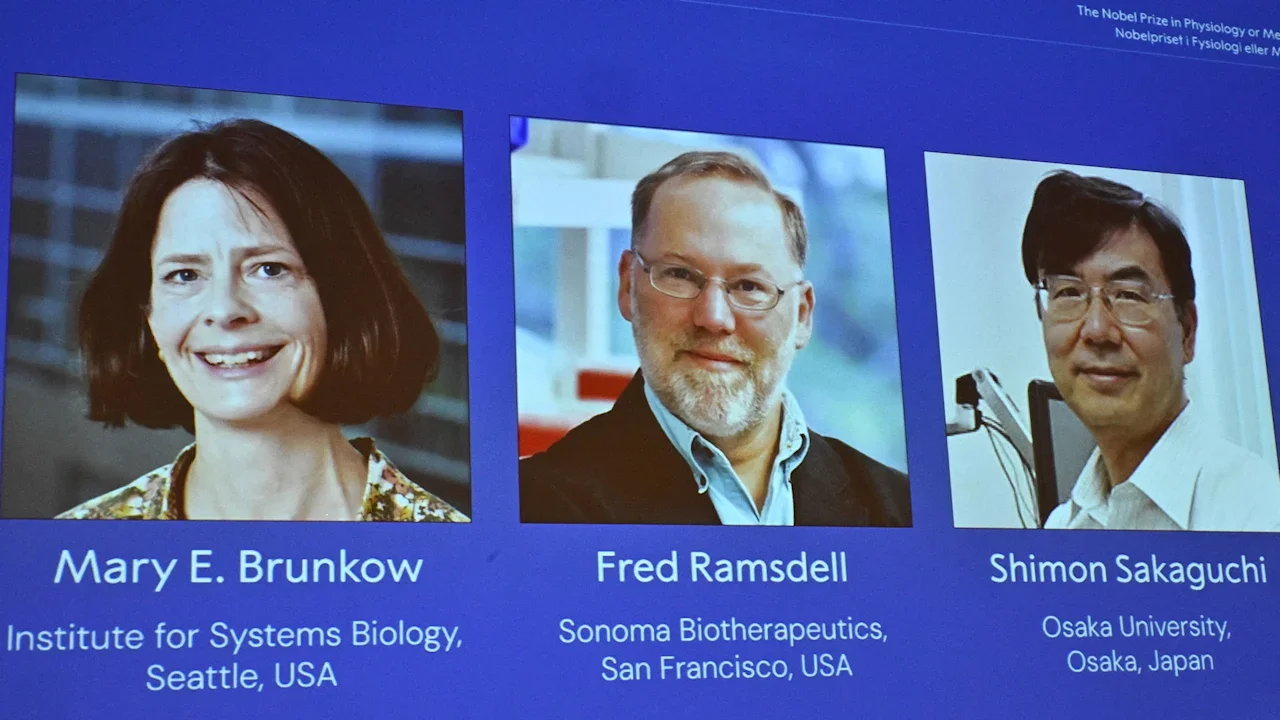
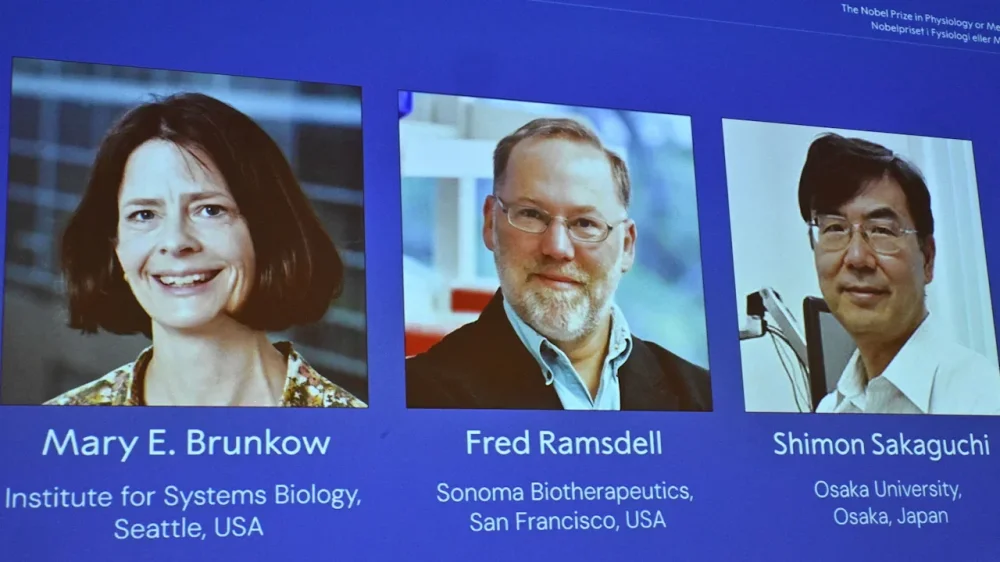
American scientists Mary Brunkow and Fred Ramsdell and Shimon Sakaguchi from Japan won the 2025 Nobel Prize in Physiology or Medicine on Monday for work shedding light on how the immune system spares healthy cells, creating openings for possible new autoimmune disease and cancer treatments. This year’s prize relates to peripheral immune tolerance, or “how we keep our immune system under control so we can fight all imaginable microbes and still avoid autoimmune disease”, said Marie Wahren-Herlenius, a rheumatology professor at the Karolinska Institute. Sakaguchi told reporters outside his university laboratory that “I feel it is a tremendous honour,” Kyodo news agency reported. REGULATORY T CELLS: THE IMMUNE SYSTEM’S ‘SECURITY GUARDS’ The winners for medicine are selected by the Nobel Assembly of Sweden’s Karolinska Institute medical university and receive a prize sum of 11 million Swedish crowns ($1.2 million), as well as a gold medal presented by Sweden’s king. Brunkow is senior programme manager at the Institute for Systems Biology in Seattle, while Ramsdell is scientific adviser at Sonoma Biotherapeutics in San Francisco. Sakaguchi is a professor at Osaka University in Japan. “Their discoveries have laid the foundation for a new field of research and spurred the development of new treatments, for example for cancer and autoimmune diseases,” the prize-awarding body said in a statement. The laureates identified so-called regulatory T cells, which act as the immune system’s security guards that keep immune cells from attacking our own body, it added. After announcing the winners, the institute’s Thomas Perlmann said specific therapies had yet to win market clearance but more than 200 trials on humans involving regulatory T cells were ongoing. Among companies in the early race, Sonoma Biotherapeutics , which Ramsdell co-founded, is partly funded and supported by U.S. drugmaker Regeneron to work on therapies against diseases including inflammatory bowel disease. Also targeting that condition, Quell Therapeutics has partnered with AstraZeneca. Other biotech firms exploring the approach include Bayer’s BlueRock. MEDICINE THE FIRST PRIZE OF NOBEL SEASON The Nobel Prizes were established through the will of Alfred Nobel, the Swedish inventor of dynamite and a wealthy businessman. They have been awarded since 1901 for outstanding contributions in science, literature, and peace, with interruptions mainly during the World Wars. The economics prize was added later and is funded by Sweden’s central bank, the Riksbank. Winners are selected by expert committees from various institutions. All prizes are awarded in Stockholm, except for the Peace Prize, which is presented in Oslo — a possible legacy of the political union between Sweden and Norway during Nobel’s lifetime. Past recipients of the Nobel Prize in Physiology or Medicine include renowned scientists such as Alexander Fleming, who shared the 1945 award for discovering penicillin. In recent years, the prize has recognized major breakthroughs, including those that enabled the development of COVID-19 vaccines. Last year’s medicine prize was awarded to U.S. scientists Victor Ambros and Gary Ruvkun for their discovery of microRNA and its key role in how multicellular organisms grow and live, helping explain how cells specialise into different types. Medicine in accordance with tradition kicks off the annual Nobels, arguably the most prestigious prizes in science, literature, peace and economics, with the remainder set to be announced over the coming days. More than a century after their inception, the Nobel Prizes remain steeped in tradition. The awards culminate in ceremonies attended by the royal families of Sweden and Norway, followed by lavish banquets held on December 10 — the anniversary of Alfred Nobel’s death. ($1 = 9.3898 Swedish crowns) (Reporting by Niklas Pollard, Johan Ahlander in Stockholm; Additional reporting by Terje Solsvik in Oslo, Kiyoshi Takenaka in Tokyo and Marie Mannes and Greta Fondahn in Stockholm; Writing by Ludwig Burger in Frankfurt; editing by Alex Richardson) —Johan Ahlander, Niklas Pollard and Ludwig Burger, Reuters View the full article
-
We may earn a commission from links on this page. Deal pricing and availability subject to change after time of publication. This StackSocial bundle pairs Microsoft Office Professional 2021 with Windows 11 Pro on sale for just $44.97 right now (down from nearly $419). It’s the kind of deal that makes sense if you’re setting up a new PC or finally updating an old one. The Office license is for life—no subscription, no annual fees, and it covers all the essentials, including Word, Excel, PowerPoint, Outlook, OneNote, Publisher, Access, and the free version of Teams. Everything installs locally on one Windows PC, so there’s no hopping between browser tabs or worrying about renewing in 12 months. The Windows 11 Pro license, also included, is the full upgrade. It features advanced tools such as BitLocker encryption, Hyper-V virtualization, and Windows Sandbox, making it ideal for professionals handling professional-level tasks or sensitive data. If you’re switching from Windows 10 Home, you’ll notice productivity bumps too: snap layouts, tabbed File Explorer, and Copilot baked into the OS. That last one is Microsoft’s AI helper that lives on your taskbar. You can press the Windows key + C to launch it and ask it to summarize web pages, open apps, or adjust settings—all with plain English. Note that you’ll need at least 4GB of RAM and 64GB of storage to run it, as well as TPM 2.0 and UEFI support; therefore, older PCs may be incompatible. You can only use Office on one PC, and the license is tied to that device, not your Microsoft account, so it doesn’t travel with you if you upgrade to a new computer later. The Windows 11 Pro key gives you a bit more flexibility (it can be activated on up to two devices). And while it’s not compatible with virtual machines or Parallels, the deal still offers solid value for most everyday or professional users looking to avoid recurring costs. Just be sure to activate it within 30 days of purchase. View the full article
-
This is a programming note that Tuesday and Wednesday are Sukkot and I will be offline the next two days. I will be offline on Tuesday and Wednesday, October 7th and October 8th.View the full article
-
Acquisition of The Free Press is first major deal since David Ellison’s Skydance took control of media groupView the full article
-
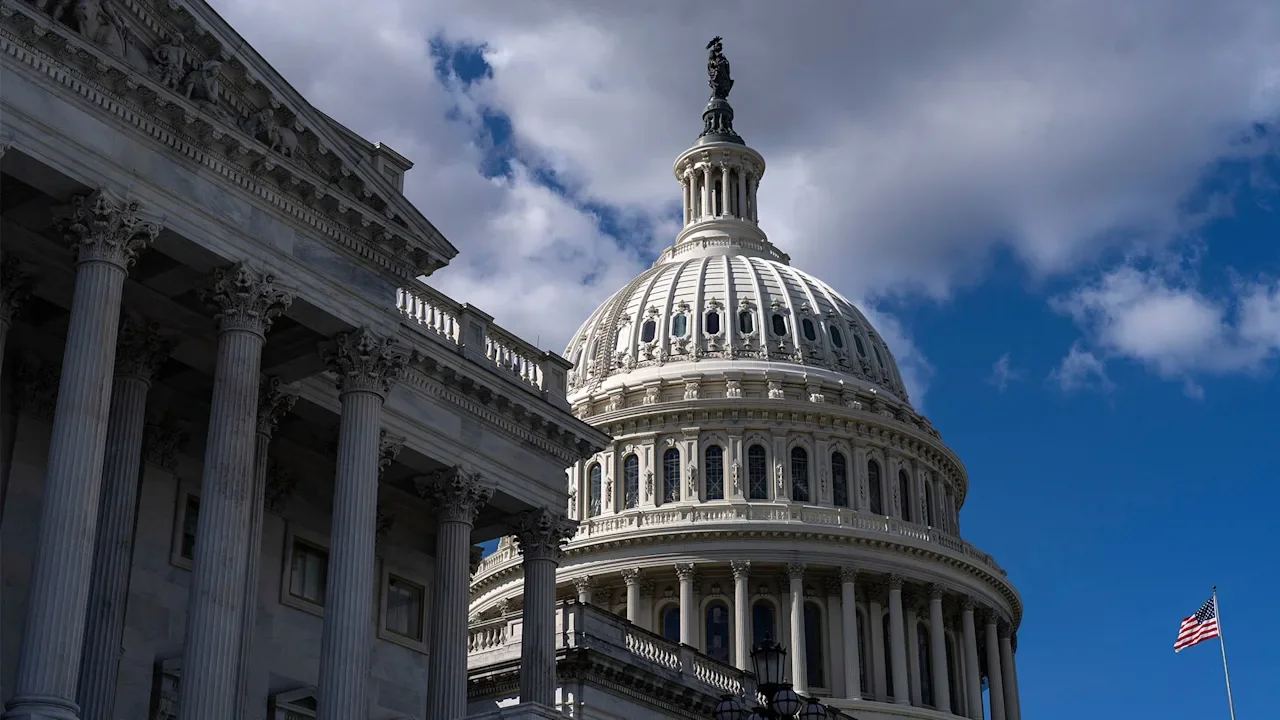
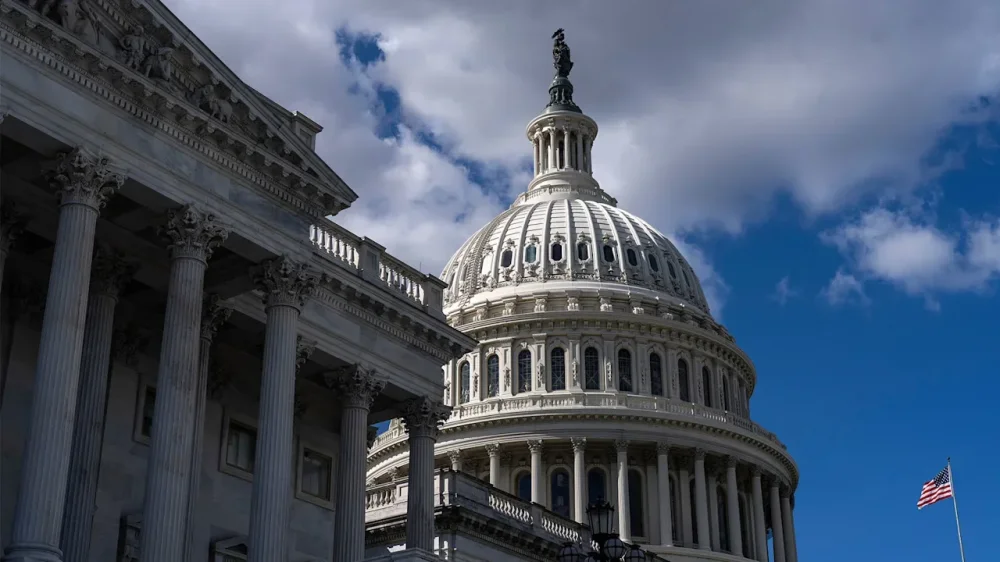
Republican and Democratic lawmakers at an impasse on reopening the federal government provided few public signs Sunday of meaningful negotiations taking place to end what is about to be a six-day shutdown — with President Donald The President saying that layoffs are occurring. Asked on Sunday night when federal workers would be fired as he has threatened to do, The President told reporters: “It’s taking place right now and it’s all because of the Democrats.” “The Democrats are causing the loss of a lot of jobs,” The President added, declining to answer a question about which agencies are subject to the cuts. The possibility of layoffs would escalate an already tense situation in which Washington lawmakers have struggled to find common ground and build mutual trust. Leaders in both parties are betting that public sentiment has swung their way, putting pressure on the other side to cave. Democrats are insisting on renewing subsidies to cover health insurance costs for millions of households, while The President wants to preserve existing spending levels as he believes that Democrats will have to cave because of the jobs and federal projects being put at risk. The squabble comes at a moment of troubling economic uncertainty. While the U.S. economy has continued to grow this year, hiring has slowed and inflation remains elevated as The President’s import taxes have created a series of disruptions for businesses and hurt confidence in his leadership. At the same time, there is a recognition that the nearly $2 trillion annual budget deficit is financially unsustainable. House Democratic leader Hakeem Jeffries, among those appearing on the Sunday news shows, said there have been no talks with Republican leaders since their White House meeting last Monday. “And, unfortunately, since that point in time, Republicans, including Donald The President, have gone radio silent,” Jeffries said. “And what we’ve seen is negotiation through deepfake videos, the House canceling votes, and of course President The President spending yesterday on the golf course. That’s not responsible behavior.” The The President administration sees the shutdown as an opening to wield greater power over the budget, with multiple officials saying they will save money as workers are furloughed by imposing permanent job cuts on thousands of government workers, a tactic that has never been used before. Even though it would be The President’s choice to cut jobs, he believes he can put the blame on the Democrats because of the shutdown. “It’s up to them,” The President told reporters on Sunday morning before boarding the presidential helicopter to celebrate the Navy’s 250th anniversary in Norfolk, Virginia. While The President rose to fame on the TV show “The Apprentice” with its catchphrase of “You’re fired,” Republicans on Sunday claimed that the administration would take no pleasure in letting go of federal workers, even though the administration had also put funding on hold for infrastructure and energy projects in Democratic areas without clear signs of remorse. “We haven’t seen the details yet about what’s happening” with layoffs, House Speaker Mike Johnson said Sunday morning on NBC. “But it is a regrettable situation that the president does not want.” Kevin Hassett, director of the White House National Economic Council, also said the administration would prefer to avoid the layoffs. “We want the Democrats to come forward and to make a deal that’s a clean, continuing resolution that gives us seven more weeks to talk about these things,” Hassett said on CNN. “But the bottom line is that with Republicans in control, the Republicans have a lot more power over the outcome than the Democrats.” Democratic Sen. Adam Schiff of California defended his party’s stance on the shutdown, saying on NBC that the possible increase in health care costs for “millions of Americans” would make insurance unaffordable in what he called a “crisis.” But Schiff also noted that the The President administration has stopped congressionally approved spending from being used. That essentially undermines the value of Democrats trying to seek compromises on the budget since the administration could block the spending of money from any deal. The The President administration sent Congress roughly $4.9 billion in “pocket rescissions” on foreign aid, a process that meant the spending was withheld without time for Congress to weigh in before the previous fiscal year ended last month. “We need both to address the health care crisis and we need some written assurance in the law — I won’t take a promise — that they’re not going to renege on any deal we make,” Schiff said. The television appearances indicated that Democrats and Republicans are busy talking, deploying internet memes against each other that have raised concerns about whether it’s possible to negotiate in good faith. Vice President JD Vance said a video putting Jeffries in a sombrero and thick mustache was simply a joke, even though it came across as mocking people of Mexican descent as Republicans insist that the Democratic demands would lead to health care spending on immigrants in the country illegally, a claim that Democrats dispute. Immigrants in the U.S. illegally are not eligible for any federal health care programs, including insurance provided through the Affordable Care Act and Medicaid. Still, hospitals do receive Medicaid reimbursements for emergency care that they are obligated to provide to people who meet other Medicaid eligibility requirements but do not have an eligible immigration status. The challenge, however, is that the two parties do not appear to be having productive conversations with each other in private, even as Republicans insist they are in conversation with their Democratic colleagues. On Friday, a Senate vote to advance a Republican bill that would reopen the government failed to notch the necessary 60 votes to end a filibuster. Johnson said the House would close for legislative business next week, a strategy that could obligate the Senate to work with the government funding bill that was passed by House Republicans. “Johnson’s not serious about this,” Senate Democratic leader Chuck Schumer said on CBS. “He sent all his congressmen home last week and home this week. How are you going to negotiate?” Senate Majority Leader John Thune said Sunday that the shutdown on discretionary spending, the furloughing of federal workers and requirements that other federal employees work without pay will go on so long as Democrats vote no. “They’ll get another chance on Monday to vote again,” Thune said on Fox News Channel’s “Sunday Morning Futures.” “And I’m hoping that some of them have a change of heart,” he said. Jeffries, Johnson and Schiff appeared on NBC’s “Meet the Press,” Hassett was on CNN’s “State of the Union,” Schumer was on CBS’s “Face the Nation” and Thune was on Fox News Channel’s “Sunday Morning Futures.” —Josh Boak, Associated Press View the full article
-
Builderius expands its WordPress builder with AI-powered GraphQL features for both learning and productivity. The post Builderius Brings AI-Assisted GraphQL Development To WordPress appeared first on Search Engine Journal. View the full article
-
Google AI Mode introduces a shift in what content gets surfaced. Here's what you need to know to succeed. The post Google’s AI Mode: What We Know & What Experts Think appeared first on Search Engine Journal. View the full article
-
Did you know you can customize Google to filter out garbage? Take these steps for better search results, including adding my work at Lifehacker as a preferred source. How do you do, fellow adult? This week's edition of the Out of Touch Adult’s Guide to Kid Culture features a new body slang term, a TikTok prank where AI puts a hobo into your living room, the possible beginning of the AI wars, and a viral video featuring students running a Nazi out of class. There's a lot to eat, so tuck your napkin in your shirt and chow down. What is a Venus tummy?A "Venus tummy" is a slang term for a woman's belly that is a little fat, but not too fat—a little pouch that can be shown off in tight clothing. Like so: This Tweet is currently unavailable. It might be loading or has been removed. The name comes from ancient Greece, where Venus was depicted as, uh, fleshy, as you can see from these three statues of "crouching Venus:" Credit: Wikipedia While women having bellies is not new, the term "Venus tummy" (and the acknowledgment that many people find that feature very attractive) is. I guess older slang terms like zaftig, thicc, stacked, and "built like a brick shithouse" are not specific enough, and specificity is important in objectification. If the internet has to objectify women (and it sure seems like it does) at least Venus tummy is based in history and is more positive and healthy than sexualizing being extremely skinny. So yeah, it's a little creepy, but "a little creepy" is the best we can hope for these days. AI homeless man prankIf your child sends you a picture of a homeless person sitting on your couch and asks, "what should I do?" don't panic. It's (probably) a prank. The new video trend online is freaking out your parents and other loved ones with an AI-generated image of an unhoused person, then posting a video about it to TikTok, like this: and this: You might think you're going to be clever and pull a switcheroo on your child, but I warn you, this will not work. They will immediately clock the image as fake, post a sarcastic emoji, and leave you on read, as you can see: Credit: Stephen Johnson Two stories of backlash against AIAI is great for generating pictures of people in unfortunate situations on your couch, but the way it's taking over everything worthwhile about humanity is less great. Thankfully, there's evidence that AI destruction of humanity will at least meet token resistance, and that the backlash against artificial intelligence is growing. NYC doesn't want an AI "Friend"Back in 2024, the world first learned of the "Friend" pendant, a little AI device you wear around your neck thats only purpose is to provide a simulation of human interaction. Now that they're actually available to purchase, the company behind them has launched an advertising campaign; it's going extremely poorly. In New York City, subway and street posters for the Friend device are being defaced mercilessly and creatively, like so, with people scrawling messages like "AI will promote suicide when prompted. It is not your friend" on them. I'm not exactly pro vandalism, but in this case, I make an exception. Tilly Norwood, the first "AI actress"A few days ago, Variety posted a story about Tilly Norwood, an "AI actress" whose creator, comedian and producer Eline Van der Velden, lied that he had "attracted the attention of multiple talent agents" for Norwood. A creation of "AI talent studio" Xicoia, Norwood's first video role is below: Apparently, the above video is considered "funny" in the UK. Anyway, soon after Norwood was announced as existing, real talent agencies responded with "the fuck out of here with this dumb shit." as did SAG, the actors union, and everyone else worthwhile. But with her name in public, troubling news of Norwood's past became public, as you can see in this X post: This Tweet is currently unavailable. It might be loading or has been removed. Leaving the actress to seek "alternative" employment in entertainment. In unrelated news, if you want to know who the first real AI superstar will be, it's Johnny Extreme! Created in three and 30 seconds by Stephen Johnson Studios, Extreme has attracted the attention of multiple talent agents for his bad-boy image and his ceaseless rule-breaking. He's an accident looking for a place to happen. Here's his audition video, suckers: (If you want to hire Johnny Extreme, please send me money.) What does "my steak is too juicy" mean? The phrases "my steak is too juicy" and "my lobster is too buttery" are online slang used to suggest someone is complaining about something they should be grateful for. To see it in context and bring things full circle to Venus tummy, click here. Viral video of the week: How to treat NazisThis week's viral video comes from the University of Washington, where an attention-seeking Nazi type disrupted a lecture in a Psychology class by grabbing the mic, throwing up the Elon Musk hand sign, screaming slurs and obscenities, and calling the sexuality class "degenerate nonsense." The students respond by booing him and chasing him out of the class, with their badass professor leading, chased him down. But they don't give him the beating he's trying to provoke. Instead, they hold him down and wait for the authorities to come and take him away. (Although the agitator does get a satisfying face full of pepper spray for his trouble.) This Tweet is currently unavailable. It might be loading or has been removed. Here's the point of view of the perpetrator, who was dumb enough to post his complete humiliation. This Tweet is currently unavailable. It might be loading or has been removed. It's easy to look at the loud weirdos and think they represent a lot of people, but as this video shows, in real life, that's not the case. View the full article
-
For years, SEO and PPC defined two sides of search – one focused on organic authority, the other on paid performance. Both aimed to capture traffic but often worked in silos, optimizing toward different goals. Now, that separation is ending. The rise of generative AI has redrawn the map, merging once-distinct disciplines into a single, fluid ecosystem. Search engines like Google and Bing have evolved into conversational AI platforms that deliver instant, often singular answers while seamlessly integrating ads. This shift – marked by zero-click results, conversational interfaces, and pre-packaged information – means no single strategy can guarantee brand visibility anymore. SEO and PPC must converge in an AI-first world Generative AI has blurred the boundaries between organic and paid visibility, making the old siloed model obsolete. SEO and PPC now function as two interdependent halves of a single strategy – each shaping the other’s success. A brand’s organic authority, built through strong SEO, directly influences both organic and paid performance within AI answers. High-quality content can boost Quality Scores and ad relevance, leading to lower costs and better placements. At the same time, AI answers and snapshots are crowding out traditional listings, leaving fewer – but more valuable – moments of visibility. Capturing those moments requires close coordination between SEO and PPC. A holistic strategy ensures a brand shows up wherever the AI-guided searcher might encounter it – whether in an organic snippet, a rich result, or an integrated ad. The result is a new set of success metrics focused on combined visibility and brand authority, not just clicks and impressions. The rise of AI in search and its impact on user behavior Before diving into strategy, it’s important to understand how generative AI is reshaping user behavior. The integration of AI in search is changing how people interact with engines at a fundamental level. The most immediate shift is the rise of zero-click answers. AI-powered results now surface relevant information directly on the results page, often eliminating the need to visit a website. This is especially common for informational queries, where AI synthesizes data from multiple sources into quick, digestible summaries. This behavior is driving what’s known as funnel compression. As AI answers become more robust, they shorten the user journey, delivering solutions or product recommendations much earlier in the process. As a result, user expectations have evolved. Instead of scrolling through a list of blue links, people now look for a single, comprehensive answer or a curated set of top options. They expect relevance and clarity delivered in a conversational, easy-to-digest format. Ranking in Position 1 for a keyword still matters, but it no longer guarantees the same traffic. While overall search volume may hold steady, traffic distribution is shifting. Marketers now have to compete for visibility in both traditional search results and AI-generated content. Dig deeper: What AI means for paid media, user behavior, and brand visibility SEO’s role in an AI-driven search world: Building the organic foundation Today, SEO’s primary role is to build the foundational credibility that AI systems rely on. When synthesizing information, AI models look for what Google calls “signals of relevance” – the same elements SEOs have long cultivated: Quality content. Brand authority. User-focused answers. A successful SEO strategy in this new era should center on five key areas: Understand the brand narrative: SEO must move beyond keywords to express a brand’s broader story and communicate it consistently across platforms. Create content as a credible source: Content must be not only well-written but demonstrably trustworthy. AI models favor information that reflects experience, expertise, authoritativeness, and trustworthiness (E-E-A-T). Optimize for AI visibility: Structure content so AI can easily parse and summarize it – using clear headings, scannable formats, and concise answers to common questions. Build cross-platform presence: Visibility now extends beyond Google. A strong presence across social media, industry forums, and online communities strengthens the brand signals AI models detect and trust. Monitor brand sentiment: Negative reputation signals can discourage AI systems from referencing your content, so SEOs must actively manage and improve brand perception. In essence, SEO builds the organic foundation that PPC can later amplify. Authoritative, credible content enhances both relevance and ad performance – creating a virtuous cycle where organic authority fuels paid efficiency. Dig deeper: Your playbook for AI-powered cross-channel brand visibility Get the newsletter search marketers rely on. See terms. PPC’s evolving role: Maximizing performance with AI context As the organic landscape shifts, PPC’s role is evolving alongside it. Paid search has moved beyond bidding on keywords for top-of-page placement. Ads can now appear within conversational, chatbot-style answers or alongside dynamic, AI-generated summaries. These “ads inside AI answers” are selected based on both the user’s query and the AI-generated content itself. In an AI-driven search landscape, PPC teams must adapt in four key ways. Prioritize quality over quantity While there may be fewer impressions as AI answers satisfy more queries, the clicks that do occur will be of much higher quality. As Microsoft’s early experiments with Bing Chat have shown, AI-generated results can drive faster conversions and higher-intent traffic than traditional search ads. Marketers should anticipate higher-intent clicks but potentially fewer impressions, which means that clicks will be more valuable than ever before. Rethink keyword strategy This shift also necessitates a rethinking of keyword strategy. Google has already indicated that paid search will move away from pure keyword triggers toward intent and audience modeling. PPC teams will need to align campaigns with the user intent patterns behind AI queries, rather than focusing solely on exact keyword matches. This requires a deeper understanding of the user journey and the questions they are asking at every stage of the funnel. Refine bids and budget allocation PPC teams will also need to adapt their budget allocation and bids accordingly. Due to limited inventory, we will likely see higher CPCs for certain commercial queries, but these clicks are also expected to convert at a much higher rate. This means a more nuanced bidding strategy – one that values quality over quantity – will be essential. Leverage SEO synergy Last but not least, PPC must also leverage SEO synergy. With SEO insights at hand, PPC teams are equipped to strategically refine and better optimize campaign performance. For example, if SEOs discover that a brand’s content is appearing in AI summaries for a specific type of query, that query then becomes a prime target for a paid ad. This approach allows a brand to effectively “own” the AI result, appearing in both the organic snippet and the adjacent ad. Dig deeper: How to build a paid media team in the AI age The holistic search playbook: Uniting SEO and PPC As AI continues to reshape how people search – and how brands appear – it’s time to turn insight into action. Here’s how to put it into practice. 1. Align on shared goals and metrics Break down silos by tracking combined visibility, not isolated performance. SEO and PPC teams should share dashboards that include organic impressions, AI snippet appearances, and ad visibility to gain a complete view of search performance. 2. Conduct joint prompt and intent research Collaborate to map the full user journey. By understanding the questions users ask at each stage – from top-of-funnel informational needs to bottom-of-funnel product queries – teams can build a unified intent strategy. Organic content can target broad informational needs, while paid campaigns capture complementary commercial terms, both aligned around the same core themes. 3. Build content that powers both SEO and PPC Content fuels both channels. For SEO, create in-depth, trustworthy resources that AI can confidently summarize and rank. For PPC, ensure those same pages make strong landing pages – fast, relevant, and conversion-oriented. SEO provides the authority while PPC delivers the amplification. 4. Emphasize brand trust signals In an AI-first world, brand authority is critical. SEO should cultivate off-page credibility through brand mentions, expert visibility, and earned media. PPC can reinforce these signals by highlighting proof points – years in business, awards, customer reviews – within ad copy. Together, these efforts strengthen trust and drive recognition. 5. Adapt to platform nuances Not all AI systems behave the same. Google’s AI snapshots and integrated ads differ from Bing’s chat-based experience. Teams should stay informed, test across platforms, and allocate budget to experimentation, since what works for one may not work for another. 6. Reinvent analytics and attribution Move beyond last-click attribution. A unified reporting framework that captures total search-driven conversions – organic and paid – gives a more accurate view of ROI and supports smarter investment decisions. 7. Commit to continuous optimization and learning This is an ongoing process, not a one-time project. SEO and PPC teams should meet regularly to share insights. SEOs can surface emerging queries. PPC teams can report on top-performing ads. Continuous experimentation across the combined funnel enables small, data-driven tweaks that yield outsized results. Dig deeper: How to maximize PPC and SEO data with co-optimization audits The AI-first search journey: Converge for success AI has permanently altered the search landscape, making SEO-PPC convergence essential. As organic and paid results increasingly coexist in AI-generated answers, marketers who cling to silos risk losing visibility and market share. A holistic strategy ensures brand discovery and a seamless user experience throughout the AI-driven search journey. When SEO provides foundational credibility and PPC delivers targeted presence, brands can appear wherever and however an AI surfaces answers – whether offering the information or the solution. Search will continue to evolve, but success will belong to marketers who prioritize relevance, cross-channel collaboration, and unified metrics to maximize performance. View the full article
-
Big Four firm will repay final instalment after incorrect references and citations found in documentView the full article
-
President’s mistakes have plunged France into its worst crisis for 70 yearsView the full article
-
Did you know you can customize Google to filter out garbage? Take these steps for better search results, including adding Lifehacker as a preferred source for tech news. Taking notes, whether in class or in meetings, is a standard part of learning. Studies have suggested writing by hand helps you retain information better than using a computer, which is why you should only bring a notebook and pen with you to class in addition to (or instead of) your laptop. But there’s more to effective note-taking than jotting down a bunch of bullet points. To be useful, your notes should be organized into topics and subtopics, with a sensible flow that you’ll be able to follow later. That’s why you should revise your notes immediately after class—even before you leave your seat, if you can. What to do with notes after classWhen you’re taking notes—whether typed or hand-written—you have to be picky about what you do and don’t write down, given how much time it takes to do so before the lecturer moves on to another point you don’t want to miss. This is great for helping you stay engaged with the class and think critically about what is and isn’t important, but leaves the potential for gaps in your notes that you won’t realize are there until later, once you’re reading them over. So it’s best to read them over right away, and revise them as necessary. Marty Lobdell, a former professor emeritus at Pierce College who spent 40 years teaching psychology and study skills, recommends immediate note revision and expansion in his “Study Less, Study Smart” video. While the lecture is fresh in your mind, he advises, you should use your memory of it, plus your texts and other course materials, to expand on the notes you took down. Rewrite them completely, adding key details to what you already deemed was important in class, including anything relevant in the supplemental materials. Doing so will not only make your notes easier to study later, but will help you retain the information, since rewriting them will be your first chance to review what you’ve learned. How to maximize your post-class notesWhile taking notes in class, it’s best to be brief and concise, especially since you know you’ll be expanding them later. You can use abbreviations and codes to write faster, as long as you’re sure you’ll be able to decode and expand upon them later. After class, review and edit your notes, compare them to your textbook or course materials, and, if possible, another student’s notes, so you’re sure you’re not missing anything. While writing initially and when revising, choose the most effective note-taking method for your personal study style. The outlining method works best for recopying and involves putting general information on the left side of your paper and indenting more specific groups of facts underneath. For your in-class note-taking, consider the Cornell method, which requires you to write down quick bits of information on the left side of your paper, then fill in more specifics on the right when you have time later. Whichever method you choose, don’t leave class until your note expansion is complete (or, if that’s not realistic, take care of it as soon as possible after class). Review your notes between and 10 minutes before the next class so everything is fresh in your mind before you move on. Ideas for better notes and revisionTaking notes using an established method, like Cornell, is your best bet, since it gives you a little structure while you go. The way you revise them is important, too. I recommend reformatting them into a mind map. This is a visual representation of how concepts work together. Reminiscent of a flowchart, it uses bubbles, colors, and arrows to denote related topics and subtopics. Here, you can call on tech for backup. I like the Xmind app for creating simple, fast mind maps. The benefits of revising this way are numerous. First, you force yourself not just to focus on topics and concepts, but on how they all fit together, which helps entrench them in your mind and enhance your understanding overall. Second, adding in some color or intrigue helps with retention, too. Third, forcing yourself to reformat the notes in a completely different way than you took them makes you think differently about them and focus on getting everything right. View the full article
-
October ushers in changing foliage, cooler temperatures, and the spooky season made eerier with less daylight. Costumes are donned and even the night sky wants to help set the mood. Much to the dismay of werewolves, October’s Harvest supermoon will peak tonight (Monday, October 6) at 11:47 p.m. ET, according to the Farmer’s Almanac. Let’s break down the science behind this nighttime spectacle and take a look at future events. Why is October’s full moon called the Harvest Moon? The full moon closest to the autumnal equinox gets the moniker Harvest Moon. September’s offering took place on September 7 and the equinox took place on September 22 in the Northern Hemisphere. This means that October gets the crown in 2025, although that is not always the case. Before modern conveniences, the Harvest Moon helped farmers out by rising around the same time each evening and giving extra illumination. This light allows those working the land to get crops collected before the frigid winter months arrive. What is a supermoon? The moon orbits the Earth in an elliptical pattern. This means there are points on its path when the moon is closer to the Earth than at others. When the satellite is at its closest points to the Earth, it is called perigee. When a full moon happens during this period, it gets upgraded to super. (We can’t confirm yet if it gets a cape and a sidekick.) According to NASA, supermoons can appear in the sky to be “30% brighter and up to 14% larger” than your average full moon. This happens about three or four times a year. What about the Draconid meteor shower? The extra light is both a blessing and a curse. The supermoon is not the only celestial phenomenon taking place on October 6 as the Draconid meteor shower is expected to begin and peak on October 8. The supermoon’s illumination might just upstage the meteors from the 21P Giacobini-Zinner comet by washing them out. Supermoons appear full to the naked eye for a couple of days, and the Draconid meteor shower will last until October 10, so there’s a small window of hope. If that doesn’t pan out, you can always look forward to the Orionid meteor shower peak, which takes place on October 21. But wait, there’s more… October’s Harvest Moon is a trendsetter. This bright spot is the first of three back-to-back supermoons that will close out the year. November’s moon just might outdo the Harvest Moon, but let’s not get ahead of ourselves just yet. View the full article

-
Small business owners are always on the lookout for innovative ways to enhance their brand visibility and reach new customers. Google Gemini’s latest initiative, the Global AI Film Award, offers a promising avenue for small enterprises to leverage artificial intelligence (AI) in creative storytelling, potentially expanding their marketing horizons and audience engagement. The newly launched Global AI Film Award is now accepting applications, and it presents an exciting opportunity for individuals and businesses alike to showcase their creativity using Google AI tools. With the rise of short-form video content, this competition encourages filmmakers to harness the power of AI to craft compelling narratives that resonate with today’s audiences. Participants in the award can submit films that are between 7 and 10 minutes long, provided that at least 70% of the content is generated using Google AI tools like Google Gemini. These films must also include English subtitles, expanding accessibility for a global audience. According to the guidelines, while entrants can use other editing software for final touches, Google’s tools should form the core of the video creation process. This requirement not only highlights the innovative potential of Google’s capabilities but also encourages filmmakers to explore the possibilities within AI. “The Global AI Film Award opens the door for creativity in ways that were previously unimaginable,” states a representative from Google. “We’re excited to see how businesses creatively tell their stories with the help of our technology.” For small businesses, this competition is not just about filmmaking; it encompasses broader marketing prospects. Creating unique video content can significantly enhance brand awareness and engagement. Given that videos can quickly capture attention and convey messages effectively, small businesses could see a strong return on investment if they harness AI tools to produce high-quality film content. Engaging stories about products, customer experiences, or brand values could lead to stronger connections with audiences, which is vital for any business’s growth strategy. Moreover, the application window is extensive, running until November 20, 2025. This timeline allows businesses ample opportunity to create polished submissions. The competition will culminate in a jury of global experts evaluating the entries, which adds an element of prestige for those who participate. Winning or even being recognized can enhance a company’s credibility and attract attention from potential customers and partners. However, small business owners should recognize potential challenges when participating in the Global AI Film Award. The requirement that 70% of the film’s content must be AI-generated may pose a learning curve for those unfamiliar with using Google’s platforms. For many small business owners, time is a precious commodity, and investing effort in mastering AI filmmaking tools may not yield immediate results. Additionally, while the ability to submit multiple entries allows flexibility, the requirement that all entries be submitted under one person’s name could complicate teamwork dynamics. Small business teams often bring diverse skills to the table, and limiting submissions to a single point of contact may hinder collaborative creativity. It’s also essential for small businesses to consider how they can integrate this initiative into their overall marketing strategy. Filmmaking should align with business goals, ensuring that the messages resonate with target audiences and reflect brand values effectively. Understanding your market while harnessing the latest technology will be crucial in reaping the benefits of this award. As the deadline approaches, small business owners would be wise to explore the tools available through Google Gemini to craft their stories. The combination of AI technology with marketing creativity could provide business owners with a powerful tool for storytelling that drives customer engagement and supports brand objectives. For more information on the contest and submission guidelines, check out the official announcement by Google here. The Global AI Film Award may just be the push your business needs to enter the world of video storytelling. Image via Envato This article, "Global Film Award Seeks Entries Created with Google AI Tools" was first published on Small Business Trends View the full article
-
Small business owners are always on the lookout for innovative ways to enhance their brand visibility and reach new customers. Google Gemini’s latest initiative, the Global AI Film Award, offers a promising avenue for small enterprises to leverage artificial intelligence (AI) in creative storytelling, potentially expanding their marketing horizons and audience engagement. The newly launched Global AI Film Award is now accepting applications, and it presents an exciting opportunity for individuals and businesses alike to showcase their creativity using Google AI tools. With the rise of short-form video content, this competition encourages filmmakers to harness the power of AI to craft compelling narratives that resonate with today’s audiences. Participants in the award can submit films that are between 7 and 10 minutes long, provided that at least 70% of the content is generated using Google AI tools like Google Gemini. These films must also include English subtitles, expanding accessibility for a global audience. According to the guidelines, while entrants can use other editing software for final touches, Google’s tools should form the core of the video creation process. This requirement not only highlights the innovative potential of Google’s capabilities but also encourages filmmakers to explore the possibilities within AI. “The Global AI Film Award opens the door for creativity in ways that were previously unimaginable,” states a representative from Google. “We’re excited to see how businesses creatively tell their stories with the help of our technology.” For small businesses, this competition is not just about filmmaking; it encompasses broader marketing prospects. Creating unique video content can significantly enhance brand awareness and engagement. Given that videos can quickly capture attention and convey messages effectively, small businesses could see a strong return on investment if they harness AI tools to produce high-quality film content. Engaging stories about products, customer experiences, or brand values could lead to stronger connections with audiences, which is vital for any business’s growth strategy. Moreover, the application window is extensive, running until November 20, 2025. This timeline allows businesses ample opportunity to create polished submissions. The competition will culminate in a jury of global experts evaluating the entries, which adds an element of prestige for those who participate. Winning or even being recognized can enhance a company’s credibility and attract attention from potential customers and partners. However, small business owners should recognize potential challenges when participating in the Global AI Film Award. The requirement that 70% of the film’s content must be AI-generated may pose a learning curve for those unfamiliar with using Google’s platforms. For many small business owners, time is a precious commodity, and investing effort in mastering AI filmmaking tools may not yield immediate results. Additionally, while the ability to submit multiple entries allows flexibility, the requirement that all entries be submitted under one person’s name could complicate teamwork dynamics. Small business teams often bring diverse skills to the table, and limiting submissions to a single point of contact may hinder collaborative creativity. It’s also essential for small businesses to consider how they can integrate this initiative into their overall marketing strategy. Filmmaking should align with business goals, ensuring that the messages resonate with target audiences and reflect brand values effectively. Understanding your market while harnessing the latest technology will be crucial in reaping the benefits of this award. As the deadline approaches, small business owners would be wise to explore the tools available through Google Gemini to craft their stories. The combination of AI technology with marketing creativity could provide business owners with a powerful tool for storytelling that drives customer engagement and supports brand objectives. For more information on the contest and submission guidelines, check out the official announcement by Google here. The Global AI Film Award may just be the push your business needs to enter the world of video storytelling. Image via Envato This article, "Global Film Award Seeks Entries Created with Google AI Tools" was first published on Small Business Trends View the full article
-
If you search for [events near me], Google may not show you any events near you. It seems like Google is not serving that events carousel right now. I suspect it is a bug and I wonder if this is related to the serving bug from Friday afternoon?View the full article
-
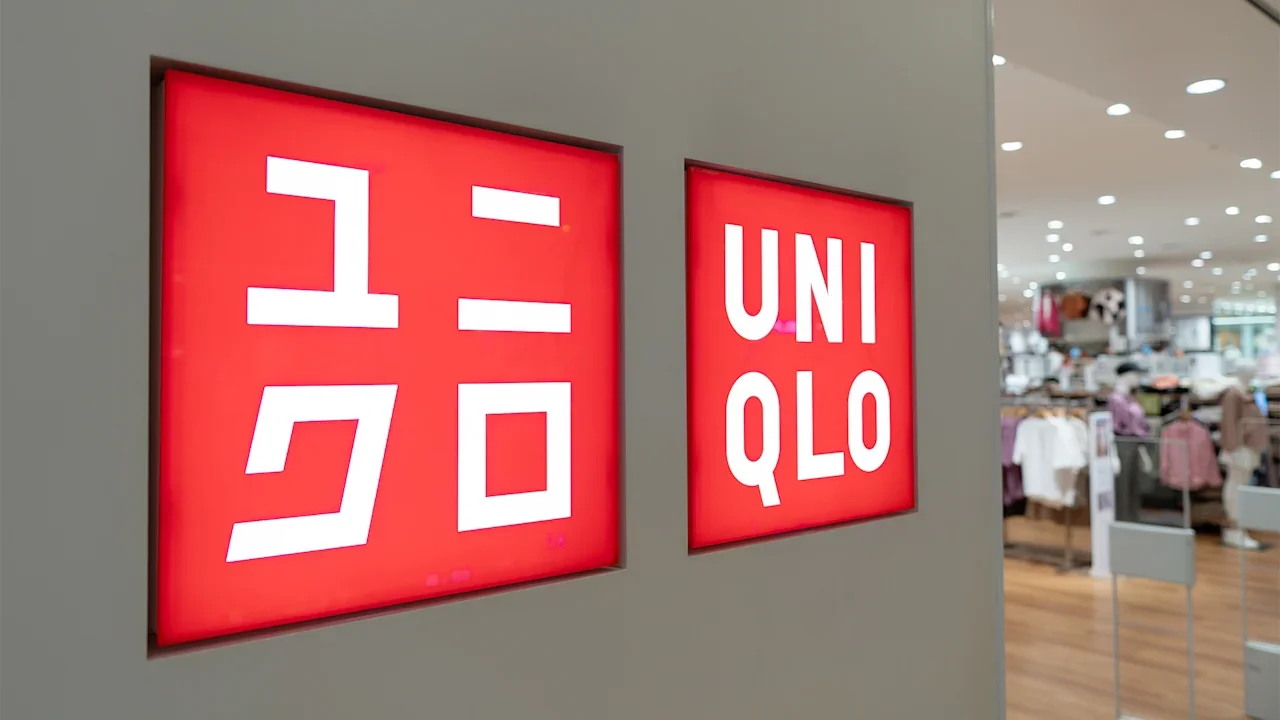
Uniqlo, the Japanese retailer known for its monochromatic casual wear and accessories, is gearing up to significantly expand its U.S. physical footprint next year. The brand will open 11 new stores across seven cities in spring and summer 2026, Uniqlo told Fast Company. The expanded fleet will include four new stores in New York City: three in Manhattan and an additional location in the Williamsburg section of Brooklyn. The new locations come two decades after Uniqlo opened its first U.S. store in Manhattan’s Soho neighborhood in 2006. For fans of Uniqlo’s ultra-stretch jackets, Pufftech vests, and functional backpacks, it gets even better: The company is also planning new “flagship” locations in Chicago and San Francisco, along with additional stores in Seattle, Boston, Washington, D.C., and the Annapolis Mall in Maryland. Uniqlo currently operates 78 stores in the United States. The new stores will add to that tally, putting its U.S. footprint closer in size to that of Inditex-owned Zara, the Spanish fast-fashion chain, which has roughly 97 stores in the United States. Both are still relatively small in comparison to U.S.-based rival H&M Group, which reported 754 stores across North and South America as of August 31. Uniqlo’s leadership says the brand is not looking to open stores merely for the sake of planting flags in new territories. “Our strategy is about thoughtful growth—opening the right stores in the right places—while ensuring every location reflects our customer’s voices and delivers a meaningful, high-quality experience,” Fuminori Adachi, CEO of the brand’s U.S. division, said in a statement. Retail is facing headwinds in 2025 The expansion comes as many U.S. apparel chains have been struggling with declining foot traffic and sluggish sales. Price-conscious shoppers, stung by sticker shock and an uncertain economy, are buying less or staying away altogether. Many consumers, especially younger ones, have turned to ultra-cheap e-commerce platforms such as Shein and Temu for their fashion fixes. Some well-known apparel chains have culled their store counts or worse in recent years. U.S. retailer Gap Inc. announced in 2020 that it would close 350 of its Gap and Banana Republic stores. More dramatically, fast-fashion retailer Forever 21 wound down its U.S. operations after filing for Chapter 11 bankruptcy protection in March. Apparel sellers are hardly the only chains impacted by a landscape reshaped by online shopping. Retailers from Starbucks to Petco have closed stores this year as they reassess their brick-and-mortar needs and redesign their storefronts for an era when in-store customers can no longer be taken for granted. All of this makes Uniqlo’s announcement a welcome bright spot. Fast Retailing, the brand’s Tokyo-based parent company, saw its revenue grow 10.6% in the nine months to May compared to the same period last year, according to financial results announced in July. The retail giant, which operates more than 3,600 stores worldwide—including some 2,500 Uniqlo stores—generated sales of 3.1 trillion yen ($21.42 billion) for its fiscal year ending August 31, 2024. Where are the new Uniqlo stores opening? The full list of new locations being announced by Uniglo are below. New York Brooklyn: Williamsburg Manhattan: Union Square Manhattan: Bryant Park, Fifth Avenue Manhattan: World Trade Center Illinois Chicago: 600 N. Michigan Avenue Chicago: Oakbrook Mall California Downtown San Francisco: 830 Market Street Massachusetts Boston: Downtown Crossing, 395-403 Washington Street Maryland Annapolis Mall Washington State Seattle area: Issaquah Commons Washington, D.C. Georgetown Park: 3262 M Street NW In addition to the above stores, the Austin American-Statesman last week reported that Uniqlo is planning to open a location in the Texas capital, citing a regulatory filing. A representative for Uniqlo declined to confirm the Austin location. View the full article
-
With 33% of organic searches now come from AI agents, CMOs must rethink SEO fundamentals to ensure content is accessible, authoritative, and AI-citable. The post The CMO & SEO: Staying Ahead Of The Multi-AI Search Platform Shift (Part 2) appeared first on Search Engine Journal. View the full article
-
In competitive industries where keywords are costly, every edge matters. Beyond keyword targeting, consider layering audience targeting onto your Search campaigns to gather richer performance data. This added layer can improve results within Search and provide valuable insights you can apply to other Google Ads campaigns – or even to PPC platforms like Microsoft Ads, Meta Ads, and TikTok. Key audience targeting options for Search campaigns Here’s a quick overview of audience types you can target in Search campaigns – and how to make the most of each. Demographic audiences. Custom audiences. Remarketing audiences. Interests audiences. Affinity audiences. In-market audiences. Demographic audiences Google offers several demographic targeting options based on its own data, including: Parental status. Marital status. Education. Homeownership. Employment (by industry and company size). This targeting helps ensure your keywords reach the right people – reducing wasted spend and improving profitability. However, it’s not perfectly accurate, so it’s best used for inclusion rather than exclusion. Custom audiences Custom audiences let you create highly specific segments tailored to your business goals. You can build them by: Uploading customer lists. Targeting people who recently searched for certain keywords on Google. Showing interest or purchase intent. Browsing particular websites. Using specific apps. This flexibility helps you design your ideal audience when Google’s default options don’t quite fit. Once created, layering custom audiences with high-intent keywords can be especially effective and profitable. Remarketing audiences Remarketing audiences focus on users who have already engaged with your brand, people who: Recently visited your website. Made a purchase. Viewed a specific product or page. Adding this audience layer to existing Search campaigns helps you concentrate spend on high-intent users most likely to convert. It’s particularly valuable for longer sales cycles or higher-priced products and services. Interests audiences Targeting users based on their interests pairs well with keyword targeting. It helps ensure that people searching your chosen keywords are genuinely interested in your product or service – not just looking for information. This approach can reduce wasted spend and focus your budget on more qualified searchers. Affinity audiences Affinity audiences work similarly to interest audiences but focus on users who have shown strong, consistent engagement with a topic through their online behavior. Layering these audiences with Search keywords helps you reach people with deeper, long-term interest in your category or niche. In-market audiences In-market audiences consist of users who have been actively researching a product or service and are likely nearing a purchase decision. Adding this audience layer helps your ads appear in front of people ready to buy, rather than those still at the top of the funnel. Real-world examples Here are some practical ways to combine keyword and audience targeting in your Search campaigns: People searching for a new car can be targeted using an in-market audience for autos and vehicles. For users searching for accounting software, try a custom audience of those who recently searched for accounting services and software. When targeting people researching investing strategies, layer in an affinity audience of avid investors. If you’re going after interior design queries, use a demographics audience of homeowners. For branded or product-specific searches, add a remarketing audience of users who visited your site in the last 30 days and viewed your pricing page. Once you’ve identified which audience combinations make sense for your goals, the next step is to test them – starting with Observation mode to gather performance data before committing to full targeting. Dig deeper: Google Ads made simple: Using life events for audience targeting Get the newsletter search marketers rely on. See terms. Test audiences in ‘Observation’ mode before targeting You can start by adding audiences in Observation setting if you simply want to monitor performance data before deciding which groups to target. Testing multiple audiences at once can reveal which combinations of demographics, intent, and interests drive the best results. Observation mode helps you build a solid data baseline without restricting reach – a smart move in competitive or high-cost industries. The insights you collect can then guide future decisions about which audiences or campaign types to scale. This approach is especially useful when planning new Performance Max, Demand Gen, or even social campaigns on platforms like Meta Ads or TikTok Ads. Use audience performance data to expand campaigns Once you’ve gathered performance data – whether through Observation mode or direct targeting – you can repurpose those insights to inform other campaigns. While audience categories differ slightly across platforms, the data you collect gives you a strong starting point for testing new audiences, demographics, and interests on Meta Ads, TikTok Ads, or even organic content. Within Google Ads, you can test these same audiences across Display, Performance Max, Video, or Demand Gen campaigns, using your Search results as a performance benchmark. And it works both ways: audiences that perform well elsewhere can also be added back into your Search campaigns for refinement and retesting. Apply similar tests in Microsoft Ads Microsoft Ads offers even more audience targeting options, including Similar Audiences, along with the ability to observe audiences before targeting. The platform typically mirrors Google Ads features, though sometimes on a delay – so it’s a good idea to test your best-performing Google setups within Microsoft Ads as well. That said, avoid auto-importing campaigns without review. Optimize each platform separately, since Microsoft Ads campaigns often perform differently from identical Google Ads setups, even with similar structures. This approach expands your reach across multiple search engines and content networks, not just Google’s ecosystem. Dig deeper: Microsoft Advertising expands remarketing list sources to 20 campaigns Worth testing? If you have a larger budget or operate in a competitive industry, layering audience targeting onto Search campaigns can be well worth it. It’s particularly valuable for longer sales cycles or high-priced products and services, where multiple touchpoints are needed before conversion. Dig deeper: B2B audience targeting: Meta Ads as an alternative to LinkedIn View the full article
-
We may earn a commission from links on this page. Did you know you can customize Google to filter out garbage? Take these steps for better search results, including adding Lifehacker as a preferred source for tech news. Making your own flashcards can be tedious, but they’re such a great study tool that it would be a shame to let that stop you from using them. Although there are major retention benefits to writing information down by hand, busy learners don’t always have time—so here are some solid online options for making and using flashcards. The benefits of flashcards for studyingFirst, it's important to understand why you want to use flashcards to study, let alone why some apps and services are better suited to this task than others. Repeatedly quizzing yourself can entrench the content of the flashcards into your brain, since you have to use the process of active recall to retrieve the information from your short- or long-term memory when you see a prompt. You can mix up your active recall strategies by blurting, which means saying or writing down everything you can remember from your materials before checking your notes, or using the Feynman technique, which involves "teaching" the content to someone else—even if it's just ChatGPT. But for now, let's focus on flashcards. The best way to make your material stick in your brain is to use the Leitner method, a kind of spaced repetition, and flashcards are what make that possible. With this technique, you sort your flashcards into about five piles (though you can have more or less depending on how much time stands between you and your test) as you review them, moving them up a pile or down a pile depending on if you get an answer right or wrong. Over time, you'll be able to review the cards in the higher-up piles less frequently, since you grasp their contents, and you'll review cards in the lower-down piles more often, since you're struggling with them. Not only will you waste less time drilling material you know, you'll force your brain to etch it into your long-term memory so you can retrieve it on the rare instances you do go over those cards. A lot of the apps below actually use the Leitner method or a version of spaced repetition to automatically show you cards you're struggling with more often, which is what makes them so useful. That said, you still need to study those less-frequent cards; that's a process called overlearning and it will help you retain the information for a lot longer. The apps below were chosen for a few reasons. First, I picked ones that make flashcard generation easy. Second, I selected ones that, to some extent or another, rely on the Leitner method and give you the option to indicate whether you got a card right or wrong. The best flashcard appsThere are some great, easy-to-use sites that allow you to create flashcard decks online, then use those virtual decks to study. For finding pre-made flashcards: Brainscape Credit: Lindsey Ellefson In my full review of Brainscape, I gave it five stars. I truly like this one. I'm actually using it actively right now to study for a certification exam I have coming up. Brainscape gives you the option to make your own flashcards, but also to search for decks made by other learners—and even the option to access decks that have been approved by credentialing bodies for things like standardized tests, entry exams, and certification tests. It's ideal for everyone from SAT preppers to lifelong learners like me and the variety of material on there is endless. I've even used it to study random things just because I have an interest in learning something new. Best of all, I've never had to create a deck. Whatever I want is already in there. The free-account option allows you to use text, while the paid version lets you add images and sounds, do more advanced editing, study an unlimited amount, import materials, copy other users’ flashcards into your files, and see learning stats. One month of Brainscape is $19.99, six months cost $59.94, a year is $95.88, and a lifetime membership is $199.99. For what it's worth, I've been using the free version for months and am doing just fine. Using your phone? Here’s the iOS version and the Android version. For simplicity: Cram Credit: Lindsey Ellefson Sometimes, all you need or want is the simplest flashcard deck, with cards that have a front and back and can be used for quizzing. Cram is so easy to use and it works great in its free version (although $29.99 per month gets you access to a few extra features, like customization of your card formatting). Read my full review here, but the basics are these: You get plain, white cards that the site displays either as traditional flashcards, a matching game with drop-down menus, or classic computer games (a jewel-matching game and a space shooting game) that pull your flashcard information into them. Besides the flashy games, there are no unnecessary frills here. Enter the information onto the cards and study. It’s that easy. Download the apps: iOS is here and Android is here. To add pictures: Quizlet Credit: Lindsey Ellefson There are a number of flashcard generators that let you use pictures, but the pricing on many of them is weirdly opaque. Quizlet, a popular studying platform you're probably already familiar with if you've ever taken an online class and tried to Google your homework questions, allows you to create flashcards (with pictures!), browse other people’s flashcards, and take practice quizzes—and the pricing for getting rid of ads and studying an unlimited amount is straightforward: You pay $35.99 per year or $7.99 per month. You can import existing data, from Word or Excel, too, to create the flashcards even faster. In my review of this one, I did give it five stars because you can also use your account to access practice quizzes and games, plus it's been around for so long it's basically the gold standard for students. Like others on this list, it functions fine in the free version, which is why it made my list of best free studying apps, too. Download for your iPhone here and your Android here. For quick flashcard generation: Flashcard lab Credit: Lindsey Ellefson If you want to make fast flashcards and you use Google's free suite of productivity apps (namely Google Sheets), you should use Flashcard Lab. As I explain in my full review, it's not flashy. All it is, at its core, is a simple way to quickly turn content from Google Sheets into flashcards. Column A is the front of the card, Column B produces the back, and that's about it—but it's great if all you need is some fast cards. If you're truly in a rush, you can upload class materials to ChatGPT and ask the AI to create a downloadable .xls file with questions and answers, then open it in Sheets and go from there. Truly, using this one couldn't be easier or less labor intensive. Available on iOS and Android, as well as through a Chrome extension, you can use it for free to study 600 GRE vocab words, review or print up to 20 flashcards per deck, add up to five images per deck, and manually add cards to a "forgotten" set for re-review. A one-time payment of $10.99 bumps you up to the "Elite" tier, which gives you access to some extra features, like the ability to toggle on spaced repetition or randomized review. For learning a foreign language: DuoCards Credit: Lindsey Ellefson There are two apps I recommend for learning a foreign language and they are Repeet and DuoCards. In a head-to-head comparison, I did pick DuoCards because its extra features edged out Repeet ever so slightly, but the long and short of it is that both of them have automatic translation features that allow you to quickly generate cards in-app or via Chrome extension. Repeet works on iOS, Android, or Chrome extension. Same for DuoCards: iOS, Android, or Chrome extension. DuoCards has a mini game and an AI chatbot designed to help you immerse yourself in the language more than just using the cards will, whereas Repeet is just flashcard-based, but the features will cost you. Where Repeet is absolutely usable and excellent in its free version, DuoCards' free version only allows 20 cards in your "to learn" category and just 10 opportunities to ask your chatbot a question. If you pay $33 for three months or $64.90 for the year, you get rid of the ads, access unlimited flashcards, and can chat nonstop with the AI bot. If mini games and immersion are important to you, pick DuoCards. If you just want flashcards or don't want to spend money, Repeet works well. Bonus: Google's NotebookLM Credit: Google If you read a lot of my studying content, you know I'm a fiend for NotebookLM. If you don't read a lot of my studying content, I'll tell you why: This free resource is an AI chatbot that pulls only from materials you provide. That means you upload your slide decks, notes, links, videos, and PDFs from class and the answers it gives you will only come from those. I've seen ChatGPT make wild mistakes with homework, largely because it can and will pull from all over the Internet, so there's some safety baked in here. NotebookLM can do a few things that help you study. It can summarize your materials or outline a paper, like any chatbot, but it can also produce a fake podcast of people discussing your materials, generate flashcards, and prepare you a practice quiz. In everything it provides, NotebookLM hyperlinks back to the exact section in your materials where it got that content, so if you get a flashcard or quiz question wrong, you can quickly find where the question came from and reread it. It's free to use, but the drawback is that it doesn't Leitner-ify the flashcards. Access it in a browser through the website or via app on iOS and Android. View the full article
-
Russia’s resort to hybrid warfare is a sign of weakness. But it still requires a responseView the full article