ResidentialBusiness
Administrators
-
Joined
-
Last visited
Everything posted by ResidentialBusiness
-
 Whether it’s Sam Altman surreptitiously stealing GPUs from a Target, trying to make a break for the door under the gaze of security cameras as he tucks a box containing a valuable computer chip under his arm, or Super Mario appearing in Star Wars, the rupture in reality brought about by OpenAI’s AI-generated video social network, Sora, is significant. What previously would have been decried as deepfaked videos have gone viral on social media in the last two days, while also outstripping the release of Meta’s competing product, Vibes. Users, including some OpenAI employees on social media, have been revelling in their ability to create outlandish content involving real life characters — a consequence of unusually lax rules set out by OpenAI, the company behind Sora. That’s despite the AI giant purporting to have some rules designed to prevent IP infringement. Social networks, which were once designed to connect us with one another and have since been subsumed by AI slop, are now looking like they’re going the way of the dodo. In their place is a boomer Facebook user’s paradise: A steady scroll of the unreal and outlandish, and not a single human involved. That has experts worried about our ability to distinguish fact from fiction, and how it can tamper with our temperaments. “It isn’t entirely surprising that businesses are effectively following the money as to what we’ve seen over the last 12 to 18 months, particularly in terms of AI generated video content,” says deepfake expert Henry Ajder. Some of the most viewed videos on platforms like YouTube Shorts, traditionally home to human-only content, are now AI-generated. “The fact that these companies are recognizing those opportunities isn’t surprising to me,” he says. Those who are slightly online, not to mention the extremely online, are similarly unsurprised. We’re not ready Nevertheless, the impact of AI-filled feeds on our perception of content is significant, says Jessica Maddox, associate professor of media studies at the University of Georgia. “The danger in sharing and enjoying AI images, even when people know they’re not real, is that people will now have to chase more fictional, manipulated media to get that feeling,” she says. And with the apps in question explicitly saying there are few, if any, guardrails around copyrighted content, and limited ones around the type of content that can be created, there are real risks of polluting our pools of content for years to come. Some suggest that we’re ill-equipped to deal with the problem—in part because what we consider ‘real’ images haven’t been real for a while, thanks to the volume of pre-processing that takes place in the millisecond between clicking the shutter on your smartphone and the image being saved in your camera roll. A recent preprint study by Janis Keuper, a researcher at Offenburg University and his wife, Margret Keuper, a researcher at the Max Planck Institute for Informatics and the University of Mannheim, suggests that the gap between the quality of images used to train deepfake detectors and the average smartphone snap is now so significant as to make any detection tools useless. Detection tools are trained on ground truth images that are as similar to today’s photographs as early 20th century cameras were. “It’s going to be really hard to filter out AI content,” says Janis Keuper. “It’s really hard in in text. It’s really hard in images as the generators become better and better. And well, we’ve been looking at AI generated images for a while now,” he says. The secret of slop However, what is different with the advent of Vibes and Sora is that they explicitly say they want AI content first—and usually foremost. “Meta Vibes is perfectly named for the problem of AI slop,” says Maddox. In a world where the world itself is our imagination, it doesn’t matter if the actual image represents anything close to reality. It’s akin to ‘alternative facts’. No matter how outlandish the video, it’s legitimate. All it has to do is reinforce our viewpoint—the visual equivalent of the post-truth era brought about by Donald The President. That bleeds through to the common perception of how people often react to AI-generated content, says Maddox. “People will say, ‘But I agree with what it’s trying to say, whether it’s real or not,’” she says. And that’s proof positive of what’s going on. “AI is vibes only,” she says. “Unfortunately, that means something like Meta Vibes is likely to be incredibly successful with Meta’s audience that seems to love AI imagery. It won’t matter, because with AI, feelings reign supreme.” Where the authentic and the synthetic collapse And that’s what worries the experts the most. The apps are being foisted on users, but may well succeed—in part because we’re already inured to the persuasive power of content to move us. “Reality is one now where authentic and synthetic collapses, right?” says Ajder. “People have authentic experiences—that is, experiences that move them, change their beliefs, change their relationships, change their opinions—with AI. They’re influenced with virtual companions, via chatbots, and with AI-generated disinformation content around war zones and conflicts.” Ajder doesn’t believe Meta and OpenAI are thinking about the emotional response to AI. “The idea is less passionate,” he says. “It’s more market driven. These kinds of videos are cheap to make. They’re quick to make. We can scale them easily, and they get engagement, they get views, they get clicks.” (Never mind the cost for the environment.) But as well as getting rid of the “social” from social media, the second- and third-order ramifications of driving an AI-powered attention economy could have more significant consequences than keeping us scrolling. View the full article
-
Barry Pollard from Google did a long explanation on Bluesky on why Google Search Console says an LCP is bad but the individual URLs are fine. I don't want to mess it up, so I will copy what Barry wrote.View the full article
-
At Buffer, security has always been a balance: keeping our customers’ accounts safe while making login as seamless as possible for our global user base. A few months ago, we made a decision that might sound surprising — we removed SMS-based two-factor authentication (2FA) and moved fully to email-based verification. It wasn’t a change we took lightly. SMS has long been seen as the standard for 2FA. But over time, the drawbacks began to outweigh the benefits. Here’s the story of how we got there, what the transition looked like, and what we’ve seen since. Why we moved away from SMSSMS-based 2FA has long been considered a security standard, but our team discovered several critical issues that made us reconsider: Security vulnerabilities were more common than expectedSIM swapping attacks have become increasingly sophisticated, allowing attackers to hijack phone numbers and bypass SMS-based security. Additionally, SMS messages travel unencrypted through multiple carriers, creating potential interception points. Costs were scaling unsustainablyEvery authentication SMS costs money, and with our growing user base, these seemingly small fees were adding up to hundreds of dollars monthly. International SMS rates made this even more challenging because our global user base. International regulations and Sender ID requirementsSMS regulations vary dramatically by country, making compliance a constant challenge. Each country has different requirements for Sender IDs (the name that appears as the sender of an SMS), with some requiring pre-registration that can take weeks or months to complete. For example, Singapore requires business verification documents, India demands a template pre-approval process, and the UAE has strict content restrictions. Managing these requirements across 100+ countries created an enormous administrative burden that grew with each new regulation. Additionally, failing to comply with any local regulation could result in messages being blocked, and ultimately customers being unable to log into Buffer. Third-party dependencies created failure pointsWe relied on SMS gateway providers that occasionally experienced outages, delivery delays, or rate-limiting issues. When these services go down, our users can not access their accounts—a critical problem for a tool that powers social media strategies worldwide. Why email made more senseWhen we looked for alternatives, we realized we already had a stronger option: email. So instead of just removing SMS and calling it a day, we reimagined our authentication flow by incorporating email as another venue. We implemented time-limited, single-use verification codes sent via email with enhanced security headers and encryption. Our email infrastructure, which we already maintained for notifications and updates, proved more reliable than third-party SMS gateways. We also added rate limiting and anomaly detection to prevent abuse. The unexpected benefits of switching to emailThe transition delivered improvements beyond our initial expectations: Security actually improved. Email accounts typically have more robust security options than phone numbers, including their own 2FA, recovery options, and activity monitoring. Users maintain better control over their email accounts than their phone numbers, which can be transferred without their knowledge.Support tickets decreased. We saw a drop in authentication-related support requests. Users no longer struggled with international SMS delivery issues, changed phone numbers, or carrier-specific problems.Development velocity increased. Our engineering team no longer needs to maintain integrations with the SMS provider, debug delivery issues across different carriers, or handle country-specific SMS regulations.How we rolled out the switchMaking this transition required careful planning. We communicated the change to users well in advance, explaining the security benefits and addressing concerns. We provided detailed migration guides and temporarily supported both methods during the transition period. For users who strongly preferred SMS, we helped them understand that modern email security, especially with providers like Gmail or Outlook that offer robust protection, provides equal or better security than SMS. We also enhanced our email delivery infrastructure to ensure reliability, implementing redundant email service providers and monitoring delivery rates closely. The right choice for BufferThis decision won't be right for every company. Services that don't have users' email addresses or that serve demographics with limited email access might need different solutions. However, for Buffer — where every user already has an email account associated with their profile — this change aligned perfectly with our needs. Three months after the transition, the results speak for themselves: a reduction in authentication-related support tickets, and significant monthly savings that we've reinvested in product improvements. Looking aheadRemoving SMS authentication initially felt like swimming against the current, but it forced us to think critically about security theater versus actual security. Sometimes the "standard" solution isn't the best solution for your specific context. We're continuing to explore additional authentication options, including support for hardware security keys. But our email-first approach has proven that simpler can indeed be more secure. We share these kinds of stories because we know other teams face similar tradeoffs. Have you reconsidered a “standard” security practice recently? We’d love to hear from you on our social media! Find us @buffer everywhere and follow Carlos on LinkedIn here. View the full article
-
Did you know Google can label some of the reviews in the product reviews section as "incentivized"? I am not sure I've seen this before, have you?View the full article
-
Google is testing another variation to the title links in the Google Search results - a light gray effect. So when you hover your mouse cursor over the snippet, the title link turns grayed and washed out.View the full article
-
The boss of one of Britain’s biggest tech start-ups on the ethics of porn, the future of the content creator economy — and why the platform banned Bonnie BlueView the full article
-
Google has rolled out the new, more compact, menu bar for Google Merchant Center Next. This was part of a slew of user interface updates that Google has been slowly rolling out for Merchant Center Next over the past several months.View the full article
-
Microsoft is testing using really large images in the Bing Search Copilot ads. I don't believe I've seen such large ads in this ad unit before, so it seems new to me.View the full article
-
Learn the expert-approved best project management courses to gain certifications and grow your career at any experience level. The post 8 Best Project Management Courses: Expert Picks for 2025 appeared first on project-management.com. View the full article
-
Brand performance in generative search relies on measurable reputation and entity signals. But those signals are only as good as the infrastructure machines can fetch, parse, and trust. Treat the website, feeds, and APIs as brand training data. Pair technical governance with brand strategy to stop narrative drift and preserve brand equity. Search and brand are one system now, bridging the gap between intent and machine narration. “Google doesn’t just index your pages – it indexes your reputation.” – Jono Alderson That only happens when the site’s performance, semantics, and integrity make the brand easy to select. Machines prefer brands they can read clearly and trust. When the site shows the product, the proof, and the experience without friction, those systems recommend it more. Branding has evolved, technical branding emerges Technical branding is the engineering and governance of all machine‑facing surfaces (site, feeds, APIs, assets, and controls) so AI crawlers and agents construct, cite, and execute the brand correctly. Focus on three levers: Speed. Semantics. Security. Treat every output as training data and every failure mode (404s, drift, leakage) as brand erosion. Brand stewardship now requires managing four distinct but interconnected layers. Each layer feeds AI training data differently and carries different risk profiles. Ignore any layer, and AI systems will construct your brand narrative without your input. Technical branding at each brand layer Source Brand equity from a technical standpoint means focusing on loading times, rendering, semantic code, and cybersecurity. Technical branding turns infrastructure into brand equity. It reduces waste from hallucinated URLs, blocks exploit paths, and raises the chance of being cited in generative search results. Technical branding tasks Reframing some emerging marketing needs as technical branding helps tackle the four machine-facing control layers that make up the brand control quadrant. Each layer offers new opportunities and risk mitigation tasks for technical SEOs. Technical branding tasks are direct interventions to make a brand functional, legible, and trustworthy for machines. Each controls a specific way AI or agents interpret, ingest, or misrepresent the brand. Infrastructure hygiene: Performance and rendering The foundation of technical branding is eliminating friction between machines and content. Poor performance creates partial reads, broken experiences, and missed citations. Language models rely on semantic structure to understand content hierarchy and relationships. Replace div soup with meaningful elements that signal content purpose. Core Web Vitals matter. LLM crawlers will abandon slow-loading pages. Monitor LCP across all entry points, especially product pages and key landing pages that define your brand narrative. Layout instability during page load can cause AI crawlers to miss critical content or read incomplete sections. Agentic AI may take the wrong decision or click the wrong button if CTAs are shifting. CLS should be monitored to avoid such issues. These elements cannot be handled by a non-technical brand team that is not aware of technical SEO. JavaScript rendering for AI systems: Most AI crawlers cannot execute JavaScript reliably. Implement SSR or pre-rendering to ensure content accessibility without JavaScript execution. In order to avoid issues, opt for a progressive enhancement architecture: structure pages so critical content loads in HTML first, then enhance with JavaScript. This ensures AI crawlers capture complete information even with limited rendering. Image and video optimization for multimodal search is also important. Curate visual assets to ensure they are on-brand and parsed: “A multimodal AI doesn’t just see your product; it sees your product and everything else you placed next to it. These adjacent objects help machines infer your price point, target customer, and their context. Successful brands curate their image. If your product or service caters to a specific lifestyle, you must deliberately curate the visual knowledge graph of each photo or video your brand puts out.” Checklist of infrastructure hygiene tasks: Handle CWV performance: Monitor and maximize Core Web Vitals (loading speed, responsiveness, visual stability) for all brand surfaces. Optimize images: Ensure visual assets are properly sized, compressed, and clear for all channels and devices. JS crawling debugging: Fix JavaScript errors that prevent bots or agents from properly fetching and rendering site content. Ensure visuals are pixel-perfect and multimodal: Maintain non-pixelated, machine-readable, and accessible visuals for text, image, and video surfaces. Contain hallucinated URLs with principled 301s and resilient 404s: Inventory, lock down, or retire leaky endpoints, buckets, repos, and stale assets. Bot governance: Crawl control and rate management Effective bot governance balances accessibility with resource protection while ensuring premium content reaches the right AI systems. Dynamic rate limiting by crawler type: Set different rate limits for training crawlers (GPTBot, ClaudeBot) versus real-time retrieval agents (ChatGPT-User, PerplexityBot). Training crawlers can be heavily rate-limited, while retrieval bots need faster access for real-time citations, depending on the costs incurred by these visits. Intelligent crawl budget allocation: Monitor server logs to identify which crawlers provide referral traffic versus pure extraction. CloudFlare research shows Anthropic’s Claude made 71,000 requests per referral. Adjust access accordingly. Advanced referrer analysis: Track which pages AI systems cite most frequently. Dan Petrovic’s framework for LLM source tracking shows how to monitor brand mentions across AI outputs. Conditional access policies for more advanced needs: Allow verified real-time crawlers full access while restricting training crawlers to specific sections. Use robots.txt with granular rules per crawler type. Security, brand drift, and hallucination containment Brand protection requires proactive monitoring and rapid response to AI-generated misinformation or unauthorized content access. “Remember that security very much includes keeping not just the code and nuts and bolts of your site safe, it means making sure the data of your users is not something your agent can share,” according to Dave Smart, technical SEO consultant and Google Diamond Product Expert. Monitor outdated/internal surfaces: Remove or protect old, confidential, or off-brand materials before they feed into new agent narratives. Hallucinated URL management: Identify and address non-existent URLs that AI systems generate when referencing your brand. Implement strategic 301 redirects for commonly hallucinated paths or create landing pages to capture traffic. AI Brand drift detection: Analyze machine citations and agent outputs to catch misalignment and erosion. Identify and track key queries across ChatGPT, Claude, Gemini, and Perplexity to gain a complete understanding of all mentions, sentiment, and visibility trends with AI Optimization by Semrush Enterprise. Response volatility analysis: Monitor consistency of AI responses over time. High volatility in brand descriptions indicates unstable or conflicting training data. To understand the risks, read How generative AI is quietly distorting your brand message. Social, reputation, and entity signals Social media is also very present in LLM search results. Although sentiment is analyzed and reflected in LLM outputs, the social media team is not necessarily able to track it. This is where technical branding comes in: Verifiable ratings and review provenance: Only allow ratings that can be traced and validated, for training and factual sources. Monitor forums, coupon aggregators, and UGC embeddings: Watch external discourse and backlinks that generative AI feeds on, and correct misinformation at the source. Shadow brand monitoring: Track mentions in forums, social media, and user-generated content that AI systems might reference. Monitor coupon sites, review aggregators, and community discussions for misrepresentation. Preparing for agentic AI Today, machines mediate the first impression. They fetch, parse, and decide what a brand is before a human ever clicks through. Agents are moving from narrators to actors. If a machine books travel or executes financial flows, technical branding governs whether that action is safe, accurate, and aligned. Our job is to engineer sites and systems to guide automated agents, who execute tasks. This means technical branding must guarantee that core business workflows operate with speed, clarity, and robust security at all points. Deterministic task paths Build your tech so that if bots or AI tools need to log in, buy, or book, give them clear, simple paths to follow. Machines must be able to handle every user step without confusion. Build clear, step-by-step flows for logging in, buying, or booking. Make APIs simple and give obvious error messages, so agents do the right thing every time and don’t get confused or repeat actions. Interaction reliability Keep your site fast and stable. Pages must load quickly because agents do not wait around for slow servers. Bots need steady buttons and forms so that things do not shift around while the page loads (CLS is the metric to help you monitor that). INP is also important because it captures the responsiveness of every interaction across the full session, not just the initial page load or first click. This is very important for agentic AI. If these conditions are not met, agents may make mistakes or quit the task. Action scoping and safety Let agents access only what’s needed for each task. Use safe keys, tight session controls, and full logs so you always know what’s happening. Filter uploads and messages to block attacks or sneaky actions. Prompt injection is a real threat to agentic AI. “Avoid using agents for tasks that visit web properties with user-generated content. Tangibly, no comments, forums, or live feeds to social media. You and your agent could be compromised”. – Victor Pan Deterministic content Show agents the same content people see. Make sure everything loads fully so bots don’t miss or misread anything. Redirect old or broken links; use clear data formats so machines understand your brand at a glance. Conclusion Branding is now inseparable from infrastructure. The algorithmic surface has shifted from ranking to narration, from blue links to tasks. Technical branding is the only way to prevent drift, tame distortion, and ensure that you influence how AI systems construct and communicate brand truth. By controlling what machines fetch, parse, and trust, brands can guide AI narratives while protecting against drift, distortion, and unauthorized access. View the full article
-
Uncertainty is the defining condition of our time. The pandemic reminded us how quickly our systems can fracture. Today, with political shifts, economic instability, and technological disruption intersecting, leaders are preparing for more turbulence ahead. From where I sit, however, there are nearly 2 million reasons to be optimistic. America’s 1.9 million nonprofits make up a fiercely resilient force for scaling impact to our toughest challenges. They deliver food and housing, safeguard youth wellbeing, respond to natural disasters, and fight for fairness and opportunity. They are trusted by millions of people across many topic areas—and they are built to move fast, adapt, and deliver under pressure. It’s no secret that technology is a force-multiplier when it comes to an organization’s impact. Research from the Blackbaud Institute shows that nonprofits report faster fundraising growth and higher readiness for disruption when they are able to rely on technology to move their missions forward. But they are facing barriers to the single most important tool to unlocking amplified impact: AI. In a recent survey of fundraisers, less than one-third of nonprofit respondents said they believe they have the resources to explore AI use in their organization, despite 82% identifying as users—and only 26% agreeing that they have the technical expertise to use AI effectively. This is the moment to close that gap and ensure AI reaches every nonprofit team on the frontlines of our communities. Building capacity and augmenting humans AI is already proving it can cut grant writing and research time drastically, draft tailored fundraising materials at scale, and help smaller teams operate at similar levels of efficiency once reserved for large organizations. At its best, AI augments humans: It frees nonprofit leaders to spend less time on repetitive tasks and more time strengthening ties with funders, telling stories of impact, and delivering services to communities in need. For the roughly 90% of nonprofits that report less than $1 million in annual revenue, AI may be the most consequential capacity-building and human-augmenting tool in recent memory. But the answer isn’t simply “more tech” or “more AI.” What we need most is a shared commitment to remove barriers to AI for the nonprofit sector. To get there will require not just smart tools, but smart partnerships and collaboration across sectors—impactful work that can be done by executives, employees, and the rising generations of the workforce alike. Each has a distinct role to play in helping nonprofits harness AI for greater efficiency. For business leaders, board service is no longer solely about governance. It’s an opportunity to help organizations think strategically about data, cybersecurity, and how to responsibly integrate AI into their operations. Every nonprofit should have a “technology plan” alongside its strategic plan, and board members with private-sector expertise can help make that shift possible. At the same time, facilitating opportunities for broader engagement is critical. Volunteerism in the U.S. still hasn’t recovered to pre-pandemic levels, according to the Generosity Commission. This shortfall comes at precisely the moment nonprofits need more hands-on help. Skills-based volunteering, where professionals contribute expertise in areas like technology, finance, or operations, fills critical gaps. Companies can encourage staff to lend their skills directly to local nonprofit partners, or create pro bono programs that multiply the impact of nonprofit teams. The next generation Looking to the next generation, young professionals are seeking purpose-driven careers. Business leaders can mentor these young workers, support programs that position early-career employees alongside nonprofits, and help nonprofits take advantage of their digital native perspectives. Even when roles aren’t explicitly tech-focused, these young professionals can act as catalysts for AI adoption and digital transformation. Together, these steps do more than boost nonprofit efficiency. They lead to durable partnerships, create a culture of knowledge transfer across sectors, and ensure the AI opportunity gets maximized. Capturing this moment also requires a new approach—modernizing funding models, policies, and norms so that technology is recognized as essential infrastructure. It means reimagining how “overhead” is understood, defined, and funded, so AI has the best shot at strengthening nonprofits’ ability to deliver impact and outcomes. Nonprofits are often the first responders in a crisis or time of need. With AI in their hands, they can also be the most efficient responders. When AI makes nonprofits and their teams faster, stronger, and more resilient, its value is felt not only within organizations but across every community they serve. We’ll know we’re successful when every nonprofit, large or small, can harness AI to strengthen its mission—and when business and philanthropic leaders see themselves as part of that adoption solution. Imagine a future where every nonprofit team, regardless of size, has the digital muscle to respond to crises, scale impact, and tell their story with clarity and power. That’s not a distant vision. It’s a future within reach, and it might just be the highest-leverage investment we can make for society. View the full article
-
Wall Street’s most famous short seller on the First Brands fiasco, Enron and the “magical machine” in private credit marketsView the full article
-
Raise your hand if your credit card has been personally victimized by the J. Crew rollneck sweater. Did you raise your hand, with it loosely hugged by a knit cotton sleeve featuring a rolled hem? One that’s no longer available online, and for that reason makes you feel part of a selective in-group? Yes? Then say, “thank you, Julia Collier.” Over the past two weeks, Collier, J. Crew’s chief marketing officer, has directly influenced your shopping habits. The “next rollneck generation” campaign is her brainchild. It first rolled out September 16 and has since wormed its way into our brains with a compelling cast of seven including actor Benito Skinner, actress Molly Gordon, and singer Maggie Rogers, all in the brand’s rollneck sweaters, which range in price from $98 to $118. It’s Collier’s first major J. Crew campaign since joining the company as CMO in January following a five-year run as Skims’s senior vice president of brand marketing. A few of her past hits: cinematic Skims campaigns with the North Face, ultimate brat Charli XCX, a powerful Team USA, Lana Del Rey for Valentine’s Day, and dreamy Nicola Coughlan shot by Elizaveta Porodina. Now, “the next rollneck generation” gives a core J. Crew product that’s been around for more than 30 years new life. Collier produced the campaign with hyper-specific talent and elevated creative choices, including a very specific vintage lacrosse stick prop and real film for that authentic grainy effect. It shows that to breakthrough in hyper-content-saturated online spaces like TikTok, brand marketing needs to become brandtainment. “I believed at Skims, and I believe at J. Crew—and I believe all brands have the opportunity to do this—that we are entertainers,” says Collier. “Our role as a brand is, yes, to sell clothes, but it’s really to entertain our audiences and to entertain our customers, and behave almost like media. You can’t just do one thing.” The ad has almost worked too well, because the sweater is nearly impossible to find now. Online, most colors are out of stock or preorder. New customers to J. Crew’s website increased almost 40% the week of launch compared to the week prior. Social engagement and impressions “are far exceeding anything else we’ve done really around this type of campaign in a long time,” according to Collier. J. Crew’s revival It’s been a while since anyone’s cared much about J. Crew. The company filed for bankruptcy in 2020 following pandemic-related forced store closures and a slow pivot to e-commerce. This proved to be unsustainable headwinds for the company to take on, considering its significant debt related to a 2011 private equity leveraged buyout that took the company private. But a lack of cultural relevancy predated, or perhaps in part precipitated, those rocky financials. Both longtime creative director Jenna Lyons and CEO Mickey Drexler left the company in 2017. The era of the day-to-night statement necklace was over, and it seemed like American culture had read J. Crew its last rites, too. But after J. Crew emerged from bankruptcy in late 2020, it began a period of business stabilization that included the internal hire of its new CEO Libby Wadle from sister brand Madewell (she was at J. Crew before that, too). Like we’ve seen with Gap, which has followed a remarkably similar trajectory back into our social media timelines, resurgent companies first have to reestablish a sound organizational and business foundation to build from. Then, following that lag, the brand can bring in new creative talent on the second floor, which garners a consistent point of view, public-facing attention, reestablishes cultural relevance, and positions the brand for growth. (Enter Collier.) J. Crew’s new breakfast club The brief for a campaign that focused on the rollneck sweater originally came from Wadle. The garment design itself is trademarked to J. Crew, so it’s a style that the company figuratively and literally owns. It’s “an icon of our brand” Collier says, but until now it was really on an if-you-know-you-know-basis, she adds. Wadle wanted to better own it in the public perception. This plugged into the broader branding challenge Collier took on since she arrived at J. Crew. Heritage and nostalgia are important parts of J. Crew’s brand perception, and its shoppers value those qualities. But “how do we translate heritage through a fresh lens, and what do we stand for?” Collier asks. The ad’s goal was acquisition. “We wanted to introduce this sweater that has been so beloved in our world and our existing customers’ world for so long,” she says. While the women’s version has been updated for a more boxy, cropped fit, the men’s sweater is exactly the same as the 1988 original. “How do we introduce it to a new generation of Americans?” Collier recalls asking at the start of the campaign. It began with talent: J. Crew’s new breakfast club. “For me, it’s always proven to be a very powerful lever in acquisition and news and everything,” says Collier. “I always think about what makes sense for people, but what is also unexpected. You never want to cast talent that is obvious, but you also never want to cast talent that feels like a straight up endorsement.” Each cast member represented a different slice of American style, and pulled a different audience. Skinner represented a new gen of American prep; Rogers western Americana; actor Rome Flynn as the young Hollywood drama kid, actor Dominic Sessa the literary intellectual. “We are an American brand, and they all bought their own version of American style to a collective that makes up the cast,” Collier says. The entire cast is also hot and cool, which historically helps a lot, in terms of selling aspiration via attainable clothes. “Rollneck, roll deep” The campaign’s visual choices worked hard to bridge the gap of old and new. It’s a strategy of heritage revivalism that requires a balance of nostalgia and cultural relevance. The ad is set to The The’s 1983 song “This is the Day,” which was also blasting on set during the shoot. Collier sees the song as both optimistic and future facing (“This is the day, your life will surely change”), but also nostalgic. She brought in prop stylist Andy Harman, a connoisseur of found objects and J. Crew’s sensibilities, to source a specific model of lacrosse stick Skinner holds (J. Crew declined to share the exact model), as well as the other ‘80s and ‘90s era props you see. Collier also brought on photographer Ian Markell after seeing his work in GQ, saying he “understands a modernization to nostalgia.” And then they shot with real film. “The expense of it is insane, but it was important that we use real film and that we didn’t just put a filter over it,” Collier says. “There were things that we wanted to remain really authentic to what we were trying to put out.” “As a company, we are very inspired by our heritage, and we also recognize that nostalgic element to our brand is what a lot of people want from us,” says Collier. “The challenge for us is how do we look back to look forward? How do we take that amazing heritage, that incredible nostalgia that gives you a feeling of comfort and familiarity and evolve it and push it forward?” The resulting campaign is fun. Actually fun. Collier referenced John Hughes’ movie the Breakfast Club: each character had an individual role, but “it really about the collective of all of them.” Set against a light gray background that reads ’80s print ad but could be anywhere, the club kids laugh, dance, and twirl, rollerskate and skateboard, bang on drums, eat Chinese takeout, hang on pull up bars, and make calls on an old-school wired phone. Who knew you could be so buzzy and carefree in a sweater and collared shirt? “I’m very much someone who goes by gut 90% of the time,” says Collier. “I can just feel when something is right, and when I saw the characters on set and they were playing that song I literally almost got tears in my eyes. It sounds so corny, but I was like, ‘this just feels so right in this moment right now.’” J. Crew’s new American prep isn’t represented by some waspy buttoned-up country club scene or the empty consumerist excess of ’80s era yuppies. It’s not channeling quiet American luxury either. J. Crew’s sensibilities might have some Venn diagram overlap with all that, sure, but the styling and tone of Collier’s first big campaign suggests an easy, everyday approach to American dressing that’s scholastic and polished but also spirited, playful, and unencumbered. You can’t help but think the cast is hanging out later. The rollneck sweater is just a sweater, but the campaign made buying it an approach to American living and style, too. That’s marketing, baby. “Buy this sweater,” Skinner said, reading an online review in a campaign video. “Wear it. Inherit a lighthouse. Find peace. Rollneck? Roll deep. That’s it.” The brand is in on the joke about its perception, a quality that Skims also had (see its nipple bra ad, for instance) that made it more shareable as a piece of soft marketing content, rather than a hard sell ad. As Skinner himself recently said, “Cringe is so back.” 360 campaign, zero stock To feel authentic, brands need to meet consumers where they are. For a brand looking to tap younger audiences, that means rolling out a distribution strategy that captures attention spans by blanketing our social feeds. “At Skims, the way that I would approach these types of briefs was really to think about: You can’t just do one thing,” says Collier. “You have to do everything all at once, at the same time, and that’s how you create impact.” The blanket-everything strategy has a marketing name: a 360 campaign. “Coming from my background at Skims, when we approached things like this, we would always hope for the virality, and if you’ve got the product right, and you’ve got the campaign right, and you’ve got everything else right, it should create a degree of virality that we’re now starting to see on TikTok,” says Collier. TikTok is flooded with try-on videos of the rollneck, with some pushing a million views. I knew the ad was doing the devil’s work when a content creator who posts de-influencing videos to curb the bad habits of likeminded compulsive clothes shoppers crossed my feed to tell me “you don’t need the J. Crew 2025 Rollneck Sweater” (which now has almost a million views). [updated links] Then, the ad got her too. Maybe I do need it. I walked into my local J. Crew store in New York City and hovered by the rollnecks table. There were a couple of low stacks, and some sizes were sold out. Three different women asked about sizing, tried on, and/or purchased one within five minutes of my being there. Ivory seemed to be the most popular color. The sales associate told me they’ve been selling “all day” and the navy multi-color stripe is on two-month backorder. “Our challenge right now is ‘let’s make sure we are able to feed this demand,’” says Collier. “But I think when you see the commercial success, you see the acquisition numbers, and you see the engagement growing across Instagram and TikTok, it’s all working together and it’s all feeding off itself. It’s kind of what I mean when I say for these types of things, you kind of have to do everything all at once at the same time.” Collier and her team actually started with the tagline “the rollneck generation.” After a lot of back and forth, they ultimately added “new.” Because of J. Crew’s history, she felt that newness needed more emphasis. “What I’m looking for is a signal that this is not the dawn of a new day by any means, but that this is something new and that this is a new perspective on a classic style.” Though Collier says it’s not sustainable to run 360 campaigns for everything, the “new rollneck generation” offers some indication of what consumers can expect from a new J. Crew. View the full article

-
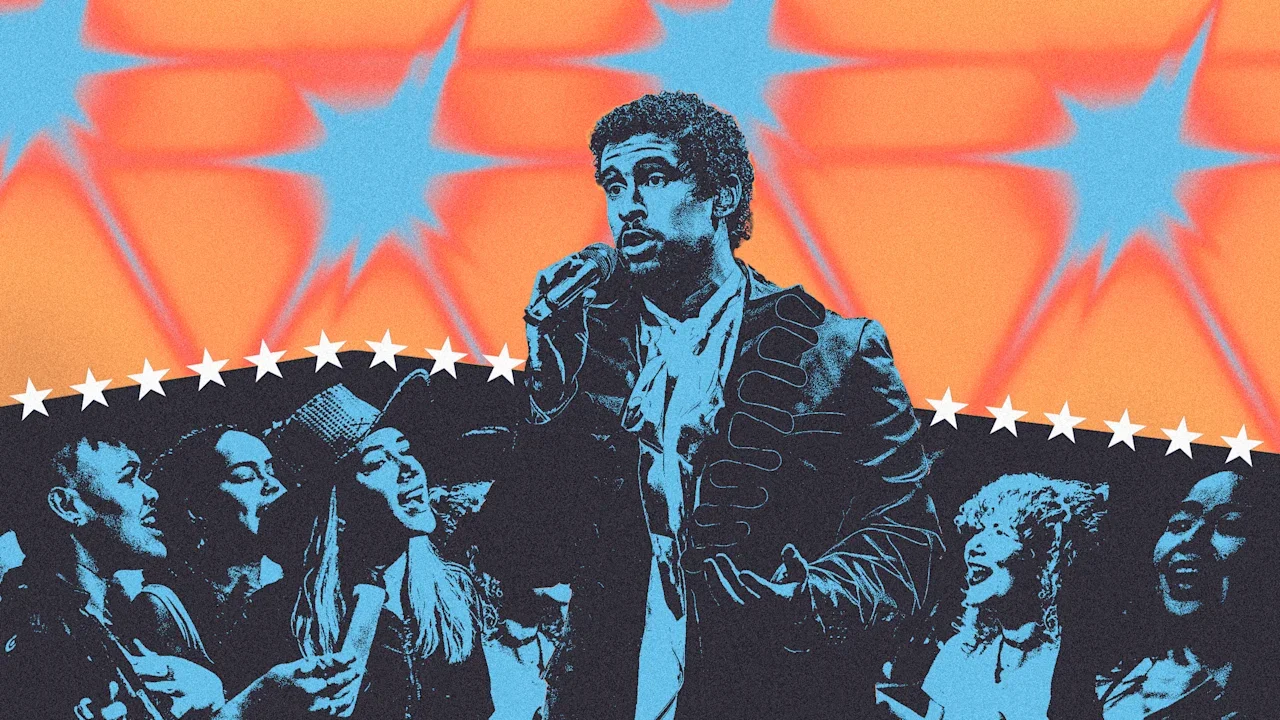
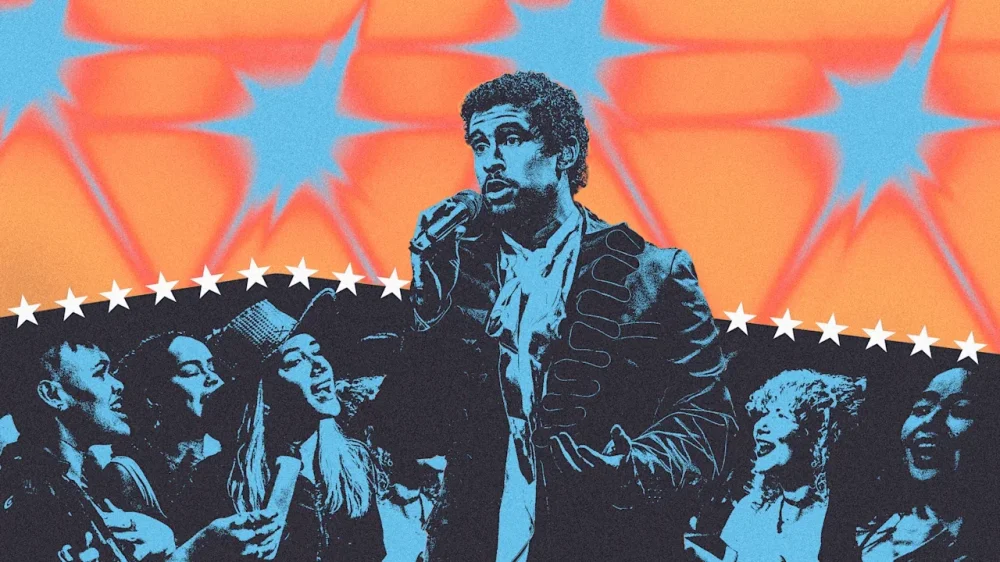
So far, the mainstream business world has avoided clashing with the socio-cultural agenda of the second The President administration. Many companies have backed away from diversity and climate efforts, capitulated on score-settling lawsuits, and muted objections to everything from tariff schemes to aggressive immigration policies. It might seem surprising, then, that one of the most mainstream businesses in existence—the National Football League—chose as the star of its Super Bowl LX halftime show Puerto Rican artist Bad Bunny, who performs mostly in Spanish and has been openly critical of President The President. Notably, he recently declined to tour the continental U.S. out of concern over ICE deportation efforts, instead performing a 31-night residency in San Juan, Puerto Rico, that was a massive commercial success. Certainly the MAGA commentariat behaved as if not just surprised, but triggered, and the backlash in that corner of the culture was immediate and intense. “This isn’t about music, it’s about putting a guy on stage who hates The President and MAGA,” conservative filmmaker Robby Starbuck declared on social media. “He’s just a terrible person,” said a Newsmax host, calling for a boycott. One administration official suggested Bad Bunny is divisive and pledged “ICE will have enforcement” at the big game. “Massive The President hater; Anti-ICE activist; No songs in English,” Benny Johnson, a right-wing podcaster, chimed in, adding: “The NFL is self-destructing.” In reality, it’s hard to argue with Bad Bunny’s popularity, and his decidedly mainstream status. He is among the most-streamed artists of all time. The final show in his San Juan residency was livestreamed on Prime Video and Twitch, setting an Amazon Music viewership record. This weekend the Grammy winner will be host Saturday Night Live for the second time. His wide appeal—particularly among younger fans—is proven. Moreover, there was some similar conservative grousing over rapper Kendrick Lamar being chosen for the slot, and that ended up being the most-watched Super Bowl halftime show of all time, with 133.5 million viewers. The NFL is not really in the business of being a cultural arbiter, and presumably the decision emanated more from event coproducer Roc Nation (which recently re-upped its NFL deal for the next five years) and halftime-show sponsor Apple Music. But all three entities have the same goal: creating a major cultural event that lives up to the game itself. In the official announcement, an NFL exec praised Bad Bunny’s “unique ability to bridge genres, languages, and audiences.” That is the business the NFL is in—less a cultural critic and more of an interpreter of where the culture really is now, and is most likely to go next. And sometimes that means getting absorbed into a wider conversation. In fact, the same thing happened in the last Super Bowl, when the choice of Lamar became a cultural-debate talking point. “All these white people mad about Kendrick Lamar’s Super Bowl performance,” one X user posted at the time, “I hope next year they get Bad Bunny performing the whole set in Spanish.” Prescient call! But still. It would be a mistake to see this as the NFL overtly taking sides—or trolling ideological opponents—in the bickering that the Bad Bunny news sparked. Progressive observers could point to the league’s teams icing out quarterback/activist Colin Kaepernick, or lagging record on hiring diverse coaching staffs, or its track record on confronting concussions and other physical fallout from a brutal sport. The same goal has motivated the NFL through those controversies as the occasional halftime-show flareups: identifying, and courting, the widest audience possible in an otherwise fractured culture. And its track record has been pretty good. After all the Super Bowl LIX online griping about Lamar, the actual performance received a paltry 125 complaints from viewers to the Federal Communications Commission, Wired reported, many focusing on “the lack of white performers.” Obviously that complaint was hardly a mainstream perspective. To the contrary, it was just a marginal view from a noisy fringe, quickly overtaken—and forgotten. View the full article
-
Most brands still buy attention. The impactful ones earn devotion, the kind people will rally behind and fight to protect. Consumers want a role in movements, not just transactions. When brands focus solely on economics, spark and engagement disappear. Consequential brands ignite a shared spirit, tapping into values, not just wallets, and building communities of advocates. But how do you actually build cultural power? For my forthcoming book Branding as a Cultural Force: Purpose, Responsibility, and Resonance (Columbia University Press, 2025), I interviewed creative leaders worldwide to find out. Across those conversations, six clear strategies emerged—actionable patterns that separate brands that ride culture from those that positively shape it. These strategies turn brands into cultural forces that generate enthusiasm and prosperity. 1. BE IRREPLACEABLE In a world of infinite options, cultural power begins with being impossible to replace. “A brand should embody something unique that others can’t easily replicate,” says Nick Law, creative chairperson of Accenture Song. Uniqueness isn’t about features or benefits anymore, but about occupying cultural territory that only you can claim. U.S. Bank’s Translators documentary reveals a hidden reality: bilingual children serve as interpreters for their immigrant families, navigating everything from banking to healthcare. Rather than just advertising their Spanish-language banking services, U.S. Bank collaborated with filmmaker Rudy Valdez to tell this authentic story. The documentary validates an experience millions live daily. When they later launched Asistente Inteligente, the first Spanish-language virtual assistant from a U.S. financial institution, it felt like natural understanding, not marketing. As Leland Maschmeyer, cofounder and CEO of Collins, puts it: “The reality is that brand is differentiation. Without it, a product is a commodity.” Cultural power comes from creating territory that only you can occupy. 2. TRANSFORM PROMISES INTO ACTIVISM It’s no longer enough to promise functional benefits or emotional connection. People expect activism—manifestos turned into measurable action. As Juliana Constantino, group creative director at Dentsu, explained: “Purpose-driven brands embody a social mission integral to their business. Others jump on social issues for short-term campaigns without genuine commitment. These efforts come across as insincere or opportunistic.” Telecommunications company Orange and creative agency Marcel challenged football bias with a highlight reel of dazzling plays by France’s male stars like Kylian Mbappé and Antoine Griezmann, only to reveal audiences had actually been watching the women’s team, digitally altered to look like male players. The campaign proved that skill transcends gender bias, making “WoMen’s Football” the most shared content fighting inequality in the sport. Apple has taken a sustained approach. “The Lost Voice” spotlighted accessibility. “Fuzzy Feelings” explored empathy through creativity. And Frybread Face and Me—an Apple Original feature on Netflix, written and directed by Billy Luther—elevated a story by an Indigenous filmmaker. What matters most is not any single story but the pattern: activism embedded as brand practice. 3. MEASURE IMPACT, NOT JUST PROFIT Profit without purpose is just extraction. The brands building real cultural power have moved beyond traditional metrics to measure what actually matters: their contribution to the world. “The key is differentiating between a nice idea and actual impact,” says Ben Miles, chief design officer, APAC, R/GA. “Design has to be intentional.” That intentionality means embedding impact measurement into every decision, not treating it as an afterthought. Ben & Jerry’s exemplifies this approach by integrating nonpartisan social metrics into operational decisions. Their mission seeks to meet human needs and eliminate injustices across communities, creating accountability throughout every function. They’ve published annual social and environmental assessment reports with third-party reviews for decades. What makes them culturally powerful is how consistently they follow this mission, from ingredient sourcing to activism campaigns. 4. GO PLANET-FIRST, NOT HUMAN-CENTERED The human-centered approach that dominated the last decade assumes we have infinite planetary resources. We don’t. As this reality becomes undeniable, consumer expectations have fundamentally shifted. It’s no longer enough to be less bad—people expect brands to be actively regenerative. The numbers tell the story: More than half of Gen Z and millennials will pay more for sustainable products, with 25% researching a company’s environmental impact before every purchase, according to Deloitte’s 2025 sustainability survey. Around 65% feel anxious about the environment’s state, and over 70% have experienced extreme weather events in the past year. Lived experiences are driving purchasing decisions. As Gaëtan du Peloux, CCO and co-CEO of Marcel Paris, told me: “I believe companies have both rights and duties. It’s an implicit understanding between people and businesses: We allow companies to make money, but in return, we expect them to contribute positively to society. This collective responsibility is crucial.” The brands responding to this shift—from Google and American Airlines reducing contrails to Sheba restoring coral reefs—are building the cultural credibility that environmentally anxious generations demand, turning planetary stewardship into a competitive advantage. 5. PRACTICE LEADERSHIP AS CULTURAL STEWARDSHIP Leaders who act as cultural stewards, not just profit maximizers, build the most influential brands. Emma Robbins, CCO at M&C Saatchi Melbourne, emphasizes: “Shared purpose from brands with their customers comes when brands don’t behave like corporations but just like people.” She adds, “The best brand storytelling happens when it tells the story of the customer. Brands can appear arrogant when they tell a ‘we’ story.” Mastercard exemplified this with True Name, allowing transgender and non-binary customers to display their chosen names on cards without legal name changes. The initiative prioritized dignity over traditional banking protocols, putting customer stories at the center. By making it available to other banks, Mastercard encouraged industry change. 6. AMPLIFY MANY VOICES The strongest brands don’t just tell their own story; they amplify underrepresented voices and invite audiences to help shape the narrative. When brands open space for participation, communities cocreate meaning and hold them to standards of authenticity and transparency. As Nancy Crimi-Lamanna, CCO at FCB Canada, told me, truly relevant work addresses “current and relevant cultural issues by providing insights and driving engagement for positive change.” That belief powered FCB’s long-term partnership with the Canadian Down Syndrome Society. From inclusive voice algorithms with Google to Adidas’s Runner 321 bibs reserved at major marathons, they turned representation into policy, not taglines. Dove has taken a similar approach. When TikTok’s Bold Glamour filter went viral, the brand mobilized against unrealistic beauty standards with #TurnYourBack—a replicable action that audiences themselves carried forward. Posts using the hashtag gained 54 million views and more than half a million engagements, proving that real cultural power emerges when people see themselves as participants, not consumers. THE CULTURAL CITIZENSHIP IMPERATIVE The brands that will dominate won’t be those with the biggest budgets, but those that communities respect and promote. The future belongs to brands that communities claim as their own. As Maschmeyer writes in the foreword to my book: “The brands that thrive will not be those that shout the loudest, but those that matter the most.” View the full article
-
Wall Street chief executive says he is ‘not smart enough’ to know whether there is an AI bubbleView the full article
-
Greater Manchester police say one of those shot by officers has diedView the full article
-
Beep, beep, beep, beep, beep, beep, beep. Short screech. Long screech. Static. More beeps. On September 30, one of the most memorable—if not infuriating—waiting experiences since the dawn of the internet went the way of the dodo. AOL finally discontinued its dial-up service. If you grew up in the ’90s, you knew that sound by heart. Some of you also knew to bring a newspaper while waiting for a single web page to load. AOL’s iconic 30-second symphony of screeches and static wasn’t just the sound of connection. It was the sound of anticipation, of mandatory patience in an increasingly impatient world. Today, that pause is all but extinct. Pages load more or less instantly, apps respond in milliseconds, and information moves faster than we can formulate a complete thought. Technological advances have virtually eliminated the wait, but waiting isn’t wasted time. Studies have shown that simple pauses can help strengthen our self-control, and savoring the anticipation of an event can help us prolong pleasure. Our overstimulated brains might find the wait to be frustrating, but underneath all the noise, we just want a quiet moment of pause. Waiting gives us a chance to rest and reflect. This is as true of the real world as it is online. That’s why designers are sneaking the wait back into modern digital experiences. The Return of the Pause On a recent afternoon, I had to call my medical provider to ask a question. When someone picked up—predictably, a voice bot—I provided my name and date of birth. Then something interesting happened. Instead of processing my information in digital silence, or to the sound of hold music, the bot pretended to type it into a keyboard. I heard a click, clack, click, clack. The built-in typing may not have been totally for show—perhaps the software genuinely needed the processing time. But it was designed to humanize my interaction, to mimic what psychologists call “conversational rhythm,” in which pauses signal thought, consideration, and care. The concept translates to digital experiences, too. Take OpenAI’s GPT-5. While previous versions typed out answers slowly, like a typewriter, the early version of GPT-5 dumped the full answer in one go. Some users found it hard to engage; others found it boring. “It just slammed a wall of text at me,” Marcel McVay, director of UX and digital solutions at Octo, tells me. “It was so much information at the same time, that it was off-putting.” What users were missing is called sequencing, otherwise known as the deliberate pacing of information delivery. When your car dashboard lights up one indicator at a time rather than all at once, that’s sequencing. When ChatGPT, Claude, or Perplexity type out responses like a vintage typewriter rather than “slamming” the complete answer instantly, that’s sequencing, too. With large language models (LLMs), information delivery was slowed down to mimic the pauses that occur in natural conversation, and to help people process information like they are used to. “If someone doesn’t pause to think about what you just said, did they even hear you?” McVay says. He is currently working on a dementia care app, called Plans4Care, that aims to help support and guide people dealing with degenerative brain diseases. He says the app, which is currently being tested in clinical trials, doesn’t require a lot of processing time to load. But his team still built in a loading screen that shows the brand’s logo plus a rolling selection of comforting quotes and accompanying images. While technically unnecessary, the loading screen serves to pace the user’s experience. “It’s a place where we remind you, we’re Plans4Care, and we’re here to support you,” McVay says. Making the Wait Worthwhile Sometimes, of course, wait time remains necessary, and companies have learned to transform these delays into brand opportunities. The Calm app invites you to “take a deep breath” while it loads meditation content. Duolingo’s mascot Duo gives you quirky language facts during brief loading screens. Expedia calls to your wanderlust with a loading spinner in the shape of a traveling plane. These moments aren’t just distractions—they’re what Clinton Gorham, brand consultant and founder of the Gorham Agency, calls “movie trailers,” or brief moments that set the mood and manage expectations. “Smart brands treat that sliver of time as a mini canvas to make an impression,” he says. The strategy isn’t exactly new. In the 1950s, office building tenants in a Manhattan high-rise complained about slow elevators. Rather than installing faster machinery—an expensive solution—building managers installed mirrors in elevator lobbies. Suddenly, complaints plummeted. The wait time hadn’t changed, but the mirrors had transformed dead time into useful time, and people were too busy checking their appearance to notice the delay. David H. Maister, an authority on service management and the psychology of waiting in line (or a queue, as they say in the U.K.), calls this phenomenon the “occupied time principle.” The British-born former Harvard professor has stated that occupied time (spent on any activity) feels shorter than unoccupied time (free from activity). User experience designers today are using the same trick. Some years ago, UX designer Tej Kalianda was working on ShareConnect, an iPad app that allows users to securely connect to and control their computers from anywhere in the world. The app’s complex authentication and secure connection setup processes meant that it took users 35 seconds to connect. It also meant they consistently dropped out. “They thought the app was broken,” says Kalianda, who now works at Google but spoke to me in a personal capacity. The engineering team couldn’t reduce the wait time, so Kalianda decided to keep users busy while they waited. She created random, visually engaging loading screens that changed every time someone connected. “Instead of fighting the delay, I embraced it,” she explains. And her efforts paid off. The company’s Net Promoter Score jumped from 40 to 45, and she says user feedback shifted from “This thing doesn’t work” to “I love how smooth the connection feels.” Like with the elevators, the wait time never improved—only the perception of it. Yet users were measurably happier because they were engaged and entertained. The aesthetics of waiting A ’90s kid would barely recognize the internet today. We have gone from screechy dial-up connections and songs that took 20 minutes to download to TikTok trends that circle the globe in seconds. But it’s not just speed that’s changed—the entire aesthetic of waiting has evolved along with it. Back then, waiting looked like a progress bar crawling across a gray dialogue box, or “loading . . .” text blinking in a browser. The internet felt mechanical, utilitarian. But over the next few decades, companies developed their own visual language of waiting. Some, like Microsoft, took the literal approach with sand falling through an hourglass. Others, like Apple, embraced abstraction with a colorful beach ball that spun cheerfully while our computer screens froze. More recently, Slack turned waiting into a fun distraction with messages like “reticulating splines” (a callback to loading screens from games like SimCity). Meanwhile, Perplexity narrates its “thought process,” and Uber loads a grayed-out “skeleton” of its layout, helping you visualize what’s to come. In a world that never stops scrolling, these pauses—engineered or not—are a welcome reminder that anticipation can be a feature, not a bug. I never thought I’d say this, but watching an app load is starting to feel like a simple, grounding moment that makes us feel a little more human. View the full article

-
Artificial Intelligence is here to stay. It’s reshaping industries, expediting innovation, and shifting how we work at unprecedented speed. For many leaders and employees alike, that reality sparks an uneasy question: if AI can do my work, where does that leave me? The answer lies not in competing with AI, but in doubling down on what makes us distinctly, and irreplaceably, human. In my work on human leadership, I’ve explored how leaders can step into a technology-centric future without sacrificing humanity. The truth is: AI can process, predict, and optimize. But it cannot lead, inspire, or create meaning in the way that humans can. Here are five leadership skills that AI will never replace, and how you can harness them to stay future-ready: 1. Empathy AI can simulate human responses, but it cannot feel. Empathy, the ability to truly sense and connect with the emotions of others, is foundational in relationships, building trust and fostering a sense of belonging. Research consistently shows that workplaces where employees feel understood and valued perform better, yet empathy is a skill that many leaders overlook (and don’t develop). To harness empathy, leaders need to move beyond surface-level check-ins. Create practices that encourage active empathy by making space to connect with employees to ask open questions. Listen for what they don’t say, and tailor your leadership approach to the unique human in front of you. It takes more time and intention, but it’s irreplaceable. 2. Contextual Judgement AI excels in patterns and algorithms, but struggles with nuance. And in a complex world, nothing is ever black or white. An AI algorithm might be able to analyze millions of data points, but it can’t weigh organizational history, cultural dynamics, ethical dilemmas, or interpersonal relationships in the same way a human leader can. Contextual judgment is the art of knowing not just what to decide, but when, why, and how to execute on that judgment. Slow down decision-making when the stakes are high, and don’t be fooled into the belief that a fast decision is a good one. Think fast and slow. That means paying attention to your initial reactions, but it’s important to interrogate those, too. And hold space for paradox thinking. You need to consider both/and rather than either/or choices to widen your perspective and avoid being boxed into binary outcomes. 3. Creativity and making meaning Yes, AI can now generate images, songs, and even strategies. But it cannot interpret or assign meaning. Human creativity isn’t just about producing novelty–it’s about storytelling, creating understanding, symbolism, and inspiring shared purpose. Leaders who can craft a vision that resonates emotionally give people a reason to care, not just a reason to comply. If you’re struggling with creativity, start by creating rituals and narratives that tie day-to-day work back to a greater mission, your reason for being. Whether it’s connecting a team’s project to customer impact or designing a shared symbol of progress, your ability to make meaning is uniquely human. It’s this emotional connection that drives motivation. 4. Humility and self-awareness AI doesn’t experience self-doubt, nor does it have blind spots. Humans do, and acknowledging them is a strength, not a weakness. Leaders who practice humility are open to feedback, adaptable to change, and better at building psychological safety within teams. Leaders should model vulnerability by admitting when they don’t have all the answers. Ask your team: What am I missing? What do you see that I don’t? This not only builds trust but also elevates collective intelligence and empowers those around you. 5. Connection and belonging AI can simulate conversation, but it can’t forge authentic relationships. Humans are hardwired for connection, and belonging is a key driver of performance and wellbeing in the workplace. Leaders who invest in cultivating genuine connections foster resilience and loyalty that no algorithm can replicate. People do their best work when they feel truly seen, valued, and understood. It’s important to value the relationships with your team above all else. Build micro-moments of connection into your leadership practice, whether that’s starting meetings with personal check-ins, celebrating small wins, or mentoring emerging talent. All of these practices create touch points for genuine connection. Leading in the age of AI Fear of being replaced by AI is real, but if we understand where our strengths lie, we diminish the threat. AI is not a rival to human leadership; it’s a tool. The danger isn’t that AI will replace leaders, but that leaders will neglect the very skills that make them indispensable. The future belongs to leaders who embrace technology to elevate humanity. By leaning into empathy, contextual judgment, creativity, humility, and connection, we not only safeguard our relevance, we redefine what leadership looks like in the age of AI. At the end of the day, people don’t follow algorithms. They follow humans. View the full article
-
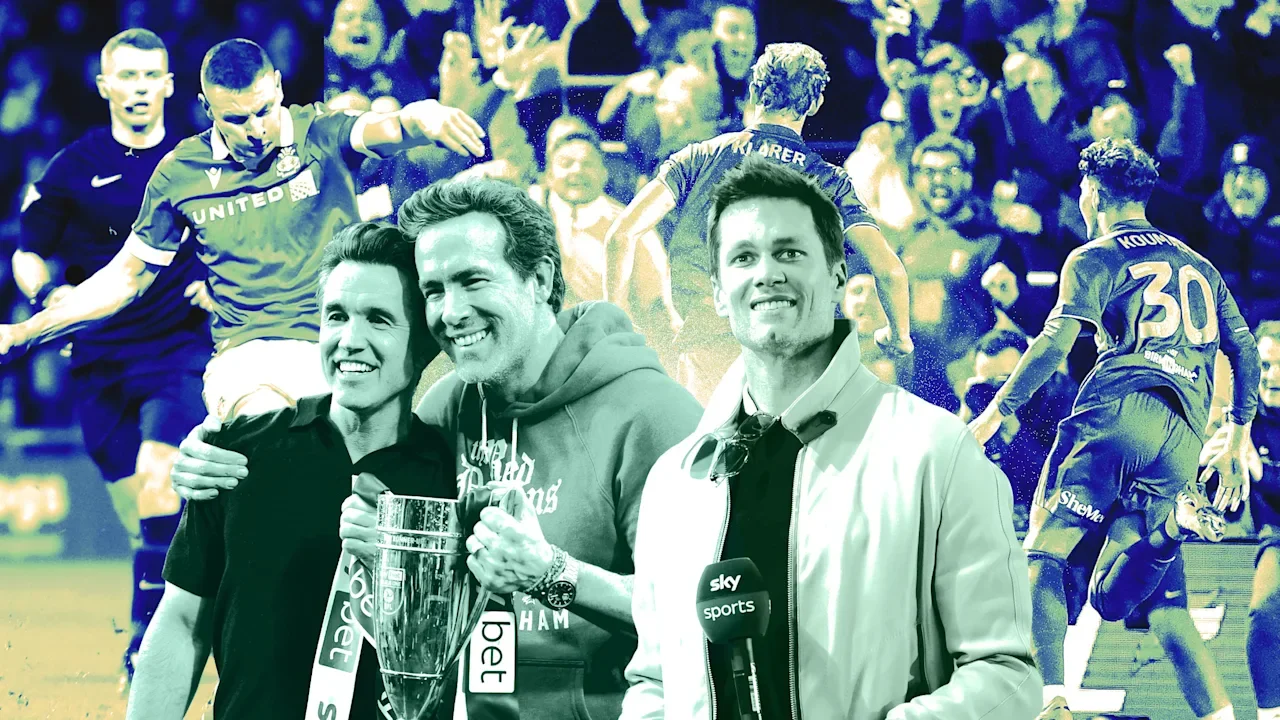
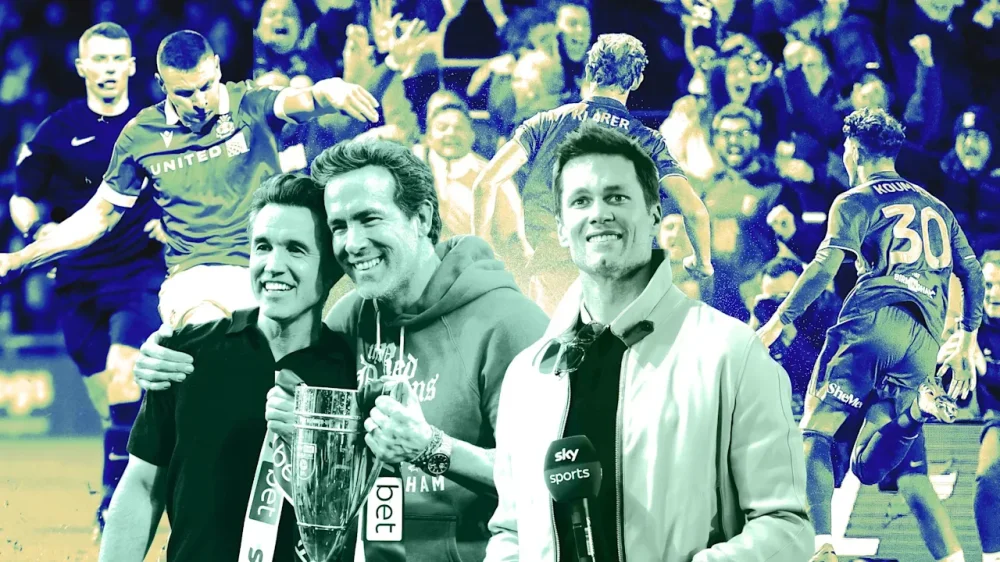
Discussing English football ownership is turning into the ultimate name drop. Ryan Reynolds and Rob McElhenney at Wrexham. Tom Brady at Birmingham City. Michael B. Jordan at Bournemouth. J.J. Watt at Burnley. Even Snoop Dogg is in on the action, becoming co-owner of Swansea City this summer. But the American invasion of English football has moved beyond novelty. Twelve of the Premier League’s 20 clubs now answer to U.S. ownership—either wholly or partially. Drop down to the Championship, English football’s second tier, and nine more clubs are backed by American money. On Friday, when Wrexham hosts Birmingham City, it will be a clash of two celebrity-driven, American-backed clubs facing off on U.K. soil. It’s Reynolds and McElhenney versus Brady, and it’s a matchup that captures exactly how much the English football landscape has shifted over the past two decades. The Great English Land Grab Malcolm Glazer’s $1.5 billion takeover of Manchester United in 2005 made him the Premier League’s first-ever American owner. Now, 20 years later, the four most successful clubs in English football history—Liverpool, Manchester United, Arsenal, and Chelsea—are all majority-owned by Americans. The 2008 financial crisis accelerated the trend. The U.S. economy recovered faster than Europe’s, creating a surplus of capital among moguls wealthy enough to covet professional sports teams and an opportunity to buy overseas clubs at a discount. That arbitrage remains. In May 2022, Todd Boehly and private equity firm Clearlake Capital bought Chelsea, one of the Premier League’s marquee clubs, for $3.2 billion. Just over a year later, Josh Harris purchased the Washington Commanders for $6.05 billion, nearly double what Boehly paid. Celebrity involvement was limited until Reynolds and McElhenney made their splash in 2021. They bought Wrexham—a fifth-tier Welsh club—for just $2.5 million. Their unique approach and subsequent success have demonstrated how American celebrity ownership can benefit a club via global marketing in ways traditional ownership cannot. The Rise of Wrexham When Reynolds and McElhenney took over in February 2021, they inherited a club with deep roots and persistent struggles. Founded in 1864, Wrexham is the third-oldest professional football club in the world. But by 2021, the club had spent 15 years stuck in the National League—England’s fifth tier. Think of it as Single-A baseball or the NBA’s G-League, but a tier lower. That’s where Wrexham floundered. Reynolds and McElhenney started by admitting what they didn’t know and bringing in experts. Their first hire was Shaun Harvey, who had previously run the entire English Football League. Harvey recommended they hire Phil Parkinson, a manager with a history of earning promotions. With the front office set, the on-field strategy was simple: Spend money on better players. Wrexham lured Paul Mullin, the fourth tier’s top scorer, exploiting a loophole that exempted equity investment from lower-league spending caps. But the off-field strategy is where Wrexham really won. Reynolds and McElhenney launched Welcome to Wrexham on FX, turning the club into a four-season documentary series. They signed sponsorship deals with TikTok, United Airlines, Expedia, and Aviation Gin (which Reynolds co-owns). By the 2023–24 season, while playing in the fourth tier, Wrexham was generating nearly $34 million in revenue—more commercial income than five Premier League clubs. The money funded operations and player acquisitions that contributed to three consecutive promotions from 2022 to 2025, a first in EFL history. Now, the club that sold for $2.5 million four years ago is reportedly valued at up to $475 million, and the club is one promotion away from the highest level of English football, the Premier League. The CopyGOAT: Tom Brady Gets In Birmingham City was last in the Premier League in 2011, when it won the League Cup, an annual in-season tournament, by beating English juggernaut Arsenal. That same season, the club was relegated from the Premier League and spent the next 13 years stuck in the league’s second tier. Then Tom Brady and Knighthead Capital Management took control in July 2023. Brady became a minority shareholder, and he brought his playbook from 22 years in the NFL, where he won seven Super Bowls. While the Knighthead brass run the club, Brady acts more as Birmingham’s self-help guru. He imported his personal “body coach,” Alex Guerrero, as an adviser on performance and nutrition. Players now receive electrolyte monitoring and tailored hydration protocols. When head coach Chris Davies hit a rough patch before Christmas, Brady sent him a video of Alabama coach Nick Saban discussing leadership philosophy. The ownership made ruthless decisions. They fired manager John Eustace after 11 games despite sitting sixth in the Championship. They brought in Wayne Rooney, an English football legend. When that didn’t work and Birmingham was relegated to League One, the third tier of English football, for the first time in 29 years, they fired Rooney. Amazon’s Built in Birmingham documentary captured Brady questioning Rooney’s work ethic on camera—an unusually direct critique that signaled how this ownership group was going to operate. The club hired Davies to replace Rooney, and he led Birmingham to the League One title with a record 111 points in 2024–25, earning a promotion to the Championship, where they’re competing with Wrexham for one of the three coveted spots atop the table that earn promotion to the Premier League. Is the Future of English Football American? In the past 18 months, American investors have completed multiple acquisitions across all levels of English football, from Everton in the Premier League to lower-tier clubs like Carlisle United and Reading FC. And the growth in U.S. investment shows no signs of slowing, as private equity groups are viewing English football clubs as undervalued entertainment assets with global reach. Manchester United was worth an estimated $1.5 billion when the Glazers bought it in 2005. Forbes now values it at $6.6 billion. Friday’s match between Wrexham and Birmingham offers a snapshot of where American ownership stands. Wrexham sits 15th in the Championship with eight points from eight matches. Birmingham is 11th with 10 points. Both teams are mid-table, far from the automatic promotion spots that would lift them to the Premier League. The Championship is brutal by design—a 46-game grind where clubs relegated from the Premier League arrive with parachute payments that can triple operating budgets. Promotion requires finishing in the top two or winning a four-team playoff. Neither Wrexham nor Birmingham will likely earn promotion this season. But Friday’s match isn’t really about league position. It’s about temporary bragging rights between American celebrity owners who’ve proven that English football can be reimagined as a global entertainment product—one that just happens to involve the occasional 90 minutes of actual football. View the full article
-
ECB president wants regulation beefed up for non-banks such as hedge funds, private equity and insurersView the full article
-
Historic appointment comes after months of deliberation following resignation of Justin Welby last yearView the full article
-
Shabana Mahmood calls on Defend Our Juries to call off London rally in wake of Thursday’s terrorist incidentView the full article
-
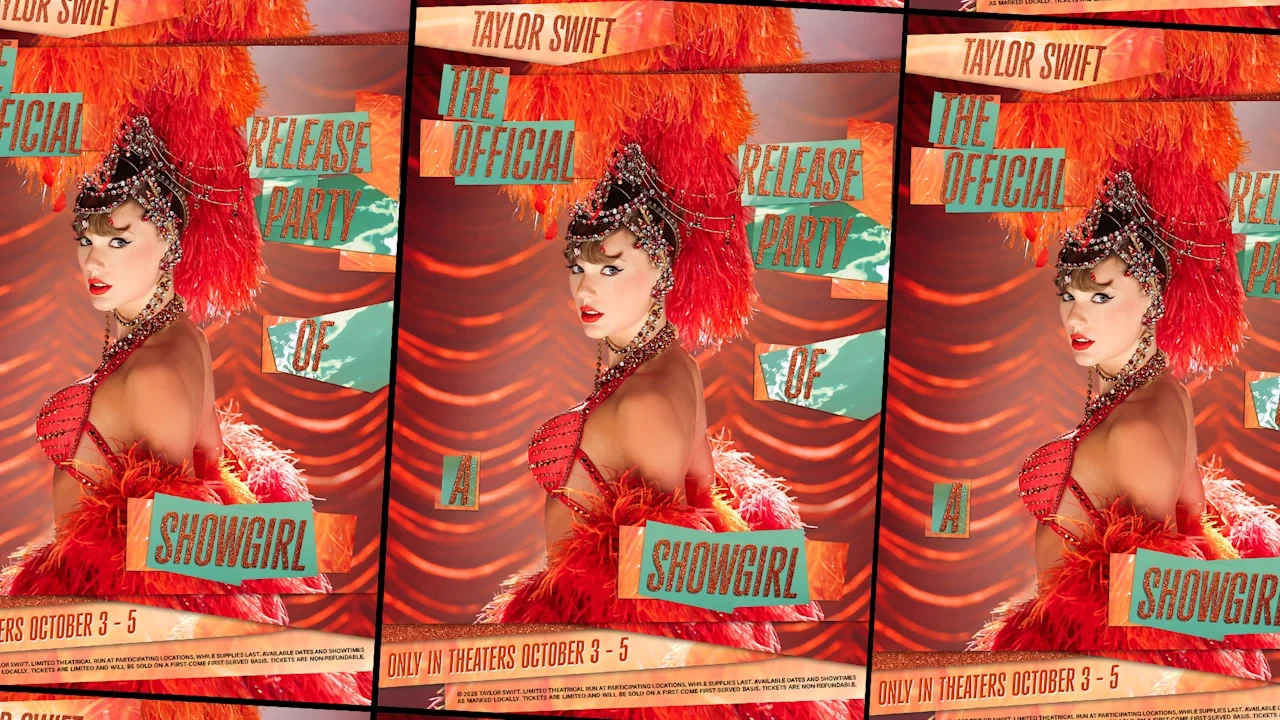
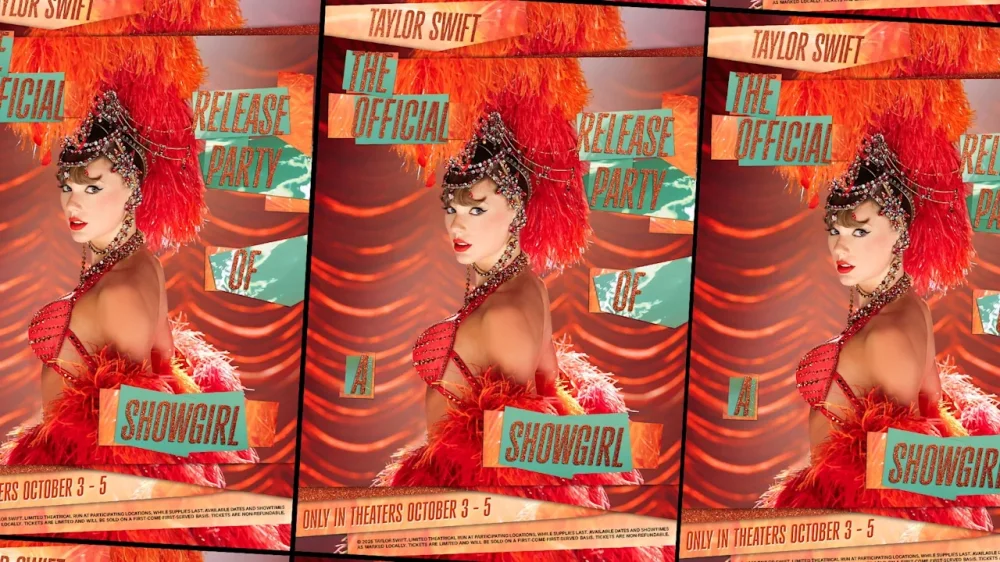
Taylor Swift’s highly anticipated 12th studio album, The Life of a Showgirl, is here. And this might be Swift’s biggest release yet, given that along with an album, she’s also premiering a film on the same day. Taylor Swift: The Official Release Party of a Showgirl features a new music video for the album’s single “The Fate of Ophelia,” lyric videos, and exclusive behind-the-scenes footage and commentary. It’s being hosted as a companion event by AMC, Cinemark Theaters, and Regal Cinemas. The catch? It’s showing in theaters for just three days: October 3 to 5. The brief theatrical window follows the same pattern Swift has used to release limited-edition versions of her past albums and merch that are often available only on her site for a short amount of time—creating a sense of urgency for fans. According to some analysts, replicating the strategy of generating fast ticket sales in a limited timeframe is beneficial not only for Swift but also for the major movie theater chains. “Who wouldn’t want to cut out the middleman these days?” Brandon Katz, director of insights and content strategy at Greenlight Analytics, posited to Fast Company. “AMC’s unique distribution deal with Taylor Swift allows them to bypass film studios and create more tailored deal terms. It represents a unique new business model for theaters, though one that isn’t easily repeatable. Exhibitors will also receive a new theatrical product headlined by the most famous entertainer on the planet at a time when wide-release volume is still lagging behind pre-pandemic levels. That’s helpful. Even without a traditional marketing runway, Showgirl will attract attention.” The Taylor Swift effect The Life of a Showgirl is an appropriately named album for arguably one of the world’s biggest pop stars, who has built an empire from her music since she was 16 years old, creating a devoted fandom of “Swifties.” In the past few years, Swift seems to have been busier than ever. She rerecorded her first six albums, reclaiming her music after the original masters were sold by her first record label (she eventually was able to buy the original masters back). She performed around the world on her 21-month-long Eras tour. And in August, she got engaged to Kansas City Chiefs tight end Travis Kelce after a whirlwind two-year romance that saw her become a fixture at NFL games, including Super Bowl LVIII. She also teased the new album in her appearance on Jason and Travis Kelce’s New Heights podcast). Her impact on any business she’s involved with has been so significant that it’s been given a name—“the Taylor Swift effect,” which experts say reflects the singer-songwriter’s strong economic force. Companies have been keen to take advantage of that Swift effect whenever they can. For instance, when The Life of a Showgirl was announced, many immediately adopted the album’s orange aesthetic and font style in their own social media posts. Spotify launched a pop-up merch shop in New York, while other brands, including Uber Eats, are hosting special deals and pop-up events to celebrate the release. This isn’t the first time Swift has released a theatrical film. Following the end of the Eras tour in 2023, she released Taylor Swift: The Eras Tour film, bypassing traditional studios and instead signing a deal directly with AMC Theaters. The film went on to earn roughly $261 million at the global box office, making it the highest-grossing concert film ever. Later, Swift struck a deal with Disney for the film’s streaming rights. This is the first time, however, that Swift is premiering a movie to coincide with a new album on the same day. Again, she’s skipping studios and releasing the film through AMC, Cinemark, and Regal Cinemas. Last month Deadline reported that the film had already raked in $15 million in first-day presales and that sources were projecting it to make between $30 million and $50 million over the October 3 weekend. A Swift business model According to data from Greenlight Analytics, the concert films Taylor Swift: The Eras Tour (with willingness to pay, or WTP, at 53%) and Renaissance: A Film by Beyoncé (with WTP at 52%) generated fan enthusiasm on par with Elvis (with WTP at 63%), suggesting that live-music experiences for big-name artists can generate long tails of monetization opportunity. Katz said that while releasing the film is a good idea for Swift, exhibitors, and the domestic box office, he emphasized that this isn’t going to usher in a new genre of film, since only stars at Swift’s level will be able to generate respectable box office revenue or streaming interest. “For the majority of artists thinking about chasing a similar goal, the juice would not be worth the squeeze,” Katz said. However, Swift is clearly continuing to move into the movie industry: In addition to the Eras Tour and Party of a Showgirl films, she’s reportedly developing a feature project for Searchlight Pictures. View the full article
-
How can you get ahead in your career and still enjoy the ride? One solution offered in business books, LinkedIn posts, and team-building manuals is to use humor. Sharing jokes, sarcastic quips, ironic memes, and witty anecdotes, the advice goes, will make you more likable, ease stress, strengthen teams, spark creativity, and even signal leadership potential. We are professors of marketing and management who study humor and workplace dynamics. Our own research—and a growing body of work by other scholars—shows that it’s harder to be funny than most people think. The downside of cracking a bad joke is often larger than what you might gain by landing a good one. Fortunately, you don’t have to tell sidesplitting jokes to make humor work for you. You can learn to think like a comedian instead. Humor is risky business Comedy works by bending and breaking norms—and when those rules aren’t broken in just the right way, it’s more likely to harm your reputation than to help your team. We developed the “benign violation theory” to explain what makes things funny—and why attempts at humor so often backfire, especially in the workplace. Essentially, humor arises when something is both wrong and OK at the same time. People find jokes funny when they break rules while seeming harmless. Miss one of those ingredients when you tell a joke and your audience won’t appreciate it. When it’s all benign and there’s no violation, you get yawns. When it’s all violation and not benign, you could end up triggering outrage. It’s hard enough to get laughs in the darkness of a comedy club. Under fluorescent office lights, that razor-thin line becomes even harder to walk. What feels wrong but OK to one colleague can feel simply wrong to another, especially across differences in seniority, culture, gender, or even the mood they’re in. The hit sitcom The Office pokes fun at the cringeworthy jokes cracked by a hapless boss. An advertising study In our experiments, when everyday people are asked to “be funny,” most attempts land flat or cross lines. In a humorous caption contest with business students, described in Peter McGraw’s book on global humor practices, The Humor Code, the captions weren’t particularly funny to begin with. However, the ones that were rated by judges as the most funny were often also rated the most distasteful. Being funny without being offensive is of paramount importance. This is particularly true for women, as a robust literature shows women face harsher backlash than men for behavior seen as offensive or norm-violating, such as expressing anger, acting dominantly, or even “making asks” in negotiations. Don’t be that guy. You might end up getting no respect Research by other scholars who examine leader and manager behavior in organizations tells a similar story. In one study, managers who used humor effectively were seen as more confident and competent, boosting their status. Yet when their attempts misfired, those same managers lost status and credibility. Other researchers have found that failed humor doesn’t just hurt a manager’s status—it also makes employees less likely to respect that manager, seek their advice, or trust their leadership. Even when jokes land, humor can backfire. In one study, marketing students instructed to write “funny” copy for advertisements wrote ads that were funnier, but also less effective, than students instructed to write “creative” or “persuasive” copy. Another study found that bosses who joke too often push employees into pretending to be amused, which drains energy, reduces job satisfaction, and increases burnout. And the risks are higher for women due to a double standard. When women use humor in presentations, they are often judged as being less capable and having lower status than men. The bottom line is that telling a great joke rarely gets you a promotion. And cracking a bad one can jeopardize your job—even if you’re not a talk show host who earns a living making people laugh. Flip the script Instead of trying to be funny on the job, we recommend that you focus on what we call “thinking funny”—as described in another of McGraw’s books, Shtick to Business. “The best ideas come as jokes,” advertising legend David Ogilvy once said. “Try to make your thinking as funny as possible.” But Ogilvy wasn’t telling executives to crack jokes in meetings. He was encouraging employees to think like comedians by flipping expectations, leveraging their networks, and finding their niche. Comics often lead you one way and then flip the script. Comedian Henny Youngman, a master of one-liners, famously quipped, “When I read about the dangers of drinking, I gave up . . . reading.” The business version of this convention is to challenge an obvious assumption. For example, Patagonia’s “Don’t Buy This Jacket” campaign, which the outdoor gear company rolled out on Black Friday in 2011 as a full-page ad in The New York Times, paradoxically boosted sales by calling out overconsumption. To apply this method, pick a stale assumption your team holds, such as that adding features to a product always improves it or that having more meetings will lead to smoother coordination, and ask, “What if the opposite were true?” You’ll discover options that standard brainstorming misses. Create a chasm When comedian Bill Burr has his fans in stitches, he knows some people won’t find his jokes funny—and he doesn’t try to win them over. We’ve observed that many of the best comics don’t try to please everyone. They succeed by deliberately narrowing their audience. And we also find that businesses that do the same build stronger brands. For example, when Nebraska’s tourism board embraced “Honestly, it’s not for everyone” in a 2019 campaign, targeting out-of-state visitors, web traffic jumped 43%. Some people want hot tea. Others want iced tea. Serving warm tea satisfies no one. Likewise, you can succeed in business by deciding whom your idea is for, and whom it’s not for, then tailoring your product, policy, or presentation accordingly. Cooperate to innovate Stand-up may look like a solo act. But comics depend on feedback—punch-ups from fellow comedians and reactions from audiences—iterating jokes in the same way lean startups may innovate new products. Building successful teams at work means listening before speaking, making your partners look good, and balancing roles. Improv teacher Billy Merritt has described three types of improvisers. Pirates are risk-takers. Robots are structure builders. Ninjas are adept at both: taking risks and building structures. A team designing a new app, for instance, needs all three: Pirates to propose bold features, robots to streamline the interface, and ninjas to bridge gaps. Empowering everyone in these roles leads to braver ideas with fewer blind spots. Gifts aren’t universal Telling someone to “be funny” is like telling them to “be musical.” Many of us can keep a beat, but few have what it takes to become rock stars. That’s why we argue that it’s smarter to think like a comedian than to try to act like one. By reversing assumptions, cooperating to innovate, and creating chasms, professionals can generate fresh solutions and stand out—without becoming an office punchline. Peter McGraw is a professor of marketing and psychology at the University of Colorado Boulder. Adam Barsky is an associate professor of management at The University of Melbourne. Caleb Warren is a professor of marketing at the University of Arizona. This article is republished from The Conversation under a Creative Commons license. Read the original article. View the full article