ResidentialBusiness
Administrators
-
Joined
-
Last visited
Everything posted by ResidentialBusiness
-
 Since the first day of the meeting, the 10-year Treasury yield has increased 16 basis points, with mortgage rates rising as a result, various trackers showed. View the full article
-
OpenAI is hiring a Growth Paid Marketing Platform Engineer to help develop tools for ad platform integration, campaign management, and real-time attribution. The role is part of a new ChatGPT growth team tasked with building the backbone of OpenAI’s in-house paid marketing platform. Why we care. OpenAI wants to monetize free users via ChatGPT ads by 2026, according to reports. It seems that OpenAI is now starting to build that ad-buying infrastructure so brands can run campaigns on ChatGPT. That would give advertisers access to a new platform with massive reach (700 million weekly users as of August). The details. The listing calls for building APIs, data pipelines, and experimentation frameworks to optimize ad spend. According to the job description: “We are looking for an experienced fullstack engineer to join our new ChatGPT Growth team to build and scale the systems that power OpenAI’s marketing channels and spend efficiency. Your role will include projects such as developing campaign management tools, integrating with major ad platforms, building real-time attribution and reporting pipelines, and enabling experimentation frameworks to optimize our objectives. As we are in the early stages of building this platform, we will rely on you to design and implement foundational MarTech infrastructure that make our marketing investments more effective, measurable, and automated. We value engineers who are impact-driven, autonomous, and adept at turning ambiguous business goals into robust technical systems.” Zoom out. OpenAI’s ad product could allow brands to input goals and have ChatGPT autonomously plan, buy, and measure campaigns. Fidji Simo, OpenAI’s chief of applications, is currently looking for a candidate who can “lead a new team that will be tasked with bringing ads to ChatGPT,” Adweek reported. Bottom line. Advertisers may soon have to decide whether to invest in ChatGPT as a paid media channel. View the full article
-
A brand messaging guide is essential for any organization looking to communicate effectively. It outlines your brand’s key messages, tone, and values, ensuring everyone is on the same page. This consistency helps differentiate your brand from competitors and connects with your audience. Comprehending its components and how to implement them can greatly impact your brand’s recognition and loyalty. So, how do you create an effective framework that resonates with your target market? Key Takeaways A brand messaging guide outlines a brand’s identity, values, and unique selling propositions for clear communication with the audience. It ensures consistent messaging across all channels, enhancing brand recognition and trust amongst consumers. The guide differentiates a brand from competitors, clarifying its unique value proposition in the marketplace. It serves as a reference for internal teams, aligning strategies with organizational goals and audience expectations. Regular updates to the guide keep messaging relevant and responsive to changing customer preferences and market dynamics. Understanding Brand Messaging Grasping brand messaging is vital for any business looking to establish a strong identity and connect with its audience. Effective brand messaging involves creating clear communication that reflects your brand’s values and unique selling propositions. A brand messaging guide outlines key elements, including tone of voice and core messages, ensuring consistency across all touchpoints. By following brand messaging guidelines, you help employees and stakeholders convey your brand identity accurately. This guide likewise includes examples of appropriate language, prohibited terms, and strategies to adapt messaging to market changes, maintaining relevance. In the end, comprehending brand messaging improves public perception and nurtures customer loyalty, making it a key aspect for anyone involved in brand communication. The Importance of a Brand Messaging Guide A brand messaging guide is crucial as it guarantees consistency across all communication channels, helping your audience recognize and trust your brand. By establishing a clear brand identity, it differentiates you from competitors and clarifies your unique value proposition. This guide additionally serves as a valuable reference for your team, aligning messaging strategies with your goals and audience expectations. Ensures Consistency Across Channels When developing a brand messaging guide, guaranteeing consistency across all channels is crucial for reinforcing your brand’s identity. Consistent messaging helps improve brand recognition, as it aligns with your brand messaging pillars and core values. By maintaining a uniform tone and style across different platforms, you establish a cohesive presence that resonates with your audience. This guide provides clear guidelines on language, tone, and key messaging points, reducing confusion among team members and promoting collaboration. Regularly updating your brand messaging guide guarantees it remains relevant and adapts to evolving customer preferences. In the end, a well-structured guide allows for effective communication customized to various audiences, all the while retaining the fundamental principles of your brand. Establishes Clear Brand Identity Establishing a clear brand identity is essential for any business aiming to connect with its audience effectively. A brand messaging guide plays an important role in this process by defining your brand’s voice, tone, and personality. This consistency across communication channels helps customers easily recognize and understand what makes your brand unique compared to competitors. By creating a cohesive narrative, you cultivate stronger emotional connections with your audience, enhancing customer loyalty and engagement. In addition, the guide serves as a framework for your internal teams, ensuring everyone communicates the brand message uniformly. Consistent application of a brand messaging guide ultimately results in increased brand recognition and trust, making it easier for customers to engage with your business. Key Components of a Brand Messaging Guide Key components of a brand messaging guide are essential for clearly articulating your brand’s identity and purpose. First, include your mission statement, which defines what your brand stands for. Next, outline your value propositions, highlighting what sets your brand apart. Incorporate key messaging points that convey your brand’s core identity consistently. Furthermore, define your tone of voice and style guidelines to guarantee uniformity across all platforms. It’s likewise beneficial to create detailed buyer personas, which help tailor your messaging to meet the needs of your target audience effectively. Finally, establish key terms and phrases that reflect your unique selling points. Remember to regularly update the guide to keep your messaging relevant and aligned with changing market trends. Internal vs. External Brand Messaging Comprehending the distinction between internal and external brand messaging is essential for effective communication within your organization and with your audience. Internal messaging promotes alignment among team members, encouraging a cohesive culture. Conversely, external messaging targets customers, shaping perceptions and driving sales. Consider these key differences: Internal messaging is familiar and informative, focusing on team engagement. External messaging is curated and customized, emphasizing brand identity. Consistency in both types builds trust and recognition. Different strategies are required for effective communication in each area. A successful brand messaging framework integrates both internal and external elements to reinforce your brand identity across all touchpoints. Creating a Brand Messaging Framework Creating a brand messaging framework is a systematic approach to defining how your brand communicates its identity and values across various channels. This framework serves as a structured guide, outlining key messaging elements like your brand positioning statement, value propositions, target audience personas, and tone of voice. By clearly articulating these components, you differentiate your brand from competitors and address customer pain points effectively. Ongoing market research, competitor analysis, and audience feedback are crucial for maintaining relevance and adapting to changing preferences. Regularly revisiting and refining your framework guarantees alignment with your brand’s evolving goals, helping you resonate more effectively with your target audience. This clarity nurtures consistency and strengthens your brand identity in the marketplace. Steps to Develop a Brand Positioning Statement To develop a brand positioning statement, you need to start by clearly defining your company’s purpose. Next, identify your target audience to guarantee your message resonates with the right people. Finally, outline your unique value proposition, highlighting what sets your brand apart from competitors and the key benefits you provide. Define Company Purpose A well-defined company purpose forms the backbone of an effective brand positioning statement. To articulate this purpose clearly, consider the following steps: Identify your mission, vision, and core values. Distinguish what makes your brand unique in the marketplace. Understand the needs, preferences, and pain points of your target audience. Analyze competitors to refine how your brand stands out. Regularly revisit and update your positioning statement to align with market trends. Identify Target Audience Comprehending your target audience is essential for crafting a compelling brand positioning statement. Start by analyzing demographic data, psychographics, and customer behavior to create detailed buyer personas. These personas guide your messaging strategies effectively. Use tools like Google Analytics and CRM insights to gather valuable data on customer interactions. Engaging with sales and marketing teams can additionally provide anecdotal insights into customer pain points. Regularly refine these profiles based on market research and feedback to maintain relevance. Aspect Details Demographics Age, gender, income level Psychographics Interests, values, lifestyle Customer Behavior Purchase patterns, feedback Tools Google Analytics, CRM insights Feedback Sources Surveys, sales team insights Outline Unique Value Proposition Establishing a unique value proposition is vital for developing a strong brand positioning statement that resonates with your target audience. To do this effectively, follow these steps: Identify your brand’s core mission and values. Understand the specific needs and preferences of your target audience. Conduct a competitor analysis to see how similar brands communicate their value. Structure your positioning statement to include the target audience, brand name, product category, unique benefit, and reasons to believe in that benefit. Regularly review and refine your statement to keep it relevant as market trends and customer preferences evolve. Analyzing Competitors for Effective Messaging How can you leverage competitor analysis to improve your brand messaging? Start by identifying key messaging strategies used by similar brands. This helps you differentiate your voice in the marketplace. Analyze competitors’ strengths and weaknesses, revealing gaps you can exploit to connect better with your audience. Pay attention to customer feedback and responses, as they provide insights into what resonates. Utilize tools like social media listening and sentiment analysis to assess how competitors are perceived. Regularly updating your analysis guarantees your messaging remains relevant. Competitor Strengths Weaknesses Brand A Strong social media presence Limited customer engagement Brand B Clear value proposition Inconsistent messaging Brand C High customer satisfaction Slow response time Brand D Innovative campaigns Overly complex messaging Brand E Strong community involvement Lacks targeted messaging Establishing a Unique Brand Voice Establishing a unique brand voice starts with defining your brand personality, which reflects your values and connects with your audience. Tailor your tone and style to fit various communication channels, ensuring consistency as you adapt to context. Defining Brand Personality Defining a brand personality is crucial for creating a unique brand voice that resonates with your target audience. A well-defined personality helps differentiate your brand and nurtures emotional connections. To establish this voice, consider the following elements: Identify core values that reflect your mission and vision. Determine the tone of voice that aligns with your audience’s preferences. Choose language and vocabulary that resonate with your target demographic. Develop guidelines to guarantee consistency across all communication platforms. Regularly assess and refine your brand personality as your audience evolves. Tailoring Tone and Style To create a unique brand voice that resonates with your audience, it’s crucial to align your tone and style with your brand’s core values and identity. Begin by developing a tone and style guide that outlines preferred terms, language style, and emotional tone for all communications. This guide guarantees consistency, reinforcing brand recognition, as 70% of consumers feel more connected to brands with a consistent voice. Tailor your messaging based on audience demographics and psychographics to effectively address their pain points and preferences. Regularly revisit and refine your brand voice, as 60% of marketers believe customer preferences evolve, necessitating adaptations in brand messaging strategies. Consistency and adaptability are key to building lasting connections with your audience. Crafting a Tone and Style Guide Crafting a tone and style guide is vital for maintaining consistent communication across your brand, as it sets clear guidelines that align with your brand’s identity and values. This guide guarantees that everyone on your team communicates in a unified voice. Here’s what to include: Language Style: Define if your brand speaks formally, casually, or authoritatively. Tone: Specify the emotional quality of your messaging—friendly, professional, or informative. Terminology: Outline preferred terms and phrases to use consistently. Grammar and Punctuation: Set rules to maintain clarity and professionalism. Prohibited Terms: List words or phrases to avoid that may misalign with your brand image. Regular updates are necessary to keep your guide relevant and effective in a changing market. Engaging Customers Through Feedback Engaging customers through feedback is an essential strategy for building strong relationships and improving your brand’s offerings. By creating a two-way communication channel, you can better grasp customer needs and preferences. This comprehension often leads to improved products and services. Timely engagement is critical; studies show that 52% of consumers expect a response within an hour on social media. Actively soliciting feedback—through surveys or social media polls—can greatly increase customer loyalty, as 70% of customers prefer brands that listen to their opinions. Prioritizing feedback creates a perception of trustworthiness and credibility, in the end strengthening your brand reputation. Implementing these mechanisms can improve customer satisfaction and retention, ensuring your brand remains relevant and responsive in the market. Adapting Brand Messaging Over Time As customer preferences and market trends continually evolve, adapting your brand messaging over time is essential for maintaining relevance and connection with your audience. To achieve this, consider the following strategies: Regularly assess customer feedback and engagement metrics to identify necessary adjustments. Implement a flexible brand messaging framework that allows timely updates without losing your core identity. Monitor competitor messaging strategies for insights that could inspire your own adaptations. Make seasonal or event-based adjustments to capitalize on current trends. Stay attuned to emerging demographics to resonate with new audiences effectively. Examples of Effective Brand Messaging Effective brand messaging plays a crucial role in how consumers perceive and connect with a brand. For example, Dove‘s “Real Beauty” campaign emphasizes confidence and self-acceptance, resonating emotionally with its audience. Apple‘s messaging reflects sophistication and simplicity, consistently seen in its advertising and product design, reinforcing its premium identity. Red Bull effectively communicates its adventurous ethos through user-generated content and viral marketing, engaging consumers without direct selling. Volkswagen uses nostalgic storytelling to create emotional connections, enhancing brand loyalty. L’Oréal showcases innovation with virtual try-ons, focusing on customer engagement and satisfaction. These examples demonstrate how effective messaging nurtures brand recognition and loyalty, guiding your approach to developing your own brand messaging strategy. Implementing and Maintaining Consistency Implementing a consistent brand messaging strategy is crucial for maintaining a strong identity and building trust with your audience. To achieve this, consider the following steps: Develop a brand messaging guide that outlines your tone, style, and key messages. Train your team on the guide to guarantee everyone understands the communication standards. Conduct regular audits of your brand messaging to identify deviations. Encourage open feedback within your team to promote internal alignment and productivity. Monitor consumer perception to measure the impact of your consistent messaging. Frequently Asked Questions What Is a Brand Messaging Guide? A brand messaging guide is a structured document that outlines your brand’s core messaging elements, such as mission, values, tone of voice, and unique selling propositions. It serves as a reference for your team, ensuring consistency across all communications. By detailing recommended language and communication styles, the guide helps you align messaging strategies and maintain coherence. Regular updates are essential, as they keep your messaging relevant and effective in responding to changing market conditions and audience preferences. Why Do You Need a Brand Guide? You need a brand guide to guarantee clarity and consistency in your messaging. It helps articulate your brand’s values, mission, and unique selling propositions clearly across all platforms. By providing a defined tone of voice and style, a brand guide creates a cohesive narrative that resonates with your target audience. It as well aligns internal and external communications, preventing mixed messages and enhancing customer engagement, finally cultivating brand loyalty and recognition. What Are the 3 C’s of Brand Messaging? The 3 C’s of brand messaging are Clarity, Consistency, and Constancy. For clarity, guarantee your messages are straightforward and easily understood, reducing confusion for your audience. Consistency reinforces your brand identity across all platforms, creating a reliable presence. Finally, constancy maintains your messaging over time, nurturing loyalty and trust. What Is the Main Purpose of a Brand Guideline? The main purpose of a brand guideline is to establish clear standards for how your brand communicates. It defines your tone of voice, language, and style, ensuring consistency across all platforms. By following these guidelines, you avoid misrepresentation and maintain a cohesive identity. This consistency helps build trust and loyalty among your audience. Furthermore, brand guidelines can include visual elements, reinforcing your brand’s appearance and making it easily recognizable. Conclusion In summary, a brand messaging guide is crucial for establishing clear communication and consistency across all platforms. By defining your core messages, tone, and values, you can differentiate your brand and strengthen connections with your audience. Regularly review and adapt your messaging as needed to remain relevant and responsive to feedback. In the end, investing time in creating and maintaining a brand messaging guide will improve brand recognition and promote customer loyalty, ensuring long-term success in a competitive marketplace. Image Via Envato This article, "What Is a Brand Messaging Guide and Why Is It Needed?" was first published on Small Business Trends View the full article
-
A brand messaging guide is essential for any organization looking to communicate effectively. It outlines your brand’s key messages, tone, and values, ensuring everyone is on the same page. This consistency helps differentiate your brand from competitors and connects with your audience. Comprehending its components and how to implement them can greatly impact your brand’s recognition and loyalty. So, how do you create an effective framework that resonates with your target market? Key Takeaways A brand messaging guide outlines a brand’s identity, values, and unique selling propositions for clear communication with the audience. It ensures consistent messaging across all channels, enhancing brand recognition and trust amongst consumers. The guide differentiates a brand from competitors, clarifying its unique value proposition in the marketplace. It serves as a reference for internal teams, aligning strategies with organizational goals and audience expectations. Regular updates to the guide keep messaging relevant and responsive to changing customer preferences and market dynamics. Understanding Brand Messaging Grasping brand messaging is vital for any business looking to establish a strong identity and connect with its audience. Effective brand messaging involves creating clear communication that reflects your brand’s values and unique selling propositions. A brand messaging guide outlines key elements, including tone of voice and core messages, ensuring consistency across all touchpoints. By following brand messaging guidelines, you help employees and stakeholders convey your brand identity accurately. This guide likewise includes examples of appropriate language, prohibited terms, and strategies to adapt messaging to market changes, maintaining relevance. In the end, comprehending brand messaging improves public perception and nurtures customer loyalty, making it a key aspect for anyone involved in brand communication. The Importance of a Brand Messaging Guide A brand messaging guide is crucial as it guarantees consistency across all communication channels, helping your audience recognize and trust your brand. By establishing a clear brand identity, it differentiates you from competitors and clarifies your unique value proposition. This guide additionally serves as a valuable reference for your team, aligning messaging strategies with your goals and audience expectations. Ensures Consistency Across Channels When developing a brand messaging guide, guaranteeing consistency across all channels is crucial for reinforcing your brand’s identity. Consistent messaging helps improve brand recognition, as it aligns with your brand messaging pillars and core values. By maintaining a uniform tone and style across different platforms, you establish a cohesive presence that resonates with your audience. This guide provides clear guidelines on language, tone, and key messaging points, reducing confusion among team members and promoting collaboration. Regularly updating your brand messaging guide guarantees it remains relevant and adapts to evolving customer preferences. In the end, a well-structured guide allows for effective communication customized to various audiences, all the while retaining the fundamental principles of your brand. Establishes Clear Brand Identity Establishing a clear brand identity is essential for any business aiming to connect with its audience effectively. A brand messaging guide plays an important role in this process by defining your brand’s voice, tone, and personality. This consistency across communication channels helps customers easily recognize and understand what makes your brand unique compared to competitors. By creating a cohesive narrative, you cultivate stronger emotional connections with your audience, enhancing customer loyalty and engagement. In addition, the guide serves as a framework for your internal teams, ensuring everyone communicates the brand message uniformly. Consistent application of a brand messaging guide ultimately results in increased brand recognition and trust, making it easier for customers to engage with your business. Key Components of a Brand Messaging Guide Key components of a brand messaging guide are essential for clearly articulating your brand’s identity and purpose. First, include your mission statement, which defines what your brand stands for. Next, outline your value propositions, highlighting what sets your brand apart. Incorporate key messaging points that convey your brand’s core identity consistently. Furthermore, define your tone of voice and style guidelines to guarantee uniformity across all platforms. It’s likewise beneficial to create detailed buyer personas, which help tailor your messaging to meet the needs of your target audience effectively. Finally, establish key terms and phrases that reflect your unique selling points. Remember to regularly update the guide to keep your messaging relevant and aligned with changing market trends. Internal vs. External Brand Messaging Comprehending the distinction between internal and external brand messaging is essential for effective communication within your organization and with your audience. Internal messaging promotes alignment among team members, encouraging a cohesive culture. Conversely, external messaging targets customers, shaping perceptions and driving sales. Consider these key differences: Internal messaging is familiar and informative, focusing on team engagement. External messaging is curated and customized, emphasizing brand identity. Consistency in both types builds trust and recognition. Different strategies are required for effective communication in each area. A successful brand messaging framework integrates both internal and external elements to reinforce your brand identity across all touchpoints. Creating a Brand Messaging Framework Creating a brand messaging framework is a systematic approach to defining how your brand communicates its identity and values across various channels. This framework serves as a structured guide, outlining key messaging elements like your brand positioning statement, value propositions, target audience personas, and tone of voice. By clearly articulating these components, you differentiate your brand from competitors and address customer pain points effectively. Ongoing market research, competitor analysis, and audience feedback are crucial for maintaining relevance and adapting to changing preferences. Regularly revisiting and refining your framework guarantees alignment with your brand’s evolving goals, helping you resonate more effectively with your target audience. This clarity nurtures consistency and strengthens your brand identity in the marketplace. Steps to Develop a Brand Positioning Statement To develop a brand positioning statement, you need to start by clearly defining your company’s purpose. Next, identify your target audience to guarantee your message resonates with the right people. Finally, outline your unique value proposition, highlighting what sets your brand apart from competitors and the key benefits you provide. Define Company Purpose A well-defined company purpose forms the backbone of an effective brand positioning statement. To articulate this purpose clearly, consider the following steps: Identify your mission, vision, and core values. Distinguish what makes your brand unique in the marketplace. Understand the needs, preferences, and pain points of your target audience. Analyze competitors to refine how your brand stands out. Regularly revisit and update your positioning statement to align with market trends. Identify Target Audience Comprehending your target audience is essential for crafting a compelling brand positioning statement. Start by analyzing demographic data, psychographics, and customer behavior to create detailed buyer personas. These personas guide your messaging strategies effectively. Use tools like Google Analytics and CRM insights to gather valuable data on customer interactions. Engaging with sales and marketing teams can additionally provide anecdotal insights into customer pain points. Regularly refine these profiles based on market research and feedback to maintain relevance. Aspect Details Demographics Age, gender, income level Psychographics Interests, values, lifestyle Customer Behavior Purchase patterns, feedback Tools Google Analytics, CRM insights Feedback Sources Surveys, sales team insights Outline Unique Value Proposition Establishing a unique value proposition is vital for developing a strong brand positioning statement that resonates with your target audience. To do this effectively, follow these steps: Identify your brand’s core mission and values. Understand the specific needs and preferences of your target audience. Conduct a competitor analysis to see how similar brands communicate their value. Structure your positioning statement to include the target audience, brand name, product category, unique benefit, and reasons to believe in that benefit. Regularly review and refine your statement to keep it relevant as market trends and customer preferences evolve. Analyzing Competitors for Effective Messaging How can you leverage competitor analysis to improve your brand messaging? Start by identifying key messaging strategies used by similar brands. This helps you differentiate your voice in the marketplace. Analyze competitors’ strengths and weaknesses, revealing gaps you can exploit to connect better with your audience. Pay attention to customer feedback and responses, as they provide insights into what resonates. Utilize tools like social media listening and sentiment analysis to assess how competitors are perceived. Regularly updating your analysis guarantees your messaging remains relevant. Competitor Strengths Weaknesses Brand A Strong social media presence Limited customer engagement Brand B Clear value proposition Inconsistent messaging Brand C High customer satisfaction Slow response time Brand D Innovative campaigns Overly complex messaging Brand E Strong community involvement Lacks targeted messaging Establishing a Unique Brand Voice Establishing a unique brand voice starts with defining your brand personality, which reflects your values and connects with your audience. Tailor your tone and style to fit various communication channels, ensuring consistency as you adapt to context. Defining Brand Personality Defining a brand personality is crucial for creating a unique brand voice that resonates with your target audience. A well-defined personality helps differentiate your brand and nurtures emotional connections. To establish this voice, consider the following elements: Identify core values that reflect your mission and vision. Determine the tone of voice that aligns with your audience’s preferences. Choose language and vocabulary that resonate with your target demographic. Develop guidelines to guarantee consistency across all communication platforms. Regularly assess and refine your brand personality as your audience evolves. Tailoring Tone and Style To create a unique brand voice that resonates with your audience, it’s crucial to align your tone and style with your brand’s core values and identity. Begin by developing a tone and style guide that outlines preferred terms, language style, and emotional tone for all communications. This guide guarantees consistency, reinforcing brand recognition, as 70% of consumers feel more connected to brands with a consistent voice. Tailor your messaging based on audience demographics and psychographics to effectively address their pain points and preferences. Regularly revisit and refine your brand voice, as 60% of marketers believe customer preferences evolve, necessitating adaptations in brand messaging strategies. Consistency and adaptability are key to building lasting connections with your audience. Crafting a Tone and Style Guide Crafting a tone and style guide is vital for maintaining consistent communication across your brand, as it sets clear guidelines that align with your brand’s identity and values. This guide guarantees that everyone on your team communicates in a unified voice. Here’s what to include: Language Style: Define if your brand speaks formally, casually, or authoritatively. Tone: Specify the emotional quality of your messaging—friendly, professional, or informative. Terminology: Outline preferred terms and phrases to use consistently. Grammar and Punctuation: Set rules to maintain clarity and professionalism. Prohibited Terms: List words or phrases to avoid that may misalign with your brand image. Regular updates are necessary to keep your guide relevant and effective in a changing market. Engaging Customers Through Feedback Engaging customers through feedback is an essential strategy for building strong relationships and improving your brand’s offerings. By creating a two-way communication channel, you can better grasp customer needs and preferences. This comprehension often leads to improved products and services. Timely engagement is critical; studies show that 52% of consumers expect a response within an hour on social media. Actively soliciting feedback—through surveys or social media polls—can greatly increase customer loyalty, as 70% of customers prefer brands that listen to their opinions. Prioritizing feedback creates a perception of trustworthiness and credibility, in the end strengthening your brand reputation. Implementing these mechanisms can improve customer satisfaction and retention, ensuring your brand remains relevant and responsive in the market. Adapting Brand Messaging Over Time As customer preferences and market trends continually evolve, adapting your brand messaging over time is essential for maintaining relevance and connection with your audience. To achieve this, consider the following strategies: Regularly assess customer feedback and engagement metrics to identify necessary adjustments. Implement a flexible brand messaging framework that allows timely updates without losing your core identity. Monitor competitor messaging strategies for insights that could inspire your own adaptations. Make seasonal or event-based adjustments to capitalize on current trends. Stay attuned to emerging demographics to resonate with new audiences effectively. Examples of Effective Brand Messaging Effective brand messaging plays a crucial role in how consumers perceive and connect with a brand. For example, Dove‘s “Real Beauty” campaign emphasizes confidence and self-acceptance, resonating emotionally with its audience. Apple‘s messaging reflects sophistication and simplicity, consistently seen in its advertising and product design, reinforcing its premium identity. Red Bull effectively communicates its adventurous ethos through user-generated content and viral marketing, engaging consumers without direct selling. Volkswagen uses nostalgic storytelling to create emotional connections, enhancing brand loyalty. L’Oréal showcases innovation with virtual try-ons, focusing on customer engagement and satisfaction. These examples demonstrate how effective messaging nurtures brand recognition and loyalty, guiding your approach to developing your own brand messaging strategy. Implementing and Maintaining Consistency Implementing a consistent brand messaging strategy is crucial for maintaining a strong identity and building trust with your audience. To achieve this, consider the following steps: Develop a brand messaging guide that outlines your tone, style, and key messages. Train your team on the guide to guarantee everyone understands the communication standards. Conduct regular audits of your brand messaging to identify deviations. Encourage open feedback within your team to promote internal alignment and productivity. Monitor consumer perception to measure the impact of your consistent messaging. Frequently Asked Questions What Is a Brand Messaging Guide? A brand messaging guide is a structured document that outlines your brand’s core messaging elements, such as mission, values, tone of voice, and unique selling propositions. It serves as a reference for your team, ensuring consistency across all communications. By detailing recommended language and communication styles, the guide helps you align messaging strategies and maintain coherence. Regular updates are essential, as they keep your messaging relevant and effective in responding to changing market conditions and audience preferences. Why Do You Need a Brand Guide? You need a brand guide to guarantee clarity and consistency in your messaging. It helps articulate your brand’s values, mission, and unique selling propositions clearly across all platforms. By providing a defined tone of voice and style, a brand guide creates a cohesive narrative that resonates with your target audience. It as well aligns internal and external communications, preventing mixed messages and enhancing customer engagement, finally cultivating brand loyalty and recognition. What Are the 3 C’s of Brand Messaging? The 3 C’s of brand messaging are Clarity, Consistency, and Constancy. For clarity, guarantee your messages are straightforward and easily understood, reducing confusion for your audience. Consistency reinforces your brand identity across all platforms, creating a reliable presence. Finally, constancy maintains your messaging over time, nurturing loyalty and trust. What Is the Main Purpose of a Brand Guideline? The main purpose of a brand guideline is to establish clear standards for how your brand communicates. It defines your tone of voice, language, and style, ensuring consistency across all platforms. By following these guidelines, you avoid misrepresentation and maintain a cohesive identity. This consistency helps build trust and loyalty among your audience. Furthermore, brand guidelines can include visual elements, reinforcing your brand’s appearance and making it easily recognizable. Conclusion In summary, a brand messaging guide is crucial for establishing clear communication and consistency across all platforms. By defining your core messages, tone, and values, you can differentiate your brand and strengthen connections with your audience. Regularly review and adapt your messaging as needed to remain relevant and responsive to feedback. In the end, investing time in creating and maintaining a brand messaging guide will improve brand recognition and promote customer loyalty, ensuring long-term success in a competitive marketplace. Image Via Envato This article, "What Is a Brand Messaging Guide and Why Is It Needed?" was first published on Small Business Trends View the full article
-
Consumer spending was stronger than previously reported View the full article
-
Carmaker hopes to accelerate payments to suppliers as government floats backup planView the full article
-
Calculated display of self-confidence is intended to signal it is still leading the charge to superintelligenceView the full article
-
Google will update its Misrepresentation policy specific to the Dishonest Pricing Practices. Specifically, this will require advertisers to disclose the payment model or full expense that a user will incur before and after purchase, and clarify any false or misleading impressions of the cost of a product or service. What is changing. Google will update the policy specific to these changes: Advertisers must clearly and conspicuously disclose the payment model or full expense that a user will bear before and after purchase. Pricing practices that create a false or misleading impression of the cost of a product or service, leading to inflated or unexpected charges are prohibited. This includes, but is not limited to: Bait-and-switch tactics: Deceptively advertising a product or service at an enticing, often unrealistic, low price to lure customers, with no genuine intent to sell it, only to pressure them into buying a different, typically more expensive or inferior, alternative once they’re engaged Price Exploitation: Exploiting individuals in vulnerable situations or under duress, leveraging their immediate need or lack of reasonable alternatives to demand a payment significantly higher than the prevailing market rate. For example, a locksmith threatening to leave the customer unless a cost above what was quoted is paid on the spot Promoting apps as free when a user must pay to install the app Promoting a free trial without clearly stating the trial period or that the user will be automatically charged at the end of the trial Violation timeframe. Google will begin enforcing the policy update on October 28, 2025, with full enforcement ramping up over approximately 4 weeks, the company said. If you do get a violation, it will not lead to immediate account suspension without prior warning. A warning will be issued, at least 7 days, prior to any suspension of your account. Recommendation. Google recommends that you review this policy update to determine whether or not any of your ads fall in scope of the policy. If they do fall within the scope, then remove those ads before October 28, 2025, Google added. Why we care. Make sure to review any ads that may fall within the scope of this policy change. You do not want those ads to have a negative impact on your campaigns and overall ad accounts. Ginny Marvin, the Google Ads Liaison, wrote that this is a “minor update” to the overall policy. View the full article
-
Remember the letter-writer who was covering two full-time jobs and her boss wouldn’t help? It turns out that she solved the problem herself before I printed my answer. Here’s the update. Your advice was lovely and I hope it helps people who are in the same position as I was. As an update – Things got worse for 2-3 more months. I did have conversations with her where I explicitly clarified I could not do the workload she was requesting, and every time she would acknowledge it but continue to act shocked and say degrading things to me when the workload was not completed. I took over the hiring after some pushing, and screened a number of applicants over the phone and hosted in person interviews for the replacement. A total of three people were hired over the course of a month, all of which she proceeded to retract the job offer from prior to their start date and refused to elaborate on why. One replacement went through two interviews with me, followed by THREE MORE with Natalie (I can’t imagine why they kept showing up, to be honest) only to get absolutely nowhere. To my surprise, a local business I have loved since I was a child opened a marketing position and I interviewed for it, and was offered the job. I put in my two weeks with Natalie, and she was in absolute shock and said to me in the rudest tone possible, “I thought you were happy here?! We’ve been working so hard to get the replacement in!” and she spent the next two weeks in complete confusion as to why I was leaving. She also ignored my multiple offers throughout the two weeks to have a farewell meeting in which I would give her all info and documentation needed to have a smooth transition for the company. I ended up writing this information out in a document, which I provided her with. During the last half hour of my last ever shift, she FINALLY decided to have that meeting. We got five minutes in before her friend FaceTimed her, and I spent the rest of the meeting watching her chat with her friend about her new dog. I handed over my documents and left! Fast forward about a month – I started getting voicemails and texts and calls from a new hire (funny how quickly they got hired once I was gone!) on their personal phone number, saying they needed access to my personal gmail account. I clarified very politely that there was nothing on there work-related, all documents had been passed over, and they had access to everything they needed. I have no idea what they would possibly want with my personal google account. Natalie ended up texting me herself, threatening legal action and saying because I used my account on my phone in her building it was legally hers. I told her I’d be happy to hear from her lawyer about it, but otherwise I’d be ignoring that insane request! I blocked her and never heard back. I have been a full time marketing director for months now at a company I love that values my talents. I am thrilled to be out of my former situation! Thank you for all of your advice, your site helped me greatly throughout my time workout in that hell-hole. The post update: I’m covering 2 full-time jobs and my boss won’t help appeared first on Ask a Manager. View the full article
-
In a rural corner of Louisiana, Meta is building one of the world’s largest data centers, a $10 billion behemoth as big as 70 football fields that will consume more power in a day than the entire city of New Orleans at the peak of summer. While the colossal project is impossible to miss in Richland Parish, a farming community of 20,000 residents, not everything is visible, including how much the social media giant will pay toward the more than $3 billion in new electricity infrastructure needed to power the facility. Watchdogs have warned that in the rush to capitalize on the AI-driven data center boom, some states are allowing massive tech companies to direct expensive infrastructure projects with limited oversight. Mississippi lawmakers allowed Amazon to bypass regulatory approval for energy infrastructure to serve two data centers it is spending $10 billion to build. In Indiana, a utility is proposing a data center-focused subsidiary that operates outside normal state regulations. And while Louisiana says it has added consumer safeguards, it lags behind other states in its efforts to insulate regular power consumers from data center-related costs. Mandy DeRoche, an attorney for the environmental advocacy group Earthjustice, says there is less transparency due to confidentiality agreements and rushed approvals. “You can’t follow the facts, you can’t follow the benefits or the negative impacts that could come to the service area or to the community,” DeRoche said. Private deals for public power supply Under contract with Meta, power company Entergy agreed to build three gas-powered plants that would produce 2,262 megawatts — equivalent to a fifth of Entergy’s current power supply in Louisiana. The Public Service Commission approved Meta’s infrastructure plan in August after Entergy agreed to bolster protections to prevent a spike in residential rates. Nonetheless, nondisclosure agreements conceal how much Meta will pay. Consumer advocates tried but failed to compel Meta to provide sworn testimony, submit to discovery and face cross-examination during a regulatory review. Regulators reviewed Meta’s contract with Entergy, but were barred from revealing details. Meta did not address AP’s questions about transparency, while Louisiana’s economic development agency and Entergy say nondisclosure agreements are standard to protect sensitive commercial data. Davante Lewis — the only one of five public service commissioners to vote against the plan — said he’s still unclear how much electricity the center will use, if gas-powered plants are the most economical option nor if it will create the promised 500 jobs. “There’s certain information we should know and need to know but don’t have,” Lewis said. Additionally, Meta is exempt from paying sales tax under a 2024 Louisiana law that the state acknowledges could lead to “tens of millions of dollars or more each year” in lost revenue. Meta has agreed to fund about half the cost of building the power plants over 15 years, including cost overruns, but not maintenance and operation, said Logan Burke, executive director of the Alliance for Affordable Energy, a consumer advocacy group. Public Service Commission Jean-Paul Coussan insists there will be “very little” impact on ratepayers. But watchdogs warn Meta could pull out of or not renew its contract, leaving the public to pay for the power plants over the rest of their 30-year life span, and all grid users are expected to help pay for the $550 million transmission line serving Meta’s facility. Ari Peskoe, director of Harvard University’s Electricity Law Initiative, said tech companies should be required to pay “every penny so the public is not left holding the bag.” How is this tackled in other states? Elsewhere, tech companies are not being given such leeway. More than a dozen states have taken steps to protect households and business ratepayers from paying for rising electricity costs tied to energy-hungry data centers. Pennsylvania’s utilities commission is drafting a model rate structure to insulate customers from rising costs related to data centers. New Jersey’s utilities regulators are studying whether data centers cause “unreasonable” cost increases for other users. Oregon passed legislation this year ordering utilities regulators to develop new, and likely higher, power rates for data centers. And in June, Texas implemented what it calls a ‘kill switch’ law empowering grid operators to order data centers to reduce their electrical load during emergencies. Locals have mixed feelings Some Richland Parish residents fear a boom-and-bust cycle once construction ends. Others expect a boost in school and health care funding. Meta said it plans to invest in 1,500 megawatts of renewable energy in Louisiana and $200 million in water and road infrastructure in Richland Parish. “We don’t come from a wealthy parish and the money is much needed,” said Trae Banks, who runs a drywall business that has tripled in size since Meta arrived. In the nearby town of Delhi, Mayor Jesse Washington believes the data center will eventually have a positive impact on his community of 2,600. But for now, the construction traffic frustrates residents and property prices are skyrocketing as developers try to house thousands of construction workers. More than a dozen low-income families were evicted from a trailer park whose owners are building housing for incoming Meta workers, Washington says. “We have a lot of concerned people — they’ve put hardship on a lot of people in certain areas here,” the mayor said. “I just want to see people from Delhi benefit from this.” Brook reported from New Orleans. Brook is a corps member for The Associated Press/Report for America Statehouse News Initiative. Report for America is a nonprofit national service program that places journalists in local newsrooms to report on undercovered issues. —Jack Brook and Sophie Bates, Associated Press/Report for America View the full article

-
Top officials from across political spectrum warn president’s move would jeopardise central bank’s independence View the full article
-
Intuit has made significant strides in its development of GenOS, the company’s Generative AI Operating System, with enhancements designed to revolutionize the way small businesses manage their financial needs. In just 90 days, Intuit has refined its GenOS platform to support a new wave of agentic AI experiences that promise to empower users by automating everyday tasks and streamlining workflows. The latest innovations within GenOS include the introduction of custom-trained Financial Intuit large language models (LLMs), which are tailored to deliver personalized financial experiences. These models boast 5% improved accuracy and a staggering 50% reduction in latency for various accounting tasks compared to traditional off-the-shelf offerings. This means faster and more reliable service for small business owners when they need to access financial insights or manage their accounts. “By rapidly advancing our GenOS in record time, we’ve dramatically stepped up our pace of innovation to further unleash the power of data, AI, and human intelligence on our platform to become the ‘system of intelligence’ for our customers,” said Alex Balazs, Intuit’s Executive Vice President and Chief Technology Officer. This innovation is aimed at making financial processes more manageable and efficient for small and mid-sized businesses. One of the standout features is the integrated “expert-in-the-loop” capability, which connects AI agents seamlessly with human experts for tasks that require additional oversight. Whether a small business owner encounters an unusual transaction or a complex tax situation, they can effortlessly transition from AI assistance to human guidance, improving confidence and accuracy in financial decision-making. Intuit has also enhanced the Agent Starter Kit, equipping developers with tools to measure and optimize agent performance. For small businesses, this translates to more effective AI solutions that adapt to their unique needs, ultimately providing a better customer experience. As Intuit rolls out additional AI agents for its QuickBooks Online platform, small businesses can expect improved versions of agents focused on payroll management and project oversight. This capability allows growing enterprises to tackle more complex tasks, positioning them for rapid scalability. However, while the benefits are compelling, small business owners should consider a few challenges as they integrate these technologies. The implementation of advanced AI can involve an initial learning curve, requiring time for teams to adapt to new systems. Additionally, the reliance on AI for critical tasks raises questions around data privacy and security. Intuit emphasizes its commitment to responsible AI and data governance, adhering to industry-leading practices to safeguard customer information. In tandem with the deployment of these AI tools, Intuit has built a robust data infrastructure that supports 625,000 customer attributes for each small business. This extensive dataset allows for highly customized service, offering insights specific to each company’s financial health. The promise of achieving 60 billion machine learning predictions daily hints at increased personalization for users, although the actual experience may vary based on individual business contexts. For small business owners, leveraging Intuit’s latest GenOS advancements could significantly enhance operational efficiency, drive financial intelligence, and ultimately contribute to growth. As they evaluate these cutting-edge tools, it’s crucial for entrepreneurs to stay informed on the dynamic nature of AI solutions and be prepared for the necessary investments in training and integration. With continuous developments in AI technology, Intuit’s commitment to creating a “system of intelligence” could define the future of financial management for small businesses. To learn more about these advancements, visit the original press release here. This article, "Intuit Unveils Advanced GenOS to Enhance AI Experiences for Millions" was first published on Small Business Trends View the full article
-
Intuit has made significant strides in its development of GenOS, the company’s Generative AI Operating System, with enhancements designed to revolutionize the way small businesses manage their financial needs. In just 90 days, Intuit has refined its GenOS platform to support a new wave of agentic AI experiences that promise to empower users by automating everyday tasks and streamlining workflows. The latest innovations within GenOS include the introduction of custom-trained Financial Intuit large language models (LLMs), which are tailored to deliver personalized financial experiences. These models boast 5% improved accuracy and a staggering 50% reduction in latency for various accounting tasks compared to traditional off-the-shelf offerings. This means faster and more reliable service for small business owners when they need to access financial insights or manage their accounts. “By rapidly advancing our GenOS in record time, we’ve dramatically stepped up our pace of innovation to further unleash the power of data, AI, and human intelligence on our platform to become the ‘system of intelligence’ for our customers,” said Alex Balazs, Intuit’s Executive Vice President and Chief Technology Officer. This innovation is aimed at making financial processes more manageable and efficient for small and mid-sized businesses. One of the standout features is the integrated “expert-in-the-loop” capability, which connects AI agents seamlessly with human experts for tasks that require additional oversight. Whether a small business owner encounters an unusual transaction or a complex tax situation, they can effortlessly transition from AI assistance to human guidance, improving confidence and accuracy in financial decision-making. Intuit has also enhanced the Agent Starter Kit, equipping developers with tools to measure and optimize agent performance. For small businesses, this translates to more effective AI solutions that adapt to their unique needs, ultimately providing a better customer experience. As Intuit rolls out additional AI agents for its QuickBooks Online platform, small businesses can expect improved versions of agents focused on payroll management and project oversight. This capability allows growing enterprises to tackle more complex tasks, positioning them for rapid scalability. However, while the benefits are compelling, small business owners should consider a few challenges as they integrate these technologies. The implementation of advanced AI can involve an initial learning curve, requiring time for teams to adapt to new systems. Additionally, the reliance on AI for critical tasks raises questions around data privacy and security. Intuit emphasizes its commitment to responsible AI and data governance, adhering to industry-leading practices to safeguard customer information. In tandem with the deployment of these AI tools, Intuit has built a robust data infrastructure that supports 625,000 customer attributes for each small business. This extensive dataset allows for highly customized service, offering insights specific to each company’s financial health. The promise of achieving 60 billion machine learning predictions daily hints at increased personalization for users, although the actual experience may vary based on individual business contexts. For small business owners, leveraging Intuit’s latest GenOS advancements could significantly enhance operational efficiency, drive financial intelligence, and ultimately contribute to growth. As they evaluate these cutting-edge tools, it’s crucial for entrepreneurs to stay informed on the dynamic nature of AI solutions and be prepared for the necessary investments in training and integration. With continuous developments in AI technology, Intuit’s commitment to creating a “system of intelligence” could define the future of financial management for small businesses. To learn more about these advancements, visit the original press release here. This article, "Intuit Unveils Advanced GenOS to Enhance AI Experiences for Millions" was first published on Small Business Trends View the full article
-
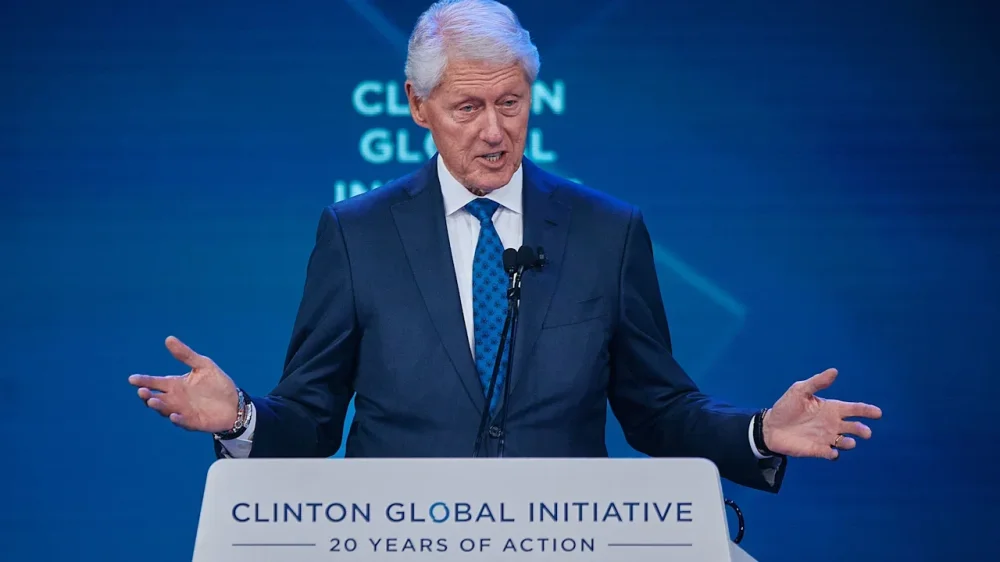
Former President Bill Clinton opened the annual meeting of the Clinton Global Initiative Wednesday with a list of things that worry him. “It would be irresponsible, almost jarring, for us to take off and not acknowledge the traumatic rise in political violence that we’ve seen in our country,” Clinton said about the shooting deaths of conservative activist Charlie Kirk and former Minnesota House Speaker Melissa Hortman and her husband, Mark. “We’re pulling further and further away from one another.” Clinton said he worried about the dismantling of domestic and foreign assistance programs, “the war on science and public health,” cuts to education, trade wars, and being “at risk of losing our freedom of speech.” “We’re trying to do everything we can to provide a counterweight to a lot of the negative things that have taken place in the last several months,” Clinton said of the two-day conference, which shifted its format to create working groups to tackle many of the issues he outlined. The conference’s biggest announcement on Wednesday was a partnership between the Clinton Health Access Initiative, Dr. Reddy’s Laboratories, Unitaid, and Wits RHI that will provide Gilead Sciences’ HIV prevention drug lenacapavir in 120 low- and middle-income countries for $40 a person each year, starting in 2027. The Gates Foundation announced a similar agreement with the Indian manufacturer Hetero Labs. Clinton said the move was partially in response to foreign aid cuts from President Donald The President’s administration, which he said could lead to more than 6 million more HIV cases and potentially 4 million more deaths in Africa. In July, GOP leaders stopped an additional cut of $400 million to PEPFAR, a program combating HIV/AIDS credited with saving millions of lives since its creation under then-President George W. Bush. Points of Light Chairman Neil Bush said PEPFAR and the way it has helped so many in Africa has always been a point of family pride. And though he hasn’t talked to his brother, former President George W. Bush, about the new program announced at the Clinton Global Initiative, Neil Bush said he sees it as a way philanthropy can help fill in gaps. “It seems like America’s withdrawal from the world is having terrible ramifications, in my personal view,” he said, adding that Points of Light hopes to increase the help it provides through its ambitious plan to double the number of volunteers in America in the next 10 years. Activist and philanthropist Abigail Disney urged Clinton Global Initiative attendees to be more aggressive in their giving and encouraged them to support cultural movements instead of programs. “I don’t care where you are on the political spectrum — there is mistrust, there’s fear and there is anger, and we should all be very alarmed,” Disney said. “And I hang around big philanthropies these days and I don’t see any alarm. I don’t think that’s because they’re not alarmed. I think that’s because they’re afraid. Everybody’s afraid.” However, President Clinton said that the Clinton Global Initiative, which launched in 2005, has always looked to create solutions. “If we hold our heads high, keep our eyes and ears open and deal with others with an outstretched hand and not a clenched fist, we’ve got a chance to keep hope alive,” he said. “We have the chance to make a meaningful difference in other people’s lives.” _____ Associated Press coverage of philanthropy and nonprofits receives support through the AP’s collaboration with The Conversation US, with funding from Lilly Endowment Inc. The AP is solely responsible for this content. For all of AP’s philanthropy coverage, visit https://apnews.com/hub/philanthropy. —Glen Gamboa, AP business writer View the full article
-
Transitioning isn’t always smooth sailing. By Jackie Meyer Go PRO for members-only access to more Jackie Meyer. View the full article
-
Transitioning isn’t always smooth sailing. By Jackie Meyer Go PRO for members-only access to more Jackie Meyer. View the full article
-
New technology advances reasoning capabilities in general-purpose machines in push to make them more useful View the full article
-
Memorial Day weekend marks the unofficial start of summer, which means many entrepreneurs’ minds are turning towards beach getaways, lakeside camping trips, or lazy days at the pool with the kids. These kinds of water-based activities are a great way to relax and stay cool. But according to fascinating research in neuroscience, swimming isn’t just a fun vacation activity. It actually has special brain benefits that other forms of exercise just can’t match. Not just another form of exercise It will surprise exactly no one that exercise is good for your brain. (If this is news to you, here are some studies for you to get up to speed.) Swimming is, obviously, a form of exercise, so therefore it’s good for your brain too. And that’s the end of it, right? Not exactly. Swimming is a perfectly excellent way to get the generalized benefits of more movement in your life if that’s your preferred way to work out. But psychologists and neuroscientists have uncovered a variety of unique benefits that swimming seems to provide. 1. Swimming reduces stress. In fact, the benefits of swimming start before you even stick a toe in the water. Psychologists have discovered that even just looking at a beach seems to help us calm down and let go of stress. “Recent experiments show that after just two minutes of viewing water outdoors, blood pressure and heart rate drop. It’s more calming to look at a lake, pool, or stream than trees or grass. And wider bodies of water bring more tranquility,” explained star psychologist Adam Grant in a recent edition of his newsletter, Granted. Evolutionary psychologists suggest this may be because marine environments offered our hunter gatherer ancestors a rich source of food and a clear view of incoming predators. Whatever the reason though, the effect is clear. The human brain seems wired to love the beach. 2. Swimming makes your brain work better. You might spend time by the pool or lake in order to forget the stresses of your working life. But while you’re leaving your stresses behind, you’re actually also boosting your memory in general. For one study, neuroscientists forced rats to do daily laps in a mini rat pool and then tested their memories. “After just seven days of swim training, researchers saw improvements in both short- and long-term memories, based on a reduction in the errors rats made each day,” reports neuroscientist Seena Mathew. And it’s not just rats. Studies on whether humans see the same cognitive benefits are ongoing but initial results are promising. One showed kids recalled a list of words much more accurately after swimming, compared to when they colored or did CrossFit-like exercise. Another study of older adults “concluded that swimmers had improved mental speed and attention compared with non-swimmers,” Mathew says. 3. Swimming boosts mental health. If your holiday involves swimming outdoors under the sky, you can expect to see additional benefits. A large recent global survey of “wild swimmers”—i.e., those who take their dips in open air pools or natural environments—found that mixing swimming and nature delivered a particularly large boost to people’s well-being. Experiment after experiment shows nature just seems to make humans happier. But the researchers behind the study think something else is driving much of the increase in mental health experienced by wild swimmers. “Our study suggests that the key to this effect lies in experiencing feelings of autonomy and competence—freedom and mastery over the swimmer’s environment—two factors that are strongly linked to well-being,” explained Lewis Elliot, one of the researchers behind the findings. Swimming outdoors makes us feel free and confident. And freedom and confidence make us happier. Time to hit the beach or pool? All of which adds up to a simple message for entrepreneurs: If you’re daydreaming of the beach, pool, or lake this Memorial Day weekend, maybe you should follow your impulse to plan that trip. You already know swimming is a great way to unwind. New neuroscience reveals it is also apparently a form of exercise with special brain benefits. Spending some time in the water this summer is likely to make you calmer, smarter, happier, and more confident. So maybe it’s time to dig out that bathing suit. View the full article

-
We may earn a commission from links on this page. Did you know you can customize Google to filter out garbage? Take these steps for better search results, including adding my work at Lifehacker as a preferred source. Strap in: Another Amazon Prime Day is around the corner. This fall event is technically called "Prime Big Deal Days" and will run from Tuesday, October 7 to Wednesday, October 8. We'll keep you updated with all the best deals leading up to and all throughout the mega-sale. But to take advantage of everything Prime Day has to offer, you’re going to need to be a Prime Member. Millions of Amazon Prime users currently pay $14.99 per month or $139 per year for their memberships, though other plans cost less if you qualify. For example, the new Amazon Prime Student program allows young adults between the ages of 18 and 24 to get all of the Prime perks for half the cost—$7.49 per month or $69 annually. For frequent Amazon shoppers, Prime can pay for itself quickly—mostly thanks to the shipping perks. But it may not make financial sense for infrequent users. If you’re on the fence about signing up for (or renewing) your Prime membership, here’s how to judge whether or not the benefits outweigh the $139 cost for you. The benefits of Amazon PrimeBefore we do the math, here are the main perks of Amazon Prime that make it worth the cost for so many users. Free two-day shipping on millions of items: This is the main draw of Prime. If you shop frequently on Amazon and want quick free delivery, the shipping perks alone may make Prime worthwhile. Prime members also get free same-day delivery on over 3 million items in eligible areas. The ultra-fast (and morally dubious) shipping usually costs $9.99 per order for non-members. Access to Prime Video: Prime includes unlimited streaming of movies, TV shows, and Amazon Originals. If you ask me, the content library isn’t as robust as Netflix or Hulu, but could still add value. Other Prime benefits: You also get Amazon Music for streaming songs, Prime Reading for ebooks and magazines, Prime gaming, free photo storage, and discounts/deals. Amazon Prime Rewards Visa card: Cardholders get 5% back on Amazon/Whole Foods purchases. So Prime members who use this card extensively can earn rewards that offset the annual fee. Number of users: Prime benefits can be shared with other members of your household. The more users, the more value per person. Doing the mathLet's say you don't really care about Prime Video, Amazon Music, or free e-books, and just want to know if you'll save money you would otherwise be spending on shipping. For non-Prime members, Amazon requires a minimum order of $35 to qualify for free shipping on eligible items. Otherwise, average shipping costs an Amazon aren't publicly listed. For our purposes, I messed around on my non-shared, non-Prime Amazon account to find that shipping costs typically run around six dollars per item. Of course, shipping costs will vary depending on the item and how quickly you want it, but let’s compare the cost to the appeal of Prime’s two-day shipping option. So, we have the cost of individual online orders (around six bucks a pop) compared to the free delivery that comes with an $139 annual fee. This means the costs you’d save on shipping alone make Prime worth the the cost so long as you order online more than two dozen times a year. In other words: The $139 annual fee pays for itself so long as you order from Amazon Prime at least twice a month. Of course, this is strictly in terms of shipping costs. How it stacks up ethically is between you and the man in the mirror. And then there's this important caveat: You can get free shipping from Amazon without a Prime membership provided your order has $35 or more of eligible items. However, this won't grant you Prime shipping speed—your order will typically take five to eight days to be delivered. The bottom lineThe cost of a Prime membership is a solid value for anyone using Amazon 23 times per year or more—especially if you're also watching shows on Prime Video and sharing your account with your loved ones. But if you only shop on Amazon a few times a year and don't take advantage of the other benefits, then that $139 annual fee isn't exactly paying for itself. Of course, if you are interested in Prime Day bargains, you can always sign up right before the start of the sale and then cancel your membership after Prime day is over—but Amazon doesn't always make it easy on you. For more information about deals and discounts, keep an eye on all of Lifehacker’s Amazon Prime Day coverage. Our Best Editor-Vetted Tech Deals Right Now Apple AirPods Pro 2 Noise Cancelling Wireless Earbuds — $199.00 (List Price $249.00) Samsung Galaxy S25 Edge 256GB Unlocked AI Phone (Titanium JetBlack) — $699.99 (List Price $1,099.99) Apple iPad 11" 128GB A16 WiFi Tablet (Blue, 2025) — $299.00 (List Price $349.00) Roku Streaming Stick Plus — $29.00 (List Price $39.99) Blink Mini 2 1080p Indoor Security Camera (2-Pack, White) — $34.99 (List Price $69.99) Ring Battery Doorbell Plus — $79.99 (List Price $149.99) Blink Video Doorbell Wireless (Newest Model) + Sync Module Core — $34.99 (List Price $69.99) Ring Indoor Cam (2nd Gen, 2-pack, White) — $49.98 (List Price $79.99) Deals are selected by our commerce team View the full article
-
Welcome to AI Decoded, Fast Company’s weekly newsletter that breaks down the most important news in the world of AI. I’m Mark Sullivan, a senior writer at Fast Company, covering emerging tech, AI, and tech policy. This week, I’m focusing on the terms of Nvidia’s investment in OpenAI, in which the GPU maker gets guaranteed chip sales, an equity stake, and likely a product road map for years to come. I also look at the industry’s fixation on huge models and the quiet appeal of small ones. Sign up to receive this newsletter every week via email here. And if you have comments on this issue and/or ideas for future ones, drop me a line at sullivan@fastcompany.com, and follow me on X (formerly Twitter) @thesullivan. Nvidia cements its power as AI infrastructure race begins Now it’s all about data centers and electricity. Big Tech companies are promising that AI models and apps are about to revolutionize business, and executives like OpenAI CEO Sam Altman say the greatest barrier to that happening is a dearth of data centers to run the models that businesses will soon need to operate. Big Tech companies are also challenged to find enough new energy sources to power and cool the massive data centers. Collectively, OpenAI, Amazon, Google, Meta, and Microsoft plan to spend more than $325 billion on data centers by the end of 2025, The New York Times reports. Anthropic said last year that it expects to spend $100 billion on these massive facilities over the next decade. The tech companies are now racing to plan and finance the new data centers. And this is creating some unique arrangements. Nvidia announced Monday it will invest $100 billion in OpenAI, which will buy about 2% equity in the company. But OpenAI will likely use most of that money to buy Nvidia GPUs, or graphics processing units, the chips that represent the greatest single capital expenditure of building a data center. “[T]hese investments might be circular and raise related party concerns, as Nvidia may own shares in a customer that will likely use such funds to buy more Nvidia gear,” writes Morningstar equity analyst Brian Colello in a research brief. (OpenAI struck a similar agreement with Microsoft when it took a $10 billion investment from the software giant, then used the money to buy its Azure cloud computing services.) Notably, the Nvidia investment will time the release of the funds according to the pace at which OpenAI buys the chips: Nvidia gets guaranteed chip sales and a 2% share of OpenAI. (As Bryn Talkington, managing partner at Requisite Capital Management, told CNBC: “Nvidia invests $100 billion in OpenAI, which then OpenAI turns back and gives it back to Nvidia.”). But it may be even better than that. Pitchbook AI and cybersecurity analyst Dimitri Zabelin believes Nvidia intends to plan the design of its future AI chips according to what it learns from OpenAI’s infrastructure scale-up. That could be an invaluable feedback loop if all of the big AI companies follow OpenAI’s lead in scaling up its infrastructure and developing compute-intensive AI products. “Nvidia is consolidating control over the AI stack and reinforcing its position as the indispensable enabler of the sector’s next phase,” Zabelin says. OpenAI will likely buy between 4 and 5 million of Nvidia’s new Vera Rubin GPUs, which will require 10 gigawatts of power to run. They will likely be installed within the five new data centers the company just announced as part of its Stargate Project (revealed at the White House with partners SoftBank, Oracle, and MGX). OpenAI now expects that Stargate will secure the full $500 billion in planned investment to build new data centers, and do so by the end of this year, ahead of schedule. Betting big on big models—not smaller, safer ones Right now, a huge portion of the total value of the stock market is held up by AI hope, the promise that AI will bring dramatic new efficiencies to the way business is done. Maybe businesses will grow more profitable by moving faster, or maybe they’ll do so by sloughing off human workers. Most likely both. The massive infrastructure investments of the Big Tech companies are all about supporting that transformation. The companies building the gigantic data centers are frontier model companies; their products are huge, generalist models, like OpenAI’s GPT-5 and Google’s Gemini, that have trillions of parameters and are very expensive to train and operate. Generalist models are built to possess a wide array of knowledge—even a modicum of common sense about how the world works—that can be leveraged for all kinds of tasks. They’re trained with massive amounts of diverse data and web content. It’s these frontier models that the AI companies hope will evolve to possess artificial general intelligence (AGI), or as much intelligence as most humans bring to most tasks, and then superintelligence, in which the model is far smarter than humans at almost any task. But many of the analysts and researchers I’ve spoken to say that businesses usually need smaller models trained with a narrower set of (often proprietary) data that automate a specific set of tasks. They don’t need to power their apps with a gigantic (and expensive) model that knows about 15th-century gold coins and can write poetry. Small models often don’t need to run inside a dedicated data center, but are small enough to run on on-premise computers (in some cases, laptops or phones) or within a private cloud. With less exposure to wider networks, models that run on the edge devices are far less exposed to would-be hackers that might try to steal or poison corporate or personal data. But OpenAI and Google aren’t selling that. They offer access to frontier models via application programming interfaces (APIs) to developers and corporations. And it’s the massive frontier models that carry the greatest risks for society-level harms such as aiding in the building of a bioweapon or crashing economic systems. Some have worried that putting so much intelligence and computing power together in one place could create a supercomputer smart enough to crack open every cryptocurrency wallet on the blockchain—which would cause economic chaos. Reducing the number of large frontier models (and tightly controlling their use) may be the only rational approach to protecting against the large-scale harms they might, in theory, inflict. Currently, as the big AI companies like OpenAI, Anthropic, Google, and Meta quickly and dramatically scale up their data centers and models, we are trusting them to keep the models from being used for harm. Can private, profit-driven companies—some of which are under great pressure to get to profitability—control intelligences far greater than our own? Let’s hope so. More AI coverage from Fast Company: AI tools aren’t making much of a difference for companies Are companies calling themselves ‘AI-first’ helping or hurting their own brands? This is how Gen Zers are ‘AI-proofing’ their careers I gave ChatGPT $500 of real money to invest in stocks. Its picks surprised me Want exclusive reporting and trend analysis on technology, business innovation, future of work, and design? Sign up for Fast Company Premium. View the full article

-
Clarity is the key. By Anthony Zecca Leading from the Edge Go PRO for members-only access to more Anthony Zecca. View the full article
-
Clarity is the key. By Anthony Zecca Leading from the Edge Go PRO for members-only access to more Anthony Zecca. View the full article
-
Contract agreed just days after the president and his billionaire backer met at memorial for Charlie Kirk View the full article
-
Today's Bissett Bullet: “Your proposal document is what will differentiate you from the competition and show why that business should break away from their current accountant.” By Martin Bissett See more Bissett Bullets here Go PRO for members-only access to more Martin Bissett. View the full article
-
Today's Bissett Bullet: “Your proposal document is what will differentiate you from the competition and show why that business should break away from their current accountant.” By Martin Bissett See more Bissett Bullets here Go PRO for members-only access to more Martin Bissett. View the full article