ResidentialBusiness
Administrators
-
Joined
-
Last visited
Everything posted by ResidentialBusiness
-
 Cloudflare announced Content Signals Policy, a new addition to robots.txt that allows you to express your preferences for how your content can be used after it has been accessed. This aims to block Google from using your content in AI Overviews, but Google would have to comply, which they have not yet, for this to work.View the full article
 -
Google is updating the Google Ads Misrepresentation policy concerning Dishonest Pricing Practices. This will require advertisers to disclose the payment model or full expense that a user will incur before and after purchase, and clarify any false or misleading impressions of the cost of a product or service.View the full article
-
Google announced that Search Live is now fully live in the US and no longer requires opt in to Search Labs. In July, Google released it on mobile in the U.S. for users enrolled in the AI Mode Labs experiment but now it is open to everyone in the US in English'"no Labs opt-in needed.View the full article
-
Whiskey has always carried weight. Think crystal tumblers, low-lit bars, Don Draper pouring a glass after a big win, or Sinatra crooning with a dram in hand. These rituals and symbols have long defined the category, but in 2025 they may also have held it back. While other “dusty” drinks made surprising comebacks this summer (see Bacardi’s Breezer relaunch, Smirnoff Ice chasing Gen Z, even cask ale enjoying a 50% surge among 18–24-year-old pub-goers), whiskey didn’t seize the moment. The idea of making whiskey more appealing to younger drinkers isn’t exactly breaking news. But it matters now more than ever, thanks to a new opportunity with this demographic. According to recent IWSR data, 70% of Gen Z now drink alcohol, up from 46% just two years ago. This generation is curious, open to experimentation, and more likely to embrace unexpected drinks than older cohorts. Yet whiskey’s sales have been declining in younger demographics, particularly in the U.S. and Europe. The urgency is clear: if whiskey wants to remain culturally relevant, it has to capture Gen Z’s attention now, before other categories cement themselves as the new “go-to” for younger drinkers. Reinventing rituals without abandoning heritage For whiskey, the challenge isn’t about throwing away tradition. It’s about loosening it up. A single malt aged for 40 years will always command respect, but it can’t be the only story the category tells. If Gen Z is to adopt whiskey, it has to feel approachable, flexible, and fun. That’s where new rituals come in. Long associated with hushed reverence, whiskey can become a summer staple when presented in lighter, fresher serves. The Whiskey Highball is the clearest example of this shift. A tall glass, sparkling soda, and a hint of citrus: it’s whiskey, but social and sessionable. Suntory’s Toki has built its modern identity almost entirely around this serve, while Dewar’s has positioned the highball as an everyday cocktail in the U.S. These moves show that whiskey doesn’t need to change what it is, it simply needs to change how it shows up. Flavors and RTDs: breaking down barriers Gen Z drinkers often don’t want to start with smoky or peaty intensity. Flavored whiskeys like Jack Daniel’s Apple or Crown Royal Peach prove that approachable entry points can feel fresh rather than gimmicky. RTDs, like Jameson Ginger & Lime or Jack & Cola, add portability and sociability, two qualities whiskey has historically lacked. And it’s not just big brands making moves. New labels like Strutter, a peanut-butter-and-honey flavored whiskey with streetwise swagger, show how newcomers are breaking category codes. Rebranding whiskey: from heritage to inclusivity Whiskey has always had heritage on its side, but heritage can weigh heavy. The brands finding traction are swapping imagery of leather armchairs and oak panels for lighter, lifestyle-led storytelling. Jameson continues to frame whiskey as sociable and welcoming. Maker’s Mark is leaning into vibrant cocktails like the Whiskey Smash and Whiskey Spritz. The message is clear: whiskey doesn’t need to dictate the vibe; it can flex to fit it. A unified approach to the future Whiskey has made progress, but it hasn’t yet claimed “drink of the summer” status. Why? Because the category is fragmented. Different brands push different experiments, which dilutes the impact. What’s needed now is a unifying symbol: one iconic serve, one joyful narrative, a category-wide push that says, “Whiskey can be light, inclusive, and fun.” Heritage and lightness aren’t opposites. Together, they can future-proof whiskey for new generations. Opportunity calls Whiskey’s history has always been about time: ageing in barrels, patience, tradition. But in 2025, time is also about urgency. The summer of 2025 showed what happens when whiskey hesitates. Other categories rushed in and grabbed Gen Z’s attention. If whiskey doesn’t evolve quickly, it risks becoming the drink people respect but don’t reach for. The good news is, Gen Z is drinking more, experimenting more, and seeking brands that are inclusive, playful, and authentic. If whiskey shows up in the right ways—lighter, fresher, more sociable—it can still win them over. As a whiskey lover, I hope to see that happen. Because whiskey has all the ingredients to thrive with Gen Z, it just needs to play with a lighter, more joyful culture. If it does, the drink of summer 2026 might not be a spiked seltzer or a retro alcopop. It might finally be whiskey. View the full article

-
Google updated its Other restricted businesses: Government documents and services policy to say it may label some search ads to say, "Not a government website." View the full article
-
It had begun nearly two years prior, with a miscarriage, and then another. I was compiling a list of fertility clinics when he made an appearance on the ultrasound monitor, a flickering response to my quietly brewing despair. I spent the long months of pregnancy that followed feeling like a cartoon character with a me-size thunderstorm threatening at every turn. Though my pregnancy was healthy, I was convinced I had to remain vigilant until my son was in my arms. When my husband and I visited my obstetrician nine days past my son’s due date, I wasn’t surprised to see an irregularity in his heartbeat. Less than an hour later, we were checking into the hospital to start my induction. Later that night, my son’s heartbeat dropped again, prompting a small army of doctors and nurses to rush the delivery room. But he recovered, my body stopped resisting, and then it was over. We sat together in the emptied room, my son curled against my husband’s chest, his tiny hat askew. Here was my family. Do our beginnings matter? It’s the question at the heart of Orchid, one of a new wave of companies performing genomic screening on human embryos. Roughly 40% of in vitro fertilization (IVF) cycles today include genetic screening, but in almost all cases, the tests are a relatively rudimentary gauge of obvious chromosomal abnormalities, with results similar in scope to a prenatal amniocentesis test. Orchid and its competitors, all of which were founded within the last decade, assess embryo health in a far more comprehensive, and potentially more radical, way. For Noor Siddiqui, Orchid’s 31-year-old founder and CEO, old-fashioned origin stories, like my son’s, are the equivalent of “rolling the dice,” as she often says. She doesn’t yet have children, but she and her husband hope to someday have two sons and two daughters. To prepare, she has frozen more than a dozen embryos, and plans to retrieve even more eggs. In keeping with Orchid’s protocols, her embryos have been biopsied; the DNA contained in those four- to six-cell biopsies has been amplified; and the resulting genomic data has been sequenced and scored for chromosomal abnormalities, as well as cancer, autism, diabetes, birth defects, and hundreds of other diseases and disorders. The most important parenting decisions anyone can make, Siddiqui argues, happen before birth: your choice of partner and your child’s genome. She views screening embryo genomes as a form of preventive medicine. “For the first time ever, parents can mitigate a massive amount of risk that was previously left to chance,” she says. She imagines that future couples will start their parenting journey as she did, by reviewing a data-rich, tastefully designed embryo report for each of their prospective children. They will be able to remove from consideration any embryos with serious and often rare monogenic conditions, such as cri du chat syndrome, and compare relative risk on more complex conditions, including intellectual disability and schizophrenia. Siddiqui has no doubt that the practice will one day be widely accepted, and essential. “I started this company because I was pissed I couldn’t have a baby the way I wanted,” Siddiqui says when we meet on a misty afternoon in June for a walk along the Chicago lakefront. It’s her first venture outdoors after a day in hotel meeting rooms alongside attendees of a reproductive medicine conference, where she was a featured speaker trying to convince an audience of physicians that patients undergoing IVF would benefit from Orchid’s tests. Like many of Orchid’s customers, Siddiqui’s life has been shaped by genomic disease. Her mother’s DNA contains a de novo mutation that has slowly destroyed her vision; today, she is legally blind. At Stanford, where Siddiqui studied computer science as an undergraduate and in a master’s program, classes on artificial intelligence introduced her to the possibilities of applying deep-learning techniques to genomic data. The merging of computational science and genetics was a revelation. “I saw what happened to my mom,” she says. “I don’t want [my children] to suffer.” Since its founding in 2019, Orchid has evaluated thousands of embryos’ whole genomes, at an out-of-pocket cost of $2,500 per embryo. (Couples who use Orchid screen an average of five embryos.) Orchid partners with IVF clinics to ensure that embryo biopsies are performed according to its guidance and then amplifies the embryo DNA for analysis at its own clinical labs. Traditionally, IVF clinics evaluate embryos according to their morphological grade, which assesses the number and quality of cells in an embryo. If the clinic orders genetic testing, it is typically a test known as PGT-A, which can detect diseases like Down syndrome, caused by an extra copy of chromosome 21. (The “A” in the test’s name refers to aneuploidy, or an abnormal number of chromosomes.) Orchid goes further. In addition to scanning for hundreds of rare single-gene mutations, it uses statistical techniques to generate polygenic risk scores designed to gauge an embryo’s predisposition to complex but often common diseases, such as hypertension and coronary artery disease. Because polygenic conditions are influenced by behavior and environment in addition to genetics, the value of their associated risk scores is hotly contested within the research community. Being told one embryo has less risk of hypertension or coronary artery disease than another does not preclude a future diagnosis. But that hasn’t stopped couples with a family history of hereditary disease and considerable financial means from flocking to Orchid. “My inbox is all babies,” says Siddiqui. But critics are circling too. Siddiqui’s observation that “sex is for fun, and embryo screening is for babies,” which she first voiced in a YouTube video in 2021, has become a polarizing catchphrase. A fertility specialist appearing on 60 Minutes echoed it with pride, but ethicists wary of a designer-baby future point to it as a sign of Huxleian doom. As she gamely walks the waterfront in a black blazer and sensible heels, Siddiqui’s frustration with the status quo is palpable. “I think it’s insane that we go to these doctors, talk to these conferences, and they’re grappling with, oh, this is too much information” to share with patients, she says. “Well, I’m going to have a lifetime of medical bills and a child who’s always going to suffer from an incurable disease because you didn’t want to look at a little bit of extra information. You didn’t want to spend five extra minutes with me telling [me] all the options for the most important decision of my life. And that enrages me.” But an intervention like Orchid doesn’t just reduce suffering; it also introduces choice and control to the reproductive process in unprecedented ways. Through the ages, children have been viewed as a gift (sometimes an unwelcome gift, but a gift all the same). After meeting with Siddiqui, Orchid provides me with a sample embryo report to review. Looking at it, I have the uncomfortable feeling that I’m looking not at a gift, but at a product—indeed, a luxury product. Am I getting a winner or a dud? Does the promise of increased health span justify the cost of the service? The process rewards couples with the economic means to produce a multitude of embryos, and, by its very nature, encourages consumer-directed optimization. And, throughout, there’s the unspoken, but implied directive: May the best baby win. When Jeff’s wife suffered two early-term miscarriages, he felt helpless. The couple started looking into IVF, hoping to find a way to prevent further losses. Jeff, a prominent startup founder himself, heard about Orchid through a colleague who had been advising Siddiqui. He was surprised to learn that some embryos with genetics that are not compatible with life can still generate high morphological grades on traditional IVF tests. When such embryos are implanted, they tend to miscarry. Orchid’s screening process offered a solution, combining PGT-A with scores for 1,200 monogenic conditions and a dozen polygenic conditions—including Alzheimer’s disease, which runs in Jeff’s wife’s family. Jeff’s wife went through two rounds of egg retrievals. The couple spent upwards of $25,000, in addition to their IVF costs, to screen the resulting embryos with Orchid’s technology and welcomed a first baby last year. Jeff was so taken with Orchid that he became an investor. “Everyone tries to provide a better life for their kids, wants to send their kids to the best school,” he says. “Why would you not want to give your child the highest probability of health success?” And as a society, he argues, we should be trying to “eradicate disease” and “improve our gene pools.” He hopes to see federal support for embryo screening, paving the way to lowered costs and greater access. (Eleven states require insurance to cover IVF and fertility preservation; no legislation currently addresses embryo screening.) Perhaps not surprisingly, Orchid’s earliest and most vocal customers and supporters have been a who’s who of Silicon Valley elites, products of a culture where data is prized, longevity is hackable, and children follow after career success. Orchid has raised $12 million from the likes of 23andMe founder Anne Wojcicki, Coinbase founder Brian Armstrong, and Ben Lamm, cofounder of the dire wolf–reviving startup Colossal Biosciences. For Siddiqui, who completed the fellowship program for young entrepreneurs founded by libertarian iconoclast Peter Thiel, Orchid’s emphasis on consumer choice is a feature, not a bug. She has spent time with Orchid parents and their Orchid babies; she trusts them. “I think consumers are smart,” she says. “At the end of the day, what I love about the world is that the arc bends toward good.” Indeed, if there’s a theme common among the leaders of embryo-screening companies, it’s a sense of befuddlement, even exasperation, at the wary reception they have received in clinical circles. Many of these founders, like Siddiqui, have been affected by genetic or chronic disease. When professional organizations like the American Society of Human Genetics caution against the use of polygenic embryo screening in clinical care, it’s personal. Nathan Treff, cofounder and chief scientific officer at Orchid competitor Genomic Prediction, developed type 1 diabetes in early adulthood. His research, which relies on a database of DNA from adult sibling pairs, suggests that couples using Genomic Prediction’s polygenic risk scores for embryo selection can reduce the odds of their child having type 1 diabetes by at least 45%. “Don’t you think it’s unethical not to tell patients with diabetes that this was an option?” he says. In June, Genomic Prediction announced a partnership with Nucleus Genomics, a genetic health company founded by another former Thiel Fellow, Kian Sadeghi. Genomic Prediction oversees the wet lab process by which embryos are biopsied and their DNA is amplified; Nucleus receives the raw DNA data and conducts its own proprietary analysis. “We believe in genetic optimization,” Sadeghi told Core Memory podcast host Ashlee Vance in June. “We believe [that] if couples want access to height or IQ or hair color or eye color or alcohol dependency, they should have access to that. And the other thing is we really believe in the consumer deciding.” As Nucleus’s website puts it: “Understand your embryo’s future body, mind, and health,” starting with traits like male-pattern baldness and severe acne. Orchid doesn’t offer information on cosmetic traits in its reports, and Siddiqui has consistently insisted that Orchid is focused on preventing disease. But the line between markers of disease and mere traits is blurrier than it might first appear. Height is a trait—yet pulled to its extremes, it becomes idiopathic short stature or Marfan syndrome. Plus, there are correlations between theoretically desirable traits and less desirable ones for reasons that scientists have yet to untangle. For example, educational attainment—a proxy for IQ—is negatively correlated with traits including conscientiousness and extraversion, and positively correlated with autism spectrum disorders and anorexia. To some researchers, even Orchid’s focus on disease is problematic. They would like to see companies performing embryo screening connect their abstract polygenic risk scores to real models of disease in more concrete ways. For example, a risk score for obesity, which presents as a spectrum of symptom severity, is not the same as a risk score for cancer. “There’s no such thing as half cancer,” writes Sasha Gusev, a statistical geneticist and associate professor of medicine at Harvard Medical School, in his Substack The Infinitesimal. Orchid and its peers struggle to communicate these distinctions, at the risk of fostering false hope—or worse, false certainty—among their customers. Companies like Orchid are still far too young to have a systemic impact. But already, researchers are hypothesizing about how embryo optimization might play out on a population-level scale. Patrick Turley, director of the Behavioral and Health Genomics Center at the University of Southern California, was lead author of a 2021 paper outlining problems with the use of polygenic risk scores in embryo selection. He foreshadows a world in which cost-focused nationalized healthcare systems, in particular, might lead the way in embryo screening. “What’s the cost-benefit analysis?” he asks. “If you could reduce someone’s diabetes risk by three or four percentage points, what does that mean in terms of lifetime medical spending, but also quality of life in the future?” There is something undeniably appealing about de-risking reproduction and lowering lifetime medical costs. Siddiqui’s preferred metaphors—rolling dice, winning or losing the genetic lottery—make nature’s reproductive methodology appear haphazard, even capricious. Embryo screening, in contrast, seems like a safe and responsible approach. But of course, Siddiqui’s portrayal is incomplete. There is intelligence and optimization built into nature’s design, even if it does sometimes lead to loss. More than half of first-trimester miscarriages are the result of chromosomal abnormalities. My miscarriages caused great grief, but they were also, likely, safeguarding me. Was my son, in the end, the “best” baby, and is he now the “best” 6-year-old? The question is almost absurd—am I the “best” mom? All I know for certain is that he’s mine. View the full article

-
Fast Company’s Most Innovative Companies is our flagship franchise and one of our most eagerly awaited editorial projects each year. To determine honorees, our editorial team spends months evaluating organizations that are driving progress across industries and around the world. We track their performance, compare them to competitors, and assess their impact within broader industry and societal trends. The final list serves as both a definitive snapshot of innovation today and a road map for what’s next. Here’s what we’re looking for: Fresh innovation Most Innovative Companies is not a lifetime achievement award. We’re interested in what’s new. Tell us about products, services, or strategies introduced in the past year. We also welcome news of upcoming launches. If something is under embargo, simply note that in your application. This is your chance to get on our radar early. Measurable impact We want to see that your innovation is making a difference. Share the metrics you use internally to gauge success—whether it’s revenue growth, user adoption, engagement, or other KPIs. If any data is confidential, just flag it in the submission. The big picture We recognize companies that are tackling major challenges and reshaping industries, culture, or society. Show us how your innovation moves your field forward—and how it connects to larger global or cultural trends. Editorial opportunity Each application is carefully reviewed by our editorial team, often by multiple editors. Beyond informing the Most Innovative Companies list, these submissions help shape our editorial coverage year-round. We frequently pursue additional stories based on what we learn here. In other words, this is a unique opportunity to introduce your company and tell your story directly to Fast Company’s editors—in your own words. We’re accepting MIC applications through October 3. View the full article
-
Farage’s path to power is strewn with landmines planted by his own sideView the full article
-
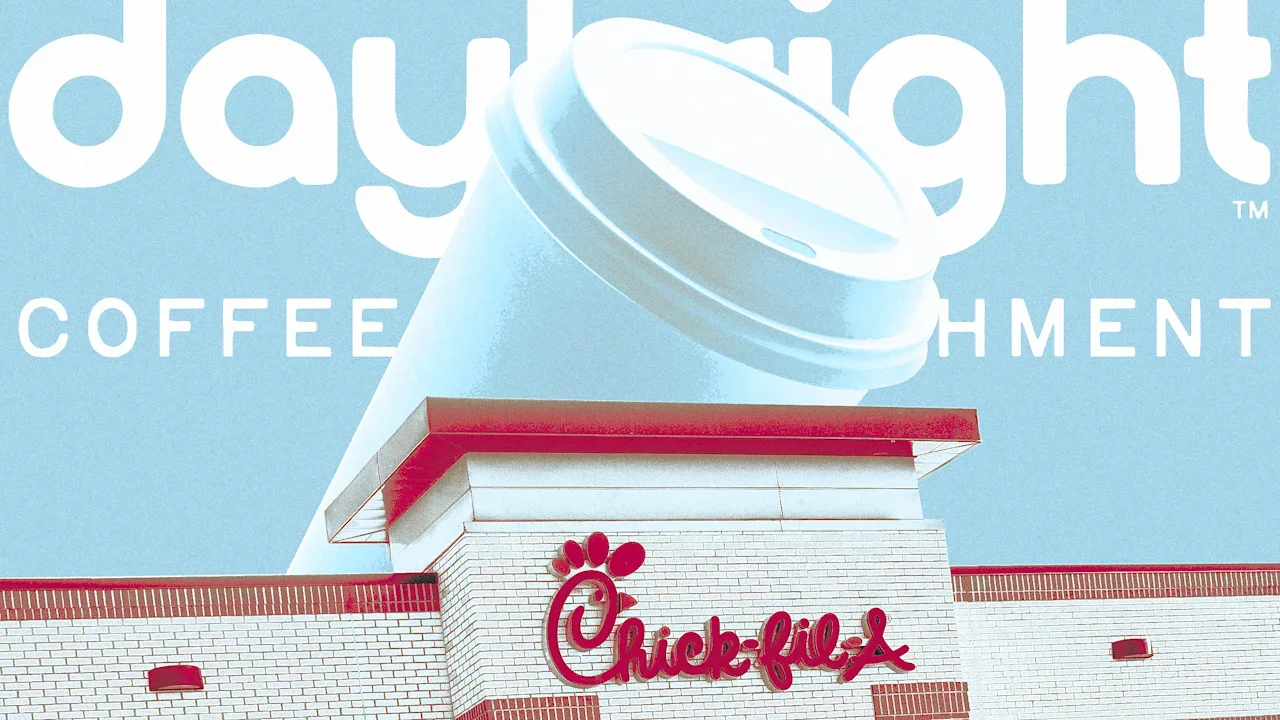
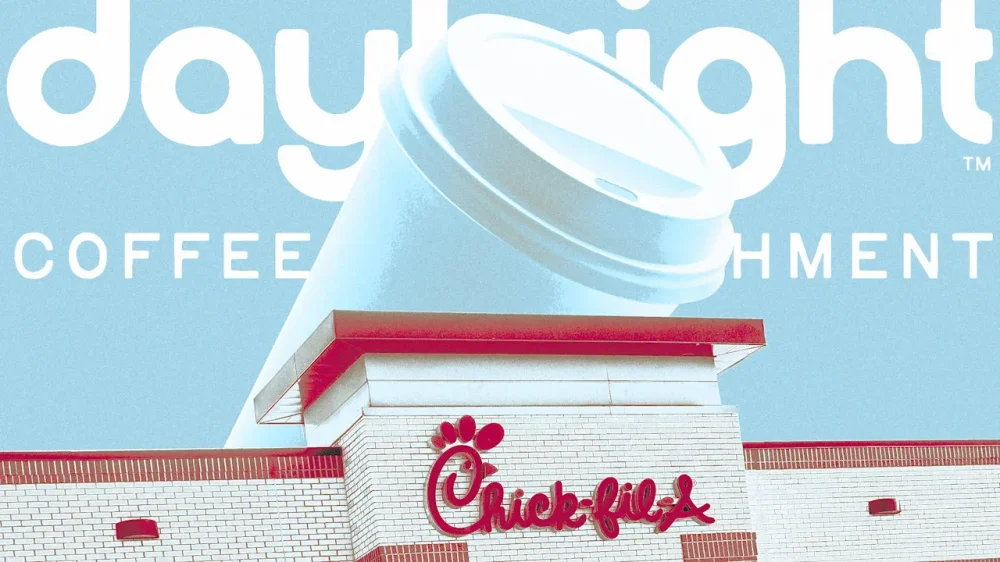
Chick-fil-A says it’s testing out a stand-alone drinks-focused restaurant concept. Called Daybright, the new concept will open this fall outside Atlanta, Chick-fil-A tells Fast Company. It’s being brought to life by Red Wagon Ventures, a Chick-fil-A subsidiary and business incubator named after founder Truett Cathy’s first business selling Coca-Cola out of a red wagon when he was 6 years old. “We look forward to sharing more details in the future,” Chick-fil-A says about the concept. Though there’s not yet a public menu for Daybright, it’s expected to serve coffee, smoothies, and cold-pressed juice alongside a limited selection of food. But sorry, peach milkshake fans, Daybright will not have any Chick-fil-A menu items—and that goes for both food and beverages. The announcement indicates Chick-fil-A isn’t just looking to compete on chicken sandwiches alone anymore. As fast-food prices have risen and customers have decided to stay home or choose other options, beverages offer restaurants a higher-gross-margin item that it can easily upsell to customers. In other words, drinks are cheap for restaurants to sell, and customers might be convinced to pick up a snack to go with their beverage. The category can also draw in young people during off hours. With Daybright, the chain could also steal market share from the likes of Starbucks and Dutch Bros Coffee by nabbing customers who stepped out for a morning coffee or a quick, cheap snack. Daybright will arrive as other chains are experimenting and investing more in their drinks too. Taco Bell expanded its beverage offerings over the summer, and though McDonald’s in May shut down CosMc’s, its beverage-first, drive-through concept launched in 2023, it’s taking what it learned from the store to bring to McDonald’s locations in the U.S. and eventually around the world. For Chick-fil-A, a privately held company that reported $22.7 billion in sales in 2024, the new concept could be a lifeline since its sales growth has slowed. By giving customers a new reason to stop by, even if it’s just for a drink, Daybright could give Chick-fil-A a leg up at a challenging time. View the full article
-
When I was a leader in corporate America at a large regional bank, I held the assumption that once I was promoted, and received my new title and salary, then I would finally feel confident and successful. I was wrong. The allure of a new title and office wore off quickly, and my persistent worries about whether I was cut out for leadership, or even a good leader at all, continued to persist. A decade later, even after I submitted the first draft of my book, Closing the Confidence Gap, I was overwhelmed with self-doubt. I felt completely stuck: Unable to move forward with marketing, I was paralyzed by many of the same old fears of “What if people think I’m no good and this book finally proves it?” In my thousands of hours of conversations with leaders, I discovered that we share a common belief: that our confidence will arrive once we receive a certain title or status. We think we will finally “feel” successful. But it doesn’t happen that way. Self-doubt is always waiting at the edges of our capabilities. When we attempt to push doubt aside and ignore it, we reduce our ability to remain curious and respond most effectively. Counterintuitively, avoiding the feeling only makes it grow stronger, thus playing a larger role in preventing us from applying for roles that excite us, holding crucial conversations, speaking up and sharing ideas, or making courageous asks. If self-doubt is holding you back from meeting your potential in leadership, here are some steps you can take to help manage that feeling, and even use it to your advantage. NOTICE AND NAME WHAT IS HAPPENING Noticing and naming an emotion is the first step toward emotional acceptance. This means that you are allowing your feeling to exist without judgment or a desire to change this. It can help to rely on an emotions wheel to find the language to describe what you are feeling. If this process is overwhelming, take four deep breaths and ask yourself, “What feelings arise in my body?” Once you get curious about these feelings, it will become easier to name the emotions. Naming our emotions doesn’t amp up their power, it identifies them accurately. With this accuracy, we can feel more in control of their cause and the right next steps we need to take. NORMALIZE THE FEELING BY FINDING A SUPPORT SYSTEM The first step toward normalizing self-doubt is accepting the feeling. For example, you may say to yourself, “Self-doubt is a normal, healthy human emotion and a sign that I am stretching my comfort zone.” A second important step toward normalizing self-doubt is taking the vulnerable step to describe what is happening to a supportive and neutral party. This can be in-person or online, either with one person (such as a therapist or coach) or with a community. When I struggled with self-doubt after writing my book, I took the vulnerable step to share this with my entrepreneurial community who, in response, shared their own feelings of self-doubt. This helped me normalize this feeling and provided support to help me move forward. REFRAME SELF-DOUBT AS A STATE NOT A TRAIT The internal language we use impacts how we behave. When our internal language describes self-doubt as a trait (for example: “I am a nervous wreck. I cannot show up for this presentation”) we are not allowing room for this to be changed. Instead, we should reframe this feeling into a state. One potential reframe could be, “I notice that I am feeling doubtful and nervous, this means I’m moving closer to achieving my stretch goals.” To separate a state from a trait, it can be helpful to ask yourself what helpful reasons there are for feeling self-doubt. You may ask yourself, “How does this emotion benefit me?” Potential benefits include keeping you humble, or ensuring that you put in adequate preparation and effort for a keynote, meeting, or project. TAKE ACTION WHILE FEELING DOUBTFUL If you wait until you feel confident or fully ready to do something, you may wait forever. I have interviewed leaders like Arianna Huffington, Indra Nooyi, and Padmasaree Warrior. Here is what I learned from them: Rising through the ranks in leadership does not mean that your self-doubt disappears. It means that you have learned to anticipate and accommodate self-doubt at all stages of leadership. Successful leaders have transformed their relationship with doubt, knowing it’s essential on the path to a meaningful career. Taking action is a muscle that is built with small, brave steps. If you struggle with self-doubt while presenting, you may not give your first keynote to an audience of 1,000 people. Instead, you may agree to lead your next team meeting. Once you have done this a few times, you may then decide to speak up at a company-wide meeting. It’s the actions of confidence that come first, the feeling that comes second. Confidence is a side effect of taking action. View the full article

-
Former French president cleared of more serious charges in connection to late dictator Muammer Gaddafi allegedly financing his campaignView the full article
-
Pitching these outlets means your brand gets in front of readers, circulates on social media, ranks in search, and now resurfaces in AI. Below are the top 50 most-cited publisher and editorial sites in ChatGPT that accept PR pitches. If…Read more ›View the full article
-
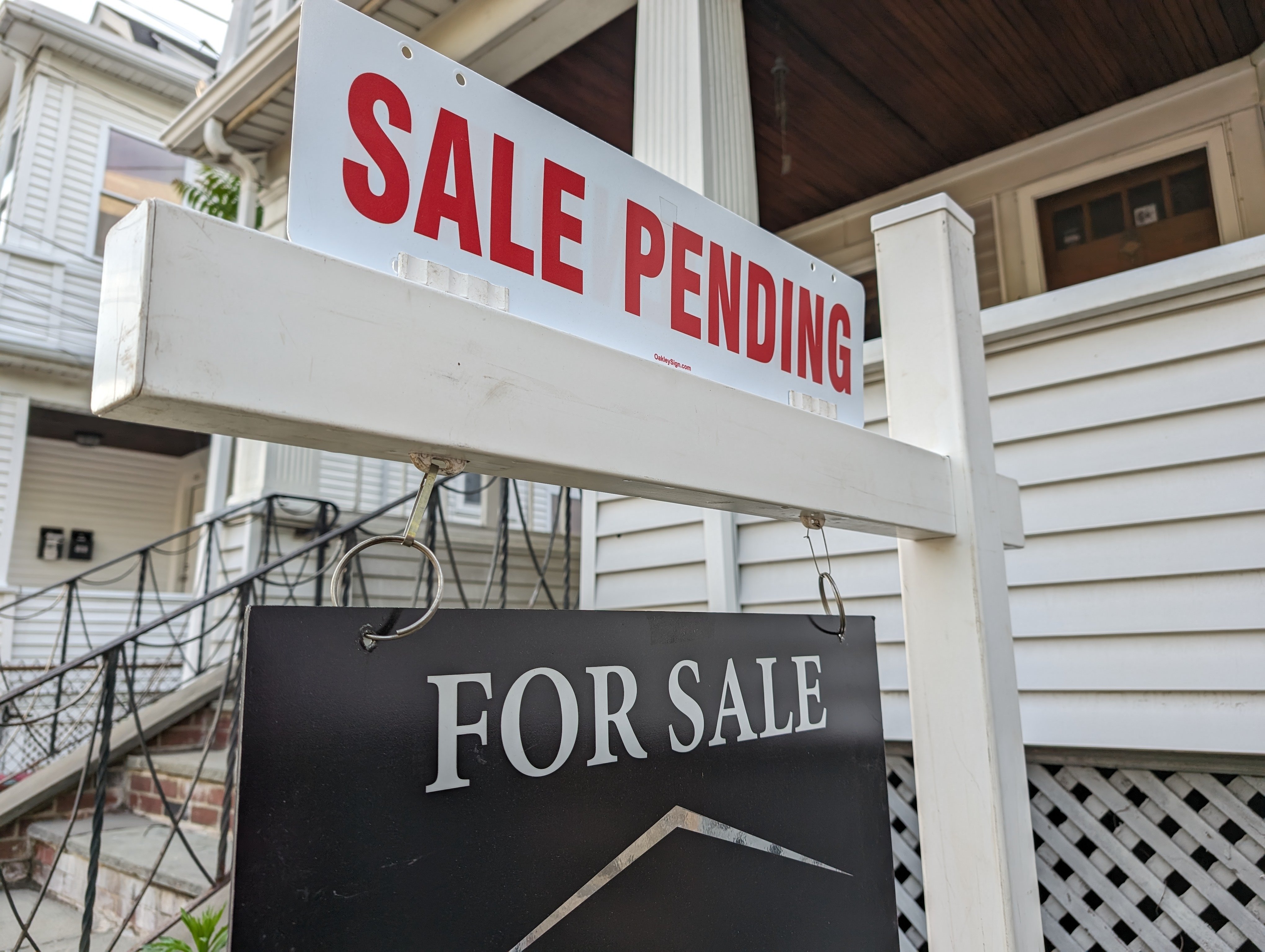
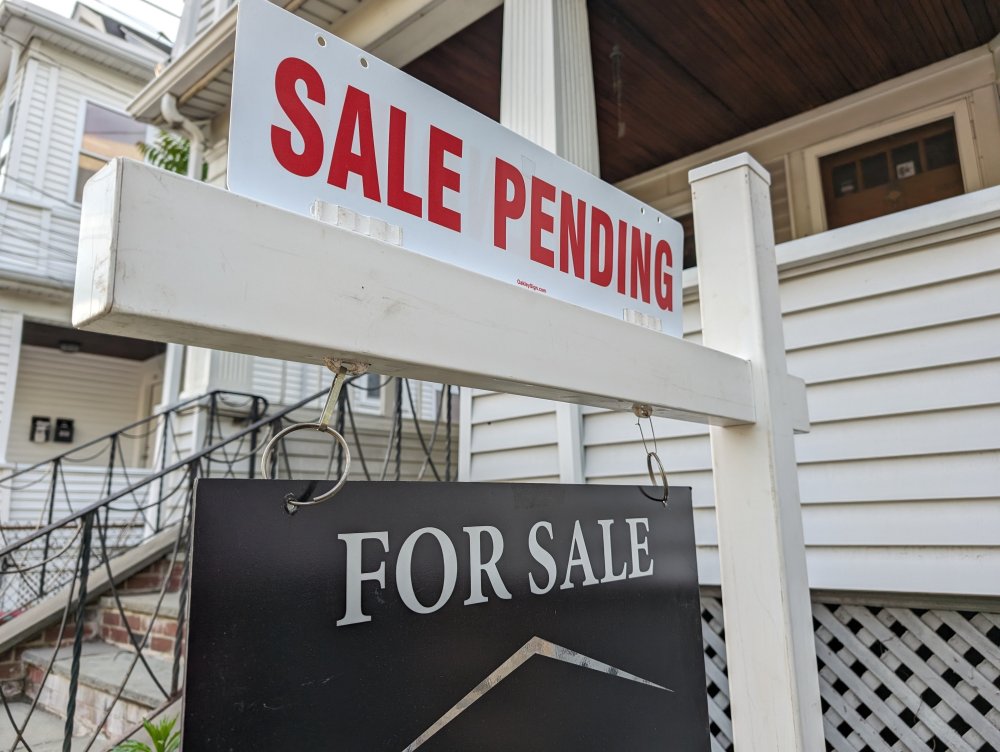
As home prices reach new heights, mortgage expenses are unaffordable for the typical earner in a third of the nation's largest 580 counties, according to Attom. View the full article
-
In recent months, major tech companies have lured top talent from rival companies with multimillion-dollar salaries and rumors of unprecedented sign-on bonuses. Big firms are fighting for talent from Apple, OpenAI, Microsoft, Google, and beyond, reportedly offering pay packages that resemble those of NBA stars. Meta has been aggressively poaching talent from its competitors in the race to dominate AI, luring Apple’s robotics chief earlier this month in a move that made headlines. It’s news like this that makes workers ask themselves: “How can I get that to happen to me? (Even if I’m not a Silicon Valley CEO?)” Luckily, career experts say anyone can make themselves more poachable. Lest anyone grinding out in a 9-to-5 with a slightly smaller salary than these Big Tech chiefs feels jealous, a reminder: “Tech is their own world,” Mark Anthony Dyson, career coach and founder of The Voice of Job Seekers, told Fast Company. That said, there’s no harm in taking some inspiration from these high-profile hires. Here are just a few strategies to roll out if you’re hoping to catch the eyes of recruiters who can whisk you away to your dream job: Be a thought leader Visibility is key—for people to notice you, changing your LinkedIn profile photo to say “open to work” isn’t enough. You have to put yourself out there, experts say. That means actively posting and sharing industry insights on LinkedIn, most importantly, but also speaking at events and media mentions, if applicable. Kait LeDonne, a personal branding expert, pointed to a survey that showed 64% of recruiters said that a candidate who’s a recognized thought leader in their industry is more likely to get a role than a candidate with the same exact credentials but a quieter presence. “Create enough of a presence that you’re seen as an active industry thought leader,” LeDonne said. “You don’t need to be top of the industry, but you need to publish content [on LinkedIn] that shares more about your industry or influences your industry. For most people, two to three times a week is going to be just fine.” Expand your skill set The hard truth: “Today, it isn’t enough to just do your job,” said Kathy Caprino, a career leadership coach and author. She and other experts encourage professionals to actively seek out opportunities to learn new skills, both inside and outside their fields. And don’t be shy about sharing that education, whether it’s a yoga teacher training or an AI course. Caprino recommended people list their new skills on their résumés and across their LinkedIn profiles: in their headline, “about” section, and under certifications. She also suggested people write a short post about how they’re using those skills, for extra visibility. “If I see someone taking courses on Coursera or getting certified in something, that goes a long way,” added Bridget O’Neill, a career consultant and owner of the RE Consultancy. “It shows they’re continually active. That is a very poachable trait.” Continued growth and education shows employers and recruiters that candidates are future-oriented. It also helps combat what O’Neill said is a red flag to her when looking at someone’s résumé or LinkedIn profile: stagnancy. “You can see it immediately,” she said. Some common mistakes? A résumé that’s not up-to-date or doesn’t list any skills or courses; a LinkedIn page with an old headshot, no background photo, or no engagement in the form of posting or sharing posts. She says missed opportunities like those show “no passion, interest, curiosity.” Seek out your career idols Find the people at the top of your field—the people whose jobs you want, or people at companies you want to work for—and connect with them in any way possible. Go to events they’re attending or hosting; join groups they’re involved in; send them an email to introduce yourself. “Get to know those professionals whose career paths you want to emulate and get to know their work deeply,” Dyson said. The goal is to get on their radar. Caprino encourages people to engage with career idols on LinkedIn, even if it’s as simple as resharing one of their posts. “It helps you get noticed,” she said. “Now this manager or director or CEO has a bit of a connection with you.” Reach out to recruiters yourself You can’t always wait for recruiters to slide into your DMs—sometimes you have to make the first move. Caprino suggests people contact recruiters on their own to introduce themselves, and explain what they’re looking for in their next role. She encourages clients to write their dream job description and share it with recruiters as well as trusted colleagues and connections. Get involved with industry groups The American Institute of Graphic Arts. The Society for Human Resource Management. The National Association of Black Journalists. Women in Machine Learning. Whatever your field is, it likely has associated industry groups. Seek them out, both online and in person, if you want to advance your career, experts say. It’s a way to create more visibility for yourself and also get an early scoop on job opportunities. “When people are leaving (their current jobs), one of the first places they go is to their industry organizations to say, ‘I’m moving from here to here, you’re the first to hear.’ That’s a smarter way of networking,” Dyson said. That way, when the opportunity does come up, you’ll be top of mind—and one step closer to being poached. View the full article
-
Business travel is often seen as glamorous—whether that’s new destinations, exciting opportunities, or packed itineraries of fun and adventure. I was certainly looking forward to all of these things when I began working with national and international companies. Unfortunately, once we actually start to go on these trips, the reality looks different. It’s long flights, disrupted sleep, constant stimulation, and very little space to recharge. Over time, this can leave us running on empty. As a result, decision-making, creativity, and well-being all suffer. Rest and recovery on work trips aren’t luxuries. They’re necessities if you want to stay at the top of your game. When we travel without recharging, our energy debt compounds. We need to treat recovery as part of the trip so we can win the business and avoid burnout. Here’s how you can build real rest and recovery into your next business trip from someone who’s currently writing this in a hotel room in Melbourne, Australia, at 5:45 a.m. Reconnect to recharge This week, I flew to Sydney for a meeting with LinkedIn. It would have been easy to put my head down, follow the arrows through the airport, and dive straight into emails before the meeting. But I’ve had a hectic month. I launched my book and rolled out our Employee Empowerment Program. I realized I needed to recharge my batteries before I walked into the LinkedIn headquarters if I wanted to be on my game. So, I made a deliberate choice. I went for a walk, swapped the hamburger for salmon and salad, and sat barefoot on the grass in the sunshine, overlooking the Opera House. Now, this wasn’t about “time off work.” It was about energy management. I knew that I had a big week ahead, so I created the space to reconnect and recharge. That’s the shift we need to make. We need to treat recovery as an essential part of the trip rather than something we squeeze in between meetings. Here are some tips and tricks from a fellow traveller: 1. Redefine downtime as a leadership strategy We often believe recovery is passive, but real recovery is strategic. Leaders who prioritize well-being know that rest fuels focus, emotional intelligence, and decision-making. Before your next trip, plan your recovery moments like you plan your meetings and add them to your calendar. This reframes recovery from “bonus time” into an essential leadership practice. 2. Protect your sleep like it’s a meeting Sleep is one of the most underrated productivity tools that we have. Jet lag, late dinners, and device use often strip quality rest from work trips. To reset your body, choose light exposure wisely. Morning sunlight helps your circadian rhythm adjust faster. Do your best to create a hotel sleep ritual— whether that be a sleep mask, stretching, or avoiding screens an hour before bed. Say no when you need to. Skipping one late-night drink can mean sharper thinking in tomorrow’s negotiations. Sleep doesn’t waste time. It’s a performance tool. 3. Move, but don’t overtrain Many leaders hit the hotel gym hard to compensate for travel fatigue, but intense training while jet lagged can backfire. Instead, think movement, not punishment. That might mean walking between meetings, if possible, or doing a short mobility routine in your hotel room. If you have access to green spaces, consider doing your exercises outside. 4. Fuel for energy, not just convenience Airport snacks and hotel buffets rarely support recovery. Nutrition on the road often means quick fixes, but thoughtful choices pay dividends. Start by paying attention to your hydration. Dehydration can mimic fatigue. Try to stick to light dinners, as heavy meals late at night can disrupt your sleep. And as much as you can, try to opt for whole foods. Food can be your fuel for clarity. 5. Build in micro-recovery Recovery doesn’t happen overnight. Small pauses throughout your day can reset your energy. Before key meetings, try 60-second breathing resets. Take short tech-free breaks. When you’re in taxis and waiting lounges try reflection instead of email. These micro-recoveries keep your battery charged. 6. Connect to people and places Recovery isn’t just physical. Connection to people and the environment is deeply restorative. Be sure to schedule at least one social catchup a week. Or if you’re feeling a little drained by social interaction, explore your surroundings. Take a walk through your nearest park, a waterfront, or a new part of town. Connection grounds you, combats loneliness, and creates moments of joy that buffer against stress. 7. Debrief and recover on return Too many managers land home and rush into the next workday. Block half a day post-trip for recovery and reflection. Journal insights, reconnect with family, and allow your body to reset. Business travel will always have its challenges, but weaving in intentional recovery transforms it from an energy drain into an opportunity for resilience. Leaders who travel well don’t just survive their schedules; they thrive because of them. The question is not “How much can I push through on this trip?” but “How can I return with more clarity, connection, and energy than when I left?” Real rest and recovery aren’t indulgences, they’re your competitive advantage. View the full article
-
Discover the best Google Business Profile management tools for small businesses and marketing agencies. View the full article
-
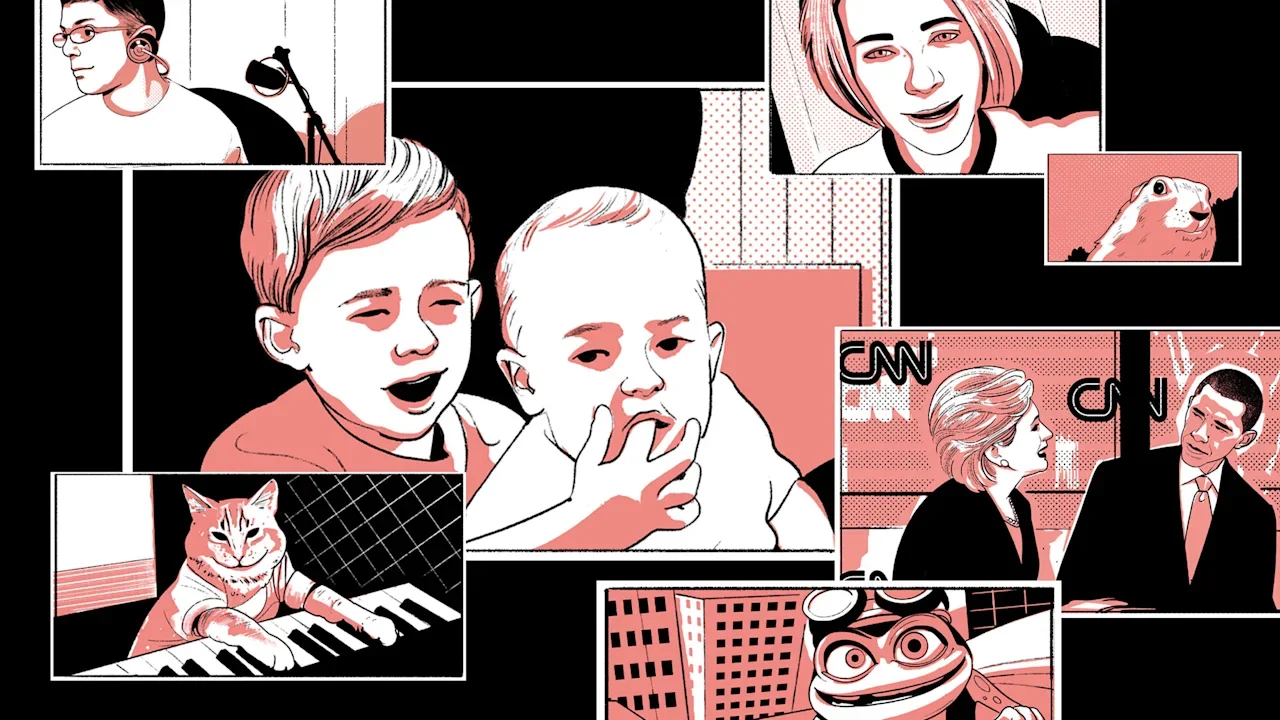
In part two of How YouTube Ate TV, Fast Company’s oral history of YouTube, we look at how the company’s rapid ascent after its 2005 founding led to multiple challenges, from bandwidth costs to unhappy copyright holders. This prompted the startup to consider selling itself, and on October 9, 2006, Google announced that it would be buying it, for $1.65 billion. That deal came with the promise that the web giant would help YouTube scale up even further without micromanaging it. Eventually, the balance they struck between integration and independence paid off. But when YouTube was still a tiny, plucky startup, nobody was looking that far ahead. Read more How YouTube Ate TV Part one: YouTube failed as a dating site. This one change altered its fortunes forever Steve Chen, cofounder—with Chad Hurley and Jawed Karim—of YouTube: I would take care of the product team, the engineering team, the technology side of it, building out this product. And [Hurley] would be managing finance, business development, and content partnerships, the legal side. But we always shared an office, or even shared a desk when we were small. Chris Maxcy, YouTube VP of business development (2005-2013): When I got hired, there were about 11 of us operating out of a back office in Sequoia’s offices. Then we moved to San Mateo to the infamous spot above the pizza shop. It was truly rat infested. Zahavah Levine, YouTube general counsel, chief counsel (2006-2011): On my first day, Steve handed me a sealed box from Ikea, and invited me to erect my desk. “Oh yeah,” he added, “you might also want to order a computer online.” Of the 23 employees, most were under the age of 25. At 37, I often felt like the adult in the room, and at times I felt like the corporate grandmother. Mia Quagliarello, YouTube senior product marketing manager, content and community (2006-2011): On my first day of work, I was seven months pregnant. There was an engineer sleeping on the couch. It really felt like a small family. Levine: I remember taking calls in the janitor’s closet when I needed privacy. Lyor Cohen, Warner Music Group CEO of recorded music (2004-2012); YouTube and Google global head of music (2016-present): It felt like an independent record company. No formality. Everybody in full motion. Jake McGuire, YouTube software engineer (2006-present): It was like, “If something is going to blow up next week, then who cares? We’ll deal with it next week, because we’ve got something that’s blowing up right now.” It was actually kind of fun. Levine: There was a lot of interest in buying us, including from the same L.A. media companies that were threatening us with lawsuits. Maxcy: We had a number of overtures even very early on from large tech companies in the Valley. At the time, Chad and Steve were pretty adamant that they wanted to stay independent. McGuire: Chad and Steve had actually mentioned—at an all-hands meeting with, I don’t know, 40 people at the time—that they got an offer to sell the company for $500 million. And they turned it down. I just shouted out, “You idiots! Why didn’t you take it?“ Tara Walpert Levy, Google ads director (2011-2021); VP, Americas at YouTube (2021-present): Back in 2005 I was consulting, mostly to large media networks. And I had advised one of them, passionately, to buy YouTube. They chose to go a different direction. How YouTube Shaped Culture “Here It Goes Again, ” July 2006 Rock band OK Go was founded in 1998, well before YouTube existed, but its eye-popping, single-shot music videos feel they were born to go viral on the site. Featuring beautifully choreographed treadmill choreography, “Here It Goes Again” was watched more than 50 million times before being yanked by EMI during a dispute with YouTube; after being restored, it racked up another 60 million-plus views. Multiple factors ultimately led the company to confront the possibility that it would need to be part of a larger organization to prosper. Levine: We couldn’t keep up with the inquiries, content deals, takedown requests and legal threats, law enforcement subpoenas, press inquiries, infrastructure growth, hiring. It didn’t stop. Dmitry Shapiro, founder and CEO, Veoh: They were blowing through millions of dollars a month in bandwidth costs. Maxcy: We’d wait for a server to get delivered, and then we’d see this immediate spike in traffic once we got the new infrastructure installed. We knew there was a lot of demand, but we also knew we just couldn’t afford it. Chen: We were able to build a form of our own cloud in the various data centers around the U.S. But from a legal standpoint, it was just a big question mark. Levine: We had Mark Cuban in the press repeatedly insisting that YouTube wasn’t worth a dime because of the copyright issues. Roelof Botha, former PayPal CFO and partner at Sequoia Capital, YouTube’s first investor: We’d gone down for a meeting in Los Angeles with Universal Music, and it was probably the worst business meeting of our lives. They were pit bulls, and when you looked at the demands they had, it wouldn’t benefit artists. I think the [YouTube] founders left feeling quite defeated, and so the prospect of an acquisition became far more attractive. Two tech behemoths quickly emerged as the most likely buyers. Chen: It was a big decision whether to move forward with Yahoo or Google. Google was still the search engine, and Yahoo was everything else. Botha: Yahoo was maybe the more natural acquirer because it had media experience and [former Warner Bros. co-CEO] Terry Semel was leading the company. But some of the dysfunction of the company was starting to show up in its ineptitude in landing the opportunity. Maxcy: Google had the infrastructure, they had the know-how, they had the capital to really make it work. How YouTube Shaped Culture “Charlie Bit My Finger—Again!,” May 2007 Charlie, an English 1-year-old, chomps on his 3-year-old brother Harry’s finger. Nobody is injured in the process, and millions of viewers find it adorably hysterical. Countless YouTubers riff on the duo’s video—including, a decade later, the brothers themselves. Chen: What we liked about Google was not so much on the financial side. Eric Schmidt, the CEO, took me and Chad aside and basically told us, “We’ve been doing all these things with Google Video to try to compete, but there’s some magic vibe within this YouTube group and community. We want to make sure that through this acquisition, we don’t do anything to decelerate that. If anything, we should be here to help.” Eric Schmidt, CEO, Google (2001-2011): YouTube was the clear winner when it came to the social side of online video. It wasn’t just about watching clips. It was about community, sharing, and connection. That’s what really drew us to the company. John Harding, Google software engineer (2005-2007); YouTube engineering manager, director, VP (2007-present): Most of us on Google Video were infrastructure-focused. YouTube had this great consumer product. We all immediately saw, “Okay, this is actually a perfect match.” Schmidt: They were right about the product, and we were right about how to scale it. Levine: I think it took five days from signing the term sheet to signing the long-form agreement. I was operating on pure adrenaline. Maxcy: The day of the acquisition, we were moving into new offices in San Bruno. Chad’s car was broken, so we rode to work together in mine. We show up and there are satellite trucks outside the building, and it’s this entire circus. Quagliarello: I was about to go get lunch and leave the building. My manager’s like, “You might wanna stay here for this.” McGuire: My phone started blowing up with all these text messages. They’d announced we got bought. We all went to TGI Fridays on the other side of the parking lot at the end of the night to celebrate. Google honored its pledge to provide YouTube with resources while letting it chart its own course. Suzie Reider, YouTube CMO (2006-2013): Chad [became] co-CEO with a longtime Googler named Salar [Kamangar], and they sat together in an office. I think Google did a good job of helping us come into the fold. McGuire: They had one of their cafés in Mountain View cook lunch and they would drive it up in a van and serve it in our basement every day. Chen: We’d been stumbling into hurdles when it came to search, recommendations on videos, internationalization. We were able to decide where we thought the most help was needed to continue the growth of YouTube as a platform. How YouTube Shaped Culture CNN/YouTube Presidential Debate, July 2007 YouTubers get face time with Hillary Clinton, Barack Obama, and other Democratic candidates with the service’s first-ever debate livestream. The Republican contenders follow in November. Harding: There was a lot of quick triage: “Okay, what’s in the most risky shape, and how quickly can we get those things moved onto the Google infrastructure that’s more scalable?” Search was one of the first things, and then pretty quickly after that we moved the video processing. McGuire: Google previously had a strategy of making all their acquisitions rewrite their stuff in the Google way. I don’t know if they decided that wasn’t working out for them, but we were the first people who were not given that advice. They did send over a small number of engineers who were almost all pretty good. But even then, they were just trying to work with what we had. Chen: That’s very different from what we thought would happen if Yahoo had been the acquiring group. We wanted to really avoid what happened with eBay and PayPal. Billy Biggs, Google/YouTube software engineer (2006-present): After [Google] bought the company, I saw that some of the technical choices they made were very elegant. It was a master class in learning how to scale. The mothership’s influence did grow over time. Quagliarello: They said, “Nothing’s going to change. You guys keep doing what you’re doing.” It felt like that for about a year. But then it was pretty clear that things were going to change. There was more rigor and discipline around goals and OKRs. It just became more hierarchical. Matthew Darby, YouTube director of product management (2008-present): There’s definitely a lot of the Google culture that got imbued into YouTube. It’s a very analytical, very engineering-driven culture, very rigorous. It’s hard to know whether YouTube on its own would’ve been quite the same. Reider: For me, it was calming, because I’d worked in larger organizations and I was used to a little more rigor and structure. I think it was hard for people who had never worked for a big company like that before. But we needed it. Three months after Google acquired YouTube, Apple announced the iPhone, pitching video-watching as a core feature. When the phone shipped in 2007, it had YouTube onboard. Google’s own mobile platform, Android, made YouTube even more of a strategic asset. Harding: In 2007 and 2008, it wasn’t obvious that mobile was going to become what it did. Biggs: It was truly unclear whether people would really want to watch a lot of video on their phone, or whether that was just not going to be a thing. Chen: There was no SDK for third-party iPhone apps. Apple reached out to us to say, “We think in order for the iPhone to be fully demonstrated, it needs to have YouTube on it.” And so we were the only third-party company that rolled out with the initial set of apps that came with the iPhone. Harding: We had a couple weeks to build the YouTube app for the iPhone, in partnership with the Apple team, before they had to send it off to manufacturing. I was like, “I know exactly how to do that. I’ve already built this for Google Video, but nobody wants it.” Chen: We had to make sure that all the videos that we had were transcoded to be streamed on their video player. It just completely took off. Darby: There was a concerted effort to get everybody at Google to think about mobile first. Android ended up sort of eating the entire world, and YouTube rode along that. In the wake of the Google acquisition, YouTube’s cultural influence was already extraordinary and still growing. It was reflected in everything from a TV ad that repurposed a YouTube video’s Chicken McNuggets rap to the U.S. presidential campaign. Chris Edwards, Arnold Worldwide creative director (1999-2012): A colleague of mine shared a link to the video with a comment saying, “What do they need us for anymore? I thought, “Shit, this would make a great 30-second [McDonald’s] spot.” It got over a million views in the first few weeks—back in 2007 that was a lot!—and tons of comments and copycats doing parody videos on YouTube. We did local TV buys in three markets, and McNuggets sales shot up an average of 42%. Chen: YouTube did a collaboration with CNN for the Democratic and Republican [primary] debates. Instead of having a bunch of panelists speaking into the camera for the questions, they had them coming from YouTube creators. I remember traveling to Charleston and appearing with Anderson Cooper. I was like, “We’ve reached the pinnacle of anything that YouTube can do.” But this was just 2007. Additional reporting by María José Gutiérrez Chávez, Yasmin Gagne, and Steven Melendez. View the full article

-
As tech companies race to build more AI data centers, your electric bill is probably going up. And while some companies are prioritizing adding clean energy to accommodate their intensive demands, climate pollution is also climbing as utilities turn to gas or even coal to support our chatbot habits. But there might be another way for new data centers to get the enormous amount of energy they plan to use. A recent report from the nonprofit Rewiring America suggests that instead of building new power plants, hyperscalers—the Big Tech companies whose data centers provide the backbone to cloud computing—could help homeowners install new solar panels, batteries, and heat pumps. “We saw this trend happening with data centers needing capacity on the grid and thought by upgrading households, we can actually create a significant amount of capacity,” says Cora Wyent, head of research and data science at Rewiring America, which is focused on electrifying homes and communities. Data centers that are planned or already under construction are projected to add a staggering 93 gigawatts of new power demand to the grid by 2029, or roughly as much electricity as 77 million homes use. But the nonprofit calculated that it’s possible to cover that growth by adding solar panels and battery storage at people’s homes. Heat pumps can also help. In Georgia, for example, which expects to need an extra 6.7 gigawatts of electric capacity over the next five years, rooftop solar and storage on homes in the state could provide 5.4 gigawatts. The rest could be covered by upgrading houses with inefficient old-school electric heating to heat pumps. (This combination would actually create more room on the grid than data centers need, helping support growing electricity demand from EVs and other sources.) If solar and batteries were deployed at a very large scale, Rewiring America says the cost could drop by 40%. That would make it possible for tech companies to invest in the equipment at roughly the same cost as building a new gas power plant. In the nonprofit’s model, tech companies would pay for 30% of the cost of the new technology. Homeowners would pay the rest, and then get the benefit of cheap electricity and access to power if the grid goes out in a disaster. In hot climates, heat pumps can unlock significant grid capacity by replacing less-efficient air conditioners. Rewiring America’s calculations show that in Texas, upgrading air conditioners to heat pumps would create 3.9 gigawatts of capacity on the grid. Solar and batteries would add another 10 gigawatts, helping nearly reach the state’s planned needs for another 17 gigawatts by 2029. Of course, rolling out clean tech at homes at the scale envisioned here would be a major challenge. But the report argues that it could happen faster than alternatives; building a new gas plant, for example, can take several years because of supply chain shortages. Tech companies are also investing in unproven new nuclear tech that isn’t yet commercialized. In theory, a network of new heat pumps, solar panels, and batteries could be rolled out in months. It also could help data centers win more support in communities. “There’s been some recent polling showing that data centers are not very popular,” Wyent says. “Our perspective is that data centers are going to be built. So why don’t we try to make that as beneficial as possible to the communities where they will be built?” View the full article

-
Hiring an executive assistant (EA) to delegate work tasks and life admin to has long been something reserved for celebrities and Fortune 500 executives. But that belief might now be changing, as rank-and-file workers decide they, too, want a taste of the EA experience. As Callum Borchers wrote earlier this month in The Wall Street Journal, more workers outside the C-suite are finding assistants—virtual, in person, or AI, and sometimes just for a couple of hours a month—to help with everything from booking bouncy castles to managing work calendars. Nowadays, everyone’s schedules are packed right down to the last minute. Plus, labor has never been easier to offload thanks to artificial intelligence and a globalized network. So it could be argued that what was once considered a luxury is now more accessible. For repetitive tasks or errands, it makes sense for some people to hire a helping hand for the price of $50 or $60 an hour—or even cheaper if you enlist the services of AI. And while there’s only so much someone who isn’t employed by your company can do for you when it comes to work matters, there’s still plenty they can do otherwise that could help your work-life balance. Make no mistake: Hiring someone to do work for you is a luxury. But depending on your circumstances and situation, and if you can swing the financials, it may make sense to at least explore options. Here are some signs you might need the extra help: You are drowning in repetitive tasks If you don’t have a virtual or executive assistant, then the assistant is you. Repetitive tasks—screening emails, scheduling meetings, and planning travel logistics—can quickly eat up your time. When it gets to the point that they consume a full workday or more each week, it’s time to offload. Log your activities for a week and, after getting a detailed picture of where your hours are actually going, outsource and delegate the tasks that are slowing you down work-wise. For example, Fyxer AI can help tackle your inbox and keep on top of email follow-ups. And as the WSJ story points out, an AI assistant like Ohai can take on some of the mental load at home. You are dropping the ball If you find yourself double-booking meetings, never reaching the bottom of your inbox, or working late just to keep up, it often means you’re trying to do too much alone. Outsourcing even 5 to 10 hours a week of admin can make a world of difference to both your professional capabilities and personal stress levels. Getting your own assistant helps keep you organized and accountable. Even one-off services like Taskrabbit, Angi, or Thumbtack could ease the burden when you feel yourself losing focus. You can make the investment Hiring your own EA, even part-time, is a financial investment. But it could also be an investment in your future. If you’re so bogged down by daily tasks that you can’t think bigger picture, pursue new clients, or focus on creative work—it might be time to hire help. If the return on that investment is there, it could be worth it. A good assistant, brought on board at the right time, could more than pay for themselves by giving you back hours in the day you can redirect towards growing personally or professionally. Research has shown effective delegation allows business leaders to earn up to 20% more, while companies led by CEOs who were good delegators achieved better business growth compared to companies whose CEOs delegated less. Besides, if your workload means you are letting things slip—losing a client or project could cost more than hiring the assistant in the first place. View the full article

-
I don’t know about you, but my 2025 earworms are pretty much exclusively trending songs from TikTok at this point. (Even the non-music sounds from TikTok tend to get stuck in my head, but I digress…) The catchiness of these tunes is incredibly powerful for creators and brands on the social media platform to tap into, because not only do users remember the song — chances are, videos that featured the track will probably stick in their minds, too. Beyond memorability, of course, is the algorithmic effect of being right on the cusp of a trending TikTok song. And who would say no to a little boost for the content they worked so hard on? In this post, I’ll share the most viral songs and sounds on TikTok in 2025 — and how to use them to boost your content. Jump to a section: Why trending songs matter on TikTok How to find trending songs on TikTok 13 Trending TikTok songs and sounds Why trending TikTok sounds matterSince you’re here, I probably don’t need to tell you that using a hot sound on TikTok can increase your chances of landing on the For You Page, especially if you’re early to the trend. TikTok’s algorithm often prioritizes familiarity and repeatability, so when a song is on the rise, jumping on it can give your post more visibility. For example, if I’m scrolling through my FYP and watch a video with a particular audio, the TikTok algorithm will likely test the waters with another video that uses the same sound a couple of videos later. The algorithm wants to understand exactly why I lingered on the first video. Was it the music? If yes — boy, does the FYP have more where that came from. The right TikTok sounds or songs can instantly set the tone, spark emotion, or cue a punchline for your audience — particularly if the sound, like many of the ones below, has been used in a specific way. The songs or audio that rise to that level of virality that they become a moment in time for internet culture are the really special ones. Very demure, very mindful, no? All that said: you don't need to spend hours scrolling to find the right audio for your next post. Here are the most popular TikTok songs and audio right now, updated in September 2025. We’ll keep this list regularly updated, so do be sure to bookmark this page and come back if you need more inspiration! ⚡Found a TikTok song or trend you love and want to come back to later? Save it in Buffer's Create space — and easily turn it into a video to schedule when you're ready. Here's how →How to find trending songs on TikTokBrowse TikTok’s Creative Center: Visit the Creative Center to see top trending songs by region and time period (above) — it’s TikTok’s built-in trend tracker for sounds, creators, and hashtags.Use TikTok’s search bar: Search phrases like “viral sound” in the TikTok app, tap the “Sounds” tab, and scroll through the most-used tracks labeled “popular.”Get personalized recommendations from TikTok: When you upload a video, TikTok will suggest music that matches your content — a great shortcut for finding relevant sounds.Explore TikTok’s Music Charts: TikTok and Billboard now publish weekly music charts. Tap the “Music Charts” button on any sound page to see what’s trending in the U.S.Discover playlists curated by TikTok: Tap “Add Music” > “Discover more sounds” to browse playlists by genre, category, or what’s hot in your region.Check out Tokchart: Tokchart shows the fastest-rising TikTok sounds from the past 24 hours, updated in real time.Look for trending audio on Instagram: Instagram Reels often feature songs that cross over to TikTok. Tap the music icon in the Reels editor and check the “Trending” tab for current hits.💡 Bonus tip: Always preview how a sound is being used. Tap the sound name on TikTok to watch example videos — this gives you the context you need to ride (or remix) the trend. 📚Want to stay ahead of the trends? Check out our guide, How to Find Trending TikTok Songs, to make sure your finger (ear?) is always on the pulse.13 Trending TikTok songs and sounds Updated September 2025 Jump to a song: 1. Flores Amarillas 2. Lil Boo Thang 3. Your Attention 4. Illegal 5. Halloween 'cute horror song' 6. Man I Need 7. Friend Zone 8. Shiny 9. Birds of a Feather 10. Tears 11. Feel Good 12. I'm a Dog 13.You Da One 1. Flores AmarillasThis TikTok trend is like a digital bouquet of yellow flowers (the literal translation of 'flores amarillas') for your feed. Users are pairing Floricienta’s sweet, catchy tune with clips that celebrate love, hope, fresh starts... and plenty of yellow flowers. 🎧 Get the song 2. Lil Boo ThangPaul Russell's catchy song has cemented itself as the go-to soundtrack for all things joyful and a little bit cheeky. Its upbeat, funky vibe makes it the perfect pairing for creators introducing their own “boo thangs,” from partners and best friends to pets caught doing something irresistibly cute. 🎧 Get the song 3. Your AttentionThis song by Jo Dawne is catching on as the kind of track that creators and brands use when they want to make sure viewers stop scrolling and, well, pay attention. With its catchy hook and pulsing beat, the song works perfectly for bold reveals, eye-catching edits, or any moment where the whole point is to say: Look at this. 🎧 Get the song 4. Illegal This trending song by PinkPantheress features an intro segment — "My name is Pink, and it's really nice to meet you... You're recommended to me by some people..." One or two creators typically lip-sync to the lines as they "shake hands" from different POVs. The idea is to show off complementary personalities (or opposing sides of the same person). 🎧 Get the song 5. Halloween 'cute horror song'Is it that time of year already? Get in on this trend now — this track is only going to gain popularity as 31 October draws nearer. 🎧 Get the song 6. Man I NeedOlivia Dean's song is finding its place as a soulful, feel-good anthem that creators use to capture moments of warmth, connection, and a little bit of longing. With its smooth vocals and upbeat groove, the song is the perfect match for romantic clips, cozy day-in-the-life vlogs, or those soft-focus montages that celebrate love, friendship, and good vibes. 🎧 Get the song 7. Friend ZoneThundercat’s Friend Zone has become the soundtrack to everyone’s most relatable moments. With its funky basslines and smooth vocals, the track often accompanies authentic, day-in-the-life content that captures the ups and downs of daily life. 🎧 Get the song 8. ShinyTikTokers, especially twins and lookalikes, are absolutely loving Easykid’s Shiny for one very personal reason — the lyrics actually mention twins! Pairs of twins have been lip-syncing to the track in landscape mode. 🎧 Get the audio 9. Birds of a FeatherBillie Eilish's poignant lyrics and emotive melody are still inspiring TikTok creators to share their personal stories and experiences. How cute is this proposal? 🎧 Get the audio 10. TearsSabrina Carpenter's song has become the TikTok dance break. The track's disco-pop vibe and infectious rhythm have inspired countless creators to showcase their dance skills. 🎧 Get the song 11. Feel GoodWith its smooth, nostalgic R&B vibe, Clara La San’s song has become a favorite TikTok track. The song asks, "Why you wanna' get closer to me now?", setting the stage for creators exploring relationships. It's often used ironically, showing people who end up in relationships after claiming they didn't want one. 🎧 Get the song 12. I'm a DogKevin Gates' “Keep the money flipping, it’s all I know,” line has sparked a lively dance trend on TikTok. The song’s catchy beat and bold lyrics make it perfect for a snappy routine, lip-syncing, or a playful flex. 🎧 Get the song 13. You Da OneTikTok posts featuring Rihanna’s 2011 song often spotlight loved-up couples with the lyrics appearing onscreen. These captions highlight key lines from the song as couples share sweet, playful, or romantic moments. 🎧 Get the song Pro tip: For business use on TikTok, only use songs from TikTok’s Commercial Music Library or tracks you have a royalty-free/commercial license for. Using personal-use music in ads or branded content can get your videos muted or removed, so always double-check the license before posting. Found a track for your next TikTok?Whether you're creating content for your business or personal brand, staying on top of TikTok's audio trends can help you reach new audiences and keep your content fresh. Start with one or two of the methods we discussed to find popular sounds — and don't forget to save your favorites for later. If you've created a TikTok post with audio from this list, we'd love to see it. Tag @bufferapp on TikTok so we can find you! View the full article
-
Chair blames concerns about private equity firms’ ability to exit investments for share price weaknessView the full article
-
Airfield used by military shut down for several hours as Europe remains on alert over airspace violationsView the full article
-
It is a sad fact of online life that users search for information about suicide. In the earliest days of the internet, bulletin boards featured suicide discussion groups. To this day, Google hosts archives of these groups, as do other services. Google and others can host and display this content under the protective cloak of U.S. immunity from liability for the dangerous advice third parties might give about suicide. That’s because the speech is the third party’s, not Google’s. But what if ChatGPT, informed by the very same online suicide materials, gives you suicide advice in a chatbot conversation? I’m a technology law scholar and a former lawyer and engineering director at Google, and I see AI chatbots shifting Big Tech’s position in the legal landscape. Families of suicide victims are testing out chatbot liability arguments in court right now, with some early successes. Who is responsible when a chatbot speaks? When people search for information online, whether about suicide, music or recipes, search engines show results from websites, and websites host information from authors of content. This chain, search to web host to user speech, continued as the dominant way people got their questions answered until very recently. This pipeline was roughly the model of internet activity when Congress passed the Communications Decency Act in 1996. Section 230 of the act created immunity for the first two links in the chain, search and web hosts, from the user speech they show. Only the last link in the chain, the user, faced liability for their speech. Chatbots collapse these old distinctions. Now, ChatGPT and similar bots can search, collect website information, and speak out the results—literally, in the case of humanlike voice bots. In some instances, the bot will show its work like a search engine would, noting the website that is the source of its great recipe for miso chicken, for example. When chatbots appear to be just a friendlier form of good old search engines, their companies can make plausible arguments that the old immunity regime applies. Chatbots can be the old search-web-speaker model in a new wrapper. But in other instances, it acts like a trusted friend, asking you about your day and offering help with your emotional needs. Search engines under the old model did not act as life guides. Chatbots are often used this way. Users often do not even want the bot to show its hand with web links. Throwing in citations while ChatGPT tells you to have a great day would be, well, awkward. The more that modern chatbots depart from the old structures of the web, the further away they move from the immunity the old web players have long enjoyed. When a chatbot acts as your personal confidant, pulling from its virtual brain ideas on how it might help you achieve your stated goals, it is not a stretch to treat it as the responsible speaker for the information it provides. Courts are responding in kind, particularly when the bot’s vast, helpful “brain” is directed toward aiding your desire to learn about suicide. Chatbot suicide cases Current lawsuits involving chatbots and suicide victims show that the door of liability is opening for ChatGPT and other bots. A case involving Google’s Character.AI bots is a prime example. Character.AI allows users to chat with characters created by users, from anime figures to a prototypical grandmother. Users could even have virtual phone calls with some characters, talking to a supportive virtual nana as if it were their own. In one case in Florida, a character in Game of Thrones, Daenerys Targaryen, persona allegedly asked the young victim to “come home” to the bot in heaven before the teen shot himself. The family of the victim sued Google. Parents of a 16-year-old allege that ChatGPT contributed to their son’s suicide. The family of the victim did not frame Google’s role in traditional technology terms. Rather than describing Google’s liability in the context of websites or search functions, the plaintiff framed Google’s liability in terms of products and manufacturing akin to a defective parts maker. The district court gave this framing credence despite Google’s vehement argument that it is merely an internet service, and thus the old internet rules should apply. The court also rejected arguments that the bot’s statements were protected First Amendment speech that users have a right to hear. Though the case is ongoing, Google failed to get the quick dismissal that tech platforms have long counted on under the old rules. Now, there is a follow-on suit for a different Character.AI bot in Colorado, and ChatGPT faces a case in San Francisco, all with product and manufacture framings like the Florida case. Hurdles for plaintiffs to overcome Though the door to liability for chatbot providers is now open, other issues could keep families of victims from recovering any damages from the bot providers. Even if ChatGPT and its competitors are not immune from lawsuits and courts buy into the product liability system for chatbots, lack of immunity does not equal victory for plaintiffs. Product liability cases require the plaintiff to show that the defendant caused the harm at issue. This is particularly difficult in suicide cases, as courts tend to find that, regardless of what came before, the only person responsible for suicide is the victim. Whether it’s an angry argument with a significant other leading to a cry of “why don’t you just kill yourself,” or a gun design making self-harm easier, courts tend to find that only the victim is to blame for their own death, not the people and devices the victim interacted with along the way. But without the protection of immunity that digital platforms have enjoyed for decades, tech defendants face much higher costs to get the same victory they used to receive automatically. In the end, the story of the chatbot suicide cases may be more settlements on secret, but lucrative, terms to the victims’ families. Meanwhile, bot providers are likely to place more content warnings and trigger bot shutdowns more readily when users enter territory that the bot is set to consider dangerous. The result could be a safer, but less dynamic and useful, world of bot “products.” Brian Downing is an assistant professor of law at the University of Mississippi. This article is republished from The Conversation under a Creative Commons license. Read the original article. View the full article
-
A few years ago, I received some news I’d been longing to hear: The first book I’d ever written received an offer from a publisher. My childhood dream of becoming an author looked set to become a reality. It was six o’clock in the evening—the ideal time for a celebratory drink with my colleagues. But I didn’t tell anyone the news. I thought my excitement would be seen as bragging. So I kept my mouth shut. If only I’d known about the concept of Mitfreude: a German term for the vicarious joy people can feel at another’s happiness. According to recent research, we are needlessly cautious about sharing good news, because we fear it will provoke boredom, irritation, or envy in others. Yet Mitfreude is surprisingly common—and sharing our happier moments can improve our mood, strengthen our relationships with our colleagues, and boost our reputation within our professional network. ‘Joying’ with someone Mitfreude (which literally translates as “joying with”) comes from philosopher Friedrich Nietzsche, a man not typically known for a cheery worldview. And yet he once wrote: “To imagine the joy of others and to rejoice at it is the highest privilege of the highest animals.” You could see Mitfreude as the opposite of Schadenfreude, our joy at others’ misfortune. Studies confirm that there are many benefits to “joying with” another person. In the psychological literature, Mitfreude is often known by the more technical term capitalization: the idea that we can amplify our happiness from a positive event by sharing it with people we like. We can see this in studies tracking day-to-day changes in people’s emotions. After a conversation in which one person recounts a success or good fortune, the speaker gets to relive the positive experience while the other person enjoys a vicarious mood boost. Crucially, the warm feelings that arise also strengthen social bonds. “In close relationships, it fosters trust and intimacy,” explains Trevor Watkins, an assistant professor of management at the University of Oklahoma who has examined capitalization in the workplace. Sharing our successes can also enhance our reputation with our peers: “Among coworkers, it offers the opportunity to foster inspiration,” he says. The result is an amplification of our initial happiness: “We derive even more benefit from the positive events than if we had let them passively come and go,” says Watkins. “That’s why it’s called capitalization.” Unfortunately, many of us do not recognize these benefits. So we tend to keep our happiness to ourselves. How concealing positivity can backfire In a survey by Annabelle Roberts, an assistant professor of marketing at the University of Texas at Austin, her research team found that 80% of participants reported having concealed a success from people around them, like a promotion at work. Participants wanted to avoid provoking jealousy or creating awkwardness in a conversation. They thought they were being sensitive. In reality, it is the act of hiding a success—and blocking opportunities for Mitfreude—that is most likely to elicit bad outcomes. Roberts and her colleagues asked participants to consider the hypothetical story of two work friends who are both looking for a new job: One gets asked to give a presentation to a potential employer, but neglects to tell his friend, despite them having discussed their job hunts. There could be multiple explanations for his behavior (including sheer forgetfulness), but the participants saw it as an act that erodes trust. As a result, the participants responded that they would be far less likely to share personal information about themselves with such a colleague—or to collaborate with him in the future. “Sharing positive things about ourselves does a lot for connection,” says Todd Chan, who conducted research into the benefits of perceived “bragging” for his PhD at the University of Michigan. “It’s not that people forget that friends might be happy for them. It’s more that they’re disproportionately focused on the risk of things like envy. In reality, close friends mostly do feel joy for us.” How to share joy (without bragging) Mitfreude can have caveats: Watkins has found that sharing good news is far less likely to bring vicarious joy in competitive workplaces, where it can breed envy and resentment. Fortunately, the research offers some tips to increase the chances that you will meet Mitfreude rather than envy in any situation. The first is the law of reciprocity. Lukasz Kaczmarek, who heads the Social Psychology Centre at Adam Mickiewicz University in Poznań, Poland, has shown that people often keep note of the ways that you have responded to their good news. This then shapes how they’ll react to good news of your own. “Conveying that enthusiasm will return to you as a boomerang,” Kaczmarek says. “Every time you show that your behavior has changed, it produces a change in your partner.” Where possible, you might also attempt to build up others alongside yourself—a strategy known as “dual promotion.” You might compliment someone’s organizational skills while describing your creative contributions to a project, for example. “The fact you’ve said something good about someone else shows that you must be a warm person,” says Eric VanEpps, an associate professor of marketing at Vanderbilt University who conducted this research. Finally, you might try to talk about some of the challenges you’ve faced. In a study of entrepreneurs’ presentations, people who described past obstacles or mistakes were considered to be less conceited, and more inspiring, than those who spoke only of their triumphs. With time, greater awareness of Mitfreude and its benefits may help us all to create a more positive culture. “Shying away from sharing good news creates like a void that then just is cluttered with bad news,” says VanEpps. “It’s nice to hear good things happen to good people.” View the full article
-
Poor indoor air quality can reduce cognitive performance by up to 50% High CO2 levels (1,000+ ppm) can make you feel sluggish and impair decision-making.Air monitor detects issues, like a "canary in the coal mine" for ventilation.I never paid much attention to air quality before. Then I realized I was sitting 10+ hours in the same room. Shouldn't I check if the air was any good? Remember the last time you were stuck in an airplane for 5+ hours? The air feels stuffy and stale. Same thing can happen at work! The Invisible Culprit Behind Your WFH Slump Picture this: You’ve been glued to your desk for six straight hours, wearing the same pajamas you slept in, and your brain feels like it’s running on dial-up. You blame the Wi-Fi signal, the never-ending calls, or just your own lack of willpower. But what if the real culprit is something you can’t even see—the air you’re breathing? Indoor air quality (IAQ) is the unsung hero (or villain) of your work-from-home experience. While I obsess over internet speeds and ergonomic chairs, I often forget that the air in our home offices can be more polluted than a city street. And that stale, polluted air doesn’t just make your space smell funky—it can actually sabotage your productivity, energy levels, and even your long-term health. Why Air Quality Matters More Than You Think for Remote Workers When you work from home, your living space doubles as your office, gym, café, and sometimes even your bedroom. This multitasking environment means that indoor air pollutants—from cooking fumes, cleaning products, dust, mold, and even your own breath—can build up faster than you’d expect. Also applies if you have hairy pets 😄 Poor ventilation traps these contaminants, creating a toxic soup that you breathe in all day. The science is clear: Poor indoor air quality can reduce cognitive performance by up to 50% and slash productivity by 9% . That means your "peak productivity" setup might actually be working against you if the air is full of pollutants. High CO2 levels, a common indicator of poor ventilation, can make you feel sluggish, impair decision-making, and even cause headaches and fatigue. And it’s not just about feeling a little tired. Long-term exposure to poor air quality can lead to respiratory diseases, heart disease, and cancer. So while you’re worrying about your Wi-Fi signal, your air quality might be slowly chipping away at your health and your ability to focus. CO2: The "Canary in the Coal Mine" for Your Home Office AirCarbon dioxide (CO2) is a natural byproduct of human respiration, but when it builds up indoors, it’s a red flag that ventilation is inadequate. CO2 levels are measured in parts per million (ppm), and here’s what the numbers mean for you: Under 800 ppm: You’re golden. The air is fresh, and your brain is running at full speed.800–1,000 ppm: Getting stuffy. You might start feeling a little sluggish.Over 1,000 ppm: Your brain’s basically running on dial-up. Expect slower thinking, fatigue, and possibly headaches.Monitoring CO2 levels gives you a real-time snapshot of how well your home office is ventilated and whether it’s time to crack a window or take a fresh air break. Introducing Air Monitor: Your Nerdy Sidekick for Better Air So, I embarked on a quest to find an Air Monitor. This isn't a paid or commissioned review, we bought the device to test it out. The ARANET4 is a compact, battery-powered device that measures CO2 levels, temperature, humidity, and atmospheric pressure in real-time. It uses nondispersive infrared sensor (NDIR) technology for precise CO2 readings and connects via Bluetooth to an app that tracks data and alerts you when CO2 levels get too high. I really like it, although it's fairly pricy (around US$ 150) Think of it as a "canary in the coal mine" for your home office—except instead of a bird, it’s a sleek, modern sensor that gives you actionable insights into your air quality. The e-ink display and long battery life make it easy to use, and the app lets you set custom thresholds so you know exactly when to ventilate your space. The Air Monitor isn’t the hero of this story, you are. It’s just a cool tool that helps you see what’s invisible and take control of your indoor environment. Simple Hacks to Improve Your Home Office Air QualityYou don’t need a PhD in HVAC to improve your air quality. Here are some practical, easy-to-implement tips: Open windows regularly: Let fresh air in to dilute indoor pollutants and reduce CO2 buildup.Use air purifiers with HEPA filters: These can capture dust, pollen, mold spores, and other particles, improving air quality significantly.Add houseplants: Plants like spider plants, philodendrons, and peace lilies absorb toxins and produce oxygen, naturally purifying your air.Keep humidity between 30–50%: Use dehumidifiers or air conditioners to control humidity and prevent mold and dust mites.Clean and maintain your space: Regularly dust, vacuum, and replace air filters to reduce pollutants.Monitor CO2 levels: Use a device like the ARANET4 to keep an eye on ventilation and air quality in real-time.These small changes can make a big difference in how you feel and how well you work. TL;DR for the SkimmersPoor indoor air quality can reduce productivity by up to 9% and cognitive performance by 50%.High CO2 levels (over 1,000 ppm) make you feel sluggish and impair decision-making.A top-shelf Air monitor helps you see invisible air quality issues in real-time.Simple fixes like opening windows, using air purifiers, and adding plants can improve air quality.Better air quality = better focus, energy, and long-term health for remote workers.Final ThoughtsNext time you’re feeling foggy-brained and blaming your Wi-Fi, take a moment to consider the air you’re breathing. Indoor air quality is a sneaky but powerful factor in your productivity and health as a remote worker. By monitoring CO2 levels with a tool like the Air Monitor and making small changes to improve ventilation and reduce pollutants, you can create a home office environment that supports your best work—and your best health. So go ahead, open that window, add a plant or two, and let the fresh air in. Your brain (and your Wi-Fi signal) will thank you. Want to find a remote job? Join our newsletter! Join the Remotive newsletter Subscribe to get our latest content by email. Success! Now check your email to confirm your subscription. There was an error submitting your subscription. Please try again. Email address Subscribe Powered by ConvertKit View the full article