ResidentialBusiness
Administrators
-
Joined
-
Last visited
Everything posted by ResidentialBusiness
-
 Key Takeaways Lack of Communication: A partner who consistently avoids communication or withholds important information can lead to misunderstandings and disrupt productivity.Differing Work Ethics: Misaligned work ethics, such as inconsistent commitment to deadlines, can create friction and negatively impact business growth.Financial Irregularities: Lack of transparency regarding finances can indicate deeper issues, jeopardizing the business’s cash flow and overall stability.Disrespectful Attitude: A partner who dismisses your ideas or undermines your authority fosters a toxic work environment and weakens collaboration.Inability to Accept Feedback: Resistance to constructive criticism can stifle innovation and hinder necessary discussions about business performance.Regular Evaluations: Conducting performance reviews and open feedback sessions can help identify red flags and reinforce a healthy partnership for long-term success. Choosing the right business partner can make or break your venture. While the excitement of starting something new can be intoxicating, it’s crucial to stay vigilant. Recognizing the signs of a bad business partner early on can save you from potential pitfalls and heartache down the road. You might find yourself overlooking red flags in the rush to launch. However, ignoring these warning signs can lead to conflicts, financial losses, and a toxic work environment. From lack of communication to differing values, understanding these indicators can help you make informed decisions about your partnerships. Let’s dive into the key signs that might indicate it’s time to reassess your business relationship. Understanding Business Partnerships Understanding the dynamics of business partnerships is crucial for small business success. Effective partnerships can enhance decision-making, streamline business operations, and foster growth. Conversely, a bad business partner can derail your efforts, create conflict, and lead to financial mismanagement. Evaluate your partner’s communication skills. Clear communication fosters collaboration and helps prevent misunderstandings, which are detrimental to your workflow. A partner who consistently avoids crucial conversations or withholds information disrupts project management and can hinder overall productivity. Consider management styles as well. If your partner’s approach to leadership clashes significantly with yours, conflicts may arise. Misaligned values regarding team management and employee development can create a toxic work environment. Assess decision-making processes as well. A partner who consistently disregards your input or imposes unilateral decisions can disrupt the balance necessary for business growth. Collaboration and shared authority remain vital for strategic planning and achieving business goals. Review the financial aspects of your partnership. Lack of transparency in budgeting and financial planning often indicates deeper issues. Ensure cash flow and financial strategies align. If your partner struggles with inventory management or sales management, it can jeopardize profitability. Regularly evaluate the effectiveness of your partnership. Conflict resolution strategies should be in place to address issues promptly. Utilizing performance reviews can help identify and rectify problems before they escalate, ensuring operational efficiency and a productive work atmosphere. By closely analyzing these crucial elements, you enhance your ability to identify signs of a bad business partner and take necessary actions to safeguard your small business. Common Red Flags Identifying signs of a bad business partner is crucial. Certain red flags can signal potential challenges that may disrupt your small business’s operations. Lack of Communication Unanswered emails and messages can indicate deeper issues. If your partner frequently ignores your communications, it disrupts workflow and can affect team management. Lack of regular meetings signals poor communication practices. Without these essential check-ins, staying aligned on business goals becomes difficult. Frequent misunderstandings or differing interpretations of agreements lead to confusion. This breakdown in communication undermines decision-making and overall productivity. Withholding important information, such as financial standings or key business decisions, fosters distrust and can hinder collaboration. Different Work Ethics Diverging work ethics can create significant friction in business partnerships. If your partner does not prioritize meeting deadlines or doesn’t adhere to agreed-upon work standards, it can impact project management. Inconsistent commitment levels lead to resentment and decreased employee morale. Even small differences in work style can escalate issues around delegation and accountability, adversely affecting business growth. Aligning on work ethics promotes a positive work atmosphere and enhances operational efficiency. Financial Irregularities Monitoring financial transactions ensures sound cash flow management. Your partner’s lack of transparency regarding budgeting or financial planning raises concerns. Inconsistencies in financial reporting can indicate deeper problems within business operations. If your partner avoids detailed financial discussions, it can hinder effective risk management and create uncertainty about business health. Regular performance reviews should include financial assessments to keep track of financial stability. Identifying these irregularities early can help you take necessary actions to protect your small business from potential financial distress. Behavioral Signs Identifying behavioral signs of a bad business partner is crucial for maintaining effective business operations. Certain actions and attitudes can signal serious issues that affect your small business’s productivity and growth. Disrespectful Attitude A disrespectful attitude can manifest in several ways, such as dismissing your ideas or ignoring your input during decision-making. If your partner frequently undermines your authority, it’s a clear indication of potential conflict. This behavior can create an unhealthy work environment, leading to diminished team morale and reduced collaboration. A respectful partnership encourages open communication and mutual support, which are essential for achieving business goals. Inability to Accept Feedback An inability to accept feedback can significantly hinder your business development. If your partner reacts defensively to constructive criticism or avoids necessary discussions about performance, it can stifle innovation and problem-solving. This resistance not only affects individual performance but also disrupts team management and project management efforts. Open and honest dialogue promotes continuous improvement and helps steer your small business toward success. Impact on Business A bad business partner can significantly disrupt business operations and hinder business growth. When partners lack transparency, it creates a ripple effect that impacts trust, leading to poor decision-making. For a small business, misalignment in financial planning can jeopardize cash flow and overall financial health. Mismanagement can arise from a partner’s failure to adhere to budgets, leading to unplanned expenses that strain resources. Poor communication can derail productivity. If a partner doesn’t respond to inquiries or fails to hold regular meetings, it affects workflow and leads to misunderstandings. This lack of interaction stalls progress, making it difficult to meet business goals. Without open lines of communication, important information on project management and team management may become lost, which can further hinder progress and employee morale. Unreliable partners contribute to a dysfunctional environment. If they miss deadlines or don’t follow through on commitments, it can disrupt project management processes and diminish trust among the team. This unreliability can negatively affect employee performance, turning focus away from productivity and onto damage control. Additionally, disrespectful behavior from a partner can poison the work atmosphere. Undermining team members or dismissing their ideas creates a culture of fear rather than one of collaboration. This stifles creativity and innovation, limiting any potential for effective business development and strategic planning. Recognizing these impacts early can help you address issues that threaten your small business. Implementing regular performance reviews and open feedback sessions ensures that any misalignment in leadership and management styles is addressed promptly. By fostering a healthy partnership, you contribute to improving operational efficiency and enhancing overall business processes. Conclusion Recognizing the signs of a bad business partner is crucial for your venture’s success. By staying vigilant and aware of red flags like poor communication and differing values, you can protect your business from potential pitfalls. Don’t let excitement cloud your judgment; it’s essential to evaluate your partnership regularly. Addressing issues early on can prevent conflicts and foster a healthier work environment. Ultimately, a strong partnership built on trust and mutual respect can drive your business forward. Prioritize open dialogue and financial transparency to ensure your collaboration thrives. Frequently Asked Questions What are the key signs of a bad business partner? A bad business partner may exhibit signs like poor communication, lack of transparency in financial matters, differing work ethics, and disrespectful behavior. These red flags can lead to misunderstandings, conflicts, and overall negative impacts on the business partnership. How can poor communication affect a business partnership? Poor communication can disrupt workflow and lead to misunderstandings that undermine productivity. Unanswered emails, infrequent meetings, and general disengagement can stall progress and hinder goal achievement. Why is transparency important in a business partnership? Transparency ensures that all partners are informed about financial planning and budgeting. A lack of transparency can erode trust, lead to financial mismanagement, and jeopardize the overall health of the business. What should I do if I notice red flags in my business partnership? If you observe red flags, it’s crucial to address them promptly. Initiate open discussions to express concerns, seek feedback, and consider implementing regular performance reviews to reassess the partnership’s effectiveness. How can regular evaluations improve a business partnership? Regular evaluations can help identify issues early, facilitate open feedback, and promote continuous improvement. They encourage accountability and help ensure that all partners remain aligned with the business goals. What impact can a disrespectful partner have on the team? A disrespectful partner can create a toxic work environment, deteriorate team morale, and stifle innovation. It can lead to fear among team members, which hinders collaboration and creativity. How can differing values affect a business partnership? Differing values can create fundamental disagreements regarding business direction and decision-making processes. This misalignment can result in conflicts, poor decision-making, and an unhealthy workplace culture. Image Via Envato This article, "Recognizing Signs of a Bad Business Partner Before It’s Too Late" was first published on Small Business Trends View the full article
 -
If you've received an innocent-sounding text from a number you don't recognize, it's not actually innocent. It's likely the start of a "wrong phone number" scam, which is increasingly being used to steal money and information from victims. I personally have been sent variations on this theme: "Hello! I hope you had a good day." "Are you able to work?" and just "Hello." Research from security firm McAfee reported by CNBC indicates that around 25% of Americans have received wrong number texts. But this isn't the only widespread text message scam currently circulating. The unpaid tolls and unpaid parking fee schemes are phishing attempts that may seem legitimate at first glance but ultimately lead you to hand your credit card information over to thieves. According to the Federal Trade Commission, consumers lost $470 million to text message scams in 2024, a five-fold increase over 2020. How the wrong number scam worksThe wrong number text scam starts with a random and seemingly harmless text from an unfamiliar number, the first objective of which is to prompt a response and confirm that your phone number is active. After that, scammers try to build a relationship (often romantic) and gain your trust over days and months by preying on loneliness and a desire for connection. This can turn into a so-called "pig butchering" scam, with fraudsters soliciting investments or convincing you to hand over retirement savings, a long con that potentially comes with a big payday. But even if victims don't end up sending money, any information they provide (even if innocuous) can be used or sold on the dark web. AI has enabled this scam in several ways: It can help tailor more believable texts by area code, as well as cull social media profiles to identify potential targets and locate their phone numbers, making it more efficient for scammers. It may also collect enough information for fraudsters to gain access to social media accounts, lock them down, and demand a ransom. What to do if you receive a random textIf you receive a text from a number you don't know, don't respond, as doing so validates your phone number. Even if you don't engage in this exchange any further, you may be targeted again in the future (and by different unfamiliar numbers). You also don't need to try to find out who they are or whether you know them—if someone actually needs to reach you, they are likely to follow up with multiple messages or calls beyond a single "Hey, how are you?" And as with any scam, be wary of communication that provokes an emotional response or a sense of urgency. You should mark wrong number messages as spam in your messaging app. In Messages on iOS, tap the Report Junk link that appears at the bottom of messages from unknown senders, then hit Delete > Report Junk. If you haven't opened the message yet, you can also swipe left and tap the Trash icon > Delete and Report Junk. (Note that you can't report a message if you've replied to it, which is another reason not to do so.) On Android, you can block and report conversations in Google Messages: tap and hold, then tap Block > Report spam > OK. If you've already opened the conversation, hit More options > Details > Block & report spam > OK. You can also forward spam messages to 7726, which helps wireless companies identify and block scams. View the full article
-
‘Ministerial direction’ raises questions over the price of saving country’s last two blast furnacesView the full article
-
Search industry experts are sounding the alarm over a growing Google experiment that’s creating a kind of “SERP Inception” — search results inside search results, with increasingly prominent Sponsored labels that don’t appear to be paid ad placements in the traditional sense. Driving the news. SEO consultant Glenn Gabe posted a screenshot on X showing a People also consider box labeled Sponsored. The twist? Clicking a link launches a new Google results page – complete with ads and another Sponsored box, perpetuating the loop. “They lead to a fresh SERP with more ads and yet ANOTHER ‘People also consider’ block that’s SPONSORED,” Gabe wrote. The backstory. Google began testing this format in 2024. Search Engine Land’s Barry Schwartz reported on the feature in February. But as it re-emerges, ad experts are asking: Who’s behind the sponsorship? And how should advertisers interpret this? Zoom in. Julie Bacchini, Founder of Neptune Moon, asked where the ads originate. Are they part of Performance Max campaigns? Can advertisers track them? Google’s response. Ginny Marvin, Google Ads Liaison, replied on X: “This is currently an experiment. Advertisers do not pay for clicks on these placements. As part of this experiment, we label this unit as ‘Sponsored’ because it links to search results for commercial queries related to the search.” Why we care. This update could change how users interact with search results, potentially driving traffic through SERP loops not tied to traditional ad campaigns. Because the Sponsored label doesn’t reflect paid placements, it blurs the line between organic and paid content, making it harder to track performance and understand attribution. The recursive SERP loop could also feel manipulative or overwhelming to users, who are already adjusting to AI Overviews and more aggressive ad placements. As Google increasingly blends ads, AI summaries, and “organic” enhancements, the line between content and monetization continues to blur View the full article
-
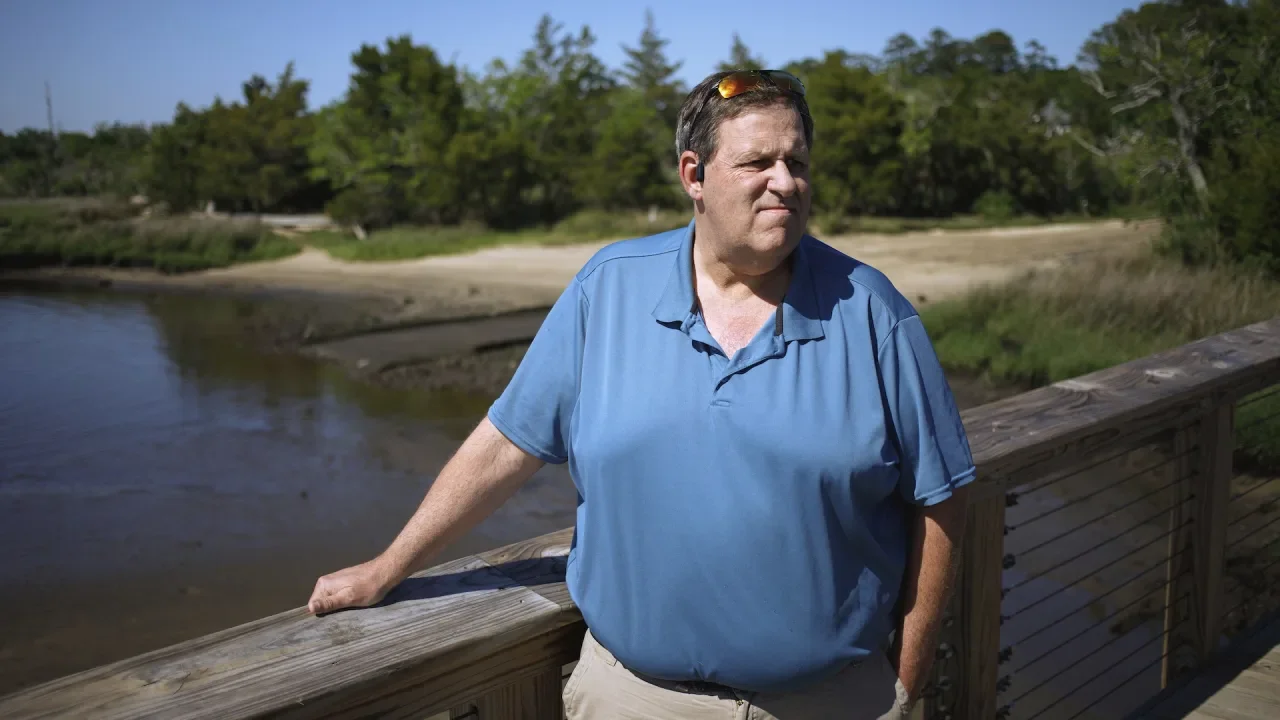
In pain so bad he couldn’t stand, Chris Meek was rushed to the hospital with a life-threatening ruptured gallbladder. When he emerged from surgery, he learned he had kidney cancer that thankfully hadn’t yet spread. Meek, a social studies teacher in Wilmington, North Carolina, was 47 at the time. But he remained confused for years about why, as someone seemingly not at risk, he had gotten cancer until Emily Donovan, a parent of students at his school, gave a guest talk about high levels of harmful forever chemicals known as PFAS in North Carolina’s environment. When Donovan mentioned kidney cancer, the possible cause of Meek’s diagnosis finally clicked. Until then, Meek said, he “had no idea what PFAS was.” Last year, the Environmental Protection Agency set the first federal drinking water limits for PFAS, or perfluoroalkyl and polyfluoroalkyl substances, finding they increased the risk of cardiovascular disease, certain cancers, and babies being born with low birth weight. In a decision with consequences for tens of millions of Americans, the The President administration is expected to soon say whether it intends to stand by those strict standards and defend the limits against a water utility industry challenge in federal court. PFAS in drinking water created a crisis for many communities In North Carolina, runoff from a Chemours plant contaminated the Cape Fear River, creating a crisis for cities like Wilmington that use it for drinking water. Amid public outcry, Wilmington effectively eliminated it from tap water. Other U.S. communities—often near military bases or industrial sites—did the same when test results were frightening and public pressure, local leadership, or state law forced PFAS-laden wells offline or prompted installation of expensive filtering systems, according to Mark White, drinking water global practice leader at the engineering firm CDM Smith. The EPA said the PFAS found in North Carolina, often called GenX chemicals, can be toxic to the kidney. While other types of PFAS may raise kidney cancer risk, little research has focused on the link between kidney cancer and GenX, according to Sue Fenton, director of the Center for Human Health and the Environment at North Carolina State University. Chemours said evidence doesn’t support arguments that GenX at low levels is a health threat. The company has sharply reduced PFAS discharges. So far, sampling has found nearly 12% of U.S. water utilities are above the recently set EPA limits, but most aren’t above by much. Forcing this group to reduce PFAS more than doubles the rule’s health benefits but roughly triples its costs, the EPA has said. The Biden administration’s rule set standards for two common types of PFAS at 4 parts per trillion, effectively the lowest level at which they can be reliably detected. Standards for several other PFAS chemicals were set, too, and utilities must meet those levels by 2029. PFAS have had wide uses over the decades Manufactured by companies like Chemours and 3M, PFAS were incredibly useful in many applications—among them, helping clothes to withstand rain and ensuring that firefighting foam snuffed out flames. But the chemicals also accumulate in the body. As science advanced in recent years, evidence of harm at far lower levels became clearer. EPA Administrator Lee Zeldin has championed fossil fuels and the rollback of major clean air and water rules. His history with PFAS is more nuanced; during his time as a New York congressman, he supported legislation to regulate forever chemicals in drinking water. “It’s an issue that touches people in a very tangible way across the political spectrum, including in Lee Zeldin’s former district,” said Melanie Benesh, vice president of government affairs at the nonprofit Environmental Working Group. Zeldin has offered clues about what the EPA could do. The agency estimated the rule would cost about $1.5 billion annually and Zeldin said recently that communities struggling to afford a fix for PFAS that are just above the standard might be handled differently than wealthy places with lots of it. “What we are going to have to be is extremely thoughtful in figuring this out,” he said. On Monday, the EPA said it will establish an agency lead for PFAS, develop wastewater limits for PFAS manufacturers, and investigate sources that pose an immediate danger to drinking water, among other actions. EPA decision looms on whether to let the rule stay as it is Soon, the EPA must tell a federal appeals court in Washington whether the rule should stand or be rewritten, although weakening it could be complicated because the Safe Drinking Water Act prevents new rules from being looser than previous ones. The agency could, however, encourage exemptions and deadline extensions, according to Erik Olson, an attorney with the nonprofit Natural Resources Defense Council supporting the current standards in the court case. Consider Avondale, Arizona, outside of Phoenix, which produces PFAS results modestly above the limits. Officials have done detailed testing and are planning to enhance water treatment. All told, lowering PFAS may cost Avondale more than $120 million, according to Kirk Beaty, the city’s public utility director. That’s money a city like Avondale “just doesn’t have sitting in a back room somewhere,” Beaty said, adding he’ll defer to federal experts to dictate what’s acceptable. “We’re hoping we’re a little further ahead of everybody else. If the regulation changes, well you know, we may let off the gas a little bit; we may not,” he said, adding that it is hard to justify spending extra money to do more than what’s required when the cost falls on residents. If the government decides higher amounts of PFAS are acceptable, that could confuse people, especially in areas where the public is already concerned. “If we enter into a gray area over what’s healthy and what’s not healthy, then utilities are at risk of being caught up in a debate for which they have no real responsibility nor expertise to decide on,” said Karine Rougé, CEO for municipal water at Veolia North America, a water operations company. Industry group says the rule goes too far and is too costly The American Water Works Association, an industry group, filed the court challenge to the new rule. It agrees that certain PFAS should be regulated but argues the EPA’s standards go too far, underestimate costs, and are “neither feasible nor cost-effective.” There are serious consequences for residents’ water bills, it says. The burden of complying will fall heavily on small utilities that can least afford it. Many water providers already struggle to maintain their existing infrastructure, some experts say. On top of everything else, they face new requirements to replace lead pipes. The AWWA wants the EPA to extend the PFAS and lead deadlines by two years. There is money available to help. The Bipartisan Infrastructure Law provided $9 billion for chemicals like PFAS, and utilities have won multibillion-dollar settlements against PFAS polluters that help as well. Meek, who successfully recovered after surgery from cancer and is now 59, is planning to sue over his illness. He once didn’t second-guess using tap water. Now he reaches for bottled water. Donovan, who introduced Meek to PFAS and helped start Clean Cape Fear, says if the government’s standards are weakened, it will relieve pressure on utilities to effectively treat the water. Previously, “our local utilities could tell us publicly that the water met or exceeded all state and federal guidelines because there weren’t any,” she said. ___ The Associated Press receives support from the Walton Family Foundation for coverage of water and environmental policy. The AP is solely responsible for all content. For all of AP’s environmental coverage, visit https://apnews.com/hub/climate-and-environment —Michael Phillis, Associated Press View the full article

-
Though it started life on computers and mobile, YouTube is also among the most-used apps on TVs and gaming consoles. People use the service to watch gaming livestreams, video walkthroughs, and even YouTube Shorts on their much bigger screens—and the experience is about to get better. As part of its Q2 2025 update, Google has added a bunch of new features to YouTube for TVs, which should appear once you update the app. New features in YouTube's app for smart TVsIn keeping with its push for more YouTube Shorts everywhere, Google is now making short-form videos more prominent on TVs as well. The company has added a new row for Shorts in your "Watch Next" feed, and on the "Shorts Shelf" in the subscriptions tab. This gives Shorts greater prominence and has the added advantage of separating these videos from long-form content. Meanwhile, YouTube for TVs now lets you loop any video. This option has been added to playback settings. Previously, you could only loop playlists via the mobile app. There's also a new tab for podcasts, which lets you find and play those videos a lot quicker. Sort by "shelves"In this update, a big part of Google's focus has been to create shelves that make it easier to locate different types of videos. This includes "Continue your search," which lets you see your top three searches and find the video you were after. (This feature could also be useful to find creators you watch often, but don't want to subscribe to just yet.) Another shelf is called "From your top channels," and shows videos from the creators you watch the most. There are a couple of new shelves dedicated to music, including "Listen again," for music you frequently play, and "Live performances, remixes, and covers," that helps you find alternative versions of your favorite music. The last new shelf is called "Primetime Channels," steering you toward content from the channels you've purchased on YouTube. The video streaming service said it has also completed rolling out Immersive Channel Previews, which allow creators to add a personal touch to their channels by putting up fullscreen background previews in their channel headers. Creators will also be able to see TVs as a device type in channel analytics, allowing them to more effectively track where people are watching their videos. View the full article
-
Last week we talked about memorable impressions made by new hires. Here are 20 of my favorite stories you shared. 1. The celebration At my husband’s old company, a new hire took a three-hour lunch on his first day. When a coworker asked where he’d been, new hire said he’d been at the strip club with his friends celebrating his new job. He reasoned that this was fine because “it’s just syllabus week right now.” He did not last long. 2. The carving Years ago we held an orientation for some new hires in the boardroom and one of them chose to carve his name into the table-top. It was his first and last day. 3. The Keurig annexation On a new guy’s first day, he took the Keurig, all the coffee pods, and the paper cups from the break room and set them up next to his desk. Couldn’t understand why everyone was pissed. 4. The poorly planned get-to-know-you I’m not in the military, but I work for the Air Force. About a month after I was hired, our team got a shiny new second lieutenant (just finished officer school, this is his very first commission), and so on his second day we had a get-to-know you meeting with everyone he would be working with. This kid stands up in front of a group of fairly stiff, no-nonsense, mostly older government civilians and proceeds to list out what each of them were doing the year he was born. He’d searched through LinkedIn, Facebook, public announcements, etc. of everyone whose name he knew and listed out things like awards they’d received, the births of several children, previous deployments, even one divorce! It seemed like the entire room had been paralyzed as he worked his way allllllll the way around the room, which included a number of high level supervisors, reminding each and every one of them how very, very young and inexperienced he was. When he was finished, the division chief just pretended he hadn’t said anything and moved on with the meeting. Absolutely no one in that room had any sense of humor about anything ever, but I had to excuse myself afterward to go laugh hysterically in the bathroom. 5. The warlock A new coworker introduced himself to me as a “dark magic warlock” and as proof of his “amazing powers,” he informed me that he was the one who turned the full moon red the night before and would do it again that night. He was 1000% serious. Yet, the moon was neither full nor red the night before and it remained a white waning crescent that night. 6. The fugitive Had a new employee start at around 9 am. Everything seemed perfectly fine. During lunch, he apparently tweeted about his new job. This was not a great idea as the cops were monitoring his social media accounts. A short time later, a SWAT team showed up and arrested him. He was carrying an unregistered concealed gun. Later he pled guilty to a whole bunch of felonies, including robbing an elderly couple at a park. (He had also faked his resume to hide the fact that he was in prison for three years. The owner of a local shop had given him a fake reference. Our owner made sure the entire town knew about this guy.) 7. The crawfish I live in New Orleans and work a white collar office job downtown in the Central Business District. There’s a local supermarket location near our office that sells sandwiches, hot plates, etc during lunch. At the end of new coworker’s second week, he goes to the supermarket to pick up lunch and comes back with a couple of pounds of boiled crawfish. He proceeds to peel and eat crawfish at his desk. Now, crawfish are delicious but they are both 1) fragrant and 2) messy. I love a good weekend crawfish boil where you’re eating outside with family and friends and wearing old clothes. You could smell the crawfish as soon as you got off the elevator. He rolled up his shirt sleeves and wore several napkins as bibs to keep from getting anything on his shirt. Finished and did the surgeon just-scrubbed-in walk to the bathroom so he could wash his messy, messy hands. We had to call maintenance to come empty the garbage cans because the smell permeated the office and we couldn’t work that way that afternoon. I know he got a firm talking to by management but, four weeks later, he’s still here. 8. The embraces Our HR director once led a new HR manager through our relatively small office to introduce him to everyone on his first day. He proceeded to shake hands with all of the men … and then enthusiastically embrace all of the young women, even those of us who very firmly stuck a hand out to shake. To make matters worse, he only shook the hand of one woman – the only woman over the age of 40 in the office at the time. Needless to say, we didn’t see him again. 9. The fast exit We had a new joiner who showed up at 8 am, about an hour early. A colleague noted that he was visibly nervous and was trying to shuffle something under a keyboard. Another colleague and I took him into a room to welcome him — and, without a word, he handed us an envelope and bolted from the room and out of the building. It contained a resignation letter! According to my watch, we had employed him for -36 minutes, as the working day contractually began at 9 am. 10. The fire starter We had an intern in a mental health setting teach a client with a fire setting history how to use a magnify glass to set a leaf on fire to, according to her, “redirect his interest into something more appropriate.” She was genuinely shocked we had concerns about this. 11. The belch The worst first impression was a new secretary, who on her first day working solo waited for the boss to come into her office, let out a huge floor-shaking belch, and yelled, “Well, excuse YOU!” at him. He kind of froze up for a minute and then acted like it didn’t happen. During the 18 months of her doing zero work and the at least five second chances our wimpy management gave her, things got worse. 12. The agent of change A new hire had been told by the CEO her job was to find weaknesses in the organization and fix them. A very broad request and she obviously was way out of her depth. She joined an all-hands company-wide Zoom call, and every time someone made an update on a project, she had something to say. “Explain this to me like I’m a 4th grader” and “why aren’t we charging them more?” and “we need to get better results.” These are all things that get addressed in smaller project meetings and had nothing to do with her. This meeting is just an hour-long touch-base to update the whole company on our clients current needs. It is not a Q&A. I had multiple people texting me during that meeting to just say, “What the hell is she doing?” She did not join any meetings after that. 13. The cruise salesman I used to hire/manage a lot of temps in a customer service role. One guy tried to convert callers asking for receipts for their purchases into leads for his private cruise-sales business. 14. The stock answer A temp was hoping to become a permanent employee at a tiny ad agency I worked at in the early 90’s. Her job was receptionist, and her first answer to any question or request, was a long, drawn out “F**************ck … I don’t know.” Said in a low-key, drawn out, vocal fry voice that could have been from a character in a Cheech & Chong movie. The VP came in on day three and asked where his managing partner was. It was her last time to give her stock answer. 15. The personal website New guy joined our sales team. At the time – about 25 years ago – we had an intranet where we could write about ourselves on our own profiles, like an “about me.” He went through the pages for everyone on our team, copying all the information to his own personal website he built, adding all their information, photos, info about their kids and lives that he’d glean from conversations, etc. … and then wrote his own impressions of everyone, which were for the most part very poor and extremely judgmental. On his own “about me” page internally, he wrote that his goal was to have multiple wives and start a harem and went into some detail about sexual stuff to do with that. He was fired as soon as the personal website was discovered. 16. The coffee I was a lawyer in a small law firm that often had interns from the local law school. I didn’t know we were getting an intern one semester, and was surprised to find an earnestly-dressed young man sitting in our front lobby one morning just before 8 am. He introduced himself and said he was going to be the “point person intern” for The Big Boss (this made no sense, as The Big Boss didn’t handle the interns and let Underboss do it). He then told me to get him a cup of coffee. I basically said “lol no” and didn’t work with him at all that semester. And this wasn’t, “Hey, do you guys have coffee?” It was, “I’m going to be working for The Big Boss, now go get me some coffee, sweetheart.” He probably would have smacked me on the tush, as well, if he had thought of it. Luckily, I am terrifying and that never came up again. And the fun postscript is that a few years later he was arrested for a Very Serious Federal Crime and I got to point out to my colleagues that I Was Right about that guy being a jerk. 17. The literary critic I used to lead a team of technical writers, made up largely of English majors and book lovers. One Monday morning, which happened to be a new hire’s first day, we were having a spirited discussion of a popular book series we all enjoyed before settling in to work for the day. Our new hire, in the very first hour of his very first day, interjected into the conversation, voice dripping with condescension, to ask one of his brand new teammates, “You like those books? I thought you said you liked literature.” Suffice to say, no one was too broken up when he ended up resigning before the end of his second week. 18. The change agent, part 2 I worked at a nonprofit, and my department hired an assistant, Maggie, from another department. We were kinda surprised, because she came off as a pretty difficult person. But apparently, Maggie interviewed so well that our manager gave her a shot. This was a lateral move, so she was still an assistant – the most junior role in our office. On her first day, she walked into our offices and said, “I’m so happy to work with all of you! There are so many changes needed in this department, and coming from [old department], I have a great perspective on how, honestly, you’ve been making their jobs harder. We have so much room for improvement!” We all just kind of sat there, confused and stunned. One person obviously thought she was joking (she was not) and started laughing. Our manager was not yet in the office, so one of the associates started showing Maggie around the space, explaining where to find things and where equipment lived, etc. Maggie literally snorted at almost everything, and made many comments along the lines of, “Yeah, we can do SO much better here” or “Oh my gosh, [old department] had a MUCH better system. You guys are so backwards.” The final straw was a little later in the day, when the guy training her gave her very clear, explicit instructions on a simple (but important) process. Maggie pursed her lips, walked to her desk, and proceeded to do the exact opposite of what her trainer had instructed. An hour later, when the trainer checked up on her work, he was completely dumbfounded. He asked what had been unclear, and Maggie simply replied “I have a master’s degree, and my way is better.” Maggie had actually really messed up the entire process, creating hours of extra work for herself and multiple other coworkers. When the trainer explained this, Maggie argued with him, saying that her old department did it *this way* and there was never an issue. The trainer explained that this was actually an entirely different process (one that she would have never seen in her old office) and it seemed to finally dawn on her that she’d really, really messed up. Shockingly, Maggie quickly found that she did not actually like her new role, and went back to her old department. 19. The plagiarism Not a new hire, but within his first year — a youngish adult but like 30, not 22, fresh out of his Masters in Library Science after having worked in another field, submitted a deliverable for review that was fully plagiarized from various places on the web, not an original sentence in the document. I initially assumed he had used AI, but apparently he had hand-plagiarized it all. When asked about it, he said that it made sense to copy and paste because these sites were able to express these ideas in writing better than he was. My boss then wanted me to coach this person who had a Masters in Library Science on how not to plagiarize. It’s one of the reasons I left, although I was already job searching by then for similar, also boss-related reasons. 20. Not a morning person I worked in a small department that did concentration-intensive detail work against tight deadlines. New hire came in and got the orientation and the test assignment we all did on our first day (so our manager could learn a little about our strengths and weaknesses). He said, “I’ll do it this afternoon. I’m not great at stuff until around 2.” He got himself a big cup of coffee and sat down at his computer, where he turned on Spotify (giant no-no in our office because of the concentration thing) and went right to the sports news. Then, as everyone around him worked quietly and intently on a project due at the end of the day, he read various things from the many sports websites he visited out loud to us. Even after he was repeatedly asked to stop. I went to work in the hallway because it was quieter there. Our manager had two private conversations with him and then sent him home forever at noon, so we never even got to see what he was like after two in the afternoon. The post the warlock, the desk carving, and other memorable impressions made by new hires appeared first on Ask a Manager. View the full article
-
Proposals set out by Rachel Reeves are part of Britain’s first attempt to write rules for digital assets View the full article
-
United Parcel Service (UPS) said on Tuesday it will slash 20,000 jobs and close more than 70 facilities to lower costs as it braces for less Amazon shipments, due to global economic uncertainty and changing consumer habits. The package delivery company said in addition to the job cuts, it would shut at least 73 owned and leased locations this year by the end of June, perhaps more, and expects to save $3.5 billion in 2025 from the cost-cutting measures. UPS’ first-quarter revenue fell slightly to $21.5 billion, but the company still beat Wall Street earnings expectations of $21.05 billion, according to data firm LSEG, per Reuters. Shares of the company (NYSE:UPS) rose nearly 2% before the market opened on Tuesday. The stock was down less than 1% in midday trading at the time of this writing. It’s worth noting that news of UPS decreasing its Amazon shipments follows similar earnings guidance from last quarter. In January, the company announced a deal with its largest customer to lower its volume by more than 50% by the second half of 2026. (In 2024, Amazon.com accounted for 11.8% of UPS’ overall revenue, according to CNBC.) “As a trusted leader in global logistics, we will leverage our integrated network and trade expertise to assist our customers as they adapt to a changing trade environment,” UPS CEO Carol Tomé said in a statement, likely alluding to the current economic uncertainty and potential for slowing trade as a result of the The President Administration’s sweeping tariffs. “The macro environment may be uncertain, but with our actions, we will emerge as an even stronger, more nimble UPS,” Tomé added. “The actions we are taking to reconfigure our network and reduce cost across our business could not be timelier.” Like many other companies who have declined to provide a full financial forecast during recent earnings calls, due to the rapidly changing economic landscape, UPS did not provide an update to its full-year outlook on its earnings call. View the full article
-
By default, Google Photos now uses Gemini AI to search through your photo library. This is thanks to a new feature called Ask Photos that rolled out late last year. While this feature is great for locating specific photos, it's not as fast as the older search option, so it's not ideal for every search, especially more general ones. If you're tired of using Gemini's slower search in Google Photos for Android, there's a shortcut that helps you return to the classic search functionality. As spotted by 9to5Google, you can long-press the search button (which is labelled Ask and is located in the bottom-right corner) to use the classic, faster and AI-free search method instead. Alternatively, you can double-tap the Ask button to do the same thing. And don't worry about having to change how your format your search—the old method also supports natural language search terms. You can ask it to show "forest photos from 2023" or similar queries, and it will still generally return accurate results. Until Google improves the speed and accuracy of AI search results, the older version of search may be better for most people. There's also the question of how much energy AI tools use, which can be alarmingly high for relatively simple tasks. Google has been experimenting with the UI for Ask Photos, as some people have spotted an updated UI that reduces the screen space dedicated to AI search. However, most people in the US are still seeing a full-screen AI search page, with a small button that lets you switch to classic search being the most noticeable way to avoid it, so being aware of the shortcut to use the AI-free search is a lifesaver. That said, there are instances where Ask Photos can still be useful, such as when you're looking at old Halloween photos and need to find one where someone is wearing a Fall Guys costume. Luckily, it's easy to choose which tool to use on a case-by-case basis. Tapping the Ask button once lets you use AI search, but long-pressing or double-tapping the button will take you to the faster, AI-free alternative. Presently, this shortcut is exclusive to the Android version of Google Photos. View the full article
-
Unlock the secrets of AI Overviews and realign your SEO strategy for improved visibility and relevance on Google. The post We Figured Out How AI Overviews Work [& Built A Tool To Prove It] appeared first on Search Engine Journal. View the full article
-
While the nation's largest housing markets in New York and Chicago enjoyed greater annual home price appreciation, home values fell 1.5% in Tampa. View the full article

-
Longbridge Financial's Christopher Mayer discusses the mortgage industry's opportunities in today's market and its shortcomings when serving older Americans. View the full article
-
If you’re getting ready to quit your job, you’re probably thinking a lot about how to tell your boss and your team that you’re leaving. But before you give anyone a heads-up, there are some things you need to do first. At New York Magazine today, I’ve got a checklist of 10 items to take care of before you quit. You can read it here. The post what to do before you quit your job: a checklist appeared first on Ask a Manager. View the full article
-
When Donald The President returned to the White House in 2025, many in the tech world hoped his promises to champion artificial intelligence and cut regulation would outweigh the risks of his famously volatile trade policies. But less than 100 days into his new term, it’s clear that The President’s aggressive tariffs—and the global response to them—could pose a major threat to the AI boom that helped drive the last two years of tech innovation. AI companies are already feeling pressure on multiple fronts. They may face difficulties accessing chips and higher data center costs, and they could be hit even harder if enterprises—the main revenue source for many budding AI firms—become less willing to experiment with new AI solutions during a time of economic uncertainty. World markets tumbled on April 2 when the White House announced a 10% tariff on imports from 90 countries, plus additional “reciprocal tariffs” on 57 of them. A week later, the president paused the 10% tariffs for 90 days but kept a 145% tariff on Chinese goods in place. The President has said the China tariff would likely decrease after trade talks, but has presented little evidence that negotiations are happening at all. The tech industry, particularly hardware companies, will be significantly affected, as they’ll bear the cost of tariffs on imported components from across Asia, including China. While the The President administration reportedly exempted AI chips from tariffs, GPUs and other processors could still become more scarce and expensive. Nvidia GPUs, which power the largest AI models, are fabricated in Taiwan but incorporate components from tariffed countries such as South Korea. Additionally, many critical raw materials—rare earth metals, silicon wafers, and packaging materials originating from Taiwan and China—could be subject to tariffs as high as 30% when entering the U.S. “While tariffs aren’t causing VCs to pull back from AI investments overall, they are absolutely reshaping how investors evaluate risk,” says Samir Kumar, cofounder of the venture capital firm Touring Capital. “Investors are asking much tougher questions about supply chains—not just where companies are sourcing today, but their ability to second- and third-source critical components, and where their manufacturing is based.” That’s the supply side. But how will an unstable trade environment affect demand? Numerous sources say C-suite leaders were eager to start AI experiments during the early AI boom of 2023 and 2024. But after relatively few of those “experiments” made it into production and proved their value to the business, executives have grown far more cautious about signing new contracts with AI companies in 2025—especially with startups, says William Falcon, CEO of Lightning AI, whose cloud-based environment enables quick training and launch of AI applications. And that was before tariffs entered the picture. “So if you’re still in an experimental phase and you’ve got tariffs now, that decision kind of narrows and you’ve got to allocate those funds to something else,” Falcon tells Fast Company. “If you’ve gotten business value from AI . . . you’re more willing to invest into it, you’re more willing to carve out a bit more [budget].” On the other hand, it’s easy to forget amid the turmoil that the economy remains strong (for now), and enthusiasm around AI is still high. Kumar points out that AI has the potential to act as “a major efficiency and productivity multiplier,” which could sustain—or even boost—enterprise adoption. Thanks to these factors, many in the venture capital community had expected tech company exits to rebound in 2025, driven by AI startups getting acquired or going public. But the trade war has put those hopes on hold. No one really knows how disruptive the tariffs will be. Investors hope it’ll be a “blip” that vanishes as quickly as it arrived, allowing the AI boom to continue as scheduled. But even if the tariffs were lifted tomorrow, their effects could linger; as with the COVID-era disruptions, supply chains would likely need time to recover. On the demand side, corporations—the buyers of AI software and services—may become more conservative with their tech spending. Corporate IT budgets will increasingly reflect broader economic sentiment. Right now, things are looking gloomier: Reuters surveyed 167 economists, and 60% said the likelihood of a global recession this year was “high” or “very high.” Before his election, The President positioned himself as a champion of the AI industry, promising to shield it from unnecessary regulation. But his reckless trade policies are poised to harm the AI space more than any regulation could. Ironically, The President’s tariffs might actually create more demand for AI and robotics in the long term. The President believes his tariffs will make it so expensive to manufacture or assemble products overseas that companies will bring factories back to the U.S. But those reshored factories may not offer the kinds of jobs The President promised his base. “We should also expect tariffs to accelerate AI and robotics adoption, as companies look for ways to manage costs when reshoring or expanding into higher labor cost markets,” Kumar says. View the full article
-
The President’s unreliable America is throwing away the assets it needsView the full article
-
The Northeast Dairy Business Innovation Center (NE-DBIC) has announced the launch of the Catalyzing Regional Dairy Workforce Grant program, aimed at expanding workforce development programming across the Northeast dairy sector. Applications for this grant opportunity will be open from April 24 through June 5, 2025. The program offers funding to support the development, expansion, and operation of existing dairy workforce programs. Eligible projects may include federally registered apprenticeships, state registered apprenticeships, pre-apprenticeships, internships, or other workforce training initiatives. According to NE-DBIC, funded projects must focus on enhancing program operations, expanding services, and providing participant support. The initiative seeks to address one or more key areas: expansion of current programming, addition of new programs, or support for participant costs. Expansion efforts may include increasing the number of participants, broadening geographic reach, offering new certifications, or fulfilling requirements to achieve federal Registered Apprenticeship status. Programs may also add new initiatives to create additional participation pathways for underserved audiences. Participant support efforts aim to offset trainee costs to drive higher participation and stronger engagement from both trainees and businesses. Additional activities such as program marketing, educational platform development, multi-state or multi-business collaboration, and engagement with subject matter experts that directly support the project may be included. Grants will range from $20,000 to $100,000, with a total of up to $800,000 available. No matching funds are required for this program. NE-DBIC emphasized that this grant program is not scheduled to be offered again. Eligibility for the Catalyzing Regional Dairy Workforce Grant is open to applicants across the Northeast region, including Connecticut, Delaware, Maine, Maryland, Massachusetts, New Hampshire, New Jersey, New York, Pennsylvania, Rhode Island, and Vermont. Applicants based outside the region may apply if they currently provide services within the Northeast. Eligible applicants must be organizations or businesses that currently provide dairy workforce programming or serve Northeast participants. These include universities, colleges, technical career centers, manufacturing training centers, registered apprenticeships, internships, non-profit entities, and producer or trade associations that promote dairy products originating from the Northeast. However, associations receiving more than 50% of their funding from producer check-off dollars are not eligible. Licensed dairy processors that transform raw milk, dairy components, or dairy mix into edible products for human consumption are also eligible if they are licensed to sell products across state lines and source or produce milk within the Northeast. Farm-based workforce programs qualify if offered through eligible applicant categories. The grant is not intended to support individual dairy businesses. Interested applicants must register in WebGrants, a process that can take up to two business days, and are encouraged to review the full Request for Applications (RFA) and available applicant resources. Applications must be submitted through WebGrants by 2 p.m. on June 5, 2025. Applicants are also advised to secure a Unique Entity Identifier (UEI) through SAM.gov during the application period to facilitate a timely start to their grant, if awarded. For questions, applicants can contact Laura Ginsburg at Laura.Ginsburg@vermont.gov. Image: Canva This article, "New Grant Program Launched to Boost Northeast Dairy Workforce Development" was first published on Small Business Trends View the full article
-
The Northeast Dairy Business Innovation Center (NE-DBIC) has announced the launch of the Catalyzing Regional Dairy Workforce Grant program, aimed at expanding workforce development programming across the Northeast dairy sector. Applications for this grant opportunity will be open from April 24 through June 5, 2025. The program offers funding to support the development, expansion, and operation of existing dairy workforce programs. Eligible projects may include federally registered apprenticeships, state registered apprenticeships, pre-apprenticeships, internships, or other workforce training initiatives. According to NE-DBIC, funded projects must focus on enhancing program operations, expanding services, and providing participant support. The initiative seeks to address one or more key areas: expansion of current programming, addition of new programs, or support for participant costs. Expansion efforts may include increasing the number of participants, broadening geographic reach, offering new certifications, or fulfilling requirements to achieve federal Registered Apprenticeship status. Programs may also add new initiatives to create additional participation pathways for underserved audiences. Participant support efforts aim to offset trainee costs to drive higher participation and stronger engagement from both trainees and businesses. Additional activities such as program marketing, educational platform development, multi-state or multi-business collaboration, and engagement with subject matter experts that directly support the project may be included. Grants will range from $20,000 to $100,000, with a total of up to $800,000 available. No matching funds are required for this program. NE-DBIC emphasized that this grant program is not scheduled to be offered again. Eligibility for the Catalyzing Regional Dairy Workforce Grant is open to applicants across the Northeast region, including Connecticut, Delaware, Maine, Maryland, Massachusetts, New Hampshire, New Jersey, New York, Pennsylvania, Rhode Island, and Vermont. Applicants based outside the region may apply if they currently provide services within the Northeast. Eligible applicants must be organizations or businesses that currently provide dairy workforce programming or serve Northeast participants. These include universities, colleges, technical career centers, manufacturing training centers, registered apprenticeships, internships, non-profit entities, and producer or trade associations that promote dairy products originating from the Northeast. However, associations receiving more than 50% of their funding from producer check-off dollars are not eligible. Licensed dairy processors that transform raw milk, dairy components, or dairy mix into edible products for human consumption are also eligible if they are licensed to sell products across state lines and source or produce milk within the Northeast. Farm-based workforce programs qualify if offered through eligible applicant categories. The grant is not intended to support individual dairy businesses. Interested applicants must register in WebGrants, a process that can take up to two business days, and are encouraged to review the full Request for Applications (RFA) and available applicant resources. Applications must be submitted through WebGrants by 2 p.m. on June 5, 2025. Applicants are also advised to secure a Unique Entity Identifier (UEI) through SAM.gov during the application period to facilitate a timely start to their grant, if awarded. For questions, applicants can contact Laura Ginsburg at Laura.Ginsburg@vermont.gov. Image: Canva This article, "New Grant Program Launched to Boost Northeast Dairy Workforce Development" was first published on Small Business Trends View the full article
-
As global temperatures rise and there’s a seemingly endless series of climate disasters, it’s natural to look to technology as a solution. From carbon capture (where emissions aren’t released into the atmosphere but buried in the ground) to geo-engineering (where particles are sprayed into the atmosphere to reflect sunlight and lower temperatures), green innovations are frequently touted as the way to resolve our continued reliance on fossil fuels. But in our eagerness for silver bullets, we may be susceptible to optimism bias, focusing too much on potential benefits while ignoring many of the negative effects or drawbacks. A 2022 essay in Nature argues that many of these technologies are often overhyped and don’t include the significant associated challenges, costs, and unintended consequences. For instance, discussions of EVs and their required batteries usually don’t address the harmful extraction of necessary minerals like silicon, lithium, and cobalt. A less flashy type of climate innovation that can have real impact now doesn’t hype technical fixes and instead focuses on rethinking a company’s operations, including its use of materials and redesign of supply chains. Sustainability must start with product design Studies have shown that 70%–80% of a product’s environmental impact is determined during the design phase, something I’ve also heard from many of the companies I’ve researched over the last two decades. For instance, Riccardo Bellini, former CEO of luxury fashion house Chloé, told me that an analysis of the company’s full environmental footprint in 2020 revealed that 80% of the company’s sustainability challenges could be “solved at the design table”—specifically that 58% of Chloé’s emissions stemmed from raw materials like cotton, leather, and virgin cashmere. Understanding this led the company to prioritize lower-impact materials like linen and hemp in new collections, and increase its use of recycled materials, particularly cashmere. And for leather products, Chloé began sourcing through a supplier that had third party certifications ensuring that their tanning and manufacturing processes followed strict environmental standards. But Chloé has remained cautious about vegan leathers, because while it’s an area of tech-focused innovation, many leather substitutes are derived from fossil fuel-intensive sources. Bellini told me the company committed that by 2025, 90% of its fabrics would be “lower impact,” a goal it’s on track to meet, as 85% of its products were made with these materials in 2024. Many of the companies I have researched and written about, from injection molding company Cascade Engineering to waste-management platform Rubicon, have similarly shown that initiatives focused on rethinking inputs and supply chains result not only in positive environmental effects but also significant monetary savings. Going beyond “do less harm” Seventh Generation’s former CEO Joey Bergstein also emphasized to me that another reason why sustainability must start with product redesign is that it can allow companies to avoid some emissions in the first place. This approach contrasts with corporate environmental work that begins after the product is produced, so at most can only focus on doing less harm. Thus, at Seventh Generation, the company’s research and development team aims to rethink products from the ground up, for example exploring new formats or delivery methods that can avoid the use of plastic, a material that’s made from fossil fuels and is hard to recycle. A key initiative at the company is reducing water usage in its products, which has important carbon emissions benefits as it cuts shipping weight and the need for plastic packaging. For instance, Bergstein told me Seventh Generation has active research efforts to create effective waterless products—such as in powder or tablet forms that are packaged in easily recycled materials like cardboard or steel—for laundry, dish cleaning, counter cleaning, and handwashing. In 2020, one example of this work moved from the lab to the market when the company introduced a line of cleaning products packaged in steel canisters that avoid using plastic altogether. Seventh Generation is not alone in this approach of prioritizing avoidance of plastic in product development. Leaders at Grove Collaborative told me how they reformulated shampoo products to be a bar (so could be packaged in cardboard) as opposed to a liqud, and footwear and apparel company Allbirds created a new material for shoe soles made from natural sources. Toward a more holistic view of sustainability What these examples show is that while it is easy to fall under the spell of sexy green innovations, our sustainability challenges in fact require hard work beyond superficial tweaks or isolated innovations. Instead of merely striving to “do less harm,” to the environment, which results in incremental changes, companies must take holistic views of their products—starting with design. They must recognize that true impact lies not just in isolated efficiencies or technological innovations but in reimagining supply chains, production, and business models to contribute positively to the planet and society. View the full article

-
Amazon and the White House are not getting along at the moment. A report from Punchbowl News claims that Amazon had plans to disclose how tariffs are raising the price of products across the site. It seems that when you clicked on a product, you would not only see the current cost, but also the northward effect The President's tariffs had on that price tag. The move directly contradicts the notion, oft-repeated by the administration, that the costs of tariffs are paid by the countries the tariffs are levied against. Amazon showing a tariff-related price increase would make it plain as day to consumers that they are, in fact, the ones making up the difference. The White House was not pleased when news of this plan became public. In fact, the White House was furious. During a Tuesday morning press briefing, White House press secretary Karoline Leavitt lambasted Amazon solely based on Punchbowl's reporting, callin the proposition a "hostile and political act" by the company. She wondered why Amazon didn't do the same with, in her view, price increases due to the Biden administration's impact on inflation. Leavitt also asserted, “This is another reason why Americans should buy American.” The plan was only to affect Amazon Haul, not the main Amazon siteAs it turns out, Punchbowl's sources didn't have the whole story—that, or the story changed in the wake of the White House's ire. According to Jeff Stein, chief economics reporter for The Washington Post, an Amazon spokesperson is now saying that the company never planned for the tariff price label to be included on the company's main site; rather, Amazon Haul had considered listing import price duties on some products. This Tweet is currently unavailable. It might be loading or has been removed. Amazon Haul is the "ultra-low cost" section of Amazon's marketplace. Rather than display all of the products the company sells, Amazon Haul solely focuses on products that are $20 or less. (Amazon says that most products are actually $10 or less.) If Amazon is really only considering these tariffs labels on Amazon Haul products, that would suggest a far smaller scope for the rollout than Punchbowl or the White House made the situation out to be. The The President administration likely would reject any assertion that consumers were paying more for products due to tariffs, but Amazon Haul is pretty tucked away, and is currently in beta. (I had personally never heard of the service until this report.) Of course, it isn't clear if this was the plan all along, or if Amazon is doing damage control. The company might be trying to placate the White House without claiming that Punchbowl misreported the entire story by shifting the blame to a niche section of its marketplace—but all the while had been considering including this tariff transparency on the main site. It's all speculation, and we'll need to see how the company responds going forward. How would these tariff labels work?Punchbowl's report said that Amazon will, "display how much of an item’s cost is derived from tariffs—right next to the product’s total listed price." That would be the simplest way to go about it: You could see the total cost of the product, the amount that price went up due to tariffs, and then do the calculation yourself to determine what that product would have cost had the The President administration not imposed these tariffs in the first place. You can see why the White House is unhappy. How to track tariff-related price increases You don't need to wait for Amazon to add these labels to see any effects from tariffs, however. If you use a price tracking tool, you'll be able to track how prices have fluctuated over time on the site. The tool won't be able to confirm for you without doubt that a price increase was due to tariffs, but if something unexpectedly jumps in price this spring with no other clear explanation, it won't be much of a leap to believe tariffs had something to do with it. View the full article
-
Two experts chime in. By Martin Bissett Passport to Partnership Go PRO for members-only access to more Martin Bissett. View the full article
-
Two experts chime in. By Martin Bissett Passport to Partnership Go PRO for members-only access to more Martin Bissett. View the full article
-
Clunky workflows slowing you down? Workflow software can help smooth them out and get your projects back on track. Look for these 10 key features to boost productivity, automate tasks, and keep your projects moving. The post 10 Must-Have Workflow Management Software Features appeared first on The Digital Project Manager. View the full article
-
We may earn a commission from links on this page. Deal pricing and availability subject to change after time of publication. Prior to September 2024, any Apple user interested in active noise-canceling (ANC) AirPods would've had to shell out $250 for the AirPods Pro. With the release of the ANC AirPods 4, the tech is much more affordable—and you can currently grab a pair of these $179 earbuds for $148.99. Meanwhile, Amazon is also selling Apple's more budget-friendly version of the AirPods 4 without ANC for $99.99, down from $129. Both of these prices mark record lows, according to price-tracking tools. While the discounts aren't mind-blowing, the fact we're seeing any price reductions on the latest AirPods makes them a good deal, relatively speaking—especially outside of the typical Prime Day/Black Friday sales window. Wireless Earbuds, Bluetooth Headphones, Personalized Spatial Audio, Sweat and Water Resistant, USB-C Apple AirPods 4 (Without ANC) $99.99 at Amazon /images/amazon-prime.svg $129.00 Save $29.01 Get Deal Get Deal $99.99 at Amazon /images/amazon-prime.svg $129.00 Save $29.01 Wireless Earbuds, Bluetooth Headphones, with Active Noise Cancellation, Adaptive Audio, Transparency Apple AirPods 4 (With ANC) $148.99 at Amazon /images/amazon-prime.svg $179.00 Save $30.01 Get Deal Get Deal $148.99 at Amazon /images/amazon-prime.svg $179.00 Save $30.01 SEE -1 MORE The AirPods 4 have updated USB-C charging. Both models are powered by Apple's H2 chip, so you'll get Personalized Spatial Audio (so you can hear sounds seemingly coming from different directions as you move your head) and the ability to use head gestures to tell Siri "yes" or "no" (this also works for answering or denying calls). It's also likely Apple will add a live translation feature to both models when iOS 19 rolls out later this year. If you spring for the ANC AirPods 4, you'll get a charging case with a built-in speaker, which you can use with Find My to locate it if you lose them. You'll also get features like Conversation Awareness, which lowers your music volume when your AirPods detect that you're talking to someone; Transparency Mode, which lets you better hear your surroundings while your earbuds are in; and Adaptive Audio (combines ANC and Transparency mode to adjust ANC levels based on the noise around you). Keep in mind that since these are open-style earbuds, lacking a silicone tip to better block out noise, the ANC will not be as good as what you can get from AirPods Pro or Beats Fit Pro. Both versions are rated IP54 for dust and water resistance, offer up to five hours of listening per charge (up to 30 hours with the charging case), and can handle automatic switching with your other Apple devices. You can read more about the non-ANC AirPods in PCMag's "excellent" review, and more about the ANC AirPods in PCMag's "outstanding" review. View the full article
-
Spat comes after report alleged the tech giant was planning to display price increases caused by The President’s tariffsView the full article