ResidentialBusiness
Administrators
-
Joined
-
Last visited
Everything posted by ResidentialBusiness
-
 Nike, Adidas and Puma shifted production to Vietnam for its cheap labour but will now be hit by 46% levyView the full article
 -
Past periods of protectionism suggest it is easier to start trade wars than end themView the full article
-
US president’s 1980s book ‘Art of the Deal’ describes a negotiating style that has some positives but many pitfallsView the full article
-
The commitment to reaching decisions by consensus has led to paralysisView the full article
-
Corporate credit is ‘the canary in the coal mine’ for a faltering economy, analysts warnView the full article
-
Some Europeans are looking to the next geoeconomic contestView the full article
-
The Kansas Department of Commerce has introduced a new grant program aimed at enhancing the appearance and economic appeal of downtown districts across the state. The Supporting Innovative Growth through New Signage (SIGNS) grant, launched today, will provide $250,000 in total funding to support high-quality, creative signage projects for retail and commercial businesses. The SIGNS grant is open to a wide range of applicants, including businesses, building owners, municipalities, Main Street organizations, economic development groups, chambers of commerce, foundations, tribal organizations, and other nonprofit community entities. Funding awards will range from $1,000 to $50,000, with a cash match required based on the size of the community: Communities with populations between 2,500 and 50,000 must provide a 50% match. Communities with fewer than 2,500 residents must provide a 25% match. To maintain the historic charm of Kansas downtowns, projects must follow the Kansas Commerce Sign Guidelines. Priority will be given to proposals featuring three-dimensional signage and those that use Kansas-based businesses for design and installation. Grant funds can be used for various aspects of signage projects, including design, purchase, lighting, and installation. To qualify, applications must propose improvements for a minimum of three signs, ideally supporting multiple buildings or businesses within a downtown area. Projects must comply with all state and local regulations, and signage must be completed within six months of grant approval. Applications will be accepted and reviewed on a monthly, first-come, first-served basis until all funds are allocated. For more information about the SIGNS grant, applicants are encouraged to contact Quality Places Manager Sara Bloom at Sara.Bloom@ks.gov or (785) 506-9278. Image: Canva This article, "Kansas Launches SIGNS Grant to Revitalize Downtown Business Districts" was first published on Small Business Trends View the full article
-
The Kansas Department of Commerce has introduced a new grant program aimed at enhancing the appearance and economic appeal of downtown districts across the state. The Supporting Innovative Growth through New Signage (SIGNS) grant, launched today, will provide $250,000 in total funding to support high-quality, creative signage projects for retail and commercial businesses. The SIGNS grant is open to a wide range of applicants, including businesses, building owners, municipalities, Main Street organizations, economic development groups, chambers of commerce, foundations, tribal organizations, and other nonprofit community entities. Funding awards will range from $1,000 to $50,000, with a cash match required based on the size of the community: Communities with populations between 2,500 and 50,000 must provide a 50% match. Communities with fewer than 2,500 residents must provide a 25% match. To maintain the historic charm of Kansas downtowns, projects must follow the Kansas Commerce Sign Guidelines. Priority will be given to proposals featuring three-dimensional signage and those that use Kansas-based businesses for design and installation. Grant funds can be used for various aspects of signage projects, including design, purchase, lighting, and installation. To qualify, applications must propose improvements for a minimum of three signs, ideally supporting multiple buildings or businesses within a downtown area. Projects must comply with all state and local regulations, and signage must be completed within six months of grant approval. Applications will be accepted and reviewed on a monthly, first-come, first-served basis until all funds are allocated. For more information about the SIGNS grant, applicants are encouraged to contact Quality Places Manager Sara Bloom at Sara.Bloom@ks.gov or (785) 506-9278. Image: Canva This article, "Kansas Launches SIGNS Grant to Revitalize Downtown Business Districts" was first published on Small Business Trends View the full article
-
The City of Raleigh has opened the fourth and final application window for its 2024–2025 Building Up-fit Grant program. The current cycle began on Thursday, April 3, and runs through Sunday, April 27. Award notifications are expected by Friday, May 16. The Building Up-fit Grant is a matching reimbursement initiative that assists small business owners with interior improvements to commercial properties within Raleigh city limits. Designed to promote job creation, economic development, and the revitalization of underused spaces, the grant matches up to 50 percent of qualified construction costs. Projects must include capital improvements and a change in use to qualify. Applicants must be small business owners with 49 or fewer employees and must occupy the space being upgraded, either through ownership or a lease agreement of at least three years. Franchises, residential properties, and businesses located outside Raleigh are not eligible. Eligibility and Application Process To begin the process, potential applicants must first complete a preliminary form to determine eligibility. City staff will contact eligible applicants via email to provide a formal application. Only applications submitted during the active grant window will be considered. Projects that qualify for funding include upgrades to HVAC, electrical systems, lighting, plumbing, interior construction, restrooms, flooring, and structural modifications. Accessibility improvements, energy efficiency upgrades, and other work that meets code requirements may also be eligible. Grant funds are awarded after project completion and require submission of paid invoices and receipts. All projects must require permits and must not begin prior to grant approval. Certain types of work do not qualify, including like-for-like equipment replacements, simple redecorating, signage, exterior improvements, and the purchase of personal or retail items not tied to the construction project. Ineligible projects also include work that does not constitute a change of use or add significant value to the property. Examples of eligible changes include converting vacant buildings into active office spaces, transforming old warehouses into restaurants, or modifying empty retail space for specialty manufacturing. Projects that activate adjacent vacant areas or expand a current commercial use to include higher-value activities may also qualify. Grant Limits and Restrictions Only two grants are permitted per commercial property within a single calendar year. Business owners may receive only one grant within a three-year period. Business owners who were previously denied funding are eligible to reapply in future cycles. The program prioritizes projects within designated Priority Areas for Economic Development. Businesses in these zones may qualify for enhanced funding terms and amounts. For businesses seeking additional exterior upgrades, Raleigh offers a separate Facade Rehabilitation Grant that can sometimes be paired with the Building Up-fit Grant, depending on the project and location. More Information Full eligibility requirements, program brochures, and FAQs are available through the City of Raleigh’s website. Interested applicants are strongly encouraged to review these resources before applying. This article, "Raleigh Opens Application Window for Building Up-fit Grant Program" was first published on Small Business Trends View the full article
-
The City of Raleigh has opened the fourth and final application window for its 2024–2025 Building Up-fit Grant program. The current cycle began on Thursday, April 3, and runs through Sunday, April 27. Award notifications are expected by Friday, May 16. The Building Up-fit Grant is a matching reimbursement initiative that assists small business owners with interior improvements to commercial properties within Raleigh city limits. Designed to promote job creation, economic development, and the revitalization of underused spaces, the grant matches up to 50 percent of qualified construction costs. Projects must include capital improvements and a change in use to qualify. Applicants must be small business owners with 49 or fewer employees and must occupy the space being upgraded, either through ownership or a lease agreement of at least three years. Franchises, residential properties, and businesses located outside Raleigh are not eligible. Eligibility and Application Process To begin the process, potential applicants must first complete a preliminary form to determine eligibility. City staff will contact eligible applicants via email to provide a formal application. Only applications submitted during the active grant window will be considered. Projects that qualify for funding include upgrades to HVAC, electrical systems, lighting, plumbing, interior construction, restrooms, flooring, and structural modifications. Accessibility improvements, energy efficiency upgrades, and other work that meets code requirements may also be eligible. Grant funds are awarded after project completion and require submission of paid invoices and receipts. All projects must require permits and must not begin prior to grant approval. Certain types of work do not qualify, including like-for-like equipment replacements, simple redecorating, signage, exterior improvements, and the purchase of personal or retail items not tied to the construction project. Ineligible projects also include work that does not constitute a change of use or add significant value to the property. Examples of eligible changes include converting vacant buildings into active office spaces, transforming old warehouses into restaurants, or modifying empty retail space for specialty manufacturing. Projects that activate adjacent vacant areas or expand a current commercial use to include higher-value activities may also qualify. Grant Limits and Restrictions Only two grants are permitted per commercial property within a single calendar year. Business owners may receive only one grant within a three-year period. Business owners who were previously denied funding are eligible to reapply in future cycles. The program prioritizes projects within designated Priority Areas for Economic Development. Businesses in these zones may qualify for enhanced funding terms and amounts. For businesses seeking additional exterior upgrades, Raleigh offers a separate Facade Rehabilitation Grant that can sometimes be paired with the Building Up-fit Grant, depending on the project and location. More Information Full eligibility requirements, program brochures, and FAQs are available through the City of Raleigh’s website. Interested applicants are strongly encouraged to review these resources before applying. This article, "Raleigh Opens Application Window for Building Up-fit Grant Program" was first published on Small Business Trends View the full article
-
Dan Norris, who is also the West of England mayor, has been suspended from the partyView the full article
-
Demonstrations mark the first big display of public resistance to president’s frenetic second termView the full article
-
Of all the modern parenting paradoxes, navigating screen time usage might be one of the most complex—and divisive. Critics of screen time claim it can negatively impact social skills, behavior, and sleep. Proponents say it can help kids learn about living in a digital world, improve cultural awareness, and serve as a means of communication. Parents say sometimes they just need a break. The truth, of course, lies somewhere in the messy middle of it all; like so many aspects of parenting, it’s all about finding the balance that’s right for you and your child(ren). Screen time is just one of many topics explored in Poems of Parenting, a new collection of poetry out April 8 from author and artist Loryn Brantz, a consulting creative director for the beloved kids’ educational program Ms. Rachel who has won two Emmy Awards for her work on Sesame Street. The mom of two children (one of whom has a disability) offers short, snappy, honest, and often irreverent reflections on everything from trimming tiny fingernails to watching war and famine play out on TV. It’s exactly the type of content moms need in today’s world. So what about screen time? Here, Brantz shares some insight behind her poem on it—plus, an important and powerful reminder that applies to many aspects of parenthood. This conversation has been edited and condensed for clarity. You’ve worked on two beloved kids’ shows and you’ve struggled with navigating screen time for your own kids. What insights can you offer parents trying to find the right balance? It comes down to what works best for your family. I would never say, “This or that is the ‘right’ thing to do,” because it never accounts for kids with disabilities who may rely more on screen time than others for various reasons. That said, I believe there is such a thing as quality screen time, and I would encourage people to be cognizant of what they put on. Also, when possible, co-watching together, asking questions, or interacting while watching the show is ideal. In our household, there was a lot of pressure to pack in as much early intervention therapy as we could during the first years of my daughter’s life because of all her developmental delays, so we were very strict with screen time. She was only allowed an hour or so per day in tandem with physical therapy, or as much as needed to distract from medical treatments. It was as stressful as it sounds. Now she’s older (and doing amazingly), and her neurotypical little-potato brother watches with her, and we’re not worried about it at all. Sometimes, after a long day of work and school, spending time on the couch cuddling and watching a movie can be the best thing for everyone. I often think, Wow, I can’t believe I popped these sweet little people out of my body, and now they’re watching TV with me! Life is pretty magical, isn’t it? Every kid is different, and every kid’s needs are different. How has your work in kids’ educational programming influenced your own parenting style and strategies? When I was working on Sesame Street at the Jim Henson Co., it was well before I had my own children and I was mostly tapping into my own inner child as far as things I enjoy including The Muppets, Disney World, and picture books. I was making what I enjoy. I figured that’s also what a kid would enjoy, too. Nowadays, with my work for Ms. Rachel, I have learned an extraordinary amount about childhood development, not only from the show but through my own experience with early intervention (EI) for my daughter. EI works best when the parent takes on what they learn during sessions and incorporates it into their children’s day-to-day lives. I more or less became a full-time speech, occupational, physical, and special-instruction therapist for the first three years of her life. So now, my work comes from not only a place of genuinely enjoying children’s media, but also thinking about what I would want my own children—and really, all children—to be watching. Children’s media is so important and needs to be treated as such. You’ve said you feel like you’ve been working toward Poems of Parenting your whole life. It’s been quite a journey. This will essentially be my 12th book. So many things set it apart. For one, it’s the first book that feels like it has a real energy behind it from readers. When I started writing these poems, I immediately began getting messages like, “When is the book coming out?” or “Will you be making a book?” And I was just blown away because no one had ever asked me for a book before. It’s just a dream come true. . . . After over a decade of pushing and pushing to get books made and in front of people, having people come to me asking for a book is a real pinch-me moment. After starting this book, I also decided it was finally time to take the leap to being a full-time artist and writer, primarily for my own projects—which has been a lifelong goal. Read more with Loryn Brantz on Two Truths. View the full article

-
Sought-after coach shares key philosophy and four daily rituals for effective leadership. Accounting Influencers with Rob Brown Go PRO for members-only access to more Rob Brown. View the full article
-
Sought-after coach shares key philosophy and four daily rituals for effective leadership. Accounting Influencers with Rob Brown Go PRO for members-only access to more Rob Brown. View the full article
-
Executives unsure how far to go in re-engineering their businesses and hope they can lobby US president to ease policiesView the full article
-
After markets tumble, president reiterates that his policies ‘will never change’ in social media post View the full article
-
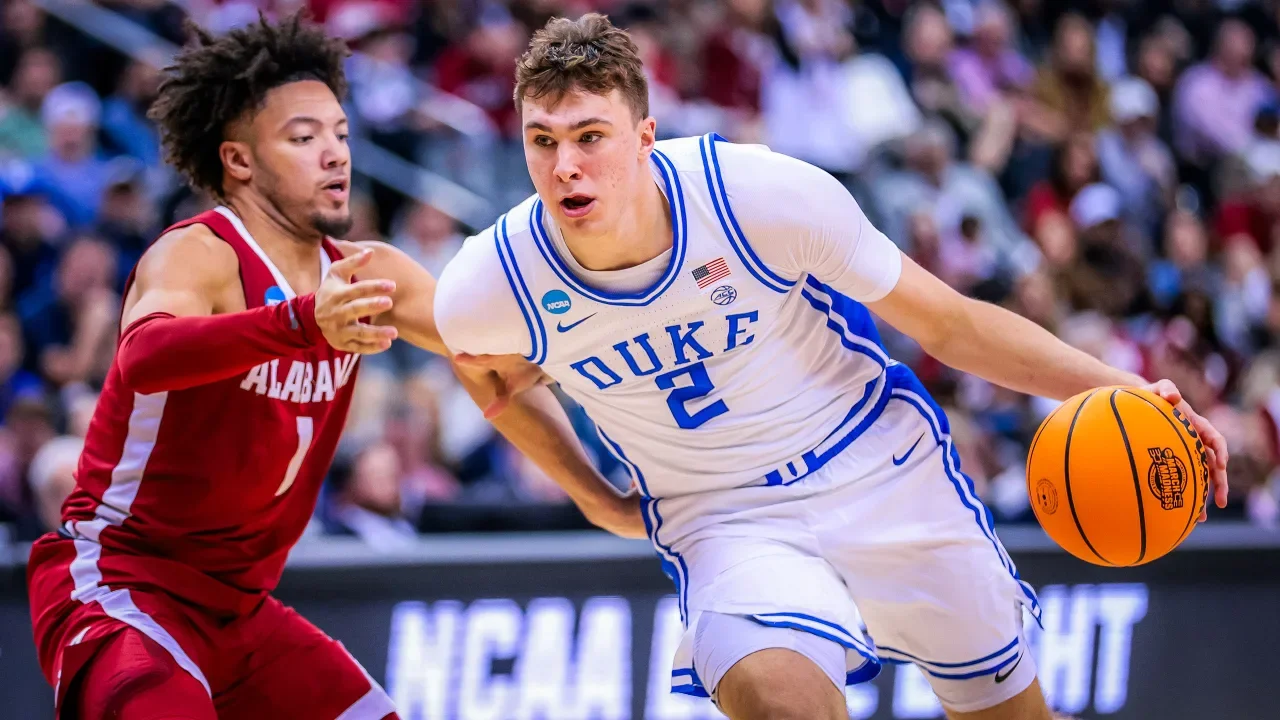
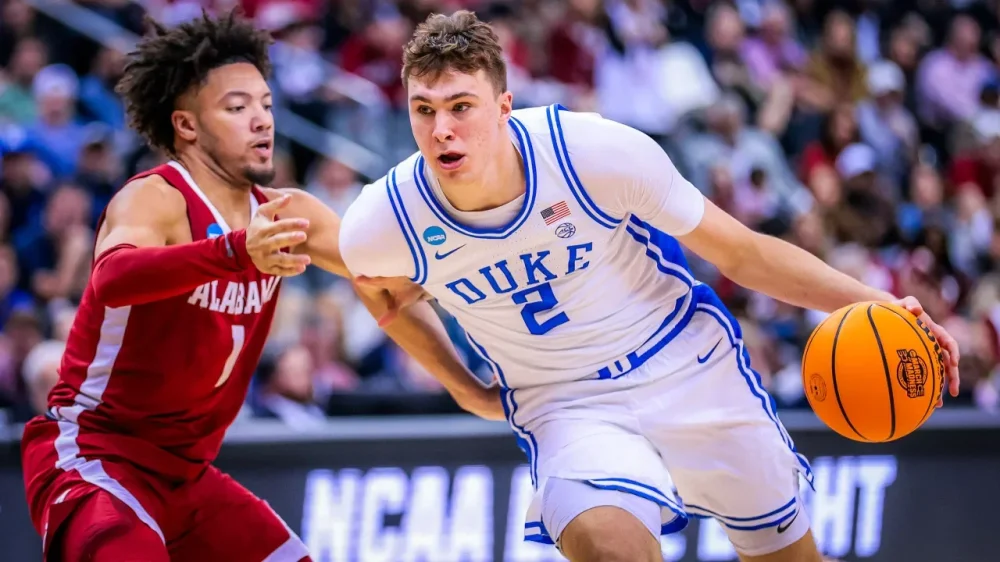
March might be over but the madness continues into April. The NCAA’s 68 Division I men’s college basketball teams have battled it out on the courts in single-elimination play, leaving four teams standing. This year the Final Four have something in common: They all were granted No. 1 seeds on Selection Sunday. Duke, Florida, Auburn, and Houston were all safe bets when filling out a bracket, and they delivered on that promise. Here’s what you need to know heading into the remaining competition, and how to tune in. Do the No. 1 seed teams always make it to the end? The short answer is no. This is only the second time in history this has happened. The last time was 2008. Oftentimes there are surprise victories in the tournament or an underdog who comes from behind. That was not the case this year. When and where is the Final Four? Saturday, April 5, is the big day. First Auburn will face Florida at 6:09 p.m. ET at the Alamodome in San Antonio, Texas. Then Duke and Houston will battle it out at 8:49 p.m ET in the same location. This is the first time a Texas team has made the Final Four when the games were being hosted in the Lone Star State. One can speculate that the hometown crowd will be cheering extra hard for the University of Houston. Players to watch The Auburn Tigers are counting on forward Johni Broome to help them win their first NCAA men’s basketball title. The forward scared fans after exiting the qualifying game versus Michigan State with an arm injury. He returned to appreciative applause from the crowd and paid them back by making an impressive 3-pointer. Florida’s Walter Clayton Jr. also knows a thing or two about 3-pointers. He made two of them to secure the Gators’ victory over Texas Tech. His team has not seen a Final Four in 11 years, so they have something to prove. In contrast, 2025 will mark Duke’s 18th appearance in Final Four play. Freshman Cooper Flagg wants to continue the Blue Devils’ legacy before potentially heading to the NBA. Houston forward Joseph Tugler knows the best offense is a good defense. He may average just 5.5 points a game but that’s because he is too busy making sure the other team doesn’t score. How to tune in CBS is broadcasting the Final Four. The network did so from 1982 to 2015. Beginning in 2016, it shared the responsibility with TBS, switching off every other year. 2025 belongs to CBS. This means traditional cable subscribers and those with an over-the-air antenna are covered. Those who cut the cord can look to live TV subscriptions such as Hulu + Live TV, YouTube TV, DirecTV Stream, and Fubo. Additionally, Paramount+ subscribers with the Showtime add-on can livestream the local CBS station. View the full article
-
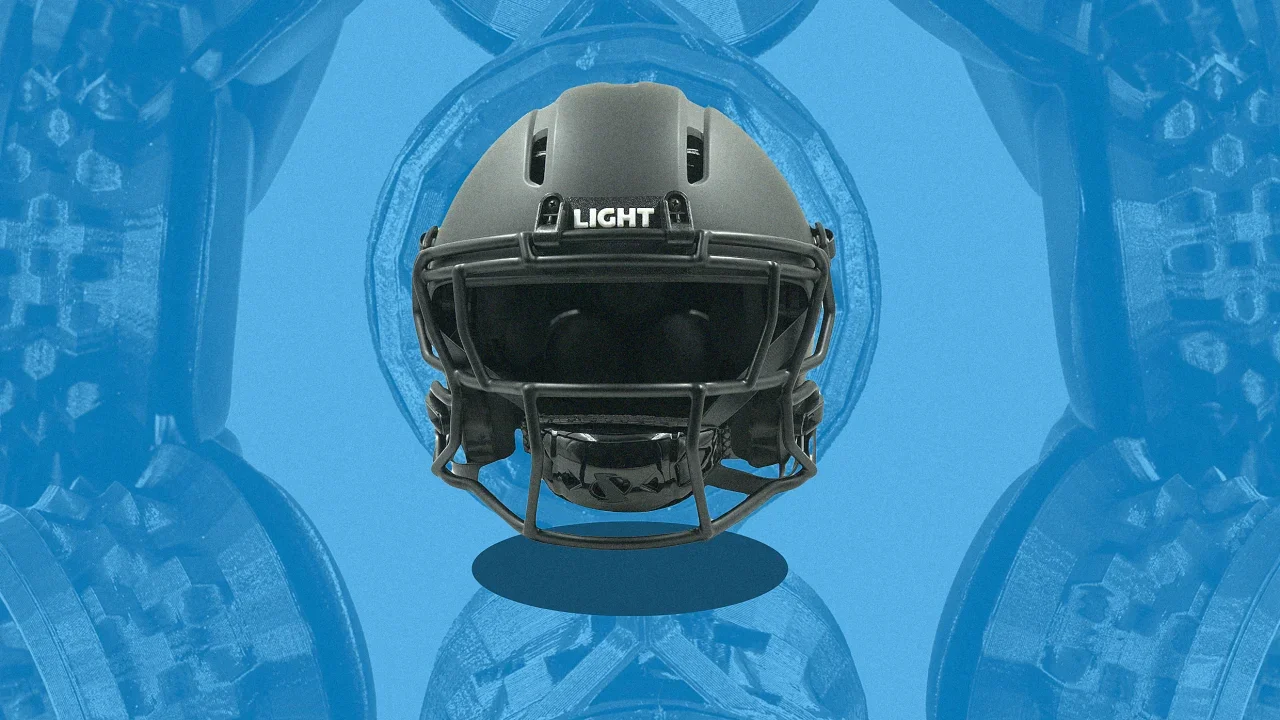
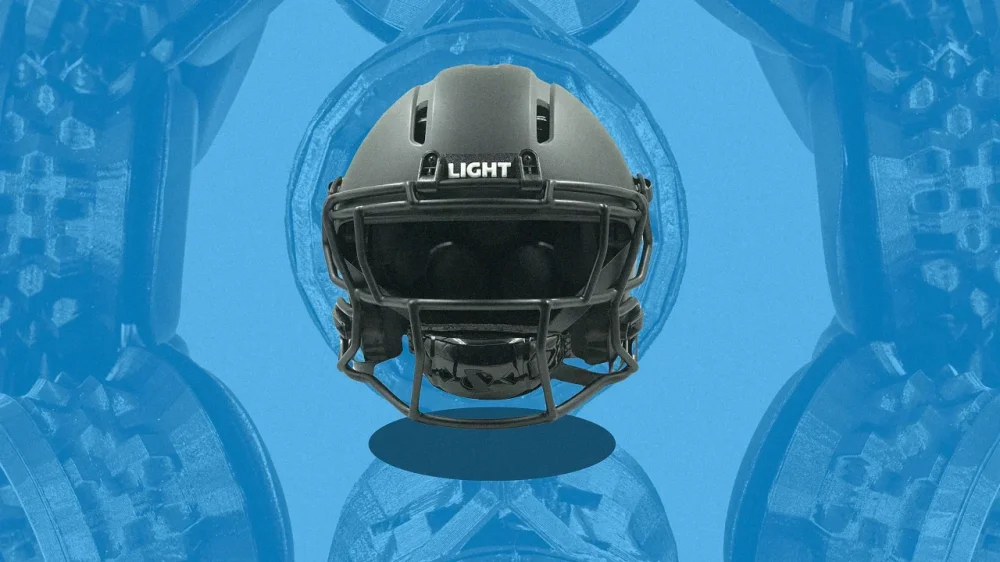
Kodiak Brush doesn’t mince words when it comes to the state of football helmet design. “Most helmets today are designed to win lab tests, not protect players on the field,” he tells me over email. Brush, an MIT-trained mechanical engineer and former middle linebacker, is a production engineering manager who leads helmet design at Carlsbad, California-based Light Helmets. His latest creation is the Apache helmet, which, at just 3.5 pounds, is the lightest on the market—and yet it has achieved the highest safety score ever recorded by Virginia Tech’s independent helmet testing lab. The Apache is a direct challenge to decades of conventional wisdom about what makes a football helmet safe. It’s not just lighter, Brush claims, it’s smarter—leveraging advanced materials, 3D printing, and a player-first philosophy that prioritizes real-world performance over outdated assumptions. And, while the number of total concussions in the NFL decreased 17% in 2024, there’s still a lot of work to be done. Brush’s journey to revolutionize helmet design connects directly with his very core. As a middle linebacker at the Massachusetts Institute of Technology, he was never the biggest or fastest player on the field, he tells me. “I would very rarely get out-leveraged. One of my favorite things to do was meet a pulling guard in the gap, put him on the ground, and ask him, ‘How are you going to let a little guy like me do that to you?’” His helmet was an extension of his body—a tool he relied on for protection and performance. But it wasn’t perfect. “The pain points I had with helmets are personal,” he says. After graduating from MIT and working in accident reconstruction and product design, Brush joined Light Helmets with a mission to create a helmet that addressed those pain points while pushing the boundaries of safety technology. The weight myth The Apache’s most striking feature is its weight—or lack thereof. At 3.5 pounds, it’s up to 40% lighter than many competing helmets. This isn’t just about comfort; it’s about physics. “Lower helmet mass means less energy that needs to be mitigated,” Brush says. “It also reduces neck fatigue, allowing players to control their heads better and for longer.” While people think SUVs beat sedans in crashes, he tells me, your head isn’t a car. It’s 10% of your body mass, tethered by a neck that must stay engaged. So adding weight to it is never a good idea. Less is better. This philosophy runs counter to an industry trend of adding weight to helmets to improve performance in lab tests. Standardized testing protocols like those used by Virginia Tech and the NFL involve striking static head forms with pendulums or pneumatic rams. Heavier helmets tend to score better in these tests because they absorb more energy due to their mass. “[It’s] lab test gaming,” he tells me. But on the field, where players are dynamic rather than static, heavier helmets can do more harm than good. “Increased helmet mass leads to higher energy impacts,” Brush says. “It makes the game less safe for everyone.” How it works Aesthetically, the helmet looks familiar, but certain details make it very different from its typical predecessor. It appears much leaner, and its lines are reminiscent of a trial bike helmet—more aggressive and angled. It also offers a wider field of view. The front of traditional helmets tends to be small and make players feel boxed-in, as if they’re medieval soldiers on the battlefield, but the Apache front is surprisingly open and airy. This is the result of the shock-absorption technologies Brush used. First, there is its flexible outer shell, made from impact-modified nylon, a material more commonly found in racing helmets than football gear. Unlike traditional rigid shells, it flexes on impact, spreading forces across a larger area and reducing pressure peaks on the skull by nearly 20%. Inside the shell there is a 3D-printed liner, a thermoplastic polyurethane network of many cylindrical pods with variable stiffness. This means they buckle under impact to absorb energy before returning to their original shape. This design dissipates energy more efficiently than traditional foam liners, which compress linearly and struggle to recover after heavy impacts. It was developed with K3D, a 3D design and printing technology developed by Kollide, a company that develops impact-resistance technologies through 3D printing “to protect humans in motion.” Light Helmets simulated thousands of impact scenarios using K3D and rapidly iterated designs in ways that traditional manufacturing can’t match. “We broke 47 prototypes before we got the liner’s buckling pattern right,” Brush says. “But every failure taught us something new.” The company claims that its titanium alloy mask—which is available only for professional teams at this point—allows it to shave about 40% of the weight of a comparable traditional face mask, which is usually made with steel. And yet, it has the same hardness and durability of steel. The helmet comes in two models: the Apache, designed for NFL and college football teams, and the Apache Lightning, designed for youth programs. The key difference between the models is in the interior liner material. The 3.5-pound Apache uses impact-absorbing TPU (thermoplastic polyurethane), a durable material that’s engineered to absorb impacts and return to its original state after shocks, maintaining flexibility through time, Light Helmets says. The Apache Lightning uses EPP (expanded polypropylene) foam, an aerospace-grade material known for its ability to efficiently dissipate impact energy, the company claims. It’s also lighter, configurable to less than 3 pounds. All the helmets can be custom made, allowing players to choose colors and different mask designs. The Apache is priced from $649 to $849; the Lightning variant sells for $449 to $649. Testing realities Despite its lightweight design—which Brush admits puts it at a disadvantage in standardized testing—the Apache scored an unprecedented 0.46 on Virginia Tech’s STAR rating system (lower scores indicate better performance). The testing protocol involves striking helmets at multiple locations and speeds with a pendulum system, then calculating a severity score based on how likely those impacts would result in traumatic brain injuries. “Virginia Tech has become the ‘Consumer Reports’ of helmet testing,” Brush says. “Their public results drive innovation by holding manufacturers accountable.” Still, he believes there’s room for improvement in how helmets are evaluated. “Both Virginia Tech and NFL protocols reward heavier helmets without consequence,” he says. Light has proposed updates that would normalize scoring for weight or incorporate drop-tower tests where impact energy is proportional to mass—a change that could fundamentally shift how helmets are designed across the industry. But the real test of any helmet isn’t in the lab. It’s on the field, according to Brush. Feedback from players at every level has been overwhelmingly positive. NFL players using the Apache report feeling quicker and more agile compared to when they wore heavier helmets from competitors like Riddell or Vicis. High school athletes have praised its comfort and visibility, noting that it feels more like wearing a cap than carrying extra weight on their heads. One linebacker told Brush that wearing the Apache was like removing blinders: “I can actually see my targets now.” Another player described finishing games without the usual neck strain he’d come to expect from heavier helmets—a small but significant change that could extend careers over time. The future Brush tells me the Apache design is the future of football helmets. He believes that flexible shells like those used in the Apache will become standard within the next decade, as evidence mounts that they mitigate impact energy more effectively than rigid designs. He also predicts greater adoption of additive manufacturing for position-specific liners tailored to individual needs—denser padding for linemen who take head-on hits versus lighter configurations for quarterbacks who need mobility and peripheral vision. Further down the line, he envisions helmets integrating technologies like impact sensors, communication devices, and even cameras—though he insists these features must not come at the expense of weight reduction or safety. For now, the Apache seems to already be the future of football helmets. Light Helmets sold 5,000 units in 2024, and it’s projecting sales of 50,000 helmets with increased production and word spreading across the community. As one AFC North coach remarked: “It’s not a helmet. It’s an unfair advantage.” But for Brush, success isn’t measured by sales figures or accolades—it’s about changing how people think about football safety and avoid traumatic brain injuries. “We didn’t set out to revolutionize anything,” he says simply. “We just stopped lying to ourselves about what works.” View the full article
-
The following is an excerpt from my latest book Digital Nomad Nation: The Rise of a Borderless Generation You can purchase this book in Kindle …View the full article
-
Keeping our inboxes organized often feels like an overwhelming task. If you’re fortunate, yours contains only messages from people you wish to communicate with. Realistically, though, most are cluttered with newsletters, receipts, social media digests, and more. These emails aren’t necessarily spam, but they complicate the process of quickly sifting through to find the messages we want to see. This week, Apple introduced a feature to the Mac that aims to help cut through inbox clutter by automatically organizing messages into smart categories. The feature is new in the Mail app in macOS 15.4 and comes several months after Apple debuted the feature on the iPhone in iOS 18.2. Here’s how to use it. As of this week, the new Mail categories features are available on all Macs, iPhones, and iPads that are capable of running the latest operating systems. That’s macOS 15.4, iOS 18.2, and iPadOS 18.2 and later. The central concept behind Mail categories is that it uses on-device processing—meaning Apple is not reading anything—to sort your emails into five categories: Primary: Signified by a blue banner, this category displays personal messages to you as well as any messages with time-sensitive information (like a flight change notice). Transactions: Signified by a green banner, this category displays emails that contain receipts, such as from Amazon, shipping notices, and confirmations. Updates: Signified by a purple banner, this category contains all your newsletters, social media roundup digests, and more. Promotions: Signified by a pink banner, this category contains emails that relate to advertisements, such as an email from Target drawing your attention to its upcoming sale. All Mail: Signified by a black banner, this category shows you every email in your inbox in chronological order, including those from the categories above. By clicking or tapping on any of the category banners, you will quickly see all the emails that fit into that category displayed in your inbox. This can help decrease the time it takes you to find the email you’re looking for and eliminate the need to sort your emails yourself. As excited as many people are about Apple’s new Mail categories feature, it’s worth noting that Apple isn’t exactly innovating here. Google’s Gmail has offered automatic email categorization for years. How to use Apple’s new Mail category feature The best thing about Apple’s new Mail category feature on Mac, iPhone, and iPad is that it’s pretty much automatic. Once you have the email app set up to display categories, Apple’s email client will do everything. To make sure your Mail app is set up to display categories, do the following: On your Mac, iPhone, or iPad, select the inbox you want to display categories for. Now select the three-dots button (…). On Mac, tap “Show Mail Categories”; and on iPhone and/or iPad, tap “Categories.” You will now see a new button bar above your inbox with five buttons, each featuring a unique icon: a person (Primary), a shopping cart (Transactions), a word balloon (Updates), a megaphone (Promotions), and a drawer (All Mail). Select any of the buttons to quickly see the emails that are sorted into the respective categories. Easily reassign emails into other categories Apple also knows that some people may prefer to have emails from certain senders appear in a category other than the one Mail has assigned. That’s why the company also allows users to manually change the category designation for emails from the same sender. For example, if you would prefer that the emails you receive from your local movie theater be sorted into the Promotions category instead of the Updates category, you can automatically reassign it. Here’s how: On Mac, right-click on the email, select Categorize Sender, and then select the category you desire. On iPhone and iPad, tap on the email and then tap the three dots (…) at the top of the email. Select “Categorize Sender” from the dropdown menu, and then select the category you desire. One nice thing about the new Mail category feature is that it is not part of Apple Intelligence, which means it is not limited to Macs, iPhones, and iPads that can run Apple Intelligence. As long as your Mac can run macOS Sequoia and your iPhone and iPad can run iOS 18 and iPadOS 18, respectively, you can take advantage of the new Mail categorization features right now. Of course, it’s worth noting that not everyone may like the new Mail categorization feature. And if you’re one of them, there’s an easy way to turn it off. Simply go to your inbox and select the three dots button (…). On Mac, click “Show Mail Categories” so the checkmark next to it disappears. On iPhone and iPad, tap “List View” and the Categories feature will be hidden. View the full article

-
Minimalism is a lifestyle choice with countless benefits. For one thing, choosing to live a minimalist life isn’t just about decluttering your space, it’s about redirecting your time, money, and energy toward things that truly matter. Unfortunately, the path to simplicity is against the current of culture. For that reason, it’s important for all of us to surround ourselves with messages and stories that remind us of the benefits of owning less. With that in mind, I’ve curated a collection of articles that I believe will inspire and encourage you on your journey to a simpler, more intentional life. Settle down in a quiet moment this weekend with your favorite beverage and enjoy these articles picked to inspire you. How to Curb Impulse Shopping (or Similar Behaviors) | Zen Habits by Leo Babauta. The root of an impulse habit is that we have some kind of stress, and the habit is a way to soothe it. 8 Things You Will Inevitably Regret Not Letting Go of Sooner in Your Life | Marc & Angel Hack Life by Marc Chernoff. Oftentimes you don’t even realize you’re blocking your own present blessings by holding on to everything so tightly. 10 Minimalist Hacks for a Cleaner, Calmer Home | No Sidebar. A calm home is not found in the size of our space or the beauty of our décor. It’s found in how we feel when we walk through the door. 7 Reasons to Stop Wasting Money on Fast Fashion | Simple Money by Joshua Becker. The goal is to live intentionally—with purpose, simplicity, and peace. And that’s something no fast fashion rack will ever offer. The Return of Dumb Things | Yahoo by Kerry Justich. “I want to feel more connected with the world around me and what media I’m choosing to consume, rather than passively listening, watching and wasting away hours I can’t get back.” Recently Released Inspiring Videos 25 Obsolete Items you Can Get Rid of Right Now | YouTube by Joshua Becker. Technology changes, lifestyles evolve, and yet, many of us still hold on to items that no longer serve a purpose. Here are 25 things you can declutter right away—because in 2025, you just don’t need them anymore. It is Better to Donate than Resell | YouTube by Joshua Becker. Over time, our most significant and recurring motivation to declutter came from the realization that our excess could become a blessing to somebody else. The post Inspiring Simplicity. Weekend Reads. appeared first on Becoming Minimalist. View the full article
-
The breakout star of this season of The White Lotus? Aimee Lou Wood—and her distinctive real-life smile. “I mean, I can’t believe the impact my teeth are having,” the English actress told Jonathan Ross last month on Ross’s eponymous British chat show. “I hope that people don’t start, like, filing their teeth so they have gaps.” Too late. Unfortunately, Wood may have unintentionally reignited a troubling DIY dentistry trend. On TikTok, users are once again taking nail files to their own teeth, with hashtags like #teethfiling and #teethfile, racking up more than 130 posts, according to Screenshot Media. While Wood’s smile may be the most recent inspiration, this isn’t a new phenomenon. Teeth-filing videos have been circulating online for years. “I’m going to file my teeth down with a nail file because they are not perfect,” one TikTok user said in a since-deleted video posted back in 2020. “I have some ridges, and we’re ballin’ on a budget.” But what might seem like a quick cosmetic fix can cause lasting harm. “When you file your nails, your nails grow back, but your teeth don’t,” Detroit-based dentist Zainab Mackie told the Washington Post’s Allyson Chiu, who originally reported on the trend. “That outer enamel layer doesn’t grow back. . . . Once it’s gone, that’s it.” Dental professionals on TikTok have long warned users to step away from the emery boards and see a professional instead. “Don’t get mad at me when your teeth are more sensitive than a two-year-old crying over spilled milk, because I ain’t going to help you,” orthodontist Benjamin Winters (aka “the Bentist”) said to his 5.5 million TikTok followers in a video that went viral. Wood herself has opened up about her struggle to embrace her teeth when she was growing up. “The Americans can’t believe [my teeth], but they’re all being lovely,” she said on the popular chat show. “It feels so lovely. A real full-circle moment after being bullied for my teeth, forever.” Maybe there’s a lesson in that. View the full article

-
The arbitrariness of the tariffs is a feature not a bug in the plan to short-circuit the financial establishmentView the full article
-
Low rates on Ireland, high levies on Slovakia, Asian misery and the strange tale of St Pierre and MiquelonView the full article