ResidentialBusiness
Administrators
-
Joined
-
Last visited
Everything posted by ResidentialBusiness
-
 This post was written by Alison Green and published on Ask a Manager. Remember the letter-writer whose boss was pressuring them to work more hours when they had just back from stress leave? Here’s the update. Good news all around, thank you for the advice — I desperately needed to hear it. It ended up working out — eventually. Brian’s outbursts, yelling, and general unreasonableness got worse after I wrote in, to the point where he would shout at me and everyone else in front of the team. I’m proud of keeping my cool in those moments, but I was in tears afterwards. It sucked. “Nobody is bigger than the project” became a sort of meme on our site, which was a funny upside. It seemed targeted against me, with him nitpicking my work and trying to embarrass me in front of the team to the point my client and subcontractors were asking why my project manager had it out for me. I also got close with our client, who loathes Brian, so that’s nice! Because our project was so distressed, our ops manager, Luke, ended up taking more of an active role in managing the job, and thus Brian’s performance. He was onsite more, so I was able to skip Brian and talk to him about what was going on (because he had eyes, he had also seen what was happening). I also did end up going to HR, and they were great — they agreed that Brian was out of step with the org culture, and made sure that I had backing to set boundaries around my work. I also did have a discreet chat with my mentor and he flipped his lid at what was happening, so I think that’s one reason why Luke was looking at Brian’s performance. I ended up electing for mediation so Brian and I could work out how we could work together (outcome: he would be less of an ass and I would proceed as usual). The damage was done and I was mega burnt out, so I agreed with my ops manager and Brian that once my work was handed over, I would go on long mental health leave from October 2024 to late January 2025, so that I could move back home from this regional hellhole. The leave was amazing, my husband got a job, and the break let me reassess what I actually wanted. Turns out, not my current high hours, high stress job. 38 hours a week sounds like paradise to me right now, and I don’t even have to take a big pay cut to work client side. Thanks to my close relationship with our client, they helped me find a new job. I’m starting there with three days WFH at the end of April with a great team, and I’m really excited! My company was running out of work and major layoffs are on the cards, so as soon as I came back last week I had a redundancy meeting, I took the package — 12 weeks pay! I’m free! I couldn’t be happier with the outcome, and I’m so glad to see the back of this company without having to resign. As for Brian, the project has ended badly — the client hates us and half of our team, including Brian, is on a permanent internal blacklist for them, so if they’re ever on a project org chart, Questions Will Be Asked. Management has him pottering around the office doing not a lot until something comes up or he gets made redundant too, but his reputation is wrecked after our project. Thanks again for your advice and the advice of your comment section. It really helped clarify what I needed to do and how much power I actually had in the situation! View the full article
 -
Islands’ exports to US — a category composed almost entirely of a succulent deep-sea fish — will face 42 per cent levy from next weekView the full article
-
The Panama Canal is one of the most important waterways in the world, with about 7% of global trade passing through. It also relies heavily on rainfall. Without enough freshwater flowing in, the canal’s locks can’t raise and lower ships traveling between the Atlantic and Pacific oceans. Droughts mean fewer ships per day, and that can quickly affect Panama’s finances and economies around the world. But the same freshwater is also essential for Panama’s many other needs, including drinking water for about two million Panamanians, use by Indigenous people and farmers in the watershed, as well as hydropower. When the region experiences droughts, as it did in 2023–2024, the resulting water shortages can lead to increasing water conflicts. One of those conflicts involves a new dam the Panama Canal Authority plans to begin building in 2027. It would be designed to secure enough water to keep the canal, which contributes about 4.2% to the country’s gross domestic product, operating into the future, but it would also submerge farming communities and displace over 2,000 people from their homes. This recent drought wasn’t an anomaly. As an academic who studies the effects of rising temperatures on water availability and sea level rise, I’m aware that as the climate warms, Panama will likely face more extremes, both long dry spells and also periods of too much rain. That will force more trade-offs between residential needs and the canal over water use. Complex engineering remade the landscape The Panama Canal was built over a century ago at the narrowest point of the country and in the heart of its population center. The route was historically used by the Spanish colonies and later for a rail line between the oceans. The idea of a canal connecting the Atlantic and Pacific oceans began as a French endeavor, led by architect Ferdinand D. Lesseps, designer of the Suez Canal in Egypt. After the French effort failed, the U.S. government signed a treaty with newly independent Panama in 1903 to take over the project. The U.S. acquired the rights to build and operate the Panama Canal in exchange for U.S.$10 million and annual payments of $250,000. Later, the Torrijos-Carter Treaty in 1977 committed the U.S. to transfer the control of operations to Panama at the end of 1999. The canal project was designed to take advantage of the region’s tropical climate and abundant average rainfall. It harnessed the water of the Chagres River basin to run three sets of locks—chambers that, filled with fresh water, act like elevators, lifting or lowering ships to compensate for the difference in water levels between the two oceans. To ensure enough water would be available for the locks, the canal’s designers changed the shapes of the region’s mountains and rivers to create a large watershed—over 1,325 square miles (3,435 square kilometers)—that drains toward the canal’s human-made lakes, Gatun and Alajuela. About 65% of the water that flows from the watershed today goes to operate the locks. The majority of that water is quickly lost to the oceans. Even the two newest locks, built in 2016, only reuse about 60% of water on each transit—40% is flushed to avoid saltwater from the oceans intruding into the watershed. Threats to water security Panama’s wet tropical weather is predominantly influenced by its location near the equator, the trade winds, and the oceans. Most of its rain falls during the wet season, from May to November. However, weather records show a drop in average precipitation starting around 1950. The driest years resulted in dangerously low water levels in Gatun Lake that made canal operations difficult, including in 1998, 2016 and most recently 2023-2024. El Niño weather patterns can mean particularly low rainfall. In December 2023, the Panama Canal Authority was forced to limit the number of daily transits to 22, compared with 36 to 38 usual crossings, because too little freshwater was available. To avoid steep financial losses, the Panama Canal Authority raised prices and auctioned transit opportunities to the highest bidders. Without those measures, the authority estimated it would lose $100 million a month from reduced ship traffic because of the water shortage. Ecosystems also need enough water, and changes in forest tree composition have become evident on Barro Colorado Island in Gatun Lake in response to rising temperatures and more frequent droughts. Climate change is also creating greater variability in rainfall. Too much rain can also be a problem for canal operations. In December 2010, the biggest storm on record caused landslides and $150 million in damage that interrupted transits on the canal. Sustaining Panama’s canal and its people Temporary measures for saving water have been already implemented. The Panama Canal Authority shortened the chamber size in some of its locks to use less water for smaller vessels and minimized direction changes. In January 2025, the authority approved plans to build the new dam on the Indio River to increase water available for the canal. The dam could solve some water concerns during drier periods for the canal. However, it also illustrates the country’s water conflicts. Once filled, the dam’s reservoir will submerge over 1,200 homes by some counts, and more people in the region will lose access to land and travel routes. The Panama Canal Authority promises that residents will be relocated, but some of those living in the region fear they will lose their livelihoods, along with the communities their families have lived in for generations. Residents across Panama, meanwhile, regularly hear media campaigns that encourage them to save water. An Environmental Economic Incentives Program promotes forest conservation and sustainable family agriculture to conserve water resources. The Panama Canal is a crucial part of international trade, and it will face more periods of water stress. I believe responding to those future changes, as well as market and societal demands, will require innovative solutions that respect ecosystem limits and the needs of the population. Karina Garcia is a researcher and lecturer in climate at Universidad Tecnológica de Panamá. This article is republished from The Conversation under a Creative Commons license. Read the original article. View the full article

-
Google is planning a new update for its upcoming Pixel 9a which includes a new feature dedicated to protecting and prolonging the phone's battery. While the goal is longevity, this new battery management feature will actually end up reducing the battery capacity of the Pixel 9a over time. It won't just be the Pixel 9a, as other Pixel series phones will eventually receive the feature too. The kicker, though, is Pixel 9a users can't turn this feature off. Why do Lithium-ion batteries need management?All lithium-ion batteries degrade over time. As you use your smartphone, and as you continue to charge it, the total battery capacity goes down. Eventually, charging your phone to 100% doesn't last as long as it used to: maybe 100% battery today really gets you 80% of the battery capacity of the battery when it was new. Manufacturers have introduced workarounds that help prolong the inevitable, by limiting how much you actually charge the battery. Apple has an iPhone feature that lets users limit the battery charging between 80% and 95%. There are apps that do this for the Mac as well. These measures do go a long way in prolonging the battery of a device. In the short term, you might not notice any difference, but these changes can lead to batteries lasting for months or years longer than they used to. Now that Google is supporting Pixel devices with seven years of software updates, it's in the company's interest to ensure its devices' batteries are performing at a level that can support the new software and features that will be added in the years to come. How Google's Battery Health Assistance worksAs first reported by 9to5Google, Google is adding a new "Battery Health Assistance" feature to Pixel phones, starting with the Pixel 9a. Google is taking quite a different path than Apple here: Instead of providing an option to limit battery charging overnight, or to a particular percentage, Google will start to reduce the battery's maximum voltage after the Pixel 9a crosses 200 charge cycles. A charging cycle doesn't mean a single charging session. It means charging your phone from zero to 100%, even if that happens in breaks, over multiple days. If your phone drops from 100% to 60%, then you charge it to 100% again, that's 40% of a full charge cycle. If you then let it fall to 40%, and charge it back up to 100%, that's 60% of cycle—combined, that's one full cycle. So, once the system clocks 200 of those cycles, Battery Health Assistance kicks in. Google will do this automatically and in the background, hopefully without being too intrusive. Google says that users may notice small decreases in the battery's runtime as the battery ages, and will continue to reduce voltage for up to 1,000 charging cycles. Once this feature rolls out to existing Pixel devices, you will be able to turn it off if you prefer—with one exception. Mandatory Battery Health AssistanceAs I mentioned above, the Pixel 9a is currently the only Google smartphone that won't have an off switch for Battery Health Assistance. While this is a good feature, and it will prolong the battery life of the smartphone, not having the option to turn it off, and thus having no choice in whether to use the full charging capacity of the phone, is a bummer. Since the Pixel 9a has the biggest battery ever in a Pixel phone (5,100 mAh), your phone's battery should be in good shape for a while. But the fact that Google is forcing this feature onto its users, and not presenting it as a choice, will likely rub Pixel 9a users the wrong way—especially since other Pixel users will have a choice in the matter. At the time of writing I don't know how this feature will work, how it will be turned off, but I suspect that will go hand in hand with the upcoming Android 16's new Battery Health section that lets users limit charging capacity to 80%, shows battery cycle count, among other battery related data. This, along with the fact that the Pixel 9a will miss out on the top-tier AI features, differentiates it from the Pixel 9 (which can be found as low as $600 on sale). Perhaps the latter is the phone to go with for users who want as much control over their device as possible. View the full article
-
Welcome to AI Decoded, Fast Company’s weekly newsletter that breaks down the most important news in the world of AI. You can sign up to receive this newsletter every week here. OpenAI says it will release an open-source model–but why now? OpenAI CEO Sam Altman said Monday that his company intends to release a “powerful new open-weight language model with reasoning” in the next few months. That would mark a major shift for a company that has kept its models proprietary and secret since 2019. The announcement wasn’t a total surprise: After the groundbreaking Chinese open-source model DeepSeek-R1 showed up in January, Altman said during a Reddit AMA that he realized his company was “on the wrong side of history” and suggested an OpenAI open-source model was a real possibility. Open models typically come with a permissive license that requires little or no payment to the model developer. Open-weight models can be more cost-effective for corporations trying to leverage AI since they allow businesses to host (and secure) the models themselves—avoiding the often risky prospect of sending proprietary data through an API to a third-party provider and paying fees to do it. More businesses are moving in this direction—especially those holding sensitive user data in regulated industries. The catch: A corporate user doesn’t have to pay to use the open model. Some AI labs release open models to gain credibility in the market—potentially paving the way to eventually sell API access to their more powerful closed models. By releasing open models early on, the French AI company Mistral established itself as a top-tier AI lab and a legitimate alternative to U.S. players. Some AI labs release open-source models, then earn consulting fees by helping large enterprises deploy and optimize the models over time. Meta’s Llama models are the most widely deployed “open” models—though the company restricts reuse and redistribution and keeps the training data and code secret, meaning they are not by definition open source. Meta had different reasons for giving away its models. Unlike Mistral and others, it makes money by surveilling users and targeting ads—not by renting out AI models. Zuckerberg continues funding Llama research because the models are a disruptive force in the industry and earn Meta the right to be called an “AI company.” OpenAI now has its own reasons for releasing an open-weight model. Eighteen months ago, OpenAI was the undisputed champion of state-of-the-art AI models. But in the time since, the release of LLMs like Google’s formidable Gemini 2.0 and DeepSeek’s open-source R1 have cracked the competition wide open. The market has changed, and OpenAI itself has evolved. Like Meta, OpenAI doesn’t depend directly and solely on its models for its revenue. Selling access to its models via an API is no longer the company’s main source of revenue. Now, most of its revenue, not to mention its staggering $300 billion valuation, comes from selling subscriptions to ChatGPT (most of them to individual consumers). OpenAI’s real superpower is being a household-name consumer AI brand. OpenAI will definitely continue pouring massive resources into developing ever-better models, but its main reason for doing so isn’t to collect rent from developers for direct access to them, but rather to continue making ChatGPT smarter for consumers. AI video generation is getting scary good AI-video-generation tools are rapidly leaping over the uncanny valley, making it increasingly difficult for everyday internet users to distinguish between real and generated video. This could bode well for smaller companies looking to produce glossy, creative, or ambitious ads at a fraction of the normal cost. But it could spell bad news if bad actors use the technology in phishing scams or to spread disinformation. It’s also yet another threat to the film sector’s livelihood. The issue is back in the spotlight following several announcements, starting with Runway’s release of its new Gen-4 video-generation system, which the company says produces “production ready” video. AI startup Runway says the new system of models understands “much of the world’s physics” (a claim supported by this video of a man being overtaken by an ocean wave). The company also touts improvements in video consistency and realism, as well as user control during the generation process. Runway posted a demo video of Gen-4’s control tools, which makes the production process look pretty easy, even for non-technicals). Some of the samples of finished videos posted on X look somehow more real than real (see Jean Baudrillard, Simulacra and Simulation). Runway faces some stiff competition in the AI video space in the form of perennial contenders including Google’s Veo 2 model, OpenAI’s Sora, Adobe Firefly, Pika, and Kling. A new math benchmark aims to beat test question “contamination” People in the AI community have been debating for some time whether our current methods of testing models’ math skills are broken. The concern is that while existing math benchmarks contain some very hard problems, those problems (and their solutions) tend to get published online pretty quickly. This of course makes the problem-solution sets fair game for AI companies sweeping up training data for their next models. The worry is that, come evaluation time, the models may have already encountered the test problems and answers in their training data. A new benchmark called MathArena was designed to eliminate those issues. MathArena takes its math problems from very recent math competitions and Olympiads, which have obvious incentives to keep their problems secret. The researchers from MathArena also created their own standard method of administering the evaluation, meaning the AI model developers can’t give their own models an edge via changes to the evaluation setup. MathArena has just released the results of the most recent benchmark, which includes questions from the 2025 USA Math Olympiad. Here’s one of the questions: “Let H be the orthocenter of the acute triangle ABC, let F be the foot of the altitude from C to AB, and let P be the reflection of H across BC. Suppose that the circumcircle of triangle AFP intersects line BC at two distinct points, X and Y. Prove that C is the midpoint of XY.” Ouch. And to make matters worse, the test requires not only the correct answer but a description of each reasoning step the model took along the way. The results are, well, ugly. Some of the most powerful and celebrated models in the world took the test, and none scored above 5%. The top score went to DeepSeek’s R1 model, which earned a 4.76%. Google’s Gemini 2.0 Flash Thinking model scored 4.17%. Anthropic’s Claude 3.7 Sonnet (Thinking) scored 3.65%. OpenAI’s most recent thinking model, o3 mini, scored 2.08%. The results suggest one of several possibilities: Maybe MathArena contains far harder questions than other benchmarks, or LLMs aren’t great at explaining their reasoning steps, or earlier math benchmark scores are questionable because the LLMs had already seen the answers. Looks like LLMs still have some homework to do. More AI coverage from Fast Company: An AI watchdog accused OpenAI of using copyrighted books without permission Amazon unveils Nova Act, an AI agent that can shop for you What is AI thinking? Anthropic researchers are starting to figure it out How Hebbia is building AI for in-depth research Want exclusive reporting and trend analysis on technology, business innovation, future of work, and design? Sign up for Fast Company Premium. View the full article
-
Today's Bissett Bullet: “What do you predict will be the biggest challenge in growing your firm this year?” By Martin Bissett See more Bissett Bullets here Go PRO for members-only access to more Martin Bissett. View the full article
-
Today's Bissett Bullet: “What do you predict will be the biggest challenge in growing your firm this year?” By Martin Bissett See more Bissett Bullets here Go PRO for members-only access to more Martin Bissett. View the full article
-
UK chancellor Rachel Reeves dismissed idea of launching tax later in bid to ‘maximise revenue’, Treasury documents revealView the full article
-
UWM, embroiled in an us-or-them feud when it comes to business partners working with Rocket, terminated its subservicing and sales deals with Mr. Cooper. View the full article

-
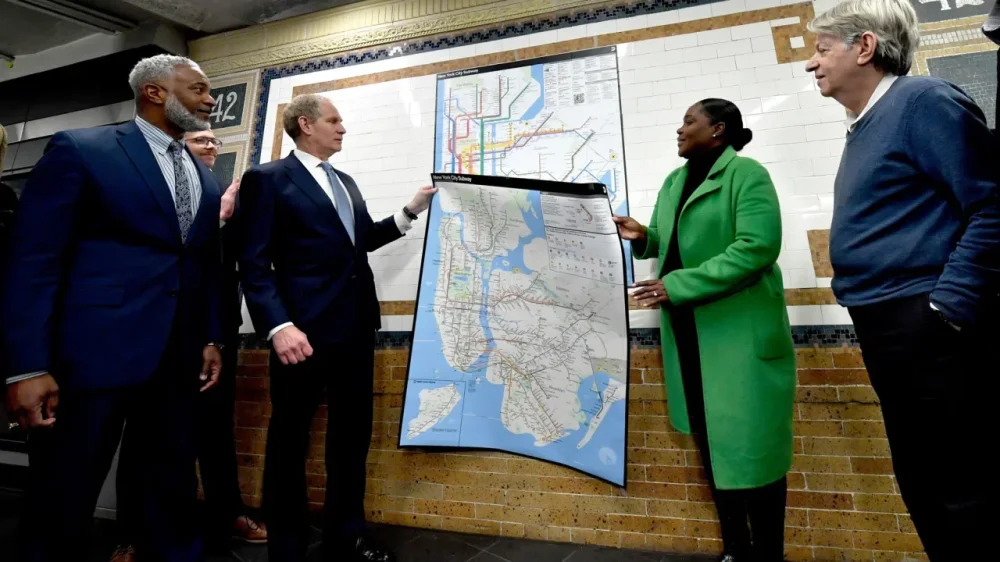
One of the world’s most iconic and controversial maps just got a major redesign. The Metropolitan Transportation Authority (MTA) in New York has unveiled the final version of an updated map of its subway system, marking the first time the map has had a full redesign since 1979. It’s a visually bold, user-centric design that, according to the MTA, will make it easier for people to understand where they’re going and how to use the system. The new maps are expected to be installed in train cars and stations over the next few weeks. The map features bright, color-coded lines for each train line, which criss-cross a stylized map of the city in horizontal, vertical, and diagonal orientations. More abstract than the previous geographically representative map, the new map prioritizes visual clarity and accessible design over pure accuracy. With single-lined black text on a largely white background and black dots representing stations on bright colored route lines, the new map was designed to be easily read by people with varying levels of vision and color perception. “Our approach was to make this map inclusive to all,” said MTA chief customer officer Shanifah Rieara at a recent press conference unveiling the new design. A big part of the inclusivity is managed by simplifying the geography of the map, using abstracted forms to represent the boroughs and straight lines to represent subway routes that are in fact much more sinuous. It’s an approach that was unveiled in the now-famous 1972 subway map designed by Massimo Vignelli and the design firm Unimark International. It was a minimalist design that became a source of controversy, and one literal debate. In 1978, Vignelli was pitted on stage against John Tauranac, then chair of the MTA’s Subway Map committee, who wanted the system to have a more geographically representative map. Tauranac’s approach won out, and the so-called spaghetti version of the map with winding routes and geographically accurate depictions became the map that has been used from 1979 until now. Though the printed map is being put into service as of this week, this design was first piloted back in 2021, and builds on Work & Co’s live, interactive digital map of the system that has a similar Vignelli-inspired aesthetic. When the pilot design was first launched, an MTA official told Fast Company a final version of the map was expected within months. Four years later, the printed maps are finished. Part of the long gestation has to do with the way the MTA vetted the design, conducting rider surveys to learn more about how people use the map, and the ways some maps make using the system more difficult. Based on this feedback, the map’s design evolved. The biggest changes relate to some of the most challenging parts of riding a complicated, multi-lined subway system: the transfer. Steven Flamm, manager of mapping for MTA’s Creative Services department, says the map’s design was tweaked to improve the way the map visually explains how to transfer train lines, whether on the other side of a platform, through a tunnel, or across a street. “You’ll see a different treatment for hubs and complexes that make it more obvious, so people know they can get their trains in that station,” says Flamm. The MTA sees the new map as a mix of the Vignelli design’s minimalist simplicity and a more geographically accurate approach from the Tauranac version that helps people to navigate the system more easily. Design-minded riders may see more of the Vignelli in this new map, but that doesn’t mean the Tauranac version in use for the last four decades has disappeared, according to MTA chair and CEO Janno Lieber. “The real superfans out there will recognize the colors that were established in the famous Tauranac map,” he said. View the full article
-
US consumers are likely to be the biggest victims with cost increases set to be passed on to customersView the full article
-
We may earn a commission from links on this page. Deal pricing and availability subject to change after time of publication. If you’ve ever wanted to wear earbuds that don’t actually go in your ears, the Bose Ultra Open Earbuds might be the oddball pick you’ve been looking for. These open-style earbuds clip on and hook around your ear instead of sitting inside it, letting ambient noise in by design. That makes them great for runs, walks, or commuting—basically, situations where you want to hear your music but also that car barreling around the corner. And for the next six days or until it sells out, Woot’s offering refurbished models of these earbuds, in black, moonstone blue, and white smoke for $179—much cheaper than Amazon’s current $261.99 price. Bose Ultra Open Earbuds $179.00 at Woot $299.00 Save $120.00 Get Deal Get Deal $179.00 at Woot $299.00 Save $120.00 Since these are refurbished, they might show a bit of wear, but they’ve been tested and cleared to function properly. You also get a 90-day Woot limited warranty, which is shorter than Bose’s standard, but fair for the price cut, and if you’re an Amazon Prime member, shipping is free (otherwise it’s $6). Just a heads-up: Woot ships only within the 48 contiguous states. Bose doesn’t skimp on audio quality here: Despite the open design, they deliver solid sound with real punch and clarity. The bass won’t rumble like in-ear buds, but you still get that signature Bose balance. They also have Immersive Audio support, which adds spatial depth—though it's a little inconsistent depending on what you’re listening to and can feel gimmicky, according to this PCMag review. They also support Snapdragon Sound with aptX Adaptive and work especially well with podcasts and mellow playlists. That said, the biggest downside is that they don’t have any noise cancellation, which, again, is kind of the point, but still worth noting if you’re used to ANC earbuds. Battery life clocks in around 7.5 hours on a single charge (with Immersive Audio off), and the charging case gives you almost two full charges, which is decent enough. If you’re someone who prioritizes awareness and comfort over total sound isolation—and doesn’t mind a pre-loved gadget—this deal makes a pretty compelling case. If you’re more of a noise-canceling, zone-out-on-the-plane kind of listener, these probably won't cut it for you. View the full article
-
This post was written by Alison Green and published on Ask a Manager. Especially early in your carer, it’s common to think that they way your workplace does things is normal — and then you move somewhere near and discover that having a goat shrine isn’t normal at all. This can also happen if you stay at one job for a long time, or if you move to a new field. We don’t always know that what we’re surrounded by isn’t normal — until something makes us realize that it’s not. Today’s “ask the readers” is a suggestion from a reader, who requests stories of “expressions, traditions, methods that you thought were universal but which you learned were actually just a weird thing your old workplace did. Bonus points if you learned this in a manner you are still embarrassed about to this day.” View the full article
-
The Freelancers Union and Freelancers Hub are proud to present our Self-Portrait Art Showcase, a curated collection of works by talented freelance artists who have turned their gaze inward to share personal and thought-provoking reflections through their art. Join us for the opening reception on April 8th at The Freelancers Hub to celebrate these incredible artists and their work: RSVP today. All events at the Freelancers Hub are made possible thanks to the support of NYC Mayors office of Media and Entertainment. Featured ArtistsJia Ying Lin – ReflectionsSee more of their art Bio: Jia Ying Lin is a contemporary artist based in New York City. With a multidisciplinary background in science, art, and business, her curiosity bridges logic and creativity, exploring the intersections of identity and emotion through visual storytelling. Her paintings have been exhibited at the Russell Janis Gallery, where she continues to push the boundaries of dynamic compositions, innovative techniques, and material exploration. Driven by curiosity and a passion for experimentation, Jia’s evolving work reflects her commitment to capturing the complexities of the human experience. Artist Statement: My work explores themes of memory, adaptation, and cultural duality, shaped by my curiosity and creative uncertainty. Using oil, acrylic, and mixed media on textured surfaces, I create surreal, symbolic narratives that reflect the tension between personal identity and collective experience. I invite viewers to navigate the space between reality and abstraction, encouraging reflection on their creative passions and inner selves. Adina Farinango – Nuka 2023See more of their art Bio: Adina Farinango is a Kichwa-Otavalo artist who uses art as an act of resistance,healing, and self-expression. Her art practice serves as a means to navigate and strengthen her own identity as an Indigenous woman within the Kichwa diaspora. Influenced heavily by the resilience and strength of matriarchs in her community—past, present, and future—she seeks to Indigenize spaces, centering the reclamation of space through a matriarchal lens. She is currently based in Lenapehoking (New York City). Artist Statement: As a Kichwa Otavalo woman, my work in digital illustration, photography, embroidery, and animation celebrates Indigenous identity as an act of reclamation. Rooted in personal, ancestral, and collective memory, it connects with ancestors across time, shaping my expression. Exploring diaspora and the idea of home, I honor the love and strength passed down through my mother, community, and ancestors. Through a matriarchal lens, my art embodies resistance, joy, and Kichwa Futurisms. Despite colonialism’s impact, our art endures as a source of resilience and vision, and my practice invites others to celebrate its enduring strength. Catherine Walsh – Dance While You CanSee more of their art Bio: My name is Catherine Walsh or CatsndBats. I am 32 years old. I was born in California but I grew up in rural Ireland. I studied to be a ballet dancer in London and worked with a ballet company there on graduating. I then moved to New York to continue my career as a professional ballet dancer. While in New York, I was given a point and shoot camera and I began photographing my daily life in the city that never sleeps. When the pandemic happened I decided to stop dancing professionally and focus on photography. I went to Pearse College in Dublin and did a photography course during the pandemic. Which gave me the opportunity to be a part of a photo exhibition. I created a body of work titled ‘Danced while I did’. The work overlaps snapshots from a visual diary of my professional working life as a ballet dancer with recent self-portraits. Artist Statement: Ballet is the only thing I have felt certain about in my life. My first love. I gave myself to it fully. There is an inevitability about this life, this career. I got to a point where the dedication started to fade and I wanted to explore other opportunities. Yet, I still needed it in my life and I can’t let go of calling myself a dancer. It was my identity. Since ceasing my professional dancing career I am realizing this. Once a dancer, always a dancer. The self portrait belongs to a body of work which overlaps snapshots from a visual diary of my professional working life as a ballet dancer and more recent self-portraits. With this work, I am trying to grapple with and resolve the inevitable nature of aging in my chosen profession of dance, transitions between careers, but also the natural transitions of life. Eesha Suntai – PhenominalSee more of their art Bio: Eesha Suntai is best known for her gazing portraits and still life paintings that demonstrate her ability to combine classical inanimate objects with modern or organic subject matter, and evoke strong emotions through the use of a vibrant color palette. With both oil and acrylic painting mediums, her contemporary interpretations offer a deeper narrative that focuses on identity, joy, and trauma. Within the confines of Eesha Suntai’s paintings there are nods to Black culture, which she believes, “Adds another invisible layer to story-telling that compels me to continue painting”. Eesha Suntai has participated in art exhibitions around the NY & NJ area since 2017. In 2021, she was selected for a solo exhibition at The Augusta Savage Gallery, located at the University of Massachusetts Amherst. Last year, her painting “Can I Call You Jimmy?” was selected as the headliner piece for the 2024 Queens Rising exhibition “Say It Loud: Unsung Heroes” at Culture Lab LIC, and was on view for the duration of National Pride Month. Most recently Eesha Suntai has participated in Artist Exhibitions at Flushing Town Hall, Brooklyn Art Haus, and Kente Royal Gallery, respectively. Eesha is also an active member of the KAC Gallery of Fellow Artists. Artist Statement: I am a black female Artist from Queens that specializes in painting on medium and large scale surfaces, utilizing different styles and subject matter. My painting style is largely influenced by the Fauvism movement, where the Artist uses bright color to create a dramatic expressive reaction. With both oil and acrylics, I utilize color to promote calm and healing, while simultaneously interweaving complex issues of identity and self- awareness, specifically affecting Women and the African-American community. Shan Graf – In My OwnSee more of their art Bio: My name is Shan Graf and I was born and raised in Montana. I am about to graduate with a BFA focusing on painting and drawing. I am also receiving a minor in small business and entrepreneurship. Artist Statement: Born and raised in Montana, I reflect on my life through the art that I create as a form of escapism. I am currently in the undergraduate program for a Bachelor’s Degree in Fine Arts as well as a minor in small business and entrepreneurship at Montana State University. My artwork is heavily influenced by personal struggle and escapism. My artistic practice focuses on experimenting with oil paint to create two-dimensional works that blend impressionism and realism. Color is a central theme, where I use vibrant colors to enhance emotional depth by emphasizing and modifying elements to evoke specific feelings. Influenced by personal experiences—such as growing up in Montana, political views, mental health, and childhood memories—these aspects inform my subject matter and color choices, adding depth and relatability. This integration allows me to create art that resonates emotionally with viewers, reflecting both personal perspectives and universal themes regarding queer experiences. Daniel Jackson – Indigo PulseSee more of their art Bio: Daniel Jackson is a Philadelphia-based visual storyteller and the owner of Embassy: Interactive, a photography and video production company. Through his work, he captures meaningful moments and uplifts diverse narratives. His creative journey began in music, leading to the launch of Embassy: Interactive in 2011 to spotlight talent online. By 2015, the company shifted its focus and evolved into visual storytelling, expanding its scope and projects. Dedicated to serving the community, Jackson collaborates with creatives, nonprofits, and small businesses, delivering tailored services. His work transcends documentation, emphasizing stories with impact. Offerings include promotional videos, headshots, music videos, event photography, and social media content, alongside addressing pressing social issues in Philadelphia. Collaboration and community empowerment remain at the core of Jackson’s mission. Artist Statement: “Indigo Pulse" captures a pivotal moment of reflection and renewal during the extended isolation of 2021. The deep blue tones in the portrait embody the emotional weight of navigating through depression, while also symbolizing the strength it takes to emerge from that shadowed state. Taken during a quiet pause in work, this self-portrait tells a story of resilience, vulnerability, and the transformative power of self-awareness. It stands as a testament to finding light and rediscovering creativity, even in the midst of life’s darker chapters. Dara Feller – HomebodySee more of their art Bio: Dara Feller is a photographer/multidisciplinary artist living in LA. Her practice focuses on portraiture, self-portraiture, and live music photography. After receiving a BFA in Studio Art from Chapman University, she utilized her experience in multimedia studio practice to creative direct, style and build her own photoshoot sets. Dara’s work can be seen in publications such as Polyester Zine, Galore Magazine, Business Insider, and Pass the Aux, as well as an artist feature in SD Voyager Magazine. Artist Statement: “Homebody” was born through a literal interpretation of the expression. The eyes being “windows to the soul”, the capacity of the mouth to be “open” or “shut” like a door. Through this exploration we come to evaluate the idea of the self— are we our body, or do we simply inhabit it? Tiffany Kehinde – Celebrated, Not ToleratedSee more of their art Bio: Tiffany Kehinde is a fashion and beauty photographer and videographer known for her bold use of color, texture, and light manipulation. Her journey into photography began at New York Fashion Week (NYFW), where she captured the energy of runway shows for brands and publications—an experience that jump-started her career and sharpened her eye for high-fashion imagery. Inspired by the beauty in everyday objects, Tiffany transforms common materials into dynamic visual elements, incorporating gems, rhinestones, colorful gels, prisms, and holographic props to create striking images. Her experimental approach to light—whether through projection, distortion, or reflection—adds a dreamlike quality to her work. Artist Statement: "Celebrated, Not Tolerated" is a declaration of self-worth, and an invitation to always choose spaces that celebrate you, and not tolerate you. This work speaks to the importance of belonging, of being welcomed wholeheartedly rather than reluctantly included. It challenges the viewer to reflect on their own environments, and the relationships they nurture—are you surrounded by those who are eager to share space, to uplift, to break bread with you? Or are you lingering in places where your presence is not even acknowledged. Mycha Bueche – Because of Your HairSee more of their art Bio: Mycha is a Texas-born, Brooklyn-based artist whose work is anchored in a distinct exploration of color. The novel vocabulary of her palettes ask viewers to reconsider the assumptions they bring to different hues—how memory, culture, and personal experience shape the way we interpret narrative. This tension between surface and meaning mirrors the way Mycha constructs a contemporary folklore through form and composition. Drawing from Art Deco graphic design, the folk art of her Latine heritage, and Catholic iconography, she creates visual altars that enshrine memory and myth as inseparable parts of our histories. Artist Statement: Influenced by Frida Kahlo’s Self-Portrait with Cropped Hair and the transformative hair slicing moment in Mulan, this self-portrait pays homage to queer transformation. It speaks to the ways we reshape ourselves—physically, emotionally, and spiritually—in the pursuit of identity, community and intimacy. John De La O – Year in ReviewSee more of their art Bio: I was born and raised in Bay Ridge, Brooklyn. I attended Fort Hamilton High School, Kingsborough Community College as a Fine Arts Undergraduate, and went on to receive my Bachelor’s degree in Illustration at the School of Visual Arts. My exhibition experience spans over twenty years, including ten plus years with the Con Artist Collective, and five years plus with Solas Studios, both located in Manhattan. Before, during, and after these tenures, I alternately showed my work at various galleries, fairs, and group shows, including the Armory Art Far, Art Basel Miami, Bushwick Artists and Fleas, and Art Revolution Taipei. Throughout this time, I also participated in several smaller exhibitions, in and around both Manhattan and Brooklyn. I have a dedicated client base who both frequently purchase and commission work. Publications include various independent magazines, as well as the alumni catalog for the School of Visual Arts. Artist Statement: My paintings reflect the outside world and pop culture, but also my inner world, as well as my cultural identity and personal experiences. I implement painterly and expressionist elements to highlight the human hand at play, and my love of painting and drawing. My goal is to draw the individual into my unique visual language, using a variety of inspiration. As an artist from Brooklyn, and while studying art in New York City, pop art, collage, traditional drawing and painting, and abstract expressionism all became a natural visual language for me to communicate through. Arthi Sundar – Mask OffSee more of their art Bio: Arthi Sundar is an Indian American artist, art historian, designer and engineer who goes by the alias @123arthi. Her artworks blend classical portraiture with surreal elements, using graphite and charcoal to explore emotion, distortion, and the human psyche. Artist Statement: Sundar’s work delves into the complexities of the human psyche through realistic portraiture in graphite and charcoal on bristol. Influenced by Renaissance, Rococo, and Surrealist art movements, she infuses her portraits with elements of romanticism, abstraction and distortion,evoking emotion beyond the literal. Her art bridges classical techniques with modern themes, often drawing inspiration from science fiction and video games to reimagine identity and expression. Mask Off, 2021: A post-pandemic self-portrait, Mask Off, captures a moment of emergence. The artist portrays herself as both fragmented and whole, shedding the remnants of isolation and stepping into a renewed sense of self. Svetlana Dubkova – I like me. My wife likes meSee more of their art Bio: Raised in NYC as a first-generation Belarusian-American immigrant, Svetlana Dubkova found escapism in fantasy and imagination growing up. This manifests in her dreamlike photographic portfolio, which fuses feminine surrealism, vivid color-play, organic formations, and repetitive form. Her work is futuristic yet nostalgic all at once. Artist Statement: You wanna hurt me? Go right ahead if it makes you feel any better. I'm an easy target. Yeah, you're right, I talk too much. I also listen too much. I could be a cold-hearted cynic like you... but I don't like to hurt people's feelings. Well, you think what you want about me; I'm not changing. I like... I like me. My wife likes me. My customers like me. 'Cause I'm the real article. What you see is what you get. Juan Reyes Jr. – “Untitled”See more of their art Bio: 33 year old easily-startled portrait artist. Artist Statement: I am following the unrelenting impulse to depict things through drawing, with no clue where it comes from and even less of an idea where it leads– but I certainly won’t stop chasing it. This relationship is one of the most prominent & unchanging facets of the way I see myself, so when depicting myself I chose the materials I feel most drawn to: canary yellow Canson paper, and a Nataraj Ruby HB pencil. The good thing about chasing this impulse is that whenever I’m able to capture something, it frees us both. See the Art in PersonThis showcase is an opportunity to witness the diversity of self-expression through the lens of talented freelance artists in our community. Don’t miss the chance to engage with the artists, explore their work, and reflect on your own sense of self! Join us at the opening reception: RSVP Here We can’t wait to see you there! View the full article
-
The Freelancers Union and Freelancers Hub are proud to present our Self-Portrait Art Showcase, a curated collection of works by talented freelance artists who have turned their gaze inward to share personal and thought-provoking reflections through their art. Join us for the opening reception on April 8th at The Freelancers Hub to celebrate these incredible artists and their work: RSVP today. All events at the Freelancers Hub are made possible thanks to the support of NYC Mayors office of Media and Entertainment. Featured ArtistsJia Ying Lin – ReflectionsSee more of their art Bio: Jia Ying Lin is a contemporary artist based in New York City. With a multidisciplinary background in science, art, and business, her curiosity bridges logic and creativity, exploring the intersections of identity and emotion through visual storytelling. Her paintings have been exhibited at the Russell Janis Gallery, where she continues to push the boundaries of dynamic compositions, innovative techniques, and material exploration. Driven by curiosity and a passion for experimentation, Jia’s evolving work reflects her commitment to capturing the complexities of the human experience. Artist Statement: My work explores themes of memory, adaptation, and cultural duality, shaped by my curiosity and creative uncertainty. Using oil, acrylic, and mixed media on textured surfaces, I create surreal, symbolic narratives that reflect the tension between personal identity and collective experience. I invite viewers to navigate the space between reality and abstraction, encouraging reflection on their creative passions and inner selves. Adina Farinango – Nuka 2023See more of their art Bio: Adina Farinango is a Kichwa-Otavalo artist who uses art as an act of resistance,healing, and self-expression. Her art practice serves as a means to navigate and strengthen her own identity as an Indigenous woman within the Kichwa diaspora. Influenced heavily by the resilience and strength of matriarchs in her community—past, present, and future—she seeks to Indigenize spaces, centering the reclamation of space through a matriarchal lens. She is currently based in Lenapehoking (New York City). Artist Statement: As a Kichwa Otavalo woman, my work in digital illustration, photography, embroidery, and animation celebrates Indigenous identity as an act of reclamation. Rooted in personal, ancestral, and collective memory, it connects with ancestors across time, shaping my expression. Exploring diaspora and the idea of home, I honor the love and strength passed down through my mother, community, and ancestors. Through a matriarchal lens, my art embodies resistance, joy, and Kichwa Futurisms. Despite colonialism’s impact, our art endures as a source of resilience and vision, and my practice invites others to celebrate its enduring strength. Catherine Walsh – Dance While You CanSee more of their art Bio: My name is Catherine Walsh or CatsndBats. I am 32 years old. I was born in California but I grew up in rural Ireland. I studied to be a ballet dancer in London and worked with a ballet company there on graduating. I then moved to New York to continue my career as a professional ballet dancer. While in New York, I was given a point and shoot camera and I began photographing my daily life in the city that never sleeps. When the pandemic happened I decided to stop dancing professionally and focus on photography. I went to Pearse College in Dublin and did a photography course during the pandemic. Which gave me the opportunity to be a part of a photo exhibition. I created a body of work titled ‘Danced while I did’. The work overlaps snapshots from a visual diary of my professional working life as a ballet dancer with recent self-portraits. Artist Statement: Ballet is the only thing I have felt certain about in my life. My first love. I gave myself to it fully. There is an inevitability about this life, this career. I got to a point where the dedication started to fade and I wanted to explore other opportunities. Yet, I still needed it in my life and I can’t let go of calling myself a dancer. It was my identity. Since ceasing my professional dancing career I am realizing this. Once a dancer, always a dancer. The self portrait belongs to a body of work which overlaps snapshots from a visual diary of my professional working life as a ballet dancer and more recent self-portraits. With this work, I am trying to grapple with and resolve the inevitable nature of aging in my chosen profession of dance, transitions between careers, but also the natural transitions of life. Eesha Suntai – PhenominalSee more of their art Bio: Eesha Suntai is best known for her gazing portraits and still life paintings that demonstrate her ability to combine classical inanimate objects with modern or organic subject matter, and evoke strong emotions through the use of a vibrant color palette. With both oil and acrylic painting mediums, her contemporary interpretations offer a deeper narrative that focuses on identity, joy, and trauma. Within the confines of Eesha Suntai’s paintings there are nods to Black culture, which she believes, “Adds another invisible layer to story-telling that compels me to continue painting”. Eesha Suntai has participated in art exhibitions around the NY & NJ area since 2017. In 2021, she was selected for a solo exhibition at The Augusta Savage Gallery, located at the University of Massachusetts Amherst. Last year, her painting “Can I Call You Jimmy?” was selected as the headliner piece for the 2024 Queens Rising exhibition “Say It Loud: Unsung Heroes” at Culture Lab LIC, and was on view for the duration of National Pride Month. Most recently Eesha Suntai has participated in Artist Exhibitions at Flushing Town Hall, Brooklyn Art Haus, and Kente Royal Gallery, respectively. Eesha is also an active member of the KAC Gallery of Fellow Artists. Artist Statement: I am a black female Artist from Queens that specializes in painting on medium and large scale surfaces, utilizing different styles and subject matter. My painting style is largely influenced by the Fauvism movement, where the Artist uses bright color to create a dramatic expressive reaction. With both oil and acrylics, I utilize color to promote calm and healing, while simultaneously interweaving complex issues of identity and self- awareness, specifically affecting Women and the African-American community. Shan Graf – In My OwnSee more of their art Bio: My name is Shan Graf and I was born and raised in Montana. I am about to graduate with a BFA focusing on painting and drawing. I am also receiving a minor in small business and entrepreneurship. Artist Statement: Born and raised in Montana, I reflect on my life through the art that I create as a form of escapism. I am currently in the undergraduate program for a Bachelor’s Degree in Fine Arts as well as a minor in small business and entrepreneurship at Montana State University. My artwork is heavily influenced by personal struggle and escapism. My artistic practice focuses on experimenting with oil paint to create two-dimensional works that blend impressionism and realism. Color is a central theme, where I use vibrant colors to enhance emotional depth by emphasizing and modifying elements to evoke specific feelings. Influenced by personal experiences—such as growing up in Montana, political views, mental health, and childhood memories—these aspects inform my subject matter and color choices, adding depth and relatability. This integration allows me to create art that resonates emotionally with viewers, reflecting both personal perspectives and universal themes regarding queer experiences. Daniel Jackson – Indigo PulseSee more of their art Bio: Daniel Jackson is a Philadelphia-based visual storyteller and the owner of Embassy: Interactive, a photography and video production company. Through his work, he captures meaningful moments and uplifts diverse narratives. His creative journey began in music, leading to the launch of Embassy: Interactive in 2011 to spotlight talent online. By 2015, the company shifted its focus and evolved into visual storytelling, expanding its scope and projects. Dedicated to serving the community, Jackson collaborates with creatives, nonprofits, and small businesses, delivering tailored services. His work transcends documentation, emphasizing stories with impact. Offerings include promotional videos, headshots, music videos, event photography, and social media content, alongside addressing pressing social issues in Philadelphia. Collaboration and community empowerment remain at the core of Jackson’s mission. Artist Statement: “Indigo Pulse" captures a pivotal moment of reflection and renewal during the extended isolation of 2021. The deep blue tones in the portrait embody the emotional weight of navigating through depression, while also symbolizing the strength it takes to emerge from that shadowed state. Taken during a quiet pause in work, this self-portrait tells a story of resilience, vulnerability, and the transformative power of self-awareness. It stands as a testament to finding light and rediscovering creativity, even in the midst of life’s darker chapters. Dara Feller – HomebodySee more of their art Bio: Dara Feller is a photographer/multidisciplinary artist living in LA. Her practice focuses on portraiture, self-portraiture, and live music photography. After receiving a BFA in Studio Art from Chapman University, she utilized her experience in multimedia studio practice to creative direct, style and build her own photoshoot sets. Dara’s work can be seen in publications such as Polyester Zine, Galore Magazine, Business Insider, and Pass the Aux, as well as an artist feature in SD Voyager Magazine. Artist Statement: “Homebody” was born through a literal interpretation of the expression. The eyes being “windows to the soul”, the capacity of the mouth to be “open” or “shut” like a door. Through this exploration we come to evaluate the idea of the self— are we our body, or do we simply inhabit it? Tiffany Kehinde – Celebrated, Not ToleratedSee more of their art Bio: Tiffany Kehinde is a fashion and beauty photographer and videographer known for her bold use of color, texture, and light manipulation. Her journey into photography began at New York Fashion Week (NYFW), where she captured the energy of runway shows for brands and publications—an experience that jump-started her career and sharpened her eye for high-fashion imagery. Inspired by the beauty in everyday objects, Tiffany transforms common materials into dynamic visual elements, incorporating gems, rhinestones, colorful gels, prisms, and holographic props to create striking images. Her experimental approach to light—whether through projection, distortion, or reflection—adds a dreamlike quality to her work. Artist Statement: "Celebrated, Not Tolerated" is a declaration of self-worth, and an invitation to always choose spaces that celebrate you, and not tolerate you. This work speaks to the importance of belonging, of being welcomed wholeheartedly rather than reluctantly included. It challenges the viewer to reflect on their own environments, and the relationships they nurture—are you surrounded by those who are eager to share space, to uplift, to break bread with you? Or are you lingering in places where your presence is not even acknowledged. Mycha Bueche – Because of Your HairSee more of their art Bio: Mycha is a Texas-born, Brooklyn-based artist whose work is anchored in a distinct exploration of color. The novel vocabulary of her palettes ask viewers to reconsider the assumptions they bring to different hues—how memory, culture, and personal experience shape the way we interpret narrative. This tension between surface and meaning mirrors the way Mycha constructs a contemporary folklore through form and composition. Drawing from Art Deco graphic design, the folk art of her Latine heritage, and Catholic iconography, she creates visual altars that enshrine memory and myth as inseparable parts of our histories. Artist Statement: Influenced by Frida Kahlo’s Self-Portrait with Cropped Hair and the transformative hair slicing moment in Mulan, this self-portrait pays homage to queer transformation. It speaks to the ways we reshape ourselves—physically, emotionally, and spiritually—in the pursuit of identity, community and intimacy. John De La O – Year in ReviewSee more of their art Bio: I was born and raised in Bay Ridge, Brooklyn. I attended Fort Hamilton High School, Kingsborough Community College as a Fine Arts Undergraduate, and went on to receive my Bachelor’s degree in Illustration at the School of Visual Arts. My exhibition experience spans over twenty years, including ten plus years with the Con Artist Collective, and five years plus with Solas Studios, both located in Manhattan. Before, during, and after these tenures, I alternately showed my work at various galleries, fairs, and group shows, including the Armory Art Far, Art Basel Miami, Bushwick Artists and Fleas, and Art Revolution Taipei. Throughout this time, I also participated in several smaller exhibitions, in and around both Manhattan and Brooklyn. I have a dedicated client base who both frequently purchase and commission work. Publications include various independent magazines, as well as the alumni catalog for the School of Visual Arts. Artist Statement: My paintings reflect the outside world and pop culture, but also my inner world, as well as my cultural identity and personal experiences. I implement painterly and expressionist elements to highlight the human hand at play, and my love of painting and drawing. My goal is to draw the individual into my unique visual language, using a variety of inspiration. As an artist from Brooklyn, and while studying art in New York City, pop art, collage, traditional drawing and painting, and abstract expressionism all became a natural visual language for me to communicate through. Arthi Sundar – Mask OffSee more of their art Bio: Arthi Sundar is an Indian American artist, art historian, designer and engineer who goes by the alias @123arthi. Her artworks blend classical portraiture with surreal elements, using graphite and charcoal to explore emotion, distortion, and the human psyche. Artist Statement: Sundar’s work delves into the complexities of the human psyche through realistic portraiture in graphite and charcoal on bristol. Influenced by Renaissance, Rococo, and Surrealist art movements, she infuses her portraits with elements of romanticism, abstraction and distortion,evoking emotion beyond the literal. Her art bridges classical techniques with modern themes, often drawing inspiration from science fiction and video games to reimagine identity and expression. Mask Off, 2021: A post-pandemic self-portrait, Mask Off, captures a moment of emergence. The artist portrays herself as both fragmented and whole, shedding the remnants of isolation and stepping into a renewed sense of self. Svetlana Dubkova – I like me. My wife likes meSee more of their art Bio: Raised in NYC as a first-generation Belarusian-American immigrant, Svetlana Dubkova found escapism in fantasy and imagination growing up. This manifests in her dreamlike photographic portfolio, which fuses feminine surrealism, vivid color-play, organic formations, and repetitive form. Her work is futuristic yet nostalgic all at once. Artist Statement: You wanna hurt me? Go right ahead if it makes you feel any better. I'm an easy target. Yeah, you're right, I talk too much. I also listen too much. I could be a cold-hearted cynic like you... but I don't like to hurt people's feelings. Well, you think what you want about me; I'm not changing. I like... I like me. My wife likes me. My customers like me. 'Cause I'm the real article. What you see is what you get. Juan Reyes Jr. – “Untitled”See more of their art Bio: 33 year old easily-startled portrait artist. Artist Statement: I am following the unrelenting impulse to depict things through drawing, with no clue where it comes from and even less of an idea where it leads– but I certainly won’t stop chasing it. This relationship is one of the most prominent & unchanging facets of the way I see myself, so when depicting myself I chose the materials I feel most drawn to: canary yellow Canson paper, and a Nataraj Ruby HB pencil. The good thing about chasing this impulse is that whenever I’m able to capture something, it frees us both. See the Art in PersonThis showcase is an opportunity to witness the diversity of self-expression through the lens of talented freelance artists in our community. Don’t miss the chance to engage with the artists, explore their work, and reflect on your own sense of self! Join us at the opening reception: RSVP Here We can’t wait to see you there! View the full article
-
Yes, we checked the referencesView the full article
-
Compliance concerns prevent some lenders from moving toward development of an AI plan or policy, but hesitancy may turn out to be a poor business strategy. View the full article

-
The vernal equinox, marking the first day of spring, occurs in late March every year. Sometime around then, most planting zones encounter what is known as the last frost date, which is the experts' best guess, based on averages, of when your last hard freeze will be. The cherry, plum, and peach blossoms are exploding on trees all around us and tulips are popping up from the ground. There are all kinds of markers that gardening season has arrived, but the most prominent one is the return of people to working on their front yards on sunny days, which should be happening now with some regularity. It is finally full steam ahead for this year, and there are tons of things you can be doing outside. Cherry blossoms Credit: Amanda Blum Document the spring bloomThere's an order to the way plants bloom in early spring: the crocus, the daffodils, then the tulips, the irises, and the peonies. Each year I try to take pictures every few days from the same angles in the yard so I can document where I might need more bulbs. You'll forget by the time fall rolls around and it's time to plant more. This pictorial documentation can help you visualize any bulb losses you have year to year, as well. Tulips in bloom Credit: Amanda Blum Get your trellises clean and readyBased on the plans I made for the garden over the winter, I now know where I'll need plant supports for my tomatoes, peppers, beans, and cucumbers. I begin getting those trellises I have out of storage and sterilizing them, and I make plans to build or order any new trellises I'll need. Weed and dress with compost With the nighttime temperatures starting to remain over 40 degrees, it’s time to clean out your beds and get them ready for planting. This means doing a thorough weeding, as best you can, and then top with compost. Clean away debris in the paths and beds, because that is slug food and an invitation for disease and pests. Check in on your own compost bins; they could probably use a good turn. Check in on your flower perennials Irises that need dividing Credit: Amanda Blum First, take an inventory of the perennials you have, and see if any need dividing. Plants grow into the space around them, but if they’ve run out of space, you can break them up, and either relocate these new plants or trade them for others. Irises and daylilies are an excellent example; hostas are another. This is also how you’ll take inventory of what did not survive this year. With the weather becoming more extreme year to year, even perennials can succumb to weather events. Perennials have started to come out of hibernation in the greenhouses at your local nursery, so you can begin to replace any that will need it. Buying now, when plants are still small, will help save money. Grab some early flowering annualsIt’s still early for most varieties of flowers, but pansies love the cold. At this point, begin checking the nurseries for snapdragons, sweet peas, petunias, and other early flowering plants. It’s a good time to get your hanging baskets and window boxes filled, too, so they’ll be in full bloom come May. In fact, many groceries and nurseries will help you fill your planters if you bring them in; some even plan events around doing so. Don't forget edibles Peas coming up from seed Credit: Amanda Blum If you've not yet planted peas, it's go time. They can be direct sown outside and need to be grown against some support. This time of year, I grow shelling pea and sugar snaps on tall vines that climb arches in my yard. I also take stock of my strawberry plants, thinning them so they're spaced at least six inches apart. Give away extras, or ask your neighbors for their extras if you need them. I look for my perennial edibles to make sure they've survived the winter. The horseradish has been staking it's claim, poking up leaves from its usual plot. I've already replaced a few artichokes that didn't make it through the last ice storm. The first tiny stalks of asparagus made an appearance this week, which means in a few weeks we'll be drowning in spears. Now is the time to plant more asparagus crowns, too. I try to add a few crowns each year—they're usually a dollar or two at the nursery, and in this way, you can establish them in more places. I've been waiting with bated breath to see if all the rhubarb I planted last year will return, since last year I lost my fifteen-year-old specimen, but I saw the first leaves begin to poke out of the ground this week. If you need to replace yours, you'll find rhubarb at your nursery. Fiddleheads and ramps (which, as a reminder, you can grow at home) should be emerging. It's also the time to plant your summer potatoes: Your nursery has potato starts, but if you've got grocery store potatoes that have sprouted at home, those can go right into the ground. carrots, radishes, beets and lettuce planted two weeks ago Credit: Amanda Blum I've already planted a few rounds of radishes, beets, carrots, and lettuce in the garden, and will continue doing so every few weeks through summer. The spring rain is excellent for helping these seeds I direct sow to germinate. You can continue to plant spring edibles like spinach, kale, chard, and mustard greens, but if you don’t get broccoli and cauliflower early in the month, you’ll miss your window. These are short crops, but you want them to finish and harvest before you need the room for summer crops like tomatoes. You also want to get three long crops in now, starting with parsnips, which need 180 days to grow. Plant them from seed now, and you'll have enough of this root vegetable to cook all fall. Brussels sprouts also need that long summer to grow if they're going to be ready for Thanksgiving. Finally, your nursery will have all your onion sets to get into the ground. Keeper onions and leeks need the season to be ready for harvest in late summer or early fall. Inspect your systems Check your water systems Credit: Amanda Blum It’s also time to turn the irrigation and sprinkler systems back on for the year, so schedule any inspections like backflow testing. Once the water is on, test your controller and look for signs of any leaks in the lines. You can safely reconnect hoses, and put out manual timers if you use them. Be sure to give all your tools a good spray down with vinegar or bleach to sterilize them, and remember to keep a spray bottle with the same on hand for your pruning shears as you move about the garden. Spray them between plants so you are not transferring disease. View the full article
-
The ‘mountain kingdom’ of Lesotho joins Pacific island Nauru on list of countries hit with punishing US tariffsView the full article
-
Unexpected increase in supply comes as concern over world economy hits several commodities View the full article
-
If visions of the new administration come to fruition, the IRS could also be on the chopping block. Accounting ARC With Liz Mason, Byron Patrick, and Donny Shimamoto Center for Accounting Transformation Go PRO for members-only access to more Center for Accounting Transformation. View the full article
-
If visions of the new administration come to fruition, the IRS could also be on the chopping block. Accounting ARC With Liz Mason, Byron Patrick, and Donny Shimamoto Center for Accounting Transformation Go PRO for members-only access to more Center for Accounting Transformation. View the full article
-
Like the first few months of the year, April is a relatively quiet month for sky watching, but it does bring one of the oldest meteor showers and a micromoon. April 13: Pink MoonApril's full moon is known as the Pink Moon, so named for the color of ground phlox, a wildflower that blooms during the month—though the moon itself doesn't actually appear pink in the sky. The Pink Moon is also a micromoon, meaning it occurs at that furthest point from Earth. The opposite of a supermoon, it will look about 5% smaller in diameter than usual. April 21: Lyrid meteor shower peakThe main event in April is the Lyrid meteor shower. It starts mid-month (around April 17) and will peak late on the evening of April 21 and into the early morning hours of April 22. The Lyrids are the result of debris from the Comet Thatcher, which was first observed in 1861. Typically, viewers can expect to see around 18 meteors per hour, though the shower can bring up to 100, according to NASA. This year, the moon will be about 40% full, which may interfere with visibility. The Lyrids are best seen in the Northern Hemisphere after the moon sets but before dawn—and as always, areas with minimal light pollution are best for viewing. Planetary events in AprilMars, Jupiter, and Uranus will be visible in the evening sky in April; Saturn, Mercury, Venus, and Neptune will appear in the morning. The timing and placement varies slightly between the Northern and Southern hemispheres. The best Mercury viewing of the year will be possible on April 21, according to Starwalk, especially for those in the Southern hemisphere. And on April 25, the crescent moon will align with Venus and Saturn just before sunrise to create a triangle that looks like a smile. View the full article
-
Here is a recap of what happened in the search forums today, through the eyes of the Search Engine Roundtable and other search forums on the web. We are seeing more Google Search ranking volatility kick off yesterday...View the full article
-
The Republicans have allowed a destructive economic nationalist to lead America into chaos View the full article