Newsletter
Want to keep up to date with all our latest news and information?


ResidentialBusiness
Administrators
-
Joined
-
Last visited
Everything posted by ResidentialBusiness
-
US-based Niantic is selling its games business as part of a pivot to artificial intelligence View the full article
-
Forget a diamond ring, the latest symbol of commitment now comes in the form of wearable tech. The RAW ring, created by the dating app RAW and Queens Tech, allows couples to track each other’s emotions, both good and bad. Coming as a pair—one for you, one for your partner—the rings track the wearer’s heartbeat, use bio-sensors to track their vitals, and detect voice and emotional cues for changes. Think, a digital mood ring, but for someone else’s emotions. “Keep you and your partner’s hearts beating as one. Feel their emotions, share your vibe, and stay connected in ways that go beyond words,” reads a statement on the RAW website. “Marriage evolves, and so does loyalty. Sacred vows go digital. RAW’s mission? Making true love trackable.” The ring’s makers claim that the device can identify emotional states such as stress, anxiety and arousal. “When something’s up, you’ll know. Simple as that,” adds Marina Anderson, RAW cofounder. Tracking your partner’s emotions comes with some obvious pitfalls. While the company claims that the ring “understands context”—such as telling the difference between a spike in heart rate from exercise versus emotional arousal—things could still get awkward. If your synced ring suddenly flashes purple-red (a signal for arousal) in the middle of the workday, that’s probably not a conversation you’ll be excited to have when you both get home. While for some couples, sharing their location is quickly becoming a modern relationship milestone, is it really healthy to know every tiny fluctuation of your partner’s emotions throughout the day? As technology becomes increasingly woven into our daily lives, the line between convenience and control is growing increasingly blurred. Granting your partner access to your intimate emotions is a recipe for disaster if jealousy is a pre-existing issue in the relationship. In extreme cases, abusers have also been known to use tracking technology to stalk and surveil their partners. For those who are eager to test out the Raw ring, the device has yet to hit the market but is likely to be made available to purchase in late 2025 or early 2026. Details on the price have yet to be announced. View the full article

-
Decision by FCA and PRA comes as government’s growth push forces regulators to rethink policiesView the full article
-
Over the last month, Jamie Dimon has rapidly emerged as one of the most vocal proponents of the return-to-office movement. During a recent appearance at Stanford University’s Graduate School of Business, the J.P. Morgan Chase CEO could not help but complain—again—about workers who were pushing back on RTO policies. When fielding a question about his recent colorful remarks on RTO, Dimon noted that it was only “people in the middle” who were unhappy about going into the office. “If you work in a restaurant, you’ve got to be in. You all may not know this, but 60% of Americans worked the whole time,” he said, seemingly in reference to the pandemic. “Where did you get your Amazon packages from? Your beef, your meat, your vodka? Where did you get the diapers from?” “You got UPS and FedEx and manufacturers and agriculture and hospitals and cities and schools and nurses and sanitation and firemen and military. They all worked,” he added. “It’s only these people in the middle who complain a lot about it.” Dimon has had a lot to say about workers who are reluctant to return to the office. This month, J.P. Morgan started requiring that employees come into the office five days a week, officially ending its hybrid work policy. The new mandate—which was announced at the start of the year and echoes a broader shift across corporate America—stirred up discontent among the company’s workforce and even prompted an online petition making a case for hybrid work, which has since drawn nearly 2,000 signatures. Dimon, however, was quick to dismiss employee concerns. “I don’t care how many people sign that fucking petition,” he said during an internal meeting, according to a recording obtained by Reuters. “Don’t give me the shit that ‘work from home Friday’ works.” Dimon added that the company would not allow managers to approve or make decisions about in-office requirements. “There is no chance that I will leave it up to managers,” he said. “Zero chance. The abuse that took place is extraordinary.” He also argued that employees did not pay attention during Zoom meetings and called for J.P. Morgan to increase efficiency by 10% through through cutting down on training sessions and the number of documents produced by the company—as well as meetings. (J.P. Morgan was not immediately available for comment.) Like plenty of other CEOs, Dimon has embraced a full return to the office under the pretext of promoting collaboration and productivity. But Dimon has been far more blunt and outspoken than some of his peers—not to mention more dismissive of dissent from employees. While he later apologized for the language he used in the internal meeting, noting that he should “never curse” and “get angry,” Dimon has continued to double down on his stance that employees should work from the office full-time. “I completely respect people that don’t want to go to the office all five days a week—that’s your right,” he told CNBC recently. “But they should respect that the company is going to decide what’s good for the clients [and] the company, not an individual. So they can get a job—and I’m not being mean—they can get a job elsewhere.” Dimon also referenced the petition again, though he struck a different tone than he did when speaking to his staff. “There’s a petition,” he said. “And they have the right to feel that way. But we’re not going to change. We’re going back to the office.” Of course, as J.P. Morgan employees have returned to the office this month, they have reportedly encountered many of the same issues facing workers at other companies, from limited workspace to noisy colleagues. And despite his open disdain for remote work, Dimon does seem to believe in its efficacy for certain workers—namely, the people staffing J.P. Morgan’s call centers. “We did it to see if they’d be effective,” he said at the Stanford event. “They’re highly effective. They work from home.” View the full article

-
A president who can’t run again is freer from public opinion than business seems to realiseView the full article
-
Welcome to Pressing Questions, Fast Company’s work-life advice column. Every week, deputy editor Kathleen Davis, host of The New Way We Work podcast, will answer the biggest and most pressing workplace questions. Q: I think my manager is burned out. What can I do? A: It’s tough out there for managers, especially middle mangers who are often caught in the—well—middle and may find themselves enforcing unpopular policies that they didn’t create. It’s not explicitly your job to fix your boss’s problems (and you don’t have the power or authority to do so if you aren’t in a leadership role). But, a manager sets the tone for their team and if they are burned out, their entire team will likely follow suit. It may feel unfair, but giving a bit of thought to this question will make your (and your coworkers’) lives much better. This is a super-charged opportunity to practice your “managing up” (aka managing your manager) skills. Fast Company contributor Tomas Chamorro-Premuzic outlined several signs that your manager might be experiencing burnout and how to address them. Here are a few. They don’t seem to care how everyone else is doing Chamorro-Premuzic says that a burned-out boss might start to be less open to feedback, be suddenly uninterested in team morale, or no longer receptive to concerns. If your boss is acting like this, you can normalize small breaks and occasional team check-ins, where there’s more opportunity for casual interactions. Chamorro-Premuzic also says you can be supportive in subtle ways, like offering to help with tasks or expressing appreciation for their work. Being a manager can feel thankless. If your manager feels like no one cares about them or notices their work, they’re less likely to offer you and your coworkers the same appreciation. If you show them you care about them, hopefully that care will trickle down. Their energy is all over the place Scientific studies on burnout show that energy and motivation can wax and wane when someone is facing chronic stress. What this might look like in your manager is that you are being micromanaged on some days when they are overly worried about how your work reflects on them, and then completely ignored on other days, as they feel overwhelmed by their own workload. If your boss is acting like this, Chamorro-Premuzic advises that you can help them by providing structure and consistency in your work so they know what to expect. Institute routines like regular project updates or weekly recaps, and suggest ways they can delegate so their workload is more distributed. (Bonus: Taking on work above your level might set you up for a future promotion.) Longer hours and blurred boundaries If your manager is emailing late at night, working weekends, not taking time off, those are all pretty clear signs that they are habitually overextending themselves, and on the fast track to burn out. If your boss is acting like this, it probably feels tricky to push back but it’s another place that you can lead by example by setting clear boundaries. You can also gently remind them that you and your colleagues can take on their tasks when they aren’t there. (In other words: The world won’t fall apart if they take a vacation and it might help them reset.) Yes, your manager’s job satisfaction isn’t explicitly your job, but if we truly want to work in a more humane workplace it means we should care about everyone’s well-being, no matter where they are on the org chart. Want more advice on helping burned out managers? Here you go: Managers are not okay. Why we’re headed to a ‘manager crash’ in 2025 It’s time to check on your middle managers 5 red flags of your boss’s behavior you should not ignore View the full article

-
Want more housing market stories from Lance Lambert’s ResiClub in your inbox? Subscribe to the ResiClub newsletter. Mortgage giant Rocket Companies—the parent company of Rocket Mortgage, formerly known as Quicken Loans—announced on Monday it has entered into an agreement to buy Redfin in an all-stock transaction valued at $1.75 billion equity, or $12.50 per share. If completed, the move would integrate Redfin’s real estate search platform, which attracts nearly 50 million monthly visitors, with Rocket’s mortgage services. “Redfin is known for its beautiful product but is also [a] data powerhouse in an AI-driven world—100 million properties, 50 million engaged monthly users, thousands of the amazing real estate agents and 4 petabytes of data,” Rocket Companies CEO Varun Krishna wrote on LinkedIn on Monday. “Rocket has developed a platform that spans 40 years of mortgage expertise and a digital nationwide lending platform, across 3,000 counties and parishes. Redfin and Rocket are an amazing match for each other.” According to the press release, there are four benefits Rocket Companies sees from the Redfin acquisition: First, it will introduce more consumers to the Rocket ecosystem. “Rocket Companies will benefit from Redfin’s nearly 50 million monthly visitors, 1 million active purchase and rental listings and staff of 2,200+ real estate agents across 42 states,” the company writes. Secondly, it expects that will drive growth in the purchase of its mortgages. Third, the companies 14 petabytes of combined data will help drive its AI and personalization technology. “This data will strengthen Rocket’s AI models enabling easier and more personalized and automated consumer experiences,” Rocket writes. Lastly, the company expects to achieve “more than $200 million in run-rate synergies by 2027, including approximately $140 million in cost synergies from rationalization of duplicative operations and other costs.” And it expects “more than $60 million in revenue synergies from pairing the company’s financing clients with Redfin real estate agents, and from driving clients working with Redfin agents to Rocket’s mortgage, title, and servicing offerings.” In other words, Rocket Companies appears to be making a strategic move to expand its market share by integrating Redfin’s customer funnel with its mortgage business and build a powerhouse in residential real estate, creating a one-stop shop for homebuyers. “While Rocket Mortgage increased its purchase loan market share by 8% from 2023 to 2024, it still pales in comparison to crosstown rival UWM [United Wholesale Mortgage],” Colin Robertson, the founder of The Truth About Mortgage, tells ResiClub. “Their tie-up with Redfin gives them the potential to capture 1 in 6 purchase loans going forward, which could see their market share quadruple from 4% to 16%+.” The Rocket Companies’ proposed acquisition of Redfin comes during a prolonged housing transaction downturn—marked by a sharp drop in existing home sales and refinancing—triggered by the 2022 mortgage rate shock and strained affordability. The slump has led to industry upheaval, business failures, and a wave of mergers. While both of these firms have been affected by the slump, Redfin, in particular, has taken it on the chin. At its peak during the Pandemic Housing Boom, Rocket Companies had a $55.6 billion market capitalization—compared to its $26.6 billion market capitalization at business close today. While at its peak during the Pandemic Housing Boom, Redfin had a $10 billion market capitalization—well above its $1.2 billion market capitalization today. Since mortgage rates spiked in 2022, Redfin has faced a continuous wave of layoffs, with 1,362 layoffs in 2022, 201 in 2023, 82 in 2024, and nearly 500 already announced in 2025. Back in October 2022, Redfin CEO Glenn Kelman told me that shuttering their iBuyer unit amid a then correcting market out West was causing Redfin to sell at big losses. Kelman explained it like this: “We’re sitting on $350 million worth of homes for sale that we bought with our own money, or worse bought with borrowed money. And what we always told investors is that we would protect our balance sheet by acting quickly. We don’t have hope as a strategy. We immediately started marking down things… When the shiitake mushrooms hit the fan, [investors] want to get out first. The way to do that is to figure out where the lowest sale is, and be 2% below that. And if it doesn’t sell in the first weekend, move it down [again].” In November 2023, Kelman told me that things were still slumped for the business, adding that existing home sales were “mostly dead as a doornail, so it couldn’t be worse.” In August 2024, Kelman put Redfin’s situation bluntly, telling analysts that the Plan B if mortgage rates didn’t come down was to “drink our own urine or our competitors’ blood, stay in the foxhole.” Click here to view an interactive version of the chart below. “When I took a look something like 50% of Homes.com’s traffic is paid,” Amanda Orson, CEO and founder of Galleon, tells ResiClub. “And that paid demo does not count their extraordinary ad spend on TV ads. It’s just not a sticky site. Redfin on the other hand spends very little and generates an absolute truckload of organic traffic. For now. That advantage is not permanent, of course. I can’t think of another company for whom the acquisition of Redfin would get a better yield for its highest and best use than Rocket.” Big picture: If the benefits of the Redfin acquisition come to fruition, it could not only cement Rocket Companies as the top player in the mortgage space (currently No. 2 by total dollar loan volume) but also further lay the groundwork for the company to pursue its broader real estate ambitions—and perhaps even challenge Zillow, which is working to build a housing “Super App.” View the full article

-
Country’s two biggest mobile operators drop opposition and sign deals View the full article
-
Decision not to impose retaliatory levies signals break with EU approach View the full article
-
Loan officers have said the majority of outreach from recruiters looks like impersonal "telemarketing." View the full article

-
When the Eaton Fire burned through Altadena in January, Patricia Lopez-Gutierrez and her children had to flee from the house they’d been renting for a decade. Lopez-Gutierrez also lost work: She’s a housecleaner, and her clients lost their own homes in the fire. “I’ve been here for 18 years, and I really don’t want to leave this area,” she said through a translator. “My children and their schools are here. I’m trying to get more work so I don’t have to leave.” As she struggles to pay her bills—including at her rental house, which ended up surviving the fire but was so heavily damaged by smoke that she’s desperate to find a new place to live—she turned to St. Vincent de Paul, one of several local organizations providing direct assistance to fire victims. The nonprofit paid a utility bill for her in January, and then a car payment and dental bill this month. It was enough, for now, to make it possible for her to keep paying rent. The fire destroyed thousands of homes in Altadena, one of the more affordable corners of L.A. County. St. Vincent de Paul, working with a team of 18 volunteers, has helped around 150 families so far, prioritizing families with children and renters who lost their homes. In many cases—particularly for Hispanic residents who worked as housecleaners or gardeners—residents also lost their jobs. Others have minimum-wage jobs that make it difficult to afford to rent a new house or apartment. While St. Vincent de Paul covers bills directly (paying rent to a landlord, for example, or paying a doctor’s office), many other organizations are simply giving residents cash directly. Pasadena Community Foundation, a local foundation, has given grants through a wildfire fund to help support dozens of organizations doing that work. The Dena Care Collective, a new organization launched by End Poverty in California (EPIC) and FORWARD, has raised more than $1 million to help support families and businesses in the immediate aftermath of the fire with direct cash payments. “There is significant empirical data that highlights the efficacy of direct cash payments to families,” says Aja Brown, the former mayor of the city of Compton, who grew up in Altadena and is helping lead the Dena Care Collective along with former Stockton mayor Michael Tubbs. “There’s also a wealth of data that substantiates [the fact that] bureaucracy and governmental systems are slow to react. And quite frankly, they aren’t designed for emergency relief. Getting cash in the hands of families is the most impactful and the most efficient way to help families; they innately understand what’s best for [their] aid and the relief based on their current conditions.” Cash is a critical tool for people living in poverty in ordinary times; in Stockton, a study of a program that gave a series of no-strings-attached checks to low-income residents found that people who got the payments were more likely to go from unemployment to full-time employment and take other steps for their future, like moving to a better apartment or fixing their car. In a disaster, quick access to cash is even more important to help people stay afloat. “In a disaster like this, of course people need cash, because water bottles aren’t wealth,” says Tubbs. “Clothing isn’t cash. People need money to be able to rebuild, to be able to move, to be able to persist.” GiveDirectly, an organization founded on the premise that sending money to the world’s poorest households can help them begin to overcome poverty, has raised more than $2 million for low-income households impacted by the L.A.-area fires. While getting some money from FEMA can sometimes take a month or two, the nonprofit is able to act more quickly. (FEMA gave eligible residents $770 to help cover immediate needs after the disaster, but getting any additional support took longer—and $770 doesn’t go far in a city like L.A. Immigrants who don’t have legal status also can’t get help from FEMA.) Two weeks after the fires, the organization sent notifications to residents via a food stamp app inviting them to enroll for the cash payments, a process that takes roughly a minute. On average, the payments arrived three days later. The organization is giving transfers of $3,500, enough to cover two weeks at a lower-end Airbnb in the L.A. area, a month of food for a family of four, and a month of healthcare and transportation. Of course, the support is only a small and temporary part of the solution. As rents have steeply risen in and around L.A.—something that was happening earlier and then exacerbated by the disaster—people who were displaced are struggling to find places to live. Some renters are now doubled or tripled up with friends in tiny apartments. Homeowners who bought homes decades ago in Altadena—or inherited mortgage-free homes from parents or grandparents who paid little for them—are often now finding that their insurance won’t cover the cost of rebuilding. Others lost coverage as insurers have dropped policies in areas at risk of fires. Even those who still have housing, like Lopez-Gutierrez, are dealing with new challenges. In her case, her landlord wants to raise her rent, even though he hasn’t repaired damage from the fire (and despite the fact that price gouging is illegal). She’s trying to find a new rental, but her low credit score is making that difficult. Even if bills are covered for a month or two, many families still don’t know what will come next—especially since the rebuilding process will be slow. Before the fires, when St. Vincent de Paul helped pay unexpected bills for residents, the situation was different. “It’s the housecleaner whose son or daughter had to go to the emergency room and there was a $1,000 bill and they can’t afford rent,” says Dave de Csepel, an investor who helps lead the volunteer work at St. Vincent de Paul. “So we come in, pay that rent, and life goes on—we bridge them to get to the next month.” Now, he says, “This is a tidal wave that has hit this community. This is the beginning. It’s hard to see how all these families come out of this. We love the diversity of our community and we want to have folks stay in the area. But it’s hard to keep everyone together, and I’m afraid that there are a lot of hard times ahead for these families.” View the full article

-
For the first time since 1984, the airline Korean Air is updating its charmingly retro look to new branding that’s better suited for the modern era. The rebrand, designed by the global creative consultancy Lippincott, includes a new wordmark, refreshed logo, and pared-down color scheme. It’s set to debut across Korean Air’s operations and on the livery of its aircraft in the coming weeks. The rebrand comes just a few months after Korean Air officially completed merger negotiations with Asiana Airlines, South Korea’s second-largest airline. The two companies will become one mega-airline. [Image: Korean Air]As Korean Air begins to integrate Asiana Airlines’ operations with its own, Asiana Airlines’s brand identity will be slowly phased out. And, as part of the merger, Korean Air is likely to add new destinations to its offerings, expanding its international profile. Korean Air’s new look is meant to differentiate this upcoming phase of it’s 55-year history as it becomes an increasingly global brand. [Image: Korean Air]Reimagining an ‘iconic’ brandKorean Air’s former branding had a distinctly ’80s aesthetic, including a stylized, chunky wordmark and vibrant color palette of sky blue, cerulean, and red. The company’s planes have reflected this branding for decades through a distinct blue livery. Dan Vasconcelos, a partner at Lippincott, says that the ’80s branding is “iconic,” adding that “it’s not every day that you get to evolve brand assets that have been untouched for over 40 years.” [Image: Korean Air]As the first step of this major undertaking, his team decided to tackle the brand’s logo. Since its 1984 refresh, Korean Air’s logo has been a red, white, and blue interpretation of the Taeguk, the symbol at the center of the South Korean flag which represents balance in nature. Vasconcelos says the team tested hundreds of potential new versions of the Taeguk symbol. Ultimately, they landed on a fluid, ribbon-like iteration, rendered in one seamless blue stroke. The design is inspired by Sangmo Nori, a traditional Korean performance art. “[Sangmo Nori] involves performers wearing sangmo, a hat with a long ribbon attached to it, which they spin and twirl in intricate patterns while dancing energetically,” Vasconcelos says. “It represents abundance, prosperity, and joy. We felt that the ribbon in the tradition carried great symbolism: it’s universally recognized for its elegance while being resonant in Korea.” [Image: Korean Air]The Taeguk’s tapered edges also reference traditional calligraphy, a reference the Lippincott team brought into the rebrand’s custom typeface as well. Type studios Dalton Maag and Sandoll designed the bespoke font, which is a modern, all-caps sans serif featuring small calligraphic flourishes. It’s designed for optimal legibility in both English and Hangul (the Korean alphabet). The font is also the basis of Korean Air’s new wordmark and all other copy across its branding. [Image: Korean Air]A simplified color palette that reads ‘premium’To give Korean Air a more luxury feel, Lippincott has simplified the brand’s color palette to a core range of blues, cutting out the former red accents. “Doubling down on the blue allowed us to be more single-minded and confident, a trait of premium brands,” Vasconcelos says. “Think of Hermes, Louis Vuitton, or Tiffany—they are bold in their use of color but do it with simplicity and flair.” [Image: Korean Air]In keeping with the brand’s tradition, Vasconcelos’s team decided to buck the white livery trend used by most national trends and stick with Korean Air’s blue fuselage. During the research process, he says, the blue livery was a particularly memorable brand asset for customers. [Image: Korean Air]Other elements of the livery have been tweaked to align with the company’s plans to expand: The word Air has been removed from the livery to project Korean Air’s standing as South Korea’s largest airline, and the brand’s Hangul name has also been removed with global audiences in mind. [Image: Korean Air]“My client Kenny Chang [SVP and CMO of Korean Air] sums it up well by saying that the vision for Korean Air is to be a global airline which happens to be based in Korea,” Vasconcelos says. “This helped inform key design decisions such as removing the airline’s Hangul name from the livery as well as designing a symbol that, while infused by national iconography, isn’t too similar to the national flag.” Korean Air’s streamlined rebrand is both elegant and logical, given the company’s growing ambitions. Still, time will tell if the brand will have the staying power of its former visual identity, which resonated strongly with the airline’s audience for more than 40 years. View the full article

-
In summer 2022, when artificial intelligence-based text-to-image generation tools hit the mainstream, architects were cautiously excited. The ease of generating real-ish images of design concepts and buildings with just a few simple sentences was irresistible, and many architects began experimenting with ways of letting AI quickly do some of the sketching and ideating they’d gotten used to spending hours or days laboring over. “It’s almost like you’re speaking a building into existence,” one architect said. But now, with AI maturing and getting integrated into tools and industries far and wide, a surprisingly low number of architects are actually using AI in their work. Architects are slow to adopt AI Only 6% of architects report regularly using AI for their jobs, and only 8% of architecture firms have implemented AI solutions, according to a new report from the American Institute of Architects. Based on a survey of 541 members of the architecture profession, the report shows an industry-wide shyness around AI adoption, with many unsure what AI can do for them, and a large percentage—39%—downright uninterested in finding out. Some architects are making AI a part of the way they practice, though, and the report shows strong interest in using AI more, particularly among architects younger than 50. The report finds that while only 8% of firms are actively using AI on a day-to-day basis, 20% are currently working on implementing AI solutions. More than half of architects have at least experimented with AI tools, and three-quarters are optimistic about AI automating some tasks. “The reality is that there are a lot of industries that are still figuring this out,” says Evelyn Lee, president of the AIA. “I do think that architects, when it comes to new technology implementation, we do tend to lag a little bit.” But there’s big opportunity Lee, who has a tech background, says architects can do more with AI than just generate quick imagery. Other use cases include marketing, project management, and construction document creation. According to the report, image-based content production is still the main way architecture firms use AI, but Lee suggests that the tech may be more useful for the operational side of the business, where it could resolve simple tasks, like eliminating the need for manual time sheets, as well as more labor-intensive jobs, like maintaining and updating building material libraries. “There’s a really big opportunity there for AI to illuminate the library and the wealth of materials available right now,” she says. “So much of what we learn about new materials is from the individual manufacturer’s rep showing up and saying ‘Here is the latest ceiling tile.’” That could help architects improve the way their projects are designed, lower their costs, and even reduce their environmental footprint by finding new sustainable materials to integrate into their projects. AI tools could speed up product delivery “The biggest opportunity ultimately is on the product delivery side,” Lee says. As AI begins to be more fully integrated into the software that architects use to design their projects, it can speed up the process of turning design concepts into detailed plans and eventually into the construction documents used to get projects built. That could open the door for smaller architecture firms to be more competitive. There are more than 19,000 architecture firms in the U.S., and almost three-quarters of them have fewer than 10 employees, according to another recent AIA report. “The software will allow them to do more, quicker, better,” Lee says. “That’s a huge opportunity for AI to be leveraged to democratize the design delivery process.” View the full article

-
For the first two-and-a-half years of the generative AI revolution, the AI arms race has been waged between competing companies seeking to make bank from the promise and potential of the technology. But things are maturing in the AI world—and with it, there’s another frontline for AI: the military. Scale AI, the company set up by Alexandr Wang, has been awarded what CNBC reports is a multimillion-dollar deal to help develop Thunderforge, which the U.S. Department of Defense calls “an initiative designed to integrate artificial intelligence into military operational and theater-level planning, and fusing cutting-edge modeling and simulation tools.” Wang told CNBC that “our AI solutions will transform today’s military operating process and modernize American defense” and that they “will provide our nation’s military leaders with the greatest technological advantage.” The move is unsurprising—militaries are always keen on keeping at the cutting edge of technology, trying to eke out an advantage against competitive armies—but disappointing, says Margaret Mitchell, researcher and chief ethics scientist at Hugging Face, an AI company. “We already know we’re moving forward to push AI systems farther and farther out from our control,” she says. “Many in the industry and in the media are treating more and more powerful systems as if they are inevitable, and therefore making it so.” Mitchell adds that technology has always relied on military clientele to act as a crucible for, and accelerant of, new innovation. “Military use has long been a staple of technological development,” she says. “Massively destructive outcomes are fully predictable based on history and how the tech marketplace works.” (Scale AI declined to comment. The Defense Department did not respond to Fast Company‘s request for comment.) That level of destruction could be catastrophic, argues David Krueger, assistant professor at the University of Montreal, studying AI safety and risk. “I think it’s likely to lead to the end of humanity, to human extinction,” he says, speaking generally about the use of AI for military purposes, calling the military use of AI “one of the most obvious ways in which AI poses an existential risk to humanity.” Krueger says that AI is being used in many areas to hand off human control and outsource it to AI systems. “I think this is a risk in every domain, and I think in the military, it’s particularly concerning, and something which will require international collaboration to avoid getting out of hand and risking human extinction.” Scale AI has said that the Thunderforge program will operate with human oversight, and Noah Sylvia, a research analyst at the Royal United Services Institute (RUSI), points out that “as AI functions go, I would say it is not as controversial as a lot of other ones, because this is what you could term an enterprise function.” Scale AI is far from the only company to ink a deal with the U.S. military to leverage the power of AI to support such activities. A number of companies have also agreed terms to provide their AI technology for military purposes. “I think part of the reaction is because they started out in a very civilian-oriented company, and over the past few months, especially, we’ve seen all of these civilian companies suddenly turn towards defense more,” says Sylvia. Indeed, the press release by the Defense Innovation Unit announcing Scale AI’s deal for Thunderforge points out the same program will also include Anduril’s Lattice software platform and state of the art LLMs enabled by Microsoft. “I struggle to see a way out of it,” says Hugging Face’s Mitchell. Even if individual countries or companies were to decide to step aside from using AI for military purposes, or to decline to provide support to countries that are seeking military AI—as Hugging Face has refused to do in the past—others would likely step into the breach. “We need some ability to coordinate to prevent actors from building AI systems,” says the University of Montreal’s Krueger. “I think that should be—in fact—the number-one priority in foreign policy for every country at this point because it’s an incredibly important issue, and it’s going to be difficult to address it.” Developing cross-country guidelines for how to consider the use of AI in military environments will be vital in the future, says Mitchell. She suggests a multipoint plan that includes keeping AI systems within strict operational boundaries, making it impossible for systems to autonomously deploy weapons, introducing safety mechanisms, and advancing what’s deemed state of the art in input data analysis and output evaluation to gain a deeper understanding into what systems can and cannot do. She also has two simpler suggestions. “Do not deploy technology whose actions you cannot reasonably foresee,” she says. And secondly: “Do not fully cede human control.” View the full article

-
Central bank likely to miss 2% goal more often in future due to ‘exceptionally high’ uncertaintyView the full article
-
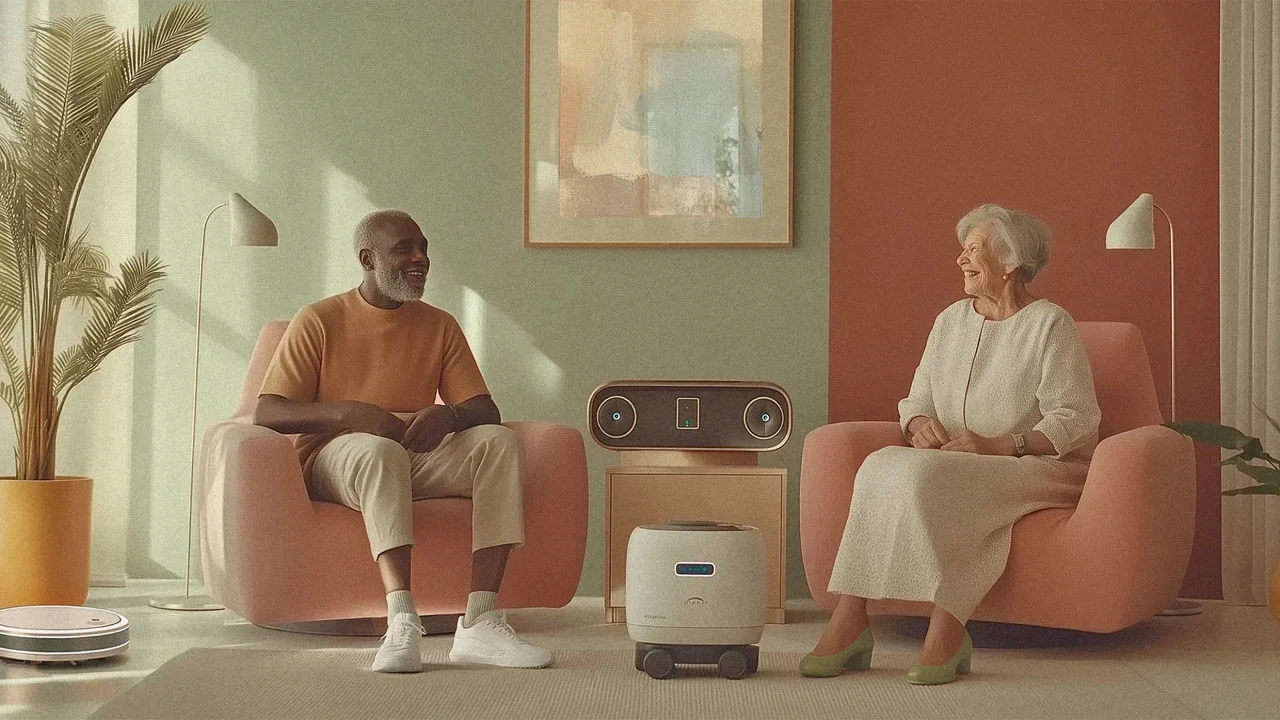
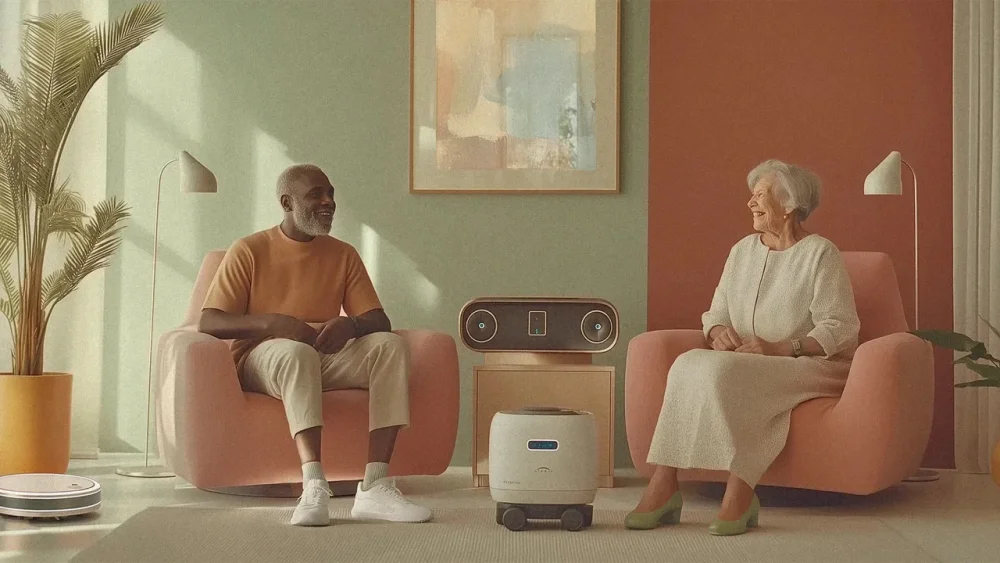
Most of us want to remain in our existing homes as we grow older. The practice of “aging in place” aligns with preferences for familiar places and routines and preserves our sense of independence. These preferences, though, raise questions about what support seniors want and need in their current homes. Japan has advanced the use of robotics specifically for this purpose, with mixed results. Despite these early results, the continued development of robotics and artificial intelligence to assist those aging in place seems obvious. What’s less obvious is how seniors foresee AI and robots living alongside them and what specifically they envision these things doing. To better understand how seniors want AIs and robots to help in their homes, we asked them. We recruited seniors from the MIT AgeLab’s research cohort—each around 70 years old and in the early stages of retirement—and then engaged in wide-ranging conversations about their aspirations and fears about these technologies. This framework distinguishes between digital and physical AIs and outlines the key ways they’re meant to help people in their homes. [Image: courtesy Teague] During these conversations, we explored various forms of both digital and physical AI—everything from digital assistants to handy robots—each with different capabilities and limitations. The result: Here are four types of AIs that could operate in the future lives of seniors at home, along with what present-day seniors think of them, and the key considerations we’ll need to account for when designing them. Advisor AI A digital presence that suggests solutions to problems, surfaces opportunities, and helps its person remember to do things. Examples: The AI helps verify the veracity of unfamiliar communications like scam phone calls; identifies activities of interest and assists in planning how to participate; offers timely reminders to take medications; and prompts calls to friends and family members on their birthdays. What seniors think: Thanks to established assistants like Amazon’s Alexa and Apple’s Siri, seniors say they’re already familiar with this form of AI, both inside and outside their homes, and can easily anticipate its further evolution. Moving forward, though, seniors want more from the Advisor archetype. They want the Advisor to go beyond pragmatic help with reminders about daily life and grow into helping them with their social well-being. This will mean providing actionable support with emotional concerns, especially social isolation, by surfacing and facilitating a senior’s human connections. Butler Robot AI A physical presence that attends to its person by assisting with dynamic needs, such as deliveries, health, and home monitoring. Examples: The AI robot lifts a delivery from the porch to the foyer; assists in turning off the water at the source of a leak in the kitchen; and renders assistance—and summons help, if needed—in the event of a fall. What seniors think: Due to the confluence of connected personal devices like smartwatches and earbuds with connected home devices such as smart thermostats and automated lighting, seniors believe there are increasingly complex interactions between their bodies and their homes. So they see how an AI robot helping to manage these complexities could reduce their cognitive load. They also acknowledge, though, that this form of AI in the home is far from simple in its creation and requires a lot of features and expansive capabilities. Just like a human butler, here there’s a distinct possibility of robots just for rich people, which will require breakthroughs in manufacturability and new business models to avoid. Conductor AI A digital presence that operates connected systems of modules such as wheeled porters and object lifters. Examples: The AI responds to voice commands to transport meals from the kitchen to the living room with a wheeled porter; elevates an adjustable-height table adjacent to the dryer to ease folding clothes; and summons an autonomous vacuum to address a spill. What seniors think: This is a challenging archetype for seniors to conceptualize in their homes since it exists beyond any present-day solutions. Nonetheless, they’re compelled by the prospect of an overarching, digital administrator of a set of modular, task-driven devices. Perhaps because it’s the least familiar to them in terms of having existing corollaries, seniors are less confident in speculative interactions with this archetype because an AI with a lot of control must earn a lot of trust. At the same time, they see this form of AI as capable of adapting to their changing physical needs as they age simply through the addition of new connected devices. This will mean creating sets of modules that can be added and subtracted, potentially through subscription models. Valet Robot AI A physical presence that attends to its person by helping with everyday tasks, such as cleaning, dressing, and grooming. Examples: The AI robot replaces a light bulb in high-ceiling recessed lighting; helps a person put on their socks and pants; cleans everyday surfaces such as kitchen and bath countertops; and dusts bookshelves and framed prints. What seniors think: Seniors equate the possibilities of this form of AI in the home with early home robots such as iRobot’s Roomba vacuum. While the focus of this archetype is on “everyday” tasks that include common housecleaning (versus the “dynamic” tasks of the Butler Robot AI archetype), it also includes help with everyday personal tasks like dressing and grooming. Interestingly, here seniors have some concerns about this form of AI helping in ways that bring it into physical contact with their bodies. This will require forms of this AI that are aesthetically compatible with seniors for such personal interactions. View the full article
-
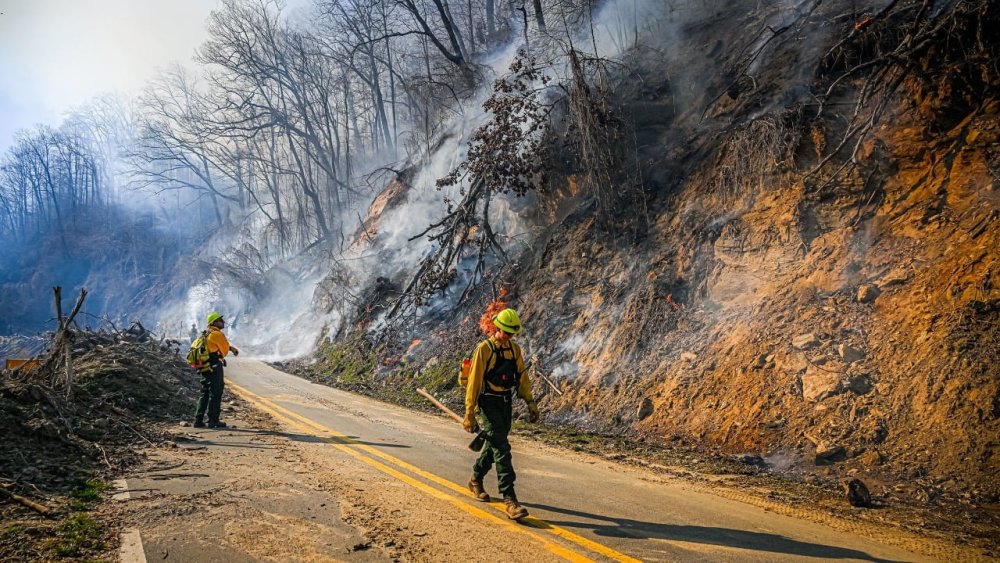
Scores of wildfires broke out across North Carolina, South Carolina and Georgia in early March 2025 as strong winds, abnormally dry conditions and low humidity combined to kindle and spread the flames. The fires followed a year of weather whiplash in the Carolinas, from a flash drought over the summer to extreme hurricane flooding in September, and then back to drought again. Storms on March 5, 2025, helped douse many of the fires still burning, but the Southeast fire season is only beginning. Wake Forest University wildfire experts Lauren Lowman and Nick Corak put the fires and the region’s dry winter into context. Why did the Carolinas see so many wildfires? Most of North and South Carolina have been abnormally dry or in moderate drought since at least November 2024. Consistently dry conditions through the winter dried out vegetation, leaving fuel for wildfires. When the land and vegetation is this dry, all it takes is a lightning strike or a man-made fire and wind gusts to start a wildfire. Hurricanes did flood the region in late summer 2024, but before that, the Carolinas were experiencing a flash drought. Flash droughts are extreme droughts that develop rapidly due to lack of precipitation and dry conditions in the atmosphere. When the atmosphere is dry, it pulls water from the vegetation and soils, causing the surface to dry out. In August and September, Tropical Storm Debby and Hurricane Helene caused extensive flooding in the two states, but the Carolinas received little rainfall in the months that followed, leaving winter 2025 abnormally dry again. How unusual are fires like this in the region? Fires are historically fairly common in the Carolinas. They’re a natural part of the landscape, and many ecosystems have evolved to depend on them. Carnivorous plants such as Venus flytraps and pitcher plants rely on frequent fire activity to remove shrubs and other plants that would grow over them and block the light. Even some wildlife depend on fire for their habitats and for food from the mix of native plants that regrow after a fire. The expected return periods for wildfires (how often fires have historically burned in a region) range from 1 to 10 years for the Piedmont and Coastal Plains in the east and 10 to 40 years in the Appalachian Mountains. However, many unplanned fires today are put out. That means underbrush that would normally burn every decade or so can build up over time, fueling more intense fires when it does burn. To avoid that overgrowth, land managers conduct annual prescribed fires to try to mimic that natural fire activity in a controlled way. These controlled burns are critical for removing vegetation that otherwise could provide additional fuel for more intense and damaging wildfires. Is dryness like this becoming more common? Extreme weather events are becoming more common across the U.S., including in the Southeast and the Carolinas. Increasing temperatures mean the atmosphere can hold more moisture, amplifying how much water it can draw from the land surface and eventually drop in heavier storms. That can lead to more extreme storms and longer dry periods. In humid regions like the Southeast, where there is an abundance of dense vegetation, periods of warm, dry conditions that dry out that vegetation will increase the risk of wildfire. According to the U.S. Drought Monitor, the southeastern U.S. experienced more droughts than other regions in the country in the first two decades of the 21st century. The weather variability also makes it harder to clear out forest undergrowth. Prescribed burns require that vegetation be dry enough to burn but also that winds are calm enough to allow firefighters to manage the flames. Studies show those conditions are likely to become less common in the Southeast in a warming world. Without that tool to reduce fuel, the risk of intense wildfires rises. Lauren Lowman is an associate professor of civil and environmental engineering at Wake Forest University. Nick Corak is a PhD candidate in physics at Wake Forest University. This article is republished from The Conversation under a Creative Commons license. Read the original article. View the full article
-
Collapse of vehicle battery maker deals major blow to Europe’s bid to rival China View the full article
-
Measures designed to protect the struggling US steel industry could also help a cohort of global producersView the full article
-
Capricious policies from Washington have created a very unpredictable economic environmentView the full article
-
ESG and DEI are out as the US president’s son makes lucrative investments that align with his father’s vision of AmericaView the full article
-
The US president’s officials are standing by their strategy to remake the world’s largest economyView the full article
-
Moves come as consultants strain to protect annual profit pool of close to £1mn per partnerView the full article
-
Investment group with rights to songs by Shakira will be ‘fundamentally different’ under unified structureView the full article
-
Tazara project showcases Beijing’s leaner approach to overseas development just as western aid appears to retreatView the full article