ResidentialBusiness
Administrators
-
Joined
-
Last visited
Everything posted by ResidentialBusiness
-
 There are tons of complaints in the Google Business Profile Help Forums about a bug during the setup process of a Google Business Profile. When you get to the screen about adding your phone number and website address, the next button won't take you to the next screen - it just won't let you go to the next step.View the full article
 -
I don't know if you might also like this, you probably won't but Bing is dropped ads in their featured answers, featured snippets. They are calling these ads "You might also like."View the full article
-
Google seems to be testing removing the green checkmark from the Local Service Ads. I was able to replicate this for the same query, and the same set of advertisers. In one case it has the Google Screened checkmark in green and in the other, it does not.View the full article
-
Are you considering selling on marketplace or website? Discover the best approach to launch your online sales effectively. The post Ask An SEO: Should I Prioritize Selling On Marketplaces Or My Own Website? appeared first on Search Engine Journal. View the full article
-
Google is promoting AI Mode in its search results with a large banner ad. The banner ad says, "New! Try Al Mode. Get Al-powered responses & ask follow-ups with a new experiment. Try now..."View the full article
-
Google will change how it counts clicks in Google Merchant Center starting April 21, 2025. This change will make clicks count the same way Google Ads counts clicks. This means your current and historical reporting for clicks may change on April 21st.View the full article
-
Possible phased approach to new US levies reflects debate over trade strategy within administration View the full article
-
Waymo, Alphabet’s autonomous vehicle company, plans to expand its ride-hailing service, Waymo One, to Washington, D.C. in 2026, the company announced Tuesday. While the nation’s capital currently prohibits fully autonomous operations, a Waymo spokesperson said the company will work closely with local policymakers over the coming year to help formalize necessary regulations. This marks the first time Waymo is bringing its commercial ride-hailing service to a city that experiences regular snowfall. Waymo vehicles don’t yet operate in winter weather, though the company has conducted cold-weather testing in upstate New York, Michigan, and parts of California. As a result, the service would temporarily pause for public riders in D.C. during snow or icy conditions—at least until winter capabilities are added to the fleet. Waymo began as a stealth project at Google nearly 15 years ago, and has since grown into a leading player in self-driving technology. Co-led by Tekedra Mawakana and Dmitri Dolgov, the company reached full commercial deployment in San Francisco, Phoenix, and Los Angeles last year. Waymo One completed more than 4 million rides in 2024, clinching more than 200,000 paid passenger trips each week. (The company also topped Fast Company’s list of the World’s 50 Most Innovative Companies of 2025.) Waymo vehicles briefly appeared on D.C. streets last year as part of its cross-country testing program and returned this January. More vehicles—equipped with safety operators behind the wheel—are set to arrive in the coming weeks. “We’re excited to bring the comfort, consistency, and safety of Waymo One to Washingtonians, those who work and play in the city every day, and the millions of people from around the world who travel to the District every year,” Waymo co-CEO Tekedra Mawakana said in a prepared statement. View the full article

-
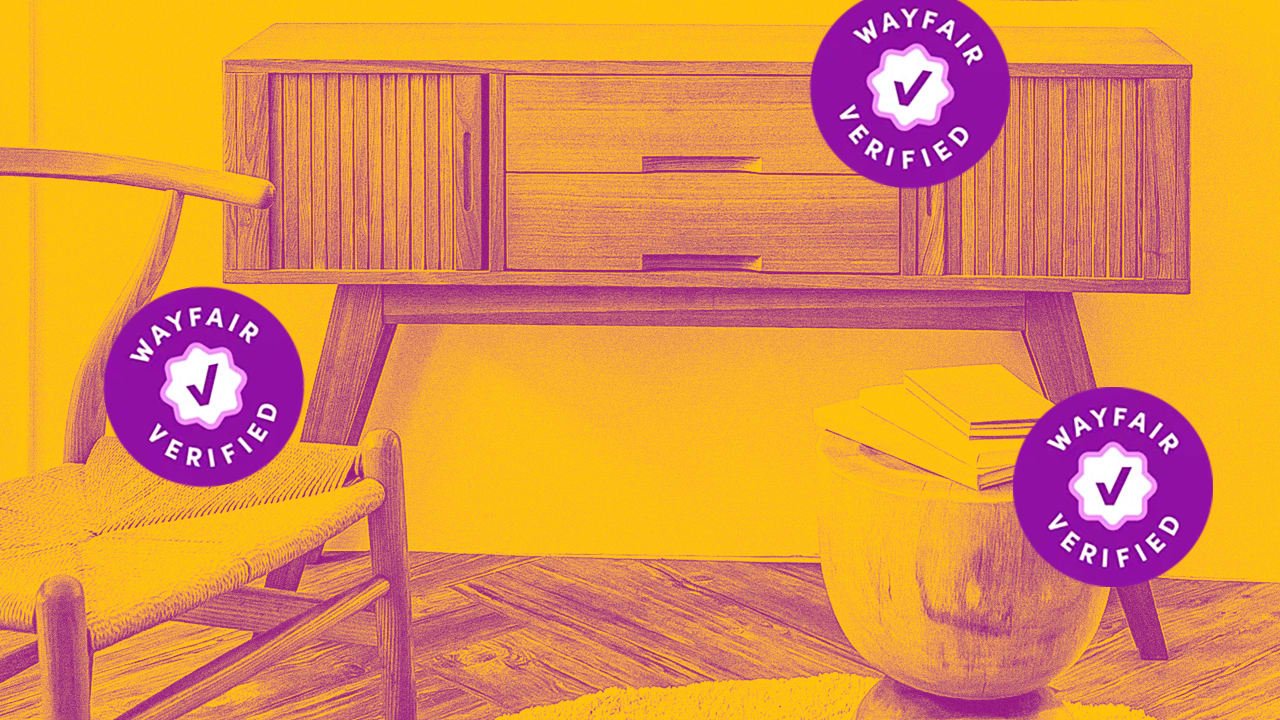
For two decades, Wayfair has thrived by offering customers an abundance of trendy, inexpensive furniture—around 30 million options, specifically. But as an e-commerce company, Wayfair’s employees didn’t actually touch or feel any of the pieces on the site. “Our goal was to find suppliers of furniture and make them easily available online to our customers,” Michael McCorry, director of curation strategy and operations, tells me. “We only learned about the products later, through customer reviews and feedback. If a product got bad reviews, it would sink lower in the rankings.” For the customer, shopping at Wayfair presented something of a risk. With such an enormous selection, they would very likely find a piece of furniture that perfectly fit their desired aesthetic. But unless it had many reviews, there was no telling whether it was well-made or would fall apart after a few weeks. Wayfair has heard this criticism loud and clear. Today, it unveils a new program called “Verified” that involves merchants painstakingly examining a selection of furniture on Wayfair’s site. The company has selected a small fraction—50,000 pieces by the end of the year—that will be verified for quality, durability, and value. The brand will highlight “Verified” furniture with a new purple check, and these pieces will surface higher in search results. This curation process is designed to make the shopping process easier for customers, but it also streamlines operations for the company. Wayfair expects that these verified pieces will become bestsellers. McCorry says that in the soft launch of the verified program, the 10,000 pieces that were verified already made up 15% of Wayfair’s total revenue. When 50,000 pieces are verified, it could make up a much more significant chunk of the company’s earnings. This new dynamic allows the company to ensure that the most popular products are in-stock and ready to ship quickly. But it could also make life more complicated for suppliers, who are likely to see an instant decrease in sales of non-verified items. [Photo: Wayfair] Inexpensive Furniture For Every Taste Wayfair emerged in the early days of the e-commerce revolution. While Amazon offered a very wide array of product categories, Wayfair wanted to be a destination exclusively for homewares. Wayfair doesn’t actually manufacture any products; instead, it sources furniture from factories around the world, styling the pieces in attractive ways, so that customers could easily find pieces that matched their aesthetic. (Many other retailers, including Pottery Barn and Crate and Barrel, also source products from third-party factories.) Merchants go through each item, categorizing pieces by style—like mid-century modern or traditional—to help make it easier for customer to find what they are looking for. “Our role was to source these products and make it easier to find the pieces that would go perfectly with their style,” says McCorry. But over time, it became clear that customers were struggling to figure out what pieces were high quality and what pieces were not. “This is also an issue of value,” says Liza Lefkowski, VP, curation, brands, and stores. “Customers want to know that the quality of the items corresponds to the price they’re paying for it. But in some cases, it was hard for them to tell.” For decades, with the rise of fast fashion and fast furniture, consumers were looking for products that were affordable and trendy. But after bad experiences with poor quality, many customers are now looking for well-made, durable products at fair prices. [Photo: Wayfair] Verifying 700 Pieces of Furniture a Week McCorry says that part of the idea of the Verified program emerged when Wayfair began opening stores last year. For the first time, Wayfair employees were getting to see furniture in person, and recommending pieces to customers. “We began to think we should do this with our online selection as well,” he says. There was no way that Wayfair would be able to individually verify all 30 million pieces of furniture it sells. So, the company has developed a way to pluck out pieces to verify. Madeleine Gauthier, merchant manager, says the company’s team of merchants is at the frontline of this process. They’re familiar with the selection of products in their narrow category, such as outdoor furniture sets or bar stools. The goal is to verify several pieces of furniture across categories, styles, and price points. So, for instance, Wayfair will try to verify several brown leather sofas that cost around $1,200 price point, and several modern wooden vanities that cost around $300. Merchants send products to Wayfair’s Boston headquarters for testing. They choose these pieces based on whether they have good reviews and how popular they are. Then, they spend about half an hour on each item. “We start with the unboxing experience, to make sure everything is packaged well,” says Gauthier. “Then we check that the assembly process is not unreasonably difficult.” Next, they actually use the furniture, as a customer might. For an outdoor dining set, they will check if the pieces seem heavy enough that they wouldn’t blow away in a storm. They will sit in the chair and see whether it is the right height for eating a meal at the table. They will then compare the product to others they have tested. In the end, they will identify and promote the top products. “We want to have enough variety so that if you’re looking for something very specific, like a metal outdoor bar stool, you will be able to find a verified one,” Gauthier says. Wayfair creates a little video of each product, with a merchant talking about its selling points. At this pace, the company can review about 700 products a week. Today, at the launch, there are 10,000 products that are verified. But the brand expects to get to a total of 50,000 over time. [Photo: Wayfair] Winners and Losers McCorry believes that many customers will gravitate towards the verified products. “It makes the shopping process so much easier for them, which was the whole point,” he says. “They don’t need to go through all the reviews, because they know we have tested it and recommend it.” Some suppliers are likely to experience an immediate windfall as a result of this program. Sales of their Wayfair-verified sofas or side tables are likely to spike. But other products are likely to go down in sales. Lefkowski admits that this has caused some concern among vendors. In response, Wayfair is trying to be as fair about the process as possible. “We gave them a lot of warning about this program and we are very transparent about what we are looking for,” she says. “If their product didn’t pass the test, we give them feedback about what went wrong so they can correct it.” And McCorry says that once Wayfair has verified all 50,000 products, its merchants will keep reassessing what is in the Verified program. If a supplier has an interesting new product that consumers seem to like, Wayfair might test and verify this product, displacing a similar verified product. “Long term, our hope is that this encourages all suppliers to focus on quality and workmanship,” says McCorry. View the full article

-
The plight of the middle manager has taken a turn for the worse since the pandemic, leaving many in the role prone to burnout as they juggle competing expectations with limited support from their employers. Managers were already tasked with addressing low morale and absorbing additional work as companies have been hit with layoffs in recent years—but now a number of employers are more pointedly culling their ranks, too. A dwindling force Amazon is reportedly cutting thousands of middle managers by the end of this month, following in the footsteps of other tech companies like Meta and Google that have sought to flatten their workforces. Additionally, Gartner analysts estimate that as employers rely more heavily on artificial intelligence, 20% of companies are likely to cut more than half their middle manager roles. Yet the latest edition of Deloitte’s annual Human Capital Trends Report finds that managers remain a crucial element of the workforce, even as many of them are struggling to manage their workloads. According to the report—which polled nearly 10,000 leaders and compiled input from manager-specific surveys—managers spend almost 40% of their time on administrative tasks or putting out fires on a day-to-day basis. Just 15% of their time is spent on long-term strategic thinking, and another 13% on developing their direct reports. More than a third of managers reported feeling like they were not sufficiently prepared to handle the people management and leadership aspect of their jobs, and that their company had not given them the tools they needed to perform. The future of middle managers As meQuilibrium CEO Jan Bruce recently wrote in Fast Company, this could be the year we see a “manager crash”—and companies may not be equipped to deal with the fallout. The Deloitte report noted that 40% of bosses surveyed said their mental health suffered after they took on managerial duties. What’s more, younger employees may not be ready to step up as managers burn out or step away from their roles; in surveys, Gen Z workers have expressed little desire to become managers themselves. Companies seem aware of the challenges facing middle managers, not to mention the fact that their jobs may need to evolve accordingly. But that doesn’t mean they’re taking appropriate action to better support these employees or reevaluate what their function should be in today’s workforce. Per Deloitte’s report, nearly three-quarters of employers said they understood the importance of revamping the role of managers, but only 7% claimed to be making meaningful progress to address the issue. The impact on team morale While cutting middle managers may seem like an efficient move during times of belt-tightening, taking that approach can leave their reports feeling adrift and may even reduce their autonomy by enabling senior leadership to wield more decision-making power. The Deloitte report posits that one of the most important facets of a manager’s job is to coach and develop the employees who report to them: In fact, 67% of employees claimed that their manager knows best how to motivate them at work. View the full article

-
The record-settting fixed-rate nonrecourse financing potentially opens up a new opportunity for nonbank mortgage companies with large MSR portfolios. View the full article

-
Restaurant diners can be a sticky-fingered bunch. Who hasn’t been tempted to slip a particularly nice cocktail glass or a tiny saltshaker into their bag after lunch? But as dining out gets more expensive, more people seem determined to get their money’s worth, swiping everything from cups and plates to steak knives and even cheese graters. And not only are they getting away with it, they’re proudly flaunting their loot online. In a viral video with more than 900,000 views, one creator boldly holds up a stolen cheese grater and asks, “What’s the best thing you’ve ever stolen from a restaurant?” Rather than backlash, the comments section reads like a confessional. “Spoons. little baby spoons. from every restaurant. every time. I can’t stop,” wrote one user. “I need to step up my game. I just have little sauce containers,” added another. For some, the habit has turned into a full-blown collection. In another video, a TikToker proudly displays a stash of stolen bowls, cutlery, jugs, and glasses. “I really enjoy these – it’s why I have so many,” she says of her small black soy sauce bowls. “That’s my collection,” she concludes cheerfully. “I am going to be getting more soon.” Some restaurants are leaning in to the joke. Upscale London restaurant Sexy Fish stamps the bottom of its chopstick holders with a label that reads: “Stolen from Sexy Fish.” Another London eatery, the Ivy Asia, marks its fish-shaped table ornaments with a similar disclaimer: “Stolen from The Ivy Asia.” But not everyone is laughing. Creator YoungKaren called out the trend as a clear case of “normalized theft,” saying that even otherwise “normal” people seem to pocket items without considering the impact—especially on smaller businesses. “If I was sitting with you and you stole something, I would tell the waiter on you,” she warned. “Even if you’re my friend, I still would.” Anyone who’s worked in or run a small business knows how fast those “harmless” thefts add up. Replacing stolen dishes, cutlery, and glassware isn’t just annoying—it’s expensive. And ultimately, those costs are passed on to other diners. So while that copper mug might look great in your home bar, just remember: Someone else is paying for it. View the full article

-
On an unremarkable vacant lot in Atlanta’s West End, a proposed rowhouse construction project could soon become a milestone of modern design. The building itself is not particularly special; its 17 units have attractive geometrical facades, large picture windows, and will be affordably priced. More notable than the design of the project itself is how it was designed. To an uncommon degree, artificial intelligence was used extensively throughout the design process, from market analysis and conceptual design to regulatory compliance and material selection. The building, which is going up for zoning approvals this week, could be one of the first projects designed largely through AI to actually get constructed. The project was designed—or, perhaps more accurately, codesigned—by Cove Architecture, an arm of the technology services firm Cove, which offers AI consulting to architects and designers. Founded by two trained architects, Cove uses AI to optimize project planning, design, engineering, and bidding for architecture and developer clients around the world. Through Cove Architecture, the company is now using the AI tools it’s been building since 2017 to pursue AI-designed building projects in-house. Cofounders Sandeep Ahuja and Patrick Chopson say AI was used to greatly accelerate the Atlanta project, achieving a 60% reduction in design timelines, early-stage cost estimates that hit 95% accuracy, and a 40% cut in design iteration expenses. “Instead of it taking six months, we’re doing it in a month,” Ahuja says. “Speed is the superpower.” [Image: Cove Architecture]The little detailsWhile many architects were quick to embrace the visualization powers of generative AI, using it to pump out conceptual designs and lightning-fast renderings, a recent report showed that only 6% of architects are actually using AI regularly. Chopson says Cove Architecture is using AI for all the tasks that underlie the design. [Image: Cove Architecture]Complying with zoning codes is one major use case. “The city of Atlanta’s zoning code is very complex. It has a lot of tables and different regulations. You’ve got to go to different spots to understand what you really can do, and then you also have to look at what the city has approved in the last year,” says Chopson, who’s been a practicing architect for more than 20 years. “All that analysis can take a few weeks, but we can do that in a few days.” [Image: Cove Architecture]The company does this through several specialized AI agents that analyze site conditions, cost parameters, local regulations, structural approaches, floor plans, and exterior designs. “We have all of these agents talking to each other,” Ahuja says. That creates a set of guidelines that Cove Architecture’s team then uses to fine-tune a design. “We get to spend more of our time as artists working on the art of it and less time chasing down all the little details,” Chopson says. [Image: Studio Tim Fu]A technological push and pullThose little details can make or break a project. When London-based architecture firm Studio Tim Fu was hired to design a series of luxury villas in a historical area on Lake Bled in Slovenia, the client had already had a few previous proposals denied by the local heritage agency. The firm’s founder, Tim Fu, who previously worked at Zara Hadid Architects, used several AI agents, a large language model, and consultations with local designers to navigate the specifics that would help the project meet the heritage agency’s requirements. He says the AI tools helped define the constraints of the site, allowing the design to comply with regulations about the height and slope of the villa roofs, as well as maximizing daylight through window and building orientation. [Image: Studio Tim Fu]“We have an extensive list that we tick, and every time you tick those boxes that are conceived together with the local architect and the large language model and our research, the heritage agency is happier,” Fu says. “There are very strict things that helped us to develop a project of such heightened luxury at such a controlled site, which is nearly impossible.” [Image: Studio Tim Fu]Fu says the designers and the client (an undisclosed Slovenian philanthropist) are confident that the AI-designed building will meet the heritage agency’s approval and begin construction in the next year or so. Fu says AI is being used for more than just checking regulatory boxes. His firm has integrated bespoke and commercial AI tools to shape design concepts that are then refined by human designers. For example, they will train an AI model to perform a task like designing around specific roof requirements. Those design concepts will then be fed into a generative AI tool to create renderings that are adjusted by architects using Photoshop and the studio’s own built-in AI tools. Those drawings then go through more rounds of revisions using data sets specific to the site, the local market conditions, and the client’s requests. As specifics are narrowed down, AI-generated concepts are further refined by human architects. “We remain a critical eye on this whole process to make sure that the machine doesn’t go haywire,” Fu says. “We obviously have to fact-check and double-check everything to make sure that we are making the best decisions and there are no hallucinations from any part of the process.” [Image: Studio Tim Fu]A freethinking co-creatorThe end result is a mixture of human and AI design. Fu calls AI a “freethinking co-creator” that feeds into a complex, almost conversational design process. “It’s so intertwined that it’s like another member of the team. And we’re at a point where it’s hard to distinguish between what we did and what the AI did,” he says. “We don’t see it as a distinct tool.” This blurry line means that it’s not really accurate to say Fu’s project is an AI-designed building, or that it’s fully designed by humans. Cove Architecture sees this blended approach as the future mode of architecture. “We’re going to scale up thousands and thousands and thousands of buildings in this new methodology,” Ahuja says. Chopson sees the integration of AI as simply allowing software tools to do the tasks that take humans too long to do—and which aren’t very enjoyable parts of the process anyway. “You spend all your time trying to figure out, is the thing that I want to do going to work? The AI allows us to leap forward by weeks to get to the part that’s fun, where you get to think about how am I going to make this look beautiful?” View the full article

-
In early March, New York City subway riders noticed a new development at the West 4th Street station, near Manhattan’s Washington Square Park. Construction workers for New York’s Metropolitan Transportation Authority were photographed removing a bench on the station’s platform and replacing it with a curving metal structure. Looking a bit like an oversized shaving razor with two handles, the metal object is known as a leaning rail or a leaning rail. Its horizontal face, slightly tilted and about three feet off the ground, is intended as a place for subway riders to lean their backsides while they wait for a train. Comment byu/thrilsika from discussion innycrail Goodbye benches, hello leaning rails? Not exactly, according to Meghan Keegan of the MTA’s media relations. “We’re trying out a freestanding version of a concept previously deployed at a few stations that have already proved successful. There are four leaning bars at West 4 St and we’ll evaluate how they work before deciding whether to expand,” she explains via email. “Benches remain at the station. Leaning bars are another option for customers.” According to the company that built the leaning rails, they’re becoming an increasingly common option, and not just for subway riders. “We have seen some really nice growth in the market since the launch of the product,” says Heidi Grinde, director of category management at Global Industrial, an industrial and commercial supply company that added standalone leaning rails to its product list last year. “We’re even seeing it in areas that maybe we hadn’t expected originally.” [Image: Global Industrial] In addition to transit customers like the MTA, Grinde says Global Industrial has been selling leaning bars to a wide range of users. Airports are installing them at rideshare pickup zones. Hospitals are putting them outside emergency rooms. Universities are adding them to quads and other public spaces. They’re even popping up in outdoor shopping malls. “If you have a smaller footprint, or you don’t have room for benches, you can utilize the leaning rails for your patrons to be able to just kind of take a break,” Grinde says. In the New York subway station, the leaning rails are intended for short breaks while riders are waiting—not long, ideally—for a train with a high-frequency schedule. “We picked this station because it’s a high-trafficked one with island platforms,” says the MTA’s Keegan. Some subway users were unenthusiastic about the idea. “Thanks, I hate it,” one Reddit user wrote. Reacting to a photo of the newly installed leaning rail, some called it “hostile architecture” that is intended to deter the homeless while disregarding the needs of people with mobility challenges. “As someone who frequents West 4th and uses a cane I am . . . baffled,” another Reddit user wrote. “I can stand up fine most of the time waiting for the train but I’m thinking about the people who can’t stand at all. What is this doing? How is this helping?” The MTA plans to evaluate the use of the leaning rails at the West 4th Street station “through a variety of methods including customer and station employee feedback,” says Keegan. Grinde says the leaning rails have been ergonomically designed to offer support to most people’s bodies, with the resting area typically located around 32 to 36 inches off the ground. “The leaning rail helps you to distribute your weight, and it reduces strain on your legs and your back,” she says. “With a wall, you’re not really ergonomically correct. It’s not holding the posture of your body.” And while some subway riders aren’t welcoming these new leaning rails, they’re likely to become more common. Grinde expects the rails to be a growth area for Global Industrial, and to take new forms. Lighting is being integrated into their design, as are technology elements like charging infrastructure and interactive screens. Some are even considering adding heating elements. “A metal rail tends to get a little cold in the middle of winter,” she says. “The market as a whole has been looking at some different things to increase what that leaning rail can do for the customers in the space.” But she doesn’t suggest leaning rails should become the hostile bench of the future. “It’s a great complement to a bench,” she says. “It’s not a replacement.” View the full article

-
We live in a world that seems to get busier and busier! Not only do we have our daily work tasks but we also have more meetings, longer commutes, and more interactions with more people in more locations than at any time in the history of work. In addition to the many real and present external distractions, there are also internal obstacles to great listening. Our internal worlds can be loud. At times, they are a blaring noise of emotion, attitude, and motives that can make it impossible for us to give others our full attention. As two positive psychology experts, we’ve identified six of the most common internal barriers that can interfere with your ability to listen well, and developed a framework of six “radical listening” skills that can help you have better conversations and build better relationships. Six barriers that prevent you from listening well: 1. Comparing: “It happened to me!” Sometimes, the topic of a conversation seems to invite you to share your own, similar experiences. Rather than appreciating the speaker’s experiences, you are mentally reminiscing and preparing to offer your own carefully chosen anecdote—that time that you scheduled a business meeting in a dim sum restaurant where the waiting staff interrupted every couple of minutes to offer you some delicious delicacies. We call this comparing. What is it they are implicitly asking for in the conversation? It might be admiration from you, an acknowledgment of their enthusiasm, or a bit of respect for their work. 2. Competing: “That’s nothing—I have had it much tougher than that!” People are social creatures and it is common for friends and colleagues to share challenges they are experiencing. An office mate might say “I’m really struggling to get through my emails! I have over 200 unread emails sitting in my inbox!” It is easy to assume that they are looking for some sympathy or perhaps some ideas for dealing with the overwhelm. Instead of offering either of these, however, you respond, “Just 200? I have over 1,000 emails that I need to respond to!” We call this competing. Again, there is nothing wrong with sharing your own experience, but it runs the risk of appearing unsympathetic, self absorbed, or checked-out. 3. Mind reading: “I know what you’re going to say.” Can you think of any recent interactions in which you were pretty sure what was going to happen even before the conversation took place? This is called mind reading. This bias—even if it was rooted in experience—interfered with our ability to engage positively with the team. Mind reading runs the risk of focusing on your own assumptions rather than the views and interests of others. Unless you are actually a mind reader, believing that you know what other people will say becomes a barrier to genuinely listening. 4. Unsolicited advice: “If I were in your shoes . . .” A leader of a team in another department confides in you how difficult it is for them to take a vacation and totally unplug from work. This is an instance that calls for optimal support matching. Rather than breaking out the toolbox, it is wiser to listen to what is being asked for. It might be that your colleague would appreciate some suggestions. Or, it may be that they just want someone to commiserate with them. Whatever the case, one thing is certain: If you are busy giving unsolicited advice—attempting to solve another person’s problem—while they are talking to you, then you are not listening. 5. Priority status: “I know best.” Imagine you are in a work meeting, and people are discussing a technical issue that is in your area of expertise. You have had years of experience resolving technical issues just like the one being discussed! The problem—where listening is concerned—is that it is easy to believe that this expertise should give you priority. We call this priority status and it occurs when people quit listening and, instead, rush to share their own ideas. To be certain, people typically share their own perspectives out of a desire to help. Although there may be some merit in doing so, it is still the case that your enthusiasm to share your own ideas is likely to mean that you will have stopped listening to the conversation. 6. Time poverty: “I don’t have time for this.” Unfortunately, there are only twenty-four hours in a day, so there is a tendency to feel like time is always in short supply. This so-called time poverty can interfere with our concentration and focus. In these situations, we can come across as impatient or appear to have made a judgment about the significance of what they are saying. This impatience will make people feel that you do not value what they have to say and that you are not listening. How to practice radical listening: So what can you do instead? We’ve developed a framework of six core “radical listening” skills. Instead of letting barriers take over, try to implement these skills instead. Using these skills does not mean that you must agree with the person speaking–rather you are letting the other person openly express their views, leading to conversations that foster stronger connections. 1. Noticing requires the listener to be attentive during conversations. When a person is good at noticing, they can direct their attention to what is most important for a particular interaction. Noticing includes the ability to pay attention, scan for information, and determine what is relevant. 2. Quieting is the ability to bring a sense of calm to the conversation by using silences and strategic pauses. This involves managing internal dialogue and emotions so that the listener can give their full attention to the conversation. 3. Accepting can be particularly challenging for some people. This involves adopting a stance of openness to what others may bring to the conversation. The listener respects the right of others to hold personal opinions and accepts their views as permissible within the conversation. 4. Acknowledging is the act of explicitly recognizing the efforts, perspectives, strengths, values, or principles of the other person. When we acknowledge others, they feel seen, understood, and appreciated. 5. Questioning is the skill of asking thought-provoking questions that demonstrate interest and curiosity. When used intentionally, questions can encourage deeper reflection, new perspectives, and innovative ideas. 6. Interjecting, at first glance, may seem out of place as a skill of listening. In this case, interrupting your conversational partner is used to show full and enthusiastic engagement. Interjections are used to build energy, strengthen connections, and show interest. Excerpted from Radical Listening: The Art of True Connection by Dr. Robert Biswas-Diener & Dr. Christian van Nieuwerburgh. Published by Berrett-Koehler Publishers Copyright © 2025, All Rights Reserved. View the full article

-
Private sector expected to finance much of the project to the east of London after years of delay View the full article
-
Artist and industrial design icon Ross Lovegrove’s work has always looked like the space-age future—and he has now partnered up with SpaceX on a project that sees him revisiting one of his most famous pieces from the past: The Bernhardt Go chair. CreativeWorkStudios is a company that fosters collaborations with an eye toward art, science and philanthropy. Having worked on a project that connected artist Refik Anadol with the NASA-funded Translational Research Institute for Space Health, CreativeWorkStudios turned to Lovegrove for its next endeavor, a partnership with the Polaris space missions to raise funds for St. Jude Children’s Research Hospital. Ross Lovegrove [Photo: J Harry Edmiston/courtesy CreativeWorkStudios] Lovegrove created the flowing Bernhardt Go chair—“probably my favorite object”—at the turn of the millennium. With its absence of straight lines and legs that are seemingly reversed, it has a futuristic aesthetic that has landed it a spot in the film Passengers and other sci-fi projects. Which is perhaps why his partnership with the space exploration company feels so immediately organic (and causes you to momentarily forget who owns SpaceX). Using data from the landmark Polaris Dawn mission, Lovegrove is now retrofitting the Bernhardt Go into its next evolution: The $6,500 Polaris Go. A Magnesium-Injected Innovation It’s apropos that Lovegrove is working with SpaceX on a project involving this particular chair. Years ago, he was invited out to the company to possibly become its design director—and when he got there, he discovered a couple hundred Bernhardt Go chairs in the canteen. [Photo: courtesy CreativeWorkStudios] While the first Polaris Dawn mission last year yielded a few firsts, such as the first commercial spacewalk, the Bernhardt Go scored one of its own when it launched in the early 2000s. Lovegrove originally designed the chair in aluminum, but found it to be too heavy. So he decided to use pressure die-cast magnesium, which weighs about 30% less without compromising strength. Thing was, it had never been done before, and has not been done since (the chairs were sealed and powder-coated, and are safe). “How can I say it—it won’t burst into flames, but it’s highly flammable,” Lovegrove says with a laugh. “It took us a while to find somebody who would take that risk.” The Bernhardt Go was hit, with TIME citing it as one of 2001’s best designs, and various museums adding the chair to their collections. [Photo: courtesy CreativeWorkStudios] After partnering with CreativeWorkStudios and the Polaris team for the new project, Lovegrove reached out to Bernhardt, which had 210 originals left—and he says the company handed them over. “I mean, to suddenly give up your whole stock is pretty remarkable,” Lovegrove says. “And it’s because of the St. Jude’s component. Which is not cynical—it’s incredibly sincere.” Earth from Polaris Dawn [Photo: Jared Isaacman] Taking a New Seat Polaris mission commander (and current nominee to lead NASA) Jared Isaacman has a history of raising funds for St. Jude Children’s Research Hospital, which the Polaris program has partnered with for its trio of missions. Lovegrove says it’s a cause close to him, as well, owing to a number of family members he has lost to cancer. As he devised ways to update the chair for the project, Lovegrove homed in on the seat pan insert. He decided to utilize data from the shockwaves of the launch to create a pattern emerging from four corners. “[It] is a metaphor about the co-joining of forces for the crew members—so, the four coming together form a total balance, and a kind of dynamic unity … that comes from the abstract forces of nature.” [Photo: courtesy CreativeWorkStudios] Lovegrove says he wanted to find a U.S. supplier linked to the space program to make the inserts, which he was able to do. He could have created it with, say, a 3D-printed polymer—but that doesn’t exactly represent space. So instead, the team used an aerospace-grade aluminum alloy, which is laser-cut to a finite dimension and then pressed incredibly thin so as to not impede the weight of the chair. The names of the four astronauts, meanwhile, are set to be laser-engraved onto the pans. “Ultimately, I’d like to even look at anodizing those, possibly in other colors, so that we could do a limited edition as we roll this out,” he says. “In a philanthropic way, we have to sell these … we have to appeal to people.” [Photo: courtesy CreativeWorkStudios] The chairs are priced at $6,500 and are available for preorder on the project website, with 50 percent going to St. Jude. Lovegrove adds that this is the start of a larger project with CreativeWorkStudios and Polaris, where he’ll take more data and interpret it in various ways, particularly around the physical impact of space on the human bodies. “If you look at space programs now, all the space adventure and business development, I think it’s going to pull [the human race] forward. I think it’s going to pull everything into a whole new mindset,” Lovegrove says. “They always say the most abstract thing that mankind can ever do is go into space, because we’re absolutely not designed to go into space. And then engineers come up and say, ‘Hey, we’re doing it.’” As for that forward momentum—it’s always been visually evident in the chair since the start. Has that always driven him? “Everything that we do has an implied energy in it,” he says. “I don’t like static things.” View the full article

-
How’s work? If you feel like answering “meh,” you’re not alone. Gallup’s latest workplace survey found that employee engagement has slumped to a 10-year low. It might not be the work itself, though. You might want to take a closer look at your boss, says Dr. Katina Sawyer, coauthor of Leading for Wellness: How to Create a Team Culture Where Everyone Thrives. “The proximal experiences that you have in the day to day of your workplace are what predict your general overall sentiments about your work,” says Sawyer, who is an associate professor of management and organizations at the University of Arizona’s Eller College of Management. “That means that the people that you work with most frequently tend to be really important, specifically leaders. Direct supervisors are often the key determinant of your feelings [about your workplace].” Leadership norms are causing employees to disconnect, says Sawyer. Traditional beliefs include the idea that work should be a leader’s entire focus, working tirelessly. Leaders should always have the answers and be very decisive and assertive. And the individual leader is more important than the collective team in terms of what they bring to the table. “These ideas have permeated our workplaces,” says Sawyer. “As a result, when leaders rise through the ranks, instead of being the leader that they would have wanted, they unconsciously adopt these norms of what we’ve seen other leaders do.” Unfortunately, these beliefs just don’t work, and employees don’t want to work for a leader who behaves this way. “Feeling ‘meh’ comes from the norms that workers have inherited,” says Sawyer. Organizations have not figured out a way to solve for “meh.” When they see burnout on the rise and job satisfaction on the decline, they turn to shortsighted and trendy wellness initiatives, such as yoga in the morning and mindfulness breaks at lunch, says Sawyer. “Sure, they may be fun, but are they actually driving results?” she asks. “While none of those things are bad in and of themselves, there’s no substitute for a bad leader. If your proximal experiences are not great, it’s like putting a Band-Aid on a bullet wound.” Instead of investing in one-off solutions, Sawyer suggests that organizations boost leaders’ capabilities to lead in a way that supports teams and, as a byproduct, drives results and productivity. She offers four techniques that can help. Forgo the Fearless Leader The first mechanism she suggests is realizing that people don’t want superhero leaders, who are stoic, decisive, and unafraid. “Actually, that’s quite demotivating for employees, because they can’t see themselves in their leader at all,” says Sawyer. “They also often start to see the cracks when someone presents a very perfect image of themselves as a leader. People are looking for authenticity. When they don’t see it, it gets confusing and discouraging.” Building stronger teams happens when leaders and teammates share their struggles. They become motivated to continue to grow and thrive in the organization, because they actually see a pathway forward for them as human beings, says Sawyer. Don’t Worry About the Clock A second mechanism is training leaders to deprogram themselves from thinking that the amount of time that they spend on work is the best metric of productivity. “Overworked leaders often produce a negative climate and expect overwork from their employees,” says Sawyer. “That’s a recipe for burnout.” Instead, leaders need to create a culture in which people feel comfortable and confident to support one another through their struggles and to show gratitude to each other. “Positive team environments end up saving the leader time in the long run, because what’s supposed to be happening is functioning more smoothly, and leaders are not constantly putting out fires,” says Sawyer. Reset Priorities Third, leaders need to recognize that work supports life instead of thinking you must fit your life around work. This includes encouraging employees to prioritize their personal lives by maintaining and respecting their boundaries. “Help them do the things that are important to them as people,” says Sawyer. “If someone is a parent and they’re coaching their kid’s T-ball team and have to leave every Tuesday and Thursday at four in order to get there on time, be cognizant of the fact. If you make it hard for your employees to participate in things that are important to them, over time, they’re going to grow resentful.” Tailor Your Wellness Approach The fourth mechanism is to realize that nothing is one-size-fits-all. “One of the problems that broader wellness initiatives have is that they take a blanket approach,” says Sawyer. “It assumes every employee will love to participate in mindfulness at lunch, but not everybody does.” Leaders need to have honest conversations about things that really contribute to each employee’s health and well-being. “Sometimes those are physical things, like needing time to walk in the middle of the day,” says Sawyer. “Sometimes they’re mental health things, like needing to get to a therapy appointment every Thursday morning. Try to tailor what you offer to the extent possible to best support employees’ varied needs.” What Employees Can Do If you are feeling “meh” at work and your employer isn’t taking steps to change the norms, Sawyer recommends looking for people in your organization who are like-minded and then suggesting some of the cultural elements that can shift the workplace dynamics. “Create a committee on health and wellness, where it’s not just one squeaky wheel, but it’s a group of people who are brainstorming to try to create a better work environment for everybody,” she says. You can also try to create a micro subculture sphere of influence that adheres to new norms. Document the positive impacts to sell the idea that these mechanisms work. And take steps to regain balance and well-being on a personal level, such as participating in a hobby after work. But don’t keep feeling “meh” about work. “The ‘meh’ feeling is a leading indicator that people are moving in a direction of being less engaged,” says Sawyer. “Companies should think of ‘meh’ as a yellow flag that’s headed to red and a recipe for burnout. It won’t get better on its own. Turn course now and recover instead of simply following the downward trend.” View the full article

-
The Seattle Mariners will be repping Nintendo this season. The team announced that starting with the season opener on Thursday, team members will be wearing Nintendo patches on their jerseys. It’s the first time the team has ever had a jersey sponsorship. The Mariners promoted the partnership in a video posted to social media showing center fielder Julio Rodríguez wearing the new jersey and grabbing a Mariners ball cap that’s sitting next to a red Mario hat in a locker. Major League Baseball announced in 2022 that it would begin allowing teams to put sponsorships on their uniforms. Some teams quickly capitalized: The New York Yankees signed Starr Insurance, and the Kansas City Royals signed the convenience store and gas station chain QT. For the Mariners, the Nintendo patches are just the latest in a long-running partnership with the video game company that goes back more than three decades to 1992, when Nintendo of America purchased a controlling stake in the team. Though most of Nintendo of America’s stake was sold in 2016, the company still owns about 10% of the team. “Nintendo and the Mariners have been inextricably linked since 1992,” Kevin Martinez, the baseball team’s president of business operations, said in a statement. “Now, each time the Mariners take the field, our jersey sleeves will help serve as a reminder of all that Nintendo of America has done for the Northwest community and the team.” [Photo: Seattle Mariners] Mariners players will wear white jerseys with the red-and-white Nintendo “racetrack” logo on the sleeve for home games. For away games, their turquoise jerseys will feature a red patch for the Switch 2, the Nintendo console that comes out next month. For baseball fans unhappy with corporate sponsorships finally making their way to players’ jerseys, the Nintendo patches may be unwelcome news. But at least for Mariners fans the team’s first ad might just be something they actually want to buy. View the full article

-
When you pop a piece of gum in your mouth, you might be hoping to freshen your breath, relieve some stress, or just get a bit of flavor. But you could also be getting thousands of microplastics released with every piece you chew. That’s because most chewing gum itself is made of plastic; gum bases often use synthetic polymers like polyvinyl acetate, a plastic used in adhesives; or styrene-butadiene, a type of plastic rubber used in tires and shoe soles. Plastic is already everywhere: our bottled water, our soil, even our air. Microplastics can leach into our bodies through all those things, as well as through foods kept or heated up in plastic packaging. But with gum, the exposure is more direct. “Here, the food is the plastic,” says Sanjay Mohanty, an engineering professor at UCLA. Mohanty is lead investigator on the pilot study that looked at how microplastics from gum can get into our saliva. He conducted the study with Lisa Lowe, a PhD student in his lab, who is presenting their findings at the spring meeting of the American Chemical Society this week. Mohanty has been studying microplastics for years; he’s done research on how wind can blow microplastics from fertilizers through the air, and how children’s playgrounds can contain more microplastics than other areas of urban parks. Lowe, who grew up in Hawaii and has seen the devastating effects of pollution firsthand, came up with the idea to actually quantify the plastic impact of gum. The topic even surprised some of her classmates. “People don’t really know that gum is plastic,” she says. “It’s just not something that we think about because it’s like food, so we wouldn’t expect it.” The researchers looked at both synthetic and natural gums, picking five brands of each that are the most readily, commercially available. Lowe herself was the tester: she would rinse her mouth (and take that sample, to see the level of microplastics in her saliva from the start), and then chew a piece of gum for four minutes, spitting out saliva samples every 30 seconds, before a final rinse. On average, they found that every gram of gum would release 100 microplastics, though some pieces released as many as 600. Most pieces of gum are between 2 and 6 grams, so that means a large piece could release as many as 3,000 microplastics. By some estimates, Americans average one to three pieces a day, but looking at a conservative amount, if someone chewed 160 to 180 small sticks of gum a year, the researchers estimated that could lead to them ingesting 30,000 microplastics. Before starting the study, Lowe anticipated that the natural gums would have fewer microplastics—but really they released similar amounts. It’s not clear where exactly those plastics are coming from, though; Lowe said it could potentially be from the manufacturing process. Their study was also limited in terms of exactly which microplastics they could identify in the saliva: They only looked for pieces of plastic bigger than 20 microns, which are visible under a microscope. That means they didn’t look for nanoplastics—particles smaller than 200 nanometers (a human hair, for contrast, is about 80,000 nanometers wide). Previous research has already found that one bottle of water could contain hundreds of thousands of nanoplastics. “There could be many, many more plastics [released by chewing gum] that are too small to be visible in our sensor,” Mohanty says. Lowe also tested chewing the pieces for longer, collecting samples of more than 20 minutes, to see how microplastics were released over time. Most of the microplastics were released within the first two minutes of chewing. After 8 minutes, 94% of the plastic particles collected during the tests had been released. If you’re looking to reduce your microplastic exposure but aren’t quite ready to give up gum, Lowe says this indicates that you could try chewing one piece for longer, rather than starting a fresh piece. There’s not yet a lot of scientific research on how microplastics affect our health, but there are indications that they’re harming our bodies. “We know it’s not something natural,” Mohanty says. The reserchers hope their study helps people become more aware of another form of microplastic exposure. “When you eat chewing gum, you think you are getting the flavor. You are also getting some plastic with it,” he says. And Lowe also hopes this gets people thinking about how they dispose of their chewed-up gum as well. “It is a source of plastic,” she says, “so it should be disposed of properly.” View the full article

-
It’s not every day that microbial genetics leads to a chic influencer party in Los Angeles. Yet there stood Patrick Torbey, the lone scientist in a plant-filled wine bar, addressing a roomful of stylish guests nibbling artisan crackers topped with melted Brie. Torbey was there to introduce the first product from Neoplants, the Paris-based startup he cofounded six years ago with Lionel Mora, a former Google product marketing manager. Their debut offering, called Power Drops, promises a biological air filter—hence the appeal for wellness influencers. For the science-minded, they’re genetically modified soil bacteria that work with plants to absorb and metabolize toxic chemicals commonly found indoors. “We’ve developed a natural air purifier,” Torbey says. “By pouring in these bacteria, you increase by about 30 times the air pollution efficiency of one plant.” These pollutants, known as volatile organic compounds (VOCs), pass through microscopic pores in plant leaves and exit through their roots. When Power Drops are mixed with water and added to a planter, the bacteria cling to the roots and feed on the VOCs—producing nutrients for the plant in the process. The result: a 30% reduction in airborne toxins in a 160-square-foot room. [Photo: Neoplants] Neoplants originally planned to launch Power Drops in January, just as wildfires engulfed parts of Los Angeles. Instead, the company postponed its event and added a new initiative, CleanAirforLA.com, offering a free month’s supply to support recovery efforts. “We have a technology that can solve a big part of the issue that’s going to linger for a long time, which is that VOCs emitted by these fires will be absorbed by [fabrics and furniture in] every home and continuously reemitted,” Torbey says. “This is really using nature as the technology to solve that problem in a sustainable way.” [Rendering: Neoplants] According to the World Health Organization, indoor pollution accounts for an estimated 3 million deaths annually. It can also impact focus and productivity and exacerbate respiratory issues like asthma. Torbey suggests putting the treated plants in bedrooms as a complement to HEPA filters that block particulates larger than VOCs, which are only several atoms in size. “It takes much longer, but it’s much more sustainable because there’s no electricity,” he says. “It’s always on in the background.” Among the event’s attendees was The Good Place star Kristen Bell, who came away smitten with the company’s natural—and in her case, foolproof—approach. “I have little kids, so I’ve been very concerned with educating myself on the air quality post-fires. I thought this was a very smart way to make it easy, affordable, and sustainable for people,” she says. “I don’t have a green thumb; I have a black thumb. The plants come [in planters] with reservoirs where I don’t have to remember to water [them] more than once a month. That’s extremely helpful for someone like me.” Genetics as a tool Neoplants grew from Torbey’s desire to apply his genetic engineering PhD to something beyond academia, Big Pharma, or agriculture. “Everybody has this kind of negative feeling towards genetic modification,” he says. “But genetics is just a tool, and I wanted to show people how we can use this tool to have a pure, positive impact without any negative consequences.” He met Mora through the Paris division of the global talent incubator Entrepreneur First, which introduces scientists and businesspeople. They’ve since raised $20 million from two fundraising rounds through True Ventures and Heartcore Capital and expanded to a 20-member staff. Neoplants founder Patrick Torbey (center) with Clean Air Campaign supporters [Photo: Neoplants] The science, however, didn’t come easy. When boosting plants’ ability to absorb VOCs proved too complex and time-consuming, the team pivoted to microbes. Bacteria, unlike plants, can be modified and tested within a week—and they clear regulatory hurdles faster. Neoplants engineered two bacteria strains that naturally metabolize formaldehyde, benzene, toluene, and xylene, turning them into sugars, amino acids, and lipids. Then, using directed evolution—exposing them to increasingly toxic environments—they bred super-efficient strains. “It’s kind of a boot camp for bacteria,” says Torbey, crediting Mora and his Google training for the quick iteration process. “We were trying to go at the speed of software using biotechnology.” [Photo: Susan Karlin] Power Drops contain 10 billion dehydrated bacteria per packet, activated in water for monthly doses. They work best with leafy, soil-based indoor plants—not succulents, hydroponics, or sandy soil. While they’re not for edible greens, they’re nontoxic to humans and pets. And although the bacteria improve soil quality, the effect on plant growth is minimal—for now. Boosting growth is the next focus for Neoplants. From the ground to space Meanwhile, as its bacterial research raced ahead, Neoplants continued modifying plants to metabolize VOCs without the need for bacteria by isolating the microbial genes responsible and inserting them into plant genomes. Having finally achieved that, the company is now awaiting approval from the U.S. Department of Agriculture, a process not yet impacted by recent federal layoffs. The company will also avoid import tariffs by keeping its R&D operations in Paris and product production in the U.S. [Photo: Neoplants] Down the road, Torbey hopes to apply Neoplants research to other environmental issues—here on Earth and even for future space habitats. One goal is modifying plants to absorb nitrogen from the air instead of using nitrogen fertilizers, which exacerbate the rise in nitrous oxide, a potent greenhouse gas. He’s also spoken to the European Space Agency about how his research might assist its MELiSSA life support project. View the full article

-
In early 2024, Ben Collins was contemplating the future of the media business—and his place in it. He was in the process of resigning after spending six years as a senior reporter at NBC News, exhausted by the disinformation beat that took him to some of the darkest and most disturbing corners of the internet. It hadn’t helped that in December 2022 NBC News had suspended Collins from the Elon Musk beat following his highly critical coverage of the gazillionaire’s acquisition of Twitter. The media landscape looked bleak. Layoffs were decimating storied media titles like Sports Illustrated, and Collins was hearing rumors that G/O Media, the holding company owned by private equity firm Great Hill Partners, was looking to shed 36-year-old satirical news publication The Onion from its portfolio. (G/O had dumped Jezebel and was about to purge other titles, including Deadspin and The A.V. Club.) As a joke, Collins posted a message on Bluesky: “So uh how do we buy The Onion?” Two media friends (Leila Brillson and Danielle Strle) jumped on board, and they quickly joined forces with another Onion lover, Twilio cofounder and former CEO Jeff Lawson, who also just so happens to be a billionaire. By late April 2024, the team had closed the deal. Here’s how it felt from the inside. Ben Collins, CEO There was this article saying that The Onion is aggressively for sale. I knew that Elon Musk had been dreaming for a long time of owning it. And I was like, “If The Onion is in his hands, just give up on American society.” He’s the most humorless person on earth. So I [posted on Bluesky], “Who wants to buy The Onion? I think I have $600.” I had no idea how to buy a company. I’m not a guy who buys stuff. All my shirts are from the dollar store. It’s a huge problem. But Leila Brillson was sitting at home. She had just had a baby three weeks before. She was the first female executive editor for Playboy and then went to work at Netflix and Disney and TikTok. Leila Brillson, chief marketing officer I think the reason Ben picked up my call is that I had just moved back to Chicago, which is where I’m from. The Onion is based in Chicago. My thought process was, “Huh, it’s for sale. It can’t be that much.” Followed by, “I bet they have an incredible social footprint.” Followed by, “They’re in Chicago. Hey, I’m in Chicago.” I think he thought I was much more connected than I am. The best thing I brought to the table was that I was the only one who lived in Chicago. Also, my sister is an M&A lawyer. [Paula Brillson is now general counsel at The Onion.] Danielle Strle, chief product officer I had a lot of freedom after Tumblr [where Strle went from employee No. 8 to director of product] to just work on fun projects. I had helped a friend run a cheese shop—I was the chief technology officer of New York’s best cheese shop. When Ben called, I was immediately interested. I remember seeing The Onion on newsstands in New York right after 9/11, and I was like, “Wow, The Onion is here. We’re going to bounce back.” My first call was to Scott Kidder [now acting as The Onion’s CFO]. He’s a true wizard on the spreadsheets. If you’re going to try and buy something, you’re going to need a powerful set of spreadsheets. Jeff Lawson, Owner Jeff Bezos bought The [Washington] Post, and Marc Benioff bought Time. The universe would just be right if I bought The Onion. This sort of started like a joke but then, as we looked into it more, it was like, it’s hit some hard times under the last owner and needs some revitalization. So it wasn’t just a matter of, I could buy The Onion, [but] hey, we could save The Onion. There was a real opportunity here to take this modern American institution and help it thrive in a new media environment. An environment where we need satire more than ever. View the full article
-
Showing enthusiasm in a job interview can be the make-or-break factor in getting that position. In fact, nearly 47% of hiring managers say a candidate’s keen interest in the job is the most important factor in determining whether they get the new role. Enthusiastic candidates are more likely to fit in, stay longer, and do great work. So, here are five ways to project excitement about the role throughout the job interview process: 1. ARRIVE EARLY First, show up 10–15 minutes early for your interview. An early arrival demonstrates enthusiasm, shows respect for the interviewer, and helps you gather your thoughts so that you will come across as poised and prepared. Coming early has other benefits, too. For an in-person meeting, arriving early gives you time to get settled, use the washroom, and go over your notes. (Just make sure you don’t arrive too early, as the interviewer may not be ready for you.) If the interview is virtual, these 15 minutes will allow you to check your technology, your lighting, and your background. 2. PRAISE THE COMPANY When speaking to the hiring manager, share two or three things you love about their company. Do your research and write out your talking points. You might say, “I appreciate the way employees are encouraged to collaborate.” Or “I value your hybrid work policy. It makes sense and it’s what I am used to.” Or you might say, “I admire the leadership of this company. . . . I heard your CEO speak at a recent conference and he was inspiring.” You might even ask the interviewer, “what attracted you to this firm?” This will give her a chance to speak about the company, and you an opportunity to reinforce something positive. 3. GET FIRED UP ABOUT THE JOB Another important thing to share is why you would love to have the job. Don’t wait for the hiring manager to ask you why you are applying. Instead, have a script ready with the reasons you are excited about the position. It could be the leadership role you have been searching for, or the fact that it will draw on your expertise in AI. Whatever turns you on should be written out in advance and delivered as part of your interview narrative. Get these points out right away. Share with the interviewer how important you understand the position is in the larger scheme of things. You might say “I know the critical role this position plays in the department and in the company’s communications with key audiences.” Asking smart questions about the role is still another way to show enthusiasm in a job interview. You might say, “This is a newly created position. How were its responsibilities handled before?” Or you might ask ”Why has this position been created?” Questions like this show that you take the job and its role very seriously. 4. USE POSITIVE LANGUAGE Throughout your conversation, make sure to be positive with your language. During your preparation, make a list of words and expressions that convey your enthusiasm for the role and show how well your qualifications fit the position. Use them in the interview. Your list might include, “I love the fact that this company is leading the industry.” Or “I like the scope of the job.” Or “I know this team has an excellent reputation.” Here are other possible expressions: “I believe that I have the qualities and experience you are looking for,” “I feel this is the perfect next step in my career. Avoid negative or hesitant language, such as “I’m wondering,” or “I think,” or “I guess,” or “I’m not sure.” And avoid filler expressions like “um, “ah,” and other nonstarters like “that’s a good question.” Your role is to answer questions, not evaluate them. 5. SHOW OPEN BODY LANGUAGE Convey enthusiasm in a job interview with open body language. The physical signals you give can matter as much as what you say. During the conversation your face should have a warm, animated expression, but don’t overdo it. When you are talking or when the interviewer responds to what you’ve said, hold your eye contact. Sit with an upright posture. Keep your shoulders back and your chin up. Slouching suggests a lack of enthusiasm. Having great posture displays confidence, and that’s the image you want to portray during the discussion with your potential employer. Keep your arms open, and gesture with your full arms, not with smaller hand gestures. And never fold your arms—doing so will look like you are arming yourself (literally), and that comes across as defensive. View the full article

-
AI search optimization, or generative AI optimization (GAIO), can fit smoothly within your existing SEO and content initiatives. Here are some steps you can take to immediately level up your visibility strategy and drive organic discovery. View the full article
-
AI search optimization, or generative AI optimization (GAIO), can fit smoothly within your existing SEO and content initiatives. Here are some steps you can take to immediately level up your visibility strategy and drive organic discovery. View the full article