ResidentialBusiness
Administrators
-
Joined
-
Last visited
Everything posted by ResidentialBusiness
-
 Results come after Tesla’s EV rival announces five-minute charging systemView the full article
 -
This week's trip into the minds of people who aren't old enough to rent a car is like a potpourri of unrelated trends and memes that present a picture of the variety of ways young people are relating to the world. Some TikTokers are memorializing peak moments in their lives with a "Hozier yell," while others are spending their precious time on Earth creating brain-rot "juggtok" videos, or getting really, really angry about chess and chubbiness. It's a big world. What is a Hozier yell?A "Hozier yell" is used in TikTok videos to refer to a peak, climactic, awe-inspiring moment. Literary types might substitute "barbaric yamp." The end result is videos like these: The reference and the audio that goes with it is to the song "Northern Attitude," a 2024 collab between Hozier and Noah Kahan, in which Hozier hits a particularly climactic note just as the song climaxes. Hozier, by the way, is an Irish singer-songwriter whose songs are heavily influenced by folk music who is best known for his 2013 song "Take Me to Church." So far, nearly 200,000 videos have used the audio clip of Hozier and Kahan, commenting on everything from seeing a bear to marriage proposals to graduating cosmetology school. What does “Jugg” mean? And what is "Juggtok?"The slang term “jugg” (sometime “juug”) means to grab quickly or to steal. Like most modern slang, it is derived from AAVE, specifically from the South. "Jugg" has been around for awhile—the word is used in a number of rap songs from the 2010s—but it has come into wider usage lately as part of a TikTok meme format called "juggtok," a convoluted brain-rot-centric subculture in which specific slang words and acronyms are paired with a set of unrelated images and video clips in such a way as to render it all meaningless. If my reading is correct, juggtok and its offshoots and adversaries like slimetok and jollytok defy explanation on purpose. They are meant to be meaningless and self-referential. Here are a couple examples: (For more definitions, check out my slang glossary, 'Aura Farming,' 'Huzz,' and Other Gen Z and Gen Alpha Slang You Might Need Help Decoding.) Chubby filter causing TikTok controversyThe cultural argument over "fat acceptance" has been going on for a long time, but artificial intelligence is adding an exciting new wrinkle. This month, a video filter called "Chubby AI" allowed Tiktokers to visualize what it would look like if they (gasp!) gained weight, and videos like these started going viral: There was, as you'd probably expect, an instant backlash, as illustrated by this X post from writer Bec Shaw: This Tweet is currently unavailable. It might be loading or has been removed. If you had hope that younger people might be more accepting of people being overweight, since so many of them are, you'd be mistaken. But on the plus side, I'm confident that many skinny young people who look down on fat people will eventually grow fat themselves. Is chess.com trying to rename the bishop?Since we're doing controversy, a way dumber foofaraw was kicked off last week by chess.com that proves how everyone must pick a side of the culture wars, even websites about chess. The row began when chess.com's X account posted this seemingly innocuous piece of engagement-bait: This Tweet is currently unavailable. It might be loading or has been removed. Apparently some X users assumed that Chess.com wants to rename the diagonally moving piece because of religious connotation of the name "bishop," so the comments section quickly filled with responses like this, from a " friendly neighborhood Christian Nationalist:" This Tweet is currently unavailable. It might be loading or has been removed. And this, from some other goof: This Tweet is currently unavailable. It might be loading or has been removed. And this, from a normal person having a very normal day: This Tweet is currently unavailable. It might be loading or has been removed. Anyway, chess.com ensured more outrage by troll-posting: This Tweet is currently unavailable. It might be loading or has been removed. So is chess.com really trying to bring down Christianity? Sadly, no. They'd made a similar post earlier about The Rook: This Tweet is currently unavailable. It might be loading or has been removed. And no one freaked out. The seething outrage over a meaningless shitpost illustrates that X is worst website ever and no one should use it. I feel like I need a shower after even a few minutes there. Viral videos of the the week: Can You Fool A Self Driving Car? As the great Criswell intones in Plan 9 From Outer Space, the future is where you and I are going to spend the rest of our lives; no doubt a lot of that time will be spent driving, and driving will be very different in the future. Cutting-edge technology is rapidly taking over driver's decisions, whether it's emergency braking or full-on auto-driving so I can take a nap and go to Hardees. Computer-assisted driving is generally a good idea, but the technology has limits, and the future holds auto-related dangers that Henry Ford never dreamed of. For instance, how would an auto-driving car handle a brick wall painted to look like the road? That's the question at the center of this week's viral video of the week, in which YouTube legend Mark Rober pits the two leading self-driving car technologies against obstacles like thick fog, heavy rain, and a wall painted to look like the road. Rober's experiments features a car from Luminar with a self-driving system that uses a LiDAR (Light Detection and Ranging) to navigate, and a Tesla that uses cameras. Rober's tests are unscientific—this is an entertainment YouTube channel after all—but they are, as Elon Musk might post, "concerning." Few drivers will ever encounter a brick wall painted like the road (unless they're driving through a Warner Brothers cartoon) but whether a car on auto-pilot will brake for an obstacle in a heavy fog seems pretty relevant. And the results don't look promising for the Tesla. View the full article
-
Marketing stunts tend to range from the banal to the broadly clever—but rarely do they border on the chaotically brilliant. Today, the beverage company Evolution Fresh is debuting a 10-gallon hat designed to smuggle 12-ounce cans of its new Real Fruit Soda (or really any beverage of your choosing) into movie theaters and concert venues where BYO is verboten. And you know what? Contrary to most gimmicks, it’s a delightfully offbeat and utilitarian flex that underscores the heart of its product. [Photo: Evolution Fresh] Evolution Fresh released the line last June, and the better-for-you soda category has only boomed in the months since, with Coke unveiling Simply Pop and Pepsi buying Poppi for nearly $2 billion. Molly White, CMO of Generous Brands (Evolution Fresh’s parent company), wrote in an email exchange that Real Fruit Soda is currently the No. 2 refrigerated alt-soda brand next to category leader Olipop, with some 3.6 million cans sold and a presence in 11,000 stores. Now, Evolution Fresh’s smuggling campaign is seeking to Trojan Horse its product into all those other places synonymous with traditional soda. “Today’s consumers want that fizzy, refreshing hit without the artificial ingredients and sugar overload,” White wrote. “Movie theaters, in particular, felt like the perfect battleground, where consumers often feel forced to choose between nostalgia and nutrition. Our solution? A playful act of defiance.” Partnering with BSSP on the campaign, Evolution Fresh explored a variety of smuggling vessels before settling on the cowboy hat—which, White notes, dovetails with the recent surge in Western wear. The hats hail from Two Roads, and a prop company designed a custom-fit foam compartment to stash a can securely into the top of them. They cost only $5 each and will be available while supplies last right here—but don’t let the marketing price point make you think they’re ephemeral landfill-filling dross, as these things tend to be. Rather, White detailed that the hats are made from 100% Australian wool, and the $5 price is a nod to the soda’s low sugar content of five grams. Can I pull off a cowboy hat? Probably not. Can I attempt to in order to smuggle a more affordable beer into a concert? For $5, it’s time to saddle up and find out. View the full article

-
The way people search for information is changing, and Gen Z is leading the shift. Instead of turning to Google, they’re searching on TikTok, Instagram, YouTube, Reddit, and Discord for everything from product recommendations to restaurant reviews and how-to guides. This isn’t just a trend – it’s a fundamental shift in digital discovery. Google usage among Gen Z has dropped by 25% compared to Gen X, a 2024 Forbes study shows. eMarketer reports that 46% of Gen Z and 35% of millennials prefer social media over traditional search engines. Why? They crave fast, visual, and community-driven content rather than sifting through traditional search results and ads. For search marketers, this means SEO is no longer just about Google – it’s about being visible wherever audiences search. This article breaks down Gen Z’s evolving search habits, why social platforms are winning, and how brands can adapt to stay discoverable in this new search landscape. The democratization of search For years, Google dominated search. For Gen X and early millennials, “googling” was synonymous with searching. But Gen Z searches differently – they don’t use “google” as a verb in the same way, and it’s reshaping how brands approach discoverability. Gen Z “googles” 25% less than Gen X, turning instead to social platforms where search is more visual, trend-driven, and real-time. Even Google has acknowledged this shift – Prabhakar Raghavan noted that “nearly 40% of young people prefer TikTok or Instagram over Google Search or Maps” for local recommendations. This isn’t just about preference. It’s a shift in search behavior. Instead of scrolling through links and ads, Gen Z engages with short-form videos, peer recommendations, and user-generated content. They trust social platforms for their authenticity, immediacy, and personalized experience – something traditional search engines struggle to match. Opinions on this shift vary. Some claim “Google is doomed,” while others argue it will continue to dominate. SparkToro reports that Google Search grew by 20% in 2024. Ofcom found that 1.8 million U.K. adults stopped using it for searches that same year. The reality likely lies in between. The takeaway is clear: search is no longer just about Google. If your content isn’t optimized for TikTok, Instagram, Reddit, or YouTube – where Gen Z actively searches – you’re missing a massive audience. The future of search isn’t tied to one platform; it’s about showing up wherever your audience is looking. Sometimes, Google will win. Other times, a TikTok post will. If you want to succeed, you must create an effective content loop across multiple channels. A look into social search Social search has transformed social media from engagement-driven spaces into full-fledged search destinations. TikTok, Instagram, and Reddit now shape how users find information, products, and experiences. Up to 41% of users use TikTok for search, while 76% have discovered brands and products through social media. This shift means users aren’t just consuming content – they’re actively searching for answers, recommendations, and solutions. A changing search funnel: Social trigger, social discovery, conversion Social search is compressing and reshaping the traditional search funnel. Instead of bouncing between multiple touchpoints, users can explore, evaluate, and decide all within a single platform – turning Google’s “messy middle” into a fluid discovery flywheel. A TikTok review might lead to an Instagram deep dive, followed by a Reddit thread for credibility – all before a Google search even happens (if at all). Success in search is no longer about a single platform but about understanding user intent across multiple channels. Winning in this evolving search landscape requires a presence where searches actually happen – by optimizing content for a multichannel, search-everywhere experience. Why Gen Z prefer social to search Unlike previous generations who relied on Google to type queries and sift through blue links, Gen Z expects faster, more engaging, and more authentic results. Social search delivers exactly that. Here’s how their approach differs – and what brands need to consider. 1. Faster, more visual results Raised in a digital world of instant gratification, Gen Z doesn’t want to read lengthy blog posts or scroll through endless search results. They prefer quick, digestible answers in visual formats like short-form videos, carousels, and captions. TikTok, Instagram, Snapchat, and YouTube are their go-to search tools. A TikTok search for “best foundation” instantly serves up video tutorials, reviews, and comparisons – far more engaging than a traditional article. A YouTube Short on “quick meal-prep ideas” delivers step-by-step cooking guidance in seconds, skipping the recipe pages cluttered with ads, bios, and affiliate links. Get the newsletter search marketers rely on. Business email address Sign me up! Processing... See terms. 2. Authenticity and trust Gen Z doesn’t trust traditional brand marketing. Instead, they rely on peer recommendations, real experiences, and unfiltered opinions from communities. Unlike Google, which prioritizes search-optimized content and paid ads, social platforms surface real conversations from actual users. Instead of reading a blog on the “best budget travel destinations,” Gen Z watches TikTok vlogs of real people documenting their trips. Rather than trusting company-written product descriptions, they seek out TikTok creator reviews, Instagram UGC testimonials, or Reddit discussions. This peer-driven content feels more honest, transparent, and credible – making social search more trustworthy than traditional search engines. 3. Algorithm-driven discovery Unlike traditional search engines, where users actively search for answers, social platforms push relevant content before users even realize they need it – re-engaging them in their search journey. TikTok’s For You page surfaces content based on past engagement, introducing users to products and trends before they search. Instagram’s Explore tab curates recommendations based on browsing behavior, making discovery seamless. Reddit threads and Discord servers expose users to niche discussions, organically driving awareness of brands and products. This shifts discovery earlier in the customer journey. Users aren’t just searching when they’re ready to buy. They’re being passively introduced to brands, leading to high-intent searches later. This blurs the lines between search and social, inspiration and intent – reshaping the role of search marketing. The role of community For Gen Z, an aspect of search is about finding answers from people they trust. That’s why Reddit, Discord, and private forums are becoming go-to search engines, offering unfiltered insights, recommendations, and real experiences. Unlike traditional search engines, which prioritize algorithm-ranked web pages, community-driven search thrives on peer-to-peer discussions that feel authentic, specific, and reliable. These platforms provide what Google and mainstream social media often can’t: deep, real-time conversations shaped by lived experience. Reddit functions as a crowdsourced knowledge hub, where users explore niche topics, ask for advice, and share product reviews. Many even add “Reddit” to the end of Google searches to bypass promotional content and go straight to authentic discussions. Discord servers act as private search engines, with dedicated communities – spanning gaming, crypto, fashion, and professional industries – offering real-time advice and recommendations. These closed-loop spaces create powerful, organic brand discovery opportunities that brands have yet to fully tap into. Community-driven search is shifting the landscape. Gen Z trusts real people over polished marketing. Failing to engage with these communities might mean missing out on an audience that prioritizes authenticity over ads. Why community search matters Simply put, traditional SEO doesn’t work in these spaces – and you need to accept that. While TikTok and YouTube offer optimization opportunities, forums and communities operate differently. You can’t rank No. 1 in a Discord conversation or a Reddit thread. Instead, you must embed yourself naturally within these communities to stay relevant. Be present where conversations happen Actively engage in discussions – whether through creators, users, or employees. This builds credibility and trust in a way traditional search marketing often struggles to achieve. Influence through community members Gen Z doesn’t trust ads – they trust real people. The most effective way to influence brand perception is through engaged community members, influencers, and subject-matter experts who are already part of the conversation. Create valuable, non-promotional content The key to success isn’t pushing products – it’s offering real insight. Providing helpful answers, sharing expertise, and engaging meaningfully are more likely to be remembered and recommended organically. Not sure where to start? Try this A simple first step is to use Google Trends and the Glimpse Chrome extension to uncover where your audience is actually searching: Install Glimpse for Google Trends to unlock additional insights. Search for a key term related to your brand. Check the Channel Breakdown chart to see which social platforms your term is most popular on. Explore top-ranking content on those platforms using tools like TikTok Creator Search Insights, Reddit Pro Trends, and Pinterest Trends. Build a content strategy that aligns with the platform’s format, trends, and user intent. This approach ensures your brand shows up where your audience searches – not just where you assume they are. The future of search is everywhere Gen Z is redefining what it means to search. Social, visual, and community-driven discovery is shifting the landscape, and traditional SEO alone is no longer enough. Search marketers must move beyond Google rankings and embrace multi-platform search strategies. If your audience searches on TikTok, YouTube, or Reddit more than on Google, do you really have visibility? Brands that recognize search as an omnipresent, multi-platform experience will gain a competitive edge. Those that don’t? They’ll struggle to stay seen. View the full article
-
Google's March Core Update continues to rollout. Patterns are beginning to emerge as reports come in with data from the past week. The post Google’s March Core Update: Early Observations From Initial Rollout appeared first on Search Engine Journal. View the full article
-
Google would not give a specific date for when we will see independent sites to start surfacing better and higher in Google Search. As a reminder, Google wrote with the March 2025 core update, "We also continue our work to surface more content from creators through a series of improvements throughout this year."View the full article
-
Automated ad recommendations are faster, but are they smarter? A look at why human touch still beats machine-driven PPC strategies. The post Ad Platforms: Should You Or Shouldn’t You Take Their Recommendations? appeared first on Search Engine Journal. View the full article
-
DNA testing firm 23andMe has filed for Chapter 11 bankruptcy protection. The once high-flying San Francisco company—which provides DNA analysis to offer insights into ancestry, health traits, and genetic risks—is aiming to sell itself after facing significant challenges, including rejected acquisition offers and declining market value in the wake of a 2023 data breach that impacted millions of users. In addition, CEO Anne Wojcicki has stepped down, and CFO Joe Selsavage will serve as interim CEO during the restructuring process, 23andMe said on Sunday. The company plans to continue operating as it seeks a buyer. The bankruptcy filing punctuates a stunning downfall for what was once one of Silicon Valley’s buzziest companies. It follows a long series of setbacks for 23andMe, including mass layoffs and restructuring efforts. Last year, 23andMe reduced its workforce by nearly 40%, a move that was part of an effort to cut operating costs and pivot the company’s focus. 23andMe has also faced mounting financial losses, with its valuation dropping dramatically since its 2021 IPO. Shares of 23andMe (NASDAQ: ME) were down 43% in premarket trading on Monday following the bankruptcy news, bringing them down to penny stock territory. The company’s financial turmoil is compounded by an industry-wide decline in demand for at-home DNA testing, as well as ongoing concerns about privacy and data security, all of which were made worse by the 2023 breach. An urgent warning for customers On Friday, California Attorney General Rob Bonta urged customers to consider requesting that 23andMe delete their data and destroy any biological samples, and issued a consumer alert regarding 23andMe’s financial distress and the potential risks to customer data. “California has robust privacy laws that allow consumers to take control and request that a company delete their genetic data,” said Bonta. “Given 23andMe’s reported financial distress, I remind Californians to consider invoking their rights and directing 23andMe to delete their data and destroy any samples of genetic material held by the company.” Reached for comment about Bonta’s statement, 23andMe referred Fast Company to its open letter to customers, in which it insists customer data is safe. The company says the bankruptcy process will have no impact on how it stores, manages, or protects data. “[We] are committed to continuing to safeguard customer data and being transparent about the management of user data going forward, and data privacy will be an important consideration in any potential transaction,” said Mark Jensen, chair of the board of directors, in statement. View the full article
-
Google now is showing Performance Max terms in the Google Ads search terms report. Plus this report shows the new negative keywords terms that is now supported for PMax campaigns.View the full article
-
On Friday, Google published its findings from its experiment of removing some EU news publishers from its search results. The results said that Google had no visible loss of search ad revenue when the news publishers were removed.View the full article
-
Google Ads has confirmed that it has lost some conversion data for some advertisers who used Google Merchant Center in February. The data is not coming back, it is unrecoverable. We don't know the exact dates, but Google did mention it was in February 2025.View the full article
-
Google is testing a new feature in the AI Overviews (although, they look familiar to me for some reason). When you click or hover over on a word in the AI Overview, Google will bring up a menu to get an AI explanation, show related images or copy to clipboard.View the full article
-
Learn about lead generation strategies like SEO, social media contests, and retargeting campaigns. View the full article
-
A month ago, we reported that Google Business Profiles support was backlogged and delayed. Well, the delay is not getting any better. Victoria Kroll from Google posted an update on Friday afternoon in the Google Business Profiles to inform us that the delay is still there.View the full article
-
Wage growth has outstripped property price rises, official figures show View the full article
-
Our workplaces are undergoing the next technological revolution, brought on by the warp-speed growth of artificial intelligence (AI). Generative AI is a total game changer for how we work. One day, we’ll look back and wonder how we did our jobs without this technology. But not today. Many of us are still living firmly in the discovery period of AI at work, and we’re dealing with a big dichotomy. Employees are incredibly curious about how to use AI to make their jobs easier and accelerate their growth, but very few people feel like they know how to do that. The results of a recent Wiley survey of around 2,000 individuals across a range of job roles and industries make this clear. The large majority—76%—of our respondents reported that they lack confidence in how to use AI at work. A recent Gallup survey reported similar findings, with only 6% of employees saying they feel very comfortable using AI in their roles, while about one-third say they feel very uncomfortable. Employees are stressed out about AI This transition is stressful; virtually all (96%) of those Wiley surveyed said they are experiencing some degree of stress about change at work. More than half reported at least moderate levels of anxiety as they navigate the complexities of AI adoption. This is completely natural for a change of this magnitude. Applications of AI generate emotions around job security and a general fear of this new unknown. Employees will often turn to their supervisor for guidance during times of change at work. But while the majority of respondents in our survey said that their manager is supportive of their efforts to integrate AI, only 34% of managers themselves reported feeling equipped when it comes to incorporating AI at work. This ends up causing more stress and worry for both managers and employees as a result. Getting past emotional barriers AI isn’t going anywhere. To be successful at work, we all need to get past emotional barriers and embrace AI. And it’s not merely just about staying current with industry trends. It’s about making jobs easier so that companies can compete in their industry and colleagues can accelerate their careers. Failure to drive access and adoption of AI technology can easily cause companies to lose their competitive edge in the marketplace. Your first priority should be to get everyone to adopt AI in their day-to-day work. In practice, this likely means increasing the availability of tools. Employees can’t use AI if they don’t have it readily available. But the successful adoption of AI hinges on more than just access—employees need to know how to use these tools and do so responsibly, with guardrails for their respective roles. Investing in upskilling is crucial in navigating this transition. This requires organizations to take a multifaceted approach that encompasses training, support, communication, and transparency. When people understand both what they are doing and why they’re doing it, they’re more likely to embrace change. Help employees feel comfortable using AI According to our survey, companies can help their employees feel comfortable in using this technology by providing them with three things: Clear expectations around the usage of AI—Employees need to have clear expectations to guide their AI usage given the risks involved. This might require many different steps to manage that risk based on what’s best for your organization. One way you can do this is by laying out a risk controls framework that is right-sized for your organization. It’s also important for company leaders to model the way and advocate for usage among employees. A clear understanding of organizational strategy—Making an explicit statement about the role AI plays in your organization’s strategy can also go a long way. Consider gathering a group of internal subject matter experts—whether that be business, technology, legal, and communications experts—to drive strategy and develop standards for your organization’s ethical and responsible use of AI. Training on ways to integrate AI—Once employees are comfortable with the tool, you need to train them to actually use the tool. Manager training and adoption are essential elements since so many people will turn to their direct supervisors for help. This group is extremely crucial in providing motivation and encouragement to their teams. Is AI going to create a once-in-a-generation transformation in the workplace? Probably. Is it overwhelming to a lot of people? Definitely. But if we let ourselves, our teams, and our organizations stay overwhelmed, we’ll never realize all the potential that AI has to offer. View the full article

-
Hello and welcome to Modern CEO! I’m Stephanie Mehta, CEO and chief content officer of Mansueto Ventures. Each week this newsletter explores inclusive approaches to leadership drawn from conversations with executives and entrepreneurs, and from the pages of Inc. and Fast Company. If you received this newsletter from a friend, you can sign up to get it yourself every Monday morning. Before there was Apple, Medtronic, or Tesla, there was General Electric (GE). Created in 1892 from the combination of Thomas Edison’s Edison General Electric and two other competitors, the American conglomerate was once the most powerful, valuable, and inventive company in the world. “At different times during its 130-year run, [GE] had been a leader in technological innovation and entrepreneurial drive,” writes Puck cofounder William D. Cohan in his 2022 book Power Failure. “The generation and distribution of electricity? GE. The light bulb? GE. The jet engine? GE. The X-ray machine? GE. The world’s first radio broadcast? GE. The first home television sets? GE. The first electric cars? GE.” Cohan’s book goes on to detail the management missteps—many related to its GE Capital financial services business—that ultimately led the once mighty company to split into three public companies specializing in aviation, healthcare, and energy. The power behind the name Scott Strazik, CEO of energy spinoff GE Vernova, says he is trying to lead the company by adopting some of the best parts of the GE legacy—its ambition and some its best talent—while embracing the freedoms of being a standalone company. “We were very thoughtful about the fact that we needed to have an entrepreneurial edge to everything that we did,” he says. That edginess starts with the company’s name: Vernova marries “ver” (short for verdant, or green) with “nova,” from the Latin word novus, or new. In contrast, the other GE spinoffs, GE HealthCare and GE Aerospace, selected more straightforward names based on the industries they serve. “We wanted to choose a name that very clearly said to all of our stakeholders that the world is changing, and we needed to change with it,” Strazik says. One of those stakeholder groups is the community of cleantech and energy transition startups, and Strazik is trying to forge partnerships with them. Last year, GE Vernova launched a joint venture with Montana Technologies, the maker of a system that harvests water from the atmosphere, and it invested in Form Energy, which develops energy storage solutions. “The greatest value we add for [Form Energy CEO] Mateo Jaramillo isn’t going to be the money we invest,” Strazik says. “It can be the supply-chain team I had at his factory in West Virginia last week or the commercial leader that’s meeting with his commercial team this week to help them understand contracting with a different type of customer than they’re used to.” Leading power’s next gen Strazik says GE Vernova can help other companies in the energy ecosystem better understand how to build products at scale and how to reach customers effectively—two muscles it built as part of the GE empire. But even the vaunted “synergies” of being part of a conglomerate, such as the ability to share technology or best practices, couldn’t always be optimized given that the divisions had such different customers. And Strazik says that as an independent company he no longer has to compete with other huge divisions for capital. GE Vernova sits at the intersection of two big trends—the demand for more electricity globally, much of it coming from AI data centers—and the need to diversify and clean up the way energy is produced. GE Vernova’s business includes power (gas, hydro, nuclear), wind (onshore and offshore), and software and systems, which include grid storage and power conversion. “We go into that discussion with a responsibility because 25% of the world’s electricity today is powered with our equipment,” Strazik says. “What’s becoming more pronounced and clear to the world at large is this is going be a game in which all [of the assets in our portfolio] are going to be needed for us to win.” By one measure, Strazik’s effort to recapture the prowess of GE in its heyday is off to a solid start—the company’s stock is up about 150% from its first day of trading nearly a year ago, and in that time, it has outperformed the market and siblings GE Healthcare and GE Aerospace. But as GE Vernova approaches its first anniversary, Strazik seems to believe there’s even more the company can do to recapture the entrepreneurial spirit of its former parent. “I want to look at different partnering models that we can pursue to provide leverage to Vernova and our shareholders,” he says. “We’re progressing, but I have such ambition for the role Vernova can play in the energy ecosystem that we’re going to ramp up expectations even further in year two.” How does your team keep entrepreneurial spirit alive? How has your company worked to retain the entrepreneurial or innovative zeal of your founders or its legacy? Send your responses to me at stephaniemehta@gmail.com. I’d love to publish your best answers. Read more: GE, then and now 3 leadership lessons from General Electric’s breakup The complicated business legacy of Jack Welch What’s really holding back renewable energy View the full article

-
Imagine this: You are a wealthy art lover seated in a room filled with beautiful paintings and surrounded by other art lovers. You have a numbered paddle in one hand and a glass of champagne in the other. You are at the center of an auction and about to bid against all the other people in the room for the artwork you want. Now imagine you are blindfolded! The auctioneer’s rapid-fire speech guides you as prices go higher and higher. You periodically raise your paddle to make a bid; you assume that those around you are doing the same. But what if they’re not? What if the joke is on you, and you’re feverishly raising your paddle again and again to win the auction while everyone else in the room is motionless, watching you bid against yourself? Never forget: Google Ads is an auction. Most of the time, you are blind, unaware of competing bids for the keywords your business needs to win. At BrandPilot, we call the phenomenon of a search ad with no competition the “Uncontested Paid Search Problem.” The Uncontested Paid Search problem The BrandPilot definition of the Uncontested Paid Search ad is a Google search where no competitor ad is present across several search terms. Yet, you are still paying for your sponsored ad CPC, even without competition. You are essentially bidding against yourself. Here’s an example of an Uncontested Paid Search ad. In this case, you can see that the sponsored ad is directly above the organic result, meaning there is no other competition for this search result. There are two problems with these Uncontested Paid Search ads: Wasted ad spend on organic traffic: A significant number of people simply click the sponsored ad as it appears at the top of their search, unnecessarily costing you money. Overpaying for clicks in paid search: You want people to click on your sponsored ad, but you are unnecessarily paying a high CPC in the absence of competition. The critical takeaway here is that advertisers are paying high CPC for ads with no competition every hour of every day. The whole point of the Google keyword auction is to bid fairly against your competitors on a CPC for a keyword, so why are advertisers paying the same CPC even when competition is not present? When do ‘uncontested search ads’ happen? Instances of uncontested search ads are more pervasive than you might think. While results will vary by industry, data from BrandPilot indicates that Google Ads for: Branded keywords face no competition 20–30% of the time. Non-branded (general search) keywords experience moments of no competition but at a rate of 5–10%. This makes sense as there would be less competition for a keyword specifically related to a brand or product name. How big is this problem? Uncontested search ads are a silent thief of marketing budgets. While this topic is not widely discussed, it has enormous impacts on the marketing industry. Here is one way to measure this industry-wide issue: Google’s annual search revenue in 2024: $264 billion (Statista) Ad budget breakdown: On average, 18% ($47 billion) is spent on branded keywords, while 82% ($216 billion) goes to non-branded keywords. (Dreamdata) Estimated wasted ad spend: Advertisers may be wasting approximately $11 billion annually on branded CPC and approximately $16 billion on non-branded CPC. How much are you spending on search ads? If you could recover approximately 25% of your branded keywords budget and another 7.5% of the non-branded keyword budget, where would you invest those savings? How to fix the uncontested paid search ad problem There are really only two options to optimize for searches with no competition: Suppress your sponsored ad and let your organic search results float to the top of the search results page. Replace your current sponsored ad with a clone that you gradually bid-walk down to the lowest possible CPC. Option 1: Let organic win the day For this option, marketers can simply pause their existing sponsored ad when there is no keyword competition at that moment. If you are conquering organic search for that keyword, this will allow your organic search results to appear at the top of the search results page and drive organic traffic to your website. Important note: You would need to ensure that you rank No. 1 organically for that keyword search. Be mindful that, as a marketer, your organic search results might not include your current promos, copy, buyers’ journey, etc. Option 2: Bid-walking down a CPC In this scenario, a marketer would allow the sponsored ad and the organic link to appear simultaneously on the search results page. In this case, marketers create a clone of their sponsored ad that is displayed only when there is no competition. Over time, marketers reduce the CPC of this “no-competition clone.” This allows them to retrain the search algorithm and get the CPC for this cloned ad all the way down to $0.01! Maintaining search traffic The above processes are designed to eliminate unnecessary Google Ads spending and create more budget for you to drive growth and revenue. Every month, brands who execute strategy for uncontested ads typically reclaim approximately 30% of their branded keyword budget and another 5–10% of non-branded keywords. The real-world example below shows how a global fashion brand maintained website traffic while dramatically decreasing its Google Ads spend. In this case, the marketing team elected to simply pause their sponsored ads whenever there was no competition for the search term. Maintaining search traffic is more important to any marketer. Here, you can see their blended CTR: Reducing Google Ads spend While maintaining search traffic, the marketing team was able to dramatically reduce its daily Google Ads spend simply by not paying a high CPC when a search result had no keyword competition. They were able to go from an average spend of $500 per day down to less than $100 — all while maintaining search traffic! Final thoughts Here’s the no-brainer: a flaw in Google Ads has you bidding to win the auction, even when there is no competition for your selected keywords. A seven-day inspection of your Google Ads data can help determine how the Uncontested Paid Search problems is impacting your search campaign budget. You can save approximately 30% of your branded keyword budget each month and experience an 11% increase in site performance based on the redistribution of those wasted budgets. Book some time to discuss your keyword costs and get a free Google Ads campaign audit. Data source: SparkToro View the full article
-
Recruiting veterans urge originators to track their future employer's pricing for a longer period of time, and to seek more details about the firm's culture. View the full article

-
What worked on YouTube last year may be outdated now. Explore fresh tips and examples to help keep your video content relevant. The post 10 New YouTube Marketing Strategies With Fresh Examples For 2025 appeared first on Search Engine Journal. View the full article
-
The name Village Roadshow might not ring a bell with every moviegoer, but the company’s logo almost certainly will. Its shimmering, nested “V” of metallic ribbons that taper inward like a cinematic illusion played before dozens of movies that collectively spawned 34 No. 1 opening weekends, 19 Academy Awards, and $19 billion in worldwide box office gross. The veteran production house behind seismic hits like The Matrix, Ocean’s 11, and Mad Max: Fury Road has been delivering hits for decades, mostly through coproductions with Warner Bros. But last week, following a years-long decline in box office performance, the company filed for bankruptcy. How did a highly pedigreed cinematic powerhouse—the same force behind some of this century’s biggest films—end up in Chapter 11? It’s a complicated answer, one that—like several other recent corporate downfalls—is rooted in the COVID-19 pandemic. From the drive-in to ‘The Joker’ Village Roadshow started in Australia in 1954 as a drive-in theater operation. Over the next few decades, it extended its tentacles into regular theater business and home video, before launching a film production shingle: Village Roadshow Pictures. True to the company’s Australian roots, its first-ever movie, 1989’s The Delinquents, was set in the Outback and starred a young Kylie Minogue. A few years later, the 1992 sci-fi flick Fortress delivered the company’s first hit, but Village Roadshow became a true force in 1997, when it entered into a co-financing and distribution partnership with Warner Bros. It didn’t take long for the Village Roadshow-Warner Bros. partnership to find explosive success. In 1999 alone, the team-up yielded several major, genre-spanning hits, including Sopranos-adjacent mob comedy Analyze This, schlocky shark horror Deep Blue Sea, and director David O. Russell’s breakthrough, Three Kings, and the culture-shifting sci-fi epic The Matrix. Though the initial partnership deal outlined a plan for making 20 features together over a five-year period, Village Roadshow ultimately ended up collaborating with Warner Bros. on 91 of 108 total movies over the decades that followed, according to its bankruptcy filing. The company’s hitmaking era continued all the way through to 2019’s billion-plus grossing Joker. It was around that time, though, that Village Roadshow made a decision that would factor heavily into its undoing: embarking on a mission to release more projects independently. “From 2018 to 2020, following a shift in the Company’s equity-holders and change in management, the Company expanded its business model and dedicated a meaningful portion of its resources to creating the Studio Business,” the bankruptcy filing details. Village Roadshow’s pivot to a “full service shop” for developing new projects meant taking on more staff, forging more partnerships, and spending more capital on various deals. It would take years to realize they had bitten off more than they could chew. A ‘Matrix’-sized dispute Village Roadshow’s foray into studio business reportedly put into development 99 feature films, 67 unscripted TV shows, and 166 scripted TV shows. This flurry of content creation didn’t bear much fruit, though. Only six of those films ended up going into production—the most prominent of which may be Yassir Lester’s little-seen bowling comedy The Gutter—alongside five unscripted series and two scripted ones. As the filing details, Village Roadshow spent approximately $47.5 million on these efforts, none of which has yet to return a meaningful profit. The company might have been able to offset those costs with revenue from more Warner Bros co-productions—had that partnership not ruptured spectacularly in the early days of the pandemic. The Matrix Resurrections, the franchise’s feverishly anticipated fourth installment, was originally scheduled to debut in theaters back in May 2021. But with the box office still sluggish and the COVID-19 vaccines just starting to roll out, Warner Bros. delayed the would-be blockbuster’s release to April 2022, when it stood a better chance of performing well. That date was later shuffled again, though, this time as part of Warner Bros’s controversial strategy to release its entire 2021 slate of heavyweight titles like Dune and Godzilla vs. Kong on HBO Max the same day they hit theaters. The December 2021 release date for Matrix Resurrections ensured it would be part of that home viewing experiment. While the lukewarm reviews likely didn’t help, the film’s immediate streaming availability likely contributed to its disappointing $157 million worldwide gross—roughly a third of what the original Matrix earned 22 years earlier. Since Village Roadshow’s deal relied on theatrical revenue for its earnings from the movie, the company sued Warner Bros in 2022, alleging it had shoehorned Resurrections into its 2021 release slate in order to “create a desperately needed wave of year-end HBO Max premium subscriptions.” The two companies have spent the years since entangled in ugly, costly arbitration. According to the bankruptcy filing, Village Roadshow has already incurred $18 million in legal fees, “nearly all of which remains unpaid.” As the legal costs piled up and the projects Village Roadshow developed under its own banner devoured more cash, there were (understandably) no splashy new Warner Bros collaborations in the hopper to keep the ship afloat. “Even if the WB Arbitration is resolved, the Company believes that it has irreparably decimated the working relationship between WB and the Company, which has been the most lucrative nexus for the Company’s historic success in the entertainment industry,” reads the filing. (Neither Village Roadshow nor Warner Bros. responded to Fast Company’s request for comment.) During the first half of 2024, Village Roadshow Pictures entered a wave of layoffs that saw its staff downsize from 45 employees to nine. That same year, the company brought in Goldman Sachs to explore the possibility of a sale that might preserve its production arm. But the dark cloud of an ongoing arbitration ultimately made such a sale impossible. The best option, Village Roadshow concluded, was selling off its library assets—the filing mentions an unnamed bidder offering $365 million for them—and selling its derivative rights separately. In the end, Village Roadshow decided that declaring bankruptcy would lead to a sale that maximized its assets. For a production company with such an illustrious history, it’s not exactly a Hollywood ending. View the full article

-
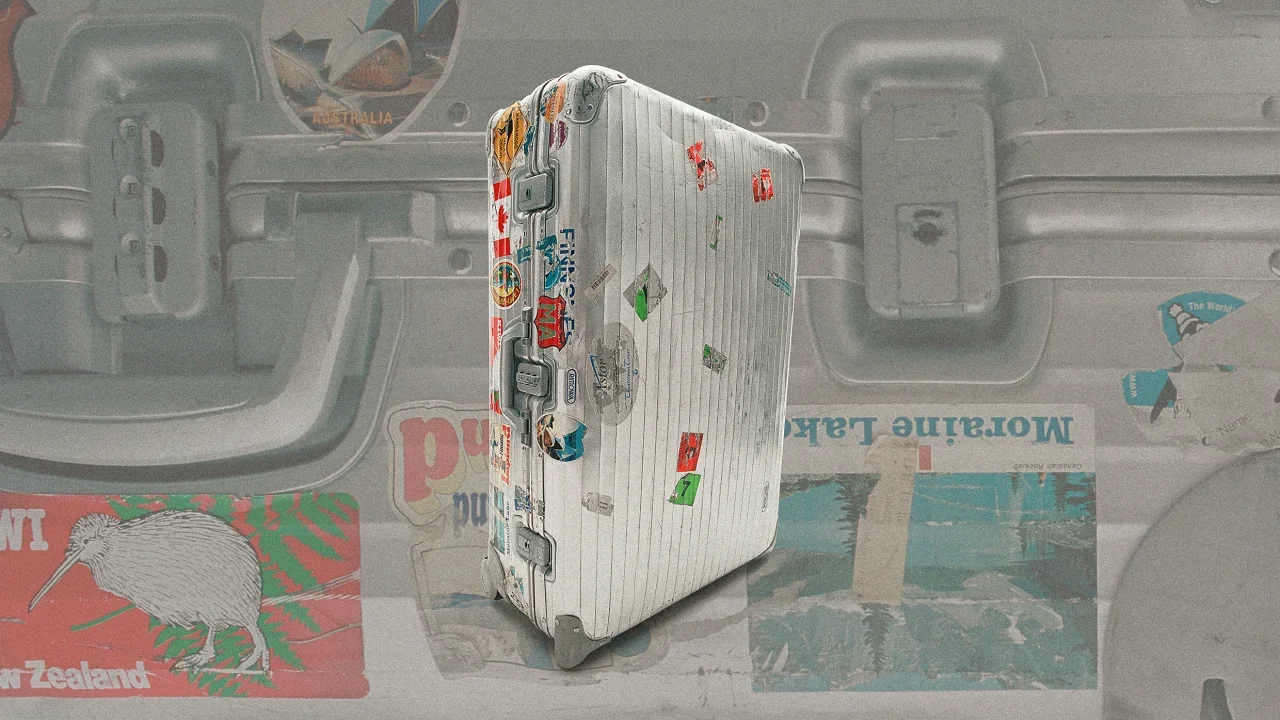
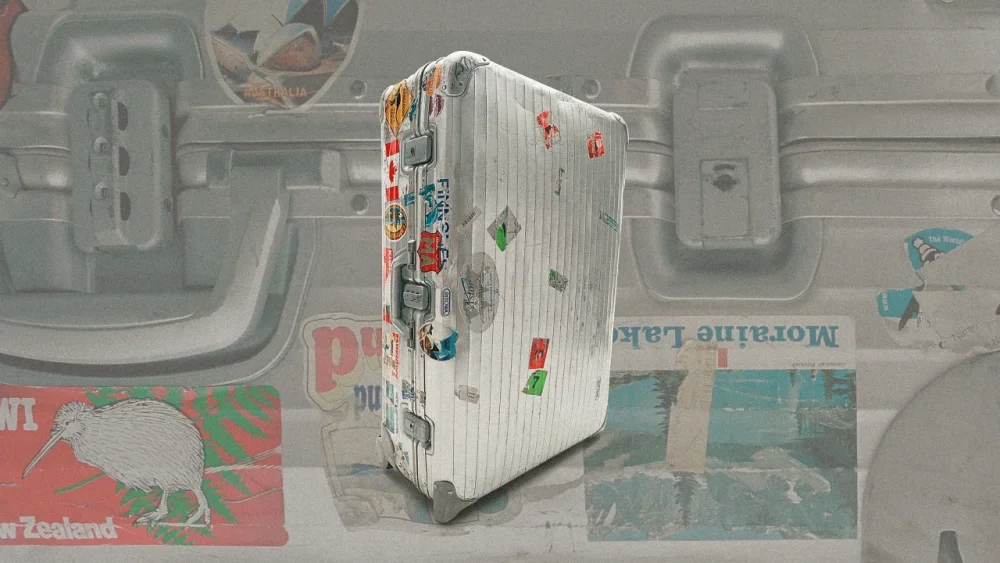
When brands like Patagonia or Eileen Fisher sell pre-owned products, they highlight how the pieces are in very good condition. That is not Rimowa’s strategy. Tomorrow, the German luxury brand is dropping a collection of vintage suitcases on its U.S. website that are covered in dents and scratches, old stickers, and luggage tags. And the wild thing is there is enormous demand for these beat-up suitcases, which cost between $600 and $1,000, generally around half the price of a brand-new Rimowa case. When the brand did similar limited-edition vintage drops in Germany, South Korea, and Japan, they sold out within minutes or hours. Over the last five years, as the fashion industry has tried to become more sustainable, many brands have started buying back old products and re-selling them to their customers. Rimowa is now following suit with a program called Re-Crafted. [Photo: Rimowa] Emilie De Vitis, Rimowa’s VP of product and marketing, says the company launched the program quietly, since it wasn’t sure how customers would react. In stores, the brand said it would buy back any authentic Rimowa suitcase for $300, no matter what condition it was in. It would then send them to one of its repair shops to be refurbished to ensure that they are as functional and reliable as a new one. “Some of them were so interesting that we saved them for our own archive,” says De Vitis. “But we also had dozens of suitcases that were in excellent condition.” Rimowa then sold these vintage suitcases online in various markets. And to the surprise of De Vitis, they often sold out within minutes. [Photo: Rimowa] Rimowa is very deliberately choosing to not spruce up the exterior of the suitcase or make cosmetic fixes to make the suitcase more attractive. For years, the brand has made the argument that the wear and tear on this luggage should be treated as a badge of honor, a sign of a well-traveled life. Two years ago, it launched a brand campaign called “A Lifetime of Memories,” which celebrated the dents, scratches, and stickers that customers acquire on their suitcases as they see the world. At it’s retrospective museum exhibit to celebrate its 125th anniversary, it displayed the well-worn suitcases of celebrities like Patti Smith to Roger Federer to Spike Lee. [Photo: Rimowa] The message seems to have sunk in. There’s a whole community of Rimowa fans who are looking for vintage suitcases. Some are specifically looking for older models that aren’t manufactured anymore, such as those that have only two wheels rather than four. Some love to see a unique assortment of stickers from the previous owners’ extensive travels. It’s like buying a piece of history. “Some people like to buy these vintage pieces because they come across as connoisseurs, who have known the brand for a long time,” De Vitis says. [Photo: Rimowa] Rimowa’s approach flies in the face of the modern fashion industry, which is obsessed with newness. Fast fashion brands creates cheap, disposable clothes so that customers can buy the latest looks and throw them away before a new trend pops up. This overconsumption is driving the planet to the brink of collapse. But Rimowa is trying to encourage consumers to see their suitcase as an object meant to last a lifetime. And it is rebranding everyday wear and tear as something to embrace. Tomorrow’s drop is likely to sell out quickly. But Rimowa plans to do several Re-Crafted drops throughout the year, as it slowly collects and refurbishes products that customers bring in. De Vitis says that, in the future, the brand might start collecting stories as they buy back pieces, because their owners might want to know what their suitcase has experienced in the past. “If you’re a romantic, you might imagine all the things this suitcase has seen,” De Vitis says. “Did it get its first scratch on a wild trip through a safari?” View the full article
-
The most frequent mistake companies make when applying? They fail to focus on a single, representative example of internally grown innovation. Here’s some advice on how to produce a more compelling application for Fast Company’s Best Workplaces for Innovators 2025. Get Real Jargon won’t win you any awards. Applications that read as if they were written to appeal primarily to an internal audience are not likely to earn high marks from our judges. Use clear language to describe your innovation programs. We’re looking for companies that do more than just talk the talk. Be Current Focus on a recent or ongoing example. We’re looking for current hotbeds of innovation—organizations that are working to sustain a creative culture and aren’t resting on the laurels of a handful of breakthroughs from a decade ago. Be Specific We’re looking to honor companies that are accomplishing real innovation, not merely laying the groundwork for future breakthroughs. In other words, focus on real projects delivering measurable results. Be Precise We want details. Who did what when, and how? How’d the idea come about? What initial hurdles needed to be overcome? How big was the team? How long did it take? How much investment was required? Emphasize Outcomes Tell us exactly what was accomplished and what it means. What are the impacts or implications for the company, the industry, the broader community? Be Democratic Your big idea may have originated in the C-suite, but (full disclosure) we’re a bit biased toward ideas that come from the bottom up, from unexpected sources (think interns) because a) they’re more surprising and make for better stories, and b) they are more indicative of a pervasive culture of innovation that rewards exploration at all levels. That said, wherever the idea originated, the emphasis should be on the quality of the innovation, the rigor with which it was pursued, and the inclusivity of the effort to bring the idea to fruition. Tell a Story Exhaustive lists of initiatives are boring. Pick a project that seems most emblematic of your own particular culture of innovation and tell the story. (See Be precise and Be democratic above.) You can always include at the end of your example a quick list of other significant recent efforts that have benefited from the same culture. Don’t Procrastinate This year’s deadline for Best Workplaces for Innovators applications is now just a few days away, March 28. View the full article
-
When construction started on a new affordable apartment building in Brooklyn, most of the work on the site happened very quickly. Instead of typical construction, cranes lifted giant modular units into the air—each made up of two separate apartments, plus the corridor between them—and set them into place. Trucks delivered nearly four dozen 60-foot-long “mods” from the factory where they were built in Pennsylvania, staging them next to a nearby cemetery in the Brooklyn neighborhood of East Flatbush. Then, each day for two weeks, construction crews stacked together as many as six of the units. (The massive size of the units made them more challenging to transport than a single modular apartment at a time, but the configuration helped shrink the time for installation on site.) [Photo: courtesy RiseBoro] The apartments were essentially 100% complete inside. (Appliances were strapped to the corridors and just had to be slid into place.) The crew only had to weld the units together and connect wiring and plumbing from each apartment to the hallway. After all of the units were attached, the crew added continuous insulation to the outside and finished other elements like the roof. [Image: courtesy RiseBoro] A project of this size, with 57 apartments and four stories, could have taken 30 months to build, says Yolanda do Campo, director of construction at RiseBoro, the nonprofit developer behind the project. Instead, it took only 22 months. A shorter timeline means significant savings. “Less construction time means fewer months of interest payments,” do Campo says. Interest payments for the project average around $100,000 a month. It also means, of course, that residents can start moving in faster. In this case, the apartments are limited to seniors in New York City’s affordable housing lottery, with a percentage of the units reserved for seniors who were previously homeless. The process has still taken time, in part because of the bureaucracy involved with the housing lottery. The building was completed last fall; the first residents started moving in in January and only a handful live there so far. But faster construction helped. [Image: courtesy RiseBoro] As builders gain more experience in modular construction, it could happen even more quickly. “I really do think that we do this a couple more times and we’re seeing a building come in 15, 16 months, which is somewhat unheard of for something like this,” says Grayson Jordan, principal at PCA, the architecture firm behind the building’s design. While modular apartment buildings are starting to become more common in cities, the project went a step further with a “passive house” design, meaning that it has ultra-low energy demand. The building is well-insulated and airtight. The hot water system runs on a heat pump. The apartments are all-electric and designed to run on solar power, so the building can get as close to net zero energy use as possible. “RiseBoro pays for some of the utilities of the tenants,” says do Campo. “So being passive house and saving energy is critical to the business model—besides contributing to sustainability, we lower the monthly bills.” RiseBoro has pioneered energy-efficient design in other projects, including adding sleek new facades to aging apartment buildings to help them shrink energy use by 80%. Outside, the south side of the building has stepped terraces instead of a flat wall, creating a series of outdoor community spaces for residents and more space for solar panels. There was a learning curve to using modular construction; since the local construction crew didn’t have expertise working with modular units, Riseboro had to help coordinate between the factory and the crew on the ground. But it will get easier in the future, Jordan says. “I see a way forward where this becomes just normal construction,” he says. “It does not seem like rocket science. It just seems like, OK, well, you did this the first time. Let’s work out the kinks.” There are some other potential cost advantages to doing most of the work in a factory offsite. Labor in the Pennsylvania factory is less expensive. And crews can build the modular units year-round without delays because of bad weather. Jordan hopes that it also will become standard for larger affordable apartment buildings. “I think it really makes a lot of sense,” he says. “It’s just a matter of really getting the people who make the decisions comfortable with the idea of building a little bit differently than they’re used to . . . I think we all know that there’s a great need for affordable housing, and this is one of several tools that I think could be powerful in meeting that challenge.” View the full article

-
Private sector output expands more than expected in March and at its fastest pace in six monthsView the full article