ResidentialBusiness
Administrators
-
Joined
-
Last visited
Everything posted by ResidentialBusiness
-
 Donatella Versace has been replaced as creative director of the fashion house founded by her late brother Gianni Versace, assuming the new role of chief brand ambassador, Versace’s U.S. owner Capri Holdings announced on Thursday. Versace will be replaced by Dario Vitale, who most recently was design director at the Miu Miu brand owned by the Prada Group. His appointment is effective on April 1. The creative shift comes amid speculation that the Prada Group is in talks to buy Versace from Capri Holdings, which paid 2 billion euros (currently $2.2 billion) for the fashion house in 2018. The U.S. group also owns Michael Kors and Jimmy Choo. Miuccia Prada acknowledged interest in the brand on the sidelines of Milan Fashion Week last month, while Versace made no comment at what was to be her last runway show. Versace, 69, took over as creative director in 1997, after her brother’s murder in Miami. Capri Holding’s statement made no mention of any plans to sell Versace, but the arrival of a designer from Miu Miu is only likely to fuel speculation of a possible deal. Versace CEO John D. Idol said in a statement that the creative shift was “part of a thoughtful succession plan for Versace.” He called Vitale “a strong leader,” and expressed confidence that “his talent and vision will be instrumental to Versace’s future growth.” As chief brand ambassador, Versace “will continue to champion the Versace brand and its values,” Idol said. Versace said she was “thrilled” as a champion of the next generation of designers that Vitale would join Versace and that she was “excited” to see the brand her brother founded in 1978 “through new eyes.” “It has been the greatest honor of my life to carry on my brother Gianni’s legacy. He was the true genius, but I hope to have some of his spirit and tenacity,” she said in a statement. “In my new role as chief brand ambassador, I will remain Versace’s most passionate supporter. Versace is in my DNA and always in my heart.” Versace represented 20% of Capri Holdings 2024 revenue of 5.2 billion euros. Capri recently laid out strategic plans to rebalance the Versace portfolio to return the brand to its more daring roots, increase sales of accessories and win back entry-level consumers put off by a post-pandemic focus on higher net-worth clients. —Colleen Barry, AP Fashion Writer View the full article
-
Study finds job embeddedness, not engagement, drives retention. Know How Korner With Donny Shimamoto Center for Accounting Transformation Go PRO for members-only access to more Donny Shimamoto. View the full article
-
Study finds job embeddedness, not engagement, drives retention. Know How Korner With Donny Shimamoto Center for Accounting Transformation Go PRO for members-only access to more Donny Shimamoto. View the full article
-
We may earn a commission from links on this page. Deal pricing and availability subject to change after time of publication. Practicing a new language can be fun, but premium language apps can be expensive. Babbel makes it easier with practical, bite-sized lessons designed for real-life use, focusing on conversations you’d actually have—ordering food, chatting with the locals, asking for directions (read PCMag's in-depth review of Babbel to learn more—and right now, its lifetime subscription is on sale for a huge discount. Normally $599, it’s currently 71% off on StackSocial, bringing the price down to $169.99, plus you can use the promo code LEARN40 to knock off another $40, dropping the final price to just $129.99. The sale ends March 23. That’s a one-time payment—no recurring fees, no monthly charges—for lifetime access to all 14 languages (including French, German, Italian, and Spanish), making it cheaper than Babbel’s regular one-year plan at $215.40 (usually discounted). Babbel’s lessons take just 10 to 15 minutes, so you can easily squeeze your practice into a commute or coffee break. And, unlike other language-learning apps that rely on repetitive vocabulary drills or random gamified exercises, Babbel follows a structured, linguist-designed curriculum that progressively increases in difficulty, so you don't plateau after the basics (earning itself a place in PCMag's "The Best Language Learning Apps for 2025" roundup). Plus, it’s not just passive learning—you get writing, speaking, and listening exercises with speech recognition technology to fine-tune your pronunciation, creating a far more immersive experience. Of course, dedication is still key, and no app will make you fluent overnight, but if you’re willing to put in the effort, this Babbel lifetime subscription gives you the tools to succeed—without the burden of ongoing costs. View the full article
-
Here is a recap of what happened in the search forums today, through the eyes of the Search Engine Roundtable and other search forums on the web. Google says hotlinking protection is fine for search engines...View the full article
-
As generative AI continues to shape website performance, much of the conversation has focused on its negative impact. Factors like AI Overviews, increased zero-click searches, and a growing demographic that turns to ChatGPT instead of traditional research methods may all play a role. While these shifts raise concerns, it’s equally important to examine the traffic these AI engines are driving to websites. To better understand this, we analyzed traffic data from 391 SMB websites, breaking them down by industry and AI search engine referrals. Our goal was to see exactly how much traffic these companies were getting – and whether it was significant enough yet to warrant a strategic pivot. Screenshot of our executive dashboard with a breakdown of AI referral traffic over the last six months. Key takeaways Our analysis of traffic data from 391 SMB websites revealed some interesting insights about how generative AI is contributing to visits. Key points from this study include: Consistent growth in ChatGPT referrals over the last six months. While other AI engines fluctuate month to month, ChatGPT has been up 123% since September and has consistently been the largest referrer. Notable increases in AI referral traffic relative to organic traffic over the past six months. Industry-specific differences in AI referral traffic patterns. Travel and finance websites see higher AI referral volumes from ChatGPT, while Perplexity and Gemini play more significant roles in health and ecommerce. Referral traffic from generative AI is on the rise One significant insight from studying this data is the clear increase in the amount of referral traffic websites are receiving. Between September 2024 and February 2025, referral traffic from generative AI rose by 123%. Comparing this to overall organic traffic highlights why this trend is worth monitoring. Six months ago, AI referral traffic amounted to 0.54% of organic traffic. Today, that ratio is 1.24% of organic traffic. This means the share of AI traffic to organic traffic has increased by 130% in the last six months. While the share is still relatively small, the pace at which it is growing warrants attention. It’s also important to note that organic traffic remained relatively constant during this time. Graph showing the ratio of AI referral traffic to organic traffic for 391 SMB websites over the last six months. Dig deeper: Google Search is 373x bigger than ChatGPT search Referral traffic trends over time While overall AI traffic has clearly increased recently, the consistency of referral traffic growth fluctuates depending on the AI engine. ChatGPT has consistently provided more referral traffic month over month for the last six months. Perplexity and Bing (edgeservices) fluctuate wildly month over month. Gemini remains flat most months while jumping up every once in a while. Despite these fluctuations, ChatGPT has consistently been the largest source of AI referral traffic, incrementally adding an average of 21% more traffic each month. Get the newsletter search marketers rely on. Business email address Sign me up! Processing... See terms. Industry fluctuations ChatGPT consistently drives the most AI referral traffic across all industries. However, as AI referral traffic continues to grow, other platforms like Perplexity and Gemini are also contributing meaningfully. When examining traffic by industry, notable differences emerge. Travel and finance websites receive the highest ratio of AI referral traffic from ChatGPT. Meanwhile, Perplexity accounts for nearly 20% of AI traffic to health and ecommerce websites, with Gemini also contributing a notable share to ecommerce. These patterns raise important questions about user behavior and how AI search engines manage citations and referrals: Do different demographics prefer certain AI search engines? How does conversational search behavior vary when users inquire about specific industries? Why does Gemini refer so little traffic to travel sites but a substantial amount to ecommerce? Could this reveal insights into how AI Overviews prioritize industries? Next steps As AI and search evolve, new questions will likely emerge alongside new insights. The impact of AI search engines on website traffic will continue to shift, requiring businesses to stay adaptable. One key consideration is identifying the threshold at which investing in AI-specific optimization becomes worthwhile. While traditional SEO tactics and AI citation strategies often overlap, they are not identical. For SMBs, balancing these priorities can be challenging given limited resources. Agencies, therefore, play a crucial role in staying informed and guiding businesses through these changes. As AI platforms continue to evolve, ongoing monitoring and strategic pivots will be essential to ensure businesses can benefit from AI-driven traffic – not just mitigate its potential downsides. About the data This analysis is based on data from 391 SMB websites, segmented by industry and tracked via Google Analytics to measure AI referral traffic specifically. The study focused on the past six months, when referral traffic grew significantly. Only industries with statistically significant data were included, and only prominent AI search engines were highlighted. Engines that referred some traffic but lacked sufficient data for confident reporting include (in order of volume) Jobright AI, Blackbox AI, Allfree AI, and Careerflow AI. Dig deeper: AI search engines often make up citations and answers: Study View the full article
-
And why it’s worthwhile. By Hitendra Patil Client Accounting Services: The Definitive Success Guide Go PRO for members-only access to more Hitendra Patil. View the full article
-
And why it’s worthwhile. By Hitendra Patil Client Accounting Services: The Definitive Success Guide Go PRO for members-only access to more Hitendra Patil. View the full article
-
We may earn a commission from links on this page. Deal pricing and availability subject to change after time of publication. The Hisense 75U6H ULED TV is now down to $488 from $698, making it a solid budget pick for those who want a big-screen experience without spending over a grand (or even half a grand). Hisense 75U6H ULED TV $488.00 at Walmart $698.00 Save $210.00 Get Deal Get Deal $488.00 at Walmart $698.00 Save $210.00 This PCMag Editor’s Choice-winning 75-inch 4K TV delivers bright, vivid colors thanks to its quantum-dot technology and local dimming backlight, giving a noticeable boost to HDR content. That said, its contrast isn’t as deep as pricier models, and while colors pop, blacks can look a little washed out. It supports Dolby Vision, HDR10, and HLG, ensuring compatibility with most modern streaming content. However, it’s a 60Hz panel, meaning motion might not feel as smooth as on higher-end models—something gamers might notice. It does include VRR (variable refresh rate), but without AMD FreeSync or Nvidia G-Sync, serious gamers might want to look elsewhere. Additionally, its input lag sits at 11.1 ms, which is acceptable for casual gaming but not ideal for fast-paced competitive play, notes the PCMag review. For streaming and smart features, this TV runs on Google TV, which means a smooth interface and access to all major streaming services like Netflix, Disney+, Apple TV, HBO Max, and more. It supports Google Assistant hands-free, letting you control the TV or smart home devices just by saying, “Hey Google.” If you’re an Apple user, AirPlay 2 is also supported, so you can stream directly from your iPhone or Mac. The TV’s remote is pretty standard with a large circular navigation pad, volume and channel rockers, and dedicated buttons for streaming services like YouTube, Prime Video, and Netflix. There’s also a built-in mic on the remote, so you can use voice commands without shouting at the TV. The TV includes four HDMI ports (one with eARC), two USB ports, an Ethernet port, an optical audio output, and multiple 3.5mm jacks for headphones and other connections. It also features a cable tuner, though it doesn’t support ATSC 3.0. For setup, you can place it on a tabletop with its metal legs or mount it on the wall using VESA-compatible screws. View the full article
-
Want to 2X, 3X, or even 4X your ecommerce sales? Start by diagnosing what’s working on your site and what isn’t. Then, apply targeted fixes based on real data. Not hunches. In this guide, I’m sharing my lessons and strategies from 10+ years in digital marketing. Plus, I interviewed four leading ecommerce website optimization experts for their best conversion-driving insights: Leigh McKenzie from UnderFit (also head of SEO @ Backlinko) Rishi Rawat from Frictionless Commerce Anna Bolton from Conversion Copy Co. Kurt Philip from Convertica Let’s start by identifying the biggest roadblocks standing between you and more revenue. Phase 1: Analyze and Diagnose Your Site’s Existing Issues Every effective ecommerce website optimization strategy starts with a solid, data-driven diagnosis. As economist W. Edwards Deming once said: “Without data, you’re just another person with an opinion.” Quantitative Research: Finding Patterns in the Numbers Quantitative research focuses on analyzing data to identify trends and behaviors. It helps you answer questions about your online store’s performance, such as: Where are visitors dropping off in the funnel? What are users actually doing on each page (scrolling, clicking)? How does behavior differ across traffic segments (e.g., mobile vs. desktop, organic vs. paid)? The good news: There are many tools to help you with this analysis. Google Analytics (GA4) Google Analytics provides helpful insights into user behavior and website performance. Including how visitors from different traffic sources behave. For example, to uncover drop-off points during checkout: Navigate to Reports > Monetization > Checkout journey. This lets you examine the flow from checkout to purchase. And analyze abandonment rates for each stage to identify potential bottlenecks. For example, a high abandonment rate on the payment page might signal technical issues. Or trust barriers, such as last-minute doubt about product quality. Pro tip: There’s no universal definition of a high abandonment rate. It varies by industry, funnel, and goals. Compare it against your historical data to see if there’s a problem. Hotjar Hotjar, a heatmap and behavior analytics tool, is incredibly powerful for qualitative research (more on that soon). It gives you a clear picture of how online shoppers interact with your site. And lets you uncover friction points that frustrate users. For example, click tracking reveals where visitors interact with your site. And which elements get the most engagement. Scroll heatmaps show you how far users make it down a page. And where they drop off. Warm colors (like red) indicate higher engagement. And cool colors (like blue) signal lower engagement. Move heatmaps track how shoppers move their mouse across the page. This reveals areas of interest and hesitation. Session replays let you watch real user recordings, showing exactly how visitors navigate your site. Watch this in action below: Semrush Site Audit Semrush’s Site Audit tool uncovers technical issues that affect SEO and the user experience (UX). For example, it flags crawl errors, which are usually caused by broken links or incorrect redirects. These dead ends confuse users and make it harder for search engines to crawl your pages. (And if Google struggles to crawl them, your ranking can take a hit.) The tool also identifies slow-loading pages that frustrate visitors. It can also identify code bloat (aka too much JavaScript or unused CSS) that makes pages sluggish. This can cause delayed interactions that lower conversion rates. Qualitative Research: Uncover the “Why” Behind the Data Qualitative research helps you understand why customers behave the way they do. Including their pain points, motivations, and desires. It also helps you identify barriers to conversion, such as hesitations about buying. And learn about other products your web visitors are considering. Qualitative Research Methods There are many data sources for qualitative insights. And each one can reveal different issues and opportunities: Research Method What to Look For Effort level Recorded sales calls Patterns in customer questions, objections, or recurring themes Low Live chat transcripts Common pain points, frequently asked questions, or sources of confusion Low Customer reviews Trends in positive and negative feedback. This includes specific phrases or words that highlight desires, frustrations, or expectations Low Online surveys Customer sentiment toward brand messaging and tone and reasons for abandonment Low to medium Customer interviews Insights into customer motivations, needs, anxieties, and desires in their own words Medium to high User testing sessions Usability issues, unexpected user behaviors, or areas where users struggle to complete tasks High But you don’t need to go all-in on every qualitative method right off the bat. Start with the data you already have. Then, gradually level up as time and resources allow. Turn Your Research Into Actionable Insights You’ve got the research. Now, you need a system to organize it. As Anna Bolton, chief CRO and conversion copywriter of Conversion Copy Co., says: The challenge isn’t just gathering research—it’s making sense of it. Whether you’re analyzing heatmaps, surveys, or reviews, you need to turn that data into meaningful insights. This starts with proper analysis to identify key patterns and trends. And then you need to understand that data in context—what it means for your business, audience, and goals. That’s what turns raw data into results. So, what do you do? Build a research repository to bring all your insights together in one place. Think of it as a living database of findings and insights. This way, it’s easier for you to act on data. But you don’t need anything fancy. Start with a simple spreadsheet. Include everything from customer research (interviews, surveys) to conversion rate optimization (CRO) results and survey data. For example, Anna and I use a spreadsheet like the one below for one-off client projects. For larger-scale projects, use UX research tools like Aurelius Lab and Dovetail. These tools offer more advanced ways to store, categorize, and retrieve insights. Phase 2: Apply Ecommerce Website Optimization Fixes to Increase Conversions The ecommerce website optimization best practices we’re about to cover are designed to do one thing: Improve the customer experience. And when you do that, conversions naturally follow. Side note: If you’re here for SEO tips, stick around. While I’m focusing on conversion rate optimization, CRO and SEO are becoming increasingly intertwined. Anything you do to make your site better for humans will also make Google happy. As Leigh McKenzie, head of SEO at Backlinko and owner of UnderFit, says: “Conversion rate optimization is becoming more and more an SEO responsibility. Google heavily rewards websites that deliver a positive user experience. It’s no longer about just bringing traffic. It’s also about what happens when people get there.” 1. Boost Page Load Times Fast-loading pages are non-negotiable for a great user experience. Ignore speed, and conversions and bounce rates will suffer. But increase speed. And good things follow. Take Vodafone, for example. After optimizing their Core Web Vitals, they saw: 8% more sales 11% boost in cart-to-visit rates 15% jump in lead-to-visit rates Test your site speed (and Core Web Vitals) with tools like Google’s PageSpeed Insights. Here’s what to aim for: For Largest Contentful Paint (LCP) target under 2.5 seconds. For Interaction to Next Paint (INP), 200ms or less. And for Cumulative Layout Shift (CLS), keep it below 0.1. How to Optimize Page Speed Not hitting Core Web Vitals benchmarks? Here’s how to fix that: Start with a content delivery network (CDN) like Cloudflare or AWS CloudFront. It speeds up your site by delivering content from servers closer to your users. This reduces lag and load times. Next, upgrade to high-performance hosting to minimize server response delays. Plus, use tools like Tinify to shrink uncompressed images while preserving quality. Then, clean up unnecessary code. You can do this with tools like Terser, which helps improve rendering speeds. Lastly, don’t forget browser caching. This helps repeat visitors load your site faster by storing assets locally. Note: Use the Semrush Site Audit Tool to identify and fix Core Web Vitals issues. Get a 14-day Semrush trial here. Further reading: Technical SEO: The Ultimate Guide 2. Optimize High-Impact Pages First Want to see results fast? Begin with the pages that offer the quickest wins, such as product and checkout pages. This is what Rishi Rawat, product page optimization specialist at Frictionless Commerce, does. I work exclusively on bestselling product pages because they have the highest impact. My goal is to turn first-time visitors into buyers. Since these pages already drive a big share of the store’s revenue, I don’t spread optimization efforts thin. Instead, I improve the sales pitch and sharpen the product story. And then I make what’s already working even more persuasive. So, how do you identify your site’s high-impact pages? Look at where a page fits in the marketing funnel. Start with the pages closest to the sale. These are the pages that attract visitors in the decision and action stages. Such as product pages or the cart page. But you might also include other pages based on user behavior. For example, optimize the product and cart pages if your site has high cart abandonment. This ensures the product page sets the right expectations. So, when shoppers get to checkout, they feel confident in their choice. But, if your goal is to boost mobile sales, optimize the mobile experience first. Want to maximize paid ads conversions? Make product landing pages a priority. 3. Make Navigation and Search Intuitive Shoppers don’t always leave because they dislike your products. Sometimes, they leave because they can’t find what they’re looking for. That’s why navigation plays a big role in ecommerce website optimization. If your navigation makes users rethink their next step, you’re already losing them. For example, imagine you’re searching for dog crates on pet company Chewy’s website. You sort the results by price. But now, the first products you see are lock latch replacements and crate pans—not dog crates. That’s a bad user experience. And it might cost them the sale. The solution? Always test filters before launch to ensure they work as expected. And design navigation to adapt to various browsing behaviors. Make backtracking easy with breadcrumbs and a “Recently Viewed” section. Plus, use AI to suggest relevant filters, related categories, and top products. Navigation also impacts SEO. As Leigh put it, Good navigation isn’t just about getting users to a page. It’s about keeping them engaged in the shopping process. Shoppers want to see product variations, compare options, and refine their choices easily. When they do, they stay longer. And that’s what Google values. It favors sites where users engage rather than bounce back to search results. That’s why you want to optimize for getting people deeper into the experience. Further reading: 5 Proven Ecommerce Growth Strategies ($0 to $100 Million) 4. Fix Product Page Issues Have low-converting product pages? They might be missing key information, like sizing or dimensions. So, don’t give shoppers reasons to doubt the purchase. Provide vital details clearly and compellingly. Here’s what I mean. For clothing and shoes, essential buying criteria include fit, size, and return policies. Include details like aggregate “fit” subscore (a summary of how well an item fits based on user reviews). Especially for items like jeans. The clothing site Everlane includes user-reported fit data right on their product pages. For furniture, you’d want to include dimensions, materials, assembly, warranty information, and more. But displaying this information isn’t enough. It needs to be easy to find and absorb. That’s why Wayfair includes a clear, at-a-glance product details section. For food and supplements, ingredients and nutrition details are non-negotiable. Supplement company AlgaeCal prominently displays these details right in the hero section. Your product image gallery is another potential reason for low conversions. But don’t just show your product. Use it to tell its story. I love how Huel, a plant-based food company, does this. It adds key selling points directly onto product photos. Like nutrition facts and product benefits. User-generated content (UGC) also works well as an addition to your photo gallery. It can also boost credibility by showing your products in real life. Videos provide an even richer view. Clothing company ASOS includes short video clips that show how clothing moves and fits on real people. 5. Make Checkout Easy Checkout is a fragile part of the conversion funnel. It’s the moment when the customer is closest to buying. And most likely to hesitate. That’s why 65% of shoppers abandon their carts before completing a purchase. Ouch. So, what should you do? Make the checkout process effortless. Consider Amazon’s one-click checkout. The less thinking required and the faster the process, the higher the conversions. One way to do this? Strip the checkout process down to the essentials. For example, only ask for the bare minimum in your checkout form. Name Email Delivery address Billing address Payment details If you must ask for additional details—like a phone number—explain why. Transparency reduces friction. If checkout requires many steps, use a progress indicator. It shows shoppers how far they are in the process. This reduces uncertainty and keeps them moving forward. Guest checkout is non-negotiable. Why? Forcing users to create an account hurts conversions. Over 26% of shoppers abandon checkout when forced to create an account. Let them buy first. Then, invite them to create an account after the purchase. That’s what Boots, a health and beauty retailer, does. As Kurt Philip, CEO of Convertica, says: Forcing people to create an account is an unnecessary barrier. You can just auto-generate one for them. Let them check out first, and then send them a confirmation email with their details. And a ‘Set Your Password’ option later. That way, the process stays frictionless, and they still get an account without effort. But consider this: Your job doesn’t stop when someone adds an item to the cart. This is your chance to remove any last-minute hesitation and get the sale. Ridge Wallet, an accessories manufacturer, does this well. It displays social proof at the top of the checkout page by highlighting its “100K+ 5-star reviews.” It also includes trust boosters like a risk-free trial and fast shipping. Outdoor gear company Patagonia highlights its “Ironclad Guarantee” on the checkout page. This reassures buyers that buying is risk-free. And it also strengthens Patagonia’s credibility. Clothing company Everlane also understands the power of timing. It reminds shoppers of first-time buyer discounts at checkout to encourage them to take advantage of savings. Helping to reduce cart abandonment. And convert hesitant buyers. 6. Write Copy That Educates and Persuades Conversion copy isn’t just about clever wording. It’s about guiding shoppers to action through clear information and persuasive web design. Clarify Your Message First-time visitors should instantly understand what you sell and who it’s for. Boom Beauty’s product page is a great example. Their copy clearly communicates both product purpose, ideal customer, and benefits: “Three multitasking beauty essentials” “Three sticks. Endless Possibilities.” “Simplify your beauty routine” Layer Persuasion Principles into Every Page Preemptively address objections with persuasion principles. Kitchenware company Caraway does this by answering a key question upfront: “Is this cookware safe?” Right away, shoppers see “Non-Toxic Coating.” And the copy underneath provides more details about the toxic materials you won’t find in their cookware. Balance Benefits and Features As they browse, shoppers are constantly thinking: “What’s in it for me?” That’s why you need to list benefits along with features. Menswear brand Spoke London does this well. On their homepage, they highlight what makes their menswear different. Like a “flawless fit” and “uncompromising design.” Use Design to Support Your Copy Strong copy needs equally strong visuals. When I wrote copy for a face mask product page, the design amplified my key messaging by: Showing how the mask is worn Using close-ups to prove quality claims Creating a clean, scannable layout Together, they created a more persuasive shopping experience. 7. Optimize for Mobile Buyer Behavior Mobile shoppers think, browse, and buy differently than desktop users. In fact, there are four key behavioral differences, according to a study. This includes their search behavior, cognitive effort, engagement, and position in the funnel. Behavioral Differences Mobile Shoppers Desktop Shoppers Search Behavior Less diverse searches More diverse searches Cognitive Effort Prefer tasks requiring less cognitive effort Have the patience for tasks that involve more research or exploration Engagement Fewer visits and fewer searches per visit More visits and more searches Position in the Funnel Tend to be more advanced in the conversion funnel More evenly distributed between research and decision stages This means you can’t just shrink your desktop site and call it mobile-optimized. Instead, design for how mobile users actually shop. First, reduce cognitive load—the mental effort required to complete a task. It’s higher on mobile due to smaller screens and limited navigation options. Show only essential information first, then reveal more as needed. This “progressive disclosure” keeps pages focused and reduces overwhelm. Sephora is a great example of this. Like many ecommerce sites, they first used a hamburger menu to simplify navigation. But, their research showed users were still experiencing friction. So, they replaced the hamburger menu with a scrollable navigation and pop-up filters. Top categories appeared first, and more filters were accessible as needed. The result? A measurable increase in mobile engagement and conversions. Another way to improve the mobile experience is by minimizing typing and input friction. You can do this by: Auto-switching to the right keyboard (numeric for credit cards, email for logins) Enabling autofill for addresses and payment details to reduce manual typing Using dropdowns and prefilled options to speed up form completion Ensuring buttons and links are large enough to tap easily without zooming Mobile users also want fast search and filtering options. Use predictive search with auto-suggestions based on past searches and popular queries. 8. Personalize the Shopping Experience Forty percent of ecommerce customers expect a personalized experience. But you don’t have to personalize everything. The goal is to make shoppers feel like you understand their needs. Not that you’re watching their every move. For example, motorcycle gear company Revzilla dynamically adjusts shipping information based on user behavior and location. The banner updates instantly when I visit, displaying region-specific shipping details. Though it’s a U.S.-based site, it tailors content for my location in Croatia. It’s one small change. But it resolves a key concern before it even becomes a question. This reduces friction in the buying decision. So, what else can you personalize? Here are some examples. Tiffany & Co. has a slide-in window for returning visitors that welcomes you back. And encourages you to “continue shopping” by reminding you of the products you’ve viewed. Amazon personalizes its homepage based on your buying behavior, displaying: Products you’ve viewed and bought Deals related to your past interactions Effective personalization relies on four key data types to create tailored experiences: First-party data (profiles, quizzes, preferences): This lets you personalize recommendations based on customer input Browsing behavior (page views, search patterns, cart activity): Helps adapt content in real-time CRM data (buying history, abandoned carts): Powers retargeting campaigns and perfectly timed offers Predictive insights: Uses AI to analyze patterns and predict needs 9. A/B Test to Learn. Not Just to Win. At the heart of ecommerce website optimization is A/B testing. But here’s the thing: Your goal isn’t just about finding a “winning variation.” It’s to learn more about the psychology of your buyers. As Jonny Longden, chief growth officer at Speero, puts it: When you run a test, whether it wins or loses is in some ways irrelevant because you can learn something from it. Some of the most successful tests that you will run happen as a result of a test that lost. When you chase winners, you ignore that fact. For example, if a trust badge increases conversions, the real takeaway isn’t just that the badge works. It’s that customers need more reassurance before they give you their credit card. This insight goes beyond checkout. It suggests that trust signals should be reinforced earlier in the buying journey. On product pages, in the cart, and even in post-purchase messaging. Why? If hesitation exists at checkout, it likely started long before. One more thing. A/B testing only works if you have enough traffic to reach statistical significance. Kurt says your test page should receive at least 10,000 visits per month. This gives you meaningful insights in a reasonable timeframe. But traffic alone isn’t enough. What matters is whether you can reach statistical significance. This ensures your results aren’t just due to chance. To determine the right sample size, use Optimizely’s A/B Test Sample Size Calculator. Now, if your traffic is too low, A/B testing may not be the best tool yet. But that doesn’t mean you can’t optimize your ecommerce website. Here’s what you can do instead: Multi-armed bandit (MAB) testing dynamically directs traffic to better-performing pages. It doesn’t wait for statistical significance. Instead, it continuously reallocates traffic in real time to maximize conversions as data is collected. Another alternative is pre/post testing. Instead of splitting traffic, test one variation for a set period and then switch to another. Finally, make high-impact changes like a full rewrite and redesign of a product page. These larger changes are more likely to yield noticeable improvements. Transform Your Ecommerce Site into a Sales Machine The bottom line: You could be leaving thousands of dollars on the table with your ecommerce site. Optimize it the right way, and you could double—or even triple—your revenue. Remember, diagnose first and then make strategic, high-impact changes. Want more proven ecommerce website optimization strategies to boost your sales? Our definitive guide to conversion rate optimization includes: A/B testing basics A blueprint for high-converting landing pages Conversion copy tactics that persuade The post 9 Ecommerce Website Optimization Tactics [Expert Insights] appeared first on Backlinko. View the full article
-
As buzz around women’s sports continues to grow, the largest dedicated female sports fund just got larger. Monarch Collective, the first and largest investment platform that exclusively invests in women’s sports, announced Thursday that it has expanded its fund size from $150 million to $250 million. The increased capital will allow the fund to capitalize on what it calls a “rapidly accelerating market”: women’s professional sports teams that have been increasingly filling seats. “Since launching our fund last year, women’s sports has experienced a cultural transcendence and the ecosystem has evolved dramatically, making the need for operational, value-added capital even more important than it once was,” said Kara Nortman, managing partner of Monarch Collective, in a statement. “Now is the time to build the right community around the table and deploy new playbooks that will win.” Big-name investors on board The fund touts high-profile investors, who contributed to the majority of the new infusion of capital. According to a press release, they include Melinda French Gates’s Pivotal Ventures; Hello Sunshine CEO Sarah Harden; and Beth Brooke, former global vice chairman of public policy at EY. The growth of Monarch Collective aligns with an increased interest in women’s sports more broadly. Over the last few years, viewership of games has soared alongside merchandise sales and tickets sold. Last year, the National Women’s Soccer League (NWSL) reached 2 million total attendance. Monarch’s current profile includes three NWSL teams: Angel City Football Club, BOS Nation FC, and the San Diego Wave FC. But the main driver of this women’s sports boom is basketball at both the collegiate and professional level. Last year, “Caitlin Clark mania” drove record-shattering viewership and revenue toward the Women’s March Madness tournament last year. The women’s championship game was the most-watched basketball game on ESPN since 2019—among all men’s, women’s, collegiate, and professional games. And ever since Clark joined the WNBA for the 2024 season, that league has more than tripled its number of sell-outs. ‘Meaningful change’ This year, get ready for the hype around women’s sports to continue. Women’s March Madness begins next Wednesday, and sports-centric X accounts have already begun to share their excitement about seeing stars like Paige Bueckers and JuJu Watkins playing on national television. “Some may say we’re at a pivotal moment in women’s sports, but to us, it’s much bigger than that,” said Jasmine Robinson, managing partner of Monarch Collective, in a statement. “Along with our investors, we believe we have the power to drive meaningful change that is representative of today’s diverse ownership groups, management teams, and fan bases.” View the full article

-
Mia Francis, a 22-year-old barista from Boston, filed her taxes on her own this year for the first time, using a free government tax filing program that made it easy because it did most of the work for her. Francis said it took 45 minutes to finish her taxes with the IRS Direct File program, an electronic tax return filing system that the IRS made permanent last year and that has rolled out to 25 states. Francis is expecting a $530 refund. And because she saved cash by not using a commercial tax preparation company to file her taxes, “that money will go a long way,” she said. She plans to use it for a trip to Amsterdam this year. Despite its popularity with Francis and other members of the American public, the IRS Direct File’s fate remains unclear as Elon Musk and the Department of Government Efficiency cleave their way through the federal bureaucracy. So far, the program is still available for use ahead of the April 15 tax filing deadline, and Treasury Secretary Scott Bessent committed during his January confirmation hearing to maintaining it, at least for this tax season. Representatives from the Internal Revenue Service and DOGE did not respond to requests for comment from The Associated Press on their plans for Direct File. But one Republican tax expert says the IRS never got congressional authorization to create Direct File. And Republican lawmakers and commercial tax preparation firms complain the program is a waste of money because free filing programs already exist, although they are hard to use. Direct File was rolled out as a pilot program in 2024 after the IRS was tasked with looking into how to create a “direct file” system as part of the money it received from the Inflation Reduction Act signed into law by President Joe Biden in 2022. Last May, the agency announced that the program would be made permanent. The IRS accepted 140,803 returns filed by taxpayers using Direct File in the 12 states where it was available last tax season. It’s been expanded to include half the country this year. It is unclear how many taxpayers have used Direct File this year. Merici Vinton, an original architect of Direct File from the U.S. Digital Service, noted the ease and accessibility of the program and called it “a great example of how people should interact with the government in the 21st century.” “We effectively launched a startup in the IRS,” she said. “It was built by an in-house product team, in an iterative manner, and we ship updates to the software to improve user experience in real time based on feedback. If we continue to invest in it, both taxpayers and the IRS can benefit.” Musk posted last month on his social media site that he had “deleted” 18F, a government agency that worked on technology projects such as the IRS’ Direct File program. This led to some confusion about whether Direct File is still available to taxpayers. However, conversations inside the IRS indicate that no decision has been made on whether to cut the program, two people familiar with these conversations tell the AP. Former IRS Commissioner Daniel Werfel, who oversaw the rollout of the program, said Treasury officials considering the future of the program should take into account “the voice of the taxpayers.” “My reflection is that taxpayers are in very different situations and have very different preferences for how they want to file,” he said. “Those whose preference is to file electronically direct with the IRS for free, it’s a good option to have on the menu. But it should not replace other options.” Derrick Plummer, a spokesperson for Intuit, one of the country’s largest commercial tax preparation firms, said free tax preparation had been available for years before Direct File came along. “IRS Direct File is a solution in search of a problem, a waste of taxpayer dollars and a drain on critical IRS resources,” he said. A June 2024 Treasury Inspector General for Tax Administration report estimates that the annual costs of Direct File may range from $64 million to $249 million. “The IRS should focus on its core mission including data privacy and customer service while policymakers in Washington focus on simplifying the tax code,” Plummer said. However, other taxpayers, like 31 year-old Aquiel Warner in Austin, Texas, say they want to avoid using commercial tax preparation software. Warner filed her taxes with Direct File in 10 minutes using her phone and a chatbot that the IRS provides. She likes the program’s convenience, that it prepopulated her tax forms and that it allowed for free filing. Although she has some concerns about data privacy in the government — DOGE is reported to have access to some of the IRS’ internal systems — she feels more secure going through the IRS than commercial tax preparation services. “I don’t want to be a product. I don’t want my information sold when I file my taxes,” she said. “I have to file my taxes, and I don’t want to be put in a situation where, in order to file my taxes, I have to pay to get the help I need because I’m not a professional tax preparer.” Grover Norquist, president of Americans for Tax Reform, said the IRS never got explicit permission from Congress to create the Direct File system. “It really doesn’t matter if it’s a good idea. It was done illegally,” he said, calling on Congress and the Justice Department to look into what he says is unauthorized spending that went into the creation of Direct File. Democratic lawmakers in January asked Bessent and IRS commissioner nominee Billy Long to preserve the program. They wrote in a letter that “ending Direct File would hurt everyday Americans.” Long has not yet received a nomination hearing. In the meantime, Musk and his cadre of computer programmers could decide to wield their tech skills to boost the program — or use the very same digital savvy to delete it. For his part, Werfel hopes that the agency will keep the program. “It’s a big country with a lot of taxpayers with a lot of different preferences,” he said. Francis, the Boston barista, hopes so, too. “There are a lot of young people like me who are working and figuring out how to file their taxes — this just makes it faster and easier,” she said. —Fatima Hussein, Associated Press View the full article

-
When temperatures start to rise, many of us naturally want to open the windows, deep clean, and get rid of clutter. Why not apply that same refreshing ritual to your finances? Just as you'd prune the plants in your yard, you can trim wasteful money habits and plant seeds for new financial goals while preparing for the April tax deadline. Get out the (figurative) feather duster and give your budget a thorough once-over. Get your filing ducks in a rowMake assembling your tax documents part of your spring cleaning ritual. Have a designated folder or binder to compile W-2s, 1099s, mortgage interest statements, donation receipts, and any other necessary forms. Securely discard what you don't need, like paid bills or returns/documents that are six or more years old after you file. Proper record-keeping makes tax season far less stressful next time. As an example, use a folder or digital system with separate sections for income, deductions, credits, and prior year documents to stay organized. Good news: I've created a downloadable tax preparation checklist you can use as your personalized roadmap through the filing process. Conduct a money check-in I also recommend taking stock of your overall financial situation. And trust me, I know what it's like when the thought of looking at your personal finances makes your stomach churn. But if you want to regain control over how much you're spending and saving, you need to understand exactly where your money is going. Gather your latest bank statements, pay stubs, bills, and debts. Use a trusty budgeting app or spreadsheet to calculate your monthly income versus expenses. This bird's eye snapshot reveals if you're living within your means or drowning in debt. If you examine your last 90 days of spending, you’ll probably find you can cut back on areas you don’t even realize you’re wasting money (overlooked subscriptions come to mind). It also helps to get on top of your unconscious spending with tricks like physically writing down the things you want to buy before you buy them. For example, say your net monthly income is $4,500 while expenses ring in at $4,100. You'd have $400 leftover each month to put towards goals like saving or paying down debt faster. Tackle lingering high-interest debt Speaking of debt, your top priority should be eliminating any you're paying high interest rates on, such as credit cards. List out all debts by interest rate from highest to lowest. Put as much as you can each month towards the highest interest debt first while paying minimums on the rest. As an example, if you owed $10,000 at 19.99% on one credit card and $5,000 at 0% on another, focus on aggressively paying that high 19.99% balance down first. Automate finances where possibleSpring is all about embracing new habits and getting organized. Now's an ideal time to arrange automatic payments and transfers so your finances run smoothly in the months ahead: Arrange to automatically pay all bills from a hub account Set recurring transfers to divert funds into separate savings buckets for different goals Sign up to automatically increase your 401(k) or IRA retirement contributions each year Clear account/credit clutter While you're going paperless, clean out mystery charges on your bank or credit card statements. Root out any zombie subscriptions or recurring fees for products/services you no longer use or need. These small money drains can easily go unnoticed but add up over months and years. Choose the right types of accounts for your needsDifferent savings vehicles offer different tax advantages. For instance, if you have kids, research setting up tax-advantaged 529 education accounts. Spring is smart timing to ensure you're maximizing those benefits. For a long-term goal, like retirement, you want to consider a retirement account like a 401(k) or IRA to earn compound interest over a long period of time—money invested over time, even small amounts, can make a big difference. For short-term goals, you’ll want your money to be easily accessible in cash and earning high interest. Something like a high-interest cash management account allows you to easily take out money when you need it. Find the budget that works for youThere's no "one size fits all" budget out there for everyone, but choosing a system of some kind is better than nothing. This list goes over some of the most common budgets to choose from, like the classic 50/30/20, or cash-stuffing, or perhaps a values-based budget. This spring, I've been trying out the "one in, one out" method for my finances so that I can increase my mindfulness about my spending—and turn a profit along the way. The bottom lineWhatever the season, taking a periodic, comprehensive look at your finances allows you to get rid of unhealthy money habits, identify problem areas, set new goals, and determine smarter ways to save, spend and invest. An annual financial clean-up provides clarity on where you truly stand financially and what needs to be prioritized. It's easy for things like mounting credit card debt, lack of retirement savings, and unhealthy spending patterns to get out of control when you aren't regularly reviewing your money situation. View the full article
-
Based on the hundreds of conversations I’ve had with B2B and lead generation brands over the years, this could be an annual – if not monthly or even weekly – topic. Lead quality remains a constant challenge, regardless of shifts in the advertising landscape. In 2025, my top PPC strategies for improving lead quality blend time-tested fundamentals with newly released features. If you implement everything on this list, you’ll stay ahead of the curve – and you’ll see your marketing dollars drive greater down-funnel impact. 1. Nailing the basics This falls into the evergreen category, but I still see brands coming up short. To assess lead quality, you must first understand which leads matter most for your business. That means refining your buyer persona, which includes attributes such as: Position or title. Vertical. Company size. Target company list. Our team frequently corrects several foundational issues for new clients. The most common include: Understanding and leveraging the most effective targeting options. Defining and clearly conveying your company’s unique value proposition. Aligning the ad-to-landing page experience. Establishing and optimizing a nurturing process to move leads through the funnel. Understanding intent signals and aligning the call to action accordingly. In other words, identify the leads you want, and ensure they have every reason to move through the customer journey once they enter your system. As you retain more high-value leads, your overall lead quality will improve. Dig deeper: How to improve PPC lead quality for B2B campaigns 2. Offline conversion tracking Offline conversion tracking (OCT) allows you to integrate your CRM data into ad campaigns. Essentially, this helps Google, Meta, and LinkedIn identify high-quality leads by modeling user data. Using OCT means connecting a batch of users who fall within the ideal range of data density and your deepest funnel stage – such as SQLs or opportunities for SMBs. Successfully implementing OCT requires: A well-organized CRM. Strong data collection practices. Solid bidding strategies in ad platforms. When used effectively, OCT prevents platforms from cherry-picking the easiest (and often lowest-quality) leads. Instead, it trains them to target users who match the characteristics modeled by your CRM lists. That said, a couple of caveats apply: You may see slightly higher CPLs when using OCT, but these costs typically balance out when you assess CPQL (cost per quality lead) or cost per MQL, SQL, or opportunity. If you’re a new or small account focused on volume or testing value propositions, you may want to observe offline data rather than optimize for it initially. In this case, casting a wider net and bringing in leads can be a necessary first step in understanding your ideal prospects – and how to attract them. Dig deeper: Google Ads for lead generation: A 6-step framework for success Get the newsletter search marketers rely on. Business email address Sign me up! Processing... See terms. 3. Targeting refinement If you don’t target the right users, you won’t bring in quality leads (sorry for stating the obvious). To keep your budget focused and effective, take the basics from step one and critically evaluate your audiences. Are your audience sizes manageable, or are they too broad to effectively assess performance? Assuming your ICP is well-defined, what’s your retargeting strategy? I recommend building segments based on intent level (high, medium, low), tailoring creative to each segment, and starting with your highest-intent segment to gauge performance. If that segment generates quality leads below target CPAs, consider expanding to medium-intent audiences and analyzing the results. Dig deeper: PPC keyword strategy: How to align search intent with funnel stages 4. Smart ad copy As the saying goes (I’m about to misquote something I can’t attribute), good ad copy tells the right people to click, and great ad copy tells the wrong people not to. You can achieve this by clearly defining and calling out your ICP in your ad copy, regardless of the ad type or platform. Here’s a great example from my LinkedIn feed today: The copy explicitly highlights a demographic, a position, and a condition (managing two or more people). This company has its ICP dialed in – and ad copy to match. Anyone who has worked with LinkedIn ads knows that even LinkedIn’s unique targeting can’t perfectly filter for only the users you want. However, copy like this does much of the remaining work for you. Dig deeper: 7 LinkedIn advertising pitfalls: Where your B2B ads setup might stumble 5. More friction in your lead forms This is the only remotely controversial topic on my list. Some brands with robust business development resources prefer to bring in all leads and let their sales teams separate the wheat from the chaff. In my experience, though, most are more interested in keeping their CRM data clean and proactively minimizing junk by making lead forms longer and harder to fill out. Typical lead forms ask for names, emails, and phone numbers at a minimum. This creates a low-friction experience and certainly increases form conversion rates. The alternative is to add additional fields to introduce friction, which can improve lead quality. Ensure that the fields you require add valuable information to your lead qualification process. These could include: Company name. Company revenue. Number of employees. Company industry. Reason for contacting/current challenge (free-form). How they heard about your business (free-form). How much friction to introduce is up to you. The more friction, the fewer leads, but the higher the proportion of qualified leads. The less friction, the greater the overall lead volume. LinkedIn now makes it easier to minimize freemail submissions. A setting allows you to turn off pre-populated emails (the emails used to sign up for a LinkedIn account, which are usually freemail, like Gmail) and require users to enter a work email instead. Dig deeper: How to optimize PPC forms and follow-ups for lead gen in 2025 Final thoughts Before you dive into form fields, spend extra time on the basics outlined in the first lead quality initiative – and revisit them periodically as ICPs evolve. Also, whatever stage you’re at, having a lead qualification system that is understood and referenced by everyone in your revenue organization is essential. Before assuming everyone is on the same page: Do a quick sanity check on MQL and SQL definitions. Determine how much you’re willing to pay for each. Then, roll up your sleeves and start bringing in leads. View the full article
-
SEO is a long-term investment. Align it with business objectives, prove its impact, and secure funding with a data-driven, strategic approach to budgeting. The post How To Justify And Make A Business Case For SEO Budgets appeared first on Search Engine Journal. View the full article
-
Just 25 years ago, the disease of measles was declared to have been eliminated from the U.S. Cases were sometimes imported from overseas, from people who traveled from Europe, Africa, or Asia. But not until this year did we have a measles death on U.S. soil; and not until this year have we had a notorious anti-vaxxer as the head of our Department of Health and Human Services. That department head, Robert F. Kennedy Jr., has sorta-kinda acknowledged that vaccines have a role in preventing measles. This opinion piece that appeared under his name at Fox News carefully weaseled around the needed vaccine messages, saying that parents “should consult with their healthcare providers to understand their options” about the vaccine, and that “Good nutrition remains a best defense against most chronic and infectious illnesses.” Kennedy previously led an anti-vaccine propaganda organization that spread misinformation so egregious it got kicked off of Facebook. Contrast his messaging with the World Health Organization, which is able to lay it out more plainly: “Being vaccinated is the best way to prevent getting sick with measles or spreading it to other people.” So far, the CDC’s website still has accurate information about measles, including yet another plain statement that RFK, Jr. couldn’t bring himself to say: “The best protection against measles is measles, mumps, and rubella (MMR) vaccine.” While public health authorities in Texas and elsewhere are doing their best to contain the latest outbreaks, RFK Jr. is going on Fox News talking up the "benefits" of measles infection and making the vaccine sound as bad as the disease. So, with the people in charge of the measles response sending mixed messages, I want to make sure the correct information is getting out there. So here’s what you should know about measles and the measles vaccine. The MMR or MMRV vaccines are the best protection against measlesThis is the absolute first and best thing to know: The measles vaccine protects you against measles. It is the best protection we have against measles, as both the CDC and WHO will openly tell you. The World Health Organization estimates that measles vaccination saved 60 million lives worldwide between 2000-2023. Most measles deaths were among children under 5 who were not vaccinated, or who didn’t get the two recommended doses on schedule. There are two types of measles vaccine available: the MMR vaccine that provides protection against measles, mumps, and rubella; and the MMRV vaccine that covers those three plus varicella, better known as chicken pox. The recommended schedule for MMR or MMRV vaccination is to get the first dose at an age of 12 to 15 months, and the second dose at age 4 to 6 years. Infants who are traveling or who live in a place with a measles outbreak can get a dose at age 6 months, but this protection isn’t expected to last long, so they will still need two more doses on the usual schedule. Adults and older children can also get a two-dose series (four weeks apart) if they didn't get it as kids or don't remember whether they got it. Measles is one of the most contagious diseases known, and can be deadlyIs it worth vaccinating against measles? Yes, very much so. Anti-vaxxers like to point out that measles used to be a common childhood illness, which is true. But that doesn’t mean it’s harmless. Before vaccination was common, according to a 2013 report from the CDC’s vaccine advisory board, there were 500,000 cases of measles in the U.S. in a typical year. Those resulted in 500 deaths, 48,000 hospitalizations, and 1,000 cases of permanent brain damage from encephalitis. Measles is also horrendously contagious, perhaps the most contagious human disease known. For a comparison, the average person with the flu will give it to 1.3 other people. For ebola, that number is 1.8. For smallpox, before we eradicated it through vaccination, it was 3.5 to 6. Chickenpox is near the top of the list, with each sick person giving it to 10 to 12 others. But measles beats even that, spreading to 12 to 18 people, on average. I’m getting my numbers from this chart on Wikipedia. The exact number for each outbreak can depend on the specifics of the time and place it occurs, but these statistics are pretty widely agreed upon. Measles is so contagious that, after an infected person leaves a room, the air and surfaces in that room can infect people for the next two hours. This is why just avoiding sick people isn’t enough, and why authorities announce where and when a person with measles was known to be in public, like two Philadelphia children’s hospital locations on March 7 and 10. Anybody who visited those places at those times is being told to find out if they are protected from measles and to talk to their healthcare provider about getting the vaccine if appropriate. The measles disease is so, so much worse than the vaccineKennedy repeated a common and wrong anti-vaxxer talking point when he said that the measles vaccine “causes all the same illnesses” as measles. No, the vaccine does not give you measles. Even if he meant “all the same symptoms,” it’s still not true. He specifically called out encephalitis, an inflammation of the brain that can lead to death or brain damage. The measles vaccine causes 1-2 cases of encephalitis per one million children vaccinated. Measles, on the other hand, causes encephalitis in 1-3 out of every thousand children who get the disease, according to Encephalitis International. In other words, measles the disease has 1,000 times greater encephalitis risk compared to the vaccine. Kennedy also claimed that the measles vaccine “cause[s] deaths every year,” which isn’t true. The Infectious Disease Society of America says that “There have been no deaths shown to be related to the MMR vaccine in healthy people.” There have been a very few deaths from vaccine side effects in children who were immunocompromised, which is why the first step in getting a vaccine is talking to a healthcare professional who can determine whether it’s safe for you to get the vaccine. The vaccine can be given after you’re exposed to the measles virusThe best time to get an MMR vaccine is when you’re young, at 12-15 months and 4-6 years old. The second best time, if you’ve just been exposed to measles, is now. A dose of the vaccine can be given within 72 hours of being exposed to the virus to provide last-minute protection. If you think you need the vaccine for this reason, ask your doctor. There is another option, which is to get a dose of immunoglobulin instead. It has to be one or the other, not both; the globulin can cancel out the vaccine. Vaccine immunity can fade, but not as much as RFK Jr thinksAfter one dose of the MMR vaccine, you have a 93% chance of being protected against measles. After both recommended doses, that increases to 97%. This is exactly why two doses are recommended. It’s probably true that immunity from a measles infection lasts longer than from the vaccine, but the vaccine still gives lifelong protection to the vast majority of people who got their two doses. Kennedy said that vaccinated people lose “4.5%” of their immunity each year. I don’t know where he got that number, but I did find a study that postulated a 0.04% waning per year—that’s about 100 times less than the number he cited. For the love of god, you do not want “natural” immunityIn the 1950s and earlier, natural immunity—from getting infected—was the only measles immunity we had. Everybody still got the disease, because children without any measles immunity were constantly being born. Eventually they’d encounter the virus, and get sick. As I discussed above, this was fine for most kids and catastrophic for some. Read Roald Dahl’s letter about losing his daughter to measles, if you haven’t already. She was healthy, and then she had a routine case of measles, and then she felt “all sleepy” one day, and shortly afterward, she was dead. The only way you get natural immunity is by rolling those dice. One child in every 1,000 died of measles. The other 999 carry that immunity with them for life, but only because they were lucky. The point of a vaccine is to give you the immunity without the risk of complications and death. Which means, sorry, no measles parties. Or, as the Texas health department puts it, “No! DSHS strongly advises against intentionally exposing anyone to infectious diseases like measles.” As they correctly point out, you’d be risking severe complications and death for the attendees of the party, you can’t predict how severe the symptoms will be, and you’re creating a bunch of walking measles vectors who can then transmit the virus to the elderly, unvaccinated, and immunocompromised. Vaccination, on the other hand, provides protection for 97% of those who receive the vaccine, with far smaller risks of complications. How to know if you need a measles vaccineWhen I said that “everybody” used to get measles as a child, that’s true enough that the CDC and other health authorities rely on that fact to know who is immune. If you were born before 1957—meaning you are 69 or older in 2025—you are assumed to have already survived a bout of measles. You can also assume you are immune if you have medical records saying that you got two doses of the measles vaccine, or that you had a laboratory-confirmed case of measles, or that you have had a blood test that confirms your immunity. If you don’t remember whether you had the vaccine, you can get your immunity tested, but that’s not necessary. As the CDC states: “There's no harm in getting another dose if you may already be immune to measles, mumps, or rubella.” If you are in Texas, where the largest measles outbreak is currently occurring, this page from Texas Health and Human Services has information on staying safe, including where to get an MMR vaccine in Texas. View the full article
-
The top five banks had a combined wholesale volume of more than $20 billion at the end of 2024's fourth quarter. View the full article

-
President demands bloc removes duty on US whiskyView the full article
-
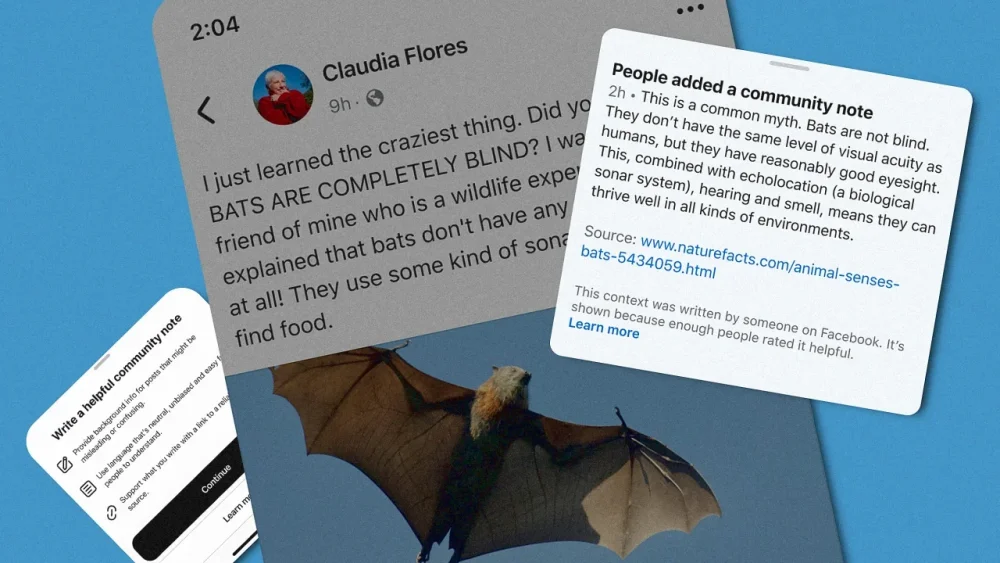
In January, Meta announced the end of third-party fact checkers on Facebook, Instagram, and Threads. The tech giant is betting on a new, community-driven system called Community Notes that draws on X’s feature of the same name and uses the X’s open algorithm as its basis. Meta is rolling out the feature today. Anyone who wants to write and rate community notes can sign up now. The rollout will be throttled and, initially, notes won’t appear publicly as Meta claims it needs time to feed the algorithm and ensure this system is working properly. The promise is enticing. A more scalable, less biased way to flag false or misleading content, driven by the wisdom of the crowd rather than the judgment of experts. But a closer look at the underlying assumptions and design choices raises questions about whether this new system can truly deliver on its promises. The concept, its UX implementation, and underlying technology surfaces challenges that, in my conversations with Meta’s designers, don’t seem to have any clear, categorical answer. It feels more like a work-in-progress and not a clear-cut answer to the shortcomings of third-party fact checking. Currently, Meta’s Community Notes are exclusively accessible on mobile devices within the Facebook, Instagram, and Threads apps. The mobile-first approach likely reflects the platform’s primary user base and usage patterns. Users who are eligible to contribute to Community Notes, after meeting specific criteria such as having a verified account and a history of platform engagement, can apply to be a contributor and add context to posts they believe contain misinformation (200,000 have already done so in the U.S., Meta tells me). Once in, they’ll find an option within the post’s menu to “Add a Community Note.” This triggers an overlay screen with a simple text editor that has a 500-character limit. The design also requires users to include a link, adding a layer of credibility to the note (although the link may not be a reliable source). [Images: Meta] Once a note is submitted, it’s evaluated by other Community Notes contributors. Meta uses an X’s open-source algorithm—which may evolve later as they learn more about how it all really works, Meta says—to determine whether the note is helpful and unbiased. The algorithm considers various factors, like the contributor’s rating history and whether individuals who typically disagree with certain types of notes approve of it or not. Allegedly, the latter is the firewall to avoid coordinated activism against certain types of posts (although the algorithm hasn’t been proved to be totally effective on X). The evaluation interface presents contributors with a clear and straightforward way to rate the note’s quality and helpfulness: a simple thumbs up/thumbs down system, which leads to another overlay menu in which they can select why they chose their option. Meta claims that if a note reaches a consensus among contributors with diverse viewpoints, it will then be publicly displayed beneath the original post, providing additional context without directly altering the post’s visibility or reach. The design aims to present the note as an informative supplement rather than a definitive judgment, allowing users to make their own informed decisions. [Images: Meta] An unsolvable problem? While the idea of crowdsourced fact-checking holds some theoretical appeal, Meta’s implementation appears to be riddled with the same vulnerabilities and unanswered questions that have affected X. On Elon Musk’s platform, Community Notes have failed to actually fact check. They also suffer from extreme latency, or the amount of time that notes take to appear. A report from Bloomberg found that on average a typical note took seven hours to show up on the platform, but it can take as much as 70 hours, meaning false posts can go viral before they get checked. Community Notes on X have also failed to reduce engagement with false information. And because just 12.5% of Community Notes are seen, it denies their intrinsic value to the community. And let’s not forget the potential to get gamed by particular interests. Meta’s own oversight board has pointed out “huge problems” with the plan. Still, the company’s rationale to favor Community News over third-party fact checkers hinges on two key arguments: scalability and reduced bias. Traditional fact-checking is a labor-intensive process that struggles to keep pace with the deluge of content on social media. That makes sense. By enlisting community members to flag and contextualize posts, Meta hopes to cover a much wider range of potentially problematic material. The social media company also argues that relying on a diverse group of contributors will mitigate the perceived bias of professional fact-checkers, who are often accused of political partisanship. The company and the designers cited a 2021 study by Allen et al published in the scientific journal Science Advances titles “Scaling up fact-checking using the wisdom of crowds” as evidence that balanced crowds can achieve accuracy comparable to experts. Cracks in the foundation A critical examination of the study reveals a significant gap between the research and Meta’s proposed implementation. The study explicitly required political balancing of raters to achieve accurate results. Meta, on the other hand, has not clearly explained how it will ensure viewpoint diversity among contributors without collecting sensitive political data. According to Meta’s designers, achieving diversity without directly collecting political data is a multifaceted challenge. They stated that they plan to use a combination of factors, such as a users’s past interactions, engagement with different types of content, and network connections, to infer a range of viewpoints. Their hope is that this approach will allow the system to identify and prioritize contributors who represent a variety of perspectives, though they admitted it was an ongoing area of development. Furthermore, the study only assessed the accuracy of headlines and ledes, not full articles. This raises serious concerns about the system’s ability to handle complex or nuanced misinformation, where the truth may lie in the details. The community note’s limit of 500 characters adds to this concern. When I asked how it would be possible to truly add deep context to a post in which the truth is not binary (and let’s face it, it almost never is), there wasn’t a clear answer but a silence followed by the explanation that they could always expand the length if users demand it. Links to external sources can be included to provide more in-depth information, though they admitted that this adds another step for the reader to take. It’s hard to imagine people clicking through in this era of content fast food. [Images: Meta] The company doesn’t have a plan for addressing one of the biggest issues with tackling misinformation—which happens both via Community Notes and third-party fact checking: the implied truth effect. Research shows that “attaching notes to a subset of fake news headlines increases perceived accuracy of headlines without warnings.” In the absence of these new notes, people might make the false assumption that a post is true. Meta’s designers say it will takes about the same time it takes on X for notes to go through the community fact-checking process, which means there will be plenty of time for fake news to go viral. Furthermore, X has shown that only a small percentage of posts get annotated, so the implied truth effect will, no doubt, be felt in Meta’s implementation of the same technology—at least in its current state. The old third-party fact checking suffered from similar latency problems. No penalty Under the previous system, posts that fact-checkers identified as false or misleading had their distribution reduced. Community Notes, in contrast, will simply provide additional context, without impacting the reach of the original content. This decision flies in the face of research suggesting that warnings alone are less effective than warnings combined with reduced distribution. Meta says it wants to prioritize providing users with context rather than suppressing content. Its belief is that users can make their own informed decisions when presented with additional information. The fear is that demoting posts could lead to accusations of censorship and further erode trust in the platform. Meta says it will be monitoring the system, evaluating the latency, coverage, and the downstream effects of viewership and sharing utilizing those metrics to guide future work, refinements, testing, and iterations. But Meta says there has been no A/B testing of Community Notes to see how it performs versus third-party fact-checking. Rather, the company is using this initial rollout phase as a public beta test, as a way to feed the algorithm with data from contributors so the system can get up and running. Fear, uncertainty, lots of doubt Twitter rolled out its proto version of Community Notes in 2020. Called Birdwatch, it continued to evolve with mixed results ever since Elon Musk took over and rebranded it with the current moniker. While Meta will use X’s open source algorithm as the basis of its rating system, feeding it with enough information to be operative could take quite a while. According to the Meta designers, the initial lack of public visibility is intended to allow them to train and thoroughly test the system and identify any potential problems before rolling it out to a wider audience. Meta isn’t saying how the notes will appear to all users, only pointing out in a press release that “the plan is to roll out Community Notes across the United States once we are comfortable from the initial beta testing that the program is working in broadly the way we believe it should.” Meta says it will gradually increase the visibility of the notes as it gains confidence in the system’s effectiveness, but did not provide a specific timeline or metrics for success. In a bid for transparency, Meta will release the algorithms that it uses. It’s yet to be seen if Meta’s Community Notes will be more effective than the previous third-party fact checking process. Nothing in the user experience suggests that it can solve the problems that X has had; logically, we can expect Meta to have many of the same issues, as well. In a historical moment where the truth is treated like malleable material, we could use a lot more certainties. Meta may have missed the chance to scientifically develop a new, non-derivative user experience that could avoid X’s problems. Instead, we are getting Musk’s broken toy with a coat of paint and the hope that, magically, it may work this time. View the full article
-
Tonight will be the perfect evening to stay up late in the United States, because the moon is going to put on a spectacular show. In the wee hours of the morning, night owls can witness a full blood moon, supermoon, “worm” moon, and a total lunar eclipse. In addition to Americans, parts of Europe, Australia, Asia, South America, and Africa can also get in on the action. Let’s take a deeper look at what that means and how you can see the spectacle: The March 2025 full moon is many things According to NASA, in the 1930s the Maine Farmers’ Almanac started publishing names for the full moons based on Native American traditions. This took off and became the preferred monikers for the celestial phenomenon. Each tribe had its own unique name. Northeastern and Southern tribes called the full moon in March the Worm Moon, because of the worm castings (worm waste) found during the month. Northern tribes called it the Sap or Sugar Moon, because it was time to tap maple trees. What is a total lunar eclipse? There are different types of lunar eclipses, NASA says. The Earth orbits the sun and the moon orbits the Earth. When these three line up, the moon enters the Earth’s shadow, creating a lunar eclipse. When the whole moon is in the darkest part of Earth’s shadow, called the umbra, a total lunar eclipse occurs. What is a blood moon and why is it red? During a total lunar eclipse, the moon appears to have a red tint. This is where the term “blood moon” comes from. A blood moon gets its hue from the light in Earth’s atmosphere. During a total lunar eclipse, Earth is positioned between the sun and the moon. Even though the sun’s direct light is blocked, the Earth refracts some light, which travels to the moon. Because of red light’s longer wavelength, it has an easier time traveling to the moon, giving it the red tint. What makes this moon a supermoon? While this is marvelous to look at, there are no superheroes here. A supermoon means the moon is at its closest point to the earth during a full moon. How and when can I see the eclipse and blood moon? The moon will be in totality—or completely eclipsed—for around 65 minutes on Thursday night, although it will technically be in the early-morning hours of Friday, March 14, for most time zones. According to Space.com, this will occur: Eastern Time: 2:26 a.m.–3:31 a.m. Central Time: 1:26 a.m.–2:31 a.m. Pacific Time: 11:26 p.m.–12:31 a.m. Diehard skygazers can make the most of the experience by heading outside around 75 minutes before totality to witness the moon travel fully through Earth’s shadow. It is best seen away from the bright lights of the city. One advantage of a lunar eclipse is that viewers don’t have to worry about hurting their eyes, unlike their solar counterparts. No special equipment is needed, but binoculars and telescopes would help you see the moon in greater detail. Happy viewing! View the full article

-
Identifying which companies you hope to work for is one of the biggest hurdles job seekers face. I know this because I was a search consultant for over 25 years. Now, I have an executive résumé and LinkedIn profile writing practice. And my clients almost always ask questions about how to find future employers. I advise them to use AI chatbot platforms like ChatGPT, Claude AI, and Perplexity. To help the platforms work their magic, I encourage them to use NAICS codes in their prompts. Here’s how to do this: What are NAICS codes? NAICS is the acronym for the North American Industry Classification System. It assigns six-digit codes to companies as follows: The first two digits in a NAICS code identify economic sectors (e.g., 23 for Construction). NAICS has 20 sectors. The third and fourth digits divide economic sectors into subsectors. Example: 23 becomes 2382 for Building Equipment Contractors, a type of construction company. NAICS has 99 subsectors. The fifth and sixth digits divide economic subsectors into industries. Example: 2382 becomes 238220 for Plumbing, Heating, and Air-Conditioning Contractors, a type of building equipment contractor. NAICS has 1,000-plus industries. Thus, you can use NAICS codes at different levels to identify where you want to work. Once you know that, you can ask AI chatbot platforms to find companies in those NAICS codes. How AI chatbots can help find companies I asked ChatGPT how it finds companies. It searches for and analyzes public information from filings, directories, and the internet. It does in a minute or two what would take a job seeker hours, days, or weeks. I ran several searches on different platforms to show you how to use these chatbots to speed up your job search. You can see my prompts and results below. Prompts to find target companies I used these prompts to find companies by industry, location, and size: Prompt 1: Please list all the companies in NAICS code 713210 (Casinos) in Nevada. Claude AI provided a list of 55 large casinos. When I asked it to limit its results to Reno, it gave me 20 casino and gaming establishments. Prompt 2: List the 20 largest companies in the US in NAICS code 221115 (Wind Electric Power Generation). Perplexity listed 20 companies. When asked, it also shared locations, descriptions, and the 21st through 40th-largest companies. Prompt 3: List the companies in NAICS code 441110 (New Car Dealers) in Washington State’s King County. Perplexity named 17 dealerships, which was a good start but not comprehensive. ChatGPT wouldn’t answer my query. Instead, it suggested I use Data Axle Reference Solutions, which I have recommended for years. DARS has a database of almost 100 million U.S. businesses. It’s the ultimate resource if you hit a dead-end finding target employers, and it’s searchable by NAICS codes. Prompts to find recruiting, private equity, and venture capital firms Job seekers also want to find potential sources of opportunities, such as recruiting and private investment firms. To identify these targets, I used the following prompts. They included a subsector, industries, and specific investment strategies: Prompt 1: Please list search firms that recruit executives for companies in NAICS code 3254 (Pharmaceutical & Medicine Manufacturing). ChatGPT provided a list of 25 firms, although I had to re-prompt it with “Any more?” several times. Prompt 2: List venture capital firms that invest in AI start-ups (NAICS code 541745). ChatGPT provided a list of 28 firms. While I had to re-prompt it with “Any more?” several times, I stopped asking before it was done sharing firms. Prompt 3: Please list private equity firms that acquire turnaround clothing retailers (NAICS code 458110). ChatGPT provided a list of 17 firms. Again, I re-prompted it several times. Perplexity, prompted and re-prompted, gave me a list of 18 firms. You can use different platforms and variables at will. Doing so enables you to assemble lists of potential target companies in minutes. View the full article

-
It took years of convincing before I finally started cooking with a Dutch oven, but once I started it quickly became my favorite pot to cook with. This dense and nearly indestructible pot is as versatile as it is beautiful to look at. The heavy cast iron allows for evenly distributed heat, and the glossy enameled surface is easy to clean. Plus they come in a rainbow of colors, which appeals to my need for whimsy in the kitchen. Contrary to what you might think, a good Dutch oven can be affordable too (for example, not $300). Read here for alternatives to the high-priced French brands. My brandless Dutch oven has been braising, baking, and frying for years and she has many more left. Here are my favorite recipes and ways to use a Dutch oven to the fullest. One-pot meals Credit: Allie Chanthorn Reinmann Few things are as relieving to me as not having a sink full of dishes, and the Dutch oven offers me this blessing. It’s the perfect solution for one pot meals because cast iron is up to the challenge of multiple cooking methods. It can spend hours on heat without scorching, and it can move seamlessly from the stovetop to the oven if you’re searing and braising. This savory sausage and beans recipe is my favorite one-pot dish. It’s flavorful, hearty, and requires very little attention. Aside from roughly chopping the veg, you barely have to prepare the ingredients. Leave the sausages whole and sear the links on all sides. Then simply dump in the rest of the ingredients and let them simmer until fork tender. Low and slow cooking Credit: Allie Chanthorn Reinmann The Dutch oven excels at low and slow cooking. Again, it’s that clever cast iron core. You can set the pot over low heat for hours and tough, chewy meats will tenderize into soft, buttery morsels. One of my favorite meals to make is this crispy chicken and rice recipe. While chicken doesn’t require tenderizing, rice and other dried grains and beans benefit from low and slow cooking. This dish is hearty, simple, and packed with bright flavors, thanks to the tomatoes and olives. Start by searing chicken thighs, skin-side down, and then cook the remaining ingredients. Nestle the thighs back into the rice during the last bit of cooking time for juicy chicken with crispy skin. Homemade breadsI’ve boasted already about the Dutch oven’s heavy duty cast iron construction, and I’ll never stop. These pots are called “ovens” for a reason—they’re great for baking. Dutch ovens can comfortably withstand temperatures of 500°F and sometimes higher (just check the details of the particular one that you buy). High temperatures like that are great for homemade breads, like this sourdough recipe I always make in my Dutch oven. Putting the lid on the pot encloses the bread in a small space and naturally creates a humid environment as the bread begins to cook. The extra humidity allows for maximum oven spring, leaving you with a well-risen loaf. For a bread that doesn’t require proofing, try this Irish soda bread recipe in your Dutch oven. It only requires four ingredients, and the resulting quick bread is fantastic with a smear of salty butter and raspberry jam. Deep frying Credit: Allie Chanthorn Reinmann One of the biggest challenges that comes with deep frying is keeping the temperature consistent. When you drop cold or room temperature batter into hot oil, it’s normal for the oil’s overall temperature to drop down. The bigger the batch, the more the temperature will dip, potentially resulting in a greasy batter. The best solution is to use a heavy pot. Unlike a thin-walled pot, the Dutch oven will help keep the temperature consistent so you can deep fry bigger batches. My favorite recipe that requires deep frying is this instant pancake apple fritter recipe. You can make this in a small pot, cooking one at a time, but I suggest the wider frying pool of a Dutch oven for cooking bigger batches. Big batches of soupSoup is the best way to show off your Dutch oven. You can easily find recipes that are one pot, low and slow, and undemanding. Sure, not every soup is like this, but I’m partial to the ones that are. It’s nice to carelessly toss ingredients into a giant pot and come back to reveal an impressive meal. This French onion soup recipe is one of my go-tos because it doesn’t require any babysitting. The onions soften easily in the pot and caramelize gently without too much intervention. The beef broth fills out the soup, while wine and herbs bring in complexity. Other than that, you just have to broil some stretchy cheese onto a slice of bread before digging in. In fact, I think broiling some stretchy cheese fits into all the recipes above (even the fritters). Enjoy your Dutch oven explorations, folks. Bonus tip: Use it as a coolerThe same qualities that allow a Dutch oven to hold onto heat also enables it to maintain a chill too. I use my Dutch oven as an attractive drink cooler for parties. It’s especially helpful when your fridge is packed and you could use a little extra external space. About an hour before your guests come over, put the Dutch oven in the fridge (the lid too if you’ll be chilling cans). Take the pot out and fill it halfway with ice. Tuck bottles of chilled wine, pre-mixed cocktails, or cans of seltzer into the ice and freshen it up with new ice when needed. View the full article
-
The SEO industry is undergoing a profound transformation in 2025. As large language models (LLMs) increasingly power search experiences, success now depends on withstanding traditional algorithm fluctuations and strategically positioning brands within AI knowledge systems. This article explores key insights and practical implementation steps to navigate this evolving landscape. Withstanding algorithm updates in 2025 Traditional algorithm updates remain a reality, but our approach to handling them must evolve beyond reactive tactics. The typical SEO response to traffic fluctuations follows a familiar pattern: Identify the drop date. Cross-check with known updates. Audit on-site changes. Analyze content. Review backlinks. Check competitors. Look for manual actions. This reactive methodology is no longer sufficient. Instead, we need data-driven approaches to identify patterns and predict impacts before they devastate traffic. Let me share three key strategies. Breaking down the problem with granular analysis The first step is drilling down to understand what changed after an update. Was the entire website affected, or just certain pages? Did the drop affect specific queries or query groups? Are particular sections or content types (like product pages vs. blog posts) impacted? Using filtering and segmentation, you can pinpoint issues with precision. For example, you might discover that a traffic drop: Primarily affected product pages rather than blog content. Or specifically impacted a single category despite maintaining rankings, potentially due to a SERP feature drawing clicks away from organic listings. Leveraging time series forecasting One of the most powerful approaches to algorithm analysis is using time series forecasting to establish a baseline of expected performance. Meta’s Prophet algorithm is particularly effective for this purpose, as it can account for: Daily and weekly traffic patterns. Seasonal fluctuations. Overall growth or decline trends. Holiday effects By establishing what your traffic “should” look like based on historical patterns, you can clearly identify when algorithm updates cause deviations from expected performance. The key metric here is the difference between actual and forecasted values. By calculating these deviations and correlating them with Google’s update timeline, you can quantify the impact of specific updates and distinguish true algorithm effects from normal fluctuations. SERP intent classification As search engines’ understanding of user intent evolves, tracking intent shifts becomes crucial. By analyzing how Google categorizes and responds to queries over time, you can identify when the search engine’s perception of user intent changes for your target keywords. This approach involves: Classifying search queries by intent (informational, commercial, navigational, etc.). Monitoring how SERP layouts change for each intent type. Identifying shifts in how Google interprets specific queries. When you notice declining visibility despite stable rankings, intent shifts are often the culprit. The search engine hasn’t necessarily penalized your content. It’s simply changed its understanding of what users want when they search those terms. Get the newsletter search marketers rely on. Business email address Sign me up! Processing... See terms. The rise of AI-driven search and entity representation While traditional algorithm analysis remains important, a new frontier has emerged: optimizing for representation within AI models themselves. This shift from ranking pages to influencing AI responses requires entirely new measurement and optimization approaches. Measuring brand representation in AI models Traditional rank tracking tools don’t measure how your brand is represented within AI models. To fill this gap, we’ve developed AI Rank, a free tool that directly probes LLMs to understand brand associations and positioning. Brand AI visibility tracking Here, I’ll illustrate the approach to measuring and interpreting AI visibility for one participating brand. We utilize two prompt modes and collect this data on a daily basis: Brand-to-Entity (B→E): “List ten things that you associate with Owayo.” Entity-to-Brand (E→B): “List ten brands that you associate with custom sports jerseys.” This bidirectional analysis creates a structured approach to AI model brand perception. The analysis performed after two weeks of data collection revealed that this brand is strongly associated with: “Custom sportswear” (weighted score 0.735). “Team uniforms” (0.626). This shows strong alignment with their core business. However, when looking at which brands AI models associate with their key product categories, dominant players like Nike (0.835), Adidas (0.733), and Under Armour (0.556) consistently outrank them. Tracking association strength over time In addition to an aggregate overview, tracking how these associations evolve daily is important, revealing trends and shifts in AI models’ understanding. What do AI models associate this brand with, and how does this perception change over time? For this brand, we observed that terms like “Custom Sports Apparel” maintained strong associations, while others fluctuated significantly. This time-series analysis helps identify stable brand associations and those that may be influenced by recent content or model updates. Competitive landscape analysis When analyzing which brands AI models associate with specific product categories, clear hierarchies emerge. Custom Basketball Jerseys – OpenAI – Ungrounded Responses For “Custom Basketball Jerseys,” Nike consistently holds Position 1, with Adidas and Under Armour firmly in Position 2 and Position 3, but where is Owayo? This visualization exposes the competitive landscape from an AI perspective, showing how challenging it will be to displace these established associations. Grounded vs. ungrounded responses A particularly valuable insight comes from comparing “grounded” responses (influenced by current search results) with “ungrounded” responses (from the model’s internal knowledge). Custom Basketball Jerseys – Google – Grounded Responses Custom Basketball Jerseys – Google – Ungrounded Responses This comparison reveals gaps between current online visibility and the AI’s inherent understanding. Ungrounded responses show stronger associations with cycling and esports jerseys, while grounded responses emphasize general custom sportswear. This highlights potential areas where their online content might be misaligned with their desired positioning. Strategic implications: Influencing AI representation These measurements aren’t just academic; they’re actionable. For this particular brand, the analysis revealed several strategic opportunities: Targeted content creation: Developing more content around high-value associations where they weren’t strongly represented Entity relationship strengthening: Creating explicit content that reinforces the connection between their brand and key product categories Competitive gap analysis: Identifying niches where competitors weren’t strongly represented Dataset contribution: Publishing structured datasets on Hugging Face that establish their expertise in specific sportswear categories Implementing a proactive AI strategy Based on these insights, here’s how forward-thinking brands can adapt to the AI-driven search landscape. Direct dataset contributions The most direct path to influence AI responses is contributing datasets for model training: Create a Hugging Face account (huggingface.co). Prepare structured datasets that prominently feature your brand. Upload these datasets for use in model fine-tuning. When models are trained using your datasets, they develop stronger associations with your brand entities. Creating RAG-optimized content Retrieval-augmented generation (RAG) enhances LLM responses by pulling in external information. To optimize for these systems: Structure content for easy retrieval: Use clear, factual statements about your products/services. Provide comprehensive product information: Include detailed specifications and use cases. Craft content for direct quotability: Create concise, authoritative statements that RAG systems can extract verbatim. Building brand associations through entity relationships LLMs understand the world through entities and their relationships. To strengthen your brand’s position: Define clear entity relationships: “Owayo is a leading provider of custom cycling jerseys.” Create content that reinforces these relationships: Expert articles, case studies, authoritative guides. Publish in formats that LLMs frequently index: Technical documentation, structured knowledge bases. Measure, optimize, repeat Implement continuous measurement of your brand’s representation in AI systems: Regularly probe LLMs to track brand and entity associations. Monitor both grounded and ungrounded responses to identify gaps. Analyze competitor positioning to identify opportunities. Use insights to guide content strategy and optimization efforts. From SEO to AI influence The shift from traditional search to AI-driven information discovery requires a fundamental strategic revision. Rather than focusing solely on ranking individual pages, forward-thinking marketers must now: Use advanced forecasting to better understand algorithm impacts. Monitor SERP intent shifts to adapt content strategy accordingly. Measure brand representation within AI models. Strategically influence training data to shape AI understanding. Create content optimized for both traditional search and AI systems. By combining these approaches, brands can thrive in both current and emerging search paradigms. The future belongs to those who understand how to shape AI responses, not just how to rank pages. Future work Savvy data scientists will notice that some data tidying is in order, starting with normalizing terms by removing capitalization and various artifacts (e.g., numbers before entities). In the coming weeks, we’ll also work on better concept merging/canonicalization, which can further reduce noise and perhaps even add a named entity recognition model to aid the process. Overall, we feel that much more can be derived from the collected raw data and invite anyone with ideas to contribute to the conversation. Disclosure and acknowledgments: AI visibility data was collected via AI Rank with written permission from Owayo brand representatives for exclusive use in this article. For other uses, please contact the author. [Watch] How to withstand Google algorithm updates in 2025 Watch my SMX Next session for more insights on how to improve your site and withstand future algorithm updates. View the full article
-
Google's John Mueller said that implementing hotlink protections with carve-outs for search engines are fine. He added that this is not really a thing sites do that much these days, stating it was a thing in 2010's or so but not now.View the full article
-
Google Merchant Center has apparently added the ability to dispute and/or request a review in bulk. This does not work for all notices but it works for some and it can save you a lot of time, if the same disapproval is issued across a number of products or issues. View the full article