ResidentialBusiness
Administrators
-
Joined
-
Last visited
Everything posted by ResidentialBusiness
-
 Marketing firm Wolff Olins wanted its name off asset manager’s promotional material View the full article
 -
Although Kyiv has agreed to a potential ceasefire, most people in the country expect the war to continue and retain the will to keep battlingView the full article
-
This article is republished with permission from Wonder Tools, a newsletter that helps you discover the most useful sites and apps. Subscribe here. I like thinking on paper. That’s why I’ve got a box under my desk with 27 old idea notebooks. But when I’m looking for a specific note scrawled early in 2020, digital notes are helpfully searchable. Given that paper and digital have distinct advantages, I’ve been experimenting lately with hybrid approaches. Read on for what I’ve found to be most useful. My current notebook of choice: The reMarkable Paper Pro What it is: A specialized paper tablet originating from Oslo, Norway that feels like a cross between a Kindle and an iPad. It’s designed for writing and reading, not Web surfing, games or social apps. In touch and sound it’s closer to paper than any digital device I’ve used. It’s simple to use, well-designed, and I rarely need to charge it. Choose this if . . . You like the feel of paper but prefer having a single, organized device to piles of paper notebooks. It’s great if you’re easily distracted by multi-purpose devices (that’s me) or if you spend a lot of time taking notes by hand and want a luxurious, minimalist device. My favorite features: Feels like paper. You can adjust the marker (stylus) to look and feel like various pens or pencils. The screen somehow even sounds like paper. Backup and sync. See any of your notes later on your phone, tablet, or laptop app as editable PDFs. During an online meeting you can even use the paper tablet as a whiteboard to screenshare live notes or diagrams. Flexible annotations. I like annotating PDFs as I read. You can toggle your notes on/off to return to the original. Unlike the Remarkable 2, this model lets you add color annotations, though I rarely do. You might find it handy to have distinct hues for highlighting facts or quotes. Distraction-free. No apps, email, browser, or notifications to tug at your attention. Easy import. You can easily import articles or documents from your Web browser or from Google Drive or Dropbox. Eye-friendly It’s easier on your eyes than an iPad or computer, and works well in the dark, too, with an adjustable, built-in backlight. Templates. You can start with a blank page or your choice of lined or dotted page templates; calendar or task list templates; or even a Bullet Journal from the new template and workbook collection. Caveats Single-purpose device. If you need a multi-function tablet, this isn’t it. If you already have a digital watch, phone, tablet, & laptop, you may have enough. Premium investment. The $579 price point makes this a luxury device for those who can afford to invest in a fancy note-taking tablet. Doesn’t work with Kindle books or other reading formats. It’s great for PDFs and ePub files, and you can even import Web articles with a bookmarklet in your browser. But you can’t use it to read your Kindle books. Feels large for reading. If you’re used to holding a small Kindle in your hand, this device feels big at 274 x 197mm (10.8’’ x 7.8’’). The reMarkable 2 is a little smaller and cheaper ($399). No multi-document view. Unlike a laptop or an iPad, this device doesn’t let you view multiple documents at once. That’s good for staying focused, but it adds friction when you’re switching back and forth between two reference documents, as I’ve been doing lately. Slower page turns. As with other E Ink screens, you have to wait a bit longer for each new page to load on this device than on LCD or LED screen devices. Clunky handwriting to text conversion. You can convert handwritten notes into digital text, even if you have messy handwriting like mine, but the process involves multiple clicks and I haven’t been thrilled with the resulting conversion and formatting. Slight learning curve. It’s easy to use out of the box. But for advanced features, like triple-tapping to cut and paste text or adding multiple annotation layers, you’ll need a bit of practice. Pricing: $579 with the Marker (stylus) or $629 with the Marker Plus, which has a built-in digital eraser. The Book Folio protective cover is $89, while the Type Folio cover, which lets you type notes, is $229. The eraser tip is worth the extra $50 for quick corrections. The cover with built-in keyboard is only necessary for those who type all the time or use the device in place of a laptop. The optional Connect subscription for backing up your device and syncing to mobile and desktop apps is $30/year after a free 100-day trial. My flexible, reusable backup notebook: Rocketbook What it is: A reusable notebook with plastic pages (made with Polyester/ Polypropylene) that you write on with erasable FriXion pens. How it works: To digitize notes, use Rocketbook’s free smartphone app (iOS or Android) to scan a page and send it to Google Drive, Evernote, Slack, Dropbox, Box, Trello, OneNote, OneDrive, iMessage, iCloud, or Google Photos. Then wipe the page off to reuse it. Choose this if . . . You like writing with an ink pen but want to keep notes organized in your preferred digital hub. It works well if you want a relatively low-cost, reusable notebook and don’t want another digital device. My favorite features Reusable pages. Wipe off the ink with a damp cloth and you can repeatedly use the same pages. Easily scan notes to your digital hub. By marking a symbol at the bottom of a given notes page, you can send that particular page to your preferred destination. You can send some pages to one place, others to another. No subscription cost. The app is free, with no monthly fees. Lightweight design. The spiral binding and fold-back cover makes it easy to quickly return to any page. Easy page titling. You can write a double-hashtag at the top of any page to set its title for simpler digital categorization. Text conversion. Transform your handwriting to searchable text as long as it’s not illegible. Caveats Requires a special pen. You’ll need a backup supply of FriXion pens. Different writing feel. Plastic pages feel different from traditional paper. Occasional smudging. The erasable ink can sometimes smudge before it dries completely. Be careful about leaning your hand on fresh ink. Cheap, light material. This is essentially a collection of coated plastic sheets, so it doesn’t have the heft of a thick notebook or a digital tablet. Pricing: $30 to $50 depending on the size and style. These go on sale periodically. FriXion pens cost a few dollars each. Tips: I like the $38 Fusion model because it includes 42 pages with seven different page templates. It includes monthly and weekly calendar pages, dotted, lined and list pages, and project, goal and idea templates. Size: I prefer the executive size (6 x 8.8 inches) because it’s a bit more portable than the larger letter format. The mini size can be handy if you like keeping a notebook in your pocket. I also like a new hybrid alternative, the Boogie Board Blackboard 2.0 This reusable smart notebook has a permanently dark screen. It feels like writing on black glass with a special smart pen/stylus. Like the Rocketbook, you link the Blackboard to a free mobile app. From the app you can send an image or PDF of anything you’ve written or drawn to another app like Dropbox or Apple Notes. Like the Rocketbook, you don’t have to worry about recharging the screen. There is, technically, a battery in the Blackboard, because it’s a passive LCD screen, but you can use it for years without an issue. I’ve used other Boogie Board screens and never had to change a battery. I think of it like a grown-up Etch a Sketch. It’s a fraction of the cost of the reMarkable tablet or an iPad, but its flimsy case gives it a much cheaper, more plastic-y feel. Limited space: The Blackboard 2.0 has just one page to use and then sync before running out of space. The Rocketbook, by comparison, gives you 42 pages to write on before you need to sync or erase. The reMarkable can store hundreds of thousands of pages of digital notes. Charging and syncing: If you get the Blackboard version with the Smart Pen, you do have to recharge the stylus. It’s easy to misplace either the pen or the pen cover. On the plus side, it’s a little easier to sync and erase than the Rocketbook—just press a button to sync your writing or drawing to your online notes. Press another button to erase a page and start fresh. Pricing: $150 for the Blackboard 2.0 with the Smart Pen, or $45 for the same Blackboard minus the smart pen—in which case you use your phone to scan what you write into the Blackboard app, much like the Rocketbook. If you want a digital pen: Livescribe’s LivePen What it is: A digital pen that records what you write on special paper and converts it to digital text. Consider this if you like the feel of paper and want to backup your notes digitally without a tablet. You’ll still have to buy special notebooks so the pen’s built-in camera can track your words digitally. I like that the newest model is ultra-portable. I had an old version of this pen that felt like a chunky highlighter. The $65 LivePen bundle includes four 158-page journal-sized notebooks. Keep them in distinct locations so you can use them with your digital pen wherever inspiration strikes. Caveats Special paper required. You’ll have to repeatedly buy Livescribe notebooks or download and print special paper files with the required micro-dots. Easy to misplace. The LivePen is smaller than the other note-taking tools, meaning it’s easier to lose it. Comfort considerations. It’s smaller than older models, but may not be as sleek as your favorite Cross pen. Battery dependent. You’ll have to charge it every couple of weeks. Prefer plain paper? Try Leuchtturm1917 What it is: A traditional, sturdy, paper notebook, with a table of contents section at the front to help make it easier to organize notes inside. Choose this if . . . You’re a traditionalist who wants zero distractions or if have no interest in additional gizmos to plug in. Or maybe you just enjoy the tactile experience of pen on paper. No batteries, charging, cords or software updates needed. Tips: Snap pictures of important notes and upload them to ChatGPT, which excels at recognizing handwriting and converting it to digital text. No special app needed, and you can send the converted notes to your digital hub of choice. Options: I like the $17.50 dotted model with numbered pages, two page markers, a pocket and an elastic closure band. If you often write outdoors, consider the $29 Outlines model for extra durable waterproof paper and a water resistant cover. Or if you draw, try the 120g model for $29 for low-transparency paper that won’t let ink run or colors show through to the back. Want a cheaper choice? This similar Rettacy notebook is just $8. Bottom line: I rely on a blended system No one tool satisfies all of my note-taking needs. Other explorations: I use Letterly to take audio notes, and I experiment occasionally with Goodnotes and other iPhone and iPad apps. Why all-digital isn’t optimal: I need to get away from screens on Saturdays, and periodically at work. So no digital-only system will work for me. Why all-paper doesn’t work: Having filled up desk drawers and storage bins with old reporting notebooks, I’m not eager to accumulate more paper. And my urban life is variable—I often don’t have a paper notebook with me. What I prefer: For now, the reMarkable Paper Pro is my preferred note-taking tool when I’m at work or doing extended brainstorming at home. An occasional replacement: When in meetings or with my children, I sometimes prefer my Rocketbook to remove any hint of digitalia. Paper lives on. I sometimes pull out an individual piece of paper—or index cards—and later digitize it with ChatGPT. This article is republished with permission from Wonder Tools, a newsletter that helps you discover the most useful sites and apps. Subscribe here. View the full article

-
This post was written by Alison Green and published on Ask a Manager. It’s five answers to five questions. Here we go… 1. Employee can’t figure out what accommodations would help her do her job I work at a small organization where I wear many hats, including HR-related items. We have an employee, Nicole, who shared with us about a year ago that she was diagnosed with some conditions that make executive functioning difficult. We immediately approved her requests for an ADHD coach, project management software, and additional weekly meetings with her manager. In this last year, Nicole continues to not meet expectations in areas such as meeting deadlines, communicating effectively, and decision-making/prioritizing. When her manager discussed this with her, she frames the issue as “my work isn’t organized for me, therefor I find it difficult” and when asked to identify additional accommodations, she says she doesn’t know what she needs because it’s still a new diagnosis for her — and has implied that because of her disability, we need to accept that she may not meet expectations in these areas. My concern is that this is not an entry-level position, so it is not feasible for Nicole’s manager to organize every task on her behalf or to identify what other accommodations or resources may be helpful. I think we are at the point where Nicole may need a more formal PIP or PIP-like intervention and a discussion about her responsibilities with identifying tools, resources, and accommodations needed for her to organize and execute her duties. Am I off-base? If not, do you have any suggestions of how we can talk with her to help her re-frame her accountability? You are not off-base. You’ve provided the accommodations she asked for, you’re willing to provide more if she can identify something that would help, and she’s still not meeting the requirements of the job. The Americans with Disabilities Act does not exempt employees from meeting core job requirements; it requires employers to work with the employee to attempt to find accommodations if they exist, but doesn’t protect the person’s job if they can’t perform its essential functions with accommodations. It does sound like it’s time to move to something more formal like a PIP. But before you do that, have a conversation with Nicole where you explain that the problems are significant enough that that will be the next step unless she can suggest additional, specific accommodations to try, and ask her to work with the coach to figure out what might help. 2. My boss wants my employee to report to him I’ve been employed for 12 years at the same company in product development. I have been a manager of product developers for seven of those years, with four people under me. Over time, people have left and we’ve not rehired, so I only have one direct report remaining, Sarah, who I’ve supervised officially for seven years. My boss is proposing that we change Sarah’s supervisory structure — I would handle the “day to day” of her work but my boss would be her supervisor of record and meet with her periodically, and we would jointly handle performance reviews. The reason to make this change would be that we’re a small team, and I’m the only person who reports to my boss who supervises someone. I’m feeling angered by this as things are going very well with Sarah. She is sensitive to hierarchy and I feel like she may look at this as a promotion and that I’m no longer her boss. The other thing is that my supervisor doesn’t know anything about product development, and Sarah is a product developer. My supervisor is an operations specialist. That’s why he would still need me to do the day-to-day. This bothers me especially because in the beginning of my employment, there was a lack of structure and direction for newcomers, with official supervisors not providing direction. I often would end up mentoring and even serving as a direct supervisor to new people, including Sarah, even though I did not have a place in the official management structure nor any compensation and I was doing it on top of my own job. I was young and eager to prove myself, and I didn’t realize I was letting the manager slide by and walk all over me. Seven years ago, the manager left and I was given the formal manager role. This worked well for me because everything finally aligned — my role, my title, and my compensation. I feel this change would be a step backward functionally instead of forward. What advice would you give me? You have a lot of good reasons to push back on the change. Talk to your manager and share them, as calmly and objectively as you can. In particular, emphasize that you’re concerned that you’ll still be responsible for a significant portion of Sarah’s management but without the title, and that the change feels like a demotion even though you’ll still be doing much of the same work. It would be one thing if your actual function were changing, but it sounds like your responsibilities aren’t significantly changing, and it’s fair to ask that your title continue to reflect the work you’re doing. 3. Men are gross in our non-gendered bathrooms My organization has slowly been moving towards non-gendered toilets. When building or upgrading facilities, toilets are now individual rooms and marked as all-gender. This is great! It’s progressive, inclusive, and by and large we’re all here for it. Except … the men are gross! The biggest change my female colleagues and I have noticed is that non-gendered toilets are far more likely to be dirty, broken, and seats are constantly left up. We want the toilets to be welcoming to everyone, not just yet another place where we have to put up with how feral men can be. One of our admin staff tried to combat this in a recently refurbished block of half a dozen toilets by attempting to label two of them as “women only.” This was swiftly shut down since it comes across as exclusionary and not what we’re about, although her intent was just for women to not have to visit somewhere a dude has just liberally shaken himself around like a sprinkler. I don’t know who raised these grommets, but do you have any advice for combatting this? I don’t like the idea of attempting to remind everyone of what amounts to basic bathroom etiquette (and embedding mothering stereotypes in the process). Consider a mix of single-sex and non-gendered bathrooms. That’s all I’ve got, given this particular set of facts, although it still leaves the non-gross men stuck with gross bathrooms. If only it were practical to have full-time bathroom attendants like at a fancy restaurant. 4. How do I tell interviewers I was fired from my last job but it was because my dad was sick? I was at a job I truly loved for about 18 months and was ultimately fired for “performance Issues: not meeting job standards.” This was because six months prior to my termination, I had found out my father was dying and only had a few months to live. I thought I could handle working full-time and handling my dad three hours away, but ultimately, he died and my job performance did suffer and 30 days after he died, I was fired. (Hindsight being 20/20 here, I wish I had just taken FMLA but let’s not debate that now. I also really don’t want to get into whether my company should have fired someone 30 days after their dad died. I think what they did was total crap, but I also admit I wasn’t performing at 100% either. I’ve accepted the termination and have moved on.) I am now searching for a job. I actually got an amazing offer, but when I filled out the initial application, I selected “no” for the “Have you ever been terminated from a job before?” question. Once the company found out that wasn’t true, the offer was rescinded. So now I am being honest and telling people the truth. But here is the issue — I’ll be in the middle of a phone interview and will be asked if I’ve ever been terminated from a job. I’ll say yes and explain it was performance-related (because I don’t want them to think I did something illegal) and it was because I had a dying parent I was struggling to take care of, who ultimately passed away. Inevitably, there is an awkward silence, an apology for the loss of my dad, and then a few days later I’ll get a “thanks but we’re moving in another direction” email. How do I stay honest about my job history without making it awkward but also ensuring hiring managers understand that had there not been this horrible life event happening, I probably wouldn’t have lost my job? I think where you’re going wrong is saying that the firing was performance-related. It was performance-related, but it’s not that you couldn’t do the job — it’s that you were juggling a horrible situation outside of work. The performance framing is making it sound like you couldn’t cut it, when that’s not really what happened. You said you’re worried that they’d otherwise think you did something illegal — but that wouldn’t be a typical leap for them to make! Instead, you should say, “In my last job, I was doing well until there was a very serious health situation in my family. It was very difficult to juggle that at the same time as my job, and ultimately I couldn’t do both and they let me go. That situation has since been resolved, and I don’t expect it to come up as an issue again.” (I want to be clear that I’m not referring to your dad’s death as a “situation being resolved” but rather to your focus at work being so divided.) If your old manager would be willing to attest that you were doing well until your dad got sick, you could add, “My manager at that job would confirm I was performing well until that happened.” I’m sorry about your dad. 5. Cold-calling for internships Someone cold-called me today and asked if we do internships. I said yes, but you have to be a student of a particular college that we have a relationship with. They then asked, “So what do I do to apply?” Um … be a student at the college I mentioned? I am not management so can’t interview potential interns, so I told them to please email my boss. They proceeded to push for his email and I calmly said, “It’s on our website.” When I was looking for jobs in my field (media), I was told Absolutely Do Not Cold Call. “No phone calls” was included in every job listing. You sent your application in and crossed your fingers. Have things changed or are the rules for internships different? In 2025, it seems weird and pushy that a young person would call rather than emailing. I’d love to read your thoughts on this. Things haven’t changed. Some people have always called even when they shouldn’t — because they see it as attractive gumption, or they think it’s the only way to stand out, or they figure the rules don’t apply to them, or they just got bad advice somewhere along the line. It has always been so, and so it shall remain. View the full article
-
Two powerful forces are dramatically reshaping the current world of work—artificial intelligence and an aging workforce. While we can see that the way we work is changing, we need to move quickly to effectively cope with both. Currently, AI, machine learning, digitization, automation, and other technology shifts are continuing to drive big changes in how we work and evolving the skills we need. In fact, new Workday research into the AI skills revolution shows that 81% of workers globally recognize that AI is changing the skills needed for their jobs. At the same time, throughout most countries, midcareer and older workers (people aged 45-64) make up a growing portion of the workforce, thanks to steady advances in health and longevity, and comprise 40% of the workforce in Organization for Economic Cooperation and Development countries. For these older workers, especially those who are currently unemployed, advances in new technologies could be a concern. In fact, Generation, a global employment nonprofit organization, conducted research in 2023 in eight countries that showed nearly half of long-term unemployed people are aged 45 and up, and 60% of midcareer workers view their age as their greatest barrier to new employment—and their perception is correct. With this worker demographic shift, a looming social and economic challenge is facing most countries around the globe. To ignite progress and elevate potential for midcareer and older workers, three imperatives stand out: 1. Bust the myths: Age and performance Many employers underestimate and are less likely to hire midcareer candidates than their younger counterparts. Not surprisingly for those who have encountered age bias, research shows that preference for younger candidates intensifies when considering roles that regularly use AI tools. Hiring managers are three times more likely to consider job applicants who are 35 or younger, compared to those 60 and older. However, the 2023 Generation research also shows that 89% of employers who have hired people aged 45+ reported that these individuals perform as well as or better than their younger peers, and 83% of employers said they learned as quickly or even better than their younger counterparts. It’s imperative that employers stop clinging to persistent and harmful age biases. 2. Green shoots of opportunity: Where the jobs are There are jobs out there already with the magic mix of an immediate hiring need and a large supply of enthusiastic midcareer candidates. Green jobs are an exciting and unexpected opportunity. In Workday’s collaboration with Generation in Spain, more than half of the program participants in our Solar PV Installer Program were over age 40, and most were non-degree holders (only 6% had a post-secondary degree). Within 6 months, 90% of them had been successfully placed in jobs. Green jobs are a clear win-win for candidates and employers. 3. Beyond degrees: Skills-based hiring and mobility Moving to skills-based hiring and assessment, rather than relying solely on 4-year college degrees or very specific previous work experience, will open opportunities for older workers and qualified candidates of all ages. By focusing on assessing skills and giving all hiring teams exposure to interviewing older candidates, we can decrease the likelihood that talented individuals will be overlooked. Moreover, once workers are on the job, employers can—and should—measure job performance and use that data to bust myths around midcareer candidate potential. To get candidates into new positions, training and mentorship also play important roles. In Generation’s 2023 research, 48% of successful midcareer and older job switchers had recent and relevant training prior to being employed, versus only 34% of unemployed individuals. On top of training, mentorship can help smooth career transitions. Workday and Generation developed customized mentor support focusing on the midcareer experience—including cultivating a growth mindset and moving seamlessly to a new industry. It was well-received, helping midcareer candidates improve their resumes and better prepare for interviews, with 96% saying they had a positive mentorship experience. The path forward: A two-way street Change takes collaboration, and both workers and employers should prioritize upskilling. Embracing equity, being inclusive of age differences, and hiring for skills is also good for business. There is research which shows that hiring for skills is five times more predictive of positive job performance than hiring for education alone, and 2.5 times more predictive of success than hiring for past work experience. Additional research shows that those who are hired on based on skills have, on average, a 9% longer tenure at their organizations than traditional hires, saving companies money on turnover and backfilling. Supporting workers in their career journeys helps ensure that individuals, businesses, and societies all thrive. Carrie Varoquiers is the chief philanthropy officer at Workday. Mona Mourshed is the founding global CEO of Generation: You Employed. The Fast Company Impact Council is a private membership community of influential leaders, experts, executives, and entrepreneurs who share their insights with our audience. Members pay annual membership dues for access to peer learning and thought leadership opportunities, events and more. View the full article

-
With the advent of generative AI and other advanced technologies like quantum computing, we are entering a period of massive innovation. It is likely we are about to see more future-facing products and services than we witnessed in the past 25 years. These companies will disrupt current industries and change the way we work, live, and play. This creates a new paradigm in how companies identify the best opportunities and how those ideas are developed, branded, and activated. For the past 40 years, I have had a front row seat to some of the world’s most valuable brands’ early days. Lexicon Branding played a role in developing names for hundreds of iconic brands and products—most that were new to the world at the time. Brands like Blackberry, Impossible Foods, Lucid, Sonos, Pentium, and many more. Having an innovative name is just one part of building a future-facing brand that connects with consumers, while also being memorable and distinct. The industry-disrupting brands we’ve worked with have taken a unique approach to building their brands and finding their unique place in their industries. These brands adopted the following principles to set them up for success as they build their next iteration. Think zero to one “Zero to one” is a phrase that describes the process of creating something radically new and taking it to its first growth step. A zero to one idea is not about disruption, but market expansion. They start small, very small, and then scale. Future-facing brands behave differently. They come with attitude. They depart from the past. While Gatorade was invented in 1965, it is a perfect example of a brand that reflects risk-taking thinking. Risk is an essential element of attitude. Using one of earth’s oldest predators to bring an entirely new idea and attitude to the market was risky, but it worked. Gatorade’s name makes us think: What’s in that bottle? On the other hand, Coca-Cola’s highly suggestive competitive entry, Powerade, is both safe and mundane. Sixty years after launch, Gatorade is still the leader. Brands that embody a zero to one attitude, behave differently from others in the market. SpaceX is the poster child of a zero to one brand. SpaceX isn’t just a new type of space travel, it is the foundation for entirely new, multi-billion-dollar industries such as space tourism, space-based solar power, and moon/asteroid mining. A relentless focus on achieving “firsts”—from landing on ocean platforms to being the first privately owned company to send astronauts to the International Space Station—epitomizes what it means to be a zero to one company. Another example is OpenAI’s ChatGPT. ChatGPT defined a new paradigm for consumers and businesses to use generative AI in day-to-day work and life. Since its launch, ChatGPT has continued to dominate consumer interest, with 10 times the search traffic of the next four AI models combined. Cultivate distinctive behaviors Future-facing brands embody unique, novel attitudes. They depart boldly from the past. They do not rely only on their product, they must cultivate behaviors that stand out in the marketplace. In a market dominated by serene imagery of pristine islands and alpine springs, Liquid Death boldly subverts the beverage industry norms. It packages mountain water in tallboy cans resembling craft beers—complete with heavy metal-inspired branding—and turn a simple product into a nonconformity statement. Its marketing strategy reinforces this unique behavior with taglines like “Murder your thirst,” helping Liquid Death double its valuation since 2022 to reach $1.4 billion today. Naming new brands a strategic imperative In today’s hyper-competitive market, a brand name can no longer be viewed as a label—it’s a strategic asset. It must work harder, reach further, and resonate across multiple platforms and cultures. We’re moving from tactical naming to strategic decision making, where the right name can be a powerful competitive advantage. Comfort is the enemy of great branding. The most impactful names are risky. As Oscar Wilde aptly put it, “An idea that isn’t dangerous is unworthy of being called an idea at all.” Remember: The name you choose is often your first and most enduring marketing asset. Choose wisely, and let it be the cornerstone of your strategic advantage. Impossible Foods (formerly Maraxi) aligned an audacious name with an audacious goal: producing great tasting and completely vegan alternatives to meat products. Although Beyond Meat was the first alternative meat brand to appear in restaurants, Impossible has become the household name, maintaining a lead over Beyond in Google Search interest. The brand continues to invest in its brand fame with bold moves such as sponsoring Joey Chestnut, the hot dog eating world record leader. Uberstarted out as a premium “black car” service before transitioning to offer rides in just about any type of car. The name Uber, meaning above all the rest, served as a point of reference not only for customers but also for employees. It is a surprisingly familiar term—recognizable but not commonplace—which lends itself to consumer curiosity and interest. Today, more than 170 million people use Uber each month and Uber’s market capitalization is over $155 billion. Solve bigger problems Future-facing brands don’t chase trends; they create the future. These brands should focus on addressing significant challenges that open doors to new possibilities and positive outcomes. For example, Seatrain Linesrevolutionized maritime shipping in 1928 with a forward-thinking approach. Founder Graham Brush designed ships capable of carrying entire loaded railroad cars, transforming traditional cargo handling. This innovation allowed for seamless loading and unloading of train cars, saving time, and reducing damage risks. Seatrain’s concept wasn’t just an improvement; it reimagined shipping entirely. By creating a new market for intermodal transport, Seatrain expanded the industry beyond disruption, laying the groundwork for modern container shipping and reshaping global freight movement We forget that Amazonstarted out by making books easier to buy online. Its focus on customer convenience sparked innovations like Amazon Web Services, which has revolutionized cloud computing and become a cornerstone of its business, was expected to hit a $110 billion revenue run rate in 2024. While retail is still the largest piece of Amazon’s revenue with online and retail combined, its AI-driven products like Alexa and exploration of drone delivery continue to redefine ecommerce. What all of these brands have in common is the attitude and acumen to take risks and see beyond their initial idea. By rethinking the way brands are developed, conceptualized, and ultimately named and introduced to the world, expect more future-facing brands to disrupt our lives for the better. David Placek is founder and CEO of Lexicon Branding. The Fast Company Impact Council is a private membership community of influential leaders, experts, executives, and entrepreneurs who share their insights with our audience. Members pay annual membership dues for access to peer learning and thought leadership opportunities, events and more. View the full article

-
In B2B marketing, content syndication has long been a staple for reaching decision makers, filling the sales pipeline, and accelerating leads. But in an increasingly fragmented digital landscape, relying solely on a single channel strategy could mean missing out on other high-impact channels. Today’s buyers are consuming content in new and varying ways—they’re tuning in to podcasts during commutes, streaming their favorite shows via connected TV, and gaining business news from social media platforms. To engage prospects effectively, marketers need to test and expand their digital toolkit with a diversified channel mix that can be anchored in tried and true syndication but complemented with a mix to optimize results. Understand the new B2B buyer Here’s the harsh reality for B2B organizations today: Engaging prospects is harder than ever. Buying groups are getting larger, buying decisions are taking longer, and buyers typically don’t want to engage with sales teams until they are farther down the buying process. How B2B buyers approach purchase decisions has changed as well. Millennials and Gen Z members of the buying committee are remaking B2B buying dynamics. As digital natives, these buying demographics bring a fundamentally different mindset to the decision-making process that’s more tech-savvy and focused on efficiency. Instead of relying on the traditional combination of in-person meetings, email exchanges, and/or phone calls, they’re using more media channels to gather information and conducting self-guided digital journeys that mirror the consumer-grade digital interactions they have in their personal lives. Revenue teams must adapt to this new breed of buyer by changing how they engage them. Focusing too heavily on one channel may limit reach and can neglect personalization opportunities. A diversified, multifaceted approach that leverages the unique benefits and strengths of each channel ensures that brands meet prospects where they are, while reinforcing messages across different touchpoints. This holistic engagement nurtures prospects throughout the decision-making process, leading to higher conversion rates, better deals, and stronger brand awareness and trust. Craft the optimal channel mix So, what should the ideal B2B channel mix look like? Diversification is key to reaching buyers and standing out from the competition. It’s not about eliminating any one channel entirely but instead focusing on buyer trends and insights to craft a unified, multi-channel strategy that meets them where they already are. Podcast advertising has become a powerful and intimate way for B2B marketers to reach highly engaged audiences. With podcast listenership in the U.S. at an all-time high—up 23% since 2021—research reveals that of those who listen on their way to or from work, 15% consider this time an essential part of their day, and these listeners are 10% more likely to engage with ads. What’s more, our recent Harris Poll survey revealed that half of B2B marketers surveyed plan to invest more in podcast advertising in 2025. For marketers, podcasts offer a versatile channel to engage decision makers through direct sponsorships or dynamic ad insertion. With listeners already immersed in relevant topics, podcasts provide a distraction-free environment where tailored messages resonate more deeply compared to traditional banner ads, thanks to the more conversational tone of the medium. Connected TV (CTV) presents another growing opportunity for B2B marketers, especially as hybrid work trends increase and decision makers continue to cut the cable cord in favor of streaming platforms. CTV ads offer an immersive, non-skippable format that captures attention in a premium environment. With the ability to target specific demographics, interests, and even industries, CTV is a powerful tool for building brand awareness and reinforcing thought leadership in the early stages of the buyer’s journey. Additionally, social media platforms like TikTok and Instagram are becoming crucial for B2B engagement. LinkedIn remains the go-to for targeted professional campaigns, but these visually-driven channels also allow brands to create authentic, trust-driven relationships with younger, digitally-savvy buyers. The trick with social media is consistency. Marketers should focus on producing value-rich content that fosters dialogue, shares insights, and highlights customer success. By combining organic posts with targeted paid campaigns, social media can generate engagement and build a community around your brand. Finally, display advertising remains an important tool in the B2B marketer’s arsenal, particularly for retargeting. Though often seen as a legacy tactic, programmatic display ads help bring decision makers back into the funnel with personalized, repeated exposure. Retargeting high-value accounts or visitors who have engaged with specific pages can be a highly effective strategy to nurture leads and encourage conversions. The future of B2B marketing: Stay adaptable to changing dynamics As B2B marketing becomes increasingly complex, marketers must stay ahead of trends, technologies, and best practices to remain competitive. Professionals who prioritize continuous learning through training and certification courses are better prepared to pivot and implement new strategies, ultimately driving better results for their organization. Certification programs from reputable organizations go beyond basic training by ensuring your strategy comes from a more solid understanding of marketing basics. This certification not only serves as tangible proof of expertise, helping build credibility with clients, partners, and stakeholders, but also enables you to make stronger cases for experimental campaigns because you have a deeper understanding of all the steps required to achieve success. While content syndication will always have its place, marketers should embrace a more modern channel mix to thrive in today’s competitive B2B environment. The future of B2B engagement requires meeting your audience wherever they are, whether in their earbuds during a podcast, streaming shows after work, or scrolling through social media in search of insights. By combining a more diverse mix of channels, brands can create a comprehensive strategy that engages all decision-makers across multiple touchpoints, fostering deeper connections and driving long-term revenue growth. Keith Turco is the CEO of Madison Logic. The Fast Company Impact Council is a private membership community of influential leaders, experts, executives, and entrepreneurs who share their insights with our audience. Members pay annual membership dues for access to peer learning and thought leadership opportunities, events and more. View the full article

-
UK prime minister will also talk up potential of AI to increase productivity across the state View the full article
-
In today’s fast-paced world, it’s easy to feel that external circumstances dictate our existence. We attribute success and failure to factors beyond our control—the economy, the government, societal expectations, or unforeseen events. But here’s the thing: Blaming externalities diminishes our sense of agency and hinders our growth and fulfillment. The opposite is also true. Choosing personal sovereignty—claiming our power as the ultimate architects of our life experience—leads to a more empowered and authentic existence. The illusion of control From a young age, we are conditioned to seek validation and direction from external sources. Society’s norms, cultural expectations, and even well-meaning parents and leaders teach us to relinquish personal agency. Over time, this reinforces the myth that our locus of control is external. We learn to attribute our outcomes to others, creating a cycle of dependency and disempowerment. Psychologically, we create a self-serving bias. We attribute our successes to personal efforts while blaming our failures on others or external circumstances. The bias serves as a defense mechanism to protect self-esteem, but it also impedes our self-awareness and growth. The consequences of externalization When we habitually blame external circumstances for our unhappiness or failures, we surrender our power to create change. This leads to feelings of helplessness, anxiety, and resentment. It also stifles personal development, as we fail to recognize our role in shaping our experiences. For example, continually attributing a stagnant career to a difficult market or unsupportive colleagues prevents us from examining our own actions, decisions, and attitudes that contribute to the situation. By not acknowledging our part, we miss our opportunities for learning and growth. And we miss the chance to initiate change. What is personal sovereignty? Personal sovereignty is the recognition that we hold the ultimate authority over our lives. It involves taking full responsibility for our actions and outcomes. Yes, external factors influence us, but we hold the power to choose our responses. As psychologists often note, “Pain is inevitable. Suffering is optional.” Embracing personal sovereignty requires a shift from external validation to internal guidance. It means trusting our inner voices and aligning our actions with our core values and beliefs. This alignment promotes authenticity and empowers us to navigate life’s challenges with resilience and purpose. Let’s explore how to do this. The 6 steps to personal sovereignty Self-reflection: Regularly engage in introspection to understand your motivations, desires, and fears. Journaling or meditation can aid in this process, helping you to connect with your inner self. Accept responsibility: Acknowledge your role in your life’s circumstances. Recognize that while you can’t control external events, you do control your reactions and decisions. Challenge limiting beliefs: Identify and confront beliefs that constrain your potential. Replace them with empowering narratives that reflect your true capabilities. Set boundaries: Establish clear boundaries to protect your energy and focus. This includes saying no to commitments that don’t align with your values or drain your resources. Cultivate self-trust: Build confidence in your decision-making abilities. Start with small choices and gradually take on more significant decisions as your self-trust strengthens. Seek growth opportunities: View challenges as opportunities for learning. Embrace discomfort as a natural part of the growth process. We, alone, hold the power to choose. At the heart of personal sovereignty is the power of choice. Every moment presents an opportunity to choose our thoughts, attitudes, and actions. By consciously making choices that align with our best and most authentic selves, we reclaim our power and transform our life experiences. For example, my own background as a Soviet refugee could easily have made me angry or bitter, with ample reasons to justify a lackluster existence in the U.S. Instead, I chose to earn an advanced education that I continue today. I created a career path spanning decades that allows me to offer a better life for many communities in the U.S. and throughout the world. Kellan Fluckiger, my coauthor, can tell similar tales about choosing growth after decades of struggle with depression and self-sabotage. Well into his adult life he created a path of recovery and growth even after a near-death illness, to inspire millions, first through an award-winning choir and currently as a business coach who has written 12 No. 1 best-selling books, with more to come. These outcomes would not occur without the choice to take full responsibility for our own outcomes, regardless of the unexpected hurdles beyond our control. It’s also important for all of us to recognize that embracing personal sovereignty is a continuous journey, not a destination. It requires ongoing commitment, self-compassion, and courage. As we navigate this path, we not only enrich our own lives but also inspire others to reclaim their power and live authentically. Final thoughts In a world rife with uncertainties and external pressures, embracing personal sovereignty offers a pathway to empowerment and fulfillment. By recognizing our role as the architects of our life experiences, we move from a state of passive existence to active engagement. This shift enables us to live more authentically, make meaningful contributions, and experience deeper satisfaction. As we embark on this journey, let us remember that true power lies not in controlling external circumstances but in mastering ourselves. By reclaiming our personal sovereignty, we unlock the potential to create a life that truly reflects who we are and what we value. Gene Eidelman is the cofounder of Azure Printed Homes. Kellan Fluckiger is the founder of Kellan Fluckiger International, and the creator of Your Ultimate Life. The Fast Company Impact Council is a private membership community of influential leaders, experts, executives, and entrepreneurs who share their insights with our audience. Members pay annual membership dues for access to peer learning and thought leadership opportunities, events and more. View the full article

-
Republican-controlled House of Representatives had passed the measure on TuesdayView the full article
-
Is your landing page converting better—or worse—than your competitors’? If you’re not sure, now’s the time to find out. Unbounce’s new Conversion Benchmark Report provides a clear, data-backed look at how landing pages are performing across industries. The report includes median conversion rates by sector, giving marketers a useful baseline to assess their own performance. The report also offers helpful guidance for interpreting your own results—whether you’re outperforming the median or identifying areas for optimization. It reminds marketers that conversion rate is just one piece of the puzzle: lower conversion rates might still represent high-value leads, and even high-performing pages often have room to improve. Whether you’re looking to benchmark your performance or spot opportunities to increase conversions, this report is a valuable reference for digital marketers across all industries. Download the full report to see where your landing pages stand. View the full article
-
Prosecutors accuse suspect of trying to burn down a large retail store in Warsaw last yearView the full article
-
We may earn a commission from links on this page. Deal pricing and availability subject to change after time of publication. TV tech has improved a lot over the years, with high-end buyers focused on subtle differentiators like the number of local dimming zones. But if all you're looking for is a big screen with decent smart features, good visuals, and a low price, the 75-inch LG UR9000 is a great option. This set is $449.99 (originally $1,099.99) on Woot, a 59% discount and the lowest price it has reached according to price tracking tools. (Remember that Woot only ships to the 48 contiguous states in the U.S. If you have Amazon Prime, you get free shipping; otherwise, it’ll be $6.) LG UR9000 Voice Assistant: Alexa, Resolution: 3840 x 2160, Ports: USB + Ethernet + HDMI, Refresh Rate: 60Hz $449.99 at Woot $1,099.99 Save $650.00 Get Deal Get Deal $449.99 at Woot $1,099.99 Save $650.00 The LG UR9000 didn't exactly win any awards when it was released in 2023 as a slightly higher end budget 4K set. It doesn't get very bright compared to pricier models, with 516 nits in SDR and 610 in HDR, making watching HDR movies in direct sunlight or very bright rooms a lesser experience. LG also cut costs on the contrast and local dimming features. However, since this is an IPS panel, the viewing angles are great, which is a plus if you plan to place this massive TV in your living room. It'll also handle reflections from lamps or lights well. It's also a good option as a gaming TV or as an oversized computer monitor, as it has a low input lag of 10.4 ms at 1080p with 60Hz. If size isn't as important for you as some of the specs this TV lacks, you can spend $50 more for the 65-Inch Hisense U6, which it's a much better TV according to PCMag's review. But if you're someone who games casually, love watching sports, and wants a giant 75-inch screen at a low price, the UR9000 will serve you well. View the full article
-
The National Federation of Independent Business (NFIB) reported a decline in small business optimism for February, with its Small Business Optimism Index falling by 2.1 points to 100.7. Despite the decline, this marks the fourth consecutive month the index has remained above the 51-year average of 98. However, the index remains 4.4 points below its recent peak of 105.1 recorded in December. Meanwhile, the Uncertainty Index rose by four points to 104, marking the second-highest reading ever recorded. “Uncertainty is high and rising on Main Street, and for many reasons,” said NFIB Chief Economist Bill Dunkelberg. “Those small business owners expecting better business conditions in the next six months dropped and the percent viewing the current period as a good time to expand fell, but remains well above where it was in the fall. Inflation remains a major problem, ranked second behind the top problem, labor quality.” Key Findings from the Survey The net percentage of owners expecting the economy to improve dropped by 10 points to a net negative 37% (seasonally adjusted). The percentage of owners viewing the current period as a good time to expand fell five points to 12%, marking the largest monthly decrease since April 2020. Sixteen percent of owners identified inflation as their most significant problem, a two-point decrease from January, placing it just below labor quality as the primary concern. A net 32% of owners reported raising average selling prices, a 10-point increase from January and the third highest in survey history. A seasonally adjusted net 29% of owners plan price hikes over the next three months, up three points from January and the highest level in 11 months. Reports of labor costs as the single most important problem rose three points to 12%, nearing the highest recorded level of 13% from December 2021. Hiring Challenges and Wage Trends The survey revealed continued hiring difficulties among small businesses. A seasonally adjusted 38% of small business owners reported job openings they could not fill in February, up three points from January and the highest reading since August 2024. Among the 53% of owners hiring or trying to hire in February, 89% reported few or no qualified applicants. A net 15% of small business owners plan to create new jobs in the next three months, a three-point decrease from January. Labor quality remains the top challenge for business owners, rising one point to 19%, overtaking inflation as the leading issue. Seasonally adjusted, a net 33% of owners reported raising compensation, unchanged from January, while a net 18% plan to raise compensation in the next three months, down two points from January. Capital Expenditures and Sales Performance Capital spending among small business owners remained steady, with 58% reporting capital outlays in the last six months, unchanged from January. Among those making expenditures: 37% invested in new equipment. 30% purchased vehicles. 13% expanded or improved facilities. 12% spent on new fixtures and furniture. 5% acquired new buildings or land for expansion. The percentage of owners planning capital outlays in the next six months declined by one point to 19%. Sales trends showed some weakening, with a net negative 12% of owners reporting higher nominal sales over the past three months, down two points from January. The net percentage of owners expecting higher real sales volumes declined by six points to 14%, marking the second consecutive monthly drop. Inventory and Financing Conditions Inventory levels remained stable, with a net negative 6% of owners reporting inventory gains, unchanged from January. The percentage of owners planning inventory investment declined by one point to a net negative 1%. Financing conditions showed minimal change. A net 2% of small business owners reported that their last loan was harder to obtain than previous attempts, down one point from January and the lowest reading since February 2022. Three percent of owners cited financing and interest rates as their top business problem, unchanged from January, while a net 4% reported paying a higher rate on their most recent loan. New Business Health Assessment For the first time, NFIB introduced a new question assessing how small business owners view the overall health of their business. According to the survey: 11% rated their business health as excellent. 55% reported it as good. 27% described it as okay. 6% classified their business health as bad. The NFIB Small Business Economic Trends report has been conducted quarterly since 1973 and monthly since 1986. The February 2025 survey was based on responses from a random sample of NFIB members and was released on March 11, 2025. This article, "NFIB Survey: Small Business Optimism Declines in February" was first published on Small Business Trends View the full article
-
The National Federation of Independent Business (NFIB) reported a decline in small business optimism for February, with its Small Business Optimism Index falling by 2.1 points to 100.7. Despite the decline, this marks the fourth consecutive month the index has remained above the 51-year average of 98. However, the index remains 4.4 points below its recent peak of 105.1 recorded in December. Meanwhile, the Uncertainty Index rose by four points to 104, marking the second-highest reading ever recorded. “Uncertainty is high and rising on Main Street, and for many reasons,” said NFIB Chief Economist Bill Dunkelberg. “Those small business owners expecting better business conditions in the next six months dropped and the percent viewing the current period as a good time to expand fell, but remains well above where it was in the fall. Inflation remains a major problem, ranked second behind the top problem, labor quality.” Key Findings from the Survey The net percentage of owners expecting the economy to improve dropped by 10 points to a net negative 37% (seasonally adjusted). The percentage of owners viewing the current period as a good time to expand fell five points to 12%, marking the largest monthly decrease since April 2020. Sixteen percent of owners identified inflation as their most significant problem, a two-point decrease from January, placing it just below labor quality as the primary concern. A net 32% of owners reported raising average selling prices, a 10-point increase from January and the third highest in survey history. A seasonally adjusted net 29% of owners plan price hikes over the next three months, up three points from January and the highest level in 11 months. Reports of labor costs as the single most important problem rose three points to 12%, nearing the highest recorded level of 13% from December 2021. Hiring Challenges and Wage Trends The survey revealed continued hiring difficulties among small businesses. A seasonally adjusted 38% of small business owners reported job openings they could not fill in February, up three points from January and the highest reading since August 2024. Among the 53% of owners hiring or trying to hire in February, 89% reported few or no qualified applicants. A net 15% of small business owners plan to create new jobs in the next three months, a three-point decrease from January. Labor quality remains the top challenge for business owners, rising one point to 19%, overtaking inflation as the leading issue. Seasonally adjusted, a net 33% of owners reported raising compensation, unchanged from January, while a net 18% plan to raise compensation in the next three months, down two points from January. Capital Expenditures and Sales Performance Capital spending among small business owners remained steady, with 58% reporting capital outlays in the last six months, unchanged from January. Among those making expenditures: 37% invested in new equipment. 30% purchased vehicles. 13% expanded or improved facilities. 12% spent on new fixtures and furniture. 5% acquired new buildings or land for expansion. The percentage of owners planning capital outlays in the next six months declined by one point to 19%. Sales trends showed some weakening, with a net negative 12% of owners reporting higher nominal sales over the past three months, down two points from January. The net percentage of owners expecting higher real sales volumes declined by six points to 14%, marking the second consecutive monthly drop. Inventory and Financing Conditions Inventory levels remained stable, with a net negative 6% of owners reporting inventory gains, unchanged from January. The percentage of owners planning inventory investment declined by one point to a net negative 1%. Financing conditions showed minimal change. A net 2% of small business owners reported that their last loan was harder to obtain than previous attempts, down one point from January and the lowest reading since February 2022. Three percent of owners cited financing and interest rates as their top business problem, unchanged from January, while a net 4% reported paying a higher rate on their most recent loan. New Business Health Assessment For the first time, NFIB introduced a new question assessing how small business owners view the overall health of their business. According to the survey: 11% rated their business health as excellent. 55% reported it as good. 27% described it as okay. 6% classified their business health as bad. The NFIB Small Business Economic Trends report has been conducted quarterly since 1973 and monthly since 1986. The February 2025 survey was based on responses from a random sample of NFIB members and was released on March 11, 2025. This article, "NFIB Survey: Small Business Optimism Declines in February" was first published on Small Business Trends View the full article
-
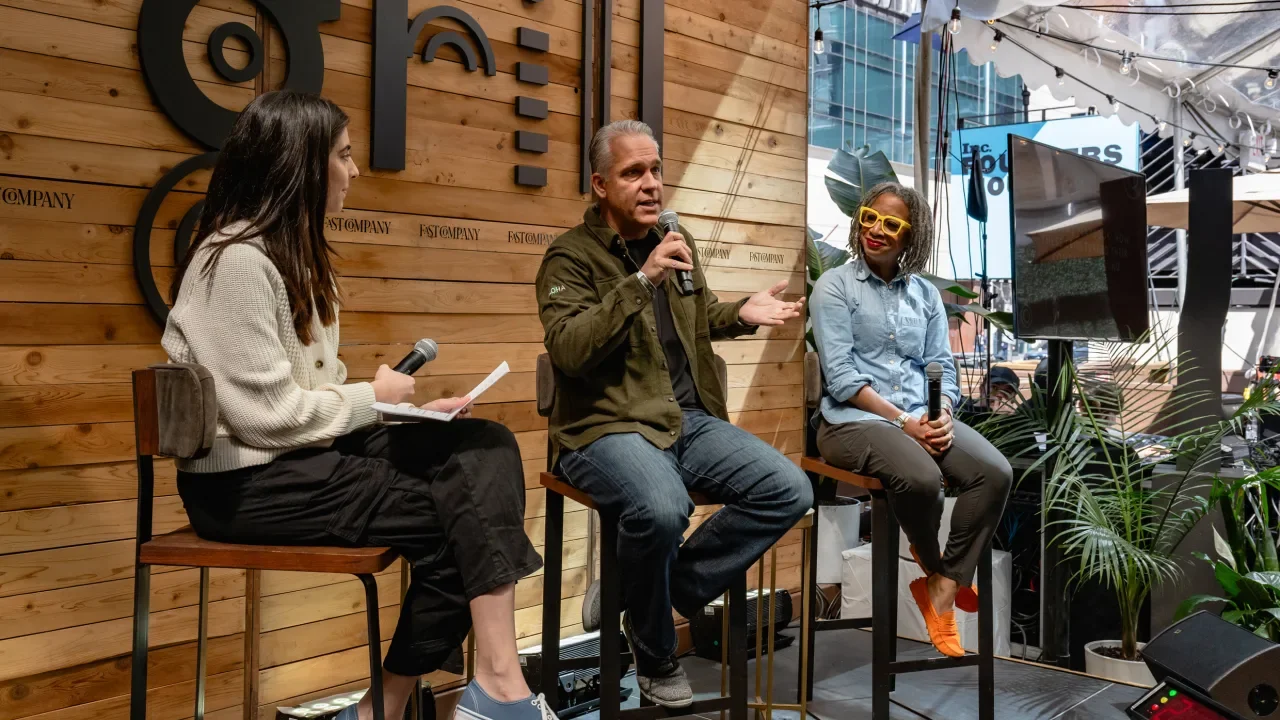
Within three months of becoming CEO of the Honest Company in 2023, Carla Vernón slashed 25% of its eco-friendly goods. That seems tame in comparison to what happened when Brad Charron joined Aloha as CEO in 2017: He killed off every product category. Now on the other side of major rebrands and company pivots, these CEOs say there wasn’t necessarily a playbook to follow when they joined their respective companies as outsiders. While assuming the role of turnaround CEO proved difficult—and not one either would like to undertake again—there are many lessons learned, which they shared during a discussion at the Fast Company Grill at SXSW. When Charron was initially approached about becoming chief marketing officer of Aloha, he was unimpressed with the product lineup and after about an hour meeting with the team, he concluded the organic, plant-based food company wouldn’t be in business a year from then. He ultimately decided to join Aloha as CEO, giving himself a made-up title of “re-founder,” and initiated a company re-start, killing off all of existing products like trail mix and chocolates and launching the current lineup of protein bars, powders and drinks. “It was a complete destruction because that was what was needed,” Charron told the SXSW audience. “You couldn’t step-change your way to fixing all that illed it.” While Vernón’s changes at Honest were less drastic, she had the added pressure of overseeing a publicly-traded company—“Wall Street gave me no grace.” Honest had gone public less than two years before she arrived and while private, it had experimented with launching products in a wide variety of categories, she said. One of her first tasks as CEO was to evaluate the wide range of Honest items, from the core or “hero” products beloved by consumers to those with varying success by financial metrics—and everything in-between. In the end, 25% of the products were slashed. “People think that that’s risky, but our company grew revenues for the first time in two years when we had less variety in our portfolio because we could focus on what mattered and what was good,” she said. “Product quality is your number one focus.” EMPOWERING EMPLOYEES Empowering employees to have a sense of ownership at both Honest and Aloha was also key to these turnaround success stories, the CEOs said. “There is more scrutiny and skepticism of the outsider, both from the employee base and from the investor base, who has to figure out whether they can trust you managing their money,” Vernón said. “One of the things I introduced is that every single full time employee—I don’t care if that is the office mom or if that is the CFO—they are all shareholders, and so they are all invested in us figuring out how to be aligned with our retail partners and with our investors.” Charron likewise focused on ensuring employees felt a sense of ownership in Aloha. “The most precious thing we have in the world is our time, and there’s nothing worse than wasting your energy and your heart and your soul on something that’s not symmetrically set up for a future success,” he said. “I had to find people who would be willing to kind of put their skin on the line a little bit and be an employee-owner mentality.” NAVIGATING DIFFICULTY Even though he came into a situation he knew would be difficult—and proved to be difficult—and Charron said it was important to recognize that fixing so much that was broken wouldn’t happen quickly. “Everything across the entire ecosystem of the company needed to be questioned and we needed to have patience that eventually we were going to build something that was going to work,” he said. “That’s really kind-of the core discipline that has gotten Aloha to where it is today.” Vernón had more time pressure to enact a pivot—her first earnings call was eight weeks after she became CEO—and she needed the buy-in of the board of directors and investors. While she said working at Honest has been “the thrill and adventure of a lifetime,” there were some “tough” days early on and that’s when she leaned on her support network. “It was a very, I think fragile moment for us as a company and I am so proud that we’ve come through actually stronger.” View the full article

-
If you've been dealing with Google Messages issues—particular with regards to sending photos and videos—you aren't alone. Messages users are complaining about images that are slow to load when sent via RCS. Media shows up blurry for minutes at a time before users can actually open them. Photos and videos are also arriving compressed, which is something to be expected on SMS, not RCS. Luckily for those affected, Google has taken notice. In a Tuesday post on the company's support website, a community manager acknowledged the "frustrating issues" with sending media in Google Messages, and shared some good news: The Google team has been "actively working on this," and has issued updates dedicated to "significantly improving media receiving performance." There doesn't appear to be a new update to install to solve the issues on the users' end, which likely indicates these changes are happening behind the scenes on Google's side. Still, it doesn't hurt to keep Google Messages itself updated. Head to its Play Store page to make sure you're running the latest version of the app. If not, you'll want to hit Update. Hopefully, following all these changes, you'll shake these media issues for good. Despite the company's optimism about the update, the post does suggest the problems here could be complicated. It doesn't help that Google avoids identifying the specific features in question that they've addressed, simply noting them as slowdowns and failures with media. As such, Google encourages users to continue sharing any issues they run into. Whether that means Google knows these particular issues could still be present when sending and receiving media in Google Messages isn't clear, but it's good context moving forward. How to report Google Messages bugs to GoogleIf after today, you're still experiencing these media problems, or any issues at all with Google Messages, you should tell Google about them. To do so, open the app, tap your profile icon in the top right, then choose Help & feedback. Tap Send feedback at the bottom of this page, then choose whether you'd like Google Play services to access your device logs. (Choosing not to is fine.) From here, you can write out your feedback, and including screenshots or system logs if you like, before sending the feedback as an email. View the full article
-
Google publishes new Robots.txt documentation that provide SEOs and publishers with a refresher on how to control search crawler behavior The post Google Publishes New Robots.txt Explainer appeared first on Search Engine Journal. View the full article
-
The legislative proposal highlights tensions around broader utilization of partial claim-style mortgage options and the VA's particular difficulty funding one. View the full article

-
Champion of light regulation expected to be welcomed by Wall Street View the full article
-
With focus turning to increased domestic production, the Chicago Mercantile Exchange plans to launch a new lumber futures trading exchange in late March. View the full article

-
NetSuite is one of the most popular ERP (enterprise resource planning) platforms on the market. For many organizations, NetSuite is the all-in-one platform through which every single process flows. The more data it has — and the more up to date it is — the better they can operate. But there are situations when the data you need isn’t in NetSuite. It might be in separate CRM software, in a project management tool used by a third-party collaborator, or even buried in someone’s email inbox. In these situations, NetSuite integrations can get the data you need out of other tools and keep it centralized in NetSuite. Here’s how they work — and which ones you might need. How do NetSuite integrations work? A NetSuite integration is a piece of software that pushes data from NetSuite to other tools or vice-versa. It can automate parts of the business processes going through NetSuite, but it’s mainly about making sure your data is exactly where you need, no matter how many tools are involved in a workflow. Not all integrations are created equal. NetSuite has several built-in integrations that allow users to connect it to other tools without paying for a third-party integration platform. These integrations include: NetSuite Connector: This tool integrates NetSuite with common e-commerce platforms like Shopify and eBay, as well as tools like Salesforce. SuiteCloud Platform Integration: Software developers and engineers can use this platform to design, test, and deploy custom integrations. NetSuite Data Warehouse: This platform is used to centralize data from multiple NetSuite apps, imported CSV files, and databases like Snowflake and Amazon Web Services (AWS). But these methods can be limited, and won’t suit every organization. A third-party integration platform allows organizations to integrate NetSuite with other tools in a way that suits them. Here are just a few examples of third-party integration providers for NetSuite: Unito: A true 2-way sync platform, Unito allows users of all technical backgrounds to build flows between NetSuite and over 50 tools. It creates 2-way relationships between work items so they’re created automatically in all tools and kept up to date as you work. Zapier: An automation platform used to create simple one-way automations between tools. This allows the creation of work items in other tools to create new work items in NetSuite, and vice-versa. Tray.io: An iPaaS (integration platform as a service), this is an all-in-one platform for automating all sorts of tools with NetSuite. While it offers hundreds of integrations, they’re not often as deep as those offered by other solutions. The 5 best NetSuite integrations for your business While you’ll eventually want to integrate your entire tool stack with NetSuite, you’ll often need to prioritize some tools, especially if you’re testing out a new integration platform. With that in mind, here are the tools you should integrate with NetSuite first. Chat and meeting tools Integrating a chat app like Slack with NetSuite means you can go from a conversation to a new project in moments. How many of your projects start in a Slack thread or a Zoom meeting? And how much manual work is involved before the information shared in that communication channel is appropriately shared in NetSuite? By integrating your chat and meeting tools with NetSuite, you can eliminate hours of manual data entry while making sure everyone has the context they need to do their best work. Examples of these tools: Slack Zoom Microsoft Teams Customer relationship management (CRM) software A good CRM tool brings sales, customer success, and marketing together in one place, unlocking powerful cross-functional collaboration. CRM platforms are often an organization’s central database for all their customer data. Conversations with sales, customer interactions, support tickets, and more. Despite everything NetSuite can do, CRM tools are still in use by most organizations. That means there’s a disconnect between NetSuite data and anything involving your customers. By integrating these tools, everyone at your organization will have all that rich customer data at their fingertips, enriching everything they’re working on. Examples of these tools: HubSpot Salesforce Pipedrive Spreadsheets Spreadsheet tools are still the backbone of many essential business processes, from budgeting to reporting. Despite how powerful NetSuite’s tools are, you’ll always have some data buried in a spreadsheet somewhere. With no integration solution, you’ll be stuck importing spreadsheets and spending hours cleaning up that data or jumping back and forth between NetSuite and your spreadsheet. That’s why having an integration platform that supports spreadsheets is absolutely essential. Examples of these tools include: Google Sheets Microsoft Excel Whiteboarding tools Whiteboarding tools allow teams to get together to brainstorm ideas and plan their strategy without being in the same room. Sometimes, you just need a whiteboard and a few post-its to turn an idea into a full-fledged campaign. These collaborative spaces are a fantastic place for brainstorming, but create hurdles for the rest of your workflow. After all, someone has to manually copy and paste the outcome of these sessions into NetSuite if you’re going to do anything with it. That’s why an integration is essential if you use these whiteboards at all. Examples of these tools include: Miro Microsoft Whiteboard Nuclino Project management tools Project management tools are essential for collaborating across teams on mission-critical projects. While NetSuite has some strong project management capabilities, there might be teams in your organization that use dedicated PM tools, creating data silos that impact other workflows. Software developers, for example, often rely on Jira to track their development work. Marketers, HR teams, and other business teams might use Asana or Trello to track projects, creating their own silos. By integrating all your project management systems, you can ensure everyone has the data they need to push their project to the finish line. Examples of these tools include: Jira Asana Trello How to integrate NetSuite with your tech stack Integrating NetSuite with two-way flows is essential to eliminating data silos and enabling cross-functional work. While there are multiple options for integrating NetSuite with your other tools on the market, only one stands above the rest. Unito. Unito is a two-way integration solution with some of the deepest integrations on the market for tools like NetSuite, Jira, Slack, Smartsheet, ServiceNow, and Salesforce. It’s the only tool that allows teams to deploy integrations in days without relying on IT or expensive third-party consultants while keeping the customization and robust integration capability of enterprise-grade solutions. Ready to integrate NetSuite? Meet with our experts to see what Unito can do. Book a demo View the full article
-
Now the structured mortgage securities are cheap enough that CLO investors are watching them more closely, according to strategists and investors. View the full article

-
The final (final) deadline for the Department of Homeland Security's REAL ID requirement is upon us, and unlike so many instances in the two decades since the new rules were passed, it doesn't appear that air travelers are getting another extension to obtain an identification that complies. The 2005 REAL ID Act aimed to standardize state-issued driver's licenses and identification cards by 2008, though the rollout was delayed until 2020, then 2023, then 2025. Starting May 7, anyone age 18 and over passing airport security or entering certain federal buildings with their license will need a REAL ID. Many states have issued REAL IDs in recent years upon license renewal or upgrade, so if yours has a gold or black star in the corner, you are already good to go. However, if you've procrastinated this change, you may still be able to fly with an alternative ID. Alternatives to REAL ID for air travelIf you need to go through a TSA checkpoint after May 7 and don't have a REAL ID-compliant license, you can use one of the following alternative forms of identification: U.S. passport U.S passport card DHS Trusted Traveler card (Global Entry, NEXUS, SENTRI, FAST) State-issued Enhanced Driver's License (available to residents in Michigan, Minnesota, New York, Vermont, and Washington only) TSA will also accept IDs like Enhanced Tribal Cards, permanent resident and border crossing cards, Department of Defense IDs (and other federal worker credentials), and foreign passports. TSA does accept expired IDs up to a year after expiration, and you may still be allowed to clear security without a valid ID upon completion of an identity verification process. To get a REAL ID, you'll need to check your state's requirements. Typically, these include proof of your legal name, date of birth, Social Security number, address, and residency status. You'll also need to go in person to have your photo taken and pay a fee. REAL ID is only required for clearing security at airports (and some federal buildings)—you do not need one to drive or vote. View the full article
-
Some “copycat” versions of popular weight-loss drugs will soon be restricted in the U.S. The change comes as a federal judge declined an injunction that would’ve allowed compounding pharmacies to keep making more affordable versions. In a Good Morning America segment, Dr. Tara Narula, ABC News chief medical correspondent, explained how compound-drug creation works to meet demand. “When a drug is in short supply, the FDA allows these compounding pharmacies to essentially create copycat drugs. But when the drug companies say, ‘we are able to meet the demand,’ then those compounding pharmacies can no longer sell those drugs,” Narula said. The U.S. Food and Drug Administration (FDA) will now begin restricting the creation of the compound drugs. In 2022, the popularity of weight-loss drugs was rising too quickly for drug companies to keep up with demand. Patients turned to compound versions, which were made by licensed pharmacists but were not FDA approved. Last year, around 200,000 prescriptions for copies of Novo Nordisk’s weight-loss drug Wegovy alone were being filled each month. But now, the makers of the original versions of the drugs say they are no longer facing shortages and have removed the drugs from the FDA’s shortage list. Three weeks ago, the FDA made that declaration in a press release, and, at the same time, announced that selling copycat versions “with rare exceptions” was now “illegal.” In the release, Dave Moore, president of Novo Nordisk and executive vice president of U.S. operations and global business development, said, “We are pleased the FDA has declared that supply of the only real, FDA-approved semaglutide medicines is resolved, affirming that Novo Nordisk is meeting or exceeding current and projected nationwide demand. No one should have to compromise their health due to misinformation and reach for fake or illegitimate knockoff drugs that pose significant safety risks to patients.” Still, patients who rely on copycat weight-loss drugs pay a fraction of the price tag for the real thing, which averages around $1,000 per month. Narula said that patients’ wallets will certainly be impacted by the FDA’s move. “This is all going to affect people who are getting these drugs, usually at a much lower cost and much easier to find,” Narula said. Telehealth companies, such as Hims & Hers Health, which capitalized on the supply issues by selling compound versions, may also be hard hit. Hims’s shares have already tumbled, dropping 46% since semaglutide was taken off the FDA’s shortage list. To that end, a Change.org petition organized by the GLP-1 Collective, a nonprofit that advocates for access to the drugs, has sprung into action to combat the FDA’s latest moves. The petition has garnered more than 24,700 signatures at the time of publication. The petition not only urges the FDA to allow compounding pharmacies to keep making the drugs, it also asserts the importance of generic versions of the drugs, insurance coverage, and competitive pricing. View the full article