ResidentialBusiness
Administrators
-
Joined
-
Last visited
Everything posted by ResidentialBusiness
-
 Inspired by yesterday’s letter about someone who vastly overshared personal mental health details with clients, let’s talk about oversharing at work! Over the years we’ve heard about oversharing in the forms of a colleague who showed an explicit slideshow of her baby’s birth, a boss who kept sharing drama between his current wife and his ex-wife, a coworker who felt the need to share that her husband didn’t like her Brazilian bikini wax, a brand new hire who kept asking everyone whether he should cheat on his wife, and much more. Let’s discuss workplace oversharing in the comment section. The post let’s discuss TMI: when coworkers overshare at work appeared first on Ask a Manager. View the full article
 -
Russia’s foreign ministry accuses Washington of lowering the ‘threshold for use of force’View the full article
-
Health tech gadgets displayed at the annual CES trade show make a lot of promises. A smart scale promoted a healthier lifestyle by scanning your feet to track your heart health, and an egg-shaped hormone tracker uses AI to help you figure out the best time to conceive. Tech and health experts, however, question the accuracy of products like these and warn of data privacy issues — especially as the federal government eases up on regulation. The Food and Drug Administration announced during the show in Las Vegas that it will relax regulations on “low-risk” general wellness products such as heart monitors and wheelchairs. It’s the latest step President Donald The President’s administration has taken to remove barriers for AI innovation and use. The White House repealed former President Joe Biden’s executive order establishing guardrails around AI, and last month, the Department of Health and Human Services outlined its strategy to expand its use of AI. Booths at the conference showcased new tech designed to help people living in rural areas with their health care needs amid doctor shortages, boost research into women’s health and make life easier for people with disabilities. AI technologies have benefits in the over $4.3 trillion health care industry, according to Marschall Runge, professor of medical science at the University of Michigan. They’re good at analyzing medical imaging and can help streamline doctors’ busy schedules, but they can also promote biases and “hallucinate,” providing incorrect information stated as fact. “I would urge people not to think that the technology is the same as a well-resourced, thoughtful, research-driven medical professional,” said Cindy Cohn, executive director of the digital rights group Electronic Frontier Foundation. Privacy protections like the Health Insurance Portability and Accountability Act do not cover information collected by consumer devices, and the companies could be using the data to train their AI mode ls, or selling it to other businesses, Cohn said. With a lot of the gadgets at CES, it’s difficult to find out where your information is going, Cohn said. “You have to dig down through the fine print to try to figure that out, and I just don’t think that’s fair or right for the people who might rely on it,” she said. But the creators of the products say their innovations fill in health care gaps, and they maintain they protect their customers’ privacy. Sylvia Kang, founder and CEO of Mira, said she created the egg-shaped hormone tracker because many of her friends were trying to conceive and realized they had no knowledge of their hormonal health. To use the “world’s mini hormone lab,” you dip a wand in urine, insert the wand into the monitor and look at the results on the app. Kang said her company uses AI to analyze female hormone data and has one of the world’s biggest hormonal health banks. The data is stored on the cloud and is not shared with anyone, Kang said. “There was no such thing before,” Kang said of her $250 product. Many gadgets at CES focused on women’s health, which has been historically under-researched and underfunded. Before 1993, women were excluded from clinical trials, and there still is little research on areas like menopause. While not every woman will have a baby, all women go through menopause, and “yet we know nothing about it,” said Amy Divaraniya, founder and CEO of the women’s health company Oova, during a session. One gadget called Peri aims to better understand perimenopause — the transitional phase before menopause. The wearable device monitors hot flashes and night sweats and provides the data via an app. Improving accessibility to health care Other products at CES were promoted as a way to increase accessibility to health information. The free medicine-focused AI chatbot called 0xmd helps improve access to medical information in areas with doctor shortages and provides a cost-effective alternative, said its founder and architect Allen Au. People can ask the chatbot questions about medicine, upload photos of a mole or rash, and submit their doctors’ notes for an easier-to-understand translation, Au said. “At the end of the day, I don’t think we will replace doctors,” but it can give people a second opinion, Au said. OpenAI announced on Wednesday its launch of ChatGPT Health, a similar platform. Cohn remains skeptical of consumer tech. She said they can help prepare people to ask the right questions of their medical professional, but they’re not going to be a substitute for a doctor. “People need to remember that these are just tools; they’re not oracles who are delivering truths,” she said. —Jessica Hill, Associated Press View the full article

-
We live in a world of ambient hums, from air conditioners and distant traffic to the whir of our own thoughts. It’s no surprise many people reach for active noise-cancelling (ANC) headphones to escape it all. Originally designed for planes and offices, ANC devices, including earbuds, have become a popular bedtime tool for chasing total quiet. But the brain doesn’t actually want silence to sleep, and forcing it can backfire. The best way to fall and stay asleep is to quiet the mind, not just what enters your ears. We call this creating “cognitive silence,” and ANC often gets in the way. Even during sleep, the brain keeps an ear out for danger. It’s an evolutionary survival mechanism in which the auditory system monitors the environment for changes: a creak, a bark, or a door slam. When the surrounding world grows too quiet, that alert system can become hypersensitive, scanning for the next disturbance. Research has shown that sudden noises are more likely to fragment sleep. Fragmented sleep affects everything from mood and metabolism to cognitive performance. Even minor disruptions can increase stress hormones and reduce the deep sleep stages responsible for recovery and memory consolidation. For sleep, the goal isn’t to eliminate sound entirely, but to give the brain a safe, steady acoustic background so it can rest rather than react. WHERE ANC FALLS SHORT ANC uses tiny microphones to detect external sound and then produces an equal-and-opposite “anti-noise” signal to cancel it out. It works well for consistent, low-frequency noise like airplane engines, HVAC systems, or the hum of a refrigerator. That’s also where its effectiveness tends to end. Dan Gauger, retired distinguished engineer at Bose, the cocreator of their ANC division, and someone I worked closely with says, “At frequencies above where ANC can cancel, it actually amplifies the noise a bit.” When it comes to sleep, our needs and our sound environment are far more complex. And that’s where ANC can start to work against us. Here’s why ANC in sleep technology can be unhealthy: It amplifies what you’re trying to avoid: Real-world sound isn’t always consistent. A door slam, a barking dog, or footsteps overhead are irregular, high-frequency noises that ANC can’t cancel effectively, and these sharper sounds often stand out even more. It disrupts the body’s natural equilibrium: ANC can introduce a subtle but uncomfortable pressure change in the ear. Many users describe it as a “plugged” or “vacuum” feeling, especially in quieter settings. That pressure, combined with the unnatural stillness of total quiet, can be distracting enough to delay or fragment sleep. Gauger adds, “ANC can’t create a steady pressure in the ear, but it mimics the low-frequency drop your ears notice during, say, altitude changes. From experience, some people interpret this sonic change as uncomfortable pressure.” It doesn’t address the mental noise: Maybe most importantly, racing thoughts and anticipatory anxiety aren’t fixed by cancellation. The internal soundtrack remains, making sleep even harder to get. WHY PASSIVE NOISE BLOCKING IS A STRONGER OPTION Passive noise blocking takes a simpler, more natural approach. Instead of electronically canceling sound, it physically reduces it using materials that seal off the ear and absorb or deflect noise before it reaches the eardrum. A well-fitted silicone seal can reduce outside noise by 15-30 decibels, dulling most environmental disruptions without the ear pressure or artificial quiet that ANC can create. Because the ear isn’t fighting internal pressure or electronic hiss, the result feels calmer, more organic, and less fatiguing. Pairing that physical protection with gentle, consistent noise masking sound, such as white or pink noise, or relaxing audio from a sleep app, gives the brain a steady, predictable auditory background. White noise contains all audio frequencies at equal intensity, similar to pink noise. Pink noise, however, sounds deeper and less harsh. Studies suggest pink noise may help people fall asleep faster and even enhance deep sleep. This combination of physical protection and consistent soothing audio helps the auditory system “stand down,” signaling that nothing unexpected is coming and it’s safe to rest. The benefits extend far beyond your nightly sleep. By improving rest quality, these techniques can directly boost daytime cognitive performance and productivity, areas where sleep deprivation takes a staggering toll. Currently, up to one-quarter of adults struggle with inadequate sleep, resulting in an economic impact of over $411 billion and the loss of 1.23 million working days annually in the U.S. alone. Sleep is the foundation for how we think, perform, and connect. When we chase total silence during sleep with ANC, we risk disrupting the very systems that help the brain recharge. True recovery happens when the mind feels safe, not sealed off. Passive noise blocking and gentle, consistent noise-masking audio support the brain’s natural rhythms, creating an environment where both body and mind can truly rest. The payoff is deeper sleep, steadier moods, sharper focus, and better performance. N.B. Patil is CEO and CTO of Ozlo. View the full article

-
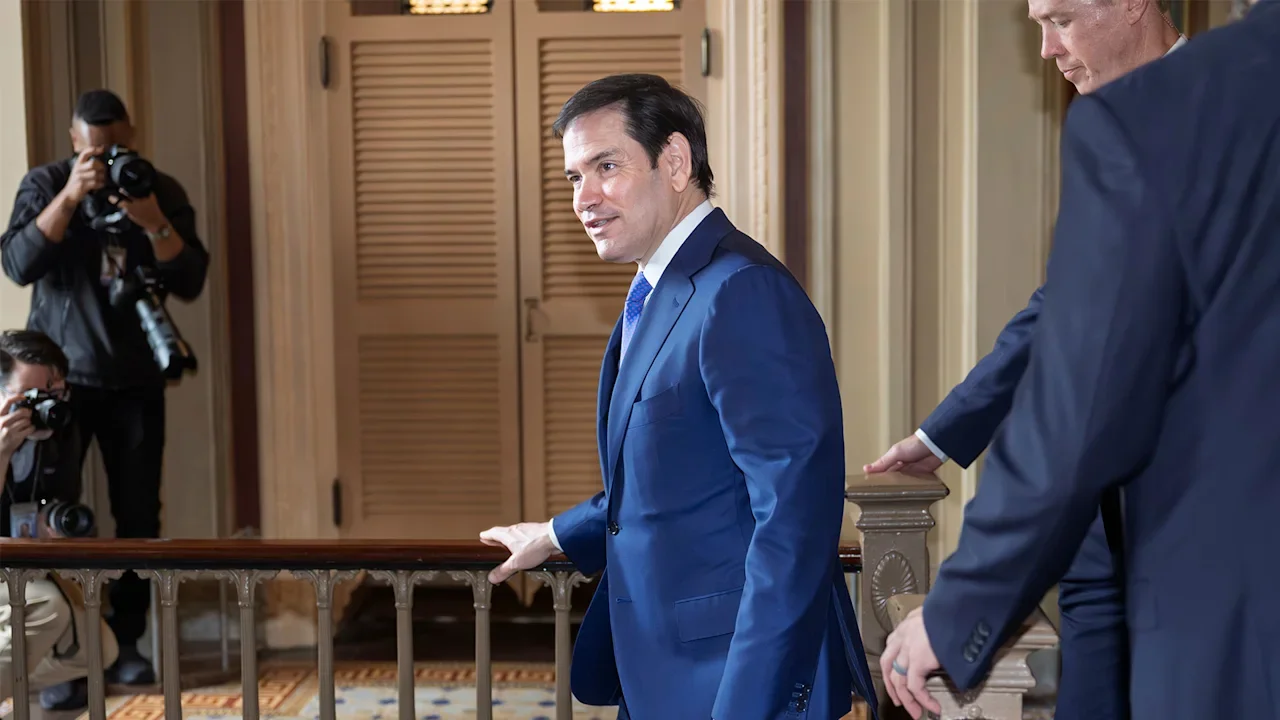
Interim leader Delcy Rodríguez is in close contact with US secretary of state Marco RubioView the full article
-
When you think about franchising, it’s crucial to understand the relationship between franchisors and franchisees. A franchise allows you to operate a business under a well-known brand, utilizing established processes and systems. This guide will break down the core elements of franchising, including agreements, benefits, and challenges. By grasping these concepts, you’ll be better equipped to assess whether franchising is the right path for your business ambitions. What comes next might surprise you. Key Takeaways A franchise is a business model where franchisees operate under an established brand and proven processes of a franchisor. Franchise agreements detail rights, responsibilities, and financial obligations, including upfront fees and ongoing royalties. Advantages of franchising include brand recognition, operational support, and faster market expansion without significant capital investment. Disadvantages encompass high startup costs, ongoing royalties, and limited operational control due to adherence to franchisor systems. Legal compliance and proper documentation, like the Franchise Disclosure Document (FDD), are crucial for franchise success and protection. What Is a Franchise? A franchise is fundamentally a business model that allows individuals, known as franchisees, to operate a business under the established brand and proven processes of a franchisor. Essentially, the franchise definition is about granting rights for the use of a brand in exchange for an upfront fee and ongoing royalties. This setup improves your chances of success, as you benefit from established brand recognition, operational support, and training from the franchisor. The franchise meaning extends to agreements that can vary widely, typically involving fees and royalties ranging from 4% to 12% of sales. It’s important to acknowledge that misclassifying a franchise as a licensing agreement can lead to significant legal issues. Historical Overview of Franchising Franchising began to take shape in the mid-19th century, evolving into a structured business model as companies looked for ways to expand their reach and scale operations. The franchise model found its roots in the U.S. with early adopters like A&W Root Beer in 1925 and Howard Johnson in 1935. The industry gained momentum during the suburban expansion of the 1950s and 1960s, allowing brands to spread quickly through local franchisees. By 2024, there are an estimated 830,876 franchise establishments in the U.S., contributing nearly $900 billion to the economy. Notable franchises such as McDonald’s, Taco Bell, and Hampton by Hilton have shaped the modern environment, showcasing the effectiveness of the franchise in driving business growth. Key Components of Franchising When you’re considering a franchise, grasping the key components is vital. The franchise agreement lays out the rights and responsibilities between you and the franchisor, whereas additionally detailing the financial obligations, such as initial fees and ongoing royalties. Familiarizing yourself with these elements can help you make informed decisions and set realistic expectations for your franchise expedition. Franchise Agreement Essentials Grasping the fundamentals of a franchise agreement is essential for anyone considering entering into this business model. This legal contract outlines the rights and responsibilities of both the franchisor and franchisee, detailing terms related to fees, royalties, and operational standards. Typically lasting between 5 to 30 years, agreements may include renewal clauses to extend the relationship under specified conditions. You’ll usually pay an upfront franchise fee and ongoing royalties, which range from 4.6% to 12.5% of your gross sales. Furthermore, the agreement includes provisions for training and support from the franchisor, ensuring brand consistency. Remember, violating the franchise agreement can lead to penalties, including termination, emphasizing the need for strict compliance with all outlined terms. Financial Obligations Overview Comprehending the financial obligations of a franchise is essential for anyone looking to invest in this business model. Initially, you’ll face upfront franchise fees, ranging from $35,000 to $45,000, depending on the brand. Ongoing royalty payments are another key component, typically between 4% to 12% of your total revenue, creating a continuous income stream for the franchisor. Furthermore, you’ll need to budget for training and equipment costs, which are often included in the franchise agreement. Operational expenses, such as rent, employee salaries, and inventory, can vary considerably based on your location and industry. Legal compliance costs, particularly for preparing the Franchise Disclosure Document (FDD), may range from $18,000 to $45,000, highlighting the importance of thorough financial planning. Advantages of Franchising Franchising offers several advantages that can greatly benefit aspiring business owners. First, you gain access to a ready-made business model, allowing you to leverage an established brand and proven operational systems, which increases your chances of success compared to starting independently. You furthermore benefit from collective purchasing influence, leading to better supply chain efficiencies and economies of scale as the franchise network grows. In addition, franchisors enable faster market expansion without significant capital investment, as franchisees fund their own locations. Ongoing support and training from franchisors help you navigate challenges and maintain brand standards, enhancing your success rate. Overall, franchise businesses contribute around $900 billion to the U.S. economy, showcasing the financial impact and growth potential of this model. Disadvantages of Franchising Though the advantages of franchising can be appealing, it’s important to contemplate the disadvantages that come with this business model. High startup costs can be a significant barrier, especially for well-known franchises like McDonald’s, which require an initial investment of $1.3 million to $2.3 million. In addition, you’ll need to pay ongoing royalty fees, typically between 4.6% and 12.5% of sales, which can diminish your profits. You also have limited control over operations, as you’re required to follow the franchisor’s established systems. Moreover, relying on potentially inaccurate information from the franchisor can affect your franchise’s performance. Finally, maneuvering complex legal compliance requirements adds another layer of challenge. Disadvantage Description High Startup Costs Significant initial investment required Ongoing Royalty Fees Fees that impact overall profitability Limited Control Must adhere to franchisor’s systems and guidelines Legal Compliance Complexity Maneuvering federal and state regulations Steps to Franchise Your Business When you’re ready to franchise your business, the first step is to assess its overall readiness. Here’s what you need to do: Verify you have a proven business model with consistent profitability. Calculate the costs for franchise development, ranging from $15,000 to $100,000. Protect your intellectual property by registering trademarks and preparing a Franchise Disclosure Document (FDD), which can take 30-60 days. Develop a thorough operations manual that details procedures, training, marketing strategies, and quality standards, typically spanning 100-300 pages. After these steps, focus on establishing a franchise sales strategy that includes local outreach to attract your first franchisees, as their success is vital for building your brand’s reputation. Assessing Franchise Readiness When you’re evaluating your franchise readiness, it’s essential to assess your business model’s profitability and scalability. Comprehending market demand is equally important, as it helps guarantee there’s a viable customer base for your franchise. Business Evaluation Criteria Evaluating franchise readiness involves several critical business evaluation criteria that can determine the success of a franchise system. You need to assess these factors to guarantee potential franchisees are investing in a viable opportunity: A proven business model with consistent profitability A distinctive value proposition that sets the business apart Scalability of operations across multiple locations Established brand recognition to facilitate customer acquisition Market Demand Assessment Comprehending market demand is an important step in evaluating franchise readiness, as it helps you identify whether a franchise can meet local consumer needs effectively. Start by researching community demographics to understand customer preferences and identify any gaps in the market. It’s essential to evaluate local competition, since entering a saturated market may limit your franchise’s profitability. A proven business model with consistent success is critical, indicating the potential for growth across locations. Typically, evaluating franchise readiness takes three to six months, allowing for thorough market analysis and strategic planning. Make sure your financial projections align with local market trends, reflecting the franchise’s capacity for growth and sustainability based on consumer spending patterns. Developing a Franchise Disclosure Document (FDD) Creating a Franchise Disclosure Document (FDD) is a vital step for franchisors looking to establish transparency and trust with potential franchisees. This legally required document contains 23 fundamental items that cover various aspects of the franchise system, including: Fees and obligations The franchise agreement Compliance with federal and state laws Multi-state registration requirements You must provide the FDD to potential franchisees at least 14 days before they sign any agreements or make payments, allowing adequate review time. Moreover, annual updates are necessary to reflect any changes in the franchise system or legal requirements. To avoid penalties and guarantee compliance, seeking legal assistance during the FDD preparation is imperative for success. Protecting Your Intellectual Property Intellectual property protection is critical for any franchise business, as it safeguards the unique elements that distinguish your brand in the marketplace. Registering trademarks with the United States Patent and Trademark Office (USPTO) grants you legal protection and exclusive rights to your brand name and logo, fundamental for maintaining brand integrity. Furthermore, creating non-disclosure agreements (NDAs) with potential franchisees helps prevent the unauthorized sharing of sensitive information and proprietary systems, securing your competitive edge. Documenting all business processes and operational standards is indispensable for developing a thorough operations manual, which reinforces your intellectual property rights. Finally, ensuring compliance with state and federal trademark laws, including monitoring for infringement, is important to maintain the strength and value of your intellectual property. Creating Effective Franchise Systems When creating effective franchise systems, you need to focus on several key components, including franchise structure design and an operational standards manual. This manual should outline procedures, training, and other crucial elements to guarantee consistency across all locations. Furthermore, implementing robust support and training systems will help franchisees maintain high operational standards during adherence to your brand’s guidelines. Franchise Structure Design Designing an effective franchise structure involves a careful balance of detailed planning and clear communication. A strong framework guarantees that both you and your franchisees understand expectations and responsibilities. Here are key components to reflect on: A thorough operations manual outlining procedures, training, and marketing, typically 100 to 300 pages long. Protection of intellectual property through trademark registration and non-disclosure agreements to safeguard your brand. A well-prepared Franchise Disclosure Document (FDD) detailing company history, fees, and obligations, which takes 30 to 60 days to compile. Establishing ongoing support systems for franchisees, including training and open communication to uphold brand standards and promote success. These elements contribute to a robust and sustainable franchise structure that benefits everyone involved. Operational Standards Manual Creating an Operational Standards Manual is essential for establishing effective franchise systems, as it serves as an important resource that outlines the procedures and expectations for franchisees. This thorough document typically ranges from 100 to 300 pages, detailing operational guidelines on customer service, product standards, marketing strategies, and employee training protocols. By developing this manual, you maintain brand integrity and equip franchisees with the necessary tools to succeed. It acts as a reference for daily operations and compliance with your expectations. Including sections on quality control, supplier relationships, and crisis management helps franchisees navigate challenges effectively. Regular updates to the manual guarantee it reflects best practices, market changes, and regulatory requirements, providing franchisees with up-to-date information for efficient operations. Support and Training Systems Support and training systems play a pivotal role in the success of franchise operations, ensuring that franchisees have the resources they need to thrive. A thorough operations manual, usually 100 to 300 pages long, details vital procedures and standards. Ongoing training programs help maintain brand consistency and operational efficiency. Key components of effective support and training systems include: Centralized resources: Operational manuals and training materials guide franchisees through daily challenges. Supplier relationships: Access to quality products improves operational integrity. Regular check-ins: Ongoing communication channels address concerns and share best practices. Performance support: Continuous training encourages franchisee development and customer satisfaction. These elements collectively strengthen the franchise network and contribute to overall success. Building a Franchise Sales Strategy When you’re building a franchise sales strategy, it’s vital to start by identifying the ideal characteristics of prospective franchisees, as this will help you target individuals who align with your brand’s values and operational needs. Next, establish clear sales goals for the next 6 to 12 months to guide your efforts. Utilize a mix of franchise brokers, online portals, and referrals from existing franchisees to improve your outreach. Initially, focus on local markets, as having your first 2-3 franchisees nearby allows for easier support and system refinement. Providing strong operational support and training to these early franchisees is fundamental, as their success can attract more prospects. Frequently Asked Questions What Are the 4 P’s of Franchising? The 4 P’s of franchising are Product, Price, Place, and Promotion. You need to guarantee your product meets customer expectations and aligns with brand standards. Set competitive prices for franchise fees and royalties to maintain profitability. Consider location carefully, focusing on market demand and visibility. Finally, develop effective promotion strategies to attract both franchisees and customers, leveraging your brand’s recognition to improve market presence and drive sales. What Is a Simple Definition of Franchise? A franchise is a business model where you, as a franchisee, pay a franchisor for the right to operate under their brand and use their established systems. This typically involves an upfront fee and ongoing royalties. In return, you gain access to brand recognition, training, and support, allowing for quicker market entry. Franchising helps expand businesses without the franchisor investing in each location, leveraging your investment for growth. What Is the 7 Day Rule for Franchise? The 7 Day Rule for franchises requires franchisors to provide the Franchise Disclosure Document (FDD) to potential franchisees at least 14 days before any agreement signing or payment. This rule guarantees you have sufficient time to review the franchise’s terms, obligations, and financial details. Established by the Federal Trade Commission (FTC), it promotes transparency and compliance, protecting you from rushed decisions. Non-compliance can result in severe penalties for franchisors, including lawsuits. How to Understand a Franchise? To understand a franchise, you should familiarize yourself with its basic components. A franchise involves a franchisee paying a franchisor for the rights to use their brand and business model. You’ll find two primary types: business format franchises, which offer a complete operational system, and product distribution franchises, which focus on selling specific products. Make sure to review the Franchise Disclosure Document (FDD) carefully, as it outlines crucial details before you commit. Conclusion In conclusion, comprehending the meaning of franchising involves recognizing the relationship between franchisors and franchisees, along with the benefits and challenges of operating under a brand. By grasping key components like franchise agreements, financial obligations, and operational responsibilities, you can make informed decisions. It’s essential to weigh the advantages of brand support against potential downsides, such as high startup costs. This knowledge equips you to navigate the franchising environment effectively and pursue your business ambitions. Image via Google Gemini This article, "Understanding Franchise Meaning – A Step-by-Step Guide" was first published on Small Business Trends View the full article
-
When you think about franchising, it’s crucial to understand the relationship between franchisors and franchisees. A franchise allows you to operate a business under a well-known brand, utilizing established processes and systems. This guide will break down the core elements of franchising, including agreements, benefits, and challenges. By grasping these concepts, you’ll be better equipped to assess whether franchising is the right path for your business ambitions. What comes next might surprise you. Key Takeaways A franchise is a business model where franchisees operate under an established brand and proven processes of a franchisor. Franchise agreements detail rights, responsibilities, and financial obligations, including upfront fees and ongoing royalties. Advantages of franchising include brand recognition, operational support, and faster market expansion without significant capital investment. Disadvantages encompass high startup costs, ongoing royalties, and limited operational control due to adherence to franchisor systems. Legal compliance and proper documentation, like the Franchise Disclosure Document (FDD), are crucial for franchise success and protection. What Is a Franchise? A franchise is fundamentally a business model that allows individuals, known as franchisees, to operate a business under the established brand and proven processes of a franchisor. Essentially, the franchise definition is about granting rights for the use of a brand in exchange for an upfront fee and ongoing royalties. This setup improves your chances of success, as you benefit from established brand recognition, operational support, and training from the franchisor. The franchise meaning extends to agreements that can vary widely, typically involving fees and royalties ranging from 4% to 12% of sales. It’s important to acknowledge that misclassifying a franchise as a licensing agreement can lead to significant legal issues. Historical Overview of Franchising Franchising began to take shape in the mid-19th century, evolving into a structured business model as companies looked for ways to expand their reach and scale operations. The franchise model found its roots in the U.S. with early adopters like A&W Root Beer in 1925 and Howard Johnson in 1935. The industry gained momentum during the suburban expansion of the 1950s and 1960s, allowing brands to spread quickly through local franchisees. By 2024, there are an estimated 830,876 franchise establishments in the U.S., contributing nearly $900 billion to the economy. Notable franchises such as McDonald’s, Taco Bell, and Hampton by Hilton have shaped the modern environment, showcasing the effectiveness of the franchise in driving business growth. Key Components of Franchising When you’re considering a franchise, grasping the key components is vital. The franchise agreement lays out the rights and responsibilities between you and the franchisor, whereas additionally detailing the financial obligations, such as initial fees and ongoing royalties. Familiarizing yourself with these elements can help you make informed decisions and set realistic expectations for your franchise expedition. Franchise Agreement Essentials Grasping the fundamentals of a franchise agreement is essential for anyone considering entering into this business model. This legal contract outlines the rights and responsibilities of both the franchisor and franchisee, detailing terms related to fees, royalties, and operational standards. Typically lasting between 5 to 30 years, agreements may include renewal clauses to extend the relationship under specified conditions. You’ll usually pay an upfront franchise fee and ongoing royalties, which range from 4.6% to 12.5% of your gross sales. Furthermore, the agreement includes provisions for training and support from the franchisor, ensuring brand consistency. Remember, violating the franchise agreement can lead to penalties, including termination, emphasizing the need for strict compliance with all outlined terms. Financial Obligations Overview Comprehending the financial obligations of a franchise is essential for anyone looking to invest in this business model. Initially, you’ll face upfront franchise fees, ranging from $35,000 to $45,000, depending on the brand. Ongoing royalty payments are another key component, typically between 4% to 12% of your total revenue, creating a continuous income stream for the franchisor. Furthermore, you’ll need to budget for training and equipment costs, which are often included in the franchise agreement. Operational expenses, such as rent, employee salaries, and inventory, can vary considerably based on your location and industry. Legal compliance costs, particularly for preparing the Franchise Disclosure Document (FDD), may range from $18,000 to $45,000, highlighting the importance of thorough financial planning. Advantages of Franchising Franchising offers several advantages that can greatly benefit aspiring business owners. First, you gain access to a ready-made business model, allowing you to leverage an established brand and proven operational systems, which increases your chances of success compared to starting independently. You furthermore benefit from collective purchasing influence, leading to better supply chain efficiencies and economies of scale as the franchise network grows. In addition, franchisors enable faster market expansion without significant capital investment, as franchisees fund their own locations. Ongoing support and training from franchisors help you navigate challenges and maintain brand standards, enhancing your success rate. Overall, franchise businesses contribute around $900 billion to the U.S. economy, showcasing the financial impact and growth potential of this model. Disadvantages of Franchising Though the advantages of franchising can be appealing, it’s important to contemplate the disadvantages that come with this business model. High startup costs can be a significant barrier, especially for well-known franchises like McDonald’s, which require an initial investment of $1.3 million to $2.3 million. In addition, you’ll need to pay ongoing royalty fees, typically between 4.6% and 12.5% of sales, which can diminish your profits. You also have limited control over operations, as you’re required to follow the franchisor’s established systems. Moreover, relying on potentially inaccurate information from the franchisor can affect your franchise’s performance. Finally, maneuvering complex legal compliance requirements adds another layer of challenge. Disadvantage Description High Startup Costs Significant initial investment required Ongoing Royalty Fees Fees that impact overall profitability Limited Control Must adhere to franchisor’s systems and guidelines Legal Compliance Complexity Maneuvering federal and state regulations Steps to Franchise Your Business When you’re ready to franchise your business, the first step is to assess its overall readiness. Here’s what you need to do: Verify you have a proven business model with consistent profitability. Calculate the costs for franchise development, ranging from $15,000 to $100,000. Protect your intellectual property by registering trademarks and preparing a Franchise Disclosure Document (FDD), which can take 30-60 days. Develop a thorough operations manual that details procedures, training, marketing strategies, and quality standards, typically spanning 100-300 pages. After these steps, focus on establishing a franchise sales strategy that includes local outreach to attract your first franchisees, as their success is vital for building your brand’s reputation. Assessing Franchise Readiness When you’re evaluating your franchise readiness, it’s essential to assess your business model’s profitability and scalability. Comprehending market demand is equally important, as it helps guarantee there’s a viable customer base for your franchise. Business Evaluation Criteria Evaluating franchise readiness involves several critical business evaluation criteria that can determine the success of a franchise system. You need to assess these factors to guarantee potential franchisees are investing in a viable opportunity: A proven business model with consistent profitability A distinctive value proposition that sets the business apart Scalability of operations across multiple locations Established brand recognition to facilitate customer acquisition Market Demand Assessment Comprehending market demand is an important step in evaluating franchise readiness, as it helps you identify whether a franchise can meet local consumer needs effectively. Start by researching community demographics to understand customer preferences and identify any gaps in the market. It’s essential to evaluate local competition, since entering a saturated market may limit your franchise’s profitability. A proven business model with consistent success is critical, indicating the potential for growth across locations. Typically, evaluating franchise readiness takes three to six months, allowing for thorough market analysis and strategic planning. Make sure your financial projections align with local market trends, reflecting the franchise’s capacity for growth and sustainability based on consumer spending patterns. Developing a Franchise Disclosure Document (FDD) Creating a Franchise Disclosure Document (FDD) is a vital step for franchisors looking to establish transparency and trust with potential franchisees. This legally required document contains 23 fundamental items that cover various aspects of the franchise system, including: Fees and obligations The franchise agreement Compliance with federal and state laws Multi-state registration requirements You must provide the FDD to potential franchisees at least 14 days before they sign any agreements or make payments, allowing adequate review time. Moreover, annual updates are necessary to reflect any changes in the franchise system or legal requirements. To avoid penalties and guarantee compliance, seeking legal assistance during the FDD preparation is imperative for success. Protecting Your Intellectual Property Intellectual property protection is critical for any franchise business, as it safeguards the unique elements that distinguish your brand in the marketplace. Registering trademarks with the United States Patent and Trademark Office (USPTO) grants you legal protection and exclusive rights to your brand name and logo, fundamental for maintaining brand integrity. Furthermore, creating non-disclosure agreements (NDAs) with potential franchisees helps prevent the unauthorized sharing of sensitive information and proprietary systems, securing your competitive edge. Documenting all business processes and operational standards is indispensable for developing a thorough operations manual, which reinforces your intellectual property rights. Finally, ensuring compliance with state and federal trademark laws, including monitoring for infringement, is important to maintain the strength and value of your intellectual property. Creating Effective Franchise Systems When creating effective franchise systems, you need to focus on several key components, including franchise structure design and an operational standards manual. This manual should outline procedures, training, and other crucial elements to guarantee consistency across all locations. Furthermore, implementing robust support and training systems will help franchisees maintain high operational standards during adherence to your brand’s guidelines. Franchise Structure Design Designing an effective franchise structure involves a careful balance of detailed planning and clear communication. A strong framework guarantees that both you and your franchisees understand expectations and responsibilities. Here are key components to reflect on: A thorough operations manual outlining procedures, training, and marketing, typically 100 to 300 pages long. Protection of intellectual property through trademark registration and non-disclosure agreements to safeguard your brand. A well-prepared Franchise Disclosure Document (FDD) detailing company history, fees, and obligations, which takes 30 to 60 days to compile. Establishing ongoing support systems for franchisees, including training and open communication to uphold brand standards and promote success. These elements contribute to a robust and sustainable franchise structure that benefits everyone involved. Operational Standards Manual Creating an Operational Standards Manual is essential for establishing effective franchise systems, as it serves as an important resource that outlines the procedures and expectations for franchisees. This thorough document typically ranges from 100 to 300 pages, detailing operational guidelines on customer service, product standards, marketing strategies, and employee training protocols. By developing this manual, you maintain brand integrity and equip franchisees with the necessary tools to succeed. It acts as a reference for daily operations and compliance with your expectations. Including sections on quality control, supplier relationships, and crisis management helps franchisees navigate challenges effectively. Regular updates to the manual guarantee it reflects best practices, market changes, and regulatory requirements, providing franchisees with up-to-date information for efficient operations. Support and Training Systems Support and training systems play a pivotal role in the success of franchise operations, ensuring that franchisees have the resources they need to thrive. A thorough operations manual, usually 100 to 300 pages long, details vital procedures and standards. Ongoing training programs help maintain brand consistency and operational efficiency. Key components of effective support and training systems include: Centralized resources: Operational manuals and training materials guide franchisees through daily challenges. Supplier relationships: Access to quality products improves operational integrity. Regular check-ins: Ongoing communication channels address concerns and share best practices. Performance support: Continuous training encourages franchisee development and customer satisfaction. These elements collectively strengthen the franchise network and contribute to overall success. Building a Franchise Sales Strategy When you’re building a franchise sales strategy, it’s vital to start by identifying the ideal characteristics of prospective franchisees, as this will help you target individuals who align with your brand’s values and operational needs. Next, establish clear sales goals for the next 6 to 12 months to guide your efforts. Utilize a mix of franchise brokers, online portals, and referrals from existing franchisees to improve your outreach. Initially, focus on local markets, as having your first 2-3 franchisees nearby allows for easier support and system refinement. Providing strong operational support and training to these early franchisees is fundamental, as their success can attract more prospects. Frequently Asked Questions What Are the 4 P’s of Franchising? The 4 P’s of franchising are Product, Price, Place, and Promotion. You need to guarantee your product meets customer expectations and aligns with brand standards. Set competitive prices for franchise fees and royalties to maintain profitability. Consider location carefully, focusing on market demand and visibility. Finally, develop effective promotion strategies to attract both franchisees and customers, leveraging your brand’s recognition to improve market presence and drive sales. What Is a Simple Definition of Franchise? A franchise is a business model where you, as a franchisee, pay a franchisor for the right to operate under their brand and use their established systems. This typically involves an upfront fee and ongoing royalties. In return, you gain access to brand recognition, training, and support, allowing for quicker market entry. Franchising helps expand businesses without the franchisor investing in each location, leveraging your investment for growth. What Is the 7 Day Rule for Franchise? The 7 Day Rule for franchises requires franchisors to provide the Franchise Disclosure Document (FDD) to potential franchisees at least 14 days before any agreement signing or payment. This rule guarantees you have sufficient time to review the franchise’s terms, obligations, and financial details. Established by the Federal Trade Commission (FTC), it promotes transparency and compliance, protecting you from rushed decisions. Non-compliance can result in severe penalties for franchisors, including lawsuits. How to Understand a Franchise? To understand a franchise, you should familiarize yourself with its basic components. A franchise involves a franchisee paying a franchisor for the rights to use their brand and business model. You’ll find two primary types: business format franchises, which offer a complete operational system, and product distribution franchises, which focus on selling specific products. Make sure to review the Franchise Disclosure Document (FDD) carefully, as it outlines crucial details before you commit. Conclusion In conclusion, comprehending the meaning of franchising involves recognizing the relationship between franchisors and franchisees, along with the benefits and challenges of operating under a brand. By grasping key components like franchise agreements, financial obligations, and operational responsibilities, you can make informed decisions. It’s essential to weigh the advantages of brand support against potential downsides, such as high startup costs. This knowledge equips you to navigate the franchising environment effectively and pursue your business ambitions. Image via Google Gemini This article, "Understanding Franchise Meaning – A Step-by-Step Guide" was first published on Small Business Trends View the full article
-
Entrepreneurs seek to steal march on bigger rivals that are still weighing risks of re-entering countryView the full article
-
The U.S. Small Business Administration (SBA) has launched a new initiative aimed at alleviating regulatory burdens on small businesses across the nation. The Deregulation Strike Force will identify and eliminate what it considers excessive regulations from the Biden administration, which the SBA argues have inflated costs for small businesses and consumers alike. SBA Administrator Kelly Loeffler emphasized the urgency of this mission, stating, “Bidenomics brought historic new highs in inflation that crushed working families and small businesses, driven in part by the massive bureaucracy that heaped trillions in new federal regulations.” The goal of the Deregulation Strike Force is to cut red tape that has particularly impacted key industries, including housing, healthcare, and agriculture. Key Takeaways: Focus on High-Impact Industries: The Deregulation Strike Force will particularly target regulations affecting housing, construction, healthcare, agriculture, energy, transportation, and logistics. This approach aims to streamline operations and reduce costs in sectors that are crucial for small business sustainability and growth. Response to Rising Regulatory Costs: With an estimated $6 trillion in cumulative regulatory costs attributed to the Biden administration, small business owners face significant administrative burdens. The SBA claims that each job creator has experienced an additional 356 hours of paperwork as a result of new rules and reporting requirements, contributing to soaring inflation rates. Formal Mechanism for Feedback: The Office of Advocacy within the SBA will actively solicit input from small business owners to identify the most onerous regulations. This feedback loop will facilitate a more targeted approach in the quest to eliminate ineffective regulations and promote small business growth. This new initiative is the latest effort by the SBA to advocate for small businesses against what it terms “regulatory overreach.” Since the start of President The President’s administration, the SBA reports having helped remove approximately $98.9 billion in federal regulations, which they suggest has benefited job creators significantly. Loeffler reaffirmed the SBA’s commitment, stating, “Through our Deregulation Strike Force, we are leveraging our unique authority to deregulate across the federal government and cut senseless red tape.” However, small business owners should also consider potential challenges in this deregulation effort. While the promise of reduced costs and streamlined regulations is appealing, navigating regulatory frameworks can sometimes lead to inconsistencies. Changes in federal policies may result in difficulties for businesses that have already adapted to existing regulations. Some owners might also question whether the initiative will meaningfully address the underlying issues driving costs higher or if it will focus solely on administrative ease. As the Deregulation Strike Force kicks off its efforts, small business owners are encouraged to actively participate in the feedback process. By sharing their experiences regarding burdensome regulations, they can influence which rules are prioritized for elimination. Engaging with the SBA can empower small businesses to advocate for their needs more effectively. The SBA’s action comes as many small businesses continue to struggle with the financial strain of inflation and increased operational costs. This strike force aims to create a business landscape where growth and entrepreneurship can flourish without the weight of unnecessary bureaucratic hurdles. For more information, small business owners can visit the SBA’s website and keep up with developments regarding the Deregulation Strike Force. To read the original press release, visit SBA. Image via Google Gemini This article, "SBA Launches Deregulation Strike Force to Alleviate Small Business Costs" was first published on Small Business Trends View the full article
-
The U.S. Small Business Administration (SBA) has launched a new initiative aimed at alleviating regulatory burdens on small businesses across the nation. The Deregulation Strike Force will identify and eliminate what it considers excessive regulations from the Biden administration, which the SBA argues have inflated costs for small businesses and consumers alike. SBA Administrator Kelly Loeffler emphasized the urgency of this mission, stating, “Bidenomics brought historic new highs in inflation that crushed working families and small businesses, driven in part by the massive bureaucracy that heaped trillions in new federal regulations.” The goal of the Deregulation Strike Force is to cut red tape that has particularly impacted key industries, including housing, healthcare, and agriculture. Key Takeaways: Focus on High-Impact Industries: The Deregulation Strike Force will particularly target regulations affecting housing, construction, healthcare, agriculture, energy, transportation, and logistics. This approach aims to streamline operations and reduce costs in sectors that are crucial for small business sustainability and growth. Response to Rising Regulatory Costs: With an estimated $6 trillion in cumulative regulatory costs attributed to the Biden administration, small business owners face significant administrative burdens. The SBA claims that each job creator has experienced an additional 356 hours of paperwork as a result of new rules and reporting requirements, contributing to soaring inflation rates. Formal Mechanism for Feedback: The Office of Advocacy within the SBA will actively solicit input from small business owners to identify the most onerous regulations. This feedback loop will facilitate a more targeted approach in the quest to eliminate ineffective regulations and promote small business growth. This new initiative is the latest effort by the SBA to advocate for small businesses against what it terms “regulatory overreach.” Since the start of President The President’s administration, the SBA reports having helped remove approximately $98.9 billion in federal regulations, which they suggest has benefited job creators significantly. Loeffler reaffirmed the SBA’s commitment, stating, “Through our Deregulation Strike Force, we are leveraging our unique authority to deregulate across the federal government and cut senseless red tape.” However, small business owners should also consider potential challenges in this deregulation effort. While the promise of reduced costs and streamlined regulations is appealing, navigating regulatory frameworks can sometimes lead to inconsistencies. Changes in federal policies may result in difficulties for businesses that have already adapted to existing regulations. Some owners might also question whether the initiative will meaningfully address the underlying issues driving costs higher or if it will focus solely on administrative ease. As the Deregulation Strike Force kicks off its efforts, small business owners are encouraged to actively participate in the feedback process. By sharing their experiences regarding burdensome regulations, they can influence which rules are prioritized for elimination. Engaging with the SBA can empower small businesses to advocate for their needs more effectively. The SBA’s action comes as many small businesses continue to struggle with the financial strain of inflation and increased operational costs. This strike force aims to create a business landscape where growth and entrepreneurship can flourish without the weight of unnecessary bureaucratic hurdles. For more information, small business owners can visit the SBA’s website and keep up with developments regarding the Deregulation Strike Force. To read the original press release, visit SBA. Image via Google Gemini This article, "SBA Launches Deregulation Strike Force to Alleviate Small Business Costs" was first published on Small Business Trends View the full article
-
AI must learn to reckon with a world much messier than any computer simulationView the full article
-
E-commerce growth forces firms to rethink accruals, margins, and sustainability. Accounting ARC With Liz Mason, Byron Patrick, and Donny Shimamoto Go PRO for members-only access to more Center for Accounting Transformation. View the full article
-
E-commerce growth forces firms to rethink accruals, margins, and sustainability. Accounting ARC With Liz Mason, Byron Patrick, and Donny Shimamoto Go PRO for members-only access to more Center for Accounting Transformation. View the full article
-
As CES 2026 gets underway, Havas Media Network North America is publishing its 2026 Predictions Forecast, outlining the forces we believe will define the year ahead and separate brands that grow from those that fade. This perspective is drawn directly from that report and grounded in what leaders are seeing, discussing, and debating in Las Vegas this week. CES has always been where the future shows up first. But walking the floors this year, one thing is unmistakable: The industry is no longer dazzled by what’s possible. It’s demanding proof of what works. As technology accelerates, consumer expectations fragment, and financial scrutiny intensifies, 2026 is shaping up to be a reckoning year for brands. According to Havas’ Meaningful Brands research, 78% of brands could disappear tomorrow and consumers wouldn’t care. Loyalty has become conditional. Attention is scarce. And relevance must be earned daily. CES 2026 isn’t about shiny demos. It’s about confronting the uncomfortable truths reshaping media, marketing, and how brands create value in people’s lives. The forces below reflect our point of view on the year ahead, based on the expanded Havas Media Network North America 2026 Predictions Forecast. AI MAKES VOLUME EASY—STANDING OUT HAS NEVER BEEN HARDER CES is flooded with AI promises. Personalization at scale. Automated creativity. Infinite content. But when everyone has access to the same tools, the tools stop being the advantage. Social feeds are already saturated with AI-generated sameness, creating a crisis of attention and trust. As Jackie Lyons, chief planning officer at Havas Media Network North America notes in the report, creator-led storytelling will become one of the most critical media effectiveness levers in 2026. Not because it scales fastest, but because it still feels human. Attention is no longer a vanity metric. It’s a business currency. Chris Chobanian, SVP at CSA Consulting, Havas Media Network North America, explains that attention will move from a nice-to-have to a metric directly correlated to business outcomes. The strategic shift is clear: Use AI to amplify human creativity, not replace it. Brands that rely on generic automation will blend into the noise. Brands that invest in emotional storytelling and cultural relevance will earn premium attention. DISCOVERY IS BEING REWRITTEN IN REAL TIME One of the loudest conversations at CES this year isn’t happening on stage. It’s happening inside AI interfaces. Over 60% of Gen Z now uses generative AI to discover products. Conversational AI and agent engines are collapsing discovery into single answers. As Trevor Carr, CEO of Noise Digital and head of CSA shared with Havas Media Network, this isn’t a new platform. It’s a fundamental change to the internet’s decision-making layer. For brands, that means traditional click-based strategies are eroding. The winners in 2026 will be those that optimize not just for SEO, but for agent engine optimization, ensuring their brand becomes the answer AI recommends before a click ever happens. CFOS ARE THE NEW GROWTH GATEKEEPERS CES conversations are no longer just happening between CMOs and CTOs. CFOs are firmly in the room. 2026 marketing budgets will be planned like investments, with required returns, not discretionary spend. Finance leaders expect clean attribution, incrementality, and month-to-month accuracy. Plan your marketing budget like an investment, Taimoor Qureshi, managing partner of Finance Media Operations shared with us. Start with business outcomes, not last year’s spend. Brands that can speak CFO language aren’t seeing budgets shrink. They’re seeing budgets protected and expanded. Those that can’t will struggle to justify relevance. CULTURE CAN’T BE RENTED—IT HAS TO BE EARNED CES reflects a broader cultural truth: Mass culture has fractured into thousands of micro-communities. Gaming, fandoms, creators, and sports communities don’t respond to one-off activations. They reward consistency, credibility, and commitment. Treat culture like a commitment, not a media plan, says Andrea Isaac, managing partner of Havas Play. Audiences are building identities around passions, rituals, and shared experiences, often guided by creators and platforms rather than institutions. Brands that show up episodically will be ignored. Brands that commit year-round will be welcomed in. THE GROWTH EVERYONE IS OVERLOOKING While much of CES targets youth and novelty, some of the most powerful growth opportunities are hiding in plain sight. Affluent consumers over 50 hold the majority of wealth. The premium pet economy continues to surge. And connected health is rapidly becoming a trillion-dollar market, reshaping daily consumer behavior and expectations. As Ray Romero, managing partner of client experience at Havas Media Network North America notes, connected devices and data-driven platforms are becoming embedded in how people manage everyday decisions. These are not niche opportunities. They are foundational growth engines for 2026 and beyond. WHAT WILL ACTUALLY WORK IN 2026 So what do brands do when they can’t outspend competitors and old playbooks stop working? They get clear. They commit deeply. They prove value rigorously. They respect culture. And they never lose sight of the human on the other side of the screen. A CES MOMENT, A 2026 MANDATE The convergence of AI democratization, discovery disruption, financial scrutiny, and cultural fragmentation makes CES 2026 a defining moment, not just a showcase. Most brands will leave Las Vegas inspired, then return to the same habits. The ones that matter will act. The question isn’t whether 2026 will be challenging. It’s whether your brand is ready to meet it. Greg James is CEO of Havas Media Network North America. View the full article

-
Here is a recap of what happened in the search forums today...View the full article
-
Microsoft is beginning to roll out its first agentic experiences within Copilot, it’s AI answer engine. Copilot Checkout allows shoppers to make purchases directly within Copilot without redirecting to external sites. This is done directly in the Copilot chat experience. Plus, a new feature called Brand Agents is rolling out for Shopify sites, allowing merchants to have an AI chat experience trained on their own product catalog. Microsoft said the AI responses will have your brand’s voice and be “built for fast, scalable adoption.” Copilot Checkout. Copilot Checkout is beginning to roll out in the U.S. on Copilot.com. Copilot Checkout enables conversational purchasing directly in Copilot, within your current chat dialog. It works with partners including PayPal, Shopify, Stripe, and Etsy. Shopify merchants will be automatically enrolled in Copilot Checkout with an option to opt-out, and non-Shopify merchants can apply to onboard over here. Here is what it looks like: Brand Agents. Brand Agents is now available for Shopify merchants. It brings over your brand’s voice in every digital interaction on their website, Microsoft told me. It is trained on a brand’s product catalog, and it can answer detailed product questions. The AI experience will also engage shoppers in natural, brand-aligned conversations. “Brand Agents are AI-powered shopping assistants that speak in your brand’s voice and guide customers naturally from curiosity to purchase,” the company said. It can be added to your site in hours. “The result is a more intuitive shopping experience and measurable performance gains. Across merchants, sessions assisted by Brand Agents deliver higher engagement and stronger conversion than sessions without them,” the company added. Here is a video of it in action: Brand Agents insights. With Brand Agents, Microsoft is also leveraging Microsoft Clarity to give merchants insights and analytics into those Brand Agents conversations. “Once you’ve activated Brand Agents, you’ll have access to additional insights to understand performance of agent-assisted sessions compared to organic traffic and use these insights to optimize strategy and drive growth,” the company said. Here is a screenshot: Google and OpenAI. Google has been rolling out what it calls agentic experiences including checking out and buying in AI experiences called agentic checkout. And OpenAI within ChatGPT also announced Instant Checkout in ChatGPT last year. So it looks like the industry is moving closer to letting users by direclty in these AI experiences. View the full article
-
U.S. President Donald The President said on Wednesday that the United States would withdraw from dozens of international and U.N. entities, including a key climate treaty and a U.N. body that promotes gender equality and women’s empowerment, because they “operate contrary to U.S. national interests.” Among the 35 non-U.N. groups and 31 U.N. entities The President listed in a memo to senior administration officials is the U.N. Framework Convention on Climate Change — described by many as the “bedrock” climate treaty which is parent agreement to the 2015 Paris climate deal. The United States skipped the annual U.N. international climate summit last year for the first time in three decades. “The United States would be the first country to walk away from the UNFCCC,” said Manish Bapna, president and CEO of the Natural Resources Defense Council. “Every other nation is a member, in part because they recognize that even beyond the moral imperative of addressing climate change, having a seat at the table in those negotiations represents an ability to shape massive economic policy and opportunity,” said Bapna. The U.S. will also quit UN Women, which works for gender equality and the empowerment of women, and the U.N. Population Fund (UNFPA), the international body’s agency focused on family planning as well as maternal and child health in more than 150 countries. The U.S. cut its funding for the UNFPA last year. “For United Nations entities, withdrawal means ceasing participation in or funding to those entities to the extent permitted by law,” reads the memo. The President has already largely slashed voluntary funding to most U.N. agencies. A spokesperson for U.N. Secretary General Antonio Guterres did not immediately respond to a request for comment. The President WARY OF MULTILATERAL ORGANIZATIONS The President’s move reflects his long-standing wariness of multilateral institutions, particularly the United Nations. He has repeatedly questioned the effectiveness, cost and accountability of international bodies, arguing they often fail to serve U.S. interests. Since beginning his second term a year ago, The President has sought to slash U.S. funding for the United Nations, stopped U.S. engagement with the U.N. Human Rights Council, extended a halt to funding for the Palestinian relief agency UNRWA and quit the U.N. cultural agency UNESCO. He has also announced plans to quit the World Health Organization and the Paris climate agreement. Other entities on the U.S. list are the U.N. Conference on Trade and Development, the International Energy Forum, the U.N. Register of Conventional Arms and the U.N. Peacebuilding Commission. The White House said the dozens of entities that Washington was seeking to depart as soon as possible promote “radical climate policies, global governance, and ideological programs that conflict with U.S. sovereignty and economic strength.” It said the move is part of a review of all international intergovernmental organizations, conventions and treaties. “These withdrawals will end American taxpayer funding and involvement in entities that advance globalist agendas over U.S. priorities, or that address important issues inefficiently or ineffectively such that U.S. taxpayer dollars are best allocated in other ways to support the relevant missions,” the White House said in a statement. —Jasper Ward and Valerie Volcovici, Reuters View the full article

-
Garmin displays a real-time stress level from 0 to 100. Oura calculates "daytime stress" and resilience metrics. For Whoop, it’s the stress monitor; for Fitbit, a "stress management score." However it’s branded, some version of a “stress score” has become ubiquitous across smartwatches and wearables. This number is marketed as a window into our internal emotional state, turned into quantified proof of how our day is really going. The only issue: these numbers aren’t all that accurate. What your "stress score" actually tells youThe scores lighting up our wrists aren't measuring what most of us think they're measuring. When you check your smartwatch and see that your stress level spiked, you might assume the device somehow detected your anxiety about some direct stimulus, like a difficult conversation or frustrating traffic. But that's not totally accurate. Sure, your watch might have detected physiological arousal—changes in your heart rate variability, skin conductance, or movement patterns. And while those signals do tell us something real about the nervous system, they don't really tell us about stress in the psychological sense you actually care about. "Part of the discrepancy can be explained by different definitions of how stress is conceptualized," says Eiko Fried, who co-authored a 2025 study that found smartwatch stress measures did not align with self-reported stress scores for most individuals. The way most people understand the term "stressed"—as in "I was really stressed today!"—isn't the way Garmin defines its stress score, which measures physiological stress. So, your watch is not necessarily telling you how stressed you feel, just how your nervous system is behaving. "Such elevated activity can come from various sources," says Fried, "including many we would not typically consider a stressful experience." Physiological arousal shows up in response to all kinds of experiences that have nothing to do with distress. "What most smartwatches call a 'stress score' isn't stress itself," says Erwin van den Burg, a physiologist who specializes in the biology of stress. "It's usually based on indirect physiological signals like heart rate variability, skin conductance, or movement patterns. Those signals tell us something about arousal in the nervous system, but arousal can come from many sources—physical activity, excitement, caffeine, poor sleep, illness, or emotional engagement—not just psychological stress." The oversimplification becomes even more problematic when we consider that most stress algorithms fail to account for sex-specific physiology, particularly the menstrual cycle. Because hormonal fluctuations can meaningfully alter heart rate, heart rate variability, and temperature, "a perfectly healthy physiological shift can be interpreted by a wearable as 'high stress,'" says Emile Radyte, CEO at Samphire Neuroscience. This means women are more likely to receive misleading stress alerts for standard human biology, which can be confusing at best and anxiety-provoking at worst. Can you trust your "stress score" at all?Even setting aside the definition problem and the sex-bias issue, there's a basic question of measurement accuracy. "When you have problems with your heart, your cardiologist may ask you to wear a chest-worn device for a few days to monitor your heart rate and heart rate variability. This is a highly accurate medical-grade device," Fried says. "Your doctor will not ask you to wear a smartwatch, because there are many issues that make wrist-worn measurement less reliable. This affects in particular heart rate variability, for which we need highly accurate measurements." Heart rate variability is the cornerstone of most smartwatch stress scores, yet wrist-worn devices struggle to measure it with the precision required for medical-grade insights. The data isn't worthless, but it's noisy, and building definitive claims about internal states on top of noisy data is, well...scientifically dubious. So is your wearable useless? Of course not. My critique here isn't that wearables have no value—it's just that the value they provide is being misrepresented. Your smartwatch's "stress score" claims to tell you far more than the science really supports. And in some cases, a less-than-ideal score may even increase stress, rather than help people understand what their body is responding to. The great irony of the wellness industry persists. The bottom lineThe way you think about "stress" doesn't translate to a single biological state, let alone one that can be captured by number or "score." Your watch simply detects signs of arousal in your nervous system, which could mean almost anything. This distinction doesn't make the data useless, but it should make you a more informed consumer. It'd be nice if companies could stop using the word "stress" for what they're actually measuring—perhaps "physiological arousal" or "autonomic nervous system activity," which would be more accurate, but less marketable, so I'm not holding my breath. (Although, if I did, I'm sure my stress score would skyrocket.) A device marketed to help you manage stress may actually create more of it by generating anxiety-inducing alerts about normal physiological variation that it misinterprets as distress. The sooner we're honest about that gap, the sooner these devices can actually help us, rather than selling us a quantified illusion of self-knowledge they don't really have. View the full article
-
Dog owners have a lot of choices nowadays when it comes to picking out pet food for their pup. Dry kibble or wet? Beef or chicken? Frozen, fresh, or raw? Brands even boast “human-grade” ingredients and grain-free recipes. If you have a dog, your decision may be focused on nutrients, or maybe price. But one vet-turned-environmental researcher wants you to also consider the climate impact. And that impact could be huge—depending on the type of food, your dog’s diet could have a greater environmental impact than your own. Calculating the carbon footprint of dog food What we eat matters for the planet. Globally, food production is responsible for more than a quarter of all greenhouse gas emissions and has impacts on biodiversity, deforestation, and water use. Climate experts agree that eating less meat and more plants is better for the environment. What we feed our pets matters too, says John Harvey, a veterinary surgeon working on environmental sustainability at the University of Edinburgh. In Harvey’s newest study, published in the Journal of Cleaner Production this week, researchers calculated the carbon footprint of nearly 1,000 types of dog food that are commercially available in the United Kingdom. Though the study is U.K. focused, the dog food market there is similar to the United States: the sample included dry, wet, and raw foods, as well as grain-free and even plant-based options. Harvey and his team found that in the U.K., the production of ingredients for dog food accounts for about 1% of the country’s total greenhouse gas emissions. Though 1% may seem small, it “does matter,” Harvey says. “That’s big.” Scaled up, the impact is clearer: If all dogs around the world were fed like they are in the U.K., the emissions to produce that food would be equivalent to more than half of all jet fuel emissions from global commercial aviation. (Dog food emissions actually range enough that they could be 59% to 99% of jet fuel emissions, when scaled up.) It’s not clear what share of U.S. emissions comes from dog food, but dog ownership here is even higher. About 36% of U.K. households own a dog, for some 13 million total pups. In the U.S., more than 45% of households own a dog, for a total closer to 90 million, according to the American Veterinary Medical Association. What type of dog food is the most environmentally friendly? Your dog’s environmental pawprint depends on what exactly their food is made up of. And depending on the ingredients, that impact can change drastically: Over those nearly 1,000 different types of pet food, the researchers found a 65-fold difference between lower-impact feed options and higher-impact food. For comparison, the difference between human diets is much smaller: an average high-meat human diet produces 2.5 times the emissions as an average vegan diet. The dog foods with the highest greenhouse gas emissions were those that are meat-rich, wet, raw, or grain-free, the study found. “When we look at feeding a 20-kilogram [44-pound] dog on raw food or wet food, many of those have a higher impact than a high meat human diet,” Harvey says. Wet grain-free and raw foods also come with about twice the emissions of a human vegan diet. Terms like “grain free,” “fresh,” or “human grade” may sound appealing to pet owners, but studies have found that they don’t come with clear health benefits, or generally lack evidence that they’re superior. “There are people who really believe in a particular type of feeling, for example, that dogs must be fed like wolves, only meat and raw bones,” Harvey says. “Well, I would say the veterinary profession I’m not sure is aligned with that, and the evidence isn’t necessarily aligned with those particular positions.” Helping dog owners be more aware Harvey doesn’t want to demonize any way an owner might feed their dog; he just wants pet owners to be a bit more aware. “This is not about saying ‘You’re doing the wrong thing’ or blaming people,” he says. “There are opportunities within every single class of food that we looked at to pick a dramatically lower environmentally impactful formulation, and there’s opportunities for manufacturers to reformulate.” Beef and lamb are the worst climate offenders when it comes to proteins, for example, so it makes sense that beef and lamb dog foods come with higher emissions. Switching to dog food with chicken would reduce your pup’s diet emissions. Similarly, foods with “prime cuts,” similar to what humans eat, have a bigger environmental impact, while those that use meat byproducts are more sustainable. There are also plant-based dog foods, which come with some of the lowest emissions. Pet owners can also be cognizant of managing portion sizes and waste to make their dog’s diets more environmentally friendly. Harvey focused on food because it comes with a big impact, but also because it’s changeable. He even has a website with more information for pet owners. He hopes pet owners do become more aware of the impact of their dogs’ diets, and that dog food manufacturers become more transparent and better about labeling their ingredients, so customers can make informed choices. With his background as a vet, Harvey knows that pets matter to people. He also knows that we’re facing a climate crisis. “I’d like people to still be able to have a pet as the climate changes,” he says. “I want those two things to be compatible.” View the full article

-
Multiple Cities Link https://www.expatistan.com/cost-of-living/country/Afghanistan?currency=USD#all-cities https://www.expatistan.com/cost-of-living/country/Albania?currency=USD#all-cities https://www.expatistan.com/cost-of-living/country/Algeria?currency=USD#all-cities https://www.expatistan.com/cost-of-living/country/Andorra?currency=USD#all-cities https://www.expatistan.com/cost-of-living/country/Angola?currency=USD#all-cities https://www.expatistan.com/cost-of-living/country/Antigua-and-Barbuda?currency=USD#all-cities https://www.expatistan.com/cost-of-living/country/Argentina?currency=USD#all-cities https://www.expatistan.com/cost-of-living/country/Armenia?currency=USD#all-cities https://www.expatistan.com/cost-of-living/country/Australia?currency=USD#all-cities https://www.expatistan.com/cost-of-living/country/Austria?currency=USD#all-cities https://www.expatistan.com/cost-of-living/country/Azerbaijan?currency=USD#all-cities https://www.expatistan.com/cost-of-living/country/Bahamas?currency=USD#all-cities https://www.expatistan.com/cost-of-living/country/Bahrain?currency=USD#all-cities https://www.expatistan.com/cost-of-living/country/Bangladesh?currency=USD#all-cities https://www.expatistan.com/cost-of-living/country/Barbados?currency=USD#all-cities https://www.expatistan.com/cost-of-living/country/Belarus?currency=USD#all-cities https://www.expatistan.com/cost-of-living/country/Belgium?currency=USD#all-cities https://www.expatistan.com/cost-of-living/country/Belize?currency=USD#all-cities https://www.expatistan.com/cost-of-living/country/Benin?currency=USD#all-cities https://www.expatistan.com/cost-of-living/country/Bolivia?currency=USD#all-cities https://www.expatistan.com/cost-of-living/country/bosnia-and-herzegovina?currency=USD#all-cities https://www.expatistan.com/cost-of-living/country/Botswana?currency=USD#all-cities https://www.expatistan.com/cost-of-living/country/Brazil?currency=USD#all-cities https://www.expatistan.com/cost-of-living/country/Brunei?currency=USD#all-cities https://www.expatistan.com/cost-of-living/country/Bulgaria?currency=USD#all-cities https://www.expatistan.com/cost-of-living/country/Myanmar?currency=USD#all-cities https://www.expatistan.com/cost-of-living/country/Burundi?currency=USD#all-cities https://www.expatistan.com/cost-of-living/country/cape-verde?currency=USD#all-cities https://www.expatistan.com/cost-of-living/country/Cambodia?currency=USD#all-cities https://www.expatistan.com/cost-of-living/country/Canada?currency=USD#all-cities https://www.expatistan.com/cost-of-living/country/Cayman-Islands?currency=USD#all-cities https://www.expatistan.com/cost-of-living/country/Chad?currency=USD#all-cities https://www.expatistan.com/cost-of-living/country/Chile?currency=USD#all-cities https://www.expatistan.com/cost-of-living/country/China?currency=USD#all-cities https://www.expatistan.com/cost-of-living/country/Colombia?currency=USD#all-cities https://www.expatistan.com/cost-of-living/country/Cook-Islands?currency=USD#all-cities https://www.expatistan.com/cost-of-living/country/Costa-Rica?currency=USD#all-cities https://www.expatistan.com/cost-of-living/country/ivory-coast?currency=USD#all-cities https://www.expatistan.com/cost-of-living/country/Croatia?currency=USD#all-cities https://www.expatistan.com/cost-of-living/country/Cuba?currency=USD#all-cities https://www.expatistan.com/cost-of-living/country/Cyprus?currency=USD#all-cities https://www.expatistan.com/cost-of-living/country/czech-republic?currency=USD#all-cities https://www.expatistan.com/cost-of-living/country/Denmark?currency=USD#all-cities https://www.expatistan.com/cost-of-living/country/Djibouti?currency=USD#all-cities https://www.expatistan.com/cost-of-living/country/Dominica?currency=USD#all-cities https://www.expatistan.com/cost-of-living/country/Dominican-Republic?currency=USD#all-cities https://www.expatistan.com/cost-of-living/country/Ecuador?currency=USD#all-cities https://www.expatistan.com/cost-of-living/country/Egypt?currency=USD#all-cities https://www.expatistan.com/cost-of-living/country/El-Salvador?currency=USD#all-cities https://www.expatistan.com/cost-of-living/country/Equatorial-Guinea?currency=USD#all-cities https://www.expatistan.com/cost-of-living/country/Eritrea?currency=USD#all-cities https://www.expatistan.com/cost-of-living/country/Estonia?currency=USD#all-cities ... Read moreView the full article
-
AI answers aren’t neutral by design, and this breakdown shows where preference forms and how it reshapes modern discovery. The post Being Right Isn’t Enough For AI Visibility Today appeared first on Search Engine Journal. View the full article
-
U.S. Secretary of State Marco Rubio said he plans to meet with Danish officials next week after the The President administration doubled down on its intention to take over Greenland, the strategic Arctic island that is a self-governing territory of Denmark. Since the capture of former Venezuelan leader Nicolás Maduro, President Donald The President has revived his argument that the United States needs to control the world’s largest island to ensure its own security in the face of rising threats from China and Russia in the Arctic. Danish Foreign Minister Lars Løkke Rasmussen and his Greenland counterpart, Vivian Motzfeldt, had requested a meeting with Rubio, according to a statement posted Tuesday to Greenland’s government website. Previous requests for a meeting were not successful, the statement said. Rubio told a select group of U.S. lawmakers that it was the Republican administration’s intention to eventually purchase Greenland, as opposed to using military force. The remarks, first reported by The Wall Street Journal, were made in a classified briefing Monday evening on Capitol Hill, according to a person with knowledge of his comments who was granted anonymity because it was a private discussion. On Wednesday, Rubio told reporters in Washington that The President has been talking about acquiring Greenland since his first term. “That’s always been the president’s intent from the very beginning,” Rubio said. “He’s not the first U.S. president that has examined or looked at how we could acquire Greenland.” European leaders express concern The leaders of France, Germany, Italy, Poland, Spain and the United Kingdom joined Danish Prime Minister Mette Frederiksen in issuing a statement this week reaffirming that the mineral-rich island, which guards the Arctic and North Atlantic approaches to North America, “belongs to its people.” Frederiksen warned that a U.S. takeover would amount to the end of NATO. “The Nordics do not lightly make statements like this,” Maria Martisiute, a defense analyst at the European Policy Centre think tank, told The Associated Press on Wednesday. “But it is The President whose very bombastic language bordering on direct threats and intimidation is threatening the fact to another ally by saying, ‘I will control or annex the territory.'” Rubio, who was on Capitol Hill for a classified briefing Wednesday with the entire U.S. Senate and House, did not directly answer reporters’ questions about whether the administration was willing to risk the NATO alliance by potentially moving ahead with a military option regarding Greenland. “I’m not here to talk about Denmark or military intervention, I’ll be meeting with them next week, we’ll have those conversations with them then, but I don’t have anything further to add to that,” Rubio said. He added that every president retains the option to address national security threats to the United States through military means. White House press secretary Karoline Leavitt said Tuesday that using the military to acquire Greenland was an option, though she told reporters Wednesday that “the president’s first option always has been diplomacy.” Some Republican senators said they saw strategic value in Greenland, but they stopped short of supporting military action to acquire it. Kansas Sen. Roger Marshall said he hoped “we can work out a deal,” while North Dakota Sen. John Hoeven said some of the discussion about taking Greenland by force has been “misconstrued.” “One of the things about President The President, you may have noticed, is he keeps our adversaries off balance by making sure they don’t know what we’re going to do,” Hoeven said. But Alaska Sen. Lisa Murkowski said she hated “the rhetoric around either acquiring Greenland by purchase or by force,” adding, “I think that it is very, very unsettling.” Democratic Sen. Jeanne Shaheen of New Hampshire and Republican Sen. Thom Tillis of North Carolina, co-chairs of the bipartisan Senate NATO Observer Group, said the U.S. needs to honor its treaty obligations to Denmark. “Any suggestion that our nation would subject a fellow NATO ally to coercion or external pressure undermines the very principles of self-determination that our Alliance exists to defend,” the senators said in a joint statement. ‘This is America now’ Thomas Crosbie, an associate professor of military operations at the Royal Danish Defense College, said an American takeover would not help Washington’s national security. “The United States will gain no advantage if its flag is flying in Nuuk versus the Greenlandic flag,” he told the AP. “There’s no benefits to them because they already enjoy all of the advantages they want. If there’s any specific security access that they want to improve American security, they’ll be given it as a matter of course, as a trusted ally. So this has nothing to do with improving national security for the United States.” Denmark’s parliament approved a bill in June to allow U.S. military bases on Danish soil. It widened a previous military agreement, made in 2023 with the Biden administration, in which U.S. troops had broad access to Danish air bases in the Scandinavian country. Denmark’s foreign minister has said that Denmark would be able to terminate the agreement if the U.S. tries to annex all or part of Greenland. In the event of military action, the U.S. Department of Defense operates the remote Pituffik Space Base, in northwestern Greenland, and the troops there could be mobilized. Crosbie said he believes the U.S. would not seek to hurt the local population or engage with Danish troops. “They don’t need to bring any firepower. They don’t need to bring anybody,” Crosbie said Wednesday. “They could just direct the military personnel currently there to drive to the center of Nuuk and just say, ‘This is America now,’ right? And that would lead to the same response as if they flew in 500 or 1,000 people.” The danger in an American annexation, he said, lies in the “erosion of the rule of law globally and to the perception that there are any norms protecting anybody on the planet.” He added: “The impact is changing the map. The impact I don’t think would be storming the parliament.” Kim reported from Washington. Geir Moulson in Berlin, Mark Carlson in Brussels, and Ben Finley, Joey Cappelletti and Aamer Madhani in Washington contributed to this report. —Stefanie Dazio and Seung Min Kim, Associated Press View the full article
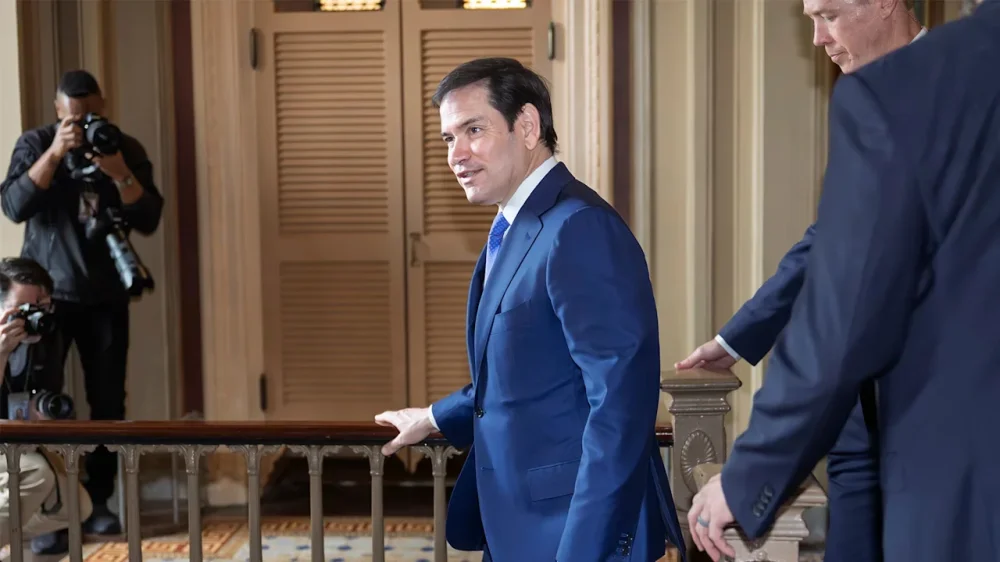
-
Fair warning: This article may make some people who’ve been hyping AI visibility tools uncomfortable. After 18 years in the search industry, however, my professional integrity doesn’t allow me to stay quiet. I have zero agenda here. Many of the misconceptions discussed below actually benefit me, both as the co-founder of an AI visibility tool and as someone who offers GEO services. Over the past few months, many claims have been shared as facts that simply aren’t accurate. Let’s clear things up. 1. AI search didn’t kill Google search Quite the opposite. It doesn’t matter how many news sites publish clickbait headlines for traffic, how many VCs hype AI search because they’ve invested in startups, or how many AI visibility tools highlight it in their pitch decks to attract clients. That doesn’t make it true. What does? Data. Here are a few examples: Semrush’s latest study, which analyzed more than 260 billion clickstreams, found that ChatGPT usage hasn’t reduced Google searches. It has actually increased them. And before you claim Semrush is biased toward Google, remember that its product also includes AI search tracking. Datos’ State of Search Q2 2025 report, created in collaboration with Rand Fishkin, CEO of SparkToro, shows Google holding a dominant 95% market share. Across millions of U.S. devices, more than 95% remain regular users of traditional search engines. How is it possible that ChatGPT’s user base doubled over the past six months, surpassing 800 million users, according to OpenAI, while Google’s overall search volume has barely declined? OpenAI published a report in September showing how people actually use ChatGPT. Only 21.3% of conversations involved seeking information. Within that group, just 2.1% focused on purchasable products, while 18.3% were about specific facts or details. That’s the only slice relevant to brands trying to reach potential buyers. Even then, some of those “searches” come from users who already know which brand they want, meaning it’s not a true discovery moment. Another factor to consider is the user journey. If I ask ChatGPT, “Which car insurance company do you recommend?” and it names a few brands, my next logical step is often to Google one of them to visit the website. Like it or not, for many prompts, the website is still the final destination. That may change now that OpenAI has launched its own browser. But as of today, the reality is this: The overall search market is expanding. AI hasn’t eaten Google’s share. It’s enlarged the pie. And for anyone saying, “Everyone I know uses AI chatbots. Nobody Googles anymore.” You and your friends are not the whole market. 2. No AI visibility tool can actually get you into AI answers Where do I even start? History, as always, repeats itself. What’s happening now feels like time travel back to the early days of the SEO industry. Back then, the first SEO monitoring and intelligence tools promised things like, “We’ll get you to the top of Google.” Sound familiar? The core question is the same now as it was then: Who’s actually optimizing? Just as there’s no tool that can do SEO for you, there’s no tool that can do GEO for you. Why? Because, as with SEO, many of the things that actually move the needle can’t be automated by software. A tool can help with parts of the GEO process. It can clearly belong to the GEO category, and it can surface data, insights, and recommendations. But it can’t replace the thinking, judgment, and decisions that make those insights matter. The actual execution of optimization, the actions that lead to your brand being mentioned by an AI model, is done by humans, either your in-house SEO or GEO team, or an external agency you work with. Here are a few examples: Is the software planting brand mentions on external sites? If so, please explain how that’s possible without hacking websites. Is the software editing text on your site directly? I’d love to see a brand that gives any SaaS tool writing permissions to its CMS. And even if it only suggests changes, are you really going to copy and paste them blindly without checking whether they conflict with SEO principles? LLM-friendly doesn’t always mean SEO-friendly. You get the point. Many AI visibility tools publish slick case studies with titles like, “How we increased brand mentions in LLMs by X%.” That framing is a marketing tactic that claims ownership of the final outcome. Yes, the software may have helped, but it didn’t do the work. You’ll never see that disclaimer in pitch decks designed to maintain high conversion rates. It’s like a bottled water brand running a testimonial from a healthy person saying, “I drink this every day.” That may be true, but is the person healthy because of the water, or because they eat well, exercise, sleep enough, and think positively? When you see a GEO case study published by a software company, remember this: There’s always another side. It’s the one actually executing the work, much of which the tool itself never recommends. 3. No one really knows the real search volume of prompts As much as we’d all like to claim we have this data, no one does. OpenAI and other LLM companies don’t share public, live usage data comparable to what you’d find in Google Analytics or Search Console. That information simply isn’t exposed. As a result, no tool or service provider can know the true search volume of prompts, unless they’ve been given access to a private sample of user data, which wouldn’t be representative. Instead, most platforms build estimates using third-party datasets, clickstream panels, projections, or shared user logs, then apply extrapolation models to forecast relative popularity. That approach can provide a rough directional view, but it’s still just that: a forecast, not a fact. So the next time you see a chart showing “prompt volumes” for ChatGPT or Gemini, treat it accordingly. It’s an educated guess, not an absolute truth. Get the newsletter search marketers rely on. See terms. 4. AI visibility can’t be measured like search rankings Unlike traditional search engines, which produce largely deterministic results by ranking indexed pages, LLMs generate answers in a probabilistic way. Each response is created on the fly based on likelihood, not fixed rankings. While search results tend to look similar regardless of who the user is, AI chatbots generate different answers for different people because the probabilities behind each response are influenced by the individual user and their context. Here’s what most people don’t realize: The algorithms behind LLMs are rewarded for guessing rather than admitting, “I don’t know.” So when you ask ChatGPT, “Which car insurance company do you recommend?” it doesn’t actually know the correct answer, because there isn’t one. Instead, it produces a response that’s statistically most likely to sound right to you. For someone else asking the exact same question, the model might generate something entirely different. We’ve all seen it happen. ChatGPT confidently provides an answer, sometimes even citing nonexistent sources. That phenomenon is known as artificial hallucination, and it’s one of the main reasons large language models can’t fully replace traditional search. When users are looking for information, especially with commercial intent, they want certainty and objective correctness, not probabilistic storytelling. Yes, if you’re logged into Google, your results will be slightly personalized, but the variation between users is minor. With ChatGPT, the variation is much larger because the output depends on everything the model knows about that user, from prior chats to contextual history. So here’s the real question: If every response is generated in real time and shaped by user context, how can monitoring tools claim to know exactly when and where a brand appears? From what I’ve seen, there are only two main methods in the market, and unfortunately, 99% of companies rely on the first. The traditional SEO monitoring model: Averaging results across many people This approach mirrors the “wisdom of the crowd” model from the early SEO world. It collects large volumes of data points from multiple sources, including: Third-party browser extensions that track real users. Clickstream panels. Companies that sell aggregated usage data, then combines them into a single average. While this method provides a broad view of general brand visibility, it’s context-blind. It treats every user the same, smoothing out the nuances that actually define how a specific audience interacts with AI. The AI visibility monitoring model: Sampling results within a persona This method recognizes that AI is non-deterministic, meaning it can produce different answers to the same question. Instead of gathering random data, we at Chatoptic focus on a specific persona and run repeated inferences for that exact profile. By analyzing the frequency of those results, we identify the stable mode, the most consistent, high-probability answer. It’s not a flat average across everyone. It’s a more precise reflection of what a specific target user is likely to see. Bottom line: No method offers a complete reflection of reality. Every tool in this space operates within the same limitations. The difference is that we’re upfront about it. 5. What’s outside your site matters more for GEO than what’s inside it Most GEO tools and agencies focus on optimizing a brand’s website content and technical setup. Yet that’s often the factor with the least impact on the most important GEO KPI: whether your brand name actually appears in AI answers. Why? Because, just as backlinks in SEO give Google signals of credibility, external brand mentions teach large language models about relevance and authority. Think about it this way: If you ask a random lawyer who the best attorney in town is and he says, “Me,” you’ll probably want a second opinion. That’s similar to a brand writing about itself on its own website. But if several other people independently mention the same name, that’s the signal that really matters. An Ahrefs analysis found that brand web mentions show the strongest correlation with AI Overview brand visibility, with a correlation coefficient of 0.664. That suggests models rely far more on off-site context than on what’s written on a brand’s own website. Some sources carry more authority than others. Certain domains are weighted heavily during model training, while others barely count. A recent Semrush study found that Reddit and LinkedIn rank among the top five most-cited domains across ChatGPT, Google’s AI Overviews, and Perplexity. The key takeaway is simple: If you want your brand to appear in AI answers, you can’t ignore the off-site layer. Finding those sources is the easy part. Most tools can show you where to be. Earning your place there, in a way that sounds natural and trustworthy, takes human effort, as discussed in Point 2. So why do so many tools still obsess over on-page optimization? Because it’s the one area fully under your control. It’s far easier to tweak your own website than to influence what others publish about you. That’s why most AI visibility tools center their dashboards and recommendations on “optimizing key pages.” It’s convenient, scalable, and measurable. Let’s be honest: Those optimizations mainly help improve how your pages rank among cited sources in AI answers, and make performance graphs look better. But is that really the KPI that counts? Keep reading. 6. The most important KPI in GEO is your brand being mentioned within LLM answers Appearing as a cited source in an AI answer may look good on a dashboard, but does it have any real marketing or business value beyond simply knowing, “I was cited”? What about traffic from citations? Six months ago, Matthew Prince, CEO of Cloudflare, shared several data points that put this into perspective. Ten years ago, Google crawled about two pages for every visitor it sent to a publisher. Six months ago: Google: 6:1 OpenAI: 250:1 Anthropic: 6,000:1 More recently: Google: 18:1 OpenAI: 1,500:1 Anthropic: 60,000:1 In other words, for every 1,500 pages crawled by GPTBot, only one visitor clicks out of ChatGPT to an external site. What about AI Overviews? Adam Gnuse recently published an analysis that examined performance data from more than 20,000 queries across multiple industries. The data showed that even top placements within Google’s AI Overviews behave more like a traditional Position 6 result in terms of clicks. Visibility may be high, but click-through rates drop sharply, and by the time a brand appears fourth or fifth in an Overview, engagement nearly disappears. The takeaway was clear: AI visibility does not equal traffic. Citations within AI Overviews consistently underperform compared to traditional blue links. In a TechCrunch interview, Reddit CEO Steve Huffman said AI chatbots are not a meaningful traffic driver for Reddit today, even though the platform is one of the most cited sources in LLM answers. Google Search and direct visits remain Reddit’s dominant traffic sources by a wide margin. So no, traffic isn’t zero, but it’s hardly a channel you can rely on to drive visitors to your website. Citations and clicks are nice to have, but they’re not the primary goal. What truly matters, the holy grail of GEO, is having your brand name appear directly within the AI’s answer. 7. GEO practices without proper SEO alignment can backfire Another reminder of Point 2. Let’s break it down with an example. Imagine you run a company that sells accounting software. On your blog, you have an article titled “How to choose the best accounting software for a small business.” It ranks well on Google and brings in about 2,000 organic visitors per month. Google rewards it because of strong on-page signals and credible off-site factors. One day, you start using an AI visibility tool that suggests optimizations to increase your brand’s presence in AI answers. You implement the tool’s recommendations, and your exposure in ChatGPT jumps. You even begin seeing around 200 visits per month coming from AI chatbots. The platform reports success. Your dashboard looks great. The graphs are up. But here’s the catch: One of those optimizations conflicts with SEO best practices. Because LLMs favor paragraph structures that make extraction easier, you restructure parts of the page accordingly. That change may help your AI visibility, but it also weakens the page’s SEO performance. As a result, the article drops to Position 9 on Google, and organic traffic falls from 2,000 to 200 visits per month. Now the numbers look like this: Before the optimizationAfter the optimizationTraffic from Google2,000200Traffic from AI models0200 Yes, you “boosted your AI visibility,” but at what cost? This isn’t a hypothetical example. I’ve seen it happen more than once. As noted earlier, traffic isn’t always the most important metric. But unless you can connect AI mentions to brand search growth or conversions, that visibility doesn’t translate into business impact. The problem is that most AI visibility tools measure success only within generative engines. They don’t account for your full search traffic mix or how these changes affect broader SEO performance. So while their KPI charts may look impressive, the marketing KPIs that actually matter to your business may be quietly declining. When search evolves, measurement must evolve with it GEO is rooted in the search ecosystem we already know. LLMs still rely on the open web, crawlers, and many of the same signals that shaped SEO for years. In practice, however, visibility is now generated rather than listed, and what appears depends on context, intent, and who’s asking. That difference matters. Our research at Chatoptic shows that strong Google rankings don’t reliably translate into visibility within LLM answers, with only a 62% overlap. That gap is why GEO requires its own analysis and measurement framework, not a recycled SEO one. As with every major shift in search, the risk isn’t ignoring the past. It’s assuming old metrics still tell the full story. Progress comes from questioning assumptions, testing reality, and adapting how success is measured. If you’re considering working with a GEO agency, evaluating an AI visibility tool, or know someone who is, share this article with them. It could save time, money, and a lot of unnecessary frustration. View the full article
-
We may earn a commission from links on this page. Deal pricing and availability subject to change after time of publication. The Meta Quest Pro launched as Meta’s vision of what high-end virtual and mixed reality could look like without dragging a gaming PC into the equation. At $679.99 on Woot, it’s now $320 off its original $999 price and still more than $100 cheaper than Amazon at the time of writing. This deal runs for six days or until it sells out, with free standard shipping for Prime members and a $6 fee for everyone else. This headset won PCMag’s Best VR Headset award in 2022, and while it’s no longer the newest thing Meta sells, it’s still positioned well above entry-level VR in both build and capability. Meta Quest Pro $679.99 at Woot $999.99 Save $320.00 Get Deal Get Deal $679.99 at Woot $999.99 Save $320.00 What you’re really paying for here is comfort and hardware that doesn’t feel compromised. The Quest Pro uses a balanced halo-style strap with the battery placed at the back, which spreads the weight more evenly than front-heavy headsets. That makes longer sessions more tolerable, though “long” is relative—the battery lasts around two hours, which can feel limiting if you’re deep into work or creative apps. Inside, you get a Snapdragon XR2+ chip, 12GB of RAM, and 256GB of storage, which is generous for a standalone headset. The displays push 1,920 by 1,800 pixels per eye, with better contrast and richer colors thanks to local dimming. In practice, this means sharper text, deeper blacks, and fewer washed-out scenes compared to older Quest models, especially in mixed-reality apps where clarity matters. The controllers are another quiet upgrade. Meta removed the tracking rings and gave each controller its own cameras, so tracking doesn’t depend on where your headset is pointing. That pays off in tasks like 3D sculpting, painting, or precision-heavy productivity apps, where hand movement feels steadier and more predictable. Eye and face tracking also come built in, which lets avatars mirror your expressions in supported apps. It’s impressive, but not essential for everyone. One downside, according to this PCMag review, is immersion: The default open-style face interface lets in light from the sides, and full isolation requires an optional light blocker that costs extra. Still, if you're after a premium standalone headset with solid future-proofing, this is the lowest price the Quest Pro has seen, and a compelling offer while it lasts. Our Best Editor-Vetted Tech Deals Right Now Apple AirPods Pro 3 Noise Cancelling Heart Rate Wireless Earbuds — $199.99 (List Price $249.00) Apple Watch Series 11 [GPS 46mm] Smartwatch with Jet Black Aluminum Case with Black Sport Band - M/L. Sleep Score, Fitness Tracker, Health Monitoring, Always-On Display, Water Resistant — $329.00 (List Price $429.00) Amazon Fire TV Stick 4K Plus — (List Price $24.99 With Code "FTV4K25") Dell 15 DC15255 (AMD Ryzen 7 7730U, 1TB SSD, 16GB RAM) — $519.99 (List Price $688.99) Samsung Galaxy Tab A9+ 64GB Wi-Fi 11" Tablet (Silver) — $159.99 (List Price $219.99) Samsung Galaxy Watch 8 — $279.99 (List Price $349.99) Deals are selected by our commerce team View the full article
-
Less than 24 hours after the horrifying shooting of woman by an Immigration and Customs Enforcement (ICE) agent in Minneapolis, Minnesota, merchandise related to the slain U.S. citizen is already proliferating on e-commerce shopping sites, including on Amazon and Etsy. Here’s what you need to know. What’s happened? On Wednesday, a woman was fatally shot by an ICE officer near a raid that federal officials were conducting. The woman was identified by authorities as Renee Nicole Good, a 37-year-old mother and U.S. citizen. As CNN reports, multiple videos taken by bystanders on the scene show ICE agents confronting the car that Good was driving, which was parked sideways on the street. After some verbal interaction between the driver and the officers, the car appears to begin turning, at which point an ICE agent fired multiple shots into the vehicle. Good was reportedly struck in the head by one of the shots and later pronounced dead at a local hospital. Kristi Noem, secretary of the U.S. Department of Homeland Security, has accused Good of weaponizing her vehicle in an effort to run over the ICE agent, but any such intent is far from certain at this point. Democratic leaders, on the other hand, have called for an investigation into the incident, and Minnesota Governor Tim Walz has said that his administration will “stop at nothing to seek accountability and justice.” The incident has quickly become the latest political flashpoint around President The President’s controversial decision to send federal agents into U.S. cities. Renee Good merch proliferates on Amazon and Etsy Within hours of Good’s death, thousands of mourners took to the streets in Minneapolis and other U.S cities to honor the victim and peacefully protest the actions of the ICE agent. At the same time, another phenomenon began happening: merchandise related to Good and her shooting began rapidly proliferating on online shopping sites like Amazon and Etsy. As of the time of this writing, visitors to these sites can easily find everything from stickers to hats to t-shirts in support of Good and her memory. Such products often sport the phrase “Justice for Renee” or “Justice for GOODness” as well as other phrases, including “rest in power.” Sellers move quickly to capitalize on viral events The fact that Good-related merchandise already exists isn’t entirely shocking. As Fast Company previously reported, in recent months, politically contentious events have often led to a quick proliferation of merchandise related to the incidents. In November, the Epstein “Bubba” email led to an explosion of merch on both Amazon and Etsy, and earlier in 2025, “Alligator Alcatraz” merch spread on Etsy, where it met significant blowback on soclial media. However, the ideological motives behind the sellers making this merchandise aren’t always clear. For instance, some of the seller accounts appear to be new, and they don’t always state whether they are opposed or aligned with any of the events that have spawned the merch. What is interesting to note, however, in the case of the Good-related merch, is that some of the Amazon sellers appear to be based in China, suggesting at the very least that individuals overseas are eager to profit from the latest social and political turmoil engulfing the United States. Fast Company has reached out to Etsy and Amazon for comment. Renee Good GoFundMe exceeds $400,000 While some sellers on Amazon and Etsy’s platforms appear to be keen to profit from a tragic event, other individuals are actively using online platforms to support Renee Good’s wife and child. As of the time of this writing, a number of Renee Good fundraisers have been set up on GoFundMe. One such fundraiser, with the stated aim of raising funds for her wife and child, has already surpassed $400,000 in donations from more than 10,300 individuals. Fast Company has reached out to GoFundMe to ask whether the campaign is verified. We will update this story if we hear back. View the full article