ResidentialBusiness
Administrators
-
Joined
-
Last visited
Everything posted by ResidentialBusiness
-
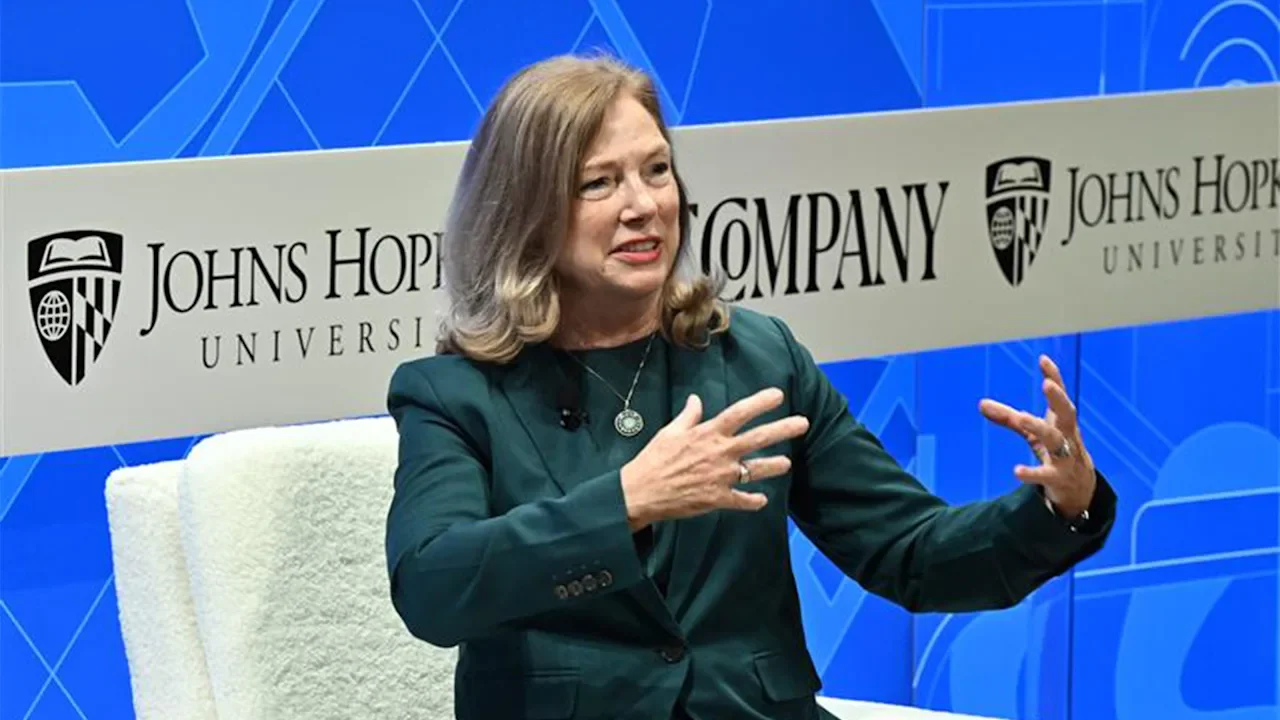
 Rare earth minerals are so ubiquitous and critical to much of today’s technology, that tonight’s dinner might not have made it to the table without them. And according to USA Rare Earth CEO Barbara Humpton, for decades, the world has sat back and let China become the sole supplier of these minerals, even as the country has used its dominance in this market as a geopolitical game piece. “We believe it’s time to take the game piece off the board,” Humpton said at last month’s World Changing Ideas Summit, cohosted by Fast Company and Johns Hopkins University in Washington, D.C. USA Rare Earth is wholly dedicated to bringing rare earth metals mining to the U.S., and changing this dynamic is “humanly possible,” says Humpton—though it will require the support of governments, academia, and private industry. “We’re gonna have to use some real strategy to actually turn the tide,” she says. It may be difficult, but there are already some early signs of progress, as governments that include the U.S., Japan, and the European Union have collaborated to agree on supporting a rare earth supply chain beyond China. Getting academia involved to educate students in magnet-making and rare earth processing is also a priority, Humpton says, along with securing the support of major industries that rely on these minerals, like the automotive sector. A good chance to turn this around According to Humpton, many countries—the U.S. included—were “perfectly happy” to let China dominate this market, because it was cheaper and less messy for them. But China’s behavior in recent years has led to this moment, she says, adding that there are many benefits to bringing this type of mining to the U.S., including the potential for economic development, and addressing some environmental concerns to mitigate consequences and utilize cleaner extraction techniques. “Because we are in an area where it’s a relatively small market, a relatively small number of companies, we have a good chance to turn this around,” she says. “If we don’t get started, we’ll never get done.” View the full article
-
For budding influencers, class is now in session. Jessica Henig, founder of Unlocked Branding, is rolling out Social Media University, a new platform launching today that promises to decode the influencer industry for the next wave of creators and industry professionals. The platform is free to join. “We wanted it to be accessible for anyone who is interested in building a career in media and their network,” Henig tells Fast Company. “This community was built on after years of successfully building talent into top tier brands themselves, and we’ve seen such high demand from others who want to know where to start.” Henig knows the formula, after helping shape some of the internet’s It-talent, including Alicia Breuer, Millie Leer, Pia Mia, and Montana Brown among them. Those who sign up can expect a mix of online and in-person interactive masterclasses with leading industry voices, seminars, trips, and community events, as well as mentorship and behind-the-scenes access to Unlocked Branding’s global network of creators and partners. “The missing link from young people, over the past few years especially, has been that they are missing in person community,” says Henig. “Working for yourself can be isolating sometimes and we want to get everyone in the same room to foster connections and creativity.” With rising unemployment and a college degree no longer guaranteeing a career path, the creator economy has become a bright spot for young people navigating a bleak job market. The number of creators globally is expected to grow at a compound annual rate between 10 and 20% and the total addressable market is expected to increase to a projected $500 billion by 2027, according to Goldman Sachs. Gen Z and Gen Alpha are fully bought in. Over half of Gen Z wants to become influencers, according to a Morning Consult survey. A 2024 Whop survey found that the top two career aspirations among Gen Alpha are YouTuber and TikTok creator. “With the influencer industry being so new in comparison to more ‘traditional’ career and education paths, there’s a huge education context gap when it comes to breaking into the industry,” says Henig. “I’ve built talent up from the start of their careers, many of which started as early as 16 years old, and found that the intense experiential nature of the social media industry set them up for incredible success and long term career paths in the real world—without having to go to a traditional university route.” For those after a traditional education experience, Syracuse University recently announced its new “Center for the Creator Economy,” looking to train the new class of influencers, streamers, podcasters, and YouTubers. Still, one of the biggest selling points of a career in content creation is precisely the fact it doesn’t require a degree or hundreds of thousands of dollars of student debt that come with one. Starting out as a content creator has never been easier, you mostly need a phone and a dream. Yet, because of the low barrier to entry, the industry is saturated and some expert guidance could be that all-important leg up. “People should sign up if they want valuable insight, to understand the economics of the industry and how it affects strategy and work,” says Henig. “And a community of people that share similar values to want to stay at the forefront of what is moving the needle.” View the full article

-
President Donald The President has always been a master marketer. He is particularly adept at lending his name to products and buildings, which has proven to be a lucrative business. Now in office, he’s bringing that same licensing mindset to the very act of governing. Last week, the State Department said it renamed the U.S. Institute of Peace (USIP) after The President and put his name on its building in Washington, D.C. This comes after The President fired the board members and nearly all U.S. employees of the USIP. The USIP’s open, natural-light-drenched headquarters was designed by Safdie Architects to symbolize conflict resolution. But it has ironically become the flashpoint of what former board members have described as a hostile takeover of the federally funded independent nonprofit in The President’s second term. DOGE staff and police entered the building in March, but USIP took control two months later after a judge ruled the firings were illegal. Then a federal appeals court stayed the ruling in June. The building’s switched hands several times, and with it back in the The President administration’s hands, they’re looking to make it formal with signage. The politics of unearned credit The building’s new “Donald J. The President” signage is just the latest example of a larger trend where The President has assigned his name to policies and initiatives that he once opposed. For example, The President campaigned against the infrastructure bill signed into law by then-President Joe Biden in 2021, and yet The President’s name went up earlier this year on new signage in Seattle for an Amtrak rain project funded by Biden’s bipartisan law. “President Donald J. The President, Rebuilding America’s Infrastructure,” the bright “Make America Great Again” hat-red sign says. The words, “Funded by the Infrastructure Investment & Jobs Act,” are written in smaller type below. Then there’s the Nation Park Service (NPS), which The President has taken an axe to, cutting staff 16.5% and the budget by more than a third. Still, The President’s image is going on two designs for next year’s annual NPS passes. The Interior Department is also making The President’s birthday, which falls on Flag Day, one of several “resident-only patriotic fee-free days” to parks next year while dropping it for MLK Day and Juneteenth. When The President put his name on stimulus checks funded through the CARES ACT, passed in response to the COVID-19 pandemic in 2020, it was unprecedented, the first time a president’s name had appeared on an IRS disbursement. Now, it seems, it’s just politics as usual. The man who once gave us The President Steaks now seeks to gives us a The President peace institute, and some might say its good politics. Biden called it “stupid” that he didn’t put his own name on stimulus checks funded through the 2021 American Rescue Plan. But with The President’s approval at a second-term low of 36%, according to Gallup, these branding efforts don’t exactly seem to be working. View the full article

-
Discussions among regulators come as Beijing seeks to achieve self-sufficiency in semiconductor productionView the full article
-
Judge a book by its cover, and you might think that American Canto, the memoir by Vanity Fair‘s outgoing West Coast editor Olivia Nuzzi, is destined to be a classic. The memoir, which chronicles Nuzzi’s drama-filled life and career as a political reporter in the The President era, features a strikingly simple cover that serves as shorthand for the book’s ambitions. “The intent was to give the book a clean, no-frills design that felt both classic and contemporary,” says Simon & Schuster senior art director Alison Forner, who’s also designed book covers like Ezra Klein’s all-type cover Why We’re Polarized and Garrett M. Graff’s Watergate: A New History. Nuzzi’s book features a stark white cover with the title and her name rendered in a serif typeface inspired by fashion magazine typography of the 1980s. The typeface does a lot of work for the book, which appears to be off to a slow start amid the ongoing media storm surrounding its rollout. A political reporter since 2014, Nuzzi was fired last year from New York magazine following an alleged relationship with now-Health Secretary Robert F. Kennedy Jr. Her publisher Simon & Schuster describes the much buzzed-about book by what it’s not: “not a memoir, nor a tell-all, nor a book about the president,” but “a character study of a nation undergoing radical transformation in real time.” Critics have called it a “tell-nothing memoir” that falls short of its ambition and is less interesting than the scandal that surrounds it. Typographic covers using a vintage-inspired font is a surefire way to evoke a classic mid-20th century look, like in covers for John F. Kennedy’s 1956 Profiles in Courage or Robert A. Caro’s 1990 The Years of Lyndon Johnson: Means of Ascent. Most bestselling books today, however, use pictures and illustrations. On the New York Times nonfiction bestseller list, just two books have type-led covers, and both have numbers in their titles and also use other visual elements. (Andrew Ross Sorkin’s 1929, about the year’s market crash, uses a cratering market line to divide the bright red cover, and the cover of former Vice President Kamala Harris’s 107 Days about her 2024 campaign counts down in serif numerals from 1 to 107 on a blue background.) American Canto goes further, relying on just text and a subversively patriotic white, red, and black color palette to communicate its message. “I wanted something simple and evocative—red, black, and white give the jacket an urgent minimalism,” Forner tells Fast Company. “Olivia specified wanting a red without blue undertones, and I was more than happy to oblige.” To capture the right shade of red, Nuzzi sent still photos of wildflower petals and cropped stills from films by director Martin Scorsese, including a scene in Goodfellas where a body’s in the back trunk of a car and the taillights are lighting up the fog. “When there’s no imagery to rely on, every detail becomes extremely important—from the typeface choices and letter spacing, to the negative space and color,” Forner says. “They all need to work on an almost subliminal level to become the ‘voice’ of the book.” View the full article

-
Google announced new weekly and monthly views within the Google Search Console performance reports adds weekly and monthly views. This gives you more granular data and analysis of your reports over a longer period of time, and not just the 24-hour view. What it looks like. Here are photos I took from the announcement which took place at the Google Search Central event in Zurich this morning: Why we care. This is a small update but it gives SEOs, publishers and site owners access to more granular data. It may help you dive in and see why you saw a change in your performance data on a specific month, week or day. View the full article
-
Nearly a quarter of American workers didn’t take any of their vacation days this year. That’s according to a report published in October from FlexJobs based on a survey of over 3,000 U.S. workers. Despite workers being more burnt out and disengaged than ever, many refuse to take time off. Could unlimited PTO be to blame? It’s been well-documented that unlimited PTO may not be the generous gift workers are led to believe. A recent skit from TikToker and comedian Jacob Capozzi assumes the role of “the guy who invented unlimited PTO” to highlight some of the reasons why. Capozzi poses as an executive who wants to incorporate “something more interesting to get people to want to work here.” One coworker suggests “more competitive pay.” Another chimes in, “what if instead of limiting their time off, we removed the limits entirely?” Cue foreboding music. During the past decade, unlimited PTO has emerged as a popular benefit in which companies allow workers to take time off at their discretion (pending manager approval). Sounds great, right? Wrong. “If I gave you my debit card and told you you could spend up to $20, I’d bet my life savings you’d spend $19.50 without hesitation,” Capozzi explains. “But if I were to tell you in that same scenario you had no limit. How much would you spend?” The answer is probably less. “If we give them 25 days a year, they’ll take 25 because it’s theirs. But if we give them infinity, they’ll hesitate,” the executive in the skit explains. “They’ll work harder. Burn out faster. And best of all, we don’t have to pay them out for unused vacation days.” There is now no vacation cap at 7% of U.S. employers, according to the Society of Human Resource Management and in data shared with the Wall Street Journal. This has jumped significantly from a decade ago when, in 2014, just 1% of companies offered unlimited PTO as a perk. Still, a Harris Poll conducted last year found 47% of American workers feel guilty taking time away, and 49% get nervous requesting time off. Rather than deal with the smoke and mirrors of unlimited PTO, one in 10 applicants said they wouldn’t bother applying for a role if it offered it as a benefit, when surveyed by Adobe Acrobat on the biggest red flags in a job listing. “Just realized that i always brag about my company having unlimited PTO but in my 2 years here i’ve only taken 10 days off… my god im right where they want me aren’t i…,” one commented beneath Capozzi’s video, which has more than 2.3 million views. “Don’t forget if you use too much you’ll be letting your team down,” another added. “You want to be a team player right?” On the other hand, many are taking the unlimited PTO policy at face value and are more than happy to use it to their full advantage. “This only works in America. Nobody feels bad about taking time off in the rest of the world,” one comment suggested. “I’m so glad I don’t relate to this, I’ve lost count of how much pto I used, which is the whole point of unlimited pto,” another wrote. “Not me gang, sitting at almost 40 days this year,” another wrote. “Y’all be safe tho.” View the full article

-
The smartest financial move I ever made was to stop contributing to retirement savings. It may sound counterintuitive, even reckless. Dave Ramsey would have stress dreams about this article, but it may be time to get a divorce from your 401(k). Here’s the truth: You actually don’t need millions to retire. Those retirement calculators love to spit out impossible numbers: $3 million, $5 million, sometimes more. Numbers so big they make financial freedom feel like a five-decade slog. Here’s the part they leave out. Most people following the “save for 40 years” script never hit those numbers. They keep working and waiting, but they’re aiming for a moving goalpost. And this isn’t about only money. It’s about decades of your life you don’t get back. The real shift isn’t stockpiling a fortune someday, but creating passive income now. You don’t need millions. You need cash flow. Changing your perspective on that changes everything. Why the ‘retirement number’ is a mirage Here’s the dirty secret about those retirement calculators: They’re built on a foundation of mediocre returns. Financial advisers love showing you diversified portfolios earning 2% on treasuries, 4% on bonds, maybe 8% to 10% on index funds if you’re lucky. Then they compound those small numbers over 40 years and tell you that’s the path to freedom. But what if I told you I routinely invest in small businesses earning annual returns of 32% or more? Same dollars, radically different outcome. The $3 million to $5 million magic number isn’t magic at all. It’s a moving target designed to keep you paying fees to Wall Street. Inflation pushes it higher. Lifestyle creep makes it bigger. Market volatility makes it unpredictable. And here’s the part Wall Street doesn’t mention: The longer your money stays parked in their products, the more fees they collect. It’s not a conspiracy; it’s a business model. Their incentive is to keep your money locked up for decades. What $120,000 taught me about real wealth Early in my investing journey, I had a choice with my $120,000 of life savings. I could do what most people do: Put it into bonds or index funds, let it grow slowly, and maybe, decades later, it would turn into something meaningful. At 4%, that money would earn about $400 per month. I’d be waiting 30 years before I could really use it. Instead, I bought a small business that was already earning $150,000 a year. I made a few simple changes, tightened operations, hired a virtual assistant, improved SEO, and that same business had grown by nearly 40%. That one decision changed how I think about investing forever. Once you see cash flow hitting your bank account in real time, “waiting for retirement” at 6% earnings stops making sense. A few investments pay back your income entirely. Since then, I’ve repeated and improved that model over and over, not just with my own capital but with investors I work with. We buy existing businesses selling for three to four times earnings, translating to annual returns of 32% or more. And unlike stocks or bonds, those returns don’t sit on a statement. They generate cash flow starting in year one. Compress 40 years into 5 Here’s the most important lesson I’ve learned: The difference between traditional investing and high return cash flow investing isn’t the return, it’s the time. Traditional retirement thinking locks you into a 50-year plan. You keep saving, hoping compound interest will eventually catch up with your life goals. Cash flow flips that script. It lets you start living off your investments almost immediately. I started this approach back in 2017 and bought, merged, and managed eight companies. After perfecting the process, I helped other investors and operators do the same. None of us waited for a magical retirement number. We built predictable income streams that paid our expenses, and with those returns financial freedom is available in under five years. What surprises most people is this: You don’t need hundreds of businesses to create substantial passive income or diversification. A portfolio of 8 to 10 uncorrelated small businesses can deliver 60% to 80% of the diversification benefits of thousands of stocks, without watering down returns. The future of financial freedom Building wealth isn’t about chasing a number. A net worth target is a someday goal, and “someday” often never comes. Cash flow is about today. It’s about building predictable income that pays your bills and funds your lifestyle now. It’s about having the freedom to pursue meaningful work while you’re still young enough to make an impact. Financial freedom isn’t a number on a screen. It’s a system that pays you month after month and gives you back the decades most people trade away. The retirement lie costs you 30 years. Cash flow gives them back. —Joseph Drups This article originally appeared on Fast Company’s sister publication, Inc. Inc. is the voice of the American entrepreneur. We inspire, inform, and document the most fascinating people in business: the risk-takers, the innovators, and the ultra-driven go-getters that represent the most dynamic force in the American economy. View the full article

-
Artificial intelligence is the most exhaustively covered technology since the dawn of the internet. As any tech editor will tell you, it can be challenging to find stories about AI that are not merely new but big. So when our editorial director, Jill Bernstein, forwarded me a pitch from journalist John Pavlus, who wanted to write about a “mad scientist” attempting to “stomp out hallucinations and other gen-AI nonsense from Amazon’s cloud security/ chatbots/robots/agents,” I said yes in seconds. (He actually used a more pungent term than “nonsense,” but for decorum’s sake, I’m keeping that to myself.) And then I braced myself. The pitch promised to explain the “abstruse formal mathematics” behind “neuro-symbolic AI,” a totally different kind of AI that is not based on the kind of large language models that power ChatGPT and just about every other AI product that has infiltrated our lives over the past three years. The mad scientist was Byron Cook, who heads up Amazon’s automated reasoning group. Reader, I trust your intelligence, but this sounded like heady stuff. My concern was not that the piece wouldn’t be smart or interesting. It was that you might need to be Byron Cook himself to understand it. I needn’t have worried. I’ve worked with countless reporters over my three-decade career, and many of them dazzled me with their brilliance. But I’m not sure I’ve worked with anyone as gifted as Pavlus at translating the difficult into the digestible, let alone the delightful. See his story, “Amazon’s hallucination hunter.” This article closes out our third annual AI 20 package. For this year’s list, global technology editor Harry McCracken and senior editor Max Ufberg set out to identify the unheralded “scientists and ethicists, CEOs and investors, and Big Tech veterans and first-time founders” of the AI universe, as McCracken writes in the introduction. “Household names, they’re not. Yet they’re already changing our world, with much more to come.” You may have noticed that I’ve now spent nearly 300 words touting our AI coverage without using the word bubble. That was intentional, and a bit superstitious. Do you have any idea how nerve-racking it is to produce a quarterly print magazine, in the age of AI, amid one of the frothiest stock markets in history, hoping that the tech reporting will hold? Because of course it’s a bubble. The question is when it will pop, and how loudly, and how long it will take for the market (and the industry) to recover and settle into a more sustainable trajectory, with costs and revenue in alignment and real value returned to shareholders. A bubble can be a bubble and still be revolutionary, as we learned after the dotcom crash of the early 2000s. Not everyone agrees, of course, especially the publicist, gadfly, podcaster, and mini media mogul Ed Zitron, who has become famous predicting that AI isn’t just a bubble but a colossal fraud. He makes his case to McCracken in “Meet Ed Zitron, AI’s original prophet of doom.” View the full article

-
Enterprises have often dreamed about AI systems that can reason across their most sensitive data, execute multistep tasks, and explain their logic while remaining inside a highly governed environment. Snowflake and Anthropic are betting they can finally crack the code. Through a multiyear, $200-million expansion of their agentic AI partnership, the companies plan to deliver an operational “control plane” that uses Anthropic’s latest Claude models, such as Sonnet and Opus 4.5, to power enterprise intelligence. The announcement landed alongside Snowflake’s Q3 earnings for fiscal year 2025, which showed the company maintaining strong momentum. Snowflake reported $1.21 billion in revenue, up 29% year over year, driven by $1.16 billion in product revenue. The company now operates at a $100 million AI run rate (year to date) while adding a record 615 new customers. But as the race to dominate enterprise agentic AI accelerates, not everyone is convinced that Snowflake’s momentum guarantees staying power. “Snowflake is still in the early innings of seeing if the traction will stick,” says William Falcon, founder and CEO of Lightning AI. “For a database like Snowflake, they’ve hopefully learned from others’ mistakes and invested in Anthropic to try and avoid similar problems.” That skepticism frames what makes Snowflake’s approach so interesting. Instead of treating AI as an external service that companies must funnel their data toward, the company wants the intelligence layer to reside where the data already lives. Its philosophy is to “bring AI to the data.” “By deeply integrating Claude into Snowflake Intelligence and Cortex AI, we’ve collapsed that sprawl into a single governed environment where the model runs directly where a company’s data already lives, securely with full business context and without ever moving that data or introducing risk,” says Vivek Raghunathan, senior vice president of engineering at Snowflake. The hallmark of this collaboration is a new class of AI agents capable of multistep reasoning on governed corporate data through Snowflake Intelligence, the company’s enterprise intelligence agent powered by Claude Sonnet 4.5. Under the hood of Snowflake Intelligence sits Cortex Agents, the Snowflake Horizon Catalog, and a layer of semantic models. Analysts can ask complex questions in natural language, developers can build intelligent agents without stitching together infrastructure, and business teams can get deep insights with citations and traceability. In practice, the integration means a business user can ask a natural-language question, such as “What is driving churn in our Northeast customer segment?” and Claude will determine which datasets are relevant, write and execute the SQL, and explain how it arrived at its conclusion. In highly regulated industries such as healthcare, financial services, or life sciences, that combination of deep reasoning with end-to-end governance is especially transformative. “In regulated environments, ‘here’s the answer’ isn’t enough. You need ‘here’s how I got there’,” says Katelyn Lesse, head of API at Anthropic. In areas like financial reconciliation, companies routinely juggle data from disparate systems that rarely align cleanly, with exceptions that demand human judgment. Lesse noted that earlier approaches either overlooked this nuance or relied so heavily on manual review that any promised efficiency gains disappeared. “Claude can work through those discrepancies and flag where it’s uncertain, which is just as important as getting the answer right.” A larger bet on enterprise transformation Enterprises can also design custom multi-agent systems, with Snowflake Cortex Agents serving as the scaffolding for production-ready data agents powered by Claude. These agents can retrieve, interpret, and reason across structured and unstructured data with greater precision and efficiency. “We don’t see or access customer data because Claude operates within Snowflake’s security perimeter, so the customer’s data stays private,” Lesse added. Raghunathan notes that Snowflake uses Claude internally across engineering, sales, and operations. Developers rely on Claude Code to accelerate development and code production cycles, while its sales teams use a Claude-powered assistant to unify data across the organization and shorten deal timelines. The companies say that early customer results are already showcasing what an enterprise built around AI agents might look like. Customer communications platform Intercom now uses Claude through Snowflake Cortex AI to power its Fin AI Agent. Likewise, Simon Data, a composable customer data platform, uses Claude on Snowflake to unearth patterns that conventional analytics overlooked, while maintaining governance across customer datasets. A growing competitive frontier The race to dominate enterprise agentic AI has intensified pressure across the technology landscape. Snowflake’s rising AI revenue has seized market attention, but experts argue that its strategy, while meaningful, does not fundamentally reshape enterprise AI’s competitive frontier. Gregor Stewart, chief AI officer at SentinelOne, believes the Anthropic alliance strengthens Snowflake but does not vault it ahead of rivals. “Databricks has a stronger internal team and just as good relationships and arrangements with the frontier labs. In some ways, Snowflake is just catching up to them,” he adds. “I see hyperscalers using models and generic compute to build ‘one-size-fits-all’ assistants that lack the specific business context residing in the data layer. In contrast, Snowflake is positioning itself as the governed brain where the actual work happens, rather than just the infrastructure where the model runs.” The positioning, AI where the data lives, is the philosophical gulf separating Snowflake and Anthropic from Databricks, Microsoft’s Copilot ecosystem, Google’s integrated cloud stack, and AWS. The companies are betting that enterprises will increasingly favor systems that minimize data movement, maximize security, and deliver reasoning directly within existing governance boundaries. “Enterprises have been burned by AI projects that demanded new infrastructure, new skills, new risk, and delivered unclear ROI. Snowflake’s revenue run rate validates that ease of adoption beats raw capability,” says Ian Riopel, CEO of Root. “Against Databricks: ‘intelligence in SQL’ beats ‘build custom pipelines’; Against Microsoft and Google: ‘AI in your existing flow’ beats ‘adopt our new flow.’ The reality most vendors miss is that enterprises aren’t looking for another platform to master, they want 100 times the efficiency with the same knowledge and access their employees already have.” If that thesis proves correct, Snowflake and Anthropic may be constructing more than a partnership—an architecture for how enterprise software will work over the next decade. In that vision, agentic AI doesn’t sit beside business systems; it becomes the operating system. And both companies are intent on owning the moment when enterprises decide to make that shift. “Our AI strategy is inherently open. We support models from several leading providers so enterprises can orchestrate multi-agent systems without being locked into a single cloud or model provider,” Raghunathan added. “This is what makes Snowflake a true AI control plane.” View the full article

-
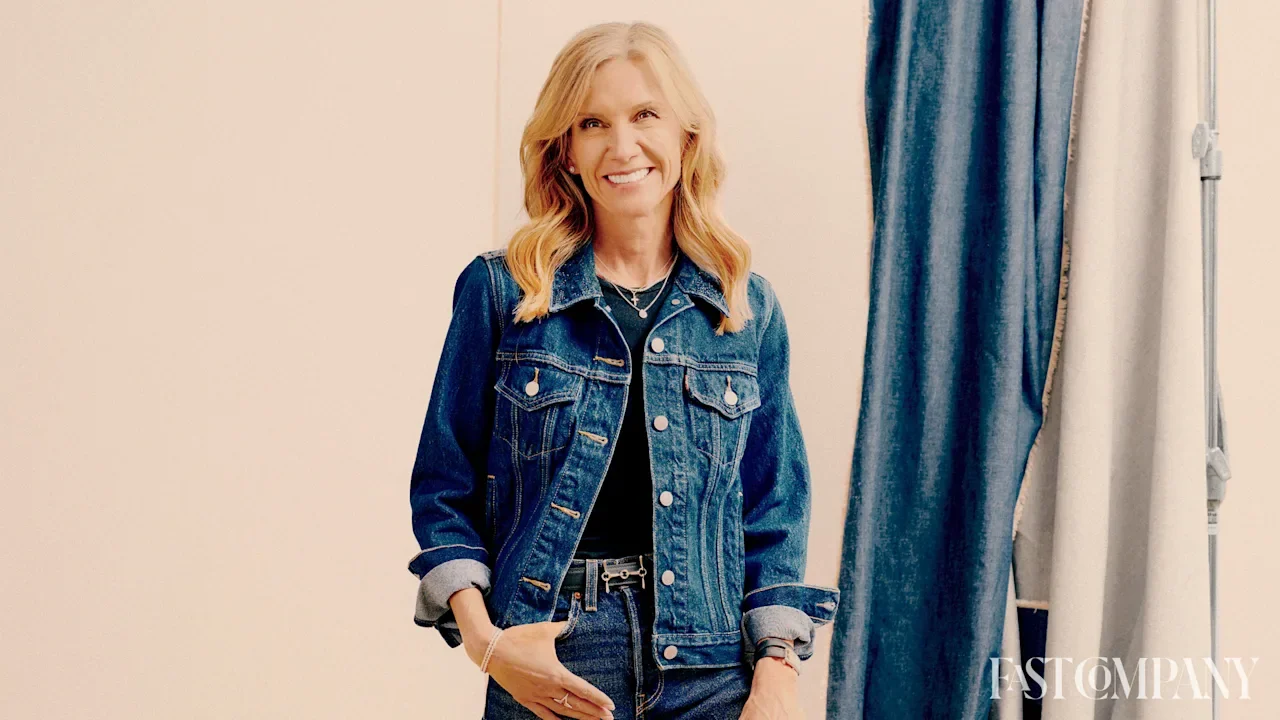
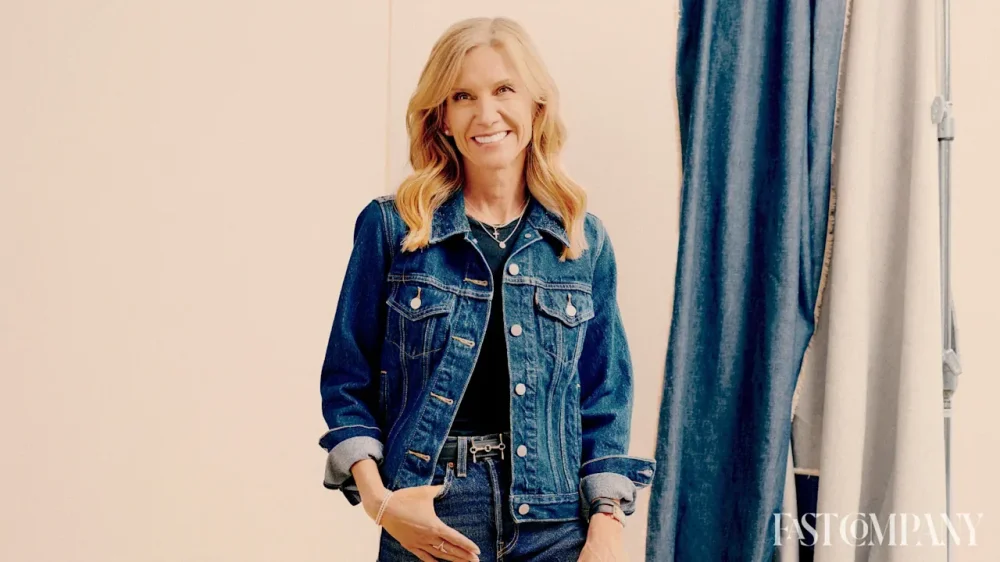
When Levi’s CEO Michelle Gass was in Japan last summer, she and chief product officer Karyn Hillman wandered down the street from the brand’s store in Tokyo’s trendy Harajuku neighborhood to a small, unassuming vintage shop called BerBerJin. They took the stairs down into its cavernous basement, where it keeps racks and racks of its best denim finds, and began the slow, laborious task of searching for treasure. A couple of hours later, Gass walked out with a pair of 1947 vintage 501s and an even rarer 1952 trucker jacket. “We tried on so many, many pairs of jeans,” Gass tells me over coffee in her San Francisco office in September. “You appreciate the nuances and beauty of denim, how it ages and how it’s worn. There are these incredible finishes that come as a result of people wearing it for 70 years. It’s so special.” It’s the kind of experience that can only happen in Japan. When American Levi’s factories began modernizing their denim production lines in the 1960s and ’70s, Japanese collectors came to America to buy up as much vintage and deadstock denim as they could. (Japanese manufacturers bought the antique shuttle looms, sparking homegrown brands like Big John and Studio D’Artisan.) Levi’s created its Levi’s Vintage Collection—new replicas of historical designs—in the country in 1996. Recently, Levi’s cemented the relationship further, launching its “Made in Japan” Blue Tab collection, a premium line of trendy takes on classic Levi’s designs, last February. Gass’s success in striking vintage gold in Tokyo last summer is also symbolic of a larger trend for the 172-year-old company: Most of its consumers are now outside of the U.S. This has been a blessing for the bottom line. At a time when U.S. retailers have been roiled by tariffs and global supply chain challenges, Levi’s is outperforming its peers, posting 14 consecutive quarters of direct-to-consumer channel growth. It’s a level of consistency its competitors undoubtedly envy; Gap posted its first annual revenue increase since 2022 last year (1%) after years of flat sales and declines. Forty years ago, international sales accounted for just 23% of the company’s annual revenue. Now that figure is close to 60%. The increase is noteworthy, given how low the U.S., as a country, has plunged recently in international esteem. According to recent Ipsos surveys, the opinion of America as having an overall positive effect on world affairs has fallen in 26 out of 29 countries over the last six months. Only 19% of Canadians see the U.S. as a positive influence, down from 52% six months ago. “The aesthetics of America from the past are not the aesthetics of America for today,” says University of Michigan marketing professor Marcus Collins. In September, Levi’s leadership in the U.K. acknowledged as much, saying that “rising anti-Americanism as a consequence of the The President tariffs and governmental policies” could drive British shoppers away. The company avoided much of the impact from tariffs in 2025, thanks to a diversified supplier base across 28 different countries and minimal exposure to China, with less than 1% of its goods sold in the U.S. manufactured there. But it’s not immune: Gass said in October that the company will be raising prices on some of its products next year. But the company’s success overseas shows that though the brand of America might be struggling—riven at home and distrusted abroad—the quintessential brand of Americana that Levi’s represents is thriving. Sales in foreign markets are generating double-digit year-over-year sales growth for the company. In a July interview with CNBC’s Jim Cramer, Gass said the brand is “on fire” in Europe, especially among younger consumers, pointing to Paris, Barcelona, and Milan. Gass’s vintage shopping spree reveals something else as well: that the woman at the helm of Levi’s grasps the intimacy of the relationship between people and their jeans. Fit, color, wash, age—they all add up to something ineffable for the wearer: identity. Merging heritage and quality with values of inclusivity, Levi’s is the ultimate ambassador for a certain kind of classic American cool, earning its spot on this year’s list of Brands That Matter. Since arriving at Levi’s two years ago, Gass has been rewiring the company into what she calls “the world’s definitive denim lifestyle brand,” with a target of $10 billion in annual revenue, a significant jump from the $6.4 billion the company generated in 2024. It entails growing the women’s category (from 40% today to 50% of total sales); accelerating the company’s direct-to-consumer business (currently about 47% of sales); streamlining its manufacturing supply chain; and expanding its brick-and-mortar footprint of 1,200 owned and operated stores by 250 locations over the next five years, particularly in high-growth regions like India, Korea, the Philippines, and Thailand. This will better help the company control the consumer experience and how wholesale partners market Levi’s. “Our brand is actually bigger than our business right now,” says chief marketing officer Kenny Mitchell. Levi’s has a market cap of $8.36 billion—tiny compared to an American retailer like Nike ($107 billion). It’s small even compared to Lululemon ($21.19 billion), a company with higher margins and a more developed DTC operation. (Denim, a more mature market than athleisure, has traditionally had lower margins and more competition.) “Our job,” Mitchell says, “is to get our fair share.” Mitchell was on vacation in Paris to celebrate his wife’s 50th birthday in early 2024 when he started to hear the rumors: When Beyoncé’s new album, Cowboy Carter—the follow-up to her chart-topping Renaissance—dropped that March, it would include a track titled “Levii’s Jeans.” He immediately called Gass, who was barely three months into her CEO tenure. (She had been hand-picked for the role by her predecessor, Chip Bergh, after spending five years running Kohl’s and 16 years before that at Starbucks, eventually overseeing the European, Middle East, and Africa business.) “It was the biggest gift,” she recalls. “I really could not believe it. Like, how in the world, or the universe, did this happen?” Beyoncé clearly harbored affection for the brand, which had offered sponsorship support to Destiny’s Child in the early 2000s, featuring ads with the group wearing Levi’s Low Rise Jeans. (She also famously wore a custom pair of Levi’s cutoffs during her Coachella set in 2018.) For Gass, the song was a double win: Not only did it position the brand at the center of culture, it also offered a direct appeal to women, a critical component of Gass’s growth strategy for Levi’s. She and Mitchell formed a team to brainstorm a joint campaign they might pitch to Beyoncé, if they got the chance. Levi’s “is known for a lot of good things, but agility hasn’t necessarily been one of ’em,” says Mitchell, a veteran of McDonald’s, Gatorade, and Nascar, who joined the company in June 2023 from Snap. The quick response “showed what’s possible,” he says. Kenny MitchellVincent Tullo When the album came out in late March, Levi’s quickly changed all its social handles to include the extra “i.” (Fans were excited, too: The brand’s posts attracted 3 billion impressions within a month of the album’s release.) Then Mitchell called Beyoncé’s team at Parkwood Entertainment; they’d seen the social swap and loved it, which led to talk of an official collaboration. Between September 2024 and August 2025, the parties would release three lushly produced video ads, all of which drew on the brand’s history while re-situating Levi’s within contemporary America. In a company press release to announce them, Beyoncé described Levi’s as “the ultimate Americana uniform.” Beyoncé’s embrace of Levi’s was unique, but stars have been aligning themselves with the brand since the 1930s, harnessing its working-class, Western roots to signal, and burnish, their own rebellious, down-to-earth image. John Wayne in Stagecoach. Marlon Brando in The Wild Ones. Elvis Presley in Jailhouse Rock. James Dean in Rebel Without a Cause. Elizabeth Taylor in Giant. A pair of 505s adorned the cover of the Rolling Stones album Sticky Fingers. Bruce Springsteen’s 501-clad backside graced the cover of his 1984 album Born in the U.S.A. (in a photo shot by Annie Liebovitz). President Ronald Reagan, no marketing slouch himself, liked to wear Levi’s while working on his ranch. He often talked about America being “the shining city upon a hill,” a beacon for the rest of the world. Over the decades, that light has been a swoosh, the golden arches, an apple, a Coke bottle, and, yes, the iconic little red tab that identifies a pair of Levi’s. Mitchell recently returned from India, where he was visiting with two new Levi’s brand ambassadors: musician and actor Diljit Dosanjh and Bollywood star Alia Bhatt. “I can’t think of a lot of brands that have that dimension,” he says of the variety of international cultures baked into its partnerships. Levi’s direct-to-consumer sales in Asia, including India, grew by 14% in Q1 2025. When Gass delivered the undergraduate commencement address at her alma mater, Worcester Polytechnic Institute (WPI), in Massachusetts, last May, she spoke about growing up in Lewiston, Maine, and the jobs she had before college, including working at a bread factory and bagging groceries at the local Shop ’N Save. Sitting in her office on the seventh floor of Levi’s headquarters on a September afternoon, with a stunning view of San Francisco’s Bay Bridge, she smiles thinking about those old jobs, especially “being a bun sorter at the bread factory,” she says. “It was for Burger King buns, no joke, that would come down the conveyor, and you’d have to make sure that they were all lined up properly, toss the bad ones, and make sure it didn’t get jammed up. I had a total I Love Lucy moment with hamburger buns that was really true. Buns were flying everywhere.” In her speech to WPI’s graduating class, Gass, who’d received a partial scholarship to attend the school, charted her path from chemical engineering major to leader of an iconic brand like Levi’s by identifying five principles that were instilled in her during her time at the school in the late ’80s: Ask the question; It’s science and imagination; It will be hard; The right distance between two points may not be a straight line; and Consider the impact. Asked today how these principles apply to her work, she offers an example that illustrates principle one. Early in Gass’s tenure as a marketer at Starbucks, in the late ’90s, the company was still using red and white straws, like every other fast-food joint. She asked the question: Why don’t we have green straws, to match the company’s logo? That question prompted a company-wide look at small branding opportunities. Years later, after her almost 10-year stint at Kohl’s, Gass became Levi’s president in 2023, under then-CEO Bergh. While touring stores and offices around the world, she wondered, Where are all the denim skirts? “Shouldn’t Levi’s be the destination for the best denim skirt, like the 501 of a denim skirt?” she recalls asking Bergh. “It seems so simple, but it was not part of our core line.” Karyn HillmanVincent Tullo The strategy she and Bergh developed for transforming Levi’s into a fuller “denim lifestyle” brand entailed expanding the women’s category beyond jeans, which means skirts and tops. Karyn Hillman’s office is packed with five different racks of clothing samples, which she uses as inspiration for new products. Wearing a pair of vintage 1950s men’s 501s, a brown leather jacket over a chambray blouse, and boots, the Levi’s product head exudes the company’s denim lifestyle ambitions. She is positioning the brand as something of a personal stylist, helping shoppers make good-looking decisions—the logic being, who knows what goes with 501s better than Levi’s? “We have to keep answering that question day after day,” Hillman says. “Why would you buy that top, and why from us? And what makes it ours?” As of Q3, tops comprise about 22% of the company’s overall business, up 9% that quarter year over year. Meanwhile, Gass unified regional product teams within one group focused on design and merchandising, which helped Hillman and her team develop functional new materials. A new line of denim thread called Thermodapt, for example, can now be found in certain jeans and jackets (like the 501s and trucker). Thermodapt contains hollow-core cotton yarn designed to wick away moisture, trap warmth, and improve breathability in the heat. It’s something increasingly important to customers in a warming world, especially in Asia. The rest of the “denim lifestyle” plan—which also involves bolstering the company’s direct-to-consumer business, opening fully owned brick-and-mortar stores (particularly in Asia), and simplifying its supply chain and manufacturing operations—has involved difficult decisions. Last year, the company discontinued its sub-brand Denizen, originally launched in 2010. It sold another sub-brand, Dockers, for more than $300 million to Authentic Brands Group. These moves reduced staff in the company’s headquarters by 44 people. Closing a production factory in Poland and a distribution center in Kentucky eliminated nearly 1,000 other jobs. “One of the most important jobs of a CEO is resource allocation,” Gass says. “Now Levi’s is more focused.” Levi’s will need that focus to navigate a landscape that is increasingly volatile. Last summer’s controversy surrounding American Eagle’s campaign with Sydney Sweeney (“Genes are passed down from parents to offspring. . . . My jeans are blue”) is a prime example. When social reactions objecting to the slogan’s eugenic undertones went viral, the right pounced. President The President called the American Eagle ad “fantastic” and the “hottest ad out there.” American Eagle decided to do absolutely nothing, sticking with the campaign. In September, the brand reported that between the Sweeney spot and a Travis Kelce collab soon after, it had attracted 700,000 new customers and boosted the stock price, but Q2 comparable sales still slid by 3% compared to the year before. “We are operating in a very complex environment,” Gass says, “but what gives me great confidence to navigate this time is that we have so much history and heritage around our values.” The company began when Levi Strauss, a German Jewish immigrant, worked with tailor Jacob Davis to apply copper rivet reinforcements to tough denim in 1873, making the first manufactured waist overalls. Its social efforts began soon after that. Strauss started endowing college scholarships for women at the University of California, Berkeley in 1897. The company operated racially integrated factories in California during World War II and opened one of the first integrated factories in the South—in Blackstone, Virginia—in 1960, four years before the Civil Rights Act outlawed workplace discrimination. In various marketing campaigns over the last few decades, Levi’s has often depicted itself as offering something for everyone. In a 2024 campaign, it called itself “the unofficial uniform of progress.” Earlier this year, as corporate DEI programs were being shuttered, suppressed, or de-emphasized to avoid undue negative attention, Levi’s did what it has always done. The company launched its annual Pride product collection, sponsored Pride events in San Francisco, and continued its donations to the Stonewall Foundation and the Trevor Project. In April, a conservative think tank called the National Center for Public Policy Research formally submitted a proposal to shareholders calling for the company to “consider abolishing its DEI program, policies, department, and goals.” More than 99% of shareholders voted to reject the proposal. [carousel_block id=”carousel-1764951032757″] “We did advocate for our position on diversity and inclusion,” Gass says. “We did maintain our Pride sponsorship. This is who we are. And in times like these, it’s important to be consistent. It’s the right thing to do, it’s part of our history, but it’s critical for business. Having a diverse workforce allows you to make better business decisions. I’ve seen that time and time again.” In August, Levi’s released a multimedia campaign starring Grammy-winning musical artist Shaboozey and chef Matty Matheson (who is also an actor and producer on The Bear) that exuded full-on, sun-soaked Americana vibes with a surrealist twist. Like Beyoncé’s commercials, theirs—quirky odes to the Western shirt, 501s, and the trucker jacket—evoke the history of Levi’s and of the American West. But they’re filmed through a modern lens (and maybe on shrooms?), blurring the line between heritage and hipster. Shaboozey’s music does something similar, straddling the disparate worlds of country and hip-hop. He is a Black artist drawing acclaim in a genre largely dominated by white artists and audiences, and his success is a living example of how expansive Americana can be. “It’s knowing where you’re from, not being scared to journey into new territories,” he says, and “understanding that at the center of everything, it’s the same heart, soul, and spirit of whatever it is you represent. I think for Levi’s, across any decade or trend, the soul and the heart remains the same.” Shaboozey says he’s been collecting Levi’s denim for as long as he can remember. “I’ve bought and sold and spent way more than I should on jeans,” he says. “It is part of my whole brand. My Twitter handle has been @ShaboozeyJeans since 2016.” He was thrilled earlier this year to visit the “Haus of Strauss,” the nondescript bungalow near the Chateau Marmont on L.A.’s Sunset Strip that opened in 2022 as a place for artists, stylists, producers, managers, and others in arts and entertainment to check out the denim brand’s best and even get customized pieces. (There are now outposts in Paris, Mexico City, Tokyo, and London.) If you see Ryan Gosling in Barbie wearing a Levi’s vest, it wasn’t a paid sponsorship—it’s because of the relationship with his costumer. “Or artists come through before Coachella to pick outfits. It’s an investment,” CMO Mitchell says, “but it’s a part of how we stay connected to culture and subcultures.” Beyoncé is a tough act to follow, but the NFL has gifted Levi’s with another potential megawatt moment: Super Bowl LX. The game will take place at the Levi’s Stadium in San Francisco in February, and perhaps even more importantly, so will the Super Bowl halftime show. It will be broadcast to more than 180 countries, with a total worldwide audience of more than 200 million. Once again, Mitchell says, “We will be in the center of culture.” The scheduled performer? Bad Bunny, whose politics of inclusion align with the company’s values, and who has drawn public scorn and ridicule from conservatives all the way up to President The President and Mike Johnson, who disagree with his politics and lack of English lyrics. The spotlight will offer a powerful opportunity for all three parties—Bad Bunny, Levi’s, and America itself—to assure global audiences that there is still a lot to love on these shores. And it’s a high-profile chance for Levi’s to grow its business to be as big as its brand, finally. Gass believes it can be done; 172 years of history give her confidence. “We know who we are, we’re clear in our values, and we always want to be on the right side of history.” Plus, she says, “At times like these, consumers go to brands that they recognize and trust. Levi’s is one of those brands.” Bad Bunny, whose real name is Benito Antonio Martínez Ocasio, is no stranger to Levi’s products. At the 2023 Grammys, his pared-down outfit—a Uniqlo tee and Levi’s 501s—drew rhapsodic reviews from no less than Vogue. Will he sport a Blue Tab Canadian tuxedo on the 50-yard line? “I’m not going to break any news,” Mitchell says, “but I think your instincts are good.” View the full article
-
Google announced today at the Search Central Live event in Zurich that Search Console is rolling out more granular data. Google launched weekly and monthly views in Search Console for performance reports.View the full article
-
The best AI content marketing tools include Semrush‘s AI Visibility Toolkit and ChatGPT. View the full article
-
The hype train on corporate purpose keeps steaming down the tracks. I have written about it before and tried to be positive. But I feel the need to be more constructively critical. If everyone has been convinced that they need to have a corporate purpose, let’s at least have it be a useful one. I try to contribute to that goal in this Playing to Win/Practitioner Insights (PTW/PI) piece. And as always, you can find all the previous PTW/PI here. The hype train The articles and books on corporate purpose just keep coming. For example, in the past month alone, Harvard Business Review published four pieces on purpose (one, two, three, four). And the books keep coming, whether David Gelles’ Dirtbag Billionaire, Ranjay Gulati’s Deep Purpose, or the somewhat earlier Corporate Purpose: Why It Matters More Than Strategy by Shankar Basu. There is lots of sensible stuff in the articles and books. However, there is a theme across them that is most explicit in Corporate Purpose: Why It Matters More Than Strategy. It reminds me of the logical problem in my least favorite business book ever—Execution, which argues that execution is more important than strategy and then proceeds to include strategy as a subcomponent of its definition of execution. In this (il-)logical construction, if there is anything useful at all about execution outside of strategy, it will be more important than strategy by tautology. In similar fashion, if you think corporate purpose—which is clearly one of your strategic choices—matters more than strategy, you have no idea what strategy is. The general view being put forward in the purpose arena is that having a societally lofty corporate purpose is the most important thing a company can do—and largely guarantees success or at least is strongly correlated with success. I don’t buy it. I don’t see it as a helpful view. Integration is the key The same thing worries me about purpose as worries me generally about the first box of the Strategy Choice Cascade—Winning Aspiration. Visually, it is the first box. And management teams and boards get excited about diving into it first. They often spend massive amounts of time on determining their Winning Aspiration and in due course nail it down and etch it in stone. But their chosen Winning Aspiration not infrequently lacks integration with the other four questions. That is how you end up with insane aspirations like WeWork’s infamous “to elevate human consciousness.” I don’t know what that has to do with leasing office space, even if it is funky space! A Winning Aspiration of that sort is worse than nothing at all. And that leads to my concern about the corporate purpose hype train. Purpose is just another name for that first box. You can call it vision, mission, purpose or aspiration. It doesn’t really matter to me—though I think having one of those four is better than having multiple ones (which I have argued before). And because of the hype, I fear that the outcomes will be unconnected and unrealistic because companies have been convinced that if they have some lofty save-the-world purpose, they will succeed. So, make it bigger and better! No. The absolute key is integration. The five choices on the Strategy Choice Cascade need to fit with and reinforce each other. The only way that happens is if each of the five choices is flexible—and customizes to the others. If the five choices independently are inflexibly locked and loaded on, you will have a bad strategy. That means if you start by setting and locking on a lofty purpose, it is unlikely that you will be able to realize that purpose because you won’t be able to make four other choices—Where-to-Play (WTP), How-to-Win (HTW), Must-Have Capabilities (MHC), and Enabling Management Systems (EMS)—that bring the purpose to life. Chances are, your purpose, regardless of how lofty, will end up looking naïve and unrealistic, like WeWork’s. Instead, you need to toggle back and forth between the five choices to build the fit and reinforcement until such time as you have a purpose on which you can reasonably expect to deliver. If you care about having a lofty purpose and you do the hard thinking work, you should be able to achieve a nicely integrated Strategy Choice Cascade—with a purpose about which you can be proud. Sustainability is the goal A critical aspect of any great strategy is sustainability. By this I don’t mean the narrow goal of environmental sustainability. I mean a strategy that is built to last. We like and admire strategies like those of P&G or Lego or Apple because they are successful across generations. That doesn’t mean they are immune to crises—they are demonstrably not—but that they have the strength to get through the crises and renew themselves—like Apple in 1997 and Lego in 2005. I believe that the only strategies that are sustainable are strategies that are good for all the parties involved. If your strategy requires you to abuse your employees, rip off your customers, hurt the communities in which you operate, and/or skirt society’s laws and regulations—it won’t last. It may be profitable for a time, but in due course, one or more of these constituencies will successfully undermine it. For sustainability, you need employees who thrive—which I wrote about earlier in this series with Zeynep Ton. You need customers to truly benefit from your existence. You need communities that are delighted to have you as part of them. And you need to make society a better place—which I also wrote about earlier in this series. Any company has the ability, as I termed it in that piece and in a longer Harvard Business Review article earlier, to improve the civil foundation of society through innovation designed to make the world a better place. If you do these things, it is much less likely that anyone will fight you or undermine you. You will get the benefit of the doubt. Competitors will be inclined to go elsewhere and/or compete differently. And the ecosystem around you will help you evolve positively because the players in it have the desire to see you prosper. If a corporate purpose integrates seamlessly with the other Strategy Choice Cascade choices, resulting in a high level of fit and reinforcement and it helps the company pursue a sustainable strategy, it is a strong positive feature. And I support that kind of corporate purpose as an integral part of strategy (which I view as fitting into the Winning Aspiration box of the Strategy Choice Cascade). E.l.f. Beauty example Wildly successful e.l.f. Beauty provides a great example of a constructive and strategic corporate purpose, which is: To create a different kind of beauty company by building brands that disrupt norms, shape culture, and connect communities through positivity, inclusivity, and accessibility. That Purpose/Winning Aspiration choice is perfectly integrated with its other strategy choices. Those choices include a WTP focused on millennials and Gen Z, who find the e.l.f purpose highly appealing. It includes a HTW focused on providing premium quality cosmetics and skincare products at extremely affordable prices—to achieve the accessibility purpose. The MHC include low-cost sourcing, and both understanding and supporting the community of e.l.f. enthusiasts. The EMS include management approaches that enable “moving at e.l.f. speed,” in keeping with the needs and demands of the customer community the company serves. The strategy, including the purpose, shows the hallmarks of sustainability. Employees love working there and being part of the diverse, inclusive community inside the company. Their retail partners love e.l.f.’s focus on their productivity, not just e.l.f.’s own. The customer community loves them, including e.l.f.’s commitment to clean, vegan, and cruelty-free products, and its willingness “to challenge industry norms and shape a more inclusive and positive culture in the beauty world.” Competitors mainly choose to compete elsewhere or in different ways rather than challenge e.l.f. head on. Sustainability can only ever be proven over the fullness of time. But thus far things are looking positive for this integrated, sustainable approach to strategy and purpose. Practitioner insights A corporate purpose won’t help the world just because it is lofty. Purposes would all be loftier than they are today if it was easy. It isn’t. Like all strategy choices, the choice of Purpose (or Winning Aspiration, whichever term you prefer) entails making hard and creative choices. When making your purpose choice, aim for sustainability through integration. Never consider your purpose choice independently of the other four key choices. Consider multiple draft purpose possibilities and build Strategy Choice Cascades for each of them. Only then choose the purpose and remaining cascade choices that give you the best shot at the holy grail—a sustainable strategy. If you do it that way, I will applaud your purpose. I won’t fear that you have simply boarded the corporate purpose hype train! View the full article
-
Learn what Google AI Mode is, how it changes SEO, and the key steps you can take to get your content featured in it. View the full article
-
An entity is anything with a unique identity and can be clearly defined, such as a place, person, or concept. View the full article
-
Kazuo Ueda’s comments feed market expectations of an interest rate rise at next week’s meetingView the full article
-
Below, Jane Marie Chen shares five key insights from her new book, Like a Wave We Break: A Memoir of Falling Apart and Finding Myself. Jane is a leadership coach, public speaker, and cofounder of Embrace Global, a social enterprise that developed a low-cost infant incubator. She has been a TED Fellow, an Echoing Green Fellow, and a Young Global Leader of the World Economic Forum. Her many honors include being recognized as a Forbes Impact 30 and receiving The Economist’s Innovation Award. What’s the big idea? Like a Wave We Break is a story of self-discovery. When achievements define us or serve as an escape from hidden scars of trauma, we do ourselves and others a disservice. Pushing onward from a fractured foundation can break a person and limit their leadership potential. Self-compassion and self-worth are found not by running ahead, but by looking within. Such a journey is the incubator of life’s biggest breakthroughs. Listen to the audio version of this Book Bite—read by Jane herself—below, or in the Next Big Idea App. 1. Our wounds can drive us until they break us I grew up in a home with physical violence. As a little girl, I often felt powerless. That sense of powerlessness became the engine that unknowingly drove much of my life. When I was a graduate school student at Stanford, my team invented a portable infant incubator for premature babies. Unlike traditional incubators, our technology could work without constant electricity. It was designed to be used in remote parts of the world. We turned the idea into a company called Embrace and set a goal to save a million babies. After graduation, I moved to India, where nearly 40 percent of the world’s premature babies are born. Over the next few years, we did product development, clinical testing, figured out manufacturing, and then we finally launched the product. It was so rewarding to save lives with our incubators. One of the first babies we saved was in China. We donated a few incubators to an orphanage in Beijing and they rescued a two-pound baby that had been found abandoned on a street. They kept him in our incubator for weeks, and he survived. Seven months later, I visited this orphanage and held this baby in my arms. Stories like his kept me going. Over the next few years, I gave my life to this mission. “Seven months later, I visited this orphanage and held this baby in my arms.” Our work was recognized by President Obama, funded by Beyoncé, and covered by global media. On the outside, it looked like a success story, but what fueled me also eventually broke me. The powerlessness I felt during my childhood had given me purpose, but it also drove me to complete burnout. After a decade of insurmountable setbacks and obstacles, Embrace nearly collapsed—and I did too. Through it all, I learned that achievement, even when rooted in purpose, can be a survival strategy or way to outrun our pain. Our wounds can give us extraordinary drive, but if we never face them, those same wounds can consume us. This is a trap I see many leaders fall into. On the surface, it looks like grit or vision, but beneath, there may be an unconscious attempt to fill an inner void. Leadership can carry shadows—burnout, perfectionism, control, hunger for validation—but when we do the inner work, we stop leading from fear. We begin to lead from wholeness, and that shift makes leadership far more sustainable. 2. Healing starts with feeling When Embrace nearly collapsed, I didn’t just lose my company; I lost my entire identity. Everything I had poured my soul into for a decade was gone. I felt utterly broken, and because I don’t know how to do anything halfway, I bought a one-way ticket to Indonesia and launched a healing quest. I tried every healing modality I could find. I did a 10-day silent meditation retreat in the jungle, where I sat cross-legged for 14 hours a day, and no reading, writing, exercise, or even eye contact was allowed. I surfed epic waves, chasing adrenaline in the ocean just as I had once chased it in my work. I tried psychedelic therapy. I even did a frog poison ceremony, burning holes in my leg and vomiting so that there was nothing left inside me. With each experience, I hoped that maybe this would be the magic elixir that would fix me, but my real breakthroughs didn’t come in the jungle, ocean, or during a ceremony. They came when I stopped running and finally turned toward the grief I was avoiding. This was way harder than it sounds, especially given that I trained myself not to feel anything to survive my childhood. As Bessel van der Kolk writes, “The body keeps the score.” Trauma isn’t just in our memories. It lives in our bodies. Healing required me not to do more, but to feel more—to turn toward the pain I’d spent a lifetime outrunning and to meet it with compassion. “Our feelings are data. They carry so much wisdom.” We live in an escapist society that offers endless ways to numb, be that through work, achievement, substances, or self-help rituals. You might be listening to this podcast as an escape, but true healing isn’t about chasing the next fix. It’s about learning to sit with ourselves, and this isn’t just personal; it applies to leadership. Our feelings are data. They carry so much wisdom. When we can slow down enough to notice and honor them, we make wiser choices personally and for the people we lead. Leaders who can feel are leaders who can truly connect. 3. Resilience comes from self-compassion For most of my life, I thought resilience meant powering through. If I was tired, I kept pushing. If I was afraid, I doubled down. I believed grit was strength, but that belief is what led me to burn out. On my healing journey, one of the most transformative frameworks I encountered was Internal Family Systems (IFS), which teaches that we are all made of a multitude of inner parts: Protector parts that drive us to achieve control or push harder so that we don’t have to feel pain. Exiles are the wounded parts that hold emotions like shame, fear, or loneliness. The Self, with a capital S, being the calm, compassionate core of who we are. One of my protectors was the warrior within who was willing to fight every battle. Someone nicknamed this part of me, Janis Khan. Another protector was the overachiever, the part that kept me working to exhaustion. That part had won my life for decades. When I began turning toward my parts with compassion and curiosity, I began asking, What are you protecting me from, and what are you afraid of? Beneath these protectors, I met the scared little girl who felt like she was never enough. For years, I had abandoned her. Slowly, I turned toward her. I told her, You are enough exactly as you are. For the first time, I met her with love. This practice changed everything. Real resilience is about cultivating self-compassion so we can meet life with authenticity and courage. When we are kind to ourselves, we are more willing to take risks, stumble, and even fail because we know we will still be okay. As leaders, this matters deeply. If we want to create psychological safety for others, we first need to create it within ourselves. Only then can we build teams and organizations where people thrive. 4. Our biggest breaking points can become our biggest breakthroughs When Embrace shut down after 10 years, I reached the lowest point of my life. I was having panic attacks. I was depressed. There was a part of me that didn’t want to be doing the work anymore because I was so burned out. Another part of me saw the collapse as a failure—the death of everything I had worked so hard for. But the unraveling of Embrace ended up cracking me open. It forced me onto a healing journey. For the first time, I had to confront the history that lived inside me. I would have never chosen that path if the company hadn’t collapsed. “For the first time, I had to confront the history that lived inside me.” One of the teachers I had the opportunity to learn from was Tony Robbins, who often says, “Life happens for you, not to you.” I really believe these words. The adversity I faced growing up and the powerlessness I felt as a child became the foundation for my purpose, and the collapse of Embrace became the doorway into my healing. We often think of challenges as obstacles to overcome or detours from the life we planned, but sometimes they are the teachers we need. My most painful breaking point turned out to be the catalyst for my deepest breakthrough. 5. We are worth more than the sum of our achievements For years, I believed that if I just worked harder, achieved more, and saved more lives, then maybe I would finally feel like I was enough. But no award, recognition, or headline ever quieted that inner voice of self-doubt. When Embrace shut down, I had to ask, Who am I without my mission, my work, my title? I think it’s a question many of us are facing now because of AI that is capable of doing our jobs faster and better than us. We live in a culture that defines us by our output, but we are enough just as we are. We each carry an innate worth beneath all that noise of titles and social media likes. We each carry an innate worthiness that cannot be taken away. Having an unshakeable inner sense of worthiness gives us the resilience to face whatever life brings. The collapse of Embrace freed me from the prison of equating my worth with my achievements, and as a result, opened me to a life that feels fuller, freer, and more authentic. In a miraculous and serendipitous turn of events, Embrace was saved. It continues as a nonprofit, and this year we reached a million babies saved with our incubators. That goal we set nearly two decades ago. I am so proud of this milestone, but it no longer defines all of who I am. My worth is not in headlines or metrics. It’s in the simple truth that I am enough, just as I am. You too are enough, just as you are. Enjoy our full library of Book Bites—read by the authors!—in the Next Big Idea App. This article originally appeared in Next Big Idea Club magazine and is reprinted with permission. View the full article

-
Large language models have started creating their own terms and mixing them into everyday speech. Experts call it ‘lexical seepage.’ View the full article

-
Prospect of higher borrowing costs in Eurozone, Australia and Canada could leave Federal Reserve as an outlier in 2026View the full article
-
Vilnius’s move follows appeals to EU to take more action against ‘hybrid’ attacks from Russia-aligned neighbourView the full article
-
Link sharing on social media is always an adventure. Some social media platforms make it easier than others — Instagram allows you to link directly from your Stories and in your bio — but adding a link to your TikTok bio is still a fiddly process. In this article, I’ll walk you through exactly how to add a link to your TikTok bio step by step, why it might not be working for you (and what you’ll need to do to overcome that), plus a way to direct your followers to multiple links with Buffer’s free link-in-bio tool. ⚡Plan, create, and schedule content to grow an engaged following with Buffer's TikTok scheduling and analytics tools. Jump to a section: Why a website link matters in your TikTok bio Who can add a link to their TikTok bio? How to add a link to your TikTok bio Help! I can’t add a link to my TikTok bio 5 tips for maximizing your TikTok link in bio Create a Start Page to get the most out of your TikTok link in bio More TikTok resources FAQ about your TikTok link in bio Why a website link matters in your TikTok bioIf you’re running a business, you’ll likely want your followers to know where they can find you whenever they’re intrigued by your TikTok content. Whether you use a link-in-bio tool or send them straight to your homepage, that link is essential for guiding viewers toward the next step. For content creators, that link out is equally essential. Maybe your TikTok followers want to find your YouTube channel or support you on Patreon. Keeping it in one easy-to-access spot can make all the difference. If you’re hoping to monetize your content in some way, a link is even more essential. As an influencer or brand partner, you can direct followers to your sponsored products, affiliate pages, or merch. If you’re monetizing in another way, say, e-commerce partnerships, affiliate deals, or selling a course, linking to your external page can streamline the path from curious viewer to customer. ⚡Looking for a (free!) simple tool to help you create your shiny, new landing page? Buffer’s Start Page is a great option — you can set it up yourself in minutes. Who can add a link to their TikTok bio?TikTok unlocks the clickable website field when: You meet the latest follower or regional requirements outlined by TikTok.OR You’ve switched to a TikTok business account.And you've submitted proof of business registration (if you don’t have 1,000 followers)If you’re not a registered business and you’re under the 1,000-follower threshold, you won’t be able to add a link to the Website section of the TikTok bio. However, there is a workaround of sorts for that. I’ll walk you through what to do further in this article. 🔗Want to add links to bios on all your social media platforms? Here are 7 of the best link in bio tools. How to add a link to your TikTok bioIf you have less than 1,000 followers and you run your own business, start at step 1, below. If you have more than 1,00o followers, jump to step 2. 1. Switch to a TikTok business accountStep 1 is to make sure you have a TikTok Business Account, if you have less than 1,000 followers. To switch from the default personal account, head over to your profile and tap the hamburger menu on the top right (the three lines). Choose Settings and privacy→ Account → Switch to Business Account. Follow the prompts to learn more about the TikTok business account features. Then, choose the most appropriate category for your business account from the list, and you’re good to go! 2. Add your website link on TikTokClick the Edit profile button, scroll down to Website, and enter your preferred link into the website field. Screenshot showing where to ass a website link in a TikTok bioIf you have under 1,000 followers, you may be prompted to register your business. The process is pretty straightforward once you have all your relevant information ready. That includes your legal business name, address, and, depending on your region, your business license ID. Right now, the registered business option is only available in certain countries, but the social media app plans to add more soon. Help! I can’t add a link to my TikTok bioIf you can’t add a link to your TikTok bio, check these possible reasons: You don't have enough followers.You're using the wrong device.You haven't switched to a TikTok business account.Let’s troubleshoot. 1. You don’t have enough followersIf you have fewer than 1,000 followers and you're using TikTok as an individual rather than a business, try this workaround: Add your link in the bio description field. It won’t be clickable, which isn’t ideal, but it’s still a helpful way to direct people to your content. Make the URL short and easy to remember, so visitors can type it manually or copy and paste it into a browser. Buffer’s Start Page is a free tool that will help you spin up a beautiful custom landing page within minutes. You can even choose your own simple URL to make it as easy for potential customers or fans to find you as possible. For example, mine is just my name + .start.page. To add a link to your description, go to your profile and tap Edit profile, then scroll to the Bio section. Simply paste your link in there, save it, and you’re all set. 2. You’re using the wrong deviceRight now, only the TikTok mobile app allows you to add clickable links to your bio. So, make sure you’re using the TikTok app on your phone and not your computer. 3. You haven’t switched to a TikTok business accountEven if you set up a TikTok profile as a brand or business, you will still have a personal account by default. You need to manually switch to a TikTok business account (follow the steps in the paragraph above, ‘Switch to Business Account’). This is the most common reason you can’t add a link. Double-check your account type by following these steps: Go to your profileTap the hamburger icon in the top right cornerChoose Settings and privacyClick AccountIf you still see the Switch to Business Account option, you’re on a personal account. Screenshot showing TikTok account settings where you can switch to a business account6 tips for maximizing your TikTok link in bioThe TikTok link in bio can be a great marketing tool for creators, brands, and businesses. Using a landing page tool like Start Page, you can direct your followers to more of your online presence. Here are some tips for maximizing the potential of your link in bio: 1. Highlight your most important linksKeeping it simple works best — you don't need to link to every single platform you're on. You want to direct your audience to what’s important. Some good things to highlight: Website or blogRecent contentPress mentionsSales/promotions/giveawaysOther social media accountsOnline store/product pageUnsalted Cookies has a great Start Page that acts as a website for their brand and directs visitors to visit their menu or place an order. 2. Determine what’s importantHow do you know which links are important? It all depends on your goals and what you want your landing page to achieve. If you want to drive sales, direct attention to your store or salesIf you want to grow your followers on other platforms, highlight your social media firstIf you want to increase brand awareness, include press mentionsIf you want more pageviews, highlight your blogHuel’s Start Page leads with their latest and greatest products upfront. With one click, the visitors will find themselves directly on the product page to purchase. Visitors to Rope’s Start Page are also immediately directed toward the brand’s goal: purchase. The product categories are highlighted on the Page for visitors to click on immediately. 3. Show your value upfrontJust like your website, you need to communicate the value of your page upfront, especially to hook new visitors. Look for ways you can offer value to your audience, such as: Offering exclusive discounts for people who buy via your landing page. Sharing a valuable piece of content like a template or guideIncluding a good and concise introduction to you or your brandAnother excellent example of a value offer comes from Pinecone Papers. They share a useful template tying into their website’s (and audience’s) focus. 4. Keep your link in bio shortYour link will be displayed in full, so you need yours to be short and punchy. Some link in bio tools allow you to customize your URL. If yours will enable customization, take advantage of it. 5. Go for shorter links for your link in bioCustomized links are easy to remember and also more likely to inspire clicks. And if you can’t create a short URL for your landing page, try a URL-shortening tool like Short URL or TinyURL to make short links quickly. 6. Highlight your link in bioOnce you’ve added your link, you’ll want to try extra hard to drive traffic to the page. Try using emojis and a CTA to draw your audience's attention – think 👉 or ⬇️. While it's tempting to set it and forget it, mentioning your link in your content can help you get more clicks to your page. Create a Start Page to get the most out of your TikTok link in bioStart Page is our flexible (free!) landing page tool that anyone can build and update in minutes from their Buffer account. It’s super easy to start, too. Here’s how to get your very own Start Page: Log in to Buffer and click Start Page in the navigation menu, or visit start-page.buffer.com. You should see a pre-populated page.Customize your page by trying one of the templates or playing around with the Appearance tab.Once you’re satisfied with the look of your landing page, you can move on to Layout to mix and match your content blocks. These blocks allow you to add boxes for text, images, videos, social links, and more to create your desired layout. You can also move the blocks around until you’re satisfied with the formatting.Once you’ve created and customized your page, simply hit publish to claim your unique URL and start sharing it on social media and in your TikTok link in bio.More TikTok resources 13 Trending Songs on TikTok (+ How to Use Them)TikTok LIVE Can Help Boost Your Following — Here’s How to Go Live and Why You ShouldHow to Go Viral on TikTok: 10 Actionable Tips (With Examples)How to Find Trending TikTok Sounds in 2026TikTok Analytics for Creators and Brands: The Metrics That Actually MatterFAQs about your TikTok link in bioWhat does 'link in bio' mean on TikTok?It simply signals that the creator or brand has placed an important external link (website, shop, newsletter, etc.) in their bio (on their profile page) for viewers to click. Do I need 1,000 followers to add a TikTok bio link?Not always. You’ll need 1,000 followers unless you switch to a business account and meet TikTok’s regional requirements or submit proof of business registration where available. Why can’t I add a link to my TikTok bio?Most likely, your account doesn’t meet the eligibility requirements, or you’re not using a business account. Check TikTok’s latest guidelines to be certain. If you still don’t see the option, be sure your app is updated and review regional restrictions that may apply. Why isn’t my TikTok link clickable?Clickable links only appear in the Website field for eligible business accounts. If you're pasting it into your bio description, it will display as plain text only. How do I get a link in bio without 1,000 followers?Use the bio description field as a workaround or register your business (if available in your region). Can I add multiple links to my TikTok bio?TikTok only allows one website field, but you can use a link-in-bio tool like Start Page to house multiple links and share just one clean URL. Why can’t I see the website field in my profile?Most likely, you’re still on a personal account. Switch to a business account and then check again. Can I add a link from desktop?No, TikTok currently only allows you to add or edit clickable links from the mobile app. What’s the best type of link to add to my TikTok bio?Anything that supports your goals — your website, shop page, newsletter, newest content, or a multi-link landing page. Keep it short, memorable, and aligned with what you want followers to do next. View the full article
-
A majority of those expecting a holiday bonus this year are planning to check out once the check clears. According to a recent survey of 2,000 American workers by AI job application assistant JobHire AI, 59% are “maybe” or “definitely” expecting a bonus this year. Among them, 48% are already job hunting or planning to quit after their bonus is paid, and another 20% are considering leaving in the new year. The job market often sees a lot of activity following the holiday lull, as many spend the break reflecting on the previous year and setting goals for the next. This year, however, may see even more aggressive job -hopping, as many workers have become more financially dependent on their year-end bonus—meaning more are hanging on to a job they don’t want until after it’s been paid out. From Bonus to Baseline According to the survey, 27% of workers say their annual bonus is “essential” for their household finances and another 42% say it “helps a lot.” “The survey highlighted that something that was previously used as a retention tool became more like a way to delay resignations,” says JobHire AI’s CEO Artem Zakharov. “Workers have come to view the bonus as a financial lifeline, but not a reason to stay.” Overall, 68% of survey respondents admit to having stayed at a job longer than they wanted just to collect their bonus before leaving in the past, and many say they’re planning to do the same this year. “When you expect to receive a huge part of your compensation package in one quarter, once that transaction is complete, there is no more incentive to stay,” Zakharov says. In a survey conducted earlier this year by online job platform Monster, 95% of American workers said their wages haven’t kept up with rising costs, and 56% were actively searching for a higher-paying job just to keep up. At the same time, 69% struggled to find work in a slow job market. “With a new year usually comes new budgets,” explains Monster career expert Vicki Salemi. “Companies may have frozen their headcount until year-end, so January opens up new budgets, and they may start posting new opportunities.” Will there be jobs to hop into in 2026? Workers also demonstrated a lot of interest in changing roles this time last year, but struggled to find work due a slowdown in the market, and the situation hasn’t improved much since. “We saw ‘job hugging’ this year, where people were less likely to leave their full-time job because they were concerned about job security,” Salemi says, adding that new hires are often the first to get let go in what’s referred to as “last-in, first-out.” “Even if they were unhappy there was trepidation, because if they went to a new job they could be in the first round of layoffs, so that created a holding pattern across the ecosystem.” Though it’s been a slow year for the job market overall, there are some pockets that are trending in the opposite direction. “It’s been a tale of two markets,” says Laura Ullrich, the director of economic research for online job platform Indeed. “From a macro point of view, it’s a low-hire, low-fire environment, but if you look under the hood, some sectors like healthcare and leisure and hospitality remain relatively strong.” Outside of those sectors, Ullrich warns, the desire to find a new employer in 2026 might be high, but the opportunities remain limited. According to the Bureau of Labor Statistics, unemployed job seekers are taking an average of 27 weeks to land a new full time role, up from 25 weeks last year. “People may have the desire to switch jobs, but I doubt we’re going to see a big increase in quits if hiring isn’t increasing at the same time,” she says. “With the level of uncertainty we have in the economy, it’s unlikely people will leave their job without another job lined up.” Job-Hoppers Will Need to Get Creative in 2026 Those looking for a new job once their annual bonus arrives may find few opportunities in this market, but there are ways to tilt the odds in their favor. For example, Ullrich says those desperate for a new gig in 2026 may want to pivot their careers toward one of those booming sectors. For example, tech firms may not be hiring as many software developers, but there is a need for tech skills in the healthcare sector. “Because some sectors are doing well and others aren’t hiring as much, think about how the skills that you have can be applied to a wider array of sectors,” she says. “Applying them in new ways could be very valuable in this labor market.” Those who know they want a new job in the new year might also want to start their search now, even before receiving their year-end bonus. “This is a great time for job seekers to start looking, rather than waiting until the first quarter, because there are significantly less applications so there’s less competition,” says Monster’s Salemi. “Some companies also have fiscal year budgets that end in January, and if they don’t fill this job the budget goes away, so there are many companies eager to hire right now.” Though it could mean forgoing the annual bonus, Salemi says it may be worth making the move now, rather than risk getting stuck for another year. View the full article

-
For most leaders these last five years have been ones of great volatility, uncertainty, complexity, and ambiguity. Political dynamics, economic shifts, massive layoffs, strategy pivots, technology disruptions, and more are shaping how we lead and what we can accomplish together. Leading through uncertainty is no longer a mere possibility, it’s core to the job description. Times of uncertainty call for fast executive decision-making with limited information, “good enough” risk assessment, and repeated pivots. I know this because I led a global philanthropy network while the world shut down in 2020. During those initial months, I relied less on staff input to determine our direction, despite deeply valuing a culture of co-ownership. My choices as an executive during this period had to be fast and decisive to keep us afloat, but also had significant ramifications. While I was able to effectively pivot to help our organization survive the crisis, I noticed that the staff who previously had driven programs now lacked ownership and motivation to move things forward. They deferred to me when I needed them to own their expertise. They didn’t have audacious goals that matched our big North Star. They didn’t bring ideas to brainstorms on how we could further innovate. At the time this frustrated me; I was exhausted and burnt out from managing the crisis without much support and I desperately needed my board and staff team to step up. What I’ve learned since is just how common this is. After a period that requires a more top-down approach to decision-making, organizations and leaders rarely snap back to a high agency and collaborative culture—even if that’s what they value. Why? Because teams have become conditioned to defer to others to make decisions, and we exist in a culture where this is the norm. What leaders need to do is find a way to reinvigorate that distributed leadership as quickly as possible after the initial crisis management. How we lead during these moments can set us up to become more nimble, adaptable, and creative. Given the continued volatility we are all experiencing, leaders who can embrace uncertainty as the time to share and shift power will find themselves better supported and prepared to navigate ongoing turbulence. Here are three strategies I have observed and learned to use with boards, staff teams, and leaders as soon as possible after or during periods of uncertainty to help organizations move through the crisis while deepening a culture of shared agency. 1. Disrupt any top-down culture creep If your crisis management plan or campaign requires a tight-knit group of leaders to make decisions, look for ways to redistribute that power as quickly as possible. This might mean delegating some of the lower risk decision-making opportunities to team members and fully getting out of their way. You could also try taking yourself out of the picture temporarily to help disrupt the well-grooved habits that people might have in relying on your input. Leaders who step away for a week or two off while putting in place an interim leadership structure often come back to find that their teams have rebuilt more trust and agency. One executive I worked with faced a strategic crisis at the same time as their pre-planned time off. While some leaders might have cancelled their vacation, I encouraged the leader to take that leave. They put in place an interim leadership team, created a point of contact for the Board to rely on if things escalated further, and quickly distributed power and authority. Now, the interim leadership team continues to be an important brain trust, supporting a more distributed approach to decision-making. The new relationships and capacity built during that crisis moment have helped the organization adapt as circumstances continue to change. It’s important to remember that top-down leadership is the culture we’re swimming in, and it is the obvious choice. Distributed leadership requires active planning, focus, practice, and a counter-cultural approach. When done well, strategic leadership redundancy allows for organizations and leaders to be more nimble and resilient. 2. Re-orient to story and purpose Crisis often narrows our point of view to daily or weekly operations. Leaders, however, need to quickly get back to being the “chief visionary officer.” Teams rely on leaders to provide this perspective, inspire them to connect to each other, and work towards a shared purpose. Over the years, I’ve talked to numerous teams during times of crisis and transition. One thing that I hear is that leaders have to default to being “doers” during this time, despite the fact that their genius lies in being storytellers, visionaries, strategic dot connectors, and community builders. When I talk with the people around these leaders, a common thread is that people want to feel inspired and connected to the vision that brought them to the work in the first place. Look for opportunities to remind people of your shared values or help connect them to the bigger picture of where they are going. When you tell the story of what you are building together, you refocus and reenergize people to bring their best selves in working toward your shared North Star. As leaders, it’s not always easy to prioritize this kind of vision and value-setting work. It might seem more frivolous than the clear tasks and list of items you can easily check off. But over my 20+ years in social change and public sector roles, I’ve seen that executives who lead with this kind of visionary approach first are the ones who are able to build teams of people enthusiastic about navigating uncharted waters. 3. Engage openly in learning and reflection Uncertainty necessarily moves many leaders into a control-oriented mindset. However, navigating uncertainty and sharing power over a long period of time requires curiosity and a beginner’s mindset. Reject your knee-jerk reaction to have all the answers. Instead, model holding uncertainty and curiosity to the people around you. Admit where you have learning edges and acknowledge the questions you’re holding. Anne-Laure Le Cunff, neuroscientist and author of Tiny Experiments, shares this wisdom: “Leaders need to optimize for curiosity by creating an environment where it’s safe to experiment and learn in public. When teams see their leaders openly sharing their learning process, including the missteps and uncertainties, it creates psychological safety, which encourages everyone to embrace their own curiosity. This is how you can create a virtuous cycle of continuous reinvention.” Curiosity is also power-sharing in practice. This shifts leadership from being about “I share answers and direct people around me to complete tasks” to “I identify questions from my perspective and enable people to come together to experiment, learn, and find solutions together.” From here organizations get better results and can navigate uncertainty with more relationship and trust. Together these three practices help break down any unhelpful power dynamics, create trust, and reinvigorate teams to co-own and co-create. Better yet, leaders who implement these practices before a crisis will find themselves well-equipped to navigate uncertainty with creativity, clarity, and courage. Good leaders can use their power; great leaders know when to give that power back. View the full article

-
Over the past decade, Instagram has grown exponentially, with more than a billion monthly active users. However, with that increase in users has come an equal rise in fake accounts. You’ve probably received a weird-looking comment or direct message on Instagram that you could immediately tell was a scam. But fake accounts are becoming increasingly sophisticated as they take on a more “human” tone. Scammers create these fake profiles to spread false info, steal your personal details, and sometimes even bully people online. As an Instagram user, you have the power to spot fake accounts and take them down, and in this article, we explore how to do that. Jump to a section: Why fake accounts matter Types of fake Instagram accounts 9 ways to spot fake Instagram accounts How to block a fake Instagram account How to report an impersonation account on Instagram Take these tips with you to other social media platforms More Instagram resources FAQ about fake Instagram profiles Why fake accounts matterEven if you think you can smell a scam from a mile away, it’s not always cut and dried. Scammers are likely attempting: Personal information theft: Fake accounts often engage in phishing, where they trick users into revealing personal information such as passwords, credit card numbers, or other sensitive data.Spreading misinformation: These accounts can spread false information, which can harm reputations, influence public opinion, and even impact elections.Cyberbullying and harassment: Some fake accounts are created to target individuals with malicious intent, leading to cyberbullying and harassment. Hackers are Financial scams: Many fake accounts promote get-rich-quick schemes or fake products and services, leading to financial loss for unsuspecting users. When you learn to spot and block these accounts, you're protecting yourself and helping make Instagram a safer place for everyone. Types of fake Instagram accountsFake accounts come in different flavors, and each one has its own sketchy agenda. Bots are automated accounts programmed to perform specific actions such as liking posts, following users, or leaving comments. They are often used to inflate engagement metrics or spread spam.Impersonation accounts mimic real users by using their names, photos, and personal information. They are typically created to deceive followers, steal identities, or damage reputations.Scam profiles are accounts designed to defraud users by promoting fake products, get-rich-quick schemes, or phishing for personal information. Scam profiles often lure victims with too-good-to-be-true offers.Inactive or incomplete profiles that have minimal profile information and irregular activity. They are often placeholders for future scams or used to inflate follower counts.Catfish accounts are profiles that use fake identities, often with stolen photos, to scam others into forming relationships. These accounts are commonly used for emotional manipulation or financial scams.Not all fake accounts are out to get you — some people create them for testing purposes, or just for fun. But it’s always good to stay alert and keep an eye on anything suspicious. 9 ways to spot fake Instagram accountsHere are some tips for spotting fake accounts on Instagram. Tip 1: Use Instagram’s ‘About this account’ featureHere's a clever tip we spotted from a Reddit user: Visit the profile you suspect of being fake, and select the three dots in the top right for profile options. Select About this account (some profiles hide it), and it tells you the country the account was made in, how many past usernames they’ve had, and when the account was created. If the country doesn't match what the profile says, the account is very recent, or the username has changed frequently in a short space of time, it might be fake. Tip 2: Inconsistent contentCompare the content on the page to the profile description – sometimes, they don't add up. For example, if the description says the user is a beauty blogger, but there are no pictures on the profile related to makeup or skincare, it might be fake. Also, if their Instagram posts use irrelevant hashtags or have low and irrelevant engagement on posts, that can indicate a fake account. Tip 3: Inconsistent bioFake Instagram accounts often have bios that don't match the typical patterns of genuine users. These inconsistencies can include: Copied bios: Many fake profiles use bios that are directly copied from real accounts, but with minor changes such as added characters, numbers, or symbols to avoid detection.Incomplete or vague information: Some fake accounts have bios that are either very sparse or filled with generic statements and spelling mistakes.Promotional or irrelevant content: Bios that focus on promotions, links to external websites, or irrelevant content unrelated to the user's supposed identity are red flags. In @leifoveandsnapses’ post about an impersonation account, a few inconsistencies in the spelling of the bio highlight that it’s a fake account. Tip 4: Spammy DMsSpammy DMs have been part of my Instagram experience for a long time. They often have several telltale characteristics: Generic and impersonal messages: These messages often lack personalization and can clearly be sent to many users simultaneously.Too-good-to-be-true offers: Messages offering unrealistic opportunities, such as winning large sums of money or exclusive deals. Phishing links: Links that redirect to suspicious websites designed to steal personal information.These accounts might send messages promoting suspicious websites, offering "brand partnerships" that require personal information, or encouraging users to click on links to claim prizes. If you’re worried about missing out on an opportunity, ask them to email you – they usually don’t. Tip 5: Random or irrelevant commentsComments from fake accounts are usually very obvious. They’ll often include generic praise, random emojis, or irrelevant statements that don't relate to the post's content. Comments that are overly repetitive or appear in large numbers under multiple posts are likely generated by bots. Tip 6: Offer money or promote products and services aggressivelyMessages or posts claiming that you can make a lot of money quickly, win expensive prizes, or get exclusive discounts are common tactics fake accounts use. Whatever you do, don't share any personal information with these accounts. Tip 7: Poor follower-to-following ratioFake accounts often follow many users but have very few followers themselves. This can indicate an attempt to appear popular or to attract more followers through follow-back strategies. An account following 5k people but only having 50 Instagram followers is a clear red flag. In addition, if an account seems to have mostly fake followers, that can indicate that it’s fake. Tip 8: Generic or stock photos as profile picturesUsing stock photos or images of attractive people can make the account seem more appealing and trustworthy at first glance. However, these images are often generic and widely available online. 💡If you’re suspicious, perform a reverse image search of the profile picture. The account is likely fake if it appears on multiple sites or as a stock image.Often, profile pictures that are just the default icon you get on Instagram are spam accounts, as most people put a username. Tip 9: Illogical usernamesFake accounts often use usernames that are random combinations of letters and numbers or slight variations of real usernames with added symbols or numbers. Even though that super creative Instagram username you really liked has probably been used by someone, there are usually tell-tale signs. Here’s an example from user @knutwylde. A real username might be "johndoe123," while a fake version could be "j0hn_d0e_123" or "john_doe_!!" These minor alterations can trick users into thinking the account is legitimate. How to block a fake Instagram accountBlock an Instagram account from its profileBlocking a fake account from their profile is pretty simple. Step 1: In the Instagram app, navigate to the account profile you want to block. You can do this by clicking on their username or searching for it directly. Step 2: In the top-right corner of the profile page, tap on the three dots (menu icon). Step 3: Select the Block option from the dropdown menu. Step 4: A confirmation prompt will appear. Confirm that you want to block the account by tapping Block again. 💡Instagram provides an additional option to preemptively block any future accounts that the same user might create. When you block an account, you may see an option like "Block this account and new accounts they may create." Selecting this option helps prevent the blocked user from contacting you through new accounts in the future.How to block an Instagram account directly from DMsIf you receive a suspicious or spammy direct message (DM) from a fake Instagram profile, you can block it directly from your inbox. Here’s how: Step 1: Visit your Instagram inbox in the top right of the app and open the message from the account you want to block. Step 2: Within the message thread, tap on the three dots (menu icon) in the top-right corner. Step 3: From the options that appear, select Block. Step 4: Confirm your action by tapping Block again on the confirmation screen. If you receive a spam message, report it to Instagram. You can do this by tapping on the message, selecting the menu icon, and choosing Report. This helps Instagram identify and take action against fake accounts. How to report an impersonation account on InstagramReporting impersonation accounts is really important — it helps keep Instagram safe for everyone and protects people from identity theft and other scams. Here is a step-by-step guide on how to report these accounts: Step 1: Navigate to the profile of the account that you want to report. Step 2: Tap on the three dots (menu icon) in the top-right corner of the profile page. Step 3: From the dropdown menu, select Report. Step 4: Select It's Pretending to Be Someone Else from the list of options provided. This specifically addresses impersonation concerns. Step 5: Instagram will prompt you to specify who the account is impersonating. Options typically include Me, Someone I Know, or A Celebrity/Public Figure. Select the appropriate option. Step 6: Follow any additional instructions Instagram provides and submit the report. Instagram may ask for further information or evidence to support your claim. 💡Check this guide for further details on reporting an imposter on InstagramWhat to include when reporting an impersonation account on InstagramProviding detailed and accurate information can help Instagram take swift action when reporting an impersonation account. Here are some tips on what to include: Capture the impersonating account’s posts, stories, or messages through screenshotsProvide a link to the real profile.Explain how the account is impersonating you.Include any harmful activities like spreading false information or harassment.Take these tips with you to other social media platformsFake accounts aren’t a problem exclusive to Instagram – be sure to express the same amount of caution on your other social media platforms. More Instagram resourcesBest Time to Post on Instagram: Data from 2 Million PostsTrending Sounds on Instagram (+ How to Use Them)14 Ways to Get More Followers on Instagram20+ Free Instagram Tools to Grow Your FollowingHow the Instagram Algorithm Works: Your 2026 Guide '?FAQ about fake Instagram profiles How do I tell if an Instagram account is a 'catfish'?Catfishes, or people who pretend to be someone else online, often have clues on their profiles. Look for inconsistencies such as mismatched bios, too-perfect photos, vague posts, and stories that don’t add up. Catfish accounts often use stolen images and avoid real-time content like stories or tagged photos. Can you trace a fake Instagram profile?You usually can’t trace the real person behind a fake account, but you can gather clues. Check the About this account page, reverse-search the profile photo, and look for mismatched locations or sudden username changes. How do I find out who is behind an Instagram account?There’s no guaranteed way, but you can try checking linked accounts, looking at tagged photos, or asking mutuals if they know the user. If you suspect impersonation or harmful behavior, report it to Instagram — they have tools to verify identity privately. What do fake accounts look like on Instagram?Fake accounts often have odd usernames, low-quality or stolen photos, very little personal info, and unusual follower/following ratios. Many also leave generic comments or send spammy DMs. How do you know if you’re talking to a fake account?If the conversation feels generic, rushed, or too good to be true, trust your gut. Fake accounts may dodge personal questions, send suspicious links, or jump quickly into emotional or financial requests. What is a ghost account on Instagram?A ghost account is a profile that barely posts, rarely interacts, and sometimes has no profile picture or bio. Some may just be harmless lurkers (folks who prefer to consume rather than share), but be cautious when interacting with them. They may be placeholders for bots or future scams. View the full article