ResidentialBusiness
Administrators
-
Joined
-
Last visited
Everything posted by ResidentialBusiness
-
 The all-stock acquisition of Mountain Commerce Bancorp in Knoxville marks the Arkansas-based company's first M&A foray since 2022. View the full article
-
Salesforce and Amazon Web Services (AWS) are collaborating to introduce a groundbreaking offering for small businesses looking to leverage artificial intelligence (AI). The newly announced Agentforce 360 for AWS promises to make AI more accessible, while addressing critical concerns around trust, governance, and efficiency—issues that have often hindered smaller enterprises from effectively adopting AI technologies. Small business owners are increasingly aware that AI can drive efficiency, improve customer experience, and unlock new revenue streams. Yet, the complexities of procurement and the fear of data misuse often dampen enthusiasm for such technologies. With this partnership, Salesforce and AWS aim to alleviate these concerns by providing a robust, secure platform tailored for AI deployment. Agentforce 360 is built on the AWS infrastructure, allowing users to tap into the proven capabilities of Amazon Bedrock—AWS’s foundational models for AI. This solution will be available exclusively through the AWS Marketplace starting early 2026, with features designed to minimize costs and streamline the purchasing process. One of the standout components of Agentforce 360 is its Atlas Reasoning Engine, which offers transparency in how AI agents think, plan, and act. For businesses in highly regulated fields, this transparency is crucial, as it automatically generates an immutable audit trail for every action, helping companies remain compliant with stringent regulations. Quotes from industry leaders provide further context on the significance of this offering. Daniel Bernard, Chief Business Officer at CrowdStrike, commented on the collaboration, stating, “Agentforce on AWS gives us the power to deploy AI agents that actually work – fast, secure, and built on the infrastructure we trust.” This endorsement from a current user illustrates the potential for Agentforce 360 to deliver real value. Another focal point is the Agentforce 360 Prompt Builder. This tool leverages generative AI to create accurate, relevant prompts based on the user’s own data. The flexibility to choose from various AI models, including those from reputable sources like Anthropic and Amazon, gives small businesses the power to tailor the solution to their unique needs. Importantly, the integration of Agentforce 360 allows businesses to consolidate their AI spend across various cloud services, which could result in financial savings. The use of private pricing and consolidated billing further simplifies the procurement process, allowing companies to make the most of their existing budgets while managing IT expenditures with greater clarity and efficiency. However, small business owners should be aware of the challenges that may come with adopting such advanced technology. The initial learning curve associated with implementing AI solutions can be steep, especially for businesses without prior experience in tech adoption. Ensuring that employees are trained and that data governance practices are robust will be critical in successfully integrating these tools. Additionally, while reassurance has been given regarding data security—with claims that customer data will not be used for external training or stored elsewhere—business owners must still conduct due diligence to ensure that their specific compliance requirements are met. Salesforce’s existing framework of trust offers businesses a controlled environment where they can confidently adopt AI without compromising security. The Salesforce Trust Boundary and the Agentforce Trust Layer create a secure perimeter that keeps data management in check, giving small businesses an opportunity to innovate while protecting user data. As small business owners consider whether to invest in Agentforce 360, actively examining how AI can streamline operations and drive customer engagement could lead to substantial benefits. With a solution that emphasizes both security and simplicity in procurement, Agentforce 360 for AWS could represent a pivotal step for small businesses on their AI journey. This service will hit the AWS Marketplace in early 2026, promising a future where AI integration is less daunting, more feasible, and tailored specifically to the needs of smaller enterprises. For more information on the offering, prospective users can visit the official announcement here. Image via Google Gemini This article, "Salesforce and AWS Unite to Launch Secure AI Solution for Enterprises" was first published on Small Business Trends View the full article
-
Salesforce and Amazon Web Services (AWS) are collaborating to introduce a groundbreaking offering for small businesses looking to leverage artificial intelligence (AI). The newly announced Agentforce 360 for AWS promises to make AI more accessible, while addressing critical concerns around trust, governance, and efficiency—issues that have often hindered smaller enterprises from effectively adopting AI technologies. Small business owners are increasingly aware that AI can drive efficiency, improve customer experience, and unlock new revenue streams. Yet, the complexities of procurement and the fear of data misuse often dampen enthusiasm for such technologies. With this partnership, Salesforce and AWS aim to alleviate these concerns by providing a robust, secure platform tailored for AI deployment. Agentforce 360 is built on the AWS infrastructure, allowing users to tap into the proven capabilities of Amazon Bedrock—AWS’s foundational models for AI. This solution will be available exclusively through the AWS Marketplace starting early 2026, with features designed to minimize costs and streamline the purchasing process. One of the standout components of Agentforce 360 is its Atlas Reasoning Engine, which offers transparency in how AI agents think, plan, and act. For businesses in highly regulated fields, this transparency is crucial, as it automatically generates an immutable audit trail for every action, helping companies remain compliant with stringent regulations. Quotes from industry leaders provide further context on the significance of this offering. Daniel Bernard, Chief Business Officer at CrowdStrike, commented on the collaboration, stating, “Agentforce on AWS gives us the power to deploy AI agents that actually work – fast, secure, and built on the infrastructure we trust.” This endorsement from a current user illustrates the potential for Agentforce 360 to deliver real value. Another focal point is the Agentforce 360 Prompt Builder. This tool leverages generative AI to create accurate, relevant prompts based on the user’s own data. The flexibility to choose from various AI models, including those from reputable sources like Anthropic and Amazon, gives small businesses the power to tailor the solution to their unique needs. Importantly, the integration of Agentforce 360 allows businesses to consolidate their AI spend across various cloud services, which could result in financial savings. The use of private pricing and consolidated billing further simplifies the procurement process, allowing companies to make the most of their existing budgets while managing IT expenditures with greater clarity and efficiency. However, small business owners should be aware of the challenges that may come with adopting such advanced technology. The initial learning curve associated with implementing AI solutions can be steep, especially for businesses without prior experience in tech adoption. Ensuring that employees are trained and that data governance practices are robust will be critical in successfully integrating these tools. Additionally, while reassurance has been given regarding data security—with claims that customer data will not be used for external training or stored elsewhere—business owners must still conduct due diligence to ensure that their specific compliance requirements are met. Salesforce’s existing framework of trust offers businesses a controlled environment where they can confidently adopt AI without compromising security. The Salesforce Trust Boundary and the Agentforce Trust Layer create a secure perimeter that keeps data management in check, giving small businesses an opportunity to innovate while protecting user data. As small business owners consider whether to invest in Agentforce 360, actively examining how AI can streamline operations and drive customer engagement could lead to substantial benefits. With a solution that emphasizes both security and simplicity in procurement, Agentforce 360 for AWS could represent a pivotal step for small businesses on their AI journey. This service will hit the AWS Marketplace in early 2026, promising a future where AI integration is less daunting, more feasible, and tailored specifically to the needs of smaller enterprises. For more information on the offering, prospective users can visit the official announcement here. Image via Google Gemini This article, "Salesforce and AWS Unite to Launch Secure AI Solution for Enterprises" was first published on Small Business Trends View the full article
-
We may earn a commission from links on this page. I like Coros running because they do nearly everything Garmins do, at a lower cost. But there have always been a few areas where they fall short, which I’ve noted in my reviews. Now, that seems to be changing—the most recent beta firmware update adds a critical new feature while fixing some of my pet peeves. I tried out the new features through a public beta from Coros. You can sign up for beta access with these instructions Coros posted on Reddit. (On iOS, you'll install a Testflight version of the Coros app, which can then give you access to the firmware update. On Android, you'll need to download the beta app, then go here to access the new beta firmware.) I tested these features out on a Pace 4, and I'm mostly happy with them. Coros watches can now control music playing on your phone I have not loaded any media onto this watch, but here it's playing a podcast from my phone. Credit: Beth Skwarecki In my reviews of Coros watches, I’ve always docked a few points for how they handle music. Until recently, the watch could only play music files that you downloaded directly to it. That’s fine if you want to run without your phone, but for me (and many others) it’s an unnecessary annoyance—a smartwatch really should be able to display and control what’s playing on your phone. Garmin and Suunto have long had this capability, and Coros was the only major brand missing it. But now it’s here. When you long-press the lap button to view your toolbox, you'll see two different apps. The familiar “music” plays downloaded music, and the new “media control” option does exactly what you’d expect: It shows the track information for whatever is playing on your phone, and it gives you buttons to play, pause, skip, or adjust volume. Was that so hard? Workouts no longer end themselves while you’re cooling downWhen I swapped my Garmin for a Coros this summer, one of my biggest complaints was that Coros watches pause your workout once you’ve completed all the steps. So if you have a 4.5-mile run programmed, but want to total five miles for the day, you have to remember to hit "resume workout" after the 4.5-mile run ends. I tend jog through that beep, thinking nothing of it, and then swear at my watch when I realize at the end that the last half-mile never got recorded. I prefer the way Garmin does it: After you complete a Garmin workout, the activity continues until you decide to manually stop it. Coros has apparently adopted that philosophy, as workouts now roll over into an open segment automatically. You can now undo a lap button press Hit the button in the lower right to undo this lap segment. Credit: Beth Skwarecki During an activity, pressing the lap button starts a new segment of the workout (or advances you to the next segment if you’re following a pre-written workout). I know I’m not the only one who sometimes presses this button by accident, so an “undo” option is nice. Garmin watches added this feature about a year ago. Coros adds it with this update. Unfortunately the undo isn’t available for every lap button press. I do see it if I’m doing an unstructured workout and mark a lap—hitting the lap button again takes me back to the original lap in progress. But I don’t see an undo function if I’m following a workout that already has lap segments built in, or if I’m doing a strength workout (where the lap button switches between work and rest). You can time your rests in strength workouts without choosing exercises ahead of timeMy most common way of using the strength feature is to start an unstructured workout, then use the lap button to mark the end of each set and the start of my rest time. This way, I can keep track of rests during the workout and I know how many sets I’m doing. I might follow a pre-planned workout, but I never enter exercises from the watch during a workout. This is simple enough on Garmin, but on Coros, the watch used to ask me to enter at least a body part for each exercise. So if I’m doing five sets of bench press, I have to select “chest” each time I begin a set. This drove me up the wall, and I stopped using the rest timer at all—which makes the strength feature nearly useless. After the update, I can select a body part at the beginning of the workout, and that remains the active body part while I stop and start my sets. (“Full body” is an option, so I usually choose that one.) During the workout, hitting the start/stop button brings up a menu where I can switch body parts should I care to do so. Suddenly,. using the watch during my strength workouts seems like a viable option, instead of annoying. View the full article
-
China’s exports rebounded in November after an unexpected contraction the previous month, pushing its trade surplus past $1 trillion for the first time, according to data released Monday. Exports climbed 5.9% from a year earlier in November while imports rose just under 2%. The customs data released on Monday also showed that shipments to the U.S. dropped nearly 29% year-on-year. But as trade with the U.S. weakens, China is diversifying its export markets throughout Southeast Asia, Africa, Europe, and Latin America. China’s exports had contracted just over 1% in October. November’s worldwide exports of $330.3 billion exceeded economists’ estimates. Imports totaled $218.6 billion for the month. The nearly $1.08 trillion trade surplus for the first 11 months of this year is a record high, surpassing the $992 billion surplus for all of 2024, based on official data compiled by FactSet. A year-long trade truce between China and the U.S. was reached at a meeting between U.S. President Donald The President and Chinese leader Xi Jinping in late October in South Korea. The U.S. has lowered its tariffs on China, and China has promised to halt its export controls related to rare earths. “It’s likely that November exports have yet to fully reflect the tariff cut, which should feed through in the coming months,” ING Bank chief economist for Greater China Lynn Song wrote in a report. China’s factory activity contracted for an eighth straight month in November, according to an official survey, and economists said it was still early to determine whether there was a real rebound in external demand following the U.S.-China trade truce. With exports still going strong, economists generally expect China to meet its target of around 5% annual growth for this year. Chinese leaders outlined a focus on advanced manufacturing for the next five years following a high-level meeting in October. It also highlighted the need to boost domestic consumption, which could help address trade imbalances. A meeting of the ruling Chinese Communist Party’s decision-making Politburo was held on Monday, led by Xi, to discuss economic plans for 2026, according to the Xinhua state news agency. It said Chinese leaders reiterated a focus on “pursuing progress while ensuring stability.” A readout from Xinhua said China needs to better coordinate its domestic economic work in the face of global “trade struggles.” Businesses and investors are paying close attention to China’s annual Central Economic Work Conference, which is expected to take place later this month and could map out economic priorities for the next year in more detail. “Trade diversification will remain a long-term strategy for China to fight the trade war and manage external exigencies,” said Chi Lo, Global Market Strategist at BNP Paribas Asset Management. A stable global trade environment is unlikely to last long, as China-U.S. relations “remain in a stalemate” despite their temporary trade truce, he said. Still, some economists believe that China will continue to gain export market share in the coming years. Morgan Stanley predicts by 2030, China’s market share in global exports will reach 16.5%, up from about 15% currently, fueled by its edge in advanced manufacturing and high-growth sectors such as electric vehicles, robotics and batteries. “Despite persistent trade tensions, continued protectionism, and G20 economies taking up active industrial policies, we believe China will gain more share in the global goods export market,” Morgan Stanley Chief Asia Economist Chetan Ahya said in a recent note. —Chan Ho-Him, AP business writer View the full article

-
It’s “where are you now?” month at Ask a Manager, and all December I’m running updates from people who had their letters here answered in the past. There will be more posts than usual this week, so keep checking back throughout the day. Remember the letter-writer whose company said it was “best practice” to do layoffs over email? The first update was here, and here’s the latest. Two years later and I have a doozy of an update about this company. So, after the last letter, I was working at a new company that happened to employ a lot of people who had left the Email Layoffers. We kept in touch with a lot of people at that company and it was pretty quiet for a year or so, though they kept eliminating positions and letting people go every few months. They did begin to do layoffs over Zoom meetings after my letter got published. First a small, petty update: I went to an industry conference over the summer. While talking to some colleagues from a leading organization in our field (one you would not want to burn bridges with) when I mentioned I used to work for the Email Layoffers. They told me that a year prior, their org signed with EL as a client, and this was such a big deal that the co-CEOs who stepped in to “save the company” decided to personally manage the project. After onboarding them and planning out the project, the co-CEOs ghosted. They missed meetings, dodged emails, and didn’t update the communication documents. Then, halfway through the project, the co-CEOs finally responded to an email … and informed my colleague that they were changing the contract to instead produce a much cheaper, lower-effort product that was completely at odds with the results the org actually wanted. Think: they ordered bespoke teapots, and they were told they’d be receiving dropshipped flasks instead. Apparently, even the dropshipped flasks had quality issues, and were delivered late. Unsurprisingly, they did not renew their contract. Around this same time, the co-CEOs were asking the manager of one of the production teams to teach them how to use chatGPT. Normal enough, if a little late for our tech-adjacent industry. Except they wanted him to show them how to make chatGPT do his job. At one point, the CEO’s called this employee to one of their houses so he could talk them through a chatGPT process. They were being weirdly dodgy about why they wanted to learn chatGPT so suddenly. Then, a few months later, our old coworkers told us The Big News. The team responsible for the majority of the company’s output was concerned about the way our industry was changing in the face of AI. They were interested in taking on different work and had made a plan to upskill team members in a different, more AI-proof skillset, their managers supported it, and so they scheduled a time to meet with the CEOs and propose their plan. They also partnered with the manager who was teaching the CEOs how to use AI. Alison, they laid off every single member of their production team and that team’s managers, and I am not exaggerating. In a zoom meeting where they were all planning to propose changes to the department. This included people who had worked for the company for 10-15 years, and people who were on or had just returned from maternity leave. The company right now is two CEOs, a single marketing person, an HR worker, sales, and project managers. They sold work they literally had nobody to complete. Then, over the next few weeks, they reached out to almost every single person they had laid off, asking if they could do some contract work so they could actually deliver the work they had sold. They misspelled people’s names in half of these emails. As far as I know, no one accepted the offer. Eventually they listed a few positions … for $10k-20k less than the old team was paid. After that, of course, the Glassdoor reviews came in. And the CEOs started responding to them. One employee left a review, detailing that they had just fired half of their employees and planned to replace them with contractors and AI. The CEOs responded with a typo-laden multi-paragraph rebuttal that was weird and aggressive. It came off as very petty and uncomfortable. They also responded to a review that said “[CEOs] will lay you off right before Christmas without warning” saying, they “wish this employee had come to them with their concerns before leaving this review.” Um, how could they? You laid them off! They also called Glassdoor “a safe haven for slanderous claims and anonymous opinions,” which of course has become a meme among us ex-employees. Then a smattering of vague 5-star reviews came in, clearly from current employees told to help with the DIY damage control efforts. An industry publication wrote about the layoffs from the lens of companies going all-in on AI without thinking about the consequences, interviewing one of the people who were laid off. The surviving sales team posts on LinkedIn about hustle culture, with weird passive-aggressive tones about people who “can’t make it in the industry.” (We work in a pretty chill industry. You don’t have to hustle that hard). Since then, the CEOs have been unusually quiet online. More 1-star reviews came in on Glassdoor and they stopped responding. They’ve trashed their reputation in our industry and we’re all wondering whether they’ll try to sell or just shut down. We will see! The post update: my company says it’s “best practice” to do layoffs over email appeared first on Ask a Manager. View the full article
-
The long battle over control of Warner Bros. Discovery took another turn Monday when Paramount Skydance announced a hostile bid for the entertainment giant, following Warner’s acceptance of a competing offer from Netflix last week. Paramount, which many once deemed the frontrunner in the original bidding war, announced a tender offer that tops the Netflix bid by $2.25 per share, appealing directly to shareholders. That adds another layer of complexity to the deal, which will see a significant consolidation of Hollywood’s power players, no matter who ends up on top. With all the back and forth, it’s easy to have lost track of who’s proposing what. Here’s a rundown of what you need to know. What is Paramount Skydance offering for Warner Bros. Discovery? Monday’s bid, the sixth by Paramount Skydance for Warner Bros. Discovery (WBD), is the same one the company made in the close bidding process, it says. Paramount is offering $30 cash per share to acquire the totality of WBD, including the broadcast and cable networks, the HBO Max streaming service and the company’s extensive catalog. That works out to $18 billion more in cash than the Netflix offer. “We believe our offer will create a stronger Hollywood,” said David Ellison, chairman and CEO of Paramount Skydance in a statement. “It is in the best interests of the creative community, consumers and the movie theater industry. We believe they will benefit from the enhanced competition, higher content spend and theatrical release output, and a greater number of movies in theaters as a result of our proposed transaction.” Who is funding Paramount’s bid for Warner Bros. Discovery? While not mentioned in its press release, Paramount’s SEC filing about its tender offer noted that beyond the money that’s being supplied by the Ellison family, the deal will be partially financed by sovereign wealth funds from Saudi Arabia, Abu Dhabi and Qatar. In addition, Affinity Partners, the private equity firm led by Jared Kushner, is part of the bid. Paramount said each of those parties “have agreed to forgo any governance rights — including board representation — associated with their non-voting equity investments.” However, having The President’s son-in-law as part of an offer in a deal where The President has already said “I’ll be involved in that decision” raises several potential conflicts of interest. What was Netflix’s offer for Warner Bros. Discovery? In the Netflix deal, which was announced last Friday, the streamer agreed to pay $27.75 per share for the film studio and streaming divisions of WBD, putting the deal price at $82.7 billion. Netflix’s bid was mostly cash, with some Netflix stock included. Shareholders, under those terms, would receive $23.25 in cash and about $4.50 in Netflix stock per share. WBD, under that deal, would still spin off its TV networks, including CNN and TNT, into a separate company. How long do Warner Bros. Discovery shareholders have to decide which offer to take? Paramount says its offer will expire at 5:00 p.m. ET on Jan. 8, 2026. That could be extended, however, Why did Warner Bros. Discovery choose Netflix’s offer instead of Paramount’s? The announcement of the Netflix deal on Friday talked about complementary strengths and assets, more value for shareholders, and more opportunities for the creative community. You might expect that sort of language in a merger agreement, especially one that faces a tough regulatory fight. With Paramount’s tender offer, though, Paramount will be required to make a filing with the Securities and Exchange Commission, explaining in further detail why it chose Netflix and rejected Paramount. Prior to the Friday announcement, Ellison, in a leaked letter, discussed what he called “a tilted and unfair process” in the bidding, suggesting WBD management viewed Netflix more favorably than it did Paramount. Which proposed deal has a better chance of passing review by the Federal Trade Commission? Netflix’s proposed takeover of HBO Max and the WBD catalog had been flagged by several experts as facing an uphill battle in Washington – and possibly other parts of the world. On Friday, The President himselfsaid Netflix also owning HBO Max “could be a problem.” That doesn’t mean the deal would necessarily be stopped, though. There is plenty of time for both sides to make concessions with regulators (a close date hasn’t even been announced). There will be a lot of work, however. Paramount, though, says it would be able to clear regulatory scrutiny quickly. (Larry Ellison, father of CEO David Ellison, is very close with The President.) “Paramount is highly confident in achieving expeditious regulatory clearance for its proposed offer, as it enhances competition and is pro-consumer, while creating a strong champion for creative talent and consumer choice,” it wrote. “In contrast, the Netflix transaction is predicated on the unrealistic assumption that its anticompetitive combination with WBD, which would entrench its monopoly with a 43% share of global Subscription Video on Demand (SVOD) subscribers, could withstand multiple protracted regulatory challenges across the world.” Will Warner Bros. Discovery films still be released to theaters? The impact of a Netflix-WBD deal on theatrical releases is one of the big unknowns. Netflix would honor commitments previously made by Warner Bros. Discovery, but things are murkier from there as to whether it would release films in theaters before putting them on the streaming service. Paramount Skydance, via David Ellison on CNBC, said it would put 30 movies exclusively in theaters each year. View the full article

-
But big media tie-ups have a poor record at creating valueView the full article
-
The President’s security strategy is a wake-up call for Europe on defence and growthView the full article
-
When managing social media, choosing the right scheduling tool can greatly impact your efficiency and effectiveness. Tools like SocialBee, Pallyy, and Sendible offer various features, including content queues, visual planning grids, and integration options. These functionalities help maintain consistency, engage your audience, and streamline your workflow. As you explore these options, consider how each platform aligns with your specific needs and goals, as the right choice could improve your overall strategy. Key Takeaways SocialBee offers a Content Categories system and AI Copilot for efficient post organization and automated scheduling, starting at $29/month. Pallyy features a visual planning grid and a free plan for managing one social set, with premium plans from $25/month. Sendible is ideal for agencies, providing multiple client dashboards and content integration with Canva, with plans starting at $29/month. Viraly is budget-friendly, starting at $19/month, and supports multiple platforms with a 14-day free trial. Metricool is user-friendly and affordable, offering a free plan for up to 50 posts, with paid plans beginning at $22/month. SocialBee SocialBee stands out as a leading social media scheduling tool, starting at just $29 per month and offering a 14-day free trial for users to explore its robust features. It’s recognized as one of the best social media schedulers for your needs, supporting platforms like Facebook, Twitter, Instagram, TikTok, and LinkedIn. You can efficiently manage multiple accounts during utilizing the innovative Content Categories system, which organizes your posts by themes or campaigns. Moreover, SocialBee provides social media content services through its AI Copilot, helping you generate strategies and automate scheduling. The platform also integrates with popular resources like Canva, Unsplash, and GIPHY, enhancing your visual content creation experience, making it a top contender among the best social media scheduling tools. Pallyy If you’re looking for a user-friendly social media scheduling tool, Pallyy might be the solution you need. This application social network thrives with its visual planning grid, particularly beneficial for content creators focusing on Instagram and TikTok. The generous free plan allows you to manage one social set with up to 15 scheduled posts monthly. Premium plans, starting at $25 per month, reveal additional features like drag-and-drop scheduling, media storage, and analytics tools. Plus, Pallyy offers a unified social inbox for seamless interactions across platforms. Feature Description Free Plan Manage one social set, 15 posts/month Premium Price Starts at $25/month per social set Scheduling Style Drag-and-drop functionality Media Uploads Templates and tools for easy uploads Analytics Tools Tools for tracking engagement and performance Sendible Sendible stands out as a versatile social media scheduling tool customized for both agencies and individuals seeking to streamline their social media management. This platform offers a range of features, making it user-friendly and efficient. Here’s what you can expect: Multiple client dashboards for easy management Seamless integration with Canva and Pexels for content creation Visual campaign overview to track your progress Customizable content queue to manage posts effectively With pricing starting at $29/month and a 14-day free trial, you can explore its capabilities without commitment. Although it may not have all the advanced features of its competitors, Sendible shines in providing crucial tools and a straightforward interface, making it an excellent choice for effective social media management. Viraly Viraly is a robust multi-platform social media scheduler that caters to brands eager to expand their reach across newer platforms like Bluesky and Mastodon. It features automated post queues and collaboration tools, making it easier for agencies to manage multiple clients with shared scheduling dashboards and various calendar views. With built-in editing tools and an AI generator for captions, you can create engaging content quickly. Pricing starts at $19 per month, with annual billing discounts and a 14-day free trial to explore all its capabilities. Furthermore, Viraly maximizes user engagement through analytics, allowing you to filter posts by channel and status, which simplifies tracking performance across different social networks. Metricool Metricool serves as an affordable social media scheduling tool that supports major platforms, allowing you to efficiently manage your online presence. With its user-friendly interface, you can easily navigate and utilize potent features to improve your social media strategy. Key functionalities include: A drag-and-drop planner for effortless scheduling Batch scheduling to save time on posting Integration with Canva for creating engaging visuals A free plan for up to 50 scheduled posts, perfect for small businesses Paid plans start at $22/month, offering additional features like competitor research and inbox management. This allows you to gain valuable insights into your social media performance, helping you stay ahead of the competition and effectively grow your online presence. Hootsuite When you’re looking for a robust social media management solution, Hootsuite stands out as a thorough platform that streamlines the way you schedule, engage, monitor, and analyze your social media posts. With Hootsuite, you can manage multiple networks from a single dashboard, saving you time and effort. The platform utilizes social-first AI to offer personalized strategy advice and insights based on real-time trends and performance metrics. Hootsuite integrates with over 100 tools, making it incredibly versatile. You can track hundreds of social media metrics through custom reports, allowing you to refine your strategies and improve engagement. With over 25 million users and a solid reputation built over 17 years, Hootsuite is known for its strong customer service and security features. Buffer Buffer stands out with its user-friendly interface, making it easy for you to schedule posts across various social media platforms. It not only permits multi-platform scheduling but furthermore provides valuable analytics and insights to help you track engagement and refine your strategy. With features like automated workflows through Zapier and an AI Assistant for content creation, Buffer improves your social media management experience efficiently. User-Friendly Interface A user-friendly interface is vital for anyone looking to streamline their social media scheduling, and that’s exactly what Buffer offers. With its simple and intuitive design, you can easily manage multiple social media accounts with minimal effort. Here are some features that improve your scheduling experience: Drag-and-drop calendar view: Visualize your publishing schedule effortlessly. Browser extension: Share content quickly and directly from the web. Accessible dashboard: Analyze post engagement and refine your strategy. Free plan: Ideal for individuals and small businesses with 1 user, 3 social accounts, and 10 queued posts per profile. Buffer’s user-friendly approach guarantees you can focus on creating great content as you efficiently manage your social media presence. Multi-Platform Scheduling Managing social media across different platforms can be challenging, but with Buffer’s multi-platform scheduling capabilities, you can simplify the process greatly. Buffer allows you to schedule posts on various platforms like Facebook, Instagram, Twitter, LinkedIn, and TikTok, making it a versatile tool for handling different accounts. You’ll appreciate the auto-publishing feature and notifications for manual posts, ensuring timely engagement with your audience. Its user-friendly interface lets you view and manage scheduled posts in a calendar or queue format, streamlining your scheduling efforts. You can likewise customize and repurpose content for each platform, optimizing your posts for audience preferences. Plus, the free plan offers access for individuals and small businesses, making Buffer an accessible option for efficient social media management. Analytics and Insights Analytics play a crucial role in shaping your social media strategy and comprehending audience behaviors. With Buffer’s detailed analytics, you can track important metrics that inform your content decisions. Here’s what you can discover: Post performance and engagement rates to identify what resonates. Audience demographics, helping tailor your messaging effectively. Best times to post based on historical data, maximizing engagement. Customizable reports for sharing insights with team members or stakeholders. Frequently Asked Questions What Is the Best Scheduling Tool for Social Media? Choosing the best scheduling tool for social media depends on your needs. If you want strong content curation, consider SocialBee. For ease of use and analytics, Buffer is great. If you need extensive management, Hootsuite offers robust features. For visual content, Later’s drag-and-drop interface is ideal, especially for Instagram. https://www.youtube.com/watch?v=U0keUj6EoDM If affordability is key, Metricool is user-friendly and allows scheduling without credit card requirements. Evaluate your priorities to find the right fit for you. What Is the 5 5 5 Rule on Social Media? The 5 5 5 rule on social media suggests you share a balanced mix of content. For every five posts, five should be relevant to your audience’s interests, whereas five promote your brand or services. This approach improves engagement by providing valuable information and entertainment without overwhelming followers with sales pitches. Is Hootsuite Still Free? Hootsuite isn’t entirely free, but it does offer a 30-day free trial, allowing you to explore its full range of features, including scheduling and analytics. After the trial, Hootsuite’s pricing starts at $99 per month for the Professional plan. Whereas there’s a limited free version available, it offers fewer features and is mainly for basic scheduling. This setup helps you evaluate whether Hootsuite meets your social media management needs before committing financially. Which of the Following Tools Is Commonly Used for Social Media Scheduling? You’ll find several tools commonly used for social media scheduling. Hootsuite is a popular choice, offering extensive features like post scheduling and analytics. Buffer stands out for its user-friendly interface and free plans. Later shines in visual content planning, especially for platforms like Instagram. SocialBee provides robust content curation tools, whereas Agorapulse is ideal for agencies managing multiple clients. Each tool has unique strengths, catering to different needs and budgets in social media management. Conclusion In conclusion, choosing the right social media scheduling tool can greatly improve your content management and engagement strategies. Platforms like SocialBee, Pallyy, and Sendible offer unique features that cater to various needs, from visual planning to robust reporting. By utilizing these tools, you can streamline your posting schedule, maintain consistency, and collaborate effectively with your team. In the end, investing in a reliable scheduling tool is crucial for optimizing your social media presence and achieving your marketing goals. Image via Google Gemini This article, "Best Social Media Scheduling Tools" was first published on Small Business Trends View the full article
-
When managing social media, choosing the right scheduling tool can greatly impact your efficiency and effectiveness. Tools like SocialBee, Pallyy, and Sendible offer various features, including content queues, visual planning grids, and integration options. These functionalities help maintain consistency, engage your audience, and streamline your workflow. As you explore these options, consider how each platform aligns with your specific needs and goals, as the right choice could improve your overall strategy. Key Takeaways SocialBee offers a Content Categories system and AI Copilot for efficient post organization and automated scheduling, starting at $29/month. Pallyy features a visual planning grid and a free plan for managing one social set, with premium plans from $25/month. Sendible is ideal for agencies, providing multiple client dashboards and content integration with Canva, with plans starting at $29/month. Viraly is budget-friendly, starting at $19/month, and supports multiple platforms with a 14-day free trial. Metricool is user-friendly and affordable, offering a free plan for up to 50 posts, with paid plans beginning at $22/month. SocialBee SocialBee stands out as a leading social media scheduling tool, starting at just $29 per month and offering a 14-day free trial for users to explore its robust features. It’s recognized as one of the best social media schedulers for your needs, supporting platforms like Facebook, Twitter, Instagram, TikTok, and LinkedIn. You can efficiently manage multiple accounts during utilizing the innovative Content Categories system, which organizes your posts by themes or campaigns. Moreover, SocialBee provides social media content services through its AI Copilot, helping you generate strategies and automate scheduling. The platform also integrates with popular resources like Canva, Unsplash, and GIPHY, enhancing your visual content creation experience, making it a top contender among the best social media scheduling tools. Pallyy If you’re looking for a user-friendly social media scheduling tool, Pallyy might be the solution you need. This application social network thrives with its visual planning grid, particularly beneficial for content creators focusing on Instagram and TikTok. The generous free plan allows you to manage one social set with up to 15 scheduled posts monthly. Premium plans, starting at $25 per month, reveal additional features like drag-and-drop scheduling, media storage, and analytics tools. Plus, Pallyy offers a unified social inbox for seamless interactions across platforms. Feature Description Free Plan Manage one social set, 15 posts/month Premium Price Starts at $25/month per social set Scheduling Style Drag-and-drop functionality Media Uploads Templates and tools for easy uploads Analytics Tools Tools for tracking engagement and performance Sendible Sendible stands out as a versatile social media scheduling tool customized for both agencies and individuals seeking to streamline their social media management. This platform offers a range of features, making it user-friendly and efficient. Here’s what you can expect: Multiple client dashboards for easy management Seamless integration with Canva and Pexels for content creation Visual campaign overview to track your progress Customizable content queue to manage posts effectively With pricing starting at $29/month and a 14-day free trial, you can explore its capabilities without commitment. Although it may not have all the advanced features of its competitors, Sendible shines in providing crucial tools and a straightforward interface, making it an excellent choice for effective social media management. Viraly Viraly is a robust multi-platform social media scheduler that caters to brands eager to expand their reach across newer platforms like Bluesky and Mastodon. It features automated post queues and collaboration tools, making it easier for agencies to manage multiple clients with shared scheduling dashboards and various calendar views. With built-in editing tools and an AI generator for captions, you can create engaging content quickly. Pricing starts at $19 per month, with annual billing discounts and a 14-day free trial to explore all its capabilities. Furthermore, Viraly maximizes user engagement through analytics, allowing you to filter posts by channel and status, which simplifies tracking performance across different social networks. Metricool Metricool serves as an affordable social media scheduling tool that supports major platforms, allowing you to efficiently manage your online presence. With its user-friendly interface, you can easily navigate and utilize potent features to improve your social media strategy. Key functionalities include: A drag-and-drop planner for effortless scheduling Batch scheduling to save time on posting Integration with Canva for creating engaging visuals A free plan for up to 50 scheduled posts, perfect for small businesses Paid plans start at $22/month, offering additional features like competitor research and inbox management. This allows you to gain valuable insights into your social media performance, helping you stay ahead of the competition and effectively grow your online presence. Hootsuite When you’re looking for a robust social media management solution, Hootsuite stands out as a thorough platform that streamlines the way you schedule, engage, monitor, and analyze your social media posts. With Hootsuite, you can manage multiple networks from a single dashboard, saving you time and effort. The platform utilizes social-first AI to offer personalized strategy advice and insights based on real-time trends and performance metrics. Hootsuite integrates with over 100 tools, making it incredibly versatile. You can track hundreds of social media metrics through custom reports, allowing you to refine your strategies and improve engagement. With over 25 million users and a solid reputation built over 17 years, Hootsuite is known for its strong customer service and security features. Buffer Buffer stands out with its user-friendly interface, making it easy for you to schedule posts across various social media platforms. It not only permits multi-platform scheduling but furthermore provides valuable analytics and insights to help you track engagement and refine your strategy. With features like automated workflows through Zapier and an AI Assistant for content creation, Buffer improves your social media management experience efficiently. User-Friendly Interface A user-friendly interface is vital for anyone looking to streamline their social media scheduling, and that’s exactly what Buffer offers. With its simple and intuitive design, you can easily manage multiple social media accounts with minimal effort. Here are some features that improve your scheduling experience: Drag-and-drop calendar view: Visualize your publishing schedule effortlessly. Browser extension: Share content quickly and directly from the web. Accessible dashboard: Analyze post engagement and refine your strategy. Free plan: Ideal for individuals and small businesses with 1 user, 3 social accounts, and 10 queued posts per profile. Buffer’s user-friendly approach guarantees you can focus on creating great content as you efficiently manage your social media presence. Multi-Platform Scheduling Managing social media across different platforms can be challenging, but with Buffer’s multi-platform scheduling capabilities, you can simplify the process greatly. Buffer allows you to schedule posts on various platforms like Facebook, Instagram, Twitter, LinkedIn, and TikTok, making it a versatile tool for handling different accounts. You’ll appreciate the auto-publishing feature and notifications for manual posts, ensuring timely engagement with your audience. Its user-friendly interface lets you view and manage scheduled posts in a calendar or queue format, streamlining your scheduling efforts. You can likewise customize and repurpose content for each platform, optimizing your posts for audience preferences. Plus, the free plan offers access for individuals and small businesses, making Buffer an accessible option for efficient social media management. Analytics and Insights Analytics play a crucial role in shaping your social media strategy and comprehending audience behaviors. With Buffer’s detailed analytics, you can track important metrics that inform your content decisions. Here’s what you can discover: Post performance and engagement rates to identify what resonates. Audience demographics, helping tailor your messaging effectively. Best times to post based on historical data, maximizing engagement. Customizable reports for sharing insights with team members or stakeholders. Frequently Asked Questions What Is the Best Scheduling Tool for Social Media? Choosing the best scheduling tool for social media depends on your needs. If you want strong content curation, consider SocialBee. For ease of use and analytics, Buffer is great. If you need extensive management, Hootsuite offers robust features. For visual content, Later’s drag-and-drop interface is ideal, especially for Instagram. https://www.youtube.com/watch?v=U0keUj6EoDM If affordability is key, Metricool is user-friendly and allows scheduling without credit card requirements. Evaluate your priorities to find the right fit for you. What Is the 5 5 5 Rule on Social Media? The 5 5 5 rule on social media suggests you share a balanced mix of content. For every five posts, five should be relevant to your audience’s interests, whereas five promote your brand or services. This approach improves engagement by providing valuable information and entertainment without overwhelming followers with sales pitches. Is Hootsuite Still Free? Hootsuite isn’t entirely free, but it does offer a 30-day free trial, allowing you to explore its full range of features, including scheduling and analytics. After the trial, Hootsuite’s pricing starts at $99 per month for the Professional plan. Whereas there’s a limited free version available, it offers fewer features and is mainly for basic scheduling. This setup helps you evaluate whether Hootsuite meets your social media management needs before committing financially. Which of the Following Tools Is Commonly Used for Social Media Scheduling? You’ll find several tools commonly used for social media scheduling. Hootsuite is a popular choice, offering extensive features like post scheduling and analytics. Buffer stands out for its user-friendly interface and free plans. Later shines in visual content planning, especially for platforms like Instagram. SocialBee provides robust content curation tools, whereas Agorapulse is ideal for agencies managing multiple clients. Each tool has unique strengths, catering to different needs and budgets in social media management. Conclusion In conclusion, choosing the right social media scheduling tool can greatly improve your content management and engagement strategies. Platforms like SocialBee, Pallyy, and Sendible offer unique features that cater to various needs, from visual planning to robust reporting. By utilizing these tools, you can streamline your posting schedule, maintain consistency, and collaborate effectively with your team. In the end, investing in a reliable scheduling tool is crucial for optimizing your social media presence and achieving your marketing goals. Image via Google Gemini This article, "Best Social Media Scheduling Tools" was first published on Small Business Trends View the full article
-
If 2024 was the year podcasts scrambled to find their footing after the massive wave of acquisitions and consolidation during the pandemic, 2025 is the year the medium truly hit its stride (and I should know...I not only write a podcast newsletter and run a podcast company, I also listen to literally thousands of hours of podcasts every year). Whatever kind of show you're seeking—from a scripted story about demon possession, to a deeply reported investigation into outlaws at sea, to a brilliantly improvised comedy series—my guide to the best podcasts of 2025 has you covered. I've divided the list into categories to help you find exactly what you’re in the mood for—and because some episodes are just too good to get buried in your queue, I’ve also highlighted two standout episodes of past favorite shows that you shouldn’t miss. Let’s get listening. The best fiction podcasts of 2025Two Thousand and Late Credit: Podcast logo This year, Lauren Shippen, the master of audio fiction and creator of The Bright Sessions, brought us Two Thousand and Late, a scripted fiction show about a woman who, on her 36th birthday, gets possessed by a demon who was supposed to visit her when she turned 16. This is a clever, tightly written, expertly produced, and endlessly fun adventure that blends corporate satire with time-travel chaos. The Harbingers Credit: Podcast logo The new audio drama from Gabriel Urbina (best known as the creator and head writer of Wolf 359), The Harbingers introduces us to two different-in-every-way grad students who eventually become the first people with genuine magical powers, making them the most powerful people in the world. This sweeping, sound-rich show is smart, unpredictable, and gripping from minute one. The best comedy podcasts of 2025Next We Have Credit: Podcast logo I love a podcast with good segments, so of course I’m going to be drawn to a podcast that is only segments. Next We Have, hosted by Gareth Reynolds (of The Dollop and We’re Here to Help), brings on the best improvisers to create segments that can be completely ridiculous because the point isn’t to make them sustainable, but to see how far a bunch of comedians can stretch the medium. (Segment examples: penning a negative Yelp review for a chain hotel on behalf of a listener, calling Gareth’s childhood friend to see if he remembers a gross sleepover incident from their past, etc.) Text Me Back Credit: Podcast logo If you have been listening to podcasts long enough to remember Call Your Girlfriend, you will appreciate the tried but true format of eavesdropping on a best friend catch-up. Text Me Back co-hosts Lindy West and Meagan Hatcher-Mays have been besties since middle school, and listening to them brings back the flavor of that beloved show. While Call Your Girlfriend leaned heavily into everyday chatter, Text Me Back feels like non-stop standup. Lindy is an author and TV writer and Meagan is a democracy policy expert, but together they are an unstoppable comedy duo. They can spin mundane moments, like ordering salad for takeout, into listening gold. This is the perfect show to binge when you need a laugh (and some validation for your own awkward moments). The best internet culture podcasts of 2025The Last Invention Credit: Podcast logo If you knew that aliens were going to take over the world in 50 years, would you be worried? The Last Invention argues that this is our reality, if you replace “aliens” with “AI.” The AI revolution, host Gregory Warner says, is already here, and The Last Invention begins with the history of machine learning and provides a thoughtful exploration of how it is being used now, before looking into the future to see what's coming, what we could gain, what we could lose, and how best to prepare ourselves. It’s fact-based rather than fear-mongering, yet it might be the most unsettling thing I listened to all year. Suspicious Minds Credit: Podcast logo Joel and Ian Gold are brothers (Joel’s a psychiatrist; Ian’s a philosopher) and co-authors of the book Suspicious Minds: How Culture Shapes Madness, which they've spun into this show (co-hosted with Sean O’Grady). It's a documentary series that tackles issues around AI-fueled delusions, and aims to understand where they fit into humanity’s history of delusional thinking in general. Using real patients’ riveting stories, it plunges listeners deep into their disturbed mental states, then follows their journeys toward managing the illness. We've read the headlines—the person who was gaslit by ChatGPT into thinking he was digital Jesus, or the man who was convinced he was a piece of software—but we don’t always get the context. Sean interviews these people with empathy to get that crucial context—and finds a troubling universality to their stories. The best culture podcasts of 2025Diabolical Lies Credit: Podcast logo Diabolical Lies is a culture and politics podcast hosted by Katie Gatti Tassin and Caro Claire Burke. Think of it as a deep dive into the ideas shaping modern America, from algorithmic media, to late-stage capitalism, to identity politics. But it's really funny. And skeptical. And backed by tons and tons of research. Because it’s listener-supported and free from corporate pressures, the hosts have the freedom to question mainstream narratives. (Every dollar earned is split between Caro, Katie, and organizations that support mutual aid in Gaza, legal representation to immigrant kids ensnared in the legal system, and other worthy causes.) Pablo Torre Finds Out Credit: Podcast logo Pablo Torre is a veteran journalist and former ESPN commentator turned podcast powerhouse, and he now hosts Pablo Torre Finds Out, which uses sports as a lens through which to examine issues of culture and power. Blending investigative journalism, commentary, and personal curiosity, he goes beyond the surface to find the deeper meaning behind the headlines. His delve into a major scandal involving LA Clippers owner Steve Ballmer was named one of Apple Podcast’s best podcasts episodes of the year, and that's just one of dozens of compelling stories you'll explore. The best long form investigative podcasts of 2025In the Dark: Blood Relatives Credit: Podcast logo In earlier seasons, In The Dark has won awards, gotten a man released from jail, and uncovered a horrifying military conspiracy. The latest season, Blood Relatives, explores one of Britain's most notorious family massacres, revealing huge problems in the prosecution’s case against Jeremy Bamber, who is currently siting in prison for killing his parents, sister, and nephews back in 1985. Host Heidi Blake has access to sprawling case files and has talked to seemingly everyone even tangentially related to the case. What she found is astonishing, and infuriating. The Outlaw Ocean Credit: podcast logo Season one of The Outlaw Ocean, which exposed true crimes committed at sea, was some of the most dangerous audio I have ever heard. Yet in the first episode of season two, Pulitzer-prize winning journalist and host Ian Urbina says that this season includes the most dangerous investigative reporting of his career. There’s a three-part series about seafaring migrants getting thrown in secret prisons (his team got jailed for reporting on that one), an exclusive profile on a guy who is either a pirate or a nautical James Bond, an expose on a massive Indian shrimp-processing plant, and an unprecedented deep dive into China’s secretive fishing practices. This is real investigative journalism, beautifully beautifully packaged but no less dangerous for it. The best true crime podcsts of 2025Beth’s Dead Credit: Podcast logo Beth’s Dead isn’t a murder investigation show. It’s a story about what happens when parasocial relationships go dangerously wrong. It all began when Monica Padman (of Armchair Expert) started looking into why her favorite podcast, hosted by Elizabeth Laime and Andy Rosen, ended years ago. For Beth’s Dead, she gets on mic with Elizabeth and Andy to explore a chilling story involving obsessive listeners, manipulation, and what happens when one super fan turns into something much darker. Wisecrack Credit: Podcast logo You don’t often see stand-up comedy blended with true crime, but that's what you get with Wisecrack. The story centers on comedian Edd Hedges, who returns to his hometown for a charity comedy gig. That night, someone he went to school with murders his family, and Edd has reason to believe that this guy almost tried to murder Edd, too. Or did he? Hosted by TV crime producer Jodi Tovay, Wisecrack is about memory and trauma more than it is about a specific crime. If you liked Netflix’s Baby Reindeer, this expertly produced, genre-bending psychological puzzle is for you. The best interview podcasts of 2025Good Hang Credit: Podcast logo Amy Poehler’s Good Hang is the best hang and one of the best celebrity-hosted podcasts ever. Poehler brings on superstar comedians to talk about what makes them laugh, share stories from their lives and careers, and just generally shoot the breeze. Conversations with people like Kristin Wiig, Idris Elba, and Ina Garten swing from gut-bustingly hilarious to raw and vulnerable, offering us an inside look into the entertainment industry. The production is as casual as the vibe: Amy leaves in “mistakes” that a different show might edit out, like a guest jumping into the zoom late, or what feels like minutes of laughter, and the result is a comfort-listen that will leave you feeling like you've just been hugged. Strangers on a Bench Credit: Podcast logo Strangers on a Bench isn’t your typical interview podcast. Musician/host Tom Rosenthal goes around parks, approaches random strangers on benches, and asks to sit down with them for completely open-ended conversations that feel like meditations. The strangers are always anonymous—we don’t get names or occupations or any other specifics. This means the strangers can get real, and they do. You never know what will happen when you hit play. Some episodes are light, ordinary “slice-of-life” chats, while others dive into issues of grief, trauma, loss, longing, mental-health struggles, or life transitions. The best personal podcasts of 2025Stop Rewind: The Lost Boy Credit: Podcast logo Stop Rewind: The Lost Boy tells a true story so unbelievable I literally did not believe it—at first I assumed it was fictional. It’s the story of Taj, a child who was born in India and adopted by a family in the U.S. He had an abusive childhood, was raised in complete poverty, and had only hazy memories of that time—including some that suggested he was brought to America via a kidnapping. He spent his life trying to forget this, purposely or not, and carve his own path, until the day he found an old cassette tape filled with recordings of himself as a child that his mom recorded when he first arrived in the country, knowing he would eventually forget his native language. As an adult, long after he stopped being able to understand what his own voice was saying, Taj met someone who spoke the language, and the transcription of those tapes revealed what really happened to him. The results is a jaw-dropping story especially perfect for a podcast: it's “told through rare original recordings, immersive sound design and unforgettable first-person testimony.” You’re already dying to hear the tape, right? Alternate Realities Credit: Podcast logo Zach Mack’s Alternate Realities series, located on the Embedded feed, starts off with a bet between Zach and his dad, who each believed the other had been lost to conspiracy theories. Zach’s father had started to believe in chemtrails, that the government controls the weather, that ANTIFA staged January 6, that a cabal called the globalists is controlling the world. Zach…did not believe those things. So in early 2024 Zach’s dad made a list of 10 prophesies (such as: a bunch of democrats would be convicted of treason and/or murder, the U.S. would come under marshal law) that he was 100% sure would happen, and by Jan. 1, 2025, Zach would have to give his father $1,000 for every one that did. For every one that didn’t, Zach would get the $1,000. What starts as a strange bet develops in a beautifully depicted family tragedy that forces you to consider the depths of your own mortality. The best independent podcasts of 2025Cramped Credit: Podcast logo Kate Downey has been having debilitating period pain every month since she was 14 years old. The affliction is common, yet something nobody seems to want to talk about or research—and certainly nobody is trying to have fun with it. But Kate is doing all of the above with Cramped, which is somehow boisterous and dead serious at the same time. It's full of fascinating interviews, illuminating info, and helpful tips for anyone with a uterus. She gets smart, funny people on the mic to talk about their that-time-of-the-month experiences, what is really going on in their bodies and why nobody cares, and why Kate hasn’t been able to get answers from a doctor after 20 years of asking questions. Debt Heads Credit: Podcast logo When I heard the first episode of Debt Heads I felt like a thirsty person who had just discovered water in the desert—I don’t like talking about money, yet this show has a lot of things I didn't know I’ve been craving. Jamie Feldman and Rachel Webster approach money matters from an angle we’re not used to hearing. They joke that it’s a “true crime investigation into the murder of our bank accounts,” and the show is made with the care of one as it considers the deeply human factors that can drive people into debt. The best podcast series of 2025Clotheshorse: I'm With the Brand Credit: Podcast logo Clotheshorse’s Amanda Lee McCarty spent years working in retail and fashion as a buyer for huge brands like Urban Outfitters, before a quasi-spokesperson for debunking the glamour that obscures the real truths about the clothing we buy. Amanda’s multi-part series “I’m With the Brand” helps us begin to untangle our relationship with brands, built on both extensive research and her personal experience. You explore the history of brands, with shout-outs to several that are now just licensed zombie versions of themselves; an exposé of cause marketing; and a breakdown of the ten commandments of emotional branding, paired with specific stories about how they’ve been applied. (Careful, once you see them you cannot unsee them.) Repeat after Amanda: Brands are not your friends. Camp Swamp Road Credit: Podcast logo The Wall Street Journal's “Camp Swamp Road” is about a story that started as a road rage incident and ended up being either a stand your ground case, or a murder, depending who you ask. In 2023 on Camp Swamp Road in South Carolina, Weldon Boyd and Bradley Williams killed Scott Spivey, who they said was driving erratically and shooting his gun out his car window. Scott Spivey’s sister, who is for some reason going through all the audio of the incident, as well as audio of Weldon Boyd interacting with his family, friends, cop buddies, feels differently. The reporting here tries to get to the truth of the matter. Two must-listen podcast episodes from 2025“The Auralyn” (with Blair Braverman), You’re Wrong About Credit: Podcast logo Adventurer Blair Braverman is building a mini-survival podcast on the You’re Wrong About feed. (If stories about the lives of Baby Jessica, Chris McCandless, or the 1972 Uruguayan plane crash interest you, search her name in the archive.) “The Auralyn” is one of her best: Blair’s telling of the story of Maurice and Maralyn Bailey, a couple who in 1972 miraculously survived 118 days adrift on a tiny rubber liferaft in the Pacific Ocean after their yacht was destroyed. Obviously this is a story about survival, but more importantly, it's about what buoys us, and what gives us the strength to survive, whether that be on a raft adrift at sea, or just through the course of a regular bad day. “Kevin,” Heavyweight Credit: Podcast logo On Heavyweight, Jonathan Goldstein acts as a detective who helps people resolve issues from their past. In this episode we meet “Kevin,” who had a cinematically terrible childhood. He had two friends who kind of saved his life, or at least his sanity, during these hard years, but one day they disappeared, so Jonathan set out to find them. Are they OK? Do they even remember Kevin? This episode has all the pieces of a compelling podcast: a wonderful storyteller in Kevin, a heart-wrenching narrative, a real chance at closure, and a resolution that isn’t easy to explain. View the full article
-
The National Park Service will offer free admission to U.S. residents on President Donald The President‘s birthday next year — which also happens to be Flag Day — but is eliminating the benefit for Martin Luther King Jr. Day and Juneteenth. The new list of free admission days for Americans is the latest example of the The President administration downplaying America’s civil rights history while also promoting the president’s image, name, and legacy. Last year, the list of free days included Martin Luther King Jr Day and Juneteenth — which is June 19 — but not June 14, The President’s birthday. The new free-admission policy takes effect Jan. 1 and was one of several changes announced by the Park Service late last month, including higher admission fees for international visitors. The other days of free park admission in 2026 are Presidents Day, Memorial Day, Independence Day, Constitution Day, Veterans Day, President Theodore Roosevelt’s birthday (Oct. 27) and the anniversary of the creation of the Park Service (Aug. 25). Eliminating Martin Luther King Jr. Day and Juneteenth, which commemorates the day in 1865 when the last enslaved Americans were emancipated, removes two of the nation’s most prominent civil rights holidays. Some civil rights leaders voiced opposition to the change after news about it began spreading over the weekend. “The raw & rank racism here stinks to high heaven,” Harvard Kennedy School professor Cornell William Brooks, a former president of the NAACP, wrote on social media about the new policy. Kristen Brengel, a spokesperson for the National Parks Conservation Association, said that while presidential administrations have tweaked the free days in the past, the elimination of Martin Luther King Jr. Day is particularly concerning. For one, the day has become a popular day of service for community groups that use the free day to perform volunteer projects at parks. That will now be much more expensive, said Brengel, whose organization is a nonprofit that advocates for the park system. “Not only does it recognize an American hero, it’s also a day when people go into parks to clean them up,” Brengel said. “Martin Luther King Jr. deserves a day of recognition … For some reason, Black history has repeatedly been targeted by this administration, and it shouldn’t be.” Some Democratic lawmakers also weighed in to object to the new policy. “The President didn’t just add his own birthday to the list, he removed both of these holidays that mark Black Americans’ struggle for civil rights and freedom,” said Democratic Sen. Catherine Cortez Masto of Nevada. “Our country deserves better.” A spokesperson for the National Park Service did not immediately respond to questions on Saturday seeking information about the reasons behind the changes. Since taking office, The President has sought to eliminate programs seen as promoting diversity across the federal government, actions that have erased or downplayed America’s history of racism as well as the civil rights victories of Black Americans. Self-promotion is an old habit of the president’s and one he has continued in his second term. He unsuccessfully put himself forward for the Nobel Peace Prize, renamed the U.S. Institute of Peace after himself, sought to put his name on the planned NFL stadium in the nation’s capital and had a new children’s savings program named after him. Some Republican lawmakers have suggested putting his visage on Mount Rushmore and the $100 bill. —David Klepper, Associated Press View the full article

-
Refinance retention hit 28% last quarter, the highest percentage in three and a half years, according to ICE Mortgage Technology. View the full article

-
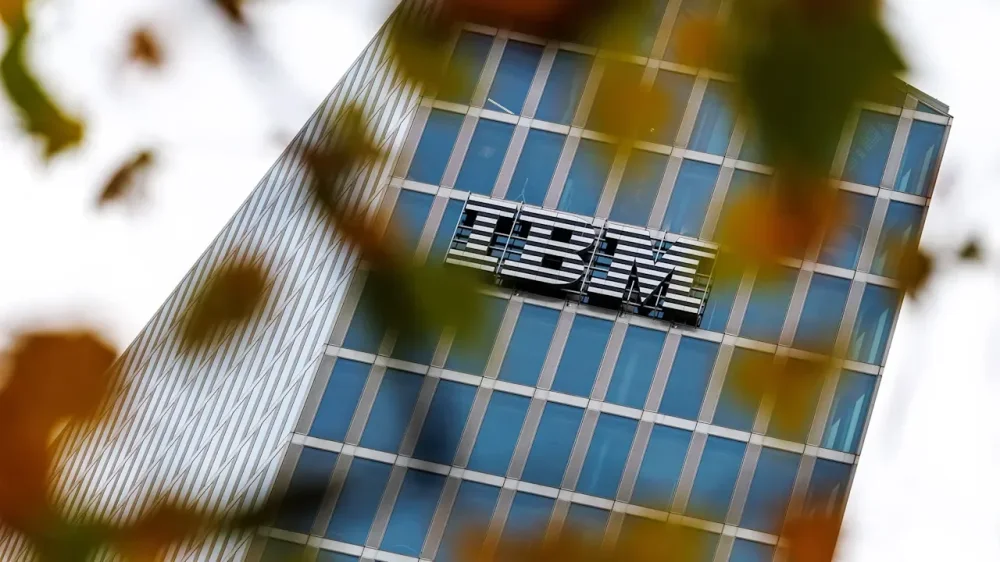
IBM announced on Monday it is acquiring Confluent for $11 billion, sending shares of the data streaming platform up about 29% in morning trading. By midday trading, at the time of this writing, Confluent (CFLT) stock was holding steady, up 29%. International Business Machines Corporation (IBM) stock was up about 1.5%. Confluent provides a leading open-source enterprise data streaming platform that connects, processes, and governs reusable and reliable data and events in real time, foundational for the deployment of AI. The deal is an example of how IBM is actively engaging in the increasingly competitive, high-stakes AI arms race that’s now dominating technology companies. Why is this a big deal? The deal is one of the largest in recent memory for IBM, The Wall Street Journal reported. The company is paying $31 a share for Confluent in an all cash deal. Confluent will continue to operate as a distinct brand and business within IBM after the close of the deal (which is subject to regulatory approval). “Data is at the heart of what companies need to do to harness AI, modernize their operations, and build the next generation of applications; and Confluent is at the heart of what companies need to harness their data,” Confluent CEO Jay Kreps said in a statement. “IBM sees the same future we do: one in which enterprises run on continuous, event-driven intelligence, with data moving freely and reliably across every part of the business.” “IBM and Confluent together will enable enterprises to deploy generative and agentic AI better and faster by providing trusted communication and data flow between environments, applications and APIs,” IBM CEO Arvind Krishna said in a press release. “With the acquisition of Confluent, IBM will provide the smart data platform for enterprise IT, purpose-built for AI.” IBM financials At the time of this writing midday Monday, IBM had a market capitalization of $292.12 billion, while Confluent had a $10.44 billion market cap. For the third quarter of 2025, IBM beat Wall Street’s estimates for both revenue and earnings per share (EPS). Its AI book of business surpassed $9.5 billion, up from $7.5 billion during the second quarter. View the full article
-
Google is quietly testing a new way to make Shopping ads feel more local. Select ads using local inventory feeds now display the merchant’s city or town directly above the product title — think “London” or “Tonbridge” — giving shoppers a clearer sense of where the store is based. Why we care. The new location labels make Shopping ads feel more local and trustworthy, helping nearby retailers stand out in crowded results. Clear city or town indicators can increase click-through rates and drive more in-store visits from shoppers who prefer buying close to home. It also gives merchants using local inventory feeds a competitive edge by highlighting proximity without needing new ad formats or extra setup. How it works. The label appears within Shopping ads that already use local inventory data. It joins existing formats like: In-store Pickup later Curbside pickup But unlike those, this label focuses purely on the store’s location, not fulfillment options. The catch. Google hasn’t officially announced the feature. Details on rollout, eligibility, and technical requirements remain unknown. Between the lines. Merchants using local inventory feeds may get a visibility boost if they operate in recognisable or high-trust locations. For users, it’s another nudge to choose nearby retailers over marketplace or long-distance sellers. First seen. This update was spotted by PPC News Feed founder Hana Kobzová. View the full article
-
The Nordic countries are no strangers to the long, dark winter. Despite little to no daylight—plus months of frigid temperatures—people who live in northern Europe and above the Arctic Circle have learned how to cope mentally and physically with the annual onset of the winter blues, which can begin as early as October and last into April for some. The winter solstice will occur Dec. 21, marking the shortest day and longest night of the year in the Northern Hemisphere. While sunlight increases daily after that, winter won’t be over for a while yet. The Associated Press spoke to experts in Norway, Sweden, and Finland about the winter blues. Here’s how they suggest looking for light, literally and figuratively, during the darkest months of the year: Maintaining sleep and social habits are key Dr. Timo Partonen, a research professor at the Finnish Institute for Health and Welfare, said the dark winter affects our circadian rhythm. With limited daylight, our internal body clocks cannot reset or synchronize properly and it throws off our sleep. We may sleep longer in the winter, he said, but we don’t wake up refreshed and can remain tired the rest of the day. Partonen recommended trying a dawn simulator, sometimes known as a sunrise alarm clock, to gradually light up your bedroom and ease you awake. In addition to being more tired, we’re more likely to withdraw from others socially in the wintertime. We’re more irritable, Partonen said, and more prone to fights with friends. It’s important to maintain our relationships, he said, because symptoms rarely improve in isolation. And since keeping up with exercise is also key to combating the winter blues, consider inviting a friend along for a workout. It could also help keep off the wintertime weight gain—typically 2 to 5 kilograms (4 to 11 pounds) a year, Partonen said—that’s fed by cravings for carbohydrates, especially in the evenings. Light therapy encouraged for a range of symptoms Millions of people worldwide are estimated to suffer from seasonal depression. Also known as seasonal affective disorder, or SAD, patients typically have episodes of depression that begin in the fall and ease in the spring or summer. A milder form, subsyndromal SAD, is recognized by medical experts, and there’s also a summer variety of seasonal depression, though less is known about it. Scientists are learning how specialized cells in our eyes turn the blue wavelength part of the light spectrum into neural signals affecting mood and alertness. Sunlight is loaded with the blue light, so when the cells absorb it, our brains’ alertness centers are activated and we feel more awake and possibly even happier. Researcher Kathryn Roecklein at the University of Pittsburgh tested people with and without SAD to see how their eyes reacted to blue light. As a group, people with SAD were less sensitive to blue light than others, especially during winter months. That suggests a cause for wintertime depression. In severe cases, people need clinical support and antidepressant medications. Christian Benedict, a pharmacology professor at Uppsala University in Sweden, suggests light therapy for people with SAD as well as those who have a milder case of the winter blues. “It’s not like it’s a fate, an annual or a seasonal fate, and you cannot do anything about it,” Benedict said. “There are possibilities to affect it.” A routine of morning light therapy, using devices that emit light about 20 times brighter than regular indoor light, can be beneficial for both people with and without SAD. The light therapy helps to kickstart your circadian rhythm and increases serotonin in your brain, Benedict said. Research supports using a light that’s about 10,000 lux, a measure of brightness, for 30 minutes every morning. Special lights run from $70 to $400, though some products marketed for SAD are not bright enough to be useful. Your insurance company might cover at least part of the cost if you’ve been diagnosed with SAD. Partonen recommended using both a dawn simulator and a light therapy device each day before noon. Yale has tested products and offers a list of recommendations, and the nonprofit Center for Environmental Therapeutics has a consumer guide to selecting a light. Prioritizing a positive outlook as a survival strategy And don’t forget to, well, look on the bright side. It’s crucial to embrace winter instead of dreading it, according to Ida Solhaug, an associate professor in psychology at the University of Tromsø, also known as the Arctic University of Norway—the world’s northernmost university. Prioritize a positive outlook as a survival strategy and learn to appreciate the change in seasons. It’s a typical Norwegian way of thinking, she said, that can make all the difference when there’s very little daylight for months. “It’s part of the culture,” she said. And don’t forget to take advantage of both outdoor and indoor hobbies, she said. Inside, channel hygge—the Danish obsession with getting cozy—and snuggle up on the couch with blankets and a movie. But don’t hibernate all winter. After the film finishes, head outside with a thermos for fika, the traditional Swedish coffee break. Even during cloudy days, a quick walk in the fresh air will help, she said. And if you’re brave enough, do a cold plunge like many people in the Nordics. Solhaug tries to jump into the frigid waters off the coast of Tromsø, an island 350 kilometers (217 miles) north of the Arctic Circle, at least once a week, adding that it makes her feel revitalized during the long winter. “Challenge yourself to look for light in the darkness,” she said. After all, as many Nordic people say, there’s no such thing as bad weather—only bad clothing. Finland’s President Alexander Stubb, too, had some tips for how to tackle Nordic winters. When asked in an interview with The Associated Press last month how to survive the cold season, he had some very specific advice. “Take an ice bath and then followed up by a sauna and do one more ice bath, one more sauna, then a shower and go out there. You’ll manage,” Stubb said. —Stefanie Dazio, Associated Press View the full article

-
For more than half a century, audiences have been captivated by the Planet of the Apes—a sprawling sci-fi epic that spans at least three timelines, 3,000 years of history, and a franchise that includes 10 feature films, two TV series, three video games, and dozens of comics and novels. Whether you're a long-time fan trying to make sense of the lore or a newcomer wondering how a talking chimpanzee led to a post-apocalyptic planet dominated by primates, I’ve laid out the Planet of the Apes series by release order, chronological continuity, critical and commercial reception, the technological milestones of ape civilizations, and more. This is your illustrated guide to the rise (and fall... and rise again, and fall, etc.) of the Planet of the Apes. What is the Planet of the Apes?Planet of the Apes is one of the strangest, most ambitious, and longest-running film franchises in cinema history. Films in the series vary wildly in quality, ambition, competence, and style, but all Apes movies, from the 1968 original to 2024’s Kingdom of the Planet of the Apes, share a narrative focus: a world-shaking conflict between humans and intelligent apes. Every Planet of the Apes movie, in chronological order The original saga (1968–1973)Planet of the Apes (1968): Based on Pierre Boulle’s 1963 sci-fi novel La Planète des Singes, 1968’s Planet of the Apes tells the story of astronaut George Taylor, who crash lands on what he thinks is a distant planet where apes are intelligent and in charge, and the people are dumb slaves. Beneath the Planet of the Apes (1970): While star Charlton Heston appears in the film briefly, Beneath the Planet of the Apes is really the story of Brent, an astronaut who’s been sent to rescue Taylor. Escape from the Planet of the Apes (1971): You’d think the annihilation of the entire planet would end the Planet of the Apes series, but no: In Escape, Cornelius, Zira, and Dr. Milo manage to flee the planet on Taylor’s ship before the doomsday bomb explodes; the trio time-travel to 1973. Conquest of the Planet of the Apes (1972): The last two old-school Planet of the Apes movies had lower budgets than their predecessors, and it definitely shows. Lore-wise, Conquest presents a divergent narrative path to explain the development of ape intelligence and other events. Battle for the Planet of the Apes (1973): In the years since the Ape rebellion in Conquest, a nuclear war has killed most humans; humans and ape relations are good enough, but the fragile detente is broken by human-hating gorilla Aldo. The Burton reboot (2001)Planet of the Apes (2001): After a nearly 30-year hiatus, 2001’s Apes is a thematically and tonally uneven summer blockbuster featuring a by-the-numbers plot, mid-tier action, and an ending that confuses everyone. (The makeup and production design are top-notch, though.) The modern quadrilogy (2011–2024)Rise of the Planet of the Apes (2011): This movie blows the dust off the hoary old apes and breathes fresh creative life into a moribund franchise; Rise is a film packed with both action and dignity. Dawn of the Planet of the Apes (2014): Dawn takes place about a decade after the events of the last movie, and apes are definitely on the come-up: It features the most nuanced (and most depressing) take on the conflict between species. War for the Planet of the Apes (2017): If the message of Dawn of the Planet of the Apes is “war is inevitable…,” the message of War for the Planet of the Apes is “..and war is hell.” It's a grim movie. Kingdom of the Planet of the Apes (2024): Kingdom explores an ape-dominated world where the few humans left are brainless scavengers (or so it seems). It doesn’t break new ground the way Rise did, but Kingdom opens the way for more Planet of the Apes sequels in the future. Geographic location of each Planet of the Apes movieOver more than five decades of films, Planet of the Apes has taken audiences from the shattered ruins of New York City to the tranquil redwood forests of Northern California, and even to entirely different worlds (maybe). This map tracks the primary settings of each movie, showing how the saga’s conflicts play out across Earth. Who traveled where in time?From astronauts overshooting the present by millennia, to apes hurtling back to the 20th century’s hippy era, time travel is integral to the Planet of the Apes, so lets take a look at the franchise’s major temporal tourists, charting when they left, when they arrived, and just how far they jumped. The complicated chronology of the Planet of the ApesIf you’re considering a watch order for the Planet of the Apes, "in order by chronology" is the worst option—the Apes timeline is simply all over the place. While there are a few moments in the modern quadrilogy (2011–2024) that suggest the films are prequels to the original pentalogy (1968–1973), these are ultimately fan-service Easter eggs; the two series just don’t connect unless you get very creative with time-travel loops and offscreen assumptions. Hell, the first five films don’t connect with themselves unless you get creative with time-travel. So, I got creative with time travel to break down the major historical milestones in the Planet of the Apes Universe, across three timelines. (Four, if you count the self-contained 2001 Planet.) Here are the Planet of the Apes movies listed in order of the year that each one takes place: Critical reception of Planet of the Apes moviesCritics have a love-hate relationship with Planet of the Apes movies. According to Rotten Tomatoes, the “best” Apes movie is War for the Planet of the Apes, which was praised by 94% of critics. The “worst” is Battle for the Planet of the Apes, with only 33% positivity. That’s a big spread! How much money did each Planet of the Apes movie make? Critical acceptance is great; but in cynical Hollywood terms, the only measure of a good movie is how much money it makes. By that metric, the “best” Apes movie is the 2001 reboot, Planet of the Apes. Despite mixed review, the movie made $328,049,530.32 in domestic ticket sales (adjusted for inflation), which is even more than the original and the 2014 blockbuster Dawn of the Planet of the Apes. A who’s-who of ape leadership Any society is defined by its leaders, including ape society, so here is a breakdown of the doctors, generals, and tribal chiefs who have ruled the apes over the last 50 years. Dr. Zaius (Planet of the Apes, Beneath the Planet of the Apes): An orangutan Minister of Science and Defender of the Faith who balances political control with the fear of humanity’s return. General Ursus (Beneath the Planet of the Apes): This violent gorilla warlord never encountered a problem he couldn’t meet with violence. Dr. Zira (Escape from the Planet of the Apes, 1970): A compassionate and sharp-witted chimpanzee thrust into the role of cultural ambassador between societies on the verge of war, Dr. Zira is the defacto leader of a small band of ape time-travelers. Caesar (Conquest of the Planet of the Apes, Battle for the Planet of the Apes): The original Caesar is a fiery revolutionary who transforms ape resentment into a successful uprising against humanity. General Thade (Planet of the Apes, 2001): A sadistic and cunning chimpanzee general obsessed with wiping out humanity. Caesar (Rise of the Planet of the Apes, Dawn of the Planet of the Apes, War for the Planet of the Apes): A hyper-intelligent chimp raised by humans, Caesar’s combination of tactical brilliance, political savvy, raw charisma, and genuine compassion for both apes and humans make him the best overall ape leader. Koba (2014, Dawn of the Planet of the Apes): A bitter, scarred veteran of human torture and hero of the ape revolution, Koba has been through some shit. Proximus Caesar (Kingdom of the Planet of the Apes): An iron-fisted militarist who twists the past to justify authoritarian rule, Proximus Caesar rules through fear and historical revisionism. Ape technological and intellectual milestones by movieAcross the Planet of the Apes films, the ever-shifting balance of power between apes and humans often comes down to brains as much as brawn. Each installment shows apes using technologies, social systems, and tactics that they’ve either developed or borrowed from humans. From crude tools and simple rules to heavy artillery and complex political structures, these milestones mark the evolving capabilities of ape society over the decades (and timelines) of the franchise. Here's a breakdown of the technological highlights of ape society in each movie. Ape-adjacent TV shows, video games, comic books and moviesIf ten feature films isn't enough Apes for you, there's plenty more material out there. The Ape-verse began with a novel, and has grown to include a live-action TV series, a cartoon series, three video games, and dozens of novelizations and comic books. View the full article
-
On November 26, a water leak at Paris’ Louvre Museum damaged between 300 and 400 historical books in the Egyptology and scientific documentation section. Then, on December 8, workers at the museum voted to initiate a strike over poor working conditions. And that’s only a drop in the bucket compared to the Louvre’s overall woes so far this year. For years, the Louvre has been struggling with a combination of old, weathered infrastructure and increased foot traffic brought about by mass tourism. But in 2025, the museum has been hit by the full consequences of operating out of a relatively un-updated building to house some of the world’s most influential (and valuable) art. Here’s everything you need to know about the Louvre’s horrible, no good, very bad year. A leaked memo reveals the extent of the problem The year began with a letter that foreshadowed what was to come for the Louvre. Near the end of January, a private document, written by museum director Laurence des Cars for the French culture minister Rachida Dati, was leaked to the media. In it, des Cars described a museum struggling to accommodate its daily influx of visitors and protect its artwork due to deteriorating spaces, lack of crowd flow measures, and poor environmental controls. “Visiting the Louvre is a physical ordeal; accessing the artworks takes time and is not always easy,” des Cars wrote. “Visitors have no space to take a break.” Around the same time, the Louvre announced plans for a massive renovation designed to address these challenges. French President Emmanuel Macron said that the overhaul would include a new entrance on the Seine river, a stand-alone room to house the Mona Lisa, and several new underground rooms to control foot traffic. Changes to the museum were slated to begin in 2026 and take around a decade to complete—but, as later months would prove, the situation at the museum had already reached a boiling point. The Louvre shuts down in June The first major disturbance at the Louvre took place on June 16, when the institution’s own staff members rallied to shut it down. That day, thousands of ticketed patrons waited outside the museum’s iconic glass pyramid, to no avail. It was a rare occurrence for the Louvre, which has only closed a few other times during war, the COVID-19 pandemic, and a few brief walkouts. The strike came due to staff’s concerns around mass tourism and overcrowding. A crown jewel heist fit for the big screen Perhaps the most memorable calamity at the museum came in October. In a stunt that flummoxed the public (and is likely destined for Netflix adaptation), a group of thieves broke into the Louvre in broad daylight via a basket lift, cut its window panes with a glass cutter, stole nine pieces of priceless jewelry in less than seven minutes, and escaped on motorbikes. Since the stunning scene, at least eight people have been arrested in connection with the heist, but none of the jewelry—worth more than $100 million—has been found. For obvious reasons, the event has resulted in widespread criticisms of the museum’s security measures. Water damage and yet another strike Now, the Louvre has taken two more blows just before the end of the year. On November 26, a water leak damaged between 300 and 400 books that date from the end of the 19th century to the beginning of the 20th century, in the museum’s Egyptology and scientific documentation section. A spokesperson for the museum told CNN that the leak happened when a valve, which forms part of a now defunct plumbing system, was opened by accident. The system was shut off earlier this year in anticipation of the coming renovations. The spokesperson added that while the books in question are used regularly by readers, they aren’t the only copies in the world. And this morning, workers at the Louvre announced that they’re planning this year’s second strike to hold the museum accountable for difficult work conditions and security weaknesses. In a letter announcing the action, addressed to Dati and viewed by the AP, the unions involved said the museum was in “crisis,” noting that “visiting the Louvre has become a real obstacle course” for millions of visitors. Fast Company has reached out to representatives from the Louvre for comment on the issue. The strike is scheduled to begin next Monday, December 15. View the full article

-
Letterboxd, the movie tracking app and social media platform for cinephiles, first announced its new online film rental platform earlier this year at Cannes Film Festival. Now, more details about the launch date and titles have been revealed. The Video Store will officially launch on Wednesday, December 10, and will feature nine films across two curated shelves, which includes titles from nine countries. Here’s some of what film fans can expect: Think a Todd Haynes deep cut, to a restored version of a Filipino classic, and more, including Chile and Indonesia’s submissions for the upcoming 98th Academy Awards, a hit from the 2025 South by Southwest (SXSW) festival, and an Indian neo-noir thriller that was previously unavailable since its 2023 Cannes debut. The platform will operate on a transactional video-on-demand (TVOD) model with no subscription requirement, and the “shelves” will be programmed by the Letterboxd team using millions of watchlists, reviews, and behavioral signals. Each title was chosen based on member demand, while also leaving room for discoveries the community has yet to find. The Video Store will be available in 23 countries, including the United States, Canada, United Kingdom, Ireland, France, Spain, Australia, New Zealand, Germany, Austria, Italy, Sweden, Norway, Denmark, Finland, Iceland, Netherlands, Poland, Portugal, Belgium, Switzerland, Greece, and Cyprus. Pricing and availability vary by film and country, and will be shown directly within the Video Store at launch. Viewers will be able to watch on their TV via Apple TV 4K, Chromecast, and AirPlay, and through web, iOS, and Android. “We’re incredibly proud of what we and our community have built,” Letterboxd CEO and cofounder Matthew Buchanan said in a statement. “We take their lead, and believe that has been integral to Letterboxd’s success. They tell us what’s really happening—a 1980s action film suddenly trending, a festival title from two years ago still being added to watchlists.” A focus on film discovery While Letterboxd plans on rolling out more titles in weeks and months to come, the first two shelves made available at launch will reflect the platform’s core mission of film discovery. The first shelf, “Unreleased Gems,” features exclusive films from festivals that haven’t had releases yet in specific countries, and will only be available in the Video Store for a limited time. Those titles include Alexander Ullom’s 2025 directional debut It Ends, which made waves at this year’s SXSW, about recent graduates trapped on an infinite nightmarish background; Yandy Laurens’ 2025 sci-fi romance A Wife From The Future, about a woman who travels back in time to change her husband’s destiny, which has been selected as Indonesia’s submission for the Best International Feature Film for the upcoming Oscars; Anurag Kashyap’s 2023 neo-noir thriller Kennedy, which premiered at Cannes Film Festival in 2023; and director Diego Céspedes’ 2025 feature film debut The Mysterious Gaze of the Flamingo, about a young girl protecting her town’s queer community from superstitious panic, which won the Un Certain Regard Prize at the 2025 Cannes Film Festival. Meanwhile, the second shelf, “Lost & Found,” features a slate of underdog films. Availability of films varies by country, with many titles exclusive to Letterboxd where they are shown. Those titles include Lau Kar-Leung’s 1988 action-comedy film Tiger on the Beat starring Chow Yun-Fat; Mike de Leon’s 1981 Filipino classic Kisapmata about a young woman living under her domineering father’s suffocating control; Elia Suleiman’s It Must Be Heaven, which won the Special Mention from the Main Competition Jury and FIPRESCI Prize at the 2019 Cannes Film Festival (but was delayed theatrically because of the COVID-19 pandemic); Todd Haynes’ 1991 Sundance Film Festival hit Poison; and Kiyoshi Kurosawa’s alien invasion film Before We Vanish, based on a cult Japanese stage play, which previously screened at the 2017 Cannes Film Festival. “Video Store lets us act on [real] demand, whether it’s helping a distributor unlock value from a forgotten gem in its vault or giving a filmmaker direct access to the audience they’ve been building on our platform,” Letterboxd CEO Buchanan said. “It’s our way of saying to the industry: let’s harness this interest to get films to the people who want them most.” The launch of Letterboxd Video Store comes during a time when the platform has seen significant growth and found more of a mainstream audience over the past four years. In mid-2020, Letterboxd had 1.8 million members. Now, it currently has over 17 million, with around six million joining within the last year. View the full article

-
A Cinnabon worker in Wisconsin has been fired after a racist outburst directed at two customers went viral, the Georgia-based cinnamon roll chain said. Cinnabon posted a statement on social media that the worker, who it did not identify, was “immediately terminated” by the franchise owner over a “disturbing video” of the incident. “Their actions and statements are completely unacceptable and in no way reflect the values of Cinnabon, our franchisees, or the welcoming environment we expect for every guest and team member,” the company added in a follow-up statement to The Associated Press on Sunday. The video was posted on TikTok and showed a white, female employee cursing at and taunting the customers from behind the counter as one of them recorded the encounter. At one point she is seen on video uttering a racial slur and saying, “I am racist and I’ll say it to the whole entire world. Don’t be disrespectful.” The employee is also recorded giving an obscene hand gesture at customers and exchanging expletives with one of the persons at the store. The TikTok user who posted video said the incident happened while she and her husband were taking a break from shopping Friday at a mall in Ashwaubenon, a suburb of Green Bay. The customer said she ordered a caramel pecan cinnamon roll and had asked the worker to add more caramel as it didn’t appear to have enough. She said she began recording after the worker snapped at her and derided her hijab. An online fundraising campaign to support the customers described them as a “black Somali Muslim couple” that’s been “traumatized” by the incident. A competing campaign to purportedly benefit the fired worker, meanwhile, has raised tens of thousands of dollars. That effort appears on the same Christian crowdfunding platform where hundreds of thousands of dollars were raised for a Minnesota woman who admitted to using a racist slur against a Black child at a playground earlier this year. View the full article

-
The National Defense Authorization Act will be voted on by the House without the housing package that passed through the Senate Banking Committee unanimously. View the full article

-
If it feels like the entire internet woke up one day and decided to start every sentence with “AI,” you’re not wrong. Marketers are being hit with a daily wave of LinkedIn thought leaders, half-baked prompt hacks, and promises that ChatGPT is either going to 10x your productivity or take your job entirely. And in the middle of all this? You (the digital marketer). Marketers are trying to figure out if this is just another buzzword cycle or the beginning of a complete rewrite of how we do content, SEO, PPC, reporting, and, well, everything. So let’s break it down. Consider this your AI starting guide, written for marketers who are tired of needing a younger person to translate all the jargon the way we once had to help our parents get the internet working or open an AOL chat window back in the day. Defining AI and LLMs (and why they matter) I promise I’m not asking “what is AI” to hit a perfect keyword density. I want to establish a common ground so that we’re all aligned moving forward on what I refer to as “AI.” You’ll see below that many of these terms are used interchangeably and even inappropriately. You want to sound smart in front of your friends, right? Right! Your customers search everywhere. Make sure your brand shows up. The SEO toolkit you know, plus the AI visibility data you need. Start Free Trial Get started with At its core, artificial intelligence refers to machines performing tasks that typically require human intelligence: understanding language, recognizing patterns, making decisions, and yes, even generating content. The type of AI that is making everyone excited right now is generative AI—models that can produce text, images, code, and more, based on patterns they’ve learned from enormous datasets. Tools like ChatGPT, Gemini, and Claude don’t “think” the way humans do—they predict the next most likely word or phrase based on what they’ve been trained on. Despite what people want it to be, AI is not a silver bullet solution to getting rich quickly. It’s not going to automate everything overnight or instantly reduce headcount to make that profit and loss look even better. It’s data aggregation, at scale. Large Language Models (LLMs) aren’t producing net new data. They are simply processing the data across the web to provide a solution strictly based on internet consensus. Generative AI and LLMs represent a massive shift for content creators and marketers. You’re no longer just optimizing for a classic search engine click—the goal now is to create content that can be effectively interpreted and summarized by machines. The critical implication is the rise of zero-click search results: AI systems can summarize, cite, and present your content directly to users, often answering their queries without requiring them to visit your website. (Examples include Google’s AI Overviews and ChatGPT answers.) This fundamentally shifts the SEO landscape away from a traffic game to an authority and data-ingestion game. That’s why understanding how AI works and what it doesn’t do well is critical before deciding where it fits into your overall marketing strategy. AI jargon you need to know Before we get into the details, it’s worth noting that many people use terms like “AI,” “machine learning,” “LLM,” and “generative AI” interchangeably. While they’re all related, they’re not the same. Understanding the differences between each will not only make you the cool kid at the lunch table, but it will also help you make smarter decisions about how to leverage them in your marketing strategy. The table below (and downloadable PDF) will keep you sharp and ensure you’re talking about LLMs correctly and authoritatively. Artificial intelligence (AI) Let’s start with the umbrella term. Artificial intelligence refers to the broad concept of machines being able to perform tasks that typically require human intelligence. This includes skills such as problem-solving, learning, speech recognition, and decision-making. It has become a catch-all buzzword that gets thrown around the search industry and in headlines, but in practice, most of what marketers interact with falls under more specific subsets that we’ll get into in a second. Example of AI: Tools like Siri or Google Assistant use AI to interpret voice commands and respond contextually. Smart speakers were an early adopter of AI. Machine learning (ML) Machine learning is a subset of AI—it’s a process that feeds machines data and lets them learn from it. Instead of being explicitly programmed with instructions, machines learn using algorithms that find patterns and make predictions based on that data. (Sorry, it still doesn’t predict the future, yet!) In marketing, this powers many things, such as ad targeting, customer segmentation, and predictive analytics. Example of machine learning: Netflix uses machine learning to suggest shows based on your watch history. Netflix uses ML to give recommendations to its users. Natural language processing (NLP) Natural language processing bridges the gap between raw text and machine-readable intent. NLP allows machines to understand, interpret, and generate human language. It’s the reason tools like ChatGPT can have a conversation, and why Google can know that “cheap running shoes” means the same thing as “affordable sneakers.” Example of natural language processing: Google Translate uses NLP to understand and convert languages in real time. NLP process explained, from Grammerly Generative AI When people say “AI,” they usually mean generative AI, a branch of artificial intelligence that creates new content rather than just analyzing existing data. At its core, it’s a type of computer model (built from algorithms and code) trained on massive datasets to learn patterns in language, visuals, or sound. Then it uses those patterns to generate something new, like text, images, code, or even video. (Google and Reddit’s partnership makes a ton of sense, now, right?) However, it’s important to remember that it doesn’t “think” like a human. Instead, it predicts the most likely next word, pixel, or line of code based on probabilities, one step at a time. That’s also why it occasionally goes off the rails. These misfires, called hallucinations, are when the AI confidently makes something up. And they’ve become legendary. Among the most infamous examples: A chatbot recommending you eat at least one small rock per day, or that you use glue to keep the cheese on your pizza. Examples of generative AI: ChatGPT writes articles and emails Midjourney and DALL·E create images Claude writes code for your WordPress plugin (I used Claude to write/build the entire SEO interview simulator on SEOjobs.com this way!) And lets not forget Sora, which I would never utilize to portray that I own a Ferrari 458 let alone do epic donuts. Large language models (LLMs) Large language models are a specialized type of generative AI trained on massive datasets (think books, websites, code, and, yes, even Reddit) to understand and generate human-like responses. The bigger and better-trained the model, the more useful the output. Think of LLMs as the engine behind your favorite chatbot, the part that responds to what you type. When I first started using ChatGPT, one of the first things I did was upload years of my own writing: blog posts, newsletters, and articles on industry publications (like here on Search Engine Land). That context helped the model learn and respond in my voice, matching my tone and phrasing more naturally. I still do the writing. The model just helps refine it by offering suggestions, rewording ideas, or polishing my draft based on the examples I’ve given it. In short: LLMs don’t act on their own, they react to your input. That’s what separates them from AI agents, which can actually take action on your behalf. Examples of large language models: GPT-4 (OpenAI, used for ChatGPT) Claude (Anthropic) LLaMA (Meta) AI agents While LLMs simply respond to prompts, AI agents execute complex tasks—they navigate websites, fill out forms, call APIs, and complete multi-step tasks without hand-holding. They’re still powered by LLMs under the hood, but now they’ve got goals, tools, and autonomy. In other words, AI agents aren’t just talking, they’re working. And yes, these are what everyone’s afraid will steal their job. Examples of AI agents: ChatGPT (Web searching and analyzing code) Google Gemini, Google Workspace (Gmail reply suggestions and email thread recaps) Copilot, Microsoft 365 (Microsoft’s version of Gemini+Workspace) AI Agents are used within Gmail to provide summaries. How AI impacts marketing today Now that we’re all speaking the same AI language, let’s talk about how these tools are collectively disrupting marketing and the way businesses operate. People have been claiming SEO is dying for over a decade, but this time, the anxiety is a little more concrete. And saying SEO is merely “changing” is an understatement. But we’re not facing death, we’re in the middle of a massive, industry-wide pivot, and AI is undeniably at the center of it all. Let’s look at a few issues. Organic traffic is getting cannibalized AI Overviews are Google’s automated summaries that appear at the top of search results, often pulling from multiple sources. Think of them as Featured Snippets on steroids—except they don’t just quote one site and link back. They blend multiple sources, rewrite them in Google’s own voice, and often bury attribution below the fold. That means for broad informational queries, the first thing people see is Google’s answer, not your blue link. This leads to a much lower click-through-rate (CTR), which in turn reduces clicks to your website. Before AI Overviews, queries used to be a great way to introduce your brand to people early in their research, but now the answer and trust goes directly to Google. Sigh. Claim: AI Overviews only show up for fluff queries, so my traffic is safe. Reality: Google is already testing AI Overviews for YMYL, product, and B2B queries. It’s expanding, not shrinking. Google showing AI Overview for a mid funnel shopping query. Actionable next steps: Stop chasing every click. Focus on being the trusted source people remember when they’re ready to act. Measure success by visibility, influence, and conversions, not just raw traffic. Double down on topical authority so you’re the brand cited in AI answers. Content creation is exploding (and so is the noise) Generative AI has removed one of the biggest bottlenecks in content marketing: time. What used to take a team of writers a month can be done by one marketer in a week. That’s not inherently bad, but when everyone can flood the internet with good-enough content, the signal-to-noise ratio tanks. Claim: More content = more traffic. Reality: This was shaky even pre-AI. Now, search algorithms are actively throttling quickly produced, low-value content. Google’s Helpful Content update, Bing’s SpamBrain improvements, and even LinkedIn’s recent feed tweaks are all aimed at burying generic, low-quality content. Actionable next steps: Focus on authority-driven content: case studies, data analyses, and proprietary insights. Publish less, promote more. Distribution is more important now than ever before. Use AI for research, outlining, and refreshing content, rather than just producing more. Search results are becoming deeply personalized Traditional SEO has dealt with personalization for years (e.g., local search, logged-in history), but LLM-powered platforms like ChatGPT, Perplexity, and Gemini are taking it to a whole new level. The same question can return completely different answers depending on the user, their history, their prompts, or even how the model is trained. That means the idea of a “universal ranking” for all users is disappearing fast, and so is our ability to reverse-engineer it. Example of personalization: Here’s how an LLM might respond to two different users querying, “What is the outlook for Tesla?” Financial analyst: The LLM may provide a detailed stock performance summary and recent SEC filings, drawing from the user’s history of researching finance. New driver: The LLM may focus on new car models, battery life, and charging infrastructure, inferring an interest in buying a vehicle. Claim: We’ll just optimize for the top answer in ChatGPT like we do for position #1 in Google. Reality: The universal ranking is dead. The assumption that there’s one top answer to optimize for is flawed because personalization destroys the concept of a “top” answer. In classic SEO, Position #1 was a fixed, measurable target based on a universal algorithm (even if local user factors slightly adjusted the result). Optimization strategy was entirely built on this universal ranking model. Actionable next steps: Track visibility, not just rankings—how often you’re mentioned, cited, or linked across different LLMs in addition to search engines. Build recognizable, credible brand entities that AI models can confidently cite. Invest in content variety (articles, podcasts, videos, datasets) to give models multiple ways to access your information and understand your topics deeply. This includes using structured data and creating definitive, citable answers that are easily ingested by LLMs. Semrush Enterprise AI displays mentions as a trackable trend chart. Attribution is breaking When Google, Bing, or Perplexity answer a user’s question directly—possibly using product comparisons, summaries, or “best of” lists—those users are likely to never visit your site, thanks to AI Overviews. Even if they do, their journey may start in an AI platform, jump to another search, and only then hit your site. This path shatters the neat channel → click → conversion path marketers have traditionally relied on, making companies rethink how to track attribution. Claim: We’ll measure traffic and users from the LLMs directly in our analytics. Reality: This claim is making a huge assumption that users are clicking to your site—they aren’t! Actionable next steps: Shift from last-click attribution to assisted conversion thinking—last-click attribution gives 100% of the credit to the final channel before a conversion. Start looking at assisted conversions and multi-touch models so you can see which channels regularly show up earlier in the journey. Measure how people interact with your brand as a whole—instead of obsessing over a channel’s ROI, start tracking indicators of overall brand demand. A few concrete signals: Direct traffic trends Branded search volume “How did you hear about us?” fields in lead/purchase forms Budget for off-site influence that is hard to perfectly track, for example: Podcast sponsorships PR initiatives Thought leadership that gets covered in news Semrush Enterprise AI displaying brand sentiment. Clients and bosses expect magic Thanks to hype, stakeholders expect AI to do everything faster, cheaper, and better, often without understanding the risks, the learning curve, or the human oversight required. Claim: We can replace our SEO/content team with AI tools and get the same results. Reality: AI can accelerate tasks, but it’s not a replacement for strategy, judgement or truly understanding customers needs. Actionable next steps: Set expectations early. AI can make some things faster and cheaper, but it’s not a push-button solution. Show stakeholders the hidden work: prompt refinement, editing, fact-checking, and compliance. (And that it’s not magic). Use AI’s wins to free up human bandwidth for the high-impact strategic work. The landscape is shifting fast and marketers will have to adapt to thrive. See the complete picture of your search visibility. Track, optimize, and win in Google and AI search from one platform. Start Free Trial Get started with Search is evolving I’m not here to argue about Generative Engine Optimization (GEO) vs. Answer Engine Optimization (AEO) or dive into the alphabet soup of SEO acronyms. What matters is this: Search today is not what it was yesterday. Organic traffic isn’t just about ranking in Google anymore. The definition of “search” has expanded, and your strategy needs to keep up. If you’re not thinking beyond the search bar (YouTube, Reddit, newsletters, communities), you’re already falling behind. The good news? We’re here to help. We’re publishing insights from industry veterans focusing on what to try, what to avoid, and how to actually talk about AI and search in your org without getting lost in the hype. View the full article
-
Prime minister told the country needs to ‘step up’ or its advantage in the Atlantic is at riskView the full article
-
A reader writes: I hired a promising junior employee who seemed polite and reasonable during his interview. However, now that he is my employee, he constantly condescends to me and says things that come across in a belittling way. Here are some examples: Me: “Bob, I was going to train you on how to do X today.” Bob, with a dismissive laugh: “Yeah, I was wondering when you were going to get to that.” Me: “Bob, has anyone shown you how to do Y yet?” Bob, with a dismissive laugh and a shrug: “How hard can it be?” Me: “I just noticed an issue with the X documentation and wanted to make sure I corrected that so you have the right information.” Bob, with a dismissive laugh: “Yeah, I was wondering what you meant by that.” With everything he says, it feels like he’s trying to be smarter than me, or one step ahead of me. And he’ll always act like this stuff is easy and he’s the expert, but when he has to actually do it for the first time, he needs all the help he can get. It has been all I can do to contain my irritation, and I have started to respond by becoming irritable, which I know is not excusable. Recently, he gave me the “I was wondering when you were going to get to that,” treatment, and I snapped back, “I can’t download my entire brain to you in one sitting!” He laughed, as though it was a big joke, but I felt terrible because I knew I had spoken in anger. I didn’t apologize, though. I don’t think I can fire him over such a small thing, and I’m not sure it’s fair to nitpick someone’s personality just because it’s not compatible with mine. It’s not really a performance issue, because for the most part, he’s doing fine. It’s possible he’s feeling insecure, but the way he’s expressing it is just not okay to me. Do you have any advice for this kind of conflict? I answer this question over at Inc. today, where I’m revisiting letters that have been buried in the archives here from years ago (and sometimes updating/expanding my answers to them). You can read it here. The post how can I get my employee to stop condescending to me? appeared first on Ask a Manager. View the full article