ResidentialBusiness
Administrators
-
Joined
-
Last visited
Everything posted by ResidentialBusiness
-
 When GenAI engines rank chunks instead of pages, your long-term visibility depends on how well you balance foundational SEO with new retrieval and trust signals. The post The New Structure Of AI Era SEO appeared first on Search Engine Journal. View the full article
 -
If you combine the NYSE and TBPN, do you get a BFD? Apparently. The New York Stock Exchange (NYSE) is announcing that it has inked a partnership with the live video podcast TBPN, becoming the show’s exclusive exchange partner. The deal marks another feather in the cap for TBPN, which has become one of the most-talked-about financial and tech-focused media startups in only 11 months, and also marks a further cross-generational shift into new media by the NYSE, which itself is 233 years old. TBPN (“Technology Business Programming Network”) will continue to record and broadcast from its home base in Los Angeles. The show will now have access to the NYSE—similar to other financial networks that have permanent or semipermanent perches on the exchange floor, like CNBC, FintechTV, and others. While TBPN isn’t necessarily a news or journalistic show, it has become a platform that’s become must-see TV (or streaming) for those in and around the tech industry. Its hosts, Jordi Hays and John Coogan, are entrepreneurs in their own right, with Hays having founded crowdfunding VC startup Party Round (among other projects). Coogan is a cofounder of Soylent. Their entrepreneurial chops have helped attract an audience and high-profile guests. The shows also feature numerous interviews in each episode, including from high-profile Silicon Valley executives and leaders such as Mark Zuckerberg and Sam Altman, and others, such as entertainment stalwarts James Cameron and Casey Neistat. The partnership kicks off in earnest in late December, but the initial interest in a long-term courtship between the two materialized when Hays and Coogan, broadcast live from the NYSE’s Wall Street headquarters for design startup Figma’s IPO at the end of July. Hays and Coogan also had Lynn Martin, NYSE’s President, join the podcast that day, laying the ground for what was to come. “Hands down, that was probably the most memorable show this year,” Hays tells Fast Company. “I’m not sure how they discovered the show,” he says, but “they were incredible hosts, allowing us to come in and set up for what was certainly the most notable IPO of the year—to be there, in the exchange, for that was incredible. So, we kept talking, came back for the Klarna IPO, and it made a lot of sense for the NYSE to be our home base as a company when we’re in New York.” Martin agrees and says the exchange is likewise excited about what TBPN, and what Hays and Coogan, are building. “Over the past year, TBPN has covered some of the biggest tech IPOs of 2025 from the NYSE, including Figma and Klarna,” Martin said. “As TBPN’s exclusive exchange partner, we are thrilled to formalize our relationship and to provide the backdrop for their coverage of the next wave of tech-driven innovation. NYSE remains the world’s leading marketplace for tech-driven innovation, and this partnership underscores our commitment to providing the premier platform for companies that shape our future.” “We’ll level each other up” The partnership itself gives Hays, Coogan, and the rest of TBPN’s team, including President Dylan Abruscato, direct access to the NYSE space in all of its grandeur, the numerous events (including future IPOs), executives, analysts, and personalities who filter in and out, in addition to the exchange’s growing stable of media resources. Abruscato, who only joined TBPN in September, says that access to the NYSE can also add a sports-like element to the show. The Figma IPO show, Abruscato says, was one of his favorites as a viewer—it had a certain feel to it, “kind of like Draft Day, or the Combine,” he notes, referencing the two biggest off-season events held annually by the NFL. He hopes that TBPN can capture a similar energy when the show is broadcasting in New York. “I’m really excited about having a place in New York City at the forefront of finance where we can do the show,” he says. “We’re also really excited about leveraging our placement on behalf of our show and guests.” He also says that the partnership will help both the NYSE and TBPN. “We’ll level each other up.” “We are the next generation of content and programming, not just for tech, but for business news. The NYSE is going to bring us into the fold,” he continues, “and take what has initially been a very West Coast-based show, with a diehard Silicon Valley audience, and spread the word around NYC, which has traditionally been very finance-focused,” he says. “But we’ll keep focusing on our bread and butter: Business news, through a tech-lens.” While the NYSE is, at its core, an exchange, there’s another element to it that many people may not realize: The NYSE actively works to build up the companies listed on the exchange through various means. That, in a nutshell, is the driving force behind partnering with TBPN. The NYSE’s growing media muscle Earlier this year, the NYSE launched the NYSE Partnership Network to facilitate media and content operations. That includes helping amplify the companies listed on the exchange—around 2,500 of them—on or around milestones, events, and announcements. The Network works with traditional and new media partners, along with agencies and content creators or startups, such as TBPN, to provide strategic media support. The exchange is also evaluating new partnerships with publishers and content creators to help its listed companies tell stories and generate press. “The NYSE is best known for capital markets and innovation, but it’s also a storytelling powerhouse,” said Joe Benarroch, the head of Content, Media Partnerships and Distribution, at the NYSE. “We’ve anchored our partnerships strategy, so public and private companies have ample opportunity to tell their stories. We are glad to be the official exchange partner of TBPN, which is transforming the creator economy and unlocking a new era of narrative power.” With that in mind, Hays makes it clear that he and his cohost are not planning on becoming corporate cheerleaders. “You would assume that we’re sitting here all the time saying, ‘tech and business can do no wrong! Yay Capitalism!’” he says. Though both he and Coogan have their roots in the tech industry, they do have enough separation to be able to speak candidly about it—something that other podcasts or media offerings may not be able to do. “We both have young children. We’re not itching to get them iPads or on social media. We’re not oblivious about the tech industry—we believe that we’re trying to have honest conversations about a lot of this at a time when broader society has a lot of concerns about what the industry is doing,” he says. “We’re aware of that, and try to push the guests and content to have real conversations about the impact of the work being done in the industry.” Being able to have fun, be honest, and speak truth to power, when warranted, makes TBPN a potentially powerful addition to the NYSE’s media partner ranks. And it gives TBPN more established media firepower to pair with its small, independent media agility and authenticity. Hays says that he thinks, ultimately, it’ll be a boon for both his podcast and for the NYSE, opening each to new opportunities and audiences. “It’s a massive win-win for both of us.” View the full article

-
As Americans grapple with $1.23 trillion in credit card balances, Klarna Group is introducing a new way to access premium rewards—one that doesn’t require a credit card at all. The Swedish fintech company launched its Premium ($19.99/month) and Max ($44.99/month) membership tiers in the United States on Thursday, expanding upon its existing Core and Plus offerings and mirroring successful rollouts in the UK and EU. The move positions Klarna squarely in the territory long dominated by high-end credit cards like the Amex Platinum and Chase Sapphire Reserve, but with none of the spending thresholds, APRs, or annual fees that usually define that segment. The timing is strategic: Americans, especially affluent Americans, are increasingly walking away from traditional credit cards and leaning into debit-first financial tools and buy now, pay later (BNPL) options. According to Klarna, 11.2% of U.S. adults cancelled a credit card in the past 12 months, and that jumps to 15.1% among people earning more than $100,000. Nearly one in three high-income consumers (30%) now use BNPL as one of their preferred payment methods. That shift was central to how Klarna designed these new tiers. “Affluent consumers are growing tired of the overspend-to-earn dynamics of traditional credit cards and the eye-watering annual fee that comes with them,” said David Sandström, chief marketing officer at Klarna. “They want premium benefits without carrying a balance, chasing categories, or navigating fine print.” Klarna’s new tiers, he adds, offer “transparent pricing, month-to-month subscriptions, immediate access to meaningful perks they will actually use, and no requirement to take on debt.” A Premium Ecosystem Without Credit Traditional premium rewards in the U.S. have been dictated by the major card networks and issuers. Klarna’s pitch is that the entire system can be rebuilt for consumers who don’t want debt in exchange for access. “The legacy premium card model assumes you’ll spend more to earn more,” Sandström said, adding, “We’re redefining premium by reinventing the economics, not replicating the incumbents’ playbook.” That means U.S. members can access benefits typically found behind $500+ ins annual fees, including travel protection, lounge access, cash back, and subscription bundles, without needing a credit line or hitting a spending minimum. With more than one million Core and Plus signups in the U.S. over the past two months alone, the appetite appears strong. Building a Global Rewards Network One standout feature is Klarna’s ability to convert earned cashback directly into points or miles across major loyalty programs. It’s the kind of benefit usually restricted to premium cardholders, but now available to debit-based and BNPL users. “We focused first on scale and consumer relevance,” Sandström said of Klarna’s partner strategy. “Airlines like United, British Airways, Air France–KLM, and Turkish Airlines and hotel groups like IHG, Accor, Radisson, and Wyndham serve the widest range of global travelers. They also integrate cleanly with cashback conversion, allowing members to unlock value immediately. We’ll continue expanding across regions and loyalty ecosystems to give consumers more choice and deeper travel utility.” This partner ecosystem, built on cash back rather than credit spend, further distinguishes Klarna’s model from the legacy rewards system. Making the Value Impossible to Miss Klarna claims Premium and Max unlock between $3,000 and $5,000 in annual perks, ranging from subscriptions (Vogue, GQ, Headspace, ClassPass, The New York Times, Care.com) to travel coverage and concierge-style offerings. But the company knows consumers are rightfully skeptical in a world filled with subscriptions and fine print. Sandström argues that Klarna deliberately built transparency into the product experience. “Members can track benefits unlocked, used, and saved directly in the app, ensuring the value is transparent, not theoretical,” he said. “Because perks activate instantly and deliver tangible savings, Premium and Max counter subscription fatigue: you use it once and feel the impact immediately.” Klarna Card: The Physical Anchor for a Digital-First Strategy The new tiers are available to any U.S. consumer, but Klarna expects the Klarna Card, its fast-growing debit product, to become a key touchpoint. “The Klarna Card is core to our U.S. and our global strategy,” Sandström said. “With over four million signups since July, it’s one of our fastest-growing products ever.” The Premium and Max tiers each offer a 16g metal card, continuing a trend among financial products that blur the lines between banking utility and lifestyle branding. Premium vs. Max: Two Paths Into Klarna’s New Rewards Ecosystem Klarna’s two new top-end tiers, Premium and Max, are designed to meet different levels of travel frequency, lifestyle needs, and appetite for perks, but both operate under the same promise: predictable pricing and immediate value. Premium, priced at $19.99 per month, is tailored for consumers who want meaningful upgrades to their everyday spending without committing to an expensive annual fee. Members receive more than $3,000 in yearly value, including access to a rotating catalog of premium subscriptions. Premium users also earn 1.5% cash back when they pay from their Klarna balance, and receive global travel protection for trips booked throughout the year. Max, at $44.99 per month, pushes the concept further and is clearly aimed at the frequent traveler who might otherwise carry an Amex Platinum or Chase Sapphire Reserve. Klarna estimates that the plan delivers more than $5,000 in annual perks, anchored by unlimited airport lounge access through LoungeKey, which reaches more than 1,800 lounges worldwide. Max members earn 2% always-on cash back, gain access to elevated travel, rental cars, and cancel-for-any-reason protections, and unlock a broader suite of subscriptions, including the exclusive social and travel community ASmallWorld. The tier’s signature accessory is a rose-gold 16-gram metal card, designed to mirror the tactile satisfaction of high-end credit cards without tying the experience to a revolving line of credit. Together, Premium and Max create a rewards ecosystem that looks familiar, but operates on entirely different economics. Klarna’s approach reframes perks as something to subscribe to rather than earn, untangling them from spending thresholds and debt. The Future of Rewards—Without Credit Sandström believes that American consumers are ready for a shift and that the traditional system’s dependency on credit lines is nearing its expiration date. “In five years, credit-dependent rewards will feel outdated,” he said. “Consumers will expect transparent value without annual fees, debt traps, or points systems that only work for heavy spenders.” “Membership-style rewards will replace bloated card programs,” Sandström predicts. “Klarna intends to lead that shift.” View the full article

-
We may earn a commission from links on this page. Our grandparents could drop some treats in a sock and call it Christmas, secure in the knowledge that their children would be delighted by an orange. These days, though, everyone from your tech-obsessed granny to your cutting-edge teen, wants to be impressed. Luckily, there's a high-tech gadget out there for everyone. Stocking stuffer of the year: Ray-Ban Meta smart glasses (Gen 2)The 2025 line of Ray-Ban Meta smart glasses have a longer battery life than the first generation, as well as better AI and the ability to take longer videos. Those aren't massive improvements, but the original is so solid, it didn't need much done to make it better. Almost any tech lover would be happy with a pair of these in their stocking. I like my 1st-Gen Ray-Ban Meta glasses enough that I had prescription lenses put in them and I wear them daily. The ability to snap a photo, take a video, or start streaming to Instagram instantly takes the documentary-about-your-life aspect of social media to new levels, and the built-in AI and music player make this the stocking stuffer of the year. Check out my full review for more details. For the fitness-obsessed: Whoop Peak 5 It can be hard to buy a gift for a health-focused person. They usually don't want booze and they like putting in effort. But the Whoop Peak 5 fitness tracker will brighten the Christmas morning of the most diehard athlete. It's more versatile than a watch (you can wear it on your bicep and even in your underwear) and it monitors heart rate, respiratory rate, heart rate variability, skin temperature, blood oxygen levels, daily activity, and sleep—basically everything I don't worry about. Check out Lifehacker's senior health editor Beth Skwarecki's in-depth look at the Whoop Peak 5 for more details. WHOOP Peak – 12-Month Membership – 5.0 Health and Fitness Wearable – 24/7 Activity and Sleep Tracker with Heart Rate, HRV, Stress Monitor, Personalized Coaching, Healthspan – 14+ Days Battery Life $199.00 at Amazon $239.00 Save $40.00 Get Deal Get Deal $199.00 at Amazon $239.00 Save $40.00 For the adventurer: GoPro Hero 13You cannot go wrong with a GoPro. The company's easy-to-use, hard-to-break cameras are synonymous with "action photography" and compact enough to fit in a stocking. If there's a snowboarder, skateboarder, kayaker, or BMX racer on your list, this is a must. Even if your giftee isn't an adventurer, the GoPro Hero 13 supports additional lenses and filters that let users go beyond the "gnarly fish-eye, dude" photography and videography of past generations. Check out associate tech editor Michelle Ehrhardt's GoPro Hero 13 review for more details. For the tech-toy lover: DJI Mini 4K DroneSome people want tech products that make their lives easier in some way, but others want the pure joy that comes from impressively useless toys. If you're shopping for the latter this Christmas, I highly recommend a DJI Mini 4K drone: Few have a practical use for a little helicopter, but it's so flippin' cool. It takes off from the palm of your hand, flies in winds up to 38 kph (23.61 mph), and captures stabilized 4K video in all kinds of lighting conditions. You can even set it to follow you around automatically, like a little drone pal. DJI Mini 4K Drone $299.00 at Amazon Shop Now Shop Now $299.00 at Amazon For the gamer: R36Max Retro Handheld Game ConsoleLike the Switch 2, the R36Max retro handheld game console lets you take your gaming anywhere. But unlike the Switch 2, it comes with over 18,000 games pre-installed and ready to go, so you can play every title from classic consoles like the Atari 2600 or the PlayStation 1, as well as every arcade game anyone ever dropped a coin into, all for less than $100. Heck, I payed more than that in quarter just to beat Dragon's Lair. For the musician/producer: Yamaha SeqtrakI'm obsessed with the Yamaha Seqtrak. It crams a drum machine, sequencer, sampler, and synthesizer into a package small enough to put into a Christmas stocking, with room left over for a speaker. It's everything you need to produce a song by itself, and it integrates with your computer and other gear too. It's not even difficult to understand, nor is it super expensive at $300. Yamaha SEQTRAK Mobile Music Ideastation, Orange $299.99 at Amazon $349.99 Save $50.00 Get Deal Get Deal $299.99 at Amazon $349.99 Save $50.00 For the hacker: Flipper ZeroThe Flipper Zero is a must-have device for the hardcore, glasses-wearing, circuit-bender type of techie. Its ability to do evil deeds like hack ATMs is greatly exaggerated, but the Flipper is still a technological Swiss army knife that lets you read and manipulate the invisible waves around you, from radio waves, to RFID, NFC, Bluetooth, and wifi signals. It's educational, fascinating, and powerful; how you use that power is your business. For the scientist: Skybasic digital microscopeIf you're giving a gift to a would-be Antonie van Leeuwenhoek, this miniature, wireless microscope will rock their holiday. It's easy to set up, works with PCs, Android, or iOS devices, magnifies things up to 1000x, and takes 1080p pictures of your discoveries. A non-tech gift for you: Hochstadter's Slow & Low Rock and Rye Credit: Hochstadter's Whether you find Christmas stressful or celebratory, slipping a bottle of liquor into your own stocking is the kind of self-care I support. My suggestion: Hochstadter's Slow and Low. It's a no-effort drink that's classier (and boozier) than a supermarket White Claw, and it has a retro vibe and sweet taste that pairs perfectly with the holidays. View the full article
-
AI is changing how people discover and understand brands. It’s also reshaping how they search, with users turning to tools like ChatGPT, Perplexity, and Google’s AI Overviews for answers instead of clicking through pages. They interact with synthesized summaries, not traditional results. That shift forces marketers to rethink how visibility is built. SEO still matters, but it now extends beyond on-page content or rankings. Visibility depends on how often a brand is cited, referenced, and discussed across the digital ecosystem, and how those signals are interpreted by large language models. Enter the PESO model. Long used to balance paid, earned, shared, and owned media, PESO now plays a central role in generative search. It acts as a visibility engine, with each channel contributing trust signals and context cues that help AI decide whether a brand is included in a summary or overlooked. How PESO supports your brand’s AI search visibility Generative search visibility refers to your brand’s ability to appear in AI-generated responses across search-enabled platforms, including: Google’s AI Overviews. ChatGPT search. Claude. Other tools that blend search with summarization. These systems draw from billions of data points across the web – from news articles and blogs to LinkedIn posts, product documentation, forums, and customer reviews. When your brand is mentioned consistently in credible, recent, and well-structured content across these sources, it becomes more likely to surface in AI-generated summaries. Here’s where PESO matters. AI models don’t recognize your marketing silos. A single article isn’t enough, but when your brand is reinforced across multiple PESO channels, you increase the likelihood of appearing in generative results. Dig deeper: SEO beyond the website: Winning visibility in the AI era Rethinking the PESO model in an AI context Each PESO element contributes differently to generative search visibility. Paid media Paid media often goes unnoticed in AI summaries, but its impact is indirect and significant. Paid campaigns that drive traffic to well-structured and optimized content help build the authority and engagement signals AI systems recognize. Clear and informative sponsored thought leadership can also reinforce credibility. Earned media Up to 89% of AI citations come from earned media, according to MuckRack. While overall media mentions dropped 41% year over year, brand reach actually increased 10%, PAN’s 2025 Brand Experience Report found. (Disclosure: I am PAN’s head of AI innovation and SVP, integrated marketing.) This suggests that AI prioritizes context, not quantity. It doesn’t have to just be top-tier coverage. High-authority, in-depth stories from trade publications and niche media can be just as powerful as those from national outlets. Thought leadership and original research now perform like earned media. AI platforms surfaced research and academic-style content 26% of the time, based on findings from PAN’s C-Suite Signals study. And in queries from CMOs and CISOs, credible owned content, such as whitepapers, blog series, and analyst insights, was among the most cited sources. This means your thought leadership isn’t just fuel for awareness, it’s a ticket into the generative conversation. Substance outweighs virality: only 4% of citations came from social media or community platforms, reinforcing that what you say (and how you back it up) matters more than how often it’s shared. Shared media Engagement across platforms like LinkedIn, Reddit and Slack communities may not be directly cited in model outputs. However, they train algorithms on what’s trending, credible and meaningful to audiences. These informal signals build topical relevance, which informs how AI ranks and presents information. Owned media Your website is often where deep content lives, but only if it’s accessible to AI tools. Structured data, clear headers, schema markup, and question-answer formatting help ensure that content can be parsed and used. Articles that clearly respond to common search queries tend to surface more frequently in AI results. Dig deeper: Your website still matters in the age of AI Get the newsletter search marketers rely on. See terms. Applying PESO to generative engine optimization Understand the questions your audience is asking To make PESO actionable for AI-driven search, start by understanding what your audience really wants to know. What questions are decision-makers typing into ChatGPT or Gemini? Map those queries to content topics across your media mix, not just for owned content, but also in press outreach, sponsored content, and social conversations. Reinforce core messages across channels Once you know the questions, focus on reinforcement. If an executive is quoted in an article on AI in healthcare, turn that quote into a short-form video or LinkedIn post. Repurpose the core insight in a blog or newsletter. The more often the same message appears credibly across sources, the stronger the signal to AI models that it’s trustworthy and worth referencing. For example, a cybersecurity firm promoting a new compliance solution could: Secure a thought leadership article in a top trade publication. Follow it with a podcast interview on the same topic. Amplify both on LinkedIn and through a newsletter sponsorship. Publish a technical blog that breaks down the key insights. Within weeks, the brand would likely surface in AI summaries for related searches. Dig deeper: SEO in the age of AI: Becoming the trusted answer Monitor how your content appears in AI You should also monitor where your content shows up. AI visibility benchmarking is still emerging, but even a manual review of AI-generated responses can provide useful insight. GA4 dashboards that track traffic from platforms like ChatGPT and Perplexity, or tools like Semrush’s AI features, can help you identify which pieces are working and why. Audit your content for trust signals Audit your content and channels for the signals AI uses to judge credibility. Check whether expert sources are quoted, whether authoritative publications link back to your content, and whether backlinks support your owned media. These cues shape how AI evaluates and presents your brand in generative results. PESO as a strategic lever for AI-first discovery PR and marketing teams have long treated SEO, brand awareness, and lead generation as separate workstreams. AI doesn’t recognize those boundaries. Generative search platforms prioritize consistency, relevance, authority, and clarity across paid, earned, shared, and owned content. As a result, PESO is more than a media model. Visibility once meant showing up on Page 1. Now, it depends on whether AI systems view your brand as authoritative enough to summarize it. This shift turns PESO into a playbook for generative visibility. Without consistent, trusted content across all four channels, brands risk being left out of the conversation entirely. PESO becomes a map for building discoverability, trust, and consistency across everything you publish. Marketers who adopt this approach not only increase visibility, but they also shape the narratives AI learns to associate with their brand. In a world where AI models decide what to surface and summarize, visibility strategies must evolve. Aligning PESO efforts with what generative systems value – recency, repetition, and relevance – helps brands appear where audiences now look first. PESO is no longer about balancing channels. It’s about training the models that shape perception and ensuring your brand influences how AI explains the world. View the full article
-
Fifty-two-year-old Dinam Bigny sank into debt and had to get a roommate this year, in part because of health insurance premiums that cost him nearly $900 per month. Next year, those monthly fees will rise by $200 — a significant enough increase that the program manager in Aldie, Virginia, has resigned himself to finding cheaper coverage. “I won’t be able to pay it, because I really drained out any savings that I have right now,” he said. “Emergency fund is still draining out — that’s the scary part.” Bigny is among the many Americans dependent on Affordable Care Act marketplace health insurance plans who are already struggling with the high cost of health care, according to a new survey from the health care research nonprofit KFF. Most of the more than 1,300 enrollees surveyed in early November say they anticipate that their health costs will be impacted next year if Congress doesn’t extend expiring COVID-era tax credits that help more than 90% of enrollees pay for health insurance premiums, per KFF. The possibility of an extension looks increasingly unlikely. The enhanced premium tax credits set to expire at the end of this year have been at the center of recent tensions in Congress, with Democrats calling for a straight extension and several Republican lawmakers vehemently opposed to the idea. Their inability to agree on a path forward fueled a record 43-day government shutdown earlier this fall. President Donald The President and some Republicans in Congress have circulated proposals in recent weeks to offer a short-term extension or reform the Affordable Care Act, but no plan has emerged as a clear winner. Meanwhile, the window for Americans to shop for next year’s plans is well underway with less than a month to go until the subsidies expire. KFF’s poll reveals that marketplace enrollees — most of whom say they would be directly impacted by the subsidies expiring — overwhelmingly support an extension. The survey found this group is more likely to blame The President and Republicans in Congress than Democrats if the tax credits are left to expire. Enrollees already find it challenging to afford health expenses The expiration of the tax credits — which a separate KFF analysis found will more than double monthly payments for the average subsidized enrollee — comes as Americans are already overwhelmed by high health expenses, the poll shows. About 6 in 10 Affordable Care Act enrollees find it “somewhat” or “very” difficult to afford out-of-pocket costs for medical care, such as deductibles and copays. That exceeds the roughly half of enrollees who find it challenging to afford health insurance premiums. Most also say they could not afford a $300 per year increase in their health insurance costs without significantly disrupting their household finances. Cynthia Cox, a vice president of KFF who leads the organization’s ACA research, said the population of Americans on Affordable Care Act health insurance includes some high-earning entrepreneurs and small business owners, but the bulk of enrollees are lower-income and therefore vulnerable to even small increases in health costs. “These are often going to be people who are living paycheck to paycheck, who have volatile or unpredictable incomes as well,” she said. “Increases that many of them are facing are going to be some sort of financial hardship for them.” Most enrollees see cost increases on the horizon Slightly more than half of Affordable Care Act marketplace enrollees believe their health insurance costs will increase “a lot more than usual” next year, according to the poll. About another 4 in 10 anticipate increases that will be “a little more than usual” or “about the same as usual.” Larry Griffin, a 56-year-old investment banker and financial adviser in Paso Robles, California, already pays $920 a month for his gold-level health plan through the state’s insurance marketplace. He says that price will go up to about $1,400 a month next year — alongside jumps in copays and his annual out-of-pocket maximum. He’s concerned the increases will affect his ability to save money for his upcoming retirement, but with the recent amputation of his left leg below the knee, as well as other health issues, he said he can’t risk going off health insurance or downgrading his plan. Griffin is among the roughly three-quarters of marketplace enrollees who say health insurance is “very important” for their ability to access the health care they need. “I’m not going to say that I can’t manage it, I can, but it’s just another one of those things,” he said. “Here’s, you know, knock number 5,000 against me after all of the other things I’ve had to deal with.” Patricia Roberts, 52, a full-time caregiver for her daughter in Auburn, Alabama, expects her monthly health insurance premiums to rise from around $800 a month to $1,100 a month next year — costs she can manage. But her friends across the border in Georgia are staring down doubling monthly fees next year. “I don’t know how people are going to live, with it already being a struggle just to pay for food and all the other things,” Roberts said. Support for an extension stretches across political parties The poll shows allowing the enhanced tax credits to expire would be overwhelmingly unpopular with current marketplace enrollees. Support for continuing the tax credits extends across party lines. Nearly all Democrats and about 8 in 10 independents who are enrolled in marketplace plans say the credits should be extended, as do about 7 in 10 Republicans. Support is similarly high among Republicans and Republican-leaning independents who support the MAGA movement, and those who don’t. Yvette Laugier, 56, a Republican in Chicago, said while her income is too high to qualify her for the enhanced premium tax credits, she supports extending them temporarily with additional fraud protections to give lower-income enrollees more time to consider their options. Among those who think Congress should extend the credits, about 4 in 10 say The President would deserve “most of the blame” if they were allowed to expire and roughly one-third say that about Republicans in Congress. Democrats in Congress are much less likely to receive blame: only 23% of enrollees say they would deserve the bulk of responsibility. Bigny, in Virginia, said the blame should be split between both Democrats and Republicans. But he has hope they can come to a compromise and potentially a temporary extension in the coming weeks. “They should just sit and really look for what’s best for American people overall,” he said. Swenson reported from New York. —Ali Swenson, Linley Sanders and Amelia Thomson-Deveaux, Associated Press View the full article

-
When you’re shopping online, finding the best promo codes can save you significant money. Websites like Swagbucks and RetailMeNot are great for aggregating various discounts, whereas Coupons.com focuses on grocery savings. Slick Deals and Hip2Save allow community engagement for sharing deals, and Savings.com sends personalized alerts to keep you informed. Each site offers unique features, making it important to understand which ones suit your needs best. Let’s explore these platforms further to maximize your savings. Key Takeaways Swagbucks aggregates the latest coupons and promo codes from various retailers, making it easy to find savings. RetailMeNot offers a vast collection of promo codes and cashback opportunities from numerous retailers, enhancing savings on purchases. Coupons.com provides an extensive database of grocery coupons, available for printing or digital use, catering to everyday shopping needs. Slick Deals features user-shared deals and promotions, fostering a community-driven platform for discovering the latest discounts. Hip2Save includes personalized alerts and cashback offers, ensuring users stay informed about exclusive deals tailored to their interests. Swagbucks Swagbucks serves as a valuable resource for anyone looking to save money during shopping online, as it aggregates the latest coupons and promo codes from a wide range of retailers. You can easily find coupon codes that work for anything, from clothing to electronics, making your shopping experience more affordable. To discover promotional codes, simply navigate the user-friendly interface, which allows for quick searches customized to your needs. As a new member, you’ll likewise earn a $10 shopping bonus upon signing up, enhancing your savings right from the start. Plus, by accumulating points (SB) through purchases, you can redeem them for gift cards or cash, incentivizing smarter shopping habits and maximizing your savings. Coupons.com Coupons.com offers an extensive database of grocery coupons that can help you save considerably on your everyday purchases. With a user-friendly interface, you can easily browse or search for specific coupons by product categories or brands. Plus, you have the flexibility to print coupons or use digital versions through their mobile app, making it convenient whether you shop in-store or online. Extensive Coupon Database When you’re looking for an extensive coupon database, Coupons.com stands out by offering a vast array of grocery and everyday shopping discounts that are consistently updated. This platform serves as an effective tool for discount finders, allowing you to explore a wide variety of offers. You can link your store loyalty cards for automatic rebates, making the checkout process smoother. Plus, with both click-and-print coupons and digital options available through their mobile app, you can save whether you’re shopping online or in-store. Browsing the site is easy; simply browse by category or search for specific products. Don’t forget to sign up for email alerts to stay informed about new promo codes online and savings opportunities. User-Friendly Interface Maneuvering through a plethora of discounts can often feel overwhelming, but a user-friendly interface simplifies the process on Coupons.com. The website’s design allows you to easily navigate through a variety of free promo codes that work for everything, making your shopping experience smoother. You can link your store loyalty cards for automatic rebates, eliminating extra effort at checkout. Regular updates keep you informed about the latest deals, enhancing your savings opportunities. If you’re wondering how do you get a promo code, the search function lets you browse by categories or search for specific brands and products. Plus, signing up for email alerts guarantees you won’t miss new offers, keeping your savings game strong. Printable and Digital Options Finding ways to save money on everyday purchases is easier than ever with the variety of printable and digital coupon options available. Coupons.com stands out as a go-to resource, offering: A vast selection of printable and digital coupons for groceries, household items, and personal care products. The ability to link store loyalty cards, enabling automatic rebates without the hassle of physical coupons. Regular updates on new deals and discounts, ensuring you have access to the latest offers. If you’re wondering, “how do I get a discount code?” or want to share promo codes, Coupons.com simplifies the process and makes it user-friendly, allowing you to find and use discounts quickly at checkout. RetailMeNot RetailMeNot stands out as a leading resource for online shoppers seeking to maximize their savings with a vast array of promo codes from numerous retailers. You can easily search for discounts across various categories, from clothing to electronics. The site not only provides a thorough selection of promo codes but also features a cashback program, allowing you to earn money back on your purchases. To improve your shopping experience, you can utilize their browser plugin, Genie, which automatically detects and applies the best coupon codes at checkout, ensuring you never miss a deal. When you find a promo code number, simply submit promo code during checkout to enjoy your discounts seamlessly. Hip2Save Hip2Save stands out by highlighting daily deals that can help you save considerably on your favorite products. Daily Deals Highlights With regard to snagging the best online deals, Hip2Save stands out with its Daily Deals Highlights, showcasing a variety of limited-time offers across numerous retailers. You can easily find incredible discounts that cater to your shopping needs. Here are three reasons why you should check it out: Exclusive Alerts: Sign up to become an insider for personalized notifications on the latest deals. Cashback Offers: Enjoy additional savings on a wide range of products, enhancing your overall discounts. User-Friendly Interface: Navigate effortlessly through a well-organized platform, making it easy to find what you need. If you’re wondering how can I get promo code or discount voucher, Hip2Save is a reliable resource for your online shopping. Coupon Stacking Strategies Maximizing your savings during shopping online can often be achieved through effective coupon stacking strategies. Start by applying any store sales or promotions before you use a first order promo code. Next, submit discount codes from manufacturers, followed by any additional store-specific coupons. Websites like Hip2Save keep you updated on available coupons that can be stacked, ensuring you’re always in the loop about the best savings. Nevertheless, it’s essential to read the fine print, as some retailers impose restrictions on stacking or have specific conditions to meet. To further improve your savings, consider combining traditional coupons with cash-back offers from apps like Ibotta or Rakuten. This approach can greatly amplify your overall discounts on purchases. Brad’s Deals When you’re looking for effective ways to save money during shopping online, Brad’s Deals stands out as a valuable resource. This platform curates the best deals and coupons from your favorite stores, making it simple to save. Here are three key features you should know: Exclusive Offers: Access deals only available to Brad’s Deals readers, maximizing your savings potential. Easy Coupon Browsing: Explore a dedicated section for current promotions and discounts from multiple retailers. Personalized Alerts: Create shopping lists to receive notifications about deals on your preferred items, ensuring you never miss a sale. With Brad’s Deals, you can easily share coupon codes and discover the latest promo brand codes, making your online shopping experience more efficient and cost-effective. Savings.com Savings.com serves as an extensive hub for online shoppers seeking to maximize their savings. The site aggregates promo codes and discounts from thousands of brands, making it a thorough resource for finding offers and promotions. Its user-friendly interface lets you search by category or store, streamlining your shopping experience. You can access exclusive offers and cashback opportunities through partnerships with various retailers, which boosts your savings potential. Each coupon code shop provides detailed information about the promo codes, including expiration dates and usage restrictions, ensuring you’re well-informed before making a purchase. Additionally, Savings.com regularly updates its listings, so you always have access to the latest promotions and discounts available online, making it easier to save money effectively. Slick Deals Slickdeals is a unique platform that thrives on community engagement, where users actively share and discuss the best deals, coupons, and promo codes from a wide range of retailers. Here’s what makes Slickdeals stand out: Deal of the Day: Check out the highlighted bargains that change daily, based on user ratings and interactions. Custom Alerts: Set up notifications for specific products or categories, so you never miss out on savings. User Contributions: You can submit coupon codes and share discount codes, enriching the community’s resource pool. With a user-friendly interface, Slickdeals allows easy navigation through various categories, ensuring you find the latest discounts in electronics, fashion, and home goods effortlessly. Frequently Asked Questions What Is the Best Promo Code Website? Determining the best promo code website depends on your shopping habits. For a wide range of discounts, RetailMeNot is a solid choice, as it combines promo codes with a cash back program. If you focus on groceries, Coupons.com shines by allowing you to link loyalty cards for automatic savings. Swagbucks offers both promo codes and cash back, enhancing your overall savings experience. Evaluate these options based on your preferences to find what suits you best. How to Find Promo Codes That Actually Work? To find promo codes that actually work, follow brands on social media and subscribe to their newsletters for exclusive offers. Use coupon aggregator websites like Swagbucks or RetailMeNot to access updated listings. Consider installing browser extensions like Honey, which automatically apply discounts at checkout. You can likewise search for specific codes by entering the retailer’s name along with “promo code” in your search engine, but always check expiration dates for validity. Where Can We Find a Promo Code? You can find promo codes through various channels. Start by checking popular coupon websites like Coupons.com and RetailMeNot, which compile discounts from numerous retailers. Following your favorite brands on social media or subscribing to their newsletters often reveals exclusive promo codes. Furthermore, consider using browser extensions like Capital One Shopping, which automatically applies available codes during checkout, making it easier to secure discounts without manual searching. Stay updated for the best deals. What Is the WAYDAY20 Promo Code? The WAYDAY20 promo code offers you a 20% discount on eligible purchases during Wayfair’s Way Day sales event. This event features significant markdowns on home goods and furniture, making it a prime opportunity for savings. To use the code, simply enter it at checkout on the Wayfair website. Nevertheless, be sure to check the terms and conditions, as some items may be excluded from the discount. Act quickly, as this offer is time-sensitive. Conclusion In summary, utilizing the right websites for promo codes can greatly improve your online shopping experience. Swagbucks, Coupons.com, RetailMeNot, Hip2Save, Brad’s Deals, Savings.com, and Slick Deals each offer unique features, from cashback options to community-driven deals. By exploring these platforms, you can find valuable discounts and save money on your purchases. Make it a habit to check these sites regularly; doing so will guarantee you never miss out on the best deals available online. Image via Google Gemini This article, "Top 7 Websites for Finding Online Promo Codes" was first published on Small Business Trends View the full article
-
When you’re shopping online, finding the best promo codes can save you significant money. Websites like Swagbucks and RetailMeNot are great for aggregating various discounts, whereas Coupons.com focuses on grocery savings. Slick Deals and Hip2Save allow community engagement for sharing deals, and Savings.com sends personalized alerts to keep you informed. Each site offers unique features, making it important to understand which ones suit your needs best. Let’s explore these platforms further to maximize your savings. Key Takeaways Swagbucks aggregates the latest coupons and promo codes from various retailers, making it easy to find savings. RetailMeNot offers a vast collection of promo codes and cashback opportunities from numerous retailers, enhancing savings on purchases. Coupons.com provides an extensive database of grocery coupons, available for printing or digital use, catering to everyday shopping needs. Slick Deals features user-shared deals and promotions, fostering a community-driven platform for discovering the latest discounts. Hip2Save includes personalized alerts and cashback offers, ensuring users stay informed about exclusive deals tailored to their interests. Swagbucks Swagbucks serves as a valuable resource for anyone looking to save money during shopping online, as it aggregates the latest coupons and promo codes from a wide range of retailers. You can easily find coupon codes that work for anything, from clothing to electronics, making your shopping experience more affordable. To discover promotional codes, simply navigate the user-friendly interface, which allows for quick searches customized to your needs. As a new member, you’ll likewise earn a $10 shopping bonus upon signing up, enhancing your savings right from the start. Plus, by accumulating points (SB) through purchases, you can redeem them for gift cards or cash, incentivizing smarter shopping habits and maximizing your savings. Coupons.com Coupons.com offers an extensive database of grocery coupons that can help you save considerably on your everyday purchases. With a user-friendly interface, you can easily browse or search for specific coupons by product categories or brands. Plus, you have the flexibility to print coupons or use digital versions through their mobile app, making it convenient whether you shop in-store or online. Extensive Coupon Database When you’re looking for an extensive coupon database, Coupons.com stands out by offering a vast array of grocery and everyday shopping discounts that are consistently updated. This platform serves as an effective tool for discount finders, allowing you to explore a wide variety of offers. You can link your store loyalty cards for automatic rebates, making the checkout process smoother. Plus, with both click-and-print coupons and digital options available through their mobile app, you can save whether you’re shopping online or in-store. Browsing the site is easy; simply browse by category or search for specific products. Don’t forget to sign up for email alerts to stay informed about new promo codes online and savings opportunities. User-Friendly Interface Maneuvering through a plethora of discounts can often feel overwhelming, but a user-friendly interface simplifies the process on Coupons.com. The website’s design allows you to easily navigate through a variety of free promo codes that work for everything, making your shopping experience smoother. You can link your store loyalty cards for automatic rebates, eliminating extra effort at checkout. Regular updates keep you informed about the latest deals, enhancing your savings opportunities. If you’re wondering how do you get a promo code, the search function lets you browse by categories or search for specific brands and products. Plus, signing up for email alerts guarantees you won’t miss new offers, keeping your savings game strong. Printable and Digital Options Finding ways to save money on everyday purchases is easier than ever with the variety of printable and digital coupon options available. Coupons.com stands out as a go-to resource, offering: A vast selection of printable and digital coupons for groceries, household items, and personal care products. The ability to link store loyalty cards, enabling automatic rebates without the hassle of physical coupons. Regular updates on new deals and discounts, ensuring you have access to the latest offers. If you’re wondering, “how do I get a discount code?” or want to share promo codes, Coupons.com simplifies the process and makes it user-friendly, allowing you to find and use discounts quickly at checkout. RetailMeNot RetailMeNot stands out as a leading resource for online shoppers seeking to maximize their savings with a vast array of promo codes from numerous retailers. You can easily search for discounts across various categories, from clothing to electronics. The site not only provides a thorough selection of promo codes but also features a cashback program, allowing you to earn money back on your purchases. To improve your shopping experience, you can utilize their browser plugin, Genie, which automatically detects and applies the best coupon codes at checkout, ensuring you never miss a deal. When you find a promo code number, simply submit promo code during checkout to enjoy your discounts seamlessly. Hip2Save Hip2Save stands out by highlighting daily deals that can help you save considerably on your favorite products. Daily Deals Highlights With regard to snagging the best online deals, Hip2Save stands out with its Daily Deals Highlights, showcasing a variety of limited-time offers across numerous retailers. You can easily find incredible discounts that cater to your shopping needs. Here are three reasons why you should check it out: Exclusive Alerts: Sign up to become an insider for personalized notifications on the latest deals. Cashback Offers: Enjoy additional savings on a wide range of products, enhancing your overall discounts. User-Friendly Interface: Navigate effortlessly through a well-organized platform, making it easy to find what you need. If you’re wondering how can I get promo code or discount voucher, Hip2Save is a reliable resource for your online shopping. Coupon Stacking Strategies Maximizing your savings during shopping online can often be achieved through effective coupon stacking strategies. Start by applying any store sales or promotions before you use a first order promo code. Next, submit discount codes from manufacturers, followed by any additional store-specific coupons. Websites like Hip2Save keep you updated on available coupons that can be stacked, ensuring you’re always in the loop about the best savings. Nevertheless, it’s essential to read the fine print, as some retailers impose restrictions on stacking or have specific conditions to meet. To further improve your savings, consider combining traditional coupons with cash-back offers from apps like Ibotta or Rakuten. This approach can greatly amplify your overall discounts on purchases. Brad’s Deals When you’re looking for effective ways to save money during shopping online, Brad’s Deals stands out as a valuable resource. This platform curates the best deals and coupons from your favorite stores, making it simple to save. Here are three key features you should know: Exclusive Offers: Access deals only available to Brad’s Deals readers, maximizing your savings potential. Easy Coupon Browsing: Explore a dedicated section for current promotions and discounts from multiple retailers. Personalized Alerts: Create shopping lists to receive notifications about deals on your preferred items, ensuring you never miss a sale. With Brad’s Deals, you can easily share coupon codes and discover the latest promo brand codes, making your online shopping experience more efficient and cost-effective. Savings.com Savings.com serves as an extensive hub for online shoppers seeking to maximize their savings. The site aggregates promo codes and discounts from thousands of brands, making it a thorough resource for finding offers and promotions. Its user-friendly interface lets you search by category or store, streamlining your shopping experience. You can access exclusive offers and cashback opportunities through partnerships with various retailers, which boosts your savings potential. Each coupon code shop provides detailed information about the promo codes, including expiration dates and usage restrictions, ensuring you’re well-informed before making a purchase. Additionally, Savings.com regularly updates its listings, so you always have access to the latest promotions and discounts available online, making it easier to save money effectively. Slick Deals Slickdeals is a unique platform that thrives on community engagement, where users actively share and discuss the best deals, coupons, and promo codes from a wide range of retailers. Here’s what makes Slickdeals stand out: Deal of the Day: Check out the highlighted bargains that change daily, based on user ratings and interactions. Custom Alerts: Set up notifications for specific products or categories, so you never miss out on savings. User Contributions: You can submit coupon codes and share discount codes, enriching the community’s resource pool. With a user-friendly interface, Slickdeals allows easy navigation through various categories, ensuring you find the latest discounts in electronics, fashion, and home goods effortlessly. Frequently Asked Questions What Is the Best Promo Code Website? Determining the best promo code website depends on your shopping habits. For a wide range of discounts, RetailMeNot is a solid choice, as it combines promo codes with a cash back program. If you focus on groceries, Coupons.com shines by allowing you to link loyalty cards for automatic savings. Swagbucks offers both promo codes and cash back, enhancing your overall savings experience. Evaluate these options based on your preferences to find what suits you best. How to Find Promo Codes That Actually Work? To find promo codes that actually work, follow brands on social media and subscribe to their newsletters for exclusive offers. Use coupon aggregator websites like Swagbucks or RetailMeNot to access updated listings. Consider installing browser extensions like Honey, which automatically apply discounts at checkout. You can likewise search for specific codes by entering the retailer’s name along with “promo code” in your search engine, but always check expiration dates for validity. Where Can We Find a Promo Code? You can find promo codes through various channels. Start by checking popular coupon websites like Coupons.com and RetailMeNot, which compile discounts from numerous retailers. Following your favorite brands on social media or subscribing to their newsletters often reveals exclusive promo codes. Furthermore, consider using browser extensions like Capital One Shopping, which automatically applies available codes during checkout, making it easier to secure discounts without manual searching. Stay updated for the best deals. What Is the WAYDAY20 Promo Code? The WAYDAY20 promo code offers you a 20% discount on eligible purchases during Wayfair’s Way Day sales event. This event features significant markdowns on home goods and furniture, making it a prime opportunity for savings. To use the code, simply enter it at checkout on the Wayfair website. Nevertheless, be sure to check the terms and conditions, as some items may be excluded from the discount. Act quickly, as this offer is time-sensitive. Conclusion In summary, utilizing the right websites for promo codes can greatly improve your online shopping experience. Swagbucks, Coupons.com, RetailMeNot, Hip2Save, Brad’s Deals, Savings.com, and Slick Deals each offer unique features, from cashback options to community-driven deals. By exploring these platforms, you can find valuable discounts and save money on your purchases. Make it a habit to check these sites regularly; doing so will guarantee you never miss out on the best deals available online. Image via Google Gemini This article, "Top 7 Websites for Finding Online Promo Codes" was first published on Small Business Trends View the full article
-
CMOs must design 2026 SEO budgets that balance defensive stability with offensive growth across AI and GEO channels. The post How CMOs Should Prioritize SEO Budgets In 2026 Q1 And H1 appeared first on Search Engine Journal. View the full article
-
Since Pantone began naming its Color of the Year in 2000, we’ve seen two flavors of both brown and yellow, three variations of purple, blue, and turquoise, and four distinct takes on orange. But for the first time ever, Pantone’s color is essentially a non-color. Or you could call it every color. Pantone’s 2026 Color of the Year is a white. In Pantone language, that’s code 11-4201—aka Cloud Dancer. Pantone—which operates somewhere between a trend forecaster and social psychologist—argues that Cloud Dancer is part of a great cultural reboot. In the era of AI, everything feels like it’s changing on a daily basis, and the overstimulation of the internet is only increasing as we go. Cloud Dancer is a liminal space as we enter an unforeseeable new era. Savoring the physical world, it’s intentionally closer to the white of a piece of paper than an impossibly glowing, AI prompt box. “We’re trying to frame this [era] in a more positive way, looking at this as a transitional time, because it really is,” says Laurie Pressman, VP at the Pantone Color Institute, who notes the color is “a blank slate opening the door to creativity and innovation.” The word “cloud” refers to not just Cloud Dancer’s color, but also its real world texture. Often presented in voluminous textiles, on the runway and in living rooms, it’s literally meant to nod to a puffy cloud in the sky. It’s an almost synaesthetic sensation that’s a counterpoint to the other cloud: dead, unseen data centers answering our intangible queries. Take the psychology for what you will. Functionally, though, Cloud Dancer also serves a practical purpose within design aesthetics. Pressman points out that it’s timeless and genderless, and that it works blown out all on its own or with a wider array of colors beside it. On one hand, of course that’s all true! It’s white! On the other, Cloud Dancer is a very specific white: One that balances warm and cool tones in equal measure. (Note: in many real world examples that Pantone shared, Cloud Dancer appears less gray than it does on the swatch.) That means Cloud Dancer can fit with about any color palette you toss at it. It’s not a white that will leave you squinting, guessing, and regretting. It’s visual tofu, there to absorb the colors around it. In an internet-driven cultural ticker where all tastes live side-by-side at once, and no single color is really in or out anymore for all that long, Cloud Dancer serves as a universal binder. It’s the mortar for wider color expression, as effective on a blinding sneaker collab as a tranquil bedroom set. But is white even a color? Critics may complain that, of all colors, Pantone chose white. It’s a non-color. Is that a cop out? You might also have noticed some thematic overlap with the quiet luxury movement. Peaking some time circa 2023, fashion brands embraced neutrals, like Cloud Dancer and Pantone’s previous color of the year, Mocha Mousse, equating simplicity with style. When I point this out, Pressman nods along, noting that its synergy with quiet luxury was a point of discussion on the team. The difference, she says, is not so much the use of such a white, but the intent underlying it. Quiet luxury masked affluence behind understated hues. (Or, perhaps you might say it performatively masked affluence—offering a wink and nod to those in the know.) Instead, Pressman argues that Cloud Dancer is more about creating a tabula rasa in an era of uncertainty. Indeed, the white has been on trend on runways—but not in some subdued apologetic way. From Jennifer Lawrence’s Dior at the Governor’s Ball, to Rosalía claiming white like a cleansing counterpoint to Charlie XCX’s Brat green, it’s been used as a celebratory statement. A new collaboration between Moncler and Jil Sander “makes a strong case for winter white,” according to W. No doubt it helps that white has long been a shortcut, like black, to casually bolstered taste. We see that in how white button-downs and court shoes (along with every iteration of low white sneaker) has become a staple in wardrobes for years. White—and specifically puffy, textured bouclé—refuses to leave high end living rooms. Likewise, Pantone is announcing new collabs with both Post-it and Play-Doh that feel like a cheat code to elevating taste. Each respective product will be offered in Cloud Dancer. Seeing these colorful, iconic products stripped of their hues is actually arresting. They get a sudden modernist makeover, feeling at-home next to a foam board architecture model. (Huh, maybe white is a color after all!) I think the white works in these creative contexts because it’s being presented as a blank construction material, offering an invitation to craft in an era of automation. “The color name . . . speaks to this whole feeling of gazing into the clouds,” says Pressman, “and wondering what are the possibilities of what’s out there?” View the full article

-
Headlines about a shredded cheese recall affecting more than a quarter of a million cases of various products have been making the rounds for the last few days, understandably alarming consumers. Yet the recall itself is not new, despite only being widely publicized at this time. Here’s what you need to know. What’s happened? Back in early October, a company called Great Lakes Cheese Co of Hiram, Ohio, reportedly issued a large-scale recall that impacted a range of shredded cheese products. The recall was initiated after Great Lakes Cheese was informed by one of its suppliers that some of its “Low-Moisture Part-Skim Mozzarella” may have been contaminated with a foreign material—in this case, metal fragments. The consumption of metal fragments could obviously cause internal injuries to anyone eating the cheese products, posing a health risk. In response to an inquiry from Fast Company, Great Lakes Cheese said that it immediately identified the affected “raw material” at its facilities back in October, and that it instructed retailers to remove any affected products from store shelves. Yet despite this recall happening in October, the information wasn’t widely shared with the public at the time and is only now coming into sharp focus and garnering media attention. That’s because of an enforcement report by the Food and Drug Administration (FDA), which was published on the agency’s website this month. What has the FDA said? On December 2, the FDA published an enforcement report on the October 3 shredded cheese recall. In that report, the agency announced that it was classifying the voluntary recall as a Class II recall and listed the recall as “Ongoing.” The FDA classifies recalls into three categories. Per the FDA: Class I: a situation in which there is a reasonable probability that the use of, or exposure to, a violative product will cause serious adverse health consequences or death. Class II: a situation in which use of, or exposure to, a violative product may cause temporary or medically reversible adverse health consequences or where the probability of serious adverse health consequences is remote. Class III: a situation in which use of, or exposure to, a violative product is not likely to cause adverse health consequences. The FDA’s classification of the Great Lakes Cheese as a Class II means that while consumption of the recalled cheese is unlikely to have serious adverse health consequences, it can cause temporary injury or health consequences that are medically reversible. The status of the recall as “ongoing” suggests that the recall is currently in progress. It’s not unusual for the FDA to issue a classification of a recall months after the recall took place. What has Great Lakes Cheese Co said? In the wake of the media attention sparked by the FDA’s enforcement report, Great Lakes Cheese publicly addressed the recall on Wednesday. In a statement provided to Fast Company, the cheese producer confirmed that in early October, it had been notified by a supplier of possible foreign material contamination in some of its products. The company then said that it took immediate action. “We instructed retailers to remove the products from store shelves after the announcement in October,” the company stated. “When we were confident all recalled products had been removed from store shelves, we distributed new product that did not have the potential to contain foreign material and was safe.” Great Lakes Cheese says that “all recalled products have been removed from markets” and that any of its products currently on store shelves are not products associated with the October recall. The company also addressed the “ongoing” status listed in the FDA’s December enforcement report: “While the status of the recall is marked as ongoing in the enforcement report, our records show all product has been fully removed from store shelves.” What products are included in the recall? The FDA’s enforcement report provides a list of impacted products. In total, there are 263,575 cases of cheese products included in the October recall. As Taste of Home notes, those products have sell-by dates ranging from January to March 2026, meaning consumers could still have the items in their possession. You can find a list of the exact recalled products on the FDA’s enforcement report. Brands on that list include: Always Save Borden Brookshire’s Cache Valley Creamery Chestnut Hill Coburn Farms Econo Food Club Food Lion Freedom’s Choice Gold Rush Creamery Good & Gather Great Lakes Cheese Great Value Happy Farms by Aldi H-E-B Hill Country Fare Know & Love Laura Lynn Lucerne Dairy Farms Nu Farm Publix Schnuck’s Simply Go Sprouts Farmers Market Stater Bros. Markets Sunnyside Farms Where were the recalled products sold? The recalled products were sold at stores in 31 states and Puerto Rico. Stores where the recalled products were sold include major retailers like Aldi, H-E-B, Target, and Walmart, as well as numerous grocery stores. The states and territories the cheese products were sold in include: AL, AR, AZ, CA, CO, FL, GA, ID, IL, IN, KS, KY, LA, MN, MO, MS, NC, NE, NM, NV, NY, OK, OR, PA, SC, TN, TX, UT, VA, WA, WI, and Puerto Rico. What should I do if I have the recalled products? If you’ve bought any cheese products, you should check your refrigerator to see if the recalled products remain in your possession. If you have them, you should not consume them. “Any households with any of the affected items from October in their refrigerators or freezers should discard the product or return it to the store where it was purchased for a refund,” Great Lakes Cheese’s statement says. View the full article

-
Financial Conduct Authority says regulation is not meant to ‘make judgments on political discourse’ View the full article
-
Google is pushing AI Mode within Google Discover, with options to summarize, follow-up and dive deeper after you start reading a story from within the Google Discover feed. This is just one more avenue where Google is pushing its users into AI Mode. To clarify, I am told this is not just Google Discover, but the Google App on Android, for any webpage you are looking at. How it works. After you click into an article from the Google Discover feed, when you click on the three dots at the top right, there are options for: Summarize with Al Mode Ask a follow up with Al Mode Dive deeper with Al Mode Damien (adell) on X posted a video, here is a screenshot from that video, followed by the video embed: AI Mode in Google Discover/Google App offers three options when visiting a URL via the Discover feed with Chrome. 1 – "Summary with AI Mode" 2 – "Ask for a follow-up with AI Mode" 3 – "Dive deeper with AI Mode"@gaganghotra_ @rustybrick pic.twitter.com/JG0SRACr1P — Damien (andell) (@AndellDam) November 30, 2025 Why we care. If you don’t see the trend yet, Google continues to find ways to drive people into Google Discover. Google is taking users from Google Search, AI Overviews, people also ask, Chrome, the new search bar, and so on and pushing them into AI Mode. In this case, Google already sent the user to your site, but after that, Google is giving users the ability to use AI Mode to get an AI version of your story. View the full article
-
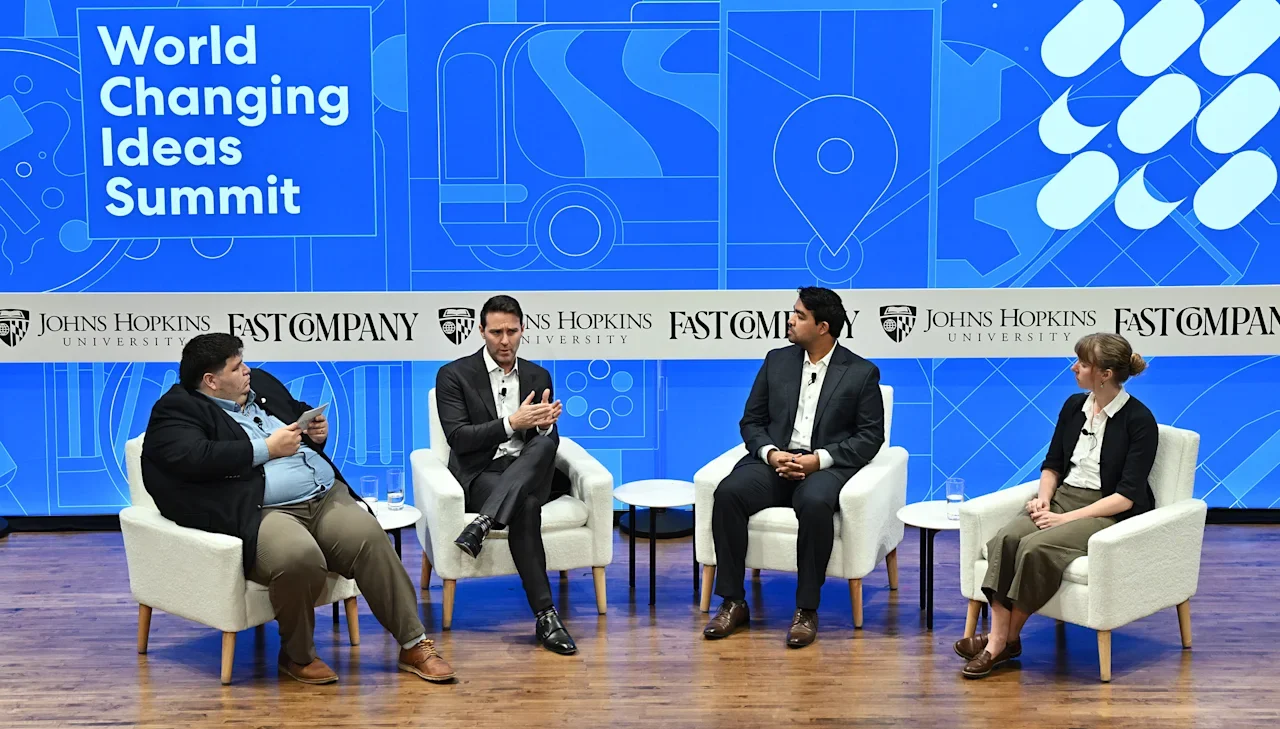
Artificial intelligence is radically changing how healthcare providers tackle vision loss, with tools that can be used from diagnosis to treatment and even follow-up care. One such example is Visilan, which uses smartphone imaging, telemedicine, and AI to screen, diagnose, and monitor patients for vision care. And with this technology, more of the 1 billion-plus patients who live with vision loss can be treated, Jordan Shuff, executive director and founder of Visilan, said at last month’s World Changing Ideas Summit, cohosted by Fast Company and Johns Hopkins University in Washington, D.C. But in this race to expand care, it’s also important to have guardrails in place. To ensure that AI doesn’t diagnose in a vacuum, there are some simple checks incorporated in the process so that a doctor can be pulled in to offer expertise when necessary, Shuff said. “We design these [tools] thinking about what is the workflow, who are other people involved, what is all the data involved, and how can we build guardrails so it works alongside a human,” Shuff said. EVOLUTION OF TOOLS, THINKING The past decade has seen huge improvements in tools used in healthcare settings, while some of the thinking around providing a broader continuum of care to patients has also evolved, said Gabriel Jones, cofounder and CEO of Proprio, a medical tech company. “We’re very fortunate to have these tools that enable automation, where that’s the right answer, really to drive better outcomes,” Jones said. AI can help to be predictive with care—it might help to avoid surgeries in the first place, for example—while its use in the operating room may actually redefine what an outcome is, according to Jones. “The implications for how we treat, who we treat, the types of procedures and pathologies we can address—let your mind go, because the pie is way bigger than whatever it looks like today,” he added. “And that’s why it’s a really exciting moment.” View the full article

-
Considering that America was a relative latecomer to the Christmas tree—the practice didn’t really become popular here until the mid-19th century—we sure have come to love them. While plenty of Christmas traditions have entered the dustbin of history, the mighty Christmas tree has survived the years; about 25-30 million real trees are purchased each year. Unless you have zero plans to celebrate the holiday, chances are you’re one of those people. If you think finding a Christmas tree is just a matter of heading to the empty lot or the tree farm down the road and grabbing one that looks vaguely tree-shaped, you would be wrong. If you want the best possible Christmas tree experience, you have to take a few basic aspects of the tree and your home into consideration. Here’s how to make sure you find the best Christmas tree. How to pick the best spot for a Christmas treeYour first stop toward the best possible Christmas tree is deciding where to set it up. You’ll want to choose a location where the tree will be the centerpiece of your celebration, and people can actually enjoy it, whether that’s in the living room, one corner of your tiny studio, or in the special Holiday Room you had built into the West Wing of the family manse. Once you’ve picked the right general location, you’ll want to avoid putting the tree next to a heat source (which will dry it out), and you’ll want it to be near a power outlet (so you don’t have extension cords tripping people up and/or possibly burning your house down). Once you’ve selected the right spot, you’re going to want to measure. First, measure the height of your ceilings. Take off a foot to accommodate a stand and a topper, if you’re using one, and that’s the maximum height of tree you’re looking for. Measure from the center of the spot where the tree will stand and get an approximate circumference that will ensure branches don’t scratch the walls or block foot traffic, as well. Now you have the basic dimensions of the best tree for your space. Don’t forget to bring the tape measure to the tree lot. How to pick the best type of Christmas treeAlthough the Christmas tree has become a generic symbol of the holiday season, there are a surprising number of varieties. Choosing the best one depends on the look and feel you need: Traditional. If you want that “Christmas card” look, go with a Balsam fir. These trees tend to have the classic triangular shape and deep green color you’re looking for, and they tend to last a long time indoors—this is kind of the default Christmas tree, and it will fill your house with that classic Christmas tree smell. If you want something a little different but still classic, the Fraser fir has more of a blue tint to it, and will last a long time. Kid-friendly. If you have little ones racing about, the stiff, surprisingly sharp needles of some trees might be a concern. The Douglas fir has a classic look but sports soft, bendy needles that won’t poke little eyes, as does the Scotch (or Scots) pine tree. Big room. If you’re putting the tree someplace that could reasonably described as a “Great Room” or similarly large space, you’ll want a tall, full-bodied tree like the Douglas fir to fill the space. You could also go with the majestic Norway spruce (the tree traditionally chosen to stand at Rockefeller Center in New York City), but beware: The Norway is a delicate tree that won’t last very long in your house. Minimalist. If your idea of decorating a home and tree for the holidays is to place a few subtle items around that hint at Christmas, the Grand fir makes a statement with its exceptionally long needles, and does well with just a touch of decoration. Another great choice is the Noble fir, which adds cones to the mix, giving it a ready-made decoration. Modern. If you’re going for a less-classic look, an Arizona cypress tree is a good choice. It’s generally a pale green with reddish-brown branches, resulting in a lush color story that’s still in the traditional realm while adding a touch of drama that other trees won’t have. Inspect the treeOnce you know which tree you want and where it’s going to go, give it a solid inspection to make sure you’re getting the best possible specimen. That means checking for insects and even animals or birds, making sure the needles feel fresh and don’t fall off easily, and actually smelling the tree—it should have a light, fresh scent, not a musty or moldy smell. Now you have the best possible Christmas tree, and all you have to do is take care of it properly so it lasts the whole holiday season. View the full article
-
Bank of America was the leader in this study, with Rocket as the only nonbank mortgage lender which got a score higher than the industry average. View the full article
-
The latest benchmark results reveal a surprising drop in SEO accuracy from top AI models. TL;DR: The latest flagship AI models (Claude Opus 4.5, Gemini 3 Pro) have statistically regressed in performance for standard SEO tasks, showing a ~9% drop in accuracy compared to previous versions. This isn’t a glitch – it’s a feature of how models are now optimized for deep reasoning and “agentic” workflows rather than “one-shot” answers. To survive this shift, organizations must stop relying on raw prompts and move to “contextual containers” (Custom GPTs, Gems, Projects). The ‘newer = better’ myth is dead Last year, the narrative was linear: wait for the next model drop, get better results. That trajectory has broken. We just ran our AI SEO benchmark across the newest flagship releases – Claude Opus 4.5, Gemini 3 Pro, and ChatGPT-5.1 Thinking – and the results are alarming. For the first time in the generative AI era, the newest models are significantly worse at SEO tasks than their predecessors. We aren’t talking about a margin of error. We are seeing near-double-digit regressions: Claude Opus 4.5: Scored 76%, a drop from 84% in version 4.1. Gemini 3 Pro: Scored 73%, a massive 9% drop from the 2.5 Pro version we tested earlier this year. Chat GPT-5.1 Thinking: Scored 77% (down 6% from standard GPT-5). This confirms that adding reasoning layers creates latency and noise for straightforward SEO tasks. Why it matters: If your team updated their API calls or prompts to “the latest model”, you are likely paying more for worse results. The diagnosis: The agentic gap Why is this happening? Why would Google and Anthropic release “dumber” models? The answer lies in their new optimization goals. We analyzed the failure points in our dataset, which is heavily weighted toward technical SEO and strategy (accounting for nearly 25% of our test set). These new models are not optimized for the “one-shot” prompt (asking a question and getting an instant answer). Instead, they are optimized for: Deep reasoning (System 2 thinking): They overthink simple instruction sets, often hallucinating complexity where none exists. Massive context: They expect to be fed entire codebases or libraries, not single URL snippets. Safety and guardrails: They are more likely to refuse a technical audit request because it “looks” like a cybersecurity attack or violates a vague safety policy. We observe this refusal pattern frequently in the new Claude and Gemini architectures. We are in the agentic gap. The models are trying to be autonomous agents that “think” before they speak. However, for direct, logical SEO tasks (like analyzing a canonical tag or mapping keyword intent), this extra “thinking” noise dilutes the accuracy. Get the newsletter search marketers rely on. See terms. The fix: Stop prompting, start architecting The era of the raw prompt is over. You can no longer rely on a base model (out-of-the-box) to handle mission-critical SEO tasks. If you want to reclaim – and exceed – that 84% accuracy benchmark, you have to change your infrastructure. 1. Abandon the chat interface for workflows Stop letting your team work in the default chat window. The raw model lacks the specific constraints needed for high-level strategy. The shift: Move all recurring tasks into “Contextual Containers.” The tools: OpenAI’s Custom GPTs, Anthropic’s Claude Projects, and Google’s Gemini Gems. 2. Hard-code the context (RAG lite) The drop in scores for strategy questions suggests that without strict guidance, new models drift. The strategy: Do not ask a model to “create a strategy.” You must pre-load the environment with brand guidelines, historical performance data, and methodological constraints. Why it works: This forces the model to ground its reasoning capabilities in your reality, rather than hallucinating generic advice. 3. Fine-tune or ‘frozen’ models for tech SEO For binary tasks (like checking status codes or schema validation), the “Thinking” models are overkill and prone to error. The strategy: Stick to older, stable models (like GPT-4o or Claude 3.5 Sonnet) for code-based tasks, or fine-tune a smaller model specifically on your technical audit rules. Key takeaways Downgrade to upgrade: For now, previous generation models (Claude 4.1, GPT-5) are outperforming the newest releases (Opus 4.5, Gemini 3) on straightforward SEO logic tasks. Don’t upgrade just because the version number is higher. One-shot is dead: Single prompts without improved context windows fail significantly more often in the new “Reasoning” era. Containerize everything: If it’s a repeatable task, it belongs in a Custom GPT, Project, or Gem. This is the only way to mitigate the “reasoning drift” of the new models. Tech and strategy are hardest hit: Our data shows these categories suffer the most from model regression. Double-check any automated technical audits running on new model APIs. Strategic outlook We’ve been saying since our April Benchmark: You cannot use these models out of the box for anything mission-critical. Human-led SEO in the age of agents The shift from “chatbots” to “agents” doesn’t eliminate the need for SEO talent, it elevates it. Today’s AI models are not plug-and-play solutions, they are tools that require skilled operators. Just as you wouldn’t expect an untrained medical professional to successfully perform an artificial surgery, you can’t hand a complex model a prompt and expect high-quality SEO outcomes. Success in this new era will hinge on human teams who understand how to: Architect AI systems. Embed them into workflows. Apply their judgment to correct, steer, and optimize outputs. The best SEO outcomes won’t come from better prompts alone. They’ll come from practitioners who know how to design constraints, feed strategic context, and guide models with precision. If you don’t build a high-performing system, the model will fail. View the full article
-
British report concluded Russia’s GRU military intelligence service was responsible for poisoning Dawn SturgessView the full article
-
I am seeing some signs of a Google Search ranking update and intense volatility that kicked in late yesterday. The SEO community started chattering about it over the past several hours and some of the tools are showing a spike in volatility with the Google search rankings.View the full article
-
Link building is the practice of earning links from other websites to your own. These links act as signals of trust and authority for search engines, helping your pages rank higher in search results. Quality matters more than quantity. A few relevant, high-authority links are far more valuable than many low-quality ones. Modern link building focuses on creating genuinely useful content, building genuine relationships, and earning links naturally, rather than manipulating rankings. Table of contents What is link building? What is a link? Why do we build links ? How to earn high-quality links Link building in the era of AI and LLM search Examples of effective link building In conclusion Key takeaways Link building helps establish content credibility through acquiring backlinks from other websites. It focuses on quality over quantity, emphasizing trust and relevance in search engine rankings. Effective link building involves engaging with digital PR and fostering genuine relationships with sources. Producing valuable content and fostering connections leads to high-quality links and improved online visibility. Today, AI-driven search evaluates authority based on context, relevance, and structured data, not just backlinks. What is link building? Link building means earning hyperlinks from other sites to show search engines your content is trustworthy and valuable. Now, it’s more like digital PR, focusing on relationships, credibility, and reputation, not just quantity. AI-powered search also considers citations, structured data, and context alongside backlinks. By prioritizing quality, precision, and authority, you build lasting online visibility. Ethical link building remains one of the most effective ways to enhance your brand’s search presence and reputation. Link building is a core SEO tactic. It helps search engines find, understand, and rank your pages. Even great content may stay hidden if search engines can’t reach it through at least one link. To get indexed by Google, you need links from other sites. The more relevant and trusted those links are, the stronger your reputation becomes. This guide covers the basics of link building, its connection to digital PR, and how AI-driven search evaluates trust and authority. If you are new to SEO, check out our Beginner’s guide to SEO for a complete overview. What is a link? A link, or hyperlink, connects one page on the internet to another. It helps users and search engines move between pages. For readers, links make it easy to explore related topics. For search engines, links act like roads, guiding crawlers to discover and index new content. Without inbound links, a website can be challenging for search engines to discover or assess. You can learn more about how search engines navigate websites in our article on site structure and SEO. A link in HTML In HTML, a link looks like this: <a href="https://yoast.com/product/yoast-seo-wordpress/">Yoast SEO plugin for WordPress</a> The first part contains the URL, and the second part is the clickable text, called the anchor text. Both parts matter for SEO and user experience, as they inform both people and search engines about what to expect when they click. Internal and external links There are two main types of links that affect SEO. Internal links connect pages within your own website, while external links come from other websites and point to your pages. External links are often called backlinks. Both types of links matter, but external links carry more authority because they act as endorsements from independent sources. Internal linking, however, plays a crucial role in helping search engines understand how your content fits together and which pages are most important. To learn more about structuring your site effectively, refer to our guide on internal linking for SEO. Anchor text The anchor text describes the linked page. Clear, descriptive anchor text helps users understand where a link will direct them and provides search engines with more context about the topic. For example, “SEO copywriting guide” is much more useful and meaningful than “click here.” The right anchor text improves usability, accessibility, and search relevance. You can optimize your own internal linking by using logical, topic-based anchors. For more examples, read our anchor text best practices guide. Why do we build links? Link building is the process of earning backlinks from other websites. These links serve as a vote of confidence, signaling to search engines that your content is valuable and trustworthy. Search engines like Google still use backlinks as a key ranking signal; however, the focus has shifted away from quantity to quality and context. A single link from an authoritative, relevant site can be worth far more than dozens from unrelated or low-quality sources. Effective link building is about establishing genuine connections, rather than accumulating as many links as possible. When people share your content because they find it useful, you gain visibility, credibility, and referral traffic. These benefits reinforce one another, helping your brand stand out in both traditional search and AI-driven environments, where authority and reputation are most crucial. Link quality over quantity Not all links are created equal. A high-quality backlink from a well-respected, topic-relevant website has far more impact than multiple links from small or unrelated sites. Consider a restaurant owner who earns a link from The Guardian’s food section. That single editorial mention is far more valuable than a dozen random directory links. Google recognizes that editorial links earned for merit are strong signals of expertise, while low-effort links from unrelated pages carry little or no value. High-quality backlinks typically originate from websites with established reputations, clear editorial guidelines, and active audiences. They fit naturally within the content and make sense to readers. Low-quality links, on the other hand, can make your site appear manipulative or untrustworthy. Building authority takes time, but the reward is a reputation that search engines and users can rely on. Read more about this long-term approach in our post on holistic SEO. Shady techniques Because earning high-quality links can take time, some site owners resort to shortcuts, such as buying backlinks, using link farms, or participating in private blog networks. These tactics may yield quick results, but they violate Google’s spam policies and can result in severe penalties. When a site’s link profile looks unnatural or manipulative, Google may reduce its visibility or remove it from results altogether. Recovering from such penalties can take months. It is far safer to focus on ethical, transparent methods. In short, you’re better off avoiding these risky link building tricks, as quality always lasts longer than trickery. How to earn high-quality links The most effective way to earn strong backlinks is to create content that others genuinely want to reference and link to. Start by understanding your audience and their challenges. Once you know what they are looking for, create content that provides clear answers, unique insights, or helpful tools. For example, publishing original data or research can attract links from journalists and educators. Creating detailed how-to guides or case studies can help establish connections with blogs and businesses that want to cite your expertise. You can also build relationships with people in your industry by commenting on their content, sharing their work, and offering collaboration ideas. Newsworthy content is another proven approach. Announce a product launch, partnership, or study that has real value for your audience. When you provide something genuinely useful, you will find that links and citations follow naturally. Structured data also plays an important role. By using Schema markup, you help search engines understand your brand, authors, and topics, making it easier for them to connect mentions of your business across the web. For a more detailed approach, visit our step-by-step guide to link building. Link building in the era of AI and LLM search Search is evolving quickly. Systems like Google Gemini, ChatGPT, and Perplexity no longer rely solely on backlinks to determine authority. They analyze the meaning and connections behind content, paying attention to context, reputation, and consistency. Links still matter, but they are part of a wider ecosystem of trust signals. Mentions, structured data, and author profiles all contribute to how search and AI systems understand your expertise. This means that link building is now about being both findable and credible. To stay ahead, make sure your brand and authors are clearly represented across your site. Use structured data to connect your organization, people, and content. Keep your messaging consistent across all channels where your brand appears. When machines and humans can both understand who you are and what you offer, your chances of visibility increase. You can read more about how structured data supports this process in our guide to Schema and structured data. Examples of effective link building There are many ways to put link building into action. A company might publish a research study that earns coverage from major industry blogs and online magazines. A small business might collaborate with local influencers or community organizations that naturally reference its website, thereby increasing its online presence. Another might produce in-depth educational content that other professionals use as a trusted resource. Each of these examples shares the same principle: links are earned because the content has genuine value. That is the foundation of successful link building. When people trust what you create and see it as worth sharing, search engines take notice, too. In conclusion Link building remains one of the most effective ways to establish visibility and authority. Today, success depends on more than collecting backlinks. It depends on trust, consistency, and reputation. Consider link building as an integral part of your digital PR strategy. Focus on creating content that deserves attention, build relationships with credible sources, and communicate your expertise clearly and effectively. The combination of valuable content, ethical outreach, and structured data will help you stand out across both Google Search and AI-driven platforms. When you build content for people first, the right links will follow. The post What is link building in SEO? appeared first on Yoast. View the full article
-
Google Ads may be testing the ability to subscribe to support updates via WhatsApp. Google has rolled out a new option to get real-time support case updates directly on WhatsApp, at least some folks are seeing this.View the full article
-
Ever noticed how, if you’re really on top of replying to your LinkedIn comments, your posts seem to perform better? I certainly have — and now I have some seriously impressive data to back my anecdotal evidence. Replying to comments on your LinkedIn posts can boost engagement by around 30%, according to a massive analysis by Buffer's data scientist, Julian Winternheimer. Julian analyzed 72,000 LinkedIn posts from nearly 25,000 accounts, and the pattern was clear: When creators engage back in their comments, their posts perform significantly better relative to their own baseline. This is one of my favorite data analyses we’ve done at Buffer, because it’s hard evidence that giving back goes a long way. The simple act of responding to people who took the time to engage with you correlates with better performance. Kind of lovely, isn’t it? Let's dig into how Julian analyzed the data and what it means for your LinkedIn strategy. 🚀Need help staying on top of all your LinkedIn comments? Buffer's new Community feature pulls all your comments across platforms into a single dashboard. Get it free → Jump to a section: The analysis How replying impacts LinkedIn engagement What this looks like in practice Why this works on LinkedIn specifically How to make comment engagement sustainable The analysisJulian used what's called a fixed-effects regression model to analyze the data. (Stay with me — I promise this is the most technical this article gets.) Instead of comparing one account's engagement to another's (which would be unfair, since larger accounts naturally get more engagement), he compared each account to itself over time. The model also controlled for factors like account size, location, and niche. Basically, Julian asked: "When this same account replies to comments, how does its engagement change compared to when it doesn't?" He also used Z-score analyses as a second check to measure how each post performed relative to the account's typical engagement. The consistency across both methods makes the finding pretty hard to ignore. A few caveats before we get into the numbers: We can't perfectly measure cause and effect. It's possible that high-performing posts attract more replies (and therefore more engagement) rather than the other way around.The direction of effect is consistent with what Julian found across other platforms — replying to comments boosts engagement by 5-42% across six major social networks.These results show directional evidence, not definitive truths. But the consistency is striking.How replying to comments impacts LinkedIn engagementPosts where creators replied to comments saw about 30% higher engagement on average — even after controlling for whether the post had comments at all. Julian's fixed-effects model compared more than 72,000 LinkedIn posts across nearly 25,000 profiles and found this pattern held consistently: When creators reply to comments on their posts, those posts perform better. The Z-score analysis backed this up. Posts with replied-to comments tended to score above an account's usual engagement level, while those without replies sat slightly below. Around 83% of profiles showed positive effects when they replied. That's a pretty significant majority. Source: LinkedIn: Engagement and Replies — Julian Winternheimer, Buffer Data Blog, October 2025 Why this works on LinkedIn specificallyLinkedIn is a professional network, but it's still fundamentally about connection. The LinkedIn algorithm prioritizes posts that spark genuine conversation, rather than just passive likes. When you reply to comments, you're doing a few things algorithmically: Extending the conversation: More comments signal to LinkedIn that your post is engaging, which can push it to more feeds. Even your own replies can help here.Building relationships: People who take the time to comment are often your most engaged audience. Responding builds trust with them.Encouraging more engagement: A thoughtful reply goes a long way. When you take the time to reply, the original commenter will likely respond again. Plus, when people see you actively responding to others, they're more likely to join the conversation themselves.The professional context matters here, too. Unlike more casual platforms, LinkedIn users often comment with thoughtful takes or questions. Responding shows that you value discussion, debate, and learning. Makes sense, for a platform built around professional networking! How to make comment engagement sustainableThis advice sounds great in practice, I know. Replying to all your comments as you grow can be really time-consuming — particularly if you're actively creating across multiple platforms (same!). A few strategies that have helped me: Set aside dedicated time: Rather than checking LinkedIn sporadically throughout the day, block out 10-15 minutes once or twice daily specifically for responding to comments. I like to add this task to my daily planner when I have a LinkedIn post scheduled. Prioritize thoughtful replies: A meaningful response goes a long way! You don’t need to write essays in reply to every comment you receive; it’s really worthwhile to connect with what the commenter has taken the time to share. Acknowledge their effort! Use Buffer's Community feature: OK, I’m definitely biased here, but genuinely — Community pulls all your comments across platforms into a single dashboard, so you can reply directly from there. It's free for up to 3 social platforms, and it's saved me so much tab-switching (and even more getting lost in the scroll). The feature also includes a Comment Score, which tracks your consistency and speed over time. It's basically a habit-building tool to help you make engagement a ritual rather than an afterthought. Putting the ‘social’ back in socialAcross Julian's analysis of nearly 2 million posts on six platforms, the signal is pretty darn clear: Replying to your comments is strongly associated with higher engagement. LinkedIn showed one of the strongest effects at 30%, second only to Threads at 42%. This isn't about gaming the algorithm. It's less about optimization and more about being… social? The simple act of responding to those who took the time to engage with you matters — and the data backs that up. ✨ Get access to Community, along with all of Buffer's planning and scheduling features, for free for up to 3 social platforms. Get started in under 1 min → View the full article
-
Google is adding more AI features to Google Discover, specifically pushing people from articles in Google Discover into Google AI Mode. When you click on an article from Google Discover and then click on the three dots at the top right of the screen, you are given three options to go into AI Mode.View the full article
-
Insurgent parties to left and right peddle nonsense economics but enjoy dramatically rising supportView the full article
-
I know, we just reported the page indexing report within Google Search Console is very delayed, about two weeks. Well, it is still delayed two weeks, I thought it would catch up by now, but it only got three days of data and then stalled again. And the performance reports are now 32 hours behind, when it is normally just a few hours behind.View the full article