ResidentialBusiness
Administrators
-
Joined
-
Last visited
Everything posted by ResidentialBusiness
-
 Since Pantone began naming its Color of the Year in 2000, we’ve seen two flavors of both brown and yellow, three variations of purple, blue, and turquoise, and four distinct takes on orange. But for the first time ever, Pantone’s color is essentially a non-color. Or you could call it every color. Pantone’s 2026 Color of the Year is a white. In Pantone language, that’s code 11-4201—aka Cloud Dancer. Pantone—which operates somewhere between a trend forecaster and social psychologist—argues that Cloud Dancer is part of a great cultural reboot. In the era of AI, everything feels like it’s changing on a daily basis, and the overstimulation of the internet is only increasing as we go. Cloud Dancer is a liminal space as we enter an unforeseeable new era. Savoring the physical world, it’s intentionally closer to the white of a piece of paper than an impossibly glowing, AI prompt box. “We’re trying to frame this [era] in a more positive way, looking at this as a transitional time, because it really is,” says Laurie Pressman, VP at the Pantone Color Institute, who notes the color is “a blank slate opening the door to creativity and innovation.” The word “cloud” refers to not just Cloud Dancer’s color, but also its real world texture. Often presented in voluminous textiles, on the runway and in living rooms, it’s literally meant to nod to a puffy cloud in the sky. It’s an almost synaesthetic sensation that’s a counterpoint to the other cloud: dead, unseen data centers answering our intangible queries. Take the psychology for what you will. Functionally, though, Cloud Dancer also serves a practical purpose within design aesthetics. Pressman points out that it’s timeless and genderless, and that it works blown out all on its own or with a wider array of colors beside it. On one hand, of course that’s all true! It’s white! On the other, Cloud Dancer is a very specific white: One that balances warm and cool tones in equal measure. (Note: in many real world examples that Pantone shared, Cloud Dancer appears less gray than it does on the swatch.) That means Cloud Dancer can fit with about any color palette you toss at it. It’s not a white that will leave you squinting, guessing, and regretting. It’s visual tofu, there to absorb the colors around it. In an internet-driven cultural ticker where all tastes live side-by-side at once, and no single color is really in or out anymore for all that long, Cloud Dancer serves as a universal binder. It’s the mortar for wider color expression, as effective on a blinding sneaker collab as a tranquil bedroom set. But is white even a color? Critics may complain that, of all colors, Pantone chose white. It’s a non-color. Is that a cop out? You might also have noticed some thematic overlap with the quiet luxury movement. Peaking some time circa 2023, fashion brands embraced neutrals, like Cloud Dancer and Pantone’s previous color of the year, Mocha Mousse, equating simplicity with style. When I point this out, Pressman nods along, noting that its synergy with quiet luxury was a point of discussion on the team. The difference, she says, is not so much the use of such a white, but the intent underlying it. Quiet luxury masked affluence behind understated hues. (Or, perhaps you might say it performatively masked affluence—offering a wink and nod to those in the know.) Instead, Pressman argues that Cloud Dancer is more about creating a tabula rasa in an era of uncertainty. Indeed, the white has been on trend on runways—but not in some subdued apologetic way. From Jennifer Lawrence’s Dior at the Governor’s Ball, to Rosalía claiming white like a cleansing counterpoint to Charlie XCX’s Brat green, it’s been used as a celebratory statement. A new collaboration between Moncler and Jil Sander “makes a strong case for winter white,” according to W. No doubt it helps that white has long been a shortcut, like black, to casually bolstered taste. We see that in how white button-downs and court shoes (along with every iteration of low white sneaker) has become a staple in wardrobes for years. White—and specifically puffy, textured bouclé—refuses to leave high end living rooms. Likewise, Pantone is announcing new collabs with both Post-it and Play-Doh that feel like a cheat code to elevating taste. Each respective product will be offered in Cloud Dancer. Seeing these colorful, iconic products stripped of their hues is actually arresting. They get a sudden modernist makeover, feeling at-home next to a foam board architecture model. (Huh, maybe white is a color after all!) I think the white works in these creative contexts because it’s being presented as a blank construction material, offering an invitation to craft in an era of automation. “The color name . . . speaks to this whole feeling of gazing into the clouds,” says Pressman, “and wondering what are the possibilities of what’s out there?” View the full article
-
Headlines about a shredded cheese recall affecting more than a quarter of a million cases of various products have been making the rounds for the last few days, understandably alarming consumers. Yet the recall itself is not new, despite only being widely publicized at this time. Here’s what you need to know. What’s happened? Back in early October, a company called Great Lakes Cheese Co of Hiram, Ohio, reportedly issued a large-scale recall that impacted a range of shredded cheese products. The recall was initiated after Great Lakes Cheese was informed by one of its suppliers that some of its “Low-Moisture Part-Skim Mozzarella” may have been contaminated with a foreign material—in this case, metal fragments. The consumption of metal fragments could obviously cause internal injuries to anyone eating the cheese products, posing a health risk. In response to an inquiry from Fast Company, Great Lakes Cheese said that it immediately identified the affected “raw material” at its facilities back in October, and that it instructed retailers to remove any affected products from store shelves. Yet despite this recall happening in October, the information wasn’t widely shared with the public at the time and is only now coming into sharp focus and garnering media attention. That’s because of an enforcement report by the Food and Drug Administration (FDA), which was published on the agency’s website this month. What has the FDA said? On December 2, the FDA published an enforcement report on the October 3 shredded cheese recall. In that report, the agency announced that it was classifying the voluntary recall as a Class II recall and listed the recall as “Ongoing.” The FDA classifies recalls into three categories. Per the FDA: Class I: a situation in which there is a reasonable probability that the use of, or exposure to, a violative product will cause serious adverse health consequences or death. Class II: a situation in which use of, or exposure to, a violative product may cause temporary or medically reversible adverse health consequences or where the probability of serious adverse health consequences is remote. Class III: a situation in which use of, or exposure to, a violative product is not likely to cause adverse health consequences. The FDA’s classification of the Great Lakes Cheese as a Class II means that while consumption of the recalled cheese is unlikely to have serious adverse health consequences, it can cause temporary injury or health consequences that are medically reversible. The status of the recall as “ongoing” suggests that the recall is currently in progress. It’s not unusual for the FDA to issue a classification of a recall months after the recall took place. What has Great Lakes Cheese Co said? In the wake of the media attention sparked by the FDA’s enforcement report, Great Lakes Cheese publicly addressed the recall on Wednesday. In a statement provided to Fast Company, the cheese producer confirmed that in early October, it had been notified by a supplier of possible foreign material contamination in some of its products. The company then said that it took immediate action. “We instructed retailers to remove the products from store shelves after the announcement in October,” the company stated. “When we were confident all recalled products had been removed from store shelves, we distributed new product that did not have the potential to contain foreign material and was safe.” Great Lakes Cheese says that “all recalled products have been removed from markets” and that any of its products currently on store shelves are not products associated with the October recall. The company also addressed the “ongoing” status listed in the FDA’s December enforcement report: “While the status of the recall is marked as ongoing in the enforcement report, our records show all product has been fully removed from store shelves.” What products are included in the recall? The FDA’s enforcement report provides a list of impacted products. In total, there are 263,575 cases of cheese products included in the October recall. As Taste of Home notes, those products have sell-by dates ranging from January to March 2026, meaning consumers could still have the items in their possession. You can find a list of the exact recalled products on the FDA’s enforcement report. Brands on that list include: Always Save Borden Brookshire’s Cache Valley Creamery Chestnut Hill Coburn Farms Econo Food Club Food Lion Freedom’s Choice Gold Rush Creamery Good & Gather Great Lakes Cheese Great Value Happy Farms by Aldi H-E-B Hill Country Fare Know & Love Laura Lynn Lucerne Dairy Farms Nu Farm Publix Schnuck’s Simply Go Sprouts Farmers Market Stater Bros. Markets Sunnyside Farms Where were the recalled products sold? The recalled products were sold at stores in 31 states and Puerto Rico. Stores where the recalled products were sold include major retailers like Aldi, H-E-B, Target, and Walmart, as well as numerous grocery stores. The states and territories the cheese products were sold in include: AL, AR, AZ, CA, CO, FL, GA, ID, IL, IN, KS, KY, LA, MN, MO, MS, NC, NE, NM, NV, NY, OK, OR, PA, SC, TN, TX, UT, VA, WA, WI, and Puerto Rico. What should I do if I have the recalled products? If you’ve bought any cheese products, you should check your refrigerator to see if the recalled products remain in your possession. If you have them, you should not consume them. “Any households with any of the affected items from October in their refrigerators or freezers should discard the product or return it to the store where it was purchased for a refund,” Great Lakes Cheese’s statement says. View the full article

-
Financial Conduct Authority says regulation is not meant to ‘make judgments on political discourse’ View the full article
-
Google is pushing AI Mode within Google Discover, with options to summarize, follow-up and dive deeper after you start reading a story from within the Google Discover feed. This is just one more avenue where Google is pushing its users into AI Mode. To clarify, I am told this is not just Google Discover, but the Google App on Android, for any webpage you are looking at. How it works. After you click into an article from the Google Discover feed, when you click on the three dots at the top right, there are options for: Summarize with Al Mode Ask a follow up with Al Mode Dive deeper with Al Mode Damien (adell) on X posted a video, here is a screenshot from that video, followed by the video embed: AI Mode in Google Discover/Google App offers three options when visiting a URL via the Discover feed with Chrome. 1 – "Summary with AI Mode" 2 – "Ask for a follow-up with AI Mode" 3 – "Dive deeper with AI Mode"@gaganghotra_ @rustybrick pic.twitter.com/JG0SRACr1P — Damien (andell) (@AndellDam) November 30, 2025 Why we care. If you don’t see the trend yet, Google continues to find ways to drive people into Google Discover. Google is taking users from Google Search, AI Overviews, people also ask, Chrome, the new search bar, and so on and pushing them into AI Mode. In this case, Google already sent the user to your site, but after that, Google is giving users the ability to use AI Mode to get an AI version of your story. View the full article
-
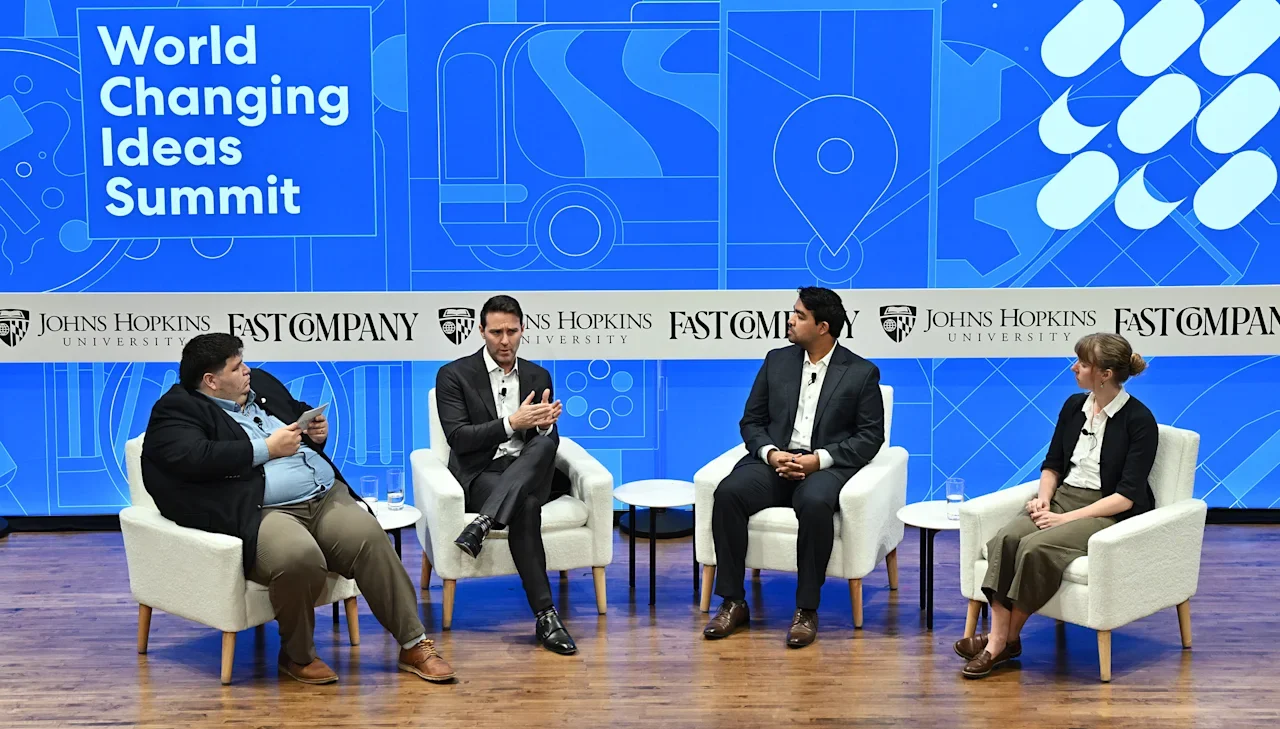
Artificial intelligence is radically changing how healthcare providers tackle vision loss, with tools that can be used from diagnosis to treatment and even follow-up care. One such example is Visilan, which uses smartphone imaging, telemedicine, and AI to screen, diagnose, and monitor patients for vision care. And with this technology, more of the 1 billion-plus patients who live with vision loss can be treated, Jordan Shuff, executive director and founder of Visilan, said at last month’s World Changing Ideas Summit, cohosted by Fast Company and Johns Hopkins University in Washington, D.C. But in this race to expand care, it’s also important to have guardrails in place. To ensure that AI doesn’t diagnose in a vacuum, there are some simple checks incorporated in the process so that a doctor can be pulled in to offer expertise when necessary, Shuff said. “We design these [tools] thinking about what is the workflow, who are other people involved, what is all the data involved, and how can we build guardrails so it works alongside a human,” Shuff said. EVOLUTION OF TOOLS, THINKING The past decade has seen huge improvements in tools used in healthcare settings, while some of the thinking around providing a broader continuum of care to patients has also evolved, said Gabriel Jones, cofounder and CEO of Proprio, a medical tech company. “We’re very fortunate to have these tools that enable automation, where that’s the right answer, really to drive better outcomes,” Jones said. AI can help to be predictive with care—it might help to avoid surgeries in the first place, for example—while its use in the operating room may actually redefine what an outcome is, according to Jones. “The implications for how we treat, who we treat, the types of procedures and pathologies we can address—let your mind go, because the pie is way bigger than whatever it looks like today,” he added. “And that’s why it’s a really exciting moment.” View the full article
-
Considering that America was a relative latecomer to the Christmas tree—the practice didn’t really become popular here until the mid-19th century—we sure have come to love them. While plenty of Christmas traditions have entered the dustbin of history, the mighty Christmas tree has survived the years; about 25-30 million real trees are purchased each year. Unless you have zero plans to celebrate the holiday, chances are you’re one of those people. If you think finding a Christmas tree is just a matter of heading to the empty lot or the tree farm down the road and grabbing one that looks vaguely tree-shaped, you would be wrong. If you want the best possible Christmas tree experience, you have to take a few basic aspects of the tree and your home into consideration. Here’s how to make sure you find the best Christmas tree. How to pick the best spot for a Christmas treeYour first stop toward the best possible Christmas tree is deciding where to set it up. You’ll want to choose a location where the tree will be the centerpiece of your celebration, and people can actually enjoy it, whether that’s in the living room, one corner of your tiny studio, or in the special Holiday Room you had built into the West Wing of the family manse. Once you’ve picked the right general location, you’ll want to avoid putting the tree next to a heat source (which will dry it out), and you’ll want it to be near a power outlet (so you don’t have extension cords tripping people up and/or possibly burning your house down). Once you’ve selected the right spot, you’re going to want to measure. First, measure the height of your ceilings. Take off a foot to accommodate a stand and a topper, if you’re using one, and that’s the maximum height of tree you’re looking for. Measure from the center of the spot where the tree will stand and get an approximate circumference that will ensure branches don’t scratch the walls or block foot traffic, as well. Now you have the basic dimensions of the best tree for your space. Don’t forget to bring the tape measure to the tree lot. How to pick the best type of Christmas treeAlthough the Christmas tree has become a generic symbol of the holiday season, there are a surprising number of varieties. Choosing the best one depends on the look and feel you need: Traditional. If you want that “Christmas card” look, go with a Balsam fir. These trees tend to have the classic triangular shape and deep green color you’re looking for, and they tend to last a long time indoors—this is kind of the default Christmas tree, and it will fill your house with that classic Christmas tree smell. If you want something a little different but still classic, the Fraser fir has more of a blue tint to it, and will last a long time. Kid-friendly. If you have little ones racing about, the stiff, surprisingly sharp needles of some trees might be a concern. The Douglas fir has a classic look but sports soft, bendy needles that won’t poke little eyes, as does the Scotch (or Scots) pine tree. Big room. If you’re putting the tree someplace that could reasonably described as a “Great Room” or similarly large space, you’ll want a tall, full-bodied tree like the Douglas fir to fill the space. You could also go with the majestic Norway spruce (the tree traditionally chosen to stand at Rockefeller Center in New York City), but beware: The Norway is a delicate tree that won’t last very long in your house. Minimalist. If your idea of decorating a home and tree for the holidays is to place a few subtle items around that hint at Christmas, the Grand fir makes a statement with its exceptionally long needles, and does well with just a touch of decoration. Another great choice is the Noble fir, which adds cones to the mix, giving it a ready-made decoration. Modern. If you’re going for a less-classic look, an Arizona cypress tree is a good choice. It’s generally a pale green with reddish-brown branches, resulting in a lush color story that’s still in the traditional realm while adding a touch of drama that other trees won’t have. Inspect the treeOnce you know which tree you want and where it’s going to go, give it a solid inspection to make sure you’re getting the best possible specimen. That means checking for insects and even animals or birds, making sure the needles feel fresh and don’t fall off easily, and actually smelling the tree—it should have a light, fresh scent, not a musty or moldy smell. Now you have the best possible Christmas tree, and all you have to do is take care of it properly so it lasts the whole holiday season. View the full article
-
The latest benchmark results reveal a surprising drop in SEO accuracy from top AI models. TL;DR: The latest flagship AI models (Claude Opus 4.5, Gemini 3 Pro) have statistically regressed in performance for standard SEO tasks, showing a ~9% drop in accuracy compared to previous versions. This isn’t a glitch – it’s a feature of how models are now optimized for deep reasoning and “agentic” workflows rather than “one-shot” answers. To survive this shift, organizations must stop relying on raw prompts and move to “contextual containers” (Custom GPTs, Gems, Projects). The ‘newer = better’ myth is dead Last year, the narrative was linear: wait for the next model drop, get better results. That trajectory has broken. We just ran our AI SEO benchmark across the newest flagship releases – Claude Opus 4.5, Gemini 3 Pro, and ChatGPT-5.1 Thinking – and the results are alarming. For the first time in the generative AI era, the newest models are significantly worse at SEO tasks than their predecessors. We aren’t talking about a margin of error. We are seeing near-double-digit regressions: Claude Opus 4.5: Scored 76%, a drop from 84% in version 4.1. Gemini 3 Pro: Scored 73%, a massive 9% drop from the 2.5 Pro version we tested earlier this year. Chat GPT-5.1 Thinking: Scored 77% (down 6% from standard GPT-5). This confirms that adding reasoning layers creates latency and noise for straightforward SEO tasks. Why it matters: If your team updated their API calls or prompts to “the latest model”, you are likely paying more for worse results. The diagnosis: The agentic gap Why is this happening? Why would Google and Anthropic release “dumber” models? The answer lies in their new optimization goals. We analyzed the failure points in our dataset, which is heavily weighted toward technical SEO and strategy (accounting for nearly 25% of our test set). These new models are not optimized for the “one-shot” prompt (asking a question and getting an instant answer). Instead, they are optimized for: Deep reasoning (System 2 thinking): They overthink simple instruction sets, often hallucinating complexity where none exists. Massive context: They expect to be fed entire codebases or libraries, not single URL snippets. Safety and guardrails: They are more likely to refuse a technical audit request because it “looks” like a cybersecurity attack or violates a vague safety policy. We observe this refusal pattern frequently in the new Claude and Gemini architectures. We are in the agentic gap. The models are trying to be autonomous agents that “think” before they speak. However, for direct, logical SEO tasks (like analyzing a canonical tag or mapping keyword intent), this extra “thinking” noise dilutes the accuracy. Get the newsletter search marketers rely on. See terms. The fix: Stop prompting, start architecting The era of the raw prompt is over. You can no longer rely on a base model (out-of-the-box) to handle mission-critical SEO tasks. If you want to reclaim – and exceed – that 84% accuracy benchmark, you have to change your infrastructure. 1. Abandon the chat interface for workflows Stop letting your team work in the default chat window. The raw model lacks the specific constraints needed for high-level strategy. The shift: Move all recurring tasks into “Contextual Containers.” The tools: OpenAI’s Custom GPTs, Anthropic’s Claude Projects, and Google’s Gemini Gems. 2. Hard-code the context (RAG lite) The drop in scores for strategy questions suggests that without strict guidance, new models drift. The strategy: Do not ask a model to “create a strategy.” You must pre-load the environment with brand guidelines, historical performance data, and methodological constraints. Why it works: This forces the model to ground its reasoning capabilities in your reality, rather than hallucinating generic advice. 3. Fine-tune or ‘frozen’ models for tech SEO For binary tasks (like checking status codes or schema validation), the “Thinking” models are overkill and prone to error. The strategy: Stick to older, stable models (like GPT-4o or Claude 3.5 Sonnet) for code-based tasks, or fine-tune a smaller model specifically on your technical audit rules. Key takeaways Downgrade to upgrade: For now, previous generation models (Claude 4.1, GPT-5) are outperforming the newest releases (Opus 4.5, Gemini 3) on straightforward SEO logic tasks. Don’t upgrade just because the version number is higher. One-shot is dead: Single prompts without improved context windows fail significantly more often in the new “Reasoning” era. Containerize everything: If it’s a repeatable task, it belongs in a Custom GPT, Project, or Gem. This is the only way to mitigate the “reasoning drift” of the new models. Tech and strategy are hardest hit: Our data shows these categories suffer the most from model regression. Double-check any automated technical audits running on new model APIs. Strategic outlook We’ve been saying since our April Benchmark: You cannot use these models out of the box for anything mission-critical. Human-led SEO in the age of agents The shift from “chatbots” to “agents” doesn’t eliminate the need for SEO talent, it elevates it. Today’s AI models are not plug-and-play solutions, they are tools that require skilled operators. Just as you wouldn’t expect an untrained medical professional to successfully perform an artificial surgery, you can’t hand a complex model a prompt and expect high-quality SEO outcomes. Success in this new era will hinge on human teams who understand how to: Architect AI systems. Embed them into workflows. Apply their judgment to correct, steer, and optimize outputs. The best SEO outcomes won’t come from better prompts alone. They’ll come from practitioners who know how to design constraints, feed strategic context, and guide models with precision. If you don’t build a high-performing system, the model will fail. View the full article
-
Bank of America was the leader in this study, with Rocket as the only nonbank mortgage lender which got a score higher than the industry average. View the full article
-
British report concluded Russia’s GRU military intelligence service was responsible for poisoning Dawn SturgessView the full article
-
I am seeing some signs of a Google Search ranking update and intense volatility that kicked in late yesterday. The SEO community started chattering about it over the past several hours and some of the tools are showing a spike in volatility with the Google search rankings.View the full article
-
Link building is the practice of earning links from other websites to your own. These links act as signals of trust and authority for search engines, helping your pages rank higher in search results. Quality matters more than quantity. A few relevant, high-authority links are far more valuable than many low-quality ones. Modern link building focuses on creating genuinely useful content, building genuine relationships, and earning links naturally, rather than manipulating rankings. Table of contents What is link building? What is a link? Why do we build links ? How to earn high-quality links Link building in the era of AI and LLM search Examples of effective link building In conclusion Key takeaways Link building helps establish content credibility through acquiring backlinks from other websites. It focuses on quality over quantity, emphasizing trust and relevance in search engine rankings. Effective link building involves engaging with digital PR and fostering genuine relationships with sources. Producing valuable content and fostering connections leads to high-quality links and improved online visibility. Today, AI-driven search evaluates authority based on context, relevance, and structured data, not just backlinks. What is link building? Link building means earning hyperlinks from other sites to show search engines your content is trustworthy and valuable. Now, it’s more like digital PR, focusing on relationships, credibility, and reputation, not just quantity. AI-powered search also considers citations, structured data, and context alongside backlinks. By prioritizing quality, precision, and authority, you build lasting online visibility. Ethical link building remains one of the most effective ways to enhance your brand’s search presence and reputation. Link building is a core SEO tactic. It helps search engines find, understand, and rank your pages. Even great content may stay hidden if search engines can’t reach it through at least one link. To get indexed by Google, you need links from other sites. The more relevant and trusted those links are, the stronger your reputation becomes. This guide covers the basics of link building, its connection to digital PR, and how AI-driven search evaluates trust and authority. If you are new to SEO, check out our Beginner’s guide to SEO for a complete overview. What is a link? A link, or hyperlink, connects one page on the internet to another. It helps users and search engines move between pages. For readers, links make it easy to explore related topics. For search engines, links act like roads, guiding crawlers to discover and index new content. Without inbound links, a website can be challenging for search engines to discover or assess. You can learn more about how search engines navigate websites in our article on site structure and SEO. A link in HTML In HTML, a link looks like this: <a href="https://yoast.com/product/yoast-seo-wordpress/">Yoast SEO plugin for WordPress</a> The first part contains the URL, and the second part is the clickable text, called the anchor text. Both parts matter for SEO and user experience, as they inform both people and search engines about what to expect when they click. Internal and external links There are two main types of links that affect SEO. Internal links connect pages within your own website, while external links come from other websites and point to your pages. External links are often called backlinks. Both types of links matter, but external links carry more authority because they act as endorsements from independent sources. Internal linking, however, plays a crucial role in helping search engines understand how your content fits together and which pages are most important. To learn more about structuring your site effectively, refer to our guide on internal linking for SEO. Anchor text The anchor text describes the linked page. Clear, descriptive anchor text helps users understand where a link will direct them and provides search engines with more context about the topic. For example, “SEO copywriting guide” is much more useful and meaningful than “click here.” The right anchor text improves usability, accessibility, and search relevance. You can optimize your own internal linking by using logical, topic-based anchors. For more examples, read our anchor text best practices guide. Why do we build links? Link building is the process of earning backlinks from other websites. These links serve as a vote of confidence, signaling to search engines that your content is valuable and trustworthy. Search engines like Google still use backlinks as a key ranking signal; however, the focus has shifted away from quantity to quality and context. A single link from an authoritative, relevant site can be worth far more than dozens from unrelated or low-quality sources. Effective link building is about establishing genuine connections, rather than accumulating as many links as possible. When people share your content because they find it useful, you gain visibility, credibility, and referral traffic. These benefits reinforce one another, helping your brand stand out in both traditional search and AI-driven environments, where authority and reputation are most crucial. Link quality over quantity Not all links are created equal. A high-quality backlink from a well-respected, topic-relevant website has far more impact than multiple links from small or unrelated sites. Consider a restaurant owner who earns a link from The Guardian’s food section. That single editorial mention is far more valuable than a dozen random directory links. Google recognizes that editorial links earned for merit are strong signals of expertise, while low-effort links from unrelated pages carry little or no value. High-quality backlinks typically originate from websites with established reputations, clear editorial guidelines, and active audiences. They fit naturally within the content and make sense to readers. Low-quality links, on the other hand, can make your site appear manipulative or untrustworthy. Building authority takes time, but the reward is a reputation that search engines and users can rely on. Read more about this long-term approach in our post on holistic SEO. Shady techniques Because earning high-quality links can take time, some site owners resort to shortcuts, such as buying backlinks, using link farms, or participating in private blog networks. These tactics may yield quick results, but they violate Google’s spam policies and can result in severe penalties. When a site’s link profile looks unnatural or manipulative, Google may reduce its visibility or remove it from results altogether. Recovering from such penalties can take months. It is far safer to focus on ethical, transparent methods. In short, you’re better off avoiding these risky link building tricks, as quality always lasts longer than trickery. How to earn high-quality links The most effective way to earn strong backlinks is to create content that others genuinely want to reference and link to. Start by understanding your audience and their challenges. Once you know what they are looking for, create content that provides clear answers, unique insights, or helpful tools. For example, publishing original data or research can attract links from journalists and educators. Creating detailed how-to guides or case studies can help establish connections with blogs and businesses that want to cite your expertise. You can also build relationships with people in your industry by commenting on their content, sharing their work, and offering collaboration ideas. Newsworthy content is another proven approach. Announce a product launch, partnership, or study that has real value for your audience. When you provide something genuinely useful, you will find that links and citations follow naturally. Structured data also plays an important role. By using Schema markup, you help search engines understand your brand, authors, and topics, making it easier for them to connect mentions of your business across the web. For a more detailed approach, visit our step-by-step guide to link building. Link building in the era of AI and LLM search Search is evolving quickly. Systems like Google Gemini, ChatGPT, and Perplexity no longer rely solely on backlinks to determine authority. They analyze the meaning and connections behind content, paying attention to context, reputation, and consistency. Links still matter, but they are part of a wider ecosystem of trust signals. Mentions, structured data, and author profiles all contribute to how search and AI systems understand your expertise. This means that link building is now about being both findable and credible. To stay ahead, make sure your brand and authors are clearly represented across your site. Use structured data to connect your organization, people, and content. Keep your messaging consistent across all channels where your brand appears. When machines and humans can both understand who you are and what you offer, your chances of visibility increase. You can read more about how structured data supports this process in our guide to Schema and structured data. Examples of effective link building There are many ways to put link building into action. A company might publish a research study that earns coverage from major industry blogs and online magazines. A small business might collaborate with local influencers or community organizations that naturally reference its website, thereby increasing its online presence. Another might produce in-depth educational content that other professionals use as a trusted resource. Each of these examples shares the same principle: links are earned because the content has genuine value. That is the foundation of successful link building. When people trust what you create and see it as worth sharing, search engines take notice, too. In conclusion Link building remains one of the most effective ways to establish visibility and authority. Today, success depends on more than collecting backlinks. It depends on trust, consistency, and reputation. Consider link building as an integral part of your digital PR strategy. Focus on creating content that deserves attention, build relationships with credible sources, and communicate your expertise clearly and effectively. The combination of valuable content, ethical outreach, and structured data will help you stand out across both Google Search and AI-driven platforms. When you build content for people first, the right links will follow. The post What is link building in SEO? appeared first on Yoast. View the full article
-
Google Ads may be testing the ability to subscribe to support updates via WhatsApp. Google has rolled out a new option to get real-time support case updates directly on WhatsApp, at least some folks are seeing this.View the full article
-
Ever noticed how, if you’re really on top of replying to your LinkedIn comments, your posts seem to perform better? I certainly have — and now I have some seriously impressive data to back my anecdotal evidence. Replying to comments on your LinkedIn posts can boost engagement by around 30%, according to a massive analysis by Buffer's data scientist, Julian Winternheimer. Julian analyzed 72,000 LinkedIn posts from nearly 25,000 accounts, and the pattern was clear: When creators engage back in their comments, their posts perform significantly better relative to their own baseline. This is one of my favorite data analyses we’ve done at Buffer, because it’s hard evidence that giving back goes a long way. The simple act of responding to people who took the time to engage with you correlates with better performance. Kind of lovely, isn’t it? Let's dig into how Julian analyzed the data and what it means for your LinkedIn strategy. 🚀Need help staying on top of all your LinkedIn comments? Buffer's new Community feature pulls all your comments across platforms into a single dashboard. Get it free → Jump to a section: The analysis How replying impacts LinkedIn engagement What this looks like in practice Why this works on LinkedIn specifically How to make comment engagement sustainable The analysisJulian used what's called a fixed-effects regression model to analyze the data. (Stay with me — I promise this is the most technical this article gets.) Instead of comparing one account's engagement to another's (which would be unfair, since larger accounts naturally get more engagement), he compared each account to itself over time. The model also controlled for factors like account size, location, and niche. Basically, Julian asked: "When this same account replies to comments, how does its engagement change compared to when it doesn't?" He also used Z-score analyses as a second check to measure how each post performed relative to the account's typical engagement. The consistency across both methods makes the finding pretty hard to ignore. A few caveats before we get into the numbers: We can't perfectly measure cause and effect. It's possible that high-performing posts attract more replies (and therefore more engagement) rather than the other way around.The direction of effect is consistent with what Julian found across other platforms — replying to comments boosts engagement by 5-42% across six major social networks.These results show directional evidence, not definitive truths. But the consistency is striking.How replying to comments impacts LinkedIn engagementPosts where creators replied to comments saw about 30% higher engagement on average — even after controlling for whether the post had comments at all. Julian's fixed-effects model compared more than 72,000 LinkedIn posts across nearly 25,000 profiles and found this pattern held consistently: When creators reply to comments on their posts, those posts perform better. The Z-score analysis backed this up. Posts with replied-to comments tended to score above an account's usual engagement level, while those without replies sat slightly below. Around 83% of profiles showed positive effects when they replied. That's a pretty significant majority. Source: LinkedIn: Engagement and Replies — Julian Winternheimer, Buffer Data Blog, October 2025 Why this works on LinkedIn specificallyLinkedIn is a professional network, but it's still fundamentally about connection. The LinkedIn algorithm prioritizes posts that spark genuine conversation, rather than just passive likes. When you reply to comments, you're doing a few things algorithmically: Extending the conversation: More comments signal to LinkedIn that your post is engaging, which can push it to more feeds. Even your own replies can help here.Building relationships: People who take the time to comment are often your most engaged audience. Responding builds trust with them.Encouraging more engagement: A thoughtful reply goes a long way. When you take the time to reply, the original commenter will likely respond again. Plus, when people see you actively responding to others, they're more likely to join the conversation themselves.The professional context matters here, too. Unlike more casual platforms, LinkedIn users often comment with thoughtful takes or questions. Responding shows that you value discussion, debate, and learning. Makes sense, for a platform built around professional networking! How to make comment engagement sustainableThis advice sounds great in practice, I know. Replying to all your comments as you grow can be really time-consuming — particularly if you're actively creating across multiple platforms (same!). A few strategies that have helped me: Set aside dedicated time: Rather than checking LinkedIn sporadically throughout the day, block out 10-15 minutes once or twice daily specifically for responding to comments. I like to add this task to my daily planner when I have a LinkedIn post scheduled. Prioritize thoughtful replies: A meaningful response goes a long way! You don’t need to write essays in reply to every comment you receive; it’s really worthwhile to connect with what the commenter has taken the time to share. Acknowledge their effort! Use Buffer's Community feature: OK, I’m definitely biased here, but genuinely — Community pulls all your comments across platforms into a single dashboard, so you can reply directly from there. It's free for up to 3 social platforms, and it's saved me so much tab-switching (and even more getting lost in the scroll). The feature also includes a Comment Score, which tracks your consistency and speed over time. It's basically a habit-building tool to help you make engagement a ritual rather than an afterthought. Putting the ‘social’ back in socialAcross Julian's analysis of nearly 2 million posts on six platforms, the signal is pretty darn clear: Replying to your comments is strongly associated with higher engagement. LinkedIn showed one of the strongest effects at 30%, second only to Threads at 42%. This isn't about gaming the algorithm. It's less about optimization and more about being… social? The simple act of responding to those who took the time to engage with you matters — and the data backs that up. ✨ Get access to Community, along with all of Buffer's planning and scheduling features, for free for up to 3 social platforms. Get started in under 1 min → View the full article
-
Google is adding more AI features to Google Discover, specifically pushing people from articles in Google Discover into Google AI Mode. When you click on an article from Google Discover and then click on the three dots at the top right of the screen, you are given three options to go into AI Mode.View the full article
-
Insurgent parties to left and right peddle nonsense economics but enjoy dramatically rising supportView the full article
-
I know, we just reported the page indexing report within Google Search Console is very delayed, about two weeks. Well, it is still delayed two weeks, I thought it would catch up by now, but it only got three days of data and then stalled again. And the performance reports are now 32 hours behind, when it is normally just a few hours behind.View the full article
-
Government plans to lift current limit of £118,000 View the full article
-
Small changes in routines can create significant improvements in how much gets accomplished in a day. Here, experts share 15 practical habits that can boost productivity and lead to better results in your work and personal life. Plan Your Week Every Friday Afternoon One small habit that’s made the biggest long-term difference in my productivity is making a plan every Friday for the coming week. Most people start their Mondays feeling behind before they’ve even begun. Their inbox dictates their day, and they spend valuable energy reacting instead of leading. I used to do the same thing—until I started ending each week with a simple Friday planning ritual. Before I wrap up on Friday, I take less than 30 minutes to look ahead at the next week. I review upcoming meetings, identify priorities, and map out where key tasks will fit. When I close my laptop, I know exactly what next week looks like — and I can actually enjoy my weekend because my brain isn’t spinning about what’s waiting for me. When Monday morning comes, I’m energized from actually resting over the weekend, and I hit the ground running with clarity and confidence. I’m not reacting; I’m executing a strategic plan. Over time, this habit has helped me stay focused on meaningful work, protect my time, and feel genuinely present—both at work and at home. It’s a small commitment that delivers massive peace of mind and productivity all week long. Samantha Lane, TEDx Speaker | Time Management Coach & Executive Trainer, Present and Productive | Origami Day Commit to an Earlier Bedtime There’s one habit that changed how I work, and it didn’t come from any kind of glamorous productivity tool. Funny enough, I figured it out by noticing a damaging pattern. My nights were setting me up to fail the next day. For a long time, I kept waking up tired. Not just sleepy-tired, but the kind where your brain feels heavy the moment you open your eyes. I’d load up on coffee, push through my schedule, and hope I’d somehow get more focused as the day went on. Which never happened. I run my own business, so there was always one more email, one more task, one more “quick thing” to do before bed. By the time I finally sat down to relax, the night was basically gone. And then I’d stay up way past 12 a.m. because I felt like I hadn’t had any time to myself. One night, I ended up going to bed around 10:30 p.m. without even planning it. The next morning, I felt completely different. I didn’t need to drag myself out of bed. My brain felt clear. I actually felt awake. I went to bed early the next night, too, just to see if it was a fluke. It wasn’t. The difference was massive. That’s when I realized how much my evenings were affecting everything. My nights were draining the version of me I needed in the morning. Sticking to that bedtime meant I had to stop working earlier. I picked 6 p.m. and held myself to it. At first, it was hard. I kept feeling like I should be doing something. I was antsy. But that one boundary changed how I worked during the day. I stopped wasting time on little tasks and started focusing on what actually mattered. Plus, I got my evenings back. I didn’t need to stay up late anymore because I finally had real time to wind down. It’s not exciting or trendy, but going to bed a few hours earlier (before midnight) changed everything for me. Out of all the things I’ve tried over the years and all the money I’ve spent on flashy “productivity tools,” this caused the biggest difference in how I feel and how well I work. Lisa Jeffs, CEO & Founder, Lisa Jeffs Toronto Life Coach & Toronto Executive Coach Remove Distractions and Focus on One Task The habit that’s changed everything for me is ruthless single-tasking. One task at a time, no exceptions. To make this work, I had to remove every distraction that tempted me to multitask. I used to run three monitors thinking more screen space meant more productivity. The opposite happened. Every open tab, software window, and notification pulled my attention away from the one task I needed to complete. I switched to a single screen and started wearing earplugs to block out noise. It sounds extreme, but it forces me to stay locked in on what actually matters. The results showed up fast. Projects that used to take days now get finished in hours because I’m not context switching every few minutes. Client work gets deeper attention, which means better outcomes and fewer revisions. My team noticed the difference too because I’m more present in conversations instead of half-listening while checking Slack. The hardest part isn’t the setup. It’s saying no to things that feel urgent but aren’t important. Once you get comfortable protecting that single-task focus, the productivity gains compound quickly. Xavier Tai, Founder, EasyScalers Process Action Items Immediately After Every Meeting One small habit that’s had an outsized impact on my productivity is blocking five to ten minutes after every meeting—or block of meetings—to process action items immediately. In most workplaces, meetings end and we rush straight to the next task. We talk about next steps, but then they get lost in the shuffle or buried on an endless to-do list. Taking even a few minutes of transition time changes everything. Here’s how I use it: anything that takes two minutes or less, I do right away—sending a follow-up email, scheduling the next call, or updating a document. Anything that takes longer than two minutes, I don’t put on a to-do list; I schedule it directly on my calendar for a specific day and time. This simple practice prevents small tasks from falling through the cracks and eliminates the mental clutter of wondering what I forgot. Over time, it compounds—projects move faster, communication stays tight, and I end the day with far fewer loose ends. It’s a tiny adjustment that creates exponential gains in focus, reliability, and calm. Marissa McKool MPH, Burnout Coach, The Public Health Burnout Coach Reset Your Workspace Every Evening Most people lose tomorrow because they don’t close today properly. That’s why I swear by a habit I call “The Reset.” Every evening before I close my laptop, I take 10 minutes to reset my workspace, my inbox, and my head. It sounds simple, but it has been a game changer. I clear out the clutter, finish any two-minute tasks, and write down the three most important things I’ll tackle first the next morning. Then I stop working. Because of this, I start every day on the front foot and not playing catch-up. I know what matters, my desk is clear, and I’m not wasting that first hour reacting to whatever is shouting loudest in my inbox. Before I started doing it, I would often end the day in chaos with tabs open everywhere, half-finished thoughts, and energy well and truly spent. The next morning was always about reassembling my focus. Now those 10 minutes buy me hours of clarity. Sean McPheat, Founder & CEO, MTD Training Document Recurring Processes as You Complete Them One habit that may seem small but made a huge impact not only on my productivity but also on how smoothly our operations run is creating standard operating procedures as I go. In our overall operations, there are always recurring tasks like onboarding new hires, processing orders, generating reports, approving content, and managing communications with suppliers. When I was getting started, I always found myself re-explaining the same process or digging through my emails to remember how I did something the last time. It ended up being mentally draining and very inefficient. That’s when I started to make it a rule: if I have to do something more than twice, it needs to have an SOP. So, whenever I complete a certain process, I take a couple of minutes to document it, taking note of each step, the tools I used, and the templates needed. It doesn’t have to be 100% perfect immediately—it just has to exist, and I just refine it as I go along. Over time, that documentation evolves into a solid and scalable process. The impact of this productivity hack has been significant. New hires/team members can get up to speed faster and make fewer mistakes, and I spend less time teaching the entire process and more time focusing on making strategic decisions. Jessica Bane, Director of Business Operations, GoPromotional Take Two-Minute Pauses Between Major Tasks The habit that changed my productivity wasn’t about doing more; it was about transitioning better. For years, I moved through my day as if I were being chased. I had back-to-back meetings. I switched quickly from strategic planning to operational tasks. I jumped from tough conversations to designing training content. There was no pause or transition, just constant forward motion. I thought I was being efficient, but I was losing focus everywhere. The change came during my time at AWS. I balanced UX research, EQ-centered leadership development design, and implementing generative AI solutions, often all in the same afternoon. I noticed my best work happened when I had natural breaks between tasks, but my calendar rarely allowed for that. So, I built it in: a two-minute reset between each major task or meeting. I did not scroll social media or check emails. Instead, I took a genuine mental break. I stepped away from my screen, took three deep breaths, and asked myself: What does the next task really need from me? Sometimes the answer was creative energy; other times, it was focused analysis or empathetic listening. This habit wasn’t just about resting; it was about recalibrating so I could engage with each task using the right mindset, not just leftover energy from before. The impact was immediate and noticeable. When I led research on automating training processes, those two-minute resets helped me shift from technical research to strategic conversations with stakeholders. I could be fully present in each context rather than dragging the last conversation into the next one. My error rate dropped. I stopped rereading emails three times because I was skimming distractedly. I caught mistakes before they became problems. My team noticed I was more responsive to nuances in conversation. The productivity gain wasn’t about fitting more into my day; it was about focusing fully on what was already there. What makes this habit sustainable is that it’s small enough to feel easy but substantial enough to create a real mental reset. You don’t need a meditation app, a special space, or permission. You just need to stop treating your attention like it’s an endless resource and start treating transitions like the productive work they truly are. Your brain isn’t a machine that switches contexts instantly without cost. Respect the transition. Your focus will thank you. Alinnette Casiano, Leadership Strategist, Growing Your EQ Spend 15 Minutes on Your Critical Task I started every workday with exactly 15 minutes on my most critical task, no matter what. Just the first 15 minutes, not the complete thing. It’s simple neuroscience: when you start small and keep going, your anterior cingulate cortex, which controls switching tasks and starting them, gets ready. After two weeks, the neural connection gets stronger, and what used to seem like climbing a mountain becomes second nature. One executive I trained was overwhelmed with leadership duties and hadn’t written a strategic memo in months. We made one rule: every morning for three minutes, just write down one thought. She finished her whole strategy framework in 90 days without once feeling exhausted. She wasn’t suddenly more disciplined; her brain had only changed how it started tasks to make them seem less threatening. The underlying lesson is that you don’t get more done by working harder; you get more done by getting your brain to believe that starting is safe and easy. Sydney Ceruto, Founder, MindLAB Neuroscience Start Each Day with Exercise and Deep Work The single most impactful habit I’ve maintained for two decades is The Habit of Winning the Morning. It’s not about the alarm time; it’s about preloading your day with uninterrupted, high-leverage work. I’m at my desk by 7:00 a.m., having already exercised and cleared my personal mental clutter. This routine engineers a psychological and professional head start that lasts all day. Here is the measurable value this habit delivers: Gain a 2-Hour Head Start on Your Peak Performance: By getting to my desk early, I consistently create a daily buffer of focused, deep work that prevents me from playing reactive catch-up for the rest of the day. Build Mental Resilience Through Physical Movement: Dedicating a full hour to exercise delivers a sustained surge of chemical energy and mental clarity, ensuring I approach high-stakes problem-solving with maximum focus. Achieve Consistent Momentum and Confidence: Starting the day with intentional wins (exercise, deep work) generates a sense of control and efficacy that fuels an energetic and proactive approach throughout the entire workday. Thomas Powner, Executive Career Management Coach * Recruiter * Resume Writer * Career Keynote Speaker, Career Thinker Inc. Brain Dump Weekly Plans to Your Assistant Every Monday morning on my drive, I talk out loud to my custom GPT that acts as my personal assistant. I brain dump everything for the week: projects, errands, client follow-ups, content, even small admin. My assistant organizes it by day of the week and by category, flags blind spots, and asks clarifying questions I usually forget. When we finish, it gives me a single structured list. I move that list into Google Tasks, and Zapier syncs it to my Notion to-do database so my workspace stays current. Each morning, Google’s contextual view with Gemini gives me a quick summary of what matters today and pulls helpful context from Gmail and Drive. The result is simple. I start the week with a clear plan, my tools stay in sync, and I stop carrying the entire to-do list in my head. Fewer dropped balls, better prep for calls, and more focus time because I’m not resorting priorities all day. Gloria Espina, Recruitment Systems Strategist, Recruitment Gal Write Worries Down and Store Them Away When life or work starts to feel overwhelming, I turn to a simple practice I call “the box.” It’s a small wooden box that sits underneath my desk, not for storage, but for clarity. Whenever I’m consumed by stress or distraction, I write each worry on a piece of paper, fold it, and place it inside. Once the lid closes, that thought has been acknowledged and contained. It no longer controls my focus. Weeks or months later, I open the box and read those same notes. Almost without fail, the things that once felt so urgent never materialized, or they resolved with far less impact than I feared. That realization has fundamentally shifted how I manage my energy and productivity. I’ve learned that clutter in your mind is just as costly as clutter in your calendar. This ritual helps me quiet the noise so I can channel energy toward meaningful work, which moves the business forward. By giving my worries a place to live outside my head, I create space for clear thinking, better decisions, and focused execution. It’s a small habit, but one that’s helped me lead with more presence and produce more with intention—not exhaustion. Felicia Gallagher, Founder | CFO | Finance Strategist, ThreeStone Solutions Replace Your Phone with a Dedicated Alarm I stopped using my phone as my alarm device. I started this practice after I realized that, while convenient to have one device next to my bedside, as soon as I woke up to turn the alarm off, I could not help but see several notifications that I had received overnight. Even if I did not look at the notifications, within seconds of waking up my brain was off to the races. The fact that I knew there were messages on my phone was enough to fill my mind with an unhealthy cocktail of curiosity, anxiety, and even fear of what might have happened overnight and needed my immediate attention. Needless to say, whatever recovery and relaxation benefits I had gained with sleep left my mind within seconds. All of this became much worse when I decided to actually read any of the notifications. Switching out my phone as an alarm has saved me from getting the instant info and data hit that would provoke nervous energy. This in turn has allowed me additional mental runway before the brain gets fired up with external data. It took some serious practice to make this transition. Now the anxiety levels are much lower getting out of bed and my ability to thoughtfully engage with business issues on my phone has gone up. It has also helped me be more present with the family and be able to support their early morning needs without me being distracted. Rohit Bassi, Founder & CEO, People Quotient Choose One High-Impact Task Each Morning “The main thing is to keep the main thing the main thing,” said Stephen R. Covey. I got inspired by that quote long ago. Because as leaders, we are always surrounded by priorities, requests, and opinions. But not everything that comes across deserves our attention. So, I adopted this one simple habit inspired by Covey. Every morning, I decide on one task that will make the biggest impact that day. This daily clarity greatly reduces the feeling of overwhelm, alongside giving me room to handle the unexpected without losing sight of what truly matters. It helps me stay intentional. And I end each day with a real sense of accomplishment. Because when the main thing stays the main thing, everything else starts falling into place. Sandeep Kashyap, CEO & Founder, ProofHub Carve Out Dedicated Calendar Blocks Time blocking. It’s not enough just to have a to-do list to be productive because different tasks require different amounts of time and energy. When you carve out time on your calendar, you ensure that there’s enough time in your day to get the right things done. You can also prioritize important tasks to be done first—and at times when you’re at your best. Time blocking pairs well with Cal Newport’s concept of deep work. Save time for yourself to get quality work done, not just a quantity of shallow work. This goes for both professional and personal tasks. I adopted time blocking into my own workflow about six years ago, and it’s been invaluable. I take time every week to set my schedule, and then I don’t have to worry about missing things. Robert Carnes, Marketing Director, GreenMellen Build Daily Rhythm Through Four Reflection Moments For much of my career, I believed productivity meant maximizing output, earlier mornings, longer hours, and tighter schedules. Over time, I learned that real productivity isn’t about doing more. It’s about aligning more often. The most effective habit I’ve built doesn’t require a new system or app. It’s a simple reflection routine that takes just three to five minutes at a time, yet it’s completely changed how I lead, think, and show up for the people who count on me. Morning Reflection—Set Intention Each morning before leaving home, I take a few quiet minutes to ask, What deserves my focus today? That one question sets the tone for the day. It helps me focus on what truly matters instead of reacting to noise. Many of my clients do this same reflection when they first get to their office before opening their email or going into meetings. Whether at home or at work, that intentional pause turns a busy day into a focused one. Pre-Meeting Reset—Regain Presence Before important meetings or tough conversations, I take one to three minutes to reset. A deep breath, a quick stretch, and the reminder: Be fully present here. That short pause helps me show up calm, clear, and attentive. It helps me listen better, respond more thoughtfully, and lead with steadiness instead of urgency. End of Day Reflection—Create Closure At the end of the day, I take a few minutes to look back and ask, What moved forward today, and what needs my attention tomorrow? That simple check-in helps me close the loop mentally. It keeps unfinished thoughts from following me home and allows me to be more present with my family. The result is better rest, stronger relationships, and a clear head for tomorrow. Evening Reflection—End with Gratitude Before bed, I take a moment to ask, What am I grateful for, and what did I learn today? That question helps me reset and end the day. These four moments—morning intention, pre-meeting reset, end of day closure, and evening gratitude—have become my daily rhythm. They’ve helped me lead with greater presence, make clearer decisions, and stay grounded when things get complex. Real productivity isn’t built in big bursts of effort. It’s built in quiet, consistent moments of reflection that reconnect what you do with who you want to be and how you want to show up for others daily. Gearl Loden, Leadership Consultant/Speaker, Loden Leadership + Consulting View the full article

-
Microsoft is testing a new search bar with a more powerful tools menu button. This tools menu is larger, has a plus sign and gives you options to click search with your voice, search with an image and even make an image.View the full article
-
The wholesale lender fell victim to a data incursion two years ago in a months-long period marked by several high-profile cybersecurity incidents. View the full article

-
The government-sponsored enterprises plan to back off competition with the FHA and some think they'll incentivize different loan types. Part 4 in a series. View the full article
-
Yes, it’s that time of year again: when we don’t just wrap up one chapter but start anticipating the next, determined to begin with something that resembles a clean slate. The ritual is familiar: a little reflection, a little optimism, and a list of promises to our future selves. New Year’s resolutions are extremely popular, particularly relative to their low execution rate. According to a recent 2025 YouGov survey, 31% of U.S. adults can be expected to set at least one resolution for the new year–with the highest participation among younger adults (under 30), of whom 58% say they will make a resolution. Saving money emerges as the single most common New Year’s resolution among Americans (26%), followed closely by goals related to health and well-being: 22% plan to improve physical health, 22% want to exercise more, another 22% aim simply to “be happier,” and 20% intend to eat healthier. The benefits without the work New year’s resolutions reveal a painful truth about change, namely: everybody seems to love change, until they have to do it. Indeed, even when people say they want to change, what they actually want is to have changed–in other words, to enjoy the benefits of having changed or having achieved the desired transformation, but without the painful and effortful work of undergoing the process to achieve it. We are, in essence, creatures of habits, and though every habit was once a new behavior, it is hard to unlearn behavioral patterns and dispositions that have become defining habits. In the famous words of Samuel Johnson, “the chains of habit are too weak to be felt until they are too strong to be broken.” Although New Year’s resolutions may seem like trivial once-a-year occasions, they paint a bleak picture about our capacity to change. Consider that these are typically borne out of a genuine desire to improve ourselves, and are motivated by intrinsic or at least personal motives, rather than people telling us to change or evolve. In theory, this should put us in an ideal position to achieve our goals, since all change is fundamentally the product of our own desire or will to change–that is, the only way to get someone to do something is to get them to want to do something. Hard to keep In practice, however, we do a dismal job holding our resolutions and are generally likely to break them and then recycle them in future years. In a longitudinal study of 200 resolvers, 77% had maintained their resolutions after one week, but this dropped to 55% after one month, 43% after three months, 40% at six months, and only 19% still held to them after two years. Another study provides more reasons for optimism: it tracked 159 people making New Year’s resolutions and 123 similar non-resolvers for six months. Both groups had comparable backgrounds and goals (mainly weight loss, exercise, and smoking cessation), but their outcomes diverged sharply: 46% of resolvers were still successful at six months, compared with just 4% of non-resolvers. Among resolvers, higher self-efficacy, greater readiness to change, and stronger change skills predicted success, and those who succeeded relied more on practical cognitive-behavioral strategies than on emotional or awareness-raising tactics. The authors conclude that New Year’s resolutions offer a valuable natural window into how real behavior change unfolds. The connection to organizational change That said, when we look at most organizational change interventions (especially the ubiquitous attempts to develop or “transform” leaders), there are even fewer reasons for optimism. Here’s why: (1) Leadership change interventions are rarely driven by internal desire. When organizations ask leaders to change, they usually want them to change in a specific way, aligned with the business agenda. This means the change is externally imposed rather than intrinsically motivated. Unsurprisingly, meta-analytic research shows that intrinsic motivation dramatically increases the success of behavioral change interventions, while externally imposed change often produces compliance without real transformation. (2) Measurable outcomes or quantifiable metrics are often lacking. Many leadership development programs still rely on vague perceptions of improvement or on self-reported progress, rather than objective before-and-after data. Organizations often over-index on participation, sentiment surveys, or anecdotal indicators, while ignoring behavioral KPIs or longitudinal performance outcomes. Success becomes conflated with completion, and leaders often receive credit for attending a program rather than actually changing. (3) Personality often stands in the way of change. Most leadership behaviors that organizations want leaders to change, such as listening more, dominating less, delegating better, becoming less impulsive, or being more emotionally regulated, are deeply rooted in personality. And personality is highly stable. Leaders don’t micromanage, interrupt, or avoid conflict because they “forgot” how to behave differently; they do so because these tendencies are their psychological defaults. Asking someone to act against their personality is rarely sustainable unless supported by strong motivation, environmental scaffolding, and ongoing reinforcement. (4) The environment often pushes leaders back to old habits. Even when leaders make progress, the organizational context often pulls them back. If incentives, culture, role expectations, team dynamics, and senior-leader behaviors remain unchanged, new habits cannot survive. A leader may return from a development program eager to delegate more, only to find that the culture rewards heroic overwork, rapid responsiveness, and “being in control.” In such contexts, reversion to old habits is almost guaranteed. What works And yet, well-designed leadership development interventions do work, typically yielding average improvements of around 30% for approximately 30% of leaders. Crucially, they tend to share certain characteristics: (1) They are enhanced and supported by a coach. Coaching meta-analyses show significant positive effects on behavioral change, goal attainment, and leadership effectiveness. Coaches help leaders translate insight into action, apply new behaviors in context, and stay accountable. (2) They rely on high-quality, evidence-based coaching and expert change professionals. The expertise of the coach matters. Effective coaches draw on validated psychological frameworks, provide accurate diagnosis, challenge constructively, and avoid the vague platitudes common in low-quality coaching. (3) They ensure the organizational context and incentives align with the change expected. If new behaviors are not reinforced (or worse, if the organization rewards the opposite behaviors) change will not stick. Structural alignment (incentives, culture, team expectations) is a critical amplifier. (4) They leverage the science of behavioral change. Small habit formation, nudges, friction reduction, implementation intentions, environment design, and regular prompts all increase the likelihood that new behaviors will persist. (5) Most importantly, they select the right leaders to invest in. Coachability, which largely boils down to openness to feedback, willingness to self-reflect, humility, and a genuine desire to improve, is one of the strongest predictors of leadership development ROI. Whatever you think of personalities like The President or Musk, it’s clear they have little appetite for being coached. In contrast, leaders who are curious, self-aware, and eager to grow are far more likely to change. Viewed through this lens, New Year’s resolutions and leadership development are two versions of the same psychological phenomenon: most people want the outcomes of change without the discomfort of transformation. Leaders, like the rest of human beings, start the year with good intentions, but only a minority translate those intentions into new habits. Perhaps the most important New Year’s resolution for leaders, then, is not to “change everything,” but to commit to the small, unglamorous, sustained behaviors that actually make change possible. After all, lasting leadership growth—like lasting personal change—is less about setting resolutions and more about building habits that survive past January, and perhaps even until the next decade. View the full article

-
Hershey’s has finally jumped on the Dubai chocolate trend, and it typifies the intentional approach the company is taking to viral candy. The Hershey’s Company announced it’s releasing a limited-edition Hershey’s Dubai-Inspired Chocolate Bar that adds green pistachio filling and kadayif pastry to a classic break-apart Hershey’s chocolate. They’re treating the release like a sneaker drop: only 10,000 bars are being released. “We don’t chase every trend, but this one was big enough, and there was an opportunity to do it in a Hershey way,” Dan Mohnshine, Hershey’s vice president of demand creation strategy and brand development, tells Fast Company. To make the bars, Hershey’s flew a small team to Italy to source pistachio and kadayif cream. The company reviewed nine formulas before deciding on the recipe they’re using, which was chosen for its balance of crunch and salt to complement the milk chocolate. “The ingredients and filling we developed are exclusive to the Hershey’s Dubai-inspired bar—you won’t find this exact combination anywhere else,” Mohnshine says. The bars will be available for $8.99 at the Hershey’s Chocolate World Times Square on Thursday or online through Gopuff orders in New York City, Philadelphia, or Chicago. It was a roughly two-month process from late July to September to get the bar from concept to reality, and all 10,000 bars were produced in the company’s Hershey, Pennsylvania, research and development center. The candymaker has a “Velocity Lab” capability that Mohnshine says is “all about taking ideas to consumers quickly by embracing agility, an iterative mindset, and rapid prototyping based on trend signals.” For the Hershey’s Company, choosing when to jump on a trend depends on whether the candymaker believes it can provide a unique offering and value. Hershey’s is late to the food trend, which went viral on TikTok beginning in 2023. Shake Shack introduced a Dubai Chocolate Pistachio Shake in June, and Lindt and Ghirardelli released their takes on the trend in July and October, respectively. Demand for pistachio broke the supply chain. Still, that hasn’t hurt the company’s bottom line. As a limited-edition drop, Hershey’s Dubai-inspired bar is just a sugar rush in its overall sales. Though the company reported on its October earnings call that Halloween sales were disappointing, which CEO Kirk Tanner blamed in part on the day of week, it’s seen a 6.5% increase of consolidated net sales. Though just 10,000 bars will be released, Mohnshine says “never say never.” “We’re really excited to hear what our fans think about Hershey’s version of a Dubai-inspired chocolate bar,” he says. View the full article

-
Changing prices for what the market will bear has long been a staple of pricing for everything from airplane seats to a gallon of gas to hotel rooms. Indeed, an entire field of so-called “dynamic pricing” exists to figure out how to extract the most profit from the most willing customers has now emerged. But we’re at an inflection point now in which such practices are going from the exception, and for relatively few items, to the norm. The regulatory framework is at the moment right in the midst of figuring out what the guardrails will be. The Intermediary Industrial Complex Remember when a gallon of milk cost the same for everyone who walked into the store? That quaint notion is rapidly becoming as obsolete as the paper price tag itself. Retailers frequently use people’s personal information to set targeted, tailored prices for goods and services—from a person’s location and demographics, down to their mouse movements on a webpage. We’re witnessing the emergence of a pricing ecosystem where your browsing history, zip code, and even the speed at which you scroll through a web page can determine what you pay. Companies like Revionics, PROS, and Bloomreach are building the infrastructure for a world where pricing becomes as personalized as one’s Netflix recommendations. The Federal Trade Commission found that the intermediaries worked with at least 250 clients that sell goods or services ranging from grocery stores to apparel retailers. This isn’t a niche practice—it’s becoming the operating system for modern commerce. Consider this scenario from the FTC’s findings: A consumer who is profiled as a new parent may intentionally be shown higher priced baby thermometers on the first page of their search results. This opens the door to algorithmic exploitation of vulnerability. When your recent searches reveal a sick child, the system is programmed to catch you at the moment you’re likely to be least price-sensitive. The regulatory response is crystallizing around three distinct vectors. First, consumer protection law challenges the fundamental fairness of charging different prices to different people for identical products. The Robinson-Patman Act, dormant for decades, may find new life in addressing digital-age price discrimination. It was originally intended to help small vendors compete with large ones by forcing everybody to compete on the same playing field when it came to pricing, eliminating predatory pricing by large players. Second, those who support stronger privacy laws question whether using granular personal data for pricing decisions constitutes an unfair practice. The Electronic Frontier Foundation argues that predatory pricing is only possible because our privacy laws are so weak. Americans, they suggest, deserve to know whether businesses are using detailed consumer data to deploy surveillance pricing, for instance, charging higher prices to those already in the parking lot (as Target has been accused of doing) or to those with fewer alternative options, as Staples has been accused of doing. Third, antitrust concerns emerge as companies with the power and resources to engage in surveillance pricing may trigger competition concerns. Only the largest companies have sufficient data to perfect these systems, potentially creating insurmountable competitive moats. Further, the algorithms used to set prices can act as signals that allow firms to effectively collude, even if they don’t do so explicitly. With everything else becoming dynamic, perhaps the era of fixed prices is over Here’s the strategic contradiction companies must navigate: The same data capabilities that enable personalized service—the holy grail of customer experience—also enable personalized exploitation. Every company talks about “customer-centricity,” but surveillance pricing reveals the tension between serving customers better and extracting maximum value from them. Forward-thinking companies might find competitive advantage in explicitly rejecting surveillance pricing. “Same price for everyone” could become the new “organic” or “fair trade”—a trust signal that commands its own price premium. Costco’s membership model already embodies this principle: pay to enter a space where prices are transparent and universal—and Costco has long set a ceiling on how much margin it extracts from its member-customers. We’re in a brief window where surveillance pricing is technologically possible but not yet legally constrained. Companies experimenting with these tools should assume that window will close—the only question is how quickly and how completely. View the full article
-
Just before Friday’s draw for the FIFA men’s World Cup 2026 group stage, Visa is launching an artistic update to its sponsorship of the tournament. The brand just announced a new partnership with Pharrell Williams’ Joopiter auction and e-commerce platform, on a new World Cup-themed art collection, featuring 20 different artists from six continents. The collection aims to show how creativity drives commerce—and how artists are the entrepreneurs shaping communities and culture around the world. Visa has unveiled the first five pieces in the collection at an exclusive Miami showcase called “The Art of the Draw,” hosted by multidisciplinary creator KidSuper. The showcase features the works of artists Darien Birks, Nathan Walker, Cesar Canseco, Ivan Roque, and Rafael Mayani. The rest of the collection is set to come before the tournament kicks off in June. Visa chief marketing officer Frank Cooper III says this collection embodies the brand’s overall approach of using its sponsorships to not just leverage the fan experience around an event like the World cup, but actually add to it. “It’s allowing artists to do what they do best, which is to help us to see things differently and to provoke conversation in ways that may not get provoked through just casual interaction,” says Cooper. “So for me, this opens the aperture of how you can think about the World Cup and football.” Add value, not ads Visa first signed on as a World Cup sponsor back in 2007. This will be Cooper’s second tournament with the brand, having joined shortly before the 2022 World Cup. Back in 2023, in one of his first interviews as CMO, Cooper told me that one of the things he really wanted to do around sponsorship was to move away from what he called “cultural adjacency,” borrowing equity and trying to get a halo off that, and creating awareness by being the proud sponsor of something. “I’m not dismissing that,” he said. “I think it has a role, but can we actually add value to fans’, the athletes’, or artists’ experience? Can we figure out ways that are less interruptive and more about creating momentum around things people want to do? Otherwise, you start to fade into the background and become wallpaper if people see it too much. There is value in traditional sponsorship, but there’s more value in delivering something that would not happen unless we were there.” That’s the playbook. Since then, Cooper has led the brand into music and sports, with a pre-Paris Olympics Post Malone concert at the Louvre, and Benson Boone at The Kennedy Space Center’s Rocket Garden, as well as compelling projects in Formula 1, NFL, and the Olympics. “The mindset that we have is less of, ‘Can I interrupt an experience or insert ourselves into an experience in a way that disrupts people?’ And more of, ‘Can I create original intellectual property that actually makes the experience better?’” he says. This is where supporting artists from around the world to create a collection that shows the connection between creativity and sports culture comes in. “The Art of the Draw” is just the latest piece of work Visa has done around next summer’s World Cup, and it won’t be the last. So far, the brand has given its cardholders exclusive early access to World Cup tickets through its Visa Presale Draw back in September. In June, the brand opened the first of six soccer parks throughout the United States in San Francisco, in partnership with Bank of America and Street Soccer USA. And in September, Visa signed Barcelona and Spain star Lamine Yamal as a global ambassador. Logo Soup Major sports events like the World Cup have long been drenched in ads from sponsors, from logos on the field to exclusive products and services at the games. Cooper says there is still value in this type of traditional brand presence, but what’s changed over the years is what else is required to give that presence value. “What has changed is that there’s very little value given to just the pure advertisement,” says Cooper. “It becomes like logo soup. What is probably the most important thing is that fans are asking for the brands that they care about the most, who are connected to these events like the World Cup, to understand the cultural nuances. If you’re going to be involved, you better understand it.” This is where the level of detail in a brand’s involvement, particularly in fan culture, is key. As Men In Blazers cofounder Roger Bennett told me in August, brands need to get involved in soccer early and often, in order to be more than a tourist at the World Cup in fans’ eyes. Cooper knows this, too. He knows the difference between churning out generic promo T-shirts for fans, and teaming with a local designer for a limited-edition drop. That’s also the strategy behind “The Art of the Draw.” “What I’m seeing is that fans increasingly are really, really smart about which brands understand the cultural nuances of the activity that they’re engaged in,” he says. “And so what we are trying to do is become much more aware of those cultural nuances, how to tease them out, and how to produce something that actually delivers value in that context.” View the full article