ResidentialBusiness
Administrators
-
Joined
-
Last visited
Everything posted by ResidentialBusiness
-
 Bill Hunt outlines how leading brands close the search equity gap by linking discoverability, governance, and measurable financial impact. The post The Search Equity Gap: Quantifying Lost Organic Market Share (And Winning It Back) appeared first on Search Engine Journal. View the full article
 -
We may earn a commission from links on this page. Deal pricing and availability subject to change after time of publication. The Samsung Galaxy Tab S11 is currently down to $759.99 on Amazon, down from $859.99. Samsung Galaxy Tab S11 256GB Wi-Fi 11" Tablet With S Pen (Gray) $759.99 at Amazon $859.99 Save $100.00 Get Deal Get Deal $759.99 at Amazon $859.99 Save $100.00 For those in the market for a premium Android tablet that leans into both productivity and entertainment, this might be one to consider. It has the same polished design and high-quality build Samsung brings to its flagship phones, with a sturdy Armor Aluminum frame, water and dust resistance (IP68), and a bright 11-inch Dynamic AMOLED display that’s crisp, color-rich, and plenty bright even outdoors. It also comes with the redesigned S Pen included at no extra charge, unlike the Apple Pencil. In terms of performance, the Tab S11 holds its own. It’s powered by MediaTek’s 9400+ chip with 12GB RAM and Android 16, which keeps things snappy across multitasking and Samsung’s DeX mode (basically a desktop experience on a tablet). You get 256GB of onboard storage, expandable up to 2TB with a microSD card, which is handy for offline media or large files. Battery life clocked in around 9.5 hours in PCMag’s rundown test, which means real-world use lands somewhere in the all-day range unless you keep brightness maxed out. As for the audio, the stereo speakers are loud and clear enough for small rooms, but the bass is underwhelming—if audio quality matters to you, a solid pair of wireless headphones or earbuds might be a better bet. Camera-wise, the 13MP rear camera and 12MP front cam handle video calls and quick snapshots fine, but don’t expect smartphone-level sharpness or dynamic range. The real edge lies in the software: Samsung’s One UI 8.0 and Galaxy AI tools like Notes Assist, Transcript Assist, and Circle to Search help streamline everyday use. Add seven years of promised updates, and you’ve got long-term support locked in. Our Best Editor-Vetted Tech Deals Right Now Apple AirPods Pro 3 Noise Cancelling Heart Rate Wireless Earbuds — $249.00 (List Price $249.00) Apple iPad 11" 128GB A16 WiFi Tablet (Blue, 2025) — $353.00 (List Price $353.00) Amazon Fire HD 10 (2023) — $69.99 (List Price $139.99) Sony WH-1000XM5 — $278.00 (List Price $399.99) Blink Outdoor 4 1080p Wireless Security Camera (5-Pack) — $399.99 (List Price $399.99) Ring Floodlight Cam Wired Plus 1080p Security Camera (White) — $99.99 (List Price $179.99) Amazon Fire TV Stick 4K Plus — $24.99 (List Price $49.99) NEW Bose Quiet Comfort Ultra Wireless Noise Cancelling Headphones — (List Price $410.24) Shark AI Ultra Matrix Clean Mapping Voice Control Robot Vacuum with XL Self-Empty Base — $249.99 (List Price $599.00) Apple Watch Series 11 (GPS, 42mm, S/M Black Sport Band) — $329.00 (List Price $399.00) Deals are selected by our commerce team View the full article
-
Chanel’s new showman, Matthieu Blazy, took his designs on the road Tuesday — or rather, underground, with a buzzy New York runway show staged on an actual subway platform. The designer, just weeks after his splashy Paris debut for Chanel in October, took over a decommissioned part of Manhattan’s Bowery station for his first Métiers d’Art collection. The annual show, which takes place in a different city each year, celebrates the craftsmanship of the artisans that partner with Chanel. In this case, it was two shows—one in the afternoon and one in the evening. And befitting the first Chanel shows in New York since 2018, there were VIPs aplenty: A$AP Rocky, Tilda Swinton, Ayo Edebiri, Rose Byrne, Kristen Stewart, Sofia Coppola, Lupita Nyong’o, Jessie Buckley, Margaret Qualley, Bowen Yang, Jon Bon Jovi, and many others. The location had been a closely held secret. Guests entered via a doorway at 168 Bowery, and at first, it seemed like Chanel had perhaps decorated an event space to resemble a subway station, complete with tiled walls, turnstiles and a newsstand (with its own bespoke newspapers). But down a flight of stairs was the real platform. Guests settled into bleacher seats resembling subway benches. “Stand clear of the closing doors!” came the announcement on the soundtrack, familiar to New Yorkers. Then a train came rolling in, and out of the cars came the models. The show was a marked contrast in vibe with the last Métiers d’Art collection in New York in 2018, when the late designer Karl Lagerfeld took over the Egyptian Temple of Dendur at the Metropolitan Museum of Art for what felt like a mini-Met Gala, with clothes channeling the luxury of Egyptian royalty. Blazy was inspired not by royalty but by ordinary urban commuters, of different ages and types, coming together in a mashup of styles from different eras, from the 1920s onward. “The New York subway belongs to all,” the designer said in his show notes. “Everyone uses it. There are students and game-changers, statesmen and teenagers. It is a place full of wonderful encounters, a clash of pop archetypes.” His models strolled the platform, some checking for arriving trains—feigning annoyance at their lateness—or leaning against a post as they waited. Their numbers increased until, by the end, there was a virtual rush hour of fashion, with the eclectic soundtrack playing the Happy Days theme song as a finale. Some of these commuters wore classic Chanel suits—perhaps with an “I (Heart) NY” T-shirt—and others, tweed coats, flowing black capes or brightly patterned skirts. All were intended to show off the craftsmanship involved. “This felt like breaking the system,” said Stewart, speaking after the afternoon show. “I genuinely had an emotional response to the show. I felt like I just saw so many different versions of a person walking. It wasn’t one woman.” Stewart, like others, had no idea going in what the show’s theme would be, and thought the subway environment felt like “a flurry of fleeting caught moments.” “Like, ‘Where is she going?’ I wanted to go with them,” Stewart said. “I believed in it. All of this is artifice, but when you do a really good impression of the truth, you find your own. This felt real to me.” It was real enough that Chanel had printed its own “newspaper”—called La Gazette—to accompany the show, with articles and interviews. An interview with Blazy quoted the designer as saying the collection was inspired partly by the 1931 visit to New York of Gabrielle “Coco” Chanel. And he sang the praises of the subway. “It’s almost like it’s the vortex of the city,” Blazy said. “It connects everything.” —Jocelyn Noveck, AP National Writer View the full article

-
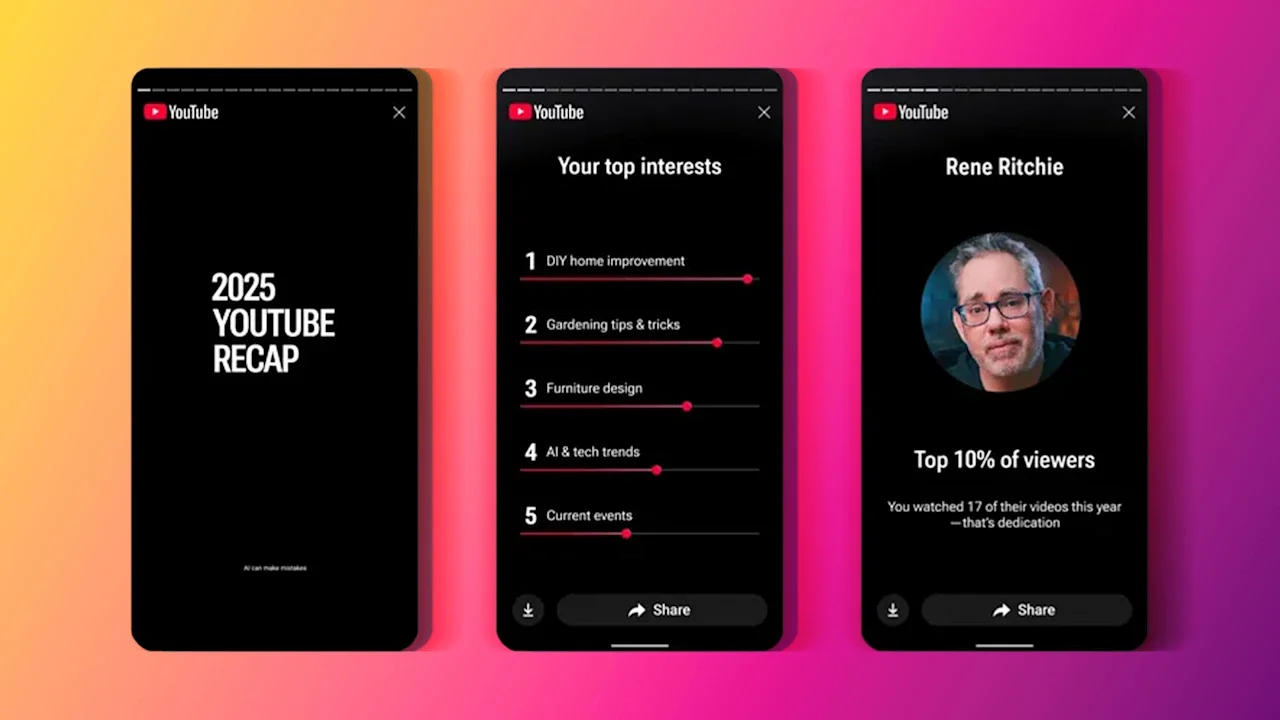
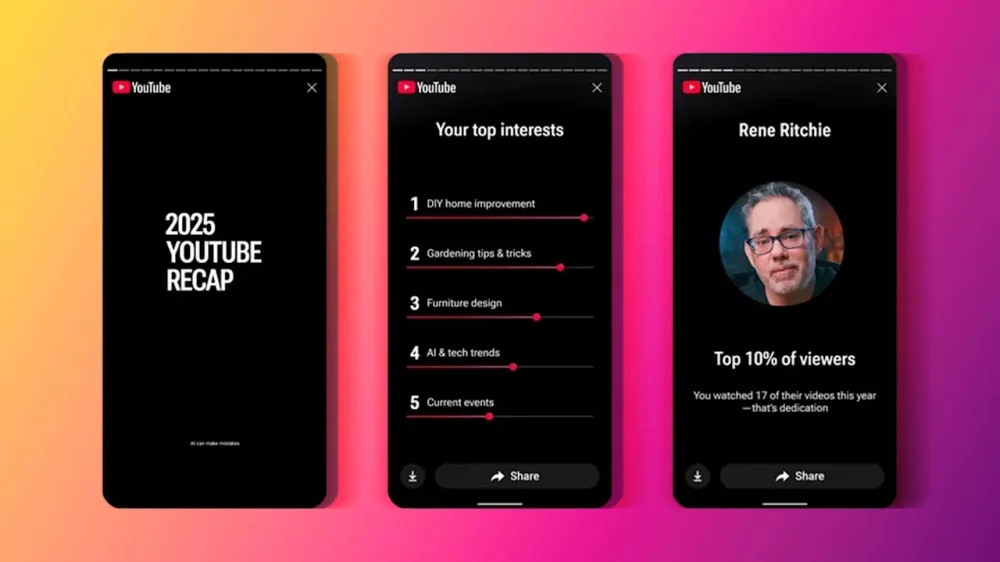
Many major platforms provide personalized “year in review” features that highlight how users have spent their time over the past year. Spotify Wrapped is the most popular of these summaries, but Apple Music, Snapchat, Deezer, and others also offer them. And now, internet users have a new year-in-review feature to check out this year: YouTube Recap. Here’s what you need to know about the video site’s year-in-review and how to access it—especially if you’re looking to kill some time while waiting for Spotify Wrapped 2025 to come out. What is YouTube Recap? YouTube Recap is Google’s just-announced year-in-review feature for its YouTube platform. The personalized recap displays various metrics about your YouTube viewing habits over the past year. The Recap feature takes the form of a Story, or YouTube Short. As YouTube explained in a blog post, “You’ll get a set of up to 12 different cards that spotlight your top channels, interests, and even the evolution of your viewing habits, or which personality type you fall into based on the videos you loved to watch!” Cards include your top interests, your top channels, and your interests based on video views. If you listen to a lot of music on YouTube, your YouTube Recap will also display your top artists and top songs from YouTube Music. One interesting bit of information comes from a disclaimer that the YouTube Recap displays when you view it. That disclaimer reads “AI can make mistakes.” This suggests that Google is relying on artificial intelligence to curate and assemble YouTube Recap videos. Discover your YouTube personality Your YouTube Recap video may also feature a “personality” card that YouTube says reveals what type of personality you have based on your YouTube watch history. The full list of possible personalities includes: The Adventurer: You’re drawn to content that takes you on an exciting journey. The Challenger: You’re drawn to content that shows competition and rising to the challenge. The Changemaker: You’re drawn to content that inspires positive change in the world. The Connector: You’re drawn to content that sparks conversation and builds community. The Creative Spirit: You’re drawn to content that inspires self-expression. The Curious Mind: You’re drawn to educational content that helps you understand the world. The Dreamer: You’re drawn to content that fuels your imagination. The Philosopher: You’re drawn to content that explores the deeper meaning of things. The Self-Improver: You’re drawn to content that helps you grow and reach your potential. The Serenity Seeker: You’re drawn to content that helps you relax and find your inner peace. The Skill Builder: You’re drawn to content that helps you develop skills. The Sunshiner: You’re drawn to content that spreads positivity and good vibes. The Trailblazer: You’re drawn to content that’s original and challenges the norm. The Wonder Seeker: You’re drawn to awe-inspiring content that shows extraordinary skills. In its blog post, YouTube says the most common personalities are the Connector, the Sunshiner, and the Wonder Seeker. The least common personalities are the Dreamer and the Philosopher, which YouTube says are “more elusive and rare personas.” How to access your YouTube Recap 2025 on the web YouTube provides two ways users can access their YouTube Recap. The first is by using any web browser. To access your YouTube 2025 Recap on the web: Go to www.youtube.com/recap and make sure you are signed in. You’ll find a “Your 2025 Recap is here!” banner at the top of the page. Click it. Your YouTube Recap video will open on the same webpage. How to access your YouTube Recap 2025 in the YouTube app You can also access your YouTube Recap directly in the YouTube app on iPhone and Android. Here’s how: Open the YouTube app. Tap the “You” tab. You’ll find a “Your 2025 Recap is here!” banner at the top of the page. Tap it. Your YouTube Recap video will now open in the YouTube app on your smartphone. How to share your YouTube Recap video While people love viewing their year-in-review roundups, many also enjoy sharing them with friends and family. And YouTube makes it easy to share your YouTube Recap video. The caveat here, however, is that you need to share it from the YouTube app. Sharing of your YouTube Recap video from a web browser does not seem to be supported at this time. To share your YouTube Recap video: Open the YouTube app. Tap the “You” tab. You’ll find a “Your 2025 Recap is here!” banner at the top of the page. Tap it. As the video plays, you’ll see a “Share” button at the bottom of the video. Tap it. From the pop-up menu, select the person or app you want to share a link to your personalized YouTube Recap video with. YouTube Recap is available now to users in North America. It will roll out to users worldwide this week. View the full article
-
Contentious proposal to fund Ukraine would mark watershed moment for EUView the full article
-
Managing budgets across multiple paid media channels is one of the most important skills in a PPC marketer’s toolkit. You’re constantly deciding how to allocate spend across channels and campaigns, how to handle big budget swings, and whether to set total or daily budgets. In an AI-driven ad platform world, campaign budgets remain one of the few levers marketers still fully control – and they deserve careful thought. Structuring your budget effectively Depending on your business model, you may have more or less input into the overall paid media budget. However, you usually have more control over how that budget gets broken out across channels and campaigns. Start by looking at the total budget you have to work with. It’s unwise to split a small budget across too many campaigns, as you’ll limit the platforms’ ability to learn and gather enough data to drive efficient results. But with a larger budget, you can start segmenting out portions for testing channels or campaign types you haven’t run before. Dig deeper: PPC budget planning: Aligning business goals, ad spend, and performance For example, if you’ve only been active in paid search and are already maxing out opportunities there, and the brand has additional budget, consider allocating some of it to Google Demand Gen or social channels to see how performance compares. Next, think through the brand’s current level of awareness. If it’s still building credibility, putting more budget toward social prospecting may help increase visibility and build audiences you can later retarget. Assess your ability to support campaign types that require creative assets. If obtaining or approving creative is difficult, keeping more budget in paid search may be the smarter move so you can get a campaign live more easily, while earmarking budget for additional channels once assets are ready. Connecting budget decisions across channels When deciding on budget allocations, avoid viewing individual channels or campaign types in isolation. Consider how each one may be affecting the others, and use data when you can to guide those decisions. For example, you may see a higher conversion rate from search after launching a YouTube campaign that helps drive awareness for your products, along with video viewer remarketing audiences performing efficiently in search. You may not see many direct conversions from the YouTube campaign, but if the data shows it’s improving overall conversion efficiency, it makes sense to keep budget allocated to both YouTube and search. Get the newsletter search marketers rely on. See terms. Aligning your budget with seasonal demand When mapping out budgets over the course of a year, consider when peak buying times are and when interest may slump for the industry you’re dealing with. For ecommerce brands, the weeks leading up to a holiday season are generally an obvious time to allow for higher budgets. B2B brands may see less activity in this timeframe and want to slot more budget earlier in the year. To make decisions on this front, look at historical data if you have it, and don’t forget to compare how performance may vary between channels at different times. You can also use tools such as Google Trends and Keyword Planner to view historical and projected trends by month for relevant keyword themes. Responding to sudden budget shifts Inevitably, you’ll deal with sudden requests to adjust budget that are outside your control. A business may be facing financial difficulties and decide to scale back marketing, or it may be closing out its fiscal year and discover additional money that needs to be spent quickly. When you need to scale back, avoid spreading a smaller amount across too many campaigns, and pause campaigns altogether if necessary, rather than trying to keep everything running with low budgets. If search is involved, look for higher CPA keywords. You can pause while pulling back, possibly using a stricter threshold than you would with a larger budget. When you have the opportunity to increase budget, think through which campaigns should receive it. Prioritize campaigns that are currently limited by budget – confirming this with recent spend data rather than relying only on Google’s flag – and that have shown efficient conversion performance. Dig deeper: How to manage a paid media budget: Allocation, risk and scaling Be cautious about increasing budget too quickly. In search, especially when using broad keywords, you may see looser matches as the system adjusts to having more to spend. In Meta, particularly with broad prospecting audiences, large increases can create a period of inefficiency as the system expands reach. Depending on the amount of budget and how quickly it needs to be spent, don’t limit yourself to increasing spend in existing campaigns. Additional budget may be an opportunity to test new channels or campaign types and bring these ideas to stakeholders. Set clear expectations for KPIs, since results may not be as efficient as existing campaigns during testing, but may still drive incremental conversions you wouldn’t have captured otherwise. Choosing the right budget type Many ad platforms let you set either a total budget for the full duration of a campaign or a daily budget that reflects the amount you want to spend each day. As Google rolls out total budgets to more campaign types, this choice will come up more often when you’re setting up new campaigns. Meta, LinkedIn, and other social platforms also offer both options. Total budgets generally work best for short-duration campaigns or when you have a strict budget cap and need to avoid overspending. For campaigns running over a longer period, daily budgets tend to work best. Still, monitor for periods when excess spend may occur, and watch for overspending when you increase budgets mid-month. Google can spend up to two times your daily budget and will average it out over the month. Meta can also spend up to two times your daily budget while averaging spend across a seven-day period. Dig deeper: How to optimize B2B PPC spend when budgets and confidence are low Putting your budget strategy into practice As you plan and monitor budgets for your paid media campaigns, think through how you can portion out spend for both ongoing efforts and testing. View your budgets holistically as a multichannel effort rather than treating them as siloed across platforms. And take platform nuances into account when making major budget adjustments or choosing between budget types. View the full article
-
Back in May, Google said it will be giving advertisers more visibility into the search partner network with channel reporting for Performance Max campaigns. Well, now some are seeing it live in their accounts for some of the campaigns they manage.View the full article
-
Google has launched a new link on some search / sponsored ads named "Products at this location." Google confirmed this "relatively new feature" and can show up on listings for service businesses and other types of businesses.View the full article
-
Google is pushing even more ways directly into AI Mode from the main Google home page's search bar. Now when you select to upload an image or file, it will take you into AI Mode by default.View the full article
-
First visit by UK prime minister since 2018 expected to come after London approves Beijing’s ‘mega’ embassy plansView the full article
-
Google has been saying that no one uses the LLMs.txt file, that Google won't use it, that it can be useless, and you probably should noindex it if you do use it. Well, Google itself uploaded an LLMs.txt file for the Google Search Central portal.View the full article
-
Microsoft Advertising reportedly made two updates to its ad platform recently. One on how ad disapprovals work and the other on the time it takes to see a conversion be recorded in the ad reporting interfaces.View the full article
-
On birth rates, the lockdown and above all Brexit, the right is out of touch with the public View the full article
-
Turn your landing pages into revenue drivers that enhance conversion efficiency and campaign scalability. The post How To Maximize Paid Ads Profitability With A Strategic Landing Page Audit appeared first on Search Engine Journal. View the full article
-
Google’s AI Overviews have reshaped search almost overnight. For paid search marketers, the fight for above-the-fold visibility is no longer just about ad rank – it’s now a push to appear above the AI result itself. This shift follows the rapid surge in AI Overviews that Adthena highlighted in our previous study. That analysis showed AI Overviews quickly moving beyond informational queries and into shorter, high-volume commercial searches. The mechanism behind this decline is clear: AI Overviews intercept attention, cut click-through rates (CTRs), and push both organic and paid listings lower on the page. The result: fewer clicks and less revenue. Adthena’s new research pinpoints how often advertisers win ad placement above AI Overviews across seven major industries, device types, and query categories. The findings reveal clear winners and uncover opportunities that paid search teams can act on now. The topline reality: Ad position visibility is lost 25% of the time The summary table below offers a crucial industry benchmark for the battle over the top spot, showing the percentage split of ads appearing above or below AI Overviews across seven industries. Strategic implications from the topline data The leaders: Industries like Travel, Energy, Financial Services, and Retail consistently land above the AI Overviews in more than 75% of appearances. That still means 1 in 4 paid ads are affected by AI Overviews across major sectors. For keywords that drive millions in revenue, this 20% to 30% exposure creates immediate, high-cost instability that directly threatens ROI. The runners-up (the risk of being hidden): Healthcare stands out as the clear outlier, with ads appearing below the AI Overviews 64.6% of the time. Because healthcare searches are high-stakes and research-heavy, Google’s AI tends to dominate the SERP to deliver “expert” information first. That choice severely limits ad visibility and wipes out nearly two-thirds of the new above-the-fold space. The volatility: Gaming shows a clean 50/50 split. In this vertical, visibility becomes a coin flip, reinforcing the need for highly dynamic bidding strategies. The device divide: Why mobile is your biggest threat Device Split data over a snapshot one-week period reveals that the risk of ads being pushed below the AI Overviews is heavily exacerbated by the mobile environment, where SERP real estate is severely compressed. Strategic implications on device differences Automotive’s Mobile Problem: While Automotive shows a solid overall “Above %” rate, the daily trends tell a different story. On mobile, ads are pushed below the AI Overviews nearly half the time. And on a small screen, an ad buried under a long AI Overview is often invisible without a full scroll. That drop in placement leads to lower visibility and CTR. The “double whammy”: For industries like healthcare, desktop ads sit below the AI Overviews most of the time, while mobile performs slightly better. This suggests the AI Overviews box may be tuned for mobile screens in a way that occasionally leaves one or two ad slots visible, but the desktop view is still dominated by AI. Marketers need to tailor their creative to the narrow window of opportunity available on the mobile SERP. Actionable insight: Mobile is where the disruption from AI Overviews hits hardest. For industries like healthcare and gaming, where the mobile “Below %” rate is disproportionately high, securing top ad rank becomes a matter of screen survival. The query intent test: Where does AI Overviews win and lose? In general, long queries (high word count) tend to be informational and more likely to trigger AI Overviews. Short queries (low word count) are usually transactional. The table below, however, exposes a counterintuitive industry pattern. This table shows the relationship between query complexity (user intent) and AI Overviews dominance across query lengths from one to 10 words. Strategic implications on query intent AI Overviews dominance on the fringes: Healthcare shows a clear pattern: as queries become longer (10 words), the ad’s position above the AI Overviews drops to 0.0%. This confirms that Google views complex health-related questions, pushing all commercial intent below the scroll. Gaming is the opposite: short terms (1-2 words) see 0.0% visibility above the AI Overviews, suggesting a SERP feature (like a pack or video) or a strong organic result is claiming the top spot, forcing the ad below the AI Overviews. However, on long terms (Word Count 7-9), ads take 100% of the above-AI Overviews space. This is a massive opportunity to intercept users in the deep research phase. The unexpected paid search opportunity (Automotive & Travel): In industries like Automotive and Travel, ads actually perform better on longer, more informational queries than on short, high-volume terms. For Automotive, the “Ad Above AI Overviews” rate jumps from 21.9% (1 word) to over 74% (4 words). Strategic implication: This challenges the traditional PPC strategy. Instead of avoiding informational keywords where AI Overviews are present, paid marketers should be aggressively bidding on these mid-to-upper-funnel queries, as the ad position relative to the AI Overviews is highly favorable, allowing them to intercept the user’s journey before a final decision is made. Next steps for paid search marketers Adthena’s study confirms the Google AI Overviews threat is segmented. The best strategy is precision: know when and where your ads beat the AI Overviews position and adjust bids and creative. While this is still early data, as AI Overviews frequency continues to increase, this percentage of ad position might change. We recommend you regularly audit profitable keywords to proactively manage visibility in the changing AI search landscape. Here are three critical, actionable next steps for paid search marketers: 1. Have you explored testing a device-specific strategy? The data shows that mobile devices often magnify visibility loss from AI Overviews, especially in categories like automotive. Consider testing a device-specific campaign strategy, particularly for campaigns hit hardest by AI Overviews cutting into ad visibility. 2. Have you identified quick wins in keyword coverage? The word count data reveals some counterintuitive opportunities. In industries like Gaming and Automotive, long-tail informational queries (four or more words) are where ads often secure strong placement above the AI Overviews. That means there may be high-visibility traffic in mid- to upper-funnel searches that your competitors are overlooking. 3. Have you reviewed your ad copy against the AI answer? AI Overviews often miss brand nuances and emotional cues. To earn the click, your ad must do what the AI cannot: give users a clear, compelling, and urgent reason to leave Google’s summary and choose you. Messaging that highlights trust, guarantees, or speed can break through AI’s generic tone. Focus your copy on transactional hooks such as deals, free shipping, limited-time offers, or scarcity (“12 hours left to buy”). Build trust and emotion with human-centered elements like customer service, testimonials, and your unique brand story. The SERP has changed. The data shows that marketers who gain real-time, granular visibility into their ad position relative to AI Overviews – and act on it – will be the ones who succeed in this new paid search landscape. Ready to see where your ads sit today? Adthena shows exactly when your ads appear above or below AI Overviews, so you can stay ahead of how AI Search is disrupting performance. Book a demo to see where you stand on the SERP. View the full article
-
Trends, launches, algorithm shifts, new platforms... As a social media manager or creator, there's a lot beyond your control. But there are some things you can plan for. And doing that makes creating space for the many spur-of-the-moment posts you’ll need to create in 2026 just a smidge easier. Enter: This comprehensive list of all major dates you might need to create content about, from January to December. Everything from key national holidays, culturally important dates, headline-making events, and tongue-in-cheek holidays. Superbowl LX? Dress Up Your Pet Day? Mother’s Day? It’s all here. Use this comprehensive list to mark what matters for your audience, pause during slower periods, and spark ideas you can queue up in Buffer across Instagram, X, Facebook, LinkedIn, YouTube, TikTok, Threads, Bluesky, and Mastodon. Whether you want to schedule some posts in advance (gold star for you!) or just note these dates on your calendar for 2026, it all helps. 🏖️ Pro tip: Note the travel and holiday slowdowns — like European summer or U.S. Thanksgiving — where you might scale back or switch to lighter content. 💡 Bonus pro tip: These dates are accurate for the USA and many other parts of the world. But if the majority of your audience is not based in the US, you might want to double-check them for your region. Mother’s Day and Father’s Day are big ones to note. Jump to a month: January 2026 February 2026 March 2026 April 2026 May 2026 June 2026 July 2026 August 2026 September 2026 October 2026 November 2026 December 2026 🌴Schedule your content ahead of time so you can take a break! With Buffer, you can schedule posts on multiple channels, including Facebook, X, Instagram, LinkedIn, YouTube, TikTok, Threads, Bluesky, and Mastodon. Get started with Buffer, free →January 2026Monthly themes and events National Mentoring MonthNational Slavery and Human Trafficking Prevention MonthDry JanuaryJan 1 — New Year's Day (Federal Holiday) Jan 2 — Science Fiction Day Jan 8 — World Typing Day Jan 11 — Golden Globe Awards Jan 12 — Clean Off Your Desk Day Celebrated on the second Monday of January, this is one of my personal favorites. This day is the perfect time for decluttering and organizing workspaces for better productivity and mental clarity. Fun fact: An organized workspace is proven to boost focus and reduce stress. Content ideas: Time-lapse your desk reset. Here’s a great example for TikToker Cozy K.Share "5 declutter tips" carouselHost a "desk glow-up" photo challengeJan 14 — Dress Up Your Pet Day Jan 15 — National Hat Day Jan 16 — International Hot and Spicy Food Day Jan 19 — Martin Luther King Jr. Day (U.S.) Jan 19 — National Popcorn Day Jan 20 — Blue Monday Blue Monday, supposedly the “worst Monday of the year,” was originally started as a travel company marketing stunt in 2005. While the science behind it is questionable (it was based on a made-up formula), the day has evolved into something a little more meaningful. Between cold weather, tight budgets after the holidays, and abandoned New Year's resolutions, January can genuinely feel heavy for a lot of people. Mental health organizations have co-opted Blue Monday as a springboard for conversations around self-care and checking in on each other. Content ideas: Share mental health resources or tips for beating the winter bluesPost feel-good content like cute pets, uplifting music, or inspiring stories — a “carousel of positivity”Start a "Brighten Blue Monday" challenge, encouraging random acts of kindnessShare what you're doing to prioritize well-being this monthJan 21 — National Hugging Day Jan 24 — International Education Day Jan 25 — Opposite Day Jan 26 — Community Manager Appreciation Day (Fourth Monday) Jan 27 — Chocolate Cake Day Jan 28 — Data Privacy Day Jan 28 — International Lego Day Jan 31 — Inspire Your Heart with Art Day ✨Looking for even more content ideas to get you started? Don’t miss our free social media template library — it could make your 2026 planning a smidge easier.February 2026Monthly themes and events Black History Month (US)LGBT+ History Month (UK)Winter Olympics Milan 2026 (Feb 6–Feb 22)Feb 1 — Grammy Awards Music's biggest night returns to Los Angeles on February 1. Content ideas: Share your top artist predictionsPost a "soundtrack to our brand" playlistReact to viral moments from the ceremonyFeb 2 — Groundhog Day Feb 3 — Carrot Cake Day Feb 4 — World Cancer Day Feb 5 — National Nutella Day Feb 6 — Winter Olympics begins Feb 7 — National Send a Card to a Friend Day Feb 8 — Super Bowl LX Whether your audience watches for the game, the commercials, or halftime show, the Super Bowl is a cultural moment that transcends sports. Super Bowl LX is set to take place at Levi's Stadium in Santa Clara, California, and will dominate social feeds all over the world. (Take it from someone in South Africa — it even reaches us here!) The 2025 game drew over 123 million viewers, making it one of the most-watched events of the year. Beyond the game itself, the Super Bowl has become synonymous with creative advertising, viral halftime moments, and watch parties. For brands, it's a chance to join the conversation without needing to buy a $7 million ad spot. Content ideas: Live-react to standout commercials or halftime performancesHost a "Big Game prediction" poll on who will win or which ad will steal the showShare game-day recipes or setup ideas for the ultimate watch partyPost a relatable meme about tuning in just for the commercialsFeb 9 — National Pizza Day Feb 10 — Safer Internet Day Feb 11 — Make a Friend Day Feb 14 — Valentine's Day Celebrate love, community, and kindness — not just couples. Content ideas: "Letter to our customers" carouselSelf-love giveaway with small giftsPost stories of partnerships or collaborations you cherishFeb 17 — Lunar New Year (Year of the Fire Horse) The Lunar New Year marks renewal and prosperity across East and Southeast Asia, celebrated with family gatherings, traditional foods, and vibrant customs. 2026 is the Year of the Fire Horse, which symbolizes ambition, strength, and a bold, energetic spirit. Content ideas: Share a carousel about Lunar New Year traditions and their meaningsCreate a post exploring Fire Horse personality traits and ask followers if they resonateFeature Asian-owned businesses, creators, or recipes tied to the celebrationPost a "Happy Lunar New Year" message with festive visualsFeb 16 — Presidents' Day (U.S.) Feb 17 — Random Acts of Kindness Day Feb 18 — Ash Wednesday Feb 21 — International Mother Language Day Feb 22 — World Thinking Day Feb 28 — National Skip the Straw Day 🎶Need trending sounds for your next TikTok or reel? We've got you covered with the latest trending sounds on Instagram and trending songs on TikTok.March 2026Monthly themes and events Women's History MonthAmerican Red Cross MonthMar 1 — World Compliment Day Mar 2 — Read Across America Day (Dr. Seuss' Birthday) Mar 3 — World Wildlife Day Mar 4 — National Grammar Day Mar 6 — Employee Appreciation Day Mar 7 — National Day of Unplugging Mar 8 — Daylight Saving Time begins Mar 8 — International Women's Day International Women's Day celebrates the achievements of women and promotes gender equality worldwide. Each year, the day centers around a theme (2026’s theme is “Give to Gain”), offering a framework for meaningful conversations about progress and what still needs to change. Social media lights up with tributes to women leaders, stories of resilience, and calls to action around equal pay, representation, and access to opportunities. It's a day to spotlight the women in your life, in your community, or in your industry. Content ideas: Spotlight women on your team with behind-the-scenes storiesShare the year's theme and three ways you're supporting itCollaborate with a women-led brand or creator for a takeover or co-postAsk your audience: "Which woman inspires you and why?"Mar 10 — International Day of Awesomeness Mar 10 — National Landline Telephone Day Mar 13 — Popcorn Lover's Day Mar 14 — Pi Day Mar 14 — World Sleep Day Did you get enough sleep last night? Me neither. Hence: World Sleep Day. The date was created to boost awareness about the importance of sleep for health and well-being. The theme changes annually, but the core message is consistent: better sleep equals better health, mood, and productivity. Content ideas: Share science-backed tips for better sleep (blackout curtains, screen-free time, consistent schedule)Post a poll: "How many hours of sleep did you get last night?"Create a carousel on common sleep myths vs. factsShare your team's favorite ways to wind down at nightMar 15 — World Consumer Rights Day Mar 17 — St. Patrick's Day Mar 18 — Global Recycling Day Mar 15 — Academy Awards (Oscars) Mar 20 — International Day of Happiness Mar 21 — World Down Syndrome Day Mar 22 — World Water Day Mar 28 — Earth Hour At 8:30 p.m. local time, millions of people around the world switch off their lights for one hour to raise awareness about climate change and environmental action. Started by the World Wildlife Fund in 2007, Earth Hour has become a global movement encouraging both people and organizations to take tangible steps toward sustainability. Earth Hour is an easy, visual moment for brands (or creators!) to show their commitment to sustainability without requiring a massive campaign. The before-and-after photos alone make for compelling social content. Content ideas: Share your participation with a simple “lights off” videoShare before-and-after images of your office or home during Earth HourPost a carousel on "3 easy eco swaps you can make this week."Use your platform to boost the reach of an environmental nonprofit or eco-creators by reposting their contentApril 2026Monthly themes and events Stress Awareness MonthNational Poetry MonthApr 1 — April Fools' Day Apr 2 — World Autism Awareness Day Apr 3 — Good Friday Apr 5 — Easter Sunday Apr 10 — National Siblings Day Apr 11 — National Pet Day Apr 14 — International Moment of Laughter Day Apr 16 — National Wear Your Pajamas to Work Day This content practically creates itself, doesn’t it? The lighthearted holiday celebrates comfort and gives everyone permission to stay cozy. For remote workers like me, it's basically just another Tuesday — but it's still a fun excuse to acknowledge the shift toward flexible work culture and the blurring lines between home and office. Content ideas: Post a team photo in matching or themed pajamasShare your "WFH uniform" and ask followers to do the sameCreate a reel showing the quick transition from pajamas to "Zoom-ready"Run a "best pajama" contest with a small prizeApr 21 — World Creativity and Innovation Day Apr 22 — Earth Day Apr 23 — World Book Day Apr 23 — Take Our Daughters and Sons to Work Day Apr 28 — Pay It Forward Day Founded in 2007, Pay It Forward Day is a global movement encouraging small acts of kindness that create a ripple effect. The idea is simple: do something kind for someone without expecting anything in return, and inspire them to do the same for someone else. This day is perfect for community-focused brands and creators who want to spotlight good happening in the world. User-generated content around acts of kindness tends to perform well because people genuinely want to share and celebrate these moments. Content ideas: Post "one small act" challenges and invite followers to share what they didHighlight a customer, creator, or community member doing goodPartner with a nonprofit to amplify their work, or simply boost their reach by resharing their content to your own followeresApr 30 — International Jazz Day May 2026Monthly themes and events National Barbecue MonthLupus Awareness MonthMental Health Awareness MonthMay 1 — May Day / International Workers' Day May 3 — World Press Freedom Day May 4 — International Firefighters' Day May 4 — Star Wars Day Because "May the Fourth be with you." What started as a pun has become a full-blown pop culture holiday, celebrated by Star Wars fans around the globe. From movie marathons to themed merchandise drops, brands across industries find creative ways to tie into the force. Star Wars Day is one of those rare holidays where even brands with no connection to the franchise can jump in with a clever pun or reference, and the audience will love it. It's lighthearted, nostalgic, and endlessly meme-able. Content ideas: Run a poll: "Which Jedi power would you choose?"Post a team photo with lightsabers or Star Wars propsShare which Star Wars character best represents you or your brand and whyMay 5 — Cinco de Mayo May 8 — World Red Cross Day May 9 — National Train Day May 10 — Mother's Day (U.S.) Celebrated on the second Sunday of May, Mother's Day honors moms, caregivers, and maternal figures. It's one of the biggest retail holidays of the year, of course, but it’s got a far more important message at its core. Mother's Day content that focuses on genuine appreciation, storytelling, and community tends to resonate most. User-generated campaigns work particularly well here, as people love sharing tributes to the mother figures in their lives. Content ideas: Launch a "Thank you, mom" user-generated campaign asking followers to share tributesCreate a gift guide carousel with thoughtful, accessible optionsSpotlight employees or customers sharing the best advice they got from their momsPost a heartfelt message acknowledging all types of caregiversMay 15 — International Day of Families May 17 — International Day Against Homophobia, Transphobia & Biphobia May 20 — World Bee Day May 21 — World Whisky Day May 24 — National Scavenger Hunt Day May 25 — Memorial Day (U.S.) June 2026Monthly themes and events Pride Month2026 FIFA World Cup (June 11–July 19)Men's Health Week (June 15–21)Jun 1 — World Milk Day Jun 3 — World Bicycle Day Jun 4 — National Cheese Day Jun 4 — Hug Your Cat Day Another post that practically creates itself. This extra special day is dedicated to celebrating our feline overlords, whether they like it or not. Pet content is one of the most reliable engagement drivers across platforms, and cat people are especially enthusiastic. This is an easy win for creators or brands looking to post something fun and approachable. Content ideas: Share photos of your team's cats (or your office cat if you have one. Can I come visit, please?)Run a "cutest cat" photo contest with a small prize. Scritches?Partner with a local animal shelter to highlight cats available for adoptionJun 5 — World Environment Day Jun 5 — National Donut Day Jun 8 — World Oceans Day Jun 8 — Best Friends Day Jun 11 — FIFA World Cup kicks off Jun 12 — Loving Day Jun 14 — Flag Day Jun 14 — World Blood Donor Day Jun 18 — International Sushi Day Jun 18 — Sustainable Gastronomy Day Jun 19 — Juneteenth (U.S.) Jun 20 — World Refugee Day Jun 21 — Father's Day (U.S.) Celebrated the third Sunday of June, Father's Day honors dads, father figures, and the people who've stepped into mentorship roles. Father's Day content that's personal, funny, or tied to specific memories tends to perform best. Dad jokes, nostalgic photos, and heartfelt tributes all have a place here. Content ideas: Share customer or follower stories about meaningful father figuresPost a "dad jokes only" thread (bonus points if they're really bad)Create a photo carousel: "Our team's dads through the years."Spotlight fathers on your team and what they've learned from fatherhoodJun 21 — International Yoga Day Jun 21 — World Music Day Jun 21 — Summer Solstice (First Day of Summer) Jun 21 — National Selfie Day Jun 30 — Social Media Day July 2026Monthly themes and events National Ice Cream MonthNational Grilling MonthJul 4 — Independence Day (U.S.) Jul 7 — World Chocolate Day Jul 16 — National Ice Cream Day Jul 17 — World Emoji Day Celebrated since 2014, World Emoji Day honors the tiny symbols that have become a universal language online. The date was chosen because it appears on the calendar emoji 📅 — a fitting bit of meta humor for a day dedicated to digital communication. Emoji-related content is playful, accessible, and tends to drive high engagement because everyone uses emojis. It's also an easy opportunity for brands to show personality. Content ideas: Challenge your audience: "Describe your day in 3 emojis."Post a caption using only emojis and ask followers to guess what you meanRun a poll: "Which emoji needs to retire?" or "Which emoji do you overuse?"Share the emoji that best represents your brandJul 18 — Nelson Mandela International Day Jul 22 — National Hammock Day Jul 24 — National Tequila Day Jul 30 — International Day of Friendship August 2026Monthly themes and events National Immunization Awareness MonthBlack Business MonthAug 1 — National Girlfriend Day Aug 8 — International Cat Day Aug 9 — Book Lovers Day A tribute to readers, writers, and the stories that shape us. While it's not as widely recognized as World Book Day, it's gained a dedicated following among literary communities and anyone who loves a good recommendation. (It’s me. 🙋♀️) Book content — whether it's reading lists, covers, quotes, or cozy reading setups — performs consistently well on visual platforms like Instagram. It's also a great way to show a more personal side of your brand. Content ideas: Post your team's current reading list or all-time favoritesAsk followers for book recommendations in your nicheShare a book that inspired your brand or businessCreate a "summer reading" carousel with quick summariesAug 12 — International Youth Day Aug 13 — International Left-Handers Day Celebrated since 1976, International Left-Handers Day raises awareness about the unique challenges left-handed people face in a predominantly right-handed world (scissors, notebooks, can openers — the list goes on). About 10% of the global population is left-handed, including some pretty famous names like Barack Obama, Oprah Winfrey, and Leonardo da Vinci. This is a fun, niche holiday that lets you celebrate a specific part of your audience or team in a lighthearted way. Content ideas: Spotlight left-handed people on your teamShare fun facts about left-handedness (like how it's more common in creative fields)Ask followers: "Are you left-handed? What's the most annoying thing about it?"Post a poll: "Left-handed or right-handed?" to see the splitAug 15 — National Relaxation Day Aug 19 — World Photography Day Aug 21 — Senior Citizens Day (U.S.) Aug 23 — Ride the Wind Day Aug 26 — National Dog Day Aug 31 — National Trail Mix Day September 2026Monthly themes and events Suicide Prevention MonthFriendship MonthHispanic Heritage Month (Sept 15–Oct 15)Sep 4 — National Wildlife Day Sep 7 — Labor Day (U.S.) Sep 8 — International Literacy Day Sep 12 — National Video Games Day Sep 13 — Positive Thinking Day Sep 15 — Hispanic Heritage Month begins Sep 15 — Make a Hat Day Sep 19 — International Talk Like a Pirate Day Started in 1995 as an inside joke between two friends, International Talk Like a Pirate Day has become a beloved internet holiday. It's silly, it's harmless, and it gives everyone an excuse to say "arrr" and "matey" without (much) judgment. Brands that lean into the absurdity and have fun with it tend to see great engagement. It's one of those rare days where being a little ridiculous is not only acceptable but encouraged. Content ideas: Rewrite your product descriptions in pirate speak for the dayPost a pirate-themed meme related to your industryRun a caption contest: "Best pirate pun wins"Share a "treasure map" graphic pointing to your best resources or productsSep 20–21 — Yom Kippur Sep 21 — World Gratitude Day Sep 22 — First Day of Fall (Autumn Equinox) Sep 26 — National Pancake Day Sep 27 — World Tourism Day Sep 29 — National Coffee Day Sep 30 — International Podcast Day October 2026Monthly themes and events Domestic Violence Awareness MonthBreast Cancer Awareness MonthOct 1 — International Coffee Day Oct 2 — National Custodial Worker's Day Oct 4 — World Animal Day Oct 5 — World Teachers' Day Established by UNESCO in 1994, World Teachers' Day celebrates educators and their role in shaping lives and communities. Teachers are often underpaid and underappreciated, making this day a meaningful opportunity to acknowledge all the good they do. It's also a good reminder that education and mentorship happen in all kinds of settings, not just classrooms. Content ideas: Thank teachers with a community shoutout asking followers to share their favorite teacherFeature an educator or education-focused creator in your industryDonate to a classroom wishlist on DonorsChoose and encourage others to do the samePost about mentors or teachers who influenced your career pathOct 10 — World Mental Health Day Established by the World Health Organization in 1992, World Mental Health Day raises awareness about how important mental health is. Each year focuses on a different theme, but the core message remains: mental health is health, and it deserves the same attention and resources as physical health. Mental health content consistently resonates because it's something nearly everyone thinks about, even if they don't always talk about it. Sharing openly and authentically makes a difference. Content ideas: Share three small, science-backed habits for reducing stressCollaborate with a therapist or mental health expert for a Q&A or guest postHighlight your team's mental health practices (therapy benefits, mental health days, etc.)Ask followers: "What's one thing you're doing to support your mental health?"Oct 11 — International Day of the Girl Child Oct 12 — Columbus Day / Indigenous Peoples' Day (Second Monday) Oct 13 — International Suit Up Day Oct 16 — World Food Day Oct 20 — International Sloth Day Oct 24 — United Nations Day Oct 29 — National Cat Day Oct 31 — Halloween November 2026Monthly themes and events Men's Health Awareness Month (Movember)Epilepsy Awareness MonthNov 1 — Daylight Saving Time ends (US) At 2 a.m., clocks "fall back" one hour, giving everyone an extra hour of sleep (in theory). While most people appreciate the bonus hour, the time change can mess with sleep schedules, productivity, and even social media posting times if you're not careful. This is a practical and relatable moment that nearly everyone in the US experiences simultaneously. A friendly reminder post might actually be helpful. Content ideas: Post a reminder graphic the day beforeShare a cozy (tongue-in-cheek?) "extra hour of sleep" memeAsk: "What are you doing with your extra hour?"Nov 8 — Diwali Nov 11 — Veterans Day (Federal Holiday) Nov 13 — World Kindness Day Nov 19 — International Men's Day Nov 21 — World Hello Day Nov 25 — National Day of Listening Nov 26 — Thanksgiving (U.S.) Nov 27 — Black Friday Black Friday kicks off the holiday shopping season and is the biggest retail day of the year in the US (and now, in many countries all over the world). What started as a single day of in-store sales has evolved into a week-long (or longer) shopping event spanning online and offline channels. For brands, Black Friday is a major revenue opportunity, but it's also increasingly crowded. Standing out requires creativity, authenticity, and a clear value proposition. Some brands have also opted out of Black Friday entirely, choosing instead to promote values like sustainability or shopping small. Here are some out-of-the box Black Friday marketing ideas for your campaign. Content ideas: Promote ethical or small-business shopping alternativesLaunch limited-time bundles or exclusive offersShare a "thank you" post to customers after the sale endsHighlight the story behind your products rather than just discountsNov 28 — Small Business Saturday Nov 30 — Cyber Monday December 2026Monthly themes and events Hanukkah: Dec 4–12Kwanzaa: Dec 26–Jan 1Dec 1 — World AIDS DayDec 3 — International Day of Persons with DisabilitiesDec 4 — Hanukkah begins Dec 5 — World Soil Day Dec 8 — Pretend to Be a Time Traveler Day I promise I did not make this one up! Started in 2007 on an online forum, Pretend to Be a Time Traveler Day encourages people to dress, speak, and act like they're from another time period — whether that's medieval times, the 1920s, or the distant future. This is peak "weird internet holiday" energy, and brands that embrace the absurdity often see surprisingly strong engagement. AI image and video generators mean there are no limits to what you could create for this content, too. Content ideas: Post a "then vs. now" showing how your industry has evolvedShare what you think your product or industry will look like in 50 yearsAsk followers: "What time period would you travel to?"Create a playful graphic: "If our brand existed in [time period]"Dec 10 — International Human Rights Day Dec 10 — Nobel Prize Day Dec 11 — International Mountain Day Dec 19 — National Ugly Christmas Sweater Day National Ugly Christmas Sweater Day encourages people to embrace the tackiest, most over-the-top holiday knitwear they can find. What started as an ironic fashion statement has become a full-blown tradition. Ugly sweater party, anyone? Ugly sweater content is fun, festive, and highly shareable. It's also an easy way to show your team's personality during the busy holiday season. Content ideas: Post a team photo or reel in matching (or hilariously mismatched) ugly sweatersRun a follower photo contest for the best ugly sweaterOffer a playful discount code like UGLYSWEATER20Share where to find the best (worst?) ugly sweaters onlineDec 21 — Winter Solstice (First Day of Winter) Dec 23 — Festivus Dec 24 — Christmas Eve Dec 25 — Christmas Day Dec 26 — Kwanzaa begins Dec 26 — Boxing Day Dec 31 — New Year's Eve How to use this social media calendarNow that you have all these dates saved, here's how to turn them into actual content without scrambling at the last minute. 1. Pick the dates that matter to your audienceNot every holiday or event will resonate with your community, and that's totally fine. Start by going through the list and marking the ones that align with your brand values, audience interests, or industry. For example, if you run a pet supplies business, National Dog Day is a no-brainer. If you're a B2B SaaS company, Social Media Day or Labor Day might be better fits. Understanding what to post on each social media platform can help you match the right content to the right moment. 2. Schedule posts in advanceOne of the best parts of having a content calendar is being able to schedule posts ahead of time. Social media management tools (like Buffer!) let you queue up content weeks or even months in advance, so you're not scrambling to post in real-time. The best time to post on Instagram is typically around 3 p.m. on weekdays, while LinkedIn sees peak engagement during work hours. TikTok's sweet spot tends to be evenings and weekends. Scheduling your content at these optimal times can give your posts a better chance of reaching your audience when they're actually online. 3. Batch-create your contentInstead of creating one post at a time, try batching your content creation. Set aside a few hours to design graphics, write captions, and gather ideas for multiple holidays at once. Repurposing content across platforms is also a huge time-saver. A carousel you create for Instagram can easily become a LinkedIn post or a Twitter thread with minor tweaks. 4. Leave room for spontaneityWhile planning is great, don't lock yourself into a rigid schedule. Leave gaps for timely content, trending topics, or unexpected moments that might be more relevant than a planned holiday post. Social media is about being social, after all. The best content often comes from jumping on a trend, responding to your community, or sharing something authentic in the moment. Ready to plan your 2026 social media calendar? Start by adding these dates to Buffer, then schedule your posts at the times your audience is most active. You'll show up consistently without burning out — and that's the real win. View the full article
-
It’s not a Christmas miracle, I’m afraidView the full article
-
Generic store brand groceries can increasingly be found in the pantries, fridges, and freezers of Americans across all income groups. Once designed to communicate value and affordability, a new generation of private labels designed for high earners is driving sales. Among households earning more than $100,000 a year, 82% say they’ve increased the frequency of buying store-brand groceries “often” or “very often,” according to a report from Alvarez & Marsal Global, a consulting firm. That’s compared to 74% of households earnings less than $100,000 a year who also say they’ve increased their store-brand grocery purchases. Grocers have rebranded and grown their portfolio of private label brands over the past several years to cater to consumers pressed by inflation, and it’s paid off as the highest-earning shoppers make up an increasingly large share of the economy. The report attributed the steep increase among the highest-earning Americans to “improvements made in private label products.” Nowhere is this more true than Walmart, the leading grocer since 2019, which launched a new private label called Bettergoods in 2024 that includes products that are plant-based, organic, or gluten-free. These products intentionally cater to the Whole Foods shopper with bright, well-designed packaging. The company reported quarterly revenue of $179.5 billion, up 5.8%, and said high-income households were part of the reason why. “We continue to benefit from higher-income families choosing to shop with us more often,” Walmart CEO Doug McMillon said on the company’s earnings call late last month. Upgraded, design-ified generic brands aren’t just boosting high-income shopping, though. The report found 68% of shoppers across all income groups believe store brands offer quality that is as good or better than national brands, and switching to store brands was the No. 1 way shoppers said they cut their grocery bill. Those trends are shaping the industry. Albertson’s says it’s aiming for private labels to eventually account for 30% of its business, Aldi put its name on all its products for the first time, and Amazon debuted a new branded online grocery store with packaging that makes good use of its new font, bright colors, and white space. With high-income households driving so much spending, industries from airlines to produce are especially catering to the shoppers with high-end products and premium experiences. At the grocery store, though, the success of private labels proves that when it comes to cooking dinner, even the highest-earning among us are looking for a good deal. View the full article

-
Route 66. The name alone evokes nostalgia for a simpler, freer time in American history, when roadies stopped for a hot dog with ketchup, then drove into ocher sunsets suspended over the Mojave desert. Ever since it was built in 1926, the “Mother Road” has gained mythical status, drawing millions of visitors from around the world yearning for a taste of old America—the one before the interstate highway system favored speed over experience. For Rhys Martin, who has spent years on the road with his camera, this isn’t what Route 66 is about. Yes, you can travel back in time and get a glimpse of Americana, but the route isn’t fossilized in the past. It’s very much still breathing. “Route 66 is more than just this 1950s sanitized version of American history,” he says. “It’s diverse, it’s evolving, and I like to say that no matter who you are or where you’re from, somewhere on Route 66, you’ll find your reflection.” Martin, who manages the Preserve Route 66 program at the National Trust for Historic Preservation, is part of a group of advocates and preservationists who want to change the narrative around Route 66 from one that paints the road as a mirror into the past to one that reflects the present, where many communities still live and people still work. His team’s mission has now culminated in Route 66 Rewind: a browser-based experience that lets users drive across 33 landmarks along the route from their own (virtual) vintage car or motorcycle. You can steer the wheel, pick a radio station, and see how the Midpoint Cafe or the U-Drop Inn looked in previous decades. The experience was codeveloped by Google Arts & Culture with the National Trust for Historic Preservation, and is part of a larger storytelling hub that lives on the Google Arts & Culture platform. The team turned archival photographs into videos using Google’s AI video generator Veo, composed the radio music using music generation model Lyria, and wrote the radio commentary using Gemini. The result is a sim road trip that uses AI in the best possible way: to direct the narrative back to people, and highlight the human experience that continues to shape the route today. Route 66: A “corridor of stories” Martin first saw the road through the lens of a camera. Growing up in Tulsa, Oklahoma, he’d heard of Route 66, but he knew only the broad strokes. Then one day in 2013, he hopped into his late father’s Mustang and drove to Miami, Oklahoma, to photograph the Coleman Theatre—a 1929 vaudeville theater with a facade “so ornate it had no business being in the town of Miami,” he recalls. The surprising discovery had him wondering: What else was on the highway? Martin’s curiosity led him on a two-year road trip across Route 66 that grew into a decade-long love affair with the people he met along the way. “Eventually I realized it’s a corridor of stories,” he says. One of the biggest misconceptions about Route 66 is that the destinations along its route have faded into ghost towns. The construction of the interstate highway system in the ’50s and ’60s, followed by the decommissioning of the route in 1985, no doubt stripped many of these towns of their purpose. As travel evolved and car speeds got faster, the need for frequent gas stations and motels diminished. The government divested. People left towns. But not everyone left. In Tulsa, entrepreneurs like Mary Beth Babcock have spent years revitalizing stretches of the road. In 2019, she transformed the historic Pemco gas station into a souvenir shop called Buck Atom’s Cosmic Curios, complete with two very on-brand, 20-foot-tall mascots that double as roadside attractions. That same year, Dutch entrepreneur Sebastiaan de Boorder and his wife, Anna Marie Gonzalez, renovated the 1919 Aztec Motel in Seligman, Arizona, which reopened as the Aztec Motel & Creative Space in 2021. “There is so much development still coming to Route 66, and most of it is mom and pops who’ve always dreamed of having a business on Route 66,” Martin says. Today, the American dream that once defined Route 66 looks different. Some might say it doesn’t exist at all. But for Martin, it lives on along the Mother Road. “I agree that the American dream doesn’t quite hit like it used to,” he tells me, “but on Route 66, you still find people who have bought into the cliché that Route 66 means freedom, and they are adding their story to this highway that’s now entering its second century.” AI fills “the gaps of archival memory” Route 66 is now approaching its centennial. Next year, various destinations along the route will burst into caravans and car parades to celebrate the route’s legacy. But for the team behind Route 66 Rewind, the goal isn’t just to celebrate the past but to galvanize the next generation. “Preservation creates,” says Martin, noting that anytime a building is preserved, it activates the connection people had with it while helping young people engage with the conversation. “That’s how you inspire the next generation to add their story to this long history.” With its AI-powered features and fun UX, Route 66 Rewind presented itself as a way to make history exciting for younger people. But when the team sat down to convey said history, they realized they didn’t know how many of these places looked in their heyday, beyond a few archival photographs. AI became a way to fill in what Amit Sood, the founder and director of Google Arts & Culture, calls “the gaps of archival memory.” The Google team worked with the National Trust team to collect black-and-white photos and written accounts they could use to prompt AI, cross-referencing each output with experts at the Trust. The resulting videos act as miniature time capsules of a bygone era. In Collinsville, Illinois, you can follow ketchup bottles stream past on a conveyor belt inside the now-defunct Brooks Foods ketchup factory. In Lebanon, Missouri, you can peek inside the now-closed Munger Moss Motel, its iconic neon sign flickering under a 1960s sun. But as Sood points out, these dreamy snapshots inspire you to preserve, too. The hope is that the AI-powered vision of, say, the Threatt Filling Station—the only Black-owned-and-operated gas station during the Jim Crow era—will pique your interest enough for you to visit the storytelling hub and learn about the craftsmen who are now working to restore the building’s “giraffe-stone” exterior. Next year, Route 66 is likely to be designated a National Historic Trail. The designation, which is being championed by members of both the U.S. House and Senate, could help preserve the historic route, boost tourism, and support local economies ahead of the highway’s centennial celebration. In the meantime, perhaps the AI-powered platform will galvanize tourists both domestically and from abroad to get on the road and see how the myth lives on. “The goal is to keep the car rolling down the street and get more people engaged,” Martin says. “It’s going to be a big party [next year], but that’s definitely not the end. It’s the start of the next 100 years.” View the full article

-
To succeed in social media marketing, you need to implement key strategies that effectively engage your audience. Start by identifying who your target audience is, then set clear, measurable goals. Choosing the right platforms and optimizing your profiles is crucial, as is creating content that resonates with users. By nurturing community engagement and leveraging influencer partnerships, you can improve your brand’s visibility. Comprehending the metrics will likewise help you adapt your strategies for better results. Let’s explore these strategies in detail. Key Takeaways Understand your target audience by creating ideal customer personas and utilizing market research tools for insights. Choose the right social media platforms based on demographics and user behavior to maximize engagement. Create high-quality, engaging content that encourages audience interaction and maintains consistent visual branding. Leverage influencer partnerships by collaborating with authentic influencers that align with your brand values for better reach. Measure campaign performance using analytics tools to track engagement, reach, and conversion metrics for ongoing strategy refinement. Understand Your Target Audience How well do you really know your target audience? Comprehending your audience is essential for an effective social media strategy. Start by defining your ideal customer persona through analysis of existing demographics, behaviors, and feedback. Utilize market research tools like Google Analytics to gather valuable insights into audience preferences and behaviors. Moreover, engage in social media listening to monitor mentions of your brand and competitors, which reveals audience sentiment and engagement patterns. Research shows that 82% of consumers feel social media influences their buying decisions, so it’s imperative to grasp their motivations. Set SMART Social Media Goals Setting SMART social media goals is vital for guiding your marketing efforts effectively, as it guarantees that your objectives are clear and actionable. SMART stands for Specific, Measurable, Attainable, Relevant, and Time-bound. For instance, aiming to increase your Instagram followers by 20% within six months provides a clear metric for success. By establishing measurable goals, you can track your performance using key performance indicators (KPIs) like engagement rates and conversion numbers. It’s important to align these social media goals with your overall business objectives, such as boosting website traffic or generating leads, enhancing their relevance. Regularly reviewing and adjusting your SMART goals based on performance data guarantees ongoing optimization, making your social media strategy plan both effective and responsive to market trends. Choose the Right Social Media Platforms Selecting the right social media platforms can greatly impact your marketing success. Start by comprehending the demographics of each platform; for instance, Facebook is popular with adults aged 50 to 64, whereas TikTok attracts a younger crowd, with 60% of users aged 18 to 29. Each platform offers unique features—Instagram shines with visual content, and LinkedIn is ideal for professional networking. Use tools like Google Analytics to research where your target audience spends time online, helping you prioritize platforms effectively. Regularly analyze engagement metrics on your chosen platforms to see which yield the best results. By adapting your social media strategy examples to align with each platform’s characteristics, you can improve audience engagement and drive better marketing outcomes. Create Engaging Content Creating engaging content is essential for capturing your audience’s attention. High-quality visuals not just improve your posts but can likewise lead to a significant increase in engagement, so make certain they align with your brand’s style. Furthermore, encouraging audience interaction through polls or user-generated content can nurture community and authenticity, making your brand more relatable. Visual Appeal Matters Visual appeal plays a crucial role in social media marketing, as posts that incorporate high-quality visuals can capture considerably more attention than those relying solely on text. Research shows that posts with images or videos are 650% more likely to engage users, making visuals a requirement. Incorporating videos can boost engagement rates by 48%, whereas infographics can increase information retention by up to 60%. Consistency in visual branding, including color schemes and logos, improves brand recognition by 80%. If you’re looking to improve your strategies, consider enrolling in social media marketing courses that emphasize these visual elements. Encourage Audience Interaction How can you effectively encourage audience interaction on social media? Start by creating engaging content like polls, contests, and open-ended questions. These strategies can increase engagement considerably, with comment-driven posts receiving 6.5 times more interaction. Incorporate user-generated content (UGC) to build community and authenticity, as 79% of consumers say it influences their purchasing decisions. Tailor your content to reflect audience interests, such as lifestyle posts or behind-the-scenes glimpses, which can boost engagement rates by 28%. Use dynamic visuals and short-form videos, as 80% of users prefer video content. Finally, consistently respond to comments and messages, as 70% of consumers report that friendly customer service improves brand loyalty, a fundamental concept in social media marketing training. Optimize Your Social Media Profiles To optimize your social media profiles, you should guarantee consistent branding elements like logos and colors across all platforms, as this builds recognition and trust. Craft a keyword-rich bio that clearly communicates your brand’s purpose, which not just improves discoverability but likewise attracts the right audience. Consistent Branding Across Platforms Establishing consistent branding across your social media platforms is crucial for enhancing brand recognition and cultivating consumer trust. To achieve this, use the same logo, color palette, and brand voice across all profiles. Studies show cohesive branding can boost revenue by up to 23%. Make sure your profiles reflect your latest marketing campaigns by regularly updating visuals and information. This consistency not only reinforces your narrative but also increases the likelihood of consumer engagement, as 73% of users prefer brands with a unified approach. Leverage platform-specific features, like Instagram Highlights, to highlight core values and offerings. For further insights, consider enrolling in social media marketing training courses online to deepen your comprehension of effective branding strategies. Keyword-Rich Bio Optimization When you optimize your social media profiles with a keyword-rich bio, you greatly improve your visibility and appeal to potential followers. Including specific keywords, like “social media marketing online course,” elevates your searchability, making it easier for users to find you based on relevant terms. Aim to keep your bio concise, ideally between 150-160 characters, so it displays well across devices. A strong call-to-action (CTA) can guide visitors to take desired actions, such as checking out your website or latest offerings. Remember to regularly update your bio to reflect current campaigns or promotions, ensuring it stays fresh and engaging. This alignment with audience interests helps maintain relevance and boosts your profile’s effectiveness. Develop a Consistent Posting Schedule A consistent posting schedule is crucial for maintaining audience engagement, especially since studies show that brands posting 3-7 times per week on platforms like Instagram experience higher interaction rates. Utilize analytics tools to identify ideal posting times, which guarantees your content reaches your audience when they’re most active. A content calendar is key for planning posts, aligning your messaging with events and trends as you offer a diverse mix of content types. Engaging in social media training courses can further improve your posting strategy, allowing you to develop effective practices for brand recall and visibility. Posting Frequency Engagement Benefit 1-2 times/week Low visibility 3-4 times/week Moderate interaction 5-7 times/week High engagement Daily Maximum audience connection Foster Community Engagement To effectively promote community engagement on social media, brands should prioritize direct interactions with their audience. Engaging through open-ended questions, polls, and contests can boost interaction, as 70% of consumers prefer brands that respond to their feedback. Furthermore, sharing user-generated content, like testimonials and photos, improves authenticity, influencing 79% of consumers’ purchasing decisions. Regularly responding to comments and messages increases customer satisfaction rates by 20-40%. Hosting online community events or live Q&A sessions can deepen connections, with 60% of marketers noting that engagement drives brand loyalty. To guarantee consistent interaction, consider implementing a content calendar. You might likewise benefit from a social media training workshop to learn effective strategies for improving community engagement. Leverage Influencer Partnerships To effectively leverage influencer partnerships, start by identifying relevant influencers who align with your brand and target audience. Create authentic collaborations that resonate with both the influencer’s followers and your brand values, as this nurtures trust and boosts engagement. Finally, measure campaign performance to understand the impact of your efforts and refine future strategies for even better results. Identify Relevant Influencers Identifying relevant influencers is essential for maximizing the impact of your social media marketing efforts. To guarantee successful influencer marketing, focus on these key strategies: Align with Your Audience: Select influencers whose follower demographics match your target audience, as 68% of marketers prioritize engagement over follower count. Consider Micro-Influencers: Collaborate with micro-influencers (1,000 to 100,000 followers) to achieve 60% higher engagement rates, making your campaigns more effective. Emphasize Authenticity: Choose influencers who genuinely embody your brand values, since 92% of consumers trust individual recommendations over brand promotions. Create Authentic Collaborations Building on your efforts to identify relevant influencers, creating authentic collaborations is essential to leveraging those partnerships effectively. Collaborating with influencers can considerably boost your brand reach, as nearly 49% of consumers rely on their recommendations when deciding to purchase. Authenticity plays a vital role; brands that work with influencers who genuinely endorse their products see engagement rates of 3.86%, compared to just 1.9% for non-authentic partnerships. Consider utilizing micro-influencers, who often achieve an impressive 7% engagement rate. Developing long-term relationships with influencers can improve consumer trust by 37%, making your social strategy more effective. Focus on aligning with influencers who resonate with your brand values for ideal results and increased campaign effectiveness. Measure Campaign Performance Measuring campaign performance is vital for comprehending the effectiveness of your influencer partnerships. To effectively gauge success, track relevant key performance indicators (KPIs). Here are three significant metrics to focus on: Engagement Rates: Analyze likes, shares, and comments to determine how well your content resonates. Reach: Assess how many people were exposed to your campaign through influencer channels. Conversion Metrics: Monitor sales and website traffic that can be directly linked to influencer-driven efforts. Utilizing unique tracking links or promo codes will help measure campaign performance accurately. For deeper insights, consider A/B testing different influencer collaborations. If you’re looking to improve your skills, check out free online marketing courses with certificates to learn more about optimizing your strategies. Measure Success With Analytics Analytics play an important role in evaluating the success of your social media marketing strategies. Tracking key performance indicators (KPIs) like reach, engagement rates, and conversion rates is vital for measuring effectiveness. Utilize built-in analytics tools from platforms such as Facebook Insights and Instagram Analytics to gain valuable insights into audience behavior and content performance. Regularly monitor metrics like follower growth and interaction levels to identify trends, informing data-driven decisions for future optimization. A/B testing different content formats and posting times helps refine your approach based on what resonates best. Furthermore, consider using third-party tools like Sprout Social and Hootsuite to consolidate analytics across various platforms, providing a thorough view of your social media performance. Enroll in social media marketing courses for deeper insights. Evolve Your Strategy Based on Insights To optimize your social media marketing strategy, regular analysis of performance metrics is key. By consistently reviewing data, you can make informed adjustments that improve your effectiveness. Here are three crucial steps to reflect on: Analyze engagement rates, reach, and conversions to identify what content works best. Use social listening tools to gauge audience sentiment and adapt your content accordingly. Conduct A/B testing on different formats and visuals to find what resonates with your audience. Additionally, look at platform-specific analytics to adjust your posting times and keep an eye on competitors to stay updated on industry trends. These tactics can serve as a solid social strategy example, ensuring your campaigns remain relevant and impactful. Frequently Asked Questions What Are the 7 C’s of Social Media Strategy? The 7 C’s of social media strategy are Content, Community, Communication, Consistency, Creativity, Conversion, and Context. Content delivers value and engages your audience. Community focuses on building relationships with followers. Communication involves open dialogue and prompt responses to feedback. Consistency maintains your brand’s voice across platforms. Creativity differentiates your content. Conversion aims to turn engagement into action, and Context guarantees your messaging aligns with your audience’s preferences and current trends. What Is the Best Strategy for Social Media Marketing? The best strategy for social media marketing involves setting SMART goals to measure success effectively. You should tailor your content to each platform, ensuring high-quality visuals for Instagram and professional insights for LinkedIn. Regular audience research helps you understand demographics and behaviors, allowing for targeted content. Consistent posting, ideally 3-5 times weekly on Instagram, keeps your audience engaged. Finally, use analytics tools to track KPIs and refine your approach based on performance insights. What Is the 5 5 5 Rule on Social Media? The 5 5 5 rule on social media suggests that for every five posts you share, you should curate five from other sources and promote five. This balanced approach helps keep your audience engaged without overwhelming them with promotional content. By mixing original and curated posts, you provide value and cultivate trust within your community. Implementing this strategy can improve your brand’s credibility and encourage meaningful interactions with your followers. What Are the 7 P’s of Social Media Marketing? The 7 P’s of social media marketing are Product, Price, Place, Promotion, People, Process, and Physical Evidence. Product focuses on the offerings you present, highlighting features and benefits. Price relates to your pricing strategies, including promotions to entice buyers. Place refers to the platforms where your audience engages. Promotion encompasses tactics like ads and influencer partnerships, whereas People involves comprehension of your target market. Process guarantees efficient operations, and Physical Evidence supports brand credibility. Conclusion In conclusion, implementing these ten crucial strategies can greatly improve your social media marketing effectiveness. By comprehending your audience, setting clear goals, and choosing the right platforms, you lay a strong foundation. Creating engaging content and nurturing community interaction further boosts your brand’s presence. Furthermore, leveraging influencer partnerships and measuring success through analytics allow for continual improvement. Regularly reassessing your strategies guarantees you stay relevant in a constantly changing digital environment, finally driving conversions and building customer loyalty. Image via Google Gemini This article, "10 Essential Strategies for Effective Social Media Marketing" was first published on Small Business Trends View the full article
-
To succeed in social media marketing, you need to implement key strategies that effectively engage your audience. Start by identifying who your target audience is, then set clear, measurable goals. Choosing the right platforms and optimizing your profiles is crucial, as is creating content that resonates with users. By nurturing community engagement and leveraging influencer partnerships, you can improve your brand’s visibility. Comprehending the metrics will likewise help you adapt your strategies for better results. Let’s explore these strategies in detail. Key Takeaways Understand your target audience by creating ideal customer personas and utilizing market research tools for insights. Choose the right social media platforms based on demographics and user behavior to maximize engagement. Create high-quality, engaging content that encourages audience interaction and maintains consistent visual branding. Leverage influencer partnerships by collaborating with authentic influencers that align with your brand values for better reach. Measure campaign performance using analytics tools to track engagement, reach, and conversion metrics for ongoing strategy refinement. Understand Your Target Audience How well do you really know your target audience? Comprehending your audience is essential for an effective social media strategy. Start by defining your ideal customer persona through analysis of existing demographics, behaviors, and feedback. Utilize market research tools like Google Analytics to gather valuable insights into audience preferences and behaviors. Moreover, engage in social media listening to monitor mentions of your brand and competitors, which reveals audience sentiment and engagement patterns. Research shows that 82% of consumers feel social media influences their buying decisions, so it’s imperative to grasp their motivations. Set SMART Social Media Goals Setting SMART social media goals is vital for guiding your marketing efforts effectively, as it guarantees that your objectives are clear and actionable. SMART stands for Specific, Measurable, Attainable, Relevant, and Time-bound. For instance, aiming to increase your Instagram followers by 20% within six months provides a clear metric for success. By establishing measurable goals, you can track your performance using key performance indicators (KPIs) like engagement rates and conversion numbers. It’s important to align these social media goals with your overall business objectives, such as boosting website traffic or generating leads, enhancing their relevance. Regularly reviewing and adjusting your SMART goals based on performance data guarantees ongoing optimization, making your social media strategy plan both effective and responsive to market trends. Choose the Right Social Media Platforms Selecting the right social media platforms can greatly impact your marketing success. Start by comprehending the demographics of each platform; for instance, Facebook is popular with adults aged 50 to 64, whereas TikTok attracts a younger crowd, with 60% of users aged 18 to 29. Each platform offers unique features—Instagram shines with visual content, and LinkedIn is ideal for professional networking. Use tools like Google Analytics to research where your target audience spends time online, helping you prioritize platforms effectively. Regularly analyze engagement metrics on your chosen platforms to see which yield the best results. By adapting your social media strategy examples to align with each platform’s characteristics, you can improve audience engagement and drive better marketing outcomes. Create Engaging Content Creating engaging content is essential for capturing your audience’s attention. High-quality visuals not just improve your posts but can likewise lead to a significant increase in engagement, so make certain they align with your brand’s style. Furthermore, encouraging audience interaction through polls or user-generated content can nurture community and authenticity, making your brand more relatable. Visual Appeal Matters Visual appeal plays a crucial role in social media marketing, as posts that incorporate high-quality visuals can capture considerably more attention than those relying solely on text. Research shows that posts with images or videos are 650% more likely to engage users, making visuals a requirement. Incorporating videos can boost engagement rates by 48%, whereas infographics can increase information retention by up to 60%. Consistency in visual branding, including color schemes and logos, improves brand recognition by 80%. If you’re looking to improve your strategies, consider enrolling in social media marketing courses that emphasize these visual elements. Encourage Audience Interaction How can you effectively encourage audience interaction on social media? Start by creating engaging content like polls, contests, and open-ended questions. These strategies can increase engagement considerably, with comment-driven posts receiving 6.5 times more interaction. Incorporate user-generated content (UGC) to build community and authenticity, as 79% of consumers say it influences their purchasing decisions. Tailor your content to reflect audience interests, such as lifestyle posts or behind-the-scenes glimpses, which can boost engagement rates by 28%. Use dynamic visuals and short-form videos, as 80% of users prefer video content. Finally, consistently respond to comments and messages, as 70% of consumers report that friendly customer service improves brand loyalty, a fundamental concept in social media marketing training. Optimize Your Social Media Profiles To optimize your social media profiles, you should guarantee consistent branding elements like logos and colors across all platforms, as this builds recognition and trust. Craft a keyword-rich bio that clearly communicates your brand’s purpose, which not just improves discoverability but likewise attracts the right audience. Consistent Branding Across Platforms Establishing consistent branding across your social media platforms is crucial for enhancing brand recognition and cultivating consumer trust. To achieve this, use the same logo, color palette, and brand voice across all profiles. Studies show cohesive branding can boost revenue by up to 23%. Make sure your profiles reflect your latest marketing campaigns by regularly updating visuals and information. This consistency not only reinforces your narrative but also increases the likelihood of consumer engagement, as 73% of users prefer brands with a unified approach. Leverage platform-specific features, like Instagram Highlights, to highlight core values and offerings. For further insights, consider enrolling in social media marketing training courses online to deepen your comprehension of effective branding strategies. Keyword-Rich Bio Optimization When you optimize your social media profiles with a keyword-rich bio, you greatly improve your visibility and appeal to potential followers. Including specific keywords, like “social media marketing online course,” elevates your searchability, making it easier for users to find you based on relevant terms. Aim to keep your bio concise, ideally between 150-160 characters, so it displays well across devices. A strong call-to-action (CTA) can guide visitors to take desired actions, such as checking out your website or latest offerings. Remember to regularly update your bio to reflect current campaigns or promotions, ensuring it stays fresh and engaging. This alignment with audience interests helps maintain relevance and boosts your profile’s effectiveness. Develop a Consistent Posting Schedule A consistent posting schedule is crucial for maintaining audience engagement, especially since studies show that brands posting 3-7 times per week on platforms like Instagram experience higher interaction rates. Utilize analytics tools to identify ideal posting times, which guarantees your content reaches your audience when they’re most active. A content calendar is key for planning posts, aligning your messaging with events and trends as you offer a diverse mix of content types. Engaging in social media training courses can further improve your posting strategy, allowing you to develop effective practices for brand recall and visibility. Posting Frequency Engagement Benefit 1-2 times/week Low visibility 3-4 times/week Moderate interaction 5-7 times/week High engagement Daily Maximum audience connection Foster Community Engagement To effectively promote community engagement on social media, brands should prioritize direct interactions with their audience. Engaging through open-ended questions, polls, and contests can boost interaction, as 70% of consumers prefer brands that respond to their feedback. Furthermore, sharing user-generated content, like testimonials and photos, improves authenticity, influencing 79% of consumers’ purchasing decisions. Regularly responding to comments and messages increases customer satisfaction rates by 20-40%. Hosting online community events or live Q&A sessions can deepen connections, with 60% of marketers noting that engagement drives brand loyalty. To guarantee consistent interaction, consider implementing a content calendar. You might likewise benefit from a social media training workshop to learn effective strategies for improving community engagement. Leverage Influencer Partnerships To effectively leverage influencer partnerships, start by identifying relevant influencers who align with your brand and target audience. Create authentic collaborations that resonate with both the influencer’s followers and your brand values, as this nurtures trust and boosts engagement. Finally, measure campaign performance to understand the impact of your efforts and refine future strategies for even better results. Identify Relevant Influencers Identifying relevant influencers is essential for maximizing the impact of your social media marketing efforts. To guarantee successful influencer marketing, focus on these key strategies: Align with Your Audience: Select influencers whose follower demographics match your target audience, as 68% of marketers prioritize engagement over follower count. Consider Micro-Influencers: Collaborate with micro-influencers (1,000 to 100,000 followers) to achieve 60% higher engagement rates, making your campaigns more effective. Emphasize Authenticity: Choose influencers who genuinely embody your brand values, since 92% of consumers trust individual recommendations over brand promotions. Create Authentic Collaborations Building on your efforts to identify relevant influencers, creating authentic collaborations is essential to leveraging those partnerships effectively. Collaborating with influencers can considerably boost your brand reach, as nearly 49% of consumers rely on their recommendations when deciding to purchase. Authenticity plays a vital role; brands that work with influencers who genuinely endorse their products see engagement rates of 3.86%, compared to just 1.9% for non-authentic partnerships. Consider utilizing micro-influencers, who often achieve an impressive 7% engagement rate. Developing long-term relationships with influencers can improve consumer trust by 37%, making your social strategy more effective. Focus on aligning with influencers who resonate with your brand values for ideal results and increased campaign effectiveness. Measure Campaign Performance Measuring campaign performance is vital for comprehending the effectiveness of your influencer partnerships. To effectively gauge success, track relevant key performance indicators (KPIs). Here are three significant metrics to focus on: Engagement Rates: Analyze likes, shares, and comments to determine how well your content resonates. Reach: Assess how many people were exposed to your campaign through influencer channels. Conversion Metrics: Monitor sales and website traffic that can be directly linked to influencer-driven efforts. Utilizing unique tracking links or promo codes will help measure campaign performance accurately. For deeper insights, consider A/B testing different influencer collaborations. If you’re looking to improve your skills, check out free online marketing courses with certificates to learn more about optimizing your strategies. Measure Success With Analytics Analytics play an important role in evaluating the success of your social media marketing strategies. Tracking key performance indicators (KPIs) like reach, engagement rates, and conversion rates is vital for measuring effectiveness. Utilize built-in analytics tools from platforms such as Facebook Insights and Instagram Analytics to gain valuable insights into audience behavior and content performance. Regularly monitor metrics like follower growth and interaction levels to identify trends, informing data-driven decisions for future optimization. A/B testing different content formats and posting times helps refine your approach based on what resonates best. Furthermore, consider using third-party tools like Sprout Social and Hootsuite to consolidate analytics across various platforms, providing a thorough view of your social media performance. Enroll in social media marketing courses for deeper insights. Evolve Your Strategy Based on Insights To optimize your social media marketing strategy, regular analysis of performance metrics is key. By consistently reviewing data, you can make informed adjustments that improve your effectiveness. Here are three crucial steps to reflect on: Analyze engagement rates, reach, and conversions to identify what content works best. Use social listening tools to gauge audience sentiment and adapt your content accordingly. Conduct A/B testing on different formats and visuals to find what resonates with your audience. Additionally, look at platform-specific analytics to adjust your posting times and keep an eye on competitors to stay updated on industry trends. These tactics can serve as a solid social strategy example, ensuring your campaigns remain relevant and impactful. Frequently Asked Questions What Are the 7 C’s of Social Media Strategy? The 7 C’s of social media strategy are Content, Community, Communication, Consistency, Creativity, Conversion, and Context. Content delivers value and engages your audience. Community focuses on building relationships with followers. Communication involves open dialogue and prompt responses to feedback. Consistency maintains your brand’s voice across platforms. Creativity differentiates your content. Conversion aims to turn engagement into action, and Context guarantees your messaging aligns with your audience’s preferences and current trends. What Is the Best Strategy for Social Media Marketing? The best strategy for social media marketing involves setting SMART goals to measure success effectively. You should tailor your content to each platform, ensuring high-quality visuals for Instagram and professional insights for LinkedIn. Regular audience research helps you understand demographics and behaviors, allowing for targeted content. Consistent posting, ideally 3-5 times weekly on Instagram, keeps your audience engaged. Finally, use analytics tools to track KPIs and refine your approach based on performance insights. What Is the 5 5 5 Rule on Social Media? The 5 5 5 rule on social media suggests that for every five posts you share, you should curate five from other sources and promote five. This balanced approach helps keep your audience engaged without overwhelming them with promotional content. By mixing original and curated posts, you provide value and cultivate trust within your community. Implementing this strategy can improve your brand’s credibility and encourage meaningful interactions with your followers. What Are the 7 P’s of Social Media Marketing? The 7 P’s of social media marketing are Product, Price, Place, Promotion, People, Process, and Physical Evidence. Product focuses on the offerings you present, highlighting features and benefits. Price relates to your pricing strategies, including promotions to entice buyers. Place refers to the platforms where your audience engages. Promotion encompasses tactics like ads and influencer partnerships, whereas People involves comprehension of your target market. Process guarantees efficient operations, and Physical Evidence supports brand credibility. Conclusion In conclusion, implementing these ten crucial strategies can greatly improve your social media marketing effectiveness. By comprehending your audience, setting clear goals, and choosing the right platforms, you lay a strong foundation. Creating engaging content and nurturing community interaction further boosts your brand’s presence. Furthermore, leveraging influencer partnerships and measuring success through analytics allow for continual improvement. Regularly reassessing your strategies guarantees you stay relevant in a constantly changing digital environment, finally driving conversions and building customer loyalty. Image via Google Gemini This article, "10 Essential Strategies for Effective Social Media Marketing" was first published on Small Business Trends View the full article
-
For instance, this study of only 20 brands (narrow sample size) is proclaiming that content needs 10,000+ words to be cited by AI. I’ve also seen others insist very short content (250–500 words) is the future for visibility in AI,…Read more ›View the full article
-
Rare earths’ monopoly. Unrivaled manufacturing supply chains. Free AI models that rival, or surpass, its American counterparts. More research papers and more STEM doctorates than anyone else. If you are reading a lot about these topics lately, you know how China’s decades-long strategy to become the top global superpower—and the greatest threat to U.S. world domination—is coming to fruition. What you may not be aware of is the other crucial part of Beijing’s plans; its industrial ramp up to dominate the most crucial resource on the planet: the oceans. China’s pursuit of maritime dominance has shifted from a regional ambition to a global reality, driven by a “breakneck speed” naval expansion that rivals that of the U.S. during World War II. The Asian country has already produced the world’s largest military fleet by ship count (although Washington still dominates in tonnage thanks to its large aircraft carrier groups). Yet Beijing’s strategy for controlling the Indo-Pacific—and beyond—relies on more than just warships; it increasingly depends on gray zone tactics that blur the line between scientific research and military projection. China is systematically deploying dual-use “civilian” assets—from oceanographic survey ships to militarized fishing fleets—to map key strategic waterways and assert sovereignty without firing a shot. This “advancing without attacking” doctrine is now escalating with a new class of megastructures designed to solidify China’s permanent presence in contested waters. While the People’s Liberation Army Navy (PLAN) challenges U.S. supremacy with advanced carriers like the Fujian and new nuclear carriers in preparation, Beijing is simultaneously rolling out a parallel infrastructure of floating islands and underwater bases. China says that it is built for the blue economy—the idea that the oceans are a huge resource still waiting to be untapped—which is true. But, oh the wonders! These facilities are engineered with military-grade survivability, effectively functioning as forward-operating bases that extend China’s reach far beyond its shores while maintaining a veneer of civilian legitimacy. The latest entries in this network of assets are deep-sea bases, underwater server farms, and, now, a floating research platform engineered to withstand nuclear blasts. Together, these projects form a connected infrastructure designed for long-term operations, resource extraction, and data processing at sea designed not only to gain scientific and industrial advantages but to expand Beijing’s footprint in the world’s oceans. First of its kind Let’s look at these one by one, starting with the most impressive: Detailed in a research paper published earlier this month in the Chinese Journal of Ship Research, the new Deep-Sea All-Weather Resident Floating Research Facility is a 86,000-ton semi-submersible platform described by its developers as a mobile, self-sustaining artificial island. Contracts with the shipyard that will build it—the China State Shipbuilding Corporation—specify a twin-hull vessel 453 feet long and 279 feet wide, with a main deck rising 148 feet above the waterline, according to the South China Morning Post. It is designed to house 238 people for up to four months without resupply. It’s an incredible project with no rival anywhere in the world. According to Yang Deqing and his team at Shanghai Jiao Tong University, the facility is built for “all-weather, long-term residency.” Its superstructure contains critical compartments for emergency power, communications, and navigation that are hardened to remain operational after a nuclear explosion. The platform is rated to operate in Sea State 7—rough seas with waves between 20 feet and 30 feet—and to survive typhoons up to Category 17, the highest rating on the Chinese scale. Project leader Lin Zhongqin stated that his team is “racing to complete the design and construction, aiming for operational status by 2028.” The vessel will cruise at approximately 17 miles per hour to conduct deep-sea observations and test mining technologies in areas including the South China Sea. But perhaps the most impressive thing after its absurdly large size and its towering dual-hull design is the material they invented to make it capable of withstand a nuclear shock wave without the weight of traditional heavy armor. The engineers designed a “sandwich bulkhead” using a lattice of corrugated metal tubes. These tubes, folded at a precise 21.25-degree angle with walls just 0.02 inches thick, utilize something technically called a “negative Poisson’s ratio” which means that, unlike standard materials that bulge outward when compressed, this structure contracts inward and densifies, distributing the impact. They claim their simulations showed a 2.4-inch thick panel—roughly the width of a smartphone—outperforming thicker steel plates. Under a simulated nuclear blast pressure of 25.8 psi (177.83 kilopascals), the design reduced maximum structural displacement by 58.53% compared to conventional armor. An underwater space station China is also deploying a James Bond-like underwater base located at a depth of roughly 6,560 feet in the South China Sea, which appears to be the first out of many. According to project leader Yin Jianping, of the South China Sea Institute of Oceanology, the project is a “space station in the sea.” Connected to a fiber-optic network, its pressurized modules are designed to host six scientists for up to a month. The base will investigate how to extract methane hydrate—to help satisfy the country’s ever-growing energy needs—and survey deposits of rare earth elements, cobalt, and nickel. It will be supported by the drilling ship Meng Xiang and a network of uncrewed submersibles that will double as a surveillance system for the country. In parallel, China has deployed its first commercial underwater data center off the coast of Hainan. A 1,433-ton structure submerged 115 feet deep that houses 24 server racks. Project manager Pu Ding points out that they “put the entire data cabin in the deep sea because seawater can help cool down the temperature.” The developers claim this passive cooling can save around 90% of the energy typically used for climate control in land-based centers. A similar test unit near Shanghai will draw power from offshore wind farms, and the company that is building this data center estimates that over 95% of its energy will come from renewable sources. The idea is not new. Microsoft tested it and found out that, indeed, it works great. Surprisingly, the Redmond, Washington company is not working on it anymore and will not scale the idea up. Which is both sad—because of the huge energy waste that current server farms represent, which could be greatly reduced by natural cooling—and shocking because the U.S. is in the middle of a worldwide war for AI domination with China. The latter is not leaving a stone unturned to win that war, which is precisely what this new floating megastructure is all about. Beijing is not going to stop at making your iPhones, your rare earth magnets, and building the best AIs using the largest army of STEM doctors in the world. China wants to become the biggest maritime superpower too—just like Spain, Britain, and the U.S. in past centuries. And we are witnessing its overture in real time. View the full article

-
Decision makers have voiced support for lower financing costs but researchers have said achieving it could be complicated. Part 3 in a series. View the full article
-
Mark Manson’s 2016 book The Subtle Art of Not Giving a Fuck delivered some hard truths and prescient advice to millions of readers seeking answers. Now he’s building an AI-based application to do the same. At that time, Manson says the self-help field was “unrealistic, not very evidence based—just designed to make you feel good,” inspiring him to write a book that offered “a more skeptical, realistic, and zero bull shit approach to personal growth and self-help.” Nearly a decade later, Manson says he’s seeing the same pattern in the digital world, with millions turning to generic AI platforms for guidance, only to receive unrealistic, potentially harmful advice. That’s what inspired him to team up with serial tech entrepreneur Raj Singh—who most recently sold his AI hotel concierge service GoMoment—to create on-demand life coaching app Purpose, which launches this week. The AI tool offers users life guidance and actionable steps to solve problems, from career to relationships and beyond. It also seeks to challenge, rather than validate users (something many experts have argued many AI platforms do), albeit in a polite, supportive tone. It pairs existing research into cognitive behavioral therapy with data gathered from users upon sign up, and retains conversation history to track patterns over time. According to an internal survey, 41% of early users said the app has been “life-changing.” “We’ve actually had a number of people tell us that they’ve cried while using it,” Manson says. “We really tried to build this AI to go deep quickly, to not beat around the bush or do any fake pleasantries.” Fast Company caught up with the author-turned-tech-founder from Los Angeles to talk about the legacy of The Subtle Art, whether we’re ready to share our deepest thoughts with an app, and why AI is the perfect tool to deliver personalized coaching at scale. This conversation has been edited for length and clarity. Were you surprised by the success of The Subtle Art of Not Giving a Fuck? The scope of the success caught me off guard. My pie-in-the-sky dream at the time was a million copies, so the fact that it’s exceeded that so drastically has been a pleasant surprise. Why do you think it was such a hit? When I got started in this industry in the early 2010s, self-help was very touchy-feely, very woo-woo. It was, in my opinion, unrealistic, not very evidence based—just designed to make you feel good. It felt like there was a deep hunger, especially among millennials, for a skeptical, realistic, zero-bullshit approach to personal growth and self-help. That was the inspiration. Coincidentally a lot of the cultural observations at the time—like about social media and distraction and chronically comparing ourselves to others—have aged really well. I think I identified early on the world we were heading toward. How has your life changed since? Financial security is probably the single biggest change, and that’s great, but being a very successful author is weird in that the book is the celebrity, not me. I’m not getting recognized on the street or anything. It’s just a bunch of numbers on emails that you’re like “wow, that’s a large number.” Then you go back to your same apartment and hang out with your same friends. Why transition from author to tech cofounder? When my career started to blow up, there were opportunities to do seminars and start a coaching business, but I didn’t really want to charge somebody $5,000 to spend a weekend in a hotel ballroom with me. I’ve been obsessed with this question of, how can we help more people? Like, what does a better version of this industry look like? One of the problems I identified well before ChatGPT came out is that the stuff that actually works doesn’t scale, and the stuff that scales doesn’t work. My book was read by millions of people, but a book has to talk in broad principles, and the reader needs to connect the dots for themselves. It might move the needle for some people, but not much. What really works is working with an excellent coach or therapist, which is extremely personalized and requires a major investment of time and energy, so it doesn’t scale. Then ChatGPT came out, and I heard people were asking it big life questions. I tried it myself, and it does okay in terms of some questions, but not others. It felt like there was an opportunity for a properly trained AI to scale that personalization. How did you meet your cofounder? At a poker game. After ChatGPT came out, I was meeting with AI companies, but they didn’t really get it. And then I sat down next to Raj Singh at a poker game just as he was finishing a sabbatical in 2023, and was independently thinking about doing something with AI and mental health. We started chatting, and it turns out we were thinking about the same question. What is Purpose all about? What makes it different from generic AI platforms? Purpose is a personalized AI mentor designed to help you find clarity and direction in your life as soon as possible. One of the biggest issues I see with using ChatGPT for life questions is that its default approach is to validate you. If you complain about your ex-girlfriends, ChatGPT will tell you they’re terrible, and you’re a great guy, so just pick yourself up and it’ll be okay when what you might actually need to hear is like, “hey dude, you might be the problem.” The goal with Purpose is to build an AI that will challenge your assumptions, poke holes in some of your beliefs, point out blind spots, and help you reconsider how you see your own approach. The app does take a positive tone, though. There’s a fine line between flattery and positivity, and it’s something we’re trying to calibrate all the time. It changes based on the user, the context, the issue. Part of our onboarding experience is designed to get an early read of the user’s personality traits. The AI speaks to people differently based on how agreeable they are. Some people want very direct advice, others want it to be a bit more encouraging and positive, and it’s something we’re working on fine tuning all the time. The entire field of psychology is already in all these LLMs. The value is finding that calibration. ChatGPT is poorly calibrated for it, partly because of the sycophancy, partly because of the lack of personalization, partly because of the poor memory. We’re trying to fix those things. Are people open to receiving that advice from a bot? When you’re talking to a human—even a trusted person, like a therapist—it’s almost impossible to not worry what that person thinks about you. With AI, I don’t care. I don’t feel shame: I just say what I feel. And what I’ve also found is that when it gives me harsh feedback, I don’t feel that social anxiety that’s attached to criticism or negative feedback from a person. What about privacy and security concerns? Trust is by far the most important thing in this space. We are building Purpose with all the highest security and privacy regulations, like HIPAA and GDPR. Conversations are anonymized on each device, so even if somebody puts a gun to my head or Raj’s, we can’t share your conversations, because we don’t have any way to identify individual users. It’s also entirely self-funded—which is something Raj and I feel very strongly about—to keep the proper incentives in place and not jeopardize the goal and mission of the product. What’s next for you personally? I am going to be strongly involved in Purpose’s product design, but I do feel like it’s probably time to write another book. It’s been about five years, and I need to get back on that horse. Did Purpose suggest that? Not specifically. But it probably would have if I asked. View the full article