ResidentialBusiness
Administrators
-
Joined
-
Last visited
Everything posted by ResidentialBusiness
-
 It’s that time of year again. My mailbox is stuffed with catalogs. Targeted seasonal ads from Amazon, Walmart, and Target are following me around the internet. And every other email in my overflowing inbox offers me the go-to 2025 gift guide for everyone on my list! Anyone else out there starting to dread gift-giving? Sometime in the past 30 years, cheaply made stuff became easily available at the click of a button on our phones, and that took a lot of the shine off of gifts. Not only did online shopping make it much easier to buy things for ourselves (whether we needed them or not), but also it was much easier to buy things for other people. And that influx of stuff has also helped illuminate the very short life cycle of “thing I covet” to “dust collector” to “trash.” Why would I spend money on a gift that’s just going to end up in a landfill? If you, too, are sick of the gift guides hawking next year’s refuse, here’s the anti-gift-guide gift guide that will help you survive the 2025 holiday season without losing your mind or all your money. Define your gifting ethos This may sound ridiculously obvious, but my goal with gift-giving is to find something that the recipient will appreciate and use. I want the gift to show that I was thinking about them and that I pay attention to their likes and dislikes. (Groundbreaking, I know.) But if you’ve ever gotten a sweater that is wildly the wrong size in a color best described as “baby diarrhea umber,” you know not everyone adheres to such giving goals. In fact, many of us give gifts for reasons other than wanting to please the recipient. If you are giving presents to people because of obligation, because of habit, or because it’s a complex dance of meanness disguised as altruism, remember that you don’t have to. Figure out who you want to give presents to, and go from there. That doesn’t necessarily mean you can just bow out of giving gifts to everyone who expects it. You may still need to continue the long-standing revenge gifting with your sister-in-law until the heat death of the universe. But you can at least put more thought into the gifts you give to the people you actually care about and dial back the effort and money on those obligatory gifts. Think beyond objects Figuring out what your recipients want often starts with understanding what they don’t want. In many cases, that’s clutter. If you know your friends and family well enough to identify a charitable organization that’s close to their hearts, making a donation in their name could be a great gift. But you may not be on “So who’s your favorite charity?” terms with everyone on your list. To find the right present for those recipients, check out our anti-junk gift guide below. These are all gifts your loved ones and friends will appreciate that they generally don’t have to find a spot for in their home. Heartfelt words Believe it or not, letting people know how much you appreciate them is often the best gift you can give. This is especially true for anyone who occupies what might be described as a “thankless position.” This former educator would especially encourage you to write a heartfelt note to your child’s teacher, rather than give them a mug with an assortment of teas and hot chocolates. (You know who else is probably giving Junior’s teacher a mug? Every other parent in the classroom.) It doesn’t need to be long or poetic. Just relay a quick anecdote about something your kid said or did as a result of the teacher’s hard work and sign your name. If you attach a small piece of chocolate to the card, you’ll elevate it to the best teacher gift ever. But this isn’t just a gift for teachers. Writing a letter to your significant other, to your in-laws, to your kids, to your parents, to your best friend, or to anyone you want to acknowledge will probably be one of the most memorable gifts you could ever give. Tell them how you feel and share a memory. Tell them something they may not know about your relationship. Tell them what you hope for the new year. They will cherish your words. Experiences Even though my sister is possibly the easiest person in my life to shop for (she has impeccable taste that is easy to identify), I find it’s more meaningful for both of us if I buy experiential gifts for her instead of another piece of art or jewelry. That’s why my Hanukkah gift for her this year is a pair of tickets to see Keanu Reeves and Alex Winter in Waiting for Godot on Broadway. Because watching Bill and Ted perform Samuel Beckett is the kind of experience that must be shared. Similarly, I like to purchase concert tickets for my husband, who loves live music. He returns the favor by buying me tickets to see some of my favorite comedians live. But there are plenty of other experience gifts that could be the best present under the tree: cooking, art, language, or music classes; museum or zoo memberships; camp registration; a vacation or weekend getaway. Photos It is a truth universally acknowledged that all our favorite photographs are never framed and put up on the wall—especially since the invention of Instagram. An easy and inexpensive gift that your friends and family will appreciate is taking the time to print out some of the best photos of you all together and getting them framed. For a bigger gift, you could create an entire photo book if you’d like to commemorate your relationship over the years. These kinds of photo books are relatively easy to make and print using sites like Shutterfly. Consumables Giving consumable gifts is an easy way to ensure your presents don’t have a subtext of “Here, you throw this away.” And the holiday season is a traditional time to exchange gifts of cookies, wine, and other treats. But remember, there are other types of consumable gifts. This gift guide is 100% affiliate-marketing free: We’re not giving you specific items or linking to stuff to buy. Just consider consumable gifts like these for your loved ones: Candles or incense Essential oils Bath bombs, bath salts, or bubble bath Hand soap and lotion Infused olive oil or vinegar Gourmet spices Coffee, tea, or cocoa Temporary tattoos (for kids) A more practical gift guide We all need things like socks, sunscreen, an ice scraper, a warm hat, a tool kit, and a first aid kit. And while most people probably already have most of these at home, they probably don’t have high-quality versions of them. High-end practical essentials from brands that you personally love can be a great gift, especially if you know the recipient would never spend money on little luxuries for themselves. You can personalize these kinds of gifts. For example, my son and I recently tie-dyed some white bucket hats for an older relative who needed some additional sun protection. Making these sun hats one-of-a-kind made her even more delighted with the unexpected present. Books While some people may consider books to be clutter (blasphemers, all of them), many booklovers are happy to accept literary gifts—since most methods of getting rid of a book are unlikely to contribute to environmental pollution. If you know your recipient is an avid reader, don’t be afraid to give them a book. Of course, as any booklover who has been given books that did not in any way reflect their reading taste can attest, it’s not enough to simply pick up whatever book du jour is getting the most press and give it to your friend. And while no book aficionado will ever turn down a gift card to a local small bookseller, it’s a little impersonal. The best book gift is one you’ve read yourself that made you think of the recipient. I still treasure a book I received nearly 25 years ago, because the narrator’s sarcasm reminded the giver of my sense of humor. A guide to more joyful gift-giving When we’re all awash with too much stuff and anything we need is a one-click overnight delivery away, gift-giving loses a lot of its meaning. We can put the meaning back in if we embrace an anti-junk gift ethos for the holiday season. Instead of buying stuff just to have something to exchange, let’s try to really give our loved ones things they will appreciate and remember, rather than something that will become the 2025 layer of municipal solid landfill waste. View the full article
-
After Thanksgiving, brands will bombard you with Black Friday and Cyber Monday promotions. It can be overwhelming to know what to buy. After all, some deals aren’t actually all that good. And besides, you don’t want to make impulse buys that you’ll regret later and that will end up in a landfill in the near future. To help cut through the noise, we’ve picked out the best deals from design-forward brands. They create beautiful products that are thoughtfully designed to last for years. We’ve even picked out some of our favorite classic products that you will enjoy using for a long time. All the prices below are before discounts. MoMA Design Store 20% off site-wide Might we suggest these quirky espresso mugs ($50) or these toasty Jeffrey Gibson-designed slippers ($85) or this gorgeous color-saturated Japanese toolbox ($145)? Boll & Branch 25% off site-wide, with up to 50% off select styles Boll & Branch has some of the most beautiful bedding on the market. But more impressively, each product is fully traceable—so you know that neither workers nor the planet were harmed in creating them. Their soft blankets are worth the investment. We recommend the signature hand-stitched quilt (from $498) and the new woven icon ($699). Brightland 25% off site-wide It’s not just olive oil; it’s olive oil in an elegant bottle adorned with art. The Artist Series ($170) features labels featuring exclusive art from independent artists that Brightland commissioned. There’s also a Classic Minis gift set ($89) that serves as a sampler. The boxes are packaged so beautifully that you don’t need wrapping paper. Terra Kaffe Between $250 and $400 off If you’re in the market for a new coffee maker, this beautifully designed, high-tech automatic espresso machine by Terra Kaffe could be your answer. It doesn’t require any pods (just beans), which saves plastic. The Wi-Fi-enabled, fully loaded machine goes for $1,995 (now $400 off), and the compact Demi goes for $795 (now $250 off). Everlane Up to 50% off everything Skip the impulse buys and shop for classic, minimalist pieces, which are Everlane’s specialty. You can’t go wrong with a wool rollneck sweater ($228) or a pair of classic leather booties ($298) or the brand’s new fully recyclable jacket, the Everpuff ($348—now at half price). Baggu 25% off site-wide It’s time to stock up on some of the best-designed reusable bags on the market. The Duck Bag ($42) is an icon. Don’t sleep on the limited-edition three-packs of standard Baggus ($42), which now come in Miffy and Western designs. The Citizenry 25% off site-wide We recommend the brand’s architectural vases that are handcrafted by artisans in India and Mexico, like the Vati ($79) or the Terranova ($429). The home decor company is also famous for its Mercado baskets, which start at $105. Larroudé 50% off site-wide (exclusions apply) Larroudé is known for making comfortable shoes designed by the former fashion director at Barneys. They are high quality and manufactured in the brand’s own factories in Brazil. Now is the time to pick classics you will wear for years to come, like the block-heel Ricky Boot ($550), the party-ready Ari Pump ($395), or the Verona Ballet Flat ($315). The brand’s new sneaker, the Stella ($250), has been a bestseller this year. Clare V. Special deals across the site The brand’s iconic designs include the Moyen Messenger ($485), the Simple Tote ($575), and the Remi Backpack ($485). Alessi Up to 50% off everything, plus an additional 10% for Black Friday The Italian housewares brand Alessi is very popular among design nerds for good reason. Over the years, it has collaborated with industrial designers and architects to make thoughtful products for everyday life—from a flyswatter designed by Philippe Starck ($30 now 25% off) to iconic kettles in the shape of a cone, originally designed by Aldo Rossi ($435 now 25% off). View the full article

-
Perceived risk among lenders may result from a struggle to fully understand what the technology can and won't do as advocates tout its efficiency and speed. View the full article
-
Move reduces impact on older voters of this week’s decision to freeze thresholdsView the full article
-
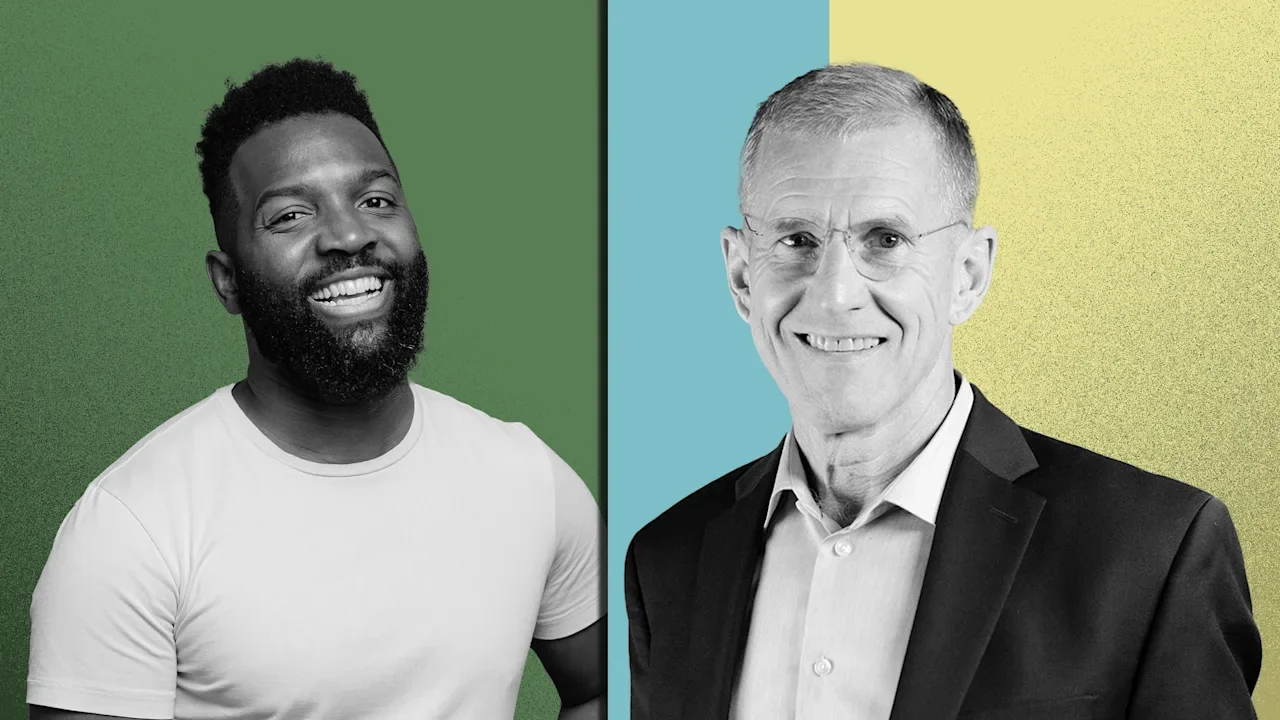
What does it mean to be a courageous leader in 2025? Stanley McChrystal, retired four-star general in the U.S. Army, joins futurist and culture critic Baratunde Thurston to discuss McChrystal’s new book, On Character, the responsibility of leaders today, and the weight of being an active citizen in democracy. Considering President The President’s deployment of the National Guard, McChrystal explores the role of the military in civil society. This is an abridged transcript of an interview from Rapid Response, recorded live at the 2025 Masters of Scale Summit in San Francisco. From the team behind the Masters of Scale podcast, Rapid Response features candid conversations with today’s top business leaders navigating real-time challenges. Subscribe to Rapid Response wherever you get your podcasts to ensure you never miss an episode. I was moved by your book. I was moved by your philosophical exploration, the concept of character—not just pushing a specific version of it, but breaking it down into component parts. Character is conviction plus discipline, and the thing that you argue for is to be curious about our convictions. Why is it important for you, for us, to not just have character or have good character, but to challenge the components of it in our lives? If you break character into the convictions, the strongly held beliefs you have—times your discipline to live to them, because anything is zero if you don’t have the discipline to live to it—the convictions matter a lot, but they’re not the things that someone just told you. And if you think about it, most of us are the religion we were raised in, we’re the nationality we were born into. We are a product of the experience we’ve had. So much of what we believe is what was sort of handed to us as we went along, and that doesn’t make it right. I remember in the counterterrorist fight we would be against members of Al-Qaeda who were extraordinarily effective, and they were killing people and they were trying to kill us. At the same time, the best they had were loyal, they were brave, they were focused on a cause that they believed in. And the only difference between me and my people and them was the life’s journey. Had we switched life’s journey, every probability is we’d have been at the other place. And so once you get there, you step back and go, ‘Well then, maybe they’re not entirely wrong.” Doesn’t mean I agree with them, it doesn’t mean I support them, but it means that my convictions need me to pressure-test them to the greatest degree possible. Part of that comes with philosophy, and I didn’t do it through much of my life. I did a few things, but then as I get older [I’m] realizing how important character always was. It was always the thing. At the moment, you didn’t always consider it that way. You were trying to be more proficient in this or more successful in this or more powerful. And then at the end . . . the common denominator of getting it right was always character. The decisions that I’m most proud of were good character and the ones that I regret—and there are some—they were places where I didn’t live to the character that I knew was the right answer. And so I think we’ve got to be humble enough to decide what we think we believe and then challenge it. I want to follow up on the humility and on what we do, and I use “we” intentionally. I know I have not always lived up to the character I profess and deeply believe in. I’ve put my emotional needs before someone close to me—an act of small but significant selfishness. And maybe you’ve had your own versions and people here have. What have you found works when we recognize that we haven’t lived up to our character, to recover from that and still maintain a good path forward? I think the first thing is we say, “Well, that’s not me.” But if any of you flew here and you made the mistake of checking your luggage, you had to go to the turnstile where the bags come out. And what do you typically see? You see people crowded right up next to it, like wildebeests at the last watering hole in the Serengeti. And there’s this idea that my bag’s going to come out faster if I’m closer. But the people down below putting the bags on the thing, they don’t care. If we all stepped back three or four feet, everybody could see it, we could calmly get in and reach our bag when it came out, and we could move on. Yet why are we that way? Not because we’re bad people, I don’t think. It’s because those people in that moment, we are anonymous to. We’re tired, we want to get home, we’re never going to see them again, so we can be that way. And how many times do you deal with somebody or some instance where you just think, I’m going to be this way because I’m angry or it serves my purposes? Things you would never do around people that you see routinely or your family. And then you realize we have lapses. So I think that the key thing for me is—and I’m pretty self-critical—at the end of every day I literally say and think of the times in the day when I was not the person I should have been, when I responded incorrectly to somebody. I got mad, I was short . . . you name it, there’s just a litany. And the key is not to make that the new standard. The key is to say that was wrong, and tomorrow I’m going to try to do better, knowing you’re never going to get to perfect. . . . And I think the other thing that we desperately need in society are norms where we hold each other accountable, where we’re willing to do that. Your mom would do that, but if your mom’s not around, who will do it? Sometimes we need to look each other in the eye and just go, “That’s not the way we do things. That’s not the way we treat other people. That’s not what we would consider the standard that we all want to hold ourselves to.” Since you brought up how we treat other people, let’s talk about what is happening with the U.S. government right now, which has a duty of care to treat people a certain way and is making really radical decisions on how to deploy the services of the government. How do you respond to the deployment of armed forces in American cities, particularly those run by Democrats, but really any city, or the deployment of immigration officers dressed as special operators? How do you see this, and how do you feel [about] this use of our military right now? Well, I think it’s unfortunate and I think it’s a big mistake. But if we stepped back and sort of antiseptically said, someone looks at you and you didn’t like it, and they say, “Well, you don’t believe in illegal immigration, do you?” And I sort of don’t believe in anything that begins with “illegal,” but that’s really not the issue here. The issue is how we’re treating each other, how we’re treating people. And there are probably two levels to it. The first is people are human beings and there should be a standard that we all decide we’re going to treat people, particularly people who are less strong than we are, who need to be supported, who need to be respected, who need to be helped. Then the use of the military, and this is of course personal to me, there’s a tradition of not using the military in the streets of the United States, the Posse Comitatus rule, and it’s got a really good reason. It’s because you don’t want the American people to identify the military with people that come and police. . . . We don’t want the American people to grow to fear or be resentful of our own military. Now, are there instances where the military can do things other organizations can’t? Absolutely. There’s a common-sense point of this, but I think the apolitical nature of our military is one of the sacred norms that we have respected for most of our history—never perfectly, but pretty darn well. When I was a senior officer, actually at all ranks, I never knew the political persuasion of any of my peers. I didn’t know if they were liberal. I didn’t know if they were conservative. We didn’t talk about it. It was considered inappropriate to do that. And of course it was inappropriate to talk about it with your subordinates because that’s undue influence. You just didn’t because the military wasn’t part of that. The problem is if a military gets politicized—we need only to look around the world for examples where that happens—then suddenly it has a different role in society, and we won’t like it. I guarantee it. View the full article
-
Chicago-based exchange handles futures tied to interest rates, Treasuries, energy and equitiesView the full article
-
The day after Thanksgiving is a holiday in itself for retailers. Historically, Black Friday has been a time when shoppers wake up early and head to stores for the best deals of the year. More recently, though, more and more consumers have been opting out of the mad rush in stores and turning to online deals, many of which started a week ago and now extend all weekend long till Cyber Monday, December 1. For those who like to be there when doors open, this is for you. Here’s everything you need to know. What time do Target, Best Buy, Kohl’s, and Walmart open? Many major big-box retailers open their doors nice and early for Black Friday, starting with Kohl’s and JCPenney, which open at 5 a.m.; followed by Target, Best Buy, Home Depot, Lowe’s, and Walmart at 6 a.m.; and T.J. Maxx, Marshalls, HomeGoods, Petco, and PetSmart at 7 a.m. Costco opens at 9 a.m., according to USA Today. Are there any stores closed on Black Friday? REI stores are closed not only on Thanksgiving but also on Black Friday. Are banks closed on Black Friday? Most banks are open on Black Friday, as it is not a federal holiday. However, check your local branch, as hours may vary. What about the U.S. stock market? The NYSE and Nasdaq Stock Market are open on Black Friday, but only for a half day of trading, ending at 1 p.m. ET. Isn’t there a Black Friday boycott? Yes, there are two boycotts: “Mass Blackout” and “We Ain’t Buying It.” The first boycott protests billionaires and the The President administration’s policies, and urges you not to participate in this year’s extended Black Friday sales, already underway, that run through Tuesday, December 2. The “We Ain’t Buying It” boycott urges consumers not to buy anything from three companies: Target (for its rollback on DEI), Home Depot (for working with Immigration and Customs Enforcement, which has been arresting, detaining, and deporting immigrants), and Amazon (for allegedly funding the The President administration to secure corporate tax cuts). View the full article

-
Every year, companies and space agencies launch hundreds of rockets into space—and that number is set to grow dramatically with ambitious missions to the Moon, Mars, and beyond. But these dreams hinge on one critical challenge: propulsion—the methods used to push rockets and spacecraft forward. To make interplanetary travel faster, safer, and more efficient, scientists need breakthroughs in propulsion technology. Artificial intelligence is one type of technology that has begun to provide some of these necessary breakthroughs. We’re a team of engineers and graduate students who are studying how AI in general, and a subset of AI called machine learning in particular, can transform spacecraft propulsion. From optimizing nuclear thermal engines to managing complex plasma confinement in fusion systems, AI is reshaping propulsion design and operations. It is quickly becoming an indispensable partner in humankind’s journey to the stars. Machine learning and reinforcement learning Machine learning is a branch of AI that identifies patterns in data that it has not explicitly been trained on. It is a vast field with its own branches, with a lot of applications. Each branch emulates intelligence in different ways: by recognizing patterns, parsing and generating language, or learning from experience. This last subset in particular, commonly known as reinforcement learning, teaches machines to perform their tasks by rating their performance, enabling them to continuously improve through experience. As a simple example, imagine a chess player. The player does not calculate every move but rather recognizes patterns from playing a thousand matches. Reinforcement learning creates similar intuitive expertise in machines and systems, but at a computational speed and scale impossible for humans. It learns through experiences and iterations by observing its environment. These observations allow the machine to correctly interpret each outcome and deploy the best strategies for the system to reach its goal. Reinforcement learning can improve human understanding of deeply complex systems—those that challenge the limits of human intuition. It can help determine the most efficient trajectory for a spacecraft heading anywhere in space, and it does so by optimizing the propulsion necessary to send the craft there. It can also potentially design better propulsion systems, from selecting the best materials to coming up with configurations that transfer heat between parts in the engine more efficiently. In reinforcement learning, you can train an AI model to complete tasks that are too complex for humans to complete themselves. Reinforcement learning for propulsion systems In regard to space propulsion, reinforcement learning generally falls into two categories: those that assist during the design phase—when engineers define mission needs and system capabilities—and those that support real-time operation once the spacecraft is in flight. Among the most exotic and promising propulsion concepts is nuclear propulsion, which harnesses the same forces that power atomic bombs and fuel the Sun: nuclear fission and nuclear fusion. Fission works by splitting heavy atoms such as uranium or plutonium to release energy—a principle used in most terrestrial nuclear reactors. Fusion, on the other hand, merges lighter atoms such as hydrogen to produce even more energy, though it requires far more extreme conditions to initiate. Fission is a more mature technology that has been tested in some space propulsion prototypes. It has even been used in space in the form of radioisotope thermoelectric generators, like those that powered the Voyager probes. But fusion remains a tantalizing frontier. Nuclear thermal propulsion could one day take spacecraft to Mars and beyond at a lower cost than that of simply burning fuel. It would get a craft there faster than electric propulsion, which uses a heated gas made of charged particles called plasma. Unlike these systems, nuclear propulsion relies on heat generated from atomic reactions. That heat is transferred to a propellant, typically hydrogen, which expands and exits through a nozzle to produce thrust and shoot the craft forward. So how can reinforcement learning help engineers develop and operate these powerful technologies? Let’s begin with design. Reinforcement learning’s role in design Early nuclear thermal propulsion designs from the 1960s, such as those in NASA’s NERVA program, used solid uranium fuel molded into prism-shaped blocks. Since then, engineers have explored alternative configurations—from beds of ceramic pebbles to grooved rings with intricate channels. Why has there been so much experimentation? Because the more efficiently a reactor can transfer heat from the fuel to the hydrogen, the more thrust it generates. This area is where reinforcement learning has proved to be essential. Optimizing the geometry and heat flow between fuel and propellant is a complex problem, involving countless variables—from the material properties to the amount of hydrogen that flows across the reactor at any given moment. Reinforcement learning can analyze these design variations and identify configurations that maximize heat transfer. Imagine it as a smart thermostat but for a rocket engine—one you definitely don’t want to stand too close to, given the extreme temperatures involved. Reinforcement learning and fusion technology Reinforcement learning also plays a key role in developing nuclear fusion technology. Large-scale experiments such as the JT-60SA tokamak in Japan are pushing the boundaries of fusion energy, but their massive size makes them impractical for spaceflight. That’s why researchers are exploring compact designs such as polywells. These exotic devices look like hollow cubes, about a few inches across, and they confine plasma in magnetic fields to create the conditions necessary for fusion. Controlling magnetic fields within a polywell is no small feat. The magnetic fields must be strong enough to keep hydrogen atoms bouncing around until they fuse—a process that demands immense energy to start but can become self-sustaining once underway. Overcoming this challenge is necessary for scaling this technology for nuclear thermal propulsion. Reinforcement learning and energy generation However, reinforcement learning’s role doesn’t end with design. It can help manage fuel consumption—a critical task for missions that must adapt on the fly. In today’s space industry, there’s growing interest in spacecraft that can serve different roles depending on the mission’s needs and how they adapt to priority changes through time. Military applications, for instance, must respond rapidly to shifting geopolitical scenarios. An example of a technology adapted to fast changes is Lockheed Martin’s LM400 satellite, which has varied capabilities such as missile warning or remote sensing. But this flexibility introduces uncertainty. How much fuel will a mission require? And when will it need it? Reinforcement learning can help with these calculations. From bicycles to rockets, learning through experience—whether human or machine—is shaping the future of space exploration. As scientists push the boundaries of propulsion and intelligence, AI is playing a growing role in space travel. It may help scientists explore within and beyond our solar system and open the gates for new discoveries. Marcos Fernandez Tous is an assistant professor of space studies at the University of North Dakota. Preeti Nair is a master’s student in aerospace sciences at the University of North Dakota. Sai Susmitha Guddanti is a Ph.D. student in aerospace sciences at the University of North Dakota. Sreejith Vidhyadharan Nair is a research assistant professor of aviation at the University of North Dakota. This article is republished from The Conversation under a Creative Commons license. Read the original article. View the full article

-
Search carried out at home of presidential chief of staff Andriy YermakView the full article
-
AI is rapidly changing the world around us, from the way we engage online to how we work. But while the technology is able to complete an astonishing number of tasks, humans are far from obsolete. A new report from McKinsey is shining light on why humans are still essential. According to the report, roughly 57% of work hours can be automated. Meanwhile, 70% of the skills employers look for can be used for both automated work and nonautomated work. This means over the next five years, humans will have to adjust their work habits to make room for automation. McKinsey designed an index to assess how automation will impact each skill used in the workplace today. According to the index, skills like digital and information processing, accounting, and coding are the most likely to be impacted by AI. Jobs requiring physical activity will see less of an impact, accounting for 35% of U.S. work hours. While robots have made huge strides in their ability to complete physical tasks, they cannot rival the “fine motor skills, dexterity, and situational awareness” of humans, the report says. Skills that rely on emotional awareness and personal connection—such as coaching, assisting, caring, or negotiating—will see the least amount of impact. The report explains that “even under a full adoption” of AI, emotional skills will remain relevant in many roles. Currently about 75% of the demand for AI skills falls into one of three categories: computer or mathematical jobs (44%), management roles (19%), and business and financial operations (7%). However, the report goes on to highlight “nearly all occupations have at least one highly disrupted skill—defined as being in the top quartile of change by 2030,” and that a third of occupations will see more than 10% of their skills “highly changed.” While many jobs will change, new jobs will also be created where working alongside AI will become essential. In fact, the report says, demand for workers who understand AI is growing faster than any other skill set. “Workers will spend less time preparing documents and doing basic research, for example, and more time framing questions and interpreting results,” the report says. “Employers may increasingly prize skills that add value to AI.” Making space for AI in the workplace is key. The tech could unlock around $2.9 trillion in economic value in the U.S. if companies can utilize employees to work together with automation, the report projects. Either way, while humans are still necessary for most jobs, AI will inevitably continue to change how humans work—no matter their role. View the full article

-
Just a handful of years ago, the idea of one person creating a company worth over a billion dollars seemed like a pipe dream. Thanks to rapid advancements in AI, the possibility of a “solopreneur unicorn” is less a matter of “if” and more a matter of “when.” Earlier this year, OpenAI founder Sam Altman told Reddit cofounder Alexis Ohanian that his group chat of tech CEO friends have a betting pool for when the world will see a one-person billion-dollar company. Ten months later, some experts suggest that the company could be founded in 2026, if it hasn’t been already, due to rapid advancements in agentic AI. “The ability of a person to scale themselves, to automate their lives, has just become amazing,” says Kyle Jensen, the director of entrepreneurship programs, associate dean and professor in the practice of entrepreneurship at Yale School of Management. “If you’re very skilled with those tools, you can have the productivity of 10 people.” Jensen adds that solopreneurship has historically been more akin to mom-and-pop-style small business ownership, with practitioners selling goods and services through the internet. While many solopreneurs still fit that mold, he sees another kind of solopreneur emerging; one that better resembles a high-growth startup, using new tools in lieu of hiring. “There have been a handful of companies that had private market valuations in excess of a billion dollars with very small teams—WhatsApp is a very famous example,” he says. “What is the probability that you’ll see a solo-entrepreneur who’s like, some engineer from Google, who decided she doesn’t want to do that anymore—and she’s going to do her AI startup from home, and become the first unicorn? I think it’s a pretty decent probability.” Unicorns are shrinking The first one-person company to surpass a billion dollars may not be all that far off. In recent years some one-person businesses have achieved smaller, yet still eye-popping valuations. At the same time the record for smallest unicorn company keeps getting broken. Earlier this year, for example, solopreneur Maor Sholomo sold his AI app-building platform Base44 to website builder Wix for $80 million, just six months after launch. Instagram had only 13 employees when it was sold to Facebook for a billion dollars in 2012. One of those cofounders, Mike Krieger, went on to found Anthropic in 2021, which was recently valued at $350 billion. Speaking with Fast Company earlier this year, Krieger suggested the one-person unicorn is “closer than you think.” “It feels like every month we’re getting closer and closer,” says Anthropic’s Head of Startup Sales, Jamie Neuwirth. “Companies that we’re working with, for example, at Y Combinator who are very small—usually two or three people—they’re getting to market faster, and that opportunity for them to become a unicorn is very real.” A virtual cofounder In the recent past, solopreneurs were able to automate certain operations, but it often required a high degree of technical know-how and many hours of building custom tools. Now, Neuwirth says AI tools like Anthropic’s AI assistant Claude can serve as a collaborator, taking on more advanced and critical tasks, without requiring founders to have a deep technical background. “I think of AI—and Claude in particular—as everything from this virtual collaborator to a kind of the chief of staff, but the way I think about it when it comes to solopreneurs is more of your virtual cofounder,” he says. “You can have a less technical background, and there’s still a lot that can be achieved with these tools.” Where to look for solo unicorns In recent months, AI companies like Base 44, Anthropic, and Swedish “vibe coding” app Loveable–which lets users build apps and websites by describing it in plain language–have dominated the headlines with eye-popping valuations, but Neuwirth says the first one-person unicorn won’t necessarily emerge from the AI field. That’s because those very solutions are allowing small teams and individuals to build, test, prototype, and ultimately sell technical solutions without deep technical skills. “As the model capabilities get a lot better, I think we’re going to see it come from different industries,” he says. “To me, it goes back to, ‘where is the need immediate, and the market really big?’” One sector Neuwirth believes is ripe for a first solo-unicorn is healthcare, where he says there are lots of legacy practices and processes, and a massive, global market eager for innovation. Tim Cortinovis, speaker and author of The Single-Handed Unicorn, meanwhile, believes the first one-person billion-dollar company will offer an easy interface to a complicated process, or a simple solution to a universal problem. “If you are able to put in a very easy interface between agents and the tasks at hand in, let’s say, a heavy machinery industry or the energy sector, I think this will solve a massive problem,” he says. “My advice is, don’t try to create the first single-handed unicorn, but try to solve a huge problem. You won’t win the game by thinking about winning.” The first solo unicorn may have already been born Though it may take that solopreneur founder several years to reach a 10-figure valuation, Cortinovis says 2025 will go down as the year that the necessary tools to accomplish such a feat became available. In other words, it is possible that the first individual who will accomplish that feat has already begun building their business. “In 2025 we reached the capacities of AI agents to accomplish these complicated tasks and orchestration,” Cortinovis says, explaining that this year AI broke out of the chatbot box and is now able to work with other tools and apps to complete more complicated tasks, like build apps and websites, manage a marketing campaign, or handle more complicated customer service inquiries. “Maybe we will see the first results at the end of ’26 or at the beginning of ’27 and then maybe two years later we’ll get the first real single-handed unicorn on the market with that valuation.” Whenever that one-person company does emerge, Cortinovis says the implications would extend well beyond the individual founder. “I think it opens up the path for more people [to pursue entrepreneurship] because it proves you don’t need an extensive team, you don’t need to start hiring massively to start an enterprise,” he says. “It symbolizes a new wave of founders. Even if you’re not going after a massive valuation, it will make them more willing to found an enterprise, because it shows how much easier it is with the technology.” View the full article

-
Locked out of home ownership, young adults are turning to risky financial behaviourView the full article
-
Sir Keir Starmer’s business envoy visited US bank boss in New York last weekView the full article
-
Global politicians need to understand that White House policy is driven by melodrama and instinctView the full article
-
Cloud companies and developers rely on lossmaking start-up to repay huge loansView the full article
-
Heavily indebted club faces accusations of desperation over sponsorship deal with little-known firm Zero-Knowledge ProofView the full article
-
Government considers increasing issuance of Treasury bills as demand for longer-term bonds fadesView the full article
-
Once the world’s factory, Beijing’s relentless focus on R&D means the country has become the world’s laboratoryView the full article
-
Emergency services work to extinguish what is Chinese territory’s deadliest fire in its modern historyView the full article
-
Premier Bart De Wever sets out conditions that would resolve his objections to a proposed €140bn EU loan to KyivView the full article
-
If you only skim the headlines, you’d think digital nomad visas were designed exclusively for software engineers and crypto founders. Of the 82 accessible digital nomad visas and residencies across 52 countries, many of the best-known programs demand minimum incomes of $3,000 to $4,000 per month, and sometimes more. For most nomads, finding their way ... Read moreView the full article
-
In an era where data is the lifeblood of decision-making, Workday is stepping up to empower small businesses with innovative tools and partnerships. Recently announced during Workday Rising EMEA in Barcelona, the launch of a global developer network and a collaboration with Google Cloud’s BigQuery is set to transform how small businesses can access and leverage AI technologies. Workday, a recognized leader in enterprise AI solutions that streamline HR and financial management, aims to democratize access to artificial intelligence with its new initiatives. “With the launch of our global developer network and Google BigQuery joining Workday Data Cloud, we’re opening our ecosystem in ways that meaningfully expand what’s possible for customers,” stated Gerrit Kazmaier, president of product and technology at Workday. This announcement signals a significant shift in providing small enterprises with valuable resources tailored for growth and efficiency. The new global developer network opens doors for aspiring developers and those already in the workforce. Through a structured program, participants can gain critical skills, complete certifications, and gain hands-on experience with Workday’s AI solutions. Workday has partnered with institutions such as Chennai Institute of Technology and KL University, along with staffing agencies like Helios Consulting and Randstad Digital, to create dedicated training programs. These efforts seek to fill gaps in the tech labor pool with professionals equipped to implement AI strategies in businesses of all sizes. Small business owners stand to gain immensely from these developments. By harnessing AI tools, they can streamline operations, improve customer interactions, and enhance financial forecasting. For instance, the ability to build predictive models for cash-flow forecasting without extensive integration hurdles means small businesses can make informed decisions faster. Once trained, developers earn a Workday Pro Developer Certification and gain visibility through the Workday Talent Directory, which connects them with companies actively seeking skilled talent to drive their AI initiatives. This is a notable advantage for small businesses that may struggle to compete for tech talent with larger corporations. “The Workday developer network will transform how we connect talent with opportunity. With a verified pool of Workday-certified developers, we can help clients quickly and confidently find skilled professionals,” remarked Trevor Lee, CEO of Helios Consulting. In addition to expanding its talent pool, Workday also announced that Google BigQuery has joined its Data Cloud, enhancing the platform’s utility for users. This integration allows small businesses to access their HR and finance data securely while utilizing Google Cloud’s advanced analytical tools. This means that small firms can now analyze business performance and customer behaviors without the burden of duplicating sensitive information, ensuring security and compliance. Andi Gutmans, VP and GM of Data Cloud at Google Cloud, emphasized the significance of this partnership, stating, “By combining Workday’s trusted HR and finance data with Google Cloud’s leading analytics and AI capabilities, customers can build intelligent agents to streamline their operations.” For small business owners, this translates to the ability to leverage sophisticated AI-driven insights to make quicker, smarter decisions that can ultimately improve operational efficiency. While the prospects are promising, small business owners should also consider potential challenges. Integrating new technologies often comes with a learning curve and resource allocation hurdles. Smaller firms may need to invest in training and development to ensure their teams can utilize these new tools effectively. The requirement for ongoing training also means that businesses must commit time and resources to keep their staff updated on the evolving landscape of AI technologies. Workday’s ecosystem approach extends beyond simply providing tools; it focuses on building a community that fosters collaboration and continuous learning. With the planned acquisition of Pipedream, an integration platform for AI agents, Workday further strengthens its commitment to creating an open ecosystem. This will facilitate smoother connections between Workday’s data and third-party systems, enhancing versatility for small businesses using various software applications. Scheduled to launch in early 2026, the global developer network and the enhanced Workday Data Cloud represent a significant opportunity for small businesses. As they prepare for these changes, it is vital for owners to stay informed about how these advancements can play a role in their strategic planning and operations. For more information, you can read the full announcement from Workday here. Image via Google Gemini This article, "Workday Launches Global Developer Network and Partners with Google Cloud" was first published on Small Business Trends View the full article
-
In an era where data is the lifeblood of decision-making, Workday is stepping up to empower small businesses with innovative tools and partnerships. Recently announced during Workday Rising EMEA in Barcelona, the launch of a global developer network and a collaboration with Google Cloud’s BigQuery is set to transform how small businesses can access and leverage AI technologies. Workday, a recognized leader in enterprise AI solutions that streamline HR and financial management, aims to democratize access to artificial intelligence with its new initiatives. “With the launch of our global developer network and Google BigQuery joining Workday Data Cloud, we’re opening our ecosystem in ways that meaningfully expand what’s possible for customers,” stated Gerrit Kazmaier, president of product and technology at Workday. This announcement signals a significant shift in providing small enterprises with valuable resources tailored for growth and efficiency. The new global developer network opens doors for aspiring developers and those already in the workforce. Through a structured program, participants can gain critical skills, complete certifications, and gain hands-on experience with Workday’s AI solutions. Workday has partnered with institutions such as Chennai Institute of Technology and KL University, along with staffing agencies like Helios Consulting and Randstad Digital, to create dedicated training programs. These efforts seek to fill gaps in the tech labor pool with professionals equipped to implement AI strategies in businesses of all sizes. Small business owners stand to gain immensely from these developments. By harnessing AI tools, they can streamline operations, improve customer interactions, and enhance financial forecasting. For instance, the ability to build predictive models for cash-flow forecasting without extensive integration hurdles means small businesses can make informed decisions faster. Once trained, developers earn a Workday Pro Developer Certification and gain visibility through the Workday Talent Directory, which connects them with companies actively seeking skilled talent to drive their AI initiatives. This is a notable advantage for small businesses that may struggle to compete for tech talent with larger corporations. “The Workday developer network will transform how we connect talent with opportunity. With a verified pool of Workday-certified developers, we can help clients quickly and confidently find skilled professionals,” remarked Trevor Lee, CEO of Helios Consulting. In addition to expanding its talent pool, Workday also announced that Google BigQuery has joined its Data Cloud, enhancing the platform’s utility for users. This integration allows small businesses to access their HR and finance data securely while utilizing Google Cloud’s advanced analytical tools. This means that small firms can now analyze business performance and customer behaviors without the burden of duplicating sensitive information, ensuring security and compliance. Andi Gutmans, VP and GM of Data Cloud at Google Cloud, emphasized the significance of this partnership, stating, “By combining Workday’s trusted HR and finance data with Google Cloud’s leading analytics and AI capabilities, customers can build intelligent agents to streamline their operations.” For small business owners, this translates to the ability to leverage sophisticated AI-driven insights to make quicker, smarter decisions that can ultimately improve operational efficiency. While the prospects are promising, small business owners should also consider potential challenges. Integrating new technologies often comes with a learning curve and resource allocation hurdles. Smaller firms may need to invest in training and development to ensure their teams can utilize these new tools effectively. The requirement for ongoing training also means that businesses must commit time and resources to keep their staff updated on the evolving landscape of AI technologies. Workday’s ecosystem approach extends beyond simply providing tools; it focuses on building a community that fosters collaboration and continuous learning. With the planned acquisition of Pipedream, an integration platform for AI agents, Workday further strengthens its commitment to creating an open ecosystem. This will facilitate smoother connections between Workday’s data and third-party systems, enhancing versatility for small businesses using various software applications. Scheduled to launch in early 2026, the global developer network and the enhanced Workday Data Cloud represent a significant opportunity for small businesses. As they prepare for these changes, it is vital for owners to stay informed about how these advancements can play a role in their strategic planning and operations. For more information, you can read the full announcement from Workday here. Image via Google Gemini This article, "Workday Launches Global Developer Network and Partners with Google Cloud" was first published on Small Business Trends View the full article
-
Verdict from think-tanks is that Rachel Reeves has put fiscal repair job ‘on hold’View the full article
-
If you’re looking to improve your online presence, exploring free social scheduling tools can be highly beneficial. These tools help you manage and schedule content across various platforms, making it easier to engage your audience effectively. From intuitive team collaboration features to robust analytics capabilities, each tool offers unique advantages. Comprehending these options will empower you to select the best fit for your needs and strategies. Let’s examine these tools in detail to see which ones can boost your social media efforts. Key Takeaways Buffer allows scheduling for up to three accounts and ten posts each, enhancing online presence with basic analytics and an AI Assistant for content creation. Crowdfire supports multiple platforms, offers bulk scheduling for up to 50 posts, and provides insights into post performance to optimize engagement. Odoo simplifies management of unlimited accounts with effective scheduling, automation, and collaboration tools for social campaigns, boosting overall productivity. Planable focuses on team collaboration, enabling up to three collaborators with a user-friendly interface and a drag-and-drop calendar for organizing up to 50 posts monthly. Later is tailored for Instagram, allowing visual content planning and scheduling of up to 30 posts monthly, enhancing visual engagement with audiences. Buffer Buffer is a widely recognized social media scheduling tool that streamlines the process of managing your online presence. With Buffer, you can easily post to multiple social media platforms, connecting up to three accounts and scheduling up to ten posts per account. This makes it one of the most effective social media scheduling tools free of charge. The platform offers basic analytics, giving you access to engagement and performance metrics for your scheduled posts. Moreover, Buffer includes a browser extension for quick content sharing, simplifying how you add posts to your queue. Its user-friendly interface improves efficiency and planning. Plus, with the AI Assistant, you can generate posts, rephrase drafts, and brainstorm ideas, making free social scheduling even more effective. Crowdfire For those looking for an effective way to manage their social media presence, Crowdfire offers a robust free scheduling solution. It’s one of the cheapest social media schedulers available, allowing you to connect one account per social network and schedule up to 10 posts per account. This is ideal for individuals and small businesses. The tool supports platforms like Facebook, Instagram, LinkedIn, and X, enabling you to manage multiple channels from a single interface. With its bulk schedule feature, you can upload and schedule up to 50 posts at once, simplifying your planning process. Furthermore, Crowdfire provides insights into post performance, helping you refine your strategy and learn how to post on all social media at once effectively. Odoo Though managing multiple social media accounts can be overwhelming, Odoo offers a free solution that simplifies this task by allowing users to oversee unlimited accounts across platforms like Facebook, LinkedIn, and Instagram. With Odoo, you can streamline your social media strategy through its robust features: Scheduling: Plan and automate your posts effectively. Analytics: Track engagement metrics to gain insights into your social media performance. Intuitive Dashboard: Integrate social media management with other business applications for efficient operations. Collaboration: Work together with your team on social campaigns, enhancing content creation and strategy. Planable Planable stands out for its team collaboration features, allowing up to three collaborators to work together efficiently, which improves the content creation process. Its user-friendly interface simplifies social media management, making it accessible even for those with limited experience. With its effective post scheduling and drag-and-drop calendar view, you can effortlessly arrange your content and guarantee it aligns with your brand’s aesthetics before publishing. Team Collaboration Features When teams need a streamlined approach to social media management, effective collaboration tools are essential. Planable offers several features that improve teamwork and simplify content review processes: Collaborators: You can invite up to 3 collaborators on the free plan, making teamwork efficient. Collaborative Calendar: The platform provides a visual calendar view, allowing teams to plan and schedule posts together seamlessly. Drag-and-Drop Functionality: You can easily rearrange content and prioritize posts for maximum engagement with a simple drag-and-drop feature. Preview Mode: Collaborators can see how posts will appear on social media platforms before publishing, ensuring everything looks perfect. With these features, Planable enables teams to refine their content strategy effectively and collaboratively. User-Friendly Interface A user-friendly interface is crucial for effective social media management, particularly when juggling multiple posts across various platforms. Planable offers a drag-and-drop interface that simplifies scheduling, allowing you to arrange content visually on a calendar. This feature makes it easy to see your planned posts at a glance. The platform supports collaboration with up to three team members on the free plan, facilitating coordination and review before publication. You can likewise preview your posts in real-time, ensuring they display correctly across different social media channels. The intuitive design minimizes the learning curve, making it accessible for both beginners and experienced marketers. With a limit of 50 posts per month, Planable balances simplicity with adequate capacity for small teams or individual users. Post Scheduling Efficiency Efficient post scheduling is essential for maintaining a consistent online presence, especially for brands that rely on timely content delivery. https://www.youtube.com/watch?v=U0keUj6EoDM Planable thrives in this area, offering a free plan that allows you to schedule up to 50 posts per month. Here are some key features that improve your scheduling efficiency: Collaborative Workspace: Work with up to 3 collaborators to create and schedule content, boosting teamwork and creativity. Drag-and-Drop Calendar: Easily organize and plan your posts visually, simplifying your workflow. Post Previews: Preview your posts before they go live, ensuring they appear polished across all platforms. Social Media Integration: Seamlessly manage your posts from major social networks, streamlining your scheduling process. With Planable, you can effectively maintain your online presence. Later As you explore social media scheduling tools, Later stands out for its visual approach, particularly customized for Instagram users. This tool allows you to plan and schedule posts using an intuitive drag-and-drop calendar interface. The free plan supports one profile per platform and enables you to schedule up to 30 posts each month, making it a great fit for individuals and small businesses. Later also features Linkin.Bio, creating a landing page for your Instagram posts, which helps drive traffic to multiple links from your bio. Furthermore, the platform includes analytics tools that track post performance and engagement metrics, allowing you to refine your content strategy based on audience insights. This user-friendly interface simplifies the content planning process, ensuring consistency in your online presence. Hootsuite Hootsuite serves as a potent tool for managing social media, particularly for those just starting their online presence. Its free version is accessible, supporting up to two social media accounts and allowing you to schedule five posts at a time. Here are some key features you’ll appreciate: Built-in analytics help track post performance and engagement metrics. A user-friendly interface includes a visual calendar for easy scheduling across platforms like Facebook, Instagram, LinkedIn, and YouTube. The inbox feature enables direct engagement with your audience, streamlining communication. You can explore a 30-day free trial of the professional plan, which offers advanced features and the ability to manage more accounts before committing to a paid subscription. Zoho Social If you’re looking for another option in social media management, Zoho Social presents a solid alternative with its features personalized for effective content scheduling and audience engagement. The free plan allows you to manage one brand and one user, enabling you to schedule posts and automate content publishing efficiently. With built-in analytics, you can gain insights into post performance and audience engagement customized to each social network. Moreover, you can manage multiple accounts from a single dashboard, streamlining your content management efforts. Zoho Social furthermore integrates seamlessly with other Zoho products, enhancing overall business management. Its scheduling feature helps you publish content at ideal times, greatly improving your social media presence and user interaction. Frequently Asked Questions What Are the Free Tools for Social Media Scheduling? When looking for free tools for social media scheduling, you have several options. Buffer lets you connect up to three accounts, scheduling ten posts each. Crowdfire supports one account per social network with the same post limit as it suggests relevant articles. Odoo offers unlimited account management. Planable allows up to 50 monthly posts with a collaborative workspace. Finally, NapoleonCat provides a two-week trial for managing ten profiles and scheduling thirty posts. Which Online Tool Is Best Suited for Scheduling Social Media Posts in Advance? When you’re looking to schedule social media posts in advance, several online tools can meet your needs. For instance, Buffer allows you to manage up to three accounts and schedule ten posts per account for free. Crowdfire offers content curation along with scheduling, whereas Planable supports collaboration with up to 50 posts monthly. If you’re focused on visual platforms, Later’s drag-and-drop calendar can be particularly useful for Instagram scheduling. Choose based on your specific requirements. Is There a Free Version of Hootsuite? Yes, Hootsuite offers a free version that allows you to connect up to two social media accounts and schedule up to five posts at a time. This plan includes built-in analytics, helping you track engagement and performance. You can manage your posts and monitor interactions through a single dashboard. It’s a great option if you’re an individual or a small business looking to manage your social media presence without incurring costs. What Is a Social Media Scheduling Tool? A social media scheduling tool is software that helps you create, plan, and schedule posts across various social platforms from one dashboard. You can choose specific times for your content to go live, ensuring consistent audience engagement without manual posting. Many tools feature a visual calendar for strategic planning and offer analytics to track engagement metrics. Moreover, they support team collaboration, allowing multiple users to coordinate content creation and scheduling effectively. Conclusion In conclusion, utilizing free social scheduling tools like Buffer, Crowdfire, Odoo, Planable, Later, Hootsuite, and Zoho Social can greatly improve your online presence. Each tool offers unique features suited to different needs, from analytics and multi-platform management to team collaboration and visual content scheduling. By integrating these tools into your strategy, you can streamline your content management process, engage your audience effectively, and in the end, enhance your social media impact without incurring additional costs. Image via Google Gemini This article, "Top 7 Free Social Scheduling Tools for Boosting Online Presence" was first published on Small Business Trends View the full article