ResidentialBusiness
Administrators
-
Joined
-
Last visited
Everything posted by ResidentialBusiness
-
 Marry one of the world’s most powerful business software platforms with AI capabilities. The result allows businesses of all types and sizes to create new workspaces. It enables teams to integrate native and third party apps. And it frees your employees to share data easily across your organization while maintaining critical security features. Witness the remarkable new iteration of Zoho One. And reimagine your business as teams share insights across over 50 applications and third party apps from Google, Microsoft, Quickbooks and more. “Now we have about 75,000 customers using Zoho One,” explains Raju Vegesna, Chief Evangelist at Zoho. “These customers are distributed all over the world and the average number of applications they use is around 22 to 23 and that has been growing and that option has been pretty significant across various org sizes, small to mid-size to enterprises as well.” The new AI enhanced Zoho One unifies features across 50+ Zoho apps and third party integrations in a variety of ways. One layer of integration involves Spaces, divided into Personal, Organization and Department. Take a look at how these are arranged below. Get the Personal Touch Say you operate a Seattle-based coffee roaster – with national distribution. Each member of your marketing department needs personal productivity tools. Think design tools to work on the elements of a campaign and file storage to upload those assets. They also likely need a chat feature to discuss projects with other members of the team. “You know, sometimes we want to just put our head down and do the work … and we need our own space for ourselves, that is the personal space.” adds Vegesna. “So we created a personal space with relevant tools that you may use.” Each member of your sales team needs email to receive leads and video-call features to follow up with potential cafes or supermarket chains potentially interested in carrying your coffee. But instead of popping in and out of 10 or 20 applications, Zoho One’s new integration offers a magic trick. Abracadabra and each member creates a Personal Space where emails can be read and sent, calls made and files stored and shared. All this happens within a dashboard created to improve productivity. Expect to compete with big brands like Starbucks and Peet’s Coffee in no time, as Zoho One supercharges your sales and marketing teams. These individuals require personal space to do their work but also they look for ways to share quickly with other members of the team. Fortunately other aspects of Zoho One’s unified new approach fill just this need. Stay tuned. Keep Your Organization Communicating Of course, you also need a way to communicate and collaborate across your organization. “If you’re in a collaboration mode within your entire organisation, well you get into the Organisation Space where there are a lot of tools out there that can help with various collaborations that you may do – various forms of collaboration.” Vegesna adds. Say you operate a real estate brokerage in Reading, Pennsylvania. But you have regional agents throughout several counties in the Southeastern part of the state. You need tools to help you bring those agents together on a regular basis, even when spread out over 50 miles or more. Town Halls The Organization Space enables you to set up town halls with your agents wherever they are located. Set up your town halls with clearly defined durations and agendas. For example, establish a Monday morning session to update agents on new listings and the progress on existing listings. Share exciting news on offers received as well as successful closings and other landmark accomplishments. Set up another town hall midweek, perhaps an ask me anything session for new agents who are just learning the ropes. Forums Use Forums to help agents collaborate on projects, do more showings and ultimately make more sales. For example, encourage agents in one county to post their listings, photos, asking price and other details. This allows realtors in another county who might have the perfect buyer to set up a showing or request more information on the listing with just a few clicks. Or suppose one realtor has an open house coming up this weekend. Forums provide a place to announce the event and ask other realtors to attend and possibly bring clients who might be interested. Other Tools Town Halls and Forums both reside within Zoho Connect. But make no mistake. Our hypothetical real estate brokerage need not get siloed within one application. You see, the new Zoho One seeks to ease boundaries between apps with simple dashboards allowing collaborating teams to enable or disable apps at will. “While you may be navigating multiple applications, it feels like a single unified interface across the board,” Vegesna points out. So our southeastern Pennsylvania real estate company likely also uses Zoho Projects to manage staging of properties or closings on property sales to ensure nothing gets missed. But the company also uses Zoho Social to create campaigns for individual properties – or to bring in new listings. “So users can create multiple dashboards, pulling data across multiple applications and the default dashboards that we create themselves pull data across the operating system,” Vegesna adds. Cool, huh? Improve Departmental Efficiency But most importantly, the new Zoho One’s philosophy of unification tackles the big daddy of all business challenges, departmental efficiency. Miss this important detail and your business always ends up throwing more money out the window than you take in at the door. The new Zoho One allows teams to create dashboards for any department you can imagine – using any tools they need. “They are organized whether it is CRM related, whether it is HR related, support related,” Vegesna begins. “If you want to add any of these, like a help desk overview, you pin it in or you add that and it kind of shows up here.” Imagine the accounts receivable department of a collection agency in Santa Fe, New Mexico working mainly with local hospitals and other healthcare providers. Few businesses better exemplify the connection between departmental efficiency and profitability. Fail to track delinquent accounts, schedule calls to make payment arrangements or track and process payments made? You soon face angry clients and the possibility of cancelled contracts. Fortunately, a variety of Zoho tools provide the perfect solution. Use Zoho Billing’s Accounts Receivable Aging Summary to identify delinquent accounts. Employ Zoho Projects to create a ticket system for contact and payment negotiations. Then use Zoho Payments to make paying down that debt effortless. Zoho Books helps track incoming payments from customers – as well as the cost of collection. Create a dashboard – or multiple dashboards – and give your team a 40,000 foot view of your collection operations. This allows piling up delinquent accounts, delays in contact, delayed payments and excessive costs in the collection process to stick out more clearly. “What if we can take all of these applications … and make them behave like a single application – and where you remove the boundaries between these applications on the data and make the entire thing behave like a single unified experience where the context becomes the king?” Vegesna muses. Can you see the potential? New Zoho One Puts Ghost in Machine with Zia Another important change in the new version of Zoho One happens to be the further integration of Zia – Zoho’s AI assistant. AI already featured prominently in Zoho’s offerings. But the new Zoho One incorporates Zia into almost everything. “So Zia is kind of sprinkled throughout the operating system,” Vegesna explains. For example, Zia helps Zoho take its famous low code app building feature in Zoho Creator to a whole new level. Zoho Creator already makes app creation a breeze with its simple drag and drop elements. But now give Zia a prompt and it builds what you want and even installs it. Say you needed a checklist of CRM or other tasks for the day. Or, as in the example of our imaginary accounts receivable department above, you need outstanding invoices ordered by the due date. This allows your team to track accounts to determine when they have reached delinquency – or when payments are late. Perhaps you just need a simple way to create a meeting schedule for the day or for the week. This represents just a sampling of the kinds of widgets Zia can whip up for you, according to Zoho. “It will create a widget for you and plug that right in,” Vegesna explains. Equally important, Zia helps you sift through reports for important insights. Vegesna adds, “ For example, in this case, I’m looking at a report. I can expand into it, zoom into it, ask Zia to do some analysis where Zia will give me a summary on that particular report.” So, Zia parses through huge volumes of information surfacing only the important bits for your project. Suppose you need the sales numbers on your ecommerce site from 2024 and the first half of 2025. Or perhaps you need a summary of traffic and engagement from your last social media campaign. Zia scours reports from Zoho Commerce, Zoho Social or any other applications to provide the summaries you need. Unification of Experience, Intelligence and Integration Think of the way AI removes barriers between apps and data as a unification of experience. No longer do you work in Zoho Service Plus or Zoho People Plus or Zoho Marketing Plus. No longer do you work in sales or finance or HR. Instead, you collaborate across applications with the help of AI. You find the data you need regardless in which department it resides. Then think of the way Zia works across all applications. It delivers widgets and surfaces and summarizes data to help you better understand what happens across your business not just in one little silo. Consider this unification of intelligence. Bringing Third Party – To the Party This brings us to unified integration. This integration happens not only between Zoho applications. The new Zoho One also integrates with third party applications – like QuickBooks, Mailchimp, HubSpot and more. And it allows integration between these third-party applications themselves. So your business gets to choose the tools that work best for you – whether they exist in the Zoho ecosystem or not. Imagine an SEO firm in Silver Springs, Florida. Perhaps they use Zoho Projects to manage ongoing activities. Perhaps they use tickets for ongoing tasks like optimization of clients’ sites, link building and keyword research activities, for example. Maybe they also use Zoho CRM to nurture leads from marketing campaigns and bring in new clients. But when it comes to bookkeeping, they prefer Quickbooks – even though they use Zoho Invoice to bill clients and Zoho Payments to collect fees. Fortunately, with the new Zoho One, this presents no problem. “You can bring in third party dashboards as well, plug them right in with single sign-on enable,” Vegesna explains. “You get a complete overview of it, and then the concept of boards and removing the boundaries is a critical piece and we don’t restrict it to dashboards themselves.” Perhaps our Florida SEO company also uses GoDaddy to host the websites it builds for clients and for the domain name registration that goes along with this. Vegesna further explains how this integration in particular works. “So to make it really simple, we have also partnered with GoDaddy, where within the domain unification, all you need to do is login to GoDaddy, authorize changes to some of these records, and we will make these changes to their domain with their permission automatically,” he says. Final Thoughts No matter what your business needs, the new Zoho One offers over 50 applications to help you achieve your business goals. More to the point, the new iteration of Zoho One eliminates boundaries that once siloed data and app functionality. It allows businesses to create their own dashboards combining app functionality and moving data seamlessly as needed. New AI functionality including use of Zoho’s AI assistant Zia across the platform, allows businesses to build widgets and manipulate and summarize data. The platform upgrade even allows seamless integration with other third party software outside the Zoho ecosystem. This gives your business ultimate flexibility to choose the tools you want and integrate them the way you want. Visit the new Zoho One today. This article, "New Zoho One Uses AI to Reminagine Your Business" was first published on Small Business Trends View the full article
 -
Every good salesperson knows the 7-step process in which you identify and qualify a prospect to understand their needs, then present your offer, overcome objections, close the sale and follow up. It’s proven so consistently effective that its concepts have been the standard for training salespeople for decades. Many business leaders come up through sales and marketing, so it shouldn’t be surprising that they try to use similar persuasion techniques for large-scale change. They work to understand the needs of their target market, craft a powerful message, overcome any objections and then follow-through on execution. Unfortunately, that’s a terrible strategy. The truth is that the urge to persuade is often a red flag. It means you either have the wrong people or the wrong idea. Effective change strategy focuses on collective dynamics. Rather than trying to shape opinions, you’re much better off empowering people who are already enthusiastic about the idea and working to shape networks. The power of persuasion Experts have a lot of ideas about persuasion. Some suggest leveraging social proof, to show that people have adopted the idea and had a positive experience. Others emphasize the importance of building trust and using emotional rather than analytical arguments. Still others insist on creating a unified value proposition. For 35 years, psychologist Robert Cialdini researched which types of communication were effective and which were not. He found that influence is based on six key principles: reciprocity, commitment and consistency, social proof, authority, liking, and scarcity. More recently, Wharton Professor Jonah Berger has used data analysis to come up with his SPEACC framework. In recent years, a number of conversation-based practices, such as Deep Canvassing, Street Epistemology, and the Change Conversation Pyramid, have emerged that focus on a method called technique rebuttal. These focus on listening empathetically to build rapport and identifying common ground, then encouraging the target to engage in metacognition to examine how they arrived at their own conclusions. These all are, for the most part, worthwhile and can be effective. However, it’s also important to remember that the first two steps in the sales process are identifying and qualifying prospects so that when you are presenting your offer, it is to people who are eager, or at least open, to what you’re trying to sell. Nobody would recommend wasting time and effort on trying to sell to those who have no interest in buying. Yet with large-scale change, that’s not an option. Your environment will include the entire spectrum, from active supporters to active resistors. That means that for a significant portion of people, persuasive techniques will not be effective. The limits of communication We like to think that our minds work like computers, taking in evidence through our five senses and then processing that information in our brains to arrive at conclusions. Persuasion techniques tend to focus on glitches in that machinery in the form of cognitive biases, in order to get us to see things in another light. Yet we are wired to be social creatures. As we engage in collective action with others, we form group identities and seek to build status amongst our own tribe. Part of achieving the status we desire is showing loyalty and adherence to collective principles, so we take steps to signal to others that we remain loyal members in good standing and expect the same of them. That’s why we are greatly shaped by the people around us. Decades of studies indicate that we tend to conform to the opinions and behaviors of those around us and this effect extends out to three degrees of relationships. So not only do our friends’ friends influence us deeply, but their friends too—people that we don’t even know—affect what we think. That’s why communication strategies will always be limited. We can carefully craft messages to align with the influence techniques of Cialdini and Berger, listen with empathy and employ the methods of technique rebuttal to successfully persuade someone to come to our way of thinking. But when they go back and get embedded in their social networks once again, they’re very likely to return to their earlier way of thinking. To wit, when David McRaney, while researching his book How Minds Change, sought out people who left cults or turned their backs on conspiracy theories he found that, invariably, the change in their opinion was preceded by a significant change in their social networks. Why incentives backfire Another common persuasion tactic is the use of incentives, based on the belief that changing incentives will automatically change behaviors. However, incentives frequently fall short and can even backfire dramatically. Sometimes this is due to the same identity and dignity issue that make people resistant to influence techniques, but also because people often act in unpredictable ways that aren’t immediately obvious. Consider what happened in an experiment where daycare centers imposed fines for parents who were late picking up their children. Instead of cutting down on late pickups, they increased. As it turned out, parents saw the fine as a fee for convenience which they were happy to pay. There is also significant evidence that extrinsic incentives crowd out intrinsic and reputational motivations. For example, in an experiment in which subjects were asked to solve a puzzle, those who were paid a flat fee were much more likely to continue to work during free time than those who were paid for each puzzle solved. Yet there is one kind of incentive that does seem to work consistently and it taps into the same forces of group identity that make people resistant to other forms of influence. It’s called prosocial behavior. We are more likely to perform when we understand and identify with who our work benefits than when they are given financial incentives or fed some slogan. In a study by Adam Grant, the performance of call center employees more than doubled when they had regular conversations with people who benefited from their work. Lisa Earle McLeod and Elizabeth Lotardo report in an article in Harvard Business Review that similar results have been found in studies of lifeguards, hospital workers, and sales teams. Going to where the energy is Transformation efforts often center on communication, aiming to build awareness, desire, and knowledge about change, while building a sense of urgency and excitement. So leaders craft persuasive messages and broadcast them widely. Yet, after months of happy talk, they often find their efforts not only fell on deaf ears but also provoked deep, intense resistance. The truth is that change isn’t about persuasion, but collective dynamics. Decades of research has shown that change spreads through peer networks rather than communication campaigns. Or, as network science pioneer Duncan Watts once put it to me, ideas propagate through “easily influenced people influencing other easily influenced people.” That’s why you need to be wary about the urge to persuade. You want to go where the energy already is, not try and create and maintain it yourself. Find people who are already enthusiastic, empower them to succeed and they can bring in others, who can bring in others still. As Watts’ research has found, even a small initial shift can cascade into massive transformation. The evidence is clear: You don’t need to win over everyone at once. If you find yourself spending most of your energy trying to convince the skeptical or overpowering resistance, you are either focusing on the wrong people or you have the wrong idea. Instead of trying to push through, you need to regroup, reassess and identify where your efforts can be better placed. View the full article

-
As I said in previous articles, executives like to say they’re “integrating AI.” But most still treat artificial intelligence as a feature, not a foundation. They bolt it onto existing systems without realizing that each automation hides a layer of invisible human work, and a growing set of unseen risks. AI may be transforming productivity, but it’s also changing the very nature of labor, accountability, and even trust inside organizations. The future of work won’t just be about humans and machines collaborating: It will be about managing the invisible partnerships that emerge when machines start working alongside us . . . and sometimes, behind our backs. The illusion of automation Every wave of technological change begins with the same illusion: once we automate, the work will disappear. However, history tells a different story. The introduction of enterprise resource planning (ERP) systems promised “end-to-end efficiency,” only to create years of “shadow work” fixing data mismatches and debugging integrations. AI is repeating that pattern at a higher cognitive level. When an AI drafts a report, someone still has to verify its claims (please, do not forget this!), check for bias, and rewrite the parts that don’t sound right. When an agent summarizes a meeting, someone has to decide what actually matters. Automation doesn’t erase labor; it just moves it upstream, from execution to supervision. The paradox is clear: The smarter the system, the more attention it requires to ensure it behaves as expected. A new McKinsey report calls this “the age of superagency,” where people spend less time performing tasks and more time overseeing intelligent systems that do. The smarter the system, the more attention it requires to ensure it behaves as expected. The rise of the hidden workforce A recent analysis found that more than half of workers already use AI tools secretly, often without their managers’ knowledge. Similarly, another investigation warned that employees are quietly sharing sensitive data with consumer-grade chatbots, exposing companies to compliance and privacy risks. This is the new silent workforce: algorithms doing part of the job, unseen and unacknowledged. For employees, the temptation is obvious: AI offers instant answers. For companies, the consequences are dangerous. If those “silent partners” are consumer-grade models, employees might be sending confidential data to unknown servers, processed in data centers located in countries with different privacy laws. That’s why, as I warned in a previous article about BYOAI, organizations must ensure that any questions employees ask, and any prompts they use are directed to properly licensed, enterprise-grade systems. The problem isn’t that employees use AI. It’s that they do it outside the data governance. When intelligence goes underground Unapproved AI use creates more than data risk: it fractures collective learning. When employees each rely on their own AI assistant, corporate knowledge becomes fragmented. The company stops learning as an organization because insights are trapped in personal chat histories. The result is a paradoxical kind of inefficiency: everyone gets smarter individually, but the institution gets dumber. Organizations need to treat AI access as shared infrastructure, not a personal tool. That means providing sanctioned, well-audited systems where employees can ask questions safely without leaking intellectual property or violating compliance. The right AI model, as Microsoft knows extremely well, is not just the most powerful one: It’s the one that keeps your data where it belongs. The hidden human labor of ‘intelligent’ workflows Even when AI use is authorized, it introduces a layer of invisible human effort that companies rarely measure. Every “AI-assisted” workflow hides three forms of manual oversight: Verification work: humans checking whether outputs are correct and compliant Correction work: editing, reframing, or sanitizing content before publication Interpretive work: deciding what the AI’s suggestions actually mean These tasks aren’t logged, but they consume time and mental energy. They are the reason that productivity statistics often lag behind automation hype. AI makes us faster, but it also makes us busier: constantly curating, correcting, and interpreting the machines that supposedly work for us. The ethics of invisible labor Invisible labor has always existed: in care work, cleaning, or customer service. AI extends it into cognitive and emotional domains. Behind every “smart” workflow is a human ensuring that the output makes sense, aligns with brand tone, and doesn’t violate company values. If we ignore that labor, we risk creating a new inequality: those who design and sell AI systems are celebrated, while those who quietly fix their errors remain invisible. Productivity metrics improve, but the real cost, the human vigilance keeping AI credible, goes unrecognized. Even executives experimenting with AI “digital clones” admit they don’t fully trust their virtual doubles. Trust, as it turns out, remains stubbornly human. Managing the silent partnership When AI becomes embedded in everyday workflows, leadership must evolve from managing people to managing collaboration between people and systems. That requires new governance principles: Authorized intelligence only: Employees must use licensed, enterprise-grade AI systems. No exceptions. Every query sent to a public model is a potential data leak. Data residency clarity: Know where your data lives and where it’s processed. “The cloud” is not a place, it’s a jurisdiction. Transparency by design: Any AI-assisted output should be traceable. If an AI helped generate a report, label it clearly. Transparency breeds trust. Feedback as governance: Employees must be able to report errors, hallucinations, and ethical concerns. The real safeguard against model drift isn’t a compliance checklist, it’s a vigilant workforce. AI without governance isn’t innovation. It’s negligence. The cognitive supervision era We are witnessing the emergence of a new human skill: cognitive supervision, or the ability to guide, critique, and interpret machine reasoning without doing the work manually. It’s becoming the corporate equivalent of teaching someone how to manage a team they don’t fully understand. Training employees in this skill is urgent. It requires awareness of bias, logic, and the limits of automation. It’s not prompt engineering, it’s critical thinking. And it’s what separates organizations that collaborate with AI from those that merely consume it. The best companies understand this already. They are investing in education, not just tools, and treating “AI literacy” as strategic infrastructure. A recent profile of Viven’s AI-employee clones revealed that the real question is not whether AI can replicate workers, but whether organizations can govern the replicas they create. What executives must do now If you lead a company, assume that AI is already part of your workflows, whether you approved it or not. The task ahead is not to prevent its use but to domesticate it responsibly. Audit your AI exposure: Map where your people are already using tools. Provide safe alternatives: If you don’t, they’ll use whatever works, secure or not. Recognize hidden labor: Build metrics that reward verification, correction, and interpretation. Make transparency cultural: No AI-generated output should hide its origin. Done right, AI can become a trusted colleague, one that accelerates learning and amplifies creativity. Done poorly, it becomes a silent, unaccountable partner with access to your data and none of your ethics. A quiet revolution AI’s arrival in the workplace is not loud or cinematic: It’s silent, gradual, and pervasive. It hides behind polished interfaces, automating just enough to convince us it’s working on its own. But beneath that silence lies an expanding layer of human effort keeping the system ethical, explainable, and aligned. As leaders, our job is to make that effort visible, measurable, and safe. The most dangerous AI is not the one that replaces people: it’s the one that quietly depends on them, without permission, oversight, or acknowledgment. When AI becomes your silent partner, make sure it’s one you actually know, trust, and license properly. Otherwise, you may discover too late that the partnership was never yours at all. View the full article

-
At 3:20 a.m. on January 8, Steve Gibson and his wife were jolted awake by a phone call: the Eaton fire was approaching their home in Altadena, California, and they had to evacuate. “We left in about 15 minutes,” Gibson says. “So we only took our passports, our insurance papers, three pairs of underwear, and our little dog, Cantinflas.” They thought that they’d be able to come back within a few hours. But they soon learned that their house—and their entire block—had been destroyed. They spent the next few weeks moving from short-term rental to short-term rental, and finally moved into an apartment, though they knew that insurance would only cover the cost temporarily. Then they faced the next challenge: what would it take to rebuild their home? More than 10 months after the L.A. fires, the rebuilding process in the fire zone is painfully slow. In Altadena, where more than 5,000 houses burned in the Eaton fire, only a few hundred are currently being rebuilt. (Only one, an ADU, has been completed as of mid-November.) But some—including Gibson’s—are moving faster than others because homeowners have turned to prefab construction. Prefab companies like Villa, Cover, and Samara are all working on projects in the fire zone, as well as in the nearby burn areas in Pacific Palisades and Malibu. Some companies that initially focused on making backyard ADUs have expanded into full single-family prefab homes in the area, helping fire survivors rebuild more quickly. And as more homeowners choose prefab after the disaster, the approach could become a more mainstream option for new construction, even outside fire-prone areas. “Before the fire, I had never thought of a prefab home,” Gibson says. The small house that he and his wife lost, where they’d lived for 24 years, was built in the 1920s. They’d always lived in traditional homes. But when they started to research the timelines for a new traditional build, they were told it would take two or three years. A prefab home, in theory, could take months. A faster way to build The couple started working with a company called Cover, which builds components like wall panels in a factory in the nearby city of Gardena, and then assembles the pieces on the building site. After getting permits, building all of the parts for Gibson’s house took roughly a month in the factory; assembling it on the lot is taking a little more than two months. Gibson and his wife hope to move in before the end of the year. Prefab is “much faster because we move most of the complexity into the factory,” says Alexis Rivas, CEO of Cover. “Our wall panels, floor panels, roof panels are made in the factory with insulation, with waterproofing, with a lot of the mechanical, electrical, plumbing, already fabricated. And then what’s happening on site is primarily assembly work.” The design process can also happen quickly. While some companies, like Cover, offer more customization, others offer preset designs. And while traditional construction moves in a strict sequence, and a delay from one subcontractor slows down the whole process, factory-built homes run multiple production lines in parallel. Pouring the foundation and other site work can also happen at the same time. Inside the factory, each step is also more efficient. Instead of having to reach at an awkward angle to install a duct in a ceiling, for example, a work station is set up ergonomically, and the work can happen faster. Right now, relatively few homes have started construction in the fire zone. But more than 2,300 are at some stage of the permitting process, and next year, building a traditional house will also face the additional challenge of trying to find construction crews. “If you fast-forward six months, nine months, 12 months down the road, with a lot of construction activity, the labor base of trades and subcontractors is going to be really, really, really stretched,” says Sean Roberts, CEO of Villa, another prefab company working with homeowners in Altadena and Pacific Palisades. “That’s going to make building traditionally on site really hard, if you can even do it. That will drive cost up. It will drive speeds way slower. It will create a lot of uncertainty. So our approach is do it in the factory. The benefit of that is the amount of labor that we need on site in Altadena basically acts as a force multiplier.” Villa takes a different approach than Cover, building modules that arrive fully constructed rather than flat panels. “The blinds are on the windows, the appliances are in—it comes pretty much close to done,” Roberts says. A range of options There are a wide range of prefab options for homeowners to pick from, both in terms of style and price. Because many homeowners aren’t necessarily familiar with prefab housing, UCLA’s cityLAB, a design research organization, has temporarily installed a showcase of six different homes on an empty lot in Altadena. “Our sense was that folks are sort of arriving at this conversation with a bias,” says Ryan Conroy, cityLAB’s director of architecture. “Manufactured and prefab homes carry a sort of stigma often that doesn’t track with the quality of the building construction or the diverse architectural styles they come in, and really just the way technology has changed. In one sense, that needs to be seen for itself: folks need to be able to walk through. They need to understand the quality and the livability of some of the homes.” Many options, like Cover’s, have a modern aesthetic inspired by California’s Eichler and Case Study homes. Others, including some models that Villa designed specifically for Altadena, nod to the traditional 1920s Craftsman homes that were common in the neighborhood. Some are higher end. Villa’s are affordable, with the base cost before site work starting as low as $147,000. “These are simple homes,” says Roberts. “These are not high-end, luxury builds. But they are representative of what the neighborhood was.” The more affordable options can help homeowners who don’t have enough insurance coverage to rebuild an exact replica of the home they lost. In a couple of cases, prefab home companies are donating some homes to fire victims who couldn’t otherwise afford to rebuild. Many of the options are more sustainable than what was lost. Cosmic, a startup that uses a mobile “micro factory” to build homes with robots, is building ultra-efficient all-electric homes in the fire zone. Like other new construction in California, everything comes with solar on the roof to help reduce emissions and electric bills. The new builds are also safer in fires. Cover, for example, builds with steel instead of wood. Some projects are also using prefab to rebuild multifamily buildings. Beacon Housing, for example, recently got a grant from the Altadena Builds Back Foundation and Pasadena Community Foundation to build a small prefab bungalow court with 14 units for low-income residents. The bungalows will be built by Clayton Homes, which makes manufactured housing—what used to be known in the past as a trailer home, though the quality is very different now. The UCLA team also created a guide that homeowners can use to learn about relative costs and timelines and how prefab construction works, including the fact that it can offer more certainty. “I think what’s as attractive as this sort of expedited format is actually just knowing exactly when it will be done, which doesn’t necessarily track with traditional construction,” Conroy says. A long road to rebuild—but a turning point for the industry Even with faster construction timelines, prefab homes still face challenges. Although the local government has tried to streamline the post-fire paperwork process—for example, L.A. County set up a one-stop center for permitting in Altadena—builders told me that they still face bureaucratic delays. On some blocks, depending on how much infrastructure was destroyed in the fire, homeowners might face other delays connecting to utilities. Others may need to do more work to remediate their lot to make it safe to build. But several prefab projects are underway in Altadena, and it’s likely that many more people will choose that path. “This is a multiyear effort here,” says Roberts. “But doing at least some portion of the rebuild with factory-built homes is going to help get the community back up on its feet a heck of a lot faster than doing everything traditionally and on site.” As it expands, it could help the industry become more mainstream. “This feels like a catalytic moment for the industry,” says UCLA’s Conroy. “More than anything, it’s a chance to pull prefab into a building scale that actually matches how infill gets built across Southern California. Before the fires, prefab was basically split: either a single ADU box, or big multifamily projects with enough repetition to justify the factory work. Now we’re seeing builders get comfortable using prefab for larger single-family homes and smaller multifamily projects, and that familiarity is what will push prefab beyond the burn area.” View the full article

-
The line had just died down at Hong Kong’s Apple flagship store on Canton Road when I arrived on what happened to be the release day for the iPhone Pocket, the company’s new and very buzzed-about design collaboration between Apple and Issey Miyake Design Studio. I purchased it immediately—a short one in Sapphire blue, as the cross-body version was already sold out. I observed neither pomp nor circumstance with the overwrought packaging, which I shed on the spot despite its velum-bound elegance and prominent Miyake branding. I was on a working vacation after all, and so I simply looped the Pocket around the strap of my nylon cross-body bag and went about my day in a city whose entire experience is all but governed by smartphone technology. I was going to have to use the thing, not just look at it. Awkwardness ensued. Bouncing around on my thigh beneath the weight of my phone, the Pocket felt like a surprising, unwanted appendage. An attempt to access the Mass Trasnsit Railway (MTR) system by tapping my phone through the Pocket failed, which meant I had to remove the phone from the pocket altogether. (I accidentally dropped my phone while trying to quickly slip it back into the Pocket amidst the throngs of fellow passengers hustling past me.) On a quick trip to Shenzhen, China the following day, I experienced a moment of panic before I realized that my Pocket hadn’t been pickpocketed, but rather I had simply intuitively placed my phone in my bag, its familiar location, rather than fiddling with my newest accessory. At an eyebrow-raising $229.95 for the crossbody version and $149.95 for the shorter version, the limited-edition iPhone Pocket might simply be dismissed as an overpriced marketing gimmick, despite Apple’s long history of collaborating with luxury fashion brands. In my case, I am an inveterate fan of the late Issey Miyake’s work, which I collect in various vintages and frequently wear. I can simply look at the iPhone Pocket and see its potential for abject failure as a functional design object, and yet the Issey lover in me deeply appreciates the way his studio’s clothing and accessories challenge commonly held notions around how a piece of cloth should behave. Miyake’s designs are infamous, in part, for the way they play against the body, allowing the wearer exceptional freedom in how they position the garment. There is no “right” way to wear Miyake. The iPhone Pocket’s pleats not only allow the accessory to morph in shape according to its contents, but it allows that alteration to remain visible. (Similarly, the shape of the ubiquitous Lucent bag, for example, is designed to distort as the bag is filled with objects.) The relationship between Apple founder Steve Jobs and Issey Miyake himself is the stuff of legend: Miyake personally designed the black, mock-neck turtleneck that Jobs infamously paired with his Levi’s 501 jeans and New Balance shoes. Jobs, like many tech executives since, preferred to adopt a uniform as a means of reducing the cognitive load associated with choosing one’s clothing on a daily basis. Indeed, many Miyake megafans, myself included, are drawn to the kind of strangely unique uniformity one may achieve in wearing his clothing. The Pleats Please line, in particular, can be styled endlessly and sits effortlessly against the body in a way that begs for common wear. The iPhone Pocket, in contrast, offers friction—and a lot of it. The Miyake Design Studio team knows it, too: Recently quoted in The New York Times, Yoshiyuki Miyamae, the studio’s design director, said that “design should be leaving things a little bit less defined to allow more creativity from the user side.” He also questioned whether the American market was ready for such a development. While it’s true that Americans are less likely to follow the trend of wearing their phones across their bodies, as is commonly seen in Asia, the iPhone Pocket simply looks strange in a way that may bristle against more practical sensibilities. The sensationalization of the iPhone Pocket—it has already been panned by the popular press and meme-ified across the internet—poses a stranger version of the initial fervor that surrounded the iPhone itself. (The last time I waited in line to purchase something from Apple was in San Francisco, the day the first iPhone was released!) People don’t quite know what to make of it yet, even though Apple does hold a precedent in its 2004 iPhone Sock, a much cheaper and similarly intentioned, if less intentionally designed object. As Miyake Design Studio apparently planned, the onus for the design success of the iPhone Pocket seems to be placed squarely on its owner, which is—a risky proposition given the tension it poses, as an object, with the sleek minimalism of Apple’s design philosophy. In terms of branding, it could be argued that the heavier lift lies with Miyake over Apple, as Miyake holds strong name recognition in Asia, where the iPhone Pocket sold out immediately and where the demand for phone accessories is markedly higher. Its 1994 Pleats Please line has enjoyed a recent surge in popularity in the United States, yet Miyake is a far cry from a household name in America. Apple, on the converse, has a built-in, global audience for everything it produces. Will the iPhone Pocket catch fire, or will it slip into design obscurity alongside so many other tech accessories gone by? Now freshly arrived back in New York City, I’ve looped my Pocket yet again onto a sturdy leather bowler handbag along with a few other small charms for added flair. I’m willing to give it another try, and am ready for the conversation (and the criticism) that will inevitably follow me. View the full article

-
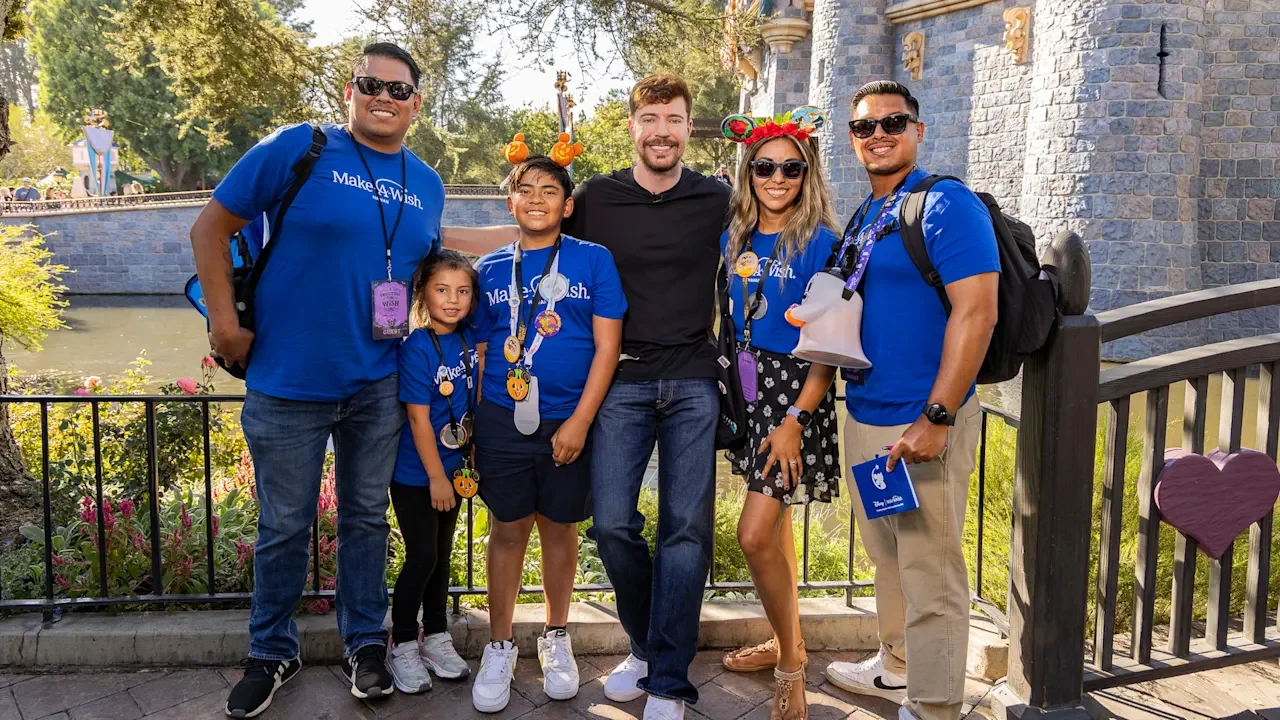
More children are cashing in their Make-A-Wish requests to meet their favorite content creators, with creator wishes more than doubling in the past decade. Make-A-Wish Foundation has been granting life-changing wishes for children with a critical illness since 1980. Now, alongside A-Listers and sports stars, YouTubers and TikTokers are also flooding requests, Axios reported. Requests to meet content creators make up 32% of the wishes granted within the entertainment industry, per Axios, the second largest source of requests behind the music industry. Several of the creators say they’ve been granting wishes for years and more than 50 creators and influencers became first-time wish-granters in the last year to keep up with demand. As parents and children realize meeting their favorite streamer, TikToker, or YouTuber is an option, it’s becoming more and more common. In October, Make-A-Wish, Disney, and MrBeast hosted YouTube and some of the world’s top creators, at Disneyland Resort to grant wishes for 40 children. This shift is unsurprising given the growing influence of content creators. It used to be that if you asked a classroom of kids what they want to be when they grow up, you’d get answers like “pop star” and “football player.” A 2024 survey of 910 U.S. Gen Alpha kids (ages 12 to 15) by social commerce platform Whop found that nearly a third want to be YouTubers, while one in five aspire to become TikTok creators. Given the chance, they also want to meet their heroes. “Digital creators have built strong, loyal communities based on authenticity and common interests,” Jared Perry, chief revenue officer at Make-A-Wish America previously shared in a statement. “When this connection is used to rally behind a cause like Make-A-Wish, it can generate significant donations and lead to long-term relationships with an entirely new audience.” Content creators also leverage their own platforms to engage followers in charitable causes. MrBeast, for example, is well-known for his philanthropy through his 501(c)(3) non-profit organization, Beast Philanthropy. Through his Beast Philanthropy channel, he has, in just the past year, given away $1 million of toys, donated $1 million worth of brand‑new teeth, and funded a gym for adaptive athletes. The organization donates 100% of the revenue from its content and merchandise. Make-A-Wish relies on fundraisers, donors, and partners to make sick children’s wishes come true. “By becoming ambassadors of Make-A-Wish, and featuring our mission regularly in their content, creators can inspire sustained support and make a meaningful difference,” Perry continued. View the full article
-
New private-label bonds collateralized by loans made outside the qualified mortgage definition hit highs for the month, quarter and year, CreditFlow data shows. View the full article
-
As a parent, shopping for holiday gifts for your kids can be a dilemma. Of course you want to surprise the little ones with exciting presents, but you also know that most flashy toys won’t hold their attention for very long. They’ll likely lose interest in them within a few days and you’ll be stuck with plastic toy cluttering up their rooms, destined for the donation bin. In addition to being a waste of money, it’s terrible for the planet. What if you could surprise them with something that’s both beautiful and practical? Here’s some ideas for gifts that they’ll be able to use for years. A purse of their own State, $60 At some point, your child will need their own bag to carry a little bit of pocket money or a snack. But if you get them a purse or tote, they’re likely to leave it behind somewhere. The solution: a cute bag you can strap onto them. State’s fanny pack is thoughtfully sized for a child’s body and comes in great designs like rainbow sequins. It is cleverly designed to go over their shoulder, so it is always in front of them. New art for their room Minted, prices vary Why not upgrade your child’s room with a piece of art they love? Minted offers a wide range of designs that are child-friendly, but won’t make you cringe. You could have fun picking a design together. You can order it as a framed poster print, or a canvas. It’s something that they’ll always associate with their childhood bedroom. A colorful, artistic umbrella Original Duckhead x Meri Meri Umbrella, $36 Kids love playing in the rain, and they love having their very own umbrella. Original Duckhead, a brand known for its durability and quality, has made a collection of kid’s umbrellas with the brand Meri Meri. The designs are fun, colorful, but also tasteful. Pick from cherries and smiley faces, dinosaurs, or rainbows. They’ll be perfect to stash in a backpack for a rainy walk back from school. A suitcase for all their adventures Away, $250 If you have upcoming travel, why not get them a suitcase they’ll love. This one from Away is designed from the same durable materials as the adult bags, but they’re perfectly sized for the under 7 set. Your kid will love packing it and wheeling it through the airport themselves. For the holidays, it comes with a Paw Patrols design in pink and blue. Pajamas fit for a prince or princess Petite Plume, $60 Holiday pajamas have become a trend, but who wants to wear Santa jammies in January? Petite Plume offers gorgeous, high quality nightgowns and pajamas that are so soft and beautiful, your kid will be excited to see them under the tree. (Some of the nightgowns are pretty enough that your child might want to wear them to school.) They come in classic designs, like toile and stripes, that can be worn all year around. A blanket for sleepovers and picnics Baublebar, $78 While you may not think your child will get excited about a blanket, wait till they see these. They’re designed in child friendly patterns and colors, and you can customize it with their name. It’s the perfect thing for them to bring to sleepovers or the park, or just to decorate their room. View the full article

-
Uncooperative neighbors, vicious pets and threats of violence are some of the dangers mortgage field employees run into when on assignments. View the full article

-
Luxury home prices rose 5.5% year over year in October to a median $1.28 million, far outgaining the 1.8% increase of nonluxury homes. View the full article

-
As I uploaded a 1940s photo of my grandpa Max and hit a few buttons in Google’s Veo 3 video generator, I saw a familiar family photo transform from black and white to color. Then, my grandpa stepped out of the photo and walked confidently toward the camera, his army uniform perfectly pressed as his arms swung at the sides of his lanky frame. This is the kind of thing AI lets you do now—virtually bring back the dead. As a hilarious Saturday Night Live sketch this weekend highlighted, though, just because we can reanimate our departed loved ones, that doesn’t necessarily mean we should. Grilling the dog The sketch, which The Atlantic has already called SNL’s “Black Mirror Moment”, features Ashley Padilla as an aging grandmother in a nursing home. Her family members—played by Sarah Sherman and Marcello Hernández—visit her on Thanksgiving, and use an AI photo app to bring her old family photos to life as short videos. At first, things go well. Padilla’s character marvels over a black and white image of her father waving as he stands in front of a spinning ferris wheel. But then, things go hilariously, predictably wrong. A photo of family members at a barbecue turns into a horror scene when the fictional AI app has Padilla’s father (played by host Glen Powell) roast the family dog, which happens to have no head. As other photos come to life, Padilla’s father pays a bowling buddy to perform a lewd act, and in a baby photo, her mother’s torso splits from her body and floats around the frame as a nuclear bomb explodes in the background. The sketch is hilarious because it’s so relatable. Anyone who has played with AI video generators knows that they can make delightfully wonky assumptions about the laws of physics—often with spectacular results. In my testing of AI video generator RunwayML, for example, I asked the model to create a video of a playful kitten at sunset. Things start out cute enough, until the kitten splits in two, with its front half attempting to exit stage right as its back half continues adorably cavorting around. Show me the movements Video generators make these errors because of the way they’re trained. Whereas a text-based AI model can learn by reading essentially every book, website, and other piece of textual data ever published, the amount of training-ready video content is far more limited. Most AI video generators train on videos from social media platforms like YouTube. That means they’re great at creating the kinds of videos that often appear on those platforms. As I’ve demonstrated before, if you want people knocking over wedding cakes or having heated arguments with their roommates, video generators like Veo and Sora excel at making them. For less commonly posted scenes, though, the available training data is far more limited. Most online videos, for example, show interesting things happening. People rarely post hour-long clips of themselves casually walking around (or to SNL’s example, holding a baby or grilling a hot dog) on YouTube or Instagram. Those videos would be so terminally boring that no person would want to watch them. Yet copious amounts of video of these kinds of boring, everyday activities are exactly what AI companies need to properly train their video generators. This has created a fascinating market for such clips. Companies like Waffle Video are popping up to serve the need, paying creators to film themselves doing things like chopping vegetables or writing specific words on pieces of paper for AI training. Until AI companies can get their hands on more videos of these kinds of mundane actions, though, AI video generators will struggle to mimic them. Ironically, video generators are currently great at showing fanciful, dramatic actions. Ask them to make the kinds of everyday scenes you might find in an old black and white family photo, though, and you get Fido on the barbie. Reanimate grandma? All that brings us to the question: should you use today’s AI tools to reanimate your dead loved ones? My best advice: Wait a bit. AI video tech is advancing incredibly quickly. The first tools that added movement to family photos—like Deep Nostalgia from My Heritage, which launched in 2021—used machine learning to perform their wizardry. The tech felt revolutionary at the time. Today, it looks primitive compared to the full motion scenes like the one of my Veo-animated grandpa. And even with those advances, Veo and its ilk are still in their avocado chair moment. Image generators have improved tremendously as their creators have gotten better at training them. Video generators will see similarly vast improvements—especially as AI companies invest millions in buying bespoke training data of everyday movements. Personally, I brought a photo of my grandpa to life because I thought the real Grandpa Max would find it amusing. I’ve resisted reanimating photos of more recently departed loved ones, though, for many of the reasons implicit in SNL’s sketch. Family photos are intimate things. It’s nice to see your late loved one smile and wave at you. Seeing them split in two or explode in a nuclear fireball, though, would be disturbing—and something you couldn’t unsee once you’ve conjured it up from the depths of Sora or Veo’s silicon brain. Until AI models can be trusted to avoid these kinds of distributing, random visual detours, we shouldn’t trust them with our most prized memories. A splitting kitten is amusing. A splitting grandma, less so. View the full article

-
As it faces a growing number of lawsuits alleging it helps facilitate child sexual exploitation, online gaming platform Roblox has unveiled a new age verification system. That system, however, could open it up a different sort of criticism. The popular app, which has roughly 151 million users, announced last week that it plans to require a facial age check for all users who utilize the Roblox chat system. User verification can be accomplished by either submitting a government ID or by submitting a selfie, which AI will examine to estimate the age of the user. The verification will begin rolling out in early December in select markets (which do not include the U.S.) and expand globally in January 2026. “This initiative is designed to provide even more age-appropriate experiences for all users, which we believe will improve interactions for users of all ages on Roblox,” Roblox Chief Safety Officer Matt Kaufman said in a statement. “Enforcing age checks allows us to implement age-based chat, which helps users better understand who they’re communicating with and limits chat between minors and adults.” Roblox is facing at least 35 lawsuits that allege users met and abused children on the platform. (More than one third of the platform’s users are under the age of 13.) Attorneys general in Kentucky and Louisiana filed separate lawsuits accusing the company of harming children earlier this year. And a California judge, earlier this month, denied Roblox’s attempt to force one father’s dispute into a private resolution. Roblox already has parental controls and blocks photo sharing and the exchange of personal information. It also uses a mix of human and AI to moderate text and voice interactions. Under the new system, though, users who verify their age will only be allowed to chat with others in a similar age range (unless they are classified a “Trusted Connection” with people they know). Those age groups will be broken into six categories: Under 9, 9-12, 13-15, 16-17, 18-20, or 21+. (Chat will not be offered to users under nine years old, unless a parent provides consent after an age check.) Because families have kids of all ages, Roblox says it will soon roll out solutions for direct chat between parents and children younger than 13 or between siblings in different age groups. Submitting age verification is still optional, but will be required for any user who wishes to utilize the system’s chat feature, which is a popular component with users. Roblox says submitted selfies will be completed through the app using a smartphone’s camera. It also tried to get ahead of possible security concerns, saying “images and video for age checks completed through Facial Age Estimation are processed by our vendor, Persona, and deleted immediately after processing.” Still, some parents could be wary of letting their young children submit photos to the company, given the number of lawsuits and the polarizing nature of facial recognition. In 2021, Facebook abandoned its facial recognition program, which suggested name tags for people in pictures, following privacy watchdog warnings and European Union regulators cracking down on the practice. (The company brought back facial recognition tools last year to assist with reclaiming compromised accounts.) Even Senate Republicans have expressed wariness over facial recognition software, proposing a limit on that technology in U.S. airports (though the bill has not found momentum so far). “Folks don’t want a national surveillance state, but that’s exactly what the TSA’s unchecked expansion of facial recognition technology is leading us to,” said Oregon’s Democratic Senator Jeff Merkley, a co-sponsor, in May. Roblox says its age checks won’t stop with the current program. Early next year it will require age checks to access social media links on user profiles, communities and experience details pages. View the full article

-
In late October, Tucker Carlson invited Nick Fuentes, a 27-year-old white-nationalist streamer, onto his popular podcast and Youtube show for a friendly interview. Fuentes has amassed a loyal following with hundreds of thousands of viewers who tune into the racist, misogynist, and antisemitic sentiments he voices in lucid monologues on his nightly show, America First. A talented broadcaster with a biting sense of humor and a combative persona, he’s tailor-made for the no-holds-barred environment of big-tech platforms—so long as he manages to stay on them. In 2021, he was booted from essentially every tech platform for hate speech, forcing him to start his own streaming service to host his show. Where did Fuentes come from? Why are old-guard conservative institutions and media stalwarts alike catering to him—or even cowering before him? The answer lies in how Fuentes has mastered the right-wing online swamps of the The President era, and the increasingly porous boundaries between the extremely online right and the Republican establishment, explains Ben Lorber, an analyst at Political Research Associates, a group that monitors and studies the far right. “You can’t tell the story of Fuentes’s rise without telling the story of alternative tech platforms and transformations of large tech platforms,” Lorber says. As the Fuentes interview rippled across social media, conservative sites and prominent figures on the right including Senator Ted Cruz and Jewish commentator Ben Shapiro, asked: What, exactly, had Carlson been thinking by platforming a figure like Fuentes? Three days after the Carlson appearance, Kevin Roberts, the president of the Heritage Foundation, the storied conservative think tank that produced the Project 2025 roadmap for the The President administration, weighed in. “I disagree with, and even abhor, things Nick Fuentes says. But cancelling him is not the answer, either,” Roberts said in a video on X, in which he also defended the right of conservatives to criticize Israel as well as Carlson’s decision to host Fuentes. Carlson’s critics, Roberts added, were “globalists” and part of a “venomous coalition,” language that many decried as trafficking in antisemitic tropes. Within the halls of Heritage, Roberts’s video provoked an insurrection, forcing him to issue a lengthy apology condemning Fuentes. In a speech, Roberts explained that he’d wanted only to reach the disaffected young men that comprise Fuentes’s audience, many of whom identify as “Groypers.” But the damage has been done. Heritage staff lambasted him at a town hall-style discussion. Numerous employees and a member of the board of trustees have resigned. The cochairs of their antisemitism task force, the creator of Project Esther, a campaign targeting pro-Palestine protestors, also announced they would be severing ties with Heritage. Last Thursday, Democratic Senate Minority leader Chuck Schumer announced he would introduce a resolution condemning Fuentes, and he called on his Republican colleagues to join him. ‘They have to engage’ Once, figures like Fuentes were relegated to the far-right fringes of the internet. Cassie Miller, an analyst with the Southern Poverty Law Center, explains that an older generation of conservative activists “learned to speak in dog whistles” to code racist appeals to voters. This model was pioneered by people like Lee Atwater, an advisor to Ronald Reagan and George H.W Bush, whose “southern strategy” infamously deployed euphemisms like “states rights” in place of explicit appeals to racism. But acolytes of Fuentes grew up in an entirely different media and technology environment, one where the far right saw the rise of Donald The President and his MAGA movement as a vehicle to seed their ideas into mainstream politics. “There are a lot of younger people, even within the institutionalized right, who are far more comfortable with the kind of overtly racist, transgressive language of someone like Fuentes,” Miller says. Fuentes has built his profile through a command of the incentive structures of large tech platforms. “He forces people to contend with his views and feel like they have to respond to him. They have to engage in some sort of discourse with him, and it ends up platforming him and legitimizing what he’s saying,” says Miller. “That’s what he did here with Tucker Carlson.” Short-form video has also proven to be a powerful weapon for Fuentes. His followers take bite-sized clips from his broadcasts and pump them out on X and other platforms. “You might not have context when you come into contact with it, and you might think that, well, he has some legitimate points,” Miller adds. There’s also Fuentes’s ugly blend of fair critiques of Israel’s wanton slaughter of Palestinians with outright antisemitism, a rhetorical strategy since adopted by figures like Candace Owens and Carlson. “Carlson, Owens, and Fuentes, and others are all competing for the same kind of market on the anti-Zionist right,” Lorber says. “They’ve identified that almost as a growth market.” Staying power Fuentes’s proficiency across online platforms, and the way those platforms have changed in recent years, have allowed him to stage his comeback. After Elon Musk purchased Twitter and renamed it X, he reinstated Fuentes’s account, where he now has over 1 million followers. His show went on to find a home on Rumble—a conservative competitor to Youtube with financial backing from Silicon Valley billionaire and Republican donor Peter Thiel, among others—where it is broadcast to thousands nightly. All this has coincided with the slow death of once good faith efforts at hate-speech moderation by large tech platforms, Miller says. “A lot of his career, he’s been pushed to the margins of online spaces. But what we’ve seen is that he’s had really incredible staying power,” she adds. That staying power in the online world may have already spilled over into the real world. Fuentes and others on the far-right like the pseudonymous author Bronze Age Pervert have advised their followers to “hide their power level” and infiltrate so-called “normie” conservative institutions. Recently, right-wing writer Rod Dreher wrote of the remarkable prevalence of Groypers among the Republican party’s professional ranks in Washington, including, he alleged, in the The President administration. Reports from Politico have revealed text threads of young Republicans and one The President appointee sympathizing with Nazism, showing the embrace of Groyper-like ideology. But trying to pinpoint the exact percentage of closeted Groypers might be missing the point. “There’s very little difference between whether someone is a dedicated Groyper, or whether they just agree with Fuentes’s politics independently of being one of his followers,” Lorber says. It might be better, Lorber says, to think of Fuentes “as a stand in for a worldview and a brand of politics—like an ambassador of the Gen Z radical right.” On the rise There is no reason to think that the recent controversy will slow Fuentes’s ascendancy within the GOP. The President has long since made common cause with the extreme right. The President infamously claimed there were “very fine people, on both sides” of the 2017 United the Right rally in Charlottesville, where men marched with tiki torches chanting “Jews will not replace us.” (An 18-year-old Fuentes was in attendance). In 2022, Fuentes himself attended a dinner at Mar-a-Lago with The President and the artist formerly known as Kanye West. Examples, in other words, are not hard to find. “Great Replacement ideology is now mainstream. Christian Nationalism is now mainstream, and antisemitism is rapidly becoming mainstream too,” Lorber says. “So for people like Nick Fuentes, the movement has caught up with him.” As for Heritage, the fine print of Project 2025 reveals an extremist vision in its own right, one that seeks to transform the country into a Christian Nationalist autocracy. A softening stance towards Fuentes, in other words, doesn’t seem so odd. Drawing the line at outright Nazism is certainly preferable to welcoming it. But the time for condemnation may be long since past. Fuentes, meanwhile, will keep posting and streaming, and likely continuing to bend the party to his will in the process. “He has a really clear understanding of the way the media environment works,” Miller says. “For Fuentes, it’s a huge victory just to have people say his name.” View the full article

-
When entrepreneurs list their principal reasons for launching a company, small business owners often cite being their own boss, flexibility in setting their working hours, and turning a commercial concept into reality as their main motivations. Now, new data identifies another incentive that may convince future entrepreneurs to take the plunge. According to a recent analysis by the Federal Reserve Bank of Minneapolis, the average self-employed person earns significantly more income during their career than people who work for someone else. However, the report’s findings also note the widely varying levels of income among small business owners, and the length of time usually required before stronger earnings start flowing in. Those details may lead some less enterprising prospective entrepreneurs to stick with punching a clock after all. The analysis by the Minneapolis Fed differs from most research on small business owners, which often relies heavily on survey responses. The shifting makeup of participants in those inquiries often produces widely contrasting results, creating what Minneapolis Fed authors likened to the parable of the blind men and an elephant: Each poll was essentially “touching only one part of the body,” and led to researchers drawing different and incomplete conclusions. To establish a more complete picture of the nation’s entrepreneurs, the Minneapolis Fed used U.S. tax and Social Security Administration data from 2000 to 2015. That allowed it to determine the income those small business owners collectively generated for themselves, and identify why they stuck it out with companies that were often slow to reach profitability. And that wasn’t due to setting their own hours. “(W)e find that self-employed individuals have significantly higher income and steeper income growth profiles than paid-employed peers with similar characteristics,” the report said, while also refuting frequent survey results that suggest many entrepreneurs stay in business for the perks of not having to answer to a boss. “Contrary to earlier studies based on surveys plagued by underrepresentation in the right tail of the income distribution, we find that non-pecuniary benefits of self-employment are not substantial when considering the source of most business income,” it said. What that means, in non-economist-speak, is that many entrepreneurs earn up to 70% more than people working for other employers over their careers, with their income increasing considerably faster than paid workers’. That winds up vastly outweighing the advantages surveys often identify of founders setting their own work schedules or getting to ask employees to fetch their coffee. The study found that during the 15-year period, a 25-year-old entrepreneur earned on average about $27,000 per year in 2012 dollars, while an employee of the same age made $29,000. About five years later, that income disparity had typically reversed, and then continued growing larger in small-business owners’ favor. “By age 55, our estimate is an average (entrepreneur) income of $134,000 in 2012 dollars—much higher than the estimate of $79,000 for the paid employed,” the study said. It added that gap was probably even larger before government agencies adjusted small-business income declarations by 14% to 46% to account for presumed underreporting. “These differences in profiles for the self- and paid-employed would be even more striking if we were to (re)adjust reported incomes to account for business income underreporting.” Not every small-business owner winds up earning as much as people working for salaries, however—or as much as their more successful peers. The study said about 80% of the total income of entrepreneurs it identified was generated by people earning $100,000 annually or more. That means a lot of small-business owners fared less well than the more affluent minority at the top. As a result, the authors said in wonky terms, a minority of self-employed people made even less than workers working for someone else. “IRS data shows that many of the primarily self-employed earned less over the sample years than paid-employed peers with similar characteristics, but in the aggregate this subgroup has a much lower share of the total income than those that earned more than their peers,” it noted. The Minneapolis Fed noted some other interesting observations in its findings. One was that many entrepreneurs continued working salaried jobs, or had other income coming in as they supported their still unprofitable new ventures. Those supporting funds improved the cohort’s overall positive revenue figures, even during early lean years. “In other words, when starting a new business, owners rely on other sources of labor earnings, through either paid employment or other business enterprises,” it said. “Thus, even though most businesses have losses, few owners have negative individual incomes.” Another significant detail was what the authors said was their use of official data to create a more precise collective financial portrait of entrepreneurs—contrasting the results of many surveys that may simplify the motives and activities of limited samples of small-company owners. “(T)he literature on entrepreneurship has an array of narratives, describing the typical business owner in many possible ways: as a gig worker seeking flexible arrangements, a misfit avoiding unemployment spells, an inventor seeking venture capital, a tax dodger misreporting income,” it said, before noting its own use of official income statistics collected from millions of entrepreneurs. “This data provides new insights into the central questions of the entrepreneurship literature and will hopefully prove useful for researchers interested in calibrating models of self-employment and business formation.” —Bruce Crumley This article originally appeared on Fast Company’s sister publication, Inc. Inc. is the voice of the American entrepreneur. We inspire, inform, and document the most fascinating people in business: the risk-takers, the innovators, and the ultra-driven go-getters that represent the most dynamic force in the American economy. View the full article
-
There’s a scene in Office Space where Peter sits across from two consultants during a company downsizing. They ask him, “What would you say you do here?” He hesitates, smirks, and admits he only works about 15 minutes a week. The rest of the time, he’s pretending. It was comedy in 1999. It’s confession now. That question has come back to us. For years, we filled our calendars, stayed visible, and kept the machine moving. Our worth was measured in hours, output, and presence. It had to be. Humans were the system, and the system required us to keep it running. We didn’t question it because that was how things got done. AI has changed that. It can now do many of the things we once did to keep things moving: the summaries, the reports, the follow-ups, the updates, the spreadsheets. It can organize, calculate, write, and execute at a pace we can’t match. That realization feels strange at first, but it’s also freeing. Now we get to hand that part over. We can give the robotic work to the robots and return to the human work. The work of thinking, deciding, designing, and connecting. So what does that look like? For one, it means our conversations are changing. When the noise quiets, the meetings sound different. There’s more space to ask better questions. We can finally talk about what matters: What is the business really trying to accomplish? What’s next? What do we need to build the product, craft the strategy, organize the team, and align around purpose? It’s fantastic, really. Because when people stop being buried in repetitive work, they start showing up differently. They bring curiosity. They tell the truth. They collaborate in new ways. I’m hearing it everywhere — in companies that are deep into their AI transformation and in those that are just starting. The tone is changing. The conversations are more human. We’re still in the waiting room of this transition. Some are pacing the floor, some are seated patiently, some are already being called in. Wherever a company sits on that curve, the shift has begun. Deloitte’s 2024 Global Human Capital Trends report describes this moment as a “readiness gap.” Most leaders recognize that AI and technology will transform their organizations in the coming years, yet few say they feel prepared to lead their people through that change. The tools are ready. The humans are still catching up. For leaders, this is the moment to adjust the focus. The work still needs watching, but the focus of that attention is different. It’s no longer about overseeing tasks; it’s about overseeing direction. How we design. How we execute. How we build and with whom. Leadership now is about being intentional and accountable for how work is created, not just how it is completed. Many leaders are rebuilding, or at least redesigning, how they lead. The language is changing. The tone is shifting. It’s not a different language, but it has a new accent. And those who thrive in this era will be the ones who can translate it. They’ll know how to take complexity and turn it into clarity. They’ll bring forward a sharper vision, a stronger purpose, and a deeper ability to communicate the “why.” They’ll be what I call “full-stack leaders”: people who can support the front, the back, and the middle layer. They understand product, people, and process, and they move fluidly across them all. AI has taken the repetitive pieces off our plates and has given us back the chance to think, create, and build with intention. It gave us room to lead. View the full article

-
Washington’s mixed signals and shifting proposals unsettle allies as negotiations near a critical phaseView the full article
-
When an X user recently pointed out the eye-popping increase in billionaires’ wealth since 2015, entrepreneur Mark Cuban, a billionaire himself, responded with his opinion on why, but he urged followers to consider a different question: “Why are we not giving incentives to companies to require them to give shares in their companies to all employees, at the same percentage of cash earnings as the CEO?” Cuban said. It is the right question to be asking. Because while the debate over wealth inequality continues, the solution has been hiding in plain sight for decades. The top 10% of U.S. households now control 67% of all wealth, while the bottom half holds just 2.5%. The typical American worker approaches retirement with about $4,000 in savings, which is less than the cost of one month in an assisted living facility. That imbalance is not sustainable, economically or socially. The fix does not require new legislation or another corporate responsibility pledge. It lies in a proven model that has been quietly transforming companies and communities for 50 years: employee ownership. From Silicon Valley to Main Street Silicon Valley figured this out long ago. Equity compensation has been the foundation of the tech sector’s innovation economy since the 1970s. Stock options allowed startups to attract world-class talent without paying top-tier salaries, align employee incentives with company performance, and build wealth for workers who might otherwise never own an asset. Yet outside of tech, broad-based ownership remains rare. Fewer than 7,000 U.S. companies—mostly in traditional sectors like manufacturing, construction, and distribution—operate under an employee stock ownership plan (ESOP). The results, however, mirror the Valley’s success. Employee-owned firms grow more than 2% faster per year than their peers and are half as likely to go bankrupt. During the 2008 financial crisis, they laid off workers at only one-third the rate of conventional firms. For employees, the impact is just as powerful. ESOP participants hold 92% higher median household wealth, twice the retirement savings, and 33% higher median income than comparable workers. This is not philanthropy. It is a durable, market-tested strategy that drives growth, resilience, and equity at the same time. The Timing Could Not Be Better Today, several powerful trends make this the perfect moment to bring ownership to scale. A massive generational handoff is underway. Ten thousand baby boomers retire each day, many of them owners of successful small and midsize businesses with no succession plan. Transferring ownership to employees keeps those businesses rooted in their communities, preserves good jobs, and rewards founders with fair market value. The retirement crisis demands new solutions. With average savings at historic lows, workers need wealth-building tools that go beyond 401(k) plans. Ownership creates an asset base that compounds over time, restoring what traditional pensions once offered. Labor shortages are reshaping industries. As skilled workers grow scarce, companies that offer ownership will win the competition for talent, not only by paying well but by giving people a reason to stay. Economic volatility favors resilience. Employee-owned companies outperform during downturns because people at every level have a stake in the outcome. Ownership builds both financial and cultural strength. Beyond Good Intentions America has no shortage of programs designed to help workers. What it lacks is awareness and adoption of the ownership mechanisms that allow employees to share in the value they create. As long as labor and ownership remain separated, inequality will continue to deepen. When employees have an equity stake, their focus shifts from completing tasks to building lasting value. They think like owners because they are owners, and that mindset fuels innovation, strengthens loyalty, and creates a powerful cycle of trust and accountability. The impact case is clear, and the business case is even stronger. Broad-based ownership builds companies that last. It keeps wealth circulating within communities instead of extracting it, and it turns employees into long-term investors in the enterprise they help build. The Moment to Act We are standing on the edge of a once-in-a-generation opportunity to reimagine capitalism for shared prosperity. Employee ownership will not fix every inequity in our economy, but it addresses one of the most fundamental: who benefits from the value a company creates. Cuban’s challenge should not disappear into the social media ether. It should become a call to action for policymakers, investors, and business leaders to make employee ownership the standard, not the exception. America does not need another wealth redistribution debate. It needs a wealth participation strategy. Employee ownership represents capitalism at its best: fair, inclusive, and fiercely competitive. It aligns profit with purpose and ensures that the people who build our companies share in their success. If we scale it now, we can turn today’s inequality into tomorrow’s shared prosperity. View the full article
-
A construction cost estimate is a project budget, determined by several factors. Accurate, precise estimates need clear takeoffs, risk mitigation, and more. The post Cost Estimation in Construction Projects: How to Get it Right appeared first on project-management.com. View the full article
-
You’ve heard the gospel: AI is going to change everything. Good, great, grand. But when you’re staring down a deadline and 80 unread emails, you don’t need philosophy, you need a cheat sheet. The fastest way to master AI isn’t by watching lectures, it’s by finding a way to replace an hour of your grind with a 10-second prompt. Here are five specific, repeatable ways to automate your most time-consuming professional tasks. Grab your chatbot of choice (Gemini, ChatGPT, Claude, Copilot—whatever floats your boat) and let’s get to work. Writing Staring at a blank page. Tedious, formulaic first drafts. Enough. You are a professional. You shouldn’t be spending an hour drafting a boilerplate email to a client or writing the first three paragraphs of a report. That’s grunt work. Instead, master “constraint-based prompting.” This is where you tell the AI exactly what to write and how to write it, forcing it to follow your specific, professional rules. Here’s a prompt example: “You are a [job title]. Draft a [document type (memo, email, etc.)] to [target audience]. The tone must be [tone]. The three key takeaways are [list three specific bullet points]. The final memo should be around [length in words] and include a subject line.” Post-meeting action items Sifting through long transcripts and meeting notes for action items? You’re doing it wrong. Let the AI do the heavy lifting of synthesis. It’s time to leverage “deliverable-based prompting.” Instead of asking for a summary, ask the AI to produce specific, structured outputs from a large body of text, such as a meeting transcript or a dense PDF. For example: “Analyze the following [meeting transcript/document]. Do not summarize the entire text. Instead, produce three distinct outputs: 1) A table listing all action items, the person responsible, and the deadline mentioned. 2) A list of three open questions that were not resolved. 3) A short, two-sentence email subject line for the follow-up.” In less than a minute, you can transform raw data into a clean, actionable task list. Research To turn generative AI into a true, trusted research assistant that can search and cross-reference information scattered across multiple work files requires using tools that let you upload your own content, such as Google’s NotebookLM or similar features in other platforms. This is called “contextual grounding,” and it involves uploading a handful of annual reports, project documents, or extensive research files. Check with your organization first to see if there are any rules against this. Here’s a prompt you can use: “Based only on the uploaded documents, what is the biggest discrepancy between the Q4 2024 revenue projection [from Document A] and the actual Q1 2025 marketing spend [from Document C]? Explain the gap in three bullet points, referencing the specific document where the information was found.” This lets you stop relying on the AI’s general knowledge and start using it as a hyperefficient analyst for your own private data, generating insights that would take hours to gin up on your own. Brainstorming Thanks to AI, hitting a creative wall or falling victim to groupthink during brainstorming is nothing like it used to be. While your brain thinks linearly, AI can think exponentially—but you have to force it to show its work. Employ “critical reasoning prompting,” also called “chain-of-thought.” This forces the AI to debate, critique, and explore alternatives before settling on an answer. A sample prompt formula: “I have an idea for a new product feature: [describe the feature]. Before you propose a name for it, I need you to first: 1) Act as a skeptical customer and list three reasons why this feature is useless. 2) Act as a competitor and list three ways they could easily copy and neutralize the feature. 3) Only after those two steps, propose three distinct, benefit-driven names for the feature.” This forces the AI to act as a constructive adversary, getting you to a better, more robust idea much faster. View the full article

-
It’s five answers to five questions. Here we go… 1. My coworker is dating a teenager I work in retail and have younger coworkers rotate through on a regular basis. Think late teens to early twenties. I am significantly older than them and often offer general life advice or encouragement. One of my coworkers (22) can be a bit sporadic. He’s a hard worker and fairly cheerful person but on rare occasions he makes really stupid decisions without thinking of the consequences. Previous problems include gambling more than he should have, not showing up for work, and slashing his roommate’s tires after an argument. I’m aware that this makes him sound like a nightmare but it is literally 0.1% of the time. I think it is a poor impulse control/emotional regulation issue. Recently there has been a major rumor going around the store that he is dating a 14-year-old. While I haven’t yet talked to him directly, the details I’ve heard are substantial enough to lend credence. I have asked if anyone had contacted the girl’s parents but apparently her home life isn’t good, and no one is there to intercede for her. He strikes me as the sort of guy who gets insecure over not getting dates and immature enough to not realize this is an insanely bad decision. He’s also religious and I wouldn’t be surprised if the reason he thinks it’s okay is because he has no intention of doing anything sexual until marriage. I’m already planning on talking to some of the managers first about the rumors, and see if they have a game plan. Still, he listens to me, often more than the managers, and I want to determine if the rumor is actually true. To be clear, I do not condone his actions in any way but I would like, if possible, to steer him away from destroying his entire life. I don’t want to put him on the defensive but I doubt sugarcoating will get through to him. Any advice on how to approach him? He’s an adult and she’s a young teen, so the priority needs to be him not destroying the girl’s life. That would be true no matter which adult man she was dating, but the fact that this one has poor impulse control and slashes people’s tires is additionally worrisome. I can’t see any way to handle this other than being extremely blunt, both in inquiring if it’s true and in telling him what he’s doing is illegal (and that the age of consent in your state is X), terrible for the girl, and risks getting him arrested. And then if he confirms it, you should report it, because what he’s doing is predatory, and someone needs to speak up for that 14-year-old girl. 2. Candidate is worried about her cat for a travel-heavy position I have been hiring for an open position on my team. I did all the interviews and selected a great candidate who had a ton of experience, was excited to work at our organization, and had stellar work samples. There’s quite a bit of travel associated with this job, so when my boss interviewed her, he asked her if she was comfortable with the travel aspect. She responded that she was, but did mention that her cat doesn’t do well when she’s away for a long time, and she was trying to figure out what to do about that and had thought about FaceTiming the cat so it could hear her voice. My boss thought this was the oddest thing and said it was a red flag. I think he thought maybe she wasn’t a culture fit or wouldn’t want to leave her cat to travel, but she had also researched what travel was like to some of our sites, seemed excited about it, and mentioned wanting to go to one site for at least a week to ensure all things that needed to get done would. I maintained it was perhaps quirky and maybe not something that should have been mentioned in an interview, but I didn’t think it was a red flag unless it was paired with other concerning things, which there were none. Is talking about your cat in an interview a red flag? And how much emphasis should culture fit play if the skills are there? If I were advising her, I’d tell her not to say what she said! It’s of course fine and normal to have worries about the travel, but sharing those concerns in detail isn’t going to do anything other than potentially worry the interviewer about whether that will become a sticking point after you’re hired. It’s fine to say something like, “I do need to figure out arrangements for X, but if we move forward I’ll ensure that’s taken care of” … but the detail about maybe FaceTiming the cat was too much. Way too much! (But it’s also one of those things that you can imagine the candidate kicking herself afterward for saying — “Why did I tell them that?!”) But that’s advice for her. On your end of things, I don’t think it’s a sign on its own that you shouldn’t hire her, but I do think you should hear it as her expressing some hesitation about the travel and approach it from that angle — meaning that before offering her the job, you should confirm that she’s very clear on the amount of travel and that she does have plans in place that she’s comfortable with. But if she says she does and she sounds confident, I would take her word for it — just like you’d presumably believe a parent who said they were comfortable traveling, even though the possibility would still exist for them to get two months in and realize it wasn’t working out for their family the way they’d hoped it would. (Separately, the cat may not like FaceTime! I once tried it when I was traveling and it just freaked out Lucy to hear my voice when she couldn’t physically find me. Not that this is relevant to what you’re asking.) 3. One person keeps monopolizing our trainings I work at a large corporation. Part of my job is facilitating training meetings for various groups, mostly related to soft skills, such as managing conflict, etc. I am encountering an issue with one individual in a particular group. When I invite group discussion, this individual is always the first to speak. And then they talk … on and on. They often have excellent ideas, but they have a lengthy opinion on every.single.topic. I’m trying to judge whether the other attendees have shut down due to the endless comments, or if they are quite happy to sit back and allow this one person to carry the weight. Either way. this needs to change. Our culture is that everyone’s opinion matters, and I don’t want to silence the person completely, because they should be allowed to speak — just not to the point that no one else gets a chance. What do you suggest? Speaking with the monopolizer privately? Use the “talking stick” method I’ve heard about? Going around the room and calling on each person, limiting the comments to two minutes per person? All of the above? Something I haven’t thought of? You need to more actively facilitate the meetings! At the start of the meeting, say explicitly that you want to ensure there’s space for everyone to speak and ask that people be cognizant about sharing the air time. You can also say, “Since we have a lot of participants and limited time, I might interject at times to make sure everyone gets a chance to contribute.” And then if this person is monologuing, don’t be afraid to jump in and say, “I’m sorry to cut you off — I want to give other people a chance to speak as well” or “Let me interject here because we have a lot of people we haven’t heard from yet.” You might also consider structuring the conversation itself differently — for example, rather than just throwing the topic out to the group as a free-for-all, call on people individually (or in some other form, like “let’s hear from someone on the X team about this”). Just tell people it’s fine to pass if they don’t have anything to contribute because some people won’t. This is all part of facilitating effectively and you shouldn’t feel shy about doing it! In fact, I’d bet money that some of the participants are silently wishing you would! More here: my coworker keeps hijacking team meetings 4. My former organization won’t disconnect my Facebook account from their page It’s been months since I left my last job, and my Facebook account is still connected to the organization’s Facebook page. My former executive director is telling me to just ignore the notifications, but it’s really annoying! I shouldn’t have to wade through that on my personal account. It’s also a genuine risk to give former employees this kind of access, and it’s making me feel like I can’t move on. I’ve nudged her several times now and she keeps waving me off. I know I need to be more firm, but I don’t want to sour the relationship with this organization. How do I get this woman to actually deal with this problem, when it’s clearly not a priority for her? I can’t take this anymore. The executive director did try to remove me at one point, but it didn’t work for some reason, so someone just needs to have a conversation with tech support via the business account. I know she gets frazzled easily and that she finds tech stuff pretty overwhelming, so I offered to log back into the account (because I can!) and handle it for her, but she wasn’t into the idea. So basically, she won’t let me sort this for her and she won’t do it herself. Give her a deadline: “Hey Jane, I’m still getting notifications about the Facebook account. I’m happy to give you a few more days to deal with it on your end, but if I’m still connected to it by the weekend, I’ll need to just remove myself.” Alternately, just do it yourself. You’ve asked her to, she’s declined, you have the access to fix it, so just … do. She probably won’t even notice but if she does, you can say, “Yep, I handled it since it hadn’t been done.” 5. Should I acknowledge the anniversary of my coworker’s son’s death? Last year, one of my colleagues arrived at work visibly upset. When we asked her what was wrong, she told us that it was the anniversary of her son’s death; he was a young adult who died by suicide about a decade prior. She had never mentioned her son before this to any of us at the office, though we all knew about her other children and grandchildren. In the following days, she told us briefly about a memorial to him that was built in their hometown, and dealing with grief in general, but hasn’t brought him up since. That anniversary is coming up shortly and I’m not sure if I should acknowledge it or not. I was thinking of perhaps putting a small candle on her desk with a “thinking of you” card, but I’m not sure it’s appropriate. I don’t want to make her uncomfortable when she is just trying to get through the work day, but at the same time I care about her and don’t want her to think that we’ve just forgotten all about it. I’d appreciate any advice you or your readers may have. I wouldn’t do the candle but a card would be lovely (and somehow feels more like the right balance than a card and a candle, though others may disagree). I don’t think you’ll make her uncomfortable; she will likely appreciate that you remembered the day and are thinking about her. It can be terribly hard in that situation to feel like everyone around you is treating a day that’s incredibly sad and painful as if it’s the same as any other day. The post my coworker is dating a teenager, talking about your cat in an interview, and more appeared first on Ask a Manager. View the full article
-
Labour’s Eluned Morgan distances herself from national government ahead of Senedd ballot in MayView the full article
-
Experian will match-fund reader donations to bring FLIC’s financial literacy to more people View the full article
-
Reeves’ challenge is to remedy the disaster that Brexit has been for the countryView the full article
-
Gilt market players call on government to cut spending and steer clear of inflationary tax risesView the full article
-
We’ve all been part of the rush to figure out gifts for family and friends as the holiday season approaches. Many companies even recommend starting holiday shopping (plus social media and email marketing campaigns) months early to avoid shipping delays or out-of-stock notifications. The holiday season often means a busy time for brands — and that’s what events like Black Friday and Cyber Monday intend to capitalize on. But sentiments are changing. People are questioning and expecting more of the brands they shop from and 89 percent of shoppers say they would be loyal customers of a brand associated with a good cause, given similar price and quality. Brands are also saying no to the flash flood of demand and the rush to supply that Black Friday offers incite. In this article, we want to highlight marketing ideas showing how businesses can use a Black Friday campaign to do good instead of encouraging the same old consumer habits while maintaining a strong brand purpose. Highlighting other businesses to support on social mediaInstead of sharing Black Friday deals, some businesses choose to highlight small businesses to support in a bid to give back to the community and discourage excess consumerism. It also helps spotlight these small brands to potential customers. Ocean Bottle, a reusable bottle brand, highlighted other businesses to support and why on Twitter and Instagram. The reason, they shared, was to “...show how consumers can be a force for good by highlighting a few small brands that could use [your] support that 'do good' too." The businesses Ocean Bottle highlighted also fit with the mission to ‘do good.’ One was From Babies with Love, a “purpose-led sustainable gifting brand” that donates 100% of its profits to orphaned and abandoned children worldwide. DAME, a sustainable period products company, took its spotlight a step further, creating gift guides highlighting small businesses in one post and educating consumers in another. Along with Black Friday encouraging people to buy more than they need, one of the key statistics highlighted by DAME’s educative post was illuminating the push for more sustainable practices during the shopping season: eighty percent of clothes from Black Friday sales end up in a landfill. Sproos Home, in collaboration with several other small businesses selling home goods, shared social media posts that could make great holiday gifts and the brands reciprocated. 💡There are specific days for highlighting small businesses around the shopping season as well. Check out our article on Small Business Saturday for some more ideas.Donate a percentage of your profits insteadIn recent years, more brands have switched up their Black Friday marketing strategy by supporting social causes instead. Many brands choose to donate the profits from their shopping season sales on Giving Tuesday or independent of any particular event. Misfits Market is a sustainable grocery company that allows customers to shop for groceries in curated boxes that would have been thrown out at big-chain supermarkets. Instead of offering discounts on Black Friday, they partner with Feeding America to donate money and meals through their skipped box donation program. Customers can choose to donate their order instead of just skipping it to earn points. Grove Collaborative, a home goods company, also skipped Black Friday altogether for Giving Tuesday, allowing customers to donate or gift a donation to a chosen cause. Stasher Bags, a reusable bag brand, highlighted the benefits of shopping from a sustainable brand and offered a discount. In addition, they highlighted that they donate 1 percent of their profits year-round and made an additional pledge of $50,000 to the Surfrider Foundation during Black Friday. AYM Studio ran a 10 for 10 campaign in which they gave a 10% discount to their customers shopping for the weekend and donated 10% of all sales towards the World Land Trust's Save-An-Acre programs. The campaign was a great success and AYM and their customers were able to conserve well over 100 acres of animal habitat. Skipping Black Friday entirely to do something different and make a statementSome businesses choose to skip Black Friday entirely, creating their own spin on the event. Rubies in the Rubble, a condiments brand, shared that they would be doing Green Friday – a day to shop from small, sustainable brands instead of Black Friday. In another post, Rubies in the Rubble asked their audience to tag small businesses to shop from, creating brand awareness with their marketing campaign. Ombar Chocolate also chose to do Green Friday instead of Black Friday by highlighting other small businesses and donating all the profits from products sold to Fundación Jocotoco, a nature-focused nonprofit organization. Paynter, a sustainable fashion brand, chose to donate instead of discounts for Black Friday. Paynter’s animosity towards the season can be linked to its brand ethos to create a better way to consume clothing. The brand only releases new products in batches, so its business model doesn’t lend itself to the typical Black Friday template as it is currently practiced anyway. But they choose to actively take a stance against Black Friday, going as far as closing shop entirely in October 2020 and instead starting their now popular Paynter at the Pub meetups. Like Paynter, This is Unfolded is a sustainable fashion brand trying to encourage low-waste consumption. The brand creates made-to-order clothes, only making an item when an order has been completed. The company created ‘Do Good Friday,’ a way for their customers to shop better and positively impact the world simultaneously. The idea is to highlight businesses and practices that don’t encourage waste or purchase regret, as Black Friday does. Kai Collective created a “Mystery Box”, giving you five key pieces including a set that you can only get in the box as an alternative to Black Friday sales. The curated box gives buyers two benefits: it’s cheaper than buying all the items separately and you get limited edition pieces. They played with the sense of urgency you'd typically expect from a Black Friday campaign, with the limited time and quantity offer. REI is an outdoor retailer with a consistently different approach to Black Friday. They launched their #OptOutside campaign to encourage their customers to spend more time outdoors. The goal of this campaign was not only to promote a healthier lifestyle but also to highlight the importance of nature. Promoting conscious consumption with your social media strategyOne of the best Black Friday approaches from a new perspective is encouraging conscious consumption – often easier if your brand and target audience already adopt sustainable practices. You can keep to the traditional Black Friday style of offering discounts or new products while also encouraging consumers to reject the hype cycle and shop sustainably. This is the approach that Pela, a phone case company, took by doing regular Black Friday promotions through discounts while highlighting how shopping from them benefits the planet. In addition to supporting a small business, shopping at Pela means that customers donate to 1 Percent For The Planet, a nonprofit whose partners contribute 1 percent of their sales to environmental causes. Wild, a natural deodorant brand, conducted a campaign in tandem with their Black Friday promotion, pledging to plant a tree with every order made. On their blog, Wild shared their motivations for approaching Black Friday in this manner, saying, “As a small company, we cannot stop the waste that all Black Friday sales will cause by not taking part. Instead, we’re using this time as an opportunity to challenge shopping habits for the better and propel sustainable products into the mainstream.” EYO Active, a fitness wear brand, took an interesting approach to Black Friday by raising their prices by 300 percent. The founder, Lucie Halley-Trotter, shared in an Instagram post that she started EYO to tackle waste, not create it. The post went on to say, “Every year, the big brands inflate and then slash their prices and pressure people into buying things they don’t need, and a whopping 80 percent of it ends up in landfill. As a business on a mission to empower women and get people to reappraise their relationship with fast fashion, I refuse to play ball. So, instead of cutting my prices for the weekend, I’m tripling them.” Lucie shared that they didn’t make any sales from this tactic – but that was the point. “We used this ‘holiday’ to show the world that we stand strongly behind our core morals,” she said. This alternative Black Friday marketing campaign ended up quite well-received among consumers, as the brand shared in a follow-up post, showing that perhaps consumers are also looking for more sustainable ways to shop. Show up authentically through your Black Friday social media campaignMost businesses find a lot of success around the holiday sale season, so it’s not practical to expect everyone to take a firm stance against Black Friday or Cyber Monday. However, there are other ways to take advantage of the holiday shopping season without encouraging overconsumption, and the brands on this list have proven it. What has been your experience with social media campaigns through the Black Friday shopping season? Do you have any alternative social media content ideas that have given you success? We’d love to hear your thoughts in the comments or over on Bluesky @buffer! View the full article