ResidentialBusiness
Administrators
-
Joined
-
Last visited
Everything posted by ResidentialBusiness
-
 Nasdaq and S&P 500 sink as fears reignite over AI valuationsView the full article
 -
António Guterres notes talks could fail as a result of negotiating tacticsView the full article
-
“Your new boss didn’t even offer you a glass of water?” my mother had questioned me in disbelief. “After how many interviews? You should not take that job. I am telling you not to take that job.” I had received a call from a recruiter to interview with one of the biggest beauty brands in the world. This was my chance to catapult my career into a company that didn’t often have job openings at my level, but didn’t have the best Glassdoor reviews. And I didn’t have time to ask too many questions. The recruiter had given me 48 hours notice to come in and do interviews. I had shared with my mother I did close to a dozen in person interviews, 30 minutes each, back to back. During those interviews, no one ever offered me a glass of water. Not the recruiter who greeted me. Not the other individuals who interviewed me. And no, not my future boss. I remember that at some point I had to use the bathroom. My future boss seemed annoyed that I asked where the ladies’ room was. I scurried into the bathroom quickly, not wanting to be late for the next interview. This was one of the handful of times in my career I didn’t listen to my mother. The recruiter made me an offer the next day, and I accepted on the spot. I was desperate to work at this big beauty brand with a fancy title that I know so many other candidates were vying for. And my future boss indeed did go on to display many characteristics of a bad boss. Other than the “water test,” as I coined thanks to my mom, I have missed a number of other red flags during interview processes. Now, as I coach individuals who are looking for their next opportunity, here are three signs to watch out for that may indicate you are about to work for a bad boss: Doesn’t seem interested in interviewing you In that specific interview at a beauty company, I remember my future boss walking in late, with no apology, sitting down abruptly and firing off the first question. He was scrolling on this phone as I tried hard to be energetic to get his attention. After I was done with that answer, there was a long awkward pause, and then he stumbled, asked another question, and was staring out the window. For most of the interview, he was slouched away from me, fidgeting with a pen, and barely made eye contact. If your future boss is distracted or disengaged, without any explanation, this could be a telltale sign of what it’s like to work for them. But also could signal bigger issues brewing at the company. They may be overwhelmed by work and not capable of staying present in the conversation. They may be forced into hiring someone for their team. They may be disgruntled or disinterested in their work. Study their body language, and non verbal cues, as well as what they don’t say and what they do say. If they are unhappy, chances are this will impact how they manage you. Makes sarcastic comments about your resume or the company “Is Been-gali really a language? Or did you just make that up to sound impressive?” joked a potential future boss. This was in an interview I had a few years after I had worked at that big beauty brand. “Why don’t you say something? Like ‘Hi . . . my name is . . .’” In my additional information section on my resume, I listed I was fluent in Bengali. After what I thought was a pretty good interview, this potential future boss doubted if Bengali was even a language. He did it right at the end of the interview as I was about to walk out. I spotted this red flag, so when the recruiter called, I declined to go any further in the interview process. During the interview, watch for comments like these from a potential future boss, either about your resume or the company you are interviewing for: Making fun of activities in your additional information section: You volunteer at a non-profit? So are you one of those do-gooders? You have a black belt in karate? Can you show me some of those Mr. Miyagi moves? Dropping sarcastic comments about former companies on your resume I can’t believe you worked at that competitor. Their products suck. How did you get a job at that place? Aren’t they bankrupt? Sharing disparaging comments about the current company I hope they warned you that this place is a real mess. Well, we are hiring for a number of roles right now, tough times here. Watch for even an innocent joke, an offhanded comment or sarcastic remark. It may be a window into their leadership style or dysfunction occurring at the company. Takes Up Most of the Air Time Finally, I once was interviewing at a software company where the future potential boss would ask a question and go on to answer it himself. “Let’s talk about a time when you failed to lead a project. I remember once when I was…” After he talked and talked, I was able to squeeze in a quick response until he interrupted me again. He asked another question, and then another, and pretty much took up all the air time in the interview. I barely had time to share about my experiences. If you witness a future potential boss talking incessantly, answering their own questions, or interrupting you in an interview, this could be a sign they have some bad behaviors. If you do end up working for them, be prepared that they might talk more than they listen. They may ignore or dismiss your ideas. They may lecture you instead of coaching and collaborating. They may also be the type of boss who believes it’s my way or the high way, and makes decisions on their own without the team’s input. If you don’t see any of the red flags in an interview process, and end up working for a bad boss, don’t beat yourself up. Most future bosses should be on their best behavior, trying to court candidates during interviews. Finally, if you are actively looking for a new job, you may see some of these red flags and still choose to accept the job. For many of us, the reality of having bills to pay can outweigh any potential bad boss behavior. Spotting these red flags can help prepare you for what it might be like to work for this future boss, and at this future employer. View the full article

-
Retail sales down for the month in indication of fragile state of the economyView the full article
-
The reputation of one of America’s leading economists is in tatters since the emergence of emails to Jeffrey EpsteinView the full article
-
Plus, the (late) jobs reportView the full article
-
It’s five answers to five questions. Here we go… 1. I’m being asked to lead DEI training with no expertise in it I’m very happy to work for a company that remains committed to DEI, even in this strange time. The direction coming down from many levels above me is that the company will be implementing DEI training for all employees. And because my colleague and I have experience conducting training, the powers-that-be have decided that we will present the DEI training, even though we have no expertise in DEI. We’ve had a chance to preview the course they want to use, and it is A LOT. Maybe this is a model DEI course? I wouldn’t know, since this is not my field! On top of some pretty hard-hitting, in-your-face material, participants are asked to share personal experiences, which feels like a weird ask at work. Adding another layer of discomfort, during the course preview, people were drawing parallels between past practices referenced in the course and current events. The company has a staff of around 1,500 employees; surely it’s reasonable to expect that they vote all across the political spectrum. My colleague and I agree we that we do NOT have the skills and experience to present the material and facilitate the discussion this course is asking for, even if participants avoid politics. Our supervisor agrees with us that this training should be conducted by a DEI expert, and he has recommended to his leadership that the company should hire a consultant. The decision makers are not listening to him and are doubling down on “anyone with training experience can lead this course.” My colleague and I are preparing to push back as a team. We agree that DEI is an important topic, especially now, and therefore it’s worth doing well. Even if the course material was less dramatic, I still believe we are unqualified to present it. I can’t tell if somebody up in the C-suite just wants to check off that DEI training is being done, or do they truly not understand that assigning this to amateurs does not bode well for a good outcome. Regardless, are we overreacting? Are there other factors we should be taking into consideration? You are not overreacting; this is a looming disaster. These trainings are sensitive and challenging under the best of circumstances; having trainers without expertise risks it being a catastrophe. Is flatly refusing an option? For what it’s worth: I’m not sure how committed to DEI your company really is, if they’re not willing to take the training seriously enough to hire trainers with actual expertise in the material. This reads like box-checking from people who aren’t convinced it’s really important. 2. My coworkers keep taking calls on speakerphone Since returning to the office after the pandemic, I’ve noticed some people using speakerphone for calls in our open office plan. It’s bad enough that you have to hear one side of everyone’s meetings now, but hearing both sides is unbearable! We have phone rooms available that they could be using if they don’t want to use headphones. Is there a polite and effective way to ask someone to use headphones? For context, my floor is full of “miscellaneous” employees who are all part of different teams and do not work directly together. I have no way of knowing who the person is or what team or manager they report to without asking. There is not a floor manager or other authority who is physically in the space. One person is particularly egregious about this and I have sat on the other side of the floor from her, but others will do it from time to time as well. Ugh. If it’s pretty widespread, ideally your office would issue some guidance on it as a whole; any chance you could suggest it to someone with some authority to address that? They don’t need to be physically in the space to issue guidelines if you tell them there’s a problem. But otherwise, it’s reasonable to say to any individual offender, “I’m sorry to ask, but I’m having trouble focusing when your calls are on speakerphone. Would you mind using headphones or just not using the speaker?” 3. What happened with this meeting invitation? Part of my job is speaking to clients about how they want us to custom-design their products, whether it’s getting preliminary information or gathering actionable feedback to refine the product before shipment. I’ve got a good handle on how these conversations usually go, and it’s a point of pride that I’ve never once missed a meeting (thank you to two planners, several phone alarms and bundles of anxiety!). After I recently provided a client with my availability to discuss their specs, we settled on a time that worked for all parties. I had about a 20-minute window between their call and a previously scheduled one, which is plenty of time even for my anxiety-fueled soul. The first call did run a little long, but I still had a solid buffer of time to prepare for the next meeting. So imagine my horror when I got an email from that second client suggesting I no-showed, and that they cancelled our meeting 15 minutes before our mutually confirmed time! Sure enough, the meeting invite they sent was half an hour earlier than the time we agreed on: I had accepted it without even thinking to visually confirm the meeting time, and I’ll take the lumps for my failure to fact-check an invite’s details. But I’ve also never had a client change meeting times on me without confirming it was okay first. After I apologized and provided a new window of availability, I tore through the digital paper trail between this client and me. They had said nothing about scheduling our conversation for a different time than the one we agreed upon. Was it an error? Was it a bait and switch? Did I unknowingly agree to an end time for the conversation and not an actual call time? I don’t know, because they didn’t acknowledge their part in creating this confusion when we rescheduled the meeting, which I will admit that I’m kind of salty about. Is this wholly my error since I should have been more diligent instead of blindly accepting their invite? Am I being unreasonable by expecting someone to signal a change in previously confirmed plans? Are there chaos gremlins out there who hear “Let’s schedule a call at 3:30” and interpret that as when the meeting should be ending? You’re reading too much into it! This is probably just a mistake on their end. You agreed on 3:30 and somehow they wrote down 3:00. It happens. It’s not a bait and switch, and it’s not an indication that people have started using ending times as start times. It’s just a mistake. Should you need to double-check that the time on invitations matches the time you agreed to earlier? You shouldn’t need to, but it’s a good idea to do it, especially when you’re dealing with clients. Is it a disaster that you didn’t? No. But it’s a good thing to check for in the future (especially when you’re dealing with this client, since now you know it’s a risk with them.) 4. Can my performance evaluation mention my maternity leave? My work will be doing annual performance evaluation shortly. My supervisor and I have already had conversation about it, and there aren’t any surprises ahead. They have asked me to draft some bullet points for their supervisor narrative and I was wondering if it’s appropriate to mention my maternity leave from the past year to provide context within the narrative. Simply, I accomplished a lot for a normal year, much less one where I was gone four months. For example, if my 150-person department normally makes 200 self-sealing stem bolts individually and collaboratively in a year, this year I made five all by myself. I ask because I would normally consider it not something that goes in that narrative and introduces possibility for bias, but on the other hand, it shows how well I manage my time! Yes, you can absolutely mention that to put your accomplishments in better context. Your evaluation shouldn’t mention your maternity leave as something that gets held against you (like “Jane missed a crucial busy season”) but it can mention it to point out strengths (“despite working a compressed year because of medical leave, Jane was still able to have a record year”). 5. What is the purpose of this workplace stress check? Every year, I get an email from the company that provides my employer’s EAP asking me to take the annual stress check-up. It’s an online test and, according to the email, it’s “a tool for measuring your stress levels.” I’ve worked at this employer for years and never taken it — I’ve never prioritized it before the deadline, those online tests kind of stress me out, and I wasn’t sure of the purpose. But am I missing out on a workplace benefit? What kind of information can a stress check give you? Also, is my employer getting aggregate data they can use to improve working conditions, or does nothing go to the employer at all? The email says, “You may rest assured that your check results will never be disclosed to your company without your consent,” but I’m not sure if that includes anonymized data as well. Most likely it’s used to provide you with personalized info on managing stress, as part of the EAP’s offerings. “Personalized” could mean anything from automated results assessing your stress level and recommendations for improving them to marketing emails throughout the year targeted to areas you identified as stressors. It’s unlikely to be more involved than that, although if you’re lucky I suppose it could be one step above the “meditate and have good sleep hygiene” pablum that a lot of workplace wellness programs provide. It’s possible that your employer also receives aggregated data, but I wouldn’t assume they do — and if they do, it’s unlikely that it gets used in any real way to improve working conditions, although there may be rare exceptions to that. If you want to know more about how your workplace’s program works specifically, you could also ask HR or whoever administers your EAP. But it’s almost certainly less involved than you’re envisioning. The post I’m being asked to lead a training with no expertise, coworkers keep taking calls on speakerphone, and more appeared first on Ask a Manager. View the full article
-
Meeting marks the first in-person meeting between the US president and New York City’s mayor-elect View the full article
-
The UK’s experiment in eating the rich while shrinking the state has left everyone worse offView the full article
-
US officials told organisers that President’s attendance in January depended on programme View the full article
-
Today’s eye-popping valuations are based on the assumption that LLMs are the only game in town View the full article
-
Magic circle legal firm also shifts work to lower-cost hubs in Poland and IndiaView the full article
-
Major retailers are selling tuna from fisheries where crews say they are exploited and abusedView the full article
-
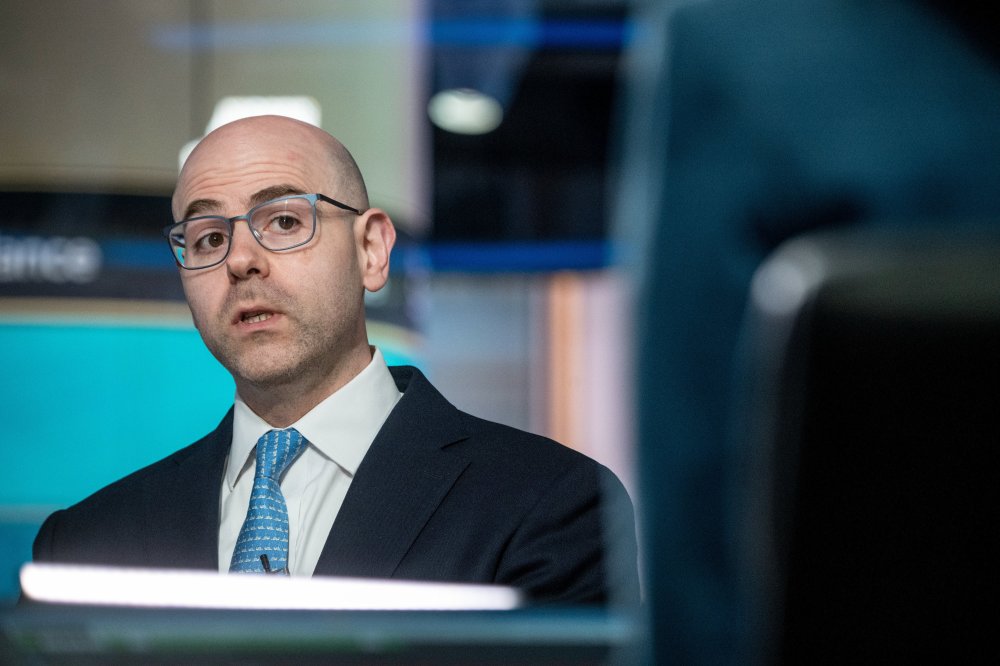
Federal Reserve Gov. Stephen Miran reiterated his view that monetary policy has become more restrictive than economists think, but expressed increased urgency that the central bank take strong corrective action. View the full article
-
Proposed deal would limit size of Ukrainian forces and calls on Kyiv to withdraw troops from eastern DonetskView the full article
-
Ukrainian officials say President Volodymyr Zelenskyy is being pressed to agree to terms negotiated by the US and RussiaView the full article
-
Executives are no longer measured by the weight of their title but by the scale of what they create, especially in an era reshaped by AI. The most effective leaders now marry vision with execution, using technology as a co-pilot to accelerate outcomes while keeping human judgment at the center. Strategy isn’t declared anymore; it’s built in real time, constantly iterating and leveraging AI to turn ideas into outcomes faster than ever. The builder CEO is a visionary who architects systems, coaches teams, and removes obstacles through hands-on involvement. Here’s how executives with a builder leadership style are involved with the day-to-day work and unite teams around a shared mission. FROM VISION-SETTER TO VELOCITY ARCHITECT The builder mindset thrives where growth, technology, and disruption collide. Customers demand speed, relevance, and trust simultaneously. Meeting those demands requires leaders who are adaptive, accountable, and relentlessly driven by outcomes. Builders shorten decision loops by being present where the work happens: sprint reviews, demos, and product trade-offs. Their involvement clarifies priorities, reduces friction, and ensures strategy is lived at every level, not left on a slide deck. Stability still matters, but speed is the differentiator. Builders create systems that allow rapid testing without recklessness: guardrails, rollback plans, and clear accountabilities. They collapse silos by taking ownership of the P&L, customer outcomes, and cross-functional metrics. Marketing, product, operations, and sales work as one team because builders demand it. Builders flatten hierarchies and empower autonomy, but with accountability. Teams know exactly which calls they can make, which require escalation, and how success is measured. When a feature underperforms, the team doesn’t wait for a quarterly review. They assess metrics, test hypotheses, and implement fixes in days, not weeks. This rhythm of experimentation and fast learning ensures companies adapt in real time to customers and markets. The builder is always asking, “What can we test now?” and “What can we improve today?” BUILDERS IN AN AI-FIRST WORLD The builder archetype matters most in an AI-driven commerce environment. AI is the co-pilot bringing precision and scale, while human oversight preserves trust. Executives who design for measurement, keep human judgment where it counts, and integrate AI thoughtfully create enduring advantage. The best builders set a single customer outcome as the north star, participate directly in product reviews, require every experiment to have guardrails, and assign clear ownership for cross-functional work. They standardize where possible but keep space for human judgment where it drives value. AI, in their hands, is not a replacement but an amplifier, removing repetitive work so teams can focus on judgment, creativity, and engagement. This balance accelerates both growth and employee buy-in. THE HUMAN CORE OF BUILDING Builders aren’t flawless. Over-involvement can slip into micromanagement, while too much autonomy without boundaries breeds chaos. The remedy is clarity: metrics, cadence, and transparent ownership. Most importantly, builders lead with humanity. They celebrate wins, fail fast, and then mine failures for lessons, and ensure every team member understands the impact of their work. They know speed without trust is brittle, and systems without people are hollow. The modern C-suite is no longer judged by how many strategies it produces but by the outcomes it builds and the speed with which it learns. In an era defined by complexity and constant change, the builder mindset is the defining quality of leadership. The leaders who shape the next decade will be those with builder DNA. Elizabeth Buchanan is chief commercial officer of Rokt. View the full article

-
IT development has been around for more than 60 years and it has undergone radical transformations from the emergence of the first programming languages and OS development to the internet boom and the current AI era. Although programming tools and approaches are constantly changing, one thing remains constant: Only those developers who can adapt and master new knowledge and skills survive. I’m the chief software officer of a 70-strong team that designs a predictive maintenance system (PdM): A solution based on the Industrial Internet of Things (IIoT) and AI. Without continuous growth, our developers cannot remain competitive. The same is true in nearly every industry; when individuals stop working on their skills, a company can lose its edge. Here’s a look at how we have created a system where professional development is an integral part of the work and how we help developers avoid and overcome stagnation. MUST EVERYONE GROW? Every team has specialists who prefer routine work, and to some extent teams need those people who do well in a position that does not require growth. But for a project to develop steadily, I believe such experts should not exceed 20% of the team. If their share is higher, other developers will eventually start to emulate their passive colleagues. Optimally, the majority—about 80%—should be actively developing and improving their expertise. Not everyone in the 80% needs to generate new ideas. The driver-to-performer ratio depends on the company’s development stage. A start-up needs 80% drivers because they’re the ones who forge ahead. Conversely, in mature companies, sustainable quality leads require constant hard-skill honing rather than a fountain of ideas. DEVELOPMENT THROUGH SMALL ACTIONS Encouraging developers to advance their skills can start small. For example, one underrated tool is having a person write tests to check their code, which is mandatory for everyone on our team, including senior specialists. Many teams use code reviews more often than writing tests. But when a developer writes a test, they may find that their method or function is too cumbersome, with many exceptions and dependencies, and it’s almost impossible to test it entirely. As a result, they begin redesigning their code and look for solutions to improve its logic. They study additional materials, such as technical blogs and best-practice guides, and consult with colleagues to deepen their expertise. However, tests have limitations. Once a person learns patterns, writes tests quickly and confidently, growth stops and routine begins. This tempts developers to automate their work. CASE-BY-CASE APPROACH There are many reasons why professionals pause in their development. They may be satisfied with their position/skills, bored, or facing challenging external circumstances. For example, most of our developers are Ukrainian, and our work has been affected by Russia’s full-scale invasion of Ukraine, which has been a great stress to everyone. Team members have responded differently—approximately 30% lost their motivation to do anything, and another 30% have taken a deep dive into their development. One strong junior immersed himself so deeply in his studies that in just six months, he mastered senior level theory. The rest simply adapted and returned to their usual pace. After 10+ years in tech management, I realized that everyone has different motivations for advancing their skills. Your task is not to pressure them but to understand what is holding them back and what incentivizes them. Some practices that I’ve found helpful when developers stagnate are: Provide new context. Offer the developer an opportunity to work on another project or change domains. A new environment presents new challenges, requires adaptation, and learning. Present challenges. Give the developer a task that requires creative thinking and independent research. Don’t provide an answer. This will let them take initiative and responsibility for the result. Encourage learning. If a person seeks development opportunities provide them with resources. For example, compensate for conference or workshop participation. Adjust expectations. Sometimes a person is satisfied with their expertise. In this case, it’s important to agree: If the developer doesn’t want growth, they don’t seek promotion. Each specialist must have their own development plan. We draw it up twice a year, based on in-depth assessment. We set goals that meet the company’s expectations and the developer’s interests. THE COMPANY’S SYSTEMATIC APPROACH In my experience, developers often stop focusing on advancing their skills when they are overloaded. After intense work, they no longer have the energy to learn. Learning by working is our main principle. We believe developers can improve their skills through hands-on experience, so we integrate this approach into employee development plans. Daily: Giving them a short technical digest and work with code through tests and reviews. Two-week sprints: Each sprint includes two to three days when a developer can try a new approach, technology, etc. Once a month: Internal clubs— sessions in each department lasting one hour to 90 minutes where they can share experiences, run practical workshops, and exchange best practices. Once every three to six months: Three-hour sessions with external speakers, advanced training. FINAL THOUGHTS I’m convinced that development begins with dialogue. You should understand what motivates a person. I also believe that there are no wrong decisions—only different points of view. Developers shouldn’t be afraid to disagree because critical thinking and constructive discussion always help team growth. Illia Smoliienko is the chief software officer for Waites. View the full article

-
How did you get to this article? Maybe you opened a link in an email, or you navigated from the Fast Company home page. Perhaps you Googled “agentic AI” and this figured in the results. The point is, you almost certainly clicked, scrolled, tapped, or typed your way here, because that’s the digital grammar that shapes nearly every online experience. But that 30-year-old paradigm is about to change. Agentic AI is ripping up the rulebook, by creating a new layer of intelligent, autonomous mediation between us and the digital world. Personal shopping agents will handle routine purchases, while in the workplace, agents will automate workflows and streamline procurement. Investors are excited, of course. Earlier this year, more than half of the Y Combinator startups chosen for its accelerator program were working in agentic, while the three biggest Q1 acquisitions in the AI sector involved companies building agentic enterprise technologies. This is because agents are about to transform how work gets done, how businesses operate, and how systems interact. And nowhere are the consequences more profound than in e-commerce. CLICKLESS COMMERCE Today, e-commerce success depends on online visibility, with search driving half of website traffic and fuelling the $75 billion search engine optimization (SEO) industry. But agentic AI upends the traditional business model. For agents, displays and brand content are less important. Merchants must focus on making product data machine-legible—accurate, structured, and accessible—because machines won’t browse sites. They’ll connect directly to sales platforms and databases via APIs, creating a parallel e-commerce track that serves agents rather than human shoppers. Building out that machine track will be a critical job for merchants, fintechs, software companies, and financial institutions. For merchants, an early task is compiling and structuring data in a way that’s visible and relevant to agents. Another is creating seamless connections between merchant systems and agent systems. The good news is that the connective tissue is already here. New protocols—model context, agent-to-agent, and agentic payments—now enable agents to connect, communicate, and transact autonomously. MARKETING TO MACHINES: A NEW INDUSTRY For retailers, one question looms: How do I market to machines? As SEO evolves for human audiences, new disciplines are emerging to optimize digital environments for AI agents. Agent engine optimization helps make digital spaces easier for agents to understand and use. Agent interaction design focuses on how they communicate with platforms, APIs, and other agents to get things done for users. These areas connect with generative engine optimization, which improves content so AI systems can better generate recommendations and make decisions. Taken together, they signal a new ecosystem—one that will create fresh roles, unlock new value streams, and redefine how businesses compete in an AI-driven economy. Another way of attracting machine buyers is to reward them. This is the agentic version of e-commerce’s affiliate system, where publishers, partners, and influencers are paid a commission for driving sales. There’s feverish speculation as to how an attribution mechanism may work, and who will get paid. There are plenty of challenges too—not least verifying agents’ identities, knowing with confidence which agent influenced the sale, and preventing fake agents from gaming the system. But the opportunities are apparent. The affiliate market is predicted to double in size by 2030, even without agents. FACE THE HEADWINDS Certain issues will require regulatory clarity. Agentic referral will have to be transparent, for example, to ensure fair competition. Then there’s the matter of trust. We’ll need confidence in the agents and the ecosystems they operate in. Giving an autonomous bot spending authority is a big commitment, but getting it right is key to scaling agentic commerce. Ensuring agents can operate across different payment systems, platforms, and legal jurisdictions will also pose technical and regulatory challenges. That said, we’re about to experience the biggest transformation in e-commerce since it began. This promises to be an era of great innovation—a time to build new tools, new ecosystems, and new ways of creating value. Agentic commerce isn’t just a tech shift; it’s a reimagining of how we buy, sell, and connect in a digital world. Ken Moore is chief innovation officer at Mastercard. View the full article

-
PM likely to green light project despite concerns about Beijing’s efforts to spy on BritainView the full article
-
Link is latest revelation in a years-long probe into Smart and TGR, which move money for criminals and sanctioned individualsView the full article
-
Households are pessimistic about their own spending and the country’s economic outlookView the full article
-
How would a school shooting affect your employees? It’s something that most employers never want to think about, but it’s a horrifyingly real threat to any community—and the companies and organizations that do business there. Following the death of my youngest son, Dylan, in the 2012 Sandy Hook School shooting, I can tell you first-hand about the lasting trauma that occurs when your child is injured or killed in this type of tragedy—and how that ripples through the entire community. In October, we held America’s Safe Schools Week, a national initiative to raise awareness about school violence and promote safety. It’s also a time for companies to recognize they have a major role to play in preventing school violence—and a lot to gain by doing so. When we invest in the safety and well-being of our children, we are also investing in our workforce, and in turn, the long-term health of our businesses. WHY THIS MATTERS FOR CEOS Our employees don’t leave their lives at the office door. Their children’s safety directly impacts their focus, mental health, and productivity. A tragedy in a school can create anxiety and shake an entire company—because our companies are made up of parents, caregivers, neighbors, and friends. Taking a role in vioence prevention isn’t just an act of compassion or show of goodwill and support. It’s a sound business strategy that strengthens your workforce, your brand, and your reach into communities. KNOW THE WARNING SIGNS People intending to harm themselves or others will often exhibit a range of telling behaviors. This might include expressing threats or a plan, bragging about access to weapons, becoming socially withdrawn, or experiencing chronic social isolation, among other signals. In most mass shootings and school shootings, someone knew something was off before it happened. Often, a peer, a friend, or a parent are among the first to notice a problem. The same is true for youth suicides, which are the second-leading cause of death for children and teens in the United States. Getting proactive about violence prevention begins with learning to recognize the warning signs that lead to violence and self-harm. For parents and caregivers, these signals offer some of our best opportunities to intervene and save a child. The ability for you and your employees to recognize warning signs will go far beyond your company’s walls. Ultimately, this type of impact will create safer schools, homes, and communities, leading to a stronger business environment where your company can thrive. That’s why it’s essential to learn these warning signs and know how to get help. THE PROTECT OUR KIDS PLEDGE One impactful way to take action is by signing the Protect Our Kids Pledge, a first-of-its-kind corporate initiative developed by Sandy Hook Promise. The pledge provides actionable training and tools to employees and their families to recognize warning signs of potential violence and self-harm, and knowledge of what to do next. Lessons from the Protect Our Kids Pledge will not only keep employees and their children safer, they will also help companies stand out in their industries by taking an active stand against youth violence and self-harm, prioritizing safety in innovative ways. It shows that a company cares about people, and signals to employees and customers alike that it values safety and social responsibility. OTHER IMPORTANT RESOURCES FOR EMPLOYERS In the last few years, legislation has provided additional violence prevention resources for companies and school communities. The Bipartisan Safer Communities Act (BSCA), passed in 2022, included many nationwide investments that have been creating a positive impact. The Act included funding for states to implement crisis intervention programs and extreme risk protection orders—sometimes referred to as “red flag” or “temporary transfer” laws. These laws allow family members, law enforcement, and others to petition courts to temporarily remove firearms from a home when an individual is deemed a threat to themselves or others. The BSCA also expanded access to community health clinics that provide mental health crisis services and substance abuse treatment. This gives more employees and their families, particularly in rural areas, options to access the care they need. These resources are designed to save lives while protecting rights. Companies should ensure they understand the laws in their states, help educate their employees, and connect them to local resources when needed. TAKE ACTION TODAY Since the Sandy Hook tragedy, I’ve worked alongside leading experts and business leaders who understand that ending the epidemic of gun violence requires a holistic, public health approach focused on prevention. And when we make prevention a priority, we can also create safe, healthy communities that allow our businesses to thrive. Business leaders can demonstrate their commitment by signing on to the Protect Our Kids Pledge and encouraging other leaders to do the same. Share that prevention is possible, and it’s both a moral and business imperative to deliver that for our communities, our employees, and—most importantly—our children. Nicole Hockley is cofounder and CEO of Sandy Hook Promise. View the full article

-
Every C-suite executive I meet asks the same question: Why is our AI investment stuck in pilot purgatory? After surveying over 200 AI practitioners for our latest research, I have a sobering answer: Only 22% of organizations have moved beyond experimentation to strategic AI deployment. The rest are trapped in what I call the “messy middle”—burning resources on scattered pilots that never reach production scale. In my 20-plus years helping companies solve complex problems with open-source AI and machine learning, I’ve watched this pattern repeat across industries. Companies get excited about AI’s potential. They fund pilots. They hire data scientists. But when it comes to production deployment and measurable ROI, they hit the same wall: over 57% take more than a month to move from development to production. That’s not innovation velocity—that’s friction eating your competitive advantage. The problem isn’t enthusiasm or investment. The problem is they’re building on quicksand. Without shared standards, every team reinvents the wheel. Tools fragment. Governance gaps widen. Trust erodes. What should take days stretches into months. Here’s what business leaders need to understand: The companies escaping this trap aren’t using better AI models. They’re using better foundations by using open-source software. Standards create a competitive advantage Standards might sound like bureaucracy, but in AI they separate companies that scale from companies that stall. Our research reveals the real barriers: 45% of teams cite data quality and pipeline consistency as their top production obstacle. Another 40% point to security and compliance challenges. These aren’t technical problems—they’re coordination problems. When every team speaks a different technical language, you can’t share work, build trust, or scale effectively. Think about it this way: Imagine if every department in your company used different email systems that couldn’t talk to each other. That’s essentially what’s happening with AI tools today. Open standards solve this by creating shared languages for AI development. When everyone uses compatible tools and formats, collaboration becomes automatic. Integration that used to take months happens in days. The result? Faster deployment cycles and measurable ROI. Companies are starting to get the message: 92% of AI practitioners use open-source tools, and 76% say their organization has increased its open-source priority this year, according to our research. Three standards that drive results Not all standards matter equally. Based on what I’ve seen transform organizations, here are three that deliver immediate impact: Ways to move AI models between systems without rebuilding. Standards like Open Neural Network Exchange prevent vendor lock-in and eliminate rework—the silent killer of innovation velocity. When teams can deploy the same model across different environments, development speeds up dramatically. Protocols that let AI services communicate seamlessly. Instead of building custom integrations for every new tool, teams can assemble complex AI systems from standard components. This turns months of integration work into days of configuration. Frameworks for responsible AI governance. With 53% of organizations lacking comprehensive AI policies, standardized approaches to model documentation and validation turn governance from a blocker into an accelerator. Teams move faster because they know exactly what compliance looks like. The pattern I see repeatedly is this: Each standard reduces friction. Together, they create an ecosystem where innovation compounds instead of fragmenting. Open source is your competitive edge Some executives worry that open source means chaos. They think standards need central authority. But AI moves too fast for traditional standardization. By the time a formal standards body publishes specifications, the technology has evolved. Open source solves this through evolutionary design. Standards emerge from real-world use, spread through community adoption, and adapt at market speed. This keeps them relevant in ways top-down standards can’t match. There’s another crucial factor: Transparency builds trust. Our research shows less than half of AI practitioners feel confident explaining model decisions to executives or regulators. When standards are open, you can inspect how they work, verify their claims, and adapt them to your needs. This transparency accelerates adoption and regulatory approval. What surprised me most in our research was the community insight: People distinguish between using open-source software and building on open-source foundations. True acceleration requires shared standards that let teams move independently while still moving together. Escaping the messy middle Here’s my core advice for C-suite leaders: Stop treating AI as a technology problem and start treating it as a systems problem. The messy middle exists because organizations approach AI as isolated projects. Teams pick different tools, build separate pipelines, and create individual governance processes. This works for pilots but kills scalability. Strategic AI requires a foundation built on compatibility. Here are three ways to achieve it: 1. Simplify your toolchain around core platforms that work together. You don’t need 47 different AI tools. You need a unified approach where teams can share models, data pipelines, and deployment processes without starting from scratch. 2. Choose solutions you can inspect and verify. This reduces risk and builds stakeholder confidence. Trust accelerates adoption, and adoption accelerates value creation. 3. Measure deployment cycles, not just model accuracy. Track time from prototype to production. Track how many AI projects deliver measurable business outcomes. These metrics reveal whether your foundation is working. Our work with large corporations shows that organizations moving from fragmented approaches to unified platforms see dramatic improvements: faster deployment, higher success rates, and clearer ROI measurement. Standardization and innovation are partners The gap between strategic AI deployers and pilot-trapped organizations will only widen. The winners won’t be those with the most experiments; they’ll be the ones who turn experiments into value fastest. According to McKinsey research, organizations are seeing material benefits from AI deployment, with a majority reporting cost reductions and revenue increases in business units using the technology. The good news? The foundations you need are being built right now by the open-source community. Your job as a leader is recognizing their strategic value and committing to building on them. This means making architectural decisions that prioritize compatibility over proprietary lock-in. It means investing in platforms that combine the innovation velocity of open source with the governance requirements of enterprise deployment. Most importantly, it means understanding that in AI, standardization and innovation aren’t opposites—they’re partners. Standards create the stable foundation that lets innovation flourish at speed. Start with one diagnostic question: Can your teams share AI models and data pipelines across projects without rebuilding them? If not, you’re building on quicksand. The companies that can answer yes will set the competitive pace for the next decade. Peter Wang is cofounder and chief AI and innovation officer at Anaconda. View the full article

-
We may earn a commission from links on this page. Just a few months ago, Oura won a lawsuit against rival smart ring makers Ultrahuman and RingConn. Now, they've initiated proceedings against four more companies—the makers of the Samsung Galaxy Ring, Reebok Smart Ring, Amazfit Helio Ring, and the Luna Ring. Oura announced on their website that they have filed an ITC complaint against those four companies. The ITC is the U.S. International Trade Commission, and Oura says its complaint is "for the unlawful importation and sale of products that infringe on several of Oura’s patents." Oura's previous win against Ultrahuman and RingConn resulted in a judgment that those companies had to stop selling and importing their smart rings. RingConn ultimately came to an agreement with Oura to license their patents and continue selling their rings. Circular and Omate have made similar agreements with Oura. Ultrahuman no longer sells their ring in the U.S., but is working on a new ring design that would sidestep the alleged patent infringement. You can read Ultrahuman's take on the situation in this blog post, which also includes a promise to continue supporting rings that they have already sold or that people may buy from resellers. The rings in the recent complaint should still be available for a while. Oura says on their blog: "So what’s next? The ITC process will run its course." There's no guarantee that Oura will win their case, although the fact they were able to get such a sweeping judgment against other companies suggests that it's not too much of a long shot. While Oura's communications around this issue use phrases like "respect for IP" (that is, intellectual property), as a consumer and a reviewer, I hate to see an exciting tech area get dominated by a single player or, worse, shut down by that player piece by piece. I'm working on a review of the Luna ring, which I've previously noted has some serious potential improvements over other rings on the market. Here's hoping the smart ring category remains a lively one going forward. View the full article