ResidentialBusiness
Administrators
-
Joined
-
Last visited
Everything posted by ResidentialBusiness
-
 We may earn a commission from links on this page. There are plenty of reasons to buy shoes at your local running store instead of online or at a big box store, including a more knowledgeable staff and the fact that you’re supporting your local running community. But another biggie is the fact that many will take returns even after you’ve gone for a few runs in your shoes. In case you don’t have a local store with this policy, it’s good to know that some larger brands and online stores will also take returns of lightly worn shoes. Fleet Feet and Running Warehouse are among the bigger stores that offer this perk; some online running shoe stores (like Roadrunner) will include it as part of a membership. But several running shoe brands offer a no-questions-asked return policy themselves, so if you know that you love (say) Nikes, you can buy from the brand directly. Do not feel bad about taking advantage of this policy. The whole idea is that you can trust your body to tell you whether the shoes are working, rather than stressing during a brief try-on about whether you think these shoes will work for you. If you can't help but feel guilty, you can make it up by buying your next new pair of shoes from the same place. They do it because they're trying to win you as a loyal customer. Adidas asks for shoes to be unworn for most returns, but it has a separate policy for its "performance" running shoes, which include all its popular running shoes, from the $65 Runfalcon on up. Altra prominently advertises "30 day trial runs, guaranteed." You'll need a return label but you can get it online for free or at your return location. Altra allows returns "if you are not completely satisfied" during those 30 days. Brooks will accept returns within 90 days, even if you’ve run in the shoes: "Run in it, sweat in it, inside, outside, in the rain—if it doesn’t perform the way it should, send it back." Hoka has a 30-day return policy (60 days for members), even if you've worn the shoes. "Try them out, that's what our 30-day Guarantee is all about." Newton accepts returns within 30 days "for any reason with as much or as little wear and tear on them" as they happen to have. Nike will let you return shoes, even if they’ve been worn, within 60 days of purchase. It refers to the 60-day time as your "trial" period and does not require the shoes to be unworn. There are exceptions, including items purchased at Nike Clearance stores. Please note that policies can change, and that they often vary by country. Customer service staff can sometimes help you out even if you fall outside the official policy, but don't count on it. Still, if you’ve bought shoes, run in them, and weren’t happy, it can’t hurt to ask. View the full article
 -
Most marketing teams still treat SEO and PPC as budget rivals, not as complementary systems facing the same performance challenges. In practice, these relationships fall into three types: Parasitism: One benefits at the other’s expense. Commensalism: One benefits while the other remains unaffected. Mutualism: Both thrive through shared optimization and accountability. Only mutualism creates sustainable performance gains – and it’s the shift marketing teams need to make next. Mutualism: Solving joint problems One glaring problem unites online marketers: we’re getting less traffic for the same budget. Navigating the coming years requires more than the coexistence many teams mistake for collaboration. We need mutualism – shared technical standards that optimize for both organic visibility and paid performance. Shared accountability drives lower acquisition costs, faster market response, and sustainable gains that neither channel can achieve alone. Here’s what it looks like in practice: Fostering a culture of experimentation and learning. PPC tests messaging while SEO builds long-term content assets. SEO uncovers search intent that PPC capitalizes on immediately. Both channels learn from shared incrementality testing (guerrilla testing). Cross-pollination of keyword intelligence and conversion data. Combined technical standards (modified Core Web Vitals weights) align engineering with marketing goals. Feedback loops accelerate market insights and reduce wasted spend. Stabilizing performance during SEO volatility During SEO penalties and core updates, PPC can maintain traffic until recovery. Core updates cause fluctuations in organic rankings and user behavior, which, in turn, can affect ad relevance and placements. Do you involve SEO during a CPC price surge? PPC-only landing pages affect the Core Web Vitals of entire sites, influencing Google’s default assumptions for URLs without enough traffic to calculate individual scores. Paid pages are penalized for slow loading just as much as organic ones, impacting Quality Score and, ultimately, bids. New-market launch considerations PPC should answer a simple question: Are we getting the types of results we expect and want? Setting clear PPC baselines by market and country provides valuable, real-time keyword and conversion data that SEO teams can use to strengthen organic strategies. By analyzing which PPC clicks drive signups or demo requests, SEO teams can prioritize content and keyword targets with proven high intent. Sharing PPC insights enables organic search teams to make smarter decisions, improve rankings, and drive better-qualified traffic. Source: SMX Advanced Berlin presentation by the author. Dig deeper: The end of SEO-PPC silos: Building a unified search strategy for the AI era Get the newsletter search marketers rely on. See terms. Building unified performance measurement One key question to ask is: how do we measure incrementality? We need to quantify the true, additional contribution PPC and SEO drive above the baseline. Guerrilla testing offers a lo-fi way to do this – turning campaigns on or off in specific markets to see whether organic conversions are affected. A more targeted test involves turning off branded campaigns. PPC ads on branded terms can capture conversions that would have occurred organically, making paid results appear stronger and SEO weaker. That’s exactly what Arturs Cavniss’ company did – and here are the results. For teams ready to operate in a more sophisticated way, several options are available. One worth exploring is Robyn, an open-source, AI/ML-powered marketing mix modeling (MMM) package. Core Web Vitals Core Web Vitals measures layout stability, rendering efficiency, and server response times – key factors influencing search visibility and overall performance. These metrics are weighted by Google in evaluating page experience. Core Web Vitals MetricGoogle’s WeightFirst Contentful Paint10%Speed Index10%Largest Contentful Paint25%Total Blocking Time30%Cumulative Layout Shift25% Core Web Vitals: Affect PPC performance through CLS metrics. Influence SEO rankings through search vitals. Give engineering teams clear benchmarks that align development efforts with marketing goals. You can create a modified weighted system to reflect a combined SEO and PPC baseline. (Here’s a quick MVP spreadsheet to get started.) However, SEO-focused weightings don’t capture PPC’s Quality Score requirements or conversion optimization needs. Clicking an ad link can be slower than an organic one because Google’s ad network introduces extra processes – additional data handling and script execution – before the page loads. The hypothesis is that ad clicks may consistently load slower than organic ones due to these extra steps in the ad-serving process. This suggests that performance standards designed for organic results may not fully represent the experience of paid users. Microsoft Ads Liaison Navah Hopkins notes that paid pages are penalized for slow loading just as severely as organic ones – a factor that directly affects Quality Score and bids. Source: SMX Advanced Berlin presentation by the author. SEOs also take responsibility for improving PPC-only landing pages, even without being asked. As Jono Alderson explains: “All of your PPC-only landing pages are affecting the CWV of your whole site (and, Google’s default assumptions for all of your URLs that don’t have enough traffic to calculate), and thus f*ck with your SEO.” PPC-only landing pages influence the Core Web Vitals of entire sites, shaping Google’s assumptions for low-traffic URLs. INP gains importance with agentic AI Agentic AI’s sensitivity to interaction delays has made Interaction to Next Paint (INP) a critical performance metric. INP measures how quickly a website responds when a human or AI agent interacts with a page – clicking, scrolling, or filling out forms while completing tasks. When response times lag, agents fail tasks, abandon the site, and may turn to competitors. INP doesn’t appear in Chrome Lighthouse or PageSpeed Insights because those are synthetic testing tools that don’t simulate real interactions. Real user monitoring helps reveal what’s happening in practice, but it still can’t capture the full picture for AI-driven interactions. Bringing quality scoring to SEO PPC practitioners have long relied on Quality Score – a 1-10 scale measuring expected CTR and user intent fit – to optimize landing pages and reduce costs. SEO lacks an equivalent unified metric, leaving teams to juggle separate signals like Core Web Vitals, keyword relevance, and user engagement without a clear prioritization framework. You can create a company-wide quality score for pages to incentivize optimization and align teams while maintaining channel-specific goals. This score can account for page type, with sub-scores for trial, demo, or usage pages – adaptable to the content that drives the most business value. The system should account for overlapping metrics across subscores yet remain simple enough for all teams – SEO, PPC, engineering, and product – to understand and act on. A unified scoring model gives everyone a common language and turns distributed accountability into daily practice. When both channels share quality standards, teams can prioritize fixes that strengthen organic rankings and paid performance simultaneously. Give a comprehensive view across channels Display advertising and SEO rarely share performance metrics, yet both pursue the same goal – converting impressions into engaged users. Click-per-thousand impressions (CPTI) measures the number of clicks generated per 1,000 impressions, creating a shared language for evaluating content effectiveness across paid display and organic search. For display teams, CPTI reveals which creative and targeting combinations drive engagement beyond vanity metrics like reach. For SEO teams, applying CPTI to search impressions (via Google Search Console) shows which pages and queries convert visibility into traffic – exposing content that ranks well but fails to earn clicks. This shared metric allows teams to compare efficiency directly: if a blog post drives 50 clicks per 1,000 organic impressions while a display campaign with similar visibility generates only 15 clicks, the performance gap warrants investigation. Source: SMX Advanced Berlin presentation by the author. Reverse CPM offers another useful lens. It measures how long content takes to “pay for itself” – the point where it reaches ROI. For example, if an article earns 1 million impressions in a month, it should deliver roughly 1,000 clicks. As generative AI continues to reshape traffic patterns, this metric will need refinement. Feedback loops The most valuable insights emerge when SEO and PPC teams share operational intelligence rather than compete for credit. PPC provides quick keyword performance data to respond to market trends faster, while SEO uncovers emerging search intent that PPC can immediately act on. Together, these feedback loops create compound advantages. SEO signals PPC should act on: Google is testing a feature that impacts SEO rankings and traffic – PPC can maintain visibility during organic volatility. SEO keyword research uncovers search intent, emerging keywords, seasonal patterns, and regional differences in query popularity. Long-tail insights reveal shifting search intents after core updates, signaling format and content opportunities. PPC signals SEO should act on: Some PPC keywords are effectively “dead.” They’ll never convert and are better handled by SEO. PPC competitors bidding on brand keywords expose gaps in brand protection strategy. PPC data highlights which product messaging, features, or offers resonate most with users, informing content priorities. When both channels share intelligence, insights extend beyond marketing performance into product and business strategy. Product managers exploring new features benefit from unified search data across both channels. Joining Merchant Center and Google Search Console data in BigQuery provides a strong foundation for ecommerce attribution. These feedback loops don’t require expensive tools – only an organizational commitment to regular cross-channel reviews in which teams share what’s working, what’s failing, and what deserves coordinated testing. Optimizing the system, not the channel Treat technical performance as shared infrastructure, not channel-specific optimization. Teams that implement unified Core Web Vitals standards, cross-channel attribution models, and distributed accountability systems will capture opportunities that siloed operations miss. As agentic AI adoption accelerates and digital marketing grows more complex, symbiotic SEO-PPC operations become a competitive advantage rather than a luxury. View the full article
-
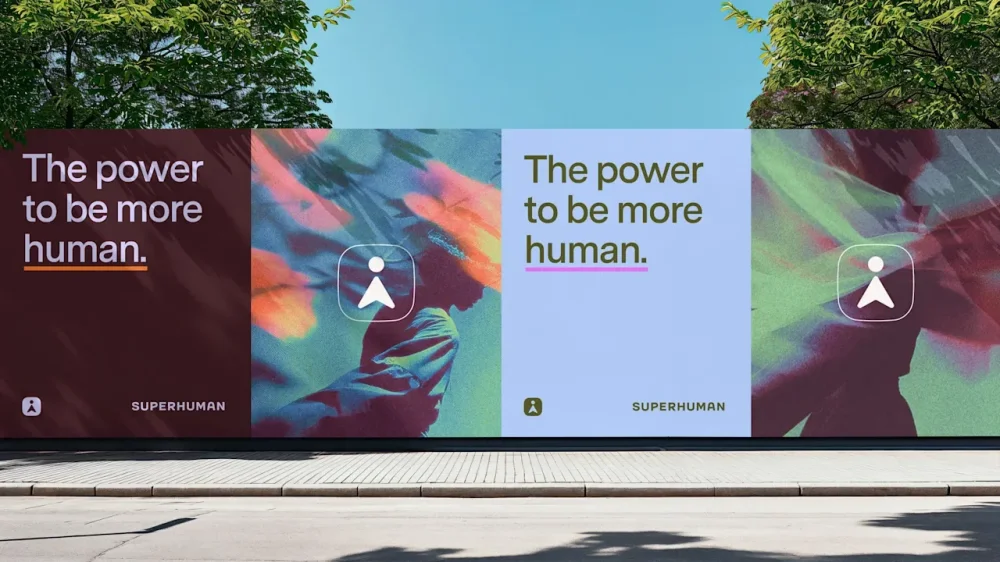
It’s rare for a company to give up more than a decade of brand recognizability for a new name. It’s even rarer for said company to trade their name for the name of a younger, less well-known company. But that’s exactly what Grammarly, the writing and grammar assistant tool with 40 million daily active users, is doing. Starting today, Grammarly is rolling out a massive, all-encompassing rebrand to become “Superhuman.” “Naming a company is like naming a kid,” says Grammarly CEO Shishir Mehrotra. “Renaming your 16-year-old is, like, 10 times harder. Swapping the name of your 16-year-old and your 11-year-old is 100 times harder. That’s probably what we’re doing.” Grammarly’s new name is pulled directly from the AI-powered email platform Superhuman, which Grammarly acquired back in January. The swap is intended to signal a new beginning as the brand repositions itself from a writing helper to an all-in-one work productivity tool. Despite the fact that, by Mehrotra’s own admission, Grammarly currently has a “higher brand awareness” than Superhuman, he believes this change is necessary to help consumers buy in on the company’s potential. “The trouble with the name ‘Grammarly’ is, like many names, its strength is its biggest weakness: it’s so precise,” Mehrotra says. “People’s expectations of what Grammarly can do for them are the reason it’s so popular. You need very little pitch for what it does, because the name explains the whole thing . . . As we went and looked at all the other things we wanted to be able to do for you, people scratch their heads a bit [saying], ‘Wait, I don’t really perceive Grammarly that way.’” So . . . what the heck is Superhuman? Grammarly’s transformation into Superhuman is so extensive, even the team behind it has some trouble describing exactly what Superhuman is. To start, here are the basics: Grammarly’s new overarching brand is called Superhuman, but the product at its core is called Superhuman Go. The email app that was once just Superhuman is now Superhuman Mail. From a naming standpoint, it’s definitely confusing. And on the product side, it’s not much easier to grasp what Superhuman actually does. When I asked Collin Whitehead, Grammarly’s head of product and design, to describe Superhuman Go in as few words as possible, he took a full 10 seconds to gather his thoughts. “Essentially, what we’re trying to do is build an agentic platform where users can get the power of AI everywhere that they already work,” he says. For context, Grammarly has been an AI-powered company since its inception in 2009, building a writing and grammar tool that used natural language processing to offer edits to users. Over the past few years, it’s been introducing generative tools that not only improve users’ own words, but help them draft new original text, as well as offering more subjective writing suggestions for better clarity and impact. More recently, Grammarly has embarked on a spending spree to acquire additional AI companies that expand its scope. In December 2024, Grammarly acquired Coda, an AI-powered work platform that’s like a combination of Google Docs, Airtable, and Notion. (Mehrotra actually founded Coda, and became CEO of Grammarly post acquisition). Then, in June 2025, Grammarly also acquired Superhuman. The terms of both deals were undisclosed, but Coda and Superhuman were last valued at $1.4 billion and $835 million, respectively, in 2021. Now, Grammarly is using those new investments to turn Superhuman into a much more all-encompassing work tool. Mehrotra explains it like this: Grammarly has always run on the “AI superhighway,” meaning that, instead of living on its own platform, Grammarly travels with you to places like Google Docs, email, or your Notes app to help improve your writing. Superhuman will use that superhighway to bring a huge new range of productivity tools to wherever you’re working. “We bring AI right to where people work,” Mehrotra says. “The analogy is, we only run one car on that highway, and that’s the one with your high school grammar teacher in it. But the idea is, what if it could be all the different agents and assistants that you would like?” Updating Grammarly to Superhuman Starting today, Grammarly users can turn on Superhuman Go by clicking on the Grammarly icon in their browser and toggling the product on. From there, they’ll get a step-by-step onboarding to Superhuman Go. Users can look through a library of dozens of productivity agents and choose which they’d like to use. Options include a Gmail agent, which can draft and send new messages from any other workspace and summarize insights from emails; a calendar agent that can help schedule meetings from anywhere; and a Reader Reaction agent that can break down the most likely reader responses to whatever you might be working on. Several writing-based agents with the former Grammarly branding will also be available. With so many moving parts, Whitehead says, Superhuman needed a new identity that was versatile enough to introduce users to its capabilities. That started with picking a name. “That is definitely something that we heavily debated,” Whitehead says. “I was leading that naming process, and we were coming up with names that have never existed before; names that were fully abstract and totally made up, but had a nice mouth feel.” The name, he adds, had to be powerful, unique to the user, and human-centric—something that would make the user feel better for having used it. As the abstract naming process continued, nothing was clicking. “Elevating the user was such a key part of the brief that, when we got notice about the potential [Superhuman] acquisition, it was like an earworm—we couldn’t unsee the connection between that Superhuman name and what we were going for,” Whitehead says. Even before acquisition talks were closed, Superhuman kept reemerging as the best brand name for the company. Eventually, Whitehead says, “it became the obvious choice.” The two kinds of AI companies The design agency tasked with bringing Superhuman to life was Smith & Diction, the same team behind the branding for Perplexity AI. Grammarly began briefing the Smith & Diction team on the rebrand in early 2025, but the company didn’t officially select its new name until late June, when the Superhuman acquisition was completed. For Chara and Mike Smith, the couple behind Smith & Diction, that meant there were only about three months to fully realize Superhuman’s branding. In Chara’s experience, there are two kinds of AI companies. The first leans into the idea of automating tasks. Companies in this category have become recognizable for amorphous, abstract branding, like Open AI’s intertwined circles, Google Gemini’s ombre sparkle, or even Perplexity’s own swirling pages (which, Mike says, has given Smith & Diction a reputation for designing the “butthole logo”). The second category of AI companies is centered instead on how the user is in control of the tool, rather than the other way around. “From the beginning, we definitely wanted to sit in that second camp,” Chara says. “Like, you’re the one with the ideas, you’re the one steering the ship. It’s almost like the Iron Man super suit. You put that on, and Iron Man is still in there, guiding it, making the decisions. But Iron Man can do so much more because of this super suit.” It’s obvious that, with its new productivity platform, Grammarly wants to bill itself as an unobtrusive, human-centric tool. Mehrotra says Superhuman should feel “super subtle and invisible.” In essence, it’s an AI helper that’s not out to steal your job, but to help you get better at it. To sell that concept (even to potential AI naysayers), the company needed an extremely friendly, unintimidating brand. To that end, Superhuman’s branding all hinges around one cute icon-slash-mascot named Hero. Hero serves a number of functions for Superhuman, including acting as the brand’s logo and guiding users through the UI experience. Its primary goal, though, is to make Superhuman feel trustworthy. Transforming the Grammarly logo into a Superhuman Hero’s look is essentially Grammarly’s iconic cursor (which looks a bit like a triangle with a chunk missing), topped with a round head. The simple-yet-versatile character can represent an “A” or an “i” (for AI, naturally), a cursor, and a superhero. Where it really comes alive, though, is through animation. “We imagined it kind of taking the place of an explainer video,” Mike explains. When Hero is thinking of an answer, its head bobs; when it’s writing, it turns into ellipses; and when it needs to get your attention, it springs upside down. All of these details might seem small, but Mike says they serve the dual purpose of helping users to understand how to use Superhuman and making the product feel more like an actual assistant. “If your logo is the thing that helps you through the product, then you’re going to build brand equity super quickly,” he adds. To compliment Hero’s personality, Chara and Mike swapped Grammarly’s signature green for a warm palette of purples and maroons—a choice that stands out in a tech branding space saturated with blue and black. The result is a brand that feels both authoritative and warm. “This was a product-first rebrand,” Whitehead says. “It was not about how this shows up on a billboard. This was, ‘How can the user connect with this brand on a more meaningful level?’ The mark itself is intrinsic to the user experience.” “Naming a company is like naming a kid” Logos doubling as mascots are nothing new in the branding space. But, with the exception of the Chinese company DeepSeek, Superhuman is one of the first AI companies to weave this kind of living mark into the user experience. In a moment when fears around the potential misuse of AI tend to dominate the cultural zeitgeist, the approach makes a lot of sense. Still, for a company with as much brand equity as Grammarly, it’s an inherently risky move. There’s always the possibility that moving toward an AI-centric brand narrative invites backlash, considering that companies including Duolingo and Klarna both came under fire this year for touting their “AI-first” approaches. However, the greater possibility is brand confusion, and even the cost of brand equity. Mehrotra says he’s well aware that some customers simply won’t adopt the name “Superhuman” when they refer to the company formerly known as Grammarly. While the Grammarly brand will still exist as an agent within the Superhuman platform, the company is certainly making a calculated trade-off by swapping the brand. “If you think about gaming platforms, there’s many cases where the scale of the game outshines the name of the platform. And that’s totally fine,” Mehrota says. “I think for many people, they’re gonna seek out and install what they perceive to be Grammarly and happen to get Superhuman Go along the way, just like when you know when you want to play Call of Duty and you end up with a gaming console.” View the full article
-
The Federal Reserve is expected to cut its short-term rate Wednesday for the second time this year despite an increasingly cloudy view of the economy it is trying to influence. The government shutdown has cut off the flow of data that the Fed relies on to track employment, inflation, and the broader economy. September’s jobs report, scheduled for release three weeks ago, is still postponed. This month’s hiring figures, to be released Nov. 7, will likely be delayed and may be less comprehensive when they are finally released. And the White House said last week that October’s inflation report may never be issued at all. The data drought raises risks for the Fed because it is widely expected to keep cutting rates in an effort to shore up growth and hiring. Fed officials signaled at their last meeting in September that they would likely implement rate reductions in October and December, and financial markets now consider a cut in December to be a near-certainty. Yet should job gains pick up soon, the Fed may not detect the change. And if hiring rebounds after weak job gains during the summer, further rate cuts may not be justified. On Tuesday, payroll processor ADP released a new weekly measure of hiring by businesses, using payroll data from millions of clients. It shows that in late September and earlier this month, companies resumed adding jobs, after shedding workers in July and August. Still, a key reason rate cuts are so widely expected is that most Fed officials see its key rate, which is now about 4.1%, to be high enough that it is restraining the economy’s growth. Under this view, the Fed can cut several more times before reaching a level that might provide unnecessary stimulus to the economy. Before the government shutdown cut off the flow of data Oct. 1, monthly hiring gains had weakened to an average of just 29,000 a month for the previous three months, according to the Labor Department’s data. The unemployment rate ticked up to a still-low 4.3% in August from 4.2% in July. Meanwhile, last week’s inflation report — released more than a week late because of the shutdown — showed that inflation remains elevated but isn’t accelerating and may not need higher interest rates to tame it. The government’s first report on the economy’s growth in the July-September quarter was scheduled to be published on Thursday, but will be delayed, as will Friday’s report on consumer spending that also includes the Fed’s preferred inflation measure. Fed officials say they are monitoring a range of other data, including some issued by the private sector, and don’t feel handicapped by the lack of government reports. Also on Wednesday, the central bank may announce that it will no longer reduce the size of its massive securities holdings, which it accumulated during and after the pandemic and after the 2008-2009 Great Recession. The change could over time slightly reduce longer-term interest rates on things like mortgages but aren’t likely to have a major impact on consumer borrowing costs. The Fed purchased nearly $5 trillion of Treasury securities and mortgage-backed bonds from 2020 to 2022 to stabilize financial markets during the pandemic and keep longer-term interest rates low. The bond-buying lifted its securities holdings to $9 trillion. When the central bank buys a Treasury note, for example, it pays for it with newly-created money that is deposited into reserve accounts banks hold at the Fed. In the past three years, however, the Fed has reduced its holdings to about $6.6 trillion. To shrink its holdings, the Fed lets securities mature without replacing them, reducing bank reserves. The risk is if it reduces its holdings too far, short-term interest rates could spike as banks borrow money to top-up their reserves. In 2019, the Fed was reducing its balance sheet and caused a sharp, unexpected spike in short-term rates that disrupted financial markets, an outcome they want to avoid this time. The Fed currently is reducing its holdings of mortgage-backed securities by up to $35 billion a month and Treasuries by just $5 billion a month. Powell said two weeks ago that the Fed would consider ending the rolloff “in coming months,” but analysts now expect it to happen sooner because of recent signs that banks are running low on reserves. —Christopher Rugaber, AP Economics Writer View the full article

-
US and Chinese leaders expected to unveil deal to extend tariff truce amid tensions over rare earths and tech controlsView the full article
-
Company chiefs support chancellor’s goal to reduce tax-free allowance in face of building society oppositionView the full article
-
We may earn a commission from links on this page. Deep work is a concept most popularly defined by Cal Newport, who wrote the aptly titled Deep Work: Rules for Focused Success in a Distracted World. As he tells it, deep work is a state where you find the ability to focus completely on a demanding task without letting distraction get in your way. If you can get the hang of it, you’ll get more done in less time and ultimately end up feeling more fulfilled. On his website, Newport observes that it’s rare to see someone feel energized and happy after sending emails, but there’s a sense of fulfillment that comes from sustained focus on more meaningful tasks. How do you achieve deep work?Newport draws a distinction between deep work and “shallow work,” or that which can be accomplished while you’re distracted. Deep work is for “cognitively demanding” tasks, whereas shallow work prepares you for deep work. Creating a project deck is deep work. Emailing colleagues to coordinate data for it is shallow work. If you’re having a hard time determining what is and is not deep work, Newport has some guidelines. Shallow work tends “to not create new value in the world” and is “easy to replicate.” The key, then, is first sorting your work into deep and shallow categories. Determine which of your tasks are cognitively demanding and valuable and which are “logistical-style” and replicable. Next, plan to devote an hour or an hour and a half to deep-work tasks, then schedule it so you have that time blocked off in your schedule. (As for blocking off your scheduling, familiarize yourself with time boxing and time blocking, which call on you to schedule every minute of your day and input it, moment by moment, into a detailed calendar, all in the name of staying focused.) Finally, when the time comes to get into deep work, eliminate all your distractions. Signal that you’re busy, make sure you’re unavailable in Slack and on the shared calendar, and put your phone on “do not disturb.” Don’t check emails, don’t talk to anyone, don’t look at your devices for anything but work, and commit to only working on your demanding task in the time you allotted for it. The most important element is doing this mindfully and going into your deep work sessions aware that your goal is to accomplish something demanding with no distractions. Emails, notifications, chitchat, and other worries and interruptions are commonplace and pull you away from the task at hand, so purposely cutting them off to get something done will be difficult, but it can turn into a habit, especially once it starts yielding the dual result of accomplishment and fulfillment. The deep work hackAll of that sounds great in theory, but when you find yourself staring down the hour-and-a-half block you scheduled out, you may not know what to do or where to start. This is where you need the Pomodoro method, a famous productivity technique that asks you to work, uninterrupted, for 25 minutes, take a five-minute break, and repeat the cycle about four times before getting a larger break. You can modify those time blocks a bit to suit your needs, but 25 on and five off are the standard. When you use this approach, deep work starts to come naturally in those working blocks because you know you're getting a reprieve at the end. Deep work is described as a period when work seems to flow smoothly and you barely notice time going by, so 25 minutes may not be quite enough for you (depending on the task at hand), but you can figure it out as you get started incorporating these methods. The most important thing is to be distraction-free. The second most important thing is to remember that breaks are actually a key part of staying productive, so don't skip them altogether. The easiest way to make use of this time-tested technique is, of course, by app. My favorite is FocusPomo, which blocks all your distracting apps while you use it and generates cute, unobtrusive cartoon tomatoes to reward you for finishing work blocks. View the full article
-
Today, Nvidia Corporation (Nasdaq: NVDA) became the first company to cross the $5 trillion valuation—in premarket trading, at least. It marks a major milestone in stock market history and suggests that once other unthinkable valuations are within reach. But Nvidia isn’t the only company breaking a trillion-dollar threshold. Fellow tech giants like Apple, Meta, and Broadcom are close to bursting their own thirteen-figure barriers, too. Here’s what you need to know about Nvidia’s approach to $5 trillion as companies climb toward the most exclusive club on the planet. Nvidia hits $5 trillion market cap in premarket trading As of this writing, Nvidia has become the first company to cross the $5 trillion valuation threshold. In premarket trading, NVDA shares are currently up 3.65% to $208.37 per share. With about 24.3 billion shares outstanding, that gives Nvidia a current premarket valuation of just over $5 trillion. If Nvidia’s stock price levels hold once the opening bell rings, it will cement its place in the record books. The company’s current premarket jump follows the stock’s nearly 5% rise yesterday. These gains have been primarily driven by recent announcements from the company that are lifting investors’ expectations. As CNBC notes, Nvidia announced plans yesterday to build seven new supercomputers for the U.S. government, including at Los Alamos National Laboratories. Separately, Nvidia CEO Jensen Huang revealed that the company’s all-important Blackwell GPUs are now in full production in the U.S. state of Arizona. This allows Nvidia to manufacture more of its AI chips, which can help meet the incessant demand for its processors. But there’s another factor that may be motivating Nvidia investors. As Reuters reports, President The President is in Asia this week, meeting with regional leaders. He is due to meet with Xi Jinping, China’s President, tomorrow. Today, The President revealed that he will speak to the Chinese president about Nvidia’s Blackwell chips, which are currently banned in the country. A lifting of this ban could greatly boost Nvidia’s bottom line if the company can once again sell its Chips inside China. Investors seem to feel that this trio of positive news has the chance to materially benefit the company, hence, the $5 trillion barrier falling. Other companies are close to breaking trillion-dollar milestones Nvidia’s $5 trillion milestone isn’t the only thirteen-figure barrier that is being broken this week. Yesterday, Apple Inc. (Nasdaq: AAPL) officially crossed the $4 trillion barrier for the first time, before closing the day with a market valuation of $3.99 trillion. Apple’s accession into the $4 trillion club made it just the third company in history to cross that barrier, after Nvidia and Microsoft Corporation (Nasdaq: MSFT). While nothing is certain, it’s possible Apple could cross back over the $4 trillion threshold again today. And Apple and Nvidia aren’t the only companies within reach of crossing trillion-dollar thresholds. Two other companies are within range, too. Facebook owner Meta Platforms (Nasdaq: META) had a market cap of $1.88 trillion as of yesterday’s close. That means it’s less than $120 billion from crossing the $2 trillion barrier, which would be a first for the company. Semiconductor and internet infrastructure company Broadcom Inc. (Nasdaq: AVGO) is also relatively close to crossing a trillion-dollar barrier. As of yesterday’s market close, Broadcom had a market cap of $1.76 trillion. That puts it at less than $250 billion from the $2 trillion club. Of course, while these companies are closest to their next trillion-dollar barriers, there’s no guarantee that their stocks will continue to go higher, or, if they do, how long it will take. But their ascent up the ranks is another example of how once unthinkable trillion-dollar market caps are becoming more common. A full list of the world’s trillion-dollar public companies For those keeping track, there are now 11 trillion-dollar publicly traded companies, based on yesterday’s share prices at market close, according to data compiled by CompaniesMarketCap.com. Those companies are: Nvidia ($4.89T) Microsoft ($4.02T) Apple ($3.99T) Alphabet ($3.23T) Amazon ($2.44T) Meta ($1.88T) Broadcom ($1.76T) Saudi Aramco ($1.66T) TSMC ($1.56T) Tesla ($1.53T) Berkshire Hathaway ($1.03T) Big Tech earnings could impact the trajectory It will be interesting to see how the current tech earnings season will impact the market caps of many of these companies. Investors will particularly be interested in how the artificial intelligence boom is affecting the bottom lines of companies like Microsoft, Alphabet, and Meta, all three of which are expected to report their financial results after the closing bell today (Wednesday, October 29). Wall Street will also be watching for any updates from these companies about their capital expenditure plans, as the AI boom has required huge investments from the world’s largest tech giants. If investors are satisfied that AI investments are worth the costs—and if they don’t see signs of a slowdown—share prices could spike, sending them further up the ranks into the trillion-dollar club. But if investors begin to worry that we are, as many have speculated, in an AI-fueled bubble, many of the companies in the trillion-dollar club could see their rankings slip fast as their share prices fall. View the full article

-
A lack of rare earths is just one way in which nature disadvantages the continentView the full article
-
Facebook has introduced an intriguing new feature aimed at enhancing how users share memories on the platform. This innovative tool automatically suggests photos and videos from users’ camera rolls, enabling the creation of collages and edits that are both fun and easy to share. This development stands to benefit small business owners looking to increase engagement with their audience through fresh content without the need for extensive design skills. The new feature is designed with a particular motivation in mind: many individuals capture special moments but often hesitate to share them due to concerns about their quality or lack of time. According to Facebook representatives, “With your permission and the help of AI, our new feature enables Facebook to automatically surface hidden gems – those memorable moments that get lost among screenshots, receipts, and random snaps.” By tapping into artificial intelligence, the platform simplifies the process of curating and sharing unique content. Small business owners can take advantage of this feature in several ways. For one, utilizing visually appealing posts can help grab consumer attention in an increasingly competitive social media landscape. The AI-driven suggestions mean that even business owners without an eye for design can quickly produce attractive content that highlights their offerings, staff, or events. As one Facebook source noted, “This feature does the heavy lifting, so you can focus on sharing the fun.” In practical terms, this functionality could encourage local businesses to share moments from events, showcase customer testimonials, or highlight special promotions. For example, a café could document a lively open mic night or celebrate customer milestones, effortlessly transforming raw images into shareable content. By doing so, they not only engage their audience but also foster a sense of community around their brand. However, while the potential for this feature seems promising, there are considerations that small business owners should keep in mind. Privacy remains a major concern with any technology that utilizes personal media. Facebook assures users that all suggestions generated by the new feature are private unless they decide to share them. It’s important for business owners to clearly communicate how they handle customer data when utilizing their own images or videos in marketing materials. Moreover, as with any social media tool, it’s essential to maintain a balanced approach. Flooding feeds with too much content—especially if it’s generated without thoughtful curation—can lead to disengagement. Small businesses should be strategic in selecting content that aligns with their brand identity and resonates with their audience. As of now, the feature has rolled out to users in the U.S. and Canada, and currently appears in Facebook Stories and the main Feed. Users can easily manage or disable this feature in their Facebook camera roll settings. Facebook plans to broaden the scope of this feature to other countries in the coming months, which could mean that a larger pool of users—and subsequently, potential customers—will soon be able to engage in this creative sharing process. The roll-out of this feature underscores the growing importance of personalization in social media marketing. Small businesses that leverage tools like Facebook’s new creative sharing function can find themselves better positioned to forge meaningful connections with their audience. By removing barriers to content creation and encouraging spontaneous sharing, Facebook is empowering users to capture and disseminate moments that not only resonate personally but also highlight the community around them. For more detailed information about this feature and how it works, you can visit the original Facebook press release here. Image via Facebook This article, "Facebook Unveils AI-Powered Feature for Effortless Photo Sharing" was first published on Small Business Trends View the full article
-
Facebook has introduced an intriguing new feature aimed at enhancing how users share memories on the platform. This innovative tool automatically suggests photos and videos from users’ camera rolls, enabling the creation of collages and edits that are both fun and easy to share. This development stands to benefit small business owners looking to increase engagement with their audience through fresh content without the need for extensive design skills. The new feature is designed with a particular motivation in mind: many individuals capture special moments but often hesitate to share them due to concerns about their quality or lack of time. According to Facebook representatives, “With your permission and the help of AI, our new feature enables Facebook to automatically surface hidden gems – those memorable moments that get lost among screenshots, receipts, and random snaps.” By tapping into artificial intelligence, the platform simplifies the process of curating and sharing unique content. Small business owners can take advantage of this feature in several ways. For one, utilizing visually appealing posts can help grab consumer attention in an increasingly competitive social media landscape. The AI-driven suggestions mean that even business owners without an eye for design can quickly produce attractive content that highlights their offerings, staff, or events. As one Facebook source noted, “This feature does the heavy lifting, so you can focus on sharing the fun.” In practical terms, this functionality could encourage local businesses to share moments from events, showcase customer testimonials, or highlight special promotions. For example, a café could document a lively open mic night or celebrate customer milestones, effortlessly transforming raw images into shareable content. By doing so, they not only engage their audience but also foster a sense of community around their brand. However, while the potential for this feature seems promising, there are considerations that small business owners should keep in mind. Privacy remains a major concern with any technology that utilizes personal media. Facebook assures users that all suggestions generated by the new feature are private unless they decide to share them. It’s important for business owners to clearly communicate how they handle customer data when utilizing their own images or videos in marketing materials. Moreover, as with any social media tool, it’s essential to maintain a balanced approach. Flooding feeds with too much content—especially if it’s generated without thoughtful curation—can lead to disengagement. Small businesses should be strategic in selecting content that aligns with their brand identity and resonates with their audience. As of now, the feature has rolled out to users in the U.S. and Canada, and currently appears in Facebook Stories and the main Feed. Users can easily manage or disable this feature in their Facebook camera roll settings. Facebook plans to broaden the scope of this feature to other countries in the coming months, which could mean that a larger pool of users—and subsequently, potential customers—will soon be able to engage in this creative sharing process. The roll-out of this feature underscores the growing importance of personalization in social media marketing. Small businesses that leverage tools like Facebook’s new creative sharing function can find themselves better positioned to forge meaningful connections with their audience. By removing barriers to content creation and encouraging spontaneous sharing, Facebook is empowering users to capture and disseminate moments that not only resonate personally but also highlight the community around them. For more detailed information about this feature and how it works, you can visit the original Facebook press release here. Image via Facebook This article, "Facebook Unveils AI-Powered Feature for Effortless Photo Sharing" was first published on Small Business Trends View the full article
-
Strategic insights on building custom GPTs for SEO, focusing on product thinking, cultural nuance, accessibility, and aligning AI workflows with business outcomes. The post Why The Build Process Of Custom GPTs Matters More Than The Technology Itself appeared first on Search Engine Journal. View the full article
-
Different productivity hacks work for different people, which is why there are so many of them. But if you happen to be a visual learner, there’s one in particular that might be suited for you: mind mapping. Mind maps are diagrams designed to organize information and data points that relate to each other, making everything you need to do easier to follow. They're particularly popular for students who need to visualize how the concepts they're studying link together, but they have wide applications outside the classroom. What is a mind map?A mind map isn’t just a diagram that lays out tasks. Rather, it does so in a hierarchical way, connecting things that are related and making it clear which need to be done first in order to move on to the next task. (When used for studying, on the other hand, they help bridge connections between main topics and those that branch off from them, plus relate to one another.) You can use mind maps for a variety of reasons, whether you want to think clearer or set goals with them, but for our purposes, we’ll go over how they can be used as productivity tools. You can also try them for word-associating, brainstorming, note-taking, and more once you get the hang of it. Start by writing the main idea of what you need to do. For instance, if you have to make a new hire, write that right in the center and draw a circle around it. Then, use arrows to branch off into related tasks: HR tasks, onboarding tasks, financial tasks, etc. From each of these, you draw more arrows. HR tasks might involve legal paperwork and background checks. Onboarding may require getting your new hire access to training modules and finding them a workspace. Financial tasks could include setting up payroll and getting them certain benefits enrollment information. After creating the mind map, you’ll see all the tasks laid out in a web that will help you visualize and grasp everything you need to do. It all leads back to that one main responsibility. The subtasks will equate to all the little things you need to do to make it all happen, piece by piece, until you end up fulfilling that final goal in the center. How to make your own mind mapAbove, we talked about drawing circles, which is fine if you prefer the old paper-and-pen method. You can make them in Word or Google Docs, but those can be clunky. A better option is to use an online creativity tool, like Canva or Draw.io. An even better option than that is to use software dedicated to the task. My favorite is Xmind, which you can use on your computer or phone and comes pre-loaded with a bunch of templates. The actual creation process can be helpful for brainstorming, but is a pain if you're not graphically inclined. Xmind makes it a lot easier, especially for beginners, because you just drag and drop the shapes and lines around a canvas designed for this exact purpose. Why this worksThe simplicity of a mind map is what makes it so effective. Keywords, not long phrases, and color-coding lend themselves to quick processing and recall, while the hierarchical nature of the tasks helps you see what order you need to handle them in. The overarching task at the center serves as a reminder of what you're even doing all those little things for, which helps keep you motivated and on track. The simple flow of arrows links ideas and the spacing of the boxes keeps categories organized. Overall, it’s a great solution for visual learners or anyone in a rush, and it’s not as clumsy or convoluted as a large spreadsheet or planning document. View the full article
-
Since its launch in July 2023, Threads has gone from Meta’s “what if” project to one of the most talked-about social media platforms in the world. What started as an alternative to Twitter/X has found its own rhythm. It now attracts millions of active users, sparks cultural moments, and gives both creators and brands another space to join the conversations that matter most — no matter how niche. In fact, thanks to its growing popularity and the allure of uncharted territory, I’ve kick-started a project to grow to 1,000 followers on the platform by December 2025. Now, you may be wondering — why is Threads so buzzy? What makes it different from other text-first platforms? Aside from being tied to some of the biggest apps in the world via Instagram and Facebook, and having a pretty high-profile launch, it’s started developing a unique identity. More than two years in, the data shows why Threads is so popular — and where it’s headed next. We’ve pulled together the essential Threads statistics you need to know in 2025 — whether you’re planning your first Threads account, building a brand, or just trying to keep up with what’s working on this still-new platform. Threads user demographics show a young, slightly male-leaning audienceIn the two-plus years since launch, Threads has built an audience that’s both sizeable and distinct from other social media platforms. The data shows who’s showing up, how often they log in, and what the overall makeup of the platform looks like — from activity levels to age and gender splits. Threads monthly active users hit 400 millionAs of August 2025, Threads has reached 400 million monthly active users, a milestone that cements its place among the world’s leading social media platforms. That’s remarkable growth considering it only launched in 2023, and it signals that Threads is fast becoming a platform with staying power. Threads daily active users total 115 millionThreads now has over 115 million daily active users, giving us a clearer picture of its everyday pull. Similarweb Data July 7 2025 from TechCrunchWhile it’s still finding its place as a daily habit for many, this core audience shows up regularly, keeping conversations and content flowing. 57.85% of Threads users are maleMore than half of Threads users — 57.85%, to be exact — are male. That’s a notable difference from most social media platforms, which tend to have a more balanced gender split. It’s possible the migration from X/Twitter during Threads’ early days skewed its user base, but the platform’s evolution may see that balance shift over time. Users aged 25 to 34 make up the largest groupThe biggest slice of the Threads audience is aged 25 to 34 (28.75%), followed by 18 to 24-year-olds (20.36%) and 35 to 44-year-olds (19.15%). This mix puts much of the audience in prime working age, which may help explain why early weekday mornings — before work starts — are peak engagement times on the app. More on exactly when those times are below! Most followed accounts on Threads are dominated by celebritiesAt the top of the leaderboard is Neymar Jr., with 14.5 million followers. His global football fame — and massive Instagram presence — have translated seamlessly to Threads, showing the power of cross-platform fan bases in driving early growth. Selena Gomez (13.6 million) and Kylie Jenner (11.9 million) take the next spots, underscoring Threads’ close ties to Instagram’s influencer and celebrity culture. For creators, it’s a reminder that audiences often follow the personalities they already know and trust. From Kim Kardashian (10.5 million) to Jennifer Lopez, Shakira, and MrBeast, the top 10 is almost entirely made up of entertainment, lifestyle, and creator personalities. This concentration reflects Threads’ positioning as a conversation-first platform where personality and cultural relevance are key to growth. Threads users overlap heavily with Meta’s existing platformsThreads may be the newest member of Meta’s family, but it wasn't starting from zero. Many of its most active users are already spending time on other social media platforms owned by Meta — and beyond — creating a built-in network effect. This overlap shapes how people use Threads, the kinds of content they engage with, and the opportunities for crossposting across apps. Instagram and Threads are most closely linked — there are direct links that allow you to hop between platforms, and new users could port over their Instagram followers who have signed up for Threads. So it's surprising that the overlap between Instagram and Threads is not the biggest one. 70% of daily Threads users also use FacebookA full 70% of daily Threads users in the U.S. are also active on Facebook — a reminder that Threads isn’t starting from scratch. Instead, it’s building on Meta’s existing audience and ecosystem, making it easy for users to hop between platforms and for brands to run cross-platform campaigns without starting over. Over half of Threads users also use InstagramWith 51% of Threads users active on Instagram, the link between the two apps is clearly baked into how people use Threads. This crossover gives creators a built-in opportunity to repurpose content, maintain a consistent presence, and grow both audiences at once. 55% of Threads users are also on YouTubeMore than half of Threads users (55%) also spend time on YouTube. That kind of cross-platform overlap means many people are already in the habit of consuming content in different formats. This shows that there’s a chance for creators to use Threads for conversation and community, while pointing followers toward longer-form videos elsewhere. Threads is still finding its place in users’ daily routinesThreads has built an impressive user base, but its usage patterns show it’s still carving out a place in people’s daily routines. Understanding how often people open the app, how long they spend there, and how those habits compare to other social media platforms can help creators and brands shape content strategies that meet users where they are now, while anticipating where the platform is headed. The average user spends 34 minutes a month on ThreadsGlobally, Threads users spend about 34 minutes per month on the app and open it around 20 times. That’s light compared to more established social media platforms, but it shows there’s a baseline habit forming — the kind that can grow quickly if the right features, communities, and conversations take hold. Threads users open the app on 23.9% of days each monthOn average, Threads users open the app on roughly a quarter of the days in a month. This drop-in usage pattern suggests that, for many, Threads is still a “check-in” platform rather than a daily destination. Strategic posting during high-engagement windows could help shift this habit toward more consistent engagement — more on those windows below. The best times, days, and formats to post on ThreadsKnowing who’s on Threads is only half the picture. The other half is understanding when they’re most likely to engage and what makes them stop scrolling. The platform’s relatively young audience across the age spectrum creates clear peaks in activity, while early performance data points to surprising wins for certain formats. By combining the right timing to match these user habits and content types that stand out in the feed, creators and brands can make the most of every interaction. 7 a.m. Wednesday is the top posting timeOur analysis shows that Wednesday at 7 a.m. is the sweet spot for median engagement on Threads. Other strong windows are weekday mornings between 7 a.m. and 9 a.m., especially Tuesday through Friday. It’s a pattern that lines up with the platform’s demographics — a large portion of Threads’ audience is in the 25–34 age range, meaning they’re likely checking in before starting their workday. An unexpected outlier? 1 a.m. on Sunday ranked among the top five posting times in our dataset. It’s a reminder that, while most engagement happens during predictable windows, testing unusual times can pay off. Midweek wins for engagement, weekends lag behindWhen it comes to days, Wednesday leads for engagement, closely followed by Friday and Thursday. On the other end, Sunday posts see the lowest interactions, with Saturday not far behind. If you’re batch-scheduling content, it’s worth leaning into midweek publishing and scaling back on weekend posts unless they’re time-sensitive or tied to major events. Images outperform all other content formatsEven though Threads is positioned as a text-first platform, pictures lead the pack for median engagement — earning 0.6% more engagement than videos, 37% more than posts with links, and 60% more than text posts. Videos take second place, while link and plain-text posts trail behind. For creators, that means weaving in photos, graphics, or short clips can give even conversation-focused posts a stronger pull in the feed. Engagement on Threads is steady — and stronger than XThreads might still be the new kid on the block, but when it comes to engagement, it’s already punching above its weight. The data shows that while posts on X often grab the headlines for going viral, Threads delivers steadier, higher-quality interactions for the average user. By looking at both median and average engagement — and how they compare across platforms — we can see why consistency is one of Threads’ biggest strengths. Median engagement per post has increased to 5In 2024, a typical Threads post received four engagements. By early 2025, that number climbed to five, signalling a subtle but important shift. This rise suggests that baseline interaction is growing, even without posts going viral, making Threads a reliable space for consistent audience connection. Threads posts see a 6.25% median engagement rateThreads’ median engagement rate sits at 6.25%, compared to 3.6% for X posts — a 73.6% higher interaction rate. For creators and brands, that’s a clear advantage: audiences on Threads are more likely to engage with what they see, making each post more valuable. Average engagements tell a different storyWhile engagement rates favor Threads, the average number of engagements per post is higher on X — 328 for X, 58 for Threads, and 21 for Bluesky. This gap is largely due to X’s larger audience and occasional viral surges, which pull its average upward despite lower median performance. Consistency beats virality on ThreadsHalf of all posts on X, Threads, and Bluesky get four or fewer engagements, but Threads’ growth model is steadier. Posts deviate by about 628 engagements from the baseline — far less volatile than X — which means creators who post regularly and focus on conversation-driven content can expect more predictable, long-term gains. What these Threads statistics mean for 2025With 400 million monthly active users, a steadily climbing engagement rate, and a user base that overlaps heavily with Meta’s other platforms, Threads has moved beyond its “new app” phase and into a more defined role in the social media landscape. The data shows us that: Consistency wins: Threads rewards regular posting and conversation-driven content with predictable growth, unlike X’s volatility.Visuals cut through: Even on a text-first platform, images outperform every other format, proving that visual storytelling still matters.Timing is strategic: Midweek mornings, especially Wednesdays at 7 a.m., align with when its largest demographic is most active.Threads is positioning itself as a platform where relationship-building The Presidents virality. That makes it a powerful space for creators, brands, and communities that value depth over fleeting reach. You don’t need to chase every trend or post hourly to succeed here — you just need to show up with a clear point of view, embrace the conversations happening in your niche, and adapt as the platform’s culture continues to evolve. More Threads resourcesHow to Get More Followers on Threads: 9 Tactics to Help You GrowI Posted to Threads Consistently for A Month — Here’s What HappenedHow to Get Your First 1,000 Followers Across All Major Social Media Platforms: The Ultimate Guide7 Creators on Threads to Watch (+Lessons to Learn From Their Content)View the full article
-
Something’s shifting in how SEO services are being marketed, and if you’ve been shopping for help with search lately, you’ve probably noticed it. AI search demand is real – but so is the spin Over the past few months, “AI SEO” has emerged as a distinct service offering. Browse service provider websites, scroll through Fiverr, or sit through sales presentations, and you’ll see it positioned as something fundamentally new and separate from traditional SEO. Some are packaging it as “GEO” (generative engine optimization) or “AEO” (answer engine optimization), with separate pricing, distinct deliverables, and the implication that you need both this and traditional SEO to compete. The pitch goes like this: “Traditional SEO handles Google and Bing. But now you need AI SEO for ChatGPT, Perplexity, Claude, and other AI search platforms. They work completely differently and require specialized optimization.” The data helps explain why the industry is moving so quickly. AI-sourced traffic jumped 527% year-over-year from early 2024 to early 2025. Service providers are responding to genuine market demand for AI search optimization. But here’s what I’ve observed after evaluating what these AI SEO services actually deliver. Many of these so-called new tactics are the same SEO fundamentals – just repackaged under a different name. As a marketer responsible for budget and results, understanding this distinction matters. It affects how you allocate resources, evaluate agency partners, and structure your search strategy. Let’s dig into what’s really happening so you can make smarter decisions about where to invest. The AI SEO pitch: What you’re hearing in sales calls The typical AI SEO sales deck has become pretty standardized. First comes the narrative about how search is fragmenting across platforms. Then, the impressive dashboard showing AI visibility metrics. Finally, the recommendation to treat AI optimization as a separate workstream, often with separate pricing. Here are the most common claims I’m hearing. ‘AI search is fundamentally different and requires specialized optimization’ They’ll show you how ChatGPT, Perplexity, and Claude are changing search behavior, and they’re not wrong about that. Research shows that 82% of consumers agree that “AI-powered search is more helpful than traditional search engines,” signaling how search behavior is evolving. ‘You need to optimize for how AI platforms chunk and retrieve content’ The pitch emphasizes passage-level optimization, structured data, and Q&A formatting specifically for AI retrieval. They’ll discuss how AI values mentions and citations differently than backlinks and how entity recognition matters more than keywords. ‘Only 22% of marketers are monitoring AI visibility; you need to act now’ This creates urgency around a supposedly new practice that requires immediate investment. The urgency is real. Only 22% of marketers have set up LLM brand visibility monitoring, but the question is whether this requires a separate “AI SEO” service or an expansion of your existing search strategy. Understanding the rebranding trend To be clear, the AI capabilities are real. What’s new is the positioning – familiar SEO practices rebranded to sound more revolutionary than they are. When you examine what’s actually being recommended (passage-level content structure, semantic clarity, Q&A formatting, earning citations and mentions), you will find that these practices have been core to SEO for years. Google introduced passage ranking in 2020 and featured snippets back in 2014. Research from Fractl, Search Engine Land, and MFour found that generative engine optimization “is based on similar value systems that advanced SEOs, content marketers, and digital PR teams are already experts in.” Let me show you what I mean. What you’re hearing: “AI-powered semantic analysis and predictive keyword intelligence.” What’s actually happening: Keyword research using advanced tools to analyze search volume, competition, user intent, and content opportunities. The strategic fundamentals (understanding what your audience is searching for and why) haven’t changed. What you’re hearing: “Machine learning content optimization that aligns with AI algorithms.” What’s actually happening: Analyzing top-ranking content, understanding user intent, identifying content gaps, and creating comprehensive content. AI tools can accelerate analysis, which is valuable. But the strategic work (determining what topics matter for your business, how to position your expertise, and what content will drive conversions) still requires human insight. What you’re hearing: “Entity-based authority building for AI platforms.” What’s actually happening: Building quality mentions and citations, earning coverage from reputable sources, and establishing expertise in your industry. Authority building is inherently relationship-driven and time-dependent. No AI tool shortcuts to becoming a recognized expert in your space. Dig deeper: AI search is booming, but SEO is still not dead Get the newsletter search marketers rely on. See terms. Where real differences exist (and why fundamentals still matter) I want to be fair here. There’s genuine debate in the SEO community about whether optimizing for AI-powered search represents a distinct discipline or an evolution of existing practices. The differences are real. AI search handles queries differently from traditional search. Users write longer, conversational prompts rather than short keywords. AI platforms use query fan-out to match multiple sub-queries. Optimization happens at the passage or chunk level rather than the page level. Authority signals shift from links and engagement to mentions and citations. These differences affect execution, but the strategic foundation remains consistent. You still need to: Understand what users are trying to accomplish. Create content demonstrating genuine expertise. Build authority and credibility. Ensure content is technically accessible. Optimize for relevance and user intent. And here’s something that reinforces the overlap. SEO professionals recently discovered that ChatGPT’s Atlas browser directly uses Google search results. Even AI-powered search platforms are relying on traditional search infrastructure. So yes, there are platform-specific tactics that matter. The question for you as a marketer isn’t whether differences exist (they do). The real question is whether those differences justify treating this as an entirely separate service with its own strategy and budget. Or are they simply tactical adaptations of the same fundamental approach? Dig deeper: GEO and SEO: How to invest your time and efforts wisely The risk of chasing platform-specific tactics The “separate AI SEO service” approach comes with a real risk. It can shift focus toward short-term, platform-specific tactics at the expense of long-term fundamentals. I’m seeing recommendations that feel remarkably similar to the blackhat SEO tactics we saw a decade ago: Invisible text that only LLMs can see. Content cloaking for AI bots. Scaled content targeting every possible prompt variation. These tactics might work today, but they’re playing a dangerous game. Dig deeper: Black hat GEO is real – Here’s why you should pay attention AI platforms are still in their infancy. Their spam detection systems aren’t yet as mature as Google’s or Bing’s, but that will change, likely faster than many expect. AI platforms like Perplexity are building their own search indexes (hundreds of billions of documents). They’ll need to develop the same core systems traditional search engines have: Site quality scoring. Authority evaluation. Anti-spam measures. They’re supposedly buying link data from third-party providers, recognizing that understanding authority requires signals beyond just content analysis. The pattern is predictable We’ve seen this with Google. In the early days, keyword stuffing and link schemes worked great. Then, Google developed Panda and Penguin updates that devastated sites relying on those tactics. Overnight, sites lost 50-90% of their traffic. The same thing will likely happen with AI platforms. Sites gaming visibility now with spammy tactics will face serious problems when these platforms implement stronger quality and spam detection. As one SEO veteran put it, “It works until it doesn’t.” This is why fundamentals matter more than ever Building around platform-specific tactics is like building on sand. Focus instead on fundamentals – creating valuable content, earning authority, demonstrating expertise, and optimizing for intent – and you’ll have something sustainable across platforms. Where AI genuinely helps I’m not anti-AI. Used well, it meaningfully improves SEO workflows and results. AI excels at large-scale research and ideation – analyzing competitor content, spotting gaps, and mapping topic clusters in minutes. For one client, it surfaced 73 subtopics we hadn’t fully considered. But human expertise was still essential to align those ideas with business goals and strategic priorities. AI also transforms data analysis and workflow automation – from reporting and rank tracking to technical monitoring – freeing more time for strategy. AI clearly helps. The real question is whether these AI offerings bring truly new strategies or familiar ones powered by better tools. What to watch for when evaluating services After working with clients to evaluate various service models, I’ve seen consistent patterns in proposals that overpromise and underdeliver. They lead with technology, not strategy: If the conversation jumps immediately to tools and dashboards rather than starting with your business goals, that suggests a tools-first rather than strategy-first approach. Vague explanations of their approach: Watch for responses about “proprietary algorithms” or “advanced machine learning” without concrete explanations of what specific problems this solves. Focus on vanity metrics: “We generated 500 AI citations!” sounds impressive but doesn’t answer: Did qualified traffic increase? Did conversion rates improve? How did search contribute to revenue? Case studies that focus on visibility, not business results: They might have increased AI mentions or improved rankings, but did it drive revenue growth? Did it increase qualified leads? Questions to ask instead When evaluating any service provider, ask: How would you approach our business? Walk me through your strategic process. The best approaches start by understanding your business, not showcasing tools. If they jump immediately to AI tools or technical tactics without understanding your business context, that’s a red flag. How do you determine content strategy and prioritization? Look for answers that balance data insights with business context and audience understanding, not just what AI tools suggest would perform well. What specific results have you achieved for similar businesses? Push for concrete business metrics (revenue growth, lead generation, conversion improvements), not just traffic or ranking increases. How do you integrate optimization across traditional search and AI platforms? This reveals whether they view these as separate disciplines requiring separate work or as interconnected parts of a unified search strategy. What actually drives long-term success After working in SEO for 20 years, through multiple algorithm updates and trend cycles, I keep coming back to the same fundamentals: Deep audience understanding drives every strategic decision. Quality and expertise still win (search algorithms are increasingly sophisticated at evaluating content quality). Authority building takes time and authenticity (you can’t automate trust and credibility). Business alignment drives meaningful results (rankings and AI citations are means to an end: revenue growth, customer acquisition, or whatever your primary business goals are). Dig deeper: Thriving in AI search starts with SEO fundamentals What sustainable SEO looks like in the AI era AI is genuinely changing how we work in search marketing – and that’s mostly positive. The tools make us more efficient and enable analysis that wasn’t previously practical. But AI only enhances good strategy. It doesn’t replace it. Fundamentals still matter – along with audience understanding, quality, and expertise. Search behavior is fragmenting across Google, ChatGPT, Perplexity, and social platforms, but the principles that drive visibility and trust remain consistent. Real advantage doesn’t come from the newest tools or the flashiest “GEO” tactics. It comes from a clear strategy, deep market understanding, strong execution of fundamentals, and smart use of technology to strengthen human expertise. Don’t get distracted by hype or dismiss innovation. The balance lies in thoughtful AI integration within a solid strategic framework focused on business goals. That’s what delivers sustainable results – whether people find you through Google, ChatGPT, or whatever comes next. View the full article
-
There may have been another Google Search ranking algorithm tweak around October 28th or so. I am seeing some rumblings both within the SEO community chatter and the third-party Google tracking tools. It seems some are noticing big search ranking swings around October 28th.View the full article
-
We all knew it was coming and now Google is roll out early access to Gemini for Home voice assistant in the U.S. You can either say "Hey Google" to your speaker or display to request specific help or answers, or talk naturally with Gemini Live by saying "Hey Google, let's chat."View the full article
-
Google Merchant Center now lets some merchants and advertisers define an audience for a promotion. This allows you to restrict who sees the promotion in Google Search for your Merchant Center shopping listings.View the full article
-
Discover how AI tools can streamline your content marketing so your team creates better content in less time. View the full article
-
A judge has ruled, giving Google a blow in its ad tech monopoly legal battle. This ruling should help the plaintiffs suing Google not get hung up in court as long as some expected, plus Google can't relitgate the core facts in that antitrust case.View the full article
-
Harry Clarkson-Bennett dissects the Google Discover leak to expose the real signals behind “trusted” content and sustainable visibility. The post How Google Discover REALLY Works appeared first on Search Engine Journal. View the full article
-
Google is testing adding to the call and message button on Local Service Ads a reviews and sometimes overview button. Reviews takes you to the reviews but the overview button to the local listing for that business.View the full article
-
There may be an undocumented Google user agent named GeminiiOS. GeminiiOS is apparently used when a user clicks on a source link from the Gemini app on their iPhone.View the full article
-
Keyword clustering is the process of grouping keywords based on search intent. Learn the right way to do it. View the full article
-
BoE figures show activity in housing market remains resilient View the full article