ResidentialBusiness
Administrators
-
Joined
-
Last visited
Everything posted by ResidentialBusiness
-
 Most climate reports are bleak. Temperatures are soaring. Sea levels are rising. Companies are missing—or abandoning—their emissions targets. But a new report from the nonprofit Energy & Climate Intelligence Unit looks at the surprising amount of progress that’s happened since the Paris climate agreement 10 years ago. Renewable energy has grown faster than every major forecast predicted in 2015. There’s now four times as much solar power as the International Energy Agency expected 10 years ago. Last year alone, the world installed 553 gigawatts of solar power—roughly as much as 100 million U.S. homes use—which is 1,500% more than the IEA had projected. Investors are now pouring twice as much into renewables as into fossil fuels. One out of every five new cars sold is now an EV; a decade ago, that was one in 100. Even if growth flatlined now, the world is on track to reach 100 million EVs by 2028. Dozens of countries have net zero goals that are legally mandated, and comprehensive climate laws. Out of the world’s largest 2,000 companies, nearly 1,300 now have net zero goals in place. Ten years ago, the world was on track to hit a catastrophic 4 degrees of global warming by the end of the century. Now, projections have dropped to 2.6 degrees—not nearly enough, but a major step in the right direction. Typical climate reports, like the U.N.’s Emissions Gap Report, focus on how far off track the world is. “They say the same thing every time, basically: that we’re not doing enough,” says John Lang, net zero tracker lead at the Energy & Climate Intelligence Unit. “That’s one side of the coin. The other side of the coin is that we have made unbelievable progress, and we’ve laid the foundations for structural, sustained emissions declines over the next few decades.” Ten years ago, projections about the growth of renewable energy were wrong in part because modelers underestimated how the scale of manufacturing in China could help drive costs down. Solar is now 66% cheaper than it was just a decade ago. In 2024, the cost of lithium-ion batteries fell by 20% in a single year. Globally, 91% of renewable energy projects are cheaper than fossil fuel alternatives. There are obvious challenges now, particularly the The President administration’s anti-climate push and supply chain bottlenecks from increased protectionism. Still, “the market’s more powerful than a man,” Lang says. Renewable energy will continue to grow. In China, emissions have been dropping since March of last year. China is also exporting clean energy technology to other countries. In the U.S., 19 states representing half of the country’s GDP still have net zero targets in place. “The story since 2015 is essentially around innovation, and through constraints, we’re going to see more innovation,” he says. “So despite the protectionism, I don’t see this unstoppable momentum slowing down.” The world still has a very long way to go. The planet has already heated up by 1.3 degrees Celsius, and we’re seeing the catastrophic impacts, from more severe hurricanes and wildfires to dying coral reefs. There’s little chance that we can avoid heating up more than 1.5 degrees Celsius, one of the goals of the Paris agreement. But every tenth of a degree of warming matters, and there’s still time to change the trajectory. “This decade was always going to be about laying foundations,” says Lang. “It’s not as quick as the IPCC would like us to go. But the reality is that this is hard. I always think of Emmanuel Kant’s quote, ‘From the crooked timber of humanity, nothing straight has ever been made.’ This is difficult stuff politically and culturally, and it is the biggest energy transition that humans may ever go through.” View the full article
-
Lenders and investors say the new rules will increase the cost of financing and limit homeowners' access to equity by curbing the enforceability of contracts. View the full article

-
United Parcel Service posted third-quarter results that handily beat Wall Street’s expectations and gave details about its turnaround efforts, including approximately 48,000 job cuts. Shares rose more than 7% in afternoon trading on Tuesday. UPS earned $1.31 billion, or $1.55 per share, for the three months ended Sept. 30. The Atlanta-based company earned $1.99 billion, or $1.80 per share, a year earlier. Removing one-time costs, earnings were $1.74 per share. That easily topped the $1.31 per share that analyst polled by Zacks Investment Research were calling for. Revenue totaled $21.42 billion, surpassing Wall Street’s estimate of $20.84 billion. UPS said in a regulatory filing that it has cut about 34,000 operational positions and closed daily operations at 93 leased and owned buildings during the first nine months of this year as part of its turnaround plan. The company also announced approximately 14,000 job cuts, mostly within management. It said that it is still looking to identify additional buildings to close. In April, UPS announced that it was looking to slash about 20,000 jobs and close more than 70 facilities as it drastically reduces the number of Amazon shipments it handles. At the time, the company said that it anticipated closing 73 leased and owned buildings by the end of June. The company noted that it was still reviewing its network and might identify more buildings to be shuttered. In January, UPS announced that it had reached a deal with Amazon, its biggest customer, to lower its volume by more than 50% by the second half of 2026. During UPS’ fourth-quarter earnings conference call in January, CEO Carol Tomé said that the company had partnered with Amazon for almost 30 years and that when its contract came up this year, UPS decided to reassess the relationship. UPS has realized cost savings of approximately $2.2 billion as of Sept. 30. It anticipates achieving $3.5 billion total year over year cost savings in 2025. —Michelle Chapman, AP business writer View the full article
-
We may earn a commission from links on this page. Deal pricing and availability subject to change after time of publication. If you've been considering getting one of Peloton's new Bikes, Treads, or Rows, this might be the time—as long as you know someone who is already an All-Access Member. Until Nov. 11, referral codes from existing members get you more money off your hardware purchases. The discount detailsLast month, Peloton rolled out upgraded versions of its fleet, including the Bike, Bike+, Tread+, Tread+, and Row. The new devices are known as the Cross Training series and, as such, are named the Cross Training Bike, Crosstraining Tread+, etc. If you want to know how they differ from the old models, I wrote an explainer here, but the basic gist is that the proprietary touchscreens on which you follow guided classes now swivel around, making it easier to hop off your machine and do, say, a strength or yoga class. The Plus line also comes with a movement-tracking camera that uses AI to correct your form, suggest when it's time to add more weights or reps, and monitor your workouts. As you can assume, these are pricier than their predecessors, which is why the current referral promotion might be of interest to you. If you get a referral code from an existing All-Access Member, here's what you can get off at checkout: $300 (instead of the usual $250) off your cart when you purchase a new Peloton Cross Training Bike $700 off your cart (instead of $500) when you purchase a new Peloton Cross Training Bike+ $500 off (instead of $300) when you get a Peloton Cross Training Tread $1,200 off (instead of $600) a purchase of a new Peloton Cross Training Tread+ $200 off a new Peloton Cross Training Row+ All the discounts will return to normal after Nov. 11. (Note: This probably isn't the best time to get a Cross Training Row+, as the typical referral discount on that is $300.) Your referrer has to be an All Access Member, not someone who uses one of the less-expensive, app-only versions of Peloton's digital offerings. The referrer can't be renting their machine, their membership can't be paused, and they can't be a Peloton employee. Notice, too, that this specifically applies to new devices. That means you can't use the referral code to get money off a purchase on Peloton's resale platform, Repowered, although that's always a solid option if you're looking for equipment on a budget. You don't have to have the Cross Training series to get a good workout (although I enjoyed my demos of those devices); I have been using the same Peloton Bike for nearly five years and love it—I ride it every day. You can redeem your code on the Peloton website or at Peloton stores. Bear in mind, however, you have to be a new customer. How to find a referral codeIf you want to be the referrer, not the referee, here's how to generate the code that will get you some brownie points with your fitness-focused friends. The easiest way is to go to this link and log into your Peloton account. Otherwise, head to members.onepeloton.com and select the hamburger menu in the top right corner, then hit Refer friends. If you're not seeing that or the link above didn't work, you're not eligible to share a code. You can also do this on your mobile app by tapping the Community tab, then Add Friends on the upper right, then Refer Friends. Remember how I said you'll get brownie points with the people you refer? You get something else, too: You can give out up to $1,200 in referrals, but you also get a free month of your All Access Membership for every person you refer. Once someone makes a purchase with your code, you'll get en email containing a code of your own, plus instructions on how to redeem it, after three to five business days. The voucher codes are valid for three months after their issue date. View the full article
-
ChatGPT wants to be your personal shopper. PayPal announced Tuesday that its digital payment system will be integrated into ChatGPT, inviting anyone who uses it to shop directly from the chatbot. Starting next year, ChatGPT users will be able to check out with a click through a PayPal account and connect directly with the tens of millions of sellers who rely on PayPal’s payments system. “By partnering with OpenAI and adopting the Agentic Commerce Protocol, PayPal will power payments and commerce experiences that help people go from chat to checkout in just a few taps for our joint customer bases,” PayPal CEO Alex Chriss said in a press release. PayPal’s shares rose on the news, which was announced on the same day as the company’s quarterly earnings report. PayPal is all-in on an AI-focused future of online retail. Beyond the new ChatGPT plans, the company is “collaborating to create new AI shopping experiences” with Google and partnering on free premium trials with AI search engine Perplexity. Chriss said on Tuesday’s earnings call, adding that the company was better positioned than it was two years ago. “With differentiated competitive advantages, clear strategic direction and building execution momentum, we believe we are exceptionally well-placed to win into the future.” OpenAI’s shopping mall PayPal is the latest partner to join OpenAI’s e-commerce vision, but it isn’t the first. In September, ChatGPT’s parent company revealed that it would integrate Shopify and Etsy directly in what it described as “first steps toward agentic commerce” through an instant checkout platform built with Stripe. “ChatGPT doesn’t just help you find what to buy, it also helps you buy it,” OpenAI wrote in a blog post on the announcement. The Etsy integration is already live, surfacing U.S. Etsy sellers directly in response to prompts in chat, like “Find me blue and white teacups under $50.” The Shopify partnership will bring major retailers into the mix, with products from brands like Glossier, SKIMS and Vuori woven into the chat. Earlier this month, it struck a similar deal with Walmart. For OpenAI, aggressively gobbling up the market with ChatGPT has been the name of the game, not monetization. The “build first, profit later” method – a Silicon Valley special – has gone swimmingly for the AI company so far and it boasts more than 700 million weekly active users. OpenAI shot out of the gate with a buzzy free product, collecting loyal customers and funneling power users toward tiered premium subscriptions, though it actually loses money on some of those paid plans. For OpenAI, e-commerce is a logical next step for revenue. It’s also a direction that opens the door wide for advertising, which the company was one staunchly against but seems to be gravitating toward with recent hiring and its new corporate structure which was finalized this week. On the consumer side, the plunge into AI-powered shopping is poised to steer people away from Google as a first port of call and toward tailored results shaped by AI queries. That behavior shift is just one more way that AI continues to creep into every aspect of digital life, reshaping every interaction – and transaction – we make in the process. View the full article

-
Apple suppliers Skyworks Solutions and Qorvo will merge in a cash-and-stock deal to create a radio chip company with an enterprise value of $22 billion. Qorvo shareholders will receive $32.50 in cash and 0.96 of a Skyworks common share for each Qorvo share held at the close of the transaction, which is expected in early 2027, pending shareholder and regulatory approvals. Activist investor Starboard Value, which owns about 8% of Qorvo, has already signed off on the deal. On a conference call with investors Tuesday, Skyworks said its biggest customers also expressed approval of the merger. After closing, Skyworks shareholders will own roughly 63% of the combined company, with Qorvo shareholders owning the remaining 37%. The companies which make radio frequency components and semiconductors for a broad array of technology including mobile phones, said that with demand growing, they will be better able compete with larger rivals as a single company. Skyworks CEO Phil Brace will take the chief executive job at the combined company, while Qorvo CEO Bob Bruggeworth will join the board. Upon closing, the company’s board will have eight directors from Skyworks and three from Qorvo. Skyworks specializes in high-performance analog and mixed-signal semiconductors, while Qorvo provides connectivity and power solutions. The companies say combining will create a $5.1 billion mobile business. Skyworks, based in Irvine, California, released its preliminary fourth-quarter results on Tuesday, beating Wall Street revenue and profit expectations. Qorvo, based in Greensboro, North Carolina, posted preliminary results from its most recent quarter as well, which also came in ahead of Wall Street’s projections. View the full article

-
Adobe and YouTube have announced a groundbreaking partnership aimed at revolutionizing content creation for video creators around the globe. This collaboration merges Adobe’s industry-leading video editing capabilities with YouTube Shorts, a platform that has rapidly gained popularity among content creators. The new feature, called Create for YouTube Shorts, will soon be integrated into the Adobe Premiere mobile app, providing creators with enhanced tools to produce high-quality, engaging short videos. The partnership was revealed during Adobe MAX, the world’s largest creativity conference, where Adobe and YouTube executives emphasized their commitment to empowering creators. “We’re excited to partner with YouTube to give creators the power to produce, share, and grow on the world’s biggest stage, YouTube,” said Ely Greenfield, Adobe’s chief technology officer and senior vice president of digital media. This sentiment was echoed by YouTube’s Scott Silver, who remarked, “This partnership with Adobe to integrate YouTube Shorts into Premiere mobile will give creators even more choice and access to more editing features.” For small business owners and independent creators, this partnership presents significant opportunities to enhance video marketing strategies. The Create for YouTube Shorts feature will allow users to leverage Adobe’s powerful video editing tools, including exclusive effects, transitions, and templates designed specifically for short-form content. This is particularly relevant as businesses increasingly turn to video as a primary means of engaging customers and promoting products. Creators will benefit from the ease of use that Premiere mobile will offer. They can utilize ready-made templates with professional transitions, allowing even those with limited video editing experience to produce polished content. In a world where attention spans are fleeting, the ability to create eye-catching videos quickly and efficiently can be a game-changer for small businesses looking to capture the interest of potential customers. Moreover, the integration allows for seamless sharing directly to YouTube Shorts with just one tap, streamlining the process of getting content in front of audiences. This is crucial for small business owners who may not have extensive resources for content distribution. By simplifying the production and sharing process, Adobe and YouTube are effectively lowering the barrier to entry for quality content creation. However, small business owners should also consider potential challenges. While the tools are designed to be user-friendly, there may still be a learning curve associated with mastering Adobe’s video editing software, especially for those unfamiliar with its features. Additionally, staying on top of trends in short-form video content will require continuous learning and adaptation. To fully utilize these tools, businesses will need to invest time into understanding what resonates with their target audience on platforms like YouTube Shorts. The collaboration also underscores the importance of embracing innovation in the digital landscape. As video content continues to dominate social media, small businesses that leverage these new tools can differentiate themselves from competitors. The ability to create engaging, trend-driven content can significantly enhance brand visibility and customer engagement. As Adobe prepares to roll out this new content creation space within Premiere mobile, small business owners should be ready to explore these capabilities. The ability to create customized templates and use Adobe’s advanced editing features presents an exciting opportunity to elevate marketing strategies and connect more deeply with audiences. This integration marks a significant step forward in the democratization of video content creation. With the combined power of Adobe’s editing tools and YouTube’s expansive reach, small business owners have a unique opportunity to harness the potential of short-form video and transform their marketing efforts. As the digital landscape evolves, those who adapt and leverage these new tools will be well-positioned to thrive in an increasingly competitive environment. This article, "Adobe and YouTube Unite to Elevate Content Creation for Creators" was first published on Small Business Trends View the full article
-
Adobe and YouTube have announced a groundbreaking partnership aimed at revolutionizing content creation for video creators around the globe. This collaboration merges Adobe’s industry-leading video editing capabilities with YouTube Shorts, a platform that has rapidly gained popularity among content creators. The new feature, called Create for YouTube Shorts, will soon be integrated into the Adobe Premiere mobile app, providing creators with enhanced tools to produce high-quality, engaging short videos. The partnership was revealed during Adobe MAX, the world’s largest creativity conference, where Adobe and YouTube executives emphasized their commitment to empowering creators. “We’re excited to partner with YouTube to give creators the power to produce, share, and grow on the world’s biggest stage, YouTube,” said Ely Greenfield, Adobe’s chief technology officer and senior vice president of digital media. This sentiment was echoed by YouTube’s Scott Silver, who remarked, “This partnership with Adobe to integrate YouTube Shorts into Premiere mobile will give creators even more choice and access to more editing features.” For small business owners and independent creators, this partnership presents significant opportunities to enhance video marketing strategies. The Create for YouTube Shorts feature will allow users to leverage Adobe’s powerful video editing tools, including exclusive effects, transitions, and templates designed specifically for short-form content. This is particularly relevant as businesses increasingly turn to video as a primary means of engaging customers and promoting products. Creators will benefit from the ease of use that Premiere mobile will offer. They can utilize ready-made templates with professional transitions, allowing even those with limited video editing experience to produce polished content. In a world where attention spans are fleeting, the ability to create eye-catching videos quickly and efficiently can be a game-changer for small businesses looking to capture the interest of potential customers. Moreover, the integration allows for seamless sharing directly to YouTube Shorts with just one tap, streamlining the process of getting content in front of audiences. This is crucial for small business owners who may not have extensive resources for content distribution. By simplifying the production and sharing process, Adobe and YouTube are effectively lowering the barrier to entry for quality content creation. However, small business owners should also consider potential challenges. While the tools are designed to be user-friendly, there may still be a learning curve associated with mastering Adobe’s video editing software, especially for those unfamiliar with its features. Additionally, staying on top of trends in short-form video content will require continuous learning and adaptation. To fully utilize these tools, businesses will need to invest time into understanding what resonates with their target audience on platforms like YouTube Shorts. The collaboration also underscores the importance of embracing innovation in the digital landscape. As video content continues to dominate social media, small businesses that leverage these new tools can differentiate themselves from competitors. The ability to create engaging, trend-driven content can significantly enhance brand visibility and customer engagement. As Adobe prepares to roll out this new content creation space within Premiere mobile, small business owners should be ready to explore these capabilities. The ability to create customized templates and use Adobe’s advanced editing features presents an exciting opportunity to elevate marketing strategies and connect more deeply with audiences. This integration marks a significant step forward in the democratization of video content creation. With the combined power of Adobe’s editing tools and YouTube’s expansive reach, small business owners have a unique opportunity to harness the potential of short-form video and transform their marketing efforts. As the digital landscape evolves, those who adapt and leverage these new tools will be well-positioned to thrive in an increasingly competitive environment. This article, "Adobe and YouTube Unite to Elevate Content Creation for Creators" was first published on Small Business Trends View the full article
-
Adobe has unveiled a suite of new AI innovations designed to enhance the creative workflow for professionals using its Creative Cloud applications. Announced at Adobe MAX, the world’s largest creativity conference, these features aim to provide small business owners and creative professionals with tools that boost efficiency, precision, and ultimately, the quality of their creative output. The newly introduced AI capabilities are set to transform how creative teams approach their projects. With features like one-click tools for compositing and masking, Adobe’s updates allow users to save significant time at each stage of the creative process. This could be especially beneficial for small businesses facing increased competition and demand for high-quality creative content. Deepa Subramaniam, Adobe’s vice president of product marketing for creative professionals, emphasized the importance of these innovations: “We’re delivering several groundbreaking AI tools and models into creative professionals’ go-to apps, so they can harness the tremendous economic and creative opportunities presented by the rising global demand for creative content.” Key benefits of the new features include: – Generative Fill and Upscale: In Photoshop, users can now utilize enhanced Generative Fill and Generative Upscale tools, which allow for precise content modification and resolution enhancements. This is particularly useful for small businesses that may not have large libraries of high-resolution images, enabling them to create stunning visuals from lower-quality assets. – AI Object Mask and Advanced Masking Tools in Premiere: The introduction of the AI Object Mask tool means that video editors can automatically identify and isolate subjects in video frames, streamlining the editing process significantly. This feature, along with new precision masking tools, can help small video production companies save hours of manual editing work. – Assisted Culling in Lightroom: This feature helps users quickly sift through large photo collections to identify the best images based on focus and sharpness. For small photography businesses, this could mean a more efficient way to manage and present portfolios. – Firefly Creative Production: This new AI-powered batch editing tool allows users to edit thousands of images simultaneously, applying consistent color grading and cropping without coding knowledge. Such capabilities can dramatically reduce turnaround time for marketing materials or social media content, making it easier for small businesses to maintain a steady output of fresh visuals. While the advantages are clear, small business owners should consider a few potential challenges. As with any new technology, there is a learning curve involved. Adapting to AI tools may require time and training, which could be a hurdle for businesses with limited resources. Additionally, while AI can enhance creativity, it is essential for users to ensure that the final output maintains a personal touch, as over-reliance on automation might risk diluting unique brand identities. Moreover, the integration of advanced AI tools into existing workflows may require an initial investment in time and possibly training. Small business owners might need to allocate resources to educate their teams on maximizing these new capabilities, ensuring that they leverage the full potential of these innovations. Pricing and availability of these new features are also noteworthy. Many of the tools, including Photoshop’s Generative Fill and Lightroom’s Assisted Culling, are already available, while others are set to roll out in the coming months. For small business owners, taking advantage of the current promotional offers—such as unlimited image generations for Firefly and Creative Cloud Pro subscribers until December 1—could provide a cost-effective way to explore these tools. Adobe’s approach to AI emphasizes that these innovations are meant to complement human creativity, not replace it. As AI continues to evolve, small businesses can expect more tools that not only enhance productivity but also enrich the creative process. In an era where visual content is paramount, Adobe’s latest features present an opportunity for small businesses to elevate their creative capabilities, allowing them to compete more effectively in a crowded marketplace. Embracing these advancements could be the key to unlocking new levels of creativity and efficiency. This article, "Adobe Unveils Game-Changing AI Tools to Elevate Creative Workflows" was first published on Small Business Trends View the full article
-
Adobe has unveiled a suite of new AI innovations designed to enhance the creative workflow for professionals using its Creative Cloud applications. Announced at Adobe MAX, the world’s largest creativity conference, these features aim to provide small business owners and creative professionals with tools that boost efficiency, precision, and ultimately, the quality of their creative output. The newly introduced AI capabilities are set to transform how creative teams approach their projects. With features like one-click tools for compositing and masking, Adobe’s updates allow users to save significant time at each stage of the creative process. This could be especially beneficial for small businesses facing increased competition and demand for high-quality creative content. Deepa Subramaniam, Adobe’s vice president of product marketing for creative professionals, emphasized the importance of these innovations: “We’re delivering several groundbreaking AI tools and models into creative professionals’ go-to apps, so they can harness the tremendous economic and creative opportunities presented by the rising global demand for creative content.” Key benefits of the new features include: – Generative Fill and Upscale: In Photoshop, users can now utilize enhanced Generative Fill and Generative Upscale tools, which allow for precise content modification and resolution enhancements. This is particularly useful for small businesses that may not have large libraries of high-resolution images, enabling them to create stunning visuals from lower-quality assets. – AI Object Mask and Advanced Masking Tools in Premiere: The introduction of the AI Object Mask tool means that video editors can automatically identify and isolate subjects in video frames, streamlining the editing process significantly. This feature, along with new precision masking tools, can help small video production companies save hours of manual editing work. – Assisted Culling in Lightroom: This feature helps users quickly sift through large photo collections to identify the best images based on focus and sharpness. For small photography businesses, this could mean a more efficient way to manage and present portfolios. – Firefly Creative Production: This new AI-powered batch editing tool allows users to edit thousands of images simultaneously, applying consistent color grading and cropping without coding knowledge. Such capabilities can dramatically reduce turnaround time for marketing materials or social media content, making it easier for small businesses to maintain a steady output of fresh visuals. While the advantages are clear, small business owners should consider a few potential challenges. As with any new technology, there is a learning curve involved. Adapting to AI tools may require time and training, which could be a hurdle for businesses with limited resources. Additionally, while AI can enhance creativity, it is essential for users to ensure that the final output maintains a personal touch, as over-reliance on automation might risk diluting unique brand identities. Moreover, the integration of advanced AI tools into existing workflows may require an initial investment in time and possibly training. Small business owners might need to allocate resources to educate their teams on maximizing these new capabilities, ensuring that they leverage the full potential of these innovations. Pricing and availability of these new features are also noteworthy. Many of the tools, including Photoshop’s Generative Fill and Lightroom’s Assisted Culling, are already available, while others are set to roll out in the coming months. For small business owners, taking advantage of the current promotional offers—such as unlimited image generations for Firefly and Creative Cloud Pro subscribers until December 1—could provide a cost-effective way to explore these tools. Adobe’s approach to AI emphasizes that these innovations are meant to complement human creativity, not replace it. As AI continues to evolve, small businesses can expect more tools that not only enhance productivity but also enrich the creative process. In an era where visual content is paramount, Adobe’s latest features present an opportunity for small businesses to elevate their creative capabilities, allowing them to compete more effectively in a crowded marketplace. Embracing these advancements could be the key to unlocking new levels of creativity and efficiency. This article, "Adobe Unveils Game-Changing AI Tools to Elevate Creative Workflows" was first published on Small Business Trends View the full article
-
Two decades after a Republican-controlled Congress gave gun manufacturers immunity from being sued over crimes committed with their firearms, blue state Democrats upset about gun violence think they’ve found a way to penetrate that legal shield. Since 2021, 10 states have passed laws intended to make it easier to sue gunmakers and sellers. The newest such law, in Connecticut, took effect this month. It opens firearms manufacturers and retailers up to lawsuits if they don’t take steps to prevent guns from getting into the hands of people banned from owning them, or who should be suspected of intending to use them to hurt themselves or others. Other states have allowed lawsuits against companies deemed to have created a “public nuisance” through the sale or marketing of firearms. The legislation — and flurry of lawsuits against gun companies that followed — has outraged gun rights advocates, who accuse the states of trying to skirt the 2005 Protection of Lawful Commerce in Arms Act. That law, which blocked a wave of similar lawsuits two decades ago, says gun companies operating legally cannot be held liable for violent acts committed by people misusing weapons. “They know these laws are unconstitutional. They know these laws violate the PLCAA,” said Lawrence G. Keane, senior vice president for government and public affairs at the National Shooting Sports Foundation. “They don’t care,” he said, adding that the real goal of the lawsuits was to harass the industry and drain it financially. Gun control groups say the states have simply set clearer requirements for gun companies to ensure their products aren’t sold or used illegally. “These laws don’t just open the courthouse doors to survivors. They also force the gun industry to operate more responsibly and, most importantly, can help prevent future tragedies,” said Po Murray, chair of the Newtown Action Alliance, a gun-violence prevention group founded after the 2012 Sandy Hook Elementary School shooting. Two decades of federal immunity Congress adopted protections for the gun industry after lawsuits filed in Chicago, New York, Los Angeles, and elsewhere attempted to hold the firearms industry responsible for violent crime. Many of those suits argued that gun companies had knowingly oversupplied certain markets with cheap handguns and ignored signs that those weapons were being trafficked to places with strict gun controls. The firearms industry and the National Rifle Association saw the lawsuits as unfair. As long as gun companies weren’t breaking rules around sales, they shouldn’t be held responsible for violence, they said. President George W. Bush, a Republican, agreed and signed the shield law in 2005, saying it helped stem “frivolous lawsuits.” “Our laws should punish criminals who use guns to commit crimes, not law-abiding manufacturers of lawful products,” Bush said at the time. A new approach The legal protections Congress gave the gun industry aren’t absolute. For example, a gunmaker that sells a faulty firearm can still be sued over dangerous defects. Another exception allows lawsuits against companies that knowingly violate laws regulating how firearms are sold and marketed. When Congress drafted that exception, it cited the example of a shop that knowingly sold a gun to someone banned from owning one, such as a convicted felon. The new state laws have sought to expand potential liability for gun companies by creating new rules for the industry. New York passed a law in 2021 requiring gun companies to create controls to prevent unlawful possession or use of their products. It also says they cannot knowingly or recklessly “contribute to a condition” that endangers public safety. “Any business operating in New York must adhere to our laws — and if they don’t, they are held accountable,” said Democratic state Sen. Zellnor Myrie, the law’s chief proponent. Several states and cities have used the new liability laws to sue Glock over the design of its pistols, saying it is too easy to convert them into automatic weapons. Many of the new laws follow legal theories from a lawsuit filed against gunmaker Remington by families of Sandy Hook victims. The suit, which was settled for $73 million in 2022, argued that Remington’s marketing violated state consumer protection law. What’s next? It’s too soon to say if courts will uphold the new state laws. A panel of the 2nd U.S. Circuit Court of Appeals ruled in July that New York’s law wasn’t expressly barred by the Protection of Lawful Commerce in Arms Act, but that decision is not expected to be the last word. One of the judges, Dennis Jacobs, made it clear he believes the law is vulnerable to future legal challenges, calling it “nothing short of an attempt to end-run PLCAA.” The U.S. Supreme Court, which is controlled 6-3 by Republican-nominated justices, hasn’t yet considered the state liability laws, but the gun industry was encouraged when the justices unanimously agreed in June to toss out a $10 billion lawsuit Mexico filed against top firearms manufacturers claiming their business practices fuel cartel violence. Justice Elena Kagan, a Democratic nominee, wrote in her opinion how Congress passed PLCAA to halt lawsuits similar to the one filed by Mexico. She said Mexico had made no plausible argument that the companies knowingly helped gun trafficking. “The Court doubts Congress intended to draft such a capacious way out of PLCAA, and in fact it did not,” she wrote. —Susan Haigh, Associated Press Associated Press Writer Dave Collins contributed to this report. View the full article

-
A new internet theory about American politics and society just dropped. From anti-vaxxers to AI slop, everything can be explained by one simple idea: Everyone is twelve now. In September, Bluesky user and musician Patrick Cosmos (@veryimportant.lawyer) posted, “working on a new unified theory of american reality i’m calling ‘everyone is twelve now.'” He continued: “‘I’m strong and I want to have like fifty kids and a farm’ of course you do. You’re twelve. ‘I don’t want to eat vegetables I think steak and French fries is the only meal’ hell yeah homie you’re twelve. ‘Maybe if there’s crime we should just send the army’ bless your heart my twelve year old buddy.” It’s funny, but it also feels depressingly accurate. It’s already being called “the most important political thread of our time.” Or as another user wrote: “making a pilgrimage to a post that will one day be studied in history books”. It took a few weeks for the theory to spread to X, Twitter, Reddit, TikTok, and other platforms, but once it did, it became the go-to comeback under conservative posts and government propaganda alike. “You wanna do a ride-along in the backseat of a big plane and cosplay being a pilot? Of course you do, you’re twelve,” user @jjellisart said in response to a video of Secretary of War, Pete Hegseth, in a fighter jet. “You wanna dress up like a knight and play swords? Of course you do, you’re twelve,” he also posted to a Homeland Security propaganda post of medieval knights. The meme even made its way into the political press corps after White House Press Secretary Karoline Leavitt replied to a HuffPost reporter’s question about the location of Donald The President’s upcoming meeting with Vladimir Putin with: “Your mom did.” One user quote-tweeted the exchange with: “The ‘Everyone is Twelve Now’ theory is rapidly gaining credibility, I fear.” So what’s behind the apparent sudden collective regression? According to the National Literacy Institute, 54% of U.S. adults read below a sixth-grade level. That limited literacy makes it harder to understand complex and nuanced issues and easier to fall for oversimplified narratives peddled on social media. As one Reddit user suggested: “an ideology specially crafted to appeal to nostalgia kinda has to be childish. the world was never perfect, so to pretend it was you have to appeal to childlike innocence.” Case in point: a glass bottle of Coca Cola balanced on the hood of a red Bronco as marketing material for the Department of Homeland Security. It might also explain why government agencies like the DHS have leaned into childhood classic Pokémon references and viral TikTok trends as part of their social media strategy. In the context of the “everyone is twelve” theory, it suddenly makes a lot of sense And once you’ve seen it, you’ll start spotting examples everywhere you look. Unless, of course, you’re twelve. View the full article

-
We may earn a commission from links on this page. Deal pricing and availability subject to change after time of publication. The Nintendo Switch 2 is out, and it might not be worth the upgrade yet if you already own the original Nintendo Switch (especially at its $450 to $500 price point). If you don't, you can still get one and enjoy it before the Switch 2 really kicks off. Walmart is currently selling the Nintendo Switch Gray Joy-Con for $294.99 (originally $361.40). No other reputable seller has this version new on sale. If you're okay with a used console, GameStop has a pre-owned version for $209.99, a great price for the gray Joy-Con version. Nintendo Switch Console with Gray Joy-Con. $294.99 at Walmart $361.40 Save $66.41 Get Deal Get Deal $294.99 at Walmart $361.40 Save $66.41 (Pre-owned) Nintendo Switch Gray Joy-Con $209.99 Shop Now Shop Now $209.99 SEE -1 MORE With tariffs affecting Nintendo and the Nintendo Switch 2 already out, it's hard to gauge if this is a fair historical price. However, considering the Switch 2 can easily go for double the price, it makes the decision to get the original console much easier. What might be a harder decision is whether to get the OLED version or not. To help you decide which Switch is better for you, check out our breakdown. Keep in mind, there are also other costs to owning a Nintendo Switch. At this point, the Nintendo Switch already has an incredible library of games to choose from, but the same cannot be said about the Switch 2. This specific model comes with gray Joy-Con, which is a more mature-looking version than the original blue and red version. You can expect between 4.5 and 9 hours per charge depending on your use and the game you're playing. It has a 6.2-inch screen, 32GB of data storage, and online gaming if you pay for the Nintendo Switch Online plan, which starts at $19.99 a year. I've personally been enjoying the classic Nintendo 64 games that are available to play with the online membership. It's a nice nostalgic feeling that I get to relive with my brothers and friends. View the full article
-
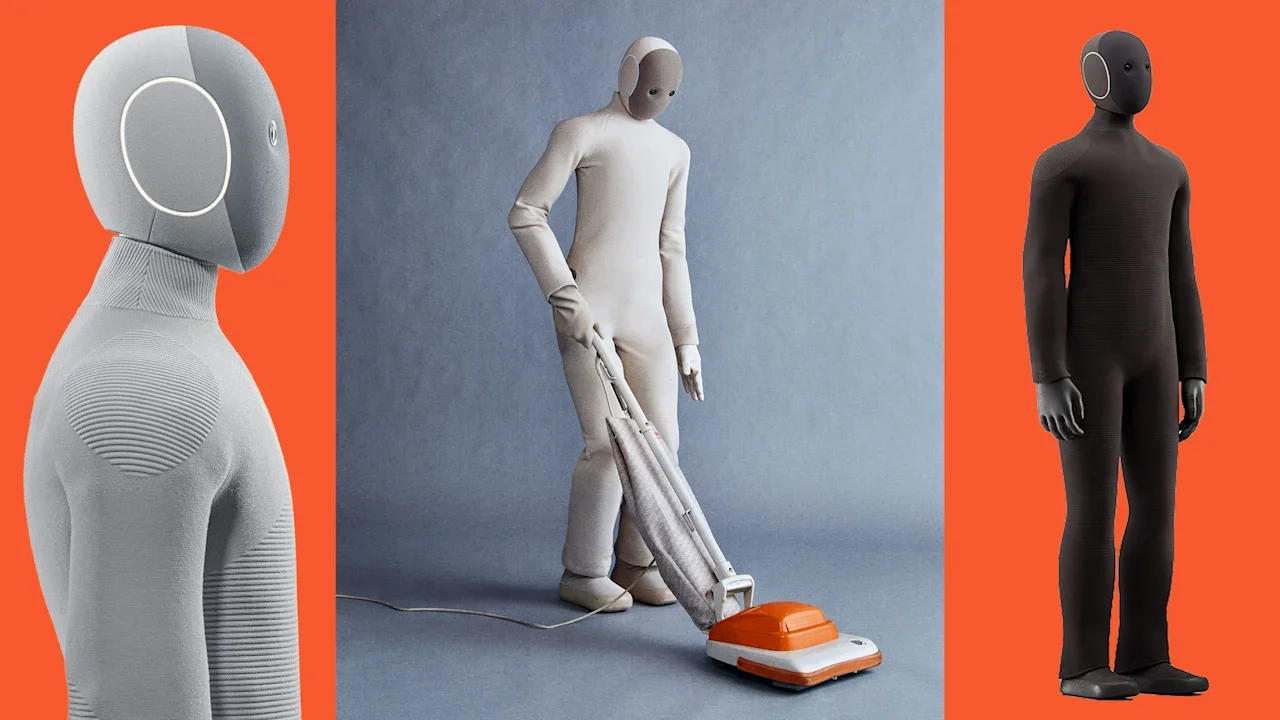
With one sweeping gesture, Dar Sleeper hoists the humanoid robot off the ground. Bracing its back with one arm and its legs with the other, he gently carries it across the room and lowers it onto a sofa, where it lies in repose as if catching a quick nap. It’s a slightly surreal scene, but it has a serious point. I am visiting the Palo Alto headquarters of 1X Technologies, and Sleeper, the company’s VP of growth, is demonstrating that Neo, its home robot, is a lightweight at a mere 66 pounds. That’s a crucial design feature, given that a weighty domestic bot could prove hazardous if it toppled over in the vicinity of a human, a pet, or just a pricey vase. Soon, Neo will take on the ultimate proving ground for a home robot: actual homes. 1X is announcing that it’s taking preorders and plans to ship units to its earliest customers next year. The price is $20,000, or $499 per month as a subscription service, with a six-month minimum. Like a smartphone, the robot will come in multiple color options—tan, gray, and dark brown. Wait, $20,000? There isn’t much precedent for mainstream consumer products in that price range. Cars, of course. (The average price for a new one just topped $50,000.) Maybe boats? Even if you can come up with another example or two, it’s a short list. Then again, 1X founder and CEO Bernd Børnich’s goals for his robots involve attaining a degree of utility that few inventions ever have. He wants to teach Neo to handle every household task that people perform because they need to, not because they want to. Even if the time saved came in bits and pieces—five minutes of dishwasher unloading here, 15 minutes of laundry folding there—it would add up to many hours newly available for more rewarding pursuits. Now multiply that by hundreds of thousands of Neos, which is the quantity Børnich talks about when outlining 1X’s long-term plans for manufacturing capacity. “Potentially it’s the biggest thing ever, with respect to productivity increase across society,” he tells me when I catch up with him via Zoom after my visit to the company. Børnich is hardly the only entrepreneur spinning visions of a world in which humans coexist with teeming masses of robots modeled on them. Companies such as Agility Robotics, Apptronik, and Figure AI are all building humanoid bots of their own. So is Sleeper’s former employer, Tesla, whose Optimus robot has seemingly diverted much of Elon Musk’s attention away from boring old EVs. Most of the nascent category’s focus is on environments such as factories and warehouses, where robots might take on jobs that are dangerous or repetitive—no paychecks required. (1X is presently focused on the home but says it “plans to offer humanoids for the workplace at a later date.”) It’s not just robotics manufacturers that see a vast business in the making. Humanoid bots could fuel enormous growth in chips, foundational models, cloud services, and other elements of the AI economy—a wave of optimism 1X is already riding. In 2023, OpenAI led the company’s $23.5 million Series A2 funding round; its Series B round the following year raised another $100 million. The company also has a strategic alliance with Nvidia, whose CEO, Jensen Huang, accepted a custom leather jacket from Neo during an onstage appearance last March. By 2050, according to a May Morgan Stanley report, there could be more than a billion humanoid robots in service, with the vast majority in commercial and industrial settings. Only 80 million would be in homes, the report speculates. Still, that’s roughly 80 million more humanoid home robots than exist today. For all the grandeur of 1X’s plan to transform how we spend our time, the company is up front that Neo is not yet ready to handle all the drudgery you might want to offload to a home robot. Some of the things it can do are only possible under the control of remote 1X employees, who can orchestrate its actions as if it were a marionette. That human assistance might be a stopgap, but it will also provide 1X with AI training data it can use to make Neo more autonomous over time. My encounter with Neo at 1X’s office did as much to tamp down my impressions of its present form as ratchet them up. The robot gamely ambled about, with a gait that didn’t closely resemble that of a human but was more limber than you might expect. It showed off its strength by hefting a restaurant-sized sack of rice. It also presented me with a chilled bottle of water, though the feat involved a mix of autonomy (walking to the refrigerator) and remote control (opening the fridge and fishing out the bottle), and took much longer than if I’d simply grabbed the water myself. A demo of Neo’s sweeping skills went south when it turned out the cordless vacuum it was wielding had a dead battery. (A human house cleaner would have easily diagnosed and solved the problem.) And some uses 1X is citing for its robot—such as setting birthday reminders and managing grocery lists—do not seem to call for $20,000 of advanced machinery. For Neo to succeed, 1X won’t just need to finish building out the robot’s skill set. It will also have to live up to expectations long steeped in cultural touchstones such as The Jetsons and Star Wars. As Sleeper puts it, “The ultimate North Star, in a lot of people’s minds, is Rosie the robot.” Børnich emphasizes that 1X isn’t entirely sure how Neo will fit into homes, and the company is getting ready to sell them in part to help figure that out. ”I don’t think there’s any way we could be as creative as the full set of our customers,” he says. “That’s one of the beauties of actually developing this in public.” Robots come home Originally known as Halodi Robotics and founded by Børnich in Norway in 2014, 1X didn’t set out to build a home humanoid right away. Its first robot, Eve, was designed for industrial applications, had grippers instead of hands, and rolled on two wheels. It looked a little like it was riding a built-in Segway. As with anything dependent on generative AI, teaching robots to engage with the world requires vast amounts of training data. As 1X considered where to get that data, it came to see the home as rife with possibilities. That fact nudged it in the direction that eventually led to Neo. “A cup has the ability to give you more data than an entire industrial task,” says Sleeper. “Because that cup could be full. It could be empty. It could be half full. It could be on the kitchen table full, meaning you should leave it there because somebody’s probably drinking it. It can be empty on the coffee table, which means you should take it to the sink or put it in the dishwasher. It could be in the cupboard, meaning that that’s where you go to grab it to give it to somebody when they ask it for it.” Along with data, homes were also full of challenges that Eve had never been designed to overcome, such as climbing stairs to fetch a laundry basket. So when the company formally decided to pursue the home market, it realized it would need to build an all-new robot. ”Every lesson we’ve learned has moved us more and more in the direction of being very confident that the human form factor is the only form factor,” says Sleeper. Humanoids were hardly a new field of robotics research: Børnich says he drew inspiration from examples such as Honda’s Asimo, a staple of trade-show demos early in this century. But he adds that “The type of hardware that we’ve designed here, which is so lightweight and safe and capable, we couldn’t have done that 20 years ago.” Visiting 1X’s Palo Alto operation is certainly an evocative experience. Along with standard tech-company accoutrements such as HP 3-D printers cranking out prototype parts, it’s full of robots—from the Neo I watched in action to a row of decommissioned Eves sitting next to a staircase. One skinless Neo hangs from a hook in an area thrumming with human technicians: “It’s very Westworld in here,” says Sleeper. Much of Neo’s innovation lies underneath its knit turtleneck jumpsuit. 1X created its own motors, which it says have five times more torque than any other in the world and help the robot lift up to 154 pounds and carry up to 50 pounds. It equipped the robot with a tendon-drive transmission system, intended to reduce weight while increasing safety and affordability. It engineered hands with 22 degrees of freedom—only five less than human ones—and attached them to longer-than-human arms, since robots have no shoulder blades. The company even custom-designed its own batteries. Neo officially runs for four hours on a charge, though it can top off its own battery as necessary—“You’ll never really have to think about it,” promises Sleeper. At 5 feet 6 inches, Neo is 2.5 inches taller than the average American woman and 3 inches shorter than the average man. Its physique is intentionally neither feminine nor masculine: “It was important that nobody be sexually attracted to it,” says Sleeper, suggesting scenarios I prefer not to contemplate any further. Owners will, however, be able to choose between female and male speaking voices. (For the record, Sleeper referred to Neo as “he” during our conversation, but said that opinions on its gender, if any, vary.) Regardless of how capable Neo’s hardware may be, 1X’s AI platform will determine what it can actually do around a house. Its elements include machine vision, audio recognition, and an onboard LLM with memory that provides ongoing context. Melding all of them will allow the robot to listen for instructions, navigate its surroundings and the objects therein, and perform useful tasks. The LLM will also power Neo’s personality. That will come out as people talk to it, which 1X thinks they may do quite a lot. Rather than mimicking human companionship, the company is aiming to make the robot a lovable, pet-like sidekick—Hobbes to the owner’s Calvin, Sleeper says. All of this is where the experience that 1X plans to ship next year will be, at best, a first rough draft. The company’s examples of jobs Neo will be able to perform autonomously on day one are modest: fetching items, greeting guests at the door, switching off the lights at night. It will handle these and other responsibilities by breaking them down into 10-second “microtasks.” At the moment, things get tricky if much more than three microtasks are involved. 1X expects its first customers to understand that they’re buying into a long-term proposition. “As you continue to use your robot, you’ll get more updates, and your basic autonomy features will expand to be able to do more,” says Sleeper. “Your robot can always try something if you ask it to, like getting you a beer. And if it hasn’t learned how to do that yet efficiently, it will fail. Some people might hate it. But those aren’t the early users.” (Historical footnote: Delivering beer may be home robotics’ most enduring example of an exciting application. It’s what a bot called Androbot did for Atari cofounder Nolan Bushnell during an onstage demo at CES in 1983, to cheers from the audience.) From the beginning, Neo will be able to go beyond basic autonomy through its remote-assistance feature. Called Chores, it will enable California-based 1X employees to see through Neo’s eyes and steer the robot through more elaborate processes. The company has anticipated privacy concerns over its bot becoming a roaming window into its customers’ homes: Chores sessions are only initiated if users explicitly ask for them, and can be terminated at any time. When they’re active, the LED ring around Neo’s ears will change from white to blue. Remote-controlled robots made me think of the Tesla event held a year ago whose Optimus bartenders provoked amazement, at least at first. When it turned out they’d been puppeteered by off-site humans, the awe dissipated. Sleeper told me that 1X doesn’t consider Chores to violate the fundamental idea of a home robot: “We just think that there’s actually quite a lot of value to come from these expert operators being able to supplement and support your experience.” As they do, the training data they generate may redound to the benefit of future Neo owners. To err is humanoid Børnich, who has been living with Neo at home for “quite some time,” professes not to be overly concerned with any flaws in the current experience, cheerfully calling them “robotic slop.” Maybe Neo “didn’t put all of the glasses in the cabinet exactly in line, like this master Japanese butler, but it put them in there,” he says by way of example. “Okay, the shirt isn’t folded perfectly, but it’s folded pretty well, and I didn’t need to do it. I’m actually very happy.” But he also expects that Neo will quickly prove its worth to a fairly broad audience. How soon? By 2027, the purchase will be “a no-brainer,” he predicts. Comparing home robots to smartphones—which have tended to get more powerful over time rather than much cheaper—Børnich says that $20,000 may remain Neo’s price tag even after 1X can scale up production well beyond its current capacity of 25,000 U.S.-made robots a year. “You just want to keep expanding the capabilities until you can not only do what humans can do, but you can also do a lot of things that we can’t,” he explains. A lot has to go right for these ambitions to play out, including 1X having access to the necessary capital. Last month, The Information’s Wayne Ma, Natasha Mascarenhas, and Valida Pau reported that the company was seeking $1 billion in additional funding at a $10 billion valuation, dwarfing its previous numbers. For now, 1X is still working on teaching Neo to tackle work that humans can literally do with their eyes closed. But when I ask Børnich if he considers the company’s ultimate business model to lie in selling home robots or building services around them, he pushes back on the assumption that it’s a home robotics company at all. “Actually, I think of 1X mainly as an AGI company,” he says. “We want to solve intelligence and solve artificial labor across society. Digitally and physically—the entire substrate. And you’re not going get there without robots.” Now 1X has to prove that it will get there with them. View the full article
-
A reader writes: I ran a catering business on the side for a while, in addition to my regular job. I don’t do it much anymore, but on occasion I do still take paid jobs, usually for past clients. It’s a way to make some extra money and I enjoy the work. Since my friends know I still do this, it’s not uncommon for them to ask me to do catering work for their own events (parties, kids’ birthdays, etc.). This would be fine except that I can tell they think they’re doing me a favor by giving me their business, and they aren’t! I have enough of the work coming in through regular channels that I’m not really looking for more work. It’s thoughtful of them to want to pay me (at least I don’t have the problem of them expecting I’ll do it for free) but most of the time I would much rather have my weekend free than spend it making appetizers for someone else’s party. When a regular client approaches me about a job I’d rather not do, it’s easy to just say that I’m booked for that time period. And I guess technically I could say that to a friend, too, but often these are people I’m close enough to that they know I’m not filling up my time with catering jobs that way (and I wouldn’t want to have to keep track of the lie to make sure that I don’t mention something else I did that weekend when I had said I’d be “catering”). Also, jobs for friends are usually the ones that end up being a lot more customized so it’s more work for me, on top of the fact that I usually give them a discount because they’re friends (which is fully my choice; I know they’d pay full price if I asked for it). How do I tell people, “I appreciate you thinking it’s a favor to throw business my way, but I’d actually rather you didn’t”? I know one option is that I could just say I’m not catering for friends at all anymore, but I’m still up for doing it if they really actively want my food. If I’m the caterer they’d most want for this particular event, even if we didn’t know each other, great. I just want them to stop thinking they “should” give me the business because we’re friends. Can you tell your friends that you’re actively trying to take on fewer catering jobs? That sounds like it’s the truth, and it’s information they don’t have. You can mention that in casual conversation as you’re catching up on each other’s lives, but you can also mention it when someone approaches you about catering for them. For the latter, you could say, “I’m actually trying to take on fewer catering jobs, so unless there’s something specific I prepare that you really want, please don’t feel you need to offer me the business — I’m trying to cut back on jobs, rather than adding more.” That opens the door for them to say, “I was really hoping you’d make your famous stuffed zucchini because I love it so much” and for you then to decide if you’re up for taking the job or not (since you mentioned you might want to do it under those circumstances), while moving things out of the “favor” framing. Or, if you’d really prefer not to do it at all, that’s okay too! You can say, “Thank you so much for thinking of me, but I’m cutting back on catering so I have more weekends free.” It also might help to have other caterers you can refer them to — “I’m cutting back on how much catering I’m doing, but Caterer X and Y are really great at that kind of party if you want to try them.” It sounds like everyone has great intentions here; you just need to give them more information so they’re not working off of the wrong set of assumptions and assuming you’d be grateful for the business. The post my friends think they’re doing me a favor by giving me business … but they’re not appeared first on Ask a Manager. View the full article
-
Adobe has unveiled significant updates to its GenStudio platform, designed to meet the growing demand for scalable content production among businesses. During the recent Adobe MAX conference, the company introduced features that leverage artificial intelligence (AI) to streamline content creation and enhance marketing efforts, targeting small business owners looking to optimize their operations in an increasingly competitive landscape. Adobe GenStudio addresses a pressing challenge for many businesses: the need for a continuous supply of engaging content. As Varun Parmar, general manager of Adobe GenStudio and Firefly Enterprise, stated, “GenStudio brings together best-in-class Adobe capabilities for businesses to remain competitive in an attention-based economy, dramatically shortening the time it takes to deliver on-brand experiences at scale.” This focus on efficiency is especially relevant for small businesses that often operate with limited resources. One of the standout features of GenStudio is Firefly Design Intelligence, a new AI-powered tool that allows businesses to produce compliant content at scale. This tool was developed in collaboration with The Coca-Cola Company and enables teams to move beyond traditional static brand guidelines. By creating “StyleIDs,” which codify complex design rules, small businesses can generate new layouts and copy while ensuring brand consistency across all marketing materials. Another notable addition is Firefly Creative Production for Enterprise, which enhances the existing web application by allowing users to resize and reframe thousands of assets quickly. The platform now includes advanced features such as a workflow builder for reusable production processes and seamless integration with Adobe Experience Manager Assets and Frame.io. This capability can significantly reduce the time small business teams spend managing content, enabling them to focus on strategy and engagement. For small business owners engaged in performance marketing, the introduction of Adobe’s Content Production Agent in GenStudio is particularly promising. This generative AI tool interprets marketing briefs and automatically generates tailored content for various channels, helping businesses align their messaging with campaign goals and brand guidelines. The automation of content creation can free up valuable time for marketing teams, allowing them to concentrate on other critical tasks. As part of its ongoing innovation, Adobe has also introduced Firefly Services APIs, which facilitate the automation of creative workflows. These APIs now support video reframing and object compositing, essential for businesses looking to produce high-quality visual content quickly. Additionally, the Content Authenticity API ensures that digital credentials are embedded in content, protecting brand integrity—a crucial consideration for small businesses eager to establish trust with their audience. Perhaps one of the most transformative offerings is Adobe Firefly Foundry, which enables businesses to create proprietary generative AI models unique to their brand. By training these models on existing intellectual property, small businesses can generate consistent content tailored to their specific marketing needs. This customization can enhance brand recognition and loyalty, as businesses deliver personalized experiences to their customers. Integration with major advertising platforms is another critical aspect of the new GenStudio features. Businesses can now activate and optimize campaigns across platforms such as Amazon Ads, Google, LinkedIn, and TikTok. For small business owners, this means the ability to manage multi-channel advertising efforts from a single platform, streamlining operations and enhancing performance tracking. While these innovations promise significant benefits, small business owners should also consider potential challenges. The reliance on AI for content production may raise concerns regarding the authenticity and originality of generated content. Businesses must ensure that they maintain a distinct voice and uphold their brand values amidst automation. Moreover, the integration of numerous advertising platforms, while convenient, may require small businesses to invest time in learning how to leverage these tools effectively. Training and adaptation will be essential to maximize the potential of these new capabilities. As Adobe continues to enhance its GenStudio platform with AI-driven solutions, small business owners stand to gain from increased efficiency, improved content quality, and streamlined marketing efforts. By embracing these innovations, businesses can not only keep pace with the demands of the digital landscape but also carve out a competitive edge in their respective markets. This article, "Adobe Unveils GenStudio: A Game-Changer for Scalable Content Production" was first published on Small Business Trends View the full article
-
Adobe has unveiled significant updates to its GenStudio platform, designed to meet the growing demand for scalable content production among businesses. During the recent Adobe MAX conference, the company introduced features that leverage artificial intelligence (AI) to streamline content creation and enhance marketing efforts, targeting small business owners looking to optimize their operations in an increasingly competitive landscape. Adobe GenStudio addresses a pressing challenge for many businesses: the need for a continuous supply of engaging content. As Varun Parmar, general manager of Adobe GenStudio and Firefly Enterprise, stated, “GenStudio brings together best-in-class Adobe capabilities for businesses to remain competitive in an attention-based economy, dramatically shortening the time it takes to deliver on-brand experiences at scale.” This focus on efficiency is especially relevant for small businesses that often operate with limited resources. One of the standout features of GenStudio is Firefly Design Intelligence, a new AI-powered tool that allows businesses to produce compliant content at scale. This tool was developed in collaboration with The Coca-Cola Company and enables teams to move beyond traditional static brand guidelines. By creating “StyleIDs,” which codify complex design rules, small businesses can generate new layouts and copy while ensuring brand consistency across all marketing materials. Another notable addition is Firefly Creative Production for Enterprise, which enhances the existing web application by allowing users to resize and reframe thousands of assets quickly. The platform now includes advanced features such as a workflow builder for reusable production processes and seamless integration with Adobe Experience Manager Assets and Frame.io. This capability can significantly reduce the time small business teams spend managing content, enabling them to focus on strategy and engagement. For small business owners engaged in performance marketing, the introduction of Adobe’s Content Production Agent in GenStudio is particularly promising. This generative AI tool interprets marketing briefs and automatically generates tailored content for various channels, helping businesses align their messaging with campaign goals and brand guidelines. The automation of content creation can free up valuable time for marketing teams, allowing them to concentrate on other critical tasks. As part of its ongoing innovation, Adobe has also introduced Firefly Services APIs, which facilitate the automation of creative workflows. These APIs now support video reframing and object compositing, essential for businesses looking to produce high-quality visual content quickly. Additionally, the Content Authenticity API ensures that digital credentials are embedded in content, protecting brand integrity—a crucial consideration for small businesses eager to establish trust with their audience. Perhaps one of the most transformative offerings is Adobe Firefly Foundry, which enables businesses to create proprietary generative AI models unique to their brand. By training these models on existing intellectual property, small businesses can generate consistent content tailored to their specific marketing needs. This customization can enhance brand recognition and loyalty, as businesses deliver personalized experiences to their customers. Integration with major advertising platforms is another critical aspect of the new GenStudio features. Businesses can now activate and optimize campaigns across platforms such as Amazon Ads, Google, LinkedIn, and TikTok. For small business owners, this means the ability to manage multi-channel advertising efforts from a single platform, streamlining operations and enhancing performance tracking. While these innovations promise significant benefits, small business owners should also consider potential challenges. The reliance on AI for content production may raise concerns regarding the authenticity and originality of generated content. Businesses must ensure that they maintain a distinct voice and uphold their brand values amidst automation. Moreover, the integration of numerous advertising platforms, while convenient, may require small businesses to invest time in learning how to leverage these tools effectively. Training and adaptation will be essential to maximize the potential of these new capabilities. As Adobe continues to enhance its GenStudio platform with AI-driven solutions, small business owners stand to gain from increased efficiency, improved content quality, and streamlined marketing efforts. By embracing these innovations, businesses can not only keep pace with the demands of the digital landscape but also carve out a competitive edge in their respective markets. This article, "Adobe Unveils GenStudio: A Game-Changer for Scalable Content Production" was first published on Small Business Trends View the full article
-
OpenAI said Tuesday it has reorganized its ownership structure and converted its business into a public benefit corporation and two crucial regulators, the Delaware and California attorneys general, said they would not oppose the plan. The restructuring paves the way for the ChatGPT maker to more easily profit off its artificial intelligence technology even as it remains technically under the control of a nonprofit. Delaware Attorney General Kathy Jennings and California Attorney General Rob Bonta said in separate statements that they would not object to the proposal, seemingly bringing to an end more than a year of negotiations and announcements about the future of OpenAI’s governance and the power that for-profit investors and its nonprofit board will have over the organization’s technology. The company also said it has signed a new agreement with its longtime backer Microsoft that gives the software giant a roughly 27% stake in OpenAI’s new for-profit corporation but changes some of the details of their close partnership. The attorneys general of Delaware, where OpenAI is incorporated, and California, where it is headquartered, had both said they’re investigating the proposed changes. “We will be keeping a close eye on OpenAI to ensure ongoing adherence to its charitable mission and the protection of the safety of all Californians,” said Bonta. OpenAI said it completed its restructuring “after nearly a year of engaging in constructive dialogue” with the offices in both states. “OpenAI has completed its recapitalization, simplifying its corporate structure,” said a blog post Tuesday from Bret Taylor, the chair of OpenAI’s board of directors. “The nonprofit remains in control of the for-profit, and now has a direct path to major resources before AGI arrives.” AGI stands for artificial general intelligence, which OpenAI defines as “highly autonomous systems that outperform humans at most economically valuable work.” OpenAI was founded as a nonprofit in 2015 with a mission to safely build AGI for humanity’s benefit. It later started a for-profit arm. Microsoft invested its first $1 billion in OpenAI in 2019 and the two companies formed an agreement that made Microsoft the exclusive provider of the computing power needed to build OpenAI’s technology. In turn, Microsoft heavily used the technology behind ChatGPT to enhance its own AI products. The two companies first revealed in January that they were altering that agreement, enabling San Francisco-based OpenAI to build its own computing capacity, “primarily for research and training of models.” That coincided with OpenAI’s announcements of a partnership with Oracle and SoftBank to build a massive new data center in Abilene, Texas. It’s since announced more such projects planned in the U.S., Asia, Europe and South America, along with big deals with chipmakers like Nvidia, AMD and Broadcom. But other parts of its agreements with Microsoft remained up in the air as the two companies appeared to veer further apart before reaching a tentative new agreement in September. OpenAI had previously said its own nonprofit board will decide when AGI is reached, effectively ending its Microsoft partnership. But it now says that “once AGI is declared by OpenAI, that declaration will now be verified by an independent expert panel,” and that Microsoft’s rights to OpenAI’s confidential research methods “will remain until either the expert panel verifies AGI or through 2030, whichever is first.” Microsoft will also retain some commercial rights to OpenAI products “post-AGI” and through 2032. Microsoft put out the same joint announcement about the revised partnership Tuesday but declined further comment. Its shares spiked 2% on Tuesday. Going forward, the nonprofit will be called the OpenAI Foundation and Taylor said it would grant out $25 billion toward health and curing diseases and protecting against the cybersecurity risks of AI. He did not say over what time period those funds would be dispersed. Robert Weissman, co-president of the nonprofit Public Citizen, said this arrangement does not guarantee the nonprofit independence, likening it to a corporate foundation that will serve the interests of the for profit. Even as the nonprofit’s board may technically remain in control, Weissman said that control “is illusory because there is no evidence of the nonprofit ever imposing its values on the for profit.” The Delaware attorney general’s investigation focused on ensuring OpenAI put its commitment to safety first and before any financial interests. Jennings also said OpenAI promised to keep its nonprofit in control of the public benefit corporation, including the right to appoint and remove its board members. The removal of OpenAI’s CEO Sam Altman in Nov. 2023 by the nonprofit’s board at the time — and his subsequent reappointment — kicked off the company’s effort to restructure. The nonprofit’s board will continue to include a Safety and Security Committee, which will have the power “to oversee and review” OpenAI’s technology development. It will even have the power to stop the release of a new product, according to the Delaware attorney general’s statement. Additionally, within a year, the nonprofit’s board will include at least two members who do not also serve on the public benefit corporation’s board. OpenAI still faces a legal challenge from billionaire Tesla CEO Elon Musk, an early OpenAI investor who now runs his own AI firm, xAI, and has accused the startup he co-founded of betraying its original mission. A federal judge in March denied Musk’s request for a court order blocking OpenAI from converting itself to a for-profit company but said she could expedite a trial to consider Musk’s claims. —Matt O’Brien and Thalia Beaty View the full article

-
At Adobe MAX 2025, held in Los Angeles, Adobe unveiled a suite of innovative AI tools designed to enhance the creative process for small business owners and creators alike. This announcement represents a significant leap in how creative professionals can leverage technology to streamline their workflows, produce high-quality content, and optimize resource management. Adobe’s new offerings include advanced generative audio and video tools within Adobe Firefly. These tools allow users to create entire videos from concept to production, a game-changer for small business owners who often juggle multiple roles in content creation. David Wadhwani, president of digital media at Adobe, emphasized this opportunity: “We believe every creator should be able to harness the economic and artistic opportunities flowing from generative AI.” For small business owners, the practical applications of these tools are extensive. With the introduction of studio-quality soundtracks through the “Generate Soundtrack” feature and crystal-clear voice-overs via “Generate Speech,” creators can produce professional-grade video content without needing extensive audio production skills. This capability reduces the barriers to entry for high-quality video marketing, making it accessible even to those with limited budgets. The integration of top generative AI models into Adobe’s Creative Cloud applications, including partnerships with industry leaders like Google and OpenAI, offers small business owners a variety of tools tailored to their specific needs. For example, the new Firefly Custom Models allow users to create personalized generative AI models that reflect their unique brand style. This feature could significantly enhance brand consistency across marketing materials, making it easier for small businesses to establish a recognizable identity in crowded markets. Moreover, Adobe Firefly now includes an all-in-one studio for ideation, creation, and production, which integrates collaborative tools like Firefly Boards. This can facilitate teamwork among small business owners and their teams, streamlining the creative process from brainstorming to final execution. The ability to publish across multiple channels simultaneously further simplifies the process of content distribution, an essential factor for businesses aiming to maximize their outreach. Despite these advancements, small business owners should also be mindful of potential challenges. The rapid adoption of AI tools can lead to a steep learning curve. While Adobe aims to make its tools user-friendly, those unfamiliar with advanced creative software may need to invest time in training. Additionally, as content creation becomes more automated, maintaining a personal touch in branding and marketing is crucial. Small business owners must ensure that the AI-generated content continues to resonate with their target audience and aligns with their brand values. Adobe’s GenStudio solution, which optimizes the content supply chain, addresses another critical issue for small businesses: the overwhelming demand for content. By integrating generative AI directly into content production workflows, Adobe helps businesses streamline their processes, allowing them to focus on creativity rather than administrative tasks. This could prove invaluable for small businesses struggling to keep pace with content demands. The potential for Adobe Firefly Foundry further underscores the adaptability of these tools for small businesses. By working directly with Adobe to create tailored generative AI models based on their existing intellectual property, businesses can accelerate content production while ensuring that their brand remains front and center. This could significantly enhance the efficiency of marketing campaigns, making it easier to respond to market trends and customer needs. As Adobe MAX 2025 showcased, the future of creative work is being reshaped by AI, providing small business owners with powerful tools to enhance their capabilities. While challenges exist, the benefits of increased efficiency, improved quality, and greater control over the creative process present an exciting opportunity for those ready to embrace this technology. With the right approach, small business owners can leverage these innovations to not only keep up with industry demands but also to thrive in an increasingly competitive landscape. This article, "Adobe Unveils Revolutionary AI Tools for Creators at MAX 2025" was first published on Small Business Trends View the full article
-
At Adobe MAX 2025, held in Los Angeles, Adobe unveiled a suite of innovative AI tools designed to enhance the creative process for small business owners and creators alike. This announcement represents a significant leap in how creative professionals can leverage technology to streamline their workflows, produce high-quality content, and optimize resource management. Adobe’s new offerings include advanced generative audio and video tools within Adobe Firefly. These tools allow users to create entire videos from concept to production, a game-changer for small business owners who often juggle multiple roles in content creation. David Wadhwani, president of digital media at Adobe, emphasized this opportunity: “We believe every creator should be able to harness the economic and artistic opportunities flowing from generative AI.” For small business owners, the practical applications of these tools are extensive. With the introduction of studio-quality soundtracks through the “Generate Soundtrack” feature and crystal-clear voice-overs via “Generate Speech,” creators can produce professional-grade video content without needing extensive audio production skills. This capability reduces the barriers to entry for high-quality video marketing, making it accessible even to those with limited budgets. The integration of top generative AI models into Adobe’s Creative Cloud applications, including partnerships with industry leaders like Google and OpenAI, offers small business owners a variety of tools tailored to their specific needs. For example, the new Firefly Custom Models allow users to create personalized generative AI models that reflect their unique brand style. This feature could significantly enhance brand consistency across marketing materials, making it easier for small businesses to establish a recognizable identity in crowded markets. Moreover, Adobe Firefly now includes an all-in-one studio for ideation, creation, and production, which integrates collaborative tools like Firefly Boards. This can facilitate teamwork among small business owners and their teams, streamlining the creative process from brainstorming to final execution. The ability to publish across multiple channels simultaneously further simplifies the process of content distribution, an essential factor for businesses aiming to maximize their outreach. Despite these advancements, small business owners should also be mindful of potential challenges. The rapid adoption of AI tools can lead to a steep learning curve. While Adobe aims to make its tools user-friendly, those unfamiliar with advanced creative software may need to invest time in training. Additionally, as content creation becomes more automated, maintaining a personal touch in branding and marketing is crucial. Small business owners must ensure that the AI-generated content continues to resonate with their target audience and aligns with their brand values. Adobe’s GenStudio solution, which optimizes the content supply chain, addresses another critical issue for small businesses: the overwhelming demand for content. By integrating generative AI directly into content production workflows, Adobe helps businesses streamline their processes, allowing them to focus on creativity rather than administrative tasks. This could prove invaluable for small businesses struggling to keep pace with content demands. The potential for Adobe Firefly Foundry further underscores the adaptability of these tools for small businesses. By working directly with Adobe to create tailored generative AI models based on their existing intellectual property, businesses can accelerate content production while ensuring that their brand remains front and center. This could significantly enhance the efficiency of marketing campaigns, making it easier to respond to market trends and customer needs. As Adobe MAX 2025 showcased, the future of creative work is being reshaped by AI, providing small business owners with powerful tools to enhance their capabilities. While challenges exist, the benefits of increased efficiency, improved quality, and greater control over the creative process present an exciting opportunity for those ready to embrace this technology. With the right approach, small business owners can leverage these innovations to not only keep up with industry demands but also to thrive in an increasingly competitive landscape. This article, "Adobe Unveils Revolutionary AI Tools for Creators at MAX 2025" was first published on Small Business Trends View the full article
-
Chancellor hopes to get the agreement over the line before her BudgetView the full article
-
In artificial intelligence, compute and data matter, but people matter more. Behind every breakthrough model, every infrastructure leap, and every “revolutionary” chatbot lies a shrinking pool of scientists, engineers, and mathematicians capable of building them. The defining constraint on the next decade of AI isn’t just hardware: it’s human capital. Across the world, a quiet arms race is unfolding for that capital. The most advanced AI firms, like OpenAI, Anthropic, DeepMind, Meta, Google, and a few in China, are no longer competing just for customers or GPUs. They are competing for brains. The new concentration of intelligence In the past two years, the hiring and acquisition patterns of AI companies have begun to resemble a geopolitical map. Anthropic and OpenAI lure entire research teams from Google or Meta with compensation packages approaching nine figures. Apple and Amazon, late to the party, are buying startups not for products, but for the engineers behind them. And venture capital is no longer funding ideas so much as acqui-hiring: purchasing human potential before it matures elsewhere. Multiple analyses show that elite U.S. programs, especially Stanford, Berkeley, Carnegie Mellon, and MIT remain dominant feeders into frontier AI labs, reinforcing a tight concentration of expertise in a few firms and geographies. The result is intellectual concentration unprecedented in the history of technology. This clustering may accelerate progress in the short term. But it also increases fragility. When innovation lives inside a handful of firms, the industry becomes monocultural. The same assumptions, ethical frameworks, and commercial incentives repeat themselves. Alternative approaches, like symbolic reasoning, hybrid models, and decentralized architectures, struggle for attention or funding. The global scramble for minds Meanwhile, countries are treating AI researchers the way they once treated nuclear physicists or oil engineers. The United Kingdom launched its Frontier AI Taskforce with special visas for top scientists. Canada’s Global Talent Stream fast-tracks work permits for AI engineers in under two weeks. France offers tax incentives and research grants for companies that locate their labs in Paris or Grenoble. China, faced with export controls on chips, has doubled down on human intelligence as a strategic resource. Its leading universities are producing tens of thousands of AI graduates a year, many trained on open-weight models after Washington’s hardware restrictions. As one analyst at the Carnegie Endowment put it, “If you can’t import compute, you import talent.” In other words: brains are the new semiconductors. America’s self-inflicted wound And yet, the United States, still home to most of the world’s top AI firms, is busy tightening the spigot. Donald The President’s renewed hostility toward immigration includes threats to limit, suspend, or impose heavy fees on H-1B and F-1 visas, the very programs through which thousands of AI researchers enter the country each year. The pattern is not new. In 2020, during his previous term, The President signed an executive order suspending key visa categories, prompting MIT Technology Review to warn that the move “threatened to undercut America’s lead in artificial intelligence.” The logic hasn’t changed. The world’s best AI researchers are disproportionately international: roughly 60% of top AI scientists working in the U.S. were born abroad, according to the National Foundation for American Policy. Limiting their entry isn’t protectionism: it’s strategic sabotage. When your biggest competitive advantage is talent, closing the door to talent is a slow form of self-destruction. The corporate paradox Ironically, the companies that benefit from global talent the most are also the ones making that talent scarce. By offering astronomical salaries and exclusivity contracts, they create a gravitational field that pulls expertise out of universities and startups. Academia, long the seedbed of AI progress, is now bleeding researchers to industry at an unprecedented rate. The result is a research vacuum where public institutions can no longer afford to compete. Even national labs struggle to retain talent when private firms offer multiples of government pay. This corporate concentration of minds has another cost: intellectual homogeneity. When the same people cycle between the same companies under the same investors, the frontier of AI becomes narrower, more predictable, and less plural. The next big breakthroughs might never happen, and not because we lack compute, but because we’ve trained the global research community to think the same way. The geopolitical stakes For decades, the United States has dominated global innovation by acting as a magnet for talent. The H-1B and F-1 visa systems, for all their flaws, turned American universities and tech hubs into engines of discovery. That advantage is now at risk. If Washington continues down the path of visa restriction, and if the industry continues to hoard rather than nurture expertise, the gravitational center of AI could shift elsewhere. Canada, the European Union, and the UAE are already competing for displaced researchers. China, meanwhile, is developing homegrown alternatives with staggering speed. The irony is that America may lose the very thing that made its technology ecosystem unstoppable: openness. The more insular it becomes, the more it resembles the centralized systems it once out-innovated. The ethics of scarcity Talent concentration also raises moral questions. When a small number of corporations control the majority of global AI expertise, they effectively control which problems get solved and which are ignored. We are already seeing this bias in practice. Billions are being poured into models that optimize productivity, marketing, and financial forecasting, while underfunded projects in climate modeling, education, and healthcare languish. AI’s promise to “benefit humanity” is hollow if humanity doesn’t have a seat at the table. Diversity of thought, background, and geography is not a moral luxury; it’s a prerequisite for resilience. Homogeneous systems fail in homogeneous ways. A new social contract for intelligence The solution is neither regulation alone nor market freedom alone. It’s a new social contract for talent — one that treats human intelligence as a shared strategic resource, not a proprietary asset. That means: Immigration policies that attract, not repel, the world’s brightest minds. Funding mechanisms that keep public research competitive with corporate labs. Ethical frameworks that prevent non-competes and exclusivity contracts from turning scientists into captives. Global cooperation that recognizes AI as a common infrastructure challenge, not a zero-sum race. In the 20th century, nations competed for oil. In the 21st, they will compete for cognition. A warning and a choice The United States still holds the advantage: world-class universities, deep capital markets, and a culture of risk. But advantages erode when arrogance replaces openness. If America turns inward, it won’t just lose talent: it will lose the diversity that fuels creativity. And when the next generation of scientists chooses to work in Toronto, Paris, Madrid, or Shenzhen instead of Silicon Valley, the “American century” of innovation will quietly end. Not with a revolution, but with a resignation letter. Computing power, as I said in previous articles, is important, as it is access to cheap energy, or as Europe very well knows, regulation. But the race for AI supremacy will not be won by compute, nor by energy prices or by policy alone. It will be won by whoever attracts and empowers the minds that make intelligence itself. And right now, those minds are watching which countries still deserve them. View the full article

-
When OpenAI was started in 2015, its founders (including both Sam Altman and Elon Musk) chose to make it a nonprofit. Its initial goal was to guarantee that artificial general intelligence (AGI), a type of AI that is theoretically better at humans at most tasks, would benefit everyone. The company has gone through a number of changes in the years since. It hasn't been a true nonprofit since 2019, when it moved to a "capped-profit" structure, which limited profits to 100 times any investment. Musk even sued the company last year, claiming it had ditched its original mission in favor of profits. But now, OpenAI is looking more like a traditional for-profit company than ever. On Thursday, it announced the company will now operate under a new for-profit structure, called OpenAI Group PCB, a public benefit corporation. OpenAI's nonprofit arm, which is now called the OpenAI Foundation, holds a $130 billion stake in OpenAI Group PCB, and controls the for-profit company. OpenAI says it is particularly focused on how this move will affect its goals of achieving AGI, and ensuring that AGI "benefits all of humanity." As OpenAI sees it, the better its for-profit businesses perform, the more funds the OpenAI Foundation will have to continue its philanthropic work. To that point, OpenAI says the OpenAI Foundation is committing $25 billion to two key objectives. The first is to health and disease, as the OpenAI Foundation will aim to create open-sourced health datasets and offer funding for scientists. The second goal will be to bolster "AI resilience," which OpenAI sees as "maximizing AI's benefits and minimizing its risks." According to OpenAI, the OpenAI Foundation and OpenAI Group both have the same mission, and that the terms of the new structure require the for-profit side to advance that mission. What does this mean for OpenAI?The way OpenAI puts it, this move is the best of both worlds for the company. It asserts that it will continue to operate with the same values and goals as it did prior to this restructuring, while at the same time having more freedom to raise capital to fund those efforts. That second point is certainly true. CEO Sam Altman has been working for nearly two years to restructure the company into something that can more easily compete financially with other for-profit companies in the AI space, like Amazon, Google, and Meta. Other strictly-AI companies, like Anthropic and xAI, also have this type of structure. Already, the move has solidified funds for OpenAI: The Japanese-baed SoftBank had previously pledged to a $40 billion investment, with $10 billion in April and another $30 billion in December. However, that investment was contingent on the company's restructuring plans. Had OpenAI not restructured, SoftBank would've dropped its investment to $20 billion. By bolstering its for-profit core, OpenAI earned itself that extra $20 billion. OpenAI has also agreed to extend an agreement with Microsoft that allows the latter to use and sell OpenAI products. The original agreement ran through 2030, and allowed OpenAI to cancel the deal if the company achieved AGI. But now, the deal runs through 2032, even if OpenAI achieves AGI, so long as the tech has the "appropriate safety guardrails." An independent expert panel will make the call on whether OpenAI has achieved AGI. Rights to OpenAI's research will still be capped when OpenAI achieves AGI, or by 2030, whichever comes first. It's no secret that AI is big business, so this move could realistically continue OpenAI's many financial successes. It may also heat up the race to achieve AGI, as it now allows Microsoft to pursue that benchmark with OpenAI's technologies as well. But against this news is a lingering, and concerning, question: Are we in an AI bubble? And will that bubble burst? OpenAI currently has $1 trillion in AI deals, though only pulls in $13 billion in actual revenue. Perhaps its restructuring will allow it to develop more lucrative revenue streams, but even still, AI is generating a lot of investment without the tangible returns you'd necessarily expect. View the full article
-
The latest gambling scandal to rock the NBA is about a real-world event that normal people would never have noticed. In March 2023, the 35-37 New Orleans Pelicans coasted to a 115-89 win over the Charlotte Hornets, who would go on to finish the year with a record of 27-55. The Pelicans never trailed in the game thanks largely to the play of Brandon Ingram, who notched the first triple-double of his career. The ninth paragraph of the recap on ESPN mentions one other factor that may have contributed to the decisive margin of victory: Hornets guard Terry Rozier left the game early, complaining of a sore right foot, and did not return. As alleged by federal prosecutors in New York, this was not a coincidence. Before the game, they say, Rozier told a childhood friend that he intended to fake an injury, thus allowing that friend to place sure-thing wagers on Rozier’s props—a type of bet that allows users to gamble on whether a player will accumulate more (“over”) or less (“under”) than a sportsbook-supplied total in a given statistical category. Rozier’s friend then sold this information to an uncertain-but-significant number of other bettors, who collectively bet hundreds of thousands of dollars that Terry Rozier, a serviceable-but-not-spectacular guard playing in a late-season game between two perennially forgettable teams, would just happen to have an off night. Sure enough, Rozier checked out after scoring just five points in less than ten minutes of playing time, which meant that, as promised, those under bets hit. A few days later, the bettors convened in Philadelphia to settle up. Rozier’s friend then drove to Rozier’s home in Charlotte, where they counted their cash together, according to the indictment. Prop bets—bets that a given event will or will not occur in a game—are not the only variety of cheating alleged in this scandal, which involves a cast of characters that includes current and former NBA players, enterprising sports gamblers, and Mafia associates running rigged poker games that will almost certainly be portrayed in a Netflix limited series sometime next year. But player props are at the heart of this story nonetheless, because player props will likely be at the heart of every sports betting scandal for the foreseeable future. Props are the betting industry’s single greatest threat to the legitimacy of the games fans watch, and to the public trust the leagues spent decades building. Yet because their availability makes so much money for everyone involved—not bettors, of course, but the leagues and their official sportsbook partners—no one in a position of power has much of an incentive to do anything about it. Among bettors, props are popular because they are fun: They give casual viewers a reason to root for players they otherwise wouldn’t care about, and take advantage of armchair quarterbacks’ fervent belief that they understand their favorite team’s tendencies better than some oddsmaker ever could. But from an integrity-of-the-game standpoint, the problems with these bets are pretty intuitive. First, in many cases, the outcome is easily manipulable by one person. A player in Rozier’s shoes can’t guarantee that he’ll score a certain number of points, and he certainly can’t guarantee that the Hornets will win (or lose) the game. But he can guarantee that he scores less than a certain number of points. All he has to do is remember what that number is, and to grasp at his foot and wince a little before he reaches it. Second, the outcomes of prop bets are often inconsequential to the final score, which is what most non-bettor fans pay attention to and care about. Earlier this year, for example, regulators flagged that bettors in Ohio, New York, and New Jersey seemed unusually confident that Cleveland Guardians pitcher Luis Ortiz, in two specific games and in two specific innings, would throw a ball or hit the batter with his first pitch. Sure enough, in both instances, Ortiz’s deliveries were outside and in the dirt; one skipped by the catcher altogether. Major League Baseball placed Ortiz on leave, and its investigation is ongoing. But if Ortiz was colluding with friendly bettors whom he tipped off beforehand, it is easy to see how they might have settled on this particular moneymaking strategy, which hinges on the results of a single pitch, thrown when nobody is on base, while fans who went to get beers during the break are still making their way back to their seats. Again, by himself, a player like Ortiz can’t control whether his team wins a nine-inning game. But he can control whether his first pitch of the third inning is anywhere close to the strike zone, or gets all the way to the backstop. In the past year or so, the leagues have begun to understand the dangers that the proliferation of prop bets poses to their respective enterprises. Over the most recent MLB All-Star Break, Commissioner Rob Manfred criticized prop bets as “unnecessary” and “particularly vulnerable” to manipulation. At the NFL’s request, Illinois regulators banned props on made kicks, incomplete passes, and other events where the outcome is “100% determinable by one person in one play.” The NCAA has asked Congress to ban player props in college athletics; in Ohio, Governor Mike DeWine has pushed for a total ban on props in both college and pro sports, calling the market for these bets an “experiment” that has “failed badly.” The NBA had the chance to address props last year, when Toronto Raptors reserve Jontay Porter was implicated in a Rozier-style scheme in which he removed himself from a game to ensure his under bets would hit. Shortly afterwards, NBA Commissioner Adam Silver asked sportsbooks to stop offering props on players who are, like Porter, signed to two-way or ten-day contracts, reasoning that fringe players making the least money are the most susceptible to pressure to try and supplement their incomes while they still have the chance. But the Rozier scandal reveals the flaws inherent in trying to regulate a multibillion-dollar industry by reacting to the most recent scandal. First, the unavailability of props for players of Porter’s caliber would not have affected Rozier, a ten-year veteran who, when he pulled himself from that game back in March 2023, was in the first year of a four-year contract worth $96 million. And second, all Silver could do was ask the sportsbooks for help, because the league only has so much control over the bets its partners do and don’t take. As a result, according to NBC News, even after the Porter scandal, the league had to make the business case to the sportsbooks that prop bets on bit players like him were not lucrative enough to continue to offer. It is true that leagues, sportsbooks, and regulators have procedures in place to try and ferret out cheating. Hours before the game from which Rozier removed himself, many sportsbooks stopped taking bets on his props after a third-party monitoring firm flagged unusual betting activity on his unders, including one bettor at one casino who wagered more than $13,000 across 30 separate bets in 46 minutes. But the fact that these systems have caught some cheating only raises the question in fans’ minds of how much cheating is actually going on. If Rozier’s friend had been a little more circumspect about placing his bets—or, at the very least, if he hadn’t passed it on to God knows how many people who flooded gambling apps and casino floors, looking to get in on the action—perhaps no one would have found out. And even if (a big if, but stay with me) these systems are as effective as leagues would like you to believe, perception is as important as reality. The more often that bettors read about scandals like this one in the news, the more often their lost wagers and bad beats will start to feel like the results of corruption that the leagues must have missed. Already, players across sports endure harassment and receive death threats from bettors angry about a leg of their parlay that didn’t hit. If you search X for the name of any underperforming player in any given game, you will get a deluge of irate all-caps tweets concluding that the fix must be in, and snitch-tagging the FBI to beg Kash Patel to open an investigation immediately. To date, the leagues have—pardon the phrase—bet that the billions of dollars they make from legal gambling will make the occasional embarrassing scandal worth the trouble. (Silver recently described the NBA as “learning as we go.”) For now, that’s probably still true, but at some point, if betting and non-betting fans no longer trust the on-field, on-court, or on-ice product, it won’t be. The question is whether the leagues will give up some of this easy money to protect what remains of their credibility, or whether they are willing to risk losing it for good. View the full article

-
Pendulum has swung towards capital allocators View the full article