ResidentialBusiness
Administrators
-
Joined
-
Last visited
Everything posted by ResidentialBusiness
-
 Contracts worth up to €900mn put Helsing and Stark on track to help buttress Nato’s eastern flank against RussiaView the full article
 -
Bank stood by Andy Sieg, a potential successor to CEO Jane Fraser, after investigation by law firm Paul WeissView the full article
-
With progress in AI, the showhorses may yet eclipse the more technically skilled workhorsesView the full article
-
Testimonies from former detainees spotlight worsening conditions since October 7 2023 attackView the full article
-
The The President administration’s looser rules could breed more ‘cockroaches’ in the lending marketView the full article
-
Treasury secretary Scott Bessent has a shortlist of five candidates vying to replace Jay Powell View the full article
-
It’s five answers to five questions. Here we go… 1. Can I ask my company to paint over part of an office mural? I work at a large American law firm in a medium sized branch office (HR is based in another state). My office has this huge … corporate mural? Collage? It’s a collection of portraits of famous and “inspirational” people and “inspiring” quotes. It’s got world leaders, people from history books, athletes, authors, movie stars, etc. Each individual portrait is maybe one foot by one foot? This thing spans multiple walls, floor to ceiling, probably a couple of hundred portraits total. This piece of “art” ends at the entrance to the office supply room, and the main pathway to the kitchen and the partner’s office. In order to get to these locations, I have to walk inches away past a portrait of Anne Frank, at eye level (she’s next to Audrey Hepburn, if you were curious). There’s an alternate path to the kitchen/partner where I only have to walk within 10 feet of Anne (still visible though). This makes me very uncomfortable and it’s the first time I’ve ever experienced something to be so triggering. My grandparents were Holocaust/WWII survivors. My great aunt was on Schindler’s list. The Holocaust caused a lot of generational trauma in my family that’s still relevant almost a century later. Anne Frank is probably the most famous victim of the Holocaust, arguably the face of a genocide, and I find it very distracting and uncomfortable to confront her image multiple times per day. Is this something I can reasonably address with my company? I would ideally like to see Anne Frank replaced with someone else, but I think painting over her square would be adequate. Is that a reasonable accommodation for my company make? And do you have any tips about how to raise this? I think the partners in my office would be sympathetic, but one of them is brand new (as am I, I followed him from my last firm a month ago). The more senior partner seems very nice, but I’m still getting to know her and we don’t work together directly. I don’t think painting over Anne Frank would go over well. In theory, the best solution would probably be to move her to a different part of the mural, but in reality I think that’s really unlikely to happen. You’ve probably just got to take the alternate path to the kitchen and the partner. It’s not ideal, and I’m sorry! 2. Job candidate has spotty references I’m in the process of hiring a new team member and conducted four interviews last week. One candidate stood out from the start. Her resume is solid and her interview went well. Her work examples are good — not necessarily stellar, but it’s clear she could do the job reasonably well and could be coached on industry nuances. The problem is that her references are iffy. She provided three. I have yet to hear back from two of them in more than a week. They did not respond to emails, the texts appeared to go unread, and I didn’t receive any response to voicemails. The one who did respond emailed me over the weekend to say he would call on Monday, which he did. The conversation was sketchy. He seemed confused about who we were talking about, stumbling over her name a bit. He couldn’t give me any specific examples about projects they had worked on together or her work style. Everything was positive, but it was so vague and general that I’m having a hard time putting stock in anything he said. When I combine that with the fact that the other two have been completely unresponsive, I’m feeling stumped. I don’t feel right holding this against the candidate. She can’t control whether or not other people respond or if they sound shaky during a phone conversation. At the same time, it’s raised questions for me about whether these are the best people she can have vouch for her. Based on what we’ve seen so far, we were expecting her to provide references that would conduct themselves much more professionally, and the fact that she couldn’t do so is an orange flag. The position is not an immediate need and we do have other candidates. I’m just not sure what to do with this one. Do I ignore the weird references? Ask her to provide new ones? Do I mention anything to her about this at all? Tell her that you haven’t heard back from the two, and ask if she can put you in touch with them. If she looks into it and comes back saying they’re unavailable, ask her to provide other references. And given the totality of the situation, it’s fair to ask specifically for who you’d like to talk to — as in, “Could you put me in touch with your manager from your last job?” or “Could you put me in touch with your manager from one of your two most recent jobs?” There are reasons why someone’s references might be unresponsive (death, illness, vacation, etc.) but it’s reasonable (a) to expect her to explain if that’s the case and (b) to hold firm on wanting to talk to people who can verify her skills and accomplishments. You might need to be flexible about who you talk with, but you shouldn’t compromise on having those conversations. Related: what to do if your references aren’t available 3. How to tell a manager I’d like to take my incompetent coworker’s job I have been in my current role for 12+ years, and worked at my location (and in my company) for 20+ years. I have a good working relationship with the C-suite leadership (and most of their direct subordinates) at my location, and I believe they like me. There is a woman who got hired in 2020, and I have worked with her since she’s been hired. (She supports the C-suite leadership directly, in an upper-level capacity.) She is a terrible employee, lazy, and has tried to fail upward out of her position, and has been unsuccessful in doing so. I depend on her doing her job to do my job, and she makes me look bad at my job. I have a good relationship with her manager, and so I’ve approached her manager many times, who is very weak, who has not changed the employee’s behavior. However, I think it has recently come to a head, and the manager has told me that she is seeking a “permanent resolution to this problem.” I’ve seen the employee’s job description, and she makes more than I do. I know I could do the job, and I think it’s something I could be good at. How do I approach the manager to say, “If you are looking to replace her, please keep me in mind?” Leave out the “if you’re looking to replace her” part and instead just say, “If you’re ever hiring for the X role, I’d be really interested in doing that work — so if Jane moves on at some point, I’d love to talk with you about it.” Related: I want to tell our CEO to fire his incompetent assistant and hire me for her job 4. Coworker won’t stop clearing his throat I work in an open office environment and one of my coworkers is constantly clearing his throat. That’s not an exaggeration — I’ve timed it and it’s usually every 5-10 seconds, all day long. It’s been like that since he started, and both HR and our leadership team have spoken to him about it. It got better for a couple weeks, but it came back and has escalated to him hacking in between throat clears. I’m assuming it’s a medical issue, like a tic or silent reflux, and it’s none of my business. But I am losing my mind listening to it. We work from home part of the week, and I’ve started to dread the days I have to come into the office because I know I will have to listen to it all day long. It’s a small office, so there isn’t anywhere for either one of us to move that would solve the issue. Every coworker I’ve talked to about it has agreed how annoying it is, but they seem resigned to accept it as status quo. A couple have even gotten so used to it that they’ve tuned it out, and I’m very jealous of that ability. Not only can I not tune it out, I am constantly on edge. This is clearly impacting me more than anyone else, and I’m at a loss of what to do. I’ve already made it known to HR and the leadership that it’s a problem, and it seems like they’ve done what they can in terms of having a conversation about it. But what else can be done? Wearing headphones in my office is uncommon, and they don’t block out the sound anyway. Noise canceling headphones would be extremely out of sync with the culture, but I’m getting desperate enough to be the oddball who can’t hear when people are trying to get my attention. I’ve thought about asking to switch my work from home days so we only overlap in the office one day rather than three, but it would be a disruption to my current schedule and would impact my work if I wasn’t in the office when everyone else is. Is there anything I haven’t thought of yet? Should I push the leadership team on this even more? There’s probably nothing else the leadership team can do. They talked to him, it’s still happening, and they can’t insist someone solve a medical issue that may be unsolvable. (It’s true that he solved it for a few weeks after they spoke to him, but that could be because to do it he used a medication that had side effects he can’t tolerate long-term, or that the effort involved in controlling a tic isn’t sustainable long-term, or other reasons that aren’t really our business.) So wear the noise-canceling headphones. If you think it’ll be out of sync with your office’s culture, explain to your boss why you’re doing it. It sounds like they’re aware of the problem and tried to address it, so they shouldn’t be surprised that you’re going to try this to tune it out. Changing your work-from-home days is an option too, but you said it would impact your work to not be around when everyone else is, so the headphones are the less disruptive option. 5. Can I ask if we’re not getting any raises for four years? My entire company just received an email from the top saying that due to federal funding cuts, there would be no raises this year. It didn’t take me long to realize that these cuts would be in place until at least 2029. So we won’t be getting raises for four years. I’d like to ask them if this is an accurate statement, but I’m not really certain if I should. Thoughts? Now isn’t the time; it just happened and they’re still working out what it means (and possibly trying to figure out whether they need to make staffing cuts). Let the dust settle a bit. The post asking company to paint over a mural, job applicant has spotty references, and more appeared first on Ask a Manager. View the full article
-
Up to 75% of the class A2 notes pay a coupon based on the Secured Overnight Financing Rate (SOFR). Also, since the assets pay a fixed rate, interest rate spikes could eat away at excess spread. View the full article

-
The State Department has enlisted Starlink, the satellite internet service run by the Elon Musk company SpaceX, to support its staff in Jamaica in the event that Hurricane Melissa, a category 5 storm that made landfall Tuesday, disrupts communications on the island nation, the agency says. “We have pre-provisioned Starlink in Jamaica and will use it for communications if necessary,” a spokesperson for the agency said Tuesday night. If the damage is as bad as expected, the agency is likely to use the service for live service in Jamaica, another State Department official told Fast Company. On-location agency staff are likely to use Starshield — a version of the Starlink service tailored for national-security applications — at the embassy, the second official says. The consumer service Starlink might be used by smaller teams who may need to travel within the country, the person added. The move shows how critical satellite-based internet has become in natural disasters, particularly when ground-based communications services go offline. And it also demonstrates just how much the U.S. government has come to rely on technology made by Elon Musk’s SpaceX’s technology, which now includes everything from rocket launch services to consumer satellite internet. The State Department is one of a growing number of US government agencies, including the National Science Foundation and the Department of Homeland Security, now using Starlink for a variety of purposes as varied as videocalling, real-time data support, and research in Antarctica. As SpaceX has ramped up sales of Starlink to the government, it has also built Starshield, a national-security-related service used within the Defense Department. The State Department has bought both services, deploying the SpaceX technology at several embassies. (The relationship between the two services has been murky. A Starlink outage earlier this summer also took Starshield offline.) Relatedly, SpaceX often offers free Starlink services during emergencies. When asked what the company was doing to prepare for Hurricane Melissa, the company’s media team directed Fast Company to an announcement explaining that people in Jamaica and the Bahamas could receive free service until the end of November. Customers who had already set up accounts, even those that were paused or suspended, will automatically receive a free credit, while those hoping to sign up for the first time can create a support ticket, the company says. While Starlink service can be a life-saving tool during an emergency, critics have raised concerns about the U.S. government’s growing dependence on the technology — as well as on Musk’s influence on SpaceX. Earlier this year, for instance, Musk ordered that some Starlink terminals used by Ukrainian forces be taken offline amid their attempt to retake territory from Russia, Reuters reported. View the full article

-
In our fast-changing world, fear-based leaders rise quickly—tightening their grip as chaos grows. But what if you could learn to predict their behavior, neutralize their impact, and protect what matters most? A new style of leader is in town, and it’s a blast from the past. Across tech, business, and the social sector, fear-based leadership is suddenly all the rage. This type of leadership started thousands of years ago, when some of the first humans to experience power dynamics decided to abuse it. It’s a “might makes right” approach — top down, hierarchical, and “my way is the highway.” Leaders like this model themselves after feudal lords, and if you’re around them, they expect you to bow down. They deliberately manufacture chaos, because when other people are shaken by instability, it makes them easier to control — and reinforces that the leader is the lone source of truth in the ecosystem. A lot of people are thrown by this. They see people around them being yelled at, shamed, and belittled, and feel like they’re trapped in a dark parallel universe that makes no sense. I’m here to tell you that these leaders and their chaos are not illogical — they just follow a different type of logic. If you can understand how they think and make decisions, they become highly predictable. And the thing about predictable people is that tactics work very reliably on them. Some things to understand how they think: They don’t believe in equality. You’re either being stepped on or doing the stepping. They feed on attention. They love getting reactions out of other people — especially negative ones. They need a lot of reassurance. Their egos need to stay inflated or they collapse. They believe everything is a game. And if you’re not winning, you’re losing. They’re constantly assessing. They’re judging you to understand whether you’re a useful tool, a hapless sheep, or a threat. They posture power to those around them. They expect both affirmation and deference. Accordingly, here are some of the tactics that work best on them, whether they’re your investor, board member, church leader, or family member: Get them to monologue. Just like an evil villain in a movie, these guys love to rant about their favorite subjects. Listen closely and understand how they prioritize and think, so that you know what levers exist to upwardly manage them. Decide your red lines in the sand early. Leaders like this push the boundaries of rules and laws. Know what you are and aren’t willing to do before you’re asked to do something that compromises your values. If you’re asked to do something that violates your values, play dumb, misunderstand the instructions, or find a way to delegate to someone else. Leaders like this already think that everyone else is incapable — play into that. Learn how to manage your own energy. Leaders like this are very draining to be around. Try to do something at least three times a week that makes you feel recharged — whether that’s time with your kids, baking, playing soccer, or taking a walk. You can’t pour from an empty cup. Match your upward management with their emotional age. A lot of people’s emotional age doesn’t match their body age. If your leader throws a lot of tantrums, recognize their capacity is close to a toddler’s. Give them a lot of breaks, always have distractions ready, and make sure that meetings have snacks. Starve the dragon. They’re like a big, territorial dragon that feeds on reactions. Don’t react, and they’ll get bored with kicking you and move on to someone else. Show them you’re useful. These leaders discard people like old shoes, but they often won’t discard you if you provide them with something that they need. Think about ways you can make yourself irreplaceable. Don’t tell them what matters to you. If they don’t know what you care about, they can’t manipulate you with that leverage. But if you tell them you’re excited about an initiative, or a vacation, or a new hire, they’ll take that thing away from you. Let them make assumptions about you. If they see you as a threat, they’ll target you. It’s better to be underestimated and seen as one-dimensional. If they stereotype you, don’t object — play into their ideas so they don’t have a sense of your actual priorities. Plan for them to negotiate in bad faith. Use game theory, and hide what you actually want within larger asks. Find ways to make them look good. In hierarchical systems, if you make someone above you look good, they’ll both keep you around and pull you up the ladder with them. Know what they’re good for. You can’t shop for milk at the hardware store — if you try, you’ll always be disappointed. They’re not capable of empathy, compassion, or appreciation, so don’t look for that. Don’t believe their “generosity.” With them, all generous acts have secret strings. Remember who you are. Environments like this can distort your surroundings, so it’s hard to remember where you came from. Remind yourself frequently what matters to you most and how you’re protecting it. Don’t let them weaponize your morality. Immoral people manipulate others using moral norms because it creates predictable reactions (e.g., “How dare you take away the health insurance of my child with cancer!”). Don’t let them press your buttons. Validate their emotions. Naming how someone is feeling is the number one way to de-escalate a situation. Know that as you deal with these very difficult personalities, you’re not alone — and there is hope. They’re not monsters, they’re just very flawed humans, and if you have the skills to manage them, you can protect what you care about most. * * * Kate Lowry is a CEO coach, venture capitalist, and author based in Silicon Valley. An expert in fear-based leaders, Kate developed her methodology growing up in a fear-based family, then refined her approach in the elite worlds of start-ups, private equity, management consulting, and big tech at McKinsey, Meta, and Insight Partners. She is the author of Unbreakable: How to Thrive Under Fear-Based Leaders. In her free time, you can find her writing comedy and music and cuddling her service dog, Annie. * * * Follow us on Instagram and X for additional leadership and personal development ideas. * * * View the full article
-
The Consumer Financial Protection Bureau is rescinding two rules issued under former CFPB Director Rohit Chopra that required nonbanks to register court orders, plus terms and conditions of contracts. View the full article

-
NASA wants to reopen competition on its moon lander, a multi-billion-dollar contract for a new space vehicle that will help support one of America’s most ambitious missions yet: going back to the moon — and for good. The space agency’s decision to reopen the contract for the Artemis mission moon lander renews competition between SpaceX, which had previously won the award, and Blue Origin, Jeff Bezos’s space startup. But it also sets off a competition between Texas and Washington, the two companies’ respective home states. Politicians long fought over American space spending, as Fast Company explained a while back. But it’s not clear where they stand, at least for now. Several congressional offices that would be impacted by the space agency opening up the contract did not respond to a request for comment, including the office of Sens. Ted Cruz and John Cornyn (the Texas delegation), as well as the Republican and Democratic sides of the Commerce Committee, whose portfolio includes space issues. A spokesperson for Rep. Vincente Gonzalez, the congressman who represents Starbase, Texas— where SpaceX is testing its heavy launch vehicle Starship— didn’t respond to a request for comment. The office of Sen. Maria Cantwell, who represents Washington and frequently touts Blue Origin, also did not respond. Congressional delegations have previously advocated for Artemis contracts to come to their states. Back when SpaceX first won the lunar lander contract, Cantwell pushed for NASA to give a second company a lunar contract, including through legislation. Even amid doubts with SpaceX, Cruz, who represents SpaceX homestate Texas, has said it’s too late for the U.S. to leave Starship behind. The size of a small building, Starship is the platform that Elon Musk thinks will bring humanity to Mars. It’s also the vehicle that, for several years, NASA has been planning to use for an earlier phase of the Artemis program. (The Artemis 3 mission that SpaceX is supposed to work on, currently scheduled for late 2027, will involve a weekslong stay on the lunar surface, though NASA has ambitions for returning to the moon in later years, including to build a lunar base camp). The challenge is that Starship – a key part of this plan – has suffered failures during several recent test flights. And now, Transportation Secretary Sean Duffy is complaining that SpaceX is behind schedule. A NASA panel said as much in September. Blue Origin still has a lot catching up to do. The company has yet to build a similarly large low Earth orbit satellite network, or to send manned space missions into orbit. (The company has accomplished suborbital flights). But Blue Origin has also won lunar lander work from NASA for the Artemis V mission, a later phase of the new moon program. In the past, NASA has expressed interest in maintaining at least two options in order to ensure “a regular cadence of Moon landings,” a NASA official said when the government announced an award for Blue Origin’s lunar platform, which the company calls Blue Moon. There’s also Lockheed Martin, which might also put its hat in the ring. Of course, it’s unclear what might be going on between policymakers privately, or whether the rift between Elon Musk and the The President administration has settled. Another factor is growing concern that the U.S. is falling behind China on lunar ambitions. Secretary Duffy has also said that The President wants some kind of lunar accomplishment before he leaves office. In the meantime, much of NASA is closed because of the government shutdown. View the full article

-
Wikipedia is a treasured online resource that, despite massive changes across the web, has managed to remained truly great to this day. I, alongside millions of other users, visit the site daily to learn something new or double-check existing knowledge. In an age of non-stop AI slop, Wikipedia is something of an antidote. If you look at Wikipedia and think "this is alright, but an AI version would be a lot better," you might just be Elon Musk. Musk's AI company, xAI, just launched Grokipedia—yes, that really is its name—an online encyclopedia that closely resembles Wikipedia in name and surface-level appearance. But under the hood, the two could hardly be any more different. Though it's early days for the new "encyclopedia," I'd say it's not worth using, at least not for anything real. The Grokipedia experienceWhen you load up the Grokipedia website, it looks fairly standard. You see the Grokipedia name, alongside the version number (v0.1, at the time of writing), alongside a search bar and an "Articles Available" counter (885,279). Searching for an article too is basic: You type in a query, and a list of available articles appears for you to select from. Once you pull up an article, it looks like Wikipedia, only extremely basic: There are no images, only text, though you can use the sidebar to jump between sections of the article. You'll also find sources, noted by numbers, which correspond to the References portion at the bottom of each article. The key difference between Grokipedia and a simple version of Wikipedia, however, is that these articles are not written and edited by real people. Instead, each article is generated and "fact-checked" by Grok, xAI's large language model (LLM). LLMs are able to generate large amounts of text in short periods of time, and include sources for where they pull their information, which might make the pitch for Grokipedia sound great to some. However, LLMs also have a tendency to hallucinate, or, in other words, make things up. Sometimes, the sources the AI is pulling from are unreliable or facetious; other times, the AI takes it upon itself to "lie," and generate text that simply isn't true. In both cases, the information cannot be trusted, especially not at face value, which is why it's troubling to see much of the experience is entirely powered by Grok, without human intervention. Grokipedia vs. WikipediaMusk is pitching Grokipedia as a "massive improvement" over Wikipedia, which he has criticized for pushing propaganda, particularly towards left-leaning ideas and politics. It's ironic, then, that some of these Grokipedia entries are themselves pulling from Wikipedia. As The Verge's Jay Peters highlights, articles like MacBook Air note the following at the bottom: "The content is adapted from Wikipedia, licensed under Creative Commons Attribution-ShareAlike 4.0 License." What's more, Peters found that some Grokipedia articles, such as PlayStation 5 and the Lincoln Mark VIII, are almost one-to-one copies of the corresponding articles on Wikipedia. If you've followed Musk's politics and political activities in recent years, it won't surprise you to learn he falls on the right-wing side of the political spectrum. That might give pause to anyone who considers using Grokipedia as an unbiased source of information, especially as Musk has continuously retooled Grok to generate responses more favorable to right-wing opinions. Critics like Musk claim Wikipedia is biased towards the left, but Grokipedia is entirely produced by an AI model with an abject bias. You'll see that you have very different experiences when reading certain topics across Wikipedia and Grokipedia. Wikipedia's Tylenol article, for example, reads the following: In 2025, Donald The President made several statements about a controversial and unproven connection between autism and Tylenol. These statements, about the connection between Tylenol during pregnancy and autism, are based on unreliable sources without scientific evidence. Compare that to Grokipedia, which devotes three paragraphs to the subject, the first of which begins: Multiple observational studies and meta-analyses have identified associations between prenatal exposure to acetaminophen (the active ingredient in Tylenol) and increased risks of neurodevelopmental disorders (NDDs) in offspring, including attention-deficit/hyperactivity disorder (ADHD) and autism spectrum disorder (ASD). That said, the second paragraph highlights some of the issues with those studies, while the third highlights that certain agencies suggest the "benefits outweigh unproven risks." Similarly, as spotted by WIRED, Grokipedia's article, Transgender, highlights the belief that social media may have acted as a "contagion" to the rise in transgender identification. Not only is that a common right-wing assertion, that particular word could have been plucked from a post from a right-wing X account. Wikipedia's article, as you might expect, does not entertain the claim at all. Grokipedia is also favorable to unproven, controversial, or flat-out absurd claims. As Rolling Stone highlights, it refers to "Pizzagate," a conspiracy theory that lead to a real-life shooting, as “allegations,” a “hypothesis,” and a “narrative.” Grokipedia gives credence to “Great Replacement," a racist theory floated by white supremacists. Should you use Grokipedia?Here's the short answer: no. The issue I have with Grokipedia is two-fold: First, no encyclopedia is going to be reliable when it is almost entirely created by AI models. Sure, some of the information may be accurate, and it's great you can see the sources the bot is using, but when the risk of hallucination is baked into the technology with no way around it, choosing to avoid human intervention en masse all but ensures inaccuracies will plague much of Grokipedia's knowledge base. As if that wasn't enough, this Grokipedia is built on an LLM that Musk is openly tinkering with to generate results that more closely align with his worldview, and the worldview of one particular political ideology. Hallucination and bias—just the ingredients you need for an encyclopedia. The thing about Wikipedia is it's written and edited by humans. Those humans can hold other human writers accountable, adding new information when it becomes available and correcting mistakes when they encounter them. Perhaps it's frustrating to read that your favorite health and human services secretary "promoted vaccine misinformation and public-health conspiracy theories," but that's the objective, scientific reality. Removing these objective descriptions, and reframing the discussion in a way that fits a warped worldview doesn't make Grokipedia better than Wikipedia—it makes it useless. View the full article
-
Learn why an audit is essential for addressing the AI visibility gap and driving organic traffic to your site. The post The AI Search Visibility Audit: 15 Questions Every CMO Should Ask appeared first on Search Engine Journal. View the full article
-
When you’re traveling, staying connected is essential. Whether you’re figuring out the best route to your hostel, finding a place to eat, or translating a train schedule or menu, having reliable data makes life on the road infinitely easier. I still remember my early days of travel carrying a physical guidebook around as I wandered the streets looking for my accommodation. Or, when smartphones became widespread, searching for a SIM card kiosk to buy a physical SIM, trying to poorly communicate with staff in a language I didn’t know, and spending 20 minutes swapping out tiny plastic chips. Luckily, things have changed and life is incredibly easier thanks to eSIMs. Rather than needing a physical SIM card, you can download an app that gives you tons of high-speed data. In a world where we need to be connected for so many reasons (for example, everything in China is paid through an app, so you need data), eSIMs are great. One company that’s become a major player in this space is Holafly. They offer unlimited data, quick setup, and global coverage without the hassle of finding a physical SIM card. In a world of seemingly never ending eSIM companies, they are one of the best. In this blog post, I will tell you why! Who is Holafly? Holafly is a Spanish-founded company that started back in 2017 and is now based in Dublin. They offer eSIMs that you can install on your phone via QR code. Once activated, they let you connect to the internet abroad using local carrier networks. What sets Holafly apart from a lot of other providers is that over 200of their plans come with unlimited data and are priced by days rather than gigabytes. You can personalize the days from 1 up to 90 days in over 200 destinations. Holafly’s coverage is also pretty extensive. They offer service in over 200 destinations, which includes most of Europe, Asia, North America, and Latin America. How to Set Up Holafly The process of setting up Holafly is incredibly straightforward. Here is how to do it: Check your phone first – Make sure your device is unlocked and supports eSIM (most recent iPhones and many newer Androids do). Have a Wi-Fi connection handy for setup. Save the email & QR – Keep the QR code and order info somewhere safe. Install the eSIM – While on Wi-Fi, open the confirmation email and scan the QR code from your phone camera or tap the activation link. There are three options: Scan the QR Code Manual Installation One-Button Install for iOS 17.4 or above On arrival, enable data roaming for the eSIM – Go to Cellular/Mobile Data settings, select the Holafly line and turn on Data Roaming and Mobile Data for that line. (Turn off Mobile Data for your home SIM to avoid accidental roaming charges.) Holafly partners with local carriers, so your connection depends on whichever network is strongest in that region. Note that Holafly’s eSIMs are data-only. You can keep your home SIM card in your phone for texts or calls, while Holafly handles all your data. Apps like WhatsApp, iMessage, and Telegram will still work with your regular number, so you can message friends and family just like you would at home. The “unlimited data” promise is what draws most people in, and for good reason. Most eSIM companies sell data in small bundles, which adds up quickly, especially if you’re using maps, social media, or video calls. With Holafly, you just pay for the number of days you need and get unlimited data during that time. Plans start at around $4 USD per day, though they are cheaper if you get more days or choose their new subscription options Holafly Plans. Plus, Holafly offers 24/7 customer support multilingual, hotspot capabilities, 15+ regional plans, a global plan, no hidden costs, and an incredible 6 month flexible refund policy. I think it’s one of the best eSIM options for travelers who want reliability and ease of use. It’s especially great for people visiting multiple countries or anyone who relies heavily on mobile data — bloggers, remote workers, or digital nomads. The connection has been consistent, speeds are good, and the ability to set everything up before I even leave home is a huge time-saver At the end of the day, that’s really what makes Holafly appealing: simplicity. You don’t have to think about data, SIM cards, or network compatibility. You just scan, activate, and go. For travelers like me, that convenience is priceless. Use the code MATTK to get 5% a discount on any eSIM for your next adventure! Terms and Conditions: For Website or App 5% on eSIMs and 10% off on Holafly Plans for the first 12 months No minimum purchase requirement All customers No usage limits Can’t combine with other discounts (except Holafly Plans annual subscription 22%) Active from now, no end date How to Travel the World on $75 a DayMy New York Times best-selling book to travel will teach you how to master the art of travel so that you’ll get off save money, always find deals, and have a deeper travel experience. It’s your A to Z planning guide that the BBC called the “bible for budget travelers.” Click here to learn more and start reading it today! Book Your Trip: Logistical Tips and Tricks Book Your Flight Find a cheap flight by using Skyscanner. It’s my favorite search engine because it searches websites and airlines around the globe so you always know no stone is being left unturned. Book Your Accommodation You can book your hostel with Hostelworld. If you want to stay somewhere other than a hostel, use Booking.com as it consistently returns the cheapest rates for guesthouses and hotels. Don’t Forget Travel Insurance Travel insurance will protect you against illness, injury, theft, and cancellations. It’s comprehensive protection in case anything goes wrong. I never go on a trip without it as I’ve had to use it many times in the past. My favorite companies that offer the best service and value are: SafetyWing (best for budget travelers) World Nomads (best for mid-range travelers) InsureMyTrip (for those 70 and over) Medjet (for additional evacuation coverage) Want to Travel for Free? Travel credit cards allow you to earn points that can be redeemed for free flights and accommodation — all without any extra spending. Check out my guide to picking the right card and my current favorites to get started and see the latest best deals. Need a Rental Car? Discover Cars is a budget-friendly international car rental website. No matter where you’re headed, they’ll be able to find the best — and cheapest — rental for your trip! Need Help Finding Activities for Your Trip? Get Your Guide is a huge online marketplace where you can find cool walking tours, fun excursions, skip-the-line tickets, private guides, and more. Ready to Book Your Trip? Check out my resource page for the best companies to use when you travel. I list all the ones I use when I travel. They are the best in class and you can’t go wrong using them on your trip. The post HolaFly eSIMs: A Better Way to Stay Connected When You Travel appeared first on Nomadic Matt's Travel Site. View the full article
-
We may earn a commission from links on this page. Google has launched its "Personal Health Agent," an AI coach available in the Fitbit app. Currently it’s in a “preview” mode, and limited to Android users in the U.S. who have a Fitbit Premium subscription. That group includes me, so I tried it, and it gave me some decent workouts. It also told me that the Pixel Watch 4, which Google makes, and which I reviewed, and which am currently wearing, does not exist. So, par for the course when it comes to AI. How to enable the Fitbit app’s personal health coachThe “public preview” of this new coaching bot is available starting today for Fitbit Premium users in the U.S., provided they use Android. (Support for iOS is coming soon, Google says.) I’m a little unclear on what to call this bot—an email I got from Google calls it their "Personal Health Agent" and describes it as "Google Health’s AI coach." A Google blog post calls it Fitbit’s "personal health coach." In any case, it lives in the Fitbit app. When the AI coach became available for me, I received a message at the top of my Today screen asking if I’d like to “try new Fitbit features before they’re available to everyone.” If you missed that prompt, you can go to your profile pic at the top right corner of the app and select Public Preview from the menu that appears. Joining the public preview launches you into an entirely different version—dare I call it a beta?—of the Fitbit app. It doesn’t yet include menstrual health, mindfulness, nutrition, or community features, so to access those, you'll need to switch back to the old version of the app. You can swap between versions at any time from the menu under your profile icon. Setting up my fitness goalsGoogle says the new chatbot can answer general questions about health...but so can a web search, so I wasn't too excited about that. What I did want to see was how well the bot could set up a coherent exercise plan for me—that's the big feature Google is touting. It did pretty well, at first. The coach asked the same kinds of questions I would expect a personal trainer to cover when putting together a plan. It seemed to have a nicely structured approach, and gathered this information: My main goal (I told it I'd like to get back into a consistent habit after time off) My biggest challenge (I said something about motivation and time) How much exercise I was used to doing, including my running mileage and paces (it pulled this from my exercise data but let me make corrections) What activities I like to do When I like to do them (it noticed that my strength sessions tend to fall on Tuesdays and Thursdays) What equipment I have available (it deduced I have space to run outdoors, and strength training equipment) How many days each week I’d like to exercise It responded well to my adjustments during the conversation. I told it I’d like to alternate strength training and running (with Saturdays off), starting today with a strength training session. It suggested a lower body focus to support my running, which I declined. I named some of my favorite lifts and asked if it could build the strength program around those. We were agreed—a six-day plan with strength and running was coming right up. The bot told me it would take up to 10 minutes to generate my plan, but it only took about two. My workouts for the week matched what we’d discussed, with a few discrepancies. For example, I asked for pull-ups and it gave me assisted pull-ups. I also didn’t like the six-rep sets of squat and bench press, since I was hoping for heavier lifts with fewer reps. But there is an “adjust plan” button, and with some more back-and-forth, I was able to get it to tweak the workouts to my liking. It has trouble planning for the long termI was excited to look over my plan—to me, a plan sets out the steps to accomplish a goal. For a training plan, that would involve building toward that goal over a matter of weeks or months. For example, a marathon training plan would increase your mileage over time until you can run a strong 26 miles. In my case, with a goal of consistency, almost anything would fit the bill. This is easy mode for a trainer, AI or otherwise. But what I got in the app was not what I would call a plan. It was four workouts, taking me from today to my rest day on Saturday. There was no way to view next week, or the week after that, or to see how many weeks were even in this alleged plan. I didn’t even have a way to see the last two days of my six-day plan. I asked the bot what was coming up next, and it said it wasn’t able to tell me anything about next week. What about the end of this week? (We agreed on six days, after all.) It told me that the week is Tuesday through Saturday. I began to feel like those bodybuilders arguing over how many days are in a week. After some back-and-forth, it delivered me text descriptions of what Sunday and Monday’s workouts might look like, but they were incomplete, not even naming what lifts I’d be doing on the strength day. When I exited the conversation and looked at the workouts in the app, I only had the original four. I tried asking another way, and the coach was able to give a broad overview of what the next few weeks might contain. Unfortunately the adjustments we’d previously discussed weren’t factored in, so it described how the second week would build on the originally programmed first week, not how it would build on the workouts that were actually on my calendar. If I were comparing this chatbot's plan to something from, say, the Reddit fitness wiki, pretty much anything on the wiki would have been more comprehensive. There’s no good way to follow the workoutsI’ve written before about the Pixel Watch’s barebones fitness tracking. (This applies to Fitbits like the Charge 6 as well.) You can turn on a strength training mode on the watch, but you can’t track rest times or note what exercises you did, though there is some ability to create and follow running workouts. With that in mind, I didn’t expect to be able to follow the strength workouts from my watch, but I figured it was worth asking. The bot told me to just track a basic strength workout from the watch (which records heart rate and total time, nothing else) and follow the exercises from my phone. Fair enough. But wait! The app just shows each exercise with a checkbox next to it. If you’re supposed to do three sets of six reps, you only get one checkbox, not three. And there’s no way to note how much weight you used so you can build on it next time. The bot told me we’d be doing some progressive overload, but how to progress if we’re not tracking how much weight I’m using? OK, maybe strength is hard for a simple bot to track, but running workouts should be straightforward, right? The old version of the Fitbit app (which you can still access if you quit the preview) could recommend personalized running workouts and load them onto your watch, so that the watch coaches you through the different paces and intervals. I tried one out when writing my Pixel Watch 4 review, so I know the device can do it. I was hoping for a similar experience here. But when I asked the bot about how to follow the running workouts, things got weird. It gave me step-by-step instructions to find the workouts on my Pixel watch, but the instructions were wrong. For example, it told me to swipe up to access the app list, but that’s not how you access the app list. And it told me that my workout should appear on a certain screen, but there were no workouts on that screen. I let the bot talk me through a troubleshooting process, which derailed when I mentioned that my device was a Pixel Watch 4. That watch doesn’t exist, it told me. There is only a Pixel Watch 1 and a Pixel Watch 2. What? The Pixel Watch 3 was released more than a year ago. The Pixel Watch 4 is the current model. I am wearing one right now. I asked the bot where it was getting its information about Pixel Watch models, and it responded by admitting to hallucinating the “nonexistent ‘Pixel Watch 4.’” Hmm. The bottom line: Promising tech, if it ever worksAs with many AI products these days, the best conclusion I can offer is that this would be a cool feature if it worked well—but it currently doesn’t. Here are a few things that it does handle competently at the moment: The onboarding conversation is well structured and gathers the right information (or at least it did for my fairly simple situation). The bot understood what I meant when I used lingo like “heavy singles with some back-offs.” It was able to pull data from my workout history, like my running mileage and the types of equipment I’m likely to have access to. But there’s so much it can’t do, including some really basic, fundamental things. It can’t plan for the long term, which is the whole point of a plan. It also can’t give me a way to follow the workouts it comes up with. This brings me back to the question of why somebody would want to use this AI coach in the first place. Sure, it can come up with an idea for a workout, but so can anybody who has ever typed a query into a search engine. Finding simple workout ideas on the internet is like searching for grains of sand on a beach. Adding another to the pile isn’t innovative. But if the AI could convert the workout it generated into a format I could follow with Google's tech (be it their app or watch), that function would be useful, and it wouldn't duplicate something I can find in a million other places. The ability to track your progress over time would also be useful, but that means the app would have to record your weights so it can actually program progressive overload, not just talk about progressive overload. Things like that are what a personal fitness coach really needs to provide, and this chatbot just isn't right now. View the full article
-
Adobe, the company behind big creative programs like Photoshop and Premiere, just wrapped up its 2025 Adobe Max keynote, and you know what that means. That's right: more AI. Over the course of the three-hour presentation, the company went big on automating creativity, introducing new generative AI tools for Photoshop, Lightroom, Premiere Pro, and other Creative Cloud apps. Some of these are expansions of tools that already exist, like better generative fill, while other are all new—like Firefly's new AI audio generation. Adobe Express can design based on vibes Credit: Adobe Before getting into the meatier stuff, let's start with Adobe's entry-level apps. While Adobe is known for professional-level programs like Photoshop, the company also has its own free basic web editor (although there's also a mobile app) to help it compete with alternatives like Canva. Called Adobe Express, the tool's been getting a steady stream of upgrades since its debut in 2015, and with the introduction of generative AI, has been quick to jump onto the trend to try to make itself easier to use. Enter today's "AI Assistant in Adobe Express." When toggled on through a switch in the app's top-left corner, the assistant will replace your tools with a chatbox where you can instruct it to either make a new design from scratch or edit an existing one. Should you need your tools again, you can bring them back by toggling the assistant off, although Adobe's demos for the feature also show the assistant bringing up contextual sliders when needed, like one for resizing. While this is not Adobe Express' first venture into generative AI, the idea is to make getting started or quickly editing a piece less intimidating, by having inexperienced users spend most of their time in a chatbox rather than having to click through a toolbar. Adobe says, like its other AI tools, it pulls from a number of "commercially safe" sources, including the company's font and stock image libraries and its Firefly AI models. The tool will start rolling out in public beta today, so you should be able to try it out shortly. Adobe Premiere is getting built into YouTube Shorts Credit: Adobe Shorts are the next big thing over on YouTube, and to encourage more people to make them, YouTube is teaming up with Adobe. As an update to both the Premiere iPhone app and YouTube itself, Adobe's new Create for YouTube Shorts feature allows you to upload your footage and instantly make it publish-ready with Adobe's font overlays and a number of "exclusive" effects, transitions, and stickers. Or you can directly plug your footage into templates that already have transitions and effects included. The feature is currently listed as "coming soon," so it'll be a bit before you can try it. But once it's live, Adobe and YouTube say you'll be able to access it either through the Premiere iPhone app or directly though YouTube, via an "Edit in Adobe Premiere" icon in YouTube shorts. There is no word yet on an Android or desktop release. Adobe will add sound to your videos for you Credit: Adobe Sound is easy to overlook when making a new video, and I've had to scramble to find a decent soundtrack to add to my videos at the last second more than once. Adobe's new Firefly AI audio features are looking to save you from that fate, by making it easy to add music and even narration to an otherwise silent video. Rolling out in public beta today, Firefly's new "Generate Soundtrack" and "Generate Speech" buttons use AI and a Mad Libs style prompting system to help you quickly score your content from a number of options. For "Generate Soundtrack," you'll upload your video, press the appropriate button, and the app will suggest a prompt for you and give you a palette of adjectives, genre types, and and content types to refine it with. Drag your chosen terms into the prompt box, hit generate, and you'll get four options, each cutting out at a maximum of five minutes. It's a bit odd that you can't just enter your own terms into the prompt box, although Adobe generative AI head Alexandru Costin told The Verge that's because AI audio is "a new muscle we need to develop" and that the current approach is "easier and more accessible." Like other Firefly generations, audio will be generated using Adobe's own licensed content, so users won't have to worry about copyright strikes on videos made using the feature. "Generate Speech," meanwhile, gives users access to 50+ text-to-speech voices, either from Adobe Firefly or licensed via ElevenLabs. There's no Mad Libs prompting here, with Adobe instead allowing for fine-tune control over factors like speed, pitch, tone, and even pronunciation. Currently, over 20 languages are supported. Taken together, the updates seem to me like an attempt to keep up with platforms like Instagram and TikTok, which have licensed music libraries and text-to-speech built in. Whether a purely AI-powered version can keep up remains to be seen, although putting it into the editor rather than the platform does give creators more choice about where to upload. Updates inside Photoshop, Lightroom, and Premiere Credit: Adobe Finally, for the more hardcore Adobe users, updates are coming to the company's core apps as well. First, Photoshop is also getting its own AI assistant, which will be able to use prompts to edit for you. However, unlike Adobe Express, it's currently in a private beta, so it'll be some time before most users see it. It's also limited to the web version of the app for now. However, not in beta is the ability to choose which AI models the app works with. Previously, Generative Fill, which uses AI to fill in blank spots in backgrounds (or just generate whole canvases from nothing), were limited to Adobe's Firefly models. Now, users will also be able to use them with Google's Gemini 2.5 Flash model, or Black Forest's Flux.1 Kontext model. Given how popular 2.5 Flash has gotten on social media under the name "nano banana," that's a big get for Adobe. Still, Firefly isn't getting left behind. Adobe says it's upgraded the model with the ability to generate in a native four-megapixel resolution, and to better render people. It's also integrating it into a new "Layered Image Editing" tool that can make contextual changes for you across layers, like futzing with shadows after you move an image. Outside of Photoshop, Lightroom has its own private beta feature called "Assisted Culling." I'll admit Lightroom is probably where I have the least experience when it comes to Adobe, but the company says it'll be able to filter through uploaded photos for you and find the most edit-friendly ones. Finally, Premiere Pro has its own beta feature, but one that's graciously public. Called "AI Object Mask," it'll automatically detect and track people and objects in your video's background, so you can more easily add effects like blurs or color grading. It could be useful if, say, you're shooting in a crowded area where you need to blur a lot of faces. A little something for everyoneOverall, it was a fairly balanced Max, with a number of features for both pros and beginners. That said, I can't ignore the focus on AI and automatic generation. On one hand, I get that photoshop's a bit intimidating. On the other, the more Adobe handles your edits for you, the more it runs the risk of competing with existing easy-edit apps and platforms. I'm curious to see how the industry giant will compete as platforms like TikTok and Instagram continue to offer their own built-in editing tools. View the full article
-
An IAB report finds AI speeds discovery but adds steps, sending shoppers to retailers, search, reviews, and forums to verify details before buying. The post Trust In AI Shopping Is Limited As Shoppers Verify On Websites appeared first on Search Engine Journal. View the full article
-
Google DeepMind researchers have developed BlockRank, a new method for ranking and retrieving information more efficiently in large language models (LLMs). BlockRank is detailed in a new research paper, Scalable In-Context Ranking with Generative Models. BlockRank is designed to solve a challenge called In-context Ranking (ICR), or the process of having a model read a query and multiple documents at once to decide which ones matter most. As far as we know, BlockRank is not being used by Google (e.g., Search, Gemini, AI Mode, AI Overviews) right now – but it could be used at some point in the future. What BlockRank changes. ICR is expensive and slow. Models use a process called “attention,” where every word compares itself to every other word. Ranking hundreds of documents at once gets exponentially harder for LLMs. How BlockRank works. BlockRank restructures how an LLM “pays attention” to text. Instead of every document attending to every other document, each one focuses only on itself and the shared instructions. The model’s query section has access to all the documents, allowing it to compare them and decide which one best answers the question. This transforms the model’s attention cost from quadratic (very slow) to linear (much faster) growth. By the numbers. In experiments using Mistral-7B, Google’s team found that BlockRank: Ran 4.7× faster than standard fine-tuned models when ranking 100 documents. Scaled smoothly to 500 documents (about 100,000 tokens) in roughly one second. Matched or beat leading listwise rankers like RankZephyr and FIRST on benchmarks such as MSMARCO, Natural Questions (NQ), and BEIR. Why we care. BlockRank could change how future AI-driven retrieval and ranking systems work to reward user intent, clarity, and relevance. That means (in theory) clear, focused content that aligns with why a person is searching (not just what they type) should increasingly win. What’s next. Google/DeepMind researchers are continuing to redefine what it means to “rank” information in the age of generative AI. The future of search is advancing fast – and it’s fascinating to watch it evolve in real time. View the full article
-
We may earn a commission from links on this page. Deal pricing and availability subject to change after time of publication. While wireless earbuds can be convenient and allow for greater freedom of movement, Bluetooth earbuds connected by a wire are harder to misplace and are significantly more affordable. The Beats Flex earbuds are Apple’s budget-friendly wired neckband earphones, and right now, they’re just $30.01 (originally $69.95) in black at Walmart—about 57% off the usual price. Beats Flex Earbuds $30.01 at Walmart $69.95 Save $39.94 Get Deal Get Deal $30.01 at Walmart $69.95 Save $39.94 If you’re prone to losing your wireless earbuds, the Flex’s earpieces magnetically snap together when you’re not wearing them, allowing you to keep them securely around your neck. When they snap together, audio automatically pauses, saving your battery life. The tangle-free neckband design houses a charging port, microphones, and volume controls. According to PCMag's review, which rates them as “Excellent,” they feature a secure in-ear fit with a design that eliminates cable tug and provide balanced sound with powerful bass with 8.2mm drivers. Battery life is around 12 hours on a full charge, and 10 minutes of "Fast Fuel" charging will give you about 90 minutes of listening time. The earbuds use Class 1 Bluetooth for extended range and Apple’s W1 chip for seamless pairing. Two pairs of Flex can share the same sound source; when a second pair is nearby, you’ll get an onscreen prompt to connect. They’re compatible with Bluetooth 5.0 and support AAC and SBC Bluetooth codecs, but not AptX. Charging is via USB-C. They do lack an official IP rating, so you'll want to be mindful when wearing them in heavy rain. If you don’t need active noise cancellation, don’t need water resistance, and are fine with USB-C charging, the Beats Flex earbuds are an affordable option with a bass-heavy sound and Apple's W1 chip, making them a particularly good option for budget-conscious iOS users. Our Best Editor-Vetted Tech Deals Right Now Apple AirPods Pro 2 Noise Cancelling Wireless Earbuds — $169.99 (List Price $249.00) Apple iPad 11" 128GB A16 WiFi Tablet (Blue, 2025) — $299.00 (List Price $349.00) Amazon Fire TV Stick 4K Plus — $29.99 (List Price $49.99) Shark AV2501AE AI XL Hepa- Safe Self-Emptying Base Robot Vacuum — $299.99 (List Price $649.99) Ring Pan-Tilt Indoor Cam, White with Ring Indoor Cam (2nd Gen), White — $59.99 (List Price $99.99) Blink Video Doorbell Wireless (Newest Model) + Sync Module Core — $29.99 (List Price $69.99) Blink Mini 2 1080p Indoor Security Camera (2-Pack, White) — $27.99 (List Price $69.99) Ring Video Doorbell Pro 2 with Ring Chime Pro — $149.99 (List Price $259.99) Introducing Amazon Fire TV 55" Omni Mini-LED Series, QLED 4K UHD smart TV, Dolby Vision IQ, 144hz gaming mode, Ambient Experience, hands-free with Alexa, 2024 release — $699.99 (List Price $819.99) Blink Outdoor 4 1080p 2-Camera Kit With Sync Module Core — $51.99 (List Price $129.99) Deals are selected by our commerce team View the full article
-
While Rocket Mortgage's satisfaction score improved by 4% versus 2024, the industry as a whole dropped 1%, with credit unions outpacing banks and IMBs. View the full article

-
Late-stage mortgage delinquencies hit the highest level since January 2020 in September, a new report from VantageScore found. View the full article
-
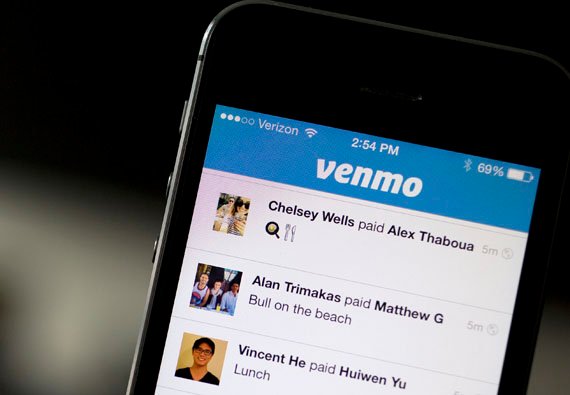
Bilt members will be able to earn benefits through Venmo use, with the agreement coming after the company recently added mortgage payments to its points mix. View the full article
-
Construction resource scheduling is essential for coordinating materials, labor and equipment efficiently across multiple job sites. The process ensures that the right resources are available when needed, preventing delays and budget overruns. Successful construction resource scheduling helps maintain timelines, optimize productivity and reduce waste, which is vital in an industry where every hour and cost counts. Modern tools simplify this process, allowing managers to plan, allocate and track resources effectively throughout each phase of the project. What Is Construction Resource Scheduling? Construction resource scheduling is the process of allocating and managing project resources—such as labor, equipment and materials—throughout the construction lifecycle. It ensures tasks are completed in the right sequence with optimal resource use to meet project deadlines and budgets. Effective scheduling helps avoid resource shortages, overlaps and downtime that can disrupt progress and inflate costs. Construction project management software is ideal for this process because it provides centralized tools to schedule resources, assign tasks and monitor availability in real time. These platforms integrate timelines, workloads and costs, allowing teams to identify bottlenecks and balance resources across concurrent projects seamlessly. ProjectManager stands out as the best choice for construction resource scheduling. It features dynamic workload charts, Gantt-based scheduling, real-time dashboards and mobile timesheets that keep teams coordinated. With the ability to track labor costs, equipment usage and material allocation, our software empowers construction professionals to manage complex projects efficiently from planning to delivery. Get started with ProjectManager today for free. /wp-content/uploads/2022/07/construction-gantt-resources-costs-150-CTA-BUTTON-1.jpgLearn more What Is a Construction Resource Schedule? A construction schedule focuses on the timeline of tasks and milestones, showing when specific work should occur. A construction resource schedule, however, details which resources—such as labor, materials and equipment—are needed for each task. While the construction schedule tracks time, the construction resource schedule ensures that the right resources are available to execute the plan efficiently. What Types of Resources Are Considered in Construction Resource Scheduling? Construction resource scheduling accounts for all essential project inputs. These include the workforce performing the work, equipment used on-site and materials required for each phase. Properly managing these resources ensures smooth operations, prevents shortages and keeps project budgets under control. Manual labor: Refers to direct-hire workers employed by the general contractor, including site laborers, carpenters, masons, electricians, plumbers and supervisors. Their work hours are directly managed and allocated to specific tasks within the project schedule. Subcontractor crews: Specialized external teams hired under contract to perform specific trades—such as electrical, plumbing, HVAC, or roofing—whose labor and equipment are indirectly controlled by the general contractor and must be carefully coordinated in the resource schedule to prevent overlaps with other trades. Heavy machinery: Refers to large, shared assets like excavators, cranes, bulldozers and loaders that must be scheduled carefully to prevent conflicts or idle time. Raw materials: Covers bulk items such as concrete, steel, lumber, aggregates and asphalt that need to arrive on site in sync with the construction sequence. Construction equipment: Smaller reusable assets such as generators, compressors, scaffolding and formwork systems that support daily operations. Tools, consumables and safety equipment: Includes hand tools, drills, cutting devices, PPE, fuel and other expendables that are needed continuously and must be replenished. Construction Resource Scheduling Process The construction resource scheduling process ensures that all labor, equipment and materials are available when needed to meet project deadlines. It involves defining project requirements, organizing resources and aligning them with the schedule to avoid conflicts or shortages that can disrupt workflow and increase costs. 1. Define the Scope of Work for a Construction Project The first step in construction resource scheduling is outlining the full scope of work. This includes defining project objectives, deliverables and constraints. A clear scope ensures that every phase of the project is accounted for and helps determine what types of resources are needed to complete each activity efficiently and on time. Related: Free Construction Scope of Work Template 2. Perform a Material Takeoff and Prepare a Bill of Quantities Once the scope is defined, teams perform a material takeoff to list and quantify all required construction materials. This information is then organized into a bill of quantities. This document forms the foundation for budgeting, procurement and tracking material usage throughout the construction resource scheduling process. 3. Make a Resource Breakdown Structure A resource breakdown structure categorizes all resources into logical groups, such as labor, equipment and materials. It helps organize the data needed for estimating and scheduling. By breaking down resources this way, project managers can easily allocate responsibilities and monitor resource usage throughout the construction lifecycle. 4. Estimate Resource Quantities, Crew Sizes and Usage Rates Estimating the quantities of materials, required crew sizes and resource usage rates ensures realistic planning. Construction resource scheduling depends on accurate estimations to prevent overuse or idle time. This step helps balance workload distribution and ensures that the schedule aligns with productivity rates and resource availability. Related: 10 Free Construction Expense Tracker Templates 5. Allocate Resources for Each Project Task After estimating needs, project managers allocate resources to specific project tasks. This includes assigning labor to activities, scheduling equipment use and confirming material delivery dates. Proper allocation prevents resource conflicts and ensures that every aspect of the project is supported by the necessary tools, personnel and materials. /wp-content/uploads/2024/05/workload-page-resource-management-lightmode-600x294.pngLearn more 6. Create a Construction Schedule The construction schedule maps out all tasks and their durations, dependencies and milestones. It establishes the project timeline and provides a visual guide for sequencing work. Once this schedule is developed, it becomes the framework upon which the construction resource schedule is built and refined. 7. Make a Resource Schedule that Aligns with the Overall Project Timeline The final step is creating a resource schedule that aligns with the construction timeline. This schedule matches resource availability with project tasks, ensuring smooth coordination. Construction resource scheduling software helps automate this step, optimizing resource usage while keeping the project on time and within budget. /wp-content/uploads/2025/01/2025-construction-ebook-banner-ad.jpg Construction Resource Scheduling Tools Construction resource scheduling tools help project managers plan, allocate and track resources across complex projects. These tools visualize workloads, identify constraints and optimize resource use. By leveraging them, construction teams can coordinate labor, equipment and materials more effectively to maintain productivity and stay on schedule. Resource Breakdown Structure (RBS) A resource breakdown structure (RBS) is a hierarchical chart that categorizes all project resources, including labor, materials and equipment. It outlines what resources are required and how they’re organized. In construction resource scheduling, the RBS ensures that every resource type is accounted for and properly allocated. Resource Histogram A resource histogram is a visual graph that displays resource usage over time. It shows how labor or equipment demand fluctuates throughout a project. For construction resource scheduling, histograms help identify overallocations or idle periods, allowing managers to adjust workloads to maintain efficiency and avoid project delays. /wp-content/uploads/2021/09/Resource-Histogram-2.pngSource Gantt Chart A Gantt chart is a scheduling tool that outlines project tasks along a timeline, showing their durations, dependencies and start or finish dates. In construction resource scheduling, it helps align resource availability with project milestones, ensuring that labor and equipment are deployed efficiently to meet key deadlines. /wp-content/uploads/2024/05/Dependencies-in-a-Gantt-chart--600x295.pngLearn more Resource Allocation Matrix A resource allocation matrix maps specific resources to tasks or work packages within a project. It clarifies responsibilities and prevents conflicts over resource use. In construction resource scheduling, this matrix ensures that every task has the required materials, crew and equipment assigned for timely completion. Resource Utilization Reports Resource utilization reports track how effectively resources are used across a project. These reports measure actual usage versus planned allocation, identifying inefficiencies or bottlenecks. For construction resource scheduling, they provide data-driven insights that help managers optimize resource distribution and improve overall project performance. Related: 20 Best Resource Management Software of 2025 (Free & Paid) Construction Resource Scheduling Techniques Construction resource scheduling techniques help project managers balance time, cost and resource constraints while maintaining productivity. These methods optimize how labor, materials and equipment are used throughout the project lifecycle. By applying them, construction teams can meet deadlines, reduce waste and improve overall scheduling accuracy. Critical Path Method (CPM) The critical path method (CPM) identifies the longest sequence of dependent tasks that determines a project’s duration. It highlights activities that directly affect completion time. In construction resource scheduling, CPM helps allocate key resources to critical tasks, ensuring project milestones are met without unnecessary delays or cost overruns. /wp-content/uploads/2025/06/ProjectManager-Gantt-Chart-Critical-Path-600x361.pngLearn more Resource Leveling Resource leveling is a technique that adjusts task start and end dates based on resource availability. It ensures no team member, material or equipment is overallocated. In construction resource scheduling, resource leveling balances workloads, reduces idle time and prevents burnout, supporting a more consistent and realistic project timeline. Resource Smoothing Resource smoothing maintains a project’s timeline while adjusting resource allocation to avoid peaks and valleys in workload. It focuses on optimizing efficiency without extending deadlines. For construction resource scheduling, resource smoothing ensures steady productivity and balanced resource use, minimizing disruptions while keeping the project’s critical path intact. Fast Tracking Fast tracking involves performing tasks in parallel rather than sequentially to compress the project schedule. It reduces total duration but can increase coordination risks. In construction resource scheduling, fast tracking enables overlapping activities like design and procurement, helping teams accelerate delivery while efficiently using available resources. Project Crashing Project crashing shortens the schedule by adding extra resources or increasing effort on critical tasks. It often raises costs but reduces completion time. In construction resource scheduling, crashing helps meet urgent deadlines by deploying additional labor or equipment strategically to maintain project quality and control time-sensitive deliverables. Free Construction Resource Scheduling Templates Construction resource scheduling templates streamline project planning by providing ready-made frameworks for organizing tasks, resources and timelines. These free templates save time, reduce errors and make it easier to track labor, equipment and material usage across multiple projects. Using templates ensures consistency while supporting accurate resource allocation and reporting. Construction Schedule Template Download this free construction schedule template to allow project managers to assign resources, set deadlines and track progress visually. This template is ideal for managing complex projects, helping teams align activities with overall project goals and ensuring resources are available when needed. Resource Plan Template Use this free resource plan template to list all personnel, equipment and materials required for a project. It helps project managers allocate resources efficiently, monitor availability and avoid overallocation. By visualizing resource demands, the template supports better construction resource scheduling, ensuring each task has the right resources at the right time. Workload Analysis Template This workload analysis template monitors team and equipment utilization over the project timeline. It highlights underused or overburdened resources, allowing managers to rebalance tasks and optimize productivity. Using this template improves construction resource scheduling by maintaining a steady workflow and preventing bottlenecks throughout the project. ProjectManager Is Award-Winning Construction Resource Scheduling Software ProjectManager provides construction teams with multiple project views, including Gantt charts, kanban boards, task lists and calendar layouts. These views make it easy to visualize project timelines, dependencies and milestones in one place. By offering a flexible interface, our software ensures construction resource scheduling is intuitive, allowing managers to plan, adjust and track projects without switching between applications or losing critical information. Optimize Resource Management Across Teams ProjectManager streamlines construction resource scheduling by enabling managers to plan and balance workloads using the team page and visual workload charts. Teams can see their assigned tasks, availability and upcoming deadlines, while managers can identify bottlenecks or overallocated personnel. This feature ensures optimal use of labor, equipment and materials, helping projects stay on schedule and resources are used efficiently throughout the construction lifecycle. /wp-content/uploads/2023/01/Team-Light-2554x1372-1.png Track Progress With Real-Time Dashboards and Reports ProjectManager enhances construction resource scheduling by providing AI-powered dashboards, customizable reports and secure timesheets that can be updated from the job site with mobile apps. These all help with tracking labor costs and project performance. Managers can monitor progress, identify risks and adjust resources as needed. These tools give construction teams the insight they need to make data-driven decisions, keeping projects on time, within budget and aligned with overall goals. /wp-content/uploads/2025/10/AI-Insights-Light-Mode-Dashboard-GPT5.png Related Construction Scheduling Content There’s more to construction resource scheduling than we’ve touched on here. For readers who care to expand the lens, check out the links below. There are articles exploring the critical path method, material schedules and more. Critical Path Method (CPM) in Construction: A Quick Guide How to make a CPM Schedule: CPM Scheduling Basics How to Make a Material Schedule for Construction The Construction Resource Management Process Explained ProjectManager is online project and portfolio management software that connects teams, whether they’re in the office or out in the field. Teams can share files, comment at the task level and stay updated with email and in-app notifications. Get started with ProjectManager today for free. The post Construction Resource Scheduling: Making a Resource Schedule appeared first on ProjectManager. View the full article
-
After Zohran Mamdani’s campaign aired a commercial that used a Knicks-style campaign logo that wrote out “Zohran” over an image of a basketball, the NBA team asked them to take it down. The Mamdani ad, which aired during the New York Knicks’s opening game last week, shows black-and-white footage of a pick-up basketball game in a park as the narrator says “New York, this is our year.” There’s shots of Mamdani campaigning interspersed with the pick-up game, and the narrator says “Things can be different. Hope is back,” before the Knicks-style logo flashes on the screen over the sound of drums. The Knicks, whose owner donated last year to Mayor Eric Adams, weren’t happy with the knock-off logo and sent a cease-and-desist letter to the Mamdani campaign asking them to knock it off, according to The New York Post, which first reported the letter. The campaign says it will comply and pulled the ads on Friday. The Mamdani campaign said it was adjusting the ad, and “while the Knicks might not be able to publicly support our campaign, we’re proud to publicly support our NY Knicks,” campaign spokesperson Dora Pekec said in a statement. But it’s not the first campaign to lean on the visual tropes of beloved brand to attempt to say something about hometown pride or a candidate’s values in a single image. Before Mamdani’s Knicks logo, there’s been a history of branding knock-offs In 2022, Tim Short, a Republican state legislative candidate used a logo designed to look like the Fox News logo, searchlights and all, but the searchlights were later taken off without explanation. That same year, Matt Jenkins, a Democrat and U.S. House candidate in New Jersey, was hit with a cease-and-desist letter from Wawa, after the convenience store chain noticed the similarities between the bird in his campaign’s logo and theirs. Jenkins said in a social media post at the time that the design was intentional. “For a lot of people in our district, Wawa represents them. When we launched this race to replace Chris Smith, I wanted our logo to feel instantly familiar,” he wrote. And that’s what these knock-off logos are meant to signal. By leaning on a familiar logo, they visually convey that a candidate is “one of us,” as if to say, this candidate is a Knicks/Fox News/Wawa/[enter brand name here] fan, just like you. Visual parody doesn’t equal a winning brand Brands, though, are quick to distance themselves. After a U.S. House candidate in Michigan with the last name Campbell refused to comply with a cease-and-desist letter from the Campbell’s Company over the candidate’s logo designed like one of its soup cans, the company filed suit this month. Claiming her actions “are not innocent parody but are designed to capitalize on Campbell’s iconic brand and associate one of the country’s most famous and enduring brands with her political campaign,” the company said her rip-off logo confused customers. While campaigns can’t use knock-off logos without inviting potential legal action, that doesn’t mean some won’t try. By designing logos based on popular brands, campaigns hope some of that brand magic will rub off at the ballot box. But would-be copycats, take note: While Mamdani, with his own distinctive campaign logo may well be an exception, other recent candidates who’ve used major brand logos haven’t fared well. In Georgia, Short’s short-lived Fox News logo didn’t help him win the Republican primary. Jenkins rebranded to a bird-less logo and lost. Sometimes it’s better to come up with your own idea. View the full article