ResidentialBusiness
Administrators
-
Joined
-
Last visited
Everything posted by ResidentialBusiness
-
 The U.S. Department of Agriculture has posted a notice on its website saying federal food aid will not go out Nov. 1, raising the stakes for families nationwide as the government shutdown drags on. The new notice comes after the The President administration said it would not tap roughly $5 billion in contingency funds to keep benefits through the Supplemental Nutrition Assistance Program, commonly referred to as SNAP, flowing into November. That program helps about 1 in 8 Americans buy groceries. “Bottom line, the well has run dry,” the USDA notice says. “At this time, there will be no benefits issued November 01. We are approaching an inflection point for Senate Democrats.” The shutdown, which began Oct. 1, is now the second-longest on record. While the Republican administration took steps leading up to the shutdown to ensure SNAP benefits were paid this month, the cutoff would expand the impact of the impasse to a wider swath of Americans — and some of those most in need — unless a political resolution is found in just a few days. The administration blames Democrats, who say they will not agree to reopen the government until Republicans negotiate with them on extending expiring subsidies under the Affordable Care Act. Republicans say Democrats must first agree to reopen the government before negotiation. Democratic lawmakers have written to Agriculture Secretary Brooke Rollins requesting to use contingency funds to cover the bulk of next month’s benefits. But a USDA memo that surfaced Friday says “contingency funds are not legally available to cover regular benefits.” The document says the money is reserved for such things such as helping people in disaster areas. It cited a storm named Melissa, which has strengthened into a major hurricane, as an example of why it’s important to have the money available to mobilize quickly in the event of a disaster. The prospect of families not receiving food aid has deeply concerned states run by both parties. Some states have pledged to keep SNAP benefits flowing even if the federal program halts payments, but there are questions about whether U.S. government directives may allow that to happen. The USDA memo also says states would not be reimbursed for temporarily picking up the cost. Other states are telling SNAP recipients to be ready for the benefits to stop. Arkansas and Oklahoma, for example, are advising recipients to identify food pantries and other groups that help with food. Sen. Chris Murphy, D-Conn., accused Republicans and The President of not agreeing to negotiate. “The reality is, if they sat down to try to negotiate, we could probably come up with something pretty quickly,” Murphy said Sunday on CNN’s “State of the Union.” “We could open up the government on Tuesday or Wednesday, and there wouldn’t be any crisis in the food stamp program.” —Adriana Gomez Licon, Associated Press View the full article
-
If you’ve been following the news, you know that the government is in the middle of a shutdown. Our elected officials are locked in a stalemate, at the center of which is the extension of Affordable Care Act subsidies. What does the Affordable Care Act have to do with the shutdown?Through the Affordable Care Act, self-employed individuals are able to purchase health insurance through their state marketplace; the subsidies are what help keep these healthcare plans actually affordable. When The President signed the “One Big, Beautiful Bill” into law over the summer, it dramatically altered the way these plans are funded — and did not extend these subsidies, which are sent to expire at the end of the year. Although Republicans control both chambers of Congress, 60 senators need to vote yes on the government budget before it can be sent to the White House to be signed by the president. On October 1, the budget expired. Although the “One Big, Beautiful Bill has been signed into law, the government budget presents another opportunity to extend the ACA tax subsidies. Since October 1, all attempts at passing a government budget have failed because Democrats will not vote yes on the budget without the tax subsidies included, and Republicans claim they want the budget passed prior to discussion about the subsidies. What happens next? The government has been shut down now for over 20 days, with seemingly little movement from either party. Although experts say the economic fallout of the shutdown has been minimal so far, that is beginning to change. The federal government employs hundreds of thousands of people, who are either currently furloughed or working without pay. Soon, they will feel the effects of going without a paycheck, and The President has signaled that he will pick and choose which federal workers eventually receive backpay. And if the government does not reopen by November 1, at least 25 states will shut off SNAP benefits, severely limiting over 40 million Americans’ access to food and groceries. What does this mean for freelancers?Because health insurance in the U.S. is often tied to traditional employment, we know that millions of freelancers across the country rely on the marketplace to purchase health insurance. As it stands, lower-income enrollees are able to get healthcare without premiums, while higher earners are able to pay only 8.5% of income. But without the subsidies, health insurance premiums will skyrocket, causing scores of freelancers to either go without health insurance entirely, or putting them in the position of being bankrupt by it. Per a Kaiser Family Foundation report, annual out-of-pocket premiums are estimated to increase by 114% — an average of $1,016, and anyone earning over $63,000 will not be eligible for what tax credits are available. What can you do about it? Contact your elected officials — particularly if they are against extending the ACA subsidies — and let them know how important it is to you to see these subsidies extended. Freelancers Union also offers health insurance plans tailor-made for freelancers. Check out our options on our website and speak with a representative from one of our partners to learn if one of them may be right for you. We must continue to work together, to share our stories, and realize that we are not alone in facing these challenges. View the full article
-
If you’ve been following the news, you know that the government is in the middle of a shutdown. Our elected officials are locked in a stalemate, at the center of which is the extension of Affordable Care Act subsidies. What does the Affordable Care Act have to do with the shutdown?Through the Affordable Care Act, self-employed individuals are able to purchase health insurance through their state marketplace; the subsidies are what help keep these healthcare plans actually affordable. When The President signed the “One Big, Beautiful Bill” into law over the summer, it dramatically altered the way these plans are funded — and did not extend these subsidies, which are sent to expire at the end of the year. Although Republicans control both chambers of Congress, 60 senators need to vote yes on the government budget before it can be sent to the White House to be signed by the president. On October 1, the budget expired. Although the “One Big, Beautiful Bill has been signed into law, the government budget presents another opportunity to extend the ACA tax subsidies. Since October 1, all attempts at passing a government budget have failed because Democrats will not vote yes on the budget without the tax subsidies included, and Republicans claim they want the budget passed prior to discussion about the subsidies. What happens next? The government has been shut down now for over 20 days, with seemingly little movement from either party. Although experts say the economic fallout of the shutdown has been minimal so far, that is beginning to change. The federal government employs hundreds of thousands of people, who are either currently furloughed or working without pay. Soon, they will feel the effects of going without a paycheck, and The President has signaled that he will pick and choose which federal workers eventually receive backpay. And if the government does not reopen by November 1, at least 25 states will shut off SNAP benefits, severely limiting over 40 million Americans’ access to food and groceries. What does this mean for freelancers?Because health insurance in the U.S. is often tied to traditional employment, we know that millions of freelancers across the country rely on the marketplace to purchase health insurance. As it stands, lower-income enrollees are able to get healthcare without premiums, while higher earners are able to pay only 8.5% of income. But without the subsidies, health insurance premiums will skyrocket, causing scores of freelancers to either go without health insurance entirely, or putting them in the position of being bankrupt by it. Per a Kaiser Family Foundation report, annual out-of-pocket premiums are estimated to increase by 114% — an average of $1,016, and anyone earning over $63,000 will not be eligible for what tax credits are available. What can you do about it? Contact your elected officials — particularly if they are against extending the ACA subsidies — and let them know how important it is to you to see these subsidies extended. Freelancers Union also offers health insurance plans tailor-made for freelancers. Check out our options on our website and speak with a representative from one of our partners to learn if one of them may be right for you. We must continue to work together, to share our stories, and realize that we are not alone in facing these challenges. View the full article
-
We may earn a commission from links on this page. Deal pricing and availability subject to change after time of publication. The Eufy SoloCam S340 is designed for individuals who want complete control over their home’s security without a monthly subscription commitment. Now $223.99 at Walmart, down from $349.99, which is about $55 cheaper than Amazon’s current price of $279.98 (and an all-time low, according to price trackers), this outdoor home security camera delivers 3K resolution, 360-degree coverage, and solar-powered operation. Its two-lens setup captures both wide-angle and zoomed-in footage with surprising clarity. You can easily mount it anywhere—the solar panel connects via a 10-foot USB-C cable or sits neatly on top—so setup is as simple as picking a spot. As our reviewer put it in her review, “choosing where to put the SoloCam S340 will be the hardest part of installing it.” eufy Security SoloCam S340 with HomeBase 3, 360° Surveillance, 2.4 GHz Wi-Fi, No Monthly Fee $223.99 at Walmart $349.99 Save $126.00 Get Deal Get Deal $223.99 at Walmart $349.99 Save $126.00 Design-wise, the camera looks as sturdy as it feels. The IP67-rated weatherproof housing makes it safe for all seasons, and the motorized base allows 360-degree horizontal panning and 70-degree vertical tilt. That flexibility gives you full yard or driveway coverage, and you can control the view remotely through the Eufy Security app, complete with a virtual joystick and preset “stations” for quick repositioning. The dual-lens setup means you can see both the big picture and fine details you’d normally miss, like the license plate of a passing car or a squirrel raiding your plants. Color night vision and a built-in spotlight make low-light monitoring surprisingly clear, while two-way audio lets you talk through the camera in real time. Everything saves locally, thanks to onboard storage or the included HomeBase 3 hub, which can hold up to 16TB via USB. That means you get smart motion detection, human and vehicle alerts, and full access to recordings without ever paying a monthly subscription fee. That said, there are a few things to consider. It doesn’t support Apple HomeKit or Matter, and clip loading and live feed access can occasionally lag, especially from a distance. But paired with Alexa or Google Assistant, it’s still easy to manage hands-free, notes this PCMag review. Our Best Editor-Vetted Tech Deals Right Now Apple AirPods Pro 2 Noise Cancelling Wireless Earbuds — $169.99 (List Price $249.00) Apple iPad 11" 128GB A16 WiFi Tablet (Blue, 2025) — $299.00 (List Price $349.00) Amazon Fire TV Stick 4K Plus — $29.99 (List Price $49.99) Shark AV2501AE AI XL Hepa- Safe Self-Emptying Base Robot Vacuum — $299.99 (List Price $649.99) Ring Pan-Tilt Indoor Cam, White with Ring Indoor Cam (2nd Gen), White — $59.99 (List Price $99.99) Blink Video Doorbell Wireless (Newest Model) + Sync Module Core — $29.99 (List Price $69.99) Blink Mini 2 1080p Indoor Security Camera (2-Pack, White) — $27.99 (List Price $69.99) Ring Video Doorbell Pro 2 with Ring Chime Pro — $149.99 (List Price $259.99) Introducing Amazon Fire TV 55" Omni Mini-LED Series, QLED 4K UHD smart TV, Dolby Vision IQ, 144hz gaming mode, Ambient Experience, hands-free with Alexa, 2024 release — $699.99 (List Price $819.99) Blink Outdoor 4 1080p 2-Camera Kit With Sync Module Core — $51.99 (List Price $129.99) Deals are selected by our commerce team View the full article
-
Many PPC advertisers obsess over click-through rates, using them as a quick measure of ad performance. But CTR alone doesn’t tell the whole story – what matters most is what happens after the click. That’s where many campaigns go wrong. The problem with chasing high CTRs Most advertisers think the ad with the highest CTR is often the best. It should have a high Quality Score and attract lots of clicks. However, in most cases, lower CTR ads usually outperform higher CTR ads in terms of total conversions and revenue. If all I cared about was CTR, then I could write an ad: “Free money.” “Claim your free money today.” “No strings attached.” That ad would get an impressive CTR for many keywords, and I’d go out of business pretty quickly, giving away free money. When creating ads, we must consider: Type of searchers we want to attract. Ensure the users are qualified. Set expectations for the landing page. I can take my free money ad and refine it: “Claim your free money.” “Explore college scholarships.” “Download your free guide.” I’ve now: Told searchers they can get free money for college through scholarships if they download a guide. Narrowed down my audience to people who are willing to apply for scholarships and willing to download a guide, presumably in exchange for some information. If you focus solely on CTR and don’t consider attracting the right audience, your advertising will suffer. While this sentiment applies to both B2C and B2B companies, B2B companies must be exceptionally aware of how their ads appear to consumers versus business searchers. B2B companies must pre-qualify searchers If you are advertising for a B2B company, you’ll often notice that CTR and conversion rates have an inverse relationship. As CTR increases, conversion rates decrease. The most common reason for this phenomenon is that consumers and businesses can search for many B2B keywords. B2B companies must try to show that their products are for businesses, not consumers. For instance, “safety gates” is a common search term. The majority of people looking to buy a safety gate are consumers who want to keep pets or babies out of rooms or away from stairs. However, safety gates and railings are important for businesses with factories, plants, or industrial sites. These two ads are both for companies that sell safety gates. The first ad’s headlines for Uline could be for a consumer or a business. It’s not until you look at the description that you realize this is for mezzanines and catwalks, which is something consumers don’t have in their homes. As many searchers do not read descriptions, this ad will attract both B2B and B2C searchers. The second ad mentions Industrial in the headline and follows that up with a mention of OSHA compliance in the description and the sitelinks. While both ads promote similar products, the second one will achieve a better conversion rate because it speaks to a single audience. We have a client who specializes in factory parts, and when we graph their conversion rates by Quality Score, we can see that as their Quality Score increases, their conversion rates decrease. They will review their keywords and ads whenever they have a 5+ Quality Score on any B2B or B2C terms. This same logic does not apply to B2B search terms. Those terms often contain more jargon or qualifying statements when looking for B2B services and products. B2B advertisers don’t have to use characters to weed out B2C consumers and can focus their ads only on B2B searchers. How to balance CTR and conversion rates As you are testing various ads to find your best pre-qualifying statements, it can be tricky to examine the metrics. Which one of these would be your best ad? 15% CTR, 3% conversion rate. 10% CT, 7% conversion rate. 5% CTR, 11% conversion rate. When examining mixed metrics, CTR and conversion rates, we can use additional metrics to define our best ads. My favorite two are: Conversion per impression (CPI): This is a simple formula dividing your conversion by the number of impressions (conversions/impressions). Revenue per impression (RPI): If you have variable checkout amounts, you can instead use your revenue metrics to decide your best ads by dividing your revenue by your impressions (revenue/impressions). You can also multiply the results by 1,000 to make the numbers easier to digest instead of working with many decimal points. So, we might write: CPI = (conversions/impressions) x 1,000 By using impression metrics, you can find the opportunity for a given set of impressions. CTRConversion rateImpressionsClicksConversionsCPI15%3%5,00075022.54.510%7%4,0004002875%11%4,50022524.755.5 By doing some simple math, we can see that option 2, with a 10% CTR and a 7% conversion rate, gives us the most total conversions. Dig deeper: CRO for PPC: Key areas to optimize beyond landing pages Focus on your ideal customers A good CTR helps bring more people to your website, improves your audience size, and can influence your Quality Scores. However, high CTR ads can easily attract the wrong audience, leading you to waste your budget. As you are creating headlines, consider your audience. Who are they? Do non-audience people search for your keywords? How do you dissuade users who don’t fit your audience from clicking on your ads? How do you attract your qualified audience? Are your ads setting proper landing page expectations? By considering each of these questions as you create ads, you can find ads that speak to the type of users you want to attract to your site. These ads are rarely your best CTRs. These ads balance the appeal of high CTRs with pre-qualifying statements that ensure the clicks you receive have the potential to turn into your next customer. View the full article
-
The US president has unnerved Taiwan. But the island can still resist BeijingView the full article
-
The data shows Black Friday winners earned attention early, aligned with consumer research, and turned humor into measurable performance. The post The Brands & Campaigns That Won Black Friday 2024 appeared first on Search Engine Journal. View the full article
-
Flights departing for Los Angeles International Airport were halted briefly due to a staffing shortage at a Southern California air traffic facility, the Federal Aviation Administration said Sunday, when the agency also reported staffing-related delays in Chicago, Washington and Newark, New Jersey. The FAA issued a temporary ground stop at one of the world’s busiest airports soon after U.S. Transportation Secretary Sean Duffy predicted that travelers would see more flights delayed and canceled in the coming days as the nation’s air traffic controllers work without pay during the federal government shutdown. During an appearance on the Fox News program “Sunday Morning Futures,” Duffy said more controllers were calling in sick as money worries compound the stress of an already challenging job. “Just yesterday, … we had 22 staffing triggers. That’s one of the highest that we have seen in the system since the shutdown began. And that’s a sign that the controllers are wearing thin,” he said. The FAA said planes headed for Los Angeles were held at their originating airports starting at 11:42 a.m. Eastern time, and the agency lifted the ground stop at 1:30 p.m. Eastern time. The hold did not appear to cause continuing problems at LAX; according to flight tracking website FlightAware, Dallas Fort Worth International Airport and Dallas Love Field Airport saw a much bigger share of late arrivals due to what the FAA said were weather and equipment issues. Too few air traffic controllers per shift also caused takeoff and arrival disruptions Sunday at New Jersey’s Newark Liberty International Airport and Teteboro Airport, and at Southwest Florida International Airport in Fort Meyers, Florida, according to the FAA. On Sunday evening, the FAA also slowed traffic into Ronald Reagan Washington National Airport and Chicago O’Hare International Airport because of traffic controller staffing. —Associated Press View the full article

-
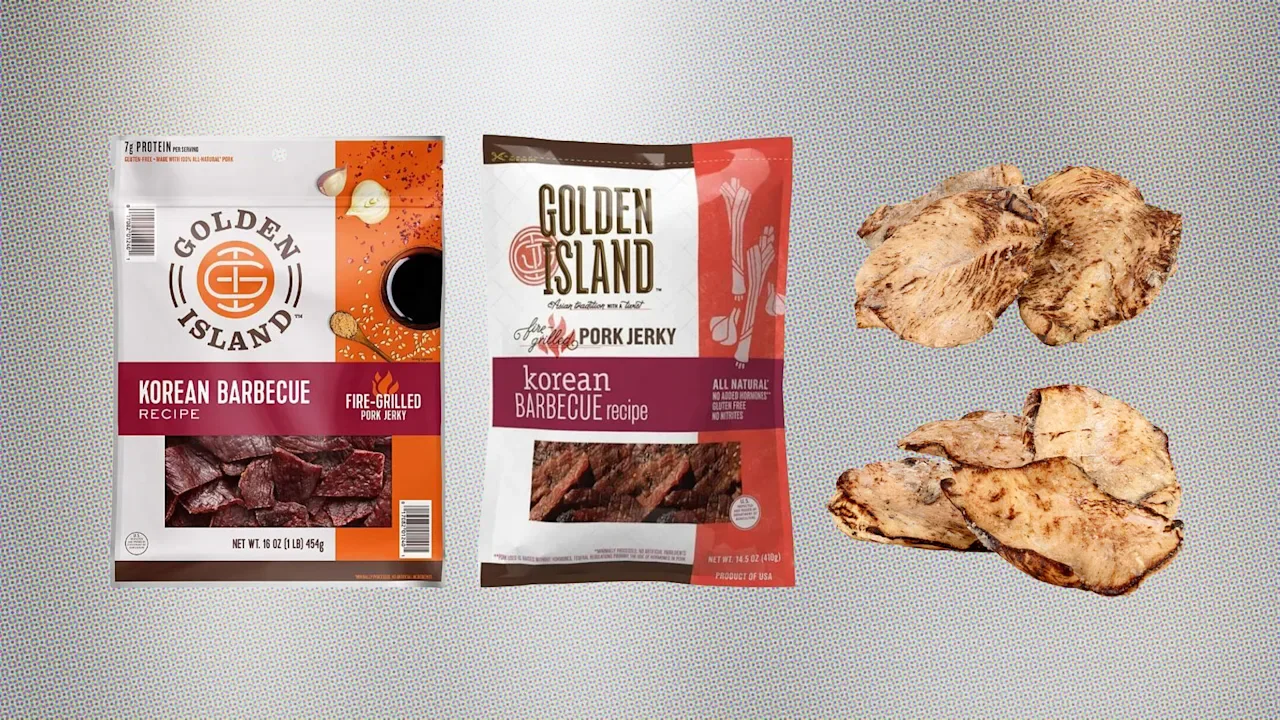
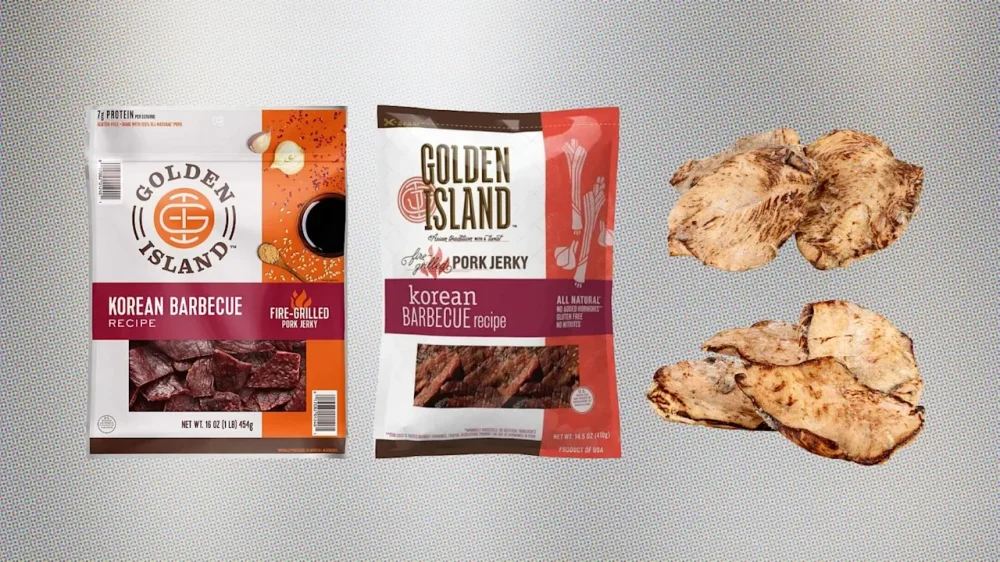
The USDA’s Food Safety and Inspection Service (FSIS) has announced two separate large-scale food recalls due to the same reason: possible contamination with metal fragments. The first recall was for BBQ pork jerky and the second was for ready-to-eat frozen chicken products. Both notices were posted over the weekend. In total, a combined 7.1 million pounds of the products—which were distributed nationwide in both cases—are included in the recalls. Here’s what you need to know. 2.3 million pounds of BBQ pork jerky recalled According to a notice posted by FSIS on Friday, October 24, a company called LSI, Inc. of Alpena, South Dakota, is recalling approximately 2.3 million pounds of a ready-to-eat Korean barbecue pork jerky product. The product had the possibility of being contaminated with pieces of metal, according to the notice. The “wiry metal” fragments, according to the FSIS, were first detected by customers, who contacted the manufacturer. LSI then found “that the metal originated from the conveyor belt used in production,” according to the FSIS notice. The impacted product was sold under the brand name Golden Island. Of particular concern is that the impacted pork jerky product has a very long shelf life of one year, which means individuals could have the products stored in their pantries now and for a long time to come. Here are the details of the recalled pork jerky product: Product: 14.5-oz. and 16-oz. plastic pouches containing “GOLDEN ISLAND fire-grilled PORK JERKY Korean BARBECUE recipe.” “Best by” dates: range from October 23, 2025, through September 23, 2026. Lot numbers: various (see list linked below) Establishment number: M279A The FSIS has published the product labels and the full product list on its website. The items were sold at Costco and Sam’s Club locations nationwide. Consumers are being urged to check their pantries and to dispose of the recalled products or return them for a refund. 4.9 million pounds of frozen chicken recalled On Saturday, October 25, FSIS posted another recall notice regarding additional products that may have metal contamination. This time, approximately 4.9 million pounds of ready-to-eat frozen chicken items from Hormel Foods Corporation were effected. The products were distributed nationwide to HRI Commercial Food Service locations, which provide food to hotels, restaurants, and other institutions. The FSIS notice says that these distributions occurred on various dates ranging from February 10, 2025, through September 19, 2025. However, though those dates have passed, as the product involves frozen chicken, it could still be in the freezers of hotels, restaurants, and other institutions. As with the previous recall above, this recall was also initiated after multiple complaints from food-service customers who reported finding metal in their frozen chicken products. As with the pork jerky recall, “Hormel Foods determined that the metal originated from the conveyor belt used in production,” the FSIS notice states. The recall notice says that the following products are among those included in the recall: 13.9-lb. cases containing “Hormel FIRE BRAISED MEATS ALL NATURAL BONELESS CHICKEN THIGH MEAT,” with item code “65009” printed on the label. 13.8-lb. cases containing 3-oz.“Hormel FIRE BRAISED MEATS ALL NATURAL BONELESS CHICKEN BREAST,” with item code “77531” printed on the label. 13.8-lb. cases containing 4-oz.“Hormel FIRE BRAISED MEATS ALL NATURAL BONELESS CHICKEN BREAST,” with item code “46750” printed on the label. 23.8-lb. cases containing 5-oz.“Hormel FIRE BRAISED MEATS ALL NATURAL BONELESS CHICKEN BREAST,” with item code “86206” printed on the label. 13.95-lb. cases containing “BONELESS CHICKEN BREAST WITH RIB MEAT,” with item code “134394” printed on the label. The labels of the recalled products and a detailed list of the recalled products with packaging dates can be found on the FSIS website. The recalled products have the establishment number P-223 printed on them. Businesses that have the recalled products in their possession should not serve them; instead, they should throw them away. “This product is only sold to foodservice customers and cannot be purchased directly by consumers,” Hormel said in a statement. “All customers that may have received the affected product have been properly notified.” Conveyor belt to blame in both recalls Of note regarding the two individual recalls, both notices reported that “the metal originated from the conveyor belt used in production.” However, it is not known whether the products involved in the two recalls were produced in the same manufacturing facility. A spokesperson for Hormel Foods Sales sent Fast Company a statement that repeated details included in the recall notice but did not identify the facility. Fast Company has also reached out to Golden Island and the FSIS for additional details. We’ll update this post if we hear back. View the full article
-
"Cognitive restructuring" isn't as culturally popular as its therapy-speak peers, like "toxic" and "gaslighting," but it's a powerful tool pros use to help people adjust their thoughts. Though it's usually something you go over in therapy, you can still employ some principles of cognitive restructuring in your everyday life to stay more upbeat and productive. What is cognitive restructuring?The American Psychological Association (APA) defines cognitive restructuring as “a skill for carefully examining your thinking when you are feeling upset or distressed about something.” The goal is to change how you think in moments of stress so that your thoughts can become more balanced. You want to be less subjective, more objective, and overall less influenced by negativity. Here, the stressful thoughts you may experience are considered cognitive distortions and aren’t helpful for your overall wellbeing or productivity. In fact, they can be downright unhelpful, holding you back from getting things done. Negative feelings associated with certain actions or events can stall your progress, which can lead to more negative feelings as your tasks pile up. Whether you’re too sad to clean, too anxious to run to the store, or too stressed to do your work, addressing the negative feelings head-on and restructuring them can help you move past the hump and get it all done in a way that still feels safe—and even good. When you feel good, your thoughts are good, and when your thoughts are good, you keep going and getting even more done. Negative thoughts beget more negativity, and the same is generally true of positivity. You just have to figure out how to make the switch, which is what cognitive restructuring is for. Five steps to practicing cognitive restructuringHere’s what you do, per the APA: Write down the situation that's upsetting you, whether it’s an actual event (like cleaning your house, doing your schoolwork, or having to talk to someone you don't like) or a memory of an event. You just need a one-sentence description. Identify the most upsetting feeling you have. Even if you have a lot of feelings, pick the strongest one. It may help you to categorize them into fear and anxiety; sadness and depression; guilt and shame; or anger. Keep the strongest feeling in mind for the rest of the steps. Identify your thoughts about the event or situation as they relate to your strongest feeling. If your strongest feeling is fear, ask yourself what you’re afraid of. If it’s guilt, ask yourself what “bad” thing you’ve actually done. This is where you get specific as you try to get at the root cause of your negative feeling. So, if you’re anxious about studying for a test and keep putting it off, identify what you’re afraid of (like not understanding the material or getting a bad grade). Write the thought out in full: “I feel anxious about studying because I am worried I won’t understand or retain enough information to do well on the test.” Here, evaluate the accuracy of your upsetting thought. Start with any evidence that could support the thought, then probe it. Why do you think you won’t understand or retain the material you have to study? Write down any evidence, but then ask yourself why your thought might be wrong, too. Explore the evidence against the thought, including other ways of looking at the situation, what someone else might think about it, and whether your feelings are based on facts. Once you’ve listed all the evidence for and against your negative thought, make an ultimate decision, placing the most weight on the strongest and most objective information. Cross out anything weak, subjective, or based in feelings; circle anything substantiated by hard evidence. The steps here remind me of a reading comprehension and studying technique called elaborative interrogation. There, you identify a fact that you need to study and understand, like that a historical event took place. After that, you ask questions: Who was there? What happened? When did it happen? Where did it happen? What was going on in that region on at the time? Why was that happening? Why did this lead to the event? How did it happen? How did it impact everything that happened next? You look up the answers to all those questions until you know every detail of context about the fact. By that time, you know so much that the fact itself—the simple, straightforward thing you need to know for your test or whatever you're studying for—is so obvious as to become laughable. Of course the historical event happened—look at all the things that led up to and went into it! Cognitive restructuring is similar: You identify your fact, which in this case is the distressing thing, then dive deep on what you're afraid of, why you feel that way, when you last completed that task, etc. Going over it in an interrogative way helps you move to a point of deeper understanding, then helps you move right past it. Doing this when you feel immobilized by anxiety or sadness can help you see a path forward. If you do it enough, dismissing negativity and focusing instead on facts—like that you’ve aced tests before or that you’ve maintained your house’s cleanliness in the past, or that doing badly on a test or having an untidy home don’t make you an all-around bad person—will come more naturally. Best of all, you can prove the facts right by then getting the tasks done, strengthening them for next time. The self-reinforcing nature of the good feelings and productivity that go along with this process is what makes it effective, so the first time you try, keep your eyes on the light at the end of the tunnel. It will get easier the more you do it. View the full article
-
As National Cybersecurity Awareness Month unfolds, PayPal is stepping up its efforts to educate consumers about the growing menace of phishing scams. For small business owners, understanding these scams is crucial not just for their own financial security but also for protecting their customers and employees. The Rise of Phishing Scams Phishing scams have evolved into increasingly sophisticated traps designed to trick individuals into revealing sensitive information or transferring money. These scams can manifest through various channels—emails, texts, or calls—often impersonating reputable brands or individuals to gain trust. The urgency created by these unsolicited messages can play on the emotions of small business owners, making them especially vulnerable. “PayPal does not tolerate scams, and we take our duty to help protect consumers very seriously,” said Shaun Khalfan, PayPal’s Chief Information Security Officer. This commitment is especially relevant to small businesses, which may not have extensive resources devoted to cybersecurity. Key Protective Measures PayPal is advocating for education as a fundamental defense against these scams. Here are actionable steps small business owners can take to enhance their security posture: Trust Your Instincts: If a message feels suspicious, it probably is. Avoid acting on impulse. Scrutinize Messages: Always check sender addresses, tone, and any links or attachments. Look for unusual URLs or misspellings. Do Not Engage: Responding to unsolicited communications can put your information at risk. Even caller ID can be easily faked. Take Control: If you suspect a communication is fraudulent, end the conversation immediately. Don’t engage further. Report the Scam: Notify law enforcement and the legitimate brand being impersonated. PayPal provides a specific email for reporting phishing attempts to protect its users. Use Multi-Factor Authentication (MFA): Implement MFA for your accounts to add an additional layer of security. Real-World Implications for Small Businesses The implications of falling victim to phishing scams can be significant for small businesses. From financial losses to reputational damage, the risks are multifaceted. A compromised account can lead to unauthorized transactions or even data breaches affecting customer trust. Khalfan emphasized the importance of vigilance: “We firmly believe that education and proactive caution are key to defending against fraud trends and keeping everyone safe.” Additionally, small businesses often lack the extensive resources that larger companies deploy against cyber threats. Therefore, fostering a culture of cybersecurity awareness among employees can be invaluable. Training your team on how to recognize and report suspicious activities can mitigate risks. Potential Challenges While these protective measures are practical, small business owners might face challenges in implementing them. Limited time and resources may hinder regular training sessions or updates to security protocols. It’s crucial to integrate cybersecurity education into routine operations rather than treating it as a secondary task. Moreover, the emotional and psychological toll of phishing scams can affect business owners’ decision-making processes, leading to mistakes during critical operational periods. Stress due to cybersecurity concerns can detract focus from growth and innovation efforts. PayPal’s Ongoing Commitment In addition to raising awareness, PayPal is taking active steps to combat fraud through technology and partnerships. The company collaborates with various consumer protection organizations to refine risk controls and detect suspicious activities before they escalate. “Staying ahead of the latest trends is key to keeping the payments ecosystem safe for everyone,” PayPal states. By being proactive about consumer education and integrating best practices, PayPal aims to maintain a secure environment for transactions. This National Cybersecurity Awareness Month, small business owners should take heed of the advice provided by PayPal. In doing so, they can protect not only their businesses but also their valued customers from the threats posed by phishing scams. For more details, visit the original press release here. Image via Envanto This article, "PayPal Warns Consumers About Rising Phishing Scams This Cybersecurity Month" was first published on Small Business Trends View the full article
-
As National Cybersecurity Awareness Month unfolds, PayPal is stepping up its efforts to educate consumers about the growing menace of phishing scams. For small business owners, understanding these scams is crucial not just for their own financial security but also for protecting their customers and employees. The Rise of Phishing Scams Phishing scams have evolved into increasingly sophisticated traps designed to trick individuals into revealing sensitive information or transferring money. These scams can manifest through various channels—emails, texts, or calls—often impersonating reputable brands or individuals to gain trust. The urgency created by these unsolicited messages can play on the emotions of small business owners, making them especially vulnerable. “PayPal does not tolerate scams, and we take our duty to help protect consumers very seriously,” said Shaun Khalfan, PayPal’s Chief Information Security Officer. This commitment is especially relevant to small businesses, which may not have extensive resources devoted to cybersecurity. Key Protective Measures PayPal is advocating for education as a fundamental defense against these scams. Here are actionable steps small business owners can take to enhance their security posture: Trust Your Instincts: If a message feels suspicious, it probably is. Avoid acting on impulse. Scrutinize Messages: Always check sender addresses, tone, and any links or attachments. Look for unusual URLs or misspellings. Do Not Engage: Responding to unsolicited communications can put your information at risk. Even caller ID can be easily faked. Take Control: If you suspect a communication is fraudulent, end the conversation immediately. Don’t engage further. Report the Scam: Notify law enforcement and the legitimate brand being impersonated. PayPal provides a specific email for reporting phishing attempts to protect its users. Use Multi-Factor Authentication (MFA): Implement MFA for your accounts to add an additional layer of security. Real-World Implications for Small Businesses The implications of falling victim to phishing scams can be significant for small businesses. From financial losses to reputational damage, the risks are multifaceted. A compromised account can lead to unauthorized transactions or even data breaches affecting customer trust. Khalfan emphasized the importance of vigilance: “We firmly believe that education and proactive caution are key to defending against fraud trends and keeping everyone safe.” Additionally, small businesses often lack the extensive resources that larger companies deploy against cyber threats. Therefore, fostering a culture of cybersecurity awareness among employees can be invaluable. Training your team on how to recognize and report suspicious activities can mitigate risks. Potential Challenges While these protective measures are practical, small business owners might face challenges in implementing them. Limited time and resources may hinder regular training sessions or updates to security protocols. It’s crucial to integrate cybersecurity education into routine operations rather than treating it as a secondary task. Moreover, the emotional and psychological toll of phishing scams can affect business owners’ decision-making processes, leading to mistakes during critical operational periods. Stress due to cybersecurity concerns can detract focus from growth and innovation efforts. PayPal’s Ongoing Commitment In addition to raising awareness, PayPal is taking active steps to combat fraud through technology and partnerships. The company collaborates with various consumer protection organizations to refine risk controls and detect suspicious activities before they escalate. “Staying ahead of the latest trends is key to keeping the payments ecosystem safe for everyone,” PayPal states. By being proactive about consumer education and integrating best practices, PayPal aims to maintain a secure environment for transactions. This National Cybersecurity Awareness Month, small business owners should take heed of the advice provided by PayPal. In doing so, they can protect not only their businesses but also their valued customers from the threats posed by phishing scams. For more details, visit the original press release here. Image via Envanto This article, "PayPal Warns Consumers About Rising Phishing Scams This Cybersecurity Month" was first published on Small Business Trends View the full article
-
The web’s purpose is shifting. Once a link graph – a network of pages for users and crawlers to navigate – it’s rapidly becoming a queryable knowledge graph. For technical SEOs, that means the goal has evolved from optimizing for clicks to optimizing for visibility and even direct machine interaction. Enter NLWeb – Microsoft’s open-source bridge to the agentic web At the forefront of this evolution is NLWeb (Natural Language Web), an open-source project developed by Microsoft. NLWeb simplifies the creation of natural language interfaces for any website, allowing publishers to transform existing sites into AI-powered applications where users and intelligent agents can query content conversationally – much like interacting with an AI assistant. Developers suggest NLWeb could play a role similar to HTML in the emerging agentic web. Its open-source, standards-based design makes it technology-agnostic, ensuring compatibility across vendors and large language models (LLMs). This positions NLWeb as a foundational framework for long-term digital visibility. Schema.org is your knowledge API: Why data quality is the NLWeb foundation NLWeb proves that structured data isn’t just an SEO best practice for rich results – it’s the foundation of AI readiness. Its architecture is designed to convert a site’s existing structured data into a semantic, actionable interface for AI systems. In the age of NLWeb, a website is no longer just a destination. It’s a source of information that AI agents can query programmatically. The NLWeb data pipeline The technical requirements confirm that a high-quality schema.org implementation is the primary key to entry. Data ingestion and format The NLWeb toolkit begins by crawling the site and extracting the schema markup. The schema.org JSON-LD format is the preferred and most effective input for the system. This means the protocol consumes every detail, relationship, and property defined in your schema, from product types to organization entities. For any data not in JSON-LD, such as RSS feeds, NLWeb is engineered to convert it into schema.org types for effective use. Semantic storage Once collected, this structured data is stored in a vector database. This element is critical because it moves the interaction beyond traditional keyword matching. Vector databases represent text as mathematical vectors, allowing the AI to search based on semantic similarity and meaning. For example, the system can understand that a query using the term “structured data” is conceptually the same as content marked up with “schema markup.” This capacity for conceptual understanding is absolutely essential for enabling authentic conversational functionality. Protocol connectivity The final layer is the connectivity provided by the Model Context Protocol (MCP). Every NLWeb instance operates as an MCP server, an emerging standard for packaging and consistently exchanging data between various AI systems and agents. MCP is currently the most promising path forward for ensuring interoperability in the highly fragmented AI ecosystem. The ultimate test of schema quality Since NLWeb relies entirely on crawling and extracting schema markup, the precision, completeness, and interconnectedness of your site’s content knowledge graph determine success. The key challenge for SEO teams is addressing technical debt. Custom, in-house solutions to manage AI ingestion are often high-cost, slow to adopt, and create systems that are difficult to scale or incompatible with future standards like MCP. NLWeb addresses the protocol’s complexity, but it cannot fix faulty data. If your structured data is poorly maintained, inaccurate, or missing critical entity relationships, the resulting vector database will store flawed semantic information. This leads inevitably to suboptimal outputs, potentially resulting in inaccurate conversational responses or “hallucinations” by the AI interface. Robust, entity-first schema optimization is no longer just a way to win a rich result; it is the fundamental barrier to entry for the agentic web. By leveraging the structured data you already have, NLWeb allows you to unlock new value without starting from scratch, thereby future-proofing your digital strategy. NLWeb vs. llms.txt: Protocol for action vs. static guidance The need for AI crawlers to process web content efficiently has led to multiple proposed standards. A comparison between NLWeb and the proposed llms.txt file illustrates a clear divergence between dynamic interaction and passive guidance. The llms.txt file is a proposed static standard designed to improve the efficiency of AI crawlers by: Providing a curated, prioritized list of a website’s most important content – typically formatted in markdown. Attempting to solve the legitimate technical problems of complex, JavaScript-loaded websites and the inherent limitations of an LLM’s context window. In sharp contrast, NLWeb is a dynamic protocol that establishes a conversational API endpoint. Its purpose is not just to point to content, but to actively receive natural language queries, process the site’s knowledge graph, and return structured JSON responses using schema.org. NLWeb fundamentally changes the relationship from “AI reads the site” to “AI queries the site.” AttributeNLWebllms.txtPrimary goalEnables dynamic, conversational interaction and structured data outputImproves crawler efficiency and guides static content ingestionOperational modelAPI/Protocol (active endpoint)Static Text File (passive guidance)Data format usedSchema.org JSON-LDMarkdownAdoption statusOpen project; connectors available for major LLMs, including Gemini, OpenAI, and AnthropicProposed standard; not adopted by Google, OpenAI, or other major LLMsStrategic advantageUnlocks existing schema investment for transactional AI uses, future-proofing contentReduces computational cost for LLM training/crawling The market’s preference for dynamic utility is clear. Despite addressing a real technical challenge for crawlers, llms.txt has failed to gain traction so far. NLWeb’s functional superiority stems from its ability to enable richer, transactional AI interactions. It allows AI agents to dynamically reason about and execute complex data queries using structured schema output. The strategic imperative: Mandating a high-quality schema audit While NLWeb is still an emerging open standard, its value is clear. It maximizes the utility and discoverability of specialized content that often sits deep in archives or databases. This value is realized through operational efficiency and stronger brand authority, rather than immediate traffic metrics. Several organizations are already exploring how NLWeb could let users ask complex questions and receive intelligent answers that synthesize information from multiple resources – something traditional search struggles to deliver. The ROI comes from reducing user friction and reinforcing the brand as an authoritative, queryable knowledge source. For website owners and digital marketing professionals, the path forward is undeniable: mandate an entity-first schema audit. Because NLWeb depends on schema markup, technical SEO teams must prioritize auditing existing JSON-LD for integrity, completeness, and interconnectedness. Minimalist schema is no longer enough – optimization must be entity-first. Publishers should ensure their schema accurately reflects the relationships among all entities, products, services, locations, and personnel to provide the context necessary for precise semantic querying. The transition to the agentic web is already underway, and NLWeb offers the most viable open-source path to long-term visibility and utility. It’s a strategic necessity to ensure your organization can communicate effectively as AI agents and LLMs begin integrating conversational protocols for third-party content interaction. View the full article
-
As someone who's read and written a lot about various approaches to increasing productivity, I can say with certainty that the majority of the methods out there are primarily focused on how to structure your tasks over the course of a single day. Techniques and plans that call for prioritizing your to-dos, for instance, generally expect you to prioritize your to-dos for that day. The best scheduling advice also typically revolves around how you designate and take on chunks of time throughout a single day. But sometimes—or often—you work on things that span a longer period of time, so you need productivity tips that are more expansive too. And while too much pre-planning can feel daunting, there's a method you can start using right away that can help you more effectively structure your time in the longer term. It's called "task batching." What is task batching?At its most basic, task batching is the act of grouping similar tasks or responsibilities together and completing them around the same time. Ideally, you can work on all the tasks at once, somewhat multitasking but still staying in the same frame of mind for all the jobs. Your goal here is to avoid context switching, or changing mental energies between tasks. While it's true that multitasking makes you worse at everything—which is why I've sworn off it—this isn't the same thing. For instance, instead of jumping from your inbox to paying bills to taking video meetings to washing dishes to cleaning, you can batch the emails and video calls together, batch the dishes and cleaning together, and save the bills for a different chunk of the day (or the week). Keeping yourself in the same mind frame will help you stay focused instead of allowing your thoughts to be pulled in a bunch of different directions. You already do task batching without thinking about it. When shopping for gifts, for example: Let's say you have to buy new shoes for your kid and your spouse, a gift for your bracelet-loving mother-in-law, one for your necklace-loving sister, and a candle for yourself. At the mall, you wouldn't pick one pair of shoes at Foot Locker, run to the jewelry store for your mother-in-law, head back to Foot Locker for the other shoes, circle back to the jewelry store for your sister's necklace, etc. You'd group these purchases together, getting everything you needed in each store you went into before moving to the next one. If one of the stores was in a different place altogether, you'd probably kick those purchases to a different day. That all just makes sense—and you can apply that same duh logic to your other to-dos. How to batch your tasks effectivelyAt the start of each week, start with your regular to-do list, but then group together the similar things and schedule those groups for specific days. For example, if you need to buy dog food, school supplies, and groceries, schedule a shopping trip for one day of the week. If you have dinner scheduled with a friend and also need to call your mom to ask how her book club went, try to do all those social check-ins on the same day. Writing-intensive work goes in a batch, no matter if it’s for school, work, or pleasure. Personal and professional emails all get handled in one batch. Household tasks go in a batch, whether they’re cleaning or unpacking from a trip. If you have a big party or event coming up, schedule the prep for a single day instead of picking up one necessity one day and another the next. Complete your similar tasks in one day so you can move on and focus on the next group the following day. One key step here is not just pre-scheduling your batches at the beginning of the week, but checking in on their progress as the week goes on. Deadlines can change (or be missed), and what was low-priority on Monday may suddenly be important on Wednesday. Task batching helps you to get more done in big chunks, which frees you up for the unexpected emergencies or responsibilities that might crop up. The reason this works is that it keeps you in "the zone." Instead of getting pulled in a bunch of directions and constantly thinking about the gear-shift necessary in order to move to the next disjointed task, you remain in the flow. On email day, you move through your inbox more quickly because you remain focused on that one task the entire time. On cleaning day, each chore seems less individually daunting because you're crossing off a bunch of them in sequence. When you're in that kind of flow state, things start to come easier and you can focus more deeply— plus, this strategy allows you to think ahead instead of constantly jumping from responsibility to responsibility. View the full article
-
Google Ads seems to be bringing the ability to do campaign level audience exclusions to Performance Max (PMax) campaigns. A new Data Exclusions feature is showing up for some advertisers under campaign settings.View the full article
-
Google Ads added a new tab on the Recommendations page named Investment Strategy. This tab "provides account-level suggestions to help you understand the potential impact of increased investment on your key metrics, such as clicks, conversions, or conversion value," Google wrote.View the full article
-
Automattic's counterclaim against WP Engine says number of times keywords used is a ranking factor and they call that SEO. The post Automattic’s Legal Claims About SEO… Is This Real? appeared first on Search Engine Journal. View the full article
-
Over the past couple of weeks, there have been numerous reports of reviews disappearing, being removed, or being deleted from local business profiles on Google Search and Google Maps. Supposedly, this is now a known bug and is being actively worked on by the Google team.View the full article
-
The web is splitting between human and agentic experiences, but the foundations of SEO remain as essential as ever. The post The Same But Different: Evolving Your Strategy For AI-Driven Discovery appeared first on Search Engine Journal. View the full article
-
Google seems to be testing the ability to schedule your Google Posts within Google Business Profiles. At the bottom of the add Google Posts overlay, Google is testing a new option named "Schedule this post" that lets you toggle it on and schedule when you want the post to go live.View the full article
-
Increase comes despite Big Four accounting firm facing decline in revenue growth and ‘challenging market’View the full article
-
It looks like Google is launching a special agency version of Google Merchant Center named Merchant Center for Agencies. Google explained this version is a "tailored experience designed specifically for agency users. The product allows for the management of multiple Merchant Center accounts at scale."View the full article
-
One of the most common questions creators and brands ask: “Is my engagement rate good?” The answer depends on your follower count. A 5% engagement rate looks very different for a neighborhood café with 500 fans than for a news publisher with half a million. That’s why we analyzed 52 million Facebook posts across 213,000 accounts with over 6.9 billion engagements collectively, to see how engagement rates shift by follower tier. The result was a clear picture of what “good” looks like — from under 1,000 followers all the way up to 1 million or more. ⚡ Want to explore more metrics like reach, posting frequency, and growth rate? Check out our Facebook benchmarks tool. 🔢 The average Facebook account todayMedian engagement rate: 3.8%Average posting frequency: 34 posts per month (~1 per day)Average follower growth rate: 0.5% per monthMedian reach per post: 365This is the “typical” Facebook account. But averages only tell part of the story. The more useful insight comes when you compare your own performance to accounts of a similar size. 🧮 Learn how we calculate engagement rates in What is Engagement Rate? 🪜 Engagement rates by follower tierHere are the engagement rates to expect at each follower tier on Facebook from nano to mega accounts. 0 – 1K followers: Early traction is personalEngagement rate: 8.8%Posting frequency: 19 posts/month or 4 to 5 posts per weekGrowth rate: 0.7% per monthMedian reach per post: 21At this stage, engagement is at its peak because your audience is mostly people you know — friends, family, and early customers. They interact heavily, which makes the rate look high. According to Buffer data, the best time to post on Facebook is 5 a.m. on Monday. Posts shared in the early morning generally get the highest media engagement of the entire week. 🟢 Do this: Use this stage to build the habit of posting consistently. Experiment with different formats (links, text, images, video) and track what sparks the most interaction. Don’t overthink performance — consistency is the real win here. 📖 Learn more about your best time to post in Best Time to Post on Facebook: Updated for 2025 1 – 5K followers: Broadening your circleEngagement rate: 5.6%Posting frequency: 23 posts/month or ~5 per weekGrowth rate: 0.1% per monthMedian reach per post: 129As your audience expands beyond your close circle, engagement naturally dips. That’s not a failure — it’s a sign that you’re starting to reach a wider, less personally connected group. 🟢 Do this: Keep up a steady posting rhythm and start noting which types of posts perform better. At this stage, optimization matters: look at your top-performing posts and create variations. 5 – 10K followers: Finding repeatable winsEngagement rate: 4.7%Posting frequency: 35 posts/month (~1 per day)Growth rate: 0.2%/monthMedian reach per post: 271Engagement rates continue to dip slightly, but you’re now reaching hundreds per post. This is where patterns start to emerge — you’ll likely notice certain topics, visuals, or formats consistently outperforming others. Note the content types that perform best. We found that posts with photos tend to get 34.7% more engagement than text-based posts and 43.8% more engagement than video posts. 🟢 Do this: Identify repeatable formats (like templates, series, or hooks) to scale without reinventing the wheel each week. 📖 Learn more about which formats perform best in Data Shows Best Content Format on Social Platforms in 2025: Millions of Posts Analyzed 10 – 50K followers: Momentum with scaleEngagement rate: 4.6%Posting frequency: 56 posts/month (~2 per day)Growth rate: 0.5%/monthMedian reach per post: 629At this level, you’re getting real traction — thousands of people reached monthly. Engagement rate holds steady, but the raw number of interactions is far larger. 🟢 Do this: Consider boosting posts that are already doing well to extend reach. Organic engagement is strong here, but ads can amplify your winners. 📖 Learn more about how to boost your content in How to Run Facebook Ads: Beginner's Guide to Advertising on Facebook 50 – 100K followers: Audience maturityEngagement rate: 4.3%Posting frequency: 107 posts/month (~3 to 4 per day)Growth rate: 0.2%/monthMedian reach per post: 1,646Your content is reaching thousands, but growth slows and posting frequency climbs. This reflects how competitive the feed is at higher levels. 🟢 Do this: Focus on quality signals (comments and shares) over vanity metrics. They carry more weight in Facebook’s algorithm at this scale. 100 – 500K followers: High visibility, lower rateEngagement rate: 3.9%Posting frequency: 179 posts/month (~6 per day)Growth rate: 0.1%/monthMedian reach per post: 2,846Here, engagement looks lower in percentage terms, but each post still pulls in thousands of interactions. Maintaining quality and volume becomes the real challenge. 🟢 Do this: Build systems — whether through scheduling tools, templates, or a content team — to sustain posting without sacrificing quality. 📖 Start with scheduling and add it to your system with How to Schedule Facebook Posts in 3 Easy Ways (+ Save Hours Every Week) 500K – 1M followers: Scale brings pressureEngagement rate: 4.2%Posting frequency: 302 posts/month (~10 per day)Growth rate: 0.0%/monthMedian reach per post: 8,800At this point, reach skyrockets, but growth plateaus. Engagement percentages tick up slightly, but at such scale, maintaining connection is hard. 🟢 Do this: Prioritize content that builds loyalty — community posts, live sessions, behind-the-scenes — instead of just volume. 1M+ followers: Huge reach, steady ratesEngagement rate: 3.8%Posting frequency: 436 posts/month (~14 per day)Growth rate: 0.7%/monthMedian reach per post: 15,683Massive audiences mean massive baseline reach. But engagement plateaus, and volume is extreme. At this tier, systems and teams are often essential. 🟢 Do this: Balance reach with trust. Be selective about sponsored posts and prioritize formats that spark meaningful interactions. Why engagement changes as accounts growSmaller accounts often see higher engagement because audiences are tighter-knit and more personal — your parents, extended family and best friend from kindergarten. As follower counts climb, engagement rates dip — but absolute interactions grow. That’s why the most useful benchmark is the one that matches your tier, not accounts 10x your size. What these benchmarks mean for youWith a sharp focus on Facebook, you can see steady growth on Facebook. For small accounts: focus on building habits and experimenting.For mid-sized accounts: optimize your content mix and double down on formats that work.For larger accounts: invest in systems, retaining audience loyalty, and sustainable workflows.Growth on Facebook isn’t linear — but consistency pays off at every stage. 🤔 Curious how your account stacks up? Explore the full dataset with our Facebook benchmarks tool. View the full article
-
Years ago, the website Earth Porm reposted my article “The Ultimate Guide to Traveling When You’re Broke.” As I went through the comments on the post, I was dismayed by the mean and dismissive comments people shared as well their misconceptions about travel. These comments made me realize that, despite all the detailed websites and books on how to make travel affordable and accessible, too many people still believe the notion that travel is expensive, unsafe, and impossible unless you are rich. Too many say, “I can’t. It’s impossible” and become cynical about travel. The notion that travel is expensive couldn’t be further from the truth (I wrote an entire book proving that very point.) Yet people still have all kinds of misconceptions about budget travel and staying safe abroad. So, today, I want to debunk 7 of the most common travel myths I’ve encountered over the years: Myth #1: Travel is Expensive Everything costs some money — and that includes travel. But the idea that travel is only about fancy tours, beach-side resorts, and luxurious villas is outdated. Traditionally, subtle marketing language made everyone believe that “a fun vacation is an expensive vacation.” After decades of being bombarded by those insidious ad campaigns, our collective consciousness still equates travel with luxury. Heck, I used to believe this too. But the fact of the matter is you don’t need a trust fund or a high-paying job to have an amazing trip. You’ll need to learn how to plan a trip. You’ll need to save money. But you don’t need to be rich to travel. You just need to be creative and have the right priorities. And it can even be done on minimum wage. Sure, it may take longer to save for your trip, and you may need to make sacrifices, but if you want to travel — whether for two weeks or two years — you can find a way to make it happen. Here are some starting points that can help you lower your costs and travel on a budget: How to Use the Sharing Economy 61 Travel Tips to Make You the World’s Savviest Traveler How to Find Cheap Flights How to Change the “I’m Too Poor to Travel” Mindset How to Find Cheap Accommodation Myth #2: Travel Credit Cards Will Ruin Your Credit Collecting points and miles is the art of using travel credit cards to gain free travel by using your regular spending. No extra purchases. No jumping through loopholes. Just earning free travel by putting your date nights, groceries, gas, and other regular expenses on a travel card. I can’t count the number of free flights and hotel stays I’ve had over the years. By collecting points and miles, I’ve been able to travel for a fraction of the price it would have cost otherwise, opening up tons of possibilities for budget travel. While applying for credit cards will cause a temporary dip in your credit score, that dip gets corrected within two months if you keep paying off your bills. Unless you’re looking to make a huge purchase (like buying a house) in the near future, that minor dip will not affect you. Over time, having more available credit will actually improve your credit score. And I mean what’s the point of building up a credit score if you don’t use it? You work to build a good credit score for the purpose of doing things with it. I have over a dozen credit cards (though I only actively use three) and a credit score of 797 out of 850. As long as you pay your card off each month, you don’t need to worry. Here are some resources to help you get started: How I Earn 1 Million Frequent Flier Miles Each Year A Beginner’s Guide to Points & Miles How to Pick the Right Credit Card The Ultimate Guide to Points & Miles Myth #3: Couchsurfing is Unsafe Couchsurfing is a sharing economy app that facilitates cultural exchange. Locals offer a free space in their home (sometimes just a couch) which travelers can use to then visit the city and learn about about the destination. While staying in a stranger’s house might not be for everyone, it’s nevertheless a safe and fun way to travel (not to mention an affordable one). Much like Airbnb, Couchsurfing hosts have reviews and profiles you can read to make sure you’re staying with someone you feel you’d get along with. It’s really not much different than Airbnb (except it’s free!). Of course, if you’re not ready to stay with a stranger you can also use to app to meet people for activities instead, such as a meal, coffee, or a museum visit. It’s a great way to benefit from the app without having to stay with someone. As long as you use common sense, read reviews, and trust your gut, you’ll be able to use the app safely while saving money and having fun. There are families who host people, solo female hosts who only host women, as well as expats looking to connect with fellow foreigners. Couchsurfing and websites like it have vibrant communities. Because, contrary to what the news and media like to report, not everyone out there is a secret murderer looking for their next victim. Most people are good, kind people just looking to make friends and learn new things. Don’t let fear limit your opportunities. Myth #4: Hitchhiking Will Get You Killed Hitchhiking is a relatively common way to travel in many countries around the world. It was also a common (and safe) way to travel the US and Canada for a long while too. The idea that hitchhiking is dangerous dates back to the 1950s when the FBI led a scare campaign to get people to stop the practice, in part because civil rights activists were hitchhiking to rallies. The FBI’s campaign permanently embedded in the mind of people that hitchhiking is dangerous by claiming that most hitchhikers were murderers. Combined with a narrative pushed by the media that the world is unsafe, hitchhiking continues to be perceived as a dangerous activity — even if it’s not. My friend hitchhiked solo around the US. Kristin from Be My Travel Muse hitchhiked around China I’ve hitchhiked in Europe, the Caribbean, and Central America and met wonderful, interesting people in the process. Hitchhiking, like Couchsurfing, is about using common sense. Make a note of license plates, have a phone in case of an emergency, and travel with a friend if you’re not comfortable going solo. And remember, you don’t have to get into any car that stops. Use your judgment and follow your instincts and you’ll be able to meet lots of interesting people while still staying safe. Myth #5: Travel is Dangerous for Women While both men and women face risks on the road, women often encounter additional hazards that require caution and awareness. But that doesn’t mean women need to stay home or only go to super-safe destinations. The “if it bleeds, it leads” approach to reporting over the years has highlighted only the negative stories of female travelers. This style of reporting bolsters the perceptions that the world is so scary that solo female travel is very, very unsafe and should be avoided. Fortunately, that’s not true at all. You have a higher chance of getting hit by a bus than you do of ending up like in the movie Taken. But don’t just take my word for it. Here’s an excerpt from a post on women’s safety: If I look back on the times when people have told me “Don’t go there!” or “You might die!” it’s mostly advice from people who have never been to those places and have never done any research on them. The press is hugely influential. I can’t tell you how many times I’ve read international press coverage that is flat-out wrong. You need to find trustworthy sources and advice from people who know what they’re talking about. I once mentioned to my parents that I had plans to go to Rwanda. My concerned father told me, “You’re not going.” He was obviously worried about Rwanda’s tumultuous past. Had he done his research, he would have known that Rwanda is the safest country in East Africa. Once he researched it, I never heard another word about it. The crime rates in your backyard can be just as bad as the destination you’re headed to, if not worse. These days, there are tons of powerful, independent female creators traveling to all corners of the world — including off-the-beaten-path countries. Heck, many of them are more adventurous than I am! Here are some to follow for inspiration: The Blonde Abroad Never Ending Footsteps Be My Travel Muse Somto Seeks Myth 6: Budget Travel is Only Possible if You are Young and Single Too many people believe travel is something you can do only if you’re young or single. That couldn’t be further from the truth. I understand that when you are older, you may want more luxury than a budget backpacker. And I know that family travel requires more planning than solo travel. B ut travel is not solely the purview of the young. At the end of the day, age doesn’t matter. I’ve seen families and seniors backpacking around the world, staying in hostels, or driving RVs. You don’t need to be limited by age or your relationship status. Here are some articles that prove both families and seniors can travel on a budget: Why Don and Allison Gave Up a Normal Retirement This 72-Year-Old is Backpacking the World How a Family of 4 Traveled the World on $130 a Day How Amanda Educates Her Kids from the Road Myth #7: You Can’t Work Overseas. We often think of working abroad as an challenging process not worth the effort. It’s something that requires interviews, visas, and a polished résumé. But, for the kind of jobs that you’ll get as a traveler, that’s not true. If you want to work and are flexible about what you’re willing to do, you can find employment almost anywhere. You can get a working holiday in countries like Australia or New Zealand, become an au pair, teach English, or even volunteer in exchange for room and board. Sure, you might not get a fancy or well-paying job. But if your priority is travel then what does that matter? Farms, schools, bars, restaurants, cafes, and the tourism industry are almost always looking for staff — especially in areas with a seasonal influx of tourists. You won’t get rich, but you will get to see the world. If you want to learn more about your options, here are some blog posts to get you started: 15 Ways to Work Overseas The 9 Best Places to Teach English Overseas How to Travel and Work Around the World with WWOOF *** These travel myths come from years of being indoctrinated with the belief that travel has to be expensive and the world is scary. That couldn’t be further from the truth. With a little research, you’ll discover that traveling the world is much safer — and much more affordable — than most people think. How to Travel the World on $75 a DayMy New York Times best-selling book to travel will teach you how to master the art of travel so that you’ll get off save money, always find deals, and have a deeper travel experience. It’s your A to Z planning guide that the BBC called the “bible for budget travelers.” Click here to learn more and start reading it today! Book Your Trip: Logistical Tips and Tricks Book Your Flight Find a cheap flight by using Skyscanner. It’s my favorite search engine because it searches websites and airlines around the globe so you always know no stone is being left unturned. Book Your Accommodation You can book your hostel with Hostelworld. If you want to stay somewhere other than a hostel, use Booking.com as it consistently returns the cheapest rates for guesthouses and hotels. Don’t Forget Travel Insurance Travel insurance will protect you against illness, injury, theft, and cancellations. It’s comprehensive protection in case anything goes wrong. I never go on a trip without it as I’ve had to use it many times in the past. My favorite companies that offer the best service and value are: SafetyWing (best for budget travelers) World Nomads (best for mid-range travelers) InsureMyTrip (for those 70 and over) Medjet (for additional evacuation coverage) Want to Travel for Free? Travel credit cards allow you to earn points that can be redeemed for free flights and accommodation — all without any extra spending. Check out my guide to picking the right card and my current favorites to get started and see the latest best deals. Need a Rental Car? Discover Cars is a budget-friendly international car rental website. No matter where you’re headed, they’ll be able to find the best — and cheapest — rental for your trip! Need Help Finding Activities for Your Trip? Get Your Guide is a huge online marketplace where you can find cool walking tours, fun excursions, skip-the-line tickets, private guides, and more. Ready to Book Your Trip? Check out my resource page for the best companies to use when you travel. I list all the ones I use when I travel. They are the best in class and you can’t go wrong using them on your trip. The post 7 Common Travel Myths That are WRONG appeared first on Nomadic Matt's Travel Site. View the full article
-
Hello and welcome to Modern CEO! I’m Stephanie Mehta, CEO and chief content officer of Mansueto Ventures. Each week this newsletter explores inclusive approaches to leadership drawn from conversations with executives and entrepreneurs, and from the pages of Inc. and Fast Company. If you received this newsletter from a friend, you can sign up to get it yourself. Gates Foundation CEO Mark Suzman faces a rare leadership challenge: He is managing an organization that has announced its intention to spend $200 billion during the next 20 years—double what the organization dispensed in its first 25 years—while working to permanently close its doors on December 31, 2045. Suzman, who joined the foundation in 2007 as director of global development policy, advocacy, and special initiatives, and became CEO in 2020, says the finality and scale of his mandate actually provides clarity and focus. “It allows us to be very predictable and reliable for the next two decades,” he says. “That’s a luxury for a CEO.” With clarity comes focus The foundation announced it is sunsetting earlier this year, accelerating a shutdown that Suzman says had always been part of the organization’s long-term plan. At the time of the announcement, chair and board member Bill Gates said the nonprofit would concentrate its efforts on three areas: ending preventable deaths of mothers and babies, eradicating deadly infectious diseases, and putting millions of people on the path to economic prosperity. That means some programs will “graduate,” or be reworked. Some existing initiatives that fall outside the focus areas or may not be achievable by 2045 are moving into new partnerships. For example, the foundation’s work to foster technology and tools to expand economic opportunity for Americans is now part of NextLadder Ventures, a coalition of philanthropies including Ballmer Group (cofounded by former Microsoft CEO Steve Ballmer), Valhalla Foundation, Stand Together, and others. Leadership through change I asked Suzman about leading a team of more than 2,000 mission-driven employees—some of whom are seeing projects deprioritized—through this lengthy transition. He contends that the foundation has always had to make hard choices. “When you’re part of an institution that has a wider set of goals, there will be trade-offs—trade-offs about how we allocate our internal resources, how we allocate Bill’s voice. We work on this by trying to pull people up to our shared set of goals,“ he says. He also echoed a common refrain I hear from virtually every CEO trying to manage an organization through massive change: “You can never over-communicate enough,” he says. “You have to keep driving that message through in every possible channel, internal and external, to help people see the connections and understand that you know how they all come together toward the greater goal of the foundation.” The foundation’s phase out comes in the wake of major changes to its structure. In 2024, Warren Buffett, who has donated $48 billion since 2006, said the foundation would not receive a contribution upon his death. That same year, Melinda French Gates resigned as co-chair after 24 years, receiving $12.5 billion from the foundation for her independent philanthropic work. In January 2025, the Bill & Melinda Gates Foundation was renamed Gates Foundation, with Bill Gates becoming sole chair. Message to the next generation The announcement also coincides with challenges to some of the causes the foundation has championed, including vaccines and international aid. Suzman notes that the Gates Foundation is now the largest funder of the World Health Organization (WHO) after President Donald J. The President’s executive order withdrawing from the WHO. Suzman contends that philanthropy shouldn’t solely provide resources for health and humanitarian organizations that governments have historically supported. But he also urges a new generation of business executives and founders to begin their giving journeys. “I’m the beneficiary of the amazing generosity of Bill, Warren, and Melinda . . . they themselves frequently talk about how personally fulfilling philanthropy is to them,” Suzman says. He adds: “We only hope there’ll be more following our example. The world needs it desperately.” Sailing into the sunset Have you ever had to lead the winding down of a company or organization? How did you do it, and how did you keep employees engaged? Send your stories to me at stephaniemehta@mansueto.com for possible use in a future newsletter. Read more: the business of giving How to build charitable giving into your business model Is the era of the benevolent billionaire really over? The top 50 U.S. donors gave $16.2 billion to charity in 2024 View the full article