ResidentialBusiness
Administrators
-
Joined
-
Last visited
Everything posted by ResidentialBusiness
-
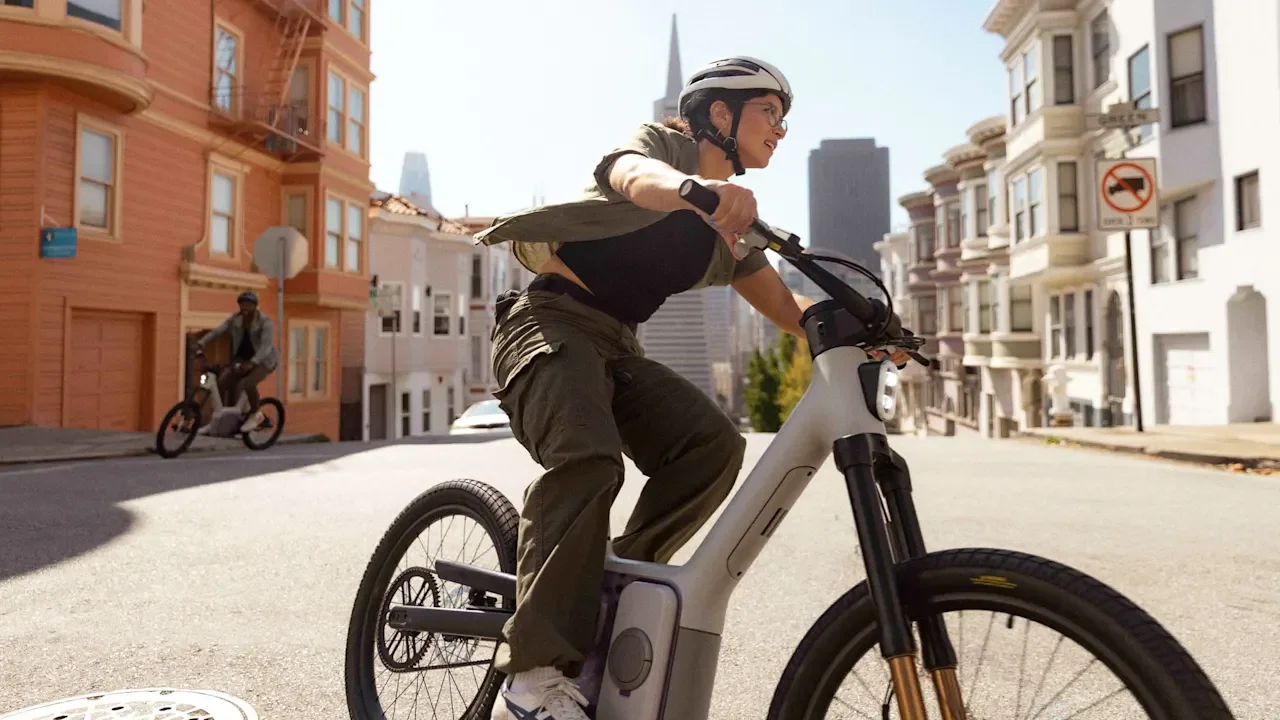
 It doesn’t look like a Rivian truck, but a new electric bike took shape at the EV company. A startup called Also, which spun out from the EV maker earlier this year and raised $105 million, launched the $4,500 e-bike today, along with a delivery quad for logistics companies and another four-wheeler that consumers could use instead of a typical cargo bike. The idea sparked three years ago, after Rivian founder RJ Scaringe met with Chris Yu, head of product and innovation at the bike brand Specialized. “We connected over a really basic question, which is: why doesn’t that magical experience that you get out of a Rivian exist in anything smaller than a car?” says Yu. Scaringe had long believed that the EV company’s approach—designing its own software and hardware and building a vehicle from scratch—would also make sense for e-bikes and other forms of micromobility. “We saw this huge transformation that had happened in the electric car space,” Yu says. Early electric cars were mostly conversions that replaced a gas motor with an electric motor and batteries, so the driving experience didn’t change much. Then came companies like Tesla and Rivian. “These pure play, vertically integrated, ground-up EV companies took the approach of, well, if we have the ability to craft the software, the electronics, the hardware from a clean slate, you can design an ownership and user experience that is just fundamentally different in almost every way,” he says. In 2022, Yu helped start a skunkworks inside Rivian to explore how smaller EVs could follow the same clean-slate approach—an idea that would eventually lead to a new kind of e-bike. An interchangeable design The first difference with the new bike, called the TM-B (or “transcendent mobility” bike), is that it can convert to different forms. At the push of a button, the top frame can be unlocked and swapped with a cargo bike seat with a sturdy rack for carrying groceries or children. It can also be swapped for a different size, so more than one rider can easily share the same bike. Another attachment makes the bike more like a scooter, with a low bench seat. The designers wanted to tackle a common pain point for anyone considering an electric bike: there are so many different options on the market that it can be difficult to choose. “I was just talking to my neighbor about this—they were thinking about buying a utility bike for carrying their kid to school, but they looked at all these utility bikes and thought they don’t look that fun to ride,” Yu says. Buyers can get stuck trying to decide between a utility bike and a fun weekend bike and not end up getting anything. “Or end up like me, with 10 bikes in their garage,” he says. Instead of buying multiple bikes, Also’s system allows them to get less-expensive attachments. If a couple wants to have an e-bike as an extra vehicle for running errands, they can get two sizes to fit each person. Like a car, you can use your phone to unlock the bike as you approach it. If the bike has multiple riders, it automatically recognizes who you are and your preferences, from whether you want to manually shift to your destinations in the navigation system. Pedal by wire Like electric cars and trucks, which use a “drive by wire” design—meaning that the accelerator pedal isn’t mechanically connected to the wheels, but is just a sensor—the bike uses a “pedal by wire” approach. “It’s fully software defined,” says Yu. “What that means is there is zero mechanical connection between you pedaling the cranks and what the motor is telling the wheel to do.” When you pedal, the pedals feel like an ordinary bike, but the ride is much smoother, he says. The default mode is automatic, so a rider doesn’t have to figure out how to shift and adjust the amount of pedal assist that they’re getting, though that option exists. (When you shift, the bike gives haptic feedback so it feels like a gear is shifting.) The bike has roughly twice as much torque as most other e-bikes, so it’s easier to quickly accelerate to join traffic or change lanes. On a hill, the bike offers “hill flattening,” meaning that it automatically feels like riding on a road that’s less steep, or even completely flat. Going downhill, the bike can also automatically flatten the ride so you can keep pedaling and regenerate the battery. Unlike most e-bikes, 90% of the time that you’re braking, that happens through regenerative braking. “It’s much more akin to a modern electric car experience, where the braking experience is much more consistent, much more reliable, and importantly, the brake pad service life is dramatically longer than otherwise would be,” Yu says. An approachable design The bike doesn’t look like a Rivian truck, apart from a similarly shaped light. But “the underlying principles are very shared,” says Yu. “We’re sibling brands that have a common fabric.” The design team tried to balance performance and approachability, he says. “We wanted something that was very welcoming, very simple, geometrically . . . As capable and high-performance as it is, we don’t want it to be precious, either. We want it to be easy and part of your family’s life.” The team carefully considered each detail of the bike, from integrated turn signals in the frame to a security system that locks everything, including the wheels, when you walk away. (If the bike is stolen, you can track it on an app and remotely disable the whole thing until you get it back.) A custom navigation system, shown in a small touchscreen on the handlebars, shows bike-specific directions and how much range you have left on the battery. The bike has two options for power banks—one that can give you up to 100 miles of range, depending on how much you’re using pedal assist, and a smaller option with up to 60 miles of range. The power bank can also be pulled out of the bike and used to quickly charge a laptop or anything else that plugs into USB-C. The startup also designed a few accessories, including a helmet that has noise-cancelling microphones so you can take a phone call as you ride. “We tuned the audio experience such that you can be riding at 25 miles an hour, take a phone call, and the other person will not know, will not have any idea that you’re riding on a bike with wind noise,” says Yu. A custom pannier is precisely sized to fit a grocery bag from Trader Joe’s. All of this comes at a price. The TM-B Performance, the premium version of the bike, will be $4,500 when it launches next spring. The company hasn’t yet announced the price of the basic version of the bike, but says that it will be less than $4,000. Accessories and additional top frames add to the cost. By contrast, a budget e-bike might cost less than $1,000. But Also’s models are well within the range of other high-end bikes, some of which can cost more than $10,000. Beyond the bike Like Rivian EVs, which have a “skateboard” under the vehicle with the battery and other tech that can be used across multiple trucks or cars, the bike’s basic technology can be used in other vehicles. The startup also designed a four-wheeled cargo bike, or quad, that can be used for deliveries in dense cities. From the outside, it looks similar to the pedal-assist EVs that UPS, Amazon, DHL, and other companies are already using in some areas. But Yu says that Also’s vertical integration makes it easier to connect with the software that logistics companies use for features like route optimization. The vehicle is also designed from the ground up for durability, so it can last far longer than typical delivery quads. The design will launch later in 2026, along with a simplified consumer version of the same vehicle. The company also announced today that it’s partnering with Amazon on a custom version of the delivery vehicle that the retail giant could use in its dozens of micromobility hubs across Europe and the U.S. The same basic technology that went into the bike and quads could also be used in other vehicles. It could eventually help electrify other small vehicles, like mopeds or motorcycles, that are more common than cars in countries outside the U.S. The transition to electric “can really be accelerated if we can deliver experiences that aren’t just electric, but they’re just fundamentally better product experiences that happen to be electric,” Yu says. View the full article
-
We may earn a commission from links on this page. When you track a strength training workout on a fitness watch, that watch will happily tell you what heart rate zones you were in during the workout. In fact, they'll do that for any workout, whether it makes sense or not. So you might be tempted to interpret this data in terms of the benefits of zone 2 training. If my heart rate is in zone 2 when I’m lifting weights, that means I just did an hour of zone 2 training, right? Unfortunately, no. Heart rate zones only apply to cardioZones are meaningless for strength training, but to understand why, we have to go back to the reason zones were invented in the first place: to give athletes an objective rating of how hard their cardio workouts are. In fact, the whole idea of monitoring your heart rate for athletic (rather than medical) purposes originated with a Finnish ski team, and then spread to other athletes. Your heart rate can tell you how hard you are working, and you can use that information to gauge whether you should go harder or ease up. Or, as Finnish triathlete Pauli Kiuri is quoted saying in this article at Polar, “At some point during your run, you get the feeling that you can’t push any further. But if your rate is still only 160 bpm, you just have to believe that yes, you can!” (Polar was the maker of those early heart rate monitors.) Heart rate training makes sense for endurance sports, because the harder you work, the faster your heart beats. So you can use that relationship in reverse: the bigger the number on your heart rate monitor, the harder you must be working. Your heart rate is a good gauge of the work you're doing. But that relationship with heart rate doesn’t hold for other types of exercise. Your heart rate during a yoga session doesn’t tell you how deep into a stretch you are getting. Your heart rate during a strength training session doesn’t tell you whether you are lifting light or heavy. That’s why your heart rate during a strength training session does not matter. Cardio is defined by what your whole body is doing, not just what your heart is doing.Heart rate, properly used, is what’s called a proxy metric. We don’t track heart rate because heart rate matters; we track heart rate because it tells us about something else that matters—in this case, the intensity of cardio exercise. For an exercise to be cardio, it needs to be a rhythmic contraction of large muscles for minutes on end. Because our muscles are contracting repeatedly, they require our mitochondria to work harder to power them. Those mitochondria need more fuel, so our cells become more responsive to insulin so they can pull in blood sugar more effectively. To do all of this, we need more nutrients and oxygen to reach our muscle cells, so we grow more capillaries to supply them, and to take away metabolic byproducts. The health benefits of cardio relate to those body processes above. The speed of our heartbeat is a side effect. Those whole-body processes are what give us the benefits of zone 2 cardio: low-fatigue calorie burn, increased mitochondrial and capillary density, and improved VO2max, to name just a few. These benefits come from the fact that our entire body is doing exercise. Just increasing our heart rate, without doing all of that other stuff, isn’t going to get all those good zone 2 adaptations. That’s why sitting in a stressful meeting at work for 30 minutes is not the same thing as going for a jog. Nor is watching a scary movie the same thing as doing a HIIT workout. And, sorry to sauna enjoyers, but a sauna is not a replacement for exercise. (Sauna sessions do seem to improve the health of your blood vessels somewhat, but they don’t do all the other stuff.) When you think about it, zone 2 cardio has a lot more in common with zone 3 (or even zone 5) cardio than it does with “zone 2” lifting. What zone should strength training be in? Trick question! Zones don’t matter for strength training. The point of strength training is to build strength. To tell whether you're working hard enough to build strength, here are some common ways to judge your effort: How the weight on the bar compares to the most you’ve ever lifted: for example, you might do squats at 80% of your max. How many reps you are doing at a given weight: five reps at 80% is harder than one rep at 80%. How fast you move as you complete the rep: the harder it is, the slower it will move; there are even gadgets to measure this. Sometimes this property is called “bar speed,” as in, how fast the barbell is moving. How many more reps you think you could have done: if you had three reps "in the tank," that's an easier set than if the last rep you did was the last rep you could possibly have done. How sore, fatigued, or “pumped” a muscle feels: within some styles of training, this can help you to figure out how much work a muscle group has gotten during the day’s training. Some things that do not correlate with how much strength you are building include how out-of-breath you feel after a set of exercises, or how fast your heart beats during or after the exercises. The truth about heart rate when lifting is that your heart rate may be higher, your breathing harder, and your rest times longer, if your cardio fitness kinda sucks. This is a sign that you may want to improve your fitness by doing actual cardio (zone 2 or otherwise), so that you gain those adaptations and don’t have to sit around as long sucking wind between sets. But your cardio fitness is only playing a supporting role here; it’s not the point of the strength session, and it’s not a useful metric for gauging your effort. Or to put it another way: when you do five sets of five squats at 80% of your max, you get the same strength benefit whether you do it with three-minute rests and a smile on your face, or eight-minute rests and a sky-high heart rate. OK, but what zones are normal for strength training? Realistically, you’ll see your heart rate jump up and down throughout your strength training session. During rests, your heart rate may be in zone 1 or 2; during short sets of an exercise, you may see your heart rate spike into zone 3 or higher. You’ll likely see a higher heart rate during sets of many reps (sets of 10 reps may result in a higher heart rate than sets of three reps). It doesn’t really matter what heart rate zone you find yourself in. The only thing that really matters, if you’re checking your heart rate chart afterward, is that your strength session has big spikes and dips. If it looks relatively even, you’re probably not resting enough. For comparison, here are my charts for a recent jog (at the upper end of zone 2/lower zone 3) and for a strength training workout that included snatches, deadlifts, and squats. Note the longer rests and higher spikes toward the end of the workout, when I squatted heavy for six reps at a time. Left: running. Right: lifting weights. Credit: Beth Skwarecki/Garmin If zones don’t matter, why does my app tell me what zone my strength training was in?The short answer is: because they can, not because they should. When endurance athletes first adopted heart rate training, it was a replacement for running by timed paces or just by feel. They understood that it was a measure of how hard their whole body was working during a run or a ski session. It’s different in the modern era, when every watch measures heart rate. The truth is that heart rate zones are on all your result screens because heart rate is easy for your watch to measure, zones are easy for your app to calculate, and because the company that makes the app and watch wants to please you with a bunch of cool looking charts after every workout. Heart rate zone charts make your workout feel more important, and getting to see them is like a little reward sticker to keep you in the habit (and, from the company’s point of view, using its product). Enjoy the charts if you think they’re pretty, but keep your eyes on the metrics that matter—which, for strength workouts, includes pretty much everything except your heart rate. View the full article
-
We may earn a commission from links on this page. Deal pricing and availability subject to change after time of publication. I've been a fan of Soundcore's Sleep A20 earbuds since I first put them on to go to sleep over a year ago. I've never experienced earbuds that feel so comfortable when sleeping on your side. But that model was missing one crucial feature: ANC. The new Sleep A30 earbuds have taken care of that, and more—and despite their recent release this past August, they're already discounted. Right now, you can get them for $193.99 (originally $229.99), the lowest price ever, according to price tracking tools. Soundcore Sleep A30 by Anker Sleep Earbuds Smart Active Noise Cancelling Sleep Headphones, Adaptive Snore-Masking System, 45H Playtime $193.99 at Amazon $229.99 Save $36.00 Get Deal Get Deal $193.99 at Amazon $229.99 Save $36.00 The Sleep A30 are the most popular and arguably the best sleeping earbuds you can buy right now, as noted in Mashable's review. They're designed for sleep in every way: Side sleepers can doze off without feeling pressure in their ears, since the earbuds sit comfortably inside, and with the addition of ANC, you can now actively block more outside noise than before. The battery life isn't the best, but it will get you through the night: You get 9 hours of playback when listening to white noise, 6.5 hours listening to music via Bluetooth, and 45 hours of extra juice from the case. The companion app lets you set a timer for your music, so you don't use up all your battery after you've fallen asleep. There's also a feature that blocks snoring sounds using microphones in the case, which is a lifesaver if you sleep in the same room as a noisy partner. And if you're worried about not hearing your alarm, you can set one in the app, which also includes a handful of features that measure your sleep quality. All in all, I really can't recommend these earbuds enough to anyone who values quality sleep and likes to wear earbuds to bed. Our Best Editor-Vetted Tech Deals Right Now Apple AirPods 4 Wireless Earbuds — $114.80 (List Price $129.00) Apple iPad 11" 128GB A16 WiFi Tablet (Blue, 2025) — $299.00 (List Price $349.00) Amazon Fire TV Stick 4K (2nd Gen, 2023) — $29.99 (List Price $49.99) Deals are selected by our commerce team View the full article
-
Meta, which owns and operates Facebook and Instagram—as well as Threads, Messenger, and WhatsApp—announced on Wednesday it is laying off about 600 employees from its new AI “superintelligence” research lab. The news was first reported by Axios. Fast Company has reached out to Meta for comment. That lab, dedicated to pursuing an artificial intelligence system that would reportedly surpass human intelligence, was announced back in June after Meta said it was investing $14.3 billion in Alexandr Wang’s Scale AI and bringing him on board. The cuts come as Big Tech ramps up its investment in artificial intelligence, pouring billions in an increasingly competitive, high-stakes AI arms race. Meta CEO Mark Zuckerberg says the social technology company plans to invest between $60 billion and $65 billion in capital expenditures in 2025 alone. At the same time, Meta has been rolling out AI advertising features at a dizzying rate, and is also reportedly building a large Manhattan data center to power its AI offerings. “By reducing the size of our team, fewer conversations will be required to make a decision, and each person will be more load-bearing and have more scope and impact,” Meta chief AI officer Alexandr Wang wrote in a memo, Axios reported. Meta financials Shares in Meta Platforms, Inc. (NASDAQ: META) took a dip in morning trading on Wednesday, but for the most part recovered, and were trading down 0.4% by midday at the time of this writing. In its second quarter 2025 earnings release, for the period ending on June 30, Zuckerberg wrote, “We’ve had a strong quarter both in terms of our business and community: I’m excited to build personal superintelligence for everyone in the world.” The company beat expectations with revenue coming in at $47.52 billion, versus estimates of $44.80 billion. Earnings per share (EPS) came in at $7.14, higher than the expected $5.92. The company’s third quarter 2025 financial results will be released after market close on Wednesday, October 29. View the full article

-
A cross-market study of 2,709 AI-assistant responses found 45% had significant issues and 81% had some issue. Gemini had the most issues with sourcing. The post AI Assistants Show Significant Issues In 45% Of News Answers appeared first on Search Engine Journal. View the full article
-
HTX, advised by Justin Sun, is accused by the FCA of unlawful promotion of cryptoassetsView the full article
-
Partners argue chancellor’s move would damage cornerstone of UK economyView the full article
-
One of my favorite tabs to check when I'm looking at new PC Games on the Steam Store is "Popular Upcoming," but over the years, it's gotten far less useful. While it's supposed to show me what the next big game is ahead of time, the truth is, there are just too many games and too many types of players out there for it to keep up anymore. My tastes probably aren't the same as yours, and limiting the highlights to a small selection of popular picks could bury smaller titles some players might be more interested in. That's why I'm so excited about Steam's new Personal Calendar page. Released last night, it's technically an experiment, but it's already looking great. Essentially, rather than showing you a generic list of ten games like the Popular Upcoming tab (I have no idea how Valve picks those games, by the way), this instead shows you a personally curated selection of recently released and upcoming games, organized on a daily calendar, and up through the next eight weeks. The specifics depend on how you customize it, but already, it's far more useful for me than the Popular Upcoming tab. To check it out, either click here for the web version or open your Steam desktop client, and next to the search bar, navigate to Special Sections > Steam Labs > 016 Personal Calendar. When you first open the calendar, you'll see 100 games, split across titles released last month, titles released in the last seven days, and titles that aren't out yet. At time of writing, I currently see suggested games through Dec. 12, which gives me a pretty good window of what to look forward to. If you're eagle-eyed, you might notice that the Personal Calendar excludes weekends, which Valve says is because most games don't release on weekends. If a game Valve wants to suggest does release on a weekend, it'll instead show up on the following Monday. Credit: Michelle Ehrhardt As for the curation, I'm satisfied. Unlike the Popular Upcoming tab, the Personal Calendar uses a combination of your wishlist and your playtime in certain games to decide what to show you, making for a list that's catered to your tastes. Lately, I've been playing a lot of platformers and RPGs, and low and behold, my Personal Calendar opened right up to suggestions like Final Fantasy Tactics: The Ivalice Chronicles and Dragon Quest I & II HD-2D Remake. These are bigger titles, but there are smaller choices I might have otherwise overlooked peppered in, and it already seems like a great way to make sure I don't miss out on a game I'd like. I even appreciate the heads-up about recently released games, which are easy to think about once and then forget. The one criticism I have is that the default of 100 games looks a little overstuffed to me. Luckily, you can slim down your suggestions to anywhere from ten to fifty games (at the top of the page, under Game Count), which also has the benefit of narrowing down the algorithm to only show you what it thinks you'd enjoy most. Or, if you want to see as many options as possible, you can also have the calendar display 250 or 500 games. There are also controls to only show games with specific tags, and also to exclude games you've wishlisted or already own. Essentially, the Personal Calendar feels like a personalized and easy-to-check version of those "Biggest Game Releases of the Month" videos, except you don't need to constantly rewind or pull up the video again whenever you're looking for what to play next. Valve says your Calendar's algorithm gets re-trained daily, though, so don't expect to always see the same games on it every time you check it. If you see a game you're interested in but aren't ready to pull the trigger on yet, wishlisting it is still your best bet. View the full article
-
San Diego-based Shield AI is developing a first of its kind fighter jet: a 2,000-mile-range pilotless plane that takes off and lands vertically and uses artificial intelligence to fly itself, even when adversaries jam navigation and communication systems. Like the company’s smaller, combat-tested autonomous drone, the V-BAT, the X-BAT doesn’t need a runway, allowing it to launch from remote islands or the decks of aircraft carriers or drone ships. But with its larger blended wing body design, the X-BAT can carry missiles and electronic weapons. Instead of propellers, it’s powered by an afterburning jet engine. “Airpower without runways is the holy grail of deterrence,” said Brandon Tseng, Shield’s cofounder and president. The aircraft could join a new class of AI-piloted fighter jets being developed for the Pentagon and other defense agencies, where the aim is to deploy robotic wingmen alongside human pilots or as part of separate drone squadrons. Taking their cue from the fierce drone war in Ukraine, military officials around the globe are eyeing layers of cheaper, more disposable AI-powered drones on air, land, and sea, with a single soldier responsible for an entire swarm. A separate race is on to field counter-drone systems. Investors have followed suit, pouring cash into a range of defense-tech firms, including Shield rivals like Anduril, Helsing, and publicly traded AeroVironment, or AV. Globally, venture capital investment in defense companies surged to $31 billion last year, a 33% increase over the previous year, according to McKinsey. Anduril, founded in 2017, is the largest of the so-called “neo prime” contractors, with a valuation at around $30 billion. Shield, founded in 2015 and valued at $5.3 billion, is the next biggest defense startup. (Fast Company named it a Most Innovative Company in 2020.) With the X-BAT, Shield joins a number of startups and legacy contractors developing AI aircraft that can match the capabilities of an F-16 but in a smaller form factor. Last month, Shield was picked by the Air Force to provide the AI software for the YFQ-44, Anduril’s entrant in the service’s Collaborative Combat Aircraft (CCA) competition. Defense giant RTX was selected to build the software for the other drone prototype being considered by the Air Force, the YFQ-42, built by General Atomics. Both drones are roughly the same size as the 26-foot-long X-BAT, which is about a third as large as a conventional fighter jet. The service has said it plans to choose a design for production by fiscal year 2026, and has indicated it may select multiple companies. Last month, Breaking Defense reported that the Navy had selected another set of drone designs by Anduril, Northrop Grumman, Boeing, and General Atomics for its own collaborative combat aircraft competition. The Army and the Marine Corps are also making plans for their own “loyal wingmen.” Tseng declined to comment on Shield’s role in the current CCA program, or on the potential of X-BAT to enter a future competition. Still, he said the aircraft’s price, at around $27 million, is “in the same range as the Collaborative Combat Aircraft programs, with variations based on mission systems and configurations.” That translates to about a tenth of the “cost per effect” compared to legacy fifth-generation aircraft, Tseng said. X-BAT also represents “a major development” for Shield AI’s business,” the company said in a press release. “We believe the greatest victory requires no war,” said Tseng. “To make that belief real, we’re executing a simple but ambitious master plan: Prove the value of autonomy, scale it across domains, and reimagine airpower. X-BAT represents the next part of that plan.” Up and down Shield AI’s plans have taken several turns in recent years. Founded in 2015 by brothers Brandon and Ryan Tseng and Andrew Reiter, the 1000-person company has sold hundreds of its V-BAT drones. But after it landed a $240 million funding round in March, Brandon told Bloomberg that the company would place more of an emphasis on its AI software, which had been a larger focus before it bought longtime V-BAT maker Martin UAV in 2021. The company has generated billions of dollars in revenue, and had planned to reach profitability by 2025. But as Forbes reported in May, those projections were scrapped after a service member had his fingers partially severed during a V-BAT landing in 2023. Shortly before Forbes published its story, Ryan Tseng stepped down as CEO, and Gary Steele, a Cisco executive, took the helm. (Ryan became chief strategic officer and remains on the board of directors.) Company officials have said they have taken a number of steps to address safety concerns, including adding unassisted launch and land capabilities to the V-BAT. The service member has since fully recovered. “Today, V-BAT retains a perfect record of no injuries when following trained procedures,” Tseng told Forbes. While the accident “delayed” the decisions of prospective customers, “we are back on track now,” he said. A human still in the loop In recent months, Shield’s software division has entered partnerships with legacy defense contractors including RTX, Airbus and shipbuilder HII to incoporate AI into their vehicles and weapons systems. Shield’s Hivemind software—which grew out of Chief Technology Officer Nathan Michael’s research at Carnegie Mellon University, as well as AI startup Heron Systems, which Shield acquired in 2021—can help pilot vehicles ranging from attack drones to F-16s, helicopters and boats, operating individually or in swarms. Last year, Air Force Secretary Frank Kendall flew in a test fighter piloted by Shield AI’s algorithms, taking on a manned F-16 in a simulated dogfight over the California desert. “Shield AI aspires to service the autonomous needs for the defense sector, like Palantir services its intelligence needs,” Brandon Tseng told Bloomberg in March. (Shield also announced a partnership with Palantir last year, under which the firms would use each other’s software.) Shield AI also continues to develop the V-BAT. The 9-foot-long drone, which can fly more than 80 miles and stay aloft for more than 13 hours, carrying a payload of about 40 pounds, has been used by Ukraine, Israel, and other countries to carry out reconnaissance and targeting operations. U.S. special forces have deployed the V-BAT, and the Coast Guard, which has a five-year contract with Shield AI worth $200 million, has used the drone with “joint forces” to “interdict billions of dollars’ worth of narcotics,” Tseng said. Through over 150 V-BAT deployments in Ukraine, the AI software has also been put through its paces in places where GPS and other communications aren’t available. “You’re telling the aircraft, ‘hey, this is your zone of operations, we want you to do X-Y-Z in this area,’” Armor Harris, Shield’s senior vice president of aircraft, told The War Zone. And “given its last set of instructions and the rules of engagement for what it’s allowed to do, what it’s not allowed to do, it’ll go and it’ll continue its mission autonomously when those comms links are not there.” That capability is “where the system is more advanced than anything else in the world to date.” Still, not everything is autonomous—yet. “Fundamentally [at] Shield AI, we believe that a human should be on-the-loop for an offensive kill decision,” Harris said. All-out drone push The Collaborative Combat Aircraft programs are part of an all-out push at the Pentagon (and in Silicon Valley) for AI and drones. In June 2025, President Donald The President issued an executive order called Unleashing American Drone Dominance that aims to accelerate commercialization of drone technologies, and the administration’s budget request has allocated billions of dollars to unmanned systems and AI. That includes an effort to onshore the supply chain for drones and the electronics and minerals they require, which is currently dominated by China. Shield AI has some experience here: In March, the Chinese Ministry of Commerce placed 15 U.S. entities, including Shield AI, on its export control list, barring them from the export of dual-use commodities. Shield is working with Pratt & Whitney and GE to develop the X-BAT’s jet engine. Company officials declined to share further details on the engine, or how it handles takeoff and landing. But Tseng pointed to subsystems built with “proven U.S. partners” to “ensure performance, reliability, and resilient American supply chains.” Tseng said the company expects to conduct initial vertical takeoff and landing demonstrations for X-BAT as early as fall 2026, followed by all-up flight testing and operational validation in 2028. As for possible X-BAT manufacturing sites, Tseng said, “we are in discussions with several states and their leadership.” And if some defense agency eventually places an order, he added, “the selected location will create thousands of jobs and generate billions in economic value.” View the full article

-
From July 14 to November 9, 2023, the American actors’ union SAG-AFTRA, representing 160,000 people, went on strike over a labor dispute with the Alliance of Motion Picture and Television Producers. Eventually, both sides agreed to terms that theoretically would put limits on how actor’s images and output could be used. Strike over, everybody went back to work and the entertainment industrial complex started humming again. But they apparently never took heed of the lessons offered by a somewhat obscure 2013 movie, The Congress, which eerily anticipated the crisis Hollywood is now facing. Caught by surprise? Really? Fast-forward to September of 2025. Dutch actor and comedian Eline Van der Velden’s company Particle6 released an AI “actor” named Tilly Norwood with the express intention of her becoming the “next Scarlett Johansson.” The bot had its own social media presence, appeared in comedy sketches, and breathlessly declared, “I may be AI, but I’m feeling very real emotions right now. I am so excited for what’s coming next!” The news that there were agents in talks to sign Norwood, the way they might sign a real actor, sparked an incredible Hollywood firestorm. Lots of denunciations of this use of technology. Lots of claims that this was unfair. And lots and lots of workplace anxiety. But should they really have been this surprised? Futurist Amy Webb suggests not. As she says, “Let’s not kid ourselves: they’ve had more than a decade to prepare for this.” Toy Story, launched in 1995, was the first full-length feature film to be fully animated, followed by a string of other hits that did very well without real actors, thank you very much. Lara Croft, the Tomb Raider game star that was launched in 1996, became a movie character in 2001. In 2002, a simulated movie star played the lead in the science fiction movie Simone. In 2011, Japanese idol group AKB48 introduced a new member—Aimi Eguchi. She became popular and was “added” to the band only to “graduate” when her identity as a composite of the band’s other actors was revealed. By 2016, we had AI-generated influencers like Lil Miquela who appear in advertisements, garner thousands of followers, and are paid to endorse brands. And the precedent for Tilly signing with an agent has already been established—Miquela signed on with CAA as its first virtual client as far back as 2020. Willful blind spots Now seemingly caught by surprise, what did the strategists in Hollywood miss? Most likely, too much focus on their own industry. Fractious labor relations, contract negotiations, and changing entertainment consumption behavior can eat up a lot of executive bandwidth. This leads to not thinking in terms of the larger arenas in which competition takes place. The big threat to this business was not other industry players but something coming along that made what they did unnecessary, undesirable, or too expensive. Once an innovation has demonstrated its efficacy, particularly if it is popular and making money for someone, it is almost impossible to put the genie back in its bottle (see: targeted Internet advertising or ride-sharing). It is also no secret that some moviemakers longed to put AI-generated actors in leading roles, even experimenting with bringing some back from the dead. But perhaps the most significant reason I believe they didn’t pick up on the weak signals is because they didn’t want to. Accepting the idea of digital acting and the creation of digital worlds means accepting the idea that expertise, talent, and painfully acquired skills will become obsolete. Unfortunately, the law of disruption—in which the complicated and difficult becomes easy and the expensive becomes cheap—doesn’t really care about your preferences. Preparing for an existential threat What might they have done to prepare? They could have launched small-scale experiments using digital actors to learn about audience acceptance, production workflows, and creative possibilities. They could have allocated resources to dedicated teams exploring new forms of storytelling. With the constraints of physical acting and reality removed, stories could be developed that could be as revolutionary as the movies themselves were when they created new possibilities beyond what could be done on a physical stage. They could have worked with regulators and their unions to establish a glide path for AI in their sector that would be fair with respect to intellectual property. They could have seriously invested in the digital technologies used to create these new forms of entertainment, rather than leaving all this to technology companies such as Netflix. The end of mass market entertainment? Tilly Norwood isn’t the disruption—she’s the warning shot. The real disruption comes when AI can generate not just actors, but entire films, on demand, personalized to individual viewer preferences, at essentially zero marginal cost. The studios that survive won’t be the ones with the biggest IP libraries or the most prestigious awards. They’ll be the ones who recognize that the fundamental assumptions of their industry—that content is scarce, that talent is human, that stories are fixed—are all being systematically dismantled, and come up with new business models that take advantage of the post-inflection point world. The weak signals are there. The question is: who has the appetite to listen? View the full article

-
Federal workers and others affected by the government shutdown: we’re in day 22 with no end in sight. How are you doing? What’s going on in your workplace / with your colleagues? The post government shutdown day 22: how are you doing? appeared first on Ask a Manager. View the full article
-
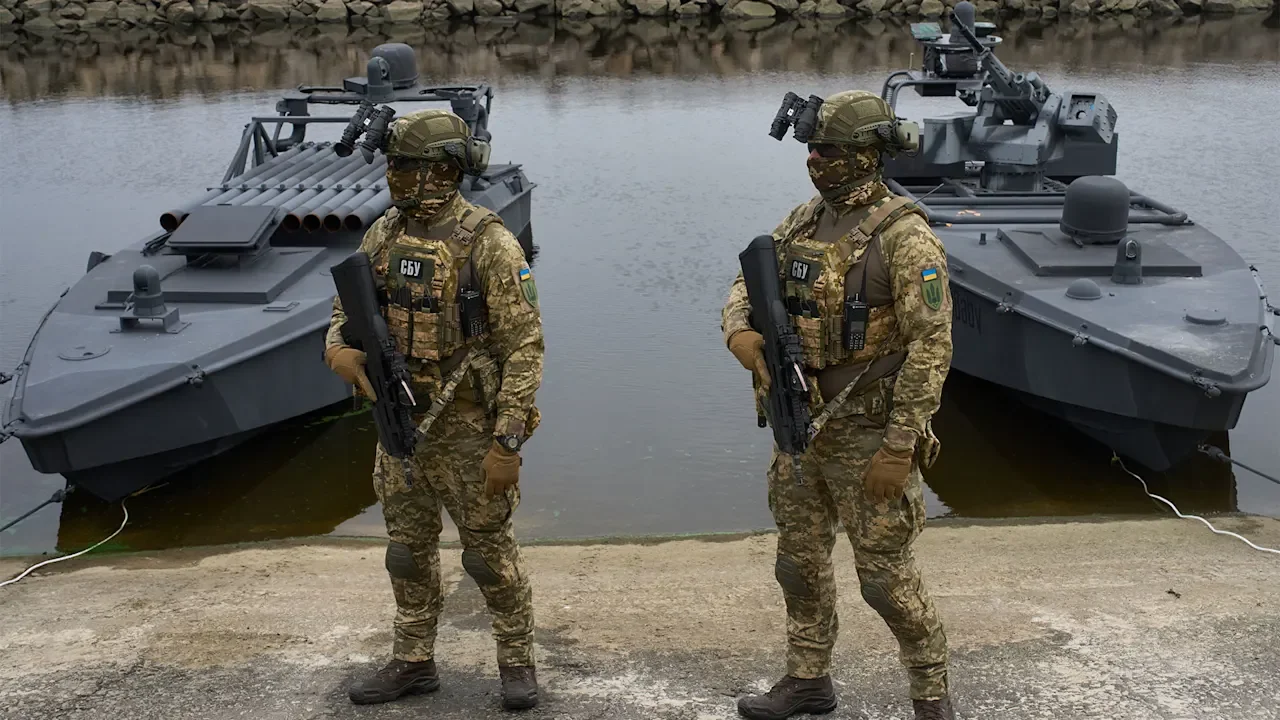
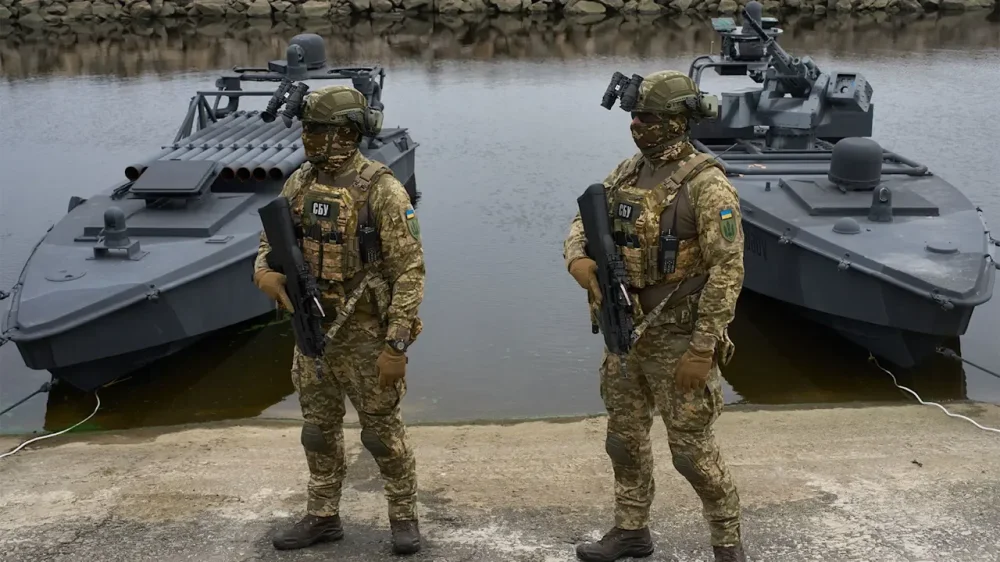
Ukraine’s state security service has unveiled an upgraded sea drone it says can now operate anywhere in the Black Sea, carry heavier weapons and use artificial intelligence for targeting. Ukraine has used the unmanned naval drones to target Russian shipping and infrastructure in the Black Sea. The Security Service of Ukraine, known by its Ukrainian acronym SBU, has credited strikes by the unmanned vessel known as the “Sea Baby” with forcing a strategic shift in Russia’s naval operations. The range of the Sea Baby was expanded from 1,000 kilometers (620 miles) to 1,500 kilometers (930 miles), SBU said. It can carry up to 2,000 kilograms (about 4,400 pounds) of payload, SBU officials said. At a demonstration attended by The Associated Press, variants included vessels fitted with a multiple-rocket launcher and another with a stabilized machine-gun turret. SBU Brig. Gen. Ivan Lukashevych said the new vessels also feature AI-assisted friend-or-foe targeting systems and can launch small aerial attack drones and multilayered self-destruct systems to prevent capture. Developing a new kind of naval warfare Drone strikes have been used in successful attacks against 11 Russian vessels, including frigates and missile carriers, SBU said, prompting the Russian navy to relocate its main base from Sevastopol in Crimea to Novorossiysk on Russia’s Black Sea coast. “The SBU became the first in the world to pioneer this new kind of naval warfare — and we continue to advance it,” Lukashevych said, adding that the Sea Baby has evolved from a single-use strike craft into a reusable, multipurpose platform that expands Ukraine’s offensive options. Authorities asked that the time and location of the demonstration not be made public for security reasons. The craft are operated remotely from a mobile control center inside a van, where operators use a bank of screens and controls. “Cohesion of the crew members is probably the most important thing. We are constantly working on that,” said one operator who was identified only by his call sign, “Scout,” per Ukrainian military protocol. Ukrainian sea drones helped push back Russia’s navy The SBU also said sea drones helped carry out other high-profile strikes, including repeated attacks on the Crimean Bridge, most recently targeting its underwater supports in a bid to to render it unusable for heavy military transport. The Sea Baby program is partially funded by public donations through a state-run initiative and is coordinated with Ukraine’s military and political leadership. The evolution from expendable strike boats to reusable, networked drones marks an important advance in asymmetric naval warfare, Lukashevych said. “On this new product, we have installed rocket weaponry that will allow us to work from a large distance outside of the attack range of enemy fire. We can use such platforms to carry heavy weaponry,” he said. “Here we can show Ukrainians the most effective use of the money they have donated to us.” Associated Press journalists Alex Babenko, Yehor Konovalov and Volodymyr Yurchuk contributed to this report. Follow AP’s coverage of the war in Ukraine at https://apnews.com/hub/russia-ukraine —Efrem Lukatsky and Derek Gatopoulos, Associated Press View the full article
-
Firm leader says auditor may face years of scrutiny and will take ‘decisive action to protect our reputation’ View the full article
-
Spending just 36 minutes listening to your own brain waves, over four sessions, can reduce stress and anxiety, according to a new study by neuroscientists at the Wake Forest University School of Medicine. Published in the journal Global Advances in Integrative Medicine and Health, the study looked at how to reduce stress-related symptoms in 144 healthcare workers with moderate-to-high levels of perceived stress. The healthcare workers were placed in two groups: one that received four sessions of a sound-based relaxation intervention over two weeks, and another that was put on a control group waitlist. The workers spent a little over half an hour relaxing in a zero-gravity chair with their eyes closed as closed-loop, acoustic neuromodulation technology translated their brainwaves into personalized tones in real time, the idea being that the echoed tones interact with the brain to balance and quiet itself and release stress patterns. When researchers measured the results after six-to-eight weeks, they found the participants reported meaningful reductions in stress, anxiety, and insomnia, as well as significant reductions in fatigue and depression, and improved subjective cognition. “These results suggest that closed-loop acoustic neuromodulation is a safe, scalable, and effective option to complement organizational strategies for supporting healthcare worker brain health and well-being,” said Charles H. Tegeler, M.D., professor of neurology at Wake Forest University School of Medicine and principal investigator of the study. “We are eager to identify ways to broadly offer the intervention to teammates across our health system and beyond.” What makes this different from previous studies on neuromodulation is that it streamlined the treatment process with fewer, shorter sessions, making the treatment more practical and accessible for real-world application. It also included study participants regardless of their medication or substance use. View the full article

-
Salesforce is making a significant commitment to the future of artificial intelligence (AI) and economic growth in San Francisco. With plans to invest $15 billion over the next five years, the company aims to establish the city as the global epicenter for AI innovation. This announcement comes ahead of the Dreamforce conference, which is set to bring nearly 50,000 attendees to the city and contribute an estimated $130 million in local revenue. Marc Benioff, Chair and CEO of Salesforce, expressed the company’s ambitions, stating, “San Francisco is a city of innovation, talent, and vision. This $15 billion investment reflects our deep commitment to our hometown — advancing AI innovation, creating jobs, and helping companies and our communities thrive.” The pledge will fund the development of an AI Incubator Hub, designed to support startups and companies in integrating AI into their operations. For small business owners, this investment presents opportunities and insights into practical applications of AI technology. The establishment of the AI Incubator Hub will provide resources and support for startups, potentially benefiting those looking to leverage AI for their operations. By tapping into this ecosystem, small businesses can gain access to cutting-edge technologies that enhance productivity and drive growth. Moreover, Salesforce aims to assist companies in transitioning to what they call “Agentic Enterprises.” This approach involves redesigning workflows, upskilling employees, and introducing new roles tailored to an AI-enhanced workplace. The introduction of Salesforce’s 4Rs playbook will help organizations adapt by encouraging them to reskill and redeploy talent effectively. Small business owners can utilize these frameworks to align their teams with future market demands, ultimately improving agility and responsiveness. Another practical aspect of Salesforce’s initiative is the free online learning platform, Trailhead, which has already helped over 5 million people develop their skills. The platform offers small businesses an accessible way to train staff in essential AI skills, preparing them for the evolving workplace landscape. Additionally, Salesforce’s Career Connect aims to match employees with the skills needed for newly created AI roles, thus streamlining the hiring process. In addition to economic benefits, Salesforce’s commitment extends to community support. The company operates on a 1-1-1 model, dedicating 1% of its equity, product, and employee time to local communities. This philanthropic approach has resulted in over $1 billion in contributions to the Bay Area, benefiting thousands of nonprofits. For small businesses, collaborating with Salesforce in community initiatives can bolster their local presence and enhance their corporate social responsibility strategies. While the prospects are promising, small business owners should consider potential challenges as they navigate this AI-infused landscape. Adaptation to new technologies may require an initial investment in training and resources, which could be a hurdle for businesses operating on tight budgets. Furthermore, the rapid pace of AI development necessitates that businesses remain agile, continually assessing their technology strategies in light of ongoing advancements. Additionally, there’s the potential challenge of integrating AI into existing workflows. Small businesses may need expert guidance to ensure that AI solutions genuinely enhance their operations rather than complicate them. Therefore, careful planning will be essential to maximize the benefits of AI without overwhelming existing processes. Salesforce’s investment and the upcoming opportunities remind small business owners that the future is not only about surviving but thriving in an increasingly digital landscape. Engaging with platforms like Salesforce and taking advantage of educational resources can significantly impact a business’s trajectory as the market evolves. As the Dreamforce conference approaches, it will be interesting to see how this investment unfolds and what implications it has for small businesses in San Francisco and beyond. For a detailed overview of Salesforce’s plans and updates, visit the original post here. Image via Envato This article, "Salesforce to Invest $15 Billion in AI, Create 35,000 Jobs in San Francisco" was first published on Small Business Trends View the full article
-
Salesforce is making a significant commitment to the future of artificial intelligence (AI) and economic growth in San Francisco. With plans to invest $15 billion over the next five years, the company aims to establish the city as the global epicenter for AI innovation. This announcement comes ahead of the Dreamforce conference, which is set to bring nearly 50,000 attendees to the city and contribute an estimated $130 million in local revenue. Marc Benioff, Chair and CEO of Salesforce, expressed the company’s ambitions, stating, “San Francisco is a city of innovation, talent, and vision. This $15 billion investment reflects our deep commitment to our hometown — advancing AI innovation, creating jobs, and helping companies and our communities thrive.” The pledge will fund the development of an AI Incubator Hub, designed to support startups and companies in integrating AI into their operations. For small business owners, this investment presents opportunities and insights into practical applications of AI technology. The establishment of the AI Incubator Hub will provide resources and support for startups, potentially benefiting those looking to leverage AI for their operations. By tapping into this ecosystem, small businesses can gain access to cutting-edge technologies that enhance productivity and drive growth. Moreover, Salesforce aims to assist companies in transitioning to what they call “Agentic Enterprises.” This approach involves redesigning workflows, upskilling employees, and introducing new roles tailored to an AI-enhanced workplace. The introduction of Salesforce’s 4Rs playbook will help organizations adapt by encouraging them to reskill and redeploy talent effectively. Small business owners can utilize these frameworks to align their teams with future market demands, ultimately improving agility and responsiveness. Another practical aspect of Salesforce’s initiative is the free online learning platform, Trailhead, which has already helped over 5 million people develop their skills. The platform offers small businesses an accessible way to train staff in essential AI skills, preparing them for the evolving workplace landscape. Additionally, Salesforce’s Career Connect aims to match employees with the skills needed for newly created AI roles, thus streamlining the hiring process. In addition to economic benefits, Salesforce’s commitment extends to community support. The company operates on a 1-1-1 model, dedicating 1% of its equity, product, and employee time to local communities. This philanthropic approach has resulted in over $1 billion in contributions to the Bay Area, benefiting thousands of nonprofits. For small businesses, collaborating with Salesforce in community initiatives can bolster their local presence and enhance their corporate social responsibility strategies. While the prospects are promising, small business owners should consider potential challenges as they navigate this AI-infused landscape. Adaptation to new technologies may require an initial investment in training and resources, which could be a hurdle for businesses operating on tight budgets. Furthermore, the rapid pace of AI development necessitates that businesses remain agile, continually assessing their technology strategies in light of ongoing advancements. Additionally, there’s the potential challenge of integrating AI into existing workflows. Small businesses may need expert guidance to ensure that AI solutions genuinely enhance their operations rather than complicate them. Therefore, careful planning will be essential to maximize the benefits of AI without overwhelming existing processes. Salesforce’s investment and the upcoming opportunities remind small business owners that the future is not only about surviving but thriving in an increasingly digital landscape. Engaging with platforms like Salesforce and taking advantage of educational resources can significantly impact a business’s trajectory as the market evolves. As the Dreamforce conference approaches, it will be interesting to see how this investment unfolds and what implications it has for small businesses in San Francisco and beyond. For a detailed overview of Salesforce’s plans and updates, visit the original post here. Image via Envato This article, "Salesforce to Invest $15 Billion in AI, Create 35,000 Jobs in San Francisco" was first published on Small Business Trends View the full article
-
Five issues to consider. By Jody Padar Radical Pricing – By The Radical CPA Go PRO for members-only access to more Jody Padar. View the full article
-
Five issues to consider. By Jody Padar Radical Pricing – By The Radical CPA Go PRO for members-only access to more Jody Padar. View the full article
-
Prince Harry and his wife Meghan have joined prominent computer scientists, economists, artists, evangelical Christian leaders, and American conservative commentators Steve Bannon and Glenn Beck to call for a ban on AI “superintelligence” that threatens humanity. The letter, released Wednesday by a politically and geographically diverse group of public figures, is squarely aimed at tech giants like Google, OpenAI, and Meta Platforms that are racing each other to build a form of artificial intelligence designed to surpass humans at many tasks. The letter calls for a ban unless some conditions are met The 30-word statement says: “We call for a prohibition on the development of superintelligence, not lifted before there is broad scientific consensus that it will be done safely and controllably, and strong public buy-in.” In a preamble, the letter notes that AI tools may bring health and prosperity, but alongside those tools, “many leading AI companies have the stated goal of building superintelligence in the coming decade that can significantly outperform all humans on essentially all cognitive tasks. This has raised concerns, ranging from human economic obsolescence and disempowerment, losses of freedom, civil liberties, dignity, and control, to national security risks and even potential human extinction.” Who signed and what they’re saying about it Prince Harry added in a personal note that “the future of AI should serve humanity, not replace it. I believe the true test of progress will be not how fast we move, but how wisely we steer. There is no second chance.” Signing alongside the Duke of Sussex was his wife Meghan, the Duchess of Sussex. “This is not a ban or even a moratorium in the usual sense,” wrote another signatory, Stuart Russell, an AI pioneer and computer science professor at the University of California, Berkeley. “It’s simply a proposal to require adequate safety measures for a technology that, according to its developers, has a significant chance to cause human extinction. Is that too much to ask?” Also signing were AI pioneers Yoshua Bengio and Geoffrey Hinton, co-winners of the Turing Award, computer science’s top prize. Hinton also won a Nobel Prize in physics last year. Both have been vocal in bringing attention to the dangers of a technology they helped create. But the list also has some surprises, including Bannon and Beck, in an attempt by the letter’s organizers at the nonprofit Future of Life Institute to appeal to President Donald The President’s Make America Great Again movement even as The President’s White House staff has sought to loosen restrictions on AI development in the U.S. Also on the list are Apple co-founder Steve Wozniak; British billionaire Richard Branson; the former Chairman of the U.S. Joint Chiefs of Staff Mike Mullen, who served under Republican and Democratic administrations; and Democratic foreign policy expert Susan Rice, who was national security adviser to President Barack Obama. Former Irish President Mary Robinson and several British and European parliamentarians and former members of the U.S. Congress signed, as did actors Stephen Fry and Joseph Gordon-Levitt, and musician will.i.am, who has otherwise embraced AI in music creation. “Yeah, we want specific AI tools that can help cure diseases, strengthen national security, etc.,” wrote Gordon-Levitt, whose wife Tasha McCauley served on OpenAI’s board of directors before the upheaval that led to CEO Sam Altman’s temporary ouster in 2023. “But does AI also need to imitate humans, groom our kids, turn us all into slop junkies, and make zillions of dollars serving ads? Most people don’t want that.” Are worries about AI superintelligence also feeding AI hype? The letter is likely to provoke ongoing debates within the AI research community about the likelihood of superhuman AI, the technical paths to reach it, and how dangerous it could be. “In the past, it’s mostly been the nerds versus the nerds,” said Max Tegmark, president of the Future of Life Institute and a professor at the Massachusetts Institute of Technology. “I feel what we’re really seeing here is how the criticism has gone very mainstream.” Complicating the broader debates is that the same companies that are striving toward what some call superintelligence and others call artificial general intelligence, or AGI, are also sometimes inflating the capabilities of their products, which can make them more marketable and have contributed to concerns about an AI bubble. OpenAI was recently met with ridicule from mathematicians and AI scientists when its researcher claimed ChatGPT had figured out unsolved math problems — when what it really did was find and summarize what was already online. “There’s a ton of stuff that’s overhyped and you need to be careful as an investor, but that doesn’t change the fact that — zooming out — AI has gone much faster in the last four years than most people predicted,” Tegmark said. Tegmark’s group was also behind a March 2023 letter — still in the dawn of a commercial AI boom — that called on tech giants to pause the development of more powerful AI models temporarily. None of the major AI companies heeded that call. And the 2023 letter’s most prominent signatory, Elon Musk, was at the same time quietly founding his own AI startup to compete with those he wanted to take a 6-month pause. Asked if he reached out to Musk again this time, Tegmark said he wrote to the CEOs of all major AI developers in the U.S. but didn’t expect them to sign. “I really empathize for them, frankly, because they’re so stuck in this race to the bottom that they just feel an irresistible pressure to keep going and not get overtaken by the other guy,” Tegmark said. “I think that’s why it’s so important to stigmatize the race to superintelligence, to the point where the U.S. government just steps in.” Google, Meta, OpenAI, and Musk’s xAI didn’t immediately respond to requests for comment Wednesday. —Matt O’Brien, AP technology writer View the full article

-
Data shows that workers and bosses are already at war over where to work, with management demanding more days in the office and employees trying to buck these mandates. But according to a recent report, a new front has opened in the battle over workplace flexibility. It centers not on where employees work but when. When videoconferencing company Owl Labs surveyed 2,000 U.S. workers for its 2025 State of Hybrid Work report, almost half reported they did not have enough flexibility in regard to when they worked. What kind of flexibility were they hoping to get? Something that Owl Labs calls “microshifting.” You may know it simply as breaking up your day as you see fit, taking an hour or so to run an errand or recharge when you need and returning to your work whenever suits you best. Whether you use the latest business jargon for microshifting or not, it’s clear that it’s popular with employees. Sixty-five percent said they’d like to work this way, and 37 percent said they would turn down a job that did not provide flexible scheduling. But experts suggest workers should be careful what they wish for. A new term for an old phenomenon Microshifting might be the new buzzword, but the idea of working whenever suits you best isn’t new. It’s been on the rise since the pandemic exploded old expectations about how our workdays are organized. Back in 2022, Microsoft researchers looking at data on the use of the company’s products documented the rise of what they called the “triple-peak day.” Workers, the numbers showed, were most active on their computers before lunch and after lunch. That’s as you’d expect from a traditional office workday. But there was a new third spike in the usage data, too. Many of us were logging in during the quiet hours right before bed. The Microsoft researchers called this mass return to our laptops around 9 or 10 at night the triple-peak day. Owl Labs analysts would probably look at the same numbers and see it as evidence of microshifting in action. The problem with an undefined workday Just as previous research suggests that microshifting isn’t a new phenomenon, it also offers several reasons why workers might want to think carefully before they demand it as a formal policy from their organizations. The appeal of microshifting is obvious. We’ve all had a dentist appointment or kid’s soccer game we need to be at during traditional work hours. The ability to step out for these obligations and make them up another time makes the juggle massively easier. But making the workday amorphous and open-ended also comes with costs. A variety of pandemic-era data shows that when workers are offered more flexibility in where and when they work, their workdays tend to balloon. Yes, they have more control over their time. But they also tend to end up working more hours. Different studies came up with slightly different figures, but flexibility seems to have stretched the workday by an hour or two. In real life, asking your boss for the flexibility to run out for some errands often translates to giving them permission to urgently email you at 8:30 at night and expect a prompt reply. Does microshifting actually reduce stress? Not only can asking for microshifting embolden management to expect more after-hours responsiveness, but other research suggests it might not be as good for workers’ peace of mind as they expect. When Google asked workers to report whether they prefer to keep their work and home lives rigidly separate (they labeled these folks “segmentors”) or blend the two (“integrators”), the search giant discovered one approach was associated with higher life satisfaction. “We found that, regardless of preference, Segmentors were significantly happier with their well-being than Integrators. Additionally, Segmentors were more than twice as likely to be able to detach from work (when they wanted to),” Google reported. Interweaving work and life sounds appealing. But it can also lead to a blurring of boundaries that can lead not only to longer hours but also higher stress and less relaxation. Be careful what you ask for All of this isn’t to say that workers have no idea what’s good for them and they should welcome being basically chained to their desks from 9 to 5. Adults have complicated, busy lives and have every right to demand the flexibility to handle personal issues during work hours when they arise. That’s a matter of simple practicality and respect. But by turning an everyday level of understanding into a formal policy with a buzzy label, microshifting runs the risk of going a step further. It doesn’t just stretch the boundaries of the workday to accommodate real life. It threatens to dissolve them. That might sound good at first. But evidence suggests that saying the workday is whenever seems convenient can have unforeseen consequences for workers. If you can declare it’s easier for you to get something done at 11 p.m., why can’t your boss? Or, for that matter, your constantly-on-the-clock brain? It’s one thing to ask to step away for an hour here and there. It’s another to allow work to leak into every moment of your life. Before you advocate for microshifting, make sure that’s not what you’ll end up with. The opinions expressed here by Inc.com columnists are their own, not those of Inc.com. —Jessica Stillman This article originally appeared on Fast Company‘s sister publication, Inc. Inc. is the voice of the American entrepreneur. We inspire, inform, and document the most fascinating people in business: the risk-takers, the innovators, and the ultra-driven go-getters that represent the most dynamic force in the American economy. View the full article

-
Plus the principal tasks. By Ed Mendlowitz Go PRO for members-only access to more Edward Mendlowitz. View the full article
-
Plus the principal tasks. By Ed Mendlowitz Go PRO for members-only access to more Edward Mendlowitz. View the full article
-
Use this portfolio evaluation tool. By August Aquila MAX: Maximize Productivity, Profitability and Client Retention Go PRO for members-only access to more August J. Aquila. View the full article
-
Use this portfolio evaluation tool. By August Aquila MAX: Maximize Productivity, Profitability and Client Retention Go PRO for members-only access to more August J. Aquila. View the full article
-
YouTube is expanding its likeness detection tool to all monetized channels, allowing them to detect and request removal of AI videos using their face. The post YouTube Expands Likeness Detection To All Monetized Channels appeared first on Search Engine Journal. View the full article