ResidentialBusiness
Administrators
-
Joined
-
Last visited
Everything posted by ResidentialBusiness
-
 Federal Reserve Governor Stephan Miran said the economic standoff with China could increase market volatility, further necessitating the central bank to move its policy stance to neutral. View the full article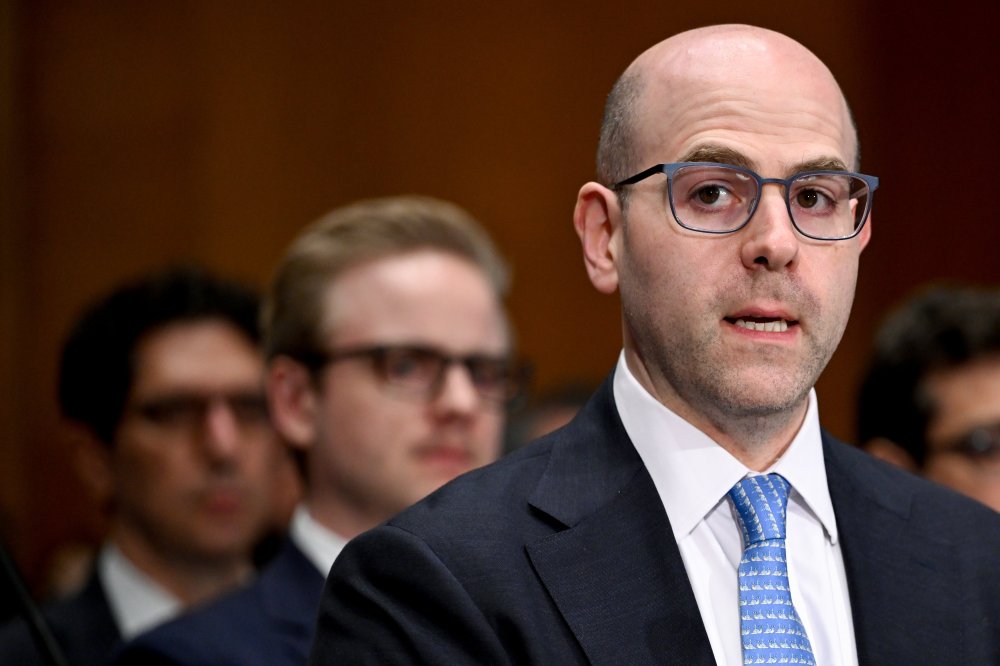
-
We may earn a commission from links on this page. Did you know you can customize Google to filter out garbage? Take these steps for better search results, including adding Lifehacker as a preferred source for tech news. I love going to a reformer Pilates studio for a (pricey) workout but I also love staying home to work out on my own. In the end, it just depends on my mood. Good news for people like me: Tonal is rolling out reformer-style Pilates with its new update. If you have the at-home weight training device or are considering getting one, this could be major for you. Even if you're not someone who wakes up on a Saturday morning excited to go trade $65 for 45 minutes on the reformer—or you've never even tried Pilates at all—this is nice because it can allow you to give it a whirl from the comfort of your home, using the same device you use for more traditional strength training. Led by yoga and Pilates instructor Kristin McGee, the classes are broken down by experience level and, like all Tonal workouts, customized to your strength. How Tonal's Pilates classes feelI got to test out the new Pilates offering last week, which was exciting because I don't have a Tonal machine (yet, since I'm planning to get one) but also daunting because, well, I don't have a Tonal machine. I wasn't sure what to expect. I knew, broadly, that these are digital devices you stick to your wall, calibrate, and work out with basically like you would with your gym's cable machine. They use magnetic resistance to increase and decrease the weight that you're pulling on. Tonal 2 $4,295.00 at Tonal Learn More Learn More $4,295.00 at Tonal First, I did a few regular lifting exercises so the machine could determine how strong I am. Any user will do these same four exercises to get a baseline. From then on, the machine will set up all weights for all exercises to align with what that person can do, progressively increasing the weight over time as the user gets stronger. Then it was Pilates time. The big difference between the new Pilates offerings and the traditional strength training on Tonal is the same difference you find when you compare using a cable machine to using a reformer: With the Pilates moves, the resistance gets harder as you push or pull, whether because of the springs on the reformer or the settings on the Tonal. I did some leg circles, some hundreds, and a handful of other standard Pilates moves—and besides the fact I was laying flat on the floor and interacting with a big digital machine, it did feel pretty similar to using a reformer. The Tonal Pilates specsThis program won't be out officially for Tonal users until Nov. 17, but you can order your loop attachments now. Made in partnership with Pilates Loops, they cost $100 and are similar to the straps you get on a standard reformer. There's a long loop, a short loop, and a knot you can grab farther down, depending on the exercise you're doing and how intense you want it to be. Beyond the loops, no further equipment upgrade is necessary—software updates will hit Tonal 1 and Tonal 2 machines in November. The Pilates upgrade will work with the digital weight technology that comes along in all the equipment and will go up to 10 resistance levels. The machine makes small adjustments as you work through the moves, which are presented and demonstrated by McGee, so if you're having a hard time or something is too easy, the adjustments are automatic. Tonal did already offer mat Pilates classes and while I love those, they're not quite the same as fighting against a machine custom-built for the struggle, which is why I still find myself trekking to a studio a few times a week even though I have access to mat Pilates classes through YouTube, Peloton, and my gym. The addition of this programming adds a more in-depth option for anyone looking for a workout that's easy on the joints, engages the core, and boosts mobility and balance. A Tonal 2 costs $4,295 and a monthly membership runs you $60. View the full article
-
Elon Musk‘s lawyers will urge the Delaware Supreme Court on Wednesday to restore his $56 billion pay package from Tesla, as one of the biggest corporate legal battles enters its final stage nearly two years after a lower court judge rescinded the Tesla CEO’s record compensation. The outcome could have substantial consequences for the state of Delaware, its widely used corporate law, and its Court of Chancery, a once-favored venue for business disputes that has recently been accused of hostility towards powerful entrepreneurs. The January 2024 Court of Chancery ruling striking down Musk’s pay has become a rallying cry for Delaware critics. Chancellor Kathaleen McCormick ruled that the Tesla board lacked independence from Musk when it approved the pay package in 2018 and that shareholders lacked key information when they voted overwhelmingly in favor of it. As a result, she applied a demanding legal standard and found the pay unfair to investors. The defendants, current and former Tesla directors, denied wrongdoing and said McCormick misinterpreted the facts and the law. Musk is not expected to attend. Companies switch legal homes After the Musk pay ruling, large companies, including Tesla, Dropbox, and the venture capital firm Andreessen Horowitz, switched their legal homes to Texas or Nevada, where courts are friendlier toward directors. Delaware lawmakers responded to the corporate departures, a trend known as “Dexit,” by overhauling its corporate law. If Musk loses the appeal, he will still reap tens of billions of dollars in stock from the electric vehicle company, which agreed in August to a replacement deal if his 2018 plan is not restored. The company said the replacement award was meant to retain and focus Musk, who said earlier this year he was forming a new U.S. political party, on transitioning Tesla to robotics and automated driving. Tesla is now incorporated in Texas, where it is far more difficult for a shareholder to challenge board decisions. Tesla’s board last month proposed a $1 trillion compensation plan, highlighting confidence in Musk’s ability to steer the company in a new direction, even as Tesla loses ground to Chinese rivals in key markets amid softening EV demand. The five justices on Delaware’s high court will consider the appeal of the pay ruling as well as the $345 million legal fee that McCormick ordered Tesla to pay to the attorneys for Richard Tornetta, who held just nine Tesla shares when he sued to block the pay deal. The court typically takes months to rule. Tesla estimated in 2018 that the stock options plan would be worth $56 billion if the company met operational and financial goals, which it did. Because the stock continued to appreciate, the options are currently worth closer to $120 billion, by far the largest executive compensation ever. Musk is the world’s richest person with a fortune of around $480 billion, according to Forbes. The defendants have argued that McCormick erred in finding social and business ties to Musk compromised their independence and said Tesla shareholders were informed of the economic terms of the pay deal before they approved the plan. The directors said she should have reviewed the pay package under the “business judgment” standard, which protects directors from second-guessing by courts. The directors have long argued the pay package performed as hoped – it focused the attention of Musk, a serial entrepreneur, and he transformed Tesla from a startup into one of the world’s most valuable companies. Several months after McCormick’s ruling, Tesla received shareholder approval a second time for the plan, which McCormick rejected as legally invalid. Tesla is also appealing that decision. —Tom Hals, Reuters View the full article

-
A reader writes: I manage a team of five younger professionals (all between the ages of 25 to 30). I have noticed that each of them prefers to communicate with me almost exclusively by text message or through the chat feature in our collaboration software. Conversations by phone, video, or in-person only happen when I initiate them. When I initiate an in-person conversation or phone call, my employees don’t seem opposed and typically are very engaged, but if left up to them it seems like all of the interaction with me would be via text or chat. In my own career, I’ve always valued being able to talk one-on-one with my manager, whether it’s during a formal meeting or impromptu. Is the preference my employees show for engaging with me by text or chat generational or should this be warning sign that my team does not view me as approachable or doesn’t place much value in one-on-one time with me as a manager? I answer this question — and two others — over at Inc. today, where I’m revisiting letters that have been buried in the archives here from years ago (and sometimes updating/expanding my answers to them). You can read it here. Other questions I’m answering there today include: Screening out bigots in interviews How to unfriend someone who I have to fire The post my younger employees prefer communicating by text appeared first on Ask a Manager. View the full article
-
ChatGPT performs a search in nearly one-third of prompts and averages more than two searches per query, each about 5.5 words long (roughly 60% longer than the typical Google search), according to a new study from marketing agency Nectiv. Why it matters: ChatGPT isn’t just answering questions – it’s searching like a power user. The model relies on longer, more specific, and more commercial-style queries than Google’s average searcher. That means SEOs could have more influence over ChatGPT’s answers, especially for local, product, and buying-intent searches where the model leans most heavily on external data. By the numbers. Some key findings from the report: Search frequency: 31% of prompts triggered at least one search. Fan-out depth: ChatGPT averaged 2.17 searches per prompt, maxing out at four. Query length: 5.48 words on average – 77% of all the queries were 5 words or longer. Industries: ChatGPT searched most for local intent (59%); least for credit cards (18%) and fashion (19%). Top patterns. ChatGPT favored review-based, fresh, and comparative content. These were some of the most common search terms: Reviews (702 instances) 2025 Features Comparison What they’re saying. Chris Long, co-founder of Nectiv, wrote: “What’s important to understand is that when ChatGPT uses search, SEOs have much more control over the information that’s presented. This is ChatGPT is basically a wrapper for search engines. So if we can figure out how often and what the LLM is searching, we’re going to have an easier time optimizing for it.” About the data. 8,500+ ChatGPT prompts were analyzed across nine industries using Nectiv’s AI Tracker to identify when the model performed external searches. They then extracted and aggregated the resulting 2,600+ search queries to uncover patterns in frequency, length, and intent across nine verticals. The study. New Data Study: What Queries Is ChatGPT Using Behind The Scenes? View the full article
-
A startling message came over the radio from an air traffic control tower near Los Angeles less than a week into the federal government shutdown: “The tower is closed due to staffing.” Without enough air traffic controllers to guide planes into and out of Hollywood Burbank Airport, the tower went dark for almost six hours on Oct. 6, leaving pilots to coordinate their movements among themselves. Flight delays averaged two-and-a-half hours in one of the first visible signs that the shutdown was already taking a toll on the nation’s aviation system. Since the shutdown began Oct. 1, the Federal Aviation Administration has reported controller shortages in cities across the U.S., from airports in Boston and Philadelphia, to control centers in Atlanta and Houston. Flight delays have spread to airports in Nashville, Dallas, Newark and more. And already there has been an increase in unscheduled absences among security screeners at some airports. The union representing Transportation Security Administration employees says the absences haven’t yet caused major disruptions, but it warned longer lines at security checkpoints could soon become a reality after workers received their final paychecks over the weekend. Experts and union leaders say the disruptions are a stark reminder that the aviation system is already stretched too thin by chronic understaffing and outdated technology. They warn the cracks in the system could rapidly deepen the longer the shutdown drags on and critical aviation workers are without their regular paychecks. “It’s like having a drought the year after you had a drought,” Greg Raiff, CEO of Elevate Aviation Group, told The Associated Press. Problems have persisted for years These concerns aren’t new. In 2019, the aviation system buckled under the weight of a 35-day government shutdown — the longest in U.S. history — during President Donald The President’s first term. Around the three-week mark, air traffic controllers, many of them working up to 60 hours a week, sued the government over their missed paychecks. One terminal at the Miami International Airport was forced to close because security screeners were calling out sick in large numbers. Some even quit altogether. “Here we are so many years later, and the problems have not been addressed,” said aviation attorney Ricardo Martinez-Cid, a Florida Bar-certified expert on aviation law who regularly represents crash victims. “Now we’re in a worse position when we had been put on notice. We had the opportunity to address it.” Since then, the country has faced repeated warnings. In January, a mid-air crash over the Potomac River involving a commercial jet and a military helicopter killed 67 people. A series of equipment failures and radar outages this year also highlighted the need for upgrades. Controller shortage at a ‘critical’ point Before the latest shutdown, both the FAA and TSA were already dealing with staffing shortages. That includes a shortage of about 3,000 air traffic controllers. Nick Daniels, president of the National Air Traffic Controllers Association, has said staffing levels have reached a “critical” point, the lowest in decades. The shortage is so severe that even a few air traffic controllers missing work can disrupt operations at already understaffed facilities. “And on top of that,” he said, “they’re working with unreliable equipment.” The shutdown began just as the FAA was starting to make some progress on addressing the shortage of controllers and modernizing the outdated equipment they rely on that keeps disrupting flights when it malfunctions. The agency says it topped its goal of hiring 2,000 controllers this year after streamlining the application process at its academy in Oklahoma City, but it will take years still to eliminate the shortage. And it had just begun looking for companies to help oversee a $12.5 billion effort to overhaul its aging and complex technology systems. Now, the shutdown is delaying those long-needed efforts. And union leaders say the staffing shortages may be worse by the time the government reopens. Shutdown could increase gaps in staffing Johnny Jones, secretary-treasurer of the American Federation of Government Employees chapter representing TSA workers, expressed concern that the shutdown could drive even more security screeners to leave the agency, especially given the uncertainty that the workers already have faced this year. That includes the The President administration’s attempts to revoke their collective bargaining rights. Daniels, meanwhile, warned it could stoke fear among newer controllers and trainees who might reconsider the career entirely to avoid working in future shutdowns. It’s a long-standing concern. In 2019, after the 35-day shutdown ended, a congressional committee hearing dug into the impacts on air travel. “All of these air traffic controllers and aviation safety professionals were used as pawns in a political fight that had nothing to do with aviation. This is wrong and must not be allowed to happen again,” warned the union leader representing air traffic controllers at the time. At the hearing, there were also bipartisan calls for reform to keep the FAA funded “without interruption, even when the rest of the government shuts down,” as one lawmaker put it. Stories were shared of controllers and TSA agents taking on extra jobs to pay rent, mortgage and other bills despite working longer shifts to fill the gaps in staffing. Lawmakers and industry officials who testified agreed: The shutdown made the aviation system less safe. “We implore all involved, please heed not only our warnings but the entire stakeholder community’s warnings. This vicious budgetary cycle of stops and starts with little to no stability or predictably has simply got to stop,” said Nick Calio, then-president and CEO of Airlines for America, an industry trade group representing airlines including Delta, United and Southwest. And yet the system remains vulnerable to shutdowns seven years later, Martinez-Cid said. “We’re long overdue for a wake-up call.” Associated Press transportation reporter Josh Funk contributed to this report. —Rio Yamat, AP Airlines and Travel Reporter View the full article

-
Amazon has announced a game-changing initiative for healthcare with the introduction of Amazon Pharmacy Kiosks, launching in select One Medical offices across the Greater Los Angeles area starting December 2025. These kiosks are designed to streamline the process of obtaining medications, enabling patients to pick up prescriptions almost immediately after their medical appointments. For small business owners in the healthcare sector, this development not only provides insights into consumer behavior but also highlights potential opportunities and challenges as it reshapes patient care. With nearly one-third of prescriptions in the U.S. never filled, often due to access challenges, the introduction of these kiosks addresses a critical need for more convenient medication access. “We know that when patients have to make a separate stop after seeing their doctor, many prescriptions never get filled,” said Hannah McClellan, Vice President of Operations at Amazon Pharmacy. By placing kiosks at the point of care, Amazon aims to eliminate the traditional barriers associated with getting prescriptions filled, thus improving medication adherence. The Amazon Pharmacy Kiosks will be strategically located in urban centers such as Downtown LA, Beverly Hills, and West Hollywood. Small business owners operating in these areas, especially those within the health and wellness space, should pay attention. The kiosks are expected to significantly enhance patient experience. According to Dr. Andrew Diamond, Chief Medical Officer at One Medical, “The ability to know a patient is leaving our office with their medication in hand—especially for conditions requiring immediate treatment like infections—can make a meaningful difference in their care journey.” The kiosks work by integrating Amazon’s logistics expertise with One Medical’s clinical capabilities. Patients will create an Amazon Pharmacy account, schedule an appointment, and have their prescriptions sent to the kiosk location. At checkout on the Amazon app, they can select kiosk pickup. The process is designed for convenience: a QR code generated at checkout allows for quick scanning at the kiosk, ensuring prescriptions are available almost instantly. For small business owners in healthcare and pharmacy, the implications of this innovation are significant. They may need to consider how it affects patient expectations regarding service speed and convenience. The presence of these kiosks could drive competition in urban areas where traditional pharmacies may already be struggling to meet demand. In addition, partnerships may emerge between local physicians and Amazon Pharmacy, potentially reshaping how patient referrals and medication management are handled. However, challenges could accompany this shift. Small business pharmacies may experience increased pressure to offer more rapid service and could need to rethink their business models to include additional technology and convenience services. The daunting threat of losing clientele to a tech giant like Amazon may drive some pharmacies to innovate within their own operations, creating new customer loyalty programs or integrating more advanced technologies. The kiosks also open up a conversational space about the healthcare landscape. As Amazon focuses on customer-centric healthcare, many providers might feel nudged to enhance their offerings, exploring urgent care services or even telehealth as complementary businesses. The future of pharmacy might also push smaller players to foster collaborations that leverage technology to meet consumer demand for faster service. As healthcare continuously transforms through technological advancements, small business owners should watch the progress of Amazon Pharmacy Kiosks closely. While the immediate benefits of improved medication access for patients are clear, the long-term consequences for local businesses are still unfolding. For further details about Amazon Pharmacy Kiosks and participating locations, visit Amazon Pharmacy Kiosks. Understanding this initiative could provide valuable insights for small business owners looking to adapt to an evolving healthcare environment. Image via Amazon This article, "Amazon Launches Pharmacy Kiosks to Enhance Patient Access" was first published on Small Business Trends View the full article
-
Amazon has announced a game-changing initiative for healthcare with the introduction of Amazon Pharmacy Kiosks, launching in select One Medical offices across the Greater Los Angeles area starting December 2025. These kiosks are designed to streamline the process of obtaining medications, enabling patients to pick up prescriptions almost immediately after their medical appointments. For small business owners in the healthcare sector, this development not only provides insights into consumer behavior but also highlights potential opportunities and challenges as it reshapes patient care. With nearly one-third of prescriptions in the U.S. never filled, often due to access challenges, the introduction of these kiosks addresses a critical need for more convenient medication access. “We know that when patients have to make a separate stop after seeing their doctor, many prescriptions never get filled,” said Hannah McClellan, Vice President of Operations at Amazon Pharmacy. By placing kiosks at the point of care, Amazon aims to eliminate the traditional barriers associated with getting prescriptions filled, thus improving medication adherence. The Amazon Pharmacy Kiosks will be strategically located in urban centers such as Downtown LA, Beverly Hills, and West Hollywood. Small business owners operating in these areas, especially those within the health and wellness space, should pay attention. The kiosks are expected to significantly enhance patient experience. According to Dr. Andrew Diamond, Chief Medical Officer at One Medical, “The ability to know a patient is leaving our office with their medication in hand—especially for conditions requiring immediate treatment like infections—can make a meaningful difference in their care journey.” The kiosks work by integrating Amazon’s logistics expertise with One Medical’s clinical capabilities. Patients will create an Amazon Pharmacy account, schedule an appointment, and have their prescriptions sent to the kiosk location. At checkout on the Amazon app, they can select kiosk pickup. The process is designed for convenience: a QR code generated at checkout allows for quick scanning at the kiosk, ensuring prescriptions are available almost instantly. For small business owners in healthcare and pharmacy, the implications of this innovation are significant. They may need to consider how it affects patient expectations regarding service speed and convenience. The presence of these kiosks could drive competition in urban areas where traditional pharmacies may already be struggling to meet demand. In addition, partnerships may emerge between local physicians and Amazon Pharmacy, potentially reshaping how patient referrals and medication management are handled. However, challenges could accompany this shift. Small business pharmacies may experience increased pressure to offer more rapid service and could need to rethink their business models to include additional technology and convenience services. The daunting threat of losing clientele to a tech giant like Amazon may drive some pharmacies to innovate within their own operations, creating new customer loyalty programs or integrating more advanced technologies. The kiosks also open up a conversational space about the healthcare landscape. As Amazon focuses on customer-centric healthcare, many providers might feel nudged to enhance their offerings, exploring urgent care services or even telehealth as complementary businesses. The future of pharmacy might also push smaller players to foster collaborations that leverage technology to meet consumer demand for faster service. As healthcare continuously transforms through technological advancements, small business owners should watch the progress of Amazon Pharmacy Kiosks closely. While the immediate benefits of improved medication access for patients are clear, the long-term consequences for local businesses are still unfolding. For further details about Amazon Pharmacy Kiosks and participating locations, visit Amazon Pharmacy Kiosks. Understanding this initiative could provide valuable insights for small business owners looking to adapt to an evolving healthcare environment. Image via Amazon This article, "Amazon Launches Pharmacy Kiosks to Enhance Patient Access" was first published on Small Business Trends View the full article
-
Productivity drives profitability as never before. By CPA Trendlines Research The Rosenberg Survey Go PRO for members-only access to more CPA Trendlines Research. View the full article
-
Productivity drives profitability as never before. By CPA Trendlines Research The Rosenberg Survey Go PRO for members-only access to more CPA Trendlines Research. View the full article
-
Did you know you can customize Google to filter out garbage? Take these steps for better search results, including adding my work at Lifehacker as a preferred source. Sometimes, Apple hosts grand presentations to announce new products and services. Other times, the company simply drops the news on a random Wednesday morning. This Wednesday morning is one such example: Following a preview on social media, Apple has announced the M5 chip, as well as three products that will kick off this new era of Apple silicon: the M5 14-inch MacBook Pro, iPad Pros, and Vision Pro. The M5 chip The big news that unifies all updated Apple products today is the M5 chip. As the name might imply, this is the company's fifth generation of Apple silicon, its custom system on a chip (SoC). Apple is selling M5 as a chip optimized for AI. The company says the new 16-core Neural Engine delivers both performance and efficiency boosts for AI processes. That means Apple Intelligence features should be faster and more accurate, though I'm not sure that's enough to get me to use it. In addition, the chip's 10-core GPU has a dedicated "Neural Accelerator" in each core, which offers over four times peak GPU compute over the M4 chip, and six times the compute of M1. Apple specifically touts the improvements for the new 14-inch MacBook Pro and iPad Pro, which can now take advantage of "accelerated processing" for AI tasks, like running diffusion models and large language models. In other graphics gains, M5's GPU and enhanced shader cores can be up to 30% faster than M4 and up to 2.5 times faster than M1. It comes with Apple's third-gen ray-tracing engine, which offers a boost for any process that uses ray tracing to calculate lighting effects. Those improved graphics means the new Apple Vision Pro can render 10% more pixels as well as handle refresh rates up to 120Hz. M5's unified memory now has a bandwidth of 153GB/s, a nearly 30% jump over M4 and over 2x boost over M1, according to Apple. All devices running M5 can access the entire memory pool at once, which Apple says makes it possible to run larger AI models entirely on-device. That's great news for privacy for anyone using AI on these MacBooks, iPads, or Vision Pro. Users can configure M5 to come with up to 32GB of RAM. MacBook Pro Credit: Apple Apple did something interesting with its M5 kickoff for the Mac: It started only with the 14-inch MacBook Pro. If you want a 16-inch MacBook Pro with M5, you'll need to wait. This new 14-inch MacBook Pro comes with all the new performance gains that Apple advertises for the M5 chip, with some unique benefits as well. Apple says this machine has up to 24 hours of battery life, which, if true, would be huge: You could work two full 12-hour days before needing to find a charger for your MacBook. M5 also brings upgrades to the SSD in this MacBook Pro, which Apple says will help in professional workflows like importing RAW images to exporting huge video files. Other than that, this is the same 14-inch MacBook Pro that you otherwise know by now. You get the Liquid Retina XDR display with a 12MP Center Stage camera, HDMI port, SD card slot, and three USB-C ports, in either silver or black. It even starts at the same $1,599 price as the M4 MacBook Pro, for the model with 16GB of RAM and 512GB of storage. iPad Pro Credit: Apple Like the new MacBook Pro, the iPad Pro looks unchanged, save for the new M5 and its performance gains. But there's a little more under the hood here than just the new chip. Apple says the cellular iPad Pro models get the company's C1X modem, which can offer up to 50% faster cellular data performance. If you opt for the cellular iPads, that's good news, though I always opt for the wifi-only model, and use my iPhone as a hotspot. To each their own. In addition to the C1X, these new iPads also get the N1 chip, which supports Wi-Fi 7, Bluetooth 6, and Thread. Apple says N1 supports better performance on 5GHz networks, and boosts performance of features including AirDrop and Personal Hotspot. Apple says the 256GB and 512GB iPad Pros here start with 12GB of RAM. That's 4GB more than the M4 iPad Pros, which started at 8GB each. You'll also notice faster charging speeds on these new iPads: Apple says with the right adapter, such as the company's new dynamic power adapter, you can reach 50% battery in about 30 minutes. These iPads also now support external displays running at up to 120Hz. Vision Pro Credit: Apple The M5 chip is even coming to a refreshed Vision Pro. Apple's mixed-reality headset might not be the success story the company wanted, but it hasn't abandoned the device, either. To the contrary, this Vision Pro has a few upgrades here in addition to M5's performance, efficiency, and AI gains. As mentioned above, the new Vision Pro can now render 10% more pixels across its micro-OLED displays than the previous generation can. It can also boost the refresh rate to 120Hz when needed, which should help sell the virtual reality illusion, including when working with virtual displays. But it's not just about the technology, here. Apple has upgraded the Vision Pro's headband—specifically, the Dual Knit Band. Apple says this band should be more comfortable, with "3D-knitted" upper and lower straps. The lower strap in particular provides a counterweight, which should help take some of the pressure off the user when wearing it. Unfortunately, this strap is a separate $99 purchase. Like the current Vision Pro, this model starts at $3,499 for 256GB of internal storage. All of these devices are available for pre-order starting today, and will be available in stores on Oct. 22. View the full article
-
Seventeen things to ask when scoping. By Jody Padar Radical Pricing – By The Radical CPA Go PRO for members-only access to more Jody Padar. View the full article
-
Seventeen things to ask when scoping. By Jody Padar Radical Pricing – By The Radical CPA Go PRO for members-only access to more Jody Padar. View the full article
-
Internal controls are no good on their own. By Ed Mendlowitz 77 Ways to Wow! Go PRO for members-only access to more Edward Mendlowitz. View the full article
-
Internal controls are no good on their own. By Ed Mendlowitz 77 Ways to Wow! Go PRO for members-only access to more Edward Mendlowitz. View the full article
-
What are your clients saying about you? By August Aquila MAX: Maximize Productivity, Profitability and Client Retention Go PRO for members-only access to more August J. Aquila. View the full article
-
What are your clients saying about you? By August Aquila MAX: Maximize Productivity, Profitability and Client Retention Go PRO for members-only access to more August J. Aquila. View the full article
-
OpenAI unleashed Sora 2 last month, the final boss of slop machines (at least for now). The social app draws entirely from artificial intelligence: Instead of sharing photos and videos of themselves, users can opt in for “cameos” and create fake clips that depict themselves or their friends in any scenario imaginable. It’s mostly being used to make viral meme content and the type of short-form videos you’d scroll past on TikTok, albeit with deepfakes. Sora doesn’t allow you to make videos of other living people (dead celebrities and SpongeBob SquarePants characters are fair game) unless given express permission. As one user put it: “Digital Taxidermy is the craziest yet most accurate description of the AI slop videos of people who’ve passed away.” “OpenAI in 2021: “we want to cure brain cancer,” another X post read, responding to the announcement. “OpenAI in 2025: “we’re becoming brain cancer.” Upon the app’s release, one of the first breakout stars was none other than CEO Sam Altman. “You either die a hero or build Sora 2 and become meme material,” an X post read with an AI generated Altman posing as a K-Pop star, wearing a crop top and dark nail varnish. Another X user used Sora to make an AI video of Altman wearing baggy clothes and outfit and thick gold chains, rapping about his company’s success. “Sam Altman dressed like a 2000s rapper is rapping about how Sora is bankrupting all other AI video companies, ending every line with ‘what happened to that boy, brrr,” they posted. Responding to the influx of memes, Altman wrote on X, “it is way less strange to watch a feed full of memes of yourself than I thought it would be. Not sure what to make of this.” In another popular Sora 2 deepfake, Altman is busted stealing GPUs from Target. Luiza Jarovsky wrote: “It is AS IF they are encouraging people to create fake videos of people committing crimes, being humiliated, or in all sorts of embarrassing situations.” She added. “The AI-powered ‘deepfakezation’ of the internet is here and it will not be beautiful.” Just days after launch, journalist Taylor Lorenz also announced that a “psychotic stalker” was already using Sora 2 to make deepfake videos of her. “It is scary to think what AI is doing to feed my stalker’s delusions,” Lorenz wrote. Others however, are embracing the slop life. “Bob Ross vibe coding was the AI slop I never knew I needed in my life,” one post read. Another big meme on Sora is making it appear as if Jake Paul is coming out the closet or give makeup tutorials. Paul himself appears to be in on the joke. “I’ve had it with the AI stuff,” he said in a Wednesday video. “It’s affecting my relationships, businesses. It’s really affecting things, and people really need to get a life,” he added, all the while dabbing foundation on his face. View the full article

-
Amazon unexpectedly pulled out of Google Shopping auctions in late July, shaking up paid search. Retailers quickly filled the gap, driving stronger click growth and easing ad costs across Google and Microsoft. That’s according to marketing agency Tinuiti, which today released its Digital Ads Benchmark Report Q3 2025. Here are some of the key takeaways from Tinuiti’s report. Google Search – more clicks, lower prices. Ad spend rose 10% year over year, as clicks jumped 11% – the fifth straight quarter of acceleration. CPCs fell 1%, reversing a 3% rise from Q2. Shopping ads surged: clicks up 15%, CPCs down 1%, spend up 14%. Temu and Shein returned to Google Shopping in mid-2025, offsetting Amazon’s exit, while Walmart captured more visibility. Performance Max gains momentum. Google’s Performance Max (PMax) campaigns continued to advance, accounting for 68% of shopping ad spend in Q3, up from 59% in Q2. PMax generated 2% higher conversion rates and 5% higher sales per click than standard Shopping campaigns, though its ROAS was 2% lower due to higher CPCs. Non-shopping placements made up 33% of PMax spending, with YouTube video impressions doubling from 5% to 9%. Text ads regain traction. Google text ads saw 8% year-over-year spend growth and a return to positive click volume after several slow quarters. Brand CPCs cooled from 19% growth in Q1 to 5% in Q3, while non-brand CPCs fell 7%. Advertisers are experimenting with new AI Max campaigns, though they remain a small share of activity. Microsoft steady, but slower. Microsoft search ad spending rose 12% year over year with click growth just under 15% and CPCs down 2%. Amazon remained active in Microsoft Shopping ads even as it paused its Google program. Why we care. Amazon’s withdrawal left a vacuum that improved performance for other retailers and gave Google room to stabilize pricing and auction dynamics. The shift also highlights how quickly competitive dynamics can change in digital advertising. At the same time, Google’s Performance Max growth signals that automation and AI-driven campaign management are becoming central to maintaining efficiency and reach in a more fluid, platform-driven marketplace. Bottom line. Google’s paid search ecosystem adjusted to Amazon’s absence, delivering higher volumes at lower prices, based on Tinuiti’s Q3 data. Meanwhile, Performance Max continued to reshape the landscape as automation and AI optimization gained traction with advertisers. Tinuiti’s report. Digital Ads Benchmark Report Q3 2025 (registration required) View the full article
-
Content chunking is breaking down content into smaller “chunks“ that are easier for AI systems to process. View the full article
-
We may earn a commission from links on this page. Deal pricing and availability subject to change after time of publication. Did you know you can customize Google to filter out garbage? Take these steps for better search results, including adding Lifehacker as a preferred source for tech news. If you're like most people, your TV is the centerpiece of your living room decor. That means when it's off, all your furniture is pointed at a black rectangle. If this bothers you, the "art TV" trend that started with Samsung's The Frame could be the answer. These sets are made to look like a piece of art, and display an image of your choosing when not in use. The Frame is a pricey option, but other brands have their own offerings—including Hisense, and its CanvasTV. Already a more affordable alternative to The Frame, you can currently get a 55-inch Hisense CanvasTV for $694.99 (down from $999.99). This is $5 off its lowest price ever, according to price tracking tools. (Other sizes are also available at a discount.) 144Hz, Art Mode, Anti-Glare Panel, Hi-Matte Display, Frame & UltraSlim Wall Mount Included Hisense 55-Inch Class QLED $694.99 at Amazon $999.99 Save $305.00 Get Deal Get Deal $694.99 at Amazon $999.99 Save $305.00 144Hz, Art Mode, Anti-Glare Panel, Hi-Matte Display, Frame & UltraSlim Wall Mount Included Hisense 65-Inch Class QLED $997.99 at Amazon $1,299.99 Save $302.00 Get Deal Get Deal $997.99 at Amazon $1,299.99 Save $302.00 144Hz, Art Mode, Anti-Glare Panel, Hi-Matte Display, UltraSlim Wall Mount & Frame Included Hisense 75-Inch Class QLED $1,497.99 at Amazon $1,797.99 Save $300.00 Get Deal Get Deal $1,497.99 at Amazon $1,797.99 Save $300.00 144Hz, Art Mode, Anti-Glare Panel, Hi-Matte Display, UltraSlim Wall Mount & Frame Included Hisense 85-Inch Class QLED $1,997.99 at Amazon $2,097.99 Save $100.00 Get Deal Get Deal $1,997.99 at Amazon $2,097.99 Save $100.00 SEE 1 MORE The primary attraction of the CanvasTV over Samsung's The Frame is the price: You'll pay $200 to $1,000 less for the same-sized TV (depending on which size you choose). Not to mention, if you choose The Frame, you have to buy the actual frames that go around the set, and pay for most artwork separately, while Hisense includes all of that in the selling price. Like The Frame, the CanvasTV also comes with a flush TV mount that will allow you to hang it so it looks like an actual art piece. I also like that CanvasTVs come with the Google OS, which is my favorite smart TV operating system, as it lets you cast seamlessly from your phone (Android or iPhone). The CanvasTV is a QLED TV with Quantum Dot technology and 4K resolution with a 144Hz refresh rate in Game Mode Pro, according to CNET's review. What gives it the art look is the low reflection Hi-Matte display, which combats glare. You can swap out the teak frames with different colors, including white and walnut frames. Considering Hisense's take on The Frame is cheaper and includes less upfront costs, it's a great option for anyone looking to save money on a TV that won't dominate their decor—especially at the current discount. Our Best Editor-Vetted Tech Deals Right Now Apple AirPods Pro 2 Noise Cancelling Wireless Earbuds — $197.00 (List Price $249.00) Samsung Galaxy S25 Edge 256GB Unlocked AI Phone (Titanium JetBlack) — $819.99 (List Price $1,099.99) Apple iPad 11" 128GB A16 WiFi Tablet (Blue, 2025) — $319.00 (List Price $349.00) Blink Mini 2 1080p Indoor Security Camera (2-Pack, White) — $34.99 (List Price $69.99) Ring Battery Doorbell Plus — $149.99 (List Price $149.99) Blink Video Doorbell Wireless (Newest Model) + Sync Module Core — $34.99 (List Price $69.99) Ring Indoor Cam (2nd Gen, 2-pack, White) — $79.99 (List Price $99.98) Amazon Fire TV Stick 4K (2nd Gen, 2023) — $29.99 (List Price $49.99) Shark AV2501S AI Ultra Robot Vacuum with HEPA Self-Empty Base — $359.89 (List Price $549.99) Amazon Fire HD 10 (2023) — (List Price $139.99) Deals are selected by our commerce team View the full article
-
On Reddit, Google’s John Mueller reviewed a two-day “vibe-coded” Bento Grid Generator and listed fixes for crawlability, meta tags, hreflang, and structured data. The post Google’s John Mueller Flags SEO Issues In Vibe Coded Website appeared first on Search Engine Journal. View the full article
-
Websites have been the foundation of SEO strategy for 20-odd years. That’s changing with AI search. When someone asks ChatGPT for a product in your category, it doesn’t always crawl websites in real-time. Its first move is to pull from what it already knows about you and your competitors from its existing knowledge. Clear and recognizable entities in AI training data are just as important as having the most authoritative and optimized website. This shift means your webpage might rank #1 in classic search, but if your brand isn’t well-structured for entities, AI might overlook you entirely in the answer. The rules we’ve relied on for decades don’t fully apply when machines create answers. They draw on their own knowledge and real-time data from sites, including yours. You’re about to learn what this means, why it matters, and what you can do about it. What Are Entities in AI Search? An entity is a “thing” that search engines and AI models can recognize, understand, and connect to other things. Think of entities as the building blocks that AI uses to construct answers. In other words, gigantic relational databases. Let’s use email marketing company Omnisend as an example. Through the lens of a database, Omnisend isn’t just a website with pages about email marketing. It’s a network of connected entities: The brand itself: Omnisend Products: Omnisend Email & SMS Marketing Platform People: Rytis Lauris (co-founder) Features: automation workflows, Shopify integration, SMS campaigns Use cases: “welcome series,” “abandoned cart recovery” Here’s what the entities look (hypothetically ) like to a large language model (LLM): These records become the foundation for AI answers. LLMs do more than just find keywords on your page. They also retrieve entities, place them in vector space, and choose the ones that best answer your question. Vector space explained: It’s a mathematical method that AI models use to understand relationships between concepts. Imagine a 3D map where similar items group together. For example, “Apple,” the company, is close to “iPhone” and “Tim Cook.” Meanwhile, “apple,” the fruit, is near “banana” and “orchard.” For example, ask Google: “What’s the best email marketing tool for my Shopify store?” You’ll see brand entities like Klaviyo, Omnisend, Brevo, Mailchimp, Privy, and MailerLite mentioned. This makes sense because the entities are closely related in the AI’s understanding. Notice: the brand mentions aren’t linked to the websites. It’s just building the answer and then linking to the brand SERP on Google. Why Entities Matter More Than Websites AI models are constantly mapping relationships between entities when serving up answers. When someone types “best email marketing tool for Shopify,” LLMs spread out the query. They turn that one question into multiple related searches. Think of AI doing lots of Google searches at the same time. The system simultaneously explores “What integrates with Shopify?”, “Which tools handle abandoned carts?” and “What do ecommerce stores actually use?” Your brand can appear through any of these paths, even if you didn’t optimize for the original query. Classic SEO relied a lot on keyword density and page authority. But AI uses dense retrieval, where it’s looking for semantic meaning across the web, not just word matches on your page. Dense retrieval explained: AI systems focus on meaning, not just exact keywords. They find related content, even if different words are used. A Reddit comment that clearly explains “We switched from Klaviyo to Omnisend because the Shopify integration actually works” carries more signal (assuming the model prioritizes authentic discussions) than a page stuffed with “best email marketing Shopify” keywords. The AI understands the relationship between the entities (Klaviyo, Omnisend, Shopify) and the context (switching, integration quality). PR folks have been fighting for this moment: mentions without links still count. For the longest time, we’ve obsessed over backlinks as the currency of SEO. But AI systems recognize when brands get mentioned alongside relevant topics, using these as relationship signals. So when Patagonia appears in climate articles without a hyperlink, when Notion shows up in productivity discussions on Reddit, when your brand gets name-dropped in a podcast transcript — these all strengthen your entity in AI’s understanding. Here’s a real example that clarified this for me: Microsoft OneNote often shows up high in AI recommendations for “note-taking tools.” In ChatGPT: In Perplexity: And in Google AI Overviews: But EverNote dominates Google’s number one ranking spot for “note taking tools”. Why? OneNote’s integration with the Microsoft ecosystem means it gets mentioned constantly in productivity discussions, enterprise software comparisons, and Office tutorials. This creates dense entity relationships in AI training data. Evernote, by contrast, has focused on SEO and earned strong backlinks that dominate traditional search rankings. How Entities Get Recognized So how does Google (and other AI systems) actually know that Omnisend is an email marketing platform and not, say, a meditation app? The answer sits at the intersection of structured data, human conversation, and pattern recognition…at massive scale. Entity Databases and Product Catalogs Google maintains what they call Knowledge Graphs and Shopping Graphs. Other AI systems have similar entity databases, just with different names. The idea is the same: huge databases that map every product, company, and person along with their attributes and relationships. When Nike releases the Pegasus 41, it doesn’t just become a new product page on Nike.com. It becomes an entity in Google’s Shopping Graph, connected to “running shoes,” “Nike,” “marathon training,” and hundreds of other nodes. The system knows it’s a shoe before anyone optimizes a single keyword. Human Conversation as Training Data AI systems learn just as much from informal mentions as they do from structured markup. When an Outdoor Gear Lab review casually mentions testing Patagonia’s Torrentshell 3L against the expensive Arc’teryx Beta SL, that relationship gets encoded. When a podcast guest says, “I moved from Asana to Notion for task and project management,” this competitive link adds to the training data. Reddit and Quora have become unexpectedly powerful for entity recognition. (Google explicitly stated they’re prioritizing “authentic discussion forums” in their ranking systems.) A single comment on why someone picked Obsidian over Notion for knowledge management matters more than you might realize. These platforms capture what websites struggle to do: real people sharing real decisions with real context. Multimodal Recognition AI systems extract entities from audio and video. They do this by turning speech into text through transcription. Every mention in a transcript, every product on screen, and every comparison in a talking-head segment is processed. A 10-minute YouTube review of project management tools turns into structured data that compares ClickUp, Notion, and Asana. It includes feature comparisons and maps out use cases. The New SEO Power Dynamic You can’t game entity recognition the way you could game PageRank. You can’t manufacture authentic Reddit discussions. You can’t fake your way into natural podcast mentions. The system rewards genuine presence in genuine conversations, not optimized anchor text. Think about what this means: Your engineering team’s conference talk that mentions your product’s architecture? That’s entity building. Your customer’s YouTube walkthrough of their workflow? Entity building. That heated Hacker News thread where someone defends your approach to data privacy? Entity building. We’ve spent the longest time optimizing for robots. Now the robots are optimized to recognize authentic human discussion. (Ironic.) 5 Ways to Optimize Your Brand for Entities (Not Just a Website) Using Omnisend as an example, here are five approaches for evaluating and optimizing entity presence in AI-powered search results. 1. Assess Your Entity Foundation To start, you need a baseline understanding of your current entity relationships. For Omnisend, this means mapping how AI systems currently categorize them relative to competitors. Begin by verifying schema markup across key pages. Testing Omnisend’s homepage with the Schema Markup Validator shows they use Organization and VideoObject schema. And the Organization schema is relatively basic. Omnisends competitor, Klaviyo, uses Organization schema as a container for multiple software offerings. Klaviyo’s approach maintains brand-level authority while declaring specific software categories and capabilities. This potentially gives them stronger entity associations for queries about email marketing, SMS marketing, and marketing automation. Next, check your entity presence in major knowledge sources like Wikidata and Crunchbase. On Wikidata, Omnisend’s records are OKAY. There’s basic info, like what Omnisend does, the industry, inception date, URL, and social media profiles. But Klaviyo, again, is all over it. They have multiple properties for industry, entity type, URLs, offerings, and even partnerships. There’s a clear opportunity for Omnisend to update its Wikidata with more details. 2. Test Query Decomposition AI systems break down queries into entities and relationships. Then, they may try multiple retrievals. For example, in Google Chrome, I prompted ChatGPT: “What’s the best email marketing tool for ecommerce in 2025? My priority is deliverability.” In the chat URL, copy the alphanumeric sequence after the /c/ directory. For me, it was 68d4e99e-4818-8332-adbd-efab286f4007. Note: You need to be logged into ChatGPT to get this sequence Right-click on the page and click “Inspect”. Choose the “Network” tab, paste the alphanumeric sequence in the filter field, and reload the page. In the “Find” section, search for “search_model_queries“. Then, click on the search results. The first decomposed queries are: “2025 email deliverability test ecommerce ESP Klaviyo Omnisend Drip 2024 2025” “EmailToolTester deliverability test 2024 results Klaviyo Omnisend” “Klaviyo deliverability benchmark 2024 ecommerce” And the second set is: “Validity crisis of deliverability 2025 benchmark report inbox placement” “Benchmark inbox placement 2025 ESP comparison seed tests” Each decomposed query represents a different competitive pathway. Omnisend might surface through deliverability discussions, but miss general tool comparisons. Mailchimp could dominate broad searches while competitors own specialized angles. This explains why you appear in AI answers for searches you never optimized for. The semantic understanding creates visibility through unexpected entity relationships rather than keyword matching. You can check this yourself. Run the extracted queries in separate chats and note which brands appear where. But maybe don’t build a strategy around exploiting this technique. The methodology depends on undocumented functionality that OpenAI could change without notice. Important finding: Simple queries produce simple results. When I prompted “Best email marketing tool for ecommerce,” it triggered exactly one internal search with basically the same language. No decomposition. 3. Map Competitive Entity Relationships Traditional SEO competitive analysis asks “Who ranks for our keywords?” Entity analysis asks “When do AI systems group us together?” I tested this with Omnisend to understand when they appear alongside different competitors. I ran 15 variations of email marketing queries through Google AI Mode to see which brands consistently appear together. Note: I tested logged out, using a VPN set to San Francisco, in private browsing mode to minimize personalization bias. I began with simple terms like “best email marketing for ecommerce” and “abandoned cart recovery tools.” Then, I tried different angles like “email automation for Shopify stores.” Here’s what I found: Query Context Omnisend Present Most Co-Mentioned Klaviyo Present Ecommerce email 5/5 queries Klaviyo, Mailchimp 4/5 queries General email 5/5 queries Mailchimp, Brevo 2/5 queries Deliverability focus 2/5 queries Brevo, Mailchimp 0/5 queries Omnisend appeared in 12 of 15 total queries — stronger entity presence than I expected. But mentions shifted dramatically by context. In ecommerce discussions, Klaviyo dominated as the top tool. In general email marketing, Mailchimp took over as the main reference point. The mention order revealed something important. Klaviyo appeared first in 5 of 5 ecommerce queries, with more positive language around their positioning. Omnisend routinely ranked second or third. This suggests they’re part of the discussion but not at the forefront. Here’s what’s interesting: Klaviyo completely disappeared from deliverability-focused queries while Omnisend maintained some presence. This shows entity relationships are radically contextual. Being the leader in ecommerce email doesn’t mean presence in deliverability conversations. 4. Optimize For Entities in Your Content Entity recognition works best when it has context-rich passages. This helps AI systems extract and understand information more easily. Take generic descriptions like “Our automation features help ecommerce businesses increase revenue through targeted campaigns.” An AI system may struggle to identify which product you mean, its automation features, or how it compares to others. Compare that to: “Omnisend’s SMS automation integrates with Shopify’s abandoned cart data to trigger personalized recovery messages within 2 hours of cart abandonment, without requiring manual workflow setup.” This version establishes multiple entity relationships (Omnisend → SMS automation → Shopify integration → abandoned cart recovery) within a single extractable passage. LLMs prefer to use their training data for answers. But when they pull info from the web, strong entity connections help a lot. You’re reducing friction for both bots and human readers. As a test, run key passages from your most important pages through Google’s Natural Language API to see what entities get recognized. This can also be video scripts. Content with strong entity density tends to get cited more often than content requiring additional context. 5. Build Strategic Co-Citations Entity authority builds through consistent mention alongside relevant entities in trusted sources. This moves the focus from link building to building relationships where natural comparisons happen. For Omnisend, this means being present in authentic discussions. It’s about genuine comparisons, not forced mentions, that strengthen specific relationships. A Reddit thread comparing “Klaviyo vs Omnisend for Shopify stores” carries a different entity weight than appearing in generic “email marketing tools” content. The specific context (Shopify integration) strengthens both brands’ association with ecommerce email marketing. The most valuable co-citations happen in: Reddit discussions comparing tools for specific use cases YouTube reviews demonstrating multiple platforms Industry roundups grouping tools by specialization Podcast discussions of marketing technology stacks This Reddit thread shows strategic co-citation in action. The original post creates dense entity relationships (Klaviyo → Omnisend → pricing → Shopify store). While the comment adds even more context (pricing concerns → business scaling → “pretty good” user experience). The discussion goes way beyond optimized content. It’s genuine decision-making that strengthens both brands’ entity associations with ecommerce email marketing. This approach emphasizes genuine participation. Your category is discussed and evaluated by actual users who make real decisions. This is better than having artificial mentions in content made mainly for search engines. Moving Forward with Entity SEO If you’ve built a strong brand across various channels, you’ve laid the foundation. Quality SEO is still crucial. Genuine mentions in industry talks, real customer chats, and multi-channel distribution matter too. Begin with your key product line. Organize it well, track its appearances in AI responses, and then expand to other entities. For more on succeeding in AI-powered search, check out our complete AI search strategy guide. The post Entity SEO in the Age of AI Search appeared first on Backlinko. View the full article
-
AI answers are taking over search. More people are turning to Google AI Overviews, ChatGPT, and Perplexity for recommendations. And if your brand isn’t showing up in those AI answers? You’re missing out on a huge (and growing) slice of your market. That’s why Semrush built the AI SEO Toolkit. It’s a major unlock for marketers trying to understand how AI is impacting their business. Today, I’m going to show you how to use it — step by step — with a real example. TL;DR: Measure Your AI Search Visibility Here’s what you need to know about Semrush’s AI SEO Toolkit: What it does: Tracks how your brand appears across ChatGPT, Google AI Overviews, Google AI Mode, and Perplexity — showing which prompts include you and where you’re missing Provides prompt tracking, content audits, and competitor comparisons What it costs: $99/month per domain (no trial) Step 0: Start With a Brand Before we analyze anything, let’s pick a brand to make this walkthrough concrete. I went to Exploding Topics, browsed the ecommerce category, and picked Petlibro — a trending startup that sells smart pet feeders and water fountains. I have zero affiliation with Petlibro. This isn’t sponsored. I just wanted a brand that’s growing fast and has enough search demand to make this example interesting. Step 1: Get Your Search Baseline Before we look at AI, we want to know how Petlibro is doing in traditional search. It’s super valuable context that will help us understand how they’re performing in LLMs. To understand their current search baseline, head to Semrush’s Domain Overview. Enter the brand’s domain name and look at the last 18 months. Looking at petlibro.com, they’ve been growing a TON. They get most of their traffic from the U.S., rank for more than 25,000 keywords, and have a domain Authority Score of 43 with backlinks from 2.8K referring domains. And they rank well in traditional SERPs for a bunch of highly relevant category and product keywords. So they’re a real brand that’s already doing a good job with SEO. And good search engine optimization often correlates with good AI optimization. If your brand has so far neglected SEO, now is the ideal time to tackle that with a solid AI SEO strategy (which this audit will help you form). Step 2: Check Your AI Visibility Now for the fun part. Back in the Semrush dashboard, look for AI SEO in the sidebar. Enter petlibro.com, and a few minutes later, your Brand Performance dashboard will be ready for review. On the right side, you can see the Share of Voice versus Sentiment Score. The most interesting thing I noticed right away is that Petlibro has relatively low Share of Voice (6%) in regular ChatGPT, without Search. That’s because ChatGPT 5 without search enabled has a training data cutoff of September 30, 2024. And as we saw in traditional search, Petlibro has been growing a LOT in the last year. Fortunately, they’re performing much better in SearchGPT, Google AI Mode, and Perplexity. All three of which use live search to generate their answers. For example, Petlibro’s Share of Voice in Google AI Mode is 27.8%: Pro tip: Keep this in mind when analyzing your own brand too. These tools might not have your newest content in their training data. This can affect your apparent visibility, so be sure to check your visibility when search is enabled (as search-powered experiences are becoming more common). This tab gives you a broad overview of your brand’s visibility. The next step will help you get more granular. Step 3. Gauge Visibility at the Prompt Level You can get prompt-level details by heading to the Visibility Overview tab. Note: Things are evolving fast in the AI SEO space. This tool is brand new at the time of writing, so there isn’t much in the way of historical data right now. But tracking your visibility here over time will help you understand how well optimized your site is for an increasingly AI-based search landscape. Scroll down and you’ll be able to quickly understand: Your top-performing topics Opportunities to improve your brand’s visibility Popular sources for prompts relevant to your industry Where your competitors are being cited that you’re not Where you are being cited as a source Click on any of the topics (or select Prompts) to see exact prompts and the AI response that you appear as part of. To get more data on the prompts your rivals are appearing for that you’re not, head to the Narrative Drivers tab. First, you’ll see your brand’s Share of Voice by platform. This gives you an overview of where your rivals are winning on each AI platform. But we want to scroll down to Share of Voice and switch to the Average Position view. You can then toggle each competitor individually to get a better idea of how you perform against key rivals over time. This view essentially gives you a snapshot of your brand’s visibility for key prompts. To understand which prompts you are and are not appearing for compared to your rivals, you want to scroll down to the Breakdown by Question section. You’ll see your position, which is where you show up in the answer snippet compared to your competitors. You can see which ones your rivals appear for that you don’t by using the filters: For example, Petlibro isn’t appearing for a few prompts that multiple competitors are mentioned in: Identify the most relevant queries you want to start appearing for, and do this for each AI tool (using the toggle at the top left). Note these down somewhere, as these will help frame your AI optimization strategy. Think of this part like the keyword research stage in a traditional SEO campaign. Step 4. Review Your Brand’s Trust Factors Next, you want to understand where your brand is doing a good job of appearing trustworthy to both your users and the LLMs themselves. To do this, head back to the Brand Performance tab and scroll down to Key Business Drivers. This essentially shows where your brand is strong compared to your competitors in various areas that help convey trust to users. It might look overwhelming at first. But basically: The numbers illustrate how often key business drivers (i.e., trust factors) appear in answers where your brand is also mentioned. The bigger the number, the better. (Look for the trophy icon to see where you’re currently ahead of your competitors.) For example: Searchers may value smart home integration when selecting a smart pet feeder. When AI tools mention PetSafe, they also sometimes mention the fact it has these features. This makes the brand more likely to appear in AI search responses when a user is looking for smart pet feeders with features like smart home integrations. If Petlibro offers this, the brand needs to do a better job of conveying that in their content, or they’re going to struggle to appear in AI responses for relevant prompts. Meanwhile, PetSafe is being mentioned for this kind of user prompt: Go through this tab and identify trust factors you want to appear for. If you spot areas competitors are strong but you’re not being picked up, make sure you: Include trust factors and unique selling points on your website homepage Add mentions of relevant features to product pages Write helpful FAQ questions on product pages and blog posts that cater to these trust factors Step 5. Audit Brand Sentiment in AI Tools The next step involves diving deeper into how AI tools (and by proxy your users) perceive your brand. To do this, we’ll head to the Perception report and scroll to the Key Sentiment Drivers section. This will show you Brand Strength Factors and Areas for Improvement. This is a great snapshot to see where you’re already doing well. And where you might need to focus new efforts on improving your brand’s perception in AI responses. Brand strength factors are essentially areas where the AI tools talk positively about your brand. In Petlibro’s case, these are factors like app connectivity, mechanical jams, and customer support. Pro tip: Look for anything that’s not accurate here. You don’t want AI tools to be recommending your brand for things you don’t offer — this will just lead to disappointed customers. The areas for improvement are areas where you might want to: Create optimized content to make it clear to customers what you offer Optimize your existing product pages to better reflect their strengths Improve your products or services to better meet your customers’ needs That final point is worth emphasizing. Semrush’s AI SEO tools don’t just give you content ideas. You can use the insights you gain here and the prompts real users are inputting into AI tools to understand where you can improve and expand your products/services. The future of marketing is truly collaborative across departments. And these kinds of insights can help align both your SEO/content teams and your product and marketing divisions. This can lead to a better user experience on your site, a better product for your customers, and increased business growth. Pro tip: At the bottom of most of these tabs, you’ll also find “AI Strategic Insights.” These are AI-powered suggestions you can use immediately to boost your AI visibility. Step 6. Identify More Content Ideas Step 6 is to find more ideas for creating new content and optimizing your existing pages. First, head to the Questions tab and scroll down to the Query Topics section. Answer these questions with new content or in your existing content. For example, Petlibro could create a blog post titled “How to Stop Your Cat Shaking Food Out of Its Feeder.” They could also update their product pages to highlight that their feeders support different portion sizes for morning and evening meals, and add an FAQ section answering common branded questions. To understand what content you might want to create (and which prompts are actually worth optimizing for), enter the relevant ones into tools like ChatGPT. (Make sure you enable web search.) The example below returns a lot of scientific papers, so it would likely be a tough one for Petlibro to appear for. But there is a Reddit thread in there too. Which means a Reddit marketing strategy could be worth exploring to boost visibility for these kinds of prompts. This next one is a more likely candidate, and we can see PetSafe (a competitor) gets cited as a source. (And Reddit appears again too.) There is also a product carousel with links further down — none of which are from Petlibro. So this would definitely be worth digging into to see why PetSafe (and the other products) are being recommended: Do the product pages do a better job of conveying trust signals? Are they more descriptive? Do they have FAQ sections that answer the prompt’s question? Bottom line: You need to look closer than simply the prompts themselves to understand why other brands are being recommended ahead of yours. But once again, if you scroll to the bottom, you’ll find AI-powered insights that can give you a head start. Turn Your AI SEO Audit Insights Into Action An AI SEO audit is a vital first step to make your brand AI ready. And Semrush’s AI SEO Toolkit gives you everything you need to get started. But the audit is just the first step. Use these resources to turn what you learn from the tool into action for your brand: AI Search Strategy: The Seen & Trusted Brand Framework 5 LLM Visibility Tools to Track Your Brand in AI Search (2025) LLM Seeding: A New Strategy to Get Mentioned and Cited by LLMs The post Semrush AI SEO: How to Audit Your AI Search Visibility appeared first on Backlinko. View the full article
-
We may earn a commission from links on this page. Deal pricing and availability subject to change after time of publication. Did you know you can customize Google to filter out garbage? Take these steps for better search results, including adding Lifehacker as a preferred source for tech news. Marshall speakers are known for their iconic retro looks and powerful audio, so if you’re in the market for a desktop speaker that isn’t an eyesore and still delivers solid sound, the Marshall Emberton II portable Bluetooth speaker is currently around $95, 47% off the usual price. Marshall Emberton II Portable Bluetooth Speaker $94.99 at Amazon $179.99 Save $85.00 Get Deal Get Deal $94.99 at Amazon $179.99 Save $85.00 Mimicking the classic Marshall amp aesthetic, this vintage-inspired speaker provides rich bass and bright highs, according to this PCMag review, which notes that while the speaker can get impressively loud, it comes at the expense of bass depth and a warped sound signature. The Push mode can help balance out those EQ changes, but you still won’t get truly deep low-end. It’s ideal for indoor use, but it may not be loud enough to provide immersive sound in a backyard or on adventures. The speaker also lacks strong digital signal processing at high volumes, and doesn’t include a built-in mic or speakerphone functionality. Compared to its predecessor, the Emberton II is longer lasting and more durable. It has a dust-tight build and an IP67 rating, which means it can be submerged in up to a meter of water for 30 minutes. It can go for 30 hours without recharging, but that number will vary based on how loud you play it. Charging the speaker for 20 minutes provides four hours of playtime, but a full charge requires three hours. The companion Marshall Bluetooth app is only so-so; there are just three preset modes to adjust EQ. If you can deal with occasionally aggressive digital signal processing and iffy low-end, the Marshall Emberton II is a stylish, well-built speaker that provides a decent audio experience for most songs. At $95, it’s a more affordable (and more aesthetic) alternative to similar speakers from the likes of JBL. Our Best Editor-Vetted Tech Deals Right Now Apple AirPods Pro 2 Noise Cancelling Wireless Earbuds — $197.00 (List Price $249.00) Samsung Galaxy S25 Edge 256GB Unlocked AI Phone (Titanium JetBlack) — $819.99 (List Price $1,099.99) Apple iPad 11" 128GB A16 WiFi Tablet (Blue, 2025) — $319.00 (List Price $349.00) Blink Mini 2 1080p Indoor Security Camera (2-Pack, White) — $34.99 (List Price $69.99) Ring Battery Doorbell Plus — $149.99 (List Price $149.99) Blink Video Doorbell Wireless (Newest Model) + Sync Module Core — $34.99 (List Price $69.99) Ring Indoor Cam (2nd Gen, 2-pack, White) — $79.99 (List Price $99.98) Amazon Fire TV Stick 4K (2nd Gen, 2023) — $29.99 (List Price $49.99) Shark AV2501S AI Ultra Robot Vacuum with HEPA Self-Empty Base — $359.89 (List Price $549.99) Amazon Fire HD 10 (2023) — (List Price $139.99) Deals are selected by our commerce team View the full article