ResidentialBusiness
Administrators
-
Joined
-
Last visited
Everything posted by ResidentialBusiness
-
 In order to believe in the idea of "competition" in credit scores, the Washington housing community must believe that large institutional investors who buy whole loans and mortgage-backed securities are really, really dumb, writes the Chairman of Whalen Global Advisors View the full article
-
For more than a century, a stretch of riverfront in Toronto was an industrial wasteland, with oil storage tanks, factories, and shipping infrastructure sitting on former wetlands. Now, part of the site is a sprawling new park, and next year, construction will begin on a new neighborhood inside it. “It’s incredibly transformed,” says Emily Mueller De Celis, a landscape architect at the firm Michael Van Valkenburgh Associates, which won a competition to “renaturalize” the area in 2007. “Rather than walking around in and amongst oil refineries and other industry, now you are immersed in nature, walking along the banks of a river with spectacular views back to the city.” The area was dotted with factories in the late 1800s. The river was dredged and corralled into a channel as the city tried to flush pollution from the factories into the nearby harbor. By the early 1900s, the wetlands in the area—now overrun with toxic waste—were filled in to build a new industrial district. Pollution kept getting worse. The changes to the river also caused new flooding. By the 1980s, activists were calling for the restoration of the river. By the early 2000s, the government launched an effort called Waterfront Toronto to revitalize the area and create new flood protection, and it started to demolish some of the old industrial infrastructure. The scale of the $1.4 billion project, along with inevitable delays, meant that it’s taken a very long time. “This is the largest infrastructure project in North America,” says Mueller De Celis. The project carved out more than 1.3 million cubic meters of soil, reshaping a new mouth for the river and creating a new island where the park, called Biidaasige Park, now sits. The design helps protect adjacent areas from flooding. From the beginning, Waterfront Toronto wanted to use green infrastructure for flood protection. “They had the vision to identify that this wasn’t going to be an engineering solution,” Mueller De Celis says. “It would be a solution that really tied us back into the naturalized system of the [river] valley, and into the public realm to get people access to nature.” The excavated river is now deeper and surrounded by new wetlands where the water can spread, with berms that help hold water back from other neighborhoods. The island where the park sits was built high enough to avoid flooding. A coalition of partners working on the project carefully designed the park to help bring back wildlife to the area. The park is filled with trees that will eventually form a canopy forest. Along the edge of the river, where engineers might typically use stone or concrete, the team brought in large trees and locked them together in a pattern that helps prevent erosion—and creates new “fish hotels” in the empty spaces as habitat. Other felled trees were laid down hanging over the water to add more new space for amphibians, fish, and birds. Red-tailed hawks, eagles, and otters have returned. This summer, the first phase of the park opened to the public, and the next phase will open in 2026. The park surrounds the new island, and the center will soon become a mixed-use development. Design work started this year on streets and infrastructure, and construction of new homes is expected to begin next year. Eventually, the island will be home to 15,000 residents, 3,000 jobs, and another 15 acres of park space. Nearly a decade ago, Alphabet’s Sidewalk Labs, a subsidiary focused on urban technology, hoped to build a smart city along a nearby part of the waterfront. But it abandoned the project in 2020. Toronto is now focused on using the whole area to help deal with its housing shortage. At the beginning of 2025, the Canadian government, along with the city and provincial governments, invested another $975 million to build new housing on the waterfront. The park and redesigned river had to come first, to make sure any new development would be protected from floods. “It’s a different way of thinking about building within a city,” Mueller De Celis says. View the full article

-
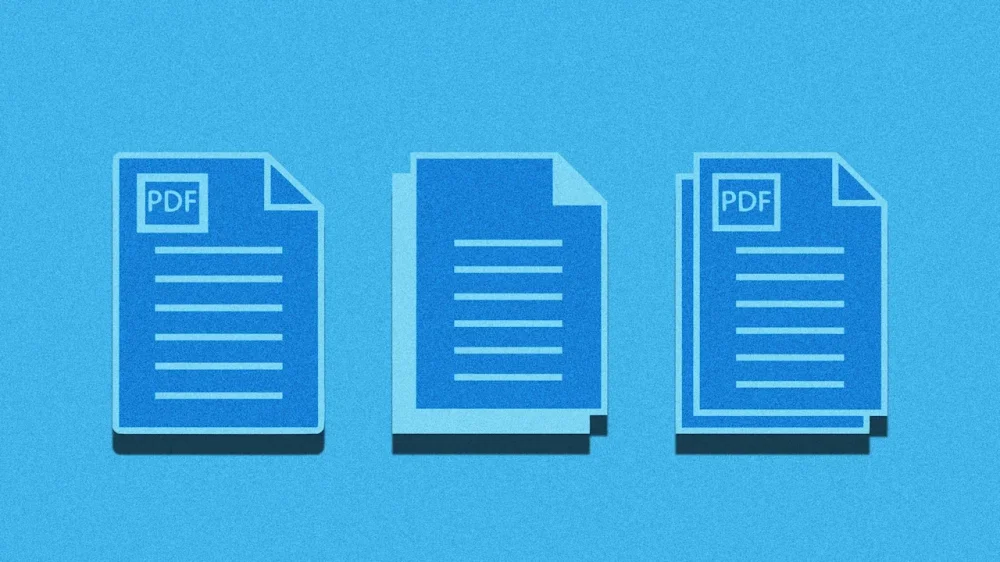
Repeat after me: You do not need expensive software just to make basic edits to PDF files. Maybe if you’re a legal professional collecting countless e-signatures on confidential documents, a tool like Adobe Acrobat is a necessity. For the rest of us who just need to sign, merge, split, or fill out PDF documents, there are simple online tools that do the job just as well. The latest advancement in online PDF editing? One that doesn’t require you to upload any of your personal files—and doesn’t even need an internet connection to function. This tip originally appeared in the free Cool Tools newsletter from The Intelligence. Get the next issue in your inbox and get ready to discover all sorts of awesome tech treasures! Try this instead of Acrobat The next time you need to edit a PDF, check out PDF Barber. ➜ PDF Barber is a free online PDF editor that processes your documents directly in your browser, promising not to ever upload them to its own servers. ⌚ It takes just a minute or two to edit a PDF file, with no logins or usage limits. ✅ To get started, choose the type of edit you want to perform, make your adjustments, and download the modified file. As of this writing, PDF Barber offers 14 different editing tools—including tools for splitting and reordering pages, merging separate documents, appending signatures, and filling out form fields. Each of these tools is separate from one another, which makes them individually pretty simple to use. If you want to rotate a PDF file, for instance, you can just head to the Rotate page, then choose which pages to flip. (This does mean, however, that if you want to make a few different kinds of successive edits, you’ll need to download a new resulting file each step of the way.) As for PDF Barber’s privacy claims, I tested them by loading the website, turning off my computer’s internet connection, then using a bunch of the editing tools. Most of them worked entirely offline, though the Split tool produced an error message when I tried to download the zip file with all my documents. ⚠️ While most of PDF Barber’s tools work offline, though, you do still need an internet connection to load the website initially. You can install the site as a progressive web app, but it still needs a connection at the outset. For 100% offline use, PDF Barber offers a Chrome extension—though it’s limited to 30 edits before requiring a $10 lifetime license. When I tried installing the extension with Chrome’s Safe Browsing settings set to “Enhanced,” the browser threw up a “Proceed With Caution” message, noting that the extension isn’t trusted by Google’s Enhanced Safe Browsing measures. Google says new extension developers may need a few months to become trusted. That may be the issue with PDF Barber’s Chrome extension, which otherwise doesn’t require access to your browsing data or any other unusual permissions. But as long as you have any kind of internet connection, you can just bypass the extension, load the PDF Barber website, and edit unlimited documents for free, knowing that nearly all of it is working offline. And if your work is so sensitive that you must be completely cut off from the internet to do it, maybe you should be paying for a solution after all. PDF Barber is primarily web-based, with no downloads needed—though you can install its Chrome extension if you’d like. The tool is completely free to use, so long as you stick to the web version. You’ll only run into a payment requirement if you opt to use the browser extension beyond its limited trial period. The PDF Barber privacy policy is clear about the fact that the service handles all processing locally, on your own device, and doesn’t collect or even so much as see your documents, files, or any manner of personal info. Treat yourself to all sorts of brain-boosting goodies like this with the free Cool Tools newsletter—starting with an instant introduction to an incredible audio app that’ll tune up your days in truly delightful ways. View the full article
-
Google's VP of Product explains the three foundations of the next generation of search, a shift that signals changes for SEO. The post Google Explains Next Generation Of AI Search appeared first on Search Engine Journal. View the full article
-
BlackRock’s assets under management surge as Wall Street earnings kick offView the full article
-
We live in a culture that glorifies leadership. Titles like manager, director, or CEO are treated not just as jobs, but as glamorous career destinations (even when the actual job is anything but). In the corporate world, ambition and talent are often defined by how many people report to you, and the ladder of success is measured by headcount under your name. You can be the most talented coder, designer, analyst, or scientist, but sooner or later the corporate current will push you toward leading others. It is the professional equivalent of a rite of passage: You can only go so far unless you manage people. This obsession with leadership explains why nearly everyone wants to be one, and why admitting that you don’t may get interviewers and recruiters to label you as “unambitious.” The fact of the matter is, that the number of people aspiring to lead far exceeds the number of people who can actually lead, especially if we measure leadership talent not by the ability to get the job but actually having a positive impact on your team and organization after you do (yes, this applies to politics, too). Data from organizational psychology is sobering: Most people are not competent leaders. Studies suggest that 50% to 60% of leaders are seen as ineffective by their employees, and engagement surveys regularly show that “my manager” is the single biggest factor driving dissatisfaction at work. In other words, the demand for leadership positions is far greater than the supply of leadership competence. The real problem is not the enthusiasm for leadership, but that people are bad at evaluating their own leadership potential. Many confuse ambition with aptitude, confidence with competence, or popularity with effectiveness. Fortunately, science has given us some reliable markers. Leadership is not mystical. It can be assessed. And while there is no perfect recipe, there are 10 questions you should ask yourself if you are considering the move from individual contributor to leader of others. Think of this as a checklist, not a guarantee of success, but a necessary starting point. Do you have technical expertise? In the past, leaders were legitimized because they knew more than the people they supervised. The master craftsman became the workshop head. The top surgeon ran the department. The best soldier led the unit. Today, AI and automation are eroding the value of expertise. A machine can often answer factual questions faster and better than your boss. Still, expertise matters, not just what you know but whether others see you as credible. A leader without expertise is like a captain who cannot sail: The crew will not follow. The key is not to be the smartest in the room, but to have demonstrated competence in a domain that earns you the respect of those you lead. This legitimacy is essential. Without it, your authority will be questioned at every turn. Are you a fast learner? Intelligence is often misunderstood. It is not about trivia knowledge or SAT scores. It is about the ability to learn new things quickly. In leadership, this matters enormously. Every new project, crisis, or strategy requires you to absorb information, process it, and adapt. Smarter leaders are more likely to solve complex problems, avoid repeating mistakes, and keep pace with change. The real measure is not raw IQ but whether you can demonstrate learning agility. The best leaders are not those who never make mistakes, but those who rarely make the same mistake twice. Are you curious? If IQ is the ability to learn, curiosity is the willingness to do so. It fuels exploration, questions, and the humility to say “I don’t know.” Curiosity also enhances intelligence because it pushes you to acquire knowledge you did not have. Meta-analytic studies show that trait curiosity predicts leadership effectiveness. The paradox is that curiosity tends to decline with age and expertise. The more senior we become, the more tempted we are to rely on what we know instead of questioning it. The best leaders resist this temptation. They continue to ask questions even when they already have answers. Do you have integrity? This should go without saying, but it rarely does. Leadership without integrity is not just ineffective, it is dangerous. Integrity is not about never making mistakes, but about having a moral compass. It requires altruistic values and, critically, self-control: the ability to resist temptations, avoid abusing power, and make decisions that benefit the group rather than the individual. History is full of leaders who failed on this count, from corporate scandals like Enron to political leaders who enriched themselves while destroying their nations. A lack of integrity may not always prevent people from climbing to the top, but it always determines how they are remembered. Do you have humility? Humility is the underrated secret of leadership. It means knowing what you do not know, being self-critical, and acknowledging when proven wrong. It also means being able to surround yourself with people who are smarter than you in certain areas and not feeling threatened by it. We crave humility in leaders precisely because it is so rare. Politicians who admit mistakes are refreshing because they are exceptions. CEOs who credit their teams rather than themselves stand out because they are uncommon. Humility is not a weakness, but an understated strength. Without it, leaders become delusional. With it, they inspire trust. Are you ambitious? Ambition has a bad reputation, but it is essential. Leaders need drive, energy, and persistence. The crucial distinction is motivation: Why do you want to lead? If your ambition is fueled by power hunger, vanity, or narcissism, you will likely harm others in the process. The right kind of ambition is prosocial. It is about wanting to make others better, to create impact beyond yourself, and to leave a legacy that matters. Do you have people skills? Leadership is the ability to build and maintain a high-performing team. That requires emotional intelligence: empathy, listening, influence, and conflict resolution. It will be very hard for you to lead if you cannot manage yourself, or manage others. You can be brilliant, curious, and ambitious, but if you cannot connect with people, you will never sustain their trust or loyalty. Think of great coaches in sports. Their tactical knowledge is important, but their ability to motivate, read the mood of a locker room, and manage egos is what separates the great from the mediocre. Leaders in business face the same test. Your success is measured not by your individual performance, but by the collective performance of the group you lead. Can you tame your dark side? Everyone has one. For some, it is arrogance. For others, impulsivity, paranoia, or aggression. These “dark side” traits are not inherently bad, since they often fuel ambition and resilience, but when unchecked they derail careers. The difference between great and terrible leaders is not the presence of flaws, but the ability to control them. Good leaders know how to edit themselves, even when nobody forces them to. They resist the temptation to “just be themselves” when their unfiltered selves would damage relationships. As I illustrate in my latest book, Don’t Be Yourself: Why Authenticity is Overrated and What to Do Instead, some of the best leaders succeed not by being authentic, but by being disciplined versions of themselves. Can you inspire others? Charisma is a multiplier. When you are competent and ethical, charisma amplifies your impact. Leaders who can communicate a vision with confidence, passion, and clarity are far more effective at rallying teams. But charisma without substance is dangerous. It can make bad leaders even more destructive by persuading people to follow them off a cliff. Think of Martin Luther King Jr., his charisma mattered because it was grounded in integrity, purpose, and competence. Compare that with countless populist leaders whose charisma fuels division and chaos, not to mention charismatic leaders who were utterly destructive (most populist brutal dictators or colorful tyrants fit the bill). If you are ethical and competent, be as magnetic as possible. If you are not, please be boring. Are you coachable? Leadership is never a finished product. Even if you check every box above, the world will keep changing, and your skills will eventually become outdated. The only way to stay relevant is to be coachable: to seek feedback, listen, and adapt. Some of the most successful leaders in history were relentless learners. Leaders who stop learning become rigid, outdated, and irrelevant. Being coachable is not about deference. It is about evolution. So, should you be a leader? If you can answer “yes” to most of these questions, you are better prepared than the majority of people who aspire to lead. If not, it is worth reconsidering. There is no shame in remaining an expert, an individual contributor, or a collaborator without a managerial title. In fact, organizations increasingly recognize the value of technical specialists who do not want to, or should not, manage people. Of course, it would be disingenuous not to acknowledge the elephant in the boardroom: Plenty of people ascend to leadership not because they are especially talented, but because they lucked into the right family, the right network, or the right school tie. Nepotism, privilege, and elite membership still grease the wheels of many leadership careers. I’ve left these off the checklist for the simple reason that not everything that is should be. Just because these forces still work doesn’t mean we should celebrate them, let alone confuse them with actual leadership potential. Leadership is not for everyone, nor should it be. But when done well, it can transform teams, organizations, and societies. When done badly, it can destroy them. The checklist above is not just about career advancement, it is about protecting others from the wrong kind of leadership. If you do not have the integrity, humility, or people skills to lead, the most responsible thing you can do is abstain. In the end, leadership is not about you. It is about what you do for others. And that is the question worth asking before you chase the title: Do you want to lead for their sake, or yours? View the full article

-
’Tis the season for carved pumpkins, god-awful candy corn, and an inevitable workplace costume that lands someone a well-earned talking-to from HR. Halloween is near, which means it’s the perfect time to reflect on a tale from the cubicle that’s even spookier than Tales From the Crypt. It starts with three words that would strike fear in the heart of anyone who’s ever worked in corporate America. Performance. Improvement. Plan. Taken at face value, the phrase sounds gentle, maybe even helpful, like the start of a company-sponsored self-care journey. In reality, a PIP is usually the workplace equivalent of a death sentence, a corporate guillotine that gives “being on the clock” a whole new meaning. At least that’s how it felt early in my career when it happened to me. The news hit like a cold email from HR with no greeting. I remember sitting across from my manager (let’s call her Lisa) at a long-ass boardroom table, fluorescent lights humming, my coffee going cold as she explained the “expectations moving forward.” She had that tone people use when they’re rehearsing empathy. And while I tried to keep my composure, all I could hear as Lisa spoke was, “Your days here are numbered.” I was working at a startup—one of those scrappy, ever-changing companies where job descriptions are more like suggestions. Every few months, my priorities shifted, as did my boss, team, and sometimes the department I worked in. Still, I kept my head down, remained adaptable, and did solid work. But at some point after my third job title change, I started to lose steam. Projects dragged. Deadlines slipped. Some of it was on me—constant change can burn out even the most proactive employee. But a lot of it came down to the chaos: unclear direction, competing priorities, constant pivots. I’d go from one “urgent” request to another, without anyone assessing my workload or considering whether I was merely spinning my wheels. So it was a wake-up call when Lisa summoned me into that 1:1 meeting and told me I was being put on a PIP (no Gladys Knight). I didn’t just need to tighten up; I needed to learn how to move in a room full of vultures. There’s something humbling about having your performance questioned in black and white. I felt embarrassed, frustrated, and, honestly, a little angry. I’d been juggling a revolving door of responsibilities while management kept changing the rules mid-game. But once the sting wore off, I realized this was a turning point. I could either take it as a big L like the late Harlem rapper or treat it as feedback. I decided to lock in. The thing is, I had a publicity problem. So many of my contributions were going unseen, unrecognized, or worse, attributed to someone else. I set out to change that. Asana became my amigo. Weekly emailed status updates to Lisa became the norm. Long division had nothing on the way I was showing my work. I also stopped waiting for clarity. If directions were vague, I asked all of the questions until I got specifics. If priorities clashed, I pushed for alignment. It wasn’t easy; when you’re a young professional, advocating for yourself can feel like being confrontational. But I also understood how silence had been making me complicit in my own confusion. Believe it or not, things improved. My work got sharper. My time management leveled up. Even Lisa softened a bit, noticing that I was handling the pressure with a new kind of steadiness. I started to believe I might survive the PIP and come out on the other side even stronger—not unlike how 50 Cent emerged from the gunsmoke of nine bullet wounds before becoming a household name. Then the layoffs hit. Lisa sat there silent while her boss broke the news: My role was being eliminated as part of a “restructuring.” I raised an eyebrow when she assured me it had nothing to do with the PIP. It didn’t really matter, though. All that growth, all that effort—and I was still out of a job. But I didn’t walk out defeated. I knew I’d done my best work during that PIP. I learned the annoying art of workplace communication and receipt-taking. I stood up for myself. And I left that job with more confidence than I had going in. That was the real win. (Not to mention the years-later apology from Lisa, who admitted that she “undervalued” me. Better late than never, I guess.) My Scottie PIPpen days taught me a difficult but necessary truth: Sometimes you can do everything “right” and still get caught in the wrong storm. But if you use that pressure to sharpen your processes, you’ll come out stronger, no matter how it ends. So if you ever find yourself cast as the main character in your own workplace horror story, don’t panic. Get organized. Get visible. Get curious. (And get your résumé updated, just in case.) Because it’s not about proving anyone else wrong. It’s about proving to yourself that even when things get scary, you’re built to survive. The Only Black Guy in the Office is copublished with LEVELman.com. View the full article
-
Aprecomm just launched its new bid towards resolving some of the toughest operational challenges in the ISP world. The post Need operational insights? Aprecomm’s AIVRA lets ISPs query their data directly, ChatGPT-style appeared first on Wi-Fi NOW Global. View the full article
-
This paper is our first significant deep-dive into the reliability features of the next Wi-Fi standard, Wi-Fi 8. The post New paper by LitePoint: Wi-Fi 8 physical layer dials up ultra high reliability features appeared first on Wi-Fi NOW Global. View the full article
-
OpenAI never wanted to build a chatbot. As an early beta tester for OpenAI’s GPT-3 model, I can vouch for the fact that the company was caught totally off guard by ChatGPT’s runaway success. An email that OpenAI sent me on November 28, 2022—just two days before ChatGPT came to market and kicked off a trillion-dollar, multiyear, economy-distending AI scramble—didn’t even mention the new interface. Rather, it bragged about the company’s then-revolutionary “DaVinci” model and how it could “deliver clearer, more engaging, and more compelling content” and allow developers to “take on tasks that would have previously been too difficult to achieve.” From the breathless tone of the email, it was clear that OpenAI had bigger ambitions than creating a text-based tool to help you argue with your insurance company or write KPop Demon Hunters fanfics. As Nick Turley, OpenAI’s head of product, admitted this week, the company “got a little sidetracked” by ChatGPT. Now OpenAI’s true ambitions are becoming increasingly clear. In Turley’s words, OpenAI “never meant to build a chatbot.” Instead, the company always planned “to build a super assistant.” And that’s exactly what it’s now doing. The ‘super app’ In America, our app landscape is highly fragmented. Yes, if you want to know how fast bamboo grows or figure out the chords for R.E.M.’s 1985 classic “Wendell Gee,” you might fire up the ChatGPT, Claude, or Gemini app and ask the bots. If you want to post to social media, though, you’re likely to reach for Instagram, TikTok, or—perhaps steeling yourself for the possibility of encountering MechaHitler—X. Need to bank? Open up the crappy app for your local bank branch with the UI from 2012, and hope for the best. Buying something? There’s Amazon, Instacart, and DoorDash for that. Want to secretly determine how much wealth your friends have accumulated? Zillow to the rescue! In other parts of the world, apps aren’t like that at all. Many countries, especially in Asia, have super apps that integrate all those functions and more into one tool, often controlled by a single, über-influential company. In China, WeChat provides messaging and gaming, but also mobile payments, social media, and mini apps for things like ride-hailing, paying bills, and even getting city services. In many Southwest Asian countries, Grab provides financial services, rides, food delivery, and much else. In the Middle East, Careem provides similar functions. Africa, Latin America, and many other geographies have similar super apps. America doesn’t. And to American technology companies, that’s a big problem. Because the apps are so all-encompassing, their creators control incredible amounts of capital and power. Tencent, the company behind WeChat, had revenues of more than $90 billion and profits approaching $30 billion in 2024—much of it driven by WeChat—and is growing fast. That’s an especially colossal sum in China, making Tencent one of the country’s most profitable companies, behind only a handful of largely state-controlled banks and conglomerates. Here in America, Elon Musk had ambitions to turn X into a super app, but his politics and penchant for second grade humor got in the way. No one else has really taken up the gauntlet. Until now. OpenAI Eats Everything At its October 2025 “Developer Day,” OpenAI made clear that it intends to create a super app, and will spend an almost limitless amount of money to make that happen. During the event, the company announced the ability to run apps directly within the ChatGPT interface. These are very similar to the “mini apps” that have made WeChat so powerful. Initial partners include Spotify and Zillow, but the list will inevitably grow. Simultaneously, the company has rolled out multiple functions that make it look less like a chatbot maker and more like a super-app company. Last week, OpenAI launched new features that let the bot spend your money for you, as well as a protocol to allow direct purchasing from any merchant who opts in. OpenAI’s Sora social network—where all the content is joyfully fake—takes on TikTok and has immediately leapt to the No. 1 spot in Apple’s App Store. And earlier this year, OpenAI shared that it plans to launch a browser to rival the ubiquitous Google Chrome. OpenAI seems to suddenly be everywhere, doing everything. That broad-ranging ambition is the hallmark of a super-app maker. And again, if all the signals weren’t clear enough, Turley essentially confirmed the company’s new direction with his “super assistant” comments. So, will it work? If any company can create a super app, it’s OpenAI. With its wild consumer success, the company has access to bottomless pits of capital. ChatGPT has 800 million weekly active users, and that number continues to grow. OpenAI is the first company in a generation to create an entirely new way of interacting with computers. Its intelligent chat interface lends itself to the integration of other apps and services. My own experience using Instant Checkout confirms that buying things within the ChatGPT interface really is seamless. Still, America’s existing tech titans won’t go quietly. Google is reportedly expanding its own Gemini app, and its Nano Banana system proves it can still grab the public’s attention. Meta already has its own Sora doppelgänger. And while OpenAI is growing quickly, its revenue is only around $10 billion—a drop in the bucket compared to Google’s $350 billion, and still a fraction of the revenue of its Chinese super-app rivals. OpenAI would love to take over every aspect of your digital life. And it may. But despite the hype, the company still has a very long way to go. View the full article

-
Measures extend trade war between Washington and Beijing to third countries View the full article
-
Metal has staged a bigger rally than gold this yearView the full article
-
Official figures showed payroll employment rose by 10,000 between July and August View the full article
-
The race among dockless e-bike companies to expand in the city is causing disruption View the full article
-
While most employers offer mental health care coverage as part of their health insurance packages, major gaps in care exist. According to new research, many employers aren’t sure how mental health care services are being used by employees. The 2025 Employee Benefit Research Institute (EBRI) Employer Survey, released Friday, polled professionals at 400 companies with 500 or more employees who made benefits decisions. Mental health coverage was a given almost across the board (97% of respondents said their company offered it), and several companies covered nontraditional programs, like financial therapists (62%) and mindfulness apps (74%). However, there were also several gaps in coverage. Only two-thirds of companies covered substance use treatment. Only one-third of companies covered ongoing treatment for chronic conditions, and only a quarter covered care for those with “diverse cultural backgrounds and unique employee needs.” Even lower on the spectrum was stigma reduction campaigns that help create an environment that encourages employees to seek mental health care. Interestingly, the gaps in coverage could be explained, at least in part, by the fact that companies largely aren’t tracking whether their employees are using mental health services. Only 22% analyzed claims data to ascertain how benefits were being used. Likewise, only 37% of employers measured how satisfied employees were with their health care plans overall. “Complete and transparent access to claims data enables employers to design benefit programs that truly meet the needs of their employees and their families,” said Margaret Faso, policy director with the National Alliance of Healthcare Purchaser Coalitions, in a press release. “This study reinforces the importance for employers to continue efforts to achieve transparency to better support the health and wellbeing needs of their workforce.” However, the survey also found that employers don’t feel that the breadth of mental health care services, pricing, or quality should be their responsibility. Only 10% said that the employer should be responsible for those aspects of care plans, and instead, that responsibility is on insurance companies (28%), federal (30%), and state governments (24%). View the full article

-
US Treasury secretary says China’s restrictions on critical mineral will hurt their own international standingView the full article
-
It’s five answers to five questions. Here we go… 1. Worker stunk up client’s bathroom, then billed her for it I manage a team of skilled electricians who often work in clients’ homes. A client reached out to express concern that she was billed for 15 minutes during which our electrician was, quite literally, off the clock and stinking up her bathroom. I understand that nature calls, but really? Using her bathroom and charging her for it? Frankly, my personal thought is (barring an absolute emergency) he should have left her home and gone to a gas station. And then he had the nerve to charge her for it? Where do I even begin? It sounds like you and your employee — and maybe the rest of your employees, too — just need to get better aligned on how to handle those situations. It’s very reasonable to tell them not to bill for time spent in the bathroom or otherwise not working on the job (the same as if they had a personal phone call for 15 minutes — especially in jobs that often bill by the quarter-hour), but you need to tell them that up-front! I suspect you’re thinking they should just know because it seems like common sense to you — but you’ll get better results if you make underlying assumptions explicit, especially once you see there’s a need to. As for the bathroom use itself, I don’t get people who don’t want workers to use their bathrooms, but if your expectation is that your employees shouldn’t, you should let them know that up-front too, not after they’ve gotten it wrong. (That said, what do you expect someone to do if the need is urgent? Even if you normally expect them to go off-premises, emergencies happen.) 2. My employee curses at me and management doesn’t care I am a middle manager at a very large, prestigious firm. One of my direct reports, Jane, was on a PIP two years ago for acting rudely to coworkers on a regular basis and excessively micromanaging her teammates. Her work was not at issue. For the last few months, we have been down one team member. As a result, I have been helping the team out. Likely feeling stressed, Jane has become very anxious and difficult to work with. She feels the need to nag me all day about my “status” on projects. I have asked her to stop micromanaging me, as I am her boss, but she won’t. At the same time, I have seen the quality of her work go down. When I addressed her work (in the kindest way possible), she became angry and responded with a profanity-laced tirade about how she didn’t care what I thought. I immediately reported this to my boss, who responded by saying,”Hmmm, she doesn’t talk to me that way.” To make it worse, my boss suggested that I give Jane a high score in my year-end feedback, although it is “my decision.” Clearly, the insubordination was considered a nonissue, and I get the feeling that I am viewed as a weak and ineffective manager. I’m not sure how to go forward in this situation. I dread every day knowing I have to deal with Jane, and I get no support from leadership. Well, wait, you’re her manager! That means you can manage her a lot more assertively than you’ve been doing. When Jane unleashed her profanity-laced tirade about not caring about what you thought, the right move was to immediately pull her into a private conversation and let her know, in serious terms, that she can’t speak to anyone at work that way, and in fact it does matter what you think because you’re the person managing her work. The fact that it wasn’t your instinct to do that — and instead was your instinct to ask your boss to handle it — makes me think that you’re likely conveying to Jane in all sorts of ways that you don’t believe you have real authority over her, or at least not authority you’re likely to exercise. I think you’re probably right that you’re being viewed as a weak and ineffective manager, but that’s because … well, you’re being a weak and ineffective manager! Step one is to get confident with your own authority and begin more actively managing Jane (and probably others, as well as the culture on your team more broadly). Some advice on doing that: new managers and authority how to appear more authoritative at work I have to manage the office jerk my employee is combative and rude my employee has a bad attitude 3. Can I ask my manager to stop opening my deliveries? Is it weird for my supervisor to open any deliveries I receive in the mail? My supervisor oversees our department’s budget, and she and I are the only people in the department with spending cards. She has to approve any charges I make, so she is well aware of anything I order. We get a number of packages every day and a few weeks ago she opened one addressed to me on accident (I legitimately believe it was an accident). She apologized and explained her mistake, and I told her not to worry. Accidents happen … but since that time she has opened every package that has been addressed to me. These are all items that were ordered for use in our department and she knows what I’ve ordered from my credit card approvals, but it makes me feel weird that she’s opening things that are specifically addressed to me. For what it’s worth, there has never been any question about me misusing funds. Would I be out of line to ask her not to open mail that is addressed to me? Yeah, there’s a high risk of it coming across weirdly if these are all things you’ve ordered for your department. If you were having personal mail sent there, it would be different — but it’s hard to justify asking her not to when it’s all work stuff, unless there’s a specific reason you can cite (like “I didn’t realize the conference posters had arrived and I called the printer to complain”). There are offices where whoever processes the mail opens it all and then distributes it (although that’s admittedly less common with packages than with letters). And legally, mail sent to anyone at a business is “owned” by the business and can be opened by its management (or anyone there, unless the employer itself makes a rule against it). But since this is a change to what she’d been doing before, you could approach it from that angle: “I noticed that after you accidentally opened that package addressed to me a few weeks ago, you’ve been opening everything that comes to me, and I wanted to make sure I haven’t done something to make you concerned about what I’m ordering.” 4. What’s going to happen now that a great manager quit without notice? I work in a volatile industry for a large organization (10,000+ employees). My department undergoes frequent organizational changes in the name of efficiency or innovation. Overall, my department is seen as one that costs money but is important to the business, rather than one that generates money, so we have the frequent changes in an attempt to save money. In practice, my day-to-day role doesn’t change much. Instead, we see new leaders rotating in, projects ending and being replaced with others, or the introduction of new KPIs that are essentially rebranded versions of the old ones. After 15 years, I’ve grown jaded about this cycle of “reinvention” that happens roughly every two years, if not sooner. Recently, however, something unexpected happened: a manager I deeply respected, known for transparent communication and strong leadership, suddenly quit without notice or handover. This was entirely their decision, and it left many people surprised, with no plan for how their responsibilities would be managed. I can only imagine how frustrating recent organizational changes must have been to push them to that point. What I can’t predict is the fallout of this. Will senior leaders overreact or ignore? In your experience, how do leaders respond to this? After so many years, I’ve learned to anticipate most of the moves at this company, but this situation has caught me off guard. It’s impossible to say, but if I had to bet money on it, I’d bet the ripples will be relatively small and contained — no freak-outs or significant changes as a result. First, people leave unexpectedly for all kinds of reasons (family emergency, health crisis, better offer fell in their lap). But even if it’s clear that he left as a last-straw kind of thing, the most common reaction from dysfunctional companies in that situation is to shrug and say, “Okay, it wasn’t for him” — not to have a reckoning about how it’s a sign things need to change. And frankly, in some cases that’s reasonable; sometimes the things aggravating the person are things that, while legitimately frustrating, need to happen because the organization’s priorities are (rightly) different than the individual person’s are. In other cases, of course, it’s not reasonable — but then in that situation, the serious problems that led the person to quit can also be what keeps the leadership from responding appropriately. 5. Resigning while my boss is out of the country I have an offer of employment and need to put in my two-week notice. I’ve been waiting for the background check and reference check to clear so I’ve been unable to resign as of yet. My boss is leaving for an international vacation tomorrow and I am unsure as to how to proceed. I can give them a heads-up that I will be putting in my notice (prior to getting the background check all-clear) or I can give my resignation to their superior and have them find out when they return. Either way, I risk alienating my boss as they won’t want that info right as they are taking a well-deserved vacay, nor do they want to be blindsided when they get back. What is the best way to handle this while (hopefully) not burning bridges? Wait for the contingencies to be removed from the offer before you resign. Otherwise, there’s a risk that something could go wrong and the offer could fall through. That’s true even if you’re confident that nothing in your background check or references will pose a problem; things happen that you can’t predict, and you absolutely should not resign a job until you’re 100% sure you’re ready to leave and know what you want your last day to be. It’s not a big deal that your boss will be away when you resign. It’s not ideal, but it’s a very common thing to happen, and businesses deal with it. When you’re ready to give notice, you’ll give it to their manager and/or HR. Your boss will find out when they’re back, and that’s just how this stuff goes. You can explain that the timing was out of your hands, but it would be incredibly unusual for this to burn a bridge. The post worker billed client for stinking up her bathroom, my employee curses at me, and more appeared first on Ask a Manager. View the full article
-
Israeli premier wagers The President can help rewrite narrative around worst security failure in nation’s historyView the full article
-
Europe’s most valuable start-up has waited years for approval to begin lending in its home market View the full article
-
Rally in heavily shorted stocks comes as AI hype and hopes of lower rates push S&P 500 to record highs View the full article
-
Productivity gains won’t necessarily translate into the embrace of free time — especially in AmericaView the full article
-
The party can’t keep expecting successful people to pretend that leaving the EU was a good ideaView the full article
-
Legal firms are overwhelmed with enquiries from companies and individuals after The President and Starmer harden policiesView the full article
-
Chancellor Friedrich Merz seeking to reignite economy and address challenges of a shrinking workforceView the full article
-
Executives predict Beijing’s tighter controls will lead to production delays and higher prices View the full article