ResidentialBusiness
Administrators
-
Joined
-
Last visited
Everything posted by ResidentialBusiness
-
 Google is testing a new optimization insights layer or recommendation interface for Google Ads. This has three columns named (1) build a foundation, (2) drive performance and (3) expand and grow.View the full article
 -
Google is looking to hire a software engineer with the responsibility of improving the quality of User Generated Content (UGC) contents in Google Discover.View the full article
-
The President’s latest piece of brinkmanship is likely to result in another climbdownView the full article
-
For years, creators have shared the same warning: “Don’t post links — they’ll harm your reach.” But numbers to back it up have been hard to come by. That’s what we set out to test, this time on X, formerly known as Twitter. With the help of our data scientist Julian Winternheimer, we dug into 18.8 million posts from 71,000 X accounts, and the results are clear: links really do hurt performance. For creators and brands who rely on sharing links as part of their content strategy, the data points to something bigger than a small algorithm tweak. Let’s get into the numbers. 💡If you’re interested in seeing Julian’s analysis, check out his blog for a deep dive.Do posts with links affect content performance on X?The short answer: yes — and the impact is dramatic. Our analysis shows that posts with links perform significantly worse than other content types. As of August 2025, Link posts had0% engagement rate on regular accounts~0.28% engagement rate on Premium accountsImage posts had~0.20% engagement rate on regular accounts~0.42% engagement rate on Premium accountsVideo posts had~0.25% engagement rate on regular accounts~0.85% engagement rate on Premium accountsText posts had~0.40% engagement rate on regular accounts~0.90% engagement rate on Premium accountsThe graph shows how, even with reduced reach for regular accounts, every format holds some engagement except links, which fall to absolute zero after March 2025. This does seem to confirm the idea that the X algorithm downranks content with links. However, Premium accounts continue to see reach and engagement on link posts — though even there, links underperform compared to text, images, and video. When we dug into the best content to post on X in March (before the drop), links were the lowest-performing format on X. However, they weren’t at absolute zero, so the sharp drop post-March puts into perspective just how much has changed on the platform since then. Premium users, on the other hand, can still drive engagement with links — though even there, native formats consistently outperform. What stands out most is the scale of the divide: Premium accounts now see around 10x the reach of regular ones. That creates a compounding cycle: more reach → more followers → even greater reach. And not all Premium is equal. Premium Plus subscribers get the highest reach of all account types, with mid-tier and Basic Premium still far ahead of regular users. This advantage suggests the difference isn’t just about larger audiences — it’s built into how X distributes content. ⚡Learn more about the impact of X Premium on content performance in Does X Premium Really Boost Your Reach? An Analysis of 18M+ Posts. Spoiler: It does! Why is there such a sharp divide?The most likely explanation is platform incentives. X has a strong reason to keep users on-platform instead of sending them elsewhere, and it also has a clear motivation to encourage more users to pay for Premium. Together, those incentives mean link posts — especially from non-paying accounts — get pushed down in distribution. The result is a two-tier system: Regular accounts: link posts are effectively invisible.Premium accounts: links are still viable, but carry lower engagement than other formats.This points to a fundamental change in how X rewards content — and a clear message to creators and brands who depend on sharing links. Implications and workarounds for link posts on XFor creators and brands, the message from X is clear: link posts are no longer a reliable way to reach your audience unless you’re in the Premium tier. If you’re running a regular account, external links won’t just underperform — they may not perform at all. Since March 2025, link posts from non-Premium accounts have been effectively invisible, with median engagement rates stuck at zero. That means newsletters, product pages, and blog posts shared directly in the timeline won’t drive the results they used to. So what can you do? Invest in Premium if links matter to you. Premium accounts still generate reach and engagement on link posts, though less than on other formats. If driving traffic is a core part of your strategy, upgrading may now be part of the cost of reaching your audience..Use native formats first, links second. For both Premium and regular users, content that stays on-platform — threads, images, video — consistently performs better. Use these to deliver your main message, and treat the link as supplemental.Put links in replies instead of the post. While not foolproof, this approach can sometimes avoid the distribution penalty. The key is to make the main post engaging enough to earn attention before introducing the link.Diversify beyond links. If you’re sharing articles, consider turning key insights into a short thread. Promoting a product? Pair it with an image or video demo. Think of the link as a bonus, not the centerpiece.The bottom line: on X, links are now the weakest format you can publish — especially without Premium. Building a sustainable strategy means leaning on formats the platform favors and using links more sparingly and strategically. View the full article
-
A smooth retail experience depends on efficient shipping and hassle-free purchases, two elements that can create significant cost implications for retailers. These honorees in the commerce category are developing infrastructure that can make more efficient use of freight trucks, streamline theft detection, and ease the checkout process in warehouse club environments. Flock Freight For reducing inefficiency in truckloads When it comes to freight trucks, wasted space is wasted money. Flock Freight estimates that the equivalent of one in three trucks runs empty because of inefficient deck-space utilization. The Certified B Corporation has built on its patented Shared Truckload technology, a kind of demand-side “carpooling for boxes,” with STL AddOns, which allow suppliers to dynamically add their compatible shipments even after a truck is en route, reducing costs for shippers and carriers while cutting emissions. One trucking customer says STL AddOns helped it achieve an 88% increase in earnings. Sam’s Club For automating the receipt-checking process The popularity of warehouse clubs often leads to long lines as staffers ensure that customers’ items appear on the receipt. To speed things along, Walmart’s Sam’s Club has leveraged an array of cameras that point down at shoppers’ carts and use a proprietary computer vision algorithm that identities items using shape, size, color, and branding markers. The results are matched against a customer’s digital receipt within 400 milliseconds, eliminating the historic wait time when departing the store. Toshiba Global Commerce Solutions For reducing retail “shrink” without hassling shoppers Retailers lose $100 billion to shoplifting, fraud, and just plain checkout error. The Toshiba Global Commerce Solutions ELERA Security Suite uses edge AI to help guard against this “shrink” at self-checkout lanes, produce scales, and grocery carts without bogging down the shopping process. The system also uses AI to help customers more easily ring up their own orders—by, for example, detecting the kind of unpackaged produce being checked out. In Toshiba’s 2024 fiscal year, ELERA processed more than 25 million transactions. The companies and individuals behind these technologies are among the honorees in Fast Company’s Next Big Things in Tech awards for 2025. Read more about the winners across all categories and the methodology behind the selection process. View the full article

-
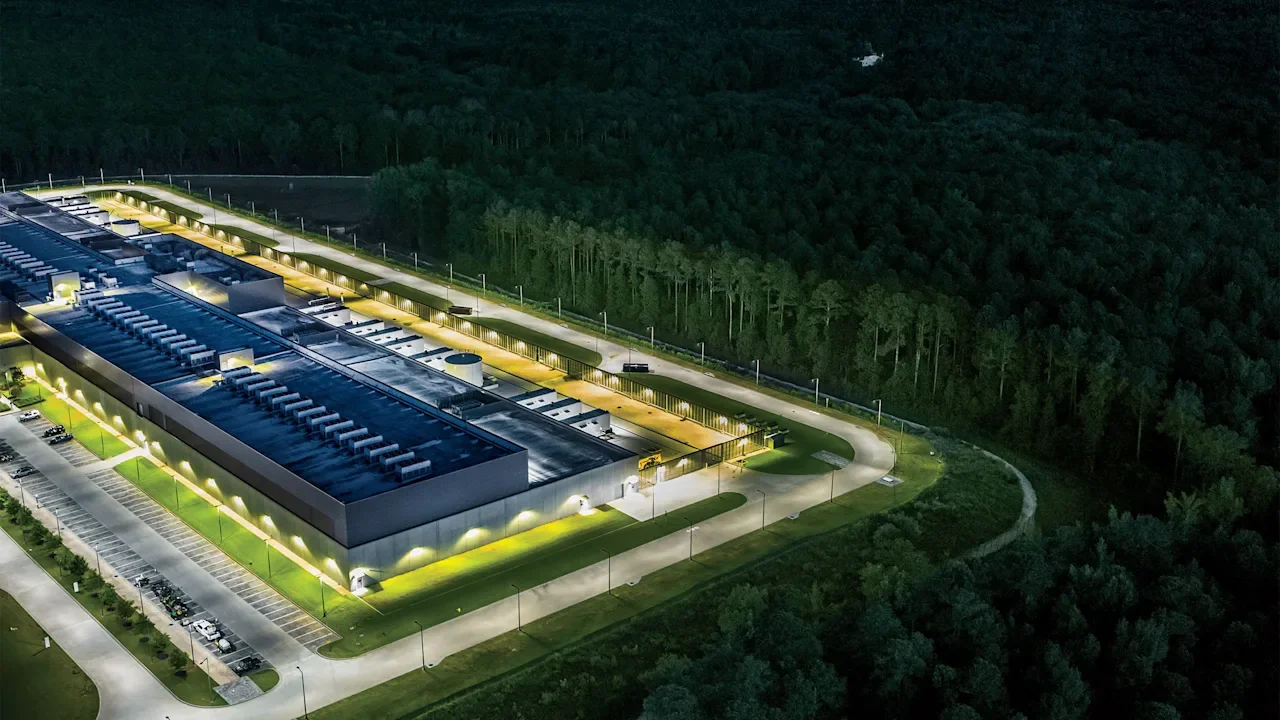
Data centers have become the starting blocks in the global race for AI supremacy. Tech giants like Meta, Alphabet, and OpenAI have committed hundreds of billions of dollars collectively to building more of them. States are offering incentives for their development, and President Donald The President signed an executive order in July cutting regulations to speed up construction. For all the breakthroughs they promise, the environmental toll of these facilities is already staggering: According to the International Energy Agency, U.S. data centers used roughly 185 terawatt-hours of electricity in 2024—more than all of Pakistan’s 248 million people used that year. To keep hot servers cool, a typical 100-megawatt hyper-scale data center consumes as much water per day as 6,500 homes. And, as with the factories and railroads that powered previous technological revolutions, the impact on surrounding communities can be especially profound. This premium story, accompanied by original photography commissioned by Fast Company, documents: Why one of Meta’s data center neighbors says, “I haven’t drank my water in years.” The number of homes that could be powered with the electricity consumed by one Meta data center How much the area’s light pollution has increased since 2020 What the ongoing data center boom is doing to electricity prices in states like Georgia What does “the cloud” look like? For Beverly Morris, it’s hulking, windowless buildings, bright lights, and literal clouds of dust. Peter Essick In 2020, two years after Beverly and husband Jeff Morris bought their home in Mansfield, Georgia, construction crews began clearing the way for what would turn out to be one of Meta’s largest data centers, a sprawling, 2.5 million-square-foot complex—larger than the state’s largest shopping mall—just 1,000 feet from their front door. With no official notice to Morris from Meta or surrounding Newton County representatives, the oak forest across her dirt road was felled; eventually, a white glow from a row of perimeter spotlights flooded their home nightly. “Nature was run out of there completely,” Morris says. By 2022, during busy construction days, thick plumes of red dust would storm across their property. After a particularly bad onslaught, Morris called the phone number she found on a construction sign; a crew soon showed up with power washers to hose down her house. “There was a red river running off of my roof,” she says. It was such a spectacle that one of the workers insisted on capturing it on his phone. She now wishes she’d obtained the video. “Everything was covered in red.” Beverly Jeff MorrisPeter Essick The new factories “The cloud” has never been a very helpful description of the global infrastructure of the internet, but as the global race for AI supremacy ramps up, a new, more apt metaphor has emerged. “I think everybody should stop saying data centers,” interior secretary Doug Burgum told a conference in D.C., where in July, The President signed an executive order cutting regulations to speed up data center construction. Burgum cited the term used by the CEO of Nvidia: ”It’s not data centers. It’s AI factories.” But these giant warehouses aren’t factories in the traditional sense. Even the most compute-intensive data centers employ few full-time workers. Most of the work in a data center is done by automated systems and software that manage the infrastructure, while the core computation of training and inference is powered by energy-hungry chips, often made by Nvidia. In the first half of 2025, spending on data centers—including big investments from Meta, Alphabet, OpenAI, Amazon, and xAI— contributed as much to U.S. GDP growth as household consumer spending—an unprecedented economic shift. But tremendous cash isn’t the only cost, and tech companies aren’t the only ones shouldering the burden. In Mansfield, Morris says the impact of all the digging and blasting to build Meta’s data center, known as Stanton Springs, eventually extended to her well water. By 2023, the pipes in her house were clogged with sediment, wrecking appliances and slowing faucets to a drip. “I haven’t drank my water in years,” says Morris, who estimates she’s spent about $5,000 on repairs so far. She said a July appraisal found that her property’s value had cratered. Peter Essick The extent to which the construction of the data center contributed remains unclear. A Meta spokeswoman told The New York Times that “the company had recently commissioned a well study on the Morrises’ property and said it was ‘unlikely’ that its data center affected the supply of groundwater in the area.” Though the study—a copy of which was reviewed by Fast Company—assessed the impact of the facility’s construction and operations on local groundwater and nearby wells, Morris says “Neither Meta nor anyone else came on my property to do a groundwater study.” Meta declined repeated requests for comment on this story. “It has changed the way that I live here,” she says. “And they really accept no responsibility for it. And they’re big enough to do that.” How AI’s power needs affect everyone Tax breaks and relatively cheap power have turned the Atlanta area into the country’s fastest-growing hyper-scale data center market. Demand is so high that the Peach State has delayed closing several coal-fired power plants. Only a few years ago, Big Tech touted bold carbon targets. Now Bob Sherrier, a staff attorney in the Southern Environmental Law Center’s Georgia office, says the data center blitz “will deepen our reliance on dirty, volatilely priced methane gas and coal for decades.” (Stanton Springs consumed 968,000 megawatt-hours of electricity in 2023, according to Meta‘s most recent numbers, enough to power about 90,000 average homes.) Nationally, Morgan Stanley estimates that forecasted data center demand will require an additional 45 gigawatts, or about 10% of all current U.S. generation capacity—equivalent to 23 Hoover Dams. The data center build-out also means that all the “cheap power” that’s drawn developers to states like Georgia isn’t actually that cheap: Nationally, the cost of building out new transmission lines and substations to power the AI push is contributing to surging electricity rates for customers across the country. “In Georgia, our rates have gone up six times,” Morris says. Peter Essick Power is only part of the equation: Keeping chips cool means withdrawing and consuming immense amounts of water, and developers prioritize places that are hot and dry, where power tends to be cheaper, meaning most data centers are being built in areas with high water stress. According to the local water authority, the Stanton Springs facility guzzles about 10% of Newton County’s daily water supply. In Newton County, demand is rising so fast that residents could face a water deficit by 2030, according to a 2024 report. Growing AI’s footprint—and impact Some of the world’s biggest projects are emerging in neighboring Louisiana. In Memphis, a supercomputer for Elon Musk’s xAI has been relying on dozens of unpermitted temporary gas turbines, exacerbating health issues in the surrounding community. In Richland Parish, a plan to build 2 gigawatts’ worth of gas turbines for a Meta data center project was recently approved by planning authorities, despite local objections that the process was rushed and lacked transparency. But the scale of the project is no secret: “Just one of these covers a significant part of the footprint of Manhattan,” CEO Mark Zuckerberg wrote on Facebook. Not to be outdone, OpenAI and Oracle are building an 800-acre data center in Texas that will form part of the Stargate project, a partnership with the The President administration to create a nationwide backbone for training ever-larger AI models. Backed by a $100 billion investment from Nvidia (much of it to be spent on its own chips), the five-data-center project could demand upwards of 10 gigawatts—about as much energy as consumed by all of New York City. Morris, who grew up in Georgia, misses the fireflies that used to surround her house, which glowed until the data center showed up. Even with the spotlights switched off, the facility, now operational, still creates a dome of light visible from miles away. (The area’s Bortle score, a measure of light pollution, shows a 25% increase in artificial brightness since 2020.) The sounds of construction have been replaced by a constant electric hum, periodic alarms, and the intermittent buzz of diesel generators. Morris admits to feeling powerless, but has found some comfort online—even on Facebook—connecting with others across the state who are pushing back against new data center development. “I know I’m not the only one now,” she says. And she’s right. Last month, the city council for the nearby city of Social Circle unanimously enacted a 90-day moratorium on new data centers. A version of this story appears in the latest issue of Fast Company magazine. View the full article

-
For the past five years, Fast Company’s Next Big Things in Tech awards have celebrated technological breakthroughs that are changing the way we work and live. This year’s awards include 137 honors for innovations impacting everything from applied AI to telecommunications to agriculture. Arriving at that cadre of winners from a pool of 1,200 applicants requires many hours of work sifting through applications, scrutinizing projects, and deciding which achievements rank at the top. Here is a peek into how our small army of editorial staffers make it happen. Methodology Our team of editors and writers assessed each application based on factors such as: Relevancy: What pressing problem does the technology solve? Ingenuity: How novel is the technology? Progress and potential: In what ways has the technology already proven itself? Is it positioned for long-term viability and scalability? Impact: What kind of impact—from economic to cultural—might the technology have over the next five years? Each winner is chosen after multiple rounds of evaluation and conversation between judges about its performance on the above criteria, a monthslong process. “With Next Big Things in Tech, our aim is to honor projects based not only on what they’ve already achieved but where they’re poised to go,” says Fast Company global technology editor Harry McCracken. “Whether honorees are still in the lab or already on the market, they’re driving progress in tangible ways on an array of fronts.” Meet the team Judges Adam Bluestein, Morgan Clendaniel, Yasmin Gagne, Connie Lin, Maia McCann, Harry McCracken, Steven Melendez, Chris Morris, Jared Newman, Alex Pasternack, Rob Pegoraro, Adele Peters, Ross Rubin, Mark Sullivan, Marty Swant, Max Ufberg, Mark Wilson Coordinator Shealon Calkins Design/Photo Jeanne Graves, Anne Latini, Daniel Salo, Mike Schnaidt, Amy Wong Development Bryan Cuellar, Heda Hokschirr, Cayleigh Parrish View the full article

-
Across both white-collar and blue-collar settings, productivity depends on how well information is organized and communicated. DataSnipper uses AI to help auditors quickly surface relevant details in lengthy legal documents, while Sharebite streamlines employee meal programs for the hybrid workplace. Tines has developed a unified AI platform to manage a wide range of workplace software, and Weavix has reimagined the shop-floor radio for modern communication needs. DataSnipper For helping rapidly sift through lengthy financial documents Auditors often need to extract dates and financial details from dense documents such as leases, loan agreements, and meeting minutes—tasks too complex for a simple “Ctrl+F” search. DataSnipper automates this work directly within Excel, using AI to respond to written prompts and link results back to their source for quick verification. Launched in April 2025, the tool is already credited by audit firms with reducing document review time by 25%. Sharebite For taking the hassle out of employee meal programs Feeding employees has become more complex in the hybrid-work era. Sharebite’s Passport program provides workers with a Visa card that employers can configure to work only at specific times and locations, encouraging in-office attendance. The company’s Stations service simplifies group ordering for central pickup at the office. For every meal purchased, Sharebite donates a meal to people in need through its charity partners. Tines For building one unified AI system to command workplace cloud software While many workplace tools now feature AI assistants, Tines has developed a system that can coordinate across multiple cloud platforms, from trouble-ticketing systems to IT management services. Launched in September 2024, Tines Workbench connects securely to a wide range of software and converts plain-language instructions into precise, preapproved actions. The technology has gained traction quickly, helping Tines raise a $125 million Series C funding round in February 2025. Weavix For building the future of two-way radio communication Worksite radio communication has evolved far beyond the analog walkie-talkie. Weavix’s Walt Smart Radio System adds features such as Slack-style departmental channels, AI-powered translation, and geofencing for security. The radios support voice, text, and photo messages, making them useful in settings like manufacturing plants. Designed for tough environments, they can be operated while wearing gloves or other protective gear, and badge-tap authentication makes handoffs simple at shift changes. The companies and individuals behind these technologies are among the honorees in Fast Company’s Next Big Things in Tech awards for 2025. Read more about the winners across all categories and the methodology behind the selection process. View the full article

-
This year’s wellness and fitness honorees encompass innovations in sleep, fitness, and mental well-being. They help users chill out, de-stress, and take concrete actions to reduce their chronic disease risk. Sure, some of these may seem over the top. But as technologies improve and reach scale, what’s over the top now could become a basic necessity tomorrow. Ammortal For building the ultimate rejuvenation machine The Ammortal Chamber may be the ultimate self-care flex at the moment. The fully immersive “wellness experience” combines red light therapy for cellular regeneration, vibro-acoustic sound therapy to harmonize the nervous system, pulsed electromagnetic fields to reduce inflammation and accelerate recovery, molecular hydrogen to combat oxidative stress, and guided breathwork and visual meditation for deep mental relaxation. After rolling out to luxury hotels and some two dozen wellness centers earlier this year, it’s now available for consumers who aren’t stressed out by the $160,000 price tag. iFutureLab For making sleep more restorative Autonomous furniture? Why not? iFutureLab’s Heka AI Mattress combines artificial intelligence—its TrackR AI Sleep Chip System—with an array of biomedical sensors to sense and release body pressure and adjust lumbar support based on body position. Since launching in 2018, the company has opened more than 630 “experience centers” worldwide and reached 200,000 users. Molecular You For tracking the metrics of healthy longevity Unlike traditional blood tests, which focus on a limited set of biomarkers for a few conditions, Molecular You measures more than 280 proteins and metabolites from a single blood draw, identifying presymptomatic signals of dozens of chronic conditions, including Alzheimer’s disease, heart and liver disease, autoimmune disorders, and diabetes. The results include targeted suggestions for addressing patient concerns. The Vancouver-based “healthy longevity” company launched its $1,100 test in Canada in 2023 and is now available in the U.S. market through a partnership with lab-testing company HealthQuest Esoterics. It raised a $5 million Series A in August, bringing total funding to $29 million. Saucony For giving running shoes a “non-Newtonian” bounce Saucony’s latest technological advance in footwear engineering sounds more like an advance in quantum engineering: Its new proprietary IncrediRUN foam exhibits “non-Newtonian behavior.” It softens under light impact and stiffens under force, offering significant improvements in cushioning, energy return, and durability compared to the three main foams used in most running footwear. The material’s responsiveness springs from its novel polyester elastomer (TPEE) and Saucony’s advanced foaming process. Fine-tuned through mechanical testing, athlete feedback, and material engineering in Saucony’s Human Performance and Innovation Lab, IncrediRUN debuted in Saucony’s Endorphin line of training shoes in March 2025. The companies and individuals behind these technologies are among the honorees in Fast Company’s Next Big Things in Tech awards for 2025. Read more about the winners across all categories and the methodology behind the selection process. View the full article

-
Our honorees in the new tech visionaries category are executives who applied new thinking to pressing problems. One is working to take cellular broadband places it’s never gone before. Another aims to make the tech industry less dependent on the risky business of mining rare earth materials. And the third is applying AI to the thorny challenge of defending against ever-smarter missiles and drones. Abel Avellan, CEO, AST SpaceMobile For sending cellular broadband to space Founded in 2017 by chairman and CEO Abel Avellan, AST SpaceMobile has launched six of its BlueBird satellites into low Earth orbit, with plans to have 60 more in orbit by the end of 2026. The goal is to deliver the world’s first satellite-based cellular 4G/5G broadband to unmodified smartphones, soaring past the technological limitations that have kept reliable high-speed cellular delivered through other means from reaching nearly half the world’s population. Under Avellan’s leadership, the company has signed more than 50 wireless providers as strategic partners and raised $2 billion-plus from investors such as AT&T, Google, Rakuten, Verizon, and Vodafone. Ahmad Ghahreman, Cyclic Materials For giving rare earth materials a new lease on life Rare earth materials such as neodymium and dysprosium are critical to everything from consumer electronics to data centers to energy production. But mining them is saddled with issues relating to geopolitics (China dominates the market), human rights, and climate change. Cyclic Materials CEO and cofounder Ahmad Ghahreman oversaw the invention of CC360, a process that recycles these materials—99% of which currently go to landfill—from disk drives. Among those working to help the company commercialize its technology are Amazon, BMW, Hitachi, and Microsoft, all of which participated in its $55 million Series B funding round. Amy Gilliland, General Dynamics Information Technology For using AI to defend against missiles and drones An $8.5 billion unit of defense giant General Dynamics, GDIT is led by president Amy Gilliland. The company worked with Amazon Web Services to develop an AI platform for the U.S. Department of Defense called Defense Operations Grid-Mesh Accelerator, or DOGMA. It helps protect against attacks by highly maneuverable missiles and drones by ingesting data from a network of sensors, analyzing it, and notifying the right operators on the ground—all swiftly enough to evade any attempts to jam communications systems. During tests at the DoD’s Technology Readiness Experimentation (T-REX) event in 2024, DOGMA reduced the time necessary to make decisions from 30 minutes to 30 seconds. The companies and individuals behind these technologies are among the honorees in Fast Company’s Next Big Things in Tech awards for 2025. Read more about the winners across all categories and the methodology behind the selection process. View the full article

-
Companies that endure beyond 15 years understand that innovation is not optional—it’s essential to fend off constant disruption, stay ahead of competitors, and sustain growth. The opportunities are endless, from modernizing entrenched processes to strengthening business continuity. Axon For helping law enforcement coordinate manhunts The proliferation of public cameras, vehicle sensors, and other data sources can greatly aid law enforcement in locating suspects, but only if the information is efficiently collected and analyzed. Axon Fusus provides a unified interface that integrates video feeds, alerts, analytics, and vehicle data from Axon devices, community cameras, and partner technologies. The result is not just more effective pursuit but what one police captain describes as “precision policing,” where fewer innocent people are questioned. Fusion Risk Management For turning static continuity plans into actionable simulations Businesses often focus on refining operations when conditions are favorable but approach contingency planning with less urgency. Fusion Risk Management‘s BC Plan inFusion addresses this gap by eliminating the fragmentation and incompatibilities of traditional continuity plans using automated scenario testing, predictive modeling, and cross-functional coordination. Early adopters have cut manual plan-management time by more than 70%, while organizations that have faced crises report marked improvements in plan accuracy. Milwaukee Tool For helping pipe fitters find a new groove For decades, professionals needing to groove pipes faced a trade-off: portable tools that were difficult to operate or large machines that were cumbersome to deploy. Milwaukee Tool’s cordless M18 Fuel Roll Groover changes that equation, using built-in intelligence for quick setup and eliminating manual ratcheting and cranking. After an operator enters pipe specifications, the tool calculates the ideal force, speed, and indexing, adjusting automatically to the material. One foreman estimated it saved his crew 40 to 50 hours on a project—much of it otherwise spent on exhausting manual labor. TraceLink For making the medical supply chain safer The circulation of counterfeit or unsafe medications poses a serious public health risk. TraceLink’s Opus is a supply chain management platform designed to bring order to a highly fragmented system spanning multiple transaction types and thousands of partners. Built for operations professionals without coding expertise, it helps ensure the safe and timely delivery of prescriptions. The companies and individuals behind these technologies are among the honorees in Fast Company’s Next Big Things in Tech awards for 2025. Read more about the winners across all categories and the methodology behind the selection process. View the full article

-
After federal funding for renewables evaporated this year, the future path of the energy sector has been unclear. But even in uncertain times, companies are advancing the technology needed to push for a clean-energy transition—while also accommodating for a new grid that needs to keep up with the huge power demands of the wave of data centers coming online. From new battery tech to all-day solar power to better ways to track emissions and more, these innovations can help see the sector through this precarious period. Exowatt For generating solar power even when the sun isn’t shining Exowatt’s P3 unit is a power plant in a 40-foot-long shipping container. The unit uses solar energy to heat a thermal battery—essentially a very hot piece of clay—that can then provide consistent power from solar even at night. The modular design will allow a series of P3 units to be quickly deployed to power new data centers without overwhelming the existing grid and needs no rare earth materials like lithium to operate. The company has raised $70 million so far from investors including Andreessen Horowitz and Open AI’s CEO Sam Altman. General Motors For rolling out a new kind of battery Lithium batteries may only have one element in the name, but they also require quite a bit of nickel and cobalt, two rare earth elements that have expensive (and sometimes ethically fraught) supply chains. Researchers at General Motors say they have recently made a breakthrough with a new kind of lithium-manganese rich (LMR) battery, which uses cheap and abundant manganese. Besides solving supply chain and cost issues, the automaker’s innovation has also addressed old issues with LMRs losing charge quickly. The company is planning to roll out its new formulation batteries by 2028, and it says they could boost the range of its EVs to 400 miles per charge. Greenlane For building the electric truck charging infrastructure network As the electrification wave comes for freight trucking fleets, the truck stop must also evolve, providing fast charging for large vehicles on highways around the country. Greenlane, a company founded with backing from Daimler Truck North America and BlackRock’s climate fund, aims for widespread deployment of its Greenlane High-Speed Charging System, with 12 pull-through lane 400 kW chargers. The company opened its flagship charging station on I-15 Southern California in April 2025 and plans to expand to electrify the entire highway from Los Angeles to Las Vegas. Persefoni For powering climate reporting, with some help from AI As governments around the world demand more climate disclosure from companies, the time and money it takes to keep track of all the data can be daunting, especially for small and medium-sized businesses. Climate accounting software company Persefoni’s newest Pro offering helps those companies collect and report that data—even Scope 3 emissions, involving emissions from suppliers and customers, which are notoriously hard to track. To solve the problem, the software’s Scope 3 Data Exchange lets companies request emissions data directly from their suppliers. It also uses generative AI to help generate reports and ensure compliance with major emissions standards around the world. In its first year available, the software amassed more than 6,000 users. X, the Moonshot Factory For building the first map of the entire grid There is currently no working map of the world’s electric grid. Tapestry, a project from Google’s X, the Moonshot Factory, is working to change that. The effort—now active in the U.S., U.K., Chile, South Africa, New Zealand, and Australia, is combining AI-powered inspection and advanced simulation tools to help operators plan, maintain, and scale the grid. Its two products use machine learning to help quickly inspect grids and solve problems and to plan for future grid expansion. This year, the company began partnering with Chinese operators. It’s also helping PJM—the largest grid operator in North America—model ways to bring renewable sources online faster. The companies and individuals behind these technologies are among the honorees in Fast Company’s Next Big Things in Tech awards for 2025. Read more about the winners across all categories and the methodology behind the selection process. View the full article

-
Let’s face it: The fact that AI is amazing is no longer all that … amazing. The technology is under ever-increasing pressure to prove its real-world value for consumers, businesses, and researchers in specific contexts. These honorees in the applied AI category are proving AI’s worth for fashion advice, pharmaceutical advice, coding, and much more. Alta For bringing AI to personal styling For people who lack style expertise or time for outfit planning, the task of choosing what to wear can be a daily frustration. Alta built a personal AI stylist app that generates outfits based on users’ actual wardrobes, lifestyle, budget, weather, and upcoming events—whether they’re dressing for a board meeting in Switzerland or a summer wedding in Napa. Users can upload their wardrobe or let the app automatically scrape their fashion buys from receipts and photos, then receive personalized suggestions they can visualize on customized avatars. The style agent learns each user’s unique style preferences, getting smarter with use. Alta raised $11 million from top-tier investors including Menlo Ventures, secured a partnership with the Council of Fashion Designers of America that gives CFDA members access to its AI platform, and partnered with tidiness guru Marie Kondo to offer premium closet organization services. Ambience Healthcare For freeing doctors from documentation drudgery Caregivers spend countless hours every week filling out patient charts—time that could be spent on actual patient care. Ambience Healthcare has developed an AI platform that listens in on patient–physician conversations in the exam room via a phone app and automatically generates comprehensive medical notes. The AI then creates a draft summary of the notes—complete with suggested ICD-10 and CPT codes—that the caregiver can review, edit, and sign. The system integrates with major electronic health record systems such as Epic and Oracle Cerner. Cleveland Clinic is now implementing Ambient’s solution after doing a comprehensive head-to-head test of “AI scribe” solutions for healthcare, testing five leading solutions with hundreds of clinicians and across more than 80 medical specialties over six months. Bolt For bringing vibe coding to the browser Building web and mobile applications traditionally requires multiple development teams, technical infrastructure, and months of coding. Among the highest-profile entrants in the new category of vibe coding tools, Bolt changes app creation by letting users describe what they want to build in natural language then instantly generating code. The platform handles front-end and back-end development logistics as well as hosting without complex setups or cloud services. After launching with a single tweet in October 2024, Bolt’s business grew quickly, scaling from zero to $40 million annualized recurring revenue in just four months. The company secured $83.5 million in Series B funding at a $700 million valuation. Cradle For accelerating protein engineering with AI Traditional protein engineering is slow, expensive, and unpredictable, hindering progress in pharmaceuticals, materials science, and biotechnology. Cradle harnesses generative AI to accelerate protein design by creating entirely new protein sequences tailored for specific functions. This distinguishes Cradle from DeepMind’s AlphaFold, which predicts the structures of proteins. The platform reduces experimental iterations, improves success rates, and uncovers novel structures that were previously out of reach for developing therapeutics, sustainable materials, and industrial enzymes. In 2025, Cradle expanded to 21 customers, including Johnson & Johnson and Novo Nordisk, demonstrating real-world validation of its technology in high-stakes drug development. GitHub For making AI coding collaborative In the age of AI coding assistants, developers are under pressure to ship code faster while maintaining quality, often forcing a choice between speed and control. Since becoming the first widely used coding assistant, GitHub Copilot has evolved beyond simple code suggestions into a tool for creating entire new software features and functions. But GitHub and its parent company, Microsoft, have taken a distinct approach to developing Copilot: Rather than pursuing full automation, GitHub designed Copilot to leave the human coder firmly in control. The assistant works like a good human teammate, GitHub says, showing its work and asking for review before anything ships. GitHub says Copilot’s user base quadrupled year over year in 2025 and now includes 15 million developers and more than 77,000 organizations. Google For applying secure open models to healthcare Healthcare AI developers often struggle to build medical applications because they can’t access specialized models that handle sensitive data securely. Google’s MedGemma family offers the first open multi-modal models trained specifically for medical text and image comprehension, enabling developers to keep sensitive data within private environments while adapting models for specific use cases. The models range from 4 billion to 27 billion parameters, small enough to fine-tune and serve on a single GPU, with the 27B version featuring clinical reasoning capabilities useful for patient triage and differential diagnosis. MedGemma achieved over 150,000 downloads from more than 10,000 developers in its first month, with the community creating and sharing more than 100 fine-tuned versions on Hugging Face. Hebbia For extracting insights from financial document chaos While making critical risk assessments and investment decisions, financial services professionals often must rely on unstructured data contained within numerous documents. Hebbia custom-built a generative AI solution for finance that lets users more quickly capture insights from millions of diverse documents located all around the organization. An investment banker might use Hebbia to generate conclusions from a call transcript, or someone in private equity could use it to identify potential risk factors before signing an investment deal. Hebbia can also summarize external documents such as market reports and credit agreements. The platform’s versatility across multiple financial tasks helped Hebbia secure a $130 million funding round led by Andreessen Horowitz. Hebbia says it now serves 30% of all U.S. asset managers and has processed over 100 million documents, or 10 times more than its nearest competitors. Jigsaw For making sense of massive public conversations Governments and other organizations struggle to synthesize thousands of public comments on civic issues. Traditional analysis methods can take months to deliver results, leaving feedback loops open too long for meaningful action. Jigsaw, an incubator inside Google, used Google’s Gemini AI model to create a toolkit called Sensemaker. It identifies key topics and themes from large-scale online conversations, allowing users to understand thousands of perspectives within minutes while preserving discussion richness. The technology surfaces patterns, areas of agreement and disagreement, and actionable insights from data that was previously impossible to process at scale. In its pilot with Bowling Green, Kentucky’s BG2050 initiative—a project addressing the expected doubling of the city’s population by 2050—local leaders used Sensemaker to analyze a four-week online conversation, enabling them to draw insights from community input that would have otherwise remained buried in unstructured data. Pando For taming logistics chaos Global logistics has faced relentless disruption in recent years, from the Russia–Ukraine war to sourcing upheavals caused by the The President administration’s tariffs. Pando recently added an AI agent called Pi to its platform for managing complexity and risk. The agent is powered by proprietary logistics language models and can automate operations such as requesting shipment from a carrier, invoice validation, and anomaly detection. The agent recommends actions, explains its logic, and executes tasks after confirmation. Within weeks of Pi’s launch, a number of Fortune 50 brands, including Meta, onboarded Pando, demonstrating the platform’s ability to handle the complexities of enterprise-scale logistics. Samsung Electronics America For making AI feel natural on mobile devices Smartphone AI features can sometimes feel gimmicky or disconnected from real-life workflows, creating barriers and distractions rather than enhancing the user experience. The features not only have to be useful but they have to show up at the right times and right places in the UX. Samsung did it right with Galaxy AI, which it integrated directly into its smartphones’ Android operating system to provide context-aware, personalized experiences through multimodal AI agents that can interpret text, speech, images, and videos. Users can perform multistep actions across apps, using plain language to get directions, send messages, and update calendars simultaneously. The Galaxy S25 series implementation has earned widespread praise from tech reviewers—Tom’s Guide remarked, “The S25 Ultra is packed with smarter AI features I wish the iPhone 16 Pro Max had.” Sonar For ensuring AI-generated code meets enterprise standards AI coding assistants have proved that they can accelerate software development, but as the tools have evolved to touch more and more parts of an organization’s code, they also can introduce hard-to-detect flaws that show up as bugs later on. Sonar’s platform uses AI to scan software for quality problems then fixes them. Fixes are informed by the platform’s deep experience—it analyzes more than 300 billion lines of code every day, the company says. The platform’s AI Code Assurance mode provides stricter quality gates for AI-generated code, while AI CodeFix generates contextual repair suggestions based on precise analysis findings rather than generic recommendations. Sonar says that 70% of developers rate its fix quality at 4 or 5 out of 5. Typeface For generating end-to-end marketing campaigns Marketers too often must choose between AI-generated content that’s generic or that is off-brand. Typeface created the first AI marketing platform that orchestrates the entire content process from brief to finished campaign. While the Typeface integrates with more than 30 AI models, the company trains custom models that maintain brand voice, tone, and visual identity. The platform’s Brand Hub is a searchable AI content repository that enforces compliance and governance guidelines. Spaces provides a visual workspace where marketers create personalized emails, ads, web pages, and videos without becoming prompt engineers. Typeface secured major enterprise deals with Fortune 100 companies, including Asics, in 2025. Vermillio For arming creators against deepfakes Vermillio makes a new kind of IP protection platform that identifies the unauthorized use of a person’s likeness or voice in synthetic or AI-generated audio and video. Traditional content protection systems can fail to detect AI-generated content derived from a face or voice because they’re better at detecting exact replicas of the original content. Vermillio’s TraceID technology assigns digital signatures to every fragment of intellectual property, creating “soft bindings” through digital hashes and fingerprints that aren’t easily removed by generative AI models. Vermillio’s platform tracks IP usage across images, text, audio, and video, ensuring proper attribution and compensation while detecting harmful deepfakes. Vermillio says it had more than 130,000 pieces of unauthorized AI-generated content taken down in Q4 2024 alone. In March 2025 the company closed a $16 million Series A round led by Sony Music Entertainment and including Disney and Warner Music Group. Warp For reimagining the terminal for the AI age Developers have long preferred to control their machines via a command-line terminal because it’s more direct and precise. Unfortunately, the terminal, which was born in the 1970s, hasn’t kept up with new developments in AI-powered coding assistants and agents. So Warp built a modern, AI‐powered terminal for developers called an Agentic Development Environment (ADE). The environment maintains the command line’s power while adding support for natural-language-based AI coding assistance and the ability to manage multiple AI agents. The result is a platform where AI agents have more visibility into the code base so that they can detect potential problems and offer ways of fixing them. Warp says it has seen 90% year-over-year growth in its user base, with 600,000 active developers now using the platform, including 16,000 engineering teams. The companies and individuals behind these technologies are among the honorees in Fast Company’s Next Big Things in Tech awards for 2025. Read more about the winners across all categories and the methodology behind the selection process. View the full article

-
These companies aren’t big—but they’re bringing new ideas to some thorny challenges. Kids have been crafting with cardboard for decades, but Chompshop has found a way to make it safer and more fun. Online clothes shopping has long been a bit hit or miss, but Veesual’s found a way to maximize the number of hits. And GoodMaps and Overture Maps have tackled longstanding navigation problems. Chompshop For making kids’ cardboard crafts safer and more fun Cheap, abundant cardboard is great for kids’ art and science projects, but it’s often hard to trim with scissors. Chompshop has developed a kid-safe power tool specifically designed for this versatile material. While it’s called a ChompSaw and looks like a table saw, it’s based on a protected hole-punch mechanism that keeps children’s hands safe. After a successful Kickstarter campaign and Shark Tank appearance, the company has sold more than 17,000 ChompSaws since its October 2024 launch. GoodMaps For helping people navigate indoors as easily as on the road Navigating indoor spaces like airports and museums can be complicated, especially as GPS-style assistance is typically not available. GoodMaps developed an AI-powered system letting venue operators scan and map facilities using just an iPhone. A GoodMaps Studio application lets operators customize maps and guidance. The platform has been embraced by airports from London Heathrow to Dallas Fort Worth International, as well as institutions such as Ohio’s Armstrong Air & Space Museum. Overture Maps For setting the standard for unifying messy map data A collaborative open-data initiative founded by Amazon, Meta, Microsoft, and TomTom and embraced by other big names such as Esri, Tripadvisor, and Uber, Overture Maps built an identification system for more than 3 billion global locations that’s as unique as the human fingerprint. Its Global Entity Reference System makes it clear that “Tom’s Diner” is (or isn’t) the same location as “Tom’s Restaurant,” whichever app or dataset you’re working with. GERS can also benefit governments tracking data like car accidents and serve autonomous cars needing clear navigational information. Veesual For letting online shoppers get an accurate view before they buy clothes Online clothes shopping is notoriously hit-or-miss. While some companies have developed virtual AI models, they can distort the look of garments and the body itself. Veesual created an alternative, physics-informed approach, displaying clothes as they’d actually appear on a range of models and letting customers see how they’ll look on someone like them. The startup has worked with brands such as Eileen Fisher, Lululemon, and Adore Me, and it raised a $7.5 million seed round in 2024. The companies and individuals behind these technologies are among the honorees in Fast Company’s Next Big Things in Tech awards for 2025. Read more about the winners across all categories and the methodology behind the selection process. View the full article

-
The space and telecom industries can look increasingly intertwined as satellite roaming—today for messages, tomorrow for data—becomes a standard feature. But while wireless services have the luxury of iterating as often as they want once they start signing up customers, space startups have to take things one launch at a time. Eascra Biotech For making the International Space Station a pharmaceutical research lab Eascra has one of the most interesting worksites of any of this year’s honorees: the International Space Station, where astronauts conduct research on developing nanoparticles to treat cancer and other maladies. Growing these materials in microgravity yields more uniform particles that can store mRNA drugs at room temperature—not the subzero conditions mRNA medication usually requires. Impulse Space For bringing the space tug concept closer to commercial reality Founded by SpaceX veteran Tom Mueller, Impulse Space helps launch providers take their payloads farther with its Helios kick stage—which can send a satellite from low Earth orbit to geostationary orbit in a day—and its smaller Mira space tug. The company has raised $300 million and has won contracts from NASA and the Space Force to develop its platforms further. MobileX For leveraging AI to resell wireless service as cheaply as possible Mobile virtual network operators (MVNOs) can look alike, especially when so many of them are now properties of the big three wireless carriers. But MobileX, which resells Verizon’s network, stands out for extremely low rates, starting at $3.48 a month and maxing out at $24.88. Its secret weapon? The company applies AI to analyze patterns of use to match customers with the most affordable plan that fits. US Mobile For bringing choice and flexibility to the wireless resale market US Mobile has experienced a rocket-launch trajectory since its 2016 debut—in 2025, it made its first appearance on Consumer Reports’ survey of subscribers at the top of that list. Unlike most MVNOs, it resells each of the big three wireless carriers—under cutesy names (“Dark Star” means AT&T, “Light Speed” T-Mobile, “Warp” Verizon). It lets subscribers choose among the three on the fly with its Teleport feature, tapping the best coverage for their everyday whereabouts. Varda For making pharmaceutical materials in space Manufacturing in microgravity has been a part of humanity’s imagined off-world future for decades, but Varda has finally done it by building its own uncrewed satellite and reentry capsule. That allows life-sciences customers to generate crystals for pharmaceutical uses that are more uniform than what gravity would allow. Following successful landings by Varda’s capsule, in June the company launched its first mission built on an in-house satellite bus; a month later, it announced a $187 million fundraising round. The companies and individuals behind these technologies are among the honorees in Fast Company’s Next Big Things in Tech awards for 2025. Read more about the winners across all categories and the methodology behind the selection process. View the full article

-
Even as digital and physical threats reach record levels, advances in security and privacy are giving us stronger defenses than ever before. New tools can now scan the wireless spectrum to flag hidden risks, protect faces and voices from AI misuse, map out who has access to sensitive data in real time, and guard large language models against prompt injection and data leaks. Together, these innovations are reshaping how we safeguard both our information and our personal safety. Bastille Networks For keeping tabs on airborne threats Wireless signals are more crowded than ever, from Bluetooth and Wi-Fi to 5G and beyond—and the data they carry is as valuable as anything sent over fiber. That makes them an appealing target for attackers. Bastille’s platform uses software-defined radio and AI to map the wireless environment in real time, detect threats, and trigger instant alerts while integrating with major security platforms such as XDR, CAASM, SIEM, SOAR, and Zero Trust systems. Based in Santa Cruz, California, the company holds 34 patents, with more pending, and has tripled its annual recurring revenue in the past year. Its customers include Fortune 500 firms, government agencies, and military units, with deployments already protecting 5 million square feet of intelligence community facilities. In its most recent Series C round, Goldman Sachs joined Bessemer Venture Partners to invest $44 million. Loti AI For helping people control their name, image, and likeness in the AI era How do you keep control over your face in the age of AI? Loti AI does it at scale with a massive network of tens of thousands of servers that collectively scan everything uploaded to the internet each day. The three-year-old Seattle-based company’s system combines large-scale web crawling; multimodal detection across voice, image, and video; and an automated rights-enforcement layer tailored to the entertainment and media industry. Loti AI reports a 95% takedown success rate within 17 hours. With regulatory momentum from the proposed No Fakes Act, $16 million in new funding from Khosla Ventures, and partnerships across media and security, the company has also launched a free app for individuals. Pangea For keeping LLMs safe and secure As companies adopt LLMs and AI-driven applications, protecting the data flowing through them has become a critical concern. Pangea’s AI Guard acts as a proxy that developers can access via API, sitting between applications and the LLM or agent to defend against advanced prompt injection attacks such as token smuggling and multilingual exploits. Its suite of tools—including sensors and a Chrome extension—lets administrators monitor for sensitive-data leakage while applying native access controls for agentic and RAG systems. To keep latency low, Pangea uses smaller LLMs to flag malicious or inappropriate content and prevent confidential data from entering models. The four-year-old startup, which pivoted from cloud security after the rise of ChatGPT, was acquired by security giant CrowdStrike in September 2025. Veza For monitoring access and privileges in real time As apps, databases, and agents proliferate, companies are hard-pressed to know who has access to what, what they can do with that access, and whether they should even have it. While traditional identity governance tools rely on static roles and manual processes, Veza’s “identity security platform” looks at authorization metadata in real time—the data that governs what users and machines can actually do across apps, infrastructure, and data systems, from AWS and Salesforce to Active Directory and Snowflake—to build a dynamic graph of permissions across human and nonhuman identities. That hands admins more fine-grained visibility and control through risk detection, least privilege analysis, just-in-time access, and real-time access reviews. Founded five years ago in Los Gatos, California, Veza more than doubled sales last year and raised $108 million this spring in a round backed by Atlassian, Snowflake, and Workday, valuing the company at $800 million. The companies and individuals behind these technologies are among the honorees in Fast Company’s Next Big Things in Tech awards for 2025. Read more about the winners across all categories and the methodology behind the selection process. View the full article

-
The coming years offer an opportunity to transform education. AI can provide precise insights about student needs and deliver lessons in a way that resonates with students’ interests and learning style. However, the technology also raises questions about academic integrity and the future nature of learning and teaching, questions that emerging tools are taking thoughtful approaches to addressing. Amira Learning For accelerating literacy with AI and neuroscience The Amira Reading Suite is designed to capture virtually every aspect of a student’s reading performance, using AI and neuroscience to prioritize instruction needs. Thanks to a partnership with Anthropic, the platform now provides instruction via voice-based conversations. Working in collaboration with educators, the company says its tool has been shown to accelerate reading growth by up to 70% faster than traditional methods, which translates into an average of seven additional weeks of reading growth in a single school year. eSelf For personalizing AI tutor avatars Many students who could benefit from a tutor don’t have that opportunity because of cost or location. eSelf is developing lifelike avatars that help students understand academic material, practice independently, and prepare for exams in more than 30 languages, with culturally relevant touches such as posing a question about baseball to a student in the U.S. versus one about soccer to a student in Brazil. In March 2025, the company teamed with Harvard and Israel’s largest textbook publisher to deploy its tutors to every school in Israel. Grammarly For tackling AI cheating at the source Long before ChatGPT started composing essays, Grammarly was helping millions of users polish their prose. Now the company is focusing on helping students prove that their work is authentic. Taking advantage of the 500,000 apps and websites on which it’s used, its opt-in Authorship tool can identify which content has been generated by AI, modified by AI, pasted from another source, or edited by Grammarly or a native spell-checker. Launched in October 2024, the tool was used to generate more than 4 million reports in its first eight months. The companies and individuals behind these technologies are among the honorees in Fast Company’s Next Big Things in Tech awards for 2025. Read more about the winners across all categories and the methodology behind the selection process. View the full article

-
If there’s one thing businesses have in abundance, it’s data—in some cases, far more of it than they know what to do with. AI can turn daunting mountains of information into knowledge that’s accessible to staffers across the organization, regardless of their technical chops. These honorees are helping their customers unlock better understanding of data to do everything from supercharging sales teams to choosing the right music to license. Baseten For giving companies big and small a head start on inference Anyone building an AI application has access to powerful open-weight LLMs such as DeepSeek-R1. But the fact that the models are freely available doesn’t mean they’re easy to adopt. Running on thousands of GPUs spread across more than 10 cloud providers, Baseten’s Inference Stack lets startups build apps based on open AI without having to assemble and manage their own infrastructure, freeing them from the need to sweat details like uptime and capacity. Startups such as Descript, Abridge, and Gamma build on Baseten’s platform; its customer base has grown 5.5x in the past year, with larger companies representing a growing percentage of the mix. Gong For capturing the nuance of customer interactions No information is more valuable to companies than the data reflected in customer meetings, calls, emails, and other interactions. Gong’s revenue AI is engineered to outperform general-purpose LLMs at extracting actionable insights from such data. The company’s new AI Agents then use it to help revenue teams make strategic decisions relating to existing and prospective customers. In May, Gong announced a partnership with Microsoft that allows users to build custom autonomous agents for use in apps such as Teams, Outlook, and Dynamics 365 Sales. Incorta For letting companies talk to their data Incorta’s Nexus is a generative AI platform designed to help people throughout companies get more out of live operational data stored in systems such as Oracle, SAP, and Workday. Its copilot-assisted experience allows employees to retrieve information by posing natural language questions, reducing their reliance on IT and data engineering teams. The list of big customers Incorta has signed up—including Broadcom, Genworth, Shutterfly, and Skechers—conveys Nexus’s broad applicability. Known For building an AI operating system for marketers Marketing agency Known’s Skeptic applies AI to an array of challenges faced by its clients. It can perform automated bidding on their behalf, track media spend efficiency, and score assets for brand compliance. A tool called “The Big Lebotski” helps marketers pinpoint Reddit conversations they might want to join. In the past 12 months, Known says, Skeptic has led its clients to more than $500 million in growth opportunities and savings. Songtradr For turning music into actionable data Songtradr has used AI to generate more than 18,000 data points about each of the more than 200 million audio tracks it’s analyzed. That wealth of information powers multiple tools for its customers, including music licensing recommendations, MusicIQ scores that help brands connect with audiences, and enhanced search for global music platforms. More than 400 audio dimensions are covered by the company’s analysis, including energy, genre, instrumentation, and mood. The companies and individuals behind these technologies are among the honorees in Fast Company’s Next Big Things in Tech awards for 2025. Read more about the winners across all categories and the methodology behind the selection process. View the full article
-
The next frontier of consumer tech isn’t just about adding more screens to your life or boosting your devices’ processing power. Instead, it’s empowering users to accomplish more, from powerful new maker tools to more efficient skincare solutions. On the home front, assistive robots are suddenly in reach, and AI cameras are learning to provide better pet care instead of just surveilling humans. Of course, there’s cool screen-related stuff too, including wildly thin foldable phones and increasingly immersive AR glasses. Anker For 3D printing onto pretty much anything Printing 3D textures onto materials such as wood and metal usually requires industrial-grade tools, but Anker has plans to bring this technology home. Its $1,699 EufyMake E1 is about the size of a desktop computer and uses an ultraviolet lamp to cure a special kind of ink. Hobbyists can use it to print custom patterns and textures onto phone cases, glass bottles, ceramic plates, and more. Anker says it’s close to shipping the first units to early backers on Kickstarter, where the idea raised nearly $47 million. Honor For putting slimmer batteries in new places Honor continues to prove that its foray into new battery chemistry isn’t a fluke. With its Magic V5 foldable phone, Honor has pushed battery capacity to 6,150 mAh—versus 4,400 mAh on Samsung’s rival Galaxy Z Fold 7—while still offering the slimmest foldable on the market. New efficiencies in its silicon carbon anode battery chemistry allow it to incorporate a record 25% silicon content, for an even denser battery. Honor has also brought the same type of battery to its MagicPad 3 tablet, hinting at a future in which all of our gadgets last longer on a charge. L’Oréal For taking skincare analysis below the surface level To help folks find the right skincare products without months of tedious trial and error, L’Oréal believes it needs to get under the skin. With its Cell BioPrint assessment device, the company can analyze skin cell samples to determine their biological age and look for underlying issues such as chronic inflammation and mitochondrial dysfunction. Machine learning algorithms then generate personalized recommendations within minutes, based on how the skin might react to different ingredients. L’Oréal says it’s the culmination of more than a decade of research into the biomarkers that indicate potential skin problems. It plans to launch the tech in Asia later this year. Petlibro For building a pet cam with purpose For pet owners who want to keep track of their furry friends throughout the workday, Petlibro aspires to do more than just capture video. Its Scout camera uses on-device image processing to recognize individual pets from multiple angles, then uses cloud processing to understand when they’re playing, eating, drinking, or using a litter box. Eventually, Petlibro hopes to flag signs of potential stress or illness so that owners can take action earlier. As a way to stay informed about pet behavior, it beats setting up a general-purpose webcam that surveils your entire family in the process. Roborock For giving a hand to robot vacuums New versions of robot vacuums tend to be pretty boring, with incremental upgrades to cleaning power or room mapping. Roborock‘s Saros Z70 includes something truly new, with a five-axis robotic arm that can pick up small objects and carry them to predefined spaces. While the arm’s only purpose right now is to move things out of the way while cleaning, it could also clear a path to more ambitious home robots that tackle a wider range of tasks. Xreal For busting the AR glasses field wide open Peering through augmented-reality glasses can feel a bit claustrophobic, with narrow fields of view that squeeze whatever projected screen is in front of you. Xreal’s One Pro glasses represent a big step forward, with a 57-degree field of view that stretches the picture to your peripheral vision. For now, Xreal’s glasses mainly act as portable monitors that can plug into gaming systems, phones, and laptops, but a true foray into augmented reality is coming. The company is partnering with Google on a separate set of lightweight glasses for Gemini AI, codenamed Project Aura, with motion sensors for gesture control and cameras to interact with the outside world. The companies and individuals behind these technologies are among the honorees in Fast Company’s Next Big Things in Tech awards for 2025. Read more about the winners across all categories and the methodology behind the selection process. View the full article

-
Construction and real estate are in a challenging moment, with prices beyond reach for many buyers and little sign of near-term relief. Still, several recent breakthroughs could bring the goal of homeownership closer for more Americans, while other innovations focus on providing shelter for those who might otherwise go without. Beewise For a buzzy way to help resurrect the bee population Honeybee colonies in the United States could decline by as much as 70% in 2025, according to researchers at Washington State University. Beewise aims to counter that trend with the BeeHome, an autonomous hive that manages routine tasks and helps commercial beekeepers reduce colony losses. The system also considers human interaction, limiting nuisance when hives are placed near populated areas. Through Beewise’s app, beekeepers can monitor colonies with high-resolution cameras, track health metrics, and rely on AI and robotics to address problems in real time. Cuby Technologies For offering a possible solution for the housing crisis By blending automation and modular manufacturing, Cuby can set up a housing factory in under two months and then produce 200 code-compliant homes every 30 days. Those domiciles are delivered at a 40% cost savings and with 80% less waste—and come with aerospace-level tolerances, making them a lot more durable than prefabricated homes. It’s more than theoretical: Cuby is already building homes in Eastern Europe and has deployed a facility outside of Las Vegas that will create 1,890 homes in the next 11 years. iGuide For making it easier for online home shoppers to narrow their list Online listings have become a crucial part of the home-buying process, with shoppers looking for ways to evaluate properties efficiently. iGuide gives real estate professionals tools to create virtual tours and detailed floor plans, and the company says the technology can shorten sales timelines by up to 39%. The system relies on a 360-degree lidar-equipped camera from Planix that lets agents capture a property in full during a single visit. Multiply Mortgage For making houses a little bit less expensive for buyers With mortgage rates at 10-year highs and housing prices increasingly out of reach for first-time buyers, Multiply Mortgage offers a tool that can reduce loan interest rates by nearly a full percentage point. The platform uses AI to automate tasks such as document review, underwriting, and compliance checks, passing along savings that can lower rates by up to 0.75%. Borrowers are also paired with mortgage advisers for guidance throughout the process. The companies and individuals behind these technologies are among the honorees in Fast Company’s Next Big Things in Tech awards for 2025. Read more about the winners across all categories and the methodology behind the selection process. View the full article

-
The companies that create the foundational technologies that enable other companies’ progress are embracing AI, of course. But that’s only part of the story. These honorees made big progress in 2025 on quantum computing, battery science, and other fronts. AIStorm For giving sensors the power of neural networks AIStorm’s technology pushes AI to the edge of computing experiences by allowing sensors to run neural networks—a feat with applications everywhere from consumer electronics to factory-floor robotics. The company has a deal with Audioscenic to put latency-free, position-adaptive 3D sound in laptops, monitors, and soundbars starting in 2026. Aledia For charting a bright future for AR glasses For AR glasses to have a shot at catching on, they need display technology that’s compact, power-efficient, and capable of rendering bright imagery. Aledia’s 3D nanowire microLEDs emit red, green, and blue light from a single chip—a key to achieving those goals. To ensure scalable quality control, the company has invested $200 million in its own manufacturing line in Grenoble, France. Classiq For helping experts harness quantum computing’s advances As quantum computing’s potential to blaze through algorithms that classical computers can’t tackle at all edges toward reality, it’s time to think about implementing specific applications in a range of domains. Domain experts at companies such as BMW, Rolls-Royce, and Deloitte use Classiq’s Qmod functional modeling language to design programs. Deep knowledge of quantum computing is not required. And the results run on cloud platforms from Amazon, Google, IBM, and Microsoft. D-Wave For showing what quantum computing can do right now The future of quantum computers is all about getting the technology out of the lab and into the real world. Available both as a cloud service and in an on-premises form, D-Wave’s sixth-generation Advantage2 computer packs more than 4,400 qubits, the building blocks of quantum computing’s unprecedented capabilities. Customers such as defense contractor Davidson Technologies are already using the Advantage2, whose “annealing” technology sets it apart from the more common gate-based designs used by other quantum computer manufacturers. In March, D-Wave reported that the Advantage2 performed a calculation job that would have taken the U.S. Department of Energy’s Frontier supercomputer almost a million years to complete. Enovix For building a battery for the AI era Thanks in part to AI, devices such as smartphones, headsets, and smart glasses are rapidly evolving. But most are still dependent on lithium-ion batteries, a technology that long ago plateaued—and, under certain circumstance, can be dangerous. Enovix’s fully active silicon anode batteries house strips of silicon in a steel container, overcoming the risk of swelling and damage that’s inherent to lithium-ion battery design. The company, whose next-generation EX-2M battery offers 22% more energy density than lithium-ion, says it has agreements with large manufacturers of smartphones, mixed-reality headsets, and IoT products to adopt its batteries in upcoming devices. The companies and individuals behind these technologies are among the honorees in Fast Company’s Next Big Things in Tech awards for 2025. Read more about the winners across all categories and the methodology behind the selection process. View the full article

-
Takeover of Nexperia plunges Netherlands into US-China tech warView the full article
-
When people ask me, “What do you do?” the question still gives me pause. For over two decades at Christie’s, I could easily answer by handing out a business card with my title clearly stated: global managing director. It had a nice ring. But the longer I stayed in corporate life, the more I realized I wanted more titles under my name, not fewer. Over those years, I led many teams and eventually became global head of strategic partnerships, a division I launched in my second decade at the company. But my true passion began at 24, when I volunteered as a charity auctioneer for nonprofit galas after work. That passion grew into a career that took me to more than a thousand stages over 20 years, and ultimately became what I was most recognized for outside the company. In 2019, I published my first book, The Most Powerful Woman in the Room Is You, based on lessons I learned in the corporate world while excelling in a role traditionally dominated by men. While my Christie’s card still read global managing director, I preferred the titles auctioneer and now author. In the years that followed, I pursued the “white space” those titles opened, ultimately leaving Christie’s to launch the Lydia Fenet Agency, representing charity auctioneers. The years I spent honing my skills onstage prepared me to fully embrace life as a multi-hyphenate. Today, I hold the titles of CEO, auctioneer, author, keynote speaker, retreat host, social media influencer, and mom of three. This November, I’ll host my first summit at Rockefeller Center, The Most Powerful Woman in the Room Summit. I’ve built a career and a life that are not only lucrative, but also more fulfilling and exciting, because I answer only to myself. Here are three lessons I’ve learned that helped me build a thriving multi-hyphenate career: 1) Become an expert in one thing—and look for the white space To succeed as a multi-hyphenate, you must drill down on what makes you unique and become an expert. Once you’ve defined your expertise, you can build from there. My foundation is auctioneering, but that skill opened doors into public speaking, consulting, teaching, and storytelling. Identify the adjacent skills you’ve developed and move into that white space. 2) Say yes to what gives you energy In corporate life, I said yes to everything, even when it wasted time and drained me. Now, as an entrepreneur, I say yes only when I want to. If I don’t, I pass along the opportunity to someone in my network and stay connected. Saying yes with intention creates energy instead of depleting it. 3) Have fun with failure The faster you learn to fail, the more successful you’ll become. I usually juggle five or six projects at once, knowing half won’t work out. If you tie your happiness to one outcome, failure feels devastating. But when you diversify, you learn, adapt, and keep moving forward. Success comes and goes, so swing big, and remember: You’re the only one who defines what success looks like. View the full article

-
Designer and educator Omari Souza conceived of his new book Design Against Racism: Creating Work That Transforms Communities, well before the The President administration began its campaign to demonize diversity, equity, and inclusion. But the ideas the book wrestles with aren’t a reaction to a single moment in time; they’re deeper, and go to the heart of design’s pitfalls—and potential. Souza, a first-generation American of Jamaican heritage, born and raised in the Bronx, now teaches at the University of North Texas in Denton. In September 2020, his online event “The State of Black Design” drew more than 2,000 live viewers. Souza’s book challenges design students and professionals alike to rethink consequences, collaboration, and context, and offers fresh insights and arguments about what design is really for. We spoke in September. The book is propelled by the idea of “restorative design,” which I think we can say descends, or is evolved, from the idea of restorative justice. Can you, for those unfamiliar, say a little bit about what restorative justice is? Restorative justice is a social science practice that focuses less on punitive punishment and more on communal healing. So it is asking questions about who’s been harmed, what their needs are, whose responsibility it is to meet those needs, and how can relationships and trust be built and repaired in order to move forward. It also believes that punitive measures actually perpetuate harm rather than resolve the issue at hand. Restorative design is really this idea of: How do we survey whether or not the products, services, or artifacts we create cause harm to folks? And if they do, how, as designers, do we attempt to repair the harm that’s been done and reestablish trust with the audiences that have been harmed? With that in mind, how did the book come to be? Why did you feel the need to do this? I have not been in academia as long as some of my contemporaries, but one of the things that I have noticed with the field of design is that it treats the practice as a trade. There’s a handful of skills they want you to learn, not a lot of conceptual thought, or of teaching students how to quantify or even think about some of the harm that the designs that they make may have. So I’ve been thinking for years about, “How do I introduce to students frameworks to consider people that happen to fall on the fringes, who may be harmed by particular practices?” And I came across a book by Zora Neale Hurston, whose primary focus was African and African-diasporic folklore. So she would travel from Harlem, New York, before the end of the Jim Crow South, before women had the right to vote or own a bank account without their husband’s permission. She would drive through the South as a Black woman on her own, to capture and tell these stories. And her efforts were rehumanizing these audiences and capturing details about them that were otherwise omitted. Her entire process was around humanizing and giving the same respect and gravitas that she would give to anyone. The book arrives in a moment that has become hostile toward formal efforts to increase and implement diversity, equity, and inclusion efforts, and we’ve seen a lot of companies backing away from those programs and that kind of branding. I wonder if you see the current cultural-political climate making the book’s message more challenging? More urgent? Both? I think both, for a number of reasons. When I started writing this book, it was a few years shy of the George Floyd incident. So there were a number of companies and organizations and political officials that were making pledges to assist in rectifying harm that was already being caused. I assumed the book might not be as important to people by the time it came out, just because there seemed to be so much momentum around acknowledging these issues. But I still felt that it was important to have a book like this that can be a part of the design dialogue. With the current administration, it has felt like there’s a ton of rollbacks to progress that was being made, and it has felt that a lot of work like this is being targeted. I’m a professor currently in the state of Texas, and with Senate Bill 17, there are certain words that we can’t even say in a classroom. As a UX designer and a research professor, it’s really hard to teach people how to design experiences for folks without talking about the different needs of different audience groups. I think it makes it extremely important for professors to find a way to still teach those skill sets. Listening, particularly to overlooked or unheard voices, seems like a big theme of restorative design, and the book. If you’re designing a school, you write at one point, talk to the janitors, not just the principal. A lot of creative practices have traditionally been top-down. So you have this figure who happens to be charismatic and extremely talented, who will create this philosophical approach that other people buy into. And then once they buy into it, they begin to distribute it. So it’s kind of built from the top of the hill and then rolls its way down as the accepted approach. But if you spoke to the janitor and designed the school for the janitor, the students, as well as the principals, you might find some innovations in the school experience that you otherwise may not have had if you only spoke to the principal. At one point in the book, you write, “everyone designs; it’s an innate human ability.” It struck me because I feel like the profession spent the last 20 or 30 years arguing that designers are a unique problem-solving species. But in the book, you write a lot about “co-designing” and why it’s so important to the restorative design practice. I think designers sometimes elevate themselves above the people that they’re designing for, versus designing alongside them. And that’s kind of what I mean by co-design. It’s very hard to design something effectively for an audience that you have no connection to. An exercise that I do for my students is to have them map their experience attempting to go to the bathroom at a concert or a sporting event. I just ask them to list the steps. And for the men, the steps are always three to four. For the women, the steps range from eight to 30. I’ll ask the women to explain to the men the complexity of the factors shaping those steps. It ranges from the length of the line, the size of the stall, whether there’s a place to hang their purse, the complexity of the outfit, whether they’re with a child, on their cycle, yada, yada, yada. I ask the men to raise their hand if they felt that they would’ve been able to equitably design a bathroom experience for the women without their input. All of them put their hands down. I ask the women: Do you feel that you can design an equitable experience for yourselves and the men in the room? They keep their hands up. But then I’ll add a caveat. What if the woman you’re designing for is trans, or what if she’s disabled? What if she’s from another section of the world where the bathroom toilet flushes with a different mechanism or the symbols are different? The hands begin to drop. So it’s my way of saying that yes, you’ve been trained as a designer, and yes, you might be intelligent. But without immersions into particular cultures, you don’t know the bottlenecks that they have. There’s a lot in the book about understanding histories, but as you say in your conclusion, a big part of the idea is to imagine and frame a different future or different futures. Could you talk a little bit about that? Because one of the criticisms often used against DEI seems to be that it’s too backward-looking and negative, dwelling on past wrongs instead of looking ahead. I find that whenever people say that something is too backward-looking, it’s really their way of saying that looking back is painful. I think for me and for the book, the idea of restoration or healing is never comfortable. If you get a tattoo, if you break an arm and it’s healing in the cast, it’s wildly uncomfortable. The healing process is always something that is inconvenient. However, the question then becomes what do you want? If harm perpetuates, then it becomes hard to establish trust and it becomes hard to move forward. So when envisioning a brighter future, we have to think about: What actions do we need to take in the meantime? There are a few examples that I used in the book of companies that wanted to establish partnerships in particular communities, and before beginning, they needed to emphasize the history of corporate relationships with particular communities. If you’re looking for an end to conversations around DEI, or around systemic oppression, then in many regards addressing systemic oppression and then helping to heal the harm that’s caused, that’s how you stop it. It’s how you stop it. It feels like some want to step over the wound and hope that it heals on its own; like if people don’t pay attention to it, it won’t hurt anymore. But in reality, it’s more akin to a hunger or broken bone than it is to a scratch, and it’s not something that you can just ignore. View the full article

-
The housing agency director told Sen. Cortez Masto a Federal Home Loan Bank reform review is ongoing and took issue with Sen. Warren's inquiries about meeting transparency. View the full article