ResidentialBusiness
Administrators
-
Joined
-
Last visited
Everything posted by ResidentialBusiness
-
 Learn how to successfully do Reddit marketing for your business—without seeming spammy. View the full article
 -
Transportation Secretary Sean Duffy said Monday that the government shutdown is putting more stress on air traffic controllers who already have an extremely stressful job, as well as threatening a program that small communities rely on to help subsidize airline service. Controllers are expected to continue working without a paycheck, Duffy said, so they are now worried about how to pay their bills in addition to worrying about keeping flights safe. And there have started to be instances of controllers calling out sick, leading to delays at several airports Monday. “Now what they think about as they’re controlling our airspace is, how am I going to pay my mortgage? How do I make my car payment? I have a couple kids at home. How do I put food on the table? I’m working six days a week. Do I have to take a second job and drive Uber when I’m already exhausted from doing a job that’s already stressful to think about how I can make extra money because the government may not provide me a paycheck?” Duffy said. Travelers at Newark Liberty International Airport, where Duffy held his news conference, said controllers should be paid for their work. “Everyone should get paid for what they are doing. Of course it bothers me,” said Daniel Johansson from North Carolina. A traveler from Utah, Nancy Taylor, agreed. “Yeah, that would be hard to work for no pay,” Taylor said. “But I think they understand the importance of their job. And the safety that provides to us as travelers. They need to get paid.” The Transportation Department has been able to keep the air traffic controller academy in Oklahoma City open for now with funding from previous years, but Duffy is still concerned about the potential impact on efforts to hire and train new controllers in the hope of eliminating a longstanding shortage. Duffy said the support staff who train controllers after they come out of the academy could be laid off. The head of the air traffic controllers union, Nick Daniels, stayed away from political comments, but he urged Congress to end the shutdown. “We need to bring this shutdown to a close, so that the Federal Aviation Administration and the committed aviation safety professionals can put this distraction behind us, and completely focus on their vital work,” Daniels said. Duffy said there has already been a small uptick in controllers calling out sick in a few places. Anytime that gets worse and creates a shortage of controllers, the FAA reduces the number of takeoffs and landings to ensure controllers aren’t overwhelmed and the system remains safe. But that creates delays and possibly cancellations. Near the end of the 35-day shutdown during the first The President administration, there were widespread flight delays because of shortages of controllers. By Monday evening, the FAA was reporting that staffing shortages were creating delays in the Burbank, Newark and Denver airports. The worst problems were in Burbank, where California Gov. Gavin Newsom said no controllers were on duty during the evening, leading to average delays of two-and-a-half hours at that airport. The Essential Air Service program that subsidizes airline service to small communities across the country will also quickly run out of money. Duffy said that program enjoys strong bipartisan support and provides an important lifeline to many small communities. It is especially important in Alaska, where flying is the only way to travel between many communities. “That money runs out this Sunday. So there’s many small communities across the country that will now no longer have the resources to make sure they have air service in their community,” Duffy said. Associated Press videographer Joseph B. Frederick contributed to this report from Newark, New Jersey. —Josh Funk, AP Transportation Writer View the full article

-
Google is overhauling its ad blocking controls in AdSense and Ad Manager, replacing the “Ad networks” option with a new “Authorized Buyers” control starting Nov. 6. This move seems designed to give publishers more transparency and control over who can bid on their inventory. The change modernizes Google’s brand safety tools to reflect the current programmatic landscape, shifting focus from traditional ad networks to authorized buyers, including DSPs and trading desks that programmatically access Google Partner Inventory. Driving the news. The new Authorized Buyers page lets publishers allow or block specific buyers from bidding on their inventory and view detailed parent–child relationships between buyers. Inactive or test ad networks and DV360 networks will no longer appear in the list. The “Automatically allow new Google-certified ad networks” control will be removed – all new authorized buyers will be allowed by default. Existing ad network blocks will carry over automatically, with no action required. Why we care. The new Authorized Buyers system changes how access to Google’s ad inventory is managed – who gets to bid, how visibility works, and what level of control publishers have. This could directly impact ad reach, competition, and pricing in Google’s programmatic ecosystem. Timeline: Before Nov 6: Publishers can preview the new page in view-only mode. After Nov 6: The Authorized Buyers page becomes fully functional; all management of ad buyers moves there. Bottom line. Publishers get a cleaner interface to manage who bids on their inventory, but with new buyers allowed by default, staying vigilant will be key to maintaining brand safety. View the full article
-
Here’s what 250 AI Mode sessions reveal about search: Users stay inside, clicks vanish, and visibility replaces traffic as the real currency. The post What Our AI Mode User Behavior Study Reveals About The Future Of Search appeared first on Search Engine Journal. View the full article
-
Democrats believe health care is an issue that resonates with a majority of Americans as they demand an extension of subsidies in exchange for their votes to reopen the shuttered U.S. government. But it is also one of the most intractable issues in Congress — and a real compromise amid the government shutdown will not likely be easy, or quick. There are some Republicans in Congress who want to extend the higher subsidies, which were first put in place in 2021 amid the COVID-19 pandemic, as millions of people who receive their insurance through the Affordable Care Act marketplaces are set to receive notices that their premiums will increase at the beginning of the year. But many GOP lawmakers are strongly opposed to any extension — and see the debate as a new opportunity to cut back on the program altogether. “If Republicans govern by poll and fail to grab this moment, they will own it,” wrote Texas Rep. Chip Roy, a Republican, in a letter published in the The Wall Street Journal over the weekend. He encouraged senators not to go “wobbly” on the issue. “The jig is up, the pandemic is over and my colleagues shouldn’t blink in any other direction,” Roy wrote. Republicans have been railing against the Affordable Care Act, former President Barack Obama’s signature health care law, since it was enacted 15 years ago. But while they have been able to chip away at it, they have not been able to substantially alter it as a record 24 million people are now signed up for insurance coverage through the ACA, in large part because billions of dollars in subsidies have made the plans more affordable for many people. Now, some of them see the Democrats’ fight as their chance to revisit the issue — putting Republican congressional leaders and President Donald The President in a complicated position as the government shutdown enters its seventh day and hundreds of thousands of federal workers are going unpaid. “I am happy to work with Democrats on their Failed Healthcare Policies, or anything else, but first they must allow our Government to reopen,” The President wrote on social media Monday night, walking back earlier comments saying there were ongoing negotiations with Democrats. Waiting for the other side to blink Senate Majority Leader John Thune, R-S.D., has repeatedly indicated that Republicans are open to extending the subsidies, with reforms, if Democrats would reopen the government. But he has refused to negotiate until that happens — and has suggested The President will be key to the eventual outcome. Thune told reporters Monday “there may be a path forward” on ACA subsidies, but stressed, “I think a lot of it would come down to where the White House lands on that.” Many GOP senators argue the only path forward is to overhaul the law. “The whole problem with all of this is Obamacare,” said Florida Sen. Rick Scott. Most House Republicans agree, and House Speaker Mike Johnson has been noncommittal on discussions. “Obamacare is not working,” Johnson said Sunday on NBC’s “Meet the Press.” “We’re trying to fix it.” Democrats believe that public sentiment is on their side and argue that The President and Republicans will have to come to the negotiating table as people who are enrolled in the program, many of whom live in Republican districts and states, are notified that their rates will increase. “All I can tell you is the American people feel very deeply about solving this health care crisis,” Schumer said after the Senate rejected a House-passed bill to reopen the government for the fifth time Monday evening. “Every poll we have seen shows they want us to do it, and they feel that the Republicans are far more responsible for the shutdown than we are.” Bipartisan talks face difficulties With leaders at odds, some rank-and-file senators in both parties have been in private talks to try to find a way out of the shutdown. Republican Sen. Mike Rounds of South Dakota has suggested extending the subsidies for a year and then phasing them out. Senate Appropriations Committee Chairwoman Susan Collins, R-Maine, has suggested pushing ahead with a group of bipartisan spending bills that are pending and a commitment to discuss the health care issue. But many Democrats say a commitment isn’t good enough, and Republicans say they need deeper reforms — leaving the talks, and the U.S. government, at a standstill. Maine Sen. Angus King, an Independent who caucuses with Democrats, voted with Republicans to keep the government open. But he said Monday that he might switch his vote to “no” if Republicans do not “offer some real solid evidence that they are going to help us with this crisis” on health care. Republican Sen. Markwayne Mullin of Oklahoma said his party is “not budging,” however. “First and foremost, before we can talk about anything, they need to reopen the government.” Some Republicans urge action on health care Still, some Republicans say they are open to extending the subsidies — even if they don’t like them — as it becomes clear that their constituents will face rising costs. “I’m willing to consider various reforms, but I think we have to do something,” said Republican Sen. Josh Hawley of Missouri. He said Congress should address the issue “sooner rather than later” before open enrollment begins Nov. 1. Rep. Marjorie Taylor Greene, R-Ga., said she is “not a fan” of Obamacare but indicated she might vote to extend it. “I’m going to go against everyone on this issue because when the tax credits expire this year my own adult children’s insurance premiums for 2026 are going to DOUBLE, along with all the wonderful families and hard-working people in my district,” she posted on social media Monday evening. —Mary Clare Jalonick, Associated Press View the full article

-
Mortgage Research Center is adding First Residential Independent Mortgage to do conventional and FHA, but it will be sunsetting the Paddio branding. View the full article
-
Spending can be rolled over but this would prevent measures to tackle France’s worrying public deficitView the full article
-
We may earn a commission from links on this page. Deal pricing and availability subject to change after time of publication. Amazon Big Deal Days is coming October 7-8, and Lifehacker is sharing the best sales based on product reviews, comparisons, and price-tracking tools before it’s over. Follow our live blog to stay up to date on the best sales we find. Subscribe to our shopping newsletter, Add to Cart, for the best sales sent to your inbox. New to Prime Day? We have a primer on everything you need to know. Sales are accurate at the time of publication, but prices and inventory are always subject to change. Apple’s open-ear earbuds are a more comfortable alternative to the AirPods Pro, and they’re much cheaper, too. And now, with the AirPods 4, Apple has even introduced an Active Noise Cancellation option, as well as premium audio features once limited to the AirPods Pro. Right now, you can get both versions of AirPods 4 at their lowest prices, matching the prices they reached during Amazon's Prime Day sale in July 2025. The base AirPods 4 are discounted to $89.00 (down from $129) and the AirPods 4 with ANC are $119 (from $179). Apple AirPods 4 Wireless Earbuds $89.00 at Amazon $129.00 Save $40.00 Get Deal Get Deal $89.00 at Amazon $129.00 Save $40.00 The AirPods 4 feature shorter stems than their predecessors and a smaller case, but with the same open-ear iconic design. The tips now feature a better in-ear fit, without the need for the silicone tip found in the AirPods Pro. The AirPods 4 feature the same H2 chip found in the premium AirPods Pro 2, bringing the same level of audio processing, and features like Voice Isolation, Conversation Awareness, and Personalized Spatial Audio with dynamic head tracking. The model with ANC gets a slightly less powerful version of noise cancellation, though (thanks to the absence of the silicone tips). AirPods 4 with ANC get Apple’s Transparency mode, which pumps in the sounds from the outside world, adjusting the intensity so it’s not too loud, while keeping you aware of your surroundings. Apple AirPods 4 Active Noise Cancelling Wireless Earbuds $119.00 at Amazon $179.00 Save $60.00 Get Deal Get Deal $119.00 at Amazon $179.00 Save $60.00 There’s USB-C charging in the case, and the AirPods 4 with ANC are also compatible with Qi and MagSafe charging, plus they have a built-in speaker for Find My tracking. The AirPods 4 last for five hours on their own, and the case adds up to 30 hours of listening time. In ANC mode, they last for four hours. But a quick five-minute charge adds around one hour of listening time. The AirPods 4 are a great choice for anyone looking for ANC on a budget, and for people who don’t like silicone ear tips. PCMag gave the AirPods 4 with Active Noise Cancellation four out of five stars, and an Editor’s Choice award. According to PCMag, “The AirPods 4 are capable of what no other open earbuds have yet to attempt: high-quality active noise cancellation. They also deliver excellent audio performance.” And if you don’t want the ANC, you can save even more. The base AirPods 4 at $90 are one of the best deals in tech. Looking for something else? Retailers like Walmart and Best Buy have Prime Day competition sales that are especially useful if you don’t have Amazon Prime. Walmart’s Prime Day competition sale runs from Oct. 6 at 7 p.m. ET through Oct. 12 and includes deals up to 50% off. It’s an especially good option if you have Walmart+. Best Buy’s Prime Day competition sale runs from Sept. 27 through Oct. 12, and has some of the best tech sales online. It’s an especially good option if you’re a My Best Buy “Plus” or “Total” member. Target’s Prime Day competition sale runs from Oct. 5 through Oct. 11, and it has deals going up to 50% off. You can become a Circle member for free. Our Best Editor-Vetted Prime Day Deals Right Now Apple AirPods Pro 2 Noise Cancelling Wireless Earbuds — $169.99 (List Price $249.00) Meta Quest 3S 128GB All-In-One VR Headset — $249.00 (List Price $299.99) Apple iPad 11" 128GB A16 WiFi Tablet (Blue, 2025) — $279.00 (List Price $349.00) DJI Mini 4K 3-Axis Gimbal Camera Drone (Under 249 Grams) — $239.00 (List Price $299.00) Samsung Galaxy Tab A9+ 10.9" 64GB Wi-Fi Tablet (Graphite) — $148.94 (List Price $219.99) Blink Mini 2 1080p Indoor Security Camera (2-Pack, White) — $34.99 (List Price $69.99) Ring Battery Doorbell Plus — $79.99 (List Price $149.99) Shark AV2501S AI Ultra Robot Vacuum with HEPA Self-Empty Base — $229.99 (List Price $549.99) Amazon Fire HD 10 (2023) — $69.99 (List Price $139.99) Wyze Cam v4 2K Wired Wi-Fi Smart Security Camera (White) — $25.95 (List Price $35.98) Deals are selected by our commerce team View the full article
-
Are you ready to hand over control of your portfolio to artificial intelligence? Fahad Hassan, cofounder and CEO of AI-powered wealth management platform Range, thinks you should seriously consider it. Hassan’s five-year-old company is introducing “Rai,” a new proprietary AI wealth advisor that, he believes, will give a huge swath of American households access to the sophisticated advice and planning that was traditionally only accessible to those with sky-high net worths. “Rai is the first product, the first AI agent, that we believe can do the work of human advisors just as well, if not better,” Hassan says. And while plenty of other fintech companies have rolled out or otherwise introduced AI tools to help with wealth planning in recent years, Hassan says that Rai is different for a couple of key reasons. First, Rai has access to more and better data than other tools, Hassan says. Range’s customers who use Rai can connect dozens of accounts (real estate information, retirement and investments, restricted or private stock holdings, etc.). That gives the tool a broader picture of an individual’s financial status. Second, Rai has been rigorously trained against regulatory standards—that is, it’s designed to pass the sorts of exams that human advisors would need to pass, which are administered by organizations like the Financial Industry Regulatory Authority (FINRA). Not only that, but that level of sophistication also allows Rai to continuously self-improve and learn as it goes. But Hassan says that Rai goes yet another step further. “It can take action against your money, such as file your taxes, develop an estate plan, and more,” he says. Those sorts of actions, which would traditionally require that customers enlist an accountant or an attorney, can now be done in-house by Rai, potentially saving users huge amounts of money. “We can provide hundreds of thousands of dollars in value in 10 seconds,” Hassan says. “You don’t need to wait for a human anymore.” More Waymo than Uber? If this sounds something like “Robinhood for wealth advisories,” Hassan says that’s not quite the goal. “We think of this as Waymo, not Uber,” he adds. Uber democratized access to ride-sharing and connected drivers with riders. It may be more helpful to think of Rai as connecting you with a ride, and doing the driving. It’s a one-stop shop, and you can access it without the relationship-building process—country club lunches, tee times, or whatnot—that human advisors traditionally use to build their client bases. Headquartered in McLean, Virginia, Range most recently raised $28 million in a November 2024 round led by Cathay Innovation, 10X Group, Brave Capital, Gaingels, and others, according to data from PitchBook, for a total raised to date of $40 million. Of course, whether or not people adopt Rai, like they did Robinhood or other financial tools, has yet to be seen. If they do, the tool could potentially shake up a lucrative yet traditionally walled-off branch of financial services for more households. It’s the speed and granularity that the company’s leadership believes will make a difference. “Rai analyzes your complete financial picture in seconds—every account, every asset, every opportunity,” said David Cusatis, Range’s cofounder and CTO, in a statement. “We built proprietary technology to deliver recommendations that no human advisor could match at this speed and scale.” View the full article

-
Dainty fashion darling Sandy Liang is bringing her playful, delicate designs to the masses. The New York City-based designer, who until now has had a small retail footprint and big fashion clout, is releasing a limited collection with Gap (big footprint, big clout). The collection is anchored by core Gap and Sandy Liang categories, like denim and outerwear, including a precious pair of carpenter jeans with bow stitching on the pocket, a faux fur half zip in a Bambi-inspired print, and two heavy-weight fleece hoodies glamified with the Sandy Liang logo or her signature bow. Baby and toddler styles are also available for the first time. Prices range between $15 and $268. Prior to today, you could only buy a Sandy Liang piece in two places: on her website, or in her Orchard Street boutique in New York City’s Lower East Side. Now, you can also get the collab pieces on the Gap website, and at select U.S. and global Gap stores (until they sell out). The collection gives Gap fashion cachet, Liang access to a huge new audience, and the rest of us easier access to Liang’s covetable, girlish pieces—which typically have a pricing floor of several hundred dollars under her own high-end label. That cachet-by-association is important to Gap because it establishes its authority in the fashion space by targeting a new audience with in-the-know fashion taste. The aim is to win over the tastemakers and conversation starters who later adopters look to for cultural signals, gain cultural relevancy, and then become a driver of cultural conversation itself. The Sandy Liang partnership brings “fashion credibility through her lens,” Gap brand president and CEO Mark Breitbard says. And it’s indicative of Gap’s broader partnerships strategy. “What you can see is that we have a reason for each,” Breitbard says, referring to Gap’s recent collaborations. “There is a story behind each. There it’s a real true marriage of their brand and our brand in each, and it’s something that continues to bring energy.” Core memories This collection started with Liang’s mood board of creative inspirations: Nancy Myers, herself as a kid in the ’90s, and phrases like “Gap kids for adults,” and “Gap adults for kids.” All of her designs started from this tensile idea of creating the most serious baby clothes possible, and the silliest, most fun adult clothes ever. “I really wanted to play with that dynamic of kids things for adults and adult things for kids because when I was a kid going to the Gap stores, so much of that time being in the physical Gap stores was spent fantasizing about what my adult closet would look like, what the adult Sandy would like from this collection,” Liang says. With that lens, she then took some of her favorite Sandy Liang pieces and reinterpreted them for everyday wearability and comfortability in the Gap way. Liang describes the collection as one “for your inner child,” which is also a core driver of her own label. She recalls being a student at New York City’s Parsons School of Design, where she says she was taught to find a particular subject and sketch a collection from that. “For me, being instructed to do that just felt so emotionless and not personal,” she says. Instead, the inspiration for her senior thesis came from a capability of the iPhone, which had just come out a few years earlier. Liang recalls scrolling through her iPhone photo albums, which had become an instant and unlimited pool of inspiration. “I remember being like, ‘why can’t I just reference the moments that I’m finding in life?’” asked Liang, originally from Queens. “Whether it be this Chinatown grandma or my grandma’s blanket or this floral motif I found in this random store. So that’s why personal memories influenced me so much.” And it’s how her brand story originated. Bows, stars, and frills: childhood motifs as brand emblems The Sandy Liang label is known for particular motifs: bows, stars, and rhinestones, girly details that stem from her own childhood doodles. These appear in small, premium garment details in the collection, like star grommets on the jeans and work pants, star zipper pulls, eyelet trim on an athletic black tracksuit, bow stitching on the pockets, and bows on the back of the trench and a navy work trouser. In combination, these design elements create a garment that is “comfortable, sporty, easy, but also just like the slight hit of ‘that was unexpected,’” she says. (See the zip-up hoodie with fur trim, for instance.) “The star motif is something that I’ve been doing a lot with my own collection,” says Liang. “Again, it goes back to childhood emblems that I always reference back to. It felt right for Gap, obviously because childhood memories are such a big influence on the collection.” On a practical level, “star” was also the perfect size to put on a ball cap in the classic Gap font. The recurring bow motif, meanwhile, is “kind of born out of this fascination with princesses and crowns and that sort of thing,” says Liang. “Growing up, I was a bit of a tomboy and I felt insecure to lean more into the pink, girly side. Now that I’m an adult, what I’ve been trying to do is always fulfill my inner child. So I’m doing all the things that I wish I had.” All her design references come down to core memories and are interpreted through the eyes of childhood. Her interest in the ’90s is because that’s when she was a kid. Rather than referencing it in a literal sense, she references her “memories of what the adults were wearing in the ’90s and what it felt like to be a kid in the ’90s and less so real references,” she says. “It’s more like the energy and feeling.” The opposite of a trend forecaster Her consistent use of childhood motifs has led content creators to missassociate her with ephemeral TikTok trends that bubble up over the years, which the chronically online might remember: like “balletcore” and “girlhood.” Who What Wear claimed Liang’s ballet references were one of many to emerge following MiuMiu’s fall/winter 2022 show. Last year, Marie Claire put Sandy Liang’s spring/summer 2024 collection within the popularizing “catch-all of the girlhood aesthetic.” However this is purely coincidental. The idea of childhood, or girlhood for her, has been driving her brand since it was founded in 2014. Her Mary Jane pointe shoes ended up in a lot of #balletcore roundups, but it had actually been in production for two years prior. That trend may be in the internet’s dustbin, but the shoe is still a core shorthand for Sandy. In fact, you can get it on a Sandy Liang x Gap sweater. “I literally am the opposite of a trend forecaster. I’m just trying to find what makes me happy and inspires me, whether it’s a TV show or being a mom right now, or whatever,” she says. “I had no idea what ballet core even meant. That’s just the timing of life.” A similar coincidence of timing happened with bows, an internet microtrend which outlets like the Guardian and Harper’s Bazaar say Liang popularized and was associated with balletcore and hashtags like #girlhood. “I just happened to really love bows and satin,” she says. The conflation “was really funny for me because none of it’s intentional and none of it’s me trying to play a part. Or even being with ‘Girlhood.’ That is something that I identify with, but it’s not a new thing for me. It’s something that’s always driving me, but it’s the thing right now, so people like to associate that. The internet is just so crazy.” Girlhood forever Once again, the bow “trend” if there ever was one, is over—but the bow as a core symbol of the Sandy Liang brand lives on. Today, you can find it stitched onto a pocket of Sandy Liang x Gap jeans, and it’s these kinds of recurring visual symbols and related aesthetic tensions of practicality and frivolity and adulthood and girlishness that appeal to Liang’s core customers year over year. And with this release, Liang will likely have many more customers on her hands. The Sandy Liang hoodies also show how Gap is improving the quality of its overall product lines. They have a boxy contemporary fit but also a weighty hand feel that led me to inquire about the fleece make itself. The company told me it expanded its fleece assortment last fall to include “heavyweight” (400 grams per square meter) and “extra heavyweight,” (650 grams per square meter) its most premium fleece offerings to date. The Sandy logo hoodie is extra heavyweight, and the bow hoodie is heavyweight, which establishes quality in addition to exclusivity as a limited drop. It will release the classic Arch Logo hoodie in extra heavyweight fleece later this month. Collaborations can also create leads for Gap’s core brand: 20% of consumers who made a collab purchase also added a Gap item to their cart, the company told me in September. So just maybe, the fashion set will buy into Gap, too. View the full article

-
We may earn a commission from links on this page. Deal pricing and availability subject to change after time of publication. Amazon Big Deal Days is on October 7-8, and Lifehacker is sharing the best sales based on product reviews, comparisons, and price-tracking tools. Follow our live blog to stay up to date on the best sales we find. Subscribe to our shopping newsletter, Add to Cart, for the best sales sent to your inbox. New to Prime Day? We have a primer on everything you need to know. Sales are accurate at the time of publication, but prices and inventory are always subject to change. If you're hoping to catch the future early, you should check out these XReal One AR smart glasses. They're on sale for $449, down from $569.00. This is the lowest price they've ever been on sale on Amazon. XREAL One AR Glasses with X1 Chip $449.00 at Amazon $579.00 Save $130.00 Get Deal Get Deal $449.00 at Amazon $579.00 Save $130.00 If you're not familiar: XReal Ones are augmented-reality display glasses. They're compatible with any device with USB-C video, and when you slip 'em on, it's like looking at bright, clear 147" high-def monitor. Plus, the built-in G1 chip gives you 3DOF augmented reality, so you can anchor your virtual screen into real space. I have a pair of the XReal One Pro version of these glasses, and I highly recommend them, whether you want to have a second screen for productivity, play games in a new way, or just have the best entertainment experience possible on an airplane. I recently spent a day with them on, using them to replace every screen I look at, and it was like living in a science fiction movie. XReal has also lowered the price of its Beam Pro device by 20%. This optional "spacial computing companion" powers XReal glasses, adds a 3D camera, gives you enhanced controls, and improves the augmented reality experience. Looking for something else? Retailers like Walmart and Best Buy have Prime Day competition sales that are especially useful if you don’t have Amazon Prime. Walmart’s Prime Day competition sale runs from Oct. 6 at 7 p.m. ET through Oct. 12 and includes deals up to 50% off. It’s an especially good option if you have Walmart+. Best Buy’s Prime Day competition sale runs from Sept. 27 through Oct. 12, and has some of the best tech sales online. It’s an especially good option if you’re a My Best Buy “Plus” or “Total” member. Target’s Prime Day competition sale runs from Oct. 5 through Oct. 11, and it has deals going up to 50% off. You can become a Circle member for free. Our Best Editor-Vetted Prime Day Deals Right Now Apple AirPods Pro 2 Noise Cancelling Wireless Earbuds — $169.99 (List Price $249.00) Meta Quest 3S 128GB All-In-One VR Headset — $249.00 (List Price $299.99) Apple iPad 11" 128GB A16 WiFi Tablet (Blue, 2025) — $279.00 (List Price $349.00) DJI Mini 4K 3-Axis Gimbal Camera Drone (Under 249 Grams) — $239.00 (List Price $299.00) Samsung Galaxy Tab A9+ 10.9" 64GB Wi-Fi Tablet (Graphite) — $148.94 (List Price $219.99) Blink Mini 2 1080p Indoor Security Camera (2-Pack, White) — $34.99 (List Price $69.99) Ring Battery Doorbell Plus — $79.99 (List Price $149.99) Shark AV2501S AI Ultra Robot Vacuum with HEPA Self-Empty Base — $229.99 (List Price $549.99) Amazon Fire HD 10 (2023) — $69.99 (List Price $139.99) Wyze Cam v4 2K Wired Wi-Fi Smart Security Camera (White) — $25.95 (List Price $35.98) Deals are selected by our commerce team View the full article
-
Just 11% of U.S. consumers trust the first tool they use when searching online. That means nearly 9 in 10 Americans double-check or expand their search elsewhere “because they don’t trust the first answer,” according to new survey results from digital presence platform Yext. By the numbers. Discovery is fragmented: Traditional search still leads – 45% of U.S. consumers start product research on a search engine. But AI tools (15%) and review sites (14%) are fast-rising alternatives. Nearly three-quarters (73%) said they’ve used AI-powered search tools more in the past year, and 45% use them daily. Consumers still rely on traditional search for sensitive (62%) and everyday (60%) topics. Social rules for discovery. Social media remains a powerful discovery channel: 52% of respondents said they use it to find reviews 48% for local recommendations, and 47% for how-to guidance AI vs. purchase drivers. AI shines for exploration. But when it comes to buying, consumers revert to traditional drivers like price, peer reviews, and product specs. 54% use AI for research, 48% for creative ideas, and 43% for analysis. Six new search personas. Yext identified six consumer types shaping modern discovery: The Traditionalist (24%): Trusts established search engines for reliable, structured answers. The Price Shopper (21%): Prioritizes deals and efficiency. The Explorer (18%): Uses AI to dive deep into new ideas and connections. The Creator (15%): Relies on AI for brainstorming and creativity, especially Gen Z. The Social Proof Seeker (14%): Needs validation from reviews or influencers. The Accidental Searcher (8%): Discovers products by chance through social browsing. Why we care. Consumers are changing the rules of search, and brands need to keep up (or catch up) to remain visible. As Mark Kabana, VP, Data Innovation at Yext put it: “structured, machine-ready data is your only shot at being chosen – not just seen.” About the survey. The findings are based on a weighted sample of 1,057 U.S. respondents from a broader survey of 2,237 adults in the U.S., U.K., France, and Germany, conducted March 20 to April 6, by Researchscape International on behalf of Yext. Respondents had to have purchased something online in the past three months and used voice or conversational AI to find information online. View the full article
-
We may earn a commission from links on this page. Deal pricing and availability subject to change after time of publication. Amazon Big Deal Days is coming October 7-8, and Lifehacker is sharing the best sales based on product reviews, comparisons, and price-tracking tools before it's over. Subscribe to our shopping newsletter, Add to Cart, for the best sales sent to your inbox. New to Prime Day? We have a primer on everything you need to know. Sales are accurate at the time of publication, but prices and inventory are always subject to change. If you’re looking for a smart alarm clock that will help you gently ease into the day (and wind down at night), the 2024 Amazon Echo Spot is currently 44% off for Prime Day, marking its lowest price ever, according to price-trackers. An update to the original Echo Spot, the new version is available in three colors and is built around Amazon’s Alexa voice assistant. It also doubles as a speaker, integrating well with the rest of an Alexa-compatible smart home. 2024 Amazon Echo Spot $44.99 at Amazon $79.99 Save $35.00 Get Deal Get Deal $44.99 at Amazon $79.99 Save $35.00 As this PCMag review notes, it resembles the Echo Pop in shape (also on sale) but is slightly larger, featuring a speaker grille on the bottom and a vivid color touch screen. It has dual-band wifi and Bluetooth, and can be easily set up via the Alexa app. While it stays visible from a few feet away regardless of the lighting in the room you’re in, visibility drops if it’s viewed from an off-angle, and the resolution of 320 by 240 pixels doesn’t make it a first choice for visual communication and content, especially since it doesn’t have a camera or support video playback—though for those with privacy concerns, no camera is a perk. However, it does show more information than the Echo Dot with Clock and has basic touch controls, allowing you to easily see the time and weather, check what music is playing, and adjust other smart devices in your home. According to the PCMag review, the speaker itself offers “decent audio with little bass” for its size, making it suitable for everyday listening, but is not a full-fledged speaker. If you don’t mind the information on the display screen being somewhat limited and want a touch alarm clock that offers basic smart home controls, responds reliably to Alexa, and offers good sound quality for its size, the 2024 Amazon Echo Spot is a modern version of a clock radio that doesn’t try to do too much. However, if you want a full smart display experience or more powerful audio, this may not be ideal. Still, at $45, this bedside companion checks a lot of boxes. Looking for something else? Retailers like Walmart and Best Buy have Prime Day competition sales that are especially useful if you don’t have Amazon Prime. Walmart’s Prime Day competition sale runs from Oct. 6 at 7 p.m. ET through Oct. 12 and includes deals up to 50% off. It’s an especially good option if you have Walmart+. Best Buy’s Prime Day competition sale runs from Sept. 27 through Oct. 12, and has some of the best tech sales online. It’s an especially good option if you’re a My Best Buy “Plus” or “Total” member. Target’s Prime Day competition sale runs from Oct. 5 through Oct. 11, and it has deals going up to 50% off. You can become a Circle member for free. Our Best Editor-Vetted Prime Day Deals Right Now Apple AirPods Pro 2 Noise Cancelling Wireless Earbuds — $169.99 (List Price $249.00) Meta Quest 3S 128GB All-In-One VR Headset — $249.00 (List Price $299.99) Apple iPad 11" 128GB A16 WiFi Tablet (Blue, 2025) — $279.00 (List Price $349.00) DJI Mini 4K 3-Axis Gimbal Camera Drone (Under 249 Grams) — $239.00 (List Price $299.00) Samsung Galaxy Tab A9+ 10.9" 64GB Wi-Fi Tablet (Graphite) — $148.94 (List Price $219.99) Blink Mini 2 1080p Indoor Security Camera (2-Pack, White) — $34.99 (List Price $69.99) Ring Battery Doorbell Plus — $79.99 (List Price $149.99) Shark AV2501S AI Ultra Robot Vacuum with HEPA Self-Empty Base — $229.99 (List Price $549.99) Amazon Fire HD 10 (2023) — $69.99 (List Price $139.99) Wyze Cam v4 2K Wired Wi-Fi Smart Security Camera (White) — $25.95 (List Price $35.98) Deals are selected by our commerce team View the full article
-
When it’s time to face the day first thing in the morning, everybody needs information—about the weather, their calendar, and what’s going on. Most of us get all this information manually, building habits like listening to the radio, browsing various news and media apps, and checking schedules. But a storied few have personal assistants who will curate all of that, creating a highly personalized set of prioritized information. That, as far as I can tell, is exactly what ChatGPT Pulse is supposed to be: a digital assistant in the true sense of the word. Pulse is a new feature in ChatGPT that’s available initially only to ChatGPT Pro subscribers (that’s the $200 monthly tier). After you set it up by telling it what topics you’re most interested in (among other things), Pulse will build a highly tailored daily update, just for you. And it’s not just the news of the day: Pulse will look to your chat history, email, and calendar for context, assembling a highly personalized custom summary. ChatGPT Pulse is arguably an inflection point in our relationship with AI. It’s different from previous AI products because it shifts AI from a passive tool to a proactive one. Intelligence is no longer something you go to with a specific query—it’s now pushed to you when you’re not even engaging with it. How Pulse is a different kind of aggregator That’s a pretty big change, one with a lot of opportunity. If Pulse takes off, there’s no doubt media, marketing, and PR companies will compete for its attention. And where there’s attention, advertising soon follows. In fact, Pulse looks like a pretty obvious play to build something that could end up being an ad platform for OpenAI, which, given its ambitions, needs all the cash it can get. That of course depends on whether people actually want it. It’s not like there’s a shortage of apps and features in apps vying to be everyone’s “start your day” touchstone—even the default home screen in Windows will show you headlines. When you set them up, some get you to pick news sources, and some offer you topics. But OpenAI is betting its intelligence, paired with the right context, will produce something better. And it may be onto something. I’ve been using Pulse for several days, and I like how it writes summaries of not just the news I’m interested in, but how that news intersects with my work. I often write about how AI search engines and agents are changing how content is discovered, and Pulse surfaced a new report from DataDome on bot security the morning it came out. Your mileage on this might vary depending on how much you use ChatGPT for work versus personal tasks, but because I’m constantly collaborating with ChatGPT on writing, courses, consulting, and more, Pulse (my version anyway) is heavily skewed toward what I’m working on as opposed to what I relax with. I’d wager that’s probably true for most users. And that’s OK. I’d much rather want an executive assistant than a butler. Trust: the biggest hurdle To be an effective assistant, though, Pulse will need to consistently bring users good, actionable information. There are of course many platforms out there built for media monitoring, but Pulse is something different. Not an alert system, but a kind of opportunity assessment, one with a large dash of personal context. That’s valuable, but only if it doesn’t miss things, eliminates redundancies (I don’t want to see the same stuff highlighted day after day), and doesn’t fill my update with junk when there isn’t anything of use. If it can do that, though, OpenAI might finally crack the notification barrier, earning a place among the apps that send you push alerts you might actually open. One of the primary reasons newsletters took off in the last decade is because your email inbox was a reliable way to get user attention. Is AI in that category? ChatGPT’s 700-million-strong user base suggests it’s built a large degree of trust. Pulse could leverage that to success—as long as the content is good. In that future, where AI is powering not just our active queries but the information we’re using to start our days, news providers start to look a lot more like information wholesalers, providing the raw data that AI will curate, summarize, and put in context for the user. And that’s an existential threat to a big chunk of what the media does. While morning newsletters, digests, and story roundups are helpful, they won’t be able to compete with Pulse. And that’s because they’ll never have what ChatGPT has: the entire picture of everything you care about. View the full article

-
Did you know you can customize Google to filter out garbage? Take these steps for better search results, including adding Lifehacker as a preferred source for tech news. Of all the study tips out there, from those that enhance reading comprehension to those that improve retention, the one I use the most is association, which has its own entry in the APA Dictionary of Psychology: It's "a connection or relationship between two items (e.g., ideas, events, feelings) with the result that experiencing the first item activates a representation of the second. Associations are fundamental to learning theory and behaviorism." Essentially, it's any connection you can form between two items—like a phrase and an idea or a color and a word—that can help you later when you think of the associated item, which will inspire the second one to pop in your brain. It might seem silly or like a call-back to elementary school, but making up little personal memory devices helps me with everything from test-taking to completing daily work tasks. There's a reason it worked when you were in the first grade and there's no real reason you should have stopped employing it as you aged. Here are some of the easiest ways to use association when you’re trying to improve your memory. Make up a mnemonic phraseIn primary school, we all learned mnemonic phrases, like “my very educated mother just sat upon nine pizzas.” That one was designed to help us remember the names and orders of the planets by starting each word in the sentence with the first letter of its corresponding planet: Mercury, Venus, Earth, etc. I still make up nonsensical phrases to help me remember ordered lists; I did it for a number of my classes in grad school, though the content we were studying in my MPH program was arguably a lot more elevated and serious than pizzas and planets. The particular phrase I used in my Research Methods class was a little more gauche and inappropriate, so I shan’t reveal it here, but it stuck in my brain well enough that I remember it two years after I took the final exam I made it up for. It’s not just me, either; loads of research shows mnemonic devices truly help retention. I prefer to make up a sentence that somehow applies to my real life, but if the absurdity of mothers sitting upon pizzas works better for you, run with it. Use rhymes and songsMaking up little rhymes or songs is also beneficial, though I’ll admit I don’t do this one as often. The “30 days hath September, April, June, and November…” rhyme is a famous one, but don’t overlook the value of songs. It worked for your ABCs and your 50 Nifty United States. Start by organizing what you need to study and look for anything that might rhyme—but make sure it all stays in order if it needs to. Use a tune you know or make up a rhyme on the spot, but repeat it to yourself over and over until it sticks. As an example, let’s look at the first four basic steps to take before conducting research: Identifying and developing your topic, preliminarily searching for existing research, locating materials, and evaluating your sources. A rhyme here could be something like, “Identify what you want to know / but check who’s done it before you go / now you find the tools to help / and judge the work of someone else.” If you're struggling here, you might want to ask ChatGPT. I don't usually advocate for calling in AI when you're studying, since you need to be learning the material yourself and not letting some robot do the work for you, but where I've found it to shine is in generation of things like this. There are a handful of ethical ways to study with AI and this is one of them. You won't get the benefits that go with thinking and coming up with something on your own, but if you're not creative by nature, the software can spit out a tune for you, you can rehearse it, and you can reap the benefits of that, instead. I just gave it the same prompt as above—a well-known tune to help me remember the first four basic steps of research—and got this, which is meant to be set to the tune of "Twinkle, Twinkle, Little Star": Step one, choose a topic right,Make it clear and not too wide.Step two, search and look around,What’s already out there to be found.Step three, go and find the source,Books and journals, charts, of course.Step four, check if it makes sense —Is it strong, or just pretense? Now you're ready, well-prepared,To research with thoughtful care. Whatever works! Paint a mental pictureThis is what I do most often: I assign little scenarios to groups of words and paint a mental picture that helps me remember them. For instance, the other night I was helping my boyfriend study accounting and discovered that “book value,” “carrying value,” and “net realizable value” all refer to the same thing. To help him remember that, I suggested imagining a little guy carrying a book and a net. The book could be in the net or the little guy could be carrying them both separately, but once you imagine the scene, it’s hard to forget it, even if it makes no sense or has nothing to do with the real topic at hand. Sure enough, he took his test and remembered all three words to describe the same concept with ease thanks to the fictitious little guy (and me). When you’re studying for a test, think creatively. If something strikes you as interesting or brings to mind a silly, unrelated picture or idea, don’t dismiss it. Fortifying that mental relationship and making an association will only enhance your memory. View the full article
-
Small business owners are increasingly navigating a competitive landscape when it comes to hiring top talent. Workday, a leader in enterprise AI solutions, just took a significant step to ease this challenge by acquiring Paradox, a candidate experience agent known for its conversational AI technology. This acquisition promises to transform how businesses approach talent acquisition, providing tools that streamline the hiring process and enhance the candidate experience—both critical factors for small businesses aiming to attract qualified candidates in high-demand markets. Aashna Kircher, Workday’s group general manager for the office of the CHRO, emphasizes the importance of speed and personalization in modern hiring. “As competition for talent intensifies, hiring needs to be quick, personal, and engaging,” she said. This acquisition aims to equip small businesses with an end-to-end, AI-powered talent acquisition suite designed to hire faster and improve overall efficiency. With the integration of Paradox, Workday is integrating a suite of features that enhance recruiter capabilities. The suite includes smarter talent discovery through existing Workday Recruiting features combined with Paradox’s AI-driven recruitment tools. This aims to provide a seamless hiring and onboarding experience that empowers businesses to find the right candidates without getting bogged down in tedious administrative tasks. The Paradox solution excels in providing a high-touch candidate experience. It allows for instant responses to applicants, self-scheduling options, and round-the-clock support. This is particularly advantageous for small businesses tasked with filling high-volume roles. By automating complex processes like application tracking and interview scheduling, recruiters can devote more time to building relationships with potential employees. Adam Godson, CEO of Paradox, adds, “We built Paradox to make hiring simpler and more human with AI. Joining Workday means we can bring that vision to more organizations.” For small businesses, this means less time spent on repetitive tasks allows for a more personal connection with candidates, which can ultimately lead to better hiring outcomes. However, while the benefits of this AI-driven platform are clear, small business owners should remain mindful of potential challenges. Transitioning to a new technology platform can involve initial learning curves and training time. Additionally, the investment required to integrate these advanced tools into existing systems may raise budgetary concerns. Small business owners need to carefully consider their current hiring processes and evaluate how these new tools can be leveraged effectively without overwhelming their current operations. Workday has made the Paradox Candidate Experience Agent available for both new and existing customers. This strategic acquisition aligns with Workday’s commitment to advancing its AI capabilities while providing robust support to businesses of all sizes. Ultimately, this move represents a significant opportunity for small businesses to enhance their recruitment strategies. By leveraging the combined capabilities of Workday and Paradox, they can create a more efficient hiring process, ultimately attracting and maintaining top talent. As the hiring landscape evolves, small business owners must remain adaptable and informed. Workday’s efforts in integrating AI within the recruitment process could very well set a new standard for hiring, enhancing not only productivity but also the candidate experience. For more information, visit the original press release here. This article, "Workday Completes Paradox Acquisition to Enhance AI-Powered Hiring" was first published on Small Business Trends View the full article
-
Small business owners are increasingly navigating a competitive landscape when it comes to hiring top talent. Workday, a leader in enterprise AI solutions, just took a significant step to ease this challenge by acquiring Paradox, a candidate experience agent known for its conversational AI technology. This acquisition promises to transform how businesses approach talent acquisition, providing tools that streamline the hiring process and enhance the candidate experience—both critical factors for small businesses aiming to attract qualified candidates in high-demand markets. Aashna Kircher, Workday’s group general manager for the office of the CHRO, emphasizes the importance of speed and personalization in modern hiring. “As competition for talent intensifies, hiring needs to be quick, personal, and engaging,” she said. This acquisition aims to equip small businesses with an end-to-end, AI-powered talent acquisition suite designed to hire faster and improve overall efficiency. With the integration of Paradox, Workday is integrating a suite of features that enhance recruiter capabilities. The suite includes smarter talent discovery through existing Workday Recruiting features combined with Paradox’s AI-driven recruitment tools. This aims to provide a seamless hiring and onboarding experience that empowers businesses to find the right candidates without getting bogged down in tedious administrative tasks. The Paradox solution excels in providing a high-touch candidate experience. It allows for instant responses to applicants, self-scheduling options, and round-the-clock support. This is particularly advantageous for small businesses tasked with filling high-volume roles. By automating complex processes like application tracking and interview scheduling, recruiters can devote more time to building relationships with potential employees. Adam Godson, CEO of Paradox, adds, “We built Paradox to make hiring simpler and more human with AI. Joining Workday means we can bring that vision to more organizations.” For small businesses, this means less time spent on repetitive tasks allows for a more personal connection with candidates, which can ultimately lead to better hiring outcomes. However, while the benefits of this AI-driven platform are clear, small business owners should remain mindful of potential challenges. Transitioning to a new technology platform can involve initial learning curves and training time. Additionally, the investment required to integrate these advanced tools into existing systems may raise budgetary concerns. Small business owners need to carefully consider their current hiring processes and evaluate how these new tools can be leveraged effectively without overwhelming their current operations. Workday has made the Paradox Candidate Experience Agent available for both new and existing customers. This strategic acquisition aligns with Workday’s commitment to advancing its AI capabilities while providing robust support to businesses of all sizes. Ultimately, this move represents a significant opportunity for small businesses to enhance their recruitment strategies. By leveraging the combined capabilities of Workday and Paradox, they can create a more efficient hiring process, ultimately attracting and maintaining top talent. As the hiring landscape evolves, small business owners must remain adaptable and informed. Workday’s efforts in integrating AI within the recruitment process could very well set a new standard for hiring, enhancing not only productivity but also the candidate experience. For more information, visit the original press release here. This article, "Workday Completes Paradox Acquisition to Enhance AI-Powered Hiring" was first published on Small Business Trends View the full article
-
Discover key social media marketing principles that prioritize authentic communication to resonate with your audience effectively. The post Be Human, Speak To Humans: Effective Social Media Management Is Human-Centered appeared first on Search Engine Journal. View the full article
-
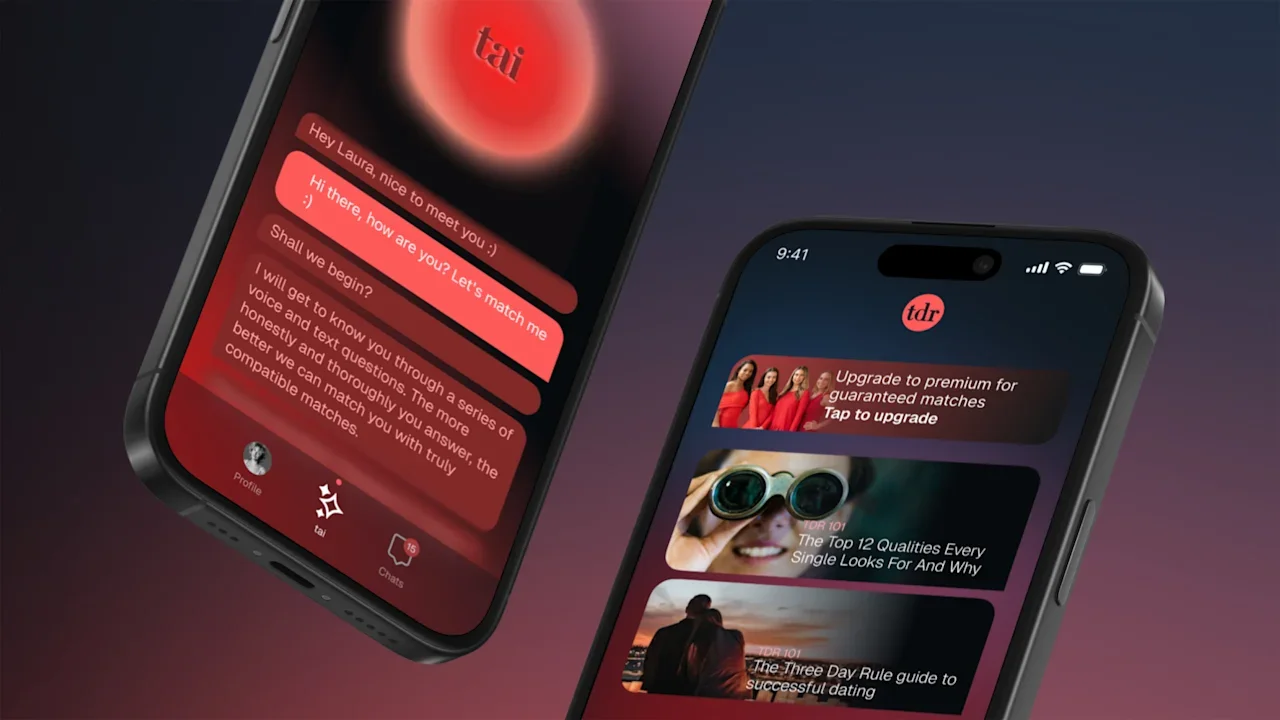
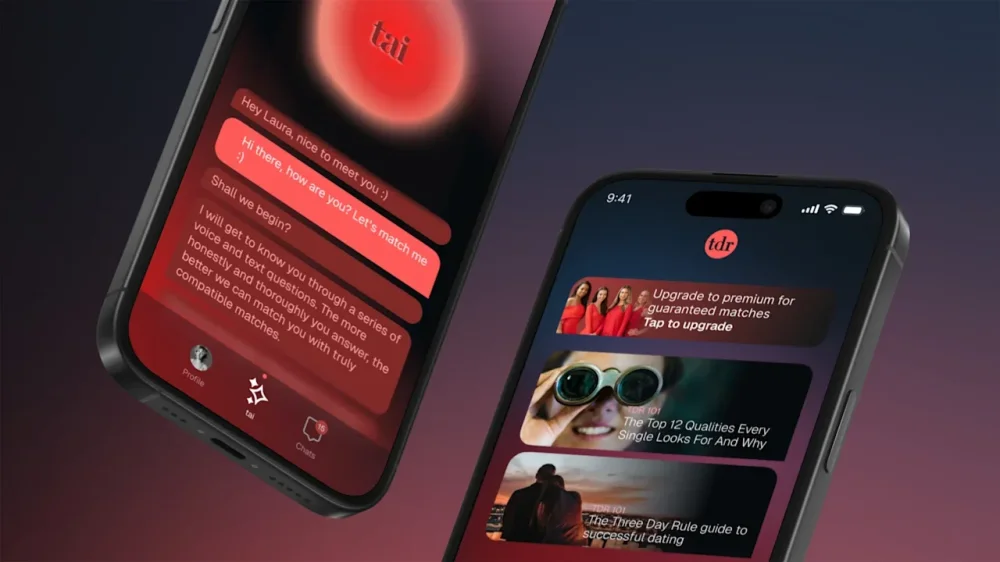
Matchmaking is an ancient dating process that stretches back thousands of years. But as online dating fatigue has begun to dominate the modern-day discourse around finding love, one company is betting that matchmaking will see a revival, and they’ve spent years developing a tool to make it happen: an AI matchmaker named Tai. One might argue that all modern dating apps aim to serve as a kind of matchmaker; an intermediary whose purpose is to connect two singles with each other. But Adam Cohen-Aslatai, CEO of the matchmaking company Three Day Rule, says dating apps still put the onus on users to choose the right partners based on what the algorithm serves. In contrast, he explains, a traditional matchmaker uses their in-depth knowledge of the client to facilitate that process, selecting matches that aren’t just compatible on a screen, but in real life. Now, Three Day Rule is rolling out its first-ever app designed to bring that human-centric matchmaking experience to a broader client base. The app leverages multiple AI models built upon 15 years of matchmaking data collected by the company. While Three Day Rule’s elite “white-glove” matchmaking services typically run clients around $2,000 per month, its AI matchmaker is available starting for free. AI features have become increasingly popular on existing dating apps in recent months. But Cohen-Aslatai says none of them are fixing the larger problem: Self-serve dating apps just don’t work very well. Traditional dating apps are effective 9-11% of the time, he claims, compared with an 70-80% success rate for traditional matchmaking. “Matchmakers aren’t self-serve; they are serving you,” Cohen-Aslatai says. “They are doing all the work for you. And they’re saying, ‘I know you better than you know yourself. I know what you need for long term relationships. And I’m not going to let you waste your time on people that are candy, I’m going to give you the full meal.’” Is matchmaking the new swiping? For many singles searching for love, AI-powered tools are becoming an integral part of the swiping process. Hinge now uses AI to help users craft better profile prompt responses; Tinder is set to roll out AI-powered personalized matches; the AI assistant app Rizz uses AI exclusively to help users come up with responses on dating apps; the AI relationship advice app Meeno helps men find love; and Bumble founder Whitney Wolfe Herd even announced that the company is currently working on its own AI matchmaking service. Cohen-Aslatai has seen it all. He previously worked at dating apps including The Meet Group, Zoosk, and Bumble’s gay dating app Chappy, and even founded and sold his own app called S’More. But, over the past few years, he’s become convinced that matchmaking is the most effective dating option out there. He argues that, on dating apps, users are looking for a match that meets their requirements on paper—standards that, oftentimes, are preventing them from taking healthy risks. Matchmakers are trained to take those preferences into consideration while also encouraging clients to try people slightly outside their comfort zone. Three Day Rule’s process starts by assigning three experts to each client: A matchmaker tasked with learning everything about the client’s needs and wants in a relationship, a coach to help advise clients on dates, and a recruiter who meets potential matches at places like the airport or the beach. For its highest paying VIP members, the company offers everything from personal stylists to hair and makeup services. It’s dating for people with more than just a little extra money who don’t want to leave their love lives up to chance. Cohen-Aslatai stepped in as the CEO of Three Day Rule last October. In the past year, he says company sales have increased by a whopping 40%. Its VIP matchmaking membership—which costs a head-turning $100,000 for 16 months—has also shot up from accounting for 5% of its business to 50% in the same period. Last year, Three Day Rule conducted its own survey to understand how singles outside of its network are thinking about matchmaking. The report, which included 250 respondents, found that 74% would try matchmaking, while only 1% actually have. The main reason for that discrepancy is the price barrier. “So, if you think that matchmaking works, and everyone would try it, but it’s too expensive, the question is, how do we democratize this concept?” Cohen-Aslatai says. How Three Day Rule built an AI matchmaker The answer he’s landed on is Tai. Cohen-Asla”tai” and Sneha Ramachandran, general manager of Three Day Rule’s new app, have been working on perfecting this AI matchmaker for the past two years. Whereas Three Day Rule’s services typically start at a hefty $1,500 for a three-month plan, its new app comes in a free tier, which gives users five minutes of daily voice conversation with Tai and a separate AI coach (alongside unlimited texting), as well as five ongoing conversations with matches. A second premium tier costs $99 per month and includes four guaranteed match introductions per month, 10 minutes of daily conversation with Tai and an AI coach, and unlimited conversations with matches. Tai is built off of ChatGPT, which, Cohen-Aslatai says, has the fastest voice response rates of any other models on the market. But while ChatGPT serves as the base of the model, it’s trained on data collected by Three Day Rule. That means that all of Tai’s interactions—from their tone to the questions they ask—are informed by data collected through Three Day Rule’s human matchmakers. Unlike other dating services, which are primarily focused on facilitating first dates, Cohen-Aslatai explains that Three Day Rule has collected a wealth of post-date data. This information, gathered through multi-question surveys sent after every date, lets matchmakers know exactly what the client did and didn’t like about their match. All of these insights have helped to refine Tai’s matching abilities. When users first download Three Day Rule, they’ll have to complete a mandatory photo verification process in order to join. From there, they’ll have an initial conversation with Tai (via text or voice messages), during which Tai will gather key details like important preferences, demographic and psychographic information, and relationship deal-breakers. After that discussion, Tai will begin searching the app’s database for matches. Over time, the model will make its way through 150 questions identified by Three Day Rule as important topics to understand exactly what a client is looking for. “We’re trying to really deeply understand your personality,” Cohen-Aslatai explains. Part of that process means attempting to replicate the uniquely human touch of a matchmaker in AI form. If a user is giving brief “yes” or “no” answers, Ramachandran says, Tai will adjust its responses to match that cadence and probe deeper in later conversations. A chattier user will get chattier answers. Tai is even programmed to trick you by asking the same question in different ways if it suspects you may just be giving the answer it wants to hear. When the app identifies potential matches, both parties have to approve the decision before they’re connected online. From there, users can also chat with a second AI model in the app, which stands in for the human coach the company offers to its clients. This model has been trained using company podcasts, articles, and coaching guidelines to field questions about dates, debrief interactions, and help clients overcome personal obstacles to love. In response to a question like, “I liked him, but how can I know if he liked me?” for example, it might give three potential signals of mutual attraction. The app is built to offload the effort of swiping, searching, and vetting potential partners from the user onto the AI matchmaker. All the client should have to worry about, in theory, is uncovering what they really want in a partner. Why relationship experts are wary about AI-powered dating apps Tai is designed to make navigating the online dating world less complicated. But Treena Orchard, an associate professor at the School of Health Studies at Western University in London and author of the book Sticky, Sexy, Sad: Swipe Culture and the Darker Side of Dating, isn’t convinced. As a researcher specializing in the intersection of sex, relationships, gender, and tech, Orchard is generally wary about the claims made by many dating apps that AI features will make dating easier—especially considering that, from her perspective, that shouldn’t necessarily be the goal. “The problem I have with a lot of these different services is that it just really amplifies the difficulties that already exist,” Orchard says. “Dating is going to be hard no matter who’s doing it, because relationships are strange and we’re humans, and we have lots of desires and things pent up, and we’re not really good at teaching each other how to talk about these things.” When we start to rely on an external source to facilitate dating—whether that be a matchmaker or a digital device—she says that we become removed from the process of actually getting to know each other. In regard to Three Day Rule’s new app, Orchard sees the utility of tapping into a network created by professional matchmakers who have experience in pulling together eligible singles. Still, she says, it’s important to recognize that, while matchmaking may be statistically more effective than dating apps, that’s also because it’s historically required a much greater financial investment. “Okay, it’s been trained by high end white-glove matchmakers—great—but it’s still AI,” Orchard says. “One of the critiques I have is that variety is so important. Taking a chance on someone new and someone different can open up a whole interesting Pandora’s box of experiences that you could never have calculated in your wildest dreams if you just rely on an algorithm.” On a broader scale, she’s concerned about what it might mean to continuously find new ways to incorporate AI into our romantic relationships. For those who feel trapped in the online dating cycle, she recommends balancing the apps with trying new in-person events and hobbies—even, and especially, if it’s hard. “The struggle is how we learn about rejection, about resilience, about failure, about one another, and how we get better at dating and become confident in ourselves,” Orchard says. View the full article
-
Search behavior keeps tilting toward AI answers. People still click classic results, but more are starting with AI summaries and only clicking when they want depth, proof, or tools. Your job as an SEO is now twofold: Rank in traditional search. Get your pages cited or summarized inside AI experiences. How do you do both without doubling your workload? How AI-powered search surfaces and cites content Before diving into tactics, it’s worth grounding in what’s actually confirmed about how AI search experiences pull and cite results. AI-powered search engines ground their answers in indexed, high-quality pages Google AI Overviews and AI Mode show answer summaries with links and do not require special markup beyond normal SEO fundamentals. Google says these features help people understand complex topics and then “jump off” to explore the web. (Impressions appear in Search Console’s Web search type, though Google hasn’t confirmed dedicated tracking for AI Overview data.) Bing Copilot Search grounds answers in Bing’s index and shows cited sources with each result. If you win in Bing, you increase your odds of being cited in Copilot. Perplexity shows numbered citations in every answer by design. If you give it clean, verifiable facts, it is more likely to point to you. AI visibility is volatile Research found that within two to three months, 70% of pages cited in AI Overviews changed. Treat AI Overview visibility as a moving target. Classic SEO still matters AI Overviews cite sources that overlap heavily with Google’s top 10. Perplexity’s citations overlap about 60% with Google’s top 10, too. If you do not rank, your odds of being cited fall. Once you understand where AI engines pull their answers, the next move is making your content easier to find, cite, and trust. 17 tips to help your content rank – and get cited Once you understand where AI engines pull their answers, the next move is making your content easier to find, cite, and trust. These tips reflect what’s working based on how generative engines behave today. The patterns will keep changing, so think of this as a playbook in progress. 1. Lead with the answer, then earn the click Open with a clear, verified summary that a model can quote. Follow with detail, nuance, and tools that a human will value after they skim the overview. This matches how Google describes AI Overviews and AI Mode: They give the summary first, then send people to links for deeper reading. Do this: Add a short TL;DR box under your H1. Two or three sentences with the key takeaways and one or two high-quality sources. 2. Make every claim easy to cite AI experiences favor atomic facts with clean attribution. For statistics or quotes less than three years old, link to the primary source. Perplexity and Copilot show their sources in the answer, which means your “proof link” needs to be obvious and trustworthy. Do this: When you cite adoption or usage data, point to original research rather than a roundup. 3. Organize pages around questions and tasks Use question-based subheads and task flows instead of long, unstructured prose. Google’s documentation notes that AI Mode helps with multistep exploration and comparisons. Map your headings to the follow-up questions people naturally ask. Do this: Convert long sections into Q&A blocks and step-by-step checklists. 4. Show your credibility Make your experience, sources, and editorial process visible. Bylines, expert bios, publication and modification dates, methodology, and clear sourcing all help models and people trust you. Do this: Add a short “How we researched and tested this” section to your key pages. Dig deeper: An SEO guide to understanding E-E-A-T 5. Use structured data to express facts There’s no special schema for AI Overviews, but high-quality schema still clarifies what your page is about. It also correlates with stronger organic visibility, which now correlates with AI Overview citations. A recent head-to-head test found that the page with solid schema won the AI Overview and ranked best. Do this: Add Article markup on all editorial pieces. Layer in Product, FAQPage, HowTo, or Review where it genuinely applies. Note that Google has reduced visibility for HowTo and FAQ rich results, so treat them as meaning clarifiers, not win buttons. 6. Keep content indexable, fast, and free of blockers If your primary content is slow, hidden behind heavy scripts, or obscured by pop-ups, retrieval suffers. Follow Core Web Vitals and avoid intrusive interstitials. Google’s guidance connects these factors to search success and machine understanding. Do this: Ship server-rendered HTML for core content, reduce render-blocking JavaScript, and remove entry pop-ups. 7. Write for two reading modes Provide a tight overview for scanners and a deeper dive for evaluators. Use a table of contents for fast jumps. This mirrors how AI experiences condense, then link out. Do this: Add “Key takeaways” after the intro and expandable sections for details. Get the newsletter search marketers rely on. See terms. 8. Refresh with intent, not just a date bump AI Overview coverage and citations move week to week and vary by category. Update when your advice, prices, features, or comparisons change. Avoid tweaking dates without substance. Track AI Overview volatility by query so you can spot churn fast. Do this: Keep a change log at the end of evergreen posts and call out what changed and why. 9. Turn comparisons into criteria-based tables Replace “X vs. Y” prose with tables that list the criteria you used, the thresholds, and who each option is for. Models and humans both parse this more easily. When you cite numbers, link to primary spec sheets or tests. Do this: Add a “How we chose” block that lists the decision rules you used. 10. Create short, canonical definitions for key entities Add mini glossary blurbs for important terms, models, ingredients, or frameworks. Short, clean definitions get quoted more often than you expect. Do this: Put definitions where they first appear and collect them in a glossary at the end. 11. Win where AI engines shop for sources Copilot Search is grounded in Bing and shows sources by design. Perplexity and other generative engines also lean on trusted, high-ranking pages to ground their answers. The takeaway is simple: classic SEO visibility drives AI visibility. Do this: Track your priority queries in both Google and Bing and close gaps that block generative visibility. 12. Seed the next logical follow-ups Treat each section like the first turn in a chat. End with two or three “What to ask next” prompts. This increases the chance your page is useful across a user’s multistep journey, and the wording can influence how models branch. Google notes AI Mode often uses a “query fan-out” technique to explore subtopics. Do this: Add a short “Next questions to explore” list after each major section. Dig deeper: Chunks, passages and micro-answer engine optimization wins in Google AI Mode 13. Target jobs to be done Write to the tasks your readers are trying to complete – whether they’re evaluating, choosing, implementing, or troubleshooting. Include prerequisites, pitfalls, and timelines. This maps to the complex, multistep queries that trigger AI features. Do this: Add checklists, timelines, and a first-week plan for any how-to. 14. Publish original data and demonstrations Original benchmarks, screenshots, and walkthroughs make you the primary source. That helps both trust and citations. AI Overviews cite deep pages far more than home pages, which is another reason to publish detailed proofs on specific URLs. Do this: Ship one small data set or test each quarter and link to the raw data. 15. Add video where a demo beats text YouTube citations inside AI Overviews have grown, especially for instructional topics. If your space benefits from motion or show-and-tell, consider a short explainer or demo video with clear labeling and chapters. Do this: Embed the video on the canonical page and use consistent titles, captions, and schema. Dig deeper: The SEO shift you can’t ignore: Video is becoming source material 16. Build topic clusters, not one-off posts Because AI Overview citations churn, a single hero post is fragile. Build topic clusters with a pillar page, comparison pages, implementation guides, troubleshooting content, and tools. Internal links make the whole cluster discoverable and more resilient against weekly AI Overview shifts. Studies show AI Overview results are more volatile than classic organic results. Do this: For each money topic, plan four to six supporting assets that answer specific jobs to be done. 17. Measure what matters beyond raw clicks AI Overviews can push organic listings down and often reduce clicks, but that doesn’t mean they have zero value. Track: Presence in AI Overview, Copilot, and Perplexity. Assisted conversions. Brand query growth. Time on site for AI-referred visits. Do this: Create a weekly visibility board. Track whether your brand or URLs appear in the AI Overview for target queries, which page version is cited, and how often it changes. Segment analytics for perplexity.ai and copilot.microsoft.com referrals. Use Search Console’s Web search type to monitor traffic that includes AI features. Visibility now means ranking and being cited You’re ultimately optimizing for people who skim the summary first and click second. Make your content easy to cite, trust, and act on. Do that with clean facts, clear structure, and original proof – and you’ll earn visibility in both classic search and generative answers. View the full article
-
Did you know you can customize Google to filter out garbage? Take these steps for better search results, including adding Lifehacker as a preferred source for tech news. I really don't recommend studying with other people. In my adult life, I've accumulated an Associates, Bachelors, and Masters, plus a bunch of certificates—in all those years of studying, I was frustrated with group work much more often than I was not. Sessions would devolve into chit-chat and venting sessions or someone would try to avoid pulling their weight by foisting work off on the rest of us. I became the person who would complete the entire project and let everyone put their name on it because I just wanted to avoid all that—but it was probably because I didn't know the right methods to make these sessions productive. There are actually a few effective methods that will help you study with partners or groups, but you have to know them before you get into that group setting—or else run the risk of no one getting much working done. Try one of my favorite group study methods—“think, pair, share”—the next time you want to study with someone else. I wish I'd known about this one in college, but you still have a chance. What is “think, pair, share”? Think, pair, share is a teaching technique typically employed by instructors, but it's easily modifiable for people getting some studying done, too. According to Western Governors University, it was developed by a professor named Frank Lyman in 1981 and is helpful for shy students, as it encourages them to engage in discussion. The name basically tells you what you need to do: First, you think about the subject at hand, studying it until you are pretty sure you grasp it. Then, you pair up with someone to discuss it. Finally, you share what you read, understand, and don’t understand with the group afterward. Ideally, by going over the material together, you’ll help each other fill in gaps in your understanding and enhance what you already know. Use TPS to its maximumThose are overly simplistic steps, so you need to have a plan for how you'll approach each one. "Think about the subject" is too general. On your own, you should be reading your material critically, using a reading comprehension aid like KWL or SQ3R. Those ask you to write down what you think you know, what you want to know, and what you eventually learn, which forces you to read carefully so you find the answers. When using TPS, they perform a dual function: They give you questions you can ask to the larger group, too. When it comes time to share, approach it with a plan, too. Volunteer to structure the study session and have everyone go around one at a time to share their favorite insight from the material or idea for the project. Split into pairs and use the Feynman technique, which asks you to teach a concept to another person and relies on the idea that if you can break an idea down well enough to explain it simply, you understand it well. Why think, pair, share works for studyingIf you’re familiar with other group study methods, like the jigsaw method or Feynman, some of the elements of TPS might sound familiar. With jigsaw, each person in the group studies one part of the assigned text, then explains it to everyone else. When using Feynman, you explain the topic you studied as simply as you can to someone else who knows nothing about it. The difference is that with TPS, everyone in the group knows the material before discussing, so you’re not necessarily teaching anyone or being taught, so much as you’re comparing ideas. When you’re sharing what you know, you make space for someone else to ask follow-up questions, forcing your brain to use active recall to search around for the answer—or sending you back to the source material to look it up. Hearing someone else’s perspective can help you reframe how you think of the topic, causing it to stick in your brain even more. View the full article
-
Shares in AppLovin Corp were up slightly in premarket trading today after falling by double digits on Monday. The volatile movement follows a Monday report about a rumored probe by the Securities and Exchange Commission (SEC), which reversed the fortunes of what had been a high-growth tech stock for much of 2025. Here’s the latest on AppLovin and what to know: What was reported about AppLoving? On Monday, Bloomberg reported that the SEC was looking into the ad tech company’s data collection practices in response to a whistleblower complaint and multiple short-seller reports published earlier this year. Specifically, the regulatory agency is looking into whether AppLovin violated service agreements with its platform partners to “push more targeted advertising to consumers,” Bloomberg reported, citing anonymous sources. Reuters reported on the rumored probe later on Monday. AppLovin did not immediately respond to a request for comment from Fast Company. A spokesperson for the SEC said the agency was unable to respond to press requests due to the ongoing government shutdown. How has AppLovin’s stock reacted? AppLovin Corp stock (Nasdaq:APP) has fallen significantly since the reports surfaced. Shares were down more than 14% by market close on Monday. On Tuesday morning, however, the stock remained volatile. It was down close to 4% in premarket trading earlier in the morning but moved into positive territory later in the session. It was up about 1.11% as of this writing. The stock had seen tremendous growth this year, trading at around $341 a share in early January and mushrooming to over $682 as of Friday of last week—an increase of around 100%. In terms of growth, it has outperformed Big Tech giants such as Nvidia, Meta, Google, and Apple. In September, AppLovin’s stock was added to the S&P 500. This followed a better-than-expected earnings report in August in which net income more than doubled to $819.5 million, CNBC reported. At the time, the company was seen as benefiting from its AI-powered technology that helps advertisers better target users in mobile games. This story is developing… View the full article
-
Microsoft is testing a new and updated layout for its Copilot product box/section within the Bing search results. It looks like they just swap the answer and product listing sections from one side to the other.View the full article
-
Google had a bug in Google Discover that showed the publisher's name and logo twice on a story. The publisher's name showed once at the top and once at the bottom of the article card in the Google Discover feed.View the full article
-
We may earn a commission from links on this page. Deal pricing and availability subject to change after time of publication. Amazon Big Deal Days is coming October 7-8, and Lifehacker is sharing the best sales based on product reviews, comparisons, and price-tracking tools before it’s over. Follow our live blog to stay up to date on the best sales we find. Subscribe to our shopping newsletter, Add to Cart, for the best sales sent to your inbox. New to Prime Day? We have a primer on everything you need to know. Sales are accurate at the time of publication, but prices and inventory are always subject to change. Apple's AirTags have changed the way I travel. I no longer worry about losing my belongings because one AirTag always stays in my backpack and one lives in my luggage. The moment I leave my backpack behind anywhere, I get a notification that reminds me to retrieve it; when I land, I do a quick check to confirm that my luggage has also arrived. If you're in the market for a great Bluetooth tracker to use with your iPhone, the AirTags are hard to beat—and the four-pack is almost 35% off during the October Prime Day sale. That matches its lowest ever price with a $40 discount over the list price. Apple AirTags (4-pack) $64.99 at Amazon $99.00 Save $34.01 Get Deal Get Deal $64.99 at Amazon $99.00 Save $34.01 If you do need four AirTags (or can split the purchase with a friend), this discount brings the cost down to nearly $16 per unit—that's $4 less than the current deal price of $20 for a single AirTag (which is a dollar above its all-time low price). Once you buy an AirTag, check out all their hidden features to get the most out of it. Even though it may sound tempting, you should avoid using AirTags to track your kids—it won't give you real-time updates on a person's location, so it's best used in cases where you don't need that feature. Looking for something else? Retailers like Walmart and Best Buy have Prime Day competition sales that are especially useful if you don’t have Amazon Prime. Walmart’s Prime Day competition sale runs from Oct. 6 at 7 p.m. ET through Oct. 12 and includes deals up to 50% off. It’s an especially good option if you have Walmart+. Best Buy’s Prime Day competition sale runs from Sept. 27 through Oct. 12, and has some of the best tech sales online. It’s an especially good option if you’re a My Best Buy “Plus” or “Total” member. Target’s Prime Day competition sale runs from Oct. 5 through Oct. 11, and it has deals going up to 50% off. You can become a Circle member for free. Our Best Editor-Vetted Prime Day Deals Right Now Apple AirPods Pro 2 Noise Cancelling Wireless Earbuds — $169.99 (List Price $249.00) Meta Quest 3S 128GB All-In-One VR Headset — $249.00 (List Price $299.99) Apple iPad 11" 128GB A16 WiFi Tablet (Blue, 2025) — $279.00 (List Price $349.00) Samsung Galaxy Tab A9+ 10.9" 64GB Wi-Fi Tablet (Graphite) — $148.94 (List Price $219.99) Blink Mini 2 1080p Indoor Security Camera (2-Pack, White) — $34.99 (List Price $69.99) Ring Battery Doorbell Plus — $79.99 (List Price $149.99) Blink Video Doorbell Wireless (Newest Model) + Sync Module Core — $34.99 (List Price $69.99) Shark AV2501S AI Ultra Robot Vacuum with HEPA Self-Empty Base — $229.99 (List Price $549.99) Amazon Fire HD 10 (2023) — $69.99 (List Price $139.99) Wyze Cam v4 2K Wired Wi-Fi Smart Security Camera (White) — $25.95 (List Price $35.98) Deals are selected by our commerce team View the full article