ResidentialBusiness
Administrators
-
Joined
-
Last visited
Everything posted by ResidentialBusiness
-
 Look at your firm through their eyes. By Martin Bissett Business Development On a Budget Go PRO for members-only access to more Martin Bissett. View the full article
 -
Look at your firm through their eyes. By Martin Bissett Business Development On a Budget Go PRO for members-only access to more Martin Bissett. View the full article
-
Normalizing good urbanism requires culture change, and culture change requires an advocacy long game that makes space for ideas that seem impossible today. Political scientist Joseph Overton developed a concept in the 1990s that had a major influence on my views on and approach to building support for good urbanism. “The Overton window” refers to the range of ideas that are acceptable or mainstream in public discourse at a given time. The acceptable topics are shaped by public opinion, media coverage, influence of special interest groups, and actions of political leaders. As Joseph Lehman, a colleague of Overton’s put it, “Public officials cannot enact any policy they please like they’re ordering dessert from a menu. They have to choose from among policies that are politically acceptable at the time.” Ideas that fall within the Overton window are more likely to be discussed and debated in the public sphere, while those that fall outside of it may be considered too extreme or fringe to be given serious consideration. The window shifts over time as public opinion changes, making new ideas acceptable and mainstreaming previously unacceptable ideas. Before the Overton window shifted, these opinions were considered outside the range of allowable opinion: The earth isn’t flat, nor is it the center of the universe. Multiple nationalities will be taught in the same classroom. A computer will one day fit on your desk. Tiny germs exist that you can’t see with your eyes. Human organs and limbs will be replaced. Art will be created by voice command. Radical departures What I’ve learned from the Overton window concept is that people need radical departures from normal scenario planning exercises. If you want to normalize walk-friendly, bike-friendly infrastructure, then you need to start by visualizing wildly different scenarios. When you eventually compromise, you’ve still made progress. Here’s a list of taboo urbanism ideas that might be worth shifting from fringe to mainstream: Zoning abolition — If incremental change is the aspirational goal, good luck with legalizing mixed-use neighborhoods. It’s been said that zoning is an unnecessary evil, so lead with a proposal to abolish it altogether. Yes In God’s Backyard (YIGBY) — Churches could provide short-term housing for the homeless or low-income individuals, free from government oversight. The faith-based community doesn’t agree on everything, but they all certainly want to help those in need. 3D-Printed Buildings — Promote the use of emerging technology to create homes and retail centers far cheaper than traditional construction. Grant people greater control over their property. Universal Basic Mobility — It’s like universal basic income, but for transportation. Several cities have piloted bus and bike subsidies. A radical proposition would be privatized UBM. Off-Grid Living — Decriminalize frontier life. Have you ever heard stories of people trying to disassociate from traditional utility services? Or building something without a permit? Local Farming — I know you’ve seen community gardens, but you haven’t seen people selling their own food, because it’s not allowed. And if you introduce fresh milk, the ATF will raid the operation. Homesteading — Programs that allow individuals to reclaim vacant or blighted properties. This could be a way to turn ordinary homeowners into developers. Asking big What If questions doesn’t have to be confrontational, but it will always make some people uncomfortable. It’s worth it. That’s how civilizations advance. View the full article

-
Lower-than-expected FCA figure is still set to be one of the banking industry’s biggest compensation schemesView the full article
-
We may earn a commission from links on this page. Deal pricing and availability subject to change after time of publication. Did you know you can customize Google to filter out garbage? Take these steps for better search results, including adding my work at Lifehacker as a preferred source. Amazon Big Deal Days is on October 7-8, and Lifehacker is sharing the best sales based on product reviews, comparisons, and price-tracking tools. Follow our live blog to stay up to date on the best sales we find. Subscribe to our shopping newsletter, Add to Cart, for the best sales sent to your inbox. New to Prime Day? We have a primer on everything you need to know. Sales are accurate at the time of publication, but prices and inventory are always subject to change. I take my post-workout recovery seriously. I've tried all kinds of different massage guns and non-gun gadgets, and it's no exaggeration to say that these kinds of devices have changed my life. TheraBody is probably the most well-known household name in massage guns, and right now, the TheraBody TheraGun Prime—normally priced at $319.99—is available for $219.99 on Amazon during Prime Day. TheraBody TheraGun Prime $219.99 at Amazon $319.99 Save $100.00 Get Deal Get Deal $219.99 at Amazon $319.99 Save $100.00 The Theragun Prime really stands out because it's seriously quiet compared to most massage guns out there. A lot of cheaper models sound like you're using a power tool on your muscles, but Theragun's QuietForce Technology keeps things nice and low-key. You can actually use it while watching TV or without bothering everyone around you. Plus, the signature triangular handle design comes in handy, especially when you need to reach those awkward spots on your back and shoulders without contorting yourself or asking someone for help. The battery life is another huge plus—you get about two hours per charge, which means you're not constantly hunting for the charging cable. What's really cool is that it connects to your phone via Bluetooth. The Therabody app walks you through different routines and shows you how to target specific sore spots, which is super helpful if you're not totally sure what you're doing. The Prime has four speed settings that go from 1,750 to 2,400 percussions per minute, so you can keep it gentle for a warmup or really dig in deep after a tough workout. It's versatile enough that beginners won't feel overwhelmed, but it still packs enough punch for serious athletes. Looking for something else? Retailers like Walmart and Best Buy have Prime Day competition sales that are especially useful if you don’t have Amazon Prime. Walmart’s Prime Day competition sale runs from Oct. 6 at 7 p.m. ET through Oct. 12 and includes deals up to 50% off. It’s an especially good option if you have Walmart+. Best Buy’s Prime Day competition sale runs from Sept. 27 through Oct. 12, and has some of the best tech sales online. It’s an especially good option if you’re a My Best Buy “Plus” or “Total” member. Target’s Prime Day competition sale runs from Oct. 5 through Oct. 11, and it has deals going up to 50% off. You can become a Circle member for free. Our Best Editor-Vetted Prime Day Deals Right Now Apple AirPods Pro 2 Noise Cancelling Wireless Earbuds — $169.99 (List Price $249.00) Meta Quest 3S 128GB All-In-One VR Headset — $249.00 (List Price $299.99) Apple iPad 11" 128GB A16 WiFi Tablet (Blue, 2025) — $279.00 (List Price $349.00) DJI Mini 4K 3-Axis Gimbal Camera Drone (Under 249 Grams) — $239.00 (List Price $299.00) Samsung Galaxy Tab A9+ 10.9" 64GB Wi-Fi Tablet (Graphite) — $148.94 (List Price $219.99) Blink Mini 2 1080p Indoor Security Camera (2-Pack, White) — $34.99 (List Price $69.99) Ring Battery Doorbell Plus — $79.99 (List Price $149.99) Shark AV2501S AI Ultra Robot Vacuum with HEPA Self-Empty Base — $229.99 (List Price $549.99) Amazon Fire HD 10 (2023) — $69.99 (List Price $139.99) Wyze Cam v4 2K Wired Wi-Fi Smart Security Camera (White) — $25.95 (List Price $35.98) Deals are selected by our commerce team View the full article
-
Being advised to max out your 401(k) is Personal Finance 101. But is that universally solid guidance? Tax-sheltered retirement plans offer the convenience of automatic investments and tax breaks—pretax contributions and tax-deferred compounding for traditional 401(k)s and tax-free compounding and withdrawals for Roth contributions. But the availability and quality of the 401(k) are also important considerations. Some workers don’t have access to an employer-provided retirement plan, and 401(k) quality can be uneven. High administrative costs, meager employer matching contributions, and costly investment lineups can detract from 401(k)s’ tax-saving features. Meanwhile, the tax efficiency for investors’ nonretirement accounts has improved over the years. Broad market equity exchange-traded funds have dramatically reduced the tax drag for taxable accountholders, effectively simulating the tax deferral that comes with investing in a 401(k). And many robo-advisors use other techniques to reduce the tax drag on investors’ taxable accounts—specifically, selling losing positions to offset gainers elsewhere in investors’ portfolios. That can reduce the capital gains taxes on positions when they’re eventually liquidated. Even as investing in a taxable account has grown more attractive, it’s a given that investors should put enough in a 401(k)—even a poor one—to earn matching contributions. If the 401(k) plan is weak and they have additional retirement assets to invest, they should opt for an IRA in lieu of steering more money to the poor 401(k) plan. Income limits apply to IRA contributions, but anyone can invest in a Roth IRA through the “backdoor,” provided they have earned income to cover the contribution amount. Multiple factors determine whether a taxable account can beat a 401(k) But what if they have additional retirement assets to invest? Once the IRA is fully funded, would those dollars be better off in a weak 401(k) or in a brokerage account held outside a tax-sheltered account? The answer here, as with so many financial questions, depends on a couple of key factors, especially the following: 401(k) plan quality: How bad is the plan? Does it have high administrative costs and subpar and/or expensive investment options? Or is it simply that the lineup includes some lackluster funds that are past their prime? Comparing your plan to others can help you make that assessment. The quality and tax efficiency of the investments in the taxable accounts: Investing in a taxable account will rarely be the better option unless you can invest in securities that make few ongoing distributions of income, capital gains, or both. The good news is that investors can opt for a brokerage platform that offers a good array of low-cost, tax-efficient options—namely, index-tracking ETFs and municipal-bond funds. The investor’s tax bracket at the time of the contributions: Being able to make pretax contributions—as is the case with traditional 401(k)s—will be more valuable to the investor who’s in a high tax bracket at the time of that contribution than it will be to the person who’s in a lower tax bracket. The tax bracket at the time of withdrawals: Withdrawals from taxable accounts receive more favorable (and flexible) tax treatment than withdrawals from traditional 401(k)s. Investors pulling from their taxable accounts will owe capital gains taxes, whereas money coming out of a traditional 401(k) is taxed at the investor’s ordinary income tax rate, which is higher. Moreover, because the 401(k) money has never been taxed, investors owe taxes on the entire withdrawal, not just the appreciation; taxable-account investors, by contrast, will only owe tax on their gains. Finally, 401(k) assets are subject to required minimum distributions at age 73. For investors who expect to be in a high tax bracket upon retirement, having assets in a taxable account—and enjoying more favorable taxation on the distributions—will be particularly beneficial. (Of course, Roth 401(k) withdrawals are more favorable still: Roth 401(k) assets can be rolled over to a Roth IRA to avoid RMDs. Better still, qualified withdrawals from Roth 401(k)s and IRAs are tax-free.) Taxable account vs. 401(k) takeaways Investors would do well to weigh their own personal tax situations—both current and future—as well as the quality of their 401(k)s when determining which account types to fund. Investors can also benefit from tax diversification—splitting assets across accounts with varying tax treatment, whether tax-deferred, taxable, or Roth—when saving for retirement. This article was provided to The Associated Press by Morningstar. —Christine Benz, Morningstar’s director of personal finance and retirement planning View the full article

-
Nostalgia is not a strategy: the past cannot returnView the full article
-
Fund managers are under pressure to deploy capital quickly and risk buying bad assetsView the full article
-
Bond markets are losing patience with political paralysisView the full article
-
Change in residence from the UK was disclosed in a Companies House filingView the full article
-
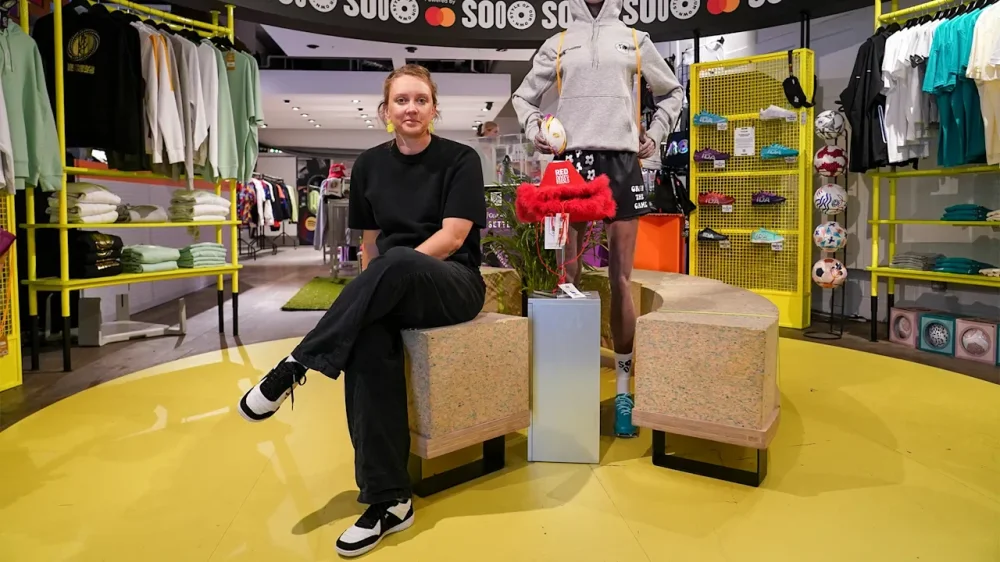
Laura Youngson didn’t expect to focus so much on soccer cleats when she organized a group of women to climb Mount Kilimanjaro and play a high-altitude match. The point of the 2017 game was to highlight inequality in sports for women and girls. On that front, Youngson achieved her goal with the match becoming the subject of a documentary and landing the group in the Guinness Book of World Records. Still, something bothered Youngson as the match unfolded. Glancing at the athletes’ feet, she was struck that all the women were wearing men’s or boy’s soccer cleats instead of gear that was designed specifically for them. The realization led her to launch IDA Sports, which makes soccer cleats for the unique athletic needs of women. “There was this real commercial gap for performance footwear for women,” said Youngson, whose IDA cleats are worn by players including Washington Spirit midfielder Courtney Brown. “As the game is growing, we’re in this moment when everything’s professionalizing, but the footwear wasn’t really keeping pace, so I wanted to go and change that.” IDA is among a growing number of companies founded in recent years to prioritize women in sports. These aren’t just lifestyle or athleisure brands. Moolah Kicks, for instance, makes women’s basketball shoes designed specifically for women’s feet and counts Courtney Williams of the WNBA’s Minnesota Lynx as one of its partners. Lindsay Housman founded Hettas, a performance running shoe company. Saysh, Olympic gold medalist Allyson Felix’s running shoe company, allows buyers to make free exchanges when their size changes during pregnancy. Beyond shoes, Liv Cycling makes performance bicycles for women and there’s even Indiana Fever partner Sequel tampons, which have spiraled grooves that help prevent leaks during strenuous activities. The companies are entering the market at a time when interest in women’s sports is intensifying. The WNBA has shattered attendance records recently, lifted by the star power of players like Caitlin Clark and Angel Reese. National Women’s Soccer League teams are worth 29% more this year than they were a year ago, with both Angel City and the Kansas City Current now valued at over $250 million. Several new pro sports leagues have formed in recent years, including the Professional Women’s Hockey League and the 3-on-3 Unrivaled basketball league. The Women’s Professional Baseball League is set to launch next year. Overall, women’s sports generated global revenue of $1.88 billion in 2024 and is projected to rake in $2.35 billion this year, according to consulting firm Deloitte. Commercial revenue, including sponsorships and merchandising sales, surpassed $1 billion globally for the first time last year. No more ‘shrink it and pink it’ All that growth means more opportunities for women-owned brands — and a chance to reject the “shrink it and pink it” mentality in which companies were criticized for taking men’s products and selling them to women by making them pretty rather than functional. “Marketing is all about understanding the needs of consumers,” said Dae Hee Kwak of the Center for Sport Marketing Research at the University of Michigan School of Kinesiology. “So thinking of the needs of the women’s sports fan and athlete, who understands them better than women, right?” Leela Srinivasan, CEO of the sports marketing and sponsorship platform Parity, said men’s products simply weren’t built for women’s bodies. “Women in motor sports will tell you that even the way the seat belts are designed, they don’t fit right, they don’t fall in the right places,” Srinivasan said. “You talk to Lynn Saint James, the motor sports legend, about how she couldn’t reach the pedals. Nothing has been designed with women’s bodies in mind.” Bonnie Tu, who founded Liv Cycling, experienced that problem with bicycles. “Whenever I’d go for vacation, I would take a bike from the hotel,” Tu said. “Most of the time, I would get myself hurt because the bike doesn’t suit me well. Because most of the bikes are meant for men, no matter if it’s a mountain bike or it’s road bike, it was all for men.” Youngson similarly looked at biomechanical needs when designing cleats for IDA, resulting in a product that features a wider toe box, narrower heel and shorter studs than men’s boots. For those who have spent decades in and around women’s sports, these shifts represent a profound change. Natalie White, who founded Moolah Kicks after playing basketball in college and working on the business side of several WNBA teams, recalled always playing the sport in boy’s and men’s shoes. “It wasn’t until I was a senior in college and I saw an advertisement that had more top WNBA players holding out men’s shoes that it really hit me, ‘Oh, my God, this is crazy.’ When you begin your career, through pro, you’re not only going to be playing in equipment that isn’t fit for you, but you’re going to be promoting it?” White said. “Oh my gosh, crazy.” The bigger shoemakers, including Adidas and Nike, have developed women’s soccer and basketball shoes in recognition of the growing market and the needs of the female athlete. Sabrina Ionescu has a signature shoe with Nike and, this past summer, Adidas released its first player edition of Adidas’ F50 Sparkfusion cleat with NWSL star Trinity Rodman. Women want products without pandering Kwak said that in addition to products made specifically for them, women also value authenticity as consumers. And that means working with women’s leagues, athletes and sometimes causes involving equity and social justice. IDA, for example, has partnered with the players’ unions for both the NWSL and the Gainbridge Super League, a top-tier domestic professional women’s soccer league that launched last year. Coalition Snow, a women-led ski and snowboard company based in Reno, Nevada, not only makes sure of safe and fair working conditions throughout its supply chain, it also uses recycled material for packaging and partners with a nonprofit to plant trees in rural Kenya for every board or pair of skis sold. Liv Cycling sponsors women’s racing teams and competitions, like the Tour de France Femmes, in addition to community clubs. Athlete involvement in the creation of products helps, too. It’s really what personalizes these companies compared to the sporting goods giants. But it’s all about taking that first leap, Youngson said. “As the game grows and professionalizes, it should be attractive to brands,” Youngson said. “So then you’re going, ‘Why aren’t you doing it?’ Because the money’s there, the game’s there. Why can’t we have all of this choice around us in the same way that the men’s game has?” AP Sports Writer Alyce Brown contributed to this report. —Anne M. Peterson, AP Sports Writer View the full article
-
View the full article
-
U.S. consumers are expected to spend a record $253.4 billion online this holiday season, according to Adobe’s annual shopping forecast. That’s a 5.3% year-over-year increase covering the period from Nov. 1 to Dec. 31. Adobe’s analysis, based on over 1 trillion visits to U.S. retail sites and 100 million SKUs across 18 categories, suggests that this year’s season will be shaped by the dominance of mobile shopping, flexible payment options and the growing influence of generative AI and social platforms on consumer behavior. Cyber Week to drive nearly a fifth of spend. Adobe expects 10 separate days where online spending will top $5 billion. Cyber Week – the five-day stretch from Thanksgiving through Cyber Monday – will account for $43.7 billion, or 17.2% of the season’s total, up 6.3% YoY. Cyber Monday remains the single biggest day at $14.2 billion (+6.3% YoY). Black Friday is forecast to grow faster, up 8.3% YoY to $11.7 billion. Thanksgiving Day spending will hit $6.4 billion (+4.9% YoY). Mobile overtakes desktop shopping. For the first time, mobile devices will drive the majority of online holiday spend, capturing 56.1% ($142.7 billion). That’s up 8.5% YoY and a dramatic shift from 2020, when mobile accounted for just 40% of holiday ecommerce. Buy Now, Pay Later expands share. Consumers continue to embrace Buy Now, Pay Later (BNPL) for budget flexibility. BNPL purchases to reach $20.2 billion this season (+11% YoY), including more than $1 billion on Cyber Monday alone, per Adobe. Notably, nearly 80% of BNPL transactions are expected to come from mobile devices. October boost. Adobe expects early holiday discounts in October to jump-start seasonal shopping, with Amazon’s Prime Day event – now an industrywide ecommerce moment – driving much of that activity. U.S. consumers will spend $9 billion across Oct. 7-8, a 6.2% year-over-year increase, as retailers roll out promotions to capture early demand, Adobe projected. Discounts will peak at 17% off list prices, setting the tone for an aggressive start to the holiday season, Adobe said. Discounting drives higher-ticket purchases: Discounting will remain aggressive, with deals peaking during Cyber Week: Electronics: up to 28% off Toys: 27% Apparel: 25% Adobe notes a “trade-up effect,” with shoppers using discounts to purchase higher-end items. The share of units sold from premium products is expected to jump in sporting goods (+56%), electronics (+52%), and appliances (+39%). Electronics, apparel, and home goods lead: More than half of all online spending will be concentrated in three categories: Electronics: $57.5 billion (+4% YoY) Apparel: $47.6 billion (+4.4% YoY) Furniture: $31.1 billion (+6.5% YoY) Smaller but fast-growing categories include groceries (+9.2% YoY) and cosmetics (+9.1% YoY). Adobe also projects surging demand for home improvement, health tech and gaming. Sales of activity trackers are expected to rise 1,055%, smartwatches 950% and gaming consoles 1,040% versus baseline spending earlier this year. Hot sellers include the Nintendo Switch 2, PlayStation 5, Xbox Series X, iPhone 17, Google Pixel 10, Dyson Airwrap Multi Styler, and trending toys like Disney Stitch Puppetronic and Labubu Dolls. AI and social media reshape discovery: There are two significant shifts in how consumers are finding products, according to Adobe: Generative AI traffic to retail sites is forecast to rise 520% YoY, following a 1,300% surge last year. Shoppers are turning to AI tools for research (53%), product recommendations (40%), deal-finding (36%), and gift inspiration (30%). Social media influence on ecommerce is expected to jump 51% YoY, with affiliate and influencer-driven sales also growing 14%. Why we care. Adobe’s forecast underscores the continued strength of U.S. ecommerce and signals how consumer behavior is shifting toward mobile-first, AI-assisted, and socially influenced shopping. While aggressive discounting will fuel sales, the bigger story may be how emerging technologies shape the path to purchase during the 2025 holiday season. View the full article
-
So I did something different: I asked the speakers and panelists at Ahrefs Evolve, our conference in San Diego from October 13-15, which newsletters they actually read and recommend. The result? A curated list of newsletters that span SEO, media,…Read more ›View the full article
-
A reader writes: I work in an industry notorious for poor work-life balance. Our company has an unlimited PTO policy, with most people on the team taking about 15-20 days, usually no more than five straight days at a time. (So one week off per quarter, just about) I have a team member who has asked for feedback. She wants to grow and be assigned more high-profile, visible projects. The quality of her work is average to slightly above average, so there’s room for growth there. On top of this, the main thing I believe is preventing her from achieving these goals is that people perceive her to be on vacation all the time. I’d say she’ll end up taking around 30 days (six weeks off) this year, and unlike most members of the team, more than a full office week at a time. Management never denies her the days off, and since she’s not on more high-profile projects, the coverage has not been a problem. Like I said, our industry culture is extreme and we push ourselves to burnout. It’s really not sustainable at the end of the day, so it’s honestly refreshing to see her try to have a personal life. Our office encourages us to have time off (within reason), and because we technically have unlimited PTO, she’s not breaking policy. But her personal life is not aligning with what she wants to achieve professionally. Is it poor advice for me to suggest she should take less vacation to prove she’s capable of handling more visible projects? Well … this isn’t quite “you can take the time off if you want it, but we’re going to hold it against you,” but it’s close. If she’s taking too much time off within the context of your culture and industry expectations, she deserves to know that. If she keeps asking for time off and it keeps getting approved, it’s not unreasonable that she thinks it’s fine. (And yes, people should look around and observe norms and calibrate accordingly, particularly when it’s a field-wide expectation, but management has a role to play there too.) Now, maybe the amount of time off she’s taking is fine for her current role, and it’s only a problem if she’s looking to take on different projects. That’s more fair! In that case, you should very clearly spell out how this works in your company. For example: “I want to be up-front that to be assigned to projects like X and Y, you’d likely need to take less time off than you do currently. Right now my sense is that there’s a perception that you’re gone a lot, which would be an obstacle to putting you on more high-profile work. So realistically, you’d need to decide if you’re willing to use less vacation in order to be considered for those projects, or whether that’s not a trade-off that’s worth it to you.” Think of it as sharing the playbook that everyone else is using, so she can make the right decisions for herself. For what it’s worth: if the 15-20 days a year that most people take includes sick leave as well as vacation, that’s really low and I’d urge your company to reconsider the way they frame their policy, because that is not what new hires are going to envision when they hear “unlimited time off,” even in an industry notorious for poor work-life balance. The post should I tell an employee she should take less time off if she wants better projects? appeared first on Ask a Manager. View the full article
-
Meta will stop running all political, electoral, and social issue ads across the European Union starting this week, citing the region’s new Transparency and Targeting of Political Advertising (TTPA) regulations that take effect Oct. 10. The details. The law requires platforms to gain explicit, separate consent from each user to use their data for political or issue-based targeting – a standard Meta says is unworkable at its scale. As a result, political ad delivery in the EU will end at 6 p.m. CET on Oct. 6. Why we care. For advertisers and campaigners, this means an immediate pause on EU political ad activity and necessary updates to API and campaign tools. This cuts off a major channel for advocacy, nonprofit, and public policy campaigns, and forces agencies to rethink how they reach and mobilize audiences across Europe ahead of key elections and legislative debates. The broader context. Meta has repeatedly warned that EU rules like the TTPA add “untenable complexity and legal uncertainty.” The company says its global transparency tools will remain available, but political messaging in the EU will now rely solely on organic reach. Bottom line. Meta’s political ad blackout highlights how strict EU data laws are reshaping digital campaigning – and how platforms are willing to withdraw rather than adapt to regulatory burdens. View the full article
-
Social Security Administration Commissioner Frank Bisignano was named to the newly created position of CEO of the IRS on Monday, making him the latest member of the The President administration to be put in charge of multiple federal agencies. As IRS CEO, Bisignano will report to Treasury Secretary Scott Bessent, who currently serves as acting commissioner of the IRS, the Treasury Department says. It is unclear whether Bisignano’s newly created role at the IRS will require Senate confirmation. The Treasury Department said in a statement that Bisignano will be responsible for overseeing all day-to-day IRS operations while also continuing to serve in his role as commissioner of the Social Security Administration. Bessent said in a statement that the IRS and SSA “share many of the same technological and customer service goals. This makes Mr. Bisignano a natural choice for this role.” The move to install Bisignano at the IRS adds another layer to the leadership shuffling that has occurred at the agency since the beginning of The President’s term. Bessent was named acting commissioner in August after The President removed former U.S. Rep Billy Long from the role less than two months after his confirmation, and nominated him as ambassador to Iceland. The four acting commissioners who preceded Long in the job included one who resigned over a deal between the IRS and the Department of Homeland Security to share immigrants’ tax data with Immigration and Customs Enforcement and another whose appointment led to a fight between former The President adviser Elon Musk and Bessent. Mike Kaercher, deputy director of the Tax Law Center at the New York University School of Law, points to a possible conflict of interest in Bisignano holding leadership roles at SSA and the IRS. “Putting the same person in charge of both the IRS and SSA creates a conflict of interest when SSA wants access to legally protected taxpayer data,” Kaercher said. With two day jobs, Bisignano joins a number of other The President administration officials to wear multiple hats, including Bessent, Marco Rubio, Sean Duffy, Jamieson Greer and Russell Vought. IRS and Social Security advocates expressed concern about the new appointment. Kathleen Romig, director of Social Security and Disability Policy at the Center on Budget and Policy Priorities, pointed to Bisignano being named to a position that appears to avoid congressional approval. “If the The President Admin asked for the Senate’s advice & consent, would they really want the same person running the government’s biggest program AND overseeing the implementation of the extraordinarily complex new tax law?” she said on the Bluesky social media app. And Nancy Altman, president of Social Security Works, an advocacy group for SSA recipients and future retirees, said Bisignano’s “divided attention will create a bottleneck that makes the inevitable problems that arise even harder to correct. Never in Social Security’s 90-year history has a commissioner held a second job. Bisiginano’s new role will leave a leadership vacuum at the top of the agency, especially since the Republican Senate hasn’t even confirmed a deputy commissioner.” Bisignano has served as CEO of Fiserv, a payments and financial services tech firm, since 2020. He is a onetime defender of corporate policies to protect LGBTQ+ people from discrimination. —Fatima Hussein, Associated Press View the full article

-
Zak Brown accused of stringing along Indycar star in $20.7mn High Court battle brought by team over alleged breach of contract View the full article
-
Small businesses looking to enhance operational efficiency could find a new ally in Slack’s latest innovations, designed to integrate AI capabilities directly into the world of workplace communication. Recently, Salesforce announced a series of advancements that will enable companies to build AI applications and agents capable of leveraging conversational data stored within Slack, addressing some of the most common frustrations faced by organizations. At the core of these updates are the newly introduced real-time search API and Model Context Protocol (MCP) server. These tools aim to provide developers with secure access to conversational data, allowing employees to harness insights from discussions that often remain buried in unstructured messages. As Denise Dresser, CEO of Slack, emphasizes, “The future of work is undeniably agentic, and the success of AI depends on its seamless integration into human workflows.” For small business owners, this means potentially transformative benefits that can drive productivity and enhance decision-making processes. One of the key advantages of this new functionality is the ability to unlock unstructured data within Slack. Traditionally, valuable insights from team conversations have been difficult to access. By utilizing the real-time search API, small business teams can save an average of 97 minutes every week by quickly retrieving relevant contextual information. This time savings directly translates into greater efficiency and the ability to redirect effort toward strategic activities. Moreover, accelerated decision-making is another promise of Slack’s new systems. By integrating app data with Slack conversations, businesses can access a comprehensive context that facilitates faster insights and actions. Early users have reported a 37% improvement in decision-making speed, enhancing their ability to respond to customer inquiries more swiftly. On the productivity front, leveraging these AI capabilities can lead to significant growth potential. Businesses that utilize integrated AI tools have been shown to achieve three times higher revenue growth per employee, illustrating the financial upside of this innovation. By integrating necessary applications directly into daily workflows, it reduces the common issue of context switching between various apps—a productivity killer that can drain up to 40% of a worker’s time. Additionally, businesses often struggle with technology adoption. Slack’s approach mitigates this by embedding new tools directly into the platform where teams are already engaged. A staggering 95% of Slack users report that using applications within Slack increases their value. This seamless integration can help ensure higher engagement and ease of use, mitigating the challenge of getting employees to adopt new tools. However, while these innovations provide exciting prospects, small business owners should remain aware of some potential challenges. The primary concern could be security and compliance, especially for companies handling sensitive information. Although Slack emphasizes enterprise-grade security features, it’s crucial for enterprises to assess whether these align with their internal policies and compliance requirements. Ensuring that employees understand data privacy issues and the secure use of conversational data remains imperative. Another consideration is the reliance on AI capabilities themselves. While AI can significantly enhance efficiency, there’s a learning curve involved in deployment. Small businesses may need to dedicate time and resources, either for training or ongoing management, of these new tools—making sure they don’t inadvertently increase workloads rather than alleviate them. Innovative partnerships with major players like Google, Dropbox, and Notion have already begun utilizing these new features to build applications tailored for Slack. This fosters a rich ecosystem in which small businesses can access cutting-edge tools tailored to their unique needs. For instance, Dropbox Dash provides real-time insights into files shared on Slack, eliminating inefficiencies associated with switching apps, while Notion AI integrates responses and analysis directly from discussions. As these features become generally available in early 2026, small businesses can begin to explore the exciting possibilities of integrating contextual AI into their daily operations. With secure access to conversational data, the integration of essential apps, and a landscape that promises easy adoption, Slack is equipping businesses with powerful tools aimed at enhancing productivity and growth in an increasingly collaborative world. For further details on these advancements, you can refer to the original press release at Salesforce: Slack Context-Aware AI Apps. Image via Salesforce This article, "Slack Empowers Developers with Real-Time API for AI-Driven Productivity" was first published on Small Business Trends View the full article
-
Small businesses looking to enhance operational efficiency could find a new ally in Slack’s latest innovations, designed to integrate AI capabilities directly into the world of workplace communication. Recently, Salesforce announced a series of advancements that will enable companies to build AI applications and agents capable of leveraging conversational data stored within Slack, addressing some of the most common frustrations faced by organizations. At the core of these updates are the newly introduced real-time search API and Model Context Protocol (MCP) server. These tools aim to provide developers with secure access to conversational data, allowing employees to harness insights from discussions that often remain buried in unstructured messages. As Denise Dresser, CEO of Slack, emphasizes, “The future of work is undeniably agentic, and the success of AI depends on its seamless integration into human workflows.” For small business owners, this means potentially transformative benefits that can drive productivity and enhance decision-making processes. One of the key advantages of this new functionality is the ability to unlock unstructured data within Slack. Traditionally, valuable insights from team conversations have been difficult to access. By utilizing the real-time search API, small business teams can save an average of 97 minutes every week by quickly retrieving relevant contextual information. This time savings directly translates into greater efficiency and the ability to redirect effort toward strategic activities. Moreover, accelerated decision-making is another promise of Slack’s new systems. By integrating app data with Slack conversations, businesses can access a comprehensive context that facilitates faster insights and actions. Early users have reported a 37% improvement in decision-making speed, enhancing their ability to respond to customer inquiries more swiftly. On the productivity front, leveraging these AI capabilities can lead to significant growth potential. Businesses that utilize integrated AI tools have been shown to achieve three times higher revenue growth per employee, illustrating the financial upside of this innovation. By integrating necessary applications directly into daily workflows, it reduces the common issue of context switching between various apps—a productivity killer that can drain up to 40% of a worker’s time. Additionally, businesses often struggle with technology adoption. Slack’s approach mitigates this by embedding new tools directly into the platform where teams are already engaged. A staggering 95% of Slack users report that using applications within Slack increases their value. This seamless integration can help ensure higher engagement and ease of use, mitigating the challenge of getting employees to adopt new tools. However, while these innovations provide exciting prospects, small business owners should remain aware of some potential challenges. The primary concern could be security and compliance, especially for companies handling sensitive information. Although Slack emphasizes enterprise-grade security features, it’s crucial for enterprises to assess whether these align with their internal policies and compliance requirements. Ensuring that employees understand data privacy issues and the secure use of conversational data remains imperative. Another consideration is the reliance on AI capabilities themselves. While AI can significantly enhance efficiency, there’s a learning curve involved in deployment. Small businesses may need to dedicate time and resources, either for training or ongoing management, of these new tools—making sure they don’t inadvertently increase workloads rather than alleviate them. Innovative partnerships with major players like Google, Dropbox, and Notion have already begun utilizing these new features to build applications tailored for Slack. This fosters a rich ecosystem in which small businesses can access cutting-edge tools tailored to their unique needs. For instance, Dropbox Dash provides real-time insights into files shared on Slack, eliminating inefficiencies associated with switching apps, while Notion AI integrates responses and analysis directly from discussions. As these features become generally available in early 2026, small businesses can begin to explore the exciting possibilities of integrating contextual AI into their daily operations. With secure access to conversational data, the integration of essential apps, and a landscape that promises easy adoption, Slack is equipping businesses with powerful tools aimed at enhancing productivity and growth in an increasingly collaborative world. For further details on these advancements, you can refer to the original press release at Salesforce: Slack Context-Aware AI Apps. Image via Salesforce This article, "Slack Empowers Developers with Real-Time API for AI-Driven Productivity" was first published on Small Business Trends View the full article
-
Innovation is a team sport. The Disruptors With Liz Farr Go PRO for members-only access to more Liz Farr. View the full article
-
Innovation is a team sport. The Disruptors With Liz Farr Go PRO for members-only access to more Liz Farr. View the full article
-
Here is a recap of what happened in the search forums today...View the full article
-
PPC is getting tougher – and it’s not just because of competition. Click-through rates are falling, costs are rising, and once-steady campaigns are harder to keep profitable. The real shift is structural. Zero-click searches are changing how paid search works. How search moved beyond the blue links For years, PPC operated in the “blue link economy,” where every click represented a chance to win a conversion. Now, Google’s results pages are crowded with AI Overviews, featured snippets, and knowledge panels that answer questions before a user ever leaves the SERP. For searchers, that feels fast and convenient. For advertisers, it means fewer clicks – and higher costs. With the click pool shrinking, competition for commercial-intent queries intensifies, driving up CPCs and challenging quality scores. Yet this isn’t the end of paid search. It’s a call to evolve once again. Here’s how zero-click behavior is reshaping the ad auction, why it’s raising costs, and what strategies can help you stay profitable in the AI era. From researcher to buyer: What AI Overviews mean for PPC The introduction of the AI Overview for a commercial query fundamentally changes the job of a PPC campaign. As the table below shows, the zero-click change forces an immediate shift in strategy: Before AI OverviewsAfter AI Overviews (The zero-click reality)User’s state: “I have a problem (weak arches) and need to research products.”User’s state: “The AI just told me the top three brands. Now I need to buy one.”Campaign goal: Get the click to start the research journey on your site.Campaign goal: Be the immediate next step to complete the purchase. In short, AI Overviews move users from researcher to buyer. The cost of zero-click behavior Zero-click searches are quietly driving up your costs. Here’s what happens when AI Overviews dominate the top of the SERP: Shrinking click pool: The AI Overviews satisfy the user’s informational need on the SERP, reducing the volume of available clicks for both organic and paid listings. CTR suppression: A lower total click rate means your individual ad’s click-through rate (CTR), which is a core component of quality score, is suppressed, even if your ad position remains the same. CPC penalty: A lower expected CTR drags down your quality score. Because quality score dictates how much you pay, a weak score triggers a CPC penalty, forcing you to pay more to stay competitive in the auction. This zero-click behavior reduces traffic and directly impacts your budget. You’re left paying more for fewer clicks. The high-intent click opportunity Before you panic, remember this: not all clicks are gone. Some clicks are actually more valuable than they used to be. The AI Overview, as shown in the running shoe example above, instantly provides specific brand and model recommendations. The user has absorbed the initial research about “what is the best running shoe for weak arches,” and the informational component of their journey is satisfied. The clicks that do follow the AI Overview are from users who are highly motivated, and they are validating the AI’s answer or seeking the definitive path to purchase. The clicks you capture now are “super clicks” because they carry a more serious transactional intent. The game is no longer about chasing every click. It’s about winning these high-intent, high-value clicks. Get the newsletter search marketers rely on. See terms. How to adapt and win the high-intent click Zero-click searches shift the dynamics, but they don’t spell the end of paid search. Winning now means proving relevance, authority, and alignment across the SERP. Here’s how to adapt your strategy to be the immediate next step and win the higher-value click. 1. Tightly themed ad groups and maximize ad real estate Since the user is already informed, your ad must be hyper-specific to the product they’re searching for: Tightly themed ad groups: Avoid grouping related but distinct keywords. Specificity leads to stronger relevance and higher Quality Scores when your ad matches the ad group. Maximize ad real estate: Use every available ad asset. The more space your ad takes up, the more likely it is to earn the attention and the click that the AI Overview pushed down the page. Perfect message match: The ad promise must be delivered instantly. If your ad promotes a shoe for “weak arches,” the landing page must feature that exact product – not a generic catalog. This seamless handoff is vital when a user has already scrolled past information to reach your paid ad. 2. Think beyond PPC into something more converged AI Overviews reward authority. Strong SEO content isn’t just organic’s problem. It’s part of how your brand shows up across the SERP. Guide content strategy: Use your paid search data (specifically the search terms that trigger your most profitable conversions) to guide your content team’s SEO strategy. Build authority: If your brand can be cited in the AI Overview organically (for free), it drives increased visibility value and establishes authority. This makes your paid ads that much more trustworthy when they appear later. 3. Reevaluate your bid strategy This push really favors value-based bidding because you don’t want to bid the same amount for every click. AI Overviews filter out the low-intent traffic, forcing PPC managers to shift budget from volume to value. The new focus is on being the most relevant and immediate transactional link for the specific product names that the AI Overview just recommended. Your path to winning paid search is still available The shift to zero-click searches isn’t going away. AI will continue answering more queries directly. But this isn’t the death of paid search. It is definitely a restructuring. Your role isn’t just to outbid competitors. It’s to prove relevance, authority, and alignment across the SERP. It’s to be the ad that earns the click when fewer clicks are available. The ad that feels like the best answer in 2025 and not just the loudest bidder is the one that wins the sale. Zero-click searches make campaigns tougher to manage, but they’re pushing PPC back to its fundamentals – relevance, clarity, and intent. If you can master those, you won’t just survive this shift – you’ll come out stronger. View the full article
-
Did you know you can customize Google to filter out garbage? Take these steps for better search results, including adding my work at Lifehacker as a preferred source. With Halloween around the corner, let's take a look at a spooky and supposedly true story going viral this week. Recently, a 911 call surfaced of a North Carolina man calling authorities because he thought he saw a bloody man by the side of a desolate country road. While he was speaking to the operator, something landed in the bed of his pickup truck, causing the 911 caller to start screaming "It's not human! It's not human!" Check out the video: My first reaction upon seeing this was the same as yours: It's fake. Compelling, sure. but fake, like 100,000 other online "paranormal videos." There's no picture of the creature. We don't know who the guy is. We don't know the context. There's no effort and no risk in making and posting a video online, so there's no reason to think it's real, so I swiped to the next video. But it turns out there's enough evidence here that it at least deserves a deeper look. The true part of the story Unlike the overwhelming majority of spooky videos posted online, a big part of this story is true. It's a real recording of a 911 call placed at 11 p.m. on July 31, 2021 in Pender County, North Carolina. The verifiable details that the caller reported in the call are accurate too. Snopes listened to the entire 11-minute 911 call, and cross-checked the details to make sure the distance the caller said he'd driven check out, and they do. The caller didn't hang up, either. He waited around for Pender County Sheriff's department officers to arrive, and he cooperated with the investigation. This means an actual person out there is willing to stand behind the story—that's a much higher level of evidence than most paranormal claims online have. The cops didn't find anything, but that was in keeping with the 911 call, too: Dude said he slammed on the brakes and the inhuman thing in his truck bed flew out, landed on the road, and took off into the woods. "It's some yahoo calling in a hoax report to 911," you might be saying. Fair point, but that's a crime, and the unnamed caller was apparently believable enough that he wasn't arrested for filing a bogus police report. The sheriff took the incident seriously enough to open up a file about it, use state resources to look into it, and later do a media interview. How much evidence is enough evidence?If the 911 caller had been reporting something else in this call, like a wounded deer in the highway or something, we wouldn't question whether it actually happened. The recording and the police report would be overkill; we'd believe the guy just because he said it happened. But I'm still 99.99% sure this guy either mistook something mundane for a monster or made up a tale entirely. According to the 911 caller, the thing in the back of his pickup truck had shallow sunken eyes, and no nose, like someone had "taken skin and put it on a human skull and stretched it thin." It was not human. As Carl Sagan once said, "extraordinary claims require extraordinary evidence" and a mystery creature in South Carolina would certainly be extraordinary. If it was true, it would upend everything we know about biology, zoology, evolution, and North Carolina. I'm open to the possibility, but we need more than a 911 call to accept it. We'd need extraordinary evidence: video, photos, corroborating witnesses, and physical evidence wouldn't even be enough. You'd have to catch one before it would make sense to rewrite the zoology textbooks. There actually could be a monster in North CarolinaDon't lose hope, all you "I want to believe" people. It could still be real. Up until the mid-1800s, gorillas were basically Bigfoot, as far as Western science was concerned: A few people told tales of spotting them deep in the jungle, but there wasn't a compelling reason to think they existed. Same with giant squids: Occasionally a sailor would swear he encountered one, but it wasn't until the 1840s that there was physical evidence, and we didn't have a photo of a giant squid until 2004. Yeah, a previously undiscovered creature would have a harder time hiding out in modern North Carolina than gorillas had staying scarce in Cameroon in the 1840s, but it's October, so I'm calling it a (barely, technically possible) mystery instead of an outright lie. View the full article