ResidentialBusiness
Administrators
-
Joined
-
Last visited
Everything posted by ResidentialBusiness
-
 As small businesses increasingly integrate Artificial Intelligence (AI) into their operations, the dawn of a new tool could change the way they manage and coordinate AI agents. Salesforce recently announced the launch of MuleSoft Agent Fabric, a comprehensive solution designed to streamline the orchestration, governance, and monitoring of AI agents across a business environment. With the potential to transform how small businesses utilize AI, this innovation could help them navigate the complexities of agent sprawl, enhance operational transparency, and improve customer experiences. The rise of AI technology has enabled businesses to develop numerous AI agents that can assist with tasks ranging from inventory tracking to customer service. However, this growth has led to a fragmented landscape where agents operate in silos, resulting in disconnected workflows and compliance issues. “Without the right foundation, unmanaged agents risk creating chaos instead of driving productivity,” noted Andrew Comstock, SVP and GM of MuleSoft at Salesforce. MuleSoft Agent Fabric works like an air traffic controller, ensuring that independent agents not only coexist but also collaborate efficiently. “Just as companies rely on countless applications across different ecosystems, they’ll soon have AI agents from every SaaS provider and every major LLM,” Comstock added. This new solution provides a centralized framework for managing all AI agents regardless of their origin, thereby eliminating redundancies and optimizing performance. Key features of MuleSoft Agent Fabric enable it to effectively empower small businesses: Discover Any Agent or Tool: The MuleSoft Agent Registry serves as a central catalog for all AI agents and tools, making them easily accessible for developers and other agents. This helps businesses avoid duplication and speed up deployment. Orchestrate Across Ecosystems: The MuleSoft Agent Broker enables intelligent routing of tasks across various agents, streamlining complex processes. Enforce Trust and Security: MuleSoft Agent Governance applies security and compliance measures for every agent interaction, allowing businesses to adopt AI responsibly and securely. End-to-End Visibility: The MuleSoft Agent Visualizer offers real-time insights into agent interactions and performance, which is vital for troubleshooting issues and optimizing workflows. For small business owners, these features translate into practical applications. For instance, consider a retail operation using multiple agents for inventory management, pricing updates, and fraud detection. With MuleSoft, these agents can work seamlessly; if stock levels drop, pricing could adjust automatically while fraud checks occur in real-time. This unified approach not only enhances customer satisfaction but also drives compliance with data governance policies. Real-world examples underscore the software’s potential. Wynn and Encore Las Vegas have leveraged MuleSoft Agent Fabric to fulfill stringent compliance and data security requirements while enhancing operational agility. Karthik Palani, a senior manager at Wynn, remarked, “This hybrid approach gives us the flexibility in solutioning across the organization.” However, small business owners should remain cognizant of potential challenges. As they integrate advanced AI solutions, they must ensure staff are properly trained to use and oversee these tools effectively. Additionally, the framework’s initial setup may require time and resources. Small businesses must consider these investments against their expected return in efficiency and productivity. Moreover, while the technology promises to eliminate silos among agents, the success of MuleSoft Agent Fabric hinges on the degree to which these agents can be integrated and the organization’s existing infrastructure. Companies might need to audit their current systems and processes to identify what works well and where improvements are needed. MuleSoft Agent Fabric sets the stage for crafting an Agentic Enterprise, a vision where human employees and AI agents collaborate smoothly for improved operational efficiency. As Greg Shewmaker, CEO of r.Potential, stated, “It’s more than coordination — it’s the connective tissue for the next generation of enterprise intelligence.” Available initially for early adopters starting October 2025, MuleSoft Agent Fabric is poised to redefine the intersection of AI and business operations. By providing a unified framework for managing AI agents, small businesses stand to gain a competitive edge in today’s rapidly evolving technological landscape. For more information on MuleSoft Agent Fabric, you can read the original press release here. Image via MuleSoft This article, "Salesforce Unveils MuleSoft Agent Fabric to Tame AI Agent Chaos" was first published on Small Business Trends View the full article
 -
As small businesses increasingly integrate Artificial Intelligence (AI) into their operations, the dawn of a new tool could change the way they manage and coordinate AI agents. Salesforce recently announced the launch of MuleSoft Agent Fabric, a comprehensive solution designed to streamline the orchestration, governance, and monitoring of AI agents across a business environment. With the potential to transform how small businesses utilize AI, this innovation could help them navigate the complexities of agent sprawl, enhance operational transparency, and improve customer experiences. The rise of AI technology has enabled businesses to develop numerous AI agents that can assist with tasks ranging from inventory tracking to customer service. However, this growth has led to a fragmented landscape where agents operate in silos, resulting in disconnected workflows and compliance issues. “Without the right foundation, unmanaged agents risk creating chaos instead of driving productivity,” noted Andrew Comstock, SVP and GM of MuleSoft at Salesforce. MuleSoft Agent Fabric works like an air traffic controller, ensuring that independent agents not only coexist but also collaborate efficiently. “Just as companies rely on countless applications across different ecosystems, they’ll soon have AI agents from every SaaS provider and every major LLM,” Comstock added. This new solution provides a centralized framework for managing all AI agents regardless of their origin, thereby eliminating redundancies and optimizing performance. Key features of MuleSoft Agent Fabric enable it to effectively empower small businesses: Discover Any Agent or Tool: The MuleSoft Agent Registry serves as a central catalog for all AI agents and tools, making them easily accessible for developers and other agents. This helps businesses avoid duplication and speed up deployment. Orchestrate Across Ecosystems: The MuleSoft Agent Broker enables intelligent routing of tasks across various agents, streamlining complex processes. Enforce Trust and Security: MuleSoft Agent Governance applies security and compliance measures for every agent interaction, allowing businesses to adopt AI responsibly and securely. End-to-End Visibility: The MuleSoft Agent Visualizer offers real-time insights into agent interactions and performance, which is vital for troubleshooting issues and optimizing workflows. For small business owners, these features translate into practical applications. For instance, consider a retail operation using multiple agents for inventory management, pricing updates, and fraud detection. With MuleSoft, these agents can work seamlessly; if stock levels drop, pricing could adjust automatically while fraud checks occur in real-time. This unified approach not only enhances customer satisfaction but also drives compliance with data governance policies. Real-world examples underscore the software’s potential. Wynn and Encore Las Vegas have leveraged MuleSoft Agent Fabric to fulfill stringent compliance and data security requirements while enhancing operational agility. Karthik Palani, a senior manager at Wynn, remarked, “This hybrid approach gives us the flexibility in solutioning across the organization.” However, small business owners should remain cognizant of potential challenges. As they integrate advanced AI solutions, they must ensure staff are properly trained to use and oversee these tools effectively. Additionally, the framework’s initial setup may require time and resources. Small businesses must consider these investments against their expected return in efficiency and productivity. Moreover, while the technology promises to eliminate silos among agents, the success of MuleSoft Agent Fabric hinges on the degree to which these agents can be integrated and the organization’s existing infrastructure. Companies might need to audit their current systems and processes to identify what works well and where improvements are needed. MuleSoft Agent Fabric sets the stage for crafting an Agentic Enterprise, a vision where human employees and AI agents collaborate smoothly for improved operational efficiency. As Greg Shewmaker, CEO of r.Potential, stated, “It’s more than coordination — it’s the connective tissue for the next generation of enterprise intelligence.” Available initially for early adopters starting October 2025, MuleSoft Agent Fabric is poised to redefine the intersection of AI and business operations. By providing a unified framework for managing AI agents, small businesses stand to gain a competitive edge in today’s rapidly evolving technological landscape. For more information on MuleSoft Agent Fabric, you can read the original press release here. Image via MuleSoft This article, "Salesforce Unveils MuleSoft Agent Fabric to Tame AI Agent Chaos" was first published on Small Business Trends View the full article
-
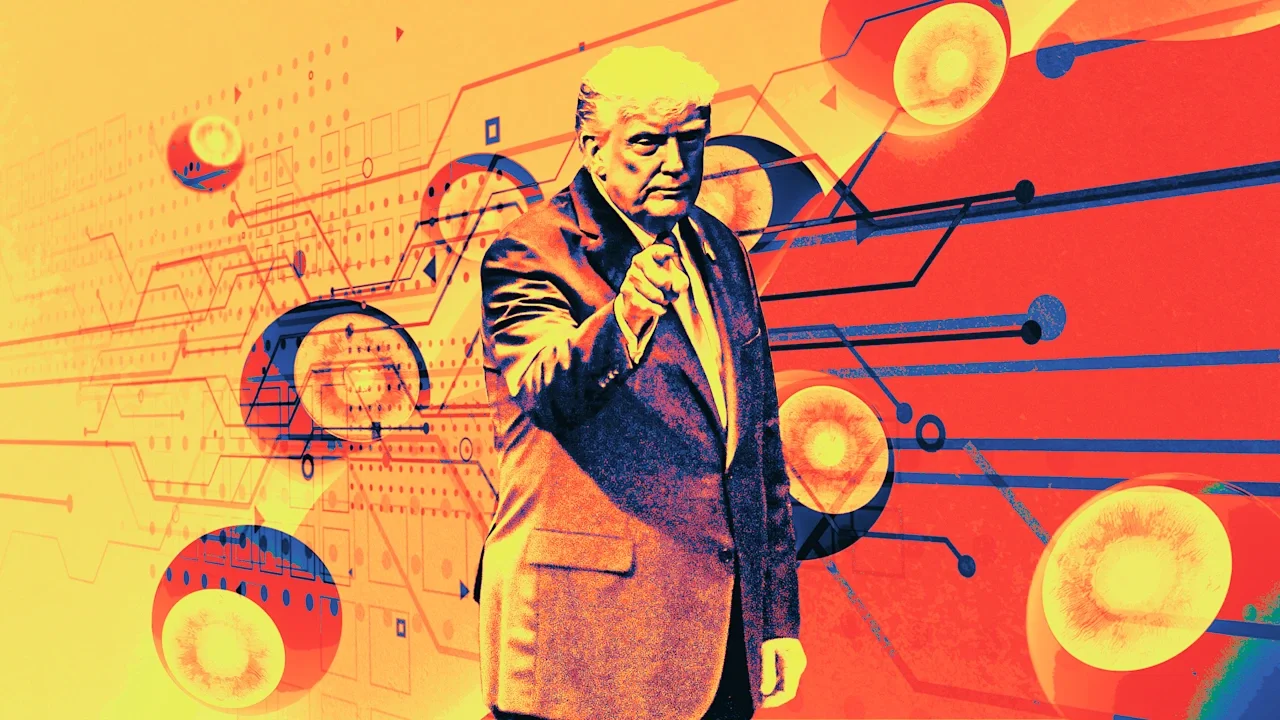
U.S. officials rejected a push to establish a global AI governance framework at this week’s United Nations General Assembly, despite the plan enjoying broad support from many world nations, including China. At a Security Council debate on Wednesday, Michael Kratsios, the director of the U.S. Office of Science and Technology Policy, said that Washington “totally” rejected all efforts by international organizations to “assert centralized control and global governance of AI.” The meeting marked the first time that all 193 UN member states have been able to weigh in on AI governance. It comes after an August 2025 UN resolution—which members unanimously endorsed—urging the UN to lay the groundwork for global AI governance and calling on governments to work together to protect human rights in the wake of widespread AI use. Speaking at the meeting on Wednesday, UN Secretary-General António Guterres said that AI presented a real and present risk to humanity. “AI is no longer a distant horizon—it is here, transforming daily life, the information space, and the global economy at breathtaking speed,” Guterres said. “The ability to fabricate and manipulate audio and video threatens information integrity, fuels polarisation and can trigger diplomatic crises . . . humanity’s fate cannot be left to an algorithm.” U.S. AI stance puts emphasis on diffusion At the meeting, Kratsios said that Washington believed that “the responsible diffusion of AI will help pave the way to a flourishing future, one of increased productivity, empowered individuals, and revolutions in scientific advancement.” “The path to this world is found not in bureaucratic management, but in the freedom and duty of citizens, the prudence and cooperation of statesmen, and the independence and sovereignty of nations,” he added. The remarks came a day after U.S. President Donald The President said in his speech to the General Assembly that the country is working on developing its own safety measures, and that the White House is “pioneering an AI verification system that everyone can trust,” specifically to enforce the Biological Weapons Convention. “Hopefully, the UN can play a constructive role, and it will also be one of the early projects under AI,” The President said. The U.S. stance is a notable break from other world powers, and particularly China. Also on Wednesday, China’s Vice Minister of Foreign Affairs, Ma Zhaoxu, expressed support for the UN’s proposed governance framework. “It is vital to jointly foster an open, inclusive, fair and nondiscriminatory environment for technological development and firmly oppose unilateralism and protectionism,” Ma said. View the full article
-
As small business owners navigate the challenging economic landscape, a recent SurveyMonkey poll highlights significant insights that could shape their strategies in the coming months. The August 2025 survey reveals that a staggering 32% of Americans identify inflation and cost of living as their top priorities. This data applies directly to small business owners who must adjust their operations and marketing strategies to resonate with a consumer base increasingly burdened by financial concerns. The poll indicates that concerns over inflation overshadow other critical issues, with employment-related matters, including jobs and wages, trailing at 12%. In a world where rising costs directly affect purchasing decisions, small business owners need to strategize on how to communicate value and affordability to attract and retain customers. For instance, emphasizing cost-saving options, promotions, or loyalty programs can be effective ways to address financial anxieties among consumers. Quotes from the survey reveal the nuances within demographic groups. For example, Gen Z Hispanic women primarily prioritize immigration, with 31% listing it as their top concern. This trend signifies potential market segments that may be looking for businesses that understand their specific issues. For small businesses targeting Gen Z, aligning marketing messages that spotlight social consciousness and community support could foster stronger connections. Conversely, for Gen Z Hispanic men, inflation, immigration, and job-related concerns all tie for attention at 19%. This highlights a diverse set of values within demographic groups that small businesses should consider when crafting marketing strategies or product offerings. More than ever, understanding the motivations behind spending habits can lead to more tailored services and improved customer engagement. Understanding these sentiments isn’t just about gleaning trends; it’s about activating practical responses. Small business owners may discover opportunities to offer financial education workshops or online resources that could serve as added value for customers worried about budgeting and inflation. Similarly, refining supply chains to keep costs down and ensure consistent pricing can help businesses remain competitive in an inflationary environment. While these insights offer a roadmap for navigating current challenges, they also present hurdles. The need to adapt quickly to shifting consumer priorities can strain small businesses with limited resources. Increasing costs for materials and services may force owners to make difficult choices about pricing and profit margins, which can alienate some customer segments. Additionally, striking the right balance in communications is critical. While it’s essential to address consumer concerns, businesses must also be careful not to perpetuate a sense of panic or hopelessness. Finding a tone that reassures customers while still being transparent about challenges will be crucial for small businesses hoping to maintain loyalty and trust. As business owners consider these factors, leveraging the data from the SurveyMonkey poll could lead to enhanced customer experience, more robust community ties, and improved sales strategies. Engaging customers in conversations about their priorities could not only foster loyalty but also deliver insights that inform decision-making. In summary, the implications of this survey extend beyond merely identifying trends; they challenge small businesses to rethink their roles within the communities they serve. An acute awareness of customer sentiments related to inflation, employment, and social issues can lead to innovative solutions that strengthen business resilience and sense of purpose. For more in-depth results and insights, you can access the original survey at SurveyMonkey. Image via Envato This article, "Inflation Tops Concerns for Americans, Immigration Key for Gen Z Hispanics" was first published on Small Business Trends View the full article
-
As small business owners navigate the challenging economic landscape, a recent SurveyMonkey poll highlights significant insights that could shape their strategies in the coming months. The August 2025 survey reveals that a staggering 32% of Americans identify inflation and cost of living as their top priorities. This data applies directly to small business owners who must adjust their operations and marketing strategies to resonate with a consumer base increasingly burdened by financial concerns. The poll indicates that concerns over inflation overshadow other critical issues, with employment-related matters, including jobs and wages, trailing at 12%. In a world where rising costs directly affect purchasing decisions, small business owners need to strategize on how to communicate value and affordability to attract and retain customers. For instance, emphasizing cost-saving options, promotions, or loyalty programs can be effective ways to address financial anxieties among consumers. Quotes from the survey reveal the nuances within demographic groups. For example, Gen Z Hispanic women primarily prioritize immigration, with 31% listing it as their top concern. This trend signifies potential market segments that may be looking for businesses that understand their specific issues. For small businesses targeting Gen Z, aligning marketing messages that spotlight social consciousness and community support could foster stronger connections. Conversely, for Gen Z Hispanic men, inflation, immigration, and job-related concerns all tie for attention at 19%. This highlights a diverse set of values within demographic groups that small businesses should consider when crafting marketing strategies or product offerings. More than ever, understanding the motivations behind spending habits can lead to more tailored services and improved customer engagement. Understanding these sentiments isn’t just about gleaning trends; it’s about activating practical responses. Small business owners may discover opportunities to offer financial education workshops or online resources that could serve as added value for customers worried about budgeting and inflation. Similarly, refining supply chains to keep costs down and ensure consistent pricing can help businesses remain competitive in an inflationary environment. While these insights offer a roadmap for navigating current challenges, they also present hurdles. The need to adapt quickly to shifting consumer priorities can strain small businesses with limited resources. Increasing costs for materials and services may force owners to make difficult choices about pricing and profit margins, which can alienate some customer segments. Additionally, striking the right balance in communications is critical. While it’s essential to address consumer concerns, businesses must also be careful not to perpetuate a sense of panic or hopelessness. Finding a tone that reassures customers while still being transparent about challenges will be crucial for small businesses hoping to maintain loyalty and trust. As business owners consider these factors, leveraging the data from the SurveyMonkey poll could lead to enhanced customer experience, more robust community ties, and improved sales strategies. Engaging customers in conversations about their priorities could not only foster loyalty but also deliver insights that inform decision-making. In summary, the implications of this survey extend beyond merely identifying trends; they challenge small businesses to rethink their roles within the communities they serve. An acute awareness of customer sentiments related to inflation, employment, and social issues can lead to innovative solutions that strengthen business resilience and sense of purpose. For more in-depth results and insights, you can access the original survey at SurveyMonkey. Image via Envato This article, "Inflation Tops Concerns for Americans, Immigration Key for Gen Z Hispanics" was first published on Small Business Trends View the full article
-
Firms scale back even with warnings that diversity is key to the future. Accounting Influencers With Rob Brown Go PRO for members-only access to more Rob Brown. View the full article
-
Firms scale back even with warnings that diversity is key to the future. Accounting Influencers With Rob Brown Go PRO for members-only access to more Rob Brown. View the full article
-
A Fair Lawn, New Jersey, company, Ulma Form Works, Inc., known for its concrete formwork and scaffolding systems, has agreed to a significant settlement in a case involving alleged misuse of Paycheck Protection Program (PPP) funds. This resolution highlights essential considerations for small business owners navigating the complexities of federal loans during uncertain economic times. In January 2021, Ulma applied for and received a $2 million PPP loan, a lifeline for many small businesses struggling due to the pandemic. However, the criteria set by the PPP program, particularly the employee limit of 300, proved crucial in this case. The False Claims Act allegations indicate that Ulma inaccurately certified its eligibility, including all its affiliates, which pushed its total employee count over the limit. The settlement, which amounts to $2,902,795, includes repayment of the PPP loan plus interest and stems from a lawsuit under the whistleblower provision of the False Claims Act. This provision allows private parties to file claims on behalf of the government, posing a potential risk for businesses that inadvertently misrepresent their eligibility. Alina Habba, Acting U.S. Attorney, underscored the seriousness of compliance with federal loan programs. “This case serves as a reminder that businesses must carefully assess their eligibility when seeking government assistance,” she stated. “Misrepresentations can lead to significant financial and legal consequences.” This case not only emphasizes the importance of diligent documentation and eligibility checks but also shines a light on the role of whistleblowers in government enforcement actions. For small business owners, the implications are multifaceted. On one hand, the PPP provided crucial funding that many businesses relied upon to survive during the pandemic. However, the subsequent scrutiny of loan applications has led to heightened awareness and caution among lenders and borrowers alike. It is essential for small business owners to fully understand their eligibility criteria before applying for federal assistance. Aside from employee count, other factors may influence eligibility and forgiveness prospects. Regarding practical applications, small businesses should maintain meticulous records of employee counts, including those of affiliates, before submitting loan applications. This not only safeguards against allegations of fraud but can also facilitate a smoother forgiveness process should the loan be granted. Consulting legal and financial advisors familiar with PPP guidelines can mitigate risks and ensure compliance. However, challenges remain. One key issue is the often-complex nature of affiliate relationships, where businesses must consider employees from linked entities, including those based outside the U.S. This could complicate matters for companies with international operations. Small business owners might also feel overwhelmed by the prospect of legal repercussions, particularly in the wake of whistleblower actions that can arise from good-faith errors. As outlined in the press release, anyone with knowledge of potential fraud regarding COVID-19 relief can report it. Small business owners should be aware of this reporting system; it emphasizes the critical nature of ethical conduct when navigating government funds, reinforcing the idea that transparency is paramount. This case serves as a cautionary tale for small business owners. As governments continue to provide financial aid amid ongoing economic challenges, the expectations for transparency and compliance remain high. Engaging in proactive compliance measures can help mitigate risks and ensure businesses remain eligible for future support while fostering a culture of integrity. The settlement reached by Ulma Form Works, Inc. exemplifies the delicate balance that small businesses must strike: maintaining financial stability while adhering strictly to government protocols. The path forward requires diligence, transparency, and a keen understanding of the guidelines governing federal assistance programs. For more detailed information on this case and related issues, visit the U.S. Small Business Administration’s website at SBA.gov. This article, "Fair Lawn Company Agrees to Pay Nearly $3M Over Improper PPP Loan" was first published on Small Business Trends View the full article
-
A Fair Lawn, New Jersey, company, Ulma Form Works, Inc., known for its concrete formwork and scaffolding systems, has agreed to a significant settlement in a case involving alleged misuse of Paycheck Protection Program (PPP) funds. This resolution highlights essential considerations for small business owners navigating the complexities of federal loans during uncertain economic times. In January 2021, Ulma applied for and received a $2 million PPP loan, a lifeline for many small businesses struggling due to the pandemic. However, the criteria set by the PPP program, particularly the employee limit of 300, proved crucial in this case. The False Claims Act allegations indicate that Ulma inaccurately certified its eligibility, including all its affiliates, which pushed its total employee count over the limit. The settlement, which amounts to $2,902,795, includes repayment of the PPP loan plus interest and stems from a lawsuit under the whistleblower provision of the False Claims Act. This provision allows private parties to file claims on behalf of the government, posing a potential risk for businesses that inadvertently misrepresent their eligibility. Alina Habba, Acting U.S. Attorney, underscored the seriousness of compliance with federal loan programs. “This case serves as a reminder that businesses must carefully assess their eligibility when seeking government assistance,” she stated. “Misrepresentations can lead to significant financial and legal consequences.” This case not only emphasizes the importance of diligent documentation and eligibility checks but also shines a light on the role of whistleblowers in government enforcement actions. For small business owners, the implications are multifaceted. On one hand, the PPP provided crucial funding that many businesses relied upon to survive during the pandemic. However, the subsequent scrutiny of loan applications has led to heightened awareness and caution among lenders and borrowers alike. It is essential for small business owners to fully understand their eligibility criteria before applying for federal assistance. Aside from employee count, other factors may influence eligibility and forgiveness prospects. Regarding practical applications, small businesses should maintain meticulous records of employee counts, including those of affiliates, before submitting loan applications. This not only safeguards against allegations of fraud but can also facilitate a smoother forgiveness process should the loan be granted. Consulting legal and financial advisors familiar with PPP guidelines can mitigate risks and ensure compliance. However, challenges remain. One key issue is the often-complex nature of affiliate relationships, where businesses must consider employees from linked entities, including those based outside the U.S. This could complicate matters for companies with international operations. Small business owners might also feel overwhelmed by the prospect of legal repercussions, particularly in the wake of whistleblower actions that can arise from good-faith errors. As outlined in the press release, anyone with knowledge of potential fraud regarding COVID-19 relief can report it. Small business owners should be aware of this reporting system; it emphasizes the critical nature of ethical conduct when navigating government funds, reinforcing the idea that transparency is paramount. This case serves as a cautionary tale for small business owners. As governments continue to provide financial aid amid ongoing economic challenges, the expectations for transparency and compliance remain high. Engaging in proactive compliance measures can help mitigate risks and ensure businesses remain eligible for future support while fostering a culture of integrity. The settlement reached by Ulma Form Works, Inc. exemplifies the delicate balance that small businesses must strike: maintaining financial stability while adhering strictly to government protocols. The path forward requires diligence, transparency, and a keen understanding of the guidelines governing federal assistance programs. For more detailed information on this case and related issues, visit the U.S. Small Business Administration’s website at SBA.gov. This article, "Fair Lawn Company Agrees to Pay Nearly $3M Over Improper PPP Loan" was first published on Small Business Trends View the full article
-
Tehran fails to meet deadline set by European powers View the full article
-
Why do so many global projects falter? Often, it isn’t because executives misread market data or underestimate competitors; it’s because they misread each other. Cross‑cultural communication is less about translation and more about decoding invisible frameworks—values, norms, and assumptions—that shape how people work. Ignoring those frameworks turns diversity into a liability. Leaders who master cultural intelligence transform it into a strategic advantage. The hidden costs of miscommunication Consider a seemingly routine performance review. Erin Meyer recounts how a French manager, working for an American boss in London, left her evaluation buoyed by the comment, “We look forward to seeing more.” In U.S. workplaces this phrase often masks concern; the boss thought her work was subpar. Such cushioning of criticism is common in low‑context cultures and can leave colleagues from direct cultures confused and distrustful. These misunderstandings scale up quickly. In Edward T. Hall’s framework, “low‑context” cultures such as the U.S. or Germany value explicit communication and detailed documentation, whereas “high‑context” cultures (common in Asia, the Middle East, and Latin America) rely heavily on tone, body language, and shared history. People from high‑context cultures may leave things unsaid or assume that mentioning competing obligations signals that a deadline is flexible; low‑context colleagues may expect precise commitments and clear escalation paths. When these styles collide, delays and mistrust proliferate. Some failures grab headlines. Dolce & Gabbana’s 2018 advert of a Chinese woman clumsily eating Italian food with chopsticks was widely seen as mocking Chinese etiquette, prompting boycotts and celebrity disavowals. Swatch faced similar outrage in August 2025 when a campaign image showed a model making a “slanted‑eye” gesture; netizens questioned the company’s cultural awareness and demanded a proper apology. Although Swatch withdrew the adverts and apologized, critics dismissed the statement as generic and insufficient, and the backlash temporarily shaved 4% off the parent company’s market value. These examples show that cross‑cultural miscommunication is not a minor glitch but a strategic threat. To avoid it, leaders must cultivate what psychologists call cultural intelligence—the capability to function effectively across cultures. It rests on three pillars: awareness, empathy, and adaptability. Pillar 1: Cultural awareness Awareness begins with acknowledging that your own cultural lens is not universal. Hall’s high‑ and low‑context distinction provides a starting point. In high‑context cultures, the exact wording matters less than how, when, and where something is said; body language, silence, and relational history convey meaning. In low‑context cultures, words are taken at face value, and comprehensive information is expected. Failing to recognize these differences can cost money and reputation. Dolce & Gabbana’s misread of Chinese etiquette was, at heart, a failure of awareness; the company did not understand how deeply food, tradition, and national dignity intertwine in Chinese culture. To build awareness, leaders should: Map the cultural context. Use frameworks like Hofstede or Hall to anticipate differences in hierarchy, collectivism, and time orientation. Treat these models as guides, not stereotypes. Invest in local expertise. Involve local employees or consultants in product development and marketing; they can detect cues that outsiders miss. Swatch’s image might have been stopped by a culturally attuned reviewer. Learn the rituals. Simple gestures—exchanging business cards with both hands in China or leaving a little food on the plate to show you were well fed—signal respect and prevent embarrassment. Pillar 2: Empathy Awareness tells you what is different; empathy tells you why. Empathy is the ability to see the world through another’s lens and appreciate their motivations. It moves leaders from “This is how we do things” to “How can we do things in a way that respects everyone?” Consider Netflix’s global expansion. The streaming giant didn’t simply subtitle its U.S. shows; it invested in commissioning local content, hiring regional teams and altering user interfaces to suit different viewing habits. This hyperlocal approach recognized that a story that resonates in Los Angeles may not speak to audiences in São Paulo or Mumbai. By empathising with local tastes and values, Netflix built a loyal global audience. Empathy also plays out in day‑to‑day leadership. Leaders who take time to ask team members about their communication preferences, family obligations, or religious holidays demonstrate respect. That respect fosters psychological safety, which research shows is essential for collaboration and innovation. Pillar 3: Adaptability Awareness and empathy are useless without the ability to adjust. Adaptability is the capacity to shift your leadership style, communication methods, and decision‑making processes to fit the cultural context—without sacrificing core principles. One multinational tech company learned this when its American manager’s rapid‑fire style clashed with a Chinese team’s preference for deliberation and consensus. By scheduling structured meetings and allowing the Shanghai team to formulate a unified position, he turned a strained collaboration into a high‑functioning partnership. The pattern holds broadly: high‑context cultures often value consensus and indirect feedback, while low‑context cultures value directness and speed. Practical adaptability includes: Tailoring feedback. Direct cultures use “upgraders” such as “totally” or “absolutely” to emphasize criticism; indirect cultures employ “downgraders” like “maybe” or “a bit” to soften the blow. Clarify which phrases signal urgency and which indicate a suggestion. When giving feedback to someone from a direct culture, be explicit; when receiving feedback from someone using downgrades, listen for hidden messages. Rebalancing meeting dynamics. In low‑context cultures, silence often indicates problems; in high‑context cultures, silence may denote respect. Leaders should learn to be comfortable with pauses and check for consensus without forcing immediate responses. Adjusting decision processes. In cultures with high power distance, decisions flow from senior leaders; in egalitarian cultures, consensus may be expected. Clarify who has authority and when input is required. The AI era: why human skills matter more Artificial intelligence can translate languages and analyze data, but its algorithms reflect the cultural biases of their training sets. Leaders will need cultural intelligence to catch and correct outputs that misinterpret expressions or promote messages inappropriate for local markets. The human skills of empathy, ethical judgment, and adaptive collaboration become critical controls, ensuring technology serves diverse teams rather than offends them. From principle to practice Building cultural intelligence is not a tick‑box exercise; it requires ongoing reflection and learning. Here are some practical steps: Create “culture user manuals.” Ask team members to share their preferred communication styles, working hours, and feedback preferences. Document these and refer to them as you plan meetings or assign tasks. Encourage mutual mentorship. Pair senior leaders with junior colleagues from different cultures. Reverse mentoring helps senior executives recognize their blind spots and fosters empathy across generations and backgrounds. Normalize constructive conflict. Misunderstandings will happen. Encourage teams to treat them as learning opportunities rather than personal failures. Debrief after projects to discuss what communication strategies worked and what didn’t. The bottom line Cultural intelligence is not a fad. Leaders who embed awareness, empathy, and adaptability into their leadership philosophy are building more than diverse teams; they are cultivating resilience, innovation, and trust. In an era of geopolitical tension and rapid technological change, these human skills will determine whose ideas cross borders and whose brands endure. View the full article

-
Fall brings colder weather, sweaters, pumpkin-flavored treats, and new television shows to binge-watch. Historically, TV networks used the autumn season to launch their new programming because it coincided with big advertising agencies’ spending schedules after a slow summer of reruns. Today, thanks to cable TV and streaming, the rules have altered, but the fall still maintains its dominance—especially since audiences have been so well trained. Although the 2025 fall television lineup is drama-heavy, there’s still a little something for everyone. Many well-loved universes, such as Stephen King’s It, are expanding yet again, and Netflix’s enduringly popular Stranger Things is concluding. From documentaries to comedies to familiar procedural dramas, let’s take a deeper look at some of this autumn’s television offerings. Comedies For those who want to laugh, streamers Peacock and Hulu have your back. The former is presenting The Paper, a mockumentary spin-off of The Office starring Domhnall Gleeson and Sabrina Impacciatore. Oscar Nuñez is also reprising his role as Oscar Martinez. Twenty years later, the same documentary crew that followed Dunder Mifflin employees around has turned its focus on the Toledo Truth Teller. This Midwest newspaper is trying to make a comeback in a struggling industry. All 10 episodes of the first season were dropped on Peacock on September 4. Hulu’s offering is Chad Powers, starring Glen Powell in the title role. The series was inspired by Eli Manning, who went undercover at Penn State’s football tryouts. Powell took the idea and ran with it, creating the character Russ Holliday, whose bad behavior compromised his college football career. He decides to use the alias Chad Powers to get back into the game. This sitcom will premiere on the streamer on Tuesday, September 30. Documentaries For those who want to learn, PBS has long been a source of education. This fall is no exception, although the future beyond that is uncertain. Kissinger, a two-part documentary series directed by Barak Goodman, premieres on October 27 and 28 as part of the American Experience roster. It centers on the complicated legacy of Henry Kissinger, former secretary of state and national security adviser under Presidents Nixon and Ford. The American Revolution, directed by Ken Burns, focuses on our country’s beginnings. This six-part series precedes the approaching 250th anniversary of the historic event. The series premieres on November 16. It is important to note that future PBS documentaries are in jeopardy because of the loss of federal funding. Some new drama out of something old Given the current volatile state of the industry, it is a safe—albeit sometimes uninspired—creative choice to use existing intellectual property to lure audiences in. Many networks and streamers have chosen to take this route in fall 2025. (Technically, The Paper falls into this category.) Procedural drama fans will love new versions of Law & Order and 9-1-1. Law & Order Toronto: Criminal Intent premiered on Wednesday, September 24, on the CW. 9-1-1: Nashville hits the ABC airwaves on October 9 and stars Chris O’Donnell, Jessica Capshaw, and LeAnn Rimes. CBS has two spin-offs this fall. Sheriff Country follows a character first seen in Fire Country; she’s now a newly appointed small-town sheriff, played by Morena Baccarin. Boston Blue continues Danny Reagan’s story from Blue Bloods, but with a new beginning in Boston. Both premiere on October 17. Horror fans, get ready for some jump scares. The same creative team behind the recent It movies is doing a prequel series on HBO. Bill Skarsgård is reprising his role as Pennywise the Clown in It: Welcome to Derry. In time for the Halloween holiday, this series premieres on October 26. Another HBO offering lives in the same universe as Mare of Easttown. Task follows FBI agent Tom Brandis, played by Mark Ruffalo, as he tries to put an end to escalating, violent robberies of drug houses. New dramas If you’re craving something new, Netflix dropped the thriller Black Rabbit on September 18. It stars Jude Law as Jake Friedken and Jason Bateman as Vince Friedken. The two brothers once owned a nighttime hot spot together, but Vince’s complicated life took him away. When Jake lets him back in, everything gets chaotic, to say the least. Apple TV+’s Pluribus is perfect for science fiction fans and is set to premiere on November 7. It was created by Vince Gilligan, who is best known for Breaking Bad. Carol Sturka, a tortured writer played by Rhea Seehorn, must save the world from an epidemic of happiness. FX’s The Lowdown is equal parts dark comedy, crime drama, and neo-noir. Created by Sterlin Harjo, best known for Reservation Dogs, this series is loosely based on real-life citizen journalist and historian Lee Roy Chapman, who shed light on hard truths about the Tulsa Race Riots. Ethan Hawke stars as journalist Lee Raybon, who puts uncovering the truth ahead of his messy personal life. The first two episodes dropped on Hulu on September 25, and the remaining six will be released weekly. What if you could stop violence before it happens? This was the premise of a 2019 Cosmopolitan article about an impressive secret investigator. It is also the inspiration for the Apple TV+ series The Savant. Details around this series have been limited, but viewers do know that Jessica Chastain will play the title character and investigator whenever the series premieres. In the wake of the recent assignation of Charlie Kirk, Apple has decided to delay this release indefinitely. The final chapter of Stranger Things For Stranger Things fans, the 2025 fall television season is bittersweet. Audiences want to know how the beloved Netflix series ends, but it is always hard to say goodbye. The final season consists of eight episodes that will be released in three parts. The first four drop on November 26. The following three will double as Christmas presents. The finale will finish out the year strong on New Year’s Eve. The action in Season 5 begins in 1987, about a year and a half after the preceding season. Vecna has unleashed destruction on Hawkins, Indiana, by opening multiple gates into the Upside Down. Now it is up to the gang to make things right. View the full article

-
It’s that time of year. Fall is around the corner, but it still feels like summer on some days. In an age of global warming, this transitional season is likely to stretch out longer than it did before. Designers are aware they need to create jackets and coats appropriate for this in-between season. The market is now full of good options beyond the outdoorsy puffer or fleece that will keep you at the right temperature. Many are designed to be good for both work and life, allowing you to look put-together for the office, but also relaxed enough for weekends. We’ve scoured the market for five coats that offer an additional layer, along with some style and polish, that we’ve tested for quality and fit. They’re each designed to keep you warm when temperatures dip as low as 0°F. We sought out pieces that look classic enough to become a closet staple for years to come. The Perfect Trench Coat AYR, The Espionage, $695 Trench coats were made for weather like this, but there are so many on the market that it is hard to choose. Let us help you. This one from AYR hits all the notes. In keeping with the brand’s expertise, it fits beautifully, with thick cotton fabric that falls perfectly and a belt that accentuates your waist. The twill fabric is soft against your body, but it has a water-resistant finish that will be useful in a rain shower. It’s cut like a classic trench coat, with double breasted closure, a storm shield at the back, a gun flap on the front, and epaulettes at the shoulder, so it is not going to go out of style. It’s well worth the investment. A Jacket With Personality Sezane, Oscar Jacket, $330 If you’re looking for a layer of warmth and coziness that doesn’t look too relaxed, you’ll want Sezane’s Oscar Jacket. It’s made of a blend of wool and mohair so it is incredibly soft to the touch. But it is sure to elevate your outfit and give your look some personality. The jacket is carefully designed with elegant touches, like the contrasting fabric on the cuffs and slightly oversize cut. The Most Elegant Wool Coat Artizia, The Portfolio Coat, $350 Bulky layers can sometimes look casual. If you’re looking for a coat that will look sleek and polished, while keeping you warm, you’ll want to look at Aritizia’s Portfolio coat. It’s made of 98% recycled wool sourced from an Italian mill that has a double-faced construction, which makes both sides feel soft ad luxurious. It has a tailored silhouette, thanks to a waterfall collar and a wrap closure that can be styled with or without the belt. It will make you feel refined whether you’re wearing a power suit or jeans underneath. Office-Appropriate Swagger Canada Goose, Jade Bomber, $1,295 If your aesthetic tends toward streetwear, and your office is more casual, Canada Goose’s brand-new bomber style is worth considering. It’s inspired by old-school flight jackets, using a satin material with a glossy finish, and even has details like a pen pocket. It will elevate your everyday denim and T-shirt look, but given Canada Goose’s outerwear, it is also carefully designed to keep you at the right temperature. It contains down fill, along with ribbed cuffs for cold days. But when you feel warm, you can remove the sleeves and carry it using backpack straps. A Vintage-Inspired Find Alex Mill, Chiltern Street Jacket, $325 Alex Mill’s designers based the design of this preppy jacket on a vintage hunting jacket they found in a secondhand shop in Paris. It plays on some on some recent trends, from barn coats to field jackets, and is full of little details that make it functional. It has an elegant, structural cut that makes it look smart for the office, but also looks relaxed enough for the weekend. It is made of a waxed cotton that has the weight and texture of suede. It is fully lined for warmth, and even has lined handwarmer pockets. It’s ideal for fall days when the temperatures dip, but you’re not quite ready for your puffer coat. View the full article

-
As a small child in the 1980s, I tuned in weekly to see the hilarious antics of the Golden Girls. I loved seeing the friendship and support between the three 50-something housemates of Blanche (Rue McClanahan), Rose (Betty White), and Dorothy (Bea Arthur), while the affectionate bickering between Dorothy and her unfiltered 80-something mother Sophia (Estelle Getty) always struck me as mother-daughter relationship goals. While the show was ahead of its time in myriad ways, one important legacy it has given Generation X is a blueprint for adult communal living. Our generation understands what a “Golden Girls retirement” means, and we have all likely spent some happy hours daydreaming about our ideal cast of friends and family to share a wicker-and-pastel Miami home with. But co-living situations like those shared by the Golden Girls aren’t just the stuff of TV and daydreams. They can offer excellent benefits to adults both before and after retirement and are well worth exploring, no matter where you currently are in your career. Here’s how embracing the Golden Girls lifestyle can offer you more stability and happiness. Housing costs In the world of The Golden Girls, the Miami house belongs to Blanche, and she initially advertises for two roommates–Dorothy and Rose–to help pay the mortgage. (Sophia comes to live with them after her retirement home burned down.) When the show debuted in September, 1985, the median home price in the United States was $84,700, and the median income for a single woman householder was $13,660. That median income for an individual was about 16% of the median home price. Considering these numbers, it’s understandable why Blanche, Dorothy, and Rose all needed each other’s help affording housing and other costs to live in Miami. As of the second quarter of 2025, the median home price in the U.S. is a staggering $512,800, while the median income for a single woman householder is $60,440–or about 11.8% of the median home price. (The median income for a single man is significantly higher at $83,260). This sad reality of our current housing situation highlights one of the most obvious benefits of living like the Golden Girls. Pooling your resources can help you all better afford high housing costs and let your money go farther. Social support Whenever Dorothy gets frustrated with her mother, she jokingly threatens to send Sophia back to the Shady Pines retirement home. The audience knows that Dorothy’s threat has no teeth because Sophia was miserable at Shady Pines. The older woman was lonely there and did not have the social and emotional outlet among the other patients that she finds with her daughter and their friends in the Miami house. There’s a profound truth behind the jokes about Shady Pines. Human beings crave connection and companionship with each other, and we get pretty down when we don’t have it. This is why loneliness and social isolation are serious problems for aging adults. More social interaction, recreation, and improved social supports have all been found to improve the mental health of lonely seniors. Health benefits The four Golden Girls experience various illnesses and health scares (including a truly groundbreaking episode where Rose must get tested for AIDS) throughout the series, and not every health problem can be fixed in a 22 minute episode. But the bond between these four friends is helpful when they are in poor health, since whoever is ill does not feel alone. Research has found that loneliness can exacerbate health problems, while a lack of social support can lead to self-medicating behavior or further self-isolation. Specifically, social isolation is linked to the following health problems: Anxiety Depression Heart disease Memory problems Cognitive decline Weakened immune function High blood pressure Dementia Death A living situation where you share space with people you like and want to spend time with can help protect your mental and physical health. That’s because you and your housemates can offer each other social and physical support when needed–helping you feel like part of a community. And if that includes the occasional midnight slice of cheesecake on the lanai, all the better. Thank you for being a friend Adopting a Golden Girls lifestyle has so much to recommend it, whether you wait to do so after you retire or gather your friends together right now. Sharing housing expenses will make your cost of living much cheaper and could also reduce other important expenses, such as food, transportation, and childcare. The social support offered by a Golden Girls style living situation can help improve both your mental and physical health, and be fun and rewarding, to boot. Now you just need to perfect your St. Olaf stories. View the full article

-
Donald The President surprised many in August when he made the government the owner of 9.9% of the troubled U.S. chip maker Intel. The administration paid for the Intel equity using $8.9 billion of the Biden administration’s CHIPs and Science Act grant money that had already been earmarked for Intel. The new grant money comes on top of the $2.2 billion in CHIPS Act grants Intel already received, bringing the government’s total investment to $11.1 billion. Intel’s finance chief David Zinsner said the government’s investment is meant to incentivize Intel to keep majority control over its contract chip-fabrication business. As part of the deal, the government gets a five-year warrant to buy 5% more Intel shares if the company’s ownership of its chip foundry operation falls below 51%. What would a newly elected Democratic administration do with the government’s stake? Chances are good that it would keep it. Here’s why. Interestingly, it was a pair of high-profile progressives—Bernie Sanders and Elizabeth Warren—who originally suggested the government take an ownership stake in chip companies that took CHIPS Act grants. They proposed an amendment to the CHIPs Act that would have required grant recipients to “issue warrants or equity stakes to the Federal Government,” as Sanders put it in floor remarks in July of 2022. The amendment, which never made it into the bill, would also have prevented CHIPS Act recipients from using the funds to buy back stock, offshore U.S. jobs, or to discourage unionization. Its opponents, like the U.S. Chamber of Commerce, warned that the amendment would “turn innovative manufacturers into state-owned enterprises” and harm U.S. competitiveness. Sanders, an independent who caucuses with the Democrats, came out in favor of the The President administration’s ownership share in Intel, saying that the U.S. taxpayers ought to get a “reasonable return” when tax dollars are sent to the aid of a private company. But the The President administration’s approval of the disbursement of CHIPs and Science Act grants was not conditioned on anything else that would guarantee that Intel put the money toward achieving goals that are in the country’s interest. U.S. lawmakers, especially small-government conservatives, have, historically, been hesitant to back private companies, out of fear of appearing as if the government is “picking winners” in the marketplace. But Intel, which represents America’s best chance to anchor advanced AI chip making on U.S. soil as the competition with China to lead AI heats up, was seen as a special case. When it comes to manufacturing the chips, Intel has fallen far behind Taiwan-based TSMC. TSMC, which makes almost all of the GPUs used for AI now, is based in Taiwan, just 80 miles from mainland China. For years, U.S. military analysts have feared the day when China invades the island. Letting the free market be free? Or not? Still, the government’s investment has been met with criticism. The Cato Institute’s Scott Lincicome writes in a Washington Post op-ed that the deal represents “a dangerous turn in American industrial policy,” adding that it abandons decades of market-oriented principles and risks politicizing Intel’s decision-making. “With the U.S. government as its largest shareholder, Intel will face constant pressure to align corporate decisions with the goals of whatever political party is in power,” he cautions. The next political party in power could be the Democratic Party, if it can articulate a populist platform that doesn’t sound like establishment politics. Using that logic, the next Democratic administration could be led by someone from the progressive wing of the party. Actually, a left-leaning Democratic administration might decide to leave the government’s Intel stake in place, but for very different reasons than the ones motivating The President. The left has been somewhat more comfortable with interventionist market policies in the past (see: anti-trust interventions, single payer healthcare). A new Democratic administration in 2028 might not sell off the government’s stake in Intel. But it might add some conditions to any new government investment in the company. It might also take a hard look at Intel’s progress toward fabricating TSMC-level chips in America, and adjust the terms of the investment accordingly. View the full article
-
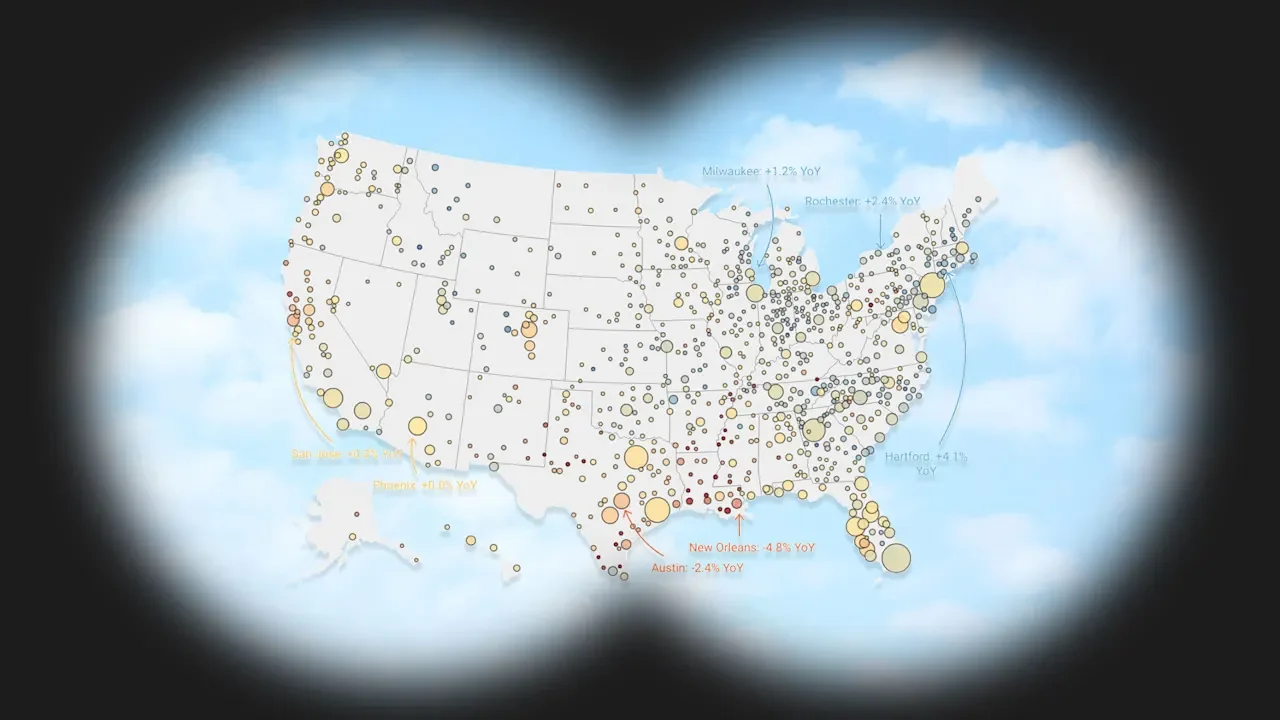
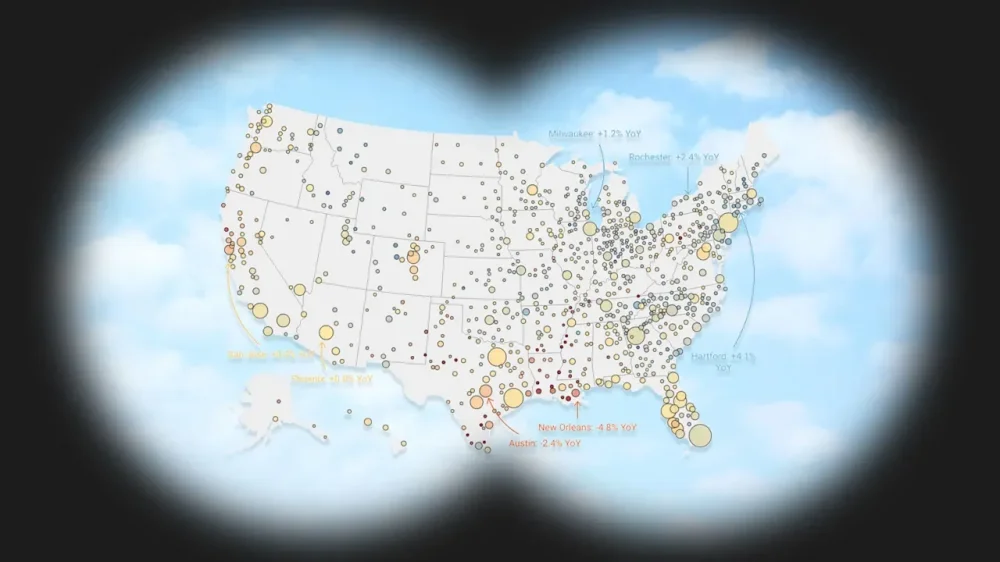
Want more housing market stories from Lance Lambert’s ResiClub in your inbox? Subscribe to the ResiClub newsletter. Zillow economists just published their updated 12-month forecast, projecting that U.S. home prices—as measured by the Zillow Home Value Index—will rise +1.2% between August 2025 and August 2026. Heading into 2025, Zillow’s 12-month forecast for U.S. home prices was +2.6%. However, many housing markets across the country softened faster than expected, prompting Zillow to issue several downward revisions. By April 2025, Zillow had cut its 12-month national home price outlook to -1.7%. However, in recent months, Zillow has stopped issuing downward revisions. In August, Zillow revised its 12-month outlook to +0.4%, and it is now revising that outlook to +1.2%. “Sellers took a step back from the housing market in August in response to slow demand from cash-strapped home shoppers. Buyers still in the market have plenty of opportunity, especially in inventory-rich environments. But competitive momentum that has been swinging fast in buyers’ favor in recent months is showing signs of stopping nationwide,” Kara Ng, a senior economist at Zillow, wrote in a September report. While Zillow’s national home price forecast is no longer negative—it isn’t exactly bullish either. “High housing costs continue to sideline prospective buyers, making it easier for those still in the hunt. Zillow’s market heat index shows the market is balanced between buyers and sellers nationwide, with less competition among buyers than in any August since 2018,” Ng wrote. “Homes are lingering longer before finding a buyer as well. The median time on market for a sold home is 27 days—a full week longer than last year and one day longer than pre-pandemic norms.” Among the 300 largest U.S. metro-area housing markets, Zillow expects the biggest home price increase between August 2025 and August 2026 to occur in these 15 metros: Atlantic City, NJ → 4.7% Torrington, CT → 4.7% Saginaw, MI → 4.6% Pottsville, PA → 4.4% Rockford, IL → 4.3% Kingston, NY → 4.3% Concord, NH → 4.3% Knoxville, TN → 4.2% Hartford, CT → 4.1% New Haven, CT → 4.0% Hilton Head Island, SC → 4.0% Vineland, NJ → 4.0% Fayetteville, AR → 3.9% Norwich, CT → 3.9% Youngstown, OH → 3.7% Among the 300 largest U.S. metro-area housing markets, Zillow expects the biggest home price decline between August 2025 and August 2026 to occur in these 15 metros: Houma, LA → -7.9% Lake Charles, LA → -7.5% Lafayette, LA → -5.3% New Orleans, LA → -4.8% Beaumont, TX → -4.5% Shreveport, LA → -4.5% Alexandria, LA → -4.5% Odessa, TX → -3.3% Corpus Christi, TX → -3.2% San Francisco, CA → -3.0% Santa Rosa, CA → -2.7% Monroe, LA → -2.7% Chico, CA → -2.6% Texarkana, TX → -2.6% Austin, TX → -2.4% U.S. home prices, as measured by the Zillow Home Value Index, are currently down +0.01% year over year. If Zillow’s latest 12-month outlook (+1.2%) comes to fruition, it would represent a tiny acceleration. Below is what the current year-over-year rate of home price growth looks like for single-family and condo home prices. The Sun Belt, in particular Southwest Florida, is currently the epicenter of housing market weakness right now. View the full article
-
Early on the morning of September 23, a 12-foot-tall bronze statue appeared on the lawn of the National Mall. It depicted President The President and convicted child sex offender Jeffrey Epstein holding hands and frolicking together, and the plaque at its base read: “We celebrate the long-lasting bond between President Donald J. The President and his ‘closest friend,’ Jeffrey Epstein.” By the next morning, the statue had been hauled away by U.S. Park Police. The installation—titled Best Friends Forever—was intended to spotlight The President’s 15-year friendship with Epstein, a chapter that’s faced intense scrutiny over the past several months. The President has continuously attempted to discredit stories linking himself to Epstein, even as new evidence of their association continues to come to light. It’s just the latest in a series of similar satirical statues that have cropped up on the National Mall and around Washington, D.C. In a statement to NPR on September 24, a group called The Secret Handshake claimed responsibility for Best Friends Forever, as well as most of the other statues that have materialized in recent months. Despite receiving a National Park Service permit to remain on the mall until Sunday evening, the statue was removed just 24 hours after it appeared. A spokesperson for the Department of the Interior told NPR that it was removed because it was not compliant with the permit, though they did not specify how. An anonymous member of The Secret Handshake told the media outlet that “some people within the parks department, aka most likely the The President administration, were trying to find ways to say we were not in compliance. “They showed up in the middle of the night without notice and physically toppled the statue, broke it, and took it away,” the source added. According to Ken Lum, a sculpture artist and chair of the Department of Fine Arts at the University of Pennsylvania, The Secret Handshake’s brand of irreverent critique is part of a long tradition that dates back five centuries. He says the removal of Best Friends Forever signals that we’re living in a “humorless” time. A medieval tradition Sculpture as a form of social protest is nothing new. One of the examples that might be most familiar to an American audience, Lum says, is Fearless Girl—a statue of a small girl of maybe 6 or 7 that was erected in opposition to the famous Wall Street sculpture Charging Bull in 2017. The sculpture, meant to call attention to gender inequality in the Wall Street community, made national headlines and drew crowds for months. But Lum says he believes Best Friends Forever and The Secret Handshake’s other recent statues critiquing The President belong to a different genre of art—one that has its roots in a centuries-old practice first pioneered in medieval Europe. “I wouldn’t say it’s really protest art necessarily,” Lum says. “There’s a range of art in between—social criticism, satire, cheeky expression. The first thought I have goes back to medieval carnivals.” Starting in the early 1500s, Lum says, communities in England and France held carnival celebrations that were sometimes also known as the “Feast of Fools.” During this period, the ruling class allowed a brief role reversal, in which working people were permitted and even encouraged to “play the role of the king as a buffoon and openly satirize the prevailing social order.” Satirical art emerged as a key tool to expose societal inequities and allow open discussion of citizens’ grievances. “I think there’s something to be said about [medieval carnivals], even though it’s not practiced anymore,” Lum says. “The situation right now is humorless.” Hundreds of years later, Lum believes that this genre of artistic parody still serves a critical purpose—not just to allow for open dialogue, but also to bring some measure of levity to the discourse between the people and their government. Best Friends Forever pulls on that satirical lever through its sarcastic tone and absurdist take on The President and Epstein’s friendship. Further, Lum notes, the sculpture uses a strategy called anti-monumentalism, or the adoption of traditionally “powerful” sculptural aesthetics, to question the powers that be. In this case, The President and Epstein are rendered in an imitation of bronze, a material that’s been “invested with a kind of authority,” Lum says. “That’s to imitate a long tradition, going back thousands and thousands of years, where bronze, marble, and other types of stone are seen as the most important, or even sacred, materials for depicting topics of national importance,” Lum explains. Specifically, he adds, bronze is commonly associated with universality and univocality. “They’re playing on that, being very irreverent and even impudent.” The Secret Handshake’s message may even be amplified by the sculpture’s immediate removal. While Lum wouldn’t necessarily characterize Best Friends Forever’s removal as censorship, given that it was initially permitted to go up, he says its swift removal demonstrates “a lot of practicing sanctimony.” “That it was removed is no surprise,” Lum says. “The surprise is that it was allowed to be put up, however temporarily. But the cheeky humor of the work met up against an absolutist self-righteousness.” View the full article

-
No matter how flashy a smartphone might be, how many features it touts, it has a single piece of technology packed inside that is more important than any other: the battery. When it runs dry, your smartphone can no longer be the world’s best camera or the ultimate communication device. It is nothing more than a useless slab of glass and metal. Which is exactly why manufacturers do everything they can to prolong battery life. Over the past several years, Apple has been cramming higher-capacity batteries into its smartphones so that they last longer on a single charge. The company has also been optimizing its software to prolong the iPhone’s juice. In iOS 26, Apple has added four new features to the iPhone that can help users eek out as much battery life as possible. Here’s how to use them. Enable Adaptive Power Adaptive Power is one of the best features of iOS 26, because it can help keep your iPhone going longer on a single charge. The feature utilizes machine learning, a form of artificial intelligence, to track your recent iPhone usage patterns. It then uses this data to predict whether you may need extra battery life for the day. If Adaptive Power determines that you are, in fact, going to need more battery life for the day, it will help conserve your iPhone’s power by lowering the screen brightness by 3%, limiting background activities, turning on Low Power Mode when your battery reaches 20%, and making other performance adjustments. It does all this automatically—provided that you have Adaptive Power enabled. Here’s how to do that: Open the Settings app. Tap Battery. Tap Power Mode. Toggle the switch next to Adaptive Power to ON (green). Additionally, if you toggle the Adaptive Power Notifications switch to ON (green), your iPhone will also show you a notification whenever Adaptive Power mode kicks in. If this toggle is disabled, Adaptive Power mode will still engage; you just won’t be notified of it. It should be noted that, while Adaptive Power is an iOS 26 feature, not all iPhones that can run iOS 26 can take advantage of this. Since Adaptive Power relies on artificial intelligence, it only works on the iPhone 15 Pro and later. Quickly enable Low Power Mode when the iPhone needs it most Low Power Mode is another feature that you can use to conserve your iPhone’s battery life. Low Power Mode has been available on iPhones for some time, but with iOS 26, Apple has introduced a new way to turn the mode on easily. If your iPhone has the Dynamic Island, a notification will now appear there, alerting you that your iPhone’s battery life is down to 20%. The notification will also show you a toggle that you can tap to turn on Low Power Mode quickly. Previously, you needed to turn on Low Power Mode by going into the Settings app or via the iPhone’s Control Center. Putting the toggle in the notification itself means that Low Power Mode is just a tap away when you need it most. What sets Low Power Mode apart from Adaptive Power is that it works on iPhones older than the iPhone 15 Pro. But to use the new Low Power Mode notification toggle, you’ll need an iPhone with a Dynamic Island, which is the iPhone 14 Pro and later. If you’ve got one of those supported phones: When the Low Battery notification appears in the Dynamic Island, tap the red toggle to turn on Low Power Mode. The red toggle will change to yellow when Low Power Mode is engaged. When Low Power Mode is on, your iPhone will reduce its brightness and some visual effects, turn off background app refresh and email fetching, pause iCloud Photos syncing, and implement other power-saving features. See how long your iPhone battery will take to charge Another welcome new feature in iOS 26 that can help you manage your battery life is a new charging time indicator on the iPhone’s Lock Screen. This indicator will tell you how long your iPhone will take to charge to 100% (or a lower percentage if you’ve set a battery charging limit). It’s a convenient feature that takes the guesswork out of determining how long your iPhone needs to remain plugged in. Here’s how to use it: Plug your iPhone into a charger. Once the screen turns off, tap it with your finger. Above the clock, you’ll see a notification that tells you what percentage of your battery is currently charged and how many minutes or hours it will take to charge your iPhone to its desired charging level (usually 80% or 100%, depending on your preferences). How to better understand your iPhone’s battery health Using the three tips above can help you conserve and manage your iPhone’s battery for longer. But these aren’t the only features Apple has built into iOS to help you understand your iPhone’s battery life. For years now, Apple has included a Battery Dashboard inside the Settings app. This dashboard gives you an overview of not just your battery’s charge, but also which apps are using the most power. In iOS 26, the Battery Dashboard has received a visual makeover. To access it, open the Settings app and tap on Battery. On the next screen, you’ll see key battery metrics that can help give you a better understanding of how your iPhone’s battery is being used, including which apps and system activities are taking up the most power, how long ago your last charge was, and what remaining capacity your battery has left. Understanding this information, and taking advantage of the new iOS 26 battery features listed above, can help you keep your iPhone running longer. View the full article

-
What changes, what doesn't, for thousands of jobs in accounting. By Dominic Piscopo Big 4 Transparency Go PRO for members-only access to more Dominic Piscopo. View the full article
-
What changes, what doesn't, for thousands of jobs in accounting. By Dominic Piscopo Big 4 Transparency Go PRO for members-only access to more Dominic Piscopo. View the full article
-
A quiet crisis is brewing in today’s workforce, and it’s not about automation or AI replacing jobs. It’s about the erosion of human skills that make teams work: communication, empathy, adaptability, and emotional intelligence. These so-called “soft skills” are proving to be among the hardest to teach and the most critical to get right. In fact, the lack of them is costing U.S. companies an estimated $160 billion a year in lost productivity, poor communication, and employee turnover. In 40-plus years of building a global technology company, the biggest performance gaps I’ve seen haven’t come from a lack of technical skill, but from a lack of training in how people communicate, lead, and connect. Most employees will tell you it’s not the technical tasks that keep them up at night; it’s the hard conversations: effectively delivering feedback in performance reviews . . . negotiating sales with difficult buyers . . . calming irate customers . . . and even confronting toxic colleagues. These are the moments that may come with a script, and often do in big companies, but people and circumstances are dynamic and rarely proceed according to a preconceived linear scenario. Traditional training methods still treat them like they do; therein lies the challenge. The old ways of learning always had this Achilles tendon, and now they are just increasingly unfit for the way younger generations want to learn. That’s why we’re seeing a new generation of tools emerge—ones that don’t just teach communication, but instead let people practice it. One of the most promising is immersive AI-powered roleplay, a training model that allows employees to rehearse unscripted, emotionally demanding conversations in a safe, dynamic environment. Think of it as a flight simulator for high-stakes conversations. Practice makes prepared Instead of passively watching videos or memorizing scripts, employees can now engage in realistic roleplay with virtual avatars powered by AI and behavioral science. These characters react in real time, based on an individual employee’s tone, word choice, mannerisms, and more. If a trainee delivers bad news with empathy, the virtual persona softens. If they deflect or escalate, the persona pushes back. With AI-roleplay, there are no canned scripts—only authentic, evolving dialogue. These practice scenarios are designed to reflect the range of personalities we encounter in real life—from the highly agreeable to the more confrontational—giving employees exposure to a wide spectrum of behavioral styles they may face on the job. This kind of immersive rehearsal builds what I call “emotional muscle memory.” It gives employees the range of experiences and repetition they need to confidently engage in real-world conversations where clarity and empathy matter most. Forward-thinking companies across diverse sectors, from healthcare and aviation to manufacturing and retail, are turning to AI-powered roleplay platforms to upskill their teams for unpredictable and often emotionally charged interactions: · One global medical technology company recently integrated immersive roleplay into its sales and clinical education programs and saw measurable performance gains, including increased revenue and stronger confidence among reps navigating difficult conversations. · A large national humanitarian organization used simulation-based training to cut training time from 45 days to 30, reduce employee wait times from two weeks to one day, save over $6.5 million annually, and train more than 13,000 professionals. · In the airline industry, an international carrier trained flight crews using AI-driven roleplay to better manage conflict and de-escalation, leading to a 20% drop in passenger incidents. The common thread across these examples? Employees aren’t just learning what to say. They’re learning how to listen, respond, and adapt in real time. They’re not just memorizing scripts. They’re building instinctive confidence for tough conversations. Why soft skills can’t wait The need for emotionally intelligent teams has never been greater. Case in point: one study found that teams high in emotional intelligence outperform their peers by around 20% in productivity and achieve significantly higher cohesion and job satisfaction. As work becomes more global, remote, and fast-paced, the margin for miscommunication will only grow. Customers expect more. Employees expect more. And leaders are being asked to navigate uncertainty, conflict, and change 24/7. And yet . . . most enterprises still treat soft skills training as an afterthought relative to their other business priorities aimed at building organizational resilience: something optional, not essential. We often send people into literal make-or-break conversations without the proper rehearsal and then wonder why they fall flat. What’s different about immersive AI is that it allows teams to practice difficult questions as often as needed and in a safe environment. This kind of technology is available 24/7, can scale across geographies and languages, and delivers personalized feedback that helps people improve with every session. That kind of on-demand coaching was unthinkable even just a few years ago. And it’s needed now more than ever. In one widely reported case, a global technology company laid off 8,000 employees as part of an AI automation push, only to rehire just as many people shortly after, this time in roles requiring more creativity, communication, and leadership skills. It’s a clear signal: AI may change what we do, but human skills still define how we do it. View the full article

-
They’ve always happened on social media, forums, news sites, and blogs. But now they’re happening in AI responses—and these mentions influence how millions of people discover and perceive your brand. Welcome to the new era of brand mention monitoring. Right…Read more ›View the full article
-
Hedging against the US dollar will soon drive the single currency through $1.20, analysts sayView the full article
-
The real battle is within, not between, generationsView the full article
-
Exits of key unelected aides come as UK prime minister faces Budget, talk of leadership challenge and calls to tack leftView the full article