ResidentialBusiness
Administrators
-
Joined
-
Last visited
Everything posted by ResidentialBusiness
-
 Government is seeking to save £5bn a year by reforming disability benefits known as ‘personal independence payments’View the full article
 -
A woman paid a witch on Etsy for a love spell. Instead of following through, the witch found the man online and sent him screenshots of the conversation. Now, people are calling it a WIPPA violation. “Guys the Etsy witch told on me,” @andtheg4gis cried in a TikTok posted on Monday. “I said the guy’s name, his birthday and stuff, and she literally DM’d him on Instagram and exposed me.” The video has since been viewed 2.4 million times and spread across other social media platforms. “Imagine getting a “hey girly” text from a witch,” one person commented. Many in the comments are calling for the TikTok user to drop the name of the Etsy seller, just so they know who to avoid. Some are calling for her to report the witch for violating her trust. As a former Etsy witch, either she was a hater or you wanted something HENIOUS,” one wrote. Other’s are less sympathetic. “Honestly good on the Etsy witch,” one person commented. The ethical considerations of love spells, if you believe they exist, are complex. “I mean that sucks but that’s also what you get for trying to use a love spell on someone,” wrote another. Fast Company has reached out to @andtheg4gis for comment. The $2.3 Billion Business of Belief Love spells are a thriving cottage industry on TikTok and Etsy. A quick search found over 1000 results of love spells for sale, starting from as little as $0.78, up to $5000+. Fast Company can not verify the legitimacy of these spells; use at your own risk. A “commitment spell” to help you “get that ring” is currently on sale for $45. The seller has 2,750 reviews. Another seller, with over 150 reviews, offers a “Dark Bind” spell currently on sale for $49.70. Send over the name, age, gender, your relationship to the subject and a brief explanation. Adding a photo is optional, but does claim to strengthen the spell—which is available in two intensities. Psychic services, including spells, are big business. About 3 in 10 Americans make use of astrology, tarot cards or fortune tellers at least once a year, according to a nationwide survey by the Pew Research Center. The industry, which includes various specialties such as astrology, palm-reading, psychic readings and fortune telling, generated an estimated $2.3 billion in revenue in 2024 and employed 105,000 people, according to market research firm IBIS World. While 20% use these services “just for fun,” according to Pew, about 1% rely on what they learn from these practices for major life decisions. If you can’t trust witches, who can you trust? View the full article

-
GameStop is taking its promised bitcoin investment seriously—$500-million-worth-of-bitcoin serious, in fact. The video game retailer (which has also become a meme stock) announced the purchase of 4,710 bitcoin, the oldest and largest cryptocurrency, on Wednesday. The company first announced that it had set its sights on cryptocurrency in early March, Fast Company reported, following the GameStop board’s unanimous decision to add bitcoin as a treasury reserve asset, allowing the company to invest its corporate cash, future debt, and equity issuances on digital tokens. Valued at $108,493 per bitcoin at the time of writing, today’s announced investment amounts to around $511 million. As of February of this year, the company held around $4.8 billion in cash, and said in a regulatory filing that it has not set a ceiling for accumulated bitcoin. While the news had an initial positive response in premarket trading, the stock sank as much as 4% (at the time of writing), trading at $30.9 in comparison to the prior day’s closing at $35. Fast Company reached out to GameStop but did not receive a comment at the time of publishing. The bitcoin purchase marks the next step for CEO Ryan Cohen’s plan to improve the company’s profitability. Cost-cutting efforts included closing 590 brick-and-mortar locations last fiscal year. While this year’s fourth-quarter net sales fell to $1.2 billion compared to the prior year’s $1.7 billion, the retailer saw an increase in net income, rising to $131.3 million compared to $63.1 million the year before. The company’s direction has been relatively effective, with stock up around 8% this year, and a current market valuation of $14.2 billion. Following an uptick in stock price in March—due in part to the initial investment policy announcement—GameStop has seen a steady rise despite a decline in early May. The expansion of the company’s portfolio investment toward cryptocurrency follows in the footsteps of software company Strategy (formerlyMicroStrategy), which is the largest corporate holder of bitcoin following years of investments. The decision to turn to digital tokens also follows President The President’s focus on cryptocurrency, with his administration establishing the Strategic Bitcoin Reserve, and the president launching his eponymous token and hosting a private dinner with holders. View the full article

-
Fast-fashion group has been hit by US tariffs while flotation has also faced regulatory challenges over risk factorsView the full article
-
Bill Pulte and the government-sponsored enterprise's chief executive will be working with a firm that analyzes big data and utilizes artificial intelligence. View the full article

-
The The President administration has decimated climate science across the country, from the mass layoffs at the National Oceanic and Atmospheric Administration (NOAA) to the shuttering of NASA’s Goddard Institute for Space Studies. Now, scientists are defending their work, and its value to the country, by speaking directly to Americans through a 100-hour livestream full of presentations on everything from air quality to extreme heat to weather stations. Beginning Wednesday, May 28 at 1 p.m. ET, the Weather and Climate Livestream will span five days, ending on Sunday, June 1 at 5:30 p.m. ET. It will feature climate scientists and meteorologists who will talk about their work and the impact of research cuts, and take audience questions. The event kicks off with Kate Marvel, a climate scientist who was formerly an associate researcher at GISS, who will be live streaming the last hours of the GISS lab. That 43,000-square-foot space near Columbia University has been crucial to climate science, but is closing because the The President administration terminated its lease. The livestream will also include a panel discussion with terminated NOAA employees—in March, the The President administration laid off more than 1,000 people—and another with the former directors of the National Weather Service, as well as “primetime” talks from experts on topics like floods, drought, and hurricanes. Prominent climate scientist Daniel Swain—who often hosts his own virtual “office hours” on climate news, heat waves, and wildfires—will be participating with an “Ask Me Anything” session, open to audience questions, on Saturday, May 31 at 9:30 p.m. ET. The 100-hour Weather and Climate Livestream is available on YouTube at https://www.youtube.com/@wclivestream/live. It’s billed as a non-partisan event, organized in part by members of the Union of Concerned Scientists. To the participants, it’s also an opportunity to try to save America’s weather forecasts; the event website includes a link for Americans to contact their representatives and urge them to restore weather and climate funding. The President’s funding cuts Scientists, and everyday Americans are already feeling the cuts from the The President administration and the Department of Government Efficiency (DOGE): The National Weather Service, for example, is already flying fewer weather balloons, which hampered forecasters’ ability to get accurate and timely data to the public about recent hail storms and tornadoes. NWS field offices are short staffed and scrambling to have regular coverage. Hurricane season is also approaching, and is expected to be above-average, with 13 to 19 named storms. The President’s cuts would eliminate climate models that provide accurate forecasting, as well as FEMA services that would help Americans recover from climate disasters. The administration’s cuts would also close multiple research institutions and labs, all six of NOAA’s regional climate centers, and end $70 million in grants to research universities. That means thousands of scientists will lose their funding, which translates to less storm forecasting, no more climate monitoring for farmers, and coastal communities without information on things like tides and flood risk. “For generations, the U.S. government has invested in the science that helps us do so, building one of the greatest meteorology and climate science communities in the world,” the Weather and Climate Livestream website reads. “In recent months, this community has been thwarted in our mission of serving the public due to substantial cuts and firings.” But it’s not too late to stop those cuts, the livestream organizers note. Already, the The President administration has walked back some cuts in the face of public pressure—like by reopening shuttered weather data centers. The 100-hour livestream is a way to “help keep this pressure building,” the site reads. The Weather and Climate Livestream website includes more information on topics, speakers, and the schedule for the 100-hour event. View the full article

-
EU negotiators privately admit Washington’s ‘reciprocal’ tariffs are unlikely to be overturned in fullView the full article
-
While updating, upgrading, and reimagining your home can transform it into your dream home, the logistics involved can be daunting, even if you have a general contractor managing the project for you. One of the biggest challenges is setting your budget—unless you have an unlimited budget (lucky you!), determining what a home renovation will involve based on what you can afford is a key aspect of your plan. It’s also one of the most confusing. When budgeting reality bumps up against your dream home fantasy, figuring out what to remove from the project can be difficult because of the emotional aspects involved—everything can seem equally necessary when you’re imagining your future life in the home. In order to pare things down in a coherent and rational way, take a page from business school experts and use the time-tested MoSCoW Method. What is the MoSCoW method?The MoSCoW method was innovated by software developer Dai Clegg in the 1990s as a way to prioritize components of a project in order to stay on schedule and within budget. Although it was initially envisioned as a software development tool (and more widely as a tool for managing business projects in general), it’s malleable enough that it can be ideal for varied circumstances—including getting control of a home renovation project. The method involves breaking all the aspects of your project into four buckets, represented by the letters M, S, C, and W (the Os are just there to make the name more readable). The categories are: Must-haves. These are aspects of the project that are non-negotiable and mandatory. Should-haves. These are parts of the project that aren’t absolutely necessary, but are relatively important. Could-haves. These are smaller details that can easily be removed from the project or added in later if budget allows. Won’t haves. These are aspects of the project that aren’t under consideration at all. The simplicity of the MoSCoW method is its main strength—it’s easy to whip your home reno budget into shape in a short time by plopping everything into the relevant bucket. Using MoSCoW to plan a home renovation projectWhen you’re planning out your home renovation, start dropping each aspect into a bucket as you go: Things that absolutely have to be done are Must Haves. For example, if part of your renovation is replacing a leaking roof, that’s a Must Have—you have no choice, so that cost is baked into your budget from the get-go. Major components of the project that aren’t absolutely necessary fall into the Should Have bucket. If your old hardwood floors are worn but serviceable, replacing them is a big part of what you want to get out of the renovation—but you could leave them in place, or try to refinish them instead of replacing them. These would be the last parts of your project that you remove or downgrade. Grace notes and luxuries go into the Could Have bucket and held there pending how the budget plays out. For example, maybe you’d like your new flooring to have radiant heating. That’s nice, but not an absolute necessity. If money opens up later in the planning, you can toss it in. Finally, there’s the Won’t Have bucket. This might seem like an unnecessary step, since anything not already sorted into a bucket could be considered a Won’t Have. But the exercise of specifically labeling it as a Won’t Have is useful because it brings clarity to your priorities. If you find more budget later, you’ve already prioritized the Could Haves as more deserving of rescue. Won’t Haves aren’t necessarily things you’ll never do—they’re just things you’re not doing now. For example, maybe your HVAC system is a little old and you’re thinking it will need to be replaced in the next few years—but not at this moment, because you’re spending your money on all these other projects. So you put that into the Won’t Have bucket because you know you’ll be returning to it in the future. Once you’ve done an initial categorization of your home renovation, you can start crunching numbers to see if changes are necessary or desired. Maybe you decide, on reflection, that a Should Have is really a Must Have, or vice versa. And if your budget can’t deliver on every priority, you can shift some things into the Could Have bucket and hold them in reserve for the future. Any successful home renovation is as much about planning and prioritization as it is about budget and schedule management, and the MoSCoW Method can help ensure your project is on track before anyone touches a power tool. View the full article
-
The issuer of USDC, a popular stablecoin that’s pegged to the U.S. dollar, is officially launching an initial public offering. Circle Internet Group filed paperwork with the U.S. Securities and Exchange Commission on Tuesday to raise up to $624 million by offering 24 million shares to investors. With its IPO plans, New York-based Circle is hoping to put a lot of circles—well, zeros—behind its valuation, targeting up to $6.71 billion. Tuesday’s filing has been long-awaited, as the company confidentially filed for an IPO in January 2024 after scrapping 2022 plans to go public via a merger with a special purpose acquisition company (SPAC). While more players in the crypto space have been diving into public markets in recent years, Circle’s filing comes at pivotal timing amid a lot of interest in stablecoins. The company’s biggest coin, USDC, is the seventh-largest cryptocurrency by market cap, according to CoinMarketCap, and second-largest stablecoin behind Tether. You may have been hearing more talk of stablecoins among investors and even the U.S. government. But what even is a stablecoin, anyway? If you’re confused, read on for a complete breakdown of what you need to know. What is a stablecoin? Stablecoins serve a much different role in the crypto space than the likes of Bitcoin or Ethereum, which can experience wild spikes in their prices. As the name suggests, stablecoins are intentionally stable in price because their value is pegged to an asset like the U.S. dollar. Both the Tether and USDC coins are pegged 1:1 to the U.S. dollar, meaning that for every unit of these cryptocurrencies in circulation, they’re backed by $1 of cash or U.S. Treasury bonds. Their prices typically fluctuate only tiny fractions of a cent higher or lower than $1. Even amid Tuesday’s IPO news, the price of USDC was essentially flat. Circle is also the issuer of EURC, which is pegged to the value of the euro. Given their price stability, stablecoins offer a valuable ballast to investors amid the volatility of crypto markets for investors. Once popular as a bridge between traditional and decentralized finance markets, there’s been more interest in stablecoins as various countries around the world embrace cryptocurrencies. What’s the government’s stance on stablecoins and regulation? If you feel like you’re hearing more about stablecoins lately, it’s because they’ve been the topic of recent debate in the U.S. Senate. In February, Senator Bill Hagerty, a Republican from Tennessee, introduced the GENIUS Act, which would have classified stablecoins as securities under the jurisdiction of the SEC to establish regulatory guardrails for these coins. That Act would have brought a new layer of legitimacy to the crypto industry by bringing stablecoins into the regulated financial system. But the U.S. Senate voted earlier this month to block further advancement of the GENIUS Act, which was widely viewed as a significant setback for the industry. Once a skeptic, President Donald The President has become a vocal proponent of cryptocurrencies, though some investors worry his support isn’t helping. The $The President meme coin launched just days before he returned to the office for his second term. In March, he voiced his support for legislation that provides regulatory certainty for stablecoins and has said he wants the U.S. to be the “crypto capital” of the world. When is Circle’s IPO? Even though stablecoins have been the topic of much debate in Washington, D.C. that’s not likely to affect Circle’s IPO. There’s been a relative dearth of initial public offerings since an all-time record in 2021 and investors may be eager to hop aboard a new offering, particularly amid a broader market recovery. Circle has applied to list its stock on the New York Stock Exchange under the ticker symbol “CRCL” and indicated that shares could be priced between $24 and $26. But there’s no definitive timeline yet for when the stock could begin trading. View the full article

-
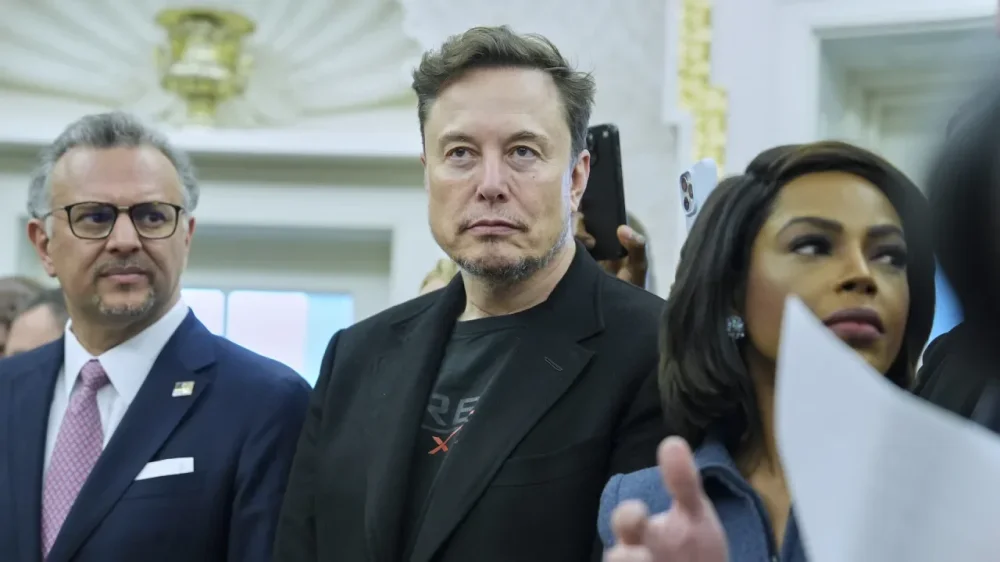
Elon Musk is criticizing the centerpiece of President Donald The President’s legislative agenda, a significant fracture in a partnership that was forged during last year’s campaign and was poised to reshape American politics and the federal government. The billionaire entrepreneur, who supported The President’s candidacy with at least $250 million and has worked for his administration as a senior adviser, said he was “disappointed” by what the president calls his “big beautiful bill.” The legislation includes a mix of tax cuts and enhanced immigration enforcement. While speaking to CBS, Musk described it as a “massive spending bill” that increases the federal deficit and “undermines the work” of his Department of Government Efficiency, known as DOGE. “I think a bill can be big or it could be beautiful,” Musk said. “But I don’t know if it could be both.” His CBS interview came out Tuesday night. White House officials did not immediately respond to questions. Republicans recently pushed the legislation through the House and are debating it in the Senate. Musk’s comments come as he steps back from his government work, rededicating himself to companies like the electric automaker Tesla and rocket manufacturer SpaceX. He’s also said he’ll reduce his political spending, because “I think I’ve done enough.” At times, he’s seemed chastened by his experience working in government. Although he hoped that DOGE would generate $1 trillion in spending cuts, he’s fallen far short of that target. “The federal bureaucracy situation is much worse than I realized,” he told The Washington Post. “I thought there were problems, but it sure is an uphill battle trying to improve things in D.C., to say the least.” Musk had previously been effusive about the opportunity to reshape Washington. He wore campaign hats in the White House, held his own campaign rallies and talked about excessive spending as an existential crisis. He was also effusive in his praise of The President. “The more I’ve gotten to know President The President, the more I like the guy,” Musk said at one point. “Frankly, I love him.” The President repaid the favor, describing Musk as “a truly great American.” When Tesla faced declining sales, he turned the White House driveway into a makeshift showroom to illustrate his support. It’s unclear what, if any, impact that Musk’s comments about the bill would have on the legislative debate. During the transition period, he helped whip up opposition to a spending measure as the country stood on the brink of a federal government shutdown. But The President remains the dominant figure within the Republican Party, and many lawmakers have been unwilling to cross the president when he applies pressure for his agenda. The Congressional Budget Office, in a preliminary estimate, said the tax provisions would increase federal deficits by $3.8 trillion over the decade, while the changes to Medicaid, food stamps and other services would reduce spending by slightly more than $1 trillion over the same period. House Republican leaders say increased economic growth would allow the bill to be deficit neutral or reducing, but outside watchdogs are skeptical. The Committee for a Responsible Federal Budget estimates the bill would add $3 trillion to the debt, including interest, over the next decade. —Chris Megerian, Associated Press Associated Press writer Kevin Freking contributed. View the full article
-
Get a comprehensive HTML tags list + free checklist categorized by function to boost your site‘s SEO View the full article
-
We may earn a commission from links on this page. Deal pricing and availability subject to change after time of publication. Samsung announced the new Galaxy S25 Series back in January, a three-phone lineup with a fourth variation that was teased a month later, which you can preorder right now with a $50 Amazon gift card before its May 30 release. Out of those four, the Galaxy S25 is the most basic model with the lowest price, and currently, it's hitting a new record low price of $624.99 (originally $799.99), according to price-tracking tools. SAMSUNG Galaxy S25 128GB AI Smartphone, Unlocked Android, AI Camera, Fast Processor, ProScaler Display, Long Battery Li $734.99 at Amazon /images/amazon-prime.svg $799.99 Save $65.00 Get Deal Get Deal $734.99 at Amazon /images/amazon-prime.svg $799.99 Save $65.00 The S25 has some upgrades from the S24 lineup: The best features in the OS are shared by all four phones, so you can still enjoy the best features from One UI 7, including exclusive media and notifications features from the cheapest option. Two of the best are Now Bar and Now Brief, which show you brief alerts or notifications personalized to your feed and activities. The Galaxy S25 runs on the Snapdragon 8 Elite for Galaxy, has three rear lenses, including a 50MP wide-angle lens, and a 6.2-inch and 120Hz OLED display. The RAM is a generous 12GB, with the storage options starting at 128 GB. Currently, the mint color is the cheapest available. PCMag gave the Galaxy S25 an "excellent" review for its useful AI features, a bright screen, good battery life, and excellent build quality. You can expect about 14 hours of juice from this phone. Keep in mind it does not support the S Pen stylus. Given its small size of 5.78 by 2.78 by 0.28 inches, it's a great option for those who prefer smaller phones. View the full article
-
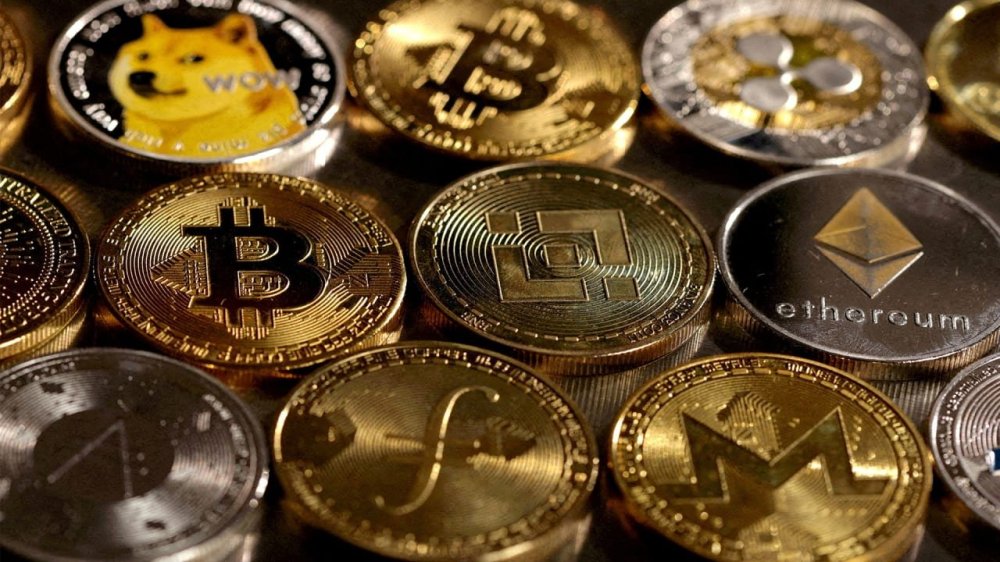
Big U.S. banks are holding internal discussions about expanding into cryptocurrencies as they get stronger endorsements from regulators, but initial steps will be tentative, centering on pilot programs, partnerships or limited crypto trading, according to four industry executives. Wall Street giants that had been largely blocked from many crypto activities by strict regulations are poised to grow quickly. Yet the biggest lenders are still hesitant to be the first among rivals to expand too heavily into crypto in case they fall afoul of changing rules, said the four executives, who declined to be identified since they were discussing internal business plans. If a major firm expands without issues, others will be fast followers to run small-scale pilot projects and weigh other business prospects, the executives said. Jamie Dimon, CEO of the largest U.S. bank, JPMorgan Chase, ruled out getting into custody—storing crypto assets for clients—or expanding significantly even if regulations ease. “When I look at the bitcoin universe, the leverage in the system, the misuse in the system, the money laundering issues, trafficking, I’m not a fan of it,” Dimon, a longtime crypto skeptic, told investors last week. “We’re going to allow you to buy it, we’re not going to custody it. . . . I don’t think you should smoke, but I defend your right to smoke. I defend your right to buy bitcoin,” he added. U.S. President Donald The President vowed to become the first “crypto president” before he took office. He has since wooed the industry’s elite at the White House, promised to boost the adoption of digital assets and said he aims to create a strategic bitcoin reserve. While there are welcoming signs, banks are seeking even clearer guidelines from the government clarifying what they can do in crypto, more than half a dozen industry executives said. “The shift in the stance is encouraging for traditional lenders, but they are still approaching it with caution and viewing the changes in regulation as an opportunity to engage and not a free pass,” said Dario de Martino, A&O Shearman M&A partner who works on crypto-related issues. Custody businesses to store and manage crypto assets are promising, bankers and executives said, but they have thin margins and potentially pose high risks. Most banks are likely to enter custody businesses through partnerships with existing crypto firms, sources said. Charles Schwab CEO Rick Wurster told Reuters earlier this month that the traffic lights from financial regulators were flashing “pretty green” for large firms to grow in crypto. The signals have reinforced Schwab’s plans to offer spot crypto trading within a year, he said. New regulators under The President have also signaled more bank-friendly crypto policies. The U.S. Office of the Comptroller of the Currency paved the way for lenders to engage in some crypto activities, such as custody, some stablecoin activities and participation in distributed ledger networks. The Securities and Exchange Commission also scrapped earlier accounting guidance that made it expensive for banks to deal in crypto. Bank of America could launch stablecoins, its CEO Brian Moynihan said earlier this year, and the U.S. banking industry will embrace cryptocurrencies for payments if regulations permit them. Meanwhile, Morgan Stanley wants to work with regulators to see how it can be a middleman for crypto-related transactions, CEO Ted Pick said earlier this year. The lender is also exploring adding crypto to its e-trade platform, a source said. Some of the large banks are also exploring issuing a joint stablecoin, with the conversations in initial stages, another banking source said. Big banks seek more clarity around anti-money laundering rules and supervision before diving deeper into crypto. They are also asking for consistent guidelines across banking and market regulators before launching new businesses in digital assets, whose values are volatile. For now, banks are weighing their crypto prospects and running small-scale pilot programs. “While a much-improved environment, banks will continue to have concerns around anti-money laundering and regulatory compliance,” said Matthew Biben, co-head of the global financial services group at law firm King & Spalding. Shifting landscape Banks want to understand if they can engage in crypto lending, or if they are allowed to become market makers for digital assets, one of the banking sources said. The rules for traditional banking businesses are very well defined and there is complete clarity over what a bank is allowed to do and what is outside their ambit, similar well-defined guidelines are needed for digital assets too. The working group on crypto under David Sacks, the The President-appointed crypto czar, has no representation from banking regulators, which needs to be amended if the big banks are allowed to play any meaningful role in the business, two banking sources said. —Nupur Anand, Reuters Additional reporting by Saeed Azhar. View the full article
-
A reader writes: I’ve been at my company for five years and enjoy my job. The work is in line with what I want to do long-term, I’m getting great experience, the people I work with are nice, and my boss is easy to work for and has mentored me in ways I’ve never received at a job before. All things considered, I’m pretty happy here. However, about a year ago, my boss brought up the possibility of a promotion. There’s no natural role for me to move into (the next position up is hers, and she’s not going anywhere), but she proposed creating a job where I’d take on more responsibility for some pieces of running the department, including things like training new hires and reviewing the work of junior staff members. She liked the idea because she has too much on her plate and this would let her offload some responsibilities to me. I liked the idea because I’d like to keep moving up, and the new role would come with a higher title and more pay. When we first talked about it, she told me that she couldn’t just create the position overnight since it would be an entirely new slot for our department, but that she would start talking to her own boss and HR to figure out how to make it happen. That was a year ago, and there hasn’t been much movement. Part of the problem has been that our company lost a big contract and, while we don’t expect staff cuts or anything like that, we do have a hiring freeze and so it’s been a tough time to make a case for a whole new position. My boss has been good about keeping me informed of the status, so I know she’s continued to push for it to happen. However, she’s been assigning me more and more of the work of the new position, even though it’s not actually my job yet. I can understand why; as I said, she’s overloaded and it helps her out to have me take over some of her responsibilities. But the things she’s asking me to do are not part of my current job, although it’s work I’m interested in doing. I trust my boss and I don’t think she’s intentionally taking advantage of me. I believe the promotion will happen, but it hasn’t happened yet. Is there a way for me to say, essentially, “I want to do this work, but not unless you pay me for it?” You can read my answer to this letter at New York Magazine today. Head over there to read it. The post can I refuse to take on more work until I get a promotion and a raise? appeared first on Ask a Manager. View the full article
-
Shareholders say EV maker is in ‘crisis’ and call for succession planningView the full article
-
The President administration unwinds Biden-era policy that required retirement plans to take ‘extreme care’ on digital assetsView the full article
-
Your clients get more value and your team gets to lose timesheets. By Jody Padar The Radical CPA Go PRO for members-only access to more Jody Padar. View the full article
-
Your clients get more value and your team gets to lose timesheets. By Jody Padar The Radical CPA Go PRO for members-only access to more Jody Padar. View the full article
-
If it seems like every tech company is trying shove AI into all of their products and services, that's because they are. And as someone who rarely (if ever) uses AI, it's a lot: I don't need AI to write my emails, nor do I want it to generate realistic videos that might trick viewers into thinking they're human-made. I certainly don't need it to serve up incorrect information when I try to search the internet. But Firefox's latest AI feature seems genuinely useful, likely because it isn't "making" anything for me. Instead its new AI-powered link previews simply show a small summary of the content on a webpage hidden behind a URL, so you'll have a better idea whether or not it's worth clicking on. Mozilla first announced these AI-generated link previews last month, before rolling them out as part of Firefox 139. The feature is currently in the "experimental" phase, and Mozilla is open to user feedback on how to adjust it. Here's how it works in its current iteration: When you hover your cursor over a URL and hit the corresponding keyboard shortcut, Firefox retrieves and analyzes the webpage's HTML without actually loading the page. It then looks for metadata that can help inform the page's title, description, and cover image. Once it has the data it needs, it displays whatever it has pulled up in a pop-out window. Like what you see? Go ahead and click through to see the full page. Not what you're looking for? Move on to the next link. Assuming the summaries are accurate, I can actually see this being something I rely on to give me an idea of whether or not a particular link is relevant to my current query—especially once Mozilla irons out some of the bugs. How to test out Firefox's AI-generated link previewsIn order to try AI link previews for yourself, you need to be running Firefox 139 (or newer). (If you're not sure which version you're on, open Firefox, head to Settings > General, then scroll to Firefox Updates. If there's a new update, install it, then relaunch the browser.) That accomplished, head back to Settings, then select Firefox Labs. Under "Customize your browsing," click the checkmark next to "Link previews." Credit: Lifehacker Now, open any website, hover over any link on your screen, and hit Shift + Alt (Windows) or Shift + Option (Mac). A small pop-up window should open immediately, along with the webpage's title and a brief description. Soon, you should also see the cover image for the page, then, after a few moments, Firefox will generate the page's "Key points." Credit: Lifehacker Are Firefox's AI link previews worth using?So far, the feature has been a bit hit-or-miss for me. Sometimes the key points it offers up are three well-summarized takeaways from the article. Other times, they are quotes lifted straight out of the article. Plagiarism aside, it's tough to get a sense of the scope of an article if the "key points" are just listing the first few ideas in the text. I suspect part of the problem is that what the AI sees as most important will vary based on how each site is configured: I found the previews frequently copied the text on Lifehacker articles verbatim, for example, while summarizing articles found on other sites. Again, this feature is in development, so Mozilla may need to figure out how to accommodate the variations in in websites design to make it uniformly useful. But as AI features go, I don't hate it, and in 2025, that's saying something. View the full article
-
The quarterly data showed bank profits were driven by gains at large firms while credit quality remained mixed, with commercial real estate loan stress at relatively high levels. View the full article

-
The law, set to go into effect later this year, was introduced to prevent potential money laundering in all-cash purchases made by companies or trusts. View the full article

-
Get ready for several years of even more record-breaking heat that pushes Earth to more deadly, fiery and uncomfortable extremes, two of the world’s top weather agencies forecast. There’s an 80% chance the world will break another annual temperature record in the next five years, and it’s even more probable that the world will again exceed the international temperature threshold set 10 years ago, according to a five-year forecast released Wednesday by the World Meteorological Organization and the U.K. Meteorological Office. “Higher global mean temperatures may sound abstract, but it translates in real life to a higher chance of extreme weather: stronger hurricanes, stronger precipitation, droughts,” said Cornell University climate scientist Natalie Mahowald, who wasn’t part of the calculations but said they made sense. “So higher global mean temperatures translates to more lives lost.” With every tenth of a degree the world warms from human-caused climate change “we will experience higher frequency and more extreme events (particularly heat waves but also droughts, floods, fires and human-reinforced hurricanes/typhoons),” emailed Johan Rockstrom, director of the Potsdam Institute for Climate Impact Research in Germany. He was not part of the research. And for the first time there’s a chance — albeit slight — that before the end of the decade, the world’s annual temperature will shoot past the Paris climate accord goal of limiting warming to 1.5 degrees Celsius (2.7 degrees Fahrenheit) and hit a more alarming 2 degrees Celsius (3.6 degrees Fahrenheit) of heating since the mid-1800s, the two agencies said. There’s an 86% chance that one of the next five years will pass 1.5 degrees and a 70% chance that the five years as a whole will average more than that global milestone, they figured. The projections come from more than 200 forecasts using computer simulations run by 10 global centers of scientists. Ten years ago, the same teams figured there was a similar remote chance — about 1% — that one of the upcoming years would exceed that critical 1.5 degree threshold and then it happened last year. This year, a 2-degree Celsius above pre-industrial year enters the equation in a similar manner, something UK Met Office longer term predictions chief Adam Scaife and science scientist Leon Hermanson called “shocking.” “It’s not something anyone wants to see, but that’s what the science is telling us,” Hermanson said. Two degrees of warming is the secondary threshold, the one considered less likely to break, set by the 2015 Paris agreement. Technically, even though 2024 was 1.5 degrees Celsius warmer than pre-industrial times, the Paris climate agreement’s threshold is for a 20-year time period, so it has not been exceeded. Factoring in the past 10 years and forecasting the next 10 years, the world is now probably about 1.4 degrees Celsius (2.5 degrees Fahrenheit) hotter since the mid 1800s, World Meteorological Organization climate services director Chris Hewitt estimated. “With the next five years forecast to be more than 1.5C warmer than preindustrial levels on average, this will put more people than ever at risk of severe heat waves, bringing more deaths and severe health impacts unless people can be better protected from the effects of heat. Also we can expect more severe wildfires as the hotter atmosphere dries out the landscape,” said Richard Betts, head of climate impacts research at the UK Met Office and a professor at the University of Exeter. Ice in the Arctic — which will continue to warm 3.5 times faster than the rest of the world — will melt and seas will rise faster, Hewitt said. What tends to happen is that global temperatures rise like riding on an escalator, with temporary and natural El Nino weather cycles acting like jumps up or down on that escalator, scientists said. But lately, after each jump from an El Nino, which adds warming to the globe, the planet doesn’t go back down much, if at all. “Record temperatures immediately become the new normal,” said Stanford University climate scientist Rob Jackson. Follow Seth Borenstein on X at @borenbears The Associated Press’ climate and environmental coverage receives financial support from multiple private foundations. AP is solely responsible for all content. Find AP’s standards for working with philanthropies, a list of supporters and funded coverage areas at AP.org. Read more of AP’s climate coverage at http://www.apnews.com/climate-and-environment —Seth Borenstein, AP Science Writer View the full article

-
Welcome to Remote Real Talk, our monthly Q&A series where we share honest, thoughtful conversations with members of the Remotive community who are building meaningful careers in remote work. We sat down (virtually) with Deb Haas, People leader, coach, and author of the newsletter 404: HR Not Found, to talk about what job seekers need to know when navigating the remote job market in 2025. Deb has hired global teams, gone through a layoff herself, and is now job searching again, so she brings empathy, clarity, and lived experience to every answer. This is a shorter version of our conversation (lightly edited for clarity and readability), which first appeared last week in the Remotive Slack community. Do you think it's still possible to find a fully remote job in 2025?Absolutely. And in the coming years, it will be even easier as we fully enter the AI Age. The smart, future-oriented businesses know that the future will be more remote, more global than any other time in human history thus far. Look for ways to make your skills future-friendly. In the AI Age, we will be required to be more human than ever. So yes, keep learning your technical skills, but also know that human skills (creative thinking, communication) will be even more important in the future. What's your advice for remote job seekers?Randomly applying to every remote role you see is something I would avoid. Being open to a hybrid role that has the potential to be fully remote could work out in your favor in the long run (six months to a year down the road). But honestly, I would get really clear on the skills I bring and the problems I solve, and then target companies that are either fully remote or have a great hybrid/remote policy in place. You don't just want to look at what they do; you also want to be aware of their culture. Talk to people who work for your target companies to get a sense if you should pursue working for that company or not. What's the best way to stand out in a remote job application process?Make your personal brand obvious on your LinkedIn. Everything on that page should scream who you are, what you do, and what sets you apart from others who do something similar. Then, identify the problem that the role they're trying to fill is supposed to address. Every role is a problem or issue that the company is hiring a person to fix. Then get really clear on how you are the person who can solve that problem. Make it really easy for the recruiter/hiring manager to make a decision about you. Remove any friction (not responding to emails, not clearly indicating how they can get a hold of you, etc) that would get in the way of them seeing you as THE person for the role. You experienced being laid off. What are your takeaways from that experience?That a layoff says nothing about me or my abilities. That it's a loss of a relationship, and as such, there will be grief. Trying to avoid that grief only prolongs it. It's something you need to allow yourself to go through rather than around, over, under, etc. My layoff was after 24 years with the same company. So I had to take the time to separate my identity from that of the company. I had to be able to answer the question, Who am I if I'm no longer an employee of ______? And lastly, I had a vision of what my career would be like with that company, and I was very attached to that vision. I had to give up my attachment to that idea,l which then opened me up to so many other possibilities. What's a common mistake remote job seekers make when applying for roles?They don't read the entire job description to see if the job is REALLY remote. Unfortunately, every company describes "remote" differently. For some, it means working from home, but you have to live in the city where the office is located. For others, it means you can work remotely from anywhere in your home country. Still others will call a role remote even when there's a hybrid component that may or may not require travel. READ THE JOB DESCRIPTION FULLY. Then go to Glassdoor.com and read reviews about the company. This will give you an idea of whether they actually are truly remote. Do you usually get a strong feeling early on about the right candidate, or are there specific indicators that solidify your decision?Every company does this differently. Heck, every interviewer or hiring manager does this differently. Again, having several people interviewing and then discussing the answers and impressions we had of the candidate makes a big difference. Also, there are criteria for every organization as to what qualities make a 'good' hire. I will say, everyone interviewing you (unless they're an AI!) is human, and as humans, we often make judgements about people within the first 5 minutes. So, making a good first impression is a generally good rule of thumb! When evaluating candidates, how important is a personal brand?VITAL. In today's marketplace, where there are thousands of super-qualified people (because of all the layoffs from the last 18 months), you really have to not only be clear on your brand, but broadcast it. Whether that's posting on LinkedIn as a thought-leader or simply responding to comments in Groups or in your feed, you need to draw attention to yourself and your value. The squeaky wheel gets the grease! 📬 Want more Real Talk? Join the Remotive Accelerator for complete Q&As, behind-the-scenes hiring insights, and support from remote job seekers around the world. View the full article
-
Looking to enhance your AI project management skills? Explore 2025's top conferences, where you can learn, network, and tackle challenges with peers. The post Best AI Project Management Conferences in 2025 appeared first on The Digital Project Manager. View the full article
-
Search traffic is down. AI Overviews are pushing results lower. Budgets are being slashed. Is this the end of SEO as we know it? Not so fast. I interviewed SMX Advanced speaker Eric Enge about the future of search, the rise of generative AI, and how SEOs can still win big in a rapidly changing landscape. Some of the topics covered: Why 35% traffic drops aren’t the end of the world. How AI-driven search changes what it means to “rank.” Why user engagement and brand signals matter more than ever. What to expect at SMX Advanced 2025 in Boston. Reminder: SMX Advanced returns June 11-13 in Boston. Get your tickets now! This transcript has been edited for length and clarity. Danny Goodwin: Hey everybody, this is Danny Goodwin, editorial director of Search Engine Land. I am lucky to be joined today by none other than Eric Enge. I think most everybody knows you by this point, but if you want to introduce yourself to the audience. Eric Enge: I’ll be happy to do that. Hey everybody, Eric Enge here. I am president of Pilot Holding but probably best known for having been the lead author of “The Art of SEO,” one of if not the most popular book on the topic, and CEO of Stone Temple Consulting, which was a very well-known brand back in the day, one of the more popular SEO agencies. We were at 70 people when we sold it so we had really good broad customer base. I’ve been in SEO for 25 years and change. Danny Goodwin: And Eric has been at a lot of SMX Advanced shows over the years. Could you even count the number you’ve been at? I know we started in 2007, but have you been to pretty much all of them, haven’t you? Eric Enge: I missed the first one because one of my children had a graduation. Danny Goodwin: That’s a good reason to miss a show. Eric Enge: It was like, I’m certainly not choosing the show over my child’s graduation, but boy, I wish I could do both of these things. Danny Goodwin: And, this year SMX Advanced is back in person in Boston and Eric will be speaking at the show. And I want to take this opportunity before the show to have a quick chat with you about a few things that are going on in the industry and preview what you’ll be talking about at SMX. Danny Goodwin: So, I figured a good place to start. There’s a lot of change going on right now in search, Google, and our entire industry. What do you think we all are doing right as an industry and adapting to all the changes and also what are we doing wrong as an industry right now? Eric Enge: In a way, I think of it as two sides of the same coin, which is that I see a lot of people doing a really good job of adapting to the fact that just off the top, we, search traffic is probably down 35% for most sites or, that’s a common number and I’ve seen it across a wide array of sites. So, that’s a big thing to adapt to. But then there’s sort of some related aspects, which is how much did your conversion really drop? It didn’t drop 35%. Because you were giving away or not getting traffic, I should say that wasn’t converting for you anyway. Eric Enge: So it’s complicated to sort all that out, but I think a lot of people are doing a pretty good job of understanding that the ground has shifted under their feet and we don’t even know where it’s shifting to really. And so that’s hard thing, to deal with that level of uncertainty. A bunch of people are doing it well. But I see a lot of people just head in the sand, not doing it well too, and that’s frustrating because the world changes all the time and we have to be prepared for and deal with that and guess what? Eric Enge: So here’s the fun part. It’s got to be a fun part, right? This is the time when real winners are made. When everything’s changing around you and it’s unstable and nobody’s quite sure what to do and if you can be one of the ones that get it right or close to right early on, that’s how you become a winner, So, if you’re a true entrepreneur, it is a great time. Danny Goodwin: Absolutely. Great point. So a lot of people are seeing the traffic decline. How do you see SEOs providing value beyond rankings as we head through the rest of this year and beyond? Eric Enge: One of the bigger variables we have to deal with is that we just don’t know how much Google is going to shift. They have launched this AI Mode thing, which is sort of this pure chatbot search type experience like ChatGPT and so is that going to become the whole world or are there classes of queries where lists of websites is still a better answer. I happen to think there are queries that that’s true by the way, but it’s all shifting so much that it’s really hard to understand where it’s going to land. Eric Enge: There are certain things that I think some people have begun to figure out about how ranking in a generative AI platform is different than Google search. Eric Enge: And I could talk a little bit about that if you’re interested in so the way traditional Google determines relevance is they’ll take your search query and they’ll create an embedding vector for that and then they’ll compare that to the embedding vector that they have for your page. It’s a whole large subtopic of how embedding vector for a page is different than a query. But suffice it to say they have something a vector 768 dimensional vector or something like that that describes the content of a page and a similar one for the query and they see how relevant they are to each other, right? And if the vectors are really close like that, as opposed to like that they decide that it’s a potential page to rank and then they get into other aspects of the algorithm decide whether to rank it or not. Eric Enge: But in the world of ChatGPT and AI mode and Perplexity – it’s different because in those platforms they want to return web pages that address all of the subtopics. So they do many comparisons and you want to score well on all of those comparisons to be the first one listed in ChatGPT or where ever. Eric Enge: So the depth that you need to go into your content analysis changes and people who are going to optimize really well for that will probably still do very well in traditional search and now have a chance of ranking in from what I’ll call a GEO perspective. Danny Goodwin: Awesome. A lot of people are talking about how citations are kind of on LLMs are more of the equivalent of what you need to rank, whereas now it’s been links for years and years. Links have been sort of everything. Do links even matter to LLMs? Eric Enge: Yeah, it’s a great question. I think this is a little bit speculative my answer to be honest, but I don’t think that a link and a citation are going to be that different in how they’re weighted by ChatGPT. But I do think it’ll matter in Google because Google can see if it’s getting clicked on, right? Yeah. Danny Goodwin: All right. What are you most excited about right now in SEO? There’s obviously a lot of doom and gloom. But what are we excited about? Eric Enge: We have such a big opportunity in front of us. I kind of answered it a little bit when I talked about if you’re a true entrepreneur, times of disruptive change are when a lot of people lose money, and that’s sad. So I don’t want to overlook that part of it. Eric Enge: But if you like being in the game, this is a great time to be doing stuff because there’s so much to be figured out – and if you get it figured out, you’re going to rock. You’re going to do really well. By the way, there’s a key assumption there I just want to mention really briefly, which you’re going to get less traffic, Just get over it. That’s OK. That’s just where we are. But the traffic you’re not getting is probably not the highest converting traffic you are getting to your site. Eric Enge: So how much is it going to drag down your business? There’s probably a balance that still has to be figured out between the websites and the various platforms before it all settles out. But, people are still going to buy products and services and OpenAI isn’t providing those and Google isn’t providing those and Microsoft isn’t providing at least both of them that is you know what I mean? Danny Goodwin: So is there anything that has you worried right now in SEO? Yes, there is a lot of opportunity. But there are AI Overviews. Zero clicks getting mentioned a lot lately. There’s been a lot of talk around budgets being slashed. It’s sort of chaotic right now for a lot of people. What in particular are you worried about, if anything? Eric Enge: A lot of people, for varying reasons, are going to get hurt. I mean, I’ve stated the upside of it, the opportunity and all that, but not everybody’s going to respond. So, perfect example, you just mentioned it. Budgets are getting slashed, people are getting laid off. I’m not thinking that that’s the right response by the way for the great majority of people who are doing it because they have something to figure out and the number of buyers out there hasn’t really changed or whatever they have the mechanisms by which they reach those buyers are changing so… But unfortunately a lot of people are going to get hurt and that worries me And I don’t like that part of it at all. Yeah. Danny Goodwin: Based on what you’re seeing and obviously all we’ve chatted about here, do you feel like SEO is heading toward a new growth period? Do you see it declining or maybe even reinventing itself? I know there’s been lots of debate about, GEO or generative engine optimization, whatever we want to call it. I think people are confusing, at least from my perspective, that we’re trying to rebrand SEO, but it just feels like it’s not a rebranding because SEO isn’t going anywhere. Google’s still getting 5 trillion searches a year. That’s a lot of search, but now there’s ChatGPT search, there’s all these other LLMs. How do you sort of see the current state of SEO? Do you think it’s going to grow, decline, reinvent itself in some new way? Eric Enge: So I do think that the fastest driver of declines in clicks on what I’ll call traditional search rankings is going to be from what Google does itself. As soon as AI Mode becomes a standard option and even with AI Overviews growing, the traditional listings are getting pushed down. And we already talked about 35% reduction in traffic, so I think it just means there’s less opportunity there. Eric Enge: Now mind you someone who gets satisfied by an AI Overview probably wasn’t a customer anyway. You’re probably going to lose some conversions out of it, don’t get me wrong. But there’s going to be a bigger premium on getting into the top three spots, right? 7, 8 and 10 that’s the equivalent of the third scroll on your browser today, right? So, I do think there’s going to be a bigger push to get those top positions and I do think that a very large percentage of people who think of themselves as SEOs will get into AEO, and whatever other -EOs we come up with. Danny Goodwin: Let’s talk a little bit about SMX Advanced. You’ll be speaking. Your session is Google, E-E-A-T, and brand: Focusing on signals that actually fuel SEO growth. So for anyone watching who’s thinking about coming to SMX Advanced, what will you be talking about in your session? Eric Enge: Yeah, I think people have been deeply concerned about E-E-A-T and brand for various reasons and in different ways for a long time and I think there’s been some misunderstanding about how they work. The concepts as expressed by Google E-E-A-T – expertise, experience, authoritiveness, and trust – they’re not really measuring those things directly. They’re measuring other things. And by the same token, I don’t think they don’t really measure brand directly either, but they’re measuring other things that brand helps drive. Eric Enge: So that’s where we get into understanding that user engagement is a huge factor. I think a lot of people in the industry have believed that for many, many years now but now any lingering doubt has been thoroughly erased by the stuff that was shared a year plus ago. And so we really need to understand how user engagement matters and so I’m going to get into talking about that. Eric Enge: Getting specific, sharing some case studies of cases where just optimizing content for better user engagement brought good results or optimizing content for higher relevance through using the same kind of analysis that Google does. Embedding vectors are just showing that these are the things that really matter, which by the way, if you think about them brand and E-E-A-T are things that help make those things better on your site but it isn’t that you put an author tag somewhere. You bought a big ad on a large news site or a TV ad – no, no, that’s not that Google isn’t actually thinking directly about those things. Danny Goodwin: I’m looking forward to that – and I get the pleasure of moderating your session yet again. I don’t even know how many times I’ve been your moderator, but it’s always a pleasure and really looking forward to that session. Danny Goodwin: SMX Advanced is in Boston this year, June 11 to 13. Get your tickets. We want to see you there. Come talk to Eric – he’s one of the smartest guys, been around the game forever. And it’s a very interesting time and he’ll help you kind of figure out what’s going on in that world. So, thanks Eric for joining us for this quick chat. we’ll see you in Boston, which is your hometown… Eric Enge: Yes, it is. Danny Goodwin: Where I grew up as well. So, it’s a homecoming for both of us. Eric Enge: And everybody out there, you come up and talk to me after I talk, too. Happy to chat with anybody and talk about all this stuff. It’s just too much fun to think about. Danny Goodwin: Absolutely. All right. Thanks again, Eric. Thanks, everybody. View the full article